We’re navigating our way through a series about the senses, but some people who study human hearing disagree with that description. They say this ability isn’t just a sense; that’s far too simplistic. They say hearing is actually a sophisticated data-analysis system, and an extremely elaborate one at that.
Our ears don’t “blindly” take in sound, like a pipe that conveys every liquid that happens to be dumped into it. Or do they? Correct answer: they do; they hear it all. However, hearing involves real-time filtration and sound suppression, interpretation, and even prediction. Those characteristics establish an unexpected truth: we do not hear with our ears
Sound is collected indiscriminately and funneled into and through the intricate hardware in our ears. So why don’t we normally hear the hum of the refrigerator or air conditioner, or the traffic noise outside? Why don’t we hear the clock ticking ten feet away until someone asks us for the time?
nized the sound that was important, but was an effective gatekeeper for all the unnecessary ones. In a very real sense, we actually hear with our brain, not our ears. No sound exists until the brain says it does
It’s the same analysis, screening and selective noise-suppression system that lets someone in Chicago, for instance, sleep soundly while an elevated train clatters past the open window of their second-floor apartment. The same sound filtration system is probably related to the selective hearing loss husbands are often accused of having
is able to detect that slight difference and instantly translate that to directional data.
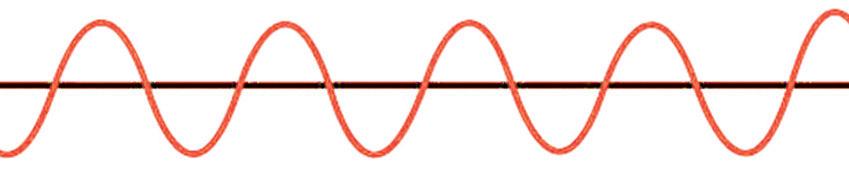
Part of the process of receiving sound and deciphering its various qualities involves a complex process called phase locking. We don’t pretend to understand its intricacies, but for a greatly simplified explanation of this auditory function, picture a sound wave. Ah, here’s one now:
In response to all of the zillions of sound waves we encounter daily, our auditory nerves fire at the exact same place (the same “phase”) on each sound wave (usually at its peak, as illustrated by the black dots).
The answer: our brain vigorously filters out and suppresses anything it considers to be irrelevant — which is a lot. Yet while it’s sifting through and discarding a ton of noise, it can isolate one tiny little sound and use it to put us on red alert. Example: a man’s snoring really does sound like a chainsaw. Even so, his exhausted wife is sound asleep right next to him, oblivious to the noise. Then, in the adjoining bedroom, her baby whimpers. She is awake in an instant to tend to the baby. Her brain recog-
But hearing a baby’s soft whimpers from another room over the non-sonorous sounds of snoring is just the beginning of what makes human hearing so remarkable.
We have all experienced hearing a noise and having an immediate sense that the sound came from somewhere way off to the right, or just a little over to the left.
To make that calculation — which happens instantly — the brain has to detect and analyze the difference in arrival time for sound waves from one ear to the other. If the sound waves arrived at your left ear first, that’s where the sound is originating: from the left. The thing is, those sound waves arrived at your right ear 1/100,000 of a second later. That’s one hundred-thousandth of a second’s difference between the two ears. The brain
• Review your current plan for optimum
• Call to review the best enrollment for
• All services provided at no cost
This makes possible things like the aforementioned directional capabilities. What makes it amazing is that sound waves arrive rather rapidly, in multiple cycles (or waves) per second. In sound vocabulary, that measurement is called a hertz (Hz). 1 Hz means one complete cycle of a sound wave takes place in one second, from one black dot (above) to the next black dot. 100 Hz means a hundred sound wave vibrations per second. Phase locking can operate up to 4,000 Hz. That means the auditory nerve is locking onto the crest of a sound wave once every 0.00025 seconds.
Speaking of faint whispers and whimpers,
Please see SOUND SYSTEM page 16
THE SENSES: PART IV of V
PARENTHOOD
by Dr. Warren Umansky, PhD
You received a call from the school that your ninth grader was found with a vape. You vape at home and you discover that she took one of these to school. In accordance with school guidelines, she will be suspended from school for one week. You are trying to decide what type of punishment is appropriate. What do you do?
A. Being suspended from school is probably enough punishment. After all, she won’t have access to her friends. That’s her main reason for going to school anyway.
B. Perhaps punishing her is not what she needs. Maybe it’s time to look at the kind of example you provide for her.
C. You are going to try to restrict her phone time during school hours.
D. School rules about vaping are ridiculous. After all, vaping is better than kids sneaking cigarettes and smoking in the restrooms.
If you answered:
A. As her parent, is that an acceptable response? It appears that your expectations for your child are rather low. If she gets through high school, what happens then? Perhaps you need to stop and think about what your hopes are for your child. Then, sit down with her and talk about a future that is productive, meaningful, pleasant, and rewarding for her. What you and she do now will determine that.
B. Given that you think she goes to school mostly to see friends, the value system appears to be askew. Most parents hope their children to do better in life than they have done, regardless of what that level is (unhoused, an engineer, a convenience store clerk, an Uber driver, a nurse). How are you communicating this to her? Not so well now. It’s not too late to turn it around, but every day is a critical period of learning.
C. Having a phone is a privilege that should be earned. It also can be a tool for success. Perhaps the phone can be used as an incentive to raise her level of performance. At the current time, having access to it at any time is not a reasonable consequence and makes staying home a holiday.
D. The research on vaping is quite compelling. While vaping is less harmful than traditional cigarettes, it causes significant harm to the heart, lungs, and brain in adults and teens. Are you okay with that for her?
Kids make mistakes. Taking a vape to school is a foolish act, but it may be a way for your daughter to gain status with her friends, or she may be addicted to vaping. You should address the causes for her actions, and you may need assistance. Consider talking with the school guidance counselor for help, or to your pediatrician for a referral to a mental health professional who can guide you through this difficult period. Most important, good communication with your daughter is the foundation for a healthy outcome.
Dr. Umansky has a behavioral health practice for children in Augusta
THOUGHTS
THOUGHTS ABOUT THOUGHTS
BURNOUT
VS DEPRESSION:
“MAYBE I JUST NEED A VACATION.”
Editor’s note: Written by local mental healthcare professionals, this series explores how people may think and act when affected by common and lesser-known mental health conditions.
Emily is a 39-year-old nurse who has spent the last several years caring for others. She picks up extra shifts, rarely takes time off, and prides herself on always being dependable.
Lately, though, everything feels harder. She’s exhausted before her shift even begins. She dreads going to work and finds herself becoming detached from patients she once deeply cared about. At home, she has little energy for her family.
Her coworkers tell her she’s burned out.
But even after taking a week off, Emily doesn’t feel better. She no longer enjoys hobbies she once loved. She struggles to get out of bed on her days off. She feels hopeless and wonders if she’ll ever feel like herself again.
Emily initially believed she was experiencing burnout or occupational stress, but her symptoms had progressed into something more serious — clinical depression.
Burnout and depression share many symptoms, yet they are not the same condition. Understanding the difference can help individuals seek the right kind of treatment.
What Is Burnout?
Burnout is a state of physical, emotional, and mental exhaustion caused by chronic, unmanaged stress, most commonly related to work or caregiving responsibilities.
The World Health Organization recognizes burnout as an occupational phenomenon rather than a medical diagnosis. It is characterized by:
• Feelings of exhaustion or depleted energy
• Increased mental distance or cynicism toward work
• Reduced professional effectiveness
Burnout is typically tied to a specific environment or role and often improves when those stressors are addressed.
What Is Depression?
Major Depressive Disorder is a clinical mental health condition that affects mood, thinking, behavior, and physical functioning.
Unlike burnout, depression is not limited to work. It often affects every area of life, including relationships, hobbies, self-care, and overall sense of purpose.
Depression may develop independently or emerge after prolonged burnout, chronic stress, trauma, or other
contributing factors.
Signs and Symptoms
Burnout often includes:
• Emotional and physical exhaustion related to work
• Feeling cynical or detached from your job
• Decreased productivity or job satisfaction
• Feeling better during weekends or vacations
Depression often includes:
• Persistent sadness or emptiness
• Loss of interest or pleasure in previously enjoyable activities
• Feelings of hopelessness or worthlessness
• Changes in sleep or appetite
• Difficulty concentrating
• Low energy across all areas of life—not just work
Shared symptoms
• Fatigue
• Irritability
• Difficulty concentrating
• Reduced motivation
• Sleep disturbances
Because these symptoms overlap, professional evaluation is often needed to determine whether burnout, depression, or both are present.
What Causes Burnout and Depression?
Burnout risk factors
• Excessive workload
• Lack of control over work responsibilities
• Poor work-life balance
• Limited support from supervisors or colleagues
• High emotional demands, especially in healthcare, education, and caregiving professions
Depression risk factors
• Family history of depression
• Brain chemistry and biological factors
• Trauma or adverse life experiences
• Chronic illness
• Prolonged stress, including unresolved burnout
Burnout is largely driven
KEY DIFFERENCES
BURNOUT
• Primarily related to work or caregiving stress
• Symptoms often improve when away from work
• Characterized by exhaustion and cynicism
• Usually improves with stress reduction
DEPRESSION
• Affects all aspects of life
• Symptoms usually persist regardless of environment
• Characterized by persistent low mood and loss of pleasure
• Often requires clinical treatment
It is also possible for burnout to contribute to the development of depression if chronic stress remains untreated.
by environmental stress, while depression results from a complex interaction of biological, psychological, and environmental influences.
Common Misconceptions
“Burnout and depression are the same thing.”
Although they share symptoms, burnout is an occupational phenomenon, while depression is a diagnosable mental health disorder.
“If I take a vacation, I’ll be fine.”
Time away from work may relieve burnout, but it is unlikely to resolve clinical depression on its own.
“Only people who can’t handle stress get burned out.”
Burnout often affects highly dedicated, compassionate, and high-performing individuals who have been under prolonged stress.
• Antidepressant medications when appropriate
• Regular physical activity and healthy sleep habits
• Building supportive social connections
When both are present Many individuals benefit from treating workplace stress and addressing underlying depression simultaneously. Ignoring either one may delay recovery.
Prognosis
“Depression is just extreme burnout.”
While burnout can increase the risk of depression, the two conditions have different causes, diagnostic criteria, and treatment approaches.
Treatment
The appropriate treatment depends on the underlying condition.
Addressing burnout
• Reduce workload when possible
• Establish healthy work-life boundaries
• Increase opportunities for rest and recovery
• Seek organizational support and workplace changes
• Practice stress-management techniques
Treating depression
• Cognitive Behavioral Therapy (CBT) and other evidence-based psychotherapies
Burnout often improves when chronic stressors are reduced and healthy boundaries are restored. Depression is also highly treatable, especially when recognized early and addressed with evidence-based care.
Without treatment, both conditions can contribute to declining physical health, relationship difficulties, reduced work performance, substance misuse, and increased risk of suicidal thinking.
Recognizing the difference between burnout and depression allows individuals to move beyond simply “pushing through” and toward meaningful recovery. If exhaustion has spread beyond the workplace and hope feels increasingly difficult to find, it may be time to seek a professional mental health evaluation.
About Us
IPS provides inpatient and outpatient mental health services, with or without a referral, to help patients and their families progress through the care journey.To make an appointment, call 706-204-1366 or visit integratedpsych.care
DOES GLUCOSAMINE WORK?
Yes it does — if you think it does. But even if you do, should you keep taking it? Or start?
Glucosamine and chondroitin must work based on name recognition alone. Ask 100 random people on the street what these supplements are for and our bet is that most will know they are taken for joint pain.
The trouble is, the scientific proof of glucosamine’s benefits is pretty sketchy. One study in 2008 found that glucosamine and chondroitin were no better than a placebo, and a 2016 study found that patients actually got more relief of their joint pain from the placebo than from glucosamine. Then along came a 2022 study where patients self-reported a “statistically significant advantage” from glucosamine for relief of their knee osteoarthritis.
By-the-book researchers fall back on clinical evidence, which is thin at best. Even if it is only marginally effective, it has always been considered safe — until recently. A new study found links between glucosamine use and faster cognitive decline, especially among people who already have mild mental impairment and Alzheimer’s. Researchers are not yet prepared to say that glucosamine is the culprit; it could be something common to people with joint pain, like reduced mobility or lack of exercise. The jury is still out.
Prior to that study, glucosamine’s known side effects included mild symptoms like headaches and constipation. It can also increase the risk of bleeding in people taking warfarin, the blood thinner.
In general, those taking glucosamine (and a million other supplements on the market) should know (and usually do) that products in these categories are to a large degree unregulated by the Food and Drug Administration. The same supplement from two different manufacturers could differ significantly in strength, quality, purity, price, and effectiveness.
If you find one that relieves your joint pain, maybe that’s all the evidence that matters.
Direct
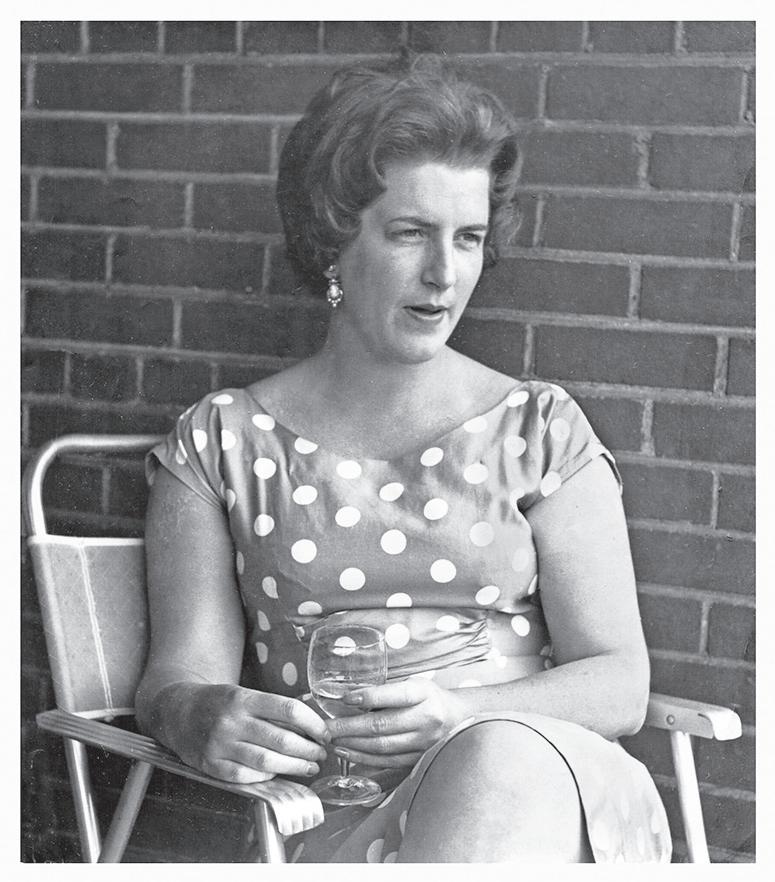
Who is this?
The unassuming lady in this old Polaroid is so many things we barely know where to begin. She didn’t hold a medical degree, but her place in medicine is among the giants in the field. On the other hand, as a woman, during her lifetime she wasn’t always as respected as a male counterpart might have been in the same set of circumstances. Finally, it’s fair to say she spent her entire medical career out of the spotlight, but there’s a fair chance the last time you heard her name mentioned was today.
She was a 30-year-old student pursuing her PhD when she was hired to be a research assistant for a British pathologist and virologist who had been awarded a research grant by the US National Institutes of Health (NIH)
The job was a good fit based on her established skills. Born in Ireland in 1932, she had worked in several medical and veterinary research labs in both the UK and Canada. It was to be a marriage made in research heaven, because her superior lab skills were the perfect antidote to her employer’s struggles in the laboratory. Where he was weak and needed expertise, she checked every box with strength and experience.
Working in the pathology lab at a London hospital, this (left) is what they discovered, an achievement that has been called “one of the 20th century’s most significant scientific discoveries.” It’s a virus of the herpes family that is the most common cause of mononucleosis (90% of cases), but which can also cause cancer and a laundry list of additional afflictions, from minor to major.
The virus was named after its two main discoverers, Michael Anthony Epstein (he of the weak lab skills) and Yvonne Barr, his lead research assistant. They called it the Epstein-Barr virus, or EBV. No vaccine has yet been discovered that is effective against Epstein-Barr, but it is a top priority: about 200,000 cancer cases around the world each year are blamed on EBV, and being infected with it causes a 32-fold increase in the risk of developing multiple sclerosis.
Two years after their 1964 discovery, Barr graduated with her PhD from the University of London, got married, and moved to Australia. Unable to find a research position there, she spent the rest of her working life as a high school teacher.
She died in Melbourne in 2016 at age 83.
Middle Age
BY J.B. COLLUM
One of the biggest surprises about getting older is that I haven’t run out of ideas. If anything, I have the opposite problem.
When I was younger, I assumed that by the time I reached sixty I would have life pretty much figured out. I imagined that I’d have one or two hobbies, a comfortable recliner, a little sailboat to relax on, and probably a favorite brand of prune juice. Instead, my brain wakes me up at two in the morning because it has invented yet another project.
I want to build software, write books, and keep writing this column. I want to make YouTube videos, build my office and studio, and learn more about AI. I want to play music, get back into hiking, lose weight, and organize my workshop. I want to 3D-print things I probably don’t actually need. Somewhere in there, I also have to earn a living.
instead of exciting inspiration. Taking my insulin every day isn’t exciting. Walking isn’t exciting. Passing on dessert usually isn’t exciting. Neither is cleaning the workshop, answering emails, or spending an hour working on a project when I’d rather start three new ones. But those are the things that slowly move life forward.
Progress comes from boring consistency
I’ve also discovered something encouraging over the past couple of months. As my health has improved, so has my ability to concentrate. For a long time, I blamed myself for not staying focused. Maybe I was lazy, maybe I lacked discipline, or maybe I just had a short attention span. Okay, okay… I know what you’re thinking. More than one of those things can be true at the same time.
The problem isn’t a lack of motivation. It’s a lack of hours, and, if actuarial tables are to be believed, a lack of years. Every one of those ideas sounds like the one I should be working on… until I start working on it. Then another idea wanders by, waving its arms and yelling, “Hey! What about me?” It’s like living with a committee of enthusiastic twelveyear-olds.
One wants to build a tiny AI server, another wants to restore an old computer, and a third thinks buying one more keyboard will finally be the answer. (That one has been wrong more than once.) The older I get, the more I realize that success isn’t about having more good ideas. It’s about choosing which good ideas have to wait, and that’s harder than it sounds.
Saying no to bad ideas is easy. Saying no to good ideas feels like giving up part of yourself. But every time I chase five rabbits, they all escape. When I focus on one rabbit, I usually catch it. Well… back when I could run, anyway.
Lately I’ve been reminded that progress often comes from boring consistency
Now I’m beginning to wonder if feeling lousy all the time was stealing more from me than I realized. When your body is fighting you every day, your brain has to spend energy just getting through normal life. When you start feeling better, you suddenly have a little more fuel in the tank. That doesn’t magically create more hours in the day, but it does help you use the ones you have.
So I’ve decided that maybe I don’t need fewer dreams. Maybe I just need permission to let some of them wait their turn.
I need to keep reminding myself, most of those ideas aren’t going anywhere. The workshop will still be there next month. The software project will still be waiting. The hiking trails aren’t packing up and moving, and the books I want to write haven’t expired.
Middle age isn’t about abandoning dreams. It’s about learning that you don’t have to chase all of them today.
Now if you’ll excuse me, I have to go write down three new ideas before I forget them.
J.B. Collum, the author of this column and Special Forces Parenting, is a local novelist, humorist and columnist who wants to be Mark Twain when he grows up. He may be reached at johnbcollum@gmail.com
Special Forces
Parenting
Lately, I’ve been trying to take over more of Freyja’s bedtime routine.
For a long time, that was mostly Katie’s territory. Katie is Freyja’s aunt, but life had other plans, and she has lovingly stepped into the role of Mom. She and my wife, Lorie, both spend a significant part of every day caring for Freyja. Between the two of them, there isn’t much that goes unnoticed or undone. By evening, they’ve both earned a chance to simply sit down, relax, and breathe.
Most nights, after Freyja is in bed, Katie and Lorie spend a little time together. They’ll catch up on their favorite YouTube channels, watch singing or dancing competition shows, laugh together, or simply enjoy a little peace and quiet after a very full day. Those few minutes together matter, so lately I’ve been trying to make sure they get them a little more often.
and Grandpa is lying there beside her.
But I’ve learned that bedtime doesn’t begin with sleeping. It begins with slowing down.
We lie there together while one of her favorite movies plays. It’s almost always one from a very short list: Moana, Frozen, Frozen II, Tangled, Over the Moon, or Sing 2. I couldn’t begin to guess how many times I’ve seen each of them.
After a little while, I quietly hold out my hand and ask, “Can I have your phone?” Sometimes she gives it to me right away. Sometimes she hangs onto it. I don’t pull, and I don’t argue. I simply keep my hand out. Sometimes I’ll gently rest my hand on the phone and quietly say, “Let me have the phone.” Eventually, she lets go and places it in my hand.
Bedtime begins long before bedtime
One evening, it finally occurred to me why that little exchange is so important. I’m not taking the phone from her. She’s choosing to give it to me. That little bit of control seems to make all the difference. We stay there together while the movie continues to play. Little by little, she begins to settle. She fidgets less. Her breathing slows. Sometimes she’ll absentmindedly reach over and rub my beard. I’ve learned not to rush this part. When she’s calm and quiet, I softly tell her, “It’s time to go to sleep.” Then I turn off the movie.
Who is this?
Not everyone in healthcare can be Florence Nightingale, right? Despite the long-running series on page 4, there are clunkers in medicine, and we will examine some of them in this series. Unfortunately, there’s enough material to keep this side of the page going for a while.
Today, the 159th anniversary of the founding of the Harvard School of Dental Medicine — the first in America — seems like an appropriate occasion to revisit one of the darkest chapters in Harvard’s fabled history, and one that ended up having a strong connection to dentistry even though it all transpired nearly 20 years before the founding of the dental school there.
I’ll admit, I was a little nervous at first. Bedtime hasn’t always been easy with Freyja. Like many children with autism, there are evenings when winding down seems almost impossible. She isn’t trying to be difficult. Her mind and body just aren’t ready to make that transition yet. I also knew she was used to Katie putting her to bed, not Grandpa.
The first few evenings, I was mostly trying not to mess things up. Somewhere along the way, though, without either of us really noticing it, we settled into a routine.
I help Freyja get into bed with her phone and one of her favorite movies playing on the television. Then I climb into bed beside her. If you walked past the room, you might wonder if we’d forgotten what bedtime was supposed to look like. She’s watching a movie, playing with her phone,
Most nights, that’s all it takes. She rolls over, gets comfortable, and before long she’s asleep. It isn’t always perfect. Some evenings take longer than others. But compared with where we used to be, bedtime has become something we work through together instead of something we endure.
I’ve realized that every time I take bedtime duty, everybody benefits. Katie gets a wellearned break after spending the day caring for Freyja. Lorie gets some uninterrupted time with Katie. Freyja gets a bedtime routine she’s learned to trust.
And I get something I never expected. Most nights, just before she falls asleep, she reaches over, takes my arm, and gently pulls it around herself. Then we simply lie there together in the quiet. For a little girl who doesn’t communicate with words, that’s about as clear a message as a grandpa could ever hope to receive.
I don’t think she has any idea what that means to me.
Then again…maybe she does.
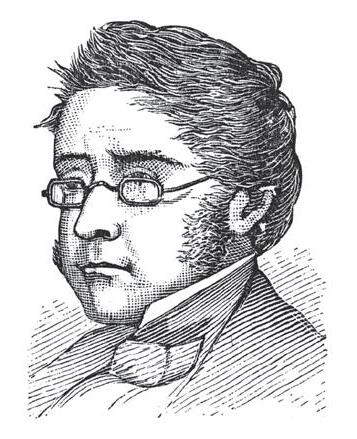
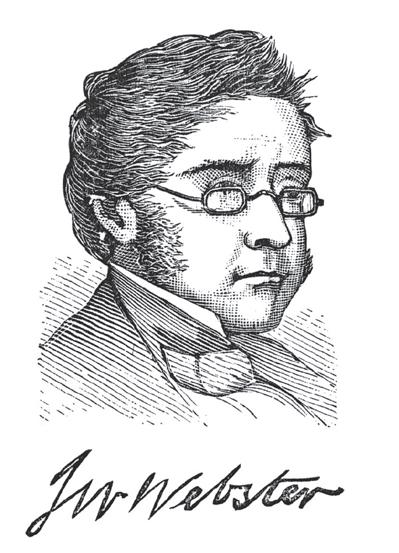
Our anti-hero, as you can plainly see, is J.W. Webster. He was a physician who closed his private practice to become a professor of chemistry and geology at Harvard Medical College in 1824.
His salary, alas, was not enough to cover expenses for him, his wife, and their four daughters. They had been forced to downsize from a mansion to a house that was “respectable but not grand” in 1849. He owed money to a number of people, including one George Parkman, an M.D. whose career was focused on real estate, not medicine. Parkman was known all over Boston, where he walked daily, collecting rent from his many tenants. His worth was half a million dollars, equivalent to tens of millions in wealth today
The last time Parkman was seen alive was on November 23, 1849, when he went to collect around $450 owed to him by Webster. He simply disappeared thereafter, an event that set Boston and its 120 newspapers abuzz. Webster told police Parkman had been by to see him at his lab, that he had settled a debt, and Parkman went on his way.
The combination of Parkman’s last known whereabouts and Webster’s disavowal of any involvement in his disappearance brought suspicion on Ephraim Littlefield, Harvard Medical College’s janitor, who happened to live in the basement of the building adjacent to Webster’s laboratory.
Littlefield’s detective work cleared his name and resulted in the discovery of the missing man — or more correctly the torso of a man, dismembered and burned and buried.
At Webster’s trial, the defense argued that Parkman’s identity as the headless torso could not be confirmed, but then Parkman’s dentist was called to the stand. He testified that the jawbones and teeth found in Webster’s furnace belonged to Parkman, and produced molds and plaster impressions he had made specifically for Parkman which precisely matched those from Webster’s furnace.
That testimony was the key to Webster’s conviction. He changed his denials to a full and detailed confession before he was hanged on August 30, 1850, at age 57.
I WAS THINKING
by Pat Tante MY FRUGALITY GENE
I am a recycler – what can I say? I am always proud to announce at opportune times that I cannot throw anything away that someone might be able to use, no matter how remote the possibility.
However, combine this recycling propensity with my frugality gene (inherited from both sides, my mother and my father) and it becomes a less admirable trait. Especially to those who lead a profligate lifestyle and are able to toss anything that they do not need into the trash without a thought. It’s not as if I can remember The Great Depression personally, but one never knows when a similar time will present itself. Be prepared.
I also was never a victim of the Irish Potato Famine. I’ve never had to go hungry for any lengthy period of time. My family did better than merely subsist, but there was never any ready cash around. My siblings and I collected deposits on returnable bottles to save enough for the Saturday movie.
Daddy ran a small grocery store, so food was not usually a problem, even with four kids to feed. I do not remember anyone ever complaining about what we had for supper – unless it was liver. Mainly, we concentrated on getting our share before it was gone.
Kids today begin to cringe and run for cover whenever we begin to talk about how hard we had it as children. You try to instill some sense of appreciation for today’s relatively easy living as compared to ours back then. Unless you lived through those times, you cannot quite grasp the concept.
Missing one’s breakfast because you are late for school or work hardly counts. Definitely, I am a product of my upbringing. I do not think that I am intrinsically weird or penny-pinching. I am just pru-
dent and not wasteful.
I hate to put my frugal food idiosyncrasies on paper (and yet, here I sit). There are bad names for people perceived as going far beyond normal saving measures. Dare I talk about them here? Could I be committed as a borderline food crazy? I will take the chance and divulge a few – maybe even pull you to my side of things. Anyway, Mama would testify on my behalf.
Have you ever found a bagel or English muffin in the bottom of your breadbox dried to an absolute bread puck? It’s even too far gone to be brought back to life with butter and a light toasting. I refuse to waste that food. I open the back door and sail that dried fried dough Frisbee-style over the fence into the wooded lot behind my house. Something will eat it.
Recently, I have noticed that my yard has become a pass through for some neighborhood cats, probably hungry strays. In the back of my refrigerator I found a container of refried beans that had been overlooked to the point of sprouting an interesting light green mold in spots. The unmoldy spots were probably still edible, I reasoned.
So, I put some table scraps and two nice, brown refried bean mounds on a plate and set it outside my back door. I peeked out the window next morning. The table scraps were gone, but the beans remained, the twin bean piles frozen solid (so yeah, this was not exactly last week). Even the opossum which frequents my yard at night would not touch them. I finally had to bury them. Maybe a bean vine will come up next spring.
My yard is not large enough for a compost bin, but the soil there is very rich and supports huge numbers of earthworms, easily found in the warm months by turning over a shovel of dirt. When I have food remains (non-meat) that are not particularly edible like eggshells, rinds, seeds and peels, I grab my garden spade and bury them in little holes around the yard, in the flower beds or under the trees. So I’m still composting, just without a bin, and now I have a free-range worm ranch. Any ham bones or chicken carcasses are tossed over the fence into the woods for nature to dispose of.
I know what you are thinking. Why don’t I just grind the stuff in my disposal and wash it away? To what good end, I ask? I’ve got worms to feed!
I should also mention the Halloween pumpkins that I buy every year. I love the big orange globes sitting on my front porch. I do not carve them so they usually last through Thanksgiving – still looking very seasonal. Last year they almost made it ‘til Christmas, but they got soft and I had to give them a proper burial. I cannot believe that some people set them out for garbage pickup. Think of the hungry worms, people!
441-3937
I can tell you have more questions. Yes, I bury my coffee grounds – azaleas love them. Yes, I crumble eggshells into my potting soil. Yes, I make breadcrumbs from week-old bread. I once saved a hardened disk of peanut brittle in the freezer because I thought that I could melt it into ice cream topping. When it proved impervious to knives, I sailed it across my back fence into the woods.
I’m not the only recycler. Something will eat it.
LOVE TO READ?
So do we!
TRYTHISDISH
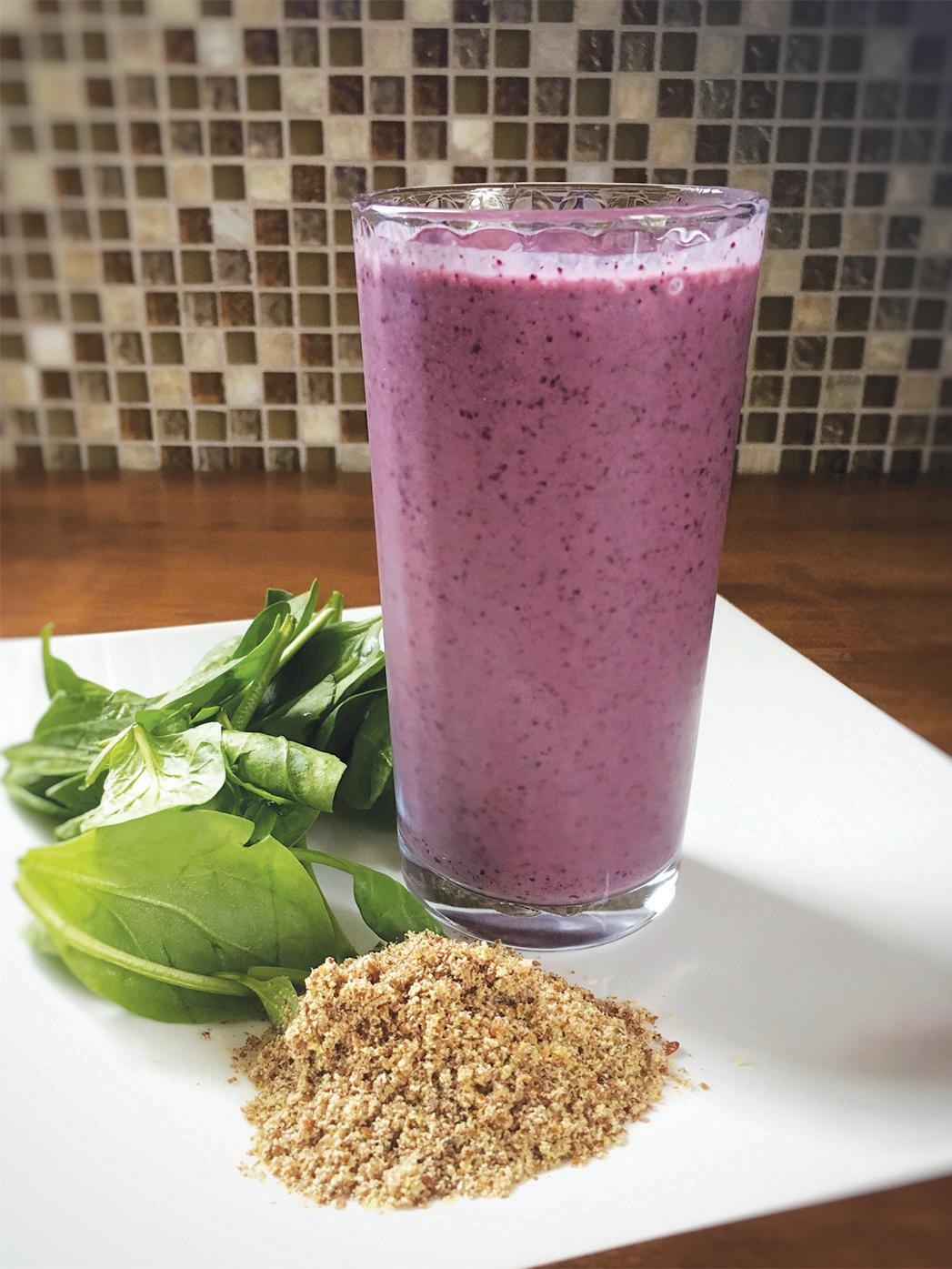
GOOD MORNING KEFIR SMOOTHIE
This is my morning smoothie most mornings.
I love the probiotic variety that kefir provides (double the probiotics of yogurt). Yet I love the protein that Greek yogurt provides so I combine these two powerhouse foods.
Ingredients
• ¾ cup plain kefir
• ½ cup Greek yogurt
• ½ cup spinach
• ¾ cup blueberries
• 1 tablespoon ground flaxseed
• ½ tablespoon maple syrup (if desired)
Directions
Combine all ingredients into a blender and “let ‘er rip.”
Yield: 1 serving
Nutrition Breakdown: Calories 287 (without maple syrup = 251), Fat 6g (saturated fat 2g), Sodium 424 mg, Carbohydrate 40g (without maple syrup = 31g), Fiber 5g, Protein 22g.
PSYCHOLOGICAL TRAPS
Our world is cluttered with psychological traps designed to snare your wellbeing. Recognize these for your own good.
Example: compliments before a request. The compliment is window dressing and fake. Cheese in the mouse trap. The request is the real goal. When hungry, Prince Charming might tell the Wicked Witch of the West, “I love your hair. That is the best smelling pie ever. Might I taste it?”
Mirroring: another confidence trap. They suddenly assume your opinions, vocabulary, wardrobe. They are not real and will change back as soon as they get what they want. Have you ever heard a politician proclaim, “When elected, I will do such-andsuch?” We all know what happens next. Or fails to happen.
Smiles from the nose
down If the eyes don’t complete the smile, it is fake. The lips are lying to convince you. Guard your purse.
Guilt trip They change your position into a contrived injury to them. Your beliefs insult their beliefs. Your ancestors mistreated their ancestors. You must apologize to them. Logic will not work against them. Just say, “I understand how you feel,” and run for the hills.
Silent treatment: It is their weapon to make you feel undeserving. Don’t chase. You can’t catch a shadow. Be glad they are gone.
Moving the goal post: No matter what you do, it is not enough. Do not engage. It is the “perpetual victim” concept. If a man walks through a door before a younger lady, he is ill mannered and had poor
BASED ON A TRUE STORY
(most of the time) A series by
Bad Billy Laveau
upbringing. If he waits for her to walk through first, he is lecherous and ogling her bottom.
Victim switch: A narrative is altered to project guilt in the opposite direction. Direct sunlight kills certain microorganisms. We see germs as dangerous and sunlight is the hero. Germs see sunlight as a killer that destroys their right to thrive. Makes one wonder if President Lincoln should be arrested for interfering with the trajectory of John Wilkes Booth’s bullet?
Information drip: They tell you just enough to keep you hooked and
coming back for more. TV series do that. Politicians do that. They hint they have all the answers, but only give you dribs and drabs. It is addicting. Hard to resist.
Comparison of someone better than you: They try to make you feel inadequate so you will chase their approval. Your chances of appeasing them is the same as spitting in the ocean and expecting the tide to change. Go to go back to my magic phrase, “I understand how you feel.”
Fake urgency: If they push you do something immediately, they want you to make a snap decision. Don’t think. Don’t analyze. Just agree. You have something they want. Never go along with a fake emergency. A real opportunity will be there tomorrow.
Vague positive terms: This is the hallmark of TV
ads. “Supports some organ systems or detoxification.” That is a near meaningless proclamation. Water supports all body functions. On the other hand, 99% of deaths follow drinking water within the previous 24 hours. That is an accurate statement, but will not drinking water for 24 hours prevent death? Of course not. Just because a statement is true, does not mean is it meaningful.
Before you make a decision, ask yourself, “Why am I confronted with this choice?” It is not because you are a good guy. It is because someone wants something from you. Tread lightly.
Ask yourself, who benefits the most? You or him? If you have any doubt, resort to my magic escape phrase, “I understand how you feel.” That doesn’t mean you agree or disagree. Doesn’t mean you will comply or not. It is your escape hatch to protect your purse.
MEDICALEXAMINER
SALUBRIOUSNESSWILLENSUE
CRASH COURSE
More Americans have died on US roads since 200 0 than in World Wars I & II combined
The actions of other drivers are a constant source of curiosity and puzzlement to many drivers. There are some people who put on blinders and do their best to concentrate solely on operating their own vehicle safely. That’s enough of an assignment for them, and we say: more power to those people!
But there is a large group of other people who find the actions of other drivers to be somewhere between a complete mystery and certifiable insanity. Those two extremes cover a lot of territory. It could almost be said that many drivers are “on the spectrum,” since there is such a wide variety of odd behavior behind the wheel. A few examples follow.
The “Let’s Dance” Mystery
until the light goes green.” We’ve seen it enough times that we know it’s a habit many drivers have. It just doesn’t seem to make sense.
The “Green Doesn’t Mean Go” Mystery
{ { Mysteries of the Road
This maneuver, fortunately, is more uncommon than the previous two examples, but it’s far from rare. Known as GDMG, it’s similar to the “straight left” maneuver, except this time the drivers are definitely turning left. They may or may not be using their blinker, but they are in dedicated left-turn lanes. To illustrate the point, we’ll have our example driver arrive in the left turn lane when the light is already green. Perhaps the yellow left-turn arrow is flashing meaning “go if it’s safe to go.”
HAVE FUN!
Have you ever approached another person as you walk down a narrow hallway or sidewalk and at the same moment you both dodge to the same side of the walkway? And then to compensate you go to the other side at the same moment the other person also does? We’ve all been there, and it’s a little bit comical.
Uncomically, oncoming cars do something similar quite often. Two cars are approaching the same spot from different directions — on a roadway or in a parking lot — and confusion ensues for one reason: neither driver is using turn signals in a situation where their use would immediately end the confusion. The mystery is that even after multiple separate incidents — stops and starts by one or both cars, just like walkers in a hallway — neither driver gets the bright idea to simply use the car’s blinkers. It would solve the confusion in a split second.
The “Straight Left” Mystery
In our traffic-monitoring travels we have observed the “straight left” move on many occasions. It goes something like this: a car is stopped at a red light in the left lane, which is not a leftturn-only lane; drivers can either turn left or go straight. The driver in our example does not have his blinker on; he is evidently going straight. Except that as soon as the light turns green he puts his blinker on to turn left. No harm no foul in many cases, except to the annoyed drivers behind him, who noted his implied message (“I’m going straight”) and pulled in behind him at the light. Now they’re stuck waiting for him to be able to make a left when they could have been on their merry way if he had just used his blinker.
The mystery here is that this practice isn’t a case of forgetting to use a blinker. It’s more like, “this is how I do it: I don’t turn my blinker on
GDMG drivers do not pull forward into the intersection while awaiting an opportunity to safely turn. It is perfectly legal to do so, but some people are not comfortable doing so for whatever reason. Okay. That’s a little puzzling, but it’s not the true mystery. The mystery here is when GDMG drivers do not turn when the nearest oncoming car is 100 yards away. 200 yards. Not a vehicle in sight. They apparently believe that, even with a green light and no oncoming cars nearby, they still need to wait for an arrow and a protected turn. Strange.
The “Let’s Go Together” Mystery
Would you hop into the car of a complete stranger, one whose driving skills, destination and mental temperament you know absolutely nothing about?
That’s a definite no, you say. And rightly so. It’s an easy question to answer. It would be reckless and irresponsible to roll the dice with your life and safety in such a way.
The mystery is why so many drivers — in many cases the very same ones who would say no to the question above — tailgate other cars. Anyone can see it any day of the week, including on I-20 well in excess of 70 mph, and on any of our major CSRA thoroughfares. They aren’t in the other driver’s car, but they might as well be. The tailgater is putting his safety, his finances, and even his life, into the hands of a perfect stranger — who might turn out to be a most imperfect stranger.
Some of these mysteries are merely curiosities and minor annoyances. Others are self-created life and death emergencies. Or at least they have the potential to become death-dealing.
As with any mystery, the question that needs answereing is Why?
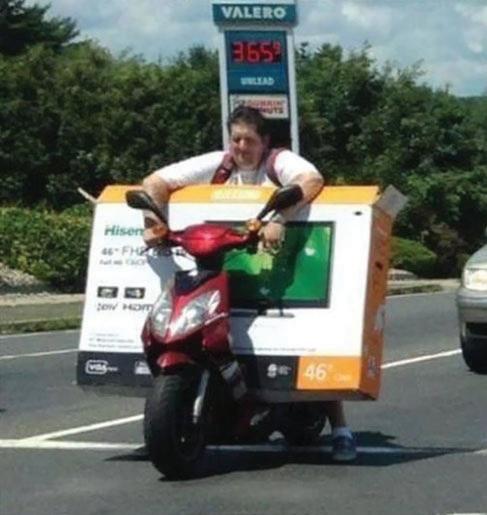
Write your most appropriate, clever, or funny caption to the photo shown for a chance to maybe win whatever cool swag we decide to give away someday. Email your entry to Dan@AugustaRx.com (Multiple entries ok)
DEADLINE TO ENTER: 5:00 PM FRIDAY, JULY 31, 2026
HEAD CASECHRONICLES
You are 99% Me. (Sorry about that.)
In the last colum, I was doing alot of complaining; The pharmacist, the “look” I get just for trying to fill a completely legitimate prescription, the 0.1% of humanity that makes me want to retire to a cave.
But I promised you some math, some history.
Here’s something that’s been keeping me up at night: modern genetics. You know, the
people with the sequencers and the white coats. They’ve mapped us humans, and they found a number: 99.9 percent.
That number is how much DNA you share with the very person who irritates you the most. Like that pharmacist who gave me “The Look”? 99.9% me.
The guy who cut you off in traffic? He’s 99.9% you.
We spend our entire lives obsessing over that tiny, infinitesimal, zero-point-one percent. We build political parties out of it. We end marriages over it. We start wars because of a 0.1% difference in software.
But the hardware? The “Flesh”? It’s the same. Here’s the uncomfortable part: the reason I recognize the “glitch” in that pharmacist, or the guy screaming into his cell phone at the airport, is because I’ve got the same codeburied in my own hard drive.
I caught myself the other day using a tone. You know the one: the “I’m sophisticated… a deep soul…better than you...and you’re just an inconvenience” tone. I was being performatively impatient. Sighing too loud. Checking my watch like I had a flight to Mars. I was running the “Important Man” software. And suddenly, I saw it. I saw the person across from me shrink a little. Just a flicker. And I realized I’m not “better” than the 0.1%. I’m just...currently infected by it.
I was using my 99.9% human heart to power a 0.1% ego trip. It’s like we’re all driving the same car, but I’m the one who decided to drive it into a ditch just to see if I could make a splash.
When you recognize your own software
SCOOPING POOH
glitch, you stop wanting to cancel the other person. You just want to help them reboot. I used to think this sort of thing was just “nice talk.” A Sunday School sentiment. But then I remembered a guy named Paul. A traveling scholar from about 2,000 years ago. He didn’t have a microscope. But he wrote something down two milleniums before it was verified in a lab. He said that mankind is all of the “same flesh.” Not “us and them.” Just... us. All of us.
If he’s right, and the scientists are right, then contempt is a lie.
Because you can’t really have contempt for someone if you realize they are just a mirror of your own worst day. Same nervous system. Same stress hormones. Same longing to be seen.
When I see that pharmacist now I don’t see a “villain.” I see someone running a walking-talking defensive software program because she’s tired, or scared, or just having a human moment.
And I’ve been there. I’ve run that software too. So kindness isn’t charity. It’s just accuracy. It’s acknowledging the 99.9% and letting the 0.1% stay where it belongs...in the background. Anyway, something to think about next time you’re at the grocery store. Or waiting forever at the pharmacy or on hold. Or you get cut off in traffic.
Stay decent. after all, we’re all made of the same stuff.
by the semi-anonymous TALMADGE of the YouTube channel, TALMADGE IN THE VOID, kind of a mixture of George Carlin and Mister Rogers.
he Examiners
by Dan Pearson
I did! My brothers and my mom. My father always held grudges, and I refuse to forgive him for that. Did you get to see any family over the 4th?
Yikes. Why not?
CAPTION THIS
Check out our new reader contest on p. 10 Write your most appropriate, clever, or funny caption to the photo shown for a chance to win whatever cool swag we eventually decide to give away! Email your entry to Dan@AugustaRx.com
DEADLINE TO ENTER: 5:00 PM FRIDAY, JULY 31, 2026 Have fun!
ACROSS
1. Stay at Mistletoe
5. Salt of uric acid
10. Dumb-dumb
14. Minerals
15. More pleasant
16. Republic in SW Asia
17. Alpha follower
18. Dew, for instance
20. Sheep’s bleat
21. Dust particle
22. Map collection
23. Former Russian rulers
25. Stroke, in short
26. Danzig’s name in Poland
28. Much-decorated Olympic swimmer
31. A rich tapestry
32. Flower segment
34. Tree of the genus Ulmus
36. Fight for breath
37. Shankar’s instrument
38. New York canal
39. Doc’s org.
40. With “The,” an Augusta golf course
41. Swelling of tissues
42. Dougherty County (GA) seat
44. Type of school
45. Cover
46. Ambulance feature
47. Indian, for example
50. Augusta _____
51. Nickname of the 34th US president
54. Confederate facility in Augusta
57. Bucket
58. Fencing sword
59. Research deeply
60. Old cloth measures
61. He brought down Capone
62. Congressman Rick
63. _____ of Man DOWN
1. #1 player for the Augusta Tourists
2. Part of CSRA
3. Of the foot bones
4. An ad for raising awareness (abbrev)
5. Open a wine bottle
6. Violent protests
7. Teen skin eruption
8. The late Mr. Turner
9. Before (to a poet)
10. Proximal’s opposite 11. Like most thermometers
12. Word with bank or base
13. Singles
19. Abdominal landmark
21. Spectrometer intro
24. Crack
25. Blacken
26. Very enthusiastic lady?
27. Stage play
28. Egyptian deity
29. Plants that live from year to year
30. Ball prefix?
32. Feel compassion for
33. Abbrev. for “and the rest”
35. Type of market
37. Castle-building material
38. Verge
40. Local college
41. English nobleman ranking above a viscount
43. Shoulder bones
44. Jenkins County (GA) seat
46. Medicinal ointment
47. Sign on many doors
48. Deal with
49. Female sheep
50. Enterprise follower
52. While away, as time
53. Otherwise
55. Food label abbrev.
56. Famed Brooks
57. Noted architect
DIRECTIONS: Every line, vertical and horizontal, and all nine 9-square boxes must each contain the numbers 1 though 9. Solution on page 14.
DIRECTIONS: Recreate a timeless nugget of wisdom by using the letters in each vertical column to fill the boxes above them. Once any letter is used, cross it out in the lower half of the puzzle. Letters may be used only once. Black squares indicate spaces between words, and words may extend onto a second line.
on page 14.
is
ATHEBESTMEDICINE
Moe: Did you hear about that guy who was killed by a shark on his honeymoon?
Joe: Oh, no! I did not! That is terrible. How long did he suffer?
Moe: Not long. The paramedics said he had only been married for three days.
Moe: What starts with a W and ends with a T.
Joe: Actually, I think it starts with an I and ends with a T.
couple from up north were vacationing in the Deep South. They had dinner at a very nice restaurant, and when the check came the woman reached for the bill but the waiter pulled it away.
“I’m sorry,” he said, “but we are very traditional here in the South. The man must pay the bill.”
The women said, “Well, I guess there could be worse traditions.”
“Madam,” the waiter repeated, “we are very traditional. No one cares about your opinion.”
Moe: You ever make breakfast in your underwear?
Joe: Nah. I prefer bowls and pans.
Moe: Did you hear about that baker in the Army?
Joe: No, what about him?
Moe: They say he went out with all buns glazing.
Moe: You know, one of the weirdest things about the English language is that nothing starts with an N and ends with a G.
Joe: I believe you are correct, sir.
Moe: Did I tell you that yesterday I became a pilot?
Joe: No way! Congratulations! Tell me about it!
Moe: Well, I tripped over my cat and went flying.
Moe: I wish more people would go to movie theaters. If current trends continue, an artform will die before our eyes.
Joe: You mean cinematography?
Moe: No, popcorn making.
Moe: What should I drink when I’m sick?
Joe: Well water.
Moe: Can I ask a stupid question?
Joe: Better than almost anyone I know.
Staring at my phone all day has certainly had no effect on ME!
By popular demand we’re making at-cost subscriptions available for the convenience of our readers. If you live beyond the Aiken-Augusta area, or miss issues between doctor’s appointments — don’t you hate it when that happens? — we’ll command your mail carrier to bring every issue to your house!
NAME ADDRESS
CITY STATE ZIP
Choose six months for $26 or one year for $48 . Mail this completed form with payment to Augusta Medical Examiner, PO Box 397, Augusta GA 30903- 0397
My wife and I recently had a so-called trail separation. It was my idea, although she didn’t protest too much. We agreed beforehand to give it two weeks and then get together again and see how we felt. When I saw my wife again she was a sight for sore eyes, which really surprised me given the problems we had been having. What advice do you have for us going forward?
— Aiming for a Fresh Start
Dear Aiming,
Thank you for writing about this deeply personal matter and giving me the opportunity to use your situation to help you and countless others.
First, congratulations on your fresh start. I have every confidence it will go well if the two of you diligently work through the inevitable problems. After all, no marriage is perfect, so the key to success is not to avoid problems — which isn’t possible — but in dealing with them without allowing them to erode your relationship.
As much as I’d like to offer more pearls of marital wisdom, what really concerns me are your sore eyes.
Eyeball pain isn’t normal, but it can be minor irritation caused by dust or pollen or issues with contact lenses. Sometimes sinus infections can lead to pressure behind the eyes, and migraines can also lead to eye pain and discomfort. Blocked tear ducts and dry eyes can create irritation, redness, swelling and discomfort.
So clearly, there are a number of possible causes of sore eyes that aren’t necessarily in the call 9-1-1 category.
However, eyesight is a precious sense, and one to protect as much as we possibly can. Many people view anything vision-related as a “better safe than sorry” situation. They feel having a doctor check out even minor symptoms is better than leaving sight to chance, and it’s hard to argue with that approach.
While that is standard operating procedure for some people, here are a few suggestions for a definite trip to the doctor as soon as possible: sudden eye pain that is severe, or that is accompanied by vision changes, nausea, vomiting, or light sensitivity. Your doctor can check for things like infections or glaucoma and work to prevent complications or vision loss
Thanks for writing. I hope I answered your question, and my best wishes to the two of you going forward.
Do you have a question for The Advice Doctor about life, love, personal relationships, career, raising children, or any other important topic? Send it to News@AugustaRx.com. Replies will be provided only in the Examiner.
• “They
•
WORDS
BY
NUMBER
Some
PROFESSIONAL DIRECTORY
ACUPUNCTURE
Dr. Eric Sherrell, DACM, LAC Augusta Acupuncture Clinic 4141 Columbia Road 706-888-0707 www.AcuClinicGA.com
CHIROPRACTIC
DERMATOLOGY
Evans Chiropractic Health Center
Dr. William M. Rice 108 SRP Drive, Suite A 706-860-4001 www.evanschiro.net
DENTISTRY
Jason H. Lee, DMD 116 Davis Road Augusta 30907
706-860-4048 Floss ‘em or lose ‘em!
Georgia Dermatology & Skin Cancer Center 2283 Wrightsboro Rd. (at Johns Road) Augusta 30904 706-733-3373 www.GaDerm.com
DEVELOPMENTAL PEDIATRICS
Karen L. Carter, MD 1303 D’Antignac St, Suite 2100 Augusta 30901
Steppingstones to Recovery 2610 Commons Blvd. Augusta 30909 706-733-1935
Home Care Personal Care|Skilled Nursing|Companion 706-426-5967 www.zenahomecare.com
Parks Pharmacy 437 Georgia Ave. N. Augusta 29841 803-279-7450 www.parkspharmacy.com PHARMACY
HOW MUCH DO YOU LOVE THE
MEDICALEXAMINER
Enough to participate in our fundraiser?
We’ve brought back our GoFundMe from a few months ago because we never completed it; we never quite reached our goal. Can you help us wrap it up?
Here is a link to visit for details: https://gofund.me/ea29df26f, visit Facebook.com/AugustaRx, or mail a contribution to PO Box 397, Augusta GA 30903 Every single dollar helps and is appreciated.
THANK YOU!
SOUND SYSTEM... from page 1
the range of sound human ears are able to detect in terms of pitch is amazing: it can be a variation as slight as a tiny fraction of a single percent. The audible volume range is even more is astounding. The way sound is measured, the threshold of audio pain and hearing damage is one trillion times louder than the faintest sound we can detect.
However, just because we can detect sounds a trillion times louder than a whisper doesn’t mean it would be safe. In fact, it would be catastrophic.
What are called cochlear hair cells in each ear, some 16,000 in number, are actually not “hairs.” They are neural sensors that are 1/100th the width of a human hair. Extremely loud noise can bend, snap or rupture these cells, not unlike hurricaneforce winds ripping a flower out of wet soil. Once that kind of trauma happens, those cells are gone forever. They do not repair, regenerate or regrow.
The ear has some built-in protective mechanisms, but we can augment them by wearing hearing protection to guard and maintain this remarkable and precious data collection and analysis system.
HOW DO NOISE-CANCELING HEADPHONES WORK?
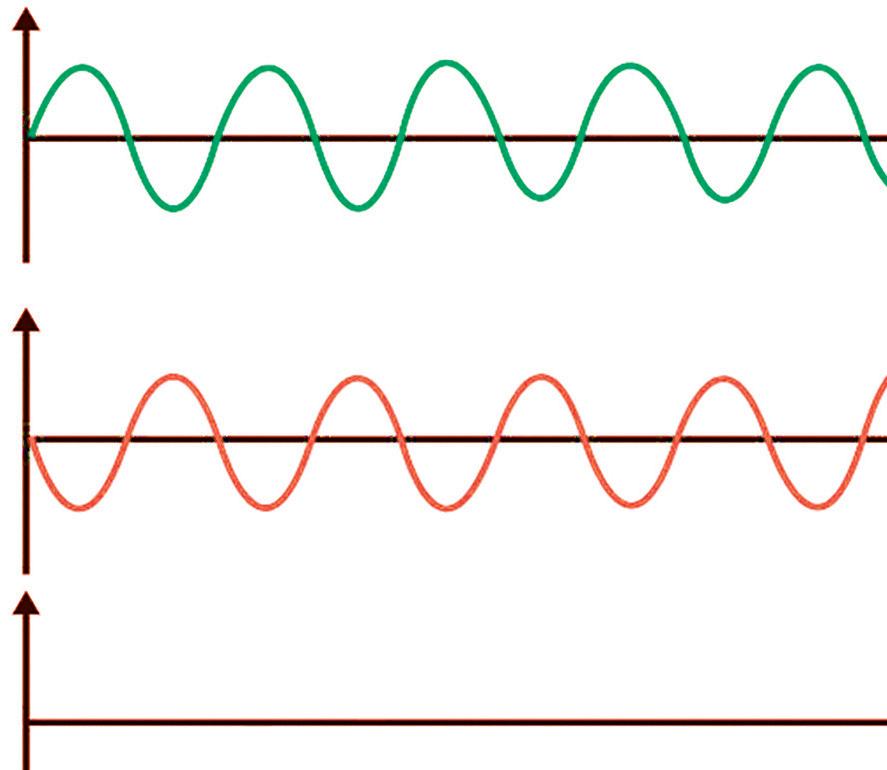
Their name literally describes what they do. In simple terms, they listen to outside sound waves (Line A), then use a processor to flip those exact waves upside down (Line B) and play them back into the headphones through tiny speakers. Every individual point on the outside sound waves, as illustrated by the arrow on Line A, is met by a corresponding opposite point, as illustrated by the arrow on Line B. When the two waves meet, they cancel each other out, as shown in Line A+B.