I sat on the sofa bed in pediatric intensive care unit (PICU) room 4118, taking a pause from the events of that day, September 29. We had just finished moving hundreds of patients from our 65-year-old children’s hospital to a sparkling new, state-of-the-art children’s hospital a few miles away. The effort was an unmitigated success, ahead of schedule and without incident, a culmination of years of building the new hospital and meticulous planning for the move. Now I had come back over to say goodbye to the old place. I entered 4118 as I had countless times before, as a critical care physician caring for children with acute illness and their families. And once, 9 years before, as a grandfather holding the soft pink hand and kissing the forehead of my infant grandson, George, as he lay motionless, receiving mechanical ventilation and extracorporeal membrane oxygenation (ECMO).
A MATTER OF TASTE
Like everything else about the human body, the sense of taste is another example of this maxim: the closer you look, the deeper you investigate, the more complex and amazing the discoveries are. As one commentary about individual human cells asked, “is anything really simple?”
The answer is always no. And our sense of taste is a perfect example.
We use it all day every day without a second thought. Whatever goes into the old pie hole is analyzed for its flavor, whether it’s hot or cold, sweet or tangy, smooth or crunchy. It might be peppermint, dill pickles, cinnamon, horseradish, coffee, rye bread, Hostess Ho-Hos or one of a million other foods.
that around 80% of what we taste actually comes from the aromas of food. That explains why food is bland or even tasteless when we have a cold.
In a similar vein, visual cues are a greater part of the experience of eating than we might realize. Experiments have been conducted where blindfolded volunteers had difficulty identifying what they were eating. The confusion was elevated when volunteers were given nose clips so they couldn’t smell what they were eating, and it increased even further when some basic element of the food was altered. For example, if grapes were peeled and also served warm, most test subjects could not identify them.
My thoughts rolled back to that night. I have come to find that “it seems like only yesterday” can be real, because I relive those events every day. The memories have softened a little over time but still come crashing over me like an unexpected ocean wave. I remembered answering my cell phone to the worst call of my life, an anguished plea for help from my son that little George was not breathing as they got him out of the car moments before. My wife and I raced to our son and daughter-in-law’s home nearby, beating the ambulance. There was the surreal experience of taking over CPR from my kids,
We know what to expect with most of the foods we eat, and taste buds confirm our expectations. How they do so is incredibly complex, but a greatly simplified explanation is that food triggers a chemical reaction which is then converted to an electrical signal which travels via nerves to the brain to be analyzed and interpreted as a taste.
But there is enough detail in and around the simplified explanation above to fill a book. Several books, in fact.
Part of the sense of taste is inextricably tied to both sight and smell. Scientists estimate
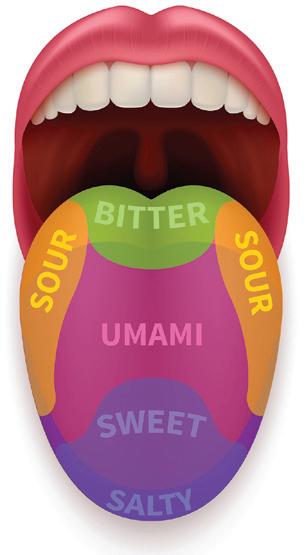
When you stop to think about it, most of us have heard the tongue can detect five basic tastes: sweet, sour, salty, bitter, and the savory category known as umami. By contrast, the nose has more than 400 receptor types and can detect tens of thousands of separate aroma combinations. Chocolates, coffees, and wines alone have nearly 2,500 identifiable aroma compounds, so it’s easy to see the flavor/smell connection. There are other partnerships in the world of taste. For instance, most people don’t know
• Personal, local answers and assistance
• Review your current plan for optimum
• Call to review the best enrollment for you
• All services provided at no cost to you
PARENTHOOD
by Dr. Warren Umansky, PhD
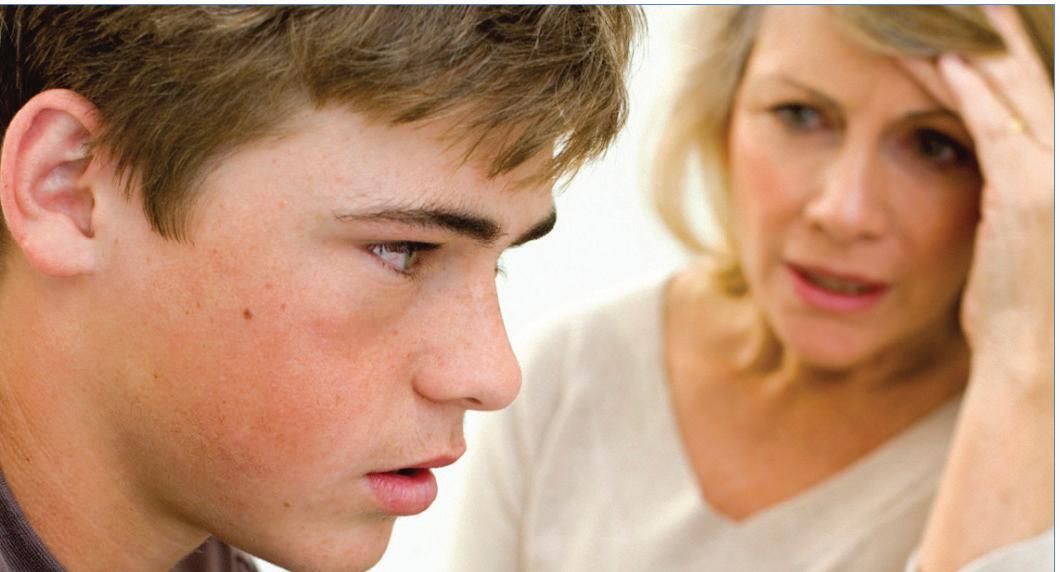
You hear your teen children talking to each other about how they hate people who are Jews, Muslims and LGBTQ. You never have had any conversations at home like this, so you don’t know where this animosity comes from. You know that some of the high schools in your county have had incidents of swastikas being spray-painted on lockers and walls, girls being teased for wearing hijabs, and children being bullied for their gender identity. You hope your children are not involved but don’t like what they are saying. What do you do?
A. Contact the school administration and find out if there have been any hate incidents at your children’s school.
B. Get on Facebook and ask your online friends what to do.
C. It is time to have a serious conversation with your children. Find out where the hate comes from and what they think should happen.
D. It’s just teens sounding off about things they don’t understand. It doesn’t mean anything.
If you answered:
A. This is a good first step. You want to know if your children have been exposed to this at school and if they might have been involved in some way.
B. Your Facebook friends might be aware of stirrings in other schools and in the community that might relate to anti-Semitism and anti-Muslim sentiments.
C. Hopefully, you are both disappointed and outraged to hear your children speaking of hating other people. Some of the disappointment must be in yourself, as their parent, if you have modeled behaviors and taught values of acceptance and tolerance toward others.
D. Ignorance is dangerous. It has a profound effect on the civility of our society and on the success of those who develop negative opinions based on false information. They are your children. Their hatred should not be ignored.
There is always a battle between what parents teach their children and what children are exposed to outside the home. We often see demonstrations by young and uninformed people on school campuses and city streets promoting hate and intolerance. Many who witness these events or who see reports about them feel a responsibility to respond. When parents ignore their role to educate their children with the truth, ignorance and hate win. When children have unsupervised access to social media, ignorance and hate have an easy target. The number of hate crimes in our country and around the world have reached new heights. Parents should want their children to be informed and tolerant of others who are different from them. This requires involved parents who sit at the dinner table with their children and talk about what goes on in school and in the community.
Dr. Umansky has a behavioral health practice for children in Augusta
THOUGHTS
ABOUT THOUGHTS
57 “BUT YOU DON’T LOOK DEPRESSED!”
THOUGHTS
HIGH-FUNCTIONING DEPRESSION
When success on the outside hides struggles on the inside
Editor’s note: Written by local mental healthcare professionals, this series explores how people may think and act when affected by common and lesser-known mental health conditions.
Sarah is a 42-year-old business owner, wife, and mother of two.
She rarely misses work. Her home is organized. She volunteers at her children’s school and is known for always showing up when others need help. To most people, Sarah seems successful and put together.
What they don’t see is how difficult it is for her to get out of bed each morning. They don’t see the exhaustion she feels after maintaining a smile all day. They don’t know that she cries in her car before walking into work or that she spends most evenings emotionally drained and disconnected.
When she finally told a friend she thought she might be depressed, the response surprised her. “You? No way. You’re doing great.”
Sarah began to question herself. If she was still functioning, could she really be depressed?
The answer is yes. Sarah may be experiencing what is commonly known as high-functioning depression — a form of depression that often goes unnoticed because the person continues meeting responsibilities despite significant emotional suffering.
What Is High-Functioning Depression?
High-functioning depression is not an official psychiatric diagnosis, but a commonly used term describing individuals who experience symptoms of depression while maintaining many aspects of daily functioning.
These individuals often continue to work, care for families, and meet obligations, leading others — and sometimes themselves — to underestimate the severity of their distress.
Many people who describe high-functioning depression meet criteria for conditions such as Persistent Depressive Disorder or Major Depressive Disorder.
Because they remain productive, they may delay seeking help for years.
Signs and Symptoms
Emotional Features
• Persistent sadness or emptiness
• Feelings of hopelessness
• Difficulty experiencing joy or excitement
• Increased irritability or frustration
Cognitive Patterns
• Excessive self-criticism
• Feelings of inadequacy despite accomplishments
• Difficulty concentrating or making decisions
• Persistent negative thinking
Behavioral Patterns
• Overworking to distract from emotional pain
• Social withdrawal despite maintaining obligations
• Hiding struggles from family and friends
• Continuing responsibilities while feeling emotionally depleted
Physical Symptoms
• Chronic fatigue
• Sleep disturbances
• Changes in appetite
• Low energy despite adequate rest
Functional Impact
• Reduced quality of life
• Relationship strain
• Burnout
• Increased risk of worsening depression over time
Why Is It Often Missed?
One of the defining features of high-functioning depression is that the person appears to be managing life successfully.
Society often associates depression with an inability to work, get out of bed, or maintain responsibilities. While those experiences are valid, depression can also exist beneath a façade of competence and achievement.
Many individuals become experts at masking symptoms. They may:
• Keep busy to avoid emotional discomfort
• Avoid discussing their struggles
• Compare themselves to others who seem worse off
• Believe they haven’t “earned” the right to seek help
As a result, symptoms frequently go unrecognized by family, friends, employ-
ers, and healthcare providers.
What Causes High-Functioning Depression?
Like other forms of depression, high-functioning depression develops through a combination of factors, including:
• Genetic predisposition
• Brain chemistry and neurotransmitter differences
• Chronic stress
• Trauma or adverse life experiences
• Perfectionism and high self-imposed expectations
• Lack of social or emotional support
For many individuals, years of coping and achievement can mask underlying depression rather than eliminate it.
Common Misconceptions
“If they’re truly depressed, they wouldn’t be successful.”
Many people with depression continue to excel professionally while suffering privately.
“They’re just stressed.”
Stress and depression can overlap, but depression involves persistent emotional symptoms that extend beyond temporary life pressures.
“If they can get things done, they must be okay.”
Functioning and well-being are not the same thing. Someone can perform daily
tasks while experiencing significant emotional distress.
“They would ask for help if it was serious.”
Many individuals with high-functioning depression minimize their symptoms or fear being judged because they appear successful.
Treatment
High-functioning depression is highly treatable.
Psychotherapy
• Cognitive Behavioral Therapy (CBT) helps identify and challenge negative thought patterns.
• Interpersonal therapy can improve relationships and emotional support.
• Insight-oriented therapies may explore deeper contributors to chronic depression.
Medication
Antidepressant medications may help regulate mood and improve functioning when clinically indicated.
Lifestyle Interventions
• Consistent sleep routines
• Regular physical activity
• Stress management practices
• Increased social connection and emotional expression
Addressing Perfectionism
Many individuals benefit
from learning to set realistic expectations and develop self-compassion rather than relying solely on achievement for self-worth.
Prognosis
With appropriate treatment, individuals with high-functioning depression often experience significant improvement in mood, energy, relationships, and overall quality of life.
Many discover that they had become so accustomed to carrying emotional pain that they no longer recognized how much it was affecting them.
Without treatment, symptoms may persist for years and increase the risk of major depressive episodes, burnout, anxiety, substance use, and relationship difficulties.
The goal is not simply to continue functioning. The goal is to feel engaged, connected, and fulfilled while doing so.
Recognizing that someone can appear successful while struggling internally is one of the most important steps toward reducing stigma and encouraging treatment.
About Us
IPS provides inpatient and outpatient mental health services, with or without a referral, to help patients and their families progress through the care journey.
To make an appointment, call 706-204-1366 or visit integratedpsych.care.
VIEWED AS AN EMOTIONAL CONDITION?
It does have a bit of a reputation, doesn’t it? Someone in an old movie or TV show would get upset about something and they would swoon from an asthma attack.
In Mornings on Horseback, historian David McCullough’s profile of Theodore Roosevelt, he devotes a whole chapter to the future president’s childhood tribulations with asthma. On Asthma, the definitive guide of the day penned by a British doctor called it “essentially a nervous disease.”
The book cited the experience of a young boy who would tell his father, “Don’t scold me or I shall have the asthma.” And so he would, added McCullough. “His fears were as correct as they were convenient.”
Asthma is definitely not a nervous disease. It may have “nervous” elements, but at its core asthma is a disease of physical things, like swollen, narrowed airways that result in labored breathing, coughing, shortness of breath and wheezing.
Simply breathing can sometimes trigger an attack. “Exercise-induced asthma” probably needs no explanation; “occupational asthma” comes from workplace irritants like fumes and dust; “allergy-induced asthma” can be caused by pollen, mold spores, and pet dander.
So how did people in times past view asthma as “essentially” a nervous condition? Knowledge is always growing, and what we accept as fact today may well be debunked in the future. But there is no denying, even today, that emotions might trigger an asthma attack because they can cause rapid, shallow or irregular breathing and activate stress hormones that tighten airways. Even laughter can tighten chest muscles and cause brief hyperventilation, possibly leading to an attack.
Anger, fear, and excitement can’t cause asthma, but such emotions can certainly trigger problems in someone who already has respiratory issues.
www.AugustaRx.com
Direct editorial and advertising inquiries to: Daniel Pearson, Publisher & Editor Email: Dan@AugustaRx.com
Augusta Medical Examiner PO Box 397, Augusta Georgia 30903-0397 (706) 860-5455
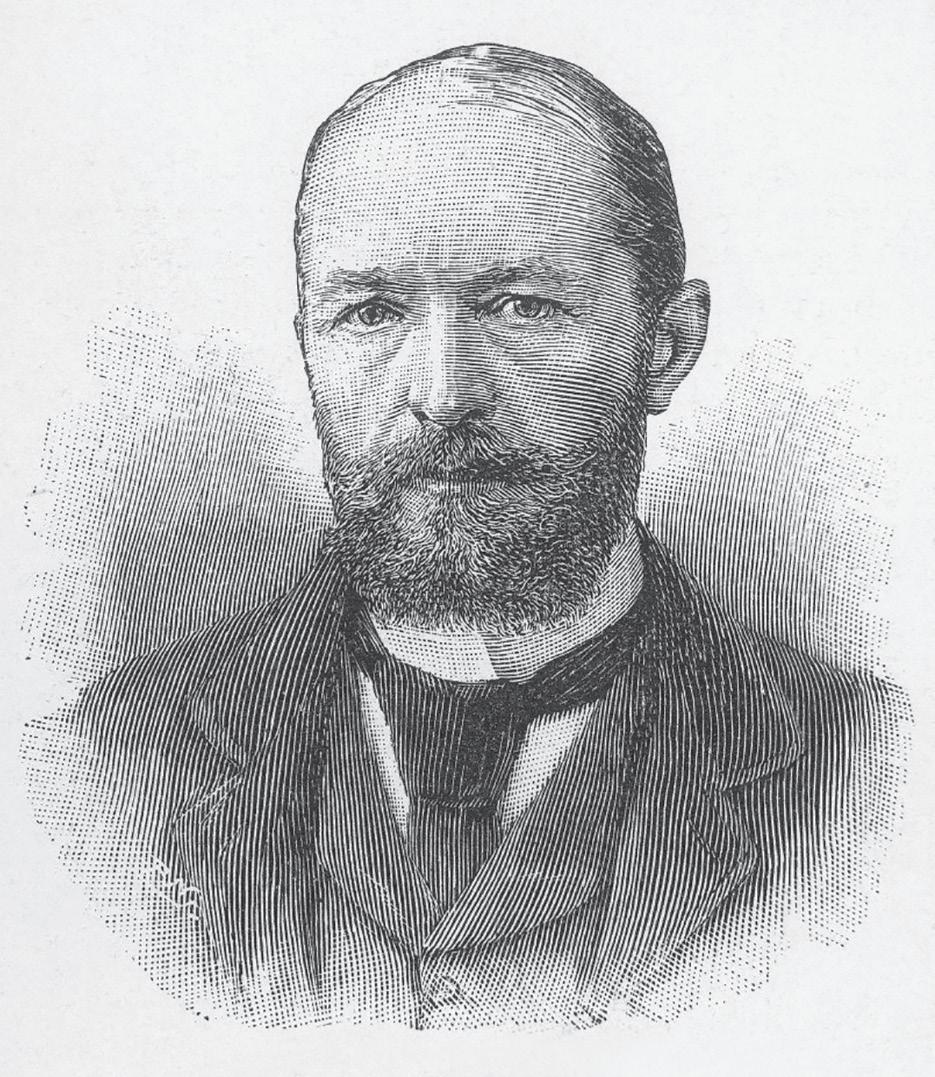
One of the clearest indicators of the health and vitality of the global medical community is the sheer number of stellar physicians and researchers who have at various times pioneered the path toward improved salubriousness. We have profiled medical innovators in this space who died the week before, and others who practiced the healing arts even before Jesus walked the earth.
To prove the point, here we are at installment #260, and we are just now about to profile the man above, the recipient of the very first Nobel Prize in Medicine. Finally!
Please meet Emil von Behring, born in Prussia (in an area that is now Poland) in 1854. His medical education was more than his family could afford (since Emil had twelve brothers and sisters), so his college years (18741878) were at an institution that trained military physicians. Each semester of state-funded study was repaid with a year of military service.
His early career centered around two subjects that served him well. Much of his earliest training was in ophthalmology, and his doctoral dissertation was about diseases of the eye, a field requiring the most meticulous of skills. And naturally, field surgeons attached to any branch of the military are routinely exposed to horrific wounds and infections, and Behring was no exception. By necessity, such doctors need to master the treatment of infections yesterday. Behring applied lessons from field medicine by pioneering what was then called “serum therapy.”
The term has gradually been replaced as blood ingredients have been replaced, but in Behring’s day it described a revolutionary concept he pioneered of taking blood serum (often from a horse) that contained antibodies against a specific disease, and injecting it into a human suffering from that disease to jump-start his immune system and restore health. The process was designed, in Behring’s own words, “to stimulate the body’s internal disinfection.” He described the active ingredient in these injections as “antitoxins,” a word he coined.
He and a research partner, Japanese bacteriologist Kitasato Shibasaburo, successfully aimed this therapy at tetanus and diphtheria. In the past hundred years, tetanus deaths, once the fate of up to 90% of those infected, have declined in the U.S. by roughly 99%. As for diphtheria, it primarily struck children, and during some 18th and 19th century epidemics as many as 80% of children under 10 died in affected areas. Vanquishing these deadly plagues made Emil von Behring a most worthy recipient of the inaugural (1901) Nobel Prize.
Middle Age
BY J.B. COLLUM
A few days after this goes to press, I will turn 60, so it is long past time for me to work at getting my health issues fixed, or at least mitigated to some degree. The pool is there waiting for me as an easy way to exercise, but I’ve only used it once this year so far.
For me anyway, it is really hard to work on multiple things at once. It might be my short attention span. I’m not sure. I need to work on things around the house. I need to finish building my new office/studio in the building I bought. I need to lose weight. I need to exercise. I need to eat right.
And that is despite the fact that I am taking such a risky leap with a slight change of career at my age.
Forty didn’t really scare me. Forty, to me, was when I was finally old enough to be taken seriously. Fifty, similarly, didn’t really bother me. By then I was making good money and was looked at as the older-but-still-not-old guy who had the experience and knowledge to help the younger people get their start or make the changes needed to take the next step.
Sixty just feels ...different.
It all seems overwhelming at times. As I have been trying to get my new business off the ground and find some other software development work on the side to tide me over until the business is going well, it feels like I have been working harder than I have in years.
I put a long to-do list on my whiteboard every day, and I have yet to check everything off in a single day.
I’ve cleaned up and reorganized my office/studio in the house, and then I did that optimization thing I do that ends up distracting me. I 3D-printed holders for every remote I have and mounted them within reach of where I sit in front of the computer. I also 3D-printed stands for my iPad and phone, and headphone holders as well.
Oh, and the most important one: a cup holder.
I spent way too much time on that one because I needed it to be adaptable to a big water bottle, a thermos, or a small 12-ounce Coke can. It is sort of complicated, but it works well. Don’t tell my wife, Lorie, how much time I spent on it. I bought wall-mounting brackets for my guitars, speakers, and other things that apparently needed to be attached to walls to prevent the collapse of civilization as we know it
I think I did all of this because, unlike trying to find paying work, it is simple and has a goal I know I can reach. Filling out job applications online feels more like launching probes into the void of space and wondering if they’ll ever return to earth.
I will say that the cleaned-up and organized office, with different stations for the computer, a workbench, and my musical instruments, makes for a pleasant feeling. My mind is more at rest. I don’t know the psychology of it, but I do know that I feel more at peace than I did before.
But now, sixty.
Hmmm.
Sixty feels different.
It seems more like the end of the line as far as work goes. I don’t really want to work past 67, or at least not full time. I most likely will do some writing and some volunteer work, but I don’t want to have to work past that age.
Of course, I haven’t been the best saver, and I just read that the latest update on when the Social Security trust funds could run dry is — well, what do you know — 2034. That is one year after I turn 67 and have hopefully retired.
Oh well. At least my mortgage and other bills should all be paid off before then. Sixty feels different to me because I can’t think in terms of decades when it comes to my career anymore, and I fear that others might think the same thing. So, if the business doesn’t work out, who is going to want to bring a short-term hire on board? (Why short-term, you ask?
Because they’re thinking they don’t need to hire somebody who might drop dead of old age next week.) And that problem will not get better. It will only get worse.
I can’t do anything about a lot of those things, though, so I won’t worry about it. Well, that’s not true. I probably will worry about it. I just won’t admit it unless I’m writing a newspaper column about it. At least there are more perks and discounts when you are 60 or over, so I will enjoy those and see if I can pass for older for the perks I’m still too young for.
That’s a bittersweet prize, though.
Yay, I got the age 60 discount.
Boo, they think I’m over 65.
J.B. Collum, the author of this column and Special Forces Parenting, is a local novelist, humorist and columnist who wants to be Mark Twain when he grows up. He may be reached at johnbcollum@ gmail.com
Special Forces
Parenting
I’m very familiar with Murphy’s Law. In fact, if you could earn a PhD in Murphy’s Law, I wouldn’t just hold that degree, I would be one of the world’s foremost experts in the field, right alongside my groundbreaking work in procrastination and laziness. Alas, the world has not yet come to appreciate these sciences, so I must continue my studies without the hope of a Nobel Prize in my future.
I can live with that.
Just today, Katie had to go to work one last day before starting her summer break as a teacher, while Lorie and I were at home with the kids. This morning, Lorie told me goodbye as she headed out to the grocery store. Normally, being left alone with the kids might have caused my internal warning system to go off, but another one of our adult children was visiting, so I saw myself as playing a backup role for any emergencies.
only say that the words accurately explained both what had just happened and how the person felt about it.
To protect the guilty, I will not name the adult child of mine who said it. But after I heard it, I ran out to see what I could do — or, more accurately, to see whether there was any way I could avoid helping and return to the hot, humid outdoors to work on the lawn mower.
Yes, working on the lawn mower in the blazing sun was suddenly looking pretty good.
Once I got out of my office, I saw that my other adult child already had Freyja in the tub. I was told where to look for the mess.
I walked into the den and saw the evidence smeared on the sofa back cushion, dribbled down onto the seat cushion, and spread onto a throw pillow. There may also have been blankets involved. At that point, I was not conducting a forensic investigation so much as trying not to lose the will to live.
To answer your question, the clue is “smeared.”
I briefly pondered running away to join the circus, but I don’t think that is much of an option anymore. So instead, I grabbed the baby wipes — we buy them by the truckload — and a small trash bag (those too) and proceeded to fill the bag while working diligently not to get any of the mess on myself.
That proved impossible.
This was good, because I had a lot to do. As Lorie pulled away, though, my keen mind — at least when it comes to detecting things that might interfere with my laziness — had a very uncomfortable thought.
What if something bad does happen?
What if there is, heaven forbid, a turdnado?
Rather than dwell on that horrifying possibility, I went back outside to work on the lawn mower. I came back in eventually to get batteries for my multimeter, since I had exhausted all the simple explanations for why the mower would not start. I had now reached the stage where I had to start tracing a possible electrical issue.
It is hard to think of anything less desirable than that, especially when said riding lawn mower is broken down out in the open, in the blazing sun, with the temperature about one degree shy of hot enough to scramble eggs on the black lid of my toolbox.
I was about to discover something worse. I went to my office, where I have some tools and a workbench, and started replacing the batteries in my meter. That is when I heard a howl.
I will not repeat the words that followed the howl, as this is a PG publication. I will
So I abandoned all hope of remaining personally uncontaminated and dug in. After getting up the worst of it, I got the upholstery cleaner we use — the one that happens to have weapons-grade disinfectants and antibacterial ingredients in it — along with a rag, and went to town again on the sofa and cushion. I could not find any clear evidence of contamination on the blankets, but both of them went into the washer anyway, because some questions are better left unanswered.
Once the emergency was over and I had taken care of my part, I did what most men do when they have handled something their wife usually does.
I called Lorie to tell her what happened. Obviously, this was not merely to inform her. It was also so I could get my credit.
Of course, she and Katie handle things like this all the time without seeking applause, medals, or a small parade. But in addition to being a lazy procrastinator, I also occasionally toot my own horn, mostly to make up for the stupid things I do on a daily basis.
Still, this really brought home what it means to help care for a special needs child.
Sure, I have been happy to help Freyja get to sleep, to play with her, or to build things for her to play in and on. Those are the easier parts. They are tiring, yes, and can be time-consuming, but they can also
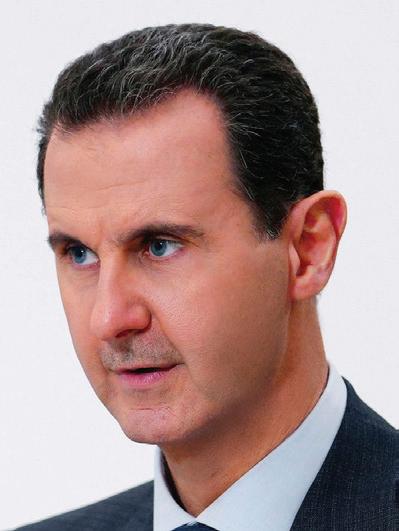
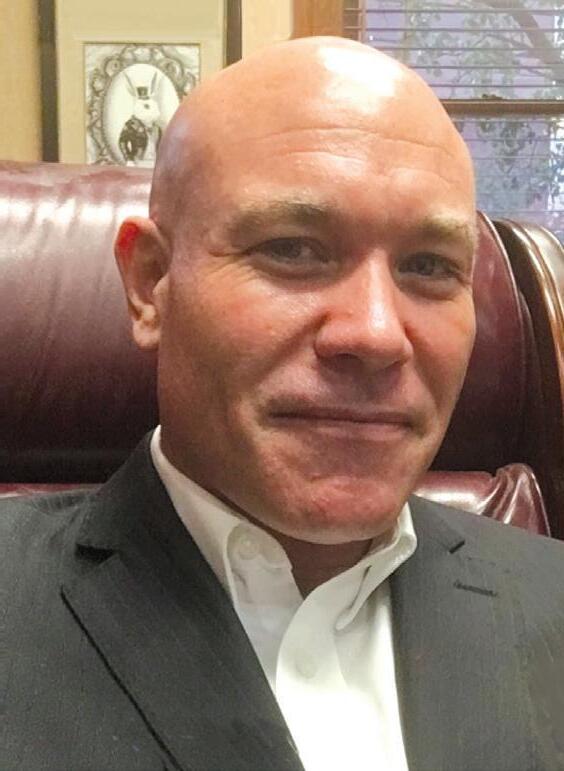
Who is this?
Not everyone in healthcare can be Florence Nightingale, right? Despite the long-running series on page 4, there are clunkers in medicine, and we will examine some of them in this series. Unfortunately, there’s enough material to keep this side of the page going for a while.
If you follow world news you might recognize this man and wonder what he’s doing here in a space usually reserved for the black sheep of the medical world, people who more often than not are murderers.
By those definitions, this man, Bashar al-Assad, checks all the boxes. Yes, he was the president of Syria for almost a quarter of a century, ending in 2024 when he fled to Moscow.
What is often overlooked in all of his actions as an incredibly harsh and cruel dictator is that he holds a medical degree as a London-trained ophthalmologist.
The death of his father, the president of the country, brought him back to Syria to assume the reins of power. As it turned out, being a brutal tyrant left him little time to practice medicine.
In fact, he did the exact opposite: he perverted medicine; he poisoned medicine; he pillaged medicine. And he didn’t have much use for the rest of the populace, either. His regime is widely held to be responsible for hundreds of thousands of deaths and disappearances through bombings, torture, chemical attacks, and overall systemic repression
Deliberately and specifically targeting healthcare workers and medical facilities was a key strategy of his oppressive reign. Doctors were arrested, tortured or executed for simply giving first aid to protesters, for documenting injuries, or refusing to falsify medical reports. In Syria, treating an anti-government protester was considered a terrorist act.
The rationale was simple: an injured anti-government protester who survives returns, perhaps next time as a fighter instead of merely a protester. Survivors were also eyewitnesses who could testify to the atrocities of the regime. Their removal provided deniability.
Assad’s forces repeatedly bombed hospitals, trauma centers, maternity wards, even ambulance depots. The goal was to terrorize people and make life unbearable in parts of the country known to be opposition strongholds.
The organization Physicians for Human Rights has documented and verified the deaths of 949 medical professionals at the hands of the Syrian government, 1,685 detentions of healthcare workers, and more than 600 attacks on medical facilities. PHR views these numbers as conservative.
In a very real way, medicine is power. It preserves life, morale — and evidence. The Assad regime understood that perfectly, viewed healthcare as a rival power it could not tolerate, and acted accordingly.
SACRED SPACES
... from page 1
trying to focus on “good” compressions and rescue breaths on my own flesh and blood. I remember my soft muffled sobs as I frantically tried to resuscitate George, while my wife held our toddler granddaughter, frightened and quizzical, away from the scene. There was the chaos of events, the ambulance arrival, getting return of spontaneous circulation, intraosseous needles, epinephrine, intubation. And the ride with the emergency medical services team to the hospital 10 minutes away.
The blur continued in the emergency department and the PICU, Room 4118, watching young doctors that I had helped train through the years fighting to save George, providing ECMO as a heroic effort to provide circulatory support. I found my mind constantly oscillating between being an intensivist and being a grandfather. Within hours, it was devastatingly clear that George would not survive. One of my most trusted colleagues and friends gently walked us through the crushing discussion of removing him from ECMO and the ventilator. We held George near as he gently passed away.
Alone now in 4118, that long night and the days that followed rushed to my senses yet again. I watched my son and daughterin-law grieve and experience the community of friends, church, and family who gathered around them, mourned with them, lived with them, and helped them in the journey forward, slow step by slow step. I was thankful beyond words for my hospital family who supported us in so many ways. The decision to return to providing clinical care in the PICU tore at me. I almost didn’t come back. I was not sure which would be worse for grieving: working in that same unit or not being in the place that helped give me meaning. I struggled with the whys for George’s passing, and still do, even though we never found a cause. I battled thoughts of the unfairness of it all. I had been a part of caring for so many patients who had defied death. Why hadn’t my own grandson also become a miracle? Even worse, could I have done something different? I knew other medical colleagues who could never return to the hospital where they had lost a child or loved one, and I understood. Ultimately, I chose to return to attending in the PICU. It was a place that helped give me purpose, a space where I felt connection to friends and to George.
Once I returned, it was so hard to go to Room 4118 on daily rounds, reliving the
events in my mind in a way I could not stop. Seeing more families in that unit room left me feeling conflicted too. This was George’s room now, wasn’t it? I didn’t want the families there to ever feel what we felt. The PICU team gave me grace. They let me pause, or even step away, for a few moments on rounds. Over time, Room 4118 became a little easier to visit. It transformed into a room where, strangely, I could feel closer to George. It became a place of intensely personal memory and gratitude, a hallowed set of walls where I could serve again, a sacred space. And on occasion, when it was empty from patients, I could just go inside to sit and think.
Sitting that final time in room 4118, re-
Sacred spaces. Like Room 4118.
membering George, my mind spun like an old mental Rolodex to the thousands of patients through the years, before George and after him, all in that room along with all the others who received care in our PICU. There were the countless who did well and breezed through their stay. There were those whose illness was too profound to recover, and those families with whom I met and prayed in the difficult decisions and goodbyes like we had with George. And there were those with profound critical illness who took on the odds and survived. Single names tagged my heart with memories. The toddler with myocarditis who survived more than an hour of cardiopulmonary resuscitation to receive ECMO and recovered fully intact. She would visit us every year at Girl Scout cookie time, indulging my sweet tooth and supplying the unit with loads of cookies. The kindergartner with streptococcal pneumonia who survived the longest ECMO ever at the time, coming back every year to visit us at our ECMO reunion, inviting me to family events, and sharing his success as a young real estate agent. The grade-schooler with severe traumatic brain injury and intracranial pressures seemingly incompatible with life who pulled through with months in the ICU and rehabilitation. Every year his family visited and then emailed me on his birthday with photos, tales of his development along with gratitude for our team.
I reflected on so many other sacred spaces that I found in George’s death:
– The massive oaks and winding flower-lined paths of the beloved old hospital
garden below, where families and staff found respite, comfort, reunions, festivals, celebrations, and space for grieving.
– The hauntingly beautiful old cemetery near the hospital, where George is buried. It became my weekly walking space. I often saw friends and old colleagues using that space too: getting their steps, talking with friends, running, walking their dog. It was a place of life amid the haunting of death.
– The towns and castles of Scotland travels, where I heard the mournful and evocative sound of bagpipes playing, as they did at George’s memorial service.
– Every room in the PICU and the old hospital around me, sacred for each patient and family, one story at a time, mostly in joy, but sometimes in sorrow.
The new hospital would be that shiny, topof-the-line, 12-gear bicycle with all the most amazing technology. Even so, our old home would be revered; the weathered red Schwinn that years ago took me along with my brothers and friends around the old neighborhoods, woods, and parks on long summer days in Atlanta, with reminders from Mom to be home by dark. The emotions of farewells and memories and what-might-have-beens flooded me in 4118, even as I felt the excitement of moving day. The new hospital would become another sanctuary of unimaginable joy for a child’s survival and recovery, a temple of grief beyond all words, and a chapel of sorrowful goodbyes and immense thankfulness.
In a sweet irony, the move date, September 29, also happened to be George’s birthday. I lingered for a long while in Room 4118 until it seemed time to go. I stood and looked around once more. I whispered amid tears to the empty room, “Happy birthday, George.” And happy birthday to our new home for so many more children to find the hope of sacred spaces.
Dr. James D. Fortenberry is an alumnus of the Medical College of Georgia School of Medicine, Class of 1984, retired Chief Medical Officer at Children’s Healthcare of Atlanta and pediatric intensivist at Children’s/Emory, and Adjunct Professor of Pediatric Critical Care, Emory University School of Medicine.
Sacred Spaces was published in JAMA Online, April 9, 2026, and is reprinted here by the gracious permission of the author.
TRYTHISDISH
by Kim Beavers,
MS, RDN, CDCES Registered Dietitian Nutritionist, Chef Coach, Author Follow Kim on Facebook: facebook.com/eatingwellwithkimb
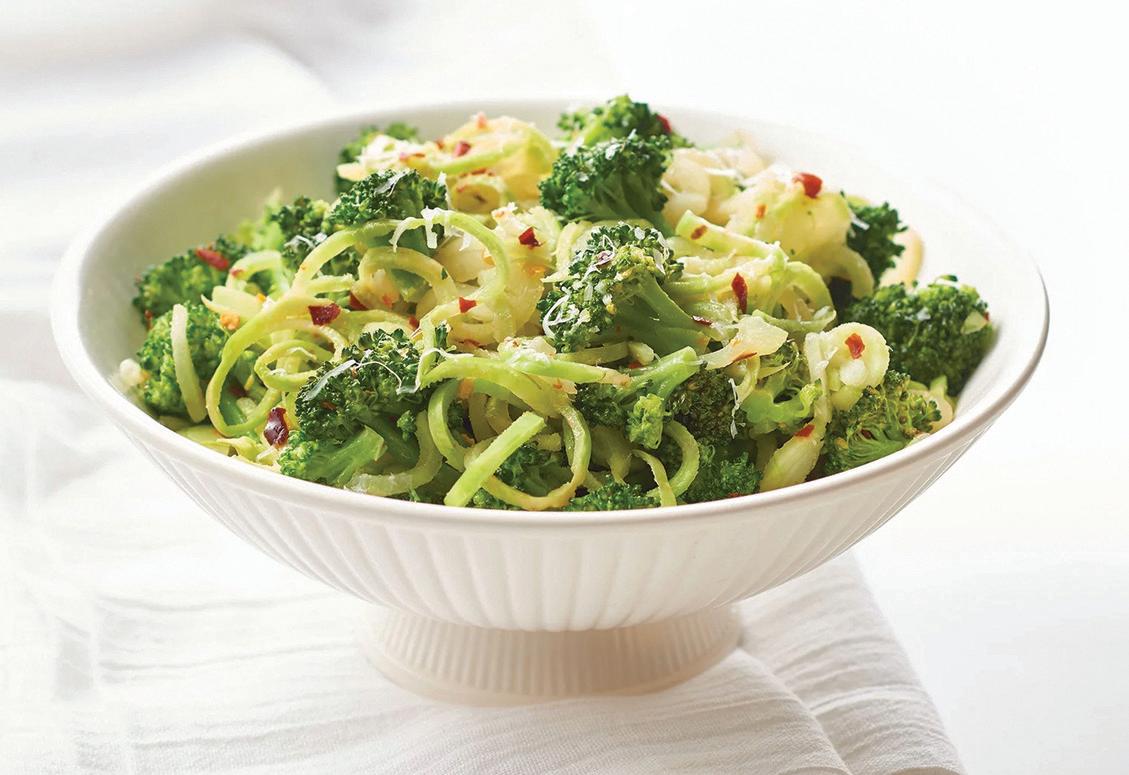
MARGHERITA-STYLE BROCCOLI PASTA
Garlic, tomatoes and pasta are a classic combination.
Toss in some spiralized broccoli stems with the pasta and you have a trendy updated classic.
Cook pasta and broccoli stalks according the directions on the pasta package (typically 9-12 minutes).
Meanwhile, add oil to a large non-stick skillet and heat over medium heat. Once hot, add the tomatoes and sauté for 2 minutes. Add the garlic, salt and pepper and sauté another minute.
Place the cooked pasta and broccoli in a serving dish, add the tomato mixture and toss. Lastly add in the mozzarella and basil toss again and serve.
This was different. This was one of those moments that does not come with a cute photo, a funny video, or a heartwarming caption. This was one of the messy, exhausting, unpleasant parts that still has to be handled with love and patience and understanding, because Freyja needs us in those moments just as much as she does in the easier ones.
Maybe more.
So next time something like this happens, I hope I will jump in sooner, even if Lorie and Katie are around. Or at least stand there ready to help, without looking too longingly toward the broken lawn mower out in the blazing sun.
I want to be clear about something else: I am not above pretending to be incompetent to avoid being asked to do an unpleasant task.
But after today, I also know I need to step up.
Even when the job stinks.
Especially when it stinks.
Dear Angel, the Money Doctor, MD,
With all the headlines lately about billions of dollars allegedly misappropriated in Minnesota, I was trying to explain to a coworker just how big $1 billion really is… and I realized I couldn’t do it in a way that made sense.
Can you help me put it into plain English?
Signed,
“Lost at a Billion” Augusta, Georgia
Dear “Lost at a Billion,”
You are not the only one. Our brains can picture $100 or even $10,000 pretty well. But once we get past million, most folks’ mental calculator starts blinking like a smoke detector with a low battery.
So let’s make $1 billion feel real.
First: Here’s a simple definition. A billion is not “kind of like a million.”
A billion is 1,000 million.
That means:
$1,000,000 = a million
$1,000,000,000 = one billion
Let’s translate that into everyday life.
One of the best “wow” comparison is is seconds.
If your coworker remembers nothing else, give them this:
1 million seconds is about 11½ days. 1 billion seconds is about 31.7 years.
It’s the same word — seconds — but look what happens when you jump from million to billion.
A billion turns days into decades.
The “paid one dollar per second” test:
Let’s say you got paid
$1 every second, nonstop—no weekends, no holidays, no sleep.
That’s about $86,400 per day or about $31.5 million per year.-
At that rate it would take more than 31 years to reach $1 billion.
So if someone says “it’s just a billion,” you can say:
“That’s 31 years of getting paid a dollar every second.”
A billion is 1,000 piles of a million each.
Most people can kind of vaguely picture a million as “a lot.”
Now imagine 1,000 separate piles of that million dollars sitting on the floor.
$1 billion is 1,000 × $1,000,000 = $1,000,000,000
That’s why “a few million” and “a few hundred million” are nowhere near the same story as even just one billion.
Angel’s MoneyRx take-
THEMEDICALEXAMINER
away:
When you hear the word billion, translate it like a medical conversion:
Million = “a big dose”
Billion = “a different medication entirely”
If you need a one-liner for your coworker, try this: “A billion is to a million what 31 years is to 11 days.” That one sticks.
Quick Cheat Sheet (breakroom approved)
• 1 billion = 1,000 million
•1 million seconds ≈ 11.5 days
• 1 billion seconds ≈ 31.7 years
• $1 per second = 31+ years to reach $1 billion
Angel
The Money Doctor, MD
This column is for education, not personal tax, legal, or investment advice. Please consult a qualified advisor who can look at your actual statements, options, and health/age situation before making a final decision. Have a question for Money RX: A Prescription for Financial Health? Send it to info@AugustaRx.com and your question may be featured in a future column.
CRASH COURSE
More Americans have died on US roads since 200 0 than in World Wars I & II combined
As you might have noticed, it’s summertime in the AUG. And the AIK, for that matter. We had a nice run going there — it was early June and we still hadn’t had any truly beastly weather — but the calendar always prevails eventually, and thermometers are never far behind. Last week was officially hot
But this column isn’t about the weather; it’s about driving safely. And this time, it’s going to be about the many direct connections between hot weather and traffic safety.
It’s amazing how quickly one minute can turn into ten. In that short time the inside of a car can turn into an oven, and small children don’t fare much better than adults do in such situations. Human beings are simply not designed to love inside ovens.
Here’s a hot topic
Did you know, for example, that heat is the #1 seasonal trigger for catastrophic tire failures? Roads surfaces can easily top 150°, and tires that are under-inflated flex more and therefore get hotter faster and fail sooner. A blowout at 70 mph can lead to serious consequences. The best prevention is maintenance: replacing old worn tires (which might not be cheap, but is definitely cheaper than crashing) and the free option, which is the aforementioned proper tire pressure.
Something else that makes summer deadly is a tragedy that no one ever thinks will happen to them — until it does. We’re talking about children left in hot cars. There are a few reasons these horrible events keep happening.
One is forgetfulness combined with auto-pilot. Let’s say mom usually takes the toddler to daycare, but on this particular day she can’t, so dad is supposed to do it on his way to work. The child is strapped into the car seat in the back and they take off. Dad gets involved in something playing on the radio or makes a call on his cell; meanwhile the baby has fallen asleep and doesn’t make a sound. Before you know it dad is making his normal commute, and the baby is forgotten. In some cases the driver has gone into work and only discovers the terrible truth hours later when the school calls to inquire about the missing child, or a coworker in an adjacent parking space notices the child at lunchtime.
Another common scenario is when mom (or dad) pulls up at a store and doesn’t want to wake the baby, especially since they’ll only be in the store for one minute.
And before we leave this subject, dogs aren’t either. They are not equipped to cool down through perspiration like we do, and as a result they get into the danger zone in hot environments sooner than we do and at cooler temperatures. Even with windows cracked, the temperature inside a car can very quickly exceed 100°, even when outside temperatures are in the mid-70s. When it’s already in the vicinity of 100° to begin with, the potential for heat stroke and death is much higher.
Not everyone works inside in air conditioned comfort. Working outside in this heat can lead to dehydration. Studies have shown that drivers make twice as many mistakes when dehydrated, which is an error rate similar to low-level intoxication. Reaction times are 10-20% slower, experts say, and decision-making skills, hazard perception, and the ability to pay attention to the task of driving are all reduced.
Another threat to life, liberty and the pursuit of safe driving that goes up along with the temperature: tempers. Studies show the hotter the weather the more aggression drivers show.
One driver might show he’s frazzled by tailgating, passing in risky situations, speeding, or using his horn more than necessary.
But the next guy who’s hot under the collar might start a physical confrontation. Actual grown men and women have gotten into screaming matches and fist fights, deliberately rammed other cars, and even pulled out guns (and fired them) over traffic trivialities. Act your age, people!
There’s actually more links between high temps and high accident rates than we have covered in class today, but what we have reviewed should be enough to make the point that road risks are an especially hot topic this time of year.
your most appropriate, clever, or funny caption to the photo shown for a chance to maybe win whatever cool swag we decide to give away someday. Email your entry to Dan@AugustaRx.com (Multiple entries ok) DEADLINE TO ENTER: 5:00 PM FRIDAY, JUNE 26, 2026
Yesterday’s MedicinE
THIS DAY IN MEDICAL HISTORY
WorldSickleCellDay — Every June 19, the global health com munity turns its attention to sickle cell disease (SCD) — one of the world’s most common inherited blood disorders. Established by the United Nations in 2008, the observance highlights the urgent need for early diagnosis, newborn screening, and equitable access to treatment.
In Georgia, where SCD disproportionately affects African American families, the day serves as a reminder of the progress made — and the gaps that remain. Hydroxyurea therapy, improved infection prevention, and curative bone marrow transplantation have transformed outcomes for many, yet pain crises, stroke risk, and limited access to specialty care continue to shape daily life for thousands.
SCD is no longer a rare or mysterious condition. It is a chronic, manageable disease — but only when patients have consistent, informed support.
June19inMedicalHistory
1877 — Birth of Angelo Luigi Soresi
An Italian surgeon and anesthetist, Soresi introduced the hanging drop technique, a clever method for identifying entry into the epidural space. He also advanced early surgical repair of diaphrag matic hernias, work that still echoes in modern thoracic surgery. 1828 — Death of François Chaussier
A French physician whose innovations included an early laryngeal tube (1806), a precursor to modern airway devices. His work helped shape the foundations of emergency airway management. 1935 — Death of Luis Morquio
The Uruguayan pediatrician who first described Morquio syn drome, a rare metabolic disorder affecting bone and cartilage. His careful clinical observations remain a model of early 20th‑century pediatric research.
Spread the love
The #1 word we hear from readers when they talk about the Medical Examiner is love. “We love your paper!”
Let’s save some love for our advertisers.
Yes, I saw your ad in the Medical Examiner and...
Thanks for advertising in the Medical Examiner!
The Examiners
Didn’t you have a hearing test last week?
I said DIDN’T YOU HAVE A HEARING TEST LAST WEEK?
PUZZLE
ACROSS
1. CTs and MRIs
6. Former Russian ruler
10. Late Kansas senator
14. It sometimes precedes larceny
15. South American Indian
16. Level
17. Software giant
18. Heating fuel
19. Curve
20. Battering word
21. Charge per unit
23. Yiddish word for trouble
25. Like Neapolitan ice cream
27. Skating figure
28. Attribute
29. Sign on 50% of certain doors
30. Come down with something
32. Dentist’s org.
33. Legendary Dolphins QB to friends
34. Capital of Fiji
35. Home of a noted tower
38. Lopsided, as a grin
39. Put away papers
40. Palmetto util.
41. Victory sign
42. A 2¢ word for caliginous
43. Assist
44. A certain Turner
45. Privileged
49. Room on a Viking ship
51. John or Mary, for instance
52. ______ train
53. “As gladly” (Archaic)
54. Belle of the ball (in brief)
55. On sheltered side
56. Russian range
58. Blatant
60. Obstructs
by Dan Pearson
I haven’t heard a word.
CAPTION THIS
Check out our new reader contest on p. 10 Write your most appropriate, clever, or funny caption to the photo shown for a chance to win whatever cool swag we eventually decide to give away! Email your entry to Dan@AugustaRx.com
DEADLINE TO ENTER: 5:00 PM FRIDAY, JUNE 26, 2026 Have fun!
61. Like some steaks
62. Slang
63. The A of EA video games
64. Bleary tail
65. Impede
DOWN
1. Hancock County seat 2. [blank] of Sinai
3. Road in North Augusta
4. Penpoint
5. Body builders’ favorite way to cheat?
6. _____ around: carefully avoid
7. Contemptuous smile
8. Obamacare acronym
9. Coarse woolen fabric of old
10. Fix program problems
11. Renovate and renew
12. Mild laxative
13. Conclusions
22. Honest CEO
24. Transgression
26. Retired Augusta judge
29. Augusta park
31. Young boy
33. Andre’s nickname?
34. Anticipation singer
35. Prostate test abbrev.
36. Needle-shaped (said of crystals)
37. Urgent warning of danger
38. Get hitched
39. More than quadruple 41. Capital beginning
Challenge 44. Bind
45. Derailed
46. Blvd in medical district
47. Materialize
48. Borrower
50. Endow with
51. Distress signal at sea
52. Ali’s last name
57. 2004 film profiling Charles
59. Contend
DIRECTIONS: Every line, vertical and horizontal, and all nine 9-square boxes must each contain the numbers 1 though 9. Solution on page 14.
DIRECTIONS: Recreate a timeless nugget of wisdom by using the letters in each vertical column to fill the boxes above them. Once any letter is used, cross it out in the lower half of the puzzle. Letters may be used only once. Black squares indicate spaces between words, and words may extend onto a second line.
Solution on page 14.
Use the letters provided at bottom to create words to solve the puzzle above. All the listed letters following #1 are the first letters of the various words; the letters following #2 are the second letters of each word, and so on. Try solving words with letter clues or numbers with minimal choices listed. A sample is shown. Solution on page 14
ATHEBESTMEDICINE
Moe: What do you think is the most dangerous animal — lions, tigers, sharks?
Joe: I would have to say crows.
Moe: Crows? Why crows?
Joe: Because you get enough of them together and there’s going to be a murder.
Moe: That term “one-hit wonder”...
Joe: What about it?
guy shows up at a costume party with a girl on his back.
“What are you supposed to be?” someone asked him.
“I’m a turtle,” he said.
“Oh ok. So what about her?”
“She’s Michelle.”
Moe: What is a magician’s favorite make-up?
Joe: Vanishing cream.
Moe: Oh man! I just heard our neighbor died.
Joe: Who, Ray?
Moe: Whoa, dude. Way harsh. Do you really think it’s appropriate to celebrate like that?
Mary: So your nickname is really “The Love Machine”?
Larry: It’s not what you think. I’m just a terrible tennis player.
Moe: I wonder if whoever thought that up ever had another phrase that became popular.
Moe: I was at the neighborhood pool last week when I had to pee.
Joe: It happens to everybody.
Moe: So I went over to the deep end...
Joe: You did not!
Moe: I did. But the lifeguard saw what I was doing and blew his whistle. I’ll tell you, it startled me so much I almost fell in.
Moe: I finally have to admit that I’m stuck in middle management.
Joe: Wait, I thought you’re self-employed.
Moe: I am.
A man rushed into an urgent care clinic shouting, “Doctor, help me! I just swallowed one of those, ‘Do Not Eat’ silica packets! Am I going to die?!”
The doctor said, “Well, everyone is going to die eventually.”
The man shouted, “Everyone? Dear god, what have I done??”
Staring at my phone all day has certainly had no effect on ME!
By popular demand we’re making at-cost subscriptions available for the convenience of our readers. If you live beyond the Aiken-Augusta area, or miss issues between doctor’s appointments — don’t you hate it when that happens? — we’ll command your mail carrier to bring every issue to your house!
NAME ADDRESS
CITY STATE ZIP
Choose six months for $26 ____ or one year for $48 . Mail this completed form with payment to Augusta Medical Examiner, PO Box 397, Augusta GA 30903- 0397
Advice Doctor
Dear Advice Doctor,
My girlfriend and I have only been dating for about two months, but I really feel like she’s the one. And that makes me really worried about a major faux pas I made the other day. I’ll spare you the painful details, but she told me don’t sweat it, nobody’s perfect, it’s all good. I want to believe her, but I’m still stressed out. Any suggestions? — Trying to chill - and failing
Dear Trying, I’m humbled and honored that you would entrust me with the opportunity to advise you on a matter that is so important to you. I’ll try my very best to do justice to your question.
Let me prepare you for my response by letting you know this isn’t going to be easy. In fact, I’m going to recommend that you ignore what she told you to do. I’m sure she means well, but have you stepped outside lately? It’s like being on Mercury around here. And no one can escape being out in it. There are dogs to walk, garbage cans to retrieve from the curb, and lawns to mow.
Even if you could take her advice and not sweat, I would strongly advise against it. Fortunately, for almost everyone (and I presume this is true in your case too) the body produces sweat automatically. We might view sweat as unpleasant or an annoyance, but it is literally life-saving. Medically, the inability to sweat is called anhidrosis (or sometimes hypohidrosis), and it can be very serious, even potentially life-threatening because the body cannot cool itself.
Fortunately, anhidrosis is often localized, so other parts of the body can compensate by sweating more to maintain cooling. Widespread or total anhidrosis in a prolonged hot environment can lead to heatstroke, coma, and death.
Anhidrosis can’t be prevented, but sometimes it can be reversed if the cause is a medication that suppresses the ability to perspire. In consultation with your doctor, it may be possible to discontinue that drug or change to another and thereby reverse the condition. If that isn’t the cause, treatment options are limited, led by practical solutions like avoiding hot environments, staying hydrated, and knowing the signs of heat exhaustion and heatstroke.
In short, don’t sweat it, especially in our climate this time of year, is dangerous advice indeed. I’m sure if you calmly explain this to your girlfriend your relationship can continue to grow and thrive.
I hope I answered your question. Keep trying to chill!
Do you have a question for The Advice Doctor about life, love, personal relationships, career, raising children, or any other important topic? Send it to News@AugustaRx.com. Replies will be provided only in the Examiner.
PROFESSIONAL DIRECTORY
ACUPUNCTURE
Dr. Eric Sherrell, DACM, LAC Augusta Acupuncture Clinic 4141 Columbia Road 706-888-0707 www.AcuClinicGA.com
CHIROPRACTIC
DERMATOLOGY
Evans Chiropractic Health Center
Dr. William M. Rice 108 SRP Drive, Suite A 706-860-4001 www.evanschiro.net
DENTISTRY
Jason H. Lee, DMD 116 Davis Road Augusta 30907
706-860-4048 Floss ‘em or lose ‘em!
Georgia Dermatology & Skin Cancer Center 2283 Wrightsboro Rd. (at Johns Road) Augusta 30904 706-733-3373 www.GaDerm.com
DEVELOPMENTAL PEDIATRICS
Karen L. Carter, MD 1303 D’Antignac St, Suite 2100 Augusta 30901
Steppingstones to Recovery 2610 Commons Blvd. Augusta 30909 706-733-1935
Home Care Personal Care|Skilled Nursing|Companion 706-426-5967 www.zenahomecare.com
Parks Pharmacy 437 Georgia Ave. N. Augusta 29841 803-279-7450 www.parkspharmacy.com PHARMACY
that taste buds are an active part of our immune system. They don’t just alert us to a bitter or rotten taste that we should spit out; taste buds contain active specialized immune cells, like macrophages and T-cells. After all, the tongue is one of the first places that pathogens like viruses, bacteria, and environmental toxins enter the body. So these receptors are more than just taste buds. They deserve more respect than to be called just our buds. Along with delivering all the flaves we love, they are very literally our lifeguards. The various immune cells sit between and around taste receptors, constantly monitoring the environment.
One of the reactions to the cry of incoming! is the release of cytokines, which are signaling proteins that act as the immune system’s communication network. They tell immune cells when to activate, where to go, what to do, and when to stop. Cytokines help build memory within the immune
system, leading to faster response times against return invaders. The downside is that they influence tasteand not in good ways. As millions of people discovered during the pandemic, taste buds went on vacation, or they gave foods a cytokine-induced metallic taste.
In related news, one common type of taste buds only live 8 to 12 days. As they reach senior citizen status, the same immune cells (like macrophages, which means “big eaters”) gobble them up to make way for new taste buds.
“Macro” is an appropriate word, because each taste bud — and we have around 10,000 of them — is actually a cluster of up to 150 separate sensors that, despite their close quarters, live surprisingly separate lives. Some of them are calibrated to detect sour tastes, some of them specialize in sweet, bitter, and umami flavors, and still others are multipurpose. What’s crazy about this mosaic of receptors packed
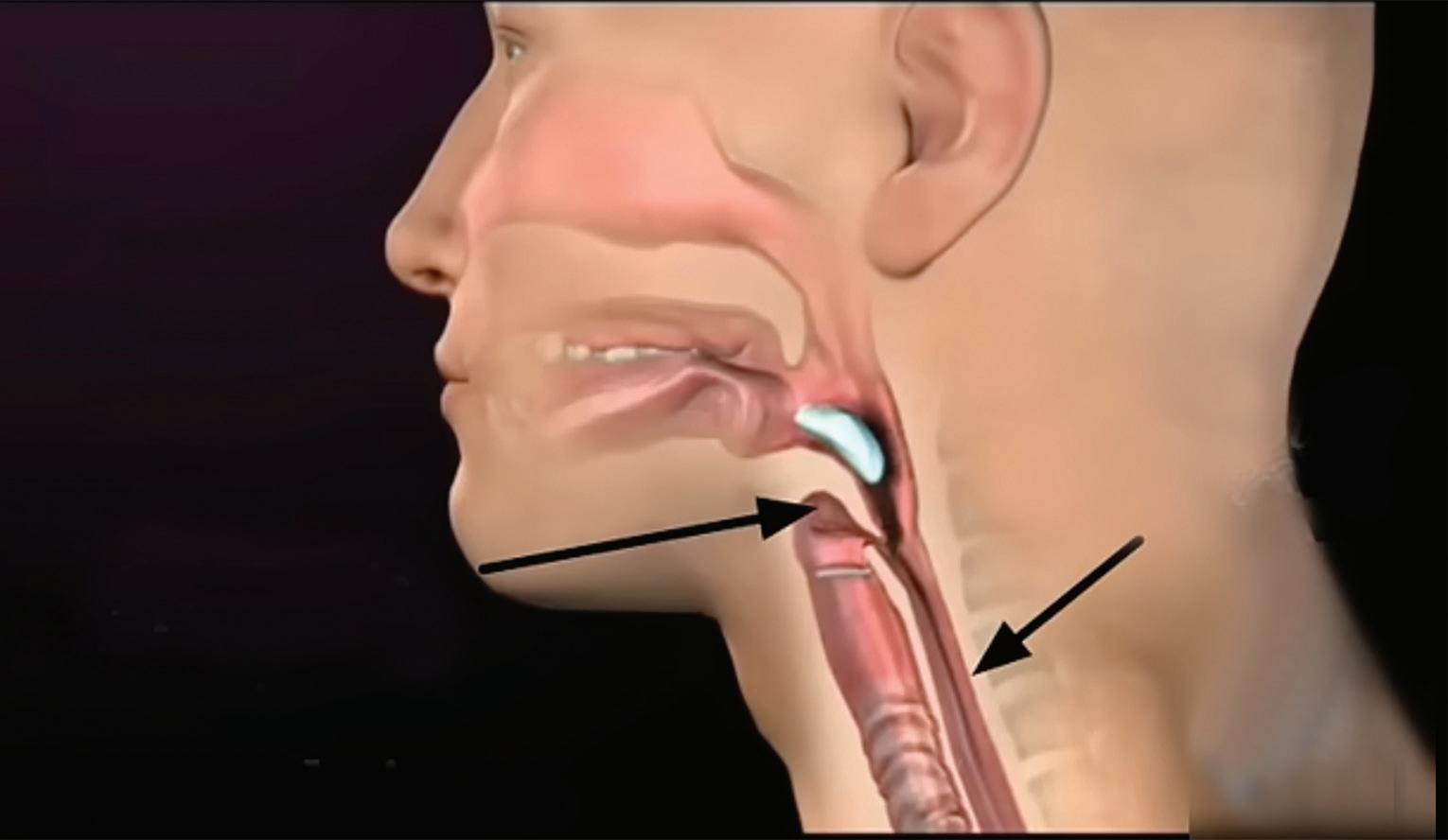
Esophagus
Epiglottis
THE LITTLE FLAPS WE COULDN’T EAT WITHOUT
Have you ever seen a video of fruits and vegetables being sorted as they come down a conveyor belt? In some automated plants, paddles efficiently swat rejects off the belt, or bat them here or there to sort them by size, color, etc. That’s basically what our epiglottis does when we eat. Food (like the green blob above) is prevented from going down the wrong pipe (most of the time) by the epiglottis, a trigger-happy flap that manages to let us talk, breathe and eat at the same time by constantly repositioning itself with perfect timing so that food goes down the esophagus, not the trachea. • Have you ever sneezed or coughed or hiccuped while eating and ended up with food going up your nose? That would happen a lot more often if it wasn’t for the uvula, the little dangler hanging in our throats. As food passes below it, the uvula is pushed back, closing the opening to the sinuses to keep food going in the right direction.
into a microscopic space is that the various types have different lifespans, ranging from a week or so up to three weeks. As one source put it, “fast turnover cells keep taste sensitivity fresh
that’s nice), while slower turnover types contribute to stability (in other words, “the brain doesn’t have to constantly re-learn what ‘sour’ means).
Unless you like eating dry
sand — and literally no one does —another forgotten element of the enjoying food is saliva. It is the medium that makes taste possible by dissolving flavor molecules and transporting them to pores on the tongue which contain taste buds (while also protecting those taste buds), activating enzymes, balancing oral pH. Without saliva food would be dry, taste dull and digest poorly. Teeth are pretty important to the process of eating and enjoying flavor, and by coincidence, saliva also re-mineralizes tooth enamel. What does saliva not do, you’re probably thinking. Let’s not get carried away, but it is a vital and no doubt underappreciated ingredient in taste.
One final comment about taste: considering the whole amazing process of taste (which we have barely scratched the surface of in this article), one of the best ways to appreciate is to slow down. Savor each bite. Enjoy this wonderful sense that adds so much to life.