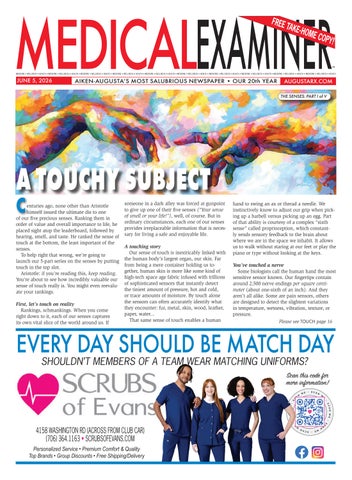
Centuries ago, none other than Aristotle himself issued the ultimate dis to one of our five precious senses. Ranking them in order of value and overall importance to life, he placed sight atop the leaderboard, followed by hearing, smell, and taste. He ranked the sense of touch at the bottom, the least important of the senses.
To help right that wrong, we’re going to launch our 5-part series on the senses by putting touch in the top slot.
Aristotle: if you’re reading this, keep reading. You’re about to see how incredibly valuable our sense of touch really is. You might even reevaluate your rankings.
First, let’s touch on reality Rankings, schmankings. When you come right down to it, each of our senses captures its own vital slice of the world around us. If
someone in a dark alley was forced at gunpoint to give up one of their five senses (“Your sense of smell or your life!”), well, of course. But in ordinary circumstances, each one of our senses provides irreplaceable information that is necessary for living a safe and enjoyable life.
A touching story
Our sense of touch is inextricably linked with the human body’s largest organ, our skin. Far from being a mere container holding us together, human skin is more like some kind of high-tech space age fabric infused with trillions of sophisticated sensors that instantly detect the tiniest amount of pressure, hot and cold, or trace amounts of moisture. By touch alone the sensors can often accurately identify what they encounter: fur, metal, skin, wood, leather, paper, water...
That same sense of touch enables a human
hand to swing an ax or thread a needle. We instinctively know to adjust our grip when picking up a barbell versus picking up an egg. Part of that ability is courtesy of a complex “sixth sense” called proprioception, which constantly sends sensory feedback to the brain about where we are in the space we inhabit. It allows us to walk without staring at our feet or play the piano or type without looking at the keys.
You’ve touched a nerve
Some biologists call the human hand the most sensitive sensor known. Our fingertips contain around 2,500 nerve endings per square centimeter (about one-sixth of an inch). And they aren’t all alike. Some are pain sensors, others are designed to detect the slightest variations in temperature, wetness, vibration, texture, or pressure.
56
PARENTHOOD
by Dr. Warren Umansky, PhD
Your child’s teacher points out to him that he has a tear on the sleeve of his jacket. She suggests that he let you know so you can sew it up. You were aware of the tear, but you don’t know how to sew and you haven’t been able to buy a new jacket yet. What do you do?
A. It’s none of the teacher’s business. You should send a note to her telling her that her job is to teach and not to evaluate her students’ clothing or fashion.
B. Let your child know that you don’t have the money to buy a new jacket right now. You can try safety pins or tape to “fix” the tear in the jacket.
C. Maybe it’s time for you and your son to learn how to sew. Go buy some needles and thread.
D. You’re pretty sure your uncle knows how to sew. Ask him to fix it.
If you answered:
A. Be thankful that your child’s teacher wants her students to take pride in their appearance. It is one factor that prepares children for success in life. Torn clothes and lack of cleanliness often make a child the target of bullying, as well.
B. This is a temporary approach and not the most desirable one.
C. The time to learn how to sew was probably long ago. But it’s never too late. It is not difficult and it is so useful for repairing tears and replacing buttons. And, it certainly is not a skill for females only.
D. Let’s not ask your uncle to fix the tear. Ask him to show you and your son how to fix the tear!
Sewing is an important life skill. It also is a great hobby for a lot of adults and children who make their own clothes and put monograms on towels and other items. As the parent, you want to prepare your children for life’s challenges. This is one tool that needs to be in tool box. Knitting, crocheting, needlepoint, and cross stitch also are wonderful hobbies for you and your girls and boys. It will keep noses away from screens and make that “I’m bored” complaint disappear. The feelings of satisfaction and pride from a completed project are invaluable. These also are not expensive skills and hobbies, and parents and children can learn and enjoy them together.
Dr. Umansky has a behavioral health practice for children in Augusta
tions include:
• Anxiety Disorder
• Major Depressive Disorder
• Post-Traumatic Stress Disorder
• Attention-Deficit/Hyperactivity Disorder
• Bipolar and personality disorders
THOUGHTS
THOUGHTS ABOUT THOUGHTS
“IT WAS THE ONLY THING THAT MADE ME FEEL NORMAL.” SELF-MEDICATION THROUGH SUBSTANCE USE
Editor’s note: Written by local mental healthcare professionals, this series explores how people may think and act when affected by common and lesser-known mental health conditions.
Marcus is a 36-year-old sales representative who says he never intended to develop a drinking problem.
For years, he struggled silently with anxiety. His mind raced constantly. He overthought conversations, avoided conflict, and felt physically tense almost every day.
One evening after work, he noticed that a few drinks made the tension disappear — at least temporarily. For the first time in a long time, he felt calm. He slept better. Social situations became easier.
Over time, occasional drinking became nightly drinking. Then came blackouts, missed work, and growing arguments at home.
Friends began focusing on the alcohol. But Marcus knew the drinking wasn’t where the story started.
“I wasn’t trying to get high,” he explained. “I was just trying to feel okay.”
Marcus’s experience reflects a common but misunderstood reality: Many individuals struggling with substance use are first and foremost struggling with untreated emotional pain.
What Is Self-Medication?
Self-medication occurs when individuals use substances — such as alcohol or drugs — to cope with psychological distress.
Rather than seeking intoxication alone, the person may be attempting to:
• Reduce anxiety
• Escape traumatic memories
• Improve sleep
• Numb emotional pain
• Increase focus or energy
• Feel emotionally “normal”
While substances may provide temporary relief, repeated use can alter brain reward systems and increase dependence over time.
This pattern commonly contributes to the development of Substance Use Disorder.
The Link Between Mental Illness and Addiction
Mental health conditions and substance use disorders frequently occur together. Common underlying condi-
In many cases, emotional symptoms appear before problematic substance use begins. For example:
• Someone with untreated anxiety may rely on alcohol to relax
• Someone with trauma may use substances to suppress intrusive memories
• Someone with depression may seek temporary escape from hopelessness
The substance becomes a coping tool — until it creates additional problems of its own.
Signs and Symptoms
Emotional Features
• Anxiety, sadness, irritability, or emotional numbness
• Trauma-focused therapies may address the root causes of emotional pain.
• Relapse prevention and emotional regulation skills are essential.
Medication
• Medication-assisted treatment may help reduce cravings or stabilize mood depending on the substance and underlying diagnosis.
Support Systems
• Peer support groups
• Family involvement
• Structured routines and accountability
Recovery Skills
• Stress management
• Sleep stabilization
• Building healthy social connections
• Using non-substance coping strategies
Prognosis
Recovery is possible — especially when individuals receive compassionate, comprehensive care that addresses the why behind the substance use.
Many people experience significant improvement in mood, functioning, relationships, and quality of life once both the addiction and underlying mental health concerns are treated together.
Without treatment, self-medication patterns often escalate, increasing the risk of overdose, chronic illness, relationship breakdown, and suicide.
Understanding addiction as an attempt to cope — rather than simply a moral failing — allows for earlier intervention, reduced stigma, and more effective treatment.
About Us
IPS provides mental health services to help patients and their families progress through the care journey.
To make an appointment, call 706-2041366 or visit integratedpsych.care.
WHAT IS SEPSIS?
No doubt we have all heard of sepsis, but it has been front and center recently due to the untimely death from sepsis of NASCAR driver Kyle Busch.
What is it, and why is it so lethal?
In simple terms, sepsis is an extreme response to infection. It occurs when an infection of some kind, not necessarily anything serious (but most commonly bacterial in nature), triggers a chain reaction throughout the body leading to a massive immune response. It could be likened to just lightly accelerating as you drive, but something malfunctions and it’s suddenly pedal to the metal. The next thing you know you’re going 90 miles an hour and the brakes are not working.
In the case of sepsis, the immune system goes way overboard, attacking and damaging tissues and organs that have nothing to do with the original triggering infection. It’s an unpleasant but undeniable truth that wealthy and prominent people often receive better healthcare than their opposites. But the case of Kyle Busch demonstrates another truth: sepsis can rapidly become extremely dangerous and even fatal very quickly, within mere hours, even when the patient is already in the hospital and because of who they are, is getting the best care possible.
What makes sepsis so dangerous is that virtually any infection has the potential to trigger it. Fortunately, it is relatively uncommon, but that word relatively is relative: worldwide, sepsis kills around 11 million people a year. In the U.S., about 1.7 million people develop it annually, and some 350,000 die. Those are huge numbers, but very small when you consider how many billions of infections of various kinds happen in a years’ time. So there is no need to live in constant fear of sepsis, but the statistics — and the death of Kyle Busch — remind us all that every potential infection, even one caused by a little scratch on your arm, should be treated, whether by a medical professional or a home first aid kit.
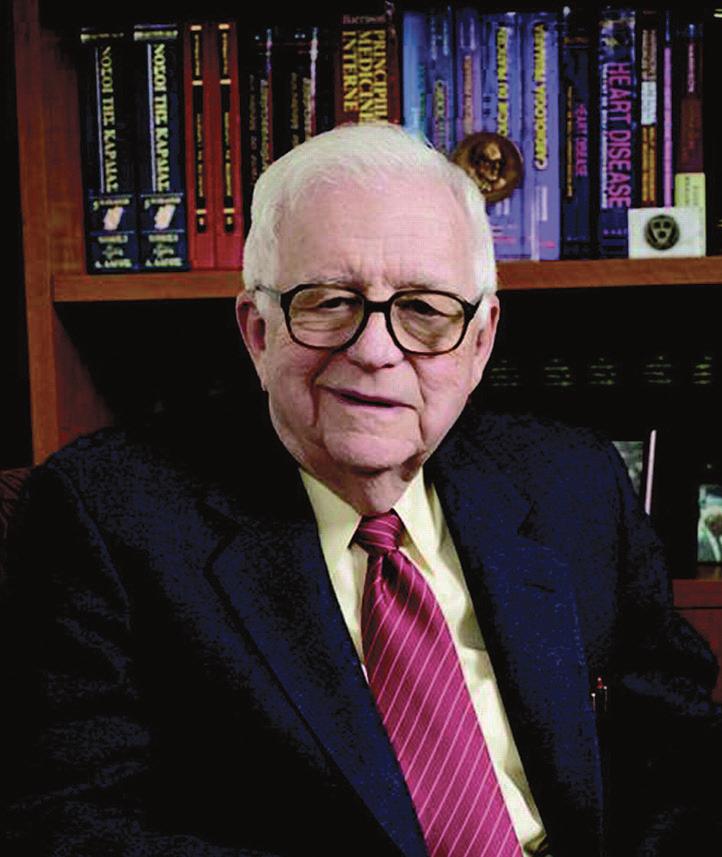
Who is this?
There is no shortage of men in medicine known as “the father of...” various branches of medicine, but this man may be one of the greats.
Eugene Braunwald, who died last month at age 96, has been called the father of modern cardiology. It is a label he earned over and over again over a 7-decade career — one that almost never happened.
Born in Vienna in 1929, Braunwald, who was Jewish, fled Austria with his family when the Nazis annexed the country in 1936. His mother packed a picnic basket to disguise their intentions. Despite joking about the escape later in life as “like The Sound of Music — without the music,” Braunwald remembers it as a “harrowing” chapter in his life.
After a year in England, the family made their way to the United States, and by around 1960 (at just 31 years old) Nraunwald was already leading the catheterization laboratory at the National Heart Institue, and had already played a leading role in identifying a genetic condition (hypertrophic cardiomyopathy) now known to affect 1 in every 500 people.
Within a decade his research had discovered something that would fundamentally change cardiology: with quick action, myocardial infarction did not need to result in the death of heart muscle, and restoring blood flow to the oxygen-starved organ was the way to do it. It sounds like Cardiology 101 today, but it was a major advancement at the time, made possible by Braunwald’s pioneering research into the heart’s oxygen demand.
in 1984, Braunwald launched a landmark study into tPA, a then-new “clot buster” for acute heart events. The study has grown to embrace other aspects of heart health ranging from angioplasty to various therapies to reduce LDL cholesterol, with trials at more than 5,000 sites in over 50 countries.
If you are a heart patient taking an ACE inhibitor, you can thank Dr. Braunwald. In the early 90s, Braunwald and his collaborators published one of the first studies of angiotensin-converting enzyme (ACE) inhibitors for heart failure. he also published one of the earliest trials demonstrating the benefits of reducing low-density lipoprotein (LDL).
Physicians all over the world consult Braunwald’s Heart Disease, considered the bible of heart treatment, now in its 13th printing online and in print, and featuring twice-monthly updates.
During his long career, Eugene Braunwald authored more than 1,800 articles, from a 1960 piece in what is now JAMA Internal Medicine to just this past February in JAMA Network. Called “unstoppable,” he worked until the final days of his life.
ADVENTURES IN
Middle Age
BY J.B. COLLUM
Well, I’ve gone and done it now. I made the leap, though it might be more accurate to say I was pushed.
Do you remember being a kid, hesitating on the diving board of a pool — or maybe even just standing nervously at the edge of the pool — when a friend came over and unceremoniously launched you into the air and into the water?
That has happened to me more times than I can remember. Although, to be fair, I must admit that I have been the pusher as often as the “pushee.”
Is “pushee” even a word?
Don’t know. Don’t care. You get my point. You might even say I am throwing all literary caution to the wind now.
At about this point, you are probably wondering what I’m talking about. I’ll end the suspense.
that while I did well at the work itself, I was no businessman. So this time, I am getting help with that part.
Part of the impetus for this, besides being “pushed,” is that instead of sitting in an office by myself, typing away on a keyboard and staring at a screen all day, I’ve decided that I want to use the knowledge I’ve gained over the years in my various technology roles to start a business helping non-tech people make sense of all the latest gadgets.
Pushed into the deep end
Despite how much my numerous fans love my writing — all 14 of you now — and despite how you might imagine that I am fabulously wealthy from my writing skills alone, I am most certainly not. I have always had a regular job while writing more for the enjoyment of it than for the small amount of money I have made from it. If I took a moment to calculate my hourly wage just for all the writing that has been published — not all the writing, just what I have published — including the two columns I write here, my one mystery novel, and a smattering of articles in other publications over the past few decades, I could probably report myself to the labor department for a violation.
Unfortunately, that is not how it works. I can’t sue myself, and if I did, I couldn’t pay myself the settlement.
Also unfortunately, my software development contracting job has come to an end. Sort of.
They are paying me a retainer for a couple of months in case they need questions answered or help with anything that comes up. And while I have submitted my resume for more contracting work in my field, I have also devoted a lot of my time itoward changing careers.
I’ve made contact with people who can help me get this done. I have made arrangements for advertising. I’ve filled out required paperwork, gotten a website, created the website myself, bought equipment, and generally done all the stuff you need to do in order to start a new business.
This isn’t the first time I’ve done this. I did it early in our marriage and learned
I want to help them realize the potential of technology instead of having to wrestle with it. I want to design spaces for them that energize their imagination and remove things that block their creativity. I want to help them make technology work effortlessly and almost invisibly for them.
In other words, I want to be a technology consultant — a guru, so to speak — for people who need help with smart home devices, Wi-Fi, computers, phones, tablets, AI, and all the other digital contraptions that are supposed to make life easier but often seem determined to do the opposite.
This way, I get to interact with real people in person, which is something I think has been sorely missing from my professional life since COVID-19.
Health-wise, isolation has affected me badly. When I had to go to an office, I was more to likely to be active and engaged, walking around and talking to people. I was also more likely to take walks.
For about eight years before COVID, I worked in downtown Augusta, where I could easily take a walk along the Riverwalk or the canal path. I could walk to museums, restaurants, and other places. I logged at least 10,000 steps per day back when that was my environment.
Not so much now.
Yes, this is a risk. But I am doing it for more than just wanting a change that I think will be healthier for me physically and mentally.
I also must admit that, as I have aged, my brain has changed. Just like I can’t jump out of the bed of my pickup truck anymore without pain and possible injury, I can’t quite keep doing exactly what I’ve been doing. Or at least, I can’t do it as well as I used to or as fast as I used to. There is also the very real thing that people won’t talk about. Even though age discrimination is illegal, I think we all
Special Forces
Parenting
We are a little over a week away from the end of the school year for our special needs little bundle of energy and cuteness known as Freyja.
That means we are also a little over a week away from a few months of workdays being punctuated by the warlike sounds of Freyja launching herself into a wall, or into a door fully opened against a wall. Sometimes the landing comes with a crunch, which means she has driven the door handle through the sheetrock again.
and runs.
At that point, we are obliged to leap up and go into hot pursuit before she squeezes liquid soap, hand lotion, or some other wet substance all over something we will spend the next several hours trying to clean.
The stress this puts on a person, especially a tired middle-aged person, is not healthy. Even for our daughter Kate, who is much younger than us and is Freyja’s primary caregiver, it is tough.
But just last week, we were talking about the progress Freyja has made. Kate reminded me of what we were facing three years ago, and looking back with that perspective, I have to admit that things have gotten a lot easier in most ways.
We do have new challenges now that Freyja is taller, faster, stronger, and apparently studying tactical evasion in her spare time. But some of the worst problems are much less common now, or absent altogether.
Operation Head on a Swivel
“Oh, why don’t you have something to stop the doorknob from going through the wall?” you may ask.
I’ll tell you why. Because so far, we haven’t found a solution that she cannot peel off, unscrew, or simply break.
Well, that isn’t completely true. I did recently see something about a device you add to your door hinges that is supposed to do the trick, but I haven’t actually found them for sale yet. Also, based on experience with Freyja, I remain dubious at best about its long-term effectiveness.
We shall see.
Summer break also means full days of at least one of us keeping our head on a swivel. Sometimes that means looking directly at her. Sometimes it means watching her through the screen of a phone or tablet when she tries to go hide. Even that is not always enough.
Freyja has this additional gear when she knows she is about to do something that will cause us to come running and screaming “NO!”
If I watch it back later, on camera, I can see the whole operation unfold. She creeps up on the thing she knows she is not supposed to touch. She pauses. She looks our way to see if we are paying attention. If we do look at her at that point, she calculates the distances: our distance from her, her distance from her goal, and how fast she thinks she can move before we can stop her.
Then she makes a determination. Sometimes saying “NO” just a little louder will stop her. Other times, it must sound like “GO,” because she turns on the afterburners, grabs the thing she wanted,
Turdnados used to be common. Now they are rare, and we continue to hope they are over. We always hope each one was the last one ever. She listens to us better most of the time. She will usually come when we call her, though we may have to repeat it a lot. She sometimes stops what she is doing if we say “no” or “stop.” She sometimes uses a spoon or a fork instead of her hands. Not most of the time, but sometimes.
She will let us brush her hair with less fuss than before. She will take off her own shoes and socks when she comes inside. She will sometimes even put on her socks and shoes herself.
They are not always right-side out or on the correct feet, but this is progress.
We are going to need to remember these things often during summer break. We will need to remember where we were three years ago. We will need to remember that progress is still progress, even when it is slow, messy, exhausting, and occasionally involves repairing drywall.
We will also have to remember to share the load and take turns carrying the burden of that stress.
Fortunately, Freyja is an outdoors girl. She will likely spend a lot of her time playing outside, mostly in the pool. That is the kind of duty I like to take on, since it involves sitting in the pool with a cold drink while watching Freyja have a great time with her floaties on.
That’s the easy duty. And I’m lazy, so I volunteer for that.
We are not sure exactly what the future holds for Freyja. We are not even sure what the future holds for us. We are hopeful that her improvements in behavior will offset the diminishment of our own abilities as we age, but we are not counting on it.
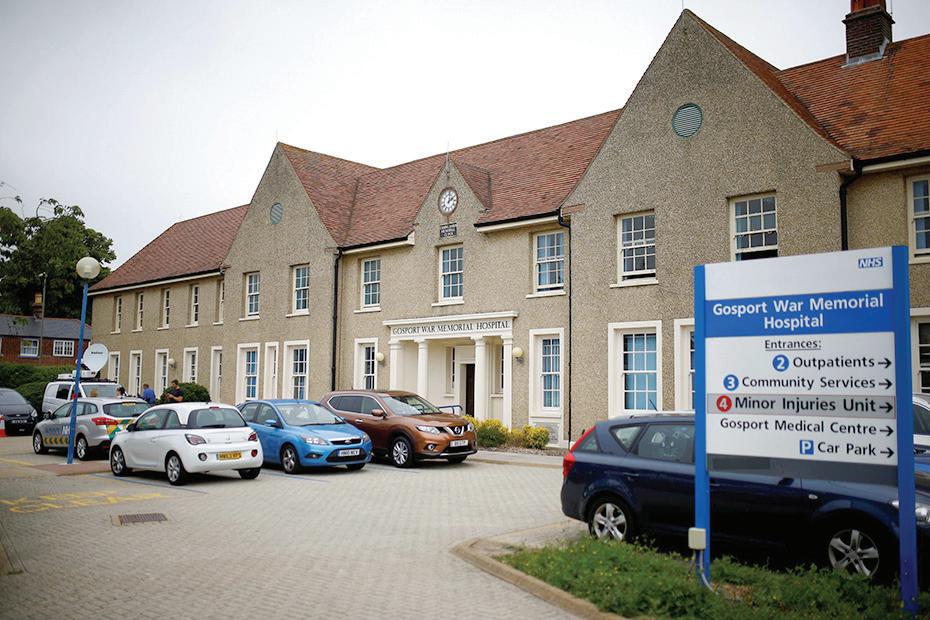
Who is this?
Not everyone in healthcare can be Florence Nightingale, right? Despite the long-running series on page 4, there are clunkers in medicine, and we will examine some of them in this series. Unfortunately, there’s enough material to keep this side of the page going for a while.
Clearly, we could have/should have changed the headline this one time to “What is this?”
This is a hospital, the Gosport War Memorial Hospital in Hampshire, England, and back in the 1990s it was at the center of a massive and, we have to say, mysterious opioid deaths scandal. Or maybe puzzling is a better descriptor.
Here’s what happened: a patient named Gladys Richards was admitted to Gosport following hip surgery. Her unexpected death prompted her family to contact both law enforcement and the coroner. That lone domino turned out to be stacked next to literally hundreds of others, and each one’s fall led to the fall of another.
The pattern that quickly emerged was that patients were routinely administered drugs like morphine and fentanyl, and not just the occasional shot or tablet. In most cases a “syringe driver” was used, a device that includes an IV connected to a container of medication which in turn is connected to a pump (or “driver”). It didn’t seem to matter, investigators discovered, what the patient was admitted for or being treated for. Whatever the diagnosis was, pumping in opioids was the solution.
Investigators started digging, spending four years and $18.8 million to uncover what was going on. They discovered and documented a culture that displayed a clear disregard for human life, a pattern of repeatedly ignoring concerns raised by nurses, and the routine administration of “dangerous doses” of medications that were not medically justified, or if there was justification, in many cases the supporting documentation was missing.
The investigation found that 70% of the deaths were patients who had not been admitted for “terminal care,” but who nevertheless were often dead within days of arriving at Gosport. The final report concluded that 456 deaths at the hospital during the 1990s were linked to inappropriate administration of opioids, but because of missing records, the number could be as high as 650.
The truly puzzling element of it all is that not a single nurse, doctor or administrator has ever been charged or faced legal consequences for any of the deaths.
STAY SAFE WHILE MAKING WAVES
Part 5 of a series
by Jasmine Anderson, REHS/RS
Sun’s out! You may be daydreaming of jumping into a cool, refreshing pool of water to escape the summer heat, but there are things to keep in mind before taking the plunge. Swimming, a fun, healthy summer activity, is not without risks. Whether you’re making waves in a public pool, at a hotel, park, club, neighborhood, or natatorium, or taking a dip in your own infinity pool, staying healthy and safe is similar in all these oases.
Water Safety Facts
Every year in the U.S., an estimated 4,000 people die from unintentional drowning. That’s an average of 11 deaths per day. Twice as many people experience non-fatal drownings, translating into an average
of 22 non-fatal drownings per day. Sadly, drowning is the leading cause of death for children ages 1-4 years. Drowning is the second leading cause of unintentional injury death for kids 5-14 years of age, according to the U.S. Swimming Foundation.
You don’t have to be a lifeguard or a Superhero to prevent accidental drownings! You do need to be aware of your surroundings and use common sense when it comes to pool safety.
1. Children should never swim without active adult supervision. A swim buddy for children and adults is a smart swimming strategy, especially if there are no lifeguards on duty at the pool.
2. Never dive into a shallow pool.
3. Make sure all gates and enclosures around the
pool are in good condition and that gates are closed. The pool should be enclosed by a 4-foot fence at the minimum; with a self-closing and self-latching gate that’s at least 54 inches tall.
4. Be sure you’re able to call for help. While most people bring their cell phones everywhere, each public swimming pool
must have an operable, hard-wired phone inside the pool deck area for emergencies.
5. Don’t swim if pool drain covers are missing, broken, or can’t be clearly seen. These are the large, normally square-shaped plastic grates at the bottom of a swimming pool. Improperly working or damaged drain covers can cause entrapment.
6. Locate life-saving equipment before you need it. Each public swimming pool must have a ring buoy attached to a rope, a 12-foot reaching pole (Shepherd’s hook), and a conventional telephone clearly labeled with proper signage.
Preventing Water-borne Illnesses
In addition to the safety measures just mentioned, pools need proper maintenance to keep sanitation chemicals working properly. When pool chemicals are balanced (not too high or too low!), spreading water-borne diseases is less likely.
be closed and “shocked” to make sure those microbes are destroyed before the pool can be reopened to the public. (DPH, 2025)
To prevent water-borne illnesses when dipping into a pool follow these tips:
1. Shower before you enter the pool. Look for and use rinse showers either in the locker room or on the deck. Pee, sweat, and dirt from swimmers can mix with the chlorine and form chemicals that can irritate your eyes and skin, while simultaneously reducing the level of chlorine available to kill aquatic germs.
2. Don’t pee or poop in the pool. Check children’s diapers often and encourage frequent bathroom breaks.
3. Don’t swim if you have diarrhea.
4. Don’t swallow the water you swim in.
The most common swimming related illnesses are diarrhea, skin rashes, swimmer’s ear, and irritation of the eyes or respiratory tract. Diarrheal incidents are the most common cause of outbreaks in public pools (CDC, 2024). A diarrheal mishap can introduce germs into the water that can’t ordinarily be killed with normal amounts of pool disinfectants. For this reason, a pool would
Check the pool facility’s latest inspection results on-site or online before swimming in a public pool. Report any hazards to your local, environmental health office. Each local county health department has an Environmental Health Section that performs swimming pool inspections designed to keep you safe. Safe swimming!
Be sun smart and skin safe. Besides avoiding the sun in the hottest part of the day, remember to use mineral-based sunscreen. Apply your Sun Protective Factor (SPF) sunscreen with SPF-30 or higher at least 20-30 minutes before going out in the sun. Reapply after swimming. Also, check the expiration date
Please see SWIMMING page 8
TRYTHISDISH
by Kim Beavers, MS, RDN, CDCES
EASY SLAW WITH PECANS
A farmer gave me some cabbage and pecans, then simple as that a recipe was born. It is kind of like the “farmer” version of chopped…this is what I got in the basket and in turn it became a delightful new recipe.
Ingredients
• 1 pound of chopped or shredded cabbage
• 1 larger carrot, shredded
• ¼ cup light or canola oil mayonnaise
• 1 teaspoon honey
• 2 tablespoons apple cider vinegar
• ¼ teaspoon salt
• ¼ teaspoon pepper
• 1/3 cup roughly chopped pecans
• Parsley (optional garnish)
Directions
Place cabbage and carrot into a large bowl. In a small bowl whisk mayonnaise, honey, vinegar, salt
and pepper together. Toss dressing with veggies and refrigerate for an hour or until ready to use. Stir the pecans in right before you serve the slaw; this will allow them to hold their crunch just a bit longer.
on the sunscreen bottle and don’t use it if it has expired. Seek shade whenever possible to help avoid harmful UV rays. These simple steps can help you lower your and your children’s risk for skin cancer.
References
Guidelines for Healthy and Safe Swimming (May 14, 2024) Center for Disease Control and Prevention. https://www.cdc.gov/ healthy-swimming/safety/index. html
National Research Study Commissioned by the USA Swim-
ming Foundation and Conducted by the University of Memphis and of Nevada, Las Vegas (2017). USA Swimming Foundation. https://www.usaswimming.org/docs/default-source/ parent/learn-to-swim/factors-impacting-swimming-participation-and-competence.pdf Public Swimming Pools, De-
The Heart of Hometown Dermatology
partment of Public Health (June 24, 2025). https://dph. georgia.gov/environmentalhealth/pools About the Author: Jasmine Anderson, REHS/ RS is the District Environmental Health Director for the East Central Health District 6. She is a Registered Environmental Health Specialist and Registered Sanitarian and a member of the National Environmental Health Association (NEHA).
The “What is Public Health?” Series is authored by public health experts at the Georgia Department of
Public Health, East Central Health District (ECHD) with administrative offices in Augusta, GA. Learn more about the ECHD at our website: https://ecphd.com. • Facebook www.facebook. com/ECPHD
• Twitter http://twitter.com/ eastcentralph
... from page 4
know some companies are not exactly eager to hire 60-something-year-old software developers. They won’t say it, and it isn’t in their policy manuals, but it is real.
I think another part of it is that I am simply tired of that kind of work.When it comes to other programming or technical projects that are hobbies, I am still doing quite well. That tells me I don’t need to stop using my brain. I just need a change of scenery and a change in the exact area of my expertise where I am focusing that brain.
Over the years, I have done everything from soldering an electronic kit together to designing and building electronic devices from scratch that solve real problems, to writing financial software for banks and huge corporations and educational institutions.
Change is scary, but it can also be invigorating.
So, wish me well. And if you know someone who needs help with smart home products, phones, Wi-Fi, computers, tablets, or any other technology in their home or small business, drop me a line.
I’ll let you know how this experiment goes — assuming I survive the splash.
J.B. Collum, the author of this column and Special Forces Parenting, is a local novelist, humorist and columnist who wants to be Mark Twain when he grows up. He may be reached at johnbcollum@gmail.com
G A D E R M . C O M
Dear Angel, the Money Doctor MD,
My husband recently lost his job and has no health insurance. He started taking Social Security early because we needed the income. He now has a very painful hernia and may need surgery.
I work full time and make about $30,000 a year, but between bills, groceries, and my diabetes medicine, we simply cannot afford a major operation. We do own our home, but most of our money is tied up in the house.
We feel trapped and don’t know where to turn.
Signed, Scared and Hurting in the CSRA
Dear Scared and Hurting,
First, take a deep breath and know this: You are not alone, and you are not out of options.
Many hardworking families in the CSRA fall into what I call the “insurance gap.” They work too hard to qualify easily for help, but do not make enough money to comfortably pay for major medical care.
The good news is there are local resources that may help your husband receive treatment without losing your home or going deeply into debt.
One of the best first steps is contacting: Christ Community Health Services Augusta
They help uninsured and lower-income individuals receive medical care on a sliding fee scale
based on income. More importantly, they often help patients navigate the complicated healthcare system and connect them with additional resources and specialists.
A painful hernia should not be ignored. In some cases, hernias can worsen and become medical emergencies. The sooner your husband is evaluated, the better.
You should also ask local hospitals about:
• Financial assistance programs
• Charity care
• Reduced payment plans
Many people are surprised to learn hospitals often have programs designed specifically for uninsured patients.
Another important
point:
Owning a home does not automatically prevent you from receiving help. In many situations, the family home is treated differently than cash or investments.
You may also want to apply for Medicaid or Affordable Care Act coverage even if you think you may not qualify. Sometimes being denied one program opens the door to another type of assistance.
Most importantly, do not let embarrassment or fear keep you from making the first phone call.
Hardworking people sometimes need help too. And there is absolutely no shame in that.
Money RX Prescription of the Week
“When life feels overwhelming, don’t try to solve the whole problem at once. Just take the next right step.”
Angel The Money Doctor,
MD
This column is for education, not personal tax, legal, or investment advice.
Please consult a qualified advisor who can look at your actual statements, options, and health/age situation before making a final decision.
Have a question for Money RX: A Prescription for Financial Health?
Send it to info@AugustaRx.com and your question may be featured in a future column.
MEDICALEXAMINER
CRASH COURSE
More Americans have died on US roads since 200 0 than in World Wars I & II combined
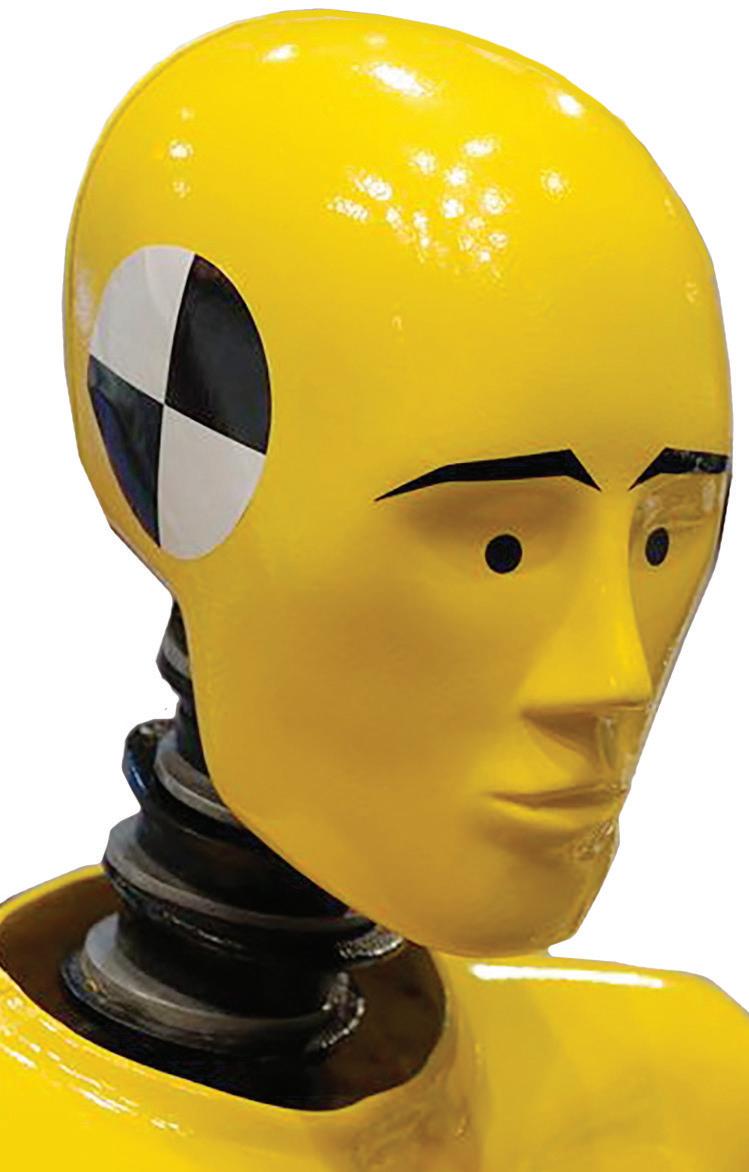
The pull-out quote you see below and to the right is a recipe. It isn’t part of a recipe; it’s the whole thing. What’s the dish? It’s the recipe for elevated risk while driving.
Not that we need to address this topic. After all, when would it ever rain in the CSRA day after day and day?
But let’s pretend for a moment that such a thing could happen. What would be the effects upon drivers and their safety?
when the vehicle is in drive.
Drivers in older cars whould take the hint: those running lights are not for decoration. They are crucial safety elements. Poor visibility is one of the top factors in weather-related crashes, and headlights dramatically improve visibility in rainy conditions.
Just add water
There is a lot of evidence about the specific effects of the recipe where you take one road and add water.
Multiple traffic studies reveal that overall, drivers reduce their speed in rainy conditions. This might run counter to your personal observations. Maybe you’ve noticed that the acronym R.A.I.N. seems to stand for Rain: Acceleration Is Normal. Or Rain: Aggression Is Natural.
But data is data. The catch is that said data reveals the obvious: rain is conclusively linked to increased collision risk, but drivers do not slow down enough to offset the increased danger. Wet pavement increases crash likelihood far more than drivers compensate through speed reduction. In fact, the average speed reduction is so slight that most drivers travel at nearly normal speeds in rain.
How does a little rain wreak its havoc?
One of the biggest factors is water’s lubricant properties, which reduce pavement friction and significantly increase stopping distances. Rain can (and does) obscure lane markings, create glare, and interfere with the view through the windshield.
Contributing human factors include poor maintenance, like super-streaky windshield wipers that should have been replaced six months ago. Like not slowing down enough to compensate for reduced visibility and increased stopping distances. And like not having headlights on in rainy conditions.
Fortunately, most newer cars have running lights that come on whenever the engine is running, or at the very least
“I beg to differ. I see the road just fine even when it’s raining. Heck, sitting behind the wheel I can turn my headlights off and on while I’m looking at the street ahead and I can’t see any difference one way or the other.”
Good points. But the headlights are not for your visibility. Their purpose is to help other drivers see you. Earlier this week one of our roving traffic spotters witnessed a driver make a right turn into a gap in traffic. The problem was, there was no gap. A grey car with no headlights on was nearly invisible in the dense plume of mist behind the car that had just passed by. There was no collision in this case, but the next time it could be a different story.
According to statistics compiled through multiple studies, rain can increase crash rates by as much as 71%. European studies put the figure over there at 75%, and across the pond statistics reveal that 11% of all fatal crashes can be attributed to rainy road conditions.
Both Georgia and South Carolina have versions of lights on when raining and/or wipers on-lights on laws. National statistics suggest that enforcement of those laws is very low to non-existent, and there’s no data we could find to indicate the two-state area is any different.
In the final analysis, water on roads increases the danger of driving by a huge degree, but the real problem is not as much water’s fault as it is the drivers in cars traveling over those wet roads.
We can greatly increase rain safety by a few simple steps: slow down; turn headlights on at a bare minimum whenever windshield wipers are on; and keep those wipers well-maintained. The place where you buy them will in many cases install them on your car for free.
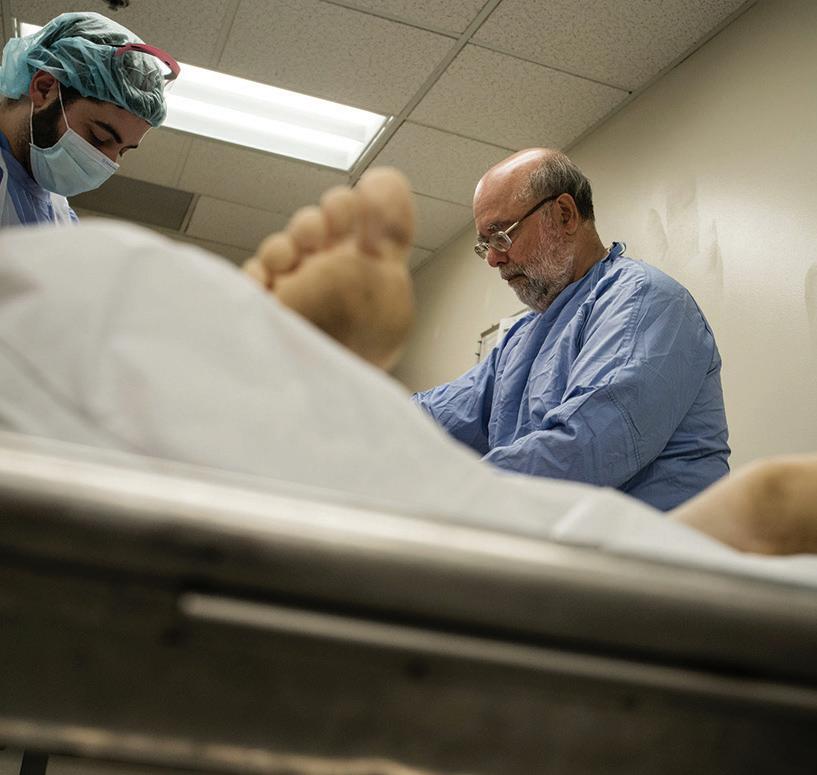
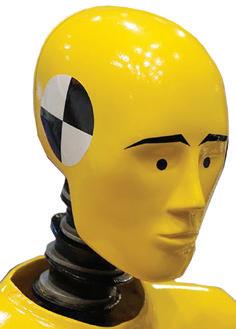
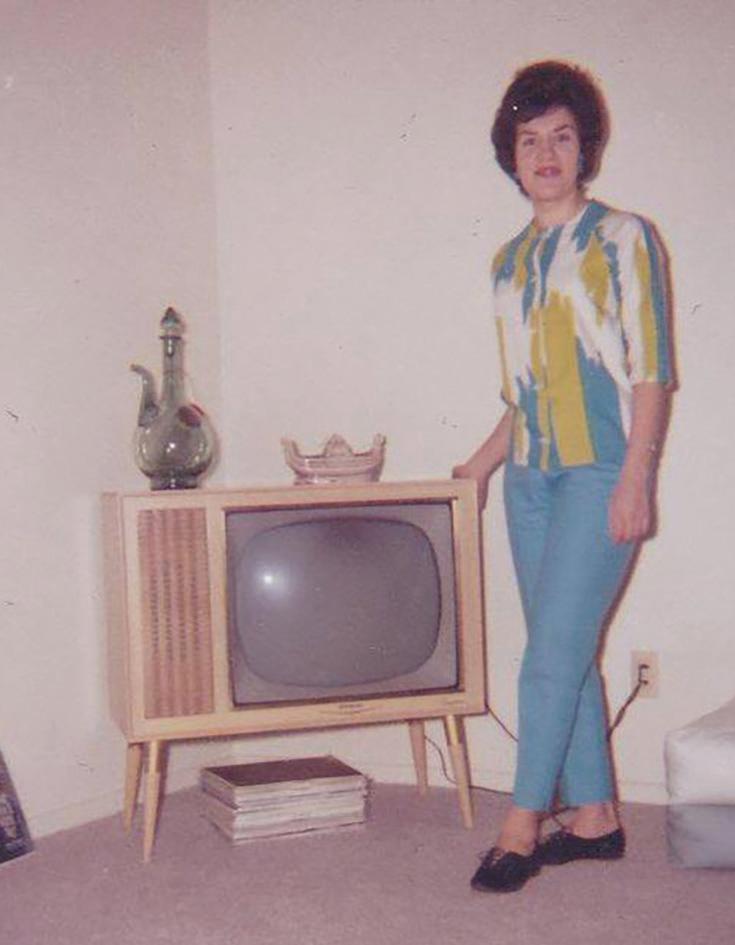
Write your most appropriate, clever, or funny caption to the photo shown for a chance to maybe win whatever cool swag we decide to give away someday. Email your entry to Dan@AugustaRx.com (Multiple entries ok)
DEADLINE TO ENTER: 5:00 PM FRIDAY,JUNE 12, 2026
Yesterday’s MedicinE
“First Aid to the Injured, and Transportation of the Wounded. A Handbook for the Navy and Naval Militia,” 1892
Poisoned Wounds. — Sailors, especially men-of-war’s men, traveling all over the world and spending a good share of their time in tropical countries...should be somewhat familiar with the methods of treating poisonous wounds...
Wounds from poisonous snakes, poisoned arrows, insects or dogs must all be treated alike. After the bandage is secured, rub the limb in the direction from the center toward the periphery, beginning at or near the bandage, thus squeezing out any poison which may have entered the lymphatics; then wash out the wound, burn or cauterize it as much as may seem necessary.
Internally, the administration of whisky with a small amount of ammonia added to it has, according to the most experienced travelers, proved to be of great service. A large quantity of drinkingwater should also be kept ready, for thirst comes on after a time and is very urgent. This thirst had better be satisfied
Naturally, our work often requires us to be outside. But:
OVERHEAD DOOR
We will just keep figuring out what we have to do and then doing our best to do it well.
That is all anyone can do.
Despite the challenges, there is a lot of joy in hearing her laughter. We are grate-
ful that she laughs and smiles a lot. She is mostly a happy girl. Unless you wake her up. Then you had better be wearing chain mail, or perhaps a full suit of armor.
Other than that minor detail, though, she is happy.
*WANDA KEMP
Examiners
Sometimes I feel sorry for women. You still don’t have man caves. The entire rest of the house.
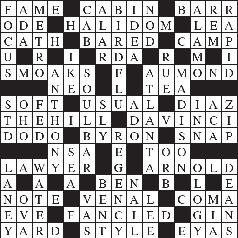
PUZZLE
1. Notable notability
4. Passenger compartment
9. Attorney General before Garland
13. Lyric poem
14. Holy place, as a church or sanctuary 15. Meadow 16. ______ lab 17. Uncovered 18. _____ David
20. Dietary abbreviation 22. Walton Way bakery of yore
25. Road connecting Walton Way with Boy Scout Road
27. New prefix
28. Actress Leoni
29. Category of drinks
32. Customary 35. She went to high school with Snoop Dogg
by Dan Pearson
Because we have man caves. What have you got? We’ve also got ma’am caves.
CAPTION THIS
Check out our new reader contest on p. 10 Write your most appropriate, clever, or funny caption to the photo shown for a chance to win whatever cool swag we eventually decide to give away! Email your entry to Dan@AugustaRx.com
DEADLINE TO ENTER: 5:00 PM FRIDAY, JUNE 12, 2026 Have fun!
Litigator
DOWN
1. “Pay attention!”
2. Dental org.
3. Broad Street coffeehouse
4. Taxi
5. Having wings
6. Avian influenza, in brief
7. Notion
8. Silent signal
10. Budget rival
11. Deep sleep ltrs.
12. R of 11-D
19. DDE nickname
21. Street in Paris
23. Carmelo o the NBA
24. Downtown Augusta watering hole
25. Capitol of the last of the original 13 colonies
26. Georgia county named for U.S. president #4.
29. HPV is one
30. Exclamation of surprise
31. Gave food to
WORDS
33. Wily
34. Fuss
36. Partridge ____ 37. Obamacare acronym 38. Type of code
43. __________ Mall (it had a Montgomery Ward)
46. Sickness adjective
48. Globe
49. Walker’s beginning
50. Subject of this issue’s Crash Course, in a way
52. Study, generally
53. Local Bridge?
Sharply curved
Metal fastener
Eggs 58. Augusta has two
Shelter
POW relative
DIRECTIONS: Every line, vertical and horizontal, and all nine 9-square boxes must each contain the numbers 1 though 9. Solution on page 14.
QUOTATIONPUZZLE
DIRECTIONS: Recreate a timeless nugget of wisdom by using the letters in each vertical column to fill the boxes above them. Once any letter is used, cross it out in the lower half of the puzzle. Letters may be used only once. Black squares indicate spaces between words, and words may extend onto a second line.
Solution on page 14.
Use the letters provided at bottom to create words to solve the puzzle above. All the listed letters following #1 are the first letters of the various words; the letters following #2 are the second letters of each word, and so on. Try solving words with letter clues or numbers with minimal choices listed. A sample is shown. Solution on page 14
by Daniel R.
ATHEBESTMEDICINE
Moe: I might be proved wrong, but I don’t think that new ballroom is going to be as secure as they keep saying it will be.
Joe: What makes you think so?
Moe: Anyone can just waltz in there.
Moe: What do you call a typo on a tombstone?
Joe: A grave mistake.
woman went to her local drug store. A clerk asked if she could help. “My husband is constantly complaining about trouble breathing, chest pains, nausea and stomach cramps,” the woman replied. “So I’m wondering, do you carry earplugs?”
Moe: My kids really struggled with algebra in school this year.
Joe: Oh, I did too when I was in school. It all seemed so complicated. I remember asking the teacher if I would ever use this stuff in real life when I grew up.
Moe: What did she say?
Joe: She was honest enough to admit that I probably never would. But she told me the smart kids might.
Moe: Why did the Trump supporters demand to join the LGBTQ community?
Joe: Maybe it’s because they identify as non-Bidenary.
Moe: What did the horse say after it hit the ground?
Joe: It said “Help! I’ve fallen and I can’t giddy-up!”
Moe: What has five toes but is not your foot?
Joe: I give. What?
Moe: My foot!
After performing Lasik surgery, the doctor is meeting with his patient.
“There were some complications,” said the doctor. “Do you want the bad news first or the good news?”
“Give me the good news,” says the man. “Well,” says the surgeon, “you’re going to be getting a new dog.”
Moe: What’s the most interesting job you’ve ever had?
Joe: I used to work at the US Mint.
Moe: Wow. That does sound interesting.
Joe: It was ok. The pay was not that great, but I made a lot of money
Staring at my phone all day has certainly had no effect on ME!
SUBSCRIBE
By popular demand we’re making at-cost subscriptions available for the convenience of our readers. If you live beyond the Aiken-Augusta area, or miss issues between doctor’s appointments — don’t you hate it when that happens? — we’ll command your mail carrier to bring every issue to your house!
NAME ADDRESS
CITY STATE ZIP
Choose six months for $26 ____ or one year for $48 . Mail this completed form with payment to Augusta Medical Examiner, PO Box 397, Augusta GA 30903- 0397
Advice Doctor
Dear Advice Doctor,
We’re having our 25-year high school reunion next month, and I would like to get your opinion on using these temporary topical creams that I’ve seen advertised about eight thousand times. Naturally I want to look like the very picture of health, but I don’t want to look made up or fake either. What option do you think would be best?
— Looking Back (to my younger days)
Dear Looking Back,
I definitely understand where you’re coming from. There are quite a few options, but each one has a specific application. Naturally, you want the one that will provide others with the best possible view.
The simplest method for a picture of health, of course, would be x-rays. They are quick, easy, painless, and very effective for finding things that might be abnormal, like a broken bone or a tumor.
A close relative of x-rays (although it might not seem like it) are CT scans. While an x-ray is simply an image, a CT scan combines multiple x-rays to create a slice of the body, a cross section, for more detailed imaging and more accurate diagnoses where a single x-ray is not sufficient.
Next up is Magnetic Resonance Imaging (MRI). As with CT scans, you will lie on a table that slides into the circular opening of the machine. In this case a powerful magnet circles around the tunnel opening, and the magnetic fields and radio waves used are translated into a very detailed image that can diagnose aneurysms, strokes, tumors, joint and tendon injuries, and more. And they are noisy!
At the other end of the sound spectrum, ultrasound imaging is silent, but ironically it uses sound to see inside the body. The equipment interprets the way sound waves bounce off internal structures to create images that can depict growing fetuses, circulatory problems, breast and prostate tumors, gallbladder disease, and more. All using super high frequency sound waves that we cannot hear.
Finally, a PET scan uses radioactive liquids that you drink or have injected to create its images. Like MRIs, PET scans can take awhile to complete. They can diagnose Parkinson’s and Alzheimer’s diseases, cancer, epilepsy and more.
As you can see, there are several ways to obtain a picture of health. I hope I answered your question, and that this helps you choose the one best for you.
Do you have a question for The Advice Doctor about life, love, personal relationships, career, raising children, or any other important topic? Send it to News@AugustaRx.com. Replies will be provided only in the Examiner.
• “We actually got this TV three weeks ago but I just got the pictures back from the drugstore today.”
• “Honey, where’s the remote?”
• “Now all we need are the rabbit ears and some tin foil.”
• “Three channels and there’s still nothing worth watching!”
PROFESSIONAL DIRECTORY
ACUPUNCTURE
Dr. Eric Sherrell, DACM, LAC Augusta Acupuncture Clinic 4141 Columbia Road 706-888-0707 www.AcuClinicGA.com
CHIROPRACTIC
DERMATOLOGY
Evans Chiropractic Health Center
Dr. William M. Rice 108 SRP Drive, Suite A 706-860-4001 www.evanschiro.net
DENTISTRY
Jason H. Lee, DMD 116 Davis Road Augusta 30907
706-860-4048 Floss ‘em or lose ‘em!
Georgia Dermatology & Skin Cancer Center 2283 Wrightsboro Rd. (at Johns Road) Augusta 30904 706-733-3373 www.GaDerm.com
DEVELOPMENTAL PEDIATRICS
Karen L. Carter, MD 1303 D’Antignac St, Suite 2100 Augusta 30901
Steppingstones to Recovery 2610 Commons Blvd. Augusta 30909 706-733-1935
Home Care Personal Care|Skilled Nursing|Companion 706-426-5967 www.zenahomecare.com
Parks Pharmacy 437 Georgia Ave. N. Augusta 29841 803-279-7450 www.parkspharmacy.com PHARMACY
TOUCH... from page 1
When pain or cold or some other outside factor activates one of those receptors, a complex process begins. Whatever the physical stimuli is gets converted to an electrical signal that travels through nerves to the spinal cord and then to the brain where it is interpreted as touch, pain, hot or cold, texture, moisture, et cetera.
Speaking of pain, we are conditioned to think of it as something negative, to be avoided at all costs. In truth, pain is indispensable. It’s essential to life. Without pain sensors we could pick up a hot pan and not realize we were being burned, or step on broken glass (or Legos) and be unaware of the injuries we suffer. When we are injured, a broken arm let’s say, pain forces us to rest, protect and guard the injured area so it can heal. Pain also teaches us protective avoidance. Do something that really hurts once and you’re unlikely to do it again. Pain can also be a signal that something just isn’t right; it gives us and our doctors diagnostic clues that can lead to treatment and (we hope) a cure.
The human touch
It would be difficult if not impossible to measure the priceless value of touch in our daily lives. There is an old folk tale of a cleaning woman who mops her way through a maternity ward every night, pausing to pick up and cuddle the last baby in the row for a few moments before heading to the next room. That baby, as the story goes, is always the healthiest.
That’s all it really is, just a folk tale, but the science behind it is rock-solid. Human touch dramatically reduces infant mortality. What some people call Kangaroo care — holding a baby skin-to-skin — improves heart and respiratory rates, promotes weight gain and temperature regulation, and improves immune function. Touch is one of the most powerful health interventions for newborns.
As it turns out, we never really outgrow our need for physical contact with others. Children run to their mothers for hugs when they’re hurt or scared and are comforted in ways no other treatment can offer.
Adults experiencing anxiety, grief, or other troubling emotions may be soothed by a few well-chosen words, but a tender, warm, loving embrace can often silently accomplish far more than anything we might say. Even a gesture as simple as a hand on someone’s shoulder can amplify the sincerity of whatever is said and convey a depth of concern that words cannot.
One of the most severe punishments the justice system wields is solitary confinement. It is so harsh that some state restrict its use to no more than 15 days. Human interaction is that vital, and depriving it, even to the most hardened criminals, is considered inhumane.
We have run out of space, yet we have barely touched the topic of touch. You are invited to continue investigating through your own research.
And we again invite Aristotle to reconsider his rankings. We find them to be somewhat out of touch. Next issue: Part II. Which sense will we profile?