
WHAT’S THAT SMELL?
Here at the palatial world headquarters of the Medical Examiner in Augusta, we are not unaware of the digital trend sweeping the planet. Even so, reports of the death of print, as Mark Twain might have put it, have been greatly exaggerated. Well, maybe not greatly In Augusta alone, there are plenty of publications in the print graveyard.
We have no plans to join them, even though we predict that before this article ends you will be encouraged to read our online version.
Why do we keep printing?
Honestly, we love the love. The feedback from readers is constant and is truly gratifying.
But why do people love this paper? Well, it’s hard to ignore the scintillating content. It ranges from medical and scientific stuff (presented in layman’s terms; we know we’re not JAMA) to psychological/mental health topics, driving safety, fiscal health, sound nutrition (with recipes), parenting advice, medical history, mentally challenging puzzles, even a comic strip and a page full of bad jokes. All of this in every issue — and there’s still room for the vital ads that make this newspaper possible.
But there is something else, and we hear about it all time: the smell. People love the smell of print! There are offices we deliver to where the first person who gets a copy puts it up to her face and inhales the sweet perfume of print deeply. Seriously, if we had a dollar for every time that has happened...
What exactly is the perfume of print? That depends upon the publication.
For the Medical Examiner, the scent is a combination of the paper itself (milled in Canada) and the inks and solvents (applied in Charleston) that put our words and pictures on that paper.
When it comes to bound matter, book lovers well know the pleasure of opening a book and being met with the distinc tive aroma of print. It’s all the things a Medical Examiner might present, with the addition of the various bindery adhesives that hold the book together. A brand new book has its own crisp, almost synthetic scent, while old books are a mixture of all the elements that brought them to life, along with the musty dusty smells of longevity: paper starting to decay, the dust the book has collected over the years, the invisible molecules that previous readers left behind. One writer said when we breathe in the aroma of those pages “we are simultaneously smelling the life—and the death—of a book.”


Why stick with paper?
If there is any part of the trend toward more digital and less paper that represents a loss, it might be among the generation of people who have no foundational memories connected to paper. Opening up an old book and inhaling its scent doesn’t transport them back to bedtime stories or to rainy afternoons spent in bookstores or libraries. Kindles, tablets and laptops just don’t offer amenities of that sort.
• Personal, local answers and assistance
• Review your current plan for optimum benefits
• Call to review the best enrollment for you
• All services provided at no cost to you


For reasons that have nothing to do with our noses, print is not going away anytime soon (or at least it shouldn’t). The benefits of print have more to do with our brains than our noses.
Extensive research (like a meta-analysis conducted in 2018 of 54 major studies) found a significant advantage for paper over screens in terms of reading comprehension. A 2024 meta-analysis of 20 years of research confirmed that paper reading outperforms digital reading, especially when the content is





55
PARENTHOOD
by Dr. Warren Umansky, PhD
Taking your children grocery shopping with you is stressful. They throw fits when you won’t buy something for them. You often have to shorten your trip or deal with embarrassment over their behavior. You work and have little time for shopping when your children are in school and day care, so you want to spend this time with them. You have tried without success to find someone to watch them while you shop.. What do you do?
A. Realize that this is a bigger problem than just shopping trips. It would be wise to speak now with a mental health professional or behavior specialist.
B. All kids go through these phases. Hang in there and it will improve.
C. Let your children know before you enter the store that, if they behave in the store, you will buy them candy or gum at the checkout counter.
D. Your children must have ADHD. Talk to your pediatrician about it.
If you answered:
A. As hard as you try, you are having a difficult time balancing all of your responsibilities. Getting help with managing your children’s behavior and with time management may make life more enjoyable for you your children. Your pediatrician might be able to suggest mental health professionals who can assist.
B. This might be true, but most children in stores with their parents do very well. You want to be one of those parents. Don’t accept their misbehavior as something you have no choice but to endure. Follow option A.
C. There is nothing wrong with this approach. Children are doing something they aren’t thrilled about in the first place: walking around a store getting groceries and other things not specifically for them. Some children handle it well, depending on how enjoyable you make the activity (for example, singing songs along the way, pointing out things for them to see, having them help put things in the cart, etc). Even using this approach, it is important to use rehearsal strategies before going into a new or challenging setting. Review with them what you expect. Let them know how proud you will be when they behave nicely, and let them know that if they display good behavior, you will reward them with something at the checkout counter.
D. If you and your child’s teachers have used consistent and sound behavior management and you still see high activity levels, impulsive behaviors, aggression, inability to follow directions, and difficulty getting along with other children, talking with your pediatrician is a good next step, especially if there are other family members who have been diagnosed with ADHD


Behavioral Patterns
• Withdrawal from relationships
• Reduced engagement in daily activities
• Changes in sleep or appetite
Functional Impact
• Decreased work or school performance
• Strained relationships
THOUGHTS
THOUGHTS ABOUT THOUGHTS
“I’M NOT GOING TO DO ANYTHING...I JUST DON’T WANT TO BE HERE.”
PASSIVE SUICIDAL IDEATION
Editor’s note: Written by local mental healthcare professionals, this series explores how people may think and act when affected by common and lesser-known mental health conditions.
Lena is a 29-year-old teacher who describes herself as “tired in a way sleep doesn’t fix.”
She still goes to work, grades papers, and shows up for her students. But when the day ends, she feels a heaviness she can’t shake.
Some nights, as she lies in bed, a thought quietly surfaces: What if I just didn’t wake up tomorrow?
She doesn’t have a plan. She doesn’t want to hurt herself. In fact, the idea of taking action scares her. But the thought keeps returning — not as a decision, but as a sense of relief at the idea of simply not existing.
Lena hasn’t told anyone. “It’s not serious,” she tells herself. “Other people have it worse.”
Lena may be experiencing passive suicidal ideation — a form of distress that is often minimized, but clinically important to recognize.
What Is Passive Suicidal Ideation?
Passive suicidal ideation refers to thoughts about death or a desire to not exist without active intent or planning to end one’s life.
These thoughts often sound like:
• “I wish I wouldn’t wake up.”
• “It would be easier if I just disappeared.”
• “I’m tired of being here.”
Unlike active suicidal ideation, there is no plan, preparation, or immediate intention to act. However, the presence of these thoughts reflects significant emotional distress and should not be dismissed.
Passive thoughts can fluctuate — and in some cases, may progress to more active risk if left unaddressed.
Signs and Symptoms
Emotional Features
• Persistent sadness, emptiness, or hopelessness
• Emotional exhaustion
• Feeling like a burden to others
Cognitive Patterns
• Thoughts of death without intent
• Belief that others would be better off without them
• Difficulty imagining a positive future
• Increased risk for depression and anxiety
• Potential progression to active suicidal thinking
Understanding Risk Without Intent
One of the most common misconceptions is that passive thoughts are “not serious” because there is no plan.
In reality, passive suicidal ideation exists on a continuum of risk. These are the key points to understand:
The absence of a plan does not mean the absence of suffering
These thoughts often signal underlying conditions such as depression, trauma, or burnout
Over time, repeated thoughts about death can lower psychological barriers and increase risk
Passive ideation is often a warning sign — an opportunity for early intervention before a crisis develops.
What Causes Passive Suicidal Ideation?
Several factors may contribute:
• Major depressive episodes
• Chronic stress or burnout
• Trauma or unresolved grief
• Feelings of isolation or disconnection
• Persistent hopelessness or loss of meaning
• Co-occurring mental health conditions such as Major Depressive Disorder or Post-Traumatic Stress Disorder
These thoughts often emerge when emotional pain outweighs perceived coping resources — not because someone truly wants to die, but because they
Please see THOUGHTS page 3
Dr. Umansky has a behavioral health practice for children in Augusta
want relief from how they feel.
Common Misconceptions
“If they’re not planning anything, it’s not a big deal.”
Passive thoughts are clinically significant and deserve attention and care.
“Talking about it will make it worse.”
Open, supportive conversation often reduces isolation and distress.
“They’re just being dramatic.”
These thoughts reflect real suffering, even if the person appears “functional” on the outside.
“They would tell someone if it was serious.”
Many individuals minimize or hide these thoughts due to shame, fear, or not wanting to worry others.
Treatment
Early support can significantly reduce distress and prevent escalation.
Psychotherapy
• Cognitive Behavioral Therapy (CBT) helps address hopeless thinking patterns
• Interpersonal therapy can improve connection and support systems
• Trauma-focused therapies when relevant
Medication
• Antidepressants or other medications may be appropriate when underlying depression or anxiety is present
Safety Planning
• Identifying warning signs
• Developing coping strategies
• Establishing support contacts
Lifestyle and Support
• Strengthening social connections
• Restoring routines (sleep, nutrition, activity)
• Reducing isolation
Encouraging individuals to speak openly — without judgment — is a critical part of care.
Prognosis
With appropriate treatment and support, passive suicidal thoughts often decrease in frequency and intensity. Many individuals regain a sense of hope, connection, and purpose.
Without intervention, these thoughts can persist or intensify, increasing the risk of progression to active suicidal ideation. Recognizing passive suicidal ideation for what it is — a signal of distress, not a weakness — allows for earlier, more effective intervention.
If you or someone you know is experiencing thoughts like these, reaching out to a mental health professional can be an important first step. Immediate support is available through the 988 Suicide & Crisis Lifeline by calling or texting 988.
About Us
IPS provides inpatient and outpatient mental health services, with or without a referral, to help patients and their families progress through the care journey. To make an appointment, call 706-204-1366 or visit integratedpsych.care.

Last time we checked, being in a coma was not viewed as a good thing. So why would doctors deliberately place someone in a comatose state?
Think of a medically induced coma in the same way you might view a cast placed on a broken arm. Its purpose is to give the arm a chance to rest from its normal activity without stress and strain, and to enhance and speed up the process of healing. In a similar way, inducing a coma (using anesthetic drugs) lets an injured brain rest from its normal 24/7 workload with the hope of faster, more complete healing.
While a broken arm might be relatively minor compared to a brain injury, the analogy isn’t as far off as it might at first seem. Imagine trying to heal from a broken arm while chopping wood or digging a ditch hours every day. And imagine trying to help a traumatic brain injury heal while the brain is firing on all cylinders as usual, with the zillions of accompanying electrical signals and the typically high oxygen demand which all of that entails.
That is not a recipe for convalescence. Inducing a coma dramatically suppresses electrical activity in the brain. In response, the brain’s metabolic demand and oxygen use are greatly reduced, giving the brain time to rest, repair, heal, and recover. At the same time, the brain’s suppressed state helps to promote reduced swelling, intracranial pressure and bleeding.
Sometimes the brain’s electrical activity is so great that it causes seizures, and an induced coma is one of the tools neurologists sometimes use to stop the electrical storms behind the seizures.
Unlike a cast on a broken arm, a medically induced coma is often employed in life-threatening situations, so it has its risks. Even so, it is precisely controlled and carefully monitored, and always used in hopes of better outcomes.

Who is this?
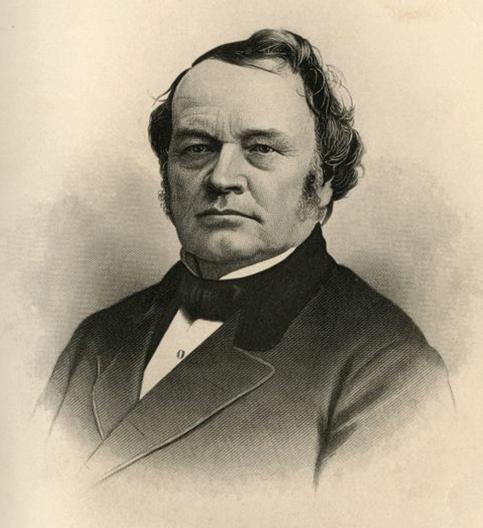
This noteworthy gentleman has a name closely associated with medicine even though he never had any real connection to the profession.
Born in Vermont in 1807, he had very little formal education, and first worked as a boatman on a canal near Boston. He later sold fish and oysters in Boston, which worked out well enough that he opened a small restaurant and ran it until 1869 when it was sold and demolished for a street widening project.
Although he always regretted his lack of education (caused by circumstances around his father’s death when our subject was only in his teens), he did not let that hinder any of his business pursuits.
For example, he used profits from his restaurant to start a small real estate portfolio. By age 35 (in 1842) he had accumulated enough wealth and prominence in the Boston community to be invited to sit as one of the founding directors of the Fitchburg Railroad. The railroad has gone through several hands over the years, but is still running, operating today as part of Boston’s commuter rail system (between Boston and Fitchburg). The original system extended all the way across the northern tier of Massachusetts to its western border and into New York through an engineering marvel of the day, the Hoosac Tunnel, a nearly 5-mile dig completed in 1875 after 20 years of work. The original cost estimate of $2 million had swollen to more than $21 million by the time the project was finished.
Those dollar amounts give us a good jumping off point to explain how a poor and uneducated oyster seller became associated with medicine at its highest levels.
The Fitchburg Railroad’s $21 million tunnel would cost $630 million in today’s dollars. Similarly, the gentleman’s last will and testament left $1.3 million to endow a hospital to be built 25 years after his 1877 death. By the time the 25 years were up (in 1902), his bequest had grown to the equivalent of $76.8 million in 2026 dollars.
He willed that the hospital be named “the Brigham Hospital for the care of sick persons in indigent circumstances,” the longest hospital name ever. Yes, the man above is Peter Bent Brigham, benefactor of the Boston hospital of the same name (his full name, rather than simply “Brigham” as he specified in his will, was bestowed by trustees in 1913).
Peter Brigham also left money to his hometown in Vermont to build a school there so that no future child would miss out on educational opportunities as he did.
His nephew, Robert Breck Brigham, likewise a successful restaurateur and businessman, also left a bequest upon his death in 1900 earmarked to establish the “Robert B. Brigham Hospital for Incurables.” The two hospitals merged with Boston Hospital for Women in 1981. They are today collectively known as Brigham and Women’s Hospital, and function as the teaching hospital arm of Harvard Medical School.
ADVENTURES IN
Middle Age
BY J.B. COLLUM
As a kid, were you ever tricked by your parents into doing something healthy? Looking back now, I know exactly why my mother put ketchup on collard greens. It was so I would eat them. To this day, I still like them that way, although now I prefer pepper vinegar.
My father, on the other hand, liked to pull a Tom Sawyer trick. He would make some chore he was about to do sound like the most satisfying thing in the world. He acted like he loved it so much that he could hardly wait to finish breakfast and get started. Then he would say how bad he felt that I probably wasn’t quite up to a job that important yet.
And just like the boys who ended up paying Tom Sawyer for the privilege of whitewashing the fence, Dad could hardly keep me from volunteering. He would pretend it was a tough decision whether to let me take over, and he usually agreed only if he could help too.
Of course, I readily agreed because, especially at that age, I thought my father was the best man in the world, and I wanted to be just like him.
It would be many years later that I realized I had been one hundred percent correct in that assessment.
To be fair, there were a few rebellious teenage years along the way when I was absolutely convinced that he didn’t know much of anything. Fortunately, I grew out of that stage a lot faster than some people do.
All of which leads me to tell you that my Nurse Practitioner, Mary, told me my A1C number, and it wasn’t good. To be fair, it was a little better than the last one, but she had warned me then that if it wasn’t significantly better this time, it would be time to put me on insulin.
That had scared me, but apparently it hadn’t scared my body — or my sweet tooth — enough to do much better. It also hadn’t been enough to convince this very lazy man to exercise.
Still, I resisted and told her we should try something else. She nodded and started mentioning several medications that would likely work, using only their brand names. I was relieved. Insulin was apparently off the table, and I was ready to try just about anything else.
She wrapped up the visit and called

in my new prescription. I picked it up, brought it home, and promptly forgot about it until later that evening.
It turned out to be one of those injectable medications. That means a needle, which is not exactly my favorite thing. Fortunately, it’s a very tiny needle and, honestly, doesn’t really hurt at all.
That night, curiosity got the better of me, so I typed the name of the drug into a search engine.
Boom!
My world shattered. I thought I had grown beyond the point of being fooled so easily.
What was this “new” medication? Basal insulin! INSULIN!
She tricked me. I like Mary, but for a little while, I was genuinely upset. Then I told my wife, Lorie, how I had been wronged by a trusted medical professional, fully expecting sympathy. Instead, she laughed and said, “I like her!”
Lorie had been wanting this for quite a while because nothing else had seemed to work, and my health has been going downhill fairly quickly over the last few years. I had been attributing it to aging, but she saw it as something more. Eventually, I calmed down and conceded that perhaps this really was the right time.
That was about a week ago, and whether it’s because of the insulin or something else, I have noticed that I feel better.
I don’t wake up several times during the night to go to the bathroom anymore. I don’t have to run to the bathroom every hour during the day. I just generally feel better. Even my tachycardia hasn’t returned.
Well, if ketchup got me eating my greens, and a little Tom Sawyer trickery gave me a better work ethic, then maybe this trick could end up extending my life. Maybe getting fooled every now and then by someone who cares about me isn’t such a terrible thing after all.


J.B. Collum, the author of this column and Special Forces Parenting, is a local novelist, humorist and columnist who wants to be Mark Twain when he grows up. He may be reached at johnbcollum@gmail.com

Special Forces
Parenting
I want to start with an appeal today before I move on to what is going on with our situation. I want you to really think about your answer too. Are you involved in taking care of a special needs person? What have you learned? Have you shared that knowledge? Have you shared your story? Would you like to?
I have a somewhat ambitious idea I am working on, and to be honest, for me to consider something ambitious just means it will require a little more work than I can usually get away with, so don’t expect too much. But seriously, I am giving some thought to a special project, and I cannot do this one alone.
I need your stories: the funny ones, the sad ones, the challenges, and the victories. Don’t feel like you need to make them ultra-polished or super-special. Just share your raw story with me if you are willing.
Once we have some stories collected, I have an idea I am not quite ready to reveal yet, but before moving forward with it, I will talk to everyone who submits a story first and get permission before I do anything with them.
You can reach me at JohnBCollum@ gmail.com.
Okay, PSA over. Now to the latest tale.
I wanted to follow up on a couple of things in this issue.
The first is an update on how Freyja is doing with screen time. Katie ended up buying her a large phone because she seemed to like phones better than tablets. Even though she already had two tablets, she always wanted our phones instead, so having her own phone that is well-insured, in a supposedly kid-safe case, and which did not cost that much in the first place seemed like a pretty good idea.
For the most part, it has been a good thing. When she plays games that involve people talking, she gets very happy and
“talks” back to them. We cannot understand her, but she is trying. She can get very loud and talkative at times, though. Sometimes she gets herself tickled to the point that her laughter becomes disturbing, especially in public. Even though hearing a child’s laughter can be a delight, hearing it for an hour straight can be a prescription for a headache. It is not so bad at a loud restaurant where her little bit of noise gets lost in a sea of clattering plates, loud conversations, and maybe even live music. But put that same excitement into a very quiet place on a Sunday morning, if you know what I mean, and it becomes a huge distraction.
We have learned that once she gets this excited, the only thing that calms her down is taking the phone away. She does not complain exactly, but you definitely have to watch her because she immediately starts looking for her first opportunity to snatch it back and run with it.
For now, we are accepting the loudness along with the positive development of her becoming even more vocal, and we are keeping a close eye on how her behavior changes over time.
The other thing I wanted to follow up on was my plan to find more ways to help Freyja’s primary caregivers, our daughter Katie and my wife, Lorie. As I discussed before, I realized during our Myrtle Beach trip just how much Lorie needs time away from the constant pressure of caregiving, and she relaxes best with the soothing balm of live music, good food, and beverages.
To that end, we have gone out to eat at places with live music twice in the past month, and we hope to keep doing that regularly. I truly believe it has helped her. We have found that The Alley is a great place for this type of thing.
Katie recently took a trip out of town with her brother to attend a concert, and she actually had a night away from Freyja, which was probably the best night’s sleep she has had in about three years.
For my part, I have taken my turn getting Freyja to sleep while Lorie and Katie stay up and enjoy some mother/daughter time together, which usually involves watching some kind of singing or dance competition show.
I do not mind it at all.
Taking a little nap beside this sweet girl while she cuddles up against you is one of the purest joys a parent or grandparent can experience. That kind of trust—that feeling that you are the person keeping them safe enough to drift off into dreamland—is an honor beyond compare.


Who is this?
Not everyone in healthcare can be Florence Nightingale, right? Despite the long-running series on page 4, there are clunkers in medicine, and we will examine some of them in this series. Unfortunately, there’s enough material to keep this side of the page going for a while.
You might think that no autopsy has ever listed “horses” or “gambling” as a direct cause of death. Technically you might be right. But British doctor William Palmer (1824—1856) sent several otherwise hale and hearty people to early graves, and “horses” and “gambling” were the proximate causes of their deaths
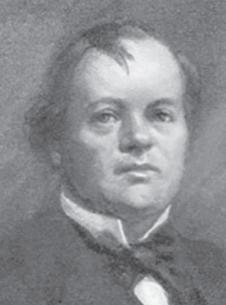
Palmer came from a wealthy family, which didn’t help him. He gained a reputation as an entitled bully. After being fired from a job as a pharmacy apprentice due to allegations of theft, his mother’s wealth and influence came to his rescue in the form of medical training in London. His future should have been secured, but he adopted a lifestyle that no amount of money could support.
However, he had a plan so simple it could be described in a single word: murder.
He married the daughter of a well-to-do family in 1847. A year and a half later his mother in law died unexpectedly after visiting her daughter and son in law. Dr. Palmer’s wife inherited her mother’s estate.
As it turned out, the inheritance gained from his mother in law’s death was far less than expected. But if his wife was to die it could compensate for that, Palmer apparently reasoned. He took out a sizable life insurance policy on her, and sure enough, she died soon after at the ripe old age of 27.
From their wedding day to her death, she had delivered five children, all but one of whom died in infancy. Infant mortality being what it was at the time, no suspicions were raised, but when Palmer took out an insurance policy on his brother, and he complied by dying soon after, the red flags flew. The insurance company refused to pay. An investigation was launched.
As things unfolded, Palmer was found to have taken out (or attempted to take out) insurance policies on any number of friends, family, and acquaintances. A favorite target of more direct action was successful gamblers at the races, whom Palmer would invite to his home to celebrate. Several of them had the strange habit of waking up the next morning penniless. And dead. The poisoning death of his friend John Cook was his eventual undoing, although he was suspected of killing his mother in law, wife, and their four children.
Convicted of Cook’s murder, Palmer was hanged before a crowd of 30,000 people. As he stepped on the trapdoor of the gallows, he is said to have asked, “Are you sure it’s safe?”

NURSENOTES
by Lucy Dianne Sharp, RN, BSN
Why do my feet hurt?
There are many reasons why we find ourselves asking this question. I’m not going to touch on all the numerous foot problems we can encounter as we walk through life. There are too many such issues to cover in this article. I have chosen the one that literally stopped me in my tracks.
According to the Mayo Clinic, plantar fasciitis involves the inflammation of a thick band of tissue that runs across the bottom of each foot and connects the heel bone
What is Plantar Fasciitis?
to the toes, known as the plantar fascia. It is stretchy like a thick rubber band. It connects the bones in your foot and forms the arch on the bottom of your foot. It supports the arch of the foot and absorbs shock when walking. Stress on the fascia causes small tears which become inflamed. It usually starts with heel pain. I didn’t have heel pain. My pain was confined to the arches of my feet.
Most people experience plantar fasciitis in one foot at a time. In my case, it affected both feet at once. How common is this malady? Statistics claim that 1 in 10 people will have plantar fasciitis at some point in their life and is the leading cause of foot/ heel pain.
What causes this malady?
The first cause listed is my favorite – age. Between the ages of 40-60, certain types of exercise, running, dancing, standing on your
feet for long periods of time, flat feet, high arches, and of course obesity. If you don’t fit into at least one of these categories, you haven’t lived a normal life.
How is plantar fasciitis diagnosed?
You will need to see a medical professional who will ask about your symptoms, palpate your plantar fascia for inflammation, ask about your pain, and sometimes take x-rays of your foot. You start with your primary care physician who may refer you to an orthopedist or a podiatrist. I chose a podiatrist.
How is it treated?
The list of treatments is long. The pain is usually managed with over-thecounter medications like Tylenol or Ibuprofen. Other treatments are physical therapy, rest, icing your foot, orthotic shoes, walking boot, massaging, and stretching. If your medical
professional selects physical therapy, it may include an ultrasound treatment or dry needling. With dry needling, the physical therapist inserts small needles, similar to acupuncture needles, into the fascia. This stimulates blood flow in the area to help the fascia repair itself. Your provider may select to inject the fascia with a corticosteroid like prednisone. It is rare that surgery is an option. How long before the pain goes away can be from a few weeks to a few months and it can return at any time in your life.
In addition to the inflammation of the plantar fascia, small fibromas can form along the fascia. These are small noncancerous growths. It often feels like you are walking on marbles or have a stone in your shoe. The pain is in the arch of the foot. You may be able to feel the fibroma when you rub the arch of your foot. Treatment usually requires
the corticosteroid injection into each fibroma to get rid of them.
I struggled with this malady for over a year. I was treated with physical therapy, ultrasound, dry needling, acupuncture, and corticosteroid injections. I spent over $300 on special shoes which I don’t wear. At one point, my pain stopped, but returned in two months. That was when the fibromas were found along the arch fascia.
If you consult the internet, there are numerous devices and recommendations of treatment for every problem related to your feet. Before you spend money on any of them, consult a medical professional.



In conclusion, if you are experiencing pain in your heel or foot that doesn’t get better on its own in a week, talk to your healthcare provider. As we age, we need to stay on our feet and keep moving to live.



TRYTHISDISH
by Kim Beavers, MS, RDN, CDCES
SLOW COOKER HOT BEEF SANDWICH
Sometimes you just want a hot beef sandwich.
Ingredients
• 1 tablespoon Jane’s Krazy mixed up salt
• 1 3-pound brisket trimmed of fat
• 1 tablespoon extra-virgin olive oil
• 2 cups no-salt-added beef broth; divided
• 1 tablespoons Worcestershire sauce
• 2 sweet onions, sliced into rings
• 8 whole wheat buns
Directions
Rub the salt blend over the brisket. Heat oil in a skillet over medium heat. Once oil is hot add brisket to pan and allow to brown on all sides (about 3 minutes per side).
Place seared (browned) brisket in a slow cooker. Add about ¼ cup of broth to the pan you used to brown the brisket and deglaze the pan. To deglaze a pan simply turn the heat on low and use a wooden spoon to scrap the flavorful brown bits off the bottom of the pan. Once the brown bits are incorporated into the liquid pour it over the brisket. Add the Worcestershire sauce and remaining broth. Position the onions on top and cook on low for 8 to

10 hours.
Once done pull the brisket apart and shred with 2 forks or your hands, combine the brisket with the liquid in the slow cooker for a moist sandwich.
Plate Plan: 1 Vegetable, 2 Starches, 5 Meats
Recipe adapted from: www. eatingwell.com





Serve 1/2 to ¾ cups of pulled meat on each bun and top with onion rings. You will likely have extra meat which will make a great leftover meal.
Yield: 8 Servings
Nutrition Breakdown: Calories 380, Fat 11g (3.5g saturated fat), Cholesterol 105mg, Sodium 507mg, Carbohydrate 26g, Fiber 4g, Protein 43g.

Kim’s note: Jane’s Krazy Mixed up Salt. Originally I was going to add salt, pepper, and garlic powder to this recipe (3 spice containers). However I am embracing spice mixes these days because they offer an element of convenience. The amount of sodium using Krazy mixed up salt is comparable to a little less than a teaspoon of salt.











Dear Angel, the Money Doctor MD, I help take care of someone I love at home. I cook, clean, help with medications, transportation, and daily needs. Someone told me Medicaid might actually pay me for what I’m doing. Is that true? How do I become an in-home caregiver paid by Medicaid?
Signed,
Caregiving from the Heart, Augusta
Dear Caregiving From the Heart,
Yes — in some situations, Medicaid can help pay family members or loved ones to provide care at home. As America gets older and nursing homes become more expensive, many states now encourage seniors and disabled individuals to stay at home as long as safely possible.
But there are a few important things to understand.
First, in most cases the person receiving care must qualify for Medicaid and need help with daily living activities such as bathing, dressing, cooking, transportation, medication reminders, and need walking or mobility assistance
Simply being elderly or even disabled does not automatically qualify someone.
In many states (includ-
ing Georgia), Medicaid may allow a loved one, friend, or even a girlfriend or boyfriend to become a paid caregiver under certain programs. Interestingly, spouses are often excluded, but unmarried caregivers may qualify.
The process usually works like this:
Step 1: Apply for Medicaid
The person receiving care must first apply for Medicaid benefits and meet income and asset requirements.
Step 2: Medical Assessment
A caseworker or nurse evaluates whether the person needs assistance to remain safely at home.
Step 3: Choose an InHome Care Program Programs such as Community Care Services or Medicaid Waiver Programs may allow the patient to choose their own caregiver.
Step 4: Caregiver Ap-
proval
The caregiver may need: a background check, basic training, CPR certification, TB screening, and enrollment paperwork
Once approved, the caregiver may be paid hourly to help care for the individual at home.
The pay is usually modest, but for many families it can make a tremendous difference emotionally and financially. More importantly, it allows loved ones to stay in familiar surroundings instead of moving into a facility prematurely.
One final thought: Many caregivers are already doing the work every single day without realizing there may be programs available to help. Asking questions is not taking advantage of the system — it is learning how to navigate it wisely. And sometimes the best healthcare is simply being cared for by someone who truly loves you.
Angel
The Money Doctor, MD
This column is for education, not personal tax, legal, or investment advice. Please consult a qualified advisor who can look at your actual statements, options, and health/age situation before making a final decision. Have a question for Money RX: A Prescription for Financial Health?
Send it to info@AugustaRx.com and your question may be featured in a future column.



READ ONLINETHE

MEDICALEXAMINER

CRASH COURSE

More Americans have died on US roads since 200 0 than in World Wars I & II combined
Is America the greatest country on earth? Possibly. It depends on how you measure greatness. If it’s by road safety performance, we’re not even greatness-adjacent.
The International Transport Forum (ITF) and IRTAD, the International Road Traffic and Accident Database, assemble and analyze road safety data of all kinds from around the globe. IRTAD is considered to offer the gold standard in global traffic safety data. The volume of information they collect from around the world allows them to compare standardized statistics from similar countries. That’s important for accuracy, because it wouldn’t be logical or particularly useful to compare US traffic safety performance with, let’s say, Nepal or Somalia.
a story we’ve heard before, the U.S. also had the highest death rate in this category among 28 comparable nations for basically all age groups from 15 to 64.
We have work to do
The good trends are getting better, and the bad trends are getting worse. That is to say U.S. pedestrian deaths doubled from 2013 to 2022, while during the same period other high income countries saw a nearly 25% decrease in pedestrian fatalities,
Why the differences?
It provides a more accurate measure to see how US drivers compare to other developed, high-income countries that have interstate highways, newer cars with modern safety features, etc. It’s comparing apples to apples as much as possible.
Where we stand
Internationally, we aren’t doing too well. In a number of categories we are considerably worse than nearly all other wealthy nations.
As one example, the United States has the highest per-person crash fatality rate among 29 high-income countries. And it’s not even close. We are more than twice the average of the other countries.
To take some specifics, U.S. traffic deaths increased by one-third in the decade ending in 2021, while at the same time Canada recorded an 18% decrease.
From 2013 to 2022, overall U.S. traffic deaths rose more than 22%, while other high income countries had a median decrease of almost 20%.
Compared with the safest nations (Australia, Canada, Japan, Western Europe) U.S. motor vehicle death rates range from two to five times higher.
Another specific measure of safety comes in the realm of pedestrian stats. In
The strategies to attack and reduce crashes and fatalities are universally accepted and available, but they are much easier to implement in other countries. Why? Some entire nations are smaller than the whole state of Georgia. Even larger countries are small compared to the U.S. Across the U.S. there are thousands of local jurisdictions, 50 sets of state laws, as well as federal regulations. Studies show that countries with better safety outcomes have a unified national commitment to reducing crashes and deaths.
Our road culture embraces larger vehicles like SUVs and large pickups, while many foreign countries are known for small, compact vehicles. Like they say at Morgan & Morgan, size matters, particularly when you’re the one hit. If something’s going to hit you, it’s better to be struck by a Mini Cooper than a Denali.
Traffic laws mark another significant difference. Some countries widely employ speed cameras and other automated methods of traffic enforcement. Here people say that violates their privacy.
Other countries, says IRTAD, have stricter seat belt laws and higher compliance, stronger impaired driving laws (like lower BAC limits, and “better integration of safety research into policy.”
Obviously the path to safer roads has to be traveled by every driver, every traffic engineer, every lawmaker and every pedestrian and bicycle rider. It’s a complicated patchwork, but the huge gaps between us and everybody else suggests there is plenty of room for improvement.
Write your most appropriate, clever, or funny caption to the photo shown for a chance to maybe win whatever cool swag we decide to give away someday. Email your entry to Dan@AugustaRx.com (Multiple entries ok)
DEADLINE TO ENTER: 5:00 PM FRIDAY, MAY 29, 2026

Yesterday’s MedicinE
(Physicians
Hospital News. — The new Blackman Health Resort, 1824 Peachtree Road, Atlanta, succeeding the Blackman Sanatorium at 172 Capitol Avenue, was opened, March 29.—Dr. Joe R. Clemmons has been appointed superintendent of the Macon Hospital, Macon, effective, May 1.
Personal. — Dr. Charles L. Ridley, city-county health officer at Macon, resigned, May 1, to become the chief medical director of the Bankers’ Health and Life Insurance Company.—Dr. John W. Oden, for eight years on the staff of the Georgia State Sanitarium, Milledgeville, has resigned to accept a position with the Children’s Hospital for the Feeble Minded in Augusta.—Dr. John M. T. Finney, Baltimore, was recently the guest at the Richmond County Medical Society.
PRESCRIPTION STRENGTH







You’re not a member of the Jag Nation??

PUZZLE

by Dan Pearson

CAPTION THIS
Check out our new reader contest on p. 10 Write your most appropriate, clever, or funny caption to the photo shown for a chance to win whatever cool swag we eventually decide to give away! Email your entry to Dan@AugustaRx.com
DEADLINE TO ENTER: 5:00 PM FRIDAY, MAY 29, 2026 Have fun!
Cougar
18. Part of an airplane
19. Jeweler’s magnifier (var.)
20. _____ Club
22. Fish or dress starter
23. Cap adjective?
24. Skinner follower
26. Magician or learned person (archaic or literary)
28. Earlier he was Cassius
32. Fenway site
36. Egg
37. Theater with tons of neon
39. Movie network
40. Demand payment
41. Christian or Doug
43. Mars’ color
44. Medical College beginning
45. Poetic or literary word for a bottomless chasm
46. ____ liner
47. Augusta historian Ed
49. Effortlessness
53. On sheltered side
55. Tibetan oxen
56. Lacerate
59. Chatter
61. A word that appears on every Medical Examiner front page
65. Ardent; eager
66. Fragrance
68. Hawaiian honeycreeper
69. Basic monetary unit of Ghana
70. Male singing voice
71. Like some pockets
72. Family diagram
73. Swelling 74. Takes to court DOWN 1. Kissers 2. Sewing case 3. Peak 4. Drug prefix 5. Pacify 6. Obamacare acronym
7. Weeps
8. Hip bone 9. Vermilion 10. CSRA county 11. Soon, in poetry
12. Adhesive
13. Class
21. Outer edge
25. Mr. Sconyers
27. Element #79
28. McCormick County town
29. Throat dangler
30. Clock pointers
31. Compact
33. Nine’s opposite
34. Minds
35. Lymph structures
38. Dry red Beaujolais wine
41. Abandon an obligation
42. Renounce or reject
48. Davis of Augusta
50. World’s largest desert
51. Tina’s partner
52. Class of drugs that includes aspirin
54. Dog follower?
56. Diplomacy
57. At any time
58. Helper
60. Skeleton part
62. Stead
63. Affectedly dainty (British)
64. Rose fruit
67. Dad’s partner
DIRECTIONS: Every line, vertical and horizontal, and all nine 9-square boxes must each contain the numbers 1 though 9. Solution on page 14.
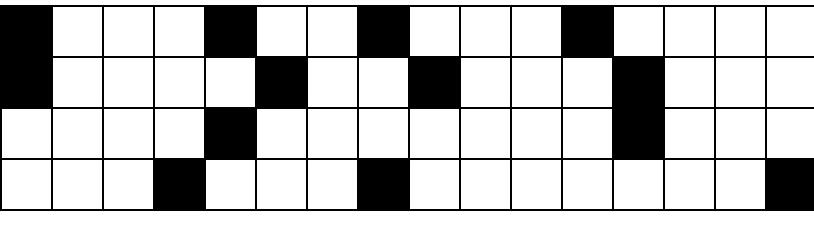
DIRECTIONS: Recreate a timeless nugget of wisdom by using the letters in each vertical column to fill the boxes above them. Once any letter is used, cross it out in the lower half of the puzzle. Letters may be used only once. Black squares indicate spaces between words, and words may extend onto a second line. Solution on page 14.
the
letters following #1 are the first letters of the various words; the letters following #2 are the second letters of each
and so on. Try solving words with letter
or numbers with minimal choices listed. A sample is shown. Solution on page 14


ATHEBESTMEDICINE

ha... ha...
farmer won $100 million in a lottery drawing, and was asked by a reporter what he planned to do with all his millions.
“Well,” he said, “I love what I do, so I suppose I’ll just keep farming until the money’s all gone.”
Moe: How do like that coffee club you joined?
Joe: It’s not going too well. They kicked me out.
Moe: What happened?
Joe: At the last meeting I wore a tea shirt
Moe: Did you know Darth Vader had a brother?
Joe: No, I only knew about his sister Ella Moe: That’s true, but he had a brother too. Very few people ever heard of him because he was in prison.
Joe: What was his name?
Moe: Taxi.
Moe: What kid of lights did Noah use on the ark?
Joe: Probably flood lights.
Moe: If a king sleeps on a king-sized mattress and a queen sleeps on a queen-sized mattress, where does a prince sleep?
Joe: On an heir mattress.
Moe: Why did the personal trainer send his clients to the paint store?
Joe: To get thinner?
Moe: Man, my gastrointestinal system has been giving me all kinds of trouble lately. Sometimes I feel like I live in the bathroom.
Joe: Sounds like you’re a loo tenant.
Moe: Why is the scalpel every surgeon’s favorite tool?
Joe: Well, other than the obvious reason, I suppose it’s the only way they can get patients to open up to them.
Moe: I was looking high and low for a graduation present for my kid. I finally decided to give him a broken drum.
Joe: That’s an unbeatable gift.
Moe: Someone just called me, and when I answered they coughed, sneezed, and then hung up.
Joe: I’ve had a few of those cold calls too.

Staring at my phone all day has certainly had no effect on ME!

SUBSCRIBE TO THE MEDICALEXAMINER
By popular demand we’re making at-cost subscriptions available for the convenience of our readers. If you live beyond the Aiken-Augusta area, or miss issues between doctor’s appointments — don’t you hate it when that happens? — we’ll command your mail carrier to bring every issue to your house!
NAME
ADDRESS
CITY STATE ZIP
Choose six months for $26 ____ or one year for $48 . Mail this completed form with payment to Augusta Medical Examiner, PO Box 397, Augusta GA 30903- 0397

Advice Doctor
Dear Advice Doctor,
I hope you can extricate me from a family squabble. Our car is far from new, and my wife thinks we should buy a new one. My response: I need a car payment like I need a hole in my head! We barely squeak by as it is! A car payment comes around every month. Repair bills are only occasional, and might be lower than the cost of a payment. What do you think?
— Old is good sometimes Dear Old,
Thank you for sending in this interesting question. The answer highlights an amazing fact to contemplate.
First, let me say that most readers (if not all) agree with your assessment. No one wants a hole in their head. No one! And yet! deliberately drilling holes in the skull stands alone in medical history as the oldest surgical procedure known to mankind. Do not adjust your Medical Examiner!
Officially known as trepanation or trepanning, it was practiced for centuries as a means of treating head injuries, curing headaches and seizures, relieving intracranial pressure, or sure, to release evil spirits.
Archaeologists probing ancient civilizations in every corner of the world have discovered evidence of trepanation. They know these are not holes from spears, arrows or other weapons because in some cases the holes discovered in ancient skulls were perfect squares, and were obviously created with saws or other cutting implements.
Even more amazing, some skulls reveal clear evidence of healing after trepanation. Some patients actually survived the experience. That is surprising for a couple of reasons. The procedures were performed without two elements we would consider to be mandatory today: antiseptic protocols and anesthesia.
As crazy at it all sounds, trepanation and its long history paved the way for craniotomies and other intracranial procedures today. Even so, I’ll repeat what you and I have both stated: no one wants a hole in the head! Even today.
I hope this answers your question. Thanks for writing!
Do you have a question for The Advice Doctor about health, life, love, personal relationships, career, raising children, or any other important topic? Send it to Dan@AugustaRx.com. Replies will be provided only in the Examiner.


CAPTION THIS

Captions submitted for this picture:
• “I won two tickets to what theater?”
• “The play stinks, Abe. Stay home.”
• “It was a perfect call. A beautiful call. Everyone is saying it. Like no call you’ve ever heard before.”
• “Yeah, can I get a Gettysburger with everything on it -- oh, and large fries. Deliver it to the East Portico.”


PROFESSIONAL DIRECTORY
ACUPUNCTURE
Dr. Eric Sherrell, DACM, LAC Augusta Acupuncture Clinic 4141 Columbia Road 706-888-0707 www.AcuClinicGA.com
CHIROPRACTIC

DERMATOLOGY
Evans Chiropractic Health Center
Dr. William M. Rice 108 SRP Drive, Suite A 706-860-4001 www.evanschiro.net

DENTISTRY
Jason H. Lee, DMD 116 Davis Road Augusta 30907
706-860-4048 Floss ‘em or lose ‘em!
Georgia Dermatology & Skin Cancer Center 2283 Wrightsboro Rd. (at Johns Road) Augusta 30904 706-733-3373 www.GaDerm.com


DEVELOPMENTAL PEDIATRICS
Karen L. Carter, MD 1303 D’Antignac St, Suite 2100 Augusta 30901 706-396-0600 www.augustadevelopmentalspecialists.com

Steppingstones to Recovery 2610 Commons Blvd. Augusta 30909 706-733-1935



Home Care Personal Care|Skilled Nursing|Companion 706-426-5967 www.zenahomecare.com
Parks Pharmacy 437 Georgia Ave. N. Augusta 29841 803-279-7450 www.parkspharmacy.com PHARMACY











DIAL NOW!

AD SPECIALISTS ARE STANDING BY
SMELL
long or complex material that requires deep processing
Eye-tracking studies have found that readers on screens are more likely to scan content and do less linear reading, which correlates with lower compre hension.
Retention and the ability to recall what has been read have been established in meta-analyses (which means a review of multiple studies) as superior in print. The likely reason: more of that linear reading we just mentioned. To put it another way, slower reading speed translates to better retention. Speed kills, as they say.

the approximate location on the page narrows it down enough to allow him to find the verse relatively quickly after flipping over a few pages.
By contrast, trying to find something in a lengthy digital text without any location clues is practically impossible.
On the other hand, digital material is often easily searchable, far more so than print, and usually offers the advantage of pretty effortless changes to make reading easier, such as altering font size or employing text-tospeech options.
Screen reading usually requires a healthy dose of self-discipline due to the presence of visual noise, like pop-up ads and clickbait sidebars that are part of the average digital reading experience and which invite distraction.
Reading print, books in particular, provides physical cues that enhance memory and retention. This advantage is best illustrated using the Bible or any such book that people repeatedly consult. Let’s say a Bible student is looking for a particular verse. He doesn’t remember the exact wording, just the general message conveyed by the verse, so he can’t look it up in a concordance or index. But he thinks it’s in a certain book of the Bible, say Isaiah or Matthew. Because he originally found this verse reading a paper copy of the Bible, he remembers that it’s in the right-hand column about halfway down the page. Knowing the book and knowing
One more advantage of digital
We seem to remember predicting earlier that before this article ended you would be invited to read this publication online rather than on paper.
Why? Because of the bane of our existence, typos. Or as we prefer to call them, tpyos. It is highly embarrassing to publish articles riddled with tpyos — although even one is one too many. The confounding nature of these pernicious creatures is that they are invisible on-screen and only appear in print.
Sometimes we are blissfully unaware, but whenever we spot a tpyo we make needed repairs and then upload the new and improved online version. So think of our online editions as tpyo-lite. Maybe someday we’ll publish a tpyo-free edition, but we’re not holding our breath, and you shouldn’t either. In the meantime, please keep reading. And smelling.