MEDICALEXAMINER


THE C WORD
June is National Cancer Survivor Month. “More than 18 million Americans with a history of invasive cancer were alive on January 1, 2022,” the American Cancer Society (ACS) reports.1 This edition of The C Word pays tribute to the millions of people whose lives changed when their cancer was discovered, who received or are receiving therapy, and who are survivors. It also honors the families, caregivers, and providers who journeyed with them.
Despite the ever-increasing number of survivors, an estimated 608,820 cancer deaths will occur in 2023, equating to 1,670 cancer deaths each day. For many people recently diagnosed with cancer or those undergoing cancer treatments, concerns about their quality of life often arise and can parlay into tough decisions about seeking or continuing treatment. For some terminally ill cancer patients, decisions to discontinue treatment can be heartwrenching.

For others, the decision may offer relief for both the patient and their families. Fortunately, palliative care clinicians, nurse navigators, psychological oncologists, social workers, and pastoral care professionals help patients, and their families explore concerns, patient preferences, and end-of-life options.
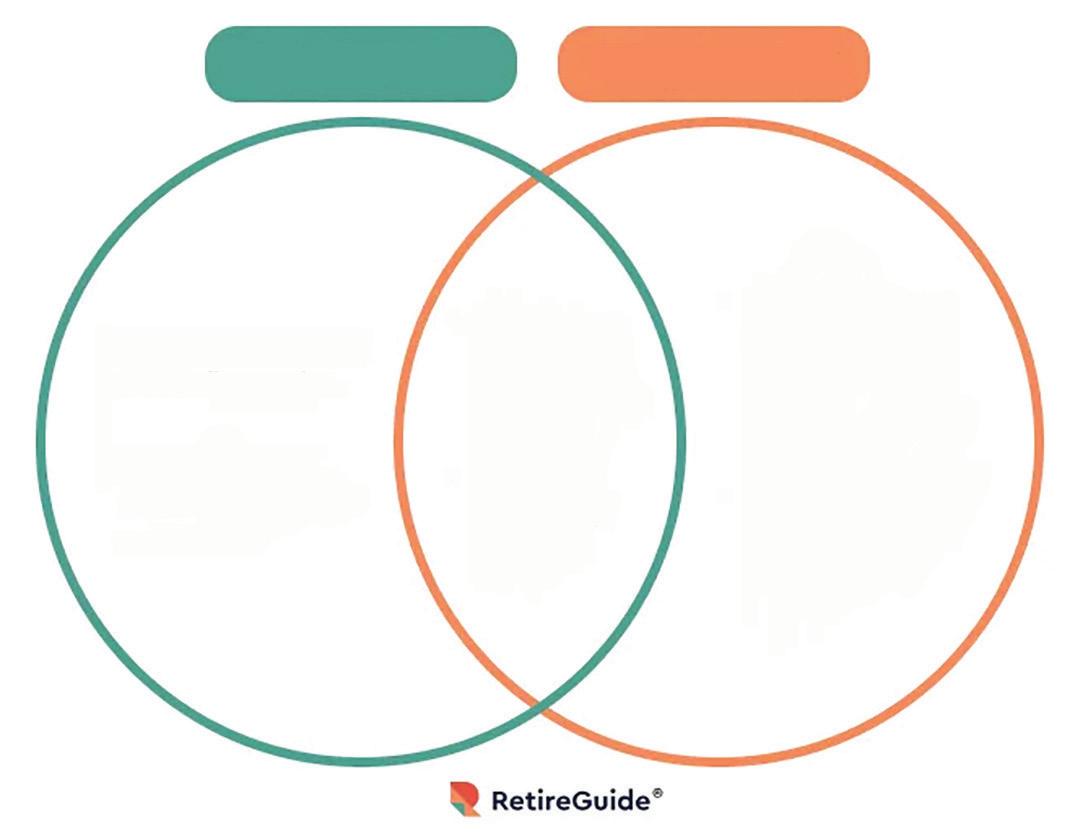
What is the Difference between Palliative Care and Hospice Care?
• Used at any point after diagnosis
• Is paired with treatment of your condition
• Focuses on improving quality of life





• Alleviates symptoms like pain
• Used once your condition is considered terminal

• You usually must have six months or less to live
Palliative care and hospice care are often confused. As shown in the illustration, both types of care aim to improve an ill person’s quality of life and to alleviate pain, discomfort, and stress.2 Both services may be covered by Medicare, Medicaid, and private insurance. The purpose of palliative care is to provide supportive care as part of treatment but if the decision to discontinue treatment is made, palliative care can transition to hospice care. Hospice care, while a supportive service, is rendered when a patient’s prognosis of survival is poor or during the final stages of a terminal illness, typically when conditions indicate the patient is not expected to live beyond six months. With hospice care, curative treatment is suspended, and care focuses on patient comfort and pain management.
Palliative care is typically administered in the hospital or clinical setting, while hospice care can be provided at the patient’s home, in a hospice facility, or an extended living or nursing facility. For example, in February, the family of former president Jimmy Carter (age 98) announced that he had decided to forego further medical treatments and chose instead to use hospice care and spend his remaining days at home.3


HEALTH • MEDICINE • WELLNESS • HEALTH • MEDICINE • WELLNESS • HEALTH • MEDICINE • WELLNESS • HEALTH • MEDICINE • WELLNESS • HEALTH • MEDICINE • WELLNESS • HEALTH • MEDICINE • WELLNESS • HEALTH • MEDICINE • WELLNESS • HEALTH • MEDICINE • WELLNESS • HEALTH • MEDICINE • WELLNESS AUGUSTARX.COM AIKEN-AUGUSTA’S MOST SALUBRIOUS NEWSPAPER • FOUNDED
TM
IN 2006
JUNE 16, 2023 FREETAKE-HOMECOPY!
Please see THE C WORD page 15 Serving Georgia, South Carolina, North Carolina and Michigan • Email: renea@soosbenefits.com RENEA SOOS Renea Soos • Medicare Independent Broker soosbenefitsgroup.com ANSWERS FOR ALL YOUR MEDICARE QUESTIONS 706•399•1989
“The C Word” is a newsbrief of the Georgia Cancer Center at Augusta University.
Hospice Care Palliative Care
“We must adjust to changing times and still hold to unchanging principles.”
Jimmy Carter, 39th President of the United States

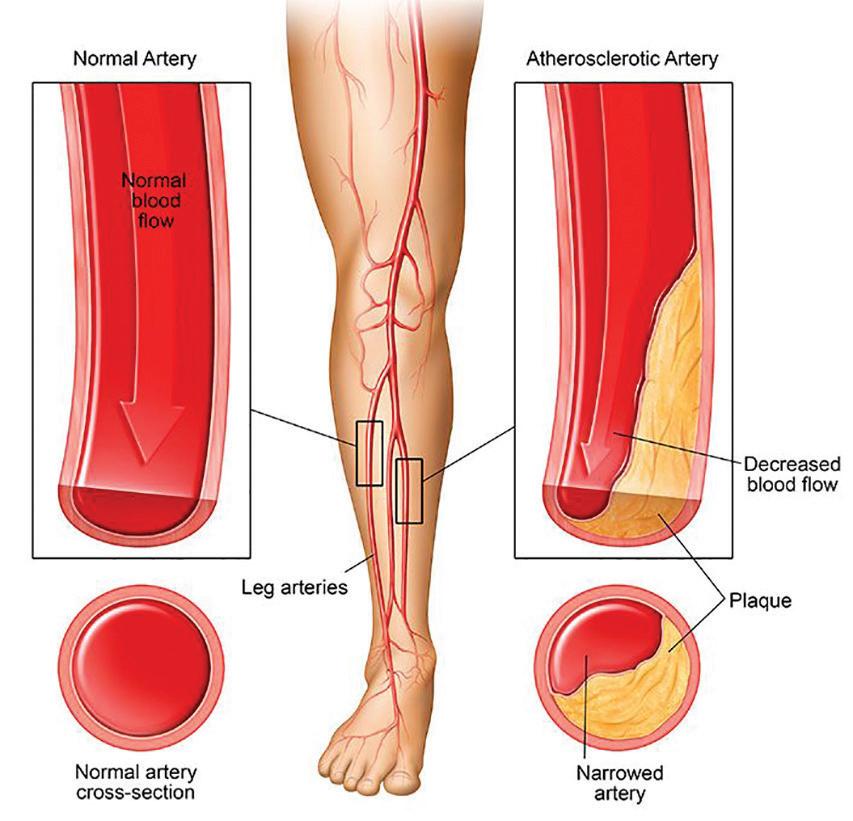
AUGUSTAMEDICALEXAMiNER JUNE 16, 2023 2 + WE CAN HELP Reliefisavailablewithsafe,minimallyinvasive,outpatientprocedures. CALL TODAY! ARE YOU PART OF THE 20%? 1in5AmericanshasPeripheralArteryDisease(PAD) AUGUSTA VASCULAR CENTER 630 13th St., Suite #250 • Augusta 30901 PHONE 706-724-2500 AUGUSTA VASCULAR CENTER WEST 3623 J. Dewey Gray Circle, Suite #100 • Augusta 30909 PHONE 706-854-9932 Blocked or narrowed arteries reduce blood flow, resulting in painful cramps in the lower extremities, cold legs and feet, weakness and numbness, and non-healing sores. * * age 65 and older AugustaVascularCenter.com
THE FIRST 40 YEARS ARE ALWAYS THE HARDEST If you answered:
A. This is true, but you are going to need a better plan than just telling her she has to do it. There are many ways to make reading more fun.
of the summer a horrible experience for her and for you too. Reading is important, but it should not be a chore or feel like punishment. Try to make it fun for her.
PARENTHOOD
by David W. Proefrock, PhD
Your 10 year-old daughter has a list of books she is supposed to read over the summer. She doesn’t like reading and really doesn’t want to read any of the books on the list. You hate to ruin her summer by fighting with her about the books. What do you do?
A. This is a school assignment just like any other school assignment. She’s going to have to do it even if she doesn’t want to.
B. It’s not really necessary to complete those reading lists. She will be fine if she doesn’t read the books.
C. Make the assignment fun. Talk with her about what she’s reading. Give her a small reward when she finishes a book.
D. Make quick work of this challenge. Tell her there will be no playing with friends, no swimming, and no other fun things this summer until she reads the books.
B. There may not be consequences for not completing the reading list, but blowing off school assignments sets a terrible example for her. Far better to try to make the reading enjoyable.
C. This is the best answer. She’s going to have to do a lot more reading in her life. It will be better if it is not torture for her.
D. This is going to make a significant part
It is your job as a parent to prepare your child for life. Reading is absolutely necessary in life. There are better and worse ways to encourage her to read. Choose the better ones.
Dr. Proefrock is a retired local clinical and forensic child psychologist.



AUGUSTAMEDICALEXAMiNER 3 JUNE 16, 2023 + TIRED OF WAITING? IS DIFFERENT LOCAL HEALTHCARE. BETTER HEALTHCARE. LOCATIONS IN EVANS AND AUGUSTA. WELCOMEHEALTH.NET THE DOCTOR WILL SEE YOU NOW. you are welcome HILTON HEAD LARGE 1-BEDROOM CONDO Short-term rental (3-day minimum) 843-384-9414 • Short walk to Coligny Plaza • Shorter walk to the beach • Shortest walk to the Tiki Hut +
Who is this?
One of the aspects of life (well, its end actually) that can be taken for granted is how things proceed after we take our final breath. For the record, burial is by no means the sole option: we live in a city with a medical college which welcomes body donations to help train future doctors in human anatomy.
But burial is by far the most common option, and the man above could be called the creator of the modern funeral industry. Thanks to his innovations, undertakers became morticians and funeral directors; buried became interred; graveyards turned into memorial parks, and funerals were transformed into memorial services

It all came to pass because our hero of the week, Thomas Holmes (1817-1900), did one basic thing: he brought embalming into modern times (modern as in, not the ancient Egyptians, who are still famed for their skill in preserving the human body after death).
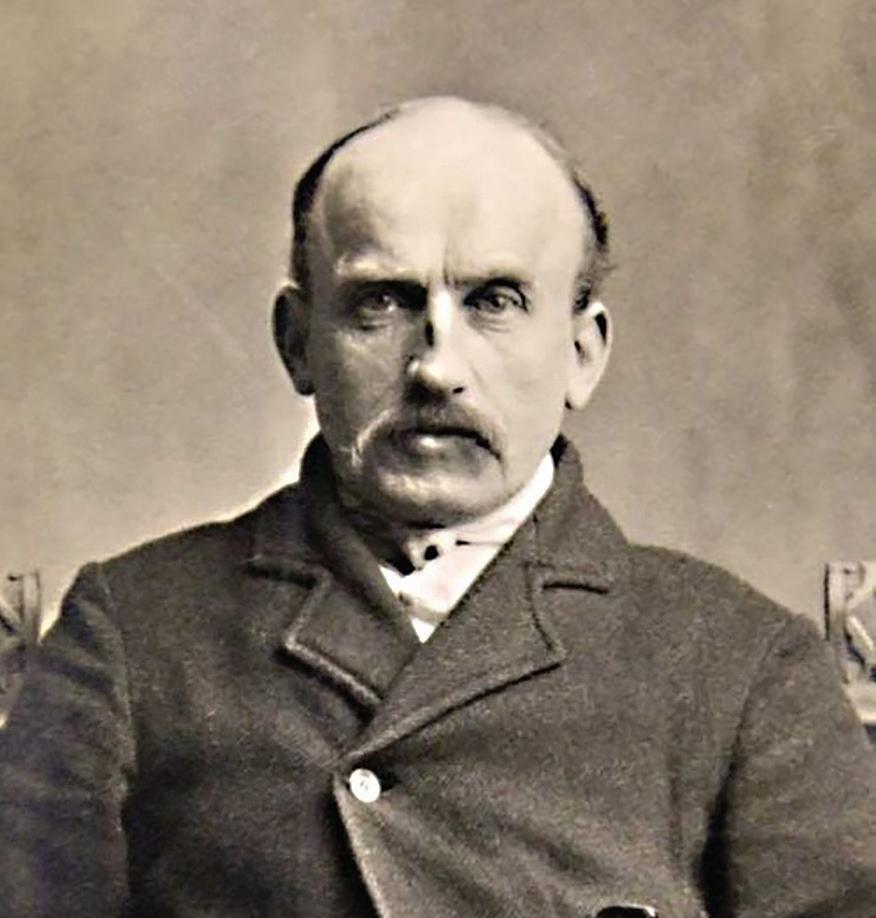
Born in Brooklyn in 1817, Holmes graduated from the College of Physicians and Surgeons at Columbia University in 1845. During studies there, just like med students today, he was trained using cadavers. Holmes noticed that preservatives used at the time, including arsenic and mercury, were hazardous to the students’ health. He had the opportunity to examine some Egyptian mummies and realized that embalming could be done effectively without hazardous chemicals.
Holmes experimented with various preservatives, including creosote and turpentine, before finding a safe and effective formula which he sold to physicians and embalmers for $3 a gallon. Fortuitously (for Holmes), the Civil War was about to erupt, providing him with a huge supply of customers. He emerged from the war a wealthy man almost by coincidence.
The very first Union officer killed during the Civil War, 24-year-old Elmer Ellsworth, was a personal friend of Abraham Lincoln. The president was informed, and an honor guard brought Ellsworth’s body from nearby Alexandria, Virginia, to the White House where Lincoln directed that it lie in state before being transported to Ellsworth’s family in New York. Holmes had been appointed a captain in the Union Army Medical Corps stationed in Washington. He offered to embalm Col. Ellsworth at no cost inasmuch as the service was not connected in any way with Holmes’ military duties.
The freebie was well worth it: Ellsworth’s “lifelike” appearance impressed many, and Lincoln commissioned Holmes to train embalming surgeons so that Union soldiers killed in action could be preserved before being shipped back to their families for burial. Separately from that, Holmes personally contracted with the Army to embalm war dead, which he did for a fee of $100 each. Holmes claimed to have personally embalmed 4,028 fallen Union officers and soldiers.
In the post-war period Holmes opened shop in New York City where he sold embalming supplies, including a device his ads stated “surpasses all other inventions for filling the blood vessels of dead bodies.” His home in Brooklyn was said to be full of examples of his handiwork on display, including preserved heads. Curiously, he left specific directions that he was not to be embalmed upon his death. +
Most of us are no stranger to gastrointestinal ills of one sort or another. An estimated 70 million Americans suffer from one digestive malady or another every year, resulting in millions of hospitalizations, tens of millions of doctor visits, hundreds of thousands of deaths (236,000 is the actual estimated number), and $142 billion taken out of our collective pockets in direct and indirect costs.
As if all of that isn’t bad enough, the woods are crawling with pseudocures. Sometimess we’re in such misery that even a far-fetched “cure” is worth a shot, but no relief results. And what we’ll call gastromythology doesn’t help either: when we based digestive decisions on misinformation, it’s not going to help anything.
For example, fiber is good. Everybody knows that, right? So obviously the more fiber
the better.
Well, most of us have a hard enough time getting anywhere close to the recommended 25 grams of fiber we should consume each day, but there are proponents of going above and beyond. That’s not a great idea for someone with a digestive issue like irritable bowel syndrome. And according to the British Medical Journal, the type of fiber consumed (soluble versus insoluble) can result in either more or fewer gastro symptoms. Bottom line: stick with the standard recommendations unless your doctor gives the green light to change.
Another pervasive myth is the colon cleanse/colon detox one. Commercials show depictions of colon walls lined with thick layers of residue — pounds of it — just waiting to be removed by the latest cleansing drink, or by
someone at a cleansing spa. The need for these products and service is highly questionable. Again, check with your doctor before forking over your hard-earned money on such interventions. Have you heard that you should avoid popcorn, nuts, seeds and corn if you have diverticulitis? It’s a condition in which pockets in the intestines become inflamed and irritated. A study published in JAMA involving 47,000 men aged 40 to 75 years and followed for 18 years examined whether their dietary habits increased their risk of diverticulitis. The study’s conclusion: “Nut, corn, and popcorn consumption did not increase the risk of diverticulosis or diverticular complications. The recommendation to avoid these foods to prevent diverticular complications should be reconsidered.” As a professor of gastroenterology put it, a low fiber diet is the real culprit in diverticulitis, not nuts and seeds.
These are just a few myths surrounding digestive health, and they can be tough to shake; we may have heard them our entire lives. Maybe they’ve been handed down in our family for generations.
But it pays to check in with our doctor about some alleged digestive remedies. What we think is a fact might be nothing more than a gut feeling. +
AUGUSTAMEDICALEXAMiNER JUNE 16, 2023 4 + YOUR SUPPORT OF OUR ADVERTISERS MAKES THIS FREE NEWSPAPER POSSIBLE
#191 IN A SERIES 461 Greene Street at 5th • www.gregleopardlaw.com • 706-724-7511 GREG LEOPARD PC ATTORNEY AT LAW CRIMINAL DEFENSE • FAMILY LAW • PERSONAL INJURY He just looks friendly. Your fierce defender. MEDICAL
MYTHOLOGY TUMMY TROUBLE
Middle Age
BY J.B. COLLUM
“Embrace your limitations,” “limitations are only in your mind,” “accept your limitations,” “push your limits.” These quotes may seem to be contradictory, but I don’t think they have to be. It depends on the context, on the specifics of the limitations we are considering at the moment, in the situation in question, and on the facts of the present condition. We can still strive for our goals, but we shouldn’t push ourselves to achieve expectations so unrealistic that they lead to disappointment and frustration.
I have written in this column before about how I have come to accept my limitations, but I want to clarify what I meant and how that has helped me. When it comes to certain physical tasks, I have come to accept that one of my grown children or even my more-spry-than-me wife would be a better choice. I’ll illustrate with a recent real-life example.

The other day we came across a great deal on a used hot tub. Besides an electrical issue that the owner had attempted and failed to fix by installing a new pump motor, it was in very good shape. It had other minor issues that we felt comfortable fixing, and since electronics is a hobby of mine, I anticipated no problems repairing the pump. It is a large hot tub, capable of seating seven people, as long as said seven people are very comfortable with each other. Otherwise, four folks can relax in it in spacious luxury, or you could probably fit about 25 clowns into it.
We were able to afford this hot tub because the owner of the hot tub had reduced his already reduced price (he had started at $2500 then went to $800) to a paltry $300. At that price, we couldn’t say no. We were also able to afford it because of the volunteer help of so many friends. My brother brought his flatbed truck over to pick it up and about six other friends showed up to help, including three nephews, a new neighbor and new friend of mine.
Once we got it in place on our deck in the very spot that we had always planned to have a hot tub, we got to work on getting it ship-shape (if a ship held water rather than floated on it). My new neighbor and friend, Nathan, gave us some marine epoxy we could use to fix the small cracks in the tub, and it even matched the color. My wife got in there and patched it up while I got down to troubleshooting the pump issue. I found a blown fuse and hoped that was it but couldn’t test further until we filled it with water, and that had to wait until the next day after the patches fully cured.
The next day we filled it with water, and I found the issue. The new motor had four wires going to it. It is a two-speed 240-volt pump, so it has a neutral, a ground, and two hot wires. The high speed hot and the neu-

tral were swapped, so I fixed that, replaced the fuse, and voila, it worked! I was ecstatic until I noticed that the heater wasn’t heating. I discovered after more troubleshooting that the low power circulation pump was frozen up, but the heating coil seemed to be fine based on some preliminary testing. So I ordered a new circulation pump for $220. It is still a great deal considering that a new tub like this would be well north of $10,000. Even if I end up spending a good bit more on it, I will be quite satisfied with the purchase, and more importantly, this is making my wife very happy. So now the pump is here, and I plan on installing it today and hope that is the last thing we need to do to make it fully operational.
Why did I tell you all that? To talk about my limitations, and because I like to overshare. I enjoy telling stories and didn’t want to leave you hanging like the new Spiderman movie did with its “to be continued ending.” Don’t you just hate that? Anyway, back to my limitations. Many times, during the tub moving process I had my wife, my daughter, my nephews, my brother, and others who are younger and healthier, gently push me aside or jump in to aid me when it came to lifting, sliding or in any other way trying to lift or move the massive hot tub that weighs nearly half a ton even with no water in it. The eager and proud young buck that still lives inside me somewhere was a little offended and wanted to protest this treatment, but the lazy middle-aged guy also inside me was telling the young buck to shut up and accept the help, so I did. The old guy wins this argument more and more with every passing day.
Once the tub was in place and the helpers had all left, I realized that I would need to crawl under the upper deck to reach under and attach the drain hose to the outlet and then close the outlet so that we could fill it. I really didn’t want to do it but felt obligated. That is when my lovely wife jumped in and said she could do it. With her flexibility and smaller size, she can go most of the way under there bent over, and literally wouldn’t break a sweat doing it. Whereas it would make for an incredibly funny video if I did it. Just imagine a middle-aged, overweight, inflexible guy squirming under a deck, getting filthy, maybe even getting stuck and sweating like a rat in a prison full of mafiosos he had turned state’s evidence on. That would be me. Then again, I might get rich if it went viral, but it probably wouldn’t be worth the indignity. This situation repeated itself once the new pump arrived as someone needed to go under there to open the valve to drain it so I could make the repair. My daughter, Kate, stepped up to the plate for that.
So, in summary, I think this is a good
WHAT IS A D.O?
If your primary care provider happens to be in a group practice, you may have noticed several DOs among the MDs. Then again, you may not have noticed. In many important ways, an MD and a DO are equivalent.
Who are these doctors? DO stands for Doctor of Osteopathic Medicine, and although DOs and MDs may approach medicine from different perspectives, they are both recognized as fullfledged practitioners of medicine. DOs are as likely to have full medical and surgical practices as MDs in all 50 states.


Osteopathic medicine dates back about 150 years, and as its name suggests (osteo- from Greek, “relating to bones”), it stems from the belief that bones hold the key clues to understanding the cause of any pathological condition.
Back in the day, an osteopath was often solely a practitioner of manual medicine or therapy, much like chiropractors and physical therapists offer care today. That branch of the field still exists, as non-physician osteopaths continue to treat patients using osteopathic manipulative medicine. Over time, osteopathic physicians have accrued all the training and expertise to be surgeons, pediatricians, oncologists, dermatologists, anesthesiologists, and virtually every other medical specialty. It would not be accurate to say that one — MD or DO — is “better” than the other. In terms of medical knowledge, training and education, licensing and further educational requirements, they are virtually the same.
What about the statement above, that DOs and MDs approach medicine from different angles?
The course of training that results in an MD degree is called allopathic medicine, which the World Health Organization defines as “the broad category of medical practice that is sometimes called Western [...] or modern medicine.”
While doctors of osteopathic medicine view their training as just as modern, the osteopathic perspective focuses more on treating the whole person. Rather that focusing strictly on a disease and alleviating its symptoms, a card-carrying DO will also address lifestyle factors that may contribute to the situation. Theirs is viewed as more of a whole-body approach.
The best doctor for you, MD or DO, is the one you trust, with whom you can communicate freely, and who listens to you.

AUGUSTAMEDICALEXAMiNER JUNE 2, 2023 5 +
ADVENTURES IN
{ {
Please see MIDDLE AGE page 10 Opinions expressed by the writers herein are their own and/or their respective institutions. Neither the Augusta Medical Examiner, Pearson Graphic 365 Inc., nor its agents or employees take any responsibility for the accuracy of submitted information, which is presented for general informational purposes only. For specific medical advice, diagnosis, and treatment, consult your doctor. The appearance of advertisements in this publication does not constitute an endorsement of the products or services advertised. © 2023 PEARSON GRAPHIC 365 INC. www.AugustaRx.com The Medical Examiner’s mission: to provide information on topics of health and wellness of interest to general readers, to offer information to assist readers in wisely choosing their healthcare providers, and to serve as a central source of salubrious news within every part of the Augusta medical community. AIKEN-AUGUSTA’S MOST SALUBRIOUS NEWSPAPER Direct editorial and advertising inquiries to: Daniel R. Pearson, Publisher & Editor E-mail: Dan@AugustaRx.com AUGUSTA MEDiCAL EXAMINER P.O. Box 397, Augusta, GA 30903-0397 (706) 860-5455 www.AugustaRx.com • E-mail: Dan@AugustaRX.com TMMEDICALEXAMINER www.Facebook.com/AugustaRX +
THE OLD GUY WITHIN ME WINS
SCIENCE & FUZZY LOGIC
The problem with living several decades with a fairly reliable memory is that one recalls dire predictions made by people who should know what they were saying. Well, at least some of them were supposed to be knowledgeable.
Do you recall these knee-knocking predictions:
• 1960s: Oil will be gone… within 10 years
• 1970s: A new ice age… within 10 years
• 1980s: Acid rain will destroy all crops…within 10 years
• 1990s: Ozone layer gone… within 10 years
• 2000s: Glaciers melted… within 10 years
• 2010s: East & west coasts will be under water…within 10 years
• 2020s: Human race gone… within 10 years without Green New Deal
All of these profound warnings turned out to be wrong … but they did get Congress to raise your taxes.
BASED ON A TRUE STORY
(most of the time)
A series by Bad Billy Laveau
Based on these events, it seems the solution to all major problems is to raise taxes. Our founding fathers warned us to guard our pocketbooks whenever Congress is in session. Sage advice for sure. Profound statements, even by those usually in the know, may or may not be accurate. Sometime conclusions are speculations based on fuzzy logic rather that hard proof. Fuzzy logic is when you have some, but not all, of the facts. You extrapolate what a reasonable conclusion might be. We use fuzzy logic all the time. Stock market investment is based on fuzzy logic. Poker is fuzzy logic. Football is fuzzy logic. Marriage is
fuzzy logic. Otherwise, why would your significant other marry you?
Medical advances are based on fuzzy logic. Phase I studies. Phase II studies. Phase III studies. But they are not perfect. Remember Thalidomide for pregnant women? A great cure for morning sickness, it was claimed, but some babies were born without arms.
On the other hand, thousands of drugs have been safely approved for human consumption. The FDA is not perfect, but I have faith in their fuzzy logic. They sometimes catch a lot of static for being too slow to approve a given drug. The media, as well as multi-national corporations, look critically over their shoulders. The media needs controversy to drive viewership. Corporations need profits immediately if not sooner to drive up their stock prices.
And on top of all that, we have people in the public eye
who desire to be providers of super-bad news to justify their self-imposed position of importance.
Twenty-four-hour cable news access was invented by Ted Turner and CNN. Along with that came Infomercials where anyone with money can have a half hour worldwide TV show. Or a 30 second TV commercial. Remember Peter Popoff’s Magic Spring Chernobyl Water that cured cancer? Or his Magic Water packets that you sleep with and huge amounts of money will surely arrive in the mail?
And now we have political cycles that are as endless as car horns in Jamaica. Or maybe as endless as the stream of “undocumented workers” at our southern border. The only fuzzy logic therein is guessing the number of crossings tomorrow when we are not sure how many crossed yesterday.
But fuzzy logic is necessary for progress. We must take some chances. Calculated risks. And hope for the best. Hopefully, unfolding events will justify our faith in fuzzy logic.
For example, when a new drug is known to cause nosebleeds in one patient out of a thousand, we take the drug with faith we will not get the next nosebleed. A thousand-toone chance is a reasonable risk.
We must separate these reasonable risks based on the scientific method from the proclamations made by wild-eyed camera-seeking
proponents with questionable agendas. Sometimes reasonable risks have rough edges. One example is the breast implants used in the 80s and 90s. A huge lawsuit destroyed a company even though it was later shown that women with implants had no more depression, fibromyalgia, arthritis, etc. than women without implants. At present, our TVs are loaded with lawyer ads regarding Roundup weed killer and contaminated water at Camp Lejeune, both now reportedly linked to all sorts of horrible diseases.
Be careful with vaguely associated events. I can find someone who drank water last week and died this week. Both events will be true. And supporting data will be true, but being related does not equal cause and effect. You need not give up drinking water.
Accordingly, we have not plunged into a new ice age, run out of oil, starved because of acid rain, drowned from rising tides, nor suffered demise due to lack of the Green New Deal. Fuzzy logic is a necessary evil loosely tied to science. Tread lightly. Only the Good Lord knows when one of these conclusions might be right.
But also be encouraged. Medical advances and education, extrapolated from fuzzy logic, has doubled the U.S. life expectancy in the past hundred years.

AUGUSTAMEDICALEXAMiNER JUNE 16, 2023 6 + We publish every 1st and 3rd Friday + +
Augusta Office: 2283 Wrightsboro Rd Augusta, GA 706.733.3373 Aiken Office: 2110 Woodside Executive Ct Aiken, SC 803.644.8900 GADERM.COM IS ONLINE visit AugustaRX.com! TMMEDICALEXAMINER
TRYTHISDISH
by Kim Beavers, MS, RDN, CDCES Registered Dietitian Nutritionist, Chef Coach, Author Follow Kim on Facebook: facebook.com/eatingwellwithkimb

SLOW COOKER FAJITA-STYLE TACOS

Technically fajitas have grilled meat, but the green pepper and onion make these slow cooker tacos “fajita style.” They are simple, tender and delicious.
Ingredients
• 1½ pound boneless, skinless chicken thighs, trimmed of fat (about 5 or 6)

• 3 teaspoon chili powder
• 1 teaspoon ground cumin
• 1 teaspoon dried oregano
• ½ teaspoon garlic powder

• ½ teaspoon salt
• 1 cup reduced sodium chicken broth divided
• 1 can pinto beans (rinsed and drained)
• 1 green pepper sliced thin (1/8-1/4 inch pieces)
• 1 onion cut in half and sliced thin (1/8 to 1/4-inch pieces)
• 2 cup shredded lettuce or cabbage
• 1 cup chopped tomato
¼ cup chopped cilantro
• 1-2 Tbsp. lime juice
• 10 Tbsp. reduced fat sour cream
• 20 taco shells
Directions
Combine the first 6 ingredients into a slow cooker (chicken through salt), stir to coat chicken pieces, add ½ cup broth and cook for 8 hours on low. After 7 hours
remove the chicken, shred with 2 forks and return to the slow cooker with the beans, green pepper, onion and remaining ½ cup broth, cook for 1 more hour until the vegetables are crisp tender.
Meanwhile combine lettuce, tomato, cilantro and lime juice.
To serve heat the taco shells according to package directions and fill each one with ¼ cup meat mixture, 2 tablespoons lettuce mixture and one dollop of sour cream. Enjoy!
Yield: 10 servings (serving size: 2 tacos)
Nutrition Breakdown: Calories 280, Fat 9g (2g saturated, 1g monounsaturated), Cholesterol 60mg, Sodium 300mg, Carbohydrate 31g, Fiber 6g, Protein 20g
Percent Daily Value: 15% Vitamin A, 35% Vitamin C, 8% Calcium, 15% Iron Carbohydrate Choices: 2 Carbohydrates



Diabetes Exchange Values: 2 Starches, 1 Vegetable, 2 Lean meats, 1 Fat +
GARAGE DOOR A LITTLE LOUD?
GARAGE DOOR A LITTLE LOUD?
AUGUSTAMEDICALEXAMiNER JUNE 16, 2023 7 +
OVERHEAD DOOR COMPANY OF AUGUSTA/AIKEN (706) 736-8478 / (803) 642-7269 WWW.OHDAUGUSTA.COM TM WE CAN FIX THAT. It’s what we’ve been doing since 1921. 1529 CRESCENT DR. • AUGUSTA, GA 30909 Hometown. Not big box. 437 Georgia Avenue, North Augusta, SC 803-279-7450 ARKS HARMACYP STORE • DRIVE-THRU • DELIVERY • PARKSPHARMACY.COM Your digestive health is our #2 priority. * * both Rx and OTC.
BANDAGE
FAMOUS LAST WORDS
by Ken Wilson Steppingstones to Recovery
I’m always intrigued when I read yet another list of famous people’s last words.
Jack Daniel supposedly said, “One last drink please!” A famous mobster whose name I don’t remember: “Bring me a bullet proof vest.” Voltaire: “Now is not the time for making new enemies.” Muhammad Ali: “How do I look?” Elvis Presley: “I’m going to the bathroom to read.” And Steve Jobs: “Oh wow. Oh wow. Oh wow.”
Then there are the famous last words I hear as potential clients leave my office, words like, “I’ll cut back on those pills, Ken.” Or, “I’d like to re-schedule my sign-up for treatment until after the weekend.” Those people quite often never return.Sometimes I see them in the obituary column soon after.
Their famous last words to me were really just saying “I’ll quit tomorrow.” But tomorrow never came. I see disaster more often now that Fentanyl is in the equation (see last month’s article). Regrettably, some never get to utter their chosen last words…maybe nothing more than an unsuspecting, “Goodnight, see you tomorrow.”
The whole issue of resistance to change is so under-
standable. In mid and late stages of the disease, an alcoholic doesn’t necessarily drink because he wants to, but because he thinks he has to. He can’t imagine life without some spirits. In fact, when he’s tried to go a few days sober he has withdrawal symptoms, and he drinks again to stop them.
And guess what? It works.
I’ve spoken with hundreds of people who habitually and compulsively use THC on a daily basis and they simply cannot imagine life without their weed. Stopping for a few days sends them into anxiety and sleeplessness like an “earth person” cannot imagine. Most people who do stop using their chemical of choice have a proclivity, an inclination, to use again. They require support and accountability on a daily basis, and the biggest favor family members can extend is to encourage that. They will say to you family members “You don’t understand.” OK. The good news is: you don’t have to understand! Just support your loved one who is in recovery, as they wish to be supported, as long as they’re on the path. Please read the preceding sentence again!
In our Family Workshop (free to the public – Wednesdays 6 – 7:15 p.m.) we have so-called “bumper stickers”



THIS IS YOUR BRAIN

that we repeat to each other often, among them this one: “Words mean nothing. Actions mean everything.”
The same is true for you who are family members — the “affected” as well as the “afflicted.”
Promises, promises. Words are cheap. Actions are gold.
In the world I live in, one of the greatest famous last words given at a funeral is the compliment, “he died sober.”
I hope you’re one of the lucky ones who gets to choose some good last words, not just going to sleep and never waking up. I hope your famous last words go down in history and are more memorable than some of the ones I’ve read!

If I hear about them I’ll send them in to whoever collects these sayings if it’s ok with you.
IT’S ABOUT TO GET HOT!
Money Doctor
The RULES FOR ENJOYABLE RETIREMENT

Retirement means something different for each person. We spend a lot of time helping people just like you plan for that phase of their lives. You work hard your entire life to get there. When you finally do, how do you make sure you can live happily and fulfilled? Here are some of the top tips we have picked up from those that have already transitioned into retirement. Spoiler alert: most don’t have anything to do with money!
• Stay Active – There is lots of research to back this up. Staying physically and mentally active is very important. It does not have to be rigorous; moderate exercise and mental stimulation goes a long way. Walking, reading, writing, volunteering, playing racquet sports, golf, and just being outdoors are great ways to stay active. Try to minimize screen time.
• Maintain Purpose and Enjoy Flexibility – The average person spends more than 70,000 hours devoted to their career. For many people, career is a huge part of their identity. Giving it up and doing something different with your time can be hard on the psyche. Find a reason to get up in the morning, but without the daily grind. It does not have to be the same thing during your entire retirement. Be flexible and creative with your purpose and time.
• Learn when to say “Yes” and “No” – Our common limited resource is time. We only get so much, and we want to make the most of it. In retirement, you are in a better position time-wise to lend a hand than while you were working. However, make sure your time commitments match what brings you fulfillment and joy.
• Value Experiences Over Possessions - Spend time with your family and friends. This may be a surprise to some, but your family and especially your children do not want your stuff! They want you.
• Declutter – Someone once told us that they decided to get rid of the things that didn’t bring them joy and had no useful purpose or sentimental value. Once they did that, their daily routine became more enjoyable. In addition to physical items, consider getting your financial affairs simplified by consolidating and simplifying accounts. Also, make sure you have an updated estate plan and communicate it with your family. A well-organized estate is one of the greatest gifts you can give your loved ones.
• Stop Running the Race – Once you have enough income and assets to sustain your desired standard of living, stop worrying about beating the stock market. Be an investor, not a speculator. Adopt an asset allocation that allows you to sleep well at night.
Enjoying retirement is about a lot more than the numbers in your financial plan. It is important to get the intangible things right too. The relationships you share with family and friends, the joy and happiness you get from activities you pursue, the satisfaction of a job well done. That is our favorite part of helping people in retirement: hearing about all the ways they are bringing joy to themselves, their families, and others!
by Clayton Quamme, CFP® a financial planner with AP Wealth Management, LLC (www.apwealth.com). AP Wealth is a financial planning and investment advisory firm with offices in Augusta, GA and Columbia, SC.



AUGUSTAMEDICALEXAMiNER JUNE 16, 2023 8 +
FACEBOOK.COM/AUGUSTARX +
LIKE US ON FACEBOOK
CATCH THE C&C AUTOMOTIVE SHOW SATURDAY MORNINGS FROM 8-10 ON 580 AM OR 95.1 FM • Customer shuttle • 6 months same-as-cash financing • 3-year/36,000 mile warranty • ASE Certified technicians • 24-hour towing & key drop • www.ccautomotive.com WARRENVILLE WARRENVILLE 2355 Jefferson Davis Hwy 803-593-8473 DOWNTOWN DOWNTOWN 990 Telfair St 706-724-0900 W. AUGUSTA W. AUGUSTA 3954 Wrightsboro Rd 706-863-9318 MARTINEZ MARTINEZ 4014 Washington Rd 762-685-5555 COLUMBIA 4031 Broad River Rd 803-590-8606 AIKEN AIKEN 536 East Pine Log Rd 803-649-1341
Our $29.95 A/C Performance Check Includes: Check AC Pressures, Check and Clean Condenser, Test Cooling Fan, Test Blower Motor Operation, Test Mode Door Control, Check Belt Condition, Give Written Estimate of any Repairs Needed, Check and Adjust Tire Pressure, Complete Vehicle Summer Safety and Fuel Conservation Inspection, Road Test. If repairs are needed we’ll apply the cost of this check to that service visit. (Offer expires 6-30-2023) + A monthly series by an Augusta drug treatment professional
Artificial Intelligence and Cancer
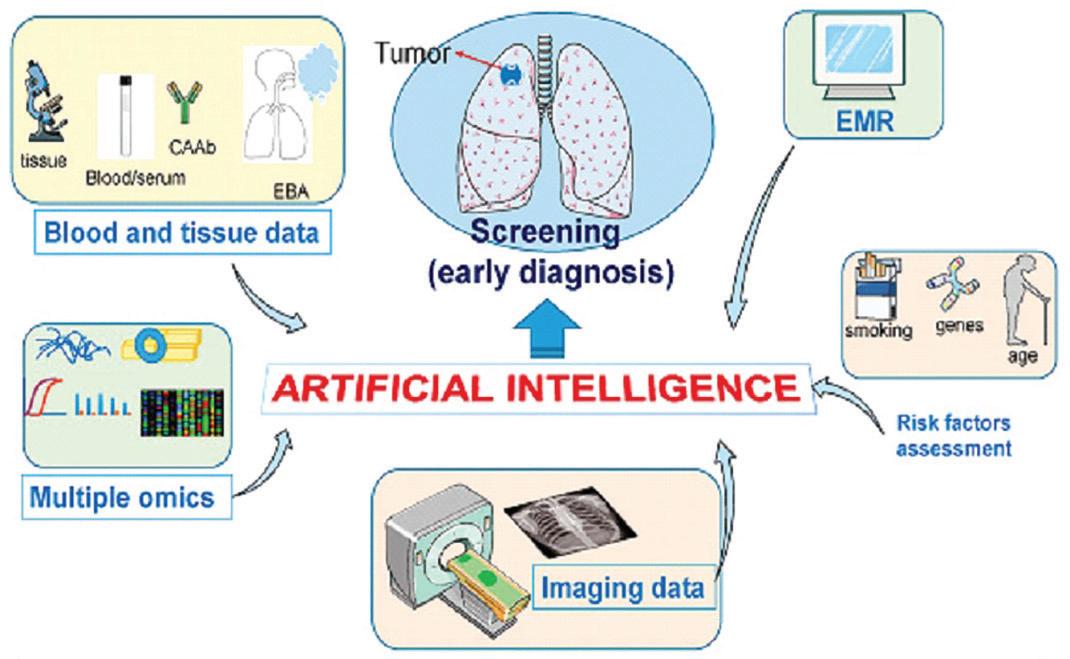
We are constantly learning more about the potential of Artificial Intelligence (AI) to improve medicine and patient care. Generally speaking, AI is a computer program that applies an algorithm to a dataset to make decisions and predictions. To develop an algorithm, medical researchers create a set of rules or instructions enabling their computer to analyze volumes of historical data, make predictions, and discern abnormalities. This deep learning capability is becoming a tool for medical professionals to use in cancer detection, diagnosis, and treatment alternatives.
The Technobabble-Free Zone
by Dr. Chuck Cadle




A quick literature review will alert you to the importance of early cancer detection. The survival rate is significantly higher if the cancer (or merely the risk of cancer) is detected early. This improvement is where AI can make a real contribution to oncology. According to the CDC, cancer is the second leading cause of death after heart disease in the United States. Worldwide, lung cancer is the deadliest, resulting in 1.7 million deaths worldwide in 2020. Some lung cancers result from pulmonary metastasis, i.e., cancer that begins in another part of the body and spreads to the lung through the lymphatic system or bloodstream. Almost any cancer can metastasize to the lung, including breast, bladder, colon, kidney, and prostate.
In April, NBC News reported on a diagnostic procedure using low-dose computed tomography (LDCT) for lung cancer screening. The report highlighted a recent study where MIT researchers used AI to screen for lung cancer. The study, published in the Journal of Oncology, demonstrated that a deep learning model assessing the entire volumetric LDCT data could be developed to predict individual risk without requiring additional demographic or clinical data. The procedure, named Sybil, uses a computer linked to an X-ray machine that gives off a very low dose of radiation to make a series of detailed pictures of areas inside the body. The images are taken from different angles to create 3-D views of tissues and organs. These pictures were then compared to a 15,000-participant dataset of lung cancer pictures resulting in 6,282 LDCTs in the test set. For testing, Sybil’s input consisted of LDCT images only, i.e., no image annotation or clinical information was included. The program accurately predicted an individual’s future lung cancer risk from a single LDCT scan. Of course, this procedure needs further testing and improvement before wide acceptance, which is why the researchers published the computer code. To see the NBC News article, go to https://www.nbcnews.com/health/healthnews/promising-new-ai-can-detect-early-signs-lung-cancer-doctors-cant-see-rcna75982.
In March of last year, the National Cancer Institute published an article entitled “Can Artificial Intelligence Help See Cancer in New, and Better, Ways?” The conclusion was a resounding yes. For example, a scan generated by AI was compared to a scan by a radiologist with 15 years of experience. The AI program accurately identified prostate cancer. The radiologist, Dr. Ismail Baris Turkbey, explained that the [AI] model found the prostate and outlined cancer-suspicious areas without human supervision. He felt that AI would help less experienced radiologists find prostate cancer when it’s present and dismiss anything that may be mistaken for cancer.
Tests like mammograms and Pap tests regularly check patients for signs of cancer or precancerous cells that might become cancer. The treatment options can be more effective if physicians can diagnose and treat cancer early before it spreads — or even before it forms Scientists, oncologists, and radiologists are working together to develop AI tools that enhance screening tests for different types of cancer, including breast cancer. One group created an AI algorithm that can help determine how often someone should get screened for breast cancer. The model uses a person’s mammogram images to predict their risk of developing breast cancer in the next five years. The model was more accurate in various tests than the current tools used to predict breast cancer risk. NCI researchers have built and tested a deep-learning algorithm to identify cervical precancers that should be removed or treated.
The Leukemia and Lymphoma Society is another source of research. Leukemia is



AUGUSTAMEDICALEXAMiNER JUNE 16, 2023 9 +
see AI AND CANCER page 10 526 Georgia Avenue • North Augusta • 803.441.0144 ART & FRAME Custom Framing Custom Mirrors Art Installation Reframing
Please
IF YOU CAN READ THIS please thank MEDICALEXAMiNER advertisers + PLEASE SUPPORT THEM. THEY MAKE THIS NEWSPAPER POSSIBLE. WE’RE IN OUR NEW LOCATION! Visit us at www.danielvillagebarbershop.com OPEN FOR BUSINESS: Tue - Fri: 7:30 - 5:00 Saturday: 7:30 - 11:30 COME SEE US REAL SOON! OUR ADDRESS IS 3351 WRIGHTSBORO RD, SUITE 204 IN BROYHILL PARK NEAR AUGUSTA MALL OLD SHOP HIGHLAND AVE JACKSON RD NORTH LEG MARKS CHURCH RD I-20 AUGUSTA MALL WRIGHTSBORO ROAD BROYHILL PARK X Augusta Barber Post 3351 Wrightsboro Road • 736-7230 FORMERLY DANIEL VILLAGE BARBER SHOP q NO CREDIT CHECK! q NO DOWN PAYMENT! q NO ANNUAL FEE! facebook.com/DVBSAugustaGA1 4 DISCOVER THE A.B.P. DIFFERENCE! 4 4 NO NO NO
CRASH COURSE
More Americans have died on US roads since 2006 than in World Wars I & II combined
Most of the fifty states have programs dedicated to preventing bad driving and the crashes and deaths they cause, and the two in our area are no exception.
The Governor’s Office of Highway Safety in Georgia takes an active and creative approach to the kinds of bad driving that we all see every day.
Right now, for example, GOHS’s annual H.E.A.T. campaign is poised to strike. Those letters stand for Highway Enforcement of Aggressive Traffic, specifically during “100 Days of Summer Heat.”


What is aggressive driving? As mentioned above, it includes behaviors that are not at all unusual: weaving in and out of traffic, cutting off other drivers or keeping them from changing lanes, yelling or making obscene gestures, running red lights, tailgating, and speeding. Who hasn’t seen all of those stunts just in the past week or two alone?
Georgia’s traffic code (O.C.G.A. 40-6-397) defines aggressive driving in much broader terms than the previous paragraph does: it’s driving that is rude, unsafe, or frightening to other drivers. Specifically, the law states, “A person commits the offense of aggressive driving when he or she operates any motor vehicle with the intent to annoy, harass, molest, intimidate, injure, or obstruct another person.” Furthermore, “Any person convicted of aggressive driving shall be guilty of a misdemeanor of a high and aggravated nature.”
Does the fact that we all frequently see other drivers weaving in and out of traffic, tailgating, running red lights, speeding and more mean the Governor’s Office of Highway Safety isn’t doing its job?
It does not, and here’s why: The GOHS does not have the legal authority to enforce Georgia’s traffic laws. That responsibility falls to our various city and county police and the Georgia Highway Patrol. The GOHS’ charter gives it the commission to educate the public — those people actually behind the wheel — and to support law enforcement in the fulfillment of their traffic responsibilities.
As an example of the latter, GOHS sponsors something called the Thunder Task Force, a roving team that may pop up at any time anywhere in the state where high traffic-high crash corridors need attention.
In Savannah, the Task Force recently made a surprise pop-up appearance in response to a request for assistance from the Savan-
nah Police Department. Federal crash data showed a 40% increase in traffic deaths in Chatham County from 2017 to 2021, and in 2022, 42 people died in traffic crashes in Chatham County.
MIDDLE AGE from page 5
example of both embracing my limitations and not limiting myself as I did use my mind to figure out what was wrong with the hot tub. This is something that I have never worked on before, but I accepted the challenge, pushed my mental limits and it is looking like it will be achieved. As my body’s ability to do things has dropped off some, I have recently been stretching my mind’s limits through the study of music, electronics, and other things that interest me, and it feels like this is keeping me mentally young. It would be nice to be physically and mentally in my prime, but as they so frustratingly say, “it is, what it is.” I just need to work within my new reality. I hope you too are finding ways to stretch yourselves while still accepting the limitations that aging brings.
J.B. Collum is a local novelist, humorist and columnist who wants to be Mark Twain when he grows up. He may be reached at johnbcollum@gmail.co

AI AND CANCER


… from page 9
As traffic on a busy stretch of Savannah city streets crawled past officers or stopped for red lights, H.E.A.T and SPD officers looked for drivers who were not wearing seat belts, using cell phones or otherwise violating Georgia’s hands-free law, driving under the influence, or transporting children who are not properly secured by seat belts or proper car seats. In less congested settings they assist in the enforcment of speeding laws, which is by far the #1 aggressive driving behavior engaged in by drivers.
IS ON

Speed-related crashes rack up a combined cost of more than $40 billion across the nation each year, but of far greater significance, the National Highway Traffic Safety Administration reports that speeding-related deaths in 2021 totalled 12,330. That is a lot of people. Even more unfortunate, NHTSA statistics for 2021 say that the number of speeding drivers in fatal crashes who were not wearing seat belts was 51 percent.
Since every one of us knows that speeding is dangerous and wearing seat belts is the law, it’s especially lamentable that so many deaths are easily preventable. No wonder the GOHS actively pursues its mission to educate us all (on things we already know) and offer their support to traffic enforcement.
After all, it isn’t all impersonal numbers from national statistics. GOHS says almost 20% of all fatal crashes in Georgia every year involve speeding. That translates to hundreds of annual deaths that might have been avoided by more moderate speeds.
One note about excessive speed that many drivers overlook: speeding could actually mean driving 40 mph in a 55 mph stretch of road; it isn’t always defined solely by speed limit signs posted alongside the road. Driving down a poorly lit and unfamiliar road at night; on a perfectly straight road in broad daylight during a torrential rainstorm; or driving past a collision or through a construction zone are all examples of situations where the brainless sign on the shoulder should be ignored by the intelligent safe driver who opts for a slower, safer speed.
It’s a great way to avoid the H.E.A.T.
cancer of the body’s blood-forming tissues, including the bone marrow and the lymphatic system, and usually involves the white blood cells. The bone marrow produces excessive abnormal white blood cells, which don’t function properly. Lymphomas are cancers that originate in the lymphatic system. Lymphoma is a major global health problem; non-Hodgkin lymphoma, in particular, is the tenth most common type of cancer worldwide. AI’s ability to enhance medical imaging capabilities enables medical professionals to perform early diagnostic analysis of blood cultures, metabolic activity/disorders, and the anatomical structure of lymphomas.
Imagine the impact of AI’s deep learning capability as a diagnostic and predictive tool for doctors. When this tool is finally mainstream, positive early detection and treatment results could become the norm for high-risk patients. The future looks promising for this application of technology, and that, my friends, is no technobabble.
AUGUSTAMEDICALEXAMiNER JUNE 16, 2023 10 +
+ { { THE H.E.A.T.
YOUR SUPPORT OF OUR ADVERTISERS MAKES THIS FREE NEWSPAPER POSSIBLE Read us online at AugustaRX.com OUR NEXT ISSUE JULY 7 2023 +
+
3626 Walton Way Extension (Walton’s Corner) Phone: 706.736.1099 Fax: 706.736.4401 OrderRolyPoly.com TRY US! THINK OUTSIDE THE BURGER! WE’RE PRETTY SURE IF YOU TRY US, YOU’LL LIKE US. CATERING & DELIVERY AVAILABLE
ROLLED SANDWICHES • SOUPS • SALADS
the blog spot
THE TRAGIC CASE OF THE ANGUISHED PHYSICIAN
The institution sees him as the pathogen and itself as the cure. Either the distressed physician must be repaired and reintegrated into the system, or he must be permanently removed to prevent him from wreaking any more damage. Happily, in the meantime the physician has returned to full-time work. After four months passed, he completed the required three-day course that some of his colleagues refer to as “the angry doctor class.”
could find this out, his call went to voice mail. This is when the situation became too much to bear.
LONG? YES. BUT WORTH READING? DEFINITELY.
In his “Nicomachean Ethics,” the ancient Greek philosopher Aristotle noted out that anger is not always a moral failure. To be sure, it is usually wrong to give in to it, but situations can arise when a good person naturally experiences a sense of moral indignation. The human mission is not always to hold anger at bay but sometimes to feel it appropriately – why, with whom, when, where, and how a good person would do.
Consider a real-life case that illustrates both appropriate and inappropriate sides of medical anger. One day in clinic, a physician experienced a crisis. He cursed, screamed, kicked a wall, and even cried. A complaint was filed. Among the infractions it cited were “unprofessional communication,” “disruptive behavior,” and the “unsettled” state of colleagues who were left “concerned for their safety.”
The institutional emergency response system was activated. The physician was placed on immediate administrative leave, ordered to stay away from the medical center, given a mandatory referral to the employee assistance program, and required to attend a program for distressed physicians. The official letter made clear these responses were not intended as discipline and were not to be construed as such. However, they would be recorded in the physician’s permanent file.
To the physician’s surprise, the investigation did not include speaking to him. On the contrary, he was ordered to report to a room in the executive suite, where he sat alone across a table from a collection of leaders. One, from human resources, he had never seen before or since. Two others were medical colleagues who had known him for many years, whose look of genuine concern was unmistakable. No one asked him what he thought would be of help.
Instead, they delivered a conditional sentence. He was told that he must submit to each item on a list of “non-disciplinary” actions, under threat of discipline. They were acting as men and women of system, and they believed in their physician repair protocols as surely as they believed in their patient care system. Everything unfolded exactly according to the policy and procedure manual, spelled out with the utmost attention to propriety. Yet it seemed to the physician to miss the mark.
Despite the physician’s attempts to offer insights on what had dismayed him, the system acknowledged no responsibility, a stance that it has maintained to this day. Instead, it focused on following its own policies and procedures. All protocols and decision trees had been followed to a T. Established policies having been observed, not one of those present at the meeting ever reached out to the physician afterward to see how he was doing.
What might he have said if he had been encouraged to explain the series of events that led to his crisis? Suppose, for example, a committee member had asked him, “Can we, as health care system representatives, learn anything about the system that might help us improve it? Might we discover something about the etiology, pathophysiology, and treatment of physician distress that would allow us to prevent or at least improve our responses to such unfortunate situations in the future?”
Here is what the physician would have said. More than once likened to the Obi-Wan of the hospital medical staff and medical school faculty, he was the person to whom colleagues would turn in times of distress. Yet he now finds himself feeling “like a cellist in a marching band.” He wonders if he can ever feel at home in a system that evinces no interest in institutional soul searching.
So what happened? Months before the incident, his oncology partner announced his departure. Knowing that half their patients would be left medically homeless, the physician tried to assume their care. A younger version of himself would have been able to shoulder this load, but he was no longer young. He felt like someone carrying too many paper bags in the rain. The moistened bottoms give way, and the contents spill out.
Then a patient presented with a large mediastinal mass. The physician knew that urgent treatment was necessary or the patient would wind up in the intensive care unit on a ventilator. With urgency in his voice he argued as much, pleading for prior authorization. But the system’s wheels turn slowly, and a whole week passed before authorization was received, by which point the patient had already required intubation. The family was grateful that the patient’s life had been saved, but the physician knew better.
The insurer could have saved a great deal of money by keeping the patient out of the intensive care unit. The institution could have kept one of its ICU beds free for some other patient whose placement there was unavoidable. The physician could have avoided deep frustration and anguish and instead experience a sense of fulfillment that his patient had been well cared for. And the patient could have been spared the anxiety, risks, and costs of a prolonged stay in the ICU.
The crisis occurred the next day. During clinic the physician saw a distressed colleague just beginning to cope with a frightening new diagnosis. Later that day, the physician was scheduled to host a wedding rehearsal dinner. Family members texted him, reminding him to arrive on time. Just as he was preparing to leave, he received a message about another patient experiencing delayed care. An insurance clerk texted him that his prescribed treatment regimen was not on the “approved list.”
Knowing that he had his patient’s best interests at heart, the physician protested. He was invited to a “peer-to-peer” phone consultation to present his case, not to a clerk but to another physician. Later, the physician on the other end of the intended consultation was discovered to be a long-retired member of a different medical specialty who knew little about the care of patients with this disease. Yet before the physician
The complaint filed by the clinic staff mentioned his cursing, screaming, and kicking the wall. It labeled his conduct as “unprofessional.” It accused him of making colleagues fearful. What it did not mention, however, was this: the physician had watched his patients, innocent and frightened human beings who assume that health professionals are doing everything possible on their behalf, fall victim to a system that did not and could not know them.
In his defense, the physician had never exhibited such behavior in the past. And even before the emergency response system was activated, he apologized to everyone present, later sending personal handwritten cards asking forgiveness. Yet the system did not see this. What the system saw was its own success. First, it had ensured that no patient was treated without promise of payment. And second, it had dealt with unprofessional conduct in a way that limited its own risks to the fullest extent possible.
Largely because employee assistance programs are often designed by people who have no direct role in patient care (attorneys and administrators), it does not see when a patient suffers needlessly. The system does not feel any sense of responsibility, in part because its policies were followed, but even more so because it is incapable of feeling. Too often, money trumps patient need, especially when there is no one to advocate. In this case, there had been an advocate, but the system failed to listen to him.
Hours after the tribunal, the physician attended a banquet that evening to celebrate the professional excellence of outstanding medical students, residents, and faculty physicians by an organization of which he was and is a long-time leader. On the drive home from the event, he received an automated message from human resources. It wished him a happy birthday in a tone of merriment that rang especially hollow. The system, it seems, was blind to the bitter irony of its well-wishes.
Aristotle was right: the physician should not have acted out, but he had good reason to be angry, perhaps even to think disruptively. The system was letting his patients down, forcing him to delay therapy that his 31 years of professional experience knew were warranted and urgent. It was not only imprudent to delay such care, it was also morally wrong. Every physician’s ultimate mission is not to follow policy, but to advocate for patients. Now and then, a little anger may be just what the doctor ordered
Richard Gunderman is Chancellor’s Professor, Schools of Medicine, Liberal Arts, and Philanthropy, Indiana University, Indianapolis, IN. James Lynch is dean of admissions, University of Florida College of Medicine, Gainesville, FL.
AUGUSTAMEDICALEXAMiNER JUNE 16, 2023 11 + +
— posted by Richard Gunderman, MD,PhD, and James Lynch, MD on Feb. 18, 2023
To advertise in this paper, call 706.860.5455 today! To advertise in this paper, call 706.860.5455 today!
The world can be such a cruel place. We should all do a good deed every day.
But sometimes it s just not worth it.
, I disagree.
Ok, the other day I gave up my seat for an old lady on the bus.


That s what I m talking about. Nice. What s wrong with that?
by Dan Pearson
Well, the next day I lost my job as a bus driver.
THE MYSTERY WORD
The Mystery Word for this issue: DAEAGNB
Simply unscramble the letters, then begin exploring our ads When you find the correctly spelled word HIDDEN in one of our ads — enter at AugustaRx.com
We’ll announce the winner in our next issue!
ACROSS
1. Eyeglasses, informally
6. Swelling
11. Dr. of rapology
14. Unit of weight at Windsor
Fine Jewelers
15. Wanderer
16. Like a bad deal
17. Express opinions
18. _____ off (like 17-A)
19. Press into service
20. Element number 73
22. Sounds from Aiken?
24. On sheltered side
25. Swiss capital
26. Old type of radio
30. Intimate term for God
34. Break into a data system
35. Norse goddess
36. Academic administrator
37. Folklore fiend
38. Washington of Hollywood
40. Pole on a boat
41. Psychic
42. Mimic
43. Colored part of the eye
44. Vegetable like taro
45. Unnecessarily 49. Exhort
51. Torn clothing
52. Queasiness
55. Of tears
59. Atmosphere
60. Braves player who scored the winning run of the 1992 NLCS
62. African plague
63. Kissing in public, for ex. 64. The main artery
65. Kettering partner 66. Snakelike fish
67. Flowers with thorns 68. Inward feeling
WORDS
DOWN
1. Great —— !
2. Dad
3. Ireland
4. Quarrelsome

5. Fast runners in baseball often rack these up
6. Follows
7. It pairs well with gloom
8. Large flightless bird
9. Polite
10. Venomous snake
11. Medicine
12. Like an impulsive decision
13. Female sheep
21. Wreath of flowers
23. Not allowable in court
25. An Afrikaner
26. The ones over there
27. Stormed
28. A large farm is many-______
29. Number of Stooges
31. George Hallas team
32. Culinary herb
33. Restless; on edge
38. Leaping marsupial
39. Fencing sword
46. Stage plays
47. Resin used in varnish 48. Exit 50. Rods used to reinforce concrete
52. Neck back 53. Helper 54. Mountain range and river that share the same name
55. Of ______ (recently)
56. Earth’s satellite
57. Exclamation of sorrow or regret
58. Bicycle _______ 61. Trauma pt. destinations
DIRECTIONS: Every line, vertical and horizontal, and all nine 9-square boxes must each contain the numbers 1 though 9. Solution on page 14.
QUOTATIONPUZZLE
DIRECTIONS: Recreate a timeless nugget of wisdom by using the letters in each vertical column to fill the boxes above them. Once any letter is used, cross it out in the lower half of the puzzle. Letters may be used only once. Black squares indicate spaces between words, and words may extend onto a second line.

Solution on page 14.
Use the letters provided at bottom to create words to solve the puzzle above. All the listed letters following #1 are the first letters of the various words; the letters following #2 are the second letters of each word, and so on. Try solving words with letter clues or numbers with minimal choices listed. A sample is shown. Solution on page 14.
The Examiners
AUGUSTAMEDICALEXAMiNER JUNE 16, 2023 12
Click on “MYSTERY WORD” • DEADLINE TO ENTER: NOON, JUNE 26, 2023 + +
by Daniel R. Pearson © 2023 All rights reserved
BY SAMPLE: 1 2 3 4 1 2 1 2 3 4 5 LOVE BLIND IS 1. ILB 2. SLO 3. VI 4. NE 5. D = Solution p. 14
NUMBER
by Daniel R. Pearson © 2023 All rights reserved. E
S U D O K U
X A M I N E R
EXAMINER CROSSWORD by Daniel R. Pearson © 2023 All rights reserved
EXAMINER CROSSWORD by Daniel R. Pearson © 2023 All rights reserved.
PUZZLE
© 2023 Daniel Pearson All rights reserved.
, , 1 4 5 6 4 8 1 2 8 9 1 4 4 5 6 9 8 3 1 7 2 9 4 2 3 7 7 6 8 1 3 9 1 4 2 4 7 5 6 8 5 1 9 3 7 9 2 6 8 1 3 4 7 5 6 2 9 3 1 8 4 7 5 1 9 4 7 5 6 5 8 2 3 9 4 7 6 3 2 8 1 1 2 3 4 5 6 7 8 9 10 11 12 13 14 15 16 17 18 19 20 21 22 23 24 25 26 27 28 29 30 31 32 33 34 35 36 37 38 39 40 41 42 43 44 45 46 47 48 49 50 51 52 53 54 55 56 57 58 59 60 61 62 63 64 65 66 67 68
— Unknown T A O A Y N P C A T N U E S Y E B U T R C T F T I E B T F O S O O F B E L O D I I H O E W I L N
1 2 3 4 1 2 3 C O 1 2 3 1 2 3 4 B 1 2 3 4 S 1 2 3 4 5 6 7 1 2 3 4 — Writer
B W 1 2 3 4 5 1 2 3 S
1. RBBSSWWHH 2. IUEEIOICE 3. STSORRANA 4. SEEKRD 5. SL 6. E 7. T
Hilaire Belloc
THEBESTMEDICINE
Moe: What would be a good nickname for a woman who sets fire to her bills?
Joe: Bernadette.
Moe: How do grizzlies fight?
Joe: They use their bear hands.
Moe: What happened to your new girlfriend?
Joe: The chiropractor? I had to cut her loose. She was too manipulative.
The Advice Doctor
Early one morning a mother went into her son’s room as usual to wake him up. “Wake up, sleepyhead!” she said cheerfully as she threw back the curtains. “Time to get ready for school!”
“I don’t want to go to school,” her son said.
“Here we go again. Why I should let you stay home?” his mother asked.
“Because all the kids hate me. And so do all the teachers.”
“I’m sure that is not true,” she replied. “Now come on! Get up or you’ll be late.”
“No, mama! Give me two good reasons why I should go to school today,” he said, pulling the covers up even tighter.
“Number one,” his mother said, “you’re 52 years old. You’re old enough to understand your responsibilities. And number two, do I need to remind you again? You’re the principal of the school!”
Moe: Picture this scenario. You’re riding a giraffe as fast as it will go, but a lion is on your tail and a tiger is right in front of you. How would you escape?
Joe: I would get off the merry-go-round.
Moe: Why were you arrested?
Joe: All I did was go see the doctor about my insomnia.
Moe: That’s no reason to arrest someone.
Joe: Well, in hindsight I probably shouldn’t have gone to his house. At 3:00 a.m.

Moe: Do you get much exercise?
Joe: I walk 5 miles twice a day.
Moe: Uh, that’s not going to work with me.
Joe: What do you mean?
Moe: I know your dog’s name is 5 Miles.
Moe: Is there a specific name for the procedure to remove someone’s adenoids?



Joe: Yes, it’s called subtractenoids.


Two blonde guys went on a fishing trip, and after three long days all they had to show for their time and trouble was two scrawny fish.
“If you do the math,” said the first guy, “these two fish ended up costing us more than $500 apiece.”
“When you put it that way,” said the second guy, “I’m sure glad we only caught two.”
Dear Advice Doctor,
My son is taking a summer school class in advanced calculus. He is constantly asking me for help, which is crazy because math of any kind — even basic arithmetic — has never been my strong suit. Do you have any suggestions on a source of basic information that might allow me to help him?

Dear Things,
— Things Just Aren’t Adding Up
Thank you for sending me this question. I hope the answer will be beneficial to many people.
It should be freely acknowledged at the outset that very few people are probably interested in calculus. But hopefully that won’t apply to anyone after they read this article.
You see, calculus is hardened dental plaque that can accumulate on our teeth. Note: can accumulate. It doesn’t have to; calculus buildup is preventable. More about that in a moment.
First, though, what happens when plaque (also known as tartar) builds up due to neglecting oral care? This list starts with bad breath, and nobody wants that. Calculus often forms along the gumline and in between teeth and gums. This is like attacking a tree at its roots, and it can lead to receding gums (which are officially known as gingiva) and chronically inflamed gums (gingivitis). From there, the specialized tissues that surround and support the teeth (the periodontium) can be affected next, and prolonged inflammation there leads to bone loss and weakening of the gingival fibers that anchor our teeth. Patients with periodontal disease nearly always have significant calculus deposits. Once plaque is on our teeth, it’s so strong and hard that brushing can’t touch it. It takes a professional cleaning with specialized tools in a dentist’s chair to remove it.
How much easier to regularly floss and brush after meals, and get regular dental checkups!
A couple of side points in closing. Preliminary research has suggested a link between dental plaque bacteria and both cardiovascular disease and low birth-weight babies.
Finally, you might be wondering why dental plaque has the same name as a complex branch of mathematics. Both have the same etymology, a Latin word meaning small pebble or stone. In math it harkens back to the days when small stones were used in counting, such as when using an abacus, and in dentistry it’s a reminder of the rocklike nature of mineral deposits we want to prevent through regular dental care.
Thanks again for writing. I hope I answered your question. Do you have a question for The Advice Doctor about life, love, personal relationships, career, raising children, or any other important topic? Send it to News@AugustaRx.com. Replies will be provided only in the Examiner.
By popular demand we’re making at-cost subscriptions available for the convenience of our readers. If you live beyond the Aiken-Augusta area, or miss issues between doctor’s appointments — don’t you hate it when that happens? — we’ll command your mail carrier to bring every issue to your house!
AUGUSTAMEDICALEXAMiNER JUNE 16, 2023 13 ha... ha...
+
NAME ADDRESS CITY STATE ZIP Choose six months for $22 or one year for $40 . Mail this completed form with payment to Augusta Medical Examiner, PO Box 397, Augusta GA 30903- 0397 + SUBSCRIBE TO THE MEDICALEXAMINER + Because try as they might, no one can stare at their phone all day. Why subscribe to the MEDICALEXAMINER? Staring at my phone all day has certainly had no Effect on ME! + Why read the Medical Examiner: Reason #52
©
+
BEFORE
AFTER READING
READING
THE MYSTERY SOLVED
...cleverly hidden on the ribbon in the p. 2 ad for GEORGIA DEPARTMENT




OF







PUBLIC HEALTH



THE WINNER: KIM CICCIO!
If that’s your name, congratulations! Send us your mailing address using the email address in the box on page 3. The new Mystery Word is on page 12. Start looking!

The Celebrated MYSTERY

...wherein we hide (with fiendish cleverness) a simple word. All you have to do is unscramble the word (found on page 12), then find it concealed within one of our ads. Click in to the contest link at www.AugustaRx.com and enter. If we pick you in our random drawing of correct entries, you’ll score our goodie package!
SEVEN SIMPLE RULES: 1. Unscramble and find the designated word hidden within one of the ads in this issue. 2. Visit the Reader Contests page at www.AugustaRx.com. 3. Tell us what you found and where you found it. 4. If you’re right and you’re the one we pick at random, you win. (Winners within the past six months are ineligible.) 5. Prizes awarded to winners may vary from issue to issue. Limited sizes are available for shirt prize. 6. A photo ID may be required to claim some prizes. 7. Other entrants may win a lesser prize at the sole discretion of the publisher. 8. Deadline to enter is shown on page 12.
AUGUSTAMEDICALEXAMiNER JUNE 16, 2023 14
+ READ EVERY ISSUE ONLINE WWW.ISSUU.COM/ MEDICALEXAMINER + Thank you for supporting our advertisers! Thank you for supporting our advertisers! CHIROPRACTIC Karen L. Carter, MD 1303 D’Antignac St, Suite 2100 Augusta 30901 706-396-0600 www.augustadevelopmentalspecialists.com DEVELOPMENTAL PEDIATRICS COUNSELING Evans Chiropractic Health Center Dr. William M. Rice 108 SRP Drive, Suite A 706-860-4001 www.evanschiro.net DERMATOLOGY Georgia Dermatology & Skin Cancer Center 2283 Wrightsboro Rd. (at Johns Road) Augusta 30904 706-733-3373 www.GaDerm.com SKIN CANCER CENTER Resolution Counseling Professionals Steppingstones to Recovery 2610 Commons Blvd. Augusta 30909 706-733-1935 DRUG REHAB Parks Pharmacy 437 Georgia Ave. N. Augusta 29841 803-279-7450 www.parkspharmacy.com PHARMACY P ARKS HARMACY DENTISTRY Jason H. Lee, DMD 116 Davis Road Augusta 30907 706-860-4048 Steven L. Wilson, DMD Family Dentistry 4059 Columbia Road Martinez 30907 706-863-9445 Floss ‘em or lose ‘em! ACUPUNCTURE Dr. Eric Sherrell, DACM, LAC Augusta Acupuncture Clinic 4141 Columbia Road 706-888-0707 www.AcuClinicGA.com 3633 Wheeler Rd, Suite 365 Augusta 30909 706-432-6866 www.visitrcp.com LONG TERM CARE WOODY MERRY www.woodymerry.com Long-Term Care Planning I CAN HELP! (706) 733-3190 • 733-5525 (fax) Zena Home Care Personal Care|Skilled Nursing|Companion 706-426-5967 www.zenahomecare.com IN-HOME CARE Everyday Elder Care LLC Certified Home Health/Caregiver 706-231-7001 everydayeldercare.com Sleep Institute of Augusta SLEEP MEDICINE Bashir Chaudhary, MD 3685 Wheeler Rd, Suite 101 Augusta 30909 706-868-8555 +
RECTORY EMF Safe Homes Sheila Reavill Certified Building Biology Specialist 209-625-8382 (landline) SURVEY•ASSESSMENT•REMEDIATION EMF PROTECTION Augusta Area Healthcare Provider 4321 CSRA Boulevard Augusta 30901 706-555-1234 CALL 706.860.5455 TODAY! YOUR LISTING YOUR LISTING HERE Your Practice And up to four additional lines of your choosing and, if desired, your logo. Keep your contact information in this convenient place seen by thousands of patients every month. Call (706) 860-5455 for all the details! CALL THE MEDICAL EXAMINER (706-860-5455) TO BE LISTED HERE 3K BODY CONTOUR (NON-SURGICAL) WEIGHT LOSS/DETOX BYE BYE BELLY • Detox Juice/Tea 233 Davis Road Suite H Augusta GA 30907 706-403-7536 TheSUDOKUsolution SEE PAGE 12 Quotation THE PUZZLE SOLVED QUOTATION PUZZLE SOLUTION Patience is the ability to count down before you blast off. — Author unknown WORDS BY NUMBER His sins were scarlet but his books were read. — Writer Hilaire Belloc 2 3 7 7 6 8 1 8 3 9 1 4 2 7 5 6 2 4 7 5 6 8 1 3 9 6 5 1 9 3 7 2 8 4 9 2 6 8 1 3 5 4 7 4 7 5 6 2 9 8 1 3 3 1 8 4 7 5 9 6 2 1 9 4 7 5 6 3 2 8 5 8 2 3 9 4 6 7 1 7 6 3 2 8 1 4 9 5 S P E C S E D E M A D R E C A R A T N O M A D R A W O P I N E S O U N D U S E T A N T A L U M N E I G H S A L E E B E R N T R A N S I S T O R A B B A H A C K H E L D E A N O G R E K E R R Y M A S T S E E R A P E I R I S E D D O N E E D L E S S L Y U R G E R A G S N A U S E A L A C R I M A L A I R B R E A M E B O L A P D A A O R T A S L O A N E E L R O S E S S E N S E
WORD CONTEST The Mystery Word in our last issue was: DISORDER
PROFESSIONAL DI
Considerations for Selecting Hospice Care
The number of new agencies offering hospice care is increasingly competitive. My friend, Lucy, a nurse, recently went into hospice care. She advises that you research your options before being suddenly faced with pressures to get hospice. Gather the information you need to make an informed decision about when to enroll in hospice and which hospice agency to select. As part of your decision-making process, interview a nurse that provides the services rather
than speaking only with a sales representative. Discuss your assorted options with family members and make a plan. Delineate a schedule for caregivers.Ascertain what hospice services and equipment are provided. Most importantly, decide how to respond and whom to call when an emergency arises. A helpful resource

“Dying Well – the Final Stage of Survivorship” is available from the National Coalition for Cancer Survivorship at canceradvocacy.org/resources/cancer-survival-toolbox/ dying-well.
What Jimmy Carter Reminds Us About Dying
Cancer Information and Awareness: augusta.edu/cancer/community
Resources

Augusta University provides palliative care services. Learn more at augustahealth. org/palliative-care.



Other places to learn about palliative care and hospice care are the website for the National Institutes of Health at nia.nih.gov/health/whatare-palliative-care-and-hospice-care and references for this edition of The C Word.
“The C Word” is a news-

brief of the Georgia Cancer Center at Augusta University. For cancer information, visit: augusta.edu/cancer/community. To request exhibits or speaking engagements, contact Christine O’Meara at comeara@augusta.edu or 706-721-8353. Arrange for virtual presentations in order to follow Coronavirus precautions.
Sources:
1. American Cancer Society (ACS) Cancer Facts & Figures, 2023. cancer.org/research/cancer-facts-statistics/all-cancerfacts-figures/2023-cancer-facts-
figures.html
2. Retirement Guide: Hospice Care vs Palliative Care retireguide.com/medicare/services/ hospice/hospice-vs-palliative-care
3. Statement on President Carter’s Health. The Carter Center. Feb. 18, 2023. cartercenter.org/news/pr/2023/ statement-on-president-cartershealth.html#:~:text=ATLANTA%20(Feb.%2018%2C%20 2023,family%20and%20 his%20medical%20team. #102 6/2023
— MedPage Today
LIFE
COMPLICATED Death doesn’t have to be. We know how to help. Caskets & More 1944 WALTON WAY • AUGUSTA • (706) 738-2999 • CANDMAUGUSTA.COM AUGUSTAMEDICALEXAMiNER 15 + JUNE 16, 2023 Sparkle Wash FREE ESTIMATES! HOUSE • ROOF • DRIVEWAY • WALKWAYS • DECK • PATIO 10% OFF MENTION THIS AD AFTER YOUR FREE ESTIMATE FOR 10% OFF! 706 863.5050 LIKE US ON FACEBOOK! PRESSURE PROFESSIONALS + Free estimates! Call us today at 706-828-1919 WINDOW CLEANING • PRESSURE WASHING WINDOW CLEANING • PRESSURE WASHING Free estimates! Call us today at 706-828-1919 Headquarters for the well dressed man since 1963 451 Highland Ave in Surrey Center • (706) 733-2256 • www.gentrymensshop.com
IS
THE C WORD from page 1
“As I’ve grown older, I’ve become convinced that the things that matter most are the things that you can’t see — the love you share with others, your inner purpose, your comfort with who you are.”
“Wherever life takes us, there are always moments of wonder.”








AUGUSTAMEDICALEXAMiNER JUNE 16, 2023 16 + Ti Thucanh, MD Retina Ophthalmology OPHTHALMOLOGY Janaki Nadarajah, DPM Podiatry PODIATRY, WOUND CARE Diabetes Center AIYAN DIABETES CENTER 462 FURYS FERRY RD • AUGUSTA 30907 (706) 868-0319 • AIYANDIABETES.COM DIAGNOSED WITH DIABETES? Aiyan Diabetes Center welcomes you to our comprehensive care team. Call for a same-day appointment! * in many cases LEG & KNEE PAIN, FIBROIDS, VARICOSE VEINS * FAX: (706) 868-3719 Kaushal
PERIPHERAL ARTERY DISEASE (P.A.D.)
J. Shah, MD Vascular Surgery
Alain Domkam, MD Vascular Surgery
Paul Butros, MD Interventional Radiology Salman Mufti, MD Interventional Radiology ENDOCRINOLOGY
Risha Malik, MD Endocrinology
Sergei
Sobolevsky, MD Interventional Radiology
