Acent ury ago, Augusta sat squarely in the middle of a medical battlefield, and the lives of millions of people hung in the balance.
The war was being fought against a known but mysterious enemy. Its name was pellagra, but how it waged war against humans was the subject of intense debate.
And a war it was: a single case reported in Georgia in 1902 quickly bloomed into an epidemic across the South.
One of the first major outbreaks was documented at Alabama’s State Hospital for Colored Insane, where 88 inmates were afflicted, of whom 57 died. South Carolina alone had some 30,000 cases of this miserable disease in 1912, infamous for its Four Ds: diarrhea, dermatitis, dementia, and death. Across 15 southern states, pellagra caused an average of 7,000 deaths a year for several decades, ultimately taking some 100,000 lives. It was so loathsome and disfiguring that doctors initially believed it to be a form of leprosy, and in Italy it was given the apt and descriptive name mal de la misera
In 1914, US Surgeon General Rupert Blue asked one of the best epidemiologists in the US Public Health Service, Dr. Joseph Goldberger, to investigate pellagra.
CORN-FED CALAMITY
It was a huge medical, political, and social challenge, but Goldberger was up to the task.
While there was plenty of pellagra out in the countryside, some of Goldberger’s earliest observations were made possible by controlled environments, places like prisons, orphanages, and mental asylums. In such places it was possible to document conditions and test treatment theories. For example, he noted in such facilities that patients and inmates often had pella-
gra, but staff members never did. That was a major key to checking the “non-communicable disease” box. From the start he suspected pellagra was related to dietary deficiencies
He tested the theory using two parallel experiments, one just down the road from Augusta. (He also collaborated with Virgil P. Sydenstricker of the Medical College of Georgia on a pellagra study in 1927.)
In the first experiment, his laboratories were
WE
HOUSE CALLS!
two orphanages in Jackson, MS, where pellagra was rampant. Goldberger arranged for the orphans at both institutions to be fed a more varied diet that regularly included fresh meat and plenty of milk. Virtually every case of pellagra dramatically improved or vanished within weeks.
His next experiment was conducted in Milledgeville at the Georgia State Lunatic, Idiot, and Epileptic Asylum, which opened in 1842 and eventually became the largest mental asylum in the world (and also eventually became the shorter and more appropriately named Central State Hospital).
At Milledgeville, a control group of patients continued to be fed their normal diet, while the experimental group received a varied, healthier diet. Everyone in the second group recovered.
In a third study at Rankin State Prison Farm in Mississippi, Goldberger deliberately induced pellagra in twelve healthy volunteer subjects (prisoners) by altering their diets to one typical of many Southerners: biscuits, mush, grits, brown gravy, cornbread, sweet potatoes, cane syrup, and coffee. It may sound innocuous, but within six months, half of the men had developed pellagra (and all
PARENTHOOD
by Dr. Warren Umansky, PhD
You are sitting in a restaurant talking with your young children as you wait for the food to arrive. You look at the tables around you where nearly every child is playing on a phone or tablet. Your children know your rules about no electronics at the meal table and they have stopped asking about it long ago, but they see that few other parents have similar rules. What do you do?
A. Do nothing different.
B. Rethink what you are doing and consider that you might allow some screen time while your children are waiting.
C. On your way out of the restaurant, ask one or two parents what games or activities their children are using on their devices.
D. Ask your children what they would prefer about using devices at the meal table.
If you answered:
A. You appear to have a great perspective on what a parent’s role is. You set rules in your children’s best interests. You are sitting and talking to your children. You demonstrate that you enjoy your children and being a parent.
B. Parents should be able to engage with their children and help them learn to be patient. Patience is an important quality for children and adults in all settings. This is a good opportunity to reinforce your beliefs.
C. It doesn’t matter what children at other tables are doing. Perhaps their parents are looking at you and your children and realizing that electronics are not needed in a restaurant to help children wait for food.
D. You probably have talked with your children about your decision and, perhaps, explained why you made the decision. But the decision was yours, not theirs. The children are the beneficiaries of that decision.
Electronic devices offer wonderful opportunities to gain access to amazing information and wonderful entertainment. The time and place for their use by children should be limited. They are a distraction in some settings. They cause conflicts at home (“It’s time to take your shower.” “Just a few minutes more, mom. I’m trying to get to the next level in this game!”). Many school systems are banning use of cell phones during school hours because they interfere with students’ learning. Above all, parents have the responsibility for making rules and providing a structure that is in the best interest of the children and the family going forward.
Dr. Umansky has a child behavioral health practice in Augusta.
MEDICAL MYTHOLOGY
HRT causes cancer
You realize the premise of this column, right? It’s about medical fallacies, especially ones that many people mistakenly think are true. By that definition, one of the biggest might be the headline above.
Let’s start by making sure we’re all on the same page.
HRT is the abbreviation for hormone replacement therapy, and it has a long and beneficial history in medicine treating the symptoms of menopause, along with a lengthy list of other benefits. That success story came to an abrupt end several years ago. More about that in a moment.
As early as the 1890s, doctors noticed that women who had their ovaries removed developed heart disease soon after. In the early 1950s, Mayo Clinic researchers did a study on women who had their ovaries removed in their 20s. They all developed early onset heart disease. Among women under age 60, the average time between ovary removal and death was just 11 years. Something had to be done, and that something was HRT — estrogen (with or without progesterone) to replace what the ovaries had been producing.
HRT was viewed as something of a medical miracle. A natural substance relieved vexing symptoms like hot flashes, brain fog and depression experienced by millions of post-menopausal women.
Beyond that, studies revealed that HRT helped strengthen bones and prevent fractures; it reduced the odds of developing Alzheimer’s disease; when begun within ten years of menopause, HRT delivered a 50% lower risk of dying by heart attack. Overall, it increased longevity in women by an average of three years. And those are just some of its benefits.
But all of that came to a screeching halt in 2002 when the National Institutes of
day that HRT causes a heightened risk of breast cancer despite evidence to the contrary. Why?
In some ways the WHI study bears similarities to the news cycle. Let’s say a prominent person is suspected of a crime. It’s big news. Months later the investigation concludes there is no truth to the charges. By then very few people are still following the story. Many will maintain a negative view of the person despite their exoneration.
Health (NIH) announced the results of the Women’s Health Initiative (WHI), a massive study, the most expensive clinical study ever conducted. WHI researchers said that the incidence of breast cancer was 26% higher among women receiving HRT.
Virtually overnight, HRT and all its benefits disappeared as a treatment option.
One week later, the actual study and all of its supporting data appeared in JAMA, the Journal of the American Medical Association
And that’s when the really big HRT news broke: the study did not establish that HRT causes breast cancer. The rate of early breast cancer as published in the study was found to be no different with HRT, and the rate of invasive breast cancer was only minimally higher in the HRT group than the placebo group: less than one additional nonfatal breast cancer diagnosis per 1,000 women per year.
Other follow-up studies found that women who took estrogen actually lowered their risk of breast cancer by 23%, and their risk of dying from breast cancer by 40%.
What happened?
The WHI study is one of the most controversial studies of all time. Some accuse its principal author of blatant bias. Indeed, in 1996, six years before the WHI study was published, he wrote in the journal Circulation, “It’s time to put the brakes on the hormone bandwagon.” Sounds like someone’s mind was already made up.
Other principal investigators in the study have gone on record as saying their findings with respect to HRT and breast cancer risk were “borderline” or “insignificant,” but they have stopped short of rejecting the study’s conclusions as false.
Many doctors believe to this
In this case, people remember the bold headlines about HRT and its alleged link to breast cancer, but the follow-up evidence debunking that link, not so much.
That’s unfortunate because as mentioned earlier, HRT reduces the risk of a host of medical problems.
Consider the implications. HRT reduces the risk of osteoporosis and bone fractures, which contribute to about 40,000 annual deaths in the U.S. from hip fractures alone. HRT reduces the odds of developing Alzheimer’s. Even if HRT actually did cause breast cancer, breast cancer is up to 90% curable; the cure rate for Alzheimer’s is roughly 0%.
HRT cuts in half the leading cause of death among American women: heart disease. A joint study by Johns Hopkins University and the University of California San Diego revealed that 50% reduction, while Harvard reports by comparison that statins lower the risk by only 25 to 35%.
There’s more. Clinical studies have established a 25 to 45% reduced risk of colon cancer from HRT. It may reduce the risk of type 2 diabetes by more than 20%. A 2017 study found severe gum disease was 44% lower in women taking HRT.
How many women have been denied these benefits due to the myth of HRT’s risks? Is HRT beneficial for every woman? It is not. Broadly speaking, starting HRT more than ten years after menopause is not recommended. Individually, HRT is not well tolerated by some women.
The normal advice would be simple: ask your doctor.
But some sources advise patients looking for a good doctor to ask, “How do you feel about treating menopausal symptoms with HRT?”
If they say they don’t prescribe it because of the risk of breast cancer, the advice is to keep looking.
recovered fully, and all received full pardons for their participation in the study).
These various experiments subjecting some subjects to meager diets may sound inhumane today, but keep in mind that at the time, no one knew what caused pellagra. Most medical experts viewed it as in infectious disease, or one caused by germs carried by corn. Goldberger’s work conclusively established that pellagra was a disease borne of dietary insufficiencies. Specifically, the way corn — a staple of many Southern diets — was being milled removed much of its nutritional value.
In a distinct case of déjà vu reminiscent of the COVID era, there was a tremendous amount of political interference in the study of pellagra, identification of its cause, and the adoption of recommended preventive measures once that cause was identified.
As a historical analysis by Alfred J. Bollet, MD, professor of Medicine at Yale University School of Medicine concluded, “Politicians and the general public felt it was more acceptable for pellagra to be infectious than for it to be a form of malnutrition, a result of poverty and thus an embarrassing social problem.”
In Spartanburg, a door-to-door survey commissioned by the county medical society in 1913 concluded that there was no relationship between the disease and diet, but that its spread seemed most rapid when sanitary disposal of waste was poorest, and that the disease occurred almost exclusively in people who lived in or next to the house of another person with pellagra.
One congressman (later to become a U.S. Senator and Supreme Court Justice) called news reports of “famine and plague” in South Carolina an “utter absurdity,” calling for offers of aid from the Red Cross to be rejected. A Georgia city wired one of their senators, Tom
Watson, stating, “[If] this part of Georgia suffers from famine, the rest of the world will be dead!”
Because pellagra had been known for decades in Italy, Italian immigrants living in the South were blamed for the outbreak. And it didn’t help that the principal investigator of this primarily southern plague, Joseph Goldberger himself, had two major strikes against him: he was a Northerner, and he was an immigra nt.
So Goldberger may have had a wealth of evidence that pellagra was caused by poor diet, but he faced an uphill battle convincing the medical community and the general public. To take one example, he was invited to speak at the Southern Medical Association in 1915. Believers in pellagra’s infectious nature dominated the meeting, and Goldberger was vilified for his views. His conclusion that a more varied diet would prevent pellagra, one which included sources of vegetable protein other than corn, especially beans, was considered absurd.
In desperation, Goldberger devised a way to dramatically demonstrate that pellagra was not infectious: he and his colleagues and even his wife repeatedly injected themselves with or ate (encased in dough) blood, dried urine and even feces from people with pellagra. None of them got pellagra as a result.
Goldberger eventually gave up trying to convince dietary non-believers and devoted the remainder of his life to trying to identify the specific dietary element missing from the diets of poor Southerners. He called the mystery ingredient PPF for “pellagra prevention factor.” Others called the mystery element Vitamin G in Goldberger’s honor.
As it turned out, the missing dietary ingredient that caused pellagra was the B vitamin niacin, but that wasn’t discovered until 1937.
THE BEST MEDICINE?
You know what they say: laughter is the best medicine. But is it really? The old saying is not to be taken literally, of course. After all, trying to use laughter to cure a migraine or fix a broken ankle would be futile.
But that doesn’t mean the complex and uniquely human reaction called laughter doesn’t deserve its reputation as good medicine. There is an abundance of scientific evidence pointing to the healthful role laughter can play in our lives.
Certain “fight or flight” stress hormones act to suppress the immune system and elevate blood pressure, but their levels are reduced by laughter. Laughter also boosts our immune system by causing an increase in infection-fighting white blood cells as well as the body’s natural painkillers.
As for that blood pressure benefit, laughter naturally lowers blood pressure and increases vascular blood flow and oxygen levels in the bloodstream. Those effects bring the byproduct of improving the healing process.
Surprisingly, laughter increases the production of antibodies in saliva. Antibodies are proteins produced by the immune system to fight infections from germs, viruses and bacteria. One of the best pathways for invaders is our respiratory tract; every breath we take potentially contains hostile troops, but laughter increases production of immunoglobulin A , which specifically fights respiratory tract invaders (Immunoglobulins is another word for antibodies). Laughter also triggers the release of endorphins, always described as the body’s natural feel-good chemicals.
Laughter has an undeniable mental health benefit, helping to ease and relieve emotions like anger and frustration. Since laughter frequently occurs in social settings, it can strengthen relationships and prevent social isolation.
Laughter exercises the diaphragm, abdominal, back, and facial muscles. It offers a very pleasant workout.
Fortunately, there’s a feature called “The Best Medicine” on p. 13 of every issue of the Examiner. Unfortunately, the jokes there are usually pretty lame. But every time a regularly scheduled issue falls on April 1, we do a cover-to-cover jokes issue. Good news: one is coming right up! April 1, 2033!
www.AugustaRx.com
The Medical Examiner’s mission: to provide information on topics of health and
Direct
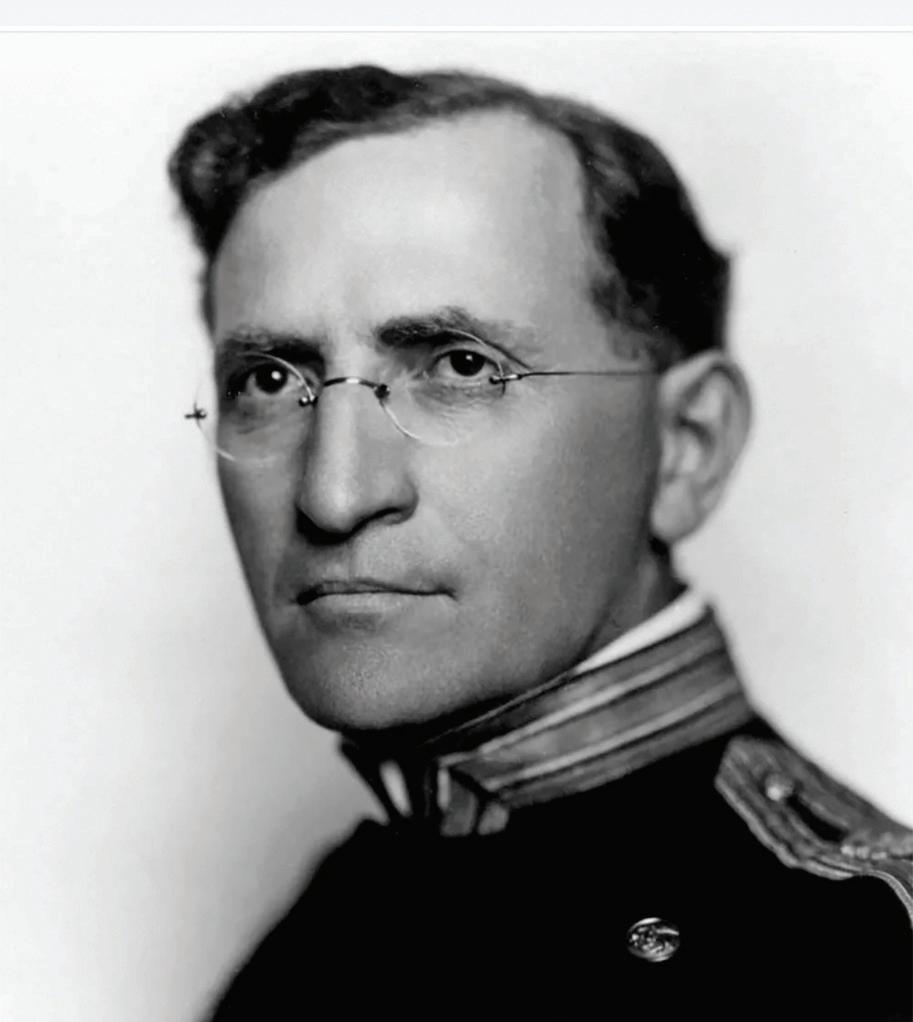
Who is this?
We can’t complete our cover story on page 1 without profiling this man, Joseph Goldberger, a key figure in the struggle which ultimately led to the virtual disappearance of pellagra as a public health threat.
He was born in 1874 in what is today Giraltovce, Slovakia. His parents emigrated to the United States and settled in New York City on Manhattan’s East Side when Goldberger was six, and ten years later he enrolled in City College of New York, intending to study engineering. During his second year he by chance attended a lecture at the city’s Bellevue Hospital Medical College, and inspired by what he heard, switched his course of studies to medicine. He earned his medical degree from Bellevue in 1895 and moved to Wilkes-Barre, Pennsylvania to open his own practice.
Two years later, bored by the experience, he heard about a competitive exam announced by what is now the U.S. Public Health Service. Goldberger entered the competition ended up with the highest score in the nation. He spent the rest of his career working for the Service.
Goldberger faced a number of personal and career-based challenges during his lifetime, which ended up being surprisingly short.
For instance, his courtship of Mary Farrar (the grandniece of Confederate President Jefferson Davis) created an uproar in both families: hers because she was about to marry a Jew; his because he was about to marry a non-Jew. Ultimately the couple ignored the objections of their families and embarked on what by all accounts was a happy and successful marriage.
After a start at Ellis Island, his public health career took him to a number of outposts where yellow fever, typhus, dengue fever, and other maladies raged, ranging from Mexico and Puerto Rico to Mississippi and Louisiana. He also researched disease transmission in poor, inner-city populations in places like New York and Boston.
His expertise in investigating various mysteries of epidemiological science caught the attention of Dr. Rupert Blue, the US Surgeon General, who in 1914 asked Goldberger to investigate the causes and cures for the plague of pellagra across the South (although ultimately the disease was reported in all but 9 states).
As noted in our cover story, Dr. Goldberger had to convince many skeptics who doubted his carefully determined conclusions about pellagra. He established a clear and convincing connection between pellagra and dietary deficiencies, but many in the medical establishment of his day rejected that finding in favor of the newly discovered role of germs in the transmission of disease. Germ theory was a more sophisticated and trendy explanation than rural poverty. Southerners who had no connection with the medical field also disliked the general portrayal of the South as a place where poverty and malnutrition were the norm.
Dr. Goldberger battled these obstacles, but not nearly long enough: he succumbed to renal cell carcinoma in 1929 at just 54 years of age. He was nominated for the Nobel Prize four times. In recognition of his service and life’s work, his wife was awarded a monthly pension of $125 by special Congressional order. She died in 1959 at age 78 in Biloxi, Mississippi. +
MYMOST MEMORABLE PATIENT
AN OCCASIONAL SERIES
He was a young Mexican man, just a kid really, nineteen years old and in the prime of life. He had come to the United States, running across the desert like a lot of guys his age, found a job, worked hard and had begun to achieve the American dream. He made enough money to send some home to his parents in some little town in Mexico every month and he had Sundays off so he could enjoy a game of soccer in the park. What more could a guy want? And there he was, not a care, not a worry. A perfect day. When it happened he wasn’t even moving, just standing there at the goal waiting for the ball. Then he went down. Brain aneurysm.
{
Nobody knows for sure why aneurysms happen. They just do. Nature’s little time bombs, just waiting to explode. On that sunny Sunday when it seemed like nothing could go wrong, the young man’s life began to end as the part of his brain that made him the guy his friends knew faded away. When we checked his pupils we saw they didn’t respond; they remained large and unchanged. His friends found it hard to understand. He had just been standing there and then, so fast, he was gone. It was too nice a day for that to happen. He hadn’t done anything wrong. He was just standing there.
call an agency called ROPA and they figure out who will match up with this person’s organs. Then the “harvesting” team flies in from different parts of the country, goes into the operating room and takes the parts they need. When they’re done they fly back to where they came from, straight to their own hospital, where an anxious patient is waiting for their lifesaving skills, a fresh organ and a fresh lease on life.
IT WAS A PERFECT DAY AND THEN IT HAPPENED{
The nurse called me to the dying patient’s room when the father showed up late that night. I was in the middle of dinner and wasn’t looking forward to what I knew was going to be a difficult situation, having to face the father who hadn’t seen his son for three years, and when he finally did it was only to watch machines breath for him until he died. It would be a sad good-bye and I would have to watch it.
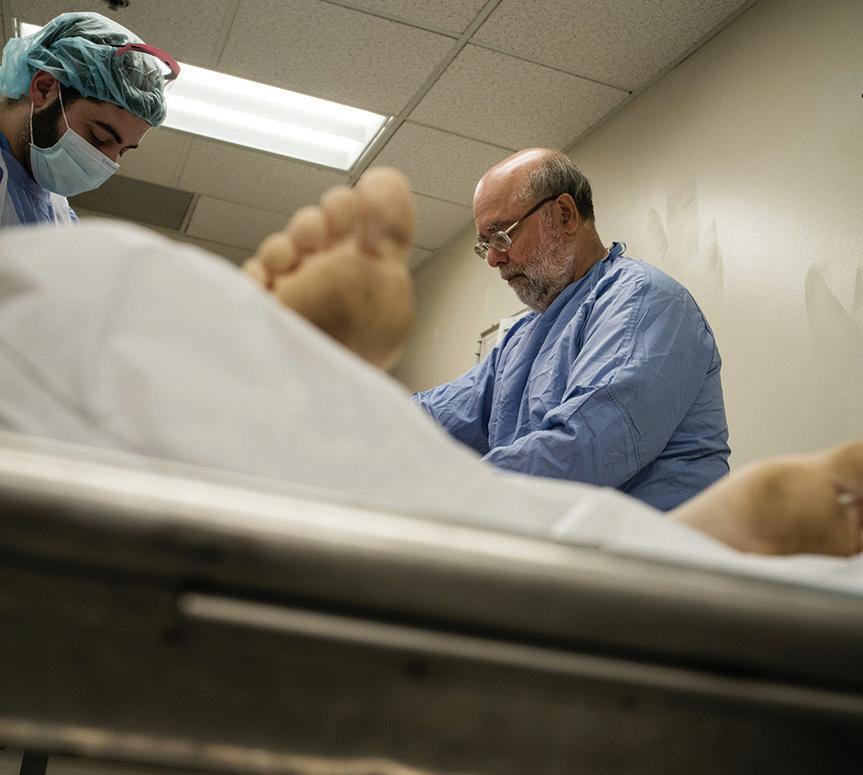
Medical ethics and the law say we have to discuss the possibility of organ donation with every family of a dead or dying patient. There’s even a place on the paperwork to be completed for each death in the hospital. “Was the family approached about organ donation? If not, why not?”
The first night in the hospital was terrible for everyone. His friends had all shown up with high hopes that sophisticated American doctors could save him. They didn’t have any idea as to what the outcome to this tragedy could be, and we were all too aware of what it would. For almost all intents and purposes, the young man had already died, yet he looked so peaceful. He just looked asleep. But his brain was dead.
We had two good reasons to use all of our high-tech machines to keep the rest of him alive. Both, in my opinion, very good reasons. It is in the best interests of the family to have a body to embrace and say good-bye to. There is a need for closure, especially when there has been a separation of time and space between loved ones.
The second good reason we had to keep the patient alive was that he was the perfect organ donor. From the neck down, he was only nineteen years old and everything worked perfectly. Only his head was hurt and we couldn’t do anything about that. But if everything went well we could save his organs and give them to someone else.
If we can get consent from the family, we
But there’s no place on the form to explain you just weren’t up to it or you had already done it enough that week and it was somebody else’s turn. There’s no place to write “I was afraid I’d start crying” or “The patient looked just like my brother or mother or father or someone else I love.” There was only a box to check. Sometimes life is just that simple. It doesn’t matter how you feel, only what you do. And that night, it was my turn. When I came into the room, the father’s pleading eyes caught mine and there was no place for either of us to hide. There was only that damn box to check. Did I do it or not? It didn’t matter how I felt or what I wanted to do. There was no way around it, there was only through it. Everyone else in the patient’s existence until that time was about life. Not me, I was about death.
Neither of us wanted to be there. Both of us wanted to go backwards in time and try the day again and have it turn out a different way. But we knew we couldn’t. I could see the tears in his eyes and he could see the tears in mine. He didn’t want me to start and I didn’t want to start, this dance of death, this inevitable quest to check the right box, to save some lives and for him, to lose one.
Middle Age
BY J.B. COLLUM
We are in a golden age for golden agers. What do I mean by that? I will explain. In brief, medicine and technology, along with various changing regulations are making some aspects of life easier on older folks, and innovations coming in the near future look even more promising for increasing the quality of life for those of us who are card-carrying members of the over the hill gang. Let’s enumerate them.
• Delivery and curbside shopping services: Don’t want to go grocery shopping or out to eat, or perhaps you don’t want to cook tonight? No problem. Just use one of the many competing services like UberEats, Instacart, Wal-Mart, Publix, Kroger, or DoorDash that will either deliver right to your door or allow you to pick your food or other items up at the curb. You spend less of your precious time and energy on shopping and you limit your exposure to potential dangers like influenza or other illnesses. Of course, this means you won’t get to see all of the crazy things that people do and wear at some of these places, but if you are like me, I think I’ve seen enough of the crazies wearing their pajamas, clothes that are too tight or sheer, pants that are pulled down so low you can see their underwear or even lingerie at Wal-Mart for one lifetime. Thanks, but no thanks.
• New, lower-priced hearing aids: The regulations have been eased so that you don’t need to count on good insurance or mortgaging your home to afford excellent hearing aids. In fact, as you read this, Apple will have just released an update to their Airpods Pro 2 that adds an FDA-approved hearing aid function at no additional cost. It even self-administers a hearing test, and will adjust the frequencies it amplifies to your particular needs. It should not take the place of getting your hearing checked by a medical professional, but it even will take your hearing test report from them by using its camera and set itself up to match it. These are available for between $200 and $250 and if you already own them, the new feature is free. Plus, if you are like me and have been looking for a way to justify buying the expensive Apple AirPod Pros, you now have an excuse. I’ve been saying “eh?” to my wife all week ever since I heard the news. I think she is on to me, but she might give in just so I’ll stop pretending not to hear her. It’s worth a shot.
• Online learning: YouTube helps you to learn more about whatever it is you are interested in, as well as providing health tips for your diet, exercise, etc. Of course, you need to be careful about who you get your advice from on YouTube, but it isn’t too difficult to find respected and knowledgeable sources there. All that said, set a limit on your viewing. Trust me. It is easy to go down a rabbit-hole there and not come out until the sun comes up.
• Self-driving cars: This one isn’t fully here yet, but we are on the cusp. Some cars are capable of it, but the technology is still improving (and certainly needs to) and laws have to catch up as well. You shouldn’t be surprised if self-driving vehicles become commonplace within the next few years. Even now, you can operate self-driving cars as long as you sit in the driver’s seat, ready to take over, just in case. I don’t know about you, but allowing someone else to drive in traffic would be a dream come true for me. I’d get more time to write, watch TV, or even sleep. Plus, as long as I wasn’t looking through the windshield at the people driving slow in the left lane, meandering off the rode while using their cell phones, or applying makeup while driving, my blood pressure would stay much lower and my stress levels would reduce. I’d also have to pray for forgiveness a lot less.
Well folks, that’s all we have space for in this issue. The list was getting long, so I’ll make this a two-part article. In the meantime, I will look into even more of the ways that technology is making our adventure in middle age (and beyond) easier than it has ever been. Who knows, it may even turn into a three-part article. Maybe I’ll ask AI to help me be more concise in my writing. Oh yeah, that’s another one, but I’ll save that for later. Until then, if you haven’t already, look into some of the ways that life is getting easier or more fun for us and if you like, drop me a line at the email address listed below and maybe you will help contribute to the second part of this article
J.B. Collum is a local novelist, humorist and columnist who wants to be Mark Twain when he grows up. Reach him at johnbcollum@gmail.com
from page 4
Slowly I explained what had happened. I told him death was imminent, that even with all our machines we could only keep his son alive a little bit longer. He seemed to understand that death would come no matter what we did and his face ever so slightly signaled acceptance. He quickly made his peace with death. And then he looked me without a word, as if to say, “Now what?”
I had to check the box.
“Mr. Lopez,” I said, “how would you feel about letting us take your son’s heart and lungs and some other important parts?”
“What would you do with them?” he asked me.
“Save lives,” I answered.
I explained how the process worked, and he looked truly amazed. I could relate. I’ve been doing this for a long time and I am still truly amazed by the concept of organ transplantation. I could see from the way he held his chin in his hand, I was getting close to a yes and I could almost visualize myself putting that check in the right box. I knew he just needed some final piece of understanding, and after thirty years of traveling in Mexico, I knew exactly what it was. This man would not return to his little village in defeat, sad and grieving. He would go home as the proud, respected father. We could make his son a hero and send him home in glory. So we talked.
“When your son came to this country, he had dreams and plans. He wanted to be a success in America. He wanted to return to his village in triumph and make you proud of him. He wanted to come home a hero, and a real hero is a man who doesn’t think of himself first. He is a man who is willing to make sacrifices. A hero is a man who will give up his own life so others may live. That is what a hero is.”
The old man looked deep into my eyes.
“I will tell you in the morning” he said, and then he left. The next day when I went to meet with the old man he greeted me with an embrace. “Let us talk of heroes,” he said, “How many lives can my son save today?”
“He can save two lives with his kidneys, two lives with his lungs and another with his heart. He can save a life with his liver and help a diabetic with his pancreas. With his skin we can heal the burns that otherwise would be forever painful, and with his bones we can help many people walk. And with his eyes he will bring sight to two people who would be in darkness without him. He will save many lives and change many more,” I said.
“Good. We can put up a plaque in the church by the plaza so that everyone in the village can see. My son will come home a hero. I hope you will do our family the honor of coming to visit the plaque sometime and see the place where my son grew up.”
That night when I filled out the death form, my tears fell on the part that asked if the family was approached about organ donation. I had never felt so good about putting an X in the right box. I had never felt better about what I do and who I am. It just doesn’t get any better than being on a team that saves lives and at the same time, helps ordinary people become heroes.
Some day I’m going down to that place in Mexico. I’m going to see that plaque and meet that young man’s family. I need to tell them again what a hero he was. They all need to know that he saved so many lives.
HELENE: LADY OF DISASTER
Mama said “bachin’“ was when a man lives by himself. There is no woman to clean up a bachelor’s mess or to tell him what he is doing wrong. Domestic hygiene is not a high priority.
I just got a good dose of bachin’. Helene tore through the southeastern United States and ran over the top of my house. My thick grove of trees fell on the back of my house and completely obliterated my deck and grilling apparatus. Who knows where my deck umbrella and chairs now reside? Several of my neighbor’s trees migrated to my backyard. It looks like a Picasso landscape on a bad day back there. Birds know better than to venture in that tangled mess. Even a bird’s GPS would suffer meltdown finding the way out.
My 4-day beard is not sexy. My clothes are mismatched and of questionable fit. I now have dirty clothes that I did not know I had, or for that matter, why I bought them in the first place.
Neighbors are nice and say things like, “Your damage is bad, but you ought to see the mess I have.” That is about as pleasing as having a root canal for your birthday. But I
BASED ON A TRUE STORY
(most of the time)
A series by Bad
Billy Laveau
just smile say “I understand” … which is my conversation-ending tool without engaging in mindless chatter that means nothing to the sayer or the sayee. (Try it some time. It works wonders. No one can argue with you if you keep saying, “I understand.” It doesn’t mean you believe or even care one way or another what they say. It gets you out of the conversational trap.) My neighbors are good hearted people sent by God to soothe troubled souls.
That first Saturday after the storm, I could not find my favorite Dawgs cap to wear for the Georgia football game. It was an omen from hell. We lost to Alabama in the last seconds of the game, just like we lost the national championship to them a few years ago.
I did don my Dry Creek Baptist Church cap during the storm, but it was too
late. 7” of rain and winds with mal-intent had already descended. My timing must have been off.
The builders of the Great Pyramids would run away in horror if tasked to move the branches and trash from our streets. The County says I am responsible for my own trees. Makes sense. But what about the half dozen county trees that fell on top of my tress and crushed them into my house? King Solomon would pull his hair out deciding who was responsible for what and why.
Several neighborhood houses are crushed. Multiple cars are junkyard-ready. Manicured yards now look like a hippie commune with an oversupply of LSD. It will be years before our neighborhood looks halfway decent again. I was worried a certain spot in my yard had mismatched grass. Now, I can’t even see my yard, much less know if I still even have grass.
I wonder what our Home Owners Association (HOA) will say about all this? A few months ago they were handling out violations for cars parked on the street overnight. How many violations
BINGEREAD
will you get if a tree bent your car into a donut and the two are now permanently entwined?
Do you think the HOA will fine God for failing to abide by code? And if God doesn’t pay up immediately, will they haul God into court and have a “perp walk” before TV cameras? Should God not be amused, I don’t want to be nearby if they try any of that. We might not like the next storm of retribution.
I have many valuable possessions, the most valuable being half full bottles of drinking water. I also have a few gallons of gasoline in plastic jugs. Previously thought to be a fire hazard, I’m sure. It is amazing how a storm changes the value of formerly minor things. Lessons in life often come from unexpected events.
In the meantime, I can’t reach my insurance company. They never have any problem reaching me if my payment is more than 30 seconds late. Strange how that works, isn’t it? It is “mind over matter.” They don’t mind, and I don’t matter. Just my bank account that pays the premiums, they are concerned about that.
No electricity for a week. Each day, with much sweat and grunting breaths, the backyard has a smaller pile of limbs and trees as the limb and tree pile in front yard gets larger. At 83 and a long-haul Covid survivor, I am no work dynamo.
But one day a miracle happened. Six guys showed up with a forklift and an array of chainsaws. All middle-aged white guys in heavy duty work clothes. They attacked my yard jungle like ants on a bread crumb. Sweat poured. Chips flew.
They refused my gas cans, said they had plenty. I offered to get lunch for them. They refused, said they came prepared. They did not need me. I needed them. I knew them not. I inquired. They were from a church in Acworth, Georgia and came to help Journey Church with cleanup, and were assigned my home. They prayed for me and my family. I cried. I have never been to Journey Church, but rest assured, I am going. Soon.
The Good Lord works in strange and mysterious ways.
TRYTHISDISH
SIMPLE SOUTHWEST BLACK BEANS
These simple black bean are, well, simple. Using canned beans and prepared salsa, it only takes minutes to create this fresh-tasting, versatile, and highly nutritious side dish that has all but kicked refried beans to the curb in my house. And while black beans are a great accompaniment to Southwest and Mexican dishes, these beans also go great with eggs at breakfast or tossed onto fresh greens at lunch.
Ingredients
• 1 teaspoon olive oil
• ½ cup chopped onion
• 1 (15-ounce) can black beans, drained
• ½ cup prepared salsa
• ¼ teaspoon ground cumin
• 1 to 2 tablespoons finely chopped fresh cilantro
Directions
In a medium saucepan, heat the oil over medium-high heat. Sauté the onion until tender, about 3 minutes. Add the beans and salsa. Stir to warm the beans thoroughly. Add the cumin and continue to stir until hot.
Recipe used with permission from Marlene Koch, RDN www.marlenekoch.com
DOGGONIT!
by Ken Wilson Steppingstones to Recovery
Seven months ago we took on a new task at our house – a puppy came home!
Marley, a mini Poodle/Bernese Mountain Dog mix (a “Bernedoodle”), has both charmed and challenged us!
One of her antics is barking at anything that moves or makes noise outside — doing what a dog is supposed to do I suppose — and does not understand plain-spoken Southern to stop! Taking cues from other senior citizen parents, we bought a “bark collar” which vibrates or beeps, which she understands better than the English language. Presto! It worked from the first remote-controlled vibration.
Recently Marley started barking after we had put her down for bed, so I tried something new. At bedtime
I put the special collar back on her, which she surprisingly welcomed. She went right to sleep despite the neighbor’s dog yapping away at 10 p.m., and I didn’t even need to squeeze the remote trigger! It has worked each time we tried it. Talk about an effective prophylactic (literally, “to guard before”) treatment!
Which reminds me: I’m supposed to be writing this column, not a doggie book for dummies!
When we speak of alcohol and drug treatment, we’re usually not talking about chemical or gizmo solutions, but group therapy (proven to be the best method for addictive diseases) and long-term oversight. Sometimes it’s beefed up with medication assistance for a short time up front, but not a forever thing because addiction and alcoholism is
a spiritual disease (not necessarily related to religion) and when someone relies on a chemical solution he or she will never find the spiritual solution.
Some observations have bruised my soul over the past 37 years of experience in this field.
First, the number of relapses on alcohol that have happened in chronic cases that should have been treated with inpatient care, but their funds and insurance would only cover outpatient treatment. Building a “fence” around them, initially, can easily and affordably be done with prescription Antabuse (generic Disulfiram) for a dollar a day. Google up about this medication and call me before your loved one takes it. I’ll tell you why you must keep the pills in your hidden possession and
COMPUSERVE ISN’T COMING BACK.
why it needs to be dissolved in water before your loved one drinks it daily. You’ll thank me later.
Second, seeing the number of needless overdoses on opiates laced with dreaded Fentanyl, which has become a household word over the past few years. Needless? Yes, you heard me right. Big Pharma may have its downsides, but we can credit them with plenty of good things, such as Vivitrol, a monthly injection (yep it costs a bundle, but it’s cheaper than a funeral) that closes the opiate receptors in the brain so that when an opiate drug comes along it slides right on by and is eliminated naturally without having any effect whatsoever on the addict! It comes in pill form (Naltrexone) too, but is more labor intensive to insure compliance.
Third, the over-the-counter availability of Narcan at big box stores and pharmacies. Narcan is a nasal spray that can be administered by someone who finds an individual suspected to be non-responsive as a result of overdosing and which immediately (did I say immediately? Yes, I did) knocks the opiates off brain receptors and brings a person from near death back to life! I was in a business last week right here in the CSRA and saw a Narcan kit hanging on the wall! Kudos to them. Such “fences” help me realize that dogs and humans are a lot alike.
Old friends are the best friends
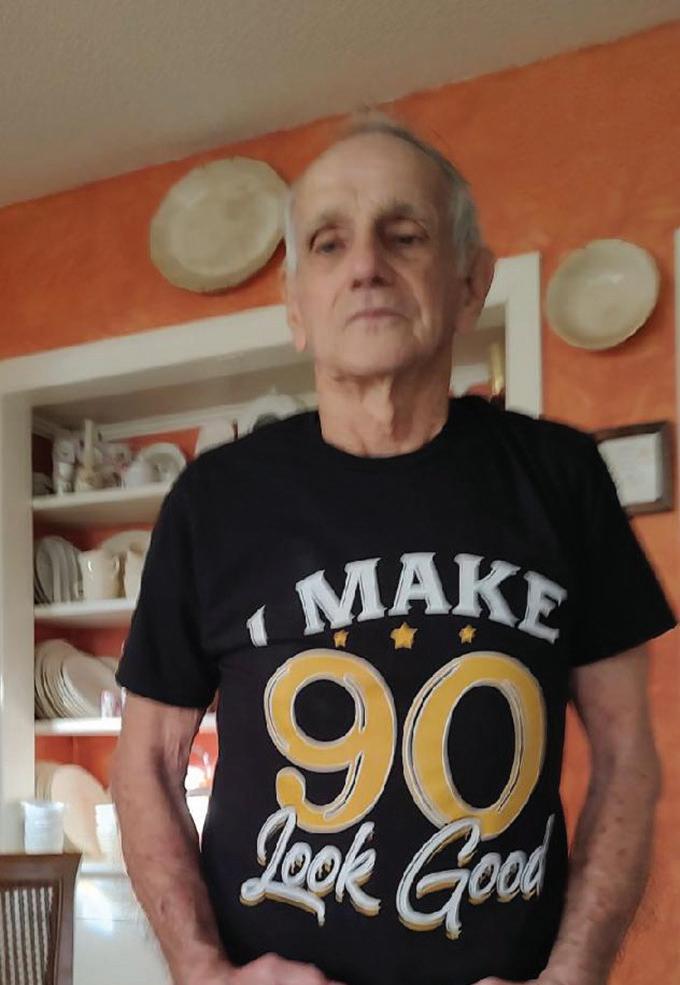
Are you a hundred-andfive pound weakling? You don’t have to be! I’m writing to remind you that we need to take care of our bodies. I’m 79 years old and have been on hospice for three years with four major chronic illnesses.
I have made a wonderful friend named Walter. We met in a cemetery, but that is an article for another time. At the age of 5 his father left his mother while in South Carolina to go to Baltimore for work and never returned. He left her with 6 girls and 2 boys in a shack with no transportation or support. His mother was Portuguese and from Massachusetts and was never accepted in the South. Walter speaks about hunting rabbits and game as a child for food to help feed the family.
Now he is 90 years old, born in 1934 and has suffered no major health problems. After he applied for enlistment in the Marines, all of his fellow recruits made fun of him saying he would never survive bootcamp. Before completing a physical, the recruiter gave him a bag of bananas to make him weigh more.
The Marine Corps respected his determination and accepted him, and he now calls Uncle Sam Dad. While in the Marines, he learned the discipline of exercise and the knowledge to take care of his body. At the age of 60 he learned to snow ski. He also learned to rollerblade and, needless to say, when he falls down he can get back up with ease.
In 2023, Walter went for a wellness checkup to determine if he was able to do more strenuous exercises. At that time, they discovered a growth on his pancreas. It was later determined to be cancerous. At 89 years of age, surgery would not have
been an option except for his extremely good physical health. He and his doctor agreed that surgery would be done. The afternoon after his surgery, Walter was up and walking. He had great response to the surgery and treatment.
For three years now, he has driven from Aiken where he lives to Ridgeland, SC where I live. This is 90 miles each way, and he does this to take care of me once a week. Yes, I have been accused of being his mother, but who cares. He is cheerful and laughs all the time and keeps my freezer stocked with ice-cream.
If your son or daughter brings home an old piece of gym equipment, don’t throw it out. Use it! It has paid off greatly for him and me. He walks the park in front of my house and exercises with equipment in his gym room. 3 to 5 days a week.
Thank you, God, for giving me such a beautiful healthy gift.
— by Wanda Twitty Ridgeland, SC
More
CRASH COURSE
Americans have died on US roads since 2006 than in World Wars I & II combined
et’s spend the space devoted to this installment of Crash Course on a somewhat rare but especially deadly type of collision: cars (and other vehicles) versus trains.
Talk about an unfair contest.
The average car weighs less than 3,000 lbs, while most pickup trucks and SUVs are closer to 5,000 lbs than 4,000.
Take a guess what a train weighs.
you might think a train doesn’t hit a car every day of the week — and you’re correct on that. Several trains hit several cars several times every day of the week, every day of the year.
{
{ Train/car collisions aren’t daily occurrences. Are they ?
There are a ton of variables: how long is the train? Are the cars empty or fully loaded? If they’re loaded, what are they loaded with?
For starters, a single locomotive can easily weigh more than 200 tons all by itself. Even at a mere 200 tons, that’s 400,000 pounds. So a long train with three locomotives is well over a million pounds just in the engines. Hopper cars that carry coal and gravel can weigh 100 tons apiece. A single train wheel — one wheel — weighs over 2,000 pounds.
If you recall, an SUV weighs 4,000-5000 pounds.
A freight train of any decent length could top 40 million pounds of rolling weight.
No wonder they flatten pennies when they roll over one.
But more to the point, they do quite a number on cars and trucks too. There is not a car, bus, truck, or big rig that wouldn’t be tossed aside like a Matchbox toy in any encounter with a moving train.
Do you use the Waze navigational app? If you’re within sight of a rail crossing the app will sound a loud alert chime. Does that seem a bit unnecessary for crashes that are as infrequent as train/vehicle collisions are?
As mentioned above, car-train and trucktrain collisions aren’t exactly everyday occurrences. But they are nowhere near as rare as you might think — or as they should be. Sites like YouTube have hours of recent footage of collisions involving trains. Even so,
The latest U.S. figures might surprise you. The 2019 numbers are still unofficial, but the estimates are 2,216 collisions, 807 injuries, and 293 deaths. That’s an average of 6 crashes every day and more than 5 deaths a week.
As bad as that sounds, we’re heading in the right direction. Here are the stats for a few select years over the past four decades: YEAR COLLISIONS
* Preliminary statistics
So 2019’s average of six crashes per day looks absolutely great compared to 1981’s nearly 26 crashes per day resulting in, on average, nine deaths per day
The thing about train crashes isn’t their frequency, it’s their severity. When a 4,000 pound vehicle is struck by a 40 million pound vehicle, it’s easy to pick the winner.
Big dangers are presented by unmarked crossings, of which there are still a few in rural areas around the CSRA, and multiple rail crossings. One train passes and vehicles, pedestrians, and bike riders start to cross, only to meet a second train they couldn’t see before, barreling along on the second track.
Of course, the biggest danger from trains is not posed by the trains. It comes from careless and impatient motorists who drive around dropped crossing gates, ignoring clanging bells, flashing lights, and those ear-splitting 100-decibel train horns. +
THEMEDICALEXAMiNERJOKESPAGE
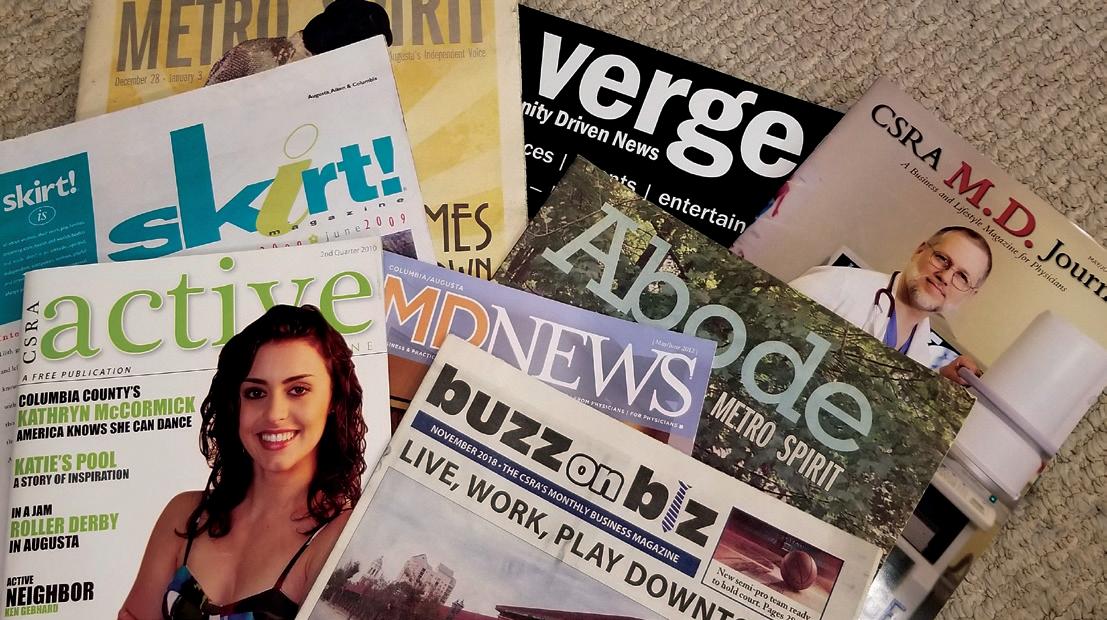
IS DEAD
WELL, A LOT OF IT IS.
There are others that have died in addition to the eight past publications pictured. The Senior News is no more. The Augustan (or “The New Augustan”) seems hard to find, but that could still just be a temporary COVID situation. And many people say The Augusta Chronicle is a mere shadow of its former self.
The good news is that one area publication is alive and well and going strong, and for that we have our loyal advertisers and loyal readers to sincerely thank. If you’re wondering, the name of that publication is shown below:
MEDICALEXAMINER PRINT
the blog spot
posted by Rada Jones. MD, on October 3, 2024 (edited for space)
THE RETIREMENT SURPRISES NO ONE TELLS YOU ABOUT
It took me forever to retire—but I did it. Now, a few years later, I can tell you that the things I worried about were not the ones that gave me trouble. But if you think retirement is easy, think again. That’s why I thought I’d share a few thoughts.
THE BEST-LAID PLANS ARE PLANNED
Your money is finite. There are many better qualified to talk about retirement financing, but I can tell you that spending money from a finite pool feels different. There is no money besides what you saved, so every dollar comes from the same finite pool. Spend wisely.
Who are you? Unlike delivering pizza, doctoring makes you a doctor 24/7. It’s not what you do but who you are. But who are you once you stop seeing patients? You might struggle to find your identity. Give yourself a little time.
Social status. As a doctor, you’re a minor celebrity. Patients recognize you in the store and let you cut in line. But a retired doctor sparks no excitement.
Togetherness. Being with your partner a few hours a day and on vacation is nothing like being together 24/7. If you like each other—and even more if you don’t—togetherness is something you should plan for. Plan your own space and your hobbies, or things might get too cozy.
Free time. What will you do with yourself? As a doctor, your life is structured to the minute. In retirement? Not so much. A routine will keep you grounded: a daily walk, a volunteering gig, a weekly trip to the library.
Growing old is not for the weak. “I’ll hike and bike and travel and do all those things I never got to do,” you say. That sounds great if your knees still work and your bladder behaves. But as years sneak up on you, trails grow longer and backpacks heavier. It helps if you stay in shape.
Keeping sharp. Being a doctor keeps your brain in gear. But once you retire you’ll discover that watching TV and doing crossword puzzles don’t stretch your brain one bit. To keep sharp, find a challenge you love, like learning a new language, playing chess, or taking up painting.
Stagnation. Just like trees, hippopotami, and the economy, humans need to grow as long as they live—not physically; that’s easy—but intellectually and spiritually. Keep learning, exploring, and challenging yourself to make progress.
Expect the unexpected. Life loves to throw you curveballs, even more so in retirement. Surprises are bound to happen, so plan for the unexpected.
Retirement isn’t all sunshine and rainbows. It’s an emotional ride that will sometimes make you feel lonely, anxious, or even depressed. Going from a high-stakes, meaningful career to a retired life can be jarring, and the loss of identity and lack of social interaction may hurt.
“If it’s so terrible, should I keep working till I die?” you ask. Not at all, my friend. Just the opposite. Retire as soon as you’re ready, but plan for it. I suggest you plan your retirement with the same care and attention to detail you used when planning your career and marriage.
Rada Jones is an emergency physician
+
I think the lady next door is stalking me.
Yikes. What’s going on?
PUZZLE
ACROSS
1. Stay at Mistletoe
5. Salt of uric acid
10. Moron
14. Minerals
15. More pleasant
16. Republic in SW Asia
17. Alpha follower
18. Dew, for instance
20. Sheep’s bleat
21. Dust particle
22. Collection of maps
23. Former Russian rulers
25. Stroke, in short
26. Danzig’s name in Poland
28. Most-decorated Olympian of all time
31. A rich tapestry
32. Flower segment
34. Tree of the genus Ulmus
36. Fight for breath
37. Shankar’s instrument
38. New York canal
39. Doc’s org.
40. With “The,” an Augusta golf course
41. Swelling of tissues
42. Dougherty County (GA) seat
44. Type of school
45. Cover
46. Ambulance feature
47. Indian, for example
50. Augusta _____
51. Nickname of the 34th US president
54. Confederate facility in Augusta
57. Bucket
58. Fencing sword
59. Research deeply
60. Wings
61. He brought down Capone
I found out she’s been Googling me.
How did you discover that?
If I use my binoculars, I can read what’s on her screen.
by Dan Pearson
So you think she’s stalking you???
THE MYSTERY WORD
The Mystery Word for this issue: BAMURL
Simply unscramble the letters, then begin exploring our ads When you find the correctly spelled word HIDDEN in one of our ads — enter at AugustaRx.com
We’ll announce the winner in our next issue!
62. Congressman Rick
63. _____ of Man
DOWN
1. #1 player for the Augusta Tourists
2. Part of CSRA
3. Of the foot bones
4. An ad for raising awareness (abbrev)
5. Open a wine bottle
6. Violent protests
7. Teen skin eruption
8. Talk type
9. Before (to a poet)
10. Proximal’s opposite 11. Like most thermometers
12. Word with bank or base
13. Singles
19. Abdominal landmark
21. Spectrometer intro
24. Crack
25. Blacken
26. Very enthusiastic
27. Stage play
28. Egyptian deity
29. Plants that live from year to year
30. Ball prefix?
32. Feel compassion for
33. Abbrev. for “and the rest”
35. Type of market
37. Castle-building material
38. Verge
40. Augusta College
41. English nobleman ranking above a viscount
43. Shoulder bones
44. Jenkins County (GA) seat
46. Medicinal ointment
47. Sign on many doors
48. Deal with
49. Female sheep
50. Enterprise follower
52. While away, as time
53. Otherwise
55. Food label abbrev.
56. Famed Brooks
57. Noted architect
X A M I N E R
DIRECTIONS: Every line, vertical and horizontal, and all nine 9-square boxes must each contain the numbers 1 though 9. Solution on page 14.
DIRECTIONS: Recreate a timeless nugget of wisdom by using the letters in each vertical column to fill the boxes above them. Once any letter is used, cross it out in the lower half of the puzzle. Letters may be used only once. Black squares indicate spaces between words, and words may extend onto a second line.
Solution on page 14.
Use the letters provided at bottom to create words to solve the puzzle above. All the listed letters following #1 are the first letters of the various words; the letters following #2 are the second letters of each word, and so on. Try solving words with letter clues or numbers with minimal choices listed. A sample is shown. Solution on page 14.
ATHEBESTMEDICINE
traveling salesman is driving down the highway to the next town one evening when his car broke down. He walked to a nearby farmhouse and knocked on the door.
“Excuse me,” he said when the farmer answered the door, “my car broke down and I was wondering if you could put me up for the night.”
“Of course,” said the farmer, “but we’re a little short on space around here, so I’ll have to ask you to share a room with my son.”
“Oh man,” said the frustrated salesman. “I think I’m in the wrong joke.”
Moe: People are so stupid.
Joe: What makes you say that?
Moe: I was just talking to someone who thinks Albert Einstein was a real person.
Joe: But he was a real person.
Moe: Oh my gosh, you too? Get this through your skull: he was a theoretical physicist.
Moe: Have you tried this new craze of blindfolded archery?
Joe: I have not.
Moe: You definitely should, man. You don’t know what you’re missing.
Moe: It says here that you create your rap name by adding “Young” or “Lil’” to something you always have with you.
Joe: Mine could be Young Inhaler.
Moe: Mine would be Lil’ 40 Extra Pounds.
Moe: Hey, can you recommend a good banker?
Joe: What are you looking for?
Moe: First and foremost, someone who is friendly and outgoing. That’s important to me
Joe: Well, that takes my banker out of the conversation. He’s a loaner.
Moe: It’s not fair! This guy Pedro got promoted at work and I’ve worked there twice as long as he has.
Joe: Yes, but he has señority.
Moe: If red houses are made with red bricks and blue houses are made with blue bricks, what are green houses made of?
Joe: Glass.
Moe: This article says there’s a fresh outbreak of E. coli at McDonald’s restaurants in France.
Joe: In Paris they call that a Royale with Disease.
Moe: Don’t forget, all clocks go back later this week.
Joe: Oh no! I can’t remember where I got all mine. I don’t think I saved my receipts either.
Staring at my phone all day has certainly had no Effect on ME!
By popular demand we’re making at-cost subscriptions available for the convenience of our readers. If you live beyond the Aiken-Augusta area, or miss issues between doctor’s appointments — don’t you hate it when that happens? — we’ll command your mail carrier to bring every issue to your house!
NAME ADDRESS
CITY STATE ZIP
Choose six months for $24 or one year for $42 . Mail this completed form with payment to Augusta Medical Examiner, PO Box 397, Augusta GA 30903- 0397
Dear Advice Doctor,
The Advice Doctor
Dear Ima,
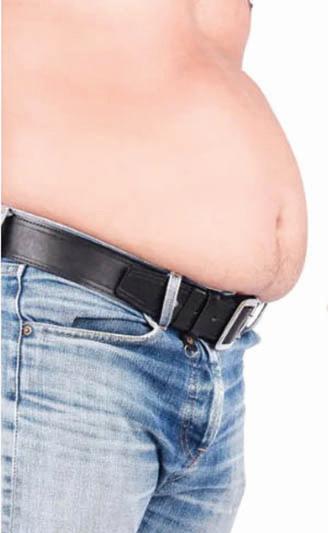
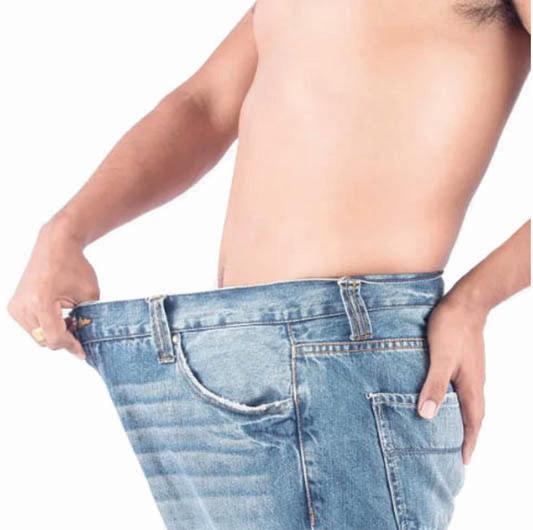
First of all, thank you for writing in about this important issue that plagues so many of us. It probably wasn’t an easy letter to write, to have to face your failure to lose weight (at least to this point).
But the next think I want to say to you is very, very important. You cannot let this issue define you as a person. Your worth as a human being, a colleague at work, a former classmate, or anything else for that matter, cannot be measured on a bathroom scale. So even if you can’t reshape your body as much as you’d like, work on reshaping your thinking
However, you did say that your health and life expectancy are among your primary motivators. Those are legitimate reasons that hold definite value. It sounds like your doctor may have given you some advice leading in part to your quest. It is possible that your doctor can give you some help, but be cautious about weight loss drugs. They are expensive and aren’t always covered by insurance, they can bring along unpleasant side effects, and although they work for many people, all the lost weight often comes back as soon as they stop taking the drug.
Along with help from your doctor you might seek out the services of a registered dietitian, and the Augusta area has plenty to choose from. They can help craft a dietary regimen that works for you that will promote weight loss without feeling like starvation. What you eat and how much you eat will be important elements in your success.
On that note, I have to address something I spotted immediately in your approach so far: you said you eat like a bird. That could be your problem right there. Birds eat up to half their weight every day. That means a 2-pound bird eats up to a pound of food a day. Please: don’t eat like a bird.
I desperately need your advice. I desperately need to lose weight. It’s about my health, my life expectancy, my self-esteem, my career, and yes, about my high school reunion coming up next spring. This is the hardest thing I’ve ever failed at (so far), and I just don’t understand it. I eat like a bird and don’t lose a single pound. What am I doing wrong? — I’m a Big Deal +
Thanks for writing, and I hope I answered your question.
Do you have a question for The Advice Doctor about health, life, love, personal relationships, career, raising children, or any other important topic? Send it to News@AugustaRx.com. Replies will be provided only in the Examiner.
Why read the Medical Examiner: Reason #381 BEFORE READING AFTER READING
THE MYSTERY SOLVED
The Celebrated MYSTERY WORD CONTEST
...wherein we hide (with fiendish cleverness) a simple word. All you have to do is unscramble the word (found on page 12), then find it concealed within one of our ads. Click in to the contest link at www.AugustaRx.com and enter. If we pick you in our random drawing of correct entries, you’ll score our goodie package!
SEVEN SIMPLE RULES: 1. Unscramble and find the designated word hidden within one of the ads in this issue. 2. Visit the Reader Contests page at www.AugustaRx.com. 3. Tell us what you found and where you found it. 4. If you’re right and you’re the one we pick at random, you win. (Winners within the past six months are ineligible.) 5. Prizes awarded to winners may vary from issue to issue. Limited sizes are available for shirt prize. 6. A photo ID may be required to claim some prizes. 7. Other entrants may win a lesser prize at the sole discretion of the publisher. 8. Deadline to enter is shown on page 12.
PROFESSIONAL DIRECTORY
ACUPUNCTURE
116 Davis Road Augusta 30907
Dr. Eric Sherrell, DACM, LAC Augusta Acupuncture Clinic 4141 Columbia Road 706-888-0707 www.AcuClinicGA.com 3633 Wheeler Rd, Suite 365 Augusta 30909 706-432-6866 www.visitrcp.com
706-860-4048 Floss ‘em or lose ‘em!
L. Carter, MD 1303 D’Antignac St, Suite 2100 Augusta 30901 706-396-0600 www.augustadevelopmentalspecialists.com
IT TOOK 4 PEOPLE TO HOLD ME DOWN A year ago I was bit by a dog while skating. Huge gash on my leg. Blood everywhere. I had to have my girlfriend help me walk sometimes because of how much muscle the dog removed. We didn’t know if the dog had its rabies vaccine, so I had to get one — actually 15 instead. I was aware of my situation as soon as the dog bit me, that I’d probably have to get shots. I’ve never liked needles, one of the top things I hate. So I’m sitting there, super anxious, and the nurse walks in with several different needles and a vaccine bottle. I involuntarily freak out and try to get up and get out of the room. I failed. In order for them to give me the shot, which was almost directly on the bite wound, I was restrained by my skinny but muscular 6’3” dad, two heavy-set nurses, one skinny nurse, for the 4th nurse to inject me. I was 15 at the time and weighed roughly 140 lbs. I still don’t like needles.
SHORT STORIES
MY ADVICE FOR THOSE TRYING TO QUIT SMOKING I know how hard it is to quit smoking, I went through it for years before I finally succeeded. I also know how overwhelming it can feel and how disappointing it is when you relapse. That’s why I’d like to share a few tips to help you quit smoking.
My first tip is not to panic beforehand. Many people never even try to quit because they’re so afraid of what will happen and how they’ll feel when they stop. Others panic so much that when they finally decide to quit, they exaggerate their withdrawal symptoms out of fear. I know it can seem terrifying, but once you get through it, you’ll see it wasn’t as bad as you expected.
My second tip is to understand that “just one cigarette” doesn’t exist. Many people believe they can smoke just one cigarette or take just one puff, only to be disappointed when they realize it’s not possible. That one cigarette will pull you right back into addiction. Don’t think that others couldn’t do it but you can; it doesn’t work that way. Nicotine is a drug that takes only ten seconds to reach your brain, re-triggering the addiction.
The third tip is to get moving more. Physical activity can significantly ease withdrawal symptoms. When I was quitting, I started going to the gym and taking walks every evening. It helped me deal with cravings and also helped me sleep better. It doesn’t have to be walking. It could be cycling, push-ups, squats, running, or something else.
The final tip is to give yourself some time to understand what’s really going on when you feel a craving. When we quit smoking, we might misinterpret certain symptoms. Maybe you’re hungry, thirsty, or craving something sweet. A cigarette isn’t always the solution. When you feel a craving, tell yourself you’ll hold off for the next 20–30 minutes. Anyone can do that; nothing bad will happen if you don’t smoke for 30 minutes. During that time, go outside for a walk, eat an apple, drink a glass of cold water, take a cold shower, or do something else that works for you.