


The liver doesn’t get a lot of publicity, but that doesn’t stop it from being the body’s utterly amazing overachieving multitasking master-working powerhouse. We really should say more, but our thesaurus is in the shop.
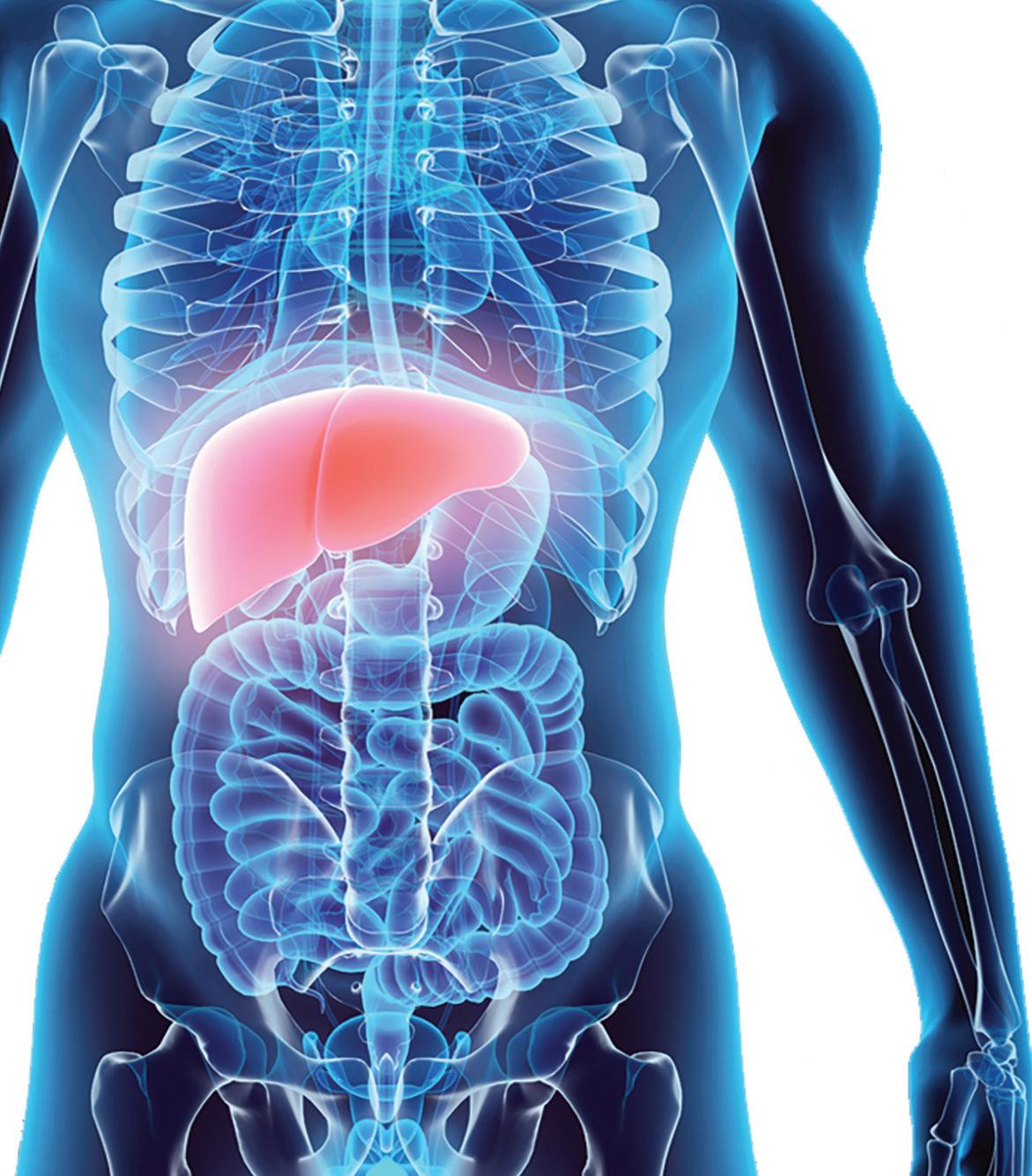
The liver does a lot more than most of us realize. Considering that it performs more than five hundred essential functions that keep us alive, it would be a rare person indeed who could name even half of the liver’s vital tasks.
Weighing about 3 pounds in an adult male, the liver is the largest of the body’s internal organs and the most complex (although the brain might want to argue that point). Even so, it’s tiny considering everything it does. It’s like a full-scale chemistry lab and extremely sophisticated filtration system packed into a package about the size of a football.
Within its confines at any moment in time is about 10% of the body’s entire blood volume, passing through and being cleaned and filtered at the rate of about one and a half quarts of blood per minute, around the clock. Its elaborate filters remove bacteria, dead cells and other metabolic waste, playing a major role in immune support. The liver detoxifies alcohol, drugs, and various environmental toxins, converting them into safer compounds and then sending them out for elimination.
The liver is a key component in digestion and metabolism, helping the body to absorb key vitamins and nutrients. It converts carbohydrates into glucose, and then stores it away (as glycogen), releasing it as needed.
We could go on. And on. And on. We probably still have another 490 functions to extol. But here is one last amazing fact: the liver can regenerate itself. Even if as much as 75% of it is removed, it can grow back to full size and full function.
Obviously every liver owner should jealously guard and protect this precious organ. What are the best strategies? The top three are: 1. Limit (or avoid) alcohol. 2. Prevent hepatitis. Vaccines are available for hep A and B, and handwashing and food safety also help prevent hep A. 3. Maintain healthy weight, a major factor since it reduces the risk of fatty liver disease.
What more can we say about the liver? A lot. But we’ll have to leave it with these three words: the liver delivers.




by Dr. Warren Umansky, PhD
You have been scheduled three times to have your child evaluated for ADHD. You can’t seem to remember when appointments are. The mental health professional has been very patient and has rescheduled her appointments. That won’t continue to happen. What should you do?
A. You’re busy and have lots to do. You’re glad the mental health professional can reschedule your appointments, but you will get there when you can.
B. Try to get your spouse or a friend to remind you when appointments are. This will help you keep track of the many things you have to do.
C. Use the easy resources you have to keep track of appointments. Having a calendar on your refrigerator is the easiest way to list all of the “things to do” for you and your children. Most phones also have calendars now and will provide reminders hours or a full day in advance.
D. Don’t even try to schedule other appointments now. You’re too busy to take time away from your job and taking care of things at home. You’ll get to it when you can.
If you answered:
A. Your child was referred for an ADHD evaluation for a reason. She either is having trouble in school or you discussed with your pediatrician problems with her performance at home. In any case, as a parent her care should be a top priority for you.
B. It may take a community to raise a child, but it’s time for you to get it together as the parent. Get sound advice from others on how to get organized as a parent, then make it work for you.
C. Every appointment, school activity, birthday and anniversary, and meeting should go on your calendar on the refrigerator. Everyone in the family can see it. It is a sure way for you to be able to plan in advance for needed time off from your job, transportation, and having any materials you might need for the appointment. Many banks, pharmacies, and other businesses provide free calendars for the asking.
D. Life can get overwhelming very easily. Having a routine at home for everyone (that is, a consistent schedule for early bedtime, meals, after school activities, bookbag review and homework, and bedtime prep) can be very helpful in organizing the household. It also is particularly beneficial for children and adults with ADHD.
Your role as parent is to care for your children’s needs so that their future will be one of success. That means planting the seeds intellectually, socially, emotionally, and physically to provide sound minds in sound bodies. It’s a big job and one you took on when you delivered your first child. End each day feeling good about what you and your children accomplished.
Dr. Umansky has a behavioral health practice for children in Augusta
“I THOUGHT I WAS JUST BAD AT LIFE”
Editor’s note: Written by local mental healthcare professionals, this series explores how people may think and act when affected by common and lesser-known mental health conditions.
Chris is a 41-year-old project coordinator who has always felt like he’s one step behind.
He starts the day with good intentions — a to-do list, a plan, motivation. But by mid-morning, he’s already distracted. Emails pile up. Deadlines sneak past him. He forgets meetings he just scheduled.
At home, it’s not much better. Bills are late, laundry goes unfinished, and simple tasks feel overwhelming. His partner gets frustrated. “Why can’t you just follow through?”
Chris has spent years blaming himself. Lazy. Disorganized. Unmotivated.
It wasn’t until his daughter was diagnosed with Attention-Deficit/Hyperactivity Disorder that he began to recognize the same patterns in himself.
Chris is not “bad at life.” He may be living with undiagnosed ADHD — a condition that often looks very different in adults than it does in children.
What
ADHD is a neurodevelopmental condition that affects attention, impulse control, and executive functioning. While often identified in childhood, many individuals are not diagnosed until adulthood — especially those who learned to compensate early on.
In adults, ADHD is less about hyperactivity and more about difficulty managing the demands of daily life — organizing, prioritizing, initiating tasks, and sustaining focus.
It is not a lack of intelligence or effort. It is a difference in how the brain regulates attention, motivation, and behavior.
Signs and Symptoms
Attention and Focus
• Difficulty sustaining attention on tasks
• Easily distracted or “mentally elsewhere”
• Frequently losing items or forgetting details
Executive Functioning
• Trouble starting or finishing tasks
• Poor time management (“time blindness”)
• Difficulty prioritizing or organizing
• Feeling overwhelmed by multi-step tasks Impulsivity
• Interrupting others
• Making quick decisions without considering consequences
• Difficulty waiting or delaying gratification
Emotional Features
• Frustration or irritability
• Low self-esteem from years of perceived underperformance
• Sensitivity to criticism
Behavioral Patterns
• Procrastination despite urgency
• Inconsistent productivity (high output followed by burnout)
• Chronic lateness or missed deadlines
Functional Impact
• Workplace struggles or job instability
• Financial disorganization
• Relationship conflict
• Increased risk for anxiety, depression, or substance misuse
Many adults with ADHD were never identified in childhood. Common reasons include:
• Symptoms were mistaken for laziness, lack of discipline, or personality traits
• Strong academic performance masked underlying struggles
• Structured environments (school, parental support) compensated for deficits
• Differences in how ADHD presents in girls and women
By adulthood, individuals often develop coping strategies — but these can become overwhelmed as responsibilities increase. As a result, many adults seek help for anxiety, burnout, or depression without realizing ADHD may be the underlying factor.
What Is Executive Dysfunction?
Executive functioning refers to the brain’s ability to manage and regulate tasks, behaviors, and goals.
In ADHD, executive dys-
Please see THOUGHTS page 3
function may include:
• Difficulty initiating tasks (even important ones)
• Trouble shifting between activities
• Poor working memory (“I forgot what I was doing”)
• Inconsistent motivation not tied to importance, but to interest or urgency
This aspect is why individuals with ADHD may complete complex tasks under pressure — but struggle with routine responsibilities.
It is not a matter of willpower. It is a difference in brain-based regulation systems.
ADHD is primarily influenced by:
• Genetic factors (often runs in families)
• Differences in brain structure and neurotransmitter activity (particularly dopamine)
• Developmental factors affecting attention and impulse control systems
ADHD is not caused by poor parenting, lack of effort, or screen time — though environmental factors can impact symptom severity.
Common Misconceptions
“ADHD is just a childhood disorder.”
ADHD often persists into adulthood, though symptoms may look different.
“They’re just lazy or unmotivated.”
Most individuals with ADHD are trying — often harder than others — but struggle with consistency.
“If they can focus on things they enjoy, they don’t have ADHD.”
ADHD involves inconsistent attention regulation, not a complete inability to focus.
“Medication is the only solution.”
While medication can be helpful, effective treatment often includes therapy, skills training, and lifestyle adjustments.
Treatment
ADHD in adults is highly treatable with a comprehensive approach.
Medication
• Stimulant and non-stimulant medications can improve attention, impulse control, and executive functioning
Psychotherapy
• Cognitive Behavioral Therapy (CBT) for ADHD focuses on time management, organization, and thought patterns
• Coaching or skills-based therapy helps build practical systems for daily life
Behavioral Strategies
• External structure (planners, reminders, routines)
• Breaking tasks into smaller, manageable steps
• Using timers and visual cues
Lifestyle Support
• Sleep consistency
• Regular physical activity
• Reducing distractions in the environment
Psychoeducation
• Understanding how ADHD works can reduce shame and improve self-compassion and problem-solving.
Prognosis
With proper diagnosis and treatment, adults with ADHD can experience significant improvement in functioning, relationships, and self-confidence.
Many individuals shift from a pattern of chronic frustration to one of intentional structure and sustainable success. Without treatment, ADHD can contribute to long-term challenges in work, finances, and mental health.
Recognition is often the turning point — transforming years of self-blame into understanding and opening the door to effective support.
About Us
IPS provides inpatient and outpatient mental health services, with or without a referral, to help patients and their families progress through the care journey.
To make an appointment, call 706-2041366 or visit integratedpsych.care.

Georgia headlines in recent days have looked a lot like California in the middle of wildfire season. Raging fires and clouds of smoke spreading over hundreds of square miles are not a recipe for easy breathing. Even in our area, 150 miles away from the nearest major fires, people who have respiratory issues have been encouraged to stay indoors.
For them, even a little smoke and haze can trigger respiratory distress. Then again, even without fires, everyone who deals with asthma, COPD, bronchitis, the flu, RSV, cystic fibrosis and other conditions knows all about struggling to breathe. What can help? Those two words, “breathing treatment,” often come to the rescue.
What exactly is a breathing treatment?
It’s similar to swallowing a pill or getting a shot or putting on a topical cream, except that in this case the medicine has to get into the lungs, and none of those delivery systems will work for that purpose. A breathing treatment is a method of vaporizing medicine so that it can be delivered directly into the lungs.
Breathing treatments hbappen in two ways. One is the handheld device lke asthma sufferers use that administers a measured puff of medicication. The other method uses a nebulizer, a machine that creates a fine medicine-containing mist that can be inhaled through a mask or mouthpiece for 10 - 20 minutes.
Either way, breathing treatments are painless, and they often provide quick relief from wheezing or shortness of breath. The medications delivered get deep into the lungs, exactly where they’re needed to open airways, reduce swelling and help oxygen get in. At a time when cilia, the airway’s cleaning brushes, might not be working their best, the treatments help loosen mucus, soot, and whatever other gunk has been inhaled, making it easier to cough out.
Because breathing is pretty important.

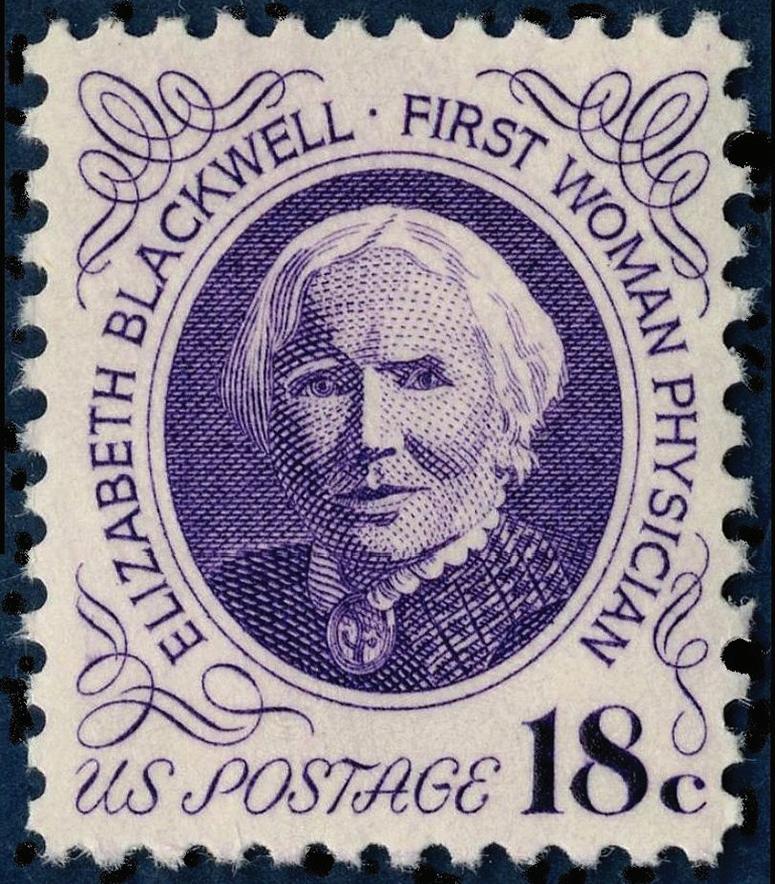
There is no mystery this time. Before you even got this far you already knew the name of our featured physician and why she is of note. A picture — in this case a 1974 postage stamp — says a thousand words, but we would like to add a few more.
First though, imagine the scenario described in the three words on the right side of the stamp: in the entire United States, from one coast all the way to the other, there was a grand total of one woman doctor. It’s amazing to contemplate in 2026.
Elizabeth Blackwell was born in 1821 and grew into adulthood in a world where women were not medical practitioners. Period. She was determined to change that, and in 1847 applied to a series of medical schools without success. Finally, the student body of New York’s Geneva Medical College voted unanimously in favor of Blackwell’s acceptance. Not because they were forward-thinking and fair-minded. No, their vote to accept her was a joke, inasmuch as women were considered to be intellectually inferior. Before being accepted, she was variously advised to get her education in Europe, or to disguise herself as a man to improve her chances of acceptance.
She actually did go to Europe for more training and education, but not before graduating from Geneva in January 1849, becoming the first woman in American history to earn a medical degree. By April she was in Europe, contuing her studies and gaining valuable clinical experience, particularly under the mentorship of Dr. Paul Dubois in Paris, the foremost obstetrician of his day, who told anyone who would listen that Elizabeth Blackwell would be the best obstetrician in the entire United States, male or female.
In November of that year she was treating an infant with conjunctivitis and accidentally squirted some fluid contaminated with the ophthalmic bacteria into her own eye. She contracted the infection herself, losing sight in her left eye and thereby also losing the possibility of becoming a surgeon. It did not stop her from being a tireless advocate for women’s rights and social reform (more so than her medical accomplishments, it could be argued) on both sides of the Atlantic.
Meanwhile, her sister Emily became the third woman in the US to earn an M.D. degree (although Geneva would not accept her; one woman had been enough apparently), and the two of them worked off and on together (peacefully for the most part) for decades.
Medical historians view Elizabeth Blackwell as among those few doctors who changed the world.

For additional reading: The Doctors Blackwell, by Janice P. Nimura, W. W. Norton & Co., 2021
BY J.B. COLLUM
We older gentlemen sometimes get a bad rap. When we complain about something or point out things we think are wrong, we get labeled as grumpy old men. Yet when a college student does the same thing—protesting or standing up for what they believe—they’re applauded. Why the double standard?
As I’ve gotten older, I’ve been called a grumpy old man at times, though not always so bluntly. Sometimes it’s softened with euphemisms like, “We don’t do that anymore, pops,” or “That’s old school— the new way is better,” or perhaps, “Okay, okay—time for your medicine!” All this despite the fact that I’m not old. I’m middle-aged. Though, with my oldest child nearing 40, I do find myself wondering when middle age ends and old age begins. No one seems to know.
I can still remember being the young person who said things like that to older people, and I’m now a little appalled at my former self. As I’ve moved through life—getting married, raising children, facing the challenges that come with responsibility—the wisdom of my father and others older than me has slowly been revealed.
It’s a bit like watching a sunrise.
At first, there’s only the dim light of the stars. Then comes twilight—muted colors, details scarce. As the sun slowly rises, long shadows stretch across everything, obscuring what’s really there. Looking toward the sun, things can appear darker than they are, hidden by contrast. So you shift your angle, trying to make sense of what you’re seeing. Or you turn away from the sun entirely, and with the light at your back, everything ahead looks bright and promising. Why bother looking behind you? The future is right there, glowing.
As the sun climbs higher, everything comes into clearer focus. Shadows shorten. You can see things as they are. From this vantage point, you might glance back to the east and realize that what once seemed intimidating wasn’t so formidable after all. That obstacle you carefully avoided in the half-light turns out to have been easy to step over. You might even feel a little foolish—but at the time, it felt real enough.
You wish you hadn’t worried so much. You wish you’d believed in yourself more. But you can’t go back. The sun is high, and there’s work to do.
As the day wears on and the sun begins its descent, it finds its way back into your eyes again. The brightness ahead makes it

harder to see what’s coming. The future becomes less clear. It’s tempting to turn around and look back, where everything now appears sharp and well-lit. It even looks better from this direction.
You can look—but you can’t go back. And if you spend too much time looking behind you, you may miss something right in front of you that could trip you up. So you turn forward again and keep moving west, doing the best you can. It’s getting harder, and you know it will become harder still when dusk comes and the colors begin to fade. The dark is coming—it always does.
So maybe the best thing to do is to appreciate where you are.
Look back now and then, but also look at your feet—the grass, the flowers, the life right in front of you. Look to your sides, too. That’s where your spouse, your friends, your companions are walking alongside you. Enjoy them. Better yet, help make their journey richer. When you do, that happiness has a way of finding its way back to you.
Wherever you are on your journey, the perspective of people at a different stage in life has value. Things do change. Not always for the better—but not always for the worse, either. Listening doesn’t cost you anything, even if it doesn’t change your mind.
Think back to where you once stood. Notice how things are different now, and how those differences shape people. Share your experience—but don’t shine it directly into someone’s eyes with your flashlight set on turbo. That’s a good way to make sure they don’t hear a word you’re saying. Put the light on the subject, not in their face.
And be willing to admit when you’re wrong. That kind of humility builds trust and strengthens relationships.
Now, I’m not suggesting you accept whatever poppycock gets thrown your way—but don’t reject it out of hand, either. Listen. Consider it. Maybe respond later, after you’ve had time to think. As Mark Twain put it, “Better to keep your mouth shut and let people think you a fool than to open it and remove all doubt.”
I recently learned that replacing the word “but” with “and” can make a real difference in how people receive disagreement. It sounds simple, but it works. If someone says, “That old car you call a classic is too big, uses too much gas,

The hot dog stand crashed into our table! Before I could do more than scream (a very manly scream, I assure you—you believe me, right?), stepping stones started landing around me, and one of them hit me square on the foot. Someone was picking these things up over their head and throwing them at me. Was it a WWE wrestler who was angry they were out of kosher dogs? Was it King Kong turning everything over, looking for Fay Wray? No, it was my eightyear-old granddaughter, Freyja, trying to get my attention!
And let me tell you, she had my full attention. The stepping stone hit my “wittle” toe. Ouch!
Okay, okay—it wasn’t a real hot dog stand or concrete stepping stones, just plastic toys, but it still hurt.
Freyja has started doing this new thing when she wants attention or isn’t getting what she wants: she finds the heaviest thing she can lift over her head and throws it as far as she can. Not always at someone—not at first, anyway. Usually, it begins with everyone jumping out of their skins when a loud bang echoes through the house. Then, if you ignore it, it just gets worse.
It is a troubling development that we haven’t found a real solution for yet. My first idea was to remove all the heavier things from her reach until we can figure this out, but that presents problems too.
As I have said many times before, she is incredibly strong. I think it is because when she is awake, she is in almost constant motion. She climbs, she runs, she moves things around. She could be the solution to renewable energy if we could
just tap that energy—without violating child labor laws.
I looked into what could be causing it and found several possibilities:
1. If someone with autism reaches sensory overload, throwing something can be a way to release their pent-up energy.
2. It could be a form of communication, letting us know that she’s overwhelmed, needs help, or is simply frustrated.
3. It could be that she likes the feeling she gets when she throws large, heavy things and they make loud sounds. It can be stimulating and even help regulate her.
4. Two words: learned behavior. If it gets attention, she will use it again for that purpose.
What can we do? For one, we can try to figure out what is triggering this. As I already mentioned, it seems like it happens when she wants attention. It also happens after we have told her “no.”
We need to watch a bit longer and try to understand what sets this off so we can come up with a better solution. For now, I am thinking of replacing her large, hard, heavy toys with large, soft, lightweight ones so that when she throws things, nobody gets hurt, no property is damaged, and I can get my nerves back under control.
We also want to continue working with her communication skills. Her therapist at school has been making progress with her in using the tablet they provided to communicate her feelings and desires. Katie has been reinforcing that at home, and perhaps it is time for me to chip in as well. I also plan to reintroduce the little electronic piano I got for her to see if this soothes her. For now, it will be supervised so she doesn’t shatter the keyboard into a million pieces. I’ve even been thinking about mounting it into her playhouse in a way that lets her play it but not throw it. I haven’t cracked that nut yet, but I’m working on it.
In the meantime, we just keep reminding ourselves that if we are patient and don’t overreact, we can get through this and find a solution. I just hope the solution isn’t to pad every wall and floor in the house so that everything just bounces without harming anything or anyone.
Then again… who am I kidding? That sounds like a lot of fun. Maybe I will do that.
Well… if Lorie lets me, that is.

... from page 4 and is bad for the environment,” you might respond, “Yes—and it’s also spacious, comfortable, doesn’t look like everything else on the road, and I just happen to like it.”

None of this is new—but it’s worth remembering. Thanks for sticking with me. Wherever you are in your journey, I hope you find something today worth enjoying.
J.B. Collum, the author of this column and Special Forces Parenting, is a local novelist, humorist and columnist who wants to be Mark Twain when he grows up. He may be reached at johnbcollum@gmail.com

Not everyone in healthcare can be Florence Nightingale, right? Despite the long-running series on page 4, there are clunkers in medicine, and we will examine some of them in this series. Unfortunately, there’s enough material to keep this side of the page going for a while.
There are a couple of factors that make the case of Louay Omar Mohammed al-Taei unique among the 31 previous evil doctors profiled on this side of the page. First up is the obvious: we couldn’t find a picture that was definitely him anywhere. You’ll just have to imagine what he looks like.

The other unique element in al-Taei’s crimes — a police investigation concluded that the 26-yearold doctor killed 43 people duing a 5-month spree — is that they were politically motivated. If there is a common denominator in the previous profiles here, it would be randomness and senselessness. Why would someone kill babies or elderly people? But al-Taei was motivated by specific philosophical beliefs. “I hate Americans and what they’ve done to Iraq,” is one of the statements he made in his confession. But Americans were not really his victims. His first victim was typical. A police lieutenant was brought to the largest and busiest hospital in Kirkuk, Iraq, where al-Taei worked. A bullet had been successfully removed from the officer’s chest. His life had been saved. The doctor had previously been inducted into an insurgency cell, and they contacted al-Taei. “A senior policeman is coming to your hospital tonight. We shot him but failed to finish the job. He said, ‘You can do it for us.’” So during his shift that night, al-Taei simply turned off the officer’s oxygen. al-Taei was able to obtain supplies from the cell unavailable to the hospital to treat and save injured members of the Iraqi insurgency; at the same time, when it came to wounded soldiers, police and officials allied with the Americans, he made sure their bleeding couldn’t be stopped even if they had minor wounds. “I made a mixture of Valium, Voltaren and Decadron and injected them. They were dead in three hours,” he told police after his arrest, adding that due to wartime chaos and the lack of modern equipment, no autopsies were ever conducted. He would no doubt have continued to wage his private secret war in the trenches of the hospital indefinitely — he confessed to shock when he was arrested — but a senior member of the militant cell al-Taei was affiliated with was arrested and gave up a wealth of information under interrogation, including the name Louay Omar Mohammed al-Taei. As a true patriot to his cause, he was calmly unrepentant in his filmed confession: “We thought we could liberate the country... we had to keep committing these crimes.” His crimes took place from October 2005 to March 2006.












by Kim Beavers, MS, RDN, CDCES
A farmer gave me some cabbage and pecans, and as simple as that, a recipe was born. It is kind of like the “farmer” version of the show
Chopped…this is what I got in the basket and in turn it became a delightful new recipe.
Ingredients
• 1 pound of chopped or shredded cabbage
• 1 larger carrot, shredded ¼ cup light or canola oil mayonnaise
• 1 teaspoon honey
• 2 tablespoons apple cider vinegar
• ¼ teaspoon salt
• ¼ teaspoon pepper
• 1/3 cup roughly chopped pecans
• Parsley (optional garnish)
Directions

Place cabbage and carrot into a large bowl. In a small bowl whisk mayonnaise, honey, vinegar, salt and pepper together. Toss dressing with veggies and refrigerate for an hour or until ready to use. Stir the pecans in right before you serve the slaw; this will allow them to hold their crunch longer.

Yield: 6 servings (serving size: 1 cup)
Nutrition Breakdown: Calo-
ries 90, Fat 7g (0g saturated fat), Cholesterol 0mg, Sodium 180mg, Carbohydrate 8g, Fiber 3g, Protein 2g, Potassium 252mg.
Plate Plan: 1 Vegetable, 1Fat
Do you struggle with moderate to severe unsalubriousness?






For external use only. May be habit-forming. Take regularly; do not discontinue use unless advised by a physician. Product not childresistant. Do not chew or crush. Not to be taken by mouth. May be taken (read) on an empty stomach, or with food. May be taken one hour before or after meals. And at any other time. Product may not be gargled. Do not drive a motor vehicle or operate heavy machinery while reading. Tell your doctor if you are pregnant. Use in conditions of adequate light. Store in a cool dry place. Not to be used as a personal flotation device. Dispose of properly. Overeating, poor diet, cigarette smoking and excessive drinking may alter the effectiveness of this product. Do not use near spark or flame. Not dishwasher safe.

Part 4 of a series
by Jennifer Harrison, FNP-C Nurse Manager
The purpose of physical or medical exams for the workplace, for middle school and high school sports, for college students, and for youth camps is to promote the health and safety of employees, athletes, students, and campers, respectively. Physical exams for these four groups vary slightly, but in general, physicals assess overall fitness, identify pre-existing conditions, assess abilities or readiness to safely participate in activities, and help prevent injuries.
Pre-employment and Annual Work Physicals
While not mandated in all work settings, many employers do require a pre-employment physical exam and an annual physical exam. This helps ensure that the prospective and current employees can perform essential job-related tasks such as heavy lifting, prevent work-related accidents, reduce workers’ compensation claims, and reinforce a culture of safety. Jobs that require mental and physical fitness or exertion such as first responders, healthcare workers, heavy machinery operators, transporters, factory workers, and laborers are likely to need physicals. Some employers also offer wellness programs
that include baseline physical exams so employees can track their health and fitness progress.
Sports physicals are completed on athletes to ensure their health is optimal to participate in a school-based athletic program. A wide range of sports for boys and girls that require a physical exam include, but are not limited, to baseball,



basketball, cheerleading, cross country, football, golf, lacrosse, tennis, track and field, and wrestling. To prepare for a sports physical at take a look at the guidelines offered by St. Joseph/ Candler in Savannah sjcurgentcare.com/sports-physicals-georgia-preparation-guide.
The Georgia High School Association’s (GHSA) ghsa. net by-laws require students to “have a certificate of an annual physical examination on file at the school prior to participating in any athletic try-outs, practices, voluntary workouts or games.”
This certificate documents students are “physically approved for participation” and are valid for 12 months. The GHSA follows the Preparticipation Physical Evaluation (PPE) or sports physical best care practices for athletes’ health, safety, and readiness, including athletes with special needs, was developed by esteemed medical groups including the American Academy of Pediatrics and the American College of Sports Medicine (acsm.org).
Colleges are following suit. They need to evaluate the physical and mental health of prospective students and athletes applying to their institutions. Immunizations may also be part of the admissions process.
Camp physicals, like sports physicals, assess a child’s readiness to participate in indoor and outdoor activities safely, but camp physicals have a broader scope. For overnight camps, communal living increases likelihood of communicable diseases so vaccination records are included. Food and medicine allergies, existing medications, and previous camp experiences will likely be included in the medical assessments of camp physicals (advancedoccmed.com).
Employer, school, college, and camp physicals are generally composed of three main areas, a medical history, a physical exam, and clearance to participate. Similarities in these evaluations include hearing and vision screening, vital signs and blood pressure check, and balance, flexibility, and range of motion testing. Immunizations are reviewed and immunization certificates are issued as needed. These exams are performed by licensed medical professionals such as doctors, nurse practitioners, and advanced practice nurses and typically take 30-45 minutes to complete.
Please see PHYSICALS page 9

You are in Luck - Health Department Resources
Have you wondered where to go to get a physical exam for work? Has your child surprised you saying he or she needs a sports physical - the day before the form is due to the coach? Are you trying to get into the university of your dreams and need a college physical exam? Or are you registering your child for a week-long adventure camp but need to complete the physical form?
Well, you are in luck! Did you know that most of the health departments within our East Central Public Health District offer this physical exam service? Health departments can also provide a Tuberculin Skin Test during the physical exam, if indicated.
Work, college, sports, and camp physicals are offered at an affordable reduced rate, and these exams cannot be billed to private or commercial insurance plans. Remember to schedule your physical exams in plenty of time to meet required deadlines!
Contact your county health department to check on the availability of getting a physical exam. With a prior appointment, you can even get a physical exam at the District’s Mobile Health Clinic when it is in your county. View the Mobile Clinic’s schedule online at wego.ecphd.com/schedule.
If you find yourself in need of a work, college, sports, or camp physical, call your local East Central Public Health Department, or call 706-721- 5800 for more information. Let’s go team!
About the Author. Jennifer F. Harrison, a certified Family Nurse Practitioner, is the Nurse Manager of the Emanuel County Health Department in Swainsboro, GA.
The “What is Public Health?” Series is authored by public health experts at the Georgia Department of Public Health, East Central Health District (ECHD) with administrative offices in Augusta, GA. Learn more about the ECHD at our website: https://ecphd. com
Facebook www.facebook.com/ECPHD Twitter http://twitter.com/eastcentralph







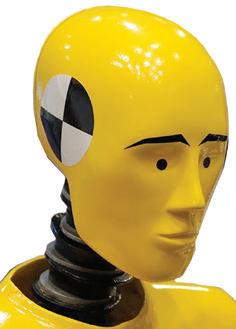
There are two kinds of drivers: those who love camping and those who don’t. And by camping, we mean camping out in the left lane. It seems to be a popular pastime. But is it safe and salubrious?
That depends on who you ask. Or whom. If you ask William, a recent poster on the NextDoor app, yes, it is not just a good thing to camp out in the left lane; it is your civic duty.
Let’s allow William to explain: “As long as you are going the posted speed limit you can stay in the left lane. It says slower traffic keep right. Legally no one should be going faster than the posted limit. Surely you don’t think the law meant stay right so that people that are speeding and breaking the law can get by you?? If you are gonna follow any of the signs you have to follow ALL of the signs and in that case no one would be speeding and if they are they should not expect anyone to get over for them. Once you break the law there are no rules.”
Thank you, William, for your explanation of why staying in the left lane is a good thing. To summarize your points:
1. It’s your right. As long as you’re going the speed limit, no one has the right to expect or demand that you move. Driving the speed limit confers ownership of the left lane to you.
2. “Slower traffic keep right” applies only to traffic going below the speed limit. That’s why it’s called slower traffic
3. If you move over so someone can pass you at a high rate of speed, you are aiding and abetting their crime (speeding). You are an accomplice if you move over, and you certainly don’t want that.
4. Conversely, by staying in the left lane at the speed limit, you are in effect aiding law enforcement by helping to slow traffic down. It’s almost like you have deputized yourself as a volunteer officer. William, we hope that our summation of your salient points is accurate. Sadly, our summation might be accurate, but your points are not.
The state of Georgia even has a law specifically prohibits what you’re sug-
gesting. Unofficially it’s called the “Slow Poke Law,” and it requires drivers to move out of the left lane for speeders
Do not adjust your Medical Examiner, William! You read that correctly. The law “requires drivers to move out of the left lane on multi-lane highways when being overtaken by a faster vehicle, regardless of their speed. The left lane is designated for passing only.”
Get this, William (and all you other Williams out there): you can be fined up to $1000 for being a slow poke, and get 3 points on your license, which could add a tidy sum to your auto insurance rates.
One of the commenters on NextDoor related that she was pulled over by a cop for driving in the left lane, and there wasn’t another vehicle in sight. It wasn’t that she refused to pull over for someone, just that she did not obey the “left lane is only for passing” portion of the law.
One of William’s arguments was that we can’t pick and choose which laws we obey and which we ignore. As he said, “If you are gonna follow any of the signs you have to follow ALL of the signs.”
Well, how about this sign? “Keep right except to pass.” That’s a sign we have all seen, and it does not contradict the other sign William referenced (Slower traffic keep right). They are two peas in the same pod.
What is the point of the law, and having vehicles in the right lane except to pass?
The summary of the law mentions two important reasons: 1.) to avoid traffic congestion, and 2.) to reduce road rage.
To that point, we have observed a fundamental truth countless times: the surest way to make a left lane camper angry is to be a left lane camper. People who drive exactly like they do engender road rage all the time.
The solution is simple: obey the law, the one that says keep right except to pass. Even you, William.













Examiners
The hysteria about the price of gas. Especially when gas prices have not changed.
I don’t get it. Get what?

by Dan Pearson
Excuse me?
I always buy $20 worth. And my $20 still costs $20. When you put it that way...


Check out our new reader contest on p. 10 Write your most appropriate, clever, or funny caption to the photo shown for a chance to win whatever cool swag we eventually decide to give away! Email your entry to Dan@AugustaRx.com
DEADLINE TO ENTER: 5:00 PM FRIDAY, MAY 8, 2026 Have fun!
DIRECTIONS: Every line, vertical and horizontal, and all nine 9-square boxes must each contain the numbers 1 though 9. Solution on page 14.

DIRECTIONS: Find words in the grid that may appear vertically, horizontally, OR diagonally, spelled both forward or backward.
AIKEN APPLING
AUGUSTA
BEECH ISLAND
BELVEDERE BLYTHE BUSH FIELD
CLARKS HILL LAKE
CLEARWATER CSRA DEARING EVANS FORT GORDON GROVETOWN HARLEM
HEGGIES ROCK HEPHZIBAH
EDITOR’S NOTE: The Examiner crossword puzzle will return in our next issue.
JACKSON
LAKE THURMOND
NORTH AUGUSTA
PLANT VOGTLE
SAVANNAH RIVER THOMSON
WAYNESBORO WRENS
DIRECTIONS: Recreate a timeless nugget of wisdom by using the letters in each vertical column to fill the boxes above them. Once any letter is used, cross it out in the lower half of the puzzle. Letters may be used only once. Black squares indicate spaces between words, and words may extend onto a second line.
Solution on page 14.
Use the letters provided at bottom to create words to solve the puzzle above. All the listed letters following #1 are the first letters of the various words; the letters following #2 are the second letters of each word, and so on. Try solving words with letter clues or numbers with minimal choices listed. A sample is shown. Solution on page 14



ha... ha...
man was walking along a trail in the woods when he noticed a suitcase nearby against a tree. He walked over to investigate and heard something coming from the suitcase. Opening it up, he discovered that it was full of puppies. He called animal control immediately to report what he had found.
“Are they moving?” asked the person on the other end of the line.
“I’m not sure,” said the man thoughtfully, “but I guess that would explain the suitcase.”
Moe: I was reading that 40% of the human brain is AI...
Joe: How is that even possible?
Moe: And the other 60% is BR and N.
Moe: How’s your new job at the ice factory?
Joe: Great. My boss told me today I was crushing it.
subscribe to the
Moe: How do you like your new job working the night shift at the coroner’s office?
Joe: It’s okay. Actually tonight is “Open Mike Night.”
Moe: One time I had a job as a store mannequin.
Joe: Wow. How did I not know that?
Moe: Not sure. I held that position for a long time.
Moe: Why was the blonde stuck in the shower all day?
Joe: I give. Why?
Moe: Her shampoo bottle said “Lather, rinse, repeat.”
Moe: Somebody ripped a page from my calendar! It goes from April to June.
Joe: You must be dismayed.
Moe: What in the world...?
Joe: What?
Moe: I just noticed one my posts was removed.
Joe: It happens sometimes. Was it on Instagram?
Moe: No, it was in my yard. And now it looks like my fence is going to fall over.
Moe: Look! I built a model of Mt. Everest!
Joe: Wow. Is it to scale?
Moe: No, just to look at.
try as they might, no one can stare at their phone all day.
Staring at my phone all day has certainly had no effect on ME!


By popular demand we’re making at-cost subscriptions available for the convenience of our readers. If you live beyond the Aiken-Augusta area, or miss issues between doctor’s appointments — don’t you hate it when that happens? — we’ll command your mail carrier to bring every issue to your house!
NAME ADDRESS
CITY STATE ZIP
Choose six months for $26 ____ or one year for $48 . Mail this completed form with payment to Augusta Medical Examiner, PO Box 397, Augusta GA 30903- 0397


Dear Advice Doctor, I rashly agreed to coach a kid’s baseball team in a youth league here in Augusta. I thought, how hard can it be? As it turns out, plenty hard. We are currently 0 and 14! In the final six games, I need to get this monkey off my back, for me and especially for the kids. But to be honest, we have developed a loser mindset. Any ideas how we can turn this thing around?
— Bad Coach
Dear Bad Coach,
I appreciate every question sent in to the advice doctor, even ones like yours where the question and the answer apply only to a small slice of the population.
After all, not many people have a monkey to begin with, let alone one on their back. Actually, it’s not even legal to own a monkey in Georgia, although South Carolina residents can. Overall, that’s about the same breakdown nationwide: about half the states allow private ownership of monkeys and half do not. Among those who do, there are often permitting requirements and/or limitations on which types are allowed. Some states allow tamarin monkeys, for instance, but none allow private parties to own apes and baboons. Currently there is no federal law banning ownership, although that may change.
Even for residents of South Carolina, owning a monkey is not a decision to be taken lightly. They can inflict serious bites and injuries, and their behavior is sometimes unpredictable. Primates also carry certain diseases that pose serious risks to human health. Monkeys also have complex needs unlike other more common pets, and many people find out the hard way they cannot meet those specialized needs over the long term.
The best option is really to enjoy these fascinating creatures at zoos and animal sanctuaries, and leave their everyday care to experts. Even in states where monkeys can be owned as pets, it’s still wise to check local ordinances and inquire of state wildlife agencies.
I hope this answers your question. Thanks for writing!
Do you have a question for The Advice Doctor about health, life, love, personal relationships, career, raising children, or any other important topic? Send it to Dan@AugustaRx.com. Replies will be provided only in the Examiner.



EDITOR’S NOTE: We hope this time the puzzle solution is legible. Last issue the solution was too small to read. We apologize for the error.

Evans Chiropractic Health Center
Dr. William M. Rice 108 SRP Drive, Suite A 706-860-4001 www.evanschiro.net
Dr. Eric Sherrell, DACM, LAC Augusta Acupuncture Clinic 4141 Columbia Road 706-888-0707 www.AcuClinicGA.com Zena Home Care Personal Care|Skilled Nursing|Companion 706-426-5967 www.zenahomecare.com

Jason H. Lee, DMD 116 Davis Road Augusta 30907 706-860-4048 Floss ‘em or lose ‘em!
Georgia Dermatology & Skin Cancer Center 2283 Wrightsboro Rd. (at Johns Road) Augusta 30904 706-733-3373 www.GaDerm.com


Karen L. Carter, MD 1303 D’Antignac St, Suite 2100 Augusta 30901 706-396-0600 www.augustadevelopmentalspecialists.com

Steppingstones to Recovery 2610 Commons Blvd. Augusta 30909 706-733-1935


Elder Care LLC Certified Home Health/Caregiver 706-231-7001 everydayeldercare.com

Parks Pharmacy 437 Georgia Ave. N. Augusta 29841 803-279-7450 www.parkspharmacy.com











MOVE-Lp(a) is a clinical research study from Eli Lilly and Company. The MOVE-Lp(a) study will test if an investigational medicine safely lowers Lp(a) levels and reduces the risk for heart disease or stroke.
Yes, you may be able to join the study if you:
• are at least 18 years of age
• have a high level of Lp(a) in your blood
• already have heart disease or have had a stroke or are at risk for a first heart attack or stroke
visit https://e.lilly/3FddF4u or scan the QR code

Lipoprotein(a) is also known as Lp(a). Lp(a) is an important risk factor for heart disease and is largely determined by your genes.
Lp(a) carries cholesterol (a type of fat) in the blood. If you have a high level of Lp(a), you may have a higher risk for heart disease or stroke. You may have a high level of Lp(a) even if you have a healthy lifestyle or are taking other medicine for your cholesterol.

CALL Masters of Clinical Research 1232 Augusta West Parkway Augusta, GA 30909 Tel: (706) 210-8890