
One doctor’s kindness changed Dr Matt Davidson’s life.


Dr Ushma Narsai General Practitioner

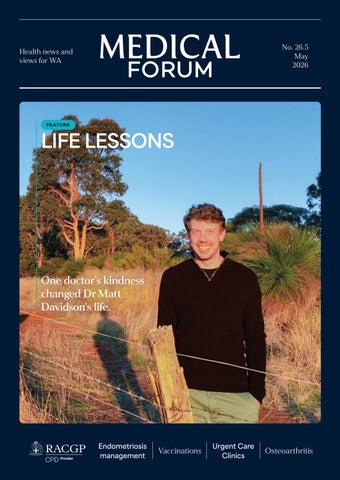
One doctor’s kindness changed Dr Matt Davidson’s life.
It seems the age-old problem of high patient demand, workforce shortages and ballooning costs are culminating in a pick n mix of suggestions that no one seems to be completely agreed on.
Andrea Downey | Managing Editor
If there’s been one underlying theme in healthcare news recently, it’s saving money and resources.
It’s hardly surprising given we’re heading into winter when pressure on the health service spikes and with a state and federal budget just weeks away.
Governments and health bodies are looking to win support and deliver for the public, but often their ideas differ.
That is the theme that struck me the most when putting together this edition. It seems the age-old problem of high patient demand, workforce shortages and ballooning costs are culminating in a pick n mix of suggestions that no one seems to be completely agreed on.
The federal government has announced 160,000 people will be removed from the NDIS, and concerns remain that some children with autism may fall through the cracks in the new Thriving Kids program.
Pharmacists want to prescribe more medications to improve patient access, but GPs are concerned this will fragment care. Nurses want to run urgent care clinics to plug staffing gaps, and while the RACGP has softened its views on the clinics it remains steadfast that they should be GP-led models of care.
As always, the solution is not something all parties are agreed on, but we have done our best to delve into the belly of these issues in this edition.
While you’re here, you may have noticed we look a little different this month. Medical Forum is undergoing some exciting changes at the moment, with the first being our new-look magazine.
Keep your eyes peeled for changes to our digital offerings in the coming months. MF
SYNDICATION AND REPRODUCTION Contributors should be aware the publisher asserts the right to syndicate material appearing in Medical Forum on the mforum.com.au website. Contributors who wish to reproduce any material as it appears in Medical Forum must contact the publisher for copyright permission.
DISCLAIMER Medical Forum is published by Medforum Pty Ltd (Publisher) as an independent publication for health professionals in Western Australia. Neither the Publisher nor its personnel are medical practitioners, and do not give medical advice, treatment, cures or diagnoses. Nothing in Medical Forum is intended to be medical advice or a substitute for consulting a medical practitioner. You should seek immediate medical attention if you believe you may be suffering from a medical condition.
The support of all advertisers, sponsors and contributors is welcome. To the maximum extent permitted by law, neither the Publisher nor any of its personnel will have any liability for the information or advice contained in Medical Forum. The statements or opinions expressed in the magazine reflect the views of the authors and do not represent the opinions, views or policies of Medical Forum or the Publisher. Readers should independently verify information or advice. Publication of an advertisement or clinical column does not imply endorsement by the Publisher or its contributors for the promoted product, service or treatment. Advertisers are responsible for ensuring that advertisements comply with Commonwealth, State and Territory laws. It is the responsibility of the advertiser to ensure that advertisements comply with the Competition and Consumer Act 2010 (Cth) as amended. All advertisements are accepted for publication on the condition that the advertiser indemnifies the Publisher and its personnel against all actions, suits, claims, loss or damages resulting from anything published on behalf of the advertiser.
EDITORIAL POLICY This publication protects and maintains its editorial independence from all sponsors or advertisers. Medical Forum has no professional involvement with advertisers other than as publisher of promotional material. Medical Forum cannot and does not endorse any products.


We’ve got another round of Olive Farm
Read our Master of Wine’s review of the winery on page 51 for more on these small batch wines. Or if you prefer a night out on the town, we have two tickets for the Melbourne International Comedy Festival at Regal Theatre in Subiaco to giveaway.
PUBLISHERS
Alice Miles – Director
Fonda Grapsas – Director
Tony Jones – Director
EDITORIAL TEAM
Managing Editor
Andrea Downey 0437 909 904 andrea@mforum.com.au
Clinical Editor
Dr Joe Kosterich 0417 998 697 joe@mforum.com.au
Graphic Design
Studio Scotts hello@studioscotts.com.au
ADVERTISING
Advertising Manager
Bryan Pettit 0439 866 336 bryan@mforum.com.au
Advertising Account Manager and Clinical Services Directory
Rita Murphy 08 9203 5222 rita@mforum.com.au
CONTACT MEDICAL FORUM
Suite 3/8 Howlett Street, North Perth WA 6006
Phone: 08 9203 5222 Fax: 08 6154 6488 Email: info@mforum.com.au www.mforum.com.au


Robotic equipment is playing a vital role in helping WA kids in their rehabilitation journey.
In an Australian-first at Perth Children’s Hospital a system that allows children to practise everyday movements while suspended in a harness attached to a robotic track is being used within Kids Rehab WA.
By partially supporting a child’s body weight, it reduces the effects of gravity, allowing young patients to safely practise movements such as standing, walking, squatting and lunging as they rebuild strength, coordination and confidence.
Coordinator Physiotherapist of Rehabilitation Technology at PCH Dan Prigmore said the technology was a major step forward that will help the hospital’s therapy teams deliver intensive mobility rehabilitation in new ways.
“Many of our patients are relearning physical skills such as walking, balancing and even standing unaided. The system lets them practise these movements safely while challenging them both physically and cognitively through interactive balance programs and games.”
Seven clinicians at PCH have now been trained to use the technology and have begun working with the first cohort of young patients.
One of those children is 10-year-old Harper Wade who had metastatic osteosarcoma – cancer in the left femur – which spread to her lungs.
She was diagnosed mid2023 when she was eight after experiencing leg pain initially thought to be ‘growing pains’. She has now been in remission for nine months.
Eve and Rosa Sharp, four-year-old twins, have also used the system and have been taking part in rehabilitation at PCH since they were toddlers. They live with cerebral palsy which mainly affects their legs, but also has some impact on their upper body.

A number of free vaccines have been announced ahead of winter as governments look to protect the community.
Free RSV vaccinations will be available nationally for older adults from May.
The expansion of the National Immunisation Program will see the Arexvy vaccine made available to adults aged 75 years and over, and to Aboriginal and Torres Strait Islander Australians aged 60 years and over.
The RACGP welcomed the news as an important step in reducing preventable hospitalisations.
In WA, the free RSV program for infants was expanded to all babies born between 1 October 2025 and 31 March 2026 ahead of the winter virus spike.
All infants born between these dates will receive the nirsevimab jab (also known as Beyfortus), at no cost – regardless of whether their mother received the RSV vaccine while pregnant.
The state government has also funded 130,000 doses of the needle-free FluMist spray for children aged two to 11.
Meanwhile, Australia’s immunisation advisory body has issued a reminder to GPs of the risks of whooping cough in older adults amid “suboptimal” vaccination rates.
The ATO and Ahpra have issued a warning that some health practitioners and third parties are using predatory practices to get individuals to inappropriately access their super early.
Between 2019 and 2025, Ahpra received 95 complaints about medical and dental practitioners involved in the compassionate release of superannuation.
While most complaints related to treatment outcomes or payment disputes, two
practitioners – both doctors – were referred to tribunals for allegedly providing false documentation to the ATO, while another doctor was given a formal caution.
According to the ATO there had been an increase in applications to access superannuation early to pay for medical and dental treatments. The two bodies were working together to identify concerns about inappropriate conduct.

A former GP recognised for her public service during the pandemic and dedication to improving the health of rural and remote Australians has been named WA’s new Chief Health Officer.
Dr Clare Huppatz has been the state’s Deputy Chief Health Officer since September 2021 and has provided leadership on public health policy, legislation, strategy and emergency response.
She is the first woman to hold the role and replaces Dr Andrew Robertson who retired after seven years in the role earlier this year.
Dr Huppatz joined the Department of Health in 2019 and within a year was thrust into a health crisis, playing an integral role in the state’s COVID-19 leadership and response.
Dr Huppatz has worked in regional areas across the state and spent time as a public health physician in the Goldfields.
She is dedicated to improving health outcomes for Aboriginal and rural and remote communities and has worked in Far North Queensland, the South Australian Riverland and WA’s Kimberley.

A globally recognised leader in maternal and child health is set to take the helm at The Kids Research Institute.
Professor Caroline Homer AO will step into the role of executive director at the Institute, replacing Professor Jonathon Carapetis who announced he would step down from the role late last year.
Professor Homer hails from an international career than spans clinical care, academic research and policy. Currently at the Burnet Institute in Melbourne, Professor Homer will head for WA’s largest medical research institute in July.
Professor Homer will be the second woman and third executive director to lead The Kids.
“I’m excited to join The Kids, with its impressive track record, delivering outcomes for kids and families, and strong reputation,” she said.
“I look forward to partnering with the executive and broader
team, to continue to deliver health and wellbeing outcomes for children and families.”
Professor Homer will help implement The Kids strategic plan, which identified reducing vulnerability on school entry, reducing infectious disease risk in vulnerable children, and improving the quality of life for children with long-term conditions among areas where it will focus its research.
Board Chair of The Kids Naomi Flutter said Professor Homer brings significant leadership capabilities and experience, supporting the translation of research into real world impact.
“Caroline joins The Kids, having led significant research programs focused on improving health outcomes for women, children and families,” she said.
Professor Carapetis is stepping down from The Kids in July after 14 years. MF

As a GP, have you wondered how many of your patients have undiagnosed Chronic Hepatitis B (CHB)? And how many of your patients can you prevent from subsequently developing Hepatocellular Carcinoma?
CHB is not curable, but it is treatable and vaccine-preventable. There is no such thing as a hepatitis B carrier.
In Australia we have a significant death rate due to hepatitis B. It is estimated that there are 55,000 undiagnosed people living with CHB, and an estimated 165,000 people who need treatment but are not receiving regular care.
They are all at risk of developing Hepatocellular Carcinoma.
Some 70% of our patients with CHB were born overseas, 30% born in Australia, and 7% identifying as Aboriginal and Torres Strait Islander (ATSI). Our top five countries of birth are China, Vietnam, Philippines, Greece and Cambodia.
GENERAL PRACTICE AND HEPATITIS B ELIMINATION
Australia’s hepatitis B strategy emphasises primary care as the central setting for CHB. People living with CHB remain undiagnosed, largely because infection is typically asymptomatic until advanced liver disease develops.
Diagnosis depends on proactive risk-based screening rather than
symptom-driven testing.
General practitioners provide multiple opportunities to identify patients at risk. However, hepatitis B screening is frequently omitted due to competing priorities, challenges in correctly interpreting serology results and awareness of management pathways.
Incorporating hepatitis B
Hepatitis B screening
assessment for those who have risk factors into routine consultations can significantly increase case detection without substantially increasing consultation time.
A common barrier to GP engagement is perceived complexity of hepatitis B
ASHM guidelines recommend risk-based screening for individuals from populations with increased hepatitis B prevalence. Priority groups include:
• People born in high-prevalence regions (North-East and Southeast Asia, including China, the Philippines and Vietnam, Pacific Islands, Sub-Saharan Africa)
• Aboriginal and Torres Strait Islander peoples
• Individuals with household or sexual contact with hepatitis B
• People who inject drugs
• Patients requiring immunosuppressive therapy
• Pregnant women without documented hepatitis B status Screening can be incorporated opportunistically during new patient assessments, chronic disease management visits, antenatal care, or preventive health checks.
A brief risk assessment question regarding country of birth or family history can efficiently identify patients requiring testing.
Normalising hepatitis B testing alongside routine preventive screening reduces stigma and improves uptake. Clients can often be concerned around confidentiality or family members being able to access results, so reassurance around this can help.
When working with culturally and linguistically diverse (CALD) clients, allow adequate time for conversation and use of an accredited interpreter if required to ensure shared understanding of information.
testing. ASHM recommends an initial triple serology panel, consisting of:
• Hepatitis B surface antigen (HBsAg)
• Hepatitis B surface antibody (anti-HBs)
• Hepatitis B core antibody (anti-HBc)
These markers allow classification into those who are susceptible, immune, or have CHB. Patients who test HBsAg positive for more than six months are considered to have CHB.
Following diagnosis, assessment focuses on determining disease stage and liver injury risk. Recommended investigations include:
• Alanine aminotransferase (ALT)
• HBV DNA viral load
• Liver fibrosis assessment (e.g., FibroScan or validated non-invasive markers such as Hepascore/ APRI/ FIB-4 calculators)
• Baseline liver ultrasound where indicated especially for those who have higher risk of Heaptocellular carcinoma eg cirrhosis or alcohol related liver disease
There are several clear, GP-friendly pathways that can be followed for the treatment of CHB. ASHMs ‘Decision Making in hepatitis B’ simplifies the work-up these patients need.
Not all patients require immediate treatment; however, all require ongoing monitoring to identify people with CHB who require viral suppression.
The ASHM decision-making tool emphasises structured followup even in patients not meeting treatment thresholds, as disease phase may change over time.
In WA all GPs can access advice and S100 antiviral prescriptions for patients with CHB through HepBHubWA@health.wa.gov.au This allows for a simple shared care model, including S100 antiviral medication prescribing while your patient stays in your care.
HepatitisWA Deen Clinic is also able to manage referred patients. Additionally, there
health.wa.gov.au


55,000 undiagnosed people living with CHB in Australia
70% of CHB patients were born overseas
30% were born in Australia
7% of CHB patients identify as Aboriginal and Torres Strait Islander
are a number of GPs who are S100 prescribers for CHB.
Finally, patients can also be referred to tertiary care, however this should only be those identified as having complex needs and in need of tertiary care. If you are not sure whether your patient needs tertiary referral, email HepBHub@ health.wa.gov.au for advice.
Antiviral therapies, including nucleos(t)ide analogues, effectively suppress viral replication and significantly reduce progression to cirrhosis and HCC. Treatment eligibility is determined by a combination of HBV DNA level, ALT elevation, fibrosis stage, and patientspecific risk factors such as age and family history of liver cancer.
A major contributor to poor outcomes is a lack of follow-up after diagnosis. Patients may be informed they have CHB but receive no structured monitoring or referral plan.
GPs can address this gap by embedding recall systems, clearly defining next steps after diagnosis, helping the patient to follow the advice received.
Simple system-level changes can improve hepatitis B care:
• Incorporating hepatitis B prompts into new patient
templates especially those for at risk populations (ie CALD and ATSI communities)
• Adding country-of-birth screening alerts in medical records
• Improving and becoming confident in ordering serology to identify people living with CHB
• Establishing clear local referral pathways
Implementing the above changes will assist in reducing missed opportunities for diagnosis and intervention.
There is a WA-focused ‘Hep B – Get Tested’ campaign from Hepatitis
Australia currently underway for our highest risk communities to increase awareness, reduce stigma, and increase presentation at GP clinics for screening.
Reducing undiagnosed CHB and preventing hepatitis B–related cirrhosis and hepatocellular carcinoma requires stronger integration of screening and management within general practice.
GPs can substantially improve health outcomes for CHB at the individual patient and population levels by routinely considering hepatitis B during consultations, improving familiarity with investigation and treatment protocols, and strengthening referral pathways.
The pathway to reducing cirrhosis and HCC begins not in specialist clinics, but within primary care consultations.
www.ashm.org.au/resources/decisionmaking-in-hepatitis-b www.heplink.au/hep-b-get-tested


While some of the strident opposition to urgent care clinics has gone off the boil in the past 12 months, concerns are still simmering that mainstream general practice has been sidelined.
AUTHOR Cathy O’Leary
FEATURED
Dr Ramya Raman

With six new Medicare urgent care clinics opening in Western Australia this year, they are becoming an indisputable part of the health care landscape –whether all doctors like it or not.
Since 2023 when the federal government started rolling out the clinics – which are seen as something of a hybrid between regular general practice and hospital low acuity care – urgent care clinics (UCCs) have been on the receiving end of criticism from several doctors’ groups.
Their premise is to offer treatment for non-life-threatening urgent conditions in patients who are unable to see their GP in a timely manner but do not need to be seen in a hospital emergency department.
Under the billion-dollar initiative the number of clinics has risen rapidly, with about 100 now operating having seen more than 2.5 million presentations.
In WA, clinics have recently opened in Ellenbrook, Nollamara, Geraldton and Booragoon, with two more opening in Yanchep and Mundaring this year.
The Booragoon UCC, operated by Brecken Health, and the Yanchep clinic, based at the Lagoon Medical Centre on the Edith Cowan University Health Centre site, opened in mid-February.
With existing clinics in Perth City (Morley), Rockingham, Clarkson, Beeliar, Bunbury, Midland, Broome and Gosnells, it brings the total number of clinics in WA to 14.
But it has not been a smooth road for the clinics as far as support from the medical fraternity is concerned.
In the past, the AMA and RACGP were strong opponents of the model, citing a lack of evidence that the clinics will reduce pressure on EDs.
More importantly, they have argued, the funding being used to underpin the clinics – the federal government pledged another $644 million last year alone to roll out dozens more centres – could be better used to strengthen the capacity of existing GP clinics.
The AMA has consistently called for a formal review of the effectiveness of UCCs in reducing demand on EDs before any further expansion, saying that simply counting visits is not a sufficient measure of success.
It cited the 2025 Report on Government Services, which showed potentially avoidable GP-type presentations to EDs had remained largely stagnant at 2.8 million a year between 2022-23 and 2023-24.
The AMA and the RACGP have also warned that UCCs risk fragmenting care, especially for patients with chronic or complex conditions who benefit from continuity with their regular GP.
They also question whether the clinics are equitably distributed and accessible in rural and remote areas.
In 2024, in a rare public statement, the National Council of Primary Care Doctors, which represents seven primary care organisations, said the UCC model was “not the solution” to providing affordable after-hours general practice care.
It said the clinics represented a false economy and diverted much-needed funds from regular general practice.
Six months ago, a study published in the Australian Journal of General Practice raised concerns by doctors working in UCCs about capacity, accreditation standards, qualifications and experience of doctors and nurse practitioners, training, funding, public education and UCCs taking work GPs could do if appropriately funded.
Their biggest concern was the capacity of UCCs to treat patients in a timely and safe manner, including having too many patients using the service, one doctor working alone, and safety fears when UCCs were at capacity.
But with the reality of more of their members working in UCCs, the stance of the RACGP has become more nuanced.
RACGP Vice President and WA Chair Dr Ramya Raman told Medical Forum that the debate had evolved over the past few years, particularly in WA.
“The concerns were primarily

that when one of our patients is being seen at an urgent care centre, then there needs to be appropriate communication to the regular doctor. But now, as far as WA goes, as a practising GP I can say that is definitely happening,” she said.
“And the reality is that as a College we have members in these Medicare urgent care clinics – it’s about the establishment of these clinics adding to the existing landscape and enabling urgent and after-hours primary care to be accessible.”
But patients still needed to learn to navigate the range of options because going to an urgent care clinic was not mainstream general practice, Dr Raman said.
Proponents of UCCs argue they not only fill a vital gap for urgent, nonlife-threatening care, particularly after hours or when GP appointments are unavailable, they also improve access to bulk billed urgent care, especially for those who might otherwise face long waits or out-of-pocket costs.
WA Primary Health Alliance chief executive Bernie Kelly said that by establishing the Medicare UCC network, the federal government was responding to a gap in the primary care system and trying to alleviate pressure on emergency departments.
“Patients cannot always book an appointment with their regular GP within a timeframe that would prevent their condition deteriorating, or they may need to seek treatment for an urgent condition outside of regular operating hours, and
Medicare UCCs are helping to meet that demand,” she said.
“The program aims to reduce the number of low-acuity attendances at nearby public hospital EDs through enhancing access to an affordable alternative for urgent care services.”
In response to criticism about the lack of evidence that UCCs are having a beneficial impact on other health services, Ms Kelly said an independent evaluation was underway, with a final report due this year.
“While it is too early for the evaluation to draw conclusions about the impact of the program on triage categories four and five and waiting times at partner hospital emergency departments, early insights from the first interim evaluation report indicate the majority of patients (84%) return home after receiving care,” she told Medical Forum
“In 2025, WA’s first eight Medicare UCCs recorded 133,263 presentations, and of these 88% were discharged either to return home or to follow up with their general practice after receiving care.
“When surveyed at the end of their visit, 52% of patients reported that they would have otherwise sought care at an emergency department.
“Since the clinics first opened in 2023, more than 263,000 visits had been made to the 10 Medicare UCCs in WA, and the largest proportion of patients had been children, with over one in four visits from patients aged under 15 years old.
CONTINUED ON PAGE 11


“Medicare UCCs are improving access to care for patients in need of urgent medical assistance outside of regular business hours, with one in four weekday visits being from 5pm.”
A second interim report published in February found that median wait times at UCCs continue to be lower than ED waiting times for triage category four and five.
On average 53% of patients attending UCCs waited less than 15 minutes for care. However, the report noted that wait times are recorded differently for UCCs and EDs and are therefore not directly comparable.
The cost of ED presentations saved due to the availability of Medicare UCCs – around $381 per presentation according to the second interim report – was also being assessed through the independent evaluation.
Cost has remained a pain point for GPs. The average UCC presentation costs around $206, significantly more than an average GP appointment.
Rather than adopting blanket opposition to UCCs, the RACGP is now drilling deeper on one of its unresolved concerns – that mainstream general practice is disadvantaged when it comes to how services are funded, particularly afterhours care.
The College does not want the government putting all its eggs in one basket when it comes to supporting after hours primary care.
“I think a lot of the time the barriers for GPs to keep their doors open after hours is the cost of staffing and equipment,” Dr Raman said.
“We often don’t want to pass on that cost to the patient, but it’s very hard to keep that going with the current way Medicare rebates are paid.
“If you take my practice as an example, we want to keep the practice open after hours and there are GPs who are interested in evening shifts because of their lifestyle, but the reality is that the patient Medicare rebates don’t go up until 8pm on a weeknight.
“If you look at staff costs of nursing and reception members as per Fair
Work, we have to pay after hours staff employee rates after 5pm.
“If you keep open after hours, there’s going to be more acute presentations and that means more bandages and equipment, for which there is no funding.”
Dr Raman said there were still concerns that UCCs were dragging workforce away.
She said incentivising existing general practices to have more appointments available on the day made good sense. The College had been lobbying the government to bring in after-hours funding so general practices could stay open longer to provide that primary care.
Dr Raman told Medical Forum there was also an issue that rural and remote areas might miss out on UCCs.
“There may be areas throughout
UCCs are intended to be part of a referral network to ensure patients are directed to the most accessible service... they are not a replacement for GPs.
the country, including WA, that may not get an urgent care clinic because there is a certain population of patients needed in an area for them to be considered for a clinic,” she said.
The concerns were echoed in the second interim report, which found that recruitment of appropriately qualified GPs and nurses to achieve minimum workforce requirements “remains an ongoing challenge for providers and is particularly significant in regional and rural areas”.
There is a need for further exploration of how UCCs fit into the existing network of primary and emergency healthcare services in rural and remote areas, it concluded.
Ms Kelly said that because UCCs were a relatively new addition to the primary health care environment, the
public needed ongoing education about when it was appropriate to use them, as opposed to seeing a GP or visiting an ED.
This included reinforcing that the clinics are for walk-in care for illnesses and injuries that are urgent but not life-threatening such as gastro, mild burns, sports injuries, insect bites, and minor infections.
People with more acute conditions such as chest pain, difficulty breathing, loss of consciousness, severe bleeding, large burns or other serious trauma needed to call triple-zero or go to their nearest emergency department.
Ms Kelly said the clinics were not meant to replace routine visits to GPs and there were mechanisms in place to ensure a patient’s regular GP was kept in the loop.
“Handover to a patient’s usual GP, if they nominate one, is part of the Medicare UCC operating model,” she said.
“Nationally, in the period to September 20, 2024, 89% of presentations had a clinical handover provided by at least one method outlined in the operational guidance.
“Medicare UCCs are intended to be part of a referral network aimed to ensure patients are directed to the most accessible and efficient service for their need.
“They are not a replacement for ensuring communities have access to GPs, who know and understand their medical history and can provide routine, ongoing and follow-up care.”
She said feedback from patients indicated they appreciated the choice that UCCs offered for their urgent care needs, particularly outside the usual operating hours of general practices.
Dr Raman said everyone wanted better, more equitable care for patients, but for that to happen there needed to be a fair playing field for GPs.
“There are so many moving parts of the system but at the end of the day, we believe that your regular GP is still where you want to be for continuity of care and long-term chronic disease management – and doctors working in UCCs want that too.” MF

All it takes is one comment to change your world, as Dr Matt Davidson discovered.
AUTHOR Ara Jansen
Dr Matt Davidson wasn’t always a doctor, he started out his career as a teacher. But on a night that could have been fatal, an ED doctor’s kindness and reassurance made him change course.
Later, another very persistent doctor convinced Matt that psychiatry was where he belonged.
Since finishing medical school, Matt has worked all over Western Australia. He jokes his $20 frying pan has seen more of the state than most people.
Over the last four years he has moved every six months around the regions. His last posting was in Broome and he has recently moved to Bunbury, where he’s a rural trainee and psychiatry registrar for Mental Health Hospital in the Home, part of the South West Mental Health Service.
His continued work in the regions is as much because he’s a country soul as he is passionate about working in an underserviced part of country care – mental health.
Matt grew up in Albany and his mum worked in school
administration. His exposure to education came both as a student and through accompanying mum to staff events and meeting her friends.
After high school he spent a gap year in Perth, living next door to his dad. While working in retail and fast food, he decided to study teaching.
"I’ve fallen in love with the diversity of psychiatry. I love that about it.. I like talking to people and hearing their stories."
He returned to Albany and started his Bachelor of Education locally through UWA before moving to Perth to finish. After graduation, he got his first job as a teacher in Katanning.
It was at the end of his time in Katanning that Matt was in an
accident where his car slid on a gravel road and hit a tree. The car was a write off and Matt escaped with just a sore foot. Randomly, he remembers singing along to Fleetwood Mac when it happened.
Twelve months later he was involved in another car accident – the one which changed his life and career trajectory.
Matt had a job teaching at a private school in Albany. He liked the job and enjoyed being back home. After dinner with some friends, Matt drove his sister, Jess, and mum, home.
It was a Wednesday night in mid-December. Jess complained about Matt’s smelly gym bag in the back and moved to sit diagonally opposite her brother.
Not far from their corner, they saw a car coming up fast behind them. Matt doesn’t remember if it even had its lights on. The car slammed in the back of Matt’s car at speed – he estimates about 125km an hour.
“If my sister had sat behind me, she wouldn’t be with us. She was unconscious and I was pinned behind the steering wheel with two fractured vertebrae,” he said.
“I injured my right brachial plexus, the back of my head was degloved and I was losing blood. I still have altered sensation in my thumb and two of my fingers.
“When I was trapped in the

car, I remember the ambulance officer asking, ‘Can you hear me, sir?’ When I looked up, it was one of mum’s friends, Nicole.
“She immediately asked about mum, who was already out of the car, but stayed with me until they cut me out and got me to the hospital. The whole time I wanted to know about mum and Jess.
“When I got wheeled into the ED, I could see this wall of mum’s friends all crying or looking distressed. At that time, Albany was still a GP-run hospital, so it was a little different to now. I remember repeatedly asking ‘Where’s mum? Where’s Jess?’, but nobody was answering me.
“I know I got a bit agitated and, in my distress, pulled a cannula out. The doctor then grabbed me by the arms, held me tight and said my mum and sister were okay but I was not. ‘You need to let us help you now,’ he said.
“Because I was driving, I felt like it was all my fault, but knowing they were going to be okay allowed me to calm down and let the ED team do what they needed to.”
Later, when he went back to work, people asked him if the accident had changed his life. Initially he said no – the accident had impacted his family, friends, neighbours and school community.
He soon realised that it was the doctor, by telling him his family would be okay, who had changed his life.
Matt loved teaching, though he says a class of primary school kids can rival the chaos and drama of any ED. One morning, he was driving to his mum’s – who hadn’t been as badly hurt in the accident – along the road he’d taken that night. He would often stop in before work and steal a piece of toast.
While crunching away and standing in her kitchen, Matt boldly proclaimed he was going to give up teaching and become a doctor.
“I expected her to have a fit but she said, ‘I think that’s a good idea’.”
Matt got studying – including buying a copy of chemistry for dummies – took the Graduate Medical School Admissions Test (GAMSAT) and scored in the top percentile in the reasoning section but missed

out by one mark in the science section and had to retake the exam.
After passing, he did his interview which was held in a school classroom where he had to sit on a kid’s chair. Not the first time.
At 28, Matt started his medical studies as a mature age student. He found it hard and wondered if he was cut out for it. He kept paying his teacher registration fees right up until his final year, just in case.
“I was open to everything, but because I had been saved in the ED, I thought this is where I would end up. I did a few rotations in the ED where they have a four-hour rule – you have to move people on.
“To work in that acute setting, keeping someone alive is a beautiful and terrifying privilege, but I also realised there was no on-going contact. You don’t get to see the next part of their story.”
Moving back to Albany in his third year, Matt had some lectures from a psychiatrist named Dr Mat Coleman. Years later, after graduation, someone must have given Matt’s number to Dr Coleman. He called and offered Matt a job. Matt said no, this wasn’t his path.
“He said ‘No problem, I’ll call you tomorrow’. He called the next day and said: ‘If you can tolerate psychiatry, you can do anything in medicine’. Again, I said no, it’s really nice of you but no. It’s not what I really wanted to do, and I had some good rotations I was looking forward to.
“But again, he said he would call me tomorrow. True to his word, he rang that third time and instead of saying no, I said yes.”
The young doctor, only in his second year, worked in Older Adult Psychiatry in Albany for six months and was asked to stay on. Knowing he still wanted to try other things, he declined and started a three-month stint at PCH in orthopaedic surgery.
Dr Coleman called once again and Matt realised psychiatry was for him. He did another brief stint in Albany before undertaking six months at RPH’s Mental Health Emergency Centre and time at Fremantle Hospital’s Home Hospital.
CONTINUED ON PAGE 15


Once again, Dr Coleman called asking Matt to help out in Geraldton. Originally, it was for three weeks but he ended up staying three months.
“Since then, I’ve fallen in love with the diversity of psychiatry. I love that about it.
“I like talking to people and hearing their stories. I’ve been reading The Gift of Therapy by Dr Irvin Yalom and he says if you see a patient it’s easy to give them a diagnosis, but if you see them 10 times it’s so much harder because you learn so much more about them. That’s what I like about psychiatry.”
Awarded the inaugural Rural Research Award at The Royal Australian and New Zealand College of Psychiatrists (RANZCP) Congress last year, Matt is keen to be part of breaking down stigmas around mental health and believes more people should be aware of how someone’s mental state or ill mental health can affect everyone around them, even if they are not conscious of it.
He argues that leaning into the story behind the person helps not only the patient but also their families and those in their circle.
“That’s the beauty of psychiatry; the work can be so holistic. It’s not just about treating someone with pills but really listening to them. Then the healing goes beyond that person. Good medicine takes time and it’s a relationship.
“In Broome I got a feel for how well someone was by their garden. If I rocked up a month later and their garden was a mess, I knew they were unwell.”
A lover of regional WA, Matt is an avid photographer and with the help of a drone has documented his stays in each town. Alongside hearing the stories of his patients, it’s another way to connect with wherever he is.
He also gifts copies of the photos to friends, family and people he’s worked with.
Matt loves music and finds it restores his soul. He learnt piano for much of his school years and when he finally unpacks it, the electric keyboard he bought last year will be getting a workout. He also plays the guitar.
You’ll often find him singing or humming to himself. One of his primary school classes once all sang a song and when asked how they knew it, they said Matt sang it all the time.
An ardent curiosity means Matt is always learning something, whether it’s using his collection of cookbooks and that frying pan or a tome on psychiatry.
He remains close to his sister Jess, her husband and boys, and his mum. Alongside the friends he has made all over the state, Patrick, a dad of four and a surfboard maker who lives in Esperance, is his closest friend.
Matt cherishes the custom-made board he was gifted after finishing medical school. He hasn’t mastered surfing – yet – and is always going to a gym class, running or signing up for an obstacle course run as a way to keep fit. He finally convinced Patrick and their friend Toby to do an obstacle course last year.
“Pat is a good guy and I don’t think I would be who I am without him. We’re pretty opposite in a lot of ways. I’m pretty talkative and will just express a lot of what I’m feeling. He doesn’t always do that. But he always knows what to say.
“I’ll have a big dramatic rant about something, and he’ll respond to it all with just two or three words. But they will be the perfect two or three words – exactly what I need to hear. He’s a brother.”
When he was a teacher, Matt had two rules in the classroom – think and be good. He still considers them useful to live by. MF


The Westin, East Perth
Saturday 6th June 2026
Join us for our annual GP Urology Masterclass delivered by PUC specialist urologists and guest speakers, designed specifically for general practitioners.
This masterclass provides gold-standard, practical education focused on what you need to know in everyday clinical practice. The comprehensive program will cover all major aspects of urological care, providing up-to-date insights, clear clinical guidance, and practical take-home messages relevant to primary care.
The Westin is offering a discounted rate for delegates wishing to stay overnight. Please email events@perthurologyclinic.com.au for the discount booking link.
Places are limited so book now to avoid disappointment. events@perthurologyclinic.com.au

In recent months pharmacists have signalled their desire to work to the ‘full extent of their training, skills and experience’ to prescribe Schedule 2, 3, 4 and 8 medications.
While nurses have issued a call to run urgent care clinics (UCC) in a bid to plug staffing gaps.
GPs have opposed both suggestions, saying they would risk fragmenting care and put patients at risk.
A public consultation is currently underway to shore up a national approach to pharmacist prescribing – including whether they should prescribe Schedule 8 medications.
The Endorsement for scheduled medicines for pharmacists would build on the skills pharmacists already have in gathering information, making recommendations, communication and advising on the best use of medicines, and options for treating minor ailments, according to the Pharmacy Board of Australia.
It has recommended support for allowing an endorsed pharmacist to administer, obtain, possess, prescribe, sell, supply and/or use Schedule 2, 3, 4 and 8 medicines.
Pharmacy Board of Australia
Chair Dr Cameron Phillips said the
“We want to make sure that if a pharmacist is prescribing, that they’re doing so safely and to the high standard the community expects of a trusted health professional,” he said.
In WA pharmacists can prescribe under the Enhanced Access Community Pharmacy Pilot program. The WA state government announced last month that 200 pharmacists would be supported to undergo the training, on top of the 80 already in training.
The Australian College of Nursing (ACN) has called on the federal government to revise guidelines to allow nurse practitioners to lead care independently in urgent care clinics.
The ACN said the move could help address some of the challenge of recruiting appropriately qualified staff to the clinics, a key issue identified in the latest evaluation of UCCs.
Current operational guidance mandates that clinics must be GPled, however the ACT and some remote areas are exempt from the GP-only leadership model.
ACN chief executive Adjunct Professor Kathryn Zeitz said this was proof nurse practitioners provide safe and effective care and kept people out of emergency departments.
President Dr Michael Wright said UCCs must remain a collaborative model and that workforce pressures around having enough trained GPs in the clinics also extended to nurses.
“Nurses and GPs working together collaboratively is the best way to provide high quality care through these clinics. They’ve got to be well connected to general practice because that’s how we avoid them fragmenting care, wasting resources and duplicating services,” he said.
The College has also been vocal about concerns relating to pharmacy prescribing, including how conditions which may mimic others are dealt with, antimicrobial resistance, and the potential for unnecessary use of medication by a patient.
Last year the WA branch of the College left the working group for the state pharmacy prescribing pilot over concerns their feedback was not adequately implemented.
Despite concerns raised by the College and other medical bodies, governments appear to be pushing ahead with new ways of working to address workforce shortages and patient demand. MF

Australia once had an enviable reputation on childhood vaccination rates, but an increase in misinformation is putting immunity at risk.
AUTHOR Aleisha Orr
FEATURED
Catherine Hughes


Just before the COVID-19 pandemic arrived in Australia the nation achieved a record-high childhood vaccination rate. But now, the situation has shifted significantly.
Instead of increasing, immunisation rates have declined as doctors’ advice is challenged or dismissed.
Fuelling the rise in vaccine hesitancy is a surge in misinformation online, a mistrust in medicine and changes to vaccine policies in other countries.
Recent changes to the approach to vaccinations in the United States, including the decision to cut
childhood flu vaccines, were having unintended consequence in Australia.
Professor of International Health at the Curtin School of Population Health Jaya Dantis told Medical Forum that while vaccinations had been one of the most impactful health interventions of the past 60 years, health authorities now face a significant challenge.
In 2020, Australia reached a major milestone when the national target of a 95% immunisation rate for five-yearolds was reached.
By the end of 2021, then-Health Minister Greg Hunt celebrated the fourth consecutive quarter in which the rolling one-year average remained just above that target.
At the time, he declared the country had achieved a level of herd immunity capable of stopping vaccine-preventable diseases from spreading within the community.
However, that success was shortlived. Since that peak, the national rate of fully immunised five-yearolds has decreased by about 2% over four years, falling from 95.22% at the end of March 2021 to 93.17% by the end of September 2025.
The last time the national immunisation target was achieved was September 2021.
West Australian vaccination rates played a pivotal role in the initial national achievement. WA reached its own peak of 95.23% for five-year-old immunisation in December 2020.
However, a steady decrease followed over the next four years, leaving WA with some of the lowest rates of childhood immunisation in the country.
By September 2025, the coverage rate for WA five-year-olds sat at 91.95% – more than 1% lower than the national average. WA was lagging behind every other state and territory except for Queensland and the Northern Territory.
The two-year-old mark was identified as the point at which children in WA held the lowest vaccination status. Data indicated a noticeable dip in vaccines administered as part of the 18-month booster shots program.
For children reaching two years of age, the measles, mumps, and rubella (MMR) shot trailed behind other vaccines, with a coverage rate of just 89.78%.
Other critical jabs, including diphtheria, tetanus, pertussis (whooping cough), and varicella (chickenpox), also fell under the 90% mark.
Overall, by September 2025, WA’s coverage rate for two-year-olds was the lowest in Australia at 87.76%.

While Professor Dantis observed that Australia’s policies toward immunisations remained generally strong, she warned wider community sentiment was likely influenced by a drastic change in the United States’ approach to vaccinations.
In June 2025, a major shift occurred in the American health administration. All 17 members of the Advisory Committee on Immunization Practices (ACIP), which advises the Centers for Disease Control and Prevention (CDC), were removed.
They were replaced by members selected by Health and Human Services Secretary Robert F Kennedy Jr. Many of these new appointees had previously expressed scepticism regarding vaccine safety and efficacy.
Following this overhaul, the committee recommended against flu vaccines containing thimerosal, a preservative that had been incorrectly linked with autism in the past.
The committee also voted to end the longstanding recommendation that all newborn babies receive the hepatitis B vaccine, a move that drew widespread disapproval from various medical bodies. In total, the committee has sought to slash recommended jabs for children from 17 to 11.
In March 2026 a federal judge blocked the US government from making changes to the childhood vaccination schedule, but the Trump administration was
expected to appeal the decision.
Professor Dantis said that when political leaders used slogans like ‘Make America Healthy Again’ to push for so-called natural health systems, on the surface it sounded like heath reform but it was mostly based on misinformation.
She said the rhetoric often implied that previous scientific systems were inherently flawed and that children were not healthy because of them.
Professor Dantis said a vaccination rate of 94%-95% in children was required to maintain herd immunity – when the majority of the population protected the small number of people who could not or did not take vaccines.
She warned that the decline in vaccination rates has presented a threat to this immunity, which could result in an increase in illnesses like whooping cough and measles.
According to Professor Dantis, global health progress was steady until the COVID-19 pandemic hit.
She said three things happened when the pandemic hit.
“Lockdown and restriction measures really impacted communities, they couldn’t understand what was happening and livelihoods were impacted,” she said.
The second thing was the increase in information through social media.
“When there was that increase, there was now a lot of misinformation circulating at people’s fingertips and they couldn’t gauge what was right and what was wrong.”
She said these factors created a “hotbed” of vaccine hesitancy
and outright denial of the science behind vaccine safety and effectiveness, which often resulted in increased pressure on general practitioners when discussing vaccines with patients.
“Consultations are often limited to eight or fifteen minutes, leaving doctors with insufficient time to explain the benefits and risks of vaccinations in an informed, comprehensive way,” she said.
Despite the global challenges, Professor Dantis said Australian government policies had not yet been significantly impacted by the same level of misinformation seen in the US.
The WA state government’s RSV vaccination program has led the nation in protecting newborn babies from the virus.
The program, which has just been expanded to provide coverage to even more babies, greatly reduced hospitalisation rates of babies due to RSV.
The state government is also taking steps to encourage vaccination uptake. It has made vaccinations a big focus of its winter strategy and hopes to encourage greater uptake of the flu vaccination ahead of winter by providing a nasal spray vaccine for children aged between two and 12 years of age.
Earlier in the year it began a new campaign to encourage parents and guardians to ensure teenagers were up to date with their shots, including HPV and meningococcal ACWY.

Join Medical Forum and colleagues for an informative day on common presentations in general practice.
Hear from local WA specialists on topics including HRT considerations, lipid management, red eye presentations, acute upper limb, handling Ahpra complaints, vaccinations in older adults, cardiac murmur and more.
Claim RACGP CPD time while you learn.
Date: May 9 Where: Pan Pacific, Perth
Perth Women’s & Children’s Health Update 2026

Australia’s most popular one-day seminar for GPs returns to Perth with the latest information and practical insights, delivered by Healthed and featuring a comprehensive program of leading experts in women’s and children’s health.
Date: June 20, 8:30am-6:30pm
Where: Perth Convention & Exhibition Centre
The Cutting Edge: Introductory Wound Suturing Workshop
Convenor: Dr Nikki Damen
Co-Convenor: Dr Denis Carragher
Faculty: Dr Simon Kusel, Dr Yvonne Pinto, Dr Dhruva Ramachandran
Date: Thursday 18 June, 8.00am
Where: CTEC, The University of Western Australia Entrance No. 2 Hackett Drive, Crawley


Join us for our 9th annual GP Urology Masterclass - an in person conference offering interactive learning and RACGP CPD accredited activities.
Date: June 6, 8:00am-4:30pm
Where: Westin Hotel, 480 Hay St, Perth
Cutting Edge: Managing Skin and Soft Tissue Injuries Workshop
Convenor: Dr Olga Ward
Co-Convenor: Dr Denis Carragher

Faculty: Ms Tania Girschik, Dr Dhruva Ramachandran, Dr John Rosser-Davies
Date: Friday 12 June, 8.00am
Where: CTEC, The University of Western Australia Entrance No. 2 Hackett Drive, Crawley
An update on GP management of commonly-occurring cancers
What to Expect After a Peritonectomy — A GP’s Guide to Post-Surgical Care
Presenter: Mr Paul Moroz, General Surgery Update on Thyroid Cancer — Risk Factors, Subtypes and Post-Treatment Monitoring
Presenter: Dr David Leong, General Surgery (Endocrine)
Date: June 13, 8:30am-2:00pm
Where: Preston Room, Rendezvous, Scarborough


As of 2026, clinical advice from the Australian Technical Advisory Group on Immunisation (ATAGI) continued to emphasise that healthcare provider recommendation was the “strongest predictor” of a person’s decision to vaccinate.
Professor Dantis said while the role of GPs was strengthened by clear government policy and legislation, there remained a desperate need for public education on vaccine safety.
She said understanding socioeconomic barriers, complacency, and the reasons for resistance was essential to countering the problematic dismissal of science that had become more common in the post-pandemic era.
Founder and executive director of Immunisation Foundation Australia Catherine Hughes has been attending pregnancy and baby expos for about 11 years, which she said had provided a gauge for what the community was thinking and feeling about vaccinations.
“The one thing that hasn’t changed is that parents still care about their kids and want to do their best to protect them, but I think what has changed for parents is the quantity of misinformation out there,” she told Medical Forum
“I think what’s happening in the US, it’s definitely going beyond borders and its being heard by Australian parents. We’ve seen vaccines deprioritised in the US and I suspect there’s definitely been a link there.
“There’s certainly been an increase in parents worrying about hepatitis B vaccines at birth, which was rarely a question we got five years ago.”
Ms Hughes believed vaccination had been politicised following the COVID-19 pandemic.
“It certainly seems part of the far right political movement to demonise vaccines, we’ve seen that happen in America and I’ve been watching carefully the conversations in our parliament from One Nation MPs.
“It’s concerning because I feel like it’s the first time in Australian history that we’ve had a political party that has influence that do not seem to be champions of immunisation.”

Pauline Hanson’s One Nation Party has an official policy to abolish the Therapeutic Goods Administration (TGA), which regulates medicines for safety and effectiveness, and instead have its functions moved under the Department of Health.
One Nation MP Malcolm Roberts has suggested Australia should follow the lead of the US on its immunisation policy. He has been outspoken on vaccines and previously shared misinformation on the COVID-19 vaccination.
Conversely, Ms Hughes had noticed an increase in families new to Australia asking for information about immunisations.
“I’ve noticed an increase in the last couple of years of basic questions about immunisation and that seems to be coming from a lot of families who have recently immigrated.
“They are asking where do they go? Is it free? Is it mandatory? So that reinforces to me that we have a population of people who have recently moved to Australia who we really need to do better in supporting with basic information.”
Ms Hughes said the general public’s knowledge on immunisations was a mixed bag.
“Some people have really great information shared with them from their midwives or obstetricians or GPs, yet on the other hand we have people approach us at 36 weeks pregnant who haven’t been spoken to about immunisation and who are clearly willing and able.
“It is a shared responsibility, it’s not just the GPs job, or the midwife or obstetrician’s job to talk about immunisation. But when it falls on a whole group of people to talk about, sometimes the responsibility can get passed around a little bit.”
In December the Australian Medical Association released a report looking at the nation’s immunisation decline which coincided with a call for immediate action to combat vaccine hesitancy.
The AMA said Australia was already facing significant public health risks, which were likely to worsen if declining vaccination rates were not effectively addressed.
It listed decreased herd immunity, re-emergence of dangerous vaccine-preventable diseases, increased strain on the healthcare system, avoidable loss of life and increased healthcare costs as potential outcomes.
It called on the federal government to develop an interactive immunisation dashboard to provide timely and transparent insights into vaccination uptake across different demographics and regions.
The AMA also wants funding reform to allow GP practice nurses to administer vaccinations with appropriate authorisation without requiring simultaneous GP review.
AMA National President Dr Danielle McMullen said it was deeply concerning to see declining vaccination rates, especially among children.
“Our hospitals are already in logjam, operating at or above capacity, and yet nearly 10% of preventable admissions are linked to vaccine-preventable illnesses,” she said.
“GPs are uniquely placed to help turn the tide. They are trusted voices in their communities and play a pivotal role in encouraging vaccination.” MF

A new program to replace NDIS support for children with autism whose support needs are considered ‘mild to moderate’ is set to begin in months, but concerns remain about some children slipping through the cracks.
AUTHOR Aleisha Orr
FEATURED
Dr Andrew Leech

For years many parents of children with autism have relied on the NDIS for support, but as the federal government looks to rein in costs a new program is on the way with a bigger role for states and territories – and GPs.
Thriving Kids may have been a federal initiative, but state and territory governments are preparing to become part of the conversation.
Bilateral agreements with state and territory governments were the next step in progressing the program, but the Queensland state government is yet to sign off an agreement.
The program was first announced in August last year to slow the ballooning cost of the NDIS and provide support
to children under nine with mild to moderate support needs for developmental delay or autism.
The initial start date for the program was pushed back by three months to give the states more time to prepare, with the roll out now expected for October 2026.
Last month the federal government announced 160,000 people were to be removed from the NDIS in a further bid to bring costs under control, with initiatives like Thriving Kids put in to replace NDIS support.
While the federal government will be responsible for national components of the program, including evaluation, state and territory governments will be responsible for ensuring the delivery of parenting and targeted supports.
The program is expected to be accessible via existing community services such as schools, GPs and early learning centres, with much of the federal government’s $2 billion contribution to be distributed to

"Any kind of assessment of a child requires a clear set of guidelines and criteria to help GPs complete it to a required standard, especially those who have less experience working with children."
states and territories which have matched that contribution.
Professor Frank Oberhlaid, who co-chaired the government’s Thriving Kids advisory board, has conceded there could be a “patchwork” of services across the country.
He recently told an ABC podcast there will be eight slightly different programs and services, but said they would all adhere to the guidelines established as
part of the Thriving Kids report.
Perth GP Dr Andrew Leech told Medical Forum it would be frustrating if the different state programs did not match one another.
“If we’re going to share information and work together to collaborate and build networks and learn from each other, then having different systems, which is what we’ve had for ADHD for a long time, is very complicated. It can be really confusing for families but also for clinicians,” he said.
Health bodies have for some time been calling for a nationalised approach to deal with ADHD. Dr Leech said he hoped Thriving Kids would not pose the same issues the disjointed nature of ADHD management had.
While the Thriving Kids advisory group final report acknowledged there could be differences between the program in each state due to differences in existing services and how they operate, it did make a suggestion on interoperability of records.
The group supported the development of a national digital child health record “to facilitate a truly national approach to ensuring a child’s records and assessments can travel with them through the service ecosystem and across geographical borders”.
It is not just the different systems that Dr Leech hopes will be able to work together.
In discussions with federal government representatives about Thriving Kids, he has been advocating for more multidisciplinary teams within general practices to better cater for developmental concerns in children.
“We’ve had that in our clinic – psychology, speech therapy, dieticians – all working alongside GPs,” he said.
“I think the value in that is far greater than being siloed in different centres. Here, we can actually talk, have case conferences, we can share goals and it makes the process quicker – families don’t have to travel around to different places.
“Why don’t we fund and support GP clinics to hire and recruit within allied health.”
The $4 billion Thriving Kids agreement between the federal, state and territory governments was negotiated alongside increased funding from the federal government for public hospitals.
Upon agreement, Health Minister Mark Butler said the timeline for the program to start had been pushed back to ensure states and territories had enough time to implement it.
When questioned about progress on state agreements while in Perth earlier this year, Mr Butler said conversations were proceeding well.
“This has been terrific work between the Commonwealth and all eight different state and territory governments,” he said
“There’s a really shared sense of purpose there to make sure that we put in place as quickly as possible a system of broad-based mainstream supports for parents and their children where their children are experiencing some developmental delay with low to moderate support needs, which was not a cohort for whom the NDIS was originally intended.”
GPs will have an important role to play in connecting families of young children showing signs of developmental delay with targeted supports as part of the program.
The advisory board’s report identified multiple entry points to the program including national digital information, phone support, community providers, early childhood education settings as well as general practice.
It categorised supports as either “universal parenting supports” or “targeted supports”.
Universal parenting supports seek to equip parents with the tools to support their child’s development, encourage secure attachments and connect families with peers, while targeted supports are to be delivered by professionals such as occupational therapy, speech pathology, physiotherapy, podiatry, audiology and psychology.
CONTINUED ON PAGE 25

(RESPIRATORY SYNCYTIAL VIRUS VACCINE RECOMBINANT,
don’t wait, vaccinate
On the National Immunisation Program for:1
• Adults aged ≥75 years
• Aboriginal and Torres Strait Islander peoples aged ≥60 years
As a private script for:2
• Adults aged ≥60 years
• Adults aged 50-59 years at increased risk of RSV disease

Champion uptakevaccinate with AREXVY
Scan the QR code to learn more about AREXVY
Indication:2 AREXVY is indicated for active immunisation for the prevention of lower respiratory tract disease caused by respiratory syncytial virus (RSV) in adults ≥60 years of age and in adults 50–59 years of age who are at increased risk of RSV disease. Dosing and administration:2 AREXVY is administered as a single reconstituted dose by intramuscular injection; currently there is not enough evidence to determine the need for revaccination. Safety:2 Very common adverse events (≥10%) are headache, myalgia, arthralgia, injection-site pain and fatigue (not a complete list; see full PI).
Abbreviations: NIP, National Immunisation Program; RSV, respiratory syncytial virus; RSV-LRTD, RSV-related lower respiratory tract disease. References: 1. Australian Government, Department of Health and Aged Care. National Immunisation Program. Available at: https://www.health.gov.au/topics/immunisation/when-to-get-vaccinated/ national-immunisation-program-schedule. 2. AREXVY Product Information.
PLEASE REVIEW FULL PRODUCT INFORMATION BEFORE PRESCRIBING. Product Information can be accessed by scanning the QR code or at www.gsk.com.au/AREXVY
PBS Information: AREXVY is listed on the National Immunisation Program (NIP) for all individuals aged ≥75 years and Aboriginal and Torres Strait Islander adults aged ≥60 years. Refer to NIP schedule or your State or Territory Health department.
▼ This medicinal product is subject to additional monitoring in Australia. This will allow quick identification of new safety information. Healthcare professionals are asked to report any suspected adverse events at www.tga.gov.au/reporting-problems For information on GSK products or to report an adverse event involving a GSK product, please contact GSK Medical Information on 1800 033 109. ©2026 GSK group of companies or its licensor. Trade marks are owned by or licensed to the GSK group of companies. GlaxoSmithKline Australia Pty

The report outlines that GPs could be the ones to connect parents and carers to relevant targeted supports, or create a formal referral for MBS funded services. It suggested the development of a new MBS child development plan, similar to the MBS chronic disease management plan.
Dr Leech said he hoped any rebate on this new plan would be higher than the current $61.80 that families can claim back on appointments covered by a chronic disease management plan.
“That rebate is no longer something that contributes much over time for a child that needs intervention when a psychologist, an OT, a dietician or a speech therapist charges anywhere from $150 to $250 for a session,” he said.
However, the advisory board said GPs would continue to use existing MBS items to refer children to specialists such as paediatrician.
State and territory governments would be responsible for prioritising investment across the Thriving Kids model.
The report said that rather than endorsing a single tool for assessment, validated tools that were evidence-based could be used as part of a holistic approach.
“The advisory group recommends that relying on rigid diagnostic
criteria is not appropriate as part of assessments for targeted supports,” it said.
“Instead, assessments should establish the support needs of children, emphasising strengthsbased and family-centred approaches.”
It suggested the identification of development or neurological delay could be improved by introducing a three-year-old check which could be undertaken by GPs, nurse practitioners, practice nurses or child and family health nurses.
However, Dr Leech said GPs still don’t have a clear understanding of what an assessment would entail.
“Any kind of assessment of a child requires a clear set of guidelines and criteria to help GPs complete it to a required standard, especially those who have less experience working with children,” he said.
“If we are part of the Thriving Kids process, then adequate time, education, and renumeration through a higher rebate would be necessary to help complete this important and sometimes complex work.”
The RACGP and Autism Association of Australia are among those who have welcomed the indication that MBS items to cover routine three-year-old child checks could be reinstalled.
RACGP Child and Young Person’s Health spokesperson
Dr Tim Jones represented the College on the advisory group. He said early identification starts in general practice.
“Thriving Kids will only work if GPs are fully integrated into the system, supported with adequate funding, and equipped with clear referral pathways,” he said.
“Families must be able to rely on their local GP as a knowledgeable, connected gateway into the supports their child needs.”
The Autism Association of Australia has said it is cautiously optimistic about Thriving Kids.
Chief executive Nicole Rogerson said while the report provided more information, it also raised new questions about how the program would work on the ground. She said particular attention must be paid to schools and the early childhood education and care sector.
“This is an enormous piece of national reform, and the risks identified in the report are real,” she said.
“We already know inclusion is inconsistent and often poor in many schools and early childhood settings. Without serious investment in workforce development, Thriving Kids risks placing unrealistic expectations on systems that are already under strain.”
Compassion alone is not enough; systems, workflows and culture must also be designed to ensure a Doctor Friendly Practice, writes Dr Sarah Newman.
Every doctor spends their career sitting in the clinician’s chair. Far fewer are prepared for the moment they must sit in the patient’s chair.
Help seeking for doctors can be fraught with barriers; stigma, internal and external time and work pressures, system realities and a work culture that undermines doctors’ wellbeing.
Moving into the doctor-as-patient role comes with vulnerability, a potential for the highest selfjudgement and almost inevitable angst of relinquishing control to another practitioner.
Having been a doctorpatient myself for many years, I have experienced isolation, embarrassment and shame, alongside profoundly patientcentred, affirming relationships.
WA doctors are not subject to mandatory reporting of their doctor-patients for patient risk. This fear should not delay help seeking.
To support the insight and resilience a doctor needs to seek healthcare, Doctors Health Advisory Service WA (DHASWA) has reflected on the barriers doctors may encounter in accessing psychologically safe and accessible healthcare, and how a systems approach can improve that experience.
Taking the lead from other physician wellbeing research, we focused on reducing the small inefficiencies in the system


that quietly erode wellbeing.
The Doctors’ Access Project is strengthening our Doctors’ Access List – doctors who have volunteered to prioritise doctors as patients.
This work has been multifaceted; targeting metro and rural areas of need, improving accessibility of the list, developing resources and clinical support, delivering in-person and print education, and improving geographical distribution.
The Doctor Friendly Practice (DFP) model recognises that compassionate care alone is not enough. Systems, workflows and culture must also be intentionally designed to make accessible healthcare a reality.
A Doctor Friendly Practice works collaboratively with DHASWA to create internal processes that remove friction and improve the doctors’ experience.
Importantly, this approach extends beyond the consulting room. Reception teams, practice managers and clinicians share a common understanding of doctors’ health and confidentiality, embedding psychological safety into everyday procedures throughout the clinic.
Some of the steps that hamper the doctor-patient experience –
and how Doctor Friendly Practices can address them – include:
“I should be able to manage my own health… I should not be here.”
We need to support doctors to practise intentional compassion and trust-building. Doctors must be able to put down their clinical oversight in a way that feels safe and informed.
Gentle, compassionate and confidential care is emphasised at all levels of practice education.
Our Doctors’ Access List is a good place to start – a comprehensive and growing community of colleagues prioritising doctor-patients, offering a range of preferences, hours, access options and transparent billing information.
From a practice-wide perspective, comprehensive education and triage protocols, along with prioritised appointments within 1-2 days and out-of-hours considerations, are embedded in the framework.
A 24/7 advice line provides individual and clinical advice
around the clock, including access to experienced colleagues and prioritised referral pathways, as well as peer support to debrief when needed.
In front of every good doctor is an excellent receptionist. Intentional protocols with explicit prioritisation prevent disconnect between doctors seeking care and those providing it.
DHASWA DFP emphasises the critical role of reception awareness in processing doctor-patients for participating practitioners.
With simple code words such as ‘DHASWA referral’ doctors can be identified for prioritised access without further friction or disclosure.
Confidentiality is embedded within existing accreditation policies, and further protections can be applied within practice software.
Critically, WA doctors are not subject to mandatory reporting
of their doctor-patients for patient risk. This fear should not delay help seeking.
These conversations are also important for clinicians themselves. Education emphasises maintaining the same structured, professional consultation approach used with any patient - even when that patient is a colleague.
Doctor Friendly Practices recognise privacy concerns from the outset, considering measures such as removing professional prefixes from records, providing private waiting areas, or allowing doctors to wait outside until their appointment is ready.
Doctors sometimes fear that seeing a colleague will result in a less effective consultation; some even withhold their medical background.
Intentional education packages and simple DHASWA frameworks
The same content you trust on a new look, easy to use platform
From July, Medical Forum moves to a new digital platform providing faster access to CPD tools, clinical content, WA medical news, searchable content archive and podcast conversations with local experts.
The same editorial team and contributors. The same WA voice.
emphasise that using the same holistic, structured GP approach –building trust and connection while maintaining boundaries – leads to successful therapeutic relationships.
Doctor-patients bring knowledge and experience into the consultation, which can subtly shift dynamics. Maintaining the usual clinical structure ensures safe and objective care.
The development of Doctor Friendly Practices is informed by years of lived experience and has significant potential to scale as a model supporting a culture of health prioritisation.
Practices across WA are already showing strong interest in becoming involved.
We hope over time to contribute to a culture of doctors who ‘walk the walk’ – prioritising not only the health and wellbeing of their patients, but also their own.
MF ED: Dr Sarah Newman is a GP and Director of Education and Training at DHASWA, and a Clinical Lead for the Doctors’ Access Project.


Going before the coroners court can be a difficult time for doctors, so it’s important to know what to expect, writes Kate Reynolds, Barrister, Francis Burt Chambers.
Any medical practitioner can find themselves compelled to give evidence at a coronial inquest.
It is more likely than not that the practitioners among you who work adjacent to the correctional system, those engaged in the involuntary admission of patients, emergency physicians and those in acute rural settings, already have some experience with inquests.
It can be a very difficult time for a medical practitioner when they are summoned to appear at a coronial inquest. It is held in a court which is open to the public and is often a highly emotional environment.
Coronial matters may also attract significant media attention, compounding the stress and discomfort a practitioner may experience when giving evidence.
During this time, it is important that medical practitioners feel supported through the process, that they understand the court procedure, the breadth of the powers of a coroner and the potential impacts inquests may have in other jurisdictions. Preparing a practitioner for what they should expect is key.
Coronial inquests are inquisitorial in nature, and the rules of evidence do not apply. This means lawyers can rarely object to particular lines of questioning by their colleagues, and the coroner may be informed and conduct an inquest in any manner they reasonably consider fit.
While this can add a layer of unpredictability to the process, it is albeit appropriate. The purpose of an inquest is to drill down into how and why a death occurred, as the coroner explores if a death may have been prevented.
The process is investigative, not punitive. Often systemic or process deficiencies will be
identified which may have caused or contributed to the death, and the coroner may comment on or make recommendations as to any matter connected with the death including public health or safety, or the administration of justice.
Where the death is of a person held in care, a coroner must, under the Coroners Act 1996, comment on the quality of the supervision, treatment and care of the person while in that care.
It can be a very difficult time for a medical practitioner when they are summoned to appear at a coronial inquest. It is held in a court which is open to the public and is often a highly emotional environment.
The coroner has broad powers in relation to inspection and possession of documents, and thus practitioners will routinely be compelled to provide all medical records and associated practice information that the coroner considers relevant.

Further, if the next of kin of the deceased requests access to the evidence compiled by the coroner, then in most circumstances this will be granted.
During or after an inquest, if a coroner believes the evidence suggests a criminal offence may have been committed, they have both the power and duty to refer the matter for criminal investigation.
This is rare for medical practitioners and would only occur in circumstances where the practitioner is thought to have deliberately caused a patient’s death, concealed a cause of death, has committed fraud or falsification of records, or possibly in the case of a catastrophic medical error.
It is not the role of the coroner to make a decision on a criminal offence, and if criminal proceedings have been instituted in relation to a death, then the inquest must not occur, or must be ceased until the criminal proceedings have concluded.
The coroner also has the statutory power to refer health practitioners to Ahpra, together with any evidence or information they see fit, if the conduct relates to their profession and is, in the opinion of the coroner, of such a nature as might lead Ahpra to inquire into or take any other step in respect of the conduct.
It is important to remember that a death which is reportable to the coroner will not necessarily result in an inquest – in fact in most circumstances the coroner can reach a finding without the need for inquest.
The coroner must hold an inquest into a death if, inter alia, the deceased was immediately before death a person held in care, or it appears that the death was caused, or contributed to, while the
deceased was a person held in care.
The coroner also has jurisdiction to hold an inquest into a death if they are unable to establish a finding on the papers, believes an inquest is desirable, of public interest, or they grant an application by a third party for an inquest to be held.
It is important to remember that the coroner’s role is not to place blame, and most coroners are well-versed in concurrently managing family, factual witnesses, and expert witnesses in order to minimise discomfort and ensure that the evidence is delivered clearly and without unnecessary delays.
But inquests can be complex, and I would always recommend seeking legal representation for medical practitioners, particularly when protecting a practitioner’s interests may extend beyond the coronial investigation and may include the potential for future regulatory or civil action. MF

By Dr Mark Hamlin, Diagnostic and Procedural Radiologist, Claremont
Chronic musculoskeletal pain –including osteoarthritis of the spine, shoulders, knees and hips – represents one of the most common and demanding challenges in general practice.
When first and second-line conservative measures have been utilised and patients remain symptomatic, radiofrequency ablation (RFA) may be an effective treatment in selective patients. The duration of efficacy is frequently 12-24 months and can be repeated when pain recurs.
Most health practitioners are aware of CT guided RFA for spinal conditions, however there is a growing interest in using RFA for osteoarthritis of hips, knees, shoulders, and peripheral nerve pain conditions.
RFA can provide reduction in pain from six months to two years.
There are two types of radiofrequency treatments:
1. Radiofrequency neurotomy (rhizotomy) – transmits RF energy, heating tissue to 80-90 degrees via an electrode/cannula. It is typically used to treat facet joint, knee joint and sacroiliac joint pain 2. Pulsed Radiofrequency – creates heat to the nerves but at a lower temperature of 42 degrees. This treatment provides pain relief without causing significant damage to nerves. It is particularly used for peripheral nerve conditions.
Good outcomes from RFA are strongly dependent on appropriate patient selection. As the referring GP, the following characteristics are associated with better procedural outcomes:

• Confirmed facet, genicular, or SI joint-mediated pain (typically established through diagnostic blocks or clinical pattern recognition by the receiving specialist)
• Chronic pain (typically >3 months) that has been refractory to adequate conservative management
• Pain that is well-localised and mechanically patterned rather than diffuse or primarily neuropathic
• Psychology and physical therapies have been, or will be, commenced peri-treatment with RFA
• Patients who are not appropriate surgical candidates, are awaiting surgery, or have explicitly declined surgical options
• Consider blood thinner therapy and bleeding dyscrasias. Frequently procedures do not require cessation of therapies. Absolute contraindications include local or systemic infection, coagulopathy, and inability to consent.
Pain relief following RFA typically begins within two to six weeks as the ablated nerve fibres undergo degeneration. Peak effect is generally experienced at one to three months post-procedure.

Duration of effect is variable: for lumbar medial branch RFA, published data suggest meaningful relief in 60-80% of appropriately selected patients, lasting 6-18 months. The procedure may be repeated as nerve regeneration leads to recurrence of pain. There are no specific complications or tolerance with repeat treatments
GPs play an important role in post-procedure monitoring and a follow up appointment is advised in 4-6 weeks. Patients should be counselled that RFA does not modify the underlying structural disease, and that ongoing exercise rehabilitation and self-management strategies remain essential.
A structured physiotherapy program commenced at 2-4 weeks post-procedure may consolidate functional gains achieved through pain reduction. MF
• RFA is a minimally invasive option for selected patients with chronic spinal facet joint, knee/hip/ shoulder OA pain refractory to conservative treatment and prior to considering opiate medication
• Diagnostic medial branch nerve blocks, or FJI, typically precede spinal RFA – this is part of the clinical pathway, to optimally select the correct patient population
• Diagnostic CT or MRI are needed within 18-24 months to support the diagnosis and exclude red-flag conditions
• RFA complements physiotherapy, rehabilitation, psychological, pharmacologic and selfmanagement strategies.


Population-based care is important, but as clinicians we treat people not populations.
By Dr Joe Kosterich, Clinical Editor
As clinicians our patient lists are becoming increasingly long and often providing care can feel time pressured.
To help streamline care we have moved towards a population-based model for many conditions, but does that mean we are losing sight of the individual?
History has important lessons which remain highly relevant today.
The 12th century physician Maimonides had a strong emphasis on individualised care and belief in preventative medicine, advising a healthy lifestyle to maintain wellbeing rather than just treating illness.
Some 900 years later the Ancient Egyptian physician’s ideas are remarkably pertinent.
Population-based care is important, but as clinicians we treat people not populations.
There may be a myriad of reasons why a standard approach is not appropriate, or potentially harmful for a particular patient.
Pendulums swing and can swing too far. Guidelines need to be guidelines, not instructions. Deviations need to be for the right reasons but not necessarily seen as wrong.
Human beings are not machines, and medical advice is not the only consideration people may have in their lives – rightly or wrongly. The more mechanical we get, the less human touch we seem to have. MF


By Dr Peter Ammon, Orthopaedic Surgeon, Murdoch
Unlike hip and knee osteoarthritis, ankle arthritis is most commonly the result of injury, often appearing decades afterwards. Fractures, chronic sprains resulting in instability and malalignment are the most common causes of post traumatic osteoarthritis.
Other causes are inflammatory arthritis, crystal arthropathies and haemochromatosis. Severe ankle arthritis often presents earlier than hip and knee arthritis making treatment options more difficult.
Nonoperative treatment is first line treatment for all patients and especially younger individuals. Severe pain and functional limitations may take many years to go beyond non-operative management. Options include:
• Activity modification: reduction or cessation of impact loading (running, jumping) in favour of low impact or non-weight bearing exercise such as cycling, swimming, and hydrotherapy
• Weight loss if possible
• Footwear and orthotics
• Braces; soft or rigid help reduce painful motion
• NSAIDs and paracetamol
• Cortisone injections are useful for temporary relief


Operative management is broadly divided into joint preserving surgery or end stage fusion/joint replacement. Younger patients are generally treated with joint sparing surgery and older patients with fusion or joint replacement.
Ankle arthroscopy can be useful for removing loose bodies and trimming anterior spurs but usually needs to be combined with osteotomies and

ligament reconstructions.
Patients with symptomatic ankle arthritis are often a result of either varus (high arch) or valgus (flat foot) deformity. In young patients, correction of these deformities can delay the need for end stage surgery and may be the only option besides an ankle fusion.
Osteotomies below the ankle may also be necessary to correct deformity.


If it is not feasible or practical to correct deformity and treat arthritis with osteotomies, then an ankle fusion can be the solution for a single operation.
Examples are elderly patients with deformity that can’t have two or even three stage procedures.
Ankle fusion is often feared by patients but for many it is the best or only option. It is still a very reliable procedure for pain relief and surprisingly good function.
Many do not realise that walking almost normally and for long distances is routinely possible after fusion. Indications for ankle fusion include:
• Deformity not correctible but can be corrected with single stage fusion
• Young patients (less than 5060 years) with severe arthritis
• Very elderly or high-risk patients with intolerable arthritis
Previous infection
• Very stiff arthritic ankles which won’t move after replacement. The main risk of ankle fusion is failure to fuse or non-union, which is <5%.
Many patients have a preconceived preference for ankle replacement and for some it is the best option.
Latest generation ankle replacements are now starting to approach the results for knee replacements provided good patient selection and precise technique is utilised, which may

include correction of deformity.
Indications for ankle replacement include:
• Over 60 years age and correctible deformity with the ankle replacement or preoperative correction with osteotomies
• Bilateral ankle arthritis
• Multi joint arthritis, i.e. ankle and talonavicular or midfoot arthritis
• Prior hindfoot (below ankle) fusions with preserved ankle motion. There are also contraindications for ankle replacement including:
• Deformity not correctible
• Poor soft tissues or vascular compromise
• Ankylosed or rigid ankles

• Patients under 60 years of age unless no good alternative
• Severe bone loss
• Very heavy occupational demands. The main risks of joint replacement are infection (1-2%) and premature loosening (5-10%) within 10 years.
In general, ankle replacement has become a much more common procedure and preferable to fusion in the right patient.
Revision procedures are now technically possible and achievable which extends the indications for primary ankle replacement. MF
Author competing interests – nil
• Ankle arthritis is surgically treatable in the majority of patients
• Fusion or joint sparing surgery is best for young patients or those with severe deformity
• Replacement is potentially indicated for healthy low demand patients over 60 years age.


By Prof Grant Waterer, Respiratory Physician, and Dr Natasha Wende Respiratory Registrar, Perth

Respiratory syncytial virus (RSV) is a highly contagious pathogen that causes respiratory tract infections across all age groups. Due to its classic presentation with bronchiolitis in young children, until the last few decades it was not usually associated with adult disease. However improved diagnostic tests and more regular testing of adults with respiratory tract infections have revealed RSV to be a significant cause of morbidity and mortality in adults, and especially older adults. Newly available vaccines offer a vital preventative strategy against RSV, particularly in vulnerable patients.
RSV is an RNA virus and is closely related to metapneumovirus. There are two RSV subtypes – A and B –with 32 different clades identified world-wide.
RSV is mainly transmitted through contact with, or inhalation of, droplets released by coughing and sneezing of infected hosts. The incubation period of RSV varies


Obvious direct respiratory disease due to RSV
Bronchitis, Acute exacerbations of asthma or COPD, pneumonia
Less obvious acute effects of RSV
Setting up the host for secondary bacterial pneumonia
Destabilisation of heart failure, diabetes
Myocardial Infarction and Stroke
Longer term impacts of RSV
Increased risk of Myocardial infarction and stroke
Reduced cognitive and physical function
but is typically between 2-8 days.
RSV follows a typical winter season pattern in temperate climates but tends to be bimodal in tropical and subtropical climates. It has an R0 estimated at around three, making it more transmissible than most strains of influenza, but much less than current strains of SARS CoV.
Respiratory manifestations of RSV infection in the older adult population comprise acute bronchitis, exacerbations of asthma or COPD, as well as pneumonia.
Lower respiratory tract illness can be anything from mild through to severe and life-threatening, with 18% of hospitalised patients requiring ICU admission.
Since RSV became a notifiable condition in Australia in 2021, reported cases have increased significantly, reaching 177,949 notifications in 2025. This is almost certainly a significant under estimation of the number of cases given the lack of diagnostic testing for RSV in the community.
The majority of case notifications are in children aged 0-4 years,
with a second smaller peak in adults aged 60 and over.
During the 2025 surveillance period, 5062 patients were hospitalised with severe acute respiratory infections. As with other severe viral infections, RSV infection is associated with a significant increase in risk of hospitalisation and death from age 60, with an even greater acceleration post 70.
ABS data from 2024/25 demonstrates that RSV-associated deaths occurred exclusively in adults over 60 years, with no published paediatric fatalities.
Clinical vulnerability to severe RSV infections is also highly correlated with pre-existing chronic conditions. Data from large-scale cohorts indicate that adults aged 50 years and under with COPD or asthma face a hospitalisation risk approximately 8-10 times higher than those without these conditions.
Furthermore, significant elevations in risk are observed in patients with congestive heart failure, coronary artery disease, diabetes mellitus, and end-stage renal disease.
As shown in Figure 1, the acute respiratory manifestations of RSV are only part of the story. Many other complications can occur as a result of RSV infection, both in the short and mid-to-longer-term.
Acute RSV may destabilise heart failure and diabetes. The association between heart failure and RSV appears to be particularly important, with one study from California showing that hospitalisation with heart failure in the setting of RSV is associated with a oneyear survival of less than 60%.
Acute infection with RSV is associated with increased risk of myocardial infarction and stroke – in one study 3.5 times higher in the first week.
Although not specific to RSV, studies of COPD exacerbations and pneumonia suggest the increased risk of cardiovascular events reduces after the first 30 days but is still higher than non-infected patients for up to one year and possibly longer.
Consistent with this association, a recent large Danish study demonstrated a significant reduction in cardiovascular events in subjects receiving RSV vaccination over the six-month period of observation.
Most clinicians are familiar with the scenario of a patient having a viral infection, initially improving then deteriorating again with a secondary bacterial infection.
RSV appears to be a major driver of pneumococcal disease, with at least one study suggesting up to 50% of pneumococcal pneumonia may be provoked by preceding RSV.
Perhaps the biggest argument for vaccination in the older adult is the well-documented association between acute infection and permanent reduction in cognitive function.
In a study that included the long-term effects of RSV infection in New York, significant permanent loss of cognitive functioning was demonstrated in more than a quarter of elderly patients who

were living with assistance or already in nursing home facilities.
As many elderly patients rate maintaining independence as a higher priority than avoiding mortality, this is a critically important outcome of RSV.
While the introduction of funded vaccinations for West Australian residents in aged care facilities is a welcome initial step, many comorbid individuals in the community remain highly vulnerable to severe infection and hospitalisation.
Next month we will examine RSV vaccinations and their efficacy. MF
Author competing interests: Professor Waterer has been paid Honoria for educational talks and advisory board activities by GSK, Pfizer and Moderna in the past five years.


By Dr Mini Zachariah, Gynaecologist, Nedlands
Endometriosis is an oestrogendependent inflammatory disorder characterised by the growth of endometrial-like tissue outside the uterus.
The condition commonly involves the ovaries, pelvic peritoneum, uterosacral ligaments, bowel, and the urinary tract and can cause chronic pelvic pain, dysmenorrhea, dyspareunia, and infertility.
Around 30-50% of women with endometriosis experience infertility.
Endometriosis is commonly classified into three main forms: superficial peritoneal endometriosis, ovarian endometrioma and deep infiltrating endometriosis (DIE).
A major challenge in management is the significant delay in diagnosis, which can range from 6-10 years. Diagnosis has traditionally required laparoscopic visualisation and histological confirmation.
IN DIAGNOSIS
Non-invasive biomarkers could enable earlier detection without surgery. Several candidate biomarkers such as CA-125, interleukins, and microRNA profiles have shown promise; however, none currently have sufficient diagnostic accuracy for routine clinical use.
Advances in genomic and proteomic technologies may allow the identification of biomarker panels that improve diagnostic sensitivity and specificity.
High-resolution transvaginal ultrasound and MRI have significantly improved detection of deep infiltrating endometriosis involving the bowel, bladder, or rectovaginal septum.
Specialised ultrasound techniques such as the “sliding sign” and bowel preparation ultrasound as in Sonovaginography are increasingly used to identify deep disease.
A significant development in recent years is the introduction of oral gonadotropin-releasing hormone (GnRH) antagonists. These medications directly suppress pituitary GnRH receptors, reducing oestrogen production and inhibiting the growth of endometriotic lesions.
Combination therapies such as relugolix–oestradiol–norethisterone acetate have demonstrated significant improvement in endometriosis-associated pain while reducing hypoestrogenic side effects through add-back therapy, offering a convenient alternative to injectable GnRH agonists.
Future treatment strategies are increasingly focusing on targeting the molecular mechanisms underlying endometriosis, including inflammation, angiogenesis, and immune dysregulation. These include angiogenesis inhibitors, selective progesterone receptor modulators and immune-modulating therapies.
Robotic-assisted surgery has emerged as an advanced minimally invasive technique for surgical management in complex or advanced cases of deep infiltrating endometriosis involving the bowel, urinary tract or the rectovaginal septum.
Robotic surgery is particularly useful in extensive pelvic adhesions with distorted anatomy, which often requires meticulous dissection around vital structures, and cases requiring multidisciplinary surgery involving colorectal or urological procedures.
It provides three-dimensional high-definition visualisation and improved instrument dexterity. This allows greater surgical precision potentially facilitating precise

Symptom recognition (dysmenorrhea, pelvic pain, infertility)
Non-invasive screening tests
• Biomarker panels (cytokines, microRNA)
• Proteomic/genomic profiling
Advanced imaging High-resolution transvaginal ultrasound
• Magnetic resonance imaging
• Artificial intelligence–assisted analysis
Early disease classification (molecular and imaging phenotype)
Personalised treatment strategy
• Targeted medical therapy
• Fertility-directed treatment
• Minimally invasive surgery if required
excision of lesions while minimising damage to surrounding structures. Nerve-sparing surgical techniques are being developed to reduce postoperative complications such as bladder and bowel dysfunction. Enhanced imaging techniques during surgery may also improve lesion identification and complete excision.
Endometriosis-associated infertility remains a major patient concern. Strategies under investigation include oocyte cryopreservation for women at risk of declining ovarian reserve due to severe disease or repeated ovarian surgery.
Figure 2: Treatment options for endometriosis
Treatment Mechanism Examples Advantages Clinical
Combined oral contraceptives Suppress ovulation and reduce estrogen stimulation
Progestins Cause decidualization and atrophy of lesions
Drospirenoneonly pill
Progestin-only ovulation suppression
GnRH agonists Suppress pituitary gonadotropins
GnRH antagonists Directly block GnRH receptors
Relugolix–estradiol–norethisterone
Ethinyl estradiol combinations
Dienogest, LNG-IUS
Widely available and effective for pain
Useful when estrogen contraindicated
Slinda Minimal weight gain, estrogen-free option
Leuprolide, goserelin
Elagolix
GnRH antagonist with add-back therapy
Aromatase inhibitors Reduce estrogen production
Advances in IVF techniques, including improved embryo selection and cryopreservation methods, may further improve pregnancy outcomes in patients with endometriosis.
Effective for severe pain
Rapid suppression of estrogen
Ryeqo Oral therapy with fewer hypoestrogenic effects
Letrozole Used in refractory disease
First-line therapy
First-line alternative
First-line alternative
Second-line therapy
Second-line therapy
Second-line therapy
Future management of endometriosis is likely to incorporate personalised medicine approaches. Genetic and molecular profiling may allow classification of endometriosis into distinct subtypes, enabling clinicians to tailor treatment according to disease characteristics and patient response.
Furthermore, endometriosis is increasingly recognised as a condition requiring multidisciplinary care, involving gynaecologists, reproductive specialists, pain management teams, physiotherapists, and mental health professionals. MF Author competing interests – nil
Third-line therapy
Additionally, improved understanding of the impact of endometriosis on endometrial receptivity and embryo implantation may lead to targeted therapies that enhance fertility outcomes.

Educational Activities
0.5 0.5 hours Reviewing Performance hours Activity ID 1585691


By Fran Leclercq, Credentialled Diabetes Educator, Registered Nurse, Osborne Park
Diabetes rates in Australia are rising rapidly. Some 1.5 million Australians have diagnosed diabetes, with a 32% increase in cases between 2013 and 2023.
Diabetes carries significant personal and economic impacts. Health professionals need to understand the clinical supports available to optimise patient care.
Evidence-based guidelines consistently recognise Diabetes SelfManagement Education (DSME) as a cornerstone of effective diabetes care, improving glycaemic outcomes, self-management behaviours, and reducing the risk of complications.
Credentialled Diabetes Educators (CDEs) are essential to delivering DSME. For GPs, partnering with a CDE ensures care is patientcentred, practical, and sustainable.
CDEs are qualified health professionals who have completed a postgraduate certificate in diabetes education and a credentialling process through the Australian Diabetes Educators Association (ADEA).
Re-credentialling is required annually to ensure ongoing competence and currency in clinical practice.
Far from simply providing information, CDEs use counselling and behaviour-change strategies to help patients translate medical advice into everyday actions. Education and advice are tailored to an individual’s level of health literacy, culture, lifestyle, and treatment.
Involvement of a CDE is important at the time of diagnosis. Individuals benefit from understanding the pathophysiology of diabetes and management options, prescribed medications, sick-day guidelines, and the importance of complication screening.
Evidence also shows that
achieving tight glycaemic control soon after diagnosis can reduce the risk of long-term cardiovascular and microvascular complications.
Additionally, diabetes remission in type 2 diabetes is more likely in individuals with a recent diagnosis and a lower baseline HbA1c.
Multiple studies show that maintaining a HbA1c ≤7% (or ≤7.5% in certain populations) reduces the risk of microvascular complications in people with type 1 and type 2 diabetes.
Involving a CDE in patient care helps explore alternative strategies to reach these targets, with or without adjusting medications. CDEs also support patients in achieving personal goals, such as weight management or increasing physical activity.
CDEs can assist with changes in medication (e.g. introduction of insulin, GLP-1 RAs, or SGLT2 inhibitors), as patients require education to ensure understanding of the benefits and potential side effects.
For example, teaching people about hypoglycaemia and driving requirements when starting insulin, the risk of euglycaemic ketoacidosis with SGLT2 inhibitors, and the benefits of resistance training and diet when starting a GLP-1 RA can greatly reduce the risk of adverse outcomes.
Continuous Glucose Monitors (CGMs) provide real-time data and insights that help individuals understand the direct impact of lifestyle choices on glucose levels.
Insulin pumps now feature Hybrid Closed Loop technology, offering automation that can improve glycaemic outcomes, reduce disease burden, and enhance quality of life.
Proper training ensures users can interpret data safely, avoid alarm fatigue, and work with automated

systems rather than against them. With evolving evidence and the introduction of new therapies, annual reviews help ensure that people living with diabetes have access to up-to-date information to simplify self-management.
CDEs offer 30-60-minute consultations, providing time to address psychosocial barriers, identify diabetes distress, burnout, or diabetes-related anxieties, and support individuals through life changes or clinical transitions.
GPs play a key role in facilitating access to CDEs through GP Chronic Condition Management Plans and in helping patients understand the value of a CDE as part of comprehensive care. MF Author competing interests – nil
• Partnering with CDEs improves outcomes – structured, individualised education helps patients reach targets, enhance self-management, and reduce complications
• Early and targeted referral is crucial – involve CDEs at diagnosis, during treatment changes, or when goals aren’t met to optimise care
• CDEs provide holistic support – longer consultations address psychosocial barriers and life transitions, making care practical, patient-centred, and sustainable.

Dr Haroon Rasheed

What is your area of practice?
I am a colorectal and general surgeon with focus on complex abdominal surgery, colorectal disease, upper gastrointestinal (GI) surgery, revisional bariatrics, abdominal wall reconstruction, and emergency general surgery.
I hold a Fellowship of the Royal Australasian College of Surgeons (FRACS) in general surgery and have undertaken advanced subspecialty training across colorectal, upper GI, bariatric, and abdominal wall surgery.
Where did you train?
I completed my fellowship in Queensland before finishing my final year at Fiona Stanley Hospital on their transplant team. I’m now based at Hollywood Private Hospital.
My training underpins a comprehensive skill set that enables the management of both elective and acute surgical presentations, including highly complex and high-risk cases.
What procedural services do you offer?
My clinical approach integrates contemporary surgical principles with a multidisciplinary model, ensuring patients benefit from coordinated perioperative planning and optimised long-term outcomes.
This is particularly relevant in complex abdominal surgery, where patient selection, risk stratification, and tailored operative strategies are critical to success.
A significant component of my practice is dedicated to upper gastrointestinal and bariatric surgery, with a subspecialty focus on revisional bariatric procedures, including those presenting with anatomical complications, inadequate weight loss, or metabolic concerns. My approach incorporates advanced minimally invasive techniques, including laparoscopic aimed at reducing perioperative morbidity and enhancing recovery.
Importantly, care is delivered within a multidisciplinary framework, often involving dietitians, physicians, and allied health professionals to ensure comprehensive long-term management.
My practice also includes the management of large ventral and incisional hernias, recurrent hernias, and complex abdominal wall defects requiring detailed preoperative planning and individualised operative strategies.
My colorectal practice encompasses a wide spectrum of benign and malignant bowel conditions. I am experienced in the management of colorectal cancer, diverticular disease, and inflammatory bowel disease.
I also have an active role in emergency general surgery, managing acute and often complex presentations such as bowel obstruction, gastrointestinal perforation, appendicitis, and intra-abdominal sepsis.
“I strive to maintain timely communication colleagues to ensure that patients receive coordinated and well-structured care.”
How is your service different?
I place a strong emphasis on collaborative care and engagement with referring clinicians. I strive to maintain clear and timely communication with general practitioners and specialist colleagues, ensuring that patients receive coordinated and well-structured care from initial consultation through to postoperative recovery.
This includes comprehensive preoperative assessment, transparent discussion of risks and expected outcomes, and ongoing follow-up to support long-term health and recovery.
My experience across both elective and emergency settings allows for continuity of care and informed decision-making, particularly in patients with complex surgical histories.
I aim to ensure my practice reflects a commitment to clinical excellence, innovation in surgical technique, and a patient-focused philosophy that prioritises safety, quality outcomes, and continuity of care.
“My clinical approach integrates contemporary surgical principles with a multidisciplinary model to ensure optimised longterm outcomes.”

By Tamara Thornton, Respiratory Physiotherapist, Nedlands
Pharmacological therapy is integral to the management of chronic respiratory disease. However, the efficacy of many treatments can be determined by how medications are delivered and how airway secretions are managed.
Ineffective airway clearance and suboptimal inhaler techniques are common but frequently overlooked barriers to treatment success in chronic lung disease, such as chronic obstructive pulmonary disease (COPD), bronchiectasis and asthma.
Ensuring that medications are delivered effectively and that airway clearance is optimised may be just as important as the medications themselves.
Respiratory physiotherapists play an important role in addressing these issues. In addition, physiotherapists are increasingly working in advanced scope roles within primary and tertiary care settings, supporting diagnosis and management of respiratory disease.
Airway clearance techniques (ACTs) are a cornerstone treatment in chronic suppurative lung diseases characterised by sputum retention whereby mechanisms such as mucociliary clearance may be impaired.
The aim of these techniques is to mobilise and clear secretions in the airways to improve symptoms, reduce exacerbations and enhance quality of life.
There are several different techniques and devices that can be used to achieve this such as the active cycle of breathing technique (ACBTs) or Oscillating Positive Expiratory Pressure (OPEP) devices.
Evidence suggests there is no one superior technique but rather the techniques should be


individualised based on a person’s disease status and lifestyle, with varying techniques used across the lifespan and status of disease.
Adherence to ACTs remains a major challenge with techniques requiring time and daily commitment. Individualising and adapting treatment plans, alongside education about the role of sputum clearance, is integral to enhancing patient adherence.
The aim is to find a treatment regimen that is of maximal efficacy with minimal burden. Individuals should be provided with a treatment regimen promptly after initial diagnosis to empower them with confidence in managing their respiratory disease.
Incorrect inhaler technique remains an issue across both primary and secondary care settings, resulting in ineffective drug deposition in the lungs. This compromises treatment efficacy and can lead to unwanted side
effects that then impacts adherence.
Common errors include inadequate inspiratory flow for dry powder inhalers, poor coordination with pressurised metered-dose inhalers, and failure to maintain adequate breath holds following inhalation.
These errors can lead users to feel medications are ineffective and reduce compliance, or lead clinicians to escalate pharmacotherapy unnecessarily.
Device selection should also be individualised. Factors such as inspiratory flow capacity, dexterity, cognition, dose frequency and patient preference should inform inhaler choice.
Finding a suitable device for an individual can substantially improve adherence and treatment effectiveness. In addition, where it is clinically appropriate, loweremission inhaler devices, such as dry powder or soft mist inhalers, should be considered and may provide an opportunity to reduce the environmental impact.
The scope of respiratory physiotherapy has expanded significantly in recent years. In many healthcare systems, physiotherapists are now working in roles that extend beyond traditional rehabilitation and airway clearance.
One emerging model is the integration of respiratory physiotherapists into primary and tertiary care as first-contact practitioners. In these roles, physiotherapists contribute to assessment, diagnostic pathways and early management of respiratory disease.
A key example is the identification and diagnosis of COPD. Despite its high prevalence, COPD remains substantially underdiagnosed in the community.
Respiratory physiotherapists with appropriate training are well positioned to assist with case finding, spirometry testing and interpretation, risk factor screening and providing guideline-based management.

Embedding these roles within primary and tertiary care can improve access to respiratory expertise and reduce delays in diagnosis. It also allows earlier implementation of non-pharmacological interventions such as pulmonary rehabilitation, breathlessness strategies, inhaler optimisation and smoking cessation.
From a systems perspective, this model can support multidisciplinary care and help alleviate pressures on general practice and specialist respiratory services.
Respiratory disease management increasingly requires coordinated care across multiple disciplines.
While pharmacotherapy remains essential, non-pharmacological interventions including airway clearance, inhaler optimisation and exercise play a critical role in improving outcomes.
These interventions can be addressed by several disciplines at multiple points along the patient care pathway and leveraging
these repeated interactions provides opportunities for correction, reinforcement and optimisation.
MF
Author competing interests – nil
• Effective medication delivery and optimal airway clearance may be just as important as medication use
• The aim of treatment is maximal efficacy with minimal burden
• Respiratory disease management increasingly requires coordinated care across multiple disciplines.

CTEC’s Cutting Edge workshops cover a comprehensive range of medical and surgical skills for the General Practitioner and Rural Generalist. Learn from expert faculty in our large-scale surgical training lab at The University of Western Australia.
The Cutting Edge: Managing Skin and Soft Tissue Injuries Workshop
Convenor: Dr Olga Ward
Co-Convenor: Dr Denis Carragher
Faculty: Ms Tania Girschik, Dr Dhruva Ramachandran, Dr John Rosser-Davies
Date: Friday 12 June, 8.00am
Where: CTEC, The University of Western Australia Entrance No. 2 Hackett Drive, Crawley

Scan to read more about the workshop and register
The Cutting Edge: Introductory Wound Suturing Workshop
Convenor: Dr Nikki Damen
Co-Convenor: Dr Denis Carragher
Faculty: Dr Simon Kusel, Dr Yvonne Pinto, Dr Dhruva Ramachandran
Date: Thursday 18 June, 8.00am
Where: CTEC, The University of Western Australia Entrance No. 2 Hackett Drive, Crawley

Scan to read more about the workshop and register
The Cutting Edge: Proceduralist Obstetrics and Gynaecological Skills Workshop
Convenor: Dr Olga Ward
Faculty: Dr Su Hamid, Dr John Rosser-Davies
Date: Thursday 15 October & Friday 16 October, 7.45am
Where: CTEC, The University of Western Australia Entrance No. 2 Hackett Drive, Crawley

Scan to read more about the workshop and register
By Dr Matthew Ting, Endocrinologist, Osborne Park
Osteoporosis is a chronic, systemic skeletal condition resulting in increased fracture risk.
Around 200,000 fractures occur annually in Australia, and the lifetime mortality after hip fracture is equal to that of breast cancer.
Osteoporosis can be diagnosed from a bone mineral density (BMD) scan T score of ≤ -2.5 in postmenopausal women or men aged over 50, or clinically in the presence of a minimal trauma fracture (MTF).
Despite the availability of effective medications, only 20% of MTFs result in treatment.
Multiple professional bodies have called for implementation of Secondary Fracture Prevention Programs (SFPP) or Fracture Liaison Services (FLS). These services systematically identify patients with MTFs to increase anti-osteoporosis medication commencement.
Around 200,000 fractures occur annually in Australia, and the lifetime mortality after hip fracture is equal to that of breast cancer.
Many models exist, with some requiring the assistance of GPs in starting treatment. Being a chronic condition, GPs also play a vital role in long-term management and monitoring patient adherence. Once diagnosed, all patients
require lifestyle optimisation including calcium, vitamin D, exercise and optimisation of protein and calorie intake. Attention must also be paid to comorbid medical conditions including minimising systemic glucocorticoid exposure.
Lastly, falls risk is an important BMD independent fracture risk factor and should be optimised in older patients with frailty.
One of the major shifts in modern osteoporosis management is the emphasis on first line osteoanabolic therapy in very high-risk patients. In Australia, Romosozumab (a dual antiresorptive and osteoanabolic) is available for specialist physician prescription on the Pharmaceutical Benefits Scheme (PBS) for firstline treatment under the following conditions:
• T score ≤ -2.5
• Presence of a previous hip, vertebral or ≥ 2 minimal trauma fractures in the preceding 24 months
• No previous treatment with anti-osteoporosis agents. This indication arose from evidence consistently pointing to greater

gains when osteoanabolic agents are used upfront before exposure to antiresorptives.
This is true for romosozumab as well as the parathyroid hormone (PTH) analogue teriparatide. While no PBS indication exists for first-line teriparatide use, the parathyroid hormone-related protein (PTHrP) analogue abaloparatide has been recommended by the Pharmaceutical Benefits Advisory Committee (PBAC) for first line use. Both romosozumab and teriparatide maintain their second line specialist physician PBS indications:
• T score ≤ -3.0
• Presence of ≥ 2 minimal trauma fractures
• At least one fracture occurring after 12 months antiresorptive use. All osteoanabolic agents must be consolidated with an antiresorptive to maintain the gains achieved.
Antiresorptive agents remain the backbone of osteoporosis treatment and should be offered to all patients who have had a MTF or identified to be high risk.
Bisphosphonates are available
in oral and intravenous formulations. They are incorporated into bone and exert long-term antiresorptive effects. Typically, they are used for 3-5 years before another risk assessment is undertaken.
Patients no longer at high risk may be offered a bisphosphonate drug holiday with regular reassessments to determine when treatment should restart.
Denosumab is an alternative potent antiresorptive however its effects are rapidly lost upon discontinuation – withdrawal is associated with rapid rise in bone turnover and vertebral fracture risk (rebound bone loss).
Adherence to denosumab is therefore vital and it must never be ceased without transition to a bisphosphonate. Transitions from denosumab usually carry high risk and is ideally supervised by a specialist bone physician.
Data supports denosumab use, efficacy and safety within a ten-year time frame.
Fear of rare adverse events continue to be a barrier to treatment. Medication related osteonecrosis of the jaw (MRONJ) is associated with bisphosphonates and denosumab, but their risk in non-cancer use is low, ranging from one in 1000 to one in 10,000 per year.
Patients not planning invasive dental treatment can commence treatment with oral health optimisation simultaneously. Those who have recently sustained a major fracture are at imminent risk of refracture and should similarly commence on osteoporosis medications while aiming to complete necessary dental work within six months. Should dentoalveolar procedures be necessary in presence of antiresorptives, monitor closely for signs of delayed healing as MRONJ can be managed conservatively in collaboration with our dental colleagues and a bone specialist if detected early.
For those on denosumab, extractions can be timed to occur five months from last injection, but do not delay the next dose longer than four weeks.
Menopause hormonal therapy (MHT) is a modest antiresorptive and has been shown to be effective at reducing vertebral, non-vertebral and hip fracture risk. MHT is ideally commenced within 10 years of the menopause and may be the more suitable option in these women who are typically at lower fracture risk. MHT use does not preclude eligibility for subsequent first-line PBS romosozumab prescription. MF Author competing interests – nil
0.5 0.5


By Ms Georgia Brice, Public Health PhD Candidate, Curtin University
Multiple sclerosis (MS) is a chronic, inflammatory, immune-mediated disease of the central nervous system. More than 33,000 Australians have MS, with common symptoms including fatigue, pain, disability, and muscle spasms.
Disease-modifying therapies and lifestyle modifications can improve MS outcomes and overall wellbeing; however, there is no cure. Depression and anxiety are more prevalent (28%, 38%) among people with MS than in the general population (4%, 4%), which can negatively impact quality of life. A healthy, well-balanced diet has been positively associated with mental health in the general population and in people with MS. In contrast to the often unpredictable nature of the MS disease course – worsening of MS symptoms and outcomes –people with MS often perceive dietary modifications as within their control, with many adjusting their diet to improve their MS symptoms (e.g., mobility, mental health).
However, they have expressed challenges in accessing credible information relevant to their condition. Subsequently, people with MS have requested evidence-based information on lifestyle modifications to improve their mental health.
A scoping review was undertaken in WA to identify and map diet-focused resources for improving depression and anxiety in adults with MS. The review identified 64 resources ranging from peer-reviewed dietary interventions to web articles, podcasts, and webinars.
The findings underscore a growing interest in dietary approaches, but show important gaps in accessibility, credibility, and co-design.


Many resources included dietary approaches promoted for people with MS; however, the strength of evidence supporting these diets varies. The most frequently mentioned diets included:
• Modified Palaeolithic (Wahls) diet – excludes dairy, eggs, legumes, and processed foods; promotes consumption of vegetables, fruits and organ meats
• The Mediterranean diet - emphasis on plant-based and whole foods, incorporating healthy fats and moderate protein intake
• Low-saturated fat (Swank) diet – very low saturated fat intake, focusing on vegetables, whole grains, fruits, low-fat dairy products, and lean fish
• Ketogenic diets - high-fat, moderate-protein, and lowcarbohydrate intake; designed to promote the use of fat as a primary energy source. Although there is some evidence that
these diets can improve mental health outcomes in MS, robust evidence remains limited.
Early findings suggest potential benefits from anti-inflammatory and Mediterranean-style dietary patterns, including for depression and anxiety in MS. But sample sizes remain small, intervention durations are short, and long-term adherence to a restrictive diet may be challenging.
Importantly, 20 of the resources identified in the review were written for an academic audience and may not be directly accessible to people with MS. Conversely, several online resources were developed solely from lived experience.
Only two resources were formally assessed for acceptability or usefulness, and only one resource used co-design principles to support its development. Co-designing resources with people with MS is necessary to ensure that the information is acceptable and relevant to them.
People with MS are already seeking dietary advice, often from inconsistent sources. There is a wide range of dietary information online for people with MS, but the quality and rigour may vary widely.
Many people with MS report confusion regarding which diet is ‘best’ and anxiety about making ‘wrong’ choices. Healthcare professionals are ideally placed to validate their concerns and recommend evidence-based options.
Recommending food choices aligned with the Australian National Dietary Guidelines remains the most practical and evidence-based starting point. These align closely with a Mediterranean-style dietary pattern, which may reduce inflammation and improve mental health.
Dietetic support for people with MS who want to follow specific diets or make dietary modifications can help ensure they receive adequate nutrients and tailor dietary choices to suit their needs.
Tailored dietary support can help mitigate potential high costs and difficulty adhering to specific diets.
Consider the mental health impacts of dietary change itself. Some resources describe people with MS experiencing heightened anxiety when attempting to follow strict diets.
Referring people with MS to a psychologist may help support their mental wellbeing.
Diet is increasingly being recognised as a modifiable factor influencing MS symptom burden, including mental health. However, the current resource landscape is inconsistent, with some materials lacking expert input or formal evaluation.
Healthcare professionals play a crucial role in guiding people with MS toward balanced nutrition practices and referring to dietetic or psychological services where appropriate. MF Author competing interests – the author was involved in the research described.
• People with MS frequently seek diet-related advice for managing their mental health, but available resources vary widely in credibility and accessibility
• National dietary guidelines and a Mediterranean-style dietary pattern remain the most appropriate evidencebased recommendations
• Healthcare professionals should encourage people with MS to seek further dietary support and psychological guidance as needed.


Delivered in collaboration with Western Cardiology, our Acute Cardiac Service provides a direct referral pathway for privately insured patients presenting with acute cardiac conditions, including:
• Chest pain
• Cardiac arrhythmia (such as bradycardia)
• Presyncope/syncope
• Suspected heart failure
• Pacemaker/cardiac device issues
Eligible patients who meet admission criteria are admitted directly to our CCU.
By referring suitable patients to the service, you can ensure they receive efficient, comprehensive cardiac care in the comfort of a private environment.


How do you choose between the two great passions in your life?
Dr Shewit Belay is figuring it out as she balances being a doctor and musical theatre performer.
AUTHOR Ara Jansen
If Dr Shewit Belay had a motto, it might be to grab opportunities with both hands while keeping a calm and steady grip.
After graduating with a medical degree from James Cook University, Shewit worked in Townsville, Mackay and the Torres Strait before spending 2021 as a junior doctor at the Royal Brisbane and Women’s Hospital.
She is still working towards a Master of Public Health and Tropical Medicine and a research project on female genital mutilation.
In 2022 the Eritrean Australian also made her debut in the Melbourne season of the musical Hamilton and later played Nessarose in Wicked the Musical. Now she’s a stand-by for at least two characters in the award-winning MJ The Musical,
which opens in Perth on June 7.
MJ the Musical isn’t biographical but centres around the making of Michael Jackson’s 1992
Dangerous World Tour, offering a rare look at the creative mind and collaborative spirit that catapulted Jackson to legendary status.
MTV journalist Rachel and her cameraman are invited to document the rehearsal process. Through her interviews we see flashbacks to Jackson’s childhood and into his imagination. The theatrical rock concert features more than 25 Jackson hits and to date has been seen by more than six million people globally.
Shewit juggles a busy schedule of being a stand-in (which requires rigorous preparation and stepping
in at a moment’s notice), a blocking captain (which helps maintain the show’s staging and movement integrity) and being a doctor. During time off and holidays from the show, she picks up local locum work.
“Recently I just finished a two-week stint doing locum work and then went back to the show,” says Shewit. “It’s a lot of work and very challenging but I have really been enjoying it.
“As blocking captain, it has been fun to explore what leadership in a show feels like. MJ is also technically challenging so it’s an incredible learning experience. Plus, musical theatre does tend to dominate your life as it’s a six day a week world.”
The doctor has had a life-long love of music, singing and being on stage. She sang in church and appeared in her first musical at 10. Through school she balanced the sciences with art with her greatest interest being working in medical and aid organisations, particularly in women’s health and infectious diseases.
Now she manages the physicality of working on stage and constantly being in a heightened state of
readiness with the demands of being a doctor. She says steadiness and consistency transfers between both. Creating a psychological calm in either environment comes from merging her medical training with artistic intuition.
“Some weeks I can be on stage for six shows and other weeks, it’s just a matinee. There’s so much variation it’s hard to predict and I like the unpredictability of it.”
Yes, at some point she knows she is probably going to have to choose.
“For the last four years I have been doing both musicals and working as a doctor. It feels like a crossroads and sometimes I really feel like I have to make a decision.
“I’m blessed things have worked well and there’s been enough work with both. But I’m getting to a point where my priorities are shifting and I know it’s not a sustainable way to live. Over the next six months I am going to try and figure out what my next stage looks like.
“I have toyed with walking

Dr Shewit Belay is a stand-by for at least two characters in the award-winning MJ The Musical.
away from clinical medicine but it’s such a hard decision.
Burnout is real and you often don’t realise it until it’s really bad.”
How to honour her artist and her clinician will continue to be a question for Shewit. In the
meantime, the singer-songwriter is also creating her own music as Shewita. Too Soon, her smooth debut single came out in March. MF
MJ The Musical is at Crown Theatre from June 7-28.


Josh Thomas 7 & 8 MAY
Josh started doing standup 20 years ago. In that time, he’s won some prizes and lost a lot of celebrity versions of reality TV shows.
Stephen K Amos
THU 14 MAY
Join Stephen for freestyling musings and merrymaking to get your belly aching! After all, in jokes we trust...


The Umbilical Brothers
SAT 9 MAY
After conquering the globe and leaving audiences in stitches, The Umbilical Brothers return home with their most beloved creation – Speedmouse.
100% Scottish Comedy
FRI 15 MAY
After selling out venues across the country, 100% Scottish Comedy is back for our biggest show yet and we are flying in one of the top comic’s working in the old country to headline!


Geraldine Hickey
9 & 10 MAY
Geraldine Hickey is a regular on our screens, appearing on I’m A Celebrity...Get Me Out of Here!, Spicks & Specks, The Cheap Seats and Have You Been Paying Attention?
The Fairbairns
SAT 16 MAY
Packed with huge laughs and fun surprises, the Fairbairn brothers’ first ever live sketch show is sure to be a night to remember.

A new accommodation complex in the Geographe area offers visitors their choice of the beach or forest right on their doorstep. Medical Forum took a trip down south to see what it’s all about.
AUTHOR Aleisha Orr
The Busselton Jetty may be the iconic view the Geographe area is known for, but this down south getaway provides an alternative water view.
A group of black swans approach at a low angle, just before they reach the water their broad wings spray out almost still to act as air brakes, while their webbed feet press down like water skis, slicing through the smooth surface, slowing and settling gently.
Looking out from the floor to ceiling window at Samphire Chalets near Busselton, I’m feeling pretty comfortable myself.
Tuart Chalet is one of three situated on this property located along the Wonnerup Estuary. The design of the accommodation and the inclusion of high-end fittings provide a luxurious setting for an escape from the everyday.
The estuary is part of the Vasse Wonnerup Wetlands which play home to tens of thousands of birds every year.
The lounge in the chalet is the perfect place to sit and potentially spot some of the 90 bird species that come and go from this area.
I saw birds preening in the sun, a swamp harrier looking for prey in the long grass, a white necked heron standing guard on a nest, little birds
with lanky legs pecking at the ground for bugs and worms and enjoyed the sounds of the whistling kites.
While it would likely be a bird lover’s paradise, the quiet activity across the water even managed to have this non-twitcher comparing beak shapes, wing spans and colour patterns.
For those who enjoy immersing themselves in nature but being within close proximity of modern conveniences, it’s the perfect spot.
With a light and bright sleeping and living space – and friendly welcome swallows by your door to greet you – the place quickly feels


like a home away from home.
The adults-only destination is a relatively new accommodation offering in the area and visitors have their choice of the beach or forest right on their doorstep, and the town a short drive away (10km).
Just up the road (less than 2km) is Malbup Bird Hide. The camouflaged shelter is another option for observing the local waterfowl and bush birds.
Whether it was done on purpose or not, the design of the kitchen and dining area in Tuart Chalet at Samphire reminded me of a sophisticated take on a bird hide.
In the rear of the chalet, the black surfaces, including the appliances, and the dark wood interior with a long rectangular window providing another vantage point to observe nature, made for a modern and comfortable nod to the raw wood and windows of a dedicated bird watching hut.
Creature comforts like reverse cycle air-conditioning and a luxurious king size bed made relaxing easy and when I was ready to settle down for the night, it was as easy as pushing a button to bring down electric block-out blinds for instant privacy.
Samphire Chalets is a perfect place to nestle down and only pop up your head if and when you feel like it.
We’ve got another round of Olive Farm Wine to give away this month.
Read our Master of Wine’s review of the winery on page 51 for more on these small batch wines. Or if you prefer a night out on the town, we have two tickets for the Melbourne International Comedy Festival at Regal Theatre in Subiaco to giveaway.
To enter, scan the QR code on this page or go to mforum.com.au and hit the competitions tab.
All three of the Samphire Cottages have everything you need to cook and enjoy a meal in, but when you want someone else to do the cooking Busselton is a short drive away.
I may have been dining in the South West, but when I chose the set menu at Inara in the heart of Busselton, I went on a culinary journey beyond the region’s wineries and breweries to the Middle East.
Inara, which means ‘shining light’, dishes up Levantine cuisine, which celebrates the flavours that connect Israel, Jordan, Lebanon, Syria, Turkey, and Cyprus.
Daniel and Joanna Johnson opened the up-scale restaurant in late 2023. They proudly claim it as Western Australia’s only dedicated restaurant that showcases food from the Levant region.
The banquet menu started with a shawarnma shish tawook, which is a traditional flatbread topped with marinated grilled chicken and pickled cabbage.
The freshy cooked bazlama za-atar flatbread arrived at the table, warm from the oven rubbed with a nutty-spice blend.
Dipped into the creamy tanginess of the whipped feta, the mix of pickled grapes, candied figs, thyme and pistachio made

for a satisfying combination.
The broccoli tabouleh was like nothing I’d eaten before, with the addition of mulberries bringing a zesty twist.
I savoured the flavour of the Jerusalem Shakshukit slow roasted lamb shoulder dish, but the standout dish for me was the chargrilled Beagle Island octopus.
To round out the full Levantine taste experience, the final dish was a deconstructed lemon tart dish, or an agristrada, which suited my sweet tooth perfectly. MF
The writer’s stay was provided by Samphire Chalets and dining experience thanks to Inara.


Join our clinical editor Dr Joe Kosterich in conversation with WA specialists to learn more about developments to improve patient outcomes. Our podcasts are CPD approved activities, click the link in the description to claim your time.
Learn more about:
Fertility investigations in general practice with Dr Johannah Scaffidi
Bridging the treatment gap in osteoarthritis with Dr Arash Taheri
Aortic stenosis: managing low-risk patients with Dr Gerald Yong
Is it pelvic venous congestion? With Dr Marek Garbowski Minimally invasive breast surgery with Dr Saud Hamza
Our podcasts bring you the latest updates and key insights into new treatment options available.

Listen on your favourite podcast platform, or scan the QR code to follow us on Spotify.
Located in the heart of the Swan Valley, Olive Farm Wines is steeped in history with the vineyard originally established by Botanist Thomas Waters in 1829.
This makes it the oldest vineyard site in WA and the second oldest in Australia. In 1933 Ivan Yurisich migrated from Yugoslavia and bought Olive Farm. starting a WA family wine dynasty. Then came second generation Vince, who by 1964 had added a new level to their winemaking, including making WA’s first traditional method sparkling wine.
By 1981, Vince’s son Ivan was at the helm and, being the first of the family with formal winemaking qualifications, he took the family business to a new level. A big change occurred in 2006 with a new purposebuilt winery and a move within the Swan Valley.
Fourth generation Anthony Yurisich became the

REVIEWER’S PICK
OLIVE
SWAN VALLEY
RESERVE SHIRAZ
RRP $60

Wow! This is my top choice of this tasting –big, bold and beautiful. The Reserve label implies careful fruit selection and quality production and oak. The aromas are big with cracked black pepper, Indian Ink, and cigar box oak. Palate is vibrant aniseed, mushroom and black olive. The massive 15.4% alcohol is in balance, as is the oak. Flavours are long with a great finish. This wine has another 10 years in it yet.
VALLEY VERDELHO RRP $29
Aromas are fruity with tropical notes of pineapple. The mid-palate fruit weight is typical of the Valley and the textural mouthfeel is balanced by the mineral backbone. Lemon rind and citrus flavours abound. A great seafood wine now with a six to eight year future.
Review
by
Dr Craig Drummond Master of Wine

winemaker in 2008 and is still in charge today. He has been innovative, adding new varieties and wine styles.
With 22 hectares under vine on site with the winery, he produces 40 wines from 25 grape varieties. Many styles are made – sparkling, whites, reds, rose, dry, sweet and fortified.
Some old vine Grenache is outsourced within the Valley but most wines are Estate grown.
Adding to the charm and uniqueness of Olive Farm wines, the winery makes their wine in micro batches — often as small as a single barrel — so every parcel gets individual attention, develops its own character, and earns its place in the final blend. Their philosophy is vineyard expression first, and flavour over volume.
I reviewed six of Olive Farm’s wines and they certainly demonstrate the quality of our Swan Valley MF
OLIVE FARM 2026 SWAN
VALLEY ALICANTE
ROSE RRP $29
Made from the Alicante Bouchet grape variety, the unique feature of this grape is that it is red-fleshed and lends itself to the rose style. The iridescent pink/red colour of this wine is striking. I see this as a fun wine for early consumption and great on warm summer days. It is sweet fruited, with overt red berry flavours, confectioned, fruit pastels but finishes dry.
OLIVE
VALLEY RESERVE CABERNET
SAUVIGNON RRP $60
Another big wine. Displays a deep garnet colour with a slightly browning meniscus reflecting its seven years age. Herbaceous aromas with some aniseed and coffee ground. Palate is medium to full bodied showing power with some delicacy. Flavours of blueberry, blackberry and a touch of liquorice. Has good length and finish, will reward for another five to seven years.
OLIVE FARM 2022 SWAN
VALLEY PETIT VERDOT RRP $33
A Bordeaux variety usually used sparingly in blends, but with a few varietal examples now produced. It suits warm climates like the Swan Valley as it ripens late. Youthful for its age, the nose shows cedary oak, bramble bush, and menthol. Palate is full bodied showing earthy characters, mulberry, dark plum and cardamon. Currently drinking very well.
OLIVE FARM MUSEUM
RELEASE 2019 SWAN VALLEY
CHENIN BLANC RRP $40
A wine that demonstrates very nicely what this variety from the Swan Valley can do with bottle age. The nose is wonderfully complex with ripe stone fruits. Palate is also complex with great fruit weight. Shows lanolin, lemon curd and a touch of toast. Its acidity holds it together and is central to its longevity. Drinking perfectly now and will reward for a few more years as it gains more honeysuckle and toasty characters.


GP to join our established mixed billing clinic
• 70% of billings
• Quality nursing staff and experienced administration team
• Onsite pathology
• Privately owned
For further information please email Karen:
E: practicemanager@herdsmanmedical.com.au
Scan QR code for more details

CONTACT
Practice
Manager:
P: 08 6165 2444
E: reception@comogp.com.au
Scan QR code for to email

Opening for VR GP - F/time or P/time Flexible hours/sessions available
Unique opportunity to join our family orientated practice in one of Perth’s fastest-growing suburbs.
• FRACGP essential
• Up to 70% private billings
• Enjoy working for a doctor-owned, non-corporate, well supported, and accredited practice.

CONTACT
VR GP Opportunity in Mirrabooka
We’re seeking a VR GP to join our collaborative team of 11 doctors who value innovation, inclusivity, and high-quality patient care.
• Billing independence
• Immediate patient base
• Reputable practice
• Allied health onsite
Jasmine Brierty to join a professional, patient-centred team
P. 0457 905 538 E. jasmine.brierty@ipn.com.au
Scan QR code for more details

CONTACT
Cherie:
General Practitioner in East Victoria Park – High earning potential
• Established patient base – Walk into a busy practice with high demand from a diverse community
• High earning potential – Supported by Cubiko analytics and a steady patient flow
Take the next step in your GP career — Contact Jasmine Brierty
P: 0457 905 538
E: Jasmine.Brierty@ipn.com.au
Scan QR code for more details

GP OWNED FULL/PART-TIME VRGP
• Long Established Family Practice
• Friendly and flexible working environment
• Well-Equipped Treatment Room
• Full-time RN support
• Mixed Billing
• Accredited/Teaching Practice.
P: 08 9387 5000 M: 0408 902 850
E: offi ce@wfmp.com.au
Scan QR code for more details

CONTACT
Dr Rod Aziz
E: gp@familydoctor.com.au
Scan QR code for more details
Family Doctor
GP’s looking for a work life balance and supportive environment - look no further!
• Fully Doctor owned & operated
• Flexible days & hours
• Very busy clinic & competitive offers
• Technological investments to ensure our GPs have access to Therapeutic Guidelines, MyCubiko, Free AI scribe and more.


Derbarl Yerrigan Health Service
Aboriginal Corporation
EAST PERTH – WA
$80,000 to $83,020 per annum (pro-rata) + Super
• Good work-life balance
• Salary packaging up to $15,900
• 12 days of personal leave per year
Scan QR code for more details

CONTACT
P: 1300 420 272
E: work@dyhs.org.au
Derbarl Yerrigan Health Service
Aboriginal Corporation
EAST PERTH – WA
$238,000 to $238,240 per annum (pro-rata) + Super
• Competitive salary + benefits (salary packaging up to $15,900, 4 weeks of paid Annual leave, Study leave, etc.)
• Professional development tailored to your goals
• Meaningful work with tangible community impact
Scan QR code for more details

CONTACT
P: 1300 420 272
E: work@dyhs.org.au

Derbarl Yerrigan Health Service
Aboriginal Corporation
EAST PERTH – WA
$70,000 to $85,000 per annum (pro-rata) + Super
• Study leave
• Employee Assistance Program
• 12 days of personal leave per year
Scan QR code for more details

CONTACT
P: 1300 420 272
E: work@dyhs.org.au


