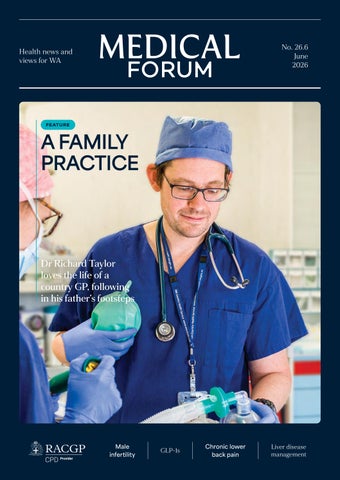
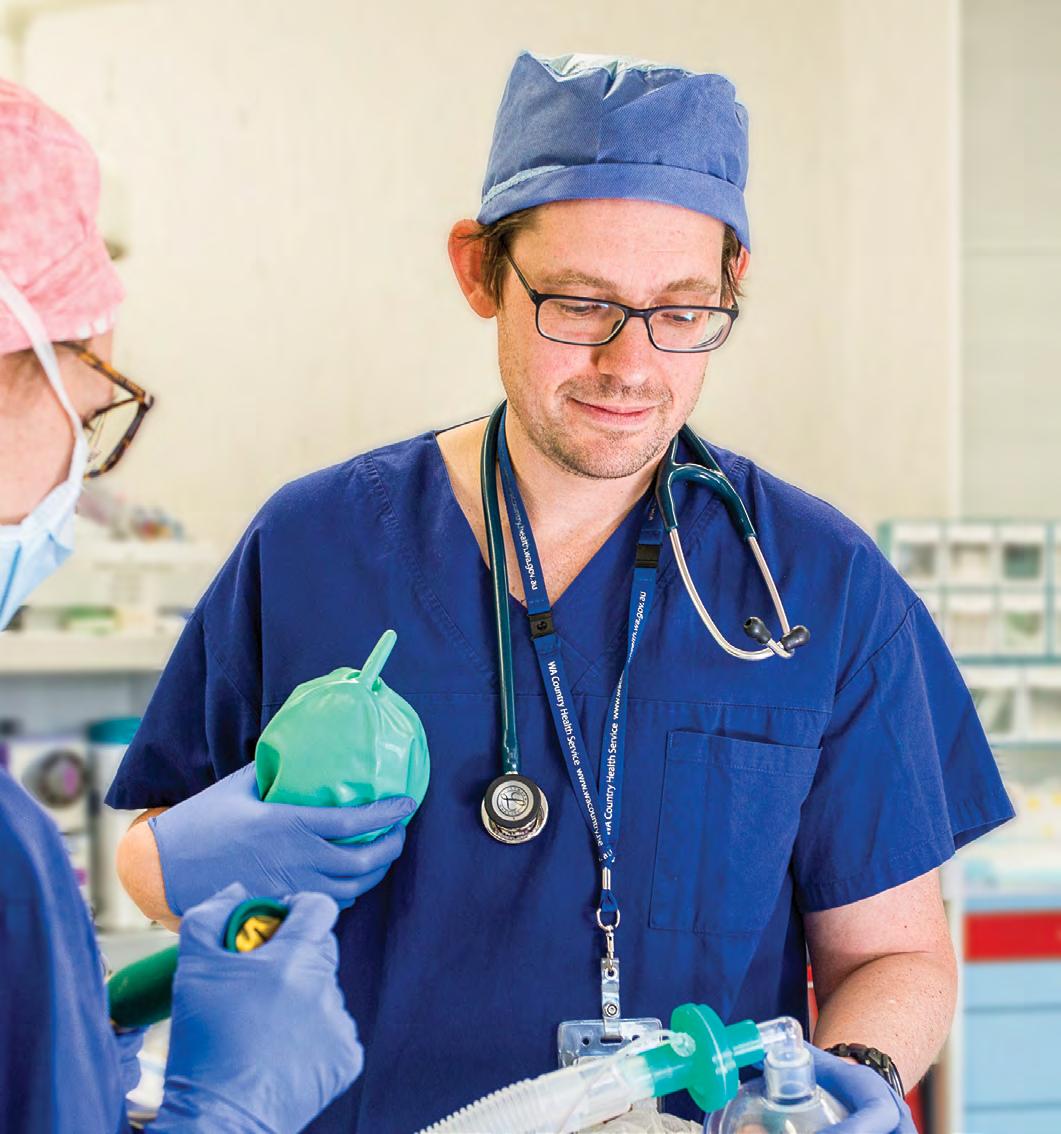
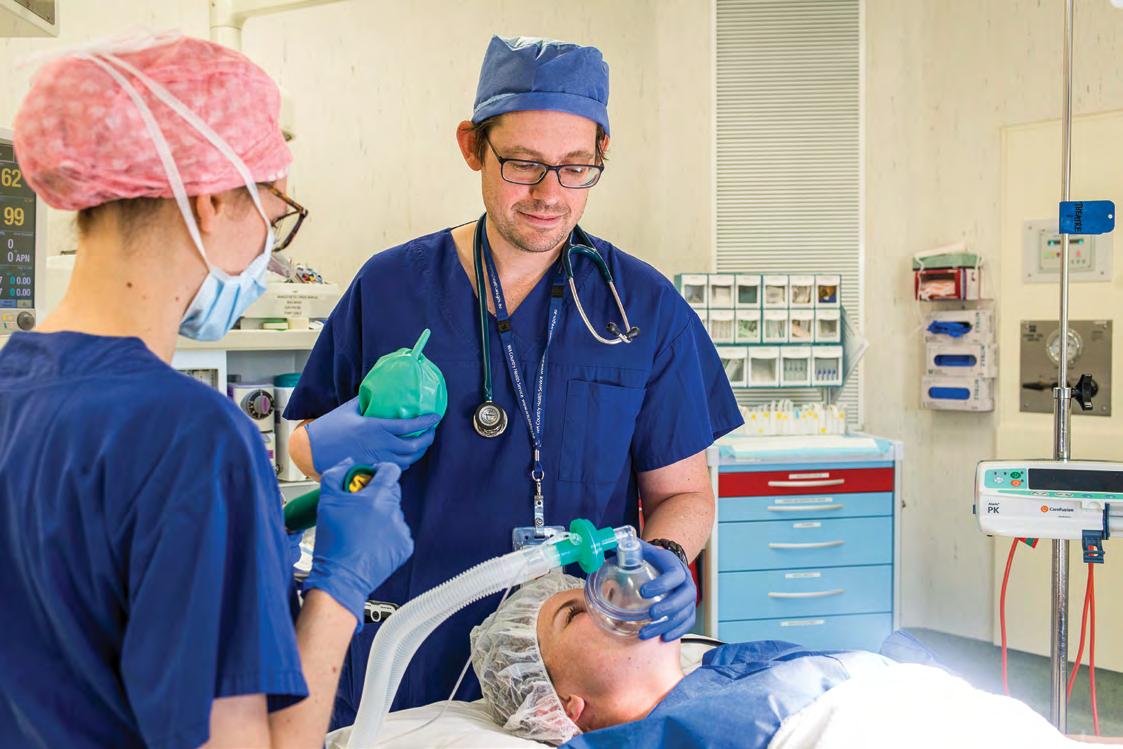
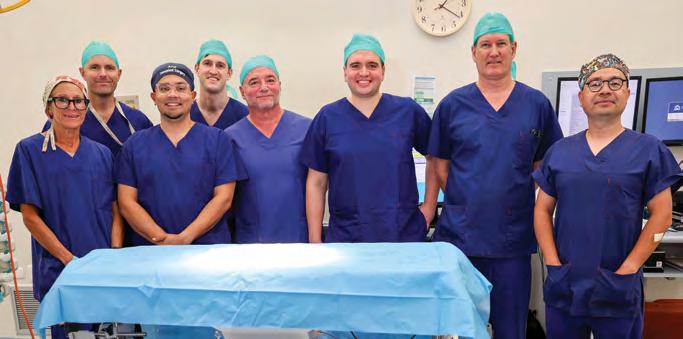
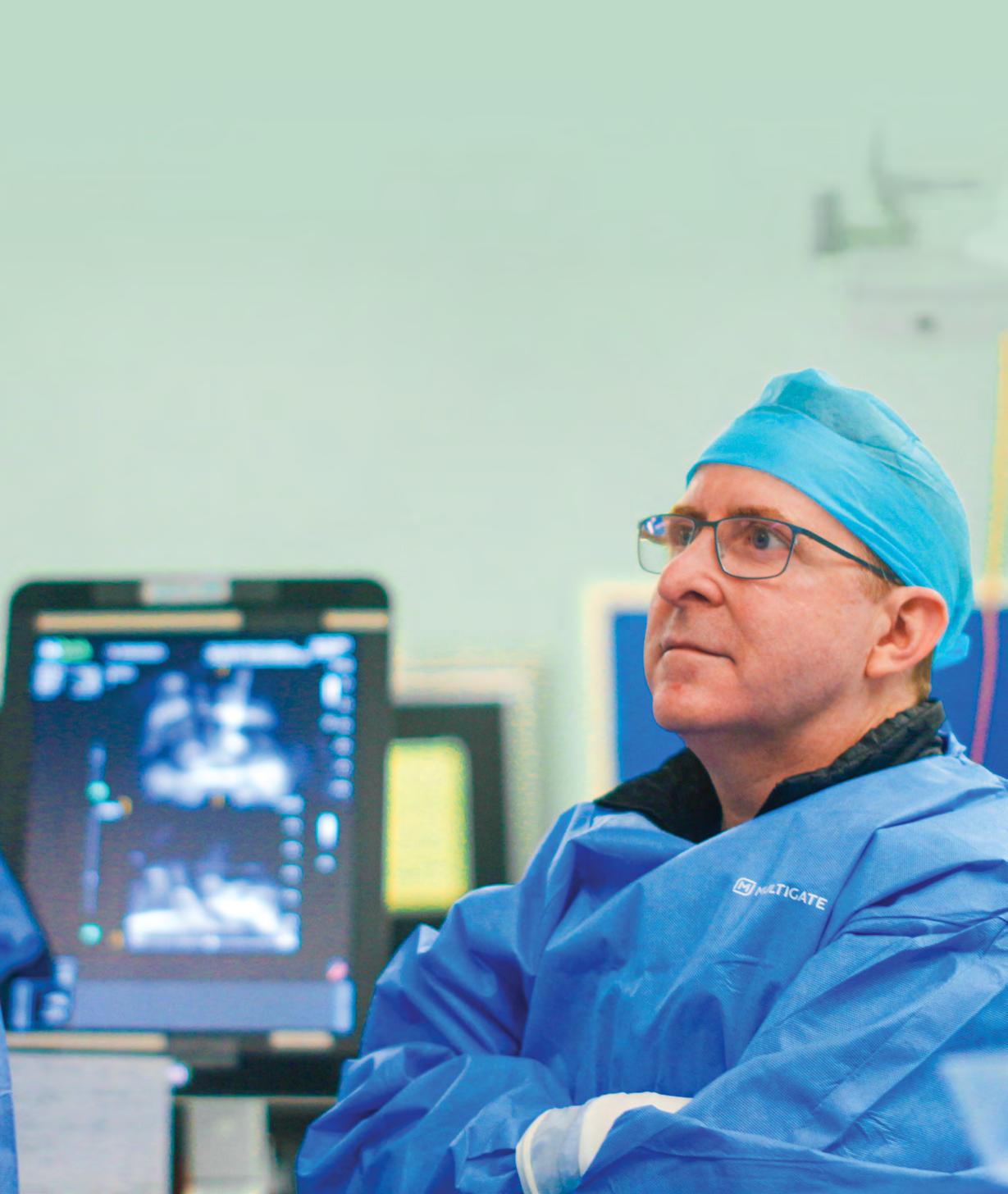
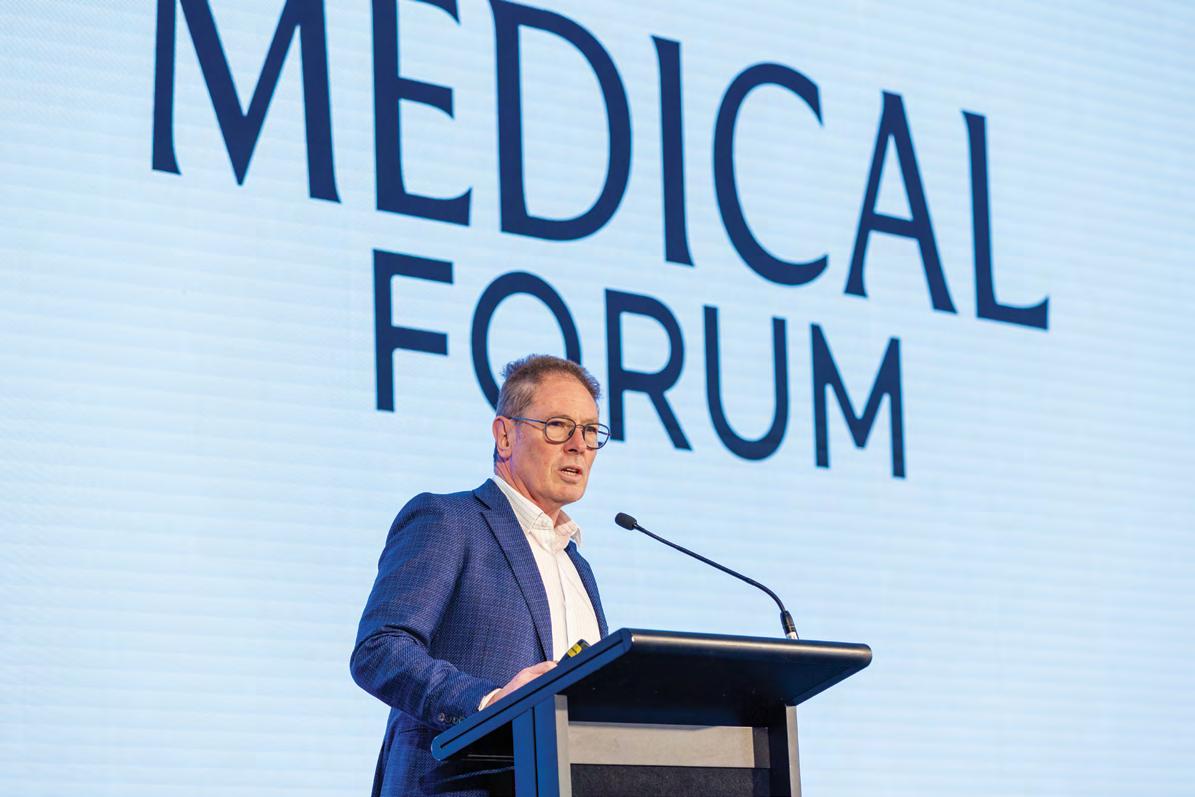
Dr Richard Taylor loves the life of a country GP, following in his father’s footsteps
Dr Ushma Narsai General Practitioner
MANAGING EDITOR
Andrea Downey
With almost half of GPs reporting being asked about these drugs at least once every day, it’s no surprise that our readers are keen to know more about GLP-1s.
Cutting through the fat
In medicine there are always a few hot topics making headlines –lately one of those has been GLP-1s.
While the medications have been around for two decades to treat diabetes, they have now become a household name for losing weight.
As the popularity of the drugs for weight loss boomed in the US, Australia followed suit with more people seeking them out through their GP – and often paying a premium for them.
It has raised the question of whether these drugs should be subsidised, especially as further health benefits such as cardiovascular and metabolic improvements are noted.
Earlier this year, Wegovy was recommended for adults with obesity and cardiovascular disease and is expected to soon be listed on the PBS.
With almost half of GPs reporting being asked about these drugs at least once every day, it’s no surprise that our readers are keen to know more about GLP-1s.
In this magazine we take a deep dive into the onset of these drugs, the benefits they have for patients and the potential pitfalls for others. We also look at what GPs need to consider when prescribing and who the drugs are appropriate for.
While you’re here, you may have noticed we look a little different. Medical Forum is undergoing some exciting changes at the moment, with the first being our new-look magazine.
Keep your eyes peeled for changes to our digital offerings in the coming months. MF
SYNDICATION AND REPRODUCTION Contributors should be aware the publisher asserts the right to syndicate material appearing in Medical Forum on the mforum.com.au website. Contributors who wish to reproduce any material as it appears in Medical Forum must contact the publisher for copyright permission.
DISCLAIMER Medical Forum is published by Medforum Pty Ltd (Publisher) as an independent publication for health professionals in Western Australia. Neither the Publisher nor its personnel are medical practitioners, and do not give medical advice, treatment, cures or diagnoses. Nothing in Medical Forum is intended to be medical advice or a substitute for consulting a medical practitioner. You should seek immediate medical attention if you believe you may be suffering from a medical condition.
The support of all advertisers, sponsors and contributors is welcome. To the maximum extent permitted by law, neither the Publisher nor any of its personnel will have any liability for the information or advice contained in Medical Forum. The statements or opinions expressed in the magazine reflect the views of the authors and do not represent the opinions, views or policies of Medical Forum or the Publisher. Readers should independently verify information or advice. Publication of an advertisement or clinical column does not imply endorsement by the Publisher or its contributors for the promoted product, service or treatment.
Advertisers are responsible for ensuring that advertisements comply with Commonwealth, State and Territory laws. It is the responsibility of the advertiser to ensure that advertisements comply with the Competition and Consumer Act 2010 (Cth) as amended. All advertisements are accepted for publication on the condition that the advertiser indemnifies the Publisher and its personnel against all actions, suits, claims, loss or damages resulting from anything published on behalf of the advertiser.
EDITORIAL POLICY This publication protects and maintains its editorial independence from all sponsors or advertisers. Medical Forum has no professional involvement with advertisers other than as publisher of promotional material. Medical Forum cannot and does not endorse any products.
WINE AND TICKETS
We’ve got another round wine for one lucky reader this month. Will you be the one to take home a selection of Howard Park wines?
Read our review of the winery on page 55 for more. Or if you prefer a night out on the town, we have two tickets for the Melbourne International Comedy Festival at Regal Theatre in Subiaco up for grabs.
We’ve also got a double pass to the West Australian Symphony Orchestra An Evening on Broadway to give away.
QR code
PUBLISHERS
Alice Miles – Director
Fonda Grapsas – Director
Tony Jones – Director
EDITORIAL TEAM
Managing Editor
Andrea Downey 0437 909 904 andrea@mforum.com.au
Clinical Editor
Dr Joe Kosterich 0417 998 697 joe@mforum.com.au
Graphic Design
Studio Scotts hello@studioscotts.com.au
ADVERTISING
Advertising Manager
Bryan Pettit 0439 866 336 bryan@mforum.com.au
Advertising Account Manager and Clinical Services Directory
It was a big month for health spending with the delivery of a federal and state budget within the same week – and while there are some winners, gaps still remain.
The WA state government boasted a ‘record’ investment in health, with more than $9 billion set to be spent across the health portfolio in the next four years.
Among the key headlines were $6.5 billion to deliver hospital services and $5.5 billion for health infrastructure through to mid-2030.
More than $80 million is being invested towards strengthening HR systems and ensuring reliable payroll services, as well as $75.8 million to support increased demand for ICT, payroll, recruitment and supply services for frontline health service delivery.
Among the spending in the coming year is $1.5 billion for health infrastructure, of which $500 million will be added to the Building Hospitals Fund to bring it up to $2 billion.
Detail in the budget papers revealed the cost of buying, commissioning and commencing public services through the previously privately owned St John of God Mt Lawley Hospital would set the government back $225 million.
AMA (WA) President Dr Kyle
Hoath said the government’s financial promises were reassuring.
“We’ve seen what happened last winter. We know what’s coming in a few months’ time as the weather gets colder. We’ve been languishing for a while in a state where we need more hospital beds, we need more staff to deliver care to the community,” he said.
“To see this level of investment from the government is very reassuring, and we thank the investment across a number of key areas including hospital infrastructure, resource delivery and staffing and mental health in particular.”
Federally, some $136.6 billion is set to be spent on health over the coming year as part of a $833.2 billion budget spend.
That is an additional $5.1b – or an increase of 0.2% – of total government spend from the 2025/26 budget.
Among the commitments made for health were Medicare funded three-year-old health checks, making urgent care clinics permanent and funding to cover new listings on the Pharmaceutical Benefits Scheme.
But AMA National President Dr Danielle McMullen said there was little else in the budget to address critical issues facing Australia’s health system.
“Our modelling shows a remaining gap of at least $9.6 billion – a gap that must be bridged if the cycle of crisis our public hospitals are in is to be broken,” she said.
RACGP President Dr Michael Wright welcomed what he described as “a number of positive initiatives”.
“In particular, we welcome the government’s commitment to reestablish three-year-old health checks and an expanded Comprehensive Health Assessment Program as part of its Thriving Kids initiative,” he said.
The RACGP and other groups represented by the National Council of Primary Care Doctors had called on the government to properly fund longer consults with a 40% increase to Medicare rebates for Level C and Level D consultations. However, this was not funded in the budget.
“The average GP appointment time is now 20 minutes as the health needs of our communities become more complex, with many people experiencing one or more long-term health conditions,” Dr Wright said.
“Investing in long consultations would allow GPs the time and space for more comprehensive, empathydriven care and would cut out-ofpocket costs for patients struggling with the cost of living.” MF
Name change for PCOS
Polycystic Ovary Syndrome (PCOS) has been renamed to Polyendocrine Metabolic Ovarian Syndrome (PMOS) to better reflect the impact of the condition.
Experts said that for too long the name of the complex, long-term hormonal or endocrine disorder had been reduced to a misunderstanding about ‘cysts’ and a focus on ovaries.
PMOS affects one in eight women, or more than 170 million women worldwide and is characterised by fluctuations in hormones, with impacts on weight, metabolic and mental health, skin, and the reproductive system.
This contributed to missed diagnoses and inadequate treatment.
Professor Helena Teede, an endocrinologist and Director of the Monash Centre for Health Research and Implementation, led the name change process after spending decades researching the condition and seeing patient impacts firsthand.
“What we now know is that there is actually no increase in abnormal cysts on the ovary, and the diverse features of the condition were often unappreciated,” Professor Teede said.
“It was heartbreaking to see the delayed diagnosis, limited awareness and inadequate care afforded those affected by this neglected condition.”
A three-year transition period for the new name will be supported by an international education and awareness campaign for health professionals, governments and researchers around the world – with the new name to be fully implemented in the 2028 International Guideline update.
National RSV program cuts hospitalisations
Australia’s new RSV immunisation program cut hospital admissions for Australia’s youngest babies by almost half in its first year, a major national study has shown.
Launched in February 2025, the RSV Maternal and Infant Protection Program (RSV-MIPP) offered free maternal RSV vaccinations to pregnant women across the country under the National Immunisation Program.
Newborns who did not receive protection during pregnancy were eligible for the monoclonal antibody nirsevimab through state- and territory-funded programs.
Data showed RSV-associated hospitalisations fell by 43.8% in babies aged less than three months – the group at highest risk of severe RSV disease.
The research was conducted by The Kids Research Institute Australia, the National Centre for Immunisation Research and Surveillance (NCIRS) and Monash University, in collaboration with 13 hospitals across Australia.
Lead researcher Dr Ushma Wadia, clinician-scientist at the Wesfarmers Centre of Vaccines and Infectious Diseases, said the results showed both the maternal
vaccination and immunisations for babies were highly effective in providing protection against RSV.
“These findings represent the first real-world evidence from the southern hemisphere demonstrating the effectiveness of a hybrid RSV prevention strategy at national scale,” Dr Wadia said.
The results follow positive outcomes reported in WA last year as a result of the state’s RSV immunisation program, which was found to have reduced hospitalisation rates across three hospitals by almost 90% and helped more than 500 families avoid a hospital stay.
Dr Wadia said newborns were particularly vulnerable to the lifethreatening complications of RSV such as severe bronchiolitis and pneumonia, so it was especially pleasing to see a 44% reduction in hospitalisations in babies up to three months of age.
“We also found that babies born between October 2024 and mid-February 2025 who received nirsevimab as part of a catch-up cohort received strong protection against the virus, with 87% lower risk of admission with RSV,” she said. MF
Dr Ushma Wadia with Katryna Cygler, who received the maternal RSV immunisation, and nine-monthold son Hugo Brown.
Burnout persists for junior doctors
Junior doctors in WA have reported a lack of sleep, growing levels of burnout and errors in their pay.
More than 1300 junior doctors across the state took part in the 2026 AMA (WA) Hospital Health Check, revealing persistent wellbeing, safety, and fairness issues, despite some areas of improvement.
Burnout rates have increased with more than half (56%) of all respondents reporting moderate to high burnout, compared to 52% in 2025.
Unsafe fatigue was also a key issue, with almost half (48%) of those undertaking overnight teleconsultation on-call reporting just three to five hours’ sleep before working the next day. Some 50% said they felt unsafe returning to work after overnight on-call.
AMA (WA) President Dr Kyle Hoath said too many junior doctors were working excessive hours, losing sleep while oncall, and then being expected to perform safely the next day.
“Fatigue is a patient safety issue – not a lifestyle choice,” he said.
“Too many junior doctors continue to experience burnout, fear of speaking up, unsafe fatigue
practices and barriers to being paid correctly for the hours they work.”
PAY
Compliance with employment entitlements remains one of the poorest performing areas in the health system.
Almost two thirds (65%) of those surveyed reported experiencing pay errors, while 38% cited systemic or cultural pressure as the main barrier to claiming overtime.
Dr Hoath said when payroll errors were this widespread it was not a one-off mistake but a “system problem” that undermined trust, morale and retention.
“There remains a deeply entrenched culture in parts of the system that treats unpaid work as normal and overtime as something to be discouraged,” he said.
“That is unacceptable and must change. Doctors have bills to pay and mouths to feed — it is simply wrong to pay them incorrectly.”
A WA Health spokesperson said the department would continue to focus on improving fatigue management, rostering practices, and overall support for staff wellbeing. MF
System-wide reforms
The AMA (WA) called for urgent system-wide reforms to address the issues raised, including:
• System-wide, consistent overtime claiming processes developed with AMA (WA) Rosters that accurately reflect all hours worked and comply with industrial agreements
• Improved fatigue management practices, including safer on- call and recall arrangements
• Introduction of training-length employment contracts for DiTs by January 2027
• Stronger action on racism, bullying and discrimination, supported by transparent reporting systems
• Better support for parents, flexible work arrangements and breastfeeding facilities Enhanced cultural safety and onboarding programs for international medical graduates.
The rise of weight loss drugs – and the potential pitfalls
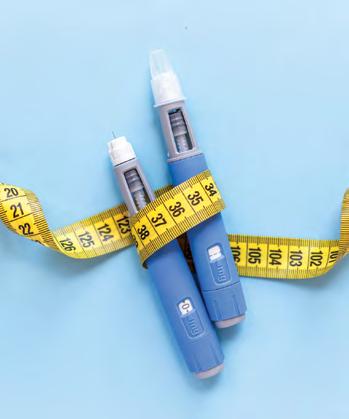
GLP-1 medications have been around for 20 years, first developed to treat diabetes, but now they have become a household name for losing weight – and their popularity is set to soar further.
AUTHOR Cathy O’Leary
FEATURED
Managing weight issues has long been a mainstay of general practice, given two-thirds of Australian adults are overweight or obese, and carrying too many kilos is a strong risk factor for a long list of diseases.
But a relative newcomer to the obesity first aid kit is reshaping not just bodies but also the weight management landscape.
Glucagon-like peptide-1 (GLP-1) receptor agonists were developed in the mid-2000s to treat type 2 diabetes by mimicking a hormone the body produces to regulate hunger and blood sugar.
While they do a good job of managing glucose levels in patients with diabetes, it is their ability to control appetite that has seen GLP-1s reinvented as powerful tools to control weight – independent of diabetes risk.
The popularity of the injectables took off five years ago, after the US Food and Drug Administration
approved semaglutide for weight loss. It became an overnight sensation in the United States, a country which has long struggled under the weight of a staggering obesity problem. They now include semaglutide –sold under the names Ozempic and Wegovy – and tirzepatide, sold as Mounjaro.
An estimated one in eight American adults has tried a GLP-1 for weight loss, diabetes or another condition.
As the drugs have ushered in a new era in weight loss in the US, Australia is not far behind, with many doctors here reporting being inundated with patient questions on the medications.
Despite ongoing concerns about possible side effects of the drugs and lack of appropriate monitoring of vulnerable patients, people are voting with their feet.
A RACGP poll in May 2025 indicated that almost half of GPs have reported being asked about weight loss drugs at least once every day. However, one factor that has kept a lid on the use of GLP-1s is their expense. With private scripts costing between $400-800 a
Dr Mark Mellor
Dr Vash Singh
month, the medications have been out of reach for many patients.
Last year, more than 400,000 Australians were believed to be paying as much as $5000 a year for Ozempic-like GLP-1 medications, prompting pressure on the federal government to subsidise the drugs.
Until now, Ozempic was only available on the PBS for patients with type 2 diabetes, but last year the World Health Organization endorsed the medications as longterm treatments for obesity and called on governments around the world to ensure the treatment was more affordable and accessible.
Earlier this year, the government backed a recommendation by the Pharmaceutical Benefits Advisory Committee to fund Wegovy, and the drug is expected to soon be listed on the PBS for adults with obesity and cardiovascular disease.
People who have had a heart attack or stroke and have a body mass index (BMI) of 35 or more will be eligible for the heavily subsided medications.
While the federal government concedes the cost to taxpayers is
unclear, the take-up is expected to be strong based on 2022 data which shows 13% of Australian adults have severe obesity.
HEALTH EQUITY
Government funding has been applauded by many GPs, who are at the coalface of managing obesity in primary care and have argued that the lifesaving treatment should be accessible to patients who need it.
Among those lobbying for the subsidy has been Dr Mark Mellor, a specialist GP and member of the RACGP Obesity Specific Interest Group in WA.
The founder of the Perth Weight Clinic said the criteria has been intentionally kept narrow to manage the cost, and he hopes the net will be widened later to include more people.
He argues the subsidy represents a significant shift in how we approach weight management for people with severe obesity.
Other jurisdictions such as the UK have a similar cohort model to target those with the greatest need as a first step.
“As a first step, it makes sense that
perhaps we target a cohort of people of greatest clinical need, as they're living with a disease that's caused an illness, and they need treatment now” he told Medical Forum
“But if we want to achieve equity in people living with obesity, which is a chronic disease, then why should they not have access to available treatment when people with diabetes, cardiovascular disease or cancer can.
“There are justifiable concerns about a cost blowout, but the cost will come down for these medicines in time.”
Dr Mellor said the extent of the subsidy cost will depend on how well the government is able to effectively negotiate a price for medicines like tirzepatide and semaglutide. He expects demand for the medicines will be very high.
“That's where sometimes the government struggles because it can be difficult to project the longterm costs for treating obesity, but I think we all accept that if you treat it, generally speaking, healthcare costs will come down,” he said.
“If you look at the cohort proposed as a first step – those with higher BMI and weight related complications – then that cost will come down quickly because you improve those conditions by treating obesity.“
“It’s not just a weight loss issue, it's about treating pre-existing cardiovascular disease, fatty liver disease, diabetes and pre-diabetes. The whole point of treating obesity is to improve health.”
Dr Mellor said obesity is comparable to other diseases like cancer and autoimmune conditions, where some of their treatments are extremely expensive but they are funded.
“The challenge is that we fund hip or back surgery for people who’ve had sporting injuries, so why are they allowed to access treatment on the public purse but not people who have obesity or have nicotine dependence.”
CONTINUED ON PAGE 11
Why a Murmur Matters: Aortic Stenosis Explained
Simple Auscultation Tips for GPs
Aortic stenosis (AS) is the most common valvular heart disease in developed countries, and its prevalence is rising as populations age.1,2
With Symptomatic severe (AS) carrying poor survival without treatment, recognising the subtle early signs is essential to improving outcomes and it can be as simple as listening to your patients’ hearts through routine chest auscultations.
Improving Detection of Aortic Stenosis
Dr Kevin Chung
The Importance of Auscultation
While echocardiography remains the gold standard for confirming severity of Aortic Stenosis (AS), auscultation is often the first - and most accessible — tool for detection. Studies emphasize that careful physical examination can identify AS before symptoms progress, enabling timely referral and intervention3 .
Kevin’s Top Tips for Effective Chest Auscultation
Patient Positioning: Begin with the patient sitting upright, then lean slightly forward during expiration to accentuate aortic murmurs4
Stethoscope Placement: Use the diaphragm at the right second intercostal space (aortic area), then move to the left sternal border and apex to assess radiation and for a diastolic component.
Dr Kevin Chung
Interventional and Structural Heart Cardiologist
St John of God - Subiaco
Sir Charles Garnder Hospital - Nedlands
Recognising Classic Murmurs: The hallmark of AS is a harsh, crescendo-decrescendo systolic murmur, best heard at the aortic area and radiating to the carotids. Timing is key - listen for the mid-systolic peak3
Differentiating from Other Murmurs: Unlike mitral regurgitation (holosystolic, apex radiation), AS murmurs are ejection systolic and often accompanied by a soft or absent second heart sound in severe cases.
Common Pitfalls
Missing Subtle Murmurs: Mild AS may produce faint sounds—avoid rushing the exam and always correlate with pulse quality4
Overlooking Radiation: Failure to check the neck can lead to missed clues; carotid radiation is a classic AS feature. Relying Solely on Technology: While imaging is essential, clinical skills remain invaluable for early detection and patient trust.
Referral to an interventional cardiologist, specialising in structural heart disease, is recommended for all patients with a murmur5.
A. and Otto, C.M. (2010) ‘Risk stratification of patients with aortic stenosis’, European Heart Journal, 31(4), pp. 416–423. doi:10.1093/eurheartj/ehp575. 2. Osnabrugge, R.L.J., et al. (2013) ‘Aortic stenosis in the elderly: disease prevalence and number of candidates for transcatheter aortic valve replacement: a meta-analysis and modeling study’, Journal of the American College of Cardiology, 62(11), pp. 1002–1012. doi:10.1016/j.jacc.2013.05.015. 3. Grimard BH, Safford E, Burns EL. Aortic Stenosis: diagnosis and treatment. American Family Physician, 2016;93(5):371-378. 4. P Generaux, et. al. 2024. Transcatheter Aortic-Valve replacement for asymptomatic severe aortic stenosis (EARLY TAVR trial). N Engl J Med 2025;392:217-227 VOL. 392 NO. 3 5. 5. Vahanian, A., et al., 2021 ESC/EACTS Guidelines for the management of valvular heart disease. Eur Heart J, 2022. 43(7): p. 561-632.
1. Vahanian,
CHANGING THE APPROACH
Dr Mellor believes the expected rise in the use of weight loss medications might slow demand for other treatments such as bariatric surgery, but it is likely to be short-term.
For people with significantly higher BMIs, weight loss from a pharmaceutical would likely be less than what they could achieve from a sleeve gastrectomy or bypass.
“What we’ll probably find as we try to break down bias and stigma, and people living with obesity feel empowered to have conversations with their doctors, over time we’ll see an uptake in referrals for bariatric surgery,” he said.
“Ultimately some people using these medicines will get a suboptimal response, and so the next step may be referral to bariatric surgery.
“I think it will also open the door for people who are currently ‘hiding away’, feeling that they are entirely to blame for their weight and responsible for dealing with it.
“If we can empower people of lived experience to come through the door and see us, then we can start having conversations about the appropriate treatment, because pharmacotherapies aren't always going to be an appropriate treatment for everyone with obesity.”
THE POTENTIAL RISKS
Many experts stress that behind the GLP-1 weight loss drugs is a complex science, and beyond the hype are risks as well as benefits.
Late last year, the Therapeutic Goods Administration warned that the drugs could lead to potential suicidal thoughts, while another study also suggested the medications could reduce the effectiveness of oral contraceptives.
Earlier this year, concerns were raised that the drugs could put users at risk of serious nutritional deficiencies. University of Newcastle researchers said this could lead to higher risk of heart issues, chronic diseases and some cancers due to inadequate nutrition.
GPs were urged to write a referral to a dietician at the same time as writing a script for weight loss drugs.
The Eating Disorders Alliance,
13% of Australian adults have severe obesity
$$$
almost half
of GPs were asked about weight loss drugs at least once a day.
Private scripts can cost between $400-800 a month
a consortium of eating disorder organisations in Australia and New Zealand, also raised the alarm about potentially fatal outcomes in people with eating disorders who are prescribed GLP-1s.
It argued that people are being prescribed the medications without any screening for an eating disorder, and in some cases despite having disclosed an eating disorder.
More than one in 10 people have, or are at risk of, developing an eating disorder, and research suggests that 10% of adolescent girls have used medically unapproved weight loss products.
The alliance has been calling for tighter controls, including mandatory comprehensive medical assessments in standard telehealth consultations for those seeking weight loss medications.
In 2025, more than
400,000
Australians paid as much as $5000 for GLP-1 medications
concerns with the TGA, Ahpra, the Medical Board of Australia, and the Pharmacy Board of Australia, the federal government, as well as with Juniper, the parent organisation of Eucalyptus and other medical weight loss services.
Perth psychiatrist Dr Vash Singh, founder and medical director of the Esus eating disorder clinic, shares concerns about the lack of monitoring for people with, or at risk of, eating disorders.
The private multidisciplinary clinic, which offers intensive day programs and outpatient treatments, is seeing patients who develop eating disorders after starting on GLP-1s.
It is developing a new metabolic weight loss clinic and will initially target patients at risk of, or with a history of, eating disorders who are on GLP-1s for valid reasons.
It also wants the government to implement greater scrutiny and regulations for those working outside the Medicare Benefits Scheme.
It says that for some people it may be appropriate to reduce body weight, but it is critical this is done in a safe and appropriate manner, with proper guidance from healthcare professionals, such as a GP or dietitian.
The alliance has raised its
Dr Singh said most people with eating disorders have binge eating disorder, more than anorexia and bulimia put together.
Most of the people with binge eating disorder are larger bodied and benefit from a program that targets the psychological management but also the dietetic management.
CONTINUED ON PAGE 13
GP Urology Masterclass 2026
The Westin, East Perth | Saturday 6th June 2026
Join us for our annual GP Urology Masterclass delivered by PUC specialist urologists and guest speakers, designed specifically for general practitioners.
Key topics include:
Prostate Cancer
Diagnosis - PSA: Who To Test And How To Interpret
Workup: MRI, PSMA, Biopsy
Treatment: Active Surveillance, Surgery, Radiotherapy, Focal Therapy - Is There A Gold Standard?
Functional Outcomes Post
Prostate Cancer TherapyHow To Close The Gap
Andrology and Female Urology
Male Infertility - The Role Of The Urologist
Is Testosterone Safe In Prostate Cancer Patients?
BPH
Haematuria/Haematospermia, What GP’s Need To Know
Recurrent UTI - The Role Of The GP, Urologist And ID Physician
Places are limited so book now to avoid disappointment. events@perthurologyclinic.com.au
General Urology
Stones - When To Refer
Scrotal Swelling
PSA Interpretation After Prostate Cancer Treatment
The Interface Between Primary Care And Urology - Where Rubber Meets The Road
“When you take their history, the binge eating often goes back decades and there’s a pattern over their lifetime of dieting, often very restrictive, and then bingeing. Over time, their weight creeps up, because they lose lots of weight but put it back on,” Dr Singh explains.
“It’s unequivocable that dieting never works for long-term weight loss because of the science – it slows down the body’s metabolism because the body perceives it’s in a famine state, so metabolism slows down to a snail’s pace to conserve energy.
“But the brain will tell the body to eat as much as possible to overcome that, and that’s where the over-eating and binge eating comes in. But that pattern is also fuelled by things like co-existing anxiety or depression and trauma.”
Dr Singh said her clinic sees a good prognosis with psychological therapy and dietetics, while also treating comorbidity conditions.
“What we’ve been finding in the last few years is that people get put on these medications by their GP, unbeknown to us, and then they abandon their psychological work,” she told Medical Forum.
“This is not helpful for our patients, their doses get ramped up very quickly, and it induces that restriction again because it suppresses appetite, and they don’t have dietetic input so they’re not prioritising protein intake.
“People lose weight, but about 40% of that weight is muscle which then slows down their metabolism and they’re going to gain their weight back again.”
Dr Singh argues that people must learn how to eat properly and prioritise protein intake, and they need to do resistance training at least three times a week so they are not losing muscle mass.
“We want patients to have holistic treatment but unfortunately that’s expensive, and patients will always prioritise just taking the medication.”
She wants the federal government to outlaw online prescribing services where there is no holistic care.
“I’ve had patients with anorexia nervosa who’ve had a telehealth appointment and get put on these medications,” she added.
Getting GPs Onboard
Dr Singh is planning education sessions with GPs to ensure they are kept in the loop.
“We need to have our colleagues involved, because we can’t do it on our own,” she said.
“Not everyone needs psychology but everyone working in this space needs to be aware of what is happening psychologically for these people who have always been in larger bodies and often hated themselves for it and been discriminated against.
“I’ve had patients who’ve been put on these medications but have never been asked about their eating patterns.
“It’s very difficult for people to change eating habits that have existed for decades, it’s a slow process, so that’s why the medications have to be prescribed carefully.
“We’re not doing enough to monitor muscle mass and loss, and we’re not measuring someone’s individual metabolic rate so the dietetic advice is tailored to them.
“The message we’re trying to get across is that these medications are not the quick answer to anything and shouldn’t be marketed as such.”
DOSES TOO HIGH
Dr Singh believes many people are starting on weight loss medication doses that are too high.
“The problem with these GLP1s is that society wants them, and we’re going to have practitioners who feed into that. It’s not that they think they’re doing anything wrong, they’re just giving patients what they want,” she said.
“But ultimately what patients want isn’t necessarily what they need.
“When you speak to patients and explain how these medications work, they often say ‘wow I didn’t realise.’ But that takes time, and the problem with a GP model is that they put them on the medications, especially now with the way the government funds, with six-minute
consults, it’s not good medicine.
“We want to work with GPs because they do a lot of the prescribing and it needs government, and private health insurers and providers all talking about the best way forward, instead of everyone going off on their own tangent.”
Dr Mellor agrees patients need to be assessed properly.
“The point is that people with undiagnosed or unassessed eating disorders are using these medicines which can restrict their food intake,” he said.
“It really comes down to assessing your patient properly just like you do for any condition, with any medicine, there's a yin and a yang, pros and cons, and obesity is no different – there's nothing special about GLP-1s and obesity.
“If you were to assess your patient properly, there's no reason you can't use these treatments, even in people with an eating disorder. The problem is when you don't assess your patient and then find out that they're not eating anything.”
He agrees GPs are incentivised for short consultations which works against weight management help.
“If screening for an eating disorder is one aspect of having an obesity assessment, how do you do that in a 10-minute consultation among everything else that you need to do to know how to best manage them?
“The MBS doesn't lend itself to dealing with complex problems that take time.”
Meanwhile, there are calls for Wegovy and similar medications to be funded on the PBS for other conditions, including liver disease, renal issues, osteoarthritis and obstructive sleep apnoea.
And more changes are on the way that could carve out a new market for weight loss medications. While the booming GLP-1 space has been built on weekly injections, Wegovy has recently become available in pill form in the US.
This might well pull in new users of weight loss medications in people afraid of needles, while GPs might also find it more palatable to prescribe oral drugs rather than injections to their patients. MF
Variety is the spice of life
Dr Richard Taylor lives a busy life of a regional GP in Geraldton and balances clinic and hospital work with teaching, while still finding quality family time.
AUTHOR Ara Jansen
When Dr Richard Taylor was named GP of the Year at the 2026 WA Rural Health Excellence Awards, not only was he chuffed someone had taken the time to nominate him, but he was thrilled to join his father Dr Ian Taylor who had received the award in 2019.
“It was very humbling and an amazing honour,” says the Geraldtonbased doctor, who was awarded for exceptional patient care,
obstetric and anaesthetic work and mentoring of rural doctors.
“It was even more surprising because I didn’t expect it and we didn’t know until it was announced.”
Richard was also honoured with the WA Faculty Legend Award from the RACGP and says he can’t rate being a doctor highly enough, especially after his entry into medicine wasn’t
the most direct route.
One of three children, Richard grew up in Geraldton. His dad is a local GP who was awarded a 40-year service medal last year.
The first time Richard tried to enter medicine he didn’t get in and instead decided to do occupational therapy.
He also spent a year in Japan learning the language and enjoying the culture. On his return, he worked as an OT at Sir Charles Gairdner Hospital, predominantly as part of the home visiting team.
While he enjoyed OT and his colleagues, something was still bugging him about medicine.
At 24 Richard decided to sit the GAMSAT and got into Notre Dame, in the second year of
their medicine program.
“Medicine was always something I was interested in but wasn’t something I was dead set on,” recalls Richard. “It wasn’t until later that I thought maybe it was something I would quite like to do. There was never any pressure from my parents, they were good like that.
“I really enjoyed OT but there was always a little niggle that perhaps I could try again to get into medicine. I think that delay, the other degree and going to Japan all made me a better doctor because of that extra bit of life experience, knowing how to relate to people and being able to work as part of a team.
“I think all that has given me a better appreciation of the role of a health professional and made me a better all-rounder. I don’t regret going the long way around. Plus, it showed me if you’re really interested in something or really want to do it, there can be a different way to get there.”
Richard feels that’s a powerful concept to understand for people who want to get into medicine but don’t succeed the first time, or want to transition from a related field or a different specialty. He says while Year 12 can feel like the be-all and end-all at the time, there are options and avenues.
“Even if you really don’t know at school, that doesn’t have to be the end. Being an OT in a hospital gave me an idea of what I would be in for if I moved to medicine.
“Obviously, growing up seeing the work my father did also showed me plenty. I went in with my eyes open knowing it probably wasn’t the glamorous job I might have otherwise thought it was – like those 3am wake-up calls for a delivery.”
Genuinely enjoying just about everything he did as a junior doctor made it hard for Richard to choose a specialty. He was confident surgery wasn’t for him but had an inkling being a GP would give him the desired variety. Being in a regional centre has further allowed him to expand his skills and gain anaesthetics and obstetrics qualifications.
A contractor to Panaceum Group, where his dad also works,
Richard has privileges at Geraldton Health Campus and St John of God Geraldton Hospital. A day for him can include a baby delivery at 8am, seeing patients at the practice, then a list at the hospital or being called out after hours for an emergency or palliative care.
“It’s a really nice way to break things up. I love the variety of working as a GP and then doing work in the theatre and obstetrics. Because it’s a regional centre, the hospital work can be quite varied too and you never know what you might be doing.”
The cradle to the grave aspect of care really appeals to Richard. In some cases, he’s looking after whole families, including the grandparents from the same family of the children he has delivered.
A champion for the regions, it was probably obvious that Richard and his family would move back to Geraldton. His parents have remained there and his in-laws recently retired to the coastal city.
He laughingly suggests August and September are the best time for potential new local doctors to visit, because when they hit the heat and winds of February, they’ll wonder what on earth they’re doing there.
Giving time to teaching new doctors is something Richard feels
has added importance in regional centres, to create a strong medical care succession. Plus, the added bonus is that he learns plenty from a younger generation.
“It’s a lovely community and I think the place is a little bit underrated. It’s a great place to raise a young family and I find the local medical community really supportive and definitely help back you up.
CONTINUED ON PAGE 17
“I’m also lucky because Emma, my wife, is very supportive and puts up with all the hours. Plus, she agreed to move here and knew when we met this is where I would probably end up.
“I like working with my dad who has such a wealth of knowledge but is trying to retire. It adds a different dynamic to the father-son relationship.”
The doctor admits that life with his different medical hats on is challenging but he’s always been committed to making sure there’s solid time with family and that they take holidays where he unhooks from work.
Richard and his eldest son, 12-year-old Gareth, are Eagles fans but for some inexplicable reason, 10-year-old Tristan is an Essendon fan. The family can’t quite figure out how it happened. Added to that Dr Taylor senior is a mad Dockers supporter, so there’s always a lively football debate to be had.
“I love the variety of working as a GP and then doing work in the theatre and obstetrics. The hospital work can be quite varied too and you never know what you might be doing.”
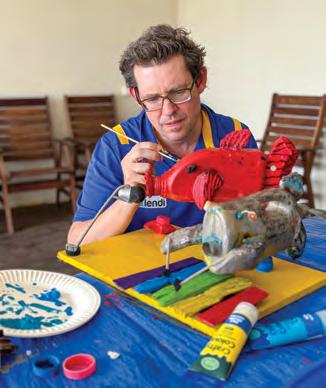
Luckily Richard and the boys collectively support the Scorchers for the cricket, which takes one bone of contention off the table. Richard is a big advocate for Geraldton and can’t speak highly enough of the local community. His kids play their share of sport and among other activities, they take part in the annual Flotsam + Jetsam. It’s an art exhibition where all the pieces are made from rubbish picked up around the Abrolhos Islands by local volunteers as part of Clean Up Australia Day.
The spoils are dropped at a local jetty one morning and locals pick their way through the debris, which include anything from old ropes and water-worn bottles to pieces of broken cray pots. They take home their finds and create a piece of art, which can cover any medium.
The brainchild of Geraldton’s Latitude jewellery gallery, the art is displayed and for sale. In its seventh year, the project has cleaned up more than 80 tonnes of rubbish. Last year Tristan’s piece was bought for $40 by headspace Geraldton and displayed on the front counter.
The doctor claims not to be a creative person but through the project has discovered the delights of a glue gun. From collected junk, he’s made a seal from an old cray pot and a fish playing a xylophone.
A fan of exploring foreign cultures and countries, the Taylors hope they are instilling the same curiosity in their sons. They’ve gone to Japan – where they re-connected with Richard’s host family from all those years ago – as well as to London, Paris, Berlin and Rome.
“One of the things I love about travelling is spending quality time together as a family. It can be hard to disconnect from work, especially in a smaller community where people know you.”
At home the boys are active with sport, activities and friends. They play hockey and soccer and barrack enthusiastically for their favourite footy and cricket teams. The family dog Bentley needs two walks a day and Richard has recently started running.
A busy work and family schedule leaves little time for reading, something Richard loves to do, but he always makes sure there’s a book on hand during holidays. Thriller writer Matthew Reilly is an unputdownable favourite.
Richard makes a mean paella and does most of the cooking at home. He’s partial to Japanese food after his year there, the kids love Mexican and the Weber out the back gets a good working out.
“It’s important to prioritise family time. The boys are growing up really fast and I don’t want to miss spending that quality time with them.”
New technology a boost for liver transplants
FEATURED
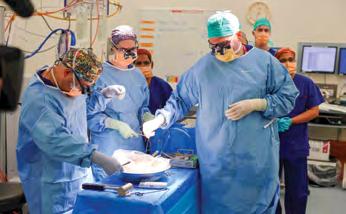
An Australian-first liver transplant technology has seen a 70% increase in transplant numbers in one of Perth’s biggest hospitals.
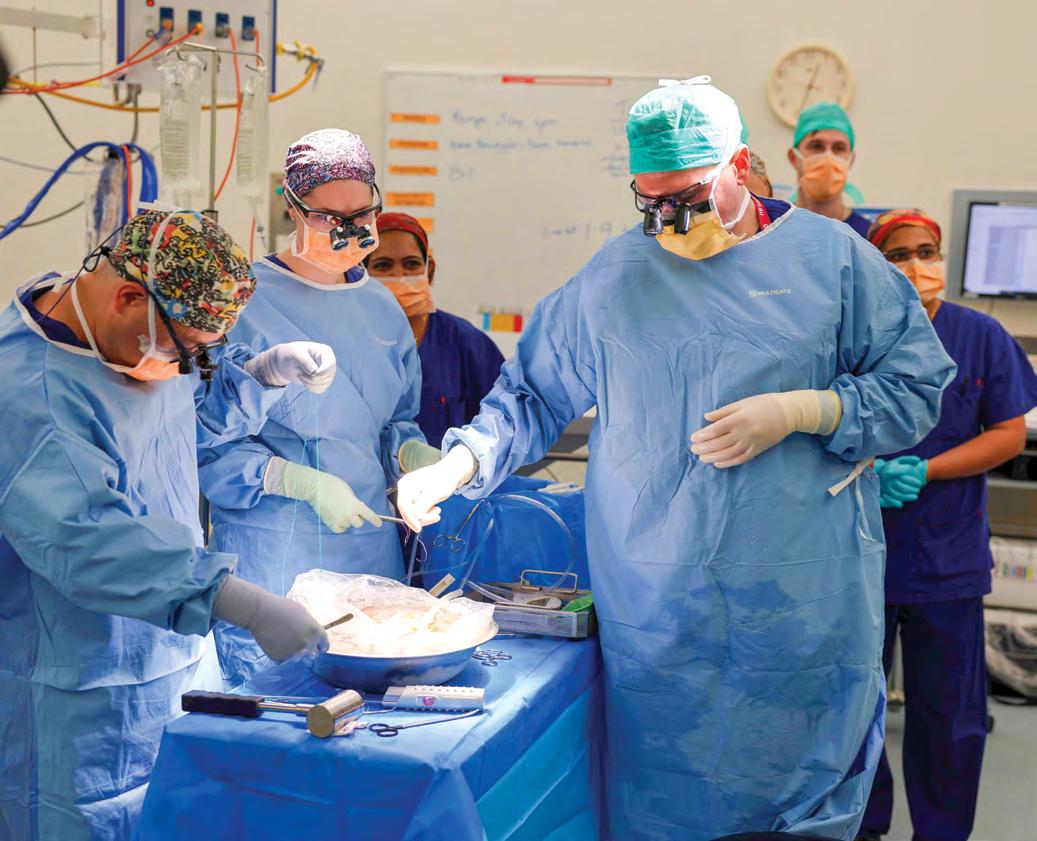
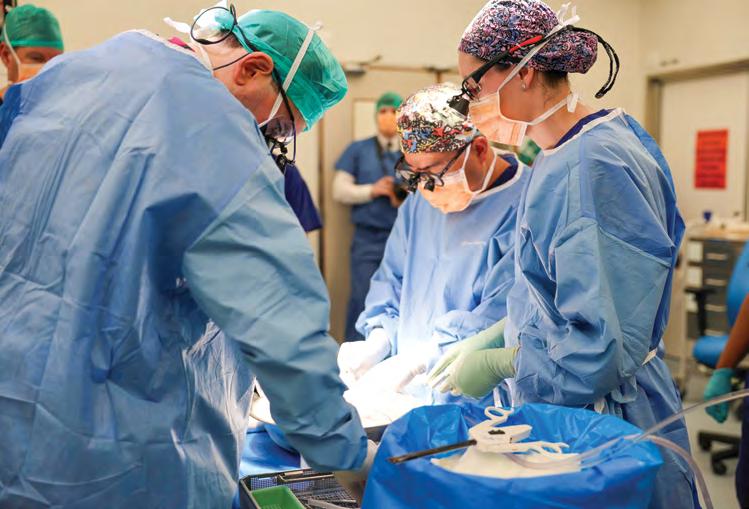
Sir Charles Gairdner Hospital is the first in the country to make the most of a machine that provides both warm and cold liver perfusion, which not only tests the liver’s viability but can recover certain injuries.
The hospitals hepatopancreaticobiliary and transplant surgeon Dr Arul Suthananthan described the process as leading edge.
He said prior to using the machine, surgeons were having to navigate a “narrow margin” in terms of which donors would make for a viable liver transplant.
“There was no way to objectively test the liver before putting it
into the recipient,” he said.
“That means we had to make the assumption that certain groups of patients were too high risk, for instance someone who is outside an age category or who has any relevant clinical history.
“Anyone with those sorts of risk factors we would just say ‘Well we can’t use these livers because there’s no way of testing them’ and you can’t take the risk of transplanting these livers into patients, lest they fail.”
Dr Suthananthan described the two main functions of the machine which has been in use at the hospital since June 2025.
COLD PERFUSION
The first is cold perfusion which can rejuvenate and recover cells in the liver through recovering and reproducing
AUTHOR
Aleisha Orr
Dr Arul Suthananthan
mitochondria within the cells.
“We run a specialised fluid that is cooled and highly oxygenated through the liver. The cold fluid drops the metabolism of the cells but the high concentration of oxygen, despite the low metabolism, allows a degree of oxygenation and mitochondria reproduction or rejuvenation,” he said.
Dr Suthananthan explained that any time the liver spends outside of a body causes damage to the cells and reduces its function.
“The longer it stays outside, the more cells get damaged, the less functionality that liver has,” he said.
“Injury that has occurred during the process from the time that the donor has lost blood supply and oxygen supply to the liver, and the storage and transport process, all that injury is recovered and the liver is resuscitated.”
He said while traditionally bile duct narrowing had been the “Achilles heel” of livers recovered from cardiac death donors, cold perfusion had been shown to mitigate this.
WARM PERFUSION
The second function of the machine is testing the liver so surgeons know if it will work once placed in the recipient.
“Warm perfusion is essentially perfusing oxygenated, warmed blood, so blood at our normal body temperature,” he said.
“This then does a second sequence of rejuvenation of the liver, but also allows us to test the liver function and blood gases, which include lactate clearance and PH. If they meet the required criteria for what we determine as a viable liver, we can say that this liver can be transplanted.”
INCREASED TRANSPLANTS
In an average year, Dr Suthananthan said Sir Charles Gairdner Hospital would do about 21-22 liver transplants, but in 2025 when the machine came into use that number jumped to 34.
“The majority of that volume came in the second half, after we introduced the machine,” he said.
Dr Suthananthan said the adoption of the technology at the hospital was the biggest leap in medical technology in his field that he had experienced.
“The wait list mortality, or the chance of getting a liver in time before very advanced liver disease makes a patient too sick to receive a transplant, is one of the biggest concerns that any transplant centre has and it’s always a race to be able to transplant patients in time to ensure that they survive
through the waitlist period.
“Our waitlist mortality has significantly improved with machine profusion and that delivers a huge relief to the patients.
“The long and the short of it is that patients have better chance for management of their liver disease, whether it is chronic liver disease or whether it is liver cancer.”
WIDER APPLICATION
Dr Suthananthan and his colleague, transplant surgeon Dr Adam Philipoff, were working towards adopting similar technology and adapting it for kidney transplants.
“This would increase the number of kidney transplants carried out and also increase the success of transplants, and the biggest benefit to patients is that it would allow more patients to come off dialysis, which has a significant impact on their quality of life and to live essentially a normal life,” Dr Suthananthan said.
He said while cold and warm perfusion technologies had existed in isolation in other parts of Australia, Sir Charles Gairdner Hospital was the first hospital in Australia that combines both technologies.
Dr Suthananthan acknowledged his head of department, Professor Luc Delrivière who he described as the “brainchild” behind getting the technology to the hospital and having surgeons trained to use it. MF
Perth’s Leading Prostate Cancer and Men’s Health Specialist Clinic
Providing a holistic approach to patients needs with focus on prostate cancer, Nanoknife IRE, urinary continence, prostate health, sexual function, wellness
Associate Professor Tom Shannon Consultant Urologist
A/Prof Shannon is a graduate of the University of WA. He completed his Fellowship in Urology in 1999 and completed post-fellowship training in the UK and the US focusing on minimally invasive surgery and prostate brachytherapy. He was a pioneer of minimally invasive urological surgery in WA and is a leader in the development of prostate MRI. He is a strong advocate for men's health and has been a board member of the Prostate Cancer Foundation of Australia (WA) for over 10 years.
Perth’s Prostate Cancer and BPH Centre
Urgent Care Clinics here to stay
Medicare Urgent Care Clinics will be funded permanently after the federal government confirmed ongoing investment in its latest budget.
An extra $1.8 billion over five years from 2025/26 and $580 million per year ongoing from 2030 was put down to make the clinics permanent.
The funding comes on top of $644 million last year alone to roll out dozens more clinics.
While initially hesitant about the introductions of UCCs – which the government has maintained improves access to primary care services and keeps people out of hospital – the RACGP suggested it should lead the charge on developing professionled standards for the clinics.
President Dr Michael Wright said: “With funding allocated to make Medicare UCCs permanent, the RACGP is committed to working with the government to ensure a focus on quality, continuity of care and cultural safety, including through the development of professionled urgent care standards.”
In the lead up to the federal budget the College said there was a need for a unified, trusted framework that defines UCCs role and strengthens integration across the healthcare system.
Dr Wright said standards must reinforce the importance of continuous, coordinated care, particularly handover processes between UCCs and a patient’s regular GP, to prevent fragmentation of care.
The College and the AMA had previously warned that the UCC model risks fragmenting care, especially for patients with chronic
53% of patients attending UCCs waited less than 15 minutes for care
or complex conditions who benefit from continuity with their regular GP.
However, it has since softened its view as communication between clinics and GPs improves.
“Urgent care must be well connected to general practice. Patients deserve a seamless experience, where urgent issues are managed effectively and their ongoing care is not compromised,” Dr Wright said.
“GPs are highly trained to deliver urgent care, and their role within multidisciplinary teams will be central to the sustainability and success of the urgent care system.”
While UCCs operate under
$381 in ED costs saved per UCC presentation AROUND $206 Average UCC presentation costs around
*Based on data from the most recent UCC interim report.
a GP-led model of care, the Australian College of Nursing has called for reforms to allow nurses to run some clinics.
It said the budget funding boost would only be effective if there were reforms to enable efficient use of all health professionals to their full scope of practice.
"Rather than the development of any new UCC standards, the current Operational Guidance should be strengthened to be a multidisciplinary framework to build trust and ensure consistency and continuity of care between UCCs and primary care providers," the ACN said in a statement.
It called on the government to revise the UCC Operational Guidance to explicitly permit nurse practitioner-led service delivery when a medical practitioner is not on site.
The UCC funding comes as part of a $2.1 billion investment into primary and specialist health services over five years from 2025/26.
The RACGP has called for consultation with stakeholders, clinicians and the government before UCC standards can progress. MF
Federal Health Minister Mark Butler at the opening of Mundaring UCC earlier this year.
A lively day
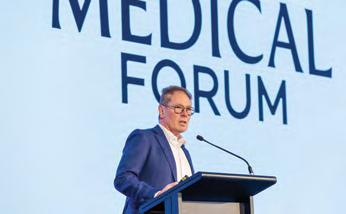
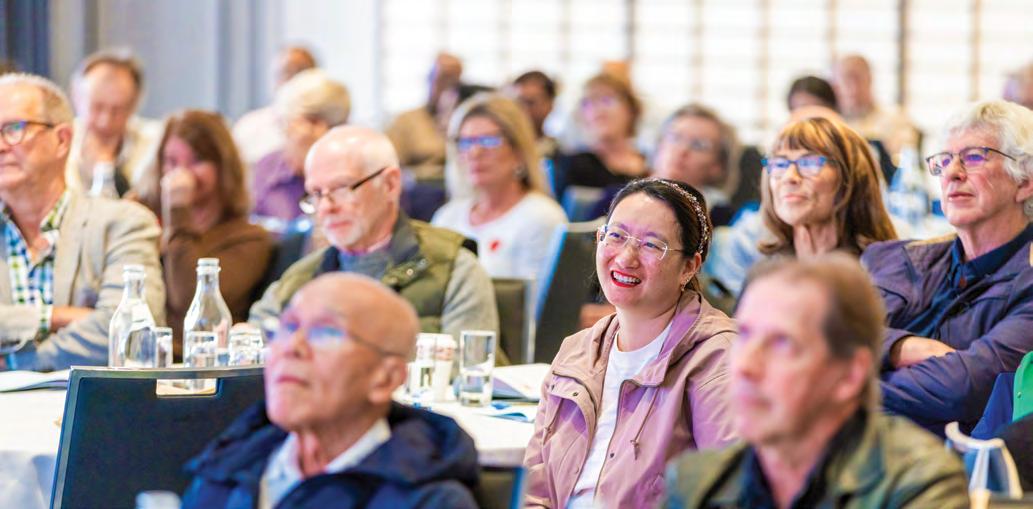
It was a day for catching up with colleagues, earning CPD hours and learning something new at the very first Medical Forum Live.
Education was the aim of the day as more than 130 GPs and specialists gathered at the Pan Pacific in Perth for Medical Forum Live.
From GLP-1s and cardiometabolic overlap in general practice, to emergency department referrals and menopause consults, there was something for everyone in the 10 talks held across the day.
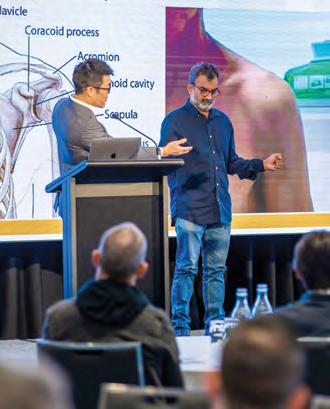
Dr Taro Okamoto was the first talk of the day, speaking to the audience about shoulder complaints and how to manage them in general practice.
The upper limb orthopaedic surgeon was speaking from experience too –he’s had not one, but two, orthopaedic surgeries. That puts a whole new spin on ‘practice what you preach’.
VIEWS FROM AN ED DOCTOR
Something GPs see on a regular basis is a patient who might need to go to the emergency department (ED), but Fiona Stanley Hospital emergency physician Dr Tracey Bhar gave the audience pause for through before referring to the ED.
Dr Taro Okamoto gave the audience a realtime demonstration on shoulder mobility.
Sharing a picture of her triage screen from just a few days before the event, Dr Bhar pointed to patients who had been waiting in the ED for up to 88 hours. It’s a picture that is becoming common place as the hospital system faces a growing population and increased demand.
“I can go home, have dinner with my family, have a good night’s sleep and come back the next day and they are still there. I never thought I’d be doing continuity of care in the ED, but I’m doing continuity of care now,” she said.
Her solution doesn’t fix the system, but it may reduce pressure on ED. She encouraged GPs to call ahead of referring to double check it is the right hospital to send them to, with the right specialities available.
“The system is still quite segmented. Ideally all hospitals would have all of the specialities, but we just don’t,” she said.
“So, if your patient is unwell and needs to go to the ED today, pick up the phone and give us a call.
“It doesn’t fix the system, but for that patient you may have saved them hours of waiting and stress.”
In between talks, exhibitors including Novartis, GSK, Medtronic, Lawley, Besins, Aspen and Avant were on hand to chat to attendees about the services they offer and how they may benefit patients.
Speakers were able to connect with GPs at their own exhibitor stands, offering them the chance to explain their services and make professional connections for future referrals.
Throughout the day GPs and specialists caught up with colleagues and friends, earned CPD hours and were kept sustained with free coffee – always a must at these events –provided by Clinicare Compounding Pharmacy and Westbridge Funds Management. A buffet lunch as well as morning and afternoon tea was provided to keep everyone well-fed.
Dr Tracey Bhar gave attendees and insight into working in the ED.
Dr Xia Ni Wu, who gave a talk on red eye presentations, connecting with attendees afterwards.
CONTINUED ON PAGE 25
LIPIDS AND GLP-1s
Speaking of keeping everyone sustained and blood sugars steady, part of the day focused on optimising lipids in primary care and the cardiometabolic overlap in general practice, including the onset of GLP-1s and how they are used to manage diabetes and other metabolic concerns.
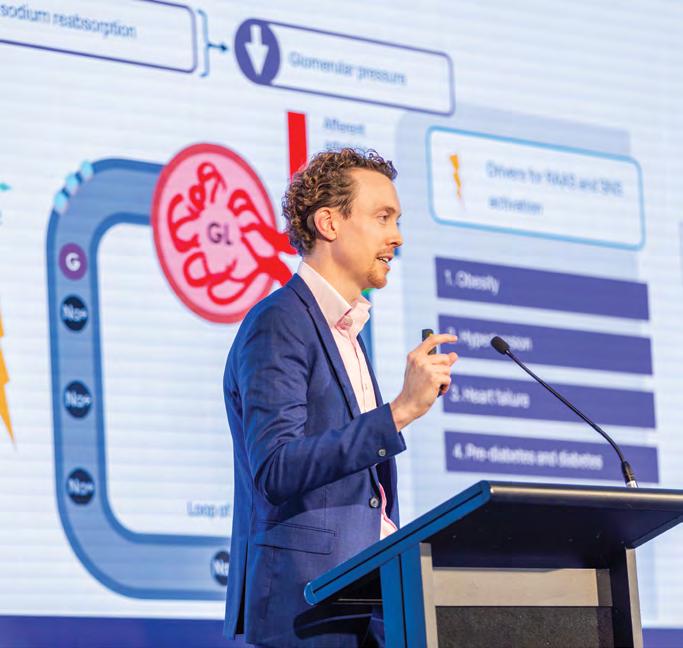
Endocrinologist Dr Michael Hancock, who gave up time on his birthday to attend Medical Forum Live, spoke about the benefits of GLP-1s and SGLT2 inhibitors beyond diabetes management.
As the cardiovascular, blood pressure, kidney benefits and more become understood about these drugs, Dr Hancock predicted they would become more widely used.
Answering a question about patients gaining weight back after using GLP-1s, and whether there was a place for microdosing these drugs, he said they will become a mainstay of treatment.
“I think if you went from the dose you were on, to achieve what you achieved, and then you stop, you will
have all those hormonal changes, your weight will go back up.
“I genuinely think our future is long-term use of these therapies.
“It’s not just weight, it’s the metabolic changes as well, I think our society is just going to have these going forward.”
Other talks focused on menopause consults, vaccinations in older adults, critical limb ischaemia, red eye presentations and heart murmurs.
Common claims and complaints that GPs face were also a topic of discussion, and a timely one given the increase in Ahpra notifications recorded in the regulators latest annual report.
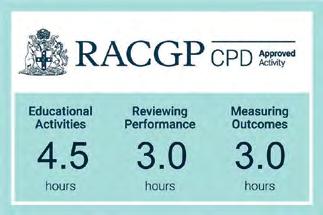
Throughout the day attendees could earn up to 22 CPD hours, gaining a mix of both educational activities, reflective practice and measuring outcomes hours.
TALKS PROVED POPULAR
Feedback from GPs highlighted the relevance of talks and variety of topics.
“I really enjoyed it. Sessions were relevant, informative, current,
engaging, and a good length. Breaks were well spaced and the food and trade stalls were also really good,” one GP said.
Another said: “Concise and focused on common GP topics and dilemmas we face in daily practice.”
Others noted the easy-todigest approach to the day.
“It was excellent without having too many facts crammed into too little time.”
Perhaps one of the more glittering aspects of the day was the chance to win a diamond necklace courtesy of Scagnetti Jewellers. All attendees went into the draw to win, but only one who stayed until the end would go home with the gem.
Dr Cathryn Higgins from Rokeby GP was the lucky winner and, if her reaction was anything to go by, she was very pleased with the result.
Needless to say, the team at Medical Forum were thrilled attendees were happy and we can’t wait to be back here again. Watch this space for 2027. MF
Dr Michael Hancock spoke about the cardiometabolic overlap in general practice.
Dr Cathryn Higgins was the lucky winner of a diamond necklace from Scagnetti jewellers.
WA’s first Neurological Health Strategy
It is hoped treatment and support for those with neurological conditions could be improved by the creation of Western Australia’s first Neurological Health Strategy (WANHS).
According to WA Health the strategy, which aims to provide strategic direction to enhance care delivery for people affected by neurological conditions, will be the first to be delivered in Australia.
Such conditions, which affect the brain, spinal cord, nerves and/or muscles, often have lifelong impacts on individuals, families, and communities.
They are a leading cause of disease burden in Australia, with more than 600 different neurological conditions with a variety of causes.
The strategy will focus on neurological conditions affecting both children and adults that are currently not addressed in other policy areas. Given there are existing strategies and initiatives covering dementia and stroke, these conditions will not be included.
It seeks to identify and close gaps
in care, strengthen support systems, and enhance overall health outcomes. One in three West Australians are affected by a neurological condition.
In September 2025, Neurological Alliance Australia released a National Action Plan in which it called for the federal, state and territory governments to take urgent and strategic action to recognise, prioritise and support people with neurological conditions.
“Despite their growing prevalence, neurological conditions have not received the same attention or investment as other disease groups,” the plan stated.
“This systemic oversight is contributing to increasing disability, preventable hospitalisations, and unsustainable costs across the health, aged care, and disability sectors.”
The plan noted that services were often limited, fragmented, and not embedded within national health policy or strategic frameworks, which it said resulted in “major gaps in care and equity”.
WA Health Director General
Dr Shirley Bowen said the neurological strategy would guide future service planning, policy development and access to care for people across the state.
She said it would be informed by patients and carers via a public online survey and a series of targeted consultations to identify current strengths, challenges and future priorities for neurological care.
“Consultation is a critical first step to understand how services are currently delivered, where the gaps exist, and how we can better meet the needs of patients and their families into the future,” she said.
Parkinson’s WA chief executive Yasmin Naglazas has been invited to join the WANHS Advisory Group.
“This strategy represents an important step forward in addressing unmet needs and building a more inclusive, responsive health system,” she said.
The final Western Australian Neurological Health Strategy is expected to be delivered by mid-2027. MF
Compassionate release of super: what you need to know
By Ben Kelly, Deputy Commissioner, Australian Taxation Office
As health practitioners, you play an important role in supporting patients through periods of illness, injury and vulnerability.
Requests for assistance with early access to superannuation can place you in a difficult position, particularly where patients are experiencing pain, illness or financial pressure.
The vast majority of health practitioners act professionally in their patients’ best interests. However, the Australian Taxation Office (ATO) continues to see misunderstandings in some quarters about when compassionate release of super is available and what is required.
This is being driven in part by aggressive marketing that suggests early access is quick, routine or guaranteed.
We have observed a rise in misleading promotions encouraging patients to access their super early, particularly in relation to dental and cosmetic treatments.
We have also heard from some health practitioners who have been asked to support applications that fall outside the intent of the compassionate release provisions.
A LIMITED AND LAST RESORT
Superannuation is designed to support Australians in retirement, and access before that time is tightly restricted. Compassionate release of super is only available in limited, genuine circumstances and is intended strictly as a last resort where a person has no other reasonable means to pay for an eligible expense.
From a medical perspective, compassionate release of super may apply where the relevant treatment is needed to: treat a life-threatening illness or injury · alleviate acute or chronic pain alleviate acute or chronic mental illness.
Experiencing pain or distress does
not automatically mean a patient is eligible. We consider the thresholds set out in the law – life-threatening, acute and chronic – are serious ones requiring sound, professional judgement as to whether they have been met.
Where treatment options include those with varying degrees of cosmetic outcomes while also addressing a condition eligible for compassionate release of super, the ATO expects health practitioners to certify and quote for only the treatment necessary to effectively treat the eligible condition rather than a higher cost treatment that would provide additional cosmetic benefits, even if the higher cost treatment is the patient's preference.
We have observed a rise in misleading promotions encouraging patients to access their super early.
It is also important for patients to understand what they may lose by accessing super early. Early release can significantly reduce retirement savings; removing the benefit of long-term investment returns and resulting in additional tax being paid on the amount withdrawn. These long-term impacts are not always well understood when a patient is focused on their immediate health concerns. By providing accurate medical information, declining to support inappropriate requests, and directing patients to trusted sources, health practitioners play an important role in supporting informed decision making.
This does not require health practitioners to determine eligibility, only to ensure their medical input is accurate and professionally sound.
THE PRACTITIONER’S ROLE
Health practitioners may be asked to complete an Early Release of Superannuation medical report to support a patient’s application. When doing so, it is critical that the information provided is accurate, complete and reflects your independent professional medical opinion.
Health practitioners should clearly describe the patient’s condition, its severity and how the proposed treatment directly relates to the relevant condition – that is, how it will alleviate acute or chronic pain, alleviate acute or chronic mental illness, or treat a life-threatening illness or injury. This information should be consistent with the patient’s clinical records and based on a thorough clinical assessment.
A health practitioner’s role is to provide medical information. The ATO will generally rely on this information to determine if patients meet the eligibility criteria.
This is appropriate, as the ATO does not have the professional expertise to make these judgements. While a medical report is an important part of the assessment process, it does not guarantee approval, especially if we have evidence that suggests the process is not consistent with a sound and professional assessment of the individual’s conditions.
The final decision rests with the ATO in accordance with the legislation. It is not appropriate to exaggerate a condition, alter clinical descriptions at another’s request or suggest that early access will be approved. Health practitioners are also not registered tax agents and must not charge patients fees to assist them in accessing their super.
Misleading promotions
An ongoing concern is the role of some third-party promotions that claim early access to super can be quick, routine or guaranteed.
Red flags to be alert of include: promises of “fast” or “guaranteed” approval
· pressure to pay for the treatment upfront or commit quickly to the treatment offers for someone else to apply on the patient’s behalf, particularly if there are requests for the patient’s myGov login details
PRACTICAL GUIDANCE
There is information available, including on the ATO website, about the financial and tax implications of withdrawing super for your patient.
Early release may also be treated as income for various government benefit means-testing purposes, impacting on your patient’s continuing benefit eligibility.
Potential applicants should seek independent financial advice. Government websites you may find
suggestions to exaggerate or alter medical information
· bundling compassionate release applications with specific treatment packages
Awareness of these warning signs can help health practitioners identify when patients may be receiving misleading information and support them to seek reliable advice.
helpful to point to in this regard include:
· Centrelink’s free Financial Information Service: www.servicesaustralia.gov.au/ financial-information-service
· Moneysmart: www.moneysmart.gov.au for financial counselling and advice ATO: www.ato.gov.au and put ‘QC73096’ in the search bar. Health practitioners should familiarise themselves with this guidance and to refer patients to official ATO information,
rather than relying on the marketing of third-party promoters. By providing accurate medical information and declining to support inappropriate requests, health practitioners play an important role in helping patients make informed decisions, while maintaining professional and ethical standards. MF
More information is available at ato.gov.au/misleadingadvertising.
Case study: Perth GP suspended over superannuation access
The guidance from the ATO comes amid an increase in medical and dental professionals helping patients to access their super early.
Between 2019 and 2025, Ahpra received 95 complaints about medical and dental practitioners involved in the compassionate release of superannuation.
In one case, a Perth GP was found to have engaged in professional misconduct by assisting a patient to gain early access to their superannuation to pay for a cosmetic liposuction procedure.
The WA State Administrative Tribunal (SAT) heard on March 19 the GP completed an Early Release of Superannuation Declaration form in 2018 for a female patient.
In it he declared the patient should be able to access the funds to have liposuction cosmetic surgery for the “life threatening illness or injury” of obesity.
In his clinical assessment he did not document the patient’s weight or BMI, reference that the patient was obese, or had any life-threatening illnesses or injuries.
The patient’s application to access her superannuation early was approved and she received $18,500 to pay for the surgery, which took place later in 2018.
The Tribunal heard the GP assisted the Medical Board with its investigation, made admissions at the first available opportunity and implemented changes to his clinical practice in response to this matter.
It found his actions constituted professional misconduct. He had his registration suspended for three months and was ordered to pay costs of $5000.
Upcoming GP Education Events
Perth Women’s & Children’s Health
Update 2026
Australia’s most popular one-day seminar for GPs returns to Perth with the latest information and practical insights, delivered by Healthed and featuring a comprehensive program of leading experts in women’s and children’s health.
Date: June 20, 8:30am-6:30pm
Where: Perth Convention & Exhibition Centre
The Cutting Edge: Introductory Wound Suturing Workshop
Convenor: Dr Nikki Damen
Co-Convenor: Dr Denis Carragher
Faculty: Dr Simon Kusel, Dr Yvonne Pinto, Dr Dhruva Ramachandran
Date: Thursday 18 June, 8.00am
Where: CTEC, The University of Western Australia Entrance No. 2 Hackett Drive, Crawley
Healing – How I treat Hips, Cardio-renal metabolic Issues & Women’s Health
Hips: Dr Sam Duff, Orthopaedic Surgeon plus sports physician and physiologist
CVRM – Dr Imran Badshah, Dr Balvinda Handa, Prof Johan Rosman
WH – Dr Pippa Robertson, Dr Arpita Ghosh, Dr Mini Zachariah
Date: 25 July, 8:30am
Where: UWA Ballroom and Lecture Theatre
The Cutting Edge: Managing Skin and Soft Tissue Injuries Workshop
Convenor: Dr Olga Ward
Co-Convenor: Dr Denis Carragher
Faculty: Ms Tania Girschik, Dr Dhruva Ramachandran, Dr John Rosser-Davies
Date: Friday 12 June, 8.00am
Where: CTEC, The University of Western Australia Entrance No. 2 Hackett Drive, Crawley
Supporting better mental health care in WA’s Wheatbelt
Mental health is a growing concern across the Wheatbelt, with mental ill-health now the second leading cause of disease burden. Since 2015, Black Dog Institute has partnered with CBH Group to improve mental health outcomes for people living and working in the Wheatbelt. Health professionals living or working in the Wheatbelt are eligible to register for a number of workshops.
15 July: Integrating digital resources into mental health care
24 July: Youth in distress – managing suicidality and self harm (blended)
29 July: Diagnosis and treatment of PTSD for emergency services workers
The downside to longer consults
The RACGP and 20 peak patient bodies called on the federal government to fund longer GP consultations to help manage the cost of seeing a GP for patients with chronic disease and complex health needs. But the proposal might not add up, writes Midland GP Dr Nicholas Stanley-Cary.
This proposal, in essence, attributes an equal dollar value to every minute spent with a GP.
The two major consequences of this time-based framework are that it takes no account of the experience of the doctor, and it demotivates productivity.
An experienced doctor should be able to sort through a complex presentation more efficiently, and possibly more effectively, by drawing on knowledge gained by past presentations.
A further important factor in these complex patients is how long the GP has been caring for this particular patient. It naturally becomes easier and quicker to resolve any presenting problems the better we know our patients.
Staying in one practice for several years gleans huge benefits in efficiency – this is a universally accepted notion. In other professions, it's very normal for senior partners to charge a higher hourly rate than their junior colleagues for the consumer to benefit from their long-term gained experience and expert counsel, resulting in a high-quality resolution.
Productivity is determined by reward for effort. If the rate of pay is the same for 20 minutes as it is for 40 or 60, surely the temptation is to take more time with each patient and be rewarded for discussing non-clinical content?
That's great for the doctor who can now see less patients in a day for the same financial reward, and for the fewer patients seen that day, but what about those who can't get seen?
There is a massive unmet need for our services and anything that encourages us to provide less services to our communities surely has to be viewed as a negative.
Emergency departments are overwhelmed by patients who simply
can't get an appointment with a GP.
We already have Chronic Care Management Plans with rewards for three monthly reviews and GP Mental Health Care Plans to address some of the arguments raised for increasing the rebates for spending more time with a patient. It really comes down to who is worth more to the community –
There is a massive unmet need for our services and anything that encourages us to provide less services to our communities surely has to be viewed as a negative.
a doctor that sees eight patients in an eight-hour day, or one that is able to see and sort out 25?
We are called general practitioners for a reason and should be able and capable of providing an extensive range of services efficiently and effectively.
We all have our share of complex patients, but we must never forget to care for all the other patients requiring our comprehensive services.
Attributing equal reward for less output and taking no account of the experience of the provider would be a major change to our professional job description.
The consequences must be thoroughly evaluated before any changes are implemented. MF
ED: Dr Nicholas Stanley-Cary wrote this letter to the editor following the RACGP presenting a signed letter to increase Medicare rebates for Level C and Level D consultations by 40%. The federal budget handed down on May 12 did not set aside any funding to increase MBS rebates for longer consultations.
How good doctors make complicated decisions
In medicine there are always complicated, often stressful situations to manage, but experience teaches calm in high pressure moments, writes Dr Bruce Powell, with medical student Chelsea Bolland.
I mentor medical students whenever I get the chance. I do it because I enjoy it, but also because it helps me remember what medicine is like before experience changes how you think.
Recently, a student I work with told me about something that happened on the wards that unsettled her. She was following a medical registrar during a shift when a MET call came through.
For those not familiar, that’s an emergency call for a patient whose condition is getting worse – the pager sounds and everyone rushes to help.
The call was for a patient with low blood pressure. When they got there, the patient was sitting up in bed, she looked frail, but she was awake and talking. It didn’t seem like the dramatic emergency the alarm made it sound like.
It was what happened next that bothered the student. The senior doctor started talking about the patient’s resuscitation status and whether she should go to intensive care.
The patient’s relatives were there and became upset, which is understandable. To the student, it felt uncomfortable and sudden, she left wondering if something important had been overlooked.
When she shared the story with me, I realised she had seen something that happens often in medicine – she had seen complexity.
But she hadn’t yet noticed the structure beneath all that complexity.
I asked her a simple question: “What was wrong with the patient?”
She paused: “I don’t know.”
And that is where the interesting part of medicine begins. When there’s an emergency call, you run, you don’t know if the patient is bleeding, can’t breathe, is having a heart attack,
or collapsing from an infection.
The criteria for these calls are broad on purpose because it’s much worse to miss a real emergency than to respond to a false alarm. But the moment you enter the room, something important happensyou begin applying structure.
THE STRUCTURE
In medicine, that structure is called ABC: airway, breathing, and circulation.
It might sound simple, even basic, but it’s one of the most powerful tools in clinical practice because it buys you time.
Imagine walking into a room and greeting a patient, who greets you back.
That short conversation already tells you their airway is open, they are breathing adequately, their brain is receiving enough oxygen to hold a conversation.
In just a few seconds, you’ve ruled out three serious problems. The emergency just became less urgent. It’s not about knowing everything, it’s about quickly ruling out big dangers.
ASKING THE RIGHT QUESTIONS
The student I mentor remembered something important; the patient felt dizzy when she stood up to go to the toilet.
Her blood pressure dropped for a moment, then came back up. That small detail rules out another group of possible causes.
Massive bleeding usually does not resolve spontaneously. A collapsed lung does not suddenly fix itself. A pulmonary embolus rarely disappears in two minutes. But sometimes the heart acts up for a moment and then goes back to normal – blood pressure can fall if someone stands up too fast. Older patients, for example, often have weaker cardiovascular reflexes. The problem begins to narrow and the next steps become obvious:
• Feel the pulse
• Listen to the heart
• Look for irregular rhythm
• Check an ECG.
It just takes calm thinking and knowing how to ignore things that aren’t important yet.
Expertise in medicine isn’t about being certain, it’s about having disciplined doubt. Experience transforms chaos into structure and, when that happens, complicated things seem simple
This is where junior doctors often struggle. When you’re new, every detail seems important, you try to keep the whole problem in your head at once, which can be overwhelming.
Senior clinicians seem calm not because they’re smarter, but because they’ve learned to quickly set aside information they don’t need.
Having structure helps protect your mental energy and medicine is no different.
NOT WITHOUT RISK
But high-performance thinking also carries a risk. If you simplify a problem too fast, you might be wrong.
That’s why good clinicians always ask themselves another question: “What else could this be?”
This skill isn’t just about narrowing things down; it’s about quietly keeping other possible explanations in mind while you check the most likely one.
Expertise isn’t about being certain, it’s about having disciplined doubt.
The medical student I mentor eventually understood what had happened that day.
She thought medicine was about knowing the answer immediately, but it isn’t. Medicine is about knowing how to think, even when you don’t have the answer yet.
When she first described the emergency call, it sounded chaotic, but beneath all the noise there was actually a simple process happening.
A few structured steps turned a scary alarm into a problem that could be managed.
That is what experience does, it transforms chaos into pattern and when that happens, complicated things start to seem surprisingly simple. MF
Spinal and Joint RFA
By Dr Mark Hamlin, Diagnostic and Procedural Radiologist, Claremont
Chronic musculoskeletal pain –including osteoarthritis of the spine, shoulders, knees and hips – represents one of the most common and demanding challenges in general practice. When first and second-line conservative measures have been utilised and patients remain symptomatic, radiofrequency ablation (RFA) may be an effective treatment in selective patients. The duration of efficacy is frequently 12-24 months and can be repeated when pain recurs. Most health practitioners are aware of CT guided RFA for spinal conditions, however there is a growing interest in using RFA for osteoarthritis of hips, knees, shoulders, and peripheral nerve pain conditions.
WHAT IS RADIOFREQUENCY ABLATION?
RFA can provide reduction in pain from six months to two years. There are two types of radiofrequency treatments:
1. Radiofrequency neurotomy (rhizotomy) – transmits RF energy, heating tissue to 80-90 degrees via an electrode/cannula. It is typically used to treat facet joint, knee joint and sacroiliac joint pain 2. Pulsed Radiofrequency – creates heat to the nerves but at a lower temperature of 42 degrees. This treatment provides pain relief without causing significant damage to nerves. It is particularly used for peripheral nerve conditions.
PATIENT SELECTION: WHAT GPs SHOULD LOOK FOR
Good outcomes from RFA are strongly dependent on appropriate patient selection. As the referring GP, the following characteristics are associated with better
procedural outcomes:
• Confirmed facet, genicular, or SI joint-mediated pain (typically established through diagnostic blocks or clinical pattern recognition by the receiving specialist)
• Chronic pain (typically >3 months) that has been refractory to adequate conservative management
• Pain that is well-localised and mechanically patterned rather than diffuse or primarily neuropathic
• Psychology and physical therapies have been, or will be, commenced peri-treatment with RFA
• Patients who are not appropriate surgical candidates, are awaiting surgery, or have explicitly declined surgical options
• Consider blood thinner therapy and bleeding dyscrasias. Frequently procedures do not require cessation of therapies.
Absolute contraindications include local or systemic infection, coagulopathy, and inability to consent.
MANAGING EXPECTATIONS AND FOLLOW-UP
Pain relief following RFA typically begins within two to six weeks as the ablated nerve fibres undergo degeneration. Peak effect is generally
experienced at one to three months post-procedure.
Duration of effect is variable: for lumbar medial branch RFA, published data suggest meaningful relief in 60-80% of appropriately selected patients, lasting 6-18 months. The procedure may be repeated as nerve regeneration leads to recurrence of pain. There are no specific complications or tolerance with repeat treatments
GPs play an important role in post-procedure monitoring and a follow up appointment is advised in 4-6 weeks. Patients should be counselled that RFA does not modify the underlying structural disease, and that ongoing exercise rehabilitation and self-management strategies remain essential.
A structured physiotherapy program commenced at 2-4 weeks post-procedure may consolidate functional gains achieved through pain reduction. MF
KEY TAKEAWAYS FOR GPS
• RFA is a minimally invasive option for selected patients with chronic spinal facet joint, knee/hip/ shoulder OA pain refractory to conservative treatment and prior to considering opiate medication
• Diagnostic medial branch nerve blocks, or FJI, typically precede spinal RFA – this is part of the clinical pathway, to optimally select the correct patient population
• Diagnostic CT or MRI are needed within 18-24 months to support the diagnosis and exclude red-flag conditions
• RFA complements physiotherapy, rehabilitation, psychological, pharmacologic and selfmanagement strategies.
Appointments generally within 48 hours
CLINICAL EDITOR
Dr Joe Kosterich
Keeping it personal
As clinicians our patient lists are becoming increasingly long and often providing care can feel time pressured.
One of Michael Palin’s Ripping Yarns was Tomkinson’s Schooldays in which Tomkinson was bullied at school and eventually becomes head school bully.
Initially keen to bring about change, once in charge he felt no particular need to make changes. While satirical, it highlighted repeating patterns of behaviour.
In the 1980s interns worked well over 60 hours a week and registrars even more. Doctors were the only group where overtime kicked in after 48 hours. The argument was that one needed to work long hours to gain experience. Sleep was luxury and doctors were scared to speak out.
The latest AMA (WA) survey of junior doctors – the 2026 Hospital Health Check – suggests little has changed, with 56% reporting moderate to high burnout. AMA (WA) President Dr Kyle Hoath expressed concern doctors would leave the profession due to burnout and stress.
Many reported being fearful of speaking up because of possible
job loss or stymied progress in their career.
Much like Tomkinson, doctors who experienced these problems in the past are now in positions where they could bring about change, but seem not to be doing so.
There are structural and systemic problems too, with a falling bed and doctor to patient ratio caused by a growing and ageing population. This is on government.
However, this does not absolve us collectively of failing to heed the lessons of our early days and repeating the pattern.
Surely in 2026, there are ways of training doctors that do not rely on sleep deprivation and threats.
Pilots have legally mandated breaks because they are responsible for people’s lives, and many other industries have similar mandates. It is long past time this was adopted in medical practice.
Another Tomkinson generation is not an option. MF
Simplifying the liver fibrosis 4 index
By Professor Leon Adams, Hepatologist and Dr Matthew Garas
Metabolic dysfunction-associated fatty liver disease (MAFLD) is now the most common liver condition in Australia and globally.
Previously termed non-alcoholic fatty liver disease (NAFLD), MAFLD is defined by hepatic steatosis in the presence of metabolic risk factors such as type 2 diabetes, overweight or obesity, dyslipidemia and hypertension.
The shift in nomenclature places greater emphasis on the underlying pathogenesis and recognises its potential to co-exist with additional liver risk factors such as alcohol excess.
Affecting approximately one in three Australians, MAFLD is increasingly encountered in primary care. Alarmingly, cases of advanced liver disease and liverrelated mortality due to MAFLD are projected to rise by 85% in Australia between 2019 and 2030.
The severity of liver fibrosis is the main predictor of future liver-related morbidity in patients with MAFLD. Despite this, the burden of fibrosis is often underrecognised, leading to missed opportunities for early intervention.
NEW RECOMMENDATIONS IN MAFLD ASSESSMENT
The Gastroenterological Society of Australia (GESA) 2024 consensus statement introduced an evidencebased approach for MAFLD assessment in primary care.
This is centred around initial fibrosis risk stratification using FIB-4 and assessment of associated cardiometabolic disease (see Figure 1). What is FIB-4?
The Fibrosis-4 index is an easyto-use calculator that stratifies risk of liver fibrosis using readily
available parameters (ALT, AST, platelets, age). It is an accurate diagnostic tool to predict advanced fibrosis in people with MAFLD, widely validated across multiple centres and ethnic populations.
FIB-4 stratifies people with MAFLD as low, intermediate or high risk for advanced liver fibrosis. The new algorithm is as follows:
• Identify at-risk patients for MAFLD – the prevalence of MAFLD is high in people with metabolic dysfunction (outlined in Table 1). Ultrasound is a highly accurate, widely available, and inexpensive method to confirm hepatic steatosis.
• Calculate FIB-4 – input age, AST, ALT, and platelets into the online calculator
• Interpret the result: Low risk (< 1.3)
• Interpretation: This cohort can be considered “rule out”.
The negative predictive value of a FIB-4 score <1.3 is 95-97%, demonstrating its value at excluding patients with advanced fibrosis.
• Management: Provide lifestyle advice and repeat FIB-4 in three years
Intermediate risk (1.3 – 2.7)
• Interpretation: The risk of advanced liver fibrosis cannot be ruled out with FIB-4 alone. Second-line testing is required to determine the risk of advanced fibrosis and future liver-related morbidity.
• Management: Liver elastography (including Fibroscan®, Shearwave elastography) or direct serum fibrosis test (including Hepascore and the Enhanced Liver Fibrosis Test or ELF) in the community is recommended. People with indeterminate FIB-4 scores but reassuring second-line investigations have an excellent prognosis, thus can be managed as low-risk. Conversely, a concerning second-line investigation result would stratify to high risk and warrant a specialist referral.
High risk (>2.7)
• Interpretation: This cohort is considered high risk for advanced liver fibrosis. The positive predictive value of a FIB-4 score >2.7 in a GP setting is only 24-40%, therefore further confirmatory investigation is required.
• Management: Refer to liver specialist.
Figure 1: Assessment algorithm for a patient presenting with MAFLD.
reduces with increasing age. As such, the lower threshold of 1.3 should be increased to 2.0 in patients ≥65 years. Thus, patients aged ≥65 years need a score >2.0 to instigate further investigation with an elastogram, Hepascore or ELF blood test.
Thrombocytopenia: Non-hepatic causes of thrombocytopaenia (eg immune-mediated thrombocytopenia, alcohol excess) may falsely elevate scores.
Acute illness: Transient transaminitis (such as acute hepatitis) may lead to false positives.
LIMITATIONS OF FIB-4
The principal utility of FIB-4 lies in its high negative predictive value for excluding advanced liver fibrosis. Importantly scores should not be interpreted in isolation and clinical correlation is required.
Due to its modest positive predictive value, all patients with FIB-4 scores >1.3 require further investigation.
Age: The specificity of FIB-4
IMPLICATIONS ON FUTURE PRACTICE
In view of the current evidence-based recommendations, GPs can now confidently diagnose, and risk stratify MAFLD patients in the community.
In addition, MAFLD patients at low risk of advanced liver fibrosis can be safely managed in primary care with lifestyle intervention and interval reassessment.
For patients with intermediate or high-risk scores, GPs can
New Radiology Care for the South West Community
Expert diagnostic imaging is now available at PRC Bunbury, supporting patients across the South West.
Our clinic provides MRI, CT, ultrasound, x-ray, DEXA, injections and selected biopsies, with short wait times and patient focused care to help you get the answers you need, closer to home.
Our clinic provides
initiate second-line, non-invasive investigations or refer appropriately depending on local resources and availability. This structured approach facilitates earlier diagnosis and management of silent advanced liver fibrosis, while reducing unnecessary specialist referrals. MF
Author competing interests – Prof Adams was involved in developing the Hepascore.
KEY MESSAGES
• FIB-4 is the recommended firstline test to risk-stratify advanced liver fibrosis in MAFLD
• Most low-risk patients can be safely managed in primary care
• Intermediate/high-risk patients require further assessment and/or specialist referral.
Genicular Nerve Ablation for knee pain
By Associate Professor Raj Gunaratne, Orthopaedic Surgeon, Perth
Knee pain is one of the most common presentations in primary care, particularly in the ageing population with osteoarthritis (OA). While conservative management and total knee arthroplasty represent the traditional ends of the treatment spectrum, a substantial proportion of patients fall between these options.
Many patients are not ready for surgery, are unsuitable due to comorbidities, or continue to experience pain despite non-operative measures.
Genicular nerve radiofrequency ablation (RFA) is an emerging minimally invasive option that effectively bridges this treatment gap.
RATIONALE AND ANATOMY
Pain in knee OA originates from nociceptive input arising from the joint capsule, synovium, periosteum and subchondral bone. These signals are transmitted via articular sensory branches supplying the anterior knee.
Cadaveric studies demonstrate that the anterior knee joint is consistently innervated by branches targeting four quadrants, with the superomedial, superolateral and inferomedial genicular nerves forming the primary targets for intervention. Typically, three to six sites are targeted.
Radiofrequency ablation works by thermally disrupting these sensory pathways, reducing transmission of pain signals to the central nervous system while preserving motor function.
WHY RADIOFREQUENCY ABLATION?
RFA is a minimally invasive, outpatient procedure performed under image guidance. It is particularly valuable
in patients who:
• Have persistent pain despite over three months of conservative therapy
• Are not suitable candidates for arthroplasty (e.g. age, BMI, comorbidities)
• Wish to delay joint replacement
• Have ongoing pain following total knee arthroplasty after exclusion of mechanical causes. Unlike surgery, the procedure requires no incision and can be done without general anaesthesia, allows same-day discharge and as a low complication profile
COOLED RADIOFREQUENCY: CLINICAL ADVANTAGE
Recent advances in radiofrequency technology have focused on improving lesion size and consistency. Cooled radiofrequency systems allow greater energy delivery, formation of larger, spherical lesions and improved ability to capture anatomically variable nerve pathways. This is particularly relevant given the known variability in genicular nerve anatomy, where branches may not reliably lie at fixed bony landmarks.
Larger lesion size increases the likelihood that target nerves are successfully ablated, improving clinical consistency and durability of outcomes.
EVIDENCE AND OUTCOMES
There is increasing high-level evidence supporting genicular nerve RFA in knee OA. A systematic review of randomised controlled trials demonstrated:
• Significant improvements in pain, function and quality of life compared with nonsurgical treatments
• Superiority over intra-articular corticosteroid and hyaluronic acid injections for pain
• Functional outcomes and no serious adverse events reported across studies. Randomised trial data further show over 50% pain reduction in approximately 65-75% of patients at 6-12 months, sustained improvements in functional outcomes and high patient satisfaction rates.
In selected patients, pain relief may persist for 12-24 months, with reduced reliance on analgesic medications.
CLINICAL POSITIONING
A key strength of genicular nerve ablation is its role in bridging the gap between short-term therapies and joint replacement surgery. Traditional non-operative options include NSAIDs and analgesics (limited by side effects), corticosteroid injections (short duration, typically 4–6 weeks) and visco-supplementation (variable benefit).
By contrast, RFA offers longer duration of pain relief, improved functional capacity and reduced medication reliance. This makes it particularly valuable for patients in the treatment gap – those not yet ready or suitable for arthroplasty.
PRACTICAL APPROACH FOR GPs
A structured pathway can assist in identifying appropriate patients:
• Optimise conservative care –physiotherapy and strengthening, weight optimisation, pharmacological therapy,
injections as appropriate
• Consider referral for RFA if there is persistent pain impacting quality of life, limited response to conservative treatment or surgery not appropriate or declined
• Refer to orthopaedic surgeon
LIMITATIONS
Despite promising outcomes, several limitations remain. Pain relief is temporary, with nerve regeneration over time, but GNA can be repeated. It does not alter underlying OA progression and not all patients respond.
GNA should not delay appropriate surgical referral when indicated – recommend referral to surgeon who has GNA and surgical options in their armamentarium to knee pain management.
FUTURE DIRECTIONS
As technology advances, genicular nerve ablation is likely to play an increasing role in knee OA management.
Ongoing developments include refinement of targeting techniques
using ultrasound and fluoroscopy, expanded use in post-arthroplasty pain and integration into earlier treatment pathways. MF Author competing interests – nil
KEY MESSAGES
• Genicular nerve ablation is an effective minimally invasive option for patients with knee OA who are not ready for surgery or have persistent pain
• Cooled radiofrequency improves lesion size and consistency, increasing the likelihood of successful nerve capture
• It bridges the gap between short-term therapies and joint replacement, offering sustained pain relief and functional improvement.
New guidelines for male infertility in general practice
By Dr Trent Barrett, Urologist, Nedlands
Infertility affects around one in six couples, with male factors contributing in up to half of cases.
The first Australian evidencebased guidelines for male infertility provide an opportunity to strengthen primary care assessment ensuring that potentially reversible or treatable male factors are not overlooked.
Developed through Healthy Male and endorsed by major professional bodies including the Urological Society of Australia and New Zealand, the Endocrine Society of Australia and the Fertility Society of Australia and New Zealand, the guidelines include 80 graded recommendations tailored to Australian practice.
For GPs, the recommendations support a coordinated approach alongside fertility services rather than an alternative to them. Initial evaluation should include history, physical examination including scrotal examination, and semen analysis (GS1), undertaken in parallel with assessment of the female partner (GS2).
If the initial semen analysis is abnormal, repeat testing after approximately six weeks is recommended (GS4). Where abnormalities persist or male factor infertility is suspected, referral to a specialist in male reproduction (urologist or andrologist), is advised (GS5).
This early evaluation step helps ensure that ART is used in a targeted and informed way, and couples are aware of the full range of management options. Re-evaluation of the male partner is also recommended in cases of failed ART cycles or recurrent pregnancy loss (GS10).
VARICOCELE
A palpable varicocele remains one of the most common potentially reversible causes of male infertility. The guidelines recommend clinical examination, including with Valsalva manoeuvre, to identify a clinically significant varicocele (GS40).
Treatment should be considered in men with infertility and a clinical varicocele in the presence of abnormal semen parameters, elevated sperm DNA fragmentation, unexplained infertility, or suboptimal ART outcomes (GS41).
In selected patients, varicocele repair may improve semen parameters and enhance fertility outcomes, either naturally or alongside ART.
Importantly, the guidelines focus on clinically palpable varicoceles not incidental ultrasound findings, helping avoid unnecessary intervention while ensuring potentially significant pathology is not missed.
AZOOSPERMIA
Men with azoospermia require careful evaluation to distinguish between obstructive and non-obstructive causes (GS13).
This distinction is critical, as obstructive azoospermia may be amenable to surgical correction or targeted sperm retrieval, whereas non-obstructive azoospermia requires different counselling and management.
Routine diagnostic testicular biopsy is not recommended prior to sperm retrieval (GS14, GS57), as it may compromise future retrieval attempts.
The guidelines also highlight the growing role of micro-testicular sperm extraction (micro-TESE). Micro-TESE is recommended as the preferred sperm retrieval technique for men with nonobstructive azoospermia (GS56).
Conventional TESE may still be used where micro-TESE is unavailable, but fine needle aspiration and testicular sperm aspiration are not recommended as definitive techniques in this setting because of lower sperm retrieval rates (GS59).
POST-VASECTOMY FERTILITY
Importantly, vasectomy reversal remains a highly relevant option for many couples. For men seeking further children after vasectomy,
the guidelines recommend discussing both reconstructive surgery and sperm retrieval with ART (GS51, GS52).
Australian studies demonstrate encouraging success rates following microsurgical vasectomy reversal, even more than 10 years after vasectomy. With an obstructive interval of less than 10 years, success rates are higher than 90%.
Recent Australian data showed potency rates of 77% at an average obstructive interval of 15 years, increasing to 79% when including salvage reversal procedures.
These findings reinforce that restoration of sperm to the ejaculate remains achievable in many men, even after prolonged intervals since vasectomy.
This does not diminish the important role of ART, which remains appropriate for many couples, but reinforces the value of informed discussion regarding all available options. Early referral to a urologist experienced in male infertility can help couples make decisions based on
timing, cost, reproductive goals and likelihood of success.
A HEALTH MARKER
Beyond fertility outcomes, the guidelines emphasise that male infertility can be a marker of broader health. Assessment provides an opportunity to identify comorbidities such as obesity, metabolic disease, cardiovascular risk and androgen deficiency (GS37).
Lifestyle optimisation, including weight management, physical activity, smoking cessation and reduced alcohol intake, should be routinely addressed (GS36).
For GPs, the key message from these guidelines is not that ART should be delayed, but that male infertility assessment should become a routine and integrated part of fertility care.
Early evaluation and timely referral can complement ART pathways, identify reversible conditions, and ensure couples are offered the full range of evidence-based management options. MF
Medical Marketing and GP Engagement services for specialist consultants marketing • branding • advertising
With a background in surgical nursing, specialist practice operations and patient focussed healthcare, Olivia brings both sides of healthcare to the table – clinical credibility and strategic marketing insight.
• Male infertility assessment should occur early and in parallel with female fertility assessment
• Evaluation may identify reversible causes or alternatives that complement ART pathways
• Male infertility can be a marker of broader health issues including cardiometabolic disease and androgen deficiency
‘Many exceptional specialists are clinically brilliant, but don’t often have the time, systems or strategic support needed to grow their referral networks and build a modern presence. Have you tried googling yourself? I suggest you do – because that’s what your patients are doing.’
OLIVIA HORNSBY – FOUNDER
Interventional management of chronic low back pain
By Dr Mark Hamlin, Diagnostic and Procedural Radiologist, Claremont
The use of interventional procedures to treat (noncancer) chronic spine pain is growing, yet recommendations can seem contradictory.
What is a reasonable approach in the face of differing opinions?
In 2016 (and updated in 2020) NICE guidelines say ‘do not offer’ spinal cortisone injections including facet joint injections (FJI) and nerve root sleeve injection (NRSI).
Whilst radiofrequency (RF) denervation remains a recommended treatment for lower back pain after positive medial branch blocks (or FJI) using CSI/LA. Medial branch block is equivalent to FJI, reducing FJOA pain by targeting the nerve supply instead of injecting the joint structure itself.
The latest guidelines from BMJ RAPID 2025 reiterate the NICE recommendations with a difference of also excluding RFA, based around the heterogeneity of lowquality evidence with many studies showing no benefit/possible risks.
Yet, recent studies show a substantial positive outcome for certain procedures when patients are well selected and undergo multimodality treatment.
The following procedures are supported by research and continue to be frequently performed in Australia for chronic low back pain (and neck pain conditions).
EPIDURAL INJECTIONS
ASIPP (American Society of Interventional Pain Physicians) 2021 review of 47 systemic reviews and 43 randomised controlled trials covering all epidural types concluded the following:
Disc herniation: level I evidence for all types of epidurals to the lumbar and cervical spine with
strong recommendation for long term effectiveness.
Spinal stenosis: level II for cervical and lumbar interlaminar epidurals.
Axial discogenic pain: level II evidence with a moderate to strong recommendation long-term improvement.
Percutaneous adhesiolysis: recommended for patients who failed initial injections and conservative treatment.
Epidural factors to consider include a maximum of four epidurals per year. Recommend limiting steroid doses to 80mg triamcinolone, 12mg betamethasone, or 15mg dexamethasone.
Imaging guidance is mandatory and preprocedural imaging critical.
REGENERATIVE/BIOLOGIC TREATMENTS
Based on current evidence, lumbar intradiscal injections of platelet-rich plasma (PRP) and mesenchymal stem cells (MSCs) are supported by level III evidence.
Likewise lumbar epidural PRP injections and PRP injections for lumbar facet joints and sacroiliac joints are supported by Level IV evidence.
RADIOFREQUENCY ABLATION
A RAPID study evaluates real-world clinical outcomes in RFA treated
patients with chronic lower back pain due to facet joint OA. Some 193 patients were followed up for 24 months. There was a good treatment response in relation to pain and function up to the 24-month time point. Also, quality of life and treatment satisfaction was observed across all time points. The benefits were deemed to be clinically meaningful and durable. L4-5> L5-S1> L3-4 levels were treated. There were no significant adverse events. RFA has been shown to be cost-effective and reduce opiate use.
A similar study design was used to assess cervical pain due to FJOA treated with RFA and the results were similarly positive over a 24-month follow up.
Variant techniques to RFA include cooled RF leading to a larger spherical zone of ablation by preventing burning of tissue adjacent to the needle tip, and basivertebral nerve ablation (BVN) which targets the vertebral endplates for treatment of discogenic back pain with MRI proven discogenic endplate reaction.
NERVE ROOT SLEEVE INJECTIONS
NRSI are utilised to reduce pain and improve function in the treatment of radicular pain (sciatica) caused by disc herniation or spinal canal stenosis. The success rate is
RF cannulas positioned to treat the medial branches of L4-5 and L5-S1 facet joints simultaneously under local anaesthetic.
approximately 76-88% for short term relief.
Some studies demonstrate the relief is maximal within the first three months.
There is potential reduction or resolution of the disc herniation over 6-12 months obviating the need for further procedures/ surgery. The combination of
NRSI and pulsed RF denervation can have a synergistic effect.
NRSI can also be used as a diagnostic procedure to assist surgical planning by confirming a specific nerve root as causing the radicular pain.
A 90% reduction of pain is a good indicator the selected nerve is the culprit and will likely
The same content you trust on a new look, easy to use platform
have a better response with cervical and lumbar surgery.
NRSI injection is more specific than epidural injection to target the culprit impinged nerve. It can also be repeated up to four times per year to delay or obviate the need for surgery particularly in cases of a smaller disc herniation.
As with many surgical procedures, a pragmatic approach considers the specific patient factors, the availability/access to interventions, cost-effectiveness, the risks and alternative options including pharmaceutical, physiotherapy and psychological.
A customised treatment plan by the treating GP and/or specialist is necessary taking all factors into account. MF Author competing interests – nil
From July, Medical Forum moves to a new digital platform providing faster access to CPD tools, clinical content, WA medical news, searchable content archive and podcast conversations with local experts.
The same editorial team and contributors. The same WA voice.
Interlaminar epidural, 23g spinal needle placed within the epidural space (L4-5 level; right paramedian approach), having traversed ligamentum flavum, prior to injection of corticosteroid and local anaesthetic.
The alarming decline in male fertility worldwide
By Dr Sebastian Leathersich, Fertility Specialist, Subiaco
REPRODUCTIVE TECHNOLOGY
RISKS TO CONSIDER
In the last 50 years, human sperm counts have dropped by 63%. If they were to continue to fall at the current rate, the median sperm count would be zero by 2045.
While the cause of this decline is not completely understood, much of it is thought to be due to intrauterine exposure to endocrine disrupting chemicals and other toxins.
These ubiquitous substances, found in everything from plastics and clothing to food and fossil fuel emissions, interact with hormone receptors to modulate endocrine signalling and reproductive development.
Foetal exposure interferes with reproductive system development, predisposing to future infertility and other reproductive effects.
Cryptorchidism rates have climbed significantly in the last 40 years, whilst the incidence of testicular cancer is increasing globally. It is currently the most common malignancy among young adult men in Australia.
These observations support a steady deterioration in male reproductive health over time.
As male fertility declines assisted reproductive technologies have become increasingly important. One quarter of IVF cycles in Australia are now attributed to male-factor infertility.
For mild male-factor infertility, intrauterine insemination can increase the number of motile sperm in the fallopian tubes at the time of ovulation, whilst conventional IVF (where 50-100,000 motile sperm are placed with each egg and fertilisation is allowed to occur “naturally”) can also be an effective treatment.
However, for many couples with severe male-factor infertility, intracytoplasmic sperm injection (ICSI) will be the most effective treatment. ICSI – whereby a single sperm is immobilised and injected into a mature egg – has proven to be one of the greatest advances in assisted reproduction.
Introduced in 1991, it overcomes many causes of male-factor infertility, allowing men with very low sperm counts to conceive. Since its inception, more than 2.5 million children have been born using ICSI, and it is now used in approximately 60% of IVF cycles in Australia and New Zealand with fertilisation rates similar to conventional IVF.
There are some potential risks to consider. Children conceived via ICSI experience a small increase in the risk of congenital abnormalities, whilst male offspring have a significantly higher risk of poor sperm counts themselves. This may partly reflect underlying parental factors rather than the procedure itself.
Despite offering an effective treatment for severe male-factor infertility, ICSI still requires the presence of sperm. Approximately 1% of men will have azoospermia, or a total lack of sperm in the ejaculate, necessitating additional treatment considerations.
Initial evaluation of these men includes a detailed history and examination, plus repeat semen analysis to confirm the finding (ideally with a post-ejaculatory urine specimen to exclude retrograde ejaculation).
This allows azoospermia to be classified as:
Obstructive: OA - a problem with transport of sperm from the testes to the outside world) or, Non-obstructive: NOA - a problem with spermatogenesis within the testes.
OA accounts for approximately
40% of azoospermia cases, with causes including vasectomy, congenital bilateral absence of the vas deferens, infections, ejaculatory duct obstruction or retrograde ejaculation. It can be managed by correction of the obstruction (e.g. vasectomy reversal), medical management for retrograde ejaculation, or surgical sperm retrieval (e.g. TESA).
Surgical sperm retrieval in these patients can usually be performed as a short outpatient procedure under local anaesthetic with very high success rates. NOA is more complex to manage and may be testicular or pretesticular (i.e. hypogonadotropic hypogonadism).
Secondary hypogonadism may be due to congenital or acquired hypogonadotropic hypogonadism (low FSH/LH, low testosterone); causes include Kallmann syndrome, pituitary injury, androgen or opioid abuse, or other endocrine, hypothalamic or pituitary conditions.
This can be amenable to correction of the underlying pathology, or treatment with exogenous gonadotropins to induce spermatogenesis.
TESTICULAR PROBLEMS
Primary testicular causes include congenital conditions, such as Klinefelter syndrome, Y chromosome microdeletions or cryptorchidism, or acquired conditions such as testicular injury or gonadotoxic treatments. Most cases remain idiopathic.
For men with testicular failure, the most effective method for sperm retrieval is microdissection testicular sperm extraction, or micro-TESE. This is performed under general anaesthetic, with the testicular parenchyma being examined under an operating microscope to identify nests of active spermatogenesis.
Success rates are approximately 50%, depending on the cause of azoospermia. Surgically obtained sperm can then be used immediately for ICSI or
cryopreserved for later use.
Male reproductive health is a critical and sometimes underrecognised contributor to infertility. While assisted reproductive technologies such as ICSI have transformed treatment options, it is vital to evaluate and address the male factor early.
Men should be evaluated as part of the initial fertility workup, and abnormal semen parameters or suspected azoospermia should prompt referral to a specialist in reproductive medicine for comprehensive assessment and management, helping to optimise reproductive outcomes for affected couples. MF
Author competing interests - nil
Selective Internal Radiation Therapy in liver cancer
By Dr Will Ormiston, Interventional Radiologist, Nedlands
Selective Internal Radiation
Therapy (SIRT), also known as radioembolisation, is an established minimally invasive treatment for both primary liver cancers and cancers that have spread to the liver.
By delivering radiation directly into tumours via the hepatic arterial supply, SIRT allows highly targeted treatment while limiting radiation exposure to normal liver tissue. Unlike conventional external beam radiotherapy, which delivers radiation from outside the body, SIRT involves delivering millions of microscopic radioactive beads directly into the blood vessels feeding liver tumours. This is performed via a small catheter inserted through the radial or femoral artery under imaging guidance.
The treatment exploits a key biological feature of liver tumours. While normal liver tissue receives most of its blood supply from the portal vein, many liver cancers derive most of their blood supply from the hepatic artery. This allows radiation to be selectively delivered into tumours.
Once delivered, the Yttrium-90 microspheres become permanently trapped within the tumour microvasculature, delivering high-dose local radiation over approximately one to two weeks. The radiation penetration distance is only a few millimetres, which helps protect surrounding liver.
WHICH PATIENTS
MAY BENEFIT?
SIRT is most commonly used for patients with hepatocellular carcinoma and intrahepatic cholangiocarcinoma, as well as patients with liver metastases. It can be considered in selected patients with breast
cancer metastases, melanoma and other liver-dominant metastatic malignancies.
Historically considered a palliative therapy, SIRT is increasingly being used in earlier treatment settings. In selected patients it may allow downstaging of disease to enable surgery, act as a bridge to transplantation or deliver ablative radiation doses, especially where other curative treatments are not possible.
In more advanced disease it plays an important role in disease control, symptom control and prolongation of survival.
Appropriate patient selection is critical, and referral is usually considered when disease is liver-dominant, when systemic therapy is no longer effective or tolerated, or when a liverdirected treatment strategy may provide additional benefit.
SAFETY CONSIDERATIONS
Detailed planning procedure before treatment ensures the liver arterial anatomy is carefully mapped, tumour blood supply identified and small vessels that could allow non-target radiation delivery are protected. A simulation test is performed
to confirm treatment will remain confined to the liver and to calculate lung shunt fraction.
Advanced dosimetry planning is then performed to determine the optimal radiation dose. Modern personalised dosimetry techniques aim to maximise tumour radiation dose while maintaining safe exposure to normal liver tissue.
These safety protocols have significantly improved both outcomes and complication rates.
TREATMENT PATHWAY
Patients are typically reviewed in clinic by the treating interventional radiologist before treatment to assess suitability, review imaging, evaluate liver function and discuss expected outcomes.
This consultation also provides an opportunity to coordinate care with the patient’s oncologist and other specialists.
Treatment is usually performed as a day procedure or with an overnight stay. Most patients recover quickly and are discharged with simple supportive medications.
Ongoing review is important as some patients may benefit from additional liver-directed therapy or combination treatment strategies.
SIRT or radioembolisation is performed either via radial or femoral artery catheterisation into the arteries supplying liver tumours.
SIDE EFFECTS AND TOLERABILITY
SIRT is generally well tolerated. The most common side effects are fatigue, mild nausea and abdominal discomfort, which are often similar to the symptoms experienced after chemotherapy but typically shorter in duration.
Some patients describe a temporary flu-like syndrome for several days.
Serious complications are uncommon when modern planning protocols are followed and most patients resume normal activities within a short period.
As experience with SIRT has grown, its role in liver cancer management has expanded. It is increasingly being used in combination with systemic therapies, alongside ablation and surgery, and earlier in treatment pathways for selected patients.
For GPs, awareness of liverdirected therapies such as SIRT is important, as patients with
58-year-old man with advanced liver cancer involving the portal vein. Imaging (MRI and ultrasound) confirmed the tumour.
Underwent standard pre-treatment planning with cone beam CT and MAA SPECT/CT.
Treated with SIRT to the right liver lobe. Follow-up scans showed complete response after a single treatment.
liver-dominant disease may benefit from specialist assessment even when systemic treatment options appear limited.
Early referral can sometimes open additional treatment pathways. While patients are typically referred by oncologists, surgeons or physicians, GP enquiries regarding suitability are welcome where appropriate.
As liver cancer treatments continue to evolve, targeted intraarterial therapies such as SIRT are becoming an increasingly important part of modern cancer care, offering selected patients an additional option that may improve both survival and quality of life.
In WA, SIRT requires specialised expertise in interventional oncology, radioembolisation planning and multidisciplinary cancer care. MF Author competing interests – the author provides the service described.
Prime Medical Tenancy
The property is located on the prime corner of Grand Boulevard and Reid Promenade. The location benefits from being within walking distance of the thriving Joondalup Lakeside Shopping Centre and Joondalup Train Station with easy vehicle access to the Mitchell Freeway. Joondalup is approx. 28km north of the Perth CBD.
Suite 3 is located on the first floor of Sanori House one of Joondalup’s most successful medical buildings. The tenancy is fitted with a reception area, training room/boardroom, a meeting room and 3 offices and private kitchenette. The building has both lift and stairwell access.
The building has convenient access to ample public car bays, Joondalup Train station and Lakeside Shopping Centre.
Male gynecomastia in the era of medical weight loss
By Associate Professor Sanjay Warrier, Breast Surgeon
Male breast enlargement (gynecomastia) is a common but often under-recognised condition with potential physical and psychological consequences.
It refers to benign enlargement of male breast tissue caused by proliferation of glandular tissue beneath the nipple–areolar complex. It differs from pseudo-gynecomastia, where enlargement is primarily due to adipose deposition.
The condition can occur at any age and is most commonly associated with hormonal imbalance between oestrogen and androgen activity. Physiological forms occur during neonatal life, puberty and ageing, but persistent or symptomatic gynecomastia often requires further clinical evaluation.
A range of factors may contribute to the condition, including hormonal changes during puberty or ageing, obesity and significant weight fluctuations, medications that alter endocrine balance, genetic predisposition and chronic illnesses affecting hormonal regulation. When no clear cause is identified, it is considered idiopathic.
WHY PRESENTATIONS ARE INCREASING
Clinicians are seeing a rise in male patients presenting with concerns about chest contour and breast enlargement, with use of GLP-1 receptor agonists for medical weight loss being a contributing factor.
These medications can produce substantial and rapid reductions in body weight. However, as surrounding adipose tissue diminishes, residual glandular tissue or redundant skin may become more prominent.
Men who have lost 15-40
kilograms frequently report that while overall body composition has improved, persistent breast tissue remains. This can create visible chest fullness that is resistant to exercise or further weight reduction.
It is important for clinicians to explain that glandular tissue does not respond to diet or resistance training. While weight loss may reduce adipose tissue, it cannot remove the underlying glandular component responsible for true gynecomastia.
CLINICAL IMPACT
Although gynecomastia is often perceived as a cosmetic issue, the clinical impact can be significant. Patients frequently report discomfort or tenderness in the chest area, difficulty finding clothing that fits properly and reluctance to participate in activities such as swimming or exercising in public.
Reduced confidence and long-standing body image concerns are also common. Many men live with the condition for years before seeking medical advice, particularly if symptoms began during adolescence. For those who have recently achieved major weight loss, gynecomastia may represent the final barrier to feeling physically comfortable in their bodies.
ASSESSMENT IN PRIMARY CARE
Initial evaluation should focus on distinguishing true gynecomastia from adipose-related breast enlargement. A thorough medical and medication history is essential, along with a review of endocrine symptoms.
Examination should assess for firm glandular tissue beneath the nipple-areolar complex and evaluate for asymmetry, masses or nipple changes. Where clinical
suspicion exists for underlying pathology, further investigation is warranted and may include hormonal studies or imaging.
Although uncommon, male breast cancer must always be considered in patients presenting with a unilateral firm mass, skin changes, nipple retraction or nipple discharge.
In cases of persistent symptomatic gynecomastia where conservative management is ineffective, referral to an experienced breast or plastic surgeon may be appropriate.
SURGICAL MANAGEMENT
Surgery remains the definitive treatment for persistent gynecomastia caused by glandular tissue. The procedure aims to restore a flatter and more masculine chest contour by removing excess glandular tissue, fat and in some cases redundant skin.
Surgical techniques may involve liposuction, direct glandular excision or a combination approach depending on the patient’s anatomy.
Most procedures are performed as day surgery. Recovery varies,
but many can return to normal daily activities within a few weeks, with strenuous exercise avoided during the early healing phase.
For appropriately selected patients, outcomes are generally very positive and can lead to substantial improvements in both physical comfort and overall quality of life.
Patients may benefit from specialist referral when breast enlargement persists despite weight loss or when palpable glandular tissue is present beneath the nipple–areolar complex.
Also consider referral in patients experiencing chest contour concerns following significant weight reduction, ongoing physical discomfort or psychological distress related to the condition.
Early referral allows for accurate diagnosis and discussion of appropriate treatment options, particularly for patients who have already achieved significant improvements in their health but remain concerned about residual breast tissue.
Medical Forum Podcast
Join our clinical editor Dr Joe Kosterich in conversation with WA specialists to learn more about developments to improve patient outcomes. Our podcasts are CPD approved activities, click the link in the description to claim your time.
A CHANGING CONVERSATION
Gynecomastia is becoming a more visible topic in clinical practice as men become increasingly open about seeking help for concerns affecting their physical and psychological wellbeing.
With the continued rise in medical weight loss treatments and growing awareness of body image issues among men, clinicians are likely to encounter more patients seeking advice about the condition.
A clear understanding of the underlying causes, the limitations of non-surgical approaches and appropriate referral pathways will help ensure patients receive accurate information and timely care. MF Author competing interests - nil
Learn more about:
Fertility investigations in general practice with Dr Johannah Scaf di Radiotherapy for osteoarthritis pain with Dr Lindsay Edwards
Minimally invasive breast surgery with Dr Saud Hamza
Listen on your favourite podcast platform, or scan the QR code to follow us on Spotify.
Running for gold
She never thought running was for her, but when para-athlete Rhiannon Clarke took to the track for the first time she knew she’d found her happy place. She’s representing Australia at the Commonwealth Games next month.
AUTHOR Ara Jansen
Rhiannon Clarke had to be forced to go to her first come-and-try athletics day. She was sitting at home on the couch feeling resistant about going but her mum convinced her.
She headed to the oval and quickly realised there were other high school teens with disability taking part. She got on the track to have a go. Rhiannon started running. The event changed her life.
“I love running fast,” says Rhiannon, now a medal-winning Paralympian and para-athlete. “It’s that simple. Running fast feels different to every other sport I have ever done. Running to that finish line is like running on clouds.”
The Joondalup runner was diagnosed with cerebral palsy at a young age, a condition that affects
coordination and muscle tone. She’s never let that limit her ambition.
Diagnosed at 10 months, Rhiannon was part of the baby Botox program and believes this early intervention helped her physical functioning skills and enabled her to be more active and eventually run. This included getting her feet flat on the floor and helping with balance.
“I always thought swimming was more a pathway for me,” says Rhiannon. “I also did horse riding. I was never good with ball sports and never thought about running.”
Since that first try day, the 23-year-old Australian sprinter has become a consistent force on the international stage and was recently named in the squad for the Glasgow 2026 Commonwealth Games next
month. She’ll compete in the T38 100m and T38 200m sprint events.
T38 is the field classification for athletes with cerebral palsy or other neurological coordination impairments, such as ataxia or athetosis, who compete while standing. It is the mildest impairment class within the T35 – T38 range, meaning athletes have good balance with minimal coordination issues and can run and jump freely.
Rhiannon is set to chase a rare piece of Commonwealth Games history in Scotland, aiming to become a three-time medallist in the sprint after previously winning silver at the 2018 Commonwealth Games and bronze at the 2022 Commonwealth Games. She hopes to convert those medals into gold.
Rhiannon has also earned multiple medals at World Para Athletics Championships and represented Australia at two Paralympic Games – Tokyo 2020 and Paris 2024. In 2018 she was awarded the Pierre de Coubertin Award by the Australian Olympic Committee for commitment to school sport and Olympic values. She declares the 100m her
favourite event because it feels over and done fast: “You run it and for those precious seconds there’s this incredible freedom and a sense of flying.”
Her health, fitness and training team includes a physio, doctor, coach, dietician and psychologist.
“They all help make sure I manage my time and priorities. Sometimes training will come first over a social life and uni, but I definitely make time to enjoy myself.
“I spend time on my mental health and it’s important to have someone to talk to. I’ve learnt that having nerves shows that I care about what I’m doing. Yes, doubts can creep in, especially if you are not always running personal bests, but my goal is to always run well and give it my all.
“I was diagnosed with ADHD two years ago. I’m hyper-focussed on my sport but not the most organised person, so I’ve worked out systems to make my life easier.”
Off the track, Rhiannon balances sport with her degrees in zoology and wildlife conservation. She uses
some of her spare time to volunteer at Landsdale Farm and laughingly suggests she might well like animals more than humans on some days.
Rhiannon’s journey has been supported in part through the Variety Heart Scholarship and in 2024 she was announced as a Variety ambassador. The program aims to help young Australians living with disability access the resources they need, from coaching and equipment to travel and training support.
This funding played a crucial role in Rhiannon’s early preparation for major competitions, including her first Paralympic campaign, easing financial barriers that disproportionately affect para-athletes.
The athlete, like many Paralympians, navigates the reality that commercial sponsorship and corporate backing for para sport often lag behind what’s available to Olympic athletes. Funding shortfalls can mean athletes carry significant personal costs to train, travel and compete on the world stage, making targeted
scholarship support essential.
Committed to advocacy and community engagement, as a Variety ambassador, Rhiannon uses her platform to elevate visibility for athletes with disability and to inspire young people who may not yet see themselves represented in elite sport. She’s keen to use her story and experience to uncover and encourage the untapped potential of Australia’s para-athlete talent.
The 2026 Commonwealth Games happen in Glasgow from July 23-August 2. MF
Solace in solitude
There is life on your own. Dr Marny Lishman’s latest book advocates that being alone is one of the most powerful, healing and growthinspiring relationships you can have.
AUTHOR Ara Jansen
What if the most transformative relationship you’ll ever have is the one with yourself?
Does this feel like a radical question? Perth-based therapist, mindset coach and author Dr Marny Lishman says this is one of life’s great opportunities for learning and growth which she explores it in her latest book Only You – The Unexpected Gift of Being Alone.
For a long time, the narrative around being single or alone is that it’s not a state we should ever aspire to be in and that it’s a horrible, painful space to be in.
Marny doesn’t agree. In a warm and empathetic mix of personal, funny and vulnerable stories, psychology and examples from her own therapy practice, she helps
readers embrace being alone – but not confusing it with being lonely.
“When you are a psychologist, you have your finger on the pulse of what other people are going through because you hear the same stories,” says Marny. “A lot of people find being single incredibly difficult. The uncomfortable emotions are things they run from.
“I’m happily single and won’t budge until someone is a bonus to my life. I wanted to write about that. There are other things you can be doing to have a successful life apart from leaning into another relationship.”
Marny collected stories from her clients and friends, some of whom she says “prefer to be attached to an idiot than being unattached”.
There are so many other
things you can be doing to feel happy and content rather than spending your time looking for that person, she argues in the book.
Structured as a three-part journey, the book explores why loneliness has become an epidemic and how solitude could save us, guides readers from heartbreak to healing and the final section offers practical strategies for becoming the best version of yourself – whether single for a season or longer.
Marny discusses the unexpected gifts and growth which come from spending time being single. She wants people to stop and think before defaulting to the idea that breaking up with someone means jumping right into a relationship with the next someone.
“Many people have always been with someone and they don’t know who they are without that person. It’s important to find out who you are without your kids, your parents or partner,” she says.
“Then you can take that into your next relationship or back to your current one. Bring a better version
of yourself into the next relationship, if there’s a next person, or otherwise enjoying a great life by yourself.
“Just stop and be. Work through the uncomfortable feelings like sadness or a broken heart. Don’t go straight to another person. Do things by yourself and have gratitude for who you are. Even if you are with someone, just stop and take some time for yourself.”
We’re in the middle of a loneliness epidemic but Marny reminds readers loneliness is a feeling and being alone is a state. Loneliness is feeling disconnected from other people – so arguably you can be lying next to someone and still feel lonely in a relationship.
“Our highly wired society allows for much surface connection but as humans we realise we need a deeper level of connection, that person who gets us. We need more connection – whether it’s a friend or a lover – we have been missing that for a long time.”
The book closes with 101 Lovely
a list of solo activities such as going to a museum, trying adventure sports, starting a side hustle, taking up photography or organising a weekend with friends.
“The most important relationship you will ever have in your life is the one that you have with yourself.
In it to win it
And yet many of us haven’t stopped to spend enough time in that relationship.” MF
Only You is available at bookstores and online.
This month we have a case of delicious wine from Howard Park to give away. Read our wine review for more of what they have to offer.
We also have two tickets for the Melbourne International Comedy Roadshow at Regal Theatre in Subiaco up for grabs. And we have a double pass to the West Australian Symphony Orchestra An Evening on Broadway to give away.
To enter, scan the QR code on this page or go to mforum.com.au and hit the competitions tab.
Footloose: The Musical
29 MAY 14 JUN
FOOTLOOSE: THE MUSICAL is cutting loose in Perth — bigger, bolder, and more explosive than ever!
Lano & Woodley In Space
26 & 27 JUN
Lano & Woodley are all alone on a spaceship. Or are they? Join Australia’s favourite comedy double act for the Space adventure to possibly end all Space adventures.
Oz: The Cirque Experience 18 21 JUN
Starring world-class circus and theatre performers, the story you know is reinvented with dazzling spectacle, humour and a modern twist –perfect for all ages.
Ivan Aristeguieta FRI 3 JUL
Australia’s favourite Venezuelan is back with a hilarious new show about dancing through tough times, finding joy in chaos, and shaking off your worries to a Latino beat.
Al Jardine and the Pet Sounds Band
THU 25 JUN
Founding member and Rock and Roll Hall of Fame inductee Al Jardine is heading to Australia, joined by The Pet Sounds Band.
The Eagles Greatest Hits SAT 4 JUL
Join us this year as we Celebrate The Eagles Greatest Hits live in Concert. A two hour performance of songs that defined an era.
Every Humphrey Homes project begins with listening. We take the time to understand your vision, your lifestyle and your budget – then shape that insight into thoughtful spaces that are beautifully crafted. By integrating architecture, interior design and construction, we make creating your forever home harmonious and deeply personal. Our next Open House is coming soon. Register your interest to receive event details: info@humphreyhomes.com.au
National esteem in the south of WA
A pointer to which the esteem Howard Park has in the Australian wine industry is its inclusion in The First Families of Wine.
This is an exclusive association of iconic, family-owned and operated wineries that are ambassadors in the pursuit of excellence in Australian wine. Included in this group are famous names such as Henschke, Tyrrells, Yalumba, Brown Brothers, Jim Barry and Tahbilk.
From humble beginnings in 1986, Jeff and Amy Burch have nurtured and refined the growth of Howard Park into a first-class wine producer with premium vine holdings in Wilyabrup, Karridale, Margaret River, Mount Barker and the Porongurups.
2024 LESTON
CABERNET
SAUVIGNON
RRP $54
From selected parcels in the Leston vineyard in the heart of Wilyabrup. A wine that commands respect on first approach. Brooding yet enticing, cassis is in abundance. Oak is buried deep amongst the ripe flavours that caress the palate. Hints of chocolate, olive and cedar dance intertwined with the gorgeous fruit and fine cabernet tannins. This epitomises why Margaret River is world-famous for its Cabernet Sauvignon. While lovely now it will reward with five to ten years of ageing.
Review by Dr Louis
Papaelias
Daughter, Natalie, and son, David are heavily involved and will take Howard Park onwards and upwards into the 21st century. Chief winemaker Nic Bowen joined in 2021.
Son of winemaking pioneer Rob Bowen, Nic’s perfectionism and attention to detail has raised the bar in quality across the entire range of wines from Mad Fish right up to the flagships, Abercrombie Cabernet, Allingham Chardonnay and A.S.W Cabernet Shiraz.
The architectural award-winning winery is located in Wilyabrup, home of the famed Leston vineyard. MF
Medical Forum readers can get 20% off Howard Park wines with the code FORUM20.
2025 FLINT ROCK
RIESLING RRP $30
Pristine flowers and citrus, green apples. Pleasant fruitiness tempered by zingy acidity. Classic Great Southern Riesling. Delicious as an aperitif.
2025
MIAMUP SAUVIGNON
BLANC SEMILLON RRP $28
Sauvignon Blanc from the cooler southern part of Margaret River combined with Semillon from the central zone combine in a joyful abundance of gooseberry, asparagus and lime fruit flavours. Crisp clean and flavoursome. Lovely with grilled fish and oysters.
2024 MIAMUP
CHARDONNAY RRP $30
2024
REVIEWER’S PICK Premium wines from Howard Park Win
Made from a selection of parcels largely from Wilyabrup and also including some southern cooler climate fruit. Lively peach and lemon gently embraced by oaky hints of vanilla and spice, held in check by crisp acidity. A skilfully made wine of balance.
MIAMUP CABERNET
SAUVIGNON RRP $30
With a bit of airing in the glass fragrant aromas of blackberry and cassis wafted up. Fine tannins of cabernet and oak nicely bound together and a hint of violets in the background. Made from fruit from the warmer northern parts of Margaret River. This is already approachable but will easily keep and improve for at least five years.
2024 FLINT ROCK
SHIRAZ RRP $30
From Mount Barker and Frankland. Cool climate flavours of spice, pepper and ripe plum abound. With airing, sweet fruit comes to the fore, oak very much plays a supporting role. A wine of elegance and balance. It finishes clean and long.
CHURCHLANDS
GP to join our established mixed billing clinic
• 70% of billings
• Quality nursing sta and experienced administration team
• Onsite pathology
• Privately owned
COMO
CONTACT
Practice Manager:
P: 08 6165 2444
For further information please email Karen: E: practicemanager@herdsmanmedical.com.au
Scan QR code for more details
WEMBLEY
CONTACT
Cherie:
GP OWNED FULL/PART-TIME VRGP
• Long Established Family Practice
• Friendly and flexible working environment
• Well-Equipped Treatment Room
• Full-time RN support
• Mixed Billing
• Accredited/Teaching Practice.
P: 08 9387 5000 M: 0408 902 850
E: o ce@wfmp.com.au
Scan QR code for more details
MOUNT LAWLEY
CONTACT
Opening for VR GP - F/time or P/time Flexible hours/sessions available
Unique opportunity to join our family orientated practice in one of Perth’s fastest-growing suburbs.
• FRACGP essential
• Up to 70% private billings
• Enjoy working for a doctor-owned, non-corporate, well supported, and accredited practice.
E: reception@comogp.com.au
Scan QR code for to email
BURSWOOD
CONTACT
Dr Ang:
P: 08 9472 9306
E: info@thewalkingp.com.au
Scan QR code for more details
• Perfect for new VR GP’s
• Full/Part-time options
• Work alongside 3 experienced GPs
• On-site pathology and dedicated RN support
General Practitioner
Convenient location with adjacent pharmacy and allied health services.
• $200–$300 per hour with 6–7 sessions available
• Modern, well-equipped working environment with excellent facilities
• Skilled nursing sta and onsite nondispensing pharmacist.
Practice Manager Rachael Hadlow:
E: rhadlow@3rdave.com.au
www.thirdavenuesurgery.com.au
Scan QR code for more details
Contact rita@mforum.com.au
MFORUM.COM.AU
Join a trusted healthcare practice.
• Family Doctor is 100% owned by a General Practitioner – no Investors and no Board. So the focus is always on delivering better patient outcomes (not shareholder outcomes!).
• Fully flexible arrangement – work whenever and however you wish –no lock in agreements, no restraints.
• Free Access to over 2000 hours of CPD training Family Doctor is an RACGP accredited CPD major provider
• Complete billing and clinical autonomy. Free Access to fantastic clinic resources such as Therapeutic Guidelines, MyCubiko at every practice. Special interests supported including skin cancer, IUD insertion, travel medicine, allergy skin testing and more.
• Expect billings of >$400 per hour due to exceptional support and systems. Friendly, supportive and modern environments and facilities.
Doctor-owned and operated practices committed to delivering high-quality patient-centred care.