6 News: St. Patrick’s Day 2026: Irish hospitality sees 16% surge in activity & Irish drinks lead valuable brands by Brand Finance
10 VFI News: The Vintners express serious concerns about supplier prices
15 Pub Profile: Caroline McHugh of McHugh’s Carrick-onShannon details the ups and downs of running a rural pub
18 A Day in the Life: Dee Laffan tells us about a typical day in her life
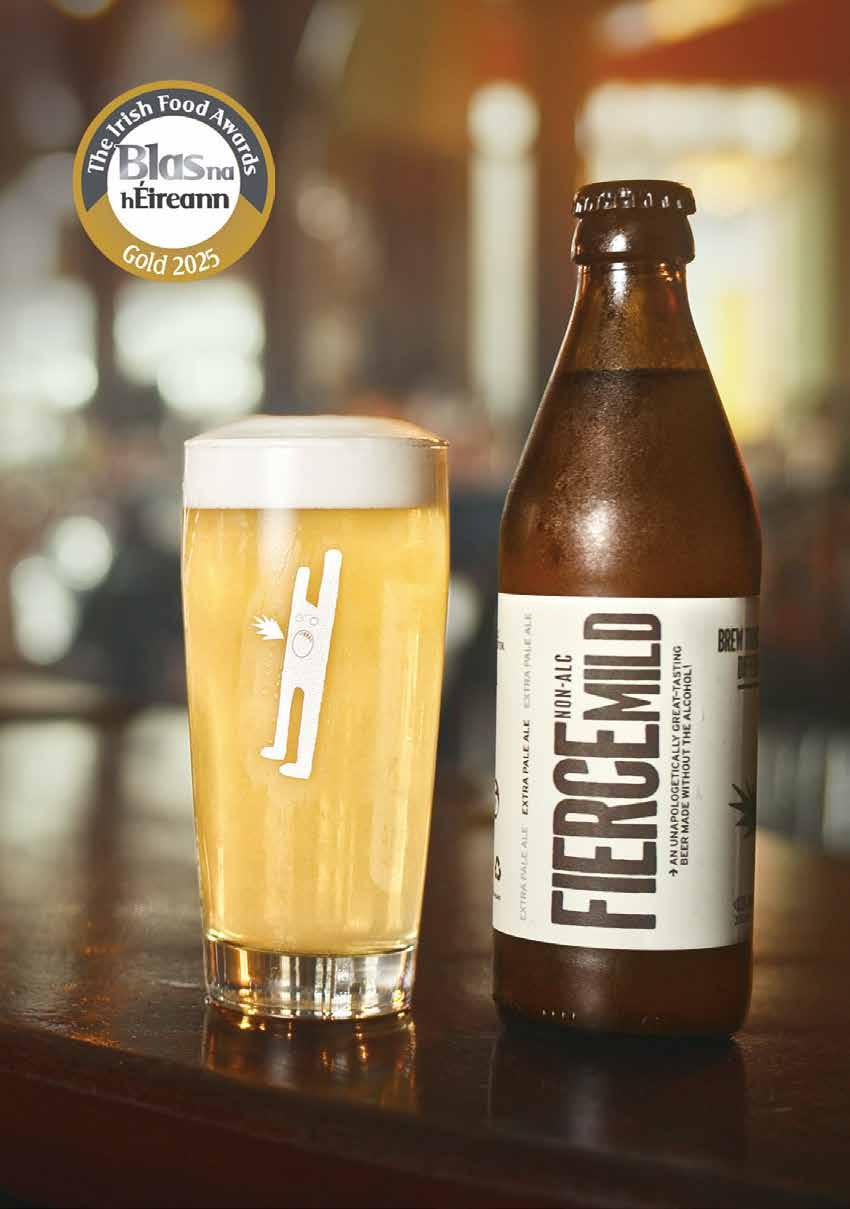
20 Irish Food Writers’ Guild Drinks Winner: Fierce Mild from Dundalk takes this year’s prize
22 A Tale of Two Cities: Hennessy’s bar takeover event revealed
24 Clever as a Fox: Alice Caroll of Foxes Bow details a campaign to highlight the inequality that exists in the whiskey industry
36 Advisor HR: Without proper interview training, you could land your company in hot water, warns Caroline Reidy of NFP HR Solutions
38 Whiskey Maturation: Stuart Maxwell of Proof 8 explains the importance of technology in cask storage 40 Social Diary: Check out who’s been out and about this month
COYBIG but not as you know it
I’mwriting this the morning after the Irish football team was defeated in Czechia and our World Cup dreams have been shattered. They say it’s the hope that kills you. We dared to believe and we had every right to but unfortunately the stars did not align for us on the night. And so, dashed are our dreams of a stellar summer in the pubs. However, there will still be a World Cup so the punters will still be at your door to watch all these matches (although many will be played at unusual times of the day and night here) albeit not in the same droves as if the boys in green had made it but such is sport so we dust ourselves off and keep going. The Euros are not that far away!
Before all the disappointment of Thursday night, I had the pleasure of attending the LVA Members’ Lunch this month and with that the opportunity to hear Wetherspoon’s founder Tim Martin interviewed by Ivan Yates, about his successful pub empire. While many of you might not agree with the types of pubs he runs, you can’t deny that he has been extremely successful in his endeavours. It was very interesting to hear his thoughts on the Irish pub industry – definitely a different beast to that of the UK.
In 2004, Wetherspoons closed its regional Irish pubs in Galway, Waterford, Cork and Carlow but have hung onto the Dublin pubs. Martin suggested that costs should be lower outside of the capital, even the minimum wage should differ. While the busy Dublin pubs can somewhat absorb the higher wage costs, the current minimum wage is a real burden to smaller rural pubs. If the likes of a large group like Wetherspoons can’t sustain pubs outside of our capital city, it is a real testament to the hard graft that a lot of publicans around the country have to put in to stay in business.
Yates gave his state of the industry address at the end of the lunch and he warned that we are in grave danger of making Ireland uncompetitive as a tourist destination unless we get our costs under control. This is obviously easier said than done with the situation in Iran not likely to be resolved anytime soon. Oil and energy prices are only going one way so we are currently facing one of the most challenging cost environments in decades.
In this month’s issue (page 10), the VFI bemoans the latest price increases from suppliers, as well as all the other rising costs like labour, insurance and general inflation across food, waste disposal, security and much more that continues to erode already tight margins.
Consumer confidence is fragile so a fine line must be walked to keep the doors open of most businesses. So despite the fact that we are out of the World Cup we still need to keep chanting COYBIG (come on you boys (and girls!) in government) until they tackle out of control rising costs and put the needs of small businesses and ordinary people front and centre.
“Many people are surprised to learn that women represent approximately 40% of whiskey drinkers in the United States. While some brands have begun incorporating more women in advertising, the deeper issue concerns authorship. Women are rarely positioned as the people shaping the narrative of the category.”
“We’d seen the markets in Canada and Australia and where they were going. We felt the Irish market was probably about five years behind that trend [for non-alcoholic drinks sales]”
NEWS BITES
spiritsEUROPE welcomes EU/US trade deal to restore zero-for-zero tariffs
spiritsEUROPE welcomed the positive vote in the European Parliament on the proposal implementing the EU’s commitments under the EU-US Turnberry agreement. This important step provides much-needed predictability and stability for EU businesses engaged in transatlantic trade and sends a strong signal of the European Parliament’s commitment to supporting European exporters at a critical time.
spiritsEUROPE now encourages the European Parliament, the Council, and the European Commission to move swiftly to conclude interinstitutional discussions, allowing the agreement to be implemented without delay and avoiding renewed uncertainty for companies. Looking ahead, spiritsEUROPE underlines that a full and durable return to the reciprocal zero-for-zero arrangement for spirits should remain a priority for both the EU and the United States.
Transparency needed on cashless tipping for consumers
Three in four hospitality employers agree that tipping is seen as a way for customers to recognise good customer service, according to new research from leading Irish payment technology company Paynt.
The research was collated by surveying business owners and members of the Restaurants Association of Ireland (RAI).
The findings highlight the continued presence of tipping across the sector, while also pointing to growing interest in cashless tipping solutions as payment habits continue to evolve.
The findings come as the Competition and Consumer Protection Commission (CCPC) recently issued guidance on tipping practices in Ireland, aimed at improving transparency for both consumers and businesses.
The CCPC noted that while tipping is increasingly common, confusion can arise where suggested gratuities appear on digital payment terminals or where service charges are not clearly explained. This reinforces the importance of transparency and clear consumer choice for customers.
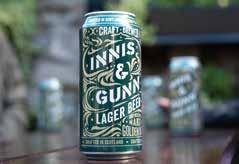
C&C acquires Innis & Gunn brand
C&C Group has bought Innis & Gunn for £4.5m, integrating the premium beer brand into its brewing and distribution network.
“The government is currently intoxicated by multinational tax revenue. But Apple and Google don’t move the needle on a local village, the local pub does. While the state boasts of a massive budget surplus, it has watched a quarter of the country’s social hubs vanish. When the economy shifts, the multinationals move; the small business stays. We are the social glue that prevents rural isolation and keeps the heart of Ireland beating”
Caroline McHugh, owner, McHugh’s Bar in Carrick-on-Shannon, Co Leitrim
Roger White, chief executive officer C&C, said: “We have worked with Innis & Gunn for many years, and whilst it’s under difficult circumstances, we are delighted to bring the brand fully into our portfolio. This is a compelling and highly synergistic opportunity to save a well-loved brand for which we currently brew most of the product.”
Adrian Cummins, CEO RAI; Kia Morice, Ireland country director, Paynt; Mark Dempsey, sales, Paynt; and Laura Kelly, business development & sponsorship manager, RAI
Alice Carroll, co-founder of Foxes Bow Whiskey
Fergus Carroll, co-founder of Fierce Mild non-alcoholic beer
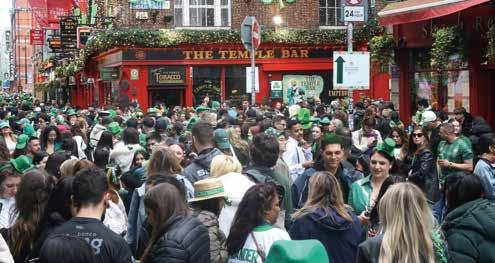
Irish hospitality sees 16% uplift this St Patricks Day
Irish pubs and restaurants recorded a significant boost in trade this St. Patrick’s Day, with transaction volumes climbing 16% higher than on the same day in 2025.
Despite falling midweek, the Irish hospitality sector saw a major spike on 17 March, as Irish consumers and international visitors marked the national holiday in style.
This is according to data from Clover, the payments and business management platform operated by Fiserv (NASDAQ: FI).
The point-of-sale data was anonymised and drawn from 365 Clover-enabled hospitality venues across the Republic of Ireland, representing approximately one in every 20 licensed pubs in the country.
Busier than Six Nations Saturdays
Transactions on the day also ran 39% ahead of the average Saturday in March 2026, underlining the commercial significance of the national holiday for Irish hospitality businesses.
This performance on St. Patrick’s Day is even more significant considering that those first two weekends in March had seen Ireland host the final two matches of this year’s Six Nations Rugby Championship, with tens of thousands
of Welsh and Scottish fans joining Irish supporters in bars and restaurants.
Dublin accounted for 21% of all national transactions recorded on the day, confirming the capital’s central role in Ireland’s St. Patrick’s Day economy.
Consumer numbers in the city were boosted by an estimated half a million visitors to Dublin for the capital’s St. Patrick’s Day parade.
The busiest single period of the day was 5pm, when transaction volumes peaked across the Clover network, the moment the after-parade crowd moved indoors.
Joseph Walsh, VP Marketing and Communications at Fiserv, said: “The
data tells a simple story: Ireland was out in force for St. Patrick’s Day, and Ireland was spending, buying more food and drink in pubs and restaurants than we did a year ago.
“With terminals firing at 5pm, a 16% increase in transactions over last year, and sales volumes more than 39% ahead of a busy Saturday in March, it’s clear that St. Patrick’s Day delivers for Irish hospitality, every single year.”
Findings are based on anonymised Clover point-of-sale data from 365 hospitality venues across the Republic of Ireland — representing approximately one in every 20 pubs and restaurants in the country.
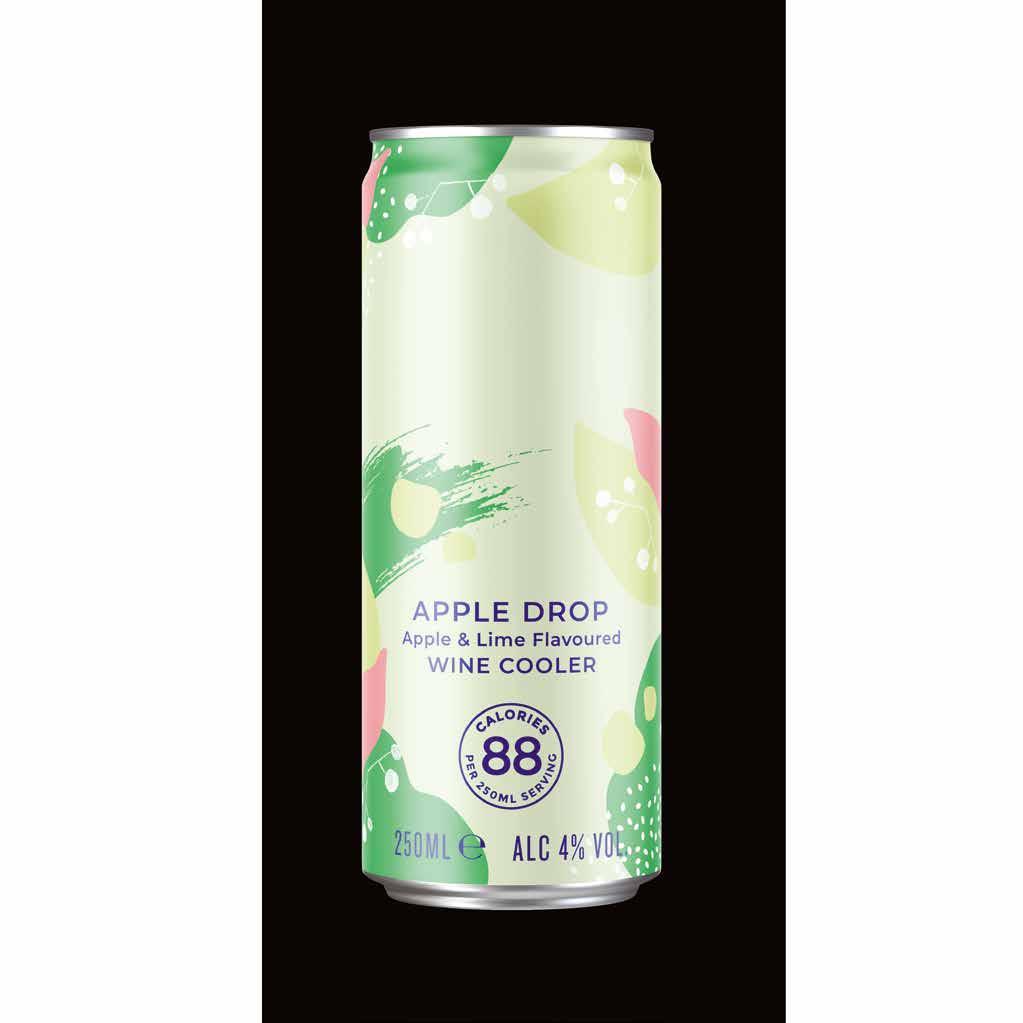
West Coast Cooler launches Apple Drop flavour
West Coast Cooler is set to build on recent success and momentum with the launch of Apple Drop, a new flavour innovation designed to meet evolving consumer demand within the RTD category.
As the number one RTD brand in Ireland, West Coast Cooler continues to lead the category, which has experienced significant growth in recent years driven by a shift towards lighter, lower-calorie and lower-ABV options and an increasing consumer appetite for new and distinctive flavour profiles.
a refreshing, balanced option for consumers seeking a lighter option without compromising on taste. West Coast Cooler Apple Drop blends crisp apple and lime with subtle notes of elderflower and matcha, delivering a modern twist on a familiar favourite.
research has also demonstrated strong potential for Apple Drop, with high levels of appeal evident across both existing West Coast Cooler drinkers and those new to the brand. The new variant is expected to complement the existing range, Original (Tropical), Rosé (Red Berry) and Sunburst (Peach & Mango), offering retailers and publicans an opportunity to drive incremental sales through flavour variety and innovation.
Apple Drop has been developed with these trends in mind. At just 88 calories per serve and 4% ABV, it offers
The launch of Apple Drop follows a standout year for the brand, which saw value growth of +67% in 2025 (Nielsen), underlining its continued relevance and strong consumer appeal. Consumer
Available from April 2026, Apple Drop is well positioned to capitalise on ongoing growth within the RTD category and further strengthen West Coast Cooler’s market-leading position.
New Clover data reveals a significant jump in pub and restaurant transactions compared to 2025, with activity peaking at 5pm as parade crowds moved indoors
The launch of Apple Drop follows a standout year for the brand, which saw value growth of +67% in 2025 (Nielsen)
Irish drinks lead valuable brands by Brand Finance
Three of Ireland’s most iconic alcoholic drink brands sit among the top 10 most valuable and strongest brands overall, according to the Ireland 25 2026 ranking by Brand Finance, the world’s leading brand valuation consultancy.
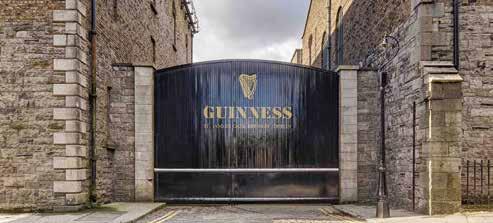
Despite market shifts, the nation’s top 25 brands maintained a collective brand value of €24.8 billion, supported by stronger consumer spending, higher public expenditure, and sustained international interest in Irish culture. Guinness (brand value up 22% to €3.7 billion) retains its position as the most valuable Irish brand for the fifth consecutive year, reflecting not only its commercial momentum but also its enduring significance and presence in Irish pub culture worldwide.
The brand has undergone a modern resurgence, driven by its growing appeal among women and younger consumers, evolving beyond its longheld ‘old man’s drink’ stereotype to establish itself as a contemporary lifestyle choice.
The stout beer brand also ranks as the third strongest brand in Ireland, supported by a rise in social media popularity and strong partnerships with both the Men’s and Women’s Six Nations.
Ireland’s strongest brand
Baileys (brand value down 18% to €991 million) posted mixed results this year. While its brand value declined, its brand strength remains steadfast, retaining its position as Ireland’s
strongest brand reflecting its deep roots in domestic and international perceptions, as well as an appreciation for the cream liqueur’s place in Irish culture.
In an effort to combat stalling global demand for spirits, Baileys is looking towards product diversification, including the addition of oat milk and non-dairy liqueurs to its regular line-up, appealing to lactose intolerant and plant-based consumers while aligning with growing café-style flavour trends.
Jameson (brand value down 30% to €722 million) is the third alcoholic drink brand in the top 10, holding steady as the 10th most valuable brand this year, despite facing economic headwinds, including tariff uncertainties that disrupted distributor inventories and declining consumer confidence across Europe, Asia, and the Americas. Jameson also ranks as the nation’s 10th strongest brand, with a BSI score of 52.6/100 and an A brand strength rating.
Ryanair (brand value up 10% to €2.9 billion) is up one spot this year to become the second most valuable brand, driven by strong passenger growth, reaching 200 million travellers, which marks a 9% increase from 2025.
Henry Farr, valuation director, Brand Finance, said: “The performance of Ireland’s leading brands reflects the power of strong heritage combined with modern relevance.
“Iconic names such as Guinness, Baileys, and Jameson continue to demonstrate how well-established Irish brands can evolve with changing consumer preferences while maintaining global appeal.
“At the same time, brands like Ryanair highlight Ireland’s ability to compete through scale, efficiency, and digital engagement.
“Together, these brands illustrate how Ireland’s brand ecosystem blends tradition, innovation, and strong market positioning to sustain longterm brand value growth.”
BAR 1661 launches new Distilled Experience
Dublin cocktail venue BAR 1661 has announced a new addition to its cocktail tasting menu format. The Distilled Experience is a curated early evening experience showcasing the best of BAR 1661 distilled into an hour and a half. Designed as a pre-dinner event, after an occasion lunch, or for those who want to get home a little earlier, across a 90-minute session, guests are invited to enjoy a curated 14-drink cocktail tasting menu of mini serves, guided by BAR 1661’s passionate team. Limited to just 10
seats and priced at €90 per person, the tasting starts with the bar’s signature Belfast Coffee and ends with their iconic Irish Coffee.
Bringing together lovers of great drinks, the cocktail curious, and those looking for something memorable in Dublin’s food and drink scene, the Distilled Experience builds on the success of the venue’s Immersive Experience, launched in 2025.
The most in depth cocktail tasting menu in the world, it is the ultimate journey through BAR 1661’s world
renowned 28 drink cocktail menu, led by their award-winning team over three hours for a completely unique night out.
BAR 1661 opened its doors in 2019, with a mission to showcase Ireland’s native spirit poitín, and showcase Irish cocktail culture internationally.
Guinness remains Ireland’s most valuable brand for the fifth consecutive year, Ryanair moves up to second, with Baileys and Jameson making the top ten
GigPig set for Ireland expansion
GigPig, the UK’s leading live music marketplace, will expand into Ireland in early 2026 - its first international rollout - following investment from Best Nights VC.
Best Nights VC, the venture capital investment unit of Mast-Jägermeister SE, has backed GigPig to accelerate expansion into new markets. The Ireland launch will begin in Dublin and Belfast, with GigPig working closely with independent venues, multi-site pub groups, hotels and local artists
to build a strong, locally rooted network for live music. GigPig is already used by more than 3,000 venues and 18,000 artists across the UK.
Kit Muir-Rogers, cofounder of GigPig, said: “Ireland has one of the strongest live music cultures in the world, and hospitality venues sit right at the heart of that. We
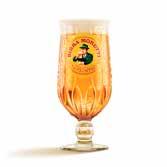
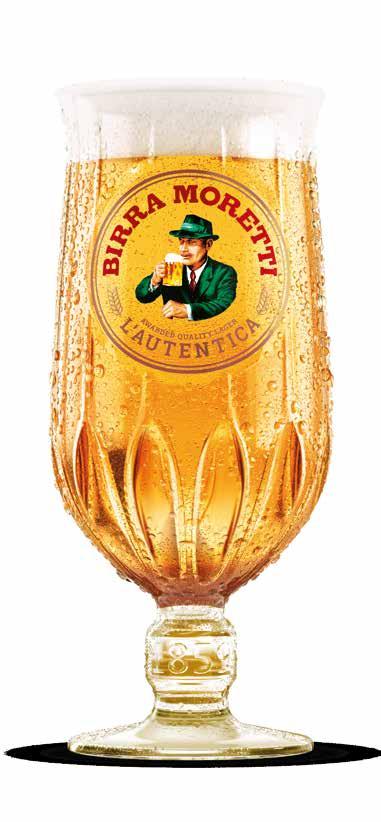
A glass as elegant as the
The new Birra Moretti glass is crafted with Italian passion, every curve reflects the brand’s heritage and premium lager quality. The new glass delivers a perfect feel in hand as the embossing provides a secure and comfortable grip, whilst also paying tribute to the quality of the product’s natural ingredients.
want to support that culture with better tools and a simpler way for venues and artists to connect.”
GigPig provides hospitality operators with a single platform to book, manage, pay for and promote live music. Venues and artists interested in joining the platform ahead of launch are encouraged to register at GigPig.ie.
award-winning beer
Birra Moretti’s journey in the Irish market has been a remarkable success story, evolving to become a firm favourite with Irish consumers as the no.1 premium lager brand*.
Birra Moretti is supporting the launch of the new glass with a significant national marketing investment.
*Source: CGA OPM data MAT to January 2026
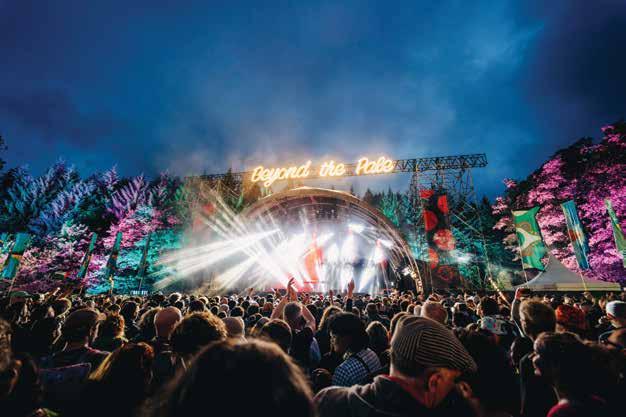
CORPORATE HOSPITALITY PACKAGES TO SUMMER’S FAVOURITE FESTIVALS
GigPig co-founder Kit Muir-Rogers. On average, hospitality venues that host live music increase customer spend by up to 89% (Source: CGALive Music Index)
VFI expresses “serious concern” about supplier increases
The VFI has expressed serious concern following recent price increases announced by both Diageo and Heineken on draught products.
At a time when publicans across the country are already operating under intense financial pressure, further supplier increases risk compounding what is an already fragile trading environment for the on-trade.
Publicans are currently facing one of the most challenging cost environments in decades. Excise duty on alcohol in Ireland remains among the highest in Europe, significantly inflating shelf and draught prices before product even reaches the bar. Energy prices remain substantially elevated. Labour costs continue to rise due to increases in the National Minimum Wage and employer PRSI contributions. Insurance premiums remain well above pre-pandemic levels, and inflation across food, waste disposal, maintenance, compliance and security continues to erode already tight margins.
At the same time, consumer confidence remains fragile. Disposable income is under pressure and discretionary spend in many areas has not fully recovered. Footfall in
some parts of the country remains inconsistent, particularly in rural and small-town Ireland.
Against this backdrop, further price increases from major suppliers are deeply concerning.
The “cliff edge” question
The question VFI members are asking is this: at what point do continued price increases push the on-trade towards a cliff edge?
There is growing concern among members that the cumulative effect of annual increases is unsustainable. While each increase may appear incremental in isolation, the compounded impact on retail pricing is significant, particularly in a market where consumers are increasingly price sensitive.
Fond farewell to VFI staff
As the Vintners Federation of Ireland continues to implement its new strategic plan and modernise member services, recent months have marked a significant period of transition for the organisation.
At Christmas, we said farewell to two hugely loyal and valued members of staff: Elaine Comerford, who retired after 25 years of dedicated service, and Liam Nolan, who also retired following many years with the Federation.
More recently, we acknowledged the retirement of three long-serving Membership Liaison Officers: Val Hanley, Paddy Brereton and John Hogan, whose contribution to members across the country has been immense. Elaine and Liam were central to the day-to-day functioning
of the Federation for many years. Their institutional knowledge and unwavering commitment ensured continuity and trusted support for members during periods of significant change in the sector.
Elaine’s 25 years of service represent a remarkable commitment to the Federation and to members. Her dedication, attention to detail and deep understanding of the organisation were invaluable. Liam likewise played an essential role within the VFI team, offering steady support and experience that underpinned much of the Federation’s operational strength.
Val, Paddy and John, as Membership Liaison Officers, were often the public face of the VFI. They travelled extensively, attended
The risk is clear: higher wholesale prices translate into higher bar prices, which in turn can suppress volume. Once frequency declines, rebuilding it becomes far more difficult.
A call for partnership
The Federation believes this is a critical moment for suppliers and publicans to act in genuine partnership. The Irish pub remains the primary showcase for draught brands. The on-trade is where brand loyalty is built, where new products are trialled, and where premium positioning is reinforced. Protecting that ecosystem is in the shared long-term interest of suppliers and retailers alike.
Publicans have shown resilience and adaptability in the face of enormous change over recent years. But there are limits to what can be absorbed. The VFI will continue to engage robustly with suppliers on behalf of members. We are clear in our position: the on-trade cannot carry further price pressure without risking long-term damage to volumes and viability. This is a moment for collaboration and shared responsibility. Suppliers who stand with the trade now will build loyalty that lasts well beyond the current cycle.
branch meetings, engaged directly with members and provided guidance and reassurance during some of the most challenging years the pub trade has faced, from economic downturns to regulatory reform and the unprecedented disruption of the pandemic.
Each of these colleagues made an outstanding contribution to the Federation. Their professionalism and personal commitment to serving members have left a lasting imprint on the organisation.
On behalf of the Board and the entire membership, we extend our sincere thanks to Elaine, Liam, Val, Paddy and John. Their work strengthened the VFI, and we wish them long, healthy and fulfilling retirements.
There is growing concern among publicans that the cumulative effect of annual increases is unsustainable
Getting to know the new chair of Drinks Ireland
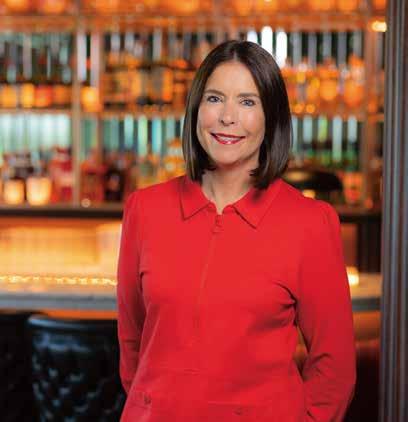
Claire Tolan, managing director of Irish Distillers, has been elected chair of Drinks Ireland for a twoyear term. She spoke to Fionnuala Carolan about her journey through the drinks industry, the challenges facing the sector, and why protecting Ireland’s drinks industry has never been more important.
When Claire Tolan steps into the role of chair of Drinks Ireland, she does so with more than 25 years of experience in the drinks sector and a career that has taken her from San Francisco to senior leadership within one of Ireland’s most iconic drinks companies.
Tolan, managing director of Irish Distillers, part of Pernod Ricard, succeeds Pat Rigney, founder of The Shed Distillery in Co Leitrim, who served three years in the role. Irish
Distillers produces some of the world’s most recognised whiskeys, including Jameson Irish Whiskey, and distributes the Pernod Ricard portfolio across the island of Ireland. In her day-to-day role, Tolan oversees the sales, marketing and distribution of a range of premium spirits brands, along with well-known ready-to-drink products such as West Coast Cooler.
Now, as she begins her tenure representing the wider industry, she says she feels both honoured and energised by the opportunity.
“I am delighted and honoured to be stepping into the role as chair of Drinks Ireland and would firstly like to thank Pat Rigney for the work he has done throughout his term,” she says. “I’m excited to represent such a dynamic and innovative sector that is focused on the quality and heritage of its brands, driven by the passion and commitment of colleagues right across the industry.”
However, she acknowledges that the role comes at a particularly complex time for drinks producers and suppliers.
Claire Tolan, MD Irish Distillers and chair of Drinks Ireland
“The last two years have been extremely challenging for the drinks sector,” she says. “In particular, we’ve seen the introduction of tariffs in some markets and an increasing regulatory burden on drinks manufacturers and suppliers.”
Despite those pressures, Tolan believes Ireland’s drinks sector continues to demonstrate remarkable resilience.
“Ireland’s drinks industry plays a vital role in both our economy and our society,” she says. “It sustains employment across the country, drives export success and showcases Irish excellence internationally. The industry has consistently shown its resilience, adapting to changing market conditions, investing in innovation and responding to evolving consumer expectations.”
She believes the sector’s ability to evolve while maintaining high standards of quality and responsibility has been central to its global reputation.
“By building on these shared strengths, embracing evolving consumer trends and continuing to invest in quality and innovation, we can ensure the long-term success and global reputation of Ireland’s drinks industry.”
From Dublin to San Francisco
Tolan’s career in the drinks industry began almost by chance. A graduate of Dublin City University, she studied international marketing with French and Spanish and spent part of her degree studying in Spain.
After graduating, she joined a graduate placement initiative called the European Overseas Programme. It was there that her connection with Irish Distillers began.
“Companies would come in and interview candidates from the programme,” she recalls. “Irish Distillers came in and recruited a group of us and that’s how I started on the Jameson graduate programme in 1998.”
Her first posting took her far from home.
“I wanted to go back to Spain, but they sent me to San Francisco,” she laughs. “When I got there I realised it was the dream. I was 22, straight out of college, living in San Francisco.”
The role was both exciting and unconventional.
“There was no office,” she says. “I had a fax machine in my room. There was an office in Los Angeles and I had a boss there and another one in Ireland. Once we got our visas we were off, working very much in the field.” Her job involved promoting Irish whiskey brands within the US distribution system, working with bartenders, retailers and sales teams.
“In the US there’s a three-tiered system,” she explains. “So my job was to promote our brands to bartenders and retailers through the sales teams.”
San Francisco in the late 1990s proved to be an exhilarating place to begin a career.
“It was the era of the dotcom boom so there were parties everywhere. I loved the city, I loved the job and I loved the industry.”
Returning home
After five years in the United States, Tolan and her Swiss partner, who is now her husband, decided to travel the world before eventually settling in Ireland. Her first role back home took her outside the drinks sector, working in marketing training and recruitment. But the drinks industry eventually drew her back and back into the Irish Distillers fold.
She progressed through a series of senior roles, including regional director for the Americas and brand director for Jameson Irish Whiskey.
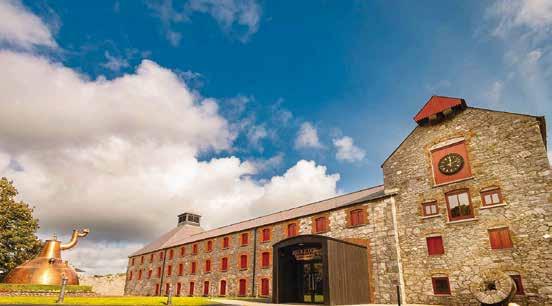
One of her most memorable roles came when she became managing director of Irish Distillers’ brand homes business, overseeing the visitor experiences at Jameson Distillery Bow St. and Midleton Distillery.
“It was the best job ever,” she says. “We were redeveloping the entire Bow Street site. It was a huge investment and incredibly intense.”
The redevelopment opened in time for St Patrick’s Day celebrations and went on to win multiple awards. The distillery experiences have become hugely popular with international visitors, particularly from the United States. “About half of the visitors to Midleton Distillery are from the US,” she says. “People absolutely love the brand. There have even been marriage proposals there.”
The rise of Irish whiskey
When Tolan first entered the industry in 1998, Ireland’s whiskey landscape looked very different.
“There were only four distilleries in Ireland when I started,” she says. “Now there is one in every county.”
The growth of the category has been extraordinary.
“We’re punching above our weight when it comes to drinks,” she says. “It’s been a vibrant industry and it’s experienced double-digit growth for many years.”
Irish drinks brands also play an important role in promoting the country abroad.
“Sometimes people’s first experience of Ireland is through our drinks brands, things like Jameson Irish Whiskey, Guinness or Baileys Irish Cream,” she says. “They get to know Ireland through those brands.”
Today, the drinks industry is a major contributor to Ireland’s economy.
“It’s a powerhouse worth around €2 billion in exports,” she says. “It supports jobs right across the country, from farming and grain production to tourism and hospitality.”
Global opportunities
International markets remain central to the sector’s growth.
“The US is still our biggest market,”
Claire Tolan during her early days working in IDL
she says. “It probably accounts for around 40–50% of our business.”
However, new markets are emerging quickly, particularly in Asia.
“India is absolutely exploding as a whiskey market,” she says. “There’s a growing middle class and a huge interest in international brands. Irish whiskey is very appealing there because it’s so smooth and approachable.”
She expects the market to expand significantly in the coming years.
“We’ll likely be doing a million cases in India in the not-too-distant future, which would have been unimaginable years ago.”
Consumer trends
Like many industries, drinks producers experienced significant changes during the pandemic.
“Premiumisation became a huge trend,” she says. “During Covid, people started collecting whiskey and buying high-end bottles. It was actually difficult keeping products in stock.”
That trend continues today, alongside the growing popularity of ready-to-drink beverages.
“RTDs are a huge trend globally,” she says. “Products like West Coast Cooler are performing incredibly well, especially since we launched the canned format.”
At the same time, she believes attitudes to alcohol consumption in Ireland are changing.
“The whole attitude to drinking has matured,” she says. “Consumption has actually declined by around 30% over time.”
Health and wellness trends are also influencing behaviour.
“Saunas are packed, running clubs are thriving and people are very conscious about wellbeing. But they still want to go out and have fun.”
That shift has encouraged consumers to prioritise quality over quantity.
“They may go out less often, but when they do they’re buying premium drinks or cocktails. Experiences have become really important.”
Regulatory pressures
Despite the sector’s positive outlook, Tolan says regulatory challenges remain a major concern for producers.
One of the most contentious issues has been Ireland’s proposed alcohol labelling regulations.
“We understand the need for labelling, but it needs to be harmonised with Europe,” she says. “If Ireland goes out on its own it makes us uncompetitive.”
She stresses that the issue is more complicated than simply adding labels.
“It’s not just a sticker on a bottle. Different alcohol levels mean different calorie counts, so each product can require separate labels for every SKU. That adds huge complexity and cost, particularly for smaller producers.”
She hopes to work with policy makers to find a more aligned approach.
Excise duty is another challenge. “Ireland has the second highest excise on alcohol in Europe,” she says.
“At the same time there are 14 countries with higher consumption than us. We’d ultimately like to see some reduction so the industry can invest more in innovation and new products.”
Representing the sector
As chair of Drinks Ireland, Tolan says her priority is to ensure policymakers fully understand the scale and importance of the industry.
“A big part of the role is having conversations with politicians and helping them understand what’s happening in the sector,” she says.
That includes explaining how the industry supports jobs and communities throughout Ireland.
“This is an industry that provides employment across rural and urban Ireland. From grain growers to tourism operators and hospitality workers, the impact is enormous.”
Tolan says she is particularly keen to represent the full diversity of the sector. “I’m proud to represent not only the larger brands but also the smaller producers,” she says. “It’s a vibrant industry and it’s one people genuinely care about.”
Looking ahead
Despite the uncertainties facing the sector, from tariffs to regulatory change, Tolan is optimistic about the future.
Premiumisation will remain a major driver, she believes, along with innovation in categories like RTDs and cocktails.
“There’s still enormous interest in premium whiskeys,” she says. “We recently launched a new Midleton release and there was a queue around the corner at the Celtic Whiskey Shop.”
Innovation also continues to attract new consumers, including women who may previously have felt whiskey wasn’t for them.
“Cocktails like a whiskey sour or a Jameson Irish Whiskey with ginger and lime are very approachable,” she says. “Once people try them they realise how versatile whiskey can be.”
As she begins her role as chair, Tolan says she is looking forward to working with colleagues across the industry to ensure its continued success.
“It’s an industry I genuinely love,” she says. “The people are passionate, collaborative and proud of what they do. My goal is to represent them well and ensure the sector continues to thrive both at home and internationally.”
One of Tolan’s favrouite roles was when she oversaw the refurbishment of Bow St. Distillery and Midleton Distillery (pictured). The distillery experiences have become hugely popular with international visitors
Game, Set, Match!
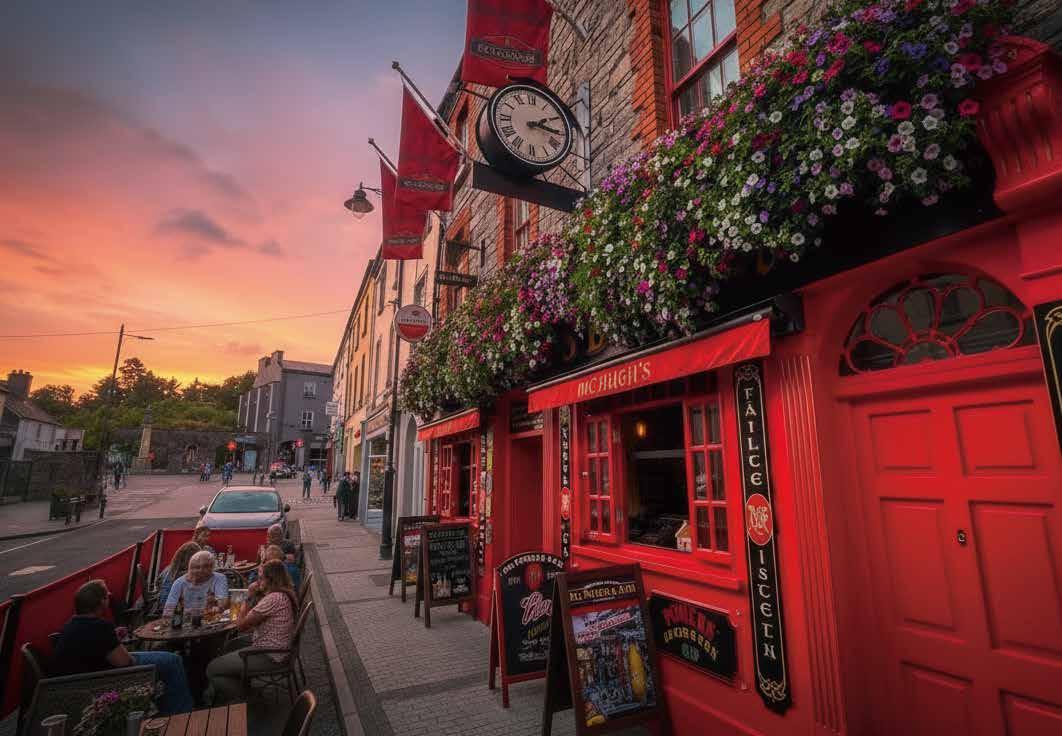
Caroline and Enda McHugh run the award-winning McHugh’s Bar in Carrick-on-Shannon, Co Leitrim.
Caroline spoke to Fionnuala Carolan about the family business they have built against all the odds
The story of McHugh’s Bar Carrick-on-Shannon actually starts in the heat and dust of the Australian mines.
In 2008, when the Irish economy crashed, Caroline and Enda McHugh left Ireland for Australia in search of a better life. For the next ten years, they worked in high-pressure environments: Enda on the mining frontlines, while Caroline transitioned from working in the mines to founding and running her own migration firm.
Eventually, wanting their children to grow up at home, they returned to Carrick. They had originally purchased the pub building as a hands-off investment, but in 2019, fate intervened. Their tenant unexpectedly handed back the keys, and in an instant, the couple transitioned from landlords to hands-on publicans.
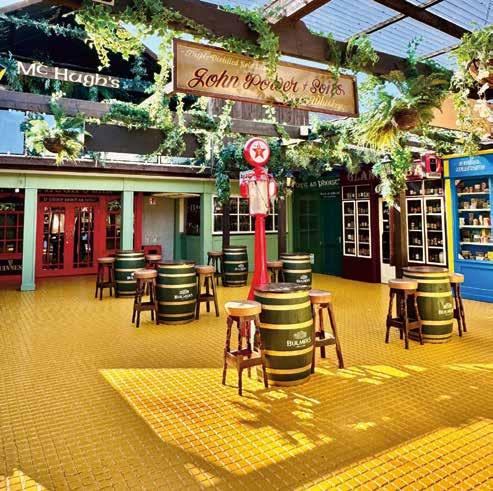
McHughs employ 30 staff in this busy pub
Carloline and Enda McHugh attending the Irish Pub Awards 2025 where McHugh’s was named Best Match Day Pub
The heart of the community
What started as a modest local spot with a capacity of 150 has transformed into one of Carrick’s premier destinations, with a capacity of 800. Despite having only limited bar experience from her college days, Caroline, alongside Enda and their dedicated team of 30 staff, have created a space that truly feels like the heart of the community. Whether you are a regular or one of the many visitors traveling from every corner of the country to experience Carrick at the weekend, you’ll find a seat at their bar.
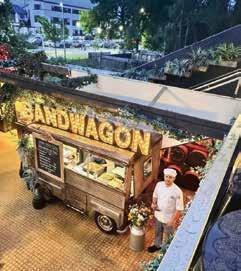
“We pride ourselves on being a cross-generational hub, welcoming a vibrant crowd ranging from 18 to 80,” says Caroline. “During the warmer months, our seasonal food truck, the Bandwagon, serves up light bites in the beer garden, making it the perfect spot to soak up the atmosphere and enjoy the best of Irish hospitality”. McHughs Lager and McHughs Irish Whiskey are part of the expansive drinks menu.
The vision: evolving the local
Taking over a century-old pub in a competitive hub like Carrick-onShannon required a total reimagining of the “local.” The McHugh’s set out to build a venue where all generations could socialise under one roof. Through meticulous renovation, they created “The Outback” aptly named to honour the very place where the funds were earned to purchase the premises. This space
features a festival-grade elevated stage which has been used by Nathan Carter as the backdrop for one of his music videos.
Rural businesses have to consider the issue of transport due to the drink driving laws. To solve this issue, they refused to wait for a government bus; they took matters into their own hands and bought a limo, ensuring their guests enjoy a premium, transport experience.
“Ireland now operates under some of the strictest drink-driving limits in the world. While we all support road safety, the government has created a “Safety Law” without a survival plan. By allowing astronomical insurance and suffocating bureaucracy to kill off small-scale hackneys and by failing to provide the infrastructure to support its own legislation, the state has presided over the closure of over 2,100 pubs, one in four, across this country since 2005,” states Caroline. The fact that they have had to provide a transport option for their customers is indicative of the lengths rural operators have to go to to ensure the survival of their businesses.
Match Day Pub of the Year
McHugh’s was officially crowned the Best Match Day Pub at the Irish Pub Awards last year, a prestigious nod to its status as the ultimate destination for sports fans.
McHughs is a pub that doesn’t just focus on service; it focuses on belonging. Whether it is a quiet, reflective midweek pint or the highoctane energy of a packed house on a Saturday afternoon, the atmosphere is underpinned by a commitment to inclusivity. “Winning the Best Match Day Pub Award isn’t just about having the most screens; it’s about understanding the fan’s psychology,” explains Caroline. “McHugh’s won because they deliver a comprehensive match-day experience that respects the ritual of the game. The atmosphere mentioned by the judges isn’t accidental, it is a result of an electric, inclusive environment where the buzz is palpable from the moment you step inside.” Caroline and Enda seem to have a natural flair for hospitality and business, more akin to people who were born into a business. They understand what
The beer garden is named the Outback after their adventure in Australia where they saved the money to open the business
The Bandwagon is situated in the beer garden of McHugh’s and serves light bites
The modern publican has been forced to become a legal clerk. We now spend half our working lives navigating unnecessary planning hurdles and defending authentic heritage against arbitrary aesthetic whims
people want from their local pub and just opening the doors doesn’t guarantee success anymore. There is a lot of hard work and thought going on in the background to create a really unique environment.
Defensive administration
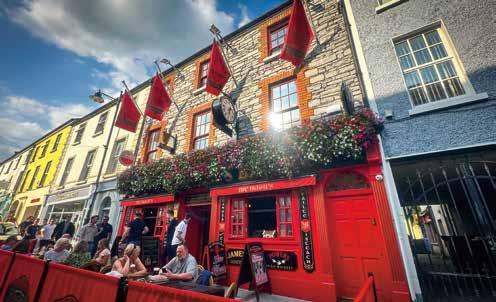
While the public sees a thriving venue, the operational reality is increasingly dominated by what the owners call “defensive administration.” Caroline and Enda estimate that 50% of their working time is now spent navigating red tape rather than hosting guests. The most recent example of this burden is the current dispute over the building’s exterior. During works, an original stone facade was uncovered. Choosing to preserve this piece of local heritage led to a protracted disagreement with planning authorities. The irony is visible daily from the office window: while the owners are inside committing significant time and legal fees to defend the wall’s “aesthetics,” a constant stream of tourists stops
outside to photograph it. “The gap between public appreciation and regulatory appreciation remains a very costly frustration for a business capable of handling the pressures of a high-volume hospitality environment,” explains Caroline. Their time could be much better spent working in the business than having to focus on this.
An existential crisis
While Carrick-on-Shannon remains a vibrant and thriving town, Caroline says that they understand that many of their fellow publicans across the West of Ireland are not so lucky.
The experience at McHughs serves as a blueprint for the challenges facing the wider trade; if a business in a busy hub feels this pressure, those in smaller, rural communities are facing an existential crisis, believes Caroline.
“The modern publican has been forced to become a legal clerk. We now spend half our working lives navigating unnecessary planning hurdles and defending authentic
heritage against arbitrary aesthetic whims. Where there should be partnership, there is only obstruction. Small businesses do not need more barriers; they need the exact contrary - encouragement.”
She is calling for a drastic reduction in red tape and the introduction of inviting policies that foster growth and preservation rather than a culture of fear and litigation.
Claims culture
We have long heard the problem with public liability claims in the pub and restaurant industry. According to Caroline, the current “claims culture” treats businesses like “open-access ATMs”. “We need a common-sense legal standard where “duty of care” is a two-way street. If the law continues to reward individuals for their own lack of care, the insurance premiums will continue to rise,” she argues.
Another issue she mentions is Ireland’s excise duty, which is already the second highest in the EU. But she says the real insult is the hidden calculation which is the “tax on a tax.” “The government applies a 23% VAT rate on the total price, meaning you are literally paying tax on top of the already massive excise tax.”
“The government is currently “intoxicated” by multinational tax revenue. But Apple and Google don’t move the needle on a local village, the local pub does. While the state boasts of a massive budget surplus, it has watched a quarter of the country’s social hubs vanish. When the economy shifts, the multinationals move; the small business stays. We are the “social glue” that prevents rural isolation and keeps the heart of Ireland beating,” she says.
“It is time for the government to stop “picking concepts out of hats” and start looking at the reality on the ground. You cannot apply “First World” regulations to areas with “Third World” infrastructure. Supporting the local pub is not just a business decision; it is a choice to protect the community itself and our heritage.”
Rural publicans need to be heard on these issues or the longevity of pubs like McHughs or even the existence of these pubs will be seriously compromised.
There is a dispute ongoing over the building’s original stone façade, which is taking them away from running the business
A day in the life!
Do you commute or work from home?
I work from home mostly, and love it. I just head into town if I have an event or meetings.
How long have you been in your current job?
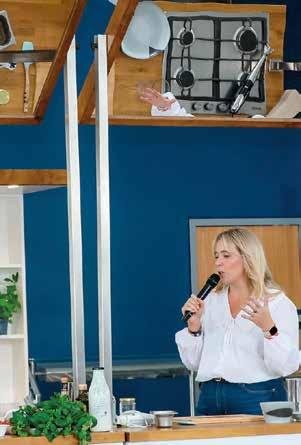
Dee Laffan, founder of Scoop Magazine and food, hospitality and travel journalist and broadcaster talks to Drinks Industry Ireland about a typical day in her life
What time do you get up on a week day?
I’m an early riser, which is weird for me to say cause for years I wasn’t. I get up at 6-6.30am.
Typical breakfast?
Has to be eggs. So, something like a slice of seed bread – I’m obsessed with Dr Rupy Aujla’s “Doctor’s Daily Bread” recipe – scrambled eggs (made with butter), avocado, tomatoes, mushrooms, kale, and a spoon of White Mausu peanut rayū and a sprinkle of alfalfa sprouts & Dukkah.
I have been a food, hospitality and travel journalist for over 20 years. I tend to alternate between freelance and full-time editor jobs. I have edited almost all of the food magazines in Ireland over the years. I am currently the editor of my own magazine, Scoop.
What does a typical day at work include?
Every day is different, which I love. But generally, I tend to do any social media work and email correspondence in the mornings. Then I get stuck into writing, if I have a feature due. The afternoons could be anything from content creation to meetings and planning upcoming events. In the summertime, I work a lot at festivals and events on
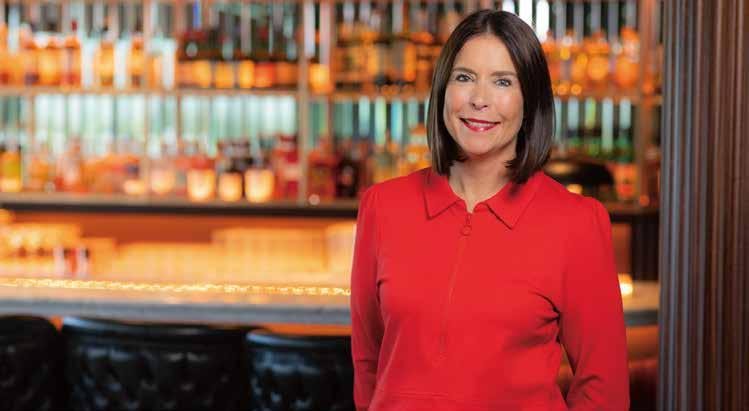
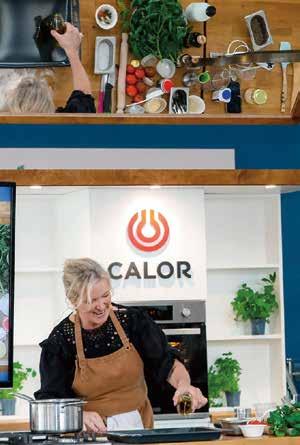
Dee Laffan, founder of Scoop Magazine & Food and drink journalist and broadcaster
Who is your favourite politician and why?
I really like Hazel Chu in The Green Party. I interviewed her for a podcast before about her Chinese heritage and the food linked with the Lunar New Year, and I found her to be a fascinating person. She seems
extremely dedicated to her work with The Green Party, she’s forwardthinking and at times, outspoken. I believe she would make a great leader of the party.
What is the best ad?
The current Done Deal ad is very clever and silly, and made me laugh out loud. I also think that the Guinness 0.0 ad with the singing pints is very cute.
Worst ad on television?
The current SuperValu ad about the 500 Everyday Essentials is very annoying.
What is your favourite drink?
Valentia Island Vermouth is one of the best Irish drinks ever made, and a “V&T” is a great way to enjoy it, with tonic and a slice of orange. Simple and delicious!
If you had to pick three famous people to have a drink with, who would they be?
CMAT, Kate McKinnon and Amy Poehler. It would just be the best craic.
Favourite no/low brand on the market?
Fierce Mild Lager is an amazing product. Not just because it’s n/a, just because it’s a gorgeous beer.
Favourite pub in Ireland?
Tough question! I like different ones for different reasons, but Dick Macs in Dingle holds a special place in my heart. Neary’s in Dublin would be high on my list too.
Best pub for grub?
Morans on the Wier, Kilcolgan, Co Galway
Achievement you are most proud of?
Co-founding my own food magazine, Scoop, in 2022. It’s an annual publication that I edit, and it was a dream of mine to create a magazine like this, dedicated to food storytelling and all forms of food writing, so I am really proud to have made that a reality.
Favourite saying?
Níl aon tinteán mar do thinteán féin (There’s no place like home).
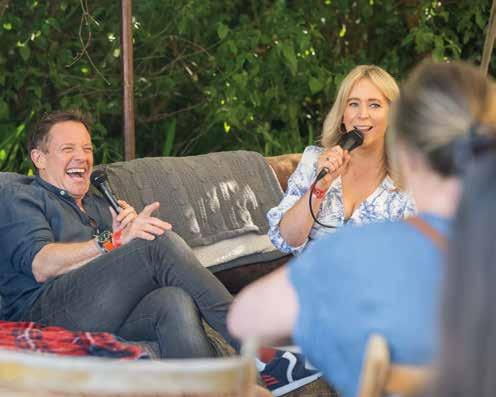
Dee Laffan in conversation with Matt Tebbutt on the Scoop & A Yarn chatting about his culinary journey and behind-the-scenes stories from Saturday Kitchen, at Ballymaloe Festival of Food 2025 (Photo: Joleen Cronin)
Celebrity chef Rachel Allen and host Dee Laffan at the Taste of Kildare festival
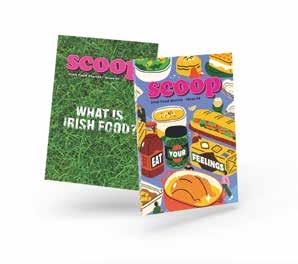
Scoop Magazine that was founded by Laffan
Fierce Mild named Irish Drink Award winner by the Irish Food Writers’ Guild
The Irish Food Writers’ Guild has named Fierce Mild as the recipient of its prestigious Irish Drink Award, recognising the innovative non-alcoholic beer brand for its exceptional quality and flavour-driven approach
Launched in 2024 by Dundalk natives and brothers-in-law
Fergal Carroll and Cathal Byrne, Fierce Mild is a premium alcohol-free beer brewed in Louth using a process designed to retain flavour rather than remove it.
In less than two years, the brand has built significant momentum, earning Gold at Blas na hÉireann, being selected for Food Works Programme run by Bord Bia and Enterprise Ireland, and winning the inaugural Love Irish Food × Sky Media Taste of TV Fund. In 2025, the founders were also crowned winners of IMAGE Media & Samsung Ireland The Pitch.
Today, Fierce Mild is stocked in more than 500 venues nationwide, with a new non-alcoholic lager variant due to launch later this year.
A friendship that became a brewery
For Carroll and Byrne, the brand is rooted in a lifelong friendship and cemented when they became brothers-in-law when marrying two sisters.
“Cathal and I went to school together and even sat beside each
other in secondary school,” explains Carroll. “We’re both from Dundalk. After school we went our separate ways – I went to Australia for ten years and Cathal moved to Canada.”
While abroad, Carroll worked in the brewing industry while Byrne built a career in film and television. The two would regularly reconnect during trips home to Ireland, often discussing Carroll’s experimental beer recipe.
“I had this recipe I was trying to tweak in my garage in Melbourne about ten years ago,” Carroll says. “Every time we were both home we’d talk about it. Then Covid hit and we both moved back to Ireland to be closer to family.” By that point, they had seen how non-alcoholic beer markets were developing internationally.
“We’d seen the markets in Canada and Australia and where they were going,” Carroll says. “We felt the Irish market was probably about five years behind that trend.”
With that insight, they decided to
develop a product specifically suited to Irish drinkers.
A different brewing process
Central to Fierce Mild’s identity is its brewing method.
“Everything we do is brewed with a specialised yeast,” says Carroll.
“It’s not de-alcoholised, not watered down, not boiled or butchered after brewing.”
Instead of removing alcohol from finished beer – a process that can affect taste – the yeast naturally limits fermentation, allowing the brewers to retain the full flavour of the original ingredients.
“It means our process takes longer and can be more expensive,” Carroll adds. “But it allows us to make a very natural product with simple ingredients.”
The result is a beer that remains 98% water but retains the body and flavour typically lost in conventional alcohol-removal methods.
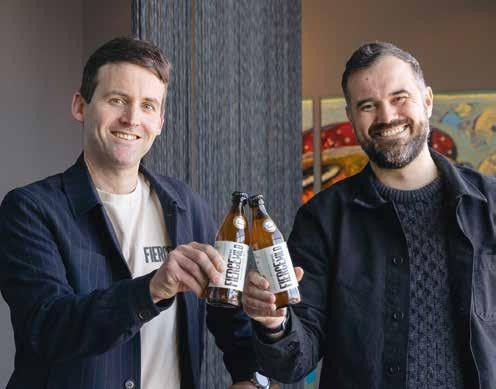
Fergal Carroll and Cathal Byrne, founders of Fierce Mild, non-alcoholic beer
Growing faster than expected
Although Fierce Mild officially launched in April 2024, the founders initially built the business alongside their existing careers.
“2026 was always our plan to go full time,” Carroll says. “But we’re actually about a year ahead of our projections.”
Carroll has spent the past four years supplying raw materials such as hops, malt and yeast to breweries across Ireland while growing the brand. Byrne, meanwhile, works as a production accountant in the film industry with Element Pictures.
“I’m graduating into part-time and then full-time with Fierce Mild,” Byrne says. “It’s a niche job, so I’ll always be able to dip back into it if needed.”
Their combined experience has helped them build the business carefully.
“Blending our skills has allowed us to do a lot ourselves,” Byrne adds. “That’s helped us get to where we are.”
Rooted in brewing heritage
Fierce Mild is produced in the former McArdle’s Ale Brewery in Dundalk – a location that carries personal significance for Carroll.
“A lot of my family worked in Harp and McArdle’s in Dundalk,” he says. “So there’s a nice tie-in there for us.”
“Our goal is simple. We want Fierce Mild to become synonymous with Irish non-alcoholic beer, that people go into a bar and ask for a Fierce Mild rather than asking what non-alcoholic beers they have.”
The business currently employs around four and a half staff, though both founders admit the workload remains intense.
“We’re working seven days a week at the moment,” Carroll says. “You can’t do something like this unless you have a real passion for it.”
Building a category
Rather than relying on large marketing budgets, the founders have focused on competitions and industry recognition to build awareness.
“As a small independent brewery you have to put yourself out there,” Carroll says. “Big macro brands can pay agencies to get them into places – we have to work harder to get the name out there.”
That approach has paid off, including a ten-week television advertising campaign on Sky following their Taste of TV Fund win.
“But the liquid has to back it up,” Carroll stresses. “It doesn’t matter how much promotion you do, if the beer isn’t good, there’s no point.”
Fierce Mild is now stocked in major retailers including Tesco and Dunnes Stores, as well as independent off-licences, bars and restaurants nationwide.
Demand has sometimes outpaced supply.
“Tesco asked us for two more pallets last week, even though we had only delivered,” Carroll says.
Targeting the flavour-curious
While the non-alcoholic category continues to expand, the founders say Fierce Mild is aimed at drinkers motivated by flavour rather than abstinence.
“Our target market is the curious, adventurous types – what we call flavour chasers,” Byrne says. “It’s for people who want moderation but still want a really good beer.”
Carroll agrees the audience is broader than many assume.
“It’s more of a mindset,” he says. “When we look at our data, the demographic is really varied. As people get older their tolerance for alcohol can decrease too.”
The brand’s design was also carefully considered.
“We wanted the bottle to feel like something you’d be proud to hold in a pub,” Byrne says. “We use German reusable bottles, which gives it a premium feel.”
Raising the standard
Carroll believes improving the overall quality of non-alcoholic beer is key to growing the category.
“There’s nothing worse than someone saying non-alcoholic beer is terrible,” he says. “If we and others raise the quality standard, that improves the entire shelf in the supermarket.”
Fierce Mild’s next step is the launch of its non-alcoholic lager later this year, as the brand continues to focus entirely on alcohol-free brewing.
“Our goal is simple,” Carroll says. “We want Fierce Mild to become synonymous with Irish non-alcoholic beer – that people go into a bar and ask for a Fierce Mild rather than asking what non-alcoholic beers they have.”
A meaningful recognition
For the founders, winning the Irish Drink Award from the Irish Food Writers’ Guild is a significant milestone.
“It’s the pinnacle of Irish food and drink recognition,” Byrne says. “We’re just delighted.”
Carroll agrees. “We’re genuinely passionate about good food and drink,” he says. “So for all the work we’ve put in to be recognised like this – we’re absolutely chuffed.”
Fierce Mild, non-alcoholic beer uses a specialised yeast that naturally limits fermentation while preserving taste
Hennessy unites Dublin and Paris through landmark bar exchange
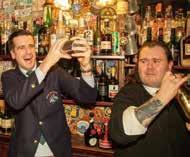
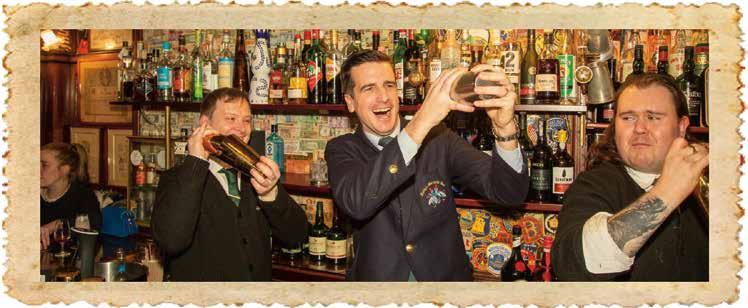
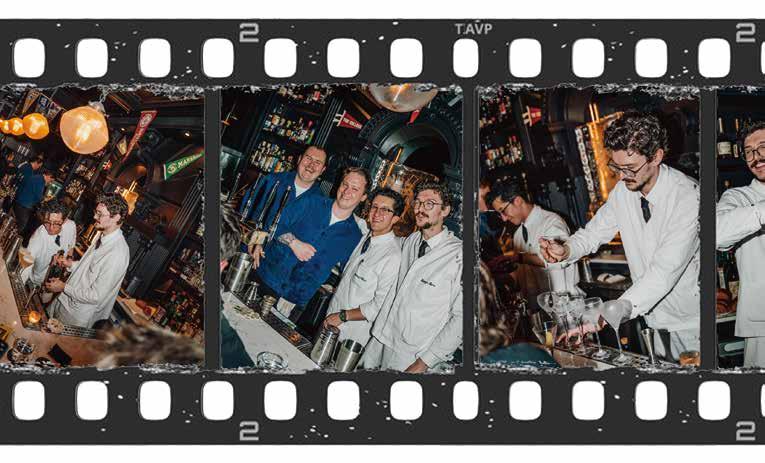
A recent international bar exchange between Dublin’s The Sackville Lounge and the legendary Harry’s American Bar in Paris has highlighted the growing role of global collaboration in shaping modern bar culture.
Supported by Hennessy, the Dublin – Paris bar takeover brought together two respected cocktail teams in what was designed as a genuine cultural exchange rather than a one-off guest shift. The programme featured two events: a takeover by Harry’s American Bar at The Sackville Lounge on January 20, followed by a return visit from The Sackville team to Paris on February 15.
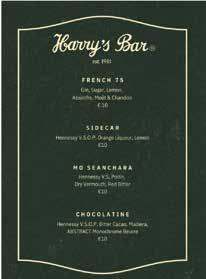
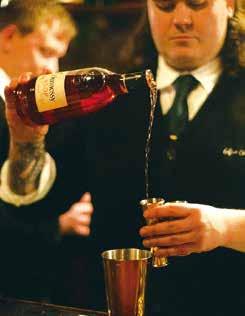
Across both nights, the menus were built around Hennessy cocktails, positioning the cognac house as the common thread connecting Dublin and Paris.
The initiative was also intended to strengthen The Sackville Lounge’s position as a key account for Hennessy in Ireland while reinforcing the brand’s long-term partnership with the venue.
A full house in both cities
The response from both consumers
and the bartender community was strong with both nights selling out. Each event attracted over 150 guests, including a strong turnout from bartenders and industry figures.
The Dublin event, held midweek in January, drew visitors from across the country, reflecting the growing interest in international bar collaborations among both professionals and cocktail enthusiasts.
Celebrating bartender culture
For Dave Mulligan, owner of The Sackville Lounge and Dublin’s Bar 1661, the collaboration had been years in the making.
“We had been trying to work with Harry’s Bar Paris since we opened The Sackville Lounge,” he explains. “We wanted to bring some of that oldworld European cocktail glamour off the main drag and into the heart of the city. Harry’s is the oldest cocktail bar in Europe and they’ve created so many iconic drinks, so we were
delighted to have them over.”
While Mulligan typically prioritises Irish brands for partnerships, he says Hennessy made perfect sense for the project.
“Generally we love to work with Irish brands if possible, but Hennessy was the perfect fit because it has Irish authenticity and credentials – it was founded by an Irishman. It was just a great partnership.”
From industry nights to consumer demand
Guest shifts and bar takeovers have long been part of bartender culture, but Mulligan says the audience has
broadened significantly in recent years.
“We’ve been doing guest shifts and takeovers for at least ten years. In the early days they were very much industry nights, bartenders coming to try new menus, meet people from other cities and exchange ideas,” he says.
“But now we’re seeing them transcend the industry. People travel to these bars in other cities and when those bars appear in Dublin they want to come down and relive that magic moment a cocktail bar can bring.”
The demand was evident on the night Harry’s took over The Sackville Lounge.
“We had a full house and had to say no to a lot of people. There was a queue outside the door for most of the night and, for a Tuesday night in January, it was such a positive night for the industry.”
A meeting of two cocktail traditions
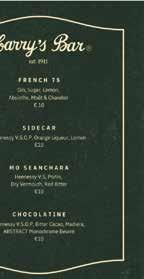
During the Dublin takeover, the Harry’s American Bar team led the menu, featuring their iconic Sidecar alongside bespoke Hennessy
cocktails, while The Sackville team supported service.
The exchange then came full circle in Paris when the Dublin team travelled to Harry’s.
“For us it was a bucket-list, pinchme moment,” says Mulligan. “I’ve been going to Harry’s for 15 years and hold it in such high esteem. It’s an icon and I don’t say that lightly. There are so many modern cocktail bars now, but Harry’s is frozen in time.”
For the Paris takeover, the Irish team brought a menu rooted in their signature serves.
“We always travel with our Belfast Coffee and Irish Coffee,” Mulligan explains. “But we also created a French Coffee for the night. We butter-washed it with Normandy butter, used a Parisian porter brewed by two Irish guys in Paris, and made a baguette syrup. We used French cream on the French Coffee and Irish cream on the Irish Coffee.”
Brand partnerships supporting bar culture
For Hennessy, the activation represents a broader strategy of embedding the brand within bartender culture through meaningful collaborations rather than traditional brand promotions.
By connecting two historic cities through their bars and bartenders, the exchange demonstrated how premium brand partnerships can help create memorable experiences for both the trade and consumers while strengthening relationships within the global cocktail community.
As international collaborations become an increasingly important part of bar culture, initiatives like this Dublin–Paris exchange show how brands, venues and bartenders can work together to elevate the industry on both sides of the bar.
Whiskey has a gender problem
Alice
Carroll, co-founder of Foxes Box Whiskey speaks to Drinks Industry Ireland about creating a modern whiskey brand and explains their new campaign that dropped for International Women’s Day earlier this month of 40% Missing, which challenges the widely held assumption that the default whiskey drinker is male
Can you tell me how the brand Foxes Bow came about and where the name came from?
Having worked with some of the biggest whiskey brands in the world, I felt there was something missing that spoke to the new generation of whiskey drinkers.
Many existing Irish whiskey brands, particularly those I have worked with, were long-established and highly riskaverse. Their strategy relied on proven formulas designed to protect existing consumers rather than attract new ones. This created an opportunity to build a brand that genuinely reflected a new generation of whiskey drinkers.
At the same time, my co-founder Tony Foote was working in San Francisco at Google’s Moonshot Factory. He felt that Irish whiskey brands did not reflect the modern Ireland he is proud to come from. During Covid, we used that time to test whether it would be possible to create a brand that filled this gap.
Once we were confident the opportunity was real, we engaged Bord Bia and began developing the brand that eventually became Foxes Bow.
The name Foxes Bow comes from a small side street in Limerick that connects two of the city’s main shopping streets. It is a blink-and-youmiss-it street, yet it has historically been home to creative businesses.
What sparked the idea for the “40% Missing” campaign, and why did you choose International Women’s Day as the moment to launch it?
The idea for the 40% Missing campaign emerged from my personal experience in the whiskey industry.
In 2014, I worked as a whiskey ambassador representing several of the world’s most recognised whiskey brands. Despite that preparation, tastings frequently included the same question: “Do you actually drink whiskey?”
Sometimes it was delivered jokingly. Sometimes it carried a more sceptical tone. Another predictable interaction involved someone attempting to quiz me in order to prove greater expertise.
At the time, those moments felt like isolated incidents. A decade later, the pattern is clear. Whiskey still assumes that the default drinker, and the
default expert, is male. This becomes even more visible when founding a brand. The pattern extends beyond advertising into deeper structures of authority: who is treated as credible, who is assumed to have expertise, and who must continually prove legitimacy.
Many people are surprised to learn that women represent approximately 40% of whiskey drinkers in the United States. While some brands have begun incorporating more women in advertising, the deeper issue concerns authorship.
Women are rarely positioned as the people shaping the narrative of the category. They are not consistently trusted to influence how whiskey evolves, despite representing a substantial share of its consumers.
In practice, the industry is comfortable accepting women as customers without granting them equal authority within the category.
When examining who whiskey companies present as authorities — whether celebrity endorsers, master distillers or brand founders, the figure positioned as the expert is overwhelmingly male.
Alice Carroll, co-founder of Foxes Box
The visual metaphor of a whiskey bottle deliberately missing 40% is striking. How did you land on that specific figure and creative approach?
The goal was to create something visually arresting, particularly during International Women’s Day when the volume of messaging is extremely high.
The concept needed to communicate its message instantly while also prompting people to look more closely.
A whiskey bottle missing 40% of its liquid achieves that effect. The visual appears wrong. The absence is immediately noticeable, prompting curiosity and further engagement.
The number itself reflects the fact that women represent roughly 40% of whiskey drinkers in the United States. Removing that proportion from the bottle illustrates how significant women are as consumers while highlighting how absent their voices remain from positions of authority within the category.
You highlight the gap between who drinks whiskey and who is seen as an authority in the category. What does that gap look like in practice today?
The gap appears in two primary ways. The first involves representation in marketing and branding. Advertising, celebrity partnerships and brand ownership narratives overwhelmingly position men as the face of whiskey.
This assumption appears throughout the category. It exists in the names that dominate whiskey’s vocabulary — John (Jameson), Jack (Daniel’s), Jim (Beam), Johnnie (Walker) - reinforcing the perception that masculinity is built into the category’s identity.
It also appears in historical advertising tropes that either sexualised women or inserted them into campaigns as symbolic gestures of modernity.
Research conducted by the OurWhisky Foundation analysing Instagram content from 150 of the world’s largest whisky brands found that these brands posted 228% more images featuring men than women. This often leads the conversation
toward “inclusion.” Brands add women to campaigns or create limited editions tied to Women’s History Month. These gestures signal awareness without shifting underlying power structures.
The deeper issue concerns authorship.
Only around 2% of whiskey companies globally are owned by women. Leadership roles across major whiskey companies remain overwhelmingly male.
Authorship is the critical distinction. Visibility allows someone to appear within the story. Authorship determines who writes it.
True authorship means women shape the meaning of the category — influencing taste, culture, history and future direction.
In your view, why has the whiskey industry been slow to reflect the diversity of its own consumer base?
For decades whiskey relied on a mythology centred on tradition, masculinity and the leather-chair lounge. This identity was commercially successful. It also created a strategic constraint.
When a brand believes its core consumer fits one narrow archetype, strategic decisions begin to exclude real customers. Media buying targets “men who like whiskey,” creative briefs code credibility as masculine, and brand experiences reward gatekeeping rather than curiosity.
Attempts to include women sometimes fail because they retain the assumption that women are outsiders who must be invited in. The Johnnie Walker “Jane Walker” example illustrates this challenge: a wellintentioned effort that many perceived as pandering because it treated women as a novelty rather than recognising their existing presence.
Beer offers a comparable example. The category spent decades designing itself explicitly around male consumers, which did not simply exclude women — it ultimately limited category growth.
A category cannot treat a substantial portion of its consumers as marginal participants while expecting sustained relevance and growth.
Encouraging signs of progress do exist. In January 2026 the Scotch Whisky Association appointed its first
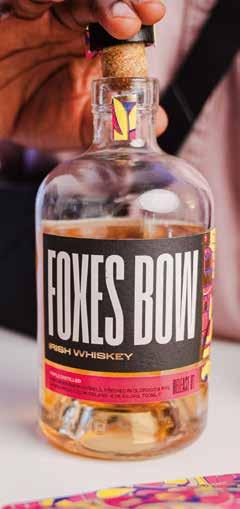
A bottle of Foxes Bow whiskey with 40% missing, denoting the gap between who drinks whiskey and who gets treated as the authority on whiskey
female chair. Structural leadership shifts signal deeper change than surface-level marketing.
Other developments demonstrate how authorship can emerge when women participate as partners with genuine creative and commercial influence rather than as symbolic figures.
What changes do you expect in Irish whiskey over the next decade?
Irish whiskey is ripe for reinvention. Many people are unaware that whiskey originated in Ireland. The category has lost ownership of that origin story.
Recovering that narrative creates an opportunity to reposition Irish whiskey as one of the most innovative and culturally relevant whiskey categories globally.
The next decade presents an opportunity to reclaim leadership within the global whiskey conversation.
King of the spirits!
According to CGA, the Irish vodka market is driven primarily by women and young adult consumers, making it one of the most commercially valuable categories for both on-trade and off-trade operators. Ireland’s vodka category remains the strongest in the spirits market, continuing to command the largest share ahead of Irish whiskey and gin. While overall spirits volumes have reduced in recent years due to economic pressure, moderation trends and rising excise duties, demand for premium and super-premium vodkas is accelerating.
Feeling hot, hot, hot
Hot & Spicy is a top 5 global trend with 59% of 18-34 year olds preferring “very spicy” food and drink options* and Absolut Vodka has just launched
a new vodka to satisfy this growing demand.
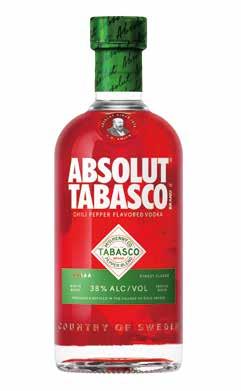
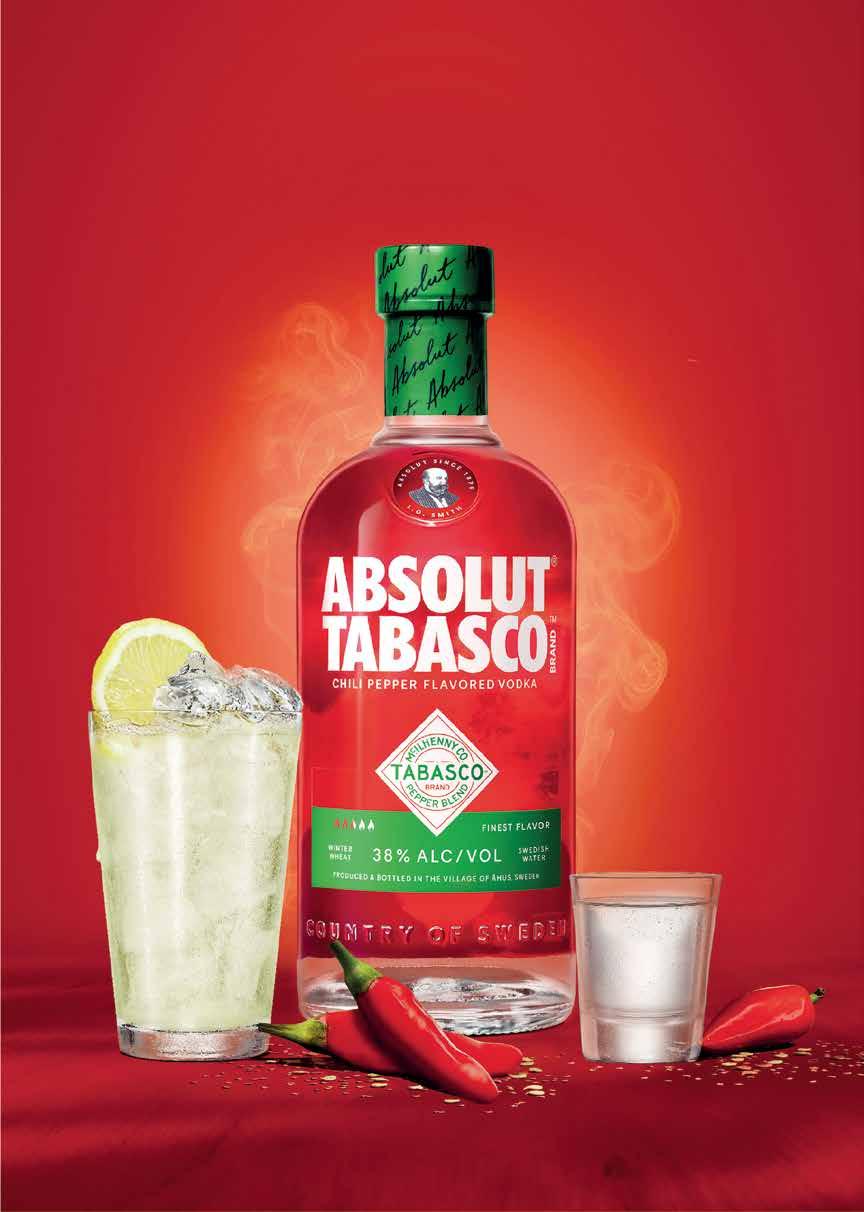
Absolut Vodka and Tabasco® brand are firing up the global spirits scene with the launch of a new spicy vodka, Absolut® Tabasco™. Launching in Ireland from April 2026 and across 50 plus markets, including the US and the UK, this bold innovation captures the heat that spirit drinkers worldwide crave.
Crafted by fusing Absolut Vodka with a unique and completely natural essence (there’s no added sugar) created from the fermented, aged red pepper mash used to make Tabasco® Sauce, Absolut® Tabasco™ delivers the distinctive heat and aroma of the world’s most famous pepper sauce in the world’s leading premium vodka**.
The new Tabasco ®-Sauce-flavoured vodka comes amid strong, growing demand for hotter flavours. People are craving heat now more than ever, with sales of spicy vodka forecast to increase 27% by 2029***.
Absolut® Tabasco™ is an extremely versatile vodka which can be used to ensure consistency in spicy cocktails, fizzy long drinks or even served chilled and sipped neat. Whether it’s the brunch staple, a Bloody Mary with bite or a tingling Spicy Lemon served with Fanta or Club Lemon, Absolut® Tabasco™ is for all spice lovers – a smooth-tasting vodka with a heat that builds to leave a warm feeling on the lips with every sip.
*Ergonomic Flavour Trends Report 2024
** IWSR 2024, *** Datassentials February 2025
The new Tabasco ®-Sauce-flavoured vodka comes amid strong, growing demand for hotter flavours
FEEL THE HEAT.
absoLuT TabAsco & FIZZY LEMoN sIP NEAT FoR EXTra HEAT!
Consciously produced vodka
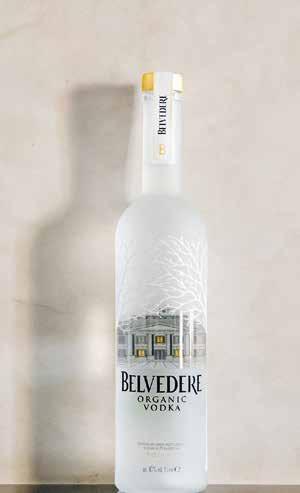
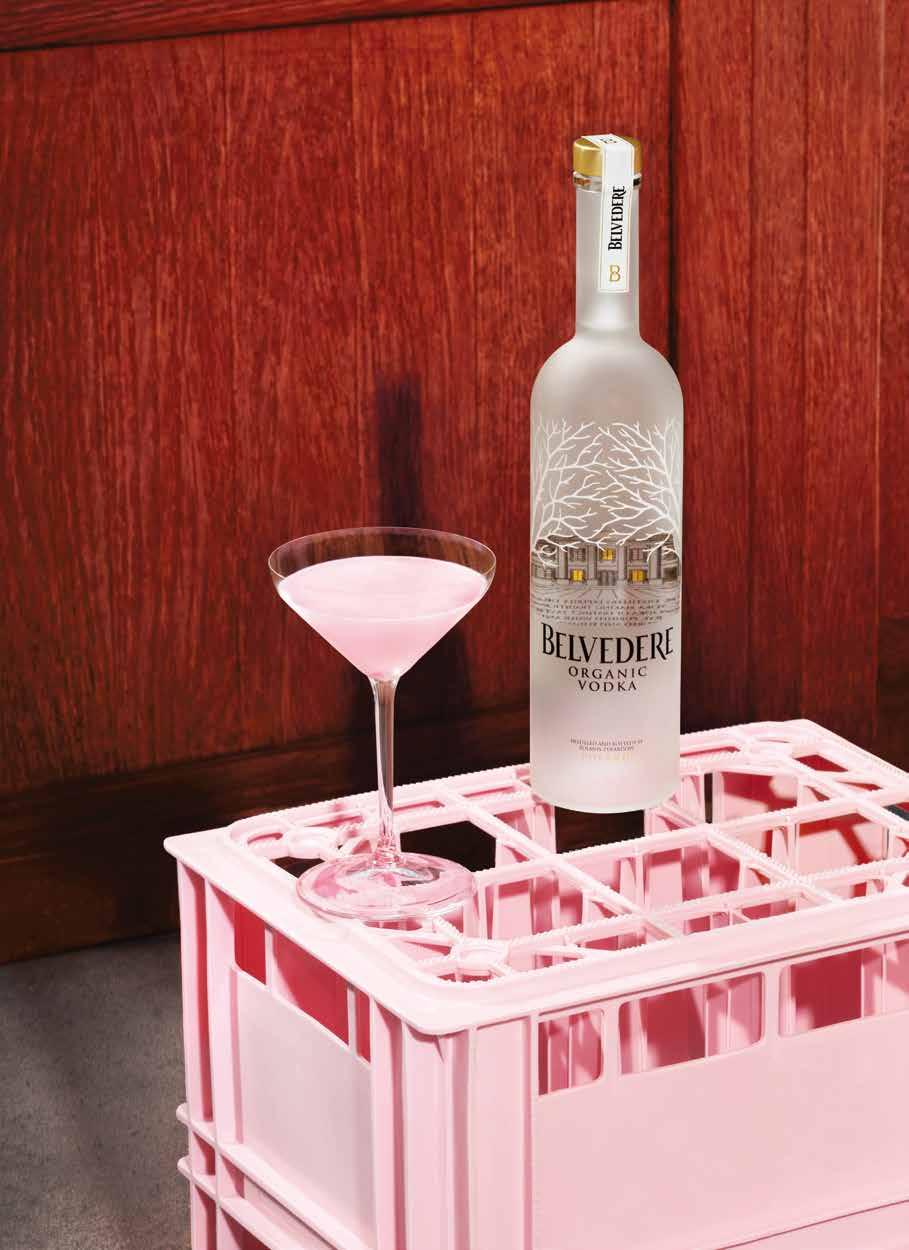
Belvedere Organic Vodka is now firmly established across the Irish on and off trade, reinforcing the brand’s commitment to quality, provenance, and modern luxury.
Crafted from 100% organic certified rye and distilled in line with over 600 years of Polish vodka making tradition, Belvedere Organic Vodka represents a natural evolution for the brand. Produced using only organic rye and purified water, with no additives, the liquid delivers a clean, structured profile that continues to resonate with both bartenders and consumers.
The move to organic certification reflects a broader shift in consumer demand towards transparency and consciously produced spirits. By ensuring all ingredients are farmed without artificial pesticides or chemicals, Belvedere further strengthens its position within the premium vodka category while aligning with evolving sustainability expectations.
Across Ireland, Belvedere Organic Vodka is gaining traction within the on-trade, offering versatility across a range of serves from classic Martinis to contemporary, menu-led
cocktails. Its premium positioning and recognisable brand equity make it a strong addition to both back bars and curated cocktail lists.
The transition to Belvedere Organic has also been marked by a refined bottle design. Featuring a gold cap and updated neck label, alongside the brand’s iconic Belvedere palace with a single illuminated gold window, the new look reflects the quality of the liquid within and signals a modern step forward for the brand.
Belvedere Organic Vodka (RRP €48.75) is available from Celtic Whiskey Shop, Dublin, Wine Centre, Kilkenny, O’Brien’s Wine, Navan, Molloy’s Liquor Store, Dublin, Higgins, Clonskeagh, Bradleys Off Licence, Cork, The Corkscrew, Dublin, World Wide Wines, Waterford.
Premium Irish vodka
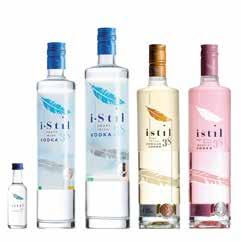
With demand for premium and super-premium vodkas on the rise, consumers are increasingly choosing quality over quantity. iStil38 Irish Vodka is perfectly positioned to meet this demand. Distilled in Ireland and crafted with a focus on smoothness, balance, and mixability, iStil38 delivers a premium vodka experience that works equally well served straight, over ice, or as the foundation of modern cocktail culture.
For on-trade venues, vodka remains the engine of cocktail menus
- from Vodka & Soda and Espresso Martinis to Cosmopolitans and signature serves. Stocking iStil38 provides operators with a premium Irish vodka that enhances menu quality, drives higher margin serves, and meets the expectations of today’s discerning consumer.
For off-trade retailers, iStil38 offers a premium, modern Irish vodka with strong shelf presence and a clear proposition that resonates with younger shoppers and female-led purchase decisions.
With consumer demand firmly behind vodka and premiumisation continuing to accelerate, iStil38 is not just another vodka, it is a commercially smart, consumerrelevant Irish brand that belongs in every bar, restaurant, hotel, and retail outlet nationwide.
iStil38 Irish Vodka is a premium Irish vodka, built for modern Ireland.
Making people happy
Tito’s was inspired by the distillation methods of fine single-malt scotches and high-end French Cognacs. Tito’s is made in old-fashioned pot stills, designed to be savored in an ice-cold martini or a simple Tito’s Soda Lime. Crafted in batches with each batch taste-tested, Tito’s corn-based vodka is certified gluten free, goes down smooth, and has an impeccably clean finish.
A seed to sip ethos
This field-to-bottle, organic vodka, is made entirely on-site at The Boatyard Distillery in Co Fermanagh, the island’s first B Corp distillery. The Irish wheat for Boatyard’s vodka is carefully selected from what they consider to be the best growers in Ireland. The seed-to-sip ethos means that the team at Boatyard Distillery can trace the wheat used in each individual bottle back to the farmer who grew it and even the field in which it was grown. This approach gives their small batch Irish vodka a unique and complex flavour. Boatyard Distillery don’t filter their spirit at all, they believe this allows you to enjoy the unique flavour of their Irish grain vodka in the way they intended it –pure and unedited.
Belvedere Organic Vodka is produced using only organic rye and purified water, with no additives, the liquid delivers a clean, structured profile that continues to resonate with both bartenders and consumers
iStil38 provides operators with a premium Irish vodka that enhances menu quality
Little Mix
The mixers category now offers a wide variety of products. As more consumers shift toward drinking less but choosing higher-quality beverages, alongside a continued preference for lighter, lower-calorie, and lower-sugar options, brands have needed to expand their portfolios. This has led to the introduction of “healthier” alternatives that enhance the overall drinking experience through improved taste, presentation, and enjoyment.
Savour sophisticated flavour
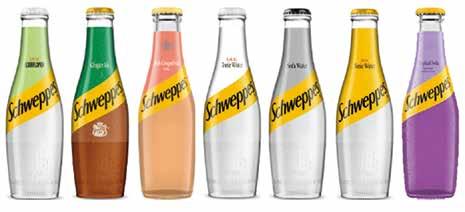
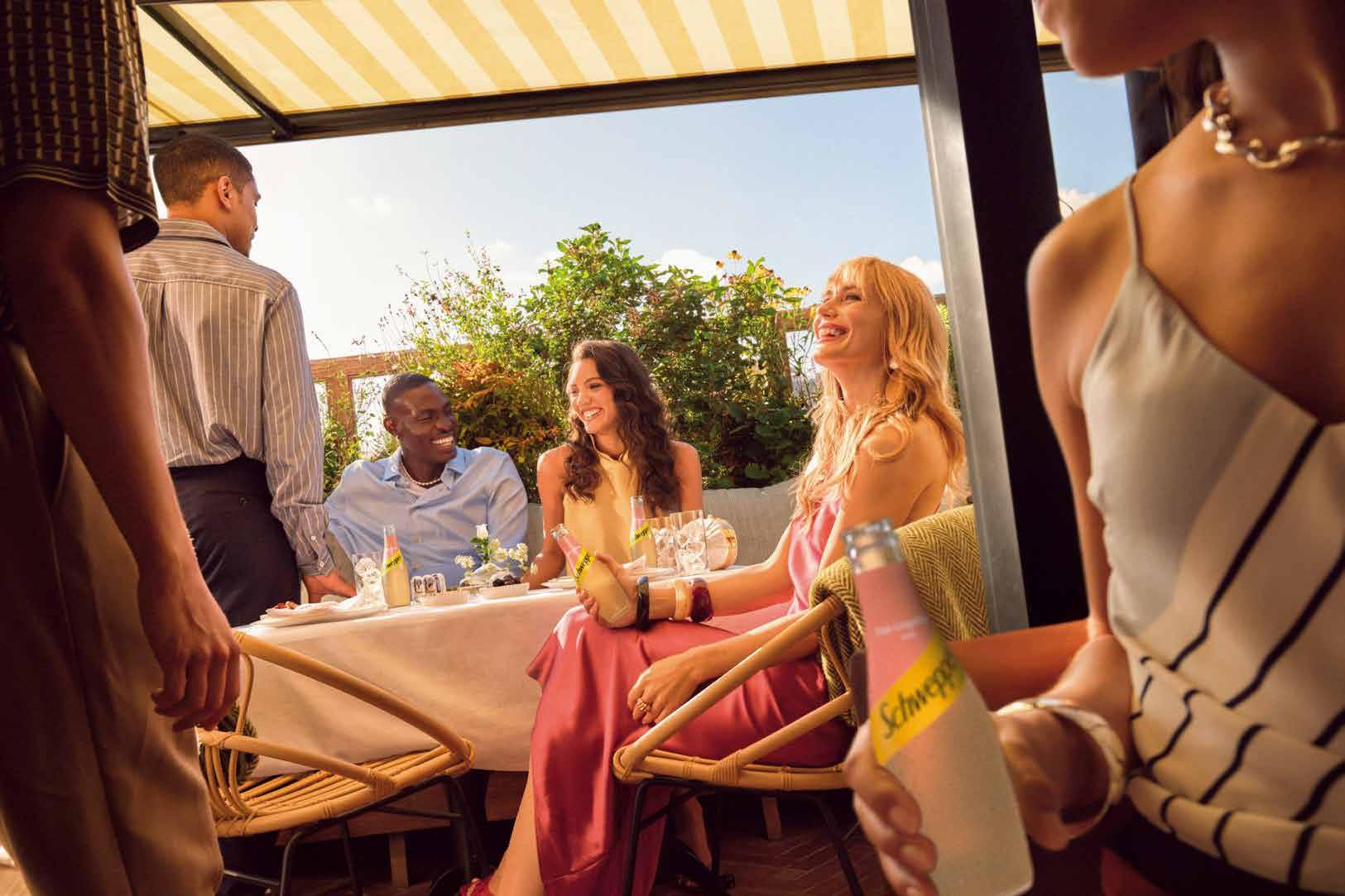
Schweppes was founded in 1783 by Jacob Schweppes. He invented the first ever process of capturing bubbles, and from this carbonation system, Schweppes Soda water was born – the world’s first ever soft drink.
Thanks to Jacob we have been enjoying the superior taste of Schweppes mixers for over 200 years and is the No1 branded mixer in Ireland enjoyed with and without alcohol.
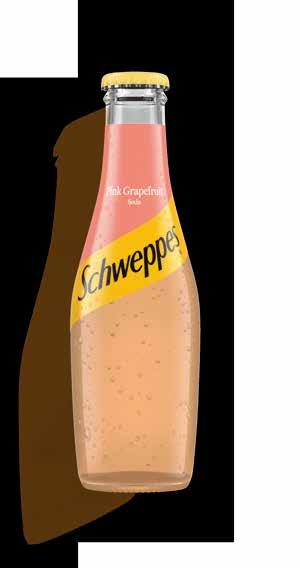
With consumers increasingly looking for flavoured mixer options, which deliver on taste and fizz, Schweppes has the perfect range to meet this demand. The Schweppes 200ml range is available in Tonic Water, Slimline Tonic Water, Elderflower Slimline Tonic Water, Soda Water, Pink Grapefruit Soda and Ginger Ale.
A unique new flavour will be added
social occasion in pubs, bars and restaurants, whilst tapping into the ever-growing flavoured soda trend.
to the Schweppes 200ml this May.
New Schweppes Tropical Soda is a blend of exotic flavours including Dragon fruit, Guava, Blackcurrant and Hibiscus perfectly balancing a touch of sweetness and fruity tartness. Schweppes Tropical Soda provides an opportunity to further grow Schweppes within the on-trade, driving relevance for the brand with the return of the spring / summer
Schweppes is kicking off the spring-summer season in May with Pink Grapefruit Soda activation in line with ‘World Paloma Day’ on the 22 May 2026 targeting socialisers aged 25-39. The rising popularity of the Paloma serve across bars nationwide is a trend Schweppes Pink Grapefruit Soda will tap into and will help simplify the bartenders’ path to a great Paloma serve by simply adding tequila and pink grapefruit garnish. For consumers who prefer a no-alcohol alternative Schweppes Pink Grapefruit is best served poured over ice for a crisp and refreshing alcohol-free option.
The company will continue its flavoured soda activation from June to inspire consumers with a fully integrated marketing campaign to support the launch of Schweppes Tropical Soda. This will include value added deals for outlets with functional activation items such as glassware to keep the brand top of mind for customers and to support the ‘cocktail’ and ‘spritz’ trend, venue point-of-sale, a newly developed ‘suggested serve’ booklet to provide Schweppes inspiration for summer menus, targeted social, out-of-home media and PR. The Schweppes sales team will also work in partnership with outlets to activate the brand on
Enjoy a refreshingly crisp Schweppes this summer, the number one branded mixer in Ireland
Schweppes is kicking off the spring-summer season in May with Pink Grapefruit Soda activation
Clearer Twist co-founder and co-chairman, Ross Lazaroo-Hood gives his take on the mixer market
The global mixer market was valued at 2.6 billion USD in 2024 and is projected to grow to 3.8 billion by 2034. Looking ahead, we expect to see more savoury and umami-driven flavours in cocktails and mixers - think matcha, complex botanicals, spices, and even pandan leaves.
While these flavour fads come and go, one takeaway is key: consumers ultimately want uncomplicated mixers that stand the test of time and shelf life.
Although consumers are reaching for quality, the mid mass market has been ignored with almost every new brand wanting to be seen as “Premium”, going up against Fever Tree and resulting in a crowded shelf of lookalike brands - from labels to
menus, highlighting mixability, straight drinking opportunities and suggested serves. Schweppes Pink Grapefruit and Tropical soda will be supported all summer long with the return of the Schweppes ‘Taste the Summer’ roadshow across venues in Ireland and Northern Ireland and feature as part of Schweppes takeovers at key summer festivals.
A commitment to flavour and excellence
Club Mixers is a legendary fixture in the Irish beverage landscape, with roots tracing back to 1852 and a reputation for delivering exceptional taste and lively spirit to every occasion. Known for its premium range – tonics, sodas, and ginger ales – Club Mixers bring both energy and tradition to the table, making them as popular today as ever. Each pack proudly showcases the brand’s rich heritage through delightful illustrations, inviting consumers to explore the unique story woven into every bottle.
The range stands out not only for its historical significance but also for its superior quality. Both Club Tonic Water and Club Ginger Ale have received prestigious accreditation from the International Taste Institute, a testament to the brand’s unwavering commitment to flavour and excellence.
cans - all blurring into one another. Clearer Twist has entered the market to shake it up and show that mixers can be fun, individual and versatile.
We want to be an affordable and accessible brand but also be fun. It’s all about enjoyment - something that the mixer category has seemed to have forgotten about as they focus on pushing luxury and higher price points, which ultimately alienates customers. Clearer Twist is different and wants to be the go-to mixer brand that everyone can enjoy.
Clearer Twist is part of Clearer Group, which is a water company that specialises in water based products. With 93% of your mixer being water then why wouldn’t you trust the
Mix with the best
In 2013, Fever-Tree was introduced to the Irish market via Richmond Marketing. Throughout the past 10 years, we’ve seen a market wide shift towards premiumisation with FeverTree pioneering the premium mixer category, bringing choice, quality, and excitement back into the previously overlooked space.
Fever-Tree now offers one of the market’s most expansive mixer ranges encompassing Flavoured Tonics, Ginger Ale, Ginger Beer, Soda Water, Mexican Lime Soda Water and most recently, Pink Grapefruit Soda, which is made using naturally sourced ingredients to achieve the perfectly balanced, bitter-yet-sweet flavour with fresh and floral notes.
From old school classics to modern twists, Fever-Tree’s award-winning range of mixers will enhance the taste of any long drink or cocktail. For more information, please visit www.fevertree.com
The lighter drinking movement
At the forefront of this evolving mixers category and lighter drinking movement is London Essence, a premium drinks brand producing elegantly distilled mixers designed to accentuate the finest spirits. Each
number 1 ethical water company to deliver a great quality mixer? We searched high and low for a high alkaline water that would bring a delicious beverage with less sugar, no artificial sweeteners and fewer calories - yet bold enough to stand out with unique flavour twists on the classics.
expression is delicately light at under 20kcal per 100ml, low in sugar at under 4g per 100ml and is crafted without the use of artificial sweeteners, thanks to its unique use of distilled essences.
Through its relationship with the trade experts and conversations with world leading bartenders, London Essence also recognised that high sugar mixers often overpowered the characteristics of the spirit partner, instead of enhancing them.
With that in mind, the brand took inspiration from its heritage in creating distilled essences which capture the flavour of the finest ingredients to deliver aromatic signature notes and great taste, with only a dusting of sugar.
The best of Irish
Fast growing Premium Irish drinks brand Poachers Drinks extended its range last year from seven to nine to include two award winning new sodas - Grapefruit Soda with Achill Island Sea Salt and Lemon Soda with farm grown Irish Mint.
The Guaranteed Irish ™ Company who make their entire range of premium drinks and sodas in Ireland continues to highlight the best Irish ingredients in all of their products.
Clearer Twist is an accessible and afforable brand, according to its co-founder Ross Lazaroo- Hood
The apple of my eye
Ireland’s cider category remains a dynamic segment of the drinks market, balancing heritage with innovation. Long dominated by big brands, the sector has diversified in recent years with the growth of craft producers and premium offerings. Drinks Industry Ireland gives an overview of the cider category
Stealing a lead
Orchard Thieves remains Ireland’s biggest draught cider*, with a strong connection to younger adult drinkers. Today, nearly one in two young adults list Orchard Thieves as their cider of choice*, underlining the brand’s continued relevance within a category increasingly shaped by changing tastes, occasions and expectations.
Introduced in April 2024, Orchard Thieves Wild marked an important moment for the brand, not as a departure, but as an expansion of what Orchard Thieves stands for. As cider drinkers increasingly look for options that feel less sweet and more refreshing, Orchard Thieves Wild was designed to sit alongside Orchard
Thieves Original, offering choice within a familiar and trusted brand rather than asking consumers to trade out entirely.
Within the less sweet cider segment, Orchard Thieves Wild brings a notably lower sugar and lower calorie profile, with 2.2g of sugar per 100ml, a 4.0% ABV and no artificial sweeteners.
Positioned as a medium dry apple cider, Orchard Thieves Wild delivers a crisp apple flavour with reduced sweetness and a clean, refreshing finish. In simple terms, medium dry sits between sweet and dry, flavour forward without heaviness, and easy to enjoy across longer social occasions.
Since launch, Orchard Thieves Wild has helped broaden perceptions of the Orchard Thieves family, appealing to drinkers who may previously have overlooked cider altogether. Its role is not to replace the original, but to complement it, reflecting the reality that today’s cider drinkers expect choice rather than a one note proposition.
Orchard Thieves Wild is available nationwide across pubs and bars, and is also widely stocked in supermarkets and off-licences, supporting consistent visibility across both on and off trade.
With Orchard Thieves Original and Wild working together, the brand signals a clear ambition: to keep cider accessible, refreshing and relevant for the next generation of drinkers.
*Source: CGA OPM date to December 2026
*Source: Kantar Brand Guidance System, Q2 2025
Offering choice in cider
At Armagh Cider Company, it has seen exceptional momentum across its no and low alcohol portfolio, with Cider Zero emerging as one of its fastest-growing segments. Sales have accelerated significantly over the past year, reflecting a broader consumer shift towards moderation without compromising on quality or flavour. This growth has been further strengthened by successful listings with Tesco NI and Sainsbury’s NI, alongside expansion into key foodservice distributors, enabling us to reach consumers across both retail and hospitality channels.
The no and low alcohol category continues to resonate strongly across all demographics, from younger consumers seeking mindful drinking options to more established cider drinkers looking for balance. This trend is no longer niche, it is a core driver of innovation and growth within the category, and the company is proud to be at the forefront of that movement.
In addition to its branded range, it also produces private label cider
Within the less sweet cider segment, Orchard Thieves Wild brings a lower sugar and calorie option
The no and low category resonates across all demographics, from younger consumers seeking mindful drinking options to more established cider drinkers looking for balance
for Aldi Ireland, spanning dry, medium, and sweet variants. These products have consistently achieved recognition at the Blas na hÉireann Irish Food Awards, underlining a commitment to quality and craftsmanship. The ciders all carry the PGI mark for the Armagh Bramley apple, reinforcing our provenance and heritage.
Meanwhile, Doyle’s flavoured cider range (3.4% ABV) continues to deliver strong year-on-year growth, demonstrating sustained consumer demand for accessible, flavour-
where heritage, craftsmanship, and innovation come together in every bottle. What began almost 60 years ago with a simple passion for growing apples has evolved into a thriving, award-winning drinks business, yet the ethos remains unchanged: quality starts at the source.
They also offer an Alcohol-Free Cider, ensuring there is something for every occasion and every consumer. With ABVs ranging from 0.05% to
cider manufacturer experiencing double-digit growth year-on-year, reflecting a broader shift in consumer preference.
Today’s Irish drinker is increasingly drawn to mindful indulgence, the practice of savouring high-quality products in moderation. This cultural shift has accelerated demand for craft cider, where quality is prioritised over quantity.
Stonewell exemplifies this
How to conduct a fair interview and protect your company
Caroline Reidy, head of NFP HR Solutions, documents past mistakes during interviews that turned out very costly to the companies involved
While organisations are committed to finding the right person for the role, many organisations overlook a critical component of successful hiring by not equipping managers with the skills to conduct effective, fair, and legally compliant interviews.
Managers understand the nuances of the role, team dynamics, performance expectations better than anyone else and are heavily relied upon in creating accurate job descriptions. However, without proper training, even experienced leaders can fall into common interview errors such as unconscious bias, inconsistent questioning or poor record keeping.
What
are the potential risks when interviews go wrong?
Employment Equality Legislation prohibits direct and indirect discrimination on any of the nine
protected grounds - gender, civil status, age, disability, race, religion, family status, sexual orientation or membership of the traveller community.
Under the Acts, the interview candidate is only required to raise an inference of discrimination and the burden then shifts to the employer to disprove the allegation of discrimination. If it is established that an interview candidate was unsuccessful at interview because of any of the nine discriminatory grounds, he or she can be awarded:
• Up to €13,000 if he or she is an external candidate; or
• Up to two years remuneration if he or she is an internal candidate (i.e. a current employee).
• If the discrimination relates to gender, including pregnancy related discrimination and is brought in the circuit court, there is no cap to the compensation that may be awarded.
What can we learn from the Case Law?
In Williams v Board of Management, a primary school was ordered to pay €85,000 to a teacher following a discriminatory comment during her interview. At the interview for a teaching post at the school, the teacher stated that the school principal, congratulated her on the birth of her daughter, stating “you really should enjoy every moment
at home with the baby”. The teacher told the WRC that she felt it was unprofessional to discuss her maternity leave in front of the interview panel. The teacher was unsuccessful in her application for the role and felt that she had been subjected to discrimination on the grounds of family status.
The adjudicator concluded that the teacher had been subjected to discrimination, as a Contract of Indefinite Duration (CID) was awarded to a colleague who was not on maternity leave, and the teacher experienced discriminatory treatment during the interview process.
Lesson: Avoid comments relating to a personal nature.
In Barry v Solas (DEC-E2017-086), Mr. Barry, an older candidate, was asked if he should “be taking it easier” at his age. The Equality Tribunal found this discriminatory and awarded €20,000.
Lesson: Avoid age-related assumptions. Even casual remarks can be legally damaging.
In another case (Anonymous v Employer) a candidate wearing a headscarf was repeatedly asked where she was “originally” from.
The WRC found that the employer was not asking Irish candidates or non-headscarf wearing candidates where they were from and ordered the employer to pay €1,500 to an unsuccessful candidate on the grounds of racial discrimination.
Caroline Reidy, head of NFP HR Solutions, HR and Employment Law Specialist
“On any of the nine protected grounds - gender, civil status, age, disability, race, religion, family status, sexual orientation or membership of the traveller community”
Lesson: Keep questions job-related. Avoid culturally loaded or personal questions.
In Meehan v Leitrim County Council (DEC-E2006-014) the complainant was significantly more qualified than the individual who was successful for the position. The Council claimed that the successful candidate performed better at interview stage and was selected on that basis. However, as the Council did not keep any record of the interviews, it was unable to rebut the presumption that age discrimination had occurred.
Lesson: The lack of a mechanism whereby marks are allocated under different and clear headings or indeed the lack of interview notes at all make it very difficult, if not impossible, for a respondent employer to stand over an interview or selection process.
Benefits of interview skills training
The above cases all highlight how a badly conducted interview, or a selection process which does not conform to good practice can be vulnerable to a claim of discrimination.
Interview Skills training can help:
• Structured interviews lead to better hiring decisions.
• Standardise processes to support diversity and inclusion.
• Train managers in the art of asking the right questions.
• Support managers in feeling more prepared and less anxious.
• Create a professional interview process which reflects well on the organisation.
Improving hiring outcomes
Hiring is one of the most impactful decisions a manager can make. By investing in interview skills training, organisations empower their leaders to make decisions with confidence, fairness, and legal awareness, while also improving hiring outcomes and protecting their reputation.
If you are an organisation based in the Republic of Ireland and require further information or advice relating to HR, please do not hesitate to contact us at hrsolutions@nfpireland.ie / (066)7102887. For more information visit www.nfpireland.ie
Give Wine A Future, by Findlater & Co
held at The RDS Concert Hall, Dublin 4 on 3 March
Wineonline team
Grapevine team
Mitchells & Co team
Donnybrook Fair team
Nuno pouring 4.5 litre of Port
Grand Slam Bars launches “Upstairs at McSorley’s”
held at McSorley’s Ranelagh on 11 March
Lauren Heffernan and Jules Mahon
Helen Galgey and Eden Byrne
Rebecca Horan and Rebecca Martin
Lauren Gray and Sadie-Rose Keogh
Daniela Roze, Maciej Zieba and Rebecca Scott
Zerica Griffin and Lucy Black
Sheena and Jamie Heaslip
Stefan Wiese and Paula Callan
Daniela Roze, Maciej Zieba and Rebecca Scott
Amanda Brunker
Dave and Rob Kearney Lora Doyle and Aislinn O’Toole
Bryony Jewell, Ellie McHale-Roe and Maya Dunne
Rob Kearney, Jamie Heaslip, Sean O’Brien, Noel Anderson, Tony McCabe and Dave Kearney
Catherine Durkin and Laura Jordan
Irish Food Writers’ Guild Awards 2026
held at Ananda Restaurant, Dundrum on Tuesday 3 March
Clare Hyland, Maura Walsh, Linda O Connor
Asheesh Dewan, Patrick Hanlon
Anthony O’Toole, Hermione Winters
Cora Ni Ghallchoir, Eirinn Hourican, Elena Volcu Dee Laffan, Ali Dunworth, Paula McIntyre
Donna Ahern, Jocelyn Doyle
Fergal Carroll, Michelle Darmody, Cathal Byrne
Fergal Carroll, Donal Skehan, Cathal Byrne
Edward Hayden, Clare Anne O’Keefe
Rupa Dewan, Collette Hankey, Asheesh Dewan
Rupa Dewan, Donal Skehan
Sandra & David Scott, Hermione Winters
Norah Casey, Rupa Dewan
Patrick Hanlon, Laura Bradley
Sharon Noonan, Tom Burgess
Nick McCarthy, Aidan Power
Maura Walsh, Michelle Darmody, Linda O Connor
Stefan Griesbach, Leslie Williams, Lizzie Gore Grimes
Leslie Williams, Lizzie Gore Grimes
Laura Bradley, Paula McIntyre - Chair IFWG
Katy McGuinness, Cathal McBride
Hilda Crampton, Dominic Quinn, Caroline Hennessy
Georgina Campbell, Stefan Griesbach
Fiona Burgess, Collette Hankey
Ballygowan announced as official supporter of the 2027 Ryder Cup
Ballygowan has announced a landmark partnership agreement as official supporter of the 2027 Ryder Cup, which will be hosted at Adare Manor in Co. Limerick.
The partnership is structured as a bespoke, Ireland-only agreement, reflecting a unique opportunity presented by the Ryder Cup returning to Irish soil. Ballygowan represents the exceptional quality of Ireland’s local products and will be the exclusive water category partner for the event.
As part of the partnership, thousands of litres of Ballygowan Natural Mineral Water will be provided to players, officials, volunteers and attendees throughout the world’s
most prestigious team golfing event. Special focus will be placed on sustainability with road miles kept to a minimum given there is just 24km from source to venue.
The 2027 Ryder Cup is expected to attract hundreds of thousands of spectators and a global television audience of hundreds of millions, placing Ireland firmly in the international sporting spotlight.
The announcement also marks a return to the Ryder Cup for Ballygowan, which previously served as Official Water Sponsor when Ireland last hosted the event at The K Club in 2006. Ballygowan has also been a partner of the Amgen Irish
Back on home turf
Connemara, Ireland’s signature peated single malt whiskey, proudly announces the nationwide release of its Connemara Distiller’s Edition, now distributed exclusively in Ireland by Suntory Beverage & Food Ireland. This partnership marks an exciting step in expanding the availability of one of Ireland’s most distinctive whiskey expressions.
Crafted at the historic Cooley Distillery, Connemara Distiller’s Edition represents a refined evolution of
the brand’s iconic smoky style. The whiskey is matured in bourbon barrels and finished in Oloroso sherry casks, adding layers of sweetness and depth to its trademark peat character. The result is a beautifully balanced single malt offering notes of smoke, dried fruits, warm spice, and subtle oak, bottled at 43% ABV for a richer, more expressive profile.
Celebrated as one of Ireland’s leading peated whiskeys, Connemara Distiller’s Edition continues the
Open on the DP World Tour since 2006.
brand’s legacy of craftsmanship and innovation, inspired by the wild landscapes of its namesake region.
DAOU Vineyards and Findlater & Co. announce partnership
DAOU Vineyards, the acclaimed luxury wine estate from Paso Robles, California, is proud to announce a strategic distribution partnership with Findlater & Co. This collaboration marks a pivotal moment in DAOU’s mission to bring world-class wines to both the Republic of Ireland and Northern Ireland.
The agreement will spotlight DAOU’s prestigious Reserve collection and its iconic flagship wine, Soul of a Lion - a Cabernet Sauvignon that embodies the estate’s vision to position Paso Robles among the world’s most celebrated fine-wine regions.
Richard Moriarty, wine director at Findlater & Co., commented: “We are delighted to welcome DAOU Vineyards to the Findlater & Co. portfolio. DAOU represents a new benchmark for premium Californian wine, combining exceptional terroir with precision winemaking.
Soul of a Lion is a remarkable expression of Paso Robles Cabernet Sauvignon, and we look forward to building strong presence and awareness of the brand across both the Republic of Ireland and Northern Ireland, across on-trade and premium retail sectors.”
Richard Atkinson, chief Ryder Cup officer at the European Tour Group, Sian Young, Sustainable Business & corporate affairs director of Britvic Ireland, and Kevin Donnelly, managing director of Britvic Ireland, pictured at official signing of Ballygowan’s partnership agreement as Official Supporter of the 2027 Ryder Cup. (Photo Don Moloney)
Give Wine A Future launches new Report
Give Wine A Future, an initiative by Findlater & Co., brought together leading voices from across the Irish wine trade at the RDS Concert Hall on 3 March to launch Ireland’s first Sustainability & Wine in Ireland Report, authored by journalist Aoife Carrigy. More than 200 attendees from across the Irish wine industry were present on the night, with Findlater & Co. delighted to bring together so many industry peers under one roof. The report presents new research into how Irish consumers understand sustainability in wine and how it influences purchasing behaviour.
Based on a survey of 174 wine drinkers, the findings reveal that while two-thirds of consumers consider sustainability when buying wine, it is rarely the primary purchase driver. Taste, enjoyment and value remain the most important factors in decision-making. The research also highlights opportunities for the wine industry. Awareness of terms such as organic and environmentally friendly production is relatively strong, while understanding of packaging impact and regenerative agriculture remains limited.
Festival fever is coming
As Ireland’s leading experience and entertainment group, FUEL delivers standout summer festivals including WellFest, Kaleidoscope, and Beyond The Pale. Each offers a readymade festival experience for unforgettable team days, client hosting, and celebrations of every scale.
Host teams and clients at Beyond The Pale, Glendalough’s acclaimed music and arts festival with 10% off 30+ group weekend or Sunday day tickets. As an upgrade, the Round Tower Main Arena Hospitality Lounge provides a retreat at the heart of the festival.
Guests enjoy exclusive access to a full bar serving beers, bubbles, and cocktails, a comfortable lounge with covered seating, luxury festival toilets, and streetfood options within the exclusive area.
It’s a place to recharge, refresh, and
raise a glass while staying close to the Main Stage energy.
Kaleidoscope, Ireland’s largest family festival offers 10% off 50+ tickets, including kids, with the option to upgrade to the KaleidoClub Main Arena Lounge. This main arena basecamp includes full weekend lounge access, luxury toilets, dedicated bar service, covered seating, family friendly garden games, and additional babychanging facilities.Two kids enter free with every adult upgrade, making it an effortless way to add extra sparkle to a familyfriendly company or client experience.
WellFest Dublin and Belfast, Europe’s largest fitness and wellness festivals, offers 10% off group bookings of 15+, creating an energising corporate day out across movement, mindfulness, and motivation. Contact sarah.king@fuelhq. ie to begin planning.
Reimagining Irish whiskey for a new generation
Roe & Co Irish Whiskey is proud to announce the launch of its newest expression, Roe & Co Signature Blend Irish Whiskey.
Crafted as a vibrant and inviting entry point to the world of Irish whiskey, this new contemporary bottle, blended at 40% ABV, offers a smooth, versatile, and accessible experience for adults.
Designed to welcome both the
whiskey connoisseur and those discovering Irish whiskey for the first time, its meticulously developed flavour profile ensures it excels as a great whiskey for mixing in simple drinks, while remaining equally enjoyable neat.
With a RRP of €29, Roe & Co Signature Blend will rollout nationwide including at the Roe & Co Distillery in Dublin 8.
Pink is the new green
Tequila Rose is bringing a fresh burst of colour and creativity to the Irish drinks’ scene with the launch of its official Tequila Rose Ireland Instagram page. Designed to connect with a new generation of consumers, the page showcases the brand’s playful personality, signature serves, and vibrant community moments.
The launch coincides with the brand’s bold new campaign, “Pink is the New Green,” a celebration of standing out, embracing fun, and redefining tradition in the Irish market. By blending iconic Irish cues with Tequila Rose’s unmistakable pink aesthetic, the campaign invites consumers to see things differently
and enjoy moments that don’t take themselves too seriously. The team strategically chose to launch over Paddy’s week to give the page a real Irish feel and tap into one of the most culturally significant and celebratory moments of the year.
From cocktail inspirations to behind-the-scenes moments, the new Instagram page is set to become a hub for fans of the brand across Ireland.
Follow Tequila Rose Ireland on Instagram at @tequilarose_ireland to stay up to date with the latest content, events, and campaign highlights.
Tequila Rose is imported exclusively in Ireland by MCM Spirits.
It’s La Dolce Vita for MCM Spirits!
MCM Spirits announces strategic partnership with iconic Italian spirits houses Fratelli Branca and Pallini Limoncello.
MCM Spirits portfolio goes from strength to strength with the addition of two of Italy’s most renowned spirits dynasties: Fratelli Branca, the legendary Milanese house behind some of the world’s most celebrated aperitifs and digestifs such as Fernet Branca, Antica Formula & Carpano; and Pallini Limoncello, Rome’s iconic familyowned producer known for its vibrant, sunkissed liqueur crafted from Amalfi Coast lemons.
This collaboration brings together iconic brands united by a shared passion for craftsmanship, authenticity, and the unmistakable allure of La Dolce Vita. Through this partnership, MCM Spirits will expand the presence of these beloved spirits across key markets.
The partnership marks a significant milestone for MCM Spirits as it continues to build a worldclass portfolio rooted in authenticity and quality. Customers and consumers can expect new activations, elevated brand experiences, and expanded availability.
Giffard West Cup Cocktail Competition is back!
The Giffard West Cup Cocktail Competition is back for its 29th edition. Taking place every two years, the competition sees competitors from 20 countries, competing to be crowned global champion and representing their home country on the international stage.
“In 2024 we saw our very own Stephie Fletcher from Dublin’s Bar 1661, who competed in the Grand Final, only narrowly missing out on the top spot. This time round we are determined to go one better and have an Irish global champion,” said Paul Flynn, sales & marketing manager at MCM Spirits,
exclusive importers for Giffard.
This year’s theme is ‘Sip the Moments’. Participants will be challenged to create two complementary drinks, each capturing a unique moment, mood, and context of consumption throughout the day.
From sunrise to moonlight.
Competition details: Pre-submission dates: 14 -28 March 2026.
Successful submissions will be invited to either of the three regional heats - Galway 14 April, Dublin 15 April, Belfast 16 April.
Two winners from each regional heat will go on to the Ireland final 6 May in
Dublin The Ireland winner will compete against 19 other countries in the World Final in France on 29/30 September. For more details on how to enter please visit: www.mcmbrands.ie/giffard-westcup-competition-2026. Giffard West Cup support number: 0035387 2132211