Côte d’Ivoire Côte d’Ivoire
Advancing the Sustainable Development Goals
Advancing the Sustainable Development Goals

Doing Business in Côte d’Ivoire Is published by
In partnership with the Centre for the Promotion of Investment in Cote d’Ivoire (Centre de Promotion des Investissements en Côte d’Ivoire - CEPICI) which promotes private investment.
Publisher: Planet Médias
21 place de la République - 75003 Paris - France
Tél. : (+33) 1 80 91 61 94
Fax : (+33) 1 80 91 61 95 contact@doingbusinessin.fr www.doingbusinessin.fr
Dany Laloum, Publisher
Fahim Djebara, Editor
Laurent Pointier, Subeditor Céline Devaux, Technical Director
JP Doutaud, Art Director
Dany Laloum , Maurice Habib, and Stéphane Benaïm, Advertising
Carmen Benito-Garcia, Translation
Centre de promotion des investissements en Côte d’Ivoire (CEPICI)
Immeuble Memanou, Boulevard Clozel - PlateauAbidjan - Côte d’Ivoire
Tel. : (+225) 27 20 31 14 00 infos.cepici@cepici.ci - www.cepici.gouv.ci
Solange Amichia, Director General Ramatou Fall, Director of Environmental Affairs, Prisca Sahiry, Director of Communications and Press Relations
Thierry Badou, Director of Investment Attraction
© Planet Médias - Adobe stock –Silvere Meya, Pexels
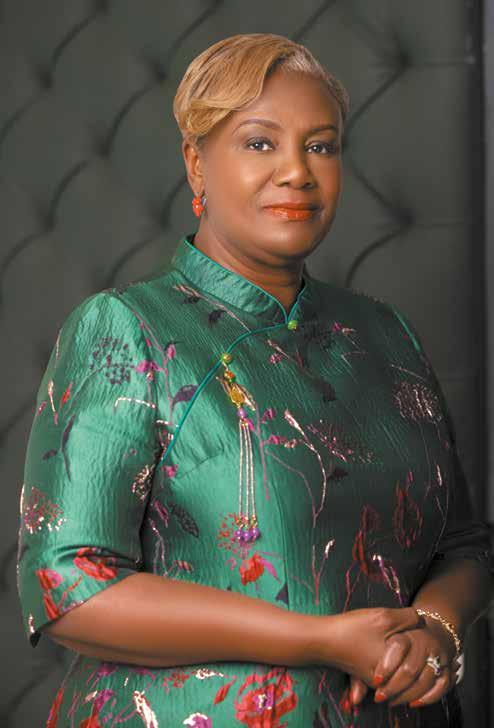

Solange Amichia, Director Generale, CEPICI
“AN EVER-INCREASING NUMBER OF SECTORS CONTRIBTE TO OUR GDP”
The positive momentum that Côte d’Ivoire has experienced since the election of President Alassane Ouattara in 2011 is primarily attributable to the consolidation of peace, security, and national cohesion. It is the fundamental value of peace that has allowed our country to rank among the fastest-growing African countries for the past decade.
The return to peace has allowed us to improve our business climate and the work of CEPICI has positioned Côte d’Ivoire among the world’s leading reformers. The stability gained is encouraging a growing number of entrepreneurs to open businesses while safeguarding the interests of our people. CEPICI facilitates procedures and processes for entrepreneurs, from the initial project design to its implementation. While investors support our progress, so too do our bilateral and multilateral partners, whose support is proof of their confidence in the ambitious strategic development plans we have undertaken.
Sound administration has allowed Côte d’Ivoire to maintain a strong macroeconomic framework and sound public finances and thereby consolidate the confidence of its partners. Economic growth in 2024 as robust, GDP increased by 7.2%, compared to 4.2% for ECOWAS countries. Growth in GDP expected to reach 7% in 2025. Our debt remains moderate at 58% of our GDP, the WAEMU community limit is 70%.
This virtuous circle allows the government to engage with its partners, attracts investors, and has allowed Abidjan to boast one of the best credit ratings in Africa on bond markets. Year after year we have been able to invest in basic infrastructure, increase our resilience by diversifying our economy, and have an ever-increasing number of sectors contribute to our GDP.
For several years, Côte d’Ivoire has been among the African countries that attracts the most foreign direct investment in the mining sector. Exploitation of recently discovered offshore oil and gas will not only add a major segment to our economy but also consolidate our position as a regional energy hub. All of this will provide us with the means to pursue our invaluable diversification.
For several years, Côte d’Ivoire has been among the African countries that attracts the most foreign direct investment in the mining sector. Exploitation of recently discovered offshore oil and gas will not only add a major segment to our economy but also consolidate our position as a regional energy hub. All of this will provide us with the means to pursue our invaluable diversification.
The number of new businesses in Côte d’Ivoire more than quadrupled between 2014 and 2023, and given the considerable opportunities, there is nothing to prevent this figure from doubling, tripling, or even quadrupling again in the coming decade. Opportunities can also arise from the challenge we will face in the years ahead: environmental preservation. Côte d’Ivoire’s objectives are to increase to 45% the share of renewable energy in its energy mix by 2030 and to pursue the restoration of its forest cover by developing climate-friendly agriculture.
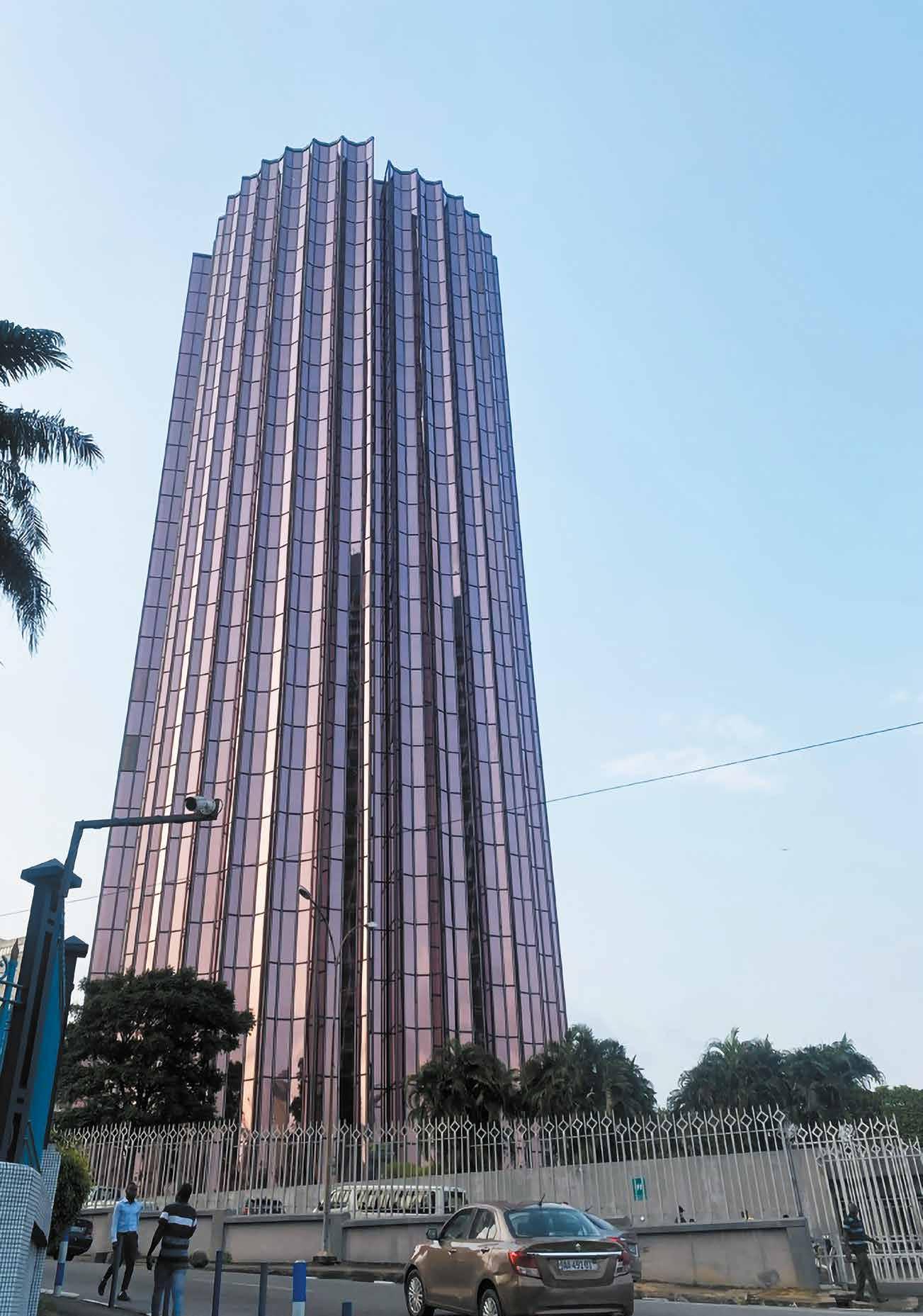
#1



ADMINISTRATIVE DIVISIONS


Taï National Parc Mount Sangbé National Parc


National Park Marahoué National Parc

BORDERS SHARED WITH FIVE COUNTRIES
The Cote d’Ivoire has an area of 322,462 km2 and a population of 31,934,200, according to UN estimates published in July 2024. Located in the northern hemisphere, between the Tropic of Cancer and the Equator, the country has a 515 km southern coastline along Atlantic Ocean and the Gulf of Guinea.
The country’s border is 3,110km long and is shared with :
• Liberia to the west (716 km)
• Guinea to the west (610 km)
• Mali to the north (532 km)
• Burkina Faso to the north (584 km)
• Ghana to the east (668 km)
Yamoussoukro
Dimbokro
Daloa
Odienné
Korhogo
Séguéla
Bondoukou
Abengourou Gagnoa Dabou
AND GEOGRAPHY
PPLAINS, PLATEAUS AND MOUNTAIN RANGES
With the exception of the hills and mountains in the west, Ivory Coast has a relatively flat and gently rolling landscape, consisting of plains and plateaus.
In the south, the coastline stretches between Liberia in the west and Ghana in the east. The long sandy coastline is interrupted by rocky areas in the west and lagoons in the east; the most famous is the Ébrié lagoon, which is characteristic of Abidjan.
In the area immediately north of the coast lies a vast plain that extends to plateaus at altitudes that are no higher than 350 meters above sea level.
In the central region the landscape, from south to north, is characterised by plateaus of medium altitude and higher plateaus in the north that can reach 900 meters. In the western part of the central region, between the cities of Man and Daloa, lies Côte d’Ivoire’s main mountain range, the Man Massif, whose highest peak, Mount Nimba, reaches 1,750 meters. In the northwest, in the Odienné region, small hills, no higher than 400 meters, dominate the landscape.
|||||||| Topography

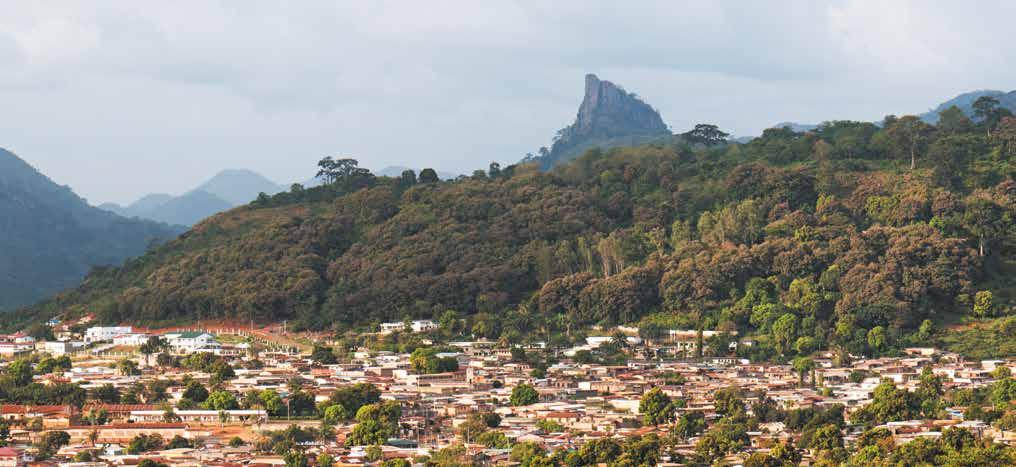
Mount Nimba 1 752 m
FROM THE DENSE FOREST TO THE SAVANNAH
Ivory Coast is essentially characterised by two distinct types of vegetation. The wooded savannah that starts in the north and turns into an increasingly dense equatorial forest to the south. The limits of these two zones forms a line that starts in the city of Man, in the west, runs southeast to the Yamoussoukro and then northeast to the city of Bondoukou.
The savannah in the north consists of vast grasslands and scattered trees. Richer vegetation is found in the areas next to waterways where vast expanses of teak, mango, shea, and kapok trees can be found. The main crops are millet, sorghum, rice, cotton, tomatoes, and vegetables.
In the centre, there is a wooded savannah, which usually gives way to vast coffee and cocoa plantations.
To the south, the vegetation basically consists of dense mesophilic and hydrophilic forests, which originally covered a third of the country’s land area, from south to west. Since the colonial era, the dense forests have shrunk significantly due to excessive logging and to shrub plantations, mainly for cocoa cultivation.
The coastline is lined with coconut and palmyra palms and small mangroves. The main crops are pineapple, banana, rubber, cocoa, and coffee
MORE THAN TWO MILLION HECTARES OF PROTECTED AREAS
Côte d’Ivoire has eight national parks, among them are Banco National Park (3,000 hectares) in Abidjan and, the largest, Comoé National Park, located in the northeast, which is a refuge for herds of elephants. The country is trying to safeguard a total of 2,250,295 hectares, including the national parks. The primary forest has practically disappeared, from sixteen million hectares in the 1960s, to approximately two million hectares today. This is why, in addition to the protected areas, in 2022, with support from the World Bank, the government launched Phase 2 of a major programme, the Forest Investment Project (FIP), with the aim of tripling forest area by 2030.
HOT AND HUMID AND DRY IN THE FAR NORTH
The climate in Côte d’Ivoire is essentially hot and humid, or equatorial and tropical. It is generally characterized by a narrow temperature range and high humidity, with average rainfall decreasing from south to north.The south is very humid, swept by warm ocean breezes. The equatorial zone has two rainy seasons of unequal length, and a long dry season from December to March. Rainfall ranges from 1,000 to 2,000 mm per year. In the central region, there is less rainfall and the seasons are more distinct. Finally, in the north, the year has two seasons, and the dry season is severe, the “Sudanese” type of dry.

SPOTLIGHT
FROM THE AUTONOMOUS DISTRICTS DOWN TO THE COMMUNE
The first level of subdivision in Côte d’Ivoire is the autonomous district. In June 2021, in accordance with the policy of decentralization and local development, the government created twelve new autonomous districts. Abidjan and Yamoussoukro were already autonomous districts.
The 12 new autonomous districts are: Bas-Sassandra, Comoé, Denguélé, Gôh-Djiboua, Lacs, Lagunes, Montagnes, Sassandra-Marahoué, Savanes, Vallée du Bandama, Woroba, and Zanzan.
Each autonomous district is headed by a minister-governor who is appointed by the Council of Ministers and has four main functions:
- to administer major development projects; - to coordinate state investments and programs aimed at reducing regional disparities; - to promote the economic and cultural potential of each district; and - to combat regionalism.
These fourteen autonomous districts contain 31 regions and 111 departments, which contain 509 sub-prefectures.
The final and smallest division on the administrative map is the commune, composed of neighborhoods and villages. The administrative structure has evolved considerably in recent years, according to the authorities the objective is to obtain a better distribution of responsibilities and resources among districts. This explains the decrease in the number of communes from 1,126 in 2012 to the current 197. In most cases, the city that serves as the seat of the commune is also the seat of a sub-prefecture. Yamoussoukro, located in the center of the country, was designated as the political and administrative capital of Côte d’Ivoire in 1983 by the first Ivorian president, Félix Houphouët-Boigny. The economic capital is the former administrative capital, Abidjan, which is the country’s principal city and the seat of most of the country’s institutions..
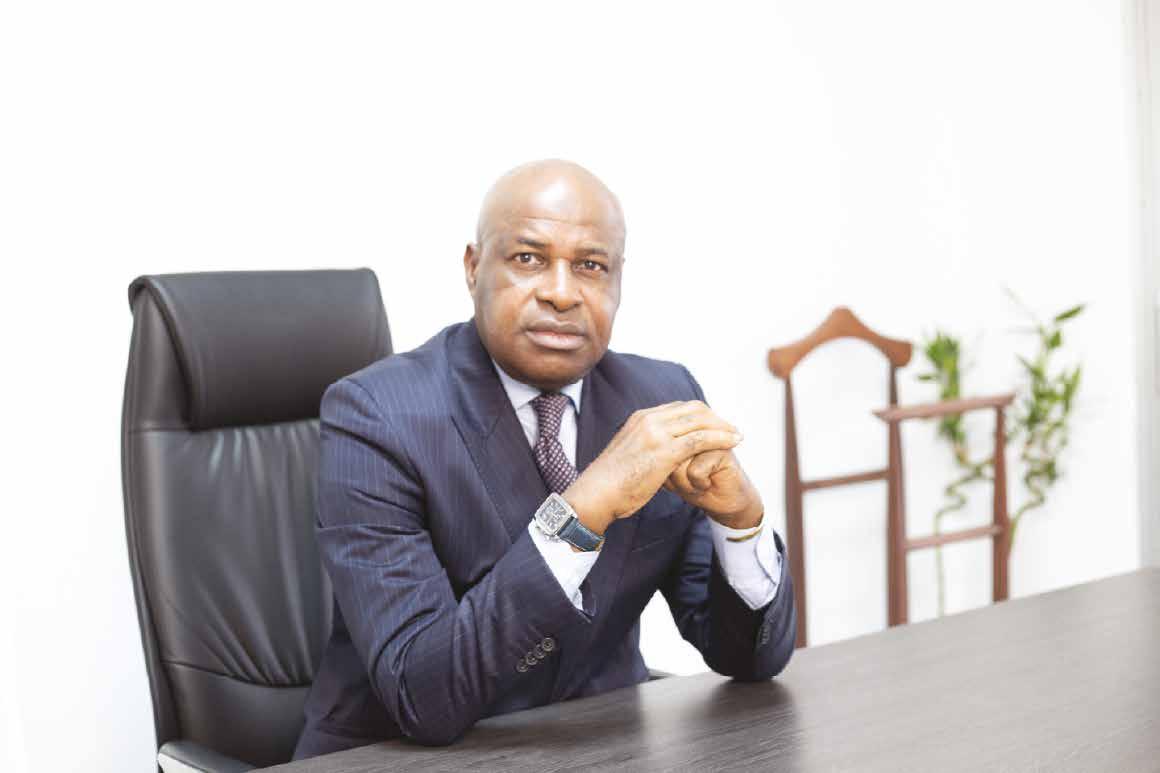
Dr. Mohamed Kouyaté Secretary General, OFT
Legal Basis: Decree 2001-669 of 24 October 2001, on the flow and continuity of transport.
Purpose: Control and regulation of all activities and operations whose execution may hinder the continuity and flow of transport.
Mission: Monitoring traffic flow on transport routes, at boarding and disembarking points, and at ancillary infrastructure. In this capacity the OFT:
• Oversees compliance with professional ethics and legal and regulatory requirements, the maintenance of continuous traffic flow, the immediate restoration of traffic, and the quality and facilitation of operations for public transport services;
• Issues proposals, recommendations, and opinions on all matters concerning traffic; and
• Contributes to regional integration through transport facilitation.
To fulfill its missions, the OFT conducts the major activities described below.
Flows and Mobility in the District of Abidjan, the OFT:
• Contributes to the design and implementation of tratffic plans for development projects (roads, bridges, buildings, EIES, etc.) and major socio-political and sporting events (CAN 2024, end-of-year religious festivities, rallies, national holidays, etc.);
• Conducts awareness, education, communication, and information campaigns (road incivility, illegal parking, obstructions, illegal roadblocks, extortion, etc.);
• Clears roads (removal of trucks, businesses, debris, unauthorized bus stations, containers, and other forms of unauthorized occupation of public space, etc.); and
• Provides advice and assistance to road users through the dissemination of traffic information (call center, social media, drones, etc.).
Interurban Flows and Mobility, the OFT:
Organizes, with all transport stakeholders and law enforcement agencies, multiple activities with strong potential for communication, awareness-raising and education, particularly:
• Working sessions with transport stakeholders, law enforcement, and administrative and military authorities; Enforcement of illegal obstruction and road blocks;
• Advice and support for users and the general public;
• Quality assurance process in conjunction with Codinorm and CNTIG (data collection and management);
• Awareness, information, communication, and education mobile units for users and law enforcement;
• Installation of signs on main traffic routes;
• Distribution of communication materials (flyers on authorized roadblocks, traveler and driver guides, brochures, regulations, etc.) to transport stakeholders, law enforcement, administrative authorities, and users;
• Information and awareness-raising campaigns via websites and social media, including Facebook, for the general public, law enforcement, and administrative authorities; and
• Drone surveillance for traffic flow management .
Transport Facilitation and Continuity, the OFT:
Conducts activities to facilitate transport within the country and at international borders.
• Nationally, the OFT, which chairs the National Facilitation Committee (CNFT), coordinates transport facilitation efforts with all stakeholders (Chamber of Commerce and Industry, drivers and transporters trade associations, the Office of Ivorian Shippers (Office Ivoirien des Chargeurs-OIC), Malian and Burkinabe shippers, the Ports of Abidjan and San Pedro, freight forwarders, traders, etc.) through awareness-raising, communication, education, and information campaigns targeting transport stakeholders and administrative and military authorities; and
• At international borders, The OFT and the CNFT, jointly, are the institutional mainstay of one-stop border posts (OSBP) and monitor border facilitation infrastructure projects, including the OSBPs at Laléraba, Nigouni, Gbapleu, Noé, and Prollo and related facilities (health centres, schools, staff housing, parking and rest areas, water pumping stations and electrical distribution, etc.).
The Experts in Flows
THE ECONOMY –YET ANOTHER IVORIAN MIRACLE IN THE MAKING
With growth exceeding 6% for over a decade,
Côte d’Ivoire has once again become the powerhouse of the West African economy. The economy benefits from the country’s public investment capacity and the support of its partners and investors.
Côte d’Ivoire is still struggling to make up for the drop in growth it experienced during the 2000s, when political opponents took up arms. Since the return to constitutional order and the election of President Alassane Ouattara in 2011, the country has once again become the driving force in West Africa, almost reliving the “Ivorian miracle” of the 1960s and 70s. For more than a decade, with the exception of 2020 and the COVID-19 crisis that brought the global
economy to a standstill, growth in GDP has remained above 6%, except for the period from 2012 to 2017 when it reached 8%.
AMONG THE TOP FIVE AFRICAN COUNTRIES WITH THE HIGHEST GROWTH RATE
Côte D’Ivoire is leading economic power in the West African Economic and Monetary Union (WAEMU) and the accounts for over a third of
Union’s GDP and more than 40% of exports. Within the Economic Community of West African States (ECOWAS), the country is second only to Nigeria. In Africa, it was among the five countries with the fastest growing economies in 2024 and 2025. Since 2011 growth has been made possible by a series of ambitious National Development Plans (NDPs), the current one runs through the end of 2025, and the one that follows is already being elaborated and will serve to guide the government until 2030.
The country also receives support from the African Development Bank (AfDB) and numerous Arab, Chinese, African, and European multilateral institutions. In July 2025, the AfDB granted Côte d’Ivoire a partial credit guarantee of €400 million, intended to mobilize long-term commercial bank financing at attractive rates for environmental, social, and governance (ESG) projects.
THE BEST CREDIT RATING IN AFRICA, SECOND ONLY TO BOTSWANA
Source: World Bank – Ministry of the Economy,Planning and Development,Department of Policy Forecasts and Economic Statistics.
CONFIDENCE IN FINANCIAL INSTITUTIONS
NDPs are consistently supported by international financial institutions, a testament to their confidence. In September 2025, the IMF granted Côte d’Ivoire a new loan amounting to $843.9 million, in two parts: $509.5 million through the Extended Credit Facility (ECF) and $334.4 million, from the Resilience and Sustainability Facility (RSF). Subsequent to the fifth review of the amounts approved in May 2023 for $3.5 billion (ECF) and $1.3 billion (RSF), the IMF acknowledged the “considerable progress in achieving the country’s key economic objectives”, namely addressing macroeconomic imbalances, promoting economic transformation, increasing climate resilience, etc.).
The confidence shown in the country by its partners is no accident. In May 2024, Standard & Poor’s upgraded Côte d’Ivoire’s credit rating from BB- to BB, with a stable outlook. Côte d’Ivoire became the sub-Saharan African country with the second highest credit rating, after Botswana and in the same category as Brazil. Standard & Poor’s recognized the quality of Ivorian credit for the medium term and its ability to maintain robust growth, despite the crises caused by the Covid-19 pandemic and the Russian invasion of Ukraine, which triggered inflation across the globe. By upgrading the credit rating, which was previously, and for many years, of high quality, the rating agency also recognized the efforts undertaken by the authorities to control debt, which increased by half in three years, despite the concerns expressed by some analysts with regard to spiralling expenditure.
Côte d’Ivoire had refrained from issuing Eurobonds due to rising interest rates. In January 2024, however, confident in its own strength, it issued Eurobonds and raised $2.6 billion and became the first sub-Saharan African country to return to international bond markets since the COVID-19 crisis.
|||||||| Côte d’Ivoire GDP 2011-2025
THE DIVERSIFICATION AND STRUCTURAL TRANSFORMATION OF THE ECONOMY
Standard & Poor’s subtly highlighted how continuous diversification led to the newfound resilience of the Ivorian economy. The number of sectors contributing to GDP is steadily increasing, dispelling the fear of an economy dependent on a single sector. In 2022, despite a 22.7% drop in cocoa production, Côte d’Ivoire’s main export, economic growth remained strong throughout 2023. This is attributed to the dynamism of: subsistence farming; construction; public investment in infrastructure; increases in the value chains of manufacturing and extraction industries; trade; transportation; and the emergence of local processing of raw materials.
|||||||| Industry’s contribution to GDP
Source: African Economic Outlook 2024, African Development Bank Group.
In 2017, a 50% drop in global cocoa prices and a concurrent rise in oil prices, the country’s main import, barely slowed Côte d’Ivoire’s economic momentum. In 2025, hydrocarbon production from the Baleine field is expected to add a new growth sector to the economy.
A key indicator of the diversification and transformation underway in the economy is the increase in the industrial sector’s contribution to GDP. Industry provides formal jobs. Value added increased from 16.4% in 2000 to 22% in 2022. While over the same period, the contribution to GDP by the agriculture sector, the historical powerhouse of the economy–the world’s leading producer of cocoa and cashew nuts–remained significant, decreasing slightly from 18.7% to 16.8%, while that of the services sector fell from 59.6% to 53.9%.
THE BUSINESS CLIMATE: IN TEN YEARS FOREIGN DIRECT INVESTMENT AND THE NUMBER OF COMPANIES HAVE INCREASED FIVE-FOLD
The confidence placed in Côte d’Ivoire also stems from the improvement, over the past decade, of indicators used to assess the quality of its business environment. The time and costs required to set up a business, grant land titles, and transfer property have improved. Additionally, tax procedures have been digitalized, there is greater investor protection, commercial courts were established, cross-border trade has been facilitated, as has access to electricity. The number of reforms that have allowed the country to consistently rank among the world’s leading reformers is high.
Spearheaded by the Côte d’Ivoire Investment Promotion Center (Centre de promotion des investissements en Côte d’Ivoire - CEPICI), the reforms continue, the objective is to remove the obstacles to investment and encourage an even greater number of entrepreneurs to open businesses. Consequently, the number of businesses created in Côte d’Ivoire more than quadrupled between 2014 and 2023, from 6,487 to 25,429. Another indicator of the attractiveness of the Ivorian economy is the steep surge in foreign direct investment (FDI), from $339 million in 2010 to $1.753 billion in 2023
|||||||| Central Government Finances (as a % of GDP
IMF
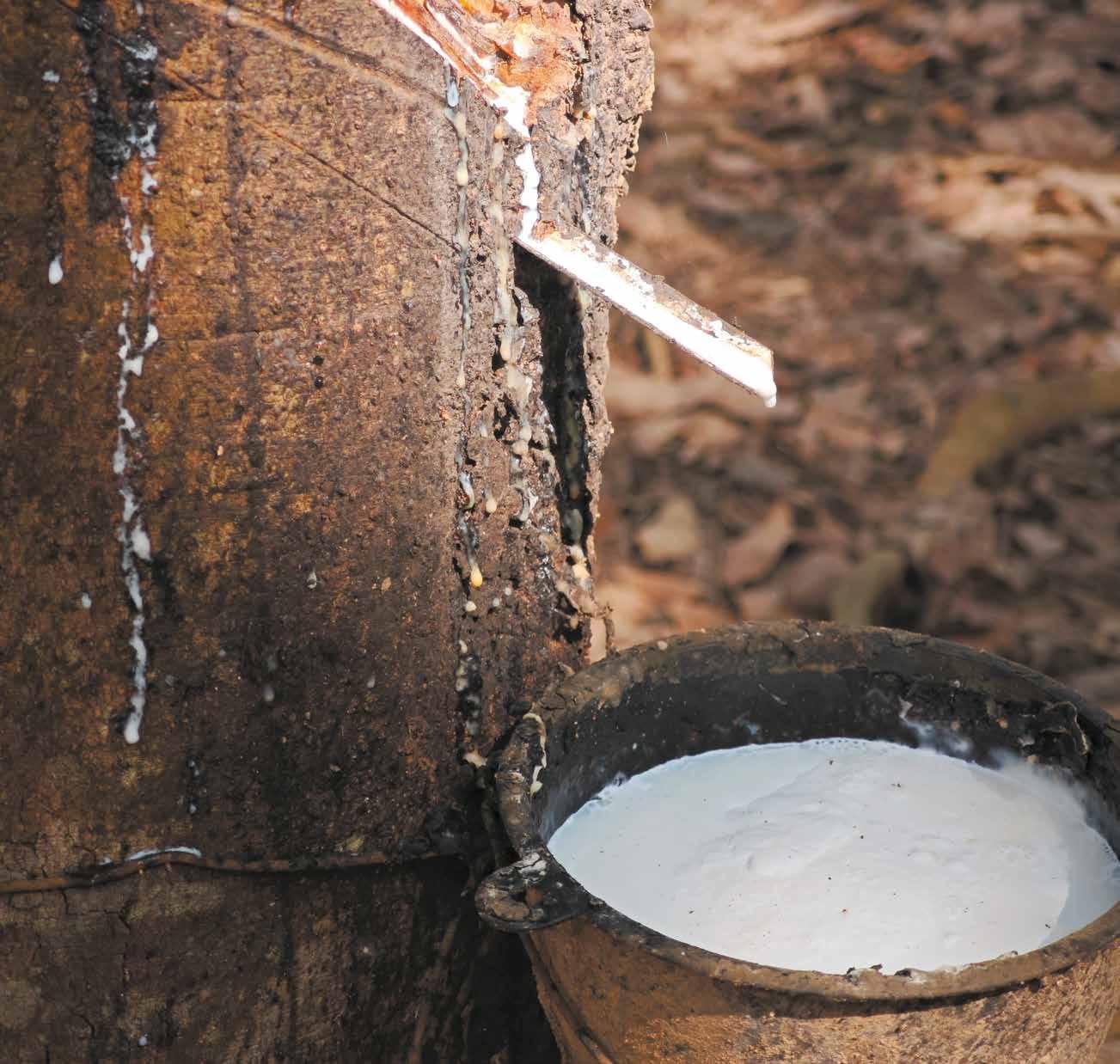
INCREASE IN EXPORTS OF AGRICULTURAL PRODUCTS, GOLD, HYDROCARBONS, AND MANUFACTURED GOODS
Ivorian exports have increased sharply in five years, but imports have increased at a greater rate, tilting the trade balance towards negative.
The value of goods exported by Côte d’Ivoire reached 11.131trillion CFA francs in 2023, compared to 7.451 trillion in 2019, an increase of 49.4%. During the same period, the value of imports increased at a higher rate, from 6.143 trillion in 2019 to 11.421 trillion in 2023 (+85.9%).
Consequently, the trade balance has been negative since 2022. The trade balance had reached a record high of 1.307 trillion CFA francs in 2019. The deficit is due to the depreciation of prices for Côte d’Ivoire’s main exports and to the appreciation of prices for certain imported goods.
INDUSTRY CATCHING UP WITH AGRICULTURE
|||||||| Trade Balance (in trillions of CFA francs)
Source: Directorate General of Customs, Directorate of Statistics and Economic Studies
FOUR MAIN EXPORTS
In 2023, four products accounted for 70% of total exports. This has been the case for the last five years. The four main exports are:
- cocoa beans and processed cocoa products, 3.522 trillion CFA francs in 2023 (31.6% of the total), a figure that has remained stable for the past five years;
- petroleum products, 1.651 trillion CFA francs in 2023 (14.8% of the total), an increase of 128% since 2019;
- raw gold, 1.427 trillion CFA francs in 2023 (12.8% of the total), an increase of 126% over the past five years; and
- natural rubber, 1.244 trillion CFA francs in 2023 (11.1% of the total), an increase of 134% over the last 5 years.
With cocoa and rubber leading the way, exports are dominated by processed and export-oriented agricultural products (37.8% of total exports in 2023), the value of which has increased by 20.1% in the last five years. Manufactured products, the second largest group of exports, which includes petroleum products, accounted for 22.3% of the total value of exports in 2023, but more significantly, increased in value by over 103% between 2019 and 2023, from 1.220 trillion to 2.482 trillion CFA francs.
The value of first-stage processed products, mainly processed cocoa, essential oils, and palm oil increased by 75.2% during the same period, from 1.243 trillion CFA francs to 2.179 trillion. While the value of exported cocoa beans remained stable between 2019 and 2023, decreasing slightly, from 2.095 trillion to 2.019 trillion CFA francs, the value of processed cocoa doubled, increasing from 804 billion to 1.504 trillion CFA francs, due to the processing.
The third group of exports, mining products, also increased significantly, 52% between 2019 and 2023, from 1.261 trillion to 1.917 trillion CFA francs, largely due to gold which accounts for 74.5% of total mining products.
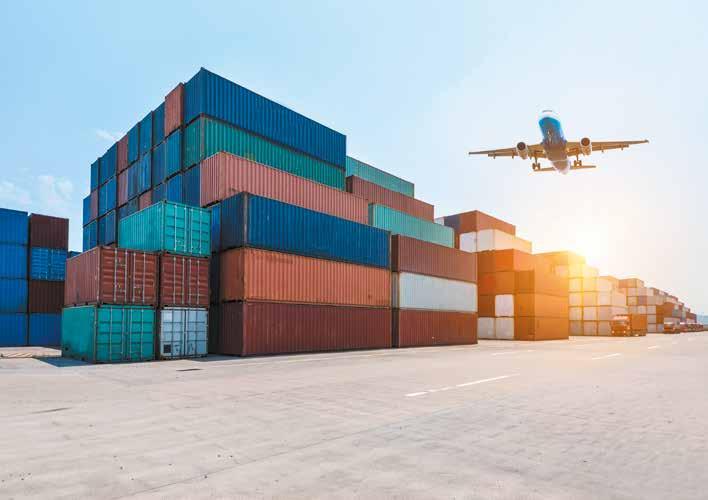
TRADE PARTNERS - EXPORTS
For the past five years, with the exception of 2022, The Netherlands has been Côte d’Ivoire’s top customer (1.281 trillion CFA francs in 2023). In 2023, they were followed by Switzerland (1,180.75 trillion) and Mali (964 billion), the top customer the previous year. Burkina Faso also ranked among Côte d’Ivoire’s top ten customers in 2023. Vietnam, the main buyer of Ivorian cashew nuts was fifth.
SHARP INCREASE IN VALUE OF IMPORTED GOODS
In 2023, the value of the five most imported products in Côte d’Ivoire (see list hereunder) reached 4,704 trillion CFA francs, 41.2% of the total value of imports.
- Crude oil, value doubled in four years, from 870 billion CFA francs in 2019 to 1.750 trillion in 2023.
- Petroleum products, 1.163 trillion in 2023 compared to 425 trillion in 2019 (+150%).
- Mechanical machinery, value increased by 69%, from 460 billion to 779 billion in four years.
- Iron, pig iron, and steel, value reached 575 billion, an increase of 72.1%.
- Rice, 438 billion CFA francs in 2023, a 23.6% increase in four years.
In 2023, China was Côte d’Ivoire’s leading supplier, 1,695.2 trillion CFA francs, compared to 1.055.8 trillion in 2019. Nigeria and France ranked second and third in 2023, with 1.602 trillion and 638.2 billion CFA francs worth of goods sold to Côte d’Ivoire, respectively
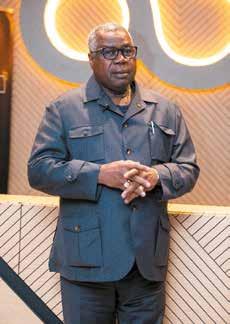
Moumini Bictogo, CEO
“THE STRATEGY IS TO DIVERSIFY MINING IN CÔTE D’IVOIRE”
With over ten years of experience in the extractive sector, Lagune Exploration Afrique is currently preparing to open the first bauxite mine in Ivory Coast.
Lagune Exploration Afrique (LEA) was one of the first companies to mine bauxite in Côte d’Ivoire. Why bauxite?
And what are the results?
Our choice of bauxite is based on a strategy of diversification and development of Côte d’Ivoire’s mining potential. When we started our operations, the gold sector was largely dominant, bauxite remained largely unexplored despite significant reserves. We saw bauxite as an economic and strategic opportunity for the country, because of the growing global demand for aluminium. Since initial exploration, Lagune Exploration has confirmed the presence of high-grade deposits. This has made Côte d’Ivoire a credible future player in the regional bauxite market. The results are very encouraging. We have completed several drilling campaigns, obtained detailed geological data, and laid the groundwork for a medium-term production project. The expected benefits are jobs, tax revenue, and local infrastructure.
The authorities have high great expectations for mining companies in terms of local processing, infrastructure development, and CSR (Corporate Social Responsibility). How is LEA contributing to this?
Lagune Exploration is fully aligned with the vision of the Ivorian authorities. We have integrated local processing into our development strategy using feasibility studies and are aiming at eventually establishing a bauxite processing plant within the country. As for corporate social responsibility, our approach is based on continuous dialogue with communities. We have made concrete contributions to education, youth employment programs, and environmental initiatives for reforestation and sustainable soil management. The objective is clear: to make mining a driver of sustainable national development.
What projects does LEA have for the short and medium term?
As for the short term, we have benefited, yet again, from the confidence of the Ivorian government and have been granted two major mining permits. The related projects will be developed with our own funds, as proof of the strength and seriousness of our commitment. We are finalizing the feasibility studies and have taken the steps needed to enter the production phase. Concurrently, we are preparing the development of infrastructure needed for our operations. In the medium term, our ambition is to integrate local processing and expand our activities to other mineral resources. Lagune Exploration aspires to become a leading Ivorian mining company innovative and responsible and to contribute to the country’s mineral sovereignty
Lagune Exploration Afrique
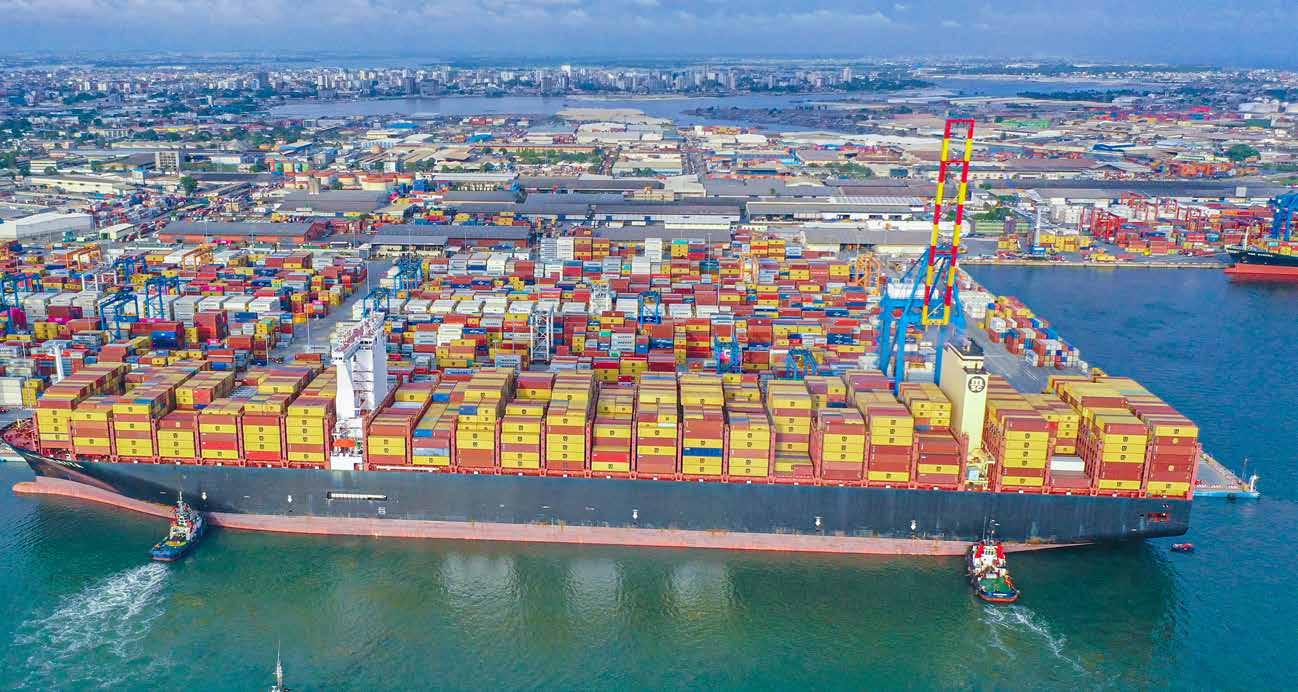
2- Aerial view of the 2nd container terminal, a major logistics hub serving trade in Côte d’Ivoire. 1
THE PORT OF ABIDJAN - STATISTICAL RESULTS CONFIRM THE IMPORTANCE OF UNDER THE LEADERSHIP OF YACOUBA HIEN SIE, FORMER CEO OF THE PORT OF
1- Port of Abidjan, berthing of one of the world largest container ships transporting approximately 24 thousand containers.
Total traffic in 2025 marked a decisive turnaround in the transformation of the Port of Abidjan. Overall net traffic reached 46.9 million tonnes in 2025, a 17% increase compared to 40.1 million tonnes in 2024. Gross traffic stood at 50.6 million tonnes in 2025, a 15.9% increase compared to 43.7 million tonnes in 2024. The figures confirm and consolidate the port’s regional leadership and demonstrate the robustness of the strategic decisions made during the course of a decade.
These results were achieved in a demanding political and economic context characterized by stiffer competition among West African ports, regional geopolitical tension, and the restructuring of global supply chains. In the midst of these challenges, the Port of Abidjan has demonstrated its adaptability and structural resilience.
Growth driven by domestic traffic
Domestic traffic, the pillar of port operations, reached 34.4 million t; a significant increase of 20.7%. This trend confirms the port’s strategic role as the main gateway for trade in Côte d’Ivoire. In addition to attesting to the port’s
performance, the figures also reflect the sustained dynamism of the Ivorian economy and the rise of the domestic production system. The port remains a reliable barometer of the country’s economic vitality.
Robust container operations
Container traffic reached 1.7 million TEU in 2025, versus1.6 million TEU in 2024, a 3.8% increase. In the second year, traffic surpassed the symbolic one million TEU mark, thereby confirming the port’s position as a major West African hub. This achievement reflects the effects of investment in core infrastructures, particularly the expansion and modernization of terminals which improved productivity and service quality.
The full-recovery of the Hinterland corridors
In-transit traffic to hinterland countries underwent particularly strong recovery, reaching 3.9 million t in 2025 compared to 2.9 million t in 2024, a 34.9% increase.
- Traffic to Burkina Faso increased by 15%. - Traffic to Mali skyrocketed by 83.1%, 1.5 million t in 2025 compared to 0.8 million t in 2024.
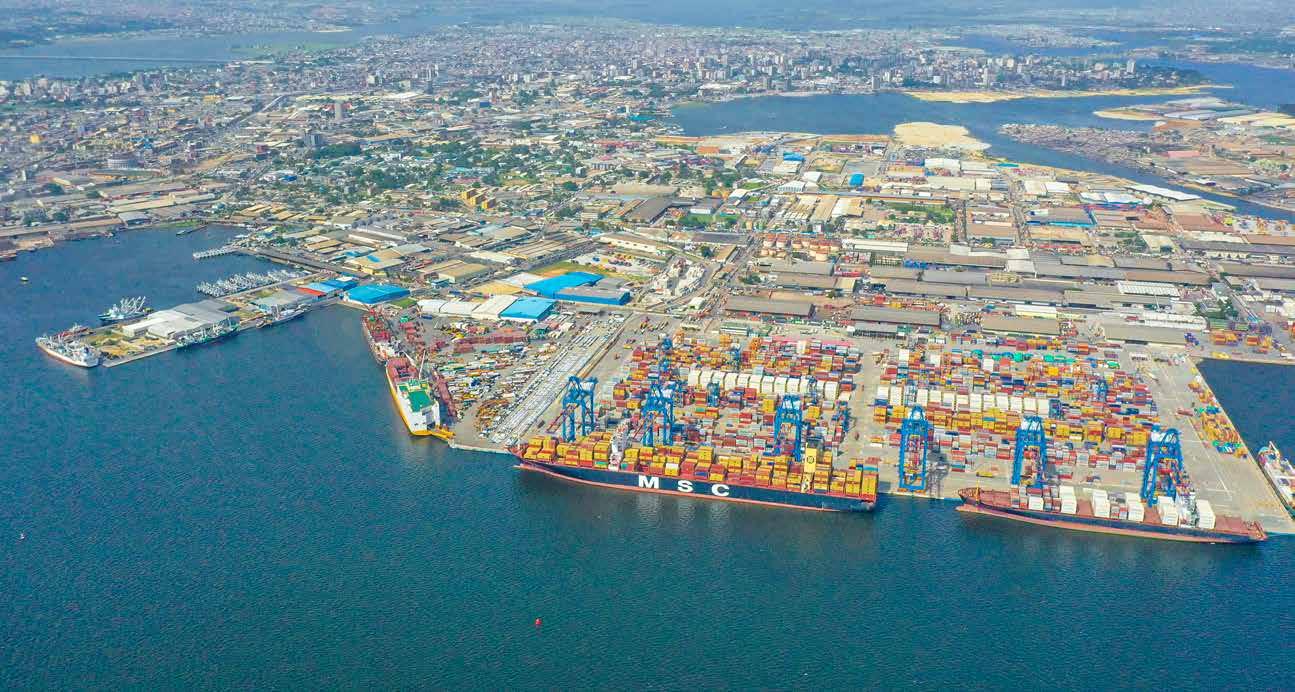
MAJOR STRATEGIC DEVELOPMENT PROJECTS IMPLEMENTED SINCE 2012
ABIDJAN AUTHORITY
The results reflect the renewed competitiveness of the corridors; this is especially true for the Port of Abidjan-Burkina Faso and the Port of Abidjan-Mali corridors. The results also attest to the renewed confidence of economic operators in landlocked countries. They confirm the resilience of sub-regional economic ties in a complex environment.
Transshipment variations under control
Transshipments dropped slightly by 1.3%, in a context of intense competition among regional hubs. However, this decline remains limited and does not affect the general upward trend in growth.
A structural investment statement
Since 2012, over 1 trillion CFA francs have been invested in the modernization of port infrastructure, under the leadership of Yacouba HIEN SIE. The massive level of investment has allowed for:
-an increase in the capacity of port reception facilities,
-significant improvement in productivity, and -port compliance with international standards.
The 2025 results are tangible proof of the relevance of the major development projects undertaken during the last decade. The projects are a testament to the coherence of the longterm vision and national ambitions championed by His Excellency Alassane Ouattara, President of the Republic which aim to make Côte d’Ivoire an economically strong and competitive nation with world-class infrastructure.
A clearly stated ambition
With these new assets, the Port of Abidjan is pursuing its path to reach 2 million TEU by 2027 and permanently establish its reputation as an outstanding logistics hub on the African Atlantic Coast. The results achieved in 2025 are more than short-term performance; they are representative of a successful cycle of strategic investment confirmation of a resilient, integrated and future-oriented model.
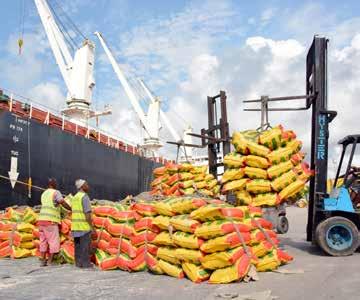
3- Bulk loading operation on vessel, proof of the port’s logistic efficiency.
NATIONAL DEVELOPMENT PLAN 2021-2025 –ECONOMIC MODERNITY AND SOCIAL SOLIDARITY
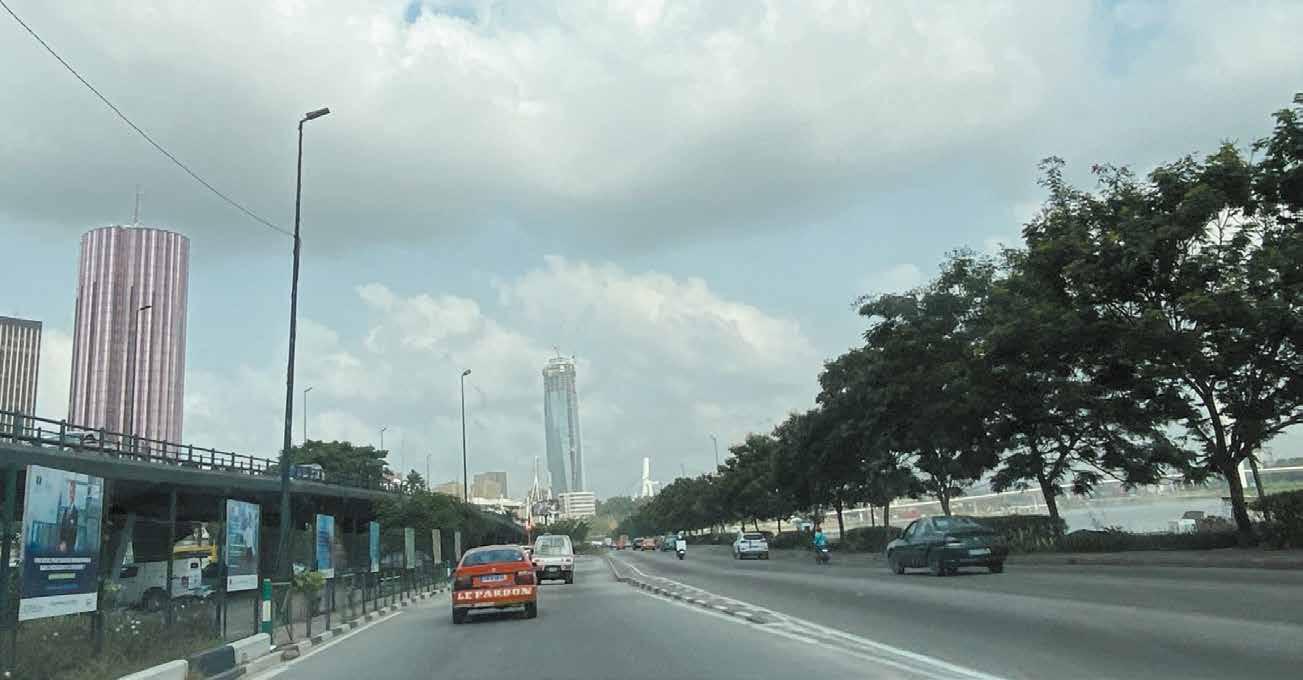
Since 2012, the Ivorian authorities have been leveraging the country’s strengths through National Development Plans that structure and guide investment.
The National Development Plans (NDPs) for 2012-2015 and 2016-2020 enabled the economy in Côte d’Ivoire to reach an average growth rate of over 8% between 2012 and 2019. During this nearly decade-long period, economic performance contributed to the modernization of the economy and of social infrastructure, and to improving living conditions of Ivorians. For the first time in thirty years, the upward trend in the poverty rate declined, by 18 percentage points between 2011 (55.4) and 2022 (37.5%).
The 2026-2030 National Development Plan (PND) is under elaboration. Required investment envisaged for the 2021-2025 NDP exceeds that of the two previous plans combined, 59 trillion CFA francs.
Through the current plan, the authorities aim to improve peoples’ daily lives by processing more raw materials locally, strengthening infrastructure, and promoting national champions, and ultimately creating more jobs, particularly for young people and women. All of this will be
achieved by securing support from national and international private investors. Public investment remains crucial to address the lag in growth during the 2000-2010 decade, which was marked by armed conflict. The country’s partners have also played a significant role in the drive towards economic modernization and social solidarity.
- The 2021-2025 National Development Plan (NDP) is based on six pillars;
- Acceleration of the structural transformation of the economy through industrialization and the development of industrial clusters;
- Development of human capital and the promotion of employment;
- Development of the private sector and investment;
- Strengthening of inclusion, national solidarity, and social action;
- Balanced regional development, environmental protection, and combating climate change; and
- Strengthening governance, modernizing the state, and cultural transformation
A global dimension A local approachT

The Forvis Mazars Group SC is an independent member of Forvis Mazars Global, a leading global network of professional services firms. Operating as an integrated international partnership in over 100 countries and territories, the Forvis Mazars Group specializes in audit, tax, and advisory services. The integrated partnership leverages the expertise and cultural diversity of its teams to support clients of all sizes at every stage of their development.
Integrated and multidisciplinary services
Audit | Actuarial & Quantitative Finance | Consulting | Digital & Technology Financial Advisory | Tax and Legal Outsourcing | Sustainable Transformation
Contact us at: +225 2720317700 |contact@forvismazars.com fatimata.diarra@forvismazars.com
For more information go to www.forvismazars.com/ci
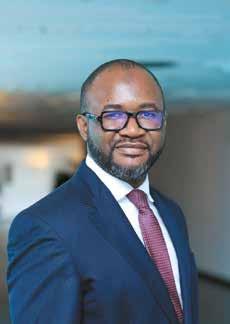
Thiekoro Doumbia, Director General , National Statistics Agency (ANStat)
“INFORMING DECISION-MAKING AND SUPPORTING NATIONAL SOCIO-ECONOMIC DEVELOPMENT”
Operating under the authority of the Ministry of the Economy, Planning and Development, the National Statistics Agency (ANStat) has been the official statistics service of Côte d’Ivoire since it replacedthe National Institute of Statistics (INS) in June 2024.
Other than the change in acronym, what has changed since the INS became ANStat?
ANStat, is the official national statistics body for Côte d’Ivoire. The agency is tasked with generating high-quality statistics to inform decision-making and support the country’s socioeconomic development. The transformation of the National Institute of Statistics (INS) into a state-owned company in 1996, with the aim of improving its financial autonomy and increasing its efficiency, proved to have limitations due to the very nature of the statistics. Official statistics are a public good made freely available to users; this is incompatible with having statistics generated
by a state-owned company that sells goods and services to generate revenue This is why Ms. Nialé Kaba, Minister of Economy, Planning, and Development, proposed a comprehensive reform of the national statistical system to the government. The aim was to align the system with the international standards recommended by the African Charter on Statistics and the Strategy for the Harmonization of Statistics in Africa (SHaSA), and to make it more efficient in order to meet the country’s needs. The adoption of Statistics Law No. 2020-950 of 7 December 2020, led to the transition of the former National Institute of Statistics (INS) into an implementing agency. This legal status, better suited to the nature of the activities carried out, allows the National Statistical Agency (ANStat) to focus solely on the production of official statistics and to entrust the allocation of the resources needed to fund statistical activities to another entity.
What major improvements have been made to the national statistical system since the transformation?
ANStat is committed to modernizing its methods and using new technologies to improve the generation and dissemination of statistics. Among the innovations introduced is the diversification of the information collection and dissemination system. In addition to computer-assisted and web-based data collection tools, which significantly improve quality and speed, the following have been established: - a team of field agents in the regions, supported by a network of multimedia rooms, to decentralize and better deploy the statistical data system; - a call center with approximately forty operators for the collection and monitoring of indicators, thus optimizing the costs associated with data collection and certain statistical calculations;
- a cartography innovation center, a system for collecting and processing satellite and aerial imagery capable of producing disaggregated statistics at a lower cost and better suited to user targeting. It allows, among other things, coverage of diverse and unexplored domains and the exploitation of data extracted from the Internet; and - a computing center that provides users, particularly researchers and students, with a secure tool for accessing anonymised microdata for specific analyses and needs. The tool is also a key component of ANStat’s quality policy for gathering user feedback.
What specific changes have been made to improve support for public authorities and economic operators?
The changes specific to economic data are:
- the production and regular publication of annual national accounts (ANC) in compliance with the 2008 National Accounts System (SNA 2008) which replaced the 1993 SNA;
- the alignment of quarterly national accounts with Base 2015 accounts;
- the production of regional accounts, to evaluate of the regions’ contributions to GDP;
- the updating of the national business register, notably through the ongoing General Census of Businesses and Establishments in Côte d’Ivoire (RGEE-CI). This operation will, among other things, allow for the assessment of the informal sector’s contribution to the economy and provide users (government, technical and financial partners, researchers, students, organizations, etc.) with information on businesses operating in Côte d’Ivoire; - the use of economic indicators such as the turnover indices (ICA) for trade and industry; and
- the expansion of the harmonized consumer price index, to improve national coverage and produce consumer price indices for the country’s regions.
What are the short and medium-term plans and objectives of the new senior management team appointed in October?
The priorities of the National Statistical Agency (ANStat) are aligned with the vision of modernizing the national statistical system that is championed by the Minister of Economy, Planning and Development and which aims to build a strong, efficient, and well-coordinated system.
Under the Minister’s leadership, ANStat is involved in the implementation of several major short and medium-term activities such as:
- help with the operationalization of other bodies within the national statistical system;
- strengthen technical coordination between public and semi-public entities that generate data;
- modernise production tools by integrating digital technologies (computer-assisted data collection, geographic information systems, interactive platforms) to improve data quality and accessibility; and
- promote the use of statistics through active communication and improved accessibility for users
Headquarters: Abidjan-Cocody, Riviera-Bonoumin, lot 1883, ilot 84774, derrière la Pharmacie de Bonoumin, 01
BP V 55 Abidjan
Tel.: +225 27 22 59 96 10 - www.anstat.ci

doingbusinessin Côte d’Ivoire | 2025 Edition
1
/ Tradition and political stability
7SEVEN GOOD TO INVEST IN
Since the return to constitutional order in 2010, Côte d’Ivoire is characterized by remarkable political stability, the primary condition needed to attract foreign investment. The country is once again a land of hospitality. Proof of this is that it hosted the 2024 Africa Cup of Nations. The Côte d’Ivoire has returned to its traditional tolerance and spirit of consensus. Six million foreigners from all over the world live in the country.
2/Dynamism and economic growth
In 2024, Côte d’Ivoire was the leading economic power in the West African Economic and Monetary Union (WAEMU), accounting for more than a third of its GDP. In 2025, it will be among the top five countries with the
highest growth rate on the continent. It has been able to achieve this through a series of national development plans; the current plan ends in 2025. The next plan is under development and will be used by the government to steer the economy through to 2030.
3/Support from the international community
NDPs have received the unfailing support of the country’s bilateral and multi-lateral partners, among them the World bank and the IMF. Other Western financial institutions and partners in Asia, Arab-speaking countries, and Africa, the African Development Bank, for example, have demonstrated their confidence in Côte d’Ivoire.
4/
One of the best credit ratings in Africa
This confidence is not a coincidence. In May 2024, Côte d’Ivoire became the country with the second highest credit rating (Standard & Poor’s) in sub-Saharan Africa, second only to Botswana. The rating agency recognized the quality of Ivorian medium-term credit and its capacity to maintain strong growth.
REASONS CÔTE D’IVOIRE
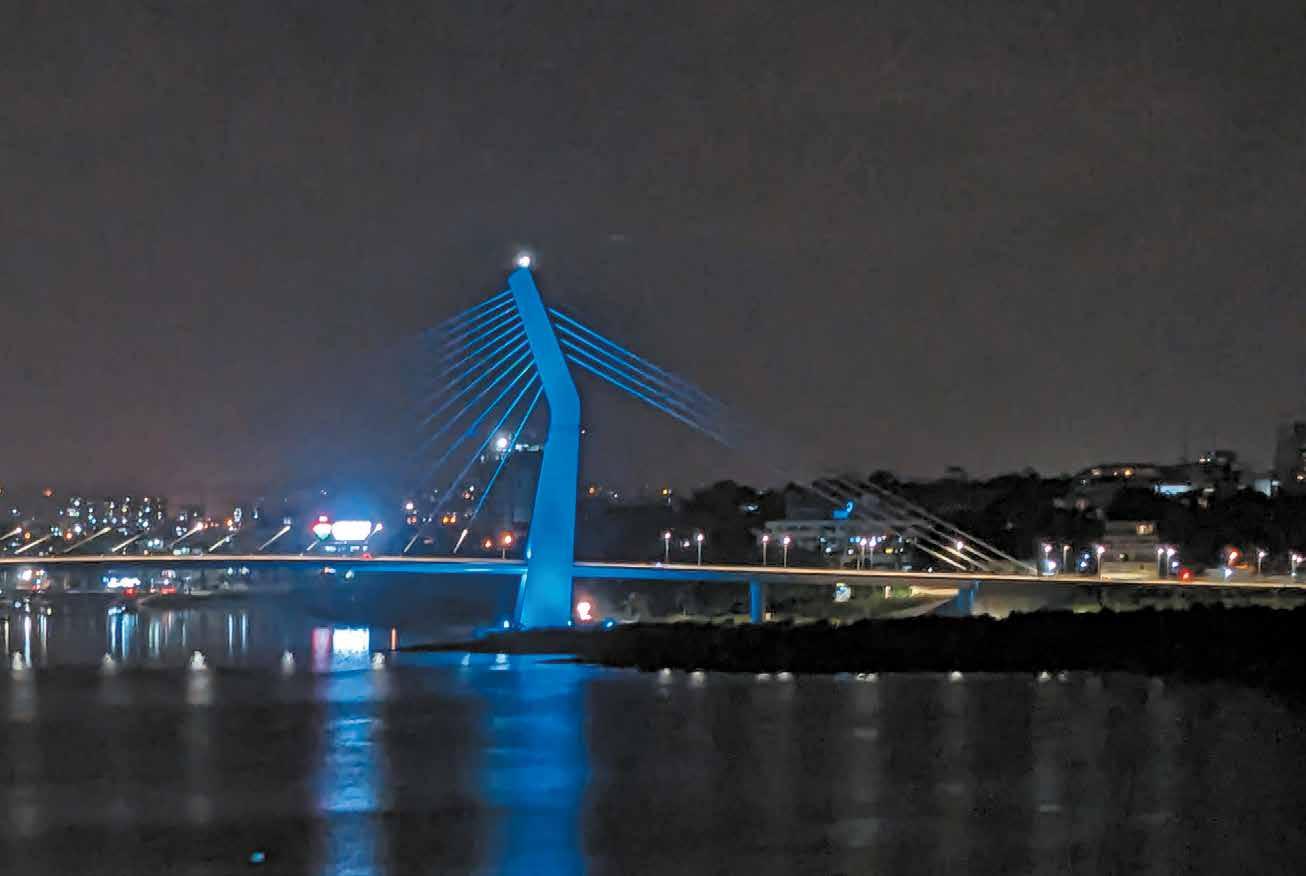
5/One of the most competitive business environments
Côte d’Ivoire aims to create one of the most competitive business environments in Africa and to that end has made the private sector the cornerstone of its growth. Ranked 177th in the World Bank’s Doing Business report in 2012, it rose to 110th place in 2020, the year the publication was discontinued. Côte d’Ivoire had consistently ranked among the top ten reformers worldwide in market competition. It is projected to be eighth in Africa in the World Bank’s new Business Ready 2024 report.
6/Agriculture, industry, and petroleum and the transformation of the economy
Côte d’Ivoire is a major agro-industrial player; it has a promising oil and gas sector and is a leading business and services hub in Africa. To reduce dependence on a single sector and offer ever-greater development opportunities, the country seeks to increase and diversify its sources of national wealth. A key indicator of the ongoing diversification and transformation of the economy is the increase in the industrial sector’s contribution to GDP, from 16.4% in 2000 to 22% in 2022. The sector is a source of formal employment and value added.
7/Cleaner and more affordable energy
Significant investment in solar and hydroelectric power by public-private partnerships has enabled Côte d’Ivoire to generate more and greener electricity at a lower cost. The authorities are working to increase the share of renewable energy in the energy mix, from 31% to 42% by 2030. In 2023, 7.9% of the electricity generated was exported to neighbouring countries. The country seeks to position itself as a major energy player in West Africa
“A
Paul Koffi Koffi, Commissioner, Department of Enterprise Development, Mines, Energy, and the Digital Economy at the WAEMU Commission
MAPPING OF HIGH-POTENTIAL SECTORS, VALUE CHAINS, AND COMMUNITY PROJECTS”
Published in 2025, “Investing in WAEMU” (Investir dans l’UEMOA) helps entrepreneurs to identify investment opportunities, principally sustainable and inclusive, in the Union.
What does “Investing in WAEMU” offer entrepreneurs?
The guide provides a comprehensive presentation of the advantages of the WAEMU common market, among them a stable macroeconomic environment, a harmonized regulatory framework, and a common currency that facilitates trade. It provides information on WAEMU’s integrated market and its 144 million consumers, open to ECOWAS and the African Continental Free Trade Area (AfCFTA). It provides a detailed overview of high-potential sectors, regional value chains, and key community projects. The comparative approach used ensures access to reliable and up-to-date information. The guide describes the solidarity and complementarity among member states who are able to leverage their national strengths and combine their resources.
UNCTAD conducted an investment policies review (IPR) in WAEMU countries which was published in 2024. What were the conclusions?
The review confirms the considerable potential of WAEMU member states in many sectors and recognizes the reform efforts undertaken by the
governments. The review revealed a paradox, however: despite sustained economic growth and strong potential across diverse sectors, foreign direct investment remains below expected levels and is primarily focused on few countries and in the extractive industry.
The review identifies several persistent structural shortfalls that limit the region’s attractiveness. The size of the informal sector, weak infrastructure, limited access to electricity, high levels of poverty, and youth unemployment are obstacles to sustainable economic development. The legal and institutional contexts also present shortcomings: investment rules and regulations that are sometimes outdated, insufficiently harmonized, and too focused on tax incentives at the expense of clarity and transparency in procedures. In light of these findings, the IPR recommends an ambitious reform of national frameworks and advocates for a coherent and strategic regional approach to investment. The recommendations focus in particular on clarifying legal systems, simplifying administrative procedures, improving transparency, and the need for better coordination between community and national frameworks.
What is the function of the Network of Investment Promotion Agencies (IPAs) in WAEMU?
The Network of IPAs at WAEMU [RAPI-UEMOA] was created in 2022 and plays a central role in boosting the attractiveness of the WAEMU region. It works to strengthen cooperation among national investment promotion agencies and calls on national and regional authorities to improve the business environment. It mobilizes resources for its members and encourages joint participation in international events. It also provides advisory services to governments and the WAEMU Commission to help define and execute strategies to promote investment

#2


CEPICI – A PARTNER TO INVESTORS

CEPICI acts as a one-stop shop for investment, serving economic operators, government agencies, and local authorities. To promote investment and private sector development, it brings together, coordinates, and streamlines government initiatives.
The Investment Promotion Centre of Côte d’Ivoire (Centre de promotion des investissements en Côte d’Ivoire - CEPICI) plays a leading role in attracting and facilitating investment and the creation of sustainable jobs. It raises awareness of the range of investment opportunities in the country and facilitates connections between investors and the private and public sectors. Its services range from hosting investors and providing them with information to assisting and facilitating investment and business creation.
CEPICI contributes to initiatives that improve the business environment by elaborating proposals for the government. It also participates in the implementation of government and development partner programmes for the private sector. More broadly, it serves as a forum for dialogue with public institutions and subsequently formulates proposals to address the concerns of private sector stakeholders that are submitted to the government.

CEPICI promotes and attracts domestic and foreign direct investment by:
• organizing trade fairs and economic promotion events in Côte d’Ivoire and abroad;
ROLES AND FUNCTIONS
As an interface between the private sector and the State, the CEPICI has cross-cutting functions. Through its one-stop shop for investors the CEPICI:
• facilitates administrative formalities for the creation, transfer, or expansion of businesses, by acting as an umbrella organization for the agencies involved in these formalities;
• contributes to the reduction of costs and delays related to administrative formalities;
• receives and processes applications from investors wishing to benefit from the benefits of the investment code; and
• receives and processes applications from investors wishing to obtain land for industrial use.
• conducting investor research and identification, and the development of partnerships;
• promoting public-private partnerships;
• participating in events to promote investment in Côte d’Ivoire in conjunction with Ivorian embassies and consulates abroad;
• connecting foreign investors with national SMEs to foster their development;
• establishing a mechanism to attract investment from the diaspora;
• implementing a monitoring and evaluation system for investments that have benefited from the investment code; and
• implementing the provisions of the investment code in conjunction with the relevant public and private organizations.
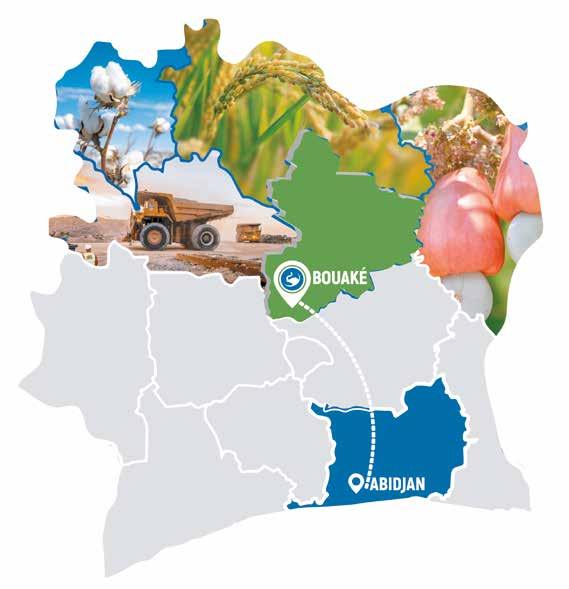
CEPICI INAUGURATES ITS OFFICE IN BOUAKÉ
In September 2025, CEPICI inaugurated its regional office in the city of Bouaké. This marks a major step in the institution’s strategy to regionalize its services. Its goal is to offer direct support to project promoters and strengthen private investment at the heart of the regions. Bouaké is the country’s second largest city and the capital of the Gbêkê region. The new regional office is expected to reduce territorial disparities by creating a simplified and competitive business environment. Bouaké is strategically located at the north-south and eastwest crossroads of Côte d’Ivoire and has potential in the agribusiness, energy, trade, and hospitality sectors. With nearly 800 square meters of office space, the regional business hub may well extend its influence into neighboring Mali, Burkina Faso, and Ghana.
adzeu arthur raoul
LEGAL COUNSEL AND NOTARIES
Our notary office is a key player in business development in Côte d’Ivoire, particularly in San-Pédro, the country’s second largest port city after Abidjan. We support businesses at every stage of their lifecycle, streamlining formalities made possible by the reforms made by the CEPICI.
• Arthur Raoul ADZEU, notary, offers solutions tailored to your investments. As a public and ministerial officer, he practices in all areas of law:
• family law, real estate law, taxation, and banking;
• land development monitoring and wealth management; and
• OHADA law and business law (incorporation, mergers, acquisitions, and consulting).
THE IMPORTANCE OF THE NOTARY PROFESSION IN IVORY COAST
The notary profession plays a fundamental role in improving the business environment in Côte d’Ivoire. Its involvement ensures the legality of transactions and facilitates administrative procedures for businesses.
REAL ESTATE, MINING, AND OTHER STRATEGIC SECTORS
Real estate investment in Côte d’Ivoire is experiencing sustained growth, attracting local and international investors to residential, commercial, and innovative projects. The Ivorian mining sector is booming, with notable performance in gold, as well as a surge in exploration for nickel, lithium, and rare earth elements.
Our expertise is essential to the protection of your investments. Contact us and benefit from optimal support for your projects.
Contact: +225 0709 888 700 | Email: maitreadzeu@notaire.ci
IPS-CGRAE, a successful transformation for a more efficient pension plan
A commitment to serving civil servants and state employees
Under the supervision of the Ministry of Employment and Social Protection, IPS-CGRAE provides:
● Management of mandatory and supplementary pension schemes
● Collection of contributions and payment of benefits
● Optimization of funds to ensure pension system sustainability
An ambitious reform for a high-performing pension system
Before 2011, the system faced major challenges in ensuring stable and sustainable retirement pensions. The reform initiated by the President of the Republic, H.E. Alassane Ouattara, and implemented in 2012, allowed the IPS-CGRAE to strengthened its model and sustainably improved pension fund management.
● Pension payments start the month following retirement for all complete and compliant applications
● Financial equilibrium achieved in 2013, and surpluses generated
● The institution becomes financially independent, end of the subsidy to compensate for shortfalls in 2013
● Simplification of procedures and modernization of customer service
● Application processing time reduced to 9 days (previously over 365 days)
● To improve local management, the number of branches located across the country was multiplied by 13
● To support the national economy the fund’s role as an institutional and social investor was strengthened
● Payments sent to the home of individuals with reduced mobility
Abdrahamane T. BERTE Director General
A reference in social protection
IPS-CGRAE is the first social security institution to be certified ISO 9001:2015. Its innovative Supplementary Pension Plan enables civil servants to optimize their pension using their savings.
The creation of the Supplementary Pension Plan made Côte d'Ivoire the first country and IPS-CGRAE the first social security organization in the CIPRES zone provide a supplemental scheme
First Social Welfare Institution certi ed ISO 9001- 2015
IPS-CGRAE, for You, with You, for Retirement, for Life.

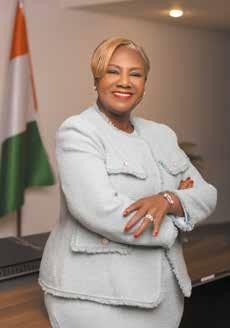
Solange Amichia, Director General, CEPICI
“MORE THAN 65% OF APPROVED PROJECTS CONCERN NATIONAL DEVELOPMENT PLAN PRIORITY SECTORS.”
How does CEPICI contribute to improving the business climate?
CEPICI’s strategy is based on two strategic pillars: increased private sector competitiveness, more specifically, that of micro, small, and medium-sized enterprises (MSMEs); and improving Côte d’Ivoire’s scores in international business climate assessments. To this end, CEPICI has elaborated a three-year reform agenda that involves all stakeholders from the private and public sectors and civil society. It also monitors the effectiveness of reforms on the country’s economy. The 2026-2028 Agenda, which includes 43 priority reforms, is currently going through
the government’s approval process. CEPICI aims to simplify and digitalize administrative procedures, ensure the legal and fiscal security of investments, support businesses, and monitor and evaluate how investments contribute to GDP.
How does CEPICI steer investments towards National Development Plan (NDP) priority sectors?
CEPICI directs investment flows towards the priority sectors of the 2021-2025 National Development Plan by using the sectoral and regional mappings of projects and investment opportunities that we elaborate and that can be accessed at 225Invest.ci. We also organize international forums and roadshows, as well as “Invest in…” forums in the regions and districts of Côte d’Ivoire (Sud-Comoé, Savanes, Bandama, and Denguélé, for example). Priority is given to projects that will have a strong impact on employment, exports, and local industrial processing. More than 65% of the projects approved by CEPICI concern NDP priority sectors.
Several sector-specific one-stop shops have been created in recent years to expedite administrative procedures for investors. What are the results?
Generally speaking, CEPICI assists investors at every stage of their investment project, from providing information and advice to assisting with business creation to facilitating procedures with the authorities that issue permits, licenses, and provide access to the
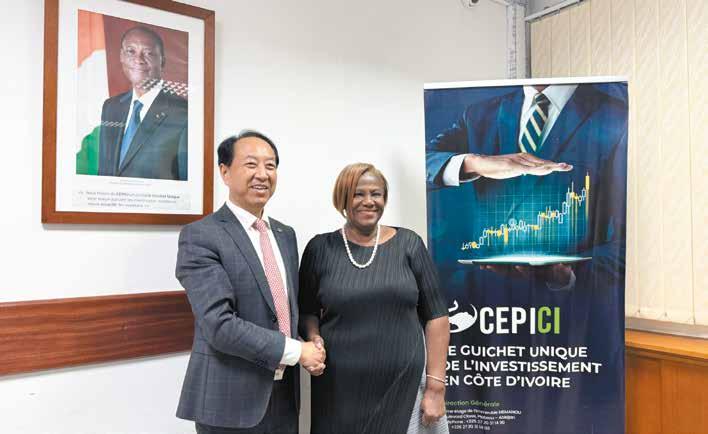
Shao Gang, Vice-President, China Railway Fourth Bureau Group (CREC4) and Solange Amichia during a meeting at CEPICI headquarters.
public services needed to establish a business. The Single Window for Business Formalities (Guichet unique de formalités d’entreprisesGUFE) now allows for online business creation. The digitalization of these services led to an approximately 18% increase in the number of businesses created between 2021 and 2024 and to a significant improvement in governance. The single windows for building permits and foreign trade have significantly reduced processing times, from 347 days to 30 days for the issuance of a building permit, for example.
What major reforms are currently underway?
The reforms currently underway primarily concern the end-to-end digitalization of business creation and the revision of the Investment Code to include sustainable development criteria, a stronger emphasis on local content, and all NDP priority sectors. They also include the design and development of the national business climate barometer and the elaboration of an institutional framework for private investment and the business climate.
The Aftercare Strategic Committee, established in 2024 to address the concerns of businesses, is a key initiative. What are these concerns?
The Aftercare Strategic Committee gathers key ministries and the private sector to identify and eliminate obstacles faced by companies operating in Côte d’Ivoire, accredited, or not, by CEPICI. The main concerns that have been identified are the availability of industrial land, local taxation, customs duties and procedures, and access to more affordable energy. The reforms underway to resolve these issues are addressed through the ongoing dialogue between the government and the private sector
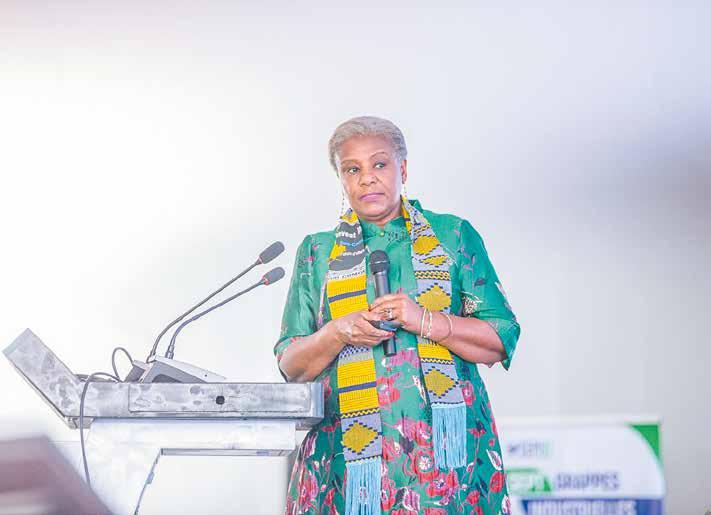
Solange Amichia speaking on investment opportunities at Invest in Sud-Comoé
THE BUSINESS CLIMATE – CÔTE D’IVOIRE AMONG THE BEST REFORMERS IN AFRICA
To make the private sector the mainstay of economic growth, Côte d’Ivoire endeavors to create one of the most competitive markets in Africa and to make businesses more competitive.
In 2012, Côte d’Ivoire ranked 177th out of 183 economies in the World Bank’s Doing Business report. By 2020, the last year the report was published, after having implemented 85 reform measures the country had moved up to 110th. Côte d’Ivoire had consistently ranked among the top ten most reform-oriented countries in the world, notably in the 2014, 2015, and 2019 reports.
|||||||| Côte d’Ivoire’s Doing Business Score
177th
th 2012 → 2020 →
Source: World Bank,Doing Business Report,2012 and 2020
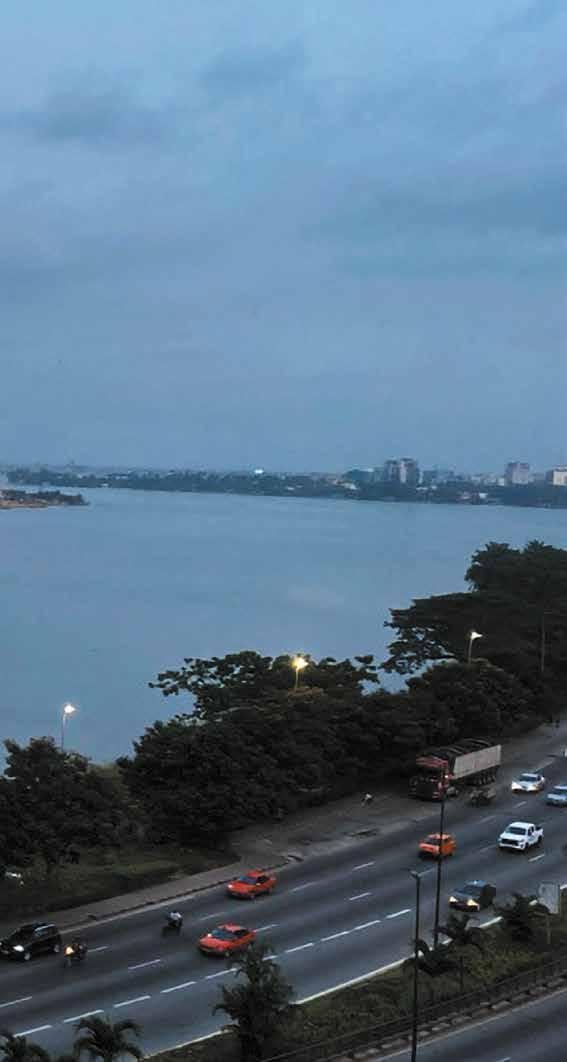
MAJOR REFORMS OVER THE PAST TEN YEARS
The digitalization of administrative procedures is a government priority that is enshrined in the 2015 Charter for Improving the Business Climate. It is a recurring concern in many reforms implemented over the past decade. The sections below provide an overview.
Two key projects are underway to make the process fully paperless: the establishment of a payment aggregator platform to streamline online payment for business creation fees, and the operationalization of an online platform to register administrative documents.
• Business Creation
In 2015, the authorities created a unique identifier system that is used to register a business with legal, tax and social security authorities. The system has reduced the process from 48 to 24 hours. One of the reasons online platforms such as e-entreprises, accessed at www.225invest.ci, have been established is to allow investors to formally register their businesses online.
• The payment of taxes, duties, and social security contributions
To reduce the costs associated with running a business, the authorities initially made tax and duty declaration forms available online. In 2015, a single form was introduced. The e-tax portal can now be used to file tax declarations and make payments online. Since 2018, an online application is used to transfer financial statements and can also be used by accountants to approve them. Moreover, since 2015 the interoperability of tax and customs authorities’ information systems has allowed for the harmonization of the taxpayer identification system and made available to tax authorities the amounts for the customs transactions made by economic operators.
• Contract Disputes
The Abidjan Commercial Court was established in 2013. Shortly thereafter, in the interest of time and court-related and legal costs, several regional commercial courts were established. Special procedures for resolving small claims were put in place in 2016; the 6th Chamber for Small Claims of the Abidjan Commercial Court was created in 2018; and a mandatory attempt at amicable settlement was instituted before a case can be referred to the commercial courts. These measures have continuously reduced the time between the filing of a claim and the issuance of a judgment.
• Building permits and property title transfers
In 2016, the authorities established the Single Window or One-Stop Shop for Building Permits. This initiative helped reduce the time required to issue certificates from 73 to 10 days. The time required to complete geological and land surveys decreased from 25 to 10 days. In 2020, the adoption of the law establishing the building and housing code further strengthened the regulatory framework for construction and urban planning. Information on property titles was made available online in 2020, and the legal framework for equal access (for men and women) to land management was consolidated.
• Obtaining loans
In 2016, Côte d’Ivoire established a Credit Information Bureau (Bureau d’information sur le crédit - BIC) in response to UEMOA draft regulation. They collect data on potential borrowers’ credit history from financial institutions, public sources, or major utility companies (electricity, water, mobile phone, etc.) to generate credit reports. The number of individuals listed in the BIC database has been increasing since 2018. The information is used by banks to improve their understanding of their customers.
• Cross-border trade
In 2015, the Single Window for Foreign Trade (GUCE) and its dedicated website became operational. It is a single portal for information on foreign trade procedures. The GUCE is used by economic operators to submit information, in a standardized format, and documents through a single point of entry, this includes all the required formalities for importing, exporting, and transiting goods. It makes their task easier by reducing customs clearance times and costs associated with goods removal procedures, while improving transaction transparency and securing state revenue.
SPOTLIGHT
A DEMANDING 2025-2027 REFORM AGENDA
The 2025-2027 Agenda for improving the business environment addresses the many challenges that still exist. The Agenda includes 144 reforms, grouped into forty projects, meant to resolve 134 issues and constraints that hinder the competitiveness of the private sector. The challenges include improving land tenure security, increasing and improving workforce skills, and reducing the impact of counterfeiting and informal trade. Another key objective is to make the best use of the numerous green financing opportunities available globally and to support business financing.
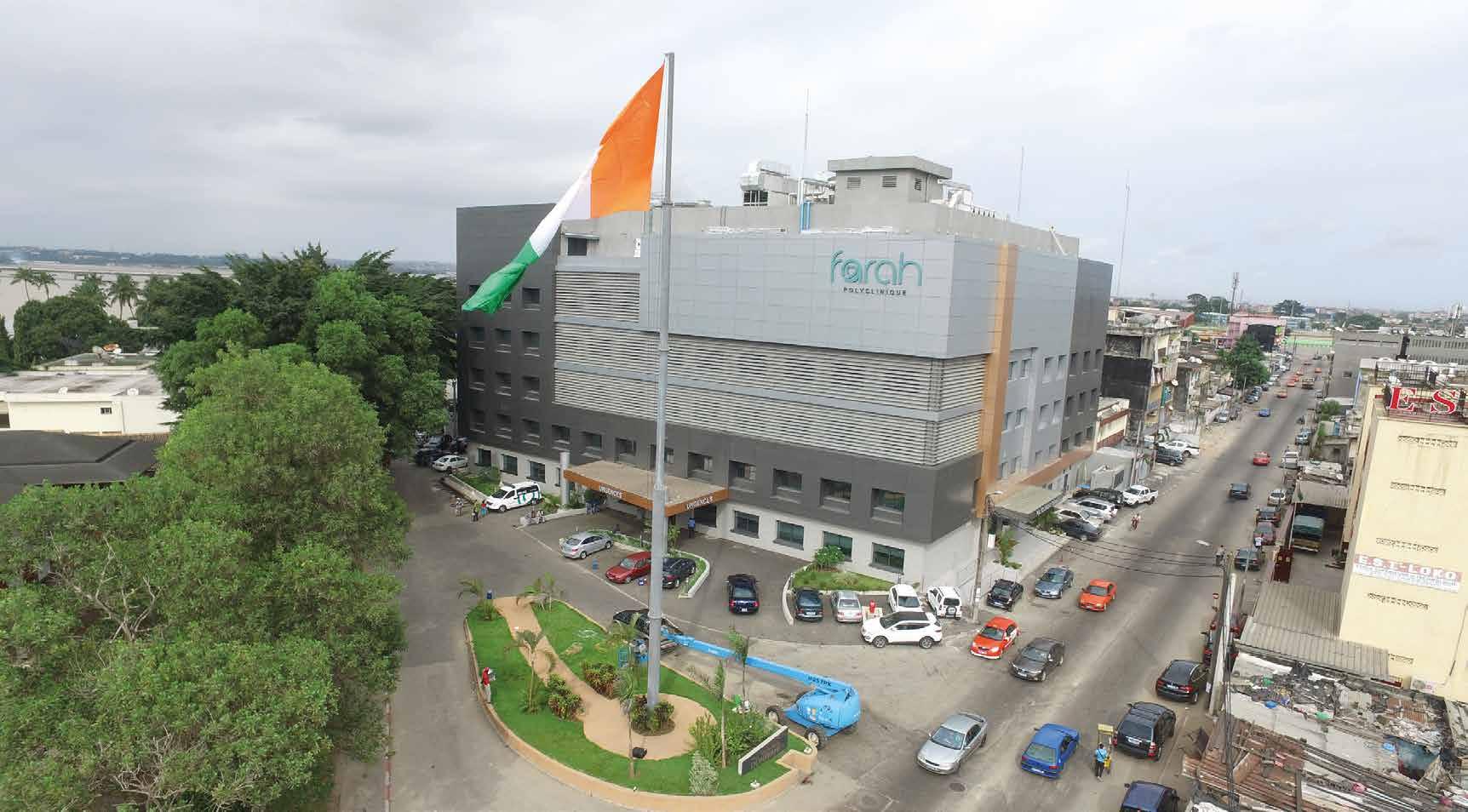
OUR HEART LISTENS
OUR KNOWLEDGE AND SKILLS HEAL
Polyclinique Farah oflers quality healthcare on the national, regional and international stage with consistent regards to modernizing and improving its services. Our range of action covers patients wellbeing and intiatives to raise awareness about phathologies and preventing them.
Our vision:
Turn Polyclinique Farah Into the reterence in terms of health- care quality both in Cote d'lvoire and the West-African region. We are an ISO 9001 2015 version certified organization by l’Association Française de Normallsation (A-FAQ-AFNOR) since February 2021.
Our state of the art facility, one of the most efficient in the region, is composed of new generation equipment. This material allows us to propose to patients comprehensive healthcare that is affordable for all.

NUMBER OF BUSINESSES AND INVESTMENTS CONTINUOUSLY INCREASING
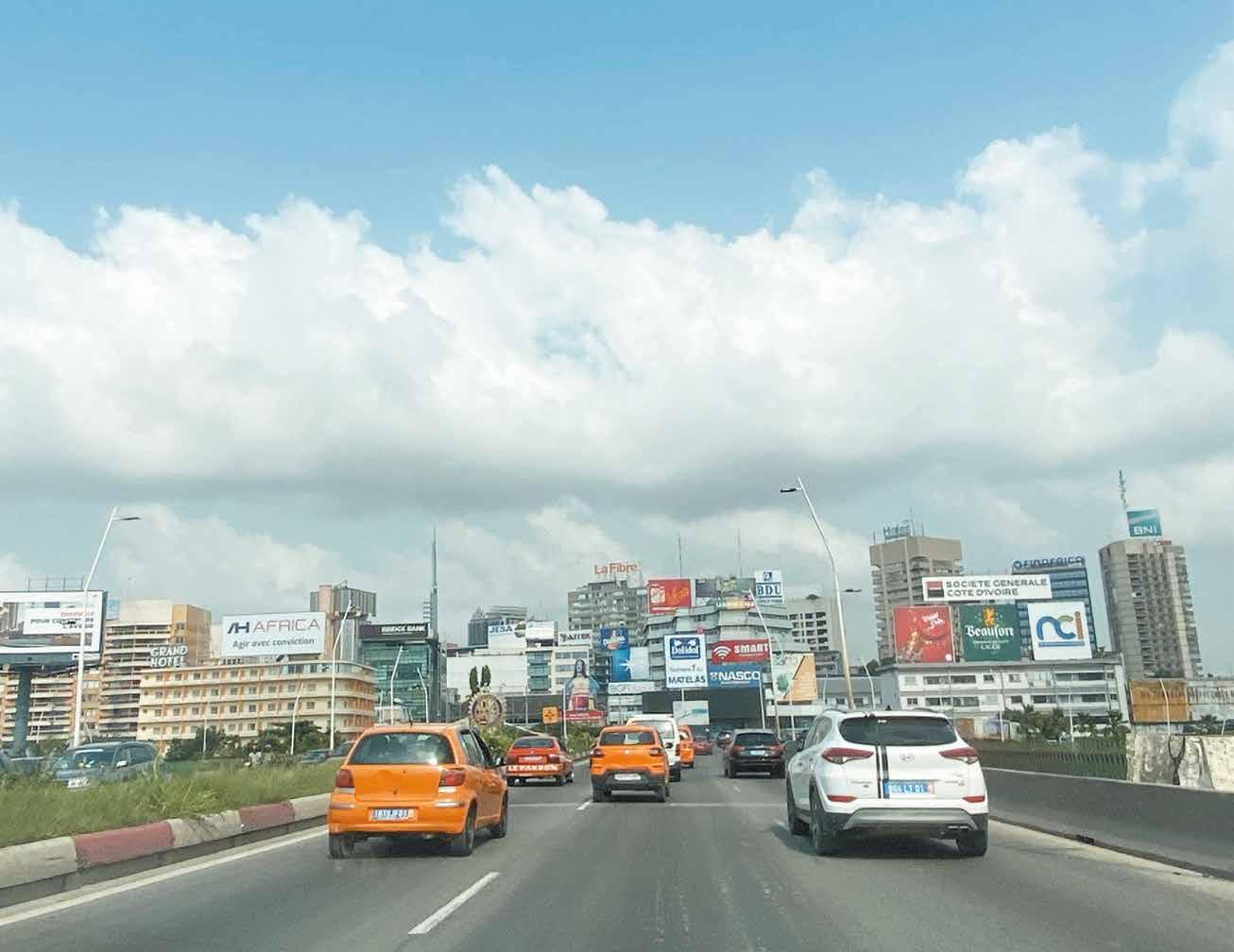
Business creation made easier and less expensive, improved business climate, and strong economic growth are all factors that contribute to Ivorian private sector activity.
In the span of almost ten years, Côte d’Ivoire has improved all the indicators used to assess the quality of its business environment. The return to peace, economic growth, the emergence of new opportunities, and regulatory incentives for “local content” have led to an explosion in the number of active businesses, the figure more than quadrupled between 2014 and 2023.
|||||||| Businesses started between 2014 and 2023
Source: CEPICI
THE SERVICES SECTOR REMAINS THE MOST ATTRACTIVE
The services sector (86.32% of businesses) remains the most popular choice for entrepreneurs, followed by manufacturing (12.45%) and agriculture (1.23%). However, of the 182 companies approved in 2023 under the investment code, 52.2% entered the manufacturing sector, 46.9% services, and 0.9% agriculture. These companies, as a whole, indicated they would need to invest just over 1 trillion CFA francs to realize their projects. The 522 billion CFA francs earmarked for industry can be broken down as follows: food products, 189 billion; minerals, 123 billion; rubber and plastics, 100 billion; and electricity and gas production/distribution, 70 billion. The 467 billion CFA francs approved for the services sector were allocated as follows: land transport, 168 billion; civil engineering, 118 billion; accommodation, 62 billion; and telecommunications, 13 billion. Of the 9.5 billion CFA francs invested in agriculture, 6.6 billion were for animal production and 2.9 for vegetable farming
In 2023, 49% of the funds invested came from Côte d’Ivoire and the remaining 51% from abroad, including Burkina Faso (11%), Turkey (7%), and China, France, and Togo (5%).
FOREIGN DIRECT INVESTMENT HAS INCREASED FIVE-FOLD SINCE 2010
Another indication of the attractiveness of the Ivorian economy is that foreign direct investment (FDI) has skyrocketed in ten years, USD339 million in 2010, it reached a record USD3.802 billion in 2024. The total level of direct cross-border investment more than doubled, rising from $6.9 billion to $19.3 billion between 2010 and 2024. The investment rate, meanwhile, increased from just under 9% in 2011 to more than 25% in 2023
Trends in foreign direct investment (in trillions of USD)
3,802
Source: UNCTAD, World Investment Report 2024
||||||||
|||||||| FDI stock (in trillions of USD)
Source: UNCTAD, World Investment Report 2024
SPOTLIGHT
IVORY COAST IN BUSINESS READY WHICH REPLACED DOING BUSINESS
Between 2014 and 2020, Côte d’Ivoire climbed from 167th to 110th place the last year Doing Business was published. In previous years Côte d’Ivoire regularly featured among the countries that had implemented the most reforms worldwide. In 2024, when the World Bank published its new benchmark index in B-Ready, Côte d’Ivoire featured among the fifteen African countries analysed, out of a total of fifty (100 in 2025 and 180 in 2026). It ranked eighth among the African countries, with average results in public services and operational efficiency, but third with respect to regulatory framework. Generally, according to the authors of the report, countries fare better at putting in place regulations to improve the national business climate than at providing the public services needed to ensure real progress. In short, there is a significant shortfall in implementation. But the good news is that this shortfall narrows as the quality of regulations improves.
|||||||| Côte d’Ivoire Scores in the three Business Ready Pillars
Source: World Bank,Business Ready (B- Ready) Report 2024
|||||||| Côte d’Ivoire Scores Business Ready Areas
Source: World Bank,Business Ready (B- Ready) Report 2024
THE CHALLENGE OF YOUTH EMPLOYABILITY
To strengthen the efforts made by the government since 2012 to support young people, Côte d’Ivoire has declared 2023 the “Year of Youth”. In this context, the authorities adopted the government’s Youth Program for 2023-2025, with a record budget of 1.118 trillion CFA francs, of which 361 billion were allocated to 2023. In August 2024, the programme, through various initiatives, had “helped more than one million young men and women, of whom almost 200,000 had already benefited from support for occupational integration and project financing,” President Ouattara noted in his State of the Nation address.
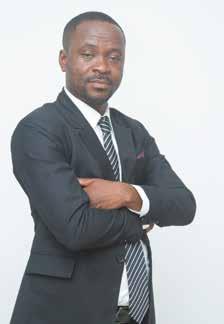
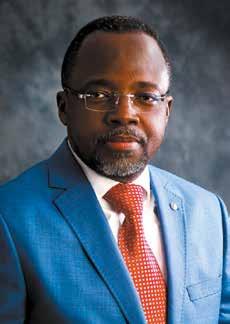
Konan Roger N’Guessan, Managing Director, LMC
“TRANSFORMING POTENTIAL INTO ACHIEVEMENT”
LMC Group is a training and coaching company specialized in management, leadership development, and investment. The nine LMC subsidiaries located in Côte d’Ivoire and throughout Africa work with companies to create leaders.
How does LMC work with companies?
During our very first meetings with clients, we establish a framework: What are you trying to achieve? How do you plan to optimize your structure and human resources to reach these objectives? What tools and methods are you going to use to reach the objectives? What expertise is needed to reach the objectives? We then help clients to answer these questions and find the right solutions through tailored services and training and coaching programmes. We enable managers to reach strategic maturity through executive leadership methods. We strengthen the capabilities of top managers so they can achieve their strategic and operational objectives. We also provide services to help our clients make better investments, put in place recruitment strategies to identify top talent, and optimize employee wellbeing with a view to enhance their commitment to excellence.
What are your objectives?
LMC Group operates in a continent with rapid economic growth where development no longer depends solely on infrastructure or capital, but primarily on the quality of its people and the clear vision of its leaders. Our mission is to transform potential into achievement by equipping executives, managers, and entrepreneurs, at every stage of their development, with cutting-edge methods and tools for business structuring, maturity, and strategic management. We do more than train managers; we forge leaders who can inspire, make bold decisions, and successfully navigate the complexities of the African market. That is why our programmes are designed to embed [in companies] modern and efficient management practices that are adapted to local realities, optimized programmatic profitability, go-to-market strategies, operational excellence, and effective people mobilization.
What have you achieved ?
We have proven our impact on companies such as OHEL International, SIQUEWA Group, AFG Bank Côte d’Ivoire, and HCI Group. Our coaches have also worked with members of the NSIA Assurance Property and Casualty management committee; the managers of NSIA Assurance Life Insurance in Côte d’Ivoire, Senegal, Cameroon, and Guinea; local managers of Crédit du Sénégal; and the managers of Orange Guinea-Bissau. Since 2012, when we started NKR Consulting which was followed by K & K Consulting, and our nine subsidiaries and offices in West and Central Africa, we have supported over 800 clients. Of the more than 3,000 senior executives and managers trained by LMC Group, over 93% have expressed their satisfaction. On average, our clients’ revenue and net income increase by 15%
Dominique Kadja, Country Manager Côte d’Ivoire, United Nations Global Compact
“WE ARE APPROACHING THE CREATION OF A GLOBAL COMPACT NETWORK IN IVORY COAST”
The United Nations Global Compact (UNGC) is the world’s largest corporate sustainability initiative, with over 20,000 participating entities, including more than 1,100 in Africa, and is a catalyst for responsible practices in human rights, decent work, environmental protection, and the fight against corruption. In Côte d’Ivoire, it assist businesses with the integration of its ten principles and Sustainable Development Goals (SDGs).
How would you describe the growing momentum of private sector commitment to sustainability and social responsibility, and particularly to the Global Compact?
2023 marked the appointment of the Global Compact Country Manager in Côte d’Ivoire and the establishment of its advisory board, followed by the creation of a strategic partnership with the Ivorian employers’ association, the General Confederation of Enterprises of Côte d’Ivoire (CGECI). Advisory Board members include the CGECI, the UN Resident Coordinator in Côte d’Ivoire, the Director of the Global Compact Africa Hub (based in Abuja), and committed companies such as SIFCA Group, NSIA Bank, AZITO Operations and Maintenance, Ivoire Hydrogène, and IFG Africa. In 2023, the Global Compact had 10 member companies in Côte
d’Ivoire, this figure rose to 20 in 2024 and 35 in 2025. This rapid increase is proof of the increasing private sector awareness of Global Compact initiatives and the value that joining them can bring, through the transformation of practices and the improvement of their reputation. It also underscores the interest of the Ivorian private sector in sustainability and CSR issues, and the commitment of companies to demonstrate and promote their responsibility by communicating their progress in implementing the SDGs and the ten Global Compact principles.
What major advances have you observed in the membership process?
The United Nations Global Compact has more than sixty national networks worldwide and officially launches a new one when the number of member companies in a country reaches a critical mass. This allows members to benefit from the network effect and generates tangible results for members and the national economy. In Côte d’Ivoire, we are approaching this milestone, and 2026 will undoubtedly be the year that the network is launched. In preparation for the launch, we continue our efforts to substantially increase membership and ensure that current members benefit from their membership through workshops and seminars, training sessions, and exchanges with business leaders.
SMEs represent the bulk of production. How do your initiatives involve them?
The Global Compact celebrated its 25th anniversary in 2025. In its initial approach, its policy was primarily geared towards large companies. However, for several years now, and considering the specific nature, role, and importance of SMEs for the economy, we have developed a strategy to further integrate the ten principles into SMEs. In Côte d’Ivoire, our targeted engagement with the main SME umbrella organizations, notably the Ivorian Federation of SMEs (FIPME) and
the Movement of Small and Medium-Sized Enterprises (MPME), clearly demonstrates our interest in this robust economic ecosystem. A special, free, and practical training programme called FDE [Fondements de la Durabilité d’Entreprise-FDE] initiated by our Africa Hub for SMEs in Francophone African countries, has been in place since 2024 in partnership with the CGECI (General Confederation of Enterprises of Côte d’Ivoire). It helps strengthen the capacity of SMEs to elaborate a sustainability strategy, integrate principles related to gender equality, decent work, and climate change adaptation, and improve reporting and communication on progress. SMEs in Côte d’Ivoire actively participated [in the programme], representing nearly 20% of the workforce from the twenty or so French-speaking African countries represented. I would add that currently, more than a third of our members in Côte d’Ivoire are SMEs.
The Global Compact promotes cooperation between public, private, and institutional actors. What forms of partnerships do you see accelerating the achievement of the [UN] 2030 Agenda?
The implementation of SDG 17 (Partnerships for the Goals) is a major component for accelerating the 2030 Agenda. In Côte d’Ivoire, the United Nations system in general, and the UN Global Compact in particular, are actively participating in discussions surrounding the upcoming 2026-2030 National Development Plan (NDP). Within the framework of partnerships with public sector institutions, we affirm our continued commitment. In May 2025, during the Africa CEO Forum, of which UNGC is a partner, we were honoured by the presence of Nialé Kaba, Minister of Economy, Planning and Development, at the networking cocktail hosted by the UN Global Compact for its members and partners in Côte d’Ivoire during the visit to Abidjan of Sanda Ojiambo, CEO and Executive
Director of the UN Global Compact. During this important event, the Minister emphasized the unique opportunity presented by the proposed creation of a UN Global Compact network in Côte d’Ivoire (as there are currently only 10 such networks in Africa) for accelerating the 2030 Agenda and called on Ivorian businesses to join. I would also like to mention the strong relationship we maintain with the High Authority for Good Governance, which is leading the national fight against corruption in Côte d’Ivoire.
What message would you like to send to readers who are looking to reconcile financial performance with sustainable impact?
A company’s financial performance and its ESG (Environmental, Social, and Governance) impact are now inextricably linked, internationally and in Côte d’Ivoire. We clearly see how shortcomings in the relations businesses maintain with local communities, in waste management, and in personal data protection negatively affect a company’s reputation and market value, and how, conversely, robust performance in these areas bolsters the trust of partners and customers. In Côte d’Ivoire the Global Compact provides companies contributing to Doing Business in Côte d’Ivoire with opportunities for capacity building, knowledge acquisition, peer-to-peer experience sharing, and dialogue with public partners with a view to advance the sustainability of their businesses and contribute to building a stronger, more inclusive, and more resilient Ivorian economy. Join us and benefits from these excellent opportunities!
BANKS – A MAJOR BANKING HUB IN WEST AFRICA
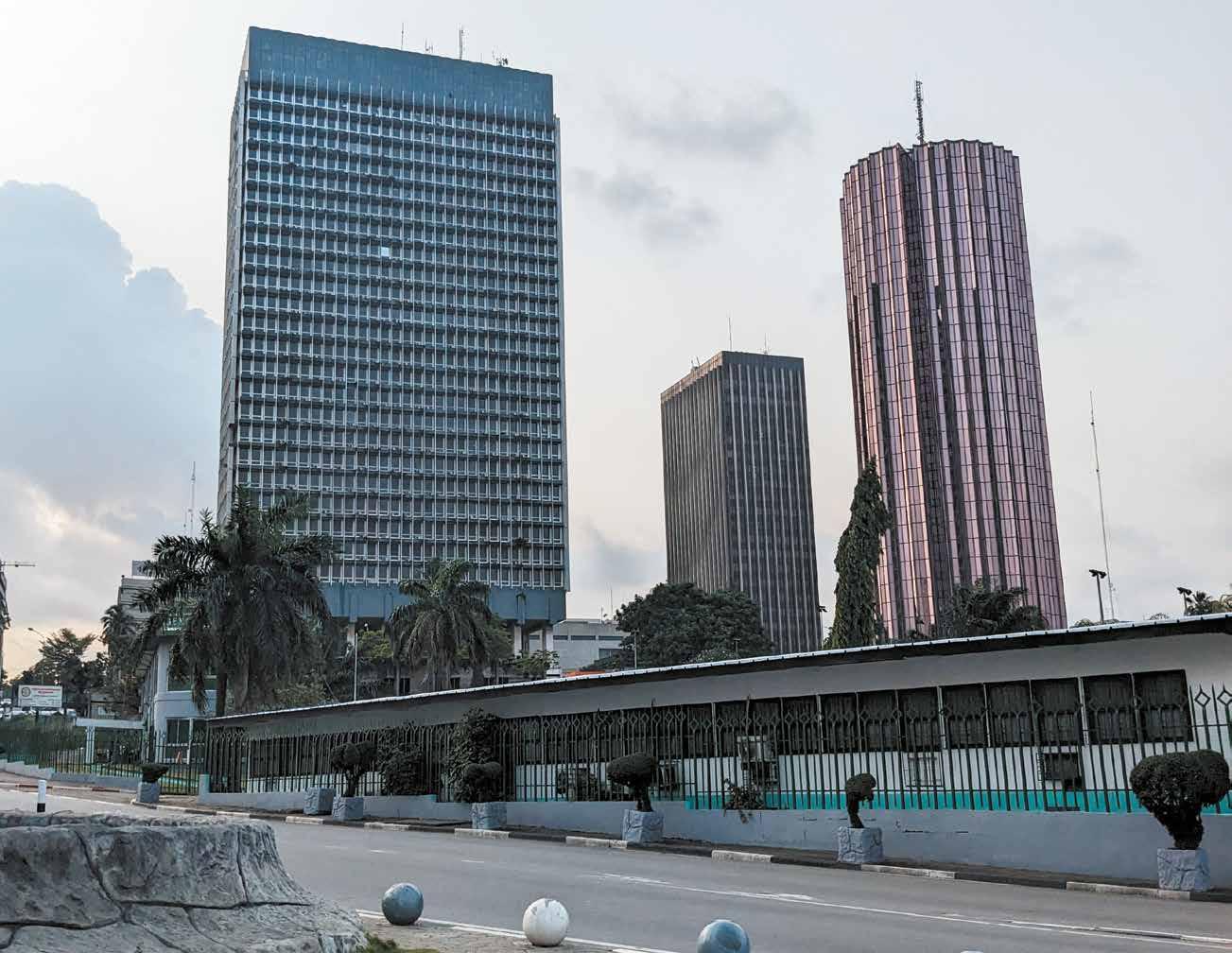
Côte d’Ivoire’s banking sector has doubled in size in five years, making it the second largest banking market in West Africa, after that of Nigeria. Banks are motivated by the prospect of economic growth but still need to meet the challenges of intermediation with small businesses.
Côte d’Ivoire has long been a major financial centre. In 2024, 28 national banks and four major regional financial institutions had offices in the country. It is home to the African Development Bank (AfDB), the Abidjan Stock Exchange [Bourse régionale des valeurs mobilières – BRVM] that operates as a stock exchange for Francophone West Africa, and a large Central Bank of West African States (BCEAO) office.
LARGEST BANKING MARKET IN THE WAEMU
It is by far the largest banking market in the West African Economic and Monetary Union (WAEMU). In 2024 it accounted for 35.6% of banks’ total assets and 34.8% of new accounts, according to the Banking Commission of the West African Monetary Union (WAMU). In this rapidly growing market from 2018 to 2023, total assets nearly doubled and net profit quadrupled.
NIGERIA, MAROCCO, BURKINA FASO, CÔTE D’IVOIRE…
INCREASINGLY DIVERSE
ORIGINS
During the span of the last fifteen years, the Ivorian market, as elsewhere on the continent, has been characterized by a shift in the origins of its financial institutions. Since the early 2010s the withdrawal of establishments from the colonial period, particularly subsidiaries of French groups such as BNP Paribas and Crédit Agricole, has allowed Nigerian, South African, Moroccan, Burkinabe, and national banks to enter the market. Attracted by potential economic growth, they have made Abidjan a more competitive financial centre.
|||||||| Key Growth Indicators for Banks in Côte d’Ivoire 2018 vs 2024
Largest Banking Market in WAMU in 2024
Source: WAMU Banking Commission,2025Annual Report on Banks and Financial Institutions, in French
A CONCENTRATED MARKET
Despite the arrival of new actors, the market remains highly concentrated. In 2024, the top five Ivorian banks accounted for more than half of the total assets, Société Générale alone held 14%. To strengthen the resilience of banks in Côte d’Ivoire and in the WAMU (West African Monetary Union) to potential shocks, on 21 December 2023 the Council of Ministers of the Union decided to double minimum bank capital requirements, from 10 to 20 billion CFA francs. Banks are afforded a three-year period to comply with the new requirements..
||||||||
|||||||| Banks In Côte d’Ivoire as of 31 December 2024
Source: WAMU Banking Commission,2025Annual Report on Banks and Financial Institutions,in French.
WITH OR WITHOUT SOCIETE GENERALE, A PRIVILEGED PARTNER OF THE STATE (?)
Similarly, despite the geographical diversification of the banking market, the largest Ivorian bank in terms of total assets remains Société Générale Côte d’Ivoire (SGCI). The subsidiary of the French group has been withdrawing from Africa since 2023 (Congo, Chad, Guinea, Madagascar, Benin, Togo, Morocco, Equatorial Guinea, Burkina Faso, etc.) and rumours persist of its withdrawal from the Ivorian market.
SGCI renewed its management team between January and September 2024 and has reacted by highlighting the quality of its results, including an 8.5% increase in net profit (48.234 trillion CFA francs) in the first half of 2024. SGCI is one of the major financial backers of public projects and consequently a valuable player on the market. The Ivorian state indirectly benefits from the French bank’s good rating on the bond market and is able to raise funds in Côte d’Ivoire at lower rates than competing regional banking groups.
THE ADVENT OF MOBILE BANKING HAS IMPROVED THE TRADITIONALLY LOW USE OF BANKING FACILITIES
Although from 2018 to 2024 the number of new accounts increased, a trend reflected in financial results, the percentage of the population that uses banking facilities in low, just over 25%. The rate rises to almost 40% when the number of account holders in microfinance institutions is included, and to more than 80% when figures from the rapidly growing mobile banking segment are taken into account. Significant partnerships have been forged in recent years between the International Bank for Trade and Industry, SGCI, Ecobank, and Bank of Africa with telecommunications companies such as Orange (Orange Money), Moov (Moov Flooz), and MTN (MTN Money).
Mobile banking allows users to pay for purchases and bills, lend money, and even obtain microloans using digital banking accounts. The concept was taken a step further in 2020, when Orange launched its own digital banking services, Orange Bank, in collaboration with NSIA Bank. By 2023, Orange Bank had over 1.2 million active customers. In 2023 the Coris Bank based in Burkina Faso acquired Standard Chartered Bank, and it became the only fully digital bank in Côte d’Ivoire.
SHORT- AND MEDIUM-TERM LOANS STILL ON THE RISE
Like other major banking indicators, the number of domestic loans rose from 2018 to 2024, at times doubling. But, as elsewhere on the continent, the vast number were short and medium-term loans. In 2024, long-term loans accounted for a scant 5.5% of total domestic loans
|||||||| Domestic lending between 2018 and 2024 (in billions of CFA francs)
Source: WAMU Banking Commission,2025Annual Report on Banks and Financial Institutions,in French.

Habib Bledou, Managing Director, Afrika Banque Côte d’Ivoire
“SUPPORTING PROJECTS THAT CAN TRANSFORM THE ECONOMY”
Operating since 2017, the Banque d’Abidjan (BDA) became Afrika Banque Côte d’Ivoire in 2025. It is a subsidiary of the Afrika Banque group, which also has subsidiaries in Senegal, Mali and Guinea. It offers innovative solutions, such as the “Galactique” prepaid card, launched in partnership with the Real Madrid football club.
What does the transition from BDA to Afrika Banque really mean?
The change was more than mere rebranding; it symbolized a significant strategic change.
Our institution, now known as Afrika Banque Côte d’Ivoire, had confirmed its pan-African positioning and commitment to supporting the continent’s major economic transformations. Our new identity reflects a clear ambition: to be a leading, modern digital bank that is close to its customers. Our foundational values are creating change, innovation, and impetus. With this transformation, we aim to embody a forward-looking bank, capable of supporting Côte d’Ivoire’s strategic sectors: energy, infrastructure, agricultural processing, and value-added services.
What are Afrika Banque Côte d’Ivoire’s ambitions in structured finance?
Our goal is to become a major player in structured finance in Côte d’Ivoire and the sub-region. Our
strategy is based on four pillars: solid expertise in key areas such as energy, infrastructure, and PPP projects; tailored financing solutions adapted to project complexity; high-performance cash management range of products and services to secure cash flows; and close partnerships with development finance institutions and large corporations. Our objective is to support transformative projects that can bring about lasting change to the economy.
What are the reasons for the recently signed partnership with Real Madrid?
The partnership is a first in the sub-region’s banking sector and is emblematic of our pioneering spirit. Real Madrid represents excellence, high-level performance, and passion—values we share. Our ambition is twofold: to strengthen our brand awareness by associating ourselves with a global brand and to give our clients a unique experience through co-branded products such as the “Galactique” card. The entirely digital card provides access to exclusive benefits and selective content, creating a strong emotional connection between the bank, sports, and our clients. This partnership marks a historic milestone that positions Afrika Banque as an innovative, forward-looking institution, resolutely committed to its clients.
What does Afrika Bank do be innovative?
Innovation is part of our DNA. In addition to the co-branded “Galactique” prepaid card, we launched WhatsApp Banking and a new, intuitive mobile application that complies with international standards. Innovating also means personalizing our relationship with our clients. Our Premium and Private Banking services provide wealth management support, concierge services, and exclusive experiences. Our vision can be summed up as: a simple, accessible, and helpful bank
THE INSURANCE SECTOR – IMMENSE GROWTH PROSPECTS

The insurance sector has been growing for several years, driven by major infrastructure projects, car insurance, and health insurance. Its prospects are all the more positive given its low market penetration rate.
Between 2017 and 2023, revenue in the insurance sector in Côte d’Ivoire nearly doubled, from 324 billion to 599 billion CFA francs. Although market penetration is at 2%, the Ivorian market remains by far the leader among the fourteen countries that comprise the Inter-African Conference of Insurance Markets (CIMA) zone. The trend of steady double-digit growth has continued; the sector recorded revenue of over 220 billion CFA francs (+12%) in the first quarter of 2024. In 2023, reported revenue was nearly 600 billion CFA francs, up from 521 billion (+15.2%) the previous year.
The 23 non-life insurance companies and the ten life insurance companies on the market are making the most of the opportunities created by the country’s economic growth: major infrastructure projects and the emergence of a middle class. “This growth reflects the insurers’ continuous investments in technology and retail channels to better meet the growing needs of policyholders and maintain their level of competitiveness in the market,” commented the Association of Insurance Companies of Côte d’Ivoire (ASACI) in March 2024.
[Source: AssociationofInsuranceCompaniesofCôted’Ivoire(Associationdessociétésd’assurancedeCôted’Ivoire-ASACI)]
SANLAM DOMINATES THE NON-LIFE INSURANCE SEGMENT
NON-LIFE: CAR, HEALTH, AND FIRE INSURANCE TAKE THE LEAD
The non-life insurance segment grew by 14% in the first quarter of 2024 (157 billion CFA francs) and by 17.3% in 2023 (349 billion CFA francs). Nearly 80% of the segment’s revenue were generated by vehicle insurance (31.5%, or 110.2 billion CFA francs), health insurance (28.5%, or 99.55 billion CFA francs), and property and casualty insurance (18.4%, or 64.29 billion CFA francs).
The digitalization of motor insurance certificates in 2022, has had a positive effect on the process used to issue vehicle insurance policies. Operational since January 1, 2023, the ASACI Technologies platform, in addition to accelerating the provision of electronic car insurance certificates, is instrumental in fighting insurance fraud and identifying uninsured vehicles.
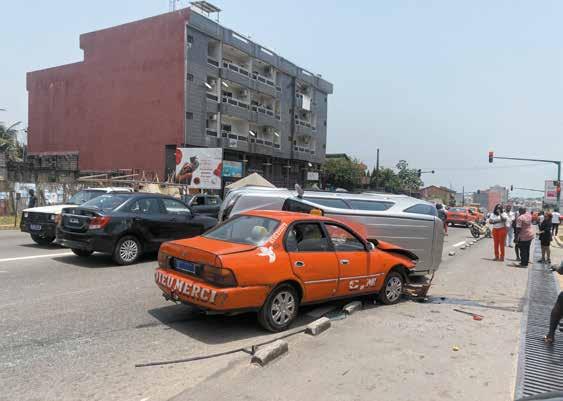
In 2023, the South African company Sanlam held its position as the dominant player in the non-life insurance segment, with a market share of 19%. The number two player was the Ivorian company GNA with 12% of market share. On the verge of bankruptcy in 2019 when it ranked 17th, it has since achieved impressive growth and overtaken Allianz and Sunu (Senegal). GNA reported a growth rate of 46% in 2023, a staggering 1,500% since 2019 (2.58 billion CFA francs). The top five non-life insurance companies, including Axa, held 49% of the market in 2023.
Source: Association of Insurance Companies of Côte d’Ivoire (Association des sociétés d’assurance de Côte d’Ivoire -ASACI)
Source: AssociationofInsuranceCompaniesofCôted’Ivoire(Associationdessociétésd’assurancedeCôted’Ivoire-ASACI)
THE ALLIANCE BETWEEN SANLAM AND ALLIANZ
The life insurance segment reported 250 billion CFA francs in revenue, up by 12.1% compared to the previous year. Revenue was driven primarily by mixed contracts and contracts for savings and death benefits; the three accounted for 87.7% of total revenue. The life insurance segment is more concentrated than the non-life sector: the top five players in the life insurance segment hold 81% of the market. The top players in the life segment are Sunu, followed by NSIA, Allianz, and Sanlam. Market concentration is set to increase further because Allianz and Sanlam have obtained approval from the Regional Insurance Control Commission (CRCA) to merge their Ivorian non-life and life subsidiaries. The merger will lead to the creation of SanlamAllianz Côte d’Ivoire Assurances and SanlamAllianz Côte d’Ivoire Assurances Vie.
|||||||| Revenue of the top ten life insurance companies in 2023 (in billions of CFA francs) |||||||| Benefits paid (in billions of CFA francs)
BENEFITS PAID
Benefits paid during the first quarter of 2024 amounted to 77 billion CFA francs, almost the same amount reported in Q1 2023. Benefits paid in the non-life segment totalled 37 billion CFA francs in 2024 (+6%) and 40 billion CFA francs in the life segment (-5%). In 2023, benefits paid reached 294 billion CFA francs (+10.8%), perfectly split between non-life and life, 147 billion CFA francs (+14.4% and +7.4% respectively)
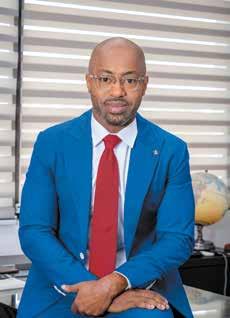
Jean-Luc Konan, Managing Director and Chief Executive Officer, COFINA
“AN
UNPRECEDENTED INCLUSIVE FINANCING MODEL FOR SMES”
Neemba is a strategic player for the industrial sector in West Africa. How does the group assist businesses with innovation and technology?
Neemba is a catalyst for innovation and performance for companies operating in the mining, construction, energy, and manufacturing sectors. We have invested in infrastructure, our regional logistics warehouse in Abidjan, for example, which makes it possible to deliver equipment in 7 days for Côte d’Ivoire and less than 25 days for the sub-region. The warehouse has an annual storage capacity of 500 machines and 1,000 generators; this guarantees optimal equipment availability for our customers. In Dakar, our component reconditioning centre—the result of an investment of more than €17 million—extends equipment lifespan, reduces maintenance costs, and consolidates our commitment to the environment.
COFINA champions a pan-African vision of meso-finance. What does this mean for SMEs and local economic actors?
COFINA has a first-of-its-kind and inclusive financing model, specifically designed for African SMEs. We operate in nine countries using a meso-finance-centric approach, which bridges the gap between microfinance and traditional banking. As of 31 April 2025, COFINA had 386,000 clients and had injected over 1.3 trillion
CFA francs into the economies of the countries where we operate. We support innovation by providing customized products and financing that are adapted to value chains. For example, we signed a €26 million financing agreement with the European Investment Bank, to strengthen the development of sustainable agriculture in Côte d’Ivoire and Senegal. Our subsidiary FIN’Elle helps women entrepreneurs to develop their businesses, by providing suitable loans and digital and financial training modules.
COFIMBA is a COFINA- Neemba initiative. What is the rationale underpinning this alliance and what solutions does it provide?
COFIMBA was created out of the desire to combine Neemba’s industrial expertise with COFINA’s financial structuring capabilities and use these to address a common challenge: providing African SMEs with rapid and sustainable access to modern industrial equipment. The program allows SMEs to finance up to 80% of the acquisition of machines that are delivered in less than 7 days in Côte d’Ivoire. This model uses detailed needs analyses of each sector to develop solutions that consider the specific operational characteristics of local businesses. The alliance is proof that the constructive collaboration between an industrial player and a financial player can generate robust structural transformation that has measurable effects on productivity, competitiveness, and the financial empowerment of African businesses
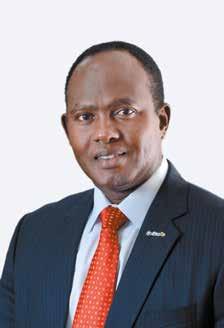
“A
Dr. Corneille Karekezi, Managing Director and Chief Executive Officer, Africa Re
TRUSTED PARTNER FOR GOVERNMENTS AND INSURERS”
The African reinsurance company Africa Re is the leader in its sector by revenue in Africa and the Middle East and intends to remain the main actor in the transformation and management of risks in Africa by providing tailor-made solutions.
What key factors underpin Africa Re’s leadership?
Africa Re’s leadership is based on our close client relationships, in-depth market knowledge, clear strategy, and strong expertise. We have built an extensive network, twelve offices that serve Africa and selected markets in the Middle East, Asia, and Latin America. We have six regional offices (Côte d’Ivoire, Nigeria, Egypt, Morocco, Mauritius, and Kenya), a local office in Ethiopia, and underwriting representatives in Uganda, Sudan, and the Democratic Republic of Congo. We also have three branches in Egypt (Retakaful), South Africa (life and non-life), and an underwriting agency in Dubai. Our network allows us to do business in more than 75 countries. Moreover, we manage the pool of oil and energy risk and the aviation risk
pool in Africa, and the Energy and Allied Insurance Pool of Nigeria, and provide a centralized platform for these types of specialized risks. In 2024, Africa Re generated over US$1.2 billion in reinsurance revenue, a record net profit of US$132.9 million, with an average return on equity of 12%, and a 20% market share in Africa. These strengths make Africa Re the largest pan-African reinsurer and a trusted partner for governments and insurers.
How does Africa Re leverage its strong capitalization and good reputation?
We rely on our solid capital base to increase underwriting capacity across the continent. Our substantial capital and efficient risk management allows us to retain a significant share of premiums (over 80% of gross premiums in 2024) and ensure the prompt settlement of claims (over $3.5 billion in the last ten years). We also provide technical assistance through training for managers and young professionals, and we fund initiatives through the Africa Re Foundation. Our credibility and reputation, reinforced by international A ratings (AM Best: A; Standard & Poor’s: A-) are major assets.
What major segments does Africa Re’s expertise cover?
Africa Re is a multi-line reinsurer, with nearly 90% of its portfolio in non-life. Our expertise covers traditional risks, as well as specialized lines such as surety and agriculture. In practice, we provide coverage for risks related to major construction projects and mining operations, as well as energy risks. We also offer solutions tailored to climate risks, terrorism, and political violence, and are developing solutions for certain emerging risks, such as cyber risks
CORPORATE TAXATION –AN INVESTMENT CODE THAT PRIORITIZES LOCAL EMPLOYMENT AND THE ENVIRONMENT

The Ivorian Investment Code was adopted in 2018 and amended in 2024. To create sustainable and decent jobs, it encourages and promotes productive, green, and socially responsible investments.
The Investment Code promotes the creation of activities to process local raw materials, the production of competitive goods for the domestic market and export, technology, research and innovation, skills transfer, and the use of local content.
New provisions introduced in 2024 include the obligation for companies to demonstrate a measurable social impact, compliance with environmental standards, and a minimum level
of Ivorian investment to maintain their benefits. Monitoring is conducted via the CEPICI digital platform.
The Investment Code provides for two incentive schemes, the declaration regime and the investment approval regime, which offer specific tax and customs incentives. These regimes aim to encourage investment in production, job creation, and the balanced development of the national territory.
THE DECLARATION REGIME
The declaration regime fosters and promotes productive, green, and socially responsible investments, to create sustainable decent jobs. It also encourages the development of activities to process local raw materials, the production of competitive goods for the domestic market and export, the promotion of technology, research and innovation, skills transfer, and the use of local content. Access to the regime’s benefits are granted upon verification of the effective implementation of the investment plan and approval of the application via the CEPICI’s one-stop digital portal.
• Investments made in Zone A
- Exemption from taxes on profits from industrial, commercial, non-commercial, or agricultural operations.
- Exemption from tax on business license fees.
- A 50% reduction in employer contributions, excluding apprenticeship tax.
• Investments made in Zone B
- Exemption from taxes on profits from industrial, commercial, non-commercial, or agricultural operations.
- Exemption from tax on business license fees.
- A 75% reduction in employer contributions.
• Investments made in Zone C
- Full exemption from corporate income tax and taxes on business license fees.
- A 90% reduction in employer contributions.
- Exemption from property tax.
- Waiver of registration fees for increases in share capital.
• Investments made in Zone D
- Full exemption from corporate tax on profits, taxes on business license fees and employer contributions.
- Exemption from VAT on imported equipment.
- Exemption from property rental income tax for staff housing.
Tax and contribution exemptions are reduced to 50% of the amounts normally owed in the last but one year of the regime, and to 25% in the last year.

THE INVESTMENT APPROVAL REGIME
The approval regime covers all business sectors, with the exception of distribution and retailing, banking, and financial services. The benefits vary depending on the area, the investment threshold, and compliance with criteria for sustainability, local content, and social impact.
• During the establishment phase
During programme implementation, certified companies benefit from:
- A 60% reduction in import duties and taxes on equipment, materials, and initial batches of spare parts, excluding EU levies;
- Full exemption from VAT on inputs and equipment;
- Full waiver of registration fees for contracts related to project financing.
• During the operational phase
Investments below the upper limit
- Zone A: Exemption from corporate income tax, taxes on business license fees, and a 50% reduction in employer contributions.
- Zone B: Same benefits as for Zone A, and a 75% reduction in employer contributions.
- Zone C: Same as for Zone A, and a 90% reduction in employer contributions and full exemption for property tax and property income tax on employee housing.
- Zone D: Total exemption of corporate income tax, property tax, and employer contributions for the entire duration of the regime.
-Investments equal to the upper limit
- Zone A: Full exemption from taxes on profits, business licenses, and property, and a 50% reduction in employer contributions.
- Zone B: Exemption from the same taxes as for Zone A, and a 75% reduction in employer contributions.
- Zone C: Total exemption from taxes on profits, property and property rental income; and a 90% reduction in employer contributions.
- Zone D: Full exemption from all direct taxes for the duration of the regime.
Tax and contribution exemptions are reduced to 50% of the amounts normally owed in the last but one year of the regime, and to 25% in the last year
SPOTLIGHT
CURRENCY,
LOCAL SUBCONTRACTORS, THE ENVIRONMENT… AN OVERVIEW OF THE MAIN PROVISIONS OF THE INVESTMENT CODE
While emphasizing environmental protection, the investment code specifically targets agricultural and agroforestry entrepreneurship, agro-industrial segments, major infrastructure projects, tourism and hospitality development, arts and crafts, educational projects, social housing, and green investment.
• “No restrictions may be placed on investors obtaining the foreign currency necessary for their activities.”
• “Freedom of access to raw materials is contingent upon the investor implementing a purchasing policy that guarantees producers fair compensation.”
• “Investors prioritize the use of local suppliers and subcontractors with whom they maintain mutually beneficial relationships. Investors contribute to improving the skills and knowledge of local staff particularly through training and technology transfer. ”
An accelerator of innovation that covers major risks and has a positive social impact

AMSA Assurances CI, a subsidiary of the pan-African CFOA group, is a leading player in the Ivorian non-life insurance market. The company has tripled its revenue since 2020, reaching 17.3 billion CFA francs, an average annual growth rate of over 30%. In 2024 it ranked 7th in terms of revenue.
AMSA Assurances CI’s development is underpinned by the three strategic pillars described below.
• Expertise in major risks (aviation, refineries, construction sites, cyber insurance, working holiday visas), and working with the top reinsurers.
• Targeted digitalization: multi-channel platforms, Insurance Technology - SFD partnerships, and electronic document management system.
• Rigorous governance, compliance with the CIMA Code [Insurance Code of the Inter-African Conference on Insurance Markets], quality certification (in progress), and accreditation under Law wNo. 2022-408 on local content.
A locally rooted CSR policy
AMSA CI’s CSR policy guiding principle is to have a concrete and sustainable impact on the advancement of inclusion, culture, and public health. The policy is based on five pillars:
• Support for women entrepreneurs and their access to insurance products (inclusive insurance)over 1,000 women have taken part in awareness
raising and training through the BROMALA programme which is conducted in collaboration with business incubators;
• Support for education - refurbishing of 7 classrooms;
• Women’s health - breast cancer screening campaigns and funding of care for patients at the CNRAO (National Center for Research and Action on Cancer);
• The promotion of cultural heritage - sponsorship of the Djéguélé Festival; and
• The protection of the environment and forest resources.
Our CSR policy was awarded the 2024 Best Progress Award for Corporate Citizenship.
“Weremainresolutelycommittedtoclosecustomer relationships,whileadaptingourmodeltonew challenges.”
Samba
Yatassaye, Managing Director, AMSA
• “Investors benefiting from benefits enshrined in the current code are required to comply with national standards or, in the absence of said standards, the international technical, social, health, and environmental standards applicable to their products, services, and work environment.”
• “The investor contributes to the promotion of human rights and labour law norms by applying internationally recognized principles, in particular those contained in ISO 26 000.
• “The investor provides employees with health and safety conditions that comply with local legislation and is involved in corporate social responsibility activities by implementing social projects for the benefit of the communities where the company operates.”
• “The investor prioritizes the recruitment of local workers and contributes to developing the skills of its local employees, particularly through continuing education and the development of national skills through advanced training programs.”
GENERAL TAXATION
-Tax on Industrial and Commercial Earnings (bénéfices industriels et commerciaux - BIC)
- 25 % for companies and legal persons.
- 20% for SMEs eligible for the simplified tax regime or benefiting from the declaration regime.
- 15% for companies approved for Zone D as defined under the Investment Code.
Taxation on non-commercial earnings (bénéfices non commerciaux - BNC)
- 25% for individuals and legal persons not subject to a special tax regime.
- 20% for self-employed persons registered under the simplified tax regime (régime réel simplifié).
Taxation on income derived from investments (Impôt sur le revenu des valeurs mobilières - IRVM)
- 15% for income derived from profits exempt from or not subject to corporate income tax.
- 10% for dividends paid by companies listed on the BRVM (Regional Stock Exchange).
- 2% for proceeds, rewards, and redemption premiums paid to the holders of bonds issued in Côte d’Ivoire.
- Transactions within a group may be eligible for a partial exemption subject to certain ownership conditions (interest held cannot exceed 10 %).
- Indirect taxes and duties
- Standard VAT: 18%, except for exempt transactions (water, electricity, basic foodstuffs, medical and pharmaceutical services, banking and insurance transactions, international trade, fertilizers, plant protection products, animal feed, etc.).
- Reduced VAT: 9% applicable to specific services (particularly in tourism, hotels, and approved public transport).
- Exported of goods and services remain at a zero rate.
Personal
Income Tax (Impôt général sur les revenus IGR)
- Progressive tax rates ranging from 2% to 36% depending on the annual taxable income bracket.
- Expatriates are subject to the same tax rates as nationals, except when double taxation agreements apply.
- Deductions may be claimed for dependents and salary income, in accordance with the General Tax Code.
RISK MANAGEMENT AND STRATEGIC PLANNING SUPPORT FOR INDIVIDUALS AND COMPANIES TRUSTWORTHY

ATLANTIQUE ASSURANCE VIE and ATLANTIQUE ASSURANCES, subsidiaries of the pan-African Group Banque Centrale Populaire (BCP), are pioneers in the field of insurance in Côte d’Ivoire and are able to capitalize on more than five decades of recognized expertise in the protection of people and property.
Firmly rooted in the Ivorian economy and woven into its social fabric, both companies embody the commitment and expertise of the Group's insurance division. Their expertise serves individuals, professionals, and businesses by providing companies with e ective, accessible, and perfectly tailored insurance solutions throughout their lives and at every stage of their activities. Through their well-established national network, ATLANTIQUE ASSURANCE VIE and ATLANTIQUE ASSURANCES rea rm their core mission every day: to guarantee the future and sustainably protect what is most precious.
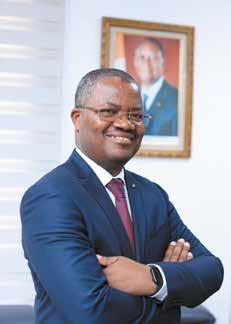
“TRAINING,
Dr. Kouadio Kouassi Hugues, Director, Institute of Statistics and Applied Economics (École nationale supérieure de statistique et d’économie appliquée d’Abidjan - ENSEA)
RESEARCH, AND CONDUCTING STUDIES TO IMPROVE THE STATISTICAL SYSTEMS OF AFRICAN COUNTRIES.”
ENSEA is a regional scientific and technological public administration institution (Etablissement public administratif à caractère scientifique et technologique - EPAST) specialised in statistical and economic modelling. Its level of excellence allows it to belong to several prestigious international teaching and training networks.
How does ENSEA contribute to the improvement of the statistics systems used to support public authorities and economic operators with decision making?
ENSEA contributes in three areas: training, applied research, and studies. It has an initial training program, as well as capacity-building activities for staff and directors of national statistical agencies. It also trains future African researchers in economics and statistics. Finally, it conducts thematic studies on topics of interest to public and private stakeholders, thereby informing decision-making. To this end, ENSEA has a POP-DEV (Population and Development) unit and CERMEA (Centre for Research in Applied Macro and Microeconomics). One example among many is the Performance Monitoring for Action project which was conducted in collaboration with Johns Hopkins University (Baltimore, USA): it improved knowledge and policies related to reproductive health in Côte
d’Ivoire. Since its inception, ENSEA has trained over 4,500 graduates who now contribute to the statistical services of 24 African countries and Haiti. There are 410 students from 17 countries, 20% of whom are women, enrolled in the 20242025 academic year. This diversity is also one of our strengths.
How does ENSEA fulfil its mission vis-à-vis businesses and civil society?
ENSEA has short-term training programs and confers certificates in specialised fields such as data analysis and collection, monitoring and evaluation, and data science. ENSEA, in collaboration with COFEB (Centre ouest-africain de formation et d’études bancaires -West African Centre for Banking Studies and Training), conducts a certificate program on Banking Regulations and Basel Parameter Modelling.
What are the main sources of employment for ENSEA graduates?
According to the 2024 graduate employment survey that looked at the last five graduating classes, approximately 50% of students pursue careers in public institutions, the remainder join the private sector, NGOs, and international institutions such as the World Bank and the International Monetary Fund. They hold positions as analysts, statisticians, economists, data scientists, financial analysts, actuaries, monitoring and evaluation officers, and in statistical modelling.
How does ENSEA integrate advances in artificial intelligence?
In 2018, ENSEA updated its training curricula to include subjects related to data science. Students are increasingly made aware of AI issues through courses and conferences. Moreover, the school established the Applied Statistics Innovation Laboratory a few years ago and its activities address AI related issues
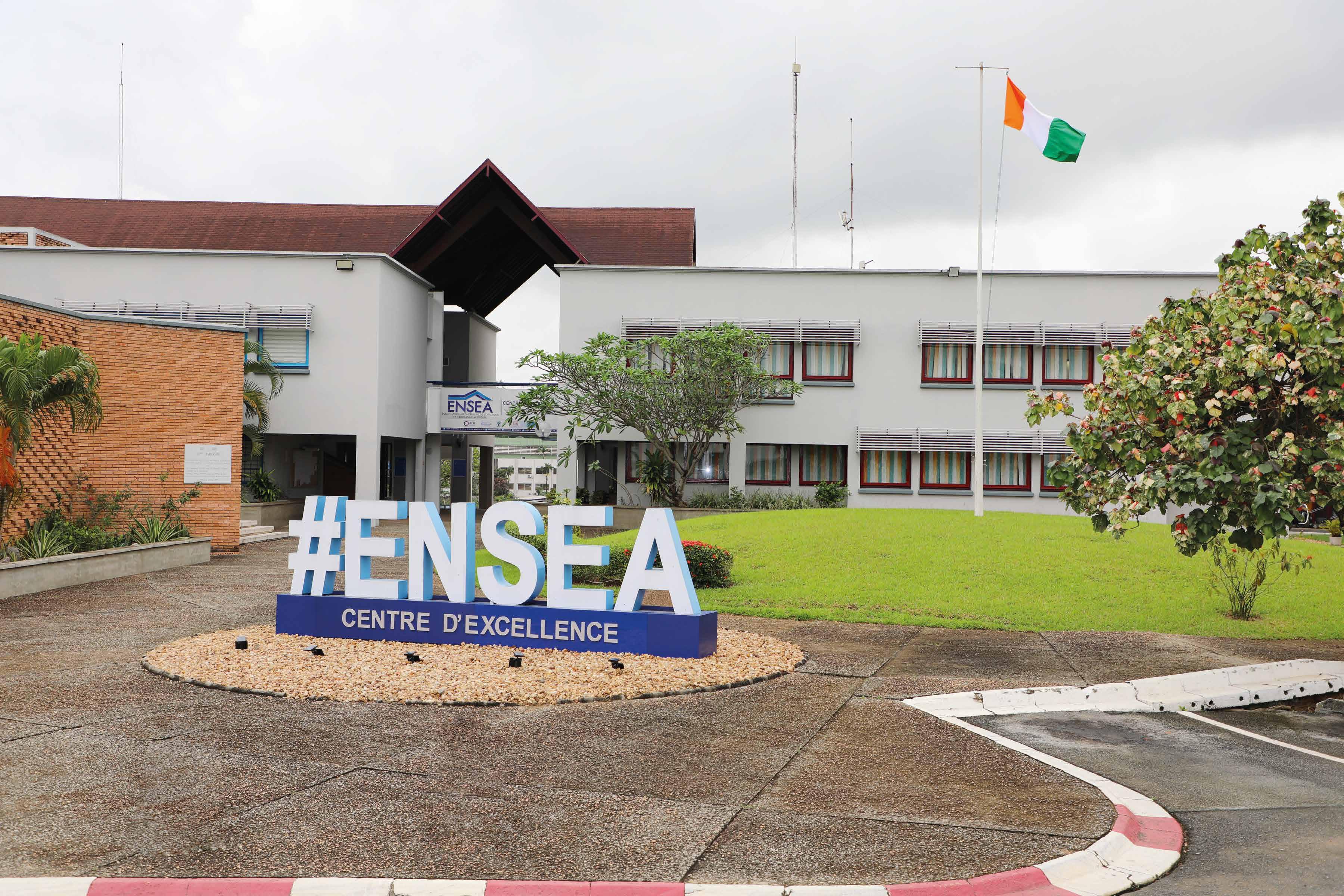
Your Reference Partner at the Heart of Statistical and Economic Excellence
We are an internationally renowned Centre of Excellence for training and research in statistics and applied economics at the service of Africa's economic and social development. Our labels and certifications confirm our leading position in this field.
Discover our expertise
African leader in training and research in statistics, applied economics and economic modelling.
Recognised expertise in continuing education, with high-quality programmes aimed at building the capacity of managers and decision-makers in fields such as statistics, economics, data analysis and project management, etc.
Proven expertise in technical assistance, support and innovative studies for the public and private sectors in response to their specific needs.
Proven expertise in the management of international cooperation projects, in particular the ACE IMPACT Project with the World Bank and the French Development Agency (AFD).


THE TOP 100 LARGEST COMPANIES IN
42 34
35 32 35
la Côte d’Ivoire (SODECI)
Côte d’Ivoire (UBIPHARM CI)
Societe de Tubes d’Acier et d’Aluminium en Côte d’Ivoire (SOTACI)
Société de Forage et de Travaux Publics-Mining
/ 53 Société Miniere de la Lobo (SML)
/ 58 La Société de Transports Abidjanais sur Rail S.A.S.
/ 59 GCB Cocoa Côte d’Ivoire
70 60 Société de Développement du Caoutchouc Ivoirien (SDCI)
Ivoire SARL
78 75 62 SECI-Saur Energie Côte d’Ivoire
92 86 63 Lafargeholcim Côte d’Ivoire S.A. (LHCI)
Abidjan Specialised Scientific and Technical Fields
Abidjan Manufacturing S.A.
/ 76 64 Oryx Energies Côte d’Ivoire (OECI) Abidjan Commerce
51 62 65 Africa Sourcing Côte d’Ivoire
/ 73 66 Africa Global Logistics Côte d’Ivoire (AGL Côte d’Ivoire)
/ / 67 Cote D’ivoire Terminal
/ 92 68 Societe De Ciment De Côte d’Ivoire
/ / 69 EPSA Ivoire
Abidjan Agriculture, Sylviculture and Fishing S.A.
Abidjan Conveyance and Warehousing S.A.
Abidjan Conveyance and Warehousing S.A.
Abidjan Manufacturing S.A.
Abidjan Extractives Industry SARL
/ / 70 CDPA-CI Abidjan Commerce SARL
/ / 71 Importation et Exportation des Produits de Mer en Côte d’Ivoire
72 96 72 Tractafric Motors Côte d’Ivoire
Abidjan Commerce SARL
Abidjan Commerce S.A.
93 / 73 Rimco-Setaci Abidjan Commerce
77 / 74 SOCOB-Sotiété de Commercialisation (SOCOB)
/ / 75 Centrale d’Achat de Production Agricole Abidjan Commerce
62 / 76 Kineden Commodities S.A.
67 95 77 Copharmed-Compagnie Pharmaceutique
69 90 78 IHS Côte d’Ivoire
Abidjan Commerce
Abidjan Commerce
Abidjan Information and Communication
40 51 79 Compagnie Ivoirienne de Coton Korhogo Agriculture, Sylviculture and Fishing
58 64 80 Société des Caoutchoucs de Grand Bereby (SOGB) San-pedro Agriculture, Sylviculture and Fishing
/ / 81
Socida-Societe Ivoirienne pour le Developpement Automobile
50 87 82 Barry Callebaut Négoce
/ / 83 NEEMBA Côte d’Ivoire (NEEMBA)
70 68 84 Union des Sociétés Cooperative Kimbe (ECOOKIM COOP-CA)
Abidjan Commerce
Abidjan Commerce
Abidjan Commerce S.A.
Abidjan Commerce COOP-CA / 98 85 Société Africaine Produits Congelés
/ / 86 AF-Chem Sofaco
65 63 87 Svenska Petroleum Exploration Aktiebolag Ltd.
/ / 88 Compagnie Cacaoyere du Bandama (CCB)
/ 88 89
Sogea Satom Côte d’Ivoire
76 93 90 Universelle Industrie S.A.
Abidjan Commerce
Abidjan Manufacturing
Abidjan Extractives Industry AB
Abidjan Manufacturing S.A.
Abidjan Construction
Abidjan Manufacturing S.A.
88 / 91 Societe Cooperative Nouvel Esprit de Ketesso (CNEK) Aboisso Commerce
94 / 92 Disma-CI
/ / 93 Codipac
95 / 94 Société des 2 Plateaux
/ / 95 Air France (AF)
/ / 96 Eni Ivory Coast Limited
Abidjan Commerce
Abidjan Commerce
Abidjan Commerce
Abidjan Conveyance and Warehousing S.A.P.P.
Abidjan Extractives Industry SARL
75 / 97 Nouvelle Parfumerie Gandour-Côte d’Ivoire (NPGCI) Abidjan Manufacturing
/ / 98 Bonikro Gold Mine
90 94 99
Société pour le Compoundage de Côte d’Ivoire
86 / 100 Hire Gold Mine
Abidjan Extractives Industry
Abidjan Manufacturing
Abidjan Extractives Industry
PROMISING SECTORS
• Oil and Gas – Revised Upward Projections Point to a New Driver of Growth >>> 76
• Mining – Attractive Investment Opportunities >>> 80
• Agriculture, Agro-Industry, Farming and Fishing – Increased Production, Processing with Potential >>> 84
• Tourism – “Sublime Côte d’Ivoire”: a Programme with Big Ambitions >>> 92
• Pharmaceutical Industry – Côte d’Ivoire Sees its Aspirations Realized >>> 98
• Economic Transformation – the Environmental Conservation Challenge >>> 104


OIL AND GAS – REVISED UPWARD PROJECTIONS POINT TO A NEW DRIVER OF GROWTH

The discovery of two new major deposits in four years will make Côte d’Ivoire a significant producer of oil and gas. This represents a new lever for growth and good news for the country’s electricity production.
Côte d’Ivoire has continued to revise its projections for oil and natural gas production upwards since the biggest ever discovery of hydrocarbons in its sedimentary basin in September 2021. Named Baleine, this deposit was followed by the discovery of another, Calao, in 2024 by the Italian company, Eni, the only ‘supermajor’ active in Côte d’Ivoire among juniors.
Scheduled to be operated in partnership with the Ivorian public enterprise, Petroci Holding, the Baleine deposit resources are estimated at 2.5 billion barrels of crude oil and 3,300 billion cubic feet of natural gas. It alone will enable Côte d’Ivoire, a long-standing small producer of hydrocarbons and member of the African Petroleum Producers’ Organisation (APPO), to increase its reserves twentyfold.
OPERATIONS ONSTREAM IN RECORD TIME
Its production “goes beyond all estimates made at the time the deposit was discovered”, the government spokesperson, Amadou Coulibaly, announced in January 2025 following a meeting of the Council of Ministers. Phase 1 of production began in August 2023 using the Baleine floating production, storage and offloading unit (FPSO). Phase 2 began on schedule in December 2024 using the Petrojarl Kong FPSO and the Yamoussoukro floating storage and offloading unit (FSO). “This is a record time in our industry for production coming onstream” stressed none other than Claudio Descalzi, CEO of the oil company based in Rome, in August 2023. The government spokesperson added that the estimates for Baleine had risen from 35,000 barrels of oil per day to 60,000, while natural gas production could reach 70 million cubic feet per day compared to an initial forecast of 40 million.
Estimates for oil and gas production
THE SITUATION IN CALAO?
Located 45 kilometres off the Ivorian coast, the Calao deposit could provide a generous 1 to 1.5 billion barrels of oil according to estimates. A decision will be taken at the end of 2025 as to the launch of a third production phase, still involving Eni and Petroci Holding. The Italian energy giant is planning to drill one or two wells over the next two years to assess the potential of this discovery. Studies will be undertaken to increase knowledge of the characteristics of the reservoir, validate the development concept and firm up the final investment decision. Phase 3 could take production to 150,000 barrels of oil equivalent per day and 200 million cubic feet of natural gas equivalent per day. But, like other majors worldwide, Eni pays close attention to its environmental footprint in order to limit its exposure to financial and operational risks.
||||||||
Source: Côte d’Ivoire Government
OIL AND GAS: LEVERS FOR FINANCIAL AND ENERGY GROWTH
Will Côte d’Ivoire succeed in making hydrocarbons the second pillar of its economy? It will if what Mamadou Sangafowa Coulibaly, Ivorian Minister for Mining, Oil and Energy says is to be believed: “Oil and gas production could increase tenfold by 2030 given the performance achieved by current operations and projected for deposits as yet unexploited”. While production levels remain far below those of the continent’s giants, Côte d’Ivoire hopes to use this boon as a lever for sustainable, long-term growth. Fed onshore through a newly constructed gas pipeline, “the production of natural gas will enable Côte d’Ivoire to respond to the electricity demands of the domestic market, facilitate access to energy and reinforce its role as the energy hub of the sub-region”, affirmed the minister
SPOTLIGHT
ENI: TRAINING, OPERATING AND NET ZERO EMISSIONS
Operating in Côte d’Ivoire in the 1960s as Agip, Eni returned to the country in 2015. With a presence in more than sixty countries and employing more than 30,000, the Italian giant holds interests in blocks CI-101 and CI-802 where the Baleine field is located, and in four other Ivorian deepwater blocks (CI-205, CI-501, CI-401 and CI-801), all in partnership with Petroci Holding.
The company holds a 90% share in blocks CI-101 and CI-802 – and Petroci just 10% – but the proportion of net profits for the Italian giant after depreciation of the investments will total 48%, as against 52% for the Ivorian state.
The Italian company plans to make the Baleine deposit the first “net zero emission” operation in Africa. To achieve this, the company affirms that greenhouse gas emissions will be “reduced to a minimum using the best technologies available in terms of solutions for high-capacity industrial plants, for energy recovery from processes and for reduction and control of fugitive emissions”. Residual emissions will be “offset by forest conservation initiatives”, in partnership with the Ministry for the Environment, Sustainable Development and Environmental Transition. Forty forest reserves in the Lagunes and Comoé districts, covering 155,000 hectares, have already been identified for implementing conservation and restoration activities. As regards local content and capacity building, the major has created master’s diplomas in the energy sector, focusing on oil industry upstream and downstream activities in order to develop specialist skills in Côte d’Ivoire with the support of local academic staff. The Italian company has also created technical training programmes to enable operators, technicians and executives in the energy sector to update their skills..
MINING – ATTRACTIVE INVESTMENT OPPORTUNITIES
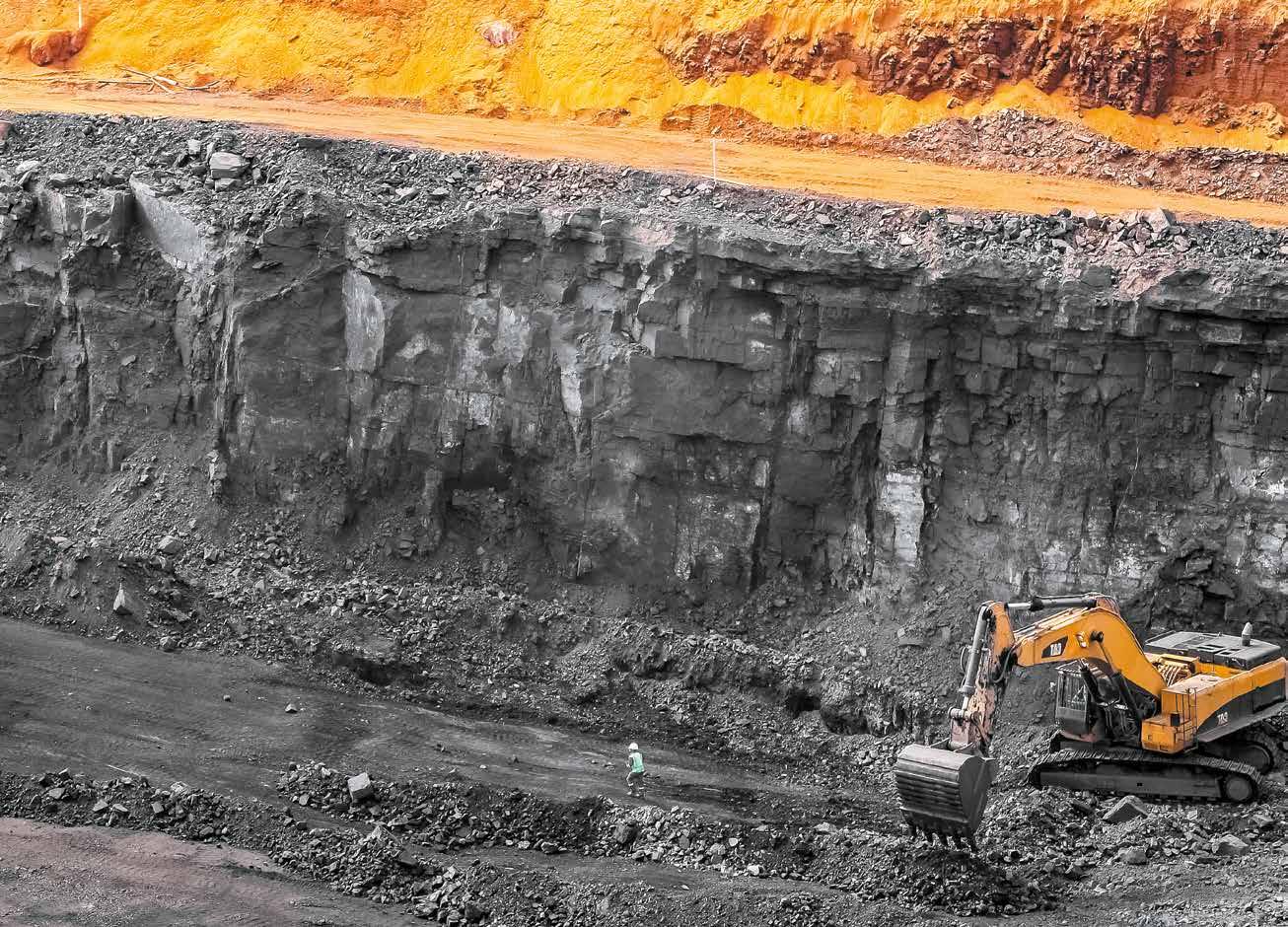
For the past decade, Côte d’Ivoire has been stepping up exploitation of its mining resources to the point where it figures among the African countries attracting the greatest private investment in the sector.
In 2024, Côte d’Ivoire was the second leading country in terms of securing high levels of investment in the exploration of its mining resources, according to a report by S&P Global Market Intelligence published in February 2025. In recent years it has become a key investment hub in West Africa, securing 122.1 million dollars of inward investment that year, just behind the Democratic Republic of the Congo (130.7 million dollars) and ahead of South Africa (121.3 million dollars), for an African total of 1.3 billion dollars. Gold-producing countries, which include Côte d’Ivoire, dominate this ranking. Already in 2020, when exploration budgets fell by 10% in the extractive
industry in Africa, Côte d’Ivoire grew this indicator by 39% in the gold-mining sector, increasing from 75.4 million to 105 million dollars. Of the nineteen companies with investments planned in gold exploration across the country, Endeavour Mining, Roxgold and Barrick Gold particularly increased their budgets. According to the figures announced at the first International Extractive and Energy Resources Fair (SIREXE), organised in November and December 2024 in Abidjan, more than 15 billion euros have been invested in the Ivorian extractive sector over the past two years. Gold production has risen year on year, increasing from 23.5 to 51 tonnes between 2015 and 2023
according to the Ministry of Mining, Oil and Energy. The bulk of this production is exported as raw materials.
MANGANESE, NICKEL AND DIAMONDS
Côte d’Ivoire also extracts manganese from its subsoil but the production trend for this ore is irregular, being linked to the global market or to the activities of companies granted temporary ownership, notably the Ivorian Manganese Mine Company (IMMSA). Production peaked in 2020 at 1.325 million tonnes before dropping in the following two years and then increasing again in 2023 (1.175 million tonnes), a year in which four mines were operational. Since the mid-2010s, Côte d’Ivoire has developed the raw materials for the energy transition, such as cobalt and nickel. In June 2023, the West Côte d’Ivoire Nickel Company (NOCI) obtained an operating licence for nickel and cobalt in the department of Sipilou. Since the Bafing Mining Company (CMB) obtained its mining licence in 2016, it has extracted nickel from the Foungbesso, Moyango and Viala deposits. Production of nickle ore went from 379,000 tonnes in 2017 to 2.780 million tonnes in 2023.
THE FUTURE LIES IN COLTAN, RARE EARTHS AND LITHIUM
Diamond production, which restarted in 2015 following the lifting of the United Nations embargo on exports of this product, has continued to decline from the peak attained in 2016 (16,292 carats). This downward trend – with 2,367 carats produced in 2023 – is due as much to the limits of small-scale production as to the reserves that can be exploited using this method being exhausted. But the future of mining in Côte d’Ivoire could be secured by those metals which are now essential to everyday life, indispensable in our mobile phones, computers and other wireless devices.
Investments in mining exploration in Africa in 2024 (in millions of dollars)
Source: S&P Global Market Intelligence
This applies to coltan (colombite-tantalite), deposits of which were discovered by the Côte d’Ivoire Mining Development Company (SODEMI) at Issia in the Centre-Ouest department, and which will shortly be extracted by the company Ivoire Coltan (IC). Moreover, several exploration permits have been granted to companies to mine rare earths at Boundiali, Madinani and Séguélon, and lithium at Adzopé, both essential metals in battery manufacturing
FIRST-EVER SIREXE A PROVEN SUCCESS
No fewer than 2,200 professionals, 320 exhibitors and 25,000 visitors took part in the first SIREXE organised in November and December 2024 in Abidjan. A significant feature of the fair was the signing of investment contracts which, according to the authorities, totalled 4,000 billion CFA francs and included production-sharing contracts and partnerships in the sale of natural gas. SIREXE, which is a biennial gathering with aspirations to become an unmissable event for the sector’s national and international actors, has launched Côte d’Ivoire as a prime and increasingly attractive destination for investing in mining, oil and energy.
Côte d’Ivoire 122.1
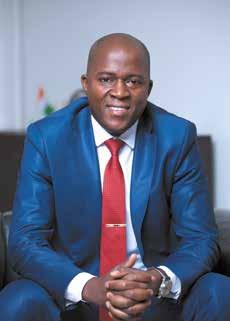
Nahoua Bakary Yeo, Managing Director, Société de ciment de Côte d’Ivoire
“SC CI IS COMMITTED TO A STRATEGY OF ADAPTING PROACTIVELY”
The Côte d’Ivoire Cement Company (SC CI) is a subsidiary of Atlantic Group, a financial holding founded by Koné Dossongui and active in banking, insurance and agro-industry. It is the first cement plant belonging to an Ivorian developer operating in the domestic market.
How did SC CI penetrate the Ivorian market in 2021?
We opened our first factory on 28 January 2021 at Yopougon, Abidjan, with an annual production capacity of 1.5 million tonnes of cement for an investment of around 60 billion CFA francs. The first cement products launched under the trademark BIGCIM were rolled out in three options ranging from masonry to high strength concrete. From its establishment, SC CI injected a new product into an already crowded market, boosting competition and helping bring down factory-gate prices. It was an outright success as our rollout was rapid and structured, offering a quality product and significant production volumes against a background of an expanding market and strong consumer growth. We were also able to rely on our strong national legitimacy. The company has generated around 300 direct and 1,063 indirect jobs, and we launched a second, identical, factory in February 2022.
The cement market has become saturated. How is SC CI facing up to the industry’s evolving challenges?
SC CI is committed to a strategy of proactively adapting. Rather than racing to produce volume at any price, we put the accent on loyalty, national leadership, quality and sustainable development. That’s why we are looking to make a difference through tailored service provision. Thus, we have launched “My BIGCIM Cement Account”, to finance the purchase of cement at preferential rates; the “BIGCIM Academy”, for training directed at construction professionals; and “Briquetier Pro”, for supporting domestic automation of construction blocks. Partly due to this diversification, we are coping with the increased competition and the ongoing fierce price war, which is notably due to sales continuing to undercut the floor price fixed by the state.
What place do you see for cement within Côte d’Ivoire’s economic growth?
One that is strategic, central and multidimensional. Cement is the physical basis on which almost all economic development projects are founded – crucial to the National Economic Development Plan and to the ambitions of an emergent economy between now and 2030. Its consumption is an indirect but reliable and powerful indicator of economic activity. Thus, in Côte d’Ivoire, the annual consumption of cement rose from around 2.5 million tonnes in 2012 to approximately 6.5 million tonnes in 2024. Cement stimulates the economy on several levels, acting as a catalyst for employment and local industry. However, certain challenges can act as a brake on development, such as national overcapacity (17 million tonnes of capacity for 6 million tonnes of demand), high energy costs, reliance on clinker, a component of imported cement, and poor development of local raw limestone as well as a need for stronger societal commitment
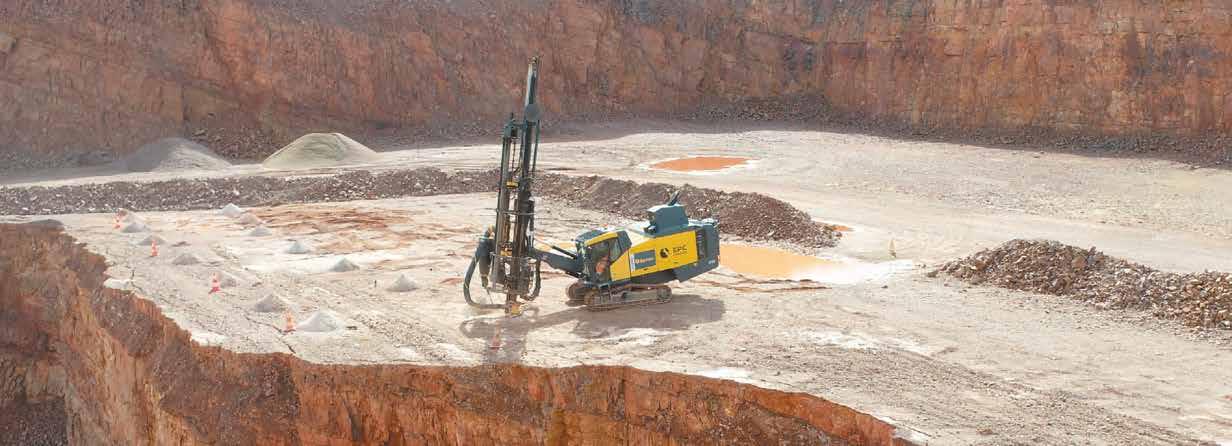
EPC Côte d’Ivoire
Your partner of choice for drilling and blasting
EPC Côte d’Ivoire (EPC CI) is a joint venture created by the EPC Group and the Côte d’Ivoire Mining Development Company (Société pour le Développement Minier de Côte d’Ivoire - SODEMI).
Who are we?
Founded in 1893, the EPC Group is a global leader in the manufacture, storage and distribution of explosives, particularly for the drilling and mining sector. With over 130 years of experience, the EPC Group is recognised for providing its clients with effective solutions, technological innovations and high-quality services. It comprises fifty subsidiaries in twenty countries located in every continent.
EPC Côte d’Ivoire (EPC CI) launched its operations in 2013 and, in the space of a decade, has become a major actor in the field of civilian explosives for the mining, quarrying and public works sector as a result of investing in human capital, local manufacturing and modern technologies. In addition to the mining sector, we have undertaken blasting in national infrastructure projects such as the dam construction at Soubré and Singrobo, thereby contributing to increasing Côte d’Ivoire’s capacity for energy generation.
Nos services
EPC CI manufactures and markets bulk and packaged explosives, providing blasting services not only to quarries but also to the major mining companies operating in Côte d’Ivoire, namely Endeavour Mining (ITY), Allied Gold (Bonikro and Agbaou), Perseus Mining (Yaouré and Sissingué) and Tietto Minerals (Abujar).
In addition to the mining sector, we have undertaken blasting in national infrastructure projects such as the dam construction at Soubré and Singrobo, thereby contributing to increasing Côte d’Ivoire’s capacity for energy generation.
Operating in one of the most rigorous sectors globally, we are aware that our clients are looking for safe, efficient and tailored solutions combined with an ethical management approach, which is why we make these absolute priorities.
Committed to sustainability
Given our concerns for the impact of our activities on the planet and the communities close to our operational sites, we are fully committed to continuing to improve our environmental performance and to adhering to and even surpassing best practice in corporate sustainable development.
EPC Côte d’Ivoire positions itself as a strategic partner of choice for all your blasting requirements. Our commitment to excellence, safety and innovation enables us to exceed our clients’ expectations at every stage of a project.
With EPC Côte d’Ivoire, you are assured of the highest standards of professionalism and customer service.
AGRICULTURE, AGRO-INDUSTRY, FARMING AND FISHING – INCREASED PRODUCTION, PROCESSING WITH POTENTIAL
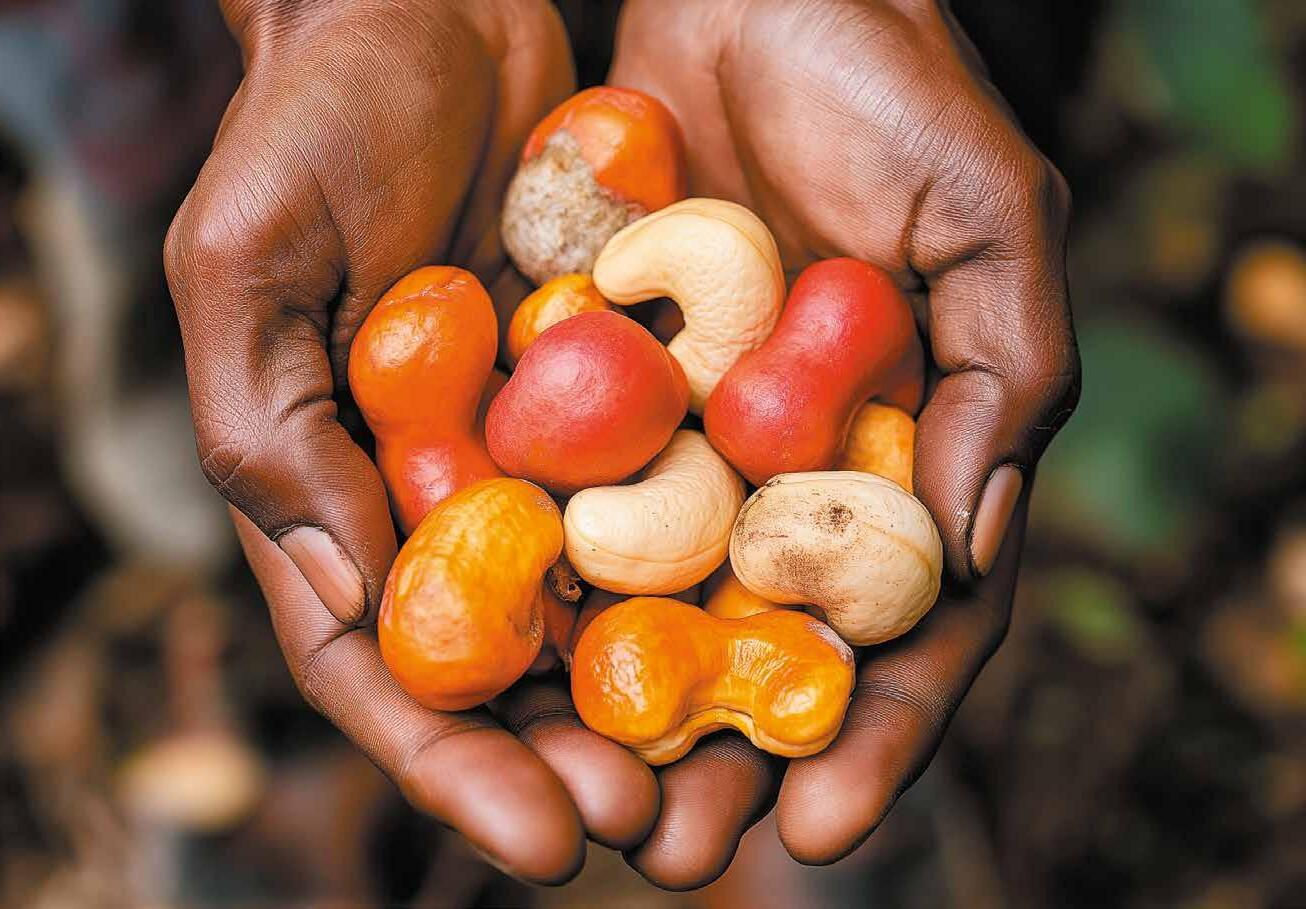
An undisputed agricultural powerhouse, Côte d’Ivoire is increasingly processing the produce it harvests, with cocoa and cashew nuts leading the way. The many opportunities available include those offered by the regional agri-food technology parks – Agropoles – set up by the authorities.
Agriculture has historically been and is still today the real driver of the Ivorian economy. According to figures released in 2024 by the line ministry, the sector contributes between 18 and 20% of GDP and employs 60% of the working population. It also accounts for the bulk of the country’s exports, with processed products making up more than half the total. The leading global producer of cocoa and cashew nuts, Côte d’Ivoire is also one of the top three African producers of rubber, bananas and palm oil, to mention just three of its crops.
The government is structuring the different agricultural sectors to improve their productivity and support the local processing of the harvested produce to ultimately reduce imports and increase exports. Numerous programmes to support industrial agriculture and to safeguard subsistence farming through easier access to inputs and mechanisation has resulted in some instances in foodstuff production tripling since 2010.
|||||||| Evolution of agricultural production in Côte d’Ivoire between 2010 and 2023 (in tonnes)
Source: FAO
COCOA PROCESSING CONTINUES TO CLIMB
In December 2024, at the opening of a new chocolate production plant in Abidjan by Saco, a subsidiary of the Barry Callebaut Group, the Industry Minister, Souleymane Diarrassouba, lamented the fact that just 7 billion dollars (6%) of a global annual value chain for cocoa of around 140 billion dollars came to Côte d’Ivoire, while it accounted for 40% of basic production. “We must process much more produce and export many more semi-finished products to create large numbers of decent jobs and also wealth,” he declared.
|||||||| Cocoa bean grinding capacity (in tonnes)
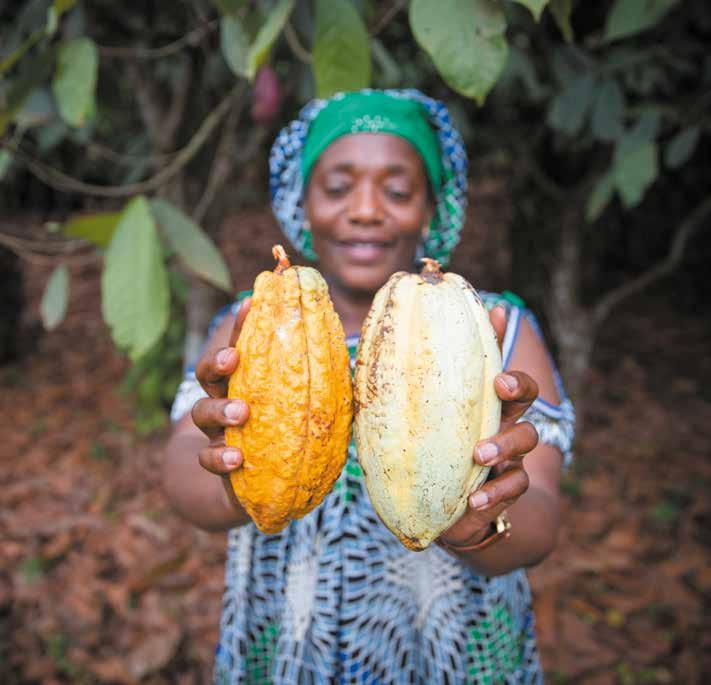
He welcomed Saco’s investments in processing. Throughout its sixty years, the company has been the leader, producing 230,000 tonnes of ground cocoa. The total capacity in cocoa bean grinding for the fourteen companies operating in Côte d’Ivoire rose from 545,000 tonnes per year in 2012-2013 to 972,040 tonnes per year in 2024.
MAJOR INDUSTRIAL AMBITIONS FOR CASHEW NUTS
January 2024 also saw the launch of a cashew processing plant by Afcott Cashew, twenty kilometres from Yamoussoukro, and the opportunity for the authorities once more to signal their ambitions in this field. According to data presented by the Minister for Agriculture, annual production of raw cashew nuts has more than doubled in a decade, rising from 400,000 tonnes in 2011 to just over one million in 2022. The country processes 34% of production, while it aims to process 100% by 2030.
To reach their processing targets, the authorities are accelerating the introduction of agri-food technology parks through the second generation National Agricultural Investment Programme (PNIA 2), itself underpinned by the 2021-2025 National Development Plan (PND 2021-2025). Of the nine technology parks planned across the territory based on the potential offered by the different regions, the Bélier and Nord Agropoles are already operational.
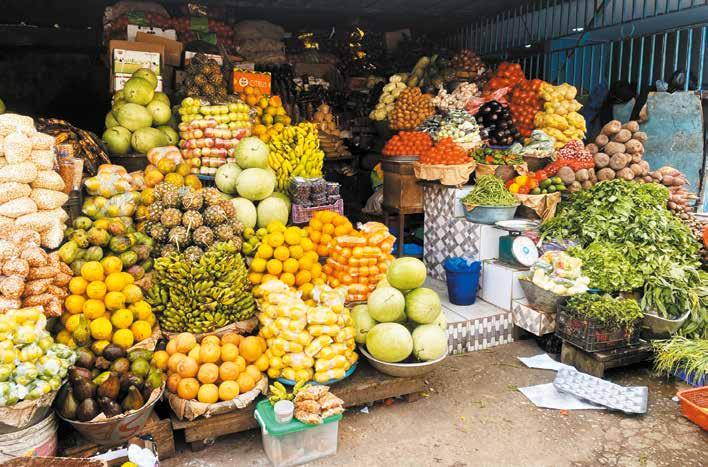
TWO AGROPOLES ALREADY OPERATIONAL
The first was established in the region of Yamoussoukro and, by spring 2024, had led to the rehabilitation of twenty-five dams, the development of 2,000 hectares of rice and the creation of seven rural markets, twenty-four warehousing units, and 2 consolidation centres for the distribution of produce at sub-prefecture level. More than eight hundred young people have been trained and integrated into the project. The Nord Agropole, occupying 100 hectares, covers the regions of Poro, Bagoué, Tchologo and Hambol. It specialises particularly in the production of rice, mango, maize, shea, meat, cashews, and in aquaculture.
The planned Nord-Est Agropole should be finalised by 2025 with the support of several hundred billion CFA francs from the International Fund for Agricultural Development (IFAD), the African Development Bank (AfDB) and the West African Development Bank (WADB). Two others, in the Nord-Ouest region and at Daloa (Centre-Ouest region), require advance studies. The aim is for the nine agri-food technology parks to cover the Ivorian territory by 2030.
COCOA: COUNTERING A DOWNWARD TREND IN PRODUCTIVITY
Cocoa production in Côte d’Ivoire has for some years experienced a decline that is part of a global trend. While aging plants and diseases explain this decline in part, climate change is also having an impact by making rainfall and temperature variations unpredictable. To protect itself against these phenomena, the country has taken measures to counter the effects of climate disruption and the diseases affecting the plantations, in particular by focusing on replanting and agroforestry. Abidjan is also taking steps to combat smuggling and illegal trafficking to neighbouring countries, notably Guinea and Liberia.
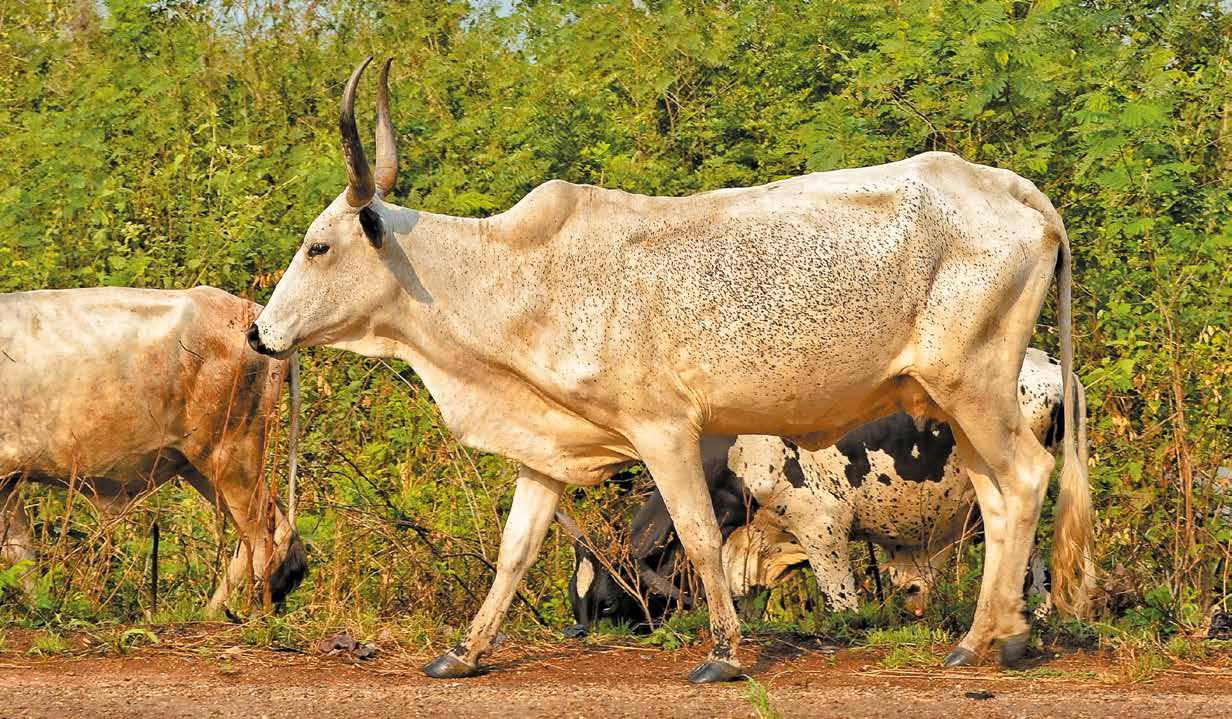
ANIMAL PROTEINS - A GAP TO FILL AND OPPORTUNITIES TO GRASP
Investment opportunities in animal and fish resources are massive–greater even than those in arable farming. The reason is simple: the gap between high domestic demand for these products and low local production levels is considerable. Consequently, the authorities have set their sights on reducing it to zero by 2030. To achieve this, the country has adopted a National Policy for the Development of Livestock, Fisheries, and Aquaculture (Politique nationale de développement de l’élevage, de la pêche et de l’aquaculture - PONAPEDA 2022-2026) with a budget of 1 trillion CFA francs, 65% of which is expected to come from the private sector. The policy is divided into five national strategies for developing the sector: animal and fishery resources, animal production, sustainable fishery management, aquaculture, and veterinary public health.
50% COVERAGE OF MEAT PRODUCT REQUIREMENTS, 32% OF FISH
According to data shared by PONAPEDA, “an estimated 48% of national requirements for meat and offal were met in 2019 as against 50% in 2014, equivalent to a 2% drop”, due in particular to insufficient investment secured in the sector. For its part, “the rate of needs met for fish rose from 15% in 2012 to almost 32% in 2019, as a result of investments in the construction of the landing facilities and central market at Sassandra, fish landing sites (FLS) at Locodjro and Grand-Lahou, and the resumption of industrial and small-scale sea, lake and continental fishing activities”.
MEET 70% OF NATIONAL NEEDS IN 2026
This rate of coverage remains quite low while the cost of fish imports is estimated at 300 billion CFA francs annually. Total investments for the period 2014-2020 have been evaluated at 143.6 billion CFA francs, against the 331 billion forecast. The aim is for national production to cover 70% of demand for animal products and 65% for fish by 2026. Since 2022, the national policy, PONAPEDA, has given rise to a large number of investments, particularly in increasing the number of poultry breeders and sheep and cattle breeding operations.
ABIDJAN LIVESTOCK SUMMITS
To support its proactive policy and put actors from the livestock farming and fishing sector in touch, the authorities organised the third Abidjan Livestock Summit (SELAB) in December 2024. This has become an unmissable event to gain insight into the Ivorian animal production value chain and learn about international best practices from contributions made by experts and B2B exchanges.
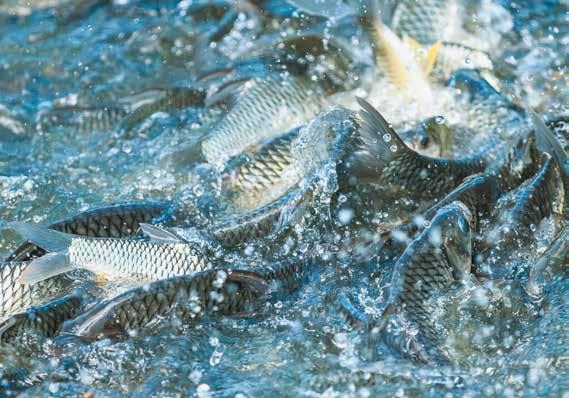
SPOTLIGHT
AGRO-INDUSTRY, LIVESTOCK AND FISH FARMING PROJECTS WITH CEPICI
On its website, the Centre for Promoting Investment in Côte d’Ivoire (CEPICI) presents a catalogue of projects in numerous sectors of activity. It is no surprise that the most extensive sectors concern agro-industry and livestock. Factsheets summarise the products involved before explaining the value of investing in these. One example is that of “a manioc processing plant producing 1.5 tonnes per day”. The factsheet indicates the geographical location of the project, the fact that manioc [also known as casava] is one of the subsistence crops most cultivated in Côte d’Ivoire as well as the second most commonly consumed after yam (and before rice). Referring to a “problem needing solving”, CEPICI indicates that, as manioc is processed in a traditional way and that its by-products are currently undervalued, investment is needed in the purchase of industrial machinery and equipment. Four projects involve manioc as well as mangoes, pineapples (juicing and drying), cashews, shea nuts, latex, and rice among others. Likewise, twenty factsheets are devoted to livestock and fish farming projects, from chicken hatcheries to poultry farms and including fish farms, fish rearing in floating cages, and a plant producing animal feed for cattle.
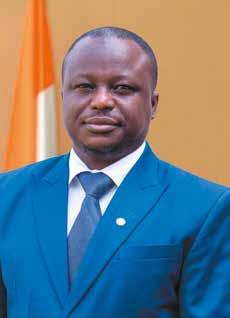
Moussa Diaby, Director, Félix Houphouët-Boigny National Polytechnic Institute (INP-HB)
“AT THE TECHNOLOGY PARK, WE ARE CREATING A POSITIVE ECOSYSTEM FOR INNOVATION AND ENTREPRENEURSHIP”
Created in 1996 following the merger of four higher education institutes in Yamoussoukro, INP-HB is about to establish a technology park where the range of skills will initially be focused on the agricultural sectors.
What is INP-HB today?
INP-HB is made up of eleven higher education institutes providing education and training at all university levels in a wide range of sectors from agronomy, mining, geology and chemistry to oil and energy, industry and aeronautics. Its students come from twenty-two countries, and every year the institution places up to 86% of them with its African, European, American, and Asian partners. Maintaining a strong relationship with the country’s industrial fabric and major companies is in the institution’s DNA but it is going even further in its outreach by creating a technology park with and for them that is dedicated to innovation.
Why create this technology park?
In order to accelerate Côte d’Ivoire’s development, we are convinced of the need for more work on the culture of entrepreneurship. So, for the past three years, we have been visiting hubs in the United States, France, China and elsewhere to reproduce a positive ecosystem for innovation, technology transfer and entrepreneurship.
The state is behind this ambitious project and has provided us with 1,100 hectares of land for development in which to concentrate skills and companies seeking innovation close to those who generate it.
What will the technology park look like?
Our model is a multisectoral technology park but one where the skills primarily serve Côte d’Ivoire’s strengths, namely its agricultural sectors. However, unlike the other agri-food technology parks, we are interested in all fields potentially related to agriculture, such as infrastructure–dams, rural roads, etc.–or trading and which are already taught at INP-HB. We have already conducted trials with cashew which needs increased production, processing, by-products, waste recycling, improvements in machinery and access to energy, etc. Here we’re talking industrialisation, automation, robotisation, artificial intelligence, sustainable agriculture, and so on.
What stage are you at today?
Developing 1,100 hectares is done in stages. We have started the study phase, and the site is ready to receive the first companies. We are looking to investors for implementing the technology park and to major groups wishing to have university expertise at their disposal. We have firmed up a project for an agri-tech training centre with the Cherifian Phosphates Office (OCP) (Morocco) and a centre of innovation in cashew technologies with the Ivorian Cotton and Cashew Council. We are also working with a partner on a helicopter pilot training centre. We also need venture capital for the innovative concepts pitched by our students and to provide them with support with setting up their companies. We are relying on our network of companies, but it is up to us to be attractive, firstly through innovation but also through the tax incentives which will be put in place
France Chamber of Commerce and Industry Côte d’Ivoire (CCIFCI), part of an international network of 125 chambers in 98 countries, provides links between French companies and the Ivorian market and its companies and international business worldwide.
Côte d’Ivoire
TOURISM – “SUBLIME CÔTE D’IVOIRE”: A PROGRAMME WITH BIG AMBITIONS
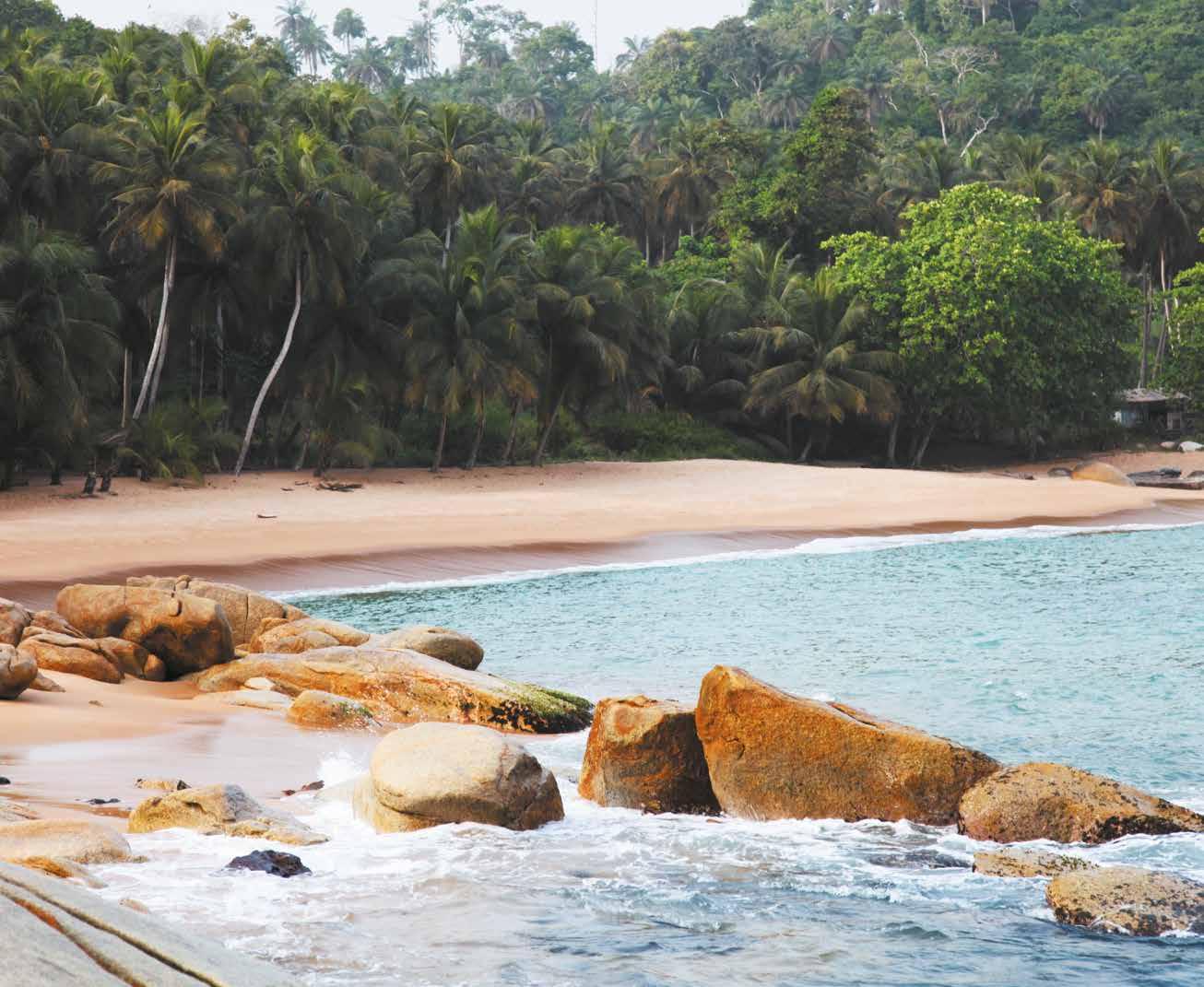
Ivorian tourism met the challenge of organising the Africa Cup of Nations in January 2024.
The sector’s development programme continues to be rolled out, offering opportunities in coastal, nature, leisure, and business tourism.
“Hospitality” was the hallmark of the 2024 Africa Cup of Nations (AFCON). The organisers chose to highlight the welcome afforded by this major sporting event in Côte d’Ivoire in January and February 2024. More than 1,500 billion CFA francs were invested in sport and transport infrastructure, notably to make the stay a pleasant one for sportsmen and visitors alike. A total of
more than 1.5 million tourists were estimated to have visited the AFCON host cities of Abidjan, Yamoussoukro, Bouaké, San-Pédro, and Korhogo, to attend the tournament and discover Côte d’Ivoire, its hospitality, and its culture. The number of tourists visit was approximately 2 million per year, before the Covid-19 epidemic and 3.5 million in 2023.
THE GOAL IS TO REACH FIVE MILLION VISITORS PER YEAR
The 2024 AFCON was an important step for Côte d’Ivoire, which is seeking to make tourism the third pillar of its economy as well as the fifth destination in Africa by reaching five million visitors a year. A programme titled “Sublime Côte d’Ivoire” has been rolled out since 2018, with a budget of 3.2 trillion CFA francs. The programme is divided into the different sectors that offer investment opportunities in the development of cultural heritage and the coastal resorts, particularly since the renovation of the national highway which runs east to west along the Atlantic coast. Authorities are open to investments in these areas provided they preserve the coastline and respect the environment, as the Minister for Tourism has explained.
In addition to nature reserves, Côte d’Ivoire has nine national parks across the country with a wealth of outstanding flora and fauna, two of them close to Abidjan: Banco National Park, adjacent to the city, and Îles Éhotilé National Park close to Assinie, a holiday destination for Abidjan residents that is located one hundred kilometres southeast of the country’s economic capital.
BUSINESS TOURISM
Significant opportunities for investment in business tourism. Numerous investors, including the major hotel chains–Accor, Azalaï, Mangalis Group, Radisson and Marriott/Sheraton–have already seized on these opportunities. Côte d’Ivoire, and essentially Abidjan, is this sector’s third leading destination in Africa. Refurbished hotels, luxury restaurants, leisure activities, all is on offer to satisfy persons travelling for business to Abidjan: a city that has become an essential destination and is where African Development Bank and the West Africa Stock Exchange have their headquarters.
In 2022, tourism accounted for 6% of GDP. The Minister for Tourism, Siandou Fofana, mentioned 7.5% when speaking to the press in December 2023 at the Top Résa trade fair in Paris, one of the biggest in the world devoted to tourism. Tourism generates just over 600,000 jobs, a factor of particular importance for young Ivorians and of interest to the authorities
A CROSSROADS FOR CULTURAL INDUSTRY IN AFRICA
Not content with being an economic and financial hub, Abidjan has always cultivated its unique place on the continent as a cultural focal point. MASA, the Performing Arts Market, is held in the city every two years and SILA is Abidjan’s International Literary Festival. The city is a major hub for fashion where talented creators and designers gather for Fashion Week. It is also a platform for African music, with the Anoumabo Urban Music Festival that was held for the sixth time in Abidjan in May 2024. The French-speaking megacity rivals with the mighty Lagos in Nigeria, in the minds of the giants of the global music industry. Universal Music Group made the right decision when it set up its subsidiary in Abidjan seven years ago to work with 25 French-, Spanish- and Portuguese-speaking countries. Sony Music subsequently followed suit.
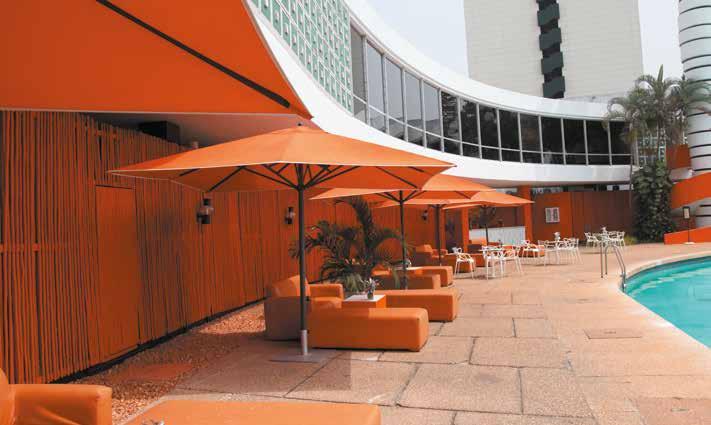
doingbusinessin Côte d’Ivoire
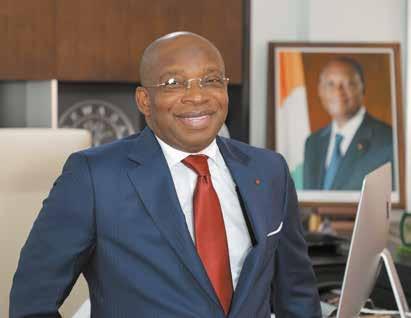
Siandou Fofana, Minister for Tourism and Leisure, Côte d’Ivoire
PRIVATE OPERATORS HAVE INVESTED MASSIVELY IN MODERNISING THEIR ESTABLISHMENTS”
Considerable public and private investment has been given the go-ahead to improve tourist infrastructure and training in Côte d’Ivoire, in a sector with enormous ambition and potential.
Is Côte d’Ivoire equipped with a crosscutting programme that is coordinated with all other actors in the sector?
Absolutely! The 2018-2025 national development strategy for tourism and leisure, “Sublime Côte d’Ivoire”, embodies this cross-cutting, collaborative vision. Its nine key reforms and nine developmental projects involve numerous ministries and strategic sectors ranging from land management to infrastructure and including health and training. The first implementation phase has now been completed, and we are now giving the initiative fresh impetus to reinforce its impact.
Have lessons been learned from organising the Africa Cup of Nations in January 2024, in terms of receiving visitors, accommodation, restaurants and catering, etc.?
AFCON was a genuine full-scale test for our tourist and leisure industry. Because hospitality is the centrepiece of the tourist experience, we enhanced our hotel infrastructure by launching a vast programme to increase quality that is overseen
by the General Directorate for the Tourism and Hotel Industry (DGITH), with the support of the National Tourism Council (CNT) and the Tourist Development Fund (FDT). Since 2021, the National Classification Commission has been operating again in order to inspect almost 1,000 establishments–including hotels, restaurants, travel agencies, leisure facilities. At the same time, the state has invested in refurbishing several iconic hotels in Abidjan, Yamoussoukro, and Bouaké. These projects represented an investment of 9.7 billion CFA francs in 2023, part of an overall budget of 17 billion CFA francs up to 2025. These efforts are part of a drive to position Côte d’Ivoire among the top five tourist destinations in Africa, while stimulating the development of second cities, boosting employment, and creating national leaders in the sector. In addition, private operators have invested massively in extending and modernising their establishments in the AFCON host cities. We have also set up a programme of capacity building for the sector’s professionals. Lastly, a decree regulating leisure activities was elaborated to optimise tourism and to enhance the country’s rich cultural and culinary heritage.
Does the rehabilitation of the coastal highway allow for the development of projects, particularly sustainable ones, along the protected Atlantic coastline?
The southwest coastal region represents the future of tourism in Côte d’Ivoire, with key centres such as Taki Bay, the town of Sassandra and the seaside resort of Grand-Bereby. The rehabilitation of the coastal highway considerably increases the attractiveness of these destinations. However, we are aware of the need to safeguard our ecosystems. For exceptional natural sites such as Taï forest and the marine environment, we are limiting infrastructure to what is strictly necessary so as not to compromise their balance. Moreover, we are raising the awareness of local populations as to the importance of conservation as part of a sustainable, responsible, and equitable approach to tourism
ABIDJAN

Whatever the occasion, be it seminar, conference, team building, trade fair, convention, annual general meeting, or as a business incentive, Abidjan is a prime business destination with optimum facilities to host your company’s event.
Featuring a wealth of tourist attractions, a rich and varied heritage, culinary specialities, parks and gardens, remarkable natural sites, to name a few, this dynamic region is also prized for its outstanding facilities that include an international exhibition centre, conference centres, including a convention centre at the heart of Cocody, and a myriad of hotels.
Abidjan as a Business-Plus-Leisure Destination affords an opportunity to enjoy a truly different experience. Sports or wellness activities surrounded by nature, an environmentally sensitive eco-event or a gastronomic journey of discovery, whatever your requirements Abidjan has them all and will steal your heart in the process!
TOURIST
Cocady Ambassades, behind the World bank
Tel.: +225 27 22 22 41 10
Place de la République, Immeuble Ex-EECI
01 BP 8538 ABIDJAN 01
Tel.: +225 27 20 25 16 00
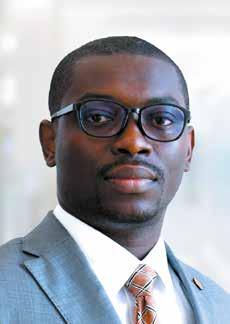
Donald Aka, Managing Director, Salam Management
“OUR OBJECTIVE IS TO CONTRIBUTE TO DEVELOPING TOURISM AND PROMOTING LOCAL EXPERTISE”
For its guests, the Azalaï Hotels group embodies its “Africa welcomes you” slogan on a daily basis. This applies to Côte d’Ivoire, where its achievements and ambitions are extensive, particularly in Abidjan where its four-star hotel was launched in 2017.
With the “ Sublime Côte d’Ivoire” programme, the country is nurturing serious ambitions for its tourism. Where do you fit into this strategy?
Since 1994, the year the Azalaï Hotels group acquired its first establishment, to contribute to developing tourism and promoting local expertise has been the objective underpinning our choice of locations. Consequently, Côte d’Ivoire, epicentre of the sub-regional economic boom, was the obvious choice for our architectural jewel, designed by an Ivorian firm of architects with an Ivorian project manager and input from Portuguese businesses. The Azalaï Hotel Abidjan was a response to the drive to develop business tourism by being the first four-star, fourteen-floor hotel on the main road between the airport and the administrative district. Abidjan’s tourism reputation was enhanced with the addition of two hundred new rooms and ten conference rooms. A combination of its double-glazed facade and
material that allows for natural cooling means that we are honouring our environmental commitments. The Ivorian authorities’ promotion of the destination and the reforms to investment legislation have been reassuring factors for hotel groups such as ours.
How did the Azalaï Hotel Abidjan experience the 2023 Africa Cup of Nations organised in Côte d’Ivoire?
The Azalaï Hotel Abidjan was central to the thirty-fourth AFCON because we successfully bid to host the Cape Verde national team as well as the team from South Africa which placed third in the tournament. We also managed the AFCON Korhogo, Bouaké and San-Pédro residences which housed teams from pools D, E and F, as well as the teams competing in the round of sixteen finalists until the first semi-final. We were proud to put our passion and expertise and the cultural diversity of the Azalaï group at the disposal of the sporting delegations from across the continent, successfully providing a four-star service across each of the four residences in the 32 villas containing 120 rooms used for the occasion. Our thanks go to the African Football Federation, the Africa Cup of Nations Organising Committee of the Ivorian Football Federation, the Ministry for Tourism and the National Sports Office for the confidence they showed in us.
What are your short- and medium-term ambitions in Côte d’Ivoire?
In an Ivorian hotel market that is rapidly expanding and clearly incredibly dynamic, our hotel group, Azalaï Hotels, has ambitious plans to strengthen its pan-African position while putting the customer experience at the heart of its commitments, as embodied by our “Africa welcomes you” slogan. And our long-term ambitions? Our aim is to be number one, the benchmark for the hotel business in Abidjan and to expand our trademark’s presence through new opportunities and thereby consolidate our commitment to offering exceptional African hospitality

PHARMACEUTICAL INDUSTRY –CÔTE D’IVOIRE SEES ITS ASPIRATIONS
REALIZED
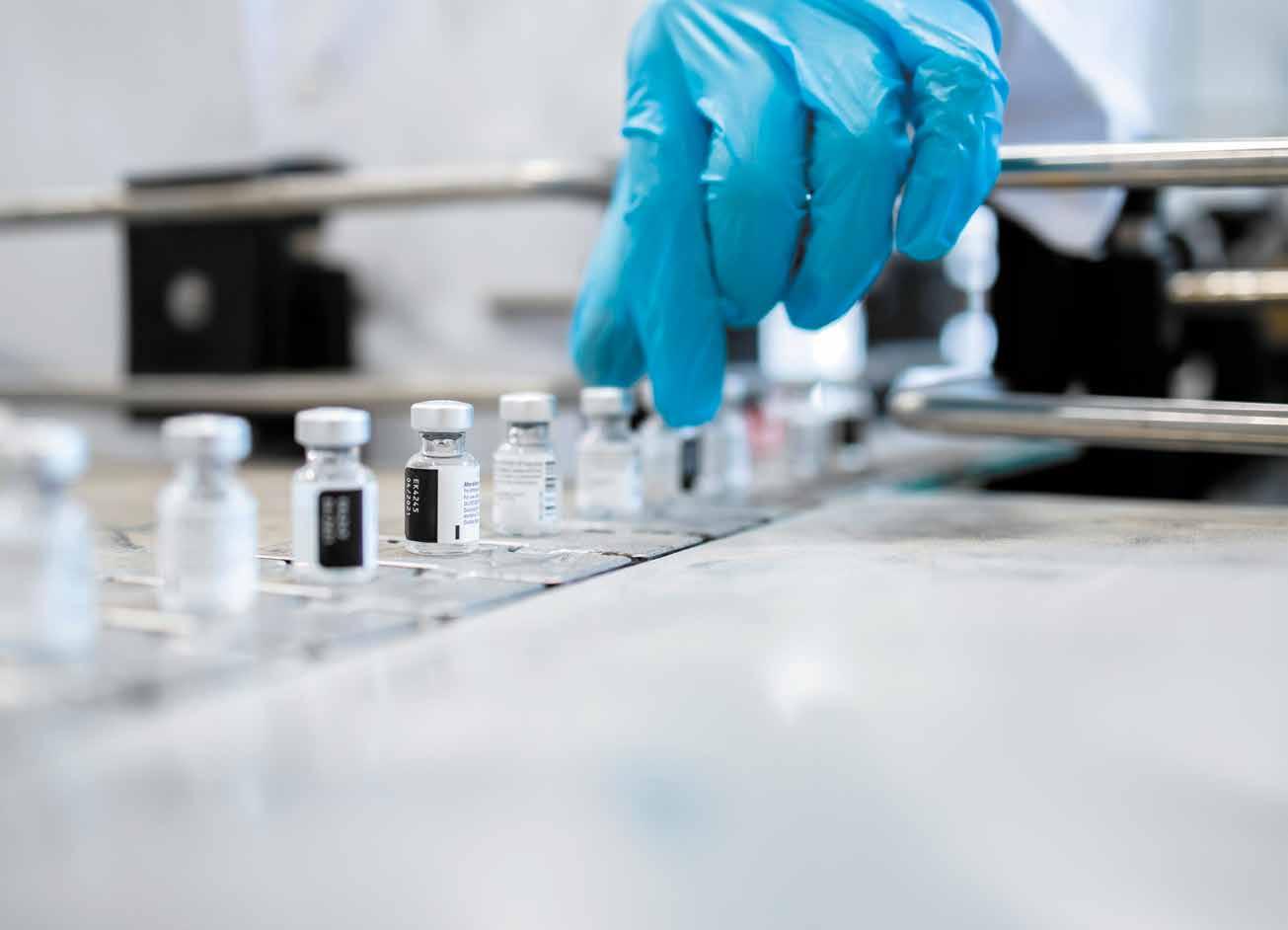
Côte d’Ivoire, by introducing universal health coverage has boosted the medicines market and is attracting an increasing number of pharmaceutical companies.
In Grand-Bassam, a giant Chinese firm is to manufacture drugs for the entire continent.
In November 2022, Pierre N’Gou Dimba, the Minister for Health, Public Hygiene and Universal Health Coverage, announced the arrival of Fosun Pharma in Côte d’Ivoire. He was speaking at the groundbreaking ceremony for the site of the Chinese pharmaceuticals giant. The site will house production of anti-malarial and anti-infective drugs and a distribution platform. The project will cost an estimated 50 billion CFA francs and will benefit from exemptions, introduced in 2021 for customs duties and VAT, for facilities and equipment required by pharmaceutical companies.
SUPPORT OF THE INTERNATIONAL FINANCE CORPORATION (IFC)
An indication of the strategic importance of the Chinese group’s Ivorian project was the announcement made in June 2023 of the IFC backing. The IFC has collaborated with Fosun Pharma since 2006. Sub-Saharan Africa accounts for 95% of cases of malaria and deaths attributable to the disease worldwide. Reducing the incidence of malaria is a Millennium Development Goal (MDG). The IFC, a member of and the private-sector arm of the World Bank Group, indicated that, that “Fosun Pharma’s
Artesun has been used to treat more than 56 million patients with severe malaria worldwide”. Fosun Pharma is one of the principal manufacturers of anti-malarial drugs and supplies the Global Fund, Unicef, WHO, and national supply centres in Africa.
FIVE BILLION TABLETS A YEAR
The IFC has granted two loans totalling 50 million euros to two of Fosun Pharma’s production and distribution subsidiaries, Guilin Pharma and Tridem Pharma. The pharmaceuticals plant will be the largest in Côte d’Ivoire, with a production capacity of 5 billion tablets a year. The distribution centre will have a storage capacity of 10,000 pallets and will be built close to the production site. In a press release dated August 2024, Fosun Pharma indicated that, “the project is due to be conducted in three phases, the first being completed in 2024” and that it “should create almost 1,000 employment opportunities”.
FROM 6 TO 30% COVERAGE BY 2030
The objective set by Côte d’Ivoire is to increase national coverage of needs for medicines from 6 to 30% by 2030. The Ivorian minister, Pierre N’Gou Dimba, is convinced that the country can meet this challenge and in November 2022 he declared that, “The development of the extensive programme for hospital provision and the roll-out of universal health cover represent an important medicines market for the sector’s manufacturers”. He was referring to the strategic programme for universal health coverage that was being implemented and for which registration became compulsory in 2022. Since July 2023, the health insurance card can be
obtained from a registration office within less than ten minutes. This made it possible to register 20 million persons by summer 2025. Persons registered pay 30% of medical costs; the universal health coverage system thus created a medicines market that was more solvent than previously. This created an incentive for manufacturers to set up business in the country. The same thing happened in Algeria which has a large industry that makes drugs to treat diabetes and where the rate of coverage for pharmaceuticals produced locally was 70% in 2024
SEVEN “PRIORITY INDUSTRIAL CLUSTERS”
The pharmaceutical industry features on a list of seven “priority industrial clusters” identified by the 2021-2025 National Development Plan (PND). The six other sectors highlighted are chemical and plastics industries, construction materials, textiles, packaging, and automotive components. New niche sectors have also been identified: the digital economy, tourism, and the creative industries. These sectors offer myriad opportunities and should enable Côte d’Ivoire, in the words of the 2021-2025 plan, “to accelerate its economic and social transformation and, by 2030, to rank among the upper-middle income countries”.
20 MILLION IVORIANS REGISTERED FOR UNIVERSAL HEALTH COVERAGE
In recent years, Ivorian authorities have stepped up the number of citizens registering with the universal health cover system. Created in 2014, the CMU was launched five years later, following a pilot phase with students. It was a lengthy process to implement the scheme and required the addition of incentives and even administrative obligations.
A strategic objective, the CMU thus became compulsory in 2022 and in July 2023 the card could be accessed within ten minutes at the registration office. The result has been that the threshold of 20 million registered out of a population of almost 32 million was passed in summer 2025, compared to a total of barely 4 million in 2022.
A monthly payment of 1,000 CFA francs gives beneficiaries access to a range of healthcare services in approved health centres and pharmacies where they pay 30% of the cost. For the poorest persons,
the State covers the 30%. While the scheme is not perfect, the efforts being made are genuine. One of the major problems to emerge in 2025 was the number of pathologies covered, approximately 170. While the universal health coverage scheme covers a wide range of illnesses, among them meningitis, malaria, and tuberculosis, certain cardiac conditions or cancers are not covered. This year, the authorities announced that hypertension and diabetes, two commonly occurring conditions, are now covered by the scheme.



Manon Coulibaly, Managing Director, Novartis Côte d’Ivoire
“CAPITALISING MORE ON OUR INNOVATIONS”
What ambitions does Novartis have in Côte d’Ivoire?
diagnosis in primary healthcare services. To date, more than one hundred patients are regularly monitored at the centre, and neonatal screening tests should be available in the next few weeks.
Novartis is raising awareness of cardiovascular diseases by placing the emphasis on communication and prevention. Is there a significant lack in these areas?

Novartis has a long-standing commitment to the continent and has been present in Côte d’Ivoire since July 2005. To tackle the diseases that are the greatest burden on society and to maximise the sustainable impact on patients, we have adopted a targeted strategy to capitalise more on our innovations. In addition to medication, this involves instigating robust healthcare systems which improve patients’ access to treatments. Furthermore, the strategic vision of the national health development plan, combined with an emphasis on an inclusive, participative process as a guiding principle, encourages the existence of a strong, resilient system dedicated to improving the healthcare conditions for the Ivorian population.
How did the project to create a sickle cell anaemia centre of excellence come about?
The prevalence of sickle cell anaemia in Côte d’Ivoire is estimated to be 12% and the mortality rate for children under 5 years is similar to that in other African countries. In order to bridge the gap between Africa and the rest of the world in managing the disease, Novartis introduced the Novartis Africa Sickle Cell Disease programme in 2019. Drawing on examples of successful rollouts in other African countries, we have created a solid base for expanding the programme in West Africa. Novartis, the Swiss Tropical and Public Health Institute, the Swiss Centre for Scientific Research and the government of Côte d’Ivoire have collaborated to equip the country with the first centre dedicated to treating sickle cell anaemia, incorporating neonatal screening and
The prevalence of cardiovascular diseases (15% of deaths are attributable to non-communicable diseases) and that fact that they are costly to treat due to their chronic nature make them a public health priority. Late diagnosis is partly due to a lack of awareness by communities of the risk factors, and this has been identified as a barrier to accessing the best care. For this reason, we are working together with the Ivorian Society of Cardiology and the Côte d’Ivoire Union of Journalists to raise the awareness of as many as possible. Indeed, in their role to educate the population, the media have been identified as key partners in helping demystify these diseases and thus contribute to saving lives.
What approach does Novartis take to partnerships?
Partnerships are at the heart of our activity. We are collaborating with a wide range of stakeholders to resolve some of society’s most complex public health problems. One of the examples in Côte d’Ivoire is the work we are doing with the programme to support social strategies (Programme d’appui aux stratégies sociales - PASS) for community health, which has successfully increased the population’s participation in combating non-communicable diseases and has laid the foundations for a significant reduction in Côte d’Ivoire’s debts towards France

Dr Koré Zoulou, Pharmacist, Specialist in laboratory product management
“BIOSYNERGIE, A BENCHMARK PROVIDER OF SOLUTIONS TO HEALTH PROFESSIONALS”
What does the market in in-vitro diagnostics (IVDs) represent in Côte d’Ivoire?
In-vitro diagnostics (IVDs) concern the products used in the laboratory to detect or monitor diseases. This is an important segment in Côte d’Ivoire, a country with a high prevalence of infectious diseases and an ongoing rise in chronic diseases. The market provides a link between local distributors and medical testing laboratories. We have around 500 testing laboratories supplied by just over 200 distributors licensed by the Ivorian pharmaceutical regulatory body (AIRP). According to a panel of experts, the diagnostics market is estimated at 100 billion CFA francs, equivalent to 150 million euros, an annual growth rate of 15%.
What are the strengths of the IVDs sector in Côte d’Ivoire?
As well as this rate of growth, we are supported by more than 300 biologists and 2,000 biology technicians who have trained at public and private institutions. Other assets include existing regulation governing importing and distributing the products and classification of biological tests, with testing codified and subject to fixed pricing.
What are the weaknesses?
The absence of local standards for in-vitro diagnostic products poses a problem, as it results in the use of physiological and environmental standards that are inappropriate. The unequal geographical spread of services, scant and incomplete market data, and price used as a major criteria for the choices made by laboratories at the expense of product quality also constitute weaknesses. We are also seeing inadequate identification of equipment by those responsible for curative and preventive maintenance and insufficient knowledge of recent diagnostic solutions by clinicians.
How is Biosynergie integrating into this sector?
Biosynergie is seeking to be a benchmark provider of solutions to health diagnostics professionals. The business is the fruit of collaboration over more than twenty years between Ivorian and French partners. It aims to advance disease detection and patient monitoring for conditions such as sickle cell anaemia, cancer, diabetes, and hepatitis. We are also engaged in the fight against drug use among young people with the French leader in the field. With partners worldwide, we are making appropriate solutions available, promoting a maintenance culture for equipment and are committed to long-term provision of services that is not steered by commercial and short-term approaches. Lastly, we envisage raising the level of service requirements, promoting financial and geographical access to cutting-edge methods, developing specific training, and supplying powerful diagnostic decision-making tools
ECONOMIC TRANSFORMATION –THE ENVIRONMENTAL CONSERVATION CHALLENGE
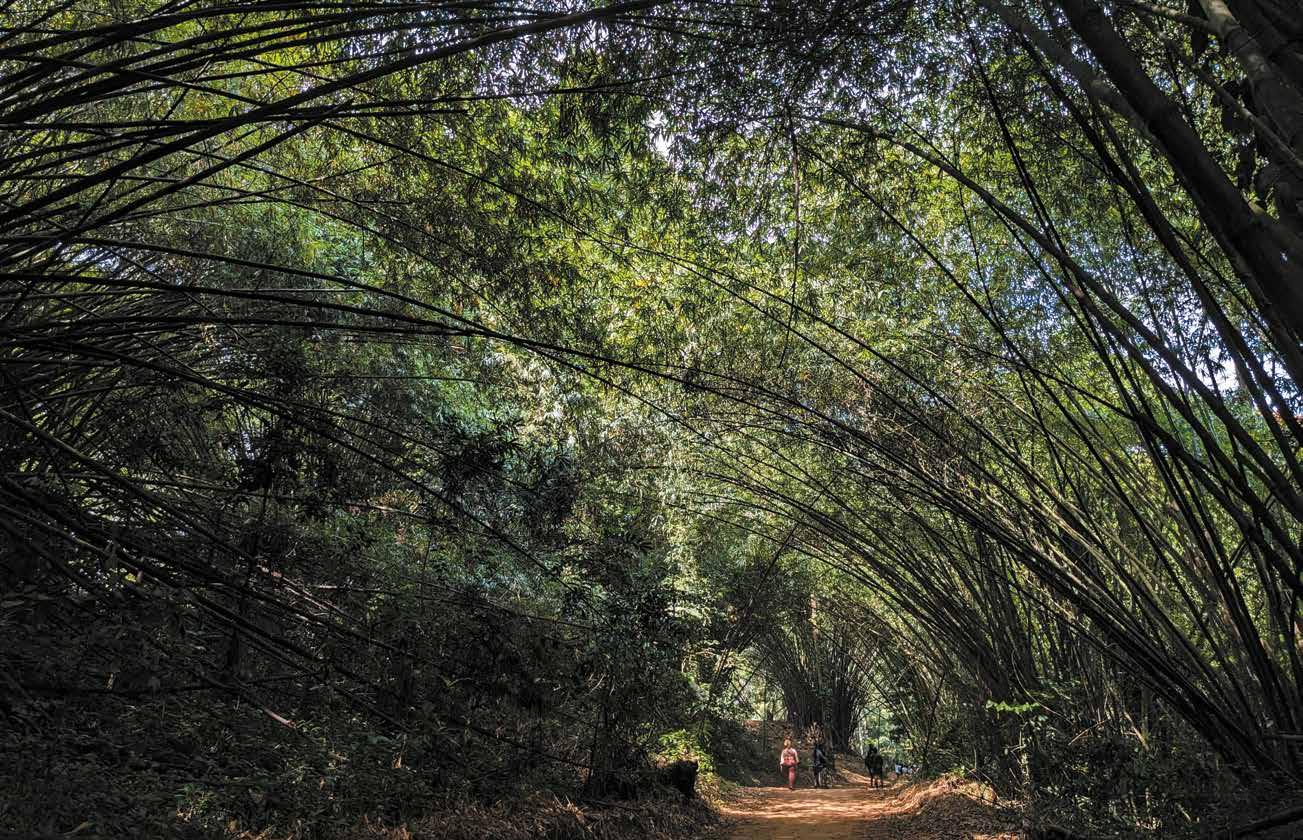
Côte d’Ivoire’s economic ambitions are huge and concern sectors as diverse as agriculture, mining, hydrocarbons, and industry. Each of these sectors must be able to preserve and restore the environment.
The status quo is no longer an option for ensuring sustainable economic growth for Côte d’Ivoire and enabling it to attain its objective of becoming a middle-income country between now and 2030. This is highlighted by the national report on climate and development (CCDR), published just prior to COP 28 in Dubai in December 2023. The country had already committed the previous year, in the run-up to COP 27 in Sharm El Sheikh, to reducing its emissions by 30.41% by 2030. Several actions already underway should enable it to achieve these objectives.
THE CRUCIAL ROLE OF REFORESTING THE LAND
Côte d’Ivoire has gone from 16 million hectares of forests in the 1960s to around 2 million hectares today. For this reason, in 2022 the government launched Phase 2 of the Forest Investment Programme (FIP), a major scheme designed to triple the forest surface area between now and 2030. According to the World Bank, which is funding the programme at a cost of 143 million euros, 6.5 million hectares of land will be reforested, equivalent to 20% of the country. Running for seven years, the FIP will also preserve 300,000 hectares of degraded forest lands in southwest Côte d’Ivoire and the forests of the north Savanes District. It will also be of benefit to the country’s national parks.
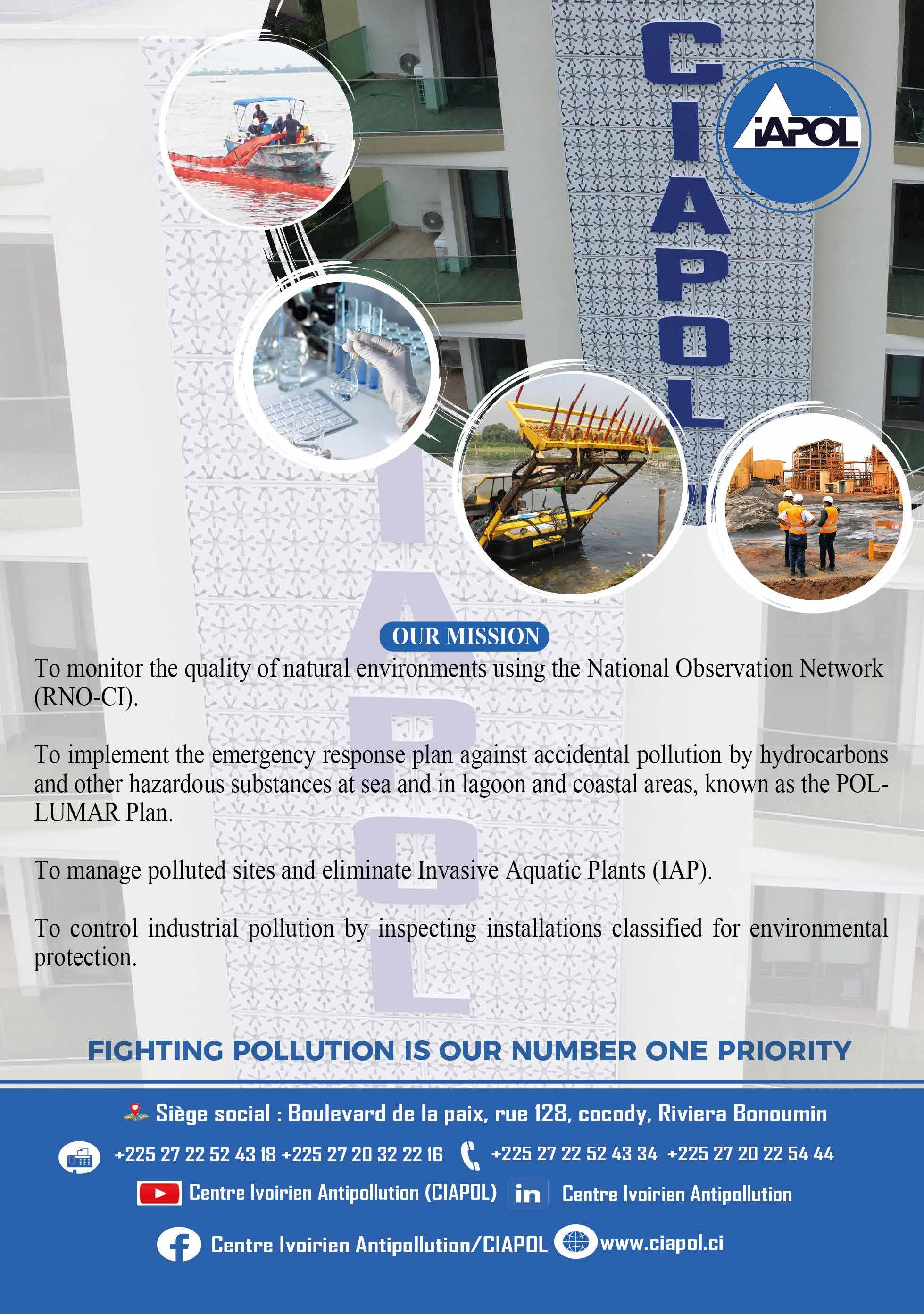
A MORE RESPONSIBLE APPROACH TO COCOA
The decline in forest cover in Côte d’Ivoire is largely due to the increase in cocoa growing, the country being the leading producer worldwide. Several projects currently showcase responsible cocoa production. One is the 2021-2026 PROMIRE project to promote cocoa production without deforestation in order to reduce emissions in Côte d’Ivoire. Funded by the Green Climate Fund and implemented by the United Nations Food and Agriculture Organisation (FAO), together with the Ivorian Ministry for the Environment and Sustainable Development, it is intended to reduce greenhouse gas emissions by implementing the REDD, a system designed to reduce emissions from deforestation and forest degradation.
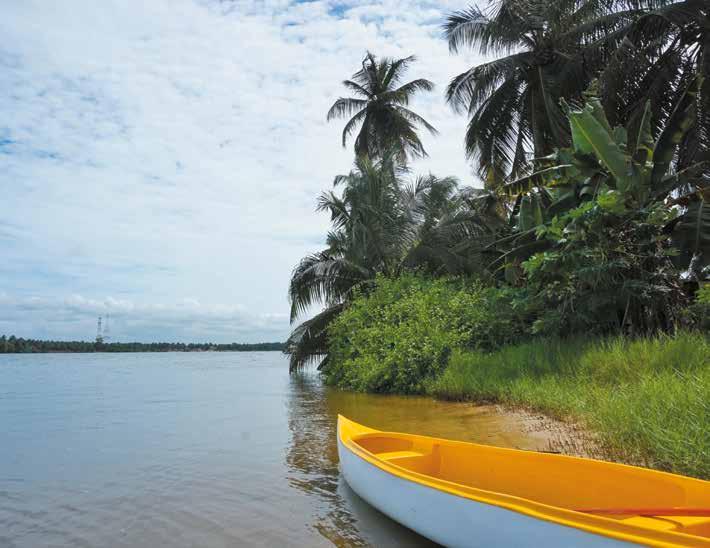
REDD provides access to potential results-based payments. In 2022, PROMIRE supported the conversion of 834 hectares of cocoa tree parcels of land into agroforestry systems, while 163 hectares were reforested, exceeding the 150 hectares planned. In total, the project aims to rehabilitate 3,650 hectares of agroforestry systems, restore 1,500 of forests, improve 4,000 hectares of countryside and produce 23 local development plans.
PROTECTING COASTAL ZONES: A STRUGGLE IN WEST AFRICA
According to a study published by the World Bank in 2019, coastal zone degradation is costing Côte d’Ivoire, Benin, Senegal, and Togo around 3.8 billion dollars a year (2 billion dollars in 2017 for Côte d’Ivoire alone), destroying the means of subsistence for millions of people. These four countries, together with Mauritania and São Tomé and Príncipe, have decided to counter this degradation as part of the West Africa Coastal Areas Management (WACA) Programme. In the region of Grand-Lahou in Côte d’Ivoire, WACA’s main activity accounts for 90% of its budget. It involves stabilising the mouth of the river Bandama, to return it to its situation in the precolonial period. WACA is also supporting the Azagny and Îles Ehotilé parks with preserving the mangrove, deploying ranger patrols, and disseminating information about coastal legislation adopted in 2017. Its initial funding of 15 billion CFA francs has been increased to 33 billion CFA francs







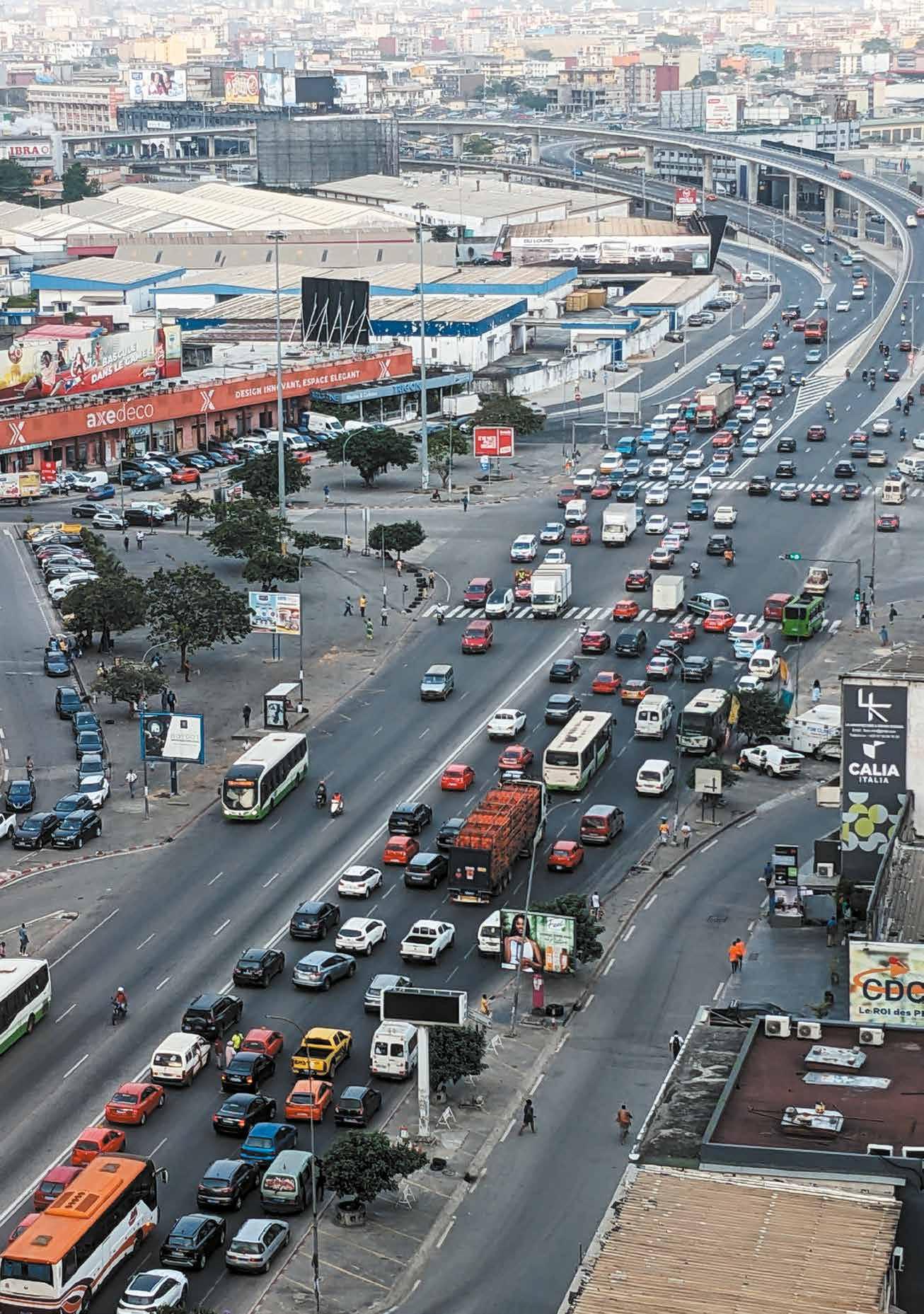
INFRASTRUCTURE
• Energy – Creating an Energy Hub Comprising 42% Renewables >>> 110
• Roads – Connecting the Country to Improve Trade >>> 118
• Abidjan and San-Pédro Autonomous Ports Boost Competitiveness >>> 126
• ICT – A Robust, Low-Cost West African Network >>> 136
ENERGY – CREATING AN ENERGY HUB COMPRISING 42% RNEWABLES
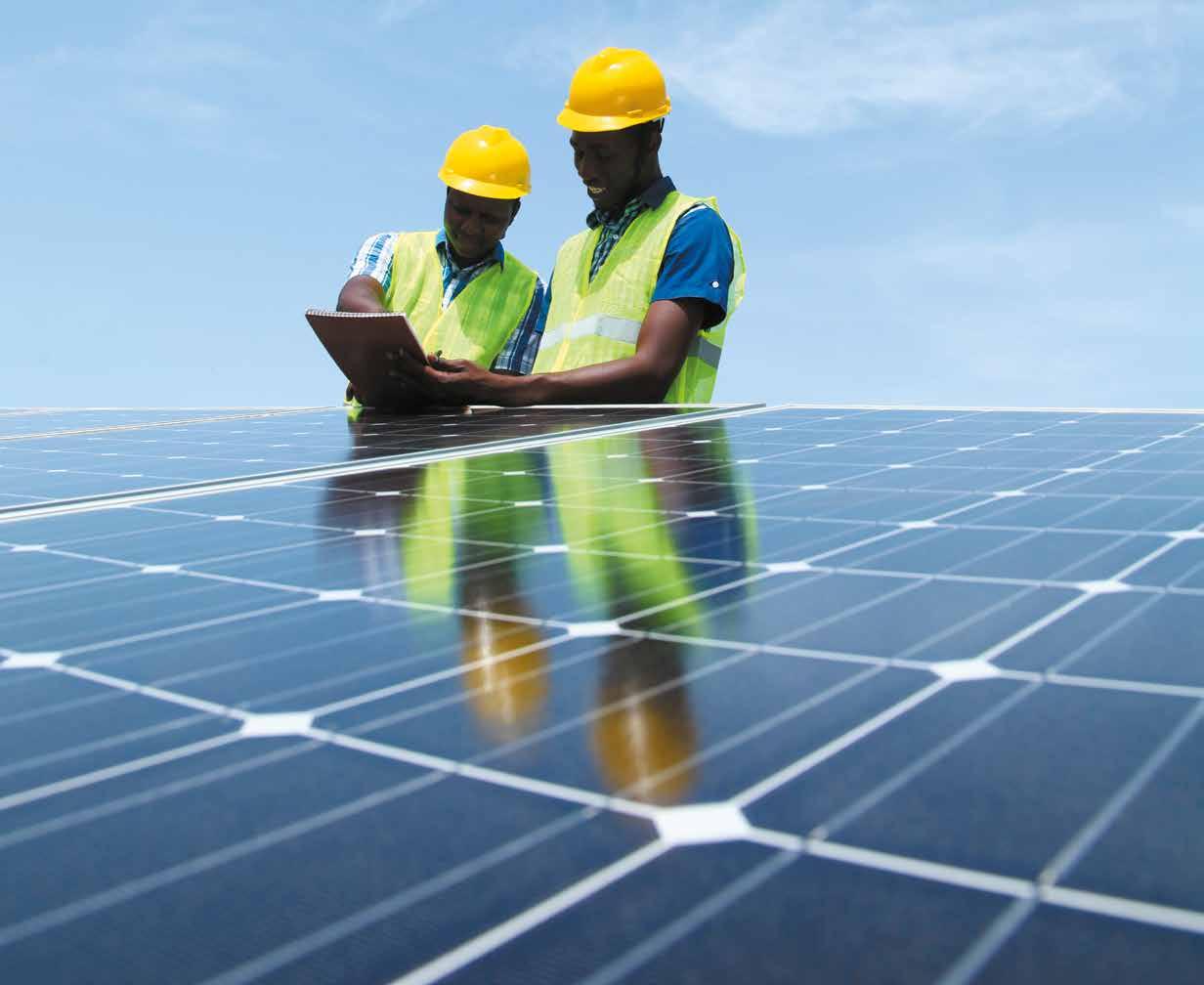
By investing significantly in solar, hydroelectric, and thermal energy through public-private partnerships, Côte d’Ivoire is looking to increase production of greener electricity at a lower cost to consumers.
Côte d’Ivoire almost doubled its installed electricity-generating capacity between 2010 and 2021 by investing nearly 1.6 trillion CFA francs in electricity production, transport and distribution. Exporting 7.9% to its neighbours in 2023, the country is positioning itself as one of the industry’s major actors in the west-African sub-region. Its ambition to achieve 4,000 megawatts of installed capacity by 2020 was deferred until 2030, but nonetheless, capacity reached just over 3,000 megawatts in 2025.
PRODUCTION DOMINATED BY THERMAL GENERATION
At the beginning of 2025, Ivorian power-generating facilities comprised five thermal plants with a capacity to produce 1,998 megawatts of electricity (Vridi 1, Ciprel, Azito, Aggreko and Karpower), seven hydroelectric dams with a capacity of 979 megawatts (Ayame 1, Ayame 2, Kossou, Taabo, Buyo, Faye and Soubre), and the Boundiali solar power plant with a 30-megawatt output.
|||||||| The electricity sector in 2011 and 2023
Source: MinistryforMining,OilandEnergy,Côted’IvoireÉnergiesStatisticalYearbook
According to data from the Côte d’Ivoire Énergies electricity company, which has the monopoly for electricity distribution and marketing, agreed investments have increased the access rate to 98% and have reduced considerably the annual average duration of power cuts. These achievements remain notable despite being derailed in the wake of the Covid-19 emergency and in the aftermath of war breaking out in Ukraine..
SOLAR ENERGY: SEVERAL PLANTS IN THE PIPELINE
To achieve the country’s ambitions, two new thermal power plants have been planned through public-private partnerships and are due to come onstream in the years ahead at Songon-Agban (372 megawatts) and Jacqueville (390 megawatts). However, growth is not the only goal. The first solar power plant in Côte d’Ivoire was opened in April 2024 at Boundiali in the north of the country. It generates 30 megawatts but ultimately it will be capable of producing 80 megawatts. The plant illustrates the authorities’ determination to increase the proportion of renewables in the energy mix from 31 to 42% by 2030. To achieve this, the construction of an additional 12 solar plants is due to begin
between 2025 and 2026; the biggest of these at Korhogo, with a planned output of 112 megawatts.
THE HYDROELECTRIC TRADITION
As part of the same drive, the Power Construction Corporation of China announced in July 2024 that the first phase of the hydroelectric power plant project at Gribo-Popoli in the province of Soubré was entering operation—work that began in August 2021. The 112-megawatt dam built downstream from the 275-megawatt dam at Soubré, also on the river Sassandra, was opened by the same company in 2017. It contributes to the culture of hydroelectric power in Côte d’Ivoire.
“This is a key project for implementing the clean energy development strategy for Côte d’Ivoire, which will contribute positively to expanding the country’s electricity supply and exports” noted Noumory Sidibé, director of plant project management, in July 2024. Numerous other hydroelectric projects are the subject of feasibility studies, such as that at Louga. The launch of construction work on the 150-megawatt Boutoubré hydroelectric dam, downstream from Gribo-Popoli, is expected this year.
|||||||| Renewable energy production capacity in Côte d’Ivoire (in megawatts)
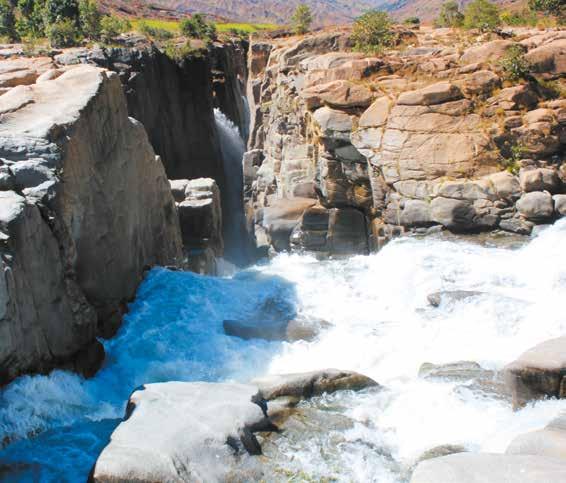
PRICES RISING…
In an unusual move, Ivorian authorities increased the price of electricity in July 2023 and again in January 2024. The country’s electricity is subsidised. According to the authorities, the difference between average generating cost (89 CFA francs) per kWh and the average selling price (73 CFA francs) per kWh was 127 billion CFA francs in 2023. The gap between the resources generated by the sector and its financing needs gap was exacerbated by the Covid-19 pandemic and the war in Ukraine.
Initially, the government raised the cost of electricity by 9.6% for consumers using a power supply above 15 amps for high-voltage professional and industrial purposes, a segment that represents 13% of consumers. The price was raised to 10% for all users in January 2024. At 87 CFA francs per kWh, the price for Ivorian electricity remains nonetheless one of the lowest in the sub-region, where the average price is between 101 and 132 CFA francs per kWh, according to Mamadou Sangafowa Coulibaly, Minister for Mining, Oil and Energy.
Source: Côted’IvoireÉnergies
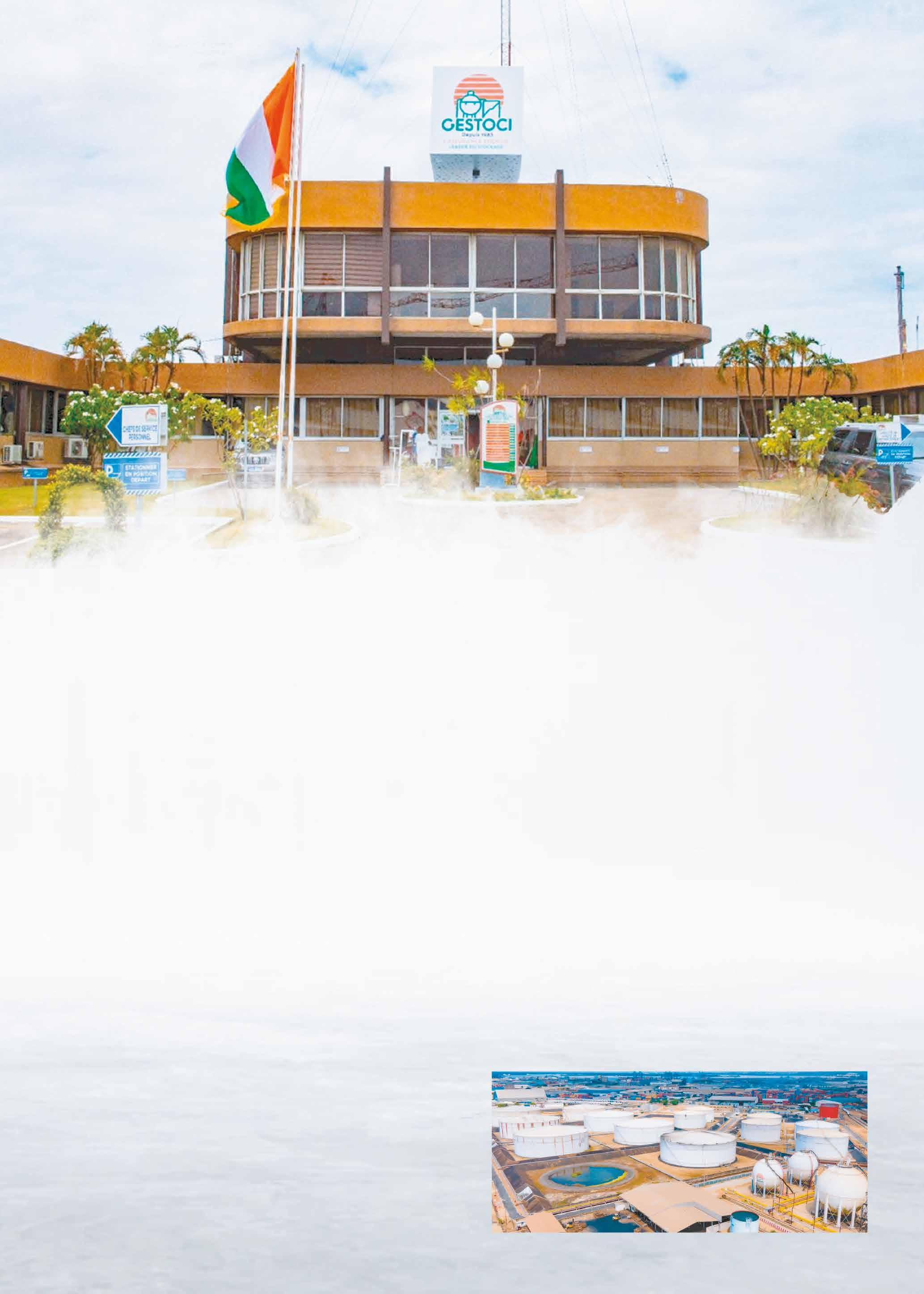
COMPANY PROFILE
A limited company with 240,000,000 CFA francs in capital, the Société de Gestion des Stocks Pétroliers de Côte d'Ivoire, Gestoci, was founded on 14 September 1983. Since then, regulation governing oil industry activity in Côte d'Ivoire has required petroleum product distribution companies to permanently establish:
• A bu er stock equivalent to 2 months of their average sales
• Working stock equivalent to average sales over half a month.
By entrusting this strategic role to GESTOCI, the government’s main objective is to safeguard Côte d'Ivoire from any disruption to or crisis in the supply of petroleum products. GESTOCI comes under the technical oversight of the Ministry of Mining, Oil and Energy and the nancial oversight of the Ministry of the Economy and Finance.
OUR ACTIVITIES
The principal activities of the Société de Gestion des Stocks Pétroliers de Côte d'Ivoire, as listed in our statutes, are to:
• store hydrocarbons of su cient quality and quantity to constitute security stocks;
• stock petroleum products on behalf of private national and non-national operators; and
• deliver petroleum products to approved distributors, and manage and maintain the installations, equipment, and materials required to operate.
OUR DEPOTS
To accomplish its mission successfully, Gestoci has three depots with an overall capacity of 433,400 m3 spread across the following sites:
Petroleum Terminal Depot
Abidjan-Vridi "TPAV": 326,204,381 l
Supplied by the Société Ivorienne de Ra nage (SIR) and the Société Multinationale des Bitumes (SMB), the Abidjan depot can also receive and load oil tankers at four wharves (Petroci, Puma Energy, SIAP, and Petroci Soute).
Bouaké Depot: 48,000 m3
With a capacity of 48,000 m3, the Bouaké depot has been closed since the military crisis in 2002. Studies are underway for its reopening.
Yamoussoukro Depot: 84,160,093 l
Restocked with multiple products via pipeline since 2014, the depot serves an area that has been extended to compensate for the closure of the Bouaké depot. The Yamoussoukro depot now covers the centre, north, west and neighbouring countries (Burkina Faso and Mali).
TPAV DEPOT
BEFORE THE ANTICIPATED FALL DUE TO GAS
Salvation could come from the recent discoveries of natural gas off the Ivorian coast. The same minister maintains that these will enable households and businesses to access “affordable electricity” by 2030, on the basis of the Algerian energy model whereby half of gas production is used in the country and the remainder exported. Petroci, the Société nationale d’opérations pétrolières de Côte d’Ivoire, recently developed close links with Sonatrach, the Algerian giant in the sector. Fed to the coast through a newly constructed gas pipeline, “the production of natural gas will enable Côte d’Ivoire to meet the demands of the domestic market for electricity, facilitate access to energy and consolidate the role of the energy hub in the sub-region,” declared Mamadou Sangafowa Coulibaly.
A NICHE MARKET IN BIOMASS
In addition to its sunshine, gas, and the power of its rivers, Côte d’Ivoire can also count on its biomass. The enormous quantities of residues generated by Ivorian agriculture are channelled towards exports and processing. The amount of biomass, mainly from cocoa waste but also from palm oil and rubber, that could be transformed into energy in Côte d’Ivoire is estimated at 16.7 million tonnes per year. In July 2023, the French company EDF, through the Biovéa Énergie consortium, launched construction of the first biomass power plant in Côte d’Ivoire, in the commune of Aboisso, around 100 km east of Abidjan. Generating 46 megawatts, it will be fuelled by agricultural residues and will meet the electricity needs of approximately 1.7 million people
ENERGY EFFICIENCY: AUDITS FOR THE TOP ENERGY-CONSUMING BUSINESSES
The system of compulsory and regular energy audits restarted in 2024. The initiative is funded by the European Union and German development and cooperation aid and fixes Côte d’Ivoire’s strategic focus firmly on energy efficiency and the environmental transition. Revised in April 2024, this mechanism requires businesses that consume the most energy (2 GWh/year for industrial companies and 1 GWh/year for the tertiary sector) and to carry out periodic analyses of their usage. The objective is to identify margins for improvement, reduce unnecessary consumption and, ultimately, bring down electricity bills. In pursuit of this goal, Côte d’Ivoire’s European partners are continuing to support training and certification of Ivorian energy auditors.
Simon Seroussi, Israeli Ambassador to the Côte d’Ivoire
“WHEN
ISRAELI INGENUITY MEETS IVORIAN AMBITION”
Israel is a young country, small in size but with huge ambitions and great ingenuity. In a matter of decades, it has asserted itself as a world leader in innovation, notably in agriculture, irrigation, water, health, and digital technologies applied to development. This expertise, which has been forged from the need to transform an arid region into a fertile land, represents a unique resource for partners who, such as Côte d’Ivoire, have set their sights on emerging-market status.
Proven expertise for the benefit of Côte d’Ivoire
Since the early years of Ivorian independence, Israel has supported the country in the key areas of construction, training, and agriculture. Today, this relationship is embodied by a dynamic Israeli private sector, which was already active in Côte d’Ivoire. Israeli companies are contributing to precision irrigation, water-use optimisation, agrotechnology, digital health services, and energy, as well as to innovative
solutions for the cities of tomorrow all of which demonstrate daily how technologies devised in a harsh environment can have a concrete impact in West Africa.
What is yet to come is crucial. Côte d’Ivoire has one of the highest growth rates in the continent. It is a young and entrepreneurial market that is receptive to innovation. The positive macroeconomic context, political stability, and openness to investment, make it a natural landscape for high-value Israeli technology companies. The unique Israeli characteristic lies not in the technology but in the philosophy adopted: simplicity, efficacy, adapting to local realities and focusing on impact. At a time when the world is seeking concrete solutions to water, health, and climate problems, Israel offers proven models that are transferrable and accessible.
Ambition
serving the emergence of Côte d’Ivoire
Our ambition is clear: to consolidate the Israeli presence in strategic Ivorian sectors, encourage public-private partnerships, and facilitate the arrival of new companies in the country. Together, we can accelerate the emergence of Côte d’Ivoire, strengthen its food sovereignty, train young people, support local startups and build an innovative economy that serves the wellbeing of the population. Israel believes deeply in Côte d’Ivoire’s potential. To those companies ready to invest, I would say, Côte d’Ivoire is waiting for you. To Ivorian actors, I would say, Israel is by your side, ready to share its experience, technology and innovative spirit to build sustainable prosperity together.

EMBASSY OF ISRAEL IN CÔTE D’IVOIRE
“THE
Alexandre Dufour, CEO, Erium Group
GAS INDUSTRY SERVING SUSTAINABLE SOVEREIGN DEVELOPMENT”
Created in 2024 following the takeover of Air Liquide en Afrique by the investment fund Adenia Partners, Erium epitomises an industrial revival. The group’s strength lies in its eighty plus years of history and its acknowledged expertise in medical and industrial gases.
What difference does Erium’s takeover of Air Liquide assets make in Africa?
This change in governance allows more agile, local control that is aligned with the needs on the ground. Erium operates in a dozen countries in West and Central Africa and in Madagascar, where the group supports key sectors such as mining, energy, public works, agricultural, and health and employs more than 600 people, thus affirming its pan-African ambitions. Each subsidiary benefits from greater autonomy in order to adapt its provision to the industrial, economic and logistical realities of the country. This dynamic fosters increased investment, greater customer proximity and a strong commitment to industrial autonomy. In Côte d’Ivoire, Erium has relaunched a modernisation strategy with customised solutions, to support economic sectors.
Why can Erium to present itself as a “key actor in sustainable industrial transformation”?
Erium produces the gases required by the African industrial and hospital sectors to perform safely and successfully, among them oxygen, nitrogen, carbon dioxide, and acetylene. The group complies with the highest standards in every country where it operates and enhances local expertise.
Large-scale industrialisation, the pooling of resources and the digitalisation of operations have opened the door to robust and accessible solutions that are adapted to the continent’s structural challenges. Moreover, our industrial gases combined with our unique solutions make all the industries using our products and services greener, more competitive, and more sustainable. We help them to comply with international standards.
How are economic growth, environmental conservation, and local development linked?
Erium is guided by its fundamental values of Agility, Innovation and Responsibility (AIR) and an entrepreneurial culture focused on Confidence, Authenticity, Respect and Engagement (CARE). This translates as investment in less wasteful technologies, reducing the carbon footprint of its plants and the environmental impact on all its customers’ processes as well as optimising its logistics on an ongoing basis. More than 95% of employees come from the country where we operate. Erium is investing in training, skills transfer and a strong health and safety culture. At the same time, the group is supporting social initiatives that are rooted in real needs on the ground. Its vision is clear: to make the industry a lever for the sustainable, inclusive, and sovereign transformation of Africa
Alexandre Dufour, the Chief Executive Officer of Erium since 2024, was appointed by Adenia Partners to steer the development of the group in Africa. An engineer by training with twenty-five years of industrial experience, notably with Air Liquide, he has a clear ambition: to build a model African leader that is independent, reliable and sustainable.

The right approach to inclusive mining operations is one that creates shared values.
In today's world the mining and infrastructure sectors must not only manage social and environmental effects but also have a positive impact, especially on the local communities.
This is a must for stakeholders, from the neighboring populations to the national decision-makers and is also a prerequisite for international organizations and the NGOs.
All of which require:
• structured regulations and standards for the mining sector, and beyond;
• multi-stakeholder dialogue and an understanding of each party’s expectations;
• a balance between operational efficacy and a responsible sense of communication; and
• innovative local content, comprehensive projects, and sustainable public-private partnerships.
Owing to its areas of expertise and experience, Affectio Mutandi can advise and accompany you in your search for solutions with a positive impact, to ensure sustainability and acceptance for your activities. www.affectiomutandi.com
Contact: Pierre-Samuel Guedj ps.guedj@affectiomutandi.com
Since 2015 Affectio Mutandi has been chairing the Corporate Social Responsibility and Human Rights Committee, of CIAN, the French Council of Investors in Africa.
ROADS –CONNECTING THE COUNTRY TO IMPROVE TRADE
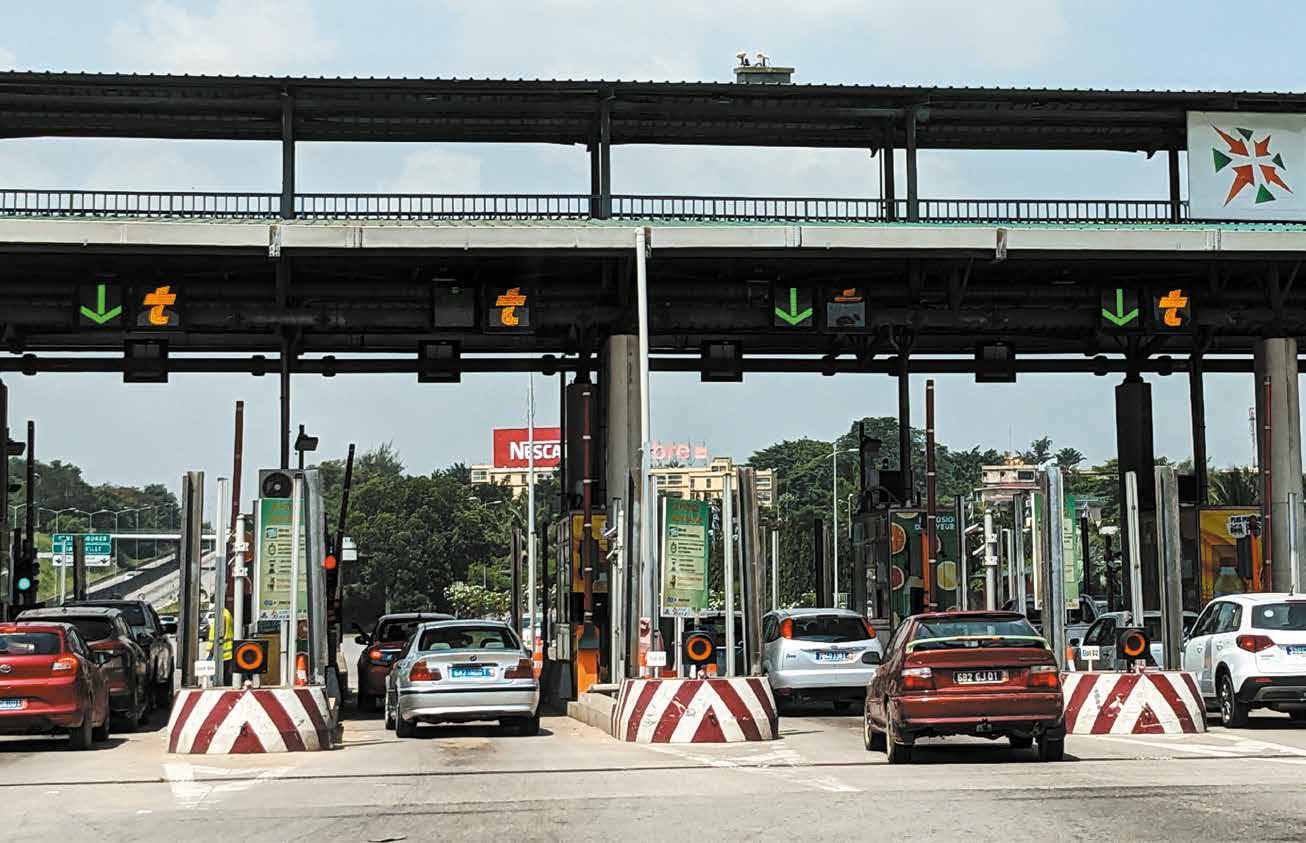
Côte d’Ivoire is improving its road infrastructure through several national and international strategic projects to upgrade earth-surfaced roads and build regional bridges to connect the country and facilitate trade.
Côte d’Ivoire possesses one of the most extensive road networks in West Africa, the equivalent of half the network of the West African Economic and Monetary Union (WAEMU), comprised mostly of dirt roads. Between 2012 and 2023, more than 3 trillion CFA francs were invested in road
infrastructure, this was confirmed by President Ouattara, speaking at the opening ceremony of the Cocody Bridge in Abidjan in August 2023. The monies invested were used to extend the network of tarmacked roads and to improve earth surfaced roads.
|||||||| Road infrastructure in 2015 and 2024 (in kilometres)
Source: Ageroute
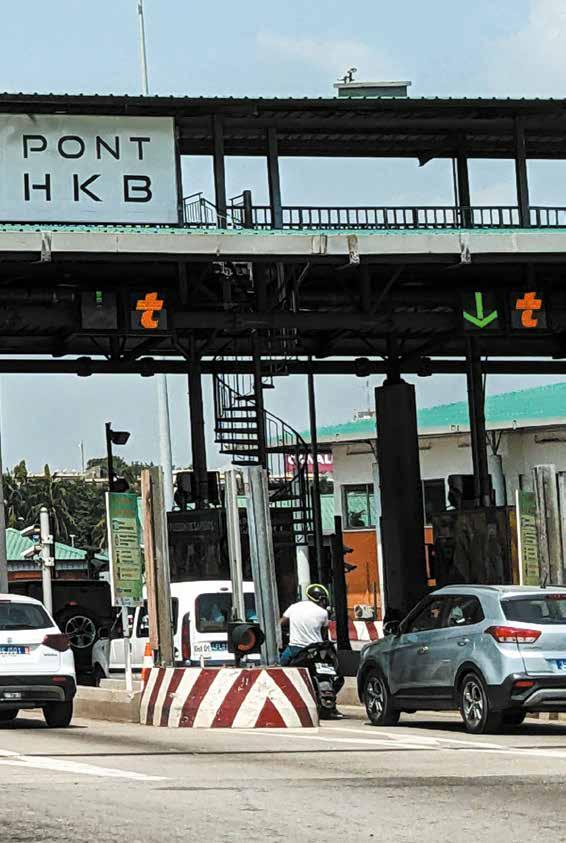
THE ATLANTIC COAST ACCESSIBLE AT LAST
The authorities undertook to upgrade the coastal highway, known as “La Côtière”, between September 2021 and December 2023, and thereby shortened the journey between Abidjan and San-Pédro from around ten hours to three and a half. The time-saved is a determining factor for users, particularly economic operators. Built in 1990, the strategic route that links the places in the coastal area, Abidjan, Dabou, Grand-Lahou, Fresco and Sassandra, suffered from potholes prior to being improved. Connected to the San-Pédro Autonomous Port in the far west, it serves a vast area of agricultural activity occupied mostly by coffee, cocoa, palm oil, and rubber plantations. The upgrading of La Côtère is also providential for the development of tourism along a coastline famous for the beauty of both its sandy and rocky beaches.
A MOTORWAY NOW LINKS ABIDJAN TO BOUAKÉ
The La Côtière coastal highway is one of the major construction projects to modernise the road network and involves creating a motorway between Abidjan and the Burkina Faso border. This vast infrastructure project is part of ongoing subregional integration. In September 2024, as part of this development, the government secured a loan from the Islamic Development Bank (IsDB) of 119.5 billion CFA francs to construct the 54-km section between Bouaké and Darakokaha.
In August 2023, a further 96-km section was opened between Tiébissou and Bouaké, connecting the country’s second largest city to Abidjan and serving the administrative capital, Yamoussoukro. Its completion brought the total motorway network to 380 km compared to 145 km in 2011. The Tiébissou-Bouaké section was built by the China Road and Bridge Corporation (CRBC) and cost 186.5 billion CFA francs, of which 161.7 billion CFA francs from the Chinese Eximbank and 24.8 billion CFA francs from Côte d’Ivoire state funding.
For an idea of the route literally taken to get to this point, the 130-km Abidjan-Singrobo section was completed in 1982, and it was not until 2007 that work started on the 86-km Singrobo-Yamoussoukro section which opened in 2013. Since then, the motorway has continued to extend northwards. Another major project concerns the expressway between Abidjan and Grand-Bassam, which opened to traffic in September 2015 and which has improved communications between the economic capital and the southeast region of the country as well as with Ghana. The project was also financed by the Chinese Eximbank which contributed 85% of the 71.6 billion CFA francs required, the remaining 15% was funded by the State. It was constructed by the China Machinery Engineering Corporation (CMEC); the project was managed jointly with Ageroute, which is in charge of operating, monitoring, and maintaining the Ivorian road and motorway network
BRIDGES: KEY TO UNLOCKING THE COUNTRY
As well as building and upgrading roads, the authorities have invested in connecting Côte d’Ivoire by installing several bridges across the country. Among the recent examples is the Guiglo Bridge in the west of the country, which opened in September 2024 on the edge of the city of the same name. This two-lane bridge is 122 metres long and replaces the former single-lane construction which dated from 1958. The new bridge improved traffic and the flow of food and industrial products between the regions of Cavally and Guémon, in the autonomous district of Les Montagnes. Ten similar infrastructure projects have been completed in the past decade. In 2015, the 608-metre-long Philippe Grégoire Yacé Bridge in Jacqueville was opened; it had been planned since independence. In December 2017, President Alassane Ouattara unveiled Bettié Bridge over the river Comoé, near the border with Ghana. The Bouaflé Bridge over the river Marahoué, near Yamoussoukro, opened in January 2015.
SPOTLIGHT
BRIDGES, HIGHWAY INTERCHANGES, AND A METRO TO TRANSFORM ABIDJAN
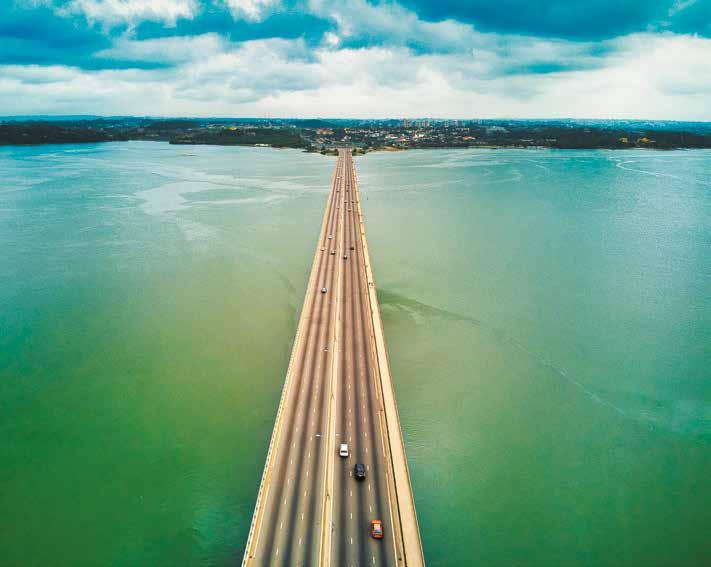
Prior to the opening in 2024 of the Henri Konan Bédié Bridge between Cocody and the commune of Marcory, Abidjan had two bridges , the Félix Houphouët-Boigny Bridge (1958) and the Charles de Gaulle Bridge (1967). In August 2023, the Alassane Ouattara Bridge was opened between Cocody and Le Plateau, stretching 200 metres along a cable-stayed section, the first of its kind in the country, and spanning 630 metres across the Cocody Bay Channel for a total of 1,630 metres. It cost113 billion CFA francs, partly financed by a loan from the Islamic Development Bank (IsDB) and built by the Chinese company CRBC, it was opened a few months before Abidjan’s “fourth bridge”. The “fourth bridge” is a 7.2-km expressway that links Yopougon, Côte d’Ivoire’s largest commune (over two million inhabitants) to Le Plateau. It was partly financed by the African Development bank (ADB). These infrastructure projects are part of the development and conservation plan for Cocody Bay and Ébrié Lagoon. In the meantime, the Abidjan metro is at the initial stages of development. These projects are part of the Abidjan Urban Transport Plan (Projet de Transport Urbain d’Abidjan - PTUA) are meant to help improve mobility around Côte d’Ivoire’s notoriously congested economic capital. Six highway interchanges should also ultimately contribute to transforming the lives of motorists. The second phase of the Japanese-Ivorian friendship project for a highway interchange opened in August 2024 in the Abidjan commune of Treichville.
Amadou Koné, Minister of Transport
“THE PROJECTS UNDERWAY ARE TRANSFORMING OUR ECONOMY’S COMPETITIVENESS”
Which major public works are underway that should help improve trading conditions across the country and with Côte d’Ivoire’s neighbours?
The transport sector represents between 7 and 12% of Côte d’Ivoire’s GDP. So it is an important sector. Since he took office, President Alassane Ouattara has made it a priority. Côte d’Ivoire currently possesses a modern, safe, efficient, and sustainable transport network designed to meet the population’s growing needs while responding to the country’s economic, social, and environmental challenges. Our vision is based on several strategic priorities including road safety, updating the vehicle fleet, training, increasing public transport modalities with the Abidjan metro and Bus Rapid Transport (BRT) projects, and expanding ports and airports. We have started implementing these projects and the results can already be felt. Côte d’Ivoire must be a model for transport development for the region. For some, the projects underway are radically transforming accessibility, traffic flow, and our economy’s competitiveness.
What can you tell us about the competitiveness of the Abidjan and San-Pédro ports as well as the ambition to make Côte d’Ivoire a shipping hub in West Africa?
The ports of Abidjan and San-Pédro have benefited from a range of investments for modernisation. In the case of the former, this has included construction of the fishing harbour breakwater and the embankment in Biétry bay, the widening and deepening of Vidri canal, and the building of new roll-on/roll-off terminal, containers, grain and ore terminals. This investment meant that overall shipping reached 41 million tonnes of goods in 2024, compared to 34.7 in 2023 and 28.6 in 2022. The second container terminal coming onstream has boosted transhipment traffic to achieve a record increase of 1007.3%. The port free-trade zone is attracting investment and diversifying activities. As for the San-Pédro port, the global leader in cocoa handling, it has benefited from the opening of a multipurpose terminal, consolidating the export sectors and creating jobs. All this investment is now positioning these ports as key elements in the Ivorian economy and is making the country a genuine sub-regional hub for shipping.
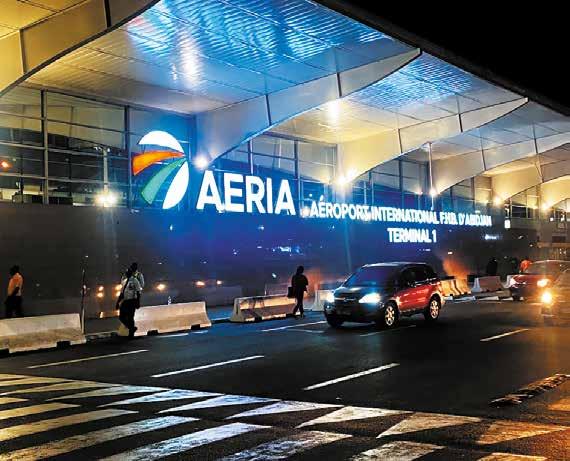
The relaunch of Air Côte d’Ivoire and the refurbishment of Abidjan’s FHB international airport are also fulfilling development objectives. Which results can you highlight for us?
Created in 2012, Air Côte d’Ivoire is showing satisfactory results, notably in terms of achieving financial stability and embarking on a cycle of profitability. Despite the wave of social and political unrest in the sub-region, the national company has reported positive operating income since 2021 and announced profits of 658 million CFA francs at the end of the 2023 financial year. As the leading airline in West and Central Africa, Air Côte d’Ivoire operations have performed well: a fleet of thirteen planes comprised of an Airbus A330, three Airbus A320, five Airbus A319, and four Bombardiers Q400; permission from the United States Civil Aviation Authority to run direct flight to the US; twenty-three cities served, five of them in Côte d’Ivoire; 600 direct and 3,500 indirect jobs created; 5.2 million passengers during the 20122024 period, 40% of the airport’s passenger traffic; and an annual consolidated turnover of 1.1 trillion CFA francs of which 715 billion were injected into the Ivorian economy.
Urban mobility, particularly in Abidjan, is an important issue, with the opening of numerous bridges and intersections in recent years. How could this be further improved? Our vision is to establish a multimodal transport system in greater Abidjan by prioritising high-capacity transport. This is being realised with the project to build Line 1 of the Abidjan metro, the construction of the Yopougon-Bingerville BRT and the lagoon transport development project. Consequently, we have re-identified and reorganised the bus routes to best serve those areas of high demand while improving the frequency and punctuality of journeys. Bassam, Bingerville and Songon are examples of this today. This reduces waiting times for users and makes the service more reliable. The Abidjan metro and BRT projects represent a genuine revolution in urban transport and are expected to have several positive impacts. They will be completed during the course of 2027.
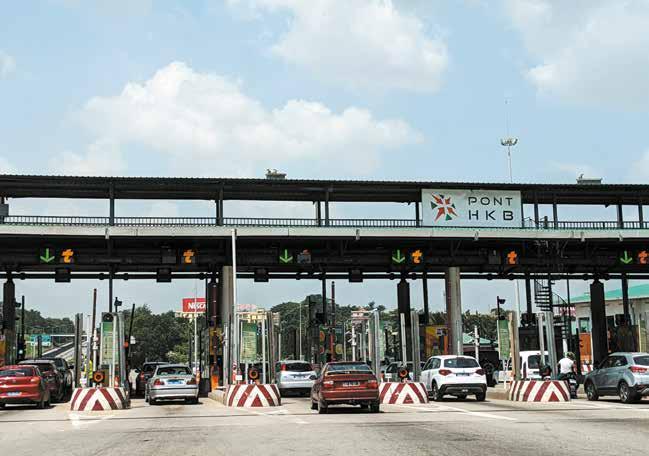
How are the authorities trying to improve road safety in the face of worrying statistics?
The national road safety strategy adopted at a meeting of the Council of Ministers on 7 July 2021 is focused on three key elements: people, vehicles, and roads. The adopted activities particularly concern community outreach and awareness-raising, introducing a national road safety week, training and disseminating information, introducing skills development with certification that includes a road safety skills certificate (Certificat d’aptitude à la conduite routière - CACR), creating a special road safety police force, installing speed cameras, and creating a points-based licence. The ministry also reinstated the technical committee in charge of driving licence withdrawals and the victims of accidents, updating the vehicle fleet, introducing the intelligent transport system (Système de transport intelligent - STI), and creating an accident investigation and analysis unit (Bureau d’enquête et analyse des accidents - BEA). All these measures contribute to better road safety governance at local level
Mohamed Sangare, Deputy Managing Director, Mantra
In what other ways is Mantra Ivoire supporting economic operators across the country?
“HELPING OUR CLIENTS MANAGE THEIR VALUE CHAIN MORE EFFECTIVELY”
A subsidiary of the Olam Group, the logistics company Mantra Ivoire is improving its clients’ competitivity by offering them shipment, handling, transport, goods and container storage, and third-party logistics (3PL) services.
Mantra Ivoire has increased the capacity of its container storage facilities over the past six years: how has this investment enhanced its activities and those of its clients?
As part of our development strategy, in 2019 we invested in the facility to achieve a capacity of 1,000 containers, to improve our operational efficiency and to help our clients manage their value chain more effectively. Six years on, we are extremely pleased with the results obtained both with the shipping companies, who are increasingly putting their trust in us, and with our clients working in different sectors, for whom the site is close to Abidjan’s two container terminals. I would like to take this opportunity to announce that we will shortly be opening a second container storage facility one kilometre from the Abidjan Terminal and two kilometres from the Côte d’Ivoire Terminal. We are sure that this supporting infrastructure is something economic actors are favourably anticipating.
In addition to the new infrastructure, we are implementing a progressive programme of planned investment to consolidate our presence in Côte d’Ivoire. In the Port of Abidjan zone, our various sites total over 80,000 m², we are the exclusive operators of five cranes for manoeuvring loaded and empty containers, dozens of forklifts, and container and pallet haulage trucks. Also, at the formerly Unico site in San-Pédro, acquired with Archer Daniels Midland (ADM), we provide services to clients exporting cocoa beans, cocoa by-products, rubber, palm oil, cotton, manganese, among other goods; the site covers seven hectares.
How is Mantra Ivoire continuing to play a part in the country’s growing dynamism?
Whether in shipment, handling, transport, storage, or logistics the services offered by Mantra Ivoire underpin the competitiveness of our partners’ products on national and international markets. Naturally, we will continue to invest in infrastructure–warehouses, container storage parks, heavy plant and handling equipment–and in improving our management systems by placing particular importance on electronic systems to ensure operational effectiveness. We will also maintain the quality of our services and the efficiency of our customs clearance management procedures. I would point out that we have been recognised on numerous occasions by customs for the quality of our operations and the value of the transactions conducted on behalf of the partners who place their trust in us
ABIDJAN AND SAN–PÉDRO
AUTONOMOUS PORTS BOOST THEIR COMPETITIVENESS
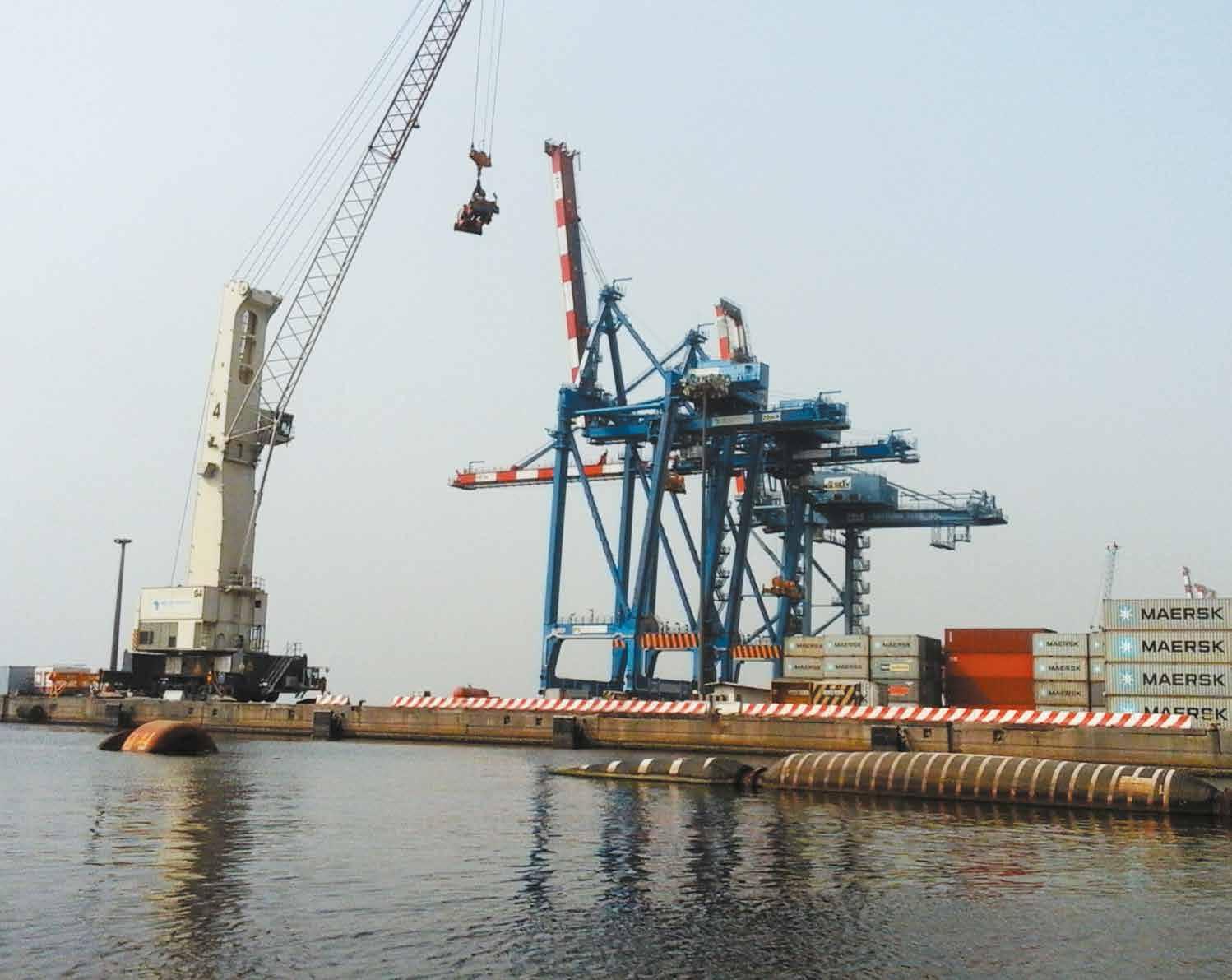
Major work to modernise and expand the Abidjan
Autonomous Port has been undertaken in recent years to improve its competitiveness, particularly in the face of competition from its rivals in Togo and Ghana
The overall flow of goods through Abidjan Autonomous Port (AAP) rose from 21.7 million tonnes in 2012 to 34.7 in 2023, making it the leading port in West Africa in terms of volume of goods processed. With two container terminals, a grain handling terminal and a fruit terminal, and its RoRo terminal, AAP handles 90% of the country’s external trade. Sixty (60) percent of the country’s industrial players operate out of the port, which accounts for more than 70% of revenue from customs duties and external trade.
DOUBLING CONTAINER CAPACITY
In order to rival the ports of Lomé (Togo) and Tema (Ghana), AAP has undertaken a range of works to modernise and expand, notably by opening a second container terminal in December 2022. Featuring three berths with a sixteen-metre draft, it can accommodate the new generation ships with a capacity of up to 10,000 TEU (twenty-feet equivalent unit), bringing the annual processing capacity of AAP to from 1 to 2.5 million containers. All of this is good news for Côte d’Ivoire and
for the countries of the sub-region whose goods are forwarded through the port. Côte d’Ivoire acts as a port hub for landlocked countries, namely Burkina Faso, Mali and Niger, and in recent years has handled more than 2 million tonnes of goods annually for these countries, equivalent to 10% of its traffic.
The second container terminal, which is part of the national Development Plan (NDP), required a total investment of 596 billion CFA francs, 334 billion for earthworks overseen by AAP and begun in 2015, and 262 billion for the superstructures started in 2020 and financed by Côte d’Ivoire Terminal, the concession holder.
STRATEGIC DEVELOPMENT OF PURPOSE-BUILT QUAYS
The government signed a loan agreement for 9.8 billion CFA francs in March 2024 with the Japan International Cooperation Agency (JICA) to complete construction of the AAP grain handling terminal construction works. In addition to the terminal, the main objective of the project was to
create a storage area and associated facilities capable of meeting the growing demand for the transport, handling and storage of grain. The facility will allow AAP to pursue and consolidate its strategy to develop quays for specific purposes. Several projects underway will increase capacities and improve functioning. This applies to the extension of the fruit quay, the lagoon transport project for goods shipments by barge, the construction of the bridge over Vridi Canal to improve traffic flow in the port zone, and the creation of five heavy goods vehicle parks
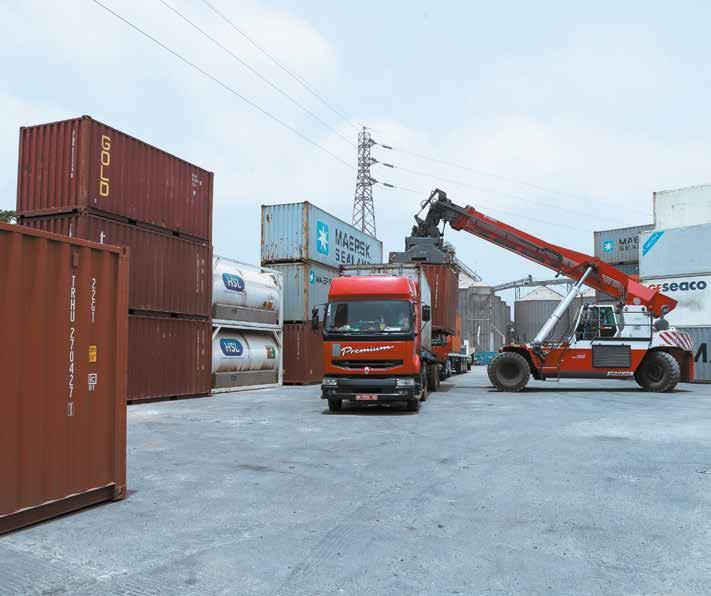
Sources: Ministry ofTransport ;AbidjanAutonomous Port
|||||||| Abidjan Autonomous Port Traffic (in millions of tonnes)
SPOTLIGHT
AGRO-INDUSTRY AND MINING - THE AMBITIONS OF THE SAN-PÉDRO AUTONOMOUS PORT
Located in the southwest of Côte d’Ivoire, the San-Pédro Autonomous Port (SPAP) is the world’s leading port for the export of cocoa. Overall goods traffic reached 7.4 million tonnes in 2024 compared to 1.2 in 2010. Activity has benefited from cold storage facilities for seafood produce operations that opened in August 2020 and from a multipurpose industrial terminal with 270 metres of quays that opened in September 2022.
The port has a development roadmap that runs to 2035, based on seven transformative projects. These include the construction of port infrastructure needed for processing various products (ores, fertiliser, oil, and cement products) and the development of an economic and industrial zone within the port. The objective is to generate property value to encourage the installation of manufacturing and storage units as well as to create an industrial and commercial free-trade zone.
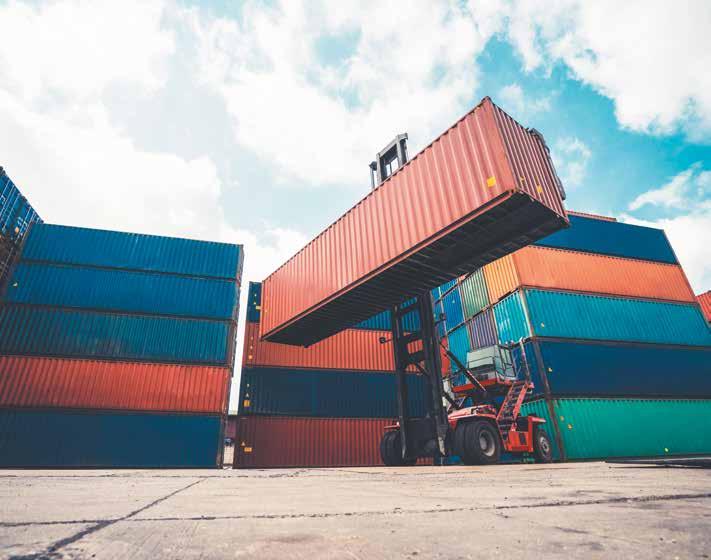
An industrial terminal built with Arise
The San-Pédro multipurpose industrial terminal is the fruit of a strategic partnership between the government of Côte d’Ivoire and ARISE Ports & Logistics and was the first facility included in the development roadmap to come into service, in September 2022. Equipped for goods handling, it can accommodate Panamax-type ships that can transport up to 80,000 tonnes. Completion of the second phase of the terminal and the construction of another 230-metre quay will increase the handling equipment available. Other elements of the development roadmap now underway involve relocating and extending the container terminal, creating an economic industrial zone, and constructing a multipurpose commercial terminal.
Mining ambition
Due to its geographical location, the San-Pédro port aspires to be the most accessible port for operators in Mali (via the San-Pédro-Bamako corridor), for forestry in Guinea and for east Liberia, located one hundred kilometres from the port. The San-Pédro Port could also see significant development provided the government and economic operators successfully exploit the enormous mining potential of the country’s hinterland, which is rich in iron, gold and nickel. In particular, this would require the construction of a railway for their export.
Abidjan and San–Pédro Autonomous Ports Boost their Competitiveness
|||||||| Traffic at San-Pédro Autonomous Port
Sources: Ministry ofTransport
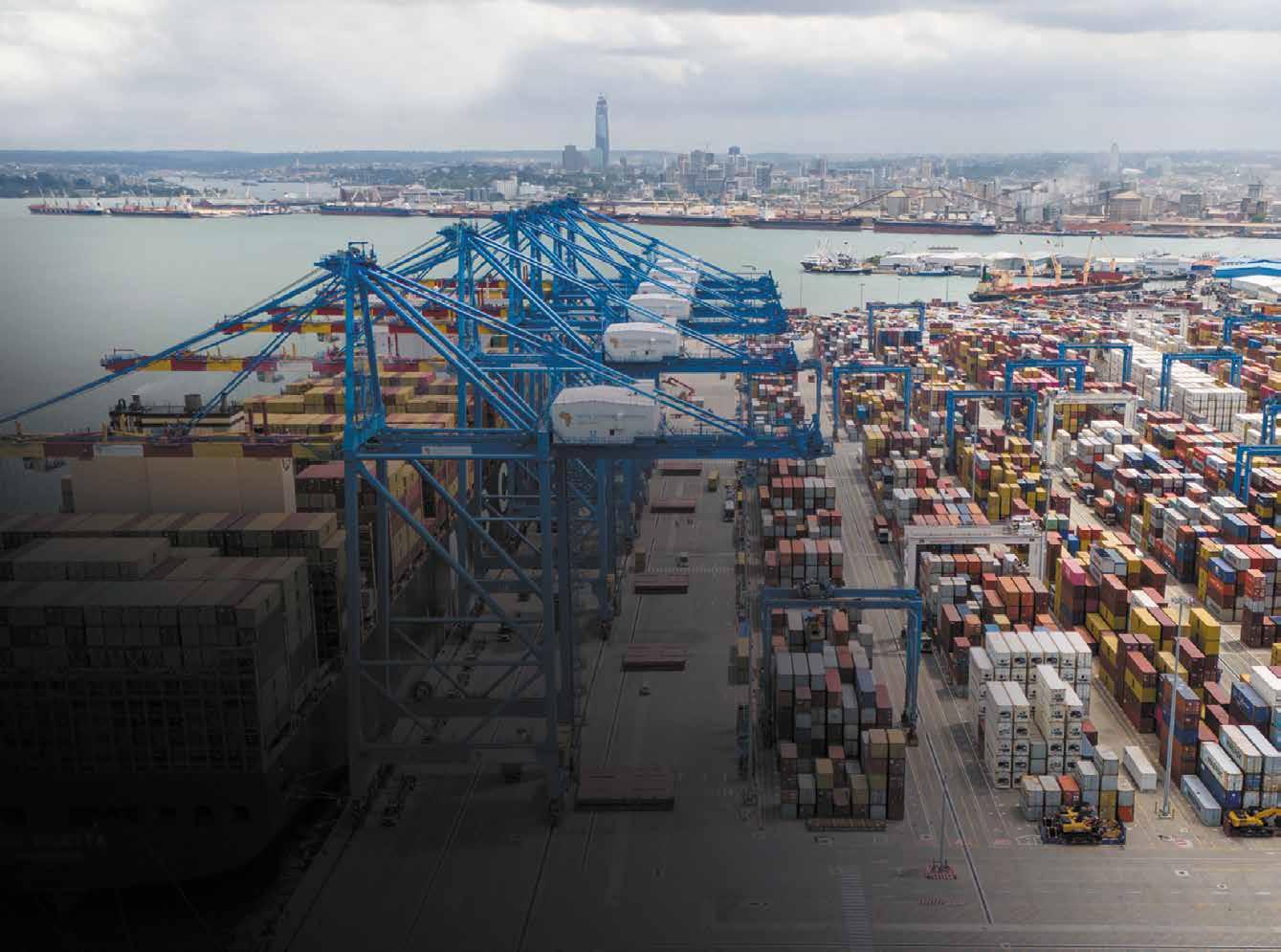
WE CONNECT CÔTE D'IVOIRE TO THE WORLD
Côte d'Ivoire Terminal operates the second largest container terminal at the Port of Abidjian and plays a key role in logistics competitiveness in Côte d'Ivoire and the sub-region. With its modern facilities and 100% electric equipment, the company is positioned as a regional transshipment hub, running seamless import-export operations for the benefit of strategic sectors such as agro-industry, mining, public works, energy, and manufacturing. A certified Green Terminal thanks to its low environmental impact, the company actively supports the sustainable development of local agricultural value chains, including cocoa, cashews, and rubber. In addition to its economic role, Côte d'Ivoire Terminal a rms its strong social ambitions through inclusion, equal opportunities, and the integration and development of local skills.
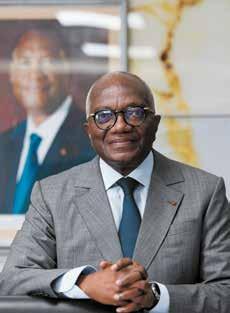
Hilaire Lamizana, Director of San-Pédro Autonomous Port
“WE MULTIPLIED THE
VOLUME
OF PORT TRAFFIC SIXFOLD BETWEEN 2010 AND 2024”
The Managing Director of the San-Pédro Autonomous Port (SPAP), Hilaire Marcel Lamizana, points to the record performances obtained at the end of 2024, in terms of volume of trade and financial results, which are characterised by a 500% growth in traffic since 2010.
How did the volume of goods handled at SPAP evolve been 2010 and 2024?
The volume of trade represented 7.4 million tonnes of goods in 2024 compared with 1.2 million tonnes in 2010. This is equivalent to an increase of more than 500% since 2010! It is a new figure to inscribe in the annals of the San-Pédro Autonomous Port as it represents a sixfold rise in the volume of goods that was traded prior to us taking office. In terms of export and import volumes, we have grown them from 1,147,972 to 6,788,937 tonnes, an increase of more than 490%.
How do you explain this impressive growth in port traffic?
This growth stems mainly from our product sector-focused trade policy as part of a strategy to diversify traffic; from the maintenance and development of port infrastructure by bringing new facilities onstream; and from our close collaboration with operators and actors in the port space through reinvigorating the San-Pédro port community. In this way, we have managed to
reduce the structural imbalance in our port traffic between import and export levels by capturing new traffic while consolidating traditional forms of port traffic such as cocoa and cement products. This performance is also the result of efforts to increase the business’s organisational effectiveness by consolidating infrastructure development and strengthening the strategic partnerships we have forged over time.
How have the transshipment and transit sectors evolved?
Combined transshipment and transit traffic rose from below 5,000 tonnes in 2010 to above 1.8 million tonnes in 2024. This is a testament to our capacity to attract new trade flows and to become a major logistics hub in the region.
We have successfully reduced the import-export imbalance observed in 2010, with overall traffic now held by three main products which account for more than one million tonnes each, namely imported and in transit cement products, cocoa and its byproducts, nickel, manganese, and iron ore products for export and in transit. Additional to these operations, which have structurally transformed global port traffic, is the flow of just under one million tonnes of transshipment goods.
Furthermore, since 2023 our actions have facilitated the capture of iron ore traffic coming from Mali, thereby increasing diversification of the products handled at the San-Pédro Port. The consolidation of traditional port traffic such as cocoa, rubber, palm oil, cement products. and the capture of new traffic–cashews in 2012, fertiliser in 2013 after a break of twenty years, nickel in 2018 and manganese in 2019–have enabled origin-destination traffic to grow and attain 5,396,464 tonnes at the end of 2024, an increase of 372% compared with its level in 2010 (1,143,973 tonnes). Thus, at the end of 2024, total goods traffic through SPAP comprised four categories– export (53% as against 74% in 2010), import (20% as against 19% in 2010), transshipment (static at 8%) and transit (19% as against virtually 0% in 2010).
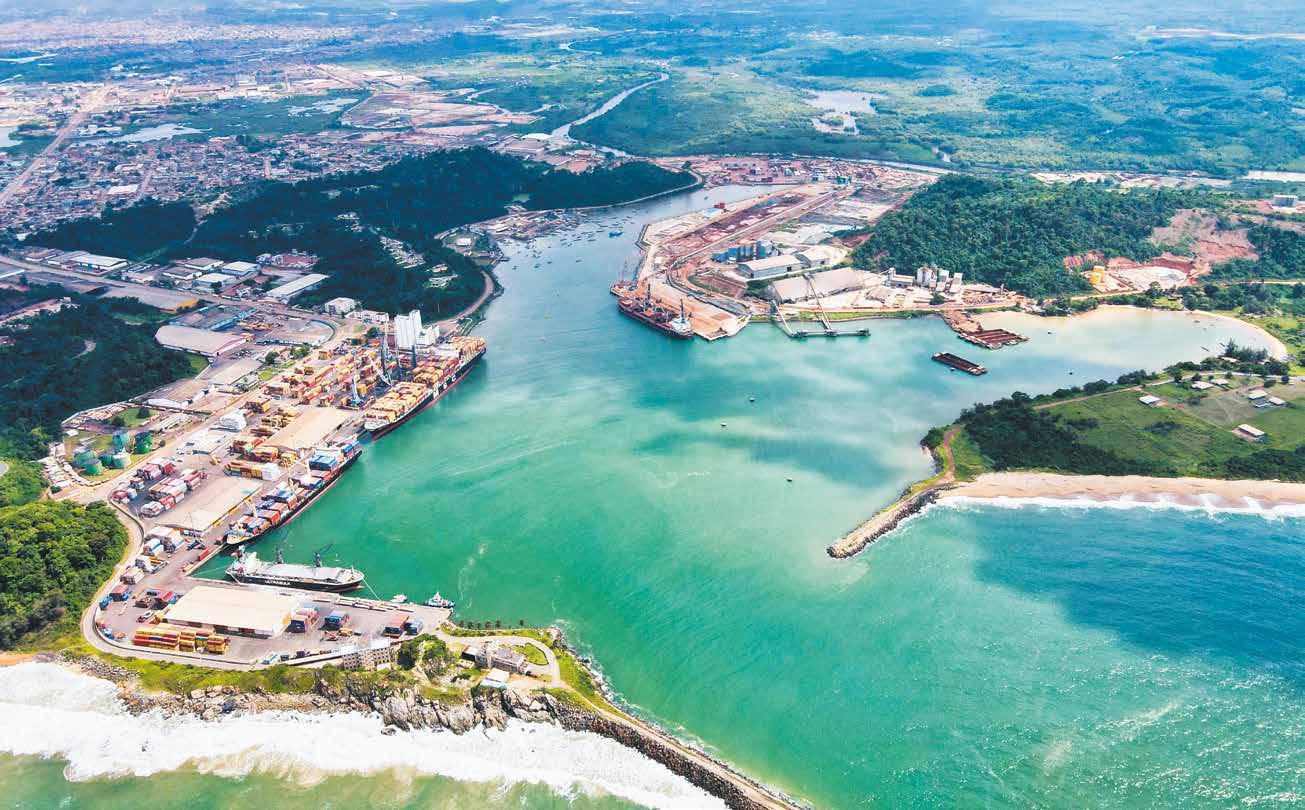
In what way have the financial results of SPAP also progressed?
Our activities between 2011 and 2024 involved introducing a rigorous managerial approach together with measures to rationalise port charges. This improved our financial performance despite no uptick in port fees being registered at all in the previous eighteen years at San-Pédro. The policy of rationalising port charges (notably cost killing) which we introduced, and the rigorous financial management measures adopted, in addition to the excellent operational performance (especially import-export traffic) fostered better financial aggregates and the reinstatement of financial equilibrium.
The financial situation had seriously declined prior to 30 April 2011, a point when recoverable trade receivables stood at an estimated 2.4 billion CFA francs, immediate cash liquidity was in the red at -554 million CFA francs, total debt reached 2.4 billion CFA francs, and a net income showed a deficit of 34 million CFA francs. This situation has now been completely stabilised. Principally, turnover has risen by 207% from
4.46 billion CFA francs in 2010 to 13.72 in 2024. Furthermore, the customs office, through its port operations, has collected an average of more than 200 billion CFA francs over the past five years as against 102 billion in 2010. In general, today’s port operations bring in more than 500 billion CFA francs in customs and excise revenue for the national economy.
What impact have the SPAP results had on the regional economic ecosystem?
It should be noted that one of our objectives has been to make San-Pédro a sub-regional economic hub. Thus, ramping up port operations has encouraged the exponential growth of the city and the region characterised by essential social infrastructure and facilities, rapid urbanisation, flourishing trade, vast plantations of cash crops in the economic impact zone, a thriving service sector, an increase in the number of direct and indirect jobs, a booming market in industrial real estate, and an upturn in all other related amenities.
Today, the San-Pédro region is the wealthiest in Côte d’Ivoire after that of Abidjan. The San-Pédro Autonomous Port, a state entity, also assumes its civic role in the region. We are translating our ambitions into actions in the areas of health, education, supporting decentralised and regional offices, youth support, and empowering women. We are convinced of the region’s potential and are playing our part at every level on a scale commensurate with our importance. Our social action to benefit local populations has been acknowledged by the Ministry for Employment and Social Protection.
What are SPAP’s medium- and long-term projects?
SPAP is maintaining its drive to carry out projects to extend and modernise the site. The aim of the first phase is, in the medium term, to consolidate SPAP’s role as a catalyst for economic development and, especially, to position it as the final link in the chain of the west Ivorian transport corridor in the direction of the neighbouring countries of Liberia, Guinea, and Mali. This phase will involve relocating and extending the current container terminal, building a commercial and grain multipurpose terminal, constructing an integrated logistics platform at Odienné and a multipurpose industrial terminal and developing a 330-hectare economic and industrial zone. The second phase is intended to make SPAP a genuine port for ore from the mining operations at Mont Gao, Klahoyo and Nimba, construction of the San-Pédro-Man railway and an ore wharf or terminal, a hydrocarbon terminal, an oil logistics platform, small-scale fishing ports, semi-industrial ports, and marinas. Implementation of this programme signals major progress backed by the Ivorian government and the President of the SPAP Board, Yaya Dembélé.
What would you say in conclusion?
The San-Pédro Port represents infrastructure that is key to the development and economic competitiveness of Côte d’Ivoire. Improving the range of port services on offer is a major challenge that the Ivorian economy must see met in order to contribute sustainably to creating wealth and thereby improving the standard of living of the inhabitants of the western part of Côte d’Ivoire, and to integrating the sub-region more effectively. To achieve this, it is important to increase investment in port facilities and modern equipment as a means to improve operational performance and to increase the efficiency of business processes through digitalisation. We are continuing to lay the foundations of the port’s enhanced performance, which can be summed up in the implementation of the programme to extend and modernise the San-Pédro Autonomous Port. This is in line with the drive for economic growth advocated by President Alassane Ouattara. The results registered are extremely positive and are attributable to the President, the head of the government, and our line ministry which is headed by the Minister of Transport, Amadou Koné
A partner in step with an advancing world

Myriam Ouassenan, Managing Director, Sea-Invest Côte d’Ivoire
“A HIGH VALUE-ADDED LOGISTICS CHAIN IN CÔTE D’IVOIRE”
Sea-Invest is a major operator of bulk cargo terminals, with a presence in twenty-three ports across two continents. It also has port logistics operations in Abidjan and San-Pédro and is thus contributing to the economic development of Côte d’Ivoire.
How is Sea-Invest contributing to the development and boom seen by the ports of Abidjan and San-Pédro?
The Sea-Invest Group has been serving the socioeconomic development of Côte d’Ivoire since 2008. It is one of the leaders in port handling, specifically bulk cargoes, and is a key player in logistics at a global level. The group has been working to ensure a high value-added logistics chain is available in Côte d’Ivoire. Sea-Invest possesses eight subsidiaries divided between Abidjan and San-Pédro. We hold the concession for the ore terminal and operate as Abidjan’s bulk cargo terminal. Note that since 2018, major investments have been made jointly with the Abidjan Autonomous Port in modernising the existing terminal, notably by increasing the depth of navigable water around all docks to 12 metres. Furthermore,
a transshipment solution in Abidjan lagoon involving transporting bulk commodities by barge was launched in 2022, enabling Vridi Canal to benefit from a workable draft of 16 metres. We have a shipping business–Sea-Invest Shipping Agency (SISA)–serving the major maritime industry actors in Abidjan with whom we conduct around 300 port stopovers per year. For off-port logistics, Sea-Invest Logistics is focused on handling, packaging, and storing products destined for agriculture. More than 300,000 tonnes of fertiliser are handled every year. In 2023, in partnership with Antwerp International Port, we also inaugurated a 1.58-hectare logistics base at the heart of San-Pédro Autonomous Port exclusively for processing bulk fertilisers to meet the requirements of farming in Côte d’Ivoire and the sub-region. Again in San-Pédro, we process 400,000 tonnes of fertiliser annually through our logistics base. In total, the Sea-Invest Group has 385,852 m2 storage capacity – 60% warehousing and 40% storage areas – spread between the country’s two port cities. Since 2008, more than 200 billion CFA francs have been invested, generating more than 1,000 jobs. Our vision is to be a major conduit for the economic development of the zones where we operate by fostering local expertise and contributing to the country’s socioeconomic development.
What do Sea-Invest Group’s recent results in Côte d’Ivoire tell us?
Major investments and developments led to a global turnover of 60.989 billion CFA francs in 2024. This was divided between Abidjan (59.193 billion) and San-Pédro (1.796 billion) for handling, storage, transport, maritime shipping, and oil industry logistics. Today, the Abidjan bulk cargo terminal can process Supramax, Post-Panamax, and Capesize vessels greater than 150,000 tonnes, compared with 50,000 tonnes in the past, at a minimum daily rate of 20,000 tonnes per wharf.
This facility made it possible to achieve an outstanding performance in 2024 of over 7 million tonnes. In 2025, more than thirty-seven ships of more than 70,000 tonnes called at the terminal compared with zero in 2024. Last August, we handled a 126,000-tonne Capesize vessel, offloaded quayside in four days. All these assets enable users to further increase loaded tonnage on ships passing through the terminal and to reduce waiting time at anchor.
What major short- and medium-term plans does Sea-Invest have in Côte d’Ivoire?
In 2026, we are planning to launch Phase 2 of the development of the logistics base at Yopougon, a strategic location close to key industrial actors in Côte d’Ivoire. A total of 40,000 billion CFA francs will be invested in this base. In San-Pédro, the group recently acquired a 15-year concession for 1.5 hectares of land with a view to constructing a logistics base there concentrating on spodumene, a mineral used in the production of lithium, which in turn is used particularly in the automotive industry in the context of the global energy transition. Overall, 50 billion CFA francs worth of investments are scheduled by 2026, and more than 500 new jobs will be created.
What CSR challenges does Sea-Invest face in its Ivorian activities?
The rollout of CSR comprises two major strands: first, implementing our Quality, Health, Safety and Environment (QHSE) policy, through the commitment and cooperation of our staff, and reducing the environmental impact through the latest equipment. Second, our strategy concerns the social and economic aspects of our group specifically and of local authorities more generally. It involves actions to improve employee wellbeing, particularly as regards health,
safety and skills development, by requiring both ethical and transparent conduct in governance–notably as regards anti-corruption and respect for human rights. Its ultimate objective is therefore to improve the competitiveness of our organisation generally and, more particularly, to attract and retain our clients, suppliers and partners. From a community perspective, our strategy offers the possibility to transform living conditions through community and cultural development projects. To this end, in April 2025, we contributed towards erecting a perimeter around the Dominique Ouattara state primary school in Adiaké, in order to make the educational environment more secure for our children. Similarly, we have taken part for several years in the Êlê Festival in Adiaké as part of cultural promotion. In the port commune of Treichville, the communities have benefited from successive funding to clean up certain areas of the neighbourhood and to organise sports activities. The Sea-Invest Group is committed to being a driver for change and to supporting the development of the communities in areas where it operates

Abidjan - Plateau, 7, Boulevard de l’Indénié
Immeuble Marina View - 4th Floor
01 BP 2132 Abidjan 01
Tel.: (+225) 27 20 27 58 08
Fax: (+225) 27 20 32 15 48 www.sea-invest.com
ICT – A ROBUST, LOW-COST NETWORK IN WEST AFRICA

A 184% mobile telephony penetration rate has made the Ivorian mobile telephone market one of Africa’s least expensive. But this performance also poses a risk for operators’ capacity to ensure necessary future investments.
According to the Côte d’Ivoire Telecommunications and ICT regulatory body, ARTCI, the mobile telephony penetration rate was 184.6% on 30 September 2024, an indication of the maturity of the Ivorian market. Although the number of subscribers to landline services—largely dominated by Orange with a 97% market share—in the face of competition from MTN has continued to decline. The number of subscribers to fixed internet services has regularly risen and has even doubled since 2019 to reach 495,000 users, giving Orange the lead again, with a 90% market share.
PRICE WAR
Competition led mobile operators to engage in a price war making the Ivorian market the cheapest in the sub-region. They appeared to have hit on the minimum tariff they could charge for the services offered–voice, data, mobile payment services, etc.–that generated profits while meeting their investment obligations. But the advent of operator Wave in April 2021 with prices that defied all competition in mobile payment services at the same time that overhead expenses soared and income from voice services declined ICT:
a robust, low-cost network in West Africa helped destabilise the market. Consequently, ARTCI stepped in on pricing. The regulatory body itself noted in its 2024 annual report that “the regulatory measures taken, particularly to encourage and establish healthy, fair competition, have produced a relative decrease in tariffs, making digital services more accessible to a large number of Ivorians”.
|||||||| ICT Major Indicators (in millions of subscriptions unless specified)
Source: ARTCI,turnover
AN
AFFORDABILITY
INDICATOR
BELOW THE RECOMMENDED THRESHOLD
ARTCI points out that “As regards data services [...], in 2022, the affordability indicator for Côte d’Ivoire was 1.71 compared with an average of 6.8 for ECOWAS”. It adds that in 2023, this indicator “dropped to 1.54, below the affordability threshold of 2 recommended by the International Telecommunication Union and the World Bank”. However, ARTCI estimates that “the global turnover for 2023 of 1.2 trillion CFA francs (+8.5% in one year), more than 75% of which came from mobile services (voice, Internet, SMS) reflects a telecommunications market in good health”. Sounding a positive note, it considers that “this performance is underpinned by significant investments by digital service operators and providers”. These investments reached 244.4 billion CFA francs in 2023 and 1.7 trillion in the period 2016 to 2023 in order “to extend network coverage and ensure an improvement in the quality of services provided to the populations”.
Mobile telephony by operator in 2024 (in millions of subscriptions and millions of CFA francs)
|||||||| Mobile telephony by operator in 2024 (in millions of subscriptions and millions of CFA francs)
Source: ARTCI
|||||||| ICT: A Robust, Low-Cost Network in West Africa National fibre optic and international bandwidth (on 30 September 2024, in kilometres and MBPS)
National fibre optic
Total: 30,303
Orange: 12,296
Moov: 5,800
Ansut: 5,207
MTN: 4,612
Awale: 2,388
International bandwidth
Installed: 1,964,320
In use: 1,453,957
Source: ARTCI

INTERNET RESILIENCE INDEX: ONLY SOUTH AFRICA IS OUTPERORMING CÔTE D’IVOIRE
The Internet Society Pulse index measures the likelihood of internet shutdowns arising for a given national network. The institution considers a resilient connection to be one “that maintains an acceptable level of service in the face of faults and challenges in normal operation”. It takes into account twenty-five indicators, including mobile connectivity, fibre optic reach, fixed and mobile download, internet server security, routing hygiene, diversity, affordability, and market structure as well as the number of domain names. According to this tool, only South Africa outperforms Côte d’Ivoire on the continent. With an overall resilience level of 42%, Côte d’Ivoire is classed on a par with Morocco and Kenya, the African average being 34% and the average for Europe is 57%.
Overall resilience 42%, of which –
Infrastructure 24%
Measures the existence and availability of the physical infrastructure which provides Internet connectivity.
Performance 45%
Measures the capacity of the network to supply continuous and reliable access to Internet services to end users.
Security 53%
Measures the capacity of the network to withstand deliberate or involuntary disruption by adopting security-related technologies and best practice.
Market readiness 45 %
Measures the capacity of the market to self-regulate and provide affordable prices to end users by maintaining a diversified, competitive market.


AT THE HEART OF THE DIGITAL TRANSFORMATION OF CÔTE D’IVOIRE
VISION
To ensure proactive and participative regulation for a strong, sustainable digital economy, and be a catalyst for development.
VALUES
AMBITION
To be an impartial, multidimensional regulator able to guarantee digital inclusion and protect consumers.
MISSION
Innovation, competitiveness, and quality digital and postal services
Inclusive access to digital and postal infrastructure and services
Digital security
Consumer protection
POWERS
STANDARDS AND REGULATION - establish and implement legal, economic, and technical standards to guarantee effective, fair, and sustainable competition, and protect the interests of stakeholders–consumers, operators, and the State.
OVERSIGHT- verify compliance with regulations
SEARCH AND SEIZURE- of equipment or installations
INVESTIGATE- non-compliance with regulations
SANCTION- apply administrative and financial penalties
DISPUTES- first resort for disputes between operators or between operators and the consumers of electronic communications services
AREAS OF AUTHORITY
ELECTRONIC COMMUNICATIONS
REGULATORY AUTHORITY
Management of rare resources
Regulation of competition
Settlement of disputes
Accreditation
POSTAL SERVICES
REGULATIONS
Accreditation
Implementation of universal postal service (UPS)
Dispute settlement
PERSONAL
DATA PROTECTION
Disseminating information and raising awareness
Protect rights
Compliance
Inspection and penalties
INTERNET
GOVERNANCE
National Domain Name Register (.ci)
National Internet Exchange Point (CIVIX)
Regulations to build confiden
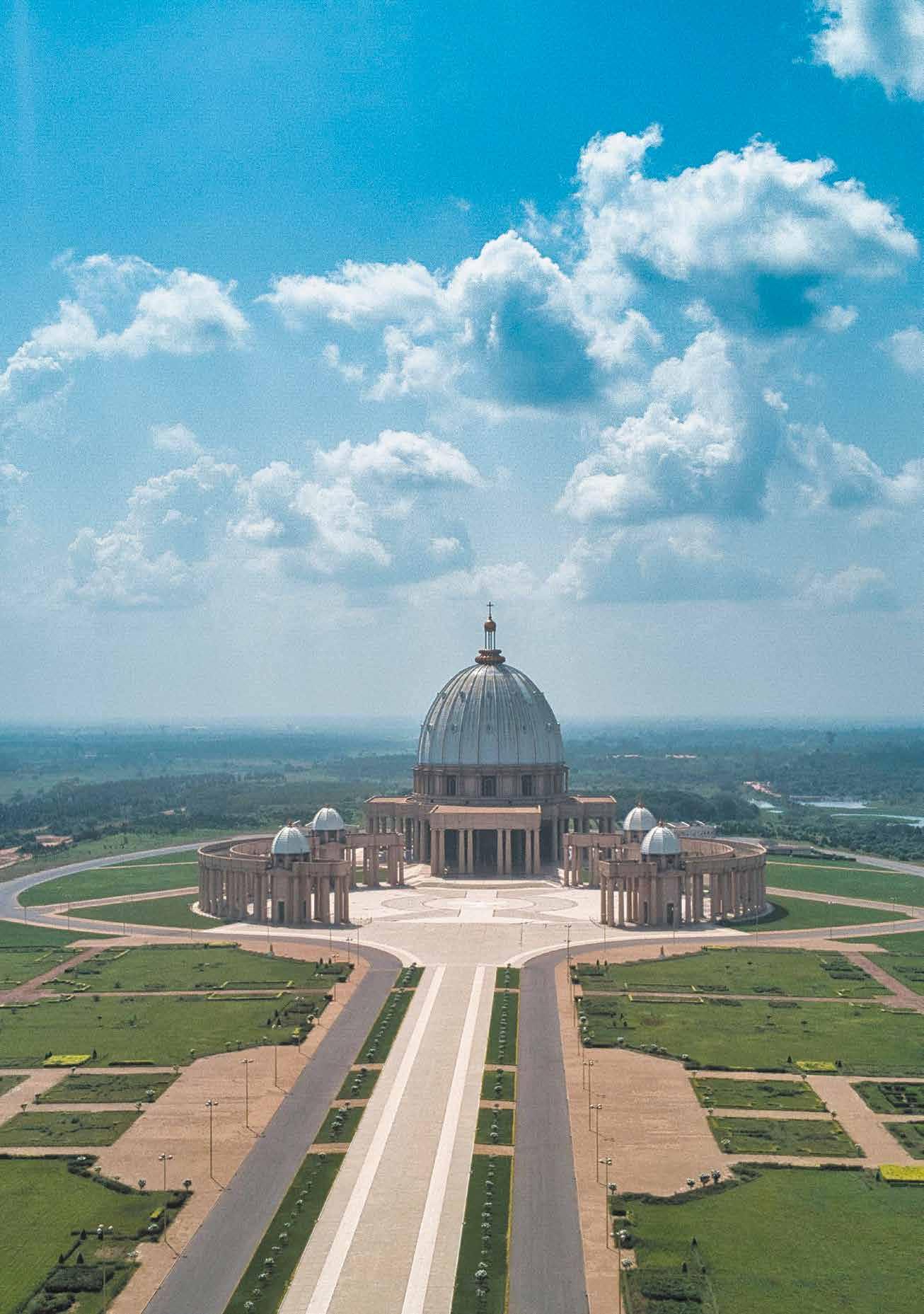
FIRST STEPS IN CÔTE D’IVOIRE
WHERE TO STAY IN ABIDJAN
Abidjan has no shortage of recently opened or refurbished business hotels and attractive establishments that are perfect for combining business with leisure and culture activities. Below is an essential but by no means exhaustive list.
Sofitel Abidjan Hotel Ivoire
The Sofitel Abidjan Hotel Ivoire is emblematic in Côte d’Ivoire and located in the economic capital. The hotel comprises two buildings, one of which is 100 metres tall and is visible from as far as the other side of Ebrié Lagoon. Sofitel Abidjan Hotel Ivoire has 426 rooms and spacious suites, a spa, a 3-D cinema, and a large outdoor swimming pool. The business services and facilities include sixteen seminar rooms and a conference centre that accommodates 1,650 persons. The Accor Group, which owns the hotel, has a significant presence in Abidjan where it also has a Pullman, a Mövenpick, two Novotel hotels, and an Aparthotel. www.accorhotels.com
Tiama Hotel, Abidjan
Situated in the heart of the Plateau district, Tiama Hotel offers an ideal place to stay in Abidjan, where you can enjoy its swimming pool just a stone’s throw from the country’s principal economic and administrative institutions. The hotel ,which is also one of the oldest hotel buildings in Côte d’Ivoire, has continued over the years to modernise successfully, celebrating fifty years in the hospitality business in 2022. It offers 137 recently refurbished rooms ranging from Standard to Executive Suite. www.hotel.tiama.ci
AN AdVENTURE, a retreat, an EXPeRIENCE
Whether you’re seeking an adrenalin rush or total relaxation, or maybe a bit of both, CÔTE D’IVOIRE offers a stress-free bubble in its capital Abidjan and in its urban parks. Benefit from reconnecting with nature in Bingerville Botanic Garden, Dahlia Fleur Nature Reserve, the National Plant Centre situated in Cocody and in Banco National Park.
AIMÉE, the 126-year-old tortoise, BOGA the chimpanzee and CAN the elephant can’t wait to meet you at the zoo. Come on, let’s head for the zoo!
The west of the country invites lovers of slow tourism and offers the chance to explore the primary forest of Taï National Park, a natural barrier against human activity. A UNESCO World Heritage Site since 1982, it is a protected area for 1,300 species of plants and 1,000 animal species. For a bigger thrill, climbing the Dent de Man mountain or crossing the rope bridge while keeping your balance are always a challenge.
Relax in Assinie on a short boat trip round the Îles Ehotilé National Park, a small six-island archipelago, before basking in the sun, and then end the day by sitting next to the beach to savour braised chicken.
GRAND-BASSAM A HISTORICAL TREASURE
An authentic colonial period experience
Place de la République, Immeuble Ex-EECI 01 BP 8538 ABIDJAN 01 – Tel.: +225 27 20 25 16 00
Cocody Ambassades (Villas) behind the World Bank – Tel.: +225 27 22 22 41 10

Noom Hotel Abidjan Plateau
It is difficult to miss the 24-floor hotel silhouetted against the sky on the banks of Ebrié Lagoon in Plateau district. The Noom Hotel Abidjan Plateau was opened in 2021 by the pan-African group Mangalis, which, since 2017, has also owned the Seen Hotel Abidjan Plateau. Resolutely modern in design, the Noom offers 179 rooms and suites and 21 furnished apartments as well as an outside infinity pool overlooking the south of the capital from the seventh floor, a fitness centre, spa, and more than 3,000 m² of modulable conference and reception rooms.
https://www.mangalis.com/hotels/noom-hotel-abidjan-plateau
Azalaï Hotel Abidjan
Opened in 2017 in the Marcory commune by the pan-African Azalaï Hotels group, the Azalaï Hotel Abidjan is ideally located between the Plateau business district, now even more accessible thanks to the new highway interchange, the capital’s two commercial centres, and the international airport. The hotel has fourteen floors and 200 spacious rooms (38 m2 minimum) that provide a spectacular view of the city.
https://www.azalai.com/azalai-hotel-abidjan
Radisson Blu Hotel Abidjan Airport
A five-star establishment that opened in 2016, the Radisson Blu Hotel Abidjan Airport has rapidly become one of the nerve centres for top-level business meetings. It offers tailored solutions for persons visiting the capital on business. It comprises 261 rooms and suites and thirteen reception rooms, the largest accommodating up to 650 persons.
www.radissonblu.com
EXCURSIONS OF A FEW HOURS
OR A WEEKEND
Visiting Banco National Park
Situated on the outskirts of Abidjan and accessible via the motorway that runs north, this remnant of the primary forest which once covered the entire region offers 84 km of trails to explore over 3,500 hectares. Bano National Park is home to numerous species of butterflies, monkeys, and birds. It has an arboretum with an extensive collection of 626 species, 26 of them classified as rare in West Africa, and not forgetting the kosipo, a West African Cedar that is over 500 years old. Restoration work was funded at the beginning of the decade at a cost of 5.9 billion CFA francs by the Japanese government and the Global Environment Fund. The monies were earmarked to build secure entrances to the park, the recreation area by the lake, the river which is home to catfish, and for solar installations.
Visiting Boulay Island
Ile Boulay or Boulay Island is a much-favoured resort because it is a nature reserve and out-of-the way, but still close to the Abidjan city centre, a mere fifteen minutes by boat. Ile Boulay lies in Abidjan’s lagoon, near the autonomous port. It can be accessed by public transport from the Yopougon district or by booking a private transfer, a more expensive alternative. Some hotels provide transfers because they seek to develop “billionaires’ bay”. The trip is an example of the wonderful excursions possible along the Ivorian Atlantic coast to cities as as far off as Jacqueville and Grand-Lahou in the west, where the lagoon stretches along the ocean coast.
Strolling in Grand-Bassam
Grand-Bassam, Côte d’Ivoire’s capital from 1893 to 1900, is situated around forty kilometres east of Abidjan. It boasts superb beaches along the Atlantic coast and Ébrié Lagoon. A UNESCO World Heritage site since 2012,its neighbourhoods lined with old houses are reminders of its glorious past as the country’s economic and administrative centre and main port. The houses’ galleries, verandas and gardens are typical of the late nineteenth-century colonial urban style. The city and its more than 100,000 inhabitants are not dwelling on the past, however, they are modernising. Its sandy beaches, crafts and numerous hotels makes Grand Bassam the preferred weekend destination for thousands of Abidjan’s inhabitants.
A weekend in Assinie
Beyond Grand-Bassam there are the fabulous landscapes of Assinie, a seaside resort which can be reached by boat from Abidjan. Between the lagoon and the ocean lies a 15 km strip of land which has become a special retreat for the Abidjan jet-set. Magnificent hotels and villas stand along a stretch of fine, white sandy beach on the ocean side and on the shores of Aby Lagoon which can only be reached by boat. Assinie has several fine hotels that include the Coucoué Lodge and the African Queen Lodge, and there are other numerous places to stay at more reasonable prices that are also located in this perfect environment for swimming and water sports.
ENTRY AND HEALTH FORMALITIES
A visa is required for most people travelling to Côte d’Ivoire. Visas can be obtained from the relevant Ivorian diplomatic mission. Visas can also be obtained on arrival at the airport by applying online, on the website of the issuing authority, the Société nationale d’édition de documents administratifs et d’identification (SNEDAI at www.snedai.com).
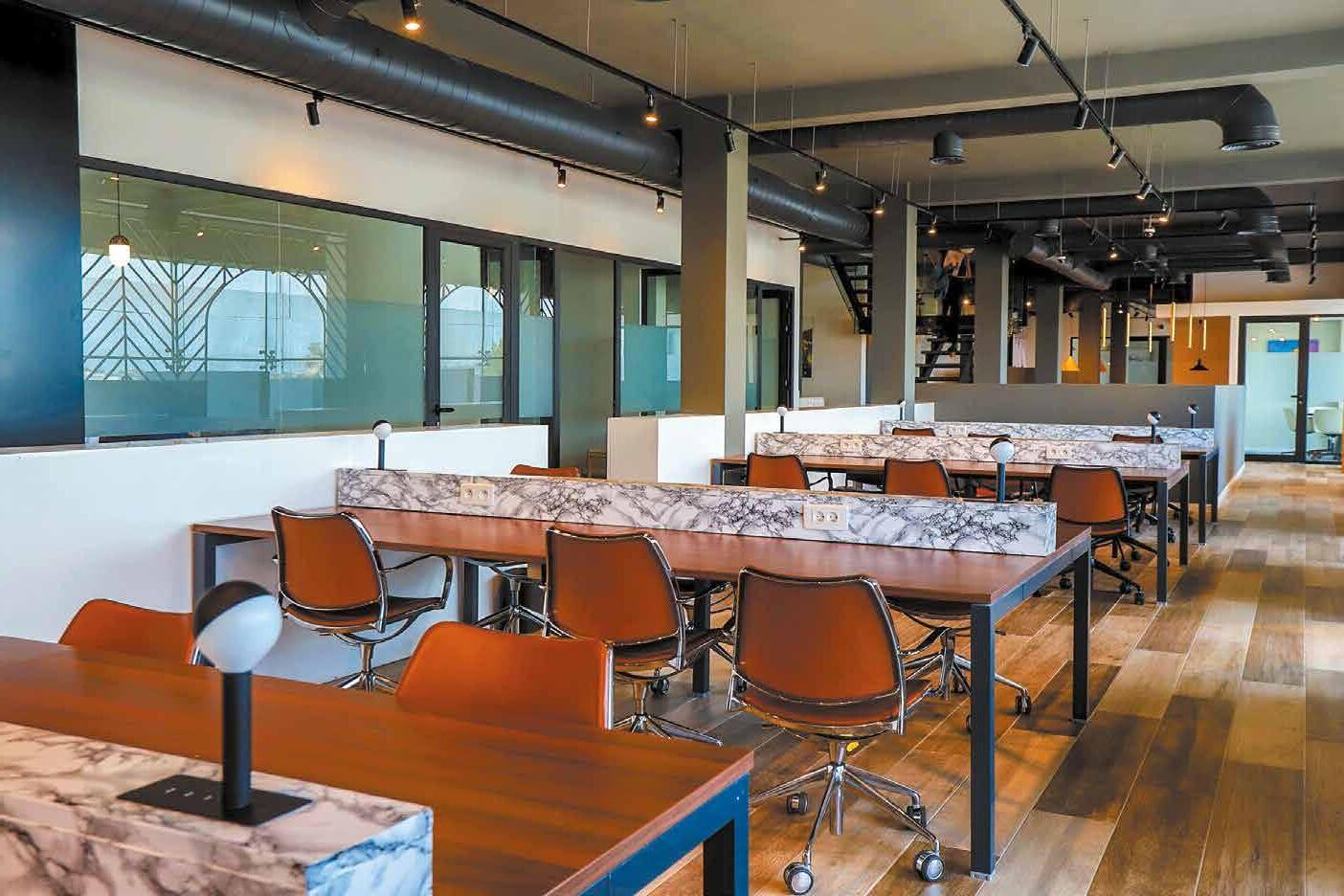
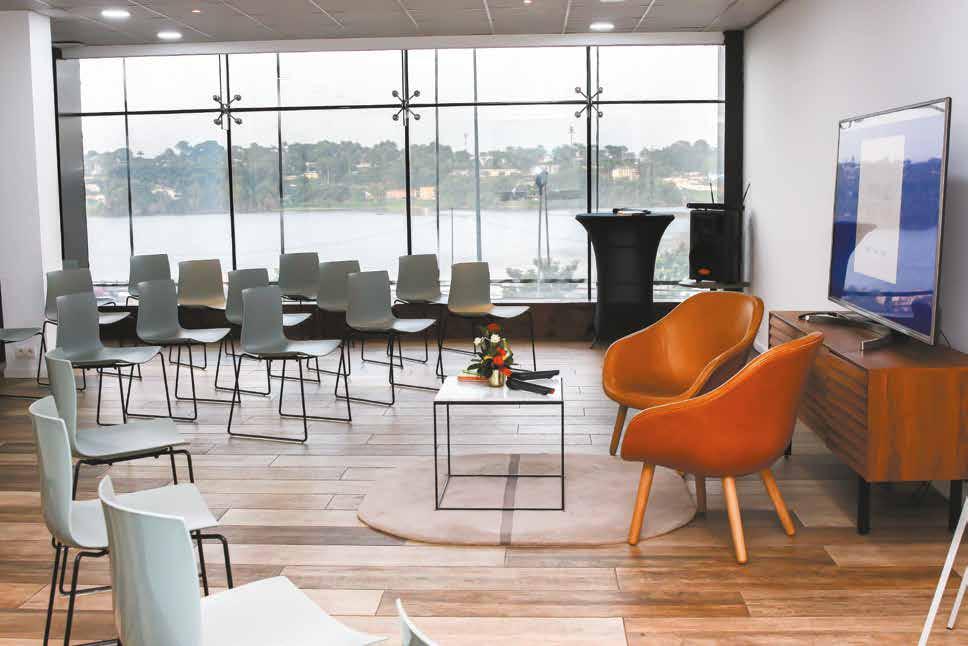
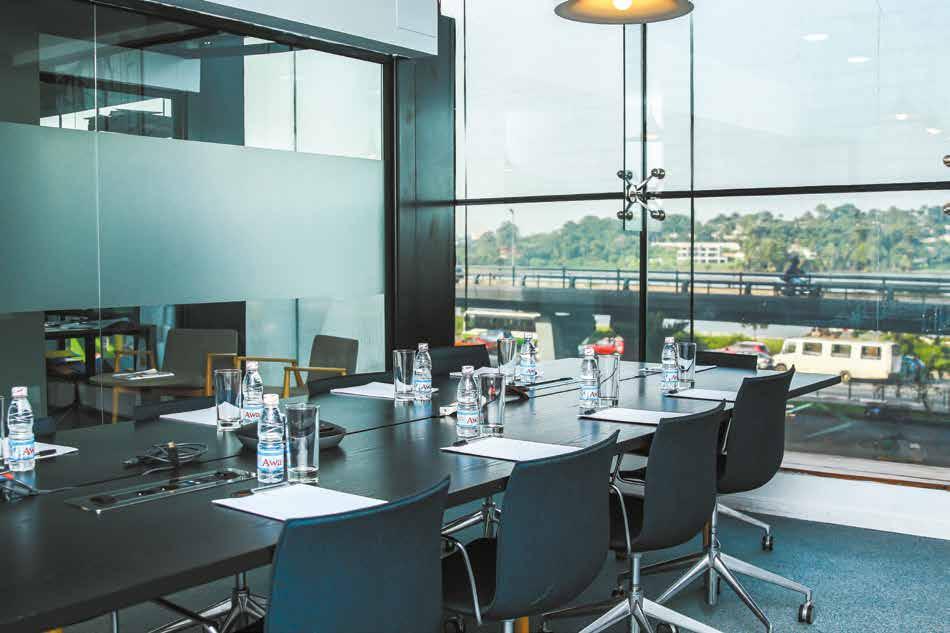
The RWC is an established brand which provides a dynamic community of business travellers, entrepreneurs and industry leaders in Africa access to office space to work and hold meetings and events. The RWC is re-inventing the experience of working in West Africa by offering high-end workspaces in a Premium Business Club.



Persons who are nationals ECOWAS member states do not need a visa for stays of less than one month and the same applies to those the citizens of the Central African Republic, the Republic of the Congo, Morocco, Mauritania, the Seychelles, Singapore, Chad, Tunisia, and the Philippines.
Vaccination against yellow fever is compulsory. Vaccination against hepatitis A and B and typhoid fever are recommended, as is preventive treatment for malaria.
GETTING HERE
Numerous airlines serve the Félix Houphouët-Boigny international airport from across the world, including Air France, Lufthansa, Emirates, Turkish Airlines, Ethiopian Airlines, Brussels Airlines, Qatar Airways, Swiss International Air Lines, Delta, Air Canada, Air Senegal, Air Algeria, Kenya Airways, Tunis Air, and Egyptair.
A mission of enabling growth and economic progress.
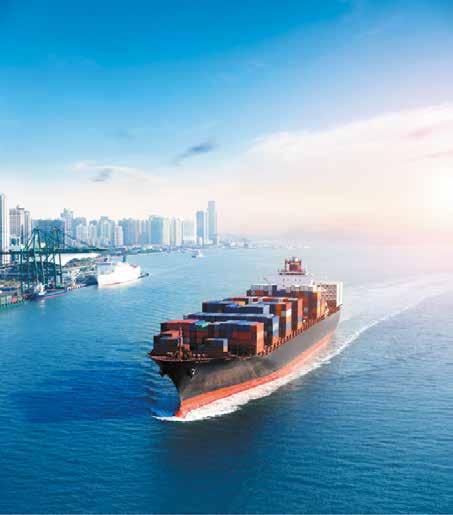
CLIMATE
In Abidjan and along the coast, the climate is subtropical, with temperatures varying from 25 to 32 degrees and 80 to 90% humidity. The most pleasant period runs from November to mid-March, one of the two dry seasons. The middle of the country has a humid tropical climate, with temperatures ranging from 14 to 33 degrees and 60 to 70% humidity. The north of the country experiences a Sudanese-type climate with a dry, cool wind blowing during the Harmattan season from December to February.
CURRENCY
Like all African countries in the franc monetary zone, the CFA franc is the currency in Côte d’Ivoire. Its rate of exchange with the euro is fixed: 1 euro = 655.957 CFA francs.
LOCAL TIME ZONE
GMT + 00:00
“50
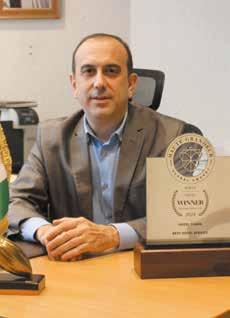
Patrick Delaide, General Manager, Tiama Hotel
YEARS OF RESILIENCE AND PRESTIGE IN THE HEART OF ABIDJAN”
Since its opening in October 1972 by the Omaïs and Khalil families, Tiama Hotel has become a symbol of luxury and resilience in Abidjan. Situated in the Plateau business quarter, it has successfully weathered half a century of economic and social turbulence to emerge as a benchmark for the hotel sector. Certified ISO 9001-2015, Tiama is recognised for its excellent service and its key role in the local economy. In celebrating its fiftieth anniversary, the hotel confirms its continued status as a pillar of Abidjan’s modern history.
How has Tiama dealt with the increased competition in recent years?
Tiama Hotel has opted to invest strategically in its facilities, services and team training. The recent renovation of its rooms and the creation of new spaces reflect its commitment to staying at the forefront of innovation. The hotel has also updated its technological tools with user-friendly online booking systems and advanced hotel management solutions to optimise operational efficiency and enhance the customer experience. Tiama has consolidated its marketing efforts through targeted campaigns, developing an active presence on social networks and establishing partnerships with local businesses, opinion leaders and influencers to enhance its visibility. At the same time, attentive customer service, a dynamic guest retention programme and proactive listening to customer feedback are the pillars on which its strategy is based. The hotel
is also committed to social and environmental responsibility through sustainable practices aimed at reducing its environmental footprint and through community initiatives that contribute to general wellbeing.
What is the hotel doing to help achieve the ambitions contained in the “Sublime Côte d’Ivoire” strategy?
In the context of this national initiative, Tiama is fully supportive of the country’s ambitions for leisure and business tourism. The hotel draws international tourists seeking luxury as well as business travellers in equal measure thanks to its high-quality facilities that are adapted to business needs, thereby reinforcing Abidjan’s reputation as the regional economic hub. Recently awarded five-star status and named the country’s best hotel by TripAdvisor, Tiama continues to distinguish itself through the excellence of its services.
The Tiama Hotel was home to the Egyptian national football team during t he qualification phase of the Africa Cup of Nations 2023 – how was that?
It was a memorable moment for the hotel. While the Egyptians, Angolans, and CAF VIPs were staying with us, we successfully demonstrated our capacity to meet their needs. The hotel ensured the bookings were managed efficiently, extra security was provided, meals were adapted to suit the athletes’ needs, and special areas and rooms were made available for team meetings and physical preparation. The presence of football stars attracted international media attention, offering Tiama an unprecedented moment in the global spotlight
Boulevard de la République - 04 BPM 643 Abidjan 04 Plateau reservation@hotel.tiama.ci

Acronyms & Abbreviations
AAP Abidjan Autonomous Port
AFCON Africa Cup of Nations
AfDB African Development Bank
APPO African Petroleum Producers’ Organization
ARTCI Côte d’Ivoire Telecommunications Regulatory Body [Autorité de régulation des télécommunications de Côte d’Ivoire]
ASACI Côte d’Ivoire Association of Insurance Companies [Association des sociétés d’assurance de Côte d’Ivoire]
BCEAO Central Bank of West African States [Banque centrale des États de l’Afrique de l’Ouest]
BIC Credit Information Bureau [Bureau d’information sur le credit]
BRVM Regional Stock Exchange [Bourse régionale des valeurs mobilières]
CCDR Country Climate and Development Report
CEPICI Côte d’Ivoire Investment Promotion Centre [Centre de promotion des investissements en Côte d’Ivoire]
CIMA Inter-African Conference of Insurance Markets [Conférence interafricaine des marchés d’assurance]
CMB Bafing Mining Company [Compagnie minière du Bafing]
CRCA Regional Insurance Control Commission [Commission régionale de contrôle des assurances]
ECOWAS Economic Community of West African States
EFF/ECF Extended Fund Facility/Extended Credit Facility
FAO United Nations Food and Agricultural Ogranization [Organisation des Nations unies pour l’alimentation et l’agriculture]
FDI Foreign Direct Investment
FEMUA Anoumabo Urban Music Festival [Festival des musiques urbaines d’Anoumabo]
FIP Forest Investment Project
GUCE Single Window for Foreign Trade [Guichet unique du commerce extérieur]
IC Ivoire Coltan Company
IFAD International Fund for Agricultural Development
IFS International Finance Society
IMF International Monetary Fund
IMMSA Ivorian Manganese Mine Company [Société ivoire manganèse mines SA]
IsDB Islamic Development Bank
JICA Japan International Cooperation Agency
MASA Performing Arts Market [Marché des arts du spectacle vivant]
MDG Millennium Development Goals
NDP National Development Plan
NOCI West Côte d’Ivoire Nickel Company [Compagnie nickel de l’Ouest Côte d’Ivoire]
PONAPEDA National Policy for the Development of Livestock, Fisheries and Aquaculture [Politique nationale de développement de l’élevage, de la pêche et de l’aquaculture]
REDD Reducing emissions from deforestation and forest degradation
RSF Resilience and Sustainability Facility
SACO African Society of Cocoa [Société africaine de cacaco]
SELAB Abidjan Livestock Summit [Sommet de l’élevage d’Abidjan]
SGCI Côte d’Ivoire Société Générale Bank
SILA Abidjan International Literary Festival [Salon international de la littérature d’Abidjan]
SIREXE International Extractive and Energy Resources Fair [Salon international des ressources extractives et énergétiques]
SODEMI Côte d’Ivoire Mining Development Company [Société pour le développement minier de la Côte d’Ivoire]
TIPSP San-Pédro Multipurpose Industrial Terminal [ Terminal industriel polyvalent de San-Pédro]
UN United Nations Organization
WACA West Africa Coastal Areas Management Program
WADB West African Development Bank
WAEMU West African Economic and Monetary Union
WAMU West African Monetary Union
WHO World Health Organization
Advertisers’ Details
2A LOGISTICS & TRADING
Transport
Managing Director: Josaeph AHOSSI
www.2alogistics.com Page: 125
AFFECTIO MUTANDI
Corporate Social Responsibility Committee
CEO: Pierre-Samuel GUEDJ www.affectiomutandi.com Page: 117
AFRICA GLOBAL LOGISTICS
Transport and logistics
Managing Director: Asta Rosa CISSÉ www.aglgroup.com Page:
AFRICA RE
Reinsurance
Managing Director and CEO: Dr Corneille KAREKEZI www.africa-re.com Pages:
AFRIKA BANQUE CÔTE
D’IVOIRE
Banking
Managing Director: Habib BLEDOU https://afrikabanque.ci Page: 57
AIR CÔTE D’IVOIRE
Airline Company
Managing Director: Laurent LOUKOU www.aircotedivoire.com Page: Inside back cover
AMBITION AFRICA
Forum for Franco-African Economic and Trade Relations https://event.businessfrance.fr/ ambition-africa Page 103
AMSA ASSURANCES
Insurance
Managing Director: Samba YATASSAYE
www.amsaassurancesci.com Page: 67
ANSTAT (National Statistics Agency)
Economic Statistics and Analysis Director General: Thiekoro DOUMBIA
www.anstat.ci Pages: 28-29
ARTCI (Telecommunications Regulatory Body)
Telecommunications
Managing Director: Lakoun OUATTARA
www.artci.ci
Pages: 140-141
ATLANTIC FINANCIAL
GROUP
Banking
Managing Director: AFG Holding Sionlé YEO
www.afgholding-sa.com Page: 33
ATLANTIQUE ASSURANCES
Insurance
Managing Director: Estelle Tagnongoh TRAORÉ www.atlantique-assurances.net Page: 69
AZALAÏ Hotel
Donald AKA, Managing Director, Salam Management Services www.azalai.com Pages:
BIOSYNERGIE
Health
Managing Director: Dr Koré ZOULOU
www.biosynergie.ci
Page: 102
CCIFCI (France Côte d’Ivoire Chamber of Commerce and Industry)
Business Federation/Economic Development
Chairman: Dominique: MALEZIEUX
Managing Director: Amaury POURKIER www.ccifci.org
Page: 91
CGRAE (Pension Fund and Civil Service Superannuation)
Pension Fund
Director General: Abdrahamane BERTE www.cgrae.ci
Page: 39
CIAPOL (Ivorian Antipollution Centre)
Environment and Antipollution
Managing Director: Bernard Ossey YAPO https://ciapol.ci
Page: 105
CIMAF (Africa Cement Company)
Construction Materials
Managing Director: Abdelali TEMSAMANI
https://cimentsafrique.com Page: 79
CITI Bank
Managing Director: Viviane BAKAYOKO www.citigroup.com
Page: 150
CMA CGM
Transport
Managing Director: Alae RAHMOUNE
www.cma-cgm.com Page: 151
CNPS
(National Social Security Fund)
Health
Managing Director: Denis Charles KOUASSI www.cnps.ci Page: 17
COFINA
(African Finance Company) Microfinance
CEO: Managing Director: Jean-Luc KONAN
www.cofinacotedivoire.com Page: 61
CÔTE D’IVOIRE TERMINAL
Transport
Managing Director: Koen de BACKKER https://cotedivoireterminal.com Page: 129
ENSEA
(Abidjan National Institute of Applied Statistics and Economics) Higher Education Director: Dr Hugues K. KOUADIO https://ensea.ed.ci Pages: 70-71
EPC GROUP
Mining
EPC Group Africa, Director: Jean-Jacques KOUA www.epc-groupe.com Page: 83
ERC FRANCE
Fuel Additives Manufacturer
Managing Director: Gabriel HOURI www.erc-france.fr / www.erc-online.de Page: 161
ERIUM
Energy
CEO: Alexandre DUFOUR www.erium.fr Page: 116
ÉTUDE NOTARIALE ADZEU
Notary Firm
Arthur Raoul ADZEU, Notary etudeadzeu@notaire.ci Page: 38
FARAH POLYCLINIQUE
Health
CEO: Dr Oualid ZAHREDDINE www.polycliniquefarah.com Page: 45
FORVIS MAZARS
Auditors
Deputy Director: Zana KONÉ www.forvismazrs.com.ci Page: 27
GESTOCI
(Côte d’Ivoire Oil Stocks Management Company) Hydrocarbons
Managing Director: Ibrahima DOUMBIA www.gestoci.ci Page: 113
INP-HB
(Félix Houphouët-Boigny National Polytechnic Institute) Higher Education and Research Director: Moussa DIABY Moussa DIABY www.inphp.edu.ci Page: 90
ISRAELI EMBASSY
Diplomatic Mission
Ambassador Simon SEROUSSI www.abidjan.mfa.gov.il Page: 115
LAGUNE EXPLORATION
AFRIQUE
Mining
CEO: Moumini BICTOGO www.laguneexploitationafrique.net Page: 23
LE CONSEIL DU CAFÉCACAO
Coffee and Cocoa
Managing Director: Yves Brahima KONÉ www.conseilcafecacao.ci Page: 87
LMC GROUP
Consultancy and Training
Managing Director: Konan Roger N’GUESSAN info@lmcgroup.net Page: 49
MANTRA IVOIRE
Transport
Deputy Managing Director: Mohamed SANGARE mantraivoire@olamnet.com Page: 124
MINISTRY OF TRANSPORT
Transport
Minister Amadou KONÉ www.transports.gouv.ci Page: 122-123
MINISTRY OF TOURISM AND LEISURE
Tourism
Minister Siandou FOFANA www.tourisme.gouv.ci Page: 94
NOOM MANGALIS HOTEL
Hotel
Managing Director: Richard ROBAIX www.mangalis.com Page:11
Advertisers’ Details
NOVARTIS
Health
Managing Director: Manon COULIBALY www.novartis.com Page: 101
NATIONAL TOURIST OFFICE
Tourism
Managing Director: Malékah MOURAD-CONDÉ www.tourismecotedivoire.ci Pages: 95 & 145
OFT
(Public Transport Flow Observatory)
Transport General Secretary: Dr Mohamed KOUYATÉ http://fluiditetransport.gouv.ci Page: 13
OIC (OFFICE OF IVORIAN SHIPPERS)
Transport Managing Director: Sidibé ISSOUFOU www.oic.ci Page: 121
OPTIMUM INTERNATIONAL
HR Training and Consultancy
Managing Director: Oumar TRAORÉ www.optimuminternationalci.com Page: 107
ORANGE CÔTE D’IVOIRE
Telecommunications Managing Director: Mamadou COULIBALY www.orange.ci Pages: 18-19
UNITED NATIONS GLOBAL COMPACT
International Organisation Country Director: Dominique KADJA https://unglobalcompact.org Pages: 50-51
PISAM
(Sainte-Anne-Marie International Polyclinic)
Health
CEO: Éric DJIBO
www.groupepissam.com Page: 100
ABIDJAN AUTONOMOUS PORT
Port
Managing Director: Hien Yacouba SIE www.portabidjan.ci Page: 24-25 and back cover
SAN-PÉDRO AUTONOMOUS PORT
Port
Managing Director: Hilaire LAMIZANA https://sanpedro-portci.com Pages: 130-132
PORTEO GROUP
Construction
Managing Director: Hassan DAKHLALLAH www.porteo-group.com Page: 147
ROYAL WORK CLUB
Coworking Director: Robin NICOLET www.royalworkclub.com Page: 149
SEA-INVEST
Transport
Managing Director: Myriam OUASSENAN www.sea-invest.com Pages: 134-135
SIFCA GROUP
Agro-industry Chairman of the Board: Alassane DOUMBIA https://groupesifca.com Page: inside front cover
SOCIÉTÉ DE CIMENT DE CÔTE D’IVOIRE
(Côte d’Ivoire Cement Company) Cement
Managing Director: Nahoua Bakary YEO https://sc-ci.com Page: 82
SOCIÉTÉ GÉNÉRALE CÔTE D’IVOIRE
Banking
Managing Director: Patrick BLAS https://societegenerale.ci Page: 55
TIAMA
Hotel
General Manager: Patrick DELAIDE www.hotel.tiama.ci Page: 152-153
UEMOA (West African Economic and Monetary Union – WAEMU) West African Organisation Department of Business Development, Mines, Energy and Digital Economy (DEMEN) Paul Koffi KOFFI, Commissioner www.uemoa.int Page: 32
VEONE CORP
Telecommunications
Managing Director: Faycalath OUATTARA www.veone.net
Page: 139
Notepad



Market leader in concentrated additives
Become ERC’s partner in Côte d’Ivoire and West Africa
• 30 YEARS OF MANUFACTURING EXPERIENCE
• 285 PATENTED FORMULATIONS
• ADDITIVE DEVELOPMENT AND TESTING
• 10 MILLION LITERS OF CONCENTRATED ACTIVE INGREDIENTS PRODUCED ANNUALLY
• 460 KILOTONS OF CO2 EMISSIONS SAVED THROUGH PREMIUM-QUALITY ADDITIVES
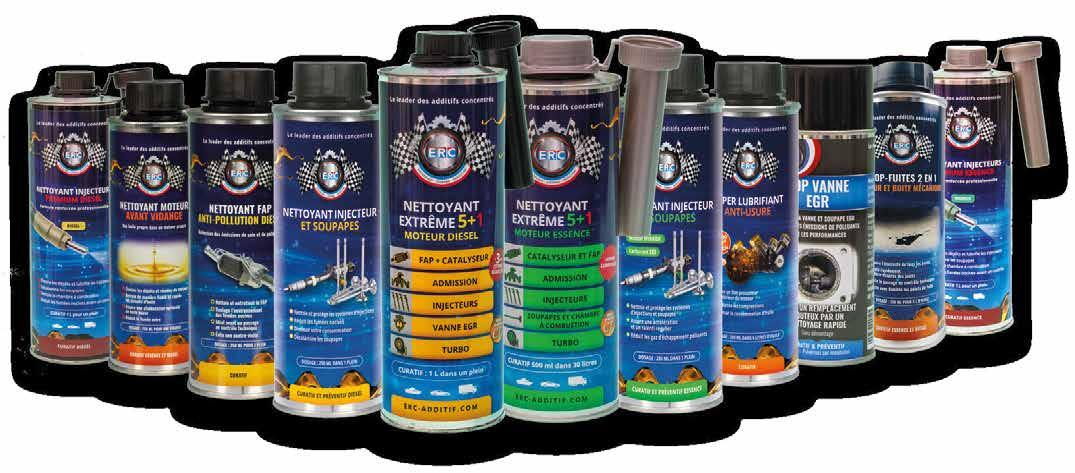
ERC, a leading manufacturer of fuel additives and advanced automotive lubricants, is seeking a partner to expand its Premium range through automotive distribution networks in Côte d’Ivoire and across West Africa Apply now ERC France - 6 rue de l’Épinette - ZAC Croix Saint-Claude 77340 Pontault-Combault

Notepad