Goodwill of Central and Northern Arizona turns donations into possibilities by providing no-cost services to more than 30,00 Arizonans annually that help them build a better economic future.
Your purchases and donations help support local, no-cost career services, education, sustainability efforts and housing solutions so Arizonans can build better futures for themselves and their families.
Goodwill of Central and Northern Arizona is a 501(c)(3) non-profit organization dedicated to ending poverty through the power of work! GoodwillAZ.org
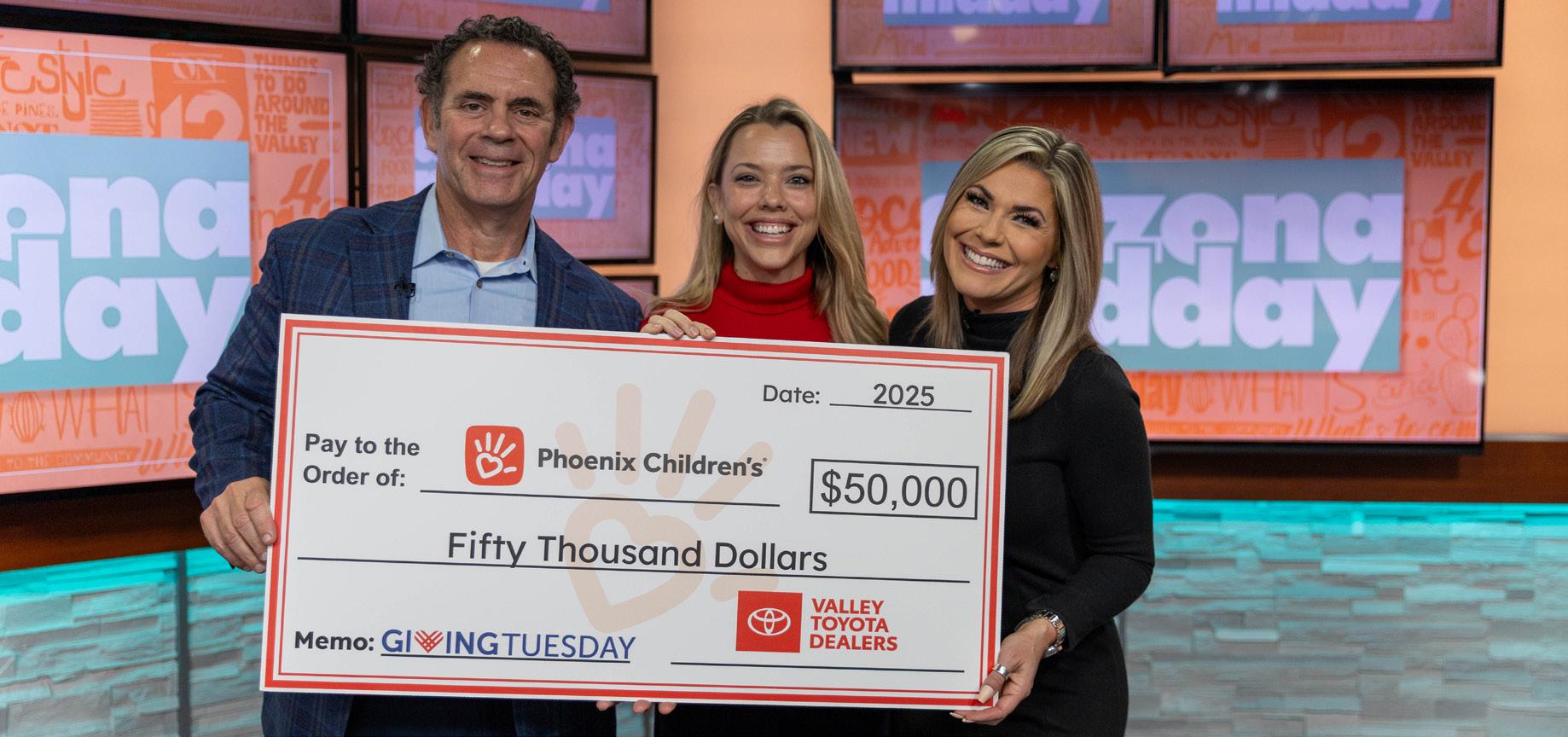
This month spotlighting Valley Toyota Dealers association, Tyler Butler’s series explores the myriad ways businesses give back and the positive ways their programs impact our community.
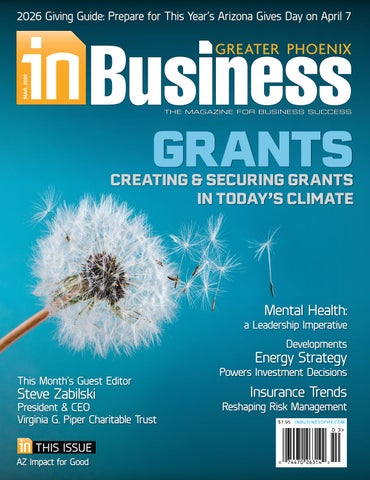
Grants: Creating & Securing Grants in
In Business Magazine reached out to a select sample of both philanthropist-funded foundations and nonprofit arms of for-profit business for this spotlight on Metro Phoenix’s grant landscape — and they share the purpose behind their individual grantmaking and the decisions around the types of organizations they support.
DEPARTMENTS
9 Guest Editor
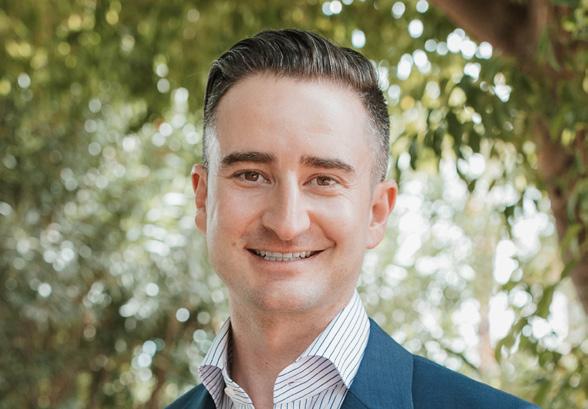
Steve Zabilski, president and CEO of Virginia G. Piper Charitable Trust, introduces the “Grants” issue.
10 Feedback
Palmer Nackard, Brandon B. Rafi and Jody Sarchett respond to In Business Magazine’s burning business question of the month: How does employee involvement in your company’s philanthropic activities impact their engagement at work?
12 Briefs
“Workplace Safety Starts at the Top: Practical Steps Every Business Can Adopt,” “Dailies Top Stories,” “Local Standouts Recognized for Achievements and Philanthropy,” “Cycle Boat Brings Party Cruisin’ to Tempe Town Lake, Pedaling Optional” and “New Class-Action Lawsuit Trend Potential Threat to Bar and Restaurant Owners”
15 CRE
“The Partnership of Hospitality and Healthcare,” “Historic Phoenix Logistics Development on Infill Space” and “Flexible Warehouse Space in Tempe”
16 Semi Insights
“The Power of Global Partnerships in Shaping the Future of Innovation,” “Amkor Doubles Down on Arizona” and “From Fabs to Classrooms”
20 Healthcare
“How Workflow-Ready Diagnostics Support Dental Practice Growth” and “The Shift to Personalized Cancer Care”
FEATURES
30 Mental Health Is a Leadership Imperative
Levi King adds personal perspective as he examines survey findings that small business owners struggle with mental health.
35 Powering the Next Wave of Development in Arizona
John Mitman discusses the forces making energy strategy now a core investment decision.
37 Bridging the Talent Shortage
Bryan DiGiorgio explores why businesses must adopt nearshoring strategies for scalable growth.
38 The Power of Fun at Work
Kate Zabriskie explains why it’s more than just a good time.
“Phoenix in the STEM Job Market” and “It’s 2026. Is Your Website Optimized for SEO/AEO?”
New releases give fresh insights on business thinking.
James Jorgensen discusses top business insurance trends reshaping risk management in 2026.
Alycia Moss and Catherine Renshaw examine how hiring skilled foreign talent has just gotten more complicated for employers.
Vannessa Moreno explores how hiring justice-impacted talent can unlock workforce potential.
2026 Audi RS 6 Avant
Plus: Modular security systems can be a practical asset.
Red, White & Brew Reintroduces Itself to Mesa
Chelsie Bruggeman discusses organizational health, talent retention, the bottom line and why she created MOMentum.
RaeAnne Marsh
Editor in Chief, In Business Magazine
Editor in Chief, In Business Magazine
RaeAnne Marsh became editorial director of Phoenix-based InMedia Company in 2010 and helped launch Valley-wide business resource In Business Magazine. Holding the magazine to strong editorial standards, she says, “New businesses are founded, out-of-staters bring new strengths, established businesses evolve and expand — all of which contributes to the dynamic vitality that I see as the mission of In Business Magazine to be the voice of and vehicle to nurture. Marsh was awarded 2024 Small Business Journalist of the Year from the U.S. Small Business Administration, Arizona District.
Guest columns are feature articles presented as a special, limited series as well as regular, ongoing series in In Business Magazine
Tyler Butler
Guest Columnist – Social Impact
A long-time corporate social responsibility practitioner, Tyler Butler is known for her expertise in creating, launching and developing successful social impact programs. Her commitment to rallying people together to make a positive difference has created sustainable signature programs empowering people to give back in myriad ways globally. Her contributions to In Business Magazine provide her with an outlet to share the best of what companies are doing to aid humanity through their generous outreach efforts.
Kim Ryder
Guest Columnist – Commercial Real Estate
Kim Ryder is a dynamic commercial real estate executive with extensive experience in managing multimillion-dollar, complex projects and the build-out of more than 54 million square feet of retail and commercial space. Ryder has started several business lines in her career, most notably launching Thrive Real Estate and Development groups. Her career in the thrift industry extends over 25 years and led her team to expand the Goodwill real estate portfolio by more than 100 locations.
Bruce Weber
Guest Columnist – Capacity
“I am deeply interested in organizational capacity and what makes organizations successful and impactful in the work they do. I have worked with all sizes of organizations and leaders in helping their businesses grow and expand their impact. My previous careers with Microsoft and Hewlett Packard involved working with business integration partners to design strategies to engage new markets. In today’s complex world, I enjoy exploring the possibilities and opportunities that change can bring.”
This month’s contributors
Chelsie Bruggeman is founder and CEO of MOMentum. (“MOMentum, Organizational Health, Talent Retention and the Bottom Line,” page 66)
Bryan DiGiorgio is the founder and CEO of 1840 & Company, a global outsourcing and remote talent solution provider. (“Bridging the Talent Shortage,” page 37)
James Jorgensen is a princip al and executive vice president of business insurance at Marsh McLennan Agency. (“Top Business Insurance Trends Reshaping Risk Management in 2026,” page 32)
Levi King is CEO and co-founder of Nav, which helps small business owners build their credit health. (“Mental Health Is a Leadership Imperative,” page 30)
Andy Lombard is the founder and managing partner of Tesoro Venture Capital, an AI + Semiconductor accelerator and venture fund. (“The Power of Global Partnerships in Shaping the Future of Innovation,” Page 16)
John Mitman is the founder and CEO of Obodo Energy Partners, a leading provider of large-scale solar and energy infrastructure solutions. (“Powering the Next Wave of Development in Arizona,” page 35)
Vannessa Moreno is manager of Community Development & Engagement at Valley of the Sun United Way. (“How Hiring Justice-Impacted Talent Can Unlock Workforce Potential,” page 40)
Alycia Moss is a director in Fennemore’s Immigration practice group. Catherine Renshaw is an associate attorney at Fennemore whose practice focuses on immigration law. (“New Rules for H-1B Visas – Employers Take Note,” page 34)
Kate Zabriskie is the president of Business Training Works, Inc., a Virginia-based talent development firm. (“The Power of Fun at Work,” page 38)
Editor in Chief RaeAnne Marsh
Associate Publisher Nico Pacioni
Graphic Design Marvin Forte
CONTRIBUTING WRITERS
Chelsie Bruggeman
David DeLorenzo
Bryan DiGiorgio
Ali Dugaw
Michelle Talsma Everson
Mike Hunter
Christina Johnson
James Jorgensen
Levi King
Olivia Lemorrocco
Andy Lombard
Adam McCann
John Mitman
Vannessa Moreno
Alycia Moss
Catherine Renshaw
David Spetzler
Kate Zabriskie
Greg Zwickl
ADVERTISING
Operations Louise Ferrari
Business Development Raegen Ramsdell
Louise Ferrari
Cami Shore
Events Amy Corben
WTSM TV STUDIO
General Manager Chris Weir
More: Visit your one-stop resource for everything business at inbusinessphx.com. For a full monthly calendar of business-related events, please visit our website.
Inform Us: Send press releases and your editorial ideas to editor@inbusinessphx.com
President Camron McCartney
Editorial Director RaeAnne Marsh
Financial Manager Tom Beyer
Office Manager Allie Jones
Accounting Manager Todd Hagen
Founder & Chair Rick McCartney
Corporate Office InMedia Company 45 W. Jefferson Street Phoenix, AZ 85003 T: (480) 588-9505 info@inmediacompany.com www.inmediacompany.com
We’re here to focus health care where it belongs: on you. You deserve the kind of care that goes beyond a chart or a prescription. It’s the kind of care that covers everything you need to live your healthiest life, including support from a whole team of doctors, nurses, and specialists to keep you feeling good. And it’s care that gives you all the benefits of a nationally recognized health care company with a hometown, personal touch.
In Business Magazine is a collaboration of many business organizations and entities throughout the metropolitan Phoenix area and Arizona. Our mission is to inform and energize business in this community by communicating content that will build business and enrich the economic picture for all of us vested in commerce.
PARTNER ORGANIZATIONS
Debbie Hann, Interim CEO Arizona Small Business Association Central Office (602) 306-4000 www.asba.com
Steven G. Zylstra, President & CEO Arizona Technology Council One Renaissance Square (602) 343-8324 www.aztechcouncil.org
Kristen Wilson, CEO AZ Impact for Good (602) 279-2966 www.azimpactforgood.org
Terri Kimble, President & CEO Chandler Chamber of Commerce (480) 963-4571 www.chandlerchamber.com
Joanna Horton McPherson, President NAWBO Phoenix Metro Chapter (480) 289-5768 www.nawbophx.org
Robin Arredondo-Savage, President & CEO Tempe Chamber of Commerce (480) 967-7891 www.tempechamber.org
Our Partner Organizations are vested business organizations focused on building and improving business in the Valley or throughout Arizona. As Partners, each will receive three insert publications each year to showcase all that they are doing for business and businesspeople within our community. We encourage you to join these and other organizations to better your business opportunities. The members of these and other Associate Partner Organizations receive a subscription to In Business Magazine each month. For more information on becoming an Associate Partner, please contact our publisher at info@inbusinessphx.com
ASSOCIATE PARTNERS
Ahwatukee Foothills Chamber of Commerce ahwatukeechamber.com
Arizona Chamber of Commerce & Industry azchamber.com
Arizona Hispanic Chamber of Commerce azhcc.com
The Black Chamber of Arizona phoenixblackchamber.com
Economic Club of Phoenix econclubphx.org
Glendale Chamber of Commerce glendaleazchamber.org
Greater Phoenix Chamber of Commerce phoenixchamber.com
Greater Phoenix Equality Chamber of Commerce gpglcc.org
Mesa Chamber of Commerce mesachamber.org
North Phoenix Chamber of Commerce northphoenixchamber.com
Peoria Chamber of Commerce peoriachamber.com
Phoenix Metro Chamber of Commerce phoenixmetrochamber.com
Scottsdale Area Chamber of Commerce scottsdalechamber.com
Scottsdale Coalition of Today and Tomorrow (SCOTT) scottnow.com
Surprise Regional Chamber of Commerce surpriseregionalchamber.com
WESTMARC westmarc.org
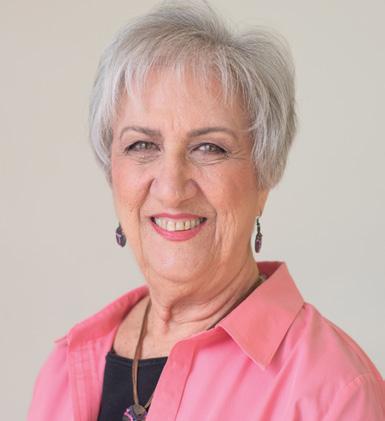
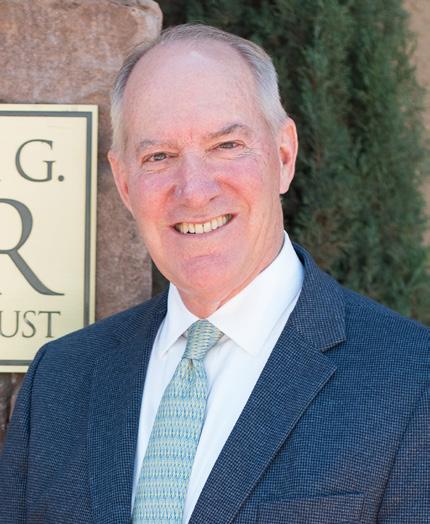
As president and CEO, Steve Zabilski leads Virginia G. Piper Charitable Trust’s mission to enrich health, well-being and opportunity for the people of Maricopa County. Zabilski joined Piper Trust as its CEO in 2023 after providing more than 17 years of service to the Trust as a Trustee and a member of its Investment and Audit committees. His background in both the business and nonprofit sectors provides the Trust and the community it serves with a leader who brings a distinctive combination of acumen and compassion to continue the legacy of Virginia Galvin Piper. pipertrust.org
Grants, Growth and Future
Grants represent more than funding for recipients — they are investments that empower communities to adapt and become stronger. Philanthropy at its finest can result in ripple effects far beyond its original intention.
Phoenix is home to a robust network of private foundations as well as nonprofit arms of for-profit businesses. Each tends to focus its attention and philanthropic efforts on community organizations that align with its particular aims or area of interest. The cover story this month delves into trends shaping how those funding decisions are made and how partnerships are formed.
While Phoenix ranks as the fifth largest city in the U.S., I’ve found that its philanthropic, business and government sectors often work together in uniquely collaborative ways with the same goals in mind: to fortify our communities and enrich quality of life for all. Much is underway in rooms, on Zooms, and at the bevy of interesting coffee shops and eateries that brighten our streets. Here, we are working together, across boardrooms, to find solutions to the pressing social challenges that touch us all.
Strong communities are not built by one sector alone. They are built when philanthropy, business and government recognize their shared stake in long-term prosperity.
Certainly, organizations make a difference through their giving. They can also make a difference through the people they choose to include. Valley of the Sun United Way’s Vannessa Moreno shares how hiring untapped talent through second-chance employment opportunities can unlock workforce potential as well as boost organizational culture and retention in this month’s Nonprofit feature.
Beyond philanthropy, business leaders are navigating an increasingly complex operating environment. They may find that processes for employment and consulting globally are getting more complicated, as Alycia Moss and Catherine Renshaw explain in the Legal feature “New Rules for H-1B Visas – Employers Take Note.”
Mental health has come out of the shadows and into mainstream dialogue in all sectors over the past few years. In the feature article “Mental Health Is a Leadership Imperative,” Levi King shares the results of a “study mapping the mental health landscape of small business ownership,” grounding the discussion in his own experience.
In addition to direct giving, a thriving community requires following the constantly changing dynamics of the modern marketplace. James Jorgensen examines how the tension between progress and caution continues to shape the insurance landscape, drilling down on the topic in the Economy feature “Top Business Insurance Trends Reshaping Risk Management in 2026.” And John Mitman explores the many forces at play today that have made energy strategy a core business decision in “Powering the Next Wave of Development in Arizona.”
Other topics range from optimizing websites for SEO and AEO (Answer Engine Optimization) to workplace safety, with business-relevant content in the regular monthly sections that focus on healthcare, technology, the semiconductor industry and much more.
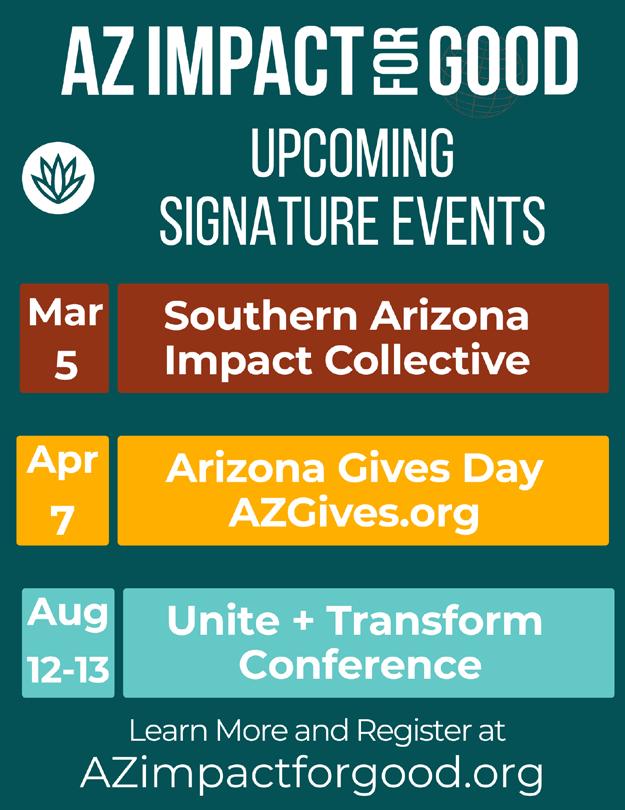
And, of course, continuing In Business Magazine’s annual support of Arizona Gives Day in collaboration with AZ Impact for Good, this March edition includes the 2026 Giving Guide to help businesses participate in the giving event on April 7.
I’m pleased to help bring you this March edition. It is rich with resources, ideas and inspiration that all can draw on — regardless of the sector you work in, volunteer or support. I hope you enjoy the read.
Sincerely,
Steve Zabilski President and CEO Virginia G. Piper Charitable Trust
Marketing/Exposure: advertise@ inbusinessphx.com
FEEDBACK QUESTION: Let us know what you want to know from the Valley’s top business leaders. editor@inbusinessphx.com
For all past Feedbacks go online to inbusinessphx.com and see what Valley executives think on various business topics.
How does employee involvement in your company’s philanthropic activities impact their engagement at work?
PALMER NACKARD
President Nackard Pepsi Sector: Beverage Distribution
Each year, our employees contribute to more than 450 local philanthropic causes and organizations, and this comes in a variety of forms that include financial gifts, sponsorships, volunteer hours, product donations and more. We gravitate toward programs that allow our employees to get hands-on and have fun, like the recent Cooler Runnings races, where a four-man Nackard Pepsi team designed a bobsled out of a cooler and competed to benefit the Flagstaff Family Food Center. We also make a conscious effort to support causes that have personal meaning to our team members, such as the Reserves Downhill Trails Project, which is expanding and improving mountain biking trails, a hobby that many of our employees enjoy on their own or with their families.
Getting out and engaged in the communities we serve creates personal relationships that make what we do less transactional and more rewarding. It gives our work a deeper meaning, which translates into stronger engagement, pride and satisfaction when our team members are in the office or on the job.
Nackard Pepsi nackard.com
Palmer Nackard is the third generation to lead The Nackard Companies, a family business that includes Nackard Pepsi, Hi-Line Refreshment Services and Legacy Beverage. Among his professional and industry contributions, Nackard is president of the Arizona Beverage Association, representing beverage companies throughout the state. He also is active in the alumni network for Brophy College Preparatory in Phoenix, where he attended and graduated high school.
BRANDON B. RAFI
Founder, Owner & President Rafi Law Group Sector: Law
Employee involvement in philanthropic activities tends to deepen engagement because it gives work additional meaning. When people have opportunities to contribute to causes they care about, it reinforces a sense of purpose that goes beyond daily responsibilities. That purpose often shows up as stronger motivation, pride in the workplace and a greater connection to colleagues.
In our experience, shared volunteer efforts create space for employees to interact outside of normal roles and routines. Those experiences build trust and empathy, which naturally carry back into how teams collaborate and communicate at work. People tend to feel more invested when they’ve worked alongside one another in service of something meaningful.
It’s also important that participation is voluntary. When employees choose how and when to get involved, engagement feels authentic rather than prescribed. Giving people that autonomy encourages ownership and reinforces a culture where values are reflected through action, not just words.
Rafi Law Group rafilawgroup.com
Brandon B. Rafi is founder, owner and president of Rafi Law Group, a Phoenixbased personal injury firm known for compassionate client service and community impact. He established Rafi’s Hope to support children and families and has earned honors that include Phoenix Business Journal’s 40 Under 40, Philanthropic Business Leader of the Year and recognition among Arizona’s Most Influential Minority Business Owners.
JODY SARCHETT
CEO & President
Marsh McLennan Agency Arizona
Sector: Insurance
Employee involvement in our philanthropic efforts directly increases engagement because it gives people a sense of purpose, connection and shared ownership beyond their day-to-day roles. There’s something powerful about serving alongside colleagues. These experiences create space for titles to fade, conversations to open up and connections to deepen. Those moments build trust and empathy that naturally carry back into the workplace.
At Marsh McLennan Agency, we expand access to flexible volunteer opportunities that reflect individual interests, whether that’s volunteering time, supporting a nonprofit partner or rallying around a community need that hits close to home.
To support that autonomy, colleagues are empowered with a dollar-for-dollar donation match tied to volunteer participation. The result is a culture of giving that people choose. In 2025 alone, our Arizona teams contributed more than 500 volunteer hours supporting thousands of local families.
What we see time and again is that when employees are trusted to give back in ways that align with their values, they show up more engaged, more connected and more committed to the work they do every day.
Marsh McLennan Agency Arizona marshmma.com
Jody Sarchett, AAI, CIC, CRM, CEBS, is CEO and president of Marsh McLennan Agency’s Arizona office, one of the state’s largest commercial insurance brokerages. A recognized leader in commercial insurance and risk management, she sets the firm’s strategic direction, oversees operations and guides teams in delivering sophisticated insurance and benefits solutions.
Redefining What a Modern Law Firm Should Be.
Since 1885.
In today’s fast-moving world, standing still isn’t an option. Fennemore has been paving the way for over 140 years—combining a tradition of excellence with an enduring drive to innovate.
From pioneering the use of AI and building platforms that supercharge our teams, to reimagining what collaboration looks like in the legal industry, we continually push boundaries to deliver better outcomes for our clients.
Thank you to our CEO James Goodnow, our attorneys, and our dedicated staff for their relentless commitment to advancing Fennemore’s vision and setting a new standard for what’s possible in law.
DAILIES TOP STORIES
‘In Business Dailies’ Most Views Last 30 Days
Here are the stories with the most views over the past 30 days (prior to press time) that were features in our In Business Dailies. The In Business Dailies hits email inboxes twice each weekday — at 9:30 a.m. and updated at 4:30 p.m. Sign up today at www.inbusinessphx.com/dailies-signup
Building Arizona: Critical Strengths and Challenges in Our Housing Market
by RaeAnne Marsh
Metro Phoenix is the No. 3 housing market in the United States, according to Greg Vogel, founder and CEO of Land Advisors Organization, who cites data from the U.S. Census Bureau showing single-family and multifamily permits totaled 45,000 for the 12 months through September 2024.
Innovation in CRE: Taking Risks Is the Only Way to Win the Game
by Jeff Emmons
Eleven years ago, I ran a mid-level audio-visual company that relied on builders, architects and project managers to bring us business. We did amazing work, had a group of dedicated people, excellent technology and were profitable. We were following the rules. We were doing okay.
As CEO and founder, I realized “okay” was not good enough for me or my company, Immedia. I also realized that if we were going to grow, it would require breaking some rules.
Economy & Trends | Cover Story | January 2025
Trending in 2025: Forecasting Strengths and Challenges in Our Key Economic Sectors
by RaeAnne Marsh
As we look to the new year ahead with the usual mixture of eagerness and trepidation, we recognize how interconnected we are. Business does not exist in silos, so we value insights from fields that touch our own, even if only peripherally. In Business Magazine reached out to leaders of businesses in our community for their thought leadership in areas at the very foundation of our economy.
Workplace Safety Starts at the Top: Practical Steps Every Business Can Adopt
Creating a safe workplace is more than a compliance requirement. It is one of the strongest investments a business can make in its people, its culture and its long-term stability. In Arizona, companies of every size face daily challenges that range from ergonomic strain to hazardous equipment, and many of these risks can be prevented with proactive planning. We see the difference every day: Employers who lead with safety build stronger teams and reduce exposure to legal and financial risk.
Effective safety programs begin with leadership. When owners and managers set clear expectations, communicate consistently and model safe behavior, employees follow. Routine training is essential, especially for businesses with higher physical demands. Even companies with office-based teams benefit from ergonomic assessments, safe lifting guidance and reminders on avoiding repetitive-motion injuries. Safety becomes part of the culture when leaders encourage open communication and make it easy for employees to report concerns without fear of retaliation.
Many workplace injuries come from hazards that are overlooked because they feel routine. In industrial and manufacturing environments, machine guarding is a major factor. Proper barriers, lockout procedures and equipment checks reduce the risk of serious injuries. Slipand-fall risks arise in every industry, even in well-maintained buildings, so simple preventive measures like floor inspections, adequate lighting and timely spill response go a long way. Businesses that regularly evaluate both common and hidden risks create safer environments and reduce the likelihood of costly claims.
A strong post-incident protocol is another essential component of an effective safety program. The moments immediately after an injury often influence the outcome more than people realize. Employers who respond quickly, secure the area, document what happened and provide immediate medical support not only protect their employees but also strengthen their position with insurers and regulatory agencies. Clear procedures help teams act confidently instead of scrambling during a stressful moment.
Investing in safety is also a powerful business strategy. Companies with strong safety cultures often experience lower turnover, higher morale and improved productivity. Employees who feel protected are more engaged, and customers notice the professionalism of a team that operates with care. A safer workplace reduces expensive disruptions and demonstrates that the business values long-term operational health.
No safety program eliminates risk entirely, but every business can take steps today to build a stronger and more prepared environment. Leadership engagement, practical training, hazard awareness and thoughtful post-incident planning create a foundation that protects people and strengthens the company as a whole.
We work closely with individuals and businesses who have experienced the consequences of unsafe conditions. The common thread is clear: When safety is prioritized before an incident occurs, everyone benefits. Arizona businesses have an opportunity to set the standard for safer workplaces, and it starts with simple, consistent actions carried out with intention. —Olivia Lemorrocco, VP of operations at Phillips Law Group (phillipslaw.com)
Local Standouts Recognized for Achievements and Philanthropy
Milestone Anniversary: Hunter Contracting Co.
Celebrating its 65th anniversary in February 2026, the Valley-based contractor has grown from a small ditchlining business into one of Arizona’s most respected heavy civil builders. From highways and bridges to parks and water systems, Hunter’s projects are woven into daily life. huntercontracting.com
Milestone Anniversary: Shasta Pools
Celebrating its 60th anniversary in February 2026, the company was founded in Arizona by the same family who runs it today. Starting with a tiny crew literally digging pools by hand as the Valley’s first suburbs were growing, Shasta has built or remodeled more than 100,000 pools across Arizona and now employs several hundred people. shastapools.com
Milestone Anniversary: Halle Burn Center Valleywise Health recently celebrated the 60th anniversary of its Diane & Bruce Halle Arizona Burn Center transforming care for burn patients by providing innovative treatments that have become a model for hospitals across the country. It is the first and only facility in Arizona to bring together teams of expert surgeons, nurses and medical professionals from diverse disciplines, ranging from pharmacy to psychiatry, into a dedicated unit. valleywisehealth.org/burn
Nox Group Supports The Salvation Army
To help ensure more children experience the magic of the holidays, Phoenix-based Nox Group — an industrial construction company specializing in mission-critical infrastructure — expanded its long-standing support of The Salvation Army Christmas Angel program, rallying teams across the Valley to give, volunteer and deliver gifts directly to local families. noxgroup.us salvationarmysouthwest.org
FirstBank Addresses Rising Food Insecurity FirstBank, one of the nation’s largest privately held banks with a focus on “banking for good,” recently donated $10,000 to the Valley of the Sun YMCA to combat rising food insecurity among Arizona families. efirstbank.com valleyymca.org
AZ Blue Commits to Community
Recently, Blue Cross Blue Shield of Arizona followed its $100,000 commitment to Arizona food banks in response to food insecurity and uncertainty around SNAP benefits with a $75,000 donation to Housing Solutions of Northern Arizona to help up to 50 households move into stable housing and upgrade 14 homes with new HVAC systems so families can stay warm in winter and cool in summer. azblue.com/azblueinaction
Cycle Boat Brings Party Cruisin’ to Tempe Town Lake, Pedaling Optional
The first Tempe Boat Cruisin’ experience officially set sail on Thursday, February 5.
Fully captained and crewed, the cycle boat experience is designed to be interactive, social and safe.
The idea stems from Robert Mayer’s success with Arizona Party Bike, which has brought hundreds of thousands of people together since its launch. “Building on that proven demand for social, group-based experiences, activating Tempe Town Lake with Tempe Boat Cruisin’ was a natural next step,” says Mayer. “As one of the most iconic destinations in the Valley, the lake provides the perfect setting for this unique water experience.”
Guests can book both public and private cruises, making Tempe Boat Cruisin’ ideal for any celebration, company team-building events, family gatherings, ASU tailgating, sunset cruises and casual days or nights out with friends. Cruises will feature music, scenic views, unlimited lake vibes and the ability for guests to responsibly enjoy alcoholic drinks purchased
at the on-site store, all within a professionally crewed and safety-focused environment.
The pedaling is completely optional. “Similar to Arizona Party Bike, the pedaling element simply adds a fun, interactive component for guests who want to participate,” Mayer explains. “Both the bikes and the boats are motor-powered, allowing guests to pedal as much or as little as they like.”
City leadership, including the mayor and council members, worked closely with Mayer and his team throughout the planning and execution of the project to bring Tempe Boat Cruisin’ to life on Tempe Town Lake. The concept aligned perfectly with the city’s vision of expanding distinctive experiences at the lake. Says Tempe Mayor Corey Woods, “We couldn’t be more thrilled to welcome Tempe Boat Cruisin’ to the mix, and their innovative approach will bring a fresh and exciting new offering that’s not available anywhere else in Arizona.” —Mike Hunter tempeboatcruisin.com
New Class-Action Lawsuit Trend Potential Threat to Bar and Restaurant Owners
A current trend taking place on a national scale is plaintiff attorneys bringing lawsuits on a class or mass-claim basis against bar and restaurant establishments, claiming “damage” to individuals beyond just celebrities. The cases focus on right of publicity, false endorsement, advertising and copyright infringement. These lawsuits are claiming unauthorized photo usage, for example regarding a photo featured on an establishment’s website or posted on its social media platforms.
The attorneys are suing because there is no clear permission given and they are stating that the use of certain photos or images caused damage to an individual’s reputation. These lawyers are using AI-driven search and scraping tools to scan for potentially unauthorized image use and then sue multiple establishments at once. They are casting a wide net with hopes to catch a few with this tactic that they can get a settlement from.
It can be extremely expensive for bar and
restaurant owners to defend themselves in small image-use or publicity disputes, even if the damages are modest and the establishment settles out. The result of a settlement can be $5,000 to $10,000 that the establishment has to pay out of pocket for defense costs and settlement payments.
When sourcing imagery for their websites, social media platforms or other promotional usage, bar and restaurant owners need to make sure they have proper consent or utilize licensed stock photo services. That’s why it can be beneficial to hire a credible marketing and social media professional. These individuals will be equipped with the knowledge, the tools and the resources to ensure the right kind of consent for public usage when it comes to imagery. —David DeLorenzo, owner and operator of Bar and Restaurant Insurance (barandrestaurantinsurance.com), with more than two decades’ experience in the hospitality industry
Plaintiff attorneys are using AI-driven search and scraping tools to scan for potentially unauthorized image use and then sue multiple establishments at once.
The Partnership of Hospitality and Healthcare
While 84% of U.S. consumers say wellness is a “top” or “important” priority, per a recent 2026 poll by McKinsey, commercial real estate is activity responding to this growing need. In hospitality especially, hotels and resorts are focusing on how to expand their amenity packages to create experiences that enhance a traveler’s overall wellbeing. Leveraging emerging tech, focusing on user-centric design and leaning into the rise of healthcare innovation is how hoteliers will keep their competitive advantage through this next phase of the guest experience.
From a luxury or boutique property’s perspective, their small scale and faster decision-making times make them a prime testing market for new and unique technology. Finding ways to integrate technology into the experience that feels seamless and disappears into the guest experience will be integral. For example, several luxury brands are introducing smart beds that track sleep patterns, as well as sound therapy, biosensors and smart controls. In the same McKinsey poll, better sleep was the top wellness concern for millennials, and a close second for all respondents. As residential trends move further in this direction, travelers want the same luxuries they have at home and will seek out properties which offer that. “Sleep tourism” is a growing travel trend where the sole goal is to experience a vacation that enhances sleep quality and provides ultimate rest and relaxation. The future traveler will care more about the actual numbers that show how transformative their stay was in terms of health and wellness.
As the hospitality industry pivots, a submarket that is gaining significant traction is specialty wellness spaces. Combining hospitality-level customer service and attention to detail with innovations in health, these spaces offer individually tailored services that promote wellness like we’ve never seen before. Whether it is an extended stay at a wellness resort or a luxury health club with monthly memberships, consumers are willing to invest in new ways to improve
their quality of life. Many luxury health clubs are focusing more on introducing recovery spaces and technology.
Between pushing ourselves mentally and physically in a culture that is fast paced and medical research showing the effects of long-term stress on our minds and bodies, experts are finding recovery is just as important as physical exercise. New amenities we are seeing implemented are meditation rooms, cryotherapy, light therapy, vibro-acoustic therapy and salt floats. Cold plunges, saunas and spas continue to be mainstays, but they are part of a more well-rounded offering.
The wellness sector has seen significant growth over the last several years, but the offerings regarding cognitive health, mindfulness and mental health, and longevity have been behind on meeting consumers’ needs, so the shift we are currently seeing is an attempt to close that gap. The key for many companies is to focus on amenities or marketing strategies that appeal to the enthusiasts while also keeping in mind the traditionalists who are hesitant with new technology or the shirkers who are very cost-conscious. —Christina Johnson, creative director of Phoenixand San Francisco-based Private Label International (privatelabelintl.com), a fullservice interior design studio that develops hospitality environments and lifestyle brand experiences for clients worldwide
Historic Phoenix Logistics Development on Infill Space
CapRock Partners, a privately-owned investor and developer of industrial real estate in the Western and Central U.S., recently completed CapRock West 202 Logistics – Phase 2, marking the final phase of Phoenix’s largest speculative industrial development.
Phase 2 delivers 825,000 square feet of Class A warehouse space across three buildings on 43 acres in the Southwest Phoenix submarket. With its completion, CapRock West 202 Logistics now totals 3.4 million square feet of modern, efficient industrial space across 183 acres — with Phase 1 85% leased — representing the first large-scale logistics complex along the South Mountain Freeway (Loop 202). —Mike Hunter caprock-partners.com
Flexible Warehouse Space in Tempe
Leading design-build firm LGE Design Build recently complete construction on Source Business Center, a 144,885-square-foot Class-A industrial facility situated on a 15-acre site at the southeast corner of Warner Road and Hardy Drive in Tempe designed to be timeless and welcoming.
Developed by Creation and investor CrossHarbor Capital Partners, the project offers generous 32-foot clear heights, extensive power and an expansive six acres of contiguous yard space to support flexible storage and vehicle parking. The property features prominent frontage on Warner Road, direct access to I-10 and Loop 101 and rail spur capability due to its adjacency to a Union Pacific rail line. —Mike Hunter creationequity.com/project/source-business-center-tempe-az crossharborcapital.com lgedesignbuild.com
Semi Insights
The Power of Global Partnerships in Shaping the Future of Innovation
WHAT CORPORATE PARTNERS GAIN
• Early visibility into emerging AI and semiconductor technologies
• Structured engagement with startups aligned to real industry needs
• Access to cross-border innovation networks in the U.S., Asia and Europe
• Stronger links to university research and future technical talent pipelines
… And Arizona’s expanding role in advanced technology by
Andy Lombard
Global partnerships are no longer just a public-sector initiative or a trade mission objective. For corporations in fast-moving, system-level industries, they have become a strategic lever for innovation, supply chain resilience and early visibility into emerging technologies. The most effective models link startups, established industry, universities and government into coordinated systems that move talent, capital and technology across borders — creating tangible value for corporate partners.
Arizona’s expanding role in advanced technology offers a clear example. The state has attracted major semiconductor and advanced manufacturing investment in recent years. But facilities alone do not create lasting innovation advantage. What transforms capital projects into long-term regional strength is the surrounding ecosystem: startups building enabling technologies, universities generating research and talent, investors funding commercialization, and public partners aligning infrastructure and workforce policy. For corporate limited partners (LP)s, that ecosystem becomes an extension of internal innovation strategy.
Corporate partners benefit from curated engagement with startups aligned to real industry needs rather than broad, unfocused deal flow.
Asia illustrates cross-border value in action. Taiwanese startups gain a landing zone in the U.S. while Arizona-based founders gain exposure to one of the world’s most advanced semiconductor supply chains. Korean startups add strengths in electronics, materials and manufacturing technologies; and European partners contribute deep research and engineering expertise. For corporate LPs, these ties create visibility into multiple global innovation pipelines.
Supporting the accelerator is the Tesoro Global Design Center in Phoenix. Focused on system-level design, advanced packaging and chiplet integration, it anchors technical work that might otherwise remain overseas. For corporate partners, it provides a neutral, engineering-driven environment to explore pre-competitive challenges and evaluate emerging tools alongside startups and researchers.
Andy Lombard is the founder and managing partner of Tesoro Venture Capital, an AI + Semiconductor accelerator and venture fund. A six-time venture-backed founder and former executive with Motorola Asia and Motorola Ventures, he also created the Arizona Innovation Challenge and Venture Ready Accelerator and led the $87-million Arizona Venture Development Corporation. tesoro.vc
Tesoro Venture Capital operates as a connective layer in that system across the U.S., Europe and Asia, particularly Taiwan and Korea. Tesoro is an Arizona-based platform focused on accelerating and funding startups building enabling technologies for the AI and semiconductor ecosystem. Through its integrated accelerator, Tesoro Global Design Center and early-stage fund, Tesoro links founders with industry partners, universities and government stakeholders — turning cross-border collaboration into locally anchored innovation while giving corporate partners structured access to emerging technologies.
The accelerator serves as the front door. Designed for startups at the intersection of AI and semiconductors, it attracts founders from the U.S., Asia and Europe. These companies focus on enabling technologies that shape how future systems are designed and manufactured.
Examples include startups developing next-generation system-on-chip architectures for AI and data center workloads, along with space-based and extremeenvironment computing platforms that make data infrastructure more distributed and resilient. Others work on AI agents that optimize factory operations, chipletbased system integration, advanced materials and virtual simulation of hardware systems before fabrication. For corporate partners, these startups offer early insight into where compute, infrastructure and advanced manufacturing are converging.
By bringing these teams into a structured Arizona-based program, the accelerator connects founders with enterprise customers, manufacturing partners and research institutions.
Universities also play a key role. Research feeds into startup formation, and students gain exposure to real-world design challenges and industry tools. This alignment strengthens the talent pipeline — a meaningful advantage for corporate LPs facing long-term workforce constraints.
Tesoro’s early-stage fund provides the capital layer tying these activities together. By investing in accelerator companies and those engaged with the Tesoro Global Design Center, the fund helps ensure promising technologies remain connected to Arizona as they scale. Its international relationships bring in co-investors and strategic partners from Asia and Europe, offering corporate LPs both financial participation and strategic visibility.
Government involvement completes the picture. Public leaders support workforce programs, infrastructure planning and international partnerships that make it easier for startups and global firms to operate in Arizona. Late last year, this alignment was formalized through the Taiwan–Phoenix AI and semiconductor partnership, uniting Tesoro, the City of Phoenix, ITRI, Startup Island Taiwan and GPEC to accelerate cross-border startup development, industrial collaboration and technology commercialization.
The result is an integrated platform where startups enter through the accelerator, collaborate through the Tesoro Global Design Center, raise capital from the fund and hire from local workforce pipelines. Corporate partners gain structured access to early-stage innovation, cross-border technology flows and emerging talent. In this model, global partnerships are not peripheral — they are part of how corporations build long-term competitive advantage.
A growing number of deep-tech startups now design products for global supply chains from day one, working across countries on chips, packaging, software and manufacturing. Regions that connect founders to international industry partners early often become long-term hubs for technology growth.
PURPOSE HONOR
Amkor Doubles Down on Arizona
Amkor Technology Inc. is doubling down on Peoria, raising its projected 2026 capital spending to between $2.5 billion and $3 billion, with much of that investment directed toward the advanced packaging campus taking shape near Loop 303. The project is supported by more than $2.85 billion in government incentives and tax credits, funding tied to construction milestones as the site moves from groundwork to cleanrooms.
Between 65% and 70% of the planned spending will flow to the company’s 2.3-million-square-foot manufacturing campus. Now estimated at $7 billion, the project will include more than 750,000 square feet of cleanroom space and is expected to create about 3,000 jobs. The first phase is scheduled for completion in mid2027, with production anticipated in early 2028.
Fourth-quarter financial results provided additional context. Amkor reported $1.89 billion in revenue, exceeding expectations and increasing above the same period a year earlier. For 2025, revenue reached $6.71 billion, a 6% increase over 2024.
The expansion strengthens Arizona’s strategy to build out not only wafer fabrication but also the packaging and testing operations that complete the semiconductor manufacturing process. The Peoria campus is designed to package and test chips manufactured nearby, including those produced at Taiwan Semiconductor Manufacturing Co.’s north Phoenix facilities. Keeping fabrication and advanced packaging within the same region marks another step in Arizona’s effort to localize more of the semiconductor supply chain. —Stephanie Quinn
amkor.com
From Fabs to Classrooms
Arizona’s semiconductor buildout is no longer measured only in factories and cleanrooms. It is being shaped in classrooms, research labs and, increasingly, in cross-border partnerships.
The University of Arizona has formalized an agreement with National Yang Ming Chiao Tung University, an applied research powerhouse deeply embedded in Taiwan’s semiconductor industry. Together, the two institutions are launching a Talent and Innovation Hub designed to create a culturally immersive pipeline for students preparing for careers in high-tech manufacturing and research.
The agreement, signed by U of A President Suresh Garimella and NYCU President ChiHung Lin, ties Arizona’s workforce strategy directly to one of the world’s most influential semiconductor ecosystems.
“Formalizing the University of Arizona’s partnership with NYCU through this agreement marks a pivotal moment in our strategic engagement with Taiwan and our commitment to the global semiconductor ecosystem,” Garimella says. “By establishing the Talent and Innovation Hub with a premier institution that has deep connections to global leaders like TSMC, we are bringing the U of A’s world-class research capabilities to bear on the industry’s most pressing needs, including materials science and engineering, advanced packaging and photonics.”
The timing is deliberate. Billions of dollars have been invested in the local semiconductor ecosystem, transforming the state’s economic trajectory and shifting the pressure point from infrastructure to talent. The question facing universities is not simply how many engineers to graduate but how to prepare them for an industry defined by global supply chains, cross-border collaboration and increasingly complex manufacturing demands.
The Talent and Innovation Hub is structured to answer that question at multiple levels.
In Chandler, the University of Arizona is working with a local high school to launch what it describes as the nation’s first career and technical education program tailored specifically for semiconductor technician training. At the university level, students will have access to dual-degree programs, specialized minors and certificates aligned with industry needs. Research collaborations will link students in Arizona and Taiwan to the same realworld manufacturing challenges.
Krishna Muralidharan, director of the Center for Semiconductor Manufacturing in the U of A Office of Research and Partnerships, says the model was designed with industry input.
“Arizona is becoming a global hub for semiconductor manufacturing,” Muralidharan says. “We asked the question: What does it take for our students to be successful in this industry? The answer is in our industry-facing collaborative educational hub with curated curricula specifically for the semiconductor industry. We are creating pathways focused on workforce and research and development needs, for the semiconductor industry and beyond.”
A distinguishing feature of the program is its emphasis on cultural fluency alongside technical rigor. U of A students will take Mandarin for Industry, while NYCU students will study English. Exchange programs, internships and collaborative projects are designed to immerse students in the management structures, communication styles and working habits of each country.
“This is training for students to get jobs in the global semiconductor industry, which could mean they work in the U.S., Taiwan, Germany, India or Japan. We want to make them globally successful,” Muralidharan says. “We want to ensure cultural adaptability.”
State leaders see the partnership as an extension of Arizona’s broader economic strategy.
“Through international partnerships and bold innovation, Arizona is pioneering the technologies that will define the future,” says Sandra Watson, president and CEO of the Arizona Commerce Authority. “This collaboration between the University of Arizona and NYCU is a powerful example of how Arizona is building a world-class semiconductor talent pipeline — connecting education, research and global expertise.”
The program is rooted in semiconductors, but university leaders say it is designed to evolve into adjacent fields such as photonics, quantum technologies, artificial intelligence and digital health.
Factories may anchor the industry. But the workforce that keeps them competitive is being built long before a hard hat ever touches the production floor. —Stephanie Quinn
Billions of dollars have been invested in the local semiconductor ecosystem, transforming the state’s economic trajectory and shifting the pressure point from infrastructure to talent.
WELL, WELL, WELL
How Workflow-Ready Diagnostics
Support Dental Practice Growth
In healthcare, accuracy has long been the baseline for diagnostics. But as outpatient care becomes faster, more data-driven and increasingly consumer-oriented, speed and usability are emerging as equally powerful differentiators. In dentistry, that shift is beginning to reshape how practices operate and grow.
Molecular diagnostics are bringing labgrade insight into everyday dental workflows. ImpetusDX, an oral diagnostics platform developed in collaboration with Physicians Group Laboratories, is expanding access to PCR-based microbial testing beyond specialty settings and into routine hygiene visits. Designed around real-world dental operations, the platform combines comprehensive testing with predictable 24- to 48-hour turnaround times, allowing practices to integrate datadriven insight without disrupting clinical flow.
“Multiplex molecular testing allows clinicians to see a much broader microbial profile from a single sample,” says Rachel Alexander, technical product manager at Physicians Group Laboratories. “When results also include semi-quantitative context, providers can better understand organism burden and trajectory, which helps them make faster, more informed clinical decisions.”
That added context supports more confident treatment planning and follow-up. Molecular panels that detect antimicrobial resistance mechanisms can also provide early insight into drug-class limitations, helping clinicians avoid trial-and-error prescribing and move more quickly toward targeted care.
Behind the science, logistics play an equally important role. Faster turnaround fundamentally changes practice flow. When results arrive the next morning, clinicians can review findings before the day begins, allowing staff to reach out to patients early and reducing the need to manage lab reports during appointment-heavy days.
“At this point, accuracy is the expectation,” says Kelsey Smith, executive director of strategic initiatives at Physicians Group Laboratories. “What truly shapes patient care is how quickly and easily providers can access and act on that information.”
As diagnostics continue moving closer to the chair, the practices that gain an edge will be defined not just by accuracy, but by how effectively speed and simplicity translate insight into stronger operations and better care. —Michelle
impetusdx.com
The Shift to Personalized Cancer Care
Precision medicine is no longer a distant ambition — it is rapidly becoming the foundation of modern cancer care. The era of one-size-fits-all protocols is giving way to personalized cancer care based on each patient’s unique biology. Powered by advances in artificial intelligence, large-scale DNA sequencing and integrated data platforms, oncologists can now see tumors with unprecedented clarity. For the 1.9 million Americans, including 42,000 Arizonans, expected to receive a cancer diagnosis this year, this shift represents more than technological progress; it offers a pathway to more effective, personalized treatment. Realizing its full potential will require translating innovation into routine care and aligning stakeholders across the cancer care continuum.
AI-POWERED PATHOLOGY IS MAKING AN IMPACT
What once seemed hypothetical has become clinically routine. AI has transformed digital pathology into a scalable reality in clinical settings. Advances in image digitization and computational analysis provide a predictive tool that enables pathologists to help diagnose a patient’s disease with data-driven accuracy. In a recent study of more than 200,000 tumor profiles, GPSai demonstrated 95.0% accuracy in non-CUP (cancers of unknown primary origin) cases and reported on tumor tissue of origin in 84.0% of CUP and 96.3% of non-CUP cases. In more than 600 patients, this study led to changes in diagnosis and treatment.
Advances in validation studies confirm that even minimal tumor samples can now yield highly accurate diagnostic data, helping expand access to precision care. Modern molecular diagnostics can extract and sequence DNA and RNA from samples as small as 50 nanograms of DNA, about 10,000 times lighter than a grain of sand. These tests detect key biomarkers in breast, colon, lung, melanoma and endometrial cancers.
Cancer treatment is evolving as personalized approaches replace generalized protocols, enabling therapies to be matched more precisely to each patient’s genomic characteristics.
Improving turnaround time in diagnosing a cancer patient is important. Molecular profiles that once took 30 days or more can now be completed much more quickly. Early profiling accelerates personalized treatment, redefining standards of care far beyond the Arizona labs.
SCALING PRECISION IN ARIZONA AND BEYOND
Arizona is becoming a national model for oncology innovation. Between 2019 and 2022, the state saw $3.7 billion in bioscience investment and added 5.7 million square feet of bioscience facilities in Phoenix. By 2023, the sector employed more than 40,000 people across 3,700 businesses, generating $44 billion in economic impact. This growth reflects a culture of research, clinician education and patient advocacy that turns new ideas into practice. The state also saw record gains in federal research funding and venture capital, outpacing national trends.
Policy and payer alignment reinforce this momentum. Arizona’s HB 2144 requires insurers to cover select biomarker testing, expanding access to precision medicine and inspiring similar efforts nationwide. Ongoing updates to CPT codes and payer policies are removing barriers to digital pathology and molecular testing, encouraging continued innovation.
Talsma Everson
Achieving a multidimensional view of the tumor occurs when image-based pathology intersects with molecular data. This provides more concise information for clinicians.
As innovation, policy and clinical continue to align, Arizona is well positioned to accelerate the nationwide shift toward precision oncology. Investment in digitization, data platforms, earlier molecular profiling and closer payer-clinician collaboration will ensure that precision care is not just available but also accessible, delivering measurable benefits to patients statewide and beyond. David Spetzler, M.S., Ph.D., MBA, president of Caris Life Sciences (www.carislifesciences.com)
APRIL 6-12, 2026
A BIG WEEK FOR TECH
Arizona’s tech community is experiencing rapid growth, driven by founders, startups and investors statewide. Arizona Tech Week, powered by the Arizona Commerce Authority, is the state’s first statewide decentralized tech conference, uniting Arizona’s vibrant tech ecosystem. Attend or host events to catalyze new ideas, connect with peers and get inspired — all while enjoying unique cities and landscapes across the state.
Phoenix in the STEM Job Market
STEM workers are in fierce demand, and not just in the global epicenter of high tech known as Silicon Valley. According to the latest U.S. Bureau of Labor Statistics analysis, STEM — science, technology, engineering and math — professions are expected to grow 8.1% between 2024 and 2034, compared to just 2.7% for all other occupations. In addition, the median annual STEM wage is $103,580, compared to $48,000 for all non-STEM occupations.
Given their growing demand, STEM careers today provide some of the most lucrative employment opportunities. They pay higher salaries and boast far fewer threats of unemployment compared with other types of jobs.
To determine the best markets for STEM professionals, WalletHub compared the 100 largest metro areas across 21 key metrics. Our data set for our report “Best & Worst Metro Areas for STEM Professionals (2026)” ranges from per-capita job openings for STEM graduates to median wage growth for STEM jobs. —Adam McCann, WalletHub financial writer
STEM Job Market in Phoenix-Mesa-Chandler
As an overall ranking, the Phoenix Metro Area (comprised, in the WalletHub study, of Phoenix, Mesa and Chandler) came in 52nd of 100.
• 32nd – % of Workforce in STEM
• 46th – STEM Employment Growth
• 91st – Math Performance
• 67th – Quality of Engineering Universities
• 45th – Annual Median Wage for STEM Workers (Adjusted for Cost of Living)
• 64th – Median Wage Growth for STEM Workers
• 68th – Job Openings for STEM Graduates per Capita
• 49th – Unemployment Rate for Adults with at Least a Bachelor’s Degree wallethub.com/edu/best-worst-metro-areas-for-stemprofessionals/9200
It’s 2026. Is Your Website Optimized for SEO/AEO?
As VP of Web Development at Go Fish Digital, I’m often asked whether building a website today looks different from a year ago. The surface-level answer might appear to be no. Most sites follow a familiar journey: discovery, sitemap, design, build, SEO and launch. This lines up with our broader E.C.H.O. model (Explore, Correlate, Harness, Optimize), which centers on connecting signals and enabling our AI and analytics layers to do their jobs once a site goes live.
What has changed significantly is why we make decisions at each stage and the business impact of those decisions. In an era shaped by AI-powered search, evolving SEO rules and new answer-driven experiences, the website is no longer just a marketing deliverable. It’s a growth asset that directly influences visibility, credibility and revenue.
BEYOND LAUNCH DAY: BUILD FOR ADAPTABILITY
Many businesses approach websites as fixed investments, meaning they launch, maintain and revisit them in a few years. That approach no longer works. Search engines, AI summaries and buyer behaviors are changing too quickly.
Modern website development focuses on flexibility. Building a site to align with today’s SEO and AI-driven discovery rules allows businesses to adapt without constant rebuilds, meaning faster responses to algorithm updates, new markets, emerging customer needs or buyer search shifts.
In practical terms, this reduces long-term costs, shortens time to impact and protects the digital investment.
DISCOVERY THAT SUPPORTS BUSINESS GOALS, NOT JUST CONTENT LISTS
Discovery is no longer about documenting what pages already exist. Instead, it’s about identifying what parts of a business matter most to its growth.
We work to understand which services, products, locations or expertise areas drive revenue and trust. Those priorities are then built into the structure of the site itself. This makes it easier for search engines and AI platforms to understand what the given business does and when to recommend it.
For business leaders, this means their website
works harder to support brand authority and demand generation, not just traffic.
CLEAR STRUCTURE LEADS TO CLEARER VISIBILITY
Search engines and AI reward clarity. A site that clearly organizes information around topics and geographic relevance is far more likely to surface in meaningful ways.
Rather than a flat collection of pages, modern sites are organized into logical groupings that mirror how customers think and search. This structure helps a business show up consistently for the right audiences, while making performance easier to measure and improve.
The benefit is compound growth: stronger visibility today and a framework that supports expansion tomorrow.
BALANCING AWARENESS AND CONVERSION FOR BETTER OUTCOMES
Not every visitor is ready to buy, and modern websites recognize that. Some pages are designed to build trust, demonstrate expertise and establish credibility. Others are designed to convert interest into action.
When these two roles are intentionally connected, businesses benefit from stronger pipelines. Visitors can move from learning to engaging, while teams gain clearer insight into where improvements will create impact.
This balance allows marketing investments to perform better across the full customer journey.
LONG-TERM PAYOFF IN A CHANGING SEO AND AI LANDSCAPE
Perhaps the greatest benefit of building a website for today’s SEO and AEO environment is resilience. When a site is structured for clarity, flexibility and insight, it’s easier to evolve as rules change. Rather than reacting to every update, businesses are positioned to adapt confidently, using data to guide decisions instead of starting from scratch.
Ultimately, the goal isn’t just a better website. It’s a platform that supports sustainable growth, keeps pace with change, and turns visibility into measurable business results both now and in the future. —Greg Zwickl, VP of web development at Go Fish Digital (gofishdigital.com), an Agital company (agital.com), who has been building (and rebuilding) websites for nearly 15 years
GRANTS: CREATING & SECURING GRANTS IN TODAY’S CLIMATE
And emerging concepts of trust and collaboration
by RaeAnne Marsh
Philanthropy is a broad subject that takes many forms. Our Social Impact feature every month spotlights for-profit businesses (some of whom are included in this cover story) and the varied forms of philanthropy they practice.
This article is focused solely on grants. We reached out to a select sample of both philanthropist-funded foundations and nonprofit arms of for-profit business for this spotlight on Metro Phoenix’s grant landscape — and they share the purpose behind their individual grantmaking and the decisions around the types of organizations they support.
“Arizona’s post-COVID philanthropy and grant landscape has shifted in ways that matter a for private and nonprofit partnerships,” says Michael DiMaria, vice president of business development at Valadez & Associates. He has worked with multiple grant-funded businesses and organizations where he and partner Ramón Valadez have guided strategy and assisted in the procurement of funds, and has more than a decade’s experience as a lobbyist and strategic advisor. Noting that funders (private foundations, corporate giving programs and donor-advised funds) have become more outcomes-driven and more like business-to-business funders, he says, “They are significantly more selective, but also more open to collaboration amongst organizations looking for similar outcomes that reduces duplication, increases efficiency and demonstrates community-level impact.”
Grantmaking across Arizona shows an increased emphasis on basic needs, housing stability, behavioral health, workforce development and community engagement alongside continued investment in education and youth programs. DiMaria finds grantmakers are expecting stronger data practices that are transparent and, especially in this post-COVID era, that an organization’s past history does not include penalties and admonishments from previous grant providers. “Another major shift,”
DiMaria says, “is that nonprofits are competing in a tighter operating environment — higher labor and service-delivery costs, staff burnout and demand spikes — so funders are increasingly receptive to requests that show how its infrastructure protects outcomes and scalability.”
Addressing the applicant side, DiMaria says organizations must have clear measures and evidence that programs are reaching priority populations with outcomes that are tangible and can be replicated. He also emphasizes the value of partnership. “The advantage now goes to nonprofits that can show they are plugged into a coordinated ecosystem, not working in isolation.” Speaking to the relationship between grant recipients and grantmakers, he says, “It is important to treat funders as partners and longterm stakeholders.”
GRANTS AS STRATEGIC INVESTMENTS
“For 47 years, Arizona Community Foundation has quietly but powerfully stewarded statewide philanthropy, building strong relationships in every corner of the state,” says Anna María Chávez, Esq., president and CEO. Describing ACF as uniquely positioned to convene government, philanthropy, business, and community organizations around shared goals, she explains that grantmaking supports this work by providing key information that helps ACF bring together thought leaders, invest in nonprofit capacity
building and provide direct program support across the state. “Through this approach, ACF uses its grants not only to fund effective programs but to strengthen systems, scale proven solutions and accelerate collective impact. This ensures philanthropic dollars deliver lasting, community-driven results.”
Three particularly critical focus areas where ACF currently directs much of its collaborative efforts and philanthropic investments are environment, education, and housing and homelessness. “However,” Chávez adds, “through donor-directed and foundation-directed grantmaking, ACF invests in every area of need in Arizona including arts and culture, economic development, healthcare and health research, and more.”
Explaining that Virginia G. Piper Charitable Trust “seeks to invest in organizations with strong leaders who demonstrate a compelling vision,” President and CEO Steve Zabilski says the trust invests through six identified core areas in service of its mission to enrich health, well-being and opportunity for the people of Maricopa County. Specifically, these are arts and culture, children, education, healthcare, older adults and religious organizations. “The six core areas were established at the inception of Piper Trust (now 25-plus years ago) and are based on the passions and patterns of giving by the Trust’s founder Virginia Galvin Piper.”
The Trust’s relationship-focused grantmaking process relies on its staff working closely with potential grantees to support the development of effective proposals to bring forward to the Board of Trustees for consideration. Trustees, then, conduct grantmaking in an ongoing manner versus awarding grants in cycles. This enables the trustees to “remain on the pulse of the community’s dynamic needs,” Zabilski notes. He adds that the Trust also supports initiatives, programs and projects — often collaboratively with other philanthropic partners — that address unique community needs and that would foster broad impact.
“At Bank of America, we structure our grantmaking to drive meaningful, sustainable progress by putting the full power of the bank behind advancing economic opportunity,” says Scott Vanderpool, president of Bank of America Phoenix. Demonstrating a commitment to what the bank calls “Responsible Growth,” its charitable foundation seeks to partner with
GRANTS: CREATING & SECURING GRANTS IN TODAY’S CLIMATE
nonprofit organizations whose work directly advances economic opportunity and stability in the communities it serves. “We focus our efforts on organizations that address basic needs, help people develop skills that can generate income and meet the needs of local economies, as well as those groups expanding access to quality affordable housing and strengthening overall health and community empowerment,” he explains. “We look for collaboratives: organizations working together to expand opportunity for local talent. Even more specifically, we prioritize partners who design solutions with and for those most impacted by disparities, ensuring community voices shape community outcomes.”
“The Delta Dental of Arizona Foundation structures its grantmaking to align directly with Delta Dental of Arizona’s mission to create a path to better health and wellness for underserved and uninsured Arizonans,” says Barb Kozuh, executive director, adding, “Clear funding guidelines are published in advance to ensure transparency and accessibility for nonprofit partners statewide.”
Noting that priority is given to organizations providing direct services such as dental care, oral health education, food distribution, school meal programs and senior nutrition services, Kozuh points out that funding is intentionally flexible and supports both dental and non-dental organizations whose work advances access to care and addresses social determinants of health. Says Kozuh, “By supporting a diverse range of nonprofit partners, the Foundation ensures that funding reaches communities across Arizona, including rural, urban and tribal areas, and addresses needs at every stage of life.”
The Law Offices of Lerner and Rowe established the Lerner & Rowe Gives Back Grant Program, where nonprofits can apply for funding for a specific program or initiative. “To be eligible for this program, the nonprofit must fall under Lerner & Rowe Gives Back’s umbrella mission: to break socioeconomic barriers for our community’s most vulnerable neighbors. We also fund nonprofits that align with our focus pillars: youth programs, health and human services, and public safety,” says Kevin Rowe, a founder and principal of the firm.
“One thing that we pride ourselves on is making our grant applications simple. We ask the questions we need to ask, and don’t require a ton
of fluff responses,” Rowe says, adding, “We want to be respectful of people’s time, so we ensure that it is a straightforward process.” It’s a yearround grant cycle, and recipients are selected through the firm’s internal charitable giving committee and board of directors.
Robert Raygoza, executive director of the OneAZ Community Foundation, explains the Foundation’s grantmaking is guided by three priority pillars: economic empowerment and entrepreneurship, community vitality, and developing future leaders. Noting, “These focus areas reflect our commitment to building financial stability, strengthening communities and investing in the next generation of leaders throughout the state,” he says. “At OneAZ Credit Union, we recognize the critical role Arizona nonprofit organizations play in strengthening the communities we serve, and our giving is intentionally aligned to create meaningful, longterm impact across the state.” Additionally, he notes that the OneAZ Community Foundation focuses its grantmaking on Arizona-based nonprofit organizations with an annual budget of at least $500,000 and no more than $5 million to help “ensure our funding has both meaningful and catalytic impact.”
Explaining the grant application process uses an electronic platform, implements a cross-functional associate review committee and engages the Foundation Board of Directors to review and help approve recommended grants, Raygoza says, “This approach ensures transparency, consistency and equity in our funding decisions while also engaging associates in our community impact efforts.”
OUR ‘WHY’
Chávez describes grants as “a vital part of ensuring that Arizona’s nonprofit sector can continue providing innovative ideas and transformational service to communities across our state,” but makes clear that ACF views the grant awards as more than just handing over a check. “We see it as investing in communities and people all across Arizona,” she says. “We seek partnership with these nonprofits to help support and amplify their impact, going far beyond handing over a check.”
Affirming, “Piper Trust considers grants to be ‘investments’ in the community,” Zabilski relates, “Mrs. Piper’s vision was to improve the health and
well-being of people in Maricopa County. The Trust’s culture reflects that we (Trustees and staff) work daily to steward ‘what Virginia would do’ — we embrace this and hold steadfast to her mission.”
“Grantmaking is important,” Vanderpool says, “because nonprofits are on the front lines of addressing the community’s most pressing needs.” He notes their work directly supports the goals Bank of America cares about: helping individuals and families build stability and resilience, access opportunity and, ultimately, thrive. “By investing in these organizations, we’re helping create real pathways to economic opportunity in Phoenix and across the region,” he says. An additional point he makes: “One of the things that truly sets Bank of America apart is the passion of our employees. We support their charitable giving through our Employee Matching Grants program.”
Kozuh notes that community reinvestment via the company’s grant program plays a critical role in advancing Delta Dental of Arizona’s mission. “While the organization supports several long-term initiatives outside the competitive grant cycle, grants allow the Foundation to identify and support impactful programs operating in communities that may not otherwise be visible,” she explains.
She also makes the point that, due to Arizona’s size and diversity, structured outreach would be required to fully understand the needs of every community. “A competitive grant process creates opportunities for nonprofits to share local insights, demonstrate need, and propose solutions rooted in lived experience. This approach helps the Foundation better understand emerging challenges, build new relationships, and expand its reach to individuals and families who may otherwise go unserved.
“Finally,” she continues, “these grants also allow Delta Dental of Arizona to respond strategically to evolving needs while ensuring resources are distributed equitably across the state.”
“For many nonprofits like Lerner & Rowe Gives Back, we are split between awarding funds to nonprofits via event sponsorships and grant programs,” Rowe says, sharing, “We’ve found that, although event sponsorships are important and impactful, we can more easily track the impact our gift has on our community through the grants we award. For example, if we give X dollars, we’ll be able to fund a certain number of emergency kits, feed X number of families or purchase dozens of clothing items.
By getting more granular, it’s easier for us to see a more tangible impact.” The grant program, he notes, creates impact that has longevity. “Events are only one to three days, whereas nonprofit programs have ongoing effects on our most vulnerable neighbors.”
“At OneAZ Credit Union, our mission is simple: We exist to truly improve the lives of our members, our associates and the communities we serve. Grantmaking is one of the most impactful ways we live out that mission — by directly investing in Arizona nonprofits that are addressing real community needs,” Raygoza says. “As the second largest credit union in Arizona, our ability to give is powered by the everyday actions of our members and the generosity of our associates and vendors. Through the OneAZ Community Foundation, our grantmaking is rooted in shared participation.” He explains that members support the Foundation simply by using their debit cards, with OneAZ Credit Union donating one penny for every swipe, while associates contribute through an internal giving campaign.
Raygoza points to the grants as representing more than financial support: “They reflect a shared commitment to building stronger, more resilient communities across Arizona — together.”
TRUST IS TRENDING
“There’s a clear shift toward trust-based practices among many grantmakers, locally
and nationally,” Vanderpool observes. “Increasingly, funders are embracing that flexibility, transparency and shared power lead to stronger outcomes and more resilient community organizations.” Noting this aligns with the bank’s belief that durable change happens when funders center relationships, respect the expertise of community partners and invest in solutions shaped by those most affected, Vanderpool says, “For us, trustbased philanthropy (TBP) is about building strong, authentic relationships between funders, grantees and the communities most impacted by the challenges we seek to address. It acknowledges that the people closest to the work, and those most affected by disparities, bring essential insights that should guide solution, response strategy and investment.”
For Vanderpool, nonprofits are not simply funding recipients. “We see partnership and commitments to shared learning, mutual accountability and long-term meaningful changemaking in our communities. This means staying present and engaged yearround, listening closely to understand emerging needs, helping make connections across sectors, and providing support beyond dollars — whether it’s data, visibility or convening stakeholders around shared goals.
We’re also deeply committed to collaborative spaces where organizations can come together
to align strategies and codesign solutions.”
Similarly, Chávez relates, “We recognize that those closest to social problems have the solutions to create greater well-being in their communities,” and says ACF has been working for many years to understand and implement trust-based philanthropic practices in its work. “The intervention is to change the nature of the funder-grantee relationship with an emphasis on funder humility.”
At Piper, Zabilski says, “We are always interested in learning how grants performed and place great value on grantees’ assessments. All of this helps guide the Trust’s future funding efforts.” He explains the Trust invests in leaders “with whom we have confidence in their visions and oversight” and it operates “in a very relational approach as Trustees and staff strive to be part of our community — not only as a source of leadership and investment, but truly as a partner who shares a genuine stake and care in the longterm future of Maricopa County and Arizona.”
“To Delta Dental of Arizona and its Foundation, trust-based philanthropy means building authentic relationships with nonprofit partners rather than limiting engagement to applications and reports,” Kozuh says, explaining it is grounded in listening, learning and showing up in the community, as the organization prioritizes site visits, direct conversations with nonprofit leadership and staff, and a deep understanding of day-to-day operations. “This hands-on approach allows the Foundation to move beyond written proposals and better understand realworld challenges and opportunities.”
Noting this philosophy enables responsive action in moments of urgent need, Kozuh points to the Delta Dental of Arizona Foundation’s broad response to food insecurity across the state as 2025 came to a close: It contributed $100,000 to the Arizona Food Bank Network to support its member food banks, with funds directed to the highest-need food distribution centers, particularly those serving households impacted by changes to SNAP assistance.
Says Kozuh, “Trust-based philanthropy is increasingly embraced across the sector, and Delta Dental of Arizona views it as essential to creating lasting, community-driven impact.”
“Our grant program gives us a window into nonprofits’ needs, and we enjoy establishing trusted relationships with them,” Rowe shares.
GRANTS: CREATING & SECURING GRANTS IN TODAY’S CLIMATE
“This mutual trust and understanding of one another’s missions lead to annual grant giving, ongoing support and emergency funding to help our nonprofit partners succeed.”
Strengthening its connection with nonprofits enables the organization to see where they need extra support. “A crucial member of our team at Lerner & Rowe Gives Back is Jordan Moreno, our director of charitable giving. It is her job to regularly connect with our nonprofit partners to establish relationships and create mutual accountability and an open line of support,” Rowe says, noting the grant program is a great catalyst for support “and we enjoy gifting nonprofits funds to help them not only survive but grow and evolve.”
He offers as example the ongoing relationship with Valleywise, whose Pediatric Burn Unit has been funded for the past few years. Noting that donation is kept open-ended, Rowe says, “If the funds are going to that center and helping that team accomplish their goals, we are happy.”
Raygoza believes trust-based philanthropy is about building strong relationships, listening closely to nonprofit partners, and recognizing that meaningful change takes time. “While the OneAZ Community primarily provides programmatic funding rather than unrestricted grants, we have intentionally incorporated trust-based principles into our approach,” he says. “By committing to $30,000 to $50,000 annually for up to three years, we demonstrate trust in nonprofit leadership and provide great stability and predictability.”
Says Raygoza, “We are proud to be part of that evolution in a way that aligns with our mission.”
RIPPLES THROUGH THE COMMUNITY
“Many Trust grants have returns far beyond the dollar value of the grants (e.g., Multiplication Philanthropy),” Zabilski says. “Additionally, we put a significant emphasis on knowledge dissemination through programs that build capacity in people and organizations, such the Piper Fellows program, and offerings such as Piper Academies and Piper Conversations.”
As Chávez notes, “A grant to a nonprofit can mean that programs can be implemented or expanded, staff can be paid and supplies can be purchased.” In instances of investing in rural communities, for example, ACF has found the stretch and reach of the dollar can go even further, aiding in community investment and attracting industries such as tourism through the
arts. “ACF invests philanthropic capital into critical, far-reaching projects such as affordable housing development. Collectively, this heavily impacts communities, far beyond the grant recipient.”
Raygoza relates that, since 2016, the OneAZ Community Foundation has invested in more than 550 nonprofits across Arizona, supporting programs that strengthen economic resilience and promote long-term community well-being. “Our grants advance economic prosperity, financial empowerment, access to basic needs and leadership development, creating ripple effects that benefit individuals, families and local economies.” He notes these investments support workforce readiness, small business growth and community stability — outcome that contribute to healthier, more vibrant communities across the state.
“Looking ahead, 2026 marks an important milestone as OneAZ Credit Union celebrates 75 years of serving Arizona communities,” says Raygoza, sharing, “Through the OneAZ Community Foundation, we anticipate 2026 will be one of our most impactful years yet — building on our legacy of local investments and deepening our commitment to the nonprofits and communities that make Arizona thrive.”
Kozuh notes the economic impact of Delta Dental of Arizona Foundation grants extends well beyond individual programs. “Many grants support staffing, programmatic needs and equipment, helping nonprofit organizations sustain jobs and stabilize services. This support directly benefits nonprofit employees and their families while strengthening the organizations that communities rely on for essential care,” she says.
She further points out that, by funding prevention, education and early intervention, grants also reduce long-term health costs for individuals and systems. “Investments in oral health, nutrition and integrated care contribute to better health outcomes, increased workforce participation and lower emergency and hospitalrelated expenses,” she explains.
“One example we can attest to at Lerner & Rowe Gives Back, tying into our mission to break socioeconomic barriers for our community’s most vulnerable neighbors, is how our nonprofit partners help break generational loops,” Rowe says. “By intervening with support, we can inspire the rising generations who have experienced homelessness to one day purchase their first
home, give permission to parents to take care of themselves, and give students the tools to follow their dreams and become professional sports players. The possibilities are endless, and we want to uplift people in our community and help them strive for better futures.”
Says Vanderpool, “You’re creating a ripple effect when you help individuals improve their financial stability or economic prospects,” explaining the philanthropy does not only support that one person but strengthens their family, their neighborhood and the economic vitality of the whole region.
“Our strategy is centered on partnering with organizations that drive both economic advancement and longterm stability,” Vanderpool says. And he shares, “The single, most powerful example I can point to is our Neighborhood Builders program. For 21 years, Bank of America has invested in Phoenix nonprofits by providing $200,000 in flexible funding to two local nonprofit organizations each year. These are dollars the nonprofit can use where they determine it’s needed most.
“But in addition to this flexible funding, we provide access to a nationwide network of peer nonprofits and leadership training for the organization’s current leader as well as an emerging leader,” Vanderpool continues. “Since the program’s inception, it continues to be one of the nation’s largest philanthropic investments into nonprofit leadership development, strengthening high-impact Phoenix nonprofits tackling our community’s most pressing needs and helping them with long-term capacity building and sustainability that extends far beyond any single grant.”
Arizona Community Foundation azfoundation.org
Bank of America bankofamerica.com
Delta Dental of Arizona Foundation deltadentalaz.com/foundation
Lerner & Rowe Gives Back lernerandrowegivesback.org
OneAZ Community Foundation oneazcu.com/community
Valadez and Associates valadezassociates.com
Virginia G. Piper Charitable Trust pipertrust.org
Levi King is CEO and co-founder of Nav. A lifelong entrepreneur and small business advocate, King has dedicated more than 10 years of his professional career to increasing business credit transparency for small businesses. After starting and selling several successful companies, he founded Nav both to help small business owners build their credit health and to provide them with powerful tools to make their financing dreams a reality. nav.com
Mental Health Is a Leadership Imperative
Survey finds small business owners struggle with mental health
by Levi King
Running a small business is a mental game long before it ever shows up on a balance sheet.
On paper, ownership looks like freedom: no boss, your own hours, the satisfaction of building something that’s yours. In reality, it’s equal parts purpose and pressure. Payroll, cash flow, lawsuits that come out of nowhere, the “what if this all disappears?” questions that show up at 3 a.m. and refuse to go away.
That’s why I’m proud Nav conducted a new study mapping the mental health landscape of small business ownership. As someone who has personally hit the wall on this front, the findings didn’t shock me — but they did hit close to home.
WHEN THE ‘TOUGH GUY’ FINALLY HITS A WALL
For most of my life, I wore mental toughness like a badge. I grew up on a farm; started and sold multiple companies; and told myself that if I could just outwork my problems, everything would be fine.
In 2018, that mindset stopped working for me.
At first, I thought I had food poisoning. It came out of nowhere. One minute I was taxiing to a meeting in Manhattan, happy as a clam, the next I was holding up the line to a public restroom wondering if I’d somehow eaten a rotten one. I tried to power through it, the way I always had; it wasn’t until I’d collapsed on a park bench, heart pounding, that I realized I wasn’t sick in the way I’d assumed. What I was actually experiencing was a full-blown panic attack.
From the outside, my life looked great. The business was growing. My family was doing well. If you had taken a snapshot, you’d have seen a successful entrepreneur winning the game of life. On the inside, however, there were days I was just trying to keep my head above water.
My younger self might not have found anything pitiable about my predicament: “No use whining about it; that’s just entrepreneurship.” Now, facing the wrong side of 40, it was a before-and-after moment. It forced me to confront something I’d avoided for years: You can’t outrun your mental health any more than you can outrun your shadow.
That’s why this research matters to me. It’s not an abstract report; it’s a mirror held up to what owners are already living.
WHAT THE DATA SAYS ABOUT LIFE BEHIND THE NUMBERS
In our survey of U.S. small business owners, nearly half said they find it hard to be fully present in their life outside of work because their business is always on their mind. That resonates. When you own the thing, there’s no “clocking out.” Your mind stays on the job long after you lock the door.
Two other findings jumped out at me:
• Almost two in five owners said they feel they have to hide how they’re really doing and project confidence.
• A third said they don’t feel they have anyone who truly understands the pressure they’re under.
In other words: Look strong, don’t complain, and figure it out alone.
That’s exactly how I operated for years. I didn’t want to worry my family. I didn’t want my team thinking the ship was in trouble. So, I swallowed the stress, forced a smile and kept marching. If you’re doing the same thing right now, you’re in good (and crowded) company — but that doesn’t mean it’s sustainable.
The study also showed a clear pattern between financial health and emotional strain. Owners whose businesses are struggling financially are far more likely to report hiding their emotions, feeling isolated and seeing their relationships and physical health suffer. You don’t need a statistician to tell you that when money gets tight, your body and mind pay attention.
And it’s not just about feelings. About two-thirds of owners in the survey reported physical or mental health symptoms directly tied to running their business: muscle tension, stress, fatigue, anxiety, even depression. “I’ll sleep when I’m dead” sounds hardcore until your body and brain decide to collect on that promise early.
THE GOOD NEWS INSIDE THE BAD NEWS
None of that sounds cheerful on the surface. But here’s the part that gives me hope.
First: Small business owners are incredibly resourceful about coping. When stress spikes, nearly half turn to exercise. Many lean on mindfulness, hobbies, time with loved ones, or even connecting with other business owners. These aren’t just fluffy self-care ideas; they’re practical ways founders are already keeping themselves in the fight without burning out completely.
Second: A meaningful share of owners are seeking real support. More than half of those who say their mental health warrants help have actually reached out — to a therapist, a coach or another form of professional support. Younger owners and women, in particular, are more likely to raise their hand and say, “I can’t carry this alone.” That’s not weakness. That’s wisdom. My own turning point came when I stopped trying to whiteknuckle my way through it. I saw a therapist. I started drawing actual boundaries. I let people in — including my team. I dropped
the idea that being a good leader meant being invincible.
The business didn’t crumble when I did that. In many ways, it got stronger. So did I.
WHAT THIS MEANS FOR YOU IN REAL LIFE
If you read the findings and see yourself in them, here’s what this is not saying:
• It’s not saying you chose the wrong path.
• It’s not saying you’re weak for feeling the weight.
• It’s not saying you have to quit to feel better.
What it is saying is simple: You’re not imagining it, and you’re not the only one.
The pressure you feel to project confidence, even when you’re scared. The guilt when you’re physically with your family but mentally inside your P&L. The muscle tension, the sleepless nights, the sense that everyone else is handling this better than you are. That’s not a personal defect. That’s part of the cost of building something from scratch in an uncertain world.
The question isn’t, “How do I make this easy?” The question is, “How do I make this sustainable?”
For me, this looks like:
• Treating my mental health as a core part of the business, not a side project.
• Scheduling recovery — exercise, time off, therapy — the same way I schedule investor meetings or board calls.
• Being honest with my team and inner circle when I’m at capacity, instead of pretending everything is fine until it blows up.
You don’t have to copy my playbook, but you do need your own.
THE MENTAL WEIGHT OF MONEY
Money is such a big part of this story that I can’t talk about mental health without talking about finances, too. The data from our study was clear: Cashflow problems, debt and thin reserves weren’t just line items; they were some of the strongest triggers for stress, anxiety and even physical symptoms in owners’ lives. When your business feels financially fragile, the emotional cost almost always goes up with it.
That’s part of why I’ve become so vocal about small business mental health in my own work. A big piece of what I focus on now is helping owners get more clarity and control over their money: understanding their credit picture, building stronger business credit and finding funding options that actually fit where they are. The goal isn’t to suggest that better financial tools replace therapy or a real support system. They don’t. But getting rid of some of the financial chaos is one concrete way to lower the temperature in your nervous system. Fewer surprises, more visibility and more options aren’t just good for your company; they’re good for your mind.
A PERSONAL INVITATION
If you see yourself anywhere in this study, don’t let that turn into shame. Let it turn into action.
Talk to someone you trust. Book the appointment you’ve been putting off. Take a real day off and disconnect. Start using tools that give you more financial breathing room. Spend time with other business owners — people who get what you’re going through on a visceral level — instead of trying to be the strongest person in the room. Most of all, treat your mental health like a story you care deeply about, not a footnote you’ll get around to once things calm down. In my experience, things don’t calm down, not really. Life and business rarely get easier on their own. But with support, the burdens involved can get lighter — and you don’t have to wait for a panic attack or a crisis to give yourself permission to ask for help. If this study does nothing else, I hope it convinces you of one thing: No matter how tough the road, you’re not walking it alone. And you don’t have to tough it out in silence.
The Tao of Fundraising
One part how-to, one part psychological study and one part spiritual guide, The Tao of Fundraising delivers a blunt but necessary truth: The best ideas often go unfunded — not because they’re bad but because their creators don’t understand how capital flows.
Fundraising is the most neglected art in modern business. Most MBA courses and coaching advice focus on what to do after a business has secured investment. The Tao of Fundraising seeks to fill that void.
No one understands fundraising like John Kim, who has used these concepts to raise more than $70 billion over the course of his career. Here, he lays out all the concepts that allowed him to rise to the top of the fundraising world.
The Tao of Fundraising: The Science, Philosophy, and Psychology Behind Attracting Capital
John Kim
$28.00
Mission Driven Press Available 3/17/2026 256 Pages
The Joy Exchange
In The Joy Exchange, groundbreaking nonprofit leader Laura Whitaker offers readers an inspiring and entertaining invitation to discover for themselves the revolutionary rewards of entering into the lives of those with diverse abilities and experiences. Whitaker illuminates the path to experiencing profound joy by embracing our differences and finding a refreshing freedom to be who we are together.
The book weaves together powerful real-life stories with eye-opening neuroscience and sociology to empower readers to walk into worlds of those whose experiences they might not understand but whose spirit and outlook can change their life. Through a colorful tapestry of stories, including the author’s own journey, and the transformative lessons within them, readers will gain actionable tools that will compel them to embrace a more joyfilled life of connection and belonging.
The Joy Exchange: Finding Life’s Greatest Lessons in Those You Least Expect
Laura Hope Whitaker
$26.49
Wiley On shelves and online 240 pages
Protect Your Mission
With the right systems in place, nonprofit leaders can make better decisions, avoid surprises and stay focused on the work that matters most. A strong financial foundation doesn’t just protect their mission — it helps them advance it with confidence.
In Protect Your Mission, nonprofit leaders will learn how to build a finance function that sets their organization up for success with tools to establish the core components of an effective finance function; improve reporting so leaders can make sound, timely decisions; strengthen controls to reduce unseen risks; build workflows that prevent chaos rather than react to it; and create alignment across staff, leadership and the board.
Protect Your Mission: The finance framework for nonprofit leaders
Ryan Alexander $20.99
Rethink Press On Shelves and Online 166 pages
A meaningful share of owners are seeking real support. More than half of those who say their mental health warrants help have actually reached out — to a therapist, a coach or another form of professional support.
James Jorgensen is a principal and executive vice president of business insurance at Marsh McLennan Agency. With more than 20 years of experience in risk management and insurance, he leads the firm’s business insurance strategy in the region, advising organizations on complex risk, coverage design and long-term resilience. www.marshmma.com
Top Business Insurance Trends Reshaping Risk Management in 2026
Tension between progress and caution continues to shape insurance conversations by
James Jorgensen
The past few years have conditioned business leaders to stay braced for impact. Pandemic disruption, supply chain breakdowns, inflation shocks and labor volatility forced constant recalibration, while wildfires and storms of all kinds left little time to catch a breath.
As 2026 approaches, economic indicators suggest improvement in several areas, yet decision-making still carries the weight of uncertainty.
That tension between progress and caution continues to shape insurance conversations. As companies reset their strategies, which pressures truly warrant attention?
SIGNS OF STABILITY BENEATH THE NOISE
Despite lingering caution across the broader economy, several areas of the commercial insurance market are entering 2026 with improving conditions.
• Property insurance is beginning to ease. Pricing softened in the back half of 2025 and should continue following a relatively calm hurricane season. While climate change-related risks remain a long-term global reality, particularly with windstorms and wildfires, having fewer major hurricanes this past season has helped the property market.
• Workers’ compensation continues a long-term decline. Rates have fallen as employers invest more in safety, injury prevention and faster response resources for injured employees. On-site care, telemedicine and proactive returnto-work resources reduce unnecessary emergency care while improving recovery outcomes.
• Financial liability lines are stabilizing after a volatile decade. Directors and officers, fiduciary liability and employment practices coverage surged during the pandemic. Since 2022, pricing has declined steadily as market anxiety eased. While rates are unlikely to return to historic lows, conditions appear to be leveling for 2026. Cyber remains a category of its own, as companies improve their defensive posture and new risks emerge. These improvements matter, but they coexist with areas where pressure remains firmly in place, underscoring why a selective, informed view of the market is essential as we continue into 2026.
General liability conditions are improving modestly, but commercial auto remains deeply challenged. The continued rise of nuclear verdicts has fundamentally altered how liability risk is priced. Third-party litigation funding, where outside investors finance lawsuits for a share of the outcome, and aggressive legal advertising continue to inflate claim severity, often pushing settlements into punitive territory. Even companies with strong executive support, risk management practices and good safety and loss records are affected, as losses incurred by
a few are absorbed by many.
Umbrella and excess liability coverage remain under pressure, particularly in states without meaningful tort reform, and relief is unlikely without legislative action. In this environment, the emphasis has shifted to managing what can be controlled. Fleet management, telematics and proactive safety programs help reduce loss frequency, though the macro effects of nuclear verdicts persist.
CYBER RISK ENTERS ITS NEXT PHASE
Cyber insurance pricing has moderated as baseline controls became standard. Multifactor authentication, backups, incident response plans and pre- and post-breach plans are now table stakes rather than differentiators.
At the same time, new exposure is emerging as businesses integrate AI to drive efficiency and cybercriminals do the same to increase sophistication. Expanding AI infrastructure introduces new points of dependency that extend beyond traditional ransomware concerns.
The next phase of cyber risk centers on resilience, with the focus no longer being whether systems are backed up, but how organizations defend, detect and respond in an automated environment.
PEOPLE RISK IS BECOMING A CORE INSURANCE CONSIDERATION
Workforce dynamics are increasingly shaping how insurers evaluate risk. An aging labor force, high turnover and four generations working side by side are changing loss patterns and increasing variability in claims performance.
Younger and less experienced workers tend to drive higher injury frequency, while mental health and well-being now influence safety outcomes in ways insurers did not account for a decade ago. In industries that require in-person work, including construction, manufacturing and healthcare, these factors directly affect exposure and predictability.
Stable workforces and strong safety cultures position organizations more favorably, while high churn and uneven supervision introduce volatility insurers price for.
‘ADAPT OR FALL BEHIND’ HAS BECOME A BUSINESS INSURANCE IMPERATIVE
Insurance remains a critical financial backstop, but it cannot compensate for outdated approaches to risk, culture or decision-making.
Success will favor leaders willing to evolve and rethink how they support their workforce, manage exposure and build resilience into their operations.
Those who adapt will shape outcomes; those who don’t will be shaped by them.
AI is expected to drive a 40% increase in labor productivity by 2035. As adoption accelerates, insurers are paying closer attention to how businesses manage AI-related risks, including data privacy, vendor oversight and algorithmic bias in employment decisions that can introduce new liability exposure.
Alycia Moss is a director in Fennemore’s Immigration practice group, focusing her practice on guiding businesses, families, and individuals through the complexities of U.S. immigration law.
Catherine Renshaw is an associate attorney at Fennemore whose practice focuses on immigration law, with extensive experience representing clients in matters before U.S. Citizenship and Immigration Services, immigration court, Immigration and Customs Enforcement and the federal courts. fennemorelaw.com
New Rules for H-1B Visas – Employers Take Note
Complicated new details in process for hiring skilled foreign talent by Alycia Moss and Catherine
Renshaw
There are new rules coming for Arizona employers who use the H-1B visa program to hire skilled foreign workers, and they change the odds of who gets hired. Under a new final rule issued by the Department of Homeland Security, effective February 27, the annual H-1B lottery will no longer treat all registrations equally. Instead, U.S. Citizenship and Immigration Services (USCIS) will use a “weighted” random selection process that generally favors higher-paying positions, based on governmentdefined wage levels tied to the offered salary and job location.
The H-1B program allows U.S. employers to sponsor foreign professionals for specialty occupations such as technology, engineering, education, law, healthcare and other hard-tofill roles that minimally require a bachelor’s degree. Because demand far exceeds the annual visa cap, USCIS has long relied on a lottery to decide which employers may proceed. The new rule shifts that process by giving employers offering higher wages more entries in the lottery, while lower-wage and entry-level roles receive fewer. This change could reshape hiring strategies for Phoenix-area companies competing nationally for international highly skilled talent.
WHEN DOES THIS START?
The rule was published in the Federal Register on December 29, 2025, and becomes effective 60 days after publication — which would be February 27, 2026.
WHAT IS CHANGING?
The H-1B cap selection process is a lottery. Under the new rule, USCIS will still select beneficiaries entered into the lottery at random, but some registrations will effectively get more “lottery tickets” (entries) depending on the wage level.
USCIS will assign each unique beneficiary to a wage level (Level I–IV) and enter them into the selection pool like this:
• Wage Level IV: 4 entries
• Wage Level III: 3 entries
• Wage Level II: 2 entries
• Wage Level I: 1 entry
Even if a person has multiple entries for weighting purposes, USCIS will still count the person only once toward the visa cap numbers.
HOW DOES USCIS DETERMINE THE WAGE LEVEL?
The wage level is tied to the employer’s offered wage, the job’s Standard Occupational Classification (SOC) code and the area(s) of intended employment. For selection purposes, the registration is assigned based on the highest wage level that the offered wage meets or exceeds for that SOC and location(s).
Two practical details matter:
• If the wage is listed as a range, USCIS looks at the lowest
number in the range to determine the wage level.
• If the worker will work in multiple locations, the registration must use the lowest corresponding wage level among those locations/positions for selection purposes.
WHAT IF MORE THAN ONE EMPLOYER REGISTERS THE SAME PERSON?
If multiple employers submit registrations for the same beneficiary at different wage levels, USCIS will treat that beneficiary as the lowest wage level among all registrations for weighting purposes. Bottom line: One lower-wage registration can reduce the selection odds for that person overall, even if another employer registers them at a higher wage.
WILL EMPLOYERS NEED TO PROVE THE WAGE LEVEL LATER?
Yes. DHS explains that cap-subject petitions filed after selection must include evidence supporting the wage level chosen on the registration as of the registration date. DHS notes this can include a printout from the Department of Labor, Office of Foreign Labor Certification Wage Search website for the SOC code and area(s) of intended employment. Additionally, filing the H-1B petition later in the process requires employers to prove their ability to pay the higher wage and that the selected wage level is appropriate.
WHAT DOES THIS MEAN FOR EMPLOYERS?
• Wage level may affect selection odds. Higher wage levels receive more “entries,” which can increase the chance of selection.
• Entry-level roles may face headwinds. Level I roles still have a chance, but they receive fewer entries.
• Multi-location roles require extra care. If any worksite pushes the role to a lower wage level, USCIS uses the lowest level for selection.
• Coordination with candidates is more important. Multiple employer registrations could unintentionally lower the beneficiary’s effective wage level for selection.
WHAT ARE THE RECOMMENDED NEXT STEPS?
1. Plan early for FY 2027: Confirm job title/duties, SOC code, worksite(s), and offered wage before registration.
2. Document the wage level as of the registration date (save Wage Search printouts and related support).
3. Talk to candidates about whether other employers may register them, and the potential impact if any registration is at a lower wage level.
4. Consider backup options for key hires (cap-exempt strategies where available and other non-immigrant options, depending on the role and candidate).
Under the new rule, U.S. Citizenship and Immigration Services will still select beneficiaries entered into the lottery at random, but some registrations will effectively get more “lottery tickets” (entries) depending on the wage level.
Powering the Next Wave of Development in Arizona
Why energy strategy is now a core investment decision
by John Mitman
Utility power is no longer infinitely available or predictably priced. Rapid industrial growth has led to long interconnection queues, substation constraints and multi-year transmission upgrade timelines. At the same time, utilities face mounting capital expenditures for grid hardening, wildfire mitigation and new generation. The result: sustained upward pressure on retail electricity rates, with double-digit annual increases becoming the norm.
Faced with these realities, many industrial users are exploring on-site generation, storage and microgrids to accelerate timelines and hedge cost risk. But building power infrastructure independently introduces its own engineering, regulatory and fuel-supply complexities.
UTILITY POWER AND CONSTRAINTS
Investor-owned utilities remain the backbone of reliable power delivery. For advanced manufacturing facilities that require high-quality, uninterrupted electricity, grid supply is essential. However, scaling infrastructure to meet unprecedented demand is not instantaneous.
Natural gas, historically the go-to solution for dispatchable generation, is constrained as well. Existing interstate pipelines serving Arizona are fully subscribed, with expansion projects targeting late 2029, subject to regulatory approvals. Even if pipeline capacity increases materially, global supply chain bottlenecks for combined-cycle and peaker turbines are extending equipment lead times into the early 2030s.
Other frequently cited alternatives, such as small modular nuclear reactors (SMRs), remain commercially unproven at scale. While promising in theory, financing models, regulatory pathways and deployment timelines are uncertain. For projects breaking ground in the next five to seven years, SMRs remain speculative. If utility-scale solutions are slow to materialize, what options remain?
MICROGRIDS AND ON-SITE GENERATION: REALISTIC BUT LIMITED
Microgrids are often presented as a silver bullet, but expectations must be calibrated. Solar-plus-storage systems require significant land area, and generation density limits their practicality for very large industrial loads. Without access to on-site natural gas or future nuclear options, most renewable-based microgrids are best suited for facilities with peak loads under roughly 3 MW, e.g., schools, healthcare facilities or office campuses. That said, microgrids can provide meaningful value. Properly designed systems can: island during grid outages, reduce peak demand charges, hedge on-peak energy exposure, improve resiliency.
For facilities already budgeting for backup generators, integrating solar and storage can significantly reduce diesel
sizing and improve asset utilization. Traditional backup systems sit idle nearly 99.9% of the time while hybrid systems create operational and financial returns. In many cases, wellstructured projects can achieve 7- to 10-year payback periods.
LOCAL ORDINANCES AND THEIR IMPACT ON MICROGRIDS
Even when economics align, local regulations can become a bottleneck — particularly for battery energy storage systems.
Municipalities such as the City of Mesa have introduced new setback requirements and clarified definitions of “principal” versus “accessory” energy uses. These ordinance updates reflect a balancing act between economic development and public safety. As more projects advance, these local precedents will shape adoption statewide.
Developers should expect close coordination with planning departments, fire marshals and utilities. Early engagement is essential if energy infrastructure is core to a project’s financial model.
COMMERCIAL PROJECT FINANCING: THE MISSING LINK
While fabs and hyperscale campuses dominate headlines, smaller commercial and industrial operators face similar cost pressures. Rooftop- and carport-mounted solar, energy storage and hybrid backup solutions are increasingly attractive, but capital allocation remains the hurdle.
Corporate decision-making often prioritizes sub-five-year paybacks, which can undervalue long-term energy assets. At the same time, financing energy improvements over 15–25 years can be challenging for tenants or companies with shorter operational horizons.
One promising tool is Commercial Property Assessed Capital Expenditures (C-PACE), currently under consideration at the Arizona legislature. C-PACE would allow long-term financing for on-site improvements tied to property tax assessments, potentially unlocking significant private investment in on-site infrastructure improvements, including distributed energy resources.
A PRACTICAL PATH FORWARD
For large energy users, I recommend a staged approach: secure utility power as foundational supply, layer in on-site generation and storage to hedge exposure and enhance resiliency, design infrastructure with future fuel flexibility in mind, and engage municipalities early to navigate permitting requirements.
Power availability is now a primary development constraint in Arizona. Organizations that treat energy strategy as a parallel workstream by integrating that variable into site selection, budgeting and regulatory planning will move faster and reduce risk.
Commercial Property Assessed Capital Expenditures (C-PACE) — currently under consideration at the Arizona legislature — would allow long-term financing for on-site improvements tied to property tax assessments, potentially unlocking significant private investment in on-site infrastructure improvements, including distributed energy resources.
Power demand from semiconductor fabs and data centers in Arizona is growing at a staggering pace. Utility resource plans across the state project roughly two to three times growth in generation capacity over the next decade — a dramatic shift after nearly 25 years of relatively stable peak demand. That level of expansion presents real challenges for developers, utilities and regulators alike.
John Mitman is the founder and CEO of Obodo Energy Partners, a leading provider of largescale solar and energy infrastructure solutions headquartered in Tempe, and board president of AriSEIA, a 501(c)(6) trade organization representing solar, storage and electrification interests in Arizona. After earning acclaim as part of a national energy services provider, Mitman is thrilled to refocus his attention on Arizona’s communities with Obodo’s suite of development-designbuild-maintain services.
obodoenergy.com
Social Impact
HOW YOU CAN JOIN THE MOVEMENT
Community impact grows when more people get involved, and JoinUsInGiving. com makes it easy. The platform highlights local nonprofits, upcoming events and simple ways to support causes that strengthen Arizona families. For those looking to volunteer, attend a giveback event or learn about organizations making a difference, it’s a direct path to meaningful action. joinusingiving.com
Driving Community Impact
How the Valley Toyota dealers turn local commitment into lasting change by
Tyler Butler
For more than two decades, the Valley Toyota Dealers have demonstrated what it looks like when a business coalition treats community investment not as a marketing strategy but as a shared responsibility. Representing 10 dealerships across the Phoenix metropolitan area, the association has built a model of giving rooted in proximity: They live here, work here, raise their families here and see their customers as neighbors. That closeness has shaped a philanthropic identity defined by consistency, visibility and genuine care.
Tyler Butler, a trailblazer in ESG and corporate citizenship, has led Fortune 500 sustainability programs, contributed to two IPOs and founded Collaboration for Good. With degrees from ASU, Boston College and Cornell, she writes for top publications and serves as a strategic CSR consultant for Omnicom. collaborationforgood.com
What began as a collective advertising effort gradually evolved into something more intentional. As the association grew, so did its desire to direct resources toward the people and organizations strengthening the Valley. Rather than simply promoting their brand, the dealers made a deliberate decision to channel a significant portion of their advertising budget into local nonprofits, an approach that has added $14.8 million back into the community to date.
“We’re more than just your local Toyota dealerships. The Valley Toyota Dealers are your neighbors,” says Kamal Charef, president of the Valley Toyota Dealers Association. “This is our home, and giving back to the community that supports us every day isn’t just important, it’s who we are.”
That philosophy has guided partnerships across a wide spectrum of needs: people and community empowerment; health and wellness; animal care and rescue; first responders and public safety; and arts, culture and sports. The association’s board of directors meets monthly to evaluate opportunities, ensuring their support remains hands-on and aligned with real-time community priorities. Without a separate foundation or formal staff, their model relies on personal engagement, and board members often bring forward relationships built through years of civic involvement.
One of the most visible expressions of their commitment is JoinUsInGiving.com, a platform created to spotlight local nonprofits, promote community events and encourage residents to get involved. The site serves as a hub for learning, volunteering and seeing the impact of collective action. It also highlights the many events the association sponsors, each intentionally designed with a give-back component that benefits a nonprofit partner.
Their long-standing relationship with Phoenix Children’s is a powerful example of how sustained corporate partnership can shape outcomes for families across Arizona. “For more than 20 years, Toyota Valley Dealers have stood alongside Phoenix Children’s as a trusted partner,” says Tim Harrison, vice president of Corporate Partnerships, Special Events & Grants Philanthropy. “Their record-breaking $350,000 gift in 2025 and $3.4 million in lifetime support help ensure children across Arizona receive worldclass care while advancing critical injury prevention programs.”
This kind of impact reflects the association’s belief that meaningful change happens when businesses step forward not just as sponsors but as collaborators. Their support extends beyond financial contributions to include participation in community festivals, awareness campaigns and local initiatives that bring people together.
At its core, the Valley Toyota Dealers’ approach is simple but powerful: When neighbors unite around shared values, they can create lasting, measurable change. Their work continues to demonstrate how a business community can strengthen the social fabric of a region, one partnership, one event, one investment at a time.
Valley Toyota Dealers Association facebook.com/ValleyToyotaDealers Valley Toyota Dealers phoenixvalleytoyotadealers.com
Rather than simply promoting their brand, the 10 dealerships comprising Valley Toyota Dealers Association made a deliberate decision to channel a significant portion of their advertising budget into local nonprofits, an approach that has added $14.8 million back into the community to date.
Larry Tabloff, general manager of Toyota of Surprise, with Alissa Parton, Phoenix Children’s corporate development officer, and Rachel Cole on 12 News, “Arizona Midday,” announcing the $50,000 charitable gift by Valley Toyota Dealers to Phoenix Children’s for Giving Tuesday
Bridging the Talent Shortage
Why
businesses must adopt nearshoring strategies for scalable growth
by Bryan DiGiorgio
As growth becomes harder to predict and technology reshapes how work gets done, U.S. businesses are rethinking how they build and scale teams. Rather than relying on traditional, headcount-heavy hiring models, many organizations are shifting toward productivity-driven growth by redesigning roles, investing in AI and rethinking how work flows across the organization.
This shift is not about replacing people, but about addressing talent shortages, rising complexity and the need for flexibility. Companies are becoming more intentional in how they allocate resources, ensuring initiatives like AI, data and cybersecurity are supported without overextending core teams.
FORCES RESHAPING WORKFORCE STRATEGY
A combination of economic uncertainty, post-pandemic normalization, rapid advances in automation, evolving customer demand and increased investor focus on efficiency is reshaping workforce strategy. Instead of optimizing for growth at all costs, organizations are prioritizing sustainability, productivity and long-term resilience.
These forces are accelerating a move away from headcountdriven growth toward productivity and AI-enabled operating models. Rather than scaling revenue by adding people, companies are reallocating budgets from general operations toward AI, data and cybersecurity. Organizations are flattening structures, consolidating roles and emphasizing technical and analytical skills.
Companies are also redesigning labor models for flexibility — using nearshore and offshore teams, specialized partners and focused domestic leadership cores — to balance capability, resilience and scalability in an AI-driven economy.
OFFSHORING AND NEARSHORING: EVOLUTION OF WORKFORCE STRATEGY
Offshoring and nearshoring have evolved from costsaving tactics into strategic pillars for continuity amid talent shortages and wage pressure. As domestic pipelines tighten across customer support, digital operations and technical roles, companies are expanding access to global labor markets to support stability and growth.
These models now function as resilience engines rather than contingency plans. Nearshore and offshore hubs provide skilled, often bilingual talent; overlapping time zones for collaboration; and scalable capacity without U.S. labor constraints. Dual-site structures also add geographic redundancy, reducing operational risk during disruptions.
Today, nearshoring and offshoring are less about savings alone and more about maintaining agility, continuity and competitiveness.
TRANSFORMING OUTSOURCING INTO A STRATEGIC ADVANTAGE
Offshoring and nearshoring models are evolving into specialized global talent ecosystems built around expertise, agility and resilience. Companies are leveraging these models to access niche skills in data engineering, cloud architecture, cybersecurity and AI, not just lowercost labor.
Global staffing networks enable hybrid teams that combine nearshore collaboration with offshore depth and 24/7 coverage. This structure improves flexibility while supporting continuity and specialization.
At the same time, mini-GCCs (Global Capability Centers) are gaining traction among mid-sized companies. These focused centers deliver dedicated technical teams and process ownership, offering the innovation benefits of traditional shared services models at a lower cost and with greater speed.
OVERCOMING THE HURDLES OF CROSS-BORDER TEAM INTEGRATION
The biggest challenge in integrating offshore and nearshore teams is not distance but alignment. Differences in culture, communication, time zones and management expectations can create friction if not addressed early.
Many organizations also struggle with process consistency, knowledge transfer and security controls, especially when distributed teams are added to legacy workflows.
These challenges can be mitigated through intentional design. Treating offshore and nearshore teams as extensions of the core business requires shared systems, clear performance metrics, overlapping work hours and unified onboarding. Strong communication cadence, leadership visibility and cultural integration turn geographic diversity into an operational advantage.
TANGIBLE BENEFITS OF NEARSHORING
Nearshoring delivers benefits beyond cost savings. Overlapping time zones enable real-time collaboration, improving speed, communication and responsiveness. Access to skilled, bilingual talent helps fill critical gaps while maintaining cultural alignment with U.S. teams.
Operationally, nearshoring improves scalability and continuity. Companies can adjust capacity quickly, reduce labor risk and diversify operations across regions. With costs typically 40–60% lower than U.S. equivalents, organizations gain budget flexibility to reinvest in automation, AI and innovation — strengthening speed, quality and resilience with a leaner global footprint.
Bryan DiGiorgio is the founder and CEO of 1840 & Company, a global outsourcing and remote talent solution provider. Under his leadership, 1840 & Company has become a trusted partner for businesses seeking flexible, highperforming teams to drive growth, optimize operations and reduce costs in a rapidly evolving global market. 1840andco.com
FUN: THE BOTTOM LINE
Fun at work isn’t fluff. It’s the secret ingredient that makes teams stronger, workplaces healthier and employees more engaged. When done right, fun isn’t a distraction; it’s a productivity booster, a stress reliever and a connection builder.
Leaders need to keep this in mind so, the next time they hear laughter down the hall or see a group of employees taking a quick break to play a game, they don’t roll their eyes but, rather, lean into it. Because the workplaces that embrace fun are the ones where people do their best work — and have a great time doing it.
The Power of Fun at Work
Why It’s More Than Just a Good Time
by Kate Zabriskie
When most people think about work, “fun” probably isn’t the first word that comes to mind. Deadlines, meetings and spreadsheets? Sure. But laughter, camaraderie and a little silliness? That often feels like a luxury, not a priority.
Here’s the truth: Fun at work isn’t just about blowing off steam or throwing office parties. It’s a powerful tool that drives engagement, strengthens teams and boosts productivity. Companies that prioritize fun don’t just have happier employees — they have better-performing ones, too. Let’s dive into why fun at work matters and how business leaders can make it part of their workplace culture.
WHY FUN AT WORK MATTERS
Fun isn’t frivolous — it’s foundational to a healthy workplace.
Reason One: Fun Fuels Engagement. Engaged employees are invested in their work. They bring energy, creativity and focus to the table. And what sparks engagement? A workplace where people actually enjoy being there.
When employees laugh together, share jokes or bond over fun experiences, it creates a sense of connection and belonging. That connection translates to higher morale, stronger commitment and better results.
Reason Two: Fun Reduces Stress. Let’s face it — work can be stressful. But a little humor, a quick game or a shared celebration can break the tension. Fun gives people a mental reset, helping them tackle challenges with a fresh perspective.
It’s science: Laughter lowers cortisol (the stress hormone) and releases endorphins, making people feel happier and more relaxed.
Reason Three: Fun Boosts Collaboration. When people are having fun, they’re more likely to trust each other, communicate openly and work together effectively. Fun creates a safe space where ideas flow freely and teams can solve problems creatively.
Kate Zabriskie is the president of Business Training Works, Inc., a Virginia-based talent development firm. She and her team provide onsite, virtual and online soft-skills training courses and workshops to clients in the United States and internationally. businesstrainingworks.com
WHAT FUN AT WORK LOOKS LIKE
Fun doesn’t have to mean foosball tables or elaborate theme days (but those who operate on that vibe can certainly go for it). It’s about creating moments of connection, levity and celebration that fit the team’s personality.
Here are some ideas:
Idea One: Celebrate Wins – Big and Small. Is there a team that crushed a project? A colleague who hit a personal milestone? Celebrate it!
• Host a lunch, bring in treats or take a few minutes in a meeting to acknowledge the achievement.
• Even a simple “shoutout” in an email or group chat can make someone’s day.
Idea Two: Inject Humor into Everyday Moments. Work doesn’t have to be all business, all the time.
• Share funny memes in Slack or Teams.
• Start meetings with a lighthearted question like, “What’s the weirdest thing you’ve Googled this week?”
• Allow space for laughter; it’s not wasted time, it’s team bonding.
Idea Three: Plan Activities That Matter. Forget forced fun like awkward icebreakers or mandatory team-building exercises. Instead:
• Ask the team what activities they’d actually enjoy. Escape rooms? Bowling? Volunteering together?
• Create optional, low-pressure events so people can join in without feeling obligated.
Idea Four: Make Room for Play. Sometimes, a little playfulness can make a big difference:
• Have a board game or trivia lunch.
• Host a mini contest, like “best Zoom background” or “guess the baby picture.”
• Bring in themed dress-up days (like wearing one’s favorite sports team’s gear).
The goal isn’t to distract from work — it’s to make work more enjoyable.
HOW LEADERS CAN FOSTER FUN
Fun at work starts at the top. If leaders don’t embrace it, employees won’t either. Here’s how great leaders make fun a priority:
Action One: Set the Tone. Be the first to laugh, celebrate and encourage levity. When leaders show it’s okay to have fun, it gives everyone else permission to do the same.
Action Two: Make It Inclusive. Fun should never feel cliquey or exclusive. Make sure activities and celebrations are accessible to everyone, regardless of schedules, preferences or abilities.
Action Three: Balance Fun and Focus. Fun isn’t about derailing productivity — it’s about enhancing it. Great leaders know when to joke and when to buckle down, and they help their teams find that balance.
MAKE FUN PART OF THE CULTURE
Creating a fun workplace doesn’t happen overnight, and it doesn’t come from forcing people to participate in activities they don’t enjoy. It’s about creating a culture where fun feels natural, not manufactured.
Start small:
• Celebrate a win with donuts or coffee.
• Add a funny question to the team’s next meeting agenda.
• Encourage employees to share their favorite playlist or movie recommendations.
Over time, those little moments of levity can grow into a culture where fun is the norm — and where people want to show up, not just for the paycheck, but for the experience.
Strengthening communities through charitable giving.
For over 40 years, the Arizona Community Foundation has supported nonprofits and students across our state by mobilizing the collective passion and generosity of thousands of Arizonans.
When you are ready to take the next step in your personal charitable giving journey, we are here to help you achieve your goals.
Vannessa Moreno is manager of Community Development & Engagement at Valley of the Sun United Way.
vsuw.org
How Hiring Justice-Impacted Talent Can Unlock Workforce Potential
… and boost company culture and retention by
Vannessa Moreno
Across sectors, companies are navigating a tight labor market where open roles are growing faster than available candidates. Within this challenge lies a powerful and untapped opportunity: a broad talent pool that is often overlooked — individuals who have been justice-impacted.
Fair Chance hiring and creating equitable employment opportunities for talent who have been impacted by the justice system is emerging not just as a social initiative but as a practical workforce strategy that can help businesses close critical gaps in their talent pipelines.
WHAT FAIR CHANCE HIRING REALLY MEANS
At its core, fair chance hiring is about expanding employment opportunities to individuals with a history of contact with the justice system — a population larger than many employers realize. A significant share of working-age adults in the U.S. have a form of criminal record, and many of these individuals are willing to work if traditional barriers are removed. This approach is about expanding where organizations source qualified talent. It allows businesses to tap into a large and underutilized segment of the workforce that is ready to contribute at scale.
WHY BUSINESS LEADERS SHOULD CARE
For companies focused on growth, productivity and competitive advantage, fair chance hiring offers immense ROI:
• Stronger retention and loyalty: Employers who broaden their hiring practices often report higher retention rates. Workers who have faced barriers to employment tend to view job opportunities as long-term commitments, reducing turnover by 13%.
• Workplace culture: Inclusive hiring practices shape workplace culture by creating diverse teams with different perspectives — an advantage that supports innovation and cross-departmental collaboration. Nearly 85% of Human Resources managers reported that justice-impacted employees brought high value to their workplaces, elevating a culture of loyalty and inclusivity.
• Economic and social impact: Active employment is one of the most effective methods for community stability and reintegration — boosting the economy by more than $80 billion a year. When skillful workers are employed, they are more financially secure, more engaged in their communities and more motivated to grow within their roles — outcomes that benefit both society and the businesses operating within it. Important to note, businesses do not have to enter this space alone. Statewide agencies are already working in coordination with government to skill, develop and invest in justice-impacted talent. These efforts ensure candidates are highly qualified and prepared to engage with employers in
secure and professional environments. Notably, employers already applying this approach are seeing it translate into measurable workforce outcomes as part of a broader workforce strategy.
RETHINKING THE TALENT PIPELINE
The current workforce gap presents a pressing challenge for businesses — but it also creates a significant economic opportunity. Fair Chance hiring demonstrates that expanding the talent pipeline beyond traditional sources enables organizations to fill critical roles with qualified individuals while strengthening organizational culture and driving long-term growth. With the right structures in place to skill, support and integrate justice-impacted talent, companies can responsibly meet labor demands while positioning themselves for sustained success.
At its core, Fair Chance hiring aligns business necessity with social impact. By expanding access to employment, companies not only unlock an often-overlooked segment of the talent pool but also contribute to reduced recidivism — a benefit that ultimately reinforces a healthier labor market. Justiceimpacted individuals are not a niche solution to a widespread problem; they are a vital part of the workforce that many organizations can no longer afford to overlook.
Workers who have faced barriers to employment tend to view job opportunities as long-term commitments, reducing turnover by 13%.
2026 Audi RS 6 Avant
The 2026 Audi RS 6 Avant exists in a category that few vehicles even attempt to occupy: a full-size luxury wagon engineered with super-sedan intent. Around the Valley, it presents less like a showpiece and more like a precision instrument. The twin-turbocharged V8 delivers immediate, dense acceleration that feels measured rather than theatrical, and the chassis absorbs broken pavement with a level of control that makes high speed feel routine. Audi’s interior philosophy leans toward clarity and material quality: Thick leather, real metal trim and tightly damped switchgear reinforce the sense that this is built for sustained use, not momentary flash.
What distinguishes the RS 6 is how naturally it handles conflicting roles. Adaptive air suspension keeps the ride
settled in commuter traffic, yet the body stays remarkably flat when pushed. Steering response is deliberate and weighted, encouraging accuracy instead of aggression. On longer freeway runs, the cabin settles into near silence, the drivetrain fading into the background until summoned again. Cargo space remains generous and usable, making the Avant genuinely practical for business travel or weekend gear without advertising its performance credentials. The driving position is upright and commanding, visibility is excellent for a vehicle of its size, and the interface between driver and machine feels intentionally simplified. Even in daily stop-and-go use, the RS 6 carries itself with the composure of a much smaller car. —Mike Hunter
Audi audiusa.com
Modern Protection: Security without the Complexity
As homes increasingly function as workspaces and family hubs, a straightforward security system has become a practical asset rather than a luxury. For many households and small offices, the priority isn’t a sprawling installation; it’s dependable protection that’s easy to deploy and expand.
SimpliSafe’s Starter System is built around that simplicity. The wireless kit includes a base station, keypad, entry sensors and motion detection that can be installed in minutes without tools or drilling. Its renter-friendly design makes it accessible for apartments, condos and small businesses that want protection without permanent modifications.
Control happens through a clean mobile app that allows users to arm or disarm the system remotely and receive real-time alerts. Optional professional monitoring is available without long-term contracts, letting users scale their coverage as needs evolve.
What makes the system appealing is its modular approach: Owners can add cameras, additional sensors or smart integrations over time. For those seeking an entry point into modern home security, SimpliSafe delivers a balance of flexibility, usability and peace of mind, without overcomplication. —RaeAnne Marsh
simplisafe.com/home-security-system-starter
MSRP: from $125,800
Engine: 4.0L twinturbocharged V8
Output: 621 hp
(Performance trim)
Transmission: 8-speed
Tiptronic automatic 0–60 mph: 3.3 seconds
Drivetrain: quattro allwheel drive
New Orleans Shrimp Burger
Hand-pressed shrimp patty with onion, red peppers and herbs served on a toasted brioche bun with cucumber slaw, New Orleans remoulade sauce, lettuce and tomato
$21
Fresh Chilean Sea Bass
Pan-seared 8 oz. Chilean sea bass fillet, housemade lemon caper butter sauce and orzo tossed with garlicseasoned spinach and roasted tomatoes
$42
Mediterranean Vegan Ravioli
Egg-free vegan ravioli with slow-roasted carrots, string beans, cauliflower, broccoli, sweet peas, sweet corn, caramelized onions and red peppers in a plum tomato sauce with broccoli florets
$20
Red, White & Brew Reintroduces Itself to Mesa
by Ali Dugaw
Red, White & Brew has long been a reliable lunch and dinner destination in East Mesa, and its newly remodeled dining room and updated menu gives business leaders new reasons to visit. The restaurant recently completed its first major renovation since opening in 2002, unveiling a brighter, more contemporary interior while preserving the open kitchen that has always anchored the space.
The updated design replaces the former darker palette with soft peppercorn gray tones and improved lighting that immediately lifts the room. A new wine wall now subtly separates the bar from the dining area, while upgraded booths, tables and flexible seating options make it easy to accommodate everything from one-on-one meetings to larger group lunches.
Sound-absorbing tile flooring and ceiling treatments reduce noise, creating an atmosphere suited for meetings. A refreshed waiting area and a dedicated carry-out station further streamline the experience, allowing diners on tight schedules to move efficiently without feeling rushed. Generous portions, consistent quality and friendly service remain central to the experience, now delivered in a space that feels more current while retaining the approachable, neighborhood character regulars expect.
Alongside the newly remodeled space, Chef Victor Galicia, who has been with Red, White & Brew since it opened in 2002, debuted several new dishes. Known for his creative daily specials and commitment to scratch-
made recipes, Galicia’s latest offerings include Chicken Poblano Dip, Vegan Ravioli, Campanelle Primavera, Chilean Sea Bass and Backyard BBQ Baby Back Ribs, all available for lunch and dinner. Lighter options like the New Orleans Shrimp Burger, which won the restaurant’s Seafood Burger Battle and is now a part of the permanent menu, is perfect for midday meetings.
Dessert offerings have expanded to include a vegan and gluten-free banana cake finished with coconut whipped cream and caramel drizzle, reflecting the kitchen’s attention to evolving dietary preferences without sacrificing flavor.
The restaurant’s beverage program has also been refreshed, with craft cocktails ranging from spirit-forward martinis to zero-proof options. Standouts include the Prickly Pear Margarita and The Big Screen, a bourbon cocktail accented with popcorn syrup and caramel popcorn garnish. For meetings that extend into the afternoon, happy hour begins at 2 p.m. and runs Tuesday through Friday until 6 p.m. with discounted appetizers and drink specials.
For business leaders seeking a comfortable, welldesigned space with dependable food and a professional yet relaxed atmosphere, Red, White & Brew’s refreshed Mesa location delivers.
Red, White & Brew
6740 E. McDowell Rd., Mesa (480) 807-9393 rwbaz.com
Red, White & Brew is part of the POV Foods restaurant group, which acquired the Mesa location in 2019 and expanded the brand to Prescott in 2021. POV Foods also owns The Rusty Spur in Scottdale, Lakeside Bar & Grill in Peoria, and 32 Shea and the Swizzle Inn in Phoenix. povfoods.com
Photos courtesy of Red, White & Brew
We unite nonprofits and philanthropy to transform Arizona through education, advocacy, and innovation.
SPRING 2026 • AZIMPACTFORGOOD.ORG
AZ Impact for Good, previously the Alliance of Arizona Nonprofits + Arizona Grantmakers Forum, is a trusted statewide resource and advocate for the state’s nonprofit and philanthropy communities. AZ Impact for Good envisions a vibrant and equitable Arizona where all people and living things thrive.
Page 2 The Venmo Donor and Check Writer: Generational Giving
Page 3 Values Alignment: The New ROI for Arizona Business
Page 4 You Don’t Have to Do It Alone: Why Partnerships are the Heart of Arizona
Trust Me, That’s Why You Chose Us: Trust-Based Philanthropy
by Michael Morefield
If you run a business, you know that success relies on the talent of your team. You hire experts because they have the skills to meet your goals. You provide the tools they need, offer guidance and then let them do what they do best. In the world of philanthropy, our grantmakers and philanthropists are looking for that same level of success. They want to know their gifts are making a real difference in Arizona. At AZ Impact for Good, we see a growing trend among our members. It’s called trust-based philanthropy. This approach is not about lowering standards; it is about changing how we work together to get better results.
Moving Beyond the Paperwork
For a long time, the standard way for philanthropists to give involved many steps. To be good stewards of their funds, grantmakers asked for complicated applications and frequent reports. While this comes from a place of responsibility and tradition, it can sometimes create a heavy load for the organizations receiving the help. A nonprofit might spend dozens of hours on a single grant application. When those hours add up, it means less time spent on their actual mission.
Trust-based giving offers a more streamlined path. By shifting some of the administrative tasks, we can help our nonprofit partners focus on what they do best: serving our community.
The Practical Case for Trust
Trust-based philanthropy relies on a few core ideas that make giving more efficient for everyone. According to the Trust-Based
Philanthropy Project, these steps help build stronger bonds between those who give and those who receive.
First, think about multi-year, flexible funding. When a nonprofit knows they have support for three years rather than one, it can plan for the future. It can hire the right people and try new ways to solve old problems. This flexibility is a key part of staying adaptable in a changing world.
Second, grantmakers can take on the “homework.” Rather than asking a nonprofit to explain its history, funders can look at public records or talk to other community leaders, then cater their questions to the “why” to determine the best capacity to help. This can show your dedication to the nonprofit’s time and builds a sense of teamwork from the start.
Third, simplify the reporting process. Many of our grantmaker members use short phone calls or simple check-ins to stay updated. This allows for honest conversations about what is working and CONTINUED ON PAGE 6
The Venmo Donor and Check Writer: Generational Giving
by Michael Morefield
If you walk into a nonprofit office during a fundraising drive, you might see two very different scenes. On one desk, there is a stack of paper envelopes, each containing a carefully written check and a stamped return card. On the other desk, a staff member is watching a digital screen as small notifications pop up every few minutes, five dollars here, twenty dollars there; all arriving via phone apps or their website.
At AZ Impact for Good, we know Arizona’s nonprofit sector relies on both these donors. They can lovingly be called the “Check Writer” and the “Venmo Donor.” While they use different tools, they share the same goal: making our state a better place. To keep our organizations strong, we must learn how to speak to both without making either feel left out.
Understanding the Shift
The “Check Writer” often belongs to the baby boomer or silent generation. For these donors, giving is a formal, planned act. They appreciate a physical letter they can hold and a clear record of their gift. They often provide larger, one-time donations that sustain long-term projects.
By contrast, the “Venmo Donor,” typically a millennial or gen Z, prefers speed and ease. They are digital natives who manage their entire lives on a smartphone. For them, a ten-dollar gift sent while waiting for coffee feels natural. They might not give a thousand dollars today, but they are often willing to give ten dollars every month. Over time, these small “subscription-style” gifts build a loyal donor base that can last for decades.
The Bridge Generation: Gen X
We cannot forget generation X. This group often acts as a bridge. They are comfortable writing a check for a gala, but they are also the first to scan a QR code at a community event. They value efficiency and clear data. When you reach out to gen X, use concise emails that show the direct impact of their gift.
How to Engage Everyone
To thrive, a nonprofit must offer a variety of ways to participate. Here are a few practical tips to bridge the gap:
1. Meet the tech standard. Younger donors will walk away if a process is too slow. Research shows that many people abandon a donation if the page does not work well on a phone. At AZGives.org, we made sure our platform is mobilefriendly. We accept PayPal, Venmo and Google Pay to make giving as easy as a single tap. If your own website’s donation page requires too many clicks, you might be losing the next generation of support.
2. Use donor-advised funds (DAFs). Many of our “Check Writer” donors and older gen X members now use Donor-Advised Funds to manage their philanthropy. These funds are a great way to
give appreciated assets and simplify tax season. Keep in mind that AZGives.org allows you to record these gifts, too. You can initiate a grant recommendation from your DAF provider and use our platform to make sure your favorite local nonprofit gets the credit during our giving events. This allows you to combine high-level financial planning with the local excitement of Arizona Gives Day.
3. Offer “time” as currency. For millennials and gen Z, giving is not always about money. They want to be part of the mission. A new feature at AZGives.org now allows nonprofits to list “opportunities.” People can see upcoming events, find ways to help, and even pledge volunteer hours. This “sweat equity” often leads to financial giving later. When a person spends a Saturday morning at your food bank, they become much more likely to support your year-end drive.
4. Segment your message. Do not send the same letter to everyone. Use your data to group your donors by preference. Send the colorful, story-driven mailer to your legacy donors. Send the quick, “swipe to give” text or social media post to your younger list. By speaking their “language,” you show that you respect how they choose to interact with the world.
Cultivating Lifetime Loyalty
The goal of attracting a “Venmo Donor” is not just a quick win. It is about building a relationship. When you thank a younger donor quickly and show them the direct result of their five-dollar gift, you earn their trust. As their careers grow, so will their ability to give. By starting that bond now, you are securing the future of your organization.
Join the Movement: Arizona Gives Day 2026
You can see this mix of generations in action on April 7, 2026, for Arizona Gives Day. It is a 24-hour event where every type of donor comes together.
• For nonprofits: Now is the time to register at AZgives.org. Make sure to add your volunteer opportunities and events so people can find ways to help beyond writing a check.
• For businesses and philanthropists: Use this day to share the causes you care about. Encourage your younger staff to pledge hours or use their social networks to spread the word. Arizona’s strength comes from our ability to unite. Whether you prefer the satisfying scratch of a pen on a check or the quick tap of a digital wallet, your gift matters. up your time and potentially sparking new creative avenues. However, it is not a substitute for human expertise and critical thinking. By understanding the common tells of AI-generated writing and implementing careful editing practices, you can harness the power of this technology without sacrificing the authenticity and credibility that are essential for effective communication. Use AI wisely, but always remember: your voice, your experience and your judgment are irreplaceable.
Values Alignment: The New ROI for Arizona Business
by Michael Morefield
For years, the phrase “corporate social responsibility” lived in the back of the annual report. It was often seen as a “nice-to-have” or a box to check after the real work was done. But in today’s market, the math has changed. We are seeing a move from simple charity to something much more powerful: values alignment.
This shift is not about only being a feel-good story; it is a smart business move. According to a study by the Zeno Group, consumers are four times more likely to purchase from a company with a strong purpose. Plus, the 2023 Edelman Trust Barometer found that 63% of people buy or advocate for brands based on shared beliefs.
In Arizona, where the local economy relies on strong relationships, showing what you stand for is the new way to earn a return on investment.
Why Your Values Matter to Your Team and Clients
Trust is the currency of the modern economy. To earn it, a business must show its mission goes beyond the next quarterly meeting. When a company supports a local nonprofit, it sends a clear signal to two vital groups: its employees and its customers.
First, think about your staff. People want to work for a company that cares. Research shows that employees at purpose-driven companies are more engaged and less likely to leave. By involving your team in giving, you build a culture of shared pride.
Second, think about your clients. A customer who sees your logo next to a local food bank or an animal shelter feels a connection that goes beyond a transaction. They are not just buying a product; they are supporting a neighbor.
Making It Easy: Arizona Gives Day 2026
While the benefits of giving are clear, the “how” can feel difficult. Many business owners worry about the time and resources needed to run a campaign. This is where AZ Impact for Good steps in.
We have spent years refining Arizona Gives Day to be a ready-made solution for businesses of all sizes. We provide the platform, the tools and the audience. Your job is simply to lead.
Pre-Built Tools for Your Team
We know your marketing team is busy. That is why we created a full Business Toolkit. It includes pre-designed social media graphics, email banners, and templates where you can add your
logo alongside your favorite nonprofit’s logo. We have done the creative work so you can focus on the impact.
Ways to Give
Our platform offers several ways to get your staff and customers involved without adding extra stress to your operations:
• Electronic Gift Cards: You can buy digital giving cards for your staff. This “choose your own adventure” style of giving allows each employee to send their donation to the cause they care about most. It is a personal way to show you value their individual passions.
• Matching Funds: You can create a matching fund directly on the AZGives.org platform. When your customers see that their five dollars will become ten because of your business, it creates a powerful incentive to give.
• Peer-to-Peer Fundraising: Your team can build its own fundraising pages for a specific nonprofit. This turns giving into a fun, collaborative effort that builds team spirit.
• Leaderboards and Prestige: Does your company have a competitive streak? You can even sponsor a specific leaderboard, such as a “Small Business Champions” list, to see your name at the top of the state’s giving charts.
Visibility and Impact
Participating in Arizona Gives Day provides incredible visibility. As the state’s largest day of giving, the event reaches millions of people across the Valley and beyond. Being part of this movement positions your business as a leader in the community. We have simplified the process so that even a small shop can have the same impact as a large corporation. You do not need a massive department to make a difference. You just need a platform that works as hard as you do.
Get Started Today
The road to a stronger brand starts with a single step. We invite you to visit AZgives.org to explore the business resources available for 2026.
By aligning your business with the causes that matter to Arizona, you are not just giving back; you are moving forward. Join us on April 7, 2026, and show our state what your business stands for.
You Don’t Have to Do It Alone: Why Partnerships are the Heart of Arizona
by Michael Morefield
In the business world, we often talk about the “self-made” success story. We celebrate the entrepreneur who started in a garage and built an empire. But if you look closer at any thriving local business, you will find a web of support behind them. No one succeeds in a vacuum. Partnerships and community are not only helpful; they are the reason local businesses survive during tough times.
For a business, joining a community provides a safety net. It offers a place to share ideas, find mentors and stay ahead of new rules. A pulse of your industry. For the nonprofit and grantmaking sector in Arizona, AZ Impact for Good serves that role. We are the association that makes sure the people doing good in our state have the tools they need to stay strong.
The Only Bridge of Its Kind
What makes AZ Impact for Good unique is who sits at our table. We are the only organization in Arizona that brings together both nonprofits and grantmakers as full members. Usually, these two groups operate in different circles. Grantmakers have the resources and nonprofits have the boots on the ground. By connecting them in one space, we remove the walls that often slow progress. We act as the premiere organization to link those who want to give with those who are ready to act. This partnership ensures that every dollar and every hour spent on mission-driven work goes exactly where it can do the most good.
Validating the Work: Why We Exist
To our board, our business partners and our members, our existence is based on one truth: We are stronger when we work together. A single nonprofit might have a great idea, but without the right connections or training, that idea might never reach its full potential.
We exist to provide and support that potential. As seen on
our Member Benefits page, we offer more than a directory. We provide advocacy at the state capitol and communication with federal government experts, group buying programs that save nonprofits money on daily costs, peer groups, conferences, and professional training that keeps staff sharp. These are the practical, daily wins that keep our community’s “safety net” from tearing.
Advocacy in Action: The Impact of SB 1496
Our strength is most visible when we stand together to influence policy. We keep our members informed on laws that affect their ability to serve at the state and federal level, while advocating for civic education, voting accessibility and conversations with legislators. We were also a driving force behind the passage of AZ SB1496, legislation that changes the rules for the Charitable tax credits.
This law is a huge win for our community. It expands the types of services that qualify for the tax credit to include behavioral health, workforce development, housing services and more. Plus, it allows “umbrella” organizations (like grantmakers) to direct funds to partner charities more easily. This change helps nonprofits attract more donors and ensures that grantmakers can support a wider range of essential needs. It is a clear example of how our collective voice protects the interests of everyone involved in giving.
Expertise in Gathering the Sector
Our history of hosting successful events shows our deep expertise in bringing people together. We hold programs like “Legacy in Action: Legal Protection for Business” and specialized sessions like “Safeguarding Your Nonprofit: Strategies for Unemployment & HR.” These events provide the targeted knowledge our membership needs to thrive.
The jewel in our crown is the UNITE Conference + Transform
Arizona. This is the largest gathering of nonprofits and grantmakers in the state. It is a two-day event filled with inspiration and practical sessions.
At UNITE, executive directors rub elbows with major foundation leaders. Program staff learn from marketing experts. This conference is where the most important partnerships in Arizona are born. It is a space where a simple introduction can lead to a million-dollar initiative that changes lives across the state.
Practical Savings for Every Member
We know that every dollar a nonprofit saves is a dollar it can spend on its mission. To support this, we offer extensive Member Savings programs. Through our affinity partnerships, members gain exclusive discounts on essential services.
These include:
• Operations & Technology: Savings on credit card processing, payroll services and IT solutions.
• Human Resources: Discounted background checks and help with Public Student Loan Forgiveness planning.
• Insurance: Better rates on dental, vision, and director and officer (D&O) insurance.
• Fundraising Tools: Access to our Arizona Guide to Grants Online and discounts on grant writing courses. These programs allow our members to use the same high-quality tools as large corporations while keeping their budgets lean.
A Detailed Look at Our Programs
If you look at the AZ Impact for Good calendar, you will see a constant stream of activity. We do not meet once a year; we provide ongoing support.
Our programs include:
• Educational Workshops: We cover everything from using data to managing a team in a changing economy.
• Public Policy Updates: We keep our members informed on laws that affect their ability to serve.
• Networking Mixers: These events are where magic happens. A conversation over coffee between a local business owner and a nonprofit director can often lead to a partnership that lasts for years.
• Peer Groups: Bringing together you and your peers to discuss and tackle the issues affecting you and the sector. You are an expert in your field, so let’s partner you with other people in your field to become stronger and better able to succeed.
Creating a Thriving Ecosystem
Associations are great for businesses because they provide a sense of belonging and a collective voice. AZ Impact for Good does this for the entire social sector. When a business partners with us, it is not just supporting one cause; it is supporting the entire system that keeps Arizona healthy, educated and vibrant.
Our grantmaker members benefit from this, too. They get a detailed look at the real needs of our community, helping them make smarter decisions with their funds. By being part of our network, they find vetted, high-performing nonprofits that are ready to partner.
Join the Partnership
Whether you are a nonprofit leader, a philanthropist or a business owner looking to align your values with your work, you belong here. You do not have to navigate the challenges of our state alone.
Arizona’s future depends on the strength of our connections. By joining AZ Impact for Good, you become part of a professional network dedicated to shared success. Together, we can ensure that every organization in Arizona has the partnership it needs to thrive.
Let’s build something better, together. Visit www.azimpactforgood.org to see how you can get involved.
David Robles
BOARD CHAIR
Matt Ellsworth, Chief Administrative Officer, Flinn Foundation
VICE CHAIR
Kate Thoene, CEO, New Life Center
TREASURER
Mario Aniles, CPA, Shareholder, Aniles & Company
SECRETARY
Ethan Amos, President & CEO, Flagstaff Family Food Center
HONORED BOARD MEMBERS
Penny Allee Taylor, Consultant
Wendy Erica Werden, Manager, Community Investment and Philanthropy, Tucson Electric Power/UniSource Energy Services
Maria Echeveste, Senior Vice President & Community Relations Manager, Bank of America
Margaret Hepburn, Chief Executive Officer, Legacy Foundation of Southeast Arizona
Kelly Huber, Director of Local Impact, Fidelity Charitable Catalyst Fund, Chartered Advisor in Philanthropy®
Barb Kozuh, Executive Director, Delta Dental of Arizona Foundation
Jared Langkilde, President & CEO, Honor Health Foundation
Yvonne Moss, Chief Legal Officer, Make-A-Wish Foundation of America
Rodrigo Sierra Corona, Executive Director, Borderland Restoration Network
Torrie Taj, CEO, Child Crisis AZ
Eric Wolverton, Executive Director, Habitat for Humanity of Northern Arizona
Jeri Royce, President & CEO, Advance (Formerly Esperança)
333 E Osborn Rd #245 Phoenix, AZ 85012
Phone: (602) 279-2966 www.azimpactforgood.org AZ IMPACT FOR
Alex
Kim Madrigal
Executive Director
AZ IMPACT FOR GOOD STAFF
CONTINUED FROM PAGE 1
where things might need to change. A conversation that builds connection can sometimes help you as a grantmaker more than a report that may only live on your desktop until the next grant cycle.
Arizona Leaders in Collaboration
Arizona has many examples of funders who are leading with this spirit of partnership. The Virginia G. Piper Charitable Trust has shown a deep commitment to supporting the people who lead our nonprofits. Through efforts like the Piper Fellows program, it provides resources that help leaders grow, acknowledging that a strong leader is the heart of a strong organization.
The Arizona Community Foundation also works to make giving easier. it acts as a helpful guide for philanthropists, helping them find great causes while making sure the process is smooth for the nonprofits involved. Plus, the Vitalyst Health Foundation uses “Spark Grants” to support new ideas quickly, showing that trust can lead to fast and effective change.
The Burton Family Foundation (signature sponsor of Arizona Gives Day 2026) emphasizes a “relational philanthropy” model that prioritizes the creation of a “trust-rich” environment where nonprofit partners feel safe to innovate and even fail. By moving from a “you/me” to a “we” dynamic, the foundation seeks to rightsize power imbalances and reduce the administrative burden on grantees. Its approach centers on “doing the homework” to understand a partner’s needs deeply, ensuring that funding provides the psychological safety necessary for leaders to pursue bold, systemic change.
“If the relationship is built on mutual trust, then there is an opportunity to learn more about the current needs and challenges being faced ... We believe in innovation and taking risks ... It is near impossible to ask partners to take big risks if they don’t believe they are safe to do it.”
—Burton Family
Foundation
The Flinn Foundation integrates trust-based principles through its commitment to “inclusive excellence” and its signature “5 C’s” framework: convene, collaborate, catalyze,
communicate and consensus-build. This strategy moves beyond traditional check-writing by positioning the foundation as a long-term steward and co-creator alongside Arizona’s bioscience, arts and civic leaders. By valuing candor and “truth over harmony,” the foundation fosters transparent relationships grounded in mutual accountability and a shared dedication to improving the state’s quality of life.
Efficiency through Shared Goals
When you trust a partner, you save time. You move away from checking boxes and move toward checking results. Trust allows for more transparency. When a nonprofit feels like a true partner, it can be open about its challenges. This gives philanthropists a much clearer view of where their money can do the most good. It turns a transaction into a long-term relationship.
A Community Event: Arizona Gives Day 2026
We can see this spirit of community in action every year during Arizona Gives Day. In 2026, the biggest online day of giving for Arizona nonprofits falls on April 7.
This is an ideal moment for everyone to get involved. For nonprofits, the time to register is now. Go to AZgives.org to sign up and start sharing your story. For businesses and philanthropists, this is a chance to show your support. Whether you share a post on social media or make a gift to a favorite cause, you are helping to build a more resilient Arizona.
Supporting a nonprofit through Arizona Gives is a great way to practice trust-based giving. You are providing the flexible funds that allow these groups to respond to the needs of our neighbors right away.
Final Thoughts
Trust-based philanthropy is a way to make our state’s generosity go even further. It respects the expertise of our nonprofits and the dedication of our grantmakers. By working as true partners, we can find better solutions and build a brighter future for everyone.
Mark your calendars for April 7, 2026. Let’s show the world what Arizona can do when we work together with trust and shared purpose.
This list includes nonprofits that have been approved to participate in Arizona Gives as of February 20, 2026, and provide services in Maricopa County. For a full list of nonprofits participating around the state, go to www.azgives.org/donate.
10 Reasons to Give on Arizona Gives Day
by Michael Morefield
Since its launch in 2013, Arizona Gives Day has raised more than $51 million for local nonprofits, helping them fulfill their missions and expand their impact. Arizona Gives Day isn’t just about one day of giving - it’s about fostering a culture of generosity that supports nonprofits year-round. That’s why Arizona Gives Day exists: to inspire generosity and amplify the impact of giving across our state.
1. Nonprofits are the backbone of Arizona’s communities.
Nonprofits play an essential role in addressing critical social, economic and environmental challenges. However, their ability to continue this work depends on the generosity of donors like you. Your support helps them operate, expand programs, and create lasting change across Arizona.
2. Your donation makes a difference.
Every donation adds up to make a big impact, allowing nonprofits to fund vital programs, pay staff and provide services to those in need. Arizona Gives Day is about collective giving - when thousands of people contribute, the combined impact is transformative.
3. All participating nonprofits are verified and accountable.
Every participating nonprofit must re-enroll each year and verify their IRS 501(c)(3) status, giving donors confidence that their contributions are supporting an organization that is actively working to make a difference.
4. Giving is now more flexible than ever.
Arizona Gives has introduced new ways to donate. You can now contribute directly from an IRA and Donor-Advised Fund (DAF), maximizing both your philanthropic impact and tax benefits. For donors looking for strategic giving options, these methods offer a smart and sustainable way to support causes over the long term.
5. Peer-to-peer fundraising allows you to amplify your impact.
Giving doesn’t have to be a solo act. Through Arizona Gives, you can create a personal fundraising page and rally your network to support a nonprofit you care about. By sharing your story and inviting people to contribute, you multiply your impact and bring more awareness and resources to the causes that matter most to you.
About the 2026 Giving Guide
We are pleased to offer the list of AZ Impact for Good members who are participating in Arizona Gives Day coming up on April 7, 2026. In Business Magazine is proud to create this Giving Guide to provide business owners and the more than 36,000 subscribers of the magazine information on local nonprofits that they may work with to better our community. Our goal is to give these groups exposure for a full month prior to Arizona Gives Day so that they may realize additional benefit among the business community.
6. Businesses can now make giving a core part of their culture.
Companies of all sizes can get involved in Arizona Gives by setting up custom giving pages to encourage employee donations and corporate matches. By participating, businesses not only strengthen Arizona’s nonprofit sector but also build goodwill, boost employee engagement and enhance their reputation as a company that gives back.
7. Arizona Gives Day eCards turn generosity into a meaningful gift.
Struggling to find the perfect gift for someone? Arizona Gives offers Giving eCards, allowing recipients to choose which nonprofit their donation support. It’s a simple way to inspire giving while ensuring nonprofits receive muchneeded support.
8. Recurring donations provide long-term stability for nonprofits.
While one-time gifts are impactful, recurring donations help nonprofits plan for the future. Many organizations operate on tight budgets and rely on steady contributions to sustain programs year-round. Arizona Gives makes it easy to set up a recurring donation that fits your budget, whether it’s monthly, quarterly or annually.
9. AZGives.org makes donating simple and efficient. The Arizona Gives Day platform is designed to make giving as easy as possible. You can track your donations, manage recurring gifts and access your donation history for tax purposes - all in one place.
10. Arizona Gives Day is just the beginning- giving is a year-round movement.
While Arizona Gives Day is a 24-hour fundraising event on April 7, 2026, the platform is open 365 days a year. That means you can donate any time you feel inspired, whether it’s in response to an urgent need, a personal milestone or a desire to support a cause long-term.
ARIZONA GIVES DAY
Since 2013, Arizona Gives Day has steadily increased the donations to local nonprofits.
2013: raised $1.110 million
2014: raised $1.393 million
2015: raised $2.055 million
2016: raised $2.84 million
2017: raised $2.74 million
2018: raised $3.2 Million
2019: raised $3.6 million
2020: raised $6.1 million
2021: raised $7.1 million
2022: raised $6 million
2023: raised $5.3 million
2024: raised $5.3 million
2025: raised $4.3 million
Total: more than $51 million Connecting
How to Give: We urge you, as a company or as an individual, to give on Arizona Gives Day. By participating on this day, you connect or even reconnect with a nonprofit to support its cause and become a true supporter of all that is important in our community.
Go Beyond Gives Day: We ask that you connect with your nonprofit, and we challenge you to choose one or more organizations to work with in this coming year. By volunteering time, talent and treasure, your organization is likely to gain in more ways than you might expect.
Thank you for giving back to our community!
This list includes nonprofits that have been approved to participate in Arizona Gives as of February 20, 2026, and provide services in Maricopa County. For a full list of nonprofits participating around the state, go to www.azgives.org/donate.
AZ ACEs Consortium azgives.org/organization/azaces
AZ Coalition to End Sexual and Domestic Violence* azgives.org/organization/acesdv AZFirst azgives.org/organization/azfirst
AZK9 Rescue* azgives.org/organization/azk9rescue
ARIZONA
Aunt Rita’s Foundation
Aunt Rita’s Foundation has been a cornerstone in the fight against HIV in Arizona since its founding in 1988. What began as a grassroots effort to support those affected by HIV and AIDS has grown into a leading organization focused on advocacy, education, and resource distribution. From the beginning, Aunt Rita’s played a critical role in funding some of Arizona’s first HIV service organizations, ensuring access to care and support when it was needed most.
As the needs of the community have evolved, so has the work. Aunt Rita’s Foundation has expanded its reach while remaining steadfast in its mission to end HIV. By listening, adapting, and responding to emerging challenges, the Foundation continues to meet people where they are and provide meaningful, timely support across Arizona.
Today, Aunt Rita’s Foundation leads HIV awareness and prevention efforts by connecting individuals to free testing, treatment options, and education. Through initiatives like HIVAZ Connect and direct service programs for youth and aging adults living with HIV, the agency empowers individuals and mobilizes communities to take action.
A key component of Aunt Rita’s Foundation’s mission is supporting and funding local HIV service organizations through its Partner Agency Grant Program. Alongside signature events such as Arizona AIDS Walk, RED is the Night Gala, and the World AIDS Day Phoenix Candlelight Vigil, these partnerships strengthen local capacity, reduce stigma, and bring communities together in pursuit of an HIV-free future for all Arizonans.
Aunt Rita’s Foundation
Top Local Executive Name: Stacey Jay Cavaliere No. of Years with Org.: 4
Education regarding HIV and AIDS; Links in our communities to medical care specific to individuals’ needs to ensure treatment of HIV infections and
For more than 65 years, Big Brothers Big Sisters of Central Arizona (BBBSAZ) has operated under the belief that inherent in every child is the ability to succeed and thrive in life. BBBSAZ makes meaningful, professionally supported matches between adult volunteers (“Bigs”) and children (“Littles”), ages 6 through 18, in Maricopa County and Pinal County. We develop positive relationships that have a direct and lasting effect on the lives of young people. Our volunteers help children in our community who need and deserve mentors build self-confidence and realize their potential.
At BBBSAZ, one of our keystone beliefs is that every young person has the potential to do great things. Unfortunately, kids today are in crisis and their potential can be threatened.
Anxiety and depressive symptoms doubled for young people during the pandemic, according to the U.S. Surgeon General’s advisory on protecting youth mental health. In 2021, emergency room visits by teens for suspected suicide attempts were 51% higher than in 2020.
At Big Brothers Big Sisters, our mentors add additional layers of support for the mentees enrolled in our programs. Bigs provide a safe, trusting environment where youth can share their thoughts, process their feelings and gain confidence to try new things.
According to an article from Mentor.com, “Mentors have always been assets to young people when they are experiencing periods of stress, depression, anxiety, or even more serious mental health challenges. Inherent in the role of mentor is the idea that this person is there for a youth
through the good and the bad, but especially in times when life feels overwhelming or hopeless.”
National research has shown us that kids matched with mentors through BBBS programs had better mental health outcomes than their peers. In addition, research has shown that kids in BBBSAZ mentoring programs are:
• 46% - less likely than their peers to begin using illegal drugs
• 27% - less likely to begin using alcohol
• 52% - less likely to skip school
• 37% - less likely to skip a class
• 33% - less likely to hit someone
They also exhibit an increase in resiliency and overall self-esteem.
Please consider joining us to protect the mental health of youth in our community!! Together, we can provide the support kids need to be successful and reach their full potential.
VOLUNTEER to become a Big. Meet up with your Little at least two times per month for one year to do things you enjoy. Explore your common interests together but, most importantly, be a listening ear and a source of guidance for a kid. To learn more visit bbbsaz.org/volunteer.
DONATE in support of our mentorship programs. BBBSAZ is a qualifying organization for the Arizona State Tax Credit. Through this program, your donation becomes a dollar-fordollar tax credit (up to $400 per individual or $800 per couple, filing jointly). To make a gift, please visit bbbsaz.org/donate.
For other questions or to look into enrolling a child, please visit bbbsaz.org.
Who we are
Name of Organization: Big Brothers Big Sisters of Central Arizona
Top Local Executive: Debbie Castillo-Smith (CEO)
No. of Years with Org.: 26
Main Local Office Address: 1615 E. Osborn Rd. Phoenix, AZ 85016
Phone: (602) 264-9254
Website: bbbsaz.org
Number of Locations in Greater Phoenix: 1
Year Established Locally: 1955
City Nationally Headquartered: Tampa, FL
Type of Services: Youth Mentorship Specialties: One-to-One Mentoring, Group Mentoring, College and Career Readiness.
This list includes nonprofits that have been approved to participate in Arizona Gives as of February 20, 2026, and provide services in Maricopa County. For a full list of nonprofits participating around the state, go to www.azgives.org/donate.
Diabetes Network of Arizona Inc* azgives.org/organization/diabetesnetwork-of-arizona
Help Young Adults Arizona azgives.org/organization/help-mehelp-you-2
High Country Humane azgives.org/organization/ highcountryhumane
High Desert Humane Society azgives.org/organization/gilahumane-society-1 *
ARIZONA
Junior Achievement of Arizona
For more than 65 years, Junior Achievement of Arizona (JA) has been preparing millions of Arizona students to succeed in work and life. We’re empowering their futures by giving them the knowledge and skills they need to manage their money; plan for their future; and make smart academic, career and economic choices. Delivered by 8,000+ business and community volunteer mentors, our hands-on, age-appropriate programs focus on three key areas: career readiness, financial literacy and entrepreneurship. At the foundation of all our programs is teaching students the ability to think critically. Equally impactful, we’ll open their eyes to future possibilities and help them apply those important skills to unlock their own future potential.
Set to serve more than 110,000 students this year and more than 3 million since its founding, JA is shaping the college- and career-readiness conversation, and we play an important role in Arizona’s workforce and economic development. Our programs help students connect what they learn in the classroom to the real world, and demonstrate how learning correlates to earning
— knowledge critical to empowering today’s students to be successful, contributing members of society in the future.
We serve students with diverse backgrounds and socio-economic status throughout Arizona. While our programs are invaluable to all students regardless of background, the majority of the students we serve come from low-income households.
Our programs support the K-25 continuum, reaching students wherever and however they are learning today. Today, our programs have expanded to reach primarily low-income learners in 400+ schools across the State of Arizona, in addition to partnering with other nonprofits and organizations focused on reaching opportunity youth.
We are wholly dependent on the financial and volunteer support of individuals, foundations and businesses. Our in-classroom programs are offered at no cost to teachers or students.
Donations to Junior Achievement are Arizona Charitable Tax Credit eligible, up to $400 per individual and $800 per couple filing jointly. Please consider empowering the future of Arizona kids.
Who we are
Name of Organization:
Junior Achievement of Arizona
Top Local Executive Name: Katherine Cecala
No. of Years with Org.: 11
Main Local Office Address: 636 W. Southern Ave. Tempe, AZ 85282
Phone: (480) 377-8500
Website: jaaz.org
Number of Locations in Greater Phoenix: 1
Year Established Locally: 1957
City Nationally Headquartered: Colorado Springs, CO
Type of Services: Career Exploration and Readiness Programs, Financial Literacy, Entrepreneurship Programs
Hopi Education Endowment Fund azgives.org/organization/ hopieducationendowmentfund
Hopi Tewa Women’s Coalition to End Abuse azgives.org/organization/hopitewa Hopi Tutskwa Permaculture Institute azgives.org/organization/ hopitutskwapermaculture
Hospice of the Valley - Phoenix, AZ azgives.org/organization/hov
House of Broadcasting, Inc. azgives.org/organization/ houseofbroadcasting
House of Refuge* azgives.org/organization/house-ofrefuge
Hozhoni Foundation Inc* azgives.org/organization/hozhonifoundation
Humane Society of Central Arizona* azgives.org/organization/paysonhumane-society
* indicates the organization is a member of AZ Impact for Good.
Humane Society of Southern Arizona* azgives.org/organization/hssaz
Humane Society of the White Mountains* azgives.org/organization/hswm
Humanity 360 azgives.org/organization/humanity360
ICAN: Positive Programs for Youth* azgives.org/organization/ican-azg
Lilys Pad - A Playground for Vulnerable Kids! azgives.org/organization/lilyspadaz
Spotlight On: New Pathways for Youth
In the communities we serve, youth experience poverty and three times the adversity of their peers. Beyond the instability and insecurity that makes it difficult to meet their most basic needs, these youth experience social, emotional and cognitive obstacles that bar them from living the joyful, purposeful life that every young person deserves.
At New Pathways for Youth, we are changing that. We are building a future where every young person can live their life with joy and purpose, confident in their ability to decide their own path.
To make it happen, we provide 1:1 mentoring with a dedicated adult and a proven program for personal growth, including tailored goalsetting and connection to vital resources, all within a supportive peer group. In doing so, we’re transforming the lives of youth by providing the support, stability and skills they need to flourish in the community and in their families.
Each of our youth receives tailored actionplanning and support according to their needs
and personal goals, as well as connections to critical resources for personal well-being, and daily necessities that support the youth’s entire family, ranging from housing assistance to food security to emergency relief. All of this is complemented by 1:1 support from an adult mentor within a group of peers in order to build stable, nurturing, life-changing relationships.
Our holistic, research-based program is proven to generate remarkable outcomes for the youth we serve — from improved mental health and personal wellness to academic success and greater high school graduation rates. We give them the tools and resources to not only achieve safe, healthy lives but find fulfilling career paths, seize new opportunities and enhance their relationships with their families, peers and all those around them.
With the support of the entire New Pathways community, youth are able to transform their lives and confidently find their own path to fulfillment.
Literacy Volunteers of Coconino County/The Literacy Center* azgives.org/organization/thinkliteracy
Live Theatre Workshop azgives.org/organization/livetheatre-workshop
Local First Arizona* azgives.org/organization/localfirstaz
Loft Cinema, Inc. azgives.org/organization/loftcinema
Lost Dogs Arizona* azgives.org/organization/ lostdogsarizona
Lost Our Home Pet Rescue* azgives.org/organization/ lostourhome
* indicates the organization is a member of AZ Impact for Good.
Website: npfy.org
Number of Locations in Greater Phoenix: 1
Year Established Locally: 1989 City Nationally Headquartered: Phoenix, AZ
Type of Services: Youth Development
Specialties: Teen Personal Development, Mentorship, Goal Setting
This list includes nonprofits that have been approved to participate in Arizona Gives as of February 20, 2026, and provide services in Maricopa County. For a full list of nonprofits participating around the state, go to www.azgives.org/donate.
Lura Turner Homes, INC azgives.org/organization/ luraturnerhomes
Luv of Dogz Fund Inc. azgives.org/organization/ luvofdogzfund
M
Make Way for Books* azgives.org/organization/ makewayforbooks
Phoenix Zoo/Arizona Center for Nature Conservation azgives.org/organization/phoenixzoo
Pima County Community Land Trust azgives.org/organization/ pimacountycommunitylandtrust
This list includes nonprofits that have been approved to participate in Arizona Gives as of February 20, 2026, and provide services in Maricopa County. For a full list of nonprofits participating around the state, go to www.azgives.org/donate.
SSage Foundation for Health azgives.org/organization/ sagefoundationaz
Saguaro City Music Theatre azgives.org/organization/ saguarocitymt
Santa Cruz Valley Historical Society azgives.org/organization/santa-cruzvalley-historical-society
THE ITALIAN ASSOCIATION OF ARIZONA
The Italian Association of Arizona is dedicated to preserving and sharing our vibrant Italian culture. Your donation helps us continue to unite our community through events such as the Scottadale Italian Festival this fall, language classes, and support for local non-profits. Every contribution, big or small, is deeply appreciated and vital to our mission: to establish Arizona’s premier Italian Cultural Center—a vibrant hub celebrating Italian heritage, traditions, and community. has always been committed to celebrating and preserving the rich heritage of Italy through language, tradition, art, music, food, and community.
SARSEF* azgives.org/organization/sarsef-azg Satori, Inc. azgives.org/organization/ satorischool
Save the Cats Arizona azgives.org/organization/ savethecatsaz
Save the Family Foundation of Arizona azgives.org/organization/ savethefamily1
Sedona Community Food Bank* azgives.org/organization/ sedonacommunityfoodbank
* indicates the organization is a member of AZ Impact for
ARIZONA
This list includes nonprofits that have been approved to participate in Arizona Gives as of February 20, 2026, and provide services in Maricopa County. For a full list of nonprofits participating around the state, go to www.azgives.org/donate.
Seeds of Hope Inc* azgives.org/organization/ seedsofhopeaz
Wild Hooves Open Hearts azgives.org/organization/wildhooves-open-hearts
Spotlight On: Phoenix Children’s Foundation
At Phoenix Children’s, providing world-class healthcare for every child in Arizona is more than a mission — it is our promise. We epitomize the bold spirit of the state we serve through our unwavering commitment to delivering exceptional care.
Over the past 40 years, Phoenix Children’s has grown from a single hospital into a nationally recognized pediatric health system serving families across Arizona. Now more than ever, there is an urgent need for pediatric care in our state. Arizona is among the top 10 fastest-growing states in the U.S., and Maricopa County, currently home to more than 1.03 million children, is one of the fastest-growing counties in the nation.
To meet the challenges ahead of us, Phoenix Children’s must continue to evolve. It will take substantial resources to realize these ambitious goals.
In 2022, Phoenix Children’s was named one of U.S. News & World Report’s Best Children’s Hospitals for the 12th consecutive year. The health system also earned recognition as the top children’s hospital in Arizona for the second consecutive year.
Phoenix Children’s is building on these achievements as it continues to invest in the people, research, technologies and programs that make it a destination hospital. That means continuing to recruit physician-scientists who are shaping the future of pediatric medicine; foster discoveries that
improve the quality and length of children’s lives; establish ground-breaking destination programs that attract patients from around the world; and drive innovations that give ill and injured children hope beyond their wildest dreams.
Phoenix Children’s Foundation offers many ways to get involved in and support this work, whether by joining a giving group (phoenixchildrensfoundation.org/givinggroups), attending a Phoenix Children’s event (phoenixchildrensfoundation.org/signature) or finding an inspiring hospital program to support (phoenixchildrensfoundation.org/ways-to-give). Together we can ensure that Phoenix Children’s can provide hope, healing and the best health care to children and families for generations to come.
Women’s Foundation for the State of Arizona azgives.org/organization/wfsa Y
Yavapai Big Brothers Big Sisters* azgives.org/organization/ yavapaibigbrothers
Yavapai CASA for Kids Foundation* azgives.org/organization/ yavapaicasaforkids
Young Arts Arizona Ltd.* azgives.org/organization/youngartsaz
Youth On Their Own* azgives.org/organization/yoto
* indicates the organization is a member of AZ Impact for Good.
Who we are
Top Local Executive Name: Steve Schnall
No. of Years with Org.: 43
Main Local Office Address: 2929 E. Camelback Rd., Suite 122 Phoenix, AZ 85016
Phone: (602) 933-4483
Website: GiveToPCH.org
Number of Locations in Greater Phoenix: Foundation (1); Phoenix Children’s (58)
Year Established Locally: 1983
City Nationally Headquartered: Phoenix, AZ
Type of Services: Pediatric Healthcare
Specialties: Primary, Emergency and Family-Centered Care
Alexander, Rachel, 20
Alexander, Ryan, 31
Bruggeman, Chelsea, 66
Butler, Tyler, 36
Castillo-Smith, Debbie, 55
Cavaliere, Stacey Jay, 53
Cecala, Katherine, 57
Charef, Kamal, 36
Chávez, Anna Maria, 24
DeLorenzo, David, 14
DiGiorgio, Bryan, 37
1840 & Company, 37
Amkor, 18
Arizona Commerce Authority, 21
Arizona Community Foundation, 24, 39
Arizona Impact for Good, 43, 64
Arizona State University, 67
Audi, 41
Aunt Rita’s Foundation, 53
Bank of America, 24
Bar and Restaurant Insurance, 14
Big Brothers Big Sisters of Central Arizona, 55
Blue Cross Blue Shield of Arizona, 2, 5, 14
Business Training Works, Inc., 38
CapRock Partners, 15
Caris Life Sciences, 20
Creation, 15
CrossHarbor Capital Partners, 15
Delta Dental of Arizona Foundation, 24
Diane & Bruce Halle Arizona Burn Center, 14
Fennemore, 11, 34
FirstBank, 14
GoFish Digital, 22
DiMaria, Michael, 24
Garimella, Suresh, 18
Johnson, Christina, 15
Johnson, Karen D., 59
Jorgensen, James, 32
Kim, John, 31 King, Levi, 30
Kozuh, Barb, 24
Lemorrocco, Olivia, 12
Lombard, Andy, 16
Mayer, Rober, 14
Goodmans, 68
Goodwill of Central and Northern Arizona, 3, 50
HonorHealth, 17
Hunter Contracting Co., 14
Italian Association of Arizona, The, 61
Jive, 8
Junior Achievement of Arizona, 57
Kiterocket, 23
Lerner & Rowe Gives Back, 24
LGE Design Build, 15
Marsh McLennan Agency Arizona, 10, 32
MOMentum, 66
Nackard Pepsi, 10
National Bank of Arizona, 19
National Yang Ming Chiao Tung University, 18
Nav, 30
New Pathways for Youth, 59
Nox Group, 14
Odobo Energy Partners, 35
OneAZ Community Foundation, 24
one-n-ten, 58
In each issue of In Business Magazine, we list both companies and indivuduals for quick reference. See the stories for links to more.
McCann, Adam, 22
Mitman, John, 35
Morefield, Michael, 43, 51
Moreno, Vannessa, 40
Moss, Alycia, 34
Muralidharan, Krishna, 18
Nackard, Palmer, 10
Rafi, Brandon B., 10
Raygoza, Robert, 24
Renshaw, Catherine, 34
Rowe, Kevin, 24
Sarchett, Jody, 10
Schnall, Steve, 63
Spetzler, David, 20
Vanderpool, Scott, 24
Whitaker, Laura Hope, 31
Zabilski, Steve, 9, 24
Zabriskie, Kate, 38
Zwicki, Greg, 22
Optum, 7
Phillips Law Group, 12
Phoenix Children’s Foundation, 63
Phoenix Symphony, The, 13
Physicians Group Laboratories, 20
Private Label International, 15
ProTech Detailing, 33
Rafi Law Group, 10
Red, White & Brew, 42
Sandra Day O’Connor College of Law, 67
Shasta Pools, 14
SimpliSafe. 41
Stearns Bank, 8
Sunbelt Holdings, 33
Tempe Boat Cruisin’, 14
Tesoro Venture Capital, 16
University of Arizona, 18
Valadez & Associates, 24
Valley of the Sun United Way, 40
Valley Toyota Dealers Association, 36
Valley Toyota Dealers, 36
Valleywise Health, 14
Virginia G. Piper Charitable Trust, 9, 24
WalletHub, 22
Bold listings are advertisers supporting this issue of In Business Magazine
MOMENTUM AS A SOLUTION
After years of fumbling in working motherhood, I founded MOMentum — a professional development organization built around the realities of working motherhood. Helping women grow their careers and their families — at the same time — without sacrificing one for the other, MOMentum offers:
• A flagship nine-month Leadership Collective, focused on intensive leadership training and executive coaching.
• Workplace trainings designed for both working moms who need support and employers who want to retain top talent.
• Overnight retreats that create community and rest — a rare experience where a mom only has to care for herself.
• The Working Mom Network, a professional association to promote and celebrate working moms across Phoenix.
MOMentum, Organizational Health, Talent Retention and the Bottom Line
Never once did I believe the glass ceiling applied to me — until I became a mother by
Chelsie Bruggeman
As an overachiever, I was consistently rewarded for my hard work and dedication to my 8–5 job. I worked for the ASU Foundation as a fundraiser, and I deeply believed (and still do!) in my work. I was changing lives daily through the power of philanthropy and education. Give me a goal and I’d double it. I worked hard, earned leadership opportunities, and never once felt held back in my career.
Then, eight years ago, I had my first son.
Suddenly, no amount of late nights or high performance could shield me from the shift. I had a new priority in my life. And while I didn’t want to stop leading or growing in my career, I needed a new way to define success and leadership.
That high-achieving energy was now being applied to my parenting. I wanted to do it right. And as a working mom, I was surrounded by shame and insecurity for prioritizing my career.
So, I looked up. I looked to the senior women ahead of me for hope and guidance but found the opposite instead. They shared a knowing, almost sympathetic look that told me there was no way to manage it all. That I should expect to feel behind at work, and inadequate as a mom — because that’s how these leaders were managing.
The truth is sobering: One in five women leave the workforce after having their first child — not because they lack ambition, but because the workplace was never built for them. Those who step away lose out on retirement investment, career confidence and the independence that comes from economic security.
And the women who stay? They’re often doing it alone. In fact, two-thirds of U.S. moms considered leaving the workforce in the past year because of childcare stress and costs — a number even higher among Gen Z moms (State of Motherhood Report, Motherly, 2024). Working moms are some of the most isolated people in the labor force. They can’t say in the boardroom how much they miss their kids, and they can’t show their kids the stress they bring home from work. There’s no space where both sides of them are fully seen, heard and understood.
Chelsie Bruggeman is founder and CEO of MOMentum. momentumforworkingmoms.com
And when we don’t have a community that “gets it,” we start to believe we’re the problem. That we just need to try harder, push through, smile more, do it all better. But the truth is — the system was never designed for women to thrive in both roles.
WHY THIS MATTERS TO THE BUSINESS COMMUNITY
Retention of working moms isn’t just a moral imperative — it’s a smart business strategy. These women are ambitious, adaptable and deeply committed. But without support, many will walk.
When they do, the cost is steep:
• Replacing an employee costs 50–200% of their annual
salary — and even more for managers and leaders (Gallup, 2019; SHRM, 2024).
• On average, the cost per hire is $4,700 across roles, while executive hires average $28,000 — not including lost productivity during onboarding (SHRM, 2024).
• And childcare shortfalls alone cost U.S. businesses $23 billion every year, or about $1,640 per working parent in lost revenue and turnover-related costs (ReadyNation, 2023; CBS News, 2023).
This isn’t just about moms. It’s about organizational health, talent retention and the bottom line.
Employers have made important strides in the past decade — maternity and paternity leave, breastfeeding rooms, flexible schedules, remote work. All these matter. But, ultimately, community is the answer to the isolation and exhaustion so many mothers face.
Employers can create a community within their organization, or partner with MOMentum to ensure mothers aren’t navigating these dual roles blindly — giving them a space for resource-sharing, support and celebration of the invisible load they carry.
We envision a world where women are celebrated — not penalized — for choosing both career and family. A world where growing a career and raising kids doesn’t feel like an either/or. Because when more women rise, we all benefit from better policies, more flexible work, stronger communities and more inclusive leadership.
Turnover is substantially lower in companies that combine broad-based employee ownership with a supportive and empowering culture. Annual voluntary employee turnover decreases from about 13% per year to about 2% per year when these two strategies are implemented together.