Goodwill of Central and Northern Arizona turns donations into possibilities by providing no-cost services to more than 30,00 Arizonans annually that help them build a better economic future.
Your purchases and donations help support local, no-cost career services, education, sustainability efforts and housing solutions so Arizonans can build better futures for themselves and their families.
Goodwill of Central and Northern Arizona is a 501(c)(3) non-profit organization dedicated to ending poverty through the power of work! GoodwillAZ.org
ARIZONA IS ALREADY THE CENTER. ACT LIKE IT.
Debut of Marco A. López Jr.’s quarterly guest column on cross-border trade, investment and broader issues of commerce between Mexico and the State of Arizona.
42
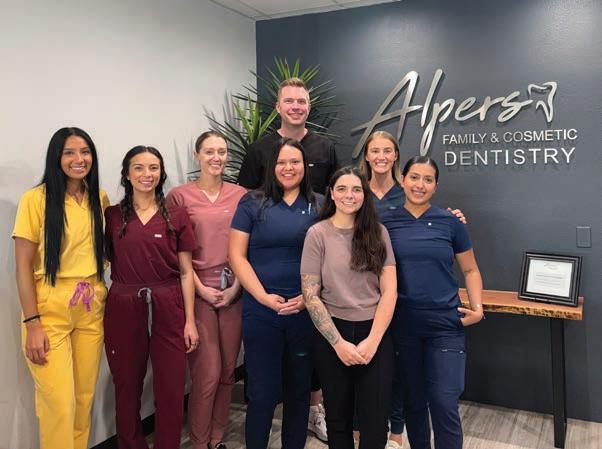
ALPERS DENTISTRY’S PURPOSE-BUILT PRACTICE
This month spotlighting Alpers Family and Cosmetic Dentistry, Tyler Butler’s series explores the myriad ways businesses give back and the positive ways their programs impact our community.
FEATURES
17 SRP Offers Tools and Tips to Weather Arizona’s Monsoon Season
Erin Thorburn discusses how dedicated Strategic Energy Managers help companies with monsoon-related power problems.
DEPARTMENTS
9 Guest Editor
Angela M. Banks, vice dean and Charles J. Merriam Distinguished Professor of Law at the Sandra Day O’Connor College of Law at Arizona State University, introduces the “Law & Business” issue.
10 Feedback
Trevor H. Halpern, Kyle Malo and David Wachs respond to In Business Magazine’s burning business question of the month: What are your top strategies to address cybersecurity for your business?
12 Briefs
“Cutting Food Loss: Practical Strategies Companies Can Use to Reduce Waste,” “Dailies Top Stories,” “Local Standouts Recognized for Achievements & Philanthropy,” “Men’s Grooming Industry Is Looking Good” and “Auto Repair Store Expansion Jumps to Phoenix from Northeast U.S.”
15 Startups
“Social Design Supply Co. Curates Furnishings to Elevate Hospitality Spaces” and “Benefit Bar: Mobile Hospitality Built on Values”
16 By The Numbers
Mary Foote and Doug Walls examine how Arizona is positioning itself for a new phase of economic growth.
18 From The Top
Chase Lane carries forward six decades of family legacy while leading LT.agency into its next chapter.
20 CRE
“Hospitality’s Only Constant Is Change; Hilton at the Peak Meets the Challenge,” “‘High-Power, Smaller-Footprint in Industrial Corridor,” “Industrial Campus for High-Growth West Valley” and “Why Infill Development Is Becoming a Strategic Advantage in Arizona”
22 Semi-Insights
“How Skanska Is Powering Arizona’s Rise,” “Arizona’s Semiconductor Workforce Push Is Expanding Beyond Engineers” and “What Happens After the Fabs Arrive”
COVER STORY
30
Navigating Business with Legal-Ease: Attorneys help companies keep up with changing expectations, obligations and risks
Legal considerations touch every aspect of business but many may seem like a one-and-done. In Business Magazine is shining a light on select topics with insights on implications that business leaders may not have known or may be overlooking, given the current volume and pace of change.
43 The Most Defensible Differentiation Is Already Inside Your Organization
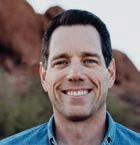
John Ravaris examines how businesses
“Financial Stress Is a Workforce Health Risk” and “The New Economics of Mental Health Care”
28 Technology
“Tech Takes On AI Hallucinations in Legal Citations” and “Why the Best MSPs Are Rethinking Cloud Strategy”
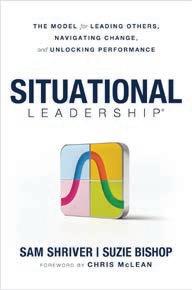
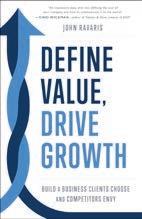
New releases give fresh insights on business thinking.
38 Economy
Tony Moses discusses economic considerations of funding first-ofa-kind production facilities. 40 Legal
Andrea Marconi and Savannah Wix explore strategies to help businesses avoid the fallout from a “business divorce.” 44 Nonprofit
Richard Tollefson explains generational and life-stage giving trends as a factor in understanding donor preferences.
2026 Porsche Taycan 4 Cross Turismo
Plus: Window film provides cooler temps with heat-blocking technology.
46 Power Lunch
Passport to Latin American Cuisine at The Mission Gilbert
Dr. Brecken Blades shines a light on how institutions miss predictable warning signs that allow sexual and other misconduct to continue unchecked.
—Hendrith
Help Can’t Wait DURING EMERGENCIES
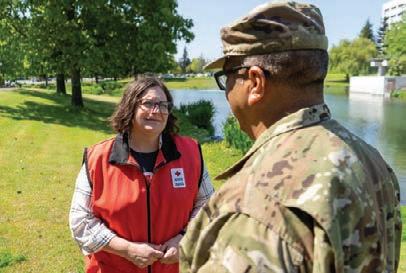
We invite you and others to join the American Red Cross mission by volunteering, giving blood, learning lifesaving skills or making a financial donation. Your support helps ensure families don’t face emergencies alone.
We invite you and others to join the American Red Cross mission by volunteering, giving blood, learning lifesaving skills or making a financial donation. Your support helps ensure families don’t face emergencies alone.
We invite you and others to join the American Red Cross mission by volunteering, giving blood, learning lifesaving skills or making a financial donation. Your support helps ensure families don’t face emergencies alone.
Volunteer. Give Blood. Donate. Take a Class.
Visit redcross.org/AZNM to learn more.
Volunteer. Give Blood. Donate. Take a Class.
Visit redcross.org/AZNM to learn more.
Volunteer. Give Blood. Donate. Take a Class. Visit redcross.org/AZNM to learn more.
RaeAnne Marsh
Editor in Chief, In Business Magazine
Editor in Chief, In Business Magazine
RaeAnne Marsh became editorial director of Phoenix-based InMedia Company in 2010 and helped launch Valley-wide business resource In Business Magazine. Holding the magazine to strong editorial standards, she says, “New businesses are founded, out-of-staters bring new strengths, established businesses evolve and expand — all of which contributes to the dynamic vitality that I see as the mission of In Business Magazine to be the voice of and vehicle to nurture.” Marsh was awarded 2024 Small Business Journalist of the Year from the U.S. Small Business Administration, Arizona District.
Guest columns are feature articles presented as a limited or ongoing special series.
Tyler Butler
Guest Columnist – Social Impact
A long-time corporate social responsibility practitioner, Tyler Butler is known for her expertise in creating, launching and developing successful social impact programs. Her commitment to rallying people together to make a positive difference has created sustainable signature programs empowering people to give back in myriad ways globally. Her contributions to In Business Magazine provide her with an outlet to share the best of what companies are doing to aid humanity through their generous outreach efforts.
Marco A. López Jr.
Guest Columnist – Southern Border
Marco A. López Jr. is founder and CEO of Intermestic Partners and Intermestic Capital, advising on cross-border investment, EB-5 strategy, U.S.–Mexico nearshoring and economic development initiatives across North America. He previously served as mayor of Nogales, Arizona; director of the Arizona Department of Commerce; and chief of staff at U.S. Customs and Border Protection under President Obama. Lopez is a past member of the Council on Foreign Relations and currently serves on The Nature Conservancy’s Conservation & Public Policy Committee.
Kim Ryder
Guest Columnist – Commercial Real Estate
Kim Ryder is a dynamic commercial real estate executive with extensive experience in managing multimillion-dollar, complex projects and the build-out of more than 54 million square feet of retail and commercial space. Ryder has started several business lines in her career, most notably launching Thrive Real Estate and Development groups. Her career in the thrift industry extends over 25 years and led her team to expand the Goodwill real estate portfolio by more than 100 locations..
Bruce Weber
Guest Columnist – Capacity
“I am deeply interested in organizational capacity and what makes organizations successful and impactful in the work they do. I have worked with all sizes of organizations and leaders in helping their businesses grow and expand their impact. My previous careers with Microsoft and Hewlett Packard involved working with business integration partners to design strategies to engage new markets. In today’s complex world, I enjoy exploring the possibilities and opportunities that change can bring.”
This month’s contributors
Brecken Blades, Psy.D., is a fourth-generation Phoenician and licensed clinical psychologist who has served Arizona communities for more than a decade. (“What High-Profile Cases Reveal about Institutional Risk,” page 66)
Andrea Marconi and Savannah Wix are attorneys in Fennemore’s Business Litigation practice group, where Marconi serves as chair. (“Avoid the Fallout from a ‘Business Divorce,’” page 40)
Tony Moses is VP of Manufacturing at At One Ventures, a venture capital firm committed to making humanity net positive to nature. (“FOAK Facilities Are the Bet You Can’t Hedge,” page 38)
Richard Tollefson is founder and president of The Phoenix Philanthropy Group, an Arizona-based international consulting firm serving nonprofit organizations. (“Generational and Life-Stage Giving Trends,” page 44)
Editor in Chief RaeAnne
Marsh
Associate Publisher Nico Pacioni
Graphic Design Marvin Forte
CONTRIBUTING WRITERS
Brecken Blades
Tyler Butler
Richard Copeland
Michelle Talsma Everson
Mary Foote
Jeff Helfgott
Mike Hunter
Crystal Jennings
Marco A. Lopez Jr.
Andrea Marconi
Alexa Mayer
Cory Mishkin
Dale Moseke
Tony Moses
Mara Pernick
ADVERTISING
Jordan Phillips
John Ravaris
Kendra Riley
Maulik Shah
Erin Thorburn
Richard Tollefson
Doug Wells
Savannah Wix
Operations Louise Ferrari
Business Development Raegen Ramsdell
Louise Ferrari
Cami Shore
Events Amy Corben
WTSM TV STUDIO
General Manager Chris Weir
More: Visit your one-stop resource for everything business at inbusinessphx.com. For a full monthly calendar of business-related events, please visit our website.
Inform Us: Send press releases and your editorial ideas to editor@inbusinessphx.com
President Camron McCartney
Editorial Director RaeAnne Marsh
Financial Manager Tom Beyer
Office Manager Allie Jones
Accounting Manager Todd Hagen
Founder & Chair Rick McCartney
Corporate Office InMedia Company 45 W. Jefferson Street Phoenix, AZ 85003 T: (480) 588-9505 info@inmediacompany.com www.inmediacompany.com
We’re here to focus health care where it belongs: on you. You deserve the kind of care that goes beyond a chart or a prescription. It’s the kind of care that covers everything you need to live your healthiest life, including support from a whole team of doctors, nurses, and specialists to keep you feeling good. And it’s care that gives you all the benefits of a nationally recognized health care company with a hometown, personal touch.
In Business Magazine is a collaboration of many business organizations and entities throughout the metropolitan Phoenix area and Arizona. Our mission is to inform and energize business in this community by communicating content that will build business and enrich the economic picture for all of us vested in commerce.
PARTNER ORGANIZATIONS
Steve Kaiser CEO Arizona Small Business Association Central Office (602) 306-4000 www.asba.com
Steven G. Zylstra, President & CEO Arizona Technology Council One Renaissance Square (602) 343-8324 www.aztechcouncil.org
Kristen Wilson, CEO AZ Impact for Good (602) 279-2966 www.azimpactforgood.org
Terri Kimble, President & CEO Chandler Chamber of Commerce (480) 963-4571 www.chandlerchamber.com
Joanna Horton McPherson, President NAWBO Phoenix Metro Chapter (480) 289-5768 www.nawbophx.org
Robin Arredondo-Savage, President & CEO Tempe Chamber of Commerce (480) 967-7891 www.tempechamber.org
Our Partner Organizations are vested business organizations focused on building and improving business in the Valley or throughout Arizona. As Partners, each will receive three insert publications each year to showcase all that they are doing for business and businesspeople within our community. We encourage you to join these and other organizations to better your business opportunities. The members of these and other Associate Partner Organizations receive a subscription to In Business Magazine each month. For more information on becoming an Associate Partner, please contact our publisher at info@inbusinessphx.com
ASSOCIATE PARTNERS
Ahwatukee Foothills Chamber of Commerce ahwatukeechamber.com
Arizona Chamber of Commerce & Industry azchamber.com
Arizona Hispanic Chamber of Commerce azhcc.com
The Black Chamber of Arizona phoenixblackchamber.com
Economic Club of Phoenix econclubphx.org
Glendale Chamber of Commerce glendaleazchamber.org
Greater Phoenix Chamber of Commerce phoenixchamber.com
Greater Phoenix Equality Chamber of Commerce gpglcc.org
Mesa Chamber of Commerce mesachamber.org
North Phoenix Chamber of Commerce northphoenixchamber.com
Peoria Chamber of Commerce peoriachamber.com
Phoenix Metro Chamber of Commerce phoenixmetrochamber.com
Scottsdale Area Chamber of Commerce scottsdalechamber.com
Scottsdale Coalition of Today and Tomorrow (SCOTT) scottnow.com
Surprise Regional Chamber of Commerce surpriseregionalchamber.com
WESTMARC westmarc.org
Angela M. Banks is vice dean and Charles J. Merriam Distinguished Professor of Law at the Sandra Day O’Connor College of Law at Arizona State University. An internationally recognized scholar, she leads innovation initiatives at ASU Law, helping develop, launch and curate curriculum for the college’s part-time, online JD. Her work focuses on preparing future legal professionals to meet the evolving needs of business, technology and society across the college’s degree programs, including master’s, JD and LLM offerings. law.asu.edu
Business, Clarity and the Law
This is a time of great change — some regulatory and statutory but some the result of social forces or business advances. Attorneys guide businesses on how to safely navigate the potential pitfalls and looming landmines.
At the Sandra Day O’Connor College of Law at Arizona State University, we are committed to preparing future legal professionals for this evolving role. Today’s leaders and lawyers must understand not only the law but also the industries, technologies and communities they serve. Businesses increasingly rely on counsel who can anticipate challenges and collaborate across disciplines.
That responsibility has become even more critical as artificial intelligence and emerging technologies rapidly reshape nearly every sector of the economy. From data privacy and cybersecurity to intellectual property, employment practices and regulatory compliance, organizations need professionals who can navigate innovation thoughtfully and ethically. Legal education must evolve alongside these changes.
At ASU Law, we are focused on creating forward-looking educational experiences across our degree programs — including legal master’s, JD and LLM offerings — that equip students with practical skills, technological fluency and the adaptability needed in today’s business environment. Innovation in legal education is no longer optional; it is essential to preparing professionals who can lead with insight, agility and integrity.
Law touches every function in business. For this month’s cover story, local attorneys share their expertise on six aspects of business operations: real estate, inclusive work cultures, technology (not just AI), drug testing, workplace mandates and hiring foreign workers. In Business Magazine asked these attorneys to address what’s important for businesses/employers to be aware of that they might not already know or might be overlooking given all the changes.
At this time of renewed public attention on high-profile sexual misconduct cases, Dr. Brecken Blades, a forensic psychologist based in Phoenix, offers insights and strategies related to how systems and institutions miss predictable warning signs that allow misconduct to continue unchecked. “What High-Profile Cases Reveal about Institutional Risk” is this month’s Roundtable feature.
Also this month, a new Guest Columnist debuts, Marco A. López Jr., founder and CEO of Intermestic Partners and past member of the Council on Foreign Relations, whose quarterly column will address cross-border trade, investment and broader issues of commerce between Mexico and the State of Arizona. June’s feature explores what he calls “the most consequential industrial transformation in our state’s history” in “Arizona Is Already the Center. Act Like It.”
John Ravaris focuses on how businesses can make their “unique value proposition” truly unique – and sustainable — in his feature article “The Most Defensible Differentiation Is Already Inside Your Organization.”
Filling out this June edition is the usual broad coverage of business-relevant topics and activity in our local business community. Topics span from an analysis of Arizona’s Q1 2026 Jobs Report as the By the Numbers feature to “Why Infill Development Is Becoming a Strategic Advantage in Arizona” in the CRE section to “The New Economics of Mental Health Care” in the Healthcare section.
The special section this month is In Business Magazine’s annual Legal Guide, the most comprehensive guide to local lawyers and their firms. The guide is available online for the full year, where it lists local firms by practice areas relating to business.
I’m pleased to help bring you this June edition of In Business Magazine and hope you enjoy the read.
Sincerely,
Angela M. Banks
Vice Dean and Charles J. Merriam Distinguished Professor of
Law
Sandra Day O’Connor College of Law
Arizona State University
FEEDBACK QUESTION: Let us know what you want to know from the Valley’s top business leaders. editor@inbusinessphx.com
For all past Feedbacks go online to inbusinessphx.com and see what Valley executives think on various business topics.
What are your top strategies to address cybersecurity for your business?
TREVOR H. HALPERN, J.D.
CEO
Halpern Residential at eXp Sector: Residential Real Estate
For me, cybersecurity in real estate starts with paying attention to the small moments in a transaction. Clients are moving quickly, sharing documents with multiple parties and looking to their agent for guidance. One of the biggest lessons I have learned is that sensitive information needs to stay in the right place. Our job is not to collect every document; it is to help clients use the secure channels already in place.
That comes up most often with financial documents. W-2s, K-1s, tax returns and similar records should go directly to the lender through an encrypted portal, not through standard email or text. With cash buyers, I also remind clients that proof of funds does not need to reveal everything. Account numbers and private details can be redacted; the buyer’s name and enough visible balance to support the purchase are usually what matter.
The biggest risk I see is wire fraud. My advice is simple: Before sending or receiving funds, call the escrow officer directly at a trusted number.
Halpern Residential at eXp halpernresidential.com
Trevor H. Halpern, J.D., is CEO of Halpern Residential at eXp and eXp Realty’s No. 1 independent agent in Phoenix. A Phoenix native and ASU College of Law graduate, Halpern is known for his high-level strategy, sharp negotiation skills and precise tactical execution. Since 2011, he has closed more than $350 million in sales.
KYLE MALO
Vice President of Cybersecurity Avnet
Sector: Technology Distribution
The emergence of advanced AI tools designed to accelerate automation and decision-making also raises the bar for bad actors — enabling faster attacks, more convincing social engineering and rapid exploitation of vulnerabilities. We see this evolution in every industry, though it is an elevated threat in tech specifically. To stay ahead, Avnet is focused on two key strategies.
First, we are significantly increasing our patching cadence. By shortening the window between vulnerability disclosure and remediation, we reduce the opportunity for AI-augmented threat actors to exploit newly identified weaknesses at scale.
Second, we are deploying AI-driven detection and response capabilities across our security platforms. These enhancements allow us to monitor threat intelligence in near real time, correlate activity at machine speed and automate response actions. This is critical as attackers increasingly leverage AI to move faster and operate more dynamically.
Together, these efforts ensure we can match — and in many cases outpace — the speed and sophistication of emerging AI-enabled threats.
Avnet avnet.com/americas
Kyle Malo is vice president of Cybersecurity at Avnet, leading global security strategy for the Fortune 200 technology distributor. He partners with executive leadership and customers to protect complex supply chain environments while aligning cybersecurity with business growth.
DAVID WACHS
Founder and CEO
Handwrytten
Sector: Business Services
Cyber security has become a greater concern the larger we have grown. We are SOC2-compliant, which is a security standard for larger firms that requires us to implement a number of security measures. Some of our top, easy to implement strategies have been:
1. Upgrading our email filter. By default, Microsoft 365 comes with basic email filtering, reducing the number of phishing attempts you receive. However, this can be reduced drastically further through their upgraded “Defender for Business” program.
2. Annual team training. All members of our team are required to take online courses for “social engineering” and other techniques used by bad actors. As the team is on the front line, this too has reduced our exposure.
3. A good cyber security insurance policy. Now mandated by many of our clients, we carry multi-millions in “Cyber” insurance.
4. Computer security posture monitoring. As part of SOC2, we are required to report on the security patches on each computer, along with if each computer has disk encryption and other basic security features implemented. Just having this simple reporting allows us to reduce our attack surface.
Handwrytten handwrytten.com
A proven entrepreneur, David Wachs’ latest venture, Handwrytten, provides scalable, robotic solutions that write clients’ notes in pen. Used by businesses in all industries and nonprofits, Handwrytten changes the way brands and people connect. Wachs is a speaker on marketing technology, has been featured in The Washington Post and Wall Street Journal, and is a contributor to Inc. Magazine
Prior to Handwrytten, David Wachs founded Cellit, a leading mobile marketing platform. With clients that included Abercrombie & Fitch, Walmart and more, Cellit was sold in January of 2012. Both Handwrytten and Cellit were on Inc. Magazine’s Inc 500 list of fastest-growing companies.
IS WHAT GIVES US PURPOSE HONOR
Honor is what motivates our team of dedicated healthcare professionals. Through passion and purpose, we come together to ensure every patient is provided with the best possible care. honorhealth.com
DAILIES TOP STORIES
‘In Business Dailies’ Most Views Last 30 Days
Growth & Enterprise | inbusinessphx.com | May 1 2026
SRP Inks Deal to More Than Double Solar Capacity
Salt River Project announced an agreement with NextEra Energy Resources to develop 3,000 megawatts (MW) of new solar generation by the end of 2034, or enough capacity to power 595,000 Arizona homes.
Technology & Innovation | inbusinessphx.com | May 13 2026
Buckeye Mega Site Hits Market with $1B Economic Promise
The Phoenix office of JLL announced that it will market Grand View Arizona, an infrastructure-rich, fully entitled, 2,500-acre mega site in Buckeye, Arizona –ranked one of the fastest-growing cities in the U.S. over the last decade.
Government & Compliance | inbusinessphx.com | May 11 2026 Pentagon Selects Arizona University for New War, Strategy Master’s Program
Arizona State University has been selected by the Department of War to offer a new master’s degree in war and strategy, using intensive seminars, wargames and rigorous coursework to train our nation’s greatest minds in military and defense strategy.
Growth & Enterprise | inbusinessphx.com | May 13 2026 Dutch Bros to Acquire East Valley Franchise in 29 Shop Deal
Dutch Bros Inc., one of the fastest-growing brands in the U.S. quick-service beverage industry, announced it has entered into an agreement to acquire the Phoenix East Valley franchise.
Communications & Networking | Feature | May 2026
The AI Transition: Why Communication Architecture Matters
Educate in structured steps to avoid damaging workplace culture
Artificial intelligence is increasingly integrating into the business world. In fact, implementing AI processes will soon be inevitable for most companies. When executed correctly, these processes can scale a business and add convenience for employees.
Cutting Food Loss: Practical Strategies Companies Can Use to Reduce Waste
Restaurants, grocery stores and food service companies account for nearly 40% of all food waste in the U.S., and, despite industry innovation, the volume of discarded edible food keeps climbing. Food waste is not just an environmental issue. It is a business problem that hits companies across the commercial food sector, from restaurants to grocery stores and large food-service operations. Every bit of wasted food represents loss of time, resources, energy and money. Reducing food loss is a strategic move that strengthens margins, improves efficiency and supports long-term sustainability.
Businesses experiencing food loss should start by conducting a food-waste audit to pinpoint exactly where waste is occurring in their operations. Is it happening during production and procurement, storage and transpiration, processing and preparation, or at the retail and food-service stage? The U.S. Environmental Protection Agency offers practical online tools to guide companies through this process. A well-structured audit helps measure waste at each step of the supply chain and highlights high-loss categories, such as produce, proteins or baked goods.
Once high-loss areas are identified, businesses can begin addressing the root causes by improving daily operations and adopting technology that reduces waste. Smarter
inventory systems, such as digital tracking, help prevent over-ordering and ensure products are used in the right order. Strengthening storage practices, including temperature control, proper labeling and consistent rotation, also reduces spoilage. Standardizing recipes and portion sizes can further minimize excess prep.
Technology continues to evolve, offering new ways to cut waste. AI-driven tools can forecast demand more accurately, while smart sensors monitor freshness and storage conditions in real time. Companies can also explore platforms and programs designed to recollect, redistribute or sell surplus food before it goes to waste.
In Arizona, an estimated $9.5 billion is wasted on food each year. Food waste accounts for roughly 24% of the materials sent to landfills. As discarded food decomposes, it releases methane, a potent greenhouse gas that accelerates planetary warming more rapidly than carbon dioxide. Reducing food waste is not just an environmental priority but also a critical business strategy. Companies that cut food waste at every stage of their operations can lower costs, improve efficiency and contribute to a more sustainable future. —Mara Pernick, executive director of Waste Not (wastenotaz.org), the local nonprofit making it easy for Arizona businesses with frequent or occasional surplus to donate food at no cost to help Arizonans facing food insecurity
Here are the stories with the most views over the past 30 days (prior to press time) that were features in our In Business Dailies. The In Business Dailies hits email inboxes twice each weekday — at 9:30 a.m. and updated at 4:30 p.m. Sign up today at www.inbusinessphx.com/dailies-signup Through innovative community partnerships, Waste Not is dedicated to eliminating hunger and reducing food waste across Arizona. These partnerships include Salad and Go, Pita Jungle, Starbucks, Trader Joe’s, Fry’s, Whole Foods, M Culinary, Waste Management Phoenix Open, and Arizona Sports and Events Alliance. Waste Not delivers the food to more than 60 nonprofit organizations, including Jose’s Closet, Maggie’s Place and Hope Lives.
Polestar Scottsdale
The SUV for the electric age is here. With a range of up to 300 miles, the all-electric Polestar 3 is designed to create remarkable range and an unmistakable look.
Visit our showroom in Fashion Square Mall.
Local Standouts Recognized for Achievements and Philanthropy
Sundt Construction Leads Industry in Safety Tempe-headquartered Sundt Construction received the construction industry’s leading award for construction safety, known as the “AGC Construction Safety Excellence Award Grand Award,” at the recent national Associated General Contractors of America Annual Convention — the only contractor to have won the award three times. sundt.com
Scottsdale Advisor Continues National Streak
Nayan Ranchhod, a Private Wealth Advisor with Ameriprise Financial, has been named to the 2026 Best-in-State Wealth Advisors list published by Forbes. The honor recognizes top advisors across the country who demonstrate high levels of professionalism, ethical standards and client impact, and comes on the heels of Ranchhod’s recent inclusion on the Barron’s Top 1,500 Financial Advisors list. silverliningwealth.com
72SOLD Founder Accepts National Appointment
Greg Hague, Phoenix real estate strategist and 72SOLD founder, was recently appointed director of Home Sale Strategy for Compass International Holdings, one of the world’s largest publicly traded real estate services company, where he will provide voluntary, no-cost strategy training to more than 300,000 agents across the company’s portfolio of brands. 72sold.com
OneAZ Strengthens Community
OneAZ Credit Union recently brought together more than 150 business and community leaders in Phoenix for its third annual “Aspirations” event in partnership with Novle, where the OneAZ Community Foundation also awarded $750,000 to five Arizona nonprofits focused on economic opportunity, education and community development, as the credit union celebrates its 75th anniversary. oneazcu.com
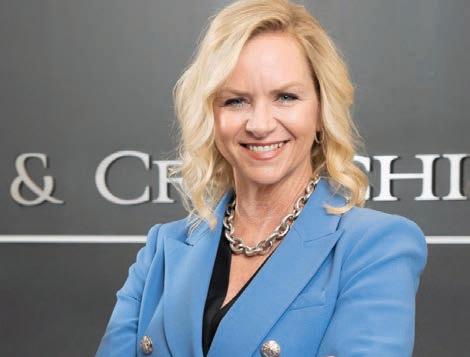
Burch & Cracchiolo Upgrades Teacher Award
The law firm of Burch & Cracchiolo, P.A. is proud to announce the next chapter of the “B&C Star Teacher Award” program. After a successful run honoring more than 60 outstanding teachers across the Valley, the Firm is enhancing the program by increasing the award to $2,000 and shifting to a quarterly recognition format. bcattorneys.com
Lerner & Rowe Gives Back Builds on $1M Tradition
Lerner & Rowe Gives Back, the nonprofit arm of Lerner & Rowe Injury Attorneys, recently hosted its annual charity golf tournament and raised $1 million for Arizona nonprofits. 100% of the proceeds from the tournament go back to Arizona nonprofits through Lerner & Rowe Gives Back’s grant program and other charity giving. lernerandrowegivesback.org
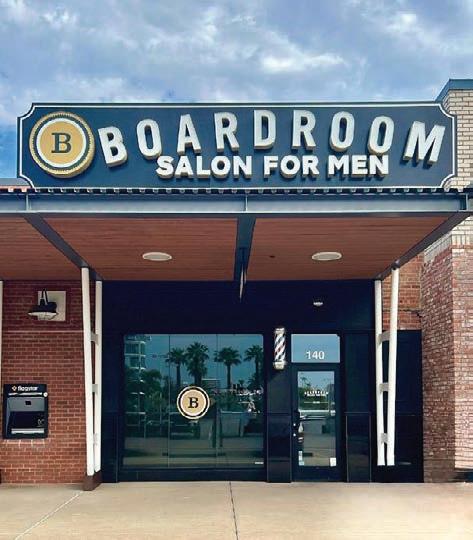
Men’s Grooming Industry Is Looking Good
As a Gold Canyon homeowner for more than 14 years, I have watched the Valley transform — new communities rising, businesses relocating and a population growing at roughly three times the national average. With population growth and a strong lifestyle focus, the Phoenix metro is one of the most compelling markets in the country for premium, experience-driven brands. That is why Boardroom Salon for Men has identified Arizona as a priority market for 2026.
The men’s grooming industry is projected to exceed $85 billion globally by decade’s end, driven by a shift in how men approach self-care. Premium services are the fastest-growing segment. At Boardroom, that demand is translating into results. Franchise locations averaged nearly $970,000 in gross sales in 2024, reflecting three consecutive years of same-store growth. Memberships, starting at $50 per month and now representing more than 40% of systemwide revenue, drive the recurring traffic that supports strong unit economics.
Each new location brings roughly a dozen skilled stylists, barbers and support staff into a community, backed by a brand with more than two decades refining its service model. In 2025, Boardroom launched a proprietary grooming product line, expanded training programs and invested in technology to keep the in-chair experience consistent across all salons. Net Promoter Scores consistently reach the high 70s
to low 80s, and monthly member attrition sits near 3% — proof of genuine client loyalty. Phoenix is a metro where people invest in looking and feeling good, aligning with Boardroom’s mission: to help Men Relax, Look Great and Feel Confident. Growth will remain intentional. Rather than flooding a market with units, Boardroom partners with operators who understand hospitality and community. A franchise-first model means local owners with real stakes in the neighborhoods they serve — and for Phoenix, the timing has never been better. —Jeff Helfgott, CEO of Boardroom Salon for Men (www.boardroomsalon.com)
Auto Repair Store Expansion Jumps to Phoenix from Northeast U.S.
Full-service auto repair Dunn Tire & Auto recently opened a store in Phoenix. This location, on Bell Road east of I-17, marks not only its first Phoenix location but its first location beyond the Northeast. “We have always prioritized smart, measured growth across our portfolio of tire and full-service automotive maintenance shops,” says Daniel Cota, Dunn Tire & Auto Phoenix store manager, observing that the company’s recent expansion into both Virginia and Phoenix are into markets it identified “where customers say they want a trusted partner to handle all their basic automotive service needs in a single visit.” Noting this is particularly true for Dunn Tire & Auto’s growing fleet customers, Cota says, “With the great success we’ve seen in the Northeast,
we also see the amount of vehicles on the road and the potential customers we can serve in the Phoenix area.”
Noting that Consumer Reports recognized Dunn Tire & Auto as one of the best tire shops in the U.S. in 2026, Cota emphasizes the value of handling a vehicle’s service needs in a single trip — plus free services like tire pressure checks, flat repairs and rotations. “We believe our expert service sets us apart and is what we call our Dunn Tire Promise; we are always going to put drivers’ safety first,” Cota says. The new location in Phoenix employs 15 full-time and part-time techs. —Mike Hunter
Delta Dental AZ Enhances ASU’s Medical School Training: With a $578,947 investment by the Delta Dental of Arizona Foundation, Delta Dental of Arizona is partnering with Arizona State University to create the Student-centered Medical Instruction and Learning in Oral Health powered by Artificial Intelligence (SMILE-AI) at the Arizona State University John Shufeldt School of Medicine and Medical Engineering, which will embed oral health education into medical school training. deltadentalaz.com medicine.asu.edu asuhealth.asu.edu
Photo courtesy of Boardroom Salon for Man
Social Design Supply Co. Curates Furnishings to Elevate Hospitality Spaces
Social Design Supply Co. is a Scottsdale-based e-commerce platform offering curated, design-forward furnishings specifically for restaurants and hospitality spaces. Built by industry professionals, the platform gives restaurant and hotel operators access to high-quality pieces that meet both aesthetic expectations and the durability required for daily commercial use.
“After years of designing restaurants, I kept seeing the same challenge: operators with great taste struggling to find furniture that looked incredible but could actually withstand the wear and tear of daily service,” relates Nicole Herman, co-founder and chief creative officer at Social Design Supply Co. “There was a clear gap between residential-style pieces that didn’t hold up and direct access for restaurant owners who wanted to design their spaces with quality pieces designers have exclusive access to. We created Social Design Supply Co. to bridge that gap and provide a trusted, design-driven sourcing solution.”
One of Herman’s biggest challenges has been building a new brand while also being the principal designer and owner of a very busy boutique interiors studio. “We approached this by staying focused on clarity — curating a tight, intentional product offering and leaning on our experience to move quickly and make smart decisions,” she says. “By grounding the business in real-world hospitality needs, we’ve been able to build something that resonates immediately with our audience.”
With deep roots in Arizona’s hospitality, construction and branding industries, Social Design Supply Co. founders
Nicole Herman, Emily Ganem and Sarah Bell bring decades of combined experience to the platform. They launched the company in 2024 “with more than 100 curated products from trusted vendors, with each piece selected for durability, performance and cohesive design,” Herman relates. Looking ahead, Herman says the brand is expanding through collaborations with local makers and planning a future Scottsdale showroom to complement its online presence.
—RaeAnne
Marsh
Social Design Supply Co socialdesignsupply.com
Benefit Bar: Mobile Hospitality Built on Values
Benefit Bar is an Arizona-based mobile bar that creates elevated, eco-friendly beverage experiences for corporate events and happy hours, brand activations, weddings, and luxury resident gatherings. “We’ve built the brand around one idea: Events should feel good to attend and good to stand behind. We care about the impact beyond the bar — less waste, more intention, more connection with your people,” says owner Vanessa Kavulish, who founded the business in 2023.
Noting Benefit Bar is values-led, Kavulish says, “I kept seeing the same thing: Events were either ‘fine’ or they were memorable, and the difference was always the experience and the execution. Benefit Bar started from the belief that people deserve the second kind. I wanted to build a business that combined elevated hospitality with values that actually matter to me … while still delivering a premium, corporateready experience.” Building sustainability into the business model, she notes, “We compost and recycle by default, source thoughtfully when possible, and donate a portion of profits to rotating charities.”
The biggest challenge to starting and growing the company, Kavulish shares, “has been marketing in a way that actually lands, which is getting in front of the right people and helping them immediately understand the value we add beyond ‘just a bar.’ A lot of people don’t realize what they’re actually buying is a polished, unforgettable experience, and I have to make them aware of that.
“I met this challenge,” she continues, “by tightening our messaging until it was clear and specific (who we serve, what we deliver, and why it matters) and then building relationships consistently in the community. I’ve also leaned heavily on collaborations and partnerships with aligned businesses to get in front of the right audiences faster and build trust through association.”
Initially serving only mocktails, in response to what Kavulish saw as a specific growing demand, Benefit Bar now curates craft cocktail-style as well as premium mocktail menus with, she says, “beautiful presentation, polished setups and seamless service.” —RaeAnne Marsh
Benefit Bar benefit-bar.com
MY MOST VALUABLE ADVICE
Herman says she took to heart the advice to build something rooted in real experience, not theory. “Because this platform came directly from years in hospitality design, we’ve stayed focused on solving a genuine problem — making sourcing easier, smarter and more design-forward for operators.”
MY MOST VALUABLE ADVICE
Sharing, “The most valuable advice I’ve received is simple: Don’t stop when it gets hard,” Kavulish notes there will be seasons where it feels like nothing is working “or like people don’t value what we’re offering the way you know they could.” She’s found the answer is to stay consistent long enough to build stamina and momentum. “I’ve applied this by reminding myself that progress often looks like repetition (and sometimes even failure!) before it looks like results. I ask for help early when I feel stuck, I keep taking the next right step even when it’s uncomfortable, and I don’t let a slow week or a ‘no’ define the business,” Kavulish shares. “Consistency has been the strategy — because that’s what creates traction over time.”
In a recent study by CoworkingCafe ranking the best U.S. metros for women-owned businesses, the Phoenix area came in 19th among large metros. Nationwide, women-owned businesses now account for nearly 23% of all U.S. firms. coworkingcafe.com/blog/best-places-for-women-owned-businesses
Mary Foote serves as the director of the Arizona Office of Economic Opportunity with expertise in workforce development, finance and business attraction drawn from senior roles at the Greater Phoenix Economic Council and Pipeline AZ.
Doug Walls serves as labor market information director for the Arizona Office of Economic Opportunity, leading monthly employment analysis and producing the labor market research that drives Arizona’s economic and workforce decision-making.
As we head into the rest of the year, Arizona Office of Economic Opportunity will be tracking employment trends. To view the latest OEO employment report, visit oeo.az.gov
Arizona’s Q1 2026 Jobs Report: Reading the Numbers in Context
Arizona is positioning itself for a new phase of economic growth
by Mary Foote and Doug Walls
Arizona’s labor market showed positive signs of improvement during the first quarter of 2026, with total nonfarm employment increasing by 15,500 jobs, ranking Arizona third nationally in percentage job growth.
These first-quarter job gains demonstrated resiliency, cutting into and shrinking year-over-year job losses through March 2026, even as national economic headwinds weigh on labor markets nationwide. Arizona continues to navigate external macroeconomic pressures, yet it remains a primary destination for significant business investment, a key driver for future job creation. By examining the monthly data tracked by the Arizona Office of Economic Opportunity, we can move beyond the headline numbers to see how Arizona is positioning itself for a new phase of economic growth.
NATIONAL FORCES DRIVING LOCAL OUTCOMES
Arizona’s Q1 performance reflects external pressures reshaping labor markets nationwide. Sustained, elevated interest rates and increased borrowing costs have effectively cooled consumer demand and slowed capital investment across the country. Additionally, trade policy uncertainty and geopolitical conflict continue to disrupt global supply chains and increase costs, while corporate belt-tightening has reduced spending on professional and administrative services.
SHIFTING INDUSTRY STORIES: CHALLENGES AND RESILIENCE
Arizona’s industry landscape shifted noticeably in the first quarter of 2026, reflecting how specific sectors are absorbing these national pressures.
Government employment remained the quarter’s largest drag, with losses in two of the three first-quarter months. These losses are consistent with national trends as federal government employment shrank by 355,000 jobs since late
2024, while additional cuts to federally funded services weakened employment in Arizona’s contracted services and nonprofit sectors. Similarly, Trade, Transportation and Utilities recorded its fifth consecutive month of decline, driven by rising costs and shrinking disposable incomes.
Financial Activities moved from modest growth at the end of 2025 into annual losses by March 2026, reflecting sustained high mortgage rates and reduced consumer spending. However, other interest-rate sensitive sectors, such as Construction and Manufacturing, showed resilience as their annual losses narrowed significantly throughout the quarter.
Health Care and Social Assistance led the state’s momentum as its growth accelerated, largely because of an expanding population and growing share of residents aged 65 and older. Additionally, Professional Services, Private Education and Other Services all improved, flipping from December 2025 losses to gains in March 2026.
THE LONG-TERM OUTLOOK
Structural demand for healthcare persists regardless of broader economic cycles, and OEO projects the sector will add about 11,300 jobs annually through 2034. Overall, OEO projects Arizona will add about 454,000 jobs by 2034, growing at four times the national rate, with semiconductor investment, construction and healthcare leading the pipeline.
WHAT BUSINESS LEADERS SHOULD TAKE AWAY
Q1 data reflect a labor market in transition, not decline. Business leaders should evaluate sector-specific trends rather than headline numbers alone. The forces shaping Arizona’s labor market this quarter are national in origin, and the state’s structural strengths position it well for recovery. The sectors driving long-term growth remain active, and Arizona’s economic fundamentals remain intact.
2026
ARIZONA NONFARM EMPLOYMENT CHANGE
Q1 2026
Source: Arizona Office of Economic Opportunity [For more metric data, see this article online at www.inbusinessphx.com.]
SRP Offers Tools and Tips to Weather Arizona’s Monsoon Season
And this year, Arizona is expected to see a rise in monsoons by
Erin Thorburn
Some states have earthquakes, others have tornadoes — in Arizona, we get monsoons. While some monsoons are brief and cause minimal trouble, others can inflict significant damage and disrupt business operations, including power outages. When this happens, it’s reassuring to know that help is available. At SRP, dedicated Strategic Energy Managers (SEM) are there to guide companies through outages and help them prepare for future monsoon-related power problems.
FROM ‘NONSOON’ TO MONSOON: 2026 WILL LIKELY SEE MORE STORMS
This year, Arizona is expected to see a rise in monsoons. According to the National Weather Service, monsoon season is projected to “lean above normal.”
For businesses that depend on uninterrupted services, the prospect of monsoon-related outages can be daunting. But SRP is at the ready to ensure its business partners remain informed and supported at all times.
“SRP prepares year-round for the monsoon season and summer season,” says Pedro Rios, valued business customer energy manager (SEM) for SRP. “We do planned maintenance and have monitoring devices in place that will alert us to any interruptions in the SRP grid.”
Rios explains that alerts to the grid prompt an immediate response to safely restore power. At the same time, businesses are kept up to date on all phases of a power outage until power is restored.
KEEPING BUSINESSES CONTINUOUSLY PREPARED AND INFORMED
When signing up for an SRP account, business customers receive:
• eNotes: SRP sends text and email alerts to customers notifying them of an outage, its location, the reason for the outage and an estimated restoration time. “These [messages] are updated as the outage goes on, and customers receive a notification when the outage is over and power is back on,” Rios explains.
• Business Outage Planning Checklist: Customers can access a full checklist of business continuity plans, equipment safety, emergency and safety protocols, and employee and customer preparedness for monsoon-related outages at srpnet.com/outagetraining
• Monsoon Season Webinar: Just over 10 minutes, this SRP webinar instructs businesses how to proactively plan for monsoon season and beyond.
• Assigned Strategic Energy Manager: Each business has a dedicated SEM to contact regarding all SRP-related energy needs. They help companies optimize energy usage, reduce costs, improve energy efficiency, and prepare and
remain informed about weather-related outages.
“If there’s an outage, your SEM can report it on your behalf and relay key information, like the estimated restoration time and, if available, the cause,” Rios says. “Our goal is always to restore power within two hours. If it extends beyond that, outage eNotes will keep you up to date with the latest timeline.”
STAY SAFE DURING OUTAGES
Safety is among SRP’s top priorities. Downed power lines are a major safety concern, and often, individuals are unsure about what to do if they encounter one.
“We always advise SRP customers that if they’re near or around those power lines, to always assume that they’re live and stay away,” Rios says. “The guidance is a minimum of 100 feet of distance between you and the power line; think of staying ‘two semi trucks’ distance away and call 911 when it is safe to do so.”
“It’s recommended that you shuffle away from a downed power line, rather than walking or running away, to reduce the risk of shock,” Rios adds.
ROUTINELY PRACTICE MONSOON SAFETY AND PREPAREDNESS
One of the best ways businesses can ensure they are monsoon-ready is to practice safety and emergency protocols throughout the year, such as assigning an emergency and safety point of contact, taking inventory of equipment and applying backup storage when needed, as examples.
“SRP recommends [companies] practice going through an outage,” Rios says. “If you can practice it, even if it’s once or twice a year, then when it does come that time, it will be almost second nature as opposed to a panic reaction.”
One of the best ways businesses can ensure they are monsoon-ready is to practice safety and emergency protocols throughout the year, such as assigning an emergency and safety point of contact, taking inventory of equipment and applying backup storage when needed, as examples.
Erin Thorburn is an accomplished editor, writer, journalist, photographer and illustrator with more than 20 years of experience. She is the founder and creative director of The Best of the Southwest. Her work has appeared in multiple print and online publications including Az Business, AZRE, Experience AZ, PTK, SF Gate, Chicago Tribune, The Toronto Star and more.
LT.AGENCY BY THE NUMBERS
• Founded in 1962, Arizona’s longeststanding marketing agency
• 93% year-over-year client retention rate
• 300+ client projects and retainers across casino and gaming, franchise and retail, entertainment and attractions, health and wellness, highereducation and more
• 100 team members delivering fully integrated marketing across strategy, media, creative, content, PR, UX, web, data and more
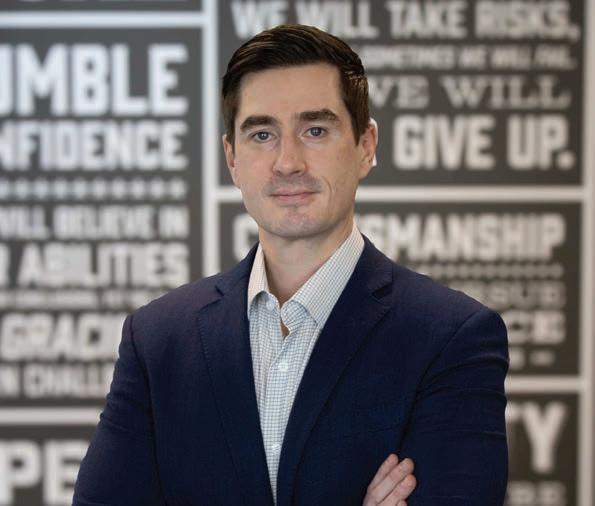
Chase Lane: Carrying a Legacy Forward at LT.agency
What it takes to bring a six-decade business into its next chapter
by Crystal Jennings
In 2025, Chase Lane and his wife Kelsi made the decision to become partners in LT.agency, a Phoenix-based marketing agency founded by his grandfather Ed Lane more than 60 years ago. Taking the reins as a third-generation CEO, Chase builds on the legacy carried forward by his father Beau Lane and his longtime business partner Chris Johnson, who have guided the company’s growth for many years.
“There’s a weight that comes with stepping into something that’s built over generations. You have to respect that foundation, but you also have to be honest about what the next chapter of the story requires,” says Chase Lane, LT.agency CEO.
The opportunity wasn’t to rebuild but to move the business forward, honoring what was working while bringing his own perspective. Overcorrect and he risked losing what made the company successful. Under-evolve and he risked it falling behind. It wasn’t about making his own mark but about shaping what came next for the agency. That mindset was developed long before he joined LT.
During his time in the U.S. Air Force, Chase worked in search and rescue helicopter procurement and developed an operational lens, understanding how complex systems function, how decisions are made and where friction occurs. His unit made decisions with real consequences and his commander took personal responsibility for the outcomes. He learned that in complex environments where decisions carry risk, teams don’t expect perfection; they expect leadership accountability to a set of core values and principles.
Later, after earning an MBA from the University of Notre Dame, Chase served as an assistant professor at the U.S. Air Force Academy. He taught the technology innovation capstone course, where cadets were encouraged to take risks, think ahead and take ownership of their successes and failures. He focused not just on what decisions to make but how to think through them. That carried him through roles in management consulting, operations and corporate strategy, where he advised organizations on mission-critical strategy and decision-making.
That perspective evolved into something more personal when Chase and Kelsi became partners in LT.agency. It marked a shift from contributing to a business to helping author its story.
Chase re-focused the company on its core values of Integrity, Unity, Craftsmanship, Speed With Purpose, Boldness, and Humble Confidence, creating weekly agency-wide values discussions and implementing values-based decision making into the agency’s operating model. He encouraged the executive team to take risks, but only those grounded in LT’s values and aligned with its strategic priorities.
Within the first year, that approach delivered results: eighteen new clients, stronger long-standing partnerships and double-digit revenue and margin growth. Those outcomes weren’t the strategy but the result of a business — and a
workforce — capable of doing more and doing it better.
As those results took shape, the focus shifted from what the agency had accomplished to how that approach could scale across the organization.
Chase guided teams to invest in capabilities that would strengthen how they think and operate. Sensing the pressure on clients to deal with larger and larger data sets, LT launched a data science practice, enabling new levels of campaign and customer insights. To unlock the potential of artificial intelligence, LT launched the “LT AI Hub” to bring the agency together in a centralized location to access tools, build automations and collaborate more fully. These efforts weren’t about adding new tools but about equipping departments to make better decisions and lead more strategic conversations.
That same mindset extended beyond the agency walls.
Recognizing an opportunity to strengthen the broader marketing community, Chase launched the Arizona Marketing Summit in November 2025, bringing local leaders together to share challenges, exchange ideas and build a more connected industry.
In just over a year as CEO, Chase’s approach has centered on creating clarity, building trust and giving team members the structure and autonomy to execute. Foundational improvements and innovative growth were not treated as competing priorities but as shared responsibilities across the organization.
Above all else, Chase strives to lead with integrity. As he learned throughout his career, the best leaders own their decisions, are open and honest with their teams and don’t shy away from risk.
Like any good editor, Chase ensures consistency in the direction but understands the story is, ultimately, shaped by the people who author it. At LT, the next chapter is not being written by one voice but by a team aligned in where they’re going and trusted in how they’ll get there.
LT.agency lt.agency
Veterans are more likely to hold leadership roles than non-veterans, with roughly 12% working in executive or senior-level positions. Their experience leading in high-pressure environments often translates directly to business leadership.
left),
Hospitality’s Only Constant Is Change; Hilton at the Peak Meets the Challenge
Growth and evolution in hospitality is a moving target; an always-changing dynamic where not keeping up is never an option. To remain competitive in an ever-shifting marketplace, balancing fickle consumer and economic trends, hotels must be laser-focused on what matters: product quality and guest experience.
Forty years ago, Phoenix/Scottsdale enjoyed a modest travel ecosystem. Nearly exclusively reliant on seasonal sun-seekers craving warm winter days poolside, exotic desert landscapes, endless golf and a caricature of what “Arizona” means to outsiders — think cowboys, cacti and faux “Old West” arts and culture — what the market mirrors today is something more diverse and energetic. That challenge is the opportunity at Hilton Phoenix Resort at the Peak.
For the storied destination resort, staying ahead of the curve is paramount. Debuting its first phase of what will be multiple dramatic transformations this year, the philosophy of constant change — and staying true to the original spirit of the property — has become its driving force.
I started my hospitality career working at iconic resorts throughout Phoenix area and learned early on that achieving longevity is never a static proposition. You must evolve with what travelers want. As we undergo a more than $60 million redesign, being as thoughtful as possible with the architectural and design process has been essential.
From the start, the strategy was clear: Honor the past, don’t erase it. This meant learning and understanding the desires of today’s travelers, including catering to visitors who still yearn for that “authentic” Arizona environment but also the locals planning summer staycations, as well as the corporate and group guests who arrive with expectations for state-of-the-art amenities and exceptional service.
Our updated design draws heavily from the surrounding desert landscape and the iconic backdrop of the Phoenix Mountain Preserve, but also from the modern city
Phoenix has become. The property’s bold color palette pulls from the vibrant kaleidoscope of the Sonoran Desert, from its wide-open blue skies, fiery sunsets, lush desert flora and warm earth tones; our intention was to amplify what surrounds us.
Another focus on the renovation was the resort’s iconic neighbor, Piestewa Peak, ensuring from every angle the city’s famous natural landmark was optimized to its fullest potential by opening up key architectural corridors and sightlines. The objective was to elevate the peak from simply being a scenic neighbor to becoming a defining feature, capturing shifting sunlight and shadows throughout the day.
Functionality was also important. Modern travelers expect flexible spaces that feel connected and intuitive without losing its character. Expansive guestrooms, plush furnishings and engaging gathering spaces were each redesigned to feel more welcoming while still respecting the resort’s original spirit and architectural history.
Hilton Phoenix Resort at the Peak is a mirror to the evolution of Phoenix itself, and our goal with this transformation is to ensure the resort remains a landmark for the generations to come. —Dale Moseke, general manager of Hilton Phoenix Resort at the Peak (www. hiltonphoenixresortatthepeak.com) and a Phoenix native who has spent his career working in the local hospitality industry
GET REAL
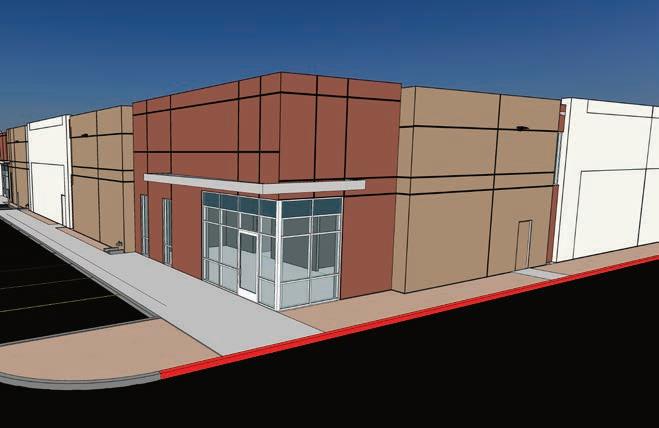
High-Power, Smaller-Footprint in Industrial Corridor
Opus recently broke ground on 59Bell Technology Park, a 57,520-square foot Class A speculative industrial development just south of Deer Valley’s industrial corridor in Glendale, Arizona.
Designed to serve companies within the semiconductor and advanced technology supply chain, the building will offer a three-phase 3,000-amp electrical service — a power capacity more commonly found in much larger facilities. This high-output, smaller-footprint design gives users, particularly manufacturing and high-power industrial users, access to critical infrastructure without the cost and complexity of a large-scale building. While the building can accommodate up to four users, it also offers the opportunity for a single tenant to occupy and control the entire facility. —Mike Hunter opus-group.com
Industrial Campus for High-Growth West Valley
Creation, a performance-driven real estate development and alternative investment firm, in partnership with a real estate fund advised by Crow Holdings Capital, has closed on a 38-acre site in Avondale for the development of Avondale Tech Center, a three-building Class-A industrial campus totaling approximately 700,000 square feet.
Located within the West Valley’s premier manufacturing corridor and offering direct access to one of the Southwest’s most active growth corridors, Avondale Tech Center is designed to serve advanced manufacturing and innovation-driven enterprises. —Mike Hunter creationequity.com crowholdings.com
The iconic Pointe Resorts (later branded as Pointe Hiltons) established the brand’s footprint in the Phoenix luxury market: Hilton Phoenix
all-suite destination
Resort at the Peak (originally The Pointe Resort; the first
resort in Phoenix), Hilton Phoenix Tapatio Cliffs Resort (originally The Pointe at Tapatio Cliffs) and Hilton Phoenix South Mountain (originally The Pointe at South Mountain).
Why Infill Development Is Becoming a Strategic Advantage in Arizona
As the Valley continues to mature, we are beginning to see a generational shift as builders set their sights on infill development rather than the traditional large tracts of land where concrete tile roofs stretch as far as the eye can see. This shift is driven by buyers demanding shorter commutes, more services and smaller footprints — not just in square footage, but also in environmental impact. Compounding this is the double-edged sword of cities prioritizing urban core development while builders chase new potential revenue streams.
This isn’t just happening in downtown Phoenix. It seems that every city, large and small, is working toward “manufacturing” a downtown. Places like Gilbert, Chandler, Glendale and even Fountain Hills have spent the past decade or two working with developers to bring infill to reality.
The current wave of downtown development can be traced to the University of Arizona breaking ground on its medical campus in 2014. This was the culmination of efforts by countless individuals working to make downtown Phoenix a medical and education hub. When Arizona State University joined with 10,000 students, there was finally a critical mass. Developers, like RED Development, found a vibrant mix of students, young professionals and empty nesters clamoring for a lifestyle many believed didn’t exist in Arizona.
This sparked a wave of apartment construction that is only now beginning to crest. It was driven by a large cohort of consumers for whom the idea of a four-bedroom home in the suburbs faded during the downturn, leading them to abandon suburban life for something they had seen elsewhere. Suddenly, they wanted to be city dwellers. Places like Kierland have grown significantly, with more than 3,500 people per square mile. Apartment buildings are selling for more than $400,000 per unit. Luxury condos are averaging nearly $1,000 per square foot, and rents are approaching $5 per square foot in some buildings, leading to a new concept often referred to as the “millionaire tenant.” Downtown Phoenix has grown to more than 50,000 residents, with 245 restaurants and approximately
1.6 million square feet of retail. Downtown Chandler has become an actual destination. Tempe is competing with Old Town for the next foodie hotspots. Westgate has emerged as a hub of activity, and strolling downtown Mesa is once again a popular experience.
Buyers are demanding walkability, shorter commutes and highly amenitized neighborhoods. City planners are increasingly cautious about decade-long, master-planned communities, and builders are wary of the costs associated with large-scale developments and the risk of being caught in a down cycle.
As a result, homebuilders are working diligently to tear down single-family homes in affluent neighborhoods to maximize density. National players like Thomas James Homes aim to be the Toll Brothers of infill singlefamily homes, while local builders of all sizes compete to construct high-end homes in North Central, Arcadia, McCormick Ranch and beyond. At the same time, legislation such as HB 2720 (ADUs) and HB 2721 (allowing up to four units on single-family lots) is accelerating activity in established neighborhoods, introducing levels of density not previously seen.
Only a few builders, however, are able to deliver on what those laws intended. Builders like Justin Johnson with Encanto Living have consistently delivered attainable housing in Central Phoenix, Moon Valley and the Bell Corridor. Delivering infill single-family homes in the mid-$400,000 range is no small achievement. Recognizing that demand extends beyond well-heeled buyers seeking an urban lifestyle, Johnson identified an opportunity to balance profitability, scalability and sustainability.
In today’s environment, those nimble enough to navigate the entitlement process and respond to evolving buyer demands will succeed. The buyer profile has changed, along with what they value. Living in the urban core is no longer a niche preference — it’s a defining trend, and builders are taking note. —Cory Mishkin , COO and director of sales at Cambridge Properties ( cambridgeproperties.com )
MISS OUT!
Jordan Phillips, vice president and project executive, oversees Skanska Advanced Tech operations in the Phoenix metro area. With more than 15 years of experience, he has a strong understanding of the advanced tech market and how to execute systemic changes to proactively meet client needs.
Advanced Technology builds high-tech facilities that shape modern industry, from hyperscale data centers and colocation hubs to high-volume semiconductor fabs. Operating in environments where precision engineering, controlled conditions and complex system integration define project success, Skanska’s experts in Advanced Technology build trusted partnerships and draw on Skanska’s national and global resources to bring deep knowledge, disciplined execution and critical-path alignment to every project. The result: accelerated delivery of a complex, technologydriven facility built for the next generation. skanska.com
How Skanska Is Powering Arizona’s Rise
Building the Workforce Behind the Global Semiconductor Revolution by
Jordan Phillips
Arizona’s semiconductor industry is rapidly expanding, fueled by robust international and local investments that are transforming Phoenix’s economic landscape. Yet, as the sector grows, so does the urgent need for a highly skilled workforce capable of constructing the advanced infrastructure it demands. While construction remains one of the most indemand jobs in Arizona, the skilled labor shortage continues to extend project schedules and increase costs. This creates both a challenge and an opportunity to strengthen the talent pipeline and accelerate economic growth.
Addressing this labor shortage — especially in mechanical, electrical and plumbing (MEP) trades for semiconductors, data centers and high-tech expertise — requires a targeted regional approach to improve and grow the existing labor force of skilled tradespeople locally. Here’s how Skanska’s Advanced Technology operating unit, which builds semiconductor and mission-critical projects across the Valley, is doing its part to improve Phoenix’s construction talent pool.
ENGAGING THE NEXT GENERATION OF ARIZONA’S SEMICONDUCTOR CONSTRUCTION WORKFORCE
Developing a strong talent pipeline begins early, and Skanska works closely with Phoenix-based partners to provide students with multiple real-world opportunities to engage with the practical skills required in construction. Skanska has directly engaged with numerous educational institutions to connect with students at all levels.
Earlier this year, Skanska, in collaboration with Microsoft and the Arizona Science Center, hosted the “Snow Week” event series, which allowed young students to understand STEM concepts using real-world experiences. Both fun and informative, the weeklong event increased exposure to STEM career paths and sparked curiosity about the topic for later in life. Students, such as those at Yavapai College’s Skilled Trade School, can participate in “Day of Discovery” events. These events include a job-site tour of a local mission-critical site, lunch, panel discussions led by industry leaders and practical demonstrations of the key skills they’ll need as young professionals entering the skilled trades.
Knowledge sharing doesn’t just extend to students for Skanska. While semiconductors and data centers are not new, the increasing demands of artificial intelligence and high-performance computing are transforming how they are built. Supply chain constraints and ever-evolving project requirements demand that subcontractors be knowledgeable and agile. The Construction Management Building Blocks and Excellence in Construction Leadership programs, created by Skanska as early as 2007, foster strategic partnerships with local, diverse small construction businesses to increase their access to resources, upskill their employees and build the capacity for managing and participating in advanced projects.
BUILDING A MORE RESILIENT INDUSTRY THROUGH INCLUSION AND DIVERSITY
The ability to adapt seamlessly is a defining quality of resilience. While construction methods have continued to evolve, the industry’s workforce demographics have changed little over the past two decades. Gen Z is increasingly entering the construction industry (making up around 14.1% of the workforce in 2025 per the U.S. Census Bureau). However, there is room for further growth by expanding the pool of qualified talent and subcontractors by accelerating exposure for underrepresented groups.
Skanska embraces inclusive recruitment, with women making up 24% of Skanska US Building’s workforce (compared to the industry average of 11%) and continuing efforts to strengthen outreach and attract talent from a wider range of backgrounds. In Phoenix, Skanska supports the Fresh Start Women’s Foundation, a community nonprofit that provides resources to help women achieve self-sufficiency by offering career mentorship for those entering the construction industry. Veterans are another target audience, and Skanska partners with Valors for Veterans Community AZ to connect them with on-the-job training, hiring events and resources to help them build skills for advanced technology projects.
LOOKING AHEAD
Arizona’s booming semiconductor industry is reshaping Phoenix’s economic landscape, but its continued success depends on addressing ongoing skilled labor shortages. Skanska’s multifaceted approach — early engagement with students, collaboration with educational partners, upskilling local tradespeople, and fostering inclusion and diversity — offers a blueprint for building a resilient workforce ready for advanced technology projects. The key takeaway is clear: Strategic investment in education, workforce development and inclusive recruitment is essential not only for meeting today’s construction demands but also for sustaining the region’s growth and global competitiveness in the years ahead.
The Construction Management Building Blocks and Excellence in Construction Leadership programs, created by Skanska as early as 2007, foster strategic partnerships with local, diverse small construction businesses to increase their access to resources, upskill their employees and build the capacity for managing and participating in advanced projects.
Photo courtesy of Skanska
CHIPS & FABS
Arizona’s Semiconductor Workforce Push Is Expanding Beyond Engineers
For years, much of the focus centered on engineers and chip designers. As new fabs and supplier facilities continue moving into Arizona, the labor demand is widening well beyond those roles. Technicians, facilities workers, maintenance specialists and cleanroom operators are becoming just as critical to the industry’s expansion.
Addressing this, West-MEC recently opened what organizers describe as the nation’s first K-12 advanced manufacturing cleanroom lab, giving high school students hands-on experience on the same types of robotics, automation and cleanroom systems increasingly used inside advanced manufacturing facilities, including semiconductor fabs. Located at the school’s Northeast Campus in Phoenix, the program was launched with support from industry partners that include TSMC, Amkor and the SEMI Foundation.
The need is becoming more visible as more fabs and suppliers move into the state. They require people who can maintain highly specialized manufacturing equipment, manage facilities running around the clock and support cleanroom environments where even small disruptions can affect production.
This shift is showing up across multiple levels of education. The University of Arizona recently highlighted new Taiwan-linked semiconductor workforce partnerships, while apprenticeship and technical training programs tied to semiconductor manufacturing continue expanding statewide.
Programs like the West-MEC cleanroom show how early that effort is now beginning. Students are not just learning about semiconductor manufacturing in a classroom setting. They are training inside environments designed to resemble the facilities many of them could eventually work in.
Industry groups and workforce leaders have repeatedly warned that labor shortages could become one of the biggest constraints on future semiconductor expansion nationwide. The next phase of growth may depend less on whether companies continue announcing projects and more on whether states can train enough advanced manufacturing workers to support them. What was once mostly tied to universities and workforce programs is now appearing in high schools and grade schools, too. —Stephanie Quinn West-MEC www.west-mec.edu
What Happens After the Fabs Arrive
For the last several years, Arizona’s semiconductor momentum has largely been measured through expansion announcements, investment totals and construction updates. New fabs. New suppliers. New projects moving into the state are helping Arizona position itself as one of the country’s largest semiconductor hubs. But at the recent SEMI Arizona Chapter Breakfast Forum, the conversation felt different.
The breakfast was hosted at Edwards Vacuum’s Chandler facility, and much of the discussion centered on the less visible parts of the semiconductor industry. Water planning. Long-term power demand. Supplier logistics. Packaging capacity. The kinds of things that become unavoidable once semiconductor manufacturing moves beyond construction and into long-term production planning.
For years, much of Arizona’s semiconductor conversation centered on attraction. Could the state land fabs? Could it compete with Texas, Oregon or overseas manufacturing regions? Those questions have changed because Arizona no longer has to prove it can attract semiconductor manufacturing. It already has and at a scale few states can match.
What happens after the fabs arrive?
The discussion throughout the morning was not centered on whether Arizona has enough water or power today. Much of it focused on how the state continues planning for growth already underway. Chandler Mayor Kevin Hartke noted that more than 320 semiconductor supply chain companies already operate in the region. He also pointed to the fact that Chandler has decades of infrastructure planning and water recycling investments that positioned the city for advanced manufacturing long before the current semiconductor surge. Winning fabs brought the industry here. Keeping all of it running over the next decade is a different challenge entirely.
Planning was the main theme that emerged throughout the breakfast discussions. APS discussed long-term power planning tied to semiconductor growth. Water remained part of the conversation, though not in the way Arizona is often portrayed nationally. Kathryn Sorensen, Ph.D., director of research and professor of practice at ASU’s Kyl Center for Water Policy, spoke plainly about the
stress on the Colorado River and the need for careful long-term water planning. She also put semiconductor water use into context, noting that large industrial users are part of the conversation, but not the state’s largest water users. The discussion was less about whether Arizona can support semiconductor manufacturing today and more about how infrastructure, recycling and resource planning keep pace as fabs, suppliers and packaging operations expand. Schneider Electric focused on supply chain resilience and what it takes to keep manufacturing moving when suppliers, materials and production timelines are increasingly interconnected.
The industry leaders at the breakfast repeatedly returned to the idea of proximity. Keeping suppliers closer to manufacturing facilities. Expanding packaging and research capabilities locally. Building stronger coordination between universities, utilities providers, manufacturers and logistics operations already tied to semiconductor production.
Suppliers continue opening operations near semiconductor facilities in Chandler and north Phoenix. Universities are expanding semiconductor research, packaging and microelectronics programs. Workforce discussions are moving beyond engineering roles and into technical operations, facilities management and infrastructure support positions needed to keep these sites operating continuously. Housing and mixed-use developments tied to semiconductor growth are also beginning to take shape near major manufacturing corridors, including projects like Halo Vista in north Phoenix.
The discussions looked less like recruitment pitches and more like long-range planning conversations. Speakers focused heavily on what Arizona still needs to build around the semiconductor industry, not simply how to attract more of it.
“Growth at this scale requires stronger collaboration, faster knowledge sharing, and the ability to solve challenges together,” Edwards Vacuum General Manager Lee Short said during the forum.
By the end of the morning, the conversation was no longer centered on whether Arizona can attract semiconductor manufacturing. The room was focused on what still needs to be built around it.
—Stephanie Quinn
The University of Arizona recently highlighted new Taiwan-linked semiconductor workforce partnerships, while apprenticeship and technical training programs tied to semiconductor manufacturing continue expanding statewide.
WELL, WELL, WELL
FINANCIAL STRESS IS A WORKFORCE HEALTH RISK
When employers think about stress, they often think about burnout, absenteeism, turnover and productivity. As a cardiologist, I think about the heart.
In recent years, I have treated a growing number of patients in their 40s with early signs of cardiovascular disease. Many do not fit the traditional risk profile. They exercise regularly. They do not smoke. Their cholesterol levels are not markedly elevated.
What they share is sustained strain: rising housing costs, childcare expenses, responsibility for aging parents and job insecurity. The pressure does not end when the workday does.
Chronic psychological stress activates the body’s stress response system. Cortisol and catecholamines remain elevated, contributing over time to higher blood pressure, endothelial dysfunction, metabolic changes and systemic inflammation. These physiologic effects are well-established contributors to atherosclerosis and cardiovascular events.
Cardiovascular risk accumulates gradually, often without obvious warning signs.
The symptoms can be subtle: unexplained fatigue, shortness of breath with exertion, intermittent chest discomfort and even disrupted sleep. Patients often say, “It’s probably just stress.” However, stress is not merely emotional. It has measurable biological consequences.
For employers, this has tangible implications. Financial strain may originate outside the workplace, but its health consequences manifest within it through increased medical claims, presenteeism and long-term disability risk. Traditional wellness programs appropriately emphasize physical activity and preventive screening. Those matter. But, if financial stress is not addressed as a driver of chronic disease, an important determinant of cardiovascular risk is overlooked.
The encouraging news is that stressrelated cardiovascular risk is increasingly recognized and, when identified early, progression of disease can often be slowed or prevented through risk-factor control, preventive care and sustained stress reduction. Normalizing conversations about stress, supporting access to care and integrating meaningful financial wellness resources can make a measurable difference.
Financial stress may begin outside an employer’s walls, but its health impact arrives at work each day. —Maulik Shah, M.D., executive director of HonorHealth Heart Care (www.honorhealth.com/medical-services/ cardiac-care)
The New Economics of Mental Health Care
Arizona’s behavioral health sector is entering a new phase of growth, shaped by a convergence of policy, payer behavior and clinical innovation. The FDA’s recent clearance of transcranial magnetic stimulation (TMS) for adolescents with major depressive disorder is not just a medical milestone; it is opening a newly reimbursable market and, in effect, creating a new segment within behavioral health, with implications that extend well beyond the clinic.
For years, TMS occupied a narrow lane, largely limited to adult patients and often positioned outside traditional insurance structures. In practice, that meant many providers operated within a cash-pay model, constraining both access and growth. With federal clearance now extending to teens, and major insurers beginning to cover the treatment, the economics are shifting quickly.
“Insurers too often act as gatekeepers, and that has historically limited access to innovative care,” says Houshang Aminian, M.D., medical director at American TMS Clinics. “This FDA approval changes that dynamic. We’re now able to offer a treatment that is safe, non-invasive and evidence-based to a much broader population.”
The timing is significant for Arizona. More than 1.3 million adults and approximately 139,000 teens experience depression or related conditions each year, while more than 2 million Arizonans live in areas with limited access to mental health professionals. Expanding coverage for non-drug therapies like TMS begins to address both access gaps and a new growth category for providers.
From a business perspective, FDA clearance lowers barriers to entry into new patient populations and enables providers to invest with greater confidence. Clinics that once operated within tight margins are now positioned to expand services, hire specialized staff and build infrastructure with a clearer path to return on investment.
Insurance coverage is the catalyst accelerating that shift. As commercial payers begin covering adolescent TMS, the treatment is moving from an out-of-pocket expense to a standard co-pay model for many families.
The result is a more stable revenue stream, allowing providers to move beyond fragmented, cash-based care and toward scalable operations.
“What we’re seeing is a fundamental shift in how mental health care is delivered and sustained,” says Juliane Popelka, CEO of American TMS Clinics. “When reimbursement aligns with clinical innovation, it allows providers to grow responsibly while reaching more patients.”
Across Arizona, that alignment is beginning to take shape. Markets such as Scottsdale and Chandler are emerging as hubs for data-driven behavioral therapies, drawing attention from investors to a sector that now offers both strong demand and a clearer path to sustainability.
The implications extend beyond healthcare systems. Earlier treatment for adolescents can reduce longterm costs tied to emergency care, hospitalization and lost productivity. For employers, expanded access to mental health care for employees’ families can influence absenteeism, focus and retention.
“TMS does more than mask symptoms,” Popelka adds. “It restores function to the brain. At scale, that translates into stronger families and more stable communities.”
At the operational level, providers are also leaning into data to reinforce value. Tools such as EEG brain mapping allow clinics to track progress and demonstrate outcomes to insurers and referral networks, aligning with a broader shift toward performance-based care.
Taken together, FDA clearance and insurance adoption are redefining the business framework of mental health care in Arizona, transforming a once-fragmented sector into one that is increasingly structured and positioned for growth.
As demand continues to rise, the organizations that succeed will be those able to align clinical innovation with sustainable reimbursement. In Arizona, that transformation is already underway. —Michelle Talsma Everson
behavioral health.
The FDA’s recent clearance of transcranial magnetic stimulation (TMS) for adolescents with major depressive disorder is opening a newly reimbursable market and, in effect, creating a new segment within
Tech Takes On AI Hallucinations in Legal Citations
Courts across the country are increasingly sanctioning attorneys who submit briefs containing invented case citations, a well-documented byproduct of generative AI drafting tools that produce authoritative-sounding, but entirely fictional, legal authority. CiteSentinel was designed to close that verification gap, giving attorneys a fast and easy way to confirm that every citation in a filing corresponds to a real case, a real statute, and a real legal authority.
Recently launched by legal tech startup BrentWorks Inc., the tool scans legal documents and flags case law, statutes and legal authorities that may be fabricated, misstated or otherwise erroneous, before they reach a judge.
Many attorneys who do not personally use AI to draft documents are discovering they have a problem anyway. Opposing counsel may have used AI. Cocounsel may have. Contract attorneys and paralegals almost certainly have access to it and may be using it without disclosing that fact. When a brief containing fabricated citations reaches the court, the question of who drafted it quickly becomes secondary to the question of whose name is on it.
CiteSentinel lets attorneys scan any document — their own, a colleague’s or an adversary’s — for citation errors before those errors become their problem, whether they were hallucinated, misstated or inaccurately referenced. Attorneys who review opposing counsel’s filings with CiteSentinel gain an additional advantage: the ability to identify and challenge citations to authorities that simply do not exist.
BrentWorks was founded by Brent Britton, a veteran technology attorney and MIT-trained engineer, and Brent Hunter, a longtime technologist and AI pioneer. Mike Hunter
BrentWorks brentworks.ai
Why the Best MSPs Are Rethinking Cloud Strategy
Lately, I’ve found myself in a steady rhythm of conversations with managed service providers (MSPs), and they tend to open the same way. A pause, a sigh, and then something along the lines of, “Our customers are all over the place.”
And they are. Some are circling public cloud, curious but not entirely convinced. Others jumped in headfirst a few years ago, persuaded by promises of simplicity and savings … only to discover that the reality is a bit more complicated. Costs crept up. Performance didn’t quite hold. Compliance became a moving target. Then there are the newer businesses, eager to get it right from the outset but unsure where “right” actually begins.
The role of an MSP has always been to meet customers where they are. The only difference now is that “where they are” sits somewhere between on prem, cloud and a quiet plea for someone to simply make it all work.
Public cloud is a powerful tool but it isn’t the answer to everything; MSPs, for their part, are challenged to help customers understand that hybrid isn’t a compromise but a thoughtful way to bring together performance, cost and control in a way that actually works.
The MSPs who are succeeding here are giving their customers a genuine choice. Not a theoretical choice, but a practical one that’s usable and flexible. Workloads run where they make the most sense, and they can move when circumstances change.
That might mean placing performancesensitive applications on bare metal; keeping sensitive data in a private cloud; running modern services through Kubernetes; and maintaining clean, reliable connections into public cloud environments where appropriate. One MSP put it rather nicely to me: “I don’t sell cloud or on prem. I sell confidence.” It’s a line that captures the essence of what hybrid should feel like.
opportunity. Providers are no longer selling infrastructure in isolation. They are offering guidance, design and ongoing stewardship.
That shift changes the conversation, and:
• Opens the door to recurring revenue via managed services;
• Creates space for higher-value engagements around compliance, performance tuning and data governance; and
None of this works if hybrid becomes too complex. The real art lies in making it feel cohesive. When it does, businesses gain predictable costs, consistent performance and the ability to support customers across environments without introducing unnecessary friction. Just as importantly, MSPs retain a sense of control. They are not beholden to a single vendor’s pricing model or roadmap. They can adapt.
Hybrid cloud, in this sense, is not merely a technical architecture. It is a commercial
• Strengthens margins because what’s being delivered is something far more nuanced than a simple cloud resale.
Customers, for their part, are not looking for instructions. Clarity is what they seek. They want someone who can help them navigate it without locking them into a corner — someone who truly understands the interplay between performance, cost and control.
This is where MSPs have a quiet but significant advantage. They understand the balance. They can offer the strength of dedicated infrastructure, the elasticity of cloud and a degree of predictability that many organizations have been missing.
It is worth taking a moment to pause here to ask a few careful questions before committing to any one approach:
• How does the business handle latencysensitive workloads?
• What does scaling really look like, both up and down?
• What guarantees sit behind availability?
• Where does the data live, under whose jurisdiction?
• How easily can it be moved? What does that movement cost over time?
• How well does everything connect?
The answers, more often than not, lead to the same place. Hybrid cloud is not a compromise. It is a point of control. A way of bringing together performance, cost and compliance into something that is not only workable but quietly, confidently fit for the future. —Richard Copeland, CEO of Leaseweb USA (www.leaseweb.com)
AI: Trust and Use Are Not Aligned Howdy.com’s recently released a survey of employed Americans nationwide found 75% workers trust AI output but just 49% trust AI platforms writ large. And 62% are not comfortable giving AI sensitive work tasks. howdy.com/blog/ai-trust-statistics
Attorneys help companies keep up with changing expectations, obligations and risks
by RaeAnne Marsh
Legal considerations touch every aspect of business but many may seem like a one-and-done. In the current environment of social and regulatory disruption, however, matters that previously seemed settled may be due for attention. In Business Magazine is shining a light on select topics with insights on implications that business leaders may not have known or may be overlooking, given the volume and pace of change.
The New Face of DEI
by Amanda M. Breemes, Littler Mendelson P.C.
Diversity, equity and inclusion initiatives are undergoing a profound transformation as administration scrutiny intensifies and employers recalibrate their approaches. For organizations across the United States, especially large employers, the conversation has shifted from expansion to compliance, risk mitigation and strategic adaptation.
A major catalyst for this shift has been the federal government’s evolving enforcement posture. In 2025, the Trump administration moved quickly to redefine the legal boundaries of workplace DEI. Within days of the second inauguration, two sweeping executive orders signaled a new era. One targeted “illegal DEI” programs within federal agencies, while another required federal contractors and grant recipients to certify that their DEI initiatives do not violate anti-discrimination laws. These directives also dismantled long-standing frameworks, fundamentally altering the compliance landscape.
The ripple effects have been widespread. According to Littler Mendelson’s Workplace Policy Institute Survey, 71% of U.S. employers reported being impacted by DEI-related policy changes in the administration’s first year. Among large organizations with 10,000 or more employees, the impact rose to 86%. At the same time, enforcement risk has become a central concern. The Department of Justice’s Civil Rights Fraud Initiative uses the False Claims Act to investigate DEI-related violations among recipients of federal funds, raising the stakes considerably. In Littler’s survey, 35% of respondents cited unlawful DEI practices as their top enforcement concern, climbing to 53% among large employers. Regulators are also offering increasingly specific guidance on what may cross legal lines. The Equal Employment Opportunity Commission and the Department of Justice have emphasized that DEI programs must not limit, segregate or classify employees based on protected characteristics. This principle applies broadly, extending beyond hiring and promotion decisions to trainings, mentoring opportunities and workplace programming.
A key area of focus is employee resource groups, also known as affinity groups. These groups, often organized around shared identities or experiences, have long been central to corporate DEI strategies. However, current EEOC guidance makes clear that limiting membership in ERGs, Business Resource Groups or similar programs to specific protected classes can constitute unlawful discrimination. Even separating employees into distinct groups for programming, regardless of whether those groups receive identical content or resources, may present legal risk if the separation is based on race, sex or another protected trait.
As a result, employers are rethinking how these groups function. Open access is now critical. Membership, events and benefits tied to ERGs must be genuinely available to all employees, both in policy and in practice. Additionally, organizations are prioritizing equal funding and consistent support across groups, recognizing that separate but equal structures are insufficient under current interpretations of anti-discrimination law.
Beyond ERGs, the guidance reinforces a broader principle that opportunity must be universal. Employers are encouraged to provide training and mentoring that equip workers of all backgrounds with the skills, experience and access necessary to perform well and advance into leadership roles. Similarly, workplace networks, often key drivers of career mobility, must be equally accessible rather than informally limited to certain groups.
Despite the heightened scrutiny, this moment does not signal the end of DEI. Instead, it reflects a shift toward a more disciplined approach. Courts are expected to continue shaping how these rules are applied, using established anti-discrimination standards to evaluate claims. In the meantime, employers are balancing compliance obligations with workforce expectations, recognizing that inclusive cultures remain critical for attracting and retaining talent.
As organizations navigate this shifting landscape, the path forward is clear: Compliance and inclusion must go hand in hand. The next face of DEI will be defined not by narrowing efforts, but by designing programs that expand access, strengthen fairness and stand up to legal scrutiny, ensuring every employee has an equal opportunity to participate, grow and succeed.
Amanda Breemes, an attorney in the Phoenix office of Littler Mendelson P.C., handles diverse employment matters, including discrimination, harassment, ADEA, ADA and FLSA litigation in federal and state courts, advising employers on hiring, onboarding, complaint investigations, and employment terminations across varied industries nationwide. littler.com
Arizona Employers Cannot Sleep on Seismic Changes in Drug Rescheduling Initiated by the Federal Government
by J. Alexander Dattilo, Ogletree Deakins
On December 18, 2025, President Trump issued Executive Order 14370 that directed the Attorney General to expedite rescheduling marijuana from a Schedule I to a Schedule III Drug. On April 23, 2026, Acting Attorney General Todd Blanche then issued a “Final Order” that reclassified all FDA-approved medications containing marijuana and marijuana products authorized under a state medical marijuana program as a Schedule III Drug. This classification acknowledges that the substance has medical value if taken under a licensed medical professional’s supervision.
On April 18, 2026, President Trump issued Executive Order 14401, titled “Accelerating Medical Treatments for Serious Mental Illness,” which directed federal agencies to expedite research, review and approval of psychedelic drugs like psilocybin (also known as “magic mushrooms”) as potential treatments for serious mental health conditions. This Executive Order could result in the same rescheduling of psilocybin and other psychedelic drugs within months.
Although these are federal executive orders, they are likely to have significant impacts on Arizona employers’ drug testing requirements, accommodation practices and company policies, especially if the state legislature is emboldened to enact additional legalization regulations.
IMPACT OF DRUG RESCHEDULING ON ARIZONA EMPLOYERS
For Arizona employers, these seismic shifts at the federal level have already caused a wave of change that will have both immediate and longterm impacts.
In the immediate future, the rescheduling of marijuana as Schedule III Drug will potentially force Arizona employers to face a flood of claims under the Americans with Disability Act by employees who are registered as medical marijuana cardholders.
Previously, Arizona employees and prospective employees who are medical marijuana cardholders could only leverage cardholder status to assert claims under the Arizona Medical Marijuana Act for discrimination based on (1) their status as a cardholder or (2) any drug test results of positive for marijuana metabolites. The AMMA does not allow employees to consume, possess or be impaired by marijuana during work hours. And until now, courts had regularly rejected ADA claims based on an employer’s refusal to allow marijuana use as an accommodation, given that marijuana — as a Schedule I Drug — fell under the automatic exclusion applicable to illegal drugs. Now that marijuana is a Schedule III Drug, however, Arizona employees who are cardholders may argue that their medicinal marijuana use must be accommodated, just like use of other prescribed medications.
Conversely, there is currently only a possibility that psychedelics, including psilocybin, will be rescheduled. Arizona has yet to legalize psilocybin use; its legislature passed SB 1570 in 2024, which if enacted would have created a system to license psychedelic-assisted therapy centers and ultimately legalized medicinal psilocybin use to treat depression and PTSD. Governor Katie Hobbs vetoed the bill but simultaneously allowed continued use of a $5-million grant for state-funded psilocybin research and publicly suggested that she will legalize psilocybin use for the treatment of depression and PTSD should the research support that decision.
History has repeatedly shown that the public is often receptive to legalizing medicinal use before it will support recreational use. If the April 18, 2026, Executive Order ultimately causes psilocybin to be reclassified as a Schedule III Drug (just as the December 18, 2025, Executive Order did for marijuana), this will accelerate the pace of
drug development and research for psychedelics — which could quickly tip the scales towards legalizing medicinal psilocybin use in Arizona. This legalization would likely be accompanied by law protecting employees who use psilocybin for medical purposes, which is exactly what the AMMA did for employees who are medical marijuana users when it was enacted in 2010.
COMPLIANCE STRATEGIES FOR EMPLOYERS
The immediate and long-term impacts of the rescheduling of marijuana and potential rescheduling of psilocybin (and/or other psychedelics) is a rapidly evolving issue. It remains to be seen whether and to what extent courts will now allow Arizona employees to bring ADA “failure to accommodate” claims based on their status as medical marijuana cardholders. It is also unclear whether psilocybin and other psychedelics will even be rescheduled as Schedule III Drugs. Despite these uncertainties, Arizona employers can avoid legal landmines by replicating compliance measures they may have already been taking to comply with the AMMA.
First, employers should conduct comprehensive reviews of drug use and testing policies. Zero-tolerance policies covering off-duty marijuana use for medicinal users will now face even greater scrutiny.
Employers should also ensure managers are well-versed in company policy and procedure on ADA accommodation requests. If an employee who is a medical marijuana cardholder requests marijuana use as an accommodation, managers should treat it as a genuine accommodation request and quickly inform human resources and/or corporate leadership, who, in turn, should consider carefully how to advance the interactive process for such a request in a legally compliant way.
Employers should also review and update descriptions of any positions that are safetysensitive by ensuring these contain detailed explanations of job requirements that show their safety-sensitive nature.
Lastly, employers should continue the reliable tactic of documenting indicia of impairment (e.g., bloodshot eyes, slurred speech, etc.). Managers should use a “Reasonable Suspicion Checklist” to document any such observations, regardless of whether the cause of said impairment is suspected to be marijuana, psilocybin or any other drug.
J. Alexander Dattilo is a shareholder at Ogletree Deakins’ Phoenix Office and a member of the firm’s Drug Testing practice group. Dattilo devotes a substantial portion of his practice to litigating and advising on issues related to employee drug-testing that implicate the AMMA and DTEA. ogletree.com
Navigating the New Landscape of Hybrid Work, Remote Work and Returnto-Office Policies
by Eric Johnson and Rosa Leon, Quarles & Brady
The American workplace has undergone a profound transformation in recent years, and the legal landscape surrounding how and where employees work is still catching up. For business owners and employers, the shift toward hybrid work, remote work and the ongoing push for return-to-office mandates presents a web of legal considerations that many may not fully appreciate. Understanding these issues now can help businesses avoid costly missteps down the road.
THE RISE OF FLEXIBLE WORK POSTPANDEMIC
When the pandemic forced millions of employees to work from home, many businesses discovered that remote arrangements could be surprisingly effective. Today, a significant number of employers have adopted permanent hybrid or fully remote models, while others have moved aggressively to bring employees back to the office. Each approach carries its own set of legal and practical implications in ways that demand attention.
WAGE AND HOUR COMPLIANCE
One issue overlooked by some employers concerns wage and hour compliance for remote employees. For out of state remote employees, the wage and hour laws of the state where the employee is physically located may apply. This can affect things like minimum wage, overtime,
meal/rest breaks and even pay stub and pay frequency mandates. Before an employer agrees to engage a remote employee in a different state, it should consider the legal and practical implications of such an arrangement.
Regardless of the applicable state law, other wage and hour concerns may also arise with remote employees. For instance, accurately tracking an employee’s work time is critical and employers should have a mechanism whereby it is able to accurately track all time spent working by a remote employee. Employers should also expressly prohibit hourly employees from reviewing/sending work related emails and/ or performing other tasks while “off the clock.” Employees should also be told that they may not work overtime without first checking with their supervisor.
TAX AND BENEFITS COMPLICATIONS
Multi-state remote work also creates potential tax nexus issues such as state income tax withholdings, corporate tax filings and even sales tax obligations. Benefits administration can become more complex. Health insurance and/or workers’ compensation plans may have network limitations due to employee location. State-specific employee leave laws, including paid family leave, sick leave and other mandated benefits, must be considered. Employers should also determine whether any ergonomic or other tools can be provided to remote employees to reduce the risk of workplace injuries. A remote employee injured at home while working is likely a compensable injury under workers’ compensation laws.
RETURN-TO-OFFICE MANDATES AND ACCOMMODATION OBLIGATIONS
For employers pursuing return-to-office policies, the legal considerations are also significant. Employees who have previously worked remotely may request remote work as a reasonable accommodation for an alleged disability under the Americans with Disabilities Act or analogous state laws. Employers must engage in the interactive process with employees and carefully evaluate whether remote work is a feasible option. Blanket denials without individualized assessment can expose businesses to discrimination claims. Additionally, employers should be mindful that return-to-office mandates can have a disparate
impact on certain protected groups. Employees may also inquire as to whether their commute time is compensable and/or the impact of high gas prices related to returning to the office. Whether meritorious or not, concerns raised by employees about working conditions may qualify as protected activity under the National Labor Relations Act for which employees cannot be retaliated against. Employers should be careful to document the legitimate business reasons for requiring in-person attendance and assess the legal risk of any such policy before it is adopted.
UPDATING POLICIES FOR A CHANGING WORKPLACE
Perhaps the most important step for employers right now is to review and update their workplace policies/agreements. Any policy/ agreement should clearly address expectations around work location, hours, data security, equipment, expense reimbursement and the employer’s right to modify or revoke remote arrangements. Hybrid policies should specify which days or functions require in-person attendance and how scheduling will be managed. Employers should review their policies on timekeeping, workplace safety, harassment and discrimination, performance management, etc., and confirm the policies are broad enough to apply in both in-office and remote settings and modify as needed.
LOOKING AHEAD
The legal framework governing workplace flexibility is not static. Legislators/regulators at the state and federal level continue to consider new rules that may affect remote and hybrid work arrangements. Employers who stay informed and are flexible will be best positioned to adapt and thrive in this new era of work.
Eric Johnson is a partner at Quarles & Brady and the Phoenix office chair of the Labor & Employment Practice Group. He focuses on employment law counseling and litigation.
Rosa Leon is a Labor & Employment associate in the Quarles Phoenix office. She advises on a wide range of labor and employment law issues, such as compliance, risk management and collective bargaining. quarles.com
Are Employer Policies Keeping Up with Technology Advances?
by Alex Harris, Rose Law Group
In my opinion, the most pressing legal issue for Arizona businesses right now is the gap between how quickly technology is changing daily operations and how slowly most businesses update the legal documents and policies that govern that technology. Many businesses are using tools, platforms and data practices that did not exist five to ten years ago but are still relying on employee handbooks, contracts and privacy disclosures from that era.
One area businesses may be overlooking is the use of artificial intelligence in hiring, performance management, marketing and customer communications. Employers need to know that they remain on the hook for the outcomes of the AI tools they use. For example, if an automated résumé screening tool, chatbot or scoring system results in a discriminatory impact, the fact that the tool came from a third-party vendor will not necessarily protect the employer. Businesses should understand what tools they are using, who is supervising them, what data is being collected and whether the results can be explained and are legally permissible.
A second area is data privacy. Even businesses that are not based in California, Colorado or one of the other states with comprehensive consumer privacy statutes can be subject to those laws if they collect data from residents of those states through their website, app or marketing platforms. Privacy notices, cookie banners, terms of service and data-request procedures should be reviewed frequently. Businesses that collect biometric information, geolocation or healthrelated data should be especially careful because that information often carries heightened consent and disclosure obligations.
Cybersecurity is another area where the legal exposure has grown faster than most internal policies. Arizona, like nearly every other state, requires notification to affected individuals after certain data breaches, often within tight time frames. Businesses should have a written incident response plan, know when and who to notify, and confirm that their cyber insurance actually aligns
with that plan before a breach incident occurs. Finally, businesses should look closely at their technology vendor agreements. Standard SaaS terms often allow the vendor to use customer data to train models, change features or substantially limit their own liability. Businesses handing sensitive data to a vendor should confirm in writing how that data may be used, how it is secured, what happens on termination and what notice they will receive if the vendor experiences a breach. Technology compliance should be treated as ordinary business maintenance. Arizona businesses should periodically review their AI usage, privacy disclosures, cybersecurity, employee practices and vendor contracts so they can identify risk early and update their practices before a problem becomes expensive.
As part of Rose Law Group’s corporate practice, Alex Harris advises both newly formed and established companies on the full spectrum of business matters, from the ordinary course of navigating day-to-day operations, securing financing, or mergers and acquisitions. His practice spans every stage of a company’s lifecycle, including formation, governance, fundraising, stock and asset sales, mergers, and corporate reorganizations. roselawgroup.com
The New Ground Rules: Balancing State Mandates, Water Scarcity and Tech in Arizona Real Estate Development
by Benjamin Tate, Withey Morris Baugh, PLC
Businesses operating in Arizona are navigating a period of rapid legal and regulatory change, particularly in the context of real estate development and the land use and zoning ordinances that regulate it. While many companies are understandably focused on immediate operational concerns such as inflation, workforce
shortages and supply chain disruptions, doing so may come at the expense of overlooking trends that can significantly impact long-term business stability and growth. For Arizona employers and property owners, understanding these changes is no longer optional — it is an essential component of risk management and strategic planning.
STATEWIDE PREEMPTION
One of the most important developments in Arizona land use law is the increasing tension between statewide growth initiatives and local zoning authority. Arizona continues to experience substantial population and commercial expansion, especially in metropolitan regions like Phoenix, Tucson and surrounding suburban communities. The Arizona State Legislature has passed, and Governor Katie Hobbes has signed, several bills over the past few years mandating changes to local zoning regulations to accelerate housing supply growth. These bills impact areas like middle housing (HB 2721), accessory dwelling units (HB 2720) and office-to-multifamily conversion (HB 2110).
These bills are just a few examples of statelevel regulatory preemption aimed at easing development regulations and creating more housing opportunities, requiring municipalities to amend their ordinances to align with the legislation. In many cases, these changes create new residential development opportunities that may otherwise be overlooked.
WATER USAGE
Arizona’s long-term water supply concerns are reshaping development approvals across the state, and these concerns are heightened by this year’s unusually warm winter and below average regional snowfall. In some jurisdictions, water availability is now a central factor in entitlement decisions and project feasibility. At the state level, the Arizona Department of Water Resources’ reform of the state’s Active Management Area regulations in 2023, combined with state legislation related to groundwater availability (HB 2647) and residential lease communities (HB 2025/2026) have forced developers to rethink their water strategies for new projects.
As we enter this new era of water conservation
in Arizona, developers must be cognizant of the fact that water policy is increasingly tied to land use approvals and infrastructure planning. Businesses entering into real estate acquisitions or lease agreements should conduct careful due diligence regarding water access, utility obligations and future restrictions that could affect operations and long-term value.
TECHNOLOGICAL ADVANCEMENTS
The exponential growth of artificial intelligence and its related technological advancements are omnipresent in today’s news headlines. AI tools are being integrated into architectural and civil drafting software, municipal permitting and plan review systems, and legal software tools faster than users can adapt to them. With the technology itself still in its infancy and its integration into numerous professional software tools still largely untested, the opportunities for overreliance are abundant. Whether it is a structural engineer confirming the accuracy of building load calculations on a permit application or an attorney reviewing the legal analysis in a land use entitlement memorandum, it is imperative that the professional signing or stamping an official document carefully review and double-check any work product generated by AI tools.
Ultimately, the legal landscape surrounding real estate development in Arizona is evolving alongside broader economic and societal changes. The most successful businesses and developers will be those that proactively monitor regulatory developments, engage experienced legal and planning professionals early and incorporate land use strategy into broader business planning. In today’s environment, adaptability and legal awareness are no longer advantages — they are necessities.
Benjamin Tate is a land use and zoning attorney at Withey Morris Baugh, PLC, joining the firm in 2017. Tate is a secondgeneration Phoenix native with deep roots in the Valley and a passion for development. He is a former litigator, and has considerable experience in politics on the local, state and national level.
wmbattorneys.com
Editor’s note: This cover story includes a special additional segment online at www.inbusinessphx.com “Immigration Compliance and Workforce Planning in a Changing Regulatory Environment” by Benjamin Nucci, partner at Snell & Wilmer who has extensive experience in all aspects of employment-based U.S. immigration law.
This is the first of a regular, quarterly feature from Marco A. López Jr. on cross-border trade, investment and broader issues of commerce between Mexico and the State of Arizona.
Arizona Is Already the Center. Act Like It.
Is proximity creating a blind spot to shared advantage?
by Marco A. López Jr.
I was 22 years old when I became mayor of Nogales, Arizona. Sitting at the edge of one of the busiest commercial land ports in the Western Hemisphere, I watched billions of dollars in trade cross the border every single day. I watched Mexico’s manufacturers supply American industries with precision and reliability. And I watched Arizona look everywhere but south for its economic future. Decades later, as I track the most consequential industrial transformation in our state’s history, I am watching it happen again.
THE ECOSYSTEM IS ALREADY HERE
Arizona is now home to the most consequential semiconductor cluster in the Western Hemisphere. TSMC has committed $165 billion to a gigafab campus in Phoenix spanning 1,100 acres, with six fabrication facilities, two advanced packaging centers, and a research and development hub planned. The first fab is already producing chips at four-nanometer precision. Amkor Technology is building a $7-billion advanced packaging and testing campus in Peoria, anchored by a formal supply chain agreement with TSMC. Intel continues its long-standing expansion in Chandler. More than 35 semiconductor companies have announced plans to expand or relocate to Arizona, drawn by the gravity of the cluster taking shape here. Specialty materials suppliers, equipment companies and chip design firms are following. Arizona State University has been selected to house two new national semiconductor development facilities expected to open by 2028. More than $200 billion in announced investment is now flowing into this state.
This is not a future story. This is happening right now. Arizona is already the center of a semiconductor ecosystem that rivals anything the United States has ever built.
Marco A. López Jr. is founder and CEO of Intermestic Partners, a cross-border strategic advisory firm specializing in U.S.-Mexico trade, investment and border security. A former mayor of Nogales, Arizona, and chief of staff at U.S. Customs and Border Protection, he is a past member of the Council on Foreign Relations. His work focuses on strengthening regional competitiveness, trade and long-term economic growth across North America. intermestic.com
THEN WHY ARE WE LOOKING AT ASIA?
Here is where I lose patience. Governors and trade delegations make headlines flying to Taiwan, Singapore, Japan and the Middle East in search of semiconductor suppliers, talent pipelines and manufacturing partners. The trips generate press. They generate photos. And they systematically overlook what is sitting in our own backyard. Mexico is the second-largest supplier of electronic products to the United States. More than 730 specialized electronics plants employ more than 500,000 workers across the country. Guadalajara, often called Mexico’s Silicon Valley, is home to more than 600 electronics and technology companies, with Intel, IBM and major contract manufacturers like Foxconn and Jabil operating research, design and manufacturing centers there. Chihuahua leads all Mexican states in electronics exports at $20 billion annually. Baja California follows at $19 billion, and it sits three hours from Phoenix by highway. Sonora, which shares our border, is Mexico’s dominant mining state and home to a university that has already launched a semiconductor engineering program built specifically around the talent needs
of Arizona’s industry. And Mexico holds the world’s largest deposit of fluorspar, a mineral essential to the chip etching process, giving North American manufacturers a critical supply chain advantage no trip to Asia can replicate. Mexico produces more than 110,000 engineers annually. Arizona State University is already partnering with universities in Baja California, Jalisco and Monterrey to build a semiconductor talent pipeline explicitly designed for the North American supply chain.
The infrastructure, the talent, the proximity, the trade framework under USMCA and the political will are all there. What is missing is Arizona’s willingness to turn and look south with the same ambition it directs toward the other side of the planet.
YES, MEXICO HAS CHALLENGES. THAT IS EXACTLY THE POINT.
I hear the objections: Security concerns. Corruption. Slow economic reforms. These are real, and I do not dismiss them. I have spent my entire career navigating these realities. What I know from that experience is this: Economic investment does not wait for perfect conditions. It creates them. The single most effective force for reducing instability in any region is the arrival of genuine, sustained economic opportunity. Bringing semiconductor supply chain investment to northern Mexico does not just serve Arizona’s industrial interests. It accelerates the kind of structural change that decades of policy alone have not delivered.
The alternative, continuing to route supply chains through Asia while our neighbor goes underdeveloped, serves no one. Not Arizona businesses. Not Mexico’s workforce. Not North American supply chain security.
ARIZONA NEEDS A NEW IDENTITY TO MATCH ITS NEW REALITY
There is one more obstacle that rarely gets named honestly. Arizona still carries a perception problem. In too many boardrooms, in too many investment committees, in too many conversations in Mexico City and Monterrey and Sao Paulo, Arizona is still seen as a sun-baked western state. Not a technology powerhouse. Not a semiconductor capital. Not the obvious hub for the most important industrial corridor in the Western Hemisphere.
This is not unique to Arizona. States have successfully rebranded themselves around industry-led identity shifts before. North Carolina transformed from tobacco and textiles to Research Triangle, a globally recognized life sciences and technology hub, because its universities and companies built that story together before any government campaign caught up. Colorado remade its image around aerospace, clean energy and outdoor tech through consistent private-sector storytelling. Texas did not become a semiconductor and finance destination because of tourism ads; it happened because its business community decided that was who they were and acted accordingly.
Arizona needs that same clarity of identity. When decisionmakers in Mexico, Latin America or Southeast Asia think about
Mexico holds the world’s largest deposit of fluorspar, a mineral essential to the chip etching process, giving North American manufacturers a critical supply chain advantage no trip to Asia can replicate.
where to partner in North American semiconductor manufacturing, the answer needs to be Arizona, immediately and instinctively, the way Silicon Valley still triggers technology in the global imagination. That identity cannot be delegated to a government agency. It has to be led by the companies, the universities and the cross-border business community that are actually building it.
THE STREET RUNS BOTH WAYS
Here is what makes this a genuine tragedy of missed opportunity rather than simply an Arizona problem. Mexican cabinet secretaries and governors are making the exact same mistake in reverse. They board flights to Singapore, Frankfurt and Seoul looking for semiconductor and technology partners, chasing the headline trip and the global stage, while Phoenix sits right there, already home to the most consequential chip manufacturing cluster in the Western Hemisphere. The opportunity they are traveling 12 time zones to find is a two-hour drive from the border.
This is the same gravitational pull of the sexy overseas mission that afflicts Arizona delegations. Proximity gets mistaken for ordinariness. Distance signals ambition. But the whales are not in the ocean they are fishing. They are here, in a smaller sea that is teeming with exactly the kind of opportunity that defines the next several decades of North American economic growth.
The solution cannot be to simply wait for perception to correct itself on both sides. That has not happened in 30 years, and it will not happen on its own now.
A CALL TO ARIZONA’S CEO COMMUNITY
This is where Arizona’s business leaders have a specific and urgent responsibility. The ask is not general goodwill toward Mexico. It is organized, coordinated, ongoing engagement with real investment of time and resources. Arizona’s CEOs need to take deliberate ownership of making this connection happen.
That means building the infrastructure to receive Mexican governors, federal secretaries and business delegations here in Arizona, not waiting for a trade mission to fly the other direction. Walk them through the TSMC campus in Phoenix. Show them what Amkor is building in Peoria. Sit them down with ASU leadership and the companies already anchoring this ecosystem. Make the case with evidence in front of them, consistently, over time, with the kind of followthrough that turns a visit into a partnership.
A trade mission that comes to Arizona instead of flying out of it is not just a logistical reversal. It is a statement about who Arizona is and what it has become. It is how perception changes. And it is how the most obvious partnership in North American industrial history finally gets built.
I have been watching this gap persist since I was 22 years old at the edge of that border. The opportunity has never been larger, the case has never been clearer and the cost of another decade of mutual indifference has never been higher. The answer is right here. It always has been.
C-Suite Speaking Habits
July 2020, the CEOs of Amazon, Apple, Google, and Facebook hopped on a Zoom call with the United States Congress. Their goal? Clarifying, magnifying and amplifying their companies’ contributions to the country. Presenting themselves to the public. Selling their work to the world. What followed was a masterclass in compelling communication — one that illuminated how the world’s most effective and successful CEOs win hearts, spread ideas and drive action.
Spoiler alert: It’s the opposite of what approximately 95% of leaders do.
C-Suite Speaking Habits: How Top Executives Use Words to Win Hearts, Drive Action, & Move Companies
Peter Andrei
$24.99
Independently published On Shelves and Online 209 Pages
Exit Without Selling
After years of building, you’re ready to step back and travel with family, take care of your health and enjoy life. But you’re trapped. You depend on the business for income, and the business depends on you. You don’t want to sell or shut it down … but you can’t keep this up forever.
You’re not alone — 76% of business owners have no viable exit plan. Only 20% of businesses listed for sale ever get an offer. And three out of four owners who do sell regret it within a year.
But what if there’s a third option no one told you about?
Exit Without Selling: Build A Dream Team, Keep Your Business, and Get Your Life Back
Richard Shaull and Luke Mardigian
$27.99
Independently published On shelves and online 220 pages
Situational Leadership
Every leader has been there. They give clear direction, and people still hesitate. They try to empower, but performance drops. They ask questions and try to collaborate, yet confidence and engagement don’t grow. What works in one moment somehow falls completely flat in another.
These frustrations point to a costly assumption many leaders make: that their natural leadership approach is always effective. The Situational Leadership® Model challenges this assumption, demonstrating how leaders are successful when they adapt their approach to the specific situation and the person in it.
Situational Leadership®: The Model for Leading Others, Navigating Change, and Unlocking Performance
Sam Shriver, Ed.D., and Suzie Bishop
$28.00
Amplify Publishing Available 6/23/2026 224 pages
State University is already partnering with universities in Baja California, Jalisco and Monterrey to build a semiconductor talent pipeline explicitly designed for the North American supply chain.
Tony Moses is VP of Manufacturing at At One Ventures, a venture capital firm committed to making humanity net positive to nature. He has 20 years’ experience in scaling hardware, including pharma (Merck), food and beverage (Conagra Brands), flavor chemistry (Givaudan) and building new manufacturing facilities (CRB Group). He holds degrees in chemical engineering from University of Nebraska (B.S.) and University of California, Santa Barbara (Ph.D.). atoneventures.com
FOAK Facilities Are the Bet You Can’t Hedge
It may be the toughest challenge in deep tech – or maybe one to skip by
Tony Moses
What should business leaders know about a FOAK? It might be the toughest thing they’ll ever do. But it also might be something they never have to do.
Before explaining why, it’s best to define what a FOAK is, and why leaders consider it. FOAK stands for first-of-akind production facility. It’s a physical asset that produces something in a way that has never been done before. It could be a novel way to produce a known commodity good, like a new geothermal power plant to make electricity. Or it could be making a novel entity, like autonomous vehicles.
Why do it? FOAK facilities can give companies a huge advantage in producing physical goods. Most of the known major industries in the world, from electricity to steel and cement, are massively inefficient (and thus insufficient) in their production methods. Novel ways to produce goods, through the construction of a FOAK, can give businesses enormous competitive advantages, including lower production costs and environmental benefits, simply through more efficient use of resources.
Why could it be the toughest thing leaders may ever do? There are two reasons. First, raising the money to finance a FOAK is difficult. These types of facilities typically require massive amounts of capital, which cannot be financed with debt. Debt financing generally requires two things: a guaranteed price on the facility and offtake agreements with guarantees. The guaranteed price comes from an engineering and construction partner, and it’s developed based on their knowledge from past projects. For a FOAK, by definition, there is no exact precedent. There’s too much risk to offer a guaranteed price.
Leaders need to ask if it’s possible to raise that quantum in equity. Three things need to align. First, this may be possible only for a select few industries, such as power generation, that are accustomed to massive capex projects and have large and steady revenue potentials. Next, the answer may be yes only for a select few individuals, those who are great fundraisers and experienced in scaling businesses. And finally, in terms of writing checks of that size, the answer may be yes only for a select few investors, who both have access to that amount of capital and want to invest in large capex projects.
The second reason it may be the hardest thing leaders do is they must do massive amounts of derisking before even starting to build the facility. Leaders have to prove the FOAK will be successful because companies get only one attempt to build a FOAK. It costs too much to get things wrong. Companies can’t easily undo a concrete pour or refabricate equipment. And their leaders can’t easily go back to investors to ask for a duplicate check.
The next questions to are, “Is the market demand there?” “Will the products win in that marketplace?” and “Will the company’s technology successfully make those products,
reproducibly and economically?” These questions must be answered with validated proof points. Demand must be proven, with customers lining up to buy it. Products must be made successfully at an industrial scale, with a Rolodex of suppliers and equipment manufacturers guaranteeing on-time delivery at the right prices, specifications and quantities. Why is it something that leaders don’t necessarily need to do? Like the proverb “Rome wasn’t built in a day,” so it goes with manufacturing empires. It’s a process: Production can be ramped, allowing simultaneous derisking of the supply chain, while building revenue and improving margin. This can be done by first manufacturing only a product’s key valueadd and outsourcing the rest of operations through a supply chain, at a small scale. Then, a company can upsize capacity as demand begins to take off, and in-source auxiliary steps to improve margin.
To determine if this approach would work, it must first be determined how much of the company’s product can be bought from others. Perhaps a contract manufacturer can manufacture part or all of the product. In this instance, companies pay only for what they use and increase spending as customer demand increases.
If companies find they must build products internally, the “three shell” approach advocated by Tom Chi is a good option. Perhaps there are existing facilities that can be used, instead of building new facilities. That provides the first shell, the manufacturing space, and the second shell, utilities, which is typically two-thirds of the cost of a FOAK. The next step is finding if manufacturing equipment, the third shell, is available used or for lease.
Preparing for a FOAK is incredibly challenging, both the derisking and the fundraising. It’s important to make sure there’s no other way before heading down that path.
Raising the money to finance a first-of-a-kind production facility is difficult. These types of facilities typically require massive amounts of capital, which cannot be financed with debt.
THE WARNING SIGNS
Owner disputes typically begin with subtle but persistent tension. The most common early indicators include:
• Communication breakdowns between partners,
• Disagreements over reinvestment versus distributions,
• Unequal workloads or perceptions that one owner is “carrying” the business,
• Exclusion from decisionmaking or access to financial information, and
• Informal side deals or undocumented compensation arrangements.
When these issues go unaddressed, frustration hardens into mistrust.
By the time legal claims surface, relationships are often beyond repair.
Avoid the Fallout from a ‘Business Divorce’
Internal disputes rarely erupt overnight by
Andrea Marconi and Savannah Wix
Arizona’s business community has long been defined by closely held companies: familyowned enterprises, real estate ventures, professional practices, and entrepreneurled startups built on trust and shared vision. Across industries, a growing trend is emerging — owner disputes are on the rise.
What many once viewed as a distant possibility, a “business divorce,” is becoming a reality for more companies. As businesses mature, so do the pressures facing them. Succession planning, valuation disagreements, shifting workloads and economic strain are exposing cracks that may have been forming for years.
Internal disputes rarely erupt overnight. They build slowly and can often be prevented with foresight.
WHY ARE BUSINESS DIVORCES ON THE RISE NOW?
Several factors are converging to drive an increase in shareholder and member disputes across Arizona.
• Succession stress: Many businesses formed in the post-2008 recession growth period are now confronting generational transitions. Founders may want to slow down or cash out. The next generation may have different visions or no interest in running the company at all.
• Valuation disputes: In a fluctuating economic environment, determining what a business is worth can become contentious. One owner may want to sell based on optimistic projections; another may view market headwinds as justification for a lower valuation.
Andrea Marconi is an experienced complex commercial litigator and serves as chair of Fennemore’s Business Litigation practice group.
Savannah Wix is an Associate in Fennemore’s Business Litigation practice group. fennemorelaw.com/ services/businesslitigation
• Capital calls and liquidity pressure: Inflation, rising interest rates and tighter credit markets have strained cash flow in certain industries. When additional capital is needed, disagreements arise over who must contribute and on what terms.
• Unequal effort and evolving roles: In many closely held companies, roles shift organically over time. One partner may step back, take on outside ventures or reduce hours, while expecting the same equity share. That imbalance often becomes the emotional catalyst for litigation.
THE CONTRACT PROBLEM
A surprising number of high-stakes disputes stem from operating agreements and shareholder agreements that were either poorly drafted or never updated. In the startup phase, owners are focused on launching the business, not planning its potential unraveling. Agreements are often based on templates, informal understandings or handshake deals among friends or family members.
Years later, those vague provisions become the focus of litigation. When the governing documents fail to provide clear answers, courts are left to interpret intent, and an expensive and unpredictable process ensues.
STRUCTURING TODAY TO PREVENT TOMORROW’S DISPUTE
For companies not yet in conflict, now is the time to revisit foundational documents. A well-drafted operating or shareholder agreement should at least address:
• Defined valuation methods (formula-based, appraisal process or predetermined metrics),
• Funding mechanisms for buyouts;
• Deadlock-breaking provisions;
• Roles, responsibilities and compensation expectations; and
• Dispute resolution mechanisms, including mediation requirements.
Importantly, agreements should evolve as the business evolves. A document drafted when revenue was $2 million may not serve a company generating $25 million annually with multiple lines of business.
EARLY INTERVENTION MATTERS
While some disputes inevitably lead to litigation, many can be managed before positions harden.
Early intervention strategies include:
• Conducting a structured ownership meeting with documented agendas and financial transparency,
• Engaging outside counsel to clarify rights and obligations under governing documents,
• Bringing in neutral mediators before lawsuits are filed,
• Exploring negotiated buyouts with agreed valuation frameworks, and
• Amending agreements proactively to address emerging issues.
The earlier owners confront underlying tension, the greater the range of workable solutions. Once a lawsuit is filed, options narrow and costs escalate quickly.
A STRATEGIC PERSPECTIVE
Owner disputes are uniquely disruptive. Unlike traditional commercial litigation, they combine financial stakes with personal history. Employees, clients and lenders often feel the ripple effects. In extreme cases, unresolved conflict can destroy an otherwise healthy company.
But business divorce does not have to mean business destruction. With careful planning, early intervention and thoughtful structuring, companies can manage transitions in a way that preserves value and relationships.
For Arizona’s closely held businesses, the message is not one of alarm, but of preparation. The same care that goes into forming a company should go into planning for an ownership change. Because, in today’s economic climate, the question is not whether businesses will face pressure. It’s whether they will be prepared when they do.
Valuation disputes are among several factors that are converging to drive an increase in shareholder and member disputes across Arizona.
Strengthening communities through charitable giving.
For over 40 years, the Arizona Community Foundation has supported nonprofits and students across our state by mobilizing the collective passion and generosity of thousands of Arizonans.
When you are ready to take the next step in your personal charitable giving journey, we are here to help you achieve your goals.
Social Impact
Alpers Dentistry’s Purpose-Built Practice
The Neighborhood Christian Clinic provides medical and dental care to uninsured and underserved patients across Phoenix, powered largely by volunteer providers. Its mission centers on delivering dignified, highquality care to those who need it most. Readers interested in supporting or volunteering can learn more and get involved through the clinic’s website. thechristianclinic.org
How Alpers Dentistry hardwired impact into its business model by
Tyler Butler
In a sector often defined by volume, speed and transactional care, Alpers Family and Cosmetic Dentistry has carved out a different path, one where purpose is not an accessory to the business but a structural pillar. Since acquiring the practice in 2018, Kristopher Alpers, D.D.S., has worked to build a model of dentistry that is personal, intentional and deeply rooted in community impact. His philosophy began long before he owned a practice.
“Early in my life, I experienced what it looks like when someone invests in you without expecting anything in return,” says Alpers, who was raised by a single mother with limited resources. “That stuck with me,” he reflects. Former NBA player Chris Carr played that role, shaping a belief in the ripple effect of generosity, an idea that would later define his leadership.
Professionally, Alpers’ early volunteer work at The Neighborhood Christian Clinic reinforced that conviction. He began as a volunteer dentist, later served as dental director, and continues to provide care today. His tenure at TNCC focused on expanding access and improving efficiency, contributing to a 15% increase in patients treated during his first year. Blanca Herrada, the clinic’s current dental director, notes, “Dr. Alpers strives for excellence, not to impress but to give the best of himself to others.”
That commitment to elevating others extends beyond direct patient care. Through Implant Pathway, Alpers mentors dentists in handson surgical training, and through Bulletproof Dental Practice, he coaches practice owners on leadership, communication and patient experience. As Craig Spodak, D.M.D., national lecturer and cofounder of Bulletproof, puts it, “Dr. Kris Alpers is a remarkable leader. He has added tremendous value by helping other dentists think bigger and build stronger businesses, and his impact continues to extend far beyond his own practice.”
Tyler Butler, a trailblazer in ESG and corporate citizenship, has led Fortune 500 sustainability programs, contributed to two IPOs and founded Collaboration for Good. With degrees from ASU, Boston College and Cornell, she writes for top publications and serves as a strategic CSR consultant for Omnicom. collaborationforgood.com
As the practice grew, expanding into more advanced procedures and a larger team, Alpers saw an opportunity to formalize the connection between business performance and community impact. In 2026, the practice launched its teamled Stewardship Plan, a model that ties monthly performance goals to both employee bonuses and charitable giving. The structure is straightforward: When the team meets specific business milestones, they unlock corresponding donation tiers. Each month, a different team member selects the nonprofit that receives the funds, creating a direct line between daily work and community benefit. “Our team is already deeply committed to patient care,” says Katy Casper of Alpers Family and Cosmetic Dentistry. “The Stewardship Plan gives us another reason to stay aligned and give back together. When we hit our goals, someone else benefits, too, and that’s powerful.”
The early results speak to the alignment. In the first quarter of 2026, the practice donated $4,100 to the Resilient Raya
Foundation, supporting families facing medical hardship. During that same period, the practice saw a 44% increase in yeartodate revenue compared to Q1 2025, a signal that purpose and performance can grow in tandem. While the Stewardship Plan is the practice’s most visible initiative, it is only one part of a broader social impact strategy. Alpers continues to volunteer at TNCC, mentor dental professionals and coach practice owners. The practice also supports local initiatives such as youth sports teams, school fundraisers and teacher appreciation efforts, prioritizing relationships over largescale sponsorships.
What makes the Alpers model distinctive is not the volume of its giving but the intentionality behind it. The practice does not operate a separate foundation or grant program; instead, it embeds giving directly into its operations. This approach keeps the team connected to the impact they are creating and ensures that philanthropy remains consistent, not episodic. “As our practice has grown, I’ve wanted to create more ways for that same kind of impact to extend beyond our office,” Alpers says. The Stewardship Plan, mentorship programs and volunteer service all reflect that desire to build something sustainable, something that grows as the practice grows.
At its core, Alpers Family and Cosmetic Dentistry is a business built on relationships: with patients, with team members and with the broader community. Its social impact strategy is not a marketing initiative or a seasonal campaign. It is a reflection of the values that shaped Dr. Alpers’ life and career, and a model for how small businesses can integrate purpose into their operations in a way that is both authentic and scalable. In a landscape where corporate responsibility is increasingly expected, Alpers offers a reminder that meaningful impact often begins with something simple: investing in people.
Alpers Family and Cosmetic Dentistry alpersdentistry.com
The Most Defensible Differentiation Is Already Inside Your Organization
Making the ‘unique value proposition’ truly unique — and sustainable by
John Ravaris
Sustainable growth begins when leaders stop treating differentiation as something to invent and start treating it as something to surface, validate and systematize. In most organizations, the most defensible differentiation is already there. It exists in how employees solve problems, how clients experience the company, how operations deliver under pressure and how trust is earned over time. The leader’s job is to uncover it, articulate it and turn it into a system the organization can actually deliver.
WHY MOST UNIQUE VALUE PROPOSITIONS FAIL
Most unique value propositions fail for one of three reasons.
First, they are built from internal assumptions. Leaders describe what they believe makes the company valuable, but they do not fully test that belief against what clients actually need, value and experience.
Second, they sound good but are too generic. Words like “trusted,” “responsive,” “innovative” and “customer-focused” may be true, but competitors can often say the same thing. If the language does not connect specific client pain points to specific organizational strengths, it will not create meaningful differentiation.
Third, the organization cannot consistently deliver what the value proposition promises. A strong UVP is not a marketing line. It is an operating commitment. If sales says one thing, operations delivers another, and employees interpret the message differently, the value proposition becomes fragile.
A UVP works only when it is believable, provable and repeatable.
HOW LEADERS CAN SURFACE DIFFERENTIATION IN 90 DAYS
The good news is that leaders do not need a yearlong transformation to begin. In 90 days, they can create meaningful clarity by using a disciplined discovery process.
Start internally. Interview employees across functions, levels and tenure. Ask what the organization does especially well, where clients experience the most value, what problems the team solves better than others and what capabilities are often overlooked. This surfaces the truth inside the business, including strengths leadership may not fully see.
Then validate externally. Talk with clients about their pain points, success factors, decision criteria and experience working with the organization. The goal is not to ask clients to write the company’s value proposition. The goal is to understand what they truly value, then connect those needs to what the company can consistently deliver.
Finally, synthesize the findings. Separate “like” competencies from truly differentiated strengths. Like competencies are important capabilities an organization may share with competitors. Differentiated strengths are the areas
where one organization creates value in a way that is harder to copy. When both are understood clearly, leaders can build a UVP that is honest, relevant and defensible.
GROWTH WITHOUT HEROICS
Once the value proposition is clear, the work shifts from insight to execution. This is where scalable growth is created.
A validated UVP should become a practical system: messaging, sales tools, client proof, training, onboarding and operational alignment. It should help a new salesperson explain the business with confidence. It should help an operator participate in a client conversation with credibility. It should help marketing tell a consistent story and help leadership make better decisions about where to focus.
This reduces reliance on heroic individual performance. Top performers become more efficient because they no longer have to reinvent the story in every opportunity. Less experienced employees become effective faster because they have a clear framework to follow. Client-facing employees outside of sales become part of the growth engine because they understand the value they help deliver.
That is growth without heroics: not eliminating high performers but building a system that makes the whole organization stronger.
The most defensible differentiation is rarely a slogan. It is the lived truth of the organization, validated by clients and translated into repeatable action.
When leaders surface that truth, build a UVP the organization can deliver and equip people across the company to use it consistently, growth becomes more predictable, more credible and more scalable.
And if a star performer leaves, the organization does not lose its voice. It already knows who it is, why clients choose it and how to deliver that value again and again.
The most defensible differentiation for a unique value proposition is rarely a slogan. It is the lived truth of the organization, validated by clients and translated into repeatable action.
John Ravaris is a business strategist and the founder of UVPsolutions, where he helps organizations clarify their unique value and translate it into measurable growth. He is the author of Define Value, Drive Growth (released June 2, 2026), a practical guide to aligning strategy, messaging and execution to unlock competitive advantage. With a focus on helping leaders articulate what truly differentiates their business, Ravaris works with companies to drive stronger market positioning and sustainable results. linkedin.com/company/ uvpsolutions
GENERATIONAL GIVING: MYTHS VS. REALITY
When it comes to preferred communication methods with various generations, a number of misconceptions exist.
• Older donors don’t communicate online. False. While millennials and Gen Z do have a preference for online and mobile giving, Gen X and boomers utilize the technology also.
• Direct mail is not a useful strategy with young people. False. Younger generations treat “snail-mail” as a novelty and actually pay more attention to it.
• Video communiques are just for the young. False. Video has proven the best vehicle for nonprofits to tell their stories across all generations.
Generational and Life-Stage Giving Trends
Data is only one part of understanding donor preferences by
Richard Tollefson
Data about generational giving is plentiful: Millennials are outpacing Gen X donors with their philanthropic contributions; Gen X donors are the most active volunteer cohort; Gen Z donors are ramping up their generosity; boomers will transfer $124 trillion dollars of wealth between now and 2048.
It’s common practice for nonprofits to examine generational differences, and for good reason. Such statistics offer telling details about how to approach different donor groups. The 2026 Giving USA Special Report on Generations and Giving further concludes:
• Millennials and Gen Z donors (known as Next-Generation) get involved with causes first — volunteering or attending events — before contributing financially.
• Boomers and Gen Xers give across a wider range of causes, while Next Gens concentrate their philanthropy.
• Next Gen donors consider their engagement and overall contributions to community as part of their philanthropy, e.g. volunteering, as well as their consumer choices (buying only from sustainable companies). They also seek investment advisors to guide them toward socially responsible companies.
While this insight is critical, there’s another side to the coin. To optimize giving, executives sitting on nonprofit boards must consider a donor’s life stage as well.
LIFE-STAGE CONSIDERATIONS
It’s no surprise that college graduates behave differently from donors in their high-income-earning years. Even those just-into-retirement and those with structured retirements will exercise their philanthropic muscles differently. Consider Gen X Adam Goodman and Gen Z Sydney Silver.
Goodman, 57, third-generation owner and CEO of Phoenixbased commercial furniture dealer Goodmans, can attest to an uptick in his volunteer work now, as well as increased giving, given that his children are grown. He says when his kids were young, he was much more restrictive in how much he could engage. “Now I’m raising my hand for more and more opportunities.”
As an executive who sits on several boards and recently completed concurrent chairmanships on three, Goodman understands the impact of life-stages on fundraising. “As people age, their interest in leaving a legacy and making an impact becomes more profound.”
Silver, 23, at the beginning stages of her philanthropy, says the biggest contribution her generation can make right out of college is donating time. She has volunteered at a rescue ranch and in her college community in Texas. “I have friends that love to go down to the soup kitchens or donate their clothes as a group.”
Through a family foundation created by her grandparents, Silver has another unique opportunity to engage in philanthropy. She, and cousins — when they turn 18 — are encouraged to select philanthropic causes to support.
“The things that are important to us change based on where we are in life at a particular time,” Silver says. As her cousins transition from high school to college or move to different towns and understand the associated struggles, they support mental health causes that Silver, herself, once championed. “They’re seeing the struggles their friends are having — and the community — and want to focus there.”
With a bachelor’s degree in special education, and now in graduate school, Silver says her personal growth and exposure to new people and topics has changed her philanthropic focus. She has recently supported the Central Texas Food Bank and Best Buddies, a special education partnering program.
She makes the point that no generation should be stereotyped, noting that friends in her Colorado hometown support different causes — education, constitutional rights — while friends in Texas support local causes that include food insecurity and rural farming initiatives.
Richard Tollefson is founder and president of The Phoenix Philanthropy Group, an Arizona-based international consulting firm serving nonprofit organizations as well as institutional and individual philanthropists. phoenixphilanthropy.com
People’s thoughts, he says, turn from ‘creating a nest egg’ to finding purpose. “When you’ve accumulated wealth, you start to think about how you can make an impact.” Goodman, in fact, pivoted the entire purpose of his company. While Goodmans still sells furniture, the “why” behind the company has evolved: to make an impact in the community.
Goodman admits that conversations with older donors are markedly different from those with young people beginning their philanthropic journeys. Later life-stage donors have more discretionary income and are often willing to talk about blended giving strategies of outright gifts, planned gifts and multi-year commitments.
INTERPRETING THE TRENDS
When executives sitting on nonprofit boards are fundraising or diversifying prospect and donor bases — or even focusing on board or volunteer development — generational research should be top of mind.
Consider life-stage, too, and dismiss the blanket stereotypes: That young people don’t give. That Hispanic Americans support only their families and churches. That a gay prospective donor is interested only in LGBTQ+ issues. Donors are, after all, multi-dimensional individuals with varied interests who want a real relationship with the nonprofits they support. Listen to them.
Generations by the Numbers: Baby Boomers (1946–1964) * Gen X (1965–1980) * NextGen: Millennials (1981–1996) & Gen Z (1997–2012) * Gen Alpha (2013–mid 2020s)
2026 Porsche Taycan 4 Cross Turismo
The Porsche Taycan 4 Cross Turismo takes the Taycan formula and makes it more usable without stripping out what gives the car its appeal in the first place. It still has the immediate response and planted feel expected from a Porsche product, but the Cross Turismo body changes the assignment. More rear cargo room, added ride height, and standard all-wheel drive make it easier to justify as a real daily vehicle rather than a second car built around image or speed. That broader usefulness is what makes it interesting. It carries the design and engineering credibility of the Taycan line, but packages it in a form that is easier to live with for buyers who need flexibility as much as performance.
That does not mean it loses its edge. The Taycan 4 Cross
Turismo still reaches 60 mph in 4.5 seconds with Launch Control, and Porsche gives it the kind of chassis and drivetrain hardware that separates it from most electric wagons or utility vehicles. The Performance Battery Plus, 800-volt architecture and adaptive air suspension all reinforce that this is still a Porsche first. At the same time, the Cross Turismo specific details matter. Ground clearance is increased by 20 mm over the Sport Sedan, and Gravel Mode is built specifically for loose surfaces such as gravel or mud. That combination gives the car a wider operating range than its badge might initially suggest. —Mike Hunter
Porsche porsche.com/usa
Heat-Blocking Technology for Arizona Vehicles and Buildings
As Arizona heads into another summer of triple-digit temperatures, protecting vehicles and homes and workplaces from extreme heat has become less about luxury and more about practicality. That’s according to Rogue Films, a Scottsdale-based company specializing in automotive protection and residential and commercial window tinting. Founder Matthew Stecker says many Arizona drivers underestimate the long-term impact constant sun exposure can have on both comfort and vehicle performance, from scorching seats and steering wheels to fading interiors, cracked surfaces and overworked cooling systems.
To combat those conditions, Rogue Films installs advanced nano-ceramic window films engineered specifically for harsh desert climates. Unlike traditional tint, ceramic films are designed to block infrared heat — the primary source of interior heat buildup — while also rejecting 99.9% of harmful UVA and UVB rays. Because the films are non-metallic, they also avoid interference
with cell phone, GPS and radio signals.
The resulting lower interior temperatures can help air-conditioning systems cool vehicles faster and operate more efficiently, potentially reducing strain on compressors over time. Electric vehicle owners may also benefit from improved battery efficiency, since climate control systems draw less power when interiors stay cooler.
The same technology is increasingly being used in homes and office buildings across Arizona, where high-performance window films can stabilize indoor temperatures, reduce glare, protect furniture and flooring from fading, and lessen demand on HVAC systems during the hottest months of the year. Kendra Riley
Rogue Films roguefilmsaz.com
MSRP: $118,100
Power: 429 hp
Torque: 449 lb-ft
0–60 mph: 4.5 seconds
Top track speed: 137 mph
Drivetrain: all-wheel drive
Mission Guacamole
Hass avocado, jalapeño, red onion, fresh garlic, sea salt, lime, tomatoes, serrano, chipotle puree, cilantro, cotija and roasted pepitas
$18
Burrata
Charred tomatillo, Oaxacan pasilla, seeded blue masa, herb, arugula and lime vinaigrette
$20
Mission Tacos: Crispy Rock Shrimp
Tecate battered shrimp, rocoto crema, cotija and shaved cabbage
$18
Passport to Latin American Cuisine at The Mission Gilbert
by Alexa Mayer
Nestled in Epicenter at Agritopia, Chef Matt Carter’s acclaimed Latin-inspired restaurant transforms the midday meal into an experience rooted in bold flavor, warm hospitality and connection.
What many don’t realize is that The Mission’s celebrated dinner energy carries seamlessly into lunch service, where guests can enjoy the restaurant’s signature sophistication in a more relaxed daytime setting. “We’ve always believed dining should bring people together,” says Chef Carter. “Lunch gives guests the chance to slow down, share great food and enjoy flavors that transport them.”
Where every Mission meal should begin is the Mission Guacamole (served tableside). Made to order right in front of guests, the signature starter arrives bright, fresh and perfectly seasoned. Add a basket of warm corn or flour tortillas, and suddenly the guacamole becomes its own lunch ritual, handmade guac tacos built bite by bite, shared across the table as conversation flows.
For something unexpected, the Burrata is a standout.
Creamy cheese meets a vivid charred tomatillo and Oaxacan pasilla salsa layered over seeded blue masa, herbs, arugula and lime vinaigrette. The real wow factor is the salsa itself, a recipe inspired by Chef Carter’s travels through Oaxaca, where he learned its foundations from a local cook before crafting his own version for The Mission. It’s a dish that captures the restaurant’s spirit: rooted in tradition, elevated through craftsmanship.
And only available during lunch, the Crispy Rock Shrimp is reason enough to carve out time midday. Tecate-battered shrimp are piled high with rocoto crema, cotija and shaved cabbage, delivering crunch, heat, and richness in every bite. It’s indulgent, craveable and the kind of dish that turns a routine lunch into a memorable one.
Of course, atmosphere matters just as much as the menu.
The Mission’s Gilbert location blends rustic warmth with modern polish, dim lighting, reclaimed wood, intimate booths and a buzzing dining room that feels equally suited for client lunches, team celebrations or an overdue catch-up with colleagues. It’s refined without being formal, energetic without being rushed.
At The Mission, lunch is more than a break in the day; it’s an invitation to gather, connect and savor something extraordinary. Because some of the best business decisions are still made around the table.
The Mission Gilbert 3150 E. Ray Rd., Gilbert (480) 618-6003
Also locations in Old Town Scottsdale and Kierland Commons, Scottsdale themissionaz.com
Photos courtesy of Carter Concepts Restaurant Group
Arizona Talks Essay on Civic Engagement
About ASBA
The Arizona Small Business Association (ASBA), is a nonprofit 501(c)(6) membership organization that serves as the nonpartisan advocate and resource-hub for all Arizona small businesses. What started as a small group of businessmen who organized to combine resources has grown into one of the largest trade associations, serving businesses from all corners of the state.
Today, ASBA is a passionate supporter and representative of the diverse businesses who make up our membership. Dedicated to delivering innovative entrepreneurs the resources required to grow and thrive in an ever-changing marketplace, ASBA offers relevant education, mentoring, networking, advocacy programs, and member benefits that equip your business with all the tools to succeed.
Regardless of your business size or industry, whether you have one employee or 500 employees, operate in retail or technology or any trade inbetween, an ASBA membership means your voice is heard and your best interests are protected.
Find ASBA on:
Facebook: @AZSmallBIZ
Twitter: @asba
Facebook: @azsmallbiz
LinkedIn: @Arizona Small Business Association - ASBA
Instagram: @azsmallbiz
Central Arizona
11811 N. Tatum Blvd., Suite P-195 Phoenix, AZ 85028
p. 602.306.4000
www.asba.com
A publication of the Arizona Small Business Association. For more information or to join ASBA, please contact us at www.asba.com. Section designed by the Arizona Small Business Association.
by Steve Kaiser
Who has the most powerful influence on a politician? Is it the lobbyist? Is it the special interest group? Is it another more powerful politician? It is none of those. The most powerful influence on a politician is an informed constituent. Even better is an informed small business owner constituent. I want to help teach you how to harness your power to influence elected officials.
As the CEO of the Arizona Small Business Association (ASBA), one of my duties is to advocate for our members across the state in the halls of government. If you were a member of ASBA, you would have received weekly reports on the business-related bills (more than 2,000 drafted this year at the state level) and updates on the good and bad bills that would impact your business. Most constituents don’t believe they have power to influence their elected officials. Lawmakers crave interaction with constituents who are engaged, curious, respectful and solution-focused. The reason they crave that interaction is they are trying to solve community problems and they need input and support to get that done. Additionally, most lawmakers are not business owners and need to hear from you on how a proposal could impact the business in practical, real-world terms.
It is critical that business owners understand the power they have by voting and building civic relationships with their elected officials. A relationship between a constituent and an elected official is similar to all relationships. It must be built on an understanding of mutual respect, have an allowance for grace and a focus on shared goals. Once this relationship is established, your ability to influence your elected official has become very powerful.
The goal is that you would eventually have a civic relationship with every level of government that could possibly impact you and your business so you can be a resource to your community, customers and employees when they are impacted by government. The first step in engagement is to simply reach out to the elected official at the most local level you can get. Go to coffee with them and find out why they ran, what their priorities are and, if it’s someone you align with, ask them what you can do to help them. Then, after they have shared their
perspective, it is vital that you also take the time to explain what is important to you. Just because you don’t line up politically doesn’t mean you can’t have a civic relationship. Don’t hold back on your opinions but also maintain a professional tone and demeanor. Keep the meeting short — ideally no more than 45 minutes to an hour — and at the end ask for their personal cell. So often, emails get overlooked due to sheer volume, but if you can get a cell phone of your elected official then you can have much better results advocating for your community, customers and employees. However, keep in mind those numbers are private and if they are given to you it’s vital that you do not abuse it.
After the initial conversation, sign up for their newsletter. This is where you can stay informed on what they are up to and how you can best support them. Attend their events as you are able. Many times, these events are very small and it becomes easy to talk again with your elected official and check in on what you have talked about previously with them.
During election time your elected officials will need all the help they can get.. But more important than monetary donations are donations of your time. When I said earlier that events tend to be small with local electeds, I meant it — and when they need volunteers to door knock, the group gets even smaller. Many people get intimidated by knocking on a stranger’s door to talk politics, I understand! You can also be paired up with a more experienced volunteer or, better yet, with the candidate themselves. Once you hit a few doors it becomes easy and fun.
Every politician remembers who comes out to door knock for them. Knocking doors together or dropping off literature when it’s over 100 degrees has a way of bonding people! Creating a civic relationship with your elected officials will empower you to solve issues in your community immediately. You will have harnessed a power that very few citizens develop. Don’t be the voter who yells at the TV; be the voter who picks up the phone and gets stuff done!
Steve Kaiser is CEO of ASBA.
The Age of Answers: Is Your Business Ready to Be Recommended by AI?
by Kim Coats and Isaac Navias
For years, businesses focused on the “Age of Search.” They optimized websites, chased keywords and worked to appear on Google’s first page. But consumer behavior is shifting. We are entering the “Age of Answers.”
Instead of typing fragmented keywords into a search bar, potential customers are asking complex, conversational questions to AI tools like ChatGPT, Gemini and Google’s AI-driven search results. Consumers are not always looking for a long list of links to compare. Increasingly, they are looking for a direct, trusted recommendation.
For Arizona business owners, this raises an important question: Is your business giving AI enough evidence to recommend you?
At LocalFi, we have seen this shift firsthand. New customers are already discovering businesses through AI platforms, and the companies being recommended are usually not appearing by accident. AI systems look for signals of clarity, credibility and consistency across the web.
Clarity means your website clearly explains what you do, who you serve and why your business is different. The best content directly answers the questions your ideal customers are already asking.
Credibility comes from proof. Reviews, testimonials, case studies, backlinks, media mentions and educational content all help show both customers and AI systems that your business can be trusted.
Consistency means your business information tells the same story everywhere it appears online, including your website, Google Business Profile, directory listings, social profiles and review platforms.
LocalFi has seen how powerful this can be in real campaigns. For UND Aerospace Foundation Flight Training Center in Mesa, improved local SEO and AI-search visibility helped support growth from 150 to more than 450 students. The school went from having little visibility in AI-assisted search results to appearing prominently for high-intent aviation searches related to Arizona flight schools, Mesa flight training and accelerated pilot programs.
In hospitality, LocalFi rebuilt the website for Northwoods Cabins in Pinetop-Lakeside focused on highlighting key services and group bookings. This increase in AI credibility led to them hosting their firstever wedding, with six more already booked this year.
AI recommendations are not magic. They are built from the digital evidence your business creates every day.
The future of search is not just about being found. It is about being recommended.
Kim Coats and Isaac Navias are co-founders of LocalFi: SEO Digital Marketing Agency (https://localfiseo.com). CEO Navias is an AZBizCon breakout speaker.
Building the Next Generation of Arizona Suppliers
by Cristian Lopez
Building the Next Generation of Arizona Suppliers
Arizona’s semiconductor industry is growing quickly, and small businesses have an important role to play. Since 2020, more than $200 billion has been invested in semiconductor projects across the state, creating opportunities not only in manufacturing but also in the services needed to build, operate and maintain these facilities.
For local businesses in construction, facilities maintenance, logistics, specialized trades and adjacent industries, this moment represents a chance to expand into new markets. But winning work in semiconductor supply chains requires more than interest. Suppliers must be prepared to meet high standards across safety, compliance, documentation, financial capacity and project delivery.
Many local businesses already have strong capabilities and relevant experience in industries like healthcare, mining and manufacturing. What they often need is targeted support to understand semiconductor supplier requirements, close capability gaps and build the systems needed to compete.
A New Program for Arizona Suppliers
Next Street is launching the PropelAZ Semiconductor Supplier Program, a philanthropically funded initiative designed to help local suppliers become contract-ready for opportunities in Arizona’s growing semiconductor industry.
The PropelAZ program is designed for small and midsize businesses that want to better position themselves for semiconductor-related contract opportunities. The no-cost program helps businesses assess where they stand today and what they need to strengthen to compete. It is best suited for businesses with relevant contract experience, demonstrated capacity to deliver and a commitment to strengthening the systems needed to meet semiconductor-specific requirements.
Fifty participating businesses will receive:
• A diagnostic assessment to evaluate readiness across operations, financial capacity, compliance, and industry knowledge;
• A personalized action plan tied to specific capability gaps;
• Industry-specific training focused on semiconductor supplier requirements;
• Expert advising to help businesses make practical progress; and
• Connections to resources and partners that can support their growth.
The goal is not training for training’s sake. The program is designed to align with real supplier requirements so businesses are better prepared to meet actual contract expectations.
For business owners, this is a moment to expand, diversify and compete in new markets. A small investment of time in this program can help position your business to win contracts tied to Arizona’s semiconductor growth.
Backed by coordinated efforts across local partners, PropelAZ is designed to ensure suppliers are prepared, supported and positioned to succeed.
Interested in participating in PropelAZ? Applications will open in late Spring 2026 at nxst.fillout.com/supplier-readiness-survey.
The Power of Local Banking, Built on Relationships
by Mayra Uribe
In today’s global economy, financial relationships can easily feel distant and transactional. Yet for businesses across Arizona, where you choose to bank can play a meaningful role in longterm success and in the overall health of local communities. Local banking remains a powerful way to support growth, build trust and reinvest in the places where businesses and families live and work.
At its core, local banking is personal. It is relationship driven, offering businesses direct access to decision makers who live and work in the same communities they serve. These bankers bring a deep understanding of Arizona’s economic landscape, industries and regional opportunities. That insight enables more tailored financial guidance, quicker decisions and solutions shaped around longterm goals rather than onetime transactions.
For business owners, these relationships can make a tangible difference. Working with local decision makers who understand the realities of the Arizona market can simplify lending, improve cashflow planning and support sustainable growth. Rather than navigating layers of distant approval, businesses benefit from meaningful conversations with bankers who understand local risk, market conditions and community priorities.
The benefits of local banking extend well beyond individual businesses. Deposits made at communityfocused banks tend to stay local, helping to fund nearby businesses, homeownership and development initiatives. Many local banks also invest time and
resources through volunteerism; charitable giving; and partnerships focused on housing, education and economic development. This reinvestment strengthens local economies and contributes to more resilient communities.
Accessibility is another hallmark of local banking. With branch networks rooted in the communities they serve, local banks combine personal service with modern digital tools, creating a balance of convenience and human connection.
Arizona’s local banking heritage runs deep. With roots tracing back to the state’s earliest banking institutions founded in 1877, National Bank of Arizona represents one of the longestserving community banking franchises in the state. Built on a legacy of reinvesting in local businesses and communities, the bank continues to support Arizona’s growth through a relationshipfocused approach and statewide presence.
Choosing a local bank is, ultimately, a commitment to your community. For those seeking the benefits of local banking in Arizona, National Bank of Arizona offers experience, local insight and a longstanding dedication to helping businesses and communities thrive. For more information, visit nbaz.com/business.
Mayra
Uribe is senior vice president and director of Multicultural Banking at National Bank of Arizona (www.nbarizona.com).
Driving the Future: How Quality Training Fuels
Arizona’s Supply Chain
At Roadmaster Drivers School, we do more than fill empty truck seats — we help students train to launch stable, lifechanging careers. As a premier national commercial truck driving school, we serve individuals looking to train for a solid future and the carriers who need safe, reliable talent. While some of the industry struggles with volume-driven “CDL mills,” we stand out by focusing heavily on high-quality, hands-on Pad and Road Instruction. We teach our students to “Train Like It’s Test Day” because out on the highway, “Slow is Smooth” and safety is everything.
When we look at 2026 business trends, the biggest shift we are seeing in training is a massive demand for quality over quantity. According to outlooks from ACT Research and the steady market recovery noted by Bergey’s Truck Centers, the freight industry is stabilizing. Because of this, top carriers are getting picky. They don’t just want someone with a license; they want
formally trained commercial drivers who will protect their equipment, their margins and their safety records. This means premium, thorough instruction is in higher demand than ever.
Looking 5 to 10 years down the road, CDL training is going to become increasingly tech-forward. We are preparing for the rollout of alternative energy fleets and AI-assisted logistics. But advanced tech won’t replace the safe commercial driver. Instead, it elevates them. Tomorrow’s driver will be a highly skilled systems manager operating a complex machine. As trucks become more advanced, the need for adaptable, quality trained drivers will skyrocket — and Roadmaster is uniquely positioned to grow, producing graduates who are ready to lead the next generation of the supply chain.
Roadmaster Drivers School
roadmaster.com/locations/phoenix-arizona
ASBA STAFF
Steve Kaiser CEO
Robin Duncan Senior Vice President of Business Development
Emma Piazza COO
Margo Pilastro Administrative & Member Services Coordinator
Kaila Hammonds Programs Director
Kat Dunphy
Marketing Director
BOARD OF DIRECTORS
John Lewis | Board Chair
National Bank of Arizona
Sandra Barton | Vice Chair
Alliance Bank of Arizona
John Tucker | Board Development
Salt River Project
Darius Green | Event Chair Keyser
Jerry Bustamante | Public Policy Chair
Hudbay Minerals
J. Randle House | Member At Large
Metier Pharmacy
Seema Patel
May Potenza Baran & Gillespie
Tom Barrett
Verus Analytics
Taft Lee APS
Michael Ogaz
12 News
Rik Klotzbach
Apex CPA
Structuring a Lead Generation Strategy A verbatim excerpt from ASBA’s Forge Ahead curriculum
by ASBA’s Forge Ahead Program
Small business owners often focus on getting more leads, but an effective lead generation strategy starts with understanding where a potential customer is in the buyer’s journey. The following excerpt from ASBA’s Forge Ahead: How to Generate Leads & Grow Your Business explains how to think through the awareness, consideration and decision stages.
“The Awareness Stage
At the awareness stage, a customer probably doesn’t know who you are. They have either recently realized or have decided to face a problem they have in their life. The customer would come across your business not because they are looking for you but because they are looking to solve their problem.
Your name might come up because of a Google search around the problem or product, and an article on your website appeared. Perhaps they posted on their social media, and a friend tagged you in the comments.
Make a list of the different Google searches you think your ideal customer would enter and start to think about the type of content you can create that would appear as a result. In doing this, you can begin to build on your website a 10x Pillar Page.
The goal of a 10x Pillar Page is to create content that is very sharable, accessible, and useful. It focuses on topics covering your product. Along the way, you can start to offer an invitation to the reader, inviting them to learn more about your business.
The Consideration Stage
The consideration stage might be the most crucial part of the buyer’s journey, yet often business owners skip over this step. At this stage, customers are beginning to establish relationships with various providers of the solutions that fit best with them.
When entering into the consideration stage, users become more willing to trade personal information to understand the solutions available better. Webinars or downloadable assets such as whitepapers and eBooks are good tools to offer customers at this stage.
The Decision Stage
In the decision stage, the customer has decided which solution is right for them, and now they are choosing from a set of providers. Most of the time, they are looking for assurance, evidence, and proof that the solution presented to them will work.
[Excerpt continues…] Reassure your customers that your solution works by sharing testimonies and case studies. Reiterate to your customers that you understand the problem they face and that you have the answer.”
Excerpted verbatim from ASBA’s Forge Ahead: How to Generate Leads & Grow Your Business. Reprinted with permission.
To read the full course series, visit ASBA’s Forge Ahead program and sign up for free access to high-impact, on-demand learning.
Redefining What a Modern Law Firm Should Be.
Since 1885.
In today’s fast-moving world, standing still isn’t an option. Fennemore has been paving the way for over 140 years—combining a tradition of excellence with an enduring drive to innovate.
From pioneering the use of AI and building platforms that supercharge our teams, to reimagining what collaboration looks like in the legal industry, we continually push boundaries to deliver better outcomes for our clients.
Thank you to our CEO James Goodnow, our attorneys, and our dedicated staff for their relentless commitment to advancing Fennemore’s vision and setting a new standard for what’s possible in law.
Specialized Legal Expertise Serves Our Business Community
Optimizing business ins, outs and opportunities
by RaeAnne Marsh
Doing things right at the outset can save time and money down the road. This truism is especially relevant in business. Working with an attorney to ensure a business is on the right track, in compliance and negotiating with protection in mind is why working with an attorney is so beneficial. It is also why In Business Magazine has compiled this Legal Guide to showcase local firms who strongly support the business community and offer their specialized practice areas, to help business owners make decisions on what firm to use locally.
There are many ways a business could get off on the wrong foot without proper advice. A common problem, alluded to in many of the monthly “Legal” articles in In Business Magazine, is businesses taking a DIY approach thinking it will save them money. This often backfires, making things more complicated — and, thus, more costly — when they later do get an attorney involved.
It’s not just a matter of knowing how to deal with certain matters; there may be requirements or implications of which the business owner is unaware. As the saying goes, “Most new business owners don’t know what they don’t know.”
For instance, perhaps a business has been approached by another regarding a transaction. The owner may try to reach agreement on the business terms before getting an attorney involved, and then just ask the attorney to write it up. Law relies heavily on precedent, and there may be implications and
About This Section
ramifications to certain terms the business owner may be unaware of — this on top of the potential for missed opportunities for the business.
When exiting a business, as well, there are many factors to be considered that an owner may not have dealt with. These include tax ramifications, transfer of intellectual property rights, and how to structure proceeds to be most beneficial for future income. And there may be regulatory requirements such as getting permission from the Federal Trade Commission if the sale exceeds a certain threshold; if the company is in breach or violation of that law, the transaction could be revoked — or fines and penalties could be assessed.
It should be emphasized that, while law does rely heavily on precedent, change does occur — through new regulations, new court decisions and even through public outcry. That’s where knowledgeable representation can make a big difference.
What an attorney brings to businesses, then, is a view to avoid both pitfalls and missed opportunity. This In Business Magazine 2026 Legal Guide has been created to help businesses connect with the appropriate resources for their needs and to be a reference should a specific expertise be needed.
State Bar of Arizona azbar.org
In Business Magazine is proud to connect the legal community with businesses throughout the Valley with this annual Legal Guide. The law firms included in this guide are firms that are familiar to In Business Magazine, have reputable practice areas specific to business and support the business community in several ways. We have included profiles of our supporting firms, providing even more information of their services and top attorneys. Please visit inbusinessphx.com/legalguide to get a more detailed list of attorneys with these firms and to search by practice areas.
Aprio Legal
15205 N. Kierland Blvd., Suite 200 Scottsdale, AZ 85254 (602) 606-9300 | legal.aprio.com
Business Law, Real Estate Law, Commercial Litigation, Bankruptcy Law, Estate Planning
Ballard Spahr L.L.P.
One E. Washington St., Suite 2300 Phoenix, AZ 85004 (602) 798-5400 | ballardspahr.com
Business & Finance, Intellectual Property, Litigation, Public Finance, Real Estate
Bowman and Brooke L.L.P. 2929 N. Central Avenue, Suite 1900 Phoenix, AZ 85012 (602) 643-2300 | bowmanandbrooke.com
Product Liability, Commercial Litigation, Healthcare & Nursing Home Negligence, Alternative Dispute Resolution, Class Actions
Bryan Cave Leighton Paisner LLP
Two North Central Avenue, Suite 2100 Phoenix, AZ 85004-4406 (602) 364-7000 | bclplaw.com
Antitrust, Class Actions, Business & Commercial Litigation, Labor & Employment, Intellectual Property, Environmental, Real Estate, Bankruptcy & Restructuring
Buchalter 15279 N. Scottsdale Road, Suite 400 Scottsdale, AZ 85254-2659 (480) 383-1800 | buchalter.com Real Estate, Litigation, Corporate, Tax & Estate Planning, Labor & Employment, Bank & Finance, Healthcare
Burch & Cracchiolo, P.A.
1850 N. Central Avenue, Suite 1700 Phoenix, AZ 85004 (602) 274-7611 | bcattorneys.com Business & Corporate Law, Commercial Litigation, Construction, Bankruptcy & Receiverships, Estate Planning and Wealth Preservation, Family Law, Insurance Defense / Personal Injury Litigation, Labor & Employment, Land Use and Zoning, Liquor Licensing, Real Estate, Tax and Tax Controversy
CHDB Law LLP
1400 E. Southern Ave., Suite 400 Tempe, AZ 85282 (800) 743-9324
chdblaw.com
Community Association Representation, Construction Defect Litigation, Insurance Defense, Churches & Nonprofits, Business, Employment Law, Bankruptcy & Reorganization, Landlord/Tenant, Real Estate, Civil Litigation, Criminal Defense
The Cavanagh Law Firm, P.A.
1850 North Central Avenue, Suite 1900 Phoenix, AZ 85004 (602) 322-4000 | cavanaghlaw.com Litigation, Family, Real Estate, Insurance Defense, Bankruptcy & Creditors’ Rights, Healthcare, Corporate
Clark Hill
3200 N. Central Ave., Suite 1600 Phoenix, AZ 85012 (602) 440-4800 | clarkhill.com
Litigation, Corporate, Healthcare, Real Estate, Creditors’ Rights, Bank & Finance, Family, Immigration
Coppersmith Brockelman P.L.C.
2800 N. Central Ave., Suite 1900 Phoenix, AZ 85004 (602) 224-0999 | cblawyers.com
Healthcare, Employment, Litigation, Corporate & Real Estate, Governmental Investigations
DLA Piper
2525 E. Camelback Road, Suite 1000 Phoenix, AZ 85016 (480) 606-5100 | dlapiper.com
Corporate, Employment, Tax, Litigation, International Arbitration, Real Estate
Davis Miles, PLLC
999 Playa Del Norte Drive, Suite 510 Tempe, AZ 85288 (480) 733-6800 | davismiles.com
1850 N. Central Ave., Suite 1400 Phoenix, AZ 85004 (602) 285-5000 | dickinson-wright.com
Alternative Dispute Resolution, Bankruptcy, Commercial Litigation, Employment, Family Law, Tax, International
Engelman Berger P.C.
2800 N. Central Ave., Suite 1200 Phoenix, AZ 85004
(602) 271-9090 | eblawyers.com
Business Disputes, Real Estate Disputes, Bankruptcy, Reorganization, Creditors’ Rights, Business Transactions, Real Estate Transactions, Water Law, Loan Workouts, Mediation, Public Finance, Bond, Employment
Fennemore
2394 E. Camelback Road, Suite 600 Phoenix, AZ 85016 (602) 916-5000 | fennemorelaw.com
Business & Finance, Business Litigation, Emerging Businesses & Technologies, Intellectual Property & IP Litigation, Real Estate, Renewable Energy & Clean Tech, Mining and Environmental, Energy & Natural Resources
Gallagher & Kennedy P.A.
2575 E. Camelback Road, Suite 1100 Phoenix, AZ 85016
(602) 510 9999 | gknet.com
Business Law & Transactions, Litigation, Real Estate, Tax Law, Environmental, Insurance, Healthcare, Sports Law
Gammage & Burnham P.L.C.
40 North Central Avenue, 20th Floor Phoenix, AZ 85004
(602) 256-0566 | gblaw.com
Business Organizations & Commercial Transactions, Collections & Bankruptcy, Health Care, Litigation, Real Estate, Zoning & Land Use
Gordon Rees Scully Mansukhani, L.L.P.
2 N. Central Ave., Suite 2200 Phoenix, AZ 85004
(602) 794-2460 | grsm.com
Civil Appeals, Commercial Litigation, Construction, Employment, Insurance Defense, Privacy & Data Security, Real Estate
Greenberg Traurig L.L.P.
2375 E. Camelback Road, Suite 800 Phoenix, AZ 85016
402 E. Southern Ave. Tempe, AZ 85282 (602) 888-9229 | guidant.law
Arbitration & Mediation, Bankruptcy, Cannabis, Commercial Litigation, Construction, Corporate, Estate Planning, Personal Injury, Probate & Estate Administration, Real Estate
Gust Rosenfeld P.L.C.
One E. Washington St., Suite 1600 Phoenix, AZ 85004 (602) 257-7422 | gustlaw.com
Franchise, IP, Bankruptcy, Construction, Corporate, Creditors’ Rights, Employment, Real Estate
Hymson Goldstein Pantiliat & Lohr, PLLC
8706 E. Manzanita Drive, Suite 100 Scottsdale, AZ 85258 (480) 991-9077 | scottsdale-lawyer.com
General Practice, Litigation, Family Law, Real Estate, Bankruptcy
For a more detailed listing of our recommended firms and a complete list of their attorneys and Areas of Practice, please visit inbusinessphx.com/legalguide.
Burch & Cracchiolo
Known for stellar legal services coupled with reasonable rates, the lawyers at Burch & Cracchiolo exemplify Diligence, Integrity, Creativity and Intelligence in everything they do. These are the values that guide every aspect of client service and professional conduct at Burch & Cracchiolo while serving their corporate, governmental and individual clients throughout Arizona.
The firm’s lawyers are among the most highly regarded and recognized leaders in the areas of Business & Corporate Law, Commercial Litigation, Construction, Bankruptcy & Receiverships, Estate Planning and Wealth Preservation, Family Law, Insurance Defense / Personal Injury Litigation, Labor & Employment, Land Use and Zoning, Liquor Licensing, Real Estate, Tax and Tax Controversy.
At the top
Susie Ingold, Employment Litigation
Ryan Anderson, Liquor Licensing
Susan Dana Kobey, Family Law
Jackson Hendrix, Business Litigation)
Daryl Manhart Appellate
A number of the Firm’s lawyers are recognized as Best Lawyers in America, Super Lawyers of the Southwest, Arizona’s Finest Lawyers, Chambers USA, National Trial Lawyers and more. Celebrating 56 years in business in 2026, the Firm has been honored for its commitment to the community with accolades such as The Business Angels Award, Most Admired Companies and 100 Best Places to Live and Work in Arizona through sponsorships, donations and employee volunteer hours. Burch & Cracchiolo sponsors the Star Teacher Award where an educator is honored quarterly with a check for $500–$2,000 and their school receives an additional $250–$500.
Jaburg Wilk
1850 N. Central Avenue, Suite 1200 Phoenix, AZ 85004 (602) 248-1000 | jaburgwilk.com
Administrative Law, Appellate, Bankruptcy, Business/Corporate, Business Divorce, Collections, Construction, Defamation, Employment, Estate Planning, Family Law, Foreclosure, Healthcare, Insurance Law, Intellectual Property, Internet Law, Litigation, Probate Litigation, Real Estate
JacksonWhite Law
40 N. Center St., Suite 200 Mesa, AZ 85201
(480) 900-1966 | jacksonwhitelaw.com
Commercial Litigation, Construction Law, Criminal Defense, Disability Law, Elder Law, Intellectual Property Law, Labor & Employment Law, Real Estate Law, Tax Law
FIRM NAME: Burch & Cracchiolo
MAIN LOCAL OFFICE: 1850 N. Central Avenue, Suite 1700 Phoenix, AZ 85004
PHONE: (602) 274-7611
WEBSITE: www.bcattorneys.com
OFFICES IN METRO PHOENIX: 1
NATIONALLY HEADQUARTERED: Phoenix
MANAGING PARTNER: Susie Ingold
NO. OF YEARS WITH FIRM: 28
YEAR ESTABLISHED LOCALLY: 1970
PRACTICES: Business & Corporate Law, Commercial Litigation, Construction, Bankruptcy & Receiverships, Estate Planning and Wealth Preservation, Family Law, Insurance Defense / Personal Injury Litigation, Labor & Employment, Land Use and Zoning, Liquor Licensing, Real Estate, Tax and Tax Controversy
JKW Lawyers
2800 N. Central Ave., Suite 1800
Phoenix, AZ 85004
(602) 234-7800 | jhkmlaw.com
Appellate, Business Bankruptcy, Business Law, Commercial Real Estate & Finance, Construction Law, Creditors’ Rights, Employment Law, Environmental Law, Estate Planning, Trusts & Probate, Insurance Defense & Coverage, Litigation, Mediation & Arbitration, Medical Malpractice, Municipal Law, Professional Liability & Lawyer Discipline, Professional Malpractice, Surety & Fidelity Law
Jones, Skelton & Hochuli P.L.C.
40 N. Central Ave., Suite 2700
Phoenix, AZ 85004
(602) 263-1700 | jshfirm.com
Construction Defect, Transportation Defense, Employment Related Claims, Governmental Liability, Product Liability, Medical & Professional Liability Defense, Commercial & Corporate Litigation, Surety & Fidelity Law
Koeller, Nebeker, Carlson, Haluck, L.L.P.
3800 N. Central Avenue, 15th Floor Phoenix, AZ 85012 (602) 256-0000 | knchlaw.com
Business Litigation, Construction Claims, Construction Litigation, Cybersecurity & Data Management, Employment Litigation, Environmental, General Legal Defense, Government Tort Liability, Professional Malpractice, Insurance Coverage/Bad Faith Litigation, Workers Compensation, Commercial Trucking & Transportation Defense Litigation
For a more detailed listing of our recommended firms and a complete list of their attorneys and Areas of Practice, please visit inbusinessphx.com/legalguide.
Guidant Law Firm
Guidant takes a personalized and practical approach to resolving complex growth-oriented legal issues. Whether handling a contentious dispute, overseeing a sensitive negotiation or positioning a company for growth, the firm maintains a strong client-first philosophy, providing sound and practical counsel.
The partners are business owners who have encountered many of the same opportunities and challenges their clients face — giving them heightened perspective into the concerns that keep clients up at night and insight into how to improve outcomes.
Guidant attorneys are well-known across the state and within their respective industries for integrity and exceptional talent. The respect they command reinforces Guidant’s standing as a firm that provides the highest level of service to businesses. Recognitions include:
At the top
Lamar Hawkins, Bankruptcy
Scott Jensen, Estate Planning/Probate
Gary Smith, Commercial Litigation
Sam Saks, Commercial Litigation TOP REPRESENTATIVE ATTORNEYS
• Best Law Firms®
• Best Lawyers®
• Southwest Super Lawyers
• Arizona’s Finest Lawyers
• AV-Rated, Martindale-Hubbell
• State Bar of Arizona Presidential Award
Partners are also leaders within the legal community, serving the following organizations:
• State Bar of Arizona Board of Governors
• Arizona Foundation of Legal Services and Education Board
• Arizona Board of Legal Specialization Bankruptcy Law Advisory Commission
Lewis Brisbois Bisgaard & Smith L.L.P.
2929 North Central Avenue, Suite 1700 Phoenix, AZ 85012 (602) 385-1040 | lewisbrisbois.com
Medical Malpractice, Construction Defect Litigation, Products Liability, General Liability, Professional Liability
Littler
2425 E. Camelback Rd., Suite 900 Phoenix, AZ 85016 (602) 474-3600 | littler.com
Management-side Employment Advice & Counsel, Labor & Management Relations, Employment Litigation, Immigrations & Global Migration, Business & Human Rights, e-Discovery, International Employment & Labor
FIRM NAME: Guidant Law Firm
MAIN LOCAL OFFICE: 402 E. Southern Ave., Tempe AZ 85282
PHONE: (602) 888-9229
WEBSITE: www.guidant.law
OFFICES IN METRO PHOENIX: 7
NATIONALLY HEADQUARTERED: Tempe
MANAGING PARTNER: Lamar Hawkins
NO. OF YEARS WITH FIRM: 7
YEAR ESTABLISHED LOCALLY: 2019
PRACTICES: Arbitration & Mediation, Bankruptcy, Cannabis, Commercial Litigation, Construction, Corporate, Estate Planning, Personal Injury, Probate & Estate Administration, Real Estate
May Potenza Baran & Gillespie
1850 N. Central Ave., Suite 1600 Phoenix, AZ 85004 (602) 252-1900 | maypotenza.com
2525 E. Camelback Road, Suite 500 Phoenix, AZ 85016-4227 (602) 351-8000 | perkinscoie.com
Business Litigation, Patent & IP, Business & Licensing, Real Estate, Criminal Defense
Polsinelli
One E. Washington St., Suite 1200 Phoenix, AZ 85004 (602) 650-2000 | polsinelli.com
Business Litigation, Corporate, Financial Services, Health Care, Real Estate, Life Sciences & Technology, Immigration, Tax
How to Choose a Lawyer
The State Bar Association of Arizona’s website offers these valuable tips:
• Get recommendations from friends and family members who have had positive experiences with lawyers.
• Search for lawyers by practice area or location at the State Bar’s online Find a Lawyer feature on its homepage.
• Visit the lawyer’s website; see if they will answer some basic questions before you commit to meeting with them. Ask about their experience in handling your particular issues, and their availability to take client phone calls and respond to emails. Some lawyers insist that clients make appointments and will not answer client calls and emails. You will want someone who is accessible when you need them.
• Consult a list of Certified Legal Specialists. The State Bar can provide a list of specialists in the areas of Bankruptcy, Criminal, Estate and Trust, Family Law, Injury and Wrongful Death, Real Estate, Tax and Workers’ Compensation.
There are also lawyer referral services, which, for a small fee, will help in finding a lawyer.
State Bar of Arizona azbar.org
Praesidium Law
4450 S. Rural Rd., Ste. C-120 Tempe, AZ 85282 (480) 491-3216
Chandler office: 1820 E. Ray Rd. Chandler, AZ 85225 (480) 264-5106 praesidium.law
Probate & Trust Litigation, Estate Planning and other associated services
Quarles & Brady
One Renaissance Square
Two N. Central Ave., Suite 600 Phoenix, AZ 85004
(602) 229-5200 | quarles.com
Commercial Bankruptcy & Restructuring, Business Law, Environmental, Franchise, Healthcare
Renaud Cook Drury Mesaros P.A.
One N. Central Ave., Suite 900
Phoenix, AZ 85004
(602) 307-9900 | rcdmlaw.com
Wrongful Death, Medical Malpractice, Product Liability, Insurance Coverage, Appeals, Business & Real Estate
Rose Law Group P.C.
7144 E. Stetson Dr., Suite 300 Scottsdale, AZ 85251
(480) 505-3936 | roselawgroup.com
Real Estate, Land Use & Zoning, Tax, Family, Estate Planning
Sacks Tierney P.A.
4250 N. Drinkwater Blvd., Fourth Floor Scottsdale, AZ 85251
(480) 425-2600 | sackstierney.com
Appeals, Banking, Bankruptcy & Restructuring, Business & Corporate, Civil Litigation, Commercial & Public Finance, Construction, Dispute Resolution, Employment, Equity & Debt Finance, Estate Planning, Family Law, Guardianship & Conservatorship, Healthcare, Homeowner Association, Indian Law & Tribal Relations, Intellectual Property, Loan Workouts & Problem Asset Resolution, Marijuana Business, Probate & Public School, Probate & Trust Administration, Real Estate, Trust & Estate Litigation, Uniform Commercial Code, Water
For a more detailed listing of our recommended firms and a complete list of their attorneys and Areas of Practice, please visit inbusinessphx.com/legalguide.
Quarles
Quarles & Brady has approximately 160 diverse attorneys, legal professionals and business professionals in our Phoenix and Tucson offices, each of them committed to the success of our clients.
That commitment is driven by two words — partnership and value — that have been the foundation of our firm’s approach to client service for 130 years and continue to inspire us today. As a firm, we consistently receive notable recognition because we make it our priority to partner closely with our clients and to provide value throughout the relationship.
At the top
TOP REPRESENTATIVE ATTORNEYS
Jason Wood, Phoenix o ce managing partner and partner in the Real Estate Group
Brad Vynalek, firm president and partner in the Litigation & Dispute Resolution Group
Amy Cotton Peterson, national chair of the Health & Life Sciences Group
Leonardo Loo, member of the firm’s executive committee and partner in the Business Law Group
Heather Buchta, Phoenix o ce chair of the Intellectual Property Group and member of the Data Privacy & Security industry team
Partnership means we commit to doing everything we can to help your business succeed. We have deep experience across a broad range of legal matters, including business law; emerging growth companies; energy, environment & natural resources; health & life sciences; intellectual property; labor & employment; litigation; real estate; and zoning & land use.
Value means we never lose sight of your bottom line. While delivering timely, responsive counsel and a favorable outcome for our clients is paramount, we also prioritize cost control and adhering to client budgets. Ultimately, we will work closely with you to ensure we are meeting your definition of value.
When you combine our dedication to partnership and value with savvy legal counsel and the resources of an Am Law 200 firm, it becomes clear why Quarles is the right firm to help you achieve your long-term business goals.
Salmon, Lewis & Weldon P.L.C.
2850 E. Camelback Road, Suite 300 Phoenix, AZ 85016 (602) 801-9060 | slwplc.com
Business & Finance, Commercial Litigation, Commercial Law, Corporate, Real Estate, Electric Power & Utilities, Environmental Law
Sanders & Parks, P.C.
3030 North Third Street, Suite 1300 Phoenix, AZ 85012 (602) 532-5600 | sandersparks.com
Civil Litigation, Corporate, Professional Liability Litigation, Insurance Defense, Public Entity/ Municipal Defense, Intellectual Property
Schneider, Onofry & Lomeli, P.C. 365 E. Coronado Rd. Phoenix, AZ 85004 (602) 230-8857 | soarizonalaw.com
Administrative, Business, Employment, Alternative Dispute Resolution, Civil & Commercial, Construction Litigation, Civil Rights, Family
At-a-Glance
FIRM NAME: Quarles
MAIN LOCAL OFFICE: One Renaissance Square Two N. Central Ave., Suite 600 Phoenix, AZ 85004
PHONE: (602) 229-5200
WEBSITE: www.quarles.com
OFFICES IN METRO PHOENIX: 1
MANAGING PARTNERS:
National managing partner – Mike Aldana
National president – Brad Vynalek
Phoenix managing partner – Jason Wood
YEAR ESTABLISHED LOCALLY: 1970
PRACTICES: Nationally, the firm has 12 o ces, with primary practices in bankruptcy, restructuring and creditor’s rights; business law; energy, infrastructure and environment; estate, trust and wealth preservation; health and life sciences; intellectual property; labor and employment; litigation and dispute resolution; product liability; public finance; and real estate and land use. The firm also has extensive experience providing counsel on the many issues associated with COVID-19.
Spencer Fane LLP
Spencer Fane is a full-service business law firm focused on providing results that move clients and their businesses forward. With direct access to firm leadership and a different approach to client engagement, its attorneys instill confidence and certainty that the clients’ interests are the firm’s priority. Your business leaders work with our business leader — leaders who work decisively, execute with purpose and understand the importance of flawless timing.
The firm pursues measured growth that created a sizable but controlled footprint without offices on either coast while aligning with the needs of clients in the markets where they do business. This has included a specific focus in Phoenix since establishing our thriving office here in 2017.
At Spencer Fane, we believe diversity, equity and inclusion are fundamental principles essential to the firm and our clients’ success. Therefore, we seek to foster and develop a diverse array of attorneys and professional staff who bring varied ideas and perspective to our clients’ complex legal challenges.
In recent years, Spencer Fane clarified and amplified a focus on three distinctive components that fuel a competitive edge:
• Providing extraordinary client service.
• Being the law firm of choice for top talent.
• Driving operational excellence.
The firm has developed a firmwide focus on the importance of humility, collaboration, empowerment, positive energy and fierce resolve as core values that guide each attorney and staff member. In particular, humility, a selfless way of being that anchors attorneys and employees on a daily basis, sits at the center. The supporting pillars are:
• Resolve to win — an unwavering ambition to realize success.
• External focus with positive energy — a resilience to overcome adversity & focus on possibility.
• Empowerment — an environment where others are inspired to thrive.
• Collaboration — continuous pursuit of more creative solutions through connection with others.
The firm consists of more than 400 attorneys in 21 different practice groups.
The firm has offices in Phoenix, Arizona; Colorado Springs and Denver, Colorado; Tampa, Florida; Overland Park, Kansas; Minneapolis, Minnesota; Cape Girardeau, Jefferson City, Kansas City, St. Louis and Springfield, Missouri; Omaha, Nebraska; Las Vegas, Nevada; Oklahoma City, Oklahoma; Greenville, South Carolina; Dakota Dunes, South Dakota; Hendersonville and Nashville, Tennessee; and Austin, Dallas, Houston and Plano, Texas.
At-a-Glance
FIRM NAME: Spencer Fane LLP
MAIN LOCAL OFFICE: 2415 E. Camelback Rd., Suite 600 Phoenix, AZ 85016
PHONE: (602) 333-5430
WEBSITE: www.spencerfane.com
OFFICES IN METRO PHOENIX: 1
NATIONALLY HEADQUARTERED: Kansas City, MO
MANAGING PARTNER: David E. Funkhouser III
NO. OF YEARS WITH FIRM: 8
YEAR ESTABLISHED LOCALLY: 2017
PRACTICES: Banking and Financial Services; Bankruptcy, Restructuring, and Creditors’ Rights Corporate and Business Transactions; Health Care; Intellectual Property; International; Labor and Employment; Litigation and Dispute Resolution; Mergers & Acquisitions; Real Estate
At the top
Andrew M. Federhar, Litigation and Dispute Resolution
Andy G. Anderson, Corporate and Business Transactions
David E. Funkhouser III, Litigation and Dispute Resolution
Raj Gangadean, Corporate and Business Transactions
Helen Holden, Labor and Employment
Steven J. Laureanti, Intellectual Property
Michael F. Patterson, International
Jessica Gale, Litigation and Dispute Resolution
Richard H. Herold, Litigation and Dispute Resolution
Brian Zavislak, Real Estate
TOP REPRESENTATIVE ATTORNEYS
Taft Stettinius & Hollister LLP
Esplanade V, 2555 East Camelback Road, Suite 1050 Phoenix, AZ 85016 (602) 240-3000 | taftlaw.com
2415 East Camelback Road, Suite 600 Phoenix, AZ 85016 (602) 333-5430 | spencerfane.com
Bankruptcy, Restructuring, and Creditors’ Rights, Corporate and Business Transactions, Data Privacy and Cybersecurity, Employee Benefits, Governmental Affairs, Health Care, Intellectual Property, Labor and Employment, Mergers & Acquisitions, Nonprofit and Tax-Exempt Organizations, Real Estate, Tax, Trusts & Estates
Squire Patton Boggs
2325 E. Camelback Road, Suite 700
Phoenix, AZ 85016
(602) 528-4000
squirepattonboggs.com
Corporate, Environmental, IP, Litigation, Public Finance, Restructuring, Real Estate
Wilenchik & Bartness
The law firm of Wilenchik & Bartness provides high-level litigation services to a select group of clients. With its many highly skilled attorneys and paralegals, the firm also provides commercial arbitration and mediation services and works closely with businesses to manage their legal needs. It has represented many high-profile individuals in the state and county, including county attorneys, judges, a senator’s son, the state treasurer, the secretary of state, and former and current attorneys general.
The firm was founded in 1991 by Dennis I. Wilenchik, who left a senior partnership at the international firm of Squire Patton Boggs to form a smaller, more personalized practice while retaining a big-firm quality of practice. Still in active practice with his son, Jack — who was selected a “super lawyer” in business litigation this year by Thomson Reuters — he was recently named Best Trial Lawyer in the Valley for the fourth straight year by Foothills Magazine, and one of the Top 100 business lawyers in Arizona by a Business Magazine.
TOP REPRESENTATIVE ATTORNEYS
Stinson LLP
1850 N. Central Avenue, Suite 2100 Phoenix, AZ 85004
(602) 279-1600 | stinson.com
Commercial & Class Action Litigation, Bankruptcy & Creditors’ Rights, Corporate Counseling, Banking & Financial Services, Real Estate
Ti any & Bosco P.A.
1850 North Central Avenue, 24th Floor Phoenix, AZ 85004
(602) 255-6000 | tblaw.com
Banking, Employment, IP, Tax, Real Estate, Commercial Litigation, Construction
For a more detailed listing of our recommended firms and a complete list of their attorneys and Areas of Practice, please visit inbusinessphx.com/legalguide.
Dennis Wilenchik is rated Martindale-Hubbell AV®-Preeminent™, the highest rating available under the Martindale-Hubbell rating system, and he is listed in the national Bar Register of Preeminent Lawyers. Wilenchik has been a nationally certified civil trial advocate by the National Board of Trial Advocacy for more than 15 years. He is an Arizona Bar Foundation Fellow and was elected a Fellow to the American Board of Professional Liability Attorneys. Wilenchik has served as a civil judge pro tem of the Superior Court; president of Maricopa County Bar Association Young Lawyers Division; board member of the Arizona Bar Journal; chairman and secretary of the Civil Trial Practice Committee; member of the Superior Court Civil Study Committee of the State Bar; and member of the Department of Real Estate Advisory Board, appointed by the governor.
FIRM NAME: Wilenchik & Bartness
MAIN LOCAL OFFICE: 2810 N. Third St. Phoenix, AZ 85004
PHONE: (602) 606-2810
WEBSITE: wb-law.com
OFFICES IN METRO PHOENIX: 2
NATIONALLY HEADQUARTERED: Phoenix
MANAGING PARTNER: Dennis I. Wilenchik
NO. OF YEARS WITH FIRM: 35 YEAR ESTABLISHED LOCALLY: 1991
PRACTICES: Complex Business Disputes, Complex Civil Litigatin, Real Estate Civil Litigation & Appeals, including White Collar Criminal & Construction Litigation & Disputes of All Kinds
At the top
Dennis I. Wilenchik • Jack Wilenchik
Dennis I. Wilenchik
Warner Angle Hallam Jackson & Formanek P.L.C.
2555 E. Camelback Rd., Suite 800 Phoenix, AZ 85016 (602) 264-7101 | warnerangle.com
Commercial & Business Law, Construction, Real Estate, Commercial Loans, Divorce & Family, Trusts & Estates, Probate
Wilenchik & Bartness P.C.
2810 N. 3rd St. Phoenix, AZ 85004 (602) 606-2810 | wb-law.com
Complex Business Disputes, Real Estate Civil Litigation & Appeals, including White Collar Criminal & Construction Litigation & Disputes of All Kinds
Withey Morris Baugh, PLC
2121 E. Highland Ave. Phoenix, AZ 85016 (602) 230-0600 | wmbattorneys.com
Master Plan Developments, Comprehensive Plan Amendments, General Plan Amendments, Zone Changes, Development Agreements, Use Permits, Variances, Building Permits & Entitlements, Abandonments, Easements, Design Reviews, Annexations, Stipulation Modifications, Waivers, Subdivision & Plat Maps, Entitlement & Opinion Letters, Interpretation Issues, Code Enforcement & Property Violations, Zoning Ordinance Text Amendments, Due Diligence, Referendums
Womble Bond Dickinson
201 East Washington Street, Suite 1200 Phoenix, AZ 85004
+1 602 262 5311
womblebonddickinson.com/us Business Litigation, Labor & Employment, Corporate, Intellectual Property, Data Privacy & Cybersecurity, Indian Tribal Nations, Bankruptcy, Mergers & Acquisitions, Sports, Entertainment & Recreation, Tax, Gaming, Healthcare, Restaurants, Retail & Hospitality
For a more detailed listing of our recommended firms and a complete list of their attorneys and Areas of Practice, please visit inbusinessphx.com/legalguide.
Womble Bond Dickinson
Firmly nestled in the “Valley of the Sun,” Womble Bond Dickinson’s downtown Phoenix office offers a full suite of services, including corporate, finance, intellectual property, litigation, and regulatory and government, across numerous industries. Our Phoenix office continues to flourish alongside the city’s booming high-tech and defense technology industries that have encouraged many businesses to move their operations to the desert area, catapulting the need for complex legal services on a local, national and international level. Mirroring the region’s nextlevel advancements in technology, our lawyers are game changers within their respected practices, providing a standard of counsel and client experience that focuses on executing business strategies and objectives seamlessly.
Embracing our commitment to service within the communities we live in and serve, our lawyers and staff are actively engaged in a broad range of community, civic and industry-related activities, dedicating their time and services to numerous nonprofit organizations and pro bono programs.
At-a-Glance
FIRM NAME: Womble Bond Dickinson
MAIN LOCAL OFFICE:
201 E. Washington St., Suite 1200 Phoenix, AZ 85004
PHONE: (602) 262-5311
WEBSITE: womblebonddickinson.com
OFFICES IN METRO PHOENIX: 1
HEADQUARTERED: London, UK
MANAGING PARTNER: Laura Pasqualone, Phoenix o ce
NO. OF YEARS WITH FIRM: 14
YEAR ESTABLISHED LOCALLY: 1950
PRACTICES: Litigation; Real Estate; Labor & Employment; Corporate; Intellectual Property; Data Privacy & Cybersecurity; Indian Tribal Nations; Bankruptcy; Mergers & Acquisitions; Sports, Entertainment & Recreation; Tax; Gaming; Healthcare; Restaurants, Retail & Hospitality
Aldana, Mike, 60
Alpers, Kristopher, 42
Aminian, Houshang, 26
Anderson, Andy G., 61 Anderson, Ryan, 57 Andrei, Peter, 37
Andrew M. Federhar, 61 Banks, Angela M., 9
Bishop, Suzie, 37 Blades, Brecken, 66 Breemes, Amanda M., 30
Kobey, Susan Dana, 57 Lamar Hawkins, 58 Lane, Chase, 18
First Things First, 29
Goodmans, 44, 68
Goodwill of Central and Northern Arizona, 3
Goodyear, City of, 25
Guidant Law Firm, 58
Halpern Residential at eXp, 10
Handwrytten, 10
Hilton Phoenix Resort at the Peak, 19
HonorHealth Heart Care, 26
HonorHealth, 11
Intermestic Partners, 36
Jive, 8
Leaseweb USA, 28
Lerner & Rowe, 14
Littler Mendelson P.C., 30
LocalFi, 48
LT.agency, 18
Mission, The, 46
National Bank of Arizona, 29, 49
Ogletree Deakins, 30
OneAZ Credit Union, 14
Optum, 7
Opus, 19
Phoenix Philanthropy Group, The, 44
Polestar, 13
Porsche, 45
In each issue of In Business Magazine, we list both companies and indivuduals for quick reference. See the stories for links to more.
Laureanti, Steven J., 61
Leon, Rosa, 30
Loo, Leonardo, 60 Lopez, Christian, 49 Lopez, Marco A. Jr., 36 Malo, Kyle, 10
Manhart, Daryl, 57
Marconi, Andrea, 40
Mardigian, Luke, 37 Mishkin, Cory, 20
Moseke, Dale, 19
Moses, Tony, 38
Navias, Isaac, 48
Nucci, Benjamin, 30
Pasqualone, Laura, 63
Patterson, Michael F., 61
Pernick, Mara, 12
Peterson, Amy Cotton, 60
Phillips, Jordan, 22 Ranchhod, Nayan, 14
Ravaris, John, 43
Rios, Pedro, 17
Saks, Sam, 58
Shah, Maulik, 26
Shaull, Richard, 37
Shriver, Sam, 37 Silver, Sydney, 44
Smith, Gary, 58
Spodak, Craig, 42
Stecker, Matthew, 45
Tate, Benjamin, 30
Tollefson, Richard, 44
Uribe, Mayra, 50
Vynalek, Brad, 60
Wachs, David, 10
Walls, Doug, 16
Wilenchik, Dennis I., 62
Wilenchik, Jack, 62
Wix, Savannah, 40
Wood, Jason, 60
Zavislak, Brian, 61
Prisma Community Care, 21
ProTech Detailing, 27
Quarles & Brady, 30
Quarles, 60
Roadmaster Drivers School, 50
Rogue Films, 45
Rose Law Group, 30
Sandra Day O’Connor College of Law, 9, 67
Skanska, 22
Snell & Wilmer, 30, 64
Social Design Supply Co., 15
Spencer Fane, 61
SRP, 17
State Bar of Arizona, 55
Stearns Bank, 8
Sunbelt Holdings, 27
Sundt Construction, 14
UVPsolutions, 43
Waste Not, 12
West-MEC, 24
Wilenchik & Bartness, 62
Withey Morris Baugh, PLC, 30
Womble Bond Dickinson, 63
Bold listings are advertisers supporting this issue of In Business Magazine
Brecken Blades, Psy.D., is a fourth-generation Phoenician and licensed clinical psychologist who has served Arizona communities for more than a decade. Dr. Blades’ work centers on forensic psychology, high-risk behavior assessment, trauma-informed treatment and offender rehabilitation. In 2016, she became CEO at a womanowned forensic practice, PCS Forensic, now with three Valley locations, and in 2025 was appointed vice chairwoman of the Arizona Sex Offender Management Board.
What High-Profile Cases Reveal about Institutional Risk
How institutions miss predictable warning signs that allow misconduct to continue unchecked
by Dr. Brecken Blades
High-profile misconduct cases tend to prompt the same organizational refrain: “How did no one see this coming?” The uncomfortable truth is that warning signs are often present. They are simply normalized, excused or filtered through a culture that rewards output, charisma and status.
According to the NSVRC, approximately 70% of employees who experience harassment never even complain internally. Yet, for company leaders and human resources teams, the lesson is not that risk is unknowable.
The lesson is that institutions can become predictably bad at noticing what is predictable.
One of the most persistent myths is that there is a single “type” of person who engages in sexual misbehavior. In practice, offenders can be any age, gender, ethnicity, religion, socioeconomic background or occupation. The more useful frame is behavioral and organizational, not demographic. Individuals who abuse others often show boundary problems, poor judgment and maladaptive thinking patterns, but the early signals can be subtle. They may look like “extra support,” “mentorship” or “being invested” until a pattern emerges.
In workplace settings, overlooked red flags often include blurred professional boundaries and special exceptions to rules. A leader or high performer who insists on private messaging outside official channels, seeks repeated one-on-one time without a clear business purpose, or becomes overly involved in an employee’s personal life should raise concern. So should someone who goes out of their way to be near a specific person; initiates secretive interactions; or tests boundaries through “small” acts such as lingering hugs, frequent physical contact, flirtatious compliments, inappropriate jokes or provocative questions. Gifts, favors or special permissions can function the same way, creating a sense of obligation and confusion about what is appropriate. It is also important to name what appropriate conduct looks like. Most professional relationships include warmth, support and praise. Healthy conduct tends to stay in plain sight, avoids unnecessary physical contact, and keeps compliments and feedback tied to performance rather than personal or provocative remarks. When boundaries are clear, accountability is easier for everyone.
OFFENDERS DO NOT GROOM ONLY INDIVIDUALS; THEY CAN GROOM THE SYSTEM
Institutions often prize deference to authority, politeness and compliance, especially when requests come from a respected executive or rainmaker. Over time, an offender may cultivate an image of trust and reliability, provide extra help privately, offer favors outside their defined role, and accumulate loyal allies through opportunities and “confidential” access. If concerns surface, they may preemptively frame a target as
jealous, unstable or confused while portraying themselves as misunderstood. After disclosure, common strategies include denial, excuses, reframing the behavior, projecting blame, or leveraging status to push matters “internally” through informal channels that prevent patterns from being seen.
Effective prevention and accountability frameworks are not built on a single training session. They are built on structure. Studies show while 98% of organizations have a sexual harassment policy, only 51% have implemented new training or policies in response to societal movements like #MeToo. Furthermore, only 30% of women who reported harassment believe their employer handled the situation appropriately, and 56% of men think reported harassment often goes unpunished. Organizations should provide clear education on boundaries and reporting, maintain a code of conduct aligned with stated values, and offer independent reporting channels that allow anonymity and prohibit retaliation, ideally managed by a third party. Leaders should track patterns over severity. Misconduct rarely begins with one major incident. More often, it escalates through minor complaints, vague discomfort, shifting assignments, or turnover around one person. Log every report, even if it seems small.
Finally, intelligence, prestige and professional status can mask risk rather than reduce it. When a person is seen as invaluable, allegations can feel unthinkable, and the institution’s instinct is to protect the brand instead of the people. To counter that bias, business leaders should limit power concentration so no one person controls both performance evaluations and complaint intake. When concerns arise, it’s important to ask open-ended, nonjudgmental questions such as: “How do you feel about the way this person acts around you?” “Do you interact outside of work?” “Is anything making you uncomfortable?” Systems that listen early, document consistently and respond proportionately do not just reduce liability. They protect culture, retention, trust and, ultimately, the people.
This year marks the 25th anniversary of Sexual Assault Awareness Month. What began as grassroots organizing has grown into a nationwide effort observed every April, shaping conversations around prevention, consent and survivor support across schools, workplaces and communities.