Goodwill of Central and Northern Arizona turns donations into possibilities by providing no-cost services to more than 30,00 Arizonans annually that help them build a better economic future.
Your purchases and donations help support local, no-cost career services, education, sustainability efforts and housing solutions so Arizonans can build better futures for themselves and their families.
Goodwill of Central and Northern Arizona is a 501(c)(3) non-profit organization dedicated to ending poverty through the power of work! GoodwillAZ.org
We’re here to focus health care where it belongs: on you. You deserve the kind of care that goes beyond a chart or a prescription. It’s the kind of care that covers everything you need to live your healthiest life, including support from a whole team of doctors, nurses, and specialists to keep you feeling good. And it’s care that gives you all the benefits of a nationally recognized health care company with a hometown, personal touch.
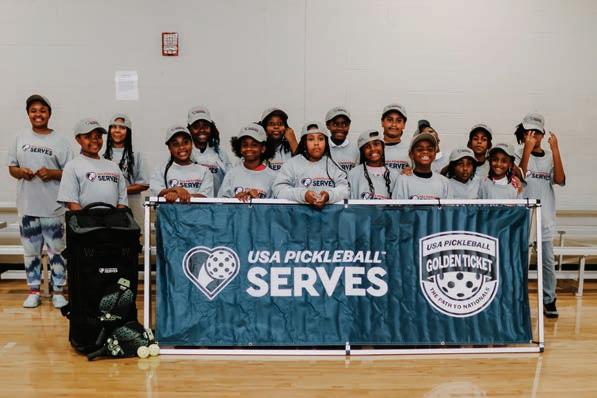
This month spotlighting USA Pickleball, Tyler Butler’s series explores the myriad ways businesses give back and the positive ways their programs impact our community.
42
CHANGE LEADERSHIP AND AGILITY: THE DEFINING COMPETENCY OF THE MODERN LEADER
Bruce Weber’s series examines developing and sustaining organizational capacity.
FEATURES
36 Surfacing the Strengths Employees Don’t See Morgan Haynes shares how to recognize and maximize employees’ untapped potential in high-pressure sectors.
DEPARTMENTS
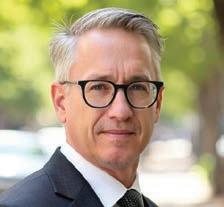
9 Guest Editor
Steve Kaiser, CEO of Arizona Small Business Association, introduces the “Downtowns” issue.
10 Feedback
Michelle Freeh, Anthony Spinato and Kurtis Strauel respond to In Business Magazine’s burning business question of the month: What do you have in place (as a pipeline or programs) that help develop or identify leadership potential for employees to advance within your company?
12 Briefs
“Addressing the Workforce Cost of Opioid Use Disorder in Hospitality,” “Dailies Top Stories,” “Local Standouts Recognized for Achievements & Philanthropy,” “How a Relationship-First Approach Is Shaping Today’s Luxury Homebuilding Experience” and “The Rise of On-Demand Healthcare in Phoenix”
15 By The Numbers
Artificial intelligence was supposed to make work easier, but are employers generating the opposite effect?
16 From The Top
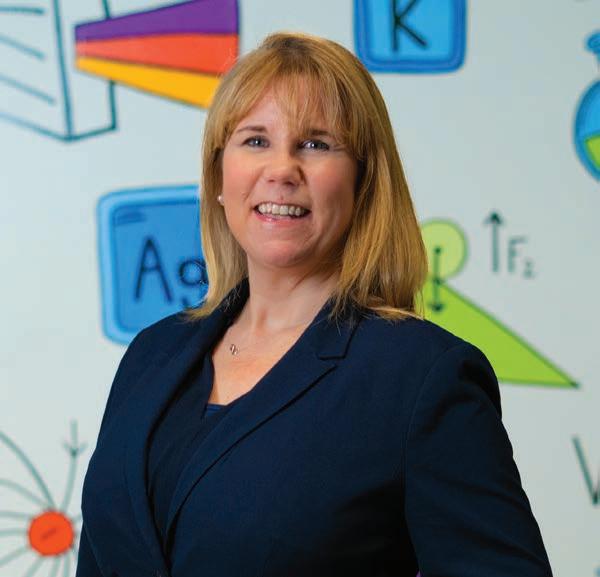
Tammy Stewart is stewarding the future as president & CEO of Arizona Science Center.
17 CRE
“Integrated Design Is a Risk Management Tool for Development,” “Luxury Build-to-Rent Unveiled in Surprise,” “Office-to-Industrial Redevelopment in Tempe” and “Where Three Generations Meet the Market”
20 Semi-Insights
“Arizona Chosen to Lead Southwest Semiconductor Workforce Hub,” “TSMC-Amkor Deal Connects More of Arizona’s Chip Supply Chain” and “What Happens After the Fabs Arrive”
COVER STORY
28
Downtown Is the New Economic Engine: Pulsing with the personality of the municipality it anchors
What’s driving their growth, and how are cities that are often folded into the general “Metro Phoenix Area” designation accomplishing this while maintaining their individual identity?
43 How ERP Modernization Can Drive Growth For Mid-Sized Businesses In 2026
Exploring this, Erik Finstad also looks at how this is impacted by the shift from traditional automation to agentic AI.
22 Healthcare
“How Local Surgeons Are Influencing the Future of Spine Surgery” and “Where Elite Medicine Is Being Built Now”
26
Technology
“Why Should Employers Care about Personal Devices in the Workplace?” and “Think Your Business Is Fully Protected in the Digital World?”
37 Books
New releases give fresh insights on business thinking.
38 Economy
Landon Jensen discusses owners’ pre- and post-sale considerations around exiting their business.
39 Legal
Daniel Nelson and Amy Lewandowski examine key risks for borrowers and lenders as SBA and DOJ intensify PPP enforcement.
44 Nonprofit
Richard Tollefson explains generational and life-stage giving trends as a factor in understanding donor preferences. 45
Assets
2026 Lincoln Aviator SUV
Plus: Good sleep is the hidden power play in business travel. 46 Power Lunch
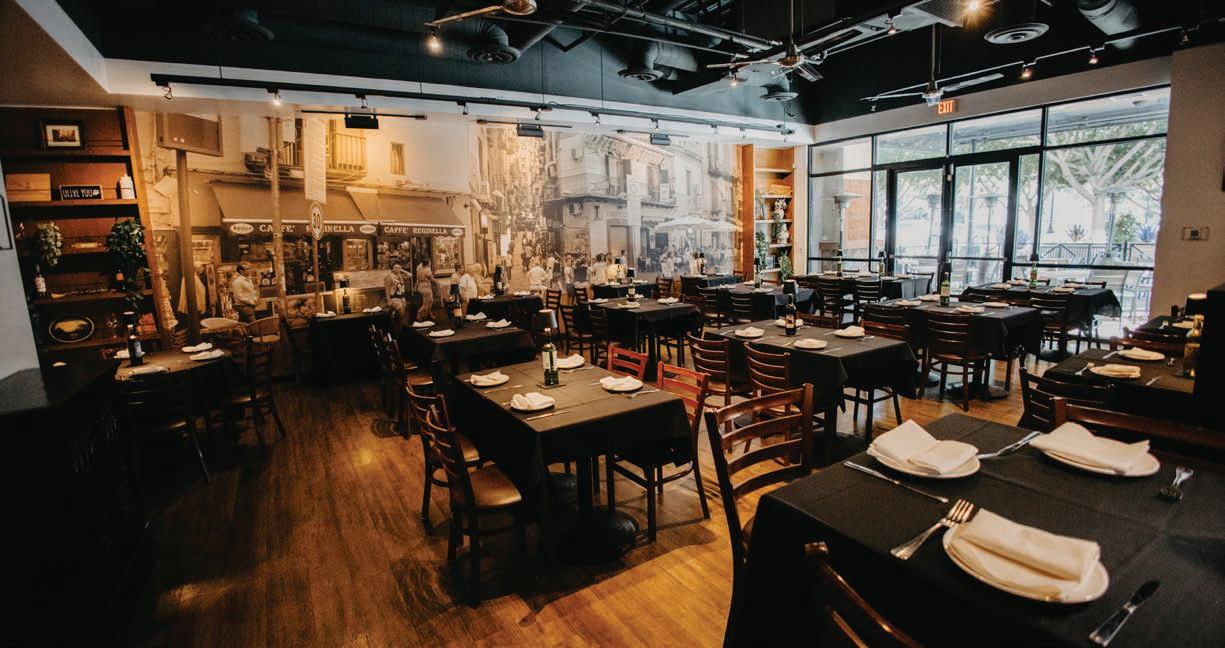
Pizzicata Shapes a More Refined Midday Experience in Glendale
Morgan Haynes advocates for collaboration over competition in the C-suite.
“We don’t want a plan based on land uses. We want a plan based on experiences. Who visits downtown to see land uses?” —Mitchell J. Silver, award-winning urban planner and former commissioner for the New York City Parks Department.
Polestar Scottsdale
The SUV for the electric age is here. With a range of up to 300 miles, the all-electric Polestar 3 is designed to create remarkable range and an unmistakable look.
Visit our showroom in Fashion Square Mall.
RaeAnne Marsh
Editor in Chief, In Business Magazine
Editor in Chief, In Business Magazine
RaeAnne Marsh became editorial director of Phoenix-based InMedia Company in 2010 and helped launch Valley-wide business resource In Business Magazine. Holding the magazine to strong editorial standards, she says, “New businesses are founded, out-of-staters bring new strengths, established businesses evolve and expand — all of which contributes to the dynamic vitality that I see as the mission of In Business Magazine to be the voice of and vehicle to nurture.” Marsh was awarded 2024 Small Business Journalist of the Year from the U.S. Small Business Administration, Arizona District.
Guest columns are feature articles presented as a limited or ongoing special series.
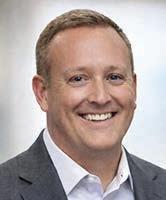
Tyler Butler
Guest Columnist – Social Impact
A long-time corporate social responsibility practitioner, Tyler Butler is known for her expertise in creating, launching and developing successful social impact programs. Her commitment to rallying people together to make a positive difference has created sustainable signature programs empowering people to give back in myriad ways globally. Her contributions to In Business Magazine provide her with an outlet to share the best of what companies are doing to aid humanity through their generous outreach efforts.
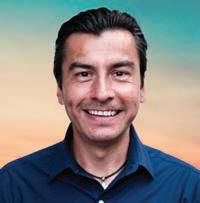
Marco A. López Jr.
Guest Columnist – Southern Border
Marco A. López Jr. is founder and CEO of Intermestic Partners and Intermestic Capital, advising on cross-border investment, EB-5 strategy, U.S.–Mexico nearshoring and economic development initiatives across North America. He previously served as mayor of Nogales, Arizona; director of the Arizona Department of Commerce; and chief of staff at U.S. Customs and Border Protection under President Obama. Lopez is a past member of the Council on Foreign Relations and currently serves on The Nature Conservancy’s Conservation & Public Policy Committee.
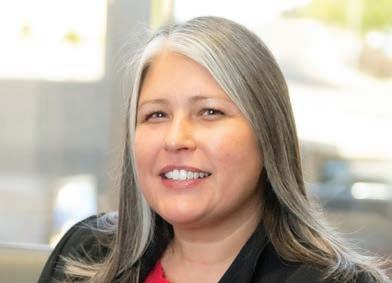
Kim Ryder
Guest Columnist – Commercial Real Estate
Kim Ryder is a dynamic commercial real estate executive with extensive experience in managing multimillion-dollar, complex projects and the build-out of more than 54 million square feet of retail and commercial space. Ryder has started several business lines in her career, most notably launching Thrive Real Estate and Development groups. Her career in the thrift industry extends over 25 years and led her team to expand the Goodwill real estate portfolio by more than 100 locations..
Bruce Weber
Guest Columnist – Capacity
“I am deeply interested in organizational capacity and what makes organizations successful and impactful in the work they do. I have worked with all sizes of organizations and leaders in helping their businesses grow and expand their impact. My previous careers with Microsoft and Hewlett Packard involved working with business integration partners to design strategies to engage new markets. In today’s complex world, I enjoy exploring the possibilities and opportunities that change can bring.”
This month’s contributors
Landon Jensen is a senior vice president and managing partner at UMB Private Wealth Management in Phoenix. (“More Than a Sale: Planning for Life After the Business Exit,” page 38)
Daniel Nelson is a partner at Spencer Fane LLP and former federal prosecutor. Amy Lewandowski, a former SBA attorney, is an attorney at Spencer Fane LLP. (“SBA, DOJ Intensify PPP Enforcement,” page 39)
Erik Finstad is the president of Impact North, a Minneapolis-based management consulting firm. (“How ERP Modernization Can Drive Growth for Mid-Sized Businesses In 2026,” page 43)
Lisa Harris is senior director of Communications & Donor Experience at Valley of the Sun United Way. (“Why Affinity Groups Are Good for Business,” page 44)
Editor in Chief RaeAnne Marsh
Associate Publisher Nico Pacioni
Graphic Design Marvin Forte
CONTRIBUTING WRITERS
Yuriy Alayev
John Banquil Jr.
Keven Burns
Tyler Butler
Michelle Talsma
Everson
Erik Finstad
Lisa Harris
Morgan Haynes
Mike Hunter
Landon Jensen
James Jorgensen
Chrissy Lawler
Amy Lewandowski
ADVERTISING
Jeri McGwin
Dan Nelson
Stephanie Quinn
Jennifer Reynolds
Tammy Stewart
Bruce Weber
Corey Wunderlich
Operations Louise Ferrari
Business Development Raegen Ramsdell
Louise Ferrari
Cami Shore
Events Amy Corben
WTSM TV STUDIO
General Manager Chris Weir
More: Visit your one-stop resource for everything business at inbusinessphx.com. For a full monthly calendar of business-related events, please visit our website.
Inform Us: Send press releases and your editorial ideas to editor@inbusinessphx.com
President Camron McCartney
Editorial Director RaeAnne Marsh
Financial Manager Tom Beyer
Office Manager Allie Jones
Accounting Manager Todd Hagen
Founder & Chair Rick McCartney
Morgan Haynes is CEO of Tribal Health, a healthcare solutions provider that connects Indigenous and rural communities nationwide to high-quality care models. (“Surfacing the Strengths Employees Don’t See,” page 36, and “Collaboration over Competition in the C-Suite,” page 66) Corporate Office InMedia Company 45 W. Jefferson Street Phoenix, AZ 85003 T: (480) 588-9505 info@inmediacompany.com www.inmediacompany.com
In Business Magazine is a collaboration of many business organizations and entities throughout the metropolitan Phoenix area and Arizona. Our mission is to inform and energize business in this community by communicating content that will build business and enrich the economic picture for all of us vested in commerce.
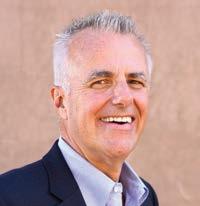
Steve Kaiser
PARTNER ORGANIZATIONS
CEO
Arizona Small Business Association
Central Office (602) 306-4000 www.asba.com
Steven G. Zylstra, President & CEO
Arizona Technology Council One Renaissance Square (602) 343-8324 www.aztechcouncil.org
Kristen Wilson, CEO AZ Impact for Good (602) 279-2966 www.azimpactforgood.org
Terri Kimble, President & CEO
Chandler Chamber of Commerce (480) 963-4571 www.chandlerchamber.com
Joanna Horton McPherson, President NAWBO Phoenix Metro Chapter (480) 289-5768 www.nawbophx.org
Robin Arredondo-Savage, President & CEO Tempe Chamber of Commerce (480) 967-7891 www.tempechamber.org
Our Partner Organizations are vested business organizations focused on building and improving business in the Valley or throughout Arizona. As Partners, each will receive three insert publications each year to showcase all that they are doing for business and businesspeople within our community. We encourage you to join these and other organizations to better your business opportunities. The members of these and other Associate Partner Organizations receive a subscription to In Business Magazine each month. For more information on becoming an Associate Partner, please contact our publisher at info@inbusinessphx.com
ASSOCIATE PARTNERS
Ahwatukee Foothills Chamber of Commerce ahwatukeechamber.com
Arizona Chamber of Commerce & Industry azchamber.com
Arizona Hispanic Chamber of Commerce azhcc.com
The Black Chamber of Arizona phoenixblackchamber.com
Economic Club of Phoenix econclubphx.org
Glendale Chamber of Commerce glendaleazchamber.org
Greater Phoenix Chamber of Commerce phoenixchamber.com
Greater Phoenix Equality Chamber of Commerce gpglcc.org
Mesa Chamber of Commerce mesachamber.org
North Phoenix Chamber of Commerce northphoenixchamber.com
Peoria Chamber of Commerce peoriachamber.com
Phoenix Metro Chamber of Commerce phoenixmetrochamber.com
Scottsdale Area Chamber of Commerce scottsdalechamber.com
Scottsdale Coalition of Today and Tomorrow (SCOTT) scottnow.com
Surprise Regional Chamber of Commerce surpriseregionalchamber.com
WESTMARC westmarc.org
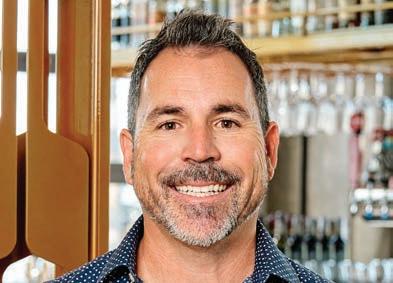
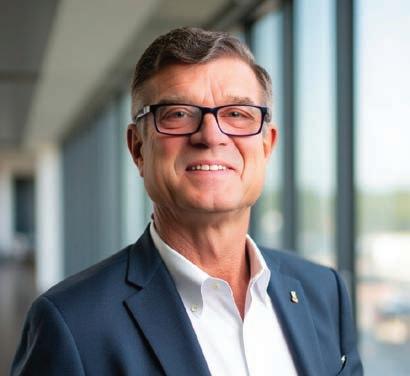
Steve Kaiser brings to his role as chief executive officer of Arizona Small Business Association a background spanning public policy and entrepreneurship.
He served eight years in the army, including deployment to Afghanistan as a civil affairs team leader where he worked to build relationships with Afghan government and tribal leaders.
Kaiser has also served three years in the Arizona legislature, most recently as the chairman of the Senate Commerce Committee.
Purchasing an existing junk removal business, Kaiser grew it in five years from one employee to 15 and increased revenue by more than 300%.
He started a 501(c)4 nonprofit called Arizona Prosperity Project, through which he aims to increase prosperity for all Arizonans through smart public policy. And he started an independent government relations consulting company called Policy Forge, helping individuals and businesses lobby their government. asba.com
Let’s Go Downtown
Metro Phoenix is more than a conglomerate “major metropolitan area” of economic activity. It’s comprised of individual cities, each making its own identity in the vibrant mosaic of the whole — and that vitality is especially evident in their downtowns.
Without a doubt, the heart and soul of a downtown are the people who live, work and play there. A good downtown has lots of activity and energy centered in a compact space. So, if people are the key to a vibrant heart and soul of a downtown, how do you get them there?
When I think of the transformation of downtown Phoenix as someone who has lived here my whole life, the changes to the downtown area have been profound. Bringing in young people, like the major universities did, has certainly attracted many businesses to downtown. Now, downtown has a mix of young, old and visiting touring the area looking for great food and nightlife.
However, all those people need a place to live that is close to that exciting downtown. Your businesses need employees to be able to live close. Those young students need affordable places to live, like multifamily high-rises. Young families, professional couples and retired individuals are looking for attractive and affordable housing as well that is close to the fun of downtown.
In order to power your downtown, you need people to be able to live and work in that immediate area. Once there are plentiful patrons, the businesses will arrive and the energy begins!
Great downtowns are built on vision and commitment and confidence. This month’s cover story gets in-depth on five Greater Phoenix cities, exploring the economic and lifestyle hub that is their downtown from the perspective of the businesses and economic development leaders who are creating their city’s distinctive vibe.
Perspective is a key point to Morgan Haynes’ leadership feature, “Surfacing the Strengths Employees Don’t See.” Making the case for leaders — especially in high-pressure sectors like healthcare — to actively dig deeper to see what employees can’t yet see in themselves, she discusses why and how to recognize and maximize their untapped potential.
In the Roundtable feature, “Collaboration over Competition in the C-Suite,” Haynes applies her considerable leadership experience to address another leadership imperative: How to disarm strained leadership when leaders start measuring their own success against one another instead of against the mission they share.
The COVID-19-inspired Paycheck Protection Program loans are under scrutiny as investigators are retroactively reviewing eligibility and ensuring full compliance moving forward. Dan Nelson and Amy Lewandowski consider key risks for borrowers and lenders in this month’s Legal feature, “SBA, DOJ Intensify PPP Enforcement.”
Other topics covered this month range from technology advances in enterprise resource planning systems to an insurance assessment of cyber risks businesses may not be covered for to a discussion of sleep as an undervalued asset in business travel. And a local restaurateur shines light on a serious employee issue as he shares valuable experience with Valley Leadership’s Opioid Use Disorder Business Toolkit.
And as a special section, this edition also includes the “50 Top Small Business Advocates & Leaders Guide,” In Business Magazine’s annual resource guide for top small business services, with an introduction by Corey Wunderlich, district director of the U.S. Small Business Administration, Arizona District.
It’s my pleasure to help bring you this July edition of In Business Magazine. Enjoy the read.
Sincerely,
Steve Kaiser Chief Executive Officer Arizona Small Business Association
Editor’s Note: This question generated input also from:
Michael H. Bill
Chief Executive Officer
The MJ Companies
Sector: Financial
Sonya Engle
Chief Operating
Officer
Sonora Quest Laboratories
Sector: Healthcare
Jim Hayden
Founder & CEO
Board Developer
Sector: Professional Services
Please visit July’s Feedback entry on our website to learn how this company evaluates and plans its physical space. www.inbusinessphx.com
FEEDBACK QUESTION: Let us know what you want to know from the Valley’s top business leaders. editor@inbusinessphx.com
For all past Feedbacks go online to inbusinessphx.com and see what Valley executives think on various business topics.
What do you have in place (as a pipeline or programs) that help develop or identify leadership potential for employees to advance within your company?
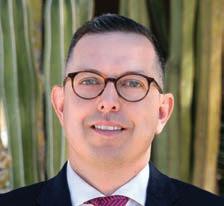
MICHELLE FREEH
AVP of Organizational Learning & Development
Arizona Financial Credit Union Sector: Financial
At Arizona Financial, we believe leadership development should be intentional and rooted in our culture. One of our cornerstone programs is the Future Leader League, a year-long initiative designed to identify and prepare emerging leaders for future opportunities within the organization.
Employees are selected through an application process and participate in monthly leadership workshops, one-onone mentor meetings, and self-paced learning through Arizona Financial University, our internal development platform. Participants are also challenged to apply what they learn through practical assignments that strengthen both professional and personal leadership skills.
The program focuses on key competencies such as communication, accountability, emotional intelligence and ethical decision-making, while reinforcing that leadership extends beyond job titles.
Combined with mentorship opportunities, learning paths, tuition reimbursement and ongoing professional development, the Future Leader League helps build a strong pipeline of talented, values-driven leaders ready to grow their careers at Arizona Financial.
Arizona Financial Credit Union arizonafinancial.org
Michelle Freeh is AVP of Organizational Learning and Development at Arizona Financial Credit Union, where she leads learning strategy and leadership development initiatives. She oversees programs that include the Arizona Financial University and Future Leaders League, helping build a strong pipeline of engaged, values-driven leaders and advancing employee development aligned to organizational culture and growth.
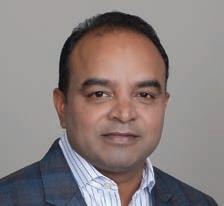
ANTHONY SPINATO Chief Executive Officer
Spinato’s Pizzeria & Family Kitchen Sector: Restaurants
We take a holistic approach to leading our team of 420 Spinato’s employees, and we invest a lot of time and resources in leadership development.
One of the first things we teach new or young employees in our leadership training is that we are in the “people” business more than the “pizza” business. Our Career Development page on our website helps employees understand what skills are needed to advance into a managerial role or move into a different department or position within our company.
We also utilize Culture Index within our company. This helps us understand if we have matched people in the right career path, but, most importantly, how to communicate with different types of personalities effectively.
Our senior management team also participates in a leadership accelerator ongoing course once a month. And as a John Maxwell coach and mentor, I work closely with our leaders and have an open-door policy for those interested in learning how to build the essential qualities of a trusted leader through character, competence and connection.
Spinato’s Pizzeria & Family Kitchen spinatospizzeria.com
Anthony Spinato is CEO of Spinato’s Pizzeria & Family Kitchen, a local family- and-employeeowned restaurant that has grown over 52 years to include six restaurants in Tempe, Scottsdale, Phoenix, Ahwatukee and Gilbert. A successful entrepreneur, Spinato learned the business from the ground up, working in almost every role of his family business. Under his leadership, Spinato’s recently transitioned to an ESOP (Employee Stock Ownership Plan).
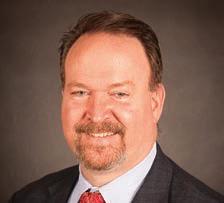
KURTIS STRAUEL
Senior Director of Human Resources
Mark-Taylor Residential Sector: Real Estate
At Mark-Taylor, developing leaders is part of our business strategy, not an individual program. We are intentional about identifying talent early, understanding each team member’s potential and creating clear pathways for their continued growth. Succession planning is embedded into the employee experience through our 9-Box Talent Assessment process, which evaluates both current performance and future leadership potential. From there, we create targeted development plans that align individual career goals with the long-term needs of the organization. All team members receive weekly dedicated Growth Time, creating purposeful space to invest in learning and professional development. This time reinforces that development is not reserved for occasional training, but rather a part of how our team members strengthen their capabilities and take ownership of their careers.
Supporting initiatives and our internal training platform provide structured opportunities for team members to expand their operational knowledge and develop their leadership skillsets.
Across every area of Mark-Taylor, our focus remains the same: Grow our people with purpose, strengthen our leadership pipeline and build the depth of talent needed to support our future.
Mark-Taylor Residential mark-taylor.com
As Senior Director of Human Resources at MarkTaylor Residential, Kurtis Strauel champions the employee experience, talent development and organizational growth. He oversees Human Resources, Talent Acquisition, Training & Development, Brand Integrity and Employee Experience, bringing decades of HR leadership across organizations of all sizes.
Prior to Handwrytten, David Wachs founded Cellit, a leading mobile marketing platform. With clients that included Abercrombie & Fitch, Walmart and more, Cellit was sold in January of 2012. Both Handwrytten and Cellit were on Inc. Magazine’s Inc 500 list of fastest-growing companies.
DAILIES TOP STORIES
‘In Business Dailies’ Most Views Last 30 Days
Here are the stories with the most views over the past 30 days (prior to press time) that were features in our In Business Dailies. The In Business Dailies hits email inboxes twice each weekday — at 9:30 a.m. and updated at 4:30 p.m. Sign up today at www.inbusinessphx.com/dailies-signup
Growth & Enterprise | inbusinessphx.com | June 1 2026
Berkshire Hathaway Strikes
$8.5B Deal for Scottsdale
Homebuilding Giant
Taylor Morrison Home Corporation and Berkshire Hathaway Inc. jointly announced that they have reached a definitive agreement for Berkshire Hathaway to acquire Taylor Morrison for $72.50 per common share in cash, representing a total equity value for Taylor Morrison of approximately $6.8 billion and total enterprise value of approximately $8.5 billion.
Technology & Innovation | inbusinessphx.com | June 2026
What Happens After the Fabs Arrive
For the last several years, Arizona’s semiconductor momentum has largely been measured through expansion announcements, investment totals and construction updates. New fabs. New suppliers. New projects moving into the state are helping Arizona position itself as one of the country’s largest semiconductor hubs.
Commercial Real Estate & Development | inbusinessphx.com | June 2 2026
Long-Awaited One Camelback Begins Pre-Leasing in Uptown Phoenix
One Camelback, the landmark glass tower at Central Avenue and Camelback Road, has long been one of Uptown Phoenix’s most recognizable silhouettes.
Economy & Trends | Guest Columnists | June 2026 Arizona Is Already the Center. Act Like It.
I was 22 years old when I became mayor of Nogales, Arizona. Sitting at the edge of one of the busiest commercial land ports in the Western Hemisphere, I watched billions of dollars in trade cross the border every single day. I watched Mexico’s manufacturers supply American industries with precision and reliability.
Communications & Networking | Feature | June 2026
The Most Defensible Differentiation Is Already
Inside Your Organization
Sustainable growth begins when leaders stop treating differentiation as something to invent and start treating it as something to surface, validate and systematize. In most organizations, the most defensible differentiation is already there.
Addressing the Workforce Cost of Opioid Use Disorder in Hospitality
In the restaurant industry, performance is measured in real time. Tickets move, guests wait and teams operate under constant pressure. In that environment, problems rarely announce themselves and often surface only after they begin to affect performance, safety or retention. Opioid use disorder is one of those challenges. Nationally, hospitality workers rank among the highest for substance use rates in the U.S. workforce, yet many businesses have lacked the structure to respond before issues escalate.
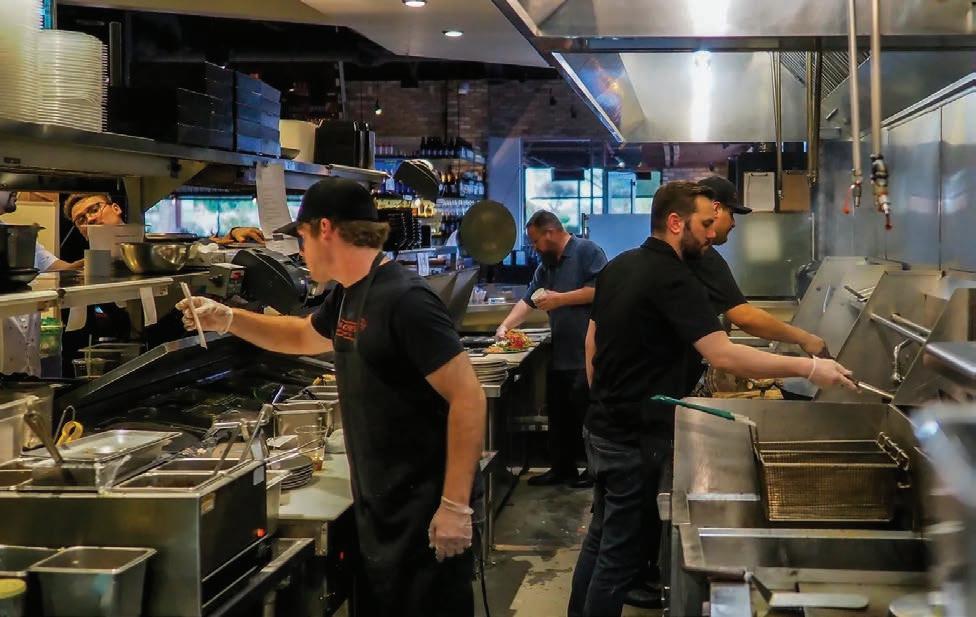
At Ling & Louie’s Asian Bar and Grill and Ling’s Wok Shop, that reality has prompted a shift in how we approach opioid use disorder in the workplace. We recently adopted Valley Leadership’s Opioid Use Disorder (OUD) Business Toolkit to treat addiction as both a health and workforce issue, rather than a disciplinary one.
I’ve seen firsthand how addiction impacts this industry. There are teammates I still think about, and I wish we had been better equipped to support them. For years, substance use has been quietly absorbed into the culture of hospitality. The cost of that silence is measured in lost talent and missed opportunities for early intervention.
Developed by Valley Leadership, the OUD Business Toolkit offers Arizona employers a structured, evidence-based approach to building recovery-ready workplaces. It includes practical steps such as updating policies, establishing reporting pathways, training managers and assessing internal culture to reduce stigma.
For our organization, that has meant moving
away from a zero-tolerance approach and toward policies centered on health, safety and accountability. It has also meant creating clearer avenues for employees to raise concerns and investing in leadership training so managers can respond consistently.
This is not a shift away from standards. It is a shift toward earlier, more effective intervention. In a high-pressure environment, clarity can make the difference between retaining a valued employee and losing them.
From a business standpoint, opioid use disorder directly affects workforce stability, productivity and long-term growth. Employees who feel supported are more likely to communicate openly, remain engaged and stay with the organization. That continuity strengthens operations and improves the guest experience.
As workforce challenges persist, organizations that invest in employee well-being are better positioned to attract and retain talent. Addressing opioid use disorder is part of that strategy.
Hospitality is built on taking care of people. Extending that commitment inward requires structure and leadership. Tools like the OUD Business Toolkit provide a way to move from awareness to action.
Creating a recovery-ready workplace is not simple, but it is a necessary step toward aligning how we support our teams with the expectations we place on our businesses. —John Banquil Jr., president and CEO of Ling & Louie’s Restaurants (lingandlouiesrestaurants.com)
Local Standouts Recognized for Achievements and Philanthropy
Lifestyle Homes Named on Builder 100 List
Lifestyle Homes, a leading general contractor headquartered in Scottsdale specializing in high-density build-to-rent communities across Arizona, earned a coveted spot on the 2026 Builder 100 List by BUILDER Magazine for the second year in a row. lifestylehomesaz.com
Thai Chili 2go on Fast Casual Top 100 Movers & Shakers
Thai Chili 2go was named No. 94 on the 2026 Fast Casual Top 100 Movers & Shakers list. Thai Chili 2go began with one East Valley location and has since grown to include 19 restaurants around the Valley, with many more in the planning stages. tc2go.com
Mr. Pickle’s Sandwich Shops on Fast Casual Top 100 Movers & Shakers
Mr. Pickle’s Sandwich Shop, a franchise that has grown to more than 60 locations across Arizona and California, has risen to No. 65 on Fast Casual’s 2026 Top 100 Movers & Shakers in the United States. mrpickles.com
Desert Highlands Golf Course Earns Top Honors Desert Highlands in north Scottsdale was honored with a first place for its golf course in the private category of Golf, Inc. Magazine’s prestigious Best Renovation of the Year awards for 2026. deserthighlandsscottsdale.com
Adler PR Founder Wins Gold Stevie Award Jennifer Adler, founder and CEO of Adler Public Relations, was named the winner of a Gold Stevie® Award for “PR Exec of the Year” in The 24th Annual American Business Awards®.
ABA.StevieAwards.com adlerpublicrelations.com
Harrah’s Ak-Chin Program Raises $26K for Local Nonprofits
Harrah’s Ak-Chin Casino guests donated more than $26,000 to local area nonprofits through the property’s Caesars Makes Change NRT kiosk donations during Q1 2026. The NRT kiosk machines provide an opportunity for guests to give back in a meaningful way by donating their $0.99 or less change when cashing out their slot machine voucher. harrahsakchin.com
Southwest Gas Supports Central Arizona Shelter Services
More than 100 Southwest Gas employee volunteers and their family members came together with Central Arizona Shelter Services (CASS) recently to assemble 2,000 personal care kits for unhoused individuals, launching the Southwest Gas Foundation’s 60th Anniversary Month of Giving. cassaz.org swgas.com
How a Relationship-First Approach Is Shaping Today’s Luxury Homebuilding Experience
For years, we’ve believed that luxury homebuilding is about far more than delivering a beautiful, finished product — it’s about building trust, creating a positive experience and developing long-term relationships along the way.
At Sonoran Classic Builders, our approach has always been relationship-first. That means prioritizing communication, transparency and consistency just as much as craftsmanship. Building or remodeling a home is one of the biggest personal and financial investments someone can make, and clients want more than a builder — they want a trusted partner guiding them through the process.
Over time, we’ve seen luxury homeowners’ expectations evolve. Clients today expect a more personalized, concierge-level experience. They want proactive communication, thoughtful problem-solving and a team that truly understands how they live. That’s why we take the time to listen closely, stay highly involved and tailor every project to the individual client and their lifestyle.
The greatest compliment we receive is repeat and referral business. Most of our projects come from past clients or wordof-mouth recommendations, which tells us people value not only the homes we build but also how we make them feel throughout the process. At the end of the day, beautiful homes matter, but trust, connection and consistency are what truly shape the luxury homebuilding experience today. —Jeri McGwin , vice president of Sonoran Classic Builders ( www.sonoranclassic.com )
The Rise of On-Demand Healthcare in Phoenix
Access to healthcare in Phoenix is evolving as patient expectations shift toward convenience, speed and efficiency. While urgent care centers in Phoenix and emergency departments remain essential, many patients — particularly working professionals and families — are seeking alternatives that better fit their schedules.
On-demand healthcare, including in-home medical services, is emerging as a practical solution. These services allow licensed providers to evaluate and treat patients directly in their homes, offices or hotels, eliminating the need for travel and reducing time spent waiting for care.
For employers, this shift has meaningful implications. Delays in accessing care often contribute to absenteeism, decreased productivity and higher healthcare-related costs. When care is more accessible, employees are more likely to seek treatment earlier, reducing the risk of prolonged illness and time away from work.
Mobile healthcare services also help address capacity challenges within traditional
care settings. By managing non-emergency conditions outside of clinics and hospitals, they can reduce strain on urgent care centers and emergency departments, particularly during periods of high demand.
Many patients in urban areas are now exploring options such as mobile urgent care in Phoenix as a more efficient and convenient alternative to traditional care models. This approach allows patients to receive timely evaluation and treatment without the delays commonly associated with clinic-based care, while maintaining a high standard of medical attention.
While these services are not a replacement for emergency care, they represent a growing component of a more flexible, patient-centered healthcare system. As Phoenix continues to expand, on-demand healthcare is likely to play an increasingly important role in supporting both workforce health and overall system efficiency. —Yuriy Alayev, PA-C, is clinical provider and director of operations at YA Medical LLC (www.yamedical.co)
Photo courtesy of Sonoran Classic Builders
Artificial Intelligence, Workload, and Productivity Expectations
Artificial intelligence was supposed to make work easier, but are employers generating the opposite effect?
by Mike Hunter
As companies rush to integrate AI tools into daily operations, a new survey from ResumeTemplates.com reveals that 31% of workers say their workload has actually increased since AI adoption, with some reporting they’re now expected to do twice, or even four times, as much work as before.
1 IN 5 WORKERS SAY THEY CAN’T KEEP UP WITHOUT AI
AI has quickly become a workplace necessity rather than a nice-to-have tool. The survey found that about 1 in 5 workers (22%) say it would be difficult (17%) or impossible (5%) to keep up with their current workload without AI assistance. An additional 32% say it would be at least somewhat challenging to manage without these tools, meaning fewer than half of workers (46%) feel confident they could maintain their current pace without AI support.
WORKERS ARE NOW EXPECTED TO DO TWICE AS MUCH WORK
Despite promises of increased efficiency, AI adoption hasn’t lightened the load for most workers. Nearly half of all workers (48%) now describe their workload as very or extremely heavy, and 31% say their workload has increased since AI was introduced at their company. Only 16% of workers report their workload has actually decreased.
“AI can cut down the busywork and help people focus on what really matters, but if professionals feel busier right now, it may be because they are,” says Julia Toothacre, chief career strategist at ResumeTemplates. “After years of layoffs and reorganizations, many teams are operating with fewer people, so remaining employees are carrying more. AI can help manage that load, but employees should watch for workload creep, when managers assume AI means you can take on more without providing the resources to support it.”
The pressure to use AI is explicit in many workplaces. Nearly half of workers (45%) say managers explicitly reference using AI when assigning additional work, making it clear that productivity expectations have been adjusted upward with the assumption that AI tools will help employees meet them.
“Organizations need to provide proper training and clear expectations about how and when AI should be used,” says Toothacre. “Some employees will pick it up quickly and thrive, but others will take longer and may not like using the new tools. It’s important to start small and show how AI can improve day-to-day efficiency, then build up to more complex use cases over time. If you force employees to use something without introducing it appropriately, you risk eroding trust and hurting morale. It’s not worth it when there are better ways to roll it out.”
ResumeTemplates resumetemplates.com
HIGHER EXPECTATIONS
For workers whose workload has increased, the expectations have become demanding.
• 33% say they are expected to do twice as much work as before.
• 6% say they are expected to do three times as much work.
• 4% say they are expected to do at least four times as much work.
• 57% say they are expected to do more work, but not double.
AI use isn’t just encouraged, it’s often expected or required.
• 21% of workers say AI use is required.
• 39% of workers say AI use is expected but not required.
WORKERS EXPERIENCE AI FATIGUE
• 37% say they have experienced AI fatigue, a state of exhaustion and overwhelm related to the demands of learning and using AI in their daily work.
• 40% say they are worried AI could replace them within the next five years, adding another layer of stress to an already challenging situation.
• 14% of workers say AI has decreased their job satisfaction.
Attitudes toward AI are mixed overall, with 18% of workers saying they dislike (12%) or hate (6%) AI, while 36% like it and 17% love it.
METHODOLOGY
ResumeTemplates.com surveyed 1,250 full-time U.S. workers in corporate jobs who spend a significant amount of time working on a computer. The survey was conducted in February 2026 using Pollfish’s online survey platform. Pollfish uses random device engagement to reach respondents organically, ensuring a diverse and representative sample. The platform employs quality control measures that include attention checks, response time monitoring and duplicate detection to maintain data integrity. The margin of error is ±2.8% at a 95% confidence level.
At the Helm of the Leader in STEM Education
• 800,000 students, educators and families are inspired, educated and engaged with Arizona Science Center each year.
• From four levels of interactive galleries to science outreach programs, Arizona Science Center aims to inspire that aha moment — the one where complex concepts start to make sense. This is the power of hands-on, informal learning.
• Since 2013, Arizona Science Center’s Girls in STEM initiative has empowered girls in grades 4–8 through hands-on STEM experiences, engineering design challenges, mentorship from women in STEM fields, and collaborative learning opportunities that build confidence and inspire future STEM pathways.
Tammy Stewart: Inspiring the Next Generation of Women in STEM
Stewarding the future as president & CEO of Arizona Science Center by
Tammy Stewart
My path to recently becoming CEO of one of the Valley’s leading cultural institutions has taken a few unexpected turns, but my passion for community has always guided my work and sense of purpose.
My interest in science and technology began in elementary school with a visit to the Exploratorium in San Francisco and continued with a fascination about computers. But it was the first day of high school that would end up being a defining moment for me. I enrolled in a drafting class and found myself as the only female student in the room. Rather than feeling discouraged, the experience sparked a determination to challenge expectations and prove that talent, dedication and innovation are not defined by gender. It taught me the value of resilience, confidence, risk taking and paving the way for others who may not see themselves represented.
While my career path ultimately moved beyond that first drafting class, it sparked an enduring interest in computer systems and problem-solving. I combined that technical mindset with a passion for working with people, leading to my first professional experiences in political campaigns and later in IT, where I helped implement and troubleshoot software and hardware systems.
But I wanted my time and my work to give back to my community and it was a simple coffee meeting that would be my next defining moment. A pivotal female mentor led me into the nonprofit sector at the Long Beach Symphony — an experience that opened the door to my next career.
For the last 25 years, I’ve sought opportunities for growth and broader exposure to the nonprofit sector, gaining firsthand experience in the operations of organizations across membership, fundraising, customer service, analytics, financial management, volunteer management, events and guest experiences.
When I joined Arizona Science Center 10 years ago, those defining moments came full circle. I was immediately drawn to our Girls in STEM initiative, which brought me back to that high school moment of being the only girl in my drafting class. The difference now was that I had the opportunity to help create a space where young girls interested in STEM could come together, feel supported and thrive.
As I have progressed through roles at Arizona Science Center, including chief development officer, chief of staff and, now, as the Hazel A. Hare President & CEO, I am committed to expanding access to STEM learning opportunities and ensuring that every young person can see a future for themselves in these fields. This does not apply only to the guests who enter our doors but our team members as well.
It’s a passion of mine to nurture and grow the careers of our talented team. One of my proudest accomplishments as a leader is helping others discover their strengths and passions
and channel them into meaningful, impactful work — just as my mentors did for me early in my career. From informal chats to monthly “Coffee with the CEO” sessions, I maintain open dialogue with the team to understand where support is needed while also helping individuals discover their own strengths. I believe in modeling accountability; creating an open environment where questions are encouraged; embracing mistakes as learning opportunities; cultivating a culture for collaboration; and allowing space for our team to shine, grow and create aha moments and moments of impactful interactions every day.
Whether it’s a guest viewing the Dorrance DOME for the first time or a field trip student being introduced to the magic of science through one of our live demonstrations, it is all these moments that keep me motivated for our future.
One particularly meaningful moment occurred at a recent Arizona Science and Engineering Fair awards ceremony, where I stood beside Beth Nickel, our chief academic officer, and Jennifer Petersen, our manager of STEM Competitions and Outreach. After the ceremony, a mother approached us to share how powerful it was to see three women leaders on stage presenting awards. She talked about what it meant for her daughter and how it helped her daughter see that her future holds limitless possibilities.
It is these limitless possibilities that inspire me every day.
As we finalize the details of our renewal plans (more to come later this fall), our goal is clear: to inspire the next generation of STEM leaders, innovators and problem-solvers through aha moments and impactful interactions.
Arizona Science Center azscience.org
Arizona Science Center is home to the — one of the most advanced digital domes in the world — where immersive astronomy shows, live performances and community events bring art, science and culture together beneath a dazzling 60-foot LED 8K+ resolution display.
Integrated Design Is a Risk Management Tool for Development
Development has faced increasing challenges in recent years, with the stress of tariffs, labor shortages and supply chain delays manifesting through projects increasingly being delivered over budget and behind schedule. As the landscape continues to shift and priorities change, an unexpected tool can help hospitality developers stay on track while maintaining the agility needed to survive in an evolving market: creating integrated architecture, design and foodservice teams.
It’s no secret that teams have to work well together for a project to be successful, but when a majority of those players work under the same roof, it creates an enhanced level of coordination and service that makes things run as smoothly as possible. This structure tackles future financial performance challenges by making operational performance a part of the initial design phase — not an afterthought.
In-house foodservice design, architecture and interiors services establishes a firm as a project partner with enhanced capabilities, which can streamline delays caused by coordination between multiple teams. Think about it: If an architect has a question for the interiors team, they typically either need to send them an email or give them a call, which depends on their responsiveness to avoid backlogs and delays. An integrated approach streamlines communication, minimizes costly delays and ensures environments support employees’ workflow through enhanced design team collaboration. Instead of waiting for a call back, project partners can simply walk down the hall and collaborate with their counterparts in real time. This approach to partnership promotes seamless problem solving as well; if something unexpected comes up, these teams have easy access to one another to get their opinions or expertise.
One major benefit of this team model is cost effectiveness. Everyone wants the best end result with the most affordable price tag, and careful coordination between interiors, architecture and foodservice makes this possible. As an in-house team, if the architecture team’s plan requires changes
from the interiors or foodservice team, they can easily communicate with each other to come to the best solution rather than making isolated choices that drive up the budget or feel out of place in a space. This consistency throughout design and construction is key; an in-house procurement team helps keep the design intent intact, whereas a thirdparty partner could switch selections out at any point and disrupt the plan. Ultimately, integrated design paves the way for the highly efficient delivery of spaces that feel effortless, because every operational detail is anticipated and closely coordinated between teams. In a high-stakes industry where every detail matters and mistakes rarely go unnoticed, integrated approaches allow projects to value operational performance as much as the atmosphere. For developers who are already working with integrated teams, the proof is in the process. Practices that are built on a solid foundation of unified architecture, design and foodservice specialties have seen firsthand how much smoother projects run when every discipline speaks the same language from day one. In today’s environment, integration isn’t a luxury, it’s a competitive advantage: Fewer surprises and a team equally invested in the bottom line as the design vision is key to bringing great projects to life. —Jennifer Reynolds, CEO and founder of boutique architecture, interior design, foodservice and procurement firm Ideation Design Group (ideationdg.com)
GET REAL
Luxury Build-to-Rent Unveiled in Surprise
Mark-Taylor Residential, a trusted leader in luxury property management, recently announced the completion of Estia at Zanjero Trails, a new build-to-rent community in Surprise, Arizona, one of the West Valley’s fastest growing areas.
Owned and developed by Zilber Residential Group, Estia at Zanjero Trails offers luxury one- and two-bedroom detached rental homes in a community that includes a resort-style pool and spa, fitness center, clubhouse with outdoor kitchen, community garden, optional carport parking and dedicated pet features. —Mike Hunter mark-taylor.com zilber.com
Office-to-Industrial Redevelopment in Tempe
On behalf of Alidade Capital and Pine Creek Real Estate Partners, Phoenix-based general contractor Stevens-Leinweber Construction recently broke ground on TenSixty Interchange, an office-to-industrial redevelopment that will bring new mid-size, infill industrial product to the Interstate 10/Baseline Road corridor in Tempe, Arizona.
The groundbreaking comes after months of demolition that removed an outmoded two-story office building to create a shovel-ready development site. When complete, TenSixty Interchange will total 58,250 square feet of Class A, small-bay industrial space available for lease or sale. —Mike Hunter stevensleinweber.com
Where Three Generations Meet the Market
Multigenerational living is reshaping housing and influencing the broader business landscape in Phoenix.
For decades, the American housing model centered on independence. After World War II, suburban expansion and a surge in homebuilding made it possible for families to spread out, and multigenerational living declined. By the early 1970s, just 7.8% of U.S. households included three or more generations under one roof.
Today, that pattern has reversed. By 2021, roughly 18% to 20% of Americans lived in multigenerational homes, driven by rising housing costs, caregiving needs and changing family dynamics.
In the Phoenix metro area, the trend is especially pronounced. Local estimates suggest nearly 85,000 families in the Valley live in multigenerational households, reflecting similar or slightly higher adoption than national trends.
“Multigenerational living is no longer a niche scenario,” says Trevor Halpern, CEO of Halpern Residential at eXp Realty. “For many buyers, it’s becoming part of the baseline conversation. The question isn’t whether they want a home, but whether it can support multiple generations over time.”
That shift is influencing how homes are used, built and marketed, while creating ripple effects across the broader business environment.
A RESPONSE TO AFFORDABILITY AND SUPPLY CONSTRAINTS
Phoenix’s housing affordability challenges remain a key driver. Supply has struggled to keep pace with demand, while higher mortgage rates continue to complicate buying and renting.
For families, combining households can reduce expenses and create stability. Aging parents require support, while younger adults are staying home longer due to student debt and housing costs. Demand is growing for homes that accommodate multiple generations without sacrificing privacy.
POLICY SHIFTS AND DEVELOPMENT OPPORTUNITIES
Local and state policy changes are helping to accommodate that demand. Phoenix now allows accessory dwelling units, often called casitas, in residential neighborhoods. State legislation that took effect in 2025 expanded that flexibility by requiring cities to permit both attached and detached ADUs on single-family lots.
These changes create opportunities not only for homeowners but also for builders, contractors and investors.
ADUs introduce a flexible product that can serve as housing for family members, rental units or home-based workspaces.
“ADUs have become one of the most practical tools for families trying to adapt,” Halpern says. “They allow people to stay connected while maintaining independence, and that flexibility is driving demand.”
HOW THE MARKET IS RESPONDING
On the ground, multigenerational living takes several forms. Backyard casitas are becoming more common, while some homeowners are converting garages or expanding layouts to
create semi-independent spaces.
Builders are also adjusting. Newer developments increasingly include floor plans with dual primary suites, private entrances, or integrated guest quarters designed for multigenerational use. These features are shifting from niche offerings to competitive differentiators.
Buyer behavior is shifting accordingly. Homes with flexible layouts or separate living spaces are attracting increased interest and are influencing pricing, marketing strategies and time on market.
ECONOMIC IMPLICATIONS BEYOND HOUSING
The impact extends beyond residential real estate. As households consolidate, spending patterns shift, affecting demand for housing, construction and home services. ADUs introduce potential rental income, allowing homeowners to offset costs and influencing property values.
There are also workforce implications. Employees managing caregiving responsibilities may benefit from living closer to family, improving stability and reducing disruptions tied to care logistics. For employers, that can translate into stronger retention and more consistent workforce participation.
“There is a broader economic story here,” Halpern says. “When housing becomes more flexible, it changes how people make decisions about work, family and long-term investment. That has an impact well beyond the housing market.”
A STRUCTURAL SHIFT IN HOW HOUSING FUNCTIONS
Multigenerational living is not new, but its resurgence reflects modern economic conditions. In Phoenix, zoning changes, evolving buyer preferences and affordability pressures are reshaping how housing is used and developed.
As these trends continue, homes designed for flexibility and long-term use are likely to remain in demand, reinforcing a shift that connects residential real estate more directly to workforce dynamics and the broader economy. —Michelle Talsma Everson
Local estimates suggest nearly 85,000 families in the Valley live in multigenerational households, reflecting similar or slightly higher adoption than national trends.
Semi Insights ARIZONA’S
IN A NUTSHELL
• The U.S. could face a shortfall of roughly 127,000 to 157,000 semiconductor and microelectronics workers by 2030, according to a SEMI Foundation and McKinsey & Company analysis.
• NNME’s first four regional nodes are Southwest, Pacific Intermountain, Northeast and South.
• Other regional leads include Boise State University, NY CREATES and the University of Texas at Austin.
• Together, the first four nodes activate more than 325 organizations across the U.S. working to strengthen microelectronics workforce pathways.
Arizona Chosen to Lead Southwest Semiconductor Workforce Hub
by Stephanie Quinn
Most people use semiconductors all day without thinking about them. They are in phones, cars, laptops, appliances, medical devices and the systems running behind nearly every part of modern life. That is part of the challenge for the industry. The technology is everywhere, but the workforce behind it is still largely invisible to many students and families. Arizona is now taking on a larger role in changing that.
The Arizona Commerce Authority, the National Network for Microelectronics Education, the SEMI Foundation and regional partners announced NNME Southwest, a five-state workforce consortium designed to build clearer pathways into semiconductor and microelectronics careers. The Southwest node will be led by the Arizona Commerce Authority and includes partners across Arizona, Colorado, Utah, New Mexico and Southern California.
The designation gives Arizona a formal leadership role in a national workforce effort being built alongside the country’s semiconductor expansion, and the timing is not coincidental. While semiconductor investment has accelerated across the U.S., Arizona has become one of the most visible places where that growth is taking shape. But new fabs and packaging facilities answer only part of the question. The harder part is whether there will be enough people ready to run them.
“Arizona has become one of the nation’s most important regions for semiconductor and microelectronics innovation. Partnerships like NNME Southwest are critical to ensure that our state has the skilled workforce it needs to support the industry’s continued expansion and long-term success,” says Valerie Jones, vice chancellor of workforce and economic development for Maricopa Community Colleges.
A national landscape analysis conducted by the SEMI Foundation with McKinsey & Company projects the U.S. could face a shortfall of roughly 127,000 to 157,000 semiconductor and microelectronics workers by 2030. The jobs span far beyond engineering. Fabs need technicians, operators, facilities workers, equipment maintenance specialists, researchers, process engineers and people trained to work inside highly controlled manufacturing environments.
The goal is to shorten the distance between learning about microelectronics and being ready to work in it. That means focusing on the space between the classroom and the fab floor. Employers need students who understand the theory but also know what it feels like to work around cleanroom protocols, specialized equipment and production expectations. NNME Southwest is designed to bring industry closer to academic programs so courses, credentials, internships and hands-on training better reflect the jobs companies are trying to fill.
That is where NNME Southwest is meant to fit. The regional node brings together 47 members, including postsecondary institutions, microelectronics employers, workforce organizations, K-12 and STEM partners, economic development agencies and community-based organizations. Industry
partners include Intel, TSMC, Amkor, Micron Technology, Applied Materials, Lam Research, Nikon Precision, Synopsys, Arm, Northrop Grumman, RTX and Teledyne Technologies. Sandra Watson, president and CEO of the Arizona Commerce Authority, says the regional node will focus on building a “scalable, industry-aligned workforce system” across the Southwest. That fits the way Arizona has approached much of its semiconductor growth, with economic development, education and industry working in closer contact as fabs, suppliers and advanced packaging projects expand. NNME Southwest gives that coordination a more formal structure.
“In Arizona, we’re focused on creating a pipeline of skilled talent that supports the needs of employers and grows our economy,” Gov. Katie Hobbs says. “The NNME Southwest Node builds on this momentum and further strengthens Arizona’s position as a global chip-making hub.”
Arizona already has many of the pieces NNME is trying to connect. TSMC is building advanced semiconductor manufacturing capacity in north Phoenix. Amkor is planning an advanced packaging facility in Peoria. Intel, Microchip, NXP and others have long histories in the state. Universities and community colleges are expanding semiconductor research, cleanroom access, microelectronics programs and technician training, including the University of Arizona’s SemiSphere platform, an education content-sharing tool developed with funding from the ACA to help make semiconductor manufacturing education more consistent across schools and training programs.
In the end, Shari Liss, vice president of workforce development and initiatives at SEMI and the SEMI Foundation, says it best: “NNME Southwest represents the kind of employer-aligned, regionally driven collaboration needed to help scale workforce pathways and support the long-term competitiveness of the U.S. microelectronics industry.”
Universities and community colleges are expanding semiconductor research, cleanroom access, microelectronics programs and technician training.
Strengthening communities through charitable giving.
For over 40 years, the Arizona Community Foundation has supported nonprofits and students across our state by mobilizing the collective passion and generosity of thousands of Arizonans.
When you are ready to take the next step in your personal charitable giving journey, we are here to help you achieve your goals.
CHIPS & FABS
Phoenix Looks to Turn Its Chip Base into a Quantum Edge
Quantum has been talked about as the next breakthrough for years. Now the conversation is changing. Industry leaders are starting to talk about the quantum age as already underway, not something far off in the future. That makes Phoenix’s new quantum push interesting.
Quantum systems are still difficult to build, expensive to scale and sensitive in ways traditional computing systems are not. The technology itself can be difficult to explain outside scientific circles. At its simplest, quantum computing is expected to help solve certain problems far faster than traditional computers can today.
“Phoenix is on the leading edge of biosciences and semiconductors,” says Phoenix Mayor Kate Gallego in announcing the Phoenix Quantum Strategy. “And we’re not stopping there. Now it’s time to get ready for the next frontier of advanced tech: quantum computing, communications and sensing.”
The strategy is designed to connect companies, universities and government around quantum computing, communications and sensing. The goal is not only scientific. It is economic: attract investment, create high-value jobs and use the infrastructure already growing around Arizona’s semiconductor industry to compete for whatever comes next.
Some of that foundation is already visible locally. ASU is part of the strategy through research and workforce development, and the University of Arizona adds another layer of quantum research. Quantum Computing Inc. opened a quantum photonic chip foundry at ASU Research Park in Tempe last year. Lawrence Semiconductor, also in Tempe, works in epitaxial wafer manufacturing, the kind of specialized materials work that can sit deep inside future quantum hardware supply chains. Mayor Gallego also points to EigenQ, a post-quantum security company that came to Phoenix through the Southwest Mission Acceleration Center, as one example of the companies the city wants to attract.
“That is a powerful signal that Phoenix is not just participating in the future of quantum technology,” Gallego says. “We have the potential to become the place where it takes root.” —Stephanie Quinn
TSMC-Amkor Deal Connects More of Arizona’s Chip Supply Chain
For the last few years, Arizona’s semiconductor story has mostly been told through fabs. New buildings going up in north Phoenix. Expansions in Chandler. Suppliers moving closer to chipmakers. It made sense; fabs are the most visible part of semiconductor manufacturing, the part people can see from the freeway or in construction photos. But the next part of the story is what happens after the wafer is made.
Taiwan Semiconductor Manufacturing Co. and Amkor Technology announced a 10-year agreement that brings the next step into sharper focus. Under the agreement, TSMC will procure advanced packaging and testing services from Amkor as the two companies work to expand semiconductor capacity in Arizona and strengthen more of the U.S. chip supply chain.
That may sound like a back-end manufacturing detail. It is not. Advanced packaging has become one of the most important pieces of modern chipmaking, especially as demand grows for artificial intelligence, high-performance computing and advanced electronics. The industry is no longer focused only on making chips smaller. Companies also need better ways to connect chips, memory and other components so systems can move more data, use power more efficiently and perform at the levels customers now expect. TSMC is manufacturing advanced chips at its first Arizona fab and building three more fabs in north Phoenix. Amkor, a Tempe-based outsourced semiconductor assembly and test provider, is building an advanced packaging and test campus in Peoria, where advanced package manufacturing is expected to begin in early 2028.
The two sites put advanced chip fabrication, packaging and test capacity in the same metro area. That kind of proximity matters because
chips do not simply leave a fab and go straight into a finished product. After fabrication, wafers often move between specialized facilities for back-end steps such as slicing, advanced packaging, final packaging and testing. Each handoff adds time, coordination and potential risk. Having more of that work anchored in the same region could make Arizona more important to customers looking for faster timelines and a more predictable U.S. supply chain. It also gives Arizona a larger role in the work that happens between producing silicon and delivering tested packaged devices ready for use in data centers, vehicles, consumer electronics, industrial systems and other end markets.
That is the point Amkor CEO Kevin Engel emphasized in the announcement: “This Agreement marks an important next step in our partnership with TSMC as we accelerate advanced semiconductor manufacturing in the U.S. to provide our customers a full U.S. supply chain from advanced silicon manufacturing to tested packaged devices.”
TSMC and Amkor already have a long history of working together globally in advanced packaging. Kevin Zhang, senior vice president and deputy cochief operating officer of TSMC, says the companies are looking to build on that experience in the United States as they work together to serve customers.
The agreement gives packaging and test a more direct relationship to the advanced chips already being made in Arizona. Packaging and test may not get the same attention as a new fab rising out of the desert, but they could help determine how much of the country’s next semiconductor supply chain is actually built here. The TSMC-Amkor agreement adds another link to that chain. —Stephanie Quinn
JULY
Advanced packaging has become one of the most important pieces of modern chipmaking, especially as demand grows for artificial intelligence, high-performance computing and advanced electronics.
IS WHAT GIVES US PURPOSE HONOR
Honor is what motivates our team of dedicated healthcare professionals. Through passion and purpose, we come together to ensure every patient is provided with the best possible care. honorhealth.com
WELL, WELL, WELL
HOW LOCAL SURGEONS ARE INFLUENCING THE FUTURE OF SPINE SURGERY
In Arizona, spine surgeons are playing an increasingly integrated role in how new medical technologies are developed and refined.
Instead of waiting for new tools to reach the operating room, many physicians are now working alongside medical device companies during the development process. Their role is handson. They evaluate early concepts, test designs in cadaver labs and help identify where a product may fall short in a real surgical setting.
That kind of input is paramount to delivering innovation. Engineers can design for strength and durability, but they don’t operate on patients. Surgeons bring a different perspective, shaped by anatomy, surgical workflow and the need for consistency across a wide range of use cases. Small adjustments, whether to an implant’s structure or tool’s ergonomics, can have a meaningful impact on both the procedure and the outcome.
This type of collaboration is growing, especially in Arizona. The region’s proximity to major medical device companies, combined with a strong network of specialty practices and training programs, has made it a natural environment for this kind of work. Surgeons are not only contributing to product design but also helping train other physicians on how to use these new technologies as they’re introduced.
Advancements in 3D-printed implants, such as the recently FDA-cleared Ventana-A system designed to support bone healing and stability after spine surgery, are one example of what can come from this process. These designs allow for more precise control over implant structure, helping better distribute stress and support long-term alignment.
As new tools continue to enter the market, the surgeons helping shape them are playing a growing role in improving patient outcomes, from reducing complications to supporting quicker recovery. For many patients across Arizona, that means getting back to work, travel and the everyday activities of life with less pain. —Dr. Keven Burns , a spine surgeon at Spine Institute of Arizona ( spineaz.com ) in Scottsdale, who served as one of the design surgeons for the newly FDA-approved 3D-printed titanium ALIF cage (Ventana-A)
Editor’s note: This is the first of a three-part series by Dr. Burns.
Where Elite Medicine Is Being Built Now
For decades, the playbook in elite medicine has been predictable: Innovation begins in coastal hubs, then spreads outward. A growing number of physician-led practices are reversing that flow, building advanced medical models in emerging markets and expanding into some of the most competitive healthcare environments in the country.
Scottsdale-based Defyne Plastic Surgery is one example.
Founded by Harvard-trained microsurgeon Dr. Oren Tessler, the practice reflects a model of clinical entrepreneurship where advanced training, academic rigor and operational strategy intersect. Rather than scaling quickly or relying on visibility, Defyne has focused on a tightly controlled model built around physician-led innovation, specialized procedures and long-term patient planning. Its recent expansion into Beverly Hills reflects not just geographic growth but a broader shift in where advanced aesthetic medicine is being developed and tested.
“People assume innovation has to start in places like Los Angeles or New York,” Tessler says. “What we’ve found is that building in a market like Phoenix allows for more deliberate development. You’re not chasing trends. You’re building systems.”
That philosophy shapes both the clinical and business structure of the practice. Instead of competing in a saturated aesthetics market, Defyne has focused on procedures that require specialized training and infrastructure. These include regenerative fat grafting techniques such as Enhanced Viability Fat Transfer, as well as fat banking, which allows patients to preserve their own tissue for future reconstructive or aesthetic use.
In business terms, these offerings function less as one-time services and more as long-term medical assets, supporting continuity of care while strengthening patient retention and lifetime value. They also introduce clinical complexity that is difficult to replicate, reinforcing a differentiated position in a crowded market and creating a more defensible growth strategy.
“These are not one-off procedures,” Tessler says. “They reflect a shift toward thinking about care over time, not just a single intervention.”
Operationally, the model emphasizes efficiency and risk reduction. Many procedures are performed under local anesthesia, reducing recovery time and lowering risks associated with general anesthesia while enabling a more streamlined workflow.
In a category where many services are easily replicated, those choices are intentional. “Aesthetic medicine has become more accessible,” Tessler says. “But it does mean that differentiation has to come from expertise, not marketing.” That emphasis on specialization and physician-led innovation creates a higher barrier to entry than many traditional practices and supports more sustainable margins over time.
The practice has built a team of internationally trained surgeons, reinforcing a physician-driven
structure in a field often shaped by branding and consumer demand. The result is a business model that prioritizes specialization and controlled growth, supported by the advantages of being built in Arizona. Markets like Phoenix and Scottsdale offer population growth, operational flexibility and fewer legacy constraints than coastal cities. That environment allows practices to develop new approaches without the same level of competitive pressure found in more established hubs. “Phoenix gave us the space to build carefully,” Tessler says. “We could invest in the right technologies and refine how we operate before expanding into a more competitive market.”
With its expansion into Beverly Hills, one of the most competitive healthcare markets in the country, the practice is applying that model in a new environment. The move reflects a broader strategy: refining a high-complexity, physician-driven system in a lowerfriction market, then extending it into settings where differentiation is harder to achieve.
More broadly, it reflects a shift in how medical innovation is taking shape. As physician-led practices invest in proprietary techniques and long-term strategies, the traditional concentration of innovation in coastal cities is beginning to evolve.
For business leaders, that shift points to a wider trend. High-value healthcare companies are increasingly being built in markets that support disciplined growth and operational focus. In that context, Arizona is emerging as a place where new models of care can be developed and refined before expanding outward. —Michelle Talsma Everson
Defyne Plastic Surgery defynemd.com
“What we’ve found is that building in a market like Phoenix allows for more deliberate development. You’re not chasing trends. You’re building systems.” —Dr. Oren Tessler, founder of Defyne Plastic Surgery
Photo courtesy of Defyne Plastic Surgery
Why Should Employers
Care about Personal Devices in the Workplace?
The way Americans protect their devices is undergoing a quiet shift. According to the second annual Antivirus Market Report 2026 from cybersecurity news portal Cybernews, built-in operating system tools have overtaken traditional third-party antivirus software as the primary line of defense for the majority of U.S. internet users, while smartphones remain dangerously underprotected. The study, based on a survey of 1,005 U.S. adults conducted between March 30 and April 10, 2026, also shows a sharp drop in consumer enthusiasm for AIpowered security and a measurable rise in cybercrime.
KEY FINDINGS
• For their primary protection, 53% of U.S. PC users and 51% of mobile users rely on built-in OS security (such as Microsoft Defender or Apple’s native tools), which is roughly 139 million and 134 million Americans, respectively.
• Only 18% of mobile users invest in third-party antivirus, compared with 41% on computers; 14% of mobile users use no cybersecurity tools at all. Compared with the 2025 report, third-party antivirus use on mobile devices fell by roughly 10 percentage points, while computer protection inched up by two.
• Favorability toward AI-powered threat detection fell from 77% in 2025 to 47% in 2026; 9% of users said AI features would actively make them less likely to use a given antivirus product.
• The share of Americans who reported experiencing cybercrime grew by 14% year over year.
• McAfee and Norton remain the leading third-party brands for the second year in a row; AVG dropped out of the rankings entirely.
• Paid antivirus has overtaken free versions — 68% of PC and 66% of mobile antivirus users now hold a premium subscription.
• Data breaches at companies that store personal information were named the single greatest personal cybersecurity threat by 36% of respondents.
Think Your Business Is Fully Protected in the Digital World?
Cyber insurance is now essential for businesses, yet many policies only partially cover emerging threats like AI-driven fraud, social engineering and vendor vulnerabilities.
At the same time, insurers are narrowing how cyber risk is defined, creating sharper lines around what a policy covers and where responsibility still falls on the business.
SOCIAL ENGINEERING LOSSES TREATED AS AUTHORIZED TRANSACTIONS
Among the most misunderstood cyber exposures are attacks that manipulate people rather than systems. As AI-driven tactics become more sophisticated, these schemes are evolving in ways that feel legitimate and difficult to identify:
• Voice cloning: AI-generated audio designed to mimic executives, vendors or employees during calls or voicemail messages.
• Spear phishing: Highly targeted emails built from publicly available or stolen information to appear credible and personalized.
• Business email compromise: Fraudulent requests sent from spoofed or compromised accounts posing as trusted leaders, vendors or partners.
• Vendor impersonation fraud: Fake payment or account update requests tied to legitimate third-party business relationships.
Because these incidents involve authorized transactions rather than breached systems, losses may fall outside standard coverage. While some policies include social engineering endorsements, broader protection can come through crime insurance or funds transfer fraud coverage.
THIRD-PARTY VENDOR FAILURES THAT SIT OUTSIDE YOUR POLICY
Cloud platforms, managed service providers and external vendors are now deeply embedded into business operations, meaning disruptions within one organization can quickly impact another. Yet cyber policies do not always extend cleanly into those third-party dependencies, creating gaps many businesses assume are already covered. Addressing this exposure requires dependent business interruption or contingent coverage endorsements, along with clearly defined vendor contracts.
NATION-STATE ACTIVITY THAT TRIGGERS WAR-RELATED EXCLUSIONS
Most cyber policies include war exclusions,
but those lines are becoming harder to define as cyberattacks increasingly blur criminal and state-sponsored activity. For example, if a major software provider is hit by an attack later linked to a government-backed group, resulting business disruptions may be treated differently from a coverage standpoint.
Some policies include carve-backs or more specific language around cyber terrorism and state-linked events, but definitions vary. Reviewing how these scenarios are addressed in advance helps reduce the risk of uncertainty if an incident falls into this gray area.
REGULATORY FINES & PENALTIES THAT VARY BY JURISDICTION
Many cyber incidents trigger investigations tied to data privacy and security requirements, particularly in industries handling sensitive customer information. Those reviews can lead to fines, penalties or mandated corrective actions.
Coverage for these costs varies widely by policy and jurisdiction, as some laws limit whether fines can be insured at all. Privacy liability and regulatory coverage can help address investigations and certain penalties where legally permitted.
REPUTATION DAMAGE THAT EXTENDS BEYOND THE POLICY WINDOW
Cyber policies are typically designed to support the immediate response to an incident, including notifications, credit monitoring and short-term communications. The longer-term fallout, however, extends far beyond that initial recovery window.
Customer confidence can decline, operations may remain disrupted and business relationships can weaken over time. These impacts often fall outside standard cyber coverage. Business interruption, reputation risk and brand protection extensions can help address some of those longer-term consequences.
WHEN IT COMES TO CYBER, CAPABILITY MATTERS
Cyber insurance remains a critical safeguard, but as threats become more complex and AI accelerates both risk and response, businesses need partners with the scale, specialized expertise and real-time visibility to help structure coverage that can keep up. —James Jorgensen, a principal and executive vice president of business insurance at Marsh McLennan Agency Arizona (www.marshmma.com/us/solutions/cyber.html)
The FDA’s recent clearance of transcranial magnetic stimulation (TMS) for adolescents with major depressive disorder is opening a newly reimbursable market and, in effect, creating a new segment within behavioral health.
A few years ago, Fry’s made big headlines when it opened a grocery store in downtown Phoenix. Why the hubbub and what the significance was, RED Development’s Mike Ebert discusses in the Phoenix section of this cover story. But point is, downtowns are important economic sectors.
What’s driving their growth, and how are cities that are often folded into the general “Metro Phoenix Area” designation accomplishing this while maintaining their individual identity?
Editor’s note: Downtowns’ vibrant stories couldn’t be contained in these few print pages. Check it out at www.inbusinessphx.com for more photos and more insider stories from the businesses and planners making it happen.
City of Scottsdale
“Successful downtowns provide a wide range of experiences in a walkable environment,” explains Kevin Burke, AICP, senior director of economic development and tourism at the City of Scottsdale. “The strongest downtowns combine restaurants, hotels, housing, offices, galleries, retail, public spaces and events in a compact, easy-to-navigate setting that creates a sense of place and draws activity throughout the day and into the night.”
Referring to a name well-known in the tourism industry, Burke says, “Old Town Scottsdale is a good example of that model.” Noting it is “one of our most important economic assets because it functions as both a traditional downtown employment center and an appealing visitor destination,” he points to its strong brand identity, visitor demand, cultural depth and a concentration of businesses that “together create the region’s most walkable and distinctive urban district.”
Burke notes the interest in Old Town Scottsdale is not new. “Scottsdale made a deliberate choice decades ago to cultivate a walkable, visitor-oriented downtown rooted in a distinctive Western identity. That strategy worked,” he says. “Today, Old Town Scottsdale is a premier destination in Metro Phoenix because it offers an authentic experience that is fundamentally different from the conventional commercial development pattern.
“That foundation still matters,” Burke continues, noting that Old Town is not trying to become a destination; it already is one. “‘The West’s Most Western Town’ is more than a slogan,” he says. “It reflects a brand position and sense of place that Scottsdale has cultivated for generations. Many communities are now working to create walkable, experience-driven districts, but Old Town has the advantage of history, identity, market recognition and decades of loyal patronage.”
Burke reports the City is committed to investing more than $42 million in Old Town this year, including the construction of two new parking structures and more than $7 million for roadway rehabilitation and pedestrian improvements. This is in keeping with its commitment to maintaining high standards in the public realm “and especially in Old Town,”
says Burke. In fact, ahead of summer this year, the City began reconstruction of nine Old Town crosswalks, which Burke notes will improve pedestrian safety and make Old Town more accessible. “And this summer, we will undertake a ‘deep cleaning’ of all downtown sidewalks — scraping gum and pressure washing so that Old Town looks its best going into the Fall high season.”
Noting that his job is to help Old Town continue to evolve without losing what makes it distinctive and emphasizing that the City did not create Old Town’s vitality by itself, Burke credits Old Town’s strength to the businesses, property owners, residents, visitors, artists, entrepreneurs and investors who continue to choose Scottsdale.
Many of those stakeholders opened up to In Business Magazine with their stories about the Old Town business scene, which we cover more fully online at www.inbusinessphx.com
A few snippets:
Jake Kory, managing partner at Boondocks Patio & Grill: “Old Town Scottsdale is arguably one of the best locations in the state for nightlife and entertainment. It has become not only nationally known for its welcoming environment and its top-notch hospitality, dining and entertainment, but I believe is now internationally known. More and more international visitors are now visiting Old Town. Initially the attraction to Old Town was the built-in traffic that the area receives. … We’re committed to investing into Scottsdale because of the commitment of our community to do the same.”
Kimberly Pak, co-owner with husband Eugene of The Merchantile of Scottsdale: “I believe
a large part of Old Town’s growth comes from its ability to evolve while still maintaining character and authenticity. … The Merchantile was built around supporting small businesses and creating community. Our stores operate as curated marketplaces featuring local vendors, makers, artists, and entrepreneurs, many of whom are women-owned and Arizona-based businesses.”
Ronen Aviram, general manager of Hotel Valley Ho: “When I first interviewed in May 2005 to join the team reopening the property during its rehabilitation and preservation, I immediately felt a connection to both the project and the hotel itself. I was drawn to the hotel’s history, its incredible location, and the vision for what it could become. … Nothing quite like this had been attempted before, and there was a lot of excitement around what the project could mean for the area. Looking back now, it’s remarkable to see how much the industry has evolved. Today, nearly every major hospitality company has a soft-branded boutique hotel in its portfolio. Back then, however, we were helping define what that concept could look like.
Sima Verzino, co-owner of Marcellino Ristorante: “We were ready to move our restaurant to a new location and felt very strongly about the Southbridge development. … [Our] opening in 2010 brought innumerable people to us that were not aware of the neighborhood other than Scottsdale Fashion Square. Our immediate success appeared to have been a catalyst in the growth that instilled others to seek and open businesses here. We felt great about that!”
Emily Collins, president at Hi Noon Hospitality, for Pinyon: “ Pinyon’s identity is rooted in being ‘On the Park.’ We wanted a setting that
Pinyon Coastal Mediterranean; photo by Kevin Brost, courtesy of Hi Noon Hospitality
encourages guests to slow down the way they would on a coastal afternoon in the Mediterranean. We were also drawn by our belief in the City of Scottsdale’s long-term commitment to Old Town’s continued growth, making it a place worth investing in for the long term.”
Beth Brainard, general manager at The REMI: “What attracted us most was the opportunity to be part of a district that already had strong momentum, while also helping shape its next chapter through a more dynamic, experiencedriven approach to hospitality.”
Ken Kozial, owner of Entertainment Solutions Inc.: “Working in conjunction with the Scottsdale Tourism Development Commission, Scottsdale Tourism & Events Department, Scottsdale Arts, Experience Scottsdale and other city departments, we have created and/ or executed several Old Town ‘Signature Events,’ including Scottsdazzle, Western Week, Parada del Sol Parade & Trails’ End Festival, Canal Convergence. … As an Old Town resident and business owner, I feel pride in the community that I live, work and have contributed to.”
Jennifer Gill, deputy director of Canal Convergence at Scottsdale Arts: “The multiaward-winning event offers an immersive art experience available for only 10 nights, during which artists from around the world use a range of cutting-edge technologies to create interactive light-based sculptures. Each year is different from the year before, creating a truly unique event that draws out-of-town attendees who schedule their vacation dates to coincide with it year after year. So not only does the Canal Convergence support Scottsdale art-and-culturecentric identity, as an event it draws thousands
of visitors and locals to Old Town Scottsdale in November, creating a substantial economic impact each year.”
Old Town’s success owes to private investment and public stewardship reinforcing one another, driving activity and creating long-term value.
“When people want to be in a place, businesses want to locate there, property owners reinvest, and the City has a strong base on which we continue to build,” Burke explains.
City of Mesa
“Downtown gets cooler every day,” says Jimmy Cerracchio, executive director of Downtown Mesa Association, which was formed in 1985 by the commercial property owners of downtown Mesa as a tool to help with the revitalization of the Downtown square mile. Noting the area is trying to grow in a smart and healthy manner by aiming to keep local businesses healthy, he says, “Most property owners are committed to having unique and locally owned commercial tenants, and the city is a great partner in helping businesses navigate processes to open and by providing a variety of housing options.”
“Downtown Mesa has transformed from a place that rolled-up the carpet at 5:00 p.m. to an active downtown with a vibrant, and uniquely local, business community supported by a growing number of downtown residents,” says Jeffrey McVay, MPA, manager of Urban Transformation at the City of Mesa, reporting that, over the past 10 years, more than 1,700 new residential units, more than 45 new small businesses and a 76-room Hyatt Unscripted boutique hotel have been added to downtown.
But he notes that downtowns are unique not just in how the public experiences place but also unique in how they need to be maintained, managed, and marketed, and credits the importance of an association like DMA as a close partner to the City to ensure these unique services can be provided efficiently and effectively. To this point, Cerracchio explains, “Downtown associations (or Business Improvement Districts) are essential to managing the economic health and growth of downtown areas. Organizations like ours provide enhanced services that normally will not be available from the municipality. Services include cleaning and safety programs; marketing for the area and businesses within it; event
production, advocacy and, most importantly, a vision for positive growth.”
Stating, “Downtowns define a city,” McVay explains, “Having arts, education, innovation and entrepreneurship in addition to the local business community be how Mesa is defined is an important component of the future growth in downtown, as well across Mesa. Corporate site selectors often consider downtown vibrancy in their decisionmaking process. The City of Mesa has made, and continues to make, significant investments in the development of the Downtown Arts and Innovation District because those investments will be returned with continued investment and economic activity in downtown and across Mesa, increasing the quality of life for the residents of downtown and Mesa.”
And Cerracchio emphasizes the critical importance of local: “Having locally owned businesses brings many benefits to a destination. Locally owned businesses usually offer unique experiences you can only get at that location.”
Online, in addition to exploring the area’s emerging potential, this article goes more in-depth with perspectives of several of these local businesses. Here are a few snippets:
Cameron MacNeille, owner of Blossom on Main: “Our shop has been in downtown Mesa since 2005! We recently revamped and rebranded in February of 2026. … I think the community
Canal Convergence; photo courtesy of Scottsdale Arts
Blue Corn Café & Bakery; photo courtesy of Chef Nick
is the biggest part of the Downtown vibrancy. We all really love and support each other down here and send business to our neighbors and vice versa. The new apartments that have gone up have made an impact on the added foot traffic as well. Building relationships with the neighborhood has been a huge benefit to us.”
Blake Bunker, co-founder and CEO at Breakwell Group, developers of AC Hotel by Marriott: “We are committed to investing in downtown Mesa because we believe in the area’s future. We also believe hospitality is an underserved component of the market. Downtown Mesa needs new hotel product that gives visitors a reason to stay in the area; enjoy its walkable amenities; and support the surrounding restaurants, cultural venues, businesses and institutions. Rather than seeing that demand outsourced to other hotels and other markets, we want to help capture it within downtown Mesa. The data shows significant visitor ‘leakage’ for hotel stays and we want to help give them a reason to stay in Downtown.”
Chef Nick, owner of Blue Corn Café & Bakery: “Downtown Mesa was a prime choice for our first East Valley location due to its historic nature, proximity to City Hall, Performing Arts Center, and numerous tourist attractions. One look around the surrounding area, you can see the infrastructure investments made by the city, local business operators, property owners and local artists. There is so much growth, new developments, and a diversity of customers that helps fuel more investment for the future.”
Jeroen Meefout, Founder of Mesa Padel Club: “We are the first padel club on a Main Street in the U.S., which is incredibly meaningful for the growth of the sport. People walk by, see the courts, get curious, and discover something completely new. That visibility is powerful in helping grow the world’s fastest growing sport here in Mesa and across the Valley.”
Julian Wright, Founder of Pedal Haus Brewery: “It’s an emerging downtown and I also really like this particular location due to the charm of the building and the possibility of a large patio for guests to enjoy.”
Noting that the area’s historic character combined with a clean and safe urban area is very unique and pointing out new hotels are slated to open in the coming years, Cerracchio says, “Downtown Mesa is positioning itself as a great neighborhood for living, doing business and tourism.”
City of Tempe
“A thriving downtown isn’t an accident — it’s mix, management and momentum. Tempe is writing that playbook in real time, blending strategic urban planning, intentional placemaking and collective community effort to ensure the next chapter is even brighter than the last,” says Lori Foster, LPM, president and CEO of Downtown Tempe Authority.
Observing that downtown districts across the U.S. have faced unprecedented challenges over the past several years, with the global pandemic reshaping how we work, live and connect, she points to economic shifts testing the resilience of small businesses while the change in consumer habits and desires demanded innovation.
“Despite these hurdles,” she says, “downtown Tempe hasn’t just survived but, in fact, when you look closer, you see it’s on the cusp of thriving.”
To the downtown’s numerous advantages — centrally located, just 10 minutes from Phoenix Sky Harbor International Airport, surrounded by four major freeways, and accessible by light rail and streetcar; home to ASU, Hayden Butte (“A” Mountain), Tempe Town Lake, and five miles of bike paths; with mixed-use buildings offering residential above ground floor retail — she notes, “The downtown is clean, safe and sustainable.”
At the same time, she’s found downtown Tempe’s identity as a college town brings both energy and challenges, as many have equated the downtown’s prime with their own time at Arizona State University. However, she says, “Demographics of our city have shifted. Today, the average age of the downtown Tempe user is 32.91. While college students remain a vital part of our
district’s character, they are joined by former ASU graduates who have chosen to stay, young working professionals, empty nesters, families and retirees.
“These changes bring diverse needs and opportunities, and downtown Tempe is evolving to meet them. Adapting to this shifting demographic means creating a downtown that balances the needs of student life with amenities and experiences that cater to a broader audience.”
To illustrate that, Foster points to downtown Tempe’s housing growth. Between 2010 and 2019, the number of housing units downtown grew by 569%, driven by the Urban Core Master Plan and transit-oriented projects along Rio Salado Parkway. Population density grew by more than 1,000 residents and 14,400 workers per square mile in less than a decade.
Tempe’s economic development team recognizes Mill Avenue’s significance as a defining part of Tempe’s identity and culture for more than a hundred years. Then the birth of Tempe Town Lake around the turn of this century brought a new wave of business investment and residential growth that continues to shape the city’s skyline and downtown experience today.
Over the past two decades, the city has seen sustained growth in Class A office space, mixed-use development, and multifamily housing along the lakefront and throughout downtown, with several major projects still underway. This evolution has diversified the downtown population and economic base beyond its historic connection to Arizona State University.
Says Mayor Corey Woods, “ASU remains a significant driver of innovation, talent and activity in the area, and downtown Tempe has matured into a regional destination for business, dining,
Tempe; photo courtesy of Downtown Tempe Authority
entertainment and urban living. New hotels, restaurants, retail, and community events continue to attract residents, visitors and employers.”
In Tempe, downtown growth is being driven by strong business investment and residential demand. “For companies looking to be located in an easily accessible, transit-oriented urban city, Tempe is an obvious choice,” says Mayor Woods. “As the city’s employment opportunities continue to grow, the support amenities follow. Downtown Tempe continues to see growth in housing, restaurants, retail and hospitality offerings that serve both residents and employees.”
In April 2024, the city embarked on the first renovation to its downtown core in more than 40 years. Now, two years later, that refresh effort is in its final phase, with construction set to be complete in July 2026. “The improvements included critical below-ground utility upgrades, which have helped the city plant 112 new trees, save 26 mature Ficus trees and support the long-term vitality of the district,” Mayor Woods reports. Renovations also included new and wider brick sidewalks with artistic treatments and ADA updates to improve the pedestrian experience. A new gateway sign was installed, providing a bold entrance to the district. In tandem with this effort, the city has prioritized efforts to attract new local businesses to the area. Says Mayor Woods, “As a result of these initiatives, downtown Tempe is expected to welcome a new wave of restaurant and retail openings in late summer 2026, further strengthening the district’s economic momentum and visitor experience.”
Cassidy Lujan, owner of The Plant Mill on Mill Avenue, acknowledges the value of the infrastructure projects but gives more credit to the
local businesses. “The vibrancy that actually draws people to Mill Avenue was built by independent businesses over decades, not by a construction crew or a corporate lease,” she says. In fact, pointing to the retail vacancy on Mill currently sitting around 12%, she says, “That’s not a coincidence. When you close a street for two years and redirect foot traffic away from small businesses that already operate on thin margins, you don’t get to take credit for the energy those businesses created. It’s old-fashioned Wild West grit.”
Julian Wright, founder and CEO of Fork & Dagger Hospitality, encapsulates much of the above discussion. Having opened nine or ten food and beverage businesses on Mill Avenue over the course of 26 years, he says, “I feel personally vested and attached to Mill due to attending ASU and living in this area more than anywhere else. I also like how accessible and present our community leaders are here. I also think it’s the best place to live is Arizona.” Observing, “There’s nowhere else you can bike, hike, paddleboard, kayak, attend a sporting event, concert or art festival without having to get in a car. It’s also centrally located and close to the airport,” he says, “Probably the reason so many people are moving to the area.”
Town of Gilbert
The Town of Gilbert eschews the generic term “downtown” for a designation that not only identifies the area but encapsulates its personality: The Heritage District.
“We’re seeing strong interest in the Heritage District because both residents and businesses are seeking places that encourage people to stay longer and do more,” says Jennifer Graves, MPA, CEcD, MEDP, the Town’s interim director of economic development, explaining, “Consumers want walkable destinations where they can layer multiple experiences into one visit, and businesses benefit when visitors spend more time exploring, dining, and engaging. That’s why new developments like Heritage Park and South Anchor are bringing a mixed-use model to the district, supporting new residential options with planned dining and retail elements.”
Noting that Gilbert’s Heritage District is experiencing a powerful surge of growth as the Town intentionally builds a sustainable daytime and nighttime economy, Graves says the Town has used the community-driven Heritage District Master Plan
as a guide in making strategic public investments, from traffic and connectivity improvements to the completion of our first phase of districtwide wayfinding. She points to the completed Water Tower Plaza renovation, with enhanced event space and a new splash pad, as further strengthening the district as a familyfriendly gathering place and expanded opportunities for community programming. “At the same time,” she adds, “private development is accelerating, bringing new mixed-use projects and long-lasting amenities that strengthen our live-work-play environment. Together, these elements are transforming the Heritage District into a true regional destination, fueling strong developer interest in the long-term opportunities this momentum creates.”
Drew Davis, store manager of The Bookish Shop, echoes this view from her on-site vantage point. “Downtown Gilbert has been in extreme economic growth with all the new businesses moving in and new properties being built on every corner. The appeal of downtown Gilbert lies in the experience of it all — you can spend your entire day here, between grabbing brunch at Liberty Market, catching a live theater performance at Hale Theater, shopping at local small businesses like Be Queen, or The Bookish Shop; each business has a unique experience,” he says.
The store celebrated its one-year anniversary this past April, but the owners’ roots go much deeper. “The owners grew up in Gilbert and always
Pedal Haus Brewery; photo courtesy of Fork & Dagger Hospitality
Water Tower Plaza; photo by Foskett Creative, courtesy of the Town of Gilbert
had a love for downtown Gilbert,” Davis says. Enthusiastic about being “part of such a vibrant Downtown community that is always growing!” she also credits the two-way relationship as “The Bookish Shop contributes to the growth of downtown Gilbert by providing a new third space for the already existing romance book community. Our shop hosts a wide range of events, including author signings, craft nights, trivia nights, patio markets, and free community events.”
Joe’s Barbecue is one of the longer-standing businesses that have given vitality to the area. Relating, “Joe’s Real BBQ opened in the Tone Building on January 20, 1998. We opened Topo Arizona on the property in 2019,” co-owner Tad Peelen shares, “When we opened, we were anticipating continued growth in Gilbert, with the Heritage District becoming a natural meeting place for residents, visitors and their guests.”
Nor has that confidence waned. “We are committed to constant improvement,” Peelen says, citing multiple remodel projects, both in the restaurant and in the onsite Picnic Park in recent years. “Those remodels included retrofits that improved the dining experience, allowed expansion of third-party delivery service offerings, and upgraded online ordering. In 2019 we built Topo Arizona, offering pedestrian-friendly fare, including burritos, soft serve and elote.”
Speaking as an employer who has substantially increased his workforce over the years and whose increased sales have generated increased sales tax contributions that help fund Town initiatives, Peelen credits Town staff for actively engaging with Heritage District stakeholders.
City of Phoenix
“On the consumer side, people are gravitating toward places that feel authentic, welcoming, walkable, safe and community oriented.
Downtown Phoenix delivers on all of that,” says Devney Majerle, president and CEO of Downtown Phoenix Inc. (DTPHX), speaking of the interest behind the growth of downtown Phoenix. “The level of creativity in the environment is increasing every single day, attracting residents, visitors, and talent who want to be part of our dynamic live, work, play, learn, and create neighborhood.” And on the business side, she says, “Downtown has a diversified employment base and has become a magnet for technology and innovation, biosciences, arts and culture, and culinary experiences. It’s a true melting pot, and businesses recognize that being here means being part of a thriving, creative and interconnected ecosystem rather than operating in isolation.”
Majerle credits downtown Phoenix’s rapid and sustainable growth to a strong vision and strategic planning, amounting to more than $8.7 billion in public and private investment since 2005. “Our sports and entertainment venues have long been our anchor tenants, and the investments in light rail, expansion of the Phoenix Convention Center, development of CityScape, the addition of 15,000 students on ASU’s Downtown Phoenix Campus, and large corporations like Western Alliance Bank and APS continuing to employ their people in downtown Phoenix contribute to the ongoing mixed-use and multifamily high-rise development.” She notes downtown Phoenix is now home to 25,000 residents and welcomes 7 million visitors each year to events of all sizes, including the fan activities for seven mega events since 2015.
She points to the built environment as a major draw in itself. “And at the sidewalk level, Downtown Phoenix Inc. plays a direct role in creating the conditions for businesses and people to thrive.”
Ryan Touhill, MPA, director of Community & Economic Development at the City of Phoenix, observing that there has been a broader national shift toward walkable, experience-driven urban environments, says Phoenix is seeing that trend play out in a unique way. “People increasingly want shorter commutes; more access to dining, entertainment and culture; flexible lifestyles; and mixed-use neighborhoods where they can work remotely, socialize and live without relying
entirely on a car. At the same time, employers and developers recognize that talent attraction has changed. Companies are competing for workers who value quality of life and vibrant urban experiences. Downtown environments help support that.”
Phoenix also benefits, he notes, from being one of the fastest-growing major cities in the country, and the population growth, job creation and continued business attraction are creating demand for urban housing, office space, hospitality and entertainment options.
Additionally, Touhill says, “Phoenix has become an experience-driven urban market with many major events driving interest from visitors. The recent 2024 Men’s Final Four, Red Bull Showrun and 2026 Women’s Final Four events showcased downtown Phoenix to many visitors as a destination where unique experiences and everyday life can coexist.”
Sharing, “Phoenix is positioning itself as a modern, globally connected and innovative city while still embracing its local culture and identity,” Touhill cites several examples of the city’s intentional efforts to build a reputation in varied realms:
• A center for innovation and bioscience: The Phoenix Bioscience Core
• A destination for entrepreneurs and startups: Venture Café inside the 850 PBC building
• A culturally vibrant urban environment: Roosevelt Row
• A major sports and entertainment city: Diamondbacks and Suns/Mercury
• A global business hub connected to international markets and emerging industries: Since 2005, the total has grown to more than $8.3 billion in public and private investment. Downtown Phoenix now generates approximately $21.2 billion in annual economic activity and supports more than 140,000 jobs.
“At the same time,” Touhill adds, “there is a strong emphasis on authenticity and local identity. Downtown Phoenix has leaned heavily into supporting local restaurants, artists, makers and small businesses rather than trying to replicate other cities. The arts and culture community plays a major role in that image. Murals, public art, music venues, cultural festivals and adaptive reuse projects all contribute to a downtown experience that feels distinctly Phoenix.”
Emphasizing that the goal is not simply growth for growth’s sake, Touhill says, “The focus is on
Gilbert’s Heritage District; photo by Foskett Creative, courtesy of the Town of Gilbert
creating a downtown that is economically resilient, culturally active and welcoming to residents, workers, visitors and entrepreneurs alike.”
RED Development was one of the first investors in the resurgence of downtown Phoenix, with the addition of CityScape in 2010. Says Mike Ebert, managing partner of RED Development, “CityScape was a deliberate bet on the urban core at a time when that conviction wasn’t widely shared.” Its opening in 2010 “was really the starting point for what downtown Phoenix could become as a neighborhood with the amenities, energy and infrastructure to support a growing urban population,” he says, noting CityScape Residences atop Hotel Palomar Phoenix became downtown’s first successful high-rise residential project, serving as proof of concept for the residential development that followed.
“We’ve stayed committed because we believe mixed-use development done well creates compounding value, not just for the property but for the surrounding community, and that belief in long-term partnerships with both public and private stakeholders continues to drive how we approach every project,” Ebert says.
Significant firsts that RED has brought to downtown Phoenix are the neighborhood’s first grocery store with Fry’s at Block 23, first drug store with CVS at CityScape, and first boutique hotel with Hotel Palomar Phoenix and first largevolume restaurants.
Says Ebert, “By concentrating workers, residents and visitors in one place, we helped
shift downtown from somewhere people passed through or only spent weekday work hours to a destination where they live, work and spend meaningful time.”
Other businesses were eager to share their experience as part of downtown Phoenix’s vibrant growth, which are related more fully online at www.inbusinessphx.com. Here are a few snippets:
Kell Duncan, owner of small business and event venue The Churchill: “I fell in love with downtown Phoenix and the Roosevelt Row Arts District. I think there are a few factors, but the main one was the arts and culture that were present here. … I think that Phoenix is still an incredibly young city that has a ton of room to grow. I don’t think we even know what this is going to look or feel like in the next 5,10, 20 years, and I would personally love to be a part of that.”
Kari Archer, general manager at Renaissance Phoenix Downtown Hotel: “Downtown Phoenix has evolved from a primarily officedriven event hub into one of the most soughtafter residential d estinations in the Valley, and our business has evolved alongside it. … At the heart of our story is the vision of J.C. Adams, who recognized Phoenix’s potential in the late 1800s when it was still a young and growing city. He built the first luxury hotel here to help elevate the destination and attract visitors, business, and investment. That same belief continues to guide us today. While Phoenix has grown significantly, downtown remains the
center of energy and opportunity in the state. Our location sits in a truly walkable urban core, with access to art and theater institutions, major sports and music venues, museums, world-class restaurants, and a strong presence of university education, research, and convention business. It is that combination of culture, commerce, and connectivity that makes this location so powerful. We are not just in downtown Phoenix; we are in the middle of everything that defines the city, and that is why we continue to invest here.”
Tim Boothe, chief administration officer at Western Alliance Bank: “Phoenix offers a unique combination of entrepreneurial energy, business diversity and long-term growth potential. Being downtown places us at the center of that activity, close to our clients, partners and the companies that are building and investing in the region. … Western Alliance has grown into the largest commercial bank headquartered in Phoenix while continuing to operate from a strong local base. That growth comes from staying focused on our clients and supporting their success over the long term.”
Kyle Jardine, vice president and market executive at Wexford Science & Technology: “Downtown Phoenix has a unique combination of momentum, authenticity, and long-term vision. The Phoenix Bioscience Core is why Wexford is here. Being able to collaborate with all three state Universities (ASU, U of A, and NAU) and TGen in a walkable, growing, vibrant city was and is very attractive for investment. The growing resident population, dynamic food scene, and the collaborative energy among business owners has only made it better.”
Rick Naimark, associate vice president at Arizona State University: “ASU has been in downtown Phoenix with some limited extended education programming going back to 1986. The real growth of ASU in Downtown came with the voter-approved City Bond Program in 2006, which enabled ASU to establish a full-scale residential campus in Downtown. Today, ASU is doubling down on its commitment by building the ASU Health building downtown as part of the Phoenix Bioscience Core.
Emphasizing that the goal is not simply growth for growth’s sake, Touhill says, “The focus is on creating a downtown that is economically resilient, culturally active and welcoming to residents, workers, visitors and entrepreneurs alike.”
DTPHX Skyline 2026; photo courtesy of Downtown Phoenix Inc.
Morgan Haynes is CEO of Tribal Health, a healthcare solutions provider that connects Indigenous and rural communities nationwide to high-quality care models. She leads strategy, operations and federal contracting to turn complex policy into lasting change for systemically underserved populations. With extensive experience in human capital management and business development, Haynes has a strong track record of building highly accountable, missiondriven teams.
tribalhealth.com
Surfacing the Strengths Employees Don’t See
How to recognize and maximize untapped potential in high-pressure sectors by Morgan
Haynes
In demanding industries like healthcare, technology, trades and professional services, employees typically spend their days solving urgent problems, stretching resources thin and adapting to circumstances beyond their control.
Eventually, that pressure can drive even the most highperforming people to mistake fatigue for failure. They notice the skills they lack more than those they naturally excel in, because no one has stepped in to help identify and amplify them.
The traits that point to real potential, however, are often difficult to neatly capture in a résumé.
Leaders should actively dig deeper to see what employees can’t yet see in themselves — knowing their natural strengths may be waiting for an opportunity to shine.
DON’T LIMIT TALENT TO ONE LANE
Employees are usually celebrated for the things they already know how to do well. Over time, those skills can become their identity.
Someone known as “the organized one” may stop exploring their strategic instincts. Someone praised solely for technical prowess may overlook their creativity. And someone who brings calm to tense situations may assume everyone in the room can regulate emotion the same way.
When employees are validated in one lane long enough, they stop considering where else they could thrive. Meanwhile, areas of low confidence can come across as low ability when, in reality, they’re undeveloped strengths that require the right environment and encouragement to surface.
These team members need someone credible to reinforce what’s already evident in their behavior, then give them opportunities to prove these traits to themselves.
TURN TENDENCIES INTO ASSETS
We all bring certain behavioral patterns into the workplace. Translational Psychiatry estimates 40% to 60% are innate, while the rest are shaped through our upbringing, resources, education and lived experience.
That means a supportive work environment has the power to turn those tucked-away traits into tremendous assets. Inversely, the wrong environment can teach individuals to suppress what might otherwise make them stand out.
This helps explain why many people operate from assumptions about who they’re supposed to be at work. They overlook their built-in skills in order to match someone else’s version of leadership.
If an employee’s role suits their strengths and passions, they won’t waste energy fighting against their own wiring. They can instead use this energy to advance more purposeful outcomes.
INVEST IN MOLDABILITY
Someone who is receptive and coachable will catch on to new tasks. While only about 10% to 18% of people possess
the high-level qualities needed to manage and lead others, according to heritability studies in The Leadership Quarterly, 70% to 76% of these qualities may be developed through dedicated mentorship and experience.
That development largely depends on having a solid foundation. Skills can be taught, and processes can be practiced. Judgment can mature with exposure. But what leaders can’t always create from scratch is grit, tenacity, humility and willingness to grow.
An employee who asks smart questions and returns stronger after a setback, for example, may have more longterm upside than one who performs well only under ideal conditions. Polish matters less when deep commitment, resilience and mission alignment are already visible.
ACCEPT WHEN FIT CAN’T BE FORCED
Unlocking hidden strengths doesn’t mean pushing every employee into every opportunity. Sometimes, a person with untapped potential is simply in the wrong seat. Other times, there is no right seat — and leaders must have the discernment to know the difference.
Misalignment between strengths and responsibilities can usually be solved through coaching, setting clearer expectations or exploring better-suited positions. But misalignment between culture and performance is a different problem, and moving an individual from one role to another rarely solves it.
If someone consistently undermines trust, resists accountability or damages team morale, a new title won’t correct the deeper issue. Leaders are sometimes tempted to lower cultural standards for high performers because their technical ability seems too valuable to lose, but that compromise comes at a cost to the entire team.
The hard truth: If it’s obvious that an employee doesn’t have the “it factor” the company is looking for in a future leader now, they likely never will.
LEVERAGE DATA WITHOUT LOSING THE HUMAN THREAD
Discussing strengths and weaknesses becomes less personal when it’s objective. Data can turn assumptions about how employees should communicate, learn or respond into actionable insight.
Predictive analytics and other behavioral tools can give leaders a sharper understanding of how each employee operates — what sets their rhythm, what energizes them and what slows them down.
One great example: communication style. A manager who processes information verbally and expansively may overwhelm an employee who prefers concise direction. Neither person is wrong; they’re just wired differently. With that insight, leaders can adjust delivery to remove underlying tension and increase acceptance.
The best teams have a well-rounded mix of behavioral profiles: visionaries, stabilizers, operators, relationship-builders, analysts and executors. Some thrive in broad and dynamic roles with frequent change, while others perform best in a narrow, highly structured lane.
Strength-based leadership views both profiles (and those that fall somewhere in between) as equally beneficial, recognizing that one style shouldn’t be rewarded as the default.
LEAVE ROOM FOR LEARNING (AND FAILING)
Fear of failure hinders potential. Employees need enough autonomy to become fully invested in the mission and their own growth. They also need permission to try, stumble, pivot, then try again.
A founder’s mentality can exist at every level of an organization when team members find purpose in the work and see the direct impact of their contributions. If they feel trusted to solve problems instead of merely following instructions, they develop greater confidence in their own capabilities.
When mistakes become learning opportunities, employees are more willing to stretch into strengths they have not yet claimed. Good leaders help people separate self-awareness from self-protection.
BEYOND THE RÉSUMÉ: WHAT LEADERS SHOULD LOOK FOR
Hidden strengths reveal themselves through everyday cues, especially in moments of pressure. It’s worth taking note of employees who:
• Stay level-headed during conflict
• Take initiative without being asked
• Show curiosity, not defensiveness, when receiving feedback
• Build trust and relationships organically with colleagues and clients
• Recover quickly after a mistake, then apply what they learned
• Care about the mission beyond their formal job description
Once those cues are visible, it’s important to name them and get specific. Sharing detailed examples helps employees connect their behavior to concrete value.
Praise that sounds like, “The way you de-escalated that conversation protected the relationship” or “Your ability to organize competing priorities helped us make a faster decision” will have far more impact than a generic, “Nice work.”
START GUIDING PEOPLE TOWARD WHAT THEY CAN BECOME
It’s impossible for leaders to remove all the stress from a job in a demanding sector, but they can certainly drive change in how employees react to it.
Identifying and capitalizing on hidden strengths through strategically aligned work gives teams the tools they need to build confidence rooted in empowerment and accurate perceptions.
The result? Stronger retention, healthier morale and a culture that’s hardwired to overcome any challenge. In hectic workplaces where the stakes are high, helping people realize the breadth and depth of their capability is one of the most practical forms of leadership there is.
How to Scale a Small Business
Growing a business is one thing — scaling it successfully is another. Many entrepreneurs struggle with the transition from a small operation to a thriving enterprise. This book provides a comprehensive guide to help business owners build a strong foundation, optimize operations and implement proven strategies for sustainable growth. Successfully packed with actionable insights and realworld strategies, this book is a roadmap to turning a small business into a scalable, high-performing enterprise. From entrepreneurs looking to take their company to the next level to business owners seeking to optimize operations, this guide will equip readers with the tools needed for lasting success.
How to Scale a Small Business: Strategies for Growth and Long-Term Success
Jonathan K. Hari
$17.30
epubli On Shelves and Online 87 Pages
The Small-Business Money Game
In The Small-Business Money Game, financial advisor-turned-founder Robinson Aquino shows entrepreneurs how to stop guessing and start winning with their numbers. Through real-world case studies and his Breakpoint Framework, Aquino helps readers understand why their business hits growth ceilings and how to break through them.
Key takeaways include The Moneyball Strategy for data-driven decision-making, The Breakpoint Ladder for navigating eight predictable growth plateaus, how to build the leadership team that unlocks scale, and why financial clarity drives freedom and confidence.
Readers will learn how to see their business through a strategic lens, using financial insight to guide every move. For those just getting started or managing millions in revenue, The Small-Business Money Game provides the roadmap to sustainable growth and lasting success.
The Small-Business Money Game: The Hidden Strategies That Turn Survival into Scale
Robinson Aquino
$19.99
Entrepreneur Books On shelves and Online 249 pages
Smart Ads, Real Results
Smart Ads, Real Results: Your Guide to Paid Advertising is the fifth installment in the “Marketing Made Easy: Your Small Business Playbook” series. This book is the essential guide to understanding and implementing effective paid advertising strategies for small businesses. This book is designed for business owners who want to move beyond basic marketing and actively invest in campaigns that drive immediate leads, sales and brand awareness.
The book begins by clarifying the fundamental difference between “intent-based” advertising (like Google Ads, where people are actively searching for what a business offers) and “interestbased” advertising (like Facebook Ads, where businesses introduce themselves to people who fit the ideal customer profile). This distinction is crucial for deciding where to start the advertising journey.
Smart Ads, Real Results: Your Guide to Paid Advertising
Jason Runyan
$27.95
Independently published On Shelves and Online 149 pages
The best teams have a well-rounded mix of behavioral profiles: visionaries, stabilizers, operators, relationship-builders, analysts and executors.
Landon Jensen is a senior vice president and managing partner at UMB Private Wealth Management in Phoenix, where, for the past four years, he has led the Arizona market advising ultra-high-net-worth families and business owners. He is a graduate of the University of Phoenix and is a Certified Financial Planner (CFP®) professional with more than 14 years of experience in financial services.
umb.com/wealthmanagement
More Than a Sale: Planning for Life After the Business Exit
Liquidity
can create complexity overnight by Landon
Jensen
After spending decades building a company, many business owners imagine the sale itself as the finish line. The transaction closes, the wire payment arrives, and years of hard work finally culminate in financial success. For many business owners, the closing table is not simply the ending but, rather, the beginning of a completely different challenge. Entrepreneurs spend years learning how to build wealth, yet far fewer spend time preparing for what comes next.
That preparation often begins long before the company is ever brought to market. The strongest companies are often positioned to sell well before the owner intends to exit, and true readiness extends beyond financial performance alone. Preparing for a successful transition should ideally begin one to five years before a sale, allowing owners to thoughtfully address both the transaction itself and the life that follows it.
CREATING A BUSINESS EXIT VISION
Before owners decide whether they want to sell, they first need to answer a personal question: What do they want life to look like after the exit? Are they stepping away completely? Starting another company? Do they hope the sale will provide for future generations or support meaningful philanthropy?
The emotional side of an exit is often underestimated. For many founders, the business was never simply an income source. It was purpose, structure, relationships and, often, identity. Selling can create unexpected questions: Who am I now? What do I do next? How involved should I remain?
Without that clarity, it becomes difficult to know how much is enough, how the business should be structured and what risks should be addressed before the sale.
LIQUIDITY ADDS COMPLEXITY
One sentence business owners often share six months after a sale is, “My life is busier now than when I was running my business.”
That’s because liquidity can create complexity overnight. A concentrated business asset may suddenly become substantial cash, and with that comes immediate decisions involving taxes, investment strategy, estate planning, philanthropy, family governance and risk management. For many owners, managing wealth becomes an entirely new job, but preparing for it ahead of time can help mitigate the risk of costly mistakes and relieve the pressure that often comes with major financial decisions.
Some owners wait too long to begin planning and miss opportunities to save millions in taxes simply because the business or estate structure wasn’t optimized well in advance of the sale. Others discover they have outdated insurance coverage or weak asset protection at the exact moment their financial visibility increases. Even private transactions can create exposure, lawsuits or unwanted attention if risk management has not been reviewed carefully.
Investment strategy is another common issue. Many owners continue managing their wealth the same way they managed their business, holding concentrated risk. Others become overly conservative because they fear losing what they worked so hard to build.
Investment management matters, but coordination of attorneys, CPAs, insurance specialists and bankers often matters more. Post business sale, families increasingly want a wealth advisor that can serve as a “financial quarterback” to help organize the entire picture. The process usually begins with data gathering to organize everything in one place: account statements, insurance policies, trusts, estate documents, tax returns and existing advisory relationships. From there, the focus becomes defining goals and identifying where advice overlaps, conflicts or leaves gaps. The quarterback will coordinate with the team and develop trust, so owners don’t feel they are alone after the sale. In some cases, people may realize they’ve outgrown their current network. As wealth grows, so does the complexity surrounding it, and not every advisory team is built to navigate an eight- or nine-figure liquidity event.
HOW TO SECURE A SMOOTH TRANSITION
The best transitions often involve organizing wealth with intent. One framework is a bucket approach: a liquidity bucket for near-term cash needs and lifestyle; a long-term investment bucket for growth; and a legacy bucket for future generations, philanthropy or charitable goals. When each bucket has a purpose, decision-making becomes clearer.
Most importantly, owners stop managing everything alone. The right banking and wealth management team communicates regularly, understands the family’s objectives and ensures everyone is aligned. That coordination reduces decision fatigue, prevents expensive mistakes and allows owners to enjoy the wealth they created.
Selling a company can be one of life’s greatest achievements, but creating wealth and managing wealth require entirely different skillsets. Business owners looking to sell in the future would be wise to find their quarterback now so they can approach the exit with clarity, confidence, and purpose.
SBA, DOJ Intensify PPP Enforcement
Key risks for borrowers and lenders
by Dan Nelson and Amy Lewandowski
While the COVID-19 pandemic may be in the not-so-distant past, investigations into lenders and borrowers who took out loans pursuant to relief programs persist.
With ongoing scrutiny from the Small Business Administration, U.S. Department of Justice and the SBA Office of the Inspector General, staying informed is critical. Both borrowers and lenders should ensure ongoing compliance and be prepared to handle government investigative requests.
Most remember the confusion and uncertainty during the pandemic that required new legislation to be implemented immediately, and companies acted fast. While guidance at the time was confusing, because of $200 billion identified in potentially fraudulent loans disbursed through SBA relief programs, investigators are now taking their time in retroactively reviewing eligibility and ensuring full compliance moving forward.
National DOJ components, 93 U.S. Attorneys nationwide and internal SBA auditors are looking deeper into borrowers’ eligibility, as well as lenders’ due diligence in issuing and monitoring PPP loans. And these requests are not limited to borrowers and lenders — even third parties have received letters requesting information, such as associations that provided PPP insight to their members when applying for funds.
Investigations into borrower eligibility may inquire:
• Was the business eligible?
• Did the business meet the definition of “small”?
• Did the business submit required information?
• Did the business abide by SBA’s affiliation rules?
• Were PPP funds used properly?
• Did the applicant submit accurate information?
• Did the applicant still qualify at the time of forgiveness application?
• Was the amount of the PPP loan provided substantiated by truthful information?
The SBA appears to be continually auditing PPP borrowers and requesting retroactive confirmation information, not only ensuring businesses were eligible for relief when applying but also whether they qualified for the loan amount issued and subsequently forgiven.
While investigative agencies have examined potential PPP borrower fraud since the inception of the program, the DOJ also recently began investigating whether financial institutions that operated as PPP lenders also abided by applicable laws. PPP loan issuers were required to comply with certain obligations at the time of application and must continue to do so throughout the life of the loan.
Further complicating issues are the differing standards for first- and second-draw PPP loans. The guidance for first-draw loans was that lenders were “held harmless” as long as they acted in good faith. For second-draw loans, the guidance was lenders were to perform a “good faith review” of the borrower’s calculations and supporting documents.
In addition to federal prosecutor and regulator scrutiny,
PPP recipients also could be the subject of litigation without even knowing it. There have been a number of Qui Tam actions filed by private citizens who have taken it upon themselves to investigate potential PPP fraud in hopes of receiving a “finder’s fee” payout.
Qui Tam actions are vehicles for private persons to bring claims under the False Claims Act on behalf of the government, asserting that third parties committed fraud. These have been a primary driver of Civil Investigative Demand letters and requests for voluntary production issued by the government to PPP loan recipients.
Most Qui Tam actions are brought pursuant to the FCA, which subjects to liability any person who knowingly presents a false or fraudulent claim for payment or otherwise knowingly submits a false record to a false claim. As related to PPP or other government-issued COVID relief funds, this means that FCA investigations generally focus on whether a business requested a PPP loan knowing it was not eligible or provided falsified documents to make it appear eligible, get a higher loan amount or otherwise abuse the program.
While most investigations are commenced to determine FCA liability, even a lender or borrower who is cleared of a potential FCA charge (after the government investigates and determines they applied in good faith) may not be out of the woods. There is still a question of eligibility; even if a borrower honestly believed they qualified for COVID relief, small oversights at the time of application could show otherwise.
If follow-up investigations determine funds were given to an ineligible borrower, that business could still face a multitude of consequences, including the need for a borrower to pay the entire loan back, pay back amounts forgiven above the borrower’s eligibility threshold or discuss entering a settlement to resolve the matter.
There have been a number of Qui Tam actions filed by private citizens who have taken it upon themselves to investigate potential PPP fraud in hopes of receiving a “finder’s fee” payout.
A partner at Spencer Fane LLP and former federal prosecutor, Daniel Nelson leans on his vast experience in business law, prosecution, and case management to provide clients with counsel focused on complex, highstakes litigation matters.
Amy Lewandowski, a former SBA attorney, is an attorney and associate at Spencer Fane LLP who helps individuals and businesses navigate litigation and explore dispute resolution tactics to keep clients focused on business needs. spencerfane.com
HANDLING INQUIRIES
Receipt of an investigative request alone does not mean that a Qui Tam action has been filed or that a loan repayment demand is imminent.
Spencer Fane has worked with numerous government entities to identify the scope of inquiry and discuss limiting the amount of information and documents required to be produced, and advocates for clients who were simply trying to stay afloat during unprecedented times. The firm also works with borrowers about eligibility concerns or lenders with ongoing compliance and can assist in negotiations with the SBA.
Social Impact
BECOME AN AMBASSADOR
USA Pickleball ambassadors are passionate volunteers who help grow the sport in their communities by promoting pickleball, supporting new players and working with local facilities and organizers. usapickleball.org/ ambassadors
USA Pickleball: Building Community, One Court at a Time
Expansion is national in scale and deeply local in impact by Tyler Butler
Pickleball may be America’s fastestgrowing sport, but behind the surge is a national organization intent on ensuring that growth strengthens communities as much as it fills courts. USA Pickleball, the national governing body for the sport headquartered in Scottsdale, has come a long way since its founding in 1984. What began as a small, volunteerdriven effort has evolved into a national institution supporting millions of players, establishing competitive pathways and shaping the sport’s future. Yet, some of its most meaningful work is happening far from tournament venues through its charitable arm, USA Pickleball Serves.
At the center of this work is a belief that pickleball’s simplicity and social nature make it uniquely positioned to bring people together. “Pickleball has an incredible ability to bring people together,” says Mike Nealy, CEO of USA Pickleball. “Through USA Pickleball Serves, we’re ensuring that the growth of our sport creates lasting impact in communities across the country by expanding access, supporting youth development and fostering meaningful connections through play.” That philosophy guides a broad portfolio of initiatives designed to reach individuals and communities who may not otherwise have access to the sport.
USA Pickleball Serves focuses on four core pillars: youth development, community court access, adaptive and wheelchair programming, and inclusion for underserved populations. These priorities reflect a commitment to ensuring that pickleball’s rapid expansion benefits communities equitably. As the sport grew at an unprecedented pace, the organization recognized both an opportunity and a responsibility. Leaders saw firsthand how pickleball was creating social bridges across generations, backgrounds and abilities. That realization led to the formal launch of USA Pickleball Serves, a platform built to ensure the sport’s growth translates into meaningful community outcomes.
Tyler Butler, a trailblazer in ESG and corporate citizenship, has led Fortune 500 sustainability programs, contributed to two IPOs and founded Collaboration for Good. With degrees from ASU, Boston College and Cornell, she writes for top publications and serves as a strategic CSR consultant for Omnicom. collaborationforgood.com
Those outcomes are visible across the country. Through its Play It Forward Grant Program, USA Pickleball Serves funds community court development and infrastructure projects, investments that create permanent, accessible spaces for residents to gather, exercise and connect. Its Grow the Game Grant Program provides equipment bundles to schools, nonprofits and community organizations introducing pickleball for the first time. The scale of impact is significant: More than 969,000 individuals reached; more than 315,000 youth served; and tens of thousands of paddles, nets and balls donated. At this halfway point of 2026, the organization has awarded 99 grants across 38 states, supporting programs that have touched more than 333,000 people.
One of the most notable recent efforts is a national partnership with Boys & Girls Clubs of America. Backed by an initial $100,000 investment, the collaboration will introduce pickleball to tens of thousands of young people through equipment donations, curriculum support and court development. For many youth, this will be their first exposure to the sport, and to the sense of belonging it fosters. The
partnership reflects USA Pickleball’s commitment to expanding access and creating pathways for lifelong physical activity.
Adaptive and wheelchair pickleball is another area of growing emphasis. USA Pickleball Serves supports national programming, competitive opportunities and the USA Pickleball Wheelchair National Championships, ensuring that athletes of all abilities have opportunities to play and compete. The organization also hosts Learn to Play clinics nationwide, introducing the fundamentals of the sport to individuals who may not otherwise have access. These clinics are intentionally designed to be welcoming entry points, helping communities build confidence, connection and momentum around the sport.
Volunteerism is a defining feature of USA Pickleball’s community engagement model. While staff regularly participate in youth clinics, charitable events and outreach programs, the organization’s ambassador network is its most powerful grassroots engine. Ambassadors across the country introduce new players to the sport, organize local events and support community growth initiatives. Their work ensures that pickleball’s expansion is not just national in scale but deeply local in impact.
Each April, USA Pickleball leads National Pickleball Month, a nationwide celebration that activates hundreds of community events. These gatherings introduce new players to the sport, strengthen local engagement and highlight the role pickleball can play in building healthier, more connected communities.
For USA Pickleball, the future of the sport is inseparable from the future of community wellbeing. The organization’s leadership is clear that pickleball’s true power lies not only in its accessibility or its popularity, but in its ability to create shared experiences. In a moment when communities across the country are seeking ways to rebuild connection, USA Pickleball is proving that a paddle, a ball and a welcoming court can be powerful tools for social impact. Through USA Pickleball Serves, the organization is ensuring that the sport’s growth fuels something larger: a movement rooted in access, belonging and the simple joy of play.
USA Pickleball usapickleball.org
Through its Grow the Game Grant Program, USA Pickleball has awarded 99 grants across 38 states as of this halfway point of 2026, supporting programs that have touched more than 333,000 people.
Photo courtesy of USA Pickleball
Reimagining legal education
Bruce Weber is founder, president and CEO of Weber Group, with 30+ years of experience serving for-profit and nonprofit organizations at every stage of growth. He specializes in strategic planning, leadership strategy and board development. Weber Group offers BoardSource Certified Governance, Jon Gordon Company leadership development and Six Sigma planning methodologies. Weber holds a degree from the Smith School of Business at the University of Maryland, College Park. webergroupaz.com
Change Leadership and Agility: The Defining Competency of the Modern Leader
Confidence includes acknowledging the human cost of transition by Bruce
Weber
In an era defined by rapid technological disruption, shifting market conditions and organizational transformation, change leadership has emerged as one of the most critical competencies a leader can possess. Those who thrive are not simply managers who adapt when forced to — they are leaders who actively drive change, build resilient teams and turn uncertainty into opportunity.
THE NEW REALITY OF LEADING CHANGE
The pace of change facing organizations today is unlike anything previous generations of leaders encountered. Artificial intelligence is reshaping workflows, workforce expectations are evolving and competitive landscapes can shift overnight. According to research from Development Dimensions International 2026 Global Leadership Forecast, the ability to lead through expected and unexpected change has become a defining trait separating high-performing leaders from those who struggle to keep up.
What makes this moment particularly demanding is that leaders are expected to navigate change not once, but continuously. The old model — implement a change initiative, stabilize, then move forward — no longer reflects reality. Today’s leaders must hold the tension of managing current operations while simultaneously steering their teams through ongoing transformation.
WHAT CHANGE LEADERSHIP ACTUALLY LOOKS LIKE
Effective change leaders share several distinguishing behaviors. First, they communicate with clarity and transparency. When people do not understand the reason behind a change, uncertainty fills the gap. Strong change leaders explain the “why” early and often, connecting organizational decisions to a larger purpose that employees can rally around.
Second, they involve their people in the process. Change that is done to a team rarely succeeds as well as change that is done with a team. Leaders who invite input, acknowledge concerns and co-create solutions generate greater buy-in and reduce resistance. This participatory approach also surfaces problems earlier, giving leaders more time to adjust course.
Third, they model adaptability themselves. Teams take their cues from leadership. When a leader responds to unexpected setbacks with composure and curiosity rather than panic or rigidity, it signals to the team that ambiguity is manageable. Leaders who admit they do not have all the answers — while still projecting confidence in the path forward — earn trust in ways that polished certainty rarely does.
AGILITY AS A LEADERSHIP MUSCLE
Agility is often misunderstood as simply moving fast. In practice, leadership agility means making sound decisions with incomplete information, adjusting strategies when new data emerges, and doing both without losing the confidence of the team.
Developing this muscle requires leaders to cultivate selfawareness, actively seek feedback and resist the comfort of familiar solutions. Agile leaders ask better questions before committing to answers. They create space for experimentation, treat failure as data and build team cultures where iteration is expected rather than penalized.
Organizations that invest in developing agile leaders at every level — not just the executive suite — are better positioned to respond when disruption hits. Agility cannot live in one person at the top; it must be distributed throughout the organization to be effective.
THE HUMAN SIDE OF CHANGE
Perhaps the most overlooked dimension of change leadership is the emotional toll change places on people. Employees facing uncertainty experience real anxiety, and leaders who dismiss or minimize that experience often find resistance hardening rather than softening over time.
The most effective change leaders acknowledge the human cost of transition. They make time for honest conversations, check in on their teams with genuine concern and balance urgency with empathy. This does not slow the work — it accelerates it, because people who feel seen and supported are far more likely to give their best through difficult transitions.
In 2026 and beyond, change leadership is not a specialty skill reserved for transformation projects. It is the baseline from which all effective leadership now begins.
How ERP Modernization Can Drive Growth for Mid-Sized Businesses In 2026
And how is this impacted by the shift from traditional automation to agentic AI?
by Erik Finstad
For years, enterprise resource planning systems were viewed as back-office utilities. They handled accounting, procurement and inventory while growth strategies unfolded elsewhere. In 2026, that perception no longer holds. For mid-sized businesses, ERP modernization has become a central driver of expansion, resilience and competitive speed.
Legacy ERP platforms were built for stability, not agility. They stored data in separate modules, required manual reconciliation and depended on batch reporting. That structure limited visibility across departments and slowed decisionmaking. Mid-market firms often tolerated these constraints because replacing core systems seemed costly and disruptive.
Today, the economics have shifted. Cloud-native ERP platforms, paired with agentic AI and real-time data orchestration, offer a different model. Modern systems connect finance, supply chain, sales and operations in a unified environment. Information moves instantly rather than through scheduled updates. Executives gain a live view of margins, inventory turns and cash flow without waiting for end-ofmonth reports.
Agentic AI is one of the defining upgrades in this shift. Unlike traditional automation, which follows predefined rules, agentic AI systems analyze data, recommend actions and, in some cases, execute decisions within defined limits. For example, a mid-sized manufacturer can rely on AI agents to adjust procurement schedules based on demand forecasts and supplier lead times. Retailers can automate pricing adjustments when inventory thresholds are met. These capabilities reduce reliance on manual oversight and shorten response cycles.
Cloud scalability further changes the growth equation. In legacy systems, adding users or expanding into new regions required hardware investments and lengthy configuration projects. Today’s ERP platforms operate on subscription-based cloud infrastructure. A growing business can expand capacity in weeks rather than months. This flexibility allows mid-sized firms to pursue new markets without the burden of fixed IT constraints. Real-time data orchestration eliminates operational silos that once slowed execution. In many older systems, finance, procurement and logistics maintained separate databases. Reconciling those records consumed staff time and introduced errors. Modern ERP platforms unify data across functions. A change in one area — such as a supplier price increase — is reflected instantly in margin projections and production planning. Leaders make decisions based on current information rather than historical snapshots.
This level of integration supports strategic negotiations as well. Businesses that modernize ERP systems gain deeper insight into supplier performance, contract terms and payment cycles. When working with contract negotiation consultants,
firms can leverage precise cost data and usage analytics to strengthen their position. Clear visibility into purchasing patterns and supplier reliability provides measurable leverage during renewal discussions.
Mid-sized companies benefit from these tools in ways that were once reserved for global enterprises. High-velocity execution depends on accurate information and rapid coordination. Modern ERP platforms provide both. They reduce manual data entry, automate reconciliation and flag anomalies before they escalate into financial risk. Operational resilience improves as systems detect disruptions in supply chains or demand shifts early.
Security and compliance have also advanced. Cloudnative ERP vendors invest heavily in encryption, multi-factor authentication and regulatory updates. Mid-sized businesses that once struggled to maintain in-house security teams now gain enterprise-grade protection through managed platforms. Compliance reporting becomes more straightforward as financial records, procurement data and audit trails reside in a centralized environment.
Implementation approaches have evolved as well. Instead of large, disruptive rollouts, many businesses adopt modular upgrades. They migrate finance first, then supply chain or human resources. This phased model reduces risk and spreads investment over time. Integration APIs allow new modules to connect with existing applications during transition periods.
Cost considerations remain central to modernization decisions. However, leaders increasingly evaluate ERP investments in terms of growth potential rather than simple expense reduction. Automation lowers administrative overhead, but the greater value lies in faster product launches, improved working capital management and data-driven forecasting. Firms that once operated with limited visibility can now model expansion scenarios with greater accuracy.
In 2026, mid-sized businesses operate in markets defined by rapid shifts in demand, supply volatility and tighter margins. Static systems cannot support that environment. ERP modernization equips firms with tools that align operations with strategy in real time. Intelligent workflows coordinate departments. AI-driven insights refine pricing and purchasing. Cloud scalability supports expansion without heavy infrastructure commitments.
Growth no longer depends solely on market opportunity. It depends on operational readiness. Modern ERP systems provide the infrastructure for that readiness, allowing midsized firms to act with the speed and discipline once associated only with multinational corporations. As these platforms continue to mature, ERP modernization stands as a defining factor in how ambitious mid-market businesses scale, compete and sustain performance in the years ahead.
Erik Finstad is the president of Impact North, a Minneapolis-based management consulting firm that helps businesses of all sizes with strategic planning, business transformation, ERP consulting and turnaround or growth initiatives. He has 30 years of experience in the consulting and advisory industry and focuses on guiding clients through major transitions — from mergers and acquisitions to operational restructuring — while delivering actionable plans, organizational change management and sustainable performance improvements. impactnorthinc.com
Lisa Harris is senior director of Communications & Donor Experience
at Valley of the Sun United Way. vsuw.org
Why Affinity Groups Are Good for Business
It’s more than just connection
by Lisa Harris
In today’s modern business landscape, many companies are looking to foster a stronger sense of connection amongst their employees and networks. In fact, 93% of employees say belonging impacts retention and engagement.
As this shift toward cultural connection is happening, organizations are finding the answer in affinity groups, structured communities that connect individuals across an organization or network through shared identities, interests or goals. Affinity groups have become a force behind some of today’s most effective organizations.
Whether it’s employee resource groups (ERGs) or purpose-driven networks of donors, volunteers and supporters, these groups can bring people together around shared commitments.
ERGs are structured, employee-led networks that connect individuals across an organization to drive engagement and professional development. Examples include women’s leadership groups, multicultural networks, early-career professional groups and more specialized communities such as working parents or mental health and wellness advocates.
While they may take different forms, the most effective affinity groups have something in common: they convene people in spaces where trust can grow.
TRUST IS THE FOUNDATION
When individuals come together in a space where there is shared understanding, they foster relationships that go beyond surface-level interaction. Companies with hightrust cultures experience 76% more engagement and 50% higher productivity than those with low trust. Without trust, productivity can suffer and innovation can stall.
Affinity groups help close that gap. They can foster trust organically — peer to peer, across roles and beyond traditional workplace dynamics. Over time, that trust can become embedded in how people work together.
Additionally, that sense of trust doesn’t stay contained within the group; it carries into the workplace, into partnerships and into the broader community — not just shaping culture but boosting morale and external performance.
STRONGER NETWORKS, STRONGER ORGANIZATION
Affinity groups naturally create networks that cut across roles, industries and backgrounds.
Inside companies, ERGs connect employees who may not otherwise interact, strengthening collaboration and internal alignment. In the community, groups like donor or volunteer networks bring together individuals from different sectors who share a commitment to impact — strengthening crossindustry functions and creating a space where business leaders can engage with issues and other individuals. In doing so, they deepen understanding, strengthen community ties
and align organizational values with meaningful action. For example, companies with military ERGs have been known to build gift boxes for overseas service members during the holiday season.
WHY IT MATTERS IN CREATING LEADERSHIP
Across both ERGs and community-based affinity groups, leadership often emerges organically.
Members step up to organize and convene. They gain experience leading initiatives, building community and driving change — skills that translate directly into professional growth. In fact, affinity groups are reported to have 87% more effective leadership development with a 50% reduction in turnover rates.
The result is a more connected and capable network of leaders taking charge in forms that can have a direct positive impact from a business standpoint.
THE BUSINESS BEHIND CONNECTION
Affinity groups work because they tap into something fundamental: People are more effective when they feel connected, trusted and part of a community larger than themselves. They create spaces where relationships are built with intention, where ideas move more freely, and where individuals step into leadership in ways that break industry norms. Over time, that impact mobilizes — strengthening teams, deepening partnerships and extending into the communities’ organizations serve. This ultimately drives stronger business performance and longterm profitability.
In a business environment where culture and purpose increasingly define success, affinity groups are no longer an additional add-on. They are an imperative and strategic way to build the kind of trust and connection that drives organizations forward.
In the workplace, 93% of employees say belonging impacts retention and engagement.
2026 Lincoln Aviator SUV
The Lincoln Aviator continues to make its case the oldfashioned way: with size, power, comfort and a buildout that is clearly aimed at buyers who still want a luxury SUV to feel substantial. It is a three-row vehicle, but it does not come across as something designed only around family duty. The twin-turbocharged 3.0-liter V6 gives it real authority, and Lincoln has kept enough structure in the lineup that the Aviator can move from well-equipped to highly finished depending on trim. The Black Label is the clearest example of that approach, layering in 30-way Perfect Position front seats, a 28-speaker Revel Ultima 3D audio system, and exclusive interior themes that push the cabin further upscale without changing the core vehicle underneath.
What keeps the Aviator relevant is that it still does more than
just present well. Standard adaptive suspension is included across the lineup, BlueCruise 1.5 comes standard with four years included, and the SUV maintains the kind of utility buyers in this class still expect. It seats up to seven, offers up to 75.9 cubic feet of cargo space with the rear rows folded, and can tow up to 5,000 pounds when properly equipped. The tradeoff is that this is not trying to be especially lean or efficiencyfocused. At 18 city and 25 highway mpg, the Aviator remains a traditional gasoline luxury SUV in both format and operating cost. For buyers who still value interior richness, straight-line power and broad day-to-day flexibility over electrification, that formula still has real traction. —Mike Hunter
Lincoln lincoln.com
Sleep Better on Business Trips
Business travel can be exciting and productive, but it can also disrupt sleep. New rooms, different sounds, late dinners and work stress can make it harder for the body to settle. The key is not creating a perfect sleep environment. It is creating familiar cues that tell our brain, “It’s safe to rest.”
Start by protecting the bed as a sleep space. Hotel rooms usually have desks, so use the desk for emails, preparation, and late-night work. When we work in bed, our brain starts associating the bed with productivity instead of sleep. Pack a few small sleep anchors. A portable white noise machine can soften hallway noise, elevators and unfamiliar city sounds. An eye mask helps block hotel lights that never fully disappear. Bringing a pillowcase from home can make the bed feel more familiar and comforting (just don’t forget to bring it home again!).
Another solution is to create a simple travel ritual. This can include comfortable “work trip pajamas” worn only when traveling. It may sound small, but putting them on can become a psychological cue: “This is how I sleep well when I’m away.” A subtle sleep fragrance, like a linen spray or lotion, can create the same kind of calming association.
Finally, it’s helpful to get outside early in the morning. Morning light helps anchor our body’s rhythm and makes sleep easier later that night. Chrissy Lawler, LMFT, founder of The Peaceful Sleeper (www.thepeacefulsleeper.com), a licensed marriage and family therapist with more than 15 years of experience
Editor’s note: For more details and description, see the expanded version of this article on our website at www.inbusinessphx.com
MSRP: starting at $56,910 (base)
Power: 383 hp
Torque: 415 lb-ft
Mileage: 18 mpg city / 25 mpg hwy.
0–60: 5.6 sec
Drivetrain: rear-wheel drive or available all-wheel drive
Romano Panino
Mozzarella, meatballs, shaved Parmigiano and marinara sauce, layered into a warm, satisfying sandwich built for a hearty midday reset
$18
Pizzicata Shapes a More Refined Midday Experience in Glendale
by Michelle Talsma Everson
Grilled Octopus
Char-grilled octopus served over roasted tomato cream with potatoes, Kalamata olives, fresh basil, lemon zest and olive oil, offering a balanced, Mediterraneanforward plate
$28
Ravioli Lobster
Ravioli filled with fresh Maine lobster, ricotta and mascarpone in a pink vodka sauce, delivering a rich, indulgent take on a classic
$29
At The Citadel in Glendale, the midday meeting is getting an upgrade. It’s a shift away from rushed decisions and default lunches toward something more deliberate.
Pizzicata, the Italian concept from spouses Federico Venturini and Viola Tagliaferri, enters the development with a quiet confidence. This is not a place built for convenience alone. It’s designed for the moments in between, when conversations stretch, ideas sharpen and the pace of the day briefly resets over food that holds attention without overwhelming it.
The tone is set immediately. Positioned on a prominent corner, the restaurant draws from the energy of an Italian piazza, where movement and light create a sense of life without noise. Inside, hand-painted murals and an open kitchen add rhythm to the space, offering just enough activity to engage without distracting from the table.
Lunch, served daily from 11 a.m. to 4 p.m., reflects that balance. A focused selection of panini and Roman pinsa offers a clear starting point, with each dish served with a choice of salad or French fries, creating an efficient solution for midday ordering.
The full menu remains available throughout lunch, expanding the experience to include fresh-made pastas, seafood and traditional Italian entrées. Some meals move quickly, structured and efficiently. Others take their time. The format allows for both, giving the table control over pace and scope.
The opening arrives as The Citadel continues to evolve into more than a retail center. Located near Loop 101 in the Arrowhead Ranch area, the development is building a mix of dining, wellness and service-based tenants that reflect how the surrounding community lives and works.
For Venturini and Tagliaferri, the Glendale location marks a continued step forward. Since arriving from Umbria in 2018, they have expanded steadily across Arizona, building a reputation for authenticity along the way. This latest opening reflects a more refined version of that foundation, with greater attention to design, pacing and overall experience.
There’s an ease to how it all comes together. Nothing feels rushed, but nothing drags. Lunch can be a quick reset or something more extended, depending on what the day requires.
In a corridor defined by growth, Pizzicata offers something increasingly valuable. It gives professionals a setting that works with the rhythm of the workday, not against it.
Pizzicata
19420 N. 59th Ave., Glendale (623) 473-4811 pizzicatausa.com
Locations also in Carefree and Mesa
Pizzicata is part of a growing family-run restaurant group founded by Federico Venturini and Viola Tagliaferri, who emigrated from Umbria, Italy in 2018 and have since expanded across the Valley with locations in Carefree, Mesa and now Glendale.
Photos courtesy of Pizzicata
IN THIS ISSUE
Sky’s the Limit Arizona Aerospace Summit to focus on making state a global aerospace hub
Wow!
Worlds of Work creates pathways for high school students to nd career t
Reaching Out
Specialist makes Council’s case for projects throughout Arizona
Welcome Aboard
New directors o er variety of experiences to bene t Council
WHO WE ARE
The Arizona Technology Council is Arizona’s premier trade association for science and technology companies.
Phoenix O ce
2800 N. Central Ave., #1530, Phoenix, AZ 85004
Phone: 602-343-8324
marketing@aztechcouncil.org
Tucson O ce
1215 E. Pennsylvania St., Tucson, AZ, 85714
Phone: 520-388-5760
tucson@aztechcouncil.org
MANAGEMENT AND STAFF
Steven G. Zylstra President + CEO
Diana White Chief of Staff
Deborah Zack Vice President, Membership Services
Paloma Santiago Vice President, Southern Arizona Regional Office
Tom Wilson Workforce Development & PostSecondary Education Coordinator
Taylar Cook CSO Arizona Program Coordinator
Ciara Ware STEM for All Kits Coordinator
Sharae Basnight Bookkeeper
Arizona Technology Report
Arizona Technology Council: The Voice of the Technology Industry
President’s Message
Whether they are called myths or urban legends, I’ve heard a variety of them when it comes to data centers. In this section earlier this year, one of our stories addressed a few, such as claims they are overloading the electric grid and claiming endless amounts of drinking water. (Negative on both counts.)
But with so many of the myths still making the rounds, allow me to put to bed some others.
Myth: Data centers provide no benefit to local residents – While the vast majority of people may never go inside a center, they count on data-dependent services each day. So, the debate actually is more about how much bene t there is.
Facts
Data centers support:
• Cloud services used by businesses and consumers
• Streaming platforms
• Online banking
• Emergency communications
• Healthcare systems
• Government operations
• Arti cial intelligence infrastructure
Data centers contribute little to local tax revenue – While tax incentives may be granted in some cases, the overall tax bene ts often exceed the incentives granted.
Facts
• Centers generally pay property taxes, construction-related taxes, utility costs and various local fees.
• Large campuses often boost assessed property values to broaden the local tax base.
Myth: Data centers don’t create any jobs – While centers generate fewer permanent jobs per acre than many commercial developments, they still create jobs and economic activity.
Facts
• Construction of the facilities can create hundreds or thousands of jobs over several years.
• Once online, the centers employ technicians, network engineers, electricians, security personnel, facility managers and operations specialists.
• Centers also support indirect employment through contractors, utilities, telecommunications providers and equipment suppliers.
Myth: Data centers wreck property values – One size does not t all. There is no universal rule that data centers either harm or improve property values. Just like in real estate, it depends on location, location, location.
Facts
• Property impacts vary based on buffering, landscaping, noise control, transmission infrastructure and local market conditions.
• Some developments have little measurable effect on nearby residential values.
Myth: Data centers use land inefficiently – Whether a data center is a “good” use of land parcels is largely based on judgment rather than objective fact.
Facts
• If the objective is high assessed value with low traf c and limited demand for schools or municipal services, data centers can compare favorably.
• If the objective is maximum employment density, manufacturing or mixed-use development may perform better.
I hope this information helps to put the myths to rest so we can focus on our future.
Steven G. Zylstra, President + CEO Arizona Technology Council SciTech Institute
Sky’s the Limit
Arizona Aerospace Summit to focus on making state a global aerospace hub
Separate roads, same destination.
That was the challenge when the Arizona Technology Council was looking for a way to help accelerate collaboration and innovation throughout Arizona’s growing aerospace economy while highlighting the state’s expanding leadership in aerospace, aviation, space and defense.
The solution debuts July 15 at the 2026 Arizona Aerospace Summit presented by the Council and The University of Arizona at the Tucson Convention Center Grand Ballroom.
This year’s event marks a signi cant milestone as the event brings together what previously had been three separate industry gatherings: the Arizona Space Summit, which was formally transitioned to the Council by Arizona State University; the Advanced Air Mobility Summit; and the Council’s Aerospace, Aviation, Defense & Manufacturing Conference.
The uni ed format is intended to strengthen cross-sector collaboration, elevate statewide dialogue and create a larger platform for industry growth.
Participating in the Aerospace Summit will be FreeFall Aerospace, maker of the patented Inflatable
“Arizona’s aerospace and space ecosystem is evolving rapidly, and collaboration across industry sectors has never been more important,” says Steven G. Zylstra, the Council’s president and CEO. “By combining these established events into one statewide summit, we are creating a single destination where leaders can align on strategy, showcase innovation and help shape Arizona’s future as a global aerospace hub.”
The state already has a head start. According to labor market data rm Lightcast, Arizona in 2024 was No. 1 for concentration of guided missile and space vehicle manufacturing, and optics and photonic manufacturing job growth. Add to that the state was in the top two for largest guided missile and space vehicle manufacturing employment in 2024. Also in 2024, Arizona was in the top ve for concentration of aerospace and defense manufacturing, as well as largest aerospace and defense employment.
The industry already has been well-represented in the Council’s Aerospace, Aviation, Space, and Defense Committee, formed to position Arizona as a global hub of excellence in these elds. The committee drives innovation and addresses critical challenges in these sectors by encouraging collaboration among industry leaders, academia, government agencies and emerging companies.
By convening industry primes (e.g., contractors), startups, governments, investors and international clusters around shared infrastructure and deep-tech convergence, the summit will accelerate what typically takes years: forming partnerships, aligning capital and making commitments. The outcome won’t be speculation about the future of aerospace; it will be tangible progress toward how integrated aerospace will operate in the decade ahead.
The event will feature a three-track program designed to connect the sectors through shared priorities in supply chains, testbeds, capital and workforce. The tracks and their respective sectors include:
• Flightline – advanced air mobility and aviation
• Orbitline – space and space-enabled services
• Frontline – defense, dual-use and manufacturing
Each track will feature a discussion based on the following integrated agenda topics:
• Demand Signal – Where missions and funding are going
• Reindustrialization – From demand to capacity, building the industrial base
• Build the Platform – Testbeds, ranges and cross-border infrastructure
• State-Level Competition – Turning demand, capability and platform into industrial scale
Speakers will include Jim Bridenstine, CEO of Quantum Space, former NASA administrator and U.S. representative; Timothy Gallaudet, CEO of Ocean STL Consulting, former acting administrator of the National Oceanic and Atmospheric Administration and retired U.S. Navy rear admiral; Robin Rand, president and CEO of the Kyl Institute for National Security, retired general who served as commander of Air Force Global Strike Command; and Col. Charles Seaberry, recently appointed commander of the U.S. Army Yuma Proving Ground.
For details and to register, please visit www.aztechcouncil.org/ event/az-aerospace-summit-2026/
Antenna System that is the world’s lightest and most compact deployable high-gain antenna.
Wow!
Worlds of Work creates pathways for high school students to find career fit
Dream or nightmare. Either can come true when it comes to nding a career that ts. And if it’s the less desirable outcome, “If only I knew” often is the resulting response.
A surprise is the last thing anyone needs while career planning, especially when the journey begins at a young age. That’s where Worlds of Work comes in.
Worlds of Work — WOW for short — is a program in which students and employers connect at events so each party knows what it takes to jump-start entry into a variety of “career worlds” in elds such as science, technology, engineering, health and manufacturing.
Taking the lead in the effort is SciTech Institute, a collaborative initiative with the Arizona Commerce Authority and Arizona Technology Council.
But don’t confuse the student/employer interaction with just nding a job. “It’s a career exploration that actually has allowed students to learn more at an event about careers,” says Yvonnda Shelton, SciTech Institute’s workforce development specialist.
The groundwork for WOW was laid earlier when pie-shaped rubrics were developed to show how social determinants align with common skills found in pathways to different elds. The Arizona Education Foundation has trained Arizona school district on merits of different components found in the rubrics.
Meanwhile, SciTech Institute learned the state of Alabama had launched AlabamaWorks, a campaign to provide opportunities for training, education and employment to its residents. That prompted the team in Arizona to reach out to those organizers to learn more about “worlds.”
“The reason why Alabama decided to break it down (into worlds) was because they wanted students to see that there are many different careers in healthcare, many different careers in construction,” Shelton says. “So, every world would be their own career sector or industry. For instance, the world of construction then the world of healthcare.”
Whether in Alabama or back in Arizona, partnerships have been critical. For example, an early effort resulted in a job fair toolkit developed in collaboration with the Center for the Future of Arizona, Yuma Union High School District, Elevate Southwest and the Southwest Technical Education District of Yuma. The comprehensive one-week lesson plan was designed to help students engage meaningfully in career fairs and
maximize their career exploration experience.
“We partnered with Yuma, and they did a WOW-adjacent event. It was more focused on a CTE (career and technical education) department in Yuma, so we had a CTE day event with them,” Shelton says.
But the toolkit actually has more than one purpose. It also aligns closely with WOW, the interactive career exploration experience brought to Arizona students through SciTech Institute with support from the U.S. Department of Labor Workforce Pathways for Youth Grant and USAA.
By building the preparation and re ection skills needed to fully participate in handson career experiences, the toolkit helps ensure students are equipped to engage with employers and translate those experiences into meaningful career planning.
At its core is a student booklet featuring questions that guide conversations with industry professionals and encourage students to gather information that can be used to update their education and career action plan, connecting each interaction to their long-term academic and career goals.
Rather than simply collecting giveaways or informational materials in the typical job fair setting, students develop essential workforce readiness skills through activities such as résumé writing, networking, crafting elevator pitches and researching employers before attending the event. By structuring quality career exploration before, during and after the event, the toolkit
fosters authentic student-employer connections, deeper self-awareness and more informed decision-making about future pathways.
The toolkit has begun the transition. The rst two WOW-focused events were hosted earlier this year and in 2025 by Achieve Pinal and Pinal Alliance for Economic Growth at Central Arizona College’s Signal Peak campus in Coolidge. In addition to creating awareness about career options while addressing workforce needs in the region, high school juniors and seniors met with industry professionals to learn how they can earn these jobs in the future, not just get a job.
As an incentive for all participants to stay engaged, Shelton and Achieve Pinal introduced a few twists to this year’s event. “We added a passport so students could get their passport stamped as they went around to employers just to make sure they’re talking to each employer,” she says. Even participating employers were eligible to win awards. For example, Resolution Copper won the Pride of Pinal County award.
What’s next? Creation of the WOW Teachers Academy, Shelton says. “What we can do with the job fair toolkit is present it to teachers, present it to counselors, and it helps prepare the students and the educators on how to prepare for a WOW event. So that’s how they end up getting involved,” she says.
There’s only one word for all of this workforce energy:: Wow!
At the WOW event in Coolidge, Resolution Copper gives students a hands-on experience in mine safety, including donning an emergency breathing mask.
Reaching Out Specialist makes Council’s case for projects throughout Arizona
For those who have attended meetings where decisions were made about a proposed data center, energy project or the like in Arizona, odds are one of the speakers addressing decision makers was Cepand Alizadeh, the Arizona Technology Council’s government relations specialist. In fact, odds are very good since he logged more than 6,500 miles in his car over the past year to get to meetings throughout the state.
“It’s really a transparent process,” Alizadeh says of this style. “It’s a process to show that you are available and that you are there to help guide the way and answer any questions that may arise.”
That’s just what the public sees. Before then he has determined the project’s economic impact such as number of jobs it will create and learns the effect it will have on local businesses and nearby residents. That is followed by drafting letters to express the Council’s support or concerns and making sure they are sent to the appropriate parties. “It’s just trying to remain on the radars of those policymakers, industry, state and others who are going to be making a decision on whether a project moves forward,” he says.
An effort that makes him proud was related to the Project Baccara data center in the West Valley. The steps included advocating the project to the Arizona Corporation Commission, Arizona Power Plant and Line Siting Committee, Maricopa County Board of Supervisors, and Maricopa County Planning and Zoning Commission. “This project is going to be a model for future data center projects because future data center developers are going to be bringing their own generation and feeding excess energy produced back to the grid,” Alizadeh says.
To help determine the types of projects that get the Council’s attention, he works closely with Steven G. Zylstra, the Council’s
president and CEO. “We have our playbook and this playbook obviously gets re ned,” Alizadeh says. “You add to the playbook or you take something out of the playbook.”
With a background in community affairs, he has developed traits of being kind and diplomatic when answering questions from residents and others. “I always begin my comments by saying, ‘I want to thank everyone in this room, whether you are supportive or whether you are opposed to this project. Having you in the room is very important, whether you support or whether you’re opposed, because this is what American democracy is all about.’”
New Program Offers Coaching to Prepare for Next Roles as Leaders
It’s hard to prepare for a company’s future without the topic shifting to leadership by the “next generation.” Instead of adding one more item to the in-house to-do list, help is available through a new offering from the Arizona Technology Council.
The development program Emerging Leaders Council is underway with a cohort that includes a chief operating of cer; a director of product development; a supervisor of human resources analytics; and a senior software engineer from organizations such as Honeywell Aerospace, MicroAge, The University of Arizona, SRP and Wells Fargo, says Diana White, the Council’s chief of staff.
With a background that includes business consulting and serving as executive director of the incubator Moonshot, she created a curriculum with support from Council President and CEO Steven G. Zylstra that targets rising professionals ages 25–39 from Arizona’s technology sector or related industries. “Just watching their eyes light up when I talk to them about the different ways that you can lead, and how you get some bene ts from leading this way and some bene ts from the leadership styles,” White says, is proof of the aha moments among the professionals she is guiding. Each of the program participants needed a supervisor referral as part of the application process. Supervisor comments included, “I want them to be ready for the next step. I don’t necessarily have time to train
them to do that. This is a great program for them to get their feet wet.”
The Emerging Leaders Council includes quarterly meetings covering topics ranging from duciary responsibilities to executive presence, as well as speakers and in-person events. White also gives participants monthly one-on-one coaching on topics of their choice. “From the very rst one-on-ones, they were already giving me challenges and I was helping them walk through it,” she says. “And each and every one of them has come back to me and said, ‘I used your advice and it worked.’”
Additional experience is gained by participating in mock board sessions. “As a manager, supervisor, director right now, it’s very, very bene cial to understand how your board moves, how they think, so that you can best interact with them,” White says. “That’s a very important thing, especially if you want to be seen and build your brand.” Beyond that, some members of the cohort may want to pursue appointments to boards later in their careers.
Worth noting is program participant selection is not limited to only employees of Arizona Technology Council member companies. As each cohort participant’s commitment ends in September, White already is preparing for the next wave of applicants.
To learn more, watch for updates on the Council’s website www.aztechcouncil.org/aztc-emerging-leaders-council.
Welcome Aboard
New directors offer variety of experiences to benefit Council
Neil Calfee, executive director, Economic Development + Innovation Zones, Arizona State University Knowledge Enterprise; David Felix, senior manager of Regulatory Affairs, SRP; Bipin Jayaraj, chief digital and information of cer, Benchmark; Bob Krakauer, chief nancial of cer, Verrus; and Tom Sullivan, chief operating of cer, Air2O, are the newest members of the Arizona Technology Council board of directors. All were elected unanimously to serve three-year terms at recent Council quarterly board meetings.
“We are honored to welcome them and look forward to their insights as we continue to drive growth, competitiveness and innovation across the state,” says Steven G. Zylstra, president and CEO of the Council and SciTech Institute
The board of directors serves an advisory and duciary role by representing the interests of the state’s technology industries in the Council’s strategic planning and ongoing operations.
Calfee collaborates across ASU Enterprise, Greater Phoenix and Arizona to cultivate and strengthen industry and community relationships, as well as promote the ASU Innovation Zones. Most recently, Calfee was the principal of Calfee Development Advisors, a company specializing in strategic planning, public policy and the creation and negotiation of public-private partnerships. He previously served ASU as the director of Real Estate Development to spearhead many high-pro le initiatives.
Felix has more than 20 years of experience spanning regulatory strategy, energy markets and technologyenabled innovation within SRP, one of the nation’s largest public power utilities. He currently leads enterpriselevel policy strategy before state and federal regulators, advises executive leadership on emerging regulatory and technology trends, and represents the organization in high-stakes public and stakeholder forums. Felix brings
strong governance and boardroom perspective through active board service with the SciTech Institute, where he currently serves as vice-chair.
Jayaraj focuses on leveraging data analytics, deploying innovative technology platforms and applications, and enhancing information security. He plays a critical role in driving operational ef ciencies, improving sustainability and enabling data-driven decision-making across the organization. Jayaraj joined Benchmark from Rogers Corporation, where he served as vice president and global chief information of cer, as well as led multiple technology initiatives that enabled global, crossfunctional teams to collaborate securely on world-class technology platforms
Krakauer has more than 25 years of experience in building high performing nance teams, improving business performance and leading multiple leveraged buyouts, as well as successfully raising capital in public and private equity, debt and credit markets. He previously was executive vice president and CFO for Arevon Energy, a leading utility-scale renewable energy developer and operator, and served as CFO at LifeLock, Magnachip Semiconductor, ChipPAC and Allied Signal Electronic Materials.
Sullivan has led a management team responsible for the development and implementation of foundational processes and routines, encompassing HR, recruitment, retention, IT management, health and safety, and vendor management at Air 2 O, a global leader in advanced thermal management for mission-critical facilities. Under Sullivan’s operational guidance, Air 2 O has witnessed substantial growth, expanding from a modest three-person team in 2014 to a multinational workforce of more than 100 employees across four countries today.
Inaugural Arizona Manufacturing Showcase Sets a High Bar
When the Arizona Technology Council’s Arizona Manufacturing Catalyst Committee was looking for a way to bring the state’s manufacturers together, little did they realize the results would be more than memorable.
“The committee was formed with the express purpose of creating a center of mass for the diverse manufacturing ecosystem to come together, de ne common goals and create a stronger community,” says Eric Miller, committee co-chair and co-owner and principal of PADT.
Co-chair Tracey Latham, CEO of Latham Industries, adds, “We believed it was essential to create an environment where manufacturers could meet, understand who is here and see the breadth of expertise that already exists across the ecosystem.”
To say the resulting Arizona Manufacturing Showcase held with presenting sponsor Air2O at Grand Canyon University was a success
would be an understatement. The afternoon lled with networking and exhibits was a sell-out.
“The No. 1 comment from attendees was that they and everyone they know in the manufacturing ecosystem were hungry for a local manufacturing tradeshow-type event,” Miller says.
“The soldout response made it clear just how much demand there is for that kind of engagement,” Latham says. “The enthusiasm we saw throughout the event reinforced that creating visibility and strengthening instate relationships isn’t just valuable. It’s essential to the future of Arizona’s manufacturing ecosystem.”
What do they do for an encore? With a target of holding next year’s event again mid-May, Miller says the plan is to double the size by nding a venue that can handle about 500 attendees and up to 100 exhibitors.
Bob Krakauer
Tom Sullivan
Bipin Jayaraj
David Felix
Neil Calfee
Meet the 50 Top Small Business Advocates & Leaders who best support Small Business Success
Corey Wunderlich serves as the district director of the U.S. Small Business Administration for the State of Arizona. His diverse experience includes 20 years of service in the United States Marine Corps, law enforcement as a police officer, and senior leadership roles in the banking and business sectors.
A native of St. Louis, he earned his Master of Business Administration from the University of Arizona. sba.gov/district/arizona
The Backbone of America: Small Business and U.S. Manufacturing
Small businesses have long been the backbone of the American economy, driving innovation, creating jobs and strengthening communities in every corner of our nation. Here in Arizona, small businesses are not only fueling economic growth in our cities and towns, but they are also helping lead the resurgence of American manufacturing.
Recently, I was asked what makes small businesses so important to our nation’s economic future. The answer is simple: Small businesses create opportunity. They account for the overwhelming majority of businesses in America, employ millions of hardworking Americans, and often bring the entrepreneurial spirit and innovation needed to solve complex challenges. From family-owned restaurants and service providers to advanced manufacturers and technology startups, small businesses remain essential to our economic success.
Manufacturing, in particular, continues to play a critical role in America’s competitiveness and national strength. Across Arizona, we are witnessing tremendous momentum in advanced manufacturing, aerospace and defense, semiconductors, construction materials, and precision technologies. These industries are helping to strengthen domestic supply chains, reduce reliance on overseas production and create highquality jobs for skilled workers.
America’s manufacturers, many of them small businesses, are proving every day that products designed, built and assembled in the United States continue to represent quality, resilience and ingenuity. Small manufacturers not only create jobs but also support local suppliers, transportation networks and countless service businesses that make regional economies thrive.
The U.S. Small Business Administration remains committed to helping entrepreneurs start, grow, expand and recover. Whether through access to capital, counseling, federal contracting assistance, disaster support, or resource partners such as SCORE, Small Business Development Centers and Women’s Business Centers, the SBA works every day to empower America’s small business community.
If there is one message I would share with aspiring entrepreneurs and established business owners alike, it is this: There has never been a better time to invest in American ingenuity. Arizona’s economy is growing, innovation is accelerating, and opportunities continue to emerge across industries, particularly in manufacturing and skilled trades.
I am honored to participate in this year’s In Business Magazine Small Business Services Guide. Publications such as this help connect business leaders with the tools, resources and partnerships that support long-term success. Together, we can continue building stronger businesses, stronger communities and a stronger American economy.
Corey Wunderlich
Corey Wunderlich District Director
U.S. Small Business Administration, Arizona District
About The Top 50:
The 2026 Top 50 Small Business Advocates & Leaders Guide special section is a resource guide of top small businesses or small-business service companies vetted by In Business Magazine editorial staff and recommended to you, the reader. Serving your business with quality companies can make all the difference in running a small business. These Top 50 business services companies are dedicated to serving their clients and providing proven products and services, and they have a high degree of experience in their given fields. We recommend that you do business with them. Our 2026 Top 50 Small Business Advocates & Leaders Guide special section will be online at inbusinessphx.com for an entire year. Here’s to doing great business together.
■ Accounting & Tax Services
CBIZ
At CBIZ and MHM, we are uniquely structured to provide a range of financial and business services. CBIZ is a business consulting, tax, financial services, and benefits and insurance provider that works closely with MHM, a national, independent CPA firm.
Top Executive: Chuck McLane, Senior Managing Director, West Region Leader
Offices (Local/National): 1 / 100+
Local HQ: 4722 N. 24th St., Suite 300, Phoenix, AZ 85016 Phone: (602) 264-6835
Website: www.cbiz.com
Duran Business Group
Duran Business Group provides accounting and tax solutions to businesses with integrity, professionalism and a high focus on customer service. Services also include payroll and human capital.
Top Executive: Regina Duran, CEO Offices (Local/National): 1
Local HQ: 2633 E. Indian School Rd., Suite 230, Phoenix, AZ 85016
Phone: (480) 248-6755
Website: www.duranbusiness.com
■ Business Banking
Copper
State Credit Union
Copper State Credit Union provides personal and business banking products and digital banking services for Arizona members. Headquartered in Phoenix, the credit union emphasizes financial education, community impact and tools designed to help Arizona families build financial prosperity.
Top Executive: Robb Scott, President/CEO Offices (Local/National): 7 branches
Local HQ: 15458 N. 28th Ave., Phoenix, AZ 85053
Phone: (623) 580-6000
Website: www.copperstatecu.org
OneAZ Credit Union
OneAZ Credit Union is a financial institution serving more than 161,000 members and more than 10,000 businesses throughout Arizona. With more than $3.3 billion in assets, OneAZ is owned by its members, who benefit from better rates, lower fees for service and improved technology.
Top Executive: Brandon Michaels, President & CEO
Offices (Local/National): 25
Local HQ: 2355 W. Pinnacle Peak Rd., Phoenix, AZ 85027
Phone: Member Care Center: (844) 663-2928
Website: www.oneazcu.com
Stearns Bank N.A.
Stearns Bank N.A. is a nationally recognized fullservice bank. With an unmatched sense of urgency and commitment to hard work, our employee owners are driven to help small businesses thrive through service, innovation, and collaboration. Member FDIC. Equal Housing Lender.
Top Executive: Tom Hosier, Chief Lending Officer Offices (Local/National): (1/7)
Local HQ: 9225 E. Shea Blvd., Scottsdale, AZ 85260
Phone: (480) 314-4200
Website: www.stearnsbank.com
UMB Bank
UMB Bank provides personal, business and commercial banking, wealth management and institutional banking services. In Arizona, UMB serves clients through branches and financial-services locations across the Phoenix metro and surrounding communities.
Top Executive: John Damiris, President, Arizona Region Offices (Local/National): 13/210
Local HQ: 2036 E. Camelback Rd., Phoenix, AZ 85016
Phone: (602) 912-6731 / (602) 381-2090
Website: www.umb.com
■ Business Organizations & Associations
AZ Impact for Good
AZ Impact for Good is a trusted statewide resource and advocate for the state’s nonprofit and philanthropy communities. The organization is leveraging its combined strengths to maximize value for members and advance the sector through effective collaboration.
Top Executive: Andrea Moreno, Interim CEO Offices (Local/National): 1
Local HQ: 326 E Coronado Rd, #206, Phoenix, AZ 85004 Phone: (602) 279-2966 Website: www.azimpactforgood.org
Arizona Small Business Association
Celebrating 50 years, ASBA is a membership organization dedicated to delivering entrepreneurs the resources required to prosper in an ever-changing marketplace. ASBA offers education, mentoring, networking, advocacy programs and member benefits that equip your business with the tools to succeed.
Top Executive: Steve Kaiser, CEO Offices (Local/National): 1
Local HQ: 11811 N. Tatum Blvd., Suite P-195, Phoenix, AZ 85028 Phone: (602) 306-4000 Website: www.asba.com
Local First Arizona
Local First Arizona is a nonprofit organization working to strengthen communities and local economies through supporting, maintaining and celebrating locally owned businesses throughout the State of Arizona.
Top Executive: Kimber Lanning, Founder & CEO Offices (Local/National): 1
Local HQ: 1505 E. Missouri Avenue, Suite 100, Phoenix, AZ 85014 Phone: (602) 956-0909 Website: www.localfirstaz.com
■ Commercial Insurance
CopperPoint Insurance Companies
CopperPoint provides workers compensation insurance coverage for more than 16,000 businesses statewide, ensuring workers the care they need if they are injured on the job. It has been providing workers compensation insurance to Arizona businesses since 1925.
Top Executive: Kellen Booher, President & CEO Offices (Local/National): 3
Local HQ: 3030 N. 3rd St., Phoenix, AZ 85012
Phone: (602) 631-2300
Website: www.copperpoint.com
Phoenix Insurance Group
Our team is family owned and operated. Like any family, we take care of our own. We understand that you are more than just a policy number. And with over 25 years of experience under our belt, you can rest assured that we will utilize our knowledge and unparalleled customer service to deliver a superior client experience. It’s our promise to you.
Top Executive: Casey Elliott, Principal Offices (Local/National): 1
Local HQ: 7220 N. 16th St., Suite C, Phoenix, AZ 85020
Phone: (602) 707-7707
Website: www.phoenixinsgroup.com
Sheila Kloefkorn and Fractional Chief Marketing Officer (CMO) Services
Supported by An Awarding Winning B2B Marketing Agency
Marketing is more sophisticated than ever. Achieving stand out marketing and sales results requires specialists with lots of experience. That’s expensive.
For more than 20 years, we’ve served as the outsourced Chief Marketing Officer and marketing team to cost conscious companies who demand outstanding results.
Get an experienced CMO and Marketing Team for a fraction of the cost of hiring in-house
Take Your Marketing Strategy and Results to the Next Level
Achieve the ROI Your Marketing Investment Deserves
Avoid the Overhead of an Expensive In-House Marketing Team
Avoid building out an expensive senior level marketing team
Avoid hiring generalists that fit your budget but don’t have the specialized experience your company needs
Avoid having to manage marketing yourself which takes you away from what you are best at
1
3 Get
Wiser Advisor
At Wiser Advisor Group, we are dedicated to guiding owners and businesses toward financial success. Our team of experts specializes in 401k management, cash management, business exit planning and investor management. With certifications including Certified Financial Planner®, Chartered Advisor in Philanthropy® and Certified Exit Planning Advisor, we deliver tailored solutions to meet your unique needs.
HOW WE WORK
Our first priority is helping you take care of yourself and your family. We want to learn more about your personal situation, identify your dreams and goals, and understand your tolerance for risk. Long-term relationships that encourage open communication have been the cornerstone of our foundation of success.
MIND SHARE
In the financial advisory business, most companies push advisors to manage more and more relationships. It is not unusual for teams to manage thousands of customers. At Wiser Advisor Group, we are designed differently. We will not have more than 100 clients per advisor. We pride ourselves on creating close and personal relationships. We want our clients to have a portion of our minds uniquely and continually devoted to their success.
FULL TRANSPARENCY
We are fully committed to complete transparency between our advisors and our clients. Therefore, we have only one fee structure. We publish it, we talk about it and we adhere to it. Our family pays the same rate as yours. If we make a mistake, we will own it. If we don’t know, we will admit it. We value the trust you place in us. We will do all that we can to continually earn it.
“Experience the difference with Wiser Advisor Group –your trusted partner in financial growth and security.”
At-a-Glance
COMPANY NAME: Wiser Advisor Group
MAIN LOCAL OFFICE: 4616 E. Sunset Dr., Phoenix, AZ 85028
PHONE: (480) 500-9055
WEBSITE: wiser-advisor.com
OFFICES IN METRO PHOENIX: 1
HEADQUARTERED: Phoenix
CEO & PRESIDENT: Larry Lytle
NO. OF YEARS IN THE INDUSTRY: 22
YEAR ESTABLISHED LOCALLY: 2023
SPECIALTIES: Portfolio Management, Business Exit Planning, Estate Planning, Financial Planning, and Cash Management
Strunk Insurance Group
Founded in 1982, Strunk Insurance is a multi-generational, family-owned business with more than 30 years of experience in employee benefit advising. With the expertise of a national employee benefits agency and the one-on-one attention of a boutique firm, Strunk Insurance prides itself in developing trusting, long-term partnerships with its clients.
Local HQ: 14425 N. 7th St., Suite 102, Phoenix, AZ 85022
Phone: (602) 978-4414
Website: www.strunkgroup.com
■ Commercial Real Estate
Bryant Commercial Real Estate
We provide transaction management, oversee construction and property site selection, lease renewals and so much more. Grow your business and pave the road to success with our help.
Top Executive: Jonvieve Bryant, Owner Offices (Local/National): 1
Local HQ: 1008 E. Buckeye Rd., Suite 120, Phoenix, AZ 85034
Phone: (480) 802-8100
Website: www.bcreaz.com
LPC Desert West
Lincoln Property Company is an international fullservice real estate firm offering real estate investment, development, design/construction management, leasing and property management/receivership/asset management services. LPC has approximately 7,300 employees and maintains a presence in more than 200 U.S. cities and 12 countries throughout Europe.
Top Executive: David Krumwiede, Senior Executive Vice President Offices (Local/National): 1
Local HQ: 3131 E Camelback Rd., Suite 318, Phoenix, AZ 85016
Phone: (602) 912-8888
Website: www.lpc.com/office/phoenix
■ Credit Reporting/ Background Checks
Reliable Background Screening
For more than a quarter of a century, Reliable Background Screening has mitigated risk for thousands of clients by providing expert advice and unparalleled quality services. Its goal is to protect clients, their employees, their business, their brand and their assets. It works to do so by educating its clients about what background information they should have, and what the best methods are to acquire it.
Top Executive: Rudy Troisi, Founder & CEO Offices (Local/National): 1
Local HQ: Scottsdale, AZ (exact physical address not public) Phone: (800) 787-2439
Website: www.reliablebackgroundscreening.com
Risk Assessment Group
With its primary offices located in Phoenix, Arizona, Risk Assessment Group has been providing national background screening for more than a decade. Its philosophy of exemplary customer service starts with C.A.R.E. — Compliance, Accuracy, Reliable Turnaround Time, Exemplary Customer Service. Its primary focus is on providing clients with services tailored specifically around their needs.
Top Executive: Brad Brigham, CEO Offices (Local/National): 1
Local HQ: Phoenix, AZ (exact physical address not public) Phone: (866) 777-1114
Website: www.riskassessmentgroup.com
■ Dental
Delta Dental of Arizona
Delta Dental of Arizona is the leading dental benefits provider in Arizona, serving more than 1.3 million enrollees and more than 3,700 contracted dentists. Its focuses are creating a path to better health and wellness and healthier lives for everyone.
Top Executive: Michael Jones, President & CEO Offices (Local/National): N/A
Local HQ: 14850 N. Scottsdale Rd., Suite 400, Scottsdale, AZ 85254 Phone: (866) 327-0032
Website: www.deltadentalaz.com
■ Employee Benefits/Insurance
Arizona Care Network
Arizona Care Network is a Phoenix-based accountable care organization that works with more than 5,000 Arizona healthcare providers to improve care coordination, quality and patient outcomes. Led by CEO Todd Ricotta, ACN supports value-based care through provider collaboration, population health management and partnerships that help make healthcare more efficient and accessible across the state.
Top Executive: Todd Ricotta, CEO Offices (Local/National): 1
Local HQ: 4222 E. Thomas Road, Suite 460 Phoenix, AZ 85018 Phone: (602) 406-7226
Website: www.azcarenetwork.org
Benefit Commerce Group, an Alera Group Company
Benefit Commerce Group is an innovative and awardwinning employee benefits consulting, retirement plans and commercial insurance firm. We are unabashedly passionate about what we do, and we hold ourselves accountable to delivering quantifiable and meaningful results.
Top Executive: Scott Wood, Managing Partner & Principal Offices (Local/National): 3 / 160+
Local HQ: 16220 N. Scottsdale Rd., Suite 100, Scottsdale, AZ 85254
Phone: (480) 515-5010
Website: www.benefitcommerce.aleragroup.com
Benefit Commerce Group, an Alera Group Company
Small business is the heart of the American economy!
At Benefit Commerce Group (BCG), we are committed to supporting small businesses and bringing them the same types of employee benefits programs that larger companies utilize—and saving them money.
There is a myth that there’s no difference among benefits brokers for small groups…that none of them really has anything different to offer. That is simply not true.
At BCG, we have many options for small businesses to help them save money and better compete for talent.
And now we have exciting news for small businesses: You CAN get the best medical care and save money at the same time!
We have an exclusive program that gives workers and their families access to top-performing doctors—at a lower cost.
It’s based on proven data science that shows that if you go to one of the best doctors, you will receive better medical care, with fewer complications, faster recovery and at a lower cost. Isn’t that what we all want?
While this program has attracted many large employer customers…Apple being among them… BCG has implemented this model effectively for smaller employers—to save money and improve healthcare for employees.
BCG has been saving money for small businesses for many years, and we have a long list of clients who have saved an average of $1,500 per employee in the first year. At BCG, we never stop innovating to serve them better.
We thank the small businesses of Arizona for keeping our economy vibrant and growing!
At-a-Glance
COMPANY NAME: Benefit Commerce Group, an Alera Group Company
MAIN LOCAL OFFICE: 16220 N. Scottsdale Rd., Suite 100, Scottsdale, AZ 85254
PHONE: (480) 515-5010
WEBSITE: benefitcommerce.com
OFFICES IN METRO PHOENIX: 3 [Scottsdale, Chandler, Phoenix]
HEADQUARTERED: BCG: Scottsdale; Alera Group: Deerfield, IL
Western Alliance Bank, Member FDIC, works with small businesses that need more than standard banking. The bank provides lending, treasury management and day-to-day banking services that help owners manage cash flow, fund growth and run their operations with greater control.
Each client works with a dedicated relationship manager who understands how the business operates. Decisions are made closer to the client, not through a centralized process, which allows for faster responses and guidance tied to real operating needs. This approach combines a national platform with local decision-making, giving clients both scale and access.
Western Alliance supports businesses across more than 30 industries and sectors. Clients work directly with experienced bankers who know their space and provide consistent support as the business grows. Services include checking and savings, small business loans, payment processing, fraud protection and digital tools that help manage daily financial activity.
The bank is also a preferred Small Business Administration (SBA) lender, helping business owners secure financing for expansion, equipment purchases, working capital and ownership transitions. This experience gives clients a clearer path to funding and more confidence in the process.
For business owners, the value is practical. They gain direct access to a banker who understands their business, responds quickly and helps them make informed decisions at each stage of growth.
At-a-Glance
COMPANY NAME: Western Alliance Bank
MAIN LOCAL OFFICE: 1 E. Washington St., Suite 1400, Phoenix, AZ 85004
PHONE: (602) 389-3500
WEBSITE: www.westernalliancebancorporation.com
OFFICES IN METRO PHOENIX: 9
HEADQUARTERED: Phoenix
CEO: Kenneth A. Vecchione, Chairman, President & CEO
As an independent brokerage, we believe fully in serving the unique challenges of clients in every industry and of almost every size across the nation. For more information, visit holmesmurphy.com or follow us on Twitter.com (@ holmesmurphyins), Facebook, LinkedIn or Instagram.
Top Executive: Gerald Johnson, Sr. Vice President Offices (Local/National): (1/17)
Local HQ: 7047 E. Greenway Pkwy., Suite 160, Scottsdale, AZ 85254
Phone: (877) 951-1776
Website: www.holmesmurphy.com
■ Finance/Wealth Management
Allwealth Planning
We at Allwealth Planning get excited about helping people with their finances. Your dreams, values and passions fuel a collaborative wealth planning process that empowers you with a clear path forward.
Top Executive: Eric Bottolfsen, Co-Founder and Financial Planner Offices (Local/National): 1
Local HQ: 1430 E. Missouri Ave., Suite B111, Phoenix, AZ 85014
Phone: (844) 297-5266
Website: www.allwealthplanning.com
Wiser Advisor
We are an RIA that works closely with owners and their businesses. We provide a wide variety of services, including 401k management, cash management, business exit planning, and investor management. We hold Certified Financial Planner®, Chartered Advisor in Philanthropy® and Certified Exit Planning Advisor certifications.
Top Executive: Larry Lytle, Founder and Financial Advisor Offices (Local/National): 1
Local HQ: 4616 E. Sunset Dr., Phoenix, AZ 85028
Phone: (480) 500-9055
Website: www.wiser-advisor.com
■ Healthcare Insurance
Blue Cross Blue Shield of Arizona
Blue Cross® Blue Shield® of Arizona (AZ Blue) is committed to helping Arizonans get healthier faster and stay healthier longer. With a mission to inspire health and make it easy, AZ Blue offers health insurance and related services to more than 2 million customers. AZ Blue, a nonprofit company, is an independent licensee of the Blue Cross Blue Shield Association. The company and its subsidiaries employ nearly 3,000 people in their Phoenix, Flagstaff and Tucson offices.
Top Executive: Pam Kehaly, President & CEO Offices (Local/National): N/A
Local HQ: 8220 N. 23rd Ave., Phoenix, AZ 85021
Phone: (602) 864-4100
Website: www.azblue.com
■ Healthcare Services
Embry Health
Embry Health joined Arizona’s leading diagnostic testing lab, Sonora Quest Laboratories, to ensure Arizonans receive accurate test results within 2 – 3 days. The partnership between Sonora Quest Laboratories and Embry Health makes it easier to access high-quality tests with quick results.
Top Executive: Raymond Embry, CEO & Co-Founder Offices (Local/National): Many, see website
Local HQ: 4717 E. Hilton Ave., Suite 250, Phoenix, AZ 85034
Phone: (480) 376-2170
Website: www.embryhealth.com
Healthcare Solutions Centers, LLC
Our highly experienced and dedicated team of healthcare providers are committed to providing personalized patient care. Through our on-site/near-site healthcare clinics, we are able to provide comprehensive healthcare that includes wellness, preventive care, urgent care, telemedicine and disease management.
Top Executive: Frances J. Ducar, Founder & President, MSN, FNP-C, RNFA
Offices (Local/National): 1
Local HQ: 4831 N. 11th St., Phoenix, AZ 85014
Phone: (602) 424-2101
Website: www.hcsonsite.com
■ Human Resources/DEI/Hiring
AmeriSource HR Consulting Group, LLC
AmeriSource helps business owners build the foundation, manage the growth and establish efficiencies within their business. Keeping our clients happy and satisfied is non-negotiable. How do we do it? We consistently provide spectacular service, delivered by experienced team members, working collaboratively, in a timely manner.
Top Executive: Camille French, MBA, SPHR, SHRM-SCP, Chief Executive Officer
Offices (Local/National): 1
Local HQ: 20860 N Tatum Blvd., Suite 300, Phoenix, AZ 85050
Phone: (602) 343-6444
Website: www.amerisourcehr.com
AZ HR Hub
AZ HR Hub provides human resources consulting and human resources outsourcing for small businesses. Our certified HR consultants can respond to the human resource needs that you simply don’t have time, expertise or resources to address effectively.
Top Executive: Linda Michaels, Founder/Owner Offices (Local/National): 1
Local HQ: 3133 W. Frye Rd., Suite 101-1318, Chandler, AZ 85226
Phone: (480) 508-1627
Website: www.azhrhub.com
Arizona Correctional Industries
Arizona Correctional Industries today is a vibrant business creating innovative solutions for customers while helping inmates gain the job skills to lead productive lives. ACI’s strength is working with its business partners and customers to answer their questions.
Top Executive: Brian Radecki, CEO
Offices (Local/National): 15-Jan
Local HQ: 4441 E. McDowell Rd., Phoenix, AZ 85008
Phone: (602) 272-7600
Website: www.aci.az.gov
■ Information Technology
IT Partners
Over the years, we’ve worked with a growing number of organizations across all industries to solve their unique business challenges — from orchestrating simple O365 migration and backup engagements to architecting and implementing complex infrastructure to designing the best CloudSmart solutions. As our customers’ business needs continue to evolve, so do we. One thing we guarantee will never change is our commitment and service to you.
Top Executive: Steve Tepedino, President and CEO Offices (Local/National): 1
Local HQ: 15169 N. Scottsdale Rd., Suite 205, Scottsdale, AZ 85254
Phone: (602) 667-0100
Website: www.it-partners.com
LayerCake Technologies (formerly Total Networks)
Total Networks helps businesses in Phoenix create their technology roadmaps and achieve their goals. The company serves clients from diverse industries, including manufacturing, legal, accounting and financial services, and medical offices.
Top Executive: Pete Sholts, CEO; Tony Fiorentin, Regional VPSouthwest; Jon Tucker, VP of Client Success
Offices (Local/National): 1 (Many National as LayerCake Technologies)
Local HQ: 4201 N. 24th St., Suite 230, Phoenix, AZ 85016
Phone: (602) 808-4400
Website: www.layercaketech.com
US Signal (formerly OneNeck IT Solutions)
OneNeck is a leading provider of hybrid IT solutions tailored for mid-market and enterprise companies, including cloud and hosting solutions, managed services, ERP application management, professional services, IT hardware and top-tier data centers.
Top Executive: Daniel Watts, CEO
Offices (Local/National): 17 data centers / Phoenix-Gilbert data center
Local HQ: 1655 W. Sunrise Blvd., Gilbert, AZ 85233
Phone: (866) 267-6858
Website: www.ussignal.com
■ Janitorial
Jani-King
Family-owned and -operated Jani-King Southwest provides state-of-the-art commercial cleaning services to hotels, restaurants, surgery centers, schools, financial institutions, manufacturing facilities and municipal buildings from regional support centers in Phoenix and Tucson.
Top Executive: Julie Robinson, CEO/Owner
Offices (Local/National): 2 AZ regional support offices (Phoenix, Tucson); 120 global support offices
Local HQ: 7740 N. 16th St., Suite 110, Phoenix, AZ 85020
Phone: (602) 433-0550
Website: www.janiking.com
■ Law Firms
Engelman Berger, PC
Engelman Berger is comprised of experienced lawyers who are well recognized for their expertise and committed to resolve commercial disputes and assist clients in preventing legal problems through proper planning.
Top Executive: David Wm. Engelman and Steven N. Berger
Offices (Local/National): 1
Local HQ: 2800 N. Central Ave., Suite 1200, Phoenix, AZ 85004
Phone: (602) 271-9090
Website: www.eblawyers.com
Fennemore
Fennemore is a full-service law firm with more than 190 attorneys. A law firm in tune with the business engine, Fennemore has helped the West’s entrepreneurs as well as its largest businesses for more than 130 years, whether pursuing solutions or defending their interests in federal and state courts, administrative agencies and arbitration proceedings.
Top Executive: James Goodnow, CEO
Offices (Local/National): 1 / 20+
Local HQ: 2394 E. Camelback Rd., Suite 600, Phoenix, AZ 85016
Phone: (602) 916-5000
Website: www.fennemorelaw.com
Guidant Law Firm
Guidant Law takes a personalized and practical approach to resolving complex and growth-oriented legal issues at the local, national and international levels. Providing transactional, advisory and litigation services, it focuses on enhancing value, always keeping the client’s goals in mind.
Top Executive: D. Lamar Hawkins, Esq.; Scott T. Jensen, Esq.; Sam Saks, Esq.; Mark Hanson, Esq. - Partners Offices (Local/National): 1
Local HQ: 402 E. Southern Ave., Tempe, AZ 85282
Phone: (602) 888-9229
Website: www.guidant.law
Quarles & Brady LLP
Quarles & Brady offers an array of legal services to clients ranging from Fortune 100 companies to small entrepreneurial businesses to individuals, with practices focused in several areas, including business law; health and life sciences; intellectual property; labor and employment; and real estate and land use.
Top Executive: Jason Wood, Office Managing Partner Offices (Local/National): 6 of 9 in phoenix area
Local HQ: One Renaissance Square, Two N. Central Ave., Suite 600, Phoenix, Arizona 85004
Phone: (602) 229-5200
Website: www.quarles.com
■ Marketing, PR & Social Media
Aker Ink
Aker Ink is a full-service PR and marketing agency that helps companies increase brand awareness, enhance thought leadership and generate leads. We think creatively and critically, developing strategies that resonate with targeted audiences and incite action.
Top Executive: Andrea Aker, CEO and President Offices (Local/National): 1
Local HQ: P.O. Box 1775, Scottsdale, AZ 85252
Phone: (480) 269-2291
Website: www.akerink.com
The James Agency
Providing innovative ideas and creative solutions for clients’ biggest problems, the agency’s tight-knit tribe ditches conventional industry BS to maximize each client’s time, money and sanity while acting as an extension of its team.
Top Executive: Veronique James, Chief Executive Officer Offices (Local/National): 1
Local HQ: 6240 E. Thomas Rd., Suite 200, Scottsdale, AZ 85251
Phone: (480) 248-6710
Website: www.thejamesagency.com
KEO Marketing
Specializing in business to business (B2B) marketing strategy, creative, messaging, infrastructure, execution, analytics and results, KEO Marketing helps companies as well as medium-sized businesses achieve and exceed their marketing and sales goals.
Top Executive: Sheila Kloefkorn, CEO/President Offices (Local/National): 1
Local HQ: 11201 N. Tatum Blvd., Suite 300, Phoenix, AZ 85028 Phone: (480) 413-2090 Website: www.keomarketing.com
■ O ce Furniture
Copenhagen Imports
Copenhagen is focused on helping clients improve productivity by designing for them the perfect work environment, from executive suites to functional home offices.
Top Executive: Erik Nielsen, Vice President - Operations Offices (Local/National): 4 AZ showrooms / 7 showrooms total; 3 service & clearance centers
Local HQ: 1701 E. Camelback Rd., Phoenix, AZ 85016 Phone: (602) 266-8060 Website: www.copenhagenliving.com
Goodmans
Goodmans is a 69-year-old office furniture distributor in Phoenix, Tucson and Albuquerque. We represent Herman Miller, Knoll, DIRTT and 200 specialty brands. We are helping customers to compel employees back to the office by using the power of research-based design.
Top Executive: Adam Goodman, CEO
Offices (Local/National): 3-Jan
Local HQ: 1400 E. Indian School Rd., Phoenix, AZ 85014
Phone: (602) 263-1110
Website: www.goodmans.com
■ Payroll Services
Compass-i LLC
Compass-I was started in 2002 with the purpose of providing businesses a cost-effective and flexible escape from expensive employee leasing (PEO) arrangements. Compass-i brings all the elements to support the employment life cycle through an on-demand platform. This approach allows clients to receive and ultimately pay for only the services they need and use.
Top Executive: Chip Shank
Offices (Local/National): 1
Local HQ: 950 W. Elliot Rd., Suite 107, Tempe, AZ 85284
Phone: (480) 893-1394
Website: www.compass-i.com
■ Printing/Promotions
Alphagraphics on University
Managing a business takes finesse, market savvy, flexibility, and a whole lot of time. Meeting last-minute deadlines, maintaining inventory, promoting sales and new services, and staying on budget are just a few of the tasks on a business owner’s “to-do” list. That’s why you need an experienced business solutions provider, like AlphaGraphics, in your corner.
Top Executive: Mike Sparaco, Franchise Owner (CEO)
Offices (Local/National): 1
Local HQ: 815 W. University Dr., Suite 101, Tempe, AZ 85281 Phone: (480) 968-7821
HP2 has the experience and ability to assure that the right promotional items, corporate awards, logo shirts or other personalized items are selected and designed properly and done to meet clients’ needs.
Top Executive: Marc Hawkins, Owner
Offices (Local/National): 1
Local HQ: 8126 N 23rd Ave., Phoenix, AZ 85021
Phone: (602) 235-9099
Website: www.hp2promo.com
Prisma
Prisma provides nimble, scalable marketing solutions through technology-enabled print production and logistics capabilities. Your business’s growth is powered by Prisma’s expertise in audience acquisition, data analytics, custom promotional products and end-to-end brand management technology. Prisma powers your ‘Message to Market.’
Top Executive: James Hill, CEO; Matt Flippen, EVP Enterprise Business & President - Phoenix
Offices (Local/National): 4 locations
Local HQ: 2937 E Broadway Rd., Phoenix, AZ 85040
Phone: (602) 243-5777
Website: www.poweredbyprisma.com
■ SBA Lending
National Bank of Arizona
National Bank of Arizona provides local expertise and focuses on delivering award-winning service. It is more than just a business bank; it has expanded to a fullservice financial institution offering a suite of products and services tailored to business.
Top Executive: Mark Stebbings, CEO; Brent Cannon, President Offices (Local/National): 24 / 66
Local HQ: 6001 N. 24th St., Phoenix, AZ 85016
Phone: (602) 212-5524
Website: www.nbarizona.com
Western Alliance Bank
Founded in 2003, Alliance Bank of Arizona, a division of Western Alliance Bank, Member FDIC, delivers relationship banking that puts clients at the center of everything, offering a full spectrum of tailored business banking solutions and outstanding service.
Top Executive: Kenneth Vecchione, President & CEO; Jeff Schelter, Managing Director, Commercial Banking - Arizona; Dillan Knudson, Head of Commercial Banking for Arizona Offices (Local/National): Corporate HQ in Phoenix 10 (local) / 37 (offices nationwide)
Local HQ: 1 E. Washington St., Phoenix, AZ 85004
Phone: (602) 389-3500
Website: www.westernalliancebancorporation.com
■ Telecommunications
Cox Business
Cox Business provides voice, data and video services for more than 330,000 small and regional businesses, including healthcare providers; K-12 and higher education; financial institutions; and federal, state and local government organizations.
Top Executive: Susan Anable, Phoenix Market VP Offices (Local/National): Arizona service area / Phoenix regional office
Local HQ: 1550 W. Deer Valley Rd., Phoenix, AZ 85027
Phone: (623) 594-0505
Website: www.cox.com/business/local/services/az
Nextiva
Nextiva’s mission is to provide reliable, unified communications products backed by a dedication to delivering amazing service to businesses across the country. Its cloud-based phone systems, fax communications and Web-based tools are designed to increase flexibility, productivity and efficiency for businesses of all sizes in a variety of industries.
Top Executive: Tomas Gorny, Founder & CEO Offices (Local/National): 1
Local HQ: 9451 E. Via de Ventura, Scottsdale, AZ 85256
Phone: (800) 799-0600
Website: www.nextiva.com
■ Video Production & Services
Two Second Media
We think like a small business, work like a start-up, and play like an underdog. Focused on production efficiency to offer the fastest – highest quality video production at the fairest pricing. Commercials, testimonials, sales, training, live productions and more.
Top Executive: Chris Weir, CEO Offices (Local/National): 1
Local HQ: 16601 N. 12th St., Phoenix, AZ (public LinkedIn listing)
U.S. Small Business Administration, Arizona District, 55
UMB Bank, 56
UMB Private Wealth Management, 38
USA Pickleball, 40
Valley of the Sun United Way, 44 Verrus, 51
Weber Group, 42
Western Alliance Bank, 28, 60
Wexford Science & Technology, 28
Wiser Advisor, 58
YA Medical LLC, 14
Zilber Residential Group, 17
ProTech Detailing, 27
, we list both companies and indivuduals for quick reference. See the stories for links to more.
Morgan Haynes is CEO of Tribal Health, a healthcare solutions provider that connects Indigenous and rural communities nationwide to high-quality care models. She leads strategy, operations and federal contracting to turn complex policy into lasting change for systemically underserved populations. With extensive experience in human capital management and business development, Haynes has a strong track record of building highly accountable, mission-driven teams.
tribalhealth.com
Collaboration over Competition in the C-Suite
How to disarm strained leadership culture before it turns toxic by Morgan
Haynes
Ambition is healthy. Executive teams should care deeply, challenge assumptions and actively seek smarter, sharper outcomes. But problems can arise when leaders start measuring their own success against one another instead of against the mission they share.
The first signs of this siloed mindset: delayed decisions, inconsistent communication and burnout among those who spend more energy defending their lane than advancing it.
The greater team may not know exactly what happens behind closed doors, but they’ll certainly notice the trickledown effects of “alignment” that exists in title only.
The tricky part? Good culture can’t be forced. CEOs must organically build a unified C-suite, then quickly correct it if it slips off course.
EXECUTIVE CULTURE CARRIES EXTRA WEIGHT
Leadership sets the operating rhythm for the entire company, from revenue and profitability to recruitment and retention. A study from Bain & Company, however, found that only 20% of C-suite teams are actually high-performing.
For the 80%, a primary factor holding them back was C-suites failing to recognize that strong performance depends on equally strong culture.
COMPETITIVE OR TOXIC? SPOTTING RED FLAGS EARLY
Competition drives growth, sparks innovation, encourages healthy debate and keeps people accountable. Toxicity drives silos, sparks burnout, encourages finger-pointing and keeps leaders more focused on being right than doing right.
With growth inevitably comes silos, so it’s critical to address the warning signs right away:
• Decision Fatigue: Conflict should clarify priorities, not confuse them. In toxic environments, the same issues reappear because no one fully trusts the decision or each other. Organizations pay for that in lost morale and wasted time.
• Unbalanced Dynamics: Executive teams should balance respect for the organization’s tried and true processes while staying receptive to what it needs next — without either side becoming too dominant.
• Low Engagement: The quietest rooms carry the most unresolved issues. Fully present, engaged teams take ownership, show eagerness to learn and carry mutual respect. If any of these signals resonate, take these steps: Re-center the mission. Mission-oriented work isn’t limited to nonprofits. Any business can rally around a shared purpose that helps teams feel more connected and driven. If each department lives and breathes the mission, its goals will inherently reflect the broader company’s vision.
Call out misalignment. One bad apple can, unfortunately, ruin the whole bunch. Protecting culture requires calling out
misalignment before it becomes contagious — not from a place of aggression, but accountability.
It’s a slippery slope to compromise cultural standards for someone who technically excels on paper but creates internal friction in practice. High performance paired with low trust only leads to great producers who aren’t willing to collaborate. In deciding whether to coach or cut ties, leaders should prioritize what’s best long-term for the whole organization. This entails providing concrete examples, straightforward expectations and a specific timeline for change. Letting someone go should never come as a shock.
Cross-collaborate. Leaders who stay too confined to their own function miss out on the value of multiple executive perspectives. Promoting collaboration among those who don’t frequently interact gives teams well-rounded insight into where other departments struggle, succeed and intersect. Make accountability collective. If one executive wins at the expense of another, the company still loses. The real test is whether a C-suite makes work easier or harder for everyone under it. The key to ensuring the former: clear role distinction.
Leaders should apply their individual strengths to the collective — and know how to amplify others’ strengths — to support shared ownership rather than misplaced blame.
Encourage disciplined transparency. Transparency demands enough trust to address tough issues directly, enough humility to place the organization above standalone credit, enough vulnerability to ask for help, and enough discretion to keep the right conflicts private.
It’s important to remember: The same factors that shape a winning leadership culture, especially transparency, are easier to uphold when team members genuinely enjoy each other’s presence.
Promote the founder’s mentality. C-suites won’t have time for toxicity if they’re hyper-focused on progress.
When everyone has a relentless, founder-like obsession with the mission and team, smooth collaboration will outweigh toxic competition from the top down every time.
Fifty-eight percent of employees who quit a job due to toxic culture say their managers were the main reason they ultimately left, according to a survey from the Society for Human Resource Management. The cost of this turnover in the U.S.? Around $44 billion annually.
Help Can’t Wait DURING EMERGENCIES
We invite you and others to join the American Red Cross mission by volunteering, giving blood, learning lifesaving skills or making a financial donation. Your support helps ensure families don’t face emergencies alone.
We invite you and others to join the American Red Cross mission by volunteering, giving blood, learning lifesaving skills or making a financial donation. Your support helps ensure families don’t face emergencies alone.
We invite you and others to join the American Red Cross mission by volunteering, giving blood, learning lifesaving skills or making a financial donation. Your support helps ensure families don’t face emergencies alone.
Volunteer. Give Blood. Donate. Take a Class.
Visit redcross.org/AZNM to learn more.
Volunteer. Give Blood. Donate. Take a Class.
Visit redcross.org/AZNM to learn more.
Volunteer. Give Blood. Donate. Take a Class. Visit redcross.org/AZNM to learn more.