

HEALTHCARE


OF OUR
Goodwill of Central and Northern Arizona turns donations into possibilities by providing no-cost services to more than 30,00 Arizonans annually that help them build a better economic future.
Your purchases and donations help support local, no-cost career services, education, sustainability efforts and housing solutions so Arizonans can build better futures for themselves and their families.
Goodwill of Central and Northern Arizona is a 501(c)(3) non-profit organization dedicated to ending poverty through the power of work! GoodwillAZ.org
This month spotlighting OOROO Auto, Tyler Butler’s series explores the myriad ways businesses give back and the positive ways their programs impact our community.

Bruce Weber’s series examines developing and sustaining organizational capacity.





With healthcare recognized as a focus of employee recruitment and retention efforts, In Business Magazine reached out to key local sources for their expertise and insights to address the central aspects of affordability, access and innovation.
DEPARTMENTS
9 Guest Editor
Steve Purves, President and CEO of Valleywise Health, introduces the “Healthcare” issue.
10 Feedback
Teresa Cutright, David Kolbe and Miranda Roy respond to In Business Magazine’s burning business question of the month: What is the most important aspect of the healthcare benefits you offer your employees?
12 Briefs
“The Business Case for Financing to Level the Legal Playing Field,” “Dailies Top Stories,” “Local Standouts Recognized for Philanthropy,” “Goodwill Is Expansive Workforce Development” and “Partnership to Enhance Campus Hospitality Service”
15 Startups
“Jetstream Venture Fund Founded with Access in Mind” and “AIAEC Opens Regulatory Bottleneck in Land-Use Development”


16 From the Top
Jet OUT founder and CEO Joseph Crivello built his model around familiarity, continuity and accountability.
17 CRE
“Manufacturing Growth Spurs Need for Real Estate, Housing Development in Phoenix,” “Arizona Builders Alliance Champions
Construction Industry through Education, Advocacy and Connection,” “Retail Project to Serve Surging Growth in West Valley” and “Tempe Industrial with Rail Spur Capability”
20 Semi Insights
“What Happens when Memory Can’t Keep Up,” “Arizona Deepens Semiconductor Ties with Taiwan and Japan” and “Semiconductor Seminar in Arizona Tries to Answer What Comes Next”
FEATURES
34 The Business Case for Slowing Down: How Intentional Pauses Strengthen Strategy and Growth
In Dr. Emilio Justo’s experience, thoughtful leaders are finding that measured decisions outperform reactive ones, from capital allocation to AI adoption.
41 Smarter Summer Savings
How SRP’s BYOT for Business rewards performance during peak demand.
43 Data Centers in the Desert: W(h)ater You Worried About?
Kaley Joseph explores the key topics in discussions about data center development: water availability, cooling technology, operational efficiency, power access and site selection.
“The Business Cost of Mental Health in Arizona” and “Beyond the Bottom Line: Navigating the Future of Pharmacy Benefits”
“Massive Electricity Demands – and Cost – of Bitcoin Mining” and “How Rapid Drone Is Turning Aerial Intelligence into Operational Strategy”
New releases give fresh insights on business thinking.
John Marino examines why Arizona companies are turning to employee stock ownership plans.
Emily Ward shares why artificial intelligence can be a powerful aid but cannot replace a lawyer’s judgment.
Richard Tollefson examines the changing face of funding in a time of governmental cuts and policy changes.
2026 Polestar 3 Plus: A texting platform for business

Tomu San Sushi Sets a New Standard in DC Ranch
Heather Kane shares strategies for employers to help their workforce maximize their healthcare benefits in 2026.
“Healthy citizens are the greatest asset any country can have.” —Winston Churchill
Polestar Scottsdale
The SUV for the electric age is here. With a range of up to 300 miles, the all-electric Polestar 3 is designed to create remarkable range and an unmistakable look.
Visit our showroom in Fashion Square Mall.

RaeAnne Marsh
Editor in Chief, In Business Magazine
Editor in Chief, In Business Magazine
RaeAnne Marsh became editorial director of Phoenix-based InMedia Company in 2010 and helped launch Valley-wide business resource In Business Magazine. Holding the magazine to strong editorial standards, she says, “New businesses are founded, out-of-staters bring new strengths, established businesses evolve and expand — all of which contributes to the dynamic vitality that I see as the mission of In Business Magazine to be the voice of and vehicle to nurture. Marsh was awarded 2024 Small Business Journalist of the Year from the U.S. Small Business Administration, Arizona District.
Guest columns are feature articles presented as a special, limited series as well as regular, ongoing series in In Business Magazine.


Tyler Butler
Guest Columnist – Social Impact
A long-time corporate social responsibility practitioner, Tyler Butler is known for her expertise in creating, launching and developing successful social impact programs. Her commitment to rallying people together to make a positive difference has created sustainable signature programs empowering people to give back in myriad ways globally. Her contributions to In Business Magazine provide her with an outlet to share the best of what companies are doing to aid humanity through their generous outreach efforts.
Kim Ryder
Guest Columnist – Commercial Real Estate
Kim Ryder is a dynamic commercial real estate executive with extensive experience in managing multimillion-dollar, complex projects and the build-out of more than 54 million square feet of retail and commercial space. Ryder has started several business lines in her career, most notably launching Thrive Real Estate and Development groups. Her career in the thrift industry extends over 25 years and led her team to expand the Goodwill real estate portfolio by more than 100 locations.
Bruce Weber
Guest Columnist – Capacity
“I am deeply interested in organizational capacity and what makes organizations successful and impactful in the work they do. I have worked with all sizes of organizations and leaders in helping their businesses grow and expand their impact. My previous careers with Microsoft and Hewlett Packard involved working with business integration partners to design strategies to engage new markets. In today’s complex world, I enjoy exploring the possibilities and opportunities that change can bring.”
This month’s contributors
John Marino anchors CSG Partners’ business development efforts across the Southwest U.S. (“Why Arizona Companies Are Turning to ESOPs,” page 36)
Emily Ward is a business litigation attorney and director at Fennemore. (“Artificial Intelligence Is Powerful – But It Cannot Replace a Lawyer’s Judgment,” page 38)
Kaley Joseph, CSI, CDT, LEED AP BD+C, is a sustainability director for Gensler’s Southwest Region and Phoenix office. (“Data Centers in the Desert: W(h)ater You Worried About?,” page 43)
Richard Tollefson is founder and president of The Phoenix Philanthropy Group. (“The Changing Face of Funding,” page 44)
Patty Starr is president and CEO at Health Action Council; Craig Kurtzweil is chief data and analytics officer at UnitedHealthcare Employer & Individual. (“Health Issues Are Starting Earlier in the Workforce. Here’s How Employers Can Respond,” page 55)
Heather Kane is CEO of Employer & Individual plans for UnitedHealthcare in Arizona and New Mexico. (“Strategies to Help Your Workforce Maximize Their Healthcare Benefits in 2026,” page 66)
Editor in Chief RaeAnne Marsh
Associate Publisher Nico Pacioni
Graphic Design Marvin Forte
CONTRIBUTING WRITERS
Ryan Abbott
Chris Antypas
Tyler Butler
Gordon Cameron
Alexander Chucri
Kim Davids
Morgan Domaracki
Michelle Talsma Everson
Paul Hoffman
Mike Hunter
Kaley Joseph
Heather Kane
Craig Kurtzweil
John Marino
Tim O’Neal
Stephanie Quinn
Patty Starr
Erin Thorburn
Richard Tollefson
Emily Ward
Bruce Weber
ADVERTISING
Operations Louise Ferrari
Business Development Raegen Ramsdell
Louise Ferrari
Cami Shore
Events Amy Corben
WTSM TV STUDIO
General Manager Chris Weir
More: Visit your one-stop resource for everything business at inbusinessphx.com. For a full monthly calendar of business-related events, please visit our website.
Inform Us: Send press releases and your editorial ideas to editor@inbusinessphx.com
President Camron McCartney
Editorial Director RaeAnne Marsh
Financial Manager Tom Beyer
Office Manager Allie Jones
Accounting Manager Todd Hagen
Founder & Chair Rick McCartney
Corporate Office InMedia Company 45 W. Jefferson Street Phoenix, AZ 85003 T: (480) 588-9505 info@inmediacompany.com www.inmediacompany.com
Vol. 17, No. 4 In Business Magazine is published 12 times per year by InMedia Company. POSTMASTER: Send address changes to InMedia Company, 45 W. Jefferson Street, Phoenix, AZ 85003. To subscribe to In Business Magazine, please send check or money order for one-year subscription of $24.95 to InMedia Company, 45 W. Jefferson Street, Phoenix, AZ 85003 or visit inbusinessphx.com We appreciate your editorial submissions, news and photos for review by our editorial staff. You may send to editor@inbusinessmag.com or mail to the address above. All letters sent to In Business Magazine will be treated as unconditionally assigned for publication, copyright purposes and use in any publication, website or brochure. InMedia accepts no responsibility for unsolicited manuscripts, photographs or other artwork. Submissions will not be returned unless accompanied by a self-addressed, stamped envelope. InMedia Company, LLC reserves the right to refuse certain advertising and is not liable for advertisers’ claims and/or errors. The opinions expressed herein are exclusively those of the writers and do not necessarily reflect the position of InMedia. InMedia Company considers its sources reliable and verifies as much data as possible, although reporting inaccuracies can occur; consequently, readers using this information do so at their own risk. Each business opportunity and/or investment inherently contains certain risks, and it is suggested that the prospective investors consult their attorney and/or financial professional. ©2025 InMedia Company, LLC. All rights reserved. No part of this magazine may be reproduced or transmitted in any form or by any means without written permission by any means without written permission by the publisher.
We’re here to focus health care where it belongs: on you. You deserve the kind of care that goes beyond a chart or a prescription. It’s the kind of care that covers everything you need to live your healthiest life, including support from a whole team of doctors, nurses, and specialists to keep you feeling good. And it’s care that gives you all the benefits of a nationally recognized health care company with a hometown, personal touch.


In Business Magazine is a collaboration of many business organizations and entities throughout the metropolitan Phoenix area and Arizona. Our mission is to inform and energize business in this community by communicating content that will build business and enrich the economic picture for all of us vested in commerce.
PARTNER ORGANIZATIONS
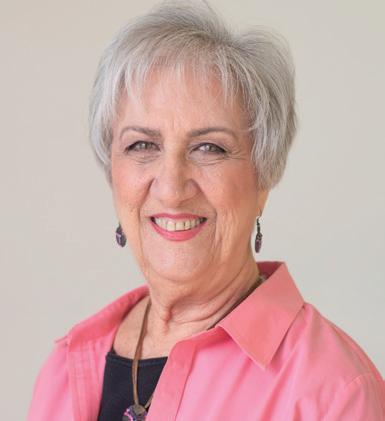
Debbie Hann, Interim CEO Arizona Small Business Association Central Office (602) 306-4000 www.asba.com
Steven G. Zylstra, President & CEO Arizona Technology Council One Renaissance Square (602) 343-8324 www.aztechcouncil.org

Kristen Wilson, CEO AZ Impact for Good (602) 279-2966 www.azimpactforgood.org

Terri Kimble, President & CEO Chandler Chamber of Commerce (480) 963-4571 www.chandlerchamber.com
Joanna Horton McPherson, President NAWBO Phoenix Metro Chapter (480) 289-5768 www.nawbophx.org
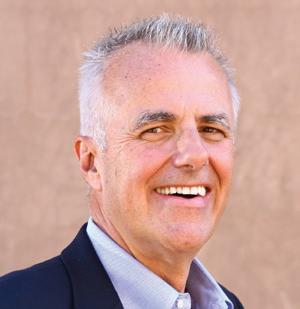
Robin Arredondo-Savage, President & CEO Tempe Chamber of Commerce (480) 967-7891 www.tempechamber.org
Our Partner Organizations are vested business organizations focused on building and improving business in the Valley or throughout Arizona. As Partners, each will receive three insert publications each year to showcase all that they are doing for business and businesspeople within our community. We encourage you to join these and other organizations to better your business opportunities. The members of these and other Associate Partner Organizations receive a subscription to In Business Magazine each month. For more information on becoming an Associate Partner, please contact our publisher at info@inbusinessphx.com
ASSOCIATE PARTNERS
Ahwatukee Foothills Chamber of Commerce ahwatukeechamber.com
Arizona Chamber of Commerce & Industry azchamber.com
Arizona Hispanic Chamber of Commerce azhcc.com
The Black Chamber of Arizona phoenixblackchamber.com
Economic Club of Phoenix econclubphx.org
Glendale Chamber of Commerce glendaleazchamber.org
Greater Phoenix Chamber of Commerce phoenixchamber.com
Greater Phoenix Equality Chamber of Commerce gpglcc.org
Mesa Chamber of Commerce mesachamber.org
North Phoenix Chamber of Commerce northphoenixchamber.com
Peoria Chamber of Commerce peoriachamber.com
Phoenix Metro Chamber of Commerce phoenixmetrochamber.com
Scottsdale Area Chamber of Commerce scottsdalechamber.com
Scottsdale Coalition of Today and Tomorrow (SCOTT) scottnow.com
Surprise Regional Chamber of Commerce surpriseregionalchamber.com
WESTMARC westmarc.org
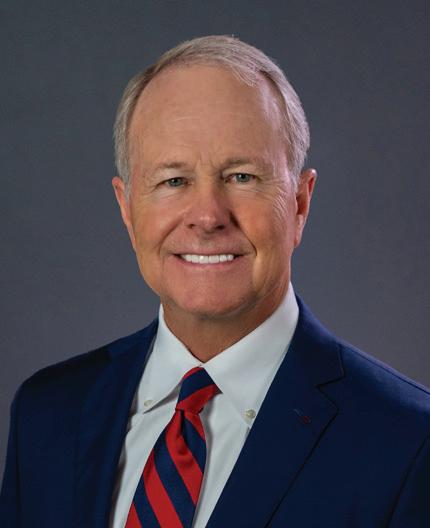
Steve Purves is president and CEO of Valleywise Health, Arizona’s largest public teaching hospital and safety net system. Since 2013, he has led a major financial turnaround and helped secure more than $1.8 billion in voter-approved bonds to modernize facilities and expand access to care. With more than 45 years of healthcare leadership experience, Purves is active in community and industry organizations and is dedicated to improving access to high-quality care for underserved populations. valleywisehealth.org
Healthcare in the Crosshairs
Affordability is today’s trending topic, and where it intersects with healthcare, it becomes a concern employers are addressing for their employees.
Affordability and access are not new challenges in healthcare, but they are becoming more visible and more urgent for employers and employees alike. For many organizations, healthcare costs are now one of the fastest-growing line items, while employees are feeling the impact through higher premiums, increasing deductibles and, unfortunately, decisions to delay seeking care.
At the same time, access remains uneven. Workforce shortages, growing demand for behavioral health services and population growth in regions like Arizona are putting additional strain on an already complex system. In many communities, the issue is not just cost, but whether care is available when and where it is needed. Valleywise Health has made significant strides with a growing network of community health centers, but even in one of the largest metro areas in the U.S., gaps remain.
The industry is responding in a number of ways: expanding outpatient and communitybased care, investing in prevention and exploring new care models that better align cost with outcomes. There is also a growing recognition that healthcare does not operate in isolation. Factors like housing, transportation and food security play a meaningful role in both access and long-term affordability.
For employers, this moment presents both a challenge and an opportunity: to think more holistically about health, benefits and the systems that support their workforce.
With healthcare recognized as a focus of employee recruitment and retention efforts, In Business Magazine reached out to key local sources for their expertise and insights to address the central aspects of affordability, access and innovation.
The communication aspect is the central theme of Heather Kane’s Roundtable feature “Strategies to Help Your Workforce Maximize Their Healthcare Benefits in 2026.” And in this month’s Feedback, several businesses in our community share what they’ve learned about what’s important to their employees.
Being able to speedily make decisions has long been touted as a strength in business leaders, as a signal of confidence. But Dr. Emilio Justo makes the case for a more deliberate, disciplined approach in feature article “The Business Case for Slowing Down: How Intentional Pauses Strengthen Strategy & Growth.”
John Marino explores iterations of employee stock ownership plans, a merger & acquisition alternative that invests employees with ownership interest that, he explains, benefits “owners, employees and the communities they serve.”
In this month’s Legal feature, Emily Ward adds personal experience to her discussion of Chat GPT’s advantages and limitation in “Artificial Intelligence Is Powerful – But It Can’t Replace a Lawyer’s Judgment.”
Another hot topic here in Arizona in water — especially in conjunction with the growth of data centers. Kaley Joseph takes on this topic from the standpoint of commercial real estate development as she discusses design and architecture.
In regular monthly departments such as Technology and Semi Insights, articles range from the electricity demands of bitcoin mining and the use of drones for business surveillance to the business cost of employee mental health and the emergence of litigation financing for law firms and commercial plaintiffs.
And this month, In Business Magazine also offers its annual special section, “Business Healthcare Services Guide.”
I’m pleased to help bring you this April edition of In Business Magazine, covering businessrelevant topics and information about what’s happening in our business community. Enjoy the read.
Sincerely,
Steve Purves President & CEO Valleywise Health

Editor’s Note: This question generated input also from:

Angela Hernandez
Director of Human Resources
Peddler’s Son
Sector: Wholesale Grocer
Please visit April’s Feedback entry on our website to learn these companies’ perspective and experience with onboarding new employees.
www.inbusinessphx.com



TERESA CUTRIGHT
Vice President of Employee Services
Arizona Financial Credit Union Sector: Financial
The most important aspect of our healthcare benefits is our commitment to making high-quality coverage both accessible and immediate. We offer comprehensive medical, dental and vision coverage, including free employeeonly medical coverage, with benefits beginning on the first day of employment — ensuring support from day one. Beyond coverage, we take a holistic approach to well-being, meeting employees wherever they are in their health journey. We emphasize preventive care and whole-person wellness, including a personalized health app that supports nutrition, sleep, stress management and preventive screenings.
We encourage healthy habits through step challenges, gym subsidies and incentives such as paid time off and gift cards. Employees also have access to financial and mental health resources, along with educational webinars.
FEEDBACK QUESTION:
Let us know what you want to know from the Valley’s top business leaders. editor@inbusinessphx.com
Additionally, health advocates and case managers support employees navigating complex health needs, assisting with claims, prescriptions and care coordination. Together, these benefits reflect our investment in helping employees proactively manage their health and well-being.
Arizona Financial Credit Union arizonafinancial.org
For all past Feedbacks go online to inbusinessphx.com and see what Valley executives think on various business topics.
Teresa Cutright is the vice president of Employee Services at Arizona Financial Credit Union, bringing more than a decade of progressive Human Resources leadership experience. She leads employee relations, benefits, compensation, payroll and HR operations, driving strategies that enhance employee well-being, engagement and organizational performance.
DAVID KOLBE
Chief Executive Officer
Kolbe Corp
Sector: Business Management
The most important thing we can do with healthcare benefits is give people real choices. One plan doesn’t work for everyone — a single employee in their twenties and a parent with a young family have completely different needs. When you offer different coverage levels and price points, including options like health savings accounts, people actually engage with their care. They make better decisions because the plan fits their life, not the other way around.
For small businesses, this is huge. Offering meaningful healthcare options is one of the most concrete ways to show your team you’re invested in them. And honestly, it helps you compete for talent against companies five times your size.
Here’s what I’ve seen: When people have coverage that actually fits, they use it. They get care before something small turns into something expensive. That means better health outcomes, sure — but it also means more engaged employees who stick around longer. Which, at the end of the day, is good for everyone.
Kolbe Corp kolbe.com
David Kolbe is CEO of Kolbe Corp, headquartered in Phoenix. The company, now in its 50th year, is best known for the Kolbe A™ Index, an assessment that measures how people naturally take action. Kolbe co-authored the bestselling book Do More, More Naturally and has spent decades helping businesses improve team dynamics, performance and hiring.
MIRANDA ROY
People Operations Generalist
REDW Advisors & CPAs
Sector: Professional Services
The most important aspect of REDW’s healthcare benefits is our intentional focus on whole person wellness, paired with flexibility that supports a diverse and evolving workforce. Through our partnership with Cigna, employees have access to high-quality, affordable medical coverage that emphasizes preventive care, behavioral health and long-term wellbeing. This commitment is reflected in REDW being recognized as a Cigna Healthy Workforce Designation: Bronze Level recipient, as well as an Mployer Market Leading Award winner, affirming that our benefits exceed market standards. REDW complements healthcare coverage with intentional wellness programming, including monthly wellness webinars centered on the five pillars of well-being: physical, environmental, emotional, financial and social. These programs provide education, resources and practical tools employees can apply both at work and at home. In addition, REDW offers Flexible Vacation Time, paid parental leave, up to six weeks of Self Family Care Leave and up to 64 hours of paid sick time annually, allowing employees autonomy and balance. Together, these offerings empower employees to care for themselves and their families while thriving professionally.
REDW Advisors & CPAs redw.com
Miranda Roy is a people operations generalist at REDW Advisors & CPAs, a team of more than 300 professionals serving the clients’ audit, tax, cybersecurity, business and financial needs. She supports the strategic direction of the firm as it relates to culture, talent acquisition and retention, total rewards and benefits, professional development/learning, health and wellness, and overall engagement/satisfaction.
Redefining What a Modern Law Firm Should Be.

Since 1885.
In today’s fast-moving world, standing still isn’t an option. Fennemore has been paving the way for over 140 years—combining a tradition of excellence with an enduring drive to innovate.
From pioneering the use of AI and building platforms that supercharge our teams, to reimagining what collaboration looks like in the legal industry, we continually push boundaries to deliver better outcomes for our clients.
Thank you to our CEO James Goodnow, our attorneys, and our dedicated staff for their relentless commitment to advancing Fennemore’s vision and setting a new standard for what’s possible in law.
DAILIES TOP STORIES
‘In Business Dailies’ Most Views Last 30 Days
Here are the stories with the most views over the past 30 days (prior to press time) that were features in our In Business Dailies. The In Business Dailies hits email inboxes twice each weekday — at 9:30 a.m. and updated at 4:30 p.m. Sign up today at www.inbusinessphx.com/dailies-signup
Technology & Innovation | inbusinessphx.com | March 10 2026
Amazon-Backed Robotaxi Co. to Debut in Phoenix, Plans for Operations Hub
inbusinessPHX.com
Zoox, Amazon’s autonomous taxi spin-off, announced that they are launching operations in Arizona, beginning with Phoenix, and expanding testing in Texas to Dallas. To support its growing operations, the company will also be opening new depots in Phoenix and Dallas, as well as a new Fusion Center facility in Scottsdale, creating hundreds of jobs in these communities.
Growth & Enterprise | inbusinessphx.com | March 5 2026
Dallas’ Most-Booked Restaurant Expands to Scottsdale
One of Texas’ most coveted reservations is crossing state lines when il Bracco — consistently the No. 1 most-booked restaurant in Dallas on OpenTable month after month — brings its buzzy atmosphere, house-made Italian-inspired cuisine and unmistakably polished design to Scottsdale, opening March 30 at the corner of Scottsdale Road and Rose Lane near McDonald Drive.
Achievements | inbusinessphx.com | March 6 2026
Boutique Real Estate Brokerage Opens 8,000-SF Biltmore Headquarters by
RaeAnne Marsh
Cambridge Properties, a boutique real estate brokerage known for its relationship-driven approach to luxury and urban living, has announced the opening of its new Phoenix headquarters as it marks a milestone anniversary.
Commercial Real Estate & Development | inbusinessphx.com | March 11 2026
North Scottsdale Luxury Condos Near Sellout as New Phase Launches
Atavia, the 88-unit luxury condominium community by Chicago-based Belgravia Group, has reached a major milestone with phase one officially under roof and nearing sellout. With this milestone, phase two is now fully released, offering a new opportunity for buyers to secure a residence.

The Business Case for Financing to Level the Legal Playing Field
The story is all too familiar. An everyday product or environmental site becomes the subject of a large-scale health or safety lawsuit. While the headlines often focus on the legal battle, they rarely reveal the financial realities behind it. For the individuals affected, the path to accountability often depends not just on the strength of their case but also on their ability to afford the fight.
Class action and mass tort lawsuits can take years to resolve, requiring significant resources and placing enormous financial strain on plaintiffs, law firms and businesses alike.
As the cost and complexity of litigation escalate, innovative capital solutions are emerging. Litigation finance, once a niche concept, sits at the center of this shift — within private credit but operating differently from traditional lending. Litigation funding provides capital to law firms and commercial plaintiffs so they can pursue legitimate cases without absorbing exorbitant costs. Funders like Pravati Capital receive a portion of the settlement or judgment when cases resolve successfully.
The David vs. Goliath scenario is real: In traditional litigation, the party with the deepest pockets often holds the advantage; plaintiffs may have strong cases but lack the capital to see them through. That imbalance can discourage innovation and accountability across industries. By introducing structured capital into the process, litigation finance helps level the playing field, increasing access to justice — and, in the process, is changing how law firms and businesses
approach risk, resilience and access to justice.
Arizona has become fertile ground for new approaches to legal innovation and capital markets. Collaboration among business leaders, policy advocates, attorneys and legal professionals is accelerating progress, positioning the state as a place where forwardthinking fuels the modern economy.
This spirit of cooperation reflects a larger trend: recognition that access to justice and access to capital are increasingly interconnected. For the broader business community, the conversation around litigation finance isn’t just about funding cases. It’s about how specialized capital can ensure fairness remains at the center of commerce. For investors building modern, diversified portfolios, litigation finance has become an attractive alternative asset class, performing independently from traditional market cycles. Research Nester estimates the litigation finance market is projected to grow from $20 billion in 2025 to $67 billion by 2037.
But the numbers don’t tell the full story.
As Arizona continues to foster collaboration across legal, financial and business communities, the state is shaping how modern capital can expand access, empower entrepreneurs and underscore the belief that opportunity and the scales of justice should never be limited by imbalance. —Alexander Chucri, founder and CEO of Pravati Capital (pravaticapital.com), among the oldest U.S. litigation finance firms, and a visionary in developing the industry’s pioneering model of litigation finance in 2003







Local Standouts Recognized for Achievements and Philanthropy
Local Properties Earn Forbes Travel Guide Stars. Forbes Travel Guide’s 2026 Star Awards names two Metro Phoenix properties: The Global Ambassador in Phoenix, with a Four-Star rating, and JW Marriott Scottsdale Camelback Inn Resort & Spa, with a “Recommended Hotel” rating. forbestravelguide.com globalambassadorhotel.com marriott.com
Phoenix Plantscape Design Earns International Award
Local horticulturist Holly Tovar of the Ambius Phoenix branch was recognized with a Platinum Award at the 2026 International Plantscape Awards for her plantscape design for the Biltmore BOND, a Phoenix luxury workplace. This recognition highlights the human-centric impact of plantscape design and its unique ability to transform commercial spaces through a multi-sensory lens. ambius.com/locations/arizona/phoenix
Highest LEED Gold Score: Luke Field Industrial Building
The Core & Shell and Warehouse Distribution Center, at the 2.4-million-square-foot Luke Field logistics campus developed by global, full-service commercial real estate firm Lincoln Property Company and Goldman Sachs in Glendale, Arizona, has been named Arizona’s highest-scoring LEED Gold v4 industrial building by the US Green Building Council. lpc.com
Magnum Companies Earns Top Honors for Metalwork
Magnum Companies, a Phoenixbased leader in custom metal manufacturing and architectural metalwork, recently earned top honors at the 2026 National Ornamental & Miscellaneous Metals Association (NOMMA) Top Job Awards. The company has been crafting iconic metalwork across Arizona and the U.S. since 1979. magnumcompanies.net
Mark-Taylor iNSPIREs Community Impact
Mark-Taylor Residential celebrated its 40th anniversary last year with a record-setting community impact through its iNSPIRE program that included volunteers logging more than 1,000 service hours and raising more than $40,000 to support local communities. mark-taylor.com
Arizona Association of REALTORS® Donates to Housing Fund
The Arizona Association of REALTORS® has awarded a $29,000 donation to the Arizona Housing Fund, with $14,000 of the donation funded from proceeds of AAR’s Homes for All specialty License Plate. The donation will be used to help fund housing programs to serve the more than 13,000 Arizonans experiencing homelessness. aaronline.com arizonahousingfund.org
Partnership to Enhance Campus Hospitality Service
Together, Aramark and the Steve Short Culinary Team are co-creating a holistic hospitality ecosystem designed to support ASU’s academic, athletic and social life. The collaboration extends far beyond dining halls, introducing data-informed enhancements, streamlined concessions, new culinary concepts and guest-centered experiences across stadiums, arenas and event venues. These efforts aim to modernize how students, faculty, alumni and fans experience campus life, blending innovation with elevated service at every touchpoint.
At the heart of the partnership is a commitment to integration. Aramark brings national scale, operational infrastructure and analytics-driven insights, while SSCT contributes deep local roots and decades of service within the ASU community. This combination allows the university to offer both consistency and authenticity, from large-scale athletics concessions to intimate catered events. The expanded collaboration builds on SSCT’s longstanding campus presence and positions
both organizations to deliver a unified hospitality model that spans all four ASU campuses.
Equally important is the focus on innovation and long-term impact. By leveraging data and modern hospitality strategies, the partnership is designed to evolve alongside student expectations and industry trends. Plans include faster service models, broader food variety and upgraded fan experiences in sports venues, all while reinforcing sustainability and community engagement.
By combining the strength of Aramark’s operational capabilities with the local authenticity and culinary innovation of SSCT, this partnership is redefining what’s possible in university hospitality. Together, they are raising the bar for service, sustainability and meaningful campus engagement, setting a new standard for ASU and the future of higher education hospitality. —Morgan Domaracki
Aramark aramark.com/home
Steve Short Culinary Team steveshortculinaryteam.com
Goodwill Is Expansive Workforce Development
At Goodwill of Central and Northern Arizona, our vision is ending poverty through the power of work. Through our mission services, we are empowering individuals, strengthening families and building stronger communities via workforce development and career services, as well as no-cost education initiatives, all made possible by generous donations and purchases at Goodwill retail stores and donation centers. Together, our mission services programming is helping direct talent into high-growth, highdemand fields like the semiconductor, pharm tech and healthcare industries.
Through various career services programs like our online platform MyCareerAdvisor.com and our in-person Veteran Career Center, we are providing skills training, career coaching, resume assistance, hiring events and much more.
In addition to regularly available career services at the Veteran Career Center, we recently partnered with Rio Salado College to offer an Introduction to the Semiconductor Industry class, providing a basic introduction
to the tools and topics that individuals heading into the industry need to know. Additionally, we partnered with AZ StRUT (Arizona Students Recycling Used Technology) to host a Techie Bootcamp, during which participants learn the technology behind computers and have an opportunity to obtain a donated, refurbished laptop at the end of the class.
For many Arizonans, education is a barrier to expanding their careers, and this is why we introduced education solutions such as The Excel Center, Arizona’s first in-person adult high school allowing individuals over the age of 18 to return to school and earn their high school diploma. More than 700,000 working-age adults in Arizona do not have a high school diploma, resulting in lower earnings and fewer job opportunities. At The Excel Center, we’re working to help these individuals make a change, get their education, secure a better-paying job and meet the skilled workforce needs of Arizona. —Tim O’Neal, president and CEO at Goodwill of Central and Northern Arizona (www.goodwillaz.org)
In 2024, GCNA’s career services programming saw more than 80,000 training courses taken and more than 1,100 individuals placed into employment.
ENTREPRENEURS & INNOVATORS
Jetstream Venture Fund Founded with Access in Mind
An investment fund recently launched in Scottsdale lowers the barriers to VC-style investing while also fueling the Valley’s burgeoning med-tech industry. The Jetstream Venture Fund offers something rare: a way for professionals to access private company equity through a regulated, integrity-driven investment structure. The fund is founded by the team at Xcellerant Ventures in Scottsdale, led by Dr. John Shufeldt, a serial healthcare entrepreneur (MeMD, NextCare), and Dr. Chris Yoo, a bioinformatics innovator.
Having received its Notice of Effectiveness from the Securities and Exchange Commission, the Jetstream Venture Fund allows all investors access to early-stage venture investments for a minimum $20,000 investment. “Key words here being ‘all’ and ‘access.’ You do not have to be a qualified or accredited investor to participate. Our team’s expertise in health tech and med tech as investors and operators spans decades. Our portfolio companies will go through an extensive diligence and vetting process. We are constructing a portfolio consisting of innovative startups, dynamic founders and industry-changing technology. Our goal is to provide great returns to our investors and give them access to companies that will transform our economy, says Doug

Sylvester, general partner.
As entrepreneurs, Sylvester says, “The best advice we received was far earlier than starting Xcellerant Ventures. That advice was simple: Act ethically and give all you can to help those who trust in you to succeed. A second piece of advice, more like a mantra of ours is ‘Stay Hungry, Stay Humble.’ We not only run Xcellerant Ventures using both of these bits of advice, we expect all the companies in which we invest to do the same.”
—RaeAnne Marsh
Xcellerant Ventures www.xcellerantventures.com
Jetstream Venture Fund jvf.vc
AIAEC Opens Regulatory Bottleneck in Land-Use Development
AIAEC builds technology for the people who “design, develop and build the world,” says founder and CEO Ali Fakih. Founded in Arizona, the company helps architects, engineers, developers, construction teams and real estate professionals get clear zoning and regulatory answers faster, reducing time spent on manual research and avoiding costly delays early in development across complex, regulated environments. Its first product, ChatAEC, turns complex zoning and land use rules into source-backed, defensible answers in seconds, giving teams their time back to focus on real work.
Each city organizes its regulatory information differently, and understanding them typically requires expertise from planners, engineers and land-use professionals. AIAEC addresses this by combining deep industry knowledge with strong product and AI engineering to structure this information in a way that ChatAEC can analyze and translate into clear, actionable insights. “Our goal is to turn a fragmented regulatory landscape into something developers, engineers, and cities can navigate far more efficiently.”
In developing Chat AEC, Fakih took to heart the advice to “focus on solving a specific industry bottleneck rather than building a generic technology platform.” In real estate and infrastructure development, significant delays occur when teams try to interpret zoning regulations, development
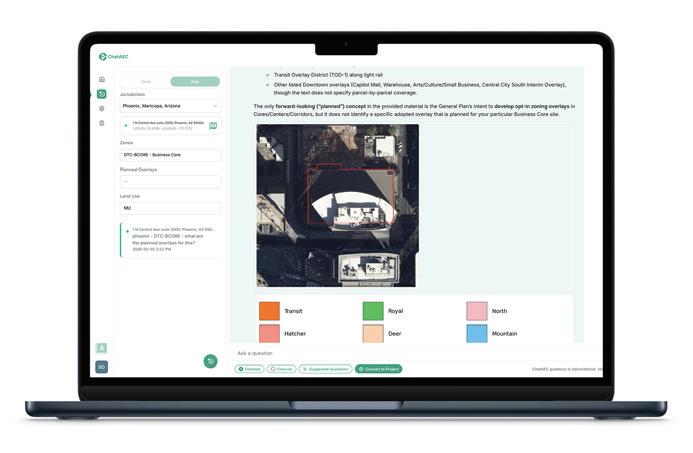
standards, and compliance requirements before acquiring land or starting the permitting process. ChatAEC was built specifically to read and interpret these documents and provide clear answers quickly. The broader AIAEC platform is designed to help developers, engineers, and cities evaluate opportunities faster and move through the permitting process more efficiently.
“ChatAEC is AIAEC’s first launch and the first step toward a broader platform for the built-world workflow. Today, it focuses on zoning and early feasibility, but over time we are building additional tools to support more of the planning, design and delivery process.”
—RaeAnne Marsh
Noting the Jetstream Venture Fund was founded with access in mind, Sylvester says, “We want to ensure that private companies are available to the public and wanted to launch a fund that was accessible to a much larger segment of the population.” Xcellerant Ventures was founded in 2022 and launched XV Fund I as a vintage 2023 traditional venture capital fund in January 2023.
AIAEC aiaec.com
A new study on behalf of Trace One that identified the U.S. States Where Employers Fail to Warn Workers About Chemical Dangers found HazCom violation penalties against Arizona employers totaled $585,287, with construction the most common industry for HazCom violations in the state. traceone.com/resources/plm-compliance-blog/where-us-employers-fail-to-warn-workers-about-chemical-dangers
“The idea for starting AIAEC came from years of working in the engineering and development industry,” Ali Fakih says. “I saw how much time teams spent interpreting zoning codes, development standards, building regulations, and permitting requirements before moving forward with a project.” He founded the company in 2023, seeing AI advancing rapidly and convinced that professionals within their own industries needed to take the lead in building AI tools that reflect how their work actually gets done.

JET OUT BACKGROUND
• Joseph Crivello founded Jet OUT in 2018 through a merger involving the Phoenix Investors flight department and a 14 CFR §135 air carrier.
• The company operates a co-ownership private aviation program built around a local-national fleet model.
• Crivello also founded Jet IN, a fixed-base operator facility at Milwaukee Mitchell International Airport that opened in April 2023 and was acquired by Jet Aviation in September 2024.
• Crivello is a licensed commercial pilot with multi-engine and instrument ratings.
Joseph Crivello and Jet OUT Redefine Private Aviation
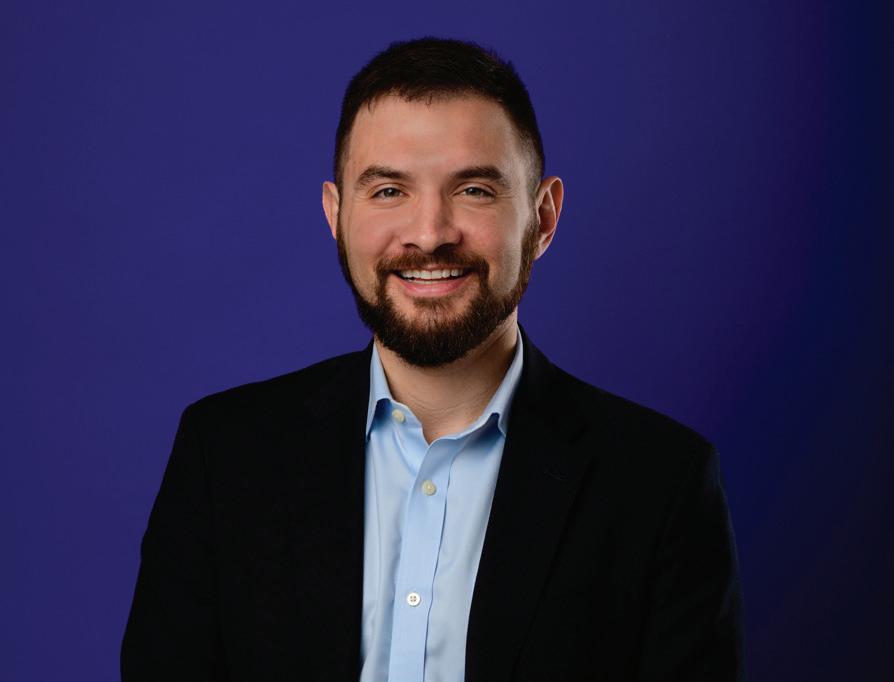
Founder and CEO, Crivello built his model around familiarity, continuity and accountability by Gordon
Cameron
Before Joseph Crivello built a private aviation company, he built the case for one. Managing flight operations for a rapidly growing commercial real estate firm gave him a front-row seat to what private aviation could deliver, and where it fell short.
In 2011, Crivello joined Phoenix Investors, which at the time held a small portfolio of retail commercial real estate. Working with his partners, the firm expanded rapidly, eventually transforming into one of the largest privately held industrial real estate portfolios in the country. Today, Phoenix Investors and its affiliates hold approximately 78 million square feet of property across 29 states.
As the company expanded, reaching facilities in tertiary markets across the country required a different approach to travel. Crivello built and managed the company’s flight operations in 2014, supporting the firm’s acquisition strategy by putting executives on the ground, often at multiple locations in a single day. “Private aviation accelerated decisions, extended our reach and gave our team time back,” he says.
While building the flight department, Crivello gained a close view of the private aviation industry. He saw the operational advantages of disciplined flight operations but also observed an industry that had grown comfortable with complexity, opacity and practices that rarely put the owner first.
In 2018, Crivello founded Jet OUT through a merger in which the Phoenix Investors flight department was spun off and combined with a separately acquired 14 CFR §135 air carrier. The goal was straightforward: keep what worked, rebuild what didn’t.
“We retained what worked: locally based aircraft, dedicated flight crews, in-house maintenance and an ‘out-and-back’ operating model,” says Crivello, who serves as the CEO and chairman. “Then we redesigned the rest to deliver a better owner experience.”
One of the defining decisions behind Jet OUT was its localnational fleet model, a co-ownership program built around regional bases where aircraft, pilots and support teams are stationed near the owners they serve. Familiarity follows. So does accountability. Owners often know their aircraft and their crews by name, creating continuity that larger, more distant operators rarely provide.
At the same time, owners need national reach. “What we set out to build was a model that gives them both,” Crivello says. Growth has required discipline to match that ambition. Every new aircraft, base or program adds layers of complexity. Staffing, maintenance, dispatch, compliance. For Crivello, scaling means ensuring every part of the operation holds its standard, not just its commercial footing.
“The biggest challenge is scaling without letting complexity creep in,” he says. To hold that standard, Jet OUT has focused on strong safety systems, a uniform fleet and regional operational teams. Safety, Crivello notes, is the baseline for operating in
aviation. The harder work is building systems that allow the organization to grow without diluting what makes it reliable.
That same discipline shapes how Crivello thinks about culture. Pilots are the most visible part of any private aviation experience, but he is direct about what actually determines quality. “In aviation, everybody matters,” he says. “Owners see the pilots, but their overall experience relies equally on dispatch, maintenance, detailing, concierge services and countless others working behind the scenes.”
When crews are embedded in their communities, Crivello says, it creates the kind of continuity and local accountability that ultimately shows up in the owner experience — flight after flight.
That commitment to transparency extends to how Jet OUT prices its programs. Most private jet travel is priced by the hour.
Jet OUT uses a day-based model that reflects how owners actually fly, multiple cities, their own schedule, home the same day. Pricing is published and built around operating costs. “Owners have been trained to think about travel in hourly increments, but we think it is more natural to think about what they need to get done in a day,” Crivello says. “Clarity builds trust. And trust matters in our business.”
Looking ahead, Crivello describes Jet OUT’s strategy as disciplined growth: continuing to build a national network of regional bases, scaling around a consistent CJ4 Gen2 fleet, and introducing programs designed to improve the owner experience. In 2024, he also founded Co Finance, an aircraft finance company specializing in loans collateralized by co-owned aircraft. This company, which he also serves as CEO and chairman, extends the infrastructure around the ownership model itself.
“Our goal isn’t to become the biggest player in the market,” Crivello says. “It’s about building the most dependable, transparent and operationally sound platform we can, market by market.”
Manufacturing Growth Spurs Need for Real Estate, Housing Development in Phoenix
A defining feature of the post-COVID-19 economy has been a broad push to bring manufacturing jobs back to the United States. For decades, leveraging inexpensive overseas labor was viewed as a smart business strategy. However, the pandemic exposed the vulnerabilities of overreliance on global supply chains. Add rising geopolitical uncertainty and increasing offshore production costs to the mix, and many American companies — particularly in high-tech and critical industries — are now looking to reshore manufacturing as a key risk-mitigation strategy.
However, making this transition is easier said than done. The U.S. manufacturing sector faces a critical shortage of skilled labor, with 79% of manufacturing executives reporting that a lack of skilled workers is their top barrier to growth. Years of underinvestment have also left the country short on modern, turnkey manufacturing facilities, prompting a race to build new, highly technical production plants. At the same time, the nationwide housing shortage makes it difficult to attract and retain the workers needed to operate these facilities — whether at existing plants or new ones.
For leaders in the construction and commercial real estate industries, meeting the demand for the infrastructure that will support this renaissance in American manufacturing capacity is imperative — not only for economic growth, but for long-term national security.
Greater Phoenix is a prime example of both the challenges and opportunities that exist. The region’s abundant land availability, access to reliable power generation, relative lack of disruptive severe weather and rapid population growth make for an ideal location for hightech infrastructure such as data centers, advanced manufacturing facilities and semiconductor plants.
Crucially, this physical and economic growth must be tied to the development of the people who will build and operate these facilities, and will depend on creating a fluid, adaptively skilled
workforce capable of transitioning from traditional sectors — such as oil and gas or warehouse distribution — into high-growth industries like construction, advanced manufacturing, and food and beverage production.
That transition will not happen automatically. It requires employers to invest in training and reskilling earlier in the project lifecycle, closer coordination with community colleges and trade programs, and public policies that support workforce mobility rather than constrain it. Without intentional planning, labor shortages will persist even as new facilities come online.
However, workforce development alone is not enough. Even the most effective reskilling efforts will fall short if workers cannot afford to live near where these facilities are being built. Housing availability is the next critical constraint on growth.
Fast-growing regions like Phoenix must align industrial development with intentional residential planning. That means prioritizing housing near employment centers, streamlining approvals for mixed-income projects, and ensuring that growth benefits the workers powering these industries — not just the facilities themselves.
Phoenix is undoubtedly one of the epicenters of America’s reshoring efforts, with the resources and human capital to meet the moment. But success will depend on timely investment in the people driving this growth. The ceiling for economic expansion in Phoenix and the broader Southwest is not defined by land or demand, but by the speed at which the next generation of talent can be developed. And this includes the infrastructure — and particularly the affordable housing — that will allow them to thrive in a rapidly evolving economy. —Ryan Abbott, president of the Southwest Region for Clayco (claycorp.com), one of the nation’s largest privately-owned real estate, architecture, and engineering design-build construction firms
GET REAL
Arizona Builders Alliance Champions Construction Industry through Education, Advocacy and Connection

As a member-driven trade association, the Arizona Builders Alliance serves the commercial construction industry through comprehensive support that includes education, networking, business development, and robust legislative advocacy.
This important benefit comes from the ABA’s dual affiliation with both the Associated Builders and Contractors (ABC) and the Associated General Contractors of America (AGC). It’s one of only two chapters nationwide with this distinction, which gives members greater access to resources and expertise.
Six Core Legislative Priorities Drive ABA’s Advocacy Efforts
1. Infrastructure funding tops the ABA’s policy agenda, encouraging smart investment that meets Arizona’s rapid growth while creating longterm opportunities for the constr uction industry. This focus aligns with the state’s booming population and the corresponding need for roads, utilities and public buildings.
2. Workforce development represents another critical priority, as the ABA advocates support for k-12 career and technical education, community college and university programs. ABA also delivers education and training programs that build a skilled, job-ready workforce that drives industry success and economic stability.
3. The ABA actively advocates for tax and regulatory policies that support business growth, encourage innovation and reduce unnecessary burdens on Arizona’s contractors. This approach helps maintain the state’s business-friendly environment while ensuring contractors can compete effectively.
4. Fair and open competition remains central to the ABA’s mission, as the organization promotes transparent procurement practices that ensure quality work, fair access and value for taxpayers. These efforts protect both contractors and public interests.
5. Supporting Arizona’s right-to-work status, the ABA backs policies that protect worker choice and maintain a competitive, flexible construction environment. Conversely, the organization opposes prevailing wage mandates that increase project costs or limit opportunities for smaller contractors.
6. The ABA also champions diverse project delivery methods, including design-build and public-private partnerships that improve project outcomes and efficiency while providing contractors with more opportunities to showcase their expertise.
—Kim Davids, president of the Arizona Builders Alliance (azbuilders.org)
Even the most effective reskilling efforts will fall short if workers cannot afford to live near where high-tech infrastructure facilities are being built. Housing availability is the next critical constraint on growth.

Retail Project to Serve Surging Growth in West Valley

Diversified Partners, one of Arizona’s leading real estate brokerage and development firms, recently unveiled plans for a new commercial retail development at the southeast corner of 99th Avenue and Indian School Road, just west of Loop 101 in Phoenix, to serve a rapidly expanding trade area.
Located near major employment and entertainment drivers, the development is designed to serve one of the West Valley’s fastest-growing residential corridors while capturing significant regional freeway traffic. Located adjacent to Loop 101 and approximately two miles north of Interstate 10, the site benefits from exceptional visibility and accessibility. Traffic counts exceed 140,000 vehicles per day along Loop 101 and approximately 46,000 vehicles per day at the intersection of 99th Avenue and Indian School Road.
Approximately 22.3 net acres, the site will offer a flexible retail mix that includes shop space and multiple drive-thru opportunities tailored to both commuter and residential demand. The project will be anchored by EOS Fitness and feature a lineup of nationally recognized brands that include Dutch Bros, HTeaO, Farmer Boys, Bojangles and additional retail and drive-thru concepts. An approximately 2,057-square-foot endcap shop space remains available, along with additional drive-thru and retail opportunities.


“This corridor continues to experience tremendous residential and commercial momentum,” said Walt Brown Jr., founder and chief executive officer of Diversified Partners. “By securing a high-performing fitness anchor and complementary quick-service and fast-casual brands, we are creating a destination that serves both daily neighborhood needs and regional traffic.” —Mike Hunter
Diversified Partners dpcre.com
Tempe Industrial with Rail Spur Capability
The recently completed Source Business Center brings 144,885 square feet of Class-A industrial space to Tempe. Situated on a 15-acre site at the southeast corner of Warner Road and Hardy Drive, the property features prominent frontage on Warner Road, direct access to I-10 and Loop 101 and rail spur capability due to its adjacency to a Union Pacific rail line.
Developed by Creation and investor CrossHarbor Capital Partners, the project offers generous 32-foot clear heights, extensive power and an expansive six acres of contiguous yard space to support flexible storage and vehicle parking.
The building is designed with flexibility in mind and can accommodate up to two tenants with distinct entrances and dedicated parking zones. The site provides 204 parking spaces, including eight electric vehicle charging spaces, as well as bicycle parking and separate pedestrian paths. LGE Design Build served as both architect and general contractor for the project.
“Source Business Center illustrates our commitment to creating industrial buildings that go beyond function alone,” said Mike Stafford, president of LGE Design Build. “By pairing efficient construction with a design that considers scale, light and the pedestrian experience, we delivered a flexible, futureready facility that brings lasting value to both users and the surrounding community.”
Architecturally, Source Business Center is designed to be

timeless and welcoming. Large areas of glass bring in natural light and strengthen the connection between the building and the surrounding landscape. A muted, desert-inspired color palette and subtle exterior stripe patterns add visual interest while maintaining a clean, modern look. At each entrance, deeply recessed, portal-like covered entryways and vertical sun-shading elements help reduce heat through passive design strategies. —Mike Hunter
Creation creationequity.com
CrossHarbor Capital Partners crossharborcapital.com
LGE Design Build lgedesignbuild.com















































































































































EVERSPIN’S MRAM
MRAM is a compelling alternative to traditional memory technologies such as SRAM, DRAM and NOR flash. MRAM is non-volatile, meaning it retains data even when power is lost. While SRAM requires continuous power to retain data and is often backed by batteries that degrade over time, MRAM eliminates the need for backup components. Once data is written to MRAM, it remains securely stored without consuming additional power, reducing both system complexity and energy costs.

What Happens when Memory Can’t Keep Up
With increasing demand, rising memory costs are showing up in everyday products by Stephanie Quinn
As manufacturers steer more memory capacity toward AI data centers, customers in other parts of the market are starting to feel the effects. Supply is getting tighter, long-term commitments are harder to secure and some buyers are being forced to plan around uncertainty.
Demand is rising quickly, but new supply isn’t keeping pace. Much of the industry’s investment is going into new facilities and upgrades that take years to have an impact. Industry leaders say the imbalance could last through at least 2027, with more memory supply being pulled toward AI infrastructure.
Why does that matter to anyone outside the semiconductor industry? It matters because rising memory costs are showing up in everyday products — items like laptops and smartphones, as well as vehicles and medical devices. Some analysts have described the impact as a quiet tax on the broader economy because it results in companies absorbing higher component costs or passing down the increase to their customers.
Counterpoint Research reported memory prices rose about 50% in late 2025, with projections of an additional 40% to 50% increase by mid-2026 as demand continues to outpace supply.
At the high end, AI systems and data centers are consuming a growing share of supply. Outside of that, companies are being told availability may change, or that long-term commitments can’t be guaranteed. As that happens, other parts of the memory market are adjusting. In NOR flash, still widely used across industrial and embedded systems, customers are starting to see changes in both pricing and availability.
For companies that rely on it, those changes carry real implications. These are often products with long lifecycles that depend on a consistent supply. When that stability is disrupted, companies are forced to delay production, redesign systems or absorb higher costs just to keep moving forward.
That’s where Everspin comes into play. The Chandler-based company’s MRAM can be used as an alternative to traditional flash. Its products can be configured to work in place of NOR,
allowing companies to make a switch without redesigning entire systems.
Sean Dougherty, vice president of sales at Chandler-based Everspin Technologies, said that shift is already playing out across the market. “The distributors are shifting all the capacity to feed the big guys, leaving other companies with an unstable supply chain,” he says. “We are very, very happy to help customers solve this problem. We can be a second source and a confident supply source.”
Dougherty says the company isn’t trying to compete on commodity pricing. Instead, it focuses on offering an alternative for customers that need more flexibility in their supply chains. That dynamic has already started to play out in customer discussions. “Recently, we have had many conversations about how we could become a second source or a first source … should they have a problem,” he says.
What starts as a supply issue often forces bigger decisions. As companies look at alternatives, they also have to think about what happens when a key component is no longer guaranteed. The broader impact of these shifts is still unfolding.
In fact, Industry insiders are calling the current market shift “RAMageddon,” as demand for high-bandwidth memory tied to AI systems tightens global supply and pushes other buyers out of the market.
AI demand is accelerating investment, but it is also concentrating where that investment goes. As more memory capacity is directed toward AI-related demand, other parts of the market are adjusting to tighter supply and rising costs.
For companies like Everspin, this creates a window to engage customers who may not have previously considered alternatives — not necessarily because they were looking for something new, but because the market around them is changing and they need a reliable source to help them adapt.
Everspin Technologies everspin.com
A BIG WEEK FOR TECH
Arizona’s tech community is experiencing rapid growth, driven by founders, startups and investors statewide. Arizona Tech Week, powered by the Arizona Commerce Authority, is the state’s first statewide decentralized tech conference, uniting Arizona’s vibrant tech ecosystem. Attend or host events to catalyze new ideas, connect with peers and get inspired — all while enjoying unique cities and landscapes across the state.

Arizona Deepens Semiconductor Ties with Taiwan and Japan

In the span of a few weeks, Arizona has signed three separate MOUs with Taiwan and Japan, each focused on a more practical goal: how to work together. Taiwan is one of Arizona’s largest trading partners, and Japan continues to be a leading source of foreign investment in the state. The relationships have been building for years, but what’s changing now is how coordinated they are becoming.
One agreement connects Arizona with Kaohsiung, Taiwan, and Kumamoto, Japan, through a trilateral memorandum of understanding, regions already tied together through shared manufacturing and supply chain activity. Another brings together the Arizona Commerce Authority, Arizona State University and Japan’s external trade organization to expand research collaboration and workforce development. And in Southern Arizona, a separate agreement links Tucson’s optics and photonics sector with Taiwan’s semiconductor manufacturing base, pairing two areas that rely on each other more than they compete.
This trifecta of agreements focuses on aligning shared workforce pipelines, joint research and supply chain coordination — the parts of the industry that don’t move quickly but tend to determine its success. The timing and the sheer number of agreements point to Arizona’s momentum in building a more complete semiconductor ecosystem, which has attracted more than $214 billion in investment and more than 70 expansions since 2020. Arizona is now tied into manufacturing, research and workforce efforts across Taiwan and Japan. —Stephanie Quinn
Semiconductor Seminar in Arizona Tries to Answer What Comes Next
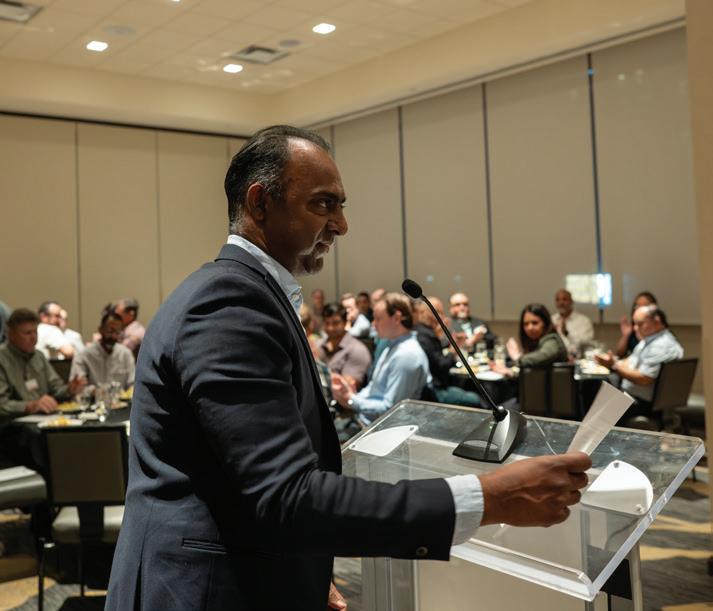
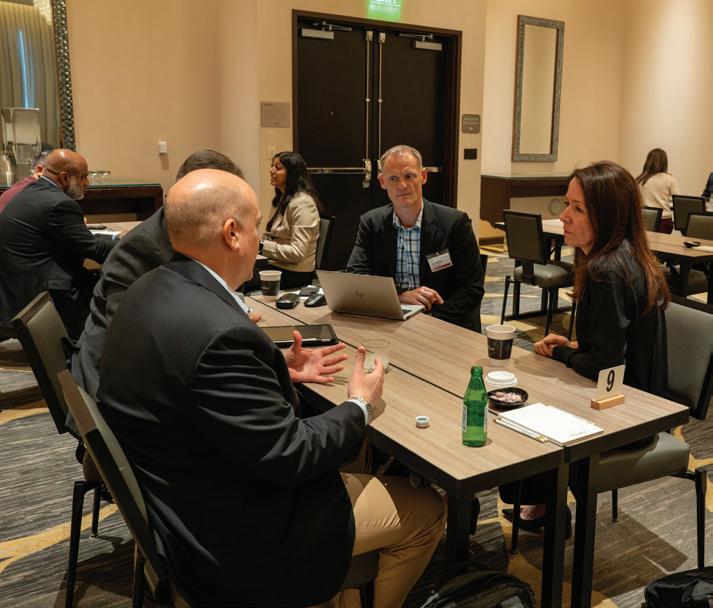
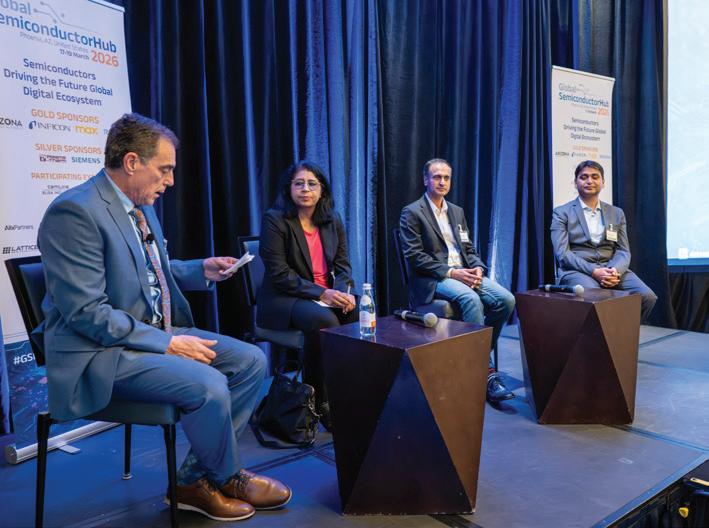
Global Semiconductor Hub, a semiconductor seminar held in Arizona, brought together industry leaders to discuss what comes next for AI, and much of the conversation focused less on software and more on the hardware needed to support it.
Arizona Commerce Authority President and CEO Sandra Watson opened the program, placing the discussion in the context of the state’s growing role in semiconductor investment. As expected, much of the conversation centered on AI.
From there, the sessions moved quickly into what it takes to support that demand. One thread focused on how fabs are adjusting to more variable production cycles. Another looked at how low-power architectures are being designed with efficiency in mind, while separate discussions explored how packaging and materials are evolving alongside compute.
Manufacturing came up repeatedly. Speakers continued to rehash the industry’s push toward more automated, AI-driven fabs, along with the pressure that comes with it, including rising costs, energy use and ongoing supply chain constraints. At the same time, conversations around chiplet design and heterogeneous integration showed how system architecture is shifting as performance requirements change.
In the midst of all the sessions, two points kept resurfacing: power and what comes next. Brian McCarson of Microchip described the progression of AI as an “intelligence continuum,” linking advances in AI directly to changes in chip design. The next phase focused on inference, where systems transition from training to real-time decision-making. That shift is driving
demand for purpose-built silicon designed to improve efficiency, reduce latency and manage power consumption.
All of these discussions are important to Arizona because of its rapidly growing ecosystem, but none more than power. Arizona has roughly 164 data centers statewide, either operating or in development, outpacing much of the country and ranking seventh nationally. To put that in perspective, a large data center can draw 20 to 100 megawatts of power, roughly equivalent to about 15,000 to 80,000 Arizona homes. That power demand is for a single large data center. Now, on top of that, there are nine major semiconductor fabs either approved, under construction or in operation in Arizona. It’s easy to see why this would dominate a conversation locally, let alone in another state.
So, no matter where semiconductor investments continue to expand, the next round of development will depend not just on how chips are made but on whether there is enough power to support the next progression of the technology. —Stephanie Quinn
Arizona has roughly 164 data centers statewide, either operating or in development, outpacing much of the country and ranking seventh nationally.

WELL, WELL, WELL
The
Business Cost of Mental Health
Mental health is no longer viewed solely as a clinical concern in Arizona. It has become a growing economic issue that directly affects workforce stability, productivity and the state’s long-term competitiveness.
Employers across Arizona are seeing the impact of rising depression rates show up in daily operations, says Dr. Houshang Aminian, M.D., medical director at American TMS Clinics. Absenteeism, presenteeism and higher turnover are frequently linked to untreated or under-treated mental health conditions. Employees struggling with depression often miss more work, have difficulty concentrating or leave positions altogether, driving up recruitment and training costs while weakening overall performance.
“When access to care is limited, businesses pay the price in lost hours, reduced productivity and higher turnover,” Aminian says. Over time, these challenges erode organizational stability and make it harder for companies to grow and compete.
The economic consequences extend well beyond individual employers. Untreated mental health conditions contribute to increased healthcare utilization, disability claims and public-sector spending tied to Medicaid, emergency care and social services. When systems rely on crisis response instead of early intervention, costs rise across the board for employers, insurers and taxpayers.
As a result, mental health treatment is increasingly viewed as a long-term investment rather than a discretionary expense. “Early, evidence-based care doesn’t just improve clinical outcomes, it supports workforce participation and productivity,” Aminian says. In Arizona, non-drug therapies such as transcranial magnetic stimulation are becoming part of broader discussions about access, particularly following recent FDA clearance expanding treatment eligibility to adolescents, which allows for earlier intervention.
Arizona now sits at a pivotal moment, says Juliane Popelka, CEO of American TMS Clinics. Population growth, workforce shortages, and rising mental health needs are converging at the same time. “Access gaps and untreated mental health conditions directly affect workforce participation and economic stability,” she says. Looking ahead, mental health trends are expected to shape labor force availability, healthcare spending and business competitiveness statewide. How employers, healthcare systems and policymakers respond will play a defining role in Arizona’s economic resilience over the next decade. —Michelle Talsma Everson
americantmsclinics.com
Beyond the Bottom Line: Navigating the Future of Pharmacy Benefits
Across the U.S., rising rates of chronic illness, obesity and mental health concerns have made it clear that our healthcare system must evolve. As reported by the Centers for Disease Control and Prevention, currently 42% of adults are obese, 60% live with at least one chronic condition and 40% live with two or more. Life expectancy now lags behind other developed nations by six years and, finally, nearly one in five adults experience mental health challenges.
These trends, combined with the highest pharmacy drug cost in our history, places immense stress on both patients and employers looking to provide the best healthcare coverage for their employees.
Within this landscape lies an opportunity for growth. Employers and their employees will continue to face unpredictable and often unsustainable drug costs, but we are not without options.
Identifying solutions that reduce unnecessary prescriptions, enhance medication effectiveness and improve overall health outcomes is not just possible but essential.
A more effective pharmacy strategy takes shape with a few critical considerations:
Use data strategically. Claims, pricing, clinical data, patient reported outcomes and utilization management data are all powerful clues about what’s working and what isn’t. Prescribing medication is just one piece of the puzzle; understanding whether patients adhere to treatment, tolerate medications well or experience meaningful benefits is just as critical.
Asking the right questions is important. For example, does the patient use the medication properly? Does the patient tolerate the drug well? Is the price worth the outcome? Is there a way to test the patient to ensure the drug is actually working? All these factors must be evaluated and used to determine if pharmacy benefits are improving health rather than adding unnecessary cost or complexity.
It’s important to remember that healthcare is a multibillion-dollar industry, and the money of healthcare is earned through utilization not outcomes. It’s not that physicians, pharmacists and healthcare organizations don’t care about outcomes; rather, they are rarely held financially accountable for them — and in any system, what gets rewarded, or paid for, ultimately receives the most attention.
Empower employees to take an active role in their health. While many health factors, such as age, gender, family history and genetics, cannot be changed, others can. We must encourage employees to do their part and be active participants in their health. Exercising regularly, not smoking, eating a diet rich in nutrients and taking medications as prescribed can make a difference

in managing chronic conditions. Employers must be sensitive and empathetic to these variables and must support these efforts with empathy, resources and education that meet employees where they are. Reduce waste in our healthcare system. An estimated $935 billion is wasted in the healthcare industry annually, with $170 billion due to pharmacyrelated waste.
A significant portion of this healthcare waste is hidden in medications that are purchased and utilized but fail to deliver the intended clinical outcomes. Considerable effort is spent managing prescribing through prior authorization and step therapy, as well as negotiating drug prices.
However, once a patient starts a medication, there is often the inherent assumption it is going to work for them even though, according to clinical trial data — which is gathered in a controlled environment — nearly all drugs only help a percent of the patients who take them. Thus, we are left with high costs and low efficacy. Deploying solutions that monitor efficacy while streamlining costs can help ensure spending aligns with real, measurable outcomes. Healthcare costs may feel daunting, but accepting the status quo is not our only option. By prioritizing data-driven decisions, supporting employees in their health journeys and eliminating inefficiencies, we can make progressive changes that manage drug costs responsibly while ensuring medications truly improve the lives of those who need them.
If we commit to higher standards for cost and efficacy, we can strengthen the health of our country, our companies and the employees who power them — and create a future where better health is not just a goal but an achievable reality. —Chris Antypas, lead pharmacy consultant at The MJ Companies (themjcos.com)
Beyond the productivity costs to individual employers, untreated mental health conditions contribute to increased healthcare utilization, disability claims and public-sector spending tied to Medicaid, emergency care and social services.


Massive
Electricity Demands – and Cost – of Bitcoin Mining
Now the definitive global hub of Bitcoin mining, the United States is grappling with the real-world costs of the industry — soaring electricity use, persistent noise complaints and mounting environmental strain. Addressing this, BestBrokers recently released its report “Mining Madness: The staggering energy cost of a single Bitcoin in 2025.”
The team at BestBrokers used the latest data from the Cambridge Bitcoin Electricity Consumption Index to estimate Bitcoin mining electricity use and costs by country. By combining the total network hashrate with national hashrate shares as of December 2025, we estimated daily Bitcoin output and calculated the electricity cost to mine one BTC using current nonhousehold power prices.
Data shows that an average of 171.126 BTC is mined daily in the U.S., representing 37.8% of all Bitcoins produced globally. This consumes a massive 158.2 GWh of electricity per day, or more than 57,000 GWh a year, which is more than 1.3% of the total annual national energy needs. The same amount of electricity is enough to power New York City for 5 months and 18 days or Los Angeles for 11 months and 17 days.
If no renewable energy sources are used, this electricity is responsible for emitting 22.7 million metric tons of carbon dioxide (CO₂) and needs 22.8 million acres of U.S. forests to be offset. The CO₂ emissions from U.S.based BTC mining operations’ electricity consumption are equivalent to those produced by 5.3 million gaspowered passenger vehicles driven for a year.
Based on the October 2025 electricity rate for commercial end-users (the latest rate published by the U.S. Energy Information Administration) of 12.2 cents per kilowatt-hour in Arizona and the average consumption of 924,480 kWh to mine a single bitcoin, we calculated that BTC mining facilities in the state would need to use energy worth $112,787 per bitcoin minted - if they pay regular rates and have no renewable sources of electricity of their own. Note that the electricity can vary widely based on the actual hashrate and the number of bitcoins mined daily in the state - currently, no statespecific hashrate data is available. Paul Hoffman, data analyst at investing research platform BestBrokers (bestbrokers.com/2025/12/19/bitcoin-energy-cost)
How Rapid Drone Is Turning Aerial Intelligence into Operational Strategy
When a police commander can see an unfolding scene before officers arrive, or a utility executive can detect infrastructure stress before failure, the advantage is not the drone. It is the decision. Phoenix-based Rapid Drone has built its business around that distinction.
As organizations face pressure to move faster, operate leaner and reduce risk, Rapid Drone does not sell aircraft. It sells operational clarity. The company designs and manages end-to-end drone programs for public safety agencies and asset-heavy industries that need consistent aerial intelligence without building internal aviation departments.
The global commercial drone market is projected to grow from roughly $30 billion in 2024 to more than $54 billion by 2030. But the story is less about hardware and more about integration. Compliance standards, cybersecurity protocols, pilot certification and data management have made scaling programs more complex than many anticipated.
Rapid Drone removes that friction. The company operates USA Blue Certified aircraft and oversees flight operations, data capture, analysis and secure integration into client systems. Rather than delivering equipment, it provides a managed intelligence layer embedded into existing workflows.
“Better information changes outcomes,” says David Rietz, chief drone officer at Rapid Drone. “For organizations operating in high-stakes environments, access to timely, accurate aerial intelligence can mean safer personnel, reduced downtime and better decisions.”
In public safety, that shift is evident in Drones as First Responders programs, where unmanned aircraft deploy to incident scenes and stream live video to command staff before units arrive. What once required a helicopter or delayed reports can now be accessed in moments.
In utilities and infrastructure, continuous aerial visibility helps teams identify issues early and prioritize maintenance before disruptions occur. In construction and AEC, aerial mapping supports smarter planning and clearer documentation throughout a project’s lifecycle. Thermal imaging can flag anomalies in bridges, pipelines and power systems before they become costly failures. In agriculture, advanced imaging reveals crop stress patterns invisible from the ground, allowing more precise irrigation and treatment decisions.
The technology itself is not new. What has changed is the expectation that aerial intelligence be continuous, integrated and

decision-ready. Early adoption centered on one-time inspections or surveys. Increasingly, organizations are embedding aerial data into compliance reporting, maintenance scheduling, capital planning and risk mitigation strategies.
“Agencies and enterprises are being asked to do more with fewer resources while expectations for safety, accountability and speed continue to rise,” says co-founder Debbie Steinhauer. “Our focus is on making advanced aerial intelligence practical to deploy, easy to integrate and dependable in real-world operations.”
Rapid Drone’s leadership team brings experience spanning more than $2 billion in real estate development, national public safety leadership and decades of UAV engineering. An advisory board of law enforcement and retired military leaders reinforces the company’s emphasis on disciplined program management and regulatory rigor.
As scrutiny around data security and public-sector accountability intensifies, oversight has become part of the value proposition. For many executives, the question is no longer whether drones are useful. It is whether aerial intelligence can scale responsibly without disrupting core operations.
Rapid Drone is expanding Drones as First Responders programs and scaling remote operations nationwide across infrastructure, agriculture and AEC. The broader goal is to move aerial intelligence from a supplemental tool to a standard operational layer.
In a business environment defined by compressed timelines and heightened accountability, visibility is no longer a luxury. It is infrastructure. For organizations managing complex physical assets, the advantage lies in translating what they see into informed action. —Michelle Talsma Everson
Rapid Drone rapid-drone.com
Based on October electricity rates for commercial end-users, the energy used by Bitcoin miners in the U.S. costs an average of $21,214,984.75 per day, if purchased at regular prices. In order to mine a single bitcoin, facilities consume roughly 924,480 kW/h, which means that minting 1 BTC theoretically amounts to $123,972.77 in electricity costs, significantly more than the cryptocurrency’s current price of around $90,000. bestbrokers.com/2025/12/19/bitcoin-energy-cost
Photo courtesy of Rapid Drone (right)



HEALTHCARE

by RaeAnne Marsh

HEALTHCARE
Reimagining Affordability and Access for Arizona’s Business Community

“Healthcare has moved beyond being a perk and is now a foundational part of an employee’s financial security,” observes Casey Strunk, president of Strunk Insurance Group. While employers may frame it as a recruiting and retention tool, he finds employees experience it as protection against catastrophic financial risk when a serious medical event occurs.
In fact, Will Spong, managing director of Employee Health & Benefits, Arizona, at Marsh McLennan Agency, puts it baldly: “Healthcare benefits have never been more important.” This is true for the employer as well as the employee, he explains: With inflation straining household budgets, medical coverage directly affects an employee’s monthly cash flow and family decisions. “As a result, healthcare has become central to total compensation, influencing retention, turnover and a company’s ability to attract top talent.”
How are rising healthcare costs increasingly shaping hiring outcomes? Strunk explains, “When the employee share of cost erodes take-home pay, compensation loses its meaning and hiring slows, even when wages are competitive.”
However, company size is a factor in these calculations. And flexibility is where large companies and small to midsize businesses most commonly differ. “Larger employers tend to have more room to maneuver when costs rise,” Spong explains, noting they may have additional structural options available to adjust plan design or manage volatility over time. “Smaller employers, meanwhile, can feel the impact of premium increases more intensely.”
Notes Strunk, “Large employers benefit from scale and stability. A broader risk pool allows them to absorb high-cost claims with far less disruption, while smaller employers can be forced into frequent plan changes when a single catastrophic diagnosis materially alters costs.”
He finds healthcare affordability often becomes a growth constraint for small and mid-sized businesses before it is recognized as a benefits problem. “The pressure shows up first
in stalled hiring and reduced participation, not on a renewal spreadsheet.”
Among solutions for smaller businesses, Spong points to creative strategies that allow them to gain more visibility into costs and more control over how dollars are spent. He notes that, while many smaller organizations feel tied to fully insured arrangements, alternative approaches such as level-funded or partially self-funded arrangements with stop-loss protection can introduce shared risk and greater cost transparency. “With actuarial modeling to guide those decisions, employers can access many of the financial advantages of selffunding without taking on full exposure, ultimately putting more dollars into the employer’s and employees’ pockets through better benefits, lower costs or both.”
WHAT EMPLOYEES ACTUALLY VALUE IN HEALTH BENEFITS
Noting that employees evaluate health benefits based on the cost to use care, not the cost to enroll, Strunk says, “Plans that appear affordable on paper can feel inaccessible when high out-of-pocket expenses surface at the point of care.” This is why health benefits most often fail at the moment of use, not enrollment. “Coverage does not equal preparedness, and employees frequently enter care without understanding pricing variation, administrative requirements, or financial exposure.”
Emphasizing that understanding drives value, Strunk says, “Benefits only work when employees can make informed decisions, access guidance, and have real conversations about how coverage aligns with their needs and financial reality.”
Spong notes another outcome of employees paying closer attention to what their healthcare coverage actually costs them and how usable that coverage feels in real life: “When out-ofpocket expenses rise or access feels limited, it can influence how people think about their employer and whether they begin looking elsewhere.”
Observes Strunk: “As organizations grow, benefit experiences often become more transactional. The loss of education and human interaction can make even well-designed plans feel distant or confusing to employees.”
THE MOST IMPORTANT OR POPULAR ELEMENTS OF HEALTHCARE BENEFITS TODAY
“Behavioral health support is one of the clearest shifts we’re seeing,” says Spong. He finds employees are asking more and more for mental health coverage and access to therapy, and financial well-being is increasingly part of that same conversation. It’s part of an overall picture he describes: As healthcare costs,



deductibles and out-of-pocket expenses rise, financial stress directly affects overall well-being, making both mental and financial wellness support essential components of a competitive benefits package.
Telehealth continues to hold strong appeal as well, according to Spong — for both employee and employer. For an employee balancing work and family responsibilities, being able to connect with a provider quickly, without disrupting an entire workday, makes a real difference. And from an employer standpoint, that access can reduce missed time and support overall productivity.
Spong cites concierge healthcare navigation as another service gaining momentum, explaining, “The system can be complex, especially during a major procedure or a large bill. Employees often need help reviewing benefits and making sense of what they owe.” A dedicated advocacy or concierge service gives them someone to call who can walk through those details and help resolve issues along the way.
Spong points out that larger organizations may have more immediate capacity to roll out these services across multiple plan tiers, while smaller employers tend to adopt them thoughtfully, weighing impact against
cost. However, he notes, “In both cases, the conversation ultimately comes back to managing rising expenses while offering benefits that employees genuinely value and use.”
DIFFERENCES BETWEEN LARGE EMPLOYERS AND SMALL AND MID-SIZED BUSINESSES
Strunk finds large employers increasingly focus on enhancing the overall benefit experience, while small and mid-sized businesses are often focused on whether they can continue offering benefits at all. “Cost pressure hits smaller employers faster because premiums rise more quickly than wages,” he explains. “When employer contributions fail to keep pace, employee costs can spike disproportionately, leading to reduced participation and adverse selection.”
Another layer of strain comes from compliance obligations because, he points out, many employers underestimate the ongoing responsibility tied to sponsoring a group health plan until regulatory pressure becomes unavoidable.
Noting that transparency and control over healthcare spending are standard expectations for large employers, Strunk observes, “Smaller employers often assume those capabilities are out of reach, even though the barrier is frequently perception rather than size.”
CHANGES SHAPING EMPLOYER HEALTHCARE CONVERSATIONS
Spong sees affordability continuing to shape the conversation. According to Marsh McLennan Agency’s “2026 Employee Health & Benefits Trends” report, employers are facing the highest benefit cost increase in 15 years, with 62% of projected 2026 healthcare cost growth since 2017 driven by compounding price increases. “But that pressure,” Spong says, “is being felt on both sides of the equation.”
He expects employers across all size segments will evaluate alternative funding strategies, pointing out that organizations have more options than ever, from self-funding to captives to level-funded arrangements, as traditional fully insured models continue to face ongoing strain.
Strunk has observed increased employer interest in Individual Coverage Health Reimbursement Arrangements, driven by sustained double-digit increases and reflecting fatigue with traditional cost trajectories. However, he says, “While ICHRA models offer budget certainty for employers, they shift complexity and network limitations onto employees, redefining what employer-sponsored coverage actually means in practice.”
Strunk sees the gap between large and small employers continues to widen, observing, “Strategic HR teams are investing in better benefit experiences, while smaller employers are focused on maintaining access in an increasingly constrained environment.”
Spong believes expectations around accountability will continue to rise as more employers explore the various alternatives. “Leaders will need to show that cost increases are being managed intentionally and with employee impact in mind.” Specifically, he says transparency and education will matter just as much as the coverage itself.
Says Spong, “Employers that stay proactive, evaluate their options regularly and remain flexible in how they structure their funding approach, while maintaining focus on both cost discipline and employee experience, will be better prepared to navigate continued market pressure.”
HEALTHCARE
Reimagining Affordability and Access for Arizona’s Business Community
HOW DOES THIS ANALYSIS MANIFEST FOR OUR LOCAL BUSINESS COMMUNITY?
Valleywise Health: hospital and healthcare system
Observing that medical insurance remains the most important employee benefit across industries, President and CEO Steve Purves notes that its importance is even more pronounced in healthcare organizations like Valleywise Health. “Employees don’t just view health coverage as a perk — it’s foundational to their financial security, well-being and overall ability to care for themselves and their families while delivering care to others,” he says. Nearly 80% of the organization’s benefits-eligible employees are currently enrolled in one of its medical insurance offerings.
“For Valleywise Health, comprehensive and accessible medical insurance directly supports our mission,” Purves says. “When caregivers and staff feel secure about their own healthcare, they are better positioned to deliver high-quality, compassionate care to patients throughout the communities we serve.” The elements employees value most are lower cost share at time of service (e.g., deductibles, coinsurance, etc.), provider availability (broad national networks) and opportunities to reduce paycheck contributions through healthy behaviors by participating in wellness activities. “Over 40% of the employees who are engaged in our wellness platform achieve a status that qualifies them for our medical contribution discount, reflecting a strong engagement in our wellness programs.”
Valleywise completes an extensive benchmarking exercise each year to ensure its benefit offerings are competitive and align with the needs of its employees and their families. The organization focuses on fiscal responsibility, competitive plan design, and creative as well as engaging opportunities to participate in its robust wellness platform. Noting that each year, Valleywise anticipates changes that align with these goals, Purves shares, “We’re continuing our current benefit offerings while enhancing how employees access and experience them.” Rather than introducing entirely new programs, he explains, the focus is on increasing access to care, expanding telemedicine options, strengthening well-being resources, and providing more
intentional education around the full picture of wellbeing — physical, psychological, social, and financial. “The goal is simple: Make it easier for employees to get the right support at the right time.”
Blue Cross Blue Shield of Arizona: nonprofit health insurance company
“Affordability and access are at the center of how employers think about health benefits today, especially as workforce models and employee expectations continue to evolve,” says President and CEO Pam Kehaly, noting, “In a changing healthcare landscape, onesizefitsall solutions no longer work.”
With flexibility a central focus, AZ Blue offers benefit options that adapt to employers’ size, workforce needs and longterm goals. Kehaly points out these include medical, pharmacy, dental and vision coverage across fully insured and selfinsured models, with plan designs that balance cost, choice and access to care. “As an Arizonabased health plan serving Arizonans,” Kehaly says, “we combine strong statewide networks with access to the Blue’s national participating provider network, helping employers support their people wherever they live and work.”
Prosano Health is an innovative model AZ Blue launched, first to its employees in January 2023 and then with broader, employer-sponsored plans and public access a year later. It represents what Kehaly describes as one of the organization’s most important shifts: bringing coverage and care closer together. “When coverage and care work together, people are better supported,” she says. “They get answers sooner, understand their options more clearly, and are less likely to delay care. That creates a more consistent experience for patients and gives employers greater confidence that their benefits are working the way they should.”
Prosano combines health insurance with access to dedicated care teams who focus on primary care, preventive services, short-term counseling and ongoing care for chronic conditions. Members can access care in person or virtually, with no or low out-of-pocket costs. Kehaly cites data — comparing 2024 group members who received care through Prosano Health providers for care and navigation with group members using other providers — that support her optimism: 37% fewer emergency
room visits, 7% fewer acute hospital admissions and 35% fewer specialist visits. The combination of more connected care and easier access has earned Prosano Health a Net Promoter Score of 95.
“Beyond Prosano, we continue to focus on plan designs and network options that support affordability and access — giving employers flexibility to offer coverage that works for their workforce while remaining sustainable over time,” Kehaly says. “We’re continuing to evolve how health insurance works in practice — by designing benefits that are simpler to use, easier to manage and better aligned with how people access care today.”
Kehaly points to expanding Health Savings Account options, including those that integrate with care models like Prosano Health, as among approaches that give organizations greater flexibility in how benefits are structured and financed, while supporting access to care and more predictable longterm costs. Additionally, she says AZ Blue is also evolving its networks and plan options, so employers can choose what best fits their priorities — whether that’s broader access, more localized networks or designs that better reflect how care is actually accessed.
“Affordability remains central to this work,” Kehaly says. She notes healthcare is changing fast, costs are climbing, new treatments and technologies are arriving with higher price tags, and government policy continues to shift. “It’s one of the toughest environments we’ve ever faced — but protecting people when the unexpected happens is exactly what AZ Blue is built to do.”
Says Kehaly, “Much of our work happens behind the scenes, from plan design to care delivery to how coverage is structured, all with a focus on driving greater value for members and the organizations that support them. At the same time, we’re making benefits easier to understand and use through tools that help people make more informed decisions.”
Delta Dental of Arizona: health and wellness company providing dental and vision insurance
“When we talk about the options we offer, I like to start by saying that Delta Dental of Arizona is about more than insurance products,” says President and CEO Michael Jones. Noting the
organization’s mission is to create a path to better health and wellness, and its vision is healthier lives for everyone, he says, “That perspective really guides how we think about affordability, access and the work we do in our communities.”
Delta Dental recognizes that, for employers, providing benefits “is about more than just checking a box; it’s about supporting the overall health of their employees,” Jones says. For small and growing businesses, that means plans that are affordable, flexible and easy to manage. Dental coverage includes routine care, major services and optional orthodontics; DeltaVision® plans cover exams, glasses and contacts. Jones cites predictable rates, dedicated support and smooth onboarding as factors that make it easy for employers to get started, and plan designs that allow solutions to grow with businesses as they grow or have multiple locations. “We offer flexible plan designs — PPO, DHMO and ASO — that can be customized for diverse teams across multiple sites. Bundling dental and vision coverage allows employees to take care of their health more conveniently, while helping employers provide a benefits package that really supports whole-person wellness.”
Jones believes that what really stands out about Delta Dental’s offerings is how they bring together innovation, access and affordability to support whole-person health. “Through the Delta Dental of Arizona Foundation, we invest in programs that improve oral health education, integrate dental care with medical care and support broader wellness initiatives, like improving food security across the state. Partnerships with organizations like the University of Arizona and Banner Health Foundation help us extend care into settings where it can make a real difference,” he says.
He notes also the focus on making care accessible for everyone, pointing out the Special Health Care Needs dental benefit provides additional cleanings, visits and treatment accommodations for members with qualifying needs. “This helps ensure dental care is comfortable and achievable for people who might otherwise face barriers.”
Another program he points to is One & Sun, designed to make preventive care engaging and rewarding: DeltaVision members who complete
an annual eye exam receive a free pair of designer sunglasses, encouraging regular vision care that supports overall health. “For small businesses, initiatives like this offer meaningful wellness incentives without extra complexity. Larger or multilocation employers can integrate them into scalable programs that reach diverse workforces,” Jones says.
Noting that Delta Dental’s focus across every portfolio, product and program is on making healthy habits easier and more meaningful and helping individuals, families and communities live healthier lives, Jones says changes this year include expanding coverage options so employers can offer comprehensive, affordable benefits packages. “We’re also exploring partnerships with local organizations to better integrate oral and vision health with overall care, driving meaningful improvements in health outcomes. At the same time, we’re investing in a digital transformation that will enhance how we serve our members and create new ways for them to access care, manage benefits and take an active role in their well-being.”
Cigna Healthcare: health insurance company
“We know that having a healthy workforce drives business success by improving productivity and reducing absenteeism,” says Pete Chuchro, general manager and market growth leader of Arizona at Cigna Healthcare. He notes that, as employers across Greater Phoenix continue to expand and compete for talent, healthcare has become more than a benefit — it is a defining part of how organizations support their workforce and fuel long-term success. “In a rapidly changing environment, affordability and access are no longer opposing forces; they are goals that must advance together,” he says.
“At Cigna Healthcare, we believe the future of employer-sponsored healthcare is rooted in flexibility, transparency and whole-person support,” Chuchro says. He finds employers today are asking smarter questions — not just about price, but about value — as they seek solutions that meet employees where they are, adapt as businesses evolve and deliver measurable outcomes that support productivity and well-being.
Describing choice as foundational, Chuchro cites the broad spectrum of medical, pharmacy,
behavioral health and wellness solutions Cigna offers employers that are designed to scale with their needs. Noting that large organizations often seek advanced strategies that use data and insights to better manage costs while improving the employee experience, Chuchro says, “We’re proud of our innovations in digital technology to help our customers focus on care, not the paperwork.”
For small and mid-sized businesses, Cigna’s vision is equally ambitious, though it sees simplicity, predictability and access being what matters most. And geography adds another dimension, says Chuchro, differentiating between Arizona-based businesses, which often prioritize local access and trusted provider relationships, and companies with multiple locations, which require consistency across markets.
Noting that Cigna is “the only health benefits provider to offer live 24/7/365 customer support, and the only health plan to offer immediate access to a behavioral health clinician,” Chuchro sees innovation continuing to accelerate this transformation. “By combining local market insight with data-driven solutions, we can connect employees to the right care at the right time — supporting chronic-condition management, improving health equity, and strengthening outcomes across our communities.”
Chuchro believes the future of healthcare for Arizona’s business community will be defined by partnership and purpose. “Even in a volatile market, employers are not powerless,” he says. “When employers, health plans, providers and community leaders align around shared outcomes, affordability and access become achievable — not aspirational. By staying focused on whole-person health, local collaboration and solutions that evolve with the workforce, we can help ensure that Arizona’s businesses remain competitive, resilient and positioned for growth — today and for generations to come.”
Blue Cross Blue Shield of Arizona azblue.com
Cigna Healthcare cigna.com
Delta Dental of Arizona smilepoweraz.com
Marsh McLennan Agency marshmma.com
Strunk Insurance Group strunkgroup.com
Valleywise Health valleywisehealth.org

After emigrating to the U.S. at age 3 and completing the University of Michigan’s rigorous medical program at 23, Emilio Justo, M.D., started the Arizona Eye Institute & Cosmetic Laser Center in 1989 at age 27 and has continued to expand into new and exciting fields of cosmetic surgery. Dr. Justo first trained as an ophthalmologist but then mastered techniques as a plastic surgeon, quickly becoming the Phoenix area’s premier cosmetic and ocular surgeon, with facilities in both Sun City West, Sun City and Wickenburg.
FROM REFUGEE TO FOUNDER
Justo’s emphasis on delayed gratification traces back to his early life. A Cuban-born immigrant who arrived in the United States as a refugee, he learned that progress rarely arrives on demand. Education required discipline.
Credibility required time. Opportunity required persistence. He earned his medical degree from the University of Michigan at 23 and later founded Arizona Eye Institute & Cosmetic Laser Center in Phoenix. The same patience that shaped his academic path shaped his leadership philosophy.
“As a Cuban immigrant, I learned that progress rarely arrives on demand,” he says.
“The pause is not about slowing life down. It is about ensuring that when we move, we move with clarity.”
In his framework, patience is not passive. It is controlled strength applied strategically. azeyeinstitute.com dremiliojusto.com/book.
The Business Case for Slowing Down: How Intentional Pauses Strengthen Strategy and Growth
From capital allocation to AI adoption, thoughtful leaders are finding that measured decisions outperform reactive ones.
by Michelle Talsma Everson
In business, speed signals confidence. Leaders respond to emails within minutes, approve deals in real time and implement new technology before competitors schedule a demo. Fast action projects authority.
But in 2026, as Arizona companies navigate AI acceleration, economic uncertainty and workforce fatigue, speed alone is no longer a competitive advantage. Increasingly, performance depends on something less visible and more disciplined: the ability to pause.
Dr. Emilio Justo, a Phoenix-based ophthalmologist, cosmetic surgeon and founder of Arizona Eye Institute & Cosmetic Laser Center, argues that strategic restraint separates reactive organizations from durable ones. In his book, The Power of Pause: Mastering Delayed Gratification for Success, he reframes patience not as a personality trait but as a leadership competency that improves judgment, reduces volatility and strengthens long-term results.
“The pause isn’t about hesitation,” Justo says. “It’s about alignment.”
For executives responsible for growth, capital allocation and culture, that distinction carries operational weight.
THE FIVE-SECOND DISCIPLINE
In the operating room, Justo practices what he teaches.
Before the first incision, there is a moment of stillness. Not uncertainty. A deliberate internal review. He asks three silent questions: Is this necessary? Is this the right timing? Is this the right approach?
That filter carries into business decisions: When a partnership proposal lands on his desk. When an email provokes emotion. When a meeting turns urgent.
“I often physically lean back in my chair,” he says. “That posture shift signals to my brain that I’m moving from reaction to strategy.”
The pause lasts five to 15 seconds. Neurologically, it is significant.
Rapid reactions originate in the limbic system, the brain’s emotional center designed for survival. It prioritizes speed over nuance. A pause allows the prefrontal cortex, responsible for executive function and long-term planning, to reengage.
Stress hormones decrease. Cognitive clarity improves. Impulse gives way to evaluation.
In medicine, that shift protects outcomes. In business, it protects strategy.
A DEFINING CAREER CHOICE
Justo’s philosophy is not theoretical. Early in his career, he
faced a pivotal decision. Large ophthalmology groups were expanding across Arizona. Joining one offered stability, brand recognition and predictable income.
It was the logical choice. Many peers accepted similar offers. He paused.
Instead of asking what felt safest, he reframed the decision: “What choice aligns with who I want to become 20 years from now?”
The answer led him to build his own private practice from the ground up.
The path involved financial risk and long hours. It also offered autonomy over hiring, standards and expansion. He could shape culture intentionally rather than adapt to one already in place.
“That pause wasn’t about hesitation,” he says. “It was about identity.”
Arizona Eye Institute & Cosmetic Laser Center grew under that long-term orientation. Justo expanded into cosmetic laser surgery and developed leadership systems that integrated entrepreneurship with medicine.
Identity-driven decisions compound differently from feardriven ones. One builds ownership and resilience. The other builds dependency.
For Arizona founders weighing mergers, capital raises or early exits, the lesson is practical. Short-term security can conflict with long-term vision. The pause creates space to choose deliberately.
DELAY VS. DISCIPLINE
In fast-moving industries, pausing can feel risky. Leaders worry it signals indecision. Instant responses appear decisive. Immediate answers suggest command.
Justo draws a clear distinction between delay and discipline. “High-level leaders don’t respond instantly,” he says. “They respond intentionally.”
Rather than react on the spot, he establishes a timeline: “Let me think this through and get back to you tomorrow.”
That approach signals control. It sets expectations. It preserves authority.
Momentum is not speed. It is direction. A well-considered decision delivered slightly later often carries more weight than a rushed response given immediately.
Teams rarely lose confidence in thoughtful leaders. They lose confidence in inconsistency.
Across Arizona’s healthcare, commercial real estate, finance and technology sectors, consistency builds trust faster than velocity.
THE 2026 PRESSURE POINT
Technological acceleration defines the executive agenda in 2026. Artificial intelligence tools promise efficiency. Automation compresses timelines. Digital communication eliminates natural pauses.
Boards expect innovation. Competitors adopt new platforms. Employees demand modernization.
The pressure to move quickly is constant.
Justo cautions against equating adoption with advantage.
“Leadership now requires discernment more than velocity,” he says.
Adopting every emerging tool may create short-term momentum but undermine operational cohesion. Reacting to market fluctuations can erode strategic focus. Restructuring in response to quarterly noise destabilizes culture.
The organizations that endure will not be the fastest adopters. They will be the most thoughtful integrators.
That requires leaders who slow their thinking without slowing execution. The distinction is subtle but consequential.
THE ENTREPRENEUR’S URGENCY TRAP
Early-stage companies feel this tension acutely. Limited capital and lean teams reward decisiveness. Speed can mean survival.
Yet urgency also increases the risk of reactive decisions, including premature hiring, overexpansion and poorly timed capital deployment.
Drawing from his experience building a medical practice, Justo argues that sustainable growth depends on leaders who tolerate uncertainty and resist short-term wins that compromise long-term stability.
Pausing before signing a lease, adding headcount or entering a partnership allows for clearer evaluation of timing, culture fit and financial durability.
Decision fatigue accelerates in environments that reward constant responsiveness. Over time, that reactivity erodes executive bandwidth and organizational morale.
A disciplined pause interrupts that cycle. It strengthens judgment and signals steadiness to the broader team.
The result is not slower companies. It is more durable ones.
THE ORGANIZATIONAL RIPPLE EFFECT
The impact of pausing extends beyond individual decisions. When leaders model thoughtful responses, teams mirror it. Meetings become more focused. Communication becomes clearer. Emotional volatility decreases. That steadiness strengthens trust and alignment.
By contrast, leaders who operate in constant reaction mode create instability. Employees adjust defensively. Turnover increases. Strategic clarity suffers.
In industries facing workforce shortages and burnout, including healthcare and technology across Arizona, cultural stability has become a competitive asset.
A disciplined pause signals that decisions are evaluated rather than improvised.
THE UNDERVALUED ADVANTAGE
In a culture that rewards immediacy, patience rarely appears on performance metrics. Yet its absence is visible in postmortems.
Misaligned acquisitions. Fractured cultures after rushed restructures. Technology rollouts that outpace training. Many trace back to decisions made under pressure without sufficient reflection.
Justo’s message is not about slowing down for its own sake. It is about ensuring that action aligns with intention. “The ability to wait strategically may be the most undervalued competitive advantage of all,” he says.
For Arizona executives steering organizations through rapid change, the takeaway is direct. Speed amplifies direction. If direction is flawed, speed compounds the error.
Five seconds of discipline can recalibrate trajectory. In business, as in surgery, the moment before action often determines the outcome.
The Changemaker’s Toolkit
Burnout. Decreased funding. Structural barriers. A lack of hope. Social changemakers and nonprofit leaders who want to make meaningful, measurable impact in their communities are struggling to see a brighter future for themselves, their teams and the people they serve. Yet real change happens by believing in a better world and consistently taking the next step toward making it a reality.
Catherine Alonzo’s experience is a testament to this fact. As co-founder of Javelina, a branding, marketing and advocacy agency that helps organizations tell a powerful story that moves their target audiences to action, Alonzo has been part of some of the most influential change movements of our time, such as increasing minimum wages, advancing marriage equality, widening transportation networks, preserving our climate and environment, and protecting abortion rights.
The Changemaker’s Toolkit: How to Power Social Change in a World That Needs Hope
Catherine Alonzo
$18.95
Page Two Press On Shelves and Online 266 Pages
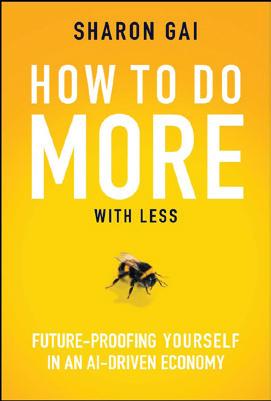
How to Do More with Less
In today’s workplace, headlines about artificial intelligence can feel overwhelming. With headlines swinging between promises of utopia and warnings of mass unemployment, for most knowledge workers, the truth feels unclear.
In this book, Sharon Gai cuts through the noise. Drawing from real-world examples and global insights, she explains how AI is reshaping the way we work — without hype or fearmongering. Instead of choosing between blind optimism or outright pessimism, she offers a practical, balanced perspective that helps readers make sense of the rapidly evolving AI landscape.
How to Do More with Less: Future-Proofing Yourself in an AI-driven Economy
Sharon Gai
$26.93
Wiley On shelves and online 272 pages
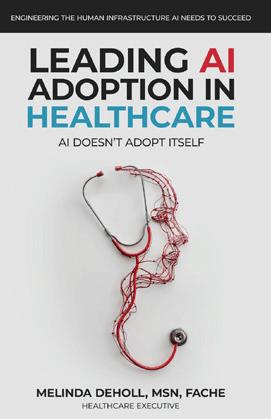
Leading AI Adoption in Healthcare
Most AI failures don’t begin at scale — they begin during pilots, when early success creates confidence without revealing the risks that only surface once AI is embedded in real workflows, real teams and real decisions under pressure. AI initiatives fail because organizations focus on building and buying tools, while overlooking how AI actually behaves once it enters daily clinical and operational work. What looks controlled during pilots often creates new risks over time: unsafe decisions that go unchallenged, front-line concerns that stop surfacing, accountability gaps, and missed value that does not appear on dashboards until it is too late.
Most leaders believe they are governing AI through pilots, performance metrics and oversight committees. And yet problems still accumulate. Decisions get made faster, but with less scrutiny. Risk scales quietly while leadership believes things are under control.
Leading AI Adoption in Healthcare: AI Doesn’t Adopt Itself
Melinda Deholl
$29.99
Echelon Press On Shelves and Online 132 pages
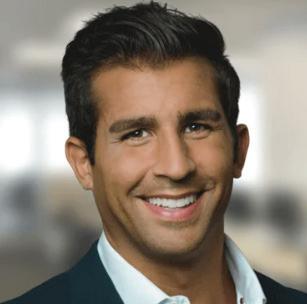
A trusted consultant and solutions architect to leading financial services, legal, and accounting practices, John Marino has built a career around demystifying nuanced concepts and connecting clients with tailored resources. Based in Scottsdale, he anchors
CSG Partners’ ESOP investment banking efforts in Arizona and across the Southwest U.S. csgpartners.com
Why Arizona Companies Are Turning to ESOPs
Employee stock ownership plans transform business transitions from endpoints into evolutions
by John Marino
Across Arizona, closely held companies are rethinking how — and to whom — they will eventually sell. Common M&A paths don’t always align with the complex goals of founders, families and management teams, especially when legacy, culture and continuity are chief concerns.
In response, more local businesses are embracing employee stock ownership plans (ESOPs) as transition strategies. Flexible, tax-advantaged and independence-focused ESOPs are unique M&A alternatives that facilitate the sale of a company’s equity to a trust representing its employees. Those employee owners earn shares over time and are subject to vesting rules. Their stock is sold back to the sponsor company at a current valuation when they leave or retire.
These structures can support partial or full liquidity events at fair market value. Thirdparty financing — offered by many instate banks and private credit providers as well as regional and national lenders — enables selling shareholders to receive cash at closing. In addition, sellers can defer and/or eliminate capital gains taxes on their sale proceeds, an ESOPexclusive benefit that creates a compelling value proposition versus thirdparty and private equity sales.
These ERISAauthorized benefits plans have existed since the 1970s but have been embraced over time as shareholder liquidity and business succession tools. That trend has accelerated in recent years. Arizona and the broader U.S. Southwest now rank among the fastestgrowing regions for ESOP adoption, according to the National Center for Employee Ownership.
While no two ESOP transactions are identical, companies tend to explore employee ownership in three common scenarios.
1. PARTIAL LIQUIDITY FOR OWNERS WHO STAY THE COURSE
Many founders and long-tenured owners have most of their wealth tied up in their businesses — but little desire to step away. They may still enjoy running the company, see growth opportunities ahead, or simply want to maintain independence. In these cases, partial ESOP transactions can provide a middle ground.
By selling a minority stake to an employee trust, owners can unlock liquidity while maintaining leadership roles and future upside. Companies benefit from meaningful income tax deductions that enhance cash flow, while employees gain skin in the game — a proven driver of engagement and productivity. Importantly, partial sales preserve optionality. Companies remain free to pursue additional ESOP transactions, repurchase shares, complete acquisitions or explore future M&A opportunities. For owners with longer time horizons, this approach converts illiquid equity into personal liquidity without disrupting strategy or operations.
2. ESOP-ASSISTED FAMILY BUSINESS SUCCESSION
Intergenerational succession has become increasingly difficult for family-owned companies. Heirs may not want to assume ownership, internal buyouts can create tax challenges, and outright gifting often fails to address retiring shareholders’ liquidity needs. Employee ownership offers an alternative that balances continuity, fairness and financial reality.
In an ESOP-assisted succession, family members sell some or all equity to an employee stock ownership trust, often targeting retiring or non-active shareholders. The resulting liquidity supports estate planning without introducing outside investment. Leveraged ESOP sales can also enable tax-efficient gifts of stock or synthetic equity to younger family members.
For Arizona families focused on legacy as much as liquidity, ESOPs support measured transitions that preserve businesses for future stakeholders. The same fundamentals also apply to nonfamily companies with large shareholder groups, including professional services firms and healthcare practices.
3. ESOP-ASSISTED MANAGEMENT BUYOUTS (MBOS)
When management teams are strong but undercapitalized, traditional buyouts can be difficult to execute. Employee stock ownership plans can help bridge that gap.
Unlike conventional MBOs, ESOP transactions don’t require nextgeneration leadership to invest personal capital. Instead, the company arranges financing — through thirdparty debt and/or seller notes — on the trust’s behalf to buy out shareholders’ stock. That debt will be gradually paid off using pretax company cash flow.
Transactions are often structured so incoming leaders receive equity incentives in addition to standard ESOP allocations. Warrants and stock appreciation rights (SARs) can be granted to reflect the outsized role of new leadership and strengthen performance incentives.
This structure enables orderly ownership transitions while maintaining operational continuity — an attractive option for Arizona companies seeking internal succession without overleveraging management.
CHOOSING THE RIGHT PATH FORWARD
ESOPs aren’t a universal solution. Like any M&A alternative, they require careful analysis of company performance, shareholder objectives and longterm strategy. But for Arizona companies prioritizing autonomy and local roots, employee ownership offers a proven framework for achieving liquidity and succession goals on their own terms.
By aligning stakeholder goals, ESOPs transform business transitions from endpoints into evolutions. The outcomes are also broad-based, benefiting owners, employees and the communities they serve.
In early-stage brainstorming, AI can generate a comprehensive starting list in seconds. But a starting list is not a strategy.
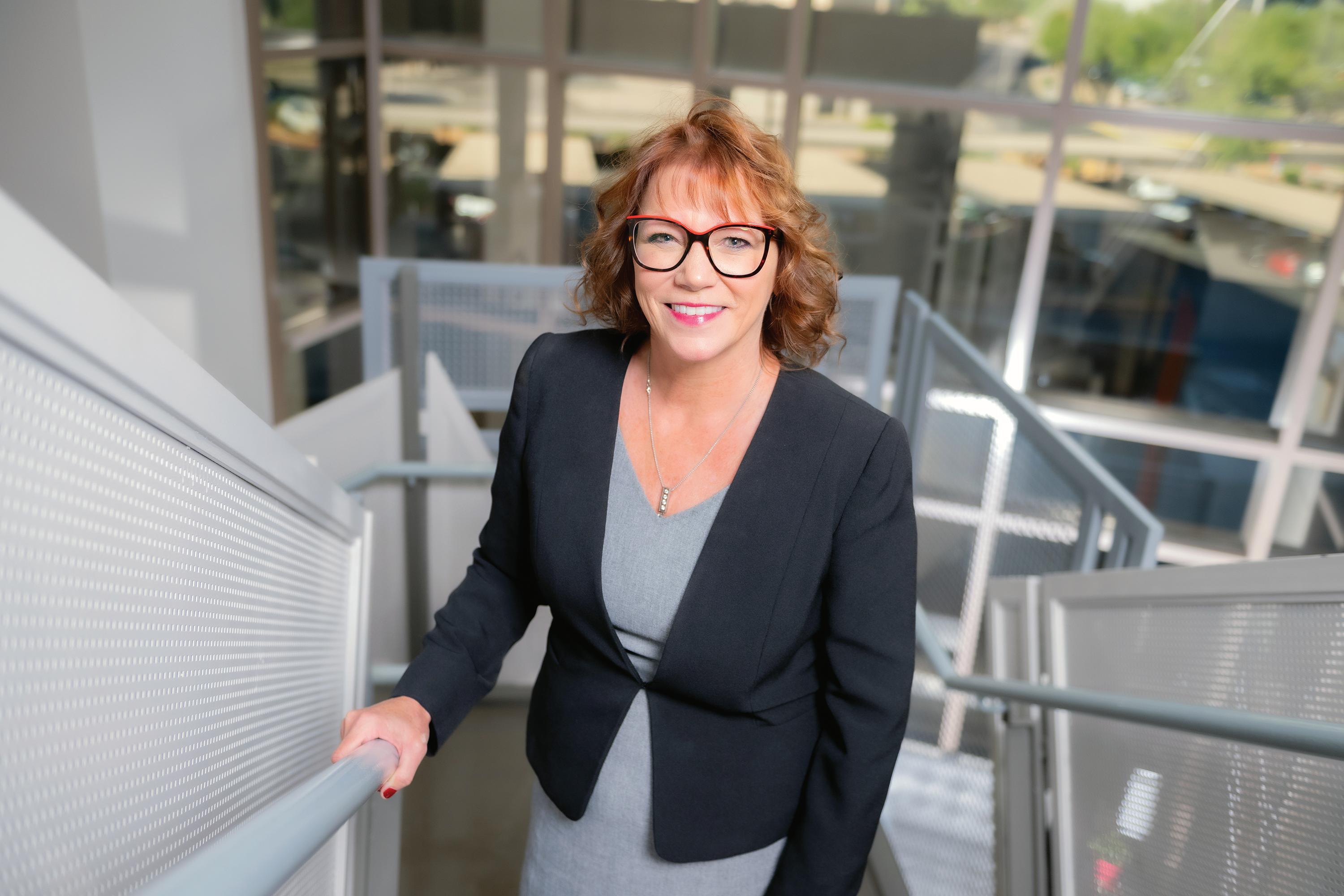
WHY AI CANNOT REPLACE PROFESSIONAL JUDGMENT
Artificial intelligence is designed to predict and synthesize language based on patterns in data. It does not:
• Bear professional responsibility
• Appear before a judge
• Maintain a client relationship
• Evaluate reputational impact
• Consider business realities beyond legal doctrine
Artificial Intelligence Is Powerful – But It Cannot Replace a Lawyer’s Judgment
What happens at the intersection of law, strategy, risk management and human dynamics?
by Emily Ward
Artificial intelligence is rapidly transforming the practice of law. From drafting contracts to analyzing discovery, AI tools can complete in minutes what once took hours. For businesses under pressure to move quickly and control costs, the appeal is obvious. But as powerful as these tools are, they cannot replace one essential component of legal representation: professional judgment.
Lawyers operate at the intersection of law, strategy, risk management and human dynamics. The lawyer’s judgment involves asking not just “Can we?” but “Should we?” and “What happens next?”
For business leaders, this distinction is familiar. A financial model may show that a course of action is legally permissible and potentially profitable. But executives still weigh brand impact, stakeholder perception, regulatory scrutiny and long-term positioning. Legal decisions require the same layered analysis.
THE RULE 11 EXAMPLE: WHERE JUDGMENT MATTERS
Recently, I experienced this tension firsthand when a client came to me armed with an AI-generated legal strategy. The client had been involved in litigation and believed the opposing party had made arguments that were weak, perhaps even misleading. Curious what technology might suggest, he entered the facts of the case into an AI platform and asked whether he should seek Rule 11 sanctions against the opposing party for filing a frivolous lawsuit. The AI’s answer was confident and direct: yes. It outlined the legal standard, summarized Rule 11’s purpose and concluded that sanctions were appropriate. From a purely analytical standpoint, the response was impressive. It cited the rule, identified relevant factors and presented what looked like a persuasive roadmap.

Emily Ward is a business litigation attorney and director at Fennemore who focuses on complex and high-dollar business disputes in Arizona. She concentrates on business litigation, public policy and appeals, litigating high-stakes cases for both plaintiffs and defendants in federal and state courts across the country. fennemorelaw.com
When I examined my client’s case, I asked questions that the AI could not meaningfully weigh:
• How has this judge historically treated Rule 11 motions?
• Would filing such a motion strengthen our long-term position — or derail it?
• Is the opposing argument weak, or merely aggressive?
• Could the same objective be achieved more effectively through a motion to dismiss or summary judgment?
• How might this affect settlement posture?
Filing a sanctions motion also carries other risks, like escalating tensions or inviting reciprocal scrutiny of one’s own filings. AI, however, didn’t warn my unsuspecting client of such danger. The AI had analyzed the legal standard. It had not analyzed the courtroom. After weighing the factors, I advised against pursuing Rule 11 sanctions. The better course was to attack the substance of the claim directly. That approach ultimately advanced the client’s position without the collateral risks that a sanctions motion could have introduced. The AI was not “wrong” in a technical sense. It simply lacked judgment.

WHAT AI CAN DO WELL
Artificial intelligence can be extraordinarily useful in legal practice. Attorneys who ignore it risk falling behind.
In my practice, that means:
• Using an enterprise version of ChatGPT that prohibits OpenAI from using or retaining client data to train ChatGPT; and, with client consent, generating initial issue lists then refining them based on experience and additional research.
• Employing enterprise ChatGPT for document review while maintaining attorney oversight.
• Leveraging enterprise ChatGPT to test arguments from an adversarial perspective to prepare for briefing or oral argument.
• Using enterprise ChatGPT summaries to streamline large data sets or create timelines.
An enterprise version of a protected AI can help frame issues, identify questions worth exploring and ensure that no obvious authority is overlooked. For business clients, this efficiency can translate into lower costs and faster turnaround times.
For me, our enterprise version of ChatGPT is particularly helpful in early-stage brainstorming. If a client asks, “What are all the possible claims we could assert?” or “What defenses might the other side raise?” AI can generate a comprehensive starting list in seconds. But a starting list is not a strategy.
THE HIDDEN RISK OF OVERRELIANCE
One of the emerging risks in the AI era is overconfidence. AI tools often present answers in a tone of certainty. For nonlawyers, and for lawyers, that confidence can be persuasive.
For lawyers, AI does not always distinguish between strong authority and marginal authority. It may summarize a rule without appreciating how narrowly courts apply it. It may suggest aggressive tactics without appreciating how rarely they succeed. In litigation, credibility is currency. Lawyers build it carefully. Once lost, it is difficult to regain. Filing motions that courts view as unnecessary or excessive can erode that credibility. A machine cannot assess that reputational calculus. The most productive approach is not rejection or blind adoption but integration. AI works best as a powerful assistant — one that enhances human expertise rather than replacing it.
Strengthening communities through charitable giving.
For over 40 years, the Arizona Community Foundation has supported nonprofits and students across our state by mobilizing the collective passion and generosity of thousands of Arizonans.
When you are ready to take the next step in your personal charitable giving journey, we are here to help you achieve your goals.
Social Impact
OOROO Is Auto Care with Heart
OOROO CARES
OOROO CARES continues to expand its reach each year, providing free vehicle repairs through Joyride, distributing more than 200 teacher appreciation certificates across 2024 and 2025, and contributing more than $26,000 in monetary and inkind support to schools, nonprofits and families across Arizona. oorooauto.com/community
How OOROO Auto built a culture of community impact by
Tyler Butler
When OOROO Auto opened its first shop in 2014, it wasn’t simply entering the automotive repair market, it was challenging the norms of an industry long plagued by mistrust. Founder and CEO Jeff Artzi had spent years leading a 100store automotive repair business, gaining a clear view of what he calls “the good, the bad, and the ugly” of the field: the good being the opportunity to keep people safe on the road, the bad being the way team members were often treated, and the ugly being the unethical practices that too often shaped customer experiences. That perspective, combined with his background in the hospitality sector, inspired a different kind of model, one rooted in transparency, dignity and genuine care. “We built OOROO Auto on the belief that caring for people comes first,” Artzi says, articulating the philosophy that has guided the company’s growth, culture and deepening commitment to community impact.
That commitment wasn’t an afterthought. It was written into the company’s original business plan, which outlined a promise to repair vehicles at no cost for individuals who rely on their cars for work but cannot afford essential repairs. The idea was to create a platform where customers, employees and community members could “pay it forward” together, a shared ecosystem of good deeds that would grow alongside the business. A decade later, that early vision has evolved into OOROO CARES, the company’s philanthropic arm, led by a fulltime community relations coordinator who expands partnerships, supports local organizations and ensures the company’s impact is both meaningful and measurable.

Tyler Butler, a trailblazer in ESG and corporate citizenship, has led Fortune 500 sustainability programs, contributed to two IPOs and founded Collaboration for Good. With degrees from ASU, Boston College and Cornell, she writes for top publications and serves as a strategic CSR consultant for Omnicom. collaborationforgood.com
One of the clearest expressions of that impact is the Joyride Program, now in its ninth year. Each holiday season, community members nominate families who cannot afford critical vehicle repairs, and an independent panel of respected local leaders selects the finalists. OOROO then provides up to $1,000 in free parts and labor to help recipients regain safe, reliable transportation. “Joyride is one of the most meaningful things we do each year,” says Community Relations Coordinator Jamie Pettigrew. “It’s about showing up for our neighbors and helping remove one major source of stress so families can focus on what matters most.”
Artzi echoes that sentiment, noting that reliable transportation is a cornerstone of stability. “Mobility is more than just a vehicle; it’s independence, opportunity and peace of mind,” he says.
Education has become another major pillar of OOROO’s outreach. The company partners with more than 20 schools each year, sponsoring events, supporting teachers and providing direct funding for classroom supplies. Through the Teacher Appreciation Program, educators receive free oil changes and gift certificates on a monthly or quarterly basis, along with springtime supply grants that help offset outofpocket expenses. In 2024, OOROO distributed 83 teacher appreciation certificates; in 2025, that number grew to 152 as

the company expanded its partnerships across districts that now include Higley, Combs and Vail.
These aren’t symbolic gestures; they directly reduce the financial burden on teachers who routinely spend their own money to meet classroom needs. Chief of Staff Lindsey Wiederstein says the impact goes far beyond vehicle maintenance. “At the end of the day, this isn’t just about fixing cars,” she explains. “It’s about taking care of people. When someone feels safe getting their family where they need to go, that’s when we know we’ve done our job.”
The company’s community engagement extends well beyond financial support. Employees and their families regularly participate in volunteer activities, including United Way’s Days of Caring, teacher appreciation breakfasts and school festivals. While OOROO does not operate a formal volunteer program, staff are encouraged to participate in community events and are paid for their time when they do so, a reflection of the company’s belief that service should be accessible, supported and celebrated. Artzi, himself, has served on several nonprofit boards, including the United Way of Southern Arizona, the Oro Valley Chamber of Commerce, the Tucson Police Foundation and the ArizonaSonora Desert Museum, demonstrating a leadership philosophy rooted in civic engagement and longterm partnership.
Across all these efforts, what stands out is the consistency. In 2024, OOROO supported 35 schools, nonprofits and community organizations: in 2025, that number rose to 44. The company’s growth has only strengthened its commitment to giving back, proving that community investment is not a cost, it’s a catalyst. As Pettigrew notes, the work is ultimately about helping people focus on what matters most. And for OOROO, what matters most is clear: people, community and care, on and off the road.
OOROO Auto oorooauto.com
The company is committed to community impact: In 2024, OOROO donated $7,200 in monetary and inkind support through Joyride, community sponsorships and school partnerships; in 2025, that number nearly tripled to $19,000 as nominations surged and the company expanded its reach.
Photo courtesy of OOROO Auto

Smarter Summer Savings
How SRP’s BYOT for Business Rewards Performance during Peak Demand
by Erin Thorburn
Summer is the season when many Valley business owners brace themselves for rising air-conditioning costs. This year, companies have a new way to save with SRP’s Bring Your Own Thermostat Program (BYOT) for Business. This easy, automated program offers energy-saving smart thermostat rebates and puts business owners firmly in control.
SIMPLE, AUTOMATED SAVINGS
One of the major perks of the BYOT for Business program is that once a company enrolls, SRP does the rest.
“Once you sign up, you don’t actually have to do anything as the customer,” says Josh Logan, senior product manager of Product Development for SRP. “The device just needs to maintain a connection to WiFi, and the events happen automatically. If you need to adjust for comfort, you can opt out at any point.”
Logan explains that BYOT for Business has transitioned from a pay-for-participation model to pay-for-performance. “We saw that many of our business customers were providing substantial amounts of curtailment, and we wanted to make sure they’re getting what they deserve for that participation,” he says.
WHAT HAPPENS DURING A PEAK EVENT
During high-demand energy periods, called “peak events,” SRP temporarily adjusts participating businesses’ smart thermostats a few degrees for about two hours to help reduce strain on the grid. In return, businesses receive financial incentives tied to their performance.
According to Logan, these events typically occur on the hottest summer afternoons when air conditioning use spikes. “While events are eligible to be called from May 1st to October 31st, they’re pretty much exclusively called in July and August,” he says.
Customers are typically notified by email about 90 minutes before a peak event. “We’ll have what’s called preconditioning or pre-cooling,” Logan says. “We lower the temperature set point for the hour preceding the event.”
If comfort becomes a concern, “You can opt out at any point during the event,” Logan notes.
TWO PROGRAMS, ONE GOAL
“Business Demand Response means something different from our BYOT for Business program,” Logan says. Companies can choose the program that best aligns with their business needs and desired level of engagement during demand response events.
Demand Response, offered through SRP’s aggregator partner Enel, focuses on businesses reducing operational loads, such as implementing LED lighting and HVAC adjustments.
BYOT for Business focuses specifically on smart thermostat adjustments.
When peak events are called, BYOT for Business enrollees receive an email notification and SRP automatically adjusts their smart thermostats.
“For all of the events called last year, they were aligned with Business Demand Response and Bring Your Own Thermostat,” Logan explains. “We try to stack what we have available to reduce peak energy.”
WHO SHOULD CONSIDER BYOT FOR BUSINESS?
Most midsize businesses with smart thermostats are eligible to enroll in BYOT for Business. Performance is measured at the account level rather than per device, meaning businesses may enhance their results by pairing thermostat participation with additional efficiency measures.
“If they’re in a position where they can run a smart thermostat that’s controlling a temperature set point in a given space, then I would say they should consider this as a rebate,” Logan says.
Businesses unsure whether the program is the right fit can connect with their assigned Strategic Energy Manager to review usage data and determine the best approach. Each commercial account has a dedicated SEM listed on its SRP invoice.
Ultimately, BYOT for Business reflects a broader shift toward smarter energy use, collaborative participation and long-term grid reliability.
To learn more, visit srpnet.com/energy-savings-rebates/ business/rebates/smart-thermostats
This year, companies have a new way to save with SRP’s Bring Your Own Thermostat Program (BYOT) for Business. This easy, automated program offers energy-saving smart thermostat rebates and puts business owners firmly in control.
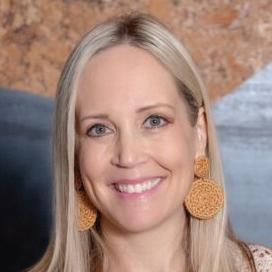
Erin Thorburn is an accomplished editor, writer, journalist, photographer and illustrator with more than 20 years of experience. She is the founder and creative director of The Best of the Southwest. Her work has appeared in multiple print and online publications including Az Business, AZRE, Experience AZ, PTK, SF Gate, Chicago Tribune, The Toronto Star and more.
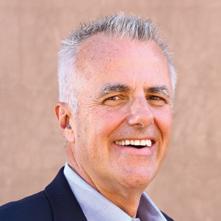
Bruce Weber is founder, president and CEO at Weber Group. Weber brings more than 25 years of experience to the for-profit and nonprofit community, working with startup, growth and mature organizations. His focus is on strengthening organizations through strategic planning, leadership and board development. He is a BoardSource Certified Governance trainer and a graduate of the Smith School of Business, University of Maryland, College Park. webergroupaz.com
Restarting the Leadership Journey
Leadership is a journey of continuous growth by
Bruce Weber
Leadership is often described as a climb — an upward trajectory marked by promotions, influence and expanding responsibility. Yet for many leaders, there comes a moment when progress stalls, enthusiasm fades or the weight of expectations begins to dull the sense of purpose that once fueled their work. At these moments, the most powerful step forward is not pushing harder, but intentionally choosing to restart the leadership journey.
Restarting leadership does not mean abandoning experience or beginning again from zero. Rather, it is a deliberate pause that allows a leader to reconnect with purpose, reexamine habits and renew a commitment to growth. The most effective leaders understand that leadership is not a destination but a continuous cycle of learning, reflection and recalibration.
LOOKING INWARD
The first step in restarting the leadership journey is honest self-reflection. Over time, leaders can become consumed by operational demands — meetings, decisions and constant problem-solving. In the process, they may lose sight of the deeper reasons they chose to lead in the first place. Restarting requires stepping back and asking difficult questions: “What kind of leader do I want to be?”
“What impact do I want to have on the people around me?”
“Where have I drifted from my original values?” Leaders should consider doing a personal leadership audit: strengths known for, counterproductive habits, relationships needing attention and areas where passion has declined. All this reflection creates clarity and often rekindles a sense of direction that may have faded.
WHY AM I DOING THIS?
The second step is reconnecting with purpose. Leadership without purpose easily becomes transactional, focused only on tasks, metrics and outcomes. Purpose restores meaning to the work. When leaders revisit the mission of their organization and the difference it makes in people’s lives, they often rediscover the motivation that once inspired them. This renewed sense of purpose becomes the foundation for a leadership reset.
WHAT OTHERS THINK
A third element of restarting leadership is seeking feedback. Leadership can be isolating, and many leaders receive less honest input as they move higher in an organization. A restart requires inviting candid perspectives from colleagues, team members and mentors. Questions such as “What should I start doing?” “What should I stop doing?” and “Where can I improve as a leader?” open the door to insights that might otherwise remain unspoken. While feedback can be uncomfortable, it is often the catalyst for meaningful growth.

ELIMINATE THE HABITUAL
Another essential component is letting go of outdated habits. Leadership practices that worked earlier in a career may no longer be effective as responsibilities evolve. Some leaders find they have become overly controlling, reactive or distant from their teams. Restarting leadership means consciously choosing new behaviors — listening more deeply, empowering others and creating space for collaboration. These changes signal to others that the leader is committed not only to improvement but also to modeling the growth they expect from their teams.
ENHANCING THE SKILLS
Finally, restarting the leadership journey requires renewing curiosity and learning. The best leaders remain students of leadership throughout their careers. They read widely, seek new perspectives and remain open to ideas from people at every level of the organization. This mindset keeps leadership fresh and prevents complacency from taking root.
In many ways, restarting leadership is an act of humility. It acknowledges that leadership is not static and that even experienced leaders must periodically step back to recalibrate. Yet it is also an act of courage. Choosing to restart signals a willingness to grow, to evolve and to lead with renewed intention.
For organizations and teams, leaders who have restarted their journey often bring a noticeable shift in energy. Conversations become more authentic. Decisions become more values-driven. And the leader’s renewed clarity inspires others to reflect on their own purpose and potential.
Ultimately, the leadership journey is not defined by how long someone has held a position or how many titles that person has earned. It is defined by the willingness to continually grow. Restarting leadership is not a sign of failure; it is a powerful reminder that the best leaders never stop beginning again!
“Each day is an opportunity to lead with more purpose, more positivity, and more impact than the day before.” —Jon Gordon in The Power of Positive Leadership
Data Centers in the Desert: W(h)ater You Worried About?
Water stewardship is increasingly important in evaluating projects long-term by
Kaley Joseph
Few topics generate more attention in the Southwest than water. Arizona’s long-term water planning has been shaped by decades of growth, climate variability and a shared understanding that the region’s resources must be managed carefully. In fact, Arizona uses roughly the same amount of water today as it did in the 1950s, despite massive population growth. As data center development expands in the Phoenix metro area, water use has become one of the most visible questions raised by policymakers, communities and industry leaders alike.
These conversations are unfolding at a particularly important moment for the region. Arizona is currently engaged with six other Colorado River Basin states in negotiations to establish the next set of operating guidelines for the Colorado River, which supplies water to tens of millions of people across the Southwest. While the final framework is still being determined, there is broad recognition that all users of the river — including municipalities, agriculture and industry — will need to reduce consumption over time. In this context, water conservation is not simply an environmental goal; it is a practical necessity shaping how growth and development are evaluated across the region.
For data center developers, this reality means water considerations are now a core component of early project feasibility. In many cases, discussions about water availability, cooling technology and operational efficiency begin alongside conversations about power access and site selection.
Historically, many data centers relied on evaporative cooling systems because of their high thermal efficiency and relatively low energy consumption. While these systems remain appropriate in certain contexts, public scrutiny around potable water use — particularly in arid climates — has accelerated the industry’s adoption of alternative cooling approaches.
Closed-loop cooling systems and “dry cooling” technologies are increasingly being deployed in desert markets to significantly reduce or eliminate operational water consumption. These systems rely primarily on air-based heat rejection rather than evaporation, allowing facilities to operate with minimal or no potable water use. While dry cooling can require higher capital investment and careful evaluation of performance during extreme temperatures, it offers greater certainty in water-stressed regions and aligns more closely with community expectations.
To help quantify performance, the industry has also developed metrics to measure water efficiency. Similar to how Power Usage Effectiveness (PUE) tracks energy performance, Water Usage Effectiveness (WUE) measures how much water a data center consumes relative to the energy it uses, typically expressed in liters per kilowatt-hour. While air-cooled facilities can approach a WUE of zero, most climates require some level of water use; across the industry, an average WUE of roughly 1.9 liters per kWh has emerged as a benchmark many operators aim to improve upon. Beyond cooling systems, responsible water stewardship can
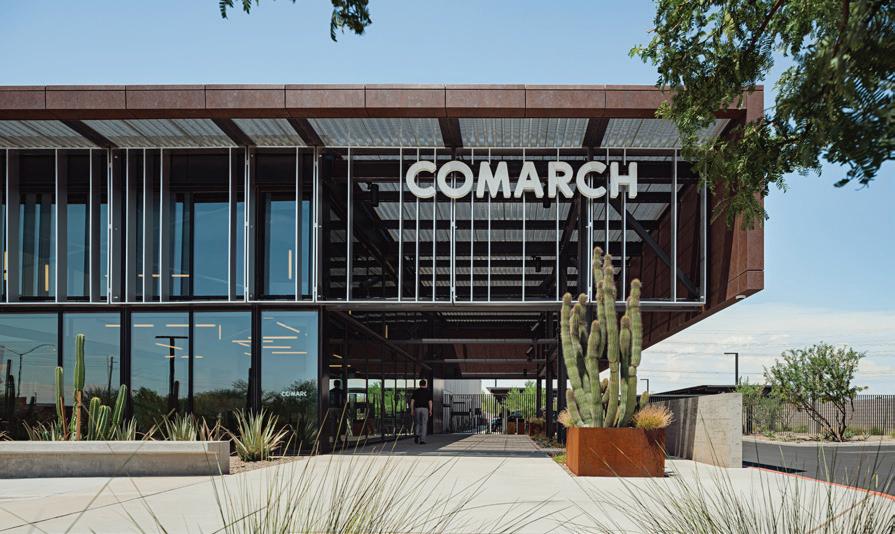
also extend into site design. In desert environments, landscape strategies often prioritize native or drought-adapted plantings, efficient irrigation systems, and stormwater management approaches that help capture and direct rainfall where it can be most beneficial.
On one recent project for Comarch, the Gensler design team intentionally celebrated the movement of water across the site by channeling rainwater from the roof to an elevated roof drain that gently cascades into a rain garden and desertadapted landscape at the building’s entry. The feature captures stormwater while creating a visible moment that reinforces the relationship between the building and its environment. Recognizing the project’s successful integration of sustainability into data centers, Comarch won the Industrial Project of the Year at the 2025 Red Awards. In water-conscious regions like the Southwest, these types of strategies demonstrate that conservation measures can extend beyond mechanical systems to become part of the architectural and landscape experience.
The growing focus on water stewardship reflects a broader shift in how data center projects are evaluated. Communities, investors and policymakers increasingly expect developers to demonstrate that large infrastructure investments are compatible with long-term regional resource management. Addressing water use proactively — and communicating those strategies clearly — has become an important part of establishing a project’s long-term social license to operate.
Arizona’s long history of water planning and resource management provides a strong foundation for these conversations. The state’s regulatory framework and extensive groundwater management policies create an environment where responsible development can move forward with clarity and accountability.
The industry is already operating with a new baseline, where water-cooled facilities are quickly giving way to designs that minimize or eliminate water consumption altogether. For developers, this shift underscores a broader reality: Water stewardship has become a core design expectation, best achieved through early, coordinated planning across teams, utilities and local stakeholders.
As data center development expands across the Phoenix region, questions about water use have moved quickly from engineering discussions to the center of public conversation. For an industry built on reliability and efficiency, the challenge is clear: How can digital infrastructure scale responsibly in one of the most water-conscious regions in the United States?

Kaley Joseph, CSI, CDT, LEED AP BD+C, is a sustainability director for Gensler’s Southwest Region and Phoenix office, leading strategies that integrate sustainable design, ESG reporting and community impact into projects. She collaborates with clients to reduce their environmental footprint, ensuring their buildings align with long-term sustainability commitments and industry benchmarks. Kaley works within Gensler’s Critical Facilities practice area, helping to deliver sustainable and resilient solutions for large-scale projects like data centers. A LEED- and WELLaccredited professional, Fitwel ambassador, licensed architect and certified Construction Document Technologist, she applies technical expertise and leadership to drive sustainable innovation. Kaley’s influence extends beyond her professional work, as she actively advocates for climate-conscious design, regional policy improvements and mentorship.
gensler.com/offices/phoenix
UNDERSTAND YOUR PHILANTHROPIC
ECOSYSTEM
Key to fundraising is understanding a geographic area’s social and economic realities, says Randall Lewis, executive vice president and principal for his family’s businesses, the Lewis Group of Companies. In his home near the counties of San Bernardino and Riverside in California, the area has long been considered a philanthropic desert.
Lewis says he and his foundation board are discussing their region’s local trend of founders/owners of businesses “giving where they live,” thereby focusing their philanthropy near their corporate headquarters, and less in the communities where satellite offices exist.
“We are asking ourselves how we might build a generosity ecosystem to create a culture of philanthropy — how to sell philanthropy better — to make it more commonplace and expected in our community, and to illustrate its benefit and impact.”
The Changing Face of Funding
Governmental cuts, policy change influence philanthropic support by
Richard Tollefson
Ever-tightening government funds and rollbacks to longstanding social programs continue to impact millions of Americans — with job losses and, in many cases, diminished access to vital programs and services. Nonprofits are on the frontlines, filling in many of these service gaps, but they’re doing so with fewer governmental grants, less capital and a revolving door of policy changes that make budgeting for the future even more challenging.
Nonprofits are quickly learning that private philanthropy, alone, is not filling those immense budget-cut gaps that often trickle down from the federal to state levels.
To survive, nonprofits are, in many cases, partnering with organizations they once viewed as competitors. They’re also taking cues from funders — individuals, foundations and corporations — noting the way they, too, have pivoted during these trying times. Today, many funders are moving toward:
• Supporting programs that provide for basic human needs,
• Prioritizing their financing in support of previously funded institutions with good track records, and
• Avoiding multi-year pledges and funding requests for capital investments and capital campaigns.
What does an executive sitting on a nonprofit board do with this insight? For starters, she suggests that her nonprofit postpone building and major renovation projects, because support for these projects is increasingly difficult to attract. Funders are, instead, focused on the increasing numbers of unhoused Americans, those who cannot afford meals and those without access to basic healthcare.
SHOW UP WITH STRATEGY
Nonprofits also need to come to their funders in solution mode, and with a good dose of resolve. “As the landscape changes for nonprofit organizations, so does the ability for funders to support all the organizations in need,” says Gene D’Adamo, president and CEO of Nina Mason Pulliam Charitable Trust. “Now, more than ever, there is more need than resources available, and foundations are having to make very tough decisions. If nonprofits are able to demonstrate sustainability, strategic vision and resiliency, foundations can see how they might be able to navigate and withstand challenging times.”
PUT A BEST FOOT FORWARD
Richard Tollefson is founder and president of The Phoenix Philanthropy Group, an Arizona-based international consulting firm serving nonprofit organizations as well as institutional and individual philanthropists. phoenixphilanthropy.com
Funders also stress a need to trust the nonprofits with whom they partner, but Randall Lewis, executive vice president and principal for his family’s businesses, the Lewis Group of Companies, says confidence might be even more important. “Trust is part of it, but confidence that the nonprofit can execute is equally important.” He admits to providing a substantial gift to a California university, driven 99% by his confidence in the leader at the helm, whose assured style made him feel that his company had invested wisely.
D’Adamo agrees, adding that honesty is another key hallmark

between funders and recipients. “In our foundation, we have longterm relationships with the agencies we fund,” he says, “which means a relationship of trust is already established. Our grantees also know not to hide anything from us. If they’re struggling in some way, we want to know. We exist to support them.”
If a nonprofit senses it might not be able to fulfill the expectations of a grant — or if its leadership faces challenges in its ability to serve its constituency — D’Adamo says the worst thing to do is pretend that all is well. The funders and philanthropists often provide the solution.
CONSIDER NEW FUNDING MODELS
In this age of funding uncertainty, nonprofits must begin to think outside the confines of old-fashioned models: no more top-heavy reliance on government funding, grantsonly, specific individuals or corporations for the brunt of the nonprofit’s finances.
Yes, include a combination of philanthropy from individuals and institutions, but nonprofits should also establish innovative new programs. One idea is to consider social enterprise. Could the nonprofit initiate a fee-for-service model? Those nonprofits producing industry-leading content could consider monetizing or licensing it. Another idea is to analyze the nonprofit’s unique, distinct functions and programs — and sell them. It is the job of board members to bring their business acumen to the nonprofit, to help in brainstorming outside-the-box fundraising strategies. Engineering-oriented nonprofits? Build something the community needs, something they can purchase that helps keep the organization afloat until this funding storm is weathered. Build other things, including partnerships with like-organizations to reduce overhead. Even better, consider partnerships and alliances with nonprofits that are not completely confined to their space. Organizations will find their priorities overlap and working together is going to be the way through.
In early 2025, approximately one-third of U.S. nonprofits experienced disruptions in federal, state, or local funding, including direct cuts, freezes and delays, with some reporting budget reductions of 40-50%. —United Way Worldwide

2026 Polestar 3
Polestar 3 fits into the same midsize electric SUV conversation as the BMW iX, Mercedes-Benz EQE SUV and Cadillac Lyriq, but it approaches the segment with a more restrained hand. It is quick, especially in dual-motor form, but the point is less about turning the vehicle into a performance statement and more about giving a large luxury SUV enough power to feel effortless in normal driving. The shape is clean, the cabin is minimal without feeling bare, and the overall experience leans premium in a way that feels deliberate rather than showy. For buyers who want an EV SUV that looks modern without trying too hard, that is a real advantage.
Where the Polestar 3 makes its case is in the balance
between range, design and day-to-day usability. The singlemotor version stretches to an EPA-estimated 350 miles, which is strong for the class, while dual-motor trims bring significantly more power at the cost of some range. That tradeoff is worth noting, especially on the Performance Pack car, where range drops to 279 miles. Still, the chassis hardware is serious, the interior space is generous, and the tech is integrated cleanly enough that it does not dominate the driving experience. It feels like an executive EV first and a statement piece second, which is likely exactly the point. —Mike Hunter
polestar.com/us/polestar-3
Modern Messaging: Business Texting without the Friction
As businesses increasingly rely on direct, real-time communication, SMS has emerged as a practical channel for customer engagement rather than a secondary tool. For many organizations, the priority is not a complex communications stack but a reliable messaging that integrates easily into existing workflows and scales with demand.
Sendblue is built around that simplicity. The platform enables businesses to send and receive text messages using real phone numbers, including iMessage and SMS, without requiring new infrastructure or hardware. Its API-first design allows teams to embed messaging directly into CRM systems, support platforms or internal tools, reducing friction between outreach and execution. Control is handled through a streamlined dashboard or API layer, giving teams the ability to manage conversations, automate responses and monitor engagement in real time. Because it operates on actual phone numbers rather than short codes, messages feel more natural and conversational, an increasingly important factor in customer response rates.

MSRP: $67,500 to $79,400
Range: up to 350 miles EPA
Power: 299 to 517 hp
0–60 mph: 7.5 to 4.5 seconds
Battery: 111 kWh
Drivetrain: RWD or dualmotor AWD
What makes the platform compelling is its flexibility. Companies can deploy it for sales outreach, customer support, reminders or transactional messaging without overhauling existing systems. —Mike Hunter sendblue.com

The Lollipop Roll Cucumber-wrapped roll with bluefin tuna, hamachi, king salmon, lobster and avocado, finished with aloha ponzu for a bright, layered bite
$28

Sizzling Truffle Kanpachi
Amberjack served with truffle soy, crispy shallots, garlic and togarashi, delivering a warm, aromatic dish with layered umami
$24

Misoyaki Black Cod Bento Box
Miso-glazed black cod served as part of a composed bento with miso soup, house salad and a lobster California roll, offering a rich yet balanced midday option
$19

Tomu San Sushi Sets a New Standard in DC Ranch Dining
by Michelle Talsma Everson
At the hour when calendars fill and decisions get made, a new kind of lunch scene is unfolding at Market Street at DC Ranch.
Tomu San Sushi, the latest concept from Kaufman Hospitality, reads the room. Built for a midday crowd that moves fast but expects more, the restaurant positions itself between a reset and a power move: a place where deals, debriefs and recalibrations unfold over precisely executed sushi and composed plates.
The first signal is the space itself. Light filters across clean lines, pale woods and restrained nods to Japanese design. Bamboo, bonsai; nothing overstated. It’s calm without feeling rigid, a room designed for conversation without distraction.
Lunch, served daily from 11 a.m. to 3 p.m., moves with the rhythm of the workday. A streamlined menu offers bento boxes alongside full-menu access, giving diners both efficiency and choice. Each bento arrives complete with miso soup, house salad and a lobster California roll, a composed answer to what to order.
The menu leans sushi-forward. The Lollipop Roll delivers a clean, high-end bite, cucumber-wrapped with bluefin tuna, hamachi, king salmon, lobster and avocado, finished with aloha ponzu. The Sizzling Truffle Kanpachi adds depth and contrast, served warm with truffle soy, crispy shallots, garlic and togarashi.
Elsewhere, Poke Nachos introduce a more casual, shareable element, while the Misoyaki Black Cod Bento Box offers a structured, satisfying option that aligns with the pace of a working lunch.
Underneath it all is a clear business strategy. Sushi continues to dominate as a category, but Tomu San refines it

for frequency. Designed for repeat visits, the concept is backed by Executive Chef Christopher George, whose two decades with Roy’s bring consistency and discipline.
The experience flexes. Lunch can be quick and efficient or extend into a longer conversation, even an early dive into omakase. Nothing feels rushed, but nothing drags.
In a corridor defined by momentum, Tomu San Sushi offers something rarer than novelty. It offers control; and, for professionals navigating packed schedules, that may be the most valuable item on the menu.
Tomu San Sushi 20751 N. Pima Rd., Scottsdale (480) 404-7030 tomusansushi.com
Tomu San Sushi is the latest concept from Kaufman Hospitality, the Scottsdale-based group behind The Living Room, CHoP Steak & Seafood, The Peacock speakeasy and Elvira’s at DC Ranch.
Photos courtesy of Kaufman Hospitality

State of the City with Tempe Mayor Corey Woods – Presented by the Tempe Chamber
At a sold-out State of the City address at the Tempe Center for the Arts, Tempe Mayor Corey Woods highlighted a year marked by public safety gains, rapid disaster recovery and continued economic growth.
Woods pointed to a notable decline in violent crime, crediting strengthened community policing, targeted safety initiatives and close collaboration between law enforcement and residents. He also re ected on October’s destructive microburst storm, praising emergency responders and public works crews for restoring impacted areas quickly and minimizing disruptions for neighborhoods and businesses.
Economic and cultural momentum also took center stage. Woods emphasized Tempe’s expanding dining and technology sectors, noting that new restaurants, tech startups and infrastructure investments are creating jobs and enhancing quality of life.
“2025 has shown what happens when city government, rst responders, businesses and community members — all work together,” said Mayor Woods. “We’ve seen crime go down; returned quickly and strongly after the storm; supported local businesses; and strengthened Tempe’s place as a vibrant, resilient city poised for growth.”
The event featured lighthearted moments, including coffee served to the mayor by a DoorDash robot from Tempe’s Brick Road Coffee. Tempe Chamber President and CEO Robin Arredondo-Savage joined Woods on stage for a “Thank You Notes” segment inspired by late-night television.
“This year’s State of the City highlighted the strength of our community — from new businesses and a revitalized Downtown to our collective resilience,” said ArredondoSavage. “Our progress is driven by people and businesses working together, strengthening our
quality of life and economic future. Thank you to the sponsors whose support re ects our shared commitment to Tempe’s continued growth.”
Woods closed by urging residents, business leaders and local of cials to maintain the city’s momentum through continued focus on public safety, infrastructure resilience and economic opportunity.
The event was supported by sponsors that included Edward Jones, Salt River Project, Vitalant, Beckton Dickinson, Thrive Tempe, the City of Tempe, DoorDash, HonorHealth, Phoenix Sky Harbor International Airport, the Tempe Of cers Association and ASU.
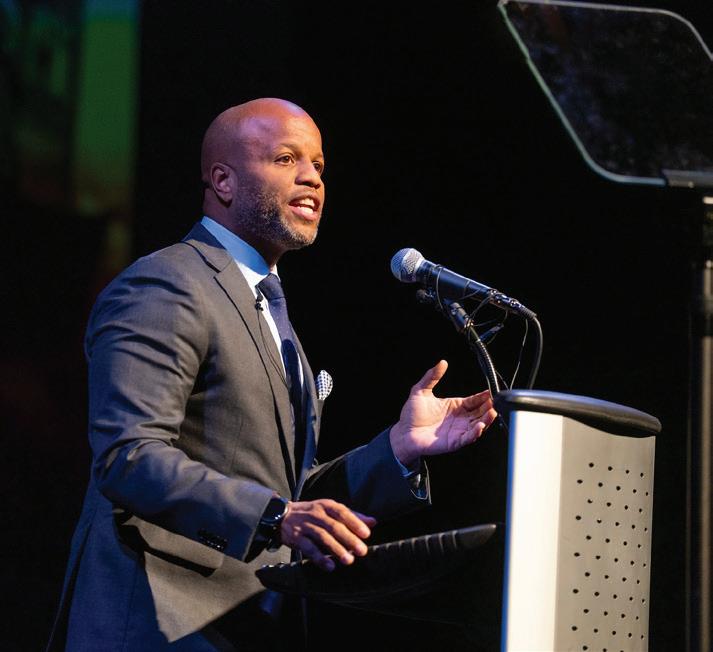


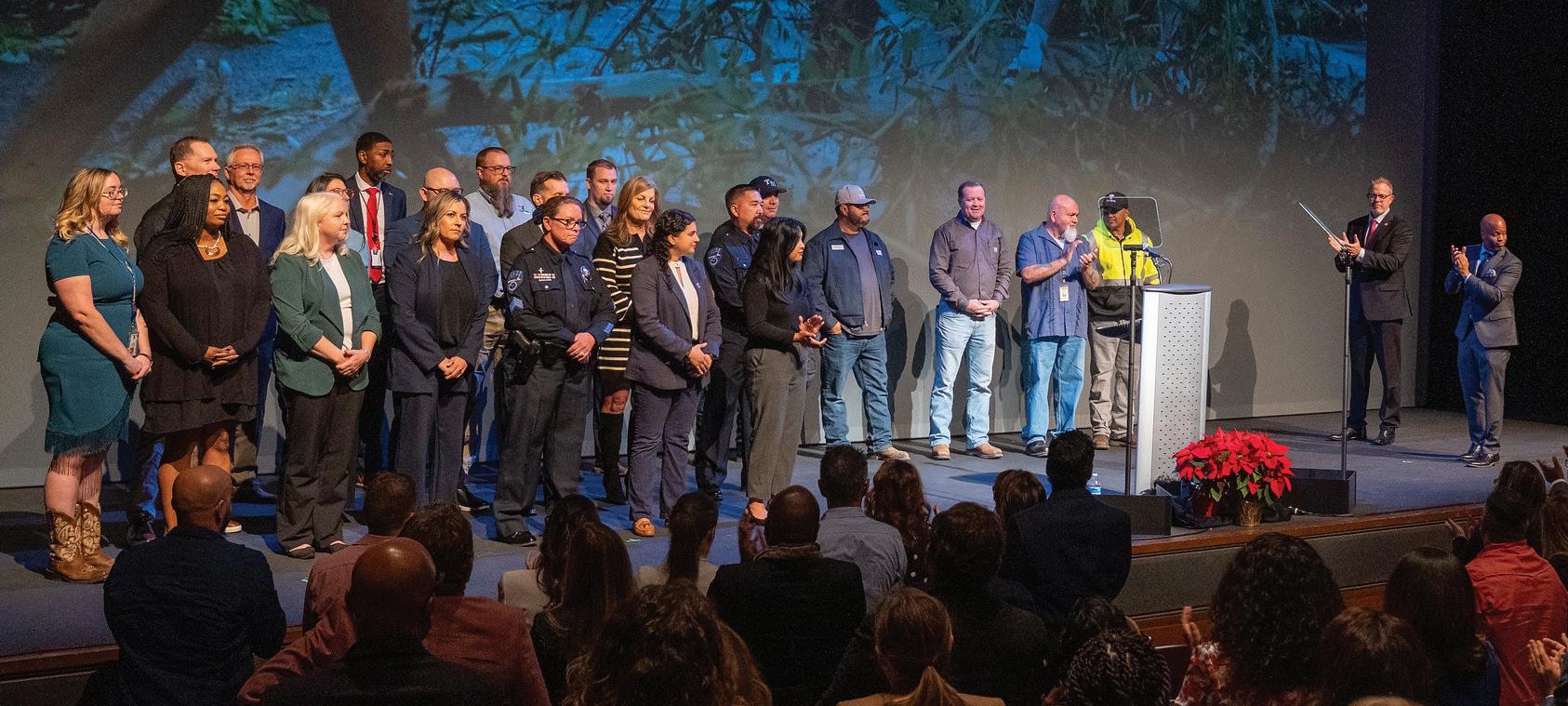
Tempe Center for the Arts
The event was held at Tempe Center for the Arts. Attendees enjoying networking and breakfast. (photo: Pat Shannahan)
Tempe Mayor Corey Woods (photo: Pat Shannahan)
Mayor Corey Woods acknowledging the efforts of people who helped mitigate the damage Tempe suffered from the microburst earlier in the year. (photo: Pat Shannahan)

Honoring Service, Strengthening Community: Tempe’s Red, White & Blue Awards
The Tempe Chamber of Commerce’s annual Red, White & Blue Awards, presented by the Chamber’s Military Affairs Committee (MAC), stood as a powerful tribute to the men, women and organizations whose service strengthens both community and country.
Held in a spirit of gratitude, the ceremony brought together business leaders, public safety professionals, active-duty and reserve service members, ROTC cadets and veteran-friendly employers. Emceed by MAC Committee Chair Juan Garcia, the event highlighted the powerful connection between a strong local economy and a community grounded in service and sacri ce.
“The Red, White and Blue Awards Ceremony was a memorable ceremony recognizing one’s hard work, dedication to service and commitment to community,” Garcia said. “It was humbling to be a part of this event amidst those from active and reserve military service, re and rescue medical
services, and with those businesses that have a veteran-friendly ethos. We also celebrate the silent hero, Embassy Suites, for not only hosting this event but their hospitality through a hearty breakfast. Finally, thank you to all the behind-the-scenes participants; their sel essness is not overlooked.”
This year’s distinguished honorees reflected excellence across multiple sectors:
• The Stephen Trip Grace Memorial Award: Major Taylor “Motor” Bodin
• 944th Fighter Wing – Graydon Williams Award: TSgt Rodney M. Gordon
• COPPER 5 – The Major Truman Young Award: Captain Michael Byrne
• COPPER 5 – The TSgt Donald Plough Award: TSgt Austin Wandrey
• Kyle Brayer Veteran in Public Safety Award: Tempe Fire ghter John Garza (posthumous)
• Veteran and Military-Friendly Award: Catalyst Crafted Ales
The program also celebrated the next generation of leaders through scholarships:
• Merle Fister Veteran MAC Scholarship: Mekonnen Anebo
• ASU Navy ROTC: Midshipman Mason Smith
• ASU Army ROTC: Cadet Adam Miles Worthington
• ASU Air Force ROTC: Cadet Noah Peters
The morning culminated with the Lifetime Honoree Award presented to Lt. Col. Edward C. Logan, USAF (Ret.), recognizing a career de ned by enduring leadership and commitment.
More than an awards ceremony, the Red, White & Blue Awards reaf rmed a core truth: A thriving business climate ourishes alongside a community that honors and supports those who serve.
Scholarship winners from the Red, White and Blue Awards. Pictured with awards from left: Cadet Noah Peters, Midshipman Mason Smith. (photo: Jett Arredondo)
Tempe Chamber Presented Senator Ruben Gallego for a Federal Briefing at Rio Salado Conference Center
The Federal Brie ng, hosted at the Rio Salado College Conference Center, brought together business and community leaders to discuss the 2026 federal outlook and its potential impact on workforce development, healthcare, small businesses and veterans across Arizona.
U.S. Sen. Ruben Gallego addressed the economic pressures facing younger Americans, particularly the challenge of homeownership. “This new generation, this younger generation of Americans, if we don’t really change the course of this country, will be the poorest generation of Americans in the history of this country since the Great Depression,” Gallego said. “Generational wealth does come a lot from housing and right now that basic housing is just not even there.”
Gallego is sponsoring bipartisan legislation with Indiana Republican Sen. Todd Young that would increase the amount rst-time homebuyers can withdraw from their retirement accounts to use for down payments. He noted that many young Americans are “retirement rich” but “house poor,” meaning they may have savings invested for the long term but lack the accessible funds needed to purchase a home.
Housing affordability has remained a signi cant issue in the Valley, where rents and home prices have climbed sharply in recent years. Nationally, the median age of rst-time homebuyers has risen to 40, according to the National Association of Realtors, underscoring the nancial hurdles younger generations face before entering the housing market.
In addition to housing, Gallego highlighted concerns about rising prescription drug costs and broader affordability challenges affecting Arizona families.
The brie ng provided insight into federal priorities for the coming year and how they may shape Arizona’s economic landscape. Arizona’s business community continues to play a critical role in driving growth and ensuring families, entrepreneurs and local communities have a fair opportunity to succeed.
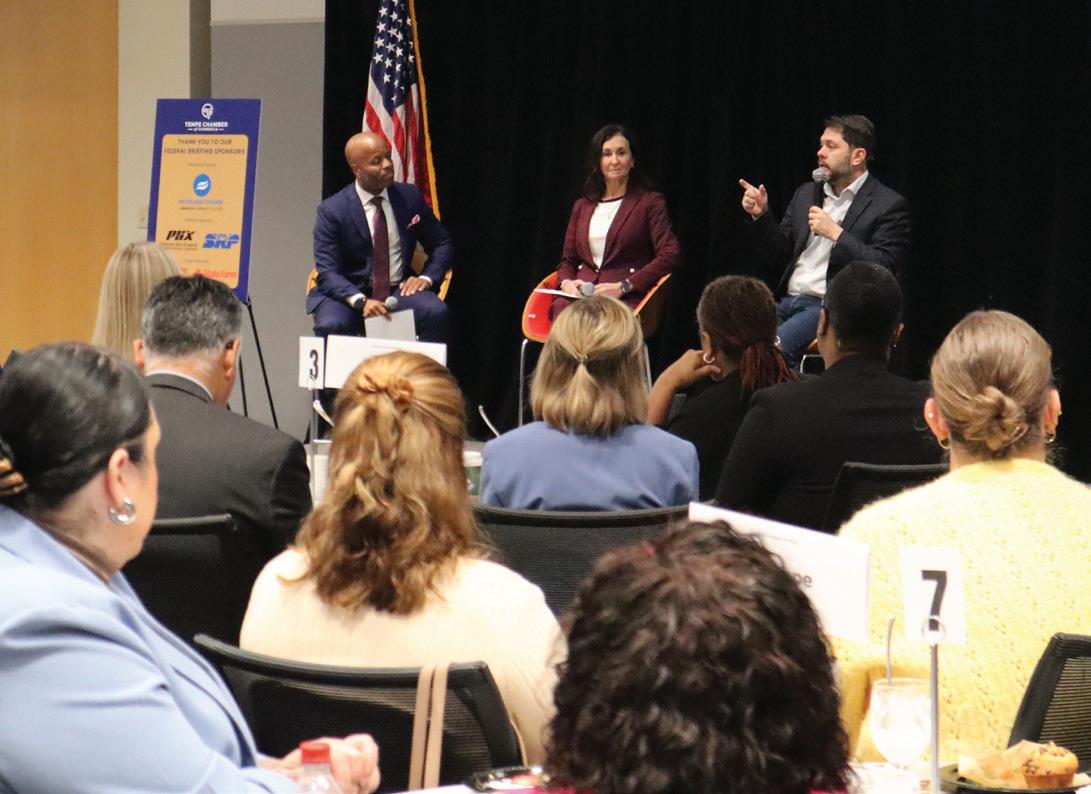
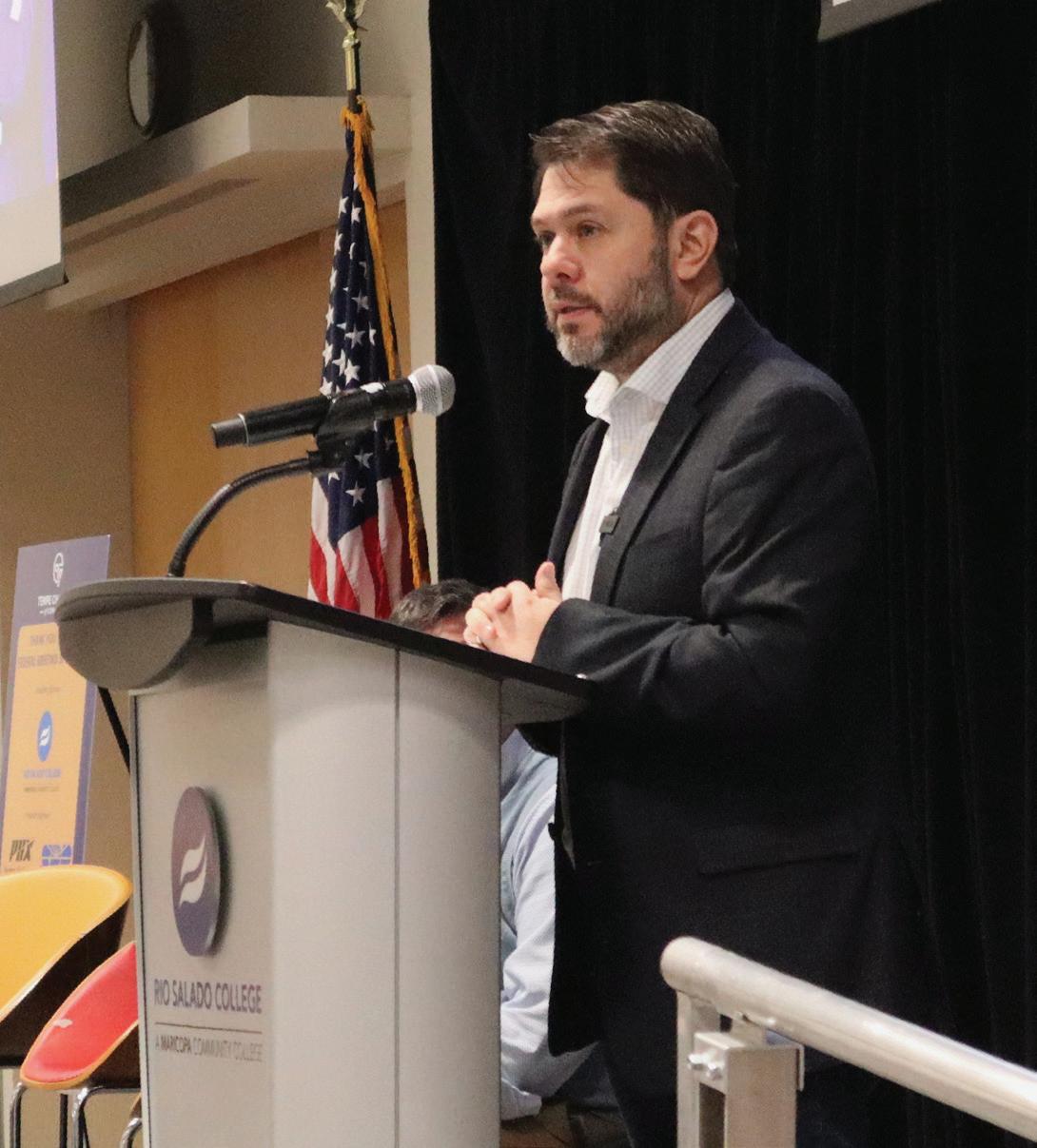
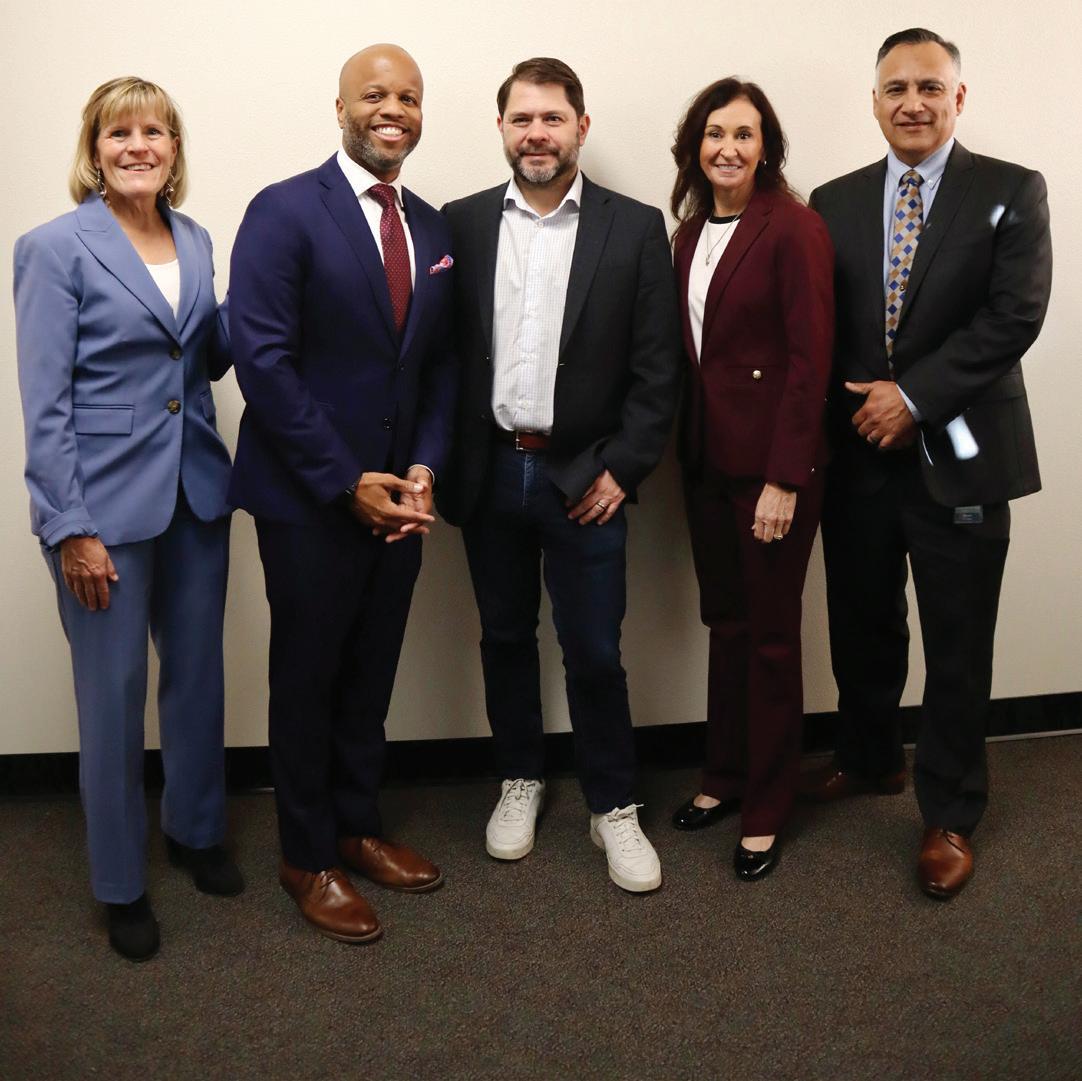
Senator Ruben Gallego delivered a Federal Briefing presented by the Tempe Chamber. (photo by: Jett Arredondo)
Federal Briefing
Pictured at the Federal Briefing: Rio Salado College President, Kate Smith, Tempe Mayor Corey Woods, Senator Ruben Gallego, Tempe Chamber President/CEO, Robin Arredondo-Savage, Dr. Steven Gonzales, Chancellor, MCCCD
Tempe Chamber NextGen Student Fellowship
The Tempe Chamber welcomed its rst cohort of the NextGen Student Fellowship — a semester-long professional development program connecting Arizona college students with the Tempe business community.
The program was set up to be a strategic advantage for college students — particularly in a university city like Tempe, where business, innovation and civic leadership are closely connected.
1. Early Access to Professional Networks
For students at ASU, Rio Salado College and other institutions, connecting with Chamber members provides early exposure to decisionmakers across industries — from technology and healthcare to hospitality and public service. Building these relationships before graduation can open doors to internships, mentorships and rst-job opportunities.
2. Real-World Business Insight
The Tempe Chamber programming offers economic brie ngs, policy discussions and industry panels. Attending these events allows students to better understand workforce trends, helping them to align their skills with market demand and make more informed career decisions.
3. Skill Development Beyond the Classroom
Volunteering at Chamber events offers hands-on experience in leadership, event coordination and community engagement. These experiences build con dence and communication skills.
4. Long-Term Community Investment
Students who plan to remain in the Valley after graduation bene t from establishing roots early. Engagement indicates commitment to the local business ecosystem and positions graduates not just as job seekers, but as emerging professionals invested in Tempe’s growth.
The Tempe Chamber hopes to see early Chamber involvement with college students carry the possibility of transforming them from passive observers of the local economy into active participants.

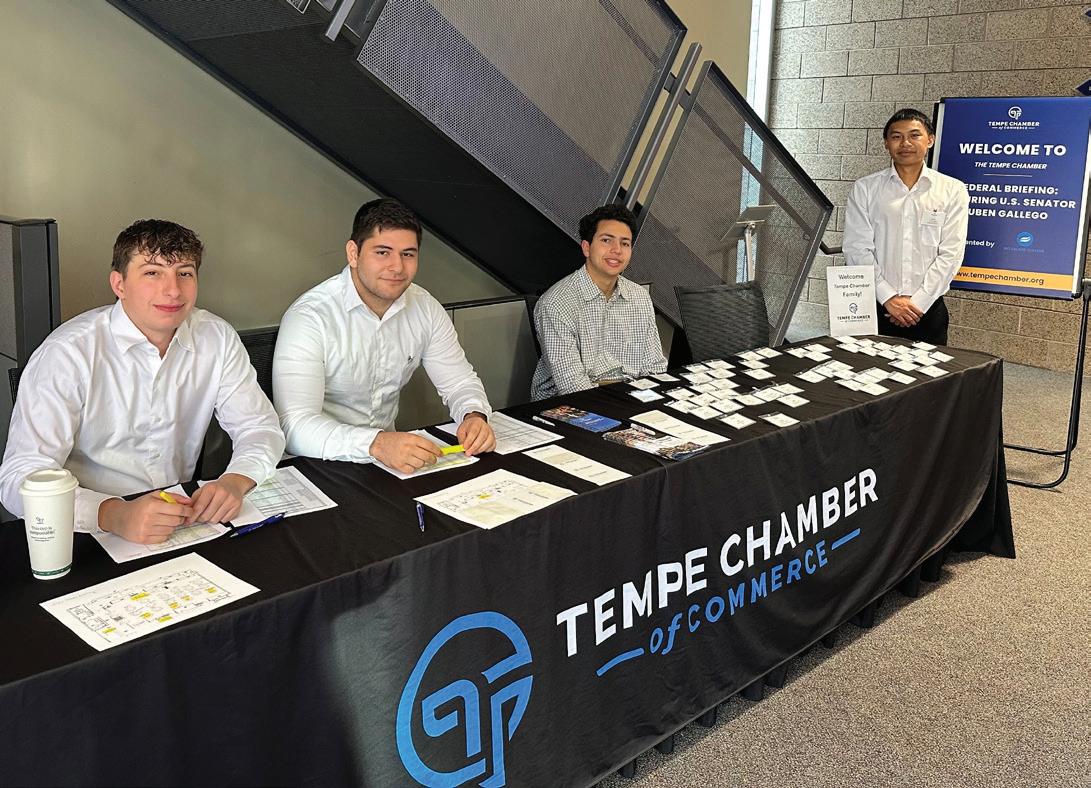
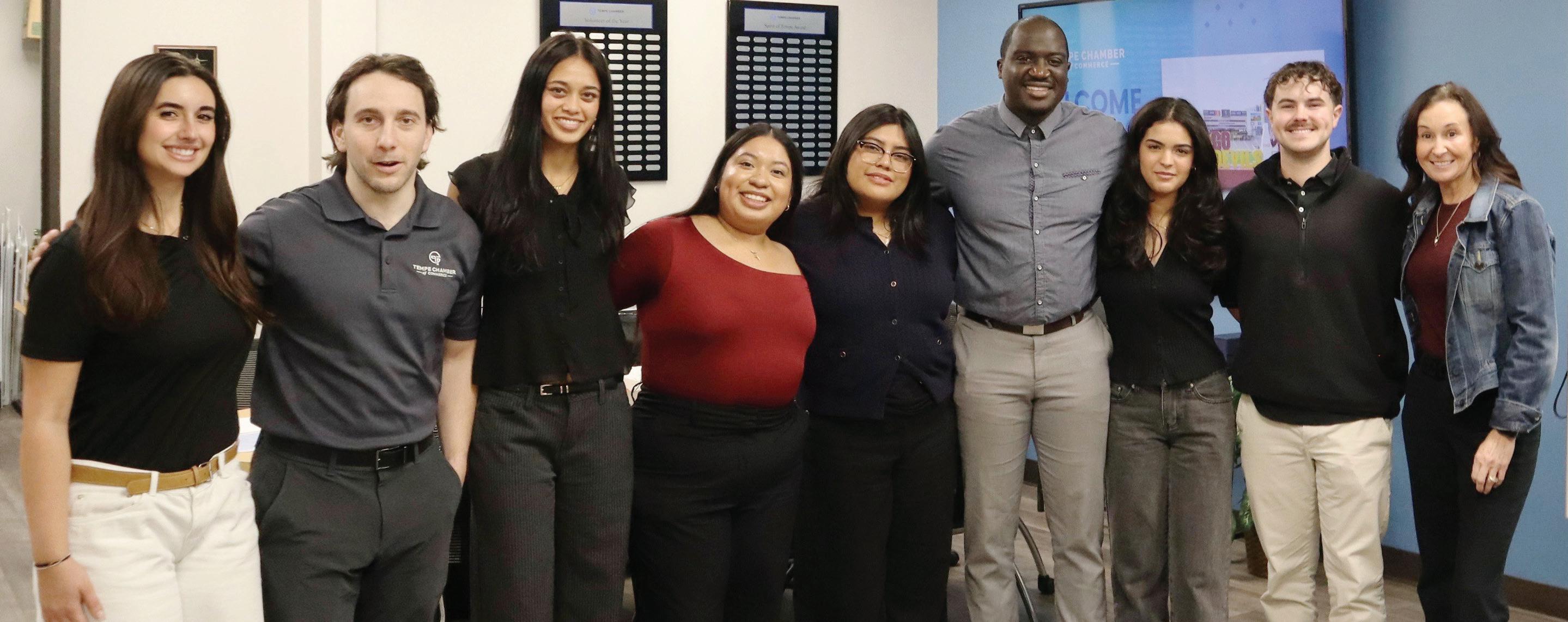
Fellowship students at Federal Briefing
Manning the registration table
Student memberships
Robin Arredondo-Savage Honored with the Howard Pyle Vocational Service Award
Robin Arredondo-Savage, president and CEO of the Tempe Chamber of Commerce, was presented with the Howard Pyle Vocational Service Award during the Tempe South Rotary’s annual charter night.
The award is annually presented to an individual or couple who has, through his or her vocation, exempli ed the Rotary motto of “Service Above Self” as well as providing meritorious service to the City of Tempe and the surrounding community.
Among her many accomplishments, which include serving as a Tempe City councilmember and vice mayor, she led efforts to make Tempe the rst Veteran Supportive City in Arizona and played a key role in developing Valor on 8th, the rst female veterans’ housing project in the state. She also initiated a female veterans’ recruitment program for the re department, further demonstrating her commitment to supporting those who have served.
“I am honored to receive the Howard Pyle Award from The Tempe South Rotary. Coming from a group that lives the value of service before self, this recognition means a great deal,” said Robin. She was nominated by Tempe South Rotary and Chamber member, Gary Johnson pictured left, Joe Arredondo, Robin Arredondo-Savage and her husband Chris Savage.
She championed initiatives in education, workforce development and economic growth spearheading Geeks’ Night Out, a STEAMfocused event in partnership with the AZ SciTech Festival, and helped create College Connect, a program designed to provide students with resources for higher education, and Career Ready Tempe.


pictured: Gary Johnson, Joe Arredondo, Robin Arredondo-Savage, Chris Savage
Tempe Chamber Sta
Robin Arredondo-Savage President & CEO robin@tempechamber.org
Paulette Pacioni Vice President of Operations & Communications paulette@tempechamber.org
Julie Flanigan, CPA Director of Finance julie anigan@tempechamber.org
Karin Jimenez Director of Events & Programs karin@tempechamber.org
Kassandra Beavers Business Development Specialist kassandra@tempechamber.org
Evan Nickels Development Growth Specialist evan@tempechamber.org



US ON FACEBOOK FOLLOW US ON TWITTER FOLLOW US ON INSTAGRAM FOLLOW US ON LINKEDIN


OUR VIDEOS /tempecc @tempechamber @tempechamber /tempechamber /company/tempe-chamber-of-commerce Visit our website at www.tempechamber.org!
Board of Directors
Board Chair: Laura Briscoe, Laura’s Gourmet
Incoming Chair: Zack Heim, SRP
Treasurer: Jesse Shank, Brick Road Coffee
Immediate Past Chair: Tom Binge, Renaissance Financial
Chris Howard, AV Concepts
Cionte Prater, JPMorgan Chase
DeeDee Guerrero-Esparza, Dignity Health
Electa Thompson, Edward Jones
Kate Smith, Rio Salado College
Kate Vawter, Tempe Leadership
Lori Foster, Downtown Tempe Authority
Matthew Heil, Phoenix Sky Harbor International Airport
Michael Martin, Tempe Tourism Of ce
Nick Bastian, Realty Executives - Nick Bastian
Patrick Carlson, APS
Paul Quinn, R & K Staf ng, Benchmark
Rosa Inchausti, City of Tempe
Sean Brown, Sean Brown Commercial Real Estate
Stacy Billings, BD
Tim Gomez, Arizona State University
The Tempe Chamber of Commerce strengthens the local economy through networking, advocacy, professional and workforce development. It regularly advocates for a favorable business climate through interactive public policy engagement and provides ongoing representation in government at local, state and federal levels.
Tempe Chamber of Commerce
P.O. Box 28500, Tempe, AZ 85285 (480) 967-7891 | www.tempechamber.org
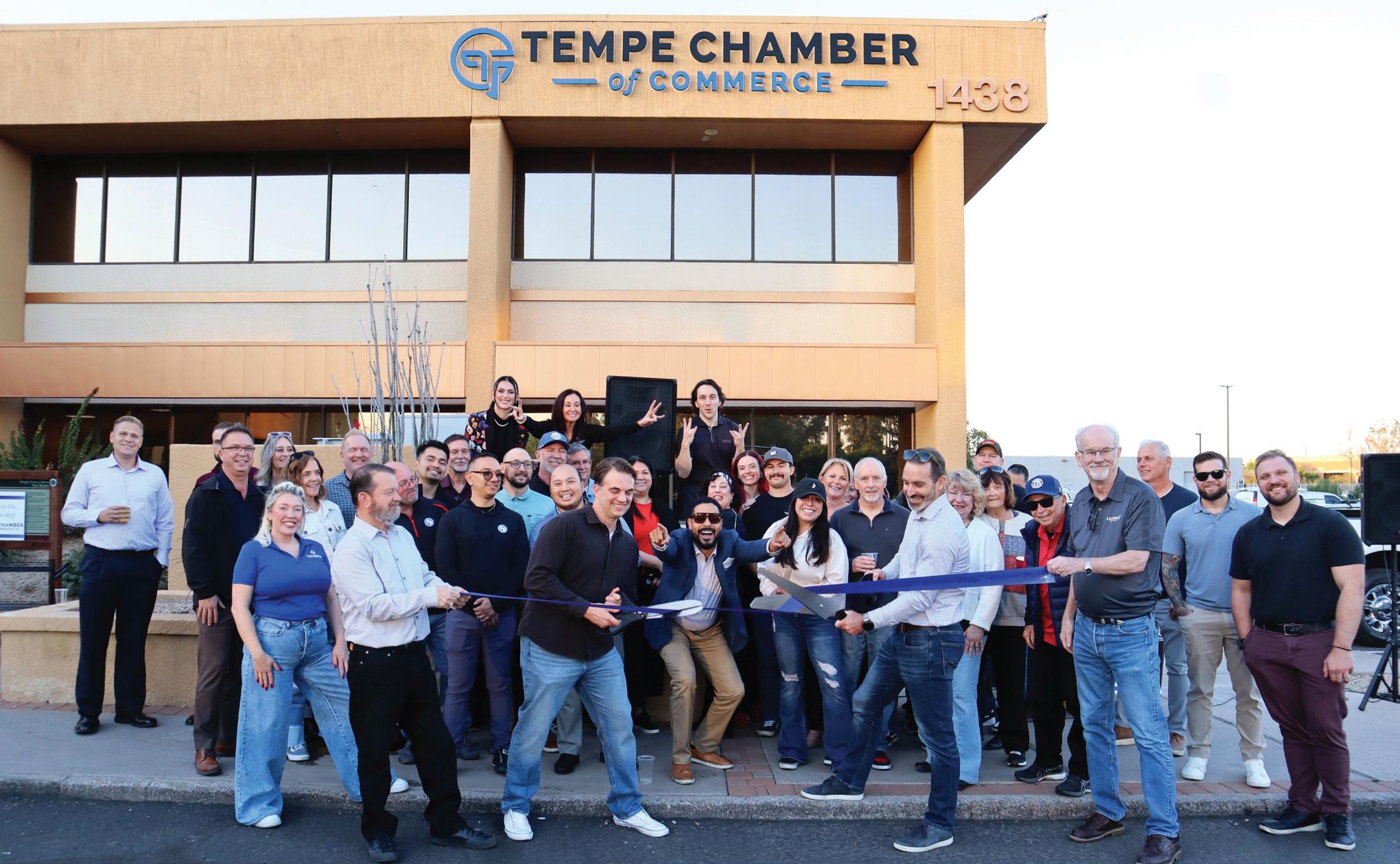
The Tempe Chamber of Commerce celebrated the installation of their new Chamber sign recently at the MAC6 Co-working space in Tempe.


Health Issues Are Starting Earlier in the Workforce. Here’s How Employers Can Respond
by Patty Starr and Craig Kurtzweil
Employer health benefits costs are rising faster than inflation and wage growth, putting continued pressure on employersponsored plans. According to KFF’s 2025 Employer Health Benefits Survey, peremployee benefit costs increased 6% in 2025, with another 6.5% increase projected for 2026, according to the 2025 Employer Health Benefits Survey by KFF.
New research from the Health Action Council, a nonprofit employer coalition, and UnitedHealthcare show that serious health conditions are appearing earlier in life, particularly among younger employees. The analysis, which analyzed data from more than 225,000 HAC members with UnitedHealthcare plans, found the following:
Healthcare claims for younger adults are increasing. While millennials and Gen Z still have lower overall healthcare spending than older generations, their claims are rising at a much faster pace. Between 2023 and 2025, their yearoveryear growth rate was nearly double that of baby boomers. At the same time, younger adults are developing chronic conditions such as diabetes and obesity earlier in life, visiting emergency rooms more frequently, and engaging with primary care providers less often than any other generation.
Major health events are becoming more common. Major health events — defined as medical claims exceeding $100,000 annually — are now about twice as common as they were five years ago. Average monthly claims for these events, including heart attacks, strokes, complex surgeries, and highcost conditions such as cancer or genetic disorders, have increased nearly 40% since 2020.
Metabolic conditions are driving higher longterm risk and cost. Metabolic conditions such as diabetes, obesity and high blood pressure are closely linked to more serious health events over time. Men, in particular, often delay preventive care well into midlife, increasing the likelihood that these conditions go undetected or unmanaged. According to the report, men with metabolic conditions are seven times more likely to experience a heart attack, stroke or other major health event than men without these conditions. When these events occur, healthcare spending rises sharply, with claims reaching up to 150% higher for men in their 40s and nearly 160% higher for those over age 65.



What This Means for Employers
Taken together, these trends show that health issues that once showed up later in life are now affecting employees earlier in their careers, and the financial impact is already being felt in employer health plans.
Three Steps Employers Can Take
• Design benefits and communications that reflect how younger employees use care, including virtual and digital entry points.
• Make primary care easier to access by lowering barriers such as cost, appointment availability, and time away from work.
• Encourage preventive care and routine screenings, with a particular focus on men and employees at risk for metabolic conditions.
Data-driven strategies can help make a meaningful difference. Since 2021, employers participating in Health Action Council initiatives have outperformed the PwC industry trend — reported in PwC’s Health Research Institute medical cost trends, 20092025 — by more than 12%, resulting in $292 million in paid claims savings. These results underscore the value of identifying risks earlier and supporting employees before health issues become more serious.
Editor’s note: To learn more, access the white paper for strategies to help improve workforce health engagement and affordability. healthactioncouncil.org/media/vjrdbigx/2026-hac-white-paper.pdf
Patty Starr is president and CEO at Health Action Council, and Craig Kurtzweil is chief data and analytics officer at UnitedHealthcare Employer & Individual.
Associations & Government
Many associations and government healthcare services give specific information on policies, open enrollment dates and services provided that may help employers understand the many options. Below is a list of local organizations.
Arizona Dental Association
3193 N. Drinkwater Blvd., Scottsdale (480) 344-5777
azda.org
Arizona Foundation for Medical Care
19420 N. 59th Ave., Suite B221, Glendale (602) 252-4042
azfmc.com
Arizona Health Care Association
3003 N. Central Ave., Suite 860, Phoenix (602) 265-5331
azhca.org
Arizona Health Care Cost Containment System (AHCCCS)
150 N. 18th Ave., Phoenix (602) 417-4000
azahcccs.gov
Arizona Hospital and Healthcare Association
2800 N. Central Ave., Suite 1450, Phoenix (602) 445-4300
azhha.org
Arizona Medical Association
2401 W. Peoria Ave., Suite 315, Phoenix (602) 347-6900
azmed.org
Arizona Pharmacy Association
1845 E. Southern Ave., Tempe (480) 838-3385
azpharmacy.org
Maricopa County Medical Society
326 E. Coronado Rd., Suite 101, Phoenix (602) 209-9867 mcmsonline.com
Employee Benefits Consultants
Using a consultant to work though options and the many plans can alleviate much of the confusion surrounding healthcare these days. We have included a list of brokers and firms that are reputable and have a tremendous amount of experience working with business to provide plans and ensure compliance.
Arizona Benefit Consultants, LLC
4222 E. Thomas Rd., Suite 225, Phoenix (602) 956-5515
arizonabenefitconsultants.com
Benefit Commerce Group - An Alera Group Company
16220 N. Scottsdale Rd., Suite 100, Scottsdale (480) 515-5010
benefitscommerce.com
Blue Water Benefits Consulting 7848 E. Davenport Dr., Scottsdale (480) 313-0910
employeebenefitcompliance.com
Breslau Insurance & Benefits
Paul Breslau
8362 E. Via de Risa, Scottsdale (602) 692-6832
breslauinsurance.com
Connect Benefits 1818 E. Southern Ave., Mesa (480) 985-2555
connect-benefits.com
Marsh McLennan Agency 8605 E. Raintree Dr., Suite 200, Scottsdale (602) 956-2250 marshmma.com
FBC Services, Inc.
7639 E. Pinnacle Peak Rd., Unit 100, Scottsdale (602) 277-8477 fbcserv.com
Focus Benefits Group
11022 S. 51st St., Suite 104, Phoenix (602) 381-9900 focusbenefits.com
Horizon Benefits Group
6245 N. 24th Pkwy., Suite 201, Phoenix (602) 957-3755 horizonbenefits.com
Strunk Insurance Group, Inc. 14425 N. 7th St., Suite 102, Phoenix (602) 978-4414 strunkgroup.com






Dental Insurance
Getting the right coverage means truly investigating the best plans and supplemental plans. Here is a list of area companies offering dental insurance that have a great reputation and plan options for individuals and groups.
American Dental Plan
P.O. Box 13254, Scottsdale (602) 265-6677
arizdental.com
Breslau Insurance & Benefits
Paul Breslau
8362 E. Via de Risa, Scottsdale (602) 692-6832
breslauinsurance.com
Delta Dental of Arizona
14850 N. Scottsdale Rd., Suite 400, Scottsdale (602) 938-3131 deltadentalaz.com
Matsock & Associates
2400 E. Arizona Biltmore Circle, Phoenix (602) 955-0200 matsock.com
Individual & Group Health Insurance
Knowing what plan is right for your employees and understanding who is managing that plan can make all the difference for your company. We have included below a list of reputable and experienced insurance companies, many of which you will be familiar with, that can guide your organization to the perfect group or individual plans.
Amenda Insurance Associates
2304 W. Blue Sky Dr., Phoenix (480) 284-6400 amendainsurance.com
American Family Insurance
Multiple agents Valley-wide (877) 777-4804 amfam.com
Banner Aetna (800) 381-6789 banneraetna.com
Blue Cross Blue Shield of Arizona
2444 W. Las Palmaritas Dr., Phoenix (602) 864-4899 azblue.com
Bowman & Associates
16042 N. 32nd St., Bldg. A, Phoenix (602) 482-3300
bowmaninsurance.com
Breslau Insurance & Benefits
Paul Breslau 8362 E. Via de Risa, Scottsdale (602) 692-6832 breslauinsurance.com
Cigna
Multiple locations Valley-wide cigna.com
Glass Financial Group 4455 E. Camelback Rd., Suite 260D, Phoenix (602) 952-1202 glassfinancialgroup.com
HealthNet
1230 W. Washington St., Suite 401, Tempe (602) 286-9194 healthnet.com
Humana Health Insurance of Phoenix
20860 N. Tatum Blvd., Suite 400, Phoenix (480) 515-6400 humana.com
Reseco Insurance Advisors
Todd Newton
7901 N. 16th St., Suite 100, Phoenix (602) 753-4250 resecoadvisors.com
State Farm Arizona
Multiple agents Valley-wide (877) 331-8261 statefarm.com
UnitedHealthcare
1 E. Washington St., Suite 1700, Phoenix (800) 985-2356 uhc.com
Hospitals
Many of the healthcare providers listed below are part of specific networks or have created their own network to lower costs for businesses and individuals with the intent to provide all needed services for the patient.
Abrazo Arizona Heart Hospital
1930 E. Thomas Rd., Phoenix (602) 532-1000 abrazohealth.com
Abrazo Arrowhead Campus
18701 N. 67th Ave., Glendale (623) 561-1000 arrowheadhospital.org
Abrazo Central Campus
2000 W. Bethany Home Rd., Phoenix (602) 249-0212 phoenixbaptisthospital.com
Abrazo Scottsdale Campus
3929 E. Bell Rd., Phoenix (602) 923-5000
paradisevalleyhospital.com
Banner Baywood Medical Center
6644 E. Baywood Ave., Mesa (480) 321-2000
bannerhealth.com/baywood
Banner Boswell Medical Center
10401 W. Thunderbird Blvd., Sun City (623) 832-4000
bannerhealth.com/boswell
Banner Del E. Webb Medical Center
14502 W. Meeker Blvd., Sun City West (623) 524-4000
bannerhealth.com
Banner Desert Medical Center
1400 S. Dobson Rd., Mesa (480) 412-3000
bannerhealth.com/desert
Banner Estrella Medical Center 9201 W. Thomas Rd., Phoenix (623) 327-4000
bannerhealth.com
Banner Gateway Medical Center 1900 N. Higley Rd., Gilbert (480) 543-2000
bannerhealth.com
Banner Heart Hospital 6750 E. Baywood Ave., Mesa (480) 854-5000
bannerhealth.com
Banner Ironwood Medical Center
37000 N. Gantzel Rd., San Tan Valley (480) 394-4000
bannerhealth.com/ironwood
Banner MD Anderson Cancer Center
2946 E. Banner Gateway Dr., Gilbert (480) 256-6444
bannerhealth.com


Banner Thunderbird Medical Center
5555 W. Thunderbird Rd., Glendale (602) 865-5555 bannerhealth.com
Banner Children’s at Desert 1400 S. Dobson Rd., Mesa (480) 412-5437 bannerhealth.com
Banner – University Medical Center Phoenix 1111 E. McDowell Rd., Phoenix (602) 839-2000 bannerhealth.com
City of Hope Cancer Center Phoenix
14200 W. Celebrate Life Way, Goodyear (623) 207-3000 cancercenter.com
Dignity Health Chandler Regional Medical Center
1955 W. Frye Rd., Chandler (480) 728-3000 chandlerregional.org
Dignity Health Mercy Gilbert Medical Center
3555 S. Val Vista Dr., Gilbert (480) 728-8000 mercygilbert.org
Dignity Health St. Joseph’s Hospital & Medical Center 350 W. Thomas Rd., Phoenix (602) 406-3000 stjosephs-phx.org
East Valley ER & Hospital
5656 S. Power Rd., Gilbert (602) 830-4911 eastvalleyhospital.com
HonorHealth Deer Valley Medical Center
19829 N. 27th Ave., Phoenix (623) 879-6100 honorhealth.com
HonorHealth John C. Lincoln Medical Center
250 E. Dunlap Ave., Phoenix (602) 943-2381 honorhealth.com
HonorHealth Scottsdale Osborn Medical Center
7400 E. Osborn Rd., Scottsdale (480) 882-4000 honorhealth.com
HonorHealth Scottsdale Shea Medical Center
9003 E. Shea Blvd., Scottsdale (480) 323-3000 honorhealth.com

Weight Loss Program


Decreased appetite and cravings
Weight Loss & inches Lost
Improved blood glucose control
Higher energy levels
Cardiovascular benefits
Improved metabolic abnormalities

Healthcare Solutions Centers Clinic 4831 N. 11th Street Phoenix, AZ 85014
Phone | 602.424.2101
Email | Info@hcsonsite.com
HonorHealth Four Peaks Medical Center
1301 S. Crismon Rd., Mesa (480) 358-6100 honorhealth.com
Mayo Clinic Hospital
5777 E. Mayo Blvd., Phoenix (480) 515-6296 mayoclinic.org
Phoenix Children’s 1919 E. Thomas Rd., Phoenix (602) 933-1000 phoenixchildrens.org
St. Luke’s Medical Center
1800 E. Van Buren St., Phoenix (602) 251-8100 stlukesmedicalcenter.com
Valleywise Health Medical Center
2601 E. Roosevelt St., Phoenix (602) 344-5011 valleywisehealth.org
Urgent Care
Walk-in, face-to-face, brick-and-mortar urgent care facilities remain an important element in the healthcare system, even as virtual options expand.
HonorHealth Urgent Care
Multiple Valley locations (623) 580-5800 honorhealth.com/medical-services/urgent-care
NextCare Urgent Care
Multiple Valley locations (888) 958-2128 nextcare.com
Phoenix Children’s Urgent Care 4 Valley locations (480) 922-5437 phoenixchildrens.com/urgent-care
Workplace Bundled Health Programs
In focusing on creating the perfect plan for your company, local providers offer direct benefits that your organization may rely on to ensure a strong healthcare program and policies for your employees.
Arrowhead Health Centers
Multiple locations (623) 334-4000
arrowheadhealth.com
Workplace Ergonomics
Wellness includes how our bodies function in our work spaces, and is therefore greatly impacted by the physical elements of that space. These businesses provide solutions, from chairs to desks to lighting — and beyond.
Ergoguys Products
5622 W. Orchid Ln., Chandler (602) 354-4190
ergoguys.com
ESI Ergonomic Solutions
4030 E. Quenton Dr., Suite 101, Mesa (480) 517-1871
esiergo.com
Goodmans Interior Structures
1400 E. Indian School Rd., Phoenix (602) 263-1110
goodmansinc.com
Workplace Wellness
There are many companies working to orchestrate alternative healthcare plans and consulting to customize healthcare benefits programs and policies for companies. These organizations below offer consulting, program development and direct care programs for businesses of all sizes.
Absolute Health
8360 E. Raintree Dr., Suite 135, Scottsdale (480) 991-9945
absolutehealthaz.com
Healthcare Solutions Centers
4831 N. 11th St., Phoenix (602) 424-2101
hcsonsite.com
LifeCore Group
P.O. Box 10264, Glendale (602) 235-2800
lifecoregroup.com
Thanks, boss.
Dental is the third most requested benefit.

Small businesses need to stay competitive. Let us help. Delta Dental® has flexible, affordable dental plans for 2 to 24 employees. A leader in dental care, we have the largest network of dentists and we make doing business with us easy – with 99.9% of claims paid within 10 business days.
Here’s how dental helps you stay competitive:
Attract the best talent
Retain your best workers
Healthy employees are more productive
Your employees are asking for dental, and we can help you offer it. Learn more and request a quote at deltadental.com

















Help Can’t Wait DURING EMERGENCIES


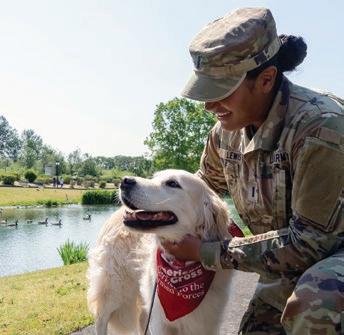


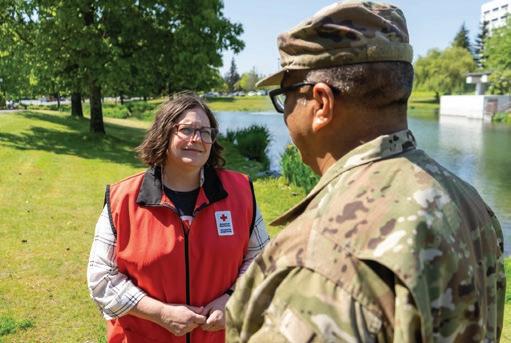


We invite you and others to join the American Red Cross mission by volunteering, giving blood, learning lifesaving skills or making a financial donation. Your support helps ensure families don’t face emergencies alone.
We invite you and others to join the American Red Cross mission by volunteering, giving blood, learning lifesaving skills or making a financial donation. Your support helps ensure families don’t face emergencies alone.
We invite you and others to join the American Red Cross mission by volunteering, giving blood, learning lifesaving skills or making a financial donation. Your support helps ensure families don’t face emergencies alone.
Volunteer. Give Blood. Donate. Take a Class.
Visit redcross.org/AZNM to learn more.
Volunteer. Give Blood. Donate. Take a Class.
Visit redcross.org/AZNM to learn more.
Volunteer. Give Blood. Donate. Take a Class. Visit redcross.org/AZNM to learn more.




Abbott, Ryan, 17
Alonzo, Catherine, 35
Aminian, Houshang, 24
Antypas, Chris, 24
Arredondo-Savage, Robin, 51
Artzi, Jeff, 40
Brown, Walt Jr., 18
Butler, Tyler, 40
Chuchro, Pete, 28
Chucri, Alexander, 12
Crivello, Joseph, 16
Cutright, Teresa, 10
D’Adamo, Gene, 44
AIAEC, 15
American Red Cross, 64
American TMS Clinics, 24
Aramark, 14
Arizona Association of REALTORS®, 14
Arizona Builders Alliance, 17
Arizona Commerce Authority, 21, 22
Arizona Community Foundation, 39
Arizona Eye Institute & Cosmetic Laser Center, 34
Arizona Financial Credit Union, 10, 37
Arizona State University, 67
BestBrokers, 26
Blue Cross Blue Shield of Arizona, 2, 28, 54
Cigna Healthcare, 28 Clayco, 17
Collaboration for Good, 40
Copa Health, 25
Creation, 18
CrossHarbor Capital Partners, 18
CSG Partners, 36
Delta Dental of Arizona, 28, 62
Equality Health, 63
Everspin Technologies, 20
Fennemore, 11, 38
First Things First, 19
Davids, Kim, 17
Deholl, Melinda, 35
Dougherty, Sean, 20
Fakih, Ali, 15
Gal, Sharon, 35
Gallego, Ruben, 49
Garcia, Juan, 48
Hernandez, Angela, 10 Hoffman, Paul, 26, Jones, Michael, 28
Joseph, Kaley, 43
Justo, Emilio, 34
Kane, Heather, 66
Gensler, 43
Global Ambassador, The, 14
Goldman Sachs, 14
Goodmans, 68
Goodwill of Central and Northern Arizona, 3, 14
Health Action Committee, 55
Healthcare Solutions Centers, 60 Jet OUT, 16
Jive, 8
JW Marriott Scottsdale Camelback Inn, 14
Kaufman Hospitality, 46
Kiterocket, 23
Kolbe Corp, 10
Lewis Group of Companies, 44
LGE Design Build, 18
Lincoln Property Company, 14
Magnum Companies, 14
Mark-Taylor Residential, 14
Marsh McLennan Agency, 28
Microchip, 22
MJ Companies, The, 24
National Bank of Arizona, 19
Nina Mason Pulliam Charitable Trust, 44
OOROO Auto, 40
Optum, 7
Peddler’s Son, 10
In each issue of In Business Magazine, we list both companies and indivuduals for quick reference. See the stories for links to more.
Kehaly, Pam, 28
Kolbe, David, 10
Kurtzwell, Craig, 55
Lewis, Randall, 44
Marino, John, 36
McCarson, Brian, 22
O’Neal, Tim, 14
Pettigrew, Jamie, 40
Purves, Steve, 9, 28
Rietz, David, 26
Roy, Miranda, 10
Shufeldt, John, 15
Spong, Will, 28
Stafford, Mike, 18
Starr, Patty, 55
Strunk, Casey, 28
Thorburn, Erin, 41
Tollefson, Richard, 44
Ward, Emily, 38
Watson, Sandra, 22
Weber, Bruce, 42
Woods, Corey, 47
Yoo, Chris, 15
Phoenix Philanthropy Group, The, 44
Phoenix Symphony, The, 13
Polestar Scottsdale, 5, 45
Pravati Capital, 12
ProTech Detailing, 27
Rapid Drone, 26
REDW Advisors & CPAs, 10
Sandra Day O’Connor College of Law, 67
Sendblue, 45
Sonora Quest Laboratories, 59 SRP, 41
Stearns Bank, 8
Steve Short Culinary Team, 14
Strunk Insurance Group, 28
Sunbelt Holdings, 27
Tempe Chamber of Commerce, 47
Tempe, City of, 47
Tomu San Sushi, 46
United Healthcare Employer & Individual, 55
United Healthcare, 66 Valleywise Health, 9, 28
Weber Group, 42
Xcellerant Ventures, 15

Bold listings are advertisers supporting this issue of In Business Magazine

Heather Kane is the CEO of Employer & Individual plans for UnitedHealthcare in Arizona and New Mexico. Based in the company’s Phoenix office, Kane manages a team of more than 150. Her division offers fully insured and self-funded plans, along with wellness and care management programs to employers, with a focus on ensuring better health outcomes, better experience and better cost control for UnitedHealthcare clients.

Strategies to Help Your Workforce Maximize Their Healthcare Benefits in 2026
Start with understanding the employee population – and educating them by Heather Kane
As a new year begins, employers have an opportunity to empower their workforce to live healthier lives and to make more informed healthcare decisions.
Data shows 1 in 4 employees reported knowing little to nothing about their employer-sponsored benefits, a gap that can lead to higher costs and worse health outcomes for both employees and organizations.
Understanding the employee population and how they tend to utilize their benefits can be key to employers helping their workforce get the most of their health plan. While broad communication strategies are useful, datadriven, personalized messaging is often more effective in reaching specific employee groups and encouraging greater engagement with health benefits.
Employers should consider the following strategies to help employees get the most out of their workplace benefits in 2026:
Help employees understand their plan design. When employees understand how their plan is structured, and their premium, copays, deductible, coinsurance and out-ofpocket maximum, they may be able to better estimate care costs for the year.
Innovative plan designs can help make costs more transparent and help people make more informed decisions. Some of these plans offer upfront pricing in the form of a single copay — instead of deductibles and coinsurance — so employees can know costs before getting care.
Encourage employees to consider where they get care. A virtual visit and primary care are generally more affordable than visiting the emergency room. Helping employees understand how to access appropriate healthcare based on their needs can help them save money. In fact, UnitedHealthcare data shows that ER visits can cost 10 times more than an urgent care visit. Many health plans offer tools to help employees find options that may meet their needs and help them save money.
Highlight digital tools for personalized support. Personalized support and digital tools can help employees feel confident in their decisions and may help improve overall engagement and retention. Employers may consider promoting the digital resources available to their workforce designed to make finding, comparing and shopping for care simpler.
Many plans have mobile apps or online member portals that may include such resources. Some health plans also offer discounts on wellness solutions, such as weight loss programs or mindfulness apps. These resources can help reduce confusion about benefits and empower employees to take proactive steps toward their health.
Boost use of specialty and voluntary benefits. Dental and vision benefits are important to overall well-being. By offering specialty and voluntary benefits in addition to medical plans, employers can better support whole-person health and well-being. This is especially important since preventive dental and vision care can help detect signs of chronic health conditions. Similarly, financial protection plans, like accident insurance, critical illness or hospital indemnity, can create additional flexibility for employees.
Prioritize employee mental health. Employers are increasingly recognizing that employee mental health is just as important as physical health, especially given the current mental health crisis in our country. It’s more crucial than ever to design a benefits strategy that addresses employees’ wholeperson health and to communicate effectively and frequently. By doing so, employers can build a healthier workplace culture, improve lives and boost productivity in the new year.
In addition to communications employees may receive from their health plan, employers can help educate the workforce about the options available through their workplace benefits. Doing so can help employees unlock the full potential of their benefits — and employers may help support better health outcomes, save on costs and encourage a happier, healthier workforce.
Data shows 1 in 4 employees reported knowing little to nothing about their employer-sponsored benefits, a gap that can lead to higher costs and worse health outcomes for both employees and organizations.

Reimagining legal education