

RESPECT THE FANS | RESPECT THE PLAYERS | RESPECT THE GAME




OF OUR
Goodwill of Central and Northern Arizona turns donations into possibilities by providing no-cost services to more than 30,00 Arizonans annually that help them build a better economic future.
Your purchases and donations help support local, no-cost career services, education, sustainability efforts and housing solutions so Arizonans can build better futures for themselves and their families.
Goodwill of Central and Northern Arizona is a 501(c)(3) non-profit organization dedicated to ending poverty through the power of work! GoodwillAZ.org
RETAIL ISN’T BACK — IT’S EVOLVED
Kim Ryder’s series gives us an insightful look at the commercial real estate industry. 46 FROM THE BALLPARK TO THE HEART OF TEMPE
This month spotlighting Tempe Diablos, Tyler Butler’s series explores the myriad ways businesses give back and the positive ways their programs impact our community.

STORY
30 Jobs: Creating and Saving Employment in Arizona
The cover story this month focuses on the jobs situation in Greater Phoenix — what business sectors are experiencing the greatest growth in creation of jobs, where the gaps are in filling them and how that is being addressed.
9 Guest Editor
Mary Foote, Director of Arizona Office of Economic Opportunity, introduces the “Jobs” issue.
10 Feedback
Katherine Bastow, Emily Ganem and Karen Sampson respond to In Business Magazine’s burning business question of the month: What do you feel is the most important factor in onboarding your new employees?
12 Briefs
“Structured Loss Control Programs: Protecting Against Rising Costs in High-Risk Industries,” “Dailies Top Stories,” “Local Standouts Recognized for Philanthropy,” “BODI Scottsdale Trends with Red Light for Fitness, Recovery” and “Comparing Wages and Numbers of Women in Construction”
15 Startups
“Bibvy – the Full-Containment Bib” and “Refer A Friend App Rewards Consumer Referrals”
16 From the Top

P.B. Bell CEO Justin Steltenpohl traded an outcome-driven approach for people-driven one.
18 CRE
“Revitalization for Historic Coronado Neighborhood,” “Mixed-Use High-Rise Community Coming to Tempe” and “Buyer Demand Is Quietly Reshaping Phoenix Industrial”
20 Semi Insights
“Semiconductor Chemicals Firm Targets Casa Grande for Next Arizona Facility,” “DSV Builds Its Largest Arizona Facility in Mesa” and “Strong AI Demand Pushes TSMC toward Its Next Phase in Arizona”
40 What Gen-Z Workers Want – and How Phoenix Employers Can Deliver
Lisa Schmidt explains how employers need to differentiate themselves for successful recruitment.
48 The Maverick Manifesto: How to Hijack Attention When the World Is Screaming
Greg Hague argues that businesses not disrupting the status quo are just funding it.
50 How Arizona’s Marketing Leaders Are Shaping the Future of Business in 2026
Nick Dan-Bergman examines this pivotal moment for Arizona’s marketing community.
52 Bossware Surveillance Is the Death of Workplace Culture
Selena Rezvani cautions that business leaders cannot build a high-performing workplace on skepticism and wariness.
24 Healthcare
“A New Era in Dental Care Arrives in Phoenix” and “Under the Hard Hat: How Construction Businesses Can Turn Mental Health Awareness into Action”
26 Technology
“Tech with a Human Touch: Bringing Business Efficiency and Empathy to the Dental Chair,” “How RESO-Aligned Data May Reshape Community Governance” and “AI Arms Ransomware Gangs for Historic 2025 Haul; 2026 Could Be Worse”
41 Books
New releases give fresh insights on business thinking.
42 Economy
William Flick discusses eight important sales tax trends for 2026.
44 Legal
Dale C. Schian and Kortney Otten discuss personal guaranties, a liability every Arizona business owner should understand.
54 Nonprofit
Richard Tollefson discusses the findings of The Generosity Commission, the group that investigates declining volunteer and giving trends.
56 Assets
2026 BMW i7
Plus: Subject line strategies affect email open rates.
58 Power Lunch

“Pinyon Serves Up a Culinary Mediterranean Adventure” 66 Roundtable
Anthony Spinato, CEO of Spinato’s Pizzeria & Family Kitchen, shares why the family chose an ESOP for its growth, succession and legacy options.
“The crucial problem isn’t creating new jobs. The crucial problem is creating new jobs that humans perform better than algorithms.” —Yuval Noah Harari, in Homo Deus: A History of Tomorrow

Editor in Chief, In Business Magazine
Editor in Chief, In Business Magazine
RaeAnne Marsh became editorial director of Phoenix-based InMedia Company in 2010 and helped launch Valley-wide business resource In Business Magazine. Holding the magazine to strong editorial standards, she says, “New businesses are founded, out-of-staters bring new strengths, established businesses evolve and expand — all of which contributes to the dynamic vitality that I see as the mission of In Business Magazine to be the voice of and vehicle to nurture. Marsh was awarded 2024 Small Business Journalist of the Year from the U.S. Small Business Administration, Arizona District.
Guest columns are feature articles presented as a special, limited series as well as regular, ongoing series in In Business Magazine



Tyler Butler
Guest Columnist – Social Impact
A long-time corporate social responsibility practitioner, Tyler Butler is known for her expertise in creating, launching and developing successful social impact programs. Her commitment to rallying people together to make a positive difference has created sustainable signature programs empowering people to give back in myriad ways globally. Her contributions to In Business Magazine provide her with an outlet to share the best of what companies are doing to aid humanity through their generous outreach efforts.
Kim Ryder
Guest Columnist – Commercial Real Estate
Kim Ryder is a dynamic commercial real estate executive with extensive experience in managing multimillion-dollar, complex projects and the build-out of more than 54 million square feet of retail and commercial space. Ryder has started several business lines in her career, most notably launching Thrive Real Estate and Development groups. Her career in the thrift industry extends over 25 years and led her team to expand the Goodwill real estate portfolio by more than 100 locations.
Guest Columnist – Capacity
“I am deeply interested in organizational capacity and what makes organizations successful and impactful in the work they do. I have worked with all sizes of organizations and leaders in helping their businesses grow and expand their impact. My previous careers with Microsoft and Hewlett Packard involved working with business integration partners to design strategies to engage new markets. In today’s complex world, I enjoy exploring the possibilities and opportunities that change can bring.”
Lisa Schmidt is senior director of Talent Acquisition Global Tech and Early Careers at ADP. (“What Gen-Z Workers Want –and How Phoenix Employers Can Deliver,” page 40)
William Flick, recognized nationally as a thought leader on the subject of business sales tax nexus and compliance, is in the sales tax leadership at EisnerAmper. (“8 Important Sales Tax Trends for 2026,” page 42)
Dale C. Schian, a shareholder with Gallagher & Kennedy, is a veteran insolvency strategist. Kortney Otten, of counsel at Gallagher & Kennedy, focuses her practice on commercial bankruptcy and business law. (“You Signed What?!,” page 44)
Greg Hague is the founder and CEO of 72SOLD. (“The Maverick Manifesto: How to Hijack Attention When the World Is Screaming,” page 48)
Nick Dan-Bergman, a seasoned digital marketer, generational researcher and marketing leader, is chief marketing officer at LT.agency. (“How Arizona’s Marketing Leaders Are Shaping the Future of Business in 2026,” page 50)
Selena Rezvani is an internationally known leadership speaker and author, TEDx-er and award-winning journalist. (“Bossware Surveillance Is the Death of Workplace Culture,” page 52)
Richard Tollefson is founder and president of The Phoenix Philanthropy Group, an Arizona-based international consulting firm serving nonprofit organizations. (“The Generosity Commission,” page 54)
Anthony Spinato is the CEO of Spinato’s Pizzeria & Family Kitchen, which transitioned to an Employee Stock Ownership Plan (ESOP) in October 2025. (“Why We Chose an ESOP for Our Growth, Succession and Legacy Options,” page 66)
Editor in Chief RaeAnne Marsh
Associate Publisher Nico Pacioni
Graphic Design Marvin Forte
CONTRIBUTING WRITERS
Kristopher Alpers
Tyler Butler
Micaela Camacho
Nick Dan-Bergman
William Flick
Greg Hague
Mike Hunter
Jonathan Jones
Riley Kissee
Jurgita Lapienytė
Chris Leatherberry
Bill McKay
Jason Moore
Kortney Otten
Brandon Putnam
Stephanie Quinn
Selena Rezvani
Kim Ryder
Dale C. Schian
Lisa Schmidt
Anthony Spinato
Krista Tillman
Richard Tollefson
ADVERTISING
Operations Louise Ferrari
Business Development Raegen Ramsdell
Louise Ferrari
Cami Shore
Events Amy Corben
WTSM TV STUDIO
General Manager Chris Weir
More: Visit your one-stop resource for everything business at inbusinessphx.com. For a full monthly calendar of business-related events, please visit our website.
Inform Us: Send press releases and your editorial ideas to editor@inbusinessphx.com
President Camron McCartney
Editorial Director RaeAnne Marsh
Financial Manager Tom Beyer
Office Manager Allie Jones
Accounting Manager Todd Hagen
Founder & Chair Rick McCartney
Corporate Office InMedia Company 45 W. Jefferson Street Phoenix, AZ 85003 T: (480) 588-9505 info@inmediacompany.com www.inmediacompany.com
Vol. 17, No. 2 In Business Magazine is published 12 times per year by InMedia Company. POSTMASTER: Send address changes to InMedia Company, 45 W. Jefferson Street, Phoenix, AZ 85003. To subscribe to In Business Magazine please send check or money order for one-year subscription of $24.95 to InMedia Company, 45 W. Jefferson Street, Phoenix, AZ 85003 or visit inbusinessphx.com We appreciate your editorial submissions, news and photos for review by our editorial staff. You may send to editor@inbusinessmag.com or mail to the address above. All letters sent to In Business Magazine will be treated as unconditionally assigned for publication, copyright purposes and use in any publication, website or brochure. InMedia accepts no responsibility for unsolicited manuscripts, photographs or other artwork. Submissions will not be returned unless accompanied by a self-addressed, stamped envelope. InMedia Company, LLC reserves the right to refuse certain advertising and is not liable for advertisers’ claims and/or errors. The opinions expressed herein are exclusively those of the writers and do not necessarily reflect the position of InMedia. InMedia Company considers its sources reliable and verifies as much data as possible, although reporting inaccuracies can occur; consequently, readers using this information do so at their own risk. Each business opportunity and/or investment inherently contains certain risks, and it is suggested that the prospective investors consult their attorney and/or financial professional. ©2025 InMedia Company, LLC. All rights reserved. No part of this magazine may be reproduced or transmitted in any form or by any means without written permission by any means without written permission by the publisher.
We’re here to focus health care where it belongs: on you. You deserve the kind of care that goes beyond a chart or a prescription. It’s the kind of care that covers everything you need to live your healthiest life, including support from a whole team of doctors, nurses, and specialists to keep you feeling good. And it’s care that gives you all the benefits of a nationally recognized health care company with a hometown, personal touch.


In Business Magazine is a collaboration of many business organizations and entities throughout the metropolitan Phoenix area and Arizona. Our mission is to inform and energize business in this community by communicating content that will build business and enrich the economic picture for all of us vested in commerce.
Debbie Hann, Interim CEO Arizona Small Business Association Central Office (602) 306-4000 www.asba.com
Steven G. Zylstra, President & CEO Arizona Technology Council One Renaissance Square (602) 343-8324 www.aztechcouncil.org
Kristen Wilson, CEO AZ Impact for Good (602) 279-2966 www.azimpactforgood.org

Terri Kimble, President & CEO Chandler Chamber of Commerce (480) 963-4571 www.chandlerchamber.com
Joanna Horton McPherson, President NAWBO Phoenix Metro Chapter (480) 289-5768 www.nawbophx.org
Robin Arredondo-Savage, President & CEO Tempe Chamber of Commerce (480) 967-7891 www.tempechamber.org
Our Partner Organizations are vested business organizations focused on building and improving business in the Valley or throughout Arizona. As Partners, each will receive three insert publications each year to showcase all that they are doing for business and businesspeople within our community. We encourage you to join these and other organizations to better your business opportunities. The members of these and other Associate Partner Organizations receive a subscription to In Business Magazine each month. For more information on becoming an Associate Partner, please contact our publisher at info@inbusinessphx.com
Ahwatukee Foothills Chamber of Commerce ahwatukeechamber.com
Arizona Chamber of Commerce & Industry azchamber.com
Arizona Hispanic Chamber of Commerce azhcc.com
The Black Chamber of Arizona phoenixblackchamber.com
Economic Club of Phoenix econclubphx.org
Glendale Chamber of Commerce glendaleazchamber.org
Greater Phoenix Chamber of Commerce phoenixchamber.com
Greater Phoenix Equality Chamber of Commerce gpglcc.org
Mesa Chamber of Commerce mesachamber.org
North Phoenix Chamber of Commerce northphoenixchamber.com
Peoria Chamber of Commerce peoriachamber.com
Phoenix Metro Chamber of Commerce phoenixmetrochamber.com
Scottsdale Area Chamber of Commerce scottsdalechamber.com
Scottsdale Coalition of Today and Tomorrow (SCOTT) scottnow.com
Surprise Regional Chamber of Commerce surpriseregionalchamber.com
WESTMARC westmarc.org

Mary Foote serves as director of the Arizona Office of Economic Opportunity, where she coordinates workforce development strategy, monitors tax and regulatory competitiveness, and produces economic research and analysis. She leads initiatives like BuildItAZ and ReadyTechGo, creating pathways to prosperity through data-driven workforce programs. Foote previously managed economic development projects in both public and private sectors, focusing on building resilient economies through strategic public-private partnerships. oeo.az.gov
Arizona, and Metro Phoenix particularly, have been seeing tremendous growth in population and business. But does that growth sync with the reality of jobs? Is job creation keeping pace, and is there available workforce that matches employer needs? This month, In Business Magazine takes on the topic of Jobs.
But Arizona’s approach to workforce development goes beyond simply filling jobs — we’re building economic resilience through a holistic strategy that creates pathways to prosperity for all Arizonans.
OEO’s data projects remarkable growth, with 450,000 new jobs by 2034, significantly outpacing national averages. Healthcare leads this expansion with 113,500 projected positions, followed by construction adding 51,800 jobs and manufacturing contributing nearly 30,000 opportunities.
Through public-private partnership initiatives like BuildItAZ, which has invested nearly $6 million into apprenticeship pathways, we’re creating skilled workers ready to meet industry demands. The ReadyTechGo program connects Arizonans with high-paying manufacturing careers through rapid certification pathways, while our Rural Healthcare Workforce Initiative addresses critical shortages in rural communities.
True economic resilience requires more than job creation — it demands a comprehensive approach addressing barriers to employment. That’s why we’re focusing on affordable childcare through our microbusiness lending program, expanding housing options, and financing critical public infrastructure projects through the Arizona Finance Authority. By investing in both community infrastructure and human potential, we’re creating an economy where Arizonans don’t just find jobs — they build sustainable careers and access genuine economic opportunity.
The cover story this month focuses on the jobs situation in Greater Phoenix — what business sectors are experiencing the greatest growth in creation of jobs, where are there gaps in filling them and how is that being addressed. Among those sharing their insights and expertise to answer those questions, alongside myself, are Sandra Watson at ACA, Christine Mackay at GPEC, Steve Gonzales at MCCCD and leaders at trade schools and businesses.
Lisa Schmidt takes a targeted look at the employment picture for one significant segment of the workforce in feature article “What Gen-Z Workers Want – and How Phoenix Employers Can Deliver.” She gives another angle to the topic of jobs as she discusses how businesses need to consider, beyond just creating jobs, how to differentiate themselves for successful recruitment.
Feature “How Arizona’s Marketing Leaders Are Shaping the Future of Business in 2026” explores another major topic this month. Coming out of the recent inaugural Arizona Marketing Leaders Summit, co-hosted by LT.agency and WP Engine, Nick Dan-Bergman discusses challenges and strategies for businesses facing today’s rising competition for talent, shifting consumer expectations, and growing pressure to differentiate in crowded markets.
And Greg Hague zeroes in on one facet of marketing in his article “The Maverick Manifesto: How to Hijack Attention When the World Is Screaming” as he considers implications of this event season. Employer/employee relationships is the underlying theme in two other features this month. Selena Rezvani offers the cautionary “Bossware Surveillance Is the Death of Workplace Culture,” advocating for openness and confidence. And Anthony Spinato describes “Why We Chose an ESOP for Our Growth, Succession and Legacy Options” as he advocates for employee ownership, explaining his family’s decision to share “a slice of the pie” after five decades as a family-owned restaurant. Other content spans information about Subchapter V in the Legal feature, sales tax trends in the Economy feature, trends in commercial real estate, advances in healthcare and in technology and a Briefs article on insurance strategies. And more business-relevant content aimed at strengthening our business community.
It’s my pleasure to help bring you this February edition of In Business Magazine. Enjoy the read.
Sincerely,

Mary Foote Director Arizona Office of Economic Opportunity

Marketing/Exposure: advertise@ inbusinessphx.com
Editor’s Note: This question generated input also from:

Carrie Olson
Director of Global Talent Acquisition
Benchmark Electronics
Sector: Manufacturing and Engineering

Matt Wild
Chief Operating Officer
Jet OUT
Sector: Private Aviation Services
Please visit February’s Feedback entry on our website to learn these companies’ perspective and experience with onboarding new employees. www.inbusinessphx.com
FEEDBACK QUESTION:
Let us know what you want to know from the Valley’s top business leaders. editor@inbusinessphx.com
For all past Feedbacks go online to inbusinessphx.com and see what Valley executives think on various business topics.
What

VP of People Operations
REDW Advisors & CPAs
Sector: Financial Services
The most important part of welcoming a new team member is thoughtful planning — ideally, well before their first day. At REDW, we know that being Better Together starts with early coordination: sharing arrival news, getting the team ready, and ensuring technology and tools are set up. When those basics are in place, new team members feel included right away.
Strong onboarding is the result of clear communication between recruiting and onboarding teams and a solid plan for the first two weeks. From there, it’s all about people. Engaging and flexible presenters make orientation interactive and help connect new hires to the REDW story. We encourage everyone to Dream Big by exploring growth opportunities and making meaningful connections. Integrity Counts, so we keep our word and deliver on promises — not just during onboarding, but throughout the entire experience. Regular check-ins throughout the first year make sure every team member feels supported and empowered for long-term success. At REDW, we believe in building a culture where everyone can shine, because we’re truly Better Together.
REDW Advisors & CPAs redw.com
Katherine Bastow, SPHR/SCP, is vice president of People Operations at REDW Advisors & CPAs, a team of more than 300 professionals serving the audit, tax, cybersecurity, business and financial needs of a wide range of clients. She leads the strategic direction of the firm as it relates to culture, talent acquisition and retention, total rewards and benefits, professional development/learning, health and wellness, and overall engagement/satisfaction.
President Ganem Companies
Sector: Construction
At Ganem Companies, we hire and onboard through our core values because the way our team experiences the company is just as important as the experience we deliver to our clients. The Ganem Difference isn’t limited to project outcomes or client relationships; it applies equally to how we support, prepare and invest in our people.
That alignment begins before joining the team. Our hiring process includes a culture call and values-based assessment that helps us understand how a candidate thinks, collaborates and solves problems. It ensures we are bringing in people who thrive under high standards, accountability and shared goals.
Onboarding begins with intention and care. From day one, we focus on connection, alignment and confidence. We introduce new hires to the team and build time for them to meet each department, so they gain a 360-degree understanding of how the business operates and where their role fits.
When onboarding is aligned with our core values of quality, accountability and collaboration, it builds trust early and creates a foundation for long-term engagement and desired growth.
Ganem Companies ganemcompanies.com
Emily Ganem, president of Ganem Companies, leads the Phoenix-based construction firm with a people-first approach and commitment to highquality project delivery. She previously strengthened internal operations as executive vice president while expanding market reach. She remains dedicated to developing strong teams, mentoring emerging leaders and fostering a culture of accountability, collaboration, and continuous improvement.

Director of Human Resources
Harrah’s Ak-Chin Casino
Sector: Hospitality
Successful onboarding starts with presence, clarity and follow-through. I believe one of the most important factors in welcoming a new employee is for the hiring manager to be present on their first day. That immediate connection helps set the tone, reinforces belonging, and shows the new hire they are valued from day one. From there, setting clear expectations and walking employees through the onboarding process removes uncertainty and builds confidence. It’s equally important to do what you say you will do.
At Harrah’s Ak-Chin Casino, we also prioritize building genuine connections. Taking the time to get to know new team members and pairing them with a buddy helps them feel supported while becoming familiar with other team members, leadership and the property as a whole. Just as critical are the nuances that can easily be overlooked: understanding when payday is, where to punch in, where the team member dining room is located, and how departments connect. Addressing both the big picture and the small details ensures new employees feel informed, welcomed and prepared.
Harrah’s Ak-Chin Casino caesars.com/harrahs-ak-chin
Karen Sampson is the director of Human Resources for Harrah’s Ak-Chin Casino, where she leads talent strategy, employee relations and workforce development initiatives. With extensive experience in HR leadership, she focuses on building inclusive workplace cultures, strengthening employee engagement, and supporting organizational growth through effective people practices and strategic partnerships within the gaming and hospitality industry across the region and beyond.

Since 1885.
In today’s fast-moving world, standing still isn’t an option. Fennemore has been paving the way for over 140 years—combining a tradition of excellence with an enduring drive to innovate.
From pioneering the use of AI and building platforms that supercharge our teams, to reimagining what collaboration looks like in the legal industry, we continually push boundaries to deliver better outcomes for our clients.
Thank you to our CEO James Goodnow, our attorneys, and our dedicated staff for their relentless commitment to advancing Fennemore’s vision and setting a new standard for what’s possible in law.
Here are the stories with the most views over the past 30 days (prior to press time) that were features in our In Business Dailies, which hits email inboxes every weekday at 9:30 a.m. Sign up today: at www.inbusinessphx.com/dailies-signup
Sales & Retail | inbusinessphx.com | January 7 2026 Girl Scouts Announce Their 2026
The 2026 Girl Scout Cookie season returns from Jan. 18 through March 1, 2026, with more than 12,000 Girl Scouts in grades K–12 from over 90 communities across central and northern Arizona, including the Navajo Nation and Hopi Lands, putting their entrepreneurial and leadership abilities into action. The Girl Scout Cookie Program is the largest girl-led entrepreneurial program in the world, with 100 percent of net proceeds staying local to directly benefit impactful, year-round opportunities for girls.
Commercial Real Estate & Development | inbusinessphx.com | January 20 2026
Investor
Phoenix Market with Casa Grande Industrial Acquisition
SkyREM has expanded its national footprint to the Southwest with the acquisition of The Confluence, two Class A industrial manufacturing and distribution facilities totaling 325,334 square feet, located in Casa Grande, Arizona, part of the Phoenix submarket.
Commercial Real Estate & Development | inbusinessphx.com | January 7 2026
533-Unit High-Rise Community Planned for One of Tempe’s Busiest Corners
Empire Group of Companies, through its luxury urban infill division Aspirant Development, announces Revelry, a new Class A mixed-use high-rise community coming to Tempe. This marks the first public announcement of the project, which is expected to break ground this spring on the southeast corner of Rural Road and University Drive.
Growth & Enterprise | inbusinessphx.com | January 6 2026
Steakhouse
Innovative Dining Group, the award-winning restaurant group behind BOA Steakhouse, Sushi Roku, and Katana, is set to open BOA Steakhouse in the heart of Old Town Scottsdale in the first half of 2026.
In sectors like construction and manufacturing, a single incident can trigger escalating claims that may snowball into nuclear verdicts, high premium costs and long-term reputational damage.
More than checking compliance boxes, structured loss control programs fortify defense, demonstrate accountability to insurers and enhance bottom lines in industries where risk never sleeps — all while protecting the workforce at the center of it.
An employee’s first few weeks on the job represent one of the highest liability windows an employer faces, when even small missteps can lead to costly workers’ compensation claims. According to the Occupational Safety and Health Administration, 35% of work-related injuries occur within a worker’s first year on the job, underscoring how inconsistent training leaves employers exposed.
A documented onboarding program helps close that gap and verifies that employees have received proper instruction and supervision before taking on high-risk tasks. The result is twofold: fewer preventable claims and stronger evidence of due diligence when incidents do occur.
Companies that track training and competency also strengthen how insurers view their operations, signaling that risk management is intentional, not assumed.
Auto liability can be one of the costliest and most unpredictable exposures in high-hazard industries. One crash can shift from a claim to a courtroom headline overnight. Nuclear verdicts — jury awards exceeding $10 million — have become increasingly common; in 2024 alone, 135 lawsuits resulted in a nuclear verdict, according to Marathon Strategies. This escalation has forced carriers to scrutinize every layer of fleet management.
Driver safety manuals help prevent and defend against these outcomes. Clear policies on inspections, equipment use, fatigue management and incident reporting create a trackable record of accountability. Regular ridealongs and reviews reinforce those expectations and show continuous oversight.

When incidents happen, that documentation helps contain negligence narratives and demonstrates to carriers that the company has control over its risk environment.
Even the best prevention methods cannot eliminate every injury. When employees stay off the job too long, claim costs rise and premiums follow. A structured return-to-work program limits that escalation, bringing injured employees back through modified or transitional duties.
This keeps more cases within the medicalonly category, preserves discounts tied to lower experience modification factor scores and prevents comp costs from compounding over multiple policy years.
Across high-hazard industries, structured loss control transforms risk into a governed process that turns unpredictable expenses into managed outcomes. Employers who formalize their loss control strategies create steadier ground when incidents arise — and a business that stands firm when others scramble. —Brandon Putnam, an Arizona-based vice president of business insurance at Marsh McLennan Agency (www. marshmma.com), specializing in insurance strategies and risk management solutions for high-hazard industries
U.S.







Terracon Earns Environmental Honor
Terracon Consultants, in collaboration with the Flood Control District of Maricopa County and contractor Rummel Construction, won the American Public Works Association Arizona Project of the Year in 2025 in the Environment category (under $5 million) for their work on the Durango Campus Landscape and Water Conservation Retrofit in Phoenix. terracon.com
Jackie Orcutt Named 2025 Woman ICON
Leading networking organization Arizona Commercial Real Estate Women named 18-year industry veteran and CBRE Executive Vice President Jackie Orcutt as its 2025 Woman ICON honoree. Established by AZCREW in 2024, the ICON award honors a trailblazing woman in commercial real estate who has applied exceptional leadership and innovation to pave the way for future generations. arizona.crewnetwork.org
Clear Title Agency: A Top Company to Work For Clear Title Agency of Arizona, a leader in commercial and residential title and escrow services, has been recognized for the 13th consecutive year as a Top Company to Work for in Arizona by Best Companies Group. bestcompaniesgroup.com cleartitleaz.com
Trevor H. Halpern: Tops in U.S. Real Estate RealTrends named Trevor H. Halpern, J.D., founder and CEO of Halpern Residential at eXp, as one of the Top 1,000 Agents in the United States. Since launching his real estate career in 2011, Halpern has consistently landed in the top 1% of agents in Greater Phoenix. halpernresidential.com realtrends.com
Helpany Sweeps Tech Awards
Helpany, a Scottsdale-based AI company that’s redefining safety and independence for seniors in group care, recently swept McKnight’s Tech Awards receiving the Best in Show Award for its combination of strategic thinking, innovative delivery and needle-moving results. They also received Gold in “Proactive Care,” Gold in “Resident/Patient Monitoring & Safety,” and Silver in “Falls Prevention, Management or Detection.” helpany.com mcknightstechawards.com
UMB Contributes $300,000 to the Phoenix Community UMB Bank, n.a., a subsidiary of UMB Financial Corporation recently donated $300,000 to support three nonprofit organizations serving the Phoenix community: Brophy College Preparatory, Great Hearts Academies and School Choice Arizona. This is part of UMB’s annual corporate charitable donations that support a range of nonprofit organizations across its national footprint. umb.com
Red light therapy has quickly moved from a popular beauty treatment to one of the most talked-about innovations in fitness and fitness recovery. Long recognized for its dermatological benefits, including improved skin texture, reduced fine lines, and even boosted hair growth, red light is now gaining traction in performance and recovery circles. At BODI Scottsdale, one of the Valley’s most recognized gyms, the technology is becoming a standout feature in its new recovery lounge and heated red light mat Pilates classes.
The science behind red light is well documented in the skincare world. Clinical research shows that specific wavelengths stimulate cellular repair, collagen production and circulation, which is why treatments are frequently used to support hair growth and rejuvenate the skin. What is driving the current surge in fitness settings are emerging studies pointing to compelling wellness benefits, including reduced inflammation, improved muscle recovery and support for overall cellular health. As athletes and high performers look for tools that enhance performance without increasing physical
strain, red light is becoming a consideration.
BODI Scottsdale has integrated multiple forms of red light into both recovery and movement. Its new red light sauna pairs infrared heat with therapeutic light, creating a restorative experience that members use for muscle relief, stress reduction and postworkout recovery. The studio also introduced vertical red light panels to support targeted inflammation reduction, as well as one of its most visually striking additions, heated red light mat Pilates, which blends active fitness with gentle heat and therapeutic light to promote circulation and mobility.
With red light gaining national momentum across gyms, training centers and wellness studios, BODI’s adoption points to a larger trend in Arizona. As consumers seek tools that deliver both proven results and elevated experiences, red light is poised to become a staple in modern fitness, blending science, performance and a visually striking atmosphere that keeps people coming back. —Riley Kissee
BODI Scottsdale scottsdalebodi.com
Construction has historically been a maledominated sector. In the 1960s, only about 6% of construction industry workers were women. This figure began to rise sharply between 1970 and the early 1990s, coinciding with increasing rates of female labor force participation overall. Between then and the mid-2000s, female representation in the construction sector remained relatively steady. However, since around 2016, the percentage of women in the construction industry has consistently increased. As of July 2025, 14.4% of all workers and 10.7% of full-time workers in the sector are women.
While women still have low representation within construction trade occupations — such as plumbers, carpenters, masons and electricians — they have disproportionately high representation in some of the industry’s best-paying jobs: lawyers, training specialists, CEOs, computer systems analysts, software developers, financial managers, HR managers, civil engineers and management analysts. Due to women’s relatively high concentrations in the sector’s top-paying jobs, the median wage
for full-time women working in construction exceeds that for all full-time working women in 39 states. Additionally, the gender wage gap in the construction industry is 4.9%, compared to 18.9% across all full-time workers.
To find the best-paying states, researchers at Construction Coverage analyzed data from the U.S. Census Bureau and the U.S. Bureau of Economic Analysis to rank states according to the median annual wage for full-time female workers in the construction industry, adjusted for cost-ofliving differences.
Arizona ranks solidly in the middle (33rd) at $54,002 for median annual wage for women in the construction industry (adjusted), between Alaska at $74,251 and Delaware at $47,555. But ranked for the most women in construction, Arizona is 9th at 11.2% (between Alaska, again at the top, at 14.7% and Iowa at 7.8%).
—Jonathan Jones; Construction Coverage’s Best-Paying States for Women in Construction report (constructioncoverage.com/research/ best-paying-states-for-women-in-construction)
Since around 2016, the percentage of women in the construction industry has consistently increased. As of July 2025, 14.4% of all workers and 10.7% of full-time workers in the sector are women.
Bibvy’s patent-pending product, Bibvy™, is a children’s bib designed to “make mealtimes, crafts and everyday messes dramatically easier for families,” explains its creator, Danielle Bohannan. “Our signature design is a convertible full-coverage bib that buckles directly to the high-chair arms, creating a secure ‘hammock’ that catches food and spills before they reach the floor. Bibvy keeps clothes clean, protects the chair, and removes the need for constant outfit changes, laundry loads and floor cleanups. It can also transition into an apron for painting, sensory play, school projects or cooking with Mom. Our mission is simple: less mess, less stress, more presence.”
The impetus came from personal experience. “When I introduced solids to my daughter, I quickly learned that the bibs on the market simply weren’t enough. Silicone bibs were ripped off instantly, coverall bibs didn’t catch food, crumbs still hit the floor, and both clothing and the high-chair were covered in stains.” Option after option failed the basic need: to contain the mess. “One emotional meltdown at the kitchen table led to sketching what eventually became Bibvy: a secure, non-removable, full-coverage solution that wraps and buckles around the chair,” Bohannan recalls.
What motivated Bohannan to turn her pain point into purpose was a simple question from her husband: “Will you regret not trying this in ten years?” For the rest of this origin story, check out this article online at www.inbusinessphx.com
The Arizona-based company officially launched in December 2023 after more than a year of prototypes, testing, and design refinement. Bibvy™ is now available on Amazon, Walmart.com, the company’s Shopify store and through select boutiques. “Since

launching, we’ve grown through organic customer excitement, social sharing and word-of-mouth from parents who finally feel like they’ve found a bib that actually works,” Bohannan says. “My long-term vision is to build a lineup of products that simplify the messiest moments of childhood while keeping comfort, aesthetics and function at the center.” —RaeAnne Marsh
Bibvy shopbibvy.com
Refer A Friend App makes word-of-mouth referrals — the most powerful form of marketing — simple and scalable for small businesses. Users join for free and build their own personal referral marketplace, inviting trusted professionals they want to recommend.
“Those professionals join, accept leads, and users share their curated list with friends, neighbors and colleagues. When a referred professional completes a job, users earn up to 10% commission. Professionals only pay referral fees after the work is done and they’ve been paid,” explains Ryan Zeleznak.
Zeleznak founded the platform in December 2024 — and launched one year later — bringing together his background in business, real estate and sales. His experience, particularly with managing properties and running ice cream shops, highlighted a recurring challenge: finding trusted professionals like plumbers, electricians or carpenters.
Then it occurred to him to question: Why do companies pay influencers and marketers for referrals, but everyday people get nothing when they recommend a reliable business or
professional to a friend?
“We’re constantly referring people to services we love — electricians, handymen, stylists, mechanics, you name it,” Zeleznak observes. “Word of mouth is a driving force for small businesses, yet the people making those vital connections rarely receive anything in return. That thought didn’t go away. I kept wondering and searching for a way for everyday people to benefit from the value they create by helping small businesses grow. If loyal customers could share in that success through incentives, would it lead to more engagement and enthusiasm for businesses?
“That’s when the idea for Refer A Friend began to take shape.”
As Zeleznak explains, “For any company, word-ofmouth advertising is invaluable, yet it’s often difficult for entrepreneurs to tap into this resource effectively. Our platform gives people the tools to create their own marketplace, invite service professionals and earn money for making those connections.”
—RaeAnne Marsh
Refer A Friend App referafriendapp.net
“The biggest challenge I have encountered is the ‘hurry-up-and-wait’ period while updates are being made on the technical side of the app. While I have a lot of knowledge on the business side, there is still a lot to learn on the job and I had to rely on the professionals who make sure everything runs smoothly. Having patience was the best way to face these issues.” Ryan Zeleznak, founder of Refer A Friend App
“My biggest challenges have been entering manufacturing with no product-development background, navigating the long timeline of patent filing, and learning an entirely new industry while raising two young children. Every step — prototypes, sourcing, safety compliance, packaging, shipping logistics, photography, marketing and retail partnerships — was something I had to learn from scratch. I used every naptime, late night and spare hour to keep moving forward. What once felt overwhelming slowly became empowering. Today, we’re sold on Amazon, Walmart.com and our own website — proof that small, consistent steps add up.”
Danielle Bohannan, founder of Bibvy™
• P.B. Bell specializes in the development and management of multifamily housing communities in Arizona and has been around since 1976.
• Committed to quality apartment homes and service, P.B. Bell focuses on its people first and strives to ensure every employee feels valued.
• From food drives to volunteering at local nonprofits and charitable donations, P.B. Bell is committed to making communities a better place for everyone.
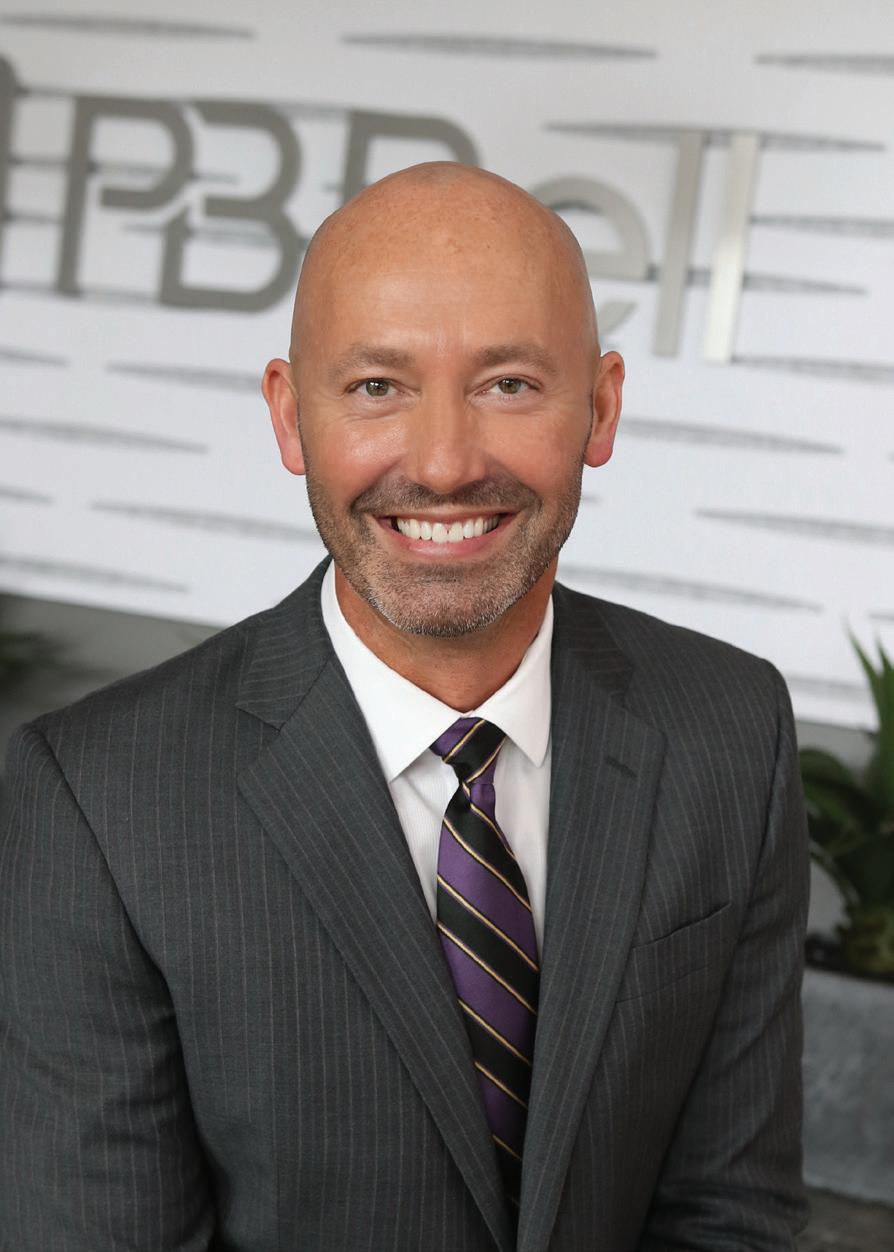
P.B. Bell CEO traded an outcome-driven approach for people-driven one by Krista Tillman
Justin Steltenpohl’s innate drive led him to study law at The University of Toledo College of Law. Looking back on his time there, he cites what many law students do: that law school teaches you to think differently. It gives alums the ability to not only identify problems but to find unique, creative solutions.
He went on to become a partner at Squire Patton Boggs, a full-service global law firm. Although he loved the law and enjoyed the work he was doing, he found that being a successful partner in “big law” required him to prioritize his practice over other facets of his life; it blurred the boundaries of an important work/life balance that Steltenpohl wanted as he became a father.
So, when the position for General Counsel (which turned into a COO role) opened at P.B. Bell, he was ready to make a drastic change in his life and go into an industry that he had limited understanding of from his law days but without the insider knowledge that he has today.
Over his 10 years with the company, before he became CEO, he found his footing not only as an executive of P.B. Bell but as a champion of the culture and dynamic that sets P.B. Bell apart and makes the company a special place to work. “I learned, watching Chapin [R. Chapin Bell, who Steltenpohl succeeded as CEO], that leadership doesn’t have to be an analytical, rational analysis void of emotion; it’s okay to lead with heart. People adore Chapin because he is authentic and vulnerable, which motivates people to be their best because they care about him and his company,” Steltenpohl relates. Steltenpohl started balancing his analytic, rational analysis with emotion, authenticity and vulnerability to become the leader that he is today.
Steltenpohl became CEO a year ago, and he continues to work on marrying his analytical, law side with his softer side to make a well-balanced CEO. He continues focusing on his personal growth, meditates every morning, leads P.B. Bell with a people-first approach, and offers employees a safe place to land.
“As CEO, my role has changed dramatically, and in more ways than I anticipated,” says Steltenpohl. “I am here to guide our team, and I want to inspire everyone to be the best they can be, to mentor their growth and development, and to help them achieve their goals.” Many times, that involves letting them know it’s okay to make a mistake. “Growth doesn’t occur without discomfort,” Steltenpohl continues. “Creating an environment where it’s okay if it doesn’t work out is critical. If it doesn’t work out the way you thought, you take a deep breath, you learn, you adjust, and you move forward. That’s growth.”
In addition to his mindset shift, Steltenpohl also faces ongoing challenges such as 1) finding the most effective ways to secure new opportunities and 2) navigating the ups and downs of the market.
When securing new opportunities, he has the same steady mindset he utilizes leading his team. He makes sure that P.B.
Bell is presented authentically; he trusts the process that has guided the company for the past 50 years; and he leans into P.B. Bell’s culture.
“My goal is to ensure that we put forth the best possible processes for our developments and our property management, control what we can control, and move forward confidently,” Steltenpohl says. “After 50 years, we have processes that work like a well-oiled machine. We’ve developed or managed almost 60,000 units over the years and, due to our authenticity and dedication to our people, our clients and our partners, we’ve been an industry leader for five decades and will continue being an industry leader for the next five decades.”
In his tenure at P.B. Bell, Steltenpohl has also seen the market ebb and flow. What he has found to be a successful approach is maintaining control when the market is thriving. “It’s important not to over-extend yourself,” Steltenpohl says. “A business needs to maintain its discipline in an ‘up’ period, because that will determine the impact a ‘down’ period will have on your company.”
Ultimately, through his work at P.B. Bell, he has found that the “drive” required in his law days was no longer a necessity. He’s found that success can be accomplished through patience, dedication, authenticity and putting people above all.
P.B. Bell pbbell.com
Inside Commercial Development’s Weirdest, Smartest Year Yet by
Kim Ryder
For years, commercial retail development lived under a single, exhausting headline: Is retail dead? In 2026, the answer is finally clear — and it’s neither yes nor no.
Retail didn’t “come back.” It evolved.
Nowhere is that evolution more visible than in Arizona, where population growth, climate realities and relentless suburban expansion have turned the state into a living example of what retail is becoming next. What failed here failed loudly. What survived adapted fast.
In 2026, retail development is no longer about how much space you build. It’s about how that space behaves. Arizona developers learned this lesson early. In fast-growing metros like Phoenix, Buckeye, Queen Creek and Surprise, speed once mattered more than strategy. Build it, lease it, repeat. That formula cracked when consumer behavior changed faster than construction timelines.
Today’s projects are designed less like static real estate and more like responsive systems. Floor plates flex. Tenant spaces are modular. White space is intentional. Vacancy isn’t panic — it’s runway. In a state where construction costs, labor shortages and extreme heat all have major impact, adaptability has become the most valuable amenity of all.
For a while, Phoenix-metro retail leaned hard into “experience.” Splash pads. Event lawns. Instagram backdrops fighting the sun in 115-degree conditions. In 2026, the winners look different. The strongest Phoenix-Metro retail centers are anchored by services people need weekly, not quarterly: healthcare, urgent care, dentistry, physical therapy, fitness, childcare, education and food. These uses thrive in Arizona’s growth corridors because they grow alongside rooftops — and don’t disappear when discretionary spending tightens.
Retail here has quietly become infrastructure.
A coffee shop next to a medical office. A fitness studio paired with physical therapy. A neighborhood market beside a school or municipal service. These aren’t accidents. They’re engineered adjacencies designed to survive economic cycles, consumer necessities and shopping center adaptation. In the Phoenix-Metro area, foot traffic isn’t always seasonal — it’s survival-based. The best centers understand that.
Arizona’s rapid development pace forced leasing to evolve faster than in many coastal markets. Long-term, rigid leases struggled in areas where trade areas changed overnight and competition appeared across the street within months. In response, 2026 leasing models increasingly favor shorter terms, percentage rent, performance benchmarks and early exit clauses. Developers aren’t just underwriting tenants — they’re

underwriting behavior. How does this operator perform in extreme heat months (or winter, depending on the part of the state)? Do they drive repeat visits or just grand-opening traffic? Can they adapt pricing when inflation hits? In Arizona, resilience isn’t theoretical — it’s measurable. Risk didn’t disappear. It shifted. And in many deals, it’s shared.
If any state is emotionally attached to parking lots, it’s Arizona. And yet — even here — the cracks are showing. In 2026, parking ratios are shrinking across mixed-use and suburban retail projects, not just because land is expensive but because land is strategic.
Developers increasingly view surface parking as future density — housing, office, medical or expanded retail waiting for the right moment. Developments being over-parked is no longer the norm. Shade structures, solar canopies and multi-use plazas are replacing asphalt wherever possible. In a climate where heat actively repels dwell time, comfort has become currency. The irony is evident: Arizona retail once depended on cars. Now it depends on convincing people to get out of them — and stay.
Arizona retail has embraced the truth faster than most markets: boredom is fatal.
Pop-ups, seasonal tenants, rotating food concepts, fitness challenges, workshops and local-maker markets are no longer novelty add-ons. They’re operational strategy. Centers now plan programming around weather patterns, tourism cycles and school calendars.
Winter visitors want novelty. Summer residents want necessity. Smart centers serve both — without pretending they’re the same customer. The question isn’t, “Who can lease this space for ten years?” It’s, “Who keeps this space alive year-round?”
The strangest thing about retail in 2026 isn’t what failed in Arizona — it’s what survived. Retail survived by becoming more human. More flexible. More honest about risk, climate and change. It stopped chasing trends imported from other markets and instead adapted to the realities of where it stands — sun, sprawl, growth and all.
Retail didn’t return to what it was. In Arizona, it became something leaner, smarter and better suited to the desert. And for developers willing to experiment, share risk and design for change instead of certainty, that evolution isn’t a warning sign.
It’s the future — wearing sunscreen, of course.

Kim Ryder is a dynamic commercial real estate executive with extensive experience in managing multi-million-dollar, complex projects and the build-out of more than 54 million square feet of retail and commercial space. Ryder has started several business lines in her career, most notably launching Thrive Real Estate and Development groups. Her career in the thrift industry extends over 25 years and led her team to expand the Goodwill real estate portfolio by more than 100 locations, having leadership over more than 400 transactions. Her expertise in thrift real estate has made her a wellknown resource.
tsginc.com /thrive-development-group
tsginc.com /thrive-real-estate

Heather Lennon, founder and owner of Imagine General Contracting and Development, aims to revitalize Phoenix’ key historic Coronado neighborhood with her new project, Imagine Coronado. The 50,000-square-foot parcel features a complex of 11 buildings, seven of which are historic (each between 99 and 108 years old), that are being transformed into a wellness enclave and community hub for the Phoenix downtown community, elevating the area “from blight to belonging.”
According to Lennon, Imagine Coronado champions adaptive reuse and circular design, repurposing materials in creative ways. From old metal containers as fire pits to architectural salvage as shade structures, Imagine Coronado demonstrates how elements can be thoughtfully given a second life —Mike Hunter imaginedevelops.com

Aspirant Development, the luxury urban infill division of Empire Group of Companies, expects to break ground this spring on Revelry, a Class A mixed-use high-rise community on the southeast corner of Rural Road and University Drive in Tempe. The project is designed to rival top urban highrise communities nationwide and features elevated lifestyle amenities.
Designed as a landmark addition to Tempe’s growth, Revelry will feature 533 residential units across two towers rising 17 and 15 stories, encompassing approximately 850,000 square feet. The project will offer a curated mix of furnished and unfurnished residences, along with ground-level and second-floor retail space designed to complement the surrounding neighborhood. —Mike Hunter builtbyempire.com
Buildout expenses, improved financing and elevated vacancies are creating a prime scenario for those wanting to own their metro Phoenix industrial real estate. Phoenix developers are taking note of this trend as well, and it is quietly (or not so quietly) shaping 2026 strategies.
While leasing offers advantages like speed-to-market and flexibility — factors that are critical for some tenants — buying gives a company control of their building investment.
That’s an increasingly important consideration in an industry where users often have to invest $10 million, $20 million, even $50 million or more to create modern, competitive facilities. From stateof-the-art manufacturing equipment to automated racking and picking systems, it’s no surprise that businesses use ownership as a way to minimize their riskto-investment ratio.
That desire to own sparked some of the market’s largest industrial transactions of 2025. At Lincoln Property Company’s Park303, Dollar Tree purchased a 1.25-million-square-foot, Class A industrial building for $147 million, establishing its first-ever Phoenix distribution facility. Less than two months later, Walmart purchased a 1.27-million-square-foot, Class A building at Luke Field (also by Lincoln) for $152 million.
The most notable buyer activity, however, is happening in the small- and mid-bay sector (300,000 square feet or less). That trend is buoyed by pockets of overbuilding and sluggish absorption, leading to elevated vacancies. According to JLL Q4 industrial data, Phoenix since 2021 has seen a 72% vacancy increase in mid-bay buildings.
But there is light on the horizon, with JLL data also showing more than 39 semiconductor-related suppliers expanding into the Valley post-TSMC. This, combined with booming aerospace, energy and advanced manufacturing sectors, is attracting a wide range of midsized suppliers and logistics users who are creating a new wave of demand.
What should the market do with this data? For owners with mid-bay


projects, consider that a dual lease + sale approach could elevate results, attracting buyers who want to protect their CapEx improvements.
We’re taking this approach at Sossaman Business Campus, a development by Silver Creek that spans eight industrial buildings ranging from 23,000 to 60,000 square feet in Mesa’s Elliot Tech Corridor. JLL initially brought this property to market as a lease opportunity, but, after a flood of inquiries to buy, we revised the listing to include for-sale options — and our interest list quadrupled overnight.
That pattern repeated in Gilbert, when ViaWest sold one 13,547-square-foot building within a larger, six-building East Valley industrial portfolio. Again, JLL brought that building to market as a lease, but inquiries trended toward purchase. The sale allowed ViaWest to secure an opportunistic return on investment while giving this owner-user-buyer a reducedrisk growth opportunity.
Buying isn’t right for every company, but for many, control is a powerful incentive. With Phoenix’s economic outlook strong, we expect the desire to own will continue to play a prominent role in the local industrial ecosystem. —Jason Moore, managing director at JLL (www.jll.com/en-us)




























SEMICONDUCTOR INVESTMENTS IN CASA GRANDE
• NRS Logios America facility opening — May 28, 2025: NRS Logios America opened its first U.S. chemical logistics park in Casa Grande, built on a 40-acre site to serve semiconductor and battery materials supply chains. The facility is projected to support logistics, storage and distribution, with expansions planned to include rail infrastructure.
• KPPC Advanced Chemicals groundbreaking — Dec. 22, 2025: KPPC Advanced Chemicals began construction of its Catholic Valley Industrial Park semiconductor chemical campus, a nextgeneration ultrapure chemical production site. The initial phase is a $120-million investment, with plans to grow to about $500 million over time to supply high-purity materials for fabs that include TSMC, Intel and Micron.
• Chang Chun Arizona groundbreaking — Oct. 20, 2022: Taiwanese chemical supplier Chang Chun Arizona broke ground on its first U.S. manufacturing facility in Casa Grande, a project expected to produce electronicgrade chemicals for chip manufacturing and create more than 200 jobs with a roughly $300 million investment.
economic development with consumer protection by
Stephanie Quinn
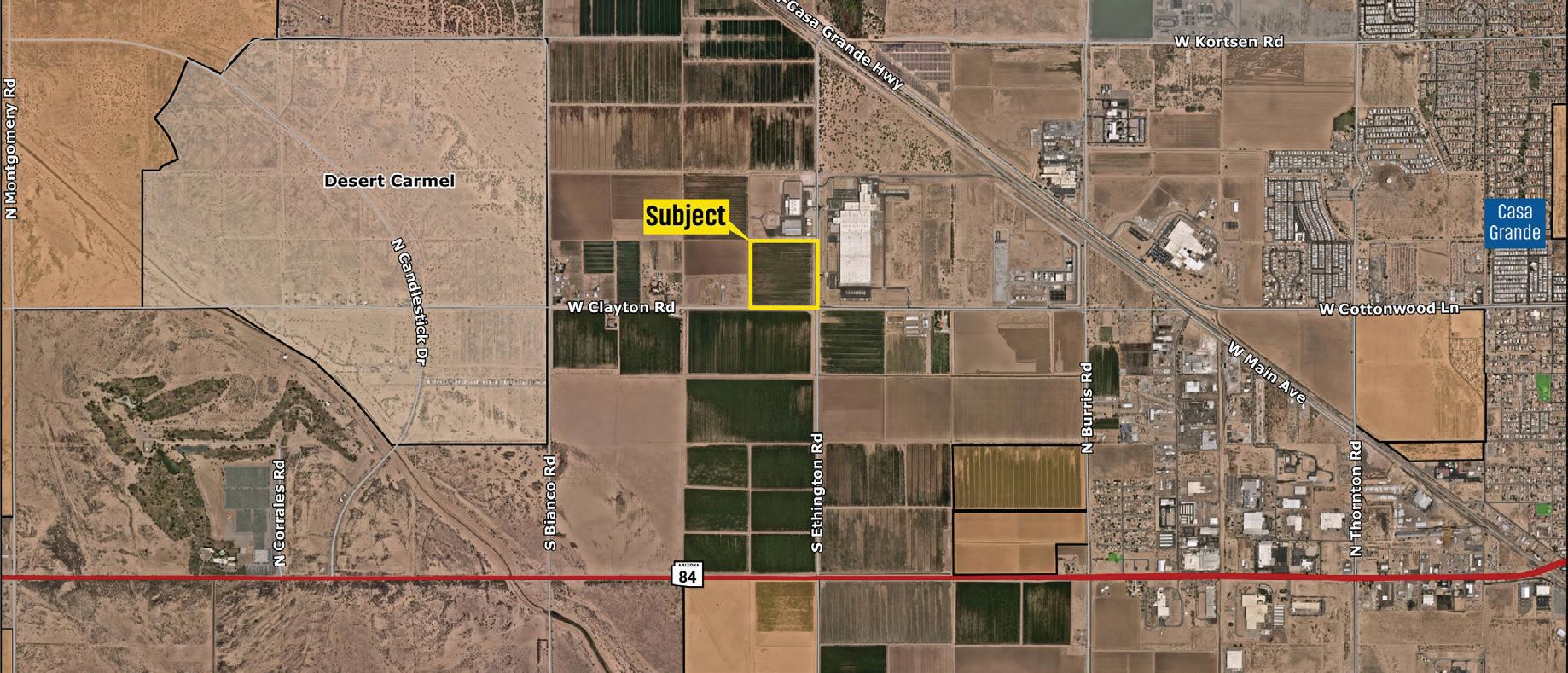
Arizona’s semiconductor growth is starting to show up in places beyond the major fab sites. Increasingly, it is appearing in land transactions, rail-served sites and industrial facilities built to support large-scale manufacturing. One of the clearest signals of that shift came in late December, when Sunlit Arizona purchased 40 acres in Casa Grande for a planned hydrofluoric acid manufacturing facility.
Sunlit is the U.S. subsidiary of a Taiwan-based semiconductor chemical supplier that provides specialty materials used in chip fabrication. The company established its first U.S. operation in Metro Phoenix’s Deer Valley area in 2024, supplying chemicals used in advanced manufacturing processes at semiconductor facilities.
The $9.2-million land purchase positions Sunlit to support Arizona’s expanding semiconductor supply chain with a material used throughout chip production. Hydrofluoric acid is a chemical used in multiple stages of wafer processing and, as more fabs come online in the state, suppliers are moving closer to customers to reduce logistics risk and dependence on overseas production.
Auza Ranches LLC sold the land, with Land Advisors Organization representing both buyer and seller. The transaction closed in late December 2025 and reflects what brokers say is a broader recalibration in how industrial users are selecting sites tied to semiconductor manufacturing.
“This transaction reflects what sophisticated industrial users are prioritizing today, which is rail access, speed to execution and the ability to control enough land to grow without constraint,” says Kirk P. McCarville, CCIM, a Pinal County specialist with Land Advisors Organization. He adds that Casa Grande remains one of the few Arizona markets where manufacturers can meet immediate operational needs while
planning for long-term expansion.
Sunlit selected Casa Grande based on the market’s industrial fundamentals, rail connectivity, land pricing and cost-of-living considerations for future employees. This Sunlit deal marks the 10th semiconductor-related supplier to establish operations in Casa Grande, a clear demonstration of how Arizona’s chip growth is no longer confined to the City of Phoenix and its immediate suburbs. Smaller cities are starting to feel the pull as suppliers look for space, access and certainty they can no longer find closer to the core.
The economic impact of this sale extends beyond the facility itself because facilities like this tend to reshape more than a single parcel. Chemical manufacturing tied to semiconductor production brings specialized logistics requirements, coordination with utilities and long-term industrial occupancy factors that influence the shape of infrastructure planning and land use.
Drawing sustained interest from manufacturers and suppliers serving both the semiconductor and electric vehicle sectors, Casa Grande is slowly emerging as a secondary hub supporting Arizona’s semiconductor corridor. Located along key transportation corridors and offering rail access that is increasingly hard to secure in denser metro areas, the city has become a practical choice.
The Casa Grande site provides Sunlit room to scale as the chip industry continues to mature in Arizona. At the same time, this deal reflects how semiconductor growth is spreading beyond Arizona’s core metro areas and into cities positioned to support the industry’s next phase.
APRIL 6-12, 2026
Arizona’s tech community is experiencing rapid growth, driven by founders, startups and investors statewide. Arizona Tech Week, powered by the Arizona Commerce Authority, is the state’s first statewide decentralized tech conference, uniting Arizona’s vibrant tech ecosystem. Attend or host events to catalyze new ideas, connect with peers and get inspired — all while enjoying unique cities and landscapes across the state.

This month, DSV began construction on a nearly 1 million-square-foot logistics facility in Mesa, equipped with state-of-the-art technology and sustainable design elements, including solar panels, just east of Phoenix-Mesa Gateway Airport.
“DSV’s investment in a new 950,000-square-foot facility in southeast Mesa is a major vote of confidence in our region’s growing role in the domestic semiconductor supply chain,” says Mesa Vice Mayor Scott Somers. “Mesa has made intentional investments in infrastructure and education to support the type of high-value job growth that DSV will bring to our community.”
The project is DSV’s largest physical expansion in Arizona, but this is not the first time DSV has used the airport as a site for expansion. The company began operating at Gateway in 2023, supporting semiconductor customers and expanding cross-border trade with Latin America. Its Arizona air cargo operations are tied to an Atlas Air-operated charter network that connects the region with Europe and Latin America.
The $14.5 million facility will serve as DSV’s regional headquarters for the southwestern United States and is expected to open in early 2027 and employ about 160 people. The new facility sits a short distance from runways and major transportation routes, allowing DSV to consolidate its air, ocean, road and contract logistics operations into a single location.
Mesa officials view the project as part of a broader shift in the city’s industrial base as semiconductor manufacturing expands across the East Valley.
“This new DSV facility represents a significant addition to Mesa’s growing technology corridor and strengthens our position in the semiconductor supply chain,” says Mesa Mayor Mark Freeman. “By bringing multiple logistics divisions under one roof in our city, DSV is creating valuable jobs and supporting the continued economic growth of our region.”
“The collaborative opportunities between DSV and Gateway open the door for increased transcontinental trade taking place within Greater Phoenix,” says Christine Mackay, president and CEO of Greater Phoenix Economic Council. —Stephanie Quinn
Taiwan Semiconductor Manufacturing Co. is having a moment, and Arizona is watching closely. The world’s largest contract chipmaker reported a 35% jump in fourth-quarter profit, beating market expectations and capping a year of record performance driven largely by demand for advanced chips used in artificial intelligence. At the same time, TSMC signaled that its U.S. manufacturing footprint is far from complete, offering fresh clues about what the next phase of its Arizona investment could look like.
TSMC exceeded its fourth-quarter revenue and is forecasting that it will rise by close to 30% in U.S. dollar terms in 2026, citing what it called strong signals from customers responding to the rapid expansion of AI workloads. Capital spending is expected to range from $52 billion to $56 billion this year, a sharp increase that underscores the company’s aggressive capacity expansion plans.
That growth story has direct implications for Arizona, where TSMC is already investing $165 billion in a sprawling north Phoenix campus that includes multiple fabrication plants, advanced packaging facilities and a planned research and development center. One fab is already operating, while others remain under construction.
During a briefing with analysts, Chief Executive C.C. Wei confirmed that TSMC has purchased additional land in Arizona and is applying for permits to begin construction of a fourth fabrication plant and its first advanced packaging facility in the state. “That gives you a hint as to what we plan to do,” Wei says. “We are going to expand many fabs over there.”
Those remarks came just days after TSMC Arizona paid nearly $200 million at a state land auction to acquire about 900 acres near Loop 303 and Interstate 17. The purchase brings the company’s total land holdings in north Phoenix to roughly three square miles and positions TSMC to support long-term expansion well beyond its current construction plans.
Phoenix Vice Mayor Ann O’Brien says the acquisition reflects the scale of the company’s commitment to the region. “Today’s successful State Trust Land auction marks a historic milestone for Arizona’s semiconductor industry and our economic future,” O’Brien said in a statement. “This land acquisition enables Taiwan Semiconductor Manufacturing Company to

continue building a world-class semiconductor campus that will create thousands of high-quality jobs and generate billions of dollars in economic activity for decades to come.”
The land sits within a larger master-planned area known as NorthPark, which is expected to include housing, schools, commercial development and open space alongside semiconductor manufacturing. While TSMC has not announced a timeline for development on the newly acquired property, the move reinforces how central Arizona has become to the company’s long-range strategy.
While chipmakers compete fiercely at the design level, TSMC captures value across the ecosystem as demand for advanced manufacturing rises. That position allows the company to continue to benefit globally from its role as the manufacturing backbone for leading chip designers, including Nvidia and Apple. Company leadership has also acknowledged concerns about the durability of AI-driven demand, underscoring the need to carefully manage capital spending to avoid overextension.
That balance matters in Arizona because the state has been focused on building a local semiconductor workforce, regulatory framework and supplier base to support projects of this scale. TSMC’s newly acquired land, sitting just south of TSMC’s existing campus, is just one of the many moves the company has made in reshaping parts of Phoenix through its infrastructure investment and accelerating development in areas that were largely undeveloped just a few years ago. Permitting for additional plants is still in progress but, currently, no timeline has been announced for what will be built next. —Stephanie Quinn
Taiwan Semiconductor Manufacturing Co. tsmc.com
TSMC Arizona recently paid nearly $200 million at a state land auction to acquire about 900 acres near Loop 303 and Interstate 17. The purchase brings the company’s total land holdings in north Phoenix to roughly three square miles.


Swiss Biologic Dentistry is raising the bar for dentistry in Phoenix, becoming one of the few practices in the state to offer the Pinhole Surgical Technique (PST™). It is also among a smaller number nationwide that pair the treatment with platelet-rich fibrin (PRF) to support healing.
PST™ is a minimally invasive option for gum recession, a condition that affects more than half of U.S. adults. Left untreated, recession exposes tooth roots, heightens sensitivity and accelerates decay. Traditional grafting requires tissue from the roof of the mouth, addresses only a few teeth at a time, and involves weeks of recovery.
PST™ follows a different approach. Instead of cutting, doctors use a fine needle to create a small entry point. Specialized instruments lift the gum tissue, which is then repositioned over exposed roots. Multiple collagen strips are placed beneath the gums to stabilize and heal.
Unlike grafting, which can only repair three teeth per surgery, PST™ can treat several teeth or even the entire mouth in one session. The length of treatment depends on how many teeth are involved, but patients typically return to normal activities within a few days. While gums take about six weeks to fully stabilize, the cosmetic improvement is visible right away.
“Gum recession is one of the most widespread oral health challenges in the country, yet patients often delay care because conventional surgery feels too invasive,” says Alexis Yip, D.M.D., who leads the practice’s PST™ program. “With this technique, we can resolve the problem efficiently and give patients a more approachable option.”
CEO Matt Ellingson notes that the procedure reflects a broader shift toward less invasive medicine. “By combining PST™ with PRF and regenerative materials, we are not only improving outcomes but also redefining what patients should expect from modern dentistry.” —Micaela Camacho swissbiologic.com
One third of a person’s life is spent at work — and in construction, that time is marked by long shifts, physical strain and constant pressure to perform. Those conditions take a toll on the mind, with real consequences for safety, productivity and retention.
That reality has pushed more leaders to take mental health seriously. But in a culture where toughness is the norm, support can’t stop at an annual talk or awareness week.
The construction industry has made tremendous strides in protecting the body. Now, the question is: How do we equip the workforce to protect the mind, too?
More than half of construction workers said they felt anxiety or depression, according to a 2024 Clayco survey. Behind those numbers are daily pressures that extend far beyond physical strain:
• Relentless Stress: Everything’s expected to be done faster, cheaper and better over time. Yet the work remains physically demanding and often dangerous.
• Time Away from Family: Many industrial projects require travel, keeping workers away from home for days or weeks at a time, chipping away at family connections.
• The “Tough It Out” Mentality: There’s an unspoken rule on many job sites to keep your head down, don’t complain and push through, making vulnerability be seen as weakness.
These realities show why awareness alone isn’t enough. It takes ongoing hands-on action to move from talk to real support on the jobsite.
Leaders can’t save these conversations for a single week on the calendar. Prioritizing mental health year-round means making it part of daily safety talks. The more the topic is normalized, even in small ways, the more comfortable people feel. And incorporating mental health in this way doesn’t always have to be overly formal. A quick check-in or casual mention can be powerful enough to signal it’s safe to speak up.
Mobile telehealth apps give workers private access to licensed therapists through calls or video sessions, putting support right on their phones. Equally important is how these tools are shared. QR codes on jobsite boxes and break areas can complement telehealth as a lowprofile way to connect workers with resources without the pressure of asking out loud.

CPR saves lives because people know what to do in the moment. Leadership mental health training works the same way, equipping managers with the confidence to spot warning signs, start conversations and guide next steps with clear action plans. Paired with refresher sessions to ensure those skills stay strong, leaders can step in early and open the door to professional help.
Peer support programs empower team members to serve as approachable points of contact for mental health support, especially for those who may not feel comfortable going to a supervisor or HR. These trained volunteers are people who workers can trust to talk to openly and safely, without fear of jeopardizing job security. Talking with someone in the same hard hat and boots feels safer, less formal and easier to accept. Strength in this industry isn’t about pushing through; it’s about looking out for one another and building a culture that humanizes construction for all. Chris Leatherberry , a project executive leading mental health initiatives at Nox Group ( noxgroup.us ), a large-scale industrial construction company focused on mission-critical infrastructure across the U.S.


















Honor is what motivates our team of dedicated healthcare professionals. Through passion and purpose, we come together to ensure every patient is provided with the best possible care. honorhealth.com

In healthcare, and especially dentistry, technology is no longer optional. Today’s patients expect transparency, convenience and faster results. For small, patient-centered practices, integrating the right technology can mean the difference between surviving and truly thriving. At Alpers Family and Cosmetic Dentistry, we’ve leaned into innovation to deliver a more personalized, efficient and trustbuilding experience at every visit.
AI-assisted diagnostics are one of the biggest game-changers. Using AI-enhanced X-rays, we can now detect issues earlier and with more accuracy, helping us recommend treatment plans that are more customized to the individual. It saves time, reduces guesswork and shows patients exactly what we see in real time — issues are highlighted in color, building transparency and helping them take ownership of their health from the start.
3D technology has also transformed how we deliver care. Digital 3D X-rays using CBCT imaging give us a comprehensive, high-resolution view of the mouth, jaw and airway in a matter of seconds. This allows us to diagnose more accurately, plan more precisely and uncover hidden concerns that traditional X-rays might miss.
Beyond diagnostics, in-house 3D printing and scanning eliminates wait times, enhances precision and moves from planning to treatment more efficiently. Smile simulations let patients preview a realistic before-and-after image of their own face, making their potential results feel tangible and boosting confidence in their decisions.
These technologies don’t replace the human connection. They enhance it. They help us stay on schedule, catch surprises sooner, and make our office feel less clinical and more like a concierge experience.
In dentistry, like in business, trust is everything. We believe using technology to improve understanding, ease and efficiency is how we earn it, one smile at a time.
—Dr. Kristopher Alpers, lead practitioner at Alpers Family and Cosmetic Dentistry (alpersdentistry.com)
For decades, real estate data has centered on listings such as price, square footage, location and transaction history. While essential, these attributes tell only part of the story, particularly for the more than 77 million Americans living in community associations who collectively pay approximately $100 billion in annual dues across properties representing more than $11 trillion in real estate value under management.
Increasingly, buyers, lenders, insurers and boards are recognizing that how a community is governed and managed can materially affect property value, risk and long-term stability. Yet until recently, there has been no standardized, verifiable way to evaluate the performance of HOA and COA boards and the management companies that serve them.
As real estate technology evolves beyond listings alone, attention is turning toward non-listing intelligence. This includes data that captures operational quality, accountability and trust. The challenge is not whether this information matters, but how it can be structured, verified and transported across systems without fragmenting the real estate ecosystem. This is where RESOaligned data standards may play a defining role.
HOA Doctor®, a Phoenix-based civic trust-tech platform, approaches this problem through a familiar but rigorously verified model: ratings and reviews. The platform enables verified homeowners to rate and review HOA and COA boards and management companies, focusing on governance decisions and service execution rather than individual neighbors or communities as abstract entities.
Unlike traditional review platforms, every submission is tied to confirmed property ownership and identity. This verification ensures that feedback reflects real stakeholder experience while protecting participant identities. The result is not anonymous commentary but decisiongrade input from those directly affected by board governance and management performance. When structured consistently, this verified ratings-and-reviews data becomes more than opinion. It becomes operational signal.
The platform aggregates verified reviews across five core dimensions: governance integrity, financial stewardship, maintenance reliability, communication and engagement, and emotional trust. These categories reflect the areas most likely to influence buyer confidence, operational
risk and community stability.
The aggregated output is expressed as standardized governance-performance indicators, allowing patterns to emerge across associations and management companies without assigning regulatory authority or judgment. This approach emphasizes measurement and transparency rather than enforcement.
From a technology standpoint, the significance lies not in the platform itself but in the ability to treat governance performance as structured data that can be benchmarked, analyzed and compared over time.
As new classes of real estate data emerge, transport neutrality becomes critical. The Real Estate Standards Organization exists to enable data to move consistently across MLSs, platforms and downstream systems without dictating who produces the data or how it is interpreted.
RESO-aligned governance indicators allow verified ratings-and-reviews data to travel alongside traditional listing information and other analytics. This protects MLSs, brokers, lenders and technology providers from vendor lock-in while enabling richer decision-making across the real estate lifecycle.
In practical terms, governance-performance data could inform buyer due diligence, insurance underwriting, lending risk assessment and board self-evaluation without any single platform controlling access or narrative.
From a business standpoint, verified ratingsand-reviews data can also support operational improvements. When boards and management companies have access to structured, credible feedback, they can identify recurring service gaps, prioritize maintenance more effectively and allocate management time where it has the greatest impact. Over time, this level of visibility may help reduce inefficiencies, improve responsiveness and support more disciplined decision-making. These factors increasingly influence affordability and long-term community stability.
For business leaders and technologists, the opportunity is clear. Governance is no longer just a community issue. It is becoming a core real estate data problem, and verified, standardsaligned solutions are positioned to shape how the industry addresses it. —Bill McKay, founder and CEO of HOA Doctor® (hoadoctor.com)


Jurgita Lapienytė is the editor-in-chief at Cybernews, a globally recognized independent media outlet where journalists and security experts debunk cyber by research, testing and data.
Recognized as the Cybersecurity Journalist of the Year and featured in Top Cyber News Magazine’s 40 Under 40 in Cybersecurity, she is a thought leader shaping the conversation around cybersecurity.
Lapienytė has been quoted internationally — by Metro UK, The Epoch Times, Extra Bladet, Computer Bild and more. Her team reports on proprietary research highlighted in such outlets as the BBC, Forbes, TechRadar, Daily Mail, Fox News, Yahoo and much more.
cybernews.com
With thousands of victims claimed by criminals throughout the year, 2025 was one of the most fruitful years for ransomware gangs yet. AI was a big help.
By Jurgita Lapienytė
Artificial intelligence may not be orchestrating major cyberattacks on its own just yet. However, it’s making attacks easier to carry out and it’s putting smaller, less protected businesses at even greater risk.
Ransomware attacks are on the rise, and this can be seen with the naked eye. In 2024, RansomLooker, which relies on constant monitoring of criminals’ data leak sites, recorded 5,189 ransomware attacks. That’s a 24% rise from the year before.
It is important to highlight here that these are only the attacks that criminals brag about, because they are either trying to pressure those victims into paying the ransom or putting big names out there to boost their reputation. The real scope may be much, much bigger.
In 2025, Russia-based Qilin was the most vocal gang, with 776 victims in its basket, and Asahi, the Japanese beer maker, was one of the more prominent targets.
AI-generated malware is a new goodie on the shelves of the dark web — yet another ready-to-use cybercrime tool that makes ransomware attacks easier and hence more prevalent. Anthropic discovered that criminals abused its Claude model to generate malware, which they were later selling for $400–$1,200 on dark web forums. While not the most sophisticated programs, they could still perform the most important functions, like evading discovery, encrypting files and employing anti-recovery mechanisms, and they came professionally packaged.
It may take a very sophisticated attack to bring a bank to its knees, if that’s even possible given how well protected against cyberattacks they are. It’s a different story for others.
Cyberattackers are increasingly going after small and medium-sized businesses, and those tend to crumble more easily. For a small, family-owned entity with little to no cybersecurity resources, even the “dumbest” AI-written malware can mean the end of the business.
Some sectors are also particularly vulnerable. RansomLooker data reveals that manufacturing was hit the hardest last year, accounting for 28% of all ransomware attacks where the victim’s industry is known. I’d assume many cases go underreported because manufacturers are avoiding downtime costs at all times and are more likely to pay the ransoms.
It also doesn’t help our case that we are rushing to implement AI solutions, failing to weigh potential benefits against risks, or stalling AI usage in the office, leading to employees using it in secret and hence opening another backdoor for threat actors.

ESET researchers discovered evidence that AI can craft malware from beginning to end. But that isn’t the greatest threat yet. What crooks find AI most useful for is social engineering, using it to craft convincing phishing lures and threatening ransom notes.
AI has definitely become instrumental in cyberattacks and has contributed to the rise in ransomware. But what’s about to come may be much worse.
AI or no AI, sophisticated threat actors like the ones behind Qilin and Cl0p will continue to sow terror among businesses. However, armed with AI, average crooks are about to become a big headache, too.
Cheaply generated malware will become more accessible, AI tools will help them craft convincing phishing campaigns, and they will be able to analyze extorted files to learn what can hurt the victim the most.
Despite the fact that ransomware and AI’s roles were under the media spotlight worldwide in 2025, we still don’t see any exponential growth in ransomware cases. RansomLooker data points to a steady increase in ransomware incidents.
In 2026, we expect to see a rapid acceleration in ransomware cases and other AI-assisted scams for various reasons, in part because AI makes it easier to become a criminal and requires less or no technical knowledge — just motivation.
With the agentic AI explosion, shadow AI usage in organizations, rushed AI tool implementation and layoffs within the cybersecurity field, businesses will become much more exposed and vulnerable, essentially leaving their front door open for every crook who’s not too lazy to come in.






The Arizona Office of Economic Opportunity’s jobs data is projecting sustained opportunities and growth across all sectors in 2026. Observing, “Businesses of all kinds are investing in Arizona, creating a diverse range of employment opportunities for everyone,” Office of Economic Opportunity Director Mary Foote shares, “Arizona’s economy continues to demonstrate remarkable resilience and targeted growth. Our latest projections show Arizona adding about 450,000 jobs between 2024 and 2034, representing a 1.2% annual growth rate that significantly outpaces the national projection of just 0.3%.”
“Arizona is experiencing rapid growth across a wide range of industries,” says Sandra Watson, president and CEO of Arizona Commerce Authority, citing semiconductors, technology and AI, aerospace and defense, batteries, bioscience and healthcare as among them.
While noting, “Many of these sectors are also driving an increase in high-quality manufacturing jobs,” Watson adds, “We’re also seeing a rise in headquarters projects across multiple industries, most recently with Cognite in Tempe, Axon in Scottsdale and Honeywell in Phoenix, showcasing Arizona’s attractiveness as a premier destination for office operations.”
Positive growth is not the only factor in the overall jobs picture. Bill Nance, president and CEO of StrataTech Education Group, points out, “The increased demand combined with an aging workforce of existing professionals presents an acute shortage in skilled labor.”
“ The increased demand combined with an aging workforce of existing professionals presents an acute shortage in skilled labor.”
—Bill Nance, President and CEO, StrataTech Education Group
As for the long-standing economic engine of the construction industry, Arizona Builders Alliance President Kim Davids says, “The state benefits from attracting companies and workers from other regions, but the emphasis remains on building homegrown talent. Competition from out-of-state companies brings both opportunities and challenges, as these firms often import their own workforce while also

creating demand for local workers.”
Noting that Arizona’s construction industry is experiencing unprecedented growth driven by massive investments in technology and manufacturing sectors, Davids credits the semiconductor industry as leading this expansion in Arizona. “An example,” she says, “is TSMC Arizona’s $165-billion investment, setting the stage for continued development. Hyperscale data centers represent another major growth sector, with project sizes doubling from previous years and creating sustained demand through 2027.”
Davids sees industrial and commercial construction dominating the employment landscape, particularly in the West Valley areas of Goodyear and Buckeye, where vast amounts of land support large-scale development. The East Valley and corridors connecting Phoenix to Tucson also show strong growth patterns. And within these sectors, the highest demand exists for skilled trades positions, including electricians, carpenters, plumbers, and mechanical specialists. “Project management roles and supervisory positions also see strong demand as ABA member companies manage increasingly complex, technology-driven construction projects,” Davids says. “The industry requires workers who can adapt to advanced building systems, building information modeling, and integrated project delivery methods that define
modern construction.”
Sharing his perspective as national program director of skilled trades for Ancora Education, Phoenix native Bill Myers points to not just the industrial and tech projects but also the many commercial and mixed-use projects. “They all require electricians, HVAC installers, plumbers and welders as the most called-upon skilled trades,” he says. He points to two factors impacting the job and workforce situation: “Contractors from all over the country are working at these sites where the pay is generally more, creating a shortage for the small businesses to find tradesmen to do the smaller jobs. And, even after the projects are finished, skilled labor will be needed for the plants to be maintained and run, requiring long-term employees.”
“ Some shortages stem from retirements, especially in trades, while others are driven by industry growth outpacing the local talent pipeline.”
—Dr. Scott Spurgeon, Superintendent, West-MEC
Renee Arellano-Jones, president of Arizona Automotive Institute, notes another factor in what she describes as “a major skills gap and shortage when it comes to skilled trades” and why she emphasized the importance of trained

professional: “There is a generation of technicians and trades workers that are retiring out and there are not enough skilled trades professionals coming behind to fill those roles,” she says. Additionally, “We have found that employers are not only looking for trained skilled technicians, but also those with the soft skills that will mesh in with their organization. This is the other critical part that is discussed as part of the training at AAI.“
She has seen a number of organizations with an influx in opportunities in the trades, and cites specifically the welding, automotive and diesel fields. “The Phoenix Metropolitan and surrounding areas are an attractive place for new and expanding companies,” she observes. “This is evident by some of the most recent big names that have decided to plant roots in Arizona, such as TSMC and Google.”
“ We have found that employers are not only looking for trained skilled technicians, but also those with the soft skills that will mesh in with their organization.”
—Renee Arellano-Jones, President, Arizona Automotive Institute
At Western Maricopa Education Center (West-MEC), a public school district, programs provide career training for both high school and adult students in Arizona. Superintendent Scott Spurgeon, Ed.D., sees the strongest employment growth in such sectors as advanced manufacturing, healthcare, information technology, skilled trades, and logistics and distribution. “These trends reflect both the number of new companies expanding or relocating to the region, as well as existing employers increasing their workforce to meet demand,” he says. “Within these types of businesses, the most common types of jobs are entry-level positions. For example, in the advanced manufacturing field, they are hiring more entry-level technicians than we can even provide, which is why we are expanding that training program, and the same goes for our Healthcare and skilled trades programs.”
Naming skilled trades and technical roles, healthcare professionals and entry-level workers with strong soft skills — specifically communication, reliability and teamwork — as workforce shortages, Dr. Spurgeon observes,
“Some shortages stem from retirements, especially in trades, while others are driven by industry growth outpacing the local talent pipeline.”
Foote also notes the need for talent at higher education levels, including engineers and researchers with master’s and doctoral degrees, to drive innovation in semiconductor manufacturing, aerospace, and defense technologies.
“The proliferation of investment from global companies, particularly in the semiconductor and advanced manufacturing spaces, has also increased the demand for engineers and other employees with technical skills,” observes Christine Mackay, president of Greater Phoenix Economic Council. “This need will not slow down, as companies in the expansion process like Amkor, LG Energy Solution, Intel and TSMC continue building out their projects and hiring more employees.”
The largest provider of workforce training in the state is the Maricopa County Community College District. Addressing one area of our evolving economy, Chancellor Steven R. Gonzales, Ed.D., says, “Arizona has quickly become the epicenter of semiconductor manufacturing, and, in the last five years, the state has won more than 40 semiconductor expansion projects.”
Citing the prediction estimating a nationwide need for 115,000 jobs by 2030, Dr. Gonzales points out jobs in the semiconductor ecosystem that are or will become available in the workforce
range from entry-level technicians to computer and electronic parts manufacturing, and even roles in artificial intelligence and machine learning. “As a system,” he says, “Maricopa Community Colleges currently offers 31 degree and certificate programs that directly or indirectly support the semiconductor industry.”
“ Maricopa Community Colleges currently offers 31 degree and certificate programs that directly or indirectly support the semiconductor industry.”
—Steven R. Gonzales, Chancellor, Maricopa Community Colleges
While the semiconductor industry expansions and investments capture the headlines, healthcare also posts impressive numbers. According to Foote, OEO projects the addition of 113,500 jobs by 2034, representing a 2.1% annual increase. “This sector remains vital to our state’s economic health as our population grows and ages, creating demand for medical professionals at all levels,” she says.
Dr. Gonzales cites figures from OEO showing that year-over-year, healthcare and social assistance reported gains of more than 20,000 jobs. “When looking at short-term occupational growth through 2026, jobs — including physical

therapist assistants, home health and personal care aids, nurse assistants, phlebotomists and dental assistants — show steady increases in annual openings. The state’s aging population and influx of new residents mean more individuals need access to healthcare services and providers,” he says, adding, “As the largest integrated healthcare education system, with over 70 healthcare programs — including three bachelor’s degree programs — Maricopa Community Colleges connect students to the educational pathways needed to not only gain employment but create long-term careers.”
Mackay points also to growth in the biosciences and medtech sectors, spurred by the growing traffic in the healthcare industry and innovation ecosystem. “Greater Phoenix has recently attracted high-tech, forward-looking companies, including MiiHealth, NeuroCatch and Hummingbird Biomedical, bolstering our reputation as a leading market for novel health technologies,” she says, noting, “In the bioscience industry, every job creates 5.7 indirect jobs in supporting industries and services, adding broader employment opportunities around the region.”
“We’re also seeing substantial growth among microbusinesses, which indicates entrepreneurship’s increasing importance in Arizona’s economy,” Foote says. “Through the Arizona Microbusiness Loan Program, we’ve designated $5 million to support businesses with fewer than five employees. These loans range from $2,000 to $50,000 per qualified business and include financial education and training support.”
“
We’re also seeing substantial growth among microbusinesses, which indicates entrepreneurship’s increasing importance in Arizona’s economy.”
—Mary Foote, Director, Arizona Office of Economic Opportunity
However, Foote offers another perspective on some of the strong business development and job creation we’ve discussed as she points out that Arizona faces specific workforce gaps that require targeted solutions:
• “The healthcare sector experiences the most severe shortages, particularly in rural communities where access to care remains challenging. Direct care workers, who provide essential daily support to elderly and disabled populations, represent a critical gap that affects quality of life for vulnerable Arizonans.
• “Behavioral health technicians remain in short supply as mental health needs grow across all demographics.
• “The shortage of nursing professionals continues to strain healthcare systems, with particular needs in specialized areas like critical care, emergency, and geriatric nursing.
• “The construction industry faces persistent shortages of skilled trades workers at a time when infrastructure and housing development are essential to our growing population. Experienced electricians, plumbers, and HVAC technicians remain in high demand, with employers competing for limited talent.
• “The technology sector faces competitive

challenges in recruiting software developers and cybersecurity professionals, while advanced manufacturing growth has created demand for workers with specialized technical skills that outpace current workforce capacity.
“These shortages could limit Arizona’s ability to capitalize on economic development opportunities if not addressed through strategic workforce initiatives,” Foote says.
“Public-private partnerships have become essential to addressing workforce gaps,” says Foote. An example she points to is the Talent Ready AZ Initiative, which brings together state agencies, educational institutions and industry partners to align training programs with business needs. “These collaborations ensure the curriculum prepares students for real-world employment while providing clear pathways to in-demand jobs.”
And Watson notes, “Industry partnerships are key to all that we do at the ACA.”
In fact, collaboration is a defining characteristic of Phoenix’s — even Arizona’s — economic development.
“Our collaborative approach to workforce development brings together all partners across government, academia and industry to develop comprehensive, award-winning and scalable solutions,” Watson says. One such solution is the nationally recognized Future48 Workforce Accelerator programs, launched by Governor Hobbs and the Arizona Commerce Authority in partnership with local community colleges and industry partners. The Accelerators provide hands-on training for careers in the state’s growing manufacturing sector.
“ Our collaborative approach to workforce development brings together all partners across government, academia and industry to develop comprehensive, award-winning and scalable solutions.”
—Sandra Watson, President & CEO, Arizona Commerce Authority
“Since launching the first Future48 Workforce Accelerator, known as Drive48, in 2021, the Future48 network has expanded to include six training centers statewide in Coolidge, Apache

Junction, Yuma, Kingman, Phoenix and Mesa focused on industries such as automotive, battery, semiconductors, aerospace and defense, and more,” says Watson.
At the same time, Watson sees industry partners taking action to strengthen their talent pipelines, particularly in the fastgrowing semiconductor sector. Two of note are Intel’s first U.S.-registered apprenticeship for semiconductor technicians, which it launched in 2024, followed that same year by TSMC Arizona’s expanded Registered Technician Apprenticeship program. “TSMC’s apprenticeship expansion creates new pathways into semiconductor careers, including equipment and process technician apprenticeships developed in collaboration with Arizona universities and community colleges,” Watson shares. “In December 2025, TSMC celebrated the graduation of its inaugural apprenticeship cohort.”
Watson also credits organizations such as the SciTech Institute for playing a vital role in cultivating Arizona’s future STEM workforce through initiatives like the Arizona STEM Ecosystem, the Arizona SciTech Festival, the Chief Science Officers program and regional Ecosystem Hubs.
Traditionally, talk of workforce development has focused on advanced degrees or trades. But Amber Smith, CEO of Pipeline AZ, reminds us the landscape is broader than that.
“Across the state, job growth is strongest in sectors that rely on highly skilled, specialized roles,” Smith says. “Advanced manufacturing and semiconductor employers need technicians, quality specialists, and engineering support roles. Healthcare employers need behavioral health
technicians, medical assistants, CNAs, and nurses. Construction, skilled trades, and logistics continue to expand alongside regional manufacturing. These are often high-opportunity jobs that do not require a four-year degree but do require clear, accessible on-ramps and aligned training.”
“ Across the state, job growth is strongest in sectors that rely on highly skilled, specialized roles. ... These are often high-opportunity jobs that do not require a four-year degree but do require clear, accessible on-ramps and aligned training.”
—Amber Smith, CEO, Pipeline AZ
She notes, also, that Arizona cannot rely solely on importing talent the way it once did, pointing out that every state is competing for the same shrinking pool of skilled workers, and baby boomer retirements are accelerating. “The Rounds analysis makes this clear: Arizona cannot meet future economic demand without significantly strengthening its in-state talent pipeline.
“This is where our nonprofit mission becomes most important,” Smith continues. “Through My Future AZ, we are now collecting, in real time, the career pathway interests of roughly one in three Arizona middle and high school students. No other system provides this level of insight into what learners are interested in pursuing and how that aligns — or doesn’t — with the careers driving Arizona’s economy. Creating collective impact, we then work with education partners, workforce organizations, nonprofit organizations,
government partners and sector-based industry groups to use this data to increase awareness of in-demand pathways, close gaps in understanding, and build stronger, earlier on-ramps into priority occupations. This includes both youth and adult learners, helping individuals transition, reskill or advance into high-growth fields.”
Smith, too, credits employers across Arizona for taking a more active role in developing talent, as companies work directly with schools, community colleges and regional partnerships to define needed skills, support dual enrollment, expand work-based learning, and help shape industryvalidated career pathways. While describing this as mirroring national shifts toward industrydriven workforce solutions, Smith notes Arizona has, in fact, been ahead of that curve.
“Arizona’s economy is strong because its industries are strong. But sustaining that trajectory requires a workforce system that moves at the speed of industry,” says Smith. “As a nonprofit, Pipeline Connects is ensuring that every Arizonan can see a clear path from learning to earning, and that every employer can access the talent they need to grow. We are not just filling jobs; we are the infrastructure creating collective impact.”
“Trade schools are working to fill the gaps by offering NCCER-accredited [National Center for Construction Education and Research] programs with hands-on training that allow graduates to prepare for entry level work in the field,” says Ancora’s Myers. For instance, the trade school’s Automotive Service Technician program covers all aspects of automotive service, repair and maintenance.
“ Trade schools are working to fill the gaps by offering NCCER-accredited [National Center for Construction Education and Research] programs with hands-on training that allow graduates to prepare for entry level work in the field.”
—Bill Myers, National Program Director of Skilled Trades, Ancora Education
Arellano-Jones explains Arizona Automotive Institute partners with local employers and industry leaders to identify what is needed in the field. “The dedicated Career Services department
at AAI hosts outreach and connection activities as often as possible. AAI involves employer partners, hiring managers, and industry leaders by inviting them to the campus to review curriculum material and labs through Program Advisory Committees.”
She notes employer partners and local business leaders are also frequently on campus to provide presentations and network with students, and interview students and graduates for potential employment opportunities. “These relationships help us to understand not only the needs of the industry and employers, but also how to best assist and train future workforce.”
Phoenix is home to the nation’s largest refrigeration school, RSI, a field Nance particularly singles out as one with a large and growing demand and says, “StrataTech and RSI are working with high schools to increase awareness of Skilled Trades as a viable career choice for recent grads.” They also work with employers, to understand where their needs will be and reskilling and upskilling the existing workforce to meet that need.
At West-MEC, which offers more than 30 career training programs, Dr. Spurgeon says, “Identifying key industry and post-secondary partnerships has unlocked new opportunities for students, and West-MEC is continuing to build new relationships to give students as many opportunities as possible.”
Explaining that training institutions stay closely connected to employers through advisory boards, curriculum reviews and real-time labor market data, Dr. Spurgeon notes that many programs are being expanded or redesigned to respond to workforce needs. Examples he shares are developing career pathways and dual credit technical courses, developing work-based learning and youth apprenticeships, and strong alignment with K–12 to ensure students see clear pathways into highdemand fields. “The focus is not just on technical instruction,” he says, “but also work readiness — ensuring graduates have the soft skills and handson experience needed for success.”
Observing that educational institutions across Arizona are becoming increasingly responsive to industry needs through data-driven program development and direct employer partnerships, Foote believes our community colleges have become particularly adept at aligning their programs with real-world employment demands. She notes, “Public-private partnerships drive curriculum development at many institutions. Community colleges work directly with industry
advisory boards to design programs that meet specific workforce needs. These collaborations ensure students develop skills that employers actually need while creating direct pathways to employment.”
This, in fact, is the core idea of ReadyTechGo, an initiative of the Arizona Office of Economic Opportunity, and Foote points to the Automated Industrial Technology program available through ReadyTechGo’s network of Arizona community colleges as a standout example. “This industryrecognized program prepares students for highpaying jobs in advanced manufacturing. Students can be job-ready in as little as two weeks with their first certification, then continue their education to earn an associate degree in two years.”
Dr. Gonzales notes that community colleges are also a key partner for business and local municipalities when it comes to helping upskill and reskill. “Since 2020, we have witnessed an increasing number of local cities and towns offering upskilling, reskilling and educational opportunities to their residents in an effort to promote workforce and economic development,” he says. Among the local efforts the community college system has supported are Maricopa County’s Workforce 2 You program, which offers residents the opportunity to complete the Workforce Professional Skills microcredential at no cost, and the City of Mesa’s Mesa College Promise program, which provides eligible residents with two years of fully covered tuition to attend Mesa Community College. “Because we offer a wide range of affordable, short-term training, we can facilitate career advancement opportunities at a much larger scale.”
Maricopa Community Colleges has forged partnerships with employers of all sizes. The process, whether for a local business or an industry giant, begins with assessing workforce gaps and creating a curriculum that matches employer requirements, while also being mindful of the fact that students need to complete these programs within a short period of time. “I think this is where we, as a system, have excelled,” Dr. Gonzales says, citing the Semiconductor Technician Quick Start as a great example “not only because we have seen success, but because we have created a model for other community colleges across the nation.”
Created in partnership with Intel Corporation and TSMC, Semiconductor Technician Quick Start is a 10-day, 40-hour, bootcamp-style training provides students with the foundational skills needed to gain employment in the fast-growing industry. Explains Dr. Gonzales, “We view training through the lens of what prepares students for immediate employment and what inspires them to consider their long-term career aspirations. A student completing this training can seek out roles while also thinking more broadly about stacking their credentials to complete a certificate or degree program in Automated Industrial Technology.”
Dr. Gonzales points to nursing as another career field that offers students a fast-track option. The Practical Nursing certificate can be completed in two semesters or less, and students seeking greater employment opportunities within the field can later complete an associate’s degree in nursing at eight of the system’s 10 colleges, or even complete their RN-BSN at GateWay

Arizona

Community College. “With our bachelor’s degree expansion plan beginning in 2027, I have no doubt we will have an affordable, accessible option available to meet them where they are at.”
Delineating the situation for construction, Davids says educational institutions are partnering with industry organizations like the Arizona Builders Alliance to align curriculum with actual workforce needs. “These partnerships ensure training programs reflect current industry demands and technological requirements, preparing the workforce with quality education so that the individual and industry can succeed together,” she says.
“ The Arizona Builders Alliance offers more than 30 educational and training opportunities aimed at maintaining competitiveness and mitigating contracting risks, supporting both current workers and those entering the field.”
—Kim Davids, President, Arizona Builders Alliance
“The Arizona Builders Alliance offers more than 30 educational and training opportunities aimed at maintaining competitiveness and mitigating contracting risks, supporting both current workers and those entering the field,” Davids relates, noting the focus extends beyond technical skills to include leadership development and management training. Programs also emphasize the evolution of construction work, preparing students for careers that integrate traditional
building skills with advanced technology. “This approach ensures graduates can adapt to the changing tools and methods that define modern construction projects.”
A solid foundation of research supports these efforts. “The Office of Economic Opportunity plays a key role in this ecosystem by providing labor market data and analysis that helps educational institutions identify emerging trends and skill gaps,” Foote says. OEO’s December 2025 workforce evaluation reports offer critical insights into training program effectiveness, for instance, and the new Training-to-Job Alignment analysis measures how well occupational training connects to industries that hire program completers, ensuring education investments lead to employment in related fields. “These reports help educational institutions identify highperforming program areas and opportunities for improvement. For example, our analysis shows that training completers experience a 25% earnings premium five years post-exit compared to non-completers, with the strongest results among previously unemployed participants.”
“Greater Phoenix has not been immune to the worker shortages seen around the nation, and that’s why the work of educational institutes like ASU, UA, NAU, Creighton, GCU, MCCCD and trade schools like EVIT and WestMEC is so vital to the region,” Mackay says. She credits their inclusion of industry leaders in developing curriculum relevant to the needs of today and tomorrow. “Curriculum across the region encompasses a wide range of industries, including semiconductors, aerospace and defense, and healthcare-related occupations,
and are a massive source of workforce readiness for Greater Phoenix.”
“Businesses recognize the importance of investing in education and strengthening the talent pipeline, and the region’s collaborative nature has created programs to support this,” Mackay says. She shares several examples of such programs:
• In the Paradise Valley School District, the CREST program (Center for Research, Engineering, Science, and Technology) offers high school students opportunities to collaborate with university and industry professionals, and the district’s engineering program allows students to earn a variety of certificates.
• In the Chandler Unified School District, satellite CTE courses provide students with hands-on training in the tech sector with partnerships from companies that operate in the region, like Intel, Avnet and Microchip, as well as UA, ASU, NAU and others.
• Peoria Unified School District similarly offers a CTE program, which allows industry partners to work with students through curriculum review, advisory board guidance, job shadowing, internships and mentorship, and other areas.
• TSMC and Intel have partnered with Maricopa County Community Colleges to create the Semiconductor Technician Quick Start Program, discussed earlier in this article.
• To help with the demand and shortage of electricians, Rosendin Electric partnered with Grand Canyon University to create an Electrician Pathway program, to help better prepare individuals to enter their field. The program provides both classroom and on-site training.
“ Businesses recognize the importance of investing in education and strengthening the talent pipeline, and the region’s collaborative nature has created programs to support this.”
—Christine Mackay, President & CEO, Greater Phoenix Economic Council
Noting that Arizona businesses are increasingly taking proactive approaches to workforce development, Foote says, “We’re seeing a fundamental shift in how companies
approach talent acquisition and development. Rather than simply competing for existing talent, more businesses are investing in creating their own talent pipelines. This includes a focus on transferable skills so people can more easily transition from industry to industry as they navigate their careers and shifting demands in emerging industries.”
She notes also that many businesses are implementing internal upskilling programs to help existing employees transition into higher-demand roles. “This strategy addresses immediate workforce needs while creating advancement opportunities that improve retention,” she says.
And, as previously discussed, companies in the semiconductor and advanced manufacturing sectors are working directly with community colleges to design curriculum that produces job-ready graduates — a response, Foote points out, to the projected growth in manufacturing jobs, which are expected to increase by 29,435 positions by 2034.
Dr. Spurgeon also credits employers with proactively investing in workforce strategies, calling attention to partnerships with high schools, youth apprenticeships and career exploration initiatives, along with internships, coops, and pre-apprenticeships that give students hands-on experience.
In fact, apprenticeship is getting a lot more interest these days, and the State of Arizona has stepped up to encourage it. Noting, “Employers are also embracing apprenticeship models that were once limited to traditional trades,” Foote points to the BuildItAZ initiative, which supports these efforts by providing grants to registered apprenticeship programs that create earn-while-you-learn opportunities. “This approach allows companies to develop talent while providing immediate employment opportunities,” she explains.
Observing, “Arizona is actively developing its own workforce through strategic training and apprenticeship programs,” Davids notes that, this year, the Arizona Builders Alliance will operate a statewide electrical apprenticeship program with plans to launch a mechanical program in addition to offering annual construction leadership development programs. “These initiatives focus on creating local talent rather than relying solely on imported workers.”
Speaking from her vantage as head of the
Arizona Builders Alliance, Davids affirms that construction companies are implementing comprehensive strategies to ensure a strong and stable workforce to support Arizona’s growing number of projects. “Smart companies are focused on filling job openings with a qualified workforce and not simply filling seats.” Stating, “The ABA helps employees see the difference,” she explains, “One of the most important aspects of filling positions is providing quality education. With quality education comes a quality workforce.”
The Arizona Builders Alliance leads these efforts through expanded apprenticeship programs and educational outreach to high school and college students. These programs emphasize the technological sophistication of modern construction and the earning potential in skilled trades.
“Arizona’s construction industry continues to evolve with growing workforce opportunities,” Davids says. “While companies are managing generational transitions as experienced professionals reach retirement age, the industry is actively developing innovative solutions to maintain project delivery excellence. This strategic workforce development ensures developers and owners can confidently bring new projects to Arizona, knowing skilled teams will complete them on time and on budget.”
Educational efforts are only part of the workforce strategy. Awareness is another.
Observing, “The industry has transformed dramatically, moving far beyond traditional
perceptions,” Davids relates that technology and innovation have revolutionized construction into a highly desirable career path with competitive compensation. “This evolution is attracting increasing interest from Gen Z workers.”
Outreach efforts target younger generations, particularly focusing on changing perceptions about construction careers, and Davids shares, “Industry leaders emphasize the emotional intelligence and leadership capacity they observe in young people, expressing confidence in their ability to navigate technological changes and industry challenges.”
Women represent a significant growth opportunity for the construction workforce, and Davids reports the industry is making substantial progress in attracting women to the trades through targeted outreach initiatives. “Programs like Arizona Construction Career Days, a partnership between the Arizona Builders Alliance and numerous industry organizations, introduce thousands of high school students to construction career opportunities each year. These early engagement efforts are changing perceptions about construction being exclusively a man’s profession and showcasing the industry’s commitment to building a diverse, skilled workforce for the future.”
“The state’s strategic initiatives focus heavily on developing Arizona’s existing workforce,” Foote


says. She points to the Talent Ready AZ Initiative, launched by Governor Hobbs, that coordinates cabinet resources to connect Arizonans with education and training for good-paying jobs in growing industries. “The Workforce Arizona Council guides this work by creating the vision for federal workforce funding and ensuring programs meet industry needs,” she explains.
The Task Force includes representation from the Arizona Office of Economic Opportunity, Department of Economic Security, Board of Regents, Department of Education, and community college districts. “By integrating key data elements from these agencies, we support more informed policy and funding decisions that promote quality jobs and long-term impact.”
“ The demand spans across skill levels but shows particular strength in specialized technical roles.”
—Mary Foote, Director, Arizona Office of Economic Opportunity
Noting most employment opportunity is being created in healthcare, construction and manufacturing — adding, “We’re also seeing substantial growth among microbusinesses, which indicates entrepreneurship’s increasing importance in Arizona’s economy” — she says, “The demand spans across skill levels but shows particular strength in specialized technical roles.”
In healthcare, for instance, OEO is seeing
critical needs for direct care workers, who provide essential services to our most vulnerable populations, and these positions serve as entry points into healthcare careers with clear pathways for advancement. “The recent Rural Healthcare Workforce Initiative aims to address critical shortages in rural communities by expanding training programs and offering loan repayment incentives for healthcare professionals who commit to serving these areas.”
Foote also cites the afore-mentioned ReadyTechGo program, addressing the resurgence in manufacturing that has created significant demand for technicians skilled in automation and robotics. “This program specifically targets the 162,000-plus manufacturing jobs in Arizona’s electric vehicle, defense, and semiconductor sectors, enabling Arizona to fill these positions with homegrown talent.” And strong growth is projected through 2032.
Apprenticeship is mentioned by many contributors to this article. A big player in apprenticeship is the State of Arizona through its BuildItAZ initiative, a program launched in 2023 to fill 20,000 construction jobs by 2030 identified in Talent Ready AZ by the governor’s office of strategic initiatives. “The BuildItAZ Apprenticeship Initiative trains Arizona residents for construction careers through its ‘earn-whileyou-learn’ model,” Foote explains. The program provides financial assistance for first-year tuition, books, and tools for roughly 250 new apprentices annually, removing barriers that
previously prevented Arizonans from entering these fields. The initiative has allocated more than $650,000 in grants to five construction and trades registered apprenticeship programs, with funds supporting instructor hiring and equipment purchases to expand training capacity. Last month, Governor Hobbs awarded a third round of BuildItAZ funding — $3 million, in federallyfunded grants to boost Arizona’s construction and skilled trades pipeline.
“The construction sector’s robust growth creates opportunities for apprentices across all trades. Through Governor Hobbs’ Office and OEO, we’re expanding access to registered apprenticeship programs for electricians, plumbers, HVAC technicians, and heavy equipment operators,” says Foote. To date, the initiative has successfully added thousands of active construction and trades registered apprentices with earn-while-you-learn career pathways that are jobs from day one, with competitive wages, and nationally recognized credentials.
Pointing to OEO’s December 2025 Integrated Data System, which reports provide crucial insights into workforce program effectiveness, and the new Training-to-Job Alignment analysis, which ensures workforce investments direct participants toward high-opportunity sectors, Foote says, “This data-driven approach improves outcomes for both workers and employers by creating more direct pathways from training to employment.”
And she notes, “This balanced strategy supports both immediate workforce needs and long-term economic resilience by creating sustainable career pathways for Arizona residents while welcoming talent that accelerates our economic growth.”
Ancora Education ancora.com
Arizona Automotive Institute aai.edu
Arizona Builders Alliance azbuilders.org
Arizona Commerce Authority azcommerce.com
Arizona Office of Economic Opportunity oeo.az.gov
Greater Phoenix Economic Council gpec.org
Maricopa Community Colleges maricopa.edu
Pipeline AZ pipelineaz.com
StrataTech Education Group stratatech.com
West-MEC west-mec.edu
[Avnet creates a unique opportunity as it addresses today’s jobs/workforce challenges. See this companion story, “Avnet, Job Trends and Best Buddies,” on our website www.inbusinessphx.com.]

Lisa Schmidt is senior director of Talent Acquisition Global Tech and Early Careers at ADP. With more than 25 years of experience in recruiting, Schmidt holds a passion for campus recruiting and early career development. She leads a global team focused on hiring high-potential talent across functions such as Software Development, Product Management and HR.

And employers need to differentiate themselves for successful recruitment
by
Lisa Schmidt
The Phoenix metro area, with its growing technology, healthcare, finance and manufacturing industries, is becoming a draw for Gen-Z workers. According to a recent ADP Research analysis looking at the best labor markets for this demographic, Phoenix ranked as the 8th best city in the U.S.
ADP analyzed anonymized payroll data from more than 140,000 individuals of people aged 20 through 29, employed at more than 27,000 U.S. companies from January 2019 through April 2025. Out of 55 U.S. metro areas with at least one million residents, Greater Phoenix showed the most significant improvement in ADP’s metro ranking, rising from the 20th percentile in 2024 to the 87th in 2025, driven by an increase in median annual wages — from $47,840 to $49,252 — and a rise in the hiring rate from 2.3% to 2.9%.
This raises an important question: In a competitive Phoenix labor market for young workers, how can local businesses differentiate themselves during the recruiting process to win talent?
This year’s Gen-Z cohort is unique, with many having attended college during and after the COVID-19 pandemic.
They are accustomed to using virtual communication tools, working independently and learning from home. As such, their workplace preferences differ in significant ways from previous generations. To compete for this talent, it’s important to understand their perspective and relationship with work.
As the newest entrants to the workforce, Gen-Z employees are digital natives. Many of them are comfortable with technology and have an expectation of their employers to provide them with current technological tools to be productive.
Gen-Z workers also look for flexibility in how and where they work, valuing work-life balance even more than previous generations. They also seek meaningful work that contributes to a greater purpose and aligns with their personal values. They want to work for employers who value their employees and the diverse perspectives they bring to the table.
They are also highly selective and well-informed. With access to extensive online reviews, social media content and peer networks, Gen Z candidates do their homework before applying. Employers should be mindful of how their company culture, leadership style and career development
According to a recent ADP Research analysis, the Greater Phoenix metro area ranks as the 8th best U.S. city for this year’s college graduates. With its expanding technology, healthcare, finance and manufacturing sectors, the region continues to attract young talent. Understanding the workplace expectations of these younger candidates will help Phoenix employers remain competitive in a tight labor market. adpresearch.com/youve-graduated-now-what-2
opportunities are presented publicly. First impressions matter, and transparency, authenticity and responsiveness during the hiring process can be deciding factors for prospective young applicants.
In today’s competitive labor market, Phoenix employers must market their “brand” to candidates. From a thoughtfully written job posting to a respectful and efficient interview process, companies have the opportunity to showcase what makes them unique.
Following are strategies to present a company’s culture and workplace to best attract Gen-Z talent:
• Meet them where they are. Gen-Z employees consume information differently than other generations, with a strong emphasis on digital and social media platforms. An active, authentic social media presence can greatly bolster an organizations’ efforts to reach and engage qualified, young applicants.
• Offer independence with clear expectations. With many having adapted to independent learning during the pandemic, this cohort values autonomy in the workplace. Rather than micromanaging, managers should provide clear expectations, defined timelines and measurable outcomes. Establishing regular check-ins early and often can also help to maintain alignment without stifling independence.
• Provide flexibility. Between balancing an academic courseload and social and personal commitments, Gen-Z workers are accustomed to managing work on their own schedules. Whether it’s adopting a hybrid work arrangement or encouraging the use of PTO, offering flexibility in how and where work is completed can be a competitive advantage to attract this generation of talent.
• Emphasize meaningful work. Gen-Z workers want more than just a paycheck; they want to contribute to work that matters, within organizations led by empathetic leaders who prioritize people over process. Phoenix business leaders should speak authentically about the company’s values and how they play out in the workplace. For example, does the organization support off-site volunteer days or matching contributions to an employee’s charity of choice? These types of engagement are a perfect way to emphasize your company’s core values to new hires.
• Show a path to growth. Having a clear career growth path is another top priority for Gen Z. In fact, ADP Research found that only 21% of workers ages 18 through 26 in North America strongly agree they have the skills needed to advance their career, while 22% strongly agree their employer invests in the skills they need to advance. Highlighting opportunities for skill development, internal mobility and access to mentors who can guide their professional journey and broaden their networks can be a great way to help young workers feel empowered from day one.
• Understand compensation ranges. For employers, staying competitive on compensation isn’t optional, it’s essential to attract and retain young talent. An analysis published in ADP Research’s Today at Work 2025 report found workers under 25 earn a median annual wage of $33,900, while workers aged 25 through 34 years old have a median annual wage of $68,700.
With rising wages, expanding industries and increased hiring, Phoenix is well positioned to attract new the best young workers. But location alone won’t win talent. Employers must align their strategies with the expectations of Gen Z — offering flexibility, clear communication, meaningful work and competitive pay. Companies that adapt and demonstrate authenticity will be better positioned to recruit, retain and develop the next generation of workers.
People and Culture is a strategic guide for CEOs, CHROs, HR leaders and senior executives who want to build high-performing organizations through a purpose-led, values-driven and people-centric approach. Written by leading culture and conflict management expert
David Liddle, this book shows how to shift from isolated people or culture initiatives to a unified, enterprisewide approach that strengthens governance, improves engagement and accelerates results.
Featuring the innovative People and Culture Operating Model, this book equips senior leaders to align purpose, values, strategy and behavior while creating fair, inclusive and sustainable workplace cultures that unlock both human and commercial value.
People and Culture: A Practical Guide for HR Professionals and Leaders
David Liddle
$41.99
Kogan Page On shelves and online 336 Pages

Strategy isn’t the hard part. Execution is.
Most companies don’t fail because they lack vision. They fail because they never build the architecture to turn vision into reality.
Execution isn’t magic. It’s not hustle. It’s a system. That system has three parts: People — right humans, right roles, real ownership. Culture — behavior over slogans; truth flows; conflict sharpens decisions.
Structure — clarity over bureaucracy; decisions stick; scale doesn’t break the machine. Remove any one, and the other two collapse.
Two decades of operating experience distilled into a practical framework for leaders who want organizations that actually work. The framework is simple. The discipline is hard. The results compound.
People. Culture. Structure.: The Architecture of Execution
Joseph Lepordo
$29.99
Independently Published On shelves and online 169 pages
For decades, CEOs have treated financial capital with rigor, discipline and foresight. But when it comes to human capital — the engine of innovation, execution and growth — most organizations still rely on legacy mindsets and guesswork.
This blind spot is costing organizations their competitive edge.
Written by Dr. Cynthia Bentzen-Mercer, executive strategist on human capital potentiality, Human Capital Investment Strategy reframes talent as an appreciating asset — one that can be analyzed, optimized and deployed for maximum return. Intensely researched, the book introduces a practical, six-step framework to help readers optimize their workforce portfolio with the same rigor applied to financial assets.
Human Capital Investment Strategy: Six Steps to Cultivate Potential and Yield Competitive Advantage
Cynthia Bentzen-Mercer
$28.00
Amplify Publishing Available 2/3/2026 328 pages

William Flick, recognized nationally as a thought leader on the subject of business sales tax nexus and compliance, is in the sales tax leadership at EisnerAmper, one of the largest business consulting groups in the world, comprised of EisnerAmper LLP, a licensed independent CPA firm that provides client attest services, and EisnerAmper Advisory Group LLC, an alternative practice structure that provides business advisory and non-attest services in accordance with all applicable laws, regulations, standards and codes of conduct.
eisneramper.com/aboutus/professional-directory/ bill-flick
States continue to refine their laws to account for added types of taxable products and broadened definitions of sales tax nexus
by William Flick

In 2025, it is estimated that there were mor than 500 changes to sales tax rules and regulations throughout the country, more than in any single year ever before. In 2026, it is expected that an even greater number of changes will occur, as states continue to refine their laws to account for added types of taxable products and broadened definitions of sales tax nexus.
As local and regional governments seek to raise additional funds in 2026, sales taxes grow in importance as a leading revenue generator. Currently, sales taxes average nearly onethird of all tax revenue that most states collect. For companies doing business in multiple states, keeping track of all the changes and responsibilities can be a daunting task, often leading to sales tax calculation errors and overpayments.
Eight of the main areas where companies can expect to see sales tax changes in 2026 include:
• Broadening definitions of sales tax nexus. Time was when one’s company only had to have a physical sales presence in a state to establish nexus. In 2026, nexus can be established by having non-tax connections to the state that include warehouse storage, back-office operations, temporary employees — even attending a trade show in that state can establish tax nexus.
• Expanding the definition of items to be taxed. The definition of items to be taxed is expanding from tangible goods that are sold and delivered within a state to include virtual and digital items, such as software as a service (SaaS), that may be purchased elsewhere but is utilized in a particular state.
• More states will be eliminating the number of transactions qualifier. Many states will be eliminating qualifiers based on conducting a minimum number of transactions in a state, in favor of a minimum volume of business done in that state.
• Sales taxes will have more influence on major corporate decision-making. At one time, sales tax was a simple bookkeeping item, a set number on an invoice based on a physical sale location. It usually got paid with little
additional consideration. In 2026, sales taxes’ ever-broadening definitions of nexus and responsibility will increase interest and involvement at the C-suite level because of their influence on major decisions such as warehouse locations, work-fromhome employees, trade shows attended and other factors.
• Some states will lower sales taxes as an incentive to attract more business. Although many states will be raising sales taxes, some states will become more competitive with their sales tax rates in order to attract new residents and businesses.
• Real time sales tax collection will become more prevalent. Thanks to the latest technology, more states will be able to collect revenue digitally, the instant the sale is made. Company cash flow will be affected because sales taxes will be collected in real time.
• In 2026, there will be growth in the number of sales tax audits that states conduct. A company’s chances of being audited will become greater in 2026, as states increase the number of audit personnel and sales tax priority. However, even if a company has received a tax bill or audit request from a state, that may not mean it is accurate. Sales tax figures should often be challenged because doing so can uncover overpayments. Prudent companies will prepare in advance by engaging in forensic accounting, often discovering that, instead of owing taxes, they are owed a significant refund due to their overpayments.
• Artificial intelligence will become more of a factor in analyzing tax liability and audits. With all of AI’s benefits, there is also the potential for AI to present audit inaccuracies because updates may be occurring faster than AI is able to “learn” and update its recommendations.
2026 is the year that sales tax goes beyond bookkeeping, as C-suite executives recognize its significant influence on corporate planning, decision-making and the bottom line. When one looks at the EBITDA of most companies, typically in the 6–10% range, six- and seven-figure refunds plus future sales tax savings can be a significant contributor to profitability.
In 2026, sales taxes’ ever-broadening definitions of nexus and responsibility will increase interest and involvement at the C-suite level because of their influence on major decisions such as warehouse locations, work-from-home employees, trade shows attended and other factors.












Dale C. Schian, a shareholder with Gallagher & Kennedy, is a veteran insolvency strategist and counselor representing businesses and individuals in all aspects of commercial creditor and debtor-related endeavors. He is regularly involved in complex out-of-court workouts, restructurings and Chapter 11 reorganizations.

Kortney Otten, of counsel at Gallagher & Kennedy, focuses her practice on commercial bankruptcy and business law, including contracts, transactions and litigation. Her significant experience in state, federal and appellate courts enables her to advise businesses effectively on resolving problems through mediation and settlement advocacy. gknet.com
by Dale C. Schian and Kortney Otten

Don and Dora are Arizona natives who’ve built a stable, comfortable life in their three decades of marriage. Dora works as a bookkeeper. Don spent 20 years growing his small business, Don’s Donuts, into a neighborhood favorite. They aren’t wealthy but they’re steady. They paid their bills, saved for the future and did everything they thought responsible business owners should do.
But when the economy faltered, Don’s Donuts closed. The loss was difficult, but Dora’s steady income and Don’s new job kept their household on track.
Then one evening, everything changed.
Don and Dora are at the kitchen table when a process server knocks at their door and hands Dora a thick packet of legal papers. Inside is a lawsuit from a lender she had never heard of.
Dora looks at Don. “What is this?”
Don hesitates, then explains that when the donut shop was struggling to stay open, he had taken out a loan to keep the business afloat. The bank required a personal guaranty. He signed it.
Now that the business was gone, the lender was seeking repayment from Don personally. The amount: one million dollars.
To Dora, the number threatens everything they’ve worked
for. But what many couples don’t realize is that, unlike other debts, when only one spouse signs a guaranty, Arizona law protects the marital community.
Recent changes to the bankruptcy code may finally offer a way to address a spouse’s separate obligations while affording their marital community the protections guaranteed by Arizona statutes.
Personal guaranties — where a bank requires an individual owner to personally back a business loan — are common in smallbusiness lending. Many Arizona business owners are surprised to learn that a guaranty signed by only one spouse may not place all their assets at risk.
In Arizona, most assets acquired during marriage are considered community property. Generally, either spouse can bind the marital community, placing the couple’s assets at risk. But guaranties are an exception. A lender generally can’t touch those shared assets unless both spouses signed the guaranty. If only one spouse signed, the lender’s claim is limited to that spouse’s “separate” assets, which long-married couples don’t usually have.
However, a creditor may still obtain a judgment against the
For Arizona business owners who once signed personal guaranties to support their companies but whose spouse was not a signatory on the guaranty, Subchapter V offers a way to pay old debts without dismantling everything their families have built.
spouse who signed the guaranty. Judgments can be enforced for years and be repeatedly renewed. So, even if a creditor can’t collect today, the debt can follow a person far into the future, becoming collectible if a marriage ends or the spouse acquires separate assets.
If Don ceases to be married to Dora, whether by divorce or death, then his assets may become available to satisfy the judgment. The nightmare scenario for Don would be to lose Dora and suddenly face collection efforts on a judgment that has been accruing interest for 20 or more years.
Until now, bankruptcy has not offered a clean solution to this problem without risking community assets.
Subchapter V changes that.
Subchapter V is designed for small businesses and individuals with primarily business debts. The total debt cannot exceed $3,424,000 (adjusted annually for inflation). It gives individuals a way to reorganize their finances without the complexity and cost of a full Chapter 11 case.
One of its most important features for married couples is the ability to separate community debts from onespouse debts. Community assets can be used to pay community creditors, while separate creditors — including those with a guaranty signed by only one spouse — are limited to that spouse’s separate property. And because many married couples in Arizona have little or no separate property (because it’s generally all community property), it may be possible to discharge a separate obligation while retaining the community assets.
For a couple like Don and Dora, this means they can protect their home, savings and other assets they built together while still resolving Don’s personal guaranty on the nowdefunct business.
Bankruptcy permits businesses and individuals to subject their assets to administration by the bankruptcy court, declare certain assets as exempt, pay creditors to the extent of their non-exempt assets, and discharge their debts. If the business or individual lacks non-exempt assets, there is nothing to administer or distribute to creditors, and the case is considered to be a “no-asset case.” The overwhelming majority of bankruptcy filings are no-asset cases.
Before Subchapter V, business owners and individuals with large onespouse debts faced a maze of bankruptcy limitations:
• Chapter 7 (liquidation): A trustee can sell nonexempt assets (including community property such as real estate, vehicles and savings accounts) to pay creditors. For most couples, the prospect of a trustee liquidating their non-exempt community assets is more threatening than a judgment that cannot be enforced against those assets.
• Chapter 13 (repayment plan): A similar result to Subchapter V, but it has an unsecured debt limit of $526,700, which keeps many business owners from qualifying.
• Traditional Chapter 11 (reorganization): Expensive, time-consuming, and contains technical hurdles (like the “absolute priority rule”) that make it hard for individuals to retain assets unless creditors are paid in full.
None of these options struck the right balance between resolving separate debt and protecting the marital community.
Subchapter V fills that gap. It’s a streamlined version of Chapter 11 built for small businesses and individuals with less than $3,424,000 in debt. All debt counts toward the limitation, but most of the debt must arise from business.
The process moves quickly, the business owner keeps control of assets, and there’s no absolute priority rule standing in the way of a workable plan. A Subchapter V trustee is appointed and helps guide the process, generally focusing on solutions rather than litigation.
Most importantly, Subchapter V allows married couples like Don and Dora to:
• Use community assets to pay community debts,
• Protect those assets from being used to satisfy separate obligations, like one-spouse guaranties,
• Discharge the separate debt entirely if there’s no separate property to reach, and
• Eliminate judgments that could otherwise linger for decades.
For Arizona business owners who once signed personal guaranties to support their companies, Subchapter V offers a way to pay old debts without dismantling everything their families have built.
• Don’t ignore it. Lawsuits and judgments move quickly, and deadlines matter.
• Gather what was signed. If only one spouse signed a guaranty, that detail can be critical.
• Consult with bankruptcy counsel early. An Arizona attorney experienced in Subchapter V can quickly advise if it’s possible to meet the Subchapter V debt limits if the debtor acts early.
• Don’t engage in any extraordinary transactions before discussing them with counsel.
A few months later, Don and Dora are back at their kitchen table, but the atmosphere has changed. The lawsuit that once felt overwhelming now sits resolved in a tidy stack of papers. Their home is still theirs, their savings are intact, and the future no longer feels like it’s hanging on a signature Dora never gave.
With Subchapter V, they addressed their community obligations while finally putting Don’s individual guaranty behind them. The judgment that once threatened to follow them for decades is gone. The constant worry that tomorrow might bring a new collection effort has disappeared.
Life hasn’t become perfect — but it’s steady again. Predictable. Ordinary. And for Arizona business owners who once signed personal guaranties to support their companies, ordinary is its own kind of relief.
We encourage business owners with questions about Subchapter V to consult with experienced bankruptcy counsel. This article is not intended to serve as legal advice, nor is it a comprehensive discussion of all options available to discharge debts.

Each November, the Tempe Diablos helps ensure that families in Guadalupe can celebrate Thanksgiving with dignity and abundance. Through Feed the Need, volunteers distribute hundreds of holiday meal boxes filled with turkey, produce and pantry staples to households facing food insecurity.
The program reflects the Diablos’ belief that community support must be both practical and personal. Members help coordinate food sourcing, assemble boxes and deliver meals directly to families.
For many volunteers, it is one of the most meaningful days of the year, a reminder that small acts of service can have a profound impact.
Feed the Need is supported through Tempe Diablos Charities and funded in part by Ignite the Night. It stands as a testament to the organization’s commitment to meeting immediate needs while strengthening community connections.

Tyler Butler, a trailblazer in ESG and corporate citizenship, has led Fortune 500 sustainability programs, contributed to two IPOs and founded Collaboration for Good. With degrees from ASU, Boston College and Cornell, she writes for top publications and serves as head of Public Affairs for Phoenix Rising FC. collaborationforgood.com
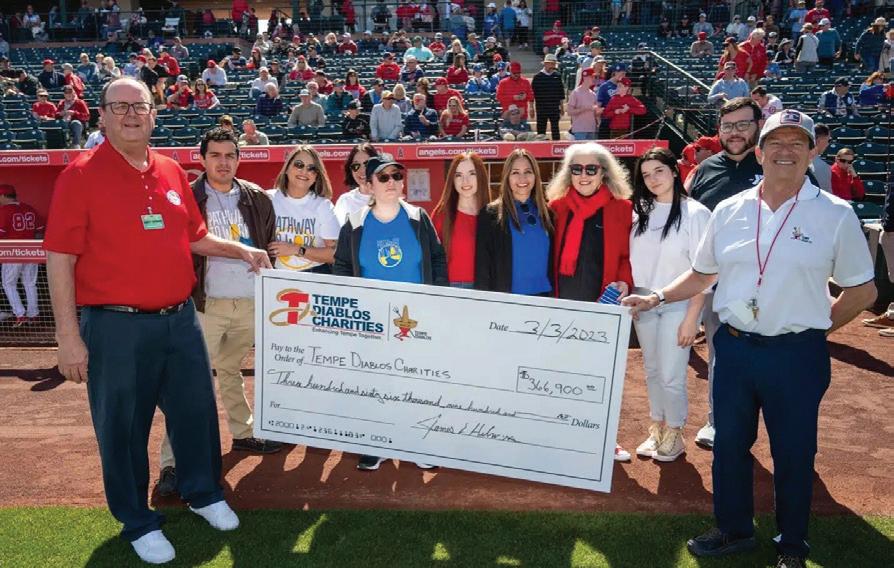

How the Tempe Diablos turned civic pride into lasting impact
by Tyler Butler
For more than half a century, the Tempe Diablos have demonstrated how civic pride, when paired with committed volunteer leadership, can evolve into lasting community impact. What began in the late 1960s as an effort to put Tempe on the map as a spring training destination has grown into one of the Valley’s most respected volunteerled philanthropic organizations, one that channels hospitality, fundraising and service into meaningful investments in education, youth and community wellbeing.
The Diablos’ story begins with a bold idea. In the late 1960s, local entrepreneurs and the Tempe Chamber of Commerce sought to attract the Seattle Pilots to what would become Tempe Diablo Stadium. To support the effort, they formed a special events committee to manage Cactus League activities. That committee soon evolved into the Tempe Diablos. While its early work centered on sports hospitality, the organization quickly recognized its broader potential. By the early 1970s, the Diablos were helping establish Tempe as a premier sports destination, including playing a pivotal role in elevating the Fiesta Bowl’s reputation for exceptional hosting and community engagement.
As Tempe grew, so did the Diablos’ vision. In 1977, the organization launched the Diablo Scholarship Program, marking a defining shift toward philanthropy as a core priority. What began as a small initiative has become a cornerstone of the Diablos’ mission, representing a $240,000 annual investment in local students. “Our mission has always been about creating opportunities that strengthen Tempe,” says Vince Vasquez, president of the Tempe Diablos. “Every dollar we raise and every hour we volunteer reflects our commitment to education, youth and community development.”
That commitment is carried out through Tempe Diablos Charities, the organization’s charitable arm. Since 1968, the Diablos have donated more than $20 million to local causes, with a strong emphasis on education, youth services, health and community development. In 2024 alone, more than $650,000 was distributed to more than 70 organizations, supporting everything from scholarships and tutoring programs to public safety initiatives and family support services. “Giving back isn’t just something we do; it’s who we are,” says Russ Homes, chairman of Tempe Diablos Charities. “We’re proud to invest in the people and
organizations that make Tempe stronger and more connected.”
What sets the Diablos apart is its handson approach. Members and volunteers are a familiar presence at Tempe Diablo Stadium during Cactus League Spring Training, serving as ushers, ticket takers and parking attendants. Their visibility reinforces a core belief: Community impact is built through consistent presence, not just financial support. Beyond the ballpark, the Diablos support programs like Excellence in Education, which honors outstanding educators, and Feed the Need, which provides Thanksgiving meals to families in Guadalupe. These initiatives reflect the organization’s commitment to meeting community needs with both resources and personal involvement.
Fundraising remains a vital engine behind this work. Ignite the Night, the Diablos’ signature annual event, blends entertainment, auctions and networking to generate critical funding for scholarships and grants. The organization continues to expand its reach, most recently joining the LPGA’s Ford Championship presented by Wild Horse Pass as a Founding Partner. Hosting Ignite the Night alongside this global sporting event in 2026 underscores how the Diablos continues to align highprofile partnerships with its mission to enhance the Tempe community through leadership and charitable giving.
The Diablos’ impact is also shaped by the leadership of members who serve on nonprofit boards, civic committees and community organizations throughout the Valley. Its volunteerdriven model demonstrates how sustained engagement can create longterm change. While the financial contributions are significant, the organization’s legacy is defined by decades of investment in people, education and opportunity, proof that when community comes first, the benefits endure.
Today, Tempe Diablos remains rooted in the same values that guided its founding: service, leadership and a deep commitment to Tempe’s future. From the ballpark to classrooms, from family support programs to major fundraising events, its work continues to strengthen the city it calls home. And as Tempe grows, the Diablos stands ready to meet new challenges with the same spirit of generosity and civic pride that has defined it for more than 50 years.
Tempe Diablos tempediablos.org
FEB.
What began in the late 1960s as an effort to put Tempe on the map as a spring training destination has grown into one of the Valley’s most respected volunteer-led philanthropic organizations.
For over 40 years, the Arizona Community Foundation has supported nonprofits and students across our state by mobilizing the collective passion and generosity of thousands of Arizonans.
When you are ready to take the next step in your personal charitable giving journey, we are here to help you achieve your goals.
“The most dangerous place in business isn’t on the edge of a cliff; it’s in the middle of the herd. If you aren’t disrupting the status quo, you’re just funding it. Be the exception.” Greg Hague, Founder/CEO of 72SOLD
If you aren’t disrupting the status quo, you’re just funding it. by
Greg Hague
Event season in the Valley isn’t just a calendar of games and galas; it is a battlefield. As crowds swell in Scottsdale and broadcast ratings spike, businesses scramble like frantic stock traders to capture a sliver of that attention. But here is the brutal truth: While the spotlight gets brighter, the competition gets dumber.
Brands pile into the same spaces, scream the same platitudes, and utilize the exact same playbook. This is why they fail. In a season defined by chaos, predictability is camouflage. If it looks like an ad and sounds like an ad, the human brain — which is hardwired to filter out noise — will delete it before it even registers.
If business owners want to skyrocket their business with a massive influx of new customers, they don’t need more volume. They need contrast. They need to be the glitch in the matrix.
Take the World Series. Arizona was watching. Suddenly, a 72SOLD commercial appeared to “glitch” right in the middle of a pitch. Our website lit up. It became a statewide conversation piece. Luck? Yes. But only because the brand had the audacity to be in the arena.
We paid for several spots. We put ourselves in luck’s path. When a company puts its brand in a high-stakes environment, it isn’t just buying exposure; it’s buying the potential for magic.

Greg Hague is the founder and CEO of 72SOLD. Under his leadership, 72SOLD achieved the No. 211 ranking on the 2024 Inc. 5000 list of America’s fastest-growing private companies and was recognized as the fastestgrowing real estate firm in the Western U.S. A licensed attorney, Hague earned the top score on the Arizona bar exam. Before founding his companies, he was ranked by Realtor Magazine as the No. 19 top-selling agent nationally, No. 1 in Arizona.
It was the 2023 Super Bowl. Companies spent millions on CGI explosions, celebrity cameos and loud music. The result? A wall of noise where little truly stood out.
So, what did 72SOLD do? We zigged while others zagged.
Our commercial was a study in sensory deprivation. A single, echoing doorbell sound. Then? Silence. No talking heads. Just the ambient sound of a front porch.
Dogs across Arizona started barking at the TV. People in kitchens, hearing the doorbell, walked back into the living room to see who was there. We didn’t try to out-shout other advertisers; we hacked the environment. When the world is deafeningly loud, the loudest thing a company can be is quiet.
But the ultimate lesson in maverick marketing happened the year prior, during another Super Bowl slot. This is the story of how we crashed the GoDaddy servers and took down our own website in minutes.
We had the stage. We had the eyeballs. We could have thumped our chests. We had the data to prove 72SOLD was selling homes for 5.8% higher prices than the MLS average. We could have screamed about our industry-shattering offer:

agreeing to buy any home we couldn’t sell in 30 days with a 100% full-value guarantee. Most real estate tycoons would have killed to broadcast those stats.
We didn’t mention a single one.
Instead, we looked at the camera and made a promise. We offered to make 72 consecutive months of house payments for one needy Arizona family ... regardless of the cost.
We didn’t ask for business. We asked to help.
The response was a tidal wave. Tens of thousands of people flooded the site instantly to nominate deserving families. The servers melted down. And true to our word, 72SOLD is still making those payments today for a family whose son, a military veteran, perished as a result of his heroic act saving his fellow soldiers. Why did this work? Because it wasn’t salesy. It was significant. It cut through the cynicism of the modern consumer. It wasn’t a pitch; it was a purpose.
So, how does a company apply this to its brand during highstakes event season?
1. Murder the ‘corporate’ voice: Stop sounding professional. Sound human. Be likable. Be edgy. If marketing doesn’t make a company slightly nervous, it’s too boring to work.
2. Weaponize the unexpected: Don’t just buy a billboard. Look at the wristbands, the parking tickets, the hydration stations. Ambush the consumer where their guard is down. When a brand appears in a surprising spot, the brain has to process it. That split-second of processing is where the win happens.
3. React in real time: The massive corporations are slow. It’s important to be fast. A message tested at a Spring Training booth on Tuesday should be refined and dominating social media by Thursday. React to the mood of the crowd in real time. Cutting through the noise isn’t about spending more money. It’s about having the guts to be different. It’s about changing the temperature of the room.
As we head into this event season, remember: A company can be safe or it can be legendary. It cannot be both.


Nick Dan-Bergman is a seasoned digital marketer, generational researcher and marketing leader. He serves as chief marketing officer at LT.agency, an Arizona-based marketing and customer experience agency. lt.agency
by Nick Dan-Bergman

As Arizona’s marketing ecosystem becomes both more sophisticated and more interconnected, the state is attracting more attention for how businesses operate locally while competing nationally.
For local businesses, this shift carries tangible implications. Expectations are meeting a rising bar as leaders bring experience from more complex, competitive markets. Competition for marketing talent has intensified alongside Arizona’s job growth, particularly in technology, healthcare and professional services, where wages continue to outpace national averages. At the same time, opportunities to collaborate have expanded as organizations gain access to peers accustomed to scaling brands across regions and complex markets.
At the recent Arizona Marketing Leaders Summit, more than 70% of attendees oversee marketing strategies that extend beyond our state. While this group represented a specific slice of Arizona’s business community, their responsibilities reflect a broader shift. Decisions made by leaders based in the Valley increasingly shape customer experiences nationwide. As companies continue to relocate operations and leadership teams to Phoenix, the region has become a proving ground for how brands balance local relevance with national reach. In many ways, Arizona now offers a preview of the challenges and opportunities facing growth markets across the country.
These dynamics surfaced regularly throughout the summit’s conversations, which brought Phoenix marketing leaders together for the inaugural summit, hosted by LT.agency and WP Engine. Across the discussions, several recurring tensions emerged, including balancing local relevance with national scale, applying human judgment alongside automation and relying on behavioral insights rather than stand-alone demographics.
Across industries, large organizations are working to sound less corporate and more grounded in community, while smaller companies are leaning into speed, responsiveness and digital ease to compete with well-capitalized national players. Nowhere is this dynamic more visible than in the Valley, where long-standing local businesses and fast-growing national brands often compete for the same audiences.
Arizona marketing leaders are returning to a persistent tension: local authenticity vs national scale, which is supported by the fact that 76% of consumers trust brands that feel local and familiar, even when those brands operate nationally, according to LT’s recent consumer research.
“Consumers want brands to feel local but still deliver the reliability and digital convenience they expect everywhere else. That tension is incredibly hard to manage, but it’s also where the competitive opportunity is,” says Nancy Shenker, a consumer trends consultant and summit speaker.
That balance is already taking shape in practice, even in franchising. BaseCamp Franchising, a national, thrift-focused, multilocation business operating in the Valley, offers a clear example of how scale and personalization can coexist. As the brand expanded, BaseCamp resisted centralizing every digital touchpoint. Instead, it invested in a flexible digital media strategy that preserved local relevance while benefiting from a shared infrastructure.
Location-specific messaging, localized media buys and performance insights allowed each franchisee to speak directly to its community without sacrificing brand consistency. The result was a digital experience that felt personal and familiar to consumers, illustrating how franchises can scale without losing their local voice.
Winning in this environment requires this type of consistency; experiences need to feel human, relevant and trustworthy, while still benefiting from growth.
But true success goes deeper than strategy alone — it means rethinking the team behind the work. As marketing becomes more complex, leaders recognize they must reassess what an effective team looks like for them. The type of talent they need will continue to evolve as automation and AI take on more executional work, placing greater value on judgment, curiosity and strategic thinking.
As such, marketers emphasize the importance of intergenerational teams that combine deep experience with fluency in emerging tools. Early-career talent brings speed and technical comfort; seasoned leaders bring context, decision-making discipline and perspective. Together, they form more resilient organizations.
With talent strategy increasingly becoming a defining advantage in competitive markets, leaders should consider the following:
• How to balance specialization with big-picture thinking
• How to invest in training and enablement, not just hiring
• How to reward adaptability and problem-solving over narrow execution
As more leaders oversee national work from the Valley, Arizona’s influence will continue to grow. Companies that pair a strong local presence with scalable operations will be better positioned to compete. Organizations that invest in adaptable teams and thoughtful leadership, rather than static structures, will be more resilient in the face of change.
Understanding both local expectations and national competition is no longer optional — it is becoming a prerequisite for growth.
Forces Shaping Consumer Behavior, Brand Strategy, and Technology in 2026
Consumer shifts are reshaping industries across Arizona, from healthcare and higher education to hospitality, retail and technology. Leaders agree that the challenge in 2026 is not simply identifying trends, but understanding which changes meaningfully affect how people discover, evaluate and engage with brands.
Technology, particularly AI, emerges as a critical part of that conversation — but not as a silver bullet. The consensus is clear: Tools alone do not drive progress. To put it succinctly: “AI will not replace you. A person using AI will.”
Leaders emphasize that success depends less on adoption speed and more on culture, including how teams are prepared, how processes evolve and whether organizations support responsible experimentation.
Businesses that prioritize learning, collaboration and strategic judgment are better positioned to adapt as consumer expectations, cultural readiness and technology continue to converge.
ECONOMIC DIVERGENCE AND THE RISE OF BEHAVIORAL TARGETING
Arizona’s continued job growth masks a widening gap in consumer experiences. While high-wage sectors drive earnings upward, many households remain price-sensitive, selective and cautious.
During discussions on consumer behavior at the summit, I cautioned against relying on outdated assumptions, noting that “targeting by demographics alone is lazy marketing.”
Behavioral insights, including motivations, priorities and values, are becoming more predictive than age or income. This is especially true in a state shaped by migration, cultural diversity and uneven affordability pressures. Marketing strategies that fail to account for these nuances risk missing increasingly fragmented audiences.
Discovery is no longer dominated by a single channel. Short-form video on platforms like TikTok, Instagram and YouTube has become a primary entry point for many consumers searching for ideas and recommendations.
In LT’s latest research, 43% of Gen Z in the U.S. identify TikTok as their primary search tool.
While social media can seem like a giant megaphone, it’s really made up of tight-knit “micro-communities”: small but highly-engaged groups connected by shared interests rather than broad demographics. Shenker, again, described these spaces as modern “digital town squares,” where trust is earned through relevance and participation, not scale.
Arizona leaders have already adjusted content strategies for 2026, prioritizing listening and resonance over reach alone.
As digital interactions increase, marketing leaders agree that human connection becomes more, not less, important. Consumers want efficiency, but not at the expense of clarity or empathy.
Brands that combine clear digital experiences with responsiveness and trust will stand out in crowded markets. Those that rely solely on automation risk creating distance rather than loyalty.
Businesses that invest in understanding consumer motivations will outperform those relying on outdated assumptions. Listening to digital communities cannot be more important for marketing, product development and customer experience.
Organizations that preserve human connection while improving digital journeys will build stronger relationships. And those that pair a strong internal culture with modern tools will adapt more quickly as expectations continue to evolve.
As Arizona’s marketing leaders look further into 2026, the path forward is clear: Success will belong to companies that combine strategic foresight with empathy, curiosity and a deep understanding of people.
Brands that combine clear digital experiences with responsiveness and trust will stand out in crowded markets. Those that rely solely on automation risk creating distance rather than loyalty.
What many organizations call “productivity intelligence” is simply micromanagement with better branding. It’s a high-tech version of hovering like a helicopter parent.
And the outcomes mirror the research on micromanagement:
• burnout rises
• engagement drops
• turnover increases
• trust collapses
Leaders don’t need algorithms to hover. They need better habits:
• clear and definitive handoffs
• empowering team decisions
• timely, respectful feedback
• being a buffer against fake urgency and constant distractions
When leaders strengthen these practices, culture improves — no surveillance required.
Business leaders cannot build a high-performing workplace on skepticism and wariness by Selena Rezvani
Bossware — surveillance software that tracks, analyzes or flags employee activity in real time — didn’t appear out of nowhere, and it didn’t start with the pandemic. For years, companies in logistics, retail and call centers quietly have used monitoring tools to evaluate workers minute by minute. But over the last several years, especially with the rise of hybrid work, these tools have exploded into the mainstream.
Today, keystroke tracking, screen recording, mousemovement alerts, webcam activation, AI meeting analysis, email scanning and app tracking have become everyday management tools. By some estimates, eight in ten companies with hybrid or remote employees now use some form of digital monitoring.
It’s a trend fueled by uncertainty, but it fundamentally misunderstands how trust, performance and culture actually work.
Surveillance may pull numbers and feed dashboards — but it wears down the very foundation of great teams. Trust. A 2024 meta-analysis of more than one million participants found that interpersonal and institutional trust are directly linked to psychological well-being, safety and long-term performance.
Meanwhile, monitoring workers creates the opposite effect. According to the American Psychological Association, 56% of monitored employees report feeling tense or stressed, compared to 40% of those who are not monitored. And Workspan Daily reports that one in nine employees has quit due to excessive surveillance, while 90% said it negatively affected how they felt about their work.

Selena Rezvani is an internationally known leadership speaker and author, TEDx-er and awardwinning journalist with MSW and BS degrees from NYU and an MBA from Johns Hopkins University. Forbes recently named her the premier expert on advocating for yourself at work. She is the author of Wall Street Journal-bestseller Quick Confidence and recently released Quick Leadership selenarezvani.com
If organizations hope to build teams that innovate, commit and adapt, they must understand this simple truth: Culture cannot be managed by treating everyone like a suspect.
We may be tempted to kid ourselves into thinking that monitoring software is somehow neutral. But the moment a leader implements keystroke logs or informs employees that their messaging status went from green to yellow, the leader sends a message that shapes everything else: “We don’t believe you’ll do your work unless someone is watching.” In other words, employees are more like children that need oversight than capable adults.
Bossware formalizes suspicion. It replaces trust with compliance. It trains managers to observe instead of support. And most deleterious, it teaches employees to perform for (or outwit) the tool instead of owning their work.
I urge leaders, in my book Quick Leadership, to emphasize and live the real levers of accountability: promoting clear expectations, shared ownership, and structured check-ins — not 24/7 oversight. When leaders do these things well, bossware becomes unnecessary.
Leaders are creating a new and unnecessary problem for themselves. When every email, tab or calendar block is tracked, employees begin performing activity instead of meaningful work. They play it safe. They stick to the script. They avoid risk. And research backs it up. The ScienceDirect systematic review on workplace surveillance confirms that heavy monitoring delivers weak or inconsistent productivity gains while creating substantial cultural damage.
Motivation science is clear: People perform best when they experience autonomy, mastery and meaning, not micromanagement.
If leaders want real performance, they should be:
• setting meaningful goals and being transparent about the “why” behind employees’ work;
• celebrating progress and effort, not just results; and
• giving teams control over how they achieve outcomes. Notice what’s not included? Obsessing over green status dots and mouse activity.
Dashboards can track compliance, but they can never cultivate connection.
Yes, employers might gain metrics like hours worked, but dashboards tell us nothing about psychological safety, bold thinking, creative risk-taking or inclusive dialogue.
This matters because when people feel watched, they protect themselves. They censor their ideas. They become cautious instead of courageous. In short, surveillance breeds silence and over-calculation, not high performance.
“Bossware” isn’t going away. The real question is whether leaders will let surveillance define their culture or whether they’ll rise to the challenge of leading differently.
The leaders who succeed in this new era will do three things:
1. Clarify roles and expectations with precision so accountability is built into the structure, not enforced through surveillance.
2. Check on people before checking on the work, recognizing that wellbeing and trust drive performance far more than monitoring ever could.
3. Coach instead of control, shifting from suspicion to support, and proactively building peoples’ problem-solving muscles.
The bravest leaders won’t simply implement bossware, they’ll resist it. They’ll practice internal activism, pushing back against mandates that harm trust, morale and culture.
Because the truth is simple: Bossware doesn’t fix poor leadership. It exposes it.
Motivation science is clear: People perform best when they experience autonomy, mastery and meaning, not micromanagement.



Educating youth to become America’s future adult philanthropists is different from engaging them while young. Arden Pala, 16-yearold founder and CEO of San Diego’s Sports4Kids nonprofit knows this well. When he was only 12, he realized that many California schools in low-economic neighborhoods lacked sports programs and wanted to connect peers with the physical and mental health benefits of athletics.
As it turns out, he connected them to volunteerism as well. His nonprofit is run by youth, and his basketball sports clinics that operate in six schools weekly are staffed by Pala, himself, and students coaching other students. “If you aren’t exposed to volunteering when you have more time on your hands, when you’re young, it’s harder to introduce it into your life later,” he says. Pala’s organization has raised $350,000 and introduced 850 students to sports through his clinics.
Group investigates declining volunteer and giving trends by
Richard Tollefson
The number of Americans who volunteer in civic organizations and who give to nonprofits has plummeted in recent years, with as many as 20 million households dropping out of giving between 2010 and 2016.
While fewer donors are actually giving larger amounts — making up the financial gap in many organizations and increasing philanthropy overall — the more concerning trend is the decrease of the “everyday” donor and volunteer.
These “everydayers” are engaged. They are voters and civic leaders with a finger on the pulse of the community and its needs. They give at the workplace, volunteer at the community shelter, attend town halls and are — frankly — the backbone of American civil society.
They also traditionally support smaller human services and grassroots organizations. The loss of generosity from this group becomes even more concerning when considering that 88% of all U.S. nonprofits are small, with budgets of less than $500,000. When these organizations struggle financially or can’t attract volunteers to move their missions and visions forward, the needs of society can go unmet and can lead to civil unrest.
The Generosity Commission was created to study this and other trends in generosity — defined as giving and volunteerism — and to suggest ways of re-engaging the everyday donor and volunteer. Overall, the group proposed nine recommendations, of which the three most relevant and impactful are shared below and at left:
Executives sitting on nonprofit boards can advocate for corporate policy at their workplace that makes it easier for employees to give and volunteer.
At PNC Bank, this spirit of volunteerism and giving back is part of company culture. Not only are employees paid 40 hours of volunteer time for one of the bank’s main support areas — early childhood education — but the bank also seeks ways to partner with the local nonprofits it supports financially: providing financial literacy, encouraging employees to serve on boards or to lead nonprofit committees. PNC also offers an easy-to-use portal matching gift program for its employees.

That’s why their donors and board members must be representative of their communities. “Educator, attorney, philanthropist, nonprofit and community leader participation is essential,” says President and CEO of Long Beach Community Foundation Marcelle Hope Epley. “It’s the people who are part of a community — representing different socioeconomic backgrounds — that best understand the needs and challenges of the community.”
Such diversity also builds a base for contributions at all levels of the giving pyramid: bottom, middle and top. This is especially important today, where — nationwide — 90% of contributions come from only 10% of donors, with the divide narrowing each year. Fundraising performance should not be based on how much money is raised by only a handful of top donors. Performance should be based on how many donors a nonprofit has and retains, and whether it has enough low-level donors who offer much-needed unrestricted gifts.
Richard Tollefson is founder and president of The Phoenix Philanthropy Group, an Arizona-based international consulting firm serving nonprofit organizations as well as institutional and individual philanthropists. phoenixphilanthropy.com
“We believe in being good stewards and neighbors — and want to make our community a better place for everyone to live, work and thrive,” says Valerie Attisha, vice president of community relations for PNC Bank in San Diego. She describes a recent, regional volunteer opportunity repairing a veteran’s home: “Employees walked away with such a feeling of accomplishment and gratitude, and excitement that they could do this with their colleagues while helping someone in need.”
Community foundations focus on specific geographic regions, growing and distributing funds to local nonprofits.
CEOs sitting on nonprofit boards who have money invested in a community foundation can impress upon the foundation’s fundraisers and leadership the critical need to diversify donors at various giving levels and board members who truly speak for the community.
A loss of generosity in the nonprofit world is about far more than finances. In a society with rising social isolation and a lack of social trust, it is imperative to re-engage individuals with their communities. It helps them form a sense of connection. It helps society. It helps bolster the altruistic nature upon which our democracy was founded.
[Editor’s Note: A companion article about growing generosity will follow in the April 2026 edition of In Business Magazine.]
Research shows that “giving” financially increases the likelihood of joining community groups by 10% and volunteering by 24.4%.


MSRP: from $105,700
Estimated range:
• eDrive50: 301–314 miles
• xDrive60: 296–311 miles
• M70: 268–285 miles
Drivetrain:
• eDrive50: single-motor RWD
• xDrive60 and M70: dualmotor AWD
0–60 mph:
• eDrive50: 5.3 sec
• xDrive60: 4.5 sec
• M70: 3.5 sec
Dimensions:
• 212.2” L × 76.8” W × 60.8” H

The 2026 BMW i7 plays to an executive audience that values quiet competence over theatrics. In Phoenix traffic, it remains unflaggingly calm, with isolation and body control that feel purpose-built for long days between Camelback meetings and late returns from Sky Harbor. Materials and switchgear are tactile rather than flashy, and the interface is orderly enough that the driver need not think about it but simply use it. For more pace, spec it that way; for range, spec it that way. Either way, it reads as serious rather than loud. What stands out in daily use is the way the chassis, cabin and software work in concert. Steering is light but accurate, ride quality is disciplined over expansion joints, and wind and road noise are impressively contained at 75 mph. The curved display is crisp, responses are immediate, and
With the number of emails we all get, what makes us open some while skipping past others? And, more importantly, how can we put our own emails in that first category?
High-performance email tactics was the topic of a wellattended master class presented by Jay Schwedelson at Thryv’s recent Grow 2025 Conference, where the founder of GURU Media Hub and SubjectLine.com, CEO of Outcome Media, and ten-time honoree of Crain’s Top 100 Industry Leaders shared insights drawn from real, aggregated campaign data.
Schwedelson offers the following tips for subject lines — emphasizing that success comes from rotating tactics rather than relying on a single trick.
• Fully capitalizing one word mid-subject line can boost open rates by 15%, as in “You WON’T Believe These Numbers.” It breaks visual monotony and catches the scanning eye during inbox scrolls, and it does not cause spam/junk penalties.
• Use the “>” or “<” (“Greater Than / Less Than”) format to
route planning accounts for charging without constant menu diving. Rear accommodation is generous, with ample legroom and a quiet, insulated feel that keeps calls intelligible. And while this is an EV first, the braking and accelerator calibration are predictable enough that the car fades into the background, useful for those thinking about clients, not kilowatts.
Pricing starts at $105,700 before options. Spec it for range, traction or pace, and the i7 functions as a single-car solution: quiet, all-weather capable, and composed over long freeway stretches, while preserving real day-to-day usability and executive-level comfort. —Mike Hunter
BMW bmwusa.com
frame the brand’s core philosophy or offer, as in “Simplicity > Chaos” or “Hydration > Hustle.” This mimics meme logic — fast cognition, emotional agreement and curiosity.
• Start with numbers or brackets. Subject lines starting with numbers (e.g., “7 Mistakes Every Founder Makes”) perform best, with authoritative and predictable value. Brackets (e.g., “[Free Guide] How to Automate Your Workflow”) create focus and increase opens by about 15%.
• Employ the ellipsis hack. Adding three dots at the end triggers curiosity (“wait, what comes next?”). It increases the open rate significantly, playing on the psychological need for closure.
• Watch the clock. Since 80% of marketers send campaigns on the hour, flooding inboxes at the same time, messages sent at randomized minutes (e.g., 8:04, 11:17) rise above the noise — resulting in a 15% increase in open rates. —RaeAnne Marsh
jayschwedelson.com info.thryv.com
Arizona’s economic future depends on how well we prepare students today. Nearly seven in ten jobs will soon require education or training beyond high school—yet fewer than half of Arizonans have it. To stay competitive, we must invest in growing our own talent.

The Arizona Education Progress Meter tracks progress from early learning through career readiness, showing where we’re gaining ground and where urgent action is needed. Progress Meter results make it clear: Arizona’s current outcomes will not produce the workforce needed to drive Arizona forward.
Arizona must do more to reach the state’s Achieve60AZ attainment goal and to prepare for more than 488,000 new jobs by 2033. Reaching these goals will take all of us—business leaders, educators, and elected officials—working together to ensure students are prepared with the skills Arizona’s future workforce demands.
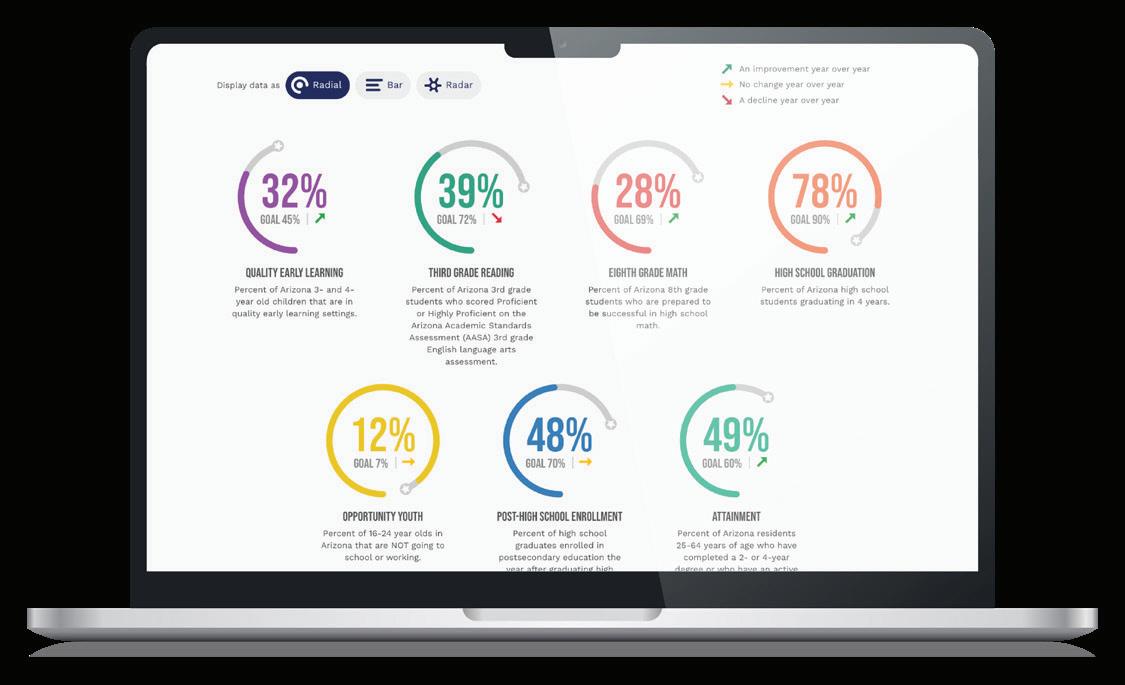
Join Education Forward Arizona’s network to receive new polling insights, our latest report on the Future of Attainment in Arizona, and the data and stories shaping Arizona’s workforce and economic future.
by RaeAnne Marsh

$54

$21


$34
Pinyon Coastal Mediterranean offers its guests an expansive view of the tree-studded grassy park within a circle of business and municipal buildings — the somewhat hidden gem of Scottsdale Civic Center mall. This relaxing setting was secured after a very deliberate search by Hi Noon Hospitality founding partner Adam Strecker to meet his desire to recreate the expansive experience he’d enjoyed on his Mediterranean travels. To make the most of this prized vantage point, the restaurant is designed with an indoor-outdoor aesthetic on both the ground and second floors.
The menu celebrates “Mediterranean” and its bounty, and plays with the myriad flavors of the more than 20 countries along the shores of that sea. (The wine selection is correspondingly diverse, with, for instance, French, Italian, Spanish … and Croation.) That the selection tends heavily toward seafood owes also to the expertise behind Hi Noon’s acclaimed Buck & Rider. Smoked Salmon Carpaccio is a shareable appetizer — thin slices of smoked salmon topped with caperberries, rounds of Persian cucumber and spices that add an unexpected burst of flavor. The Greek Ceviche blends white fish, feta cheese, olives, pine nuts and tomato in a lemon vinaigrette. And Pinyon’s “Board” is posted with a changing
selection of traditional and exotic hummus served with freshbaked pita. Among these is the Pistachio Labneh, smooth with a bold, satisfying flavor.
“Land fare” offerings span Iberico Jamón, the elite Cinco Jotas ham from the famous acorn-fed pigs of Spain; filet mignon skewers; and pan-roasted chicken with a Moroccan marinade that has a little bit of sweetness punched up with a lot of heat thanks to the Aleppo peppers.
Providing interest as well as a décor touch, bins of spices are on full display on the back wall of the open kitchen. Other décor touches are in the details, such as custom bar fixtures with the restaurant’s signature logo and (dare we say it?) tongue-in-cheek “Victorian”-design wallpaper in certain spaces that warrants a closer look. “Dueling” stairs on the north and south walls (one outdoor, one indoor) connect the two view floors. And a third floor is the cellar, offering private dining to 18–20 people around a marble table in a rock-walled room.
Pinyon
7363 E. Scottsdale Mall, Scottsdale (480) 863-8990 pinyonrestaurant.com
Powering Innovation
Council makes case for solar and battery systems to meet energy needs
Explosive growth of data triggers need for more Arizona-based centers
STEM for All SciTech Institute kits expand access to hands-on learning across Arizona
3 Named to AZTC Board Directors bring backgrounds in academia and law
The Arizona Technology Council is Arizona’s premier trade association for science and technology companies.
Phoenix O ce
2800 N. Central Ave., #1530, Phoenix, AZ 85004
Phone: 602-343-8324 • Fax: 602-343-8330 info@aztechcouncil.org
Tucson O ce
1215 E. Pennsylvania St., Tucson, AZ, 85714 Phone: 520-388-5760 tucson@aztechcouncil.org
Steven G. Zylstra President + CEO Diana White Chief of Sta
Deborah Zack Vice President, Membership Services
Paloma Santiago Vice President, Southern Arizona Regional O ce
Leslie Marquez Director, Marketing + Communications
Darryle Emerson Director, Programs + Events
Jamie Neilson Director of Operations + Events, Southern Arizona Regional O ce
Cepand Alizadeh Government Relations Specialist
Victor White Administrative Assistant
Don Rodriguez Editor
Ron Schott Executive Emeritus, Phoenix
SCITECH INSTITUTE
Steven G. Zylstra, President + CEO
Jeremy Babendure, Ph.D., Executive Director
Vanessa Thompson, Finance & Operations Director
Claire Conway, STEM Ecosystem Director
Eileen Healy, CSO International Program Director
Sarah Cundi , CSO International Program Manager
Ashton Grove, CSO Arizona Program Manager
Brittany Sweeney-Lawson, Marketing & Communications Manager
Yvonnda Shelton, Workforce Development Coordinator
Tom Wilson, Workforce Development & Post-Secondary Education Coordinator
Taylar Cook, CSO Arizona Program Coordinator
Ciara Ware, STEM Little Free Libraries Coordinator
Sharae Basnight, Bookkeeper
We’re taking the quantum lead.
I’m referring to Arizona’s advancements in quantum computing.
What’s that? To help, here’s a short course:
Pretend your computer is a light switch. It’s either on or off. In computer speak, it uses bits that are either 0 or 1 to process information. By comparison, quantum computers are like switches featuring both dimmers for lights and spinners for fans. That is, qubits simultaneously can be 0 and 1 to make faster and more complex calculations that leave your old computer in the dust.
Arizona already has been a strong voice in shaping the national conversation on quantum policy. We’ve pushed for federal investments, workforce development and standards that ensure our nation stays ahead in this emerging race.
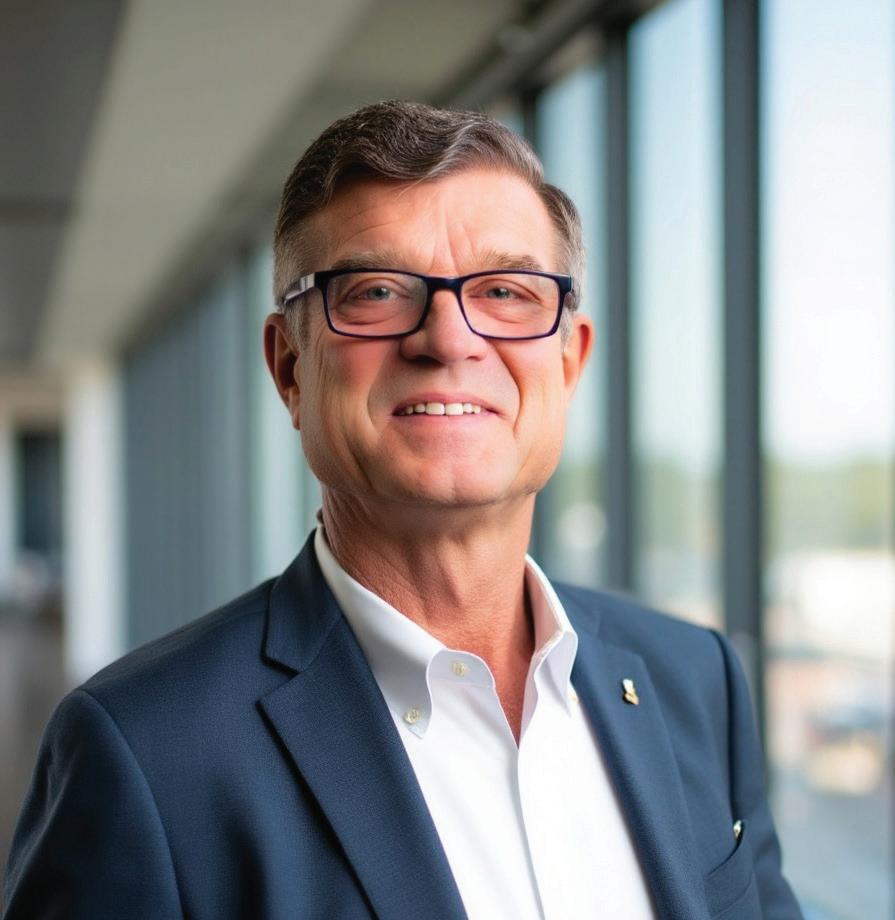
An example of what is happening here is Arizona State University’s weaving quantum into the broader fabric of applied research. The Quantum Collaborative is a research collaboration funded and powered by ASU, the state of Arizona and industry partners to advance quantum science across network communications, sensing, computing, simulation and cybersecurity while training the future quantum workforce and informing policy. By working across disciplines, ASU is creating the kind of ecosystem where industry problems can nd academic solutions that scale. Arizona already has sectors primed to bene t from early quantum applications. Our semiconductor ecosystem provides the fabrication and packaging capabilities needed to move quantum devices from prototypes to manufacturable components. Aerospace and defense companies need new tools in navigation, sensing and encryption. Water and energy managers see opportunities to use quantum-enhanced optimization for grid reliability and desalination. Even biosciences and healthcare stand to bene t as quantum algorithms begin to accelerate drug discovery and materials design.
Arizona even has the raw ingredients — talent, fabrication capacity and a demanding customer base — to support young companies building quantum communication systems, advanced sensors or hybrid algorithms that can work on classical systems today but seamlessly integrate with quantum hardware tomorrow.
An example is Quantum Computing Inc. (QCi), considered by some as the strongest active quantum-commercial presence in the state as it bridges hardware manufacturing, optics and nascent quantum applications. In May, QCi marked the opening of its state-ofthe-art thin- lm lithium niobate photonic chip foundry at ASU Research Park in Tempe. The facility enables domestic prototyping and mid-volume manufacturing of photonic chips — the building blocks of quantum systems.
Still, Arizona would bene t from a shared testbed where universities, startups and industry can access photonic rigs, cryogenic environments and secure ber loops. We need procurement “sandboxes” that let utilities, cities and state agencies test quantum tools without seemingly endless legal wrangling. And we need to accelerate workforce training with microcredentials in photonics, cryogenics and post-quantum cryptography. By focusing on tangible pilots, workforce readiness and industry-aligned applications, we can show the rest of the nation what practical quantum leadership looks like.

It’s a straightforward equation: more businesses + more people = higher energy demand.
This is what Arizona faces in communities both large and small across the state. And about the only thing to change in the calculation will be a multiplier that increases as the years pass and the commercial and resident populations grow.
The Arizona Technology Council has embraced the effort to let policymakers know that a solution is ready with solar and battery energy storage systems. This combination of power generation and batteries adds to the arsenal of methods to keep the lights on, the air conditioning humming and whatever else needs a steady supply of power.
“Nearly every elected of cial in Arizona, regardless of party af liation, has stated that an ‘all of the above’ approach to energy is necessary,” says Cepand Alizadeh, the Council’s government relations specialist. Alizadeh’s role includes helping policymakers look beyond traditional methods when determining pathways toward solutions for meeting energy needs in their counties, cities and towns.
Why focus on renewable energy technologies? Alizadeh cites several reasons. “First, because renewable energy is the quickest to come online and is often the lowest-cost source of new electricity generation,” he says. “Second, these projects can generate millions of dollars in tax revenue for the localities they are built in. Additionally, the construction of solar plants and battery storage systems creates hundreds, if not thousands, of high-quality and wellpaying jobs for Arizonans.”
In addition to constantly submitting written statements and suggestions regarding projects being considered, Alizadeh crisscrosses the state offering in-person testimonies to decision-making bodies of all types “from the Arizona Corporation Commission to planning and zoning boards, and city councils of all sizes. I have traveled as far north as Apache County and Yavapai County and as far south as Pima County.”
The efforts have produced results. “A signi cant number of
proposed solar energy and battery energy storage systems that we have supported both in writing and in-person in Maricopa, Pinal and Apache counties have been approved with enthusiasm and not apprehension,” he says. “Numerous city council members and county supervisors have approached me after their votes and told me that my public comments and our association’s support of a clean energy project convinced them to support a project as well.”
Recent examples of systems moving forward are the Sierra Luna Energy Storage Project planned near Avondale and the Ranger Center Energy Storage Project set for the Surprise area. Both were approved last year by Maricopa County Planning and Zoning Commission then Maricopa County Board of Supervisors.
But the bene ts of getting the green light go much deeper. “Every renewable energy project that gets built in our great state is signi cant because it translates into life-changing jobs and meaningful tax revenue for the communities in which they serve and are built,” Alizadeh says. “When addressing a planning and zoning board a few months ago, I said, ‘There is no such thing as a minor solar array, plant or wind farm. Every single one has a profound impact.’”
He has rsthand knowledge of how such projects can pay dividends that go beyond systems taking shape on land parcels. High school friends who joined the military after graduation returned to civilian life looking for jobs where they could use their new skills. Their solutions came in the energy eld. “Working as solar technicians, installers and maintenance laborers enabled them to do just that and provide comfortably for their families,” Alizadeh says.
Expect more impacts to be made as the “all of the above” approach to Arizona’s rapidly expanding energy requirements continues. “Our leaders need to keep thinking about the needs of residents and companies 10 years from now, not just 10 months from now,” Alizadeh says. “They need to take the long view. With the Council’s continued guidance and advocacy, they will do exactly that.”
Arizona is playing a growing role in a global challenge: managing the enormous amount of data created every day.
From smart devices to virtual meetings to online shopping, data is now at the heart of how businesses operate, as well as how people live and work. Behind all of it are data centers that store, process and move digital information around the clock.
Several powerful trends are driving the need for more data centers. Arti cial intelligence is one of the biggest, as training and running systems require vast amounts of computing power. At the same time, more businesses are moving their operations from on-site servers to the cloud, relying on remote platforms instead of equipment in their own of ces. Add to that remote work, telehealth, e-commerce and internet-connected devices, and the demand for real-time data handling keeps climbing. New technologies like 5G and edge computing also push data processing closer to users, which increases the need for localized data hubs — many of which are being built right here in Arizona.
The impact is already measurable. In the rst half of 2025, Phoenix ranked fth in North America for total data center capacity, according to commercial real estate rm CBRE. The total reached just under 685 megawatts of capacity, a 34% year-over-year increase. That growth re ects Arizona’s rising status as a key player in digital infrastructure.
This didn’t happen by accident. Arizona offers advantages that make it attractive to
companies building data centers. The dry climate and relatively low risk of natural disasters trim operational concerns. Operating costs are generally lower and proximity to major West Coast technology markets are major pluses.
Just as important, global technology leaders — including Arizona Technology Council members Microsoft, Amazon and Google — are already investing heavily in Arizona. These investments translate into new jobs, a stronger tax base and digital economy growth. For example, Google’s Mesa data center alone is expected to generate $156 million in tax revenue over 25 years, including property and electricity taxes.
Energy and water use are often concerns voiced when people hear about data centers, and the companies building them are taking those challenges seriously. Advanced, AI-driven power management systems are improving ef ciency so facilities can operate without straining the broader energy supply. Operators also are adopting innovative cooling methods — such as evaporative, adiabatic and dry-air cooling — to signi cantly reduce water use.
Many of today’s large data centers, often called “hyperscalers,” are also moving toward running completely on renewable energy such as solar. Arizona is especially well-positioned to lead in this area, thanks to its abundant sunshine.
Partnerships are making this possible. Google, for example, is working with SRP and NextEra Energy Resources to bring more than 430 megawatts of new, carbon-free power to its Mesa campus. Microsoft plans
to source 150 megawatts of solar power for its Arizona operations through a partnership with First Solar.
State leaders already recognize the economic value of data centers. Tax incentives are offered through a program managed by the Arizona Commerce Authority and the Arizona Department of Revenue. The program provides transaction privilege tax and use tax exemptions at the state, county and local levels on qualifying purchases of equipment.
However, challenges are emerging at the local level. Phoenix and other cities’ moves toward zoning changes and new regulations could create uncertainty and add restrictive requirements that make projects harder to develop.
For businesses, the stakes are real. Data centers are not just buildings full of servers; they are engines of job creation and economic activity. Each project can employ hundreds of construction workers — sometimes more than a thousand at peak — during development.
Once online, a facility may support 100 or more skilled workers and contractors. A recent PwC report found that data centers supported more than 81,000 jobs across Arizona in 2023.
Data centers should be viewed as essential infrastructure, just like highways, airports and water systems. They support innovation, attract high-tech industries and strengthen the overall business environment. As discussions continue on energy, land use and economic incentives, one fact remains clear: The digital economy runs through data centers — and those data centers increasingly run through Arizona.
Steven G. Zylstra, president and CEO of the Arizona Technology Council and SciTech Institute, has been appointed to United StatesMexico Foundation for Science’s board of governors.
The Foundation is more commonly known as FUMEC (Fundación México-Estados Unidos para la Ciencia), a binational, nongovernmental organization created to promote cross-border collaboration in science, technology and innovation. FUMEC works with public and private partners across North America to strengthen regional competitiveness through programs that support advanced manufacturing, clean technology, semiconductors, aerospace and education.
Zylstra has been instrumental in fostering public-private partnerships that expand high-tech workforce development, STEM
education and cross-border collaboration. His appointment to FUMEC’s board further reinforces Arizona’s strategic role in advancing North American innovation and supply chain integration.
Since its founding in 1992 during NAFTA negotiations, FUMEC has collaborated with more than 200 universities and institutions, and supported more than 6,000 small and medium-sized enterprises through binational programs. Its impact spans key sectors, including semiconductors, Industry 4.0, health, education, aerospace and agrifood, helping establish the United States and Mexico as one of the world’s most inclusive and competitive regions.
“I’m honored to join an organization with such a rich legacy of connecting science and technology leaders across borders to strengthen competitiveness and create sustainable growth,” Zylstra says.
Access to hands-on learning in science, technology, engineering and math (STEM) has been uneven for many students across Arizona, particularly in rural and historically underserved communities.
But a solution is now available through a program launched by SciTech Institute, a collaborative initiative of the Arizona Technology Council and Arizona Commerce Authority.
STEM for All Kits were created to help address the gap by delivering high-quality, ready-to-use STEM experiences directly to students and communities at no cost. Activities emphasize engineering, applied science and problem-solving, allowing students to engage in meaningful, tactile learning experiences without relying on additional classroom resources.
“Each kit is intentionally designed to give students a complete STEM experience from start to nish,” says Ciara Ware, SciTech Institute’s STEM for All Kits coordinator. “The activities encourage students to think critically, work through challenges and see how STEM concepts apply to real-world problems.”
Individual kits are designed with a speci c STEM theme and include three to four hands-on activities, with all necessary materials included. Kits are distributed statewide to schools, afterschool programs and community-based organizations, ensuring students encounter STEM learning in multiple environments.
Volunteer engagement also plays an important role in expanding the program’s reach. Corporate partners like Cox Communications support kit assembly events that help scale production while connecting volunteers directly to the program’s impact. Once assembled, kits are shipped across Arizona and integrated into classroom instruction and enrichment programming.
The program is made possible through strong philanthropic and corporate partnerships, including Avnet, Arizona PBS and Flinn Foundation. Together, these partners support the cost of materials, assembly and statewide distribution, helping the program make an even greater impact.
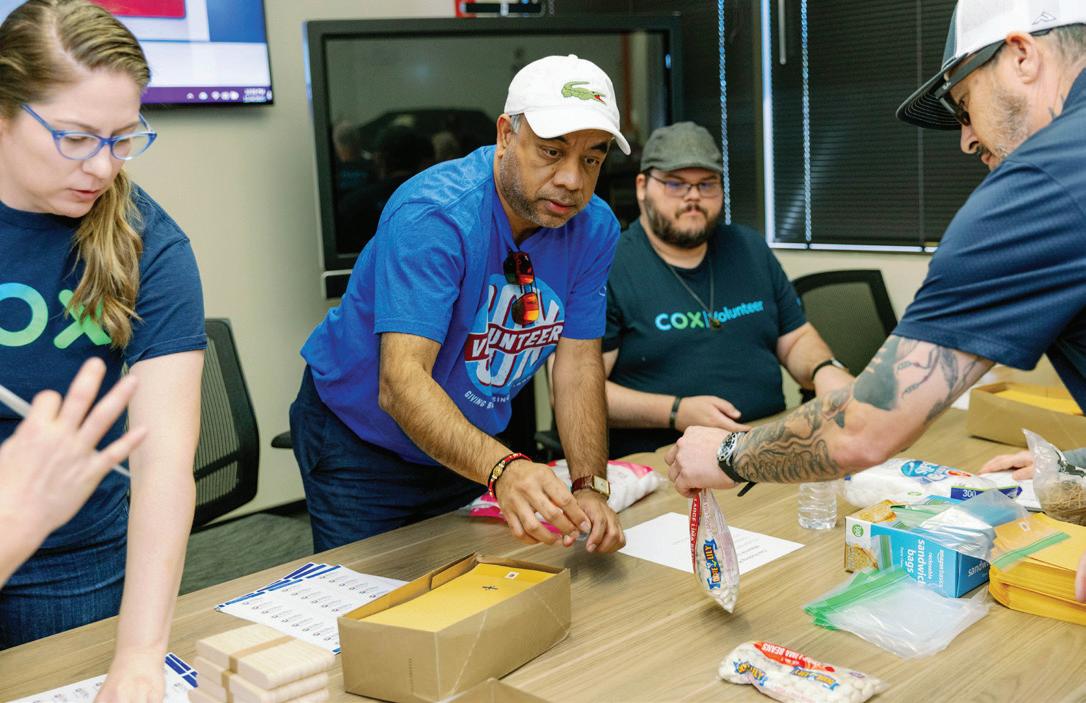
Looking ahead, SciTech Institute is focused on expanding access even further. In 2026, the program plans to introduce Spanishlanguage STEM for All Kits, increasing accessibility for students and families whose primary language is Spanish and better re ecting the communities the program serves.
No matter the language, all kits re ect the broader role of SciTech Institute as the backbone organization of Arizona’s STEM ecosystem: bringing partners together, aligning resources and prioritizing equitable access to learning opportunities.
As demand for STEM skills continues to grow, programs like STEM for All Kits help ensure all students, regardless of location or circumstance, have the opportunity to engage with STEM in meaningful and practical ways.
To learn more about the STEM for All Kits program — including how to volunteer at a STEM for All Kits packing party — please visit scitechinstitute.org/stem-for-all-kits/.
Leaders whose headquarters may be on the other side of the country or the planet sometimes have no choice but to rely on seat-ofthe-pants reactions when called upon to make the hard local decisions that, in turn, may impact the entire organization. Help is here, thanks to the Arizona Technology Council.
Formerly known as the Phoenix CEO Network, the Phoenix –Executive Leadership Network is debuting in 2026 to target both CEOs and “the local leadership who run a large pro t center but they’re not CEO,” says Eric Miller, principal and co-owner of PADT, who chairs the network and uses himself as an example of someone in authority without the CEO title. He also serves on the Council’s board of directors.
Besides being members of the Council, network participants need to be from technology-focused companies involved in manufacturing, research and development, or similar functional
departments, Miller says.
To help in network members’ development, new activities for the group will include monthly challenges in which questions must be answered with positive and negative examples to serve as catalysts for discussions. “A good example,” he says, “is, ‘How are you going to increase revenue in the second half of the year?’”
Another activity will be picking a topic that interests members, then bringing in an expert to lead a discussion and a question-andanswer period.
To add to the depth of knowledge, monthly meetings will be held at participants’ work locations “so we get a chance to see everybody’s workplace,” Miller says.
For more information about the Phoenix – Executive Leadership Network, please visit www.aztechcouncil.org/ceo-and-leadership-networks/.
Paul Lambertson, dean of the College of Engineering and Technology at Grand Canyon University; Charles B. Chadwell, dean of the Steve Sanghi College of Engineering at Northern Arizona University; and Heather Buchta, partner and chair of the IT and Tech Transactions Team at Quarles & Brady, were elected unanimously recently to serve three-year terms on the Arizona Technology Council’s board of directors.
Lambertson joined Grand Canyon University as the inaugural dean of the College of Engineering and Technology in 2023. In this role, he and his team focus on equipping each student with the knowledge and skills necessary to become innovative and entrepreneurial leaders in their respective elds.
Beyond the full responsibility for more than 5,000 students across 39 academic programs, Lambertson also leads the university’s Center for Workforce Development, directly engaging the nation’s dearth of tradesmen and tradeswomen; semiconductor workforce development program, immersing GCU into the national semiconductor ecosystem; and Cyber Center of Excellence, accelerating student learning throughout cyberspace.
Besides serving as a dean at NAU, Chadwell is a professor of civil and environmental engineering. He has more than two decades of leadership experience at NAU and California Polytechnic State University, advancing student
success, faculty excellence and industry partnerships.
At NAU, he has secured landmark funding, including a $10-million naming gift, and assumed leadership of a $13-million semiconductor lab and workforce development award while expanding research, academic programs and global partnerships. Nationally, he serves as executive director of Chi Epsilon, the civil engineering honor society.
Buchta advises on artificial intelligence, information technology and data privacy with an additional focus on trademark and copyright matters. With nearly 25 years working in the IT space, she has deep knowledge of the industry, its standards and practices, and a clear sense of risks that are emerging, as well as those no longer relevant.
Buchta is an arti cial intelligence governance professional, certi ed information privacy professional and certi ed information privacy manager through the International Association of Privacy Professionals. She is co-chair of the Data Privacy & Security Industry Team, chair of the IT and Tech Transactions Team, and Phoenix of ce chair for the Intellectual Property Group.
The board directors serve advisory and duciary roles by representing the interests of the state’s technology industries in the Council’s strategic planning and ongoing operations. The current board includes 32 members representing a diverse set of organizations.


A new year brings new additions to the list of companies and organizations that provide products and services with discounts to Arizona Technology Council member companies and their employees.
Oracle – NetSuite’s powerful cloud business software is offered through the NetSuite Associations and Buying Groups Program, with members receiving 40% off new subscriptions. NetSuite is the No. 1 cloud enterprise resource planning system, providing an integrated system that includes nancials, inventory management, human resources, professional services automation and omnichannel commerce.
Arizona State University Scholarship Program – Employees of Council member companies and their eligible dependents can use scholarships offering 15% off base tuition toward more than 300 programs for undergraduate and graduate degrees and certi cates. ASU Online programs are designed for learning based on schedules of working adults in elds that include arti cial intelligence, business, engineering, data science and sustainability.
DMRAz Media – Gain the expertise of a seasoned editor and writer with experience serving a variety of clients, including the Council. Whether it’s ne-tuning articles or marketing messaging, checking materials for compliance, developing curricula for an enterprise or simply telling a story of success to the world, DMRAz Media Media is
ready to help. In addition, a 15% discount is given to Council members.
CompTIA – The global leader in IT certi cation and professional development offers a 10% discount on a wide range of its training products and certi cation programs. Whether a student is exploring a new IT path, leveling upskill expertise or validating hard-earned skills, CompTIA offers resources to help reach the next career milestone. Council members gain discounted access to comprehensive IT training and certi cation programs; exible, self-paced online learning options; and hands-on resources and practical tools to keep skills sharp and future-ready.
VitalEco – Member companies gain access to the VitalEco Selective Carbon Portfolio, carefully curated solutions that address near-term emissions prevention and long-term carbon removal. In addition, VitalEco has committed to donating a portion of proceeds from carbon credit sales back to the Council to fund its programs and reinforce the collaborative mission to make Arizona a leader in science and innovation-driven solutions. The VitalEco Portfolio includes a set of innovative project categories: methane emissions abatement, biochar and biogenic applications, and regenerative agriculture practices.
For more information on these and other services and products, please visit https://www.aztechcouncil.org/why-join/

Alpers, Kristopher, 26
Arellano-Jones, Renee, 30
Bastow, Katherine, 10
Bentzen-Mercer, Cynthia, 41
Bohannan, Danielle, 15
Buchta, Heather, 63
Butler, Tyler, 46
Camacho, Micaela, 24
Chadwell, Charles B., 63
Dan-Bergman, Nick, 50
Davids, Kim, 30
Flick, William, 42
Foote, Mary, 9, 30
Ganem, Emily, 10
72SOLD, 48
ADP, 40
Alpers Family and Cosmetic Dentistry, 26
Ancora Education, 30
Arizona Automotive Institute, 30
Arizona Builders Alliance, 30
Arizona Commerce Authority, 21, 30
Arizona Community Foundation, 47
Arizona Financial, 27
Arizona Office of Economic Opportunity, 9, 30
Arizona State University, 63, 67
Arizona Technology Council, 59
Aspirant Development, 18 Avnet, 39
Benchmark Electronics, 10 Bibvy, 15
Blue Cross Blue Shield of Arizona, 5 BMW, 56
BODI Scottsdale, 14
CBRE, 14
Clear Title Agency, 14
CompTIA, 63
Construction Coverage, 14 Corporation for Good, 46
Cybernews, 28
Desert Financial Credit Union, 53
DMRAz Media, 63
DSV, 22
Education Forward Arizona, 57
EisnerAmper, 42
Empire Group of Companies, 18 Fennemore, 11
Gonzales, Steven, 30
Hague, Greg, 48
Halpern, Trevor H., 14
Jones, Jonathan, 14
Lambertson, Paul, 63
Lapienytė, Jurgita, 28
Leatherberry, Chris, 24
Lennon, Heather, 18
Lepordo, Joseph, 41
Liddle, David, 41
Mackay, Christine, 30
McKay, Bill, 26
Moore, Jason, 18
Myers, Bill, 30
Gallagher & Kennedy, 44
Ganem Companies, 10
Goodmans, 68
Goodwill of Central and Northern Arizona, 3
Goodyear, City of, 43
Grand Canyon University, 63
Greater Phoenix Economic Council, 30
GURU Media Hub, 56
Halpern Residential at eXp, 14
Harrah’s Ak-Chin Casino, 10
Helpany, 14
Hi Noon Hospitality, 58
HOA Doctor, 26
HonorHealth, 25
Imagine General Contracting and Development, 18
Jet OUT, 10 Jive, 8 JLL, 18
Kiterocket, 23
L.T.agency, 50
Maricopa Community Colleges, 30
Marsh McLennan Agency, 12
National Bank or Arizona, 19
Northern Arizona University, 63
Nox Group, 24
OneAZ Credit Union, 49
Optum Primary Care, 7 Oracle, 63
P.B. Bell, 16
Phoenix Philanthropy Group, The, 54
Phoenix Symphony, The, 13
Nance, Bill, 30
O’Brien, Ann, 22
Olson, Carrie, 10
Orcutt, Jackie, 14
Orten, Kortney, 44
Putman, Brandon, 12
Rezvani, Selena, 52
Ryder, Kim, 17
Sampson, Karen, 10
Schian, Dale C., 44
Schmidt, Lisa, 40
Schwedelson, Jay, 56
Smith, Amber, 30
Spinato, Anthony, 66
Spinato, Elaine, 66
Spinato, Ken, 66
Spurgeon, Scott, 30
Steltenpohl, Justin, 16
Strecker, Adam, 58
Thompson, Rich, 66
Tollefson, Richard, 54
Ware, Clara, 62
Watson, Sandra, 30 Wei, C.C., 22
Wild, Matt, 10
Zeleznak, Ryan, 15
Zylstra, Steven G., 59
In each issue of In Business Magazine, we list both companies and indivuduals for quick reference. See the stories for links to more.
Pinyon Coastal Mediterranean, 58
Pipeline AZ, 30
Prisma Community Care, 55
ProTech Detailing, 29
Quarles & Brady, 63
REDW Advisors & CPAs, 10
Refer A Friend App, 15
Sandra Day O’Connor College of Law, 67
SciTech Institute, 62
Spinato’s Pizzeria & Family Kitchen, 66
Stearns Bank, 8
StrataTech Education Group, 30 SubjectLine.com, 56
Sunbelt Holdings, 29
Sunlit Arizona, 20
Swiss Biologic Dentistry, 24
Taiwan Semiconductor Manufacturing Company, 22
Tempe Chamber of Commerce, 46
Tempe Diablos, 46
Terracon Consultants, 14
Thryv, 56
Thryv Development, 17
Thryv Real Estate, 17
UMB Bank, 14
United States-Mexico Foundation for Science, 61
VitalEco, 63
WasteManagement Phoenix Open, 2 West-MEC, 30
WP Engine, 50

Bold listings are advertisers supporting this issue of In Business Magazine
Anthony Spinato is the CEO of Spinato’s Pizzeria & Family Kitchen, which transitioned to an Employee Stock Ownership Plan (ESOP) in October 2025. The now family- and employee-owned company has six locations in the East Valley, Scottsdale and Phoenix. As the “Official Pizza” of the Arizona Cardinals, Phoenix Suns and the Phoenix Mercury, Spinato’s also serves fresh pizza at concession stands at State Farm Stadium and Mortgage Matchup Center. spinatospizzeria.com
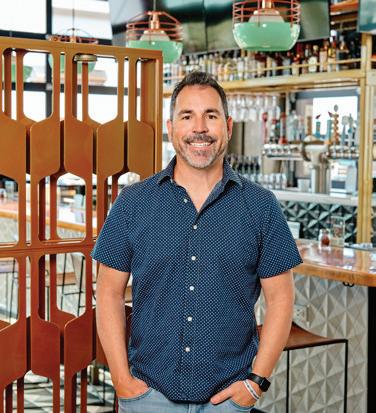
Restaurant transitions a unique benefit for its employees by
Anthony Spinato
In October 2025, our family-owned restaurant announced we were doing something unique: After more than five decades, Spinato’s Pizzeria & Family Kitchen transitioned 49% of company ownership to eligible employees in an Employee Stock Ownership Plan. Now as an ESOP, one out of three Spinato’s employees is an owner.
An ESOP is an employee benefit plan that provides substantial benefits to the company, its current owners and its employees. Currently, there are only about 7,000 companies in the United States that are ESOPs. In Arizona, ESOPs are also rare — fewer than 1% of companies statewide offer an Employee Stock Ownership Plan. And it’s even more unusual in the hospitality industry.
This was a heartfelt decision that my family made after more than two years reviewing succession and legacy options. Our Spinato family continues to be majority owners, and the new ESOP provides team members with a chance to share in profits while taking pride in contributing to Spinato’s continued growth.
Our family began to discuss the restaurant’s legacy and succession planning during a family retreat in 2022. My father, Ken Spinato, opened Spinato’s first restaurant in 1974 in Scottsdale with my mother, Elaine. Now in his 80s, Dad continues to greet guests at restaurants, but we knew we were approaching a pivotal time in the family business.
We talked about how COVID changed everything, and how the dream of retirement became more elusive for our friends, family and even our own employees. Dad shared that he really believed our restaurants are good for our communities and neighbors. Pizza brings people together — families, friends and neighbors connect with each other when they dine at our restaurants. We wanted to make sure we did everything we could to preserve and protect those connections happening in our restaurants for many decades in the future. Labor challenges, inflationary pressures and the wage gap also influenced our family’s decision.
We did consider other succession options, but we knew that if we were going to protect Spinato’s legacy, we needed to make sure the tenure of our people could grow. We want to find ways to retain our top talent, attract new talent and then reward their hard work and outcomes. We liked that an ESOP is true ownership.
ESOPs are governed by overarching federal laws, and every ESOP is different. It’s like building a custom house. Every business has its own inner workings, and we knew that we needed to work with a group that has a deep bench and a lot of experience. I interviewed several firms and decided to partner with WealthPoint because they were all former owners of small businesses.
Once we made the decision, we had to prepare, both
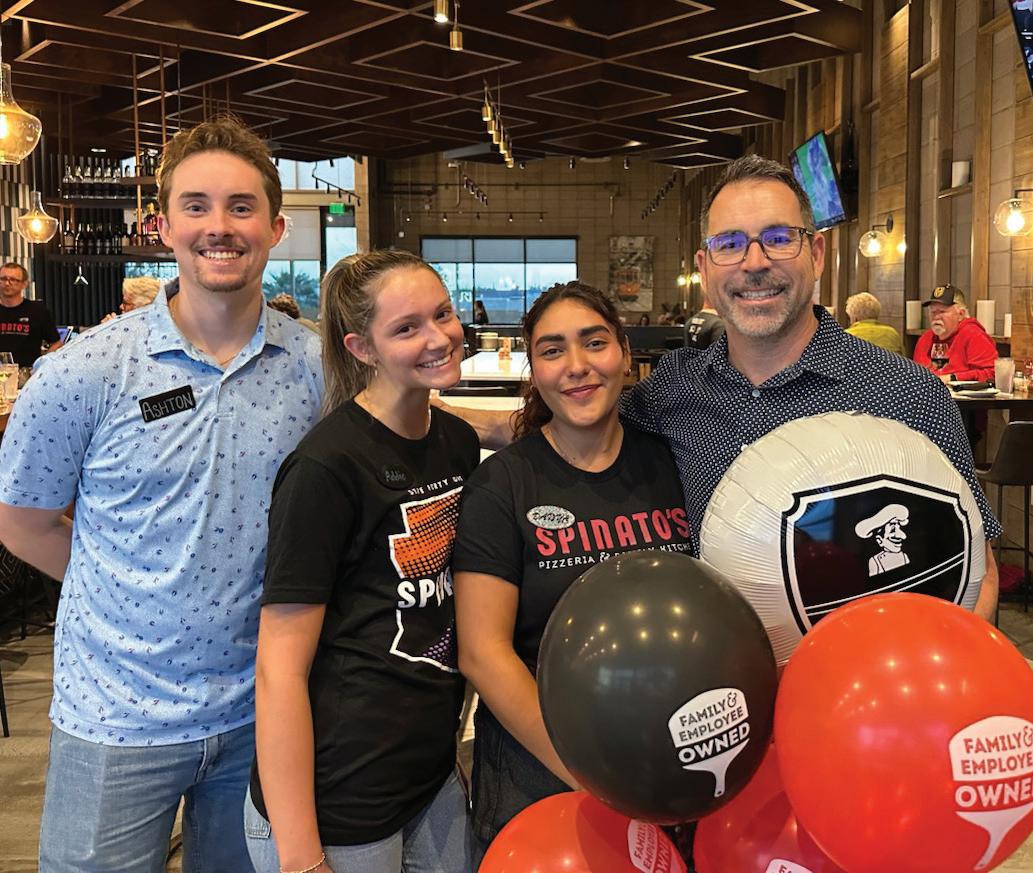
financially and from a board structure and governance standpoint. Our chief financial officer, Rich Thompson, did a great job getting our financials and documents in place. It was a heavy lift, and we asked our accounting firm, Baker Tilly, to review and validate the work. We also had to adjust for the work that continues after the transition. Now we have annual ESOP reporting requirements that are similar to 401(k) plan reporting, and our company will undergo an independent annual valuation review. We partner with a third-party administrator and a valuation firm to support those processes, and that approach has worked well for us.
It was an exciting day when we alerted 150 employees that they already had a “slice of the pie” in ownership. But we had more work to do, especially when it came to educating our entire team of 420 employees. In retrospect, we wish we had started the education process sooner. We made the transition to an ESOP three and a half months prior to announcing it to our team. Part of the reason we held back was we were changing our Point-of-Sale (POS) system.
An ESOP is a big investment up front and we know we won’t get the return we are hoping for if we don’t continually educate and engage our team members. We’ve had to make time to have more transparent conversations with our employees about the business and show them how each position can make an impact in their everyday choices.
An ESOP provides ownership but, more importantly, it’s about entrusting that team members will care for the company. We believe in this business model and encourage other business owners to consider the benefits of an ESOP as they consider their growth, succession and legacy options.
Turnover is substantially lower in companies that combine broad-based employee ownership with a supportive and empowering culture. Annual voluntary employee turnover decreases from about 13% per year to about 2% per year when these two strategies are implemented together.