
Supporting SMEs & Entrepreneurs
Q1 2026 | A promotional supplement distributed on behalf of Mediaplanet, which takes sole responsibility for its content
“Improved financial literacy and more consistent lending practices will be central to empowering small businesses.”
David Broderick, Director, Small Firms Association
Page 02

SMEs and entrepreneurs: foundation to economic success
Ireland’s entrepreneurs and small businesses continue to power a dynamic and innovative economy.

Twww.businessnews.ie
“AI is only as smart as the data you provide. To move beyond fluff, upload your actual business context.”
Mark Kelly, Founder, AI Ireland
Page 04

heir resilience, creativity and ambition have driven record employment and positioned Ireland as one of Europe’s most competitive places to start and grow a business.
Supported by Enterprise Ireland and our Local Enterprise Offices (LEOs), enterprise remains strong in every county, reaffirming our reputation as a nation where ideas flourish and businesses thrive.
SMEs and entrepreneurs are central to this success, driving jobs, sustaining families and anchoring communities. Strong results from Enterprise Ireland and the LEO network highlight the adaptability of Irish businesses and the strength of our enterprise environment. Ireland’s labour market has reached record levels, with more than 2.8 million people now in work, underscoring the productivity and confidence of the small business sector.
Investing in Ireland’s enterprise and innovation ecosystem
Last month, Ministers Peter Burke, Niamh Smyth and I published the Sectoral Capital Plan 2026–2030, committing €4.7 billion to strengthening enterprise and employment nationwide. This is the largest ever investment in Ireland’s enterprise and innovation ecosystem.
More than €1 billion is dedicated to supporting indigenous SMEs through improved access to finance, expanded innovation supports and enhanced regional enterprise infrastructure. These efforts complement the Government’s ambition to create 300,000 additional jobs by 2030, as set out in the National Competitiveness and Productivity Action Plan. Enterprise Ireland’s new strategy reinforces this direction by targeting employment growth to 275,000 jobs among supported companies, while over €250 million will be invested in the LEO programme over the next five years.
Supporting entrepreneurship remains a core priority. The establishment of Start Up Ireland, part of the Government’s Action Plan on Competitiveness and Productivity, will streamline supports for early-stage founders and integrate pathways for scaling businesses. We’re simplifying access to Government supports through the National Enterprise Hub, an access point for more than 250 schemes across 32 Departments and State Agencies.
LEOs continue to deliver vital programmes such as Start Your Own Business, Food Academy, management development and mentoring, and provide entrepreneurs with practical, localised guidance.
Ensuring SMEs can secure the finance they need is critical, particularly for microenterprises facing rising costs. That’s why Microfinance Ireland’s maximum loan threshold was recently increased from €25,000 to €50,000. This has led to strong demand, with applications almost doubling and average loan sizes rising by 50%. To ensure MFI can meet this need, an additional €12.5 million has been allocated to reinforce its lending capacity.
Supporting SMEs
Since becoming Minister of State, supporting small businesses has been a key focus. We established a dedicated Small Business Unit within my Department to ensure SME needs are fully considered across Government. We also created the Cost of Business Forum, which will report later this year with recommendations to alleviate the cost pressures SMEs continue to highlight. Through the Programme for Government, we remain committed to applying the SME Test to ensure that new measures take account of their impact on small businesses.
Tourism SMEs — vital employers, especially in rural communities — benefit from strong targeted supports. Fáilte Ireland provides business, sustainability and skills initiatives that help operators manage cost pressures, improve competitiveness and sustain employment.
Government supports continue to evolve to reflect real-world challenges. Initiatives such as the Growth and Sustainability Loan Scheme, the expanded R&D tax credit and targeted regional enterprise plans are helping firms to innovate, adapt and expand. Budget 2026 advances this approach, introducing measures focused on job creation, competitiveness and long-term growth.
SMEs and entrepreneurs fuel innovation, strengthen communities and drive national prosperity. Our task is clear: to back them, remove barriers and provide the conditions they need to thrive. With sustained investment and targeted supports, we can ensure that small businesses in every region continue to grow and shape Ireland’s future success.
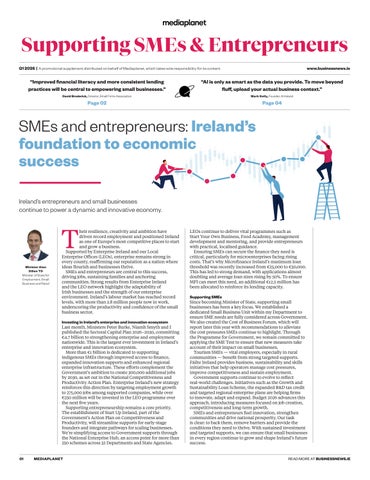
Minister Alan Dillon TD Minister of State for Employment, Small Business and Retail
Marketing solutions for SMEs: helping Irish businesses stand out and grow
For SMEs, standing out is rarely about being louder; it’s about being clearer, more consistent and more recognisable.

Customers can form an impression of a business in seconds. It might be the quality of the external signage, clarity of its signage, professionalism of its website or even a branded vehicle seen regularly in the local area. Long before a conversation happens, these visual cues help people decide whether a business feels established, credible and worth engaging with.
For Irish SMEs, this moment of perception carries real weight. Every interaction and visual touchpoint becomes an opportunity to build confidence with customers.
Consistency: defining factor of branding success
Consistency is often the defining factor. When a business presents itself clearly across signage, printed materials, digital platforms and physical spaces, it becomes easier for customers to recognise and remember it. Over time, this familiarity builds reassurance. Customers are naturally drawn to businesses that feel established and dependable.
“Your branding is working 24/7 — even when you’re not. Whether it’s your external signage, your website or your vehicle parked outside a customer’s premises, it’s constantly shaping how your business is perceived.” – Tiegan Murphy, Group Marketing Manager
Balancing physical and digital branding
Physical presence continues to be one of the most immediate and influential forms of marketing. Visually striking, clear
IE

outdoor signage — combined with strong window or interior graphics — communicates professionalism instantly. These elements work continuously, reinforcing visibility and awareness every day.
Print also remains highly effective because of its permanence. A professionally produced business card, brochure, product catalogue or piece of promotional material creates a tangible connection. Unlike fleeting digital interactions, printed materials stay with customers, acting as a physical reminder of the business and reinforcing credibility.
At the same time, digital platforms have become essential points of reference. Customers routinely research businesses online before making contact. A well-designed website and consistent visual presentation help strengthen confidence and ensure the experience feels cohesive. “When physical and digital branding align, they create a seamless, cohesive customer journey that strengthens recognition, trust and ultimately business growth”, says Snap CEO Sean Murray. Businesses that invest in how they present themselves create stronger first impressions, build trust more quickly and remain front of mind with customers. In a marketplace where attention is limited and competition is strong, visibility is not simply a marketing advantage; it’s a fundamental part of sustainable growth, helping businesses build recognition, credibility and long-term customer relationships.

Strengthening access to finance for small businesses
Credit availability is critical in every modern economy. For small businesses, access to finance is one of the most pressing issues shaping the growth trajectory; the other is rising costs.
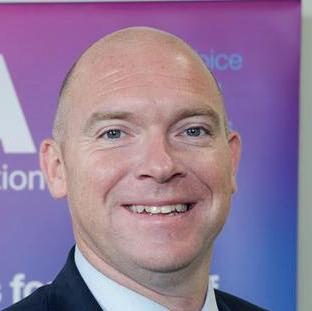
David Broderick Director, Small Firms Association
As the Small Firms Association (SFA) advances its 2026-2029 strategy, the Access to Finance pillar is positioned to play a pivotal role in enabling small firms invest, innovate and build resilience in an increasingly competitive environment.
Most small businesses still require additional funding For many small enterprises, liquidity and credit availability continue to determine expansion opportunities, but also their very ability to survive unexpected shocks. Insights from the SFA Small Business Survey 2025 highlight the scale of this challenge.
Notably, 54% of small businesses reported they couldn’t trade for more than six months without additional funding, an alarming increase from the previous year’s figure of 35%. This trend underscores the financial vulnerability many firms continue to experience, despite improvements in cost pressures elsewhere in the economy.
In January, the SFA published its three-year strategy, which is aimed at placing small owners at the heart of Government policy and Ireland’s economic success
story. The strategy had six key pillars of activity.
Supporting businesses in making better financial decisions
One of the pillars, related to access to finance, aims to address these concerns by championing a more supportive financial ecosystem for small enterprises. While financial institutions have broadened their range of credit products, many small firms still report difficulty securing affordable working capital, navigating application processes or identifying suitable funding instruments. The strategy recognises that improved financial literacy, clearer information channels and more consistent lending practices will be central to empowering small businesses to make informed financial decisions.
Through this strategy period, the SFA’s work will continue to focus on reducing barriers, advocating for tailored financial supports and ensuring that Ireland’s small firms — regardless of sector or scale — can access the funding they need to innovate, compete and thrive. By prioritising access to finance, the SFA is laying the groundwork for a more resilient and dynamic small business landscape in the years ahead.
Tiegan Murphy Group Marketing Manager, Snap
Sean Murray CEO, Snap
Manager: Jen Church Interim
Director: Sarah Muir | Lead Designer: Ellen Cahill | Interim Content Manager: Rachelle Ong |
Strategist: Jonni Asfaha | All images supplied by Getty Images, unless otherwise specified
Protecting self-employed from everyday risks
For Ireland’s self-employed, independence can also mean exposure. Financial instability, uneven income and limited safety nets are everyday realities for many.

Running your own business is attractive to many people in Ireland. The ability to work on your own schedule, choose clients and build something that’s yours is a major part of that appeal.
Yet for those who are self‑employed, greater flexibility and control often come with a price: exposure.
Research from AXA highlights that independence can also mean financial instability, unpredictable income and a lack of safety nets when something goes wrong. Financial instability is the single biggest concern, cited by nearly half of respondents, even as most say their business is stable, doing well or thriving.
That’s why inclusive, flexible protection is becoming even more important for today’s micro businesses and sole traders. Services Protect from AXA was developed in response to the realities that many businesses face. It’s designed specifically for micro businesses and self employed people, from mobile hairdressers and tutors to dance and music teachers, caterers and nail technicians. With around 100 different service occupations eligible, it reflects the diversity of small service businesses operating across Ireland.
Why inclusive insurance matters
the cover they need, at a level they can afford, can be the difference between going uninsured and having meaningful protection in place.
Everyday cover for real risks
Public liability insurance is a good example. Whether you’re a cake maker delivering to clients or a yoga teacher hiring community halls, you regularly interact with others. If someone trips over your equipment, reacts badly to a product or their property is damaged, a claim could follow.
Public liability cover can help protect your business from these costs, giving you reassurance and your customers confidence.
For many service businesses, equipment is the backbone of their income. Laptops, styling tools, specialist machinery or treatment equipment are hard to replace quickly.
Our commitment is to make insurance more inclusive for the self‑employed and micro businesses who are vital to Ireland’s economy.
For many service led businesses, the margin for error is slim. A single accident, damaged piece of equipment or a claim from a customer can disrupt cash flow or halt trading altogether. At the same time, the administrative side of running a business, from tax returns to contracts and compliance, leaves little room to plan for what would happen if the unexpected did occur.
Inclusive insurance is about recognising these realities and ensuring that protection isn’t reserved for larger businesses with dedicated resources.
“Inclusive insurance means closing the protection gap for people and businesses most exposed to shocks but least likely to be insured. For us, it’s about offering simple, affordable products in flexible ways, so protection is a realistic option for all, not a privilege,” says John Caird, Commercial and Intermediary Director at AXA.
For self‑employed people, the ability to choose only
Under Services Protect, business equipment cover can be added to help if those essentials are lost, stolen or damaged, supporting a faster return to work.
Because public liability is the only required cover and everything else is optional, smaller businesses can choose the extra protections that fit their risks and budgets.
Supporting growth and responsibility
As businesses grow, responsibilities increase. Hiring employees, even casually or temporarily, creates a duty of care. Employers’ liability insurance can protect if an employee becomes unwell or is injured in the course of their work. For those whose personal skills are the product, professional indemnity cover can help protect them if a client claims that the work carried out or advice provided has resulted in a financial loss.
Services Protect is available through brokers, by phone and through AXA’s branch network, making it accessible whether business owners prefer advice from an intermediary or to deal directly.
“Our commitment is to make insurance more inclusive for the self‑employed and micro businesses who are vital to Ireland’s economy,” says John Caird. “We want to support people who take the risk of working for themselves, so they’re not left without support when they need it most.”

John Caird Commercial & Intermediary Director at AXA Ireland
Sponsored by AXA
Stop getting generic AI responses: a practical guide for Irish SMEs
“The AI doesn’t get my business” is the most common complaint I hear from SME owners across Ireland. The frustration is fixable, and the solution doesn’t require a tech degree.
Here’s how to turn a chatbot into a specialist member of your team.
Fix the “tone” in your settings
Most users ignore the settings. That’s a mistake. In ChatGPT, the ‘Custom Instructions’ feature allows you to set a permanent “voice.”
Tell the AI to remove overused ‘AI-isms’ like delve, leverage, or underscore — words no Irish business owner uses in real life.
Define your tone: is it ‘Galway techstartup casual’ or ‘traditional Dublin legal firm?’ Once set, you never have to repeat these rules.
Move from generalist to specialist
The real magic happens when you move away from one giant chat window and start building Custom GPTs. These are purpose-built mini-assistants.
‘The HR Bot’ can be fed into your employee handbook to answer staff queries instantly. Meanwhile, AI can help you win business by giving ‘The Tender Writer’ past successful bids. Finally, ‘The Brand Voice’ is a tool that ensures every social media post sounds like you, not a robot.
Give it the ‘home advantage’ AI is only as smart as the data you provide. To move beyond fluff, upload your actual business context. Sales teams should input pitch decks; marketing can add brand guidelines and past campaign reports.
When the AI understands your specific terminology, the ‘hallucinations’ disappear.
The final frontier: integration
For SMEs competing with multinationals, integration is the ‘secret sauce.’ By connecting AI to your CRM or project management tools, it moves from talking about work to doing it — pulling live data and updating records automatically.
The technology is no longer the barrier; it’s the setup. By configuring your tools properly, you free your team to focus on work that actually requires human judgment.

Credit experts help businesses and farms access suitable bank finance
Struggling to secure credit for your business? You’re not alone!
Set up by the Minister for Finance in 2010, Credit Review has a simple mission: to assist viable, or potentially viable, SMEs and farms to access the bank finance they need to grow and develop their business. Businesses need to continuously invest to survive and grow, and credit can help ensure that investment occurs at the right time.
Bank finance helps businesses survive and thrive
Without suitable finance, even viable businesses may postpone or abandon investments, reducing their competitiveness and long-term resilience. Businesses generally seek bank finance for two reasons: to increase working capital as their business grows in the short to medium term and to fund larger-scale investment for capitalintensive projects, which are typically longer term. Bank credit can play an important role, and accessing the appropriate type of credit is key to business success.
Credit Review provides an independent and transparent appeals process for businesses with credit applications refused by Irish banks. Our mandate covers all business-related credit and specifically excludes personal credit. For example, we can review changes to existing credit facilities being restructured, reduced or even withdrawn — like if your bank reduces your business overdraft limit, you can appeal, and we’ll take an independent view.
A roadmap to help businesses secure credit The appeal focuses on viability, or the ability to repay the credit. In most cases, when they come to us, we can recommend a solution that works for the borrower and the bank. For those we can’t support at this time, we provide a roadmap to assist in securing credit in the future.
The service also operates a helpline for business borrowers having difficulty getting credit. Prevention can be better than a cure, so call our helpline for information if you feel your application isn’t going well, before you get a final ‘No.’
We accept applications from businesses with credit facilities of up to €3 million refused, reduced or withdrawn by AIB, Bank of Ireland and PTSB.
Mark Kelly Founder, AI Ireland

Dublin Tech Summit launches Startup Village with Irish BICs
Dublin Tech Summit 2026 will introduce an exciting new feature: the Startup Village, an interactive hub developed with Irish BICs that will bring Ireland’s entrepreneurial ecosystem to life.
Designed to connect founders, investors, accelerators and industry leaders, it will place innovation, collaboration and real growth opportunities at the centre of the Summit experience. The Startup Village will also be a lively meeting ground for founders, investors, accelerators and industry changemakers shaping the future of innovation.
A launchpad for early-stage founders
Representing the national network of AxisBIC, Furthr, WestBIC and Propel, Irish BICs have played a key role in helping thousands of startups grow and scale. Their expertise ensures the Startup Village will be more than just a networking area. It’s designed to be a launchpad for fresh ideas and real opportunities.
Over two action-packed days at the RDS, early-stage founders will connect with mentors, funders and ecosystem partners ready to help them take the next step. Whether that means refining their pitch, finding investment or planning for international growth, attendees can expect direct, practical advice and introductions that make a real difference.
Addressing challenges for startups
As part of the partnership, Irish BICs will host a series of focused, founderfirst sessions tackling the main challenges of 2026. Topics will include raising capital, avoiding burnout, scaling sustainably and standing out in a competitive market. Conversations will also explore emerging trends and look at how strong networks can drive long-term success.
The launch of the Startup Village marks an exciting new chapter for Dublin Tech Summit. With a global audience of innovators, investors and tech leaders gathering in Dublin this May, the 2026 edition is shaping up to be the most impactful yet.
If you are building, investing, mentoring or scaling, this is where the momentum happens.

Catherine Collins Head of Credit Review