MAY 2026 | HEALTHINSIGHT.CA
@MediaplanetCA
Please recycle
A SPECIAL INTEREST SECTION BY MEDIAPLANET
Supporting Canadian Caregivers
Q&A
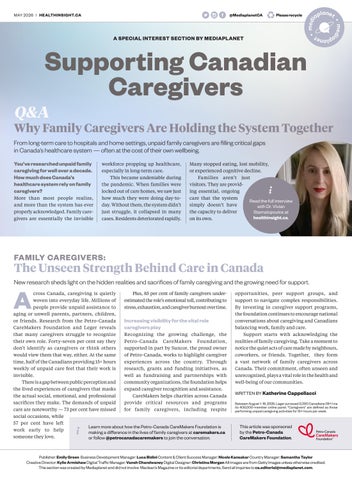
Why Family Caregivers Are Holding the System Together From long-term care to hospitals and home settings, unpaid family caregivers are filling critical gaps in Canada’s healthcare system — often at the cost of their own wellbeing. You’ve researched unpaid family caregiving for well over a decade. How much does Canada’s healthcare system rely on family caregivers? More than most people realize, and more than the system has ever properly acknowledged. Family caregivers are essentially the invisible
workforce propping up healthcare, especially in long-term care. This became undeniable during the pandemic. When families were locked out of care homes, we saw just how much they were doing day-today. Without them, the system didn’t just struggle, it collapsed in many cases. Residents deteriorated rapidly.
Many stopped eating, lost mobility, or experienced cognitive decline. Families aren’t just visitors. They are providing essential, ongoing care that the system Read the full interview simply doesn’t have with Dr. Vivian the capacity to deliver Stamatopoulos at healthinsight.ca. on its own.
FAMILY CAREGIVERS:
The Unseen Strength Behind Care in Canada New research sheds light on the hidden realities and sacrifices of family caregiving and the growing need for support.
A
cross Canada, caregiving is quietly Plus, 85 per cent of family caregivers underwoven into everyday life. Millions of estimated the role’s emotional toll, contributing to people provide unpaid assistance to stress, exhaustion, and caregiver burnout over time. aging or unwell parents, partners, children, or friends. Research from the Petro-Canada Increasing visibility for the vital role CareMakers Foundation and Leger reveals caregivers play that many caregivers struggle to recognize Recognizing the growing challenge, the their own role. Forty-seven per cent say they Petro-Canada CareMakers Foundation, don’t identify as caregivers or think others supported in part by Suncor, the proud owner would view them that way, either. At the same of Petro-Canada, works to highlight caregiver time, half of the Canadians providing 15+ hours experiences across the country. Through weekly of unpaid care feel that their work is research, grants and funding initiatives, as invisible. well as fundraising and partnerships with There is a gap between public perception and community organizations, the foundation helps the lived experiences of caregivers that masks expand caregiver recognition and assistance. the actual social, emotional, and professional CareMakers helps charities across Canada sacrifices they make. The demands of unpaid provide critical resources and programs care are noteworthy — 73 per cent have missed for family caregivers, including respite social occasions, while 57 per cent have left Learn more about how the Petro-Canada CareMakers Foundation is work early to help making a difference in the lives of family caregivers at caremakers.ca someone they love. or follow @petrocanadacaremakers to join the conversation.
opportunities, peer support groups, and support to navigate complex responsibilities. By investing in caregiver support programs, the foundation continues to encourage national conversations about caregiving and Canadians balancing work, family and care. Support starts with acknowledging the realities of family caregiving. Take a moment to notice the quiet acts of care made by neighbours, coworkers, or friends. Together, they form a vast network of family caregivers across Canada. Their commitment, often unseen and unrecognized, plays a vital role in the health and well-being of our communities.
WRITTEN BY Katherine Cappellacci Between August 1–18, 2025, Leger surveyed 2,000 Canadians (18+) via its 400,000-member online panel. "Caregivers" are defined as those performing unpaid caregiving activities for 15+ hours per week.
This article was sponsored by the Petro-Canada CareMakers Foundation.
Publisher: Emily Green Business Development Manager: Luca Bidini Content & Client Success Manager: Nicole Kansakar Country Manager: Samantha Taylor Creative Director: Kylie Armishaw Digital Traffic Manager: Vansh Chandwaney Digital Designer: Christina Morgan All images are from Getty Images unless otherwise credited. This section was created by Mediaplanet and did not involve Maclean’s Magazine or its editorial departments. Send all inquiries to ca.editorial@mediaplanet.com.