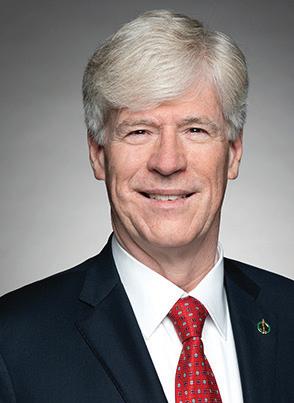
TIM HODGSON Minister of Energy and Natural Resources
Canada is scaling up clean energy while strengthening our electricity grid and responsibly growing our conventional energy industry — because competitiveness means doing more than one thing at the same time. We are investing to provide reliable, affordable, and clean power across the country that will propel our economic growth, protect affordability for Canadian families and make Canada a low-risk, low-cost, lowcarbon energy superpower.
STEPHEN
FUHR Secretary of State, Defence Procurement
Canada is treating defence not only as a security priority, but as a key driver of economic and national sovereignty. Canadian innovators in defence, aerospace, and advanced technologies are central to that effort. They create good jobs, strengthen supply chains, and develop the capabilities of our Armed Forces in an increasingly uncertain world. By investing in Canadian talent and technology, we are growing our economy, supporting our allies, and ensuring Canada can make decisions from a position of strength.
How Small Businesses Are Powering National Defence and Economic Growth
Canada’s new defence strategy is creating opportunities for homegrown innovators to advance security and economic growth.
Historically, Canada’s defence procurement was complicated, slow, and reliant on international suppliers. But a seismic shift is happening, as Canada’s Defence Industrial Strategy is prioritizing Canadian suppliers and materials. Glen Lynch, CEO of Volatus Aerospace, an innovative aerospace company that operates at the intersection of commercial aviation, autonomous aviation, and data, believes Canada has the talent and resources necessary to build a robust defence ecosystem. We sat down with Lynch to learn how Canadian firms are contributing to defence readiness and economic development.
How does defence readiness and capability contribute to national security and economic growth?
For more than three decades, we’ve under invested in the military, but with tens of billions of dollars available in defence procurement, investor confidence is increasing. No longer do we need to rely on foreign suppliers. The know-how to innovate and develop quality products is available in Canada, though it will take continued effort to fully develop the industrial infrastructure.
Why is procurement speed important?
Defence procurement has traditionally been slow, but the new Defence Investment Agency is simplifying the process, allowing innovation to get into the field as it’s needed. Small businesses were once excluded because
they couldn’t shoulder the risk of long procurement cycles, yet it’s those same businesses that have the agility and creativity to innovate. What’s happening now is the Canadian Armed Forces are engaging directly with industry to discuss requirements. It’s very collaborative and allowing Canadian small businesses to play a role in defence readiness and economic development. It’s imperative that we don’t slow down.
Have recent shifts in the geopolitical landscape changed defence and economic sovereignty in Canada?
We’re living in somewhat uncertain times, and perhaps we’ve taken our national security for granted. If we can’t stand on our own two feet economically, we may discover we’re not able to stand at all. The default now is to use Canadian innovation to build economic and defence sovereignty. The Canadian government has also made the Arctic a priority. It’s a massive piece of real estate that we’re responsible for and that means we have to see what’s going on there. Our security and sovereignty rests on properly serving northern communities, patrolling Arctic waterways, and monitoring the environment and marine life. This requires the kind of autonomous systems and drone technology built by Canadians for Canada.
How does investment in defence support job creation and export potential for Canadian business?
Public and private investment is leading to significant
INNOVATION TAKES ENERGY:
Powering Canada’s Potential
Reliable, affordable energy underpins innovation, enabling growth, supporting new industries and strengthening Canada’s global competitiveness.
Innovation doesn’t happen on ideas alone. It runs on energy.
From advanced manufacturing to data centers, the industries shaping Canada’s future rely on consistent, affordable power to grow. As populations rise and data-driven industries expand, energy demand continues to increase. Without reliable energy, innovation slows and investment looks elsewhere. Reliable, scalable energy is the backbone of innovation, enabling businesses to invest with confidence; communities to grow and ideas to deliver real-world benefits. At Enbridge, we believe meeting rising energy demand will require an all-of-theabove approach — one that keeps energy secure, accessible and competitive while supporting innovation across Canada and North America.
Connecting energy to innovation
The challenge is not one of supply: Canada enjoys an abundance of energy resources.
The priority is ensuring the infrastructure is in place to produce that energy and deliver it where it’s needed most.
If Canada wants to lead, we need the conditions to build. Too often, long permitting timelines, uncertain processes and decisions that lack durability make it harder to advance critical infrastructure. This uncertainty discourages investment, slows growth and risks Canada falling behind other jurisdictions, that are moving faster to capture opportunity.
At Enbridge, we are focused on meeting this moment. We’re investing in modern infrastructure, expanding capacity and advancing new technologies to move energy safely, reliably and at scale. Because when energy flows efficiently, innovation doesn’t just grow — it accelerates.
Canada has what it takes to power the future. Let’s match that potential with action.
Written by Enbridge
job creation across multiple disciplines. Think engineering, manufacturing, administration, customer service, and maintenance facilities. In our sector alone, we are generating high paying jobs. Investor confidence is high, because the Canadian government’s Defence Industrial Strategy is fully funded and spells out the priorities. This creates credibility, especially for other nations, who see quality products being built by an industrial base backed by government. People want to do business with Canada, because we’re seen as a trusted partner. It's an exciting and transformational moment for the country.
Written by Ken Donohue
This
Canada Has a Seat at the Table as the Future of Dual-Use Air Mobility Takes Shape
Why air mobility matters to Canada Canada has long understood that aviation is more than just a way to move people and goods. In a country defi ned by distance, weather, remote communities, and northern geography, flight is part of how we connect, respond, trade, and protect.
That is why the future of air mobility matters here
New aircraft, remotely piloted systems, digital airspace solutions, and new propulsion technologies are changing how people think about air mobility. In a Canadian context, these innovations could support remote community access, wildfire response, northern logistics, medical transport, infrastructure inspection, and defence readiness.
From innovation to implementation
That dual-use reality makes global coordination important. The countries that participate early can help shape practical standards, clearer certification pathways, and operating
models that reflect real-world needs.
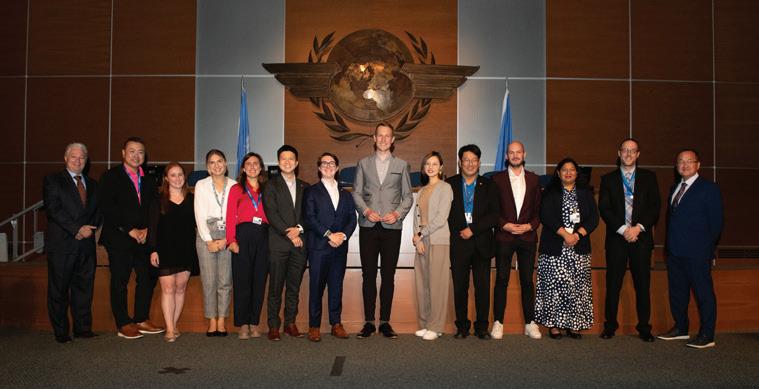
Canada has already helped move this conversation forward. In 2024, Canadian Advanced Air Mobility (CAAM) and the International Civil Aviation Organization (ICAO) welcomed over 1,500 attendees from across the globe, with 87 nation states represented, to the inaugural ICAO Advanced Air Mobility Symposium in Montréal. The event brought together governments, regulators, industry, and researchers to explore how this emerging sector can grow safely and responsibly.
Shaping the next era of aviation In 2026, the conversation continues in Bangkok at ICAO AAM 2026, where Canada can help connect its aviation and aerospace strengths to the global standards, partnerships, and markets that will shape the next era of aviation. As air mobility moves closer to implementation, Canada has the experience, geography, and ecosystem to play a meaningful role in what comes next.
Written by David Dong
Glen Lynch CEO, Volatus Aerospace
Learn how Volatus Aerospace is pushing the envelope on innovation at volatusaerospace.com
article was sponsored by Volatus Aerospace
Modernizing Canada’s Grid for a Competitive Future
Canada faces unprecedented electricity demand growth. It will take an innovative electricity grid — built in innovative ways — to meet this nation-building opportunity.
Canada is at a pivotal moment. Rising demand for electricity and geopolitical uncertainty are creating both urgency and opportunity to strengthen our country’s energy security, sovereignty, and resilience.
The recently released National Strategy for an Electrified Canadian Economy reports that electricity demand could double by 2050, driven by transportation, industry, buildings, and data growth. Meeting future demand will require over $1 trillion in investment in generation, transmission, and grid modernization.
This is a massive build out on an accelerated timeline. These major infrastructure projects will need to align governments, utilities, Indigenous partners, capital markets, communities, and customers to integrate and deliver new sources of renewable generation across the country.
The good news is we know how to do this. Canada starts from a position of strength: abundant energy resources, one of the cleanest electricity systems in the world, and proven expertise delivering complex infrastructure.
To deliver exponentially better infrastructure, we need to build differently.
With advanced technology, stronger partnership models, and tailored financing approaches designed for long-life assets, Canada can deliver the national-scale projects this moment demands.
A smarter grid
Canada’s power grids were built to serve local needs, shaped by geography, available resources, and patterns of demand. That system has served Canada well. But today’s fragmented grid design and aging technology won’t be able to meet future demand.
Fortunately, there’s modern technology already at work that enables the kind of regional interconnection Canada needs, moving electricity to where it’s needed while balancing supply and demand over time and distance. High-voltage direct current (HVDC) systems optimize load and flow to integrate diverse generation sources, stabilize differences between systems, and strengthen grid resilience.
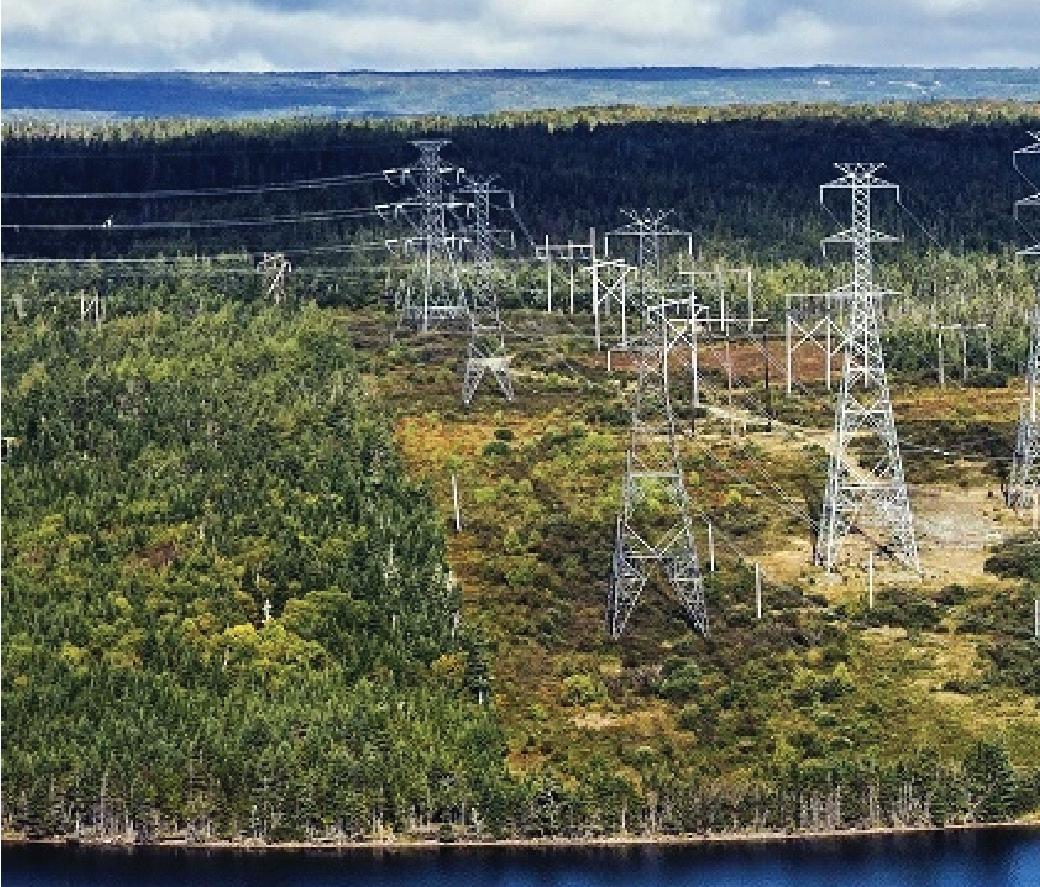
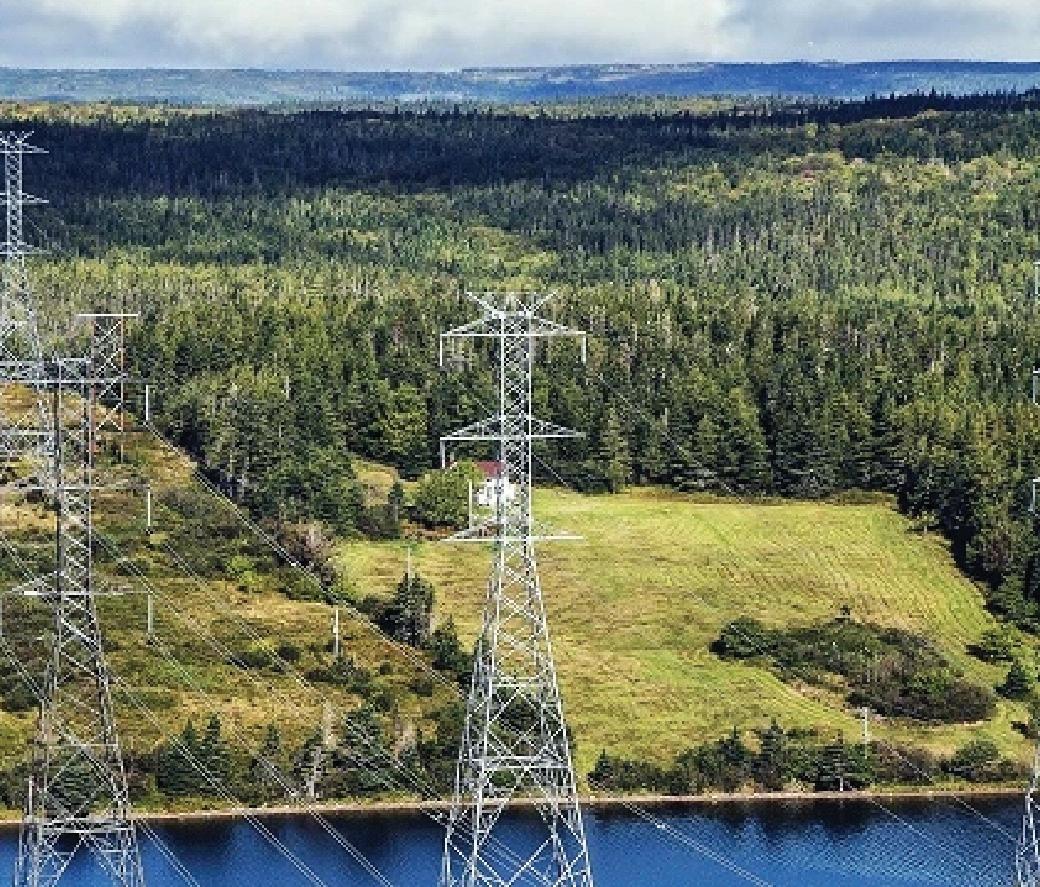
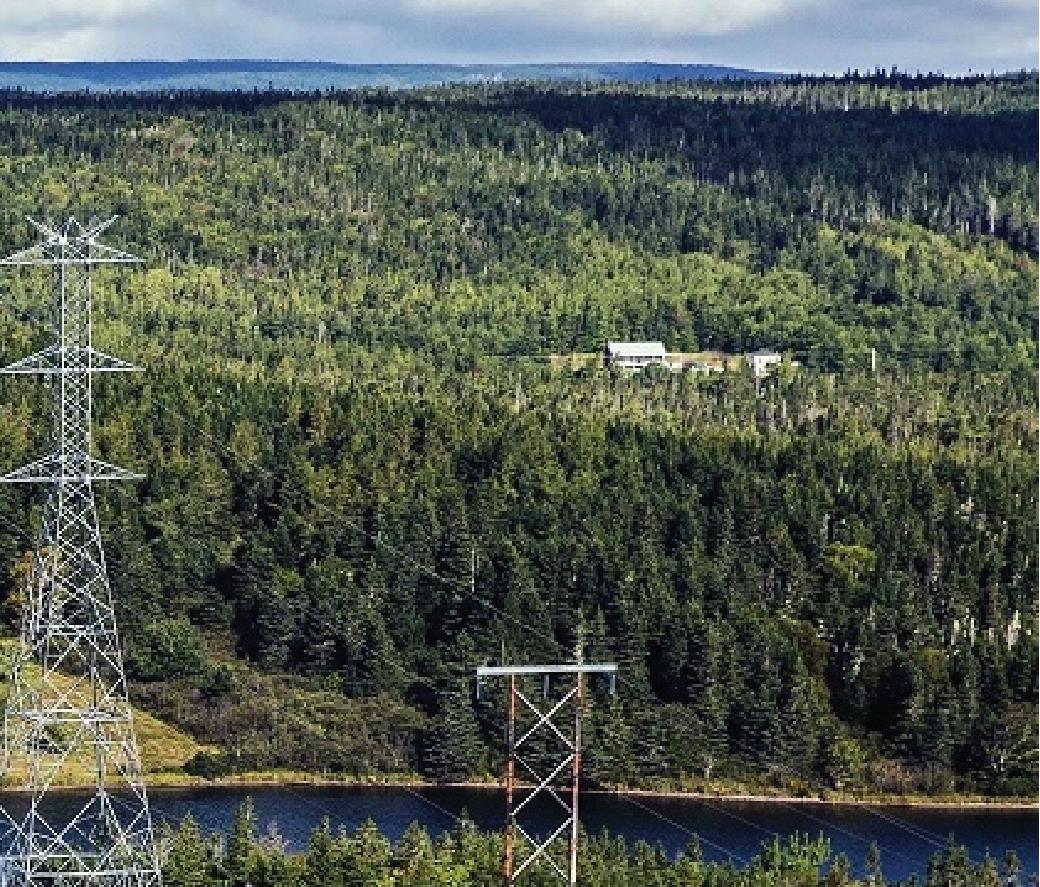
The Maritime Link demonstrates the value of HVDC. This 500 megawatt connection carries hydroelectric power from Newfoundland and Labrador to Nova Scotia under 170 kilometres of open ocean. For Newfoundland and Labrador, it provides a long-term, stable customer
for clean hydro from Muskrat Falls, turning a natural advantage into sustained economic value. For Nova Scotia, it delivers about 19 per cent of annual electricity needs as dependable, emissions-free power and is a cornerstone of the province’s clean energy transition.
Transmission isn’t just about moving electrons; it’s about unlocking the value of our national resources to help Canada compete.
It’s what can happen when the right partners come together to connect supply with demand. Similarly, Ontario’s proposed Toronto Third Line would apply HVDC in one of Canada’s most demand-intensive regions, improving reliability while avoiding the need for new corridors through dense urban areas.
shared economic value, coordinated across governments and utilities, and engaged communities, fishers, environmental experts, rights holders, and stakeholders early to shape how the project was designed, approved, and delivered.
Shared-value financing
The cost and structure of financing the infrastructure build-out the nation needs will determine what gets built and at what cost to customers. With long-life assets, we need models that allocate risk appropriately, attract long-term capital, and balance outcomes for customers and investors. If the model doesn’t work, the project doesn’t move.
Purpose built financing structures better align cost with long-term value. These generational assets are built to deliver benefits for decades and can be financed accordingly. By blending public investment, low cost debt, and long horizon capital, project costs are spread over decades, lowering cost pressure on today’s customers and enabling broader participation.
Transmission isn’t just about moving electrons; it’s about unlocking the value of our national resources to help Canada compete.
New ways to partner
Generational infrastructure projects depend on constructive partnerships across borders, interests, and communities. Without trust, confidence, and support, projects grind to a halt.
Building those relationships starts early and requires sustained effort. Engagement with Indigenous rights holders, suppliers, partners, and customers isn’t a step in the process — it is the process. Projects move faster and are more durable when they’re built with communities, not around them.
The Maritime Link project team created partnerships and governance structures that were as innovative as its technology. They aligned two provinces around
The Wasoqonatl intertie demonstrates this model in practice. Emera-owned Nova Scotia Power is the lead partner in this transmission line between Nova Scotia and New Brunswick. It includes Mi’kmaw communities in Nova Scotia and Mi’gmag communities in New Brunswick, NB Power, and the Canadian Infrastructure Bank, which provided low-cost debt and its first equity investment. This structure promotes First Nations ownership, creating value over time, while delivering more than $200 million in savings for customers.
Taking shape
Canada faces the challenge of increasing energy demand from a position of real strength: abundant, clean energy resources, safe and regulated systems and structures, and the capacity to deliver complex infrastructure, paired with pride-fuelled ambition to deliver what future Canadians need.
But meeting this moment will take more than ambition. It requires innovation across multiple fronts, including smarter grid technology, stronger partnership models, and tailored financing for generational assets that support long-term affordability.
The task ahead is to align around shared outcomes and build at the scale this moment requires. When we do, Canada will not simply keep pace with the future; we’ll shape it.
The Wasoqonatl Transmission Line is a timely example of the innovation in technology, financing, and partnership needed for major projects. It upgrades the connection between Nova Scotia and New Brunswick, improving reliability and enabling more renewable energy, and features a unique deal structure that includes equity participation by 22 Indigenous communities in both provinces.
Canada Is Primed to Lead in Next-Generation Geothermal Innovation
Drawing on decades of expertise in the oil and gas sector, Canadian innovators are advancing closed-loop geothermal toward global deployment.
Canada has spent decades building world-leading capabilities in drilling, subsurface engineering, and large-scale energy project delivery. These capabilities have helped establish the country as a major player in the global oil and gas industry, and they’re now providing a foundation for next-generation geothermal innovation.
“We pulled on a lot of proven or emerging technologies from oil and gas and integrated them into a novel application,” says Matt Toews, Chief Technology and Operating Officer at Eavor, a geothermal technology company based in Calgary that has developed a proprietary closed-loop geothermal system known as the Eavor-Loop™.
“This is a made-in-Canada solution,” says Mark Fitzgerald, President and CEO at Eavor. “It’s built on the back of decades of innovation and expertise in the resource sector and the oil and gas sector in Canada.”
Canada already has the expertise. The next step is deploying it.
Meeting the world’s growing energy needs
Meeting the modern world’s energy needs is an increasing challenge, with electricity demand surging. Data centres are expanding rapidly, transportation and industry are using more and more electricity, and rising global temperatures increase the need for air conditioning. A growing global population and continued urbanization add to the pressure.
With the world’s power demands rising, geothermal energy has an important role to play. It provides not only a low-carbon source of energy, but also one that’s secure, reliable, and dispatchable, it's also available when and where it’s needed, at a predictable cost.
“Geothermal is needed for grid stability. It’s needed to provide 24/7 clean power. And it’s needed to provide power when the sun’s not shining or the wind’s not blowing,” says Toews.
Scalable, accessible energy
Geothermal energy harnesses the heat that’s stored below the earth’s surface to generate electricity. Conventional geothermal systems are limited, however — they require specific geological conditions.
With closed-loop geothermal, like the Eavor-Loop™, rare geological conditions or hydrothermal resources are no longer necessary.
“We don’t need to fi nd a rare geological aquifer or geological resource,” says Toews. “We drill a closed-loop system, which is an interlinking network of deep wellbores or pipes in the subsurface, and we harvest the heat naturally by flowing water through them. There’s no flow into or out of a reservoir, there’s no fracking, and there’s no water use, and that’s what makes it scalable. We can produce heat from pretty much anywhere on earth with our system.”
In addition to being more widely deployable, closed-loop systems provide stable, continuous energy output. At
scale, geothermal isn't just an energy source; it’s energy infrastructure delivering clean baseload power.
From concept to commercial deployment
These systems don’t just work in theory, they’re already being delivered in realworld conditions.
The Eavor team learned several important lessons on the project and is ready to apply them to future deployments. “We now know exactly what to do and how to do it,” says Toews.
As Heymi Bahar, Senior Analyst at the International Energy Agency, told The New York Times: “If this technology is proven and commercially viable, it’s a complete game-changer everywhere in the world.”
The next step: deployment at scale
We can produce heat from pretty much anywhere on earth with our system.
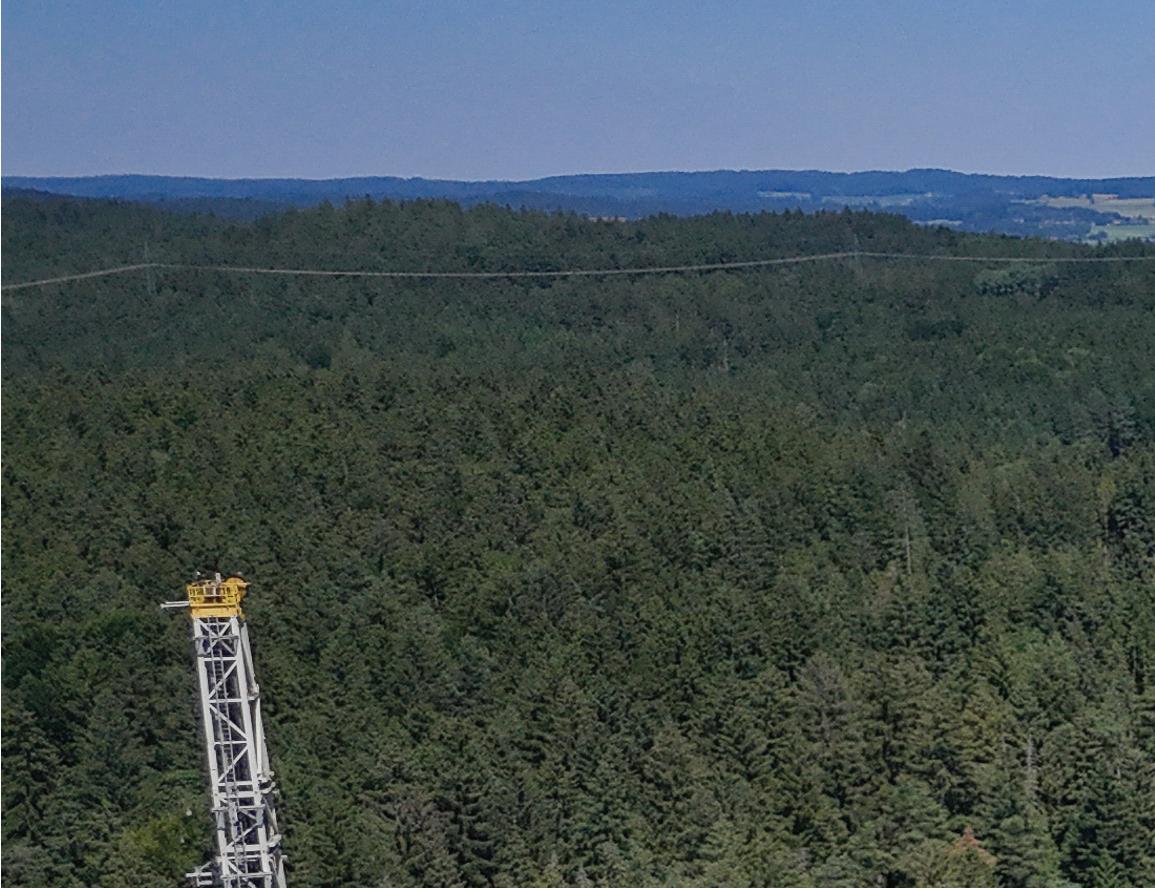
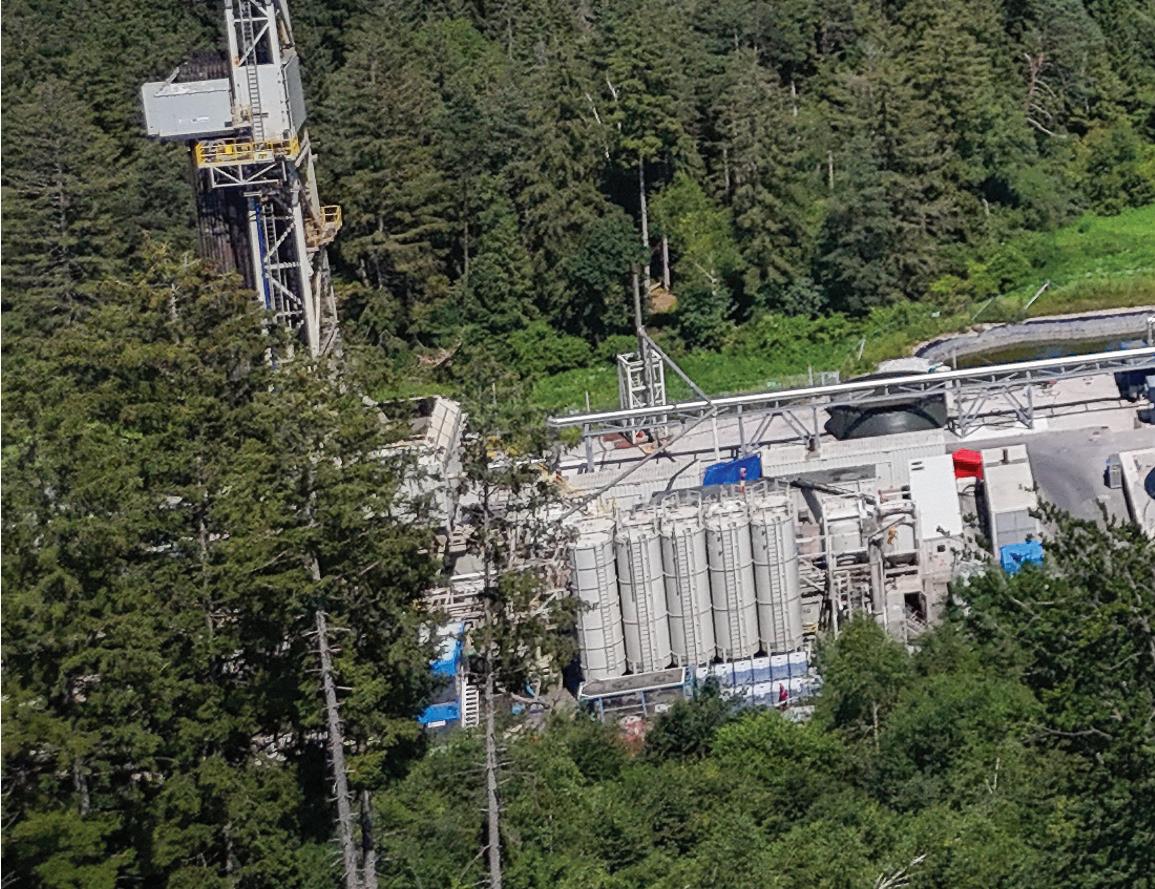
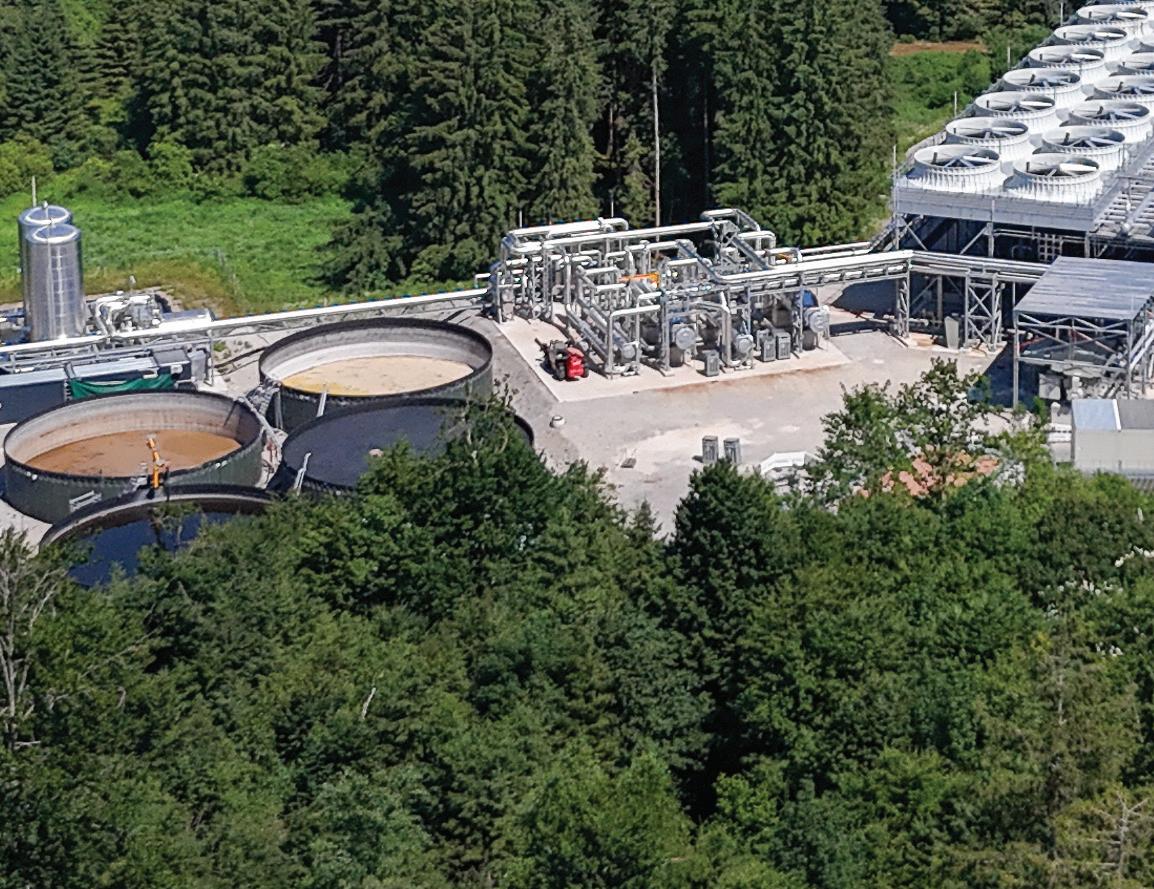
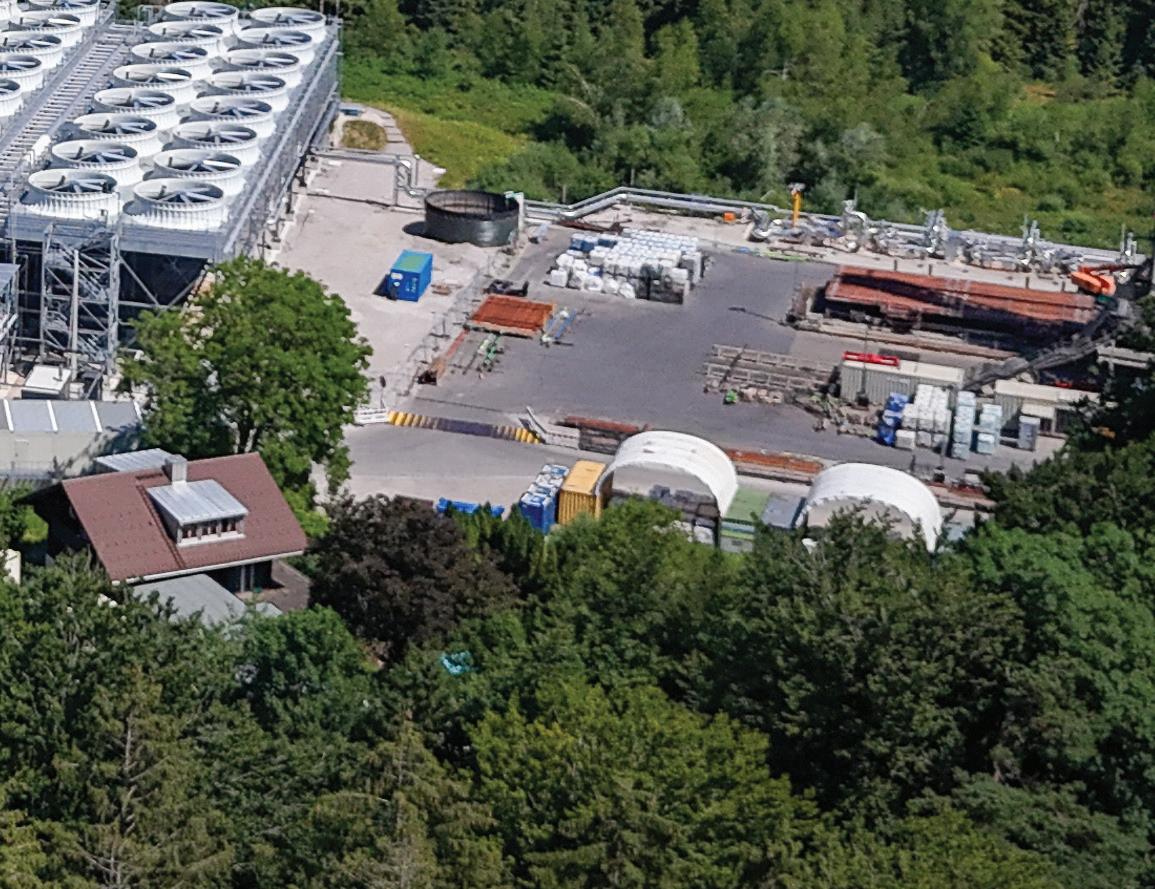
Geretsried is Eavor’s fi rst commercial-scale project using the Eavor-Loop™ system. Situated on the site of a failed traditional geothermal project in Bavaria, Germany, Geretsried has become a powerful example of how closed-loop geothermal can advance toward repeatable, global deployment.
“We successfully showed the technology working,” says Toews. “We constructed it, we’re operating it, and we’re generating heat and power exactly as we predicted.”
With the technology now proven at a commercial scale, it’s time for the focus to shift from demonstration to execution. Eavor is already scaling internationally, with projects and partnerships advancing in Germany, Japan, and North America.
"When governments support innovation and efficient policy frameworks, projects move more quickly and we can capitalize on our competitive advantage," says Fitzgerald.
Eavor’s progress is also attracting international recognition. Eavor was recently named to TIME’s list of the World’s Top GreenTech Companies for 2026, ranking number two in a list of 250 companies.
“Canada has the ability to provide clean, stable, reliable energy all across the world,” says Fitzgerald. “It’s a great opportunity to take what we’re global leaders at and to export that to the world.”
Written by Tania Amardeil
This article was sponsored by Eavor
Mark Fitzgerald President & CEO, Eavor
Matt Toews Chief Technology & Operating Officer, Eavor
Suncor: A Cornerstone of the Canadian Energy Landscape for More Than a Century
Astrong energy sector helps build a stronger Canada. This is a reality Suncor has understood for more than a century. The roots of Canada’s largest integrated energy company trace back to 1917, when it supplied lubricating oil and kerosene to wartime manufacturing, supporting Canadian interests at home and abroad. Much has changed since then, including the products the company produces, but the role of Canadian energy in driving economic prosperity and strengthening national sovereignty remains as vital as ever.
Canadian Resources,
Produced by Canadians Suncor has been shaping Canada’s energy story for generations. In 1949, the company began exploring the potential of the oil sands with a clear purpose: to help reduce Canada’s dependence on foreign oil. It was an ambitious vision, driven by the belief that Canada should develop its own resources to strengthen its economy, its energy security and its future.
Today, that legacy continues. Suncor produces approximately 850,000 barrels of oil per day, supplying its refineries in Edmonton, Montreal and Sarnia, as well as other refineries in Canada and around the world. As one of Canada’s largest refiners,
Suncor has recently increased refining capacity through efficiency gains, helping strengthen the supply of essential fuel products.
Those products, including gasoline, jet fuel, diesel, asphalt, petrochemicals and lubricants, help keep the country moving. At a time when global shortages of products such as jet fuel and diesel have underscored the importance of reliable domestic supply, Suncor is playing a key role in fuelling Canadian airports, paving roads and supporting the movement of people, goods and industries.
Canadian Benefits
The benefits of Canadian energy reach far beyond the fuels we all consume. Companies like Suncor make a meaningful contribution to communities and the economy across the country.
When the contributions of other producers and the broader Canadian energy ecosystem are included, the impact is significant. These are Canadian jobs, opportunities for Canadian businesses and revenues that help fund Canadian healthcare, roads, schools and other essential public services.
Canadian Standards
The oil sands are Canada’s resources, and Suncor believes it has a responsibility to develop them the Canadian way: safely, responsibly and with a continued focus on reducing the emissions intensity of its operations.
Canada ranks fourth in the world in proven oil reserves, behind Venezuela, Saudi Arabia, and Iran. Unlike many other major energyproducing nations, Canada offers political stability, strong institutions, and rigorous regulatory standards. That is something Canadians can and should be proud of.
Canada’s energy sector reflects not only the strength of its resources, but also the strength of the values and standards behind their development.
Canadian Ambition
Canadians understand competition. In sport, business and on the world stage, we take pride in performing at our best. Suncor has seen that spirit firsthand through PetroCanada’s long-standing support of Canada’s Olympic and Paralympic athletes. Canadians rally behind each other and our country because we want Canada to succeed.
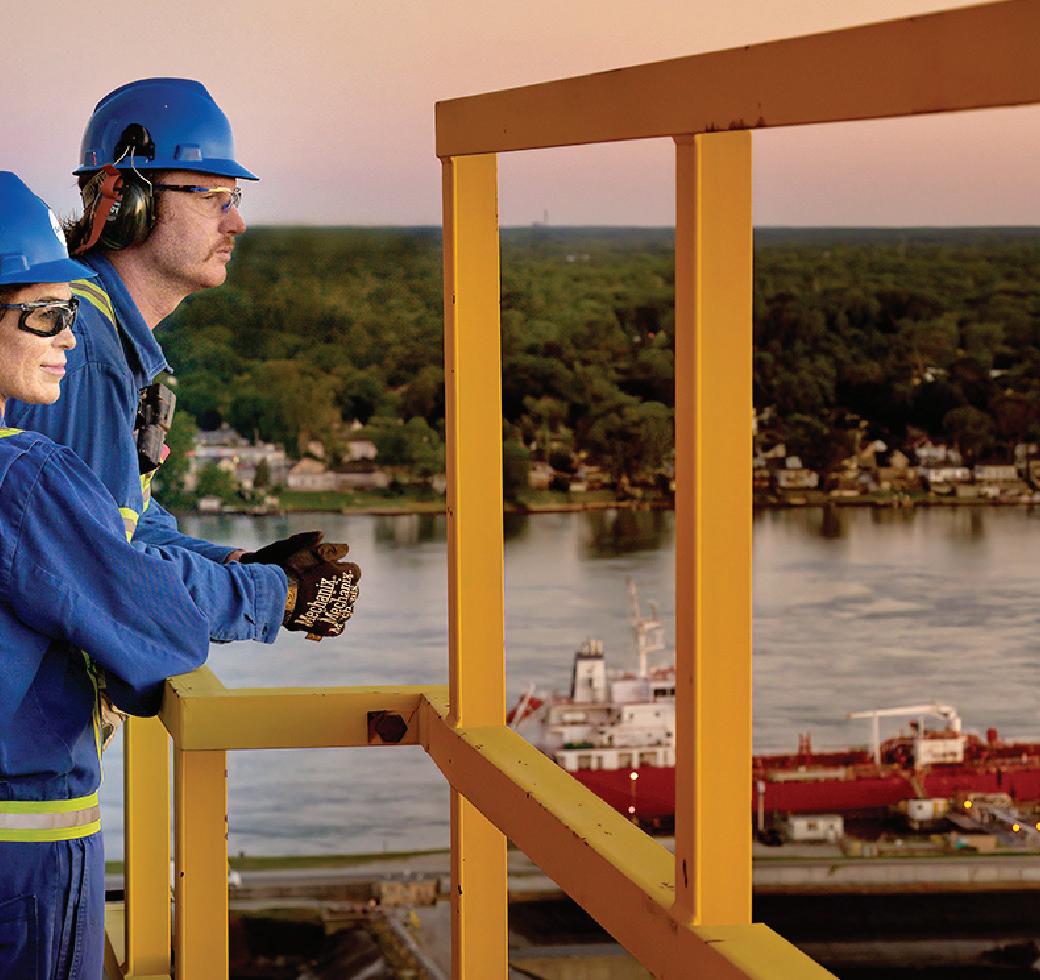
You cannot be a great oil and gas company unless you’re a safe company. It underpins our performance, culture and our commitment to each other.
That same spirit should shape how Canadians think about energy. Canadians may be known for their politeness, but we should never be apologetic about our ability to lead. The world needs energy, and Canada has the resources, expertise and standards to provide it responsibly. A strong Canadian energy sector is not only an economic advantage at home; it is a strategic asset in an increasingly uncertain world.
With deep technical expertise, a highlyskilled workforce and decades of experience developing Canada’s energy resources, Suncor brings both the scale and the staying power needed to lead in a competitive global market. Its history is closely tied to the growth of Canada’s resource economy, and that longstanding commitment continues today.
Rich Kruger President & Chief Executive Officer, Suncor
To watch more, scan the QR code. This article was sponsored by Suncor
Barrie is Built for Defence Growth
City launches $50 million incentive program to fast-track defence investment to help boost Canada’s military capabilities.
As Canada and Ontario strengthen domestic defence capacity, municipalities have an important role to play in enabling the on-the-ground conditions that determine whether companies can scale and build.
Barrie is taking practical steps to support investment in defence, security, dual-use, and advanced manufacturing sectors by aligning policy, incentives, approvals, and employment lands.
Barrie is positioning itself to make it easier for these sectors to grow and scale in Ontario.
One example is the City’s recently announced $50 million incentive to fast-track defence investment and help to boost Canadian military capabilities.
“At a time when Canada and Ontario are strengthening their defence industrial strategy, municipalities are where that strategy turns into action,” says Alex Nuttall, Mayor of Barrie. “Barrie is taking clear steps to support and strengthen Canada’s sovereign defence capacity by aligning our policies, incentives, and processes to make it easier for this sector to grow.”
Advanced manufacturing powers defence growth
Barrie is taking a deliberate approach
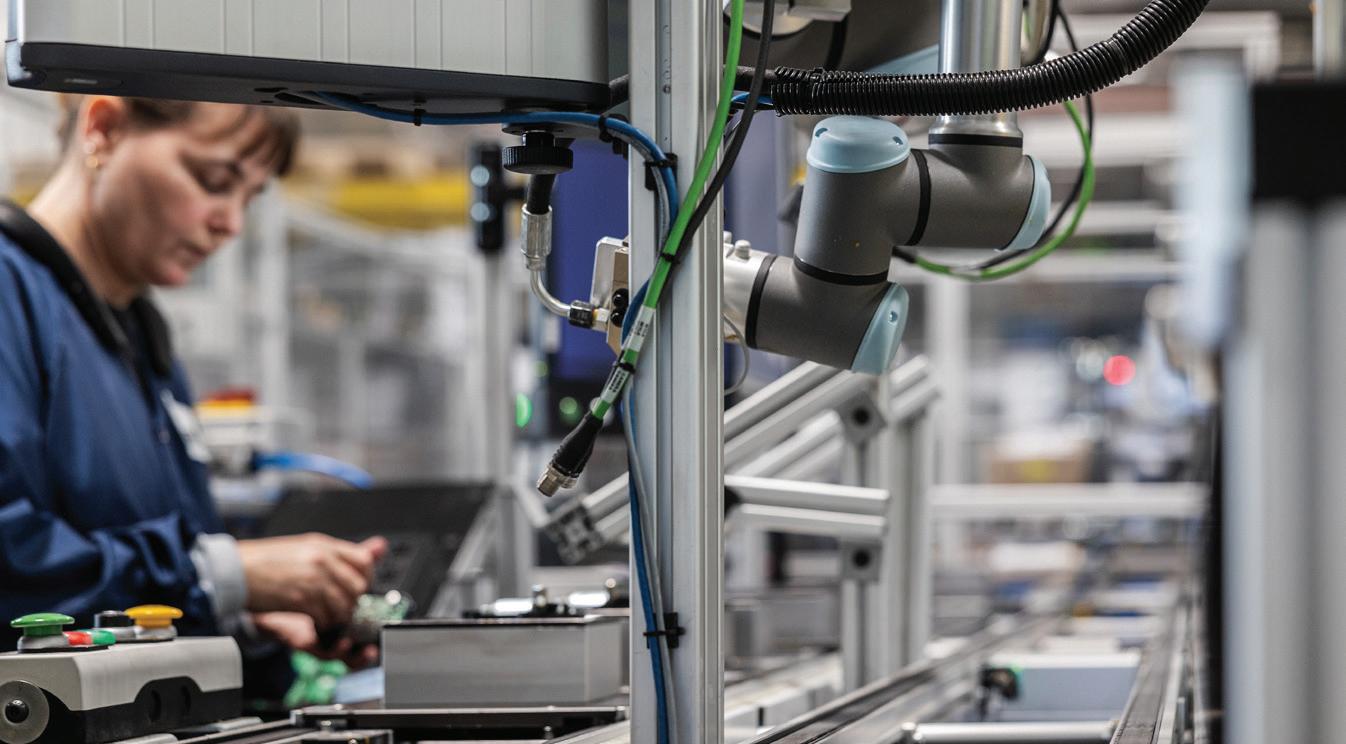
to supporting growth in the defence industry, as well as those specializing in security, dual-use technologies, and advanced manufacturing. Supported by an established manufacturing cluster and robust business ecosystem, Barrie’s commitment to accelerating Industry 4.0 adoption helps ensure that local fi rms can leverage automation, robotics, and smart manufacturing to enhance productivity and precision.
Barrie is close to major markets and supported by a regional supply chain that is aligned with Ontario’s priorities around domestic capacity and supply chain resilience. The City’s proximity to the Highway 400 corridor, which connects to the Greater Toronto Area, U.S. border crossings, and major logistics routes, simplifies logistics and access to markets. About 20 km west is Canadian Forces Base Borden, including the Canadian Forces School of Aerospace Technology and Engineering, which allows for defence technology manufacturers to collaborate directly with their end users and support training and deployment readiness. The nearby Lake Simcoe Regional Airport, with Commercial Port-of-Entry Status and Canada Border Services Agency support, adds another advantage for business travel and international cargo movement.
Built for business & innovation
As one of the fastest-growing urban centres in Central Ontario, Barrie boasts a growing workforce supported by post-secondary, research, and industry partnerships. The City’s network of businesses, institutions, accelerators, and innovation partners support commercialization, workforce development, and the talent pipeline needed for modern tech-enabled manufacturing and related sectors.
Recent boundary expansion creates additional employment land opportunities for defence-related and advanced manufacturing, which is ready for development. Combined with Barrie’s strong development approvals performance, this positions the city to support projects that need room to move quickly, as demonstrated by its #1 ranking in Development Approvals (BILD Study, 2024).
At a time when Canada and Ontario are stengthening their defence industrial strategy, municipalities are where that strategy turns into action.
— Alex Nuttall, Mayor, Barrie
Georgian College, a military-connected college, is one of the city’s key partners in building that talent pipeline. Another important post-secondary partnership is Lakehead University, with the Lakehead University Barrie STEM Hub set to open this fall offering programming in Electrical Engineering, Mechatronics, and Computer Science. Barrie is also home to the province’s newest regional innovation centre at the Sandbox Centre, helping connect early-stage innovation and tech companies with access to applied research, commercialization support, and talent so they can succeed on a global scale.
Investing in what's next Barrie is focused on enabling growth and strives to support business attraction, expansion, and long-term success by bringing together people, place, and potential. Through Invest Barrie, companies can access concierge-style support designed to help navigate approvals, identify opportunities, and move from first conversation to long-term growth. Barrie's Employment Development Concierge Program streamlines the development review process, adding efficiency and offering enhanced support to new and existing businesses to develop strategic employment projects or expansions. The City also offers competitive industrial Development Charges and offers businesses fast, predictable permitting and approvals. “They have always communicated their interest in helping businesses to grow and are very keen to make introductions,” says Jerome Horowitz, President and Owner of Brotech Precision CNC Inc. “They take the time to listen and understand your needs. If you need something, all you have to do is ask.”
Margaret Driscoll, CEO of Albarrie, which specializes in advanced technical textiles and engineered fabric solutions, agrees. “Their team demonstrates a strong understanding of the needs of manufacturers and provides responsive, practical support.”
Written by Anne Papmehl
Alex Nuttall Mayor, Barrie
Jerome Horowitz President & Owner, Brotech Precision CNC Inc.
Margaret Driscoll CEO, Albarrie
Interested in starting a conversation about locating, expanding, or investing in Barrie? Learn how Barrie supports investment in defence, security, and advanced manufacturing at investbarrie.ca/ defence