“Meaningful progress requires more than statements — it demands structural change.”
“In women’s sports … I want mental health to be seen as part of strength, not a weakness.”
Women working in sports continue to encounter persistent and systemic barriers that limit advancement, visibility, and long-term career sustainability.
While the sports industry has grown dramatically over the past several decades, particularly following the passage of Title IX in 1972, leadership roles have not kept pace with participation gains.
Women remain underrepresented in senior decision-making positions, experience ongoing pay inequities, and are frequently excluded from informal networks where influence and opportunities are cultivated. These challenges are compounded by workplace cultures that often undervalue diverse leadership styles and fail to accommodate work-life realities, particularly for caregivers.
Founded in 1979, Women Leaders in Sports emerged directly from this landscape of inequity.
External networks provide access to mentorship, sponsorship, and peer support that may not exist internally, especially for women who are the “only” or “one of few” in their workplace. Research supports this impact: A recent study by Navigate found that women affiliated with professional organizations report significantly higher career satisfaction and lower job insecurity than non-members.
Organizations also play a critical role in dismantling barriers. Meaningful progress requires more than statements of support — it demands structural change. Employers can invest in leadership development for women, ensure equitable pay and promotion practices, normalize flexible work arrangements, and actively sponsor women for high-visibility opportunities.
Renowned sportscaster Erin Andrews grew up seeing a passion for sports modeled through her dad, Steven, an Emmy-winning investigative reporter. Now, she brings the same level of dedication and commitment to her national coverage.
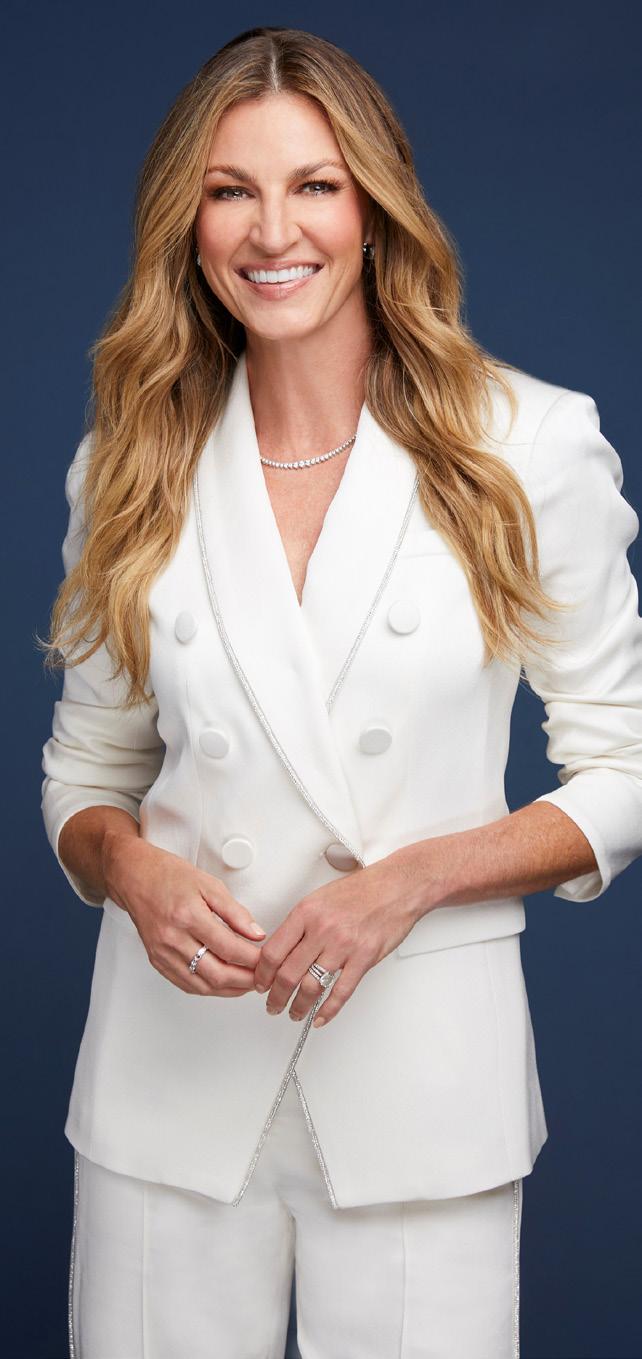
What did sports look like in your household, and how did that shape what felt possible for you?
Growing up, one of my favorite things to do was talk to my dad about sports. He’s a fantastic storyteller, and he would talk about players and coaches. I instantly fell in love with the storylines in sports.
Was there a moment when you saw a woman working in sports and thought you could do that too?
The first memory I have was seeing Hannah Storm cover the NBA on NBC. I was obsessed with the Boston Celtics, Michael Jordan, and Charles Barkley. I loved how she interacted with the guys and the access she had.
Why did you choose to study journalism, and what did that time teach you about the kind of career you wanted?
My dad was an investigative reporter for the local news station. I saw how much effort he put into his research and narration of the stories. I knew combining the admiration and respect I had for my dad’s career with our shared passion for sports would be the right choice for me.
How did your habit for meticulous preparation develop, and why has it been important throughout your career?
I’ve always admired the dedication and commitment athletes invest in their sport. They train hard, practice daily, and constantly develop their skills. I want players to feel confident that I’m not only prepared but that I’m as devoted to the sport as they are.
What do you believe is most important for women in sports media as the industry continues to evolve?
I think self-assurance is very important for women in this industry. If you’re not confident in your abilities, then why should someone else be?
At Syracuse University’s Falk College of Sport, students are encouraged to understand sport as a powerful social and cultural space, including its ability to expand opportunity for girls and women.
Recently, the growth of the women’s sports industry has been on full display. Professional leagues are breaking viewership records, women college athletes are building valuable personal brands through name, image, and likeness (NIL) opportunities, and girls are seeing more examples of women leading, competing, and succeeding across the industry.
Importantly, this growth did not occur overnight, and it certainly was not at random. The current status of the industry is the direct result of years of steady investment, intentional leadership, and a belief in the value of women’s sports as a valuable business segment.
As students study the sport industry during their time at Falk College of Sport, they are taught to look closely at these patterns and understand how decisions made by leagues, media organizations, and institutions shape who is seen, who is supported, and who feels welcome in sport spaces.
“Celebrating the wins across the sports industry can be centered around objective and tangible growth patterns,” said Jeremy S. Jordan, Ph.D., professor and dean at the Falk College of Sport. “This growth across women’s sports is often best reflected in recent attendance and viewership data, with women’s basketball leading the way.”
During the 2025 season, the WNBA drew more than 3 million fans into arenas across the league, averaging nearly 11,000 spectators per game. This interest extended beyond the arena, as national broadcasts on ESPN networks averaged approximately 1.3 million viewers per regular-season game.
A similar pattern of growth is currently unfolding in women’s professional hockey. As of January, the Professional Women’s Hockey League
surpassed 527,000 total fans through the first 61 games of the 2025–26 season. That momentum was especially clear in January, when the league set a new record with an average of 9,087 fans per game across 28 contests.
At the collegiate level, women athletes are experiencing similar rates of momentum as they continue to navigate a new industry landscape that is now shaped by NIL opportunities. Early expectations suggested that NIL would favor men’s revenue sports, yet women athletes quickly emerged as leaders in this space with strong personal brands and fan engagement.
As women’s sports continue to grow across professional leagues, collegiate athletics, and emerging spaces, education plays an important role in shaping what comes next. Programs housed within the Falk College of Sport help equip students with the tools needed to
succeed in these evolving environments. By studying women’s sports through research, data, media strategy, organizational and leadership development, as well as policy and theoretical application, students gain a much deeper understanding of how sport organizations grow audiences in addition to how the industry influences our broader culture. Education in women’s sport will continue to play an important role in preparing the next generation of leaders so that we may sustain this momentum.
To learn more about Falk College of Sport and how it’s supporting women in sport, visit falk.syracuse.edu/ women-sport


Classrooms can bridge the gender gap in sports representation throughout academia and even extracurriculars.
The lack of women within sport organizations, such as professional leagues and teams, intercollegiate athletics, national sport governing bodies, and international sport federations, is mirrored in many university sport management classrooms — despite the fact that over 46% of sport management faculty are women.
Those of us who teach these students have numerous examples of female students asking whether they belong in this industry. They are often some of the brightest in their cohorts, but the lack of representation can lead to doubt and impostor syndrome.
Seeing is believing
While gender equity in the sport business field is certainly evolving, sport management programs are taking necessary steps to accelerate this progress. At the most basic level, professors are adopting in-class examples from women’s sport and bringing in female guest speakers who are vital players in the global industry.
It’s critical that academia also embraces extracurriculars as a means of closing the gender gap. Academic programs can continue to facilitate pathways for women by maintaining connections with alumni to offer experiential learning, pushing the shift toward gender equity.


WRITTEN BY
Andrea Geurin, Ph.D. Officer, NASSM; Clinical Professor, Preston Robert Tisch Institute for Global Sport, New York University
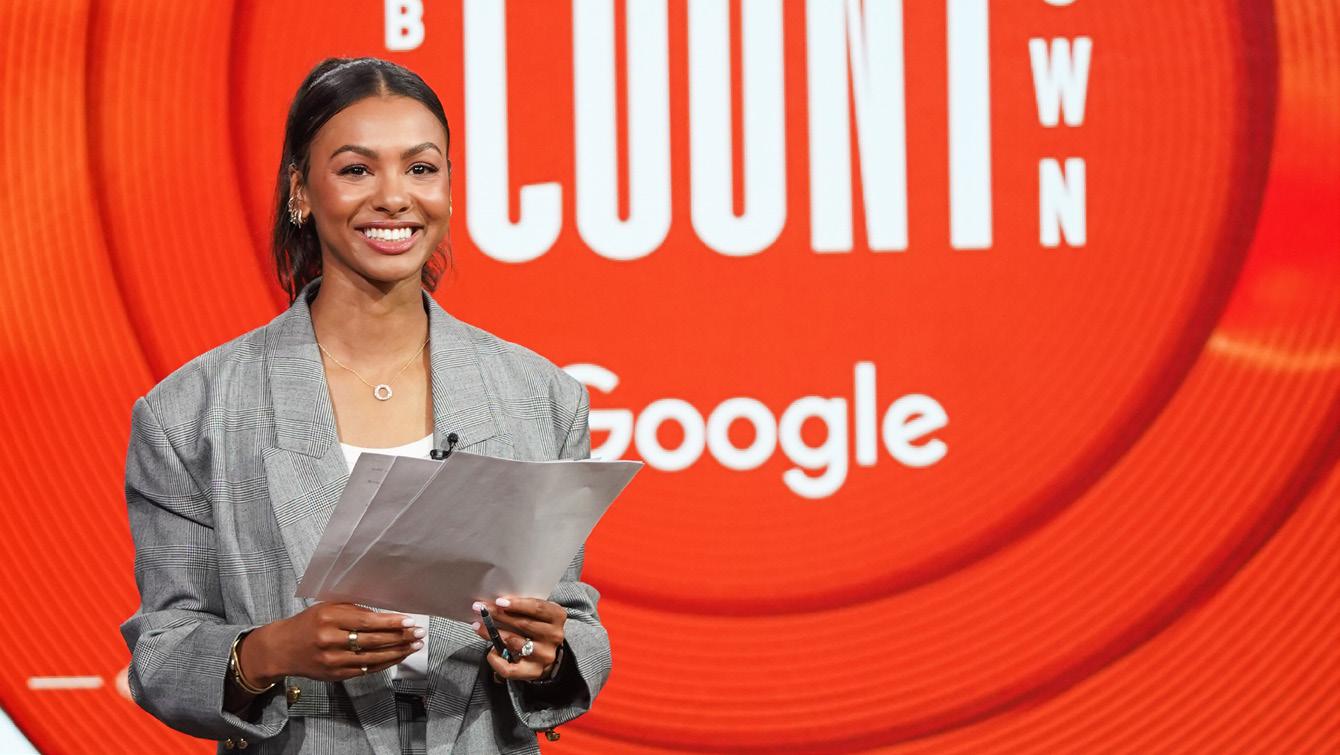
Malika Andrews, host of ESPN’s “NBA Today” and the newest addition to the network’s Tennis Team, built her award-winning career in sports journalism with passion and tenacity. She offers insight into how preparation and luck go hand in hand.
When did you realize sports journalism was the career you wanted to pursue? I loved to put pen to paper and ask questions. In college, I joined the student newspaper, and the only opening was in sports. I grew up loving and playing sports. Once I started working for the paper, I quickly felt like this is what I’ve always wanted to do.
What experiences early in your career had the greatest influence on how you approach reporting today?
When I was a beat reporter covering the Brooklyn Nets, Wilson Chandler invited me to watch a game with him. We watched on TV instead of the sidelines, because he was serving a suspension for using a banned substance.
Under physician-directed care, he had taken a small dose of a growth hormone banned by the NBA. The league treats these cases as fairly cut and dry, but Wilson trusted me to see him as human. I try to bring that humanity to my coverage.
I also think my foundation of reporting, coming back to information, is important as you diversify roles.
What did winning an Emmy mean to you? It made me feel like I belonged and my work was seen. It was surreal to see my name next to colleagues I deeply admire.
What challenges have stood out while building a career in sports media? There are challenges, but as the great Monty Williams once told me: We have “get-to” jobs not “have-to” jobs. I get to cover sports for a living.
How has your experience as a woman shaped the way you show up in the industry?
It’s not something that has shaped my work experience — it is my experience. I have always tried to see gaps and fill them.
WRITTEN BY
Michael Naraine, Ph.D. Associate Professor, Sport Management, Brock University; President, NASSM
How has working across reporting, hosting, and anchoring roles shaped your perspective in sports media? Listening is the skill you need everywhere.
What message would you like to share with girls interested in working in sports media?
One of my favorite sayings is “luck favors the prepared.” Know that all of your favorite sports personalities were sprinkled with luck, but I believe in dogged preparation.
Careers in sports aren’t limited to playing on a team. Thanks to sport management programs, students can combine their passion for sports with business. The Sport Management program at the University of Texas (UT) at Austin is helping students, especially women, learn and thrive in the business of sports.
UT-Austin offers a bachelor’s and both on-campus and online master’s degrees in sport management. These competitive programs help students develop strategic thinking and realworld experience to become leaders in the sports industry. Job opportunities can include managing team operations, athletic administration, event and facility operations, sports media and communication, partnerships, sales, marketing, and more.
UT-Austin’s online master’s program in sport management is popular nationally and internationally, especially among working professionals pivoting to or advancing a career in sports. U.S. News and World Report ranks the school No. 4 among public institutions and No. 6 overall.
“The orientation of our program is really geared toward developing students as professionals,” said Emily Sparvero, faculty director for UT-Austin’s online sport management program, who earned her master’s and Ph.D. from the program.
The flexible online program has the same benefits and rigor as its in-person counterpart. Class sizes are limited to 25 students for maximum professor-student engagement. Students can complete the program in two years and do not need to complete a thesis.
UT-Austin’s on-campus master’s program in sport management began back in the late 1980s. Women were the driving force behind the program,
including Dr. Donna Lopiano, who served as director of women’s athletics at UT-Austin for 18 years, and thenchair of the Department of Kinesiology and Health Education, Dot Lovett.
“We have had such a long history here of women leading the program, women teaching the classes, women demonstrating through their work with our UT athletic department how important the presence of women is in this kind of work,” said Janice (Jan) Todd, Ph.D., the chair of the Department of Kinesiology and Health Education at UT-Austin.
Dr. Todd has been at UT-Austin for 41 years. When she taught her first class, weightlifting, in 1985, only a few students were female. Each semester, more women enrolled.
The perfect professor for a weightlifting class, Dr. Todd is a powerlifting legend, who set more than 60 world and American records during her career. The New York Times profiled her in May of 2025 in an article titled, “Jan Todd May Be the Reason You’re Lifting Weights.” In November 1977, Sports Illustrated dubbed her “the strongest woman in the world.”
Leaders in sport
Internships and alumni networking opportunities help connect the classroom to the workplace.
“We’re developing true leaders in sport,” Dr. Sparvero said. “UT’s motto is ‘What starts here changes the world,’ and I think for us, it’s ‘What starts at the University of Texas in our program is changing the world of sport.’”
Written by Kristen Castillo


INTERVIEW WITH Emily Sparvero Faculty Director of the Online Sport Management Program, University of Texas at Austin
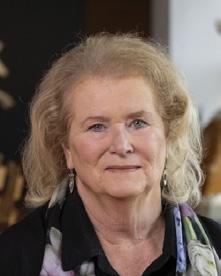
INTERVIEW WITH Janice (Jan) Todd, Ph.D. Chair of the Department of Kinesiology and Health Education, University of Texas at Austin



Louise Amsili On-campus master’s program, class of 2019 Louise is an Event Coordinator at UEFA
Learn more about UT-Austin’s online master’s program in sport management:



Kaitlin Gascoyne Undergrad program, class of 2019
Kaitlin is a Basketball Marketing Executive at Creative Artists Agency
Liz Jeralds On-campus master’s program, class of 2013
Liz is the Director of Community Impact for the Denver Broncos
Paige Vinnicombe Undergrad program, class of 2020
Paige is a Senior YouTube Producer for Red Bull North America
Kayla Wyman Online master’s program, class of 2022
Kayla is the Game Presentation Manager for the Houston Rockets
Anna Zeng Undergrad program, class of 2017
Anna is the Ticket Sales Strategy and Requirements Manager for the 2026 FIFA World Cup
Sportsmanship fosters future leaders through formative character- and intellect-building skills.
For millions of girls and young women, sport is far more than a game. It’s a powerful driver of health, leadership, and economic opportunity. The evidence is clear: Girls who play sports experience better physical and mental health outcomes, including lower rates of anxiety and depression, and improved overall well-being.
Sport is one of the earliest and most effective environments for developing leadership skills. It teaches girls how to communicate under pressure, collaborate toward shared goals, and learn from failure.
The next generation is now In the Women’s Sports Foundation’s Play to Lead study, women consistently credit these formative experiences with shaping their confidence, decision-making, and ability to lead long after the game ends. Failing to invest in girls’ sports doesn’t just shortchange individual potential, it weakens communities and undermines our shared future.
This Women’s History Month, the call to action is one we can all answer. Research from the Women’s Sports Foundation shows that encouragement makes or breaks participation. Keeping girls in the game starts with consistent, visible belief in their potential.

WITH Danette Leighton CEO, Women’s Sports Foundation
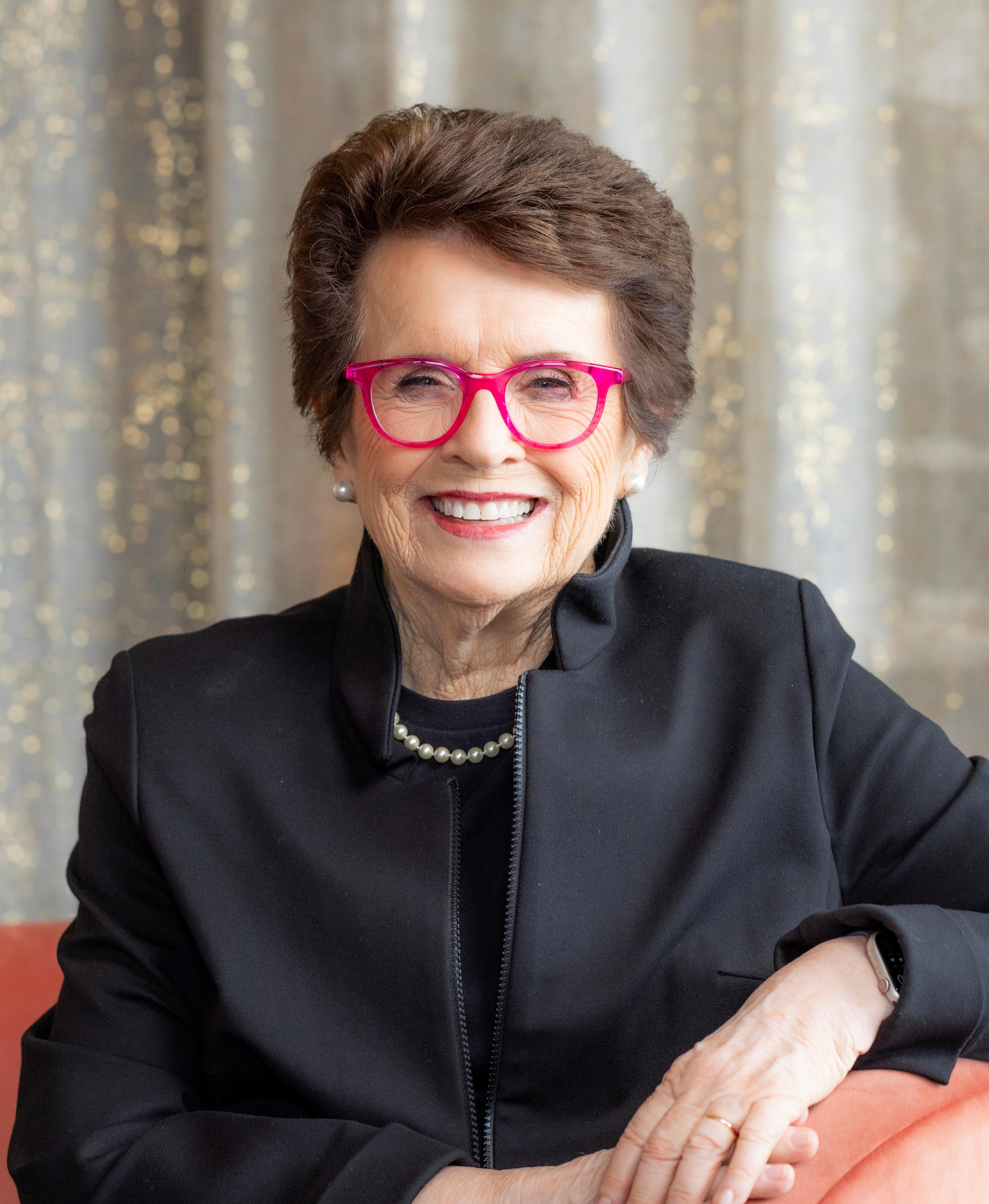
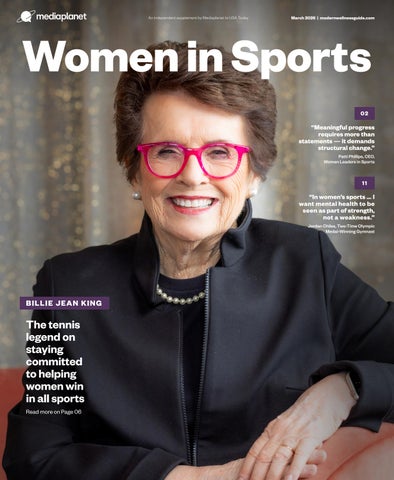
Many people know the storied trajectory of Billie Jean King’s career and the internationally televised sporting event that helped propel her into the spotlight.
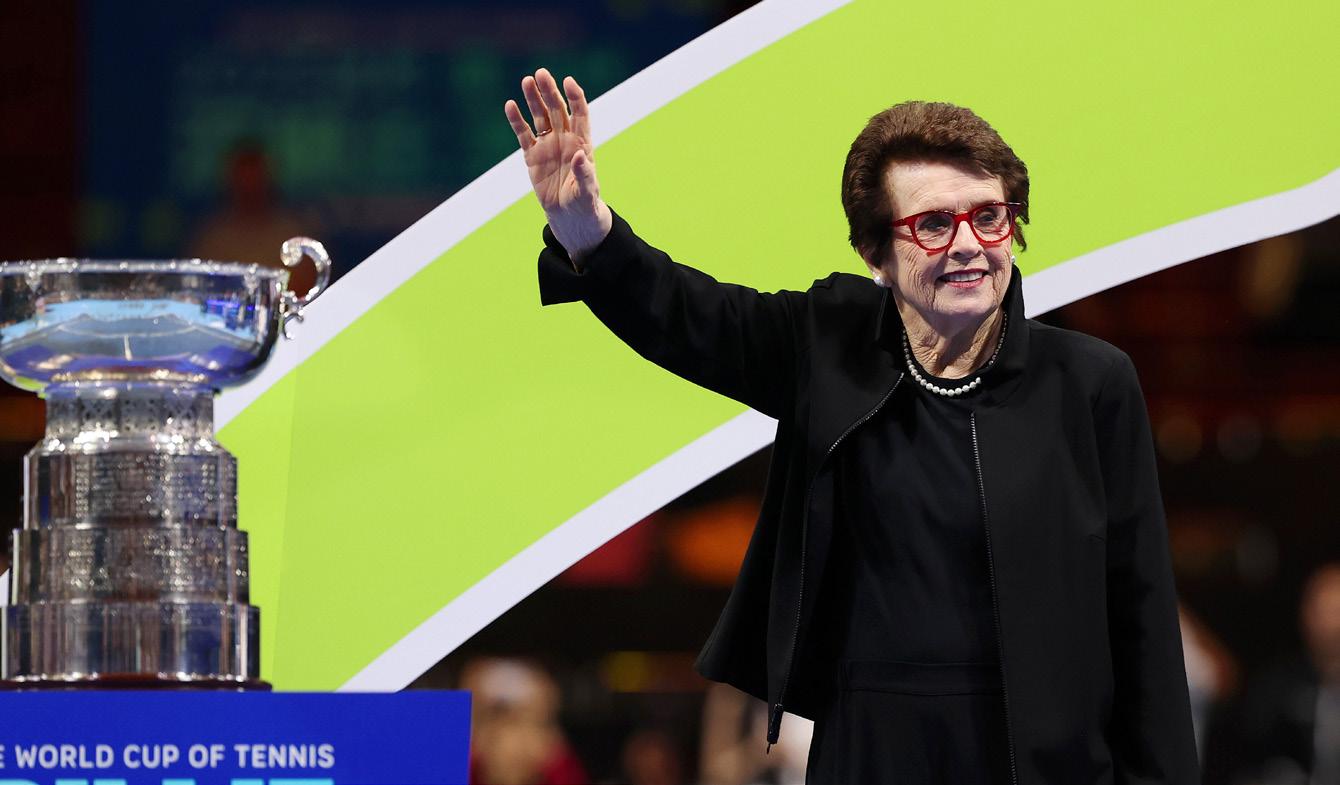
That would be the famous “Battle of the Sexes” match with Bobby Riggs, a male tennis player 26 years her senior whom she beat to win $100,000, proving to male and female critics alike that women are just as good at sports as men.
“This was never just a tennis match,” King wrote in a Sept. 20, 2025 post on Facebook. “It was about equality, respect, and demonstrating that women belong on the same stage as men...”
Although King retired from professional tennis in 1983, she’s never stopped championing women’s sports.
Launching a legacy
King first established the Women’s Tennis Association four days before Wimbledon, in 1973, and founded the Women’s Sports Foundation the year after. And in addition to investing in women’s sports teams, such as the Los Angeles Sparks and the Angel City Football Club, she aided the formation of the Professional Women’s Hockey League, which currently has teams in Canada and the United States.
As for her advice to women and the institutions that teach them, King’s wisdom is simple: Understand the business and the history of your sport.
Knowing the history, King said, “shows you how to build something.” Knowing how the business of a sport works can give athletes a leg up and understand who gets paid, and for what, and what their rights are.
That knowledge can also make for good fodder when investing, which King wants more women interested in sports to get involved with. “Someday that woman, that kid, is going to maybe own a tournament herself or contribute to women’s sports in some way. But she’s never going to get it if she doesn’t start to learn the business.”
As for equity in sports, King said there’s still work to be done. As she noted on Facebook: “The battle isn’t over, but time has demonstrated that progress is possible,” King wrote. “Keep showing up. And together, let’s keep going for it.”
Written by Melinda Carter
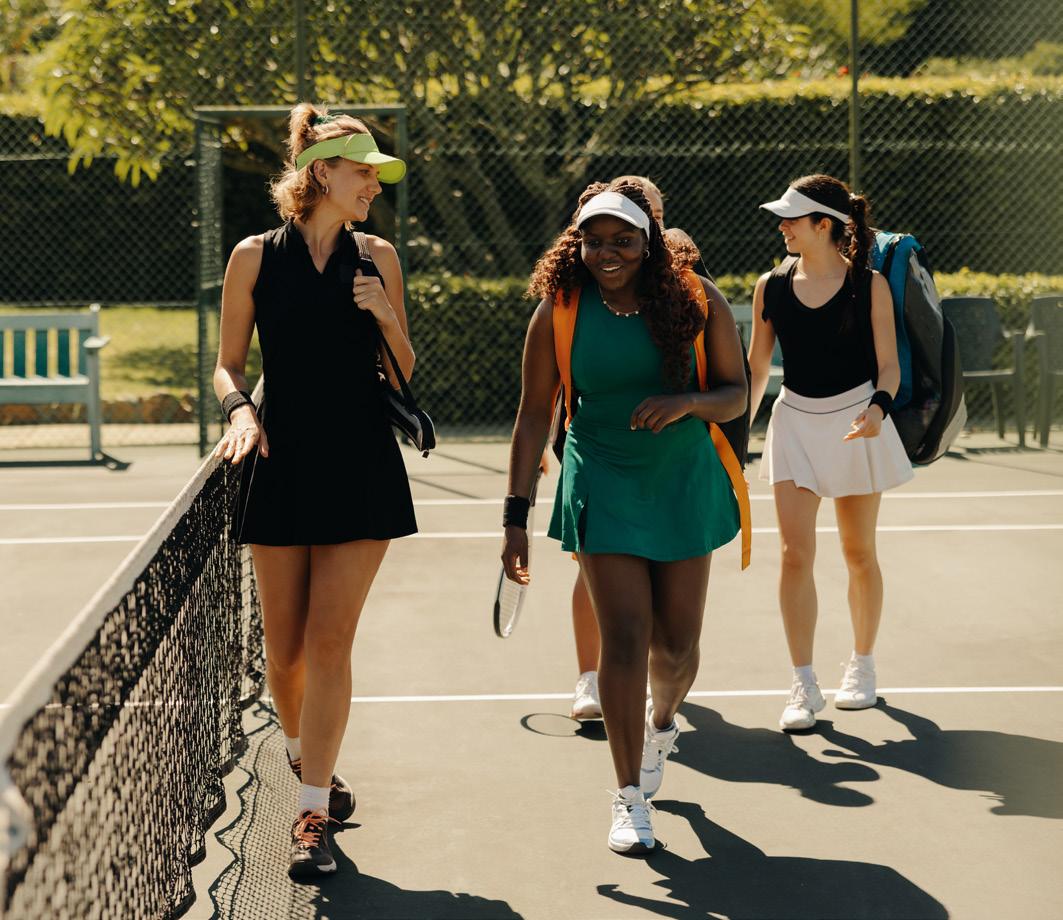
Tennis is a sport enjoyed by more than 27 million people in the United States alone. Its unique bounty of benefits is unmatched by any other sport. It’s that combination of physical, mental, emotional and social benefits that make it the ideal sport for women of every age. And more women are taking to the court than ever before.
For girls, a tennis court can be a training ground for life. Tennis teaches self-confidence, physical fitness, and important social skills. It helps foster — and strengthen — a special brand of independence and empowerment that transcends the court and opens doors of opportunity. Multiple studies have shown that young women who play tennis get better grades, study more, have higher graduation rates, and spend more time thinking about their futures.
And it’s in shaping those futures that tennis can play a particularly important role. Unlike sports that limit participation by age, tennis is unique in providing an opportunity to participate throughout your entire life.
“Tennis has always made room for women to grow — not just as athletes, but as people,” said Alexis Colvin, M.D., US Open chief medical officer. “There are currently two mothers ranked in the Top 10 of the pro game and an unprecedented number currently competing at the professional level. That’s truly a testament to the athletes themselves and tennis as a sport that evolves with them.”
Indeed, from its greatest stages to its grass roots, women are an increasing presence on courts everywhere. The most recent participation study shows 10% growth in participation among women just last year.
“A large, participation-based study from the Mayo Clinic
showed that compared to people who remained sedentary, everyone who participated in sports experienced health benefits,” noted U.S. Tennis Association (USTA) immediate past president Brian Hainline, M.D., a clinical professor of neurology at NYU Grossman School of Medicine.
“But tennis came in first among those sports, increasing life expectancy by 9.7 years.”
The constant multidirectional movement of tennis helps build bone mass in younger players and maintain it in older adults — critical for women, who face higher risks of osteoporosis. From age 6 to 96, tennis is uniquely great for virtually every aspect of physical fitness.
Another element of the greatness
of tennis is in its culture. For decades, women’s tennis has led the charge in leveling the playing field for all, thanks to iconic champions such as Althea Gibson, Billie Jean King, and Serena and Venus Williams.
But whether a woman’s goal in tennis is to follow in the footsteps of champions or utilize the sport to help navigate the path to lifelong health and fitness, the USTA is committed to getting more women in the sport — on both the court and the sideline.
When it comes to coaching, women at virtually every level of every sport face numerous barriers to entering and staying in the profession. But that is changing as USTA Coaching makes a concerted effort to engage and enlist more women as coaches. It’s an important part of getting more women
playing tennis and enjoying its many benefits.
“As we look to increase participation in tennis, we need to make sure that we have a coaching ecosystem that is reflective of the playing population,” noted Megan Rose, former WTA Tour player and now managing director, head of business development & operations for USTA Coaching.
“We know representation influences retention. Yet women remain significantly underrepresented in coaching roles due to systemic barriers. USTA Coaching is focused on dismantling those barriers and creating sustainable pathways for women to lead, coach, and remain in the game.”
Tennis is truly the sport for a lifetime. It empowers a girl to find her voice, a woman to build confidence, and older adults to maintain health and vitality. It is a game where growth matters as much as the score. Whether chasing a scholarship at 17 or a cross-court forehand at 70, the court is always open — and the benefits always await.
Written
by The United States Tennis Association (USTA) Visit USTACoaching.com
So, what are you waiting for? It’s never been easier to play the world’s healthiest sport. Grab a racquet and Playtennisnow:

Physical activity can be transformative, but how it is approached determines whether girls thrive or step away.
Across the United States, girls are facing rising emotional and physical health challenges without enough support to match. Confidence is slipping, stress is growing, and many girls move through their days feeling anxious and isolated.
The good news is that these trends are reversible.
What girls need to thrive
Research shows that when physical activity and sports settings emphasize personal improvement, supportive relationships, and life skill development, girls are more likely to build confidence and strengthen their mental and physical health.
Without that kind of intentional support, girls are less likely to stay engaged, even when they enjoy being active. In climates that feel intimidating or exclusionary, many leave sports altogether.
At Girls on the Run, our programs are intentionally designed for girls in third through eighth grade to build confidence, connection, and life skills. Physical activity alone will not solve every challenge girls face, but purposefully designed programs can provide powerful support for girls’ well-being in communities across the country.

WRITTEN BY Elizabeth Kunz Chief Executive Officer, Girls on the Run International
Sky Brown’s love for skateboarding grew early on, making her one of the youngest award-winning professional skaters in the world and empowering girls to take up space.

What inspired you to pursue skateboarding at such a young age?
My dad was a skateboarder, so I grew up around skaters. We had a backyard mini ramp. It was my favorite toy for the longest time — it still is. As soon as the Olympics got announced, I was like, “This is what I wanna do.”
Growing up, how important was it for you to see other women skaters?
I was always the only girl at the skate park or in the surf. I had a few girls I was looking up to like Letícia Bufoni. I knew that needed to change, especially growing up in a small town where I was the only girl wanting to play soccer with the boys at school.
What challenges have you faced as a young woman in action sports and how did you overcome them?
As a little girl with a lot of fire in me, boys would be like, “What is she doing here?” That made me want to do it even more and prove them wrong.
What has been the most difficult injury to bounce back from during your career,
and how do you manage the fear of returning after an injury?
My biggest injury was on Tony Hawk’s ramp five or six years ago. I fell down 17 feet to concrete going over a gap. I was knocked out for 16 hours, fractured my skull, and broke my arm. I could have died easily, but my helmet saved me.
I always wanted to push the level of my sport, and I knew that I would have to go through a lot to do that. I wanted to teach girls to have courage, because strong women in sports aren’t just inspiring for women — they inspire the whole world.
What would you say to a young girl who feels like she doesn’t belong in action sports?
Do not care what people think. There’s no right or wrong. You do you.
How do you hope your career and fame impacts girls who want to enter male-dominated action sports?
The goal since the beginning was to just encourage women to do what they want to do, even if that thing is male-dominated.

19-Time Paralympic medalist
Oksana Masters knows knows what it means to root for yourself. Being her own inspiration fueled her desire to excel.
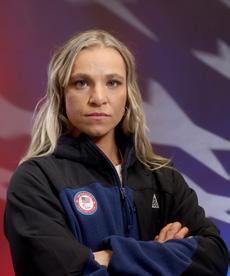
What made you fall in love with sports?
I love that aspect of competing against the best and trying to bring out the best in yourself.
What can you point to as your “biggest” moment in your athletic identity?
There are two. In 2014, I won my first individual paralympic medal. And the second, in 2018, I broke my elbow before going to the games. I was expected to win all my events. Racing with that broken elbow and still winning my first gold medal showed that I am not one to give up.
Was there a time when another athlete helped shape your confidence?
When I got into sports, I didn’t have that, because they were fully able-bodied. Through partnerships, I met athletes I admired like Mikaela Schiffrin.
How do you hope your story impacts girls facing barriers in sports?
Don’t compare yourself to the person next to you. I didn’t get my first gold medal until my fourth paralympic games. Keep showing up for that “why.”
Our panel of game-changing experts in sports management and leadership discuss representation and the continued need to break barriers for women in sports.
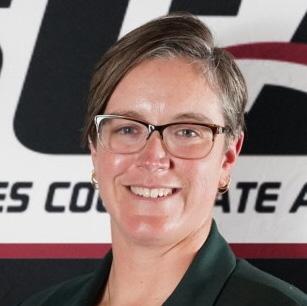
BJ Bertges CEO, United States Collegiate Athletic Association (USCAA)

Brooke Pryor Member, Board of Directors, National Sports Media Association (NSMA); NFL and Pittsburgh Steelers Reporter, ESPN
What do you think is the biggest barrier for women working within the sports industry today?
BJ Bertges: I think one of the biggest barriers is simply expanding pathways into leadership and decision-making roles.
Brooke Pryor: Being able to overcome implicit — and sometimes explicit — bias. Though women have been working in sports for decades, I still deal with people assuming I’m in these spaces because I’m a wife, a girlfriend, a sister, or a mother of an athlete.
Danette Leighton: Every decade, we see more women leading in sports, whether on the business side or in performance roles like coaching. But we still see massive opportunity gaps that closely mirror those in girls’ and women’s participation and coaching.
What is advice you would give to young girls and women who are looking to enter this industry?
BB: Believe that you belong in this space, because you do. Be proactive about building relationships, asking questions, and gaining as much experience as possible.
BP: Keep showing up — even when it’s tough, even when you don’t want to. You

can’t control everyone else, but you can control how you respond and how you do your job.
DL: I was fortunate to spend 30 years on the business side of sports representing both men’s and women’s sports, and I loved every minute. My advice is to stay grounded in your values and principles.
In your opinion, what is the state of women representation in sports media today, and where do you see it going in the future?
BB: There’s more visibility, stronger storytelling, and greater investment in women’s sports than ever before. That said, the work isn’t finished. We need to keep building on this momentum to ensure consistent coverage and expanded opportunities.
DL: The growth of women’s sports has created new forms of media coverage that did not exist before, and women athletes have been among the strongest at using their platforms and voices.
Coverage is growing, yet women’s sports still receive only a fraction of media attention and sponsorship compared to men’s. As media leaders continue responding to both the demand and the opportunity, the future points toward greater visibility, investment, and industry-wide growth.
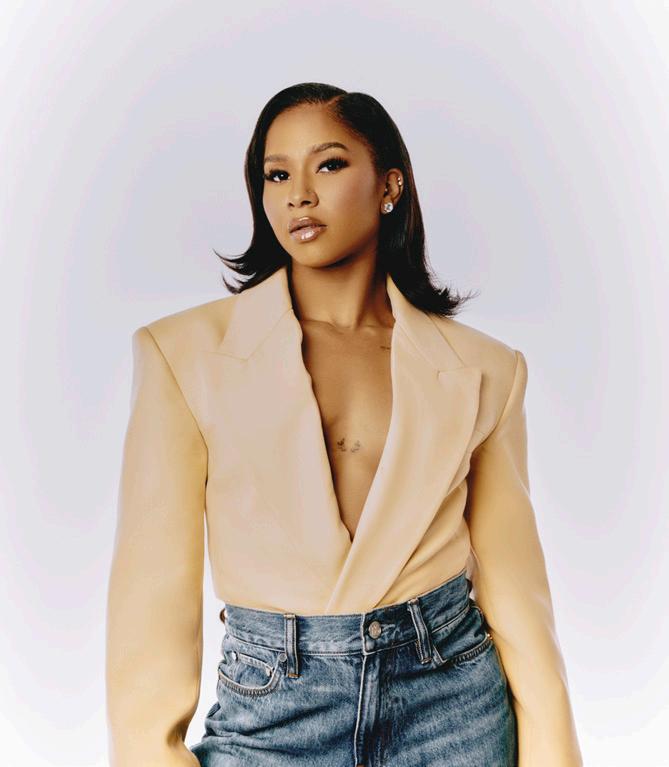
Professional
gymnast Jordan Chiles knows a thing or
two about performing under pressure,
and how mental health shouldn’t take a backseat to physical health.
But that balance between physical and mental health didn’t always exist for Chiles.
“Early in my career, I thought that being strong meant pushing through everything and keeping my feelings to myself,” Chiles said. “I was conditioned to believe that if I was struggling, it meant that I was not tough enough.”
An evolved approach
Mental health, Chiles said, requires commitment. “Mental health is not something you fix once and move on from; it is something you check in with constantly. It helps me compete better, but more importantly, it helps me live better and stay connected to who I am beyond the sport.”
Chiles goes to therapy, which has been “huge” for her because “it gives me the time to be honest without judgment.” She added, “Having support that allows you to rest, to speak up, and to be vulnerable is just as important as having support that pushes you to be great and hold yourself to a high standard.”
A worthy spotlight
As women’s sports have become more popular, so have female athletes — and
their hard work and devotion. That fact has opened the door to more conversations with female athletes about the importance of mental health, Chiles said.
“People are finally starting to see the full picture — not just the fake limits and assumptions,” she said. “They are seeing the work, the pressure, the sacrifices, and the emotional weight that comes with competing at a high level.”
Chiles wants these conversations to help people realize that athletes are real people, not “machines.” “We are humans first, with real emotions, real fears, and real lives outside of competition,” she added. “In women’s sports especially, I want mental health to be seen as part of strength, not a weakness.”
As for other young women who love sports but are hesitant to take the leap, consider Chiles’ advice to listen to — and trust — yourself. “Trust your voice, ask questions, take up space, and do not wait for permission to dream bigger,” she said. “Your love for sports can turn into leadership, advocacy, creativity, or change, and all of that matters just as much as what happens on the floor or the field.”
Written by Melinda Carter
Passing the torch through generations ensures women remain represented in all facets of sports media.
During my 17 years at the National Sports Media Association (NSMA), I have been fortunate to see the inductions of names including Lesley Visser and Andrea Kremer into our Hall of Fame. While that seems limited, it’s important to know history.
Before the 1980s cable sports explosion, there were not many women working in sports media at all — many of the women who rose to prominence on television began as sportswriters.
Beginning in 1979, ESPN opened the need for more on-air talent in their programming, leading to Rhonda Glenn being the first woman to appear on ESPN. In 1991, Heidi Soliday became the first female sports director at KCCI-TV in Des Moines, Iowa.
The path forward
Today’s women have grown up playing sports. Title IX created opportunity; funding increased. However, there’s still plenty of room to grow — four times more men are working as sports journalists than women.
But whatever the numbers show, there is no argument that women’s voices have helped drive a more diverse industry,