Artificial intelligence and digital innovation now offer a real opportunity to close the gap in how women’s heart disease is detected, monitored, and treated.
Heart disease remains the leading cause of death for women. Fatigue, shortness of breath, nausea, and atypical chest discomfort are common warning signs in women, but they have historically been underweighted in clinical decision-making. Artificial intelligence and digital innovation now offer a real opportunity to close this gap.
Digitizing the landscape of care
AI is already changing how cardiovascular risk is identified. Reporting highlighted by Reuters has described large studies showing that AI models applied to routine electrocardiograms can flag patients who would benefit from further cardiac imaging, even when standard interpretations appear normal. This matters for women, whose heart disease often presents more subtly and is more likely to be missed until later stages.
Both — not one or the other AI and digital health will not replace clinical judgment or human connection. At their best, they enhance our ability to listen, recognize risk, and act sooner. Women are uniquely positioned to lead this shift, turning digital health into simply health, embedded seamlessly into everyday life.
WRITTEN BY
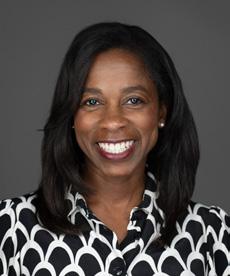
Ami Bhatt, M.D., FACC Chief Innovation Officer, American College of Cardiology
How Women Are Shaping the Future of Healthcare
Women in healthcare leadership roles have a direct impact on patient outcomes, particularly with fellow women — noting often-overlooked symptoms and syndromes. When women succeed in healthcare, everyone benefits.
Women are shaping the present and future of healthcare.
Approximately 40% of physicians are female and more than half of all medical students are women. Combined, that is almost 80% of the entire United States’ healthcare workforce, which means women are deeply embedded in healthcare and are driving change that benefits patients.
According to BMC Health Services Research, having more women in healthcare improves patient care. Research shows notable advantages, including that hospitalized patients treated by female physicians are less likely to die, that female physicians are more likely to follow the best evidence when providing care, and that they provide more preventive care that can help patients avoid worse health problems.
A valuable perspective
Women tend to bring leadership behaviors that are advantageous in the workplace. Studies from the business world show that women often lead differently than men in ways that are good for people and organizations — particularly due to emotional intelligence — which is also vital for facilitating the effective teamwork that is needed to provide high-quality patient care. Although it’s not known why women tend to have higher emotional intelligence, it is well known that there are many benefits when leaders have this skill, especially in healthcare.
Healthcare is being shaped by the presence of more women and by leadership ideals women are bringing with them to healthcare. The rising numbers of women in healthcare has coincided with increased attention to the experience of women and girls when they are patients, including paying attention to overlooked symptoms, syndromes, and diseases, such as menopause, endometriosis, gynecologic cancers, migraines, pregnancy-related risks, and mental illness.
Invest in what comes next
Seeing what is known today begs the question: What could have been possible if more women had entered healthcare earlier and we had recognized their impact sooner?
Patients deserve to have healthcare systems that invest in the potential women posses. We cannot undo the years of underinvestment in women’s health, so now is the time to increase attention and resources through funding for research and professional development. We don’t want to look back in five years and wonder why we neglected the very people providing high-quality care and leadership that help women live longer and better.
WRITTEN BY
Eileen
Women, Leadership, and Health: Making Space, Creating Opportunities, Removing Barriers
Women make up approximately 80% of the U.S. health workforce, yet they account for only 30% of top-level positions. We must encourage women to pursue leadership roles.
Public health is the umbrella under which all health workers labor.
Whether we are working to investigate an infectious disease outbreak, care for patients in an ambulatory or hospital setting, maintain/clean a waterway, engage in research to cure cancer, assess mental health status, or conduct small group nutrition education s essions, it is all in the service of ensuring and assuring the health of the public.
Disparity underscored by data In the United States, women account for roughly 80% of the health workforce. As noted by the World Health Organization (WHO), women comprise over 67% of the
health and social care workforce globally. The WHO estimates that the value of the care provided by these women is over $3 trillion annually. However, when one surveys leadership and C-suite positions, women occupy only 25% of those roles globally. It is only minimally better in the United States, where women occupy approximately 30% of top-level positions. Women of color face even greater odds, representing only 4% of those jobs.
Structuring future leadership Research has shown that creating a sustained environment for growth of women leaders within health systems requires effective interventions and systemwide policy
Sponsored
Why Healthcare’s Future Demands More Women in the C-Suite
Women dominate the healthcare workforce, yet remain dramatically underrepresented in executive leadership — a gap that shapes patient trust, equity, and system outcomes.
Two decades ago, when Dr. Carla Jackie Sampson was completing her administrative residency, she recalled walking down hospital halls lined with portraits of former leaders. All were men. She asked herself, “As a woman who aspires to leadership, is there any hope for me?”
Today, Sampson serves as director of the Master of Health Administration program at NYU Wagner Graduate School of Public Service and contributes to the school’s M.P.A. in Health Policy
transformation and accountability.
Regardless of the current environment, it is imperative that we encourage women working in health fields to continue to aspire to and pursue leadership roles, to partner and collaborate across the plethora of health disciplines, and to build the system and infrastructure that works for and supports the health of our nation, our communities, and our loved ones.
and Management and Master of Health Law and Strategy programs. While women are earning health administration degrees at record rates, she said, “Top leadership still does not reflect the gender representation I see in programs.” Closing this gap is a strategic imperative.
Why does this matter? “When you seek care, you need to establish trust,” Sampson said. “If you don’t see other people like you, that makes trust more difficult. We have a history where women are not believed when they seek help.” This disconnect has consequences
today. According to a 2024 report by Boston Consulting Group, only 41% of women globally feel there are sufficient healthcare services to address their health concerns.
At NYU Wagner, Sampson helps her students overcome the roadblocks to leadership. To thrive in tomorrow’s unpredictable landscape, students must develop adaptive leadership skills and cultivate psychological safety.
“We are here to serve people,” she said. “If you are behind the scenes or if you have made it to the C-suite, you are doing it for that patient who hasn’t
INTERVIEW WITH Dr. Carla Jackie Sampson, Ph.D., M.B.A., FACHE Director, Master of Health Administration (MHA) Program, NYU Wagner Graduate School of Public Service
been served by the system. That requires curiosity about yourself and other people.” With more women in these critical leadership roles, healthcare can finally build a system rooted in empathy and truly representative care.
Written by Melissa Lore
To learn more about NYU Wagner’s graduate health programs, visit nyuwagner.info/ healthadmin
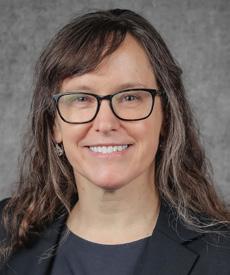
WRITTEN BY Deanna J. Wathington, M.D., M.P.H., FAAFP Clinical Director, REACHUP, Inc; and Immediate Past President, American Public Health Association (APHA)
Leading the Lab
With Precision and Purpose
Laboratory scientist Stephanie Y. Whitehead shares that her leadership skills didn’t develop over night — rather, she found that intentionality is the key to growth.
As vice president of Pathology Services at University Health in San Antonio, Texas, and secretary of the Board of Directors for the American Society for Clinical Pathology (ASCP), Stephanie Whitehead knows her way around a leadership position. Here, she reflects on what it took to succeed in the healthcare industry, and how other women can follow in her footsteps:
What helped you level up your leadership?
Stephanie Y. Whitehead: I had a good mentor who said if you’re the smartest person in the room, you’re in the wrong room. Be where other people challenge you and elevate your thinking.
What leadership qualities did you intentionally develop?
SW: I am an introvert, so I studied how to show up more confidently. I also learned the importance of owning my accomplishments without downplaying them. Introspection is an often-underrated leadership skill — the ability to evaluate an experience and ask what you could do better.
What advice would you give to women who want to lead?
SW: Someone else’s pathway doesn’t have to be your pathway.
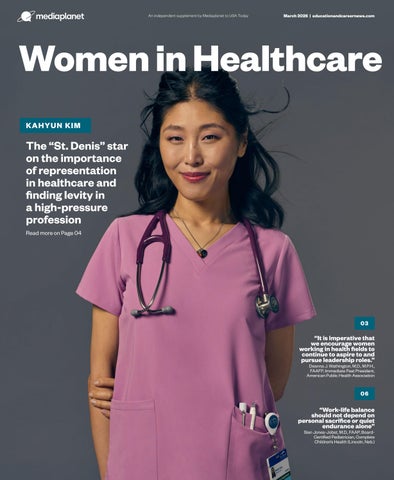
Paging Kahyun Kim: A Prime-Time Take on Women in Healthcare
We spoke with actress Kahyun Kim about her role as nurse Serena on NBC’s medical comedy “St. Denis.” Bringing laughter into viewers’ homes and lightening the mood of a heavy profession is her goal.
Your role brings visibility to women in healthcare. What is it about Serena’s character that feels most authentic to you?
I grew up around hospitals because my mom was a psychologist in Korea, so that environment always felt familiar. Even there, most of the people I met were women. So, just seeing women on television — of different races, shapes, and sizes — feels important. Visibility matters. When you see someone who looks like you, or reminds you of a woman in your life, it does something.
How does storytelling help challenge stereotypes about women in healthcare?
that duality while keeping everything grounded in reality.
Your mother worked in healthcare. What lessons from her shaped you? My mom is my hero. She worked in healthcare her entire life and cared deeply about her patients. When I was young, I saw how hard it was for her to leave work at work. As a working woman in Korea, she carried so much responsibility — professionally and at home.
INTERVIEW WITH
Stephanie Y. Whitehead, M.B.A., M.P.H., MLS(ASCP)CM Vice President of Pathology Services, University Health (San Antonio, Texas); and Secretary of the Board of Directors, American Society for Clinical Pathology (ASCP)
One thing that was important to me is that Serena is really good at her job. She’s fun and has personality, but that doesn’t mean she’s not extremely professional. I think sometimes women get put in a box — you’re either competent and serious, or you’re fun and expressive. But you can be both.
As an Asian woman, it’s exciting to play someone who’s goofy and weird, and also a spectacular nurse. There are so many stereotypes, and it feels empowering to break them simply by existing fully in the role. Our writers do a beautiful job of showing
Over time, she learned how to balance it. She still cared immensely, but she protected her personal life, too. Watching that shaped me. I struggle with balance as well. I can make work my whole life if I’m not careful. So, learning to separate it — work hard, but also come home and live — has been a huge lesson.
And honestly, having strong female friendships helps. That support system keeps you grounded.
How does it feel to have the opportunity to represent women in medicine? I feel proud. I make it a point in interviews to say that Serena is excellent at what she does. That matters. Especially as a young Asian woman in this role, I want that competency to be clear.
Kahyun Kim | Photo by JSquared Photography (NBCUniversal)
Why Diversity in Clinical Trials — and Among Those Who Lead Them — Matters More Than Ever
Representation is more than a “nice-to-have.” When the medical field reflects the communities it serves, across race, ethnicity, and gender, patients thrive.
Regarded as the backbone of medical progress, clinical trials can be traced back to the 18th century. They determine which drugs reach the market, which therapies become standard care, and ultimately which lives are saved. When research excludes diverse populations across race, ethnicity, gender, and socioeconomic background, the science is incomplete — and patients pay the price.
Different populations respond uniquely to treatments because of variables in genetics, lifestyle, and health risks. If participants in a study are overwhelmingly white and male,
can we truly know how safe or effective that treatment will be for women, Black or Latino patients, or others who historically face worse health outcomes? The answer is too often “no.”
Ripple effect
These leadership gaps are not only a matter of fairness; they shape scientific priorities and ultimately lifesaving outcomes. What research gets funded, which hypotheses are pursued, and which patient needs are centered often reflect who is, or isn’t, in the room. There is a persistent drop-off where women enter the field but struggle to
advance, limiting the innovation and diverse knowledge desperately needed in cancer and across medicine.
Correcting course
By investing in these promising scientists early in their careers, we can aim to build a diverse, highly skilled next generation of leaders who represent the communities we serve.
Representation is not a box to check. It’s the foundation of trust, equity, and scientific excellence. Because when the future of medicine reflects the full capacity of humanity, everyone has a better chance to live.
Sponsored
Lauded Study Finds Surgery May Not Be Necessary for Precancerous Breast Condition
Thomas Jefferson University biostatistician Terry Hyslop designed a trial showing active monitoring to be as effective as surgery for ductal carcinoma in situ.
As mammography technology improves, precancerous ductal carcinoma in situ (DCIS) has been identified earlier. DCIS rarely becomes invasive cancer, because its abnormal cells are encapsulated within the breast’s milk ducts. But surgery is the standard of care.
Researchers have been curious if a less invasive approach — mammography plus physical exams — can be as effective as surgery. But recruiting patients for randomized clinical trials proved difficult.
“People dropped out of European trials; they didn’t agree to be randomized — they had specific ideas about treatment,” said Terry Hyslop, Ph.D., director of cancer health equity at Sidney Kimmel Comprehensive Cancer Center – Jefferson Health. “We wondered, ‘Can we design it so patient preference becomes part of the randomization?’”
Dr. Hyslop is the lead statistician for the COMET (Comparing an Operation to Monitoring, With or Without Endocrine Therapy for Low-Risk DCIS) trial. Her patient-centric design
randomized 957 women to active monitoring or surgery groups, with the option to switch groups. COMET showed that active monitoring is comparable to surgery after two years. Active monitoring could become the standard of care, keeping countless women from undergoing surgery unnecessarily.
Conducted across 100 Alliance for Clinical Trials in Oncology Foundation Trials member sites between June 2017 and January 2023, the trial is ongoing, to gauge effectiveness over time.
JAMA’s editors named COMET
among nine studies in its Research of the Year 2025 publication, deeming it “the most impactful, the most newsworthy, and the most novel.”
“We were thrilled,” Dr. Hyslop said. “It’s gratifying that it might become the standard, eventually.”
Written by Lisa Fields, President, WrittenByLisaFields.com
To learn more, visit Research.Jefferson.edu
WRITTEN BY
Sonja Hughes, M.D.
Vice President of Community Health, Susan G. Komen
Funding Women’s Healthcare Is Vital for Growth
Equitable women’s healthcare requires policymaking before and beyond individual health events.
In the eight years since the founding of Women’s Health Innovation Summit, women’s healthcare — long relegated to the margins of medical research and health policy — has begun a measurable shift toward greater recognition, investment, and systemic integration.
While women’s health still represents a minority share of total healthcare funding, capital flowing into the category has increased substantially. Industry analysts suggest that global venture investment in women’s health grew by more than 200% from 2017 into the early 2020s, outpacing several other healthcare subsectors from a smaller base.
Normalizing and formalizing healthcare
Importantly, capital is spreading across a wider set of disease areas. Beyond fertility and pregnancy, funding has increasingly targeted areas including menopause care, cardiovascular disease in women, autoimmune conditions, mental health, and chronic pain — conditions that collectively account for a large share of women’s lifetime disease burden. This diversification reflects a growing consensus that focusing narrowly on maternal health fails to address the reality that most healthcare utilization occurs outside of pregnancy.
While challenges remain, rising investment and broader engagement are providing the basis of more equitable and effective healthcare for women worldwide.
Women in Medicine: Integrating Wellness at Every Level
The demands on female professionals extend beyond the workplace — many juggle careers and family, often one at the expense of the other. Creating systems that allow women to thrive benefits the entire healthcare landscape.
The role of women in medicine has changed drastically. Medical school enrollment reached gender parity in 2005, and in the 2024–25 academic year, women constituted 56% of the total medical school enrollment in M.D. programs. However, despite the increase in the proportion of women matriculating from medical school, significant gender inequality exists.
Women physicians are often overlooked for leadership roles and face continued salary inequality, and experience professional isolation, particularly in male-dominated specialties. Bullying, sexual harassment, and lack of recognition by fellow physicians, other healthcare workers, institutional leadership, and even the patients they serve all contribute to higher rates of attrition and burnout.
The modern reality
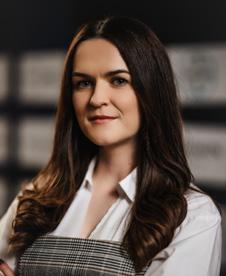
WRITTEN BY Sarah Rowlands Marketing Director, Kisaco Research
The demands of modern medical practice are intense: high-stress work environments, long clinical hours, growing administrative burdens, escalating productivity requirements due to declining reimbursements, and expectations of constant availability. Women physicians are often expected to also take on invisible, uncompensated labor, particularly emotional labor — often referred to as the “motherhood penalty.”
Many women physicians delay childbearing due to the extensive time and physical demands of medical school and
residency. The median age of a first-year physician out of residency is 33–35 years of age. Delaying childbearing brings with it the challenges of infertility and higher risk pregnancy, while early career physicians face the pressures of mothering young children while building a new practice. Because of external household and family demands, many women choose to limit their workload partially or all together.
Real work-life balance
The conversation must shift from resilience to responsibility. Instead of asking women how they will cope, we must ask institutions how they will change. Work-life balance should not depend on personal sacrifice or quiet endurance alone. Women in medicine do not lack dedication, capability, or resilience — they lack a system willing to meet them partway.
Until wellness is embedded into the structure of medical practice rather than treated as an optional add-on, the promise of work-life balance will remain unfulfilled, and women and their families will continue to bear the cost, damaging the healthcare system as a whole.
The Critical Role of Training and Mentorship in Advancing Women’s Leadership in Health
Want stronger and more resilient health systems? Dr. Magda Robalo, executive director of Women in Global Health, says letting women lead is the answer.
Ihave spent over three decades in health leadership, leading malaria and endemic disease control with Plan International, coordinating the COVID-19 response and strengthening health systems with the World Health Organization across Africa, and serving as Minister of Health in Guinea-Bissau. From rural communities to the halls of global institutions, one truth remains constant: Women are the backbone of our health systems. I have also seen firsthand how women are excluded from the decisions that shape healthcare for us all.
Making an investment
Evidence shows that when women lead, they are more likely to prioritize primary care, maternal and newborn health, and
community-based services, the foundations of a resilient system, while also fostering safer workplaces, investing in staff well-being, and building cultures that retain talent.
Leadership is not inherited — it is built. Targeted investment in women’s leadership transforms health institutions and strengthens the quality of care. Health systems must be redesigned so women are recruited into leadership, fairly promoted throughout their careers, and protected in their workplaces.
Health systems encompassing all sectors
So what does this all mean? We must guarantee paid family and medical leave so no woman is forced to choose between caregiving and a career in health. We must ensure there is zero tolerance for
harassment and violence in the workplace. And we must build leadership cultures that value women’s expertise and create space for them to rise.
If we want health systems that can meet the challenges of today and tomorrow, the path forward is clear: Invest in women. Because when women lead, care is better, communities thrive, nations prosper, economies grow, and all of us are healthier and safer.
The Impact of Gender Disparities in Medical Specialties on Women’s Healthcare
Underinvestment in women’s health and sex-differences research has led to inadequate representation.
Due to historic underinvestment in women’s health and sex-differences research, women’s health remains understudied in public and private research, inadequately taught in medical schools, and incompletely adopted into clinical care.
Gender gaps in healthcare
Everywhere we look, we can see gender disparities in medical specialties, cascading into women’s health research and clinical care.
For example, among U.S. physicians in 2023, only 17% of cardiovascular disease specialists were female, which contributes to a gap in understanding women’s heart health, despite the fact that heart disease is the leading cause of death for women at all ages (as well as men).
Women also comprise only 20% of pain medicine and management specialists, despite pain being more common in women and overlooked in healthcare generally.
Women represent for women
When women participate at the clinical level, it improves care for patients. Female physicians are more likely to see female patients, engage in preventive care with women, utilize patient-centered care, and have better health outcomes with female patients.
As well, when women are present and supported in pursuing research, the outcomes have a positive ripple effect: Female authors are more likely to include female participants in their studies, and female researchers are more likely to recruit women as participants
to their clinical trials. Diverse research teams are more likely to confront biases, investigate understudied topics, and uncover sex differences in their research.
A call for the future
Increasing the visibility of women in medicine and research encourages the next generation, bringing new perspectives and fresh ideas. And when more women are present in healthcare, outcomes improve for everyone.
WRITTEN BY Dr. Magda Robalo Executive Director, Women in Global Health