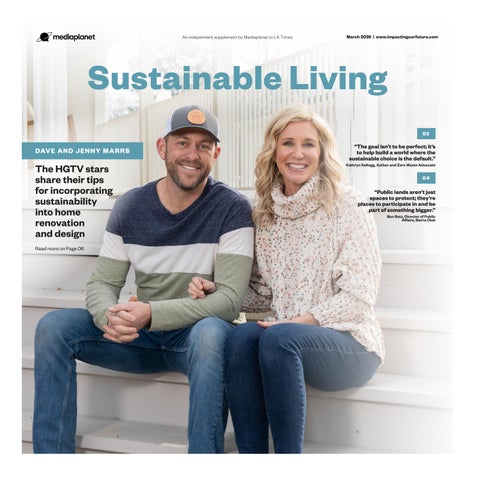
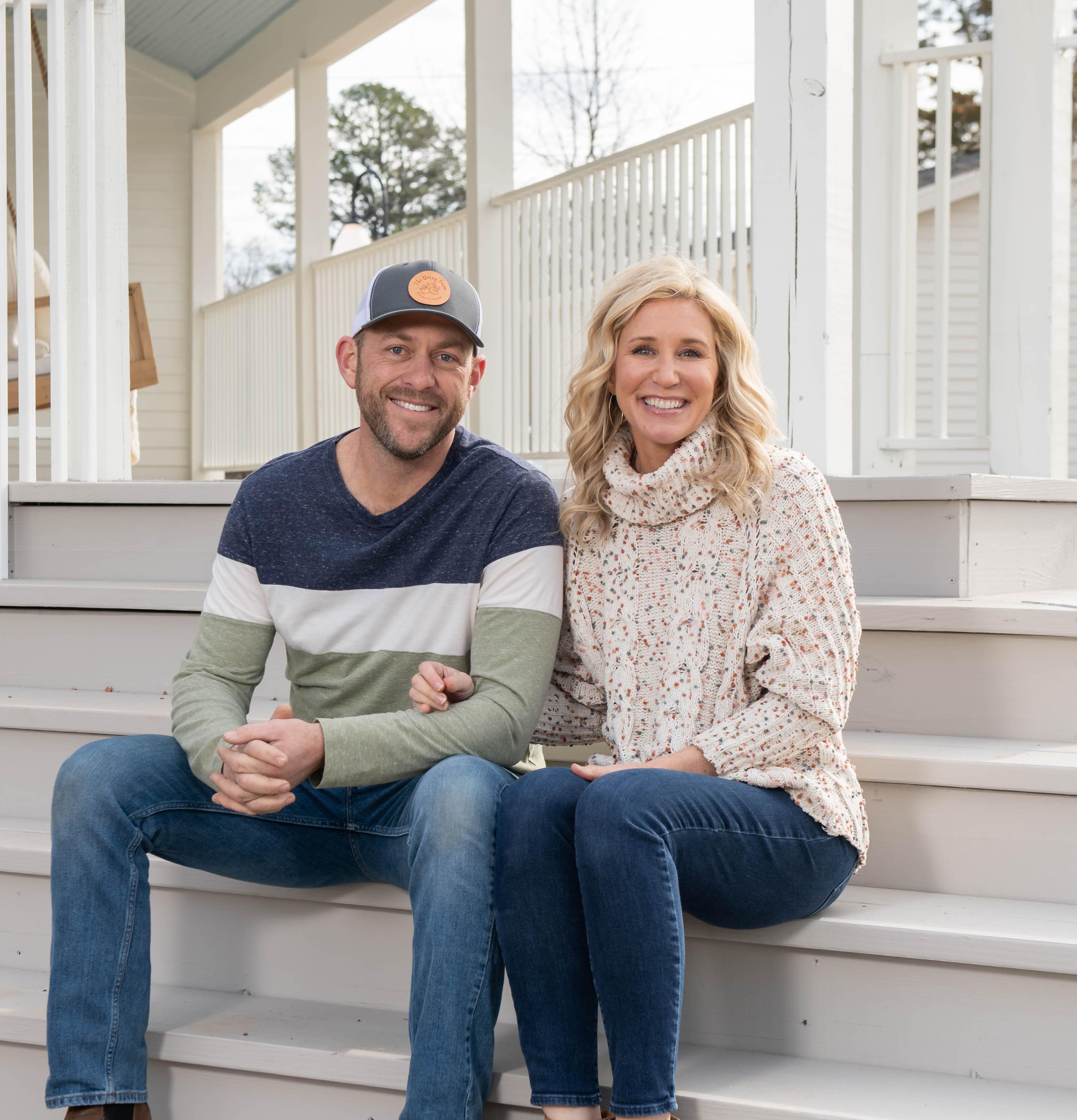
The HGTV stars share their tips for incorporating sustainability into home renovation and design
Read more on Page 06
“The goal isn’t to be perfect; it’s to help build a world where the sustainable choice is the default.”
Kathryn Kellogg, Author and Zero Waste Advocate
“Public lands aren’t just spaces to protect; they’re places to participate in and be part of something bigger.”
Ben Betz, Director of Public Affairs, Sierra Club
The Massive Food Waste Problem in America (And What
You Can Do About It)
Nearly a third of America’s food supply goes to waste each year, costing families thousands of dollars and the planet dearly.
In the United States, we let nearly 30% of our food supply go unsold or uneaten. The value of this food waste is close to $340 billion. Fortunately, there are some basic things you can do that make it easy, economical, and delicious to save food in your home.
1. Plan ahead: Think ahead a few days to consider what you’ll be eating before you buy groceries.
2. Store your food properly: Different foods need to be stored differently, and they’ll last a lot longer when they’re stored properly.
3. Use your freezer: Freezing food is a great way to extend its life. You can freeze most anything, including cheese, milk, pasta, and even that half jar of pasta sauce.
4. Learn the labels: Date labels typically refer to quality, not safety. Major food industry groups have endorsed the use of “use by” to indicate when a product should be discarded for food safety reasons and “best if used by” to indicate that the date is about quality.
5. Eat down: As you’re planning ahead for what you’ll be eating for the week, plan a day to “eat down” all the leftovers and excess food collecting in your fridge.
Written by Dana Gunders, Executive Director, ReFED
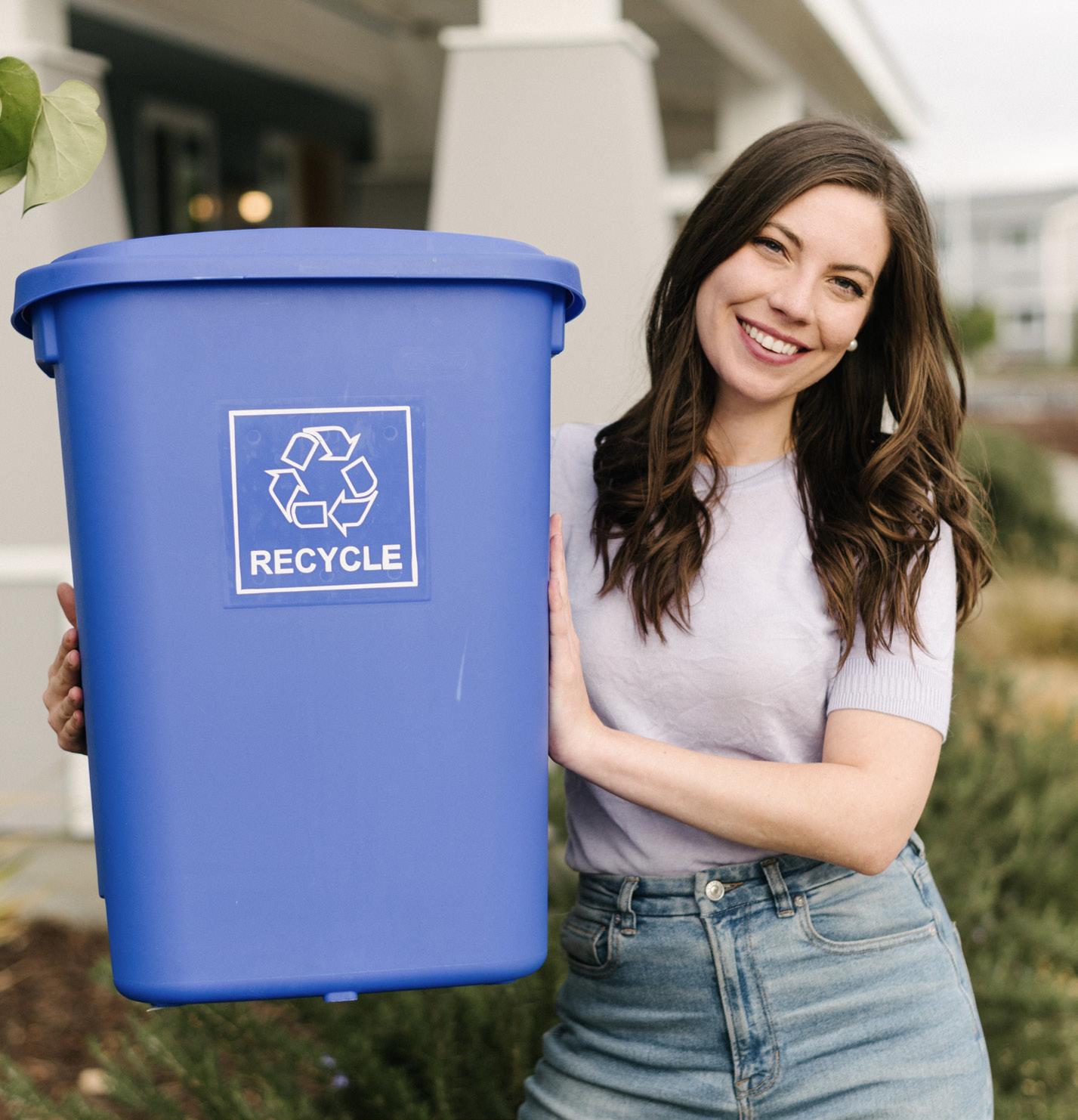
Small Steps, Big Impact: Kathryn Kellogg’s Practical Guide to Low-Waste Living
Author and influencer Kathryn Kellogg says sustainable living isn’t about being perfect; it’s about building habits that make the responsible choice feel like the easy choice.
What’s the biggest misconception people have about living a low-waste lifestyle?
One of the biggest misconceptions is that you have to be perfect. It really is about doing the best you can. Join a local advocacy group, show up for policy changes, and push for better infrastructure and better corporate responsibility. The goal isn’t to be perfect; it’s to help build a world where the sustainable choice is the default.
What are the most impactful changes someone can make at home without a major lifestyle overhaul?
One of the biggest changes you can make is tackling your food waste. If food waste were a country, it would be the third-largest producer of greenhouse gas emissions behind the United States and China. I wrote a whole book on the topic that helps you prevent food waste by shopping smarter, storing your food properly, and finding recipes for using less-than-peak produce.
Next, do a “use-what-you-have” reset before buying any swaps. So many people try to start sustainability by purchasing a new set of products. While some of those can be helpful, you may not actually need them in the first place. Use up what’s already in your home, finish what you’ve got, and replace things slowly as they wear out.
What everyday household habits leave the largest environmental footprint?
The household activities and daily habits that can do the most harm include food waste, heating and cooling, meat and dairy consumption, and transportation. Composting is a big deal because food waste in landfills produces methane, and even before composting, simply wasting less food is one of the quickest ways to cut your footprint. Heating and cooling are among the biggest drivers of
household energy use, so sealing drafts, using a smart thermostat, or nudging your setpoint a couple of degrees can add up over time.
What we eat matters, too, especially how much meat and dairy we consume. Even shifting toward a few more plantforward meals a week can make a huge difference.
Take a look at your transportation. Combining errands, walking or biking when you can, and choosing transit or carpooling when it’s realistic can move the needle more than people think.
Was there a specific moment in your own life that made you commit to lowwaste living?
Honestly, it wasn’t one big dramatic moment. It was more like a slow realization that a lot of my “normal” routines were creating a ton of waste and also a ton of stress. Once I started buying less, using what I had, and getting better about food waste, life felt calmer and simpler. Low-waste living stopped feeling like a set of rules and started feeling like a way to make everyday life easier.
Anthony Harrison Managing Director Gretchen Pancak Business Developer Isabella Rawls
Dustin Brennan Creative Director Kylie Armishaw Operations Manager Josh Rouse Designer Keziah Makoundou Copy Editor Taylor Rice Cover Photo by Mike Davello All photos are
Kathryn Kellogg Photo courtesy of Going Zero Waste
What Soil Needs Most Is Already in Your Kitchen
Every single food scrap that ends up in a landfill breaks a natural cycle that has sustained life on Earth for millions of years.
For most of human history, food scraps returned to the ground. Peels, cores, and kitchen trimmings decomposed naturally, feeding the soil that would grow the next season’s harvest. That loop is now broken. Today, the average American household sends roughly 4 lbs. of food waste to the landfill every week — organic matter that will never find its way back to the earth that produced it. The consequences of the broken loop show up in the soil. According to the USDA Natural Resources Conservation Service, the United States has lost roughly half of its topsoil over the past 150 years, driven largely by the depletion of organic matter. Soil without organic matter becomes compacted and lifeless — less able to hold water, support root systems, or produce nutrient-dense food. It also becomes more vulnerable to drought and erosion, amplifying the instability of a food system already under pressure. The irony is that what soil needs most is exactly what we’re throwing away.
Not everything marketed as a composting solution delivers
actual compost. Some appliances simply dehydrate food scraps, producing a dry powder that lacks the living microbial populations that give compost its value. Dehydrated waste is still waste — reduced in volume, but biologically inert. Real compost is something different entirely: the product of active biological transformation, in which living microorganisms break down organic material into humus, a stable soil amendment that restores the communities plants and food systems depend on. The distinction matters, because only one of these (composting) actually closes the loop.
The USDA notes that a teaspoon of biologically healthy soil contains more living organisms than there are people on Earth. Compost is what feeds them. Without a steady return of organic matter, those communities collapse — and with them, the soil’s capacity to sustain life. Despite broad public awareness that composting is beneficial, actual participation remains low. The barriers are practical: outdoor bins require space and attention,
municipal composting programs are unevenly available, and the perceived difficulty of managing food scraps at home discourages most households before they begin. The result is a wide gap between knowing and doing — and a continued flow of organic matter into the waste stream that could instead be rebuilding degraded soil.
Composting, made simple
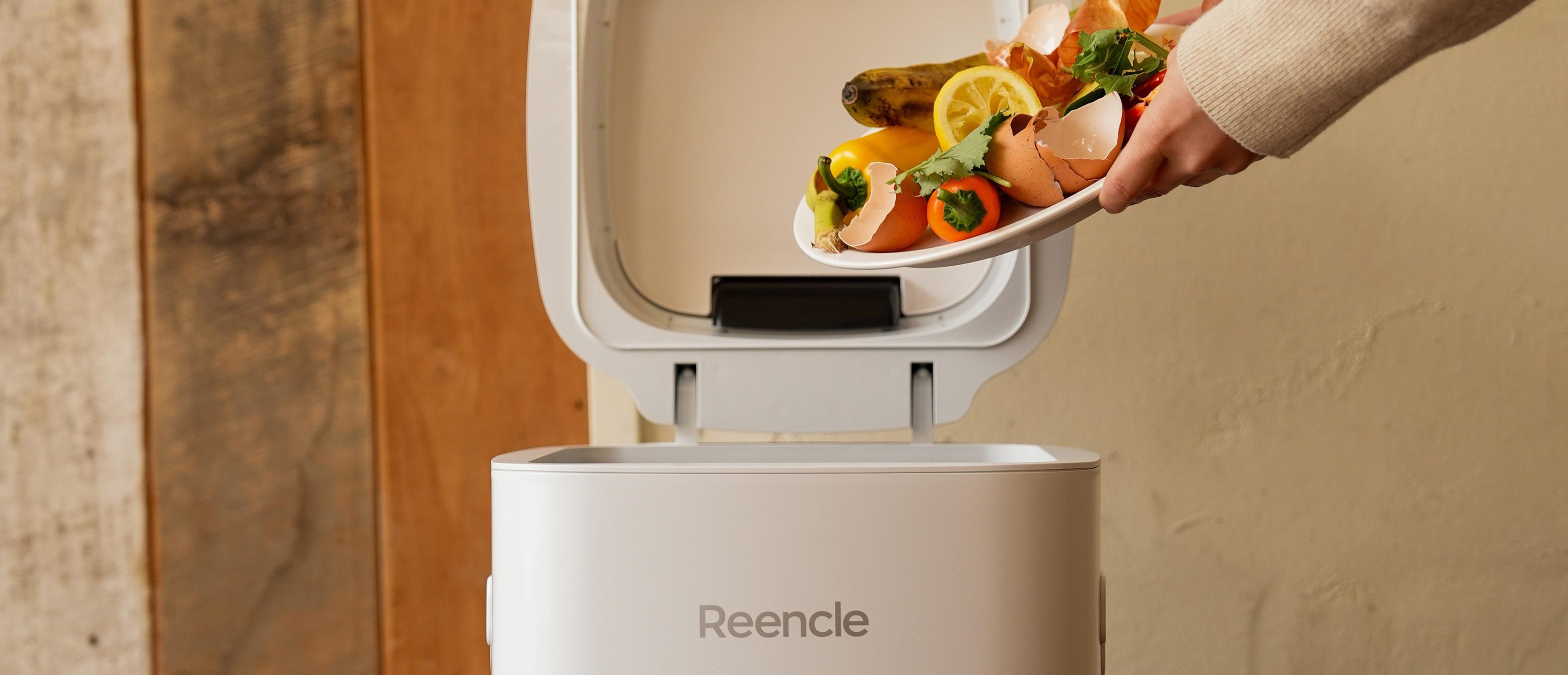
Over 300,000 households in 19 countries have already made food-scrap composting part of their daily routine with Reencle — not as a sacrifice, but as a natural extension of how they think about what they consume and what they return. Using continuously active living microorganisms, Reencle breaks down food scraps indoors, producing ready-to-use compost in as little as 30 days, with no odor and no outdoor space required. Nearly any food scrap — vegetable peels, fruit cores, cooked grains, coffee grounds — becomes feedstock for the same biological process that healthy forest soils rely on.
The impact of that process, scaled across households, is
measurable. Each Reencle unit diverts the equivalent of approximately 0.39 metric tons of CO2 per year — the same as not driving a car for more than a month.
The compost that comes out feeds gardens, window boxes, potted plants, and community plots — returning to the soil exactly what was taken from it. It improves water retention in sandy soils, loosens compacted clay, and reintroduces the microbial diversity that makes ground fertile rather than merely present. That’s not a product feature. That’s the loop, closed: organic matter that began as a meal, completing its return to the earth that made it possible.
This Earth Day, the most meaningful shift may not be the largest one. It starts with understanding where your food scraps belong — and building a daily habit around sending them back. Soil restored one household at a time is still soil restored. And the cycle that has sustained life on this planet for millions of years is patient enough to wait for us to remember how it works.
To learn more, visit reencle.co
WRITTEN BY
Sung Ho Park
Chief Marketing Officer, Reencle
Photo courtesy of Reencle
Where We Belong: Finding Community, Joy, and Healing on Public Lands
From urban parks to remote wilderness, America’s public lands offer more than beauty; they offer connection, healing, and a shared inheritance worth protecting.
Afamily pauses to read the names etched in stone at Manzanar. A group of veterans leads a sunrise hike at Joshua Tree. Strangers gather on a foggy morning to remove invasive grasses along the Backbone Trail. Quiet, powerful moments like these play out every day on our public lands. While they’ve always been important, they truly matter now more than ever before.
As we face deepening disconnection and division, both among ourselves and the natural world, parks and protected places offer more than just beauty or escape; they offer common ground and throughlines to those who came before and those who will come after. Whether in the heart of Los Angeles or deep in the Colorado wilderness, public lands bring people together — not just for recreation, but for reflection, healing, and action.
Programs that open doors Programs across the country are teaching people the power of nature and the importance of our protected shared spaces.
Sierra Club’s Inspiring Connections Outdoors expands equitable access to the outdoors by removing barriers like cost, transportation, and gear for youth and families in underserved communities. Organized trips like these challenge the notion that national parks are “for someone else,” replacing it with an affirming message that public lands are a shared inheritance.
Similarly, Sierra Club’s Military Outdoors program gets veterans and servicemembers into nature for stress relief, fellowship, stewardship, and healing, where nature becomes a place of both connection and care. On one of these
paddle trips, one Chicano veteran, who never saw the great outdoors as a place he fit in, said the trip taught him, “that the outdoors doesn’t belong to one kind of person. It belongs to all of us. I saw the land, and for the first time, I knew it saw me too — not as a guest, but as kin.”
How you can help
These aren’t isolated efforts. They are pieces of a broader truth: Public lands aren’t just spaces to protect; they’re places to participate in and be part of something bigger. They nourish not just ecosystems, but connection.
So, take a friend. Join a cleanup. Walk a story-filled trail. From every hillside in Los Angeles to every stream in the Appalachian woods, let community grow — powerfully, together.
Clearing the Air, the Faucet, and the Soil
The uncomfortable truth is that everyday things like water, food packaging, household cleaning products, and furniture can carry unhealthy chemicals.
Even though unhealthy chemicals are in many everyday items, you can meaningfully reduce your exposure without turning your life upside down. Better yet, when we push for better national safety standards, the benefits reach everyone.
Lead exposure
In your home, start by preventing lead exposure. No amount of lead is safe, and young children are especially vulnerable because of lead’s effects on developing brains.
Lead is most likely to show up in homes built before 1978, especially on windows, doors, and other painted surfaces. Lead can also show up in water, due to lead service lines and plumbing, as well as through soil.
If you live in an older home, a certified lead risk assessor can pinpoint issues and help you decide what, if anything, needs attention. You can also ask your water utility whether your service line is made of lead and whether they’ll test your tap water.
Chemicals in food
A second risk to look out for is chemicals in food. They can accumulate in the body over time, and the cumulative effect can take a toll on our health, learning, behavior, and attention.
There are several small actions we can take to reduce our exposure risk. Luckily, these are the same actions your doctor probably recommends already, like avoiding highly processed foods, thoroughly washing fresh fruits
and vegetables, buying organic when possible, and using glass storage containers instead of plastic ones.
Home products and furnishings
A third area where toxic chemicals can lurk is in home products and furnishings. For example, new mattresses, rugs, and carpets can sometimes release into the air chemicals like formaldehyde or PFAS (“forever chemicals”) that are linked to cancer, asthma, and other illnesses. Look for trusted certifications like GOTS, MADE SAFE, Greenguard/Greenguard Gold, Green Label Plus, Safer Choice, and Oeko-Tex.
Individual choices are powerful, but the biggest wins come when safety is built in. Consumers shouldn’t need a Ph.D. in chemistry to find safe
products, water, or food. Communities across the nation rely on policies from our government’s Food and Drug Administration and Environmental Protection Agency to ensure our food, water, and household products are safe. When we pair everyday steps with better standards, we create healthier homes now, and can protect the health and environment for generations to come.
WRITTEN BY
Ben Betz Director of Public
Affairs, Sierra Club
WRITTEN BY
Sarah Vogel
Senior Vice President, Healthy Communities
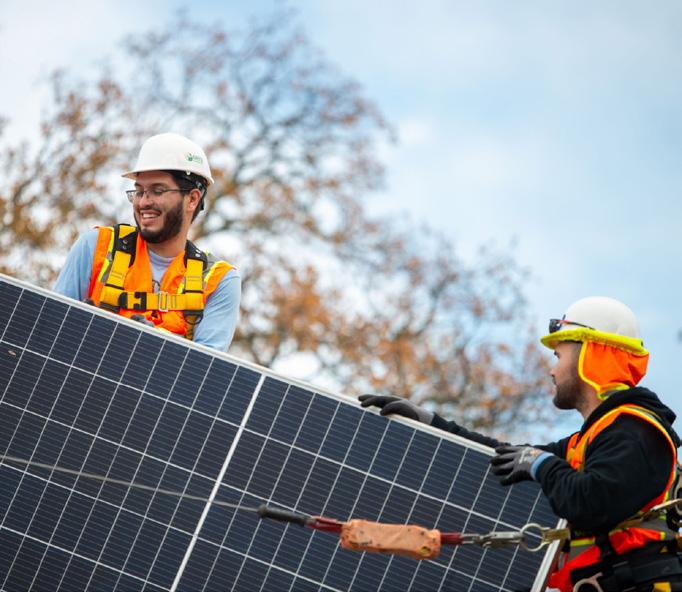
Plug Into the Sun: Why California Should Say Yes to Balcony Solar
As electricity rates soar and renters are left without access to rooftop solar, a new California bill could put clean, affordable energy within reach for millions.
Californians are facing an energy affordability crisis. Over the past decade, electricity rates have nearly doubled, leaving many families with an impossible choice: They can either cool their homes during heat waves, or pay for groceries and other essentials.
A new bill in the state Senate offers a common-sense, easily achievable way to fight back, and it deserves strong public support.
What is balcony solar?
Senate Bill 868, known as the Plug Into the Sun Act, would make “balcony solar” accessible, affordable, and safe for millions of Californians. Authored by
Sen. Scott Wiener (D-San Francisco), the bill cuts through outdated red tape that currently blocks people from using small, plug-in solar devices that can lower energy bills immediately.
Balcony solar systems are exactly what they sound like: compact solar panels that can attach to an apartment balcony railing, sit on a patio, or rest in a small yard. They plug directly into a standard wall outlet and instantly begin powering everyday essentials such as lights, refrigerators, computers, and even air conditioners using nothing more than the wires that exist inside a home or apartment.
That’s a game-changer in a state where 44% of households rent. For renters and
anyone without access to a roof, balcony solar offers more choice and more energy freedom.
With prices starting between $500 and $1,200, these systems can cover up to 20% of a typical household’s electricity use. That translates into real savings on monthly utility bills and financial relief that families can feel right away. Consumers can also add a battery to power their appliances during grid outages.
Cutting through the red tape So, why isn’t balcony solar already widespread here? In short: bureaucracy.
California’s rules treat these small, portable systems as if they were full-scale power plants, triggering unnecessary
permits, fees, and complex utility approvals. SB 868 fixes that by classifying balcony solar panels as household appliances and setting clear, statewide safety standards. Less red tape, more safety, and more savings. At a time of rising bills and the increasing impacts of air pollution, SB 868 offers Californians lower costs, cleaner energy, and more control over their own power.
Sustainability, Energy Efficiency, and Environmental Justice in Southern California
As rising temperatures strain Southern California’s energy systems, clean energy programs rooted in environmental justice are proving that affordability and sustainability can go hand in hand.
While the sun shines bright over Southern California, our reality is becoming harsher. Rising temperatures strain our energy systems,
drive up utility costs, and deepen inequality. High energy bills are not just inconvenient; they are a barrier to stability and have a disproportionate impact on frontline communities.
California has led the nation in clean energy innovation, but leadership means ensuring no one is left behind. The state must continue and expand its investment in equitable, low-income solar programs alongside robust efficiency and weatherization efforts. Programs like DAC-SASH and SOMAH have shown that when we invest in historically underinvested communities, clean energy adoption accelerates, household energy bills drop, and climate pollution falls. The California Energy Commission’s Equitable Building Decarbonization initiatives
build on this success by pairing efficiency upgrades with clean energy, ensuring families are not locked out of climate solutions because of income, housing type, or ZIP code.
Steps anyone can take Individuals can also take steps to reduce energy use. Sealing air leaks, improving insulation, and upgrading to efficient cooling technologies like heat pumps can lower energy bills while keeping homes safer during extreme heat. Smart thermostats and mindful energy use during peak hours can further reduce strain on the grid. For households that can access it, rooftop solar offers long-term savings and protection from rising utility costs. Choosing efficient
appliances, replacing gas equipment with electric alternatives, and learning how homes use energy all contribute to healthier living spaces and a more resilient energy system.
Everyone has a role to play in turning climate awareness into climate action. This is our moment to champion solutions that cut pollution, lower energy bills, and strengthen communities.
Photo courtesy of GRID Alternatives
Living Sustainably While Saving Money on Energy Costs
Reducing your energy use is one of the most powerful sustainability choices you can make, and with the right tools, it can save you money, too.
Most consumers’ greatest environmental impacts are linked to energy use. Here are a few ways to advance sustainability while saving money on energy costs:
Take advantage of available help Utilities offer educational resources, rebates, loans, and other incentives to help you save energy. Low- and moderate-income customers often qualify for special financial incentives from the utilities.
Choose efficiency when making purchases
There is a significant difference between the most and least efficient appliances. Nowhere is the impact greater than with vehicles. By choosing the most efficient, you minimize your environmental impact each time you drive. Electric vehicles can be especially sustainable and cost-effective.
Make no-cost changes
Some changes don’t require you to buy anything but will still save you money. For example, wash your clothes in cold water. Most of the environmental impact from clothes washing comes from heating the water rather than from operating the machine. Don’t always rinse your dishes before loading them into the dishwasher. Instead, scrape food into the garbage and only rinse when dealing with things like cheese and eggs that stick to plates. It also takes less water and energy to use a dishwasher than to wash dishes by hand.
Written by Warren Leon, Executive Director, Clean Energy States Alliance
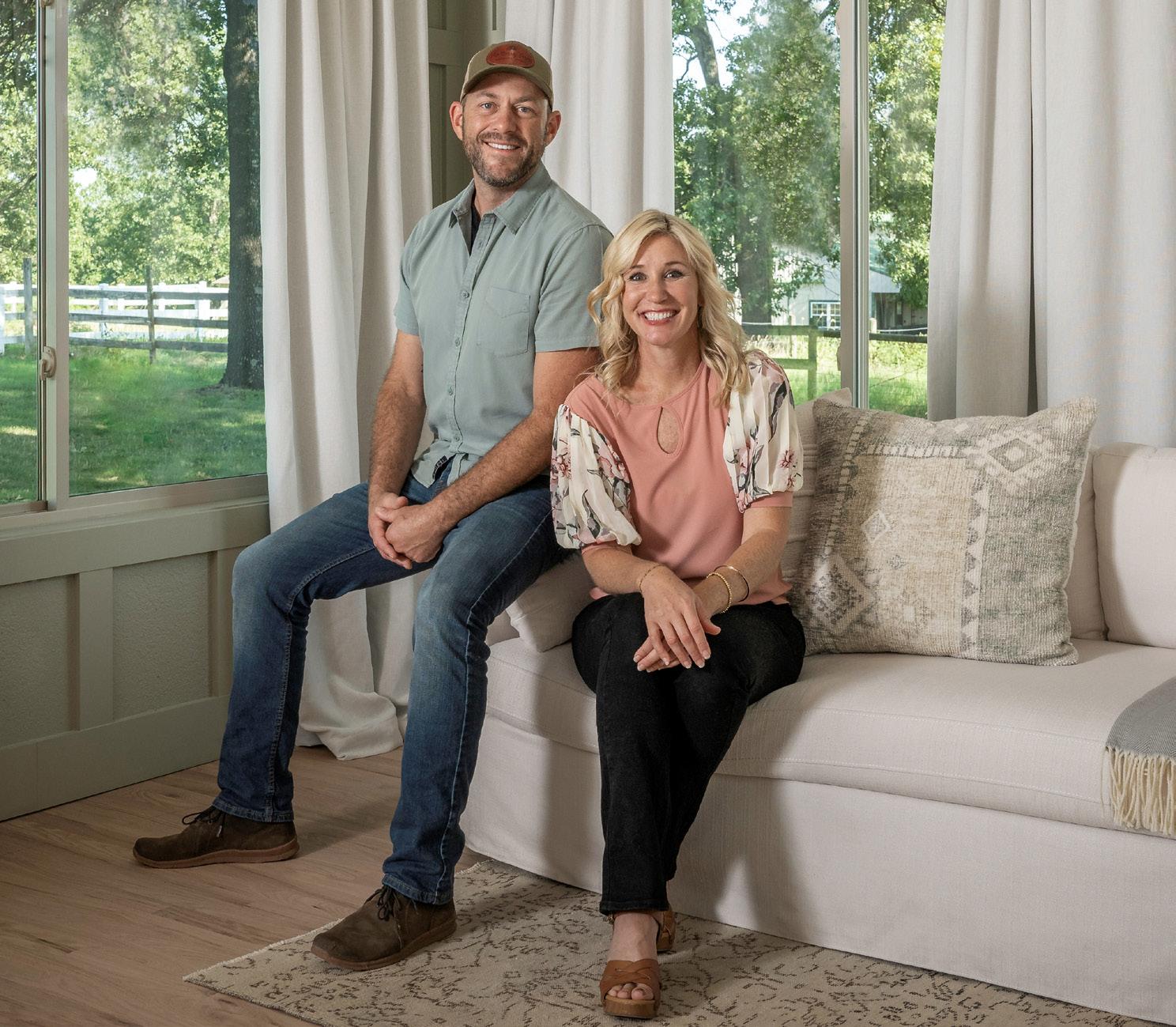
Dave & Jenny Marrs on How Renovation and Reuse Are Reshaping Sustainable Home Design
HGTV’s Dave and Jenny Marrs have built careers around restoring rather than replacing, and they say the most sustainable home is almost always the one that already exists.
Why is renovation and reuse such a powerful sustainability choice for homeowners today?
Renovation and reuse dramatically reduce environmental impact compared to new construction. Building new requires extracting raw materials, manufacturing, transportation, and often demolition of the old structure, all of which generate significant waste. Renovating preserves the energy already invested in the existing home, avoids landfill contributions from demolition debris, and minimizes new material demands.
What are the most impactful sustainable decisions homeowners can make during a renovation that don’t necessarily increase the budget?
A lot of sustainable decisions during a renovation often save money long-term. A few to prioritize:
• Improve insulation and air sealing
• Switch to LED lighting and smart thermostats
• Install low-flow fixtures
• Prioritize deconstruction over demolition. Salvage and reuse existing materials to avoid waste
• Seal existing windows or add weatherstripping
How do you balance sustainability with functionality and aesthetics, especially when working with older homes?
In older homes, striking this balance requires thoughtful integration rather than wholesale replacement. The key is respecting the home’s character — historic features like original millwork, hardwood floors, or architectural details — while upgrading for modern needs. Choose natural, durable materials that age gracefully (such as reclaimed wood or natural stone) to maintain timeless appeal.
Functionality comes first. Ensure layouts support daily life, then layer in sustainable tech subtly through hidden smart systems or efficient HVAC. In older homes, this often means blending old and new seamlessly, like pairing
vintage fixtures with modern, lowimpact finishes.
What materials or design choices do you consistently return to because they stand the test of time both environmentally and stylistically?
A few materials and choices stand out:
• Reclaimed or responsibly sourced wood offers unique character, reduces demand for new timber, and ages beautifully.
• Natural stone (local or recycled) provides thermal mass for passive heating and cooling, is incredibly long-lasting, and brings timeless elegance.
• Neutral, earthy palettes with textured, organic fabrics like linen or wool create calm, adaptable backdrops that evolve with the home rather than following fleeting trends. These stand the test of time because they
are rooted in nature, low-maintenance, and versatile across styles.
How do your family values
shape the way you approach sustainability at home?
Prioritizing longevity and thoughtful choices reflects a commitment to stewardship — creating spaces that support health, connection, and future generations. This means involving family in decisions, like choosing durable pieces that grow with kids or foster shared spaces, supporting local artisans through sourcing, and focusing on healthy indoor environments for well-being. It’s about building homes that nurture relationships and a sense of place, where reuse and care honor both heritage and responsibility. Ultimately, it’s living intentionally. A home that’s kind to the planet is also one that feels deeply personal and enduring.
Dave and Jenny Marrs
Photo by Mike Davello
Beyond the Trend: Five Practical Ways to Cultivate a Climate-Friendly Life
Every decision we make, from the food on our plates to the clothes on our backs, creates a ripple effect on our planet, but small, thoughtful changes can make a real difference.
From how much deforestation is needed for farming to how much waste is created, everything we do has an impact on our planet. While it can sometimes feel overwhelming, the changes don’t have to be drastic. Adopting a few thoughtful daily habits matters, and many have impressive health and well-being benefits, too.
1. Eat real, local, and seasonal
Dining locally is more than a culinary preference; it is a legitimate climate action. By focusing on what is in season, we reduce the heavy fuel consumption required to ship food over long distances, and we reduce the likelihood that our meal is produced with large-scale agriculture that is one of the leading causes of deforestation.
2. Rethink the fast fashion cycle
Clothing is currently moving from retail racks to the trash at the fastest rate in history. In America alone, an estimated 11.3 million tons of textile waste end up in landfills every year. You can help by buying secondhand or vintage pieces, swapping items with friends, or simply wearing what you already own for longer.
3. Decarbonize your commute and home
Fossil fuels power our cars and homes, but we can reduce how much we use. Opting for public transport, walking, cycling, or carpooling transforms solo commutes into shared moments. At home, small shifts really matter. Switch to energy-efficient appliances, cook with cleaner energy, and unplug gadgets when not in use.
4. Be mindful of where your stuff comes from Wood and furniture come from our forests, and so does gold. Sometimes, vital trees are deforested and gold is mined illegally but sold as legitimately sourced. To ensure you aren’t accidentally contributing to deforestation, prioritize recycled goods and sustainably sourced wood and gold.
5. Support smart solutions
While personal choices are vital, change also requires systemic shifts. Amplifying your daily actions involves backing projects that champion renewable energy and protect rainforests. Specifically, supporting organizations that back Indigenous peoples and local communities to protect rainforests is one of the most effective ways to tackle the climate crisis.
Island
of the Lost Clothes: Fast Fashion and the Environment
Fast fashion quietly endangers our health, our planet, and the people who make our clothes, but our everyday choices have the power to change that.
Fast fashion is the practice of making and selling clothes quickly and cheaply to get the latest trends into stores before they go out of style. It is a business model that thrives on one thing: more. More trends, more shopping hauls, more clothes — worn an average of just seven times and forgotten in landfills. The result is a growing mountain of waste we can no longer ignore.
The environmental and health toll
The fashion industry now accounts for roughly 10% of global carbon emissions, more than international flights and maritime shipping combined. Carbon is not the only thing this process releases. To meet demand for cheap clothing driven by rapidly changing fashion
trends, brands rely heavily on synthetic fabrics like polyester, nylon, and acrylic, which are essentially plastic. Every time we wash them, they shed microplastics that slip through water treatment systems and end up in our oceans, soil, and even the air we breathe.
Industry pressure and consumer power Despite pressure from governments, companies do not seem to be responding. For instance, the EU has launched a number of initiatives to make fashion more sustainable, including rules that clothes must last longer, be easier to recycle, and use less polluting materials. But these guidelines aren’t working yet. A recent survey found that nearly half of the big brands are actually using more synthetic fabrics like polyester than before,
while only a few have cut back. Some even broke earlier promises to reduce plastics in their clothes. Here’s the good news: Consumer habits matter. Everyday choices, such as what we buy, how often we shop, and how long we keep our clothes, change global environmental impacts.
Just as fast fashion has been perpetuated by consumers buying clothes to keep up with short-lived trends, so can we reject this culture. Choosing fewer, better-made pieces, supporting ethical brands, and extending the life of what we already own can push the industry toward safer, longer-lasting, and non-toxic fashion.
Sustainable fashion doesn’t mean boring or expensive. It means buying and styling with intention and creativity. The most powerful trend we can follow is responsibility.
WRITTEN BY Terran Fielder Media Specialist,
WRITTEN BY Natalie Klepacova Advocacy and Engagement Executive, Cool Earth