


Ecostore: Building world-class sustainable manufacturing from Auckland. THE LAST WORD Election year excuses? Why manufacturers cant afford them. www.nzmanufacturer.co.nz
Ecostore: Building world-class sustainable manufacturing from Auckland. THE LAST WORD Election year excuses? Why manufacturers cant afford them. www.nzmanufacturer.co.nz
By Hon Chris Penk, Minister for Small Business and Manufacturing
As I kick off my first manufacturing column of 2026, I want to pass on my best wishes to manufacturers across the country as you return from a well earned summer break.
I know many of you will already be back into the swing of things, but I hope the warmer weather is still bringing some enjoyment outside of busy working hours.
I am genuinely delighted to see large parts of our manufacturing sector entering the new year with real momentum, supported by the strongest activity levels recorded since 2021.
The latest BNZ BusinessNZ Performance of Manufacturing Index shows December 2025 activity rising 4.4 points from the previous month to 56.1. This is a very encouraging signal. New Zealand’s PMI has now shown expansion for six consecutive months and in December it outperformed manufacturing activity in the United States, China, Japan, the United Kingdom and Australia.
For an economy of our size, that is a result worthy of recognition. Businesses also reported improved confidence, stronger export and forward orders, and benefits flowing through from increased infrastructure activity.
This strong start echoes many of the themes that defined 2025. Manufacturers faced sustained cost pressures throughout the year, yet continued to adapt, innovate and deliver solid export performance.
Food and beverage producers, advanced manufacturers and precision engineering firms all showed resilience in the face of challenging conditions.
While 2025 was about regaining stability, early

indicators suggest 2026 has the potential to deliver stronger forward momentum.
Across the wider economy, several trends are beginning to move in a positive direction. GDP rose 1.1 percent in the September 2025 quarter, supported by a 2.2 percent increase in manufacturing and reinforcing how important the sector is to New Zealand’s overall economic performance. Inflation has eased, interest rates are settling, and confidence among businesses and consumers is gradually lifting. These changes matter at a practical level, particularly when firms are making decisions about capital investment, expansion, and workforce planning. It is fitting, then, that we again celebrate excellence in the sector with the 2026 edition of the Minister for Manufacturing Awards. Last year’s inaugural event was a huge success, and award recipients from Taranaki to Dunedin demonstrated how capability building and innovation can support both commercial success and regional prosperity.
This year’s event will be held at Auckland Showgrounds on 27 May and will again recognise Manufacturer of the Year, Manufacturing Leader of the Year, Apprentice of the Year and Excellence in Process Innovation.
The awards will also be expanded to include three new categories. Firms with fewer than 50 employees will now be eligible for a dedicated small business Manufacturer of the Year Award, reflecting and celebrating the reality that small manufacturers make up around 97 percent of the sector.
An Emerging Manufacturing Leader of the


Year award will shine a spotlight on the next generation of innovators and trailblazers, alongside a Manufacturing Lifetime and Legacy Award to recognise those who have helped shape the sector. Entries for the 2026 awards open on 23 February and close on 31 March, and I encourage manufacturers to put their names forward.
Looking ahead, the year is shaping up to offer genuine opportunity. As Minister, my focus is on building on the foundations laid last year, reinforcing the positive signals now emerging and strengthening the capabilities that keep New Zealand manufacturing competitive on the global stage.
The sector has shifted up a gear, and this Government is committing to sustaining that momentum. Requests for category information packs for the Minister of Manufacturing Awards can be sent to info@amanz.nz
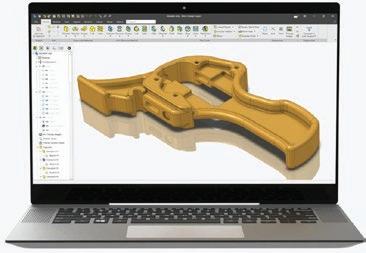
Save money - Alibre Design Expert per day cost is less than a cup of coffee.
Secure supply of energy and data to moving industrial equipment.
• Large size range
• Vertical travels
• Energy tubes

• Hygienic chains
• Solutions for long travel
• Guide troughs
• Readychain
• Robotic, 3D
• Circular movement

HUGE range of high quality flexible cables
• Control cables
• Single cores
• Data cables
• Sensor/Actuator
• Intrinsically Safe
• VSD/EMC cables
• Halogen Free cables
• High temperature
• Harsh Conditions
• Crane cables
• Profibus cables
• Bus/DeviceNet
• Solar cables
• Instrumentation
• Flat cables
• Curly cords

Largest range of flexible conduits for cable protection
• Conduits
• Conduit fittings
• Divisible systems
• Jumbo systems
• Conduit Accessories
• Braided cable protection
• Fire barrier solutions
• Food and beverage
• EMC systems
• Ex, ATEX, IEC EX

Industrial connectors for many industries
• Rectangular multipole connectors from ILME
• Single pole Powerline connectors from TEN47
• EPIC connectors from Lapp Group
• M23 circular connectors from Hummel
• Circular connectors specifically for the entertainment/stage lighting industry from Socapex

Safety engineering solutions from EUCHNER
• Multifunctional Gate Box MGB
• Transponder-coded safety switches
• Electromechanical safety switches
• Magnetically coded safety switches

Sensor technologies for automation
• High-Precision Laser Distance Sensors
• Ultrasonic Sensors
• Inductive Sensors
• Fluid Sensors

April and May issues of NZ Manufacturer magazine www.nzmanufacturer.co.nz, as Media Partner, will include Previews of EMEX 2026.
We have, again, put together Special Packages to celebrate EMEX at below normal rates. We also welcome articles on your company’s innovations and developments, published at no charge. This is also the event to celebrate the Minister for Manufacturing Awards.
Quarter Page advertising space:
$320 per insertion (Normal rate $440) Article space as well at No Charge.
Half Page advertising space:
$420 per insertion (Normal rate is $550) Article space is available at No Charge.
Full Page advertising space:
$550 per insertion (Normal rate $750) Article space is available at No Charge.
For April issue: advertising artwork and article: 4 April 2026
For May issue: advertising artwork and article: 4 May 2026.
Article length: up to 600 words plus a picture.
If you have special requirements or need assistance with your material, please contact us. Only too happy to help!
Regards,
Doug Green, Publisher
NZ Manufacturer www.nzmanufacturer.co.nz
publisher@xtra.co.nz 027 280 1992
2026 off to a good start for manufacturers.
EDITORIAL
Brighter days ahead?
BUSINESS NEWS
XPO Exhibitions launches new trade fair. Before the robots arrive.
SMART MANUFACTURING
Moving to a smarter factory to do more with less effort.
EMA
EMA reforms will support manufacturing growth.
Ecostore: Building world-class sustainable manufacturing from Auckland.
SMART MANUFACTURING
AntOn launched in Asia-Pacific.
Backing Capability: Lessons from Fi Innovations and the Future of NZ Manufacturing.
Digital transformation.
Quantum batteries could supercharge the future of quantum computing.
NZ PRODUCTIVITY ORGANISATION
Productivity and baby boomer business owners.
SUSTAINABILITY
From data to decisions: getting more value from sustainability measurement.
CYBER SECURITY
Cyber security a reputation risk manufacturers can’t ignore.
ANALYSIS
The jobs AI can’t touch: Skills Group reveals the careers set to soar.
PRODUCT NEWS
Expanding smart lubrication possibilities. Clean relief for beverage producers.
DEVELOPMENTS
Quantum-inspired wireless technology could tackle 6G’s biggest challenges.
Auckland BioSciences acquires Genesis BioLab. The trades mentor setting a new benchmark for apprentices.
Autex partners with U.S. textiles powerhouse, Momentum – the first for a NZ company.
Leading with age inclusion: Why leadership commitment matters more than policy.
THE LAST WORD
Election year excuses? Why manufacturers can’t afford them.

Ian Walsh
Ian Walsh is a leading expert in designing and implementing transformational improvement programmes, with over 30 years of experience helping businesses drive operational excellence and long-term success. A Six Sigma Master Black Belt, he has worked with both New

Zealand’s top organisations and global multinationals including Kimberley Clark, Unilever, Guinness to unlock productivity, reduce costs, and optimise business performance. Ian has been at the forefront of operational improvement, working at all levels—including Boards—to deliver high-impact change. Ian continues to play a key role in advancing business excellence, supporting Auckland University and The Icehouse with expert insights on productivity, operational improvement, and best-practice methodology.

Dr Barbara Nebel
CEO thinkstep-anz
Barbara’s passion is to enable organisations to succeed sustainably. She describes her job as a ‘translator’ – translating sustainability into language that businesses can act on.
and Manufacturing.


6 9 12 15 16 23 25
Mark Devlin
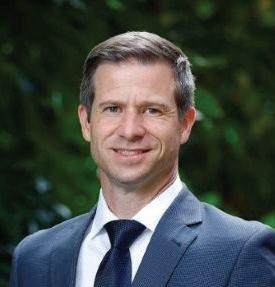
Having owned food manufacturing and distribution businesses for a decade, Mark Devlin now runs Auckland public relations agency Impact PR. Mark consults to several New Zealand manufacturing firms.
Insa’s career has been in the public and private sectors, leading change management within the energy, decarbonisation, and sustainability space. Insa holds a Chemical and Biomolecular BE (Hons) from Sydney University. She is a member of the Bioenergy Association of NZ and has a strong passion for humanitarian engineering, working with the likes of Engineers Without Boarders Australia.
Insa is a member of Carbon and Energy Professionals NZ, been an ambassador for Engineering NZ's Wonder Project igniting STEM in Kiwi kids and Engineers Australia Women in Engineering, increasing female participation in engineering.


Simon Devoy is the Head of Membership, Export & Manufacturing at the EMA. He’s a seasoned executive specialising in strategy, change management and stakeholder relations. Simon has led major operations in HR, banking and sports, including senior roles at Auckland and NZ Rugby and the Bank of New Zealand. At the EMA, he guides membership growth, export development and manufacturing support, leveraging deep expertise in people, operations and business performance.

PUBLISHER
Media Hawke’s Bay Ltd, 121 Russell Street North, Hastings, New Zealand 4122.
MANAGING EDITOR
Doug Green
T: 027 280 1992
E: publisher@xtra.co.nz
CONTRIBUTORS
Holly Green, EMA, Business East Tamaki, Ian Walsh, Mark Devlin, Nicholas Russell, David Altena, Chris Penk, Frank Phillips
ADVERTISING
T: 027 280 1992
E: publisher@xtra.co.nz
DESIGN & PRODUCTION
:kim-jean:
E: kim.alves@xtra.co.nz
WEB MASTER
Julian Goodbehere
E: julian@isystems.co.nz
PUBLISHING SERVICES
On-Line Publisher
Media Hawke’s Bay Ltd
DIGITAL SUBSCRIPTIONS
E: publisher@xtra.co.nz
Free of Charge.
MEDIA HAWKES BAY LTD
T: 027 280 1992
E: publisher@xtra.co.nz
121 Russell Street North, Hastings
NZ Manufacturer ISSN 1179-4992
Believe it! PMI on the up, a new trade fair and 2026 seems to be moving a bit faster than 2025. Plus, it’s an election year with a few incentives to be handed out so you to vote for the right party.
You have to give it to XPO Exhibitions and their myriad of trade fairs. As professional an organisation as there is they constantly get together the buyers and manufacturers in New Zealand business.
And now we have a new trade fair. XPO Exhibitions is partnering with Hannover Fairs Australia to launch Logistics Automation New Zealand, powered by CeMAT. This will be held from 10-11 November at the Auckland Showgrounds.
As XPO boss Brent Spillane puts it, “with the rapid growth of high-tech logistics and automation, the time is right to give the sector its own dedicated platform.”
It ought to be worth a visit.
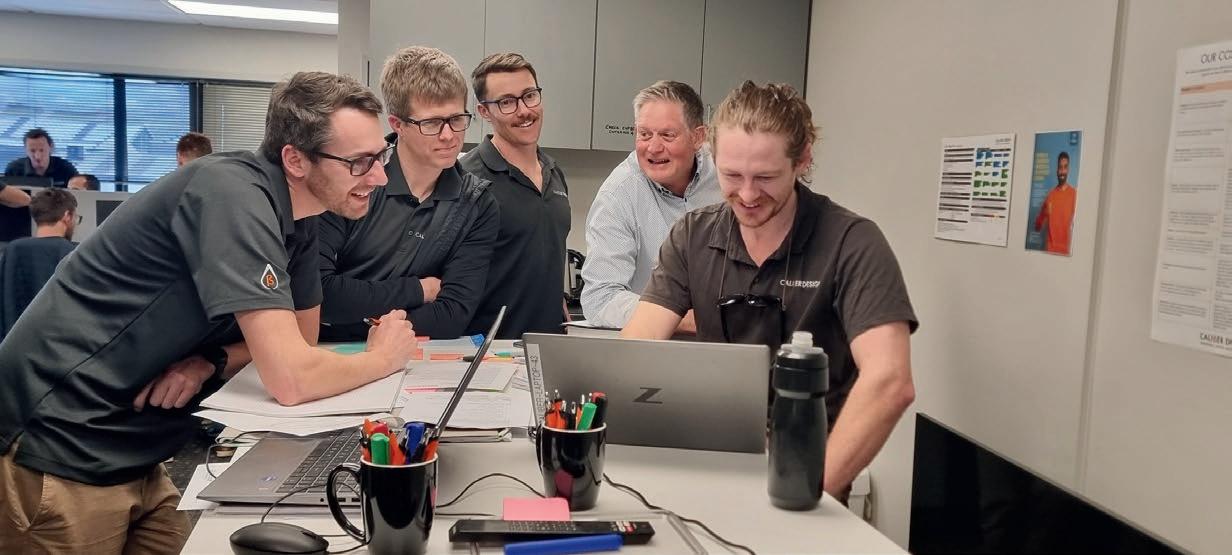
New Zealand’s manufacturing sector has always relied on one core strength: capability. Not scale or low-cost production, but the practical skill, judgement, and adaptability of the people who make things here. In a recent podcast, Caliber Design founder, Jonathan Prince (Page 13), spoke with Gareth Dykes and Derek Manson from Fi innovations, a Southland company, about how that capability is built over time.
Their story is a reminder that sustained engineering know-how, not quick wins, is what underpins resilient manufacturing in New Zealand.
David Altena and Rob Bull in The Last Word (Page 27) explain why we can’t have election year excuses because manufacturers can’t afford them.
We are entering a familiar three yearly cycle of hesitation. As we flip into another election year, a subtle but pervasive “hush” descends over factories from Penrose to Invercargill.
Doug Green, Publisher


XPO Exhibitions is partnering with Hannover Fairs Australia to launch Logistics Automation New Zealand, powered by CeMAT. This will be held from 10-11 November at the Auckland Showgrounds.
The trade fair will bring together world-leading logistics, automation, robotics, intralogistics, warehousing, and supply chain management solutions under one roof.
XPO’s Managing Director Brent Spillane says that with the rapid growth of high-tech logistics and automation, the time is right to give the sector its own dedicated platform.
“We are seeing a transformational technology expansion and growth of products delivering Robotics, Automation, Intralogistics, Warehousing, Supply Chain Management and Materials Handling. This cutting-edge technology is changing rapidly, yet it’s becoming more accessible and affordable for industry to bolt-on products and enjoy instant gains in productivity.”
CeMAT is a world-renowned leader of exhibitions in this space, with deep relationships across the biggest brands whose R&D is redefining logistics automation across the globe.
As Mike Nissen Commercial Director of Hannover Fairs Australia explains “This Joint Venture
America, Australia and Asia Pacific.
“That international participation creates buzz and more value for domestic exhibiting brands –something we are evidencing in other markets we are entering.”
XPO have traditionally served the Materials Handling & Logistics NZ sector most notably alongside Foodtech Packtech, and while that industry (food manufacturing) have been early adopters, XPO’s Managing Director Brent Spillane says the time has come to broaden the scope to all industries where automation can play a pivotal role in streamlining processes, driving efficiencies, and improving health and safety practices.
He adds, “Logistics Automation New Zealand, powered by CeMAT brings together a far wider attendance of pan-industry sectors.”
“This is a must attend for any business with a warehouse, moving product from A to B, or looking to better understand how a new era in supply chain management and logistics technology can give them that competitive advantage.”
XPO have a database of tens of thousands of these very businesses – some already attending and/ or exhibiting at other B2B trade shows they run including: EMEX, BuildNZ, Fine Food New Zealand, NZ Gift & Homewares Fairs, Facilities Integrate, The National Safety Show, SouthMACH, Foodtech
sectors overnight.
Importantly it’s not only large-scale operations that will benefit. SMEs can affordably begin the automation journey and get an edge over competitors.”

The organiser points to technology that delivers efficiency with incredible accuracy, so products are processed, picked and packed and sent to customers swiftly and on a scale never seen before. With New Zealand exports fast approaching $72B the challenge is set to reduce the tyranny of distance from important export markets.
During a recent visit to Shanghai’s CeMAT Asia, Spillane witnessed the scale of innovation across more than 80,000sqm of exhibiting Chinese and global suppliers.
From humanoid manufactured robots capable of complex load-handling tasks to high-speed pick-and-pack and warehouse racking systems, autonomous trucks and vans and so forth; the innovation pipeline is accelerating.
Suppliers were increasingly talking about Australia, New Zealand and Asia Pacific as fertile ground for expansion, especially with the US market becoming

Adam Harvey, Business Performance Partner – Manufacturing, The Learning Wave
Running a manufacturing business right now can feel like standing on a moving walkway. If you don’t step forward, you fall behind.
Customers want more for less, and Boards are pushing for efficiency, growth, and operational certainty. Automation and digital tools promise speed and scale, and on paper, the investment stacks up.
But then you look across the floor, and the harder question sets in: “Are our people actually ready for this yet?”
That was the question facing Formthotics when they first reached out in early 2025.
An established manufacturer of custom orthotics, Formthotics was investing heavily in its future. New machinery, its first robot nearing commissioning, new digital tools queued for rollout, a refreshed brand and ambitious growth targets. The strategy was clear, and the investment significant.
But the leadership team, led by Shane Heenan, alongside Amanda Gault and Carolina Santos, could also see the risk.
“We knew the processes which had gotten us this far simply wouldn’t scale ahead for growth. A SIRI assessment confirmed it; paper-based processes and limited experience with digital tools.” shared Shane.
They had seen similar stories play out elsewhere. Formthotics had watched the Argus journey closely. They saw what was possible when leaders recognised a simple truth: technology doesn’t run a factory, people do.
So they made a deliberate choice. Before pushing harder on lean, digital, and automation, they chose to prepare their people.
Rather than waiting for resistance to show up later, Formthotics invested early in building the mindset, confidence and communication skills of its 17 factory and supply chain operators.
That decision led to Owning My Future, a learning journey designed to build the foundations the business knew it would need for its next phase of growth.
From the outset, Formthotics was clear about what they needed:
“To lay the foundations for continuous improvement by building a clear understanding of how operators contribute to problem-solving, waste reduction, and quality improvement.”
What changed on the floor
Across the programme, learners explored
wellbeing, communication styles, teamwork, values, goal-setting, and problem-solving.
Confidence grew.
People who had previously stayed quiet began contributing, and conversations shifted from “that’s not my job” to “how can we make this better?”
Managers noticed the change quickly. Stronger collaboration. Increased confidence. Individuals stepping up in ways they hadn’t before. The programme sent a clear signal from leadership that their people mattered and that their voice was valued.
The results spoke for themselves. Fewer avoidable mistakes. Reduced waste. More people speaking up about ideas, challenges, and problems before they escalate. This wasn’t about short-term engagement. It was about building confidence, accountability, and ownership that would carry forward into every future change.
And Formthotics didn’t carry the load alone. With $70K of government funding supporting the programme, they were able to invest early without blowing the budget.
Laying the groundwork for what comes next
Shane and his team could have done what so many
continued on Page 12
Argon & Co is a global management consultancy that specialises in operations strategy and transformation
The Argon & Co Academy extends this expertise into practical, hands-on workshops designed to build real operational capability and deliver measurable performance improvement.

Smart Factory Workshops
Design smarter, leaner, more resilient operations.
Understand your current digital maturity
Improve efficiency, cost and flexibility
Strengthen supply chain resilience
Enable sustainability and people-led performance
Co-create a practical digital roadmap for smarter operations
Scan to find out more
Scott Adams, Managing Principal, Argon & Co
I must admit that when I was training to become a Smart Industry Readiness Index (SIRI) Assessor, it was not entirely clear whether this would be of benefit to NZ Manufacturing. We typically don’t have the budgets or the scale of competition to justify large Industry 4.0 investment.
That said, every SIRI or Smart Factory Assessment I have completed has delivered clear and practical value; either directly by connecting the machines on the shop floor to measure performance, or indirectly by reviewing the operating model of the business and improving it for the better. One happy customer said the following:
“The Smart Factory assessment gave us the structure and space to come together as a team, challenge our current state, and align on where we’re heading.
“ Furthermore, it was a hugely valuable opportunity to upskill our people on what best-in-class manufacturing looks like — and to clearly identify where investment and focused change could deliver the greatest impact... The learnings from this assessment have formed the backbone of our revised operations strategy.”
See real change – otherwise why do it?
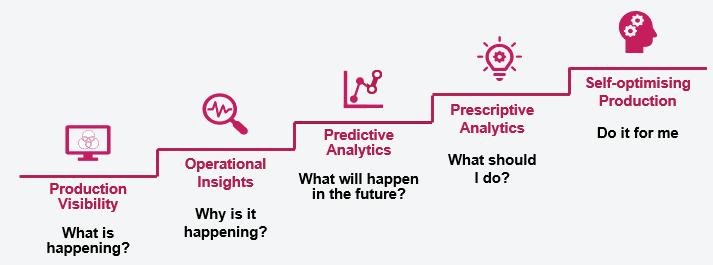
In the diagram below are the logical steps to progress to a Smart Factory. Manufacturing businesses in NZ can lack usable data and information on how well their machines, stations, production lines, and factory are performing, limiting insights as to what needs to be corrected to improve their operational margins.
Sometimes this lack of visibility is because we often produce to individual orders with customised products. Every job has a different cost and there seems no point in measuring performance. That assumption is wrong.
Every machine and every person can be more productive if you have operational insights by measuring actual performance against target performance. It is logical that though each Job or Production Order may be different, there will be similar Jobs and if data was collected on the setup, configuration, and throughput performance for each step in the Job for every product then this would prove very useful for analysing and identifying why there are differences.
For example, if the setup time is significantly different for similar products, then we can check to see how the machine is being configured in the setup (or costed into future jobs?).
So, the first step is often collecting data from the shop floor into a format that can be analysed which means, at a minimum, sensors to measure throughput at each clear step of the Job that can be connected to information like product group, quantity, bill of materials cost, and data from when a similar product was made
including machine configuration and throughput of each step in the Job.
Once the journey has started towards a Smart Factory it will continue to improve profit; furthermore, if you follow the steps below to advance your Smart Factory capability towards the optimal position where you really are doing less and producing more, then you could take that surplus time and energy to focus on other things like going global, Australia first perhaps!
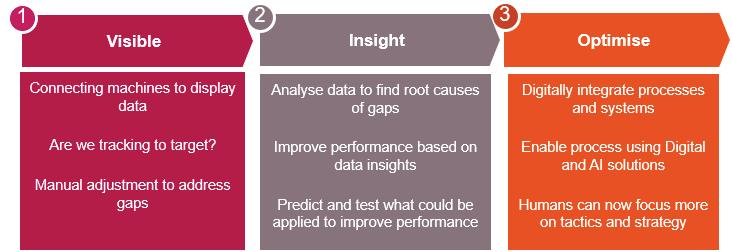
To do this all manually is impossible and you are going to need to be good with technology. Even in the first step there is too much data to capture and properly analyse without some technology tools.
As described in step one, Visible, is where the important machines and people need to be connected to systems. This step provides many quick wins once the machines are connected to the operational technology (OT) network with some means of analysing and presenting the operational data.
Steps two (Insight) and three (Optimise) require more sophisticated systems and whilst potentially expensive to design and implement, the return on investment will stack up because the returns are larger and the tools are getting better, quicker to implement, and cheaper thanks to AI and improving software solutions.
To take advantage of applying these steps you need to know where to apply effort and what you should do first. If you have not already done one, I encourage you to consider doing a Smart Factory Assessment. Given how quickly it can be done and the insights it will provide for any manufacturing business, why not contact Argon& Co to talk about how we can save you money and improve your bottom line.
Please contact us for a no obligation introduction to how having a Smart Factory will enable you to achieve more with less effort.
Contact Scott Adams +64 21 389 426 email scott.adams@argonandco.com

By EMA Head of Advocacy Alan McDonald
Balancing development with protection of the environment was always the aim of the Resource Management Act 1991 (RMA).
But for New Zealand’s manufacturers, the system has too often become a handbrake on investment, productivity and growth, while also failing to deliver the environmental outcomes it promised.
For years, manufacturers have told us that the cost, complexity and time involved in securing resource consents has become a serious barrier to expanding plants, upgrading equipment or building new, more efficient facilities.
In many cases, delays stretch well beyond the investment payback period, making otherwise sensible projects commercially unviable before a sod is even turned.
Work commissioned several years ago by the EMA, Infrastructure NZ and Property Council NZ, and carried out by the Environmental Defence Society, clearly demonstrated that the system was not working as intended. That work acted as a catalyst for reform.
We’ve seen the impact of a bogged-down resource management system across the economy, but it is particularly acute in manufacturing.
When looking to build new, efficient factories, our members have told us of a massive land-use crunch caused by restrictive zoning and slow RMA
consenting processes for industrial land. In some cases, that has pushed these businesses to seriously consider offshore investment instead of expanding in New Zealand.
We have also highlighted in the past that sawmills and manufacturing facilities often struggle with the need for new, costly resource consents simply to expand or upgrade existing, established sites.
Even incremental improvements that lift productivity, reduce emissions or improve energy efficiency can trigger years of process, uncertainty and expense.
Too often, the RMA has framed environmental protection and economic development as an “either/ or” choice, rather than enabling sustainable growth that delivers both. We’ve seen this play out across sectors.
It has taken special fast-track processes to break years of gridlock in approving much-needed electricity generation. Seventeen new solar and wind projects are now in the pipeline, with new legislation likely to allow faster approvals and enable Transpower to more quickly connect those assets to the national grid. This will be welcomed by energy-intensive manufacturers.
Large-scale transport projects, housing

developments, schools and hospitals have all faced similar delays at the planning stage as consents grind on. Regionally significant projects can be derailed by inconsistent rules, complex consent pathways or overly cautious interpretations.
That’s why the government’s move to replace the RMA with the Planning Bill and the Natural Environment Bill is such an important step forward. Under the new system, the Planning Bill will clearly define what can and cannot be done in any given city or region for 30 years ahead. For manufacturers, that upfront clarity on land use and infrastructure continued bottom of Page 11

Offering environmentally responsible and eco-friendly alternatives to conventional products has been the goal of Ecostore since its foundation in 1993.
That purpose is backed by a sophisticated manufacturing operation in Auckland, where ecostore develops, manufactures and packs its home cleaning, personal care and baby products at its own Toitū Net Carbon Zero-certified factory in Pakuranga. A B Corp-certified business with products sold across New Zealand and into multiple export markets, Ecostore’s growth story is one of continuous improvement.
The EMA’s Nicholas Russell spoke to Ecostore Chief Operating Officer Tony Acland about how the company has used smart design, practical technology and better factory flows to lift performance, capability and scale.
How does manufacturing support ecostore’s growth and export strategy?
Tony Acland: Manufacturing is at the heart of Ecostore’s business model. By owning our production and packing, the company can move faster on product innovation, control quality, and continuously improve how products are made.
As demand has grown over the past decade, the focus has been on redesigning layouts, upgrading equipment and improving material flows so the factory can scale efficiently while maintaining high environmental and quality standards. That mindset has driven major changes in how the site operates, from relocating and re-positioning key production equipment into brighter, cleaner, better-ventilated areas, through to re-engineering how raw materials and packaging move through the facility.
The result is a manufacturing environment that better supports higher volumes, smoother workflows and more consistent output.
What practical investments have made the biggest difference on the factory floor?
Tony Acland: One standout example has been investing in equipment that improves both efficiency and accessibility.
continued from Page 10
corridors is a major improvement on the old model, where regional and district plans varied widely and often conflicted.
The Planning Bill will take a regional view but apply national rules, meaning businesses will no longer be subjected to multiple interpretations of the same legislation. Much of the complex work of deciding what goes where, what is protected, and what areas are suitable for industrial, commercial or residential development will be done well in advance.
Then, if a project is in the right place and meets the standards, it can proceed, often without needing a consent at all. If RMA Minister Chris Bishop’s prediction of a more than 40% reduction in consents proves accurate, that will be a major boost for investment, including in new manufacturing capacity. Consultation will be more targeted and focused on those directly affected, with an emphasis on enabling
The installation of vacuum bag lifters means powder batches can now be manufactured without manual handling of large volumes, making production faster, safer and more inclusive for a wider range of workers.
Space and logistics were another key focus. As volumes increased, so did the flow of packaging and raw materials.
By leasing the neighbouring site and moving bulk storage into a dedicated warehouse space, we streamlined how inputs feed into production.
This reduced congestion, improved factory flows and helped create a cleaner, more efficient manufacturing environment that supports higher throughput.
Just as importantly, traffic management, floor layouts and barriers were redesigned to align with production flows, showing how smart factory design can lift both productivity and operational performance at the same time.
How is Ecostore using technology to modernise its manufacturing systems?
Tony Acland: A major recent step forward has been the rollout of AI-enabled monitoring using the existing CCTV network.
The system uses machine learning to distinguish between people and forklifts and detects when they come within close proximity on the factory floor. When an event is detected, it’s automatically logged, with a short video clip sent to a central dashboard for review. This gives managers clear, real-time data on what’s happening across the operation and turns everyday factory activity into a powerful continuous improvement tool.
Over time, the data allows the team to track trends, set KPIs and see event rates reduce as layouts, processes and behaviours improve.
What was once a reactive system has become a proactive, evidence-based way to refine factory design, improve training and strengthen operational discipline.
How does data and systems thinking support continuous improvement?
Tony Acland: Ecostore has built a strong culture
good projects rather than finding reasons to stop them.
A new Planning Tribunal will provide a faster, more affordable way to resolve disputes without years of delay and legal cost.
Just as importantly, environmental protection will be embedded in the system through nationally consistent standards, monitored and enforced centrally.
A single national framework for environmental limits will replace today’s patchwork of local rules. Getting those limits right will be critical and will rightly be the subject of robust debate.
There are still difficult issues to work through, including compensation for regulatory takings and the role of government ministers in setting final limits.
of measurement and visibility into its operations. Training systems, dashboards and reporting tools are integrated into the wider ERP environment, giving leadership clear oversight of what’s happening on the floor week by week.
This data-led approach supports faster decision-making, more targeted improvements and better alignment between factory design, production flows and business goals.
Q: Ecostore has been an EMA member for many years. How has the association supported your manufacturing journey?
Tony Acland: We’ve made good use of the association’s learning, advisory services, courses and events to build capability across the business.
On the operational side, we’ve had team members go through the Payroll Essentials course and we’ve also engaged with sector-focused events like the ASB Manufacturers Workshop: The Impact of Industry 4.0 on Your Business that explore practical automation and digitisation solutions.
That kind of applied learning aligns closely with our own focus on smarter systems, data and technology on the factory floor.
Looking ahead, we’re investing in our next generation of leaders by sending a team member to the EMA’s Emerging Team Leader two-day course in March.
For us, that’s about building leadership capability alongside technical and operational excellence.

Stability and durability in the system will matter enormously for long-term investment decisions.
The EMA’s view is that these reforms offer a genuine opportunity to deliver a faster, more efficient and more certain planning system.
They will support manufacturing growth, export competitiveness and infrastructure investment, while also locking in strong environmental protections at a national level.
Public submissions end in mid-February, then the Bill heads to select committee for oral submissions and amendments, with the legislation hopefully being enacted by the middle of the year.
The prize is a system that finally enables New Zealand to build, make and export with confidence, and that’s something the economy urgently needs.


Sandra Lukey
Sandra Lukey is the founder of Shine Group, a consultancy that helps science and technology companies accelerate growth. She is a keen observer of the tech sector and how new developments create opportunity for future business.
Gareth Mitchell, Associate Partner Iris by Argon & Co
Experienced executive and consultant across organisations in NZ, Australia, South America and the UK.
Business Transformation Specialist and top 50 NZ CIO having worked across multiple industries, with a focus on business improvement and digital transformation in services and manufacturing settings.

Johnathan Prince
Jonathan Prince is a Director at Caliber Design, a project-based mechanical engineering consultancy with engineers all around the country. With a background in product commercialisation, sustainable design, and business strategy, Jonathan is passionate about helping Kiwi companies turn ideas into reality and building engineering capability within New Zealand Inc.
Sean Doherty
Has extensive experience in Industry 4.0 technologies, He focusses on supporting the manufacturing sector to implement digital solutions that enhance productivity, efficiency, and resilience. Drawing on a background in engineering, innovation, and Government policy, Sean applies a strategic and evidence-based approach to advancing programs that deliver sustained industrial and economic benefits.

Patrick McKibbin CEO – Hutt Valley Chamber of Commerce
Patrick joined the Hutt Valley Chamber of Commerce in September 2021. His passion is identifying and connecting with manufacturing & technology businesses, other businesses, local government, central government and industry associations.

Steph Fry (née Stratmore) is General Manager family business, Stratmore - a cornerstone of the Hutt Valley manufacturing community for over 71 years. Stratmore develops and manufactures industry-leading products for New Zealand’s construction sector. With over two decades as an entrepreneur-business owner, Steph is now driving fresh momentum and impact within the manufacturing industry.
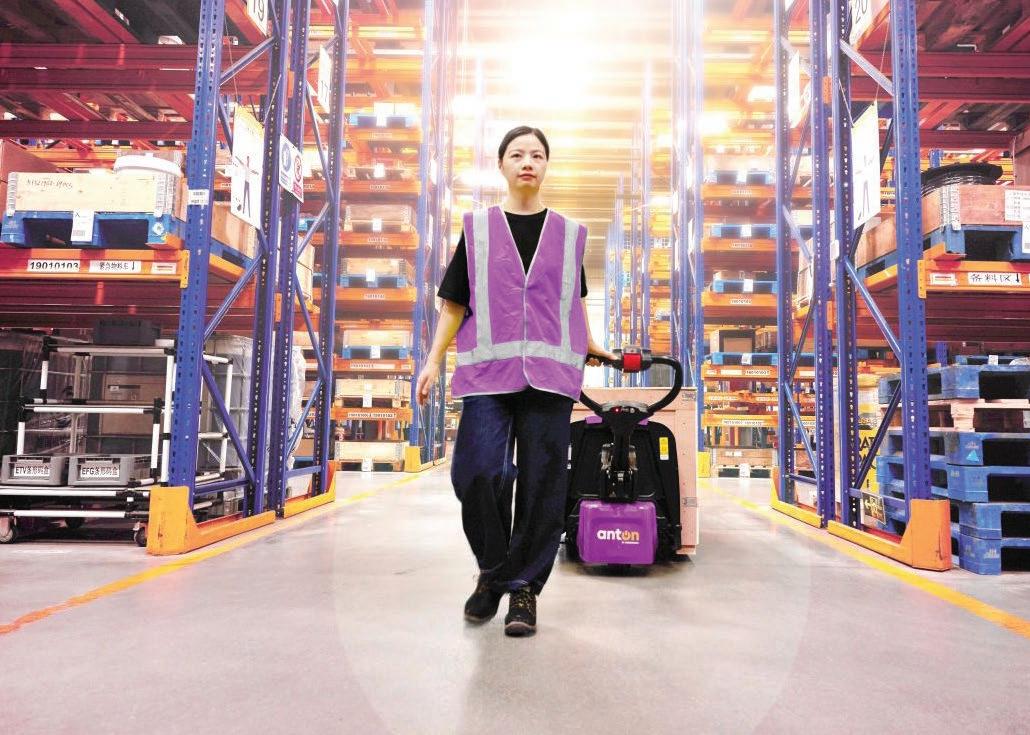
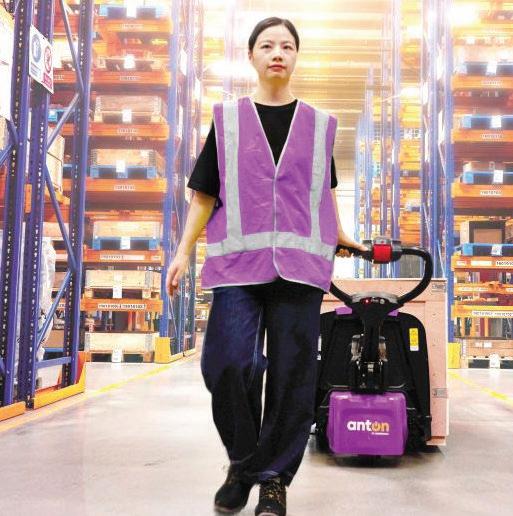
Jungheinrich has launched AntOn, a new value-focused material handling brand designed for businesses seeking reliable, straightforward, and cost-effective solutions for everyday operations.
AntOn delivers proven reliability, supported by German safety standards and testing expertise. Across the region, sustainability programmes and fleet modernisation initiatives are accelerating the shift toward electrified material handling equipment, reinforcing demand for lithium-ion solutions that balance performance, efficiency, and total cost of ownership.
The initial AntOn portfolio includes CBH 2.0, CBM 2.5, 3.0 and 3.5 tonne electric forklifts, delivering strong load capacities of 2,000 kg, 2,500 kg, 3,000 kg and 3,500 kg, travel speeds up to 17 km/h, and advanced lithium-ion batteries for rapid charging and extended operation, long service life, and minimal maintenance for reliable, efficient material handling in APAC markets. The portfolio is set to expand towards a full product range in the future.
The launch responds to strong growth in the Asia-Pacific’s material handling value segment, which is projected to expand at 8.1% by 2030, driven by accelerating industrialisation, logistics expansion, and construction activity across India and Southeast Asia, alongside ongoing diversification of regional supply chains such as New Zealand.
While China remains a high-volume material handling market with steady growth of approximately 6% CAGR, faster expansion is occurring across Australia, India and Southeast Asia, where manufacturing
continued from Page 7
relocation, warehousing demand, and infrastructure investment are reshaping regional logistics requirements.
In New Zealand, growth in logistics, warehousing, and infrastructure is driving demand for cost-effective, reliable material handling equipment. Rising operating costs and ESG expectations are accelerating the shift from internal combustion forklifts to electric solutions, with lithium-ion technology increasingly adopted for its lower total cost of ownership, zero maintenance, fast charging, and reliable multi-shift performance.
The AntOn by Jungheinrich brand is a new product line combining ease of use, reliability and cost-effectiveness, specifically targeting companies looking for cost-effective and straightforward solutions for typical warehouse and transport requirements.
Following a successful European debut with strong sales, AntOn by Jungheinrich is now available to customers in Asia-Pacific, supported through multi-channel sales, including e-commerce, direct sales, and selected partners and distributors.
This launch reinforces Jungheinrich’s commitment to making high-quality, reliable material handling solutions accessible to a broader range of businesses across Asia-Pacific, in line with the company’s Strategy 2030+ vision.
Before the robots arrive: How Formthotics prepared its staff for the changes ahead
have done before: roll out the tech, hope everyone catches up, and scratch their heads when the numbers don’t move.
Instead, they chose readiness over speed. As new digital tools and automation arrive, Formthotics now has a team that is more confident, connected, and ready to engage with change. The conditions for continuous improvement are in place, not just the systems.
They’re not claiming transformation is finished. They’re claiming something more important at this stage.
They’re ready.
It’s a powerful reminder for the industry: The future doesn’t fail because the technology isn’t good enough. It fails because people weren’t prepared to own it.
Formthotics decided not to make that mistake.
New Zealand’s manufacturing sector has always relied on one core strength: capability. Not scale or low-cost production, but the practical skill, judgement, and adaptability of the people who make things here. In a recent podcast, Caliber founder Jonathan Prince spoke with Gareth Dykes and Derek Manson from Fi innovations about how that capability is built over time.
Their story is a reminder that sustained engineering know-how, not quick wins, is what underpins resilient manufacturing in New Zealand.
Fi Innovations is a Southland business with deep roots. What began as a specialist plaster and fibreglass shop has expanded into composites, industrial flooring, moulding, and now advanced additive manufacturing.
They have diversified far beyond their original customer base and invested early in technologies that many companies were still evaluating. Their journey illustrates what it takes for a regional manufacturer to build resilience and stay relevant in a changing industry.
One of the strongest themes in the discussion was the role of persistence. Fi Innovations focused on building long-term relationships by showing up, solving real problems, and delivering consistently. Some of their most significant customer partnerships began with small, speculative jobs. Steady effort turned these into ongoing programmes of work.
This is a familiar pattern across much of New Zealand industry where trust, reliability, and follow-through often matter more than formal processes.
Another theme is the value of people. Gareth and Derek were clear that the strength of their business lies in the capability of their team. Their growth into new materials and technologies was made possible by people who were willing to learn, experiment, and solve problems in practical ways.
This emphasis on people aligns with what many manufacturers know: technology investment only works when capability grows alongside it.
“We’re not here to make CAD models. We’re here to make parts.”
Their move into additive manufacturing is a good example. Fi Innovations invested early, taking on the risk of adopting new technology before the market fully demanded it. They did this because they believed it was the right direction for the industry to head. Over time, as materials improved and applications expanded, the decision proved correct.
Additive is no longer only for prototyping. It is becoming part of production processes across aerospace, medical devices, tooling, and specialised industrial components.
The podcast also highlights a challenge and opportunity for New Zealand. We need to keep building capability across regions, not just in major centres. Some of the most innovative work in the country happens in places like Southland, where tight-knit teams and practical thinking create an environment suited to experimentation and problem-solving. As Fi Innovations shows, regional manufacturers can deliver world-class work.
This is where collaboration matters. New Zealand’s engineering and manufacturing ecosystem works best when design, production, materials specialists, and technology providers learn from each other. Capability grows faster when companies share knowledge, work jointly on problems, and help
raise the baseline of technical skill across the sector. This collective mindset is good for individual businesses and good for New Zealand.
“We want to do our bit for NZ Inc and help build capability in New Zealand.”
At Caliber Design, we see the same trend across the companies we support. The organisations that will thrive in the next decade are those that invest in capability early, develop their people, and connect strongly with partners who strengthen their skill base.
Whether through composites, digital manufacturing, or design-led engineering, the principle remains the same: New Zealand’s future competitiveness depends on continuing to lift capability at every stage of the development and production process.
The conversation with Fi Innovations is a reminder that innovation does not happen in isolation. It grows from long-term thinking, practical experimentation, and a commitment to doing what is right for NZ Inc.
The more we focus on building capability, the stronger and more resilient our manufacturing sector will become.
Listen to the full episode of Talking Innovation here: https://open.spotify.com/ episode/4vv1wHbwhS7FWeCekXGgVo?si=M4xEP6npTs-3KsCuQbwyQA


By Frank Phillips, Director, Fulcrum New Zealand Ltd
Automation in manufacturing is a competitive imperative. It’s getting easier and cheaper to do, and able to be applied in situations previously unsuitable.
Knowing where to start, identifying the right process to automate, detailing solid scopes and finding the right parter are challenges across the industry. That’s why we started Fulcrum, ‘The Automation Brokers’. We help Kiwi manufacturers cut through the complexity of automation projects, keep upfront costs down and reduce risk, while unlocking tangible performance gains.
At its core, Fulcrum is an independent automation broker. A new way for manufacturers assess custom automation opportunities.
Like other broker models we work on behalf of the buyer, ensuring clarity in what they are buying and finding the best deal and our revenue predominantly comes from the technology partners in our network.
Rather than selling a specific technology or locking clients into one vendor’s solution, we assess processes, write business cases, calculate return on investment and detail scopes before putting the opportunity to market across proven partners with proven track records.
We have seen many companies delay or abandon automation initiatives simply because the procurement process felt too daunting alongside the pressures of daily operations.
That’s understandable when you’re expected to define scope, compare responses, and negotiate contracts on top of running a business.
Across Aotearoa, the conversation about automation often starts with machines robots, conveyors, vision systems — but it quickly evolves into something deeper:
• Budget constraints: Many SME manufacturers simply don’t have the capital or confidence to commit to large automation projects without a clear, validated path forward.
• Skills and capacity: Knowing what to automate and how to scope it requires expertise that many teams don’t have in-house.
• Technology choice: With so many solutions on the market, selecting the right combination of hardware, software and integration partners can feel like guesswork.
• Risk of failure: A poorly scoped or misaligned automation project can cost tens or even hundreds of thousands with little to show for it.
From my experience growing up around manufacturing and then helping companies across sectors from food and beverage to advanced materials the risk is rarely the technology itself it’s how the decision is made and who drives that process.
The sweet spot is when a manufacturer can confidently invest in automation that:

• Speeds up production without adding hidden complexity
• Frees up staff to focus on value-added work
• Improves quality and consistency
• Provides data and insights that support better decision-making
We’ve helped clients tackle projects as diverse as bottleneck removal on filling lines, bespoke equipment design, and comprehensive automation architecture upgrades all with better clarity, competitive pricing, and reduced risk.
There’s a real opportunity for New Zealand manufacturing to accelerate its digital transformation, not just through investment in technology, but by adopting smarter ways of sourcing and implementing it. Our role at Fulcrum is to make that journey less intimidating and more accessible.
If you’re exploring automation, AI, or digital transformation and unsure where to begin, let’s have a conversation. You don’t have to navigate this alone and with the right partners, the right automation doesn’t just improve operations, it transforms them.
Auckland BioSciences expands into high-value nutraceuticals sector with acquisition of Genesis BioLab
Auckland BioSciences has acquired Genesis BioLab, a Christchurch-based specialist in high-end manufacturing for bioactives and neutraceuticals destined for the global health, nutrition, nutraceutical, pharmaceutical and research markets.
The deal follows the opening of the company’s new business MonteSera in Uruguay in October.
Auckland BioSciences will integrate Genesis BioLab into its existing footprint across New Zealand, Australia and Uruguay. The company will use its global pharma and biotech network to manufacture and export high-grade wellness, pharmaceutical and nutraceutical ingredients, leveraging the technologies, systems and relationships that underpin its core serum and biologics operations.
PRODUCTIVITY ORGANISATION
Advertising Booking Deadline – 3 March 2026
Advertising Copy Deadline – 3 March 2026
Editorial Copy Deadline – 3 March 2026
Advertising – For bookings and further informa
Hawkes Bay Limited
280 1992
Articles to be sent to: publisher@xtra.co.nz

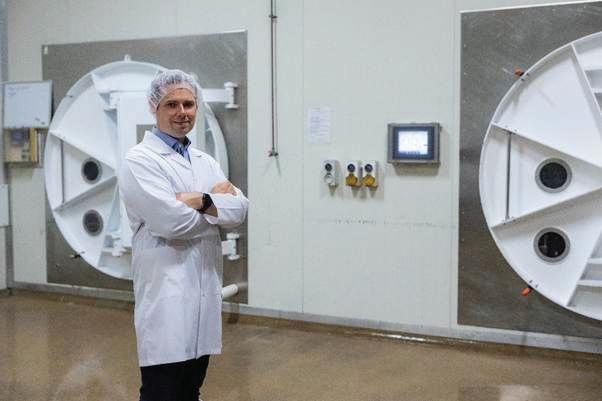
Genesis BioLab adds more than 30 years of specialist expertise to Auckland BioSciences’ business operations, including capabilities in extraction, freeze-drying and bulk processing of nutraceutical products. It has a strong track record across botanical, animal and marine-based ingredient extraction and manufacture, as well as the ability to take these ingredients from raw material directly through to finished consumer products in-house.
The company is recognised for co-developing innovative products with customers and scaling them for export, and also for its longstanding supply relationships in the United States.
“This acquisition is about taking what Genesis BioLab does well and amplifying it on a global stage,” says Daniel Maxwell, Group General Manager. “We see enormous potential in combining their expertise with our international networks and proven ability to scale.”
Genesis BioLab also enables Auckland BioSciences to refine a wider range of New Zealand-sourced biological materials.
“Our intention is to take Genesis BioLab’s products beyond the US and into Asia and Europe through our existing business networks, we’re targeting the world’s most valuable pharmaceutical, nutraceutical, and wellness markets,” says Maxwell.
The U.S. nutraceutical ingredient market is valued at more than US$160 billion and projected to grow to over US$230 billion by 2030, there is significant export opportunity for high-grade New Zealand-processed materials. More broadly, the U.S. wellness economy is estimated at about US$2 trillion, it’s the biggest wellness market in the world.
The acquisition is the continuation of Auckland BioSciences’ acquisition-based growth strategy. It broadens the company’s base pharmaceutical and
Scientists have unveiled a new approach to powering quantum computers using quantum batteries — a breakthrough that could make future computers faster, more reliable and more energy efficient. Quantum computers rely on the rules of quantum physics to solve problems that could transform computing, medicine, energy, finance, communications and many other fields in the years ahead.
But sustaining their delicate quantum states typica lly requires room-sized, energy-intensive cryogenic cooling systems, as well as a system of room-tempe rature electronics.
These infrastructure and energy requirements remain the biggest barriers to scaling up quantum computers, limiting their size and processing power, restricting their applications and slowing their path to market.
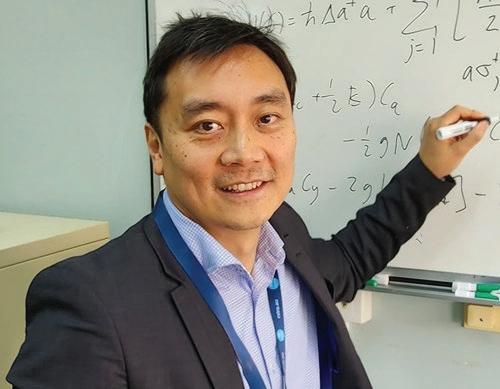
In a new study published in Physical Review X (PRX), a team of researchers at Australia’s national science agency, CSIRO, University of Queensland and the Okinawa Institute of Science and Technology (OIST), has theoretically shown how tiny quantum batteries could power a quantum computer — increasing its number of quantum bits (known as qubits) fourfold. Dr James Quach, co-author of the study and CSIRO’s
quantum batteries research lead, explained that the computers use significantly less energy because internal quantum batteries can recycle the energy in the system.
“Quantum batteries are small and mighty. Our findings bring us one step closer to solving the energy, cooling and infrastructure challenges restricting quantum computers,” said Dr Quach.
“It’s like giving the computer its own internal fuel tank. Instead of constantly refilling it from the electricity grid, the battery recharges while the computer operates.
“This research forms a key step in our exploration of quantum energy an emerging field that could fundamentally reshape the way we create efficient, sustainable energy systems,” he said.
Quantum batteries are devices that store energy using light, allowing them to recharge simply by being exposed to it. When integrated into a quantum computer, they can be continually recharged by the machine’s own components.
In this system, the battery becomes linked with the computer’s quantum processing units through a phenomenon known as entanglement, creating a shared quantum connection.
“We’ve calculated that quantum-battery-operated
systems will generate significantly less heat, require fewer wiring components, and fit more qubits into the same physical space — all important steps toward building practical, scalable quantum computers,” explained Dr Quach.
Modelling also suggests the architecture could impr ove computational speed through what’s called qu antum superextensivity, a phenomenon where the more qubits there are, the faster they are.
“The paper reports the theoretical modelling of how quantum batteries could power existing quantum computers, the team’s next step is to develop a real-world demonstration of this approach.
“While quantum batteries remain an emerging technology and further development is required, this approach creates exciting possibilities for the future of quantum computing,” said Dr Quach.
This will be to transform its endtoend design, engineering and manufacturing processes.
C-Tech chose Dassault Systèmes’ 3DExperience platform on the cloud to transition from its long-standing software environment, which it had used close to 30 years.
The company was seeking an integrated modelling and simulation) approach and a single data model spanning design, simulation and production.
Founded in 1997 and headquartered in Auckland, CTech is an exportled composites specialist with production in New Zealand and Spain and around 1,000 customers worldwide.
In particular, CTech is widely recognised in elite sailing, including America’s Cup campaigns (including Emirates Team New Zealand) and SailGP, where its
biologics operations into adjacent categories where quality, traceability, and provenance carry strong commercial value.
“Our acquisition strategy is focused on expanding capability, growing export channels, and putting local ingenuity and the New Zealand brand to work globally – both organically and through targeted acquisitions. The Genesis BioLab purchase realises that strategy and demonstrates consistent achievement of the company’s growth expectations,” says Maxwell.
The Genesis BioLab acquisition follows a period of sustained expansion for Auckland BioSciences. The company recently announced the addition
battens, foils and sail hardware help yachts exceed 50 knots (~92.6 km/h).
However, the company also has a portfolio that includes leading names in the heavy industry, marine, defence, aerospace, and spaceexploration sectors.
As its global business scaled, C-Tech evaluated next-generation platforms that could provide integrated modelling and simulation, connected engineering and manufacturing workflows, and stronger data consistency to help accelerate development and scale production with confidence.
The Dassault Systèmes environment now enables C-Tech to:
• Accurately simulate composite structures and develop lighter, stronger products
of CellSera (2021) in Australia and of MonteSera (2025) in Uruguay – where the President of Uruguay, Yamandú Orsí and The Hon. Andrew Hoggard, New Zealand Minister for Biosecurity were in attendance.
The facility is collocated alongside Google and other large tech companies in the Parque de las Ciencias official free trade zone. The company has also featured in the Deloitte Fast 50 Index and won the NZTE Best Emerging Business award in 2018, was ranked #1 on the Deloitte Master of Growth Index in 2022, and was a finalist in NZTE’s International Business Awards for Best Large Business in 2023.
• Accelerate design validation by unifying modelling and simulation on a common data model
• Reduce rework and errors in the designtomanufacturing handover
• Improve collaboration and revision management across teams and locations
• Build a foundation for greater automation in future
“The performance envelope of products depends on the ability to predict and control composite behaviour at a very detailed level.” said Riley Dean, Global Chief Technology Officer, CTech.
“CTech exemplifies how New Zealand manufacturers are using cloud platforms to rethink how they design, validate and build highperformance products.
By Carlos Buenano, Field CTO for OT, Armis
As we step into 2026, AI-driven adversaries, supply chain fragility, and relentless digitisation are forcing Operational Technology (OT) security to mature into a force to be reckoned with. Here’s what 2026 looks like:
AI-Powered adversaries demand autonomous defence
AI is no longer an abstract threat vector; it’s an operational force multiplier that attackers are leveraging with frightening results. We’re witnessing adversaries use autonomous agents to probe networks, map exposed devices, and launch dynamic exploitation campaigns that run continuously.
In 2026, those systems will act autonomously: isolating compromised segments, or enforcing multifactor re-authentication for operators under suspicious conditions. In OT, where minutes can mean millions, automation will be the only meaningful defence.
CTEM becomes the operational centre of gravity
A few years ago, “CTEM” was just another Gartner acronym. In 2026, it’s the organising principle for any serious OT security program. CTEM represents a shift from periodic vulnerability management to continuous, risk-based exposure assessment and management across hardware, firmware, network paths, and even supply-chain dependencies.
But the key difference this year is context. We’re aligning exposures with what actually matters; the physical process, the human safety implications, and the potential operational impact.
The cybersecurity landscape in 2026 is clearly set for a strong and necessary integration where vendors leverage the strengths of CTEM to directly inform actionable firewall enforcements, workflows, and reporting.
This narrative is driven by the final “Mobilisation” step of the CTEM cycle, which demands that validated, confirmed high-priority exposures leads to an immediate, automated remediation.
Specifically for firewalls, this means a CTEM platform will no longer just issue a general alert but will use its deep, risk-based context to trigger a Security Orchestration, Automation, and Response (SOAR) playbook that instantly pushes a micro-segmentation policy or a temporary block rule to the Next-Generation Firewall (NGFW), effectively “virtually patching” the exposure until a permanent fix is applied.
This automated workflow, combined with unified, business-risk-aligned reporting, will shift security

teams from reactive firefighting to a proactive, measurable risk reduction strategy, fulfilling the Gartner prediction that CTEM-focused organisations will be three times less likely to suffer a breach by 2026.
A core pillar of modern OT resilience in 2026 is the enforcement of least-privileged access. As we harden supply chains and operational networks, access
continued on Page 25
in cost savings faster with practical advice and tools designed to help New Zealand businesses cut energy waste and build resilience. Discover how at: eeca.govt.nz/gas-support
By Mike Worthington, Platform 1
For many SME baby boomer business owners last year, the economy forced them to think more of productivity and how to do things smarter.
Some made strong gains however these were generally the larger SME sized businesses and above. Smaller businesses with long term owners often struggled to pivot to using technology or Ai as an enabler to be more productive.
Bringing in a consultant is perhaps an option and there are a multitude of companies running courses and programmes on Ai in social media promising to upskill people 15 min a day for 30 days.
But is it helpful to just be a generalist on all the productivity uses in your business ? You can’t do everything and it comes down to ensuring you execute on your critical biggest productivity bottlenecks.
Many owners know where their bottlenecks are and
it’s not the skills but the willingness to embrace emerging technologies to improve these bottlenecks that is the challenge. Learning something new and foreign later in life can be daunting, when what you want to do, and deserve to do is to slow down.
Another option is to find a technology and Ai savvy potential Business Partner to work in your business, using their experience and knowledge to help enable technology and Ai for productivity gains.
With planning skills honed in much larger organisations that have training budgets and resources they will work with you to identify bottlenecks and implement productivity solutions. They acquire skin in the game over time to a structured managed plan and you exit with more wealth, as your business becomes more productive and profitable.
• A business we worked with did over 4000 specialised scheduled preventative maintenance jobs a month managed on an Access database
and a whiteboard. 20% of scheduled jobs were being missed which was a direct loss as the affected clients normally just waited until the next scheduled visit. We secured a technology savvy Business Partner who came in and implemented a workflow management system. Productivity drastically improved and 96% plus got their job done as scheduled. Without looking at productivity improvements a business can become less competitive, productive and profitable.
Bringing in a Business Partner with technology enablement and Ai skills may be an effective option to help your business, your exit strategy and your legacy.
www.platform1.co.nz
New data showing New Zealand manufacturing is experiencing its highest level of activity since December 2021 signals a strong start to the year, Small Business and Manufacturing Minister Chris Penk says.
The latest BNZ – BusinessNZ Performance of Manufacturing Index (PMI) shows the seasonally adjusted PMI for December has risen by 4.4 points compared to November, bringing it to 56.1.
“This is an incredibly positive signal, as a PMI reading above 50.0 indicates the manufacturing industry is generally expanding. The data suggests New Zealand manufacturing growth is outperforming major economies including the United States, China, Japan, the United Kingdom, and Australia,” Mr Penk says.
“The success of manufacturing is central to the health of the New Zealand economy. The sector directly employs more than 220,000 people, contributes around eight percent of GDP and accounts for 60 percent of our exports.
“We know some manufacturers felt the pinch of harder months last year. Today’s great news coupled
with a 1.1 percent uptick for national GDP in the September quarter indicates a brighter future for businesses.
“The Government is focused on setting the right conditions and fixing the basics so that businesses can thrive. Manufacturers are turning that certainty into growth through hard work and innovation.
“The creativity and resilience of the sector, and its contribution to national prosperity deserve to be celebrated. It’s therefore my pleasure to announce the second annual Minister for Manufacturing Awards will be held at Auckland Showgrounds on 27 May.
“This year’s awards will again recognise the Manufacturer of the Year, Manufacturing Leader of the Year, Apprentice of the Year and Excellence in Process Innovation. It will also introduce three new categories.
“This includes a dedicated Manufacturer of the Year award for businesses with fewer than 50 Full Time Equivalent Employees (FTEs). With around 97 percent of manufacturers falling into this group, opening a new category ensures small businesses receive the recognition they deserve.
“An Emerging Manufacturer Leader of the Year award is also being added to shine a spotlight on the next generation of innovators and trailblazers, alongside a Manufacturing Lifetime & Legacy Award to honour those who have shaped the sector into what it is today.
“Entries for the 2026 awards open on 23 February until 31 March, and I encourage manufacturers to join in celebrating their successes by making a submission.”

The way manufacturers measure sustainability is changing rapidly. New tools, improved data and AI-enabled platforms mean businesses can now measure far more than they could a few years ago. Carbon, circularity, risk and supply chains — the list keeps growing.
For manufacturers, this often shows up as long lists of metrics across plants, products and suppliers. Energy and fuel use on the factory floor, raw materials, packaging, transport and supplier emissions are all in scope. Without clear priorities, teams can spend months collecting data without clarity on what to act on first.
Measuring everything is rarely practical, and it is not the goal. What matters is measuring the right things, at the right level of detail, to support decisions that reduce risk and create value.
As Jeff Vickers, Technical Director at sustainability firm thinkstep-anz, puts it plainly: “You can’t manage what you don’t measure.” He also cautions that “we need to focus our efforts on measuring what matters most so that we don’t get lost in the detail.”
Why focused measurement leads to better outcomes
More data does not automatically mean better decisions. The real value comes from measuring what matters and using it well.
A focused approach to measurement helps organisations:
➞ Keep priorities clear: A small set of meaningful metrics makes it easier to see what matters most and act with confidence.
➞ Put effort where it counts: Time and budget are spent on data that actually changes decisions, rather than information that sits unused.
➞ Protect credibility: Reported numbers are understood, can be explained and are clearly linked to actions being taken.
➞ Meet expectations: Measurement focuses on the issues regulators and investors care about most, reducing the risk of blind spots.
This approach avoids the risks of over-measurement while strengthening insight, trust, and performance. Many businesses now have access to detailed sustainability data across sites, products and suppliers. The next step is to strengthen insight in a small number of high-impact areas, such as key materials like steel, aluminiu m, cement or chemicals. Focusing measurement here can provide clearer visibility of cost exposure, supply chain risk and decarbonisation options.
With the growing availability of tools and calculators, it is easier than ever to generate results. The greatest value comes when these tools are guided by a clear purpose, so data collection is targeted, decision-ready and aligned with what the business is trying to achieve.
How to choose what to measure
Materiality is the anchor for good measurement. Jeff emphasises that measurement only creates value when it focuses on what genuinely matters, not what is easiest to calculate. That focus is reinforced by Martin Fryer, thinkstep-anz’s Head of Strategy and Disclosures, who is seeing sustainability increasingly assessed through a risk and performance lens.
In manufacturing, material issues often relate to energy-intensive processes, reliance on emissions-intensive materials, exposure to volatile input costs or dependence on a small number of critical suppliers. Focusing measurement on these areas helps organisations manage risk and direct investment where it will have the greatest impact.
There is also a clear shift in stakeholder expectations. Investors, customers and regulators are looking for meaningful action, supported by transparent reporting of performance. Materiality therefore becomes more than a compliance exercise - it is a way to prioritise limited resources and link sustainability to business outcomes.
A practical way to decide what to measure is to test each potential metric against three questions:
➞ Does this matter to the business and its stakeholders?
Focus on issues that create material risk or opportunity, including regulatory exposure, cost impacts, supply chain disruption, access to capital and reputational risk. For many manufacturers, scope 3 emissions linked to purchased materials are far more material than office waste or business travel.
➞ Will this inform a decision or action?
If the data will not change what happens next — investment decisions, procurement choices, targets or controls — it is probably not a priority. Measurement should support decisions such as supplier engagement, material substitution, process upgrades or capital investment in energy efficiency.
➞ Is now the right time to measure this?
Some topics require detailed data later. Early on, high-level estimates may be enough to guide action. For example, early screening of key suppliers or products is often more useful than detailed data collection across the entire value chain.
For many manufacturers, this means prioritising key scope 3 categories rather than the full value chain, focusing on priority products or sites, and targeting suppliers or regions where risk and scrutiny are highest.
Where to start if you are early on
Getting started does not require perfect data. It requires a clear starting point.
For organisations early in their measurement journey, a practical starting sequence is:
➞ Clarify the purpose: Be explicit about why you are measuring. Is it to meet regulatory requirements, inform strategy, respond to customers or manage risk?
➞ Set a baseline using available data: Use reasonable estimates and existing information. Early baselines are about direction, not precision.
➞ Focus on the biggest drivers: Identify the activities, suppliers or assets that account for the majority of impact or risk.
➞ Link measurement to actions: Define what decisions the data will support, such as target setting, supplier engagement or capital allocation. Progress rarely starts with perfect data. Manufacturers that act early can build momentum, make clearer investment decisions, strengthen supply chains and deliver credible reporting that meets growing expectations.
Not sure where to start? We can help
thinkstep-anz works with manufacturers to cut through complexity and focus measurement on what is most material. This includes helping organisations clarify purpose, prioritise impacts and risks, build credible baselines and link data to decisions, targets and disclosures.
Whether the need is regulatory readiness, supply chain insight or better decision-making, the focus is always on measurement that supports action and stands up to scrutiny.
www.thinkstep-anz.com
With corporate cyber breaches in the spotlight increasingly, NZ Manufacturer magazine advisor and Impact PR director Mark Devlin looks at how firms can protect their brand in the event of an incident. For years, cyber security sat comfortably in the IT bucket. It was treated as a technical risk to be managed through software, consultants and compliance exercises, largely removed from day-to-day operational and commercial decision-making. That separation might once have worked. It no longer does.
For New Zealand manufacturers, cyber security has become a frontline business risk, one that increasingly plays out in public.
When incidents occur, the damage is rarely limited to systems or data. It shows up in halted production, delayed orders, disrupted supply chains and, critically, lost trust. The reputational consequences often outlast the technical ones.
That reality has been reinforced by the way cyber incidents are now covered in the media. Stories that once appeared in specialist technology columns are increasingly leading business news.
Journalists are less interested in the mechanics of a breach and far more focused on impact: what stopped, who was affected and how leadership responded. In that environment, cyber security is no longer just about prevention. It is about preparedness, judgement and communication under pressure.
Manufacturers are particularly exposed. They operate at the intersection of physical production and digital infrastructure, where disruption in one area quickly cascades into others. Production lines, logistics platforms, inventory systems, payroll and supplier portals are deeply interconnected.
A cyber incident does not just inconvenience office staff. It can shut down machinery, breach contracts and place long-standing customer relationships under strain.
Unlike many service businesses, manufacturers cannot simply work around the problem while systems are restored. When production stops, the effects are immediate and visible. Customers notice. Suppliers ask questions.
Staff worry about job security. In many cases, the story becomes public not because the organisation chooses to disclose it, but because the operational consequences are impossible to hide.
This is why cyber security planning that focuses only on technology is incomplete. The more difficult question is whether an organisation is ready for the scrutiny that follows when something goes wrong.
From a communications and reputation perspective, preparedness can be thought of in three phases: before an incident, during an incident and after recovery.
Most organisations invest heavily in prevention. Far fewer invest adequately in decision-making
readiness. Yet when a cyber incident occurs, poor decisions made in the first 24 to 48 hours often cause more reputational damage than the incident itself. Preparation starts with clarity. Manufacturers should be clear, in advance, about who makes decisions, who speaks externally and how information flows between IT, legal, leadership and communications teams. These roles should not be improvised in the middle of a crisis.
Scenario planning is equally important. Cyber incidents are rarely neat or fully understood at the outset. Manufacturers need to plan for uncertainty, including how to communicate when facts are incomplete and timelines unclear.
Practising these scenarios helps leadership teams become comfortable explaining what is known, what is still being investigated and what is being done next.
Senior leadership readiness also matters. In serious incidents, stakeholders expect to hear from the people in charge. Leaders must be able to explain complex issues in plain language, show calm under pressure and demonstrate accountability.
Media training and rehearsal are not indulgences; they are practical risk-management tools. Finally, alignment between IT, legal and communications teams is essential. Each function has legitimate priorities, but without agreed processes those priorities can clash, leading to delay, inconsistency or silence at precisely the wrong moment.
When a cyber incident occurs, the first public response sets the tone for everything that follows. Organisations that handle this well acknowledge the issue early. Even a brief statement confirming awareness of the incident and outlining immediate steps being taken is better than silence, which is often interpreted as confusion or avoidance.
They focus on impact rather than technical detail. Customers, suppliers and staff want to know what the incident means for them. Overly technical explanations may be accurate, but they rarely reassure non-technical audiences.
They avoid speculation. Guessing the cause or scale of an incident before investigations are complete almost always leads to corrections later, undermining credibility. It is better to be clear about what is not yet known.
They communicate regularly. A single statement followed by silence creates uncertainty. Even when there is little new information, consistent updates signal that the situation is being actively managed.
Internal communication is just as important as external messaging. Staff are both an audience and a channel. If they are left in the dark, speculation fills the gap and often leaks outside the organisation. Clear internal updates help maintain focus, alignment and trust.
Once systems are restored, many organisations are

keen to move on quickly. From a reputational perspective, that can be a mistake.
Stakeholders remember how an organisation behaved during a crisis long after the technical details fade. Manufacturers that communicate openly about lessons learned and improvements made often emerge with stronger trust than before.
This does not require sharing sensitive security information. It requires demonstrating accountability and a commitment to improvement.
Post-incident communication should reinforce reliability and leadership, not defensiveness. It is an opportunity to show that the organisation has taken the incident seriously and acted responsibly.
For many manufacturers, the most challenging moments in a cyber incident are not technical, but human. Decisions are made under pressure, information is incomplete and the consequences of getting it wrong play out publicly. In those moments, having trusted external advisers can provide clarity and discipline when it matters most.
Specialist crisis communications advisers work alongside leadership, legal and technical teams to help organisations make sound judgement calls, communicate with confidence and maintain credibility under scrutiny.
Engaging this expertise early allows response plans to be tested, roles clarified and expectations aligned well before an incident occurs.
Firms such as Impact PR work with manufacturers to prepare for high-pressure scenarios, pressure-test response plans and provide calm, practical guidance when incidents happen. When cyber risk becomes a public issue, the value of experienced external perspective is often felt most acutely.
The reality manufacturers need to
Cyber incidents are no longer rare, and they are not limited to careless or underprepared organisations. Even well-run manufacturers can be targeted. It is no longer credible to assume it will not happen. The real test is how prepared you are when it does.
Cyber security may begin as a technical issue, but for manufacturers, it ends in public. Treating it as a leadership and reputation challenge is no longer optional.
As artificial intelligence reshapes workplaces globally, a different story is emerging from New Zealand’s trades and service industries. While many professions face uncertainty, several career paths remain firmly future-proof - and urgently need more people.
Skills Group is New Zealand’s largest private training organisation and its Director of People, Jane Kennelly, says careers in hairdressing, plumbing, gasfitting and drainlaying, roofing, electrical and culinary arts stand out for their long-term resilience. These professions rely on human judgement, dexterity, creativity and real-time decision-making — capabilities that AI cannot meaningfully replicate.
“AI can follow the recipe, but only a person can taste the soup,” Kennelly says. “Whether you’re shaping hair, diagnosing a fault under pressure, adjusting the taste of a dish, working at height or reading a client’s needs - the real skill comes from interpreting the moment. These careers depend on people, not algorithms.”
At the same time, the trades themselves are evolving, driven by a wave of new digital tools - a shift Kennelly describes as moving from spanners to scanners. Electrical apprentices, for example, now routinely use tablets for fault diagnostics before picking up their tools, blending digital capability
with hands-on precision. Across the sector, smart sensors, drone footage, digital plans and AR/VR simulations are increasingly standard in training and on-the-job learning.
New Zealand’s workforce data underscores the scale of opportunity. Industry estimates show the country is currently short around 6,000 electricians, while economics agency Infometrics forecasts more than 5,000 plumbing, gasfitting and drainlaying (PGD) job openings through to 2030. At the same time, Skills Group’s own data shows Electrical Level 4 apprentice enrolments have fallen by around 16 percent between December 2023 and June 2025, while PGD Level 4 enrolments are down eight percent — reinforcing the need to strengthen the training pipeline as demand continues to accelerate.
“This imbalance between need and supply is one of the biggest opportunities for young people and career-changers,” Kennelly says. “If we don’t address it, New Zealand risks slowing down essential housing and infrastructure projects. These are not optional skills — they’re critical to how the country functions.”
The timing is significant. With thousands of young New Zealanders receiving their NCEA exam results this week and considering their next steps, Kennelly says families need a clearer understanding of the strength and future-proof nature of these careers.
“Many parents still default to university as the safest pathway, unaware that some of the most secure, technology-proof careers sit within the trades,” she says.
“These are specialist, future-focused professions that blend digital skill with real-world craftsmanship.”
Skills Group’s nationwide network of modern campuses for electrical trades, culinary arts and drainlaying, are preparing pre-trade and trade learners for work in this intersection of practical and digital skill — from immersive simulators to hands-on trade booths and digital diagnostic tools that mirror the environments they will encounter in the field.
Kennelly says the message for school leavers is clear: “Technology will change how we work, but these careers remain rooted in human skill. The future isn’t replacing tradespeople — it’s upgrading them.”
AI can follow the recipe, but only a person can taste the soup.


Most manufacturers know this already, even if they don’t always say it out loud. When the skills on the floor don’t keep pace with the pressure of the job, the same issues keep appearing. And you feel it: downtime, mistakes, customer complaints. The cost adds up. Fast.
When people are confident, skilled, and connected, you see the difference. Lines run smoother. Problems get fixed faster. Targets get met.
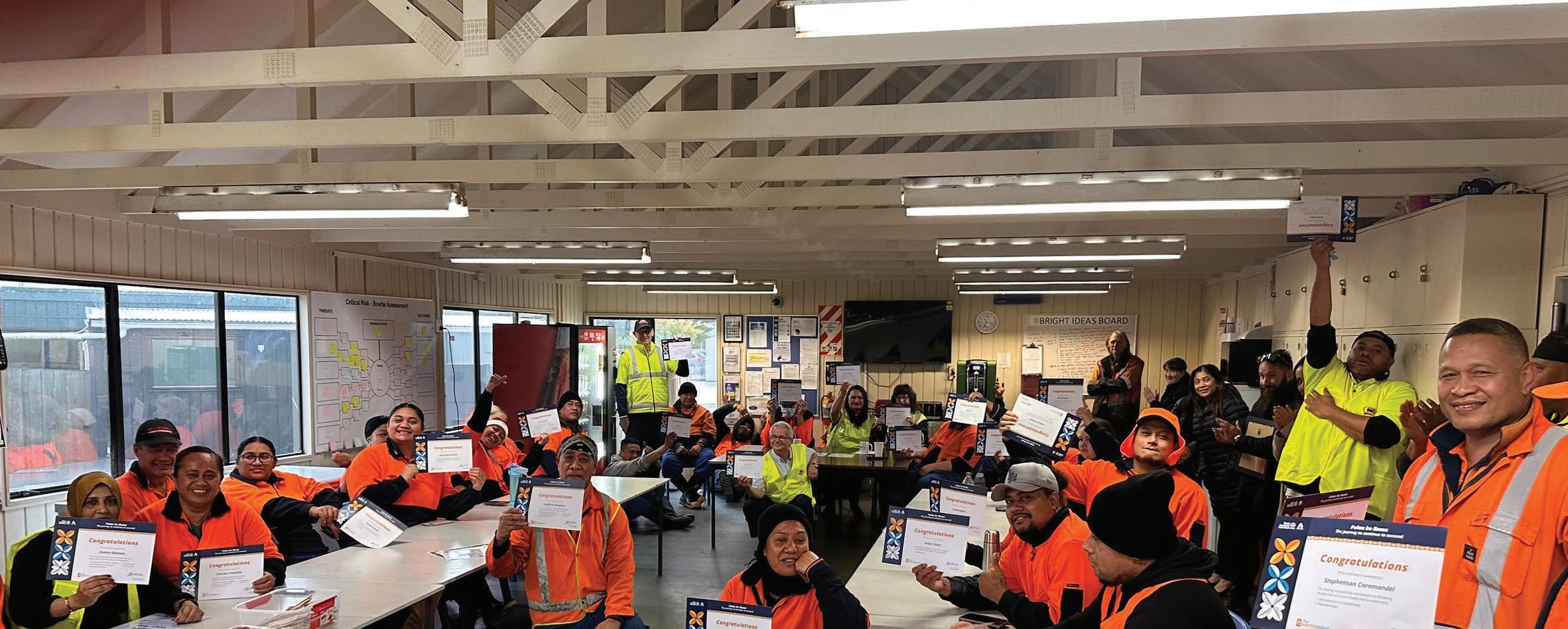
Training on its own doesn’t lift OEE. It doesn’t stop downtime. It doesn’t get people speaking before the line stops. What shifts performance is building the skills people use in the moment, on the floor, when pressure is on. That’s the work we do.
THE BEST BIT? THERE’S FUNDING TO HELP
We chose The Learning Wave because of their strong track record working with manufacturing teams like ours, and getting results.
Strategic Performance Manager

The government is ready to chip in with funding that is easy to access. We’ve secured millions of dollars in funding in 2025, and we’re ready to do the same in 2026.
WE BUILD THE SKILLS WHERE THEY MATTER: ON THE FLOOR.
WE BUILD CONFIDENT, CAPABLE FRONTLINE TEAMS
We help operators spot issues earlier, make better decisions in the moment, and take ownership of fixing problems instead of working around them.
WE PREPARE TEAMS FOR CHANGE, CI AND NEW DIGITAL
We build the confidence and problem-solving skills teams need to adopt change, new tools, and digital processes.

We build the skills supervisors need to lead people in real conditions: setting expectations, holding standards, and driving improvement.
We build the thinking and behaviours that sit underneath safe work: better risk awareness, clearer communication, and people who take responsibility for each other.
Are your people set up to deliver the performance you’re planning for? If the answer isn’t a clear ‘yes’, let’s chat. Or scan the QR code to see how Kiwi manufacturers are turning plans into performance.

A new generation of automatic lubrication technology is being introduced to Australia and New Zealand by the motion technology company, Schaeffler.
The new FAG OPTIME C4 smart lubrication system builds on the success of the world’s first smart lubricator, the C1, and adds more benefits, insights, and options for modern industrial applications.
OPTIME C4 is part of Schaeffler’s broader OPTIME Ecosystem, which includes condition monitoring. Based on vibration data, OPTIME Condition Monitoring detects when a machine needs more lubricant – and provides an appropriate warning.
“Having the right lubrication, applied at precisely the right time, based on machine data not only makes optimal use of resources, but it prevents costly and unnecessary downtime and extends machinery life,” says Schaeffler Australia.
Schaeffler’s OPTIME C4 extends the possibilities of smart lubrication in several key areas, including:
• More options: Cartridges are available filled or empty, so the user can have a free choice of lubricant. Additionally, an on/off button allows the user to save lubricant and energy in applications where machinery is not in use around the clock.
• More insights: The C4 system automatically recognises inserted cartridges, which enables smoother operation. A display of lubricant quality allows for precise planning, and a warning is delivered if the back pressure is too high. This is particularly helpful when dealing with problems such as blockages, as it makes it easier to locate and fix them.
• More application possibilities: The C4 system has four individually programmable outlets for multiple lubrication points, and features a 70 Bar outlet pressure for machines that are further away. It now has up to 750 cm3 filling capacity for grease and 850 cm3 for oil, for high lubricant consumption applications.
OPTIME lubricators form a mesh network that monitors lubrication. The network can be expanded to include additional smart lubricators at any time. Typically, the process involves:
1 Depending on the model and specific conditions, the smart lubricator is either installed directly at the lubrication point or in the vicinity and connected to the lubrication point via a hose. Afterwards, the lubricator is activated via Near Field Communication (NFC). From this point on, the lubrication point will be properly and reliably supplied.
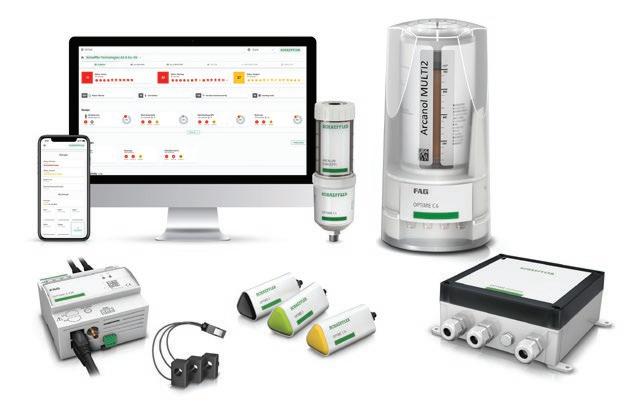
Schaeffler’s latest FAG OPTIME C4 smart lubrication system joins the broader OPTIME suite of condition monitoring and automated lubrication technologies
2 All of the data on the condition of the lubrication point and the lubricator is sent via the mesh network to the gateway, which forwards the data to the cloud. This information can then be viewed in Schaeffler OPTIME mobile app and on the dashboard. This allows the user to monitor the lubrication point at any time and from anywhere.
3 Thanks to automatic status messages, the user can precisely schedule maintenance work and also stock spare parts as necessary. In the event of an issue at a lubrication point, an alarm is triggered and displayed in the app or on the dashboard –helping to prevent downtime.
Enables complete metal inspection for all processes from chip wiring to advanced packaging on a single platform
The ONYX 3200 is a new semiconductor metrology system to measure film thickness, composition and bump* structures for wafer-level processes. The system is engineered to help manufacturers stabilize quality and increase yield in the metal-wiring formation (back-end-of-line (BEOL)) and packaging processes of semiconductor chips.
ONYX 3200
Due to accelerating demands for AI, high-performance computing, data centers, mobile devices, and other devices, chip wiring and interconnect structures have grown increasingly delicate and complex.
As a result, the ability to accurately and non-destructively measure metal layers thinner than a human hair and bumps under 10 µm, especially in BEOL and packaging processes, has become critically important since reliability and uniformity directly
influence final device performance.
The ONYX 3200 meets these requirements and offers another significant advantage: it enables measurement of complex metal layers in bumps, previously requiring multiple instruments, using a single platform.
* Microscopic regions of raised metal used to connect between semiconductor chips and to circuit boards
Features of the ONYX 3200
• High-precision bump metrology using a 3D confocal scanner
The ONYX 3200 can inspect the shapes and heights of microscopic bumps and electroconductive metal patterns in 3D with high precision.
Bumps consist of lower layers of copper, nickel, or similar materials beneath an upper layer of tin and silver. Conventional metrology methods result in absorption by the upper layer, making simultaneous measurement of upper and lower layers impossible.
The ONYX 3200 integrates an optical scanner to capture the overall bump shape and total height and a fluorescent X-ray detector which is used to measure the upper metal layer thickness.
Subtraction of these values enables precise calculation of the lower metal layers, establishing a baseline for ensuring robust interconnect reliability.
• Original dual-head, microfocus X-ray source
The ratio of materials in a tin-and-silver (SnAg) bump has significant impact on the reliability of packaging connections.
Rigaku has developed a unique, dedicated X-ray head capable of detecting silver content as low as 2% within SnAg bumps with an exceptional precision of 4 parts per 100,000 providing rigorous materials ratio control for packaging yield.
Moreover, the dual-head architecture enables simultaneous measurements of the wide range of metal features around chip interconnects, improving throughput and analytical flexibility.
Does your plant contain designated hazardous ar eas or areas that contain potentially dangerous amounts of combustible dusts or gases? MEO4 Electrical & Automation Services specialises in the following:
• Installation, maintenance, and inspection of electrical equipment in combustible dust environments.
• Installation, maintenance, and inspection of electrical equipment in explosive gas environments.
• Upgrades from non- compliant electrical equipment to devices compliant with AS/NZS 60079
• Initial and periodic inspections.
• Compliance with the AS/NZS 60079 series of standards
The pressure on beverage manufacturers to produce hygienically is increasing: consumer demands for product safety are growing and global standards from authorities such as the FDA are becoming stricter.
As a result, the demands on machine and system components are also increasing. To enable machine builders and operators to achieve hygienic, low-maintenance and fail-safe production, including a design study for a ready-to-install SHT linear axis. This not only fulfils FDA and EU requirements, but also meets the EHEDG guidelines with regard to cleanability.
In times of stricter regulations, companies in the beverage industry must ensure that their equipment for filling, labelling, packaging and inspecting bottles and tins can be cleaned easily and thoroughly. This also applies to machine components such as linear technology, which is used for the adjustment and movement of filling heads, label dispensers and camera systems, among other things
SHT linear module for hygienic positioning tasks
It is suitable for filling stations, for example, allowing for precise and hygienic movements to position bottles and tins. The axis uses stainless-steel round shafts as guidance and relies on dryspin lead screw technology from igus made of corrosion-free stainless steel for the drive.
The truss assembly consists of two housing halves that are sealed with an FDA-compliant silicone flat
gasket and hygienic screws. Specially developed wiper seals protect the shafts and prevent dirt and moisture from entering the shaft end support. In addition, igus has designed the lead screw nut on the lead screw in such a way that there are generous gaps.
This prevents deposits and makes it possible to clean them efficiently. Says Hornung: “We are working on developing more and more products consistently in accordance with the hygienic design guidelines and have now also joined the EHEDG so as to facilitate new types of certification for open moving parts.”
Growing portfolio proves its worth in numerous
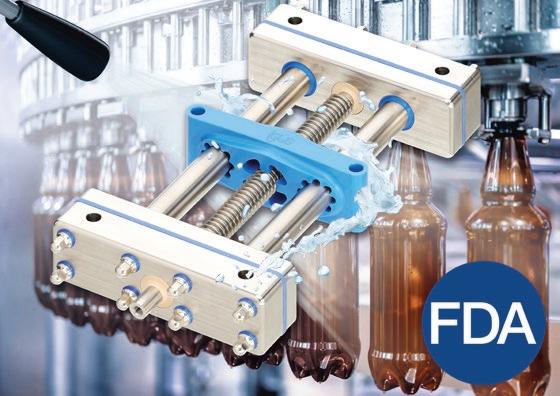
To enable machine builders and operators to achieve hygienic, low-maintenance and fail-safe production, igus develops lubrication-free linear and drive technology such as the ready-to-install SHT linear axis in hygienic design. (Source: igus GmbH)
applications
Last year, igus presented the world’s first sliding carriage for linear guides in hygienic design, which is made of 100% food-grade plastic with FDA and EU 10/2011 approval. Here, too, the design is completely open and free of dead space, making the system fully flushable - even with aggressive cleaning agents.
The carriage is suitable for format adjustment in beverage-bottling plants, for example, to handle different bottle sizes without interchangeable parts. Thanks to solid lubricants integrated into the high-performance plastic, the carriage works hygienically with low-maintenance dry operation and doesn’t require external lubrication. Furthermore, individual bearings have been added to the drylin hygienic design product range. They are placed separately on the guide rail and assembled into linear carriages using stainless-steel plates in various sizes, which enables a more flexible design. This also includes the drylin ZLW toothed belt axis made of stainless steel with bearings, toothed belts and ball bearings made of plastic compliant with FDA and EU 10/2011.
The igus components have already proven themselves in a variety of applications in the food, beverage and packaging industries: from the inspection technology of Krones AG to the robotic kitchen of the start-up Cook-e to the fully automated pizza oven from BistroBox www.treotham.com.au
Rust prevention for manufacturers should be as fast, easy, and effective as possible. But if the rust preventative separates in the dip tank or dries and stains the metal surface, forcing the end user to reject it for potential rust, the result can be just as bad and costly as using no rust preventative at all.
The new VpCI-330 addresses those problems with a homogenous rust preventative that leaves a thin, almost invisible coat of oil for protection of metals in high humidity conditions.
VpCI-330 is a great option where agitation is not possible and the manufacturer desires a thin oily film that does not dry. It is ideal for dip tanks where the rust preventative may sit for weeks or months without agitation as multiple batches of tubes or gears are dipped for rust prevention.
VpCI-330 can also be rolled, brushed, or sprayed onto metal surfaces. A handheld trigger spray bottle works well when protecting the internals of fuel and turbo engine tubes that have already been externally painted.
What is the main corrosion concern in overseas shipment?
One of the biggest corrosion challenges for overseas shipment is the buildup of high humidity inside packaging as tubes, gears, spindles, coils, or other metal parts pass through a wide variety of climates. Fortunately, VpCI-330 performs well in high humidity conditions and meets the requirements of a well-known international manufacturer for selecting a medium-term rust preventative. On the worker safety side, VpCI-330 is non-flammable and does not contain chromates, nitrites, phosphates,
secondary amines, or OSHA hazardous components. Next time your shipment needs an oily film rust preventative, ask yourself three things: Does the rust preventative need to stay wet and inconspicuous?
Is agitation difficult?
Is the main corrosion concern high humidity?
It might not have the dangerous fauna and flora of Australia, but the Shaky Isles aren’t without their hazards. Notorious for slips, floods, and erosion due to its steep terrain, fractured geology, and occasional severe weather, New Zealanders routinely wake to the havoc of slips across hillsides and transport corridors.
Meanwhile, the relentless ocean works away at vulnerable shorelines, and rivers prone to flooding wash millions of tons of sediments into the sea, destabilising bridges and other essential infrastructure.
But from the same capricious Mother Nature comes the inspiration for a cost-effective solution that stops erosion in its tracks: the hexagon is central to every beehive. “The hexagon is nature’s supershape for a reason. It is a strong, versatile natural building block. Bees use it for honeycombs, and it emerges in structures from snowflakes to basalt columns,” points out HEX-LOC Business Development Manager Rachael Mackman.
HEX-LOC and EcoReef address inland slope instability and coastal erosion, according to Mackman, utilising a clever modular hexagonal block. The blocks connect horizontally and vertically, forming an interlocking honeycomb structure that creates a stable, adaptable mass capable of managing erosion on slopes, riverbanks, coastal areas, and alongside roads.
“Bees have shown us that the basic honeycomb is incredibly versatile,” Mackman notes. “Our engineers have harnessed that inspiration, delivering an abatable stabilisation solution that works in almost any place susceptible to washaways.”
The design combines strength with flexibility, making it suitable for diverse applications in civil
engineering, coastal protection, and landscape management.
Mackman says other techniques for arresting constantly shifting soft soils have been both expensive and inflexible. “For example, gabions are cumbersome, time-consuming, and require custom installation with a high degree of manual labour, and require rock, which may or may not be available near site,” she explains.
Traditional piling methods often come with significant costs, especially in remote or difficult-to-access locations. While vegetative solutions provide natural and effective protection, they require time to establish.
By contrast, HEX-LOC provides a flexible solution that adapts to many needs. Each block is designed to interlock seamlessly, and when combined and stacked in tens or hundreds, they form a robust, self-supporting structure. Their hexagonal frame is intentional: it simplifies handling and allows any onsite fill to be used, significantly reducing transport costs. “The lattice structure is part of the genius,” adds Mackman.
“And that also provides the substrate for vegetation to take hold, adding to the ecosystem and protecting vegetation from subsequent erosion events.”
Each stackable cell is substantial in scale, measuring 1400mm x 1585mm and weighing 620kg, increasing by more than a ton once filled. Thanks to its
Advanced-stage projects within the Australian portfolio include 80 MWac/320MWh of solar hybrid plants located in Victoria and New South Wales, which are secured by long-term, 20-year agreements to a tier 1 hyperscale customer, creating revenue certainty that will enable further scale and investment in lasting energy infrastructure.
innovative design, installation is rapid and efficient, with blocks interlocking seamlessly above and below. Contractors consistently report ease of use, noting that no additional equipment is required to achieve secure placement.
Mackman sends kudos to the bees and the engineers behind the system. “It’s pretty clever as it directly targets one of the biggest cost centres associated with erosion control: labour. When erosion control requires specialised skills, fixing problems takes longer, and the problem worsens, making remediation yet more expensive.
“We’ve created a high-tech solution resting on a low-tech building block. Installation is fast, simple and easy, which means more slips and unstable slopes can be repaired, for less money.”
It’s a ‘Kiwi solution for a Kiwi problem’, adds Mackman. “The ‘Shaky Isles’ with our constant slew of slips isn’t about to change. What can and must is how we deal with them,” she concludes.
Under I Squared’s ownership, ANZA Power will develop, own and operate an integrated mix of renewable generation, battery storage and flexible gas power generation.
ANZA Power was formed through the acquisition of a portfolio of solar hybrid plants and battery energy storage systems (BESS), providing the new platform with an immediate pipeline of projects and contracted cash flows.
In addition, ANZA Power expects to begin construction of additional 80 MW of renewable assets across Australia and New Zealand in the first half of 2026.
ANZA Power was purpose-built to address this challenge. By combining renewable generation, battery storage and flexible gas power generation within a single, scaled platform.
This diversified approach allows the company to deliver 24/7 energy that meets the operational needs of industrial customers while supporting broader system stability and emissions reduction.
I Squared Capital, a leading global infrastructure investor, has launched ANZA Power, a next-generation independent power producer (IPP), established to deliver reliable and sustainable energy solutions across Australia and New Zealand. Through its ISQ Growth Markets Infrastructure Fund II, I Squared has committed USD $300 million to help enable ANZA Power to provide clean, dispatchable power that supports a lower-carbon power system while maintaining grid resilience and long-term reliability for commercial and industrial customers. The platform joins I Squared’s growing portfolio of global renewable energy investments, which includes more than 10,000 MW of renewable capacity and 15,000 MW of natural gas-powered generation.
I Squared has extensive investments in renewables in the APAC region including the pan Asian platform Hexa Renewables which has a more than 2 GW portfolio of solar, wind and energy storage assets, across Japan, South Korea, Taiwan, Philippines and India, secured by long term contracts.

Out of more than 220 entries from trades workplaces nationwide, industry training organisation Competenz has named Palmerston North’s Sean Martin as its first-ever Most Valuable Coach (MVC) Champion - declaring him the country’s top workplace trainer across engineering, manufacturing, mechanical and primary industries, as well as marine, plastics, HVAC/R, printing and other specialist trades.
Sean says he was genuinely surprised to learn he had been named the national winner - and that his immediate thoughts went to the apprentices he works with every day, and the moments that make the job so rewarding.
“My favourite thing is when a proud apprentice has solved something on their own using knowledge I’ve taught them. Empowering people to think for themselves is incredibly rewarding - especially when they work it out and gain the confidence to tackle the next job.”
Sean completed his HVAC and refrigeration apprenticeship in 2018 and joined Excel Refrigeration and Air Con two years ago, moving into his current role in 2023 with a clear purpose: to work in a business where he could train people and help apprentices grow. He supports five apprentices directly and, on busy days, can take up to 30 calls from them as they work through challenges in their learning.
“I enjoy having a positive influence on apprentices each day. I’m still on the tools in specialised areas, but I make sure I’m accessible. Coaching has also reignited my passion for the industry - it’s pushed me to develop new skills around training people and growing talent.”
Sean also credits Excel’s culture for enabling strong training.
“Excel provide the environment for us to learn and train and give us all the resources we need to do that. I’m thankful for that leadership and culture.”
Excel apprentice Derek Evenson nominated Sean for
continued from Page 16
the accolade.
“Sean has taken the time to properly invest and teach the refrigeration trade to myself and the other apprentices in a huge way. From running training evenings when he first started, to taking a role in running our annual apprentice week this year. At every opportunity he makes sure we understand what is happening, and why. He is an excellent teacher and absolutely full of knowledge; he is absolutely the deserving MVC without a doubt.”
Sean receives a prize package including a Weber BBQ for his workplace, a team meat pack, a MVC trophy, champion merchandise, and will feature on a billboard celebrating his win in 2026.
Competenz has also announced four MVC runners-up: North Island’s large business - Danny Newland (Titan Marine Engineering, Auckland), North Island SME - Steven Bamford (Cranston Engineering Ltd), South Island large business - Barry Wells (Port Blakely Ltd) and South Island SME - Cam Stokman (Angus Robertson Mechanical). Each received a Makita Boombox from The Toolshed.
Competenz General Manager Employer and Learner Services, Toni Christie, says the response to this year’s MVC award demonstrates how deeply valued workplace coaches are across industry.
“This year’s MVC campaign showed just how vital workplace coaching is
across New Zealand’s industries. The response from hundreds of people working in industry has been incredible. These coaches are shaping the future of our trades - their time, expertise and commitment make all the difference for learners and employers.”
She says the breadth of nominations from engineering and manufacturing to forestry and marine, underscores that exceptional coaching sits at the heart of New Zealand’s most important trades.
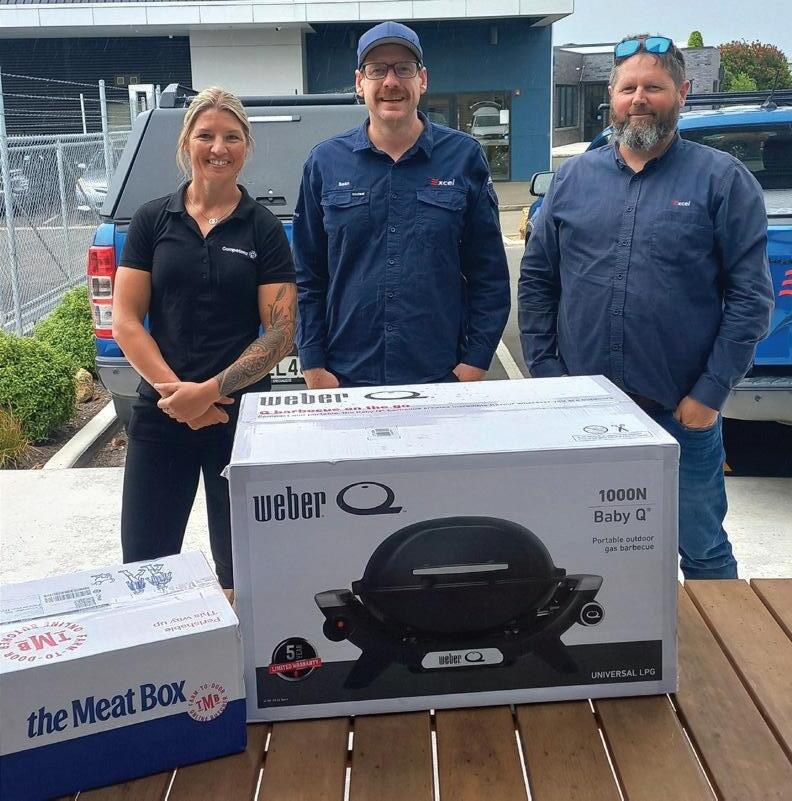
decisions must become dynamic, auditable, and context-aware. Every human, machine, vendor tool, or firmware update should be treated as an identity that earns only the rights required, for only the time necessary, and only on the systems needed.
This means enforcing role-based and attribute-based access controls (RBAC and ABAC) within control environments, using just-in-time (JIT) elevation for maintenance tasks, short-lived credentials for vendor sessions, and hardware-backed identities for devices.
Firmware updates should always be digitally signed and verified before deployment, and vendor access must pass through brokered, monitored jump hosts with session recording and automatic credential revocation once work is complete.
When these access decisions feed into CTEM, exposure scoring becomes far more precise by tying risk not only to asset vulnerabilities but also to who or what can actually interact with that asset. In other words, identity becomes an active exposure variable.
This shift helps organisations detect over-provisioned accounts, orphaned vendor credentials, and unsafe
maintenance workflows before attackers exploit them.
Despite the progress, one reality hasn’t changed is the fact that OT environments are still full of legacy systems that can’t be patched, can’t be replaced, and often can’t even be monitored safely. Many are running firmware that predates modern cryptographic standards or is no longer supported by the manufacturer.
In 2026, the dominant defensive posture remains protection over replacement. Virtual patching, deep device fingerprinting, and application-aware micro-segmentation are now standard practice. Exposure management tools can finally safely inventory, track and quantify the risk of “unpatchable” assets, assigning business impact scores and recommending compensating controls automatically.
Rather than chasing unrealistic modernisation, organisations will implement application-aware
firewalls and fully embrace safe active querying where appropriate, and treat OT as an environment that is a hacking target, whether it is airgapped or not .
The lines between IT, OT, and cyber-physical systems will be effectively gone. The environments we defend are living, interconnected ecosystems that run our lives and they’re under constant assault.
The convergence of AI-driven attacks, expanding regulatory pressure, and rising safety expectations means that visibility, context, and continuous exposure management are the operating foundation of modern OT security.
But visibility alone isn’t enough. Least-privileged access, dynamic authorisation, and supply-chain accountability now define whether an organisation can withstand the next generation of AI-powered threats.
We must automate faster than attackers, measure risk in the language of business, and treat every device, supplier, and process as part of a unified exposure landscape.
Autex, market-leading producer of modern acoustic panels and insulation products, today announced a landmark partnership between its North American branch and Momentum – the largest supplier of textiles and wallcoverings in the United States of America.
This marks the first time Momentum has partnered with a New Zealand-grown company, strengthening Autex’s presence in the highly competitive U.S. market.
First entering the U.S. market in 2015, the partnership is a strategic move for Autex, providing an unprecedented opportunity to scale its manufacturing and sales footprint across the country.
“The U.S. market is fiercely competitive, and cutting through the mass of established players is incredibly challenging,” says Rob Woolner, Managing Director of Autex.
“To partner with a leader like Momentum is a huge step for us, and we’re really proud to be representing
not only circular acoustics solutions in the States, but representing Aotearoa too,” adds Woolner. Momentum, which services over 3,500 design practices across the U.S., first approached Autex about a partnership in early 2025. The collaboration underscores the commitment of both companies to a circular approach to manufacturing and continuous innovation.
“Momentum has built its reputation on leading with design innovation, and we strive to partner with companies that share this same forward-thinking mindset and a commitment to sustainability,” says Paul Cleary, CEO, Momentum.
“Autex’s commitment to these tenets is a natural complement to our ethos. We are thrilled to scale this partnership by deepening Autex’s reach in the North American design community and leveraging Momentum’s market expertise.”
Founded more than 50 years ago in T maki Makaurau Auckland, Autex has a long history of punching
above its weight. It now serves over 18 export markets, including the UK, Australia, and the UAE.
In the U.S. alone, Autex has been installed in countless iconic spaces including the offices of Google, Apple, Adobe and Microsoft, and even classrooms and lecture halls in Harvard, Princeton, and UCLA.
“New Zealand companies continue to provide innovative, high-performing solutions that shape how the world lives and works,” said Sarah Mason-Banks, New York City Trade Commissioner at New Zealand Trade & Enterprise.
“Autex’s partnership with Momentum is a strong example of that, combining New Zealand ingenuity with a world-class partner to bring inventive, quality products to more customers across the industry.”
By Shyamini Szeko, reflecting
on Master’s research into ageing and work in New Zealand manufacturing (AcademyEx, 2025)
Manufacturing leaders in Aotearoa are operating under sustained pressure.
Skills shortages. Tight margins. Health and safety demands. Constant change.
In this environment, age inclusion can easily slip to the margins. It is often acknowledged but not actively led. Another issue assumed to be addressed through policy documents or left to individual managers to navigate as best they can.
What my research into ageing and work in New Zealand manufacturing shows is this: Age inclusion does not fail because of a lack of goodwill. It fails when leadership commitment is distant, inconsistent, or delegated.
When age inclusion is left to chance
Across manufacturing sites, many age-inclusive practices already exist.
Flexible arrangements. Informal mentoring. Adjustments to roles or shifts when health issues arise.
The challenge is that these practices are uneven and informal.
Whether an older worker is supported often depends on who they report to, what shift they work, or how comfortable they feel asking for adjustments. In some organisations, office-based staff can access flexibility that is unavailable on the factory floor. In others, long-serving workers quietly manage pain, fatigue, or technology anxiety without formal support.
This creates inequity. It also places a heavy burden on frontline managers, who are expected to balance production targets with individual needs—often without clear guidance, authority, or backing.
Leadership matters because it determines whether age inclusion is treated as a system responsibility or a personal favour.
What leadership looks like in practice
Leadership commitment to age inclusion is not
about launching new initiatives or glossy programs. It shows up in everyday behaviour.
It is visible in the language leaders use when talking about experience, capability, and career transitions. It shows up when leaders spend time on the factory floor, across different shifts, and listen to how work is actually experienced over time.
Leaders who take age inclusion seriously make expectations clear. They signal that flexibility is not a sign of reduced commitment. They back managers with consistent guidelines, rather than leaving them to negotiate arrangements alone.
In organisations where leadership is engaged, older workers are more likely to feel valued and supported to keep contributing. Where leadership is absent, age inclusion becomes fragile and is often the first thing to disappear when production pressure increases.
Mentoring needs leadership to succeed
In earlier work, I explored the importance of mentoring and knowledge sharing across generations. This research made one thing clear: mentoring only works when leadership actively supports it.
Without leadership backing, mentoring competes with production targets and is often the first activity to be dropped. Knowledge transfer remains informal, relying on goodwill rather than structure. When experienced workers leave, much of what they know leaves with them.
Leadership commitment gives mentoring legitimacy. It creates space for reciprocal learning, where older workers share judgement, problem-solving skills, and organisational memory, while younger workers contribute digital capability and fresh perspectives.
Most importantly, it positions knowledge transfer as essential to workforce resilience not an optional extra.
Informal arrangements can keep things moving in the short term, but they carry long-term risks.

When flexibility, role adjustments, or health accommodations depend on personal relationships, workers are less likely to speak up. Managers carry emotional and operational load. Leaders lose visibility of what is really happening on the floor.
Over time, this undermines trust, wellbeing, and capability. It also makes succession planning harder, as knowledge and experience are not intentionally retained.
Leadership commitment matters because it moves age inclusion out of the shadows and into the system.
Age inclusion is not about special treatment or lowering standards. It is about recognising that work is experienced differently over time, particularly in physically demanding environments like manufacturing.
Leaders play a critical role in shifting age inclusion from reactive accommodation to proactive design. That includes:
• Formalising flexible work options where possible
• Supporting structured, reciprocal mentoring
• Investing in inclusive training approaches
• Normalising conversations about career transitions without stigma
Manufacturing already understands long-term planning, safety, and operational discipline. Applying that same thinking to ageing at work strengthens resilience and protects hard-won capability.
The question for manufacturing leaders is not whether age inclusion matters.
It is whether they are prepared to lead it.
We are entering a familiar three yearly cycle of hesitation. As we flip into another election year, a subtle but pervasive “hush” descends over factories from Penrose to Invercargill.
Business cases for new CNC machinery get shuffled to the bottom of the pile. Recruitment for that much needed engineer is “put on hold until we know who is running the Beehive.”
Election years tempt businesses to pause, waiting for policy clarity. But in manufacturing, hesitation is costly. Whoever wins, the fundamentals won’t change. Capability, capital confidence and innovation still matter.
Waiting is the real risk. We have been waiting for the miracle decisions every three years for decades. It is no surprise that the MBIE and Foreign Affairs Long Term Insights Briefing released in December 2025 still describes New Zealand as being stuck in a low-productivity rut. Another report to feed the lack of progress on this subject over the last 40-years.
“Wait and see” is not a strategy, it’s slow-motion surrender.
That gap doesn’t take a holiday because there are billboards on the side of the road and policy ideas thrown about like a lolly scramble. The truth is sitting there right in our face; we continue to fall behind the rest of the world. Every month spent deferring a capital investment or a process improvement is a month where performance stays stagnant and input costs like labour, energy and logistics continue their relentless climb.
“Pausing” assumes the world stands still with us. It
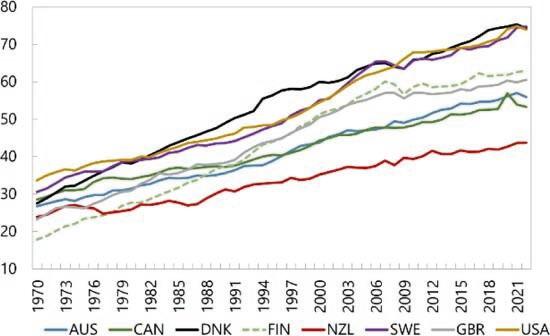
doesn’t. Supply chains continue to shift, customer demands continue to evolve and technology continues its exponential curve. Waiting for political certainty is like waiting for the tide to stop moving before you decide to launch the boat. By the time you feel “safe,” the opportunity is gone.
We crave certainty, it makes us feel in control, we want to know exactly what the R&D tax credit environment will look like or what the minimum wage will be. But let’s face it…
After all, when was the last time you made a decision as a direct result of a government policy? When you were in the middle of a crisis on a Wednesday morning because your machinery is being pushed to its limits, then stepped back and considered the latest decisions from Wellington as part of your decision-making process?
Regardless of the election results, the core drivers of a successful Kiwi manufacturing business remain unchanged:
Capability: Do your people have the skills to make a difference to your business?
Capital Confidence: Do you have the balance sheet strength and the guts to invest for the future?
Innovation: Are you solving a problem the world will pay for?
The manufacturers who outperformed their peers during the disruptions of the last five years didn’t have the best political lobbyists; they were the ones maintaining their internal momentum regardless of the external noise.
They understood that operational excellence is a far more reliable hedge against inflation or policy shifts than any government grant could ever be.
Election years are a litmus test for leadership. It is easy to lead when the sun is shining. True leadership is defined by the ability to provide clarity when the environment is murky.
In November, we discussed the idea that “True leaders multiply decision-makers.” There is no better time to test that philosophy than now.
If your leadership team is waiting for you to give the green light, and you are waiting for Wellington to give the green light, your entire organisation is paralysed.
Instead of defaulting to “wait and see,” use this year to lead decisively. Shift the narrative, ensure your team knows that while there might be a lot of distracting noise around you, the mission to be the most efficient, innovative producer in your niche remains unchanged. Uncertainty isn’t an excuse for a lack of direction; it’s a requirement for stronger, more vocal leadership.


David Altena is Head of Growth & Partnerships at SmartSpace.ai & Co-Founder & Host of The Better SMB Podcast. david@altena.solutions
So, how do we move from anxiety to action? It starts with looking inward rather than toward Parliament. Here are four practical moves you can make while your competitors are checking the latest polls:
1. Benchmark Your Reality: You can’t manage what you don’t measure. Be ruthlessly honest about your own performance. How does your output per head compare to the best in your sector? Where are your bottlenecks?
2. Lock in Capital Plans Early: If you need that new robotic cell or that software integration to stay competitive, buy it now. Don’t wait for the Q4 rush when everyone else suddenly decides they have the “certainty” to spend. Securing your intended upgrades early often leads to better terms, faster installation windows and a head start on the learning curve.
3. Double Down on Your Customer: Political cycles don’t change what your customers need. They still want quality, reliability and value. Use 2026 to deepen those relationships. Be the partner that is focused solely on solving your customers’ problems.
4. Build a 90-Day Performance Sprint: Break the “election year” into manageable chunks. Don’t look at 2026 as a bridge to 2027. Set 90-day targets for process improvement, business efficiency, or staff upskilling. Momentum is a self-fulfilling prophecy.
The future of your business doesn’t depend on who sits in the Beehive; it depends on the people leading and who is on your factory floor. The manufacturers who win in 2026 won’t be the ones who were “lucky” enough to guess the election result. They will be the ones who were decisive enough to ignore the noise.
Stop waiting for perfect conditions. They don’t exist. In the race for global relevance, the only real risk is standing still.