New Home + Condo Guide – Greater Toronto Area – Summer 2026
24 Central Park
Nature-inspired community rising in the Bayview Village Neighbourhood
32 Focus on Mississauga
Standing out from the crowd in Mississauga
37 Wellings of Whitby
Welcome to the future of aging
40 Focus on Niagara
Come for the Falls, stay for the lifestyle
20 Home Design
The connected kitchen: Designing the heart of the home
43 Decor
Lighting made simple: 5 tips to make any space shine
44 Personal Space
Timeless by design: Creating a home that lasts
26
Estate Pro
Timing is critical when buying new
28 Stat Chat
Is this the moment new-home buyers have been waiting for? 30 Home Realty
The biggest myths about developers – debunked
33 Western View
Generational fairness and the vanishing dream of homeownership
34 TRREB Report
Tenanted properties: What buyers and sellers need to know
Tarion Report
Building consumer confidence in a complex housing market 38 Retirement Planning
How to position your portfolio for the increase in oil prices
42 Age Strong
Safe outdoors this summer: Smart ways to prevent injuries and stay active
LIVE WELL AT
ACTIVE ADULT BUNGALOWS SINGLES & TOWNS FINAL RELEASE NOW SELLING IN WELLAND
Discover a vibrant new chapter at WaterCrest at Hunters Pointe, an award-winning active adult community thoughtfully designed for connection, comfort, and carefree living.
Surrounded by canals, green space, walking trails, and natural beauty, WaterCrest offers beautifully crafted bungalow townhomes and
detached homes designed to complement the way you want to live today.
Whether you’re right-sizing, simplifying, or simply looking for more time to enjoy life, you’ll find a welcoming community where neighbours become friends and every day feels inspired.
SCAN TO LEARN MORE
BUNGALOW TOWNS
DESIGNED FOR LIVING WELL
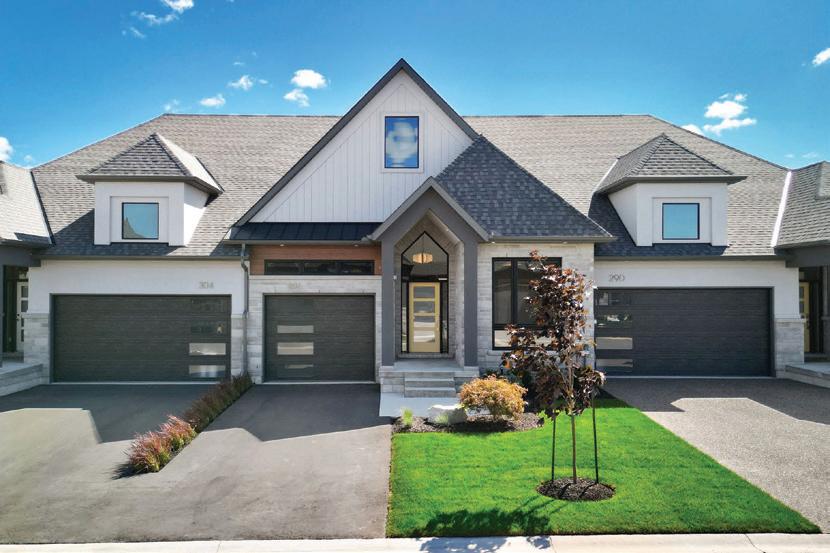
Smartly designed and beautifully finished, our bungalow townhomes offer the perfect blend of style, comfort, and low-maintenance living.
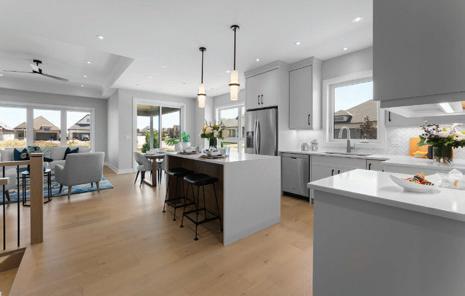
Enjoy open-concept layouts, elegant interiors, quality craftsmanship, and the convenience of main-floor living; all within a truly active adult community.
2 BED 2 BATH 1,405 SQ. FT.
OPTIONAL FINISHED BASEMENT: +1 BED +1 BATH + 704 SQ. FT.
A COMMUNITY DESIGNED FOR ACTIVE LIVING
At the heart of WaterCrest is an exceptional resident lifestyle centred around connection and wellness.
Residents enjoy access to on-site amenities including:
COMMUNITY CENTRE FEATURING A FULLY EQUIPPED FITNESS FACILITY, POOL, HOT TUB, OUTDOOR SPORTS COURTS, SOCIAL GATHERING SPACES, AND MORE
HOMEDY SAVAILABLE
OUTDOOR RECREATION AREAS
WALKING TRAILS & NATURAL SURROUNDINGS
CANAL & RIVERSIDE VIEWS
It’s more than a home, it’s a lifestyle built around living well.
Experience the quality and craftsmanship of Lucchetta Homes in person.
Explore beautifully decorated bungalow townhome and detached bungalow model homes.
BUFFALO
FORT ERIE
NIAGARA FALLS
HOME DESIGN | MARIAM ABOUTAAM
An award-winning interior designer, Mariam Aboutaam is Director, Sales and Marketing, Interior Design at Kylemore, Markham, Ont., a builder known for master-planned communities and luxury homes. kylemoreliving.com.
PERSONAL FINANCE | JESSE ABRAMS
Jesse Abrams is Co-Founder at Homewise, a mortgage advisory and brokerage firm based in Toronto. thinkhomewise.com
TARION REPORT | PETER BALASUBRAMANIAN
Peter Balasubramanian is President and CEO of Tarion. tarion.com.
WESTERN VIEW | MIKE COLLINS-WILLIAMS
Mike Collins-Williams, RPP, MCIP, is CEO West End Home Builders’ Association. westendhba.ca.
HOME REALTY | DEBBIE COSIC
Debbie Cosic is CEO and founder of In2ition Realty. She has overseen the sale of more than $15 billion worth of real estate. With Debbie at its helm, In2ition has become one of the fastest-growing and most innovative new home and condo sales companies. in2ition.ca
AGE STRONG | DR. JAMES FUNG
Dr. James Fung is a Chiropractor and Principal at Complete Balance Health Centre, Toronto. completebalancehealth.com
REAL ESTATE PRO | BARBARA LAWLOR
Barbara Lawlor is CEO of Baker Real Estate Inc. A member of the Baker team since 1993, she oversees the marketing and sales of new home and condominium developments in the GTA, Vancouver, Calgary and Montreal, and internationally in Shanghai. baker-re.com
STAT CHAT | BEN MYERS
Ben Myers is the President of Bullpen Consulting, a boutique residential real estate advisory firm specializing in condominium and rental apartment market studies, forecasts and valuations for developers, lenders and land owners. Contact him at bullpenconsulting.ca and @benmyers29 on Twitter.
TRREB REPORT | DANIEL STEINFELD
Daniel Steinfeld is President of the Toronto Regional Real Estate Board (TRREB). A Chartered Accountant, he previously served as Vice-President and Chief Financial Officer with the Toronto Argonauts and is a Broker and coowner On The Block Realty.
BILD REPORT | DAVE WILKES
Dave Wilkes is president and CEO of the Building Industry and Land Development Association (BILD), the voice of the home building, land development and professional renovation industry in the GTA. For the latest industry news and new home data, follow BILD on Twitter at @bildgta or visit bildgta.ca
SENIOR VICE-PRESIDENT, SALES, NEXTHOME
Hope McLarnon 416.708.7987
hope.mclarnon@nexthome.ca
SENIOR MEDIA CONSULTANT
Amanda Bell 416.830.2911 amanda.bell@nexthome.ca
EDITORIAL DIRECTOR
Amanda Pereira
EDITOR-IN-CHIEF – GREATER TORONTO AREA
Wayne Karl wayne.karl@nexthome.ca
CONTRIBUTORS
Mariam Aboutaam, Jesse Abrams, Peter Balasubramanian, Mike Collins-Williams, Debbie Cosic, Dr. James Fung, Anwar Husain, Linda Kafka, Barbara Lawlor, Linda Mazur, Ben Myers, Mimi Pineau, Daniel Steinfeld, Dave Wilkes
EXECUTIVE MEDIA CONSULTANT
Michael Rosset
VICE-PRESIDENT, MARKETING – GTA
Leanne Speers
MANAGER CUSTOMER SALES/SERVICE
Marilyn Watling
SALES & MARKETING CO-ORDINATOR
Gary Chilvers
BUSINESS DEVELOPMENT MANAGER
Josh Rosset
DISTRIBUTION distributionteam@nexthome.ca
ACCOUNTING INQUIRIES accountingteam@nexthome.ca
DIRECTOR OF PRINT MEDIA
Lauren Reid–Sachs
VICE-PRESIDENT, PRODUCTION – GTA
Lisa Kelly
PRODUCTION MANAGER – GTA
Yvonne Poon
GRAPHIC DESIGNER & PRE-PRESS COORDINATOR
Hannah Yarkony
Published by nexthome.ca
Advertising Call 1.888.761.3313 for rates and information. Fax: 1.888.861.5038
Circulation Highly targeted, free distribution network focused on real estate buyers, using street-level boxes and select Canada Post distribution channels across the Greater Toronto Area and surrounding municipalities. Canadian subscriptions 1 year = 13 issues – $70 (inc. HST). Canada Post – Canadian Publications Mail Sales Product Agreement 40065416.
Copyright 2026 All rights reserved. All copyright and other intellectual property rights in the contents hereof are the property of NextHome, and not that of the individual client. The customer has purchased the right of reproduction in NextHome and does not have the right to reproduce the ad or photo in any other place or publication without the previous written consent of NextHome.
Editorial Submissions from interested parties will be considered. Please submit to the editor at editorial@nexthome.ca.
Terms and Indemnification
Advertisers and contributors: NextHome is not responsible for typographical errors, mistakes, or misprints. By approving your content and/ or submitting content for circulation, advertisers and contributors agree to indemnify and hold harmless NextHome and its parent company from any claims, liabilities, losses, and expenses (including legal fees) arising out of or in connection with the content provided, including but not limited to any claims of copyright infringement, unauthorized reproduction, or inaccuracies in the content. Advertisers acknowledge that they have the necessary rights, permissions, and licenses to provide the content for circulation, and they bear full responsibility for the content’s accuracy, legality, and compliance with applicable laws upon approval. Contributors acknowledge NextHome reserves the right to omit and modify their submissions at the publisher’s discretion.
THE BOUNCE-BACK IS ON
WAYNE KARL
EDITOR-IN-CHIEF
New Home + Condo Guide
EMAIL: wayne.karl@nexthome.ca
TWITTER: @WayneKarl
It rarely happens as quickly and sharply as anyone – buyers, sellers, marketers and observers of real estate – would like, but the market bounceback is on in the GTA and elsewhere in Ontario.
Using the headline Better late than never: Canada’s delayed spring housing market could set the stage for a more active second half of the year, Royal LePage confirmed as much, at least for the resale segment, in its House Price Survey and Market Forecast.
“Following a slow start shaped by a prolonged winter and lingering economic unease, Canada’s spring housing market began to find its footing in May, with momentum carrying into June,” the report summarizes, assessing the second quarter of 2026.
In new homes, GTA buyers continue to respond positively to the enhanced HST rebate program, as lowrise new home sales outperformed the 10-year average for a second consecutive month in May, according to the Building Industry and Land Development Association (BILD). The HST rebate program remains a historic buying opportunity for those looking to purchase a new home.
Further good news in new homes also comes from the recent announcement by the municipal, provincial and federal governments to reduce development charges (DCs) in Toronto. A 40- to 60-per-cent reduction will enhance housing project viability, increasing housing supply leading to jobs in the sector.
“The leadership of this historic announcement will help to address the cost to build challenge that has undermined project viability in Toronto and across the Greater Toronto Area in the last few years,” says BILD President and CEO Dave Wilkes. “Rapidly escalating construction costs, including municipal fees and charges, has eroded the viability of new housing projects, leading to lower starts and threatening future supply. Reducing DCs is one of the most readily apparent policy levers that governments have to restore the economics of new housing and reverse this course.”
And specifically in condos, Urbanation Inc., a condominium market analysis firm, reports that sales of new units in the Greater Toronto Hamilton Area increased 52 per cent annually in the second quarter, the first yearover-year gain since the third quarter of 2023.
Combine this recent news with The Bank of Canada holding its influential overnight rate at 2.25 per cent on July 15, and you have a collection of positive developments for homebuyers and builders.
The bounce-back is on.
NEW GTA LOWRISE HOME SALES BEAT 10-YEAR AVERAGE FOR SECOND STRAIGHT MONTH
New-home buyers in the Greater Toronto Area (GTA) continue to respond positively to the enhanced HST rebate program, as lowrise new home sales outperformed the 10-year average for a second consecutive month in May, the Building Industry and Land Development Association (BILD) reports. The HST rebate program remains a historic buying opportunity for those looking to purchase a new home. However, in May the need for clarity on how rebates are administered contributed to some potential buyers delaying purchasing decisions.
There was a total of 1,023 new home sales in May, up significantly from the record May low of 2025 but 57 per cent below the 10-year average, according to Altus Group, BILD’s official source for new home market intelligence. Historically, total new home sales for a typical May in the GTA would be 2,353 units based on the previous 10-year average.
“GTA new home sales in May continued to respond positively to the HST rebate program, led by the single-family sector which surpassed its 10-year average for the second consecutive month,” says Edward Jegg, research manager at Altus Group. “However, condominium apartment sales have not to date
benefitted from the rebate program for two main reasons: Much of the existing product is locked into legacy pricing with higher costs; and any new highrise projects are unlikely to be able to meet the ‘substantially completed’ requirement of the HST rebate program.”
Condominiums, including units in low-, medium- and highrise buildings and stacked townhouses, accounted for 193 units sold in the GTA in May, 89 per cent below the 10-year average.
There were 830 single-family home sales in the GTA in May, a significant year-over-year increase and 26 per cent above the 10-year average. Single-family homes include detached, linked, and semi-detached houses and townhouses (excluding stacked townhouses).
Total new home remaining inventory in the GTA dipped below the 20,000 mark for the third time in 24 months with 18,763 units for May. This includes 13,138 condominium apartment units and 5,625 singlefamily dwellings. This represents a combined inventory level of 32 months, based on average sales for the last 12 months.
When sales increase after a prolonged period of very low sales, the months of inventory statistics should be viewed with caution as it is based on dividing present inventory by the average of the past 12 months of sales activity (which have been very low). We anticipate that as sales increase, the months of inventory statistics will decrease rapidly.
“It is encouraging to see the continuous positive momentum for lowrise new home sales in the GTA,” says Justin Sherwood, chief operating officer at BILD. “While new single-family home sales surpassed the 10-year average for a second
straight month, they did slightly decrease from the sales levels we saw in April 2026 – the first month that the HST rebate program was introduced. This decrease is largely due to potential new homebuyers still waiting on the sidelines for clarity on how the HST rebate will be administered. For the highrise sector, condominiums continue to struggle with higher existing inventory, a price floor and very low new product launches. In addition, the HST rebate program eligibility requirements have defined start and completion dates for new housing projects that are too tight for most new highrise condominium projects to meet, which is likely also impacting sales. Providing clarity on these details will ensure that the momentum experienced since April continues.”
The benchmark price for new condominium apartments in May in the GTA was $1.02 million, remaining at an apparent price floor. The benchmark price for new singlefamily homes was $1.42 million, down 5.2 per cent over the last 12 months. These are gross prices, not reflective of any HST rebate, in order to facilitate a like-on-like comparison with previous years. Purchasers who qualify for an HST rebate would realize additional benefit from this rebate.
STRONG HOME SALES IN JUNE AND FIRST HALF OF YEAR INDICATE MARKET IS GAINING TRACTION
Greater Toronto Area (GTA) housing market conditions continued to improve in June, with sales growing quite strongly year-over-year while new listings declined over the same period, the Toronto Regional Real Estate Board (TRREB) reports. For the first half of 2026, sales have also edged higher compared to the first six months of 2025, with new listings down substantially.
“After a slow start in the first quarter, we saw a marked improvement in home sales in the second quarter of this year,” says TRREB President Daniel Steinfeld. “This result followed TRREB’s 2026 outlook, which called for a year of two halves. We expect accelerating transactions and more competition between buyers in the last six months of the year, helping to satisfy pent-up demand and ultimately resulting in renewed price growth.”
“While the average selling price was still down year-over-year in June, the annual rate of decline has receded over the past few months,” adds TRREB’s Chief Information Officer Jason Mercer. “If market conditions continue to tighten in the second half
of 2026, selling prices could move in line with 2025 and eventually post some increases. This would give an increasing number of households the confidence to move back into the marketplace.”
GTA realtors reported 6,770 home sales through TRREB’s MLS system in June 2026 – an increase of 9.4 per cent compared to June 2025. New listings entered into MLS amounted to 17,282 – down by 12.9 per cent yearover-year.
On a seasonally adjusted basis, June 2026 home sales were up month-over-month compared to May 2026, while new listings were down, suggesting that market conditions have tightened through the spring.
The MLS Home Price Index
Composite benchmark was down by 5.4 per cent year-over-year in June 2026. The average selling price, at $1.05 million, was down by 3.9 per cent compared to June 2025.
On a month-over-month seasonally adjusted basis, both the average selling price and MLS HPI Composite were up slightly compared to May 2026.
“Housing affordability remains a priority for the region,” says TRREB CEO John DiMichele. “Development charges, while essential to funding local infrastructure, have substantially increased the upfront cost of housing delivery. This, in turn, contributes to higher purchase prices and rental costs as they can amount to up to 20 per cent of a home’s purchase price. The Canada-Ontario DC Reduction Program presents a meaningful opportunity for municipalities to reduce these charges while accessing provincial funding to offset related fiscal impacts.”
THE RENEWAL WALL
IS HERE...
JESSE ABRAMS
Over the next two years, nearly 60 per cent of Canadian mortgages are coming up for renewal. A huge share of those were locked in during the cheap-money window of 2020 and 2022, when five-year fixed rates were sitting near or even below two per cent. Those borrowers are about to renew into a very different world. If you are one of them, here is the thing I most want you to understand: A renewal is not paperwork. It is the single biggest financial decision you
will make this year, and the default option your lender mails you is almost never your best one.
FIRST, UNDERSTAND THE PAYMENT SHOCK YOU ARE WALKING INTO
Let’s be honest about the numbers, because pretending otherwise helps no one. If you locked in around two per cent in 2021 and you are renewing this year, you are likely looking at a rate somewhere in the low-to-mid four-per-cent range today. On a $500,000 mortgage, that is not a rounding error. Depending on your amortization, you could be looking at several hundred dollars more per month, and for some households closer to $700 or $800.
That is real money, and it lands all at once. The borrowers who handle this well are the ones who saw it coming and started planning months ahead. The ones who struggle are the ones who opened the renewal letter three weeks before maturity and signed it to make the problem go away.
WHY THE LETTER YOUR LENDER SENDS YOU IS A TRAP
When your mortgage comes up for renewal, your current lender will send you a renewal offer. It is convenient. It requires nothing from you except a signature. And that is exactly the problem.
Lenders know that most people renew automatically. Industry surveys
have consistently shown that a large majority of borrowers simply sign with their existing lender without negotiating or shopping around. That convenience tends to come at a cost, because the rate on that letter is frequently higher than what the same lender would offer a customer who walked in the door today, and almost always higher than what you could get by shopping the wider market.
The pro of signing the renewal letter: It takes a few minutes and there is no paperwork, no requalification, no appraisal.
The con: You may be leaving a meaningful amount on the table over your next term, often more than enough to justify a few hours of effort. The potential to save thousands of dollars is definitely worth an hour or two.
My take: Treat the renewal letter as the floor, not the offer. It is the number your lender hopes you’ll accept, not the best they can do. This is the time to shop around.
THE RENEWAL IS YOUR ONE NO-PENALTY WINDOW. USE IT
Here is something a lot of borrowers don’t fully appreciate. Breaking a mortgage mid-term can trigger painful penalties, especially on a fixed term where the Interest Rate Differential can run into thousands of dollars. But at renewal, that penalty disappears. Your term is up. You are free to move your mortgage to another lender at no cost beyond some basic paperwork.
That makes the renewal window the one moment in your mortgage life when you have maximum leverage and minimum friction. You can switch lenders, renegotiate your terms, change from fixed to variable or the reverse and adjust your amortization, all without a penalty. Squandering that by auto-signing is a genuinely expensive habit.
SHOULD YOU GO FIXED
OR VARIABLE THIS TIME?
I won’t relitigate the whole fixedversus-variable debate here, but renewal forces the question, so it’s
worth thinking about it. The rate environment remains genuinely uncertain. The Bank of Canada has held steady through the first half of 2026, inflation has drifted back up largely on energy prices, and economists are split on where things go from here. Nobody shopping for a renewal should be making this call based on a confident prediction, because there isn’t one to be had.
In that kind of fog, a shorter fixed term, in the two-to-three-year range, continues to look like a sensible middle path for a lot of households. You get payment certainty through the uncertainty without committing to a full five years at today’s levels. For full disclosure, I’m renewing my own mortgage in August and leaning toward a three-year fixed for exactly that reason.
The pro of a shorter fixed term: Certainty now, with the flexibility to reassess in a couple of years if the picture clears.
The con: If rates fall meaningfully, you’ll be reviewing your options again sooner, and a shorter term can carry a slightly higher rate than the headline five-year.
START THE CONVERSATION BEFORE THE LETTER ARRIVES
The biggest mistake I see is timing. Most lenders will let you lock in a rate hold well before your maturity date, often up to 120 days out. That window is a free option. If rates rise, you’re protected at the held rate. If they fall, you simply take the lower one. There is almost no scenario where starting early hurts you.
So, the move is simple: Don’t wait for the letter. Mark your maturity date, count back about four months, and start the conversation with your lender and another party, such as a mortgage brokerage like ours at Homewise. We get a lot of clients doing exactly that. Basically a second opinion. That gives you time to shop, to get a second set of eyes on the offer, and to switch lenders if the math says you should, all without the pressure of a looming deadline.
“ ” A renewal is not paperwork. It is the single biggest financial decision you will make this year...
THE BOTTOM LINE
A renewal feels like a formality. It isn’t. It’s a rare moment of leverage, and how you handle it can easily be worth thousands of dollars over your next term.
• If your renewal is within the next four months: Ask your current lender for a rate hold now, so you’re protected while you shop around.
• Don’t auto-sign the renewal letter. Treat it as a starting point and find out what the broader market would offer you.
• Remember that renewal is your penalty-free window to switch lenders or change your mortgage structure. It won’t come around again for years.
• Get a second opinion before you sign. A brokerage such as ours at Homewise can shop the wider market for you and tell you plainly whether your renewal offer is competitive or not.
The cheap-money era that defined your last mortgage is over. The good news is that a renewal handled well, rather than handled fast, is one of the few financial moves where a few hours of effort can pay for itself many times over.
Jesse Abrams is Co-Founder at Homewise, a mortgage advisory and brokerage firm. thinkhomewise.com
+MORE CONTENT ONLINE nexthome.ca
WHAT MATTERS MOST TO CONDO BUYERS IN 2026?
ALBA IN MISSISSAUGA
BY EDENSHAW PROVIDES
THE ANSWERS
For today’s homebuyers, finding the right home isn’t simply about square footage or finishes. It’s about finding a place that supports the way they want to live – today and for years to come.
As the GTA housing market continues to evolve, buyers are becoming more intentional about their priorities. They’re looking beyond brochures and floorplans and focusing on the features that deliver real value, convenience and confidence.
At ALBA, a completed condominium community in the heart of Mississauga by Edenshaw Developments, many of the priorities
buyers are placing at the top of their checklist today are already in place. Here’s a look at what matters most in 2026 – and why more buyers are seeking communities that check every box.
MOVE-IN READY
One of the most significant shifts in buyer behaviour is the desire for certainty.
Rather than purchasing a future promise, many buyers want the ability to see, touch and experience their home before making a decision.
At ALBA, professionally designed model suites allow prospective
homebuyers to walk through actual layouts, experience room proportions firsthand and see the quality of finishes before they buy.
In a market where uncertainty often dominates headlines, move-in-ready living offers something increasingly valuable: Confidence.
TRANSIT CONNECTED
Mississauga has become one of the most compelling places to live and invest in the GTA. It delivers on the things that actually matter to people – connection, convenience and quality of life. Strong transit infrastructure, a growing downtown
core, proximity to the waterfront and access to major employment hubs make it an easy choice for end-users and investors alike.
Located at Hurontario Street and Fairview Road, ALBA places residents within easy reach of major transportation routes, GO Transit, MiWay and the future Hazel McCallion LRT. Whether commuting to work, heading downtown, or enjoying the amenities of the city, connectivity remains a key part of everyday life.
For many buyers, being close to transit isn’t simply about getting from point A to point B – it’s about gaining more time to enjoy everything in between.
It’s also about smart decisions; proximity to transit has proven to be one the most important influences on value appreciation in real estate.
FINANCIAL INCENTIVES
Speaking of value, today’s buyers are looking for homes that make financial sense now and in the future.
Opportunities such as the HST rebate program recently passed by the provincial government, limitedtime purchase incentives, included parking or lockers and flexible ownership options can significantly enhance overall value. For many purchasers, these benefits create an opportunity to secure a home that may have previously felt out of reach.
As affordability continues to be a consideration, smart incentives remain an important part of the decision-making process.
VIEWS WORTH WAKING UP TO
A great home should inspire you every day.
Whether overlooking the city skyline, enjoying expansive views of the surrounding neighbourhood or taking in changing seasonal landscapes, views have become an increasingly important part of the homeownership experience.
At ALBA, many suites offer sweeping vistas that can be enjoyed immediately – not imagined through renderings or future projections. Buyers can experience the view from
their actual suite and know exactly what awaits them each morning.
AMENITIES THAT ARE OPEN AND READY
Amenities remain one of the defining advantages of condominium living, but today’s buyers want more than a list of features. They want spaces they can use right away.
At ALBA, residents can enjoy completed amenities designed to support modern lifestyles, including fitness facilities, co-working spaces, social lounges, outdoor gathering areas, a games room, children’s play spaces and thoughtfully designed areas for relaxation and connection.
Seeing these spaces in operation allows buyers to understand how they will fit into their everyday lives from the moment they move in.
IMMEDIATE OCCUPANCY
Life rarely unfolds according to a construction schedule.
Career opportunities arise. Families grow. Retirement plans evolve. Sometimes the perfect time to move is now.
Immediate occupancy gives buyers the flexibility to act when the timing is right for them. Instead of waiting years for completion, they can begin enjoying their new home, neighbourhood and lifestyle immediately.
For many buyers, that flexibility has become one of the most compelling advantages of purchasing a completed residence.
GREAT NEIGHBOURHOOD
A home is about more than what happens within its walls – it’s also about the community that surrounds it.
Today’s buyers are placing greater importance on walkability, everyday conveniences, dining, shopping, greenspaces and access to entertainment.
Situated in the heart of Mississauga, ALBA offers residents the best of urban living with established neighbourhood amenities just moments away. It
sits in a sweet spot between Port Credit and the Mississauga City Centre. Close enough to enjoy the best of both, with the waterfront and village energy on one side and the conveniences of an established urban core on the other.
From nearby parks and trails to Square One Shopping Centre, Celebration Square, restaurants, cafes and cultural attractions, residents enjoy a connected lifestyle where everything they need is close to home. A great home begins with a great neighbourhood – and that’s a box many buyers want checked from day one.
EVERY BOX CHECKED
The definition of homeownership continues to evolve. While buyers still value design, location and quality craftsmanship, they are increasingly prioritizing certainty, convenience and the ability to enjoy their investment right away.
At ALBA, those priorities come together in a community designed for modern living – one that offers move-in-ready suites, transit connectivity, meaningful incentives, inspiring views, completed amenities and immediate occupancy.
Because when your next home checks every box, the decision becomes less about compromise and more about possibility.
For more information, and to begin your homeowning journey today, visit albacondos.com.
HOME
THE POWER OF PURPOSE:
THE SEARCH FOR MEANING DOESN’T RETIRE WHEN WE DO
LINDA KAFKA
Throughout our lives, our sense of purpose changes. For the past five years, one of mine was caring for my elderly mother. When she passed away earlier this year, I found myself grieving two losses: My mom, and the purpose that had guided my days.
During those years, and while I was working full time, I spent three
days a week living with my mother in her retirement residence. While I was there to support her, I found myself becoming part of a remarkable community. Many of the residents, some 20 to 30 years older than me, became my friends and teachers. They showed me that aging doesn’t diminish our need to feel useful, connected and needed.
When we think about purpose, we often imagine something big. We think about careers, accomplishments or life-changing achievements. What I observed was something much simpler. The residents who seemed
happiest and most engaged with life usually had a reason to get up in the morning. They had something to look forward to, someone who depended on them or an activity that made them feel useful and connected.
My mother was one of those people.
She loved to knit and eventually started a knitting club within the residence. Together, residents knitted hats for newborn babies and people experiencing homelessness. More important than the hats was the sense of purpose the club created. Residents gathered weekly, shared
“
Older adults with a stronger sense of purpose reported better physical and mental health, fewer chronic conditions, less disability and a higher quality of life.
”
stories, supported one another and felt they were still making a meaningful contribution. Over time, local high school students began visiting to learn how to knit. My mother learned to knit at age seven, and 93 years later, she was passing those same skills on to another generation. The club became more than just knitting. It became about sharing knowledge, building relationships and leaving a legacy.
Today, my life looks very different. With my mother’s passing, the caregiving chapter of my life ended. Around the same time, I made the decision to semi-retire, marking the beginning of an entirely new chapter. Suddenly, I found myself asking a question I suspect many people ask during life’s major transitions: What is next?
As I’ve been searching for that answer, I’ve started looking more closely at the people around me. I live in a small lakeside community on the shores of Lake Erie with a population of about 7,500 people. For a town of its size, it has a remarkably vibrant arts community. Artists, musicians, photographers, woodworkers, potters and makers seem to be everywhere. Yet much of that creative energy exists in separate circles. There are incredibly talented people, many of them active seniors, quietly creating beautiful work, without having opportunities to collaborate.
Lately, I’ve found myself drawn to these people. What fascinates me isn’t just what they create, it’s why they create. I find myself asking questions about their stories, what inspires them to keep learning and making, even when they do not intend to sell their work. The more people I meet, the more I realize that purpose doesn’t always arrive with a grand plan. More often, it grows from curiosity, connection and simply having something that makes you want to get up and go out.
In many ways, that curiosity may be leading me toward my own next chapter. I find myself wondering what might happen if these creative individuals were brought together more often. Could stronger connections emerge? Could a greater sense of community develop?
I don’t know the answers yet, but maybe that’s exactly how purpose begins. Not with certainty, but with curiosity.
Research supports what I witnessed firsthand. A study published in Population Health Management
magazine found older adults with a stronger sense of purpose reported better physical and mental health, fewer chronic conditions, less disability and a higher quality of life.
I am still discovering what my next purpose will be, and perhaps that’s okay. Purpose isn’t always about having a plan. Sometimes it’s simply about being open to new possibilities and paying attention to what excites us.
We don’t find purpose once. We rediscover it through our lives.
And maybe the question isn’t whether we still have a purpose.
It’s simply this:
What gives our lives meaning now?
Linda Kafka, Wellness and Aging in Place Educator, writes about wellness, aging in place and how our homes support well-being at every stage of life. livablecanada.com.
MUSKOKA FOREST IN HUNTSVILLE ALL-BRICK
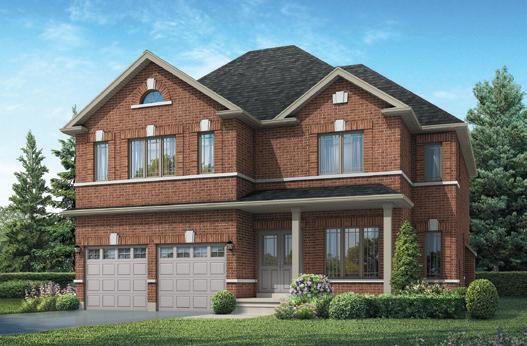
DETACHED HOMES FROM $649,990
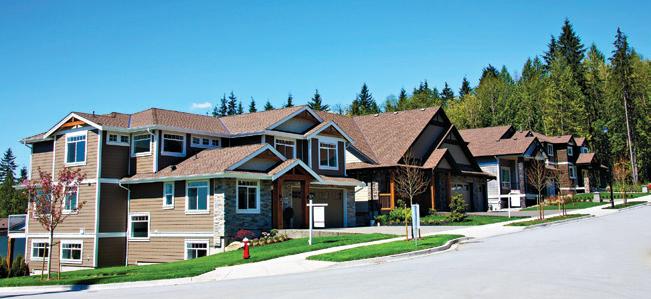
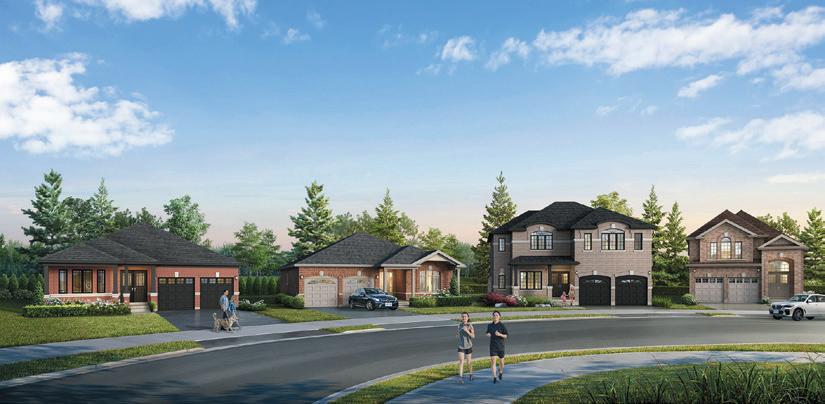
Nestled amidst a serene forest and in proximity to Fairy Lake and Lake Vernon, this thoughtfully designed community offers the best of both worlds: Natural tranquility and modern convenience. A diverse mix of bungalow and two-storey home designs on 34- to 50-ft. lots, many backing onto greenspaces,
accommodates a variety of lifestyles.
The heart of the community is a park, with natural pathways, all surrounded by trees backing onto a golf course. Future multi-family condos show a forward-thinking commitment to growth and sustainability. With accessible amenities planned and
essential services nearby, Muskoka Forest promises to enhance the quality of life for its residents today and for years to come.
And if you love nature and are looking for that idyllic setting to renew your life, there’s no better place than the Muskoka Region.
Imagine your new life among a haven of forests, shimmering lakes, granite emplacement and other natural wonders that have graced the canvases of famous Canadian artists such as Tom Thomson… forming a popular cottage destination and playground for untold numbers of youngsters attending summer camps.
There simply is no need to sing the praises of this wonderland of almost 6,500 sq. km. and more than 1,600 lakes.
What’s there not to love about this blessed region located about two hours north of Toronto, comprising the Towns of Huntsville, Bracebridge and Gravenhurst, and the Townships of Muskoka Lakes, Lake of Bays and Georgian Bay?
Your new home location and playground awaits. Name your passion, and you can pursue it here. Try your hand at landscape art, like the masters of the Group of Seven. Or hop up for some horseback riding, dogsledding or cross-country skiing in winter.
If cycling is more your speed, wind your way through hilly towns such as Bala, Ontario’s cranberry capital or Bracebridge, and marvel at the spectacular local waterfalls.
And golf. You want golf? Muskoka has carved out a reputation as one of Canada’s best golf destinations, with a handful of courses among the topranked in the country.
After your leisure activity, whatever it is, relax with some of the fare of the growing number of craft breweries in the area – Muskoka Brewery, Lake of Bays Brewing Co. and Sawdust City Brewing Co.
You want more amenities? Huntsville is replete with everything you could need, from a Home Depot, Walmart, LCBO and Beer Store, groceries and more.
And for your cultural pursuits, downtown Huntsville is blessed with the Algonquin Theatre, Muskoka Heritage Place train station and museum and other attractions.
And for those necessary essential services we all need, there’s a hospital less than one kilometre from your Muskoka Forest, as well as a nearby OPP detachment, Huntsville Fire Hall, dental and medical offices and a local library.
If you have kids still in school, there’s no shortage of local places of learning either, from Huntsville CoOp Nursery School to Spruce Glen Public School, and Huntsville High School to Georgian College.
Huntsville’s bustling main street is a hub of local activity, adorned with charming shops, schools, upscale boutiques, diverse eateries and inviting cafes. The towns exceptional connectivity ensures swift exploration of neighbouring areas and city centres. This locale masterfully intertwines serene landscapes with modern comforts, harmonizing
the tranquility of nature with contemporary convenience.
Living at Muskoka Forest, adjacent to natural treasures such as Algonquin Park and Arrowhead Park, is like dwelling in an evergreen sanctuary with tranquil lakes and diverse wildlife. Your days start with serene canoe rides, and still waters mirroring the majestic pines. Whether you’re an avid golfer or just enjoy lounging in Muskoka chairs, there’s an outdoor activity to suit your pace.
World Famous Algonquin Park is a mere 30-minute drive away, with eight campgrounds or 14 trails.
But you need not go that far to enjoy outdoor activities at Muskoka Forest, as onsite amenities include a park with
pickleball courts, jungle gym and other attractions. Peaceful walking and biking trails are within easy reach as well.
As for your home at Muskoka Forest? Choose from a mix of bungalows and two-storey all-brick homes on lots varying from 34- to 50-ft. wide, staring at $650,000.
Beautiful standard features that are upgrades on other sites include a luxurious colour selection process with various options, oak stairs and rails, a cold cellar, direct-access door from the garage into your home, three-piece roughed-in basement bathroom and more.
For more information, visit mymuskokaforest.ca.
THE CONNECTED KITCHEN:
Designing the
heart of the home
by MARIAM ABOUTAAM
When I began designing the kitchen for the Heritage House at Angus Glen South Village, I wasn’t simply creating a beautiful room, I was designing the heart of a home with history. Originally built in 1875, the Casely Heritage House was thoughtfully relocated and restored to preserve an important piece of Markham’s heritage. Rather than recreating a traditional farmhouse kitchen, my vision was to reinterpret its heritage through a contemporary lens, preserving the warmth, craftsmanship
and sense of permanence that define historic homes while incorporating the functionality and refinement expected in modern living.
As with every project I design, one question guided every decision: How can this kitchen become the place where people naturally want to gather?
At the centre of the room sits a generously proportioned curved island, designed to be much more than a workspace. It naturally became the home’s gathering place, a space
for preparing meals, enjoying casual breakfasts, helping children with homework, entertaining guests or simply sharing conversation at the end of the day. Its softened curves improve circulation while introducing a sculptural quality that feels both inviting and elegant. More than a design feature, the island establishes the rhythm of the entire room, seamlessly connecting the kitchen to the adjoining dining and family spaces while encouraging interaction throughout the main floor.
Materiality played an equally important role in telling the home’s story. I selected custom white oak cabinetry to establish warmth and permanence, creating a timeless foundation that complements the Heritage House’s historic architecture. At the centre of the room, a deep forest-green island introduces richness and depth while subtly reflecting the surrounding landscape of Angus Glen Golf Club. Its fluted detailing adds texture and craftsmanship, becoming both a sculptural focal point and a natural gathering place. Together, the palette creates a quiet balance between old and new, respecting the home’s heritage while embracing a fresh, contemporary aesthetic.
Rather than relying on excessive ornamentation, the design celebrates honest materials and thoughtful restraint. Richly veined porcelain wraps the countertops and extends seamlessly into a full-height backsplash, creating a clean, uninterrupted backdrop that is as durable as it is elegant. Above, a sculpted plaster hood canopy softens the range wall with gentle curves, while warm brass hardware, a statement brass sink and carefully selected plumbing fixtures introduce refinement throughout the space. These details may seem subtle individually, but together they create a sense of cohesion and understated luxury that elevates the entire kitchen.
Functionality remained at the forefront of every decision. Integrated appliances preserve clean architectural lines while extensive custom cabinetry conceals pantry storage, small appliances and everyday essentials. Every cabinet was carefully considered to maximize storage without compromising the clean architectural aesthetic. By minimizing visual clutter, the room feels calm and organized while effortlessly supporting the demands of modern family life.
Wide-plank white oak hardwood flooring grounds the kitchen, flowing seamlessly into the adjoining dining and family rooms to reinforce the home’s open-concept layout.
Carefully curated artwork, collected objects and sculptural accessories introduce personality and tell the story of a home that has evolved over time rather than one that was decorated all at once. Layered decorative lighting creates warmth after sunset, while every accessory was intentionally selected to complement, not compete with the architecture and material palette.
Natural light completes the experience. Expansive windows frame uninterrupted views overlooking Angus Glen Golf Club, allowing the changing seasons to become part of the interior itself. Direct access to the adjoining terrace extends the kitchen beyond its walls, strengthening the connection between architecture and landscape while creating effortless flow for entertaining. The transition between indoors and outdoors reinforces the idea that the kitchen is not an isolated room, but part of a larger living experience.
Perhaps the biggest evolution in kitchen design is that beauty and functionality are no longer separate conversations. Today’s most successful kitchens don’t ask homeowners to choose between the two. Instead, every element is expected to perform multiple roles. Storage becomes seamlessly integrated into architecture. An island becomes a prep station, dining table and gathering place. Materials must not only be beautiful, but durable enough to support everyday family life while aging gracefully over time.
The Heritage House kitchen reflects this philosophy. Every curve, finish and proportion was carefully considered to create a space that feels timeless rather than trend-
DESIGN TIPS FOR CREATING A CONNECTED KITCHEN
• Design around your lifestyle. Before selecting finishes, think about how your family cooks, gathers, entertains and lives every day.
• Create a multi-functional island. A thoughtfully designed island should serve as a prep space, casual dining area, workstation and social hub.
• Invest in timeless materials. Natural wood, porcelain, stone and plaster create warmth, character and lasting appeal that transcends trends.
• Layer your finishes thoughtfully. Combine warm wood tones, natural stone, textured plaster and brass accents to create depth, balance and visual interest.
• Prioritize concealed storage. Integrated appliances and custom cabinetry keep countertops clutter-free while maintaining clean architectural lines.
• Maximize natural light. Large windows and strong connections to outdoor spaces create brighter, more welcoming kitchens that feel connected to their surroundings.
driven, elegant without feeling formal, and luxurious because of its craftsmanship rather than excess.
For me, the most successful kitchens aren’t defined by the cabinetry, appliances or finishes alone. They’re defined by how they make people feel. They invite conversation, encourage connection and become the backdrop for life’s everyday moments. That’s what transforms a beautiful kitchen into the true heart of the home. Because the most beautiful kitchens aren’t simply designed to be admired, they’re designed to bring people together.
An award-winning in-house designer, Mariam Aboutaam is Director, Sales and Marketing, Interior Design at Kylemore, Markham, Ont., a builder known for master-planned communities and luxury homes. kylemoreliving.com.
CELEBRATING HOMEBUILDING EXCELLENCE IN THE GTA AT THE 2026 BILD AWARDS
Every year, BILD recognizes excellence and innovation in the design, construction, marketing and sales of new homes in the Greater Toronto Area (GTA) at its BILD Awards Gala. Running for 46 years, the BILD Awards is an opportunity to appreciate the achievements of the people and projects that contribute to the homebuilding and land development industry in the GTA.
Held on May 28 in Vaughan, BILD presented more than 50 awards in the categories of architecture, design, marketing, people and sales. The prestigious project and builder categories were also presented, and for the first time ever, there were two Lifetime Achievement Award recipients.
The BILD Awards provide an opportunity to recognize and appreciate the hard work of the individuals who make up our industry – from marketers to builders, to designers and architects. Each person plays an important role in the success of the sector every year.
It is always an honour to bear witness to the excellence that sets the standard for our industry.
From more than 500 submitted entries, a group of 46 dedicated expert judges from across North America decided the winners.
The prestigious Lifetime Achievement Award was presented to two individuals this year. David Feldman, Founder and Chairman of Camrost Felcorp and Eddie Weisz,
Co-Founder and President of Paradise Developments.
The Lifetime Achievement Award is the highest honour BILD can present to members, recognizing those who have dedicated a lifetime to the association and the industry and demonstrated significant leadership and commitment to the greater good.
Feldman has a city-building career spanning more than five decades, has overseen the construction of 100 buildings in his career, and has helped shape the GTA and created a lasting contribution to Ontario’s built environment.
He has built numerous communities, including Upper East Village in Leaside and Marina Del Rey in Etobicoke, and has meaningfully shaped the fabric of this entire region.
Alongside his extensive development career, Feldman is committed to philanthropic initiatives and has established the David Feldman Centre for Real Estate and Urban Economics at the University of Toronto’s Rotman School of Management and is a major supporter of the University Health Network, Princess Margaret Cancer Centre, and Mount Sinai Hospital.
Our second Lifetime Achievement Award winner, Eddie Weisz, began his more than sixdecade development career as a construction supervisor for low-rise subdivisions across the GTA.
Weisz credits this early education in quality, accountability, and pride in workmanship as the true foundation on which well-built communities are established.
Through his company, Paradise Developments, he has overseen the construction of more than 15,000
homes in virtually every municipality across the GTA and has masterplanned communities throughout the region.
It was an honour to present these true city-builders with the Lifetime Achievement Award as they exemplify visionary leadership and a sustained commitment to the public.
Other big winners of the night included Tridel as Home Builder of the Year, Mid/Highrise, and Treasure Hill taking home the award for Home Builder of the Year, Lowrise.
These awards recognize builders who are committed to the highest level of professionalism and dedication to excellence. Part of the judging process for these awards is a customer satisfaction survey to ensure that end users’ experience is considered in the criteria.
Another major winner from the night was Menkes Developments’ The Whitfield designed by Giannone Petricone Associates Inc. Architects, Figure3, and ADHOC Studio.
This project took home the elusive People’s Choice Award, which is an award voted on by GTA residents. It was also awarded Project of the Year, Mid/Highrise for its design excellence and building innovation.
Dave Wilkes is President and CEO of the Building Industry and Land Development Association (BILD), the voice of the homebuilding, land development and professional renovation industry in the GTA. For the latest industry news and new home data, follow BILD on Twitter, @bildgta or visit bildgta.ca.
DAVE WILKES
THE RESIDENCES AT CENTRAL PARK
CENTRAL PARK
NATURE-INSPIRED COMMUNITY RISING IN THE BAYVIEW VILLAGE NEIGHBOURHOOD
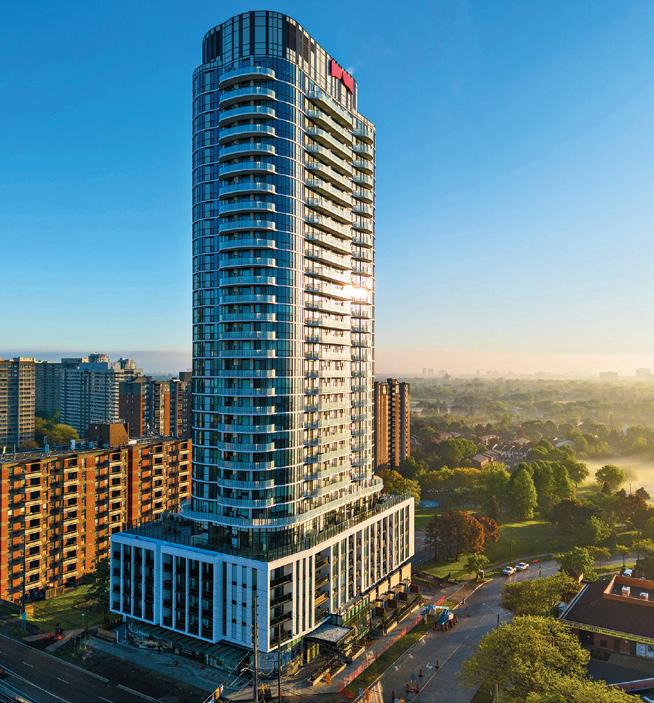
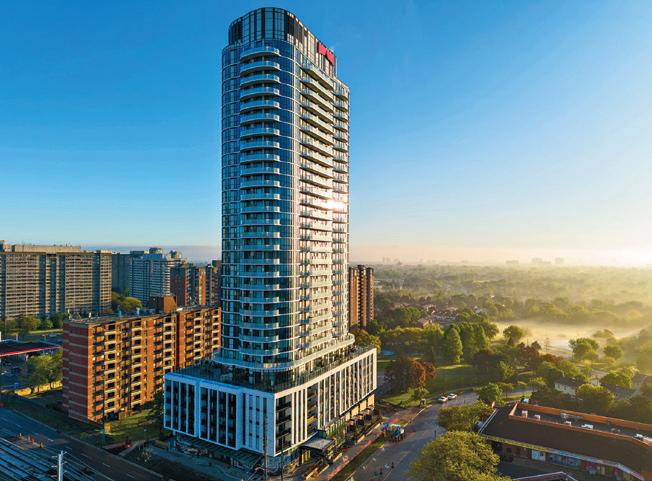
Construction of Amexon’s The Residences at Central Park is well underway on Sheppard Avenue in the east end of the prestigious Bayview Village neighbourhood. Phase 1 sold out ahead of schedule, and construction of the first tower is completed to its full height of 31 storeys.
Central Park is a vibrant, mixeduse condominium community where urban life meets and marries with the natural world – residents enjoy proximity to a range of urban conveniences, and also have direct access to the East Don Parkland’s
sprawling, forested ravine that embraces the property in lush nature.
This environmentally sustainable development is one of the largest residential projects currently under construction in Toronto. Designed by Core Architects for Amexon Development Corp., this 12-acre master-planned community will reshape North York’s Bayview Village area, with five towers ranging from 12 to 31 storeys.
Buyers are responding with enthusiasm for a variety of reasons, including Central Park’s excellent location, forward-thinking Green
features, and an array of indoor and outdoor amenities offering lifestyle opportunities for all ages.
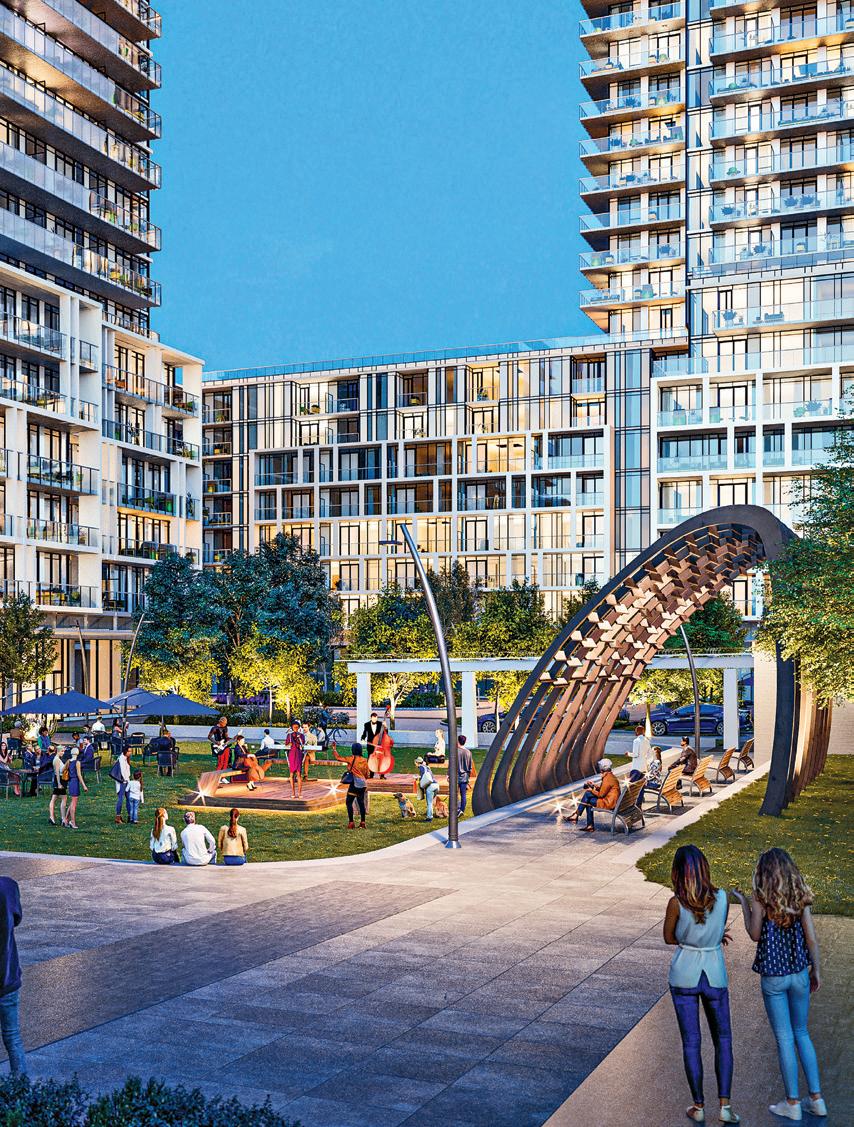
At the heart of the community, is the award-winning Central Park Common – a landscaped, threeacre urban park that will resemble a traditional village green. The park will feature pedestrian-friendly streets lined with bike paths, casual dining venues, fountains, reflecting pools and year-round programming that will include a farmers’ market and iceskating rink. Other highlights include retail space, restaurants and services including on-site daycare facilities.
With environmental sustainability high on the priority list, Central Park has been recognized by the Building Industry and Land Development Association (BILD) as a finalist for the Green Builder of the Year award. The entire community will be constructed to Amexon’s Green Development Standard incorporating industryleading Green features. Setting a new standard in the sustainability arena, Central Park is the first largescale project of its kind in Canada to include EV charging stations in all parking areas for residents, visitors, office tenants and retail patrons. In all, there will be more than 1,500 charging stations installed.
The visionary design of Central Park is another attraction for prospective residents. Amexon enlisted an award-winning team to craft what is sure to become a local landmark. CORE Architects has created a striking exterior for the condominium towers that focuses on an intimate connection with nature – the façades feature an organic leaf-like design and six-ft.deep balconies and floor-to-ceiling windows offer inspiring views of the Toronto skyline and meandering East Don Parkland ravine. Central Park’s design features an elegant, hotelinspired, port-cochere entry, with an artisan-designed fountain, original art installation and lush landscaping by renowned Cosburn Nauboris Landscape Architects. These architectural highlights express a harmonious coexistence between sparkling glass and nature, setting this condominium residence apart as something truly visionary.
Suite and amenity interiors by II BY IV DESIGN are both warm and sophisticated, with modern features and finishes grounded in natural materials and earthy colours. The focus was on capturing the allure and comfort of nature, uniting a love of the outdoors and creative living. The effect is new and fresh, evoking a conception of classic modernism.
All Central Park residents will have the use of 55,000 sq. ft. of fitness,
wellness, leisure and social amenity space. A highlight is The Park Club, where fitness enthusiasts can access indoor and outdoor saltwater pools and a state-of-the-art fitness club.
The Park Club will include a 5,000-sq.-ft. coworking space that will foster networking and productivity for either a hybrid work model or growing your own business, with smart technology, meeting rooms, hot desks and a business centre – giving new meaning to “working from home.”
The community will eventually encompass more than 1,500 suites in one- to three-bedroom plus den layouts, in sizes from 439 to 1,200 sq. ft. Features and finishes include nine-ft.-high ceilings and Europeaninspired kitchen cabinetry by II BY IV DESIGN. Best of all, these living spaces incorporate flow-through layouts that make the most of spectacular views from the floorto-ceiling windows and generous outdoor balconies. Prices begin from the $700,000s.
Amexon Development Corp. is one of Toronto’s most prominent and innovative real estate developers, building their reputation as a multi-award-winning firm by delivering superior-quality properties. The firm owns and manages an impressive portfolio of office, retail, industrial, hotel and residential properties.
Amexon’s award-winning, all-glass Central Park Presentation Centre is located at 1200 Sheppard Ave. E., Toronto. Flooded with natural light through its floor-to-ceiling glass walls, the centre was built to be a permanent fixture, with plans for it to serve in future as a community event venue. Visitors can indulge in gallery-like surroundings that include kitchen, bathroom and walk-in closet vignettes, and explore a curated selection of premium interior finishes and high-end appointments that come standard here.
For more information, call 416.252.3000 or visit centralparktoronto.com.
TIMING IS CRITICAL WHEN BUYING NEW
BARBARA LAWLOR
For those shopping for new houses and condominiums, the old adage “timing is everything” takes on a deeper meaning – in more ways than one. Looking at the big picture, now is an ideal time to buy, with interest rates still really good and a wealth of
incentives offered by developers. The opportunity to buy a new home at the current rates is unprecedented in our economy. We all know these rates cannot continue forever. And many of us remember the double-digit rates of the 1980s and early 1990s. Look into how much you pay over your amortization, and you will realize that even a percentage of a point can make a huge difference.
Plus, the HST rebate has now been launched in Ontario for all new home buyers. And development charges are being lowered, so prices are better
than they have been in a long time. It is indeed a buyer’s market out there, which bodes well for first-time buyers, as well as those in the other categories mentioned above. There are great deals to be had for all. Those who sell for a lower price can purchase for a lower price as well. Of course, timing according to your life circumstances is important, too. Perhaps you are a first-time buyer eager to enter the marketplace. In that case, you might prefer a condominium suite or townhouse. Owning a home remains
the Canadian dream, because of all the doors it opens to you in the future. There is a lot to be said for building equity.
Or maybe you own a home already and are looking to right-size to something bigger in a lowrise house for an expanded family. On the other hand, you might be a senior thinking of right-sizing the other way to buy something more compact. A condominium can free up time for you to spend enjoying life rather than keeping up with yardwork and exterior maintenance. And with beautiful amenities right in the building, you can eliminate the time it takes to drive to pools, exercise facilities and other attractions.
When considering timing, there is also the marketing/selling cycle for new houses and condominiums. Purchasing pre-construction gives
you time to get things in order to sell what you already own – often three to six years. If you buy from plans early in the cycle, you will likely get the best price and most choice of designs. Be sure to ask about grand opening specials and other incentives as well. Having years to plan your move places you in a much stronger homeownership position when you move in. You might use that time for paring down your possessions for when you make the move from a large house to a condo or buying new furnishings if this will be your first home. Buying early also offers you more opportunity to earn equity and perhaps even make a profit before your occupancy date.
For some potential buyers, purchasing from plans is just too early. They prefer to wait until they can see how well a condominium
residence is being accepted by the public. Once construction begins, we usually see a jump in sales. This signifies that the developer has enough sales to obtain financing and begin the building process. If you desire this form of peace-of-mind, ask questions. Find out whether you can still choose features and finishes if you wait for construction to begin.
Then again, there is always inventory to consider if you can accommodate a quicker move-in. The final few suites are often offered with special incentives that are incredibly attractive. Right now, there are condo developers keen to sell off the last few remaining suites in completed buildings. And if the suite you select is finished with standards, remember that today’s level is so high, you are sure to enjoy beautiful, luxurious surroundings.
In addition to “timing is everything,” we also hear the adage “location, location, location” when it comes to buying a new home. Many buyers, and especially investors, purchase in communities located in up-andcoming neighbourhoods. Before local amenities are in place and revitalization is complete, housing prices are usually better. In this scenario, the earlier you buy, the better. On the other hand, you may prefer to move into an established location, and the increased price is worth it to you.
If you are thinking of buying new, you have a lot going for you these days. So, when is the best time to buy new in the GTA? My answer is always now.
Lawlor is CEO of Baker Real Estate Inc. A member of the Baker team since 1993, she oversees the marketing and sales of new home and condominium developments in the GTA, Vancouver, Calgary and Montreal, and internationally in Shanghai. baker-re.com
Creekview by Branthaven
Barbara
IS THIS THE MOMENT
NEW-HOME BUYERS HAVE BEEN WAITING FOR?
After several difficult years for the new housing market, buyers are finally seeing something that has been missing for a long time: A window of opportunity.
Prices have softened in some segments, builders are competing
harder for purchasers, construction costs have eased from their peak and the enhanced HST rebate in Ontario has changed the math for many buyers considering a new home. According to the latest release from the Building Industry and Land Development Association (BILD) and Altus Group, GTA new-home buyers “continue to respond positively to the enhanced HST rebate program.”
The rebound is not evenly distributed. BILD reported 1,023 new home sales in May across the GTA, still 57 per cent below the 10-year
average overall. However, singlefamily new home sales, including detached, semi-detached, linked homes and traditional townhouses, reached 830 sales and came in 26 per cent above the 10-year average. Condominiums, by contrast, continued to struggle, with just 193 sales in May, 89 per cent below the 10-year average.
This split is important for buyers. The HST rebate appears to be moving lowrise purchasers off the sidelines faster than condo buyers, partly because more lowrise projects can
BEN MYERS
meet the program requirements and pricing has become more competitive.
For end-users, the message is not simply “buy now.” It is more nuanced than that. The market is changing, but it remains highly segmented by product type, location, price point and occupancy timeline.
The enhanced HST rebate has created a meaningful affordability improvement for eligible new home purchasers. For some buyers, especially those looking at lowrise homes under the applicable thresholds, this can reduce the effective purchase cost and improve monthly affordability. That is why buyers who were waiting for prices to fall further may now be comparing two risks: Buying too early versus waiting until incentives, discounts or preferred lots are gone.
The broader market context was explored in Episode 106 of Toronto Under Construction, where I spoke with Kiel O’Sullivan of Previon Capital, Duncan Smith of Oben Group and Anthony Staffieri of Fengate about how developers, investors and operators are adapting to the new housing environment.
One of the biggest themes was construction costs. Smith noted that costs have come down from peak levels, but remain elevated, especially for higher-end midrise residential projects. His concern was not just the level of costs, but the risk that costs continue rising while revenues fail to keep pace. For buyers, that matters because today’s pricing is influenced by land, labour, materials, financing costs, government charges and builder risk. If costs begin moving higher again, future projects may not necessarily be cheaper.
Staffieri made a similar point from the rental development side, noting that construction costs have fallen meaningfully from their peak, with savings of roughly 15 to 20 per cent depending on the trade. For longterm builders and owners, this creates an opportunity to lock in more favourable pricing. For buyers, it helps
explain why some projects can offer more attractive pricing today than they could have two years ago.
The discussion also touched on development charges and government fees. Recent announcements around reducing development charges in Toronto are positive for housing feasibility, but the guests were careful not to suggest that one policy change solves the entire problem. For buyers, the takeaway is that government costs are a major part of the final price of a new home. When those costs are reduced, there is at least the potential for improved affordability, stronger project economics or more projects moving forward.
For investors, the picture is more complicated. Condo investor demand has weakened, rents have softened in some areas and carrying costs remain high. The old model of buying a pre-construction condo, assuming strong rent growth and automatic appreciation is no longer as reliable. Investors need to underwrite more carefully, pay closer attention to closing risk, unit efficiency, future supply, rental competition and whether the project is truly priced for today’s market. The level of unit completions is going to drop off significantly in a couple of years, but it should be noted that not all municipalities are currently oversupplied.
At the same time, the long-term need for housing has not disappeared. O’Sullivan emphasized that demand may be temporarily constrained by market conditions, but demographic fundamentals remain strong in many markets. That perspective is relevant for both end-users and investors. A weak sales market does not mean people no longer need housing. It means affordability, financing and confidence have become the barriers.
Purpose-built rental was another major theme. The guests discussed how Canada is still rebuilding a professional rental housing sector after decades of relying heavily on condominium investors to supply
rental units. For renters considering whether to buy, this matters. More professionally managed rental housing may improve choice and stability over time, but it also changes the competitive landscape for condo investors. With that said, the institutional rental developers are not going to build in all markets, so understanding where the pockets of need are will be crucial to making the right real estate investment decisions.
For new-home buyers, the current market may be one of the more interesting moments in years. There is more inventory than during the boom, builders are more motivated, policy is shifting toward affordability and the HST rebate has already helped spark activity in the lowrise sector.
However, buyers still need to be selective. The best opportunities are likely to be projects with realistic pricing, strong locations, credible builders, sensible deposit structures and completion timelines that align with personal or investment needs.
The market has not returned to the frenzy of the pandemic years, and that may be a good thing. A slower, more rational market gives buyers time to compare options, ask better questions and negotiate from a stronger position.
The old playbook may be broken, but for prepared buyers, this could be exactly where the opportunity begins. Do your research, surround yourself with an experienced team and buy what you can afford. Good luck.
Ben Myers is the President of Bullpen Consulting, a boutique residential real estate advisory firm specializing in condominium and rental apartment market studies, forecasts and valuations for developers, lenders and land owners. Contact him at bullpenconsulting.ca and @benmyers29 on Twitter.
+MORE CONTENT ONLINE nexthome.ca
THE BIGGEST MYTHS ABOUT DEVELOPERS – DEBUNKED
DEBBIE COSIC
When a new community launches, buyers often focus on the price, floor plans and incentives. It’s easy to assume that every decision is designed simply to maximize profit.
The reality is far more complex.
Having worked alongside developers for nearly two decades, my team and I have had the privilege of working alongside some of the industry’s leading builders, giving us a firsthand look at the tremendous amount of planning, research, collaboration and investment required to bring a new community to life. Behind every condominium, townhome community or masterplanned neighbourhood are years of planning, millions of dollars invested before a single home is sold and countless decisions that balance buyer demand, construction realities, municipal requirements and financial risk.
While buyers naturally focus on the finished product, there is an incredible amount of work taking place long before the first shovel enters the ground. Understanding that process not only provides greater appreciation for how communities are created, but also helps dispel some of the biggest misconceptions surrounding the development industry.
Here are a few things developers wish more buyers understood.
DEVELOPERS AREN’T THE VILLAINS THEY’RE OFTEN MADE OUT TO BE
Perhaps the biggest misconception in real estate is that developers are
simply making enormous profits while buyers pay the price.
The truth is that development is one of the most capital-intensive and highest-risk businesses there is.
Long before construction begins, developers have often spent years identifying and assembling land, navigating complex municipal approvals, completing environmental and engineering studies, working with planners, architects, legal teams and consultants, while carrying significant financing costs, taxes and interest, all before generating a single dollar in revenue.
Those costs continue to accumulate while projects move through approval processes that can take years.
Then comes construction, where labour shortages, rising material costs, tariffs, supply chain disruptions, interest rate fluctuations and unexpected delays can quickly impact the financial viability of a project.
Can successful developments be profitable? Absolutely, and they need to be. Profit isn’t a dirty word; it’s what allows developers to take on the enormous financial risk required to create the homes and communities our growing population needs.
The reality is that not every project succeeds. In today’s market, many developments have been delayed, redesigned or cancelled altogether because the economics simply no longer work. Developers absorb those risks long before buyers ever walk through a presentation centre.
PRICING ISN’T PULLED OUT OF THIN AIR
One of the biggest misconceptions is that developers simply choose a price and hope buyers will pay it.
In reality, pricing begins months, often years, before a sales centre opens.
We spend countless hours with our developer partners analyzing competing communities, studying neighbourhood demographics, evaluating resale values, monitoring rental trends and speaking directly with brokers who are active in the marketplace every day.
At In2ition, that research goes far beyond market reports. Our team physically shops competing sales centres, evaluates pricing and incentives firsthand, studies how projects are positioned, gathers real-time intelligence through our extensive broker network and carefully tracks buyer feedback. It’s this combination of data and bootson-the-ground market knowledge that helps shape recommendations for pricing, suite mix, product design and marketing strategy.
Pricing is never created in isolation. It’s a careful balance between market demand, construction costs, financing, competition and long-term project success.
INCENTIVES AREN’T ALWAYS A SIGN SOMETHING IS WRONG
When buyers see incentives such as free parking, extended deposit structures or closing cost credits, many assume sales have stalled. Sometimes that’s true. More often, incentives are simply another strategic tool.
Developers adjust incentives throughout a project’s lifecycle to respond to changing market conditions, attract different buyer profiles or generate momentum during a particular phase of sales.
FLOORPLANS CHANGE BECAUSE BUYERS CHANGE
Today’s buyers aren’t looking for the same homes they wanted five or even 10 years ago.
We’ve seen growing demand for functional layouts, dedicated workfrom-home space, better storage, family-sized suites, flexible rooms and larger outdoor living areas.
Developers pay close attention to this feedback.
Every project provides valuable insight that influences the next one. What buyers embrace gets refined and expanded. What doesn’t perform gets rethought.
The strongest communities continue to evolve because buyer expectations continue to evolve.
OCCUPANCY DATES ARE ESTIMATES, NOT
PROMISES
Few things frustrate buyers more than delayed occupancy. While delays are understandably disappointing, they are rarely intentional. Construction depends on labour availability, material deliveries, municipal inspections, utility connections, weather conditions and countless moving parts beyond anyone’s control.
Every additional month typically means increased financing costs for the developer, from insurance, staffing expenses, interest payments and carrying costs, all of which are absorbed by the developer.
The goal is always the same: deliver homes as quickly, safely and responsibly as possible.
Every decision balances hundreds of factors
When buyers ask why a building doesn’t include a particular amenity or why a suite is designed a certain way, the answer is rarely simple. Every square foot has both a construction cost today and an operating cost tomorrow.
costs, sustainability, affordability and overall building performance.
Adding one feature often means making compromises somewhere else. Creating a successful community isn’t about including everything, it’s about making thoughtful decisions that provide the greatest long-term value for homeowners.
DEVELOPERS WANT COMMUNITIES THAT SUCCEED
Another misconception is that once a project sells, the developer simply walks away. In reality, a developer’s reputation is one of its greatest assets.
Satisfied homeowners become repeat purchasers. Brokers recommend builders they trust. Municipalities are more likely to support developers with a proven track record of delivering quality communities. The best developers aren’t thinking about one project, they’re thinking about the next 20 years.
LOOKING AHEAD
While today’s real estate market has certainly presented its share of challenges, it has also created opportunities that simply didn’t exist a few years ago.
Buyers have more choice, more time to make informed decisions and, in many cases, greater negotiating power than we’ve seen in years. Developers, in turn, are responding with more thoughtful product offerings, flexible deposit structures and meaningful incentives that help make homeownership more attainable.
Periods like this also inspire innovation.
Today’s buyers are different, and the communities of tomorrow need to reflect that. That’s why we’re working alongside our developer partners to transform market intelligence into action, helping shape thoughtful pricing strategies, more functional suite designs, purposeful amenities and resilient communities that align with the
evolving priorities, lifestyles and budgets of today’s purchasers.
Real estate has always been cyclical, and history has shown that some of the greatest opportunities emerge during periods of transition. Those who look beyond the headlines often find opportunities that simply don’t exist in a red-hot market.
At the heart of it all is a shared goal. Buyers are looking for a place to call home, and developers are working to create communities where people can build their futures. When both sides better understand the challenges, opportunities and realities of today’s market, better decisions are made and stronger communities are built.
Because real estate has never been just about bricks and mortar. It’s about creating neighbourhoods, supporting local economies, generating jobs and building the places where families will celebrate milestones, raise children, start businesses and create lifelong memories.
That is, and always will be, one of the most rewarding investments any community can make.
Whether you’re a buyer looking to better understand today’s market or a developer seeking fresh ideas and innovative strategies for your next community, we’d love to start the conversation. Visit in2ition.ca, follow In2ition Realty on Instagram, or contact our team at info@in2ition.ca.
Debbie Cosic is CEO and founder of In2ition Realty. She has overseen the sale of more than $15 billion worth of real estate. With Debbie at its helm, In2ition has become one of the fastest-growing and most innovative new home and condo sales companies. in2ition.ca
+MORE CONTENT ONLINE nexthome.ca
MISSISSAUGA STANDING OUT FROM THE CROWD IN
by WAYNE KARL
Mississauga has always been a city of noteworthy accomplishments, from its inception as a city in 1974, combining the former townships of Lakeview, Cooksville, Lorne Park, Clarkson, Erindale, Sheridan, Dixie, Meadowvale Village, Malton, Port Credit and Streetsville; to being home to Canada’s longest-serving mayor, Hazel McCallion, from 1978 to 2014.
You might expect such a track record of ambition from one of the most populous – and fastest-growing – municipalities in Canada.
Covering a huge swath of land –288 square kms, 13 km of which front Lake Ontario – Mississauga comprises many distinct neighbourhoods and communities. The former town of Port Credit, for example, once a sleepy little industrial locale, home to the iconic – and smelly – St. Lawrence Starch Co. plant from 1890 to 1990, today is a much sought-after residential area, thanks to its prized waterfront location.
Getting around Mississauga is, well, you are travelling over a vast area, and traffic these days… But Hwys. 401, 403, 410 and the QEW all run for stretches through the city, and there’s no shortage of GO Transit and Mississauga MiWay Transit options.
LOCAL HISTORIES
Many of these areas host annual festivals that pay respect to local histories. Streetsville, for example, holds its annual Bread and Honey Festival in June, paying homage to the area’s roots as a mill town. And Port Credit’s Southside Shuffle blues and jazz festival (this year Sept. 11 to 13), in beautiful lake- and riverside Memorial Park, draws crowds from all over the GTA.
For sports and recreation, again Mississauga is blessed with numerous
recreational winter and summer sports leagues with decades of local history. Using the Streetsville example again, the Vic Johnston Community Centre dates back to 1961, and sits adjacent to Memorial Park and the Credit River.
Following the Credit River down to Port Credit, Memorial Arena is another beautiful old barn, sitting adjacent to Memorial Park and facing Lake Ontario. Cross Lakeshore Road and you’re right at Port Credit Harbour, home to the popular Snug Harbour Seafood Bar and Grill. Head out to the end of the pier and you’ll get a close-up view of a local landmark – the Ridgetown, the Great Lakes bulk freighter that was sunk off the shore when retired to serve as the breakwater for the harbour.
PRIZED DEVELOPMENT
The waterfront, in fact, is prized redevelopment land, as former industrial sites are now home to thriving new master-planned communities. On the old site of an oil refinery at Mississauga Road and Lakeshore, for example, Brightwater Condos & Towns will eventually welcome more than 15,000 residents.
Equally impressive is what’s happening in the Lakeview area of Port Credit, on the site of the former Lakeview Generation Station. The site is now home to Lakeview Village, another master-planned community eventually comprising 8,000 new homes and condos, welcoming 20,000 residents.
One builder, Edenshaw Developments, so believes in Mississauga that it has a number of projects either existing or underway. The company has Tanu and Westport, and more recently ALBA, in Port Credit, and some others “coming soon.”
LOCATION, LOCATION, LOCATION
More than 288 square kms, 13 kms fronting Lake Ontario; bounded by Oakville, Milton, Brampton, Toronto and Lake Ontario; population 768,794.
KEY LANDMARKS
• Living Arts Centre
• Mississauga Celebration Square
• Sheridan College Business School
• Square One Shopping Centre
• University of Toronto Mississauga
SELECT HOUSING DEVELOPMENTS
ALBA By Edenshaw Developments edenshaw.com
Brightwater Condos & Towns By West Village Partners brightwatercondosmississauga.ca
Lakeview Village By Lakeview Community Partners mylakeviewvillage.com
M City By Urban Capital urbancapital.ca
Westport By Edenshaw Developments edenshaw.com
“Mississauga has become one of the most compelling places to live and invest in the GTA,” says Kimberly Jeffrey D’angelo, co-founder of The Greenheart Group, the firm marketing ALBA. “It delivers on the things that actually matter to people –connection, convenience and quality of life. Strong transit infrastructure, a growing downtown core, proximity to the waterfront and access to major employment hubs make it an easy choice for end-users and investors alike.
“Port Credit, in particular, has a village-like charm that’s hard to find anywhere else in the region. It has a real sense of community, beautiful waterfront access and a main street that people actually want to be on. ALBA sits in a sweet spot between Port Credit and the Mississauga City Centre. Close enough to enjoy the best of both, with the waterfront and village energy on one side and the conveniences of an established urban core on the other.”
GENERATIONAL FAIRNESS AND THE VANISHING DREAM OF HOMEOWNERSHIP
MIKE COLLINS-WILLIAMS
It has been a while since blaming young people’s spending habits for their inability to buy a home was in vogue. Remember the whole avocado toast thing?
The suggestion that a generation was priced out of homeownership because they spent too much on brunch became a convenient way to dismiss a much more uncomfortable truth. For many young Canadians, the dream of homeownership is slipping away because the math simply no longer works.
Statistics Canada data tells a troubling story. Among Canadians aged 25 to 29, the homeownership rate fell from 44.1 per cent in 2011 to just 36.5 per cent in 2021. For those aged 30 to 34, it dropped from 59.2 per cent to 52.3 per cent. At the same time, the gap between housing costs and incomes has widened dramatically.
Forty years ago, mortgage rates were notoriously high, often reaching double digits. Yet homeownership remained attainable because homes typically cost only three to four times average household income, and stable employment with benefits and pensions was more common. Today in Hamilton, the average home costs roughly 12 years of the average fulltime worker’s income.
The challenge facing young Canadians is not simply housing prices. Wage growth has failed to keep pace with the rising cost of almost everything. Food, transportation, utilities, insurance and rent consume a growing share
of household budgets, leaving little room to save.
Many prospective buyers cannot even reach the starting line. A 20-per-cent down payment on an average home can exceed $150,000. Even for more modest homes, saving tens of thousands of dollars while paying record rents feels increasingly impossible.
At the same time, job security has changed. Contract work, gig work, temporary positions and part-time employment have become far more common. Employer-sponsored pensions are increasingly rare outside the public sector. Many younger workers are doing everything “right,” earning degrees, working hard, budgeting carefully and still finding themselves unable to get ahead.
As a result, homeownership is becoming increasingly tied to family wealth. The so-called “Bank of Mom and Dad” has become one of the country’s most influential lenders. Two young people with identical incomes, work ethic and financial discipline can have vastly different futures based solely on whether their parents can help with a down payment. Homeownership is increasingly determined not by what you earn, but by what your parents own.
Compounding the problem, Canada’s housing ladder has missing rungs. We have not built enough attainable townhomes, multiplexes and downsizing options that allow households to move through different life stages. Without these choices, first-time buyers remain locked out while existing homeowners struggle to find suitable alternatives.
The consequences extend far beyond real estate. Young Canadians are delaying moving out on their own, postponing marriage, waiting longer
to have children or deciding not to have them at all. Housing attainability is increasingly shaping life decisions that previous generations often took for granted.
For decades, Canadians believed in a simple social contract: Work hard, buy a home and create stability for your family. People can endure sacrifice when they believe it leads somewhere. What is dangerous is asking an entire generation to work harder while offering them less in return.
At its core, this is a question of whether Canada remains a place where hard work is rewarded with opportunity. Housing shapes whether people feel they have a stake in their community and hope for the future. When that hope fades, the consequences extend far beyond housing, weakening public trust and leaving more Canadians locked out of the stability previous generations once took for granted.
Restoring housing attainability will require urgent action. We need to build more homes of all types, reduce unnecessary costs and remove barriers that make housing more expensive than it needs to be. If we fail, we risk more than an affordability crisis. We risk breaking the promise that hard work, sacrifice and ambition should be rewarded with the opportunity to build a stable and secure future.
Mike Collins-Williams, RPP, MCIP, is CEO West End Home Builders’ Association.
TENANTED PROPERTIES:
WHAT BUYERS AND SELLERS NEED TO KNOW
Buying or selling a tenanted property can seem straightforward at first. A seller lists a property, a buyer makes an offer and the transaction moves toward closing. In practice, however, tenanted properties often involve legal obligations, practical challenges and human considerations that need attention from the very beginning. In the latest episode of TRREB’s Ready to Real Estate podcast, host and TRREB Chief Information Officer Jason Mercer speaks with licensed paralegal Bita Di Lisi about the risks and responsibilities involved in buying and selling tenanted properties in Ontario.
UNDERSTANDING WHAT A SALE DOES – AND DOES NOT – CHANGE
One of the most important points from the conversation is that selling a property does not automatically end a tenancy. A tenant’s rights do not disappear because an owner decides to sell, and buyers need to know they may be purchasing more than the property itself. They may also be stepping into the role of landlord. That distinction matters. A buyer who purchases a tenanted property should review the existing tenancy, the rent being paid, the terms in place and the legal framework that governs what can and cannot happen after closing. Sellers also need to understand their obligations before listing, especially if they hope to provide vacant possession.
WHY VACANT POSSESSION REQUIRES CAREFUL PLANNING
Vacant possession is often one of the most misunderstood parts of a tenanted-property transaction. Buyers may want the home empty on closing. Sellers may believe they can deliver that outcome. But as Di Lisi explains in the episode, vacant possession cannot be guaranteed simply because a property has been listed or sold.
Ending a tenancy follows a specific legal process. Timelines, notice requirements, tenant rights, negotiated agreements and potential proceedings before the Landlord and Tenant Board can all affect the outcome. For sellers, getting legal advice before listing can help avoid costly mistakes. For buyers, understanding the limits of what can be promised, especially when it comes to vacant possession, can help prevent frustration later.
RESPECTING THE PEOPLE BEHIND THE PROCESS
Tenanted properties also require thoughtful communication. Showings, inspections, negotiations and closing expectations all affect a person who is living in the home. A tenant is not an obstacle to a transaction. They are someone whose housing, privacy and rights must be respected throughout the process. That does not mean a sale cannot move forward. It means realtors, clients and legal professionals need to work carefully, communicate clearly and keep the process respectful. A well-managed approach can help reduce conflict and support a smoother transaction for everyone involved.
THE RISKS AROUND PERSONAL USE AND CASH-FOR-KEYS
Personal-use notices carry serious legal obligations, and misusing them can create significant risk. Reclaiming a property for personal occupation is not the same as preparing it for resale or trying to secure a higher rent.
Cash-for-keys agreements can provide another path in some circumstances, but they also require care. These agreements involve a landlord and tenant mutually agreeing to terms, often including compensation, in exchange for the tenant voluntarily leaving.
WHY PROFESSIONAL GUIDANCE MATTERS
For buyers and sellers, the key takeaway is to ask the right questions early.
These transactions require clear advice, proper process and compassion. Whether someone is buying a tenanted property, selling one or trying to understand their responsibilities as a landlord or tenant, the right guidance early in the process can make a significant difference.
Daniel Steinfeld is President of the Toronto Regional Real Estate Board (TRREB). A Chartered Accountant, he previously served as Vice-President and Chief Financial Officer with the Toronto Argonauts and is a Broker and co-owner On The Block Realty.
+MORE CONTENT ONLINE nexthome.ca
DANIEL STEINFELD
BUILDING CONSUMER CONFIDENCE
IN A COMPLEX HOUSING MARKET PETER BALASUBRAMANIAN
Potential new-home buyers who have been closely following the headlines on housing may have noticed some positive signs, especially those who are choosing a newly built home.
In wake of recent government announcements, new home sales are up and builders are beginning to move forward with new projects. At the same time, homeowners who purchased in previous years are now moving into completed homes.
Tarion – an independent and not-for-profit consumer protection organization that administers Ontario’s new home warranty program – is seeing some of these trends firsthand and it underscores both optimism for Ontario’s new home marketplace while also a growing need for consumers to better understand their warranty rights before getting the keys.
NEW HOME POSSESSIONS HELD FIRM IN 2025
While sales numbers are the ones that tend to make headlines, Tarion’s data on homeowners taking possession of their new home continues to show strong numbers – with more than 50,000 Ontarians receiving the keys to their new homes in 2025.
This was consistent with historic highs of the last few years but contrasts with a slowdown in sales numbers for the same period.
As of the beginning of June, sales are beginning to trend upward with new home sales activity increased sharply throughout April and May.
This trend demonstrates rebounding consumer confidence and excitement about the HST rebates that promise positive progress on affordability.
DATA SHOWING OPTIMISTIC TRENDS FOR NEW HOME PURCHASERS
In the last six months, we have seen unprecedented levels of collaboration from every level of government – federal, provincial and municipal – to address foundational issues which have made it hard for families looking to buy new homes.
Today, the housing market remains under significant pressure, but recent policy changes spearheaded by our provincial government, in particular Ontario’s HST rebate for new homes, signal meaningful progress toward easing affordability pressures and reinforcing confidence in the housing market.
The policy changes have already made a measurable impact – in the few months since the policy changes have come into effect, we have seen an increase in sector confidence, with more builders bringing forward plans for future home sales for approval to build and sell.
The number of homes enrolled in the warranty program is trending upward – with the number of homes enrolled in May almost triple the number that was enrolled in April.
All of these are positive signals reflecting optimism and confidence on the part of both builders and new-home buyers.
PROVIDING CONFIDENCE WHEN YOU BUY NEW
As the market continues to build confidence, more Ontarians will be
in a position to realize their dream of homeownership and may be ready to place a deposit on a new home.
But the last year has been a good reminder why Tarion is so important.
Receiverships for new home construction were up 150 per cent last year (23), and for impacted purchasers, Ontario’s deposit warranty program was able to provide relief. In 2025, Tarion supported consumers with more than $40 million in deposit protection payouts – money that went directly into the pockets of consumers and would have represented tens of thousands in financial losses if not for the program.
SIGN UP TO MAXIMIZE DEPOSIT PROTECTION
Signing up for the deposit protection program is easy, and doing so will maximize the level of deposit protection available to a new-home buyer. By informing Tarion that they have signed a purchase agreement, a buyer can be assured that their deposit is secure if they do not receive their home.
This early notice of a purchase also gives Tarion the opportunity to confirm that the builder is licensed and approved to sell, and to take action if they are not. Signing up early helps the province tackle the problem of illegal building and selling.
WELLINGS OF WHITBY
WELCOME TO THE FUTURE OF HEALTHY AGING
For years, we’ve been told that getting older means slowing down.
That at some point, life becomes smaller. The adventures become fewer. The choices become limited. The focus shifts from possibility to practicality.
At Wellings of Whitby, we believe the opposite.
We believe the future belongs to those who stay curious about life ahead.
Curious enough to embrace new experiences. Curious enough to meet new people. Curious enough to simplify life so there’s more time to enjoy it.
We simply build the communities that enable this to happen.
THE FUTURE OF HEALTHY AGING
It’s about creating an environment where independence, social connection, movement, nutrition and rest come together to help you continue living with confidence and purpose.
Our exceptional dining experience isn’t simply about having meals prepared for you. Great food has always brought people together. It’s where stories are shared, friendships
are built and everyday moments become memorable. Dining here isn’t a service – it’s one of the ways community comes to life naturally.
Our fitness and wellness experiences aren’t about exercise for exercise’s sake. They’re about maintaining the strength, mobility and confidence that allow you to continue hiking, travelling , chasing grandchildren or discovering a new passion you’ve always wanted to explore.
Our concierge services and maintenance-free lifestyle aren’t luxuries. They’re freedom. Freedom from spending weekends maintaining a home instead of enjoying one.
Wellings is designed to remove the things that consume your time and keep the things that enrich your life.
The results are heartwarming. Life doesn’t slow down here. It simply gets easier.
At Wellings of Whitby, every experience is designed to support your healthy aging goals. Every gathering space encourages connection. Every wellness program supports independence. Every dining experience fosters conversation. Every service is thoughtfully designed to give you something increasingly
valuable – more time for the people, passions and experiences that matter most.
It’s a generation defined not by age, but by attitude. People who believe their best years are still unfolding. People who choose possibility over routine. People who understand that wisdom isn’t about looking back – it’s about having the confidence to look forward.
They’re travellers. Volunteers. Grandparents. Entrepreneurs. Artists. Lifelong learners. They’re people who have worked hard, built meaningful lives and now want a lifestyle that supports everything they still want to accomplish. They’re curious about what’s next.
In our experience, the future will belong to those who continue to grow.
If you’re looking for a next step that reflects who you are today –and supports the life you want to live tomorrow – we invite you to experience Wellings of Whitby.
Come for the dining. Discover the community. Stay for the lifestyle.
For more information, visit wellingsofwhitby.com.
HOW TO POSITION
YOUR PORTFOLIO FOR THE INCREASE IN OIL PRICES
Oil prices are top of mind for everyone right now. However, they represent the tip of the iceberg when it comes to your personal expenses. Higher oil prices eventually translate to higher inflation if they are sustained, since they increase the cost of transporting all the goods that you purchase. When you are filling up the gas tank, it is the first indication of inflation, but the bigger impact on your personal cash flow will happen if there is a general price increase on a larger group of products and services. Whether you are working or retired, the impact is essentially the same since your income does not change in either case (salary and pension increases don’t happen at the same time as inflation). However, your fixed expenses such as groceries, utilities and other living expenses start to rise. As a result, it makes it even harder to contribute to your investments if you are saving for retirement, or it requires you to withdraw more from your investments if you are retired. What is the best strategy in this environment? The first thing to do is to assess what you can and cannot control. You cannot control inflation and so it will place pressure on your budget. And since inflation sets a new price floor, the problem isn’t one that you can wait out hoping for a reversal. When we experienced the spike in the inflation rate during COVID, the Bank of Canada raised interest rates to successfully reduce the inflation rate. However, the lowering of the inflation rate doesn’t mean that costs
would return to pre-COVID levels, but rather that future increases would not continue at that rate. The price floor had been set by the inflation experienced during COVID, and it can be argued that we are experiencing similar inflation resulting from the increase in oil prices this year.
While it may not seem so initially, there are several things that you can control:
1. Discretionary spending: This one can cause pain because it involves sacrifice, but it doesn’t have to be extreme. Inflation is an incremental event so discretionary expenses just need to be trimmed, not eliminated.
2. Maintaining your contributions if you are saving: The easiest default is for someone to say that inflation has placed pressure on their budget so they will temporarily pause their investment contributions. The unfortunate result from this strategy is that you lose the benefit of compounding returns when you delay contributions. Also, it is very easy for a “temporary” pause to become permanent since budgetary pressures never disappear.
3. Reallocating your portfolio as needed: If the market has a decline, the value of your stocks will naturally decline. This is a good time to reallocate your portfolio back to your original target mix between stocks and bonds. You will benefit from buying stocks at a lower price when you do this.
4. Allocating withdrawals to bonds if you are retired: If you are retired and withdrawing from your portfolio, then you don’t want to be selling your stocks at a loss during a decline. At this point you should fund your withdrawals with
the bond portion of your portfolio instead. You can revert to funding through stocks when the market has recovered.
5. Investing in the Canadian market which benefits from oil exports: Since Canada is an oil exporting nation, this sector of the stock market does well during an oil price shock. If your portfolio has exposure to this sector and other large “blue chip” stocks that pay dividends, you are better positioned to deal with the financial storm.
In summary, the oil shocks we experienced in 2026 are visible in the news, and they have had an impact on the cost of living for everyone. However, they aren’t necessarily an event that can derail your retirement goals. Whether you are retired or saving for retirement, there are a lot of levers that you have in your control to deal with the event. A good plan should be able to absorb price shocks and market events over the course of your life, so what we are experiencing this year should be no different. Overall, when navigating times of financial uncertainty, a financial plan is more important than ever and can help ensure that you will still be on track for your goals no matter what the financial climate.
Anwar Husain is an award-winning finance professor at the University of Toronto, a former CFO and a senior investment advisor, wealth advisor with Richardson Wealth. He has been published in the Globe and Mail and several peer-reviewed academic journals in the areas of finance and economics.
NIAGARA COME FOR THE FALLS , STAY FOR THE LIFESTYLE
by WAYNE KARL
When people think of the Niagara Region, the images and places that most likely come to mind are the Falls, of course, and popular towns such as Niagara-on-the-Lake and be Fort Erie. But those days may be over.
Encompassing other towns such as Grimsby, Lincoln, St. Catharines, Thorold and Welland, the Niagara Region is blessed with a great natural location. It occupies most of the Niagara Peninsula, bounded by the U.S. to the south and on the north by Lake Ontario, and of course the Niagara Escarpment – all of which offers strong potential for business and lifestyle choices.
Scenic waterways, walkable communities, established amenities and slower pace, Niagara offers a compelling alternative to the congestion and intensity of the GTA. A visit to the area can involve a stop
at the Falls, winery tours, the quaint town of Niagara-on-the-Lake, the Botanical Gardens with its Floral Clock and Butterfly Conservatory, several championship golf courses and a growing casino industry in downtown Niagara Falls.
These natural landscapes and climate make the Niagara Region perfect for agri-businesses such as winemaking – a key economic sector. The Niagara Wine Route, for example, connects dozens of wineries and is a growing tourism draw, complementing cultural events such as the Shaw Festival.
ECONOMIC FUNDAMENTALS
Again, a blessing of location, Niagara is within 800 km of two provinces, nine states and 130 million people on both sides of the border. This means opportunities for business.
The trade that flows across Niagara’s borders totals more than $100 billion annually, and supports hundreds of thousands of jobs across Canada and the U.S. The infrastructure network to support this trade activity comprises five international bridges, multiple railways and the Welland Canal, linking Lake Erie into the St. Lawrence Seaway system.
All of this is conducive to growth potential for the region’s manufacturing and transportation and logistics sectors, to complement the historical strength in agriculture and tourism.
Indeed, the Niagara Region got a boost in April, when General Motors Canada announced it is investing $691 million in its St. Catharines Propulsion Plant to support production of the sixth generation of General Motors’ V-8 engine, which will power GM’s highdemand full-size trucks and SUVs.
HOUSING DEMANDS
Part of the appeal for homebuyers in Niagara, of course, is affordability relative to Toronto and other parts of the Greater Toronto and Hamilton Area.
According to the latest Royal LePage House Price Survey, for the first quarter of 2026, aggregate median home prices in Niagara-St. Catharines were $623,500. This is off just slightly – 0.5 per cent – from $626,600 in the fourth quarter of 2023, and down 1.8 per cent from $634,800 in the first quarter of 2025.
For May, the Niagara Association of Realtors (NAR) reports that sales totalled 565 units in May 2026, compared to 627 in May 2025.
“With Niagara’s sales-to-listings ratio for May landing at 36 per cent, our regional market is staying firmly planted in a buyer’s market,” says Johnny MacDonald, NAR chair. “We are down 1.5 per cent from April, and while some areas are performing better than others, with St. Catharines edging closer toward a balanced market with a sales-to-listings ratio of just over 42 per cent, and West
Lincoln having a stellar month, overall Niagara’s market is still showing favour to the buyer. But it’s not all doom and gloom – the current market reveals the silver lining of an excellent opportunity for those wanting to enter the housing market, and those upsizing.”
The MLS Home Price Index composite benchmark price for the Niagara Region was $ 575,300 in May 2026, down eight per cent from May 2025.
NEW HOME DEVELOPMENT
One of the more active developers catering to new home demand in Niagara is Lucchetta Homes, established in 1960 and today is a second-generation, family-owned builder with deep roots in the region.
For example, Lucchetta recently presented the final phase of its award-winning Hunters Pointe community: WaterCrest at Hunters Pointe. Designed specifically for active adult living, WaterCrest appeals to buyers seeking a peaceful, natureconnected lifestyle while remaining
close to everyday conveniences, healthcare, shopping and recreation. Situated at the confluence of the Welland Canal and the Welland River, WaterCrest is defined by its natural setting. Scenic water views, surrounding greenspace and thoughtfully planned streetscapes create a sense of retreat without isolation. The community features a collection of singlefamily bungalows and bungalow townhomes, ideal for downsizers, empty nesters and retirees seeking low-maintenance living.
The builder’s upcoming, highlyanticipated Saffron Estates in Pelham is expected to draw significant interest from homebuyers from both in and outside the region.
Silvergate Homes is another developer active in the area, with a number of new home offerings: Luna, a boutique bungalow townhome community in Thorold; Prudhomme’s Landing, a master-planned waterfront community in Lincoln; and Harbourtown Village, a beach town community in Fort Erie.
A regional municipality in Southern Ontario comprising 12 municipalities such as Grimsby, Lincoln, Niagara-on-the-Lake, St. Catharines, Thorold, Welland and Fort Erie; 130 kms from Toronto; 86 kms from Hamilton, 31 kms from Niagara Falls to Fort Erie
KEY LANDMARKS, NIAGARA
• Botanical Gardens
• Casino
SAFE OUTDOORS THIS SUMMER:
SMART WAYS TO PREVENT INJURIES AND STAY ACTIVE
DR. JAMES FUNG
Summer is one of the best times to be active – but it’s also one of the busiest seasons for preventable injuries. A few simple habits can help you stay healthy and injury-free all season long.
WHY DO SUMMER ACTIVITIES LEAD TO MORE INJURIES?
As the weather improves, many people jump back into weekend projects, long hikes, cycling or hours of gardening. While these activities are excellent for your health, our muscles, joints and tendons need time to adapt to the increased demands.
Did you know? By the time you feel thirsty, dehydration may already be affecting your reaction time, balance, concentration and muscle performance. That afternoon headache or feeling of fatigue may be more than just discomfort; it can increase your chances of stumbling, losing your balance or straining a muscle.
ARE YOU AT HIGHER RISK THAN YOU THINK?
Falls are a leading cause of injury and they can happen to anyone.
Surprising fact: Most falls don’t occur while climbing ladders or hiking. They happen during everyday activities such as walking across the lawn, stepping over a garden hose, or turning too quickly.
TRY THIS QUICK SELF BALANCE CHECK
• Do you have difficulty standing on one leg for 30 seconds without holding onto something?
• Do you feel unsteady or lose your balance when walking while turning your head from side to side?
• Do you often feel dizzy or lightheaded when standing up?
• Have you experienced a fall or more than one near-fall in the past year?
If you answered “yes” to any of these questions, it may be worthwhile to have your balance and movement assessed.
Did you know? Balance naturally begins to decline as early as our 40s, often without us noticing. The good news is that balance can be improved at almost any age with targeted exercises and training.
SIMPLE WAYS TO PREVENT FALLS OUTDOORS
Uneven sidewalks, loose gravel, wet surfaces, tree roots and garden hoses can quickly become tripping hazards. To reduce your risk:
• Wear supportive footwear with good traction
• Stay alert for uneven surfaces and changes in ground level
• Keep walkways free of clutter
• Use handrails whenever available
• Avoid carrying objects that block your view
• Rise slowly after kneeling, gardening, or sitting for long periods
• Stay well hydrated, especially on hot days
GARDENING IS EXERCISE
– TREAT IT SO
Many people don’t think of gardening as exercise, but it places considerable stress on the body. Repetitive bending, lifting, twisting, kneeling and prolonged postures can easily overload muscles and joints.
Fun fact: One hour of gardening can burn 200 to 400 calories, similar to a brisk walk. Your body treats gardening like exercise – even if you think you’re “just pulling weeds.”
Protect yourself by:
• Alternating between different tasks
• Using kneeling pads or raised garden beds
• Lifting with your legs rather than your back
• Taking stretch breaks every 30 to 60 minutes
• Dividing large projects over several days instead of one marathon session
PROTECT YOURSELF FROM HEAT-RELATED ILLNESS
Hot, humid weather makes it harder for your body to cool itself. Early signs of heat-related illness include fatigue, dizziness, headache, muscle cramps, nausea and weakness.
Reduce your risk by:
• Drinking water regularly throughout the day
• Not waiting until you’re thirsty to hydrate
• Wearing lightweight, breathable clothing
• Choosing morning or evening for outdoor activities whenever possible
• Taking regular breaks in the shade or air conditioning
• Paying attention to local heat advisories
ENJOY AN ACTIVE AND HEALTHY SUMMER
Summer should be about enjoying life – not recovering from preventable injuries. Staying hydrated, pacing yourself, wearing supportive footwear and listening to your body’s warning signs can help keep you active all season. Persistent pain, dizziness, poor balance or difficulty returning to your favourite activities shouldn’t be ignored. A movement assessment can identify problems before they become injuries.
A little preparation today can help you enjoy a healthier, safer and more active summer.
Dr. James Fung is a Chiropractor and Principal at Complete Balance Health Centre, Toronto. completebalancehealth.com
shine LIGHTING MADE SIMPLE: 5 TIPS TO MAKE ANY SPACE
by LINDA MAZUR
Planning a renovation is inspiring, exciting and sometimes even exhausting. So much time and energy go into deciding your finishes, layouts, colours and furnishings that an important design element such as lighting can often be forgotten. Lighting can be a powerful tool that can transform how spaces are perceived, establish a mood, aid in mobility and highlight design features. Good lighting will enhance any space – and great lighting will elevate it.
For your lighting plan to succeed, you need to consider a layered approach. Layering your lighting is key as it affords the flexibility of creating different moods and functions within a given space.
There are four basic categories of lighting layers: Ambient, task, accent and decorative.
Ambient lighting illuminates a space, and acts as the background lighting that allows you ease of mobility throughout a room. Task lighting, as seems obvious, affords you added lighting in a specific area devoted to a particular task or function, such as reading or cooking. Accent lighting can be used to highlight or draw your attention to artwork, decor or architectural features. And, finally, decorative lighting can be an accessory to the space or a fixture that draws attention to itself – the finishing touch in your space.
Another source that should never be forgotten in design is natural light – the most inexpensive
and environmentally friendly light available. Many new condo and home builds today are being constructed with wonderfully large window features that allow for maximum natural light, even in smaller spaces. Not only does this feature provide with a great source of natural light and a wonderful view, but it also helps to create the illusion of a larger, elevated space. If you live in a home or a townhome condo, skylights or sun tunnels are dramatic sources of natural light.
Lighting does not only dramatically improve the look and feel of your home, but it also contributes to your mood and productivity; if not done right, it can create an uncomfortable and non-functional space. Invest some time and consideration into how best to not only light but highlight your home. Be creative with your lighting plan and give proper attention to the four layers of lighting within your space – you may be pleasantly surprised at the end results.
5 VALUABLE LIGHTING TIPS
• Visit a reputable store when purchasing your lighting. Staff there
are well versed in lighting, so spend some time inquiring about the various types available, especially with LED lighting.
• Incorporate a different style of light into your space, something modern in a traditional environment or a beautiful crystal chandelier paired with a rustic farmhouse table.
• The general rule for an eight-ft. ceiling height is that a chandelier should be hung approximately 29 to 33 in. above a dining table, and for each added foot of ceiling height, increase that by three in.
• Recessed pot lights are lovely addition in a room, however, be sure to add the proper amount – too many can be overwhelming and appear messy. For condos, adding pot lights may not be allowed, so consider using track lighting instead. There are many great track systems on the market that have an elevated look and are far more user-friendly for a condo environment.
• Dimmer switches are a great option to enhance the ambience of a room. When using LED lights, be sure to used proper LED dimmer switches to ensure your lights function correctly.
Linda Mazur is an award-winning, nationally publicized designer and Principal of Linda Mazur Design Group. With almost two decades of experience this in demand multi-disciplinary design firm is known for creating relaxed, stylish spaces and full-scale design builds within Toronto, the GTA and throughout Canada. lindamazurdesign.com @LindaMazurGroup
INSPIRATION
| personal space
CREATING A HOME THAT LASTS TIMELESS BY DESIGN:
by DANYA MACLEAN
When clients first walk into my design studio, they’re usually carrying a collection of screenshots they’ve saved for months, of beautiful kitchens, spa-like bathrooms and perfectly styled foyers and living rooms, all to inspire their own new build or renovation project. In fact, during that initial design consultation, we spend surprisingly little time talking about finishes. Before we choose stone, cabinetry or paint colours, I want to understand something much more important: How they actually live.
I ask about weekday mornings. Is everyone trying to get out the door at the same time? Does someone work from home? Where does the dog sleep? What happens when grandparents come to visit? The answers to these lifestyle questions are more valuable to me as a designer than those inspiration photos.
The homes that still feel “right” 10 or 15 years later usually have one thing in common. They weren’t designed for the trend du jour, but were made to accommodate daily routines and evolve as life does. Life moves fast, and a home has to bend to meet those changing needs.
Before starting any design project, a good exercise is to mentally walk through an ordinary Tuesday. Picture making breakfast while someone unloads the dishwasher, another person packs lunches and a teenager is searching for a missing backpack. Later that evening, imagine everyone arriving home within the same half hour. Where do coats and shoes end up? Is there a place to sort mail before it lands on the kitchen counter? Can someone prepare dinner without feeling cut off from the conversation happening nearby? Those everyday routines usually reveal where a home is working and where it isn’t.
Many homeowners think they’ve outgrown their home when the real
issue is a layout that no longer supports how they live today. Families change. Children grow. Dining rooms become homework stations, spare bedrooms become home offices and kitchens become command centres for everything from paying bills to helping with science projects. The solution often doesn’t lie in adding square footage, but can be found in bringing new meaning to what’s already there.
One easily overlooked detail is how you move from one room to another. During renovations, I often stand in the front entry and simply look around. What’s the first thing someone notices when they walk through the door? Is their eye drawn toward a window, a beautiful piece of furniture or the backyard beyond? Or do they see a blank wall or a cluttered hallway? Those first impressions last. When rooms connect naturally and your eye has somewhere pleasant to travel, the entire home feels right.
The same thinking applies to gathering spaces. Open-concept living isn’t going anywhere, but I don’t believe every square foot needs to serve the same purpose. Some of the most successful floorplans include smaller vignettes to escape the activity of the main living area. It might be two comfortable chairs beside a window, or a reading nook tucked into an unused corner. Those spaces are almost always used more than clients expect.
Lighting is another area where I encourage my clients to slow down. It’s often one of the last decisions made during a renovation, even
though it influences every room, every single day. I always look for opportunities to bring natural light deeper into the home before thinking about light fixtures. Once evening arrives, a combination of task lighting, table lamps, sconces and decorative fixtures creates a much warmer atmosphere than relying on one bright ceiling light to do all the work.
Texture deserves just as much attention. A room filled with hard surfaces can look beautiful in photographs but feel surprisingly cold to live in. Adding a wool rug, linen drapery or natural wood instantly softens both the look and the sound of a space. These aren’t dramatic changes, but together they make a home feel comfortable in a way that’s difficult to achieve with finishes alone.
One of my favourite parts of any project happens months after the renovation is complete, when the carefully styled rooms we photographed for posterity have changed. The home comes alive with personal items: Family photos, collections from travels and one-of-akind pieces that can only come from the people who live there. That’s how I know the home is serving its true purpose.
Danya MacLean is Founder and Principal of Danya MacLean Design, a Toronto-based interior design studio recognized for creating bespoke luxury residences – built on genuine collaborations, unwavering attention to detail and interiors that are as functional as they are refined. danyadesign.ca, @danyamacleandesign
$849,900...Yes $849,900!
Forest Height Estates in Horseshoe Valley offers so much home for your money.
- Bungalow & 2-Storey
- Brick and Stone - Ravine 1/2 Acre+ Lots -Top Features & Amenities - Much More
Hurry! REGISTER NOW
FIND YOUR NEXT HOME
The latest properties in the Greater Toronto Area to keep your eye on
AURORA
1. Allegro 36 Klees Cres. geranium.com
2. Shinning Hill 24 St John’s Sideroad countrywidehomes.ca
BUILDERS IF YOU WOULD LIKE TO INCLUDE YOUR PREVIEW REGISTRATION, NEW RELEASE OR SITE OPENING IN THIS FEATURE, JUST EMAIL THE DETAILS TO EDITORIAL@NEXTHOME.CA
PORT PERRY
28. Courts of King’s Bay Near Port Perry geranium.com
RICHMOND HILL
29. Jefferson Reserve 363 Jefferson Side Rd. countrywide.ca
TORONTO
30. Westbend Residences Bloor & High Park mattamyhomes.com
31. The Briar 386 Briar Hill Ave. brightstone.ca
32. Allure Condominiums 250 King St. East emblemdevcorp.com
33. Forent Hill Village 429 Walmer 429walmer.ca
34. Missoni Sky Condo 229 Jarvis
missonisky.com
THORNHILL
35. The Elms Thornhill Wood Dr. & Elmway Court brightstone.ca
WHITBY
36. Country Lane Taunton Rd. & Country Lane countrylanewhitby.com
37. Wellings of Whitby 372 Taunton Rd. E. wellingsofwhitby.com
WOODBRIDGE
38. Woodend Place Major MacKenzie & Pine Valley Dr. woodendtowns.ca
BRANTFORD
1. Sienna Woods West Towns 1028 Rest Acres Road siennawoods@livhere.ca
2. Nature’s Grand Finale 1028 Rest Acres Road naturesgrand@livhere.ca BURLINGTON/ WATERDOWN