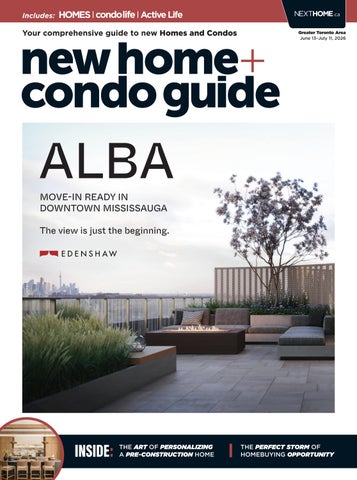
New Home + Condo Guide – Greater Toronto Area – June 13, 2026
44 Tarion Report
Buying a new home?
Understanding the purchase agreement is the place to start 46 TRREB Report
The housing market story: How it’s unfolding
52 Age Strong
Muscle, mobility and testosterone:
The health factors men often overlook
54 Simply Tech
Total-room, 360-degree cooling with the Woozoo 360
58 Feeling Home
Leave your running shoes at the front door FEATURES
16 Democrat Homes
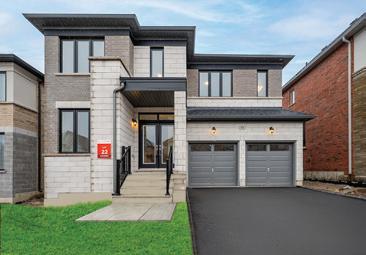
Forest Heights Estates in Horseshoe Valley – Phase 1 & 2 sell-off
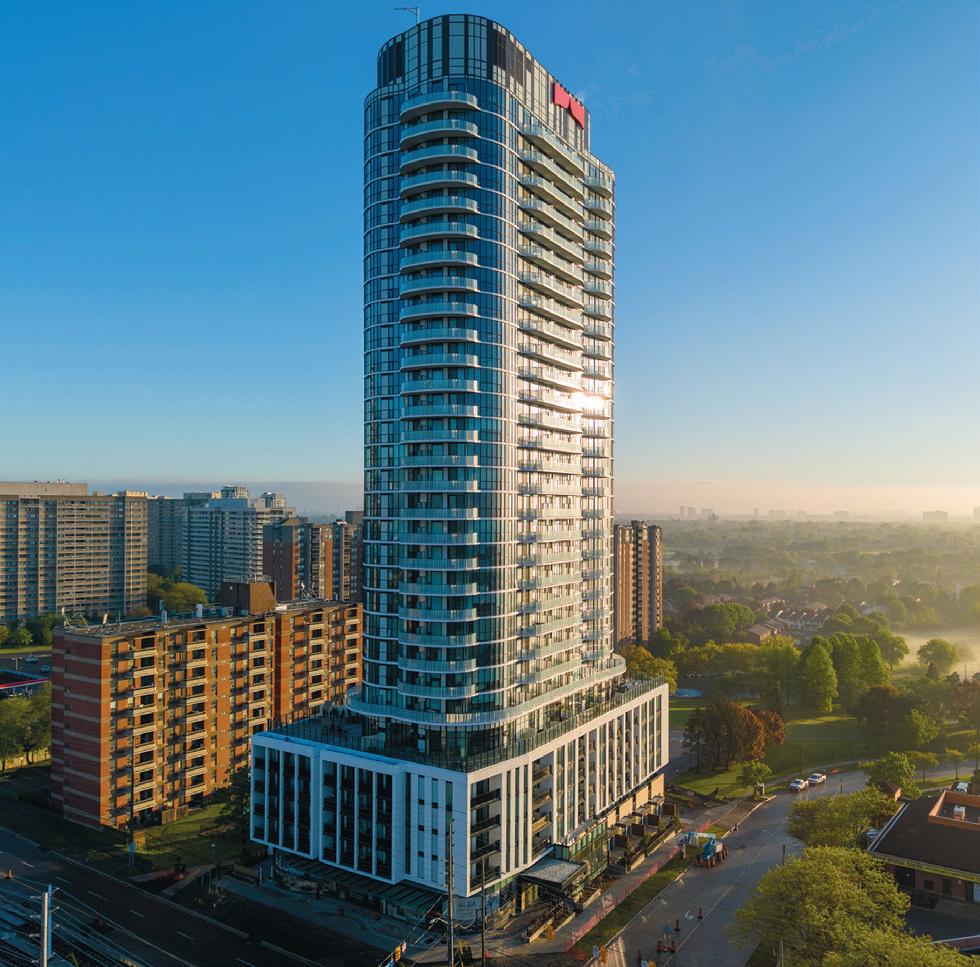
22 ALBA by Edenshaw Developments
Choosing condo amenities that truly matter and add value
28 Horseshoe Valley
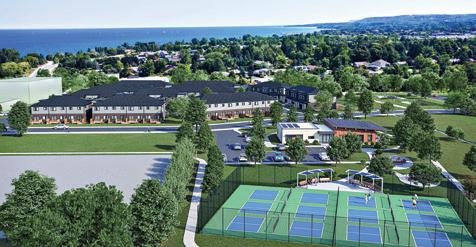
Natural, picturesque and a place to put down roots
34 In Conversation With Kimberly Jeffrey D’Angelo and Carmen Gerasolo, The Greenheart Group
50 Niagara
Come for the Falls, stay for the lifestyle INSPIRATION 26 Home Design
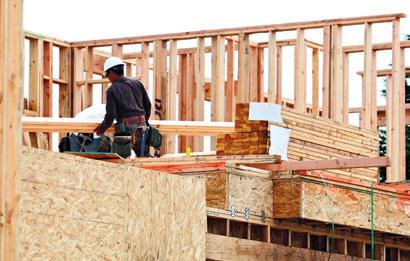
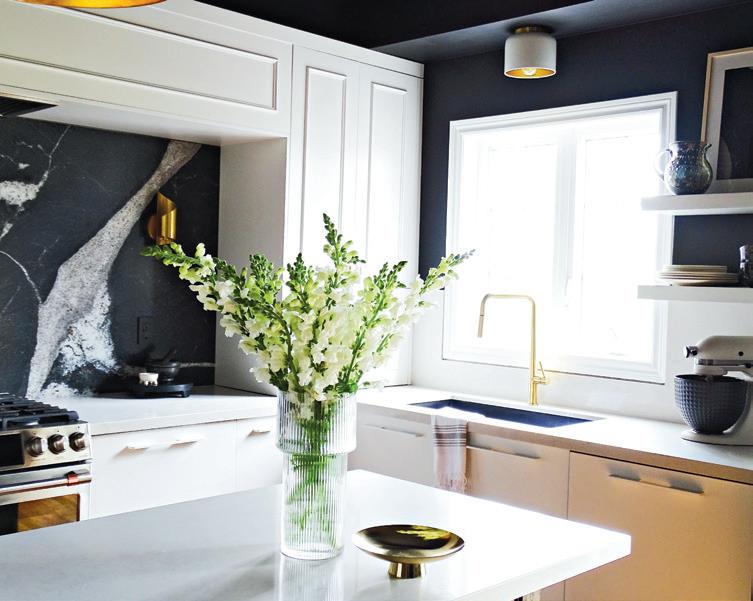
The art of personalizing a pre-construction home
56 Interior Design
Downsizing with confidence
60 Personal Space
The rules of design: Ones to break and ones to follow
Housing
HOME DESIGN | MARIAM ABOUTAAM
An award-winning interior designer, Mariam Aboutaam is Director, Sales and Marketing, Interior Design at Kylemore, Markham, Ont., a builder known for master-planned communities and luxury homes. kylemoreliving.com.
PERSONAL FINANCE | JESSE ABRAMS
Jesse Abrams is Co-Founder at Homewise, a mortgage advisory and brokerage firm based in Toronto. thinkhomewise.com
TARION REPORT | PETER BALASUBRAMANIAN
Peter Balasubramanian is President and CEO of Tarion. tarion.com.
WESTERN VIEW | MIKE COLLINS-WILLIAMS
Mike Collins-Williams, RPP, MCIP, is CEO West End Home Builders’ Association. westendhba.ca.
HOME REALTY | DEBBIE COSIC
Debbie Cosic is CEO and founder of In2ition Realty. She has overseen the sale of more than $15 billion worth of real estate. With Debbie at its helm, In2ition has become one of the fastest-growing and most innovative new home and condo sales companies. in2ition.ca
AGE STRONG | DR. JAMES FUNG
Dr. James Fung is a Chiropractor and Principal at Complete Balance Health Centre, Toronto. completebalancehealth.com
REAL ESTATE PRO | BARBARA LAWLOR
Barbara Lawlor is CEO of Baker Real Estate Inc. A member of the Baker team since 1993, she oversees the marketing and sales of new home and condominium developments in the GTA, Vancouver, Calgary and Montreal, and internationally in Shanghai. baker-re.com
STAT CHAT | BEN MYERS
Ben Myers is the President of Bullpen Consulting, a boutique residential real estate advisory firm specializing in condominium and rental apartment market studies, forecasts and valuations for developers, lenders and land owners. Contact him at bullpenconsulting.ca and @benmyers29 on Twitter.
TRREB REPORT | DANIEL STEINFELD
Daniel Steinfeld is President of the Toronto Regional Real Estate Board (TRREB). A Chartered Accountant, he previously served as Vice-President and Chief Financial Officer with the Toronto Argonauts and is a Broker and coowner On The Block Realty.
BILD REPORT | DAVE WILKES
Dave Wilkes is president and CEO of the Building Industry and Land Development Association (BILD), the voice of the home building, land development and professional renovation industry in the GTA. For the latest industry news and new home data, follow BILD on Twitter at @bildgta or visit bildgta.ca
SENIOR MEDIA CONSULTANT Amanda Bell 416.830.2911 amanda.bell@nexthome.ca
EDITORIAL DIRECTOR Amanda Pereira
EDITOR-IN-CHIEF – GREATER TORONTO AREA Wayne Karl wayne.karl@nexthome.ca
CONTRIBUTORS
Mariam Aboutaam, Jesse Abrams, Olivia Bailey, Peter Balasubramanian, Mike Collins-Williams, Debbie Cosic, Dr. James Fung, Anwar Husain, Linda Kafka, Barbara Lawlor, Linda Mazur, Ben Myers, Mimi Pineau, Daniel Steinfeld, Dave Wilkes
Advertising Call 1.888.761.3313 for rates and information. Fax: 1.888.861.5038
Circulation Highly targeted, free distribution network focused on real estate buyers, using street-level boxes and select Canada Post distribution channels across the Greater Toronto Area and surrounding municipalities. Canadian subscriptions 1 year = 13 issues – $70 (inc. HST). Canada Post – Canadian Publications Mail Sales Product Agreement 40065416.
Copyright 2026 All rights reserved. All copyright and other intellectual property rights in the contents hereof are the property of NextHome, and not that of the individual client. The customer has purchased the right of reproduction in NextHome and does not have the right to reproduce the ad or photo in any other place or publication without the previous written consent of NextHome.
Editorial Submissions from interested parties will be considered. Please submit to the editor at editorial@nexthome.ca.
Terms and Indemnification Advertisers and contributors: NextHome is not responsible for typographical errors, mistakes, or misprints. By approving your content and/ or submitting content for circulation, advertisers and contributors agree to indemnify and hold harmless NextHome and its parent company from any claims, liabilities, losses, and expenses (including legal fees) arising out of or in connection with the content provided, including but not limited to any claims of copyright infringement, unauthorized reproduction, or inaccuracies in the content. Advertisers acknowledge that they have the necessary rights, permissions, and licenses to provide the content for circulation, and they bear full responsibility for the content’s accuracy, legality, and compliance with applicable laws upon approval. Contributors acknowledge NextHome reserves the right to omit and modify their submissions at the publisher’s discretion.
CIRCUMSTANCES ALIGNING INTO OPPORTUNITY
WAYNE KARL
EDITOR-IN-CHIEF
New Home + Condo Guide
EMAIL: wayne.karl@nexthome.ca
TWITTER: @WayneKarl
By the time you read this issue of New Home+Condo Guide, the Bank of Canada will have made its latest interest rate announcement, on June 11. And by most accounts, BoC was to again hold its influential overnight rate at 2.25 per cent, where it has been since October 2025.
So, if you were waiting for further interest rate relief before making your homebuying decision, you might be somewhat disappointed.
Other conditions and circumstances in the market, however, are presenting something of a strong buying opportunity for those who are ready.
“For much of the past two years, a significant number of homebuyers have adopted a ‘wait and see’ approach,” industry expert Debbie Cosic writes in her column on page 40. “Rising interest rates, economic uncertainty and constant media headlines forecasting market challenges led many prospective purchasers to delay their plans, hoping for greater clarity before making one of life’s biggest financial decisions.
“Today, however, the market is showing clear signs that buyer sentiment is beginning to shift. As borrowing costs stabilize and confidence gradually returns, many purchasers are recognizing that waiting indefinitely may no longer be the most advantageous strategy. In fact, some of the most compelling opportunities seen in years are emerging across Ontario’s new home market, particularly within the pre-construction sector.”
Indeed, she summarizes, “perfect” market conditions rarely exist. A confluence of other important and influential factors, however, are pointing to a window of opportunity that many have been waiting for.
A number of pieces of content in this issue examine recent developments that are spurring the homebuying market and boosting consumer confidence, notable among them the recent HST rebate on new homes, and other housing policy changes.
Circling back to interest rates, if BoC holding rates further stabilizes borrowing costs, it’s important for buyers to understand that the “rate cut era” has officially closed. “The cutting cycle is done, at least for now,” mortgage expert Jesse Abrams writes in his column on page 20. The (BoC) is widely expected to hold at 2.25 per cent for the near future, and several major economists are now calling for potential rate hikes in the second half of 2026.”
This rate pause being the forecast landscape, Abrams examines whether buyers should explore fixed or variable rate mortgages, breaking down the plusses and minuses of both.
Market conditions may not be perfect, but considering all factors, and with careful planning, they are ripe with opportunity.
NEW LOWRISE HOME SALES SURPASS 10-YEAR AVERAGE
FOLLOWING
INTRODUCTION OF HST REBATE PROGRAM
The enhanced HST rebate program positively impacted the Greater Toronto Area (GTA) housing market in April, as the lowrise sector surpassed its 10-year average for the first time in three years, the Building Industry and Land Development Association (BILD) reports.
While the rebate program has helped boost lowrise sales, it has had a more subdued impact on the highrise sector, as the condominium market continues to struggle, BID says. The need for greater clarity on the implementation of the HST rebate is urgently required to unlock further activity in the market across all product types and to continue the positive progress observed in April.
There was a total of 1,100 new home sales in April, up significantly from the record low of April 2025 but 55 per cent below the 10-year average, according to Altus Group, BILD’s official source for new home market intelligence. Historically, total new home sales for a typical April in the GTA would be 2,418 units based on the previous 10-year average.
“April new home sales across the GTA responded to the new HST rebate program as sales showed a noticeable increase, most noticeably in the single-family sector,” says Edward Jegg, research manager at
Altus Group. “Pricing continued to be competitive, with nearly likefor-like prices before and after the introduction of the rebate –suggesting the full rebate was flowing through to consumers. With the build-up of pent-up demand over the past years, the positive momentum of April is expected to continue and build, especially once prospective buyers have full transparency on the implementation of the HST rebate.”
Condominiums, including units in low, medium, and highrise buildings and stacked townhouses, accounted for 199 units sold in the GTA in April, 88 per cent below the 10-year average.
There were 901 single-family home sales in the GTA in April, a significant year-over-year increase and 21 per cent above the 10-year average.
Total new home remaining inventory in the GTA dipped below the 20,000 mark for the second time in 22 months with 19,044 units for April. This includes 13,331 condominium apartment units and 5,713 single-family dwellings. This represents a combined inventory level of 31 months, based on average sales for the last 12 months.
When sales increase after a prolonged period of very low sales, the months of inventory statistics should be viewed with caution as it is based on dividing present inventory by the average of the past 12 months of sales activity (which have been very low). We anticipate that as sales increase, the months of inventory statistics will decrease rapidly.
“It is evident that it’s a great time to buy a new home as the temporary HST relief in Ontario is working to get homebuyers off the sidelines and into the market,” says Justin Sherwood, chief operating officer at BILD. “The rebate program came into effect on April 1, and seeing the
immediate increase in lowrise sales is a testament to buyer appetite for new homes and greater affordability in the market. The more modest response in the highrise sector will be alleviated once implementation details related to the HST rebate are finalized. It is now imperative the government provide clarity as quickly as possible on the program details, eligibility requirements, appropriate forms and rebate mechanisms to allow builders and buyers to seamlessly implement the HST rebate. Doing this will further enhance the progress we are seeing in lowrise and boost highrise new homes, leading to even greater activity in the market.”
The benchmark price for new condominium apartments in April in the GTA was $1.02 million, remaining at an apparent price floor. The benchmark price for new singlefamily homes was $1.42 million, which was down 7.1 per cent over the last 12 months. These are gross prices, not reflective of any HST rebate, to facilitate a like-on-like comparison with previous years. Purchasers who qualify for an HST rebate would realize additional benefit from this rebate.
In Simcoe County in April, there were 62 single-family new home sales and one condominium apartment sale, with the weighted average price of the single-family new homes in Simcoe County at $1.16 million.
SPRING HOME SALES STRONGER THAN LAST YEAR: TRREB
The Greater Toronto Area (GTA) resale housing market tightened in May 2026 compared to last year, according to the Toronto Regional Real Estate Board (TRREB). Sales increased year-over-year, whereas new listings declined over the same period. As standing inventory has been absorbed, competition between buyers has likely increased in some neighbourhoods. This should see the price trend flatten and ultimately trend upwards in the months ahead.
“Spring sales have been stronger than last year, reflecting improved affordability stemming from lower selling prices and borrowing costs,” says TRREB President Daniel Steinfeld. “Sales are forecast to improve further as we move through the second half of this year. Recovery would be further bolstered by positive news on the trade front along with an easing of geopolitical tensions and related uncertainty.”
“Inventory levels trended lower over the past year, but buyers continued to have substantial negotiating power through the spring, helping with affordability,”
adds TRREB Chief Information Officer Jason Mercer. “Looking ahead, if sales strengthen further relative to listings, selling prices will level off and even start to grow as we move into 2027.”
GTA realtors reported 6,583 home sales through TRREB’s MLS System in May 2026 – an increase of 6.3 per cent compared to May 2025. New listings amounted to 17,698 – down by 18.9 per cent year-over-year.
On a seasonally adjusted basis, May 2026 home sales were up by 10 per cent month-over-month compared to April 2026 and new listings were down by 2.1 per cent – pointing to a monthly tightening of market conditions as well.
The MLS Home Price Index Composite benchmark was down by 6.7 per cent year-over-year in May 2026. The average selling price, at $1.06 million, was down by 4.6 per cent compared to May 2025.
On a month-over-month seasonally adjusted basis the average selling price was up slightly compared to April 2026 and the MLS HPI Composite edged slightly lower.
“TRREB supports Bill 98, the Building Homes and Improving Transportation Infrastructure Act of 2026, which contains a simple but critical truth: If we want more attainable housing, we need to make it easier, faster and less expensive to build homes,” says TRREB Chief Executive Officer John DiMichele.
“Many of the concrete measures contained in Bill 98 align with recommendations in TRREB’s recently released policy report, Removing Roadblocks: Tackling Municipal Barriers to Housing Supply and Affordability in Ontario.”
2026 BILD AWARDS CELEBRATE HOMEBUILDING EXCELLENCE IN THE GTA
The Building Industry and Land Development Association (BILD) recently recognized excellence in the design, construction, marketing and sales of new homes in the Greater Toronto Area (GTA) at its 2026 BILD Awards Gala.
BILD presented 52 awards in the categories of architecture, design, marketing, people and sales, and in the prestigious project and builder categories. A group of 46 expert judges from across North America determined the winners from over 500 submitted entries.
“The BILD Awards gives us an opportunity to recognize and appreciate the achievements of all the incredible people who work in our vast industry,” says Dave Wilkes, BILD president and CEO. “From marketers to builders, to designers and architects – each person plays an important role in ensuring we continue to see excellence in homebuilding, and it is an honour to celebrate them every year.”
The prestigious Lifetime Achievement Award was presented to two individuals this year.
David Feldman, founder and chairman of Camrost Felcorp, and Eddie Weisz, co-founder and president of Paradise Developments, received BILD’s Lifetime Achievement Award. It is the highest honour BILD can present to members, recognizing those who
have dedicated a lifetime to the association and the industry and demonstrated significant leadership and commitment to the greater good.
Feldman has a city-building career spanning more than five decades, helping shape the GTA and create a lasting contribution to Ontario’s built environment through thoughtful, community-oriented development.
Weisz has a six-decade development career and has overseen the construction of more than 15,000 homes and master-planned communities throughout the GTA. Both winners exemplify visionary leadership, unwavering integrity and a sustained commitment to the public interest, BILD says.
Tridel was named Home Builder of the Year, Mid/Highrise, while Treasure Hill received the title of Home Builder of the Year, Lowrise. The Home Builder of the Year categories recognize builders who set the standard for the rest of the industry through their professionalism and dedication to excellence. A key component of the judging process is a customer satisfaction survey, which ensures that the end user’s experience is factored into the award criteria.
THE WINNERS OF THE TOP PROJECT AND BUILDER CATEGORIES
INCLUDE:
• Green Builder of the Year, Lowrise: Great Gulf
• Green Builder of the Year, Mid/ Highrise: Tridel
• Angelo DelZotto Fearless Innovator Award: Times Group
In addition, Menkes Developments’ The Whitfield, designed by Giannone Petricone Associates Inc. Architects, Figure3 and AdHoc Studio, received the People’s Choice Award, voted on by the public.
For the complete list of BILD Award winners, visit bildawards.com.
David Feldman Eddie Weisz
CANADIANS DOWNSIZING WEDDING DREAMS IN FAVOUR OF HOMEBUYING PLANS: SURVEY
A recent Royal LePage survey, conducted by Burson suggests a majority of Canadian couples are willing to skip an expensive wedding celebration to afford the purchase of a home – or wish they had.
Nationally, of those planning a wedding or who have someone in their life who is, 79 per cent of respondents say they would consider requesting money for a down payment on a home instead of a traditional wedding gift (37 per cent say definitely and 42 per cent say maybe). Of those respondents who are already married, 57 per cent say they would have liked to request money for a down payment on a home instead of a wedding gift; 10 per cent say they did in fact request money for their wedding.
“Few milestones carry more weight than buying a home or getting married,” says Anne-Elise Cugliari Allegritti, vice-president of research and communications, Royal LePage. “As the cost of living puts pressure on household budgets across the country, more Canadians are finding themselves having to make difficult trade-offs between the two – and in many cases, it’s the wedding that gets scaled back.”
“There is no one-size-fits-all answer to the question ‘rings or real estate?’. Every couple is different, and so are the circumstances under which they navigate these important life events. However, rising living costs – extending well beyond housing alone – are causing many Canadians to reassess how they prioritize major celebrations and long-term financial goals,” she adds.
“In the past, tradition may have dictated first marriage, then mortgage. Today, many couples are having to balance their desire for a once-in-a-lifetime wedding celebration with the reality of building equity and securing their financial future. For some, that means
prioritizing getting into the housing market before walking down the aisle. Many people are recognizing that while a wedding is a beautiful one- or two-day event, a home is a lifetime investment.”
When asked if they would forgo or significantly scale back a wedding to put money towards a down payment on a home, 46 per cent of respondents across Canada say definitely; 36 per cent say maybe. When thinking back to their own wedding, more than half (55 per cent) of married respondents say they would have forgone or significantly scaled back a wedding to put money towards a down payment on a home.
“The fear of being priced out of the housing market, especially in the most expensive markets across southern Ontario and British Columbia’s lower mainland, has become a more powerful motivator than the pressure to have a perfect wedding,” says Cugliari Allegritti.
In Ontario, of those planning a wedding or who have someone in their life who is, 40 per cent of respondents say they would definitely request money for a down payment on a home instead of a traditional wedding gift; 44 per cent say maybe.
Of those respondents who are already married, 57 per cent say they would have liked to request money for a down payment on a home instead of a wedding gift; 13 per cent
say they did in fact request money for their wedding.
“In Toronto, many couples are choosing to purchase a home before getting married,” says Tom Storey, sales representative and head of The Storey Team, Royal LePage Signature Realty in Toronto. “With the cost of entering the housing market among the highest in Canada, many buyers are prioritizing saving for a down payment over spending heavily on a large or luxury wedding. At the same time, moderating home prices have created more accessible opportunities for renters who have been waiting for the right moment to enter the market.”
Storey adds that condos act as an important first step into homeownership for many first-time buyers, with plans to eventually move into a larger property as their needs evolve and they build equity over time.
HOUSING MARKET
GTA new home sales see improvement in March but still below historical averages
New home sales in the Greater Toronto Area (GTA) saw positive improvement year-over-year in March 2026, though sales continue to fall far short of 10-year averages, the Building Industry and Land Development Association reports.
CONDO COMMUNITY
Central Park nature-inspired community is rising in the Bayview Village neighbourhood
Construction of Amexon’s The Residences at Central Park is well underway on Sheppard Avenue in the east end of the prestigious Bayview Village neighbourhood. Phase 1 sold out ahead of schedule, and construction of the first tower is completed to its full height of 31 storeys.
BUILDER PROFILE
Sinclair Homes – more quality and less compromise
Sinclair Homes has followed one rather simple – but important – credo since launching in 1979: To exceed standards and accentuate details. For its homebuyers and for the way it builds its homes. Specializing in single-family homes for families, empty nesters and more, Sinclair Homes is known for integrity, experience in the industry and an undying commitment to craftsmanship.
ANALYSIS
Slow(ish) and steady in the GTA new home and resale markets
For those of you who have been patiently waiting for the right moment to buy a new home, now may be the time to move off the sidelines. Or more specifically – it might be the perfect time. Recent changes to housing policy from the federal and provincial governments are already having an impact in boosting buyer confidence and swaying those who have been hesitating to act sooner than later.
ANALYSIS
Historic changes to development charges funding will impact all municipalities differently
When the provincial and federal governments announced on March 30 a new joint program designed to reduce development charges (DCs) on new homes, those in the housing industry applauded the leadership the governments showed to address the collective burden of fees, taxes and charges on new homebuyers in Ontario.
$849,900...Yes $849,900!
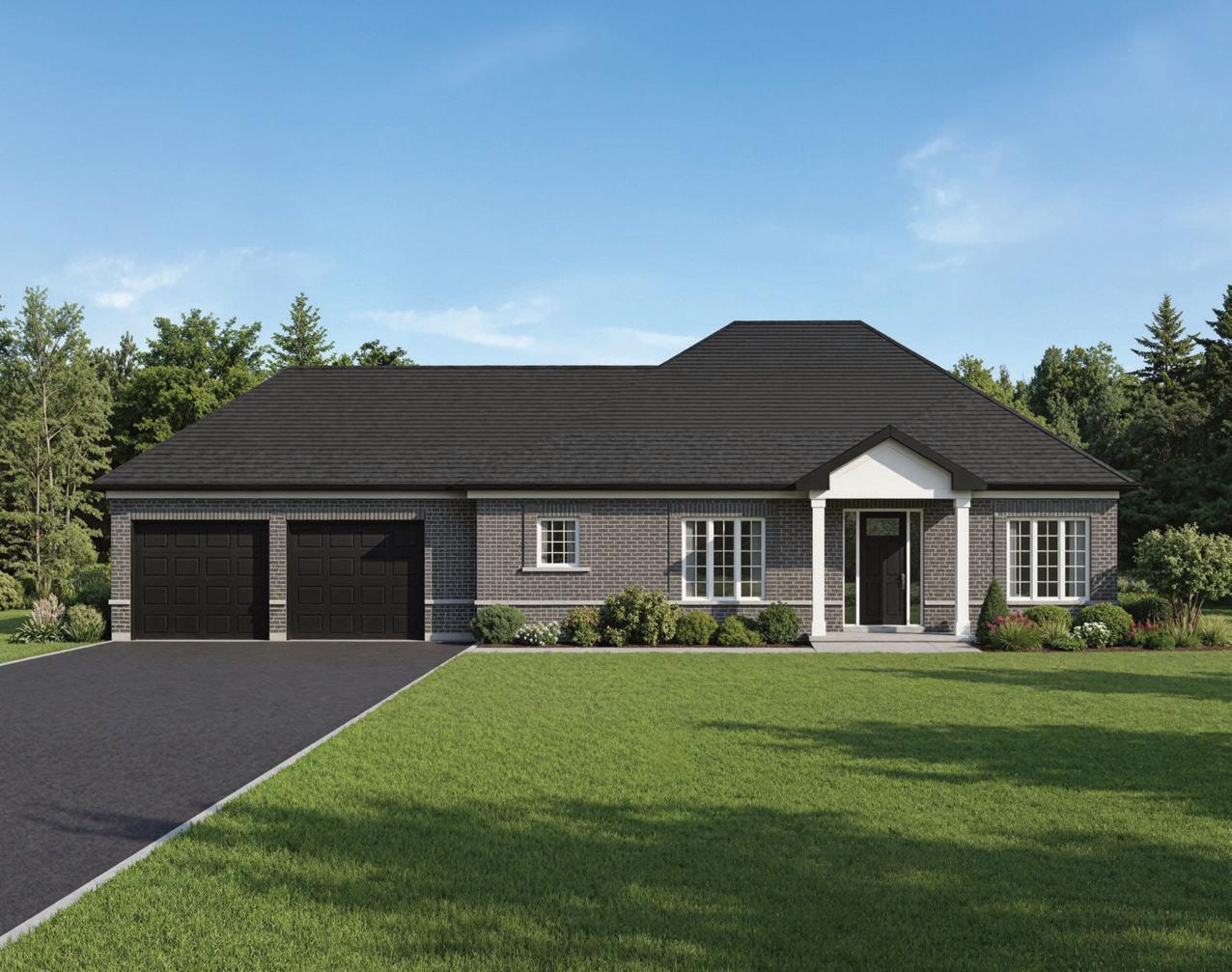
Forest Height Estates in Horseshoe Valley offers so much home for your money.
- Bungalow & 2-Storey
- Brick and Stone - Ravine 1/2 Acre+ Lots -Top Features & Amenities - Much More
Hurry! REGISTER NOW
FOREST HEIGHTS ESTATES IN HORSESHOE VALLEY
PHASE 1 & 2 SELL-OFF
Forest Heights Estates is a oneof-a-kind large lot community surrounded by protected forests and greenspace. There are only 10 lots remaining in the almost completed first two phases. These fortunate “leftovers” are beautiful, beautiful lots but stand in the way of completing Horseshoe Valley’s most exclusive and spectacular collection of highend homes.
That means a once-in-a-lifetime opportunity to make a one-on-one deal with the builder that will save you hundreds of thousands of dollars… and will lead to a lifetime of happiness for your family. Will you save on prices? Yes. Will you save on walkouts
and lot premiums? Absolutely. Will you get bonus dollars and bonus upgrades? One hundred per cent or more.
How do you get started? The process is simple – choose your lot, choose your dream home design and then make a deal, your deal directly with Mark Palumbo, Democrat Homes’ knowledgeable sales manager.
But why choose Forest Heights Estates in the first place? Well, it is truly the perfect community, with the right setting, the right family atmosphere, the right home designs and features, and all at the extremely right prices. And with the Phase 1 and
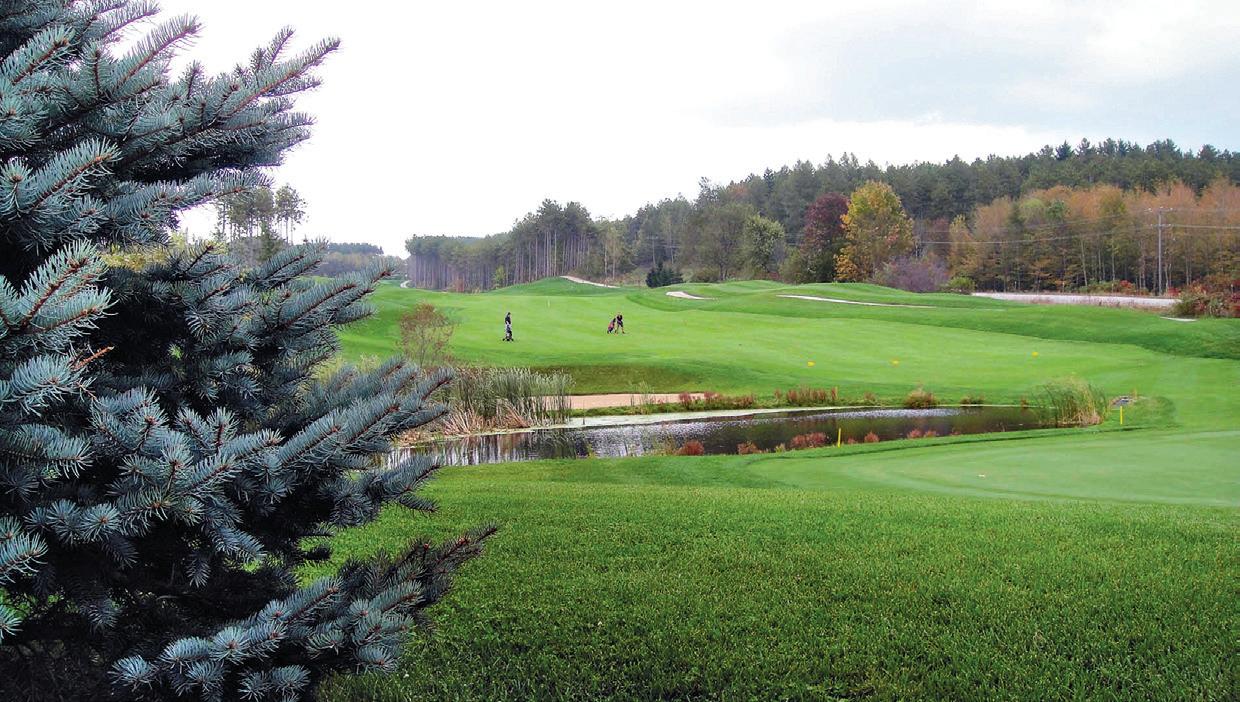
2 sell-off, now is the right time to see why Forest Heights is right for you. Start by adding up all the pluses. Start with the private location in picture postcard Horseshoe Valley, just one hour north of Toronto. This location offers the kind of setting that is very difficult to find in today’s world of crowded, housing intensification. It’s definitely different here. The quiet cul-de-sacs and relaxed roadways are literally surrounded by nature, with mature trees and protected greenspace providing the perfect backdrop for your new home. The green theme continues with a lush golf course and famed ski hills just a five-minute drive away, while hiking
trails and a spacious park are within walking distance. Schools and places of worship are close at hand, as are the conveniences of Barrie and Orillia – just a 20-minute drive in either direction. There is no doubt that this is the perfect place to raise a family… or to really enjoy your adult years in the most ideal setting of all! Forest Heights Estates offers the right location.
This is a master-planned community. There are only 80 homes here, on very rare halfacre to one-acre-plus ravine lots providing highland and valley views. The distance between the homes means you’re far enough apart to ensure privacy, but close enough to embrace the benefits of a shared neighbourhood. Each estate lot is unique and sizeable, offering you the opportunity to add a patio, playground, swimming pool or almost anything else your lifestyle demands. And that’s just in your backyard. Beyond that every lot has trees, all kinds of gorgeous trees. Activities here abound, both in summer and in winter. Now this is your immediate community, but what about the larger community outside your cosy street? Whether you have an entire brood or are happy empty-nesters, rest assured that the things-to-do, amenities, clubs, social events and whatever else you require are also close at hand.
Forest Heights is the right community for you and yours… especially at the lower than low prices of the Phase 1 and 2 sell-off.
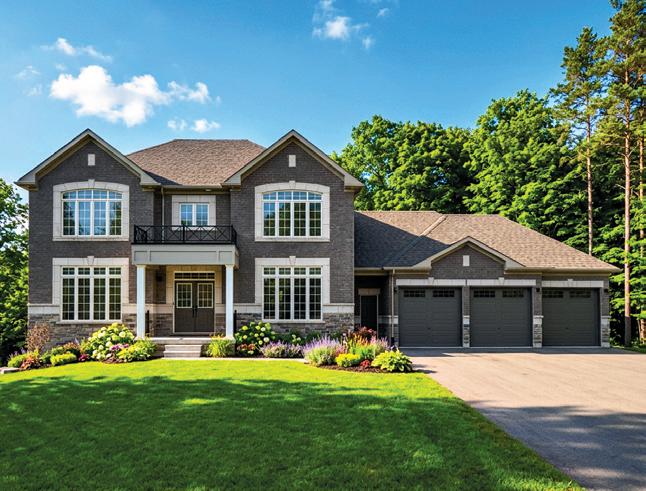
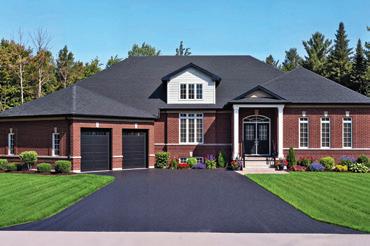
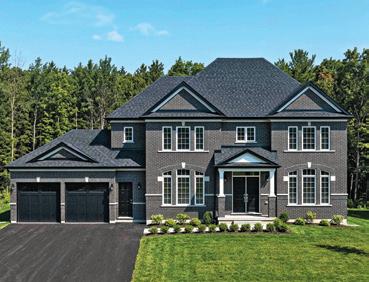
But what is the most important part of this special opportunity? Your new home of course. We have so many designs to choose from, to fit your lifestyle and your budget. Which do you prefer, a bungalow or two-storey? Both layouts are proven winners with various square footages to live in and grow in. Now select two to four bedrooms, two- or three-car garages, walkout or standard lot, as well as fantastic features and finishes. You will also appreciate the endless choices you can make to personalize your home. Go large or stick, with the standards; it’s all good. Brick construction, half-acre lot, carefree vinyl windows, two- or three-car garage, modern kitchens, main floor laundry, 30-year shingles and the list goes on. Forest Heights Estates has the right designs for you.
Most exciting, you can be among the first to own one of two new models at the very low price point. Meet The Elegance, a perfect 1,150-sq.-ft. two-bedroom, twogarage bungalow with all the bells and whistles starting at an incredible $849,900. Imagine owning your own piece of paradise, with a solidly built, technologically superior, aesthetically pleasing detached bungalow from a
very affordable $849,900. Our second new model is called The Essence, and it offers 1,320 sq. ft. of comfortable living, also at a very reasonable price point of $949,900. Here you’ll discover a modern open concept, main floor laundry, large windows and convenient single-floor layout. Forest Heights gives you everything you want in a new luxury home at incredible price points.
So, don’t wait. We have only 10 infill lots available. If you wish to take advantage of a historic opportunity to own a forever home, in an exclusive community on a large estate lot, then this is truly the right time to buy a new home in Forest Heights Estates. Please register to find out more about the Phase 1 and 2 sell-off. Come and see the new model home and find your forever home in Forest Heights Estates.
To take advantage of the Phase 1 and 2 sell-off, and speak directly with Sales Manager Mark Palumbo, register at democrathomes.com.
CITY OF VAUGHAN
IS LEADING BY EXAMPLE ON DEVELOPMENT CHARGES
DAVE WILKES
The City of Vaughan made a historic move this spring – one that has never occurred in the Greater Toronto Area (GTA) as long as development charges have been in use and, to my knowledge, has only occurred in North Bay and for a period of time in St. Catharines. With respect to those communities, never in an Ontario municipality with Vaughan’s population base.
Led by Mayor Steven Del Duca and the city council, Vaughan has temporarily reduced all development charges (DCs) to
zero, I repeat zero dollars, for the city portion of the DCs for shovelready residential housing projects. In addition, the city is also further reducing development fees on new housing applications.
Anyone who has ever heard Mayor Del Duca speak on this subject (as I have many times), knows why Vaughan is a leader amongst Ontario municipalities on DCs. The mayor is a father and believes very strongly that future generations should have the ability to live in the communities where they grew up. He understands that for that to happen, we need both housing supply and affordability – two factors that development charges have an impact on.
Development charges are a one-time upfront payment paid by developers to municipalities
to help fund infrastructure and service-related growth; for example, water and wastewater systems, roads, parks and ambulances. These charges are then passed on to the new homebuyer as a cost embedded into the price of a new home. In two-tier municipalities, both the city and the region (York in this case) have the ability to levy development charges.
The cost of DCs has risen by unprecedented levels, with some municipalities experiencing a 1,000-per-cent increase over the last 15 years.
Just two short years ago, Vaughan had some of the highest DC rates in the GTA. Now, for a period of time and for projects that are ready to go, the city portion of the DC rate will be zero.
While the Region of York still levies development charges, the practical implication is that for larger apartment units, these DCs have been reduced from more than $120,000 per unit to just over $60,000 now.
This new zero-DCs policy should have an immediate impact on housing growth in Vaughan.
Temporarily reducing development charges to zero for shovel-ready residential projects means housing will become more affordable for Vaughan new homebuyers. It also means that housing project starts and completions will increase, and project viability will strengthen. More projects will move from approvals to construction to housing supply quicker.
The DCs exemption is in effect retroactively from Feb. 25, 2026 until Oct. 31, 2027. Importantly, this period captures the entirety of a traditional construction season to fully maximize support for additional housing starts.
In addition to reducing DCs to zero for residential housing projects, Vaughan city council has also adopted further reductions in the city’s development fee’s structure. They have introduced a 25 per cent reduction on all engineering and planning fees for residential applications, and a 100-per-cent reduction on the same fees for purpose-built, non-luxury market rental applications. These reductions will also run until Oct. 31, 2027.
As a result of these changes, Vaughan council staff are also developing a detailed policy framework to inform the DCs exemption. This paves the way for further growth opportunities and a chance for other municipalities to draw from.
I applaud Mayor Del Duca and the City of Vaughan council for taking these steps to reduce DCs. In doing so, they have shown true leadership and a commitment to create thriving communities in Ontario.
Working collaboratively and proactively to advance much-
needed housing is what is required to support growth, especially at a time where economic uncertainty and affordability pressures are top of mind for Ontarians.
We are seeing a collective push from all levels of government to address the housing crisis in Canada. It is vital that leaders continue to take present-day action to safeguard future generations, and perhaps what we need are more parents such as Mayor Del Duca in elected positions to truly make a difference.
Dave Wilkes is President and CEO of the Building Industry and Land Development Association (BILD), the voice of the homebuilding, land development and professional renovation industry in the GTA. For the latest industry news and new home data, follow BILD on Twitter, @bildgta or visit bildgta.ca.
+MORE CONTENT ONLINE nexthome.ca
“
” Temporarily reducing development charges to zero for shovelready residential projects means housing will become more affordable for Vaughan new homebuyers.
FIXED VS VARIABLE
IN A ‘RATE PAUSE’ WORLD
JESSE ABRAMS
For the past two years, the fixed vs variable debate felt like it had an obvious answer. Rates were falling, the Bank of Canada was cutting aggressively, and anyone who locked in a five-year fixed in 2023 or 2024 was quietly kicking themselves by the time 2025 rolled around.
That story is over. And if you are getting a mortgage or renewing in the next six months, you need to understand why the calculus looks meaningfully different today than it did even 12 months ago.
THE ‘RATE CUT ERA’ HAS OFFICIALLY CLOSED, FOR NOW
The Bank of Canada cut its overnight rate seven times between mid-2024 and early 2026, bringing it down from five per cent all the way to 2.25 per cent. For variable-rate holders, that was a gift. Monthly payments dropped, equity grew faster, and the “variable wins in the long run” crowd was vindicated, at least temporarily.
But the cutting cycle is done, at least for now. The Bank is widely expected to hold at 2.25 per cent for the near future, and several major economists, are now calling for potential rate hikes in the second half of 2026. The Iran conflict has driven oil prices close to US$100 per barrel, bond yields have jumped by
35 to 40 basis points since the spring, and Canada’s headline inflation has already ticked back up to 2.8 per cent.
The “wait and see” era that borrowers enjoyed on the way down now carries real risk on the way back up.
SO WHAT DOES THAT MEAN FOR FIXED RATES RIGHT NOW?
The bond market, which is usually what determines where rates are going, has been sending a clear signal: Five-year Government of Canada bond yields are expected to rise from around 2.80 per cent at the start of 2026 to potentially in the high three-per-cent range by year-end. In plain language: Fixed rates are most likely heading higher, not lower.
As of early June, the best five-year fixed rates available through brokers are sitting in the low four-per-cent range. That number is likely to inch up, not down, over the coming months, unless the Iran war ends faster than expected.
If you are waiting for fixed rates to fall back to three per cent before you pull the trigger, you may be waiting for a train that is not coming.
THE HONEST CASE FOR VARIABLE RIGHT NOW
I want to be fair here because the variable side still has genuine merit for the right borrower.
Variable rates are currently sitting in the mid three-per-cent range, meaningfully cheaper than fixed. If the Bank of Canada holds through year-end, and if the Iran situation deescalates and energy prices soften, that spread is money in your pocket month over month.
The variable argument also still works if you have a shorter horizon. Buying a property, you plan to sell or refinance in two to three years? You probably do not want to be locked into a five-year fixed with a potentially ugly penalty if you need to break it early.
The pro: Lower payments today. Real savings if rates stay flat or fall.
The con: You are essentially betting that the Bank does not hike. And based on market volatility, nobody has a crystal ball.
My take: Variable still works for disciplined borrowers with the cash flow to absorb volatility. If you would lose sleep over a $300 per month increase over six months, variable is not the right product for you right now.
THE HONEST CASE FOR FIXED RIGHT NOW
Locking in a fixed rate today means you know exactly what your payment will be for the next two, three or five years. In a market where hikes are back on the table and geopolitical shocks
are genuinely unpredictable, that certainty has a real dollar value, even if you cannot put a number on it.
The argument for a shorter fixed term, two or three years rather than five, is also worth considering seriously. A three-year fixed allows you to ride out the current uncertainty and potentially catch a better rate environment by 2029 without the exposure of a fully open variable.
The pro: Payment certainty. No exposure to hike risk. Peace of mind, which is underrated as a financial benefit.
The con: If rates fall faster than expected, say, a sharp global recession in 2027, you are locked in above market, and breaking a fixed mortgage has significant penalties.
My take: For most Canadians renewing or buying right now, a two or three-year fixed is the sweet spot. You get stability without committing to a full five years in a rate environment that remains genuinely uncertain. I’m renewing in August, and taking a three-year fixed.
THE QUESTION NOBODY ASKS BUT SHOULD
Before you decide between fixed and variable, ask yourself one more question: What is the penalty to break this mortgage if my circumstances change?
Variable-rate penalties are typically three months of interest, straightforward and predictable. Fixed-rate penalties are calculated using the “Interest Rate Differential,” which at some lenders can add up to tens of thousands of dollars if rates have moved significantly since you signed.
A 4.1-per-cent fixed rate from a major bank with a punishing IRD penalty is not the same product as a 4.1-per-cent fixed rate from a monoline lender with a fair break clause. The rate is the same. The mortgage is not.
A good broker will walk you through that comparison before you
“ ” The “wait and see” era that borrowers enjoyed on the way down now carries real risk on the way back up.
sign anything. If they are not bringing it up unprompted, ask.
THE BOTTOM LINE
The fixed vs variable debate is not a math problem with one right answer. It is a risk-tolerance conversation that looks completely different today than it did in 2024.
If you are renewing in the next six months: Start the conversation now. Lock in a rate hold at today’s levels while you shop, because fixed rates have an upward bias between now and year-end.
If you are buying: Do not let the variable discount seduce you if your budget cannot handle volatility. The spread between fixed and variable has narrowed considerably, and the risk profile of variable has shifted.
Either way: Get a second opinion before you sign and reach out to a brokerage such as Homewise to ensure you are getting your best option. The difference between the right mortgage and the convenient mortgage could easily be worth $10,000 to $15,000 over your next term.
The rate environment has changed. Make sure your decision reflects that.
Jesse Abrams is Co-Founder at Homewise, a mortgage advisory and brokerage firm. thinkhomewise.com
+MORE CONTENT ONLINE nexthome.ca
ALBA BY EDENSHAW
BEYOND THE SUITE: CHOOSING CONDO AMENITIES THAT TRULY MATTER AND ADD VALUE
When buying a new condominium, buyers often focus first on square footage, layout and finishes. But increasingly, amenities play just as important a role in both day-today living and long-term property value. The right mix of amenities can support wellness, productivity, convenience and social connection, while poorly planned spaces may add little more than higher maintenance fees.
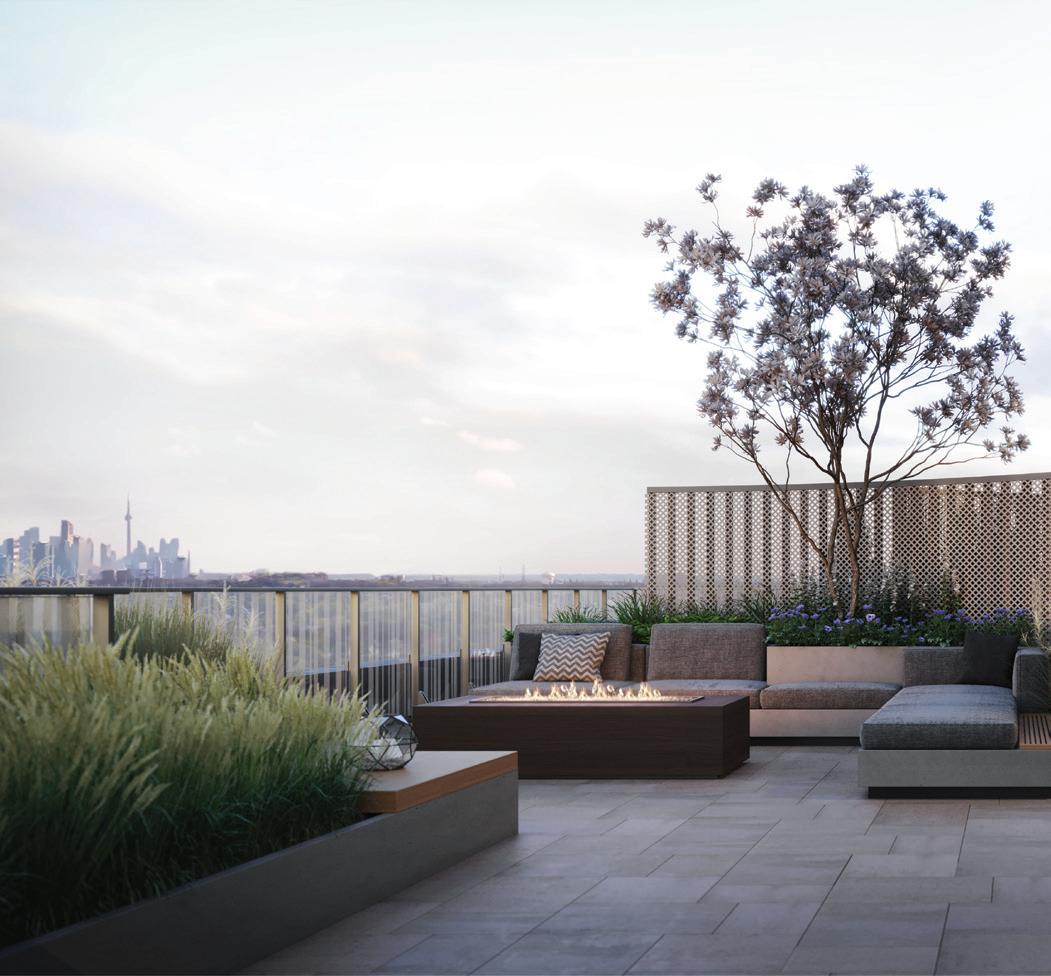
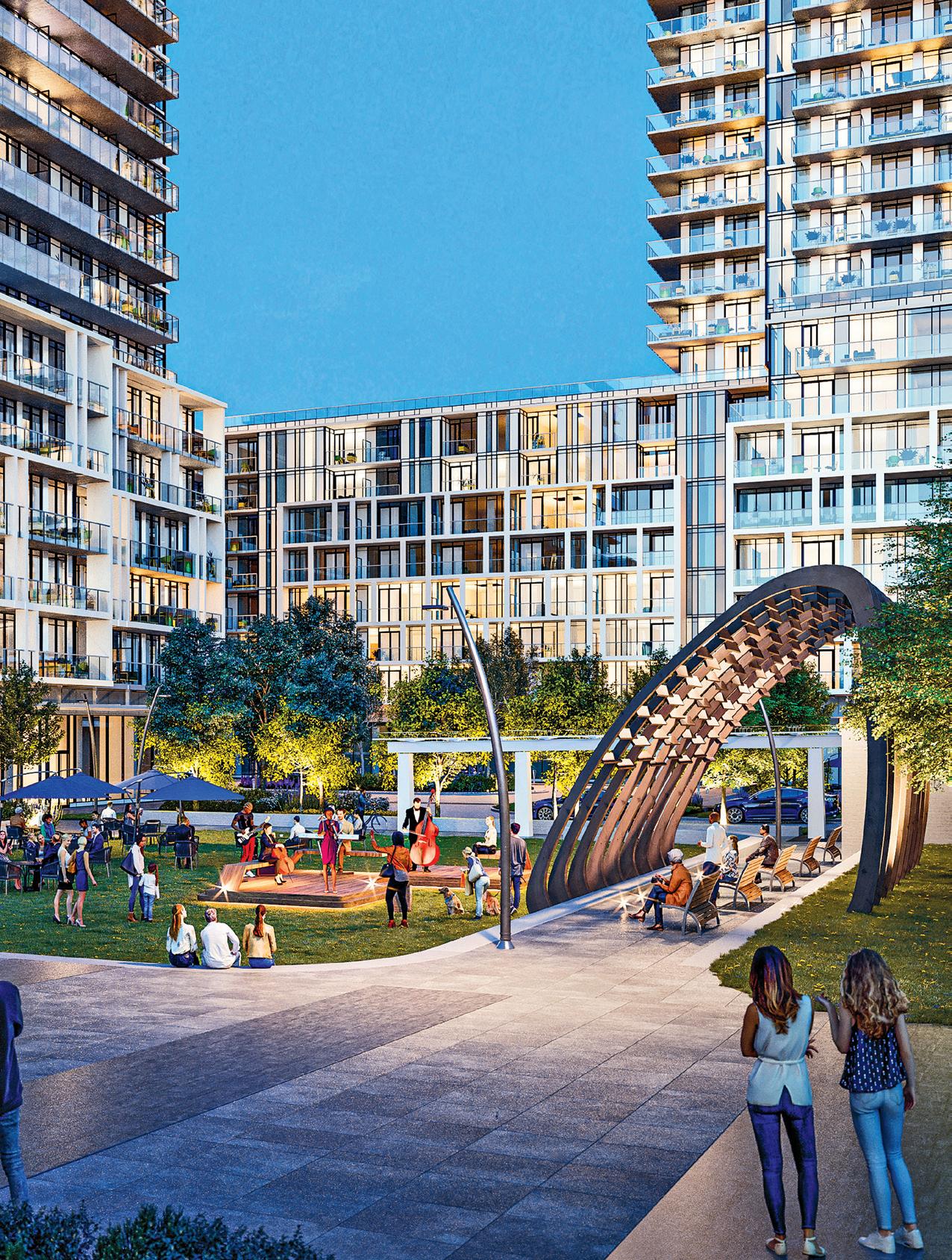
At ALBA, Edenshaw Developments’ newly completed community in downtown Mississauga, every
amenity was designed with everyday functionality in mind. Working alongside Core Architects and Cecconi Simone, the developer focused on creating spaces residents would genuinely use, not simply admire during a sales tour. The result is a thoughtfully curated collection of amenities designed to support modern living while fostering a stronger sense of community.
Wellness amenities continue to rank among the most sought-after features. A quality fitness facility can eliminate the need for external gym
membership while making healthy fitness routines more accessible. A condo gym should be fully equipped to accommodate all fitness styles and with enough equipment to avoid wait times during peak workout hours.
Outdoor amenities are also increasingly desirable, and ALBA delivers with terrace lounges, outdoor barbecue and dining areas, allowing residents to enjoy both the weather and unobstructed views of Lake Ontario and the Toronto skyline. It is also important for the buyer to think about hobbies and interests,
and if they’re able to accommodate them in their new home. In this new Edenshaw community, a Maker’s Studio has been created as a haven for residents with creative hobbies. From potting and painting to furniture repair, this versatile space was created for messy activities. A Demonstration Kitchen is available for aspiring or visiting chefs to present their techniques and recipes.
Pet owners and families will pay close attention to lifestyle-specific amenities. A kid’s play area with a connected outdoor space provides a fun change of surroundings to
help kids burn off energy and be entertained beyond screens. ALBA’s Pet Spa and Dog Run is a must have when there isn’t enough time for a long ravine walk and the dog needs some fresh air and exercise.
A co-working amenity separates work-life from home-life. With a mixture of private workstations, open spaces as well as boardrooms, ALBA’s impressive Co-Working Lounge accommodates plenty of work styles. Incredible views of Lake Ontario await those who need to spark creativity with some productive procrastination (window gazing).
CRAFTING COMMUNITIES
The Edenshaw Crafting Communities program is designed to transform amenities into moments of connection. Through a series of thoughtfully curated experiences, residents are introduced not only to their new home amenities, but also to the people who share it. From creative paint nights in the Maker’s Room to familyfriendly bingo in the Kids’ Play Area and relaxed wine tastings in the Fireplace Lounge, each event fosters a sense of warmth, belonging, and community spirit.
Convenience and safety amenities can add tremendous value, 24/7 concierge service, parcel room, secure bike storage, EV station and smart building technology such as Edenshaw Elevated, all contribute to a smoother everyday experience. Local area amenities such as easy access to transit, major highways and airports are high priorities for buyers. ALBA is located steps away from the soon to be opened Hazel McCallion LRT, as well as a short walk to the Cooksville
GO Mobility Hub. Easy access to seven major highways and less than 12-minute drive to Toronto Pearson International Airport, make ALBA one of the most connected addresses in downtown Mississauga.
Amenities can also influence long-term resale value. Spaces that support flexible lifestyles such as co-working lounges, wellness facilities, pet amenities and outdoor gathering areas continue to appeal to a broad range of buyers from
CONDO AMENITIES CHECKLIST
Before you buy, ask:
• Does this amenity improve my everyday lifestyle?
• Will I realistically use it regularly?
• Will future buyers also value it?
• Does it have broad resale appeal?
• Are the amenities large enough for the size of the building?
• Will the amenity age well over time?
• Do the amenities accommodate the needs of my family and pets?
• Are the maintenance costs reasonable for what’s offered?
young professionals to downsizers and growing families. As remote work and hybrid schedules become more common, buyers are increasingly prioritizing a building that extends functionality beyond the suite itself.
For more information, visit albacondos.com.
BEYOND THE FLOORPLAN:
A PRE-CONSTRUCTION HOME personalizing THE ART OF
by MARIAM ABOUTAAM
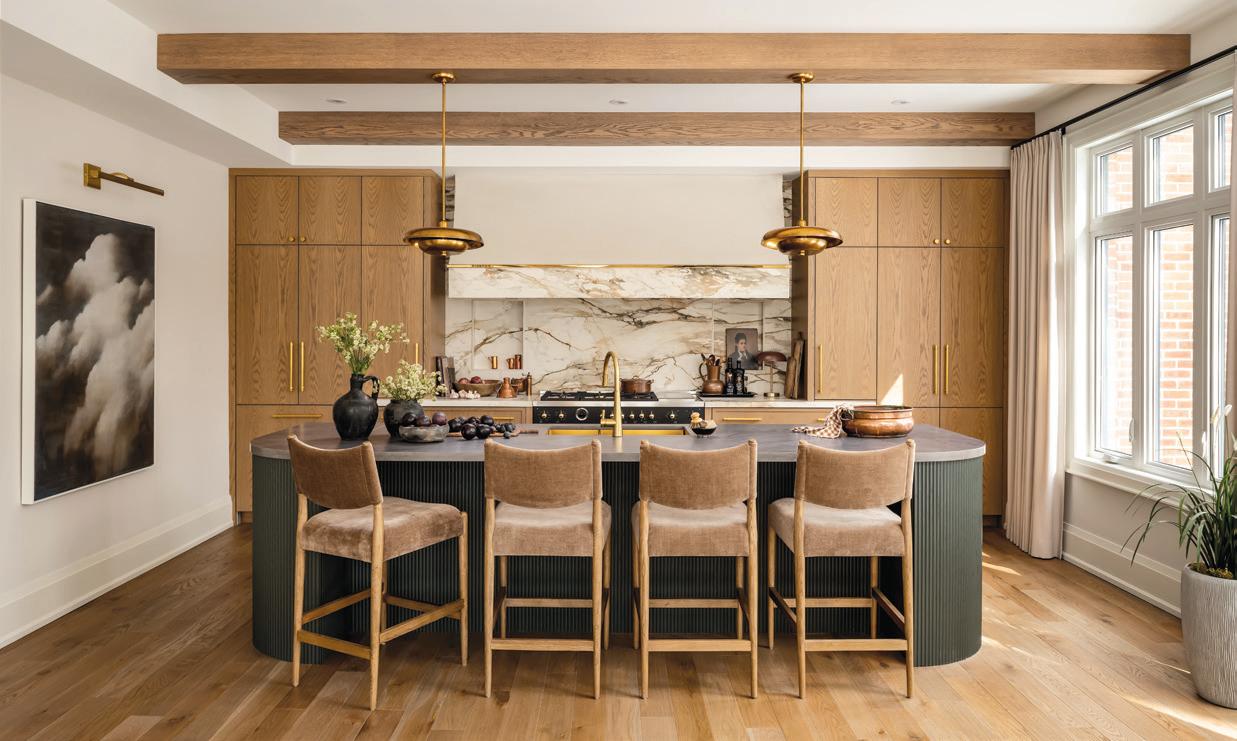
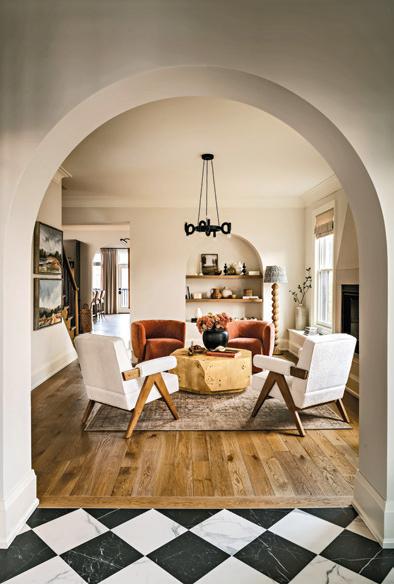
One of the greatest advantages of purchasing a pre-construction home is the opportunity to begin with a blank canvas. Unlike a resale home, where previous design decisions often influence the space, a new home allows you to personalize every detail around your lifestyle, aesthetic preferences and future needs.
For many homeowners, the decor appointment is one of the most exciting milestones in
the homebuying journey. It’s the moment when floorplans begin to feel personal, and a house starts to become home. Yet with countless options available, from flooring and cabinetry to countertops, lighting and plumbing fixtures, the process can also feel overwhelming.
As a designer, I encourage homeowners to approach this experience not simply as a series of selections, but as an opportunity to
create a home that reflects the way they live today and how they hope to live in the future.
START WITH LIFESTYLE, NOT FINISHES
Before selecting colours, materials and finishes, take a step back and consider how your home will function on a daily basis.
Will the kitchen be a gathering place for family and friends? Do you work
from home and require a dedicated office? Are you planning for a growing family or multi-generational living? Do you entertain often or prioritize quiet spaces for rest and retreat?
The answers to these questions should guide your design decisions. While beautiful finishes matter, great design begins with understanding how a space will be used.
Studying your floorplan before your decor appointment can also help identify priorities. Consider traffic flow, storage needs and how each room will support your daily routines. These practical considerations often become the foundation of a welldesigned home.
CREATE A COHESIVE DESIGN STORY
One of the most common mistakes homeowners make is selecting finishes individually rather than considering how they will work together as a whole.
When designing model homes, I always begin by establishing an overall design direction. Whether your style leans traditional, contemporary or transitional, defining a clear aesthetic creates consistency throughout the home and makes decision-making much easier.
Gather inspiration images and identify recurring colours, materials and details that resonate with you. These references become invaluable during the selection process and help ensure every choice contributes to the larger vision.
Rather than focusing solely on colour, think about how materials
DESIGNER TIPS
• Start with how you live before choosing finishes and upgrades
• Create a mood board to establish a clear design direction
• Prioritize kitchens, ensuites and other high-use spaces
• Invest in timeless flooring, cabinetry and countertops
• Layer materials and textures to create warmth and visual interest
• Incorporate trends through decor and accessories rather than permanent finishes
• Design with both your current needs and future lifestyle in mind
interact with one another. Warm wood tones, natural stone and textured finishes often create a sense of depth and character that feels timeless and inviting.
INVEST WHERE IT MATTERS MOST
Every home has spaces that work harder than others, and these areas often deserve the greatest attention. In today’s homes, the kitchen remains the heart of the home. It serves as a workspace, gathering place, homework station and entertainment hub all at once. Because of its visibility and daily use, I often recommend beginning your selection process here.
Consider how cabinetry, countertops, storage solutions and lighting will contribute to both beauty and functionality. Thoughtful planning in these areas can significantly enhance everyday living and add long-term value to your home.
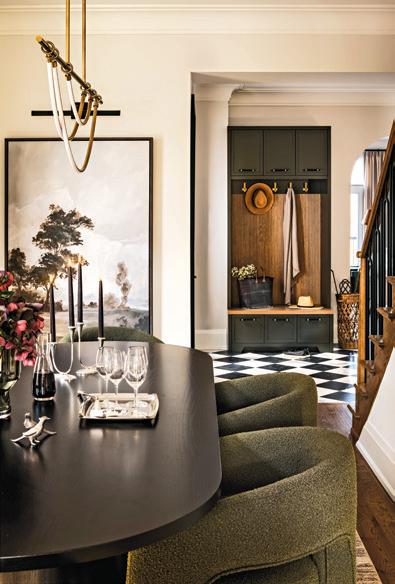
Similarly, primary ensuites, mudrooms and laundry rooms should not be overlooked. While they may not be the first spaces
guests see, they contribute greatly to comfort, organization and the overall experience of living in your home.
DESIGN BEYOND TRENDS
While it’s natural to be inspired by current trends, the most successful homes are those that feel authentic to the people who live in them.
Timeless materials and classic details tend to age gracefully and provide lasting value. Trends can still play a role, but often work best when introduced through furnishings, lighting, artwork and accessories that can evolve over time.
Ultimately, your home should tell your story, not someone else’s.
A thoughtfully personalized home goes beyond beautiful finishes. It supports your routines, reflects your lifestyle and creates spaces where memories will be made for years to come. Long after the selections have been finalized, the most meaningful design choices will be the ones that make your home feel distinctly yours.
An award-winning in-house designer, Mariam Aboutaam is Director, Sales and Marketing, Interior Design at Kylemore, Markham, Ont., a builder known for master-planned communities and luxury homes. kylemoreliving.com.
HORSESHOE VALLEY
NATURAL, PICTURESQUE AND A PLACE TO PUT DOWN ROOTS
If Barrie and Orillia are known as the “gateway to cottage country,” the neighbouring community of Horseshoe Valley may be the front entrance and welcoming foyer. All you need is a morning coffee or afternoon aperitif to feel right at home.
Located in Simcoe County in the northern part of the Greater Golden Horseshoe, about 100 kms north of Toronto, 26 kms north of Barrie and 22 kms to Orillia, Horseshoe Valley isn’t a town, per se, but a picturesque, four-season residential and resort community in the Township of OroMedonte. Close enough to the big
by WAYNE KARL
city, but not so far north into cottage country that it’s a two-hour-plus drive to Toronto when you need to visit.
It’s not just about the famous Horseshoe Valley Resort, either, offering downhill skiing, snowboarding and snow tubing in the winter. Rolling hills, dense forests, outdoor recreation and welcoming, family-friendly neighbourhoods are the backdrop for this highly desired destination.
Day-trip adventures and other recreation may have once be the allure of this area, but more and more, Horseshoe Valley is becoming a place you can also put down roots. Long, deep and rich ones, with new
home communities surrounded by all the natural attractions that brought you here in the first place.
Take, for example, Forest Heights Estates, master-planned community by Democrat Homes. With only 80 homes here, on half-acre to oneacre-plus ravine lots with highland and valley views, only 10 lots remain in the almost completed first two phases. Quiet cul-de-sacs and relaxed roadways are surrounded by nature, with mature trees and protected greenspace providing the perfect backdrop. A lush golf course and famed ski hills are just a five-minute drive away, while hiking
trails and a spacious park are within walking distance. Schools and places of worship are close by, plus all the conveniences of Barrie and Orillia are just a 20-minute drive in either direction. Looking to raise a family? Enjoying your active adult years and looking or an ideal setting? Forest Heights Estates may be just the place for you.
Prospective homebuyers can be among the first to own one of two new models at new lower price points. The Elegance is a 1,150-sq.-ft. two-bedroom, two-garage bungalow, starting at $849,900. Then there’s The Essence, offering 1,320 sq. ft. of comfortable living for $949,900.
Nearby Barrie, a thriving city in its own right – during times of nontariff uncertainty – continues to build its own increasingly diversified economy, with a focus on education, healthcare, information technology and other sectors.
It is exactly these types of initiatives that make Barrie and surrounding area so appealing for real estate. Economic development means employment, jobs attract residents and residents translate to housing demand.
Case in point, in April, the City reported a 173-per-cent increase in
housing starts from January to April this year, compared to the same period in 2025. The City says the increase can be partly attributed to the early success of two programs implemented by Council: The Development Charges Waiver Pilot Program, designed to accelerate new residential construction; and the Housing Community Improvement Plan, intended to encourage rapid investment in new housing units by providing financial incentives.
If you need further evidence of the health of the local real estate market, at least an influential part of it, in its 2026 Recreational Market Overview & Outlook report, ReMax Canada forecast 10-per-cent growth in sales for Simcoe County.
LIVE, WORK AND PLAY
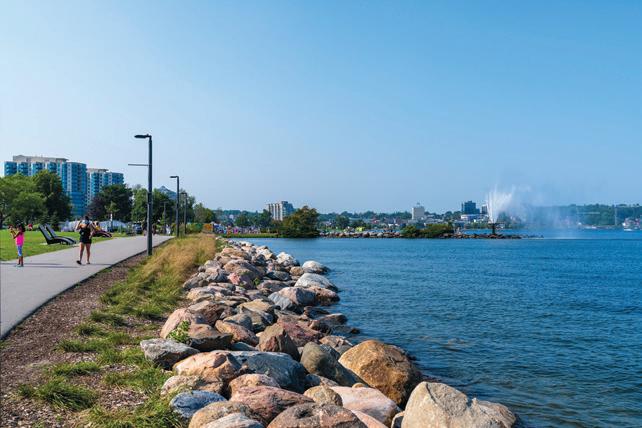
Tourism in the area still plays an important role in the local economy, with the historic downtown and waterfront among the major attractions. The downtown Barrie area hosts numerous annual festivals and events, such as The Barrie Waterfront Festival, Barrielicious, Winterfest, Jazz & Blues Festival, Promenade Days, and Ribfest and Craft Beer Show.
Located in Simcoe County in the northern part of the Greater Golden Horseshoe, about 100 kms north of Toronto, 26 kms north of Barrie, 22 kms to Orillia; population 153,356.
KEY LANDMARKS
• CENTENNIAL PARK & BEACH
• Copeland Forest
• Georgian Theatre
• Heritage Park
• HORSESHOE ADVENTURE PARK
• Horseshoe Valley Resort
• MacLaren Art Centre
• Sadlon Arena
• Waterfront Heritage Trail
Barrie is also home to Kempenfest, one of the largest outdoor arts and crafts celebrations in Ontario.
During the winter months, people still flock to the area’s nearby ski hills – Horseshoe Resort, Mount St. Louis Moonstone, and a little further afoot, Blue Mountain.
Then, of course, there’s the hometown Barrie Colts of the Ontario Hockey League, who play out of the Sadlon Arena downtown. And then there’s Horseshoe Valley Resort, a key winter skiing attraction appealing to beginners, families and casual skiers with 26 downhill runs, a terrain park and strong snowmaking.
Source: Royal LePage
THE RESIDENCES AT CENTRAL PARK
WHERE ARCHITECTURE
MEETS STORYTELLING
Architectural visualization has entered a new era. Once viewed primarily as a marketing requirement, it has become one of the most influential tools in shaping how buyers experience a project before it is ever built. In today’s market, renderings are no longer expected to simply showcase architecture. They are expected to sell a lifestyle, communicate a vision and create an emotional connection strong enough to move buyers from interest to action.
For developers, this shift is redefining the role visualization plays within the broader marketing and sales strategy.
One of the biggest trends shaping the industry is the move away from overly polished imagery toward visuals that feel cinematic, human and emotionally grounded. Buyers are responding less to perfection and more to authenticity. The strongest visualization packages today capture atmosphere as much as architecture. Sunlight pouring into a kitchen, a livedin amenity lounge or the subtle energy of a neighbourhood streetscape can often say more about a project than technical accuracy alone.
This evolution reflects a broader change in buyer expectations. Consumers are increasingly shaped by social media, digital storytelling and immersive online experiences. Developers are now competing not only against other projects, but against the quality of content buyers consume every day. As a result, visualization studios are being pushed to think more like creative agencies,
blending architecture, branding, storytelling and emotion into a cohesive narrative.
At the same time, technology continues to reshape the sales experience. Interactive presentations, virtual reality tours and real-time visualization platforms are becoming increasingly common in presentation centres and digital campaigns. These tools allow buyers to engage with a project in a more personal and intuitive way, helping create confidence earlier in the purchasing journey.
Artificial intelligence is now accelerating many of these shifts.
Across the visualization industry, AI is being integrated into both creative and operational workflows. In the early stages of production, it is helping teams rapidly explore mood, composition, material palettes and conceptual directions. Behind the scenes, AI is also streamlining production efficiencies through image enhancement, environmental generation and postproduction support.
However, AI is not replacing creativity. The most impactful visualization work still comes down to human perspective. Understanding
buyer psychology, market positioning and emotional storytelling cannot be automated. Technology may improve speed and flexibility, but it is creativity that creates connection.
For developers, the takeaway is clear. Architectural visualizations are a strategic tool that influences branding, buyer engagement and sales long before construction begins. As the industry continues to evolve, the projects that stand out are the ones that combine innovation with authentic storytelling. Because today, buyers are not simply purchasing square footage. They are buying into a vision.
Tim Ng is the Founder and CEO of ADHOC STUDIO and BLACKLINE, pioneering industry-leading digital solutions merging real estate, art and technology to transform the sales experience. To explore ADHOC’s awardwinning renderings and BLACKLINE’s innovative sales platform, visit adhocstudio.ca and blacklineapp.com.
Riverview by Caivan. Visualization by AdHoc Studio
GTA NEW HOME MARKET
SHIFTING TOWARD THE BETTER
BARBARA LAWLOR
Recent statistics tell us that there has been a positive and encouraging change in the market. Plus, I know this cyclical industry well, and experience tells us it is going to come back in full force. The numbers show that we have achieved the first step. For example, the recent government announcement of the HST rebate is great news for those who qualify. Many developers are factoring it into the up-front price as we await federal approval and specifics from the government. And with price and location still the strongest incentives to owning a home, this is substantial. In addition, according to the Building Industry and Land Development Association, in April, new home sales were 1,100, which is triple from a year ago.
Another thing to consider is the fact that new home sales typically follow behind trends in resale, and recently the Toronto Regional Real Estate Board released some fascinating information. In April, 1,054 resale condominiums were sold in Toronto – a 14.4-per-cent increase year over year. It may seem small, but one step at a time holds here. And as the market evolves once again, developers realize they must gear units more to end users, which is a real benefit. As an end user, shop wisely, ask about such things as incentives and upgrades.
The investor market is even coming back, but these buyers are not the mom-and-pop investors of yesteryear. We are seeing wealthy families and business partnerships buying up condo suites in bulk to hold until the standing inventory is sold and prices start to go up again because of scarcity. They realize that there has never been a better time to buy and get your foot in the door of homeownership.
“
” History has shown that investing in a home – be it a lowrise house or condominium suite – can be lucrative in the long run.
Borrowing costs are lower in many cases, and so are prices. The benefits of buying new never change: Tarion Warranty, ability to select your features and finishes, amazing and beautiful building amenities, proximity to public transportation and local amenities. And today’s condos are more sustainable than ever before, constructed with the most advanced materials and techniques required by Ontario Building Code. Condos also come with built-in security measures, including the eyes-on-the-street concierge – a comfort especially to single women and families. Essentially a vertical community where residents get to know each other in elevators, hallways, amenity spaces and other common areas, condominiums offer safety on that level too. There are always neighbours close by who can water your plants after you lock the door and leave on holiday without worrying about lawn maintenance and the like.
Economies may change, but the appeal of the condo remains constant, especially to immigrants. Nowadays, we are seeing how critical condominiums are in producing much-needed rental stock across Toronto and the GTA. This also means there is a massive pent-up demand for condos for purchase. Savvy purchasers are buying now and are waiting out the current cycle.
And a cycle, it is. Our population will continue to grow, and people will always need places to live. Owning a home has long been the goal of Canadians and immigrants to our great country. History has shown that
investing in a home – be it a lowrise house or condominium suite – can be lucrative in the long run. In the meantime, it provides owners with equity that can be funneled into other needs. As opposed to paying rent, the money you spend on paying a mortgage is going toward your future. But aside from financial possibilities, homeownership comes with a wealth of psychological and emotional benefits that contribute to our wellbeing, such as a sense of permanency and a visual symbol of achievement.
If you are a potential purchaser waiting on the sidelines to see what happens, do your “homework” to prepare. Get pre-approved for a mortgage; read the Canada Mortgage and Housing Corp. documents online about buying a new home or condo; find a lawyer who is familiar with the kind of new home you want to buy; check on insurance to understand how a condo is insured, as opposed to a lowrise home. And do some research into Canadian real estate cycles over the decade. I remember financial experts in the 1980s saying we would never see single-digit mortgage rates again, and… Look at us now. Cautious optimism may be the phrase of the day, but buy new and buy now is always good advice.
Barbara Lawlor is CEO of Baker Real Estate Inc. A member of the Baker team since 1993, she oversees the marketing and sales of new home and condominium developments in the GTA, Vancouver, Calgary and Montreal, and internationally in Shanghai. baker-re.com
+MORE CONTENT ONLINE nexthome.ca
KIMBERLY JEFFREY D’ANGELO AND CARMEN GERASOLO
FOUNDERS, THE GREENHEART GROUP
The GTA new condo market has come alive this spring, with recent housing policy changes encouraging prospective homebuyers to move off the sidelines after an extended period of uncertainty.
Combine that with projects in prized locations, boasting top drawer amenities and attentive marketing and sales techniques, you have a compelling reason for buyers to consider ALBA Condos by Edenshaw Developments in Mississauga.
We spoke with Kimberly Jeffrey D’Angelo and Carmen Gerasolo, founders of The Greenheart Group, the firm marketing ALBA, about the opportunities that await buyers,
by WAYNE KARL
and the challenges of selling a completed project during present market conditions.
Let’s start with an update on ALBA. How are things coming along there?
Jeffrey D’Angelo: ALBA has been delivered, and our purchasers have been settling into their new homes over the last few months. It’s been great to see the building come to life. The majority of units were sold back in 2021, and we’re now excited to share that a limited number of suites have become available and will be released for sale this June. Prices start in the mid $300,000s up to $1
million, with sizes ranging from 450 to 850 sq. ft., a fantastic opportunity for buyers who missed out the first time around.
What makes ALBA stand out from other similar projects in the area? Gerasolo: Its location. What I love about ALBA’s location is that it’s perfectly situated on Hurontario Street, south of Burnhamthorpe and a short walk to the Cooksville GO Station. You’re between the lakeside village of Port Credit and the downtown hub of Mississauga City Centre. Because it is located on the east side of Hurontario, you have stunning views over the Mississauga
Valley, with unobstructed views of the lake and the City of Toronto. ALBA is located at 1 Fairview Rd., a residential street in a lower density community. The surrounding neighbourhood is very peaceful and full of parks and single-family homes, providing our purchasers with a much more quaint and residential vibe, versus the commercial environment most other projects in the city are surrounded by.
Jeffrey D’Angelo: Yes, and ALBA is walking distance to so many amenities and businesses, including Square One Shopping Centre, and strategically located between the 403 and QEW, so getting around is very easy.
How transformative do you think the Hurontario LRT/Hazel McCallion Line will be for this corridor?
Gerasolo: Once operational, the LRT will offer seamless connectivity by integrating GO Transit’s Milton and Lakeshore West lines, Mississauga Transit, Miway and Brampton Zum. With the Fairview stop at their doorstep, ALBA residents will have easy access for any commute. A visit to Port Credit and Lake Ontario will take minutes as the light rail vehicles will bypass regular street traffic.
What are some of the most appealing amenities?
Jeffrey D’Angelo: The amenities at ALBA are truly fabulous. I took a client through recently, and they were blown away by the amenities. Edenshaw, the developer, dedicated the entire seventh floor to amenities and has put thought into what makes for beautiful and functional gathering spaces.
Gerasolo: Edenshaw works to ensure that amenities are not just pretty pictures in a sales brochure, but actually functional and life-enriching. There is a huge co-working space with private enclosed workstations with lake views. The Maker’s Studio is a unique space where hands-on projects too big or messy for your suite can come to life – activities
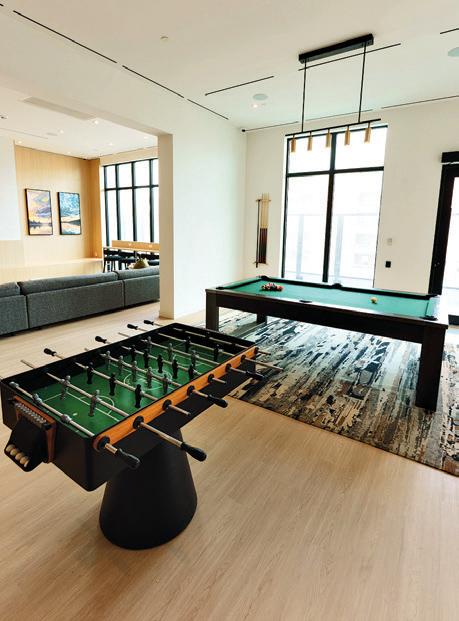
such as potting plants or painting furniture. An indoor and outdoor area specifically for kids, a pet spa and dog run, games room, fireplace lounge, outdoor terraces and a fabulous fitness centre are just the beginning. To answer your question in practical terms, the amenities that are most appealing are those that will be used today and will hold their appeal for future resale.
What is your favourite part of the building?
Jeffrey D’Angelo: The suites are so well appointed with the finishes, design and attention to detail. It reflects the standard that Edenshaw holds itself to across every project. We have two beautiful model suites that showcase the features for everyday living and that incredible view. The Greenheart team is on site and available for tours.
Gerasolo: The seventh-floor amenities. I can’t pick just one amenity. Absolutely worth a visit to see them in person.
What are some of the challenges and opportunities for Edenshaw in marketing a project postconstruction? And for prospective buyers in purchasing?
Gerasolo: Our marketing team might have a few things to say, but it’s actually easier to market postconstruction than pre-construction, as we aren’t selling a dream a few years out, but an actual building that prospective buyers can tour, touch and feel for themselves. It’s always harder to sell a home from a twodimensional floorplan, as not all purchasers can visualize the space. For end-users and investors, buying into a newly finished building today has many advantages. Besides immediate occupancy, the buyer may inspect the building and experience the community firsthand. Newly finished condos are covered by Tarion Warranty, which protects the owner against structural and material defects. As the first person to live in the home, there are no costly repairs or renovations needed. Truly move-in
ready. Investors can negotiate their terms based on real and current market data, which removes much of the speculation risk on values and rents.
Edenshaw has a few other recent projects in Mississauga, notable among them Tanu and Westport in Port Credit, and some others “coming soon.” What is it about Mississauga that makes it an attractive place to build and buy?
Jeffrey D’Angelo: Mississauga has become one of the most compelling places to live and invest in the GTA. It delivers on the things that actually matter to people –connection, convenience and quality of life. Strong transit infrastructure, a growing downtown core, proximity to the waterfront and access to major employment hubs make it an easy choice for end-users and investors alike.
Port Credit, in particular, has a village-like charm that’s hard to find anywhere else in the region. It has a real sense of community, beautiful waterfront access and a main street that people actually want to be on. That’s what drew Edenshaw to Tanu and Westport. They saw an opportunity to build in a neighbourhood that already had soul.
ALBA sits in a sweet spot between Port Credit and the Mississauga City Centre. Close enough to enjoy the best of both, with the waterfront and village energy on one side and the conveniences of an established urban core on the other.
What have you noticed about buyer behaviour over the last, say, couple years?
Gerasolo: There have been many factors, both domestically and internationally, that have negatively affected the psyche of homebuyers. Speculation and uncertainty around the cost of tariffs and inflation from global conflicts have compelled many investors and families to save cash and postpone any major financial decisions.
However, life milestones, such as a new job, growing family, downsizing and marriage are what usually spur a decision to purchase – those things have not changed. So, the last few years of saving and waiting for the right time have really created a pent-up demand or a desire to make a change.
Over the last few months, we’ve seen capital markets starting to open up and real estate investors re-enter the market. With businesses starting to price in the cost and risks around tariffs, coupled with a general sense that people do not want to continue to put their life plans on hold for much longer, I think we are going to see many prospective homeowners come off the sidelines and start hunting for a new home.
Recent changes in housing policy have spurred the market some… how well is that translating to sales at ALBA, or in the market in general?
Jeffrey D’Angelo: Since the government announcements of limited-time tax savings, we’ve seen a significant uptick in activity at our brokerage and sales offices, from prospective purchasers looking to buy their first home to existing homeowners looking to upgrade. Gerasolo: The tax savings have definitely encouraged more purchasers to enter the market and to begin actively searching for a new home. The temporary nature of the program has created a greater sense of urgency for buyers to purchase before the incentive expires and the window closes.
How much do the recent policy changes make now a good time to buy a post-construction condo? The provincial HST relief, for example, is only for one year… is that enough?
Jeffrey D’Angelo: The HST relief is meaningful. On a $500,000 purchase, the savings are real and immediate. Is one year enough to move the needle long-term? Probably not on its own. But I don’t think it needs to be. What it does is remove a barrier and create a moment. For buyers who were already considering a purchase, it gives them a compelling reason to stop waiting.
The more important question is what the overall conditions are telling us. Interest rates have been steady, new supply is constrained, and construction costs aren’t getting any cheaper. The fundamentals that drive condo values haven’t changed. The policy just adds another layer of motivation for many buyers.
What more could governments do to boost the market?
Gerasolo: The HST rebate is a great start. Locally, the Mayor of Mississauga is focused and active on addressing the housing crisis, and that kind of municipal leadership makes a real difference. One area we’d love to see more attention on is the cost burden builders face. Development charges and approval timelines add significant expense to every project, costs that inevitably flow through to the buyer. Reducing that friction would go a long way toward making new homes more accessible for
everyone. While there is always more to be done, it’s encouraging to see all levels of government moving in the right direction.
How do you see the condo market evolving over the next few years?
Jeffrey D’Angelo: We’re at an interesting inflection point. The market has been through a period of recalibration. Pricing has adjusted, buyer confidence has been tested, and some projects have stalled. But the underlying demand hasn’t gone away.
Over the next few years, we expect a gradual return of confidence as interest rates stabilize and the impact of government incentives is felt. Buyers who have been sitting on the sidelines will begin to re-engage.
What we don’t expect is a return to the frenzied pace of 2021, and honestly, that’s probably healthier. A more measured market is better for buyers, builders and the long-term health of the industry.
The fundamentals are sound. It’s just a matter of patience.
How is Greenheart looking to address the above, in terms of different sales techniques, touchpoints for buyers…?
Jeffrey D’Angelo: The market has changed, and so has the buyer. People are more cautious, more informed and taking longer to make decisions – and rightfully so. A buyer-focused philosophy has always been part of Greenheart’s DNA, and today’s market conditions make that more relevant than ever. That means spending more one-on-one time with the buyer, to ensure they fully understand the property values, sales process and pricing. We are focused and genuinely committed to providing a fully transparent, white glove service to ensure every purchaser feels confident in their investment decision. We’re playing a longer game, and we think that’s the right approach for where the market is today.
The Greater Toronto Area new condo market is going through one of the biggest resets in a quarter century. For buyers and investors, the assumptions that drove demand during the last cycle need to be reconsidered.
Pricing, product type, closing risk, incentives, rental potential and longterm supply are all very different than they were just five years ago.
One of the clearest signs of this reset is the rise in completed and unsold condominium inventory. At a recent Zonda Urban event, the data showed standing condo apartment inventory in the GTHA rising from negligible levels in 2023 and early 2024 to 708 units by Q4 2024, 1,629 units by Q2 2025, and 2,358
units by Q1 2026. Zonda’s forwardlooking chart showed that number potentially increasing to 4,448 units by Q4 2026, before accounting for potential purchaser defaults or units that do not close. At the same time, annualised new condo sales have fallen sharply from more than 30,000 units to under 1,250.
For buyers, this shift matters because completed inventory changes the balance of power. During the peak of the market, purchasers
were often buying from renderings, waiting years for completion and accepting pricing that assumed future appreciation. Today, some buyers can walk through a finished building, compare the unit to resale alternatives, evaluate the actual neighbourhood, the finish quality, the views and negotiate from a stronger position. For investors, completed inventory also provides immediate clarity on rent, carrying costs, taxes and maintenance fees.
The recent activity from Jesta Group is a useful signal. Jesta announced a $30-million bulk condo acquisition in downtown Toronto as part of a broader $500-million program targeting more than 1,000 units. The strategy is relatively straightforward: Acquire completed developer inventory, lease the units in the medium term, and sell when the market improves. Cushman & Wakefield has also been retained to seek additional bulk acquisition opportunities for Jesta in the GTA. This suggests that sophisticated capital is beginning to circle the market, as the repriced inventory makes sense given the expected future supply-demand imbalance.
Bullpen’s review of 200 developerowned suites in recently completed GTHA condo projects shows how developers are already experimenting with both rental and resale channels. Rental listings accounted for 37 per cent of the sample between January 2026 and May 2026, with an average unit size of 707 sq. ft., an average asking rent of $2,850 per month, or $4.03 per sq. ft. Resale listings made up the remaining 63 per cent, with an average unit size of 936 sq. ft., an average list price of $1.04 million, and an average asking price of $1,112 per sq. ft. Across most bedroom types, rents were clustered around $4 per sq. ft., which gives investors a useful benchmark for underwriting completed new product.
However, buyers should not assume that every discounted unit is a good deal. The last cycle produced a lot of similar product, especially
small investor-oriented suites in large towers. Episode 105 of Toronto Under Construction explored this issue through a longer historical lens. Jim Ritchie of Tridel and Hunter Milborne of Milborne Group discussed how previous downturns forced developers to rethink product, scale, pricing and execution. In the 1990s, some projects were reworked from highrise concepts into lower-rise or stacked townhouse formats. During other periods, office conversions, luxury projects and more targeted suite mixes helped the market recover before sentiment fully improved.
That history is relevant today because the GTA is not one condo market. Downtown investor suites, suburban family-oriented projects, luxury buildings, student-oriented locations and transit-connected nodes all behave differently. A 500-sq.-ft. unit in the core may be appropriate for one buyer profile, while the same unit size in a familyoriented 905 location may face weaker resale depth. Buyers should assess whether the suite design matches the neighbourhood, the likely tenant pool and future end-user demand. The homogeneous product that was released from Burlington to Clarington, and Toronto to Barrie in 2021 and 2022 was the direct result of rampant investor demand, but with most of those buyers on the sidelines, the product is going to change dramatically.
The proposed HST rebate changes are another important factor. The federal portion appears to create a 12-month window from April 1, 2026 to March 31, 2027, where qualifying purchasers of new homes can receive a full rebate up to $1 million, with a phase-out above that threshold. According to the discussion in Episode 105, buyer activity increased quickly after the change was introduced, particularly for product priced between roughly $500,000 and $1 million. For purchasers, that rebate can function like a meaningful discount, but the details matter: Eligibility, timing, purchaser type
and completion dates should all be reviewed carefully before assuming the benefit applies.
The key lesson for new condo buyers is that this is a market for underwriting, not momentum. Investors should stress-test rents, assume realistic vacancy and leasing periods, compare asking prices to resale values and be cautious about maintenance fees, parking costs and property taxes. End users should focus on livability, location, layout, building quality and whether the home still works if prices remain flat for several years.
Completed inventory gives buyers more information and potentially more negotiating power. Policy changes may improve affordability for some purchasers. Institutional buyers are beginning to identify long-term value in discounted units. At the same time, the collapse in new condo launches will create a future shortage of completions later in the decade.
For buyers and investors, the opportunity is not simply to buy because prices are down. The opportunity is to buy selectively, understand the specific submarket, and separate short-term distress from long-term value. Do your own research, surround yourself with an experienced team and buy what you can afford. Good luck.
Ben Myers is the President of Bullpen Consulting, a boutique residential real estate advisory firm specializing in condominium and rental apartment market studies, forecasts and valuations for developers, lenders and land owners. Contact him at bullpenconsulting.ca and @benmyers29 on Twitter.
THE PERFECT STORM OF OPPORTUNITY: REBATES, INCENTIVES AND A SHIFTING MARKET
DEBBIE COSIC
For much of the past two years, a significant number of homebuyers have adopted a “wait and see” approach. Rising interest rates, economic uncertainty and constant media headlines forecasting market challenges led many prospective purchasers to delay their plans, hoping for greater clarity before making one of life’s biggest financial decisions.
Today, however, the market is showing clear signs that buyer sentiment is beginning to shift.
As borrowing costs stabilize and confidence gradually returns, many purchasers are recognizing that waiting indefinitely may no longer be the most advantageous strategy. In fact, some of the most compelling opportunities seen in years are emerging across Ontario’s new home market, particularly within the preconstruction sector.
UNDERSTANDING TODAY’S BUYER PSYCHOLOGY
Consumer confidence has always been one of the most influential factors in real estate. When uncertainty dominates the conversation, buyers naturally become more cautious. They spend more time researching, monitoring headlines and waiting for what feels like the “perfect” moment to enter the market.
The challenge is that perfect market conditions rarely exist.
Historically, some of the strongest purchasing opportunities have emerged during periods when uncertainty was highest and competition was lowest. Buyers who focus on long-term fundamentals rather than short-term market noise are often best positioned to benefit from future appreciation and wealth creation.
Today, many of those long-term fundamentals remain firmly intact.
Ontario continues to experience strong population growth. Housing supply remains constrained across many markets. Demand for quality housing continues to outpace available inventory, particularly in desirable communities connected to employment hubs, transit infrastructure and growing amenities.
These factors continue to support long-term housing demand and create opportunities for buyers willing to take a strategic approach.
WHY PRE-CONSTRUCTION CONTINUES TO STAND OUT
Pre-construction real estate remains one of the most effective pathways for buyers seeking both homeownership and long-term wealth creation.
Unlike resale properties, preconstruction purchases often provide greater flexibility through extended deposit structures, allowing buyers to secure a home today while spreading payments over time.
Purchasers also benefit from locking in current pricing while
positioning themselves to take advantage of future market appreciation, throughout the construction period.
In addition, new homes offer modern floorplans, enhanced energy efficiency, lower maintenance requirements and the latest design features that align with evolving buyer preferences.
As confidence returns to the marketplace, many buyers are recognizing that pre-construction presents a unique opportunity to secure high-quality real estate before competition intensifies.
THE IMPACT OF ONTARIO’S EXPANDED HST REBATE
Further supporting this renewed momentum is the expansion of Ontario’s HST rebate on new homes, one of the most impactful
affordability measures introduced in recent years. Buyers purchasing new homes valued up to $1 million may qualify for a full rebate of up to $130,000, while homes between $1 million and $1.85 million benefit from a partial rebate.
Because new construction is subject to HST, this rebate significantly reduces the effective purchase price and lowers upfront closing costs, creating a more accessible path to homeownership.
For many purchasers, this represents a meaningful opportunity to enter the market sooner than previously anticipated.
OPPORTUNITIES AVAILABLE TODAY
As a result, both new move-in-ready and pre-construction opportunities are becoming increasingly attractive. Buyers can benefit from modern design, energy efficiency and longterm value while also exploring opportunities beyond traditional core markets.
Completed communities such as Greenwich in Oakville by Branthaven, Station No. 3 in Whitby by Brookfield, and Everwell in Barrie by Sorbara present a rare opportunity to purchase built inventory, ideal for buyers looking to benefit from the rebate without waiting years for completion.
Exciting pre-construction opportunities include Pier House by Branthaven in South Mississauga, Newbrook by Brookfield in Newcastle, Time Towns by Marshall Homes in Ajax, Rebecca Condos by Rosehaven in Hamilton, Wilde by Chestnut Hill Developments in Toronto, and The Grand in Pickering by Chestnut Hill Developments. South Lake by Menkes in Oakville further adds to a strong lineup of premium pre-construction communities offering exceptional locations, thoughtful design and long-term growth potential.
NEW INCENTIVES ARE CREATING ADDITIONAL VALUE
Today’s market is also seeing developers introduce innovative
programs designed to further improve affordability and accessibility.
At Rebecca Condos, buyers can take advantage of a highly approachable deposit structure of just $250 per week over 48 months, making homeownership more attainable for a broader range of purchasers.
In Oakville, South Lake by Menkes presents a rare opportunity to own a detached home on a 50-ft. lot in a highly sought-after South Oakville location, a product type that is becoming increasingly difficult to find.
In addition, select communities are offering meaningful short-term financial relief. At Wilde in Toronto, purchasers can live free of mortgage payments, property taxes and maintenance fees for two years, while at The Grand in Pickering, this benefit extends to three years, providing buyers with valuable breathing room as they transition into homeownership.
These types of incentives demonstrate how builders are adapting to current market conditions while creating exceptional opportunities for buyers who are prepared to act.
LOOKING BEYOND THE HEADLINES
It’s important to look beyond the noise.
Headlines are designed to capture attention and often focus on shortterm challenges rather than longterm fundamentals. For those truly looking to understand the market, there is no substitute for speaking directly with the professionals: The realtors, builders and industry experts who live and breathe this business every day.
At In2ition, adaptability has been key to navigating this evolving landscape.
As the market has shifted, so have we. Our team has embraced change, expanded into new sectors and pursued emerging opportunities with confidence. This includes a growing focus on purpose-built rental housing, an increasingly important segment as affordability challenges
continue, as well as expansion into markets outside the GTA and Ontario.
THE PEOPLE BEHIND THE SUCCESS
What makes all this possible is our people. The In2ition team is the foundation of our success. Resilience, creativity and commitment to excellence have allowed us to navigate change while continuing to deliver at the highest level. They are passionate professionals who care deeply about our clients, our builder and broker partners and the communities we help create.
This culture of collaboration and innovation is what sets us apart and why we continue to lead, even in a shifting market.
THE FUTURE REMAINS BRIGHT
The fundamentals supporting Ontario’s housing market remain strong. Population growth continues. Housing supply remains constrained. Demand for quality housing endures.
Real estate has always rewarded patience, perspective and preparation. As the market finds its footing and new opportunities emerge, we’re excited about what’s ahead and remain committed to helping our partners and clients succeed in every stage of the journey.
To learn more about these communities and explore additional opportunities, visit in2ition.ca, follow In2ition Realty on Instagram or contact our team directly at info@in2ition.ca.
Debbie Cosic is CEO and founder of In2ition Realty. She has overseen the sale of more than $15 billion worth of real estate. With Debbie at its helm, In2ition has become one of the fastest-growing and most innovative new home and condo sales companies. in2ition.ca
+MORE CONTENT ONLINE nexthome.ca
HOUSING INDUSTRY CONTINUES TO FACE
HEADWINDS AS OPTIMISM BEGINS TO BUILD
MIKE COLLINS-WILLIAMS
The residential construction industry across Hamilton, Burlington, Grimsby and the surrounding region continues to face challenging market conditions, as affordability pressures, economic uncertainty and slower activity impact businesses throughout the sector. However, recent policy measures designed to improve affordability are beginning to generate cautious optimism that market conditions may gradually improve.
A recent Residential Market Pulse Survey conducted by the West End Home Builders’ Association (WEHBA) gathered insights from builders, renovators, associates and other professionals across the residential construction industry. Findings indicate many businesses continue to experience significant challenges as the market remains subdued.
For many respondents, the past year has been defined by slower business activity and growing uncertainty. More than 60 per cent reported lower revenue between 2024 and 2025, while nearly 88 per cent indicated that current market conditions have impacted their ability to advance projects or pursue
business growth. More than half described that impact as significant.
When asked about the greatest barriers preventing buyers from entering the market, affordability and housing costs ranked highest by a considerable margin. Respondents also identified economic uncertainty, financing challenges, hesitation around market conditions and declining consumer confidence as contributing factors slowing market activity. In many cases, prospective buyers appear to be taking a waitand-see approach before making major purchasing decisions.
The impacts of a slower housing market extend far beyond homebuyers and builders alone.
Residential construction supports a broad network of local jobs and businesses, including skilled trades, manufacturers, suppliers, planners, consultants, designers, renovators and professional service providers. When projects are delayed or do not proceed, those effects ripple throughout the local economy.
Survey responses highlighted growing concerns surrounding declining housing starts, slower sales activity, rising competition, prolonged approval timelines and continued affordability pressures. Several respondents cited delayed projects, softer demand and buyers remaining on the sidelines, while others pointed to tightening margins and ongoing uncertainty. Staffing trends also suggest continued strain within the industry, with nearly half of respondents reporting staff reductions over the past 12 months as businesses adjust to slower conditions. At the same time, inquiry levels appear mixed, suggesting there remains underlying demand should affordability conditions continue to improve.
Recent provincial changes to the HST on new homes are already being viewed positively by many in the residential construction sector. Effective April 1, 2026, the provincial portion of the HST was eliminated on new homes priced at less than $1 million and reduced on homes priced between $1 million and $1.85 million, creating meaningful savings opportunities for buyers.
For many families hoping to enter the housing market, those savings may help make homeownership more attainable at a time when affordability remains a key challenge. Across the industry, there is hope that the changes will help stimulate activity and support projects that may otherwise have remained paused.
That optimism was reflected strongly in survey results, with nearly 88 per cent of respondents anticipating the HST changes will have a moderate or significant positive impact on sales and construction activity over the next year. While industry challenges remain, there is growing confidence that practical affordability measures
can help improve market conditions and support jobs tied to the housing sector.
Housing plays a critical role in supporting strong communities and local economies. As the region continues to grow, policies that improve affordability and enable new housing supply will remain essential, not only in helping more people achieve homeownership, but also in supporting the businesses and workers responsible for building the communities where people live, work and raise families.
Mike Collins-Williams, RPP, MCIP, is CEO West End Home Builders’ Association. westendhba.ca.
+MORE CONTENT ONLINE nexthome.ca
SHOPPING FOR A
NEW HOME?
UNDERSTANDING THE PURCHASE AGREEMENT IS THE PLACE TO START
PETER BALASUBRAMANIAN
Even though buying a home is one of the biggest purchases most of us will ever make, people are often surprised by how much information is in the purchase agreement.
This is because when you are buying a pre-construction home, there are many variables at play: When will the home be delivered,
what are the custom finishes, what are the circumstances that could delay the home being delivered or might result in the agreement being terminated.
All of these considerations will be dealt with in the Agreement of Purchase and Sale, which is why one of the most common pieces of advice we give to new home buyers is to consult a lawyer to help you with the process.
CONSUMER PROTECTION IS INCLUDED IN YOUR AGREEMENT
In Ontario, some consumer protection is built right into all
purchase agreements for preconstruction homes.
The Agreement of Purchase and Sale – or purchase agreement – is a legal contract between you and the builder, and it includes specific consumer-oriented components, such as the Addendum, a Warranty Information Sheet and, when buying a condominium, a Condo Information Sheet and a Declaration and Description.
Together, these documents contain key details and provisions: The lot or unit details, included upgrades, deposit structure, key milestones and conditions under
which the agreement can be terminated.
The Warranty Information Sheet is particularly helpful, as it includes important warranty information and a unique Home ID that buyers can use to register their agreement with Tarion.
DISCLOSURE – WHY THE ADDENDUM MATTERS
One of the most important documents in the package is often referred to as the “Addendum.” It is an important consumer disclosure document and explains the rules around what will happen if delivery of your home is delayed.
The Addendum will include dates, such as your tentative or firm closing or occupancy date, the outside date by which the builder must provide the home, and when compensation may apply if there is an unacceptable delay.
In addition, the Addendum requires the builder to highlight any early termination conditions that may allow a project to be cancelled if certain requirements are not met and, if a builder does include early termination conditions in the agreement, they are required to pull those out from the fine print and disclose them in the Addendum (or a clearly identified appendix).
While standard condominium units come with a 10-day cooling period, even if you are buying another type of home the Addendum provides the purchaser with a three-day cooling off period to consider whether they are comfortable with these conditions.
WHAT TO DO BEFORE YOU SIGN – TALK TO A LAWYER
Buying a new home is a big investment. Before you sign, it is a good idea to pause and review everything carefully. One of the smartest steps you can take is to speak with a lawyer who has experience in real estate or condominium law.
Remember, this agreement is a legal contract. A lawyer can help explain the terms of the agreement, walk you through your rights and responsibilities, the timelines in the Addendum and make sure you understand what happens if there is a delay or unexpected change.
GET IT IN WRITING
Those specific custom finishes can make your purchase a dream home. It is also very important to make sure every promised upgrade, incentive or inclusion is written directly into the agreement before you sign.
If you’ve discussed upgraded flooring, extra lighting or a design credit being included, make sure it appears in the contract.
Verbal promises can be subject to misinterpretation and hard to enforce, but checking now helps make sure the home you receive matches the one you were expecting.
QUESTIONS TO ASK
The more informed you are before signing a purchase agreement, the more confident and comfortable you are likely to feel with your decision.
As you review the agreement, and talk to a lawyer, don’t be afraid to ask practical questions.
What fees and other costs will be due when closing?
What happens if construction is delayed and when does the builder have to notify you?
What deposit protections apply?
REGISTER WITH TARION AND MORE HELPFUL TOOLS
After you sign, there is one more important step – register your purchase agreement with Tarion. It’s a simple step that protects your investment, and provides you with key information to better understand your warranty coverage and the protections available to you.
You can also visit tarion.com for helpful tips for first-time buyers and everything from plain language guides about the Addendum, to what to expect for your Pre-delivery Inspection.
Buying a new home can be a lifechanging experience, and it is worth making sure you understand how to make the best of the experience.
Peter Balasubramanian is President and CEO of Tarion. tarion.com.
+MORE CONTENT ONLINE nexthome.ca
HOW IT’S UNFOLDING THE HOUSING MARKET STORY:
DANIEL STEINFELD
What is the housing market story telling us so far in 2026, and how does it align with polling data predictions? In the latest episode of TRREB’s Ready to Real Estate podcast, host and TRREB Chief Information Officer Jason Mercer leads a timely discussion with Ipsos Senior VicePresident Sean Simpson on the key factors shaping today’s market and what could unfold later this year and into early next year.
Mercer and Simpson explore improved affordability, ongoing buyer hesitation, first-time homebuyer intentions, average down payments, inter-generational wealth transfer, shifting inventory conditions and the role of government policy.
READING THE MARKET SIGNALS
TRREB’s March Market Watch numbers indicated more sales but at lower prices, reflecting a market that remains well-supplied, providing more buyer choice and ultimately affordability. Simpson explains that Ipsos research found people were not willing to sacrifice their down payments to seize the moment. Instead, they are choosing slightly less expensive homes while maintaining down payments close to 30 per cent on average.
This helps explain how many buyers are approaching the market. They may see improved affordability, but they continue to make careful choices about price, value and longterm financial commitments.
HOW FAMILY SUPPORT IS SHAPING HOMEOWNERSHIP
Simpson also notes an increase in inter-generational wealth transfer, with parents and grandparents providing significant financial help for young couples and families entering homeownership. This support has become part of the larger housing market story, especially as firsttime buyers consider their options and weigh affordability against the financial realities of purchasing a home. First-time buyers know they have options, with substantial negotiating power in ownership and rental markets.
FROM AFFORDABILITY PRESSURE TO CONFIDENCE QUESTIONS
Although many people still feel the pressure of high housing costs, Simpson explains why Ipsos sees the market challenge shifting. He says a crisis is usually a relatively short and defined period, with a beginning and an end. Low interest rates during the pandemic and recovery led to unsustainable growth in home prices. Bank of Canada rate increases to fight inflation further contributed to a lack of affordability. Over the last year, however, buyers have benefitted from lower home prices and borrowing costs, yet we haven’t seen a significant uptick in sales activity.
Simpson points out that the issue facing the housing market now is a broader lack of confidence, fed by economic concerns related to trade disputes and geopolitical issues. Once intending homebuyers become more confident in our economic future, they will move off the sidelines in larger numbers to take advantage of improved affordability.
WHAT THE MARKET COULD DO NEXT
Simpson says the “crystal ball is a little bit murky” because of uncertainty in the market and broader economy. However, he believes more buyers could enter the market in the latter part of 2026 as they recognize that affordability is better than it has been over the past five years and may not improve much further.
Markets move on confidence. The encouraging news is that many of the affordability improvements buyers have been waiting for are already in place. Now, the market is waiting for confidence to catch up. As more households see stability in the market and the broader economy, we could see more buyers move from watching the market to making their move.
To hear whole conversation, listen to the full episode of TRREB’s Ready to Real Estate podcast at trreb.ca.
Daniel Steinfeld is President of the Toronto Regional Real Estate Board (TRREB). A Chartered Accountant, he previously served as Vice-President and Chief Financial Officer with the Toronto Argonauts and is a Broker and co-owner On The Block Realty.
+MORE CONTENT ONLINE nexthome.ca
LIVE WELL AT
ACTIVE ADULT BUNGALOWS SINGLES & TOWNS FINAL RELEASE NOW SELLING IN WELLAND
Discover a vibrant new chapter at WaterCrest at Hunters Pointe, an award-winning active adult community thoughtfully designed for connection, comfort, and carefree living.
Surrounded by canals, green space, walking trails, and natural beauty, WaterCrest offers beautifully crafted bungalow townhomes and
detached homes designed to complement the way you want to live today.
Whether you’re right-sizing, simplifying, or simply looking for more time to enjoy life, you’ll find a welcoming community where neighbours become friends and every day feels inspired.
SCAN TO LEARN MORE
BUNGALOW TOWNS
DESIGNED FOR LIVING WELL
Smartly designed and beautifully finished, our bungalow townhomes offer the perfect blend of style, comfort, and low-maintenance living.
Enjoy open-concept layouts, elegant interiors, quality craftsmanship, and the convenience of main-floor living; all within a truly active adult community.
2 BED 2 BATH 1,405 SQ. FT.
OPTIONAL FINISHED BASEMENT: +1 BED+1 BATH + 704 SQ. FT.
A COMMUNITY DESIGNED FOR ACTIVE LIVING
At the heart of WaterCrest is an exceptional resident lifestyle centred around connection and wellness.
Residents enjoy access to on-site amenities including:
COMMUNITY CENTRE FEATURING A FULLY EQUIPPED FITNESS FACILITY, POOL, HOT TUB, OUTDOOR SPORTS COURTS, SOCIAL GATHERING SPACES, AND MORE
HOMEDY SAVAILABLE
OUTDOOR RECREATION AREAS
WALKING TRAILS & NATURAL SURROUNDINGS
CANAL & RIVERSIDE VIEWS
It’s more than a home, it’s a lifestyle built around living well.
Experience the quality and craftsmanship of Lucchetta Homes in person.
Explore beautifully decorated bungalow townhome and detached bungalow model homes.
BUFFALO
FORT ERIE
NIAGARA FALLS
NIAGARA COME FOR THE FALLS , STAY FOR THE LIFESTYLE
by WAYNE KARL
When people think of the Niagara Region, the images and places that most likely come to mind are the Falls, of course, and popular towns such as Niagara-on-the-Lake and be Fort Erie. But those days may be over.
Encompassing other towns such as Grimsby, Lincoln, St. Catharines, Thorold and Welland, the Niagara Region is blessed with a great natural location. It occupies most of the Niagara Peninsula, bounded by the U.S. to the south and on the north by Lake Ontario, and of course the Niagara Escarpment – all of which offers strong potential for business and lifestyle choices.
Scenic waterways, walkable communities, established amenities and slower pace, Niagara offers a compelling alternative to the congestion and intensity of the GTA. A visit to the area can involve a stop at the Falls, winery tours, the quaint town of Niagara-on-the-Lake, the Botanical Gardens with its Floral Clock and Butterfly Conservatory, several championship golf courses
and a growing casino industry in downtown Niagara Falls.
These natural landscapes and climate make the Niagara Region perfect for agri-businesses such as winemaking – a key economic sector. The Niagara Wine Route, for example, connects dozens of wineries and is a growing tourism draw, complementing cultural events such as the Shaw Festival.
ECONOMIC FUNDAMENTALS
Again, a blessing of location, Niagara is within 800 km of two provinces, nine states and 130 million people on both sides of the border. This means opportunities for business. The trade that flows across Niagara’s borders totals more than $100 billion annually, and supports hundreds of thousands of jobs across Canada and the U.S. The infrastructure network to support this trade activity comprises five international bridges, multiple railways and the Welland Canal, linking Lake Erie into the St. Lawrence Seaway system.
All of this is conducive to growth potential for the region’s manufacturing and transportation and logistics sectors, to complement the historical strength in agriculture and tourism.
Indeed, the Niagara Region got a boost in April, when General Motors Canada announced it is investing $691 million in its St. Catharines Propulsion Plant to support production of the sixth generation of General Motors’ V-8 engine, which will power GM’s highdemand full-size trucks and SUVs.
HOUSING DEMANDS
Part of the appeal for homebuyers in Niagara, of course, is affordability relative to Toronto and other parts of the Greater Toronto and Hamilton Area.
According to the latest Royal LePage House Price Survey, for the first quarter of 2026, aggregate median home prices in Niagara-St. Catharines were $623,500. This is off just slightly – 0.5 per cent – from $626,600 in the fourth quarter of 2023, and down 1.8 per cent from $634,800 in the first quarter of 2025.
For May, the Niagara Association of Realtors (NAR) reports that sales totalled 565 units in May 2026, compared to 627 in May 2025.
“With Niagara’s sales-to-listings ratio for May landing at 36 per cent, our regional market is staying firmly planted in a buyer’s market,” says Johnny MacDonald, NAR chair. “We are down 1.5 per cent from April, and while some areas are performing better than others, with St. Catharines edging closer toward a balanced market with a sales-to-listings ratio of just over 42 per cent, and West Lincoln having a stellar month, overall Niagara’s market is still showing favour to the buyer. But it’s not all doom and gloom – the current market reveals the silver lining of an excellent opportunity for those wanting to enter the housing market, and those upsizing.”
The MLS Home Price Index composite benchmark price for the
Niagara Region was $ 575,300 in May 2026, down eight per cent from May 2025.
NEW HOME DEVELOPMENT
One of the more active developers catering to new home demand in Niagara is Lucchetta Homes, established in 1960 and today is a second-generation, family-owned builder with deep roots in the region.
For example, Lucchetta recently presented the final phase of its award-winning Hunters Pointe community: WaterCrest at Hunters Pointe. Designed specifically for active adult living, WaterCrest appeals to buyers seeking a peaceful, natureconnected lifestyle while remaining close to everyday conveniences, healthcare, shopping and recreation. Situated at the confluence of the Welland Canal and the Welland River, WaterCrest is defined by
its natural setting. Scenic water views, surrounding greenspace and thoughtfully planned streetscapes create a sense of retreat without isolation. The community features a collection of singlefamily bungalows and bungalow townhomes, ideal for downsizers, empty nesters and retirees seeking low-maintenance living.
The builder’s upcoming, highlyanticipated Saffron Estates in Pelham is expected to draw significant interest from homebuyers from both in and outside the region.
Silvergate Homes is another developer active in the area, with a number of new home offerings: Luna, a boutique bungalow townhome community in Thorold; Prudhomme’s Landing, a master-planned waterfront community in Lincoln; and Harbourtown Village, a beach town community in Fort Erie.
A regional municipality in Southern Ontario comprising 12 municipalities such as Grimsby, Lincoln, Niagara-on-the-Lake, St. Catharines, Thorold, Welland and Fort Erie; 130 kms from Toronto; 86 kms from Hamilton, 31 kms from Niagara Falls to Fort Erie KEY LANDMARKS, NIAGARA
MUSCLE, MOBILITY AND TESTOSTERONE :
THE HEALTH FACTORS MEN OFTEN OVERLOOK
DR. JAMES FUNG
There was a time when turning 60 meant slowing down. Today, many men in their 60s, 70s and beyond are travelling, golfing, hiking, cycling, working out and enjoying life more than ever.
In many ways, age has become less important than how well you take care of yourself.
As June marks Men’s Health Month, it’s a good reminder that
some important aspects of healthy aging are easy to overlook. One of those is maintaining muscle mass and strength.
As a chiropractor and health clinician, I’ve seen firsthand how regular exercise helps men stay stronger, more mobile, and more resilient as they age.
THE STRENGTH YOU CAN’T AFFORD TO LOSE
One of the most overlooked agerelated conditions is sarcopenia – the gradual loss of muscle mass, strength and function that occurs with aging. Sarcopenia is linked to falls, reduced mobility, loss of independence and a
lower quality of life. The challenge is that it develops gradually.
A man may still look and feel relatively healthy, yet notice subtle changes such as:
• Climbing stairs feels harder
• Carrying luggage is more tiring
• Recovery takes longer
• Balance feels less stable
• Energy levels slowly decline These are often dismissed as “just getting older.” In reality, they may be early warning signs that the body is losing strength reserves.
Researchers have identified several simple measures that provide valuable insight into health, function and longevity.
THE 5-MINUTE LONGEVITY TEST
Many men judge fitness by how much they can bench press or how long they can stay on a treadmill.
As a clinician, I’m often more interested in how well the body performs during everyday life. Try these five quick tests:
1. Chair stand test: Cross your arms over your chest and stand up and sit down as many times as possible in 30 seconds. Lower scores have been associated with increased mortality risk.
2. Single-leg balance test: Stand on one leg for 10 seconds without touching down. Balance is one of the strongest predictors of fall risk and maintaining independence as we age.
3. Resting heart rate: Take your pulse while sitting quietly. An optimal resting heart rate is generally between 50 and 70 beats per minute.
4. Grip strength: Research has linked stronger grip strength to lower risks of frailty, disability, hospitalization and premature death.
5. Walking speed: Often called the “sixth vital sign,” walking speed has been shown to predict longevity, cognitive health and future mobility.
While no single test tells the whole story, together they provide a useful snapshot of how well the body is aging.
TESTOSTERONE: THE CONVERSATION MOST MEN AVOID
Another issue many men quietly experience is declining testosterone. Testosterone affects far more than libido. It influences muscle mass, energy, recovery, mood, motivation and overall vitality.
Studies suggest approximately 20 per cent of men older than 60 have testosterone levels below the normal range for younger adults, with rates increasing further after age 70.
A simple question I often ask men is: Compared to five years ago, do you have the same energy, strength, motivation, recovery and drive?
If the answer is “no” across several areas, don’t automatically assume it’s just part of getting older.
The good news is that lifestyle factors play a major role.
Poor sleep, chronic stress, excess alcohol, inactivity, obesity and metabolic dysfunction can all negatively affect testosterone levels. Before looking for quick fixes, focus on the basics:
• Strength training
• Quality sleep
• Maintaining a healthy body weight
• Managing stress
• Limiting alcohol
• Eating adequate protein
These habits often improve both hormone health and overall vitality. However, if you’re already exercising, sleeping well, eating properly and still experiencing persistent fatigue, reduced strength, low libido, poor recovery or brain fog, speak with your physician. These symptoms are not always “just aging.”
Mobility: Use it lose it
One of the earliest physical changes I notice in men is not weakness. It is loss of mobility.
Many men remain strong but struggle to squat comfortably, rotate their spine, maintain balance or get up from the floor with ease.
Years of sitting, driving, desk work and repetitive movement patterns create stiffness that gradually accumulates.
Mobility is not about becoming flexible enough for yoga poses. It is about maintaining freedom of movement. Two areas I commonly focus on with patients are the hips and thoracic spine. Restrictions in these regions often contribute to back, neck and even knee problems. As I often remind my patients: Motion is lotion.
THE SILENT LOAD: STRESS AND MENTAL HEALTH
Many men recognize physical fatigue. Far fewer recognize the effects of chronic stress.
Stress often shows up as:
• Irritability
“
” When it comes to healthy aging, the best time to take action is usually before a small problem becomes a big one.
• Poor sleep
• Reduced patience
• Low motivation
• Difficulty focusing
• Feeling mentally checked out
Over time, chronic stress can affect recovery, hormone health, cardiovascular health and overall resilience.
A simple question I often ask patients is:
“When was the last time you felt truly rested?”
If you can’t remember, stress may be affecting your health more than you realize.
Regular physical activity, quality sleep, spending time outdoors and maintaining strong social connections can significantly improve both physical and mental wellbeing.
FINAL THOUGHTS
Muscle loss, reduced mobility, hormonal changes, chronic stress and cardiovascular disease rarely happen overnight. Most develop gradually, often years before they begin affecting quality of life. That’s why paying attention to small changes matters. When it comes to healthy aging, the best time to take action is usually before a small problem becomes a big one.
Dr. James Fung is a Chiropractor and Principal at Complete Balance Health Centre, Toronto. completebalancehealth.com
+MORE CONTENT ONLINE nexthome.ca
BEATING THE SWELTER:
TOTAL-ROOM, 360-DEGREE COOLING WITH THE WOOZOO 360
GREG GAZIN
Summer may not be very long in Canada, but it seems like it’s getting hotter each year. Because of that, it makes sense to try to keep cool without breaking the bank.
This is where the Woozoo Pedestal 360 Fan by Iris (Model STF-360DC-N) comes in. It’s more than just a fan; it’s a true air circulator. Most traditional fans push air straight out, while others oscillate side-to-side. The Woozoo changes the game by utilizing two independent internal motors: One sweeps horizontally across a 90-degree arc, while the other tilts vertically.
The 360 moniker is actually a bit of a misnomer because it does much more than just 360. The fan head can literally flip completely upside down and loop all the way around in a vertical circle like a Ferris wheel. When you turn both the horizontal and 360 buttons on at the same time, it moves in a unique 3D figure-eight pattern. The entire round head tilts straight up to the ceiling and back down while simultaneously sweeping left and right to swirl air into every single corner of the room.
It’s simply amazing to watch it operate.
What’s most cool about this, pardon the pun, is its flexibility. If you find a particular angle where you want a continuous breeze, you can easily freeze the fan head right in that exact position simply by turning off the horizontal and 360 oscillation modes.
CONTROL AND CUSTOMIZATION
The fan controls are built right into the base. It’s a capacitive touch backlit display, meaning no physical buttons or mechanical switches for dust to get trapped into. Iris added a few new practical features into its latest model update. You can choose to shut off the base’s lights and mute those loud, electronic button-press chirps. This means you can easily adjust settings without waking anyone up at night, making it much better for a dark bedroom.
It also includes an eight-button infrared remote to control the fan. It’s powered by a standard 3.0V CR-2025 coin battery (included). When not in use, it slides neatly into a small storage compartment on the side of the base.
SPEEDS AND FAN MODES
Behind the grille, the Woozoo utilizes a high-efficiency DC motors that allow you to finely balance noise and velocity across 12 distinct speed settings and three specialized airflow modes (see accompanying sidebar). This gives you the precision to run it whisper quiet on low settings or crank it up to a full vortex blast during a midday heatwave while customizing your airflow experience.
PERFECT TEAM PLAYER FOR YOUR AC
The real beauty of this model is that it works beautifully as a standalone fan or as a handy companion to amplify your air conditioning.
Portable AC units notoriously pool cold air low to the ground. As the Woozoo head loops up, down, and side-to-side, it scoops up that heavy, low-lying cold air and forcefully pushes it up to the ceiling and across the room before it dissipates to the floor. In my situation, my dining and living room areas form an L-shape. I use the Woozoo to propel the cold air blasted from my portable AC to from one room to the next.
FINAL OBSERVATIONS
Having had many fans over the years, including much more expensive luxury brands, I have been very impressed with this model. The 360-degree coverage is fantastic, it is remarkably quiet compared to traditional fans, and it features an adjustable pole so it can easily convert down into a short desktop unit.
For other practical details, it weighs 4.1 kg (about nine lbs), features a built-in handle on the back of the grille for easy moving, and comes backed by a solid five-year manufacturer warranty.
Cleaning is also straightforward, as the front grille can be removed by extracting a single safety screw. What would have made this fan even better? Built-in Wi-Fi or Bluetooth connectivity. However, adding smart chips would likely result in a significant price increase.
Also, the remote is infrared. It requires a strict line of sight directly
to the base for it to receive. If you are tucked under the blankets and you need to use it, this may be tricky to aim directly to the base on the floor. Then again, you can easily plug the fan into an inexpensive smart plug that works with Siri or Alexa to control the main power.
I simply set the countdown timer. You can set it up to eight hours at one-hour increments.
Nevertheless, the Woozoo Pedestal 360 Fan (STF-360DC-N) is a most impressive fan. It combines a clean, futuristic design with high-end, dual-axis DC motor technology you’d normally only find in much more expensive models. It is pretty amazing for the cost and looks great.
The Woozoo Pedestal 360 Fan (STF-360DC-N) retails in Canada for $79.95 and is available at Costco warehouses, item No.1747373.
Woozoo at-a-glance: Noise and modes
The 12-speed noise scale:
• Speeds 1-4: Whisper quiet at 35dB (ideal for sleeping)
• Speeds 5-8: Stronger breeze with a gentle white noise hum
• Speeds 9-12: Maximum vortex power (best for rapid cooling, too loud for sleeping).
The 3 built-in modes:
• Continuous: Locks onto your chosen manual speed
• Natural Breeze: Automatically varies speeds up and down to mimic outdoor wind
• Sleep: Gradually decreases airflow speed over a two-hour window before powering down
Greg Gazin is a syndicated tech columnist, blogger, podcaster, and contributes to canoe.com, Troy Media and New Home + Condo Guide. gadgetguy.ca
MORE CONTENT ONLINE nexthome.ca
interior design
CURATING YOUR NEXT CHAPTER: DOWNSIZING WITH
confidence
by MIMI PINEAU
photos by MARK OLSON PHOTOGRAPHY INC.
Whether life throws you a curveball or you’re simply ready for a new chapter, downsizing your home can feel daunting. It may mean moving to a smaller home, a condominium, shared living quarters or relocating geographically. Yet downsizing can also be an opportunity to align your home with changing needs, priorities and lifestyle direction. Beyond deciding what to keep and what to
part with, it’s about creating a home that supports your next chapter while preserving what matters most.
START WITH A VISION
Downsizing is often an emotional journey. To create a sense of excitement and build momentum for the transition, it helps to gather ideas that will guide how your new space will look and feel. Consider colour,
mood and furnishing style. Will you take inspiration from your travels, your wardrobe, a favourite piece of artwork or perhaps a particular design era?
Take note of anything that resonates – that kernel of inspiration will help guide your decisions. Better yet, create a file or mood board of visual ideas to refer to throughout the process.
DESIGN AROUND A NEW LIFESTYLE
Now, focus on the lifestyle you are creating and ask yourself how you’d like to live in your next space. Which activities and hobbies bring you the most joy? Do you enjoy entertaining friends and family? If you live with a partner or family member, how do you spend time together?
The answers to these questions will guide the practicalities of furnishing and organizing your new home. Decisions become easier when they are shaped by future needs rather than past habits or outdated routines.
In a smaller home, every piece should earn its place. Look for opportunities to incorporate furnishings that serve multiple purposes while maintaining a visually simple interior. A guest room might also function as a home office, fitness area or hobby space. A console table can double as a workspace, while comfortable dining chairs can be pulled into the living area when additional seating is needed. When furnishings are selected and arranged thoughtfully, a smaller home can often feel more functional than a larger one.
Built-in cabinetry and banquette seating can be excellent solutions, combining practical storage within a compact footprint. Speaking of storage, invest in multiples of attractive storage boxes. They look beautiful grouped together, creating an overall effect that feels organized, cohesive and visually calm.
PRESERVING MEMORIES
One of the greatest challenges of downsizing is deciding what to do with cherished furniture pieces. Before parting with a beloved item, consider whether it can be adapted to suit your new space.
Many older furnishings were built to last and possess a level of craftsmanship that is increasingly difficult to find today. With a few thoughtful updates, these pieces can feel right at home and take pride of place, even within a contemporary interior.
Reupholstering a cherished chair in a fresh fabric can give it new life. An
antique or mid-century dresser can work beautifully as entry storage or a media console. An antique chest can serve as a coffee table with concealed storage, while a traditional hutch can be refinished in a vibrant colour that reflects your personality and style.
Often, it is the pieces with character, history and a story to tell that give a home its soul. The goal is not to recreate your previous home, but to thoughtfully weave meaningful furnishings into a fresh new setting.
PLAN WITH PURPOSE
Before making furnishing decisions, purchasing new items or moving into your new home, take time to plan your approach. Measure the pieces you’d ideally like to keep, as well as the available space in your new home.
For furniture that won’t be making the move, consider gifting meaningful pieces to family members (without pressure), donating them to a charitable organization or placing them on consignment. An intentional donation helps ensure that treasured items can be appreciated by someone else.
Don’t hesitate to enlist professional help. An interior designer or downsizing specialist can help evaluate which furnishings are worth keeping, identify opportunities
for repurposing or refinishing and develop a cohesive plan before the move takes place. This can help homeowners avoid costly mistakes, make confident decisions and create a home that feels intentional from day one.
CREATE MEANINGFUL FOCAL POINTS
One of the most effective ways to honour cherished memories without overwhelming a space is to curate displays that showcase the best of your experiences.
Consider a gallery wall of family photographs, an heirloom quilt displayed as a large-scale textile artwork, a styled bookshelf featuring collected objects or travel mementos thoughtfully arranged throughout the home.
When memories are carefully curated and beautifully displayed, they become layers in the design story rather than visual noise.
Downsizing is not about fitting a lifetime of possessions into a smaller footprint. It is about making room for the life you want to live now. Consider it your permission to create a home that feels lighter, more functional and every bit as personal as the one you’ve left behind.
Mimi Pineau, ARIDO, IDC, NCIDQ is a Registered Interior Designer and owner of Mimi Pineau Design, a full-service studio specializing in thoughtfully designed residential interiors with a chic, modern edge. mimipineaudesign.com.
LEAVE YOUR RUNNING SHOES AT THE FRONT DOOR
LINDA KAFKA
A few years ago, six to be exact, I bought an exercise bike.
It’s still sitting in my basement, unused.
I also joined a gym. Like many people, I started with good intentions, convinced that this would finally be the year I exercised regularly. Yet somehow, it never seemed to stick.
Sound familiar?
This past winter, I spent two months in Costa Rica, including time on the Nicoya Peninsula, where people are known for living healthy, active lives well into their 90s and, in many cases beyond 100 years of age.
What surprised me wasn’t what I learned. It was what I stopped struggling with. I walked every day. I slept through the night. I ate healthier. And none of it felt like work.
The question I kept asking myself was simple: Why was it so easy in Costa Rica and so difficult at home?
Back home, healthy habits often feel like another item on a growing to-do list. We buy gym memberships, fitness trackers, exercise bikes and running shoes. We promise ourselves we’ll be more active, eat better and get more sleep.
Then we return to our familiar routines.
Many of our communities have been designed around cars rather than people. We drive to work, to the store, to appointments and then drive home again. Before we know it, we’ve slipped back into old habits
that require very little movement at all.
In Costa Rica, things were different. I wasn’t exercising. I was simply living.
I walked to the grocery store, restaurants and the beach. I walked to meet friends. Movement was naturally built into my day. Perhaps that’s why my exercise bike sits in the basement, unused. The bike requires motivation. Walking in Costa Rica required none.
The environment made healthy choices easier.
It influenced my eating habits, too. I found myself eating more fresh fruit, vegetables, fish and locally prepared meals. Part of that was the availability, but part of it was something much simpler.
My favourite snack food, potato chips, cost almost $10 per bag. At that price, suddenly they weren’t nearly as tempting.
It made me laugh, but it also reinforced an important lesson. We often think healthy living is about self-discipline, yet our surroundings constantly influence the choices we make.
The same thing happened with my sleep.
At home, sleep can sometimes be a challenge. Like many adults, I’ve constantly relied on melatonin to help me fall asleep. Yet within days of arriving in Costa Rica, I was falling asleep naturally and waking up refreshed. The sleep aids remained untouched.
I wasn’t following a special program, rather I simply found myself spending more time outdoors, walking more and living in the rhythm of the day. The sun woke me in the morning and darkness signaled it was time to slow down.
It made me realize how disconnected many of us have become from the natural cues that once guided human life.
The people of Nicoya don’t wake up every morning determined to live longer. Their environment supports healthier choices. They move because walking is part of daily life. They sleep better because they are connected to natural light and darkness. They eat differently because fresh foods are abundant and processed foods are less convenient.
Their environment works with them, not against them.
Research consistently shows that walking is one of the most important things we can do for our health as we age. Walking supports heart health, strengthens muscles and bones, improves balance, reduces stress and
helps maintain independence. Studies have found that adults who walk approximately 7,000 to 8,000 steps a day have a significantly lower risk of premature death compared to those who are less active.
The interesting thing is that I never counted my steps in Costa Rica. I simply lived differently.
Of course, not all of us live in walkable communities, and most of us aren’t moving to Costa Rica anytime soon. But that doesn’t mean we can’t borrow a few lessons from the Blue Zones.
A walk around the block still counts. A walk to a friend’s house still counts. A few minutes in the garden or nature still counts.
The goal isn’t to replicate life in Nicoya. It’s to find small ways to make movement, nature and healthy habits part of our everyday lives.
So, here’s my advice: Leave your running shoes at the front door.
The healthiest habits aren’t always the ones we schedule. Often, they are the ones we simply live.
Linda Kafka, Wellness and Aging in Place Educator, writes about wellness, aging in place and how our homes support well-being at every stage of life. livablecanada.com.
+MORE CONTENT ONLINE nexthome.ca
THE RULES OF
ONES TO FOLLOW AND ONES TO BREAK desıgn
by AMY DILLON
Every beautiful room tells a story, and behind that story is a quiet set of principles guiding how a space looks, feels and lives. Design is never a one-size-fits-all discipline, and in my professional experience, personal style is always the compass. But understanding a few timeless fundamentals is what separates a room that looks almost right from one that feels complete.
Here’s my honest take on the design rules worth keeping, and the ones not to lose any sleep over.
CREATE FLOW WITH REPETITION, NOT MATCHING
One of the most effective ways to make a home feel cohesive is to repeat key materials, finishes or colours as you move from room to room. Notice I wrote repeat, not match. There’s an important distinction. Matchy-matchy rooms feel flat and a little dated, while rooms with thoughtful repetition feel intentional and alive.
Think of it as a thread running quietly through your home. A warm
brass finish that appears in the kitchen, resurfaces in a bedroom lamp and appears again in a bathroom fixture creates a sense of continuity without making every room feel like it belongs in the same furniture catalogue.
RESPECT THE TRAFFIC ZONES
This rule sounds technical, but it’s really about comfort. For main walkways and pathways through a room, allow at least 30 to 36 in. of clear space to move. Furniture that
crowds a room doesn’t just look wrong, it feels wrong the moment you try to move through the space. Generous breathing room around larger pieces keeps the space feeling balanced rather than like an obstacle course.
FOLLOW THE ‘COFFEE TABLE RULE’
Here’s a guideline I return to time and time again: Your coffee table should be approximately two-thirds the length of your sofa, and positioned roughly 16 to 18 in. from the front of your seating. It sounds precise, but the result is a layout that feels effortlessly proportioned – functional enough to reach your drink from your seated position and visually anchored enough to hold the room together.
EVERYTHING DOES NOT HAVE TO BE PERFECTLY SYMMETRICAL
Symmetry has its place – flanking a fireplace with identical sconces, for instance, is a classic go-to, for good reason. But a room that’s too symmetrical can be counterproductive, feeling stiff and uninviting. Don’t be afraid to go slightly off-balance. An asymmetrical arrangement of art, one oversized chair instead of two matching ones, or a floor lamp positioned unexpectedly can add the kind of quiet tension that makes a room genuinely interesting.
THINK PATTERNS ARE TOO RISKY TO MIX? THINK AGAIN
This is the rule I hear most often, and the one I love to overturn every time. Done well, pattern mixing is one of the most sophisticated things you can do in a room. The secret to success? Vary the scale, and yes – there’s a rule for that. Pair a bold, oversized statement print with a medium geometric or classic stripe, then layer in a smaller textural pattern to ground it. What ties the mix together isn’t size, it’s colour. When a consistent colour story runs through each pattern, the result feels curated and confident, not chaotic.
At its best, interior design is a conversation between rules and instinct. The principles exist to serve you, not limit you. Learn them, lean on them when you need confidence, then trust yourself enough to know when to set them aside. That’s where the real magic happens.
pro-tip
When layering fabrics and prints, I work to a simple formula: Aim for roughly 60-per-cent solids, 30-percent subtle patterns or textures, and 10-per-cent bold statement prints. This ratio creates depth and personality while keeping the overall scheme feeling timeless rather than overwhelming. The trick is always to repeat at least one colour across every pattern in the room. That single thread of continuity is what transforms a busy mix into something that looks genuinely considered.
Amy Dillon is Creative Director and Principal of Amy Dillon Interiors, an award-winning Toronto-based offering full-service residential design across the GTA and nationwide. amydilloninteriors.com, IG @amydilloninteriors
FIND YOUR NEXT HOME
The latest properties in the Greater Toronto Area to keep your eye on
AURORA
1. Allegro 36 Klees Cres. geranium.com
2. Shinning Hill 24 St John’s Sideroad countrywidehomes.ca
BUILDERS IF YOU WOULD LIKE TO INCLUDE YOUR PREVIEW REGISTRATION, NEW RELEASE OR SITE OPENING IN THIS FEATURE, JUST EMAIL THE DETAILS TO EDITORIAL@NEXTHOME.CA
PORT PERRY
28. Courts of King’s Bay Near Port Perry geranium.com
RICHMOND HILL
29. Jefferson Reserve 363 Jefferson Side Rd. countrywide.ca
TORONTO
30. Westbend Residences Bloor & High Park mattamyhomes.com
31. The Briar 386 Briar Hill Ave. brightstone.ca
32. Allure Condominiums 250 King St. East emblemdevcorp.com
33. Forent Hill Village 429 Walmer 429walmer.ca
34. Missoni Sky Condo 229 Jarvis
missonisky.com
THORNHILL
35. The Elms Thornhill Wood Dr. & Elmway Court brightstone.ca
WHITBY
36. Country Lane Taunton Rd. & Country Lane countrylanewhitby.com
37. Wellings of Whitby 372 Taunton Rd. E. wellingsofwhitby.com
WOODBRIDGE
38. Woodend Place Major MacKenzie & Pine Valley Dr. woodendtowns.ca
BRANTFORD
1. Sienna Woods West Towns 1028 Rest Acres Road siennawoods@livhere.ca
2. Nature’s Grand Finale 1028 Rest Acres Road naturesgrand@livhere.ca BURLINGTON/ WATERDOWN
transitional and contemporary architecture, Saffron Estates offers a refined yet modern approach to family living.
Discover a limited collection of elegant bungalow homes on large lots in beautiful Pelham, Ontario. Designed with transitional and contemporary architecture, Saffron Estates offers a refined yet modern approach to family living.
Welcome to the newest master-planned community coming soon to Fonthill, one of Niagara’s most beloved towns.
Welcome to the newest master-planned community coming soon to Fonthill, one of Niagara’s most beloved towns.
Enjoy the charm of small-town living with parks, trails, greenspaces, walkable neighbourhoods, dining, shopping, golf, schools, and more all close to home. Conveniently located just minutes from Highway 406 and Niagara Falls.
Enjoy the charm of small-town living with parks, trails, greenspaces, walkable neighbourhoods, dining, shopping, golf, schools, and more all close to home. Conveniently located just minutes from Highway 406 and Niagara Falls.