New Home + Condo Guide – Greater Toronto Area – February 21, 2026
LI V E YO U R B E S T LIF E AT WATERCR E S T
A CT IV E AD U L T BUNG A L O W SINGL E S & T O W NH O ME S
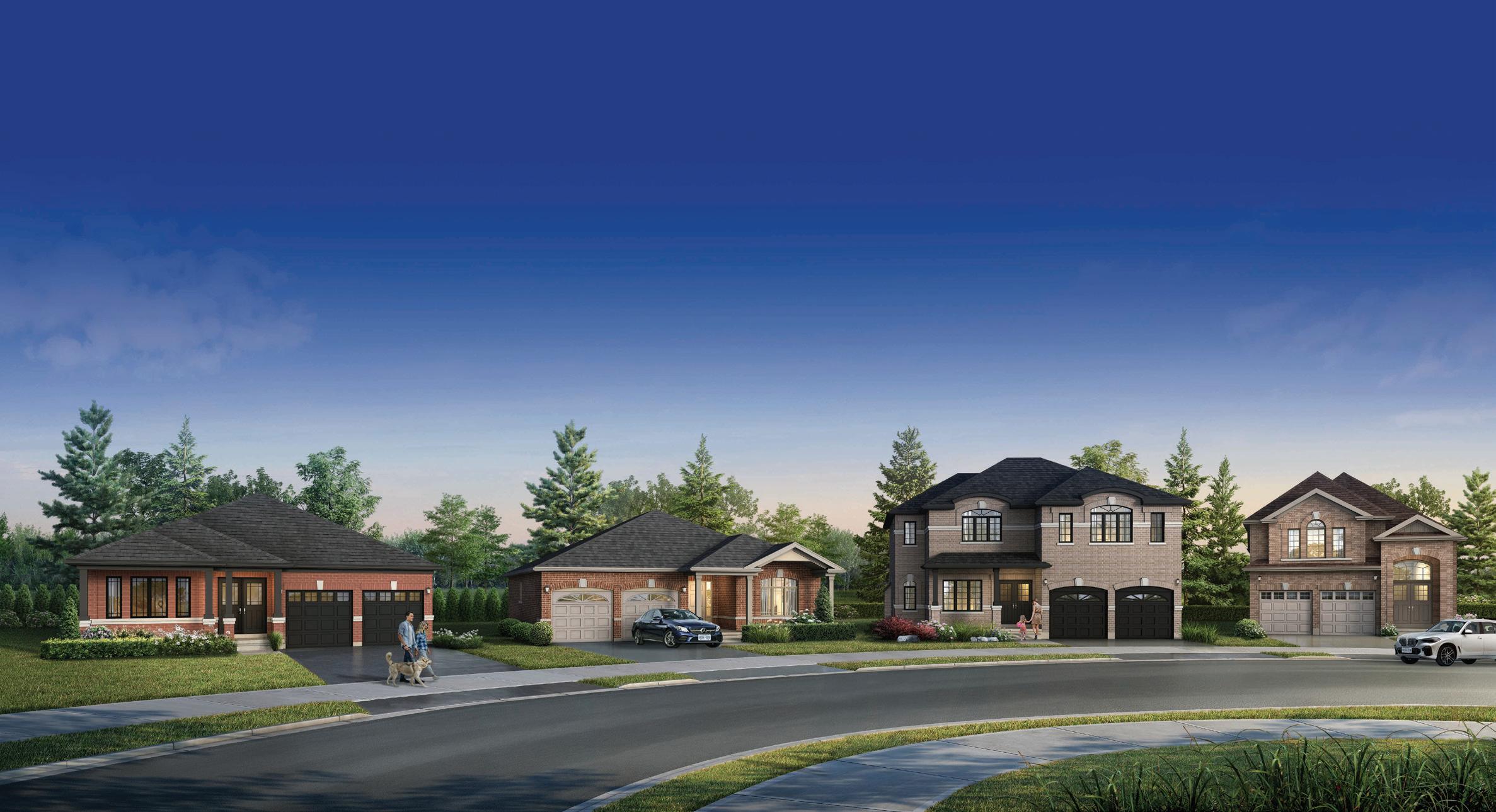
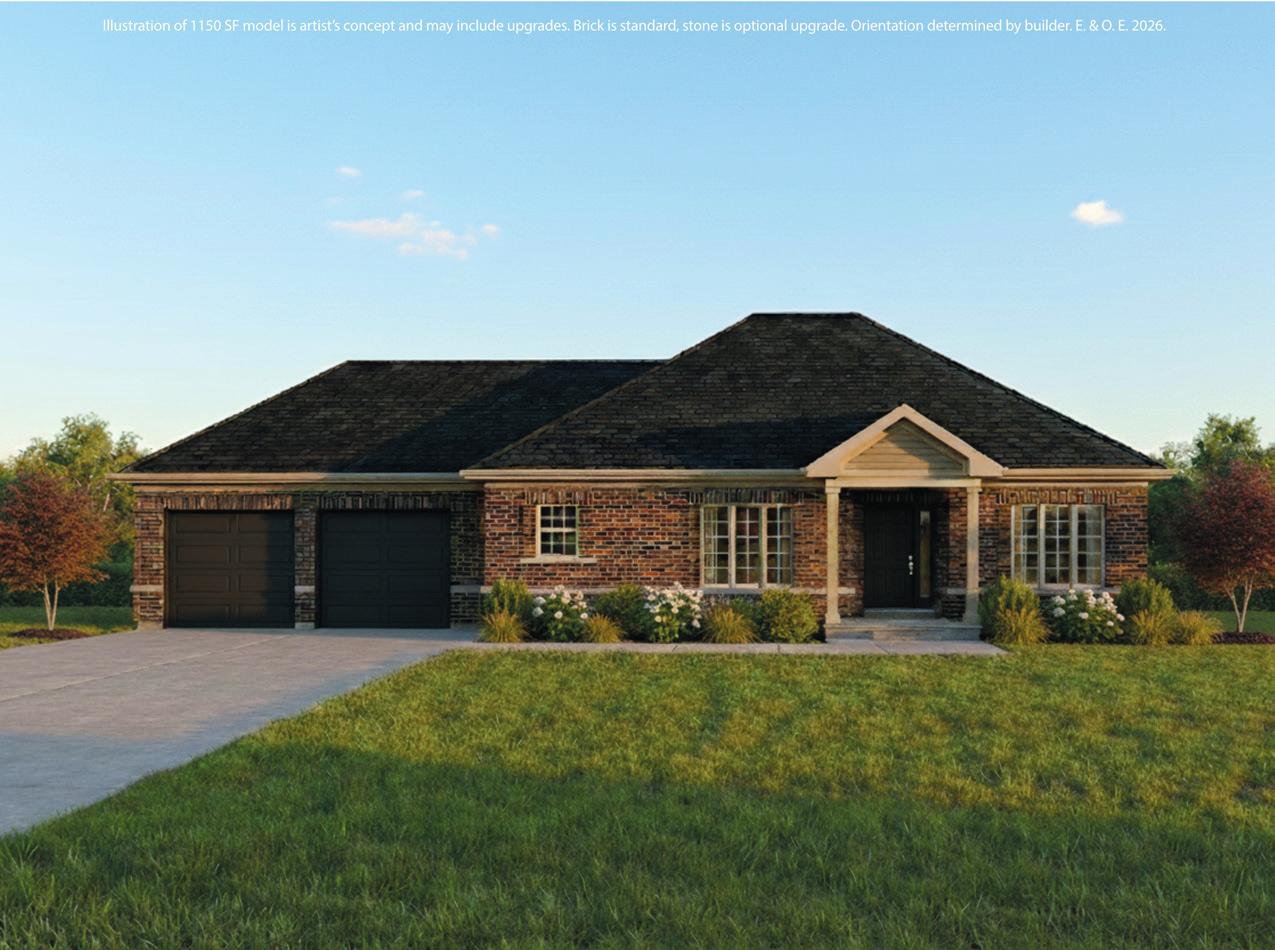
$849,900...Yes$849,900! Forest Height Estates in Horseshoe Valley is revolutionizing home ownership by offering so much, for so little. - Bungalow & 2-Storey
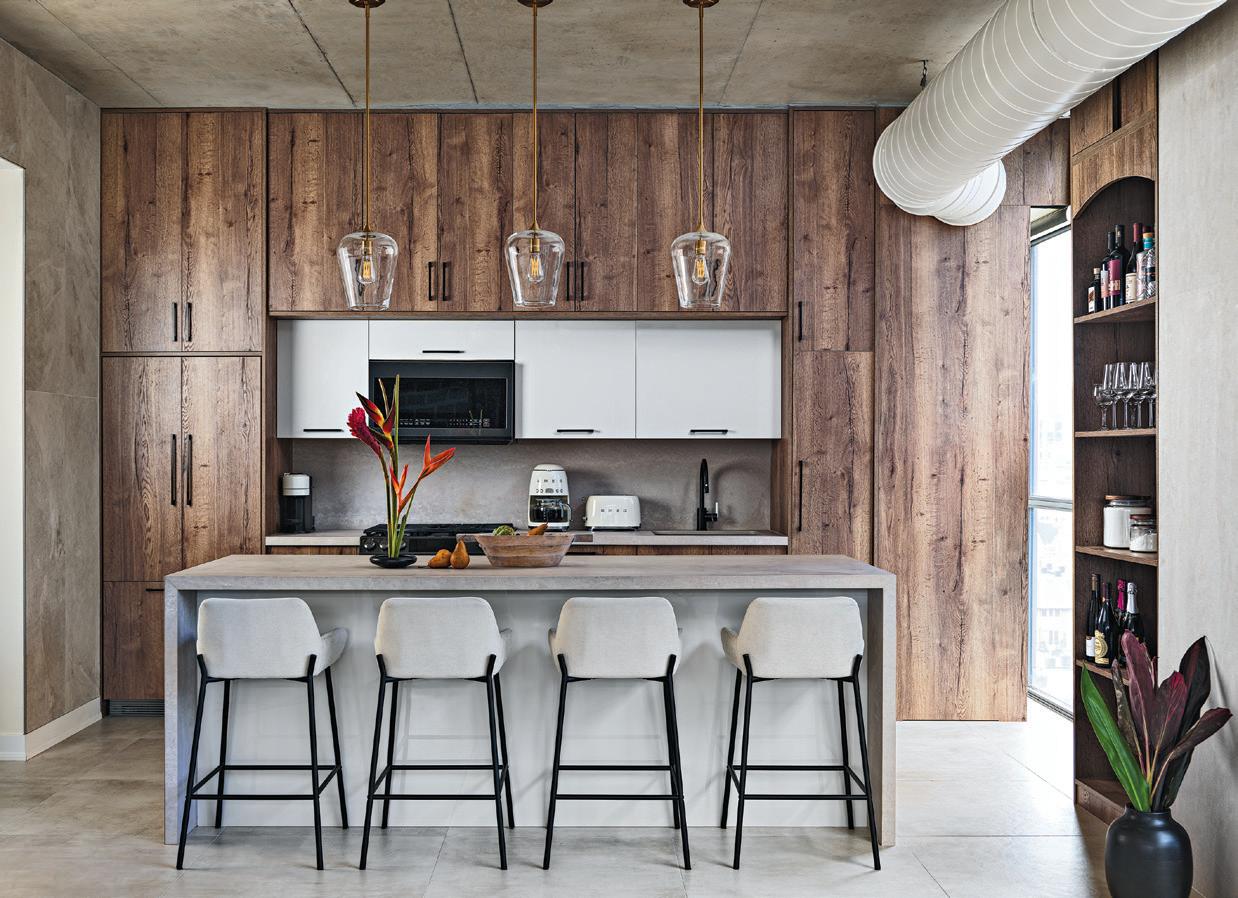
Vertical design: A new perspective on a classic loft
4 types of exercises to help you stay strong, active and healthy after 55
How AI and what’s in your pocket help you pay attention to your health 52
Transitioning into retirement without stress
Award-winning builder of thoughtfully built communities for active adult living in Niagara
Welcome home, in a Doug Tarry Home
Downtown Markham: 243-acre master-planned community coming to life
Central Park: Nature-inspired community is rising in Bayview Village neighbourhood
The rise of intimate rooms: Designing spaces that ground us
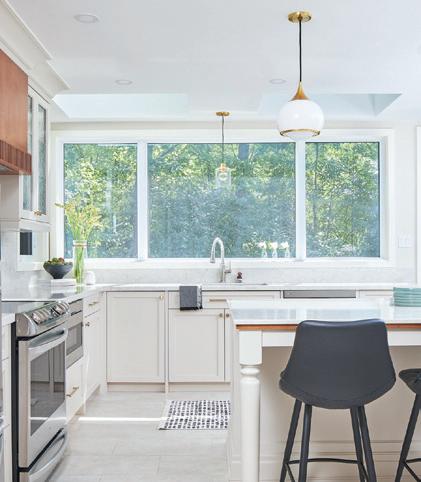
Details that define a better kitchen
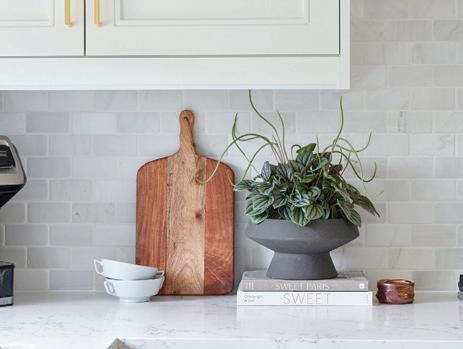
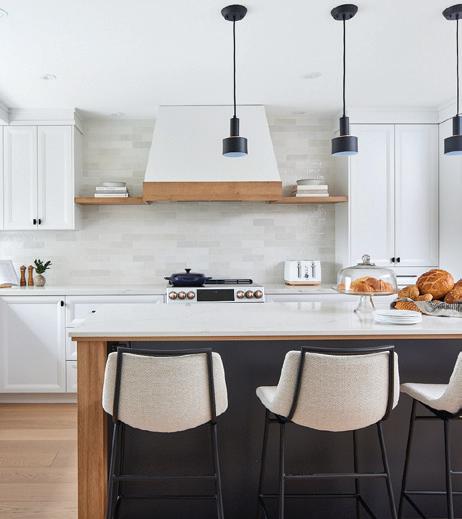
Why we still love a good all-white kitchen
Renovating for the life you plan to live
HOME DESIGN | MARIAM ABOUTAAM
An award-winning interior designer, Mariam Aboutaam is Director, Sales and Marketing, Interior Design at Kylemore, Markham, Ont., a builder known for master-planned communities and luxury homes. kylemoreliving.com.
PERSONAL FINANCE | JESSE ABRAMS
Jesse Abrams is Co-Founder at Homewise, a mortgage advisory and brokerage firm based in Toronto. thinkhomewise.com
WESTERN VIEW | MIKE COLLINS-WILLIAMS
Mike Collins-Williams, RPP, MCIP, is CEO West End Home Builders’ Association. westendhba.ca.
HOME REALTY | DEBBIE COSIC
Debbie Cosic is CEO and founder of In2ition Realty. She has overseen the sale of more than $15 billion worth of real estate. With Debbie at its helm, In2ition has become one of the fastest-growing and most innovative new home and condo sales companies. in2ition.ca
AGE STRONG | DR. JAMES FUNG
Dr. James Fung is a Chiropractor and Principal at Complete Balance Health Centre, Toronto. completebalancehealth.com
FEELING HOME | LINDA KAFKA
Linda Kafka, Wellness and Aging in Place Educator, writes about wellness, aging in place and how our homes support well-being at every stage of life. livablecanada.com.
REAL ESTATE PRO | BARBARA LAWLOR
Barbara Lawlor is CEO of Baker Real Estate Inc. A member of the Baker team since 1993, she oversees the marketing and sales of new home and condominium developments in the GTA, Vancouver, Calgary and Montreal, and internationally in Shanghai. baker-re.com
STAT CHAT | BEN MYERS
Ben Myers is the President of Bullpen Consulting, a boutique residential real estate advisory firm specializing in condominium and rental apartment market studies, forecasts and valuations for developers, lenders and land owners. Contact him at bullpenconsulting.ca and @benmyers29 on Twitter.
TRREB REPORT | DANIEL STEINFELD
Daniel Steinfeld is President of the Toronto Regional Real Estate Board (TRREB). A Chartered Accountant, he previously served as Vice-President and Chief Financial Officer with the Toronto Argonauts and is a Broker and coowner On The Block Realty.
BILD REPORT | DAVE WILKES
Dave Wilkes is president and CEO of the Building Industry and Land Development Association (BILD), the voice of the home building, land development and professional renovation industry in the GTA. For the latest industry news and new home data, follow BILD on Twitter at @bildgta or visit bildgta.ca
SENIOR MEDIA CONSULTANT Amanda Bell 416.830.2911 amanda.bell@nexthome.ca
EDITORIAL DIRECTOR Amanda Pereira
EDITOR-IN-CHIEF – GREATER TORONTO AREA Wayne Karl wayne.karl@nexthome.ca
CONTRIBUTORS
Mariam Aboutaam, Jesse Abrams, Olivia Bailey, Peter Balasubramanian, Mike Collins-Williams, Debbie Cosic, Dr. James Fung, Anwar Husain, Linda Kafka, Barbara Lawlor, Linda Mazur, Ben Myers, Mimi Pineau, Daniel Steinfeld, Dave Wilkes
Advertising Call 1.888.761.3313 for rates and information. Fax: 1.888.861.5038
Circulation Highly targeted, free distribution network focused on real estate buyers, using street-level boxes and select Canada Post distribution channels across the Greater Toronto Area and surrounding municipalities. Canadian subscriptions 1 year = 13 issues – $70 (inc. HST). Canada Post – Canadian Publications Mail Sales Product Agreement 40065416.
Copyright 2026 All rights reserved. All copyright and other intellectual property rights in the contents hereof are the property of NextHome, and not that of the individual client. The customer has purchased the right of reproduction in NextHome and does not have the right to reproduce the ad or photo in any other place or publication without the previous written consent of NextHome.
Editorial Submissions from interested parties will be considered. Please submit to the editor at editorial@nexthome.ca.
Terms and Indemnification Advertisers and contributors: NextHome is not responsible for typographical errors, mistakes, or misprints. By approving your content and/ or submitting content for circulation, advertisers and contributors agree to indemnify and hold harmless NextHome and its parent company from any claims, liabilities, losses, and expenses (including legal fees) arising out of or in connection with the content provided, including but not limited to any claims of copyright infringement, unauthorized reproduction, or inaccuracies in the content. Advertisers acknowledge that they have the necessary rights, permissions, and licenses to provide the content for circulation, and they bear full responsibility for the content’s accuracy, legality, and compliance with applicable laws upon approval. Contributors acknowledge NextHome reserves the right to omit and modify their submissions at the publisher’s discretion.
TIME TO TAKE ACTION
WAYNE KARL
EDITOR-IN-CHIEF
New Home + Condo Guide
EMAIL: wayne.karl@nexthome.ca
TWITTER: @WayneKarl
Thank goodness some people are paying attention.
Some governments (looking at you, Ontario, and to a certain extent, our federal leadership), seem to think everything is fine and dandy in the housing sector.
The Residential Construction Council of Ontario (RESCON) recently hosted Ontario Premier Doug Ford at its annual general meeting.
“We heard a lot of good things from Premier Doug Ford at the AGM,” says RESCON President Richard Lyall.
“The province has made some inroads, including removing the provincial portion of the HST on purpose-built rental housing and upcoming measures to offer rebates for first-time new-home buyers,” adds Lyall, stopping short of effectively reading the premier the proverbial Riot Act, stressing to the province how badly measures are needed – and immediately.
RESCON is only the latest organization to ring such an alarm bell, as the Building Industry and Land Development Association (BILD) and others have been doing for months. (See BILD President and CEO Dave Wilkes’ latest assessment in his column on page 24.)
The province doesn’t seem to grasp the severity of the issues.
Thankfully, some municipalities do, and are taking their own action.
The City of Burlington recently voted to temporarily eliminate residential development charges (DCs) for a two-year period, and will now take measure to City Council for final ratification.
The West End Home Builders’ Association (WEHBA) strongly supports the action, calling it “the most significant municipal response in Ontario to address the severe downturn in the housing market.”
Municipalities such as Mississauga, Vaughan and Hamilton have implemented partial reductions to development charges, but Burlington is the first municipality in Ontario to move forward with a full, temporary elimination in response to current economic conditions.
Meanwhile, other progress in the housing market is evident, as we approach what is typically busy season in real estate.
In the resale sector, for example, Toronto Regional Real Estate Board (TRREB) President Daniel Steinfeld highlights some of the positive signs emerging, in his column on page 32.
“Housing markets do not turn overnight,” he says. “The progress reflected over the past year is gradual, but meaningful. Improved affordability, increased choice and more balanced conditions have helped lay the groundwork for recovery.”
We now turn to the province to see if it all registers with the premier, and if he’ll take more broadly sweeping action.
CANADA MUST RENEW ITS NATIONAL HOUSING STRATEGY
Canada has now had three straight years of stalled home prices, according to the latest data from the Canadian Real Estate Association, as national home values are down by about one per cent from last year and four per cent from their 2022 peak. Adjusted for inflation, average prices today are roughly where they were in 2020, when the pandemic began.
“That is progress, but not nearly enough,” says Dr. Paul Kershaw of UBC, and founder of Generation Squeeze.
Home prices had already surged out of control well before COVID, especially in British Columbia and Ontario. Returning to 2020 levels in those provinces means returning to home prices that were already out of reach for most young adults. Meanwhile, prices in other provinces continue to climb.
It is essential, therefore, for the Carney government to renew and substantially improve Canada’s National Housing Strategy, the organization says. Launched in 2017 as a 10-year plan, the Parliamentary Budget Officer shows federal housing spending will fall by 56 per cent after 2027 if it is not renewed.
Those cuts run directly counter to Carney’s promise of generational investments in housing, Kershaw says. They also expose the gap between promises and plausible outcomes. The prime minister has spoken about doubling the pace of homebuilding,
yet the PBO shows that measures in his first budget will increase supply by roughly two per cent – not 100.
Renewing the National Housing Strategy offers a chance to do better, he says. The original version was a step forward, but it avoided several hard truths that can no longer be ignored.
First, housing policy must acknowledge an uncomfortable intergenerational reality. The dramatic rise in home prices over the past quarter century enriched those who already owned property – mostly boomers and Gen X – by shifting costs onto those who followed. Millennials and Gen Z now pay the price through rents and mortgages that consume far more of their incomes than earlier generations faced. Their housing insecurity finances the housing wealth gained by older generations.
The initial housing strategy never confronted this tension, but it is a must in a renewed plan, Kershaw says. It needs to grapple openly with the fact that the goals of younger people – lower rents and attainable homeownership – conflict with the desire of many existing owners to maintain, if not increase, their housing wealth.
We won’t fix housing affordability without an honest conversation about what this tension implies for home prices, he says. Do we want them to rise, stall or fall? The next NHS must minimally judge that prices should stop climbing. Otherwise, new entrants to the housing market will remain trapped by unaffordable prices. Reasonable people can disagree about how far prices should fall, or whether long-term stalling is enough. But that debate belongs in public view.
Second, the next housing strategy must repair a broken feedback loop between housing inflation and monetary policy, says Kershaw. Ultralow interest rates helped fuel the surge in home prices during the
pandemic, while rapid rate hikes later helped stall them. Yet throughout this cycle, Canada’s official measure of inflation – the Consumer Price Index –played down housing inflation by tracking homeowners’ continuing expenses rather than the skyrocketing cost of buying a home. The result was cheaper credit for longer, pushing prices higher and deepening insecurity for those trying to enter the market.
In addition, it is finally time to ask more from those who have gained the most, Kershaw says. Many older homeowners benefited enormously from rising home prices. While some try to offset that advantage privately, by helping their children buy homes, that is not a policy solution.
A public response would ask older Canadians with six-figure incomes to receive smaller Old Age Security so savings can be repurposed, in part, to address housing insecurity for younger generations, he says.
Ottawa currently plans for OAS to expand by tens of billions of dollars to meet the needs of an aging population. Yet federal support for housing is scheduled to shrink sharply after 2027. Governments will borrow billions to protect older Canadians’ wallets – even when they already have significant income and wealth –yet hesitate to invest at scale in the foundations younger Canadians need to build stable lives.
“If National Housing Strategy 2.0 does not confront that funding imbalance directly,” Kershaw says, “the housing crisis will easily outlive the strategy meant to solve it.”
ONTARIO MORTGAGE BROKERS URGE BANK OF CANADA TO ADDRESS HOUSING CRISIS THROUGH DIRECT ACTION
The Canadian Mortgage Brokers Association of Ontario (CMBA Ontario) says it is disappointed by the recent decision by the Bank of Canada (BoC) to hold its policy interest rate at 2.25 per cent. CMBA Ontario encourages a more direct and aggressive approach to curb the worsening housing crisis and rebuild consumer confidence in the market.
The new housing initiatives announced by the federal government in the fall’s federal budget presented the BOC with an opportunity to cut interest rates, the group says. Holding the interest rate during a growing crisis inhibits the construction of new homes, undermines consumer confidence for current homeowners, and further exacerbates entry barriers into the market. Without a drastic turn, a drop in new housing starts could cost tens of thousands of construction jobs in the province, according to CMBA Ontario.
“We were looking for the Bank of Canada to take a more active role on this,” says Michelle Campbell, president of CMBA Ontario. “A rate cut would have been a clear indicator for all those concerned that the future of the housing market in Canada will be healthy, regardless of what is happening elsewhere.”
Just 240 new home sales were recorded across the GTA in December 2025, marking a 78.2-per-cent decrease from the previous 10-year average for the month. December capped off the worst year for new home sales in the GTA in 45 years, 81
per cent below the 10-year average. Housing prices remain elevated despite the BoC’s recent string of rate cuts, and the main drivers of buyer hesitancy are expected to continue well into 2026, the group says.
At current interest rates, the increased costs of taking on new debt are a disincentive to both suppliers and buyers of housing, CMBA Ontario says. This has a double negative effect of reducing the amount of new supply, while also keeping the cost of paying mortgages high for current homeowners. The economic consequences are felt across the province, as the cost of taking on new debt and servicing old debt rolls onto other Ontarians as businesses are less likely to hire new employees or expand operations, and individuals and families spend less. CMBA Ontario says it would have liked to see a rate cut as a means to revive economic activity, beyond the positive benefits for the housing market.
“High interest rates affect all Ontarians, regardless of whether you have a mortgage or not,” says Campbell. “This isn’t something limited
to housing, it’s big-picture issue that affects the whole country. A rate cut would not only have had a positive impact in terms of encouraging new supply and solidifying consumer confidence in the housing market, but would also have had a positive ripple effect, sparking economic growth Canada-wide.”
As Canada and Ontario face new global economic and political uncertainties, CMBA Ontario says it remains committed to maintaining a vision of stable and affordable homeownership for all Ontarians. “We will continue to support aspiring homeowners in Ontario and work to make their dreams into reality.”
LIVE WELL THIS SPRING AT AT
ADULT BUNGALOWS SINGLES & TOWNS CANAL & RIVERSIDE LOTS AVAILABLE
This spring, discover a home that’s thoughtfully designed for comfort, connection, and effortless living. WaterCrest at Hunters Pointe is an award-winning active adult community in Welland, offering beautifully crafted bungalow homes set along canals and natural green spaces.
SPRING SAVINGS EVENT:
Purchase your new bungalow this spring AND RECEIVE $45,000 IN UPGRADES
Tiled Shower in Ensuite Hardwood in Great Room
20 Slim LED Potlights Covered Rear Porch on 40’ lots
Gas or Electric Fireplace in Great Room
TOUR OUR MODEL HOMES AT OUR SPRING OPEN HOUSE SATURDAY APRIL 25, 2026
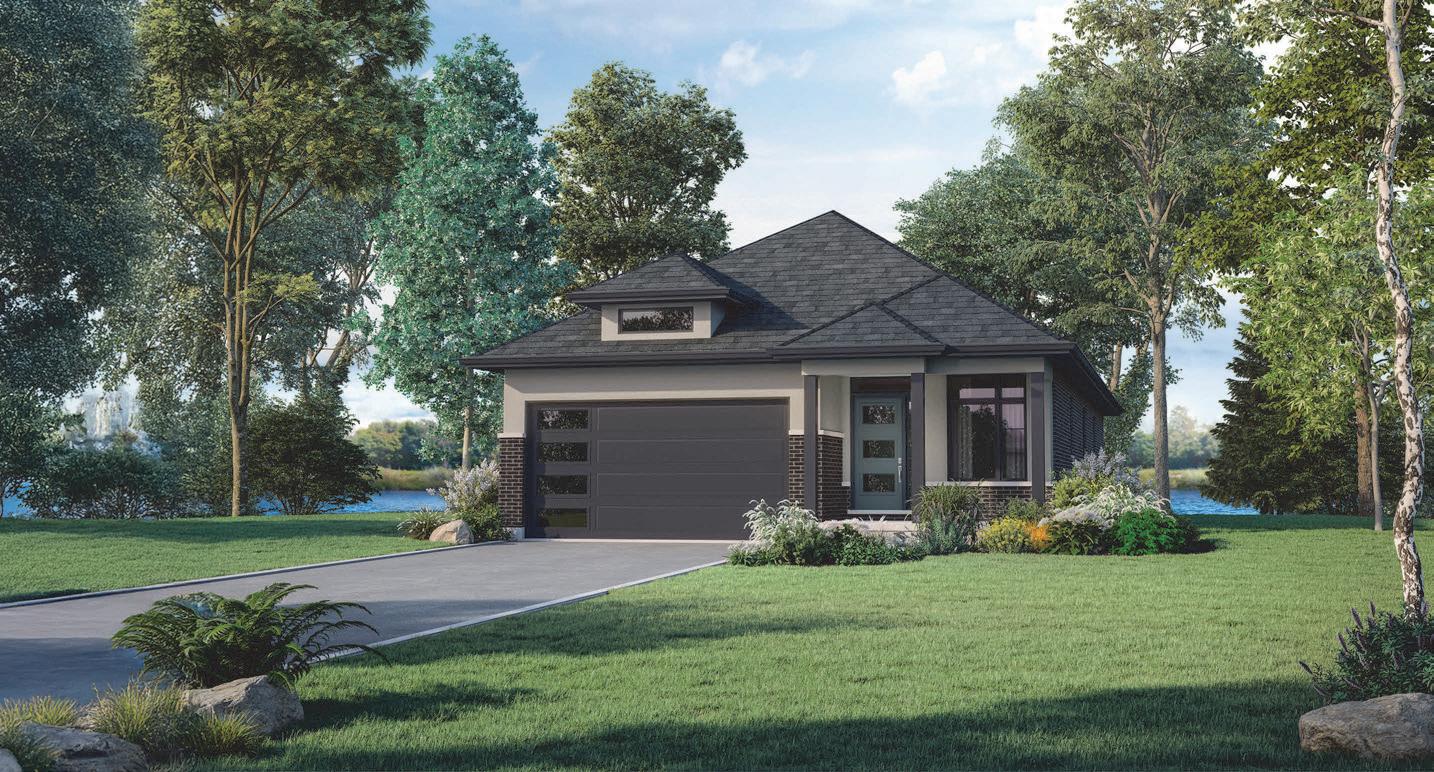
Join us this spring and tour two standout bungalow designs by Lucchetta Homes. Step inside the ALGOMA II, a detached bungalow offering open-concept living, elegant finishes, and smart main-floor functionality.
Then explore The Haven, an end-unit bungalow townhome with a bright, welcoming layout and low-maintenance comfort.
Experience the quality, craftsmanship, and thoughtful design that set Lucchetta Homes apart.
HOME SALES AND PRICES TO REMAIN STABLE IN 2026 AMID ONGOING AFFORDABILITY PRESSURES
The Toronto Regional Real Estate Board’s (TRREB) 2026 Market Outlook and Year in Review report highlights a housing market shaped by improved buyer choice and affordability, alongside cautious consumer sentiment across the Greater Toronto Area (GTA).
The report finds that elevated supply levels are expected to keep price growth in check through 2026, while overall home sales activity is forecast to remain within a similar range compared to the last three years, with the potential for improvement later in the year if the economy remains resilient and consumer confidence strengthens.
This year’s report and interactive digital digest include new Ipsos consumer polling results, insights into homebuying intentions and TRREB’s outlook on home sales and average prices, alongside research examining housing supply, migration, and affordability pressures across the region.
FOR 2026, TRREB FORECASTS
• GTA home sales will range between 60,000 and 70,000 transactions. Market activity in the first half of the year is expected to resemble 2025 levels, as many households remain cautious about committing to long-term mortgage payments. If economic prospects and consumer
confidence improve in the second half of the year, pent-up demand from the past several years could begin to be satisfied.
• The GTA average price forecast range for 2026 is between $1 million and $1.03 million. Elevated inventory levels across most market segments are expected to continue providing buyers with substantial negotiating power, particularly in the condominium apartment market. Average selling prices will likely be lower year-over-year in the first half of 2026 before stabilizing in the second half, if buyers start moving off the sidelines and market conditions tighten.
The Ipsos Home Buyers Survey found that GTA homebuying intentions for 2026 declined by five percentage points compared to 2025, to 22 per cent, despite improved affordability. This highlights challenges with consumer confidence vis-a-vis current economic uncertainty.
Despite softer overall buying intentions, first-time buyers could be a key driver of recovery in the months ahead. Ipsos polling shows that 45 per cent of intending homebuyers in 2026 will be first-time buyers, underscoring the importance of attainable ownership options.
Ipsos research also points to sustained rental demand across the GTA in 2026, supported in part by continued immigration, with many newcomer households renting before transitioning into homeownership.
households remaining in the rental market longer than anticipated.
“The housing market reflects the tension many households are feeling as we look ahead to 2026,” says TRREB President Daniel Steinfeld. “Affordability has improved, but uncertainty continues to weigh on long term decisions like homeownership. Greater economic clarity in the months ahead could restore confidence and help unlock demand that has been building for several years.”
“With the cost of borrowing flattening out, affordability gains in 2026 will largely be seen on the pricing front, as buyers continue to benefit from negotiating power,” adds TRREB Chief Information Officer Jason Mercer. “A boost in consumer confidence could see buyers move off the sidelines later this year, which could provide support for home prices as market conditions tighten up.”
The report also includes new research examining the impacts of population growth and migration, traffic congestion and policy challenges affecting housing delivery across the region, along with recommendations aimed at addressing planning delays, development costs and barriers within Ontario’s housing and infrastructure systems.
Despite improved affordability in the homeownership market, Ipsos found that renter households face a gap of nearly $600 per month between affordable mortgage payments and the mortgage payments required to purchase the type of home they want. This affordability gap may result in many
“At TRREB, we focus on actions that can make the greatest impact,” says TRREB CEO John DiMichele. “That means pursuing innovative, future-facing solutions, including planning systems that approve building housing more efficiently, a tax environment that supports affordability and a long-term commitment to purpose-built rental construction. These elements help create a balanced and predictable housing market, and this increases consumer confidence.”
CITY OF BURLINGTON TEMPORARILY ELIMINATES DEVELOPMENT CHARGES
The City of Burlington’s Committee of the Whole, led by Mayor Marianne Meed Ward, recently voted to temporarily eliminate residential development charges (DCs) for a two-year period. The measure now proceeds to City Council for final ratification.
The West End Home Builders’ Association (WEHBA) says it strongly supports the action, which
represents the most significant municipal response in Ontario to address the severe downturn in the housing market. The temporary elimination of DCs as an urgent measure to stabilize a challenged housing pipeline and prevent further job losses. Residential construction has declined sharply in Burlington, with new home sales dropping 90 per cent since 2022.
“The West End Home Builders’ Association strongly supports the leadership and decisive action shown by Burlington Mayor Marianne Meed Ward to temporarily eliminate all residential development charges as a necessary measure to kickstart construction activity and prevent further job loses,” says Mike CollinsWilliams, CEO of WEHBA. “This action sends a strong signal that Burlington understands the gravity of the housing crisis and is prepared to act decisively to protect jobs and housing supply.”
WEHBA says it is a strategic and responsible move to protect jobs and increase housing supply. While municipalities such as Mississauga, Vaughan and Hamilton have implemented partial reductions to Development Charges, Burlington is the first municipality in Ontario to move forward with a full, temporary elimination in response to current economic conditions.
IPSOS POLL HIGHLIGHTS GROWING AFFORDABILITY PRESSURES ACROSS GTA
The Toronto Regional Real Estate Board (TRREB) has issued five local housing affordability updates based on new Ipsos polling of Greater Toronto Area (GTA) and Simcoe residents. The findings point to rising concern about housing costs, strong public support for measures to lower government-driven housing costs and growing urgency to accelerate the delivery of attainable homes.
TRREB cites five region-specific items in the context of housing construction:
• Vaughan: 83 per cent of residents support cuts to development charges to boost homebuilding
• Mississauga: Nine in 10 residents are concerned about local housing affordability
• Brampton: Seven in 10 residents believe government taxes on new homes are unreasonable
• Durham Region: 80 per cent say municipalities are not doing enough to make housing affordable
• Simcoe County: 83 per cent of residents say municipalities are not doing enough to make housing more affordable Collectively, the polling underscores that affordability pressures are worsening and governments must move faster to
reduce the cost of building new homes, streamline approvals and expand housing options that better match the needs of families, renters and first-time buyers.
LUCCHETTA HOMES
AWARD-WINNING BUILDER OF THOUGHTFULLY BUILT COMMUNITIES FOR ACTIVE ADULT LIVING IN NIAGARA
As homebuyers across southern Ontario reconsider what “living well” truly means, the Niagara Region continues to attract those seeking a more balanced lifestyle. With its scenic waterways, walkable communities, established amenities and slower pace, Niagara offers a compelling alternative to the congestion and intensity of the Greater Toronto Area. For those ready to take that leap of faith, partnering with a trusted local builder is essential. For more than 60 years, Lucchetta Homes has been helping families and active adults make that transition with confidence.
Established in 1960, Lucchetta Homes is a second-generation, family-owned builder with deep
roots in Niagara. Its philosophy has always been grounded in building quality homes and lasting communities, designed to support how people live today and how they
plan to live tomorrow. With decades of experience across Welland, St. Catharines and surrounding Niagara communities, Lucchetta Homes brings an unmatched understanding
of the region’s geography, lifestyle and evolving housing needs.
Lucchetta Homes is an accomplished, award-winning builder, having earned many national, provincial and regional honours for excellence in homebuilding and community development. When its Hunters Pointe community in Welland was first introduced, it earned the prestigious Community of the Year (Active Adult Lifestyle) award in 2017, as voted by the Canadian Home Builders’ Association. Accolades such as this reflect Lucchetta’s consistent focus on thoughtful planning, enduring quality and a homeowner experience built on trust.
WATERCREST AT HUNTERS POINTE
Lucchetta Homes is now proud to present the final phase of its awardwinning Hunters Pointe community: WaterCrest at Hunters Pointe. Designed specifically for active adult living, WaterCrest offers a rare opportunity to enjoy a peaceful, nature-connected lifestyle while remaining close to everyday conveniences, healthcare, shopping and recreation.
Situated at the confluence of the Welland Canal and the Welland River, WaterCrest is defined by its natural setting. Scenic water views, surrounding greenspace and thoughtfully planned streetscapes create a sense of retreat without isolation. The community features a collection of spacious singlefamily bungalows and bungalow townhomes, ideal for downsizers, empty nesters and retirees seeking low-maintenance living without sacrificing quality or design.
Select homes offer exceptional views of the waterway and natural surroundings, reinforcing the sense of calm that defines the community. Each home is carefully positioned to blend with the landscape, providing a serene backdrop for everyday life.
FRIENDS INCLUDED IN EVERY PURCHASE
What truly sets WaterCrest apart is the lifestyle it fosters. At the heart of the community is a 14,000-sq.ft. community centre, designed to encourage connection and engagement. From clubs and social gatherings to fitness activities and hobby groups, WaterCrest is a place where neighbours quickly become friends.
For many buyers relocating from the GTA, this built-in sense of community makes the transition seamless. Likeminded active adults find themselves surrounded by people in similar life stages, making it easy to form friendships, explore new interests and feel at home from day one.
The 14,000-sq.-ft. community centre at WaterCrest
THE LUCCHETTA DIFFERENCE
Lucchetta Homes has long been recognized for its commitment to quality, craftsmanship and customer satisfaction. Homes are designed with a strong focus on functionality, comfort and timeless appeal. Through the Lucchetta Design Centre, homeowners receive one-on-one support from design professionals, allowing them to personalize finishes and details while staying aligned with their vision and budget.
Construction quality remains a cornerstone of the Lucchetta brand. Longstanding partnerships with the region’s most skilled trades ensure every home enjoys meticulous attention to detail, from foundation through final finishes.
Sustainability is equally important. Every Lucchetta home is Energy Star certified, and the builder continues to lead in energy-efficient construction and net-zero home options. These initiatives support long-term cost savings, environmental responsibility and future-ready living.
A LIFESTYLE WORTH THE MOVE
Relocating from the GTA to Niagara is a significant decision, but one increasingly embraced by those seeking a more fulfilling lifestyle. Niagara’s slower pace encourages relaxation and enjoyment, whether that means gardening, golfing, walking and hiking nearby trails, playing pickleball or spending time on the water. Many of these activities
are just minutes from home, reinforcing the convenience and appeal of the region.
WaterCrest isn’t the only opportunity to own a Lucchetta Home here in Niagara. The homebuilder is currently offering the final remaining townhome at LUSSO in St. Catharines, and its upcoming, highly-anticipated Saffron Estates in Pelham is expected to draw significant interest from homebuyers from both in and outside the region.
LOOKING AHEAD
With limited opportunities remaining at LUSSO, the final phase now underway at WaterCrest, and early demand building at Saffron Estates, the opportunity to own a Lucchetta home in Niagara is increasingly time sensitive. Buyers considering a move are encouraged to act early to secure priority access to available homes, future releases and upcoming pricing.
With a legacy built on trust, innovation and community-focused design, Lucchetta Homes continues to shape the future of living in Niagara.
To learn more about this awardwinning builder, available communities, move-in-ready homes and upcoming releases, visit lucchettahomes.com.
MEET LUCCHETTA HOME’S OTHER NIAGARA COMMUNITIES:
LUSSO Urban Towns offers a modern, low-maintenance lifestyle in the heart of St. Catharines, appealing to professionals, downsizers and buyers who value walkability and easy access to shopping, dining and major commuter routes. Thoughtfully designed townhomes combine contemporary architecture with practical layouts, making everyday living effortless. With just one townhome remaining, LUSSO is nearing full completion – it’s the last chance to own in this unique community.
Saffron Estates is Lucchetta Homes’ next release in Niagara’s west end, located in the prestigious Town of Pelham. This thoughtfully planned community will feature a limited collection of elegant bungalow homes on large lots, blending transitional and contemporary design. With easy access to parks, trails and everyday amenities, Saffron Estates is already generating strong early interest from buyers looking to secure ong-term value in a growing Niagara community.
Central Park – nature-inspired community is rising in the Bayview Village neighbourhood
Construction of Amexon’s The Residences at Central Park is well underway on Sheppard Avenue in the east end of the prestigious Bayview Village neighbourhood. Phase 1 sold out ahead of schedule, and construction has already taken this first tower to its full height of 31 storeys.
HOUSING MARKET
Canadian millennials still bullish on housing market: Survey Despite affordability challenges and lingering economic uncertainty, Canada’s largest generation of potential buyers isn’t backing down from the housing market.
PERSONAL FINANCE
Why 2026 is quietly becoming a potentially strong year for buyers in Canada
After several years of uncertainty, 2026 is shaping up to be a meaningful reset for Canadian homebuyers. Not because prices are collapsing or rates are heading back to record lows, but because the market is becoming more balanced and easier to read. For buyers, that change is important.
HOMEBUILDING
NHBA announces 2025 Member and Company of the Year
The Niagara Home Builders’ Association recently honoured the individuals and companies responsible for the association’s presence and viability.
Q&A
In Conversation With Jonathan Goldman, President, Stafford Homes
Today’s homebuyers are increasingly discerning and demanding – no matter what or where they’re buying. Those who are established and downsizing in a prime Toronto location? Even more so. Enter Stafford Homes and its signature project, 429 Walmer. President Jonathan Goldman explains the appeal of this an exclusive collection of 48 residences in prestigious Forest Hill Village.
BUILDER PROFILE
Wellings Communities offers modern option for vibrant adults
There comes a moment – not marked by age, but by clarity – when you begin to ask a different kind of question about home. Not “how big is it?” or “how long will we stay?” but “does this still support the way we want to live?” Wellings Communities strives to provide the answers.
CONDO COMMUNITY
DISCOVER THE DOUG TARRY DIFFERENCE BY VISITING THE MODEL HOMES TODAY:
The Oakmont Model Home
157 Renaissance Dr., St. Thomas
The Dunmoor Model Home
2 Sugar Bush Path, St. Thomas
The Northgate Model Home
1 Firefly Lane, St. Thomas
WELCOME HOME…
IN A DOUG TARRY HOME
Rooted in St. Thomas, Ont., Doug Tarry Homes has been shaping communities with care and intention since 1954. Founded by Doug Tarry Sr., the company has grown through generations with a clear purpose: To build thoughtfully and leave a positive impact wherever they work. That belief, inspired by lessons Doug Sr. shared during family canoe trips, continues to guide everything the team does today.
At Doug Tarry Homes, the company understands that every homeowner has unique needs and visions for their living space. That’s why the builder offers a diverse range of floorplans, ensuring there’s something for everyone. Whether you’re a single professional, growing family or downsizing retirees, the selection spans from cosy single homes to practical semi-detached houses and modern townhomes. Each of these options is nestled within award-winning communities, offering not just a house, but a lifestyle supported by community spirit.
With an ever-growing emphasis on sustainability, Doug Tarry Homes proudly presents homes that are not only aesthetically stunning but also environmentally conscious. Every residence is Energy Star certified and Net Zero Ready. This commitment to eco-friendly design ensures homes are not just energy-efficient, but also spaces designed for comfort and health, offering long-term savings and an elevated lifestyle.
Choosing St. Thomas as your home means embracing a lifestyle rich in amenities and natural beauty. This vibrant city, known as the “Railway Capital of Canada,” offers a unique blend of historical charm and modern conveniences. Residents enjoy a variety of parks, cultural events and a close-knit community spirit, making it an ideal place for families and individuals alike. Doug Tarry Homes’ communities are ideally situated, offering the best of both worlds.
With a deep understanding that no two homeowners are the same, Doug Tarry Homes offers a wide range of personalization options. With the guidance of its decor team, homeowners are supported through every selection, ensuring finishes, features and details are thoughtfully chosen to reflect their lifestyle.
For those looking to move sooner, Doug Tarry Homes also offers a selection of quick possession homes that balance convenience with quality. Thoughtfully finished and backed by the Tarion New Home Warranty Program, these homes reflect the same care, transparency and craftsmanship that define every Doug Tarry build, making the move into homeownership straightforward and reassuring.
For more information, visit dougtarryhomes.com, or contact Suzie Dennis, 519.851.7386, or adennis@dougtarryhomes.com.
DOWNTOWN MARKHAM 243-ACRE MASTER-PLANNED COMMUNITY COMING TO LIFE
The Remington Group has never approached development as a short-term pursuit. For decades, its work has been guided by the belief that building extends far beyond physical structures, it is about shaping environments where people feel grounded, connected and proud to call home. Legacy, in this sense, is not defined by scale alone, but by consistency, intention and an enduring commitment to quality that lives on long after construction is complete.
That philosophy is perhaps most clearly expressed in Downtown Markham, a 243-acre master-planned urban centre conceived and brought to life by The Remington Group. Unlike isolated developments that exist independently from their surroundings, Downtown Markham was envisioned as a complete and evolving district one where architecture, public space, culture and everyday living intersect naturally. Residential towers rise alongside walkable streets, retail, offices and gathering spaces, creating a rhythm that feels less like a single project and more like an organically growing city within the city.
What makes Downtown Markham distinctive is not only its scale, but its intentionality. Every phase reflects a long-range perspective
and understanding that meaningful communities are cultivated over time. The neighbourhood balances urban energy with a sense of familiarity, offering families and residents an environment where daily life feels both vibrant and grounded. It is a place designed to evolve with its residents, rather than simply accommodate them.
Within this broader vision, Gallery Towers emerges as a refined expression of contemporary living.
The residences and model suites reflect a design philosophy rooted in practicality and warmth, where thoughtful planning takes precedence over excess. Rather than focusing solely on visual impact, the interiors are shaped around how people truly live how families gather, how routines unfold, and how spaces adapt as lifestyles change.
Open layouts encourage connection while still allowing moments of quiet retreat. Carefully considered storage solutions, flexible den spaces, and balanced proportions create homes that feel intuitive from the moment you enter. Finishes are selected not simply for trend, but for longevity, materials and palettes that remain timeless while enhancing a sense of calm. The result is an atmosphere
that feels elevated yet approachable, sophisticated yet comfortable.
At Gallery Towers, design is not performative; it is purposeful. The model suites demonstrate how thoughtful planning can transform everyday living into something seamless and restorative. From morning routines to evenings spent together, each element is crafted to support the rhythms of family life with understated ease.
Ultimately, the story of The Remington Group is one of vision carried forward over generations. Downtown Markham stands as a reflection of that vision a neighbourhood built with patience, belief and a deep understanding that communities are shaped by people as much as by architecture. Gallery Towers continues this narrative, offering homes that prioritize livability, connection, and enduring design within a district that has been carefully imagined for decades to come.
Private previews of the building and new townhome model suite now available for those looking to experience the space firsthand.
For more information, visit remingtongroupinc.com, or email dtmcondos@downtownmarkham.ca.
ONTARIO’S HOUSING
SLOWDOWN IS A FULL-BLOWN ECONOMIC EMERGENCY
New home construction has long been a cornerstone of Ontario’s economy, supporting hundreds of thousands of jobs, generating billions in economic activity and tax revenue, and playing a central role in meeting the housing needs of a growing population. However, it is clear that the engine is stalling –and the implications of this go far beyond housing affordability. Housing sales and starts data from 2025 point to serious and compounding consequences for employment, future housing supply, government revenues and the province’s longterm economic outlook.
To understand the seriousness of the situation at hand, it is important to understand how the new housing sector works. Housing is built through a 10-year pipeline that typically begins with land acquisition, planning, design and approvals.
Approximately halfway through preconstruction, sales begin, followed by a construction start and finally a completion when a unit is ready for occupancy, with years separating each stage. The volume of homes under construction and the level of activity at each stage of the pipeline at any given time determines the level of construction activity in the economy and, by extension, the number of jobs supported by the sector.
Across Ontario, that pipeline is now under significant strain as new home sales have declined to levels
not seen since records started to be kept and publicly reported in 1981. In 2025, sales fell to approximately 15,000 units province-wide, down from historic levels of 65,000 to 85,000 homes annually. A decline of this magnitude will inevitably translate into fewer housing starts. By 2030, annual housing starts are expected to fall to roughly 40,000 units, including purpose-built rental, down from about 80,000 today.
These sales trends are further pronounced in the Greater Toronto Area, with new home sales reaching the lowest level ever recorded in 2025. Total sales for the year were just 5,314 units. Single-family sales were down 63 per cent from the 10-year average, while condominium apartment sales were down 89 per cent.
On the construction and housing starts side of the equation, the situation is not any better. According to the latest data from the Canada Mortgage and Housing Corp., housing starts in Ontario declined sharply in 2025. The province recorded 62,561 housing starts, down from 72,118 in 2024, representing a 13-per-cent year-over-year drop in the number of new homes beginning construction.
This decline is particularly concerning because housing starts today reflect sales decisions made years earlier. At a time when starts are already decreasing, a sustained period of weak sales means fewer projects entering the pipeline, fewer homes under construction, and a further erosion of construction activity and employment in the years ahead. This also means low new home supply in the future, even as the population continues to grow.
“
” Reducing sales tax would deliver direct, meaningful savings to buyers while helping restore viability to projects that are currently stalled.
DAVE WILKES
On the employment side, the housing construction sector has been one of the province’s most reliable employment engines. Over the past five years, from 2020 to 2024, new home construction supported an estimated 222,700 jobs across Ontario on average each year. This includes more than 104,000 direct construction jobs, nearly 73,000 indirect jobs among suppliers and related industries, and more than 45,000 induced jobs supported by the spending of those workers.
If the current slowdown persists, the economic consequences are severe. Not only could it result in the loss of approximately 100,000 jobs from a residential construction workforce of roughly 225,000 –but this would mean the loss of almost $13 billion in wages and earnings by 2030, which would have widespread implications, including
an estimated $1.3 billion in lost personal and corporate income tax revenue annually.
Furthermore, the sector’s contribution to provincial GDP would shrink dramatically, from $31.7 billion annually to just $10.4 billion. Governments would also feel the impact. Annual losses are projected at $2.4 billion in provincial sales tax, $1.4 billion in income tax, $700 million in land transfer tax and $3.9 billion in municipal development charges and related fees – a combined $8.5 billion hit to public revenues every year.
One of the most effective and immediate steps governments can take is to remove the HST from new homes, which would immediately provide affordability. Reducing sales tax would deliver direct, meaningful savings to buyers while helping restore viability to projects that are currently stalled. Now is the time
for both the federal and provincial governments to fully eliminate the HST on all new homes (not just for new home buyers) to lower the cost of housing and get buyers back into the market and the industry back to work.
It is obvious that this is no longer just a housing market issue. It is an economic emergency that demands decisive action – and governments must take action.
Dave Wilkes is President and CEO of the Building Industry and Land Development Association (BILD), the voice of the homebuilding, land development and professional renovation industry in the GTA. For the latest industry news and new home data, follow BILD on Twitter, @bildgta or visit bildgta.ca.
+MORE CONTENT ONLINE nexthome.ca
MORTGAGE RENEWALS:
WHY YOUR BANK’S FIRST OFFER MAY NOT BE YOUR BEST
JESSE ABRAMS
A quiet but very important shift is happening in Canada’s housing market. It is not flashy. It is not about bidding wars or price spikes. It is about mortgage renewals.
Over the next few years, a very large share of Canadian mortgages will come up for renewal. Many of these loans were taken out or last renewed when rates were near historic lows in 2020 and 2021. Those
homeowners are now facing a very different rate environment.
For many households, this will mean higher payments. For others, it will mean tough choices about budgets and timelines. But it also creates an opportunity, if you handle your renewal the right way.
THE RENEWAL WAVE IS BIGGER THAN MANY
PEOPLE THINK
During the low-rate period, Canadians locked in mortgages at rates often below two per cent. A huge number of those terms were three to five years. That means 2026 and 2027 are heavy renewal years.
Industry estimates suggest well more than one million Canadian households will renew in this window. That is a large share of all outstanding mortgages in the country.
In simple terms, a lot of people will be forced to revisit their mortgage at today’s rates, not yesterday’s. That can feel stressful, but it is also a moment where smart decisions can save real money.
WHY YOUR BANK’S FIRST OFFER IS OFTEN NOT YOUR BEST
When your mortgage comes up for renewal, your lender will usually send you a letter or email with a rate offer.
It is easy. It is fast. You can often accept it with a few clicks.
That convenience is exactly why many people take it.
But here is the key point: Your bank is not required to offer you their lowest rate in that first renewal notice. In many cases, they don’t. Lenders know that a large number of clients will simply sign and stay. From their side, there is little reason to offer their sharpest rate right away.
This does not make them bad. It just means their goal and your goal are not the same.
Your goal is to lower your interest cost and keep your payments manageable. Their goal is to retain your mortgage.
WHAT SHOPPING YOUR RENEWAL CAN REALLY DO
Even a small rate difference matters.
A difference of 0.2 per cent can mean thousands of dollars over a term,
depending on your balance. For larger mortgages, the difference can be even more meaningful.
Shopping your mortgage at renewal can help you:
• Lower your rate
• Adjust your amortization
• Consolidate other debts
• Change features like prepayment options
In many cases, switching lenders at renewal is simpler than people expect. If your mortgage is in good standing and you are not increasing the loan amount, the process can be quite smooth.
COMMON RENEWAL MISTAKES
Some patterns show up again and again:
1. Waiting too long
Many homeowners look at renewal just a few weeks before the date. By then, options can feel rushed. Starting four to six months early gives you more control.
“ ” Some banks do offer strong retention rates, but not always. It is worth checking the market rather than assuming.
2. Focusing only on the rate
Rate matters, but so do features. Prepayment limits, penalties and flexibility can have real value.
3. Assuming loyalty is rewarded
Some banks do offer strong retention rates, but not always. It is worth checking the market rather than assuming.
A SIMPLE MINDSET SHIFT
Think of your renewal as a new purchase decision, not a formality. If you were getting a brand-new mortgage today, you would likely compare options. Your renewal deserves the same attention.
With such a large renewal wave hitting Canada, more homeowners are realizing this. A bit of homework at renewal time can ease payment pressure and improve long term finances. Working with an unbiased advisor like someone at a company such as Homewise, helps you understand if you actually are making the best financial decision.
For many, the goal is not chasing the absolute lowest rate. It is finding a mortgage that fits your life and budget for the next few years. And in a higher rate world, that matters more than ever.
Jesse Abrams is Co-Founder at Homewise, a mortgage advisory and brokerage firm. thinkhomewise.com
+MORE CONTENT ONLINE nexthome.ca
THE PRESSURE POINT:
HOUSING SUPPLY, MIGRATION AND WHAT COMES NEXT FOR THE GGH
Housing in the Greater Golden Horseshoe is at a pivotal moment. After several years defined by rising borrowing costs, limited choice and mounting affordability pressures, the market has entered a period of adjustment. TRREB’s 2026 Market Outlook & Year in Review report takes a closer look at what this shift means for buyers, sellers, landlords and renters, and the long-term health of our region.
This year’s theme, The Pressure Point: Housing Supply, Migration, and the Missing Middle, reflects the realities shaping housing outcomes today.
MORE CHOICE, LESS URGENCY
Improved affordability across ownership and rental markets defined much of 2025. Higher active listings helped restore balance in several market segments, particularly condominium apartments, giving buyers and renters greater leverage. Many households now expect to pay less for a home in 2026 than they would have a year earlier, reflecting softer prices and improved negotiating conditions.
However, increased choice has not translated into a surge in activity. Buying intentions declined year over year, reinforcing an important reality: Affordability alone does not drive housing decisions. Confidence matters. Many households remain cautious as they weigh job security, economic uncertainty and the long-
term commitment that comes with homeownership.
As a result, GTA home sales are expected to range between 60,000 and 70,000 transactions in 2026, with activity likely remaining subdued in the first half of the year before improving if confidence strengthens.
THE HOMES WE’RE MISSING
While short-term market conditions continue to adjust, the region’s long-term housing challenge remains unchanged. Population growth continues to support demand across the GTA and Simcoe, and while many newcomers initially rent, ownership demand ultimately follows.
This is where missing-middle housing becomes essential.
Townhomes, duplexes, multiplexes and other lowrise multi-unit options offer attainable choices for families, newcomers and residents looking to right-size, while fitting more naturally into existing neighbourhoods.
Purpose-built rental housing also remains a critical part of a healthy housing system, particularly as many households face a significant gap between what they can afford and the homes they would ideally like to purchase.
WHY PEOPLE ARE RETHINKING WHERE THEY LIVE
Housing affordability does not exist in isolation. It intersects with broader livability concerns, including congestion, infrastructure strain and quality of life. These combined pressures are influencing where people choose to live and work, particularly among younger households and families.
When housing costs rise faster than incomes and daily commutes become less manageable, people look elsewhere. Addressing these challenges requires more than market adjustment alone. Efficient planning systems, predictable housing taxes, sustained investment in transportation and a commitment to building a full range of housing options all play a role in keeping the region competitive and liveable.
FROM ADJUSTMENT TO OPPORTUNITY
Housing markets do not turn overnight. The progress reflected over the past year is gradual, but meaningful. Improved affordability, increased choice and more balanced conditions have helped lay the groundwork for recovery.
Whether that recovery gains momentum will depend on confidence, economic stability and coordinated policy decisions that support housing supply over the long term. By focusing on evidence-based approaches and long-term outcomes, we can support a housing system that meets today’s needs while preparing the GTA for the growth ahead.
To explore the full report, visit market-outlook.trreb.ca.
Daniel Steinfeld is President of the Toronto Regional Real Estate Board (TRREB). A Chartered Accountant, he previously served as Vice-President and Chief Financial Officer with the Toronto Argonauts and is a Broker and co-owner On The Block Realty.
+MORE CONTENT ONLINE nexthome.ca
DANIEL STEINFELD
CENTRAL PARK
NATURE-INSPIRED COMMUNITY IS RISING IN THE BAYVIEW VILLAGE NEIGHBOURHOOD
Construction of Amexon’s The Residences at Central Park is well underway on Sheppard Avenue in the east end of the prestigious Bayview Village neighbourhood.
Phase 1 sold out ahead of schedule, and construction has already taken this first tower to its full height of 31 storeys.
The development is one of the largest residential projects currently under construction in Toronto. Designed by Core Architects for Amexon Development Corp., this 12-acre master-planned community will reshape York’s Bayview Village area, with five towers ranging from 12 to 31 storeys.
Central Park is a vibrant, mixeduse condominium community where urban life meets and marries with the natural world. Residents enjoy proximity to a range of urban conveniences and also have direct access to the East Don Parkland’s sprawling, forested ravine that embraces the property in lush nature.
At the heart of the community is the award-winning Central Park Common – a landscaped, threeacre urban park that will feature pedestrian-friendly streets, bike paths, casual dining venues, fountains, reflecting pools and year-round programming featuring a farmers’ market and ice-skating rink. Other highlights include retail space, restaurants and services including onsite daycare facilities. All Central Park residents will have the use of 55,000 sq. ft. of fitness, wellness, leisure and social amenity space – and they’ll find getting around the GTA incredibly convenient, with subway and GO transit right at their door.
Central Park was recently the winner of the coveted IPAX Americas Property Award for Best Sustainable
Residential Development in Canada. Additionally, the Ontario Home Builders’ Association (OHBA) has awarded Central Park with the Project of the Year Award – People’s Choice. This highly sought-after award recognizes project excellence and is given to a company that exemplifies outstanding professionalism and integrity with their business, their community and the industry at large.
The entire community will incorporate a range of industryleading Green features, and Central Park has been recognized by the Building Industry and Land Development Association (BILD) as a finalist for the Green Builder of the Year award. Setting a new standard in the sustainability arena, Central Park is the first large-scale project of its kind in Canada to include EV charging stations in all parking areas for residents, visitors, office tenants and retail patrons. In all, there will be more than 1,500 charging stations installed.
The community will eventually encompass more than 1,500 suites
in one- to three-bedroom plus den layouts, in sizes from 439 to 1,200 sq. ft. Suite and amenity interiors by II BY IV DESIGN are warm and sophisticated, and the living spaces incorporate flow-through layouts that make the most of spectacular views from the floor-to-ceiling windows and generous outdoor balconies. Prices begin from the $700,000s. Amexon’s award-winning, 10,000-sq.-ft. Central Park Presentation Centre is located at 1200 Sheppard Ave. E., Toronto. Flooded with natural light through floor-toceiling glass walls, the centre was built to be a permanent fixture, with plans for it to ultimately serve as a community event venue. Visitors can indulge in gallery-like surroundings that include kitchen, bathroom and walk-in closet vignettes, and explore a curated selection of premium interior finishes and high-end appointments that come standard here.
For more information, call 416.252.3000 or visit centralparktoronto.com.
HOMEOWNERSHIP BRINGS MUCH MORE THAN POTENTIAL FINANCIAL GAIN
It remains the Canadian dream. Owning a home has long been the goal of Canadians and immigrants to our great country. History has shown that investing in a home – be it a lowrise house or condominium suite –
can be lucrative in the long run. In the meantime, it provides owners with equity that can be funneled into other needs. As opposed to paying rent, the money you spend on paying a mortgage is going toward your future. But aside from financial possibilities, home ownership comes with a wealth of psychological benefits that contribute to well-being.
Homeownership is a major milestone in life. Even with the responsibilities that come with
owning, people tend to feel less stressful and more grounded in a house or condo that is their own. Think about Maslow’s Hierarchy of Needs, a motivational psychology theory that ranks human needs in an ascending order of importance. The typical expression of this is a pyramid, in which the needs that are lower in the hierarchy must be met before attending to those higher up. I looked at this hierarchy with homeownership in mind. At the very
BARBARA LAWLOR
bottom are our physiological needs, including food, oxygen and sleep – those things that keep us alive. Certainly, shelter can be considered among that list. Next is safety, or the need for security such as financial stability, safety from danger, plus physical health. Again, owning can contribute to all of these.
Next up the ladder is love and a sense of being part of something bigger such as community. Onward, the next category of needs is the pursuit of self-respect and appreciation from those around us. Owning a home is a major step toward achieving a position of status in the eyes of others and owners themselves. And finally, at the top of the pyramid is self-actualization. Ownership can play a part in this step because of the ability to customize your interior, and in the case of lowrise, your exterior as well, to fit your personality and aesthetic
sensibilities. In other words, owning can become part of your identity.
Owning offers a sense of permanency, even though owners may move in the future depending on their life needs. I call that right-sizing. The house or condo you live in is your security and source of stability. It is a tangible asset. You can touch it and alter it without getting approval from a landlord. In fact, personalizing your space makes it seem like “you” as soon as you enter. If you buy resale, you can redecorate and renovate to your heart’s content. If, however, you purchase a new house or condominium, you can do that before it’s even built – at your colour selection appointment. The choices today are phenomenal, including the latest colours and fixtures that can truly express your personality.
Owning a house or condominium suite is also a spectacular visual symbol of achievement. It shows how
hard you have worked to make this dream a reality. You do not have to worry about rent increases, which means you have more control over your budget.
The term “home” refers to more than the physical dwelling; it is also cradled in a community. It provides a sense of belonging, of putting down roots. Those who own tend to feel a stronger link to their surroundings, often joining clubs and organizations that boost belonging to something greater. Becoming an active participant in local events is satisfying and gratifying.
Keep in mind that these benefits are just as present in condominiums as lowrise communities. I often refer to condominiums as vertical communities. Suite owners have the luxury of accessing wonderful amenities without ever leaving the building. Among today’s offerings are gorgeous fitness facilities, theatres, multi-use party rooms, rooftop gardens or lounges, playrooms, playgrounds, courtyards or any number of other communal spaces.
Then think of the generational benefits of ownership. According to Statistics Canada, in 2021, the adult children of homeowners were twice as likely to own a house or condo as the adult children of nonhomeowners.
A home is your safe place, your comfortable space, your life base. Owning means you control more in your surroundings than renters do. Buying a house or condo suite shows faith in our economy as well, so it’s a win-win for everyone involved.
Barbara Lawlor is CEO of Baker Real Estate Inc. A member of the Baker team since 1993, she oversees the marketing and sales of new home and condominium developments in the GTA, Vancouver, Calgary and Montreal, and internationally in Shanghai. baker-re.com
+MORE CONTENT ONLINE nexthome.ca
Creekview Collective by Branthaven
THE SUPPLY OF NEW
HOUSING IS GOING TO DECLINE, HERE’S WHY
If you’re a prospective new-home buyer or investor in Toronto, it’s worth paying as much attention to the future supply pipeline as you do to interest rates. Earlier this decade, a tightening mix of higher borrowing costs, elevated construction costs and rising municipal fees hurt the viability of many new home projects. More recently, a major sales slump (to say the least), has shut down the pre-construction condominium market. This will have a major impact on how many new homes come to completion later this decade and into the 2030s. When supply slows in a city with structurally strong demand, affordability does not usually improve.
On the Toronto Under Construction podcast, Capital Developments President Carlo
Timpano pointed to three pressures that impacted the market in the early 2020s: “High demand for labour and trades in Toronto, general trade inflation/supply chain issues and capacity was cut.”
Those are not minor headwinds. When trade availability is tight and materials remain volatile, schedules stretch, contingencies rise, and lenders and equity partners become more conservative. Layer on top of these the City of Toronto’s massive development charges, the economics of new housing become harder to underwrite, whether rental or condominium. These costs ultimately flow through to end-users in the form of higher required condo pricing, and over time, higher rents.
That cost and risk environment is also reshaping what kinds of projects developers are willing to pursue. Timpano believes, “these factors are calling into question the types of projects developers are taking on,” and the practical consequence is that fewer “borderline’ sites will pencil out.
Some sites might have worked for condo developers in 2022, but don’t work for rental developers in 2026. If you are an end user or a budding investor, the reduced future competition means inflation in asset value and higher costs for residents of new buildings.
Timpano is also critical of Toronto’s approach to funding growth-related infrastructure: “The City of Toronto is placing all the needs to expand capacity, and deal with infrastructure challenges on new homeowners instead of raising property taxes to spread the burden of City building to all of the people who benefit from the City.” If the prevailing stance is that “growth should pay for growth,” and the bulk of that burden lands on new housing. New-home buyers should not be solely responsible for providing infrastructure that benefits all Torontonians.
The condo market backdrop has shifted as well, and that affects both buyers’ expectations and investors’ models. Timpano recently said in a
BEN MYERS
media interview that, “We still believe there’s a condo market in a different form than it was 24 months ago,” adding, “There’s still a demand for condos if you can sell them at close to resale prices and with a new building typology.” The takeaway is that pre-con demand hasn’t vanished, but it is more selective and more price sensitive. Buyers are less willing to absorb large premiums, and investors need to be realistic about end values and rents rather than assuming peakcycle appreciation.
On the rental side, Timpano argues that well-executed, professionally managed product can still outperform the investor-owned “shadow” condo rental market in certain nodes. One of Capital Development’s previous projects in North York is commanding very high rents: “The Azura product is getting an average rent of $4.80 per-sq.-ft., which is higher than the average rent you’re getting in the downtown core right now on the shadow condo market.” That supports the investment case for differentiated,
institution-quality rental product, but it also underlines the main constraint: none of it matters if projects cannot be delivered because costs, fees and approvals make them unfinanceable.
For anyone trying to make a decision today, the bigger point is that supply is governed by math and policy, not by slogans. When approvals take longer, fees rise and construction costs remain high, fewer projects proceed. And when fewer projects proceed, future competition declines, which tends to support higher prices and rents over time.
If you’re worried about buying now and seeing prices meaningfully lower in five years, that scenario typically requires sustained oversupply. With the development pipeline cut off after 2023, oversupply is not the base case. There is likely to be more pain in the market in 2026, but that ultimately means there is opportunity. Look under as many rocks as you can, there might be a great deal waiting for you. Good luck.
“
” High demand for labour and trades in Toronto, general trade inflation/supply chain issues and capacity was cut.
Ben Myers is the President of Bullpen Consulting, a boutique residential real estate advisory firm specializing in condominium and rental apartment market studies, forecasts and valuations for developers, lenders and land owners. Contact him at bullpenconsulting.ca and @benmyers29 on Twitter.
THE RISE OF PURPOSEBUILT RENTALS:
A MUCH-NEEDED EVOLUTION IN THE GTA HOUSING MARKET
DEBBIE COSIC
For years, much of the conversation around new housing in the GTA has centred on condominiums, and for good reason. Condos have played a critical role in adding supply, creating attainable ownership opportunities and shaping vibrant, transit-oriented communities.
But today, we’re seeing a meaningful shift in the development
landscape: The rise of purpose-built rental (PBR) buildings. And it’s a positive evolution, not just for renters, but for the overall health and balance of our housing market.
A significant portion of the GTA’s rental stock was built decades ago. While many of these buildings have served residents well, the age of the inventory is becoming increasingly apparent. Layouts, amenities, energy efficiency and building systems often reflect another era. Meanwhile, a new generation of renters has different expectations. They’re looking for modern finishes, flexible work-from-
home spaces, enhanced amenities, improved sustainability standards and professionally managed communities designed specifically for long-term rental living.
Purpose-built rentals answer that demand.
Unlike individually owned condo units that enter the rental pool, PBRs are designed from the ground up to function as rental communities. That means intentional layouts, on-site management, shared amenities tailored to residents and long-term operational planning. For many renters, especially young
professionals and families choosing to rent longer, this offers stability and quality that older rental stock can struggle to provide.
Importantly, the growth of PBR development should not be viewed as competing with condominiums, it complements them. Condos remain essential for those seeking ownership and for investors who have historically helped supply rental housing. However, today’s financial environment has created challenges for many smaller “mom and pop” investors. Rising borrowing costs, higher operating expenses and rents that don’t always offset carrying costs have made the traditional condo-investor model more difficult to sustain.
That reality underscores a larger issue: The GTA simply needs more housing supply across all tenures. When purpose-built rentals are added to the mix, they help relieve pressure on the broader market. More professionally managed rental inventory means greater choice for
tenants. Greater choice can stabilize competition. And additional supply, regardless of ownership structure is ultimately what drives a healthier housing ecosystem.
“
” That reality underscores a larger issue: The GTA simply needs more housing supply across all tenures.
From a city-building perspective, new PBR projects are often thoughtfully integrated into growing neighbourhoods, located near transit and employment hubs, and built with long-term community planning in mind. Unlike condo units that may transition between owner-occupancy and rental over time, PBRs remain dedicated rental housing for decades, creating a predictable and consistent supply stream.
We’re seeing this evolution firsthand. As the leasing agency for Hazelview’s newly built rental communities, including Story of Willett West in Halifax and the upcoming Station House at Bloor and Dufferin in Toronto launching this spring, we’re witnessing strong demand from renters seeking modern, professionally managed homes. These projects reflect exactly where the market is heading: High-quality rental housing designed intentionally for the way people live today.
For many residents, purposebuilt rentals also serve as a strategic steppingstone toward eventual homeownership. Young professionals and couples may not yet have accumulated a down payment or reached the income level required to comfortably enter the ownership market. Renting in a well-managed,
modern building allows them to live in desirable neighbourhoods while building savings, advancing in their careers and strengthening their financial foundation. In that sense, PBRs support the future condo buyer, they don’t replace them. They create mobility within the housing system, giving people the flexibility to move from renting to owning when the timing is right.
For the next generation, this matters.
Many younger residents are delaying homeownership, whether by choice or affordability constraints. They are prioritizing mobility, lifestyle and financial flexibility. Highquality rental options allow them to live in dynamic urban centres without compromising on design or convenience. At the same time, those who aspire to own still have pathways through the condo market when the timing aligns.
In the end, the conversation shouldn’t be “rentals versus condos.” It should be about increasing overall housing supply and meeting people where they are in different stages of life.
Seeing cranes rise for new purpose-built rentals across the GTA is a sign that the market is adapting. It reflects an understanding that housing needs are evolving and that long-term solutions require diversity in product, investment models, and tenure types.
More housing is good housing. And a balanced mix of ownership and professionally built rental communities is exactly what a growing region such as the GTA needs.
Debbie Cosic is CEO and founder of In2ition Realty. She has overseen the sale of more than $15 billion worth of real estate. With Debbie at its helm, In2ition has become one of the fastest-growing and most innovative new home and condo sales companies. in2ition.ca
+MORE CONTENT ONLINE nexthome.ca
WE CARE: GIVING BACK ACROSS THE WEST END
MIKE COLLINS-WILLIAMS
Giving back to the community is an important part of who we are at the West End Home Builders’ Association. Across Hamilton, Burlington and Grimsby, our members regularly donate their time, expertise and resources to support families and local organizations. From food programs to children’s charities, community involvement is woven into the day-to-day work of our members.
“ ” From food programs to children’s charities, community involvement is woven into the day-to-day work of our members.
To help bring greater visibility to this work, WEHBA has introduced WE CARE, an umbrella initiative
focused on community outreach and charitable engagement. WE CARE connects association-led volunteer opportunities with the many member-led charitable initiatives already underway across the membership, bringing together company-driven efforts that support local causes and contribute to positive community impact across the region.
WEHBA hosted its first WE CARE volunteer event in early February, where members gathered for a shared day of service with GBF Community Services. Volunteers supported the organization’s food bank and community store, helping
meet the needs of local residents. The event reflected the spirit behind WE CARE by bringing people together around a common purpose while strengthening ties within the Grimsby community. It also helped set the foundation for future volunteer opportunities, including upcoming initiatives such as tree planting in partnership with the City of Hamilton. The WE CARE Committee is chaired by Jessie Ha Kong, with Michael Bonomo serving as vice-chair.
“ ” Through this work, WEHBA remains committed to strengthening its connection to the communities it serves and supporting organizations that make a meaningful Giving back to the community is difference locally.
Beyond association-led efforts, WE CARE also highlights the many ways members support their communities year-round. These initiatives vary in scope and focus, but share a common goal of giving back locally. Turkstra Lumber leads participation in Coldest Night of the Year, a nationwide fundraising walk that supports charities serving individuals and families experiencing homelessness, hunger and hardship.
Catlin Cares is currently hosting its fifth annual Catlin Food Drive in partnership with Feed Halton, with a goal of collecting 5,000 pounds of food and monetary donations for families in need across the region.
Each year, the association also hosts a Toy Drive in conjunction with its Holiday Social, inviting
attendees to bring new, unwrapped toys in support of children in need. Thanks to the generosity of members, a significant number of toys were collected and donated to CityKidz, a local organization dedicated to supporting children living in the inner city.
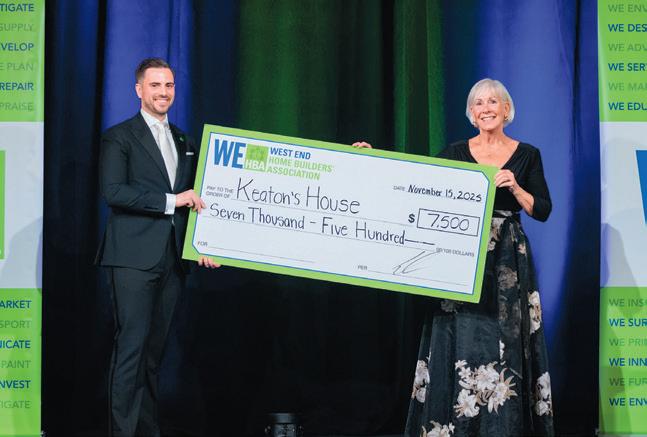
In 2025, WEHBA further extended its community support by contributing $7,500 to the capital campaign for Keaton’s House Paul Paletta Children’s Hospice. The contribution supports children receiving palliative care and their families across the Greater Hamilton area, and reflects WEHBA’s ongoing commitment to working alongside community partners on initiatives that create lasting local impact.
As WE CARE continues to evolve, the initiative will support additional volunteer opportunities, partnerships and community-focused projects across the west end. Through this work, WEHBA remains committed to strengthening its connection to the communities it serves and supporting organizations that make a meaningful difference locally.
Mike Collins-Williams, RPP, MCIP, is CEO West End Home Builders’ Association. westendhba.ca.
+MORE CONTENT ONLINE nexthome.ca
WHAT EVERY BUYER SHOULD KNOW ABOUT YOUR PRE-DELIVERY INSPECTION
PETER BALASUBRAMANIAN
As the closing date for your new home approaches, it’s understandable that the only thing on your mind right now is getting the keys and moving in. However, before that happens
there’s an important step called the Pre-Delivery Inspection, or PDI. Our guidance to all buyers of new homes is to take some time to prepare for this inspection. As the consumer protection organization supporting your new home warranty, we’re here to provide the information and resources that will help set you up for success.
“ ” Our guidance to all buyers of new homes is to take some time to prepare for this inspection.
WHAT IS A PDI?
A PDI is your chance to tour your new home before you move in, learn about the systems in it from your builder, and to check for possible issues or unfinished work. Inspect your home carefully as you make your way through it. Is there a scratch in the hardwood floor? Does the air conditioner still need to be installed? Are there areas in the home where you cannot access (due to, for example, paper on the floors?)
If you notice something that needs further attention, your builder will write it down on the PDI Form. Hang on to your copy of this form because it can become the formal record of your home’s condition before you moved into it.
“
” A PDI is your chance to tour your new home before you move in, learn about the systems in it from your builder, and to check for possible issues or unfinished work.
To help you prepare, here are some of our top PDI tips:
1. REMEMBER THAT IT’S NOT JUST AN INSPECTION – IT’S ALSO AN ORIENTATION
Take advantage of this opportunity to learn about how to use and maintain parts of the home. Do you know how to set the thermostat or use the HRV (heat recovery ventilator)? Do you know how and when to change your furnace filter? How can you keep your hardwood floor looking great? Ask your builder questions and make note of the information they give you.
2. THINK TWICE ABOUT BRINGING FRIENDS AND FAMILY
Remember that this is your time for making sure everything is in order before you move in, so it needs your full concentration. While your family and friends might be excited to see your new home, this is a time for you to be focused and present.
3. MAKE SURE YOU HAVE ENOUGH TIME AND PREPARE IN ADVANCE
The PDI should take about an hour for every 1,000 sq. ft., so it’s a good
idea to set time expectations when scheduling your inspection with your builder. Use this time to focus on the condition of your new home and make a note of any items which may have been damaged during construction or not installed yet. Remember, you can print Tarion’s PDI Checklist to keep you on track.
4. PAY SPECIAL ATTENTION TO HARD SURFACES
If there are possible defects in things such as ceramic tiles or granite counter tops, be sure to catch them now. If you wait, it may be difficult to determine whether they happened before or after you moved in. Also, if it’s difficult to assess floors because they are covered with paper or dust, this should be noted on the PDI Form.
5. TAKE PICTURES
Your builder will likely address any items identified during the PDI. However, it’s a good idea to take pictures of anything that is damaged or missing. These photos can serve as a record later, if you need to make a warranty claim.
If you’re interested in learning more about the PDI, check out our learning module and/or listen to our podcast episode. And if you have any questions, visit tarion.com.
Peter Balasubramanian is President and CEO of Tarion. tarion.com.
+MORE CONTENT ONLINE nexthome.ca
VERTICAL DESIGN:
A NEW PERSPECTIVE ON A CLASSIC LOFT
When designing compact urban homes, I’ve learned that square footage rarely tells the full story. This 900-sq.-ft. Toronto penthouse came together by looking less at what we could fit, and focusing more on how the space wanted to be experienced. Height, light, and a sense of ease became the guiding principles for this home that feels calm, layered and surprisingly generous. In a city where condos often prioritize efficiency over comfort, this project was an
opportunity to show that the two can coexist.
Rather than beginning with a rigid aesthetic, this design evolved as a conversation between softness and structure. The concrete ceiling and exposed industrial piping were already doing a lot of the talking. My role was to listen carefully, then edit. Instead of concealing these elements, they were refined so they felt intentional and part of the home’s identity, as opposed to something to be disguised. There’s a confidence that comes from working with what a space already offers and building on it.
The ceiling quickly became the quiet anchor of this design. Its scale
influenced everything from lighting placement to the proportions of built-in millwork. The existing chrome piping was painted white, not to erase it, but to let it recede visually. That single decision softened the ceiling and allowed it to read as a continuous surface, calming the space while still honouring the building’s industrial roots. It also established a consistent visual thread that carries through the entire loft.
Lighting was approached with restraint and purpose. Linear pendants and discreet track lighting emphasize height without demanding attention. In a space this size, lighting needs to define zones without adding
OLIVIA BAILEY
Photos : Valerie Wilcox
visual noise. Here, it gently separates the living area, kitchen and reading nook while preserving an open, fluid plan. In the evenings, the lighting shifts the atmosphere entirely, making the loft feel warm and grounded rather than stark.
Pro tip: In lofts with exposed ceilings, I often let lighting sit slightly below the lowest point of the structure. This creates a subtle visual “datum line” that brings the scale of the room down just enough, making the space feel more comfortable without sacrificing height.
The client, a graduate student balancing long study hours with life alongside a very energetic dog, needed a home that could adapt throughout the day. Quiet mornings at the desk, active afternoons and casual evenings with friends all needed to coexist. Storage was essential, but it couldn’t feel heavy. Integrated cabinetry, concealed compartments and furniture that earns its place allow the space to work hard while still feeling relaxed and composed.
In the kitchen, performance and longevity guided the selections. Fisher & Paykel and Bosch appliances were chosen for their reliability and clean lines, paired with Caesarstone Topus Concrete Quartz for both the countertop and backsplash. Using the same material across surfaces creates continuity and keeps the kitchen visually calm, helping it feel like a
natural extension of the architecture rather than a separate zone.
Personality surfaced organically in the furnishings. A Mario Bellini sofa in a warm tangerine tone introduces softness and energy, anchoring the living area without overpowering it. SMEG appliances add a subtle note of nostalgia, gently breaking up the restrained palette. These moments matter, keeping the space from feeling too serious.
The bedroom presented a familiar urban challenge. Incorporating a walk-in closet while preserving lake views and natural light required a layered approach. Partial partitions, integrated lighting and custom cabinetry suggest separation without closing the space off. The bedroom feels private and restful, yet remains connected to the loft as a whole.
Underfoot, warm tile flooring grounds the space and balances the concrete ceiling above. In the bathroom, large-format tiles, underfloor heating, floating vanities and backlit mirrors create comfort
that feels quietly indulgent. These aren’t dramatic gestures, but they’re the details clients tend to appreciate most over time.
This project reinforced something I return to often in my work: good design doesn’t announce itself. By responding thoughtfully to the existing architecture and focusing on proportion, materiality and light, this loft became a home that feels considered and genuinely lived-in –calm without being sparse, expressive without being loud and well-suited to modern city life.`
Olivia Bailey is Creative Director and Principal of Olivia Bailey Interiors, a Toronto-based luxury design studio celebrated for its refined, contemporary aesthetic, serving Toronto, the GTA, across Ontario and nationally. oliviabaileydesign.com oliviabailey. interiors
+MORE CONTENT ONLINE nexthome.ca
4 TYPES OF EXERCISES TO HELP YOU STAY STRONG, ACTIVE AND HEALTHY AFTER 55
DR. JAMES FUNG
Staying active after 55 is one of the most powerful ways to support your health and maintain independence. At this stage of life, exercise isn’t about fitness goals – it’s about moving in ways that help you feel strong, steady, energized and confident in everyday life.
The right types of exercise can help you:
• Stay mobile and flexible
• Build strength and protect your joints
• Improve balance and prevent falls
• Support heart and bone health
• Maintain a healthy weight
• Keep doing the activities you enjoy So, what types of exercise are safest and most beneficial after 55? Let’s break it down.
A QUICK NOTE ON COMMON HEALTH CONCERNS AFTER 55
Many adults older than 55 are living with – or hoping to prevent –common health conditions such as:
• Type 2 diabetes
• High blood pressure and high cholesterol
• Arthritis
• Cardiovascular concerns
• Osteoporosis or bone loss
The encouraging news is that exercise supports overall wellness for everyone, whether you’re managing a condition or simply staying proactive about long-term health. Rather than focusing on limitations, the goal is choosing movement that promotes strength, energy and quality of life.
EXERCISE AFTER 55 SO YOU CAN KEEP GOING – AND GOING
Exercise after 55 isn’t about pushing harder. It’s about keeping momentum – physically and mentally – so you can keep doing the things that make life enjoyable.
I often remind patients that while exercise looks different for everyone, age alone doesn’t define what’s
“ ” At this stage of life, exercise isn’t about fitness goals – it’s about moving in ways that help you feel strong, steady, energized and confident in everyday life.
possible. In fact, I have several patients older than 55 who continue to participate in events such as the Princess Margaret Cancer Foundation Ride (formerly the Ride to Conquer Cancer), cycling more than 200 kilometres over two days. When exercise is done right, it helps you:
• Maintain bone density, muscle mass and metabolism
• Stay steady on your feet
• Maintain energy throughout the day
• Recover more quickly when something does flare up
• Move without hesitation or fear
• Stay active, energetic and youthful The goal isn’t extremes or perfection. It’s building a body that can handle life well – so you can keep doing what you love.
THE 4 MOST IMPORTANT TYPES OF EXERCISE AFTER 55
Each of these exercise types brings something different to the table.
1. Strength training (non-negotiable):
Strength training is the foundation of healthy aging. Why it matters:
• Slows muscle loss (which accelerates after 50)
• Improve balance and reduce fall risk
• Protects bones and joints
• Boost metabolism and support healthy weight management
• Protect bone density and reduce osteoporosis risk
What it looks like
• Just two or three times a week can be highly effective
• Focus on legs, hips, core, back and pushing/pulling
If you’re unsure where to start, hiring a personal trainer can help.
2. Cardio exercise: For heart health and daily energy
Cardio remains important, but quality matters more than quantity. Why it matters
• Heart health
• Blood sugar and cholesterol levels
• Stamina, brain, mood, sleep benefits
Low-impact options include:
• Hiking, brisk walking,
• Swimming
• Cycling, rowing
• Dancing
• Water aerobics Target
• 150 minutes per week moderate intensity OR
• Shorter sessions with brief intensity bursts-interval training (if joints allow) Even 20 to 30 minutes of moderate cardio most days of the week can make a meaningful difference.
3. Mobility and balance: Move comfortably and confidently Mobility and balance exercises reduce stiffness, improve posture and keep movement smooth and safe – especially for fall prevention. Why it matters
• Reduces fall risk
• Improves confidence with movement
• Strong link to brain health and reaction time
• Keeps joints nourished
• Reduces stiffness and pain
• Allows you to use your strength safely
What it looks like
• Daily or near-daily
• Gentle, controlled ranges
Examples include:
• Gentle stretching
• GLAD program (designed for knees and hips arthritis)
• Yoga or tai chi or other mobility flows
• Standing balance exercises
• Controlled joint mobility movements
As I’ve told my patients for nearly 25 years: Motion is lotion. These exercises may seem small, but their long-term impact is enormous.
4. Power/reaction training (often overlooked)
This type of training focuses on speed and control – not maximum effort.
Why it matters
• Helps prevent falls
• Maintains fast muscle fibres
• Supports real-world reactions
Examples
• Faster sit-to-stands
• Quick step-backs or side steps
• Light medicine ball tosses
• Catching or reaction drills
Even small doses matter. In our clinic, we’ve started incorporating Reaction Lights training – and patients love them.
THE BIG PICTURE
If life gets busy, prioritize like this:
1. Strength
2. Balance and mobility
3. Cardio
4. Power
You don’t need to train like a 25-year-old. You need to train for resilience, confidence and freedom. Whether you’re managing a common condition or simply staying proactive, movement is one of the best investments you can make.
It’s never too late to get stronger, healthier and more confident in your body.
Dr. James Fung is a Chirpractor and Principal at Complete Balance Health Centre, Toronto. completebalancehealth.com
+MORE CONTENT ONLINE nexthome.ca
HOW AI AND WHAT’S IN YOUR POCKET HELP YOU PAY ATTENTION TO YOUR HEALTH
What if a device you already own could help spot a health problem early enough to save your life and all it required was paying attention?
It may sound dramatic, but it is increasingly realistic. The phone in your pocket and the watch on your wrist is quietly collecting information about your heart rate, sleep, movement and stress every day. Most of us glance at those numbers, if we look at them at all, without realizing that over time they can reveal patterns worth acting on.
That idea came up repeatedly during a recent conversation I had with physician Dr. Earl Campazzi, Jr., author of Better Health with AI: Your Roadmap to Results. Dr. Campazzi brings more than three decades of clinical experience to his work and is board certified in multiple medical specialties, with a career that has included leadership roles at institutions such as Johns Hopkins and the Mayo Clinic. His message was refreshingly practical. This is not about futuristic medicine or replacing your doctor. It is about using everyday technology to notice changes sooner and have better conversations when something does not look quite right.
Healthcare has traditionally been reactive. We wait until something feels wrong, then book an appointment. Today, technology nudges us toward something different. Awareness before symptoms. Context instead of guesswork. Earlier action when timing matters. A wearable flagging an irregular heart rhythm. A gradual decline in sleep quality that does not resolve. A pattern that prompts a simple but important question. Is this worth checking out?
Dr. Campazzi shared several real-world examples that illustrate this shift. In one case, a woman’s smartwatch detected an irregular heart rhythm before she noticed any symptoms, prompting a doctor’s visit that reduced her risk of stroke. In another, a caregiver facing a new cancer diagnosis used AI tools not to search for answers, but to organize information and identify
the right questions to ask, making stressful appointments far more productive. Even everyday situations matter. Someone using AI support to decide whether a fever or lingering symptoms warranted urgent care. None of these tools made a diagnosis, but each helped someone act sooner.
One reason this approach works is that today’s health data is continuous. Wearables and phones collect information every minute of every day, not just during an annual checkup. On their own, individual data points do not mean much.
“There’s a lot of data in your wearables, your smartwatch, your phone, but on its own it doesn’t mean much,” Dr. Campazzi told me. “When you download it and let AI look at it, suddenly you start seeing patterns. How sleep affects exercise. How poor sleep changes what you eat. That’s where the insight really starts.”
He emphasized that this kind of data aggregation is powerful and still being underutilized. AI excels at connecting those dots and spotting trends across sleep, activity, heart rate and stress that would be easy to miss otherwise.
What stayed with me after our conversation was how approachable all this really is. Getting started does
GREG GAZIN
not require buying new gadgets or learning complicated systems. Many phones already come with health apps installed and quietly collecting basic data. A simple fitness tracker is often more than enough. As Dr. Campazzi emphasized, consistency matters far more than sophistication. You do not need to track everything. You just need to notice when something changes.
Apps play a supporting role here, not a starring one, but the right ones can remove a lot of friction. In Better Health with AI, Dr. Campazzi references more than 80 healthrelated apps, ranging from wearables to nutrition and stress management tools. One example is Foodvisor, a nutrition app that lets users simply photograph a meal.
As Dr. Campazzi put it, it makes food tracking “so much easier.” Otherwise, he said, “you’re weighing things and writing things down and having to be very OCD to get any sort of gauge.” The benefit is not precision. It is awareness without the hassle.
Wearable platforms such as Fitbit or Apple Health already organize long-term trends in sleep, heart rate, and activity. AI assistants such as ChatGPT, Copilot or Claude can then help summarize what you are seeing, organize notes and prepare thoughtful questions ahead of a medical appointment. The value is not in any single app, but in how they work together.
One of the most useful ideas we talked about is what Dr. Campazzi calls flipping the script. Instead of asking anxiety-driven questions like “What’s wrong with me?” he encourages people to ask better ones.
“Most people don’t even know what questions to ask,” he says. “AI can help with that. You’re not looking for answers. You’re looking for better questions.”
That distinction matters. AI does not replace medical care, judgment or human connection. In fact, the most effective use of these tools happens when they support conversations with healthcare professionals, especially during short appointments where time is limited. Organized notes, summarized trends and clearer questions help everyone involved.
For all the talk of AI and wearables, Dr. Campazzi also emphasizes the importance of staying grounded in the analog world. During our conversation, he recommended keeping a simple printed list of medications, dosages, vitamins, allergies and major surgeries in a wallet or purse. In an emergency, hospitals don’t want USB sticks or downloads from other systems. A piece of paper is still the fastest, most reliable way to share critical information.
The book also makes an important point about balance. Tracking too much can lead to stress or obsession. Not every fluctuation
means something is wrong. The goal is not perfect data. It is perspective. Technology should simplify health decisions, not complicate them. Perhaps the most compelling takeaway is that this shift is not about living forever. It is about living better. Maintaining energy. Preserving independence. Reducing unpleasant surprises. Technology cannot promise outcomes, but it can improve awareness. Awareness is often the first step toward prevention. Used thoughtfully, the tools many of us already own can help us pay attention in ways we never could before. And sometimes, paying attention early enough just might save your life.
Better Health with AI: Your Roadmap to Results explores how everyday technology, from smartphones and wearables to AI assistants, can help people better understand their health, spot patterns earlier and work more effectively with their healthcare providers. More information about the book and Dr. Earl Campazzi’s work is available at betterhealthwithai.com.
Greg Gazin is a syndicated tech columnist, blogger, podcaster, and contributes to canoe.com, Troy Media and Active Life magazine. gadgetguy.ca
+MORE CONTENT ONLINE nexthome.ca
WITHOUT STRESS TRANSITIONING INTO RETIREMENT
Warren Buffett famously said, “Someone’s sitting in the shade today because someone planted a tree a long time ago.”
As you transition to retirement, you are going to enjoy the shade from the tree that you planted many years ago. Although the stresses of
your career and work will disappear, they may be replaced with some new retirement-related stresses. Your investment strategy has now changed from contributing to your portfolio to withdrawing from it so that naturally causes a shift in mindset as well. The stress that comes from this transition usually relates to these questions:
1. Will I outlive my savings?
2. What will happen to my retirement lifestyle if the stock market declines?
The first question is a common concern amongst most people. If you
have a defined benefit pension from your employer, then this won’t be an issue, but most people don’t. Over the past several decades most employers have eliminated these pension plans due to the cost, so employees are now on their own to manage their investments. This naturally results in the stress associated with outliving your investments. However, this isn’t necessarily a bad thing if you have taken the appropriate steps. The key is to have a financial plan prepared by an advisor to project the cash flow you will need during retirement and
the investment returns you should reasonably expect.
A properly prepared plan will start with you sitting down to write a list of your monthly living expenses and your discretionary expenses, such as travel. If you haven’t done this yet, then you need to sit down with an advisor and do so before going any further. This will give you a set of scenarios that are essential to determining if your investment portfolio is sufficient. If you don’t do this, then the default is trying to manage your investments to get as high a return as possible with the hope that it will be enough to cover future cash needs. The stress associated with this situation is obvious. The market return will vary, and it will cause you to look at shortterm news every time you hear about a market decline. That can make for a difficult retirement period.
The second question seems top of mind for most investors right now. We have just finished three years of strong growth in the Canadian stock market, and there is a fear that a decline is around the corner. While nobody can really predict when the decline in the stock market will come, it is safe to say that there will be a negative year at some point.
The question is how should you prepare for it? When you are contributing to your portfolio, you can take solace in a market decline by knowing that your new contributions are buying stocks at a low price. However, when you are withdrawing, the opposite happens because you run the risk of selling your investments at low prices.
“ ” As you transition to retirement, you are going to enjoy the shade from the tree that you planted many years ago.
The way to manage this is to ensure that you have enough of your portfolio allocated to bonds so that you can ride out the financial storm. A general rule of thumb is that you should project how much you expect to withdraw in the next five years and put that amount of your portfolio in bonds. This would allow you to sell a portion of your bonds during a market decline to fund your cash flow needs until the stock market has recovered. At that point you could start withdrawing from your equity portion again and rebalance the portfolio to your original allocation.
The other point to note on a market decline is that any properly prepared financial plan should include scenarios which include periodic market declines. From 2005 to 2025, the S&P/TSX300 went from approximately 11,000 to more than 31,000. However, it had negative returns for five out of the 20 years. This shows that market declines are not anomalies but rather something that needs to be considered when projecting investment returns. You could avoid the issue by investing everything in bonds, but the problem is that your after-tax return would not even meet inflation in most years, hence causing your portfolio to deplete faster. Accordingly, the growth of the market is a necessity
for a proper retirement plan, but it should build in an anticipation of regular market declines.
Once you have the above set up, then the shift from working to retirement should be straight forward and stress-free. You can apply for your CPP and OAS ahead of your anticipated retirement date and set up monthly withdrawals from your investment based on your financial plan. Structure these in a tax efficient manner and the transition should be smooth. Instead of getting a pay cheque from your employer on a fixed monthly date, you will now be receiving your pay cheque from your investments. If your advisor has put a plan in place to handle the transition, then there is no need for stress. If you haven’t put a formal plan in place yet, then now is the time to find an advisor and set one up.
Anwar Husain is an award-winning finance professor at the University of Toronto, a former CFO and a senior investment advisor, wealth advisor with Richardson Wealth. He has been published in the Globe and Mail and several peer-reviewed academic journals in the areas of finance and economics.
DESIGNING SPACES THAT GROUND US INTIMATE ROOMS: THE RISE OF
by MARIAM ABOUTAAM
As homes have evolved over the last decade, open-concept living became synonymous with modern design. Larger sightlines, fewer walls and shared spaces were celebrated for how they brought families together. But as our lives have grown more layered, I’m seeing a renewed appreciation for rooms that do the opposite; spaces that offer focus, immersion and retreat.
Today’s homeowners are asking for rooms that feel purposeful rather than performative. Whether within a large home or a compact footprint, there’s a growing desire to carve out intimate spaces that feel intuitive to everyday living. These are the rooms where we gather, work, lounge and disconnect. They may be smaller in scale, but they are often the most intentional.
Dens, gaming rooms, studies and secondary lounge spaces are no longer afterthoughts. They’re being designed with just as much care as kitchens and primary living areas. What sets them apart is how they function. Built-in millwork plays a central role here, creating structure and efficiency while reducing visual clutter. Custom shelving, integrated desks, concealed storage and media walls allow these rooms to feel composed and calm, even when they serve multiple purposes.
In gaming and media rooms, thoughtful built-ins help manage technology seamlessly. Consoles, screens, speakers and wiring can be fully integrated, allowing the room to feel immersive rather than chaotic. Comfortable seating, layered lighting and controlled acoustics turn these spaces into true experiences that are designed to be used, not just seen.
Studies and workspaces are also being reimagined. Instead of isolated offices that feel rigid, many homeowners are opting for flexible rooms that transition easily from workday to evening. A built-in desk paired with lounge seating, closed cabinetry and adaptable lighting allows the space to function as
both a productive workspace and a relaxed retreat.
Furniture selection is key in these environments. Purposeful pieces, such as sectionals with deeper seats, swivel chairs, banquettes and upholstered benches encourage longer use and greater comfort. Scale matters more than ever. Oversized furniture can overwhelm a smaller room, while thoughtfully proportioned pieces create intimacy and ease.
While colour isn’t the primary focus in these rooms, it does play a supporting role. Deeper, more enveloping tones help reinforce a sense of containment, particularly when used consistently across walls, millwork or ceilings. When combined with texture and materiality, these palettes soften the space and allow furnishings and built-ins to take centre stage.
What I find most compelling about this shift is its emotional honesty. These rooms acknowledge that modern living requires balance. We still value openness and connection, but we also recognize the need for spaces that support concentration, play and rest. Intimate rooms offer that counterpoint within the home.
Designing intimate spaces is about intention. It’s about understanding how rooms are used throughout the day and giving them the structure to support that use gracefully. As we continue to rethink how our homes serve us, these quieter, more purposeful rooms are becoming essential, not as luxuries, but as necessities for modern living.
DESIGN TIPS FOR INTIMATE SPACES
• Design for function first. Define how the room will be used most often (work, gaming, lounging or a combination) and let that purpose guide every decision.
• Use built-ins to create calm. Integrated storage, desks and media walls reduce clutter and help smaller rooms feel intentional and composed.
• Choose furniture that invites you to stay. Prioritize comfort and proportion. Deep seating, upholstered pieces and flexible layouts support longer, more meaningful use.
• Layer lighting thoughtfully. Combine ambient, task and accent lighting to adapt the space from daytime use to evening retreat.
• Let colour support the mood. Richer tones work beautifully in enclosed spaces, especially when paired with texture, but they should enhance the room, not overpower it.
An award-winning in-house designer, Mariam Aboutaam is Director, Sales and Marketing, Interior Design at Kylemore, Markham, Ont., a builder known for master-planned communities and luxury homes. kylemoreliving.com.
interior design defineDETAILS THAT A BETTER KITCHEN
by MIMI PINEAU
We can all agree that some kitchens have a certain je ne sais quoi that makes them a pleasure to use. Whether you’re working with a small footprint or have ample space – be it a new build, renovation or refresh – investing in high-end details will always add value. Tailoring the room to your wishes and needs introduces an ease that makes it a truly enjoyable space.
Real estate listings often define a good-looking kitchen as a “chef’s kitchen,” but that designation frequently applies only to appearance. Which details, then, define a truly high-end cooking space?
UPSCALE APPLIANCES
Appliances are among the most significant investments in a kitchen renovation, and preferences vary widely. A steam oven? A powerful gas range? A downdraft vent hood? Spending an afternoon at a specialty showroom – exploring
Whatever your selections, remain intentional and true to the INSPIRATION
models, learning about features and comparing options – can be time well spent in determining which appliances best suit your lifestyle.
Some of the most beautiful appliances are fully integrated into kitchen cabinetry. This continuous cabinetry look maintains a visual simplicity and lends a very custom feel overall.
QUALITY FINISHES
There is an unmistakable sense of luxury in authentic materials such as natural stone, exquisite marble, fine custom millwork and artisan-quality ceramics. Decorative hardware and plumbing finishes often become visual focal points, but functionality should remain central to material and fixture selections.
You may prefer a high-quality, easy-care quartz or porcelain countertop over finicky Carrara marble. Slabs that convincingly replicate sought-after stone are
gaining favour for their realistic veining and impressive appearance. A range of textures – from velvety matte to high gloss – offer opportunities to fine-tune the look and feel of the kitchen. Their biggest advantage, however, is how they often outperform natural stone in practical areas such as heat resistance and ease of maintenance.
An overall vision and specific design goals should guide decisions to achieve the right overall result. If you gravitate toward a bolder aesthetic, lacquered cabinetry in a deep, saturated colour may better serve the design intent than wood. Likewise, there’s no rule against choosing a classic mosaic backsplash over a trendy inlaid onyx if it genuinely suits your taste. A thoughtful mix of materials adds personality, so don’t hesitate to layer elements for a design that feels personal and considered.
Photographie
overall design direction – without compromising on quality.
A PLACE FOR EVERYTHING
Have you noticed that when you open cabinetry in a well-appointed kitchen, everything appears organized and easy to find?
During the planning stages, it’s essential to consider how the kitchen will be used and where items will live. Small appliances, oversized dishes, cooking utensils, spices and baking tools should all have designated homes. Pantry spaces, in particular, can be both highly functional and visually pleasing when thoughtfully organized. If using open shelving, keep the display curated and light, not cluttered.
FLOW
Perhaps the most subtle – and most important – detail is how a kitchen feels as you move through it. Cabinet
door and appliance clearances, traffic patterns and the ability for multiple cooks to work comfortably all contribute to a successful layout. Well-defined work zones, adequate counter space and accessible storage directly impact how enjoyable the kitchen is to use.
This is often where engaging an interior designer or kitchen professional adds significant value. Thoughtful early planning takes lifestyle needs into consideration and helps avoid common frustrations and post-renovation regret – awkward clearances, bottlenecks or underused surfaces – resulting in a kitchen that feels intuitive, organized and genuinely enjoyable to use.
SPECIALTY ITEMS
Kitchen gadgets and cabinetry interiors have evolved significantly in recent years. Pantry pull-outs and
interior drawers are now staples in modern kitchens, alongside pullout waste centres, corner solutions, utensil and knife dividers, spice organizers and dishware storage systems.
These features keep everyday items within easy reach while making efficient use of otherwise awkward or underutilized spaces – particularly valuable in smaller kitchens.
SMALL LUXURIES
When planning a kitchen, it’s worth creating a wish list. What feature have you always dreamed of? Which detail would bring a smile each time you use it?
While function remains paramount in any kitchen design, incorporating moments of delight ensures the space feels welcoming and personal – a place to gather, cook and connect.
Mimi Pineau, ARIDO, IDC, NCIDQ is a Registered Interior Designer and owner of Mimi Pineau Design, a full-service studio specializing in thoughtfully designed residential interiors with a chic, modern edge. mimipineaudesign.com.
Mark Olson Photography Inc.
Photographie Intérieure Co.
Photographie Intérieure Co.
WHY WE STILL LOVE A GOOD ALL-WHITE KITCHEN
by LINDA MAZUR
We are seeing colour everywhere this year – beautiful kitchens in rich deep blues, earthy greens, bold reds and yellows, and vibrant pastels.
So, are we to assume that classic all-white kitchens are now a thing of the past? On the contrary. Though colourful kitchens are definitely a growing trend, the classic white kitchen is still holding its own – so much so that this year’s Pantone colour of the year is Cloud Dancer, a soft, airy neutral off-white. The bright, fresh look and feel of white kitchen cabinetry never really loses its appeal and for many is the goal for their
kitchen renovation. However, just as appealing as a white kitchen can be, they can often be stark, cold and sometimes void of personality.
Kitchens are undoubtedly the heart of a home, and over the years, have morphed from simple utilitarian spaces to rooms that are multifunctional living space reflecting both personal style and creativity. Boasting a more curated aesthetic with high-end finishes, custom designs and advanced technology our kitchens are not only stylish but comfortable. They are a reflection of our lifestyles and are central to
our day-to-day life, while having the flexibility to be an upscale extension of our living spaces for entertaining. White cabinetry offers a longevity that trend colours simply don’t. They are an easy commitment, a blank canvass if you will, that can offer you a lot of flexibility when it comes to the aesthetics of your kitchen. However, moving beyond an all-white kitchen can open you up to a world of finishes, colours and inspirations that can see a bit of the current kitchen trends introduced into your space. Even with all the colour options trending these days, we still find that INSPIRATION |
white kitchens are not only desired but quite often preferred, because of their classic, timeless, simplistic approach. They are sometimes thought of as a safe choice, when considering the costs and longevity of kitchen trends, not to mention the hassles of kitchen renovations. But they are also quite often the wise choice that can carry you through the trends for many years to come. Whether you are drawn to the warmer more earthy whites or cooler, more modern whites, there is undoubtedly an abundant variety to select from for your millwork and accents that will set the tone for your space.
Add dimension to your kitchen with a patterned backsplash tile, or use a bold marble, quartz or porcelain for your countertop, then continue it on your backsplash to really make a statement in your home. An impactful floor tile or warm wood can be a wonderful asset in the space, as can the introduction of mixed metals and hardware.
Adding strategic touches of colour or wood accents to your cabinetry can also enhance and elevate the aesthetics of your kitchen. And let’s not forget accessorizing your space with colourful artwork, furniture or greenery to add some life to those
white cabinets. The great thing about adding colour to your kitchen with accessories is the ease with which it can be altered if you have tired of the latest trend colour – the blank canvass of a white kitchen will remain for the next creative inspiration you may have. Kitchen renovations are an expensive endeavour, while revamping some accessories can prove to be far more palatable on your budget and mood.
Today, the movement is towards a streamlined look that highlights simplicity, functionality and style. Though we have moved on from the white-on-white or grey-on-white kitchens, we have not given up on white cabinetry that will always be a favourable, sought-after mainstay option in kitchen design. Instead of dreaming of an all-white kitchen, think about shaking it up a bit with the selective addition of colour, statement lighting, rich wood accents or maybe a great wallpaper or fabric for a window treatment.
When looking for inspiration for your kitchen renovation, look to see how you can introduce a mix of colours, textures and finishes that will create a space that can keep you moving forward trend-wise, while still giving you the white kitchen of your dreams.
Linda Mazur is an award-winning, nationally publicized designer and Principal of Linda Mazur Design Group. With almost two decades of experience this in demand multidisciplinary design firm is known for creating relaxed, stylish spaces and full-scale design builds within Toronto, the GTA and throughout Canada. lindamazurdesign.com @LindaMazurGroup
HOME
PLAN TO LIVE RENOVATING FOR THE LIFE YOU
Winter has a way of turning our attention inwards. It’s often when our renovation ideas quietly begin to take shape.
We spend more time indoors and start noticing the things we often overlook in the summer. The darker light outside means we rely on more light inside. That’s when you realize that the light in our spaces seems quite not bright enough. You also start to notice that reaching and turning takes a little more thought than it used to. The tub is still relaxing, but getting out now
requires a bit more care. The stairs ask you to focus. Nothing really feels urgent, but your home is asking for a little more effort than it once has.
For most people, this is how change begins. It’s not with a crisis, but a slow and gradual awareness that we just can no longer ignore. Aging in place home renovations usually start for one of two reasons. Some are reactive, prompted by
LINDA KAFKA
a fall, diagnosis of a progressive condition or sudden change in our mobility. The focus then becomes immediate about safety and quick solutions. The question then becomes, do we renovate or move? What we do know is change is now a necessity and the renovations become more of an add on, instead of being seamlessly integrated.
The other kind happens when there’s no urgent need. People simply want their homes to support how they live now and how they expect to live in the years ahead. I tend to think of this as living in place rather than aging in place. It isn’t about preparing for decline. It’s about being pro-active and shaping our environments that continue to work well throughout our lives.
I have been in the aging in place category since 2010 and have always believed that our homes should adapt to us as our bodies change over time, regardless of how active or healthy we are. Our vision starts to change, hearing softens, movement becomes more deliberate. None of this happens suddenly. These shifts unfold gradually across the years. When our environments stay fixed while we change, everyday tasks begin to demand more energy than they should. A supportive home evolves with us, allowing us to feel comfortable rather than effortful.
Our homes, environments and even our communities directly shape our behaviours and lifestyles and together they determine 80 to 90 per cent of our long-term health outcomes. Since our homes are typically our most important personal investment, whether we rent or own, it only makes sense that they should also be an investment in our wellbeing.
When people hear this, they often picture a major renovation. In reality, supportive design is often subtle. Better lighting where decisions are made, or colour contrast to help navigate. Bathrooms that are easier
and safer to move through. Kitchens that reduce bending and reaching. Stairs with supportive handrails and secure footing that gives us confidence. Storage that keeps everyday items within a comfortable reach. These are the changes that don’t make a home feel clinical. If done right, they make it feel effortless.
Each February, designers, renovators even builders who specialize in aging in place attend industry shows such as Toronto’s Interior Design Show (IDS) or the US based Kitchen and Bath Industry Show (KBIS) and the International Builders’ Show (IBS). They also look at furthering their aging in place education through programs offered by the Canadian Home Builders’ Association. This is happening long before homeowners begin planning their spring projects.
For homeowners, winter is a good time to ask a different kind of question. Not just what looks good, but what will work well for years from now. A kitchen renovation often lasts 15 to 25 years, and a bathroom can last more than 20 years. For many, this may be the last major update they choose to make, so it makes sense to plan for safety, comfort and ease of use, and not just our immediate needs. A renovation doesn’t need to anticipate every future possibility, but it should reduce unnecessary effort and support your daily routines.
This March brings another opportunity closer to home. In Toronto, the National Home Show hosts the Healthy Aging at Home education pavilion, where you can learn from specialists and speak directly with trained professionals about practical options. You’ll even find me in the education pavilion, happy to answer questions and pointing you in the right direction.
The best renovations are rarely the ones done in response to a problem. They are the ones planned
“
” Our homes, environments and even our communities directly shape our behaviours and lifestyles and together they determine 80 to 90 per cent of our long-term health outcomes.
early enough that simply feel like improvements. A home can remain personal and reflective of who you are while becoming easier to live in.
Planning ahead doesn’t mean expecting the worst. It means preserving your independence. Afterall that is what we are all trying to achieve. When a home supports your daily life, it also supports everything else, such as your relationships, and even allows you to remain in your community. A home that works well also welcomes the people who visit, making it easier to continue to gather, host and stay connected without extra effort.
It’s these long winter days that just happens to be the season when many people start noticing that possibility.
Linda Kafka, Wellness and Aging in Place Educator, writes about wellness, aging in place and how our homes support well-being at every stage of life. livablecanada.com.
+
FIND YOUR NEXT HOME
AURORA
1. Allegro 36 Klees Cres. geranium.com
2. Shinning Hill 24 St John’s Sideroad countrywide.ca
BUILDERS IF YOU WOULD LIKE TO INCLUDE YOUR PREVIEW REGISTRATION, NEW RELEASE OR SITE OPENING IN THIS FEATURE, JUST EMAIL THE DETAILS TO EDITORIAL@NEXTHOME.CA
PORT PERRY
28. Courts of King’s Bay Near Port Perry geranium.com
RICHMOND HILL
29. Jefferson Reserve 363 Jefferson Side Rd. countrywide.ca
TORONTO
30. Westbend Residences Bloor & High Park mattamyhomes.com
31. The Briar 386 Briar Hill Ave. brightstone.ca
32. Allure Condominiums 250 King St. East emblemdevcorp.com
33. Forent Hill Village 429 Walmer 429walmer.ca
34. Missoni Sky Condo 229 Jarvis
missonisky.com
THORNHILL
35. The Elms Thornhill Wood Dr. & Elmway Court brightstone.ca
WHITBY
36. Country Lane Taunton Rd. & Country Lane countrylanewhitby.com
37. Wellings of Whitby 372 Taunton Rd. E. wellingsofwhitby.com
WOODBRIDGE
38. Woodend Place Major MacKenzie & Pine Valley Dr. woodendtowns.ca
BURLINGTON/ WATERDOWN
1. Northshore Condo 484-490 Plains Rd. E. nationalhomes.com
2. Tyandaga Heights Burlington nationalhomes.com
3. Northshore Towns 490 Plains Rd. E. nationalhomes.com
4. Martha James Condominiums Martha and James St mattamyhomes.com
The Bridges Estates, Tillsonburg’s New Premier Community, set in The Bridges Golf Course where every detached home either backs onto a ravine lot, treed lot, or backs directly onto the golf course.
Phase 1 is now open for viewing and includes a limited selection of 10 Executive Townhomes.
18 Greenhill Drive
The model home hours: Tues-Thurs 1-5pm | Saturday 12-4pm