New Home + Condo Guide – Greater Toronto Area – April 18, 2026
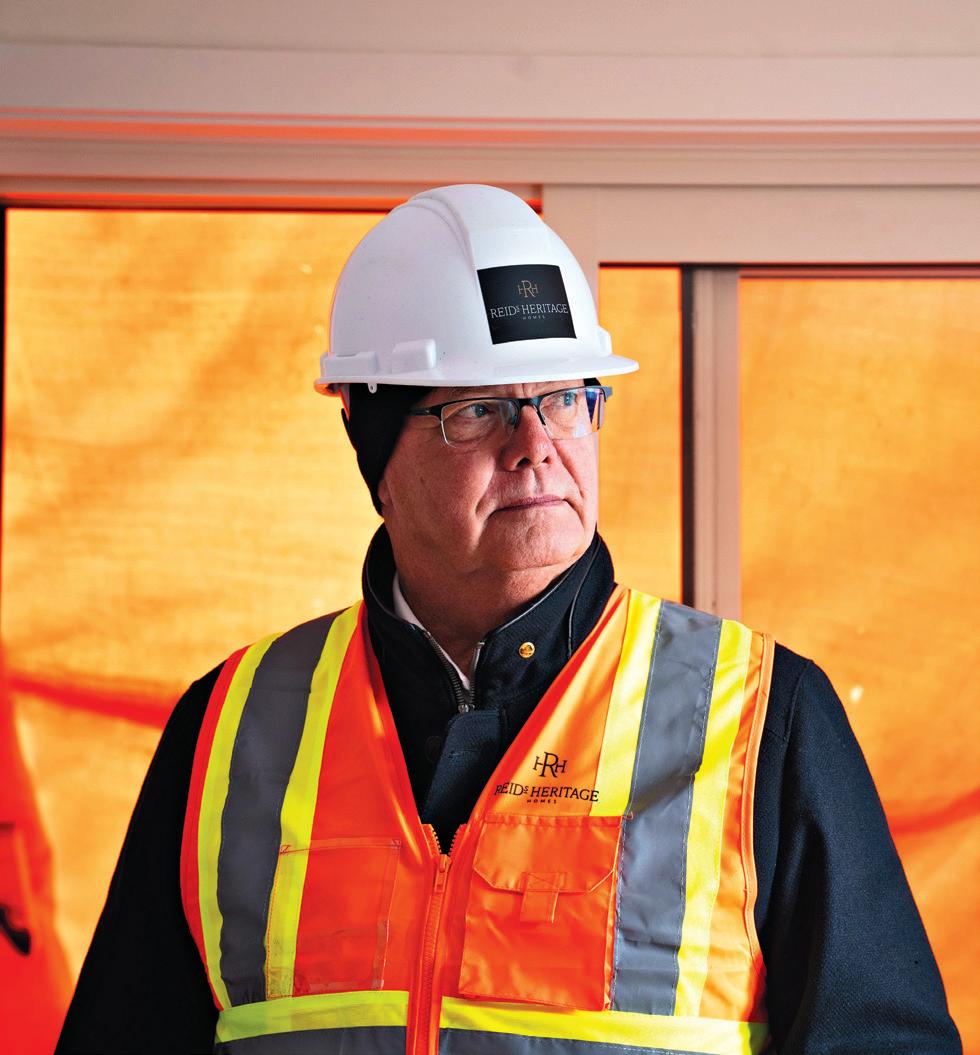
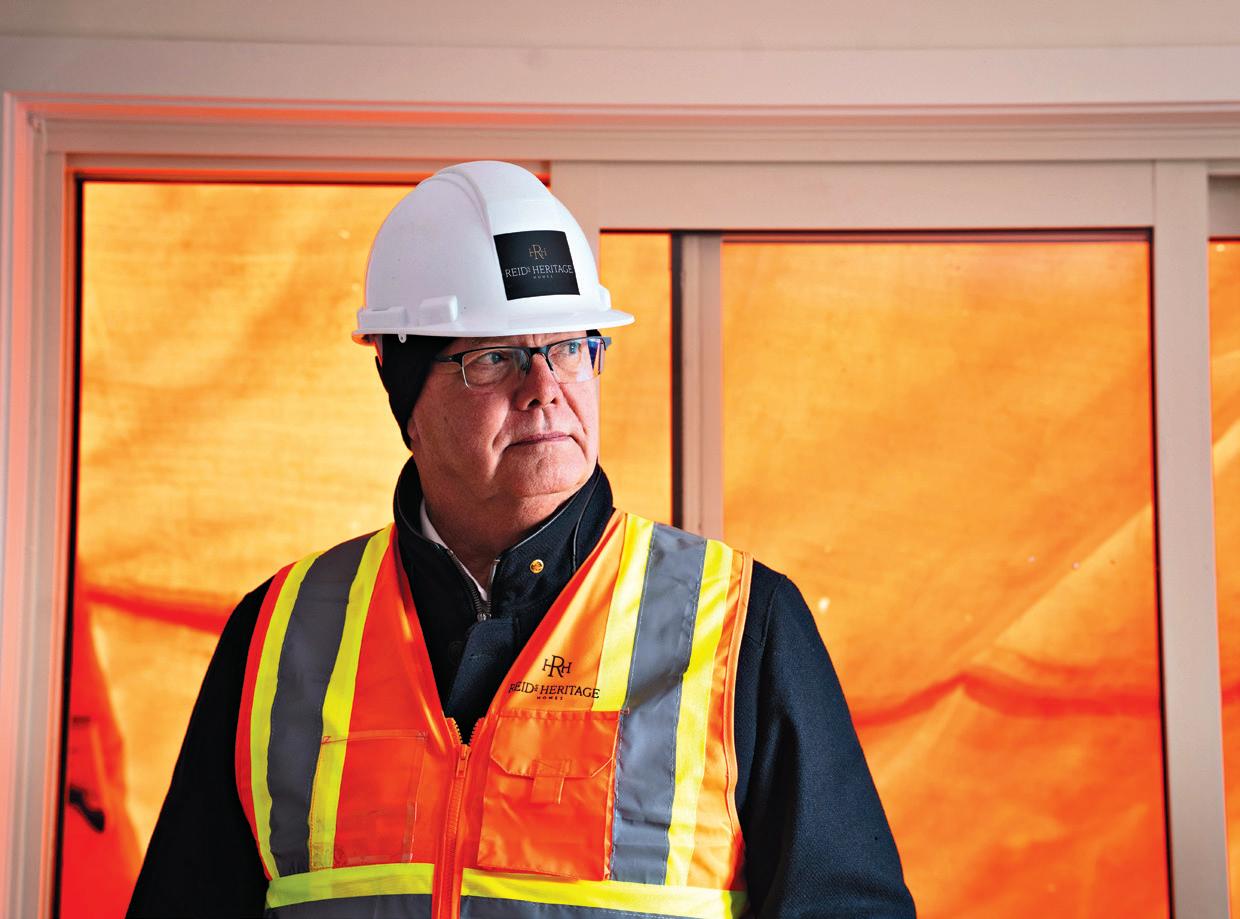
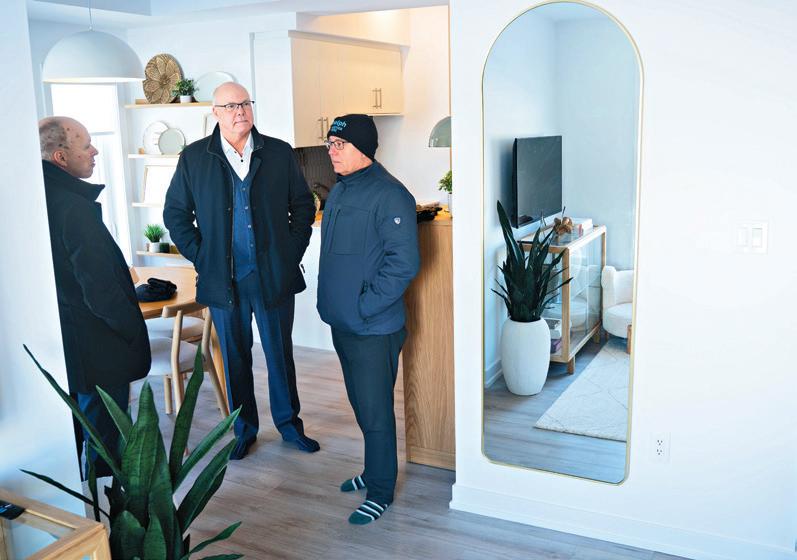
ONTARIO MINISTER OF HOUSING ROB FLACK
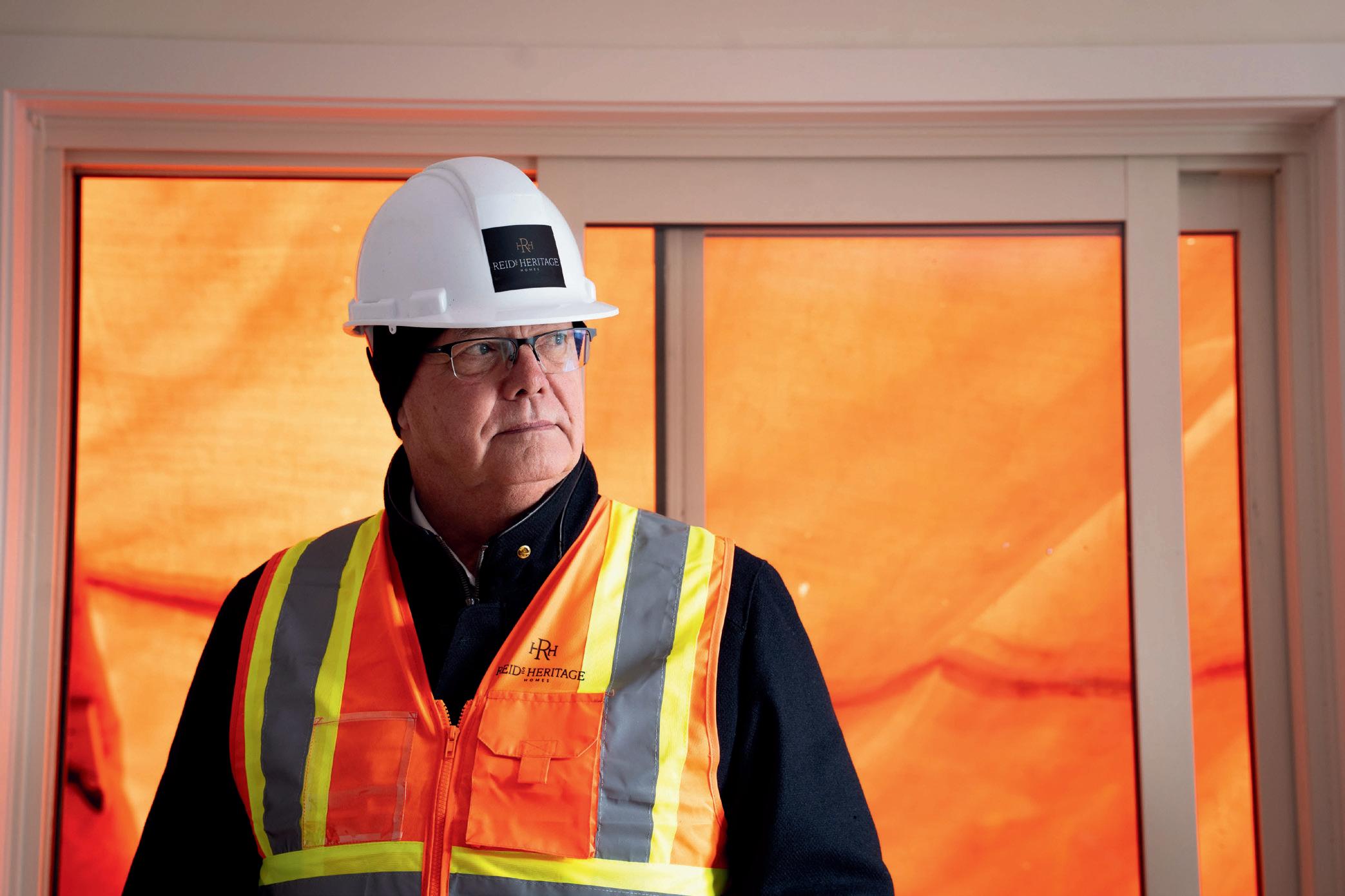
REID’S HERITAGE HOMES WELCOMED ONTARIO MINISTER OF HOUSING ROB FLACK TO ARGYLE VILLAGE IN GUELPH TO DISCUSS THE IMPORTANCE OF REMOVING BARRIERS TO NEW HOME AFFORDABILITY, INCLUDING HST, DEVELOPMENT CHARGES AND EXCESSIVE REGULATIONS. R EI D S HER I TAG E HOM ES. CO M
Homes
48 Age Strong
How to turn everyday stress into a health advantage
50 Simply Tech
Washing your smart phone a simple habit that could protect your health
58 Feeling Home
Hello neighbour: Why connection matters
14 Reid’s Heritage Homes
Hosts housing leaders to help lead return to prosperity 24
Conversation With Ron McMillan, President, Reid’s Heritage Homes 26 Special Report: Guelph
Future ready, here and now
Amexon
Central Park: Nature-inspired community is rising in Bayview Village neighbourhood
Ensuite retreat: Designing for wellness, comfort and quiet luxury
all times
Layering light: A guide to window coverings
The Rule of Thirds and other tips for room design
MODEL HOMES
OPEN
URBAN TOWNHOMES
PRICED FROM THE LOW $400’S BY APPOINTMENT ONLY KSTAFFORD@HERITAGEHOMES.COM 519 807 2477
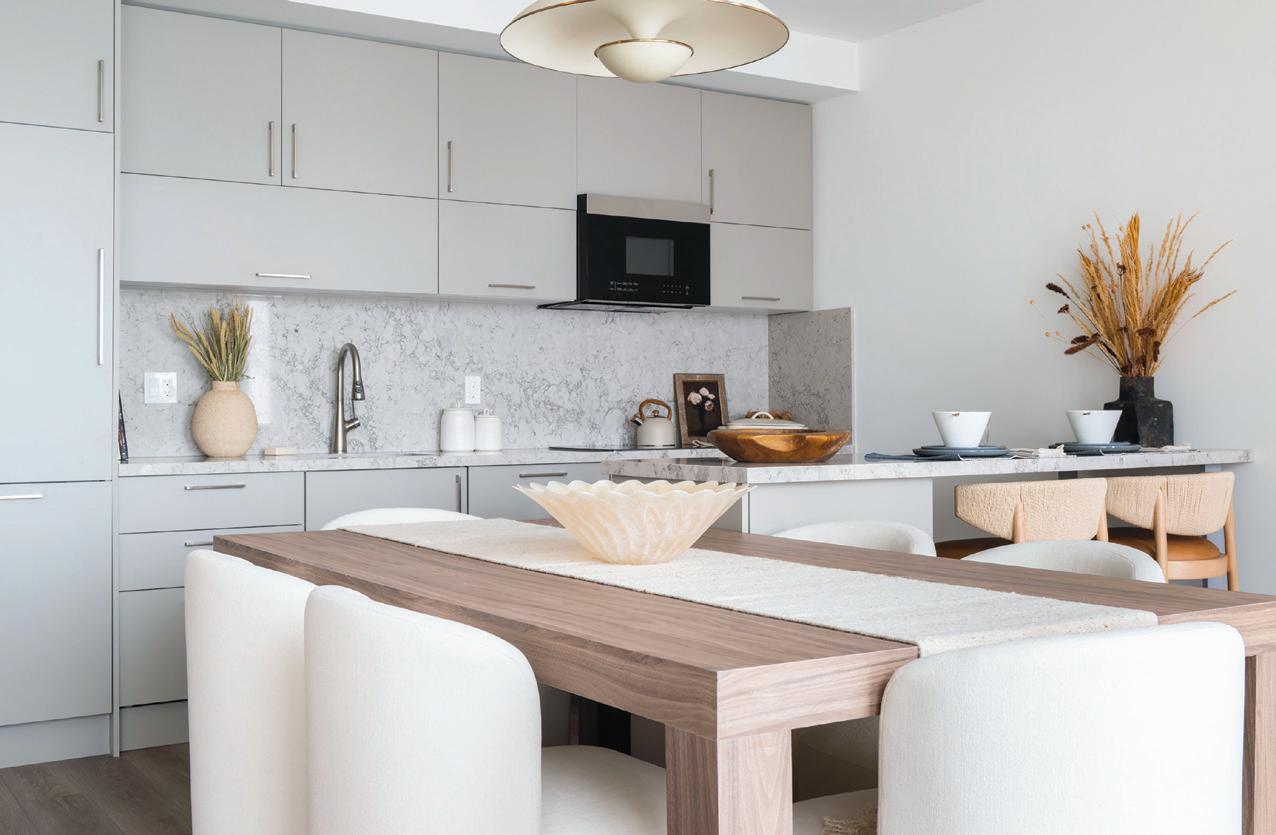
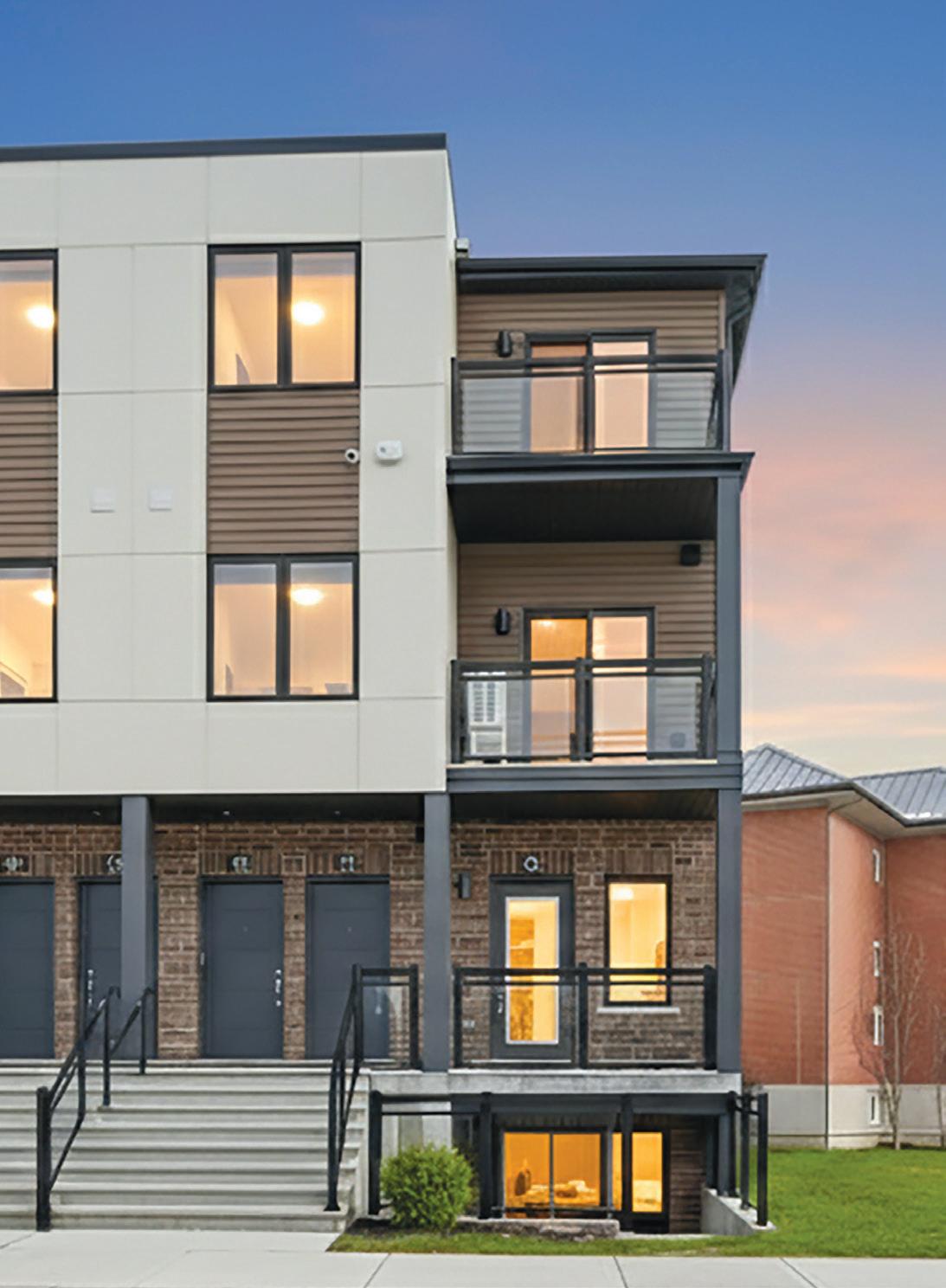
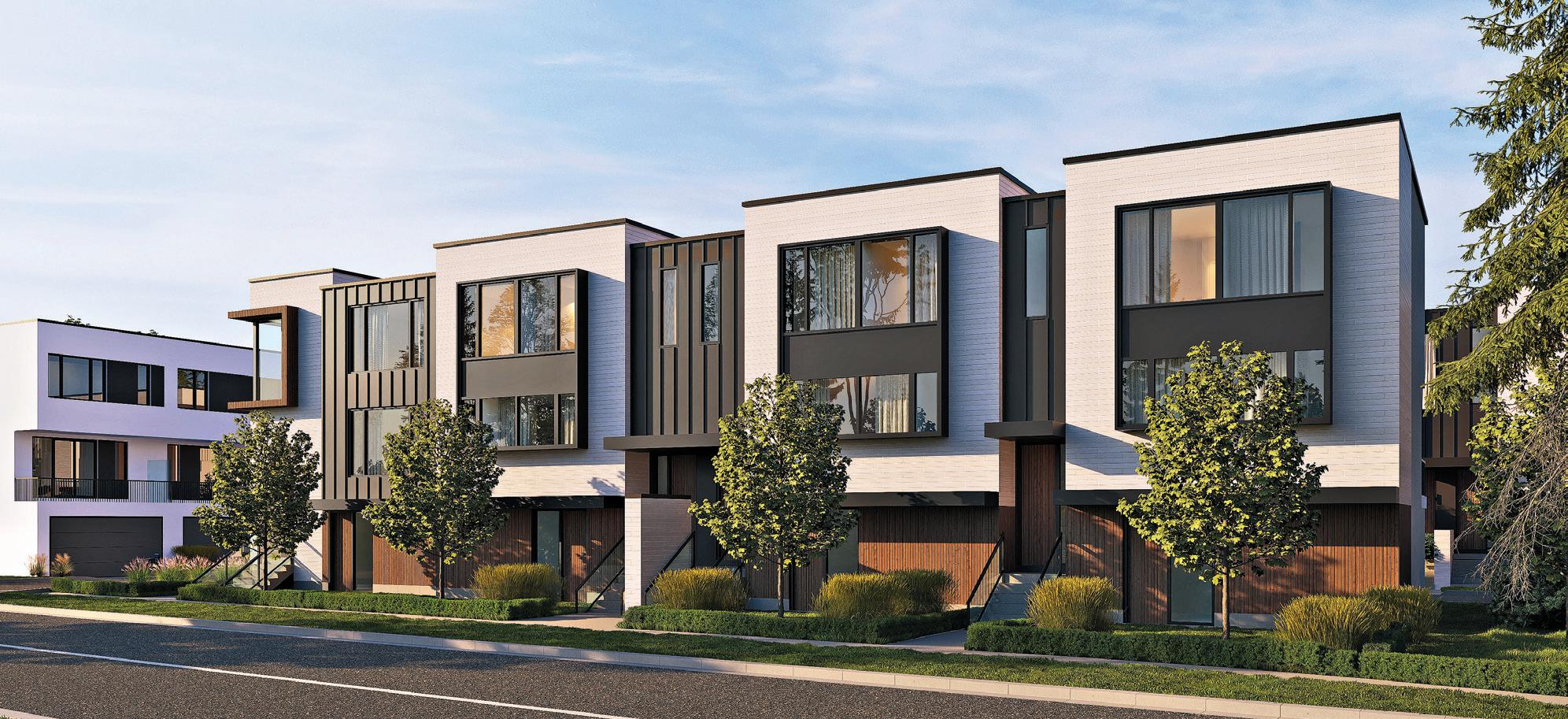
TWO BEDROOM OPEN CONCEPT FLOORPLANS BUILT FOR LOW MAINTENANCE MODERN LIVING. EXPLORE OUR DESIGNER DECORATED MODEL HOMES ACROSS TWO THOUGHTFULLY PLANNED COMMUNITIES FEATURING URBAN TOWNHOME DESIGNS. BACKED BY REID’S HERITAGE HOMES’ 48‑YEAR LEGACY OF AWARD‑WINNING CRAFTSMANSHIP IN SOUTHERN ONTARIO, EACH HOME IS BUILT WITH THE SAME CARE AND LASTING QUALITY YOU CAN TRUST.
HOME DESIGN | MARIAM ABOUTAAM
An award-winning interior designer, Mariam Aboutaam is Director, Sales and Marketing, Interior Design at Kylemore, Markham, Ont., a builder known for master-planned communities and luxury homes. kylemoreliving.com.
PERSONAL FINANCE | JESSE ABRAMS
Jesse Abrams is Co-Founder at Homewise, a mortgage advisory and brokerage firm based in Toronto. thinkhomewise.com
TARION REPORT | PETER BALASUBRAMANIAN
Peter Balasubramanian is President and CEO of Tarion. tarion.com.
WESTERN VIEW | MIKE COLLINS-WILLIAMS
Mike Collins-Williams, RPP, MCIP, is CEO West End Home Builders’ Association. westendhba.ca.
HOME REALTY | DEBBIE COSIC
Debbie Cosic is CEO and founder of In2ition Realty. She has overseen the sale of more than $15 billion worth of real estate. With Debbie at its helm, In2ition has become one of the fastest-growing and most innovative new home and condo sales companies. in2ition.ca
AGE STRONG | DR. JAMES FUNG
Dr. James Fung is a Chiropractor and Principal at Complete Balance Health Centre, Toronto. completebalancehealth.com
REAL ESTATE PRO | BARBARA LAWLOR
Barbara Lawlor is CEO of Baker Real Estate Inc. A member of the Baker team since 1993, she oversees the marketing and sales of new home and condominium developments in the GTA, Vancouver, Calgary and Montreal, and internationally in Shanghai. baker-re.com
STAT CHAT | BEN MYERS
Ben Myers is the President of Bullpen Consulting, a boutique residential real estate advisory firm specializing in condominium and rental apartment market studies, forecasts and valuations for developers, lenders and land owners. Contact him at bullpenconsulting.ca and @benmyers29 on Twitter.
TRREB REPORT | DANIEL STEINFELD
Daniel Steinfeld is President of the Toronto Regional Real Estate Board (TRREB). A Chartered Accountant, he previously served as Vice-President and Chief Financial Officer with the Toronto Argonauts and is a Broker and coowner On The Block Realty.
BILD REPORT | DAVE WILKES
Dave Wilkes is president and CEO of the Building Industry and Land Development Association (BILD), the voice of the home building, land development and professional renovation industry in the GTA. For the latest industry news and new home data, follow BILD on Twitter at @bildgta or visit bildgta.ca
SENIOR MEDIA CONSULTANT Amanda Bell 416.830.2911 amanda.bell@nexthome.ca
EDITORIAL DIRECTOR Amanda Pereira
EDITOR-IN-CHIEF – GREATER TORONTO AREA Wayne Karl wayne.karl@nexthome.ca
CONTRIBUTORS
Mariam Aboutaam, Jesse Abrams, Olivia Bailey, Peter Balasubramanian, Mike Collins-Williams, Debbie Cosic, Dr. James Fung, Anwar Husain, Linda Kafka, Barbara Lawlor, Linda Mazur, Ben Myers, Mimi Pineau, Daniel Steinfeld, Dave Wilkes
Advertising Call 1.888.761.3313 for rates and information. Fax: 1.888.861.5038
Circulation Highly targeted, free distribution network focused on real estate buyers, using street-level boxes and select Canada Post distribution channels across the Greater Toronto Area and surrounding municipalities. Canadian subscriptions 1 year = 13 issues – $70 (inc. HST). Canada Post – Canadian Publications Mail Sales Product Agreement 40065416.
Copyright 2026 All rights reserved. All copyright and other intellectual property rights in the contents hereof are the property of NextHome, and not that of the individual client. The customer has purchased the right of reproduction in NextHome and does not have the right to reproduce the ad or photo in any other place or publication without the previous written consent of NextHome.
Editorial Submissions from interested parties will be considered. Please submit to the editor at editorial@nexthome.ca.
Terms and Indemnification Advertisers and contributors: NextHome is not responsible for typographical errors, mistakes, or misprints. By approving your content and/ or submitting content for circulation, advertisers and contributors agree to indemnify and hold harmless NextHome and its parent company from any claims, liabilities, losses, and expenses (including legal fees) arising out of or in connection with the content provided, including but not limited to any claims of copyright infringement, unauthorized reproduction, or inaccuracies in the content. Advertisers acknowledge that they have the necessary rights, permissions, and licenses to provide the content for circulation, and they bear full responsibility for the content’s accuracy, legality, and compliance with applicable laws upon approval. Contributors acknowledge NextHome reserves the right to omit and modify their submissions at the publisher’s discretion.
FEDERAL AND ONTARIO GOVERNMENTS PARTNER UP TO CUT TAXES ON HOUSING AND BOOST SUPPLY
In a move the homebuilding industry has been waiting and campaigning for months if not years, the federal and Ontario governments have announced a new partnership to build more affordable homes, infrastructure and transit. Most notably, the plan will reduce taxes and fees for a home in Ontario by up to $200,000.
To boost housing supply and lower costs, the federal and Ontario governments will:
• Lower development charges: The federal government and Ontario will cost-match a total of $8.8 billion over 10 years, focused on housingenabling infrastructure projects. This funding will support the reduction of municipal development charges by up to 50 per cent. These reductions will be in place for three years and target municipalities covering 80 per cent of the province’s population. This new infrastructure funding will offset much of the financial impact of development charge reductions on municipalities. However, municipalities will also be expected to support development charge reductions, so that all three levels of government are supporting increased housing supply and affordability. The province will work with municipalities to put forward a list of infrastructure projects for approval with a focus on speed and efficiency. Development charges are a major upfront cost
The One Stop Shop for Builder Storytelling
that can delay or prevent new housing projects. Lowering these upfront costs will help accelerate construction and build more homes. This marks the federal government’s first partnership through the Build Communities Strong Fund.
• Tax relief for homebuyers: Building on the elimination of the GST for first-time homebuyers last year, through this partnership, the full 13 per cent of the HST will be removed for new homes in Ontario valued up to $1 million, saving buyers up to $130,000 on the purchase of their home. This maximum rebate of $130,000 would be maintained for new homes valued up to $1.5 million, and would decrease proportionally from $130,000 at $1.5 million to a maximum of $24,000 for homes valued at $1.8 million and above. This would apply to eligible agreements signed between April 1, 2026, and March 31, 2027. The Ontario government estimates this measure will deliver nearly $2.2 billion in tax relief, support an additional 8,000 housing starts next year, create up to 21,000 jobs, and contribute $2.7 billion to Ontario’s GDP.
“Our new partnership with Ontario is about building more affordable homes, more transit and more careers in the skilled trades,” says Prime Minister Mark Carney. “We’re tackling the housing crisis from every angle –so we can build up housing supply and bring down costs for Canadians. We’re building Ontario strong and Canada strong.”
“(This) agreement will be transformational for Ontario and Canada, delivering new homes, transit and infrastructure and supporting hundreds of thousands of goodpaying jobs for Ontario workers,” adds Ontario Premier Doug Ford. “Our government will continue to deliver on our plan to protect Ontario in partnership with the federal government and municipalities by
lowering the cost of building, getting shovels in the ground faster, cutting red tape and investing in workers.”
The Ontario Home Builders’ Association (OHBA) and Building Industry and Land Development Association (BILD) welcome the announcement, citing a continued focus on addressing systemic barriers within the planning and development approvals framework. OHBA CEO Scott Andison and BILD President and CEO Dave Wilkes were both in attendance for the announcement.
“Our industry has consistently emphasized the importance of reducing red tape and bringing greater predictability to the planning approvals process,” says Andison. “Ontario’s continued efforts to streamline approvals and remove barriers are both welcome and necessary. Actions such as parkland dedication reform, limiting the imposition of enhanced development standards and advancing site plan improvements, alongside the recently announced HST relief off of all new homes, demonstrate a clear, coordinated approach to getting housing moving again. Taken together, these measures reflect meaningful progress toward modernizing the system and supporting both new home construction and the renovation sector, and the jobs they create across Ontario.”
ONTARIO TO EXPAND HST REBATE TO LOWER THE COST OF NEW HOMES
In a move universally applauded – if somewhat overdue – the Ontario government has announced it will remove the full 13 per cent of the Harmonized Sales Tax (HST) for eligible buyers of new homes valued up to $1 million, for a maximum rebate of $130,000, as part of the upcoming 2026 Budget. This maximum rebate of $130,000 would be maintained for new homes valued up to $1.5 million, and would decrease proportionally from $130,000 at $1.5 million to a maximum of $24,000 for homes valued at $1.85 million and higher, building on the province and federal government’s previous move to rebate the HST for all first-time buyers of new homes up to $1 million.
The federal government has agreed to cost-share with Ontario in support of provincial housing initiatives, subject to passage of federal legislation, which would cover approximately the federal five-per-cent portion of the HST that is being removed from new homes in Ontario. This partnership would provide almost $2.2 billion in total joint tax relief for housing in Ontario.
The province says the proposal would strengthen the existing provincial HST New Housing Rebate and New Residential Rental Property Rebate for one year, from April 1, 2026, to March 31, 2027, temporarily removing the HST for eligible buyers of qualifying new homes. For new homes valued at or higher than $1.5 million, a reduced rebate will be available. Higher-valued new homes that would have qualified for the maximum rebate of $24,000 under the current rules will qualify for at least that amount under the expansion. The expanded 13-percent HST rebate could stimulate an additional 8,000 housing starts in Ontario next year, supporting up to 21,000 jobs.
In addition to these measures, Ontario is expanding the HST relief for first-time homebuyers on new homes announced last fall, taking steps to align the effective date of the provincial HST rebate for first-time buyers with the federal government’s newly proposed earlier effective date of March 20, 2025.
The government says it is taking action with a suite of measures to help increase the supply of affordable homes, support housing development and foster a robust housing industry across Ontario. This includes removing the full eight-per-cent provincial portion of the HST on qualifying purposebuilt rental housing. The province is also providing historic housingenabling infrastructure funding through the $4-billion Municipal Housing Infrastructure Program and the $1.2-billion Building Faster Fund, which rewards eligible municipalities that make real progress in getting shovels in the ground to build new homes.
Homebuilding industry groups are calling the move a “game changer” that could provide a significant boost to the market as we near the spring busy season.
“At a time where we are facing huge economic uncertainty and a slowing housing industry, this is a major step toward unlocking affordability in Ontario’s housing market and supporting the broader economy. This is great news for both new home purchasers and the 100,000s of workers in our industry,” said Dave Wilkes, president and CEO of the Building Industry and Land Development Association (BILD).
BILD and the Ontario Home Builders’ Association (OHBA) say the leadership shown by the Ontario and federal governments will stimulate economic activity and support jobs at a critical period for the region, province and the
nation. This measure will reduce upfront costs for homebuyers, strengthening their purchasing power and improving mortgage qualification outcomes. It will also encourage new home purchases, ultimately leading to increased housing starts, construction jobs and future supply.
The Residential Construction Council of Ontario (RESCON) says the measure is a bold and timely move that will breathe new life into the struggling residential construction sector.
“This is a critical step towards making new homes more affordable and demonstrates that Premier Doug Ford and Prime Minister Mark Carney understand the severity of the housing downturn and the urgent need for decisive action to restore confidence in the market,” says RESCON President Richard Lyall. “It is a necessary initiative given the depth of the market downturn and grim outlook for the industry. This will help revive residential construction and save industry jobs.
“The stakes for our industry could not be higher,” adds Lyall. “Residential construction is one of the key economic engines of this province. When projects stop moving forward, it affects everyone from skilled tradespeople and apprentices to manufacturers and local businesses.”
MARCH RESALE SALES UP, PRICES DOWN: TRREB
Greater Toronto Area (GTA) resale housing market conditions tightened in March 2026 in comparison to last year, according to the latest statistics from the Toronto Regional Real Estate Board (TRREB). Sales were up year-over- year, while new listings were down. Selling prices were lower compared to March 2025, helping with affordability moving into the spring market.
“It’s encouraging to see an uptick in March home sales compared to last month and last year,” says TRREB President Daniel Steinfeld.” This suggests that an increasing number of GTA households are
looking to take advantage of improved affordability as we move into the spring market. Positive news on trade and geopolitical issues would help improve consumer confidence and home sales in the months ahead.”
“Buyers continued to benefit from substantial negotiating power on price across major market segments in the last month,” adds TRREB Chief Information Officer Jason Mercer.
“This explains why benchmark and average selling prices were down year-over-year. However, if market conditions continue to tighten, as they did in March, selling prices could start levelling off as we move through the remainder of 2026.”
The MLS Home Price Index (MLS HPI) Composite benchmark was down by 7.4 per cent year-over-year in March 2026. The average selling price, at $1.01 million, was down by 6.7 per cent compared to March 2025.
On a month-over-month seasonally adjusted basis selling prices remained relatively flat, with the MLS HPI Composite edging down and the average selling price edging up compared to February 2026.
GTA realtors reported 5,039 home sales through TRREB’s MLS System in March 2026 – an increase of 1.7 per cent compared to March 2025. New listings amounted to 14,442 – down by 16.7 per cent year-over-year.
On a seasonally adjusted basis, March 2026 home sales and new listings were up month-overmonth compared to February 2026. Sales were up by a slightly greater monthly rate than new listings.
“The GTA housing supply pipeline is in danger of running dry in the medium-to-long term,” says TRREB CEO John DiMichele. “The federal and provincial governments announcements on HST and development charge relief were important affordability policy initiatives designed to spur new home sales and construction. It will be important to ensure that the right types of homes are built, namely ‘missing middle’ home types bridging the gap between condos and traditional single-family homes. This is contemplated in the recent Ontario Building Homes and Improving Transportation Infrastructure Act.”
BANK OF CANADA RATE HOLD
PROVIDES SIGNAL FOR CONSUMER AND INVESTOR CONFIDENCE: CMBA
The Canadian Mortgage Brokers Association of Ontario (CMBA Ontario) is encouraged by the Bank of Canada’s March 18 decision to keep its policy interest rate at 2.25 per cent. The hold represents decisive action and leadership by the Bank at a time of immense global uncertainty and will better enable federal and provincial governments to advance housing construction, increase access to the market and improve affordability.
Schedule of 2026 rate announcements
April 29
June 10
July 15
Sept. 2
Oct. 28
Dec. 9
“It’s a matter of confidence,” says Michelle Campbell, president of CMBA Ontario. “The hold signals that Ontario remains a competitive environment for investment
in housing development. This investment is crucial to increase the supply of housing in Ontario, lowering costs and supporting the feasibility of home ownership for Ontarians across the province.”
This hold also means Ontarians with variable-rate mortgages will not see increases in their monthly payments and shields those with lines of credit from additional borrowing costs. While this represents an important break for hard-working Ontarians navigating an affordability crisis, it is not enough to address ongoing challenges.
“This isn’t a setback, but it isn’t necessarily progress either,” adds Campbell. “Holding the rate simply maintains the status quo. Ontarians are looking for proactive action from the federal and provincial governments to meaningfully improve housing affordability and provide reassurance and confidence for investors, homebuyers and businesses alike.”
Although (the) announcement from the Bank of Canada is a step in the right direction, CMBA Ontario strongly encourages the Ontario government to advance additional strategies, policies and investments that increase housing development and affordability. CMBA Ontario remains committed to advocating for measures that better support Ontario’s homebuyers and a strong, sustainable and resilient provincial housing sector and economy.
REID’S HERITAGE HOMES HOSTS HOUSING
LEADERS TO HELP LEAD RETURN TO PROSPERITY
Ontario’s residential construction sector is facing one of the most severe downturns in its history, with far-reaching consequences for the economy, workforce and future homeowners. A convergence of soaring costs, market uncertainty and policy pressures has pushed housing construction toward a near standstill at a time of urgent demand.
The data is stark: Singlefamily home sales in the Greater Toronto and Hamilton Area have fallen by more than 70 per cent,
condominium sales by nearly 90 per cent and housing starts have dropped sharply, down 29 per cent outside Toronto and 58 per cent within the city. With forecasts suggesting the province could lose up to 2.5 per cent of GDP in 2026 due to the slowdown in residential construction, the paralysis gripping the housing sector is no longer just a housing issue but a growing economic risk affecting jobs, investment and long-term affordability across Ontario.
FERGUS AND GUELPH
A collaborative conversation about housing supply, affordability and construction innovation took centre stage recently as industry leader, Reid’s Heritage Homes welcomed provincial and municipal leaders for a tour of two of its active communities in southwestern Ontario. The visit brought together members of the Reid’s Heritage Homes executive team, Ontario Minister of Municipal Affairs and Housing, Robert Flack, Guelph MPP
Mike Schreiner, and Mayor of Centre Wellington Shawn Watters.
The tour began in the Centre Wellington community of Fergus at a recently completed Reid’s Heritage Homes townhouse development featuring 112 homes designed to support first-time buyers and young professionals seeking attainable housing options, currently selling in the mid-$400,000s. Four newly completed model homes highlighted a range of contemporary floorplans and functional design features that balance quality, efficiency and everyday livability.
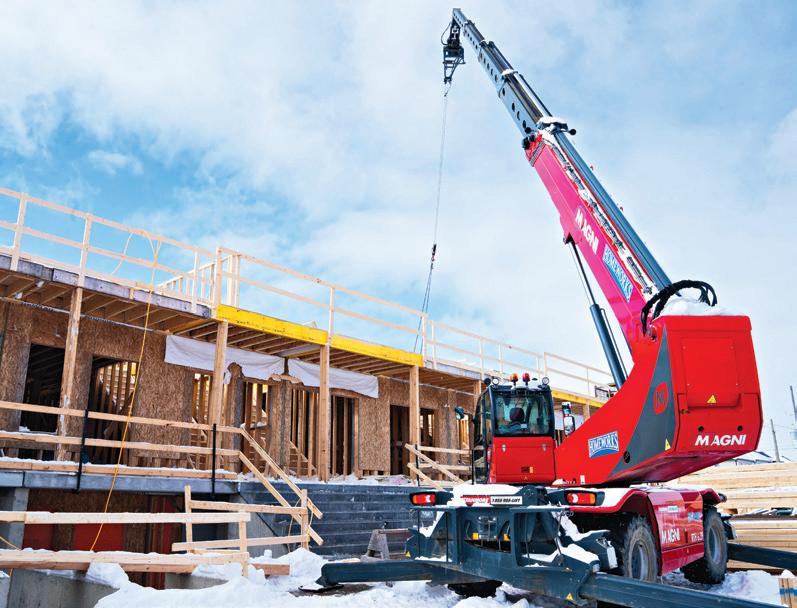
From Fergus, the group travelled to Argyle Village in Guelph, Reid’s Heritage Homes’ newest community, where more than 150 townhomes are currently under construction. Together, the two developments highlight the company’s broader strategy to increase housing supply in a region where demand continues to outpace availability for attainable new homes.
ADDRESSING A GROWING AFFORDABILITY CHALLENGE
Across Ontario, rising costs and limited inventory have made it
increasingly difficult for many buyers, particularly first-time purchasers, to access well built, affordably priced homes. Reid’s Heritage Homes notes that its communities are intentionally designed to address this gap through efficient layouts, thoughtful community planning, and attainable price points that help make homeownership more achievable in today’s market.
Reid’s Heritage Homes is currently active in eight communities across southern Ontario and constructing more than 1,100 homes, reflecting nearly five decades of experience in residential development and community building.
FOCUS ON FASTER CONSTRUCTION THROUGH INNOVATION
A key theme of the site visit was how the homebuilding industry can accelerate timelines without compromising craftsmanship or safety. During the tour, company leaders discussed the role of prefabrication and streamlined construction practices in improving efficiency and consistency on site.
Working closely with trade partners, Reid’s Heritage Homes
has increasingly incorporated prefabrication techniques to reduce onsite build time while maintaining design flexibility and construction quality. Company representatives noted that these methods help create more predictable schedules, an important factor in delivering homes to market sooner. For example, communities in Fergus and Guelph utilized prefabrication to complete construction within 12 months, reducing the overall schedule by approximately 20 per cent which in turn lowered costs by hundreds of thousands of dollars.
POLICY AND INDUSTRY PRESSURES REMAIN
While innovation is helping to improve speed, efficiency and costs, Reid’s Heritage Homes stressed that broader structural challenges continue to affect affordable housing delivery across southwestern Ontario.
Among the key issues discussed were development charges and HST on new construction, both of which significantly increase the cost of delivering new housing and are ultimately passed on to the homebuyer. These layered costs can represent a substantial portion of the final price of a new home, making it increasingly difficult to deliver attainable housing even when demand is strong. Reid’s Heritage Homes also emphasized that lengthy and complex approvals processes continue to delay projects, extend construction timelines and introduce additional carrying costs, uncertainty and risk. Together, these structural pressures are slowing the pace of new housing delivery, discouraging investment and limiting the industry’s ability to respond quickly
to the province’s urgent housing supply needs.
COLLABORATION
Reid’s Heritage Homes’ executive team expressed appreciation for the engagement of Minister Flack, MPP Schreiner and Mayor Watters, while urging continued and decisive collaboration between builders, policymakers and municipalities to address Ontario’s housing challenges.
“We urge all levels of government, provincial and federal, to consider targeted measures such as removing
HST on new homes to better align with the resale market and reassessing development charges that significantly impact the cost of delivery,” says Reid’s Heritage Homes President Ron McMillan. “Practical, balanced reforms like these can help accelerate housing supply, improve affordability, and support attainable homeownership for families across Ontario.”
LOOKING AHEAD
Reid’s Heritage Homes’ message remains clear: Meaningful progress will require decisive collaboration between provincial and federal government, and industry and community stakeholders to remove barriers, streamline approvals and create the conditions necessary to build at scale. By accelerating timelines, reducing structural cost pressures and prioritizing policies that support attainable housing, the region can expand access to homeownership across southwestern Ontario while also protecting the thousands of jobs tied directly and indirectly to the residential construction sector. At stake is more than housing supply. It is the ability for families to put down roots in the communities where they work, to sustain local employment across trade and supply chains, and to preserve the economic stability of the Greater Golden Horseshoe, which depends heavily on a strong and active homebuilding industry.
BUILDER PROFILE
Why now is the right time to buy – with Democrat Homes Have you been thinking about a new home but aren’t sure if now is the right time to buy? The truth is that you have to look at the pluses and weigh them against potential minuses, then make an informed decision that ultimately leads to a lifetime of happiness for your family. As a builder, Democrat Homes wants to make everything right for you, to ensure success. Now is the time to see if Forest Heights is right for you.
IN CONVERSATION WITH...
In Conversation With... Kirby Heckford, Principal, Tillsonburg Developments Trust, as they say, is everything. And when it comes to buying a home, especially an estate home intended for retirement, buyers want to know and trust who is delivering it. Enter Tillsonburg Developments in Tillsonburg, Ont., a third-generation homebuilder with deep roots in the local community.
IN THE SPOTLIGHT
Uptick in GTA home sales expected in second half of year: TRREB
Greater Toronto Area resale housing market conditions tightened in February 2026 compared to February 2025, according to the latest statistics from the Toronto Regional Real Estate Board. While sales were down year-over-year, new listings declined by a greater annual rate. If new listings continue to trend lower through the spring, competition between homebuyers will increase, supporting home prices and a recovery in sales.
HOME REALTY
Confidence returning: why the GTA housing market is brighter than the headlines suggest
Over the past few years, headlines about the GTA housing market have often focused on uncertainty, specifically rising interest rates, affordability challenges and shifting market conditions. While these factors are certainly part of today’s landscape, they don’t tell the full story. From where we sit, working closely with developers and buyers across the region, we’re seeing something the headlines often miss: Confidence is quietly returning to the GTA housing market.
AGE STRONG
Smart eating after 55: Nutrition that supports longevity
Many adults over 55 still feel young mentally. In my head, I’m still 25. I crave the same foods and assume I can “burn it off.” But physiologically, the body is operating under a different set of rules. With age, nutrition is no longer about dieting. It becomes a lifestyle strategy – just like exercise. You don’t need a trendy diet. You need a few solid, non-negotiable principles.
ENERQUALITY ANNOUNCES WINNERS OF 2026
BUILDING INNOVATION FORUM & AWARDS
Enerquality has announced the winners of The Building Innovation Forum & Awards 2026 (BIFA26), recognizing the builders, professionals and organizations driving innovation and resiliency in Canada’s residential construction industry.
This year’s event placed a spotlight on resiliency, celebrating the people and projects designing and constructing homes that can withstand a changing climate, meet evolving building codes and deliver long-term performance for homeowners. The awards honour those who are leading the way in building homes that are durable, adaptive and built to last.
“Resiliency is at the heart of highperformance homebuilding,” says Joe Vaccaro, CEO of Enerquality. “The winners of the EQ awards exemplify the commitment, creativity and
THIS YEAR’S WINNERS INCLUDE:
2026
Building Innovation
Forum & Awards Winners
Innovation Gauntlet: LG Electronics Canada
Energy Star Builder of the Year – Small/Custom: Wrighthaven Homes
Energy Star Builder of the Year – Mid-Volume: Doug Tarry Ltd.
Energy Star Builder of the Year – Large Volume: Mattamy Homes
Rising Star of the Year: Maple City Homes
Rising Star of the Year: Fusion Homes
Multi-Family New Construction Building of the Year: Mattamy Homes, Westbend
Licensed Professional of the Year: Craig McIntyre, EQ Building
Energy Advisor of the Year: Ecosynergy Inc.
Net Zero Builder of the Year – Small/Custom: sean.ca
Net Zero Builder of the Year – Mid/Large Volume: Doug Tarry Ltd.
Green Renovation Project of the Year: Frontiers Design Build Inc.
Green Renovation Project of the Year: Greening Homes Ltd.
Green Marketing Campaign of the Year: BK Cornerstone Design Build Ltd.
Innovation in Building of the Year: Empire Homes
Young Industry Leader of the Year: Phil Santana
Champion of the Year: Tara Gill
Hall of Fame: Andrew Guido
forward-thinking required to build homes that not only perform today but are prepared for the challenges of tomorrow.”
The Building Innovation Forum & Awards 2026 brought together builders, manufacturers, energy advisors and industry professionals for a day of discussion, knowledge
sharing and celebration. The event showcased strategies, systems and innovations that strengthen homes, while the awards recognized leadership and achievement across the sector.
For a complete list of winners, visit enerquality.ca.
THERE HAS NEVER BEEN A BETTER TIME
TO BUY A NEW HOME IN ONTARIO
If you have been following my column, you have seen me write at length about the need for governments to take meaningful steps to help correct the current state of the housing market in Ontario. I have highlighted that greater market certainty, coupled with a boost in consumer sentiment to get potential homebuyers off the sidelines, is essential for genuine improvement in the market and to avoid economic fallout across the province. On March 25, the provincial and federal governments announced some time-bound tax measures that are game changers and make now the best time to buy a new home in recent memory.
Fittingly at a new home construction site, Premier Doug Ford, along with the Ontario Minister of Finance and the Minister of Municipal Affairs and Housing, announced a temporary elimination and reduction of the harmonized sales tax (HST) on new homes in Ontario for all newhome buyers. This new measure is a game changer and sends a clear message that housing affordability is a top priority for the provincial and federal government and signals a commitment to protect Ontario jobs and the wider economy. It also presents a very clear opportunity for those wanting to buy a new home.
Already in effect, homebuyers now have until March 31, 2027 to take advantage of tax savings on any new home purchase. The new measure removes the HST on new homes with a purchase price of less than $1 million, and reduces the sales tax on new homes priced between $1 million and $1.85 million for the next year.
To paint a picture of this new tax policy in practice, if a new home in Ontario costs less than $1 million, homebuyers will be exempt from
paying the full 13 per cent HST on that new home, saving them potentially up to $130,000 through this mechanism.
If the price of a new home in Ontario ranges from $1 million to $1.5 million, this policy change allows for a flat rate of $130,000 in sales tax reductions. For homes with a purchasing price between $1.5 million and $1.85 million, there will be a declining tax reduction from $130,000 to the existing $24,000 rebate amount.
These sales tax cuts also apply to homes created through substantial renovations, which are treated as new housing for tax purposes.
With housing prices in the Greater Toronto Area (GTA) already having moderated by 20 to 25 per cent since their peaks in 2022, this new measure presents a tremendous buying opportunity. When the new sales tax relief is accounted for, homebuyers are looking at 33 to 38 per cent lower pricing for new homes versus the highs of 2022. This kind of pricing has not been seen in almost a decade.
When this is combined with current inventory levels of some 20,000 new homes available for sale in the GTA,
it provides choice and selection not seen since the early 2010s.
In addition, the lower pricing will increase purchasing power and will improve mortgage qualification outcomes, allowing more buyers to enter the market and make their dream of homeownership a reality.
As an industry, we are very grateful to the Ontario and federal government for taking this bold and decisive action. However, to the potential new home buyer – the message is clear – there has never been a better time to buy a new home, and like ads often say – for a limited time only.
Dave Wilkes is President and CEO of the Building Industry and Land Development Association (BILD), the voice of the homebuilding, land development and professional renovation industry in the GTA. For the latest industry news and new home data, follow BILD on Twitter, @bildgta or visit bildgta.ca.
DAVE WILKES
HOW TO (SLIGHTLY) LESSEN YOUR MORTGAGE
RENEWAL SHOCK
JESSE ABRAMS
If you bought or refinanced a home during the “cheap money” era of 2021, your calendar likely has a giant red circle around a date in 2026. For many Canadian homeowners, that date marks the end of a sub-two-percent mortgage and the beginning of a much harsher financial reality.
The “renewal shock” is no longer a looming headline, it is a line item
in your budget that is about to jump by hundreds, or even thousands, of dollars. But here is my professional take as we navigate this April market: The worst thing you can do is treat your renewal like a foregone conclusion.
The “path of least resistance” is exactly what your bank is counting on. If you want to protect your lifestyle and your equity, you have to be willing to do a little bit of homework. Here is how you can fight back and keep your monthly cash flow from evaporating.
1. STOP TREATING YOUR RENEWAL NOTICE LIKE A BILL
When your current lender sends that renewal letter in the mail, it looks official. It looks final. It looks like a utility bill that you simply have to pay. In reality, though, it is none of those things.
In Canada, banks often offer “posted rates” or only slightly discounted rates on their initial renewal forms. They are banking on the fact that you are busy, stressed and afraid of the paperwork involved in switching. In the industry, we call
this the “convenience tax.” By signing that first offer, you are essentially paying the bank a premium just to avoid a few phone calls.
My Advice: Start shopping four to six months before your term expires. Most lenders in the Canadian market will hold a rate for 120 days. Use that window to get a competing quote from a mortgage broker or a different institution. At Homewise, we have seen borrowers save as much as 0.7 per cent by shopping around with different lenders. But even a difference of 0.25 per cent might seem small, but on a $500,000 mortgage, that represents thousands of dollars in savings over a five-year term. Don’t leave that money on the bank’s table.
2. THE STRATEGIC REFINANCE: TRADING TIME FOR AIR
This is the “opinionated” part of the advice. If your mortgage payment is jumping from $2,800 to $4,100, and your household budget simply cannot absorb a $1,300 monthly hit without sacrificing your quality of life, you need to look at refinancing rather than a straight renewal.
When you renew, you stay on your current schedule to be mortgagefree. When you refinance, you can move your amortization back out to 25 or even 30 years.
The Pro: It significantly lowers your immediate monthly obligation. It turns a “crisis” payment back into a “manageable” one, giving your family’s monthly cash flow some much-needed “breathing room” during these high-inflation years.
The Con: There is no free lunch. By extending the time it takes to pay off your home, you will pay significantly more in total interest over the life of the loan. You are essentially pushing the cost into the future.
My Take: In the current 2026 Canadian climate, liquidity is king. If extending your amortization is the tool that keeps you from having to sell a home you love, or prevents you from racking up high-interest credit card debt just to keep the
lights on, then the “extra interest” is a price worth paying. You can always use “pre-payment privileges” later to shorten that amortization again when rates (hopefully) soften or your income increases.
3. LEVERAGE THE ‘STRESS TEST’ EXEMPTION
One of the biggest fears homeowners have when shopping around is the “Stress Test.” For years, people felt “trapped” with their current lender because they were worried that they wouldn’t qualify at the current high rates plus the two-per-cent buffer.
However, recent shifts in Canadian lending regulations have changed the game. If you are doing a straight renewal (no extra money out) with a new lender for an uninsured mortgage, many institutions are now allowed to waive that stress test hurdle. This means you have more mobility than you did two years ago. You are no longer a “mortgage prisoner” to your current bank. You have the power to walk across the street and take your business elsewhere if they won’t play ball on the rate.
4. WATCH THE ‘FINE PRINT’ ON THE SWITCH
If you do decide to shop around, which you should, pay attention to the “type” of mortgage you are moving into. Not all 4.2-per-cent rates are created equal.
Bona fide sales clauses: Some “discount” lenders offer lower rates but won’t let you break the mortgage unless you actually sell the house.
Standard vs collateral charges: This affects how easy it will be to move your mortgage again in 2031.
A good broker won’t just find you the lowest number; they’ll find you the “cheapest” mortgage, which factors in fees, penalties and flexibility.
THE BOTTOM LINE
The “wait and see” approach is a strategy for speculators, not for people who need to pay their bills on the first of the month. If your renewal
“ ” If extending your amortization is the tool that keeps you from having to sell a home you love, or prevents you from racking up high-interest credit card debt just to keep the lights on, then the “extra interest” is a price worth paying.
is coming up in the next six months, you need to be proactive.
1. Request your payout statement from your current bank. This often signals to them that you are looking elsewhere, which can magically result in a “better” offer appearing in your inbox.
2. Run the numbers on a 30-year amortization. Even if you don’t do it, knowing what that “safety valve” looks like will reduce your anxiety.
3. Act early. Don’t let the clock run down to the final 30 days when you’re too panicked to make a rational decision.
You worked hard to get into the Canadian housing market; now it’s time to make the lenders work hard to keep you there. Don’t just sign the paper, negotiate your future.
Jesse Abrams is Co-Founder at Homewise, a mortgage advisory and brokerage firm. thinkhomewise.com
+MORE CONTENT ONLINE nexthome.ca
RON MCMILLAN PRESIDENT
REID’S HERITAGE HOMES
by WAYNE KARL
With a commitment to building not just high-quality homes but desirable and welcoming communities, Reid’s Heritage Homes has been a trusted homebuilder in southwestern Ontario for more than 48 years.
And now that recent policy changes and improving conditions have buyers feeling more buoyant about the new home market, Reid’s feels it is well positioned to take advantage, with new home offerings in Guelph, Cambridge and the surrounding area.
We spoke with President Ron McMillan for insights into Reid’s rich history, how it managed recent challenging times and why the company sees a bright future.
How was 2025 for Reid’s Heritage Homes?
On the plus side, 2025 was a good year for us, with more than 300 new home closings and another 100 homes completed under our Construction Management Services division.
We were especially proud of our reduced build times in 2025, realized through enhanced framing techniques by implementing panelization, which cut our build times on most sites by 20 per cent.
We were also very proud to be certified as a Great Place to Work in 2025, with 98 per cent of our team participating in the Great Place to Work survey and an overall score of 94, our highest score ever.
On the other hand, 2025 was a challenging year for new home sales, which resulted in some office and site layoffs during the last half of 2025 as work began to slow down.
And how are things shaping up for 2026?
We are very fortunate to be relatively busy during these challenging times, with three new home sites and more than 275 new homes under construction, with
closings slated for the end of this year and into the spring of 2027.
Our team is smaller but reinvigorated, as we continue to improve efficiencies in both preconstruction and on-site operations as we prepare for the days ahead when sales and production volumes will ultimately surge again.
We also have four new home sites to launch for sale over the next six months, totalling more than 400 new homes with an average price point of $550,000. We are very excited about the potential for these sites as we actively work on our marketing and sales campaigns for launches in the summer and fall of this year.
How enthused are you about recent government policy changes?
Yes, this news is very encouraging and something that Reid’s Heritage Homes and the building industry have been advocating for many months.
We were recently fortunate enough to have the Ontario Minister of Housing, Rob Flack, visit our new home sites in Fergus and Guelph, where we openly discussed with him the current challenges that Ontario homebuilders face. We were more than impressed with Minister Flack’s understanding and grasp of the severity of the issues, and therefore we were not surprised at how quickly both he and the provincial government implemented a comprehensive plan to help make homes attainable again in Ontario.
We are also looking forward to a more simplified and streamlined development and building permit approvals process, as the current process is outdated and lengthy causing delay costs to be added to the purchase price of a new home unnecessarily.
How much difference might these changes make to your business?
Our average, sale price of an urban townhome in Guelph is approximately $580,000. If you remove all HST and reduce development charges by 50 per cent, we can reduce that price down to $515,000. That $65,000 reduction in price can make all the difference in a new-home buyer being able to afford the mortgage and down payment for a new townhome in Guelph. It also allows new-home builders to compete with resale homes where there is no HST or development charge tax.
How do your communities differ from others in the market?
Reid’s Heritage Homes has deep roots in the Guelph community, with a 48-year legacy behind our name. Our team understands that with this long history comes a responsibility to honour our founder’s legacy. Our ownership has always believed that every new-home buyer, whether a first-time buyer or empty nester, should receive the same high quality home and customer service.
Our current model homes in Guelph, Fergus and Cambridge reflect this legacy, with twobedroom urban townhomes at attainable prices for all buyers and “custom home” quality inside and out.
What’s next for Reid’s Heritage Homes?
We look forward to continuing to expand our land base and new home developments across the Greater Golden Horseshoe, while creating livable and attainable communities for every homebuyer.
Honouring our legacy of quality and innovation is always top of mind in everything we do, and we’re excited about the improvements we’re making every day to build new homes faster as we continue to lead the way in starts and completions in the communities we serve.
GUELPH
FUTURE READY, HERE AND NOW
Known as the “Royal City” for its historic connection to the British royal family, Guelph has been transitioning for years, from a small university town into one of the province’s fastest growing and wellbalanced economies.
And that means growth, employment and opportunity.
Boasting a healthy local economy, with growing agriculture, education, healthcare and manufacturing sectors, Guelph continues to attract newcomers – yes, students attending the well-known University of Guelph – but also a skilled labour force and homebuyers looking for
by WAYNE KARL
lifestyle and better affordability than in the Greater Toronto Area.
One company with deep roots in the Guelph community is Reid’s Heritage Homes, active in the area for more than 48 years.
“Our ownership has always believed that every new-home buyer, whether a first-time buyer or empty nester, should receive the same high quality and customer service,” says President Ron McMillan, adding that the company’s model homes in Guelph, as well as in Fergus and Cambridge, reflect this legacy, with two-bedroom urban townhomes at attainable prices for all buyers and “custom home” quality inside and out.
Ron McMillan
Moreover, recent policy changes (see pages 10 and 11) to aid newhome sales are expected to produce something of a boon this spring.
“Our average, sale price of an urban townhome in Guelph is approximately $580,000,” says McMillan. “If you remove all HST and reduce development charges by 50 per cent, we can reduce that price down to $515,000. That $65,000 reduction in price can make all the difference in a new-home buyer being able to afford the mortgage and down payment for a new townhome in Guelph. It also allows new-home builders to compete with resale homes where there is no HST or development charge tax.”
Another local homebuilder, Granite Homes, points out that Guelph has a lot to offer to residents, from a strong job market, particularly with institutions such as the University of Guelph, to a variety of recreational options in its numerous parks and trails. Guelph’s sense of community and relatively affordable housing compared to larger Ontario cities make it an attractive place to settle down. It is also well-connected by major highways and public transit, enhancing its accessibility.
FROM PAST TO PRESENT
Innovation has always been part of Guelph’s history: The wire coat hanger was invented here in the 1920s; it’s where five-pin bowling was invented; a University of Guelph research team created the Yukon Gold potato; and the city was home to North America’s first cable TV system. Perhaps the most memorable, Colonel John McCrae, author of the poem “In Flanders Fields,” was born and raised in Guelph.
Respectfully, though, while celebrating the past is important, today, Guelph is all about progress. Indeed, local city-building and community development is guided by the Guelph. Future Ready Strategic Plan . Approved in 2019, the plan guided city council’s priorities
and staff’s work towards making Guelph an inclusive, connected, prosperous city “where we look after each other and our environment.”
The city now looks ahead to the next stage with Future Guelph Strategic Plan for 2024-27 , designed to build on the successes of the previous strategic plan.
Key to the city’s growth is an emphasis on advanced manufacturing, among the largest employers, as well as educational services, agri-food and biotechnology.
The renown University of Guelph, in fact, is one of Canada’s top comprehensive universities. The veterinary medicine program ranks first in Canada, third in North America and in the top 10 worldwide. U of G is ranked No. 6 in Canada in Maclean’s University Rankings in 2026 in the Comprehensive category, is tops in research dollars and maintains a top-10 position in student services, faculty and reputation. The school’s Ontario Agricultural College is ranked number one in Canada and 14th in the world for Agriculture and Forestry, according to the 2026 QS World University Rankings.
Guelph benefits from a strong location, situated just north of Hwy. 401, affording easy access to Toronto in the east and London to the west. It also connects to Hwy. 7 for travel to Kitchener-Waterloo and Acton, and Hwy. 6 for access to Hamilton to the south.
HOUSING MARKET
Like most housing markets in Ontario and elsewhere in Canada, Guelph has experienced some spotty results recently – but things are looking up. And the municipality, among the most productive in the province on this front, is doing its part.
On March 26, the City of Guelph received another round of federal funding to continue its work to boost housing supply and affordability, thanks to the more than 22,000 housing units already unlocked.
“Finding a secure, affordable place to live remains a challenge for many families in Guelph,” says Guelph Mayor Cam Guthrie. “Thank you to the federal government for your continued investment in the City’s work to deliver on the programs, policies and grants that make it possible for more housing to get built in Guelph.”
In January 2024, the federal government announced $21.4 million – dispersed over four years – for the City of Guelph through its Housing Accelerator Fund. This funding has helped the City create opportunities for more housing in Guelph through policy updates, infrastructure work, and grants.
In 2026, the City will use the funding to:
• Streamline new housing in Downtown Guelph: Through a land-use planning tool called a Community Planning Permit System, the City is looking to combine minor variances, zoning bylaw amendments and site plan applications into a single, more efficient approval process. This will streamline new housing in growing areas of Guelph, such as the downtown area.
• Provide more grants for affordable housing: Residents can continue to apply for grants through the Affordable Housing Community Improvement Plan. These grants are available to anyone looking to build affordable housing – from in-law suites to apartments or vacant-units-turned-affordablehousing.
• Build affordable housing on Cityowned land: The City is planning to build 12 new rental units on City-owned land on Normandy Drive and Eastview Road. These units will be run by an affordable housing provider.
• Explore more units in existing neighbourhoods: The City is exploring policies that could allow five or more housing units on corner residential lots that are next to arterial or collector roads.
And in December 2025, the Ontario government awarded Guelph with $3.69 million through the second round of the Building Faster Fund, which provides funding to municipalities that achieve at least 80 per cent of their provincially designated housing targets.
Guelph broke ground on 1,279 new homes in 2024, achieving more than 85 per cent of its 2024 housing target. This funding will help Guelph build more homes and community infrastructure and supports the province’s plan to protect Ontario by investing in infrastructure to support economic and employment growth.
When it comes to employment, Guelph is faring better than the provincial average; the unemployment rate was 6.5 per cent as of March 2026, up 0.2 per cent from the previous month, but well ahead of the 7.6-percent rate for Ontario.
NEW HOME DEVELOPMENT
Reid’s Heritage Homes is among the more active builders in the area at the moment, offering urban townhomes at Argyle Village from the $500,000s; urban towns from the $500,000s at
Modal at Main in nearby Cambridge; and, coming soon in Guelph, Phase 2 of The Block on Clair, a collection of urban stacked and rear lane garage townhomes, from the $500,000s.
Charleston Homes, meanwhile, is now selling townhomes at Harmony Court in nearby Rockwood; and Audrey Meadows country estate homes in nearby Aberfoyle.
Terra View Custom Homes has Hart Village in South Guelph, comprising semis and singles, and a second phase of Net Zero Ready single detached homes. The company also has move-in ready homes throughout its communities.
Granite Homes is now selling stacked townhomes and flats at Northside in Guelph, as well as singles and townhomes at South River in Elora, about 22 kms away. It also has move-in ready offers of a number of home types in both developments.
And Fusion Homes offers urban towns at Alister at Solterra in South Guelph, as well as limited condo suites at Anthem, the fourth phase of The Metalworks development in downtown Guelph.
SPORTS AND ENTERTAINMENT
When it comes to fun and entertainment in Guelph, in addition to plentiful trails and access to nature, Guelph also excels in the festivals department. The renown annual Hillside Summer Festival and Hillside Inside are three-day, multistage events hosting musicians, spoken word artists and other workshops, on Guelph Lake Island. This year’s event, held July 17 to 19, features accomplished Canadian musicians Cowboy Junkies, and comedian Mae Martin, who recently hosted the 2026 Juno Awards.
In the heart of the historic downtown area, Sleeman Centre serves as Guelph’s premiere venue for sports and entertainment. The 5,000-seat facility hosts sporting and family events, trade shows, conferences, large-scale concerts and public ceremonial events, and notably is home to the Guelph Storm of the Ontario Hockey League.
The city also has Guelph Little Theatre, Guelph Concert Theatre and River Run Centre.
LOCATION, LOCATION, LOCATION
Located in Southwestern Ontario; population 143,740; 95 km from Toronto; 22 km east of Kitchener-Waterloo
KEY LANDMARKS
• Basilica of Our Lady Immaculate
• Gow’s Bridge
• Riverside Park
• The Sleeman Centre
• University of Guelph
• University of Guelph Arboretum
• Wellington Brewery
SELECT HOUSING DEVELOPMENTS
ALISTER AT SOLTERRA Urban townhomes in South Guelph By Fusion Homes fusionhomes.com
ANTHEM AT THE METALWORKS Limited condo suites in downtown Guelph By Fusion Homes fusionhomes.com
ARGYLE VILLAGE Urban townhomes in Guelph By Reid’s Heritage Homes reidsheritagehomes.com
AUDREY MEADOWS Country estate homes in Aberfoyle By Charleston Homes charlestonhomes.ca
HARMONY COURT
Townhomes in Rockwood By Charleston Homes charlestonhomes.ca
HART VILLAGE
Semis and singles in South Guelph By Terra View Custom Homes terra-view.com
MODAL AT MAIN
Urban townhomes in Cambridge By Reid’s Heritage Homes reidsheritagehomes.com
NORTHSIDE
Stacked townhomes and flats in Guelph By Granite Homes granitehomes.ca
SOUTH RIVER
Singles and townhomes at in Elora By Granite Homes granitehomes.ca
THE BLOCK ON CLAIR
Urban stacked and rear lane garage townhomes in Guelph By Reid’s Heritage Homes reidsheritagehomes.com
BRAMPTON BRICK
WHERE YOUR NEW HOME JOURNEY BEGINS
Homebuyers these days are increasingly discerning – about everything. From the beginning of their journey a sales centre, to walking through model homes, to exploring floorplans, considering upgrades and options and generally imagining how their life will unfold.
Location, home design – and especially with economic challenges – pricing.
So too are they demanding more from the home itself – beginning with the exterior. When it comes to new lowrise homes, it all begins with what everyone new-homebuyer desires –beautiful brick exteriors.
Brampton Brick understands the excitement, the questions and dreams that come with this first step, and the company is here to make the choices you make about your home’s exterior simple, beautiful and lasting.
With more than 150 years of experience, Brampton Brick brings
a legacy of quality, innovation and craftsmanship to every project.
Founded in 1871, it is one of North America’s most respected manufacturers of clay brick and integrated masonry products, proudly made in Ontario from locally sourced materials. Choosing local not only ensures superior quality and durability but also supports Ontario jobs and communities.
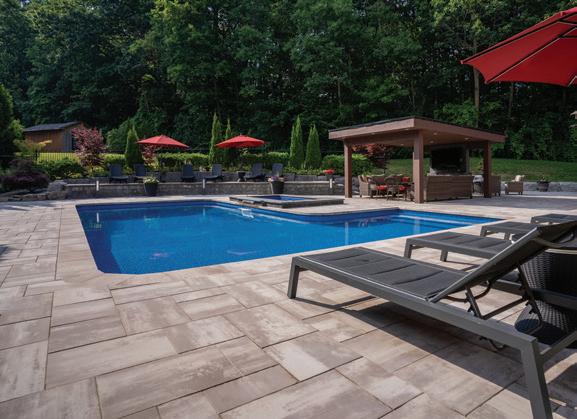
The company’s portfolio of brick, stone and concrete masonry products, along with Oaks Landscape Products for driveways, patios, walls and pool areas, combines design flexibility with consistent performance to enhance every aspect of your home. Designed for durability, timeless style and longterm value, Brampton Brick gives homeowners confidence that their home will look beautiful today and stand strong for generations.
Brampton Brick’s masonry collections are more than just
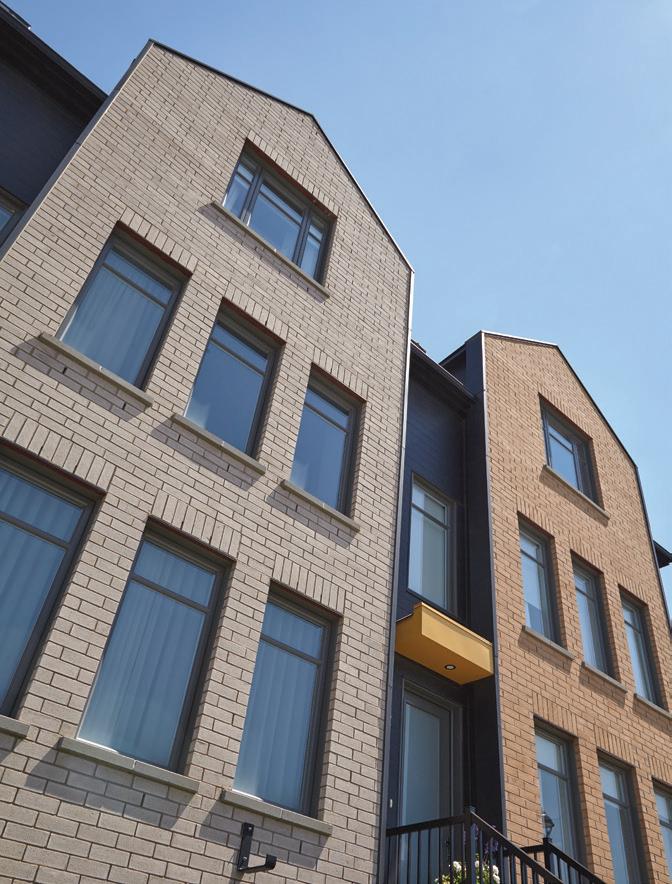
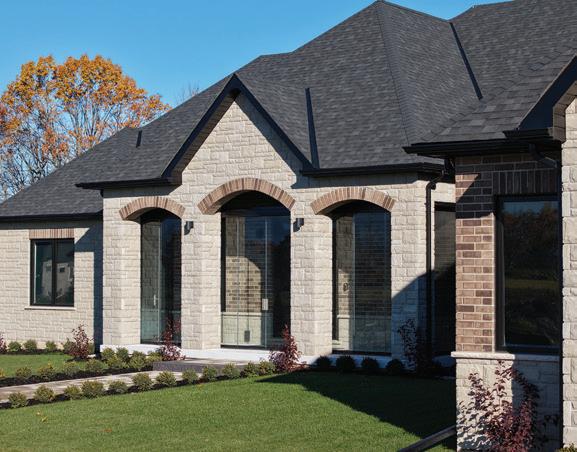
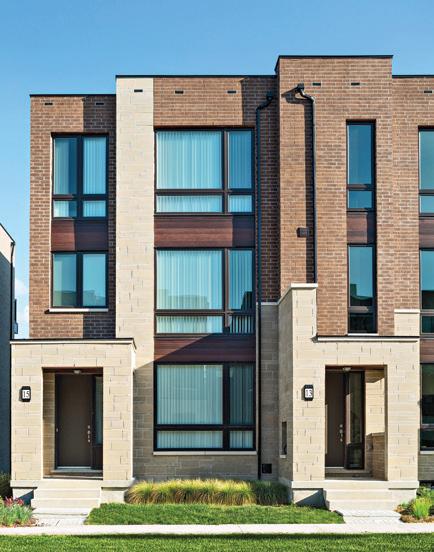
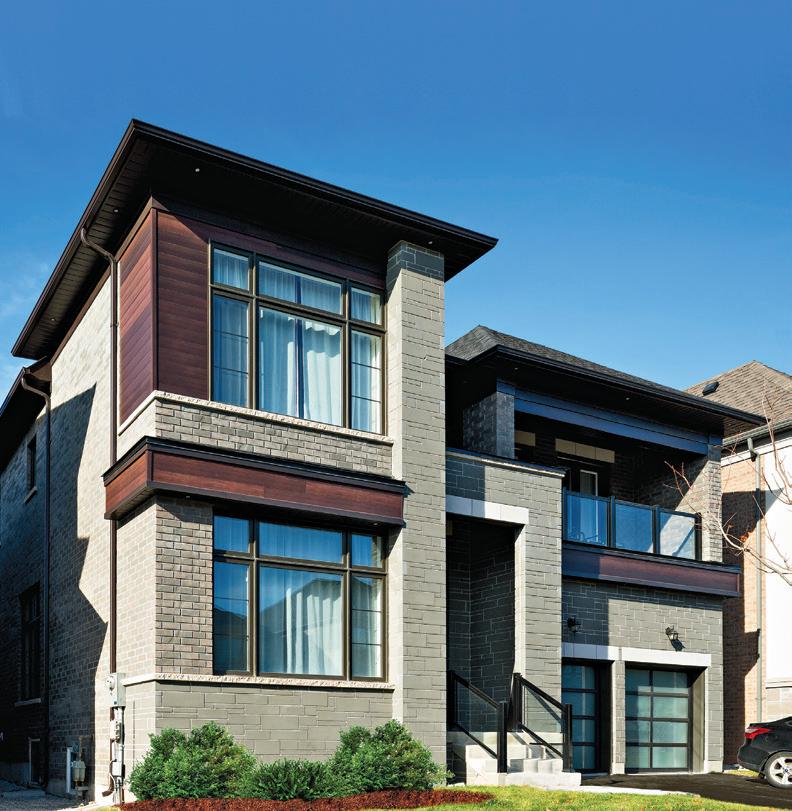
building materials, they are a canvas for your creativity. With a wide range of sizes, shapes, textures and colours, Brampton Brick products give homeowners the freedom to design exteriors that reflect their personal style. For a sleek, modern look, the Contemporary Series clay bricks pair beautifully with Bonneville or Contempo Stone, creating clean lines and a refined aesthetic. For a more traditional aesthetic, the Legacy Series clay bricks combine perfectly with Artiste 2 or Granada Stone, offering rich textures and dimension. The true artistry comes in how you combine and layer bricks and stones from different collections, creating a home that is uniquely yours. Every choice, from subtle texture variations to bold colour contrasts, contributes to a cohesive design. With Brampton Brick, your home becomes a space where functionality meets inspiration.
WHY BRICK AND STONE MATTER FOR YOUR HOME
Choosing your home’s exterior is more than style. It’s an investment in comfort, safety and value:
• Structural durability and longevity: Brick and stone are built to last. Unlike lighter siding materials that may warp or fade, masonry maintains its integrity for decades.
• Fire and impact resistance: Brick walls can withstand intense fires for up to hours and absorb impact from wind, debris and everyday wear, giving you peace of mind.
• Thermal comfort and energy savings: Brick and stone help keep your home cooler in summer and warmer in winter, making indoor temperatures more comfortable and reducing energy costs.
INTRODUCING TALIA: A MODERN TOUCH
Continuing a tradition of innovation, Brampton Brick is excited to introduce Talia, its newest stone. Currently being introduced to the market, Talia’s long, slender design creates clean horizontal lines and subtle texture, adding a refined, contemporary touch to both modern and transitional home designs. Developed with input from builders and homeowners alike, Talia reflects today’s architectural trends while offering the durability and timeless appeal you expect from Brampton Brick.
CLAY BRICK AND STONE MASONRY
When it comes to building for the long haul, few materials have a track record quite like clay brick and stone masonry. We aren’t just talking about decades – we’re talking
centuries. Their resilience stems from a combination of thermal mass, fire resistance and sheer structural “stubbornness.”
From touring model homes to selecting the perfect exterior and imagining your backyard oasis, Brampton Brick’s goal is simple: To help you build a home that looks incredible today and stands strong for generations.
By choosing Brampton Brick, you’re selecting a material that protects your investment, enhances curb appeal and delivers lasting value, all proudly sourced and manufactured in Ontario.
NATURE-INSPIRED COMMUNITY IS RISING IN THE BAYVIEW VILLAGE NEIGHBOURHOOD
Construction of Amexon’s The Residences at Central Park is well underway on Sheppard Avenue in the east end of the prestigious Bayview Village neighbourhood.
Phase 1 sold out ahead of schedule, and construction has already taken this first tower to its full height of 31 storeys.
The development is one of the largest residential projects currently under construction in Toronto. Designed by Core Architects for Amexon Development Corp., this 12-acre master-planned community will reshape York’s Bayview Village area, with five towers ranging from 12 to 31 storeys.
Central Park is a vibrant, mixeduse condominium community where urban life meets and marries with the natural world. Residents enjoy proximity to a range of urban conveniences and also have direct access to the East Don Parkland’s sprawling, forested ravine that embraces the property in lush nature.
At the heart of the community is the award-winning Central Park Common – a landscaped, threeacre urban park that will feature pedestrian-friendly streets, bike paths, casual dining venues, fountains, reflecting pools and year-round programming featuring a farmers’ market and ice-skating rink. Other highlights include retail space, restaurants and services including onsite daycare facilities. All Central Park residents will have the use of 55,000 sq. ft. of fitness, wellness, leisure and social amenity space – and they’ll find getting around the GTA incredibly convenient, with subway and GO transit right at their door.
Central Park was recently the winner of the coveted IPAX Americas Property Award for Best Sustainable
Residential Development in Canada. Additionally, the Ontario Home Builders’ Association (OHBA) has awarded Central Park with the Project of the Year Award – People’s Choice. This highly sought-after award recognizes project excellence and is given to a company that exemplifies outstanding professionalism and integrity with their business, their community and the industry at large.
The entire community will incorporate a range of industryleading Green features, and Central Park has been recognized by the Building Industry and Land Development Association (BILD) as a finalist for the Green Builder of the Year award. Setting a new standard in the sustainability arena, Central Park is the first large-scale project of its kind in Canada to include EV charging stations in all parking areas for residents, visitors, office tenants and retail patrons. In all, there will be more than 1,500 charging stations installed.
The community will eventually encompass more than 1,500 suites
in one- to three-bedroom plus den layouts, in sizes from 439 to 1,200 sq. ft. Suite and amenity interiors by II BY IV DESIGN are warm and sophisticated, and the living spaces incorporate flow-through layouts that make the most of spectacular views from the floor-to-ceiling windows and generous outdoor balconies. Prices begin from the $700,000s. Amexon’s award-winning, 10,000-sq.-ft. Central Park Presentation Centre is located at 1200 Sheppard Ave. E., Toronto. Flooded with natural light through floor-toceiling glass walls, the centre was built to be a permanent fixture, with plans for it to ultimately serve as a community event venue. Visitors can indulge in gallery-like surroundings that include kitchen, bathroom and walk-in closet vignettes, and explore a curated selection of premium interior finishes and high-end appointments that come standard here.
For more information, call 416.252.3000 or visit centralparktoronto.com.
CONSUMER CONFIDENCE ON THE RISE
IN ONTARIO AND ACROSS CANADA
BARBARA LAWLOR
Recent government announcements regarding the HST on new homes and the lowering of development charges in Ontario were welcome news to developers and buyers alike. Homeownership has long been the Canadian dream, and now the HST reductions feed into the concept
of a dream home for second-time and subsequent buyers, as well as first-time purchasers. In addition, the Canada-Ontario Partnership to Build makes it possible for municipal development charges to be reduced by up to 50 per cent for three years. Both governments will cost-match a total of $8.8 billion over 10 years, with the majority of funds supporting the reduction of municipal development charges. Currently, these fees add up to hundreds of thousands of dollars to the cost of new homes in Ontario. Combined with the full HST
relief, this will have a huge impact on affordability for all Ontarians looking to purchase new homes. Consumer confidence is on the rise.
And consumer spending is a critical driver in our economy, combined with lower interest rates and inflation settling near the two per cent target. A boost in new home sales will be an important factor. The Ontario HST Rebate 2026 is a temporary program that could save all buyers of new homes up to $130,000. The rebate applies to all buyers of new homes in Ontario with purchase agreements
signed between April 1 of this year and March 31, 2027. The eligible homes must be used as primary residences or residential rental properties.
The initiative translates to a maximum possible rebate of $130,000 for homes valued at up to $1.5 million. In total, the federalprovincial partnership will provide about $2.2 billion in joint tax relief for new housing in Ontario. Premier Doug Ford has said it will boost Ontario’s economy by $2.7 billion and could be the catalyst for an additional 8,000 housing starts in Ontario during the next year. Good news, indeed.
This major step is a massive incentive that we know will motivate buyers to act and help the entire new construction industry to rally. First-time buyers enjoy getting into the new home market so they can someday right-size to succeeding houses and condominiums as their
lives change. For months, industry professionals have been asking for government action that would expand the program announced in the fall to all new-home buyers (some restrictions apply). At last, it has happened.
In addition, the Ontario government’s $4-billion Municipal Housing Infrastructure Program and $1.2-billion Building Faster Fund are enabling eligible municipalities to create infrastructure that will help get shovels in the ground to build new homes. In 2022, our provincial government announced the goal of building 1.5 million homes by 2031, which of course is unreasonable given current circumstances. The recent HST rebate initiative will help a lot, but we need more innovative ideas such as this to kick-start new home sales again – and we need it on a variety of levels. For example, we need to encourage young workers to
become part of the trades, as well as welcoming immigrants into the new home construction industry. Progress is being made on constructing modular structures around the world, including Canada, which holds a lot of promise for affordability for a variety of housing types, including highrise residences.
The Bank of Canada has held the key interest rate at 2.25 per cent, and we are seeing developers focusing more on sustainability, energy efficiency and midrise residences to satisfy the “missing middle.” We are also looking at economic improvements including Canada’s Consumer Price Index being close to the Bank of Canada’s two-per-cent target. This keeps inflation above zero and supports sustainable economic growth. In addition, on a per-person basis, our GDP rose in 2025 for the first time in three years, growing by about 1.1 per cent.
Plus, for the first time in six months, home sales in the GTA rose yearover-year in March. It is refreshing to see consumer confidence in Canada, and especially Ontario, coming back. Savvy would-be purchasers will buy now, while it is still a buyers’ market. Kudos to our governments for working together to take these important steps in helping to restore consumer confidence and boost our province’s economy.
Barbara Lawlor is CEO of Baker Real Estate Inc. A member of the Baker team since 1993, she oversees the marketing and sales of new home and condominium developments in the GTA, Vancouver, Calgary and Montreal, and internationally in Shanghai. baker-re.com
Le Sentier Towns by Rysense Development
WHAT TODAY’S HOUSING MARKET MEANS
FOR NEW-HOME BUYERS AND INVESTORS
The Greater Toronto Area housing market is going through a reset, and for potential new-home buyers and investors, that creates both uncertainty and opportunity. The easy momentum that defined earlier years has evaporated. Financing is more selective, pricing is under pressure in some segments, rents have softened
from recent highs, and many sellers are still adjusting to a different reality. At the same time, this is not a market that has stopped functioning. Buyers are still active, projects are still moving forward and well-capitalized groups are still finding ways to transact. The key difference is that decisions now need to be more disciplined, more patient and more grounded in fundamentals.
These themes were explored in Episode 102 of the Toronto Under Construction podcast, where I spoke with Mike Czestochowski of CBRE, Josh Lerner of Harbour Equity, and
Sharon Florian of Florian Group about where the market stands today and what may come next. The discussion pointed to a market that is less about panic and more about recalibration.
For buyers and investors, that matters. A more measured market can create openings that simply do not exist when prices are rising quickly and product is selling on momentum alone.
For end-users considering a new home purchase, one of the main takeaways is that the buyer pool has changed. The highly leveraged investor who once
BEN MYERS
drove a meaningful share of preconstruction demand has largely stepped back, while more end-users and more sophisticated investors are taking a harder look at value, usability and long-term fit. That shift may benefit households buying for their own occupancy. In a market where product must work harder to justify its price, buyers may find developers placing more emphasis on practical layouts, real livability and better overall value. This is especially relevant for purchasers looking for larger suites, functional kitchens, flexible layouts and projects designed around how people actually live rather than how quickly units can be sold.
“ ” The market may be complicated, but complexity can create opportunity for those who are well-informed and disciplined.
For investors, the environment is more nuanced. The era of buying a small suite with the expectation of quick appreciation and easy rent growth appears to have weakened, at least for now. Investors need to be more conservative in their assumptions around rents, resale values, carrying costs, and timing. However, opportunities may be emerging for well-capitalised buyers who are focused on fundamentals rather than speculation. The podcast discussion noted growing interest from buyers exploring bulk acquisitions and long-term rental holds, along with continued interest in better-located, better-conceived projects. In other words, demand has not disappeared, but it has become more selective and more analytical.
Another important theme for both buyers and investors is the land and development reset now underway across the region. Some development sites are under pressure, some land values are being repriced and distressed transactions are becoming more visible. That does not automatically mean every project will become a bargain, but it does suggest that the development pipeline is being reshaped. For purchasers, this could eventually translate into more realistic pricing, more disciplined launches and greater differentiation between strong projects and weak ones. It also means buyers should pay close attention to the financial strength, track record and execution capability of the developer behind any project they are considering. In a slower market, those factors matter even more.
The discussion also highlighted the growing advantage of larger, better-capitalised groups that have access to flexible financing, including CMHC-supported structures in some cases. For buyers and investors, this is worth watching. Developers with stronger balance sheets and better financing options are generally in a better position to hold land, refinance, complete projects and ride out market weakness. Smaller and more thinly capitalized groups may face greater pressure if market conditions remain difficult. That does not mean smaller developers should be avoided outright, but it does mean purchasers should look more closely at who is building, how the project is financed, and whether the business plan still makes sense in the current environment.
There are also potential longerterm opportunities hiding behind today’s softer conditions. One of the more important ideas raised on the podcast was the risk of a future supply cliff. If condo sales and housing starts remain weak for too long, the pipeline of completions could shrink materially in the years ahead. For end-users, that may mean today’s more negotiable market
conditions do not last forever. For investors, it reinforces the importance of timing. While rents may still be soft in the near term, a slower pace of new supply could eventually tighten the market again. The challenge is that buyers need to balance that longer-term outlook against current risks, including the possibility of further short-term softness.
The main lesson is that this is no longer a market where broad optimism alone is enough. For new-home buyers, the opportunity may lie in having more choice, more negotiating power, and a better chance to buy a home based on actual livability rather than fear of missing out. For investors, the opportunity is likely to be more selective: Stronger locations, stronger sponsors, realistic underwriting and a willingness to think in longer time horizons. The market may be complicated, but complexity can create opportunity for those who are well-informed and disciplined. Now, more than ever, it is very important to do your own research, surround yourself with an experienced team and make decisions that fit your budget. This may be the best buying opportunity of your life. Good luck.
Ben Myers is the President of Bullpen Consulting, a boutique residential real estate advisory firm specializing in condominium and rental apartment market studies, forecasts and valuations for developers, lenders and land owners. Contact him at bullpenconsulting.ca and @benmyers29 on Twitter.
+MORE CONTENT ONLINE nexthome.ca
BIG SAVINGS, BETTER HOMES:
Ontario’s housing market is entering a pivotal moment, driven by a significant policy shift: The
expansion of the HST rebate on new homes. This initiative is designed to improve affordability, stimulate housing supply and encourage more buyers to consider newly built and pre-construction real estate across the province.
At its core, the new rebate significantly reduces and, in some cases, eliminates the 13-per-cent
Harmonized Sales Tax on qualifying new homes. Buyers purchasing properties valued up to $1 million may receive a full HST rebate of up to $130,000, while homes priced between $1 million and $1.85 million benefit from a partial rebate. This represents one of the most impactful affordability measures introduced in Ontario in recent years.
“ ” This represents one of the most impactful affordability measures introduced in Ontario in recent years.
Unlike resale homes, new construction properties are subject to HST, which can add a substantial amount to the purchase price. The expanded rebate directly offsets this cost, lowering the effective price and
reducing the upfront capital required at closing. For many buyers, especially first-time purchasers, this means improved affordability, lower cash-toclose and easier entry into the market.
Beyond individual savings, the rebate is expected to stimulate housing development across Ontario. By incentivizing new construction, the policy supports increased housing supply, job creation and overall economic growth, all while helping address the province’s housing shortage.
With this incentive in place, the timing to purchase newbuild real estate has become increasingly attractive. Buyers can take advantage of modern designs, energy-efficient construction and strong long-term value.
In Mississauga, Pier House by Branthaven offers a boutique waterfront lifestyle with strong enduser appeal. Meanwhile, Greenwich Condos by Branthaven in Oakville present a rare opportunity to purchase built inventory, ideal for buyers who want to benefit from the rebate without waiting years for completion.
Other completed communities such as Station No.3 in Whitby by Brookfield and Everwell in Barrie by Sorbara offer immediate or near-term occupancy in growing markets. These projects provide excellent value, especially when combined with the financial advantage of the HST rebate.
Pre-construction remains a powerful strategy, particularly when paired with this rebate. Buyers can secure today’s pricing while benefiting from appreciation over time and often flexible stretched deposit payments.
Exciting opportunities include Rebecca Condos by Rosehaven in Hamilton, Wilde by Chestnut Hill Developments in Toronto and The Grand in Pickering by Chestnut Hill Developments. Additionally, South Lake by Menkes in Oakville adds to
“ ” Beyond individual savings, the rebate is expected to stimulate housing development across Ontario.
the strong lineup of premium preconstruction communities, offering location, design and long-term growth potential.
These developments appeal to a wide range of buyers, from first-time purchasers to seasoned investors, all looking to maximize value in a changing market.
The enhanced HST rebate is ultimately a time-sensitive opportunity. As policies evolve and market conditions shift, buyers who act early stand to gain the most.
In today’s landscape, the rebate is more than just a tax incentive, it’s a strategic advantage. Whether purchasing move-in-ready inventory or exploring pre-construction opportunities, buyers have a unique chance to enter the market with meaningful financial support.
To learn more about these communities and explore additional opportunities, visit in2ition.ca, follow In2ition Realty on Instagram, or contact our team directly at info@in2ition.ca.
Debbie Cosic is CEO and founder of In2ition Realty. She has overseen the sale of more than $15 billion worth of real estate. With Debbie at its helm, In2ition has become one of the fastest-growing and most innovative new home and condo sales companies. in2ition.ca
+MORE CONTENT ONLINE nexthome.ca
ONCE-IN-A-GENERATION
RESET FOR HOUSING
MIKE COLLINS-WILLIAMS
After years of stalled projects, rising costs and declining affordability, Ontario’s housing sector may finally be turning a corner.
In a rare moment of alignment, the provincial and federal governments have stepped forward
with a coordinated package aimed at tackling the cost of building new homes. At the centre of that effort is a bold move: The removal of the 13-per-cent HST on new homes priced up to $1 million, with significant rebates extending up to $1.85 million. For buyers, that translates into savings of as much as $130,000.
This is not a marginal adjustment. It is the most significant tax reduction on new housing in decades, and a clear
acknowledgment that housing should not be treated as a luxury good.
For years, the math simply hasn’t worked. Escalating construction costs, tariffs, development charges and regulatory delays have pushed projects beyond financial viability. Builders have paused or cancelled developments and investment has retreated. The result has been felt across the economy, with skilled tradespeople, suppliers and professionals impacted as housing
“ ” Alongside the HST cut, governments have introduced a cost-sharing framework to support municipalities in reducing
development charges, one of the most significant upfront costs in new housing.
activity slowed to levels seen in decades.
What makes this moment different is not just the tax relief, it’s the scale and structure of the broader policy response. Alongside the HST cut, governments have introduced a cost-sharing framework to support municipalities in reducing development charges, one of the most significant upfront costs in new housing. With billions committed to offset lost municipal revenue, this approach tackles a long-standing barrier that has historically made reform nearly impossible.
There are also meaningful steps to streamline approvals. Legislative changes in Bill 98 (Building Homes and Improving Transportation Infrastructure Act) are narrowing the scope of site plan conditions and signaling broader reforms to a system that has long been criticized for delays, complexity and inefficiency.
Taken together, these measures represent a fundamental shift in how governments are approaching housing supply, moving away from incremental change toward structural reform. Equally important is what this means for the housing market as a whole. Housing
operates as a system. When moveup buyers and downsizers can access new homes with less tax burden, it frees up existing housing stock, creating opportunities for first-time buyers and easing pressure on the rental market.
Still, timing will be critical. The HST relief window is limited, meaning that for projects that are ready to proceed, this is a significant opportunity for new home buyers.
The signal is unmistakable. After years of policy gridlock and economic headwinds, governments are demonstrating that decisive action can restore confidence, improve affordability and get shovels back in the ground.
For buyers, builders and the broader economy, this is more than a tax cut. It is a reset, and a rare opportunity to get housing moving again.
Mike Collins-Williams, RPP, MCIP, is CEO West End Home Builders’ Association. westendhba.ca.
+MORE CONTENT ONLINE nexthome.ca
ONTARIO CAN FIGHT CRIME
WITHOUT UNDERMINING RENTAL HOUSING SUPPLY
Illegal drug production in residential properties is a serious issue. It creates safety hazards, exposes neighbours to chemical risks, and can leave lasting structural damage. No one questions the need for strong enforcement against criminal activity.
But as Ontario considers new regulations under the Measures Respecting Premises with Illegal
Drug Activity Act, 2025 (MRPIDAA), the province must ensure it does not hurt an already fragile rental housing market in the process.
The MRPIDAA gives the government authority to prescribe certain federal drug offences, including unauthorized production of controlled substances under the Controlled Drugs and Substances Act, and to hold landlords accountable where they knowingly permit such activity on their premises.
On its face, that objective is important. However, the way the regulations are structured will
determine whether they enhance community safety without unintentionally hurting Ontario’s rental housing market or discouraging the very investment needed to sustain and expand rental supply.
To start, Ontario’s rental market is navigating significant headwinds. Condominium pre-construction activity has slowed materially. Financing conditions for purposebuilt rental projects remain challenging. Interest rates, while stabilizing, are still well above the levels that fuelled much of the last decade’s housing growth.
DANIEL STEINFELD
Meanwhile, landlords are absorbing higher property taxes, insurance premiums, maintenance costs and regulatory compliance obligations. Many of the rental units in the Greater Toronto Area and across the province are owned by small-scale investors, not institutional operators with compliance departments and risk managers. They are ordinary Ontarians who have taken their hardearned savings and invested it into badly needed rental housing.
Under the MRPIDAA, the province’s intention is to hold landlords accountable where they knowingly permit illegal drug production or trafficking. This accountability is a reasonable starting point.
The difficulty arises if liability goes further, extending to what a landlord “should have known” or to an undefined duty to take “reasonable measures” to uncover criminal conduct. Landlords do not have search powers, nor can they enter a unit whenever they choose.
Their actions are strictly governed by the Residential Tenancies Act, 2006, which sets clear procedural and evidentiary limits on landlord interactions with tenants. Landlords are not trained investigators, and they are not equipped to detect sophisticated drug production operations concealed within a leased premise.
A regulatory framework that blurs this line risks encouraging intrusive tenant screening, excessive monitoring or precautionary eviction applications based on suspicion rather than evidence. Such outcomes would strain an already overstretched Landlord and Tenant Board (LTB) and undermine tenant rights without meaningfully enhancing public safety.
If the province proceeds, the regulations must clearly limit liability to circumstances involving actual knowledge and willful noncompliance. Anything broader risks transforming landlords into de facto law enforcement investigators, a role for which they are neither trained nor authorized to do.
Even where illegal activity is identified, fairness requires a structured response. Landlords who cooperate with law enforcement and pursue lawful remedies under tenancy legislation should be protected from penalties under the Act. Absent such safeguards, a landlord could face sanction for activity they did not know about and could not legally remedy overnight. That outcome would discourage participation in the rental market without advancing the Act’s core objectives.
The Act’s current definition of “landlord” is also expansive. While proposed exemptions appropriately shield institutional and publicly supported housing providers, small private landlords remain fully captured.
This is where the greatest risk lies. The individual who rents out a basement apartment or a single condominium unit should not face the same regulatory exposure as a large, multi-property operator.
The regulation-making authority should be used to narrow the scope of application for prescribed offences, particularly where there is no evidence of knowledge or active facilitation.
Ontario can address illegal drug activity in residential properties without destabilizing the rental housing market. But that requires precision, proportionality and careful attention to economic context.
Liability must be confined to actual knowledge and willful inaction. Landlords must be afforded notice and a reasonable opportunity to respond. The definition of “landlord” must be narrowly tailored to avoid overreach, and enforcement must remain, first and foremost, the responsibility of the government.
At a time when Ontario is striving to bring more rental housing online, policy choices that increase regulatory uncertainty deserve increased and careful scrutiny. Public safety is essential. So too is preserving the investment environment that sustains Ontario’s rental supply.
The province should pursue both, but not at the expense of either.
To learn more about TRREB’s ongoing work and other advocacy initiatives, visit trreb.ca/advocacy. +MORE CONTENT
Daniel Steinfeld is President of the Toronto Regional Real Estate Board (TRREB). A Chartered Accountant, he previously served as Vice-President and Chief Financial Officer with the Toronto Argonauts and is a Broker and co-owner On The Block Realty.
BUYING A NEW FREEHOLD HOME?
PROTECT YOUR INVESTMENT WITH
TARION
BALASUBRAMANIAN
Recent changes to Ontario’s HST rebate for new homes are signaling meaningful progress toward easing affordability pressures and bring growing confidence in the housing market as the spring selling season begins.
For those looking to jump into the market and buy their first house, it’s
important to think beyond the finishes of your new home, to make sure you understand what comes next in the process and other important aspects of the builder’s warranty.
YOU’VE SIGNED YOUR AGREEMENT – WHAT’S NEXT?
You’ve found your dream home, signed the purchase agreement and started counting down the months until move-in.
When you buy a new home in Ontario, your builder will provide a Warranty Information Sheet at the
time of purchase. On it, you’ll see a unique Home ID.
Think of it as the key that links your home and purchase to the protection Tarion can provide. With that Home ID in hand, you can register your purchase at tarion.com/ registermyhome.
As of April 1, 2026, new freehold home purchasers must register their new home purchase with Tarion within 45 days of signing their purchase agreement with a builder. Registration is quick, free and easy to do online.
PETER
REGISTER WITH TARION TO ENSURE PROTECT YOUR INVESTMENT
Once you’ve registered, Tarion can confirm that your deposit is protected and allows us to let you know exactly how much of your deposit is covered by the warranty program. This can be important information for you as a consumer, so make sure you use the link to register for free within 45 days of signing your agreement.
Registering also allows Tarion to provide you with information that outlines what’s covered under your builder’s warranty and what steps you
may need to take and when – such as the pre-delivery inspection and in the early days after you take possession –before you even get the keys to your home.
Finally, registering helps protect you and other consumers from illegal actors. Once a sale is registered, Tarion can review the information and identify any potential issues and any illegal or unapproved new home sales activity. If something about a sale is not compliant, early visibility helps Tarion take steps to protect you and other buyers.
“
” Registering helps protect you and other consumers from illegal actors.
ONTARIO’S NEW HOME WARRANTY 101
Tarion’s support begins the moment you sign your purchase agreement, before your new home is built.
While most homes are delivered to their purchaser on time and with no issues, if something does happen and your builder doesn’t deliver your home or return your deposit as required, Tarion provides deposit protection coverage up to specific limits.
Once you move in, the builder’s warranty provides coverage for seven years. During that time, homeowners have protection against a range of potential issues, including oneyear coverage for unauthorized substitutions, defects in work and materials, two-year coverage for defects in the home’s systems (such as plumbing and electrical), as well as seven-year coverage for major structural defects. These protections help ensure that you get the wellbuilt home you paid for – and Tarion is there to support you if the journey doesn’t go as planned.
From start to finish, Tarion is here to help you make informed decisions, avoid unnecessary risks and feel confident in one of life’s biggest purchases. Whether you’re preparing for your pre-delivery inspection or submitting a warranty claim after move-in, Tarion is here to help every step of the way.
More information is available at tarion.com.
Peter Balasubramanian is President and CEO of Tarion. tarion.com.
+MORE CONTENT ONLINE nexthome.ca
HOW TO TURN EVERYDAY STRESS INTO
A HEALTH ADVANTAGE
DR. JAMES FUNG
Stress is often framed as something to avoid – a negative force linked to burnout, fatigue and overwhelm. But that view is incomplete.
Not all stress is harmful. In the right context, it sharpens focus, drives action and fuels growth. In fact, research shows that short-term stress can enhance focus and performance. Rather than asking how to eliminate stress, a more useful question is: How
can we use it to become stronger, sharper and more resilient?
The answer starts with one key idea: Stress isn’t simply good or bad –it exists on a range.
THE DUAL NATURE OF STRESS
On one end, stress can be energizing – helping us meet deadlines, adapt to challenges and perform under pressure. This form of stress supports resilience and progress.
On the other, when stress becomes chronic or goes unrecognized, it can wear down both physical and mental well-being.
The goal is not to remove stress entirely, but to keep it within a range the body and mind can handle effectively.
UNDERSTANDING YOUR CAPACITY: THE ‘PLATE’ PERSPECTIVE
Whether stress builds you up or breaks you down depends on your capacity.
Imagine your ability to handle stress as a plate. A smaller plate fills quickly – just a few demands feel overwhelming. A larger plate can carry more without spilling over. This “plate size” is not fixed. It is shaped by:
• Sleep quality
• Physical health
• Daily habits
• Support systems
• Mindset Capacity can be expanded. Most people try to reduce what’s on their
plate – another strategy is to expand the plate.
HIDDEN STRESS: HOW IT BUILDS AND HOW TO CATCH IT EARLY
Not all stress is obvious – and the stress you don’t notice often quietly reduces your capacity.
It may show up subtly:
• Disrupted or inconsistent sleep
• Persistent fatigue
• Looking tired even after rest
• Muscle tension, particularly in the neck and shoulders
• Reduced motivation or focus
Because these signals are easy to overlook, stress builds gradually. It’s like driving with an underlying issue while strain accumulates beneath the surface. Over time, this can lead to:
• Burnout
• Tension
• Reduced performance
• Lower resilience These signals are your early warning system. The earlier you recognize them, the easier it is to adjust.
Early signs may also appear in objective markers, such as elevated hs-CRP (high-sensitivity C-reactive protein, a marker of inflammation) on bloodwork. Working with a qualified healthcare provider – such as your physician or naturopathic doctor – can help identify and address underlying stress early.
USING STRESS EFFECTIVELY
Recognizing these signals is only the first step. What if stress is not something to avoid or manage, but something to understand and respond to?
In many cases, stress is a signal:
• That something matters
• That attention is required
• That change or growth is taking place
Handled well, it creates momentum – driving action and focus. But insight alone isn’t enough. To use stress effectively, you need the capacity to handle it – and that capacity is built daily.
1. Consistent, restorative sleep: Prioritize a regular sleep schedule by going to bed and waking up
at the same time each day. If you consistently wake up feeling unrefreshed despite adequate sleep, consider speaking with your healthcare provider about possible underlying issues such as sleep apnea, which is common (30 to 50 per cent) in adults older than 50.
“
” The goal is not to remove stress entirely, but to keep it within a range the body and mind can handle effectively.
2. Physical movement: Aim for at least 150 minutes of moderate exercise per week. Movement helps regulate stress hormones, improve heart rate variability and increase overall stress tolerance.
3. Balanced nutrition: Support your body with nutrient-dense meals and hydration. B vitamins play a key role in stress regulation, particularly during chronic stress. When supplementing, use methylated forms for better absorption. Adaptogenic herbs, such as ashwagandha or ginseng, may also support the body’s stress response.
4. Intentional learning: Engage in reading or activities that challenge the mind – especially personal development. Focus on applying what you learn, not just consuming information.
5. Evening gratitude: Persistent nighttime thinking can interfere with the body’s ability to unwind. Spending two to three minutes before bed reflecting on a few positive experiences helps redirect attention and calm the nervous system, supporting better sleep and emotional balance.
These habits don’t eliminate stress – they build resilience,
allowing the body and mind to respond more effectively.
A PERSONAL PERSPECTIVE: WHEN STRESS BECOMES MOMENTUM
I experienced this shift in perspective during one of the most challenging periods of my life.
After years of building a business, it was lost to a fire. In a single moment, everything I had worked toward was gone, and I had to start over.
The stress that followed was immediate and intense – uncertainty, pressure and the weight of rebuilding. It would have been easy to feel defeated. Instead, that pressure became a turning point.
It sharpened my focus and clarified my priorities. I rebuilt – creating something stronger than before.
That experience reshaped how I understand stress and reinforced a simple truth:
Stress is not always what holds us back. At times, it is what moves us forward.
One of my guiding beliefs is this: Everything happens at the exact moment for a reason – and serves us in areas where we need growth.
RETHINKING STRESS
Stress itself is not the problem – how we respond to it is.
Ignored, stress leads to strain. Recognized and used effectively, it becomes energy, direction and progress.
The difference lies in awareness –and the choice to engage with stress rather than resist it.
As pastor Charles R. Swindoll famously put it, “Life is 10 per cent what happens to you and 90 per cent how you react to it.”
Dr. James Fung is a Chirpractor and Principal at Complete Balance Health Centre, Toronto. completebalancehealth.com
+MORE CONTENT ONLINE nexthome.ca
WASHING YOUR SMART PHONE A SIMPLE HABIT
THAT COULD HELP PROTECT YOUR HEALTH IN EVERYDAY LIFE
GREG GAZIN
You leave the grocery store, sanitize your hands and head home. A few minutes later, you pick up your iPhone.
And just like that, whatever was on your phone is back on your hands.
Since the pandemic, we’ve become more aware of hygiene. We wash our hands more often and use sanitizer. We think twice about shared surfaces. But there’s that one object we carry everywhere in our pockets or purse that rarely gets the same attention.
Could protecting ourselves start with something as simple as that?
WHY PREVENTION MATTERS MORE THAN EVER
Public health experts have been raising concerns about antimicrobial resistance, and maybe it’s time we started paying attention. According to its 2025 Global antibiotic resistance surveillance report from the World Health Organization, one in six common bacterial infections is now resistant to standard treatments, making prevention an increasingly important part of the conversation.
And that shift often starts with small, everyday habits.
THE DEVICE WE FORGET TO CLEAN
Back in 2020, in the midst of that new reality, I spoke with June Lai, a biochemist and CEO of Catalyst, a
global tech accessories company. Originally from Vancouver, she now lives in Hong Kong. At the time, everyone’s focus was on COVID-19, but one point she made still remains engrained in my brain. (ToastCaster Podcast 146 – A Scientist’s View of Protecting You from Your Phone).
Our smartphones can easily become contamination hubs.
We handle them constantly throughout the day. As Lai pointed out, “you’re doing things all day long and you’re not thinking about cleaning it.” We use them while eating, after touching public surfaces and often bring them close to our face.
Lai described smartphones as a kind of “breeding ground,” not because they start out dirty, but because they’re constantly handled and rarely cleaned.
We’ve built strong habits around handwashing, but we don’t always extend those habits to the devices we use just as often.
We take our phones everywhere, into the kitchen, the car, the gym and yes, even the bathroom. They move with us through every part of the day, quietly connecting all the places we’ve been, that’s physically, not wirelessly.
And it’s not just smartphones. Tablets, smartwatches and even the touchscreens in our cars are part of that same daily routine.
CLEANING YOUR DEVICE THE RIGHT WAY
The challenge is, cleaning your phone isn’t as simple as wiping down a countertop.
Even public health guidance reflects that. The Centers for Disease Control and Prevention recommends cleaning surfaces first, typically with soap and water, before applying disinfectants.
Today’s gadgets include sensitive coatings, such as the oleophobic coating used on iPhone screens to help resist fingerprints. They also have ports and materials that can be damaged if cleaned improperly. In our conversation, Lai noted that harsh chemicals such as bleach can degrade materials, while even soap and water can cause issues if they seep into openings or affect protective coatings.
Instead, a more careful approach is needed. Lai suggests starting by removing visible dirt, followed by using an appropriate disinfectant, such as 70 per cent isopropyl alcohol or ethanol.
She also notes that not all disinfectants are equally effective.
“You have to test the disinfectant to make sure that it works on the specific threat,” she said, whether that’s bacteria or different types of viruses.
There’s also the question of compatibility. Not every cleaning solution is suitable for every surface, whether it’s the device itself or the case protecting it.
Timing matters as well. Cleaning your phone after being in public spaces, or before eating, can be just as important as washing your hands.
We tend to treat hygiene as separate actions. We wash our hands. We clean our countertops. But our devices move between those moments without being part of the routine.
Even product design has started to reflect this shift.
Lai also oversees research and development at Catalyst. She
explained that the company has been designing waterproof cases since around 2010, continually refining them for greater precision and to support each new generation of devices.
These cases are far from simple. One model included as many as 46 individual components, all engineered to seal around ports and keep moisture out.
The tolerances involved can be incredibly small, in some cases as little as 0.05 mm, roughly half the thickness of a human hair.
“It’s the weakest part that fails,” she said, which is why every unit is tested to ensure it meets its waterproof rating.
In addition to making devices easier to clean, protective cases can also be practical when traveling or spending time outdoors, like at the cottage, helping safeguard a device many of us rely on every day.
MAKING IT PART OF YOUR ROUTINE
Still, the bigger takeaway is not just about the case itself.
It’s also about awareness.
As concerns about infections that are becoming more difficult to treat
grow, prevention becomes even more important.
Sometimes it’s about rethinking the habits and routines we’ve fallen into, such as giving your phone or case a quick clean while you brush your teeth and plug it in to charge for the night. Over time, small actions like this can become second nature. We’ve learned to wash our hands without thinking about it. Maybe it’s time to do the same with the devices we use every day.
Find waterproof Catalyst cases at catalystlifestyle.com/en-ca.
Listen to the interview with June Lai at toastcaster.com 146 or bit.ly/toastcaster146.
Greg Gazin is a syndicated tech columnist, blogger, podcaster, and contributes to canoe.com, Troy Media and Active Life magazine. gadgetguy.ca
+MORE CONTENT ONLINE nexthome.ca
THE MODERN PRIMARY
ensuite retreat
DESIGNING FOR WELLNESS, COMFORT AND QUIET LUXURY
by MARIAM ABOUTAAM
The primary ensuite is one of the most personal spaces in the home, yet it’s often approached purely from a functional standpoint. For me, it’s where the day begins and ends. Its an environment that should feel grounding in the morning and restorative in the evening.
I often come back to the idea that the primary ensuite should support the quieter, in-between moments of the day. It’s where mornings begin before the house fully wakes, and where evenings slow down before rest. The most successful spaces are those that feel effortless, where everything is exactly where it should be, without drawing attention to itself.
Layout is the foundation. A welldesigned primary ensuite should feel connected to the bedroom while still offering a sense of privacy, often transitioning through the walk-in closet. When this flow is resolved early, daily routines become seamless and uninterrupted.
Materiality plays a significant role in shaping the experience of the room. Bathrooms can easily feel cold if every surface is overly hard or polished. I prefer to introduce warmth through a balanced mix of finishes –wood tones, soft stone and layered textures that bring a more residential quality to the space. Incorporating radiant heated flooring adds another layer of comfort, transforming everyday moments, especially early mornings and evenings, into something more elevated.
The vanity is often the focal point. Depending on the home, I may design a piece that reads like furniture, with integrated shelving and refined detailing, or opt for a wall-mounted approach that keeps the space feeling open and modern. In both cases, it should connect back to the broader palette of the home so the transition into the ensuite feels cohesive.
Plumbing fixtures are one of the simplest ways to introduce personality, from polished and brushed chrome to warm brass, copper tones and matte black, each bring a different character to the space. Wall-mounted fixtures are a beautiful option that can free
up countertop space, but they require careful coordination with the sink selection. Details such as single-handle versus widespread configurations should align with both the aesthetic direction and how the space is used day to day.
Bathing spaces are where the room begins to take on a more restorative quality. While combined layouts are still practical, separating the tub and shower creates a more relaxed, spa-like atmosphere. A freestanding tub becomes a sculptural element and something that invites you to slow down.
The shower, however, is often the most frequently used feature. Layering tile through subtle pattern, tonal variation or a mix of finishes adds depth without overwhelming the space. In one of our model homes, I paired darker patterned flooring with lighter wall surfaces and warm wood accents to create a composition that felt grounded and inviting.
Lighting is another critical layer. Rather than relying solely on overhead fixtures, I prefer a more nuanced approach. Wall sconces provide softer, more flattering light, while a decorative ceiling fixture introduces a focal point. This allows the space to shift from bright and functional to calm and ambient.
Natural light, when available, enhances the experience even further. Soft window treatments that filter daylight while maintaining privacy help create a more relaxed atmosphere. Adding simple elements such as a stool, a side table, or greenery brings a lived-in quality that makes the space feel complete.
Ultimately, a well-designed primary ensuite should feel effortless. It should support the rhythm of
DESIGN TIPS FOR A WELLNESSFOCUSED PRIMARY ENSUITE
• Start with the flow. Ensure a seamless connection between the bedroom, walk-in closet and ensuite.
• Balance warmth and texture. Layer wood tones, stone and soft finishes to avoid a space that feels cold.
• Incorporate radiant comfort. Heated floors add an understated layer of luxury and everyday comfort.
• Elevate with plumbing fixtures. Select Plumbing fixtures that complement your overall palette. Consider wallmounted options to enhance both function and visual clarity.
• Separate key functions. If space allows, divide the tub and shower for a more spa-like experience.
• Layer your lighting. Combine sconces, ambient lighting and decorative fixtures for flexibility.
• Keep it calm and considered. Limit visual clutter and introduce simple, residential touches such as greenery.
everyday life while offering a sense of retreat from it.
At Kylemore, this philosophy guides how we design, creating spaces that not only function beautifully, but also support a greater sense of wellbeing at home.
An award-winning in-house designer, Mariam Aboutaam is Director, Sales and Marketing, Interior Design at Kylemore, Markham, Ont., a builder known for master-planned communities and luxury homes. kylemoreliving.com.
We’ve all seen colour trends come and go, however, one colour that always seems in trend in blue. Why is blue always so popular? It’s a timeless colour that can evoke a certain calmness to a space and yet still be dramatic. It’s inviting, tranquil, bold and yet serene… and with so many options can be the perfect statement maker. However, with an endless selection of options, the question is: Which blue should you use?
Lighter blues adds a certain freshness and serenity to a space. They can work just as a neutral would
and pair great with most all wood tones and colours; this could be a great choice for hallways, kitchens or bathrooms to name a few. A light blue can add just a hint of colour to a room and be a great alternative to a simple white, especially in a sun-filled space. A couple of light blues I’m always drawn are Benjamin Moore’s Constellation (AF 540) or Windy Sky (1639) and Sherwin Williams Dew Drop (SW 9641).
The mid-toned blues have great warmth and life to them. They are very versatile for so many different
by LINDA MAZUR
blue FOR ALL TIMES
styles and aesthetics and can be ideal for feature walls, millwork, colourdrenching a space or layering within a space. Mid-tones add a certain energy to a space, while surprisingly still being relaxed and calming. They can be great for a bedroom, or your main living and dining spaces. Some of my favourite mid-toned blues are Sherwin Williams Distance (SW6243) and Blustery Sky (9140) or Benjamin Moore Santorini Blue (1634) and Stillwater (1650).
Deeper toned blues can be rich and dramatic. These classic blues define a
space, adding interest, moodiness, luxury and a sense of sophistication. They pair well with a multitude of colours and work great as a millwork option, in a powder room or perhaps a home office. My favourite darker blues are Benjamin Moore’s Gentleman’s Gray (2062-20), and Navy Masterpiece (1652), or Sherwin Williams Charcoal Blue (2739) or Rainstorm (5230).
Blues are versatile, and with so many options you’re bound to create a space that reflects your personality and style. Some things to consider when selecting your blues are lighting, whether natural or artificial, location, the desired mood of the space, will it be a focal point or used as an accent colour throughout, and finally how committed are you to your choice of blue. How or wherever you decide to use blue in your home you are sure to create a welcoming and impactful space that will be stylish for years to come.
Linda Mazur is an award-winning, nationally publicized designer and Principal of Linda Mazur Design Group. With almost two decades of experience this in demand multi-disciplinary design firm is known for creating relaxed, stylish spaces and full-scale design builds within Toronto, the GTA and throughout Canada. lindamazurdesign.com @LindaMazurGroup
Layering light:
A GUIDE TO WINDOW COVERINGS
by MIMI PINEAU
Whether you’re moving into a new home, refreshing a living space or undertaking a full-scale renovation, window treatments are an essential finishing layer.
From a design perspective, they balance decorative and functional needs – adding softness, controlling light and privacy, and introducing dimension and decorative layers to a room – while also contributing to the long-term comfort and value of your home.
SOME PRACTICAL CONSIDERATIONS
When specifying window treatments, it’s important to begin with lifestyle and function.
Privacy is often the primary concern. Consider proximity to neighbours, street-level exposure, and the needs of specific rooms such as bedrooms and bathrooms. At night, large, uncovered windows can leave occupants feeling exposed.
Next, think about light control. Shift workers, light sleepers and families with young children often benefit from blackout options, particularly in bedrooms. In contrast, living spaces may call for softer light filtering.
Finally, consider protection. Even light sun exposure can fade flooring, furnishings and artwork. Well-chosen window treatments help preserve these investments over time.
A LOVE OF DRAPERY
Drapery remains a favourite for good reason. It instantly elevates a space, framing views while adding softness, height and visual interest. With nearly endless fabric options, it can either quietly support or boldly define a room’s aesthetic.
Textiles such as drapery and rugs also absorb sound, making them especially valuable in busy households or condominium settings.
Design expertise truly shines in the details – hardware selections such as rods and finials, decorative trims and edge banding. The drapery header (top edge) plays a key role in defining style, from traditional pleats to modern ripplefold systems with clean, fluid lines.
Length is equally impactful: Panels can skim the floor for a tailored look, gently break for an intentionally modern feel or puddle for added drama.
GOTTA WEAR SHADES
Roman shades are a popular choice, combining softness with a tailored appearance. When raised, they stack neatly; when lowered, they provide full coverage – though they do completely block the view.
For spaces where maintaining some connection to the outdoors is important, light-filtering roller shades offer an excellent solution. Available in varying levels of opacity, they strike a balance between privacy and natural light. They are especially useful in home offices to diffuse strong sunlight.
FABRIC TELLS THE STORY
Fabric plays a central role in defining the look and feel of window treatments.
Natural fibres such as linen, wool and cotton evoke a sense of ease and authenticity. Silk and other refined textiles introduce a more elevated, formal tone. Sheers create an airy quality, diffusing light while maintaining a visual connection to the outdoors.
Synthetic fabrics offer design versatility and durability, creating an
Tailored inside-mount Roman shade
Photos: Mark Olson Photography Inc.
unlimited range of style possibilities. Ultimately, texture, colour and pattern all contribute to the overall design narrative.
CUSTOM VS READY-MADE
Interior louvered shutters provide excellent control over light and privacy, particularly where there is sufficient clearance for the hinged panels to operate fully. They may
also introduce a more traditional or cottage-inspired feel.
Motorization is increasingly popular, especially for large or hardto-reach windows. When planning a new build or renovation, it’s wise to consider window treatments early, allowing for integrated wiring and cleaner architectural detailing.
For more complex applications – such as bay windows, arches or patio doors – working with a professional ensures a cohesive and functional solution. In many cases, layering treatments (for example, pairing blackout roller shades with decorative drapery) provides both performance and visual impact.
Designers often favour custom window treatments for their high-quality appearance and creative flexibility. With access to a wide range of fabrics, hardware and detailing, the result is a truly tailored finish – much like a wellmade suit. Thoughtfully specified
window coverings are also a lasting investment, enhancing both the dayto-day experience of a home and its overall perceived value.
Professional guidance can streamline the process, from selection through to measurement and installation. Specialized showrooms are also valuable resources.
For those taking a DIY approach, accurate measurements are essential. While sourcing ready-made options can take effort, thoughtful choices make a significant difference. Opt for a continuous drapery rod rather than an extendable version for a more polished look, and choose lined panels for added structure and longevity.
Window treatments are both functional and expressive – an opportunity to enhance how a space looks, feels and lives. When thoughtfully selected, they bring a sense of completeness and quiet refinement to your home.
Mimi Pineau, ARIDO, IDC, NCIDQ is a Registered Interior Designer and owner of Mimi Pineau Design, a full-service studio specializing in thoughtfully designed residential interiors with a chic, modern edge. mimipineaudesign.com.
Embroidered Roman shade fabric
Linen-look ripplefold drapery with blackout lining
Drapery panels with a pleated header and wrought iron rod and finials
HELLO NEIGHBOUR
WHY CONNECTION MATTERS
It’s April, and the outside world is finally coming back to life. You begin to see it in the little ways. Flowers coming up through the ground that was frozen not too long ago. The birds are back, busy making nests and chirping at the first light. The air feels different. It’s getting warmer, but not quite steady yet. It’s not dramatic, it’s just starting to shift, and we respond to it almost without thinking. We stay
outside a little more. A short walk becomes a longer one. We linger at the door, in the driveway, at the mailbox. And then we see each other again. “Hello, neighbour.” It’s not the first time we’ve said it. It’s just the first time in a while.
Winter has a way of keeping us to ourselves. It changes how often we connect with our family, friends and neighbours, not because relationships disappear, but because the cold and shorter days naturally reduce casual contact. For some, that quiet builds, not in obvious ways. What we often miss first are not the big social occasions, but the small, everyday interactions that help shape a sense
of connection. The quick hello, the familiar face, the passing exchange on a walk or at the mailbox all remind us we are part of a larger social world beyond our own four walls. Being connected to others matters more than we often realize. Humans are social beings by nature. Across history, our survival depended on living in groups, reading social cues and staying connected. Even now, those instincts remain with us. We tend to feel better when we are acknowledged, included and part of something beyond ourselves. Small moments of interaction can help us feel safer, seen and more grounded in everyday life and more aware that we belong.
LINDA KAFKA
“ ” What we often miss first are not the big social occasions, but the small, everyday interactions that help shape a sense of connection.
In Canada, loneliness among older adults is more common than many people realize. Studies suggest that roughly two in five seniors report feeling lonely, and many more are at risk of social isolation. Statistics Canada has found that older women are more likely than older men to report loneliness, with 23 per cent of senior women saying they felt lonely compared with 15 per cent of senior men. It is also more common among those who live alone. Over time, it can affect both physical health and emotional well-being. It can also slowly shrink our routines, our motivation and even our willingness to stay involved with the world around us.
One of the clearest examples comes from the Harvard Study of Adult Development, one of the longest-running studies of adult life.
Over many decades, its researchers found that strong relationships were among the best predictors of health and well-being as people aged. In fact, relationship satisfaction in midlife turned out to be a better predictor of later health than cholesterol levels. It is a powerful reminder that connection is not just socially nice to have. It is deeply tied to how well we live.
That is why social connection becomes even more valuable as we age. It helps give shape to our days, keeps us actively involved and supports both mood and cognitive well-being. Even brief contact with others can remind us that we still belong to a larger social world. Sometimes what we are really missing is not conversation, but the reassurance that we still belong to the life happening around us and have not been left behind.
What is especially interesting is that in the regions known as the Blue Zones, where people tend to live longer and healthier lives, social connection is not treated as something extra to fit into the day. In Dan Buettner’s work, it appears as part of everyday life through regular contact with others. Those repeated moments of connection may seem small, but over time they help create a stronger sense of connection and involvement. For those of us living in colder climates, winter can
interrupt that pattern, but spring helps restore it.
As the weather warms, we are outside more often, and that creates more opportunities for connection. Not always through big plans, but through ordinary moments: A quick hello, a short exchange, even a nod in passing. These interactions may seem minor, but they remind us that we are part of the community, not just living beside it.
For seniors, this seasonal shift is more than just a change in weather. It can bring back a sense of purpose. A reason to step outside, to move a little more, to notice changes and to reconnect with the world again. Even small habits, such as a walk around the block, a few minutes in the garden or a chat at the front step, can all give shape to the day and support well-being.
“
” In Canada, loneliness among older adults is more common than many people realize.
It does not have to begin with a plan. Sometimes it starts with something as simple as stepping outside and saying hello to a neighbour. After a long winter, that small moment of connection can mean more than we realize. And just like that, we are outside again, finding our way back to each other.
Linda Kafka, Wellness and Aging in Place Educator, writes about wellness, aging in place and how our homes support well-being at every stage of life. livablecanada.com.
+MORE CONTENT ONLINE nexthome.ca
rule of thirds THE AND OTHER TIPS FOR ROOM DESIGN
by OLIVIA BAILEY
Numbers. There’s something quietly magical about numbers, especially in design. They aren’t just measurements on a tape or points on a grid – they are the invisible thread that ties a room together. Great design isn’t only about picking the perfect sofa or a statement chair; it’s about how every piece relates to the room and to one another. Every choice, from the distance between a coffee table and a chair to the placement of a lamp, shapes the way a space feels. It’s in these subtle relationships that a room moves from ordinary to extraordinary. One of my favourite tricks comes from art and photography: The Rule of Thirds. It’s surprisingly simple but incredibly effective. Imagine dividing a room into three equal parts, both horizontally and vertically. Placing key furniture and accessories at those intersections creates balance and guides the eye through the space. If it feels abstract, take a photo and sketch a quick grid. This small adjustment can transform a room from cluttered to curated, making every element feel intentional.
Negative space is just as important as what we fill a room with. The areas we leave open – the walls, the floor, the space between furniture – aren’t empty; they’re intentional pauses that let the eye rest, highlight favourite pieces, and enhance circulation. Too much furniture or too many accessories can make even the most beautiful room feel crowded. A little breathing room gives the space an effortless elegance.
Odd numbers are another secret to making a room feel alive. Group
objects in threes, fives or sevens to create a sense of natural rhythm. Perfect symmetry can feel stiff, while asymmetry invites curiosity and exploration. Mixing textures and heights within the grouping – a tall vase, medium sculpture and low tray – adds layers of visual interest that feel both dynamic and intentional.
Ceiling height is often overlooked, but it influences every design decision. High ceilings welcome dramatic furniture and artwork, while cosier rooms benefit from lowerprofile pieces. Horizontal artwork, floating shelves and open sight lines make a lower-ceilinged room feel airy, while floor-to-ceiling drapes or tall shelving emphasize grandeur in a room with soaring ceilings. Considering vertical scale ensures that each room feels balanced from floor to ceiling.
Accurate measurements are nonnegotiable. Know the dimensions of your space, the paths people walk and the locations of doors and windows. Measure hallways, stairwells and doorways so nothing arrives too big or too small. A simple trick is using painter’s tape on the floor to map out the footprint of new furniture before it’s moved in. This saves mistakes, avoids frustration and allows you to see the flow of the space in real time.
Lighting is another subtle, yet powerful, element in design. How natural light interacts with a room,
combined with well-placed lamps and fixtures, affects the perception of scale, colour and mood. Layer lighting with ambient, task and accent options to create a welcoming environment at any hour, highlighting the details you love most.
Above all, trust your instincts. The numbers are guides, not hard rules. Your eye, your taste and the way a room feels when you step inside matter more than any calculation. Experiment with scale, grouping and proportion. Leave room for surprise and personality. A curated space has been lived in, loved and thoughtfully arranged.
PRO TIPS FOR ACHIEVING BALANCE AND HARMONY:
1. Use the Rule of Thirds to position key furnishings and focal points for natural flow.
2. Embrace negative space to give your favourite pieces room to shine.
3. Group objects in odd numbers and varying heights to create visual intrigue and rhythm.
Design is a dance between math and instinct. When you combine careful measurements, a thoughtful eye and a little creativity, a room becomes more than a space – it becomes an experience.
Olivia Bailey is Creative Director and Principal of Olivia Bailey Interiors, a Toronto-based luxury design studio celebrated for its refined, contemporary aesthetic, serving Toronto, the GTA, across Ontario and nationally. oliviabaileydesign.com oliviabailey.interiors
Photo: Valerie Wilcox
FIND YOUR NEXT HOME
AURORA
1. Allegro 36 Klees Cres. geranium.com
2. Shinning Hill 24 St John’s Sideroad countrywide.ca
BUILDERS IF YOU WOULD LIKE TO INCLUDE YOUR PREVIEW REGISTRATION, NEW RELEASE OR SITE OPENING IN THIS FEATURE, JUST EMAIL THE DETAILS TO EDITORIAL@NEXTHOME.CA
PORT PERRY
28. Courts of King’s Bay Near Port Perry geranium.com
RICHMOND HILL
29. Jefferson Reserve 363 Jefferson Side Rd. countrywide.ca
TORONTO
30. Westbend Residences Bloor & High Park mattamyhomes.com
31. The Briar 386 Briar Hill Ave. brightstone.ca
32. Allure Condominiums 250 King St. East emblemdevcorp.com
33. Forent Hill Village 429 Walmer 429walmer.ca
34. Missoni Sky Condo 229 Jarvis
missonisky.com
THORNHILL
35. The Elms Thornhill Wood Dr. & Elmway Court brightstone.ca
WHITBY
36. Country Lane Taunton Rd. & Country Lane countrylanewhitby.com
37. Wellings of Whitby 372 Taunton Rd. E. wellingsofwhitby.com
WOODBRIDGE
38. Woodend Place Major MacKenzie & Pine Valley Dr. woodendtowns.ca
BURLINGTON/ WATERDOWN
1. Northshore Condo 484-490 Plains Rd. E. nationalhomes.com
2. Tyandaga Heights Burlington nationalhomes.com
3. Northshore Towns 490 Plains Rd. E. nationalhomes.com
4. Martha James Condominiums Martha and James St mattamyhomes.com