New Home + Condo Guide – Greater Toronto Area – May 16, 2026
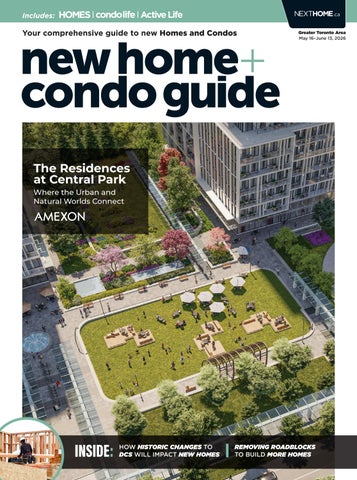
The Residences at Central Park
Where the Urban and Natural Worlds Connect
Removing roadblocks to build more homes Ontarians need
42 Tarion Report
What to watch out for when settling into a new home
50 Age Strong
Women 50-plus: Build strength, confidence and understand your body
52 Simply Tech
A silent threat in your home – and the smart device that can detect it
58 Feeling Home
The power of colour: Why contrast matters as we age
Nature-inspired community rising in the Bayview Village neighbourhood
More quality and less compromise 46 Muskoka Forest
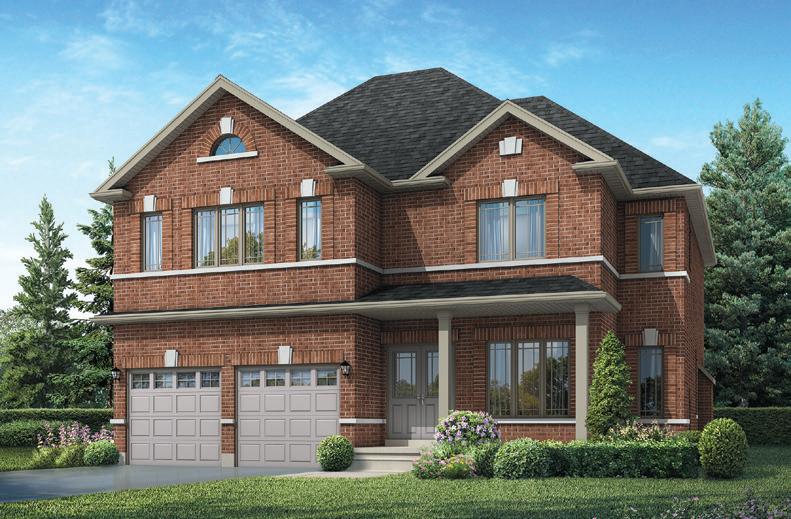
All-brick detached homes in Huntsville
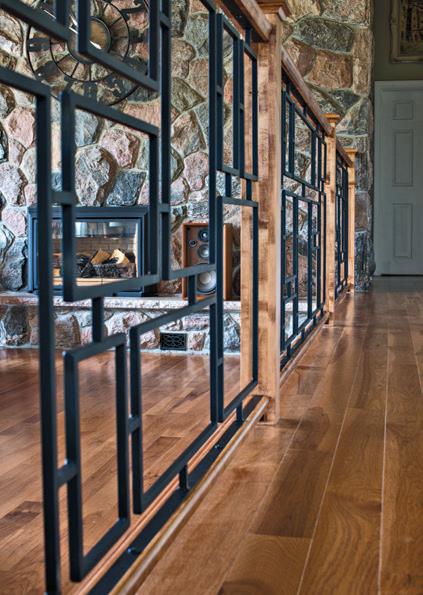
The art of layering texture: Where design comes to life
54 Decor
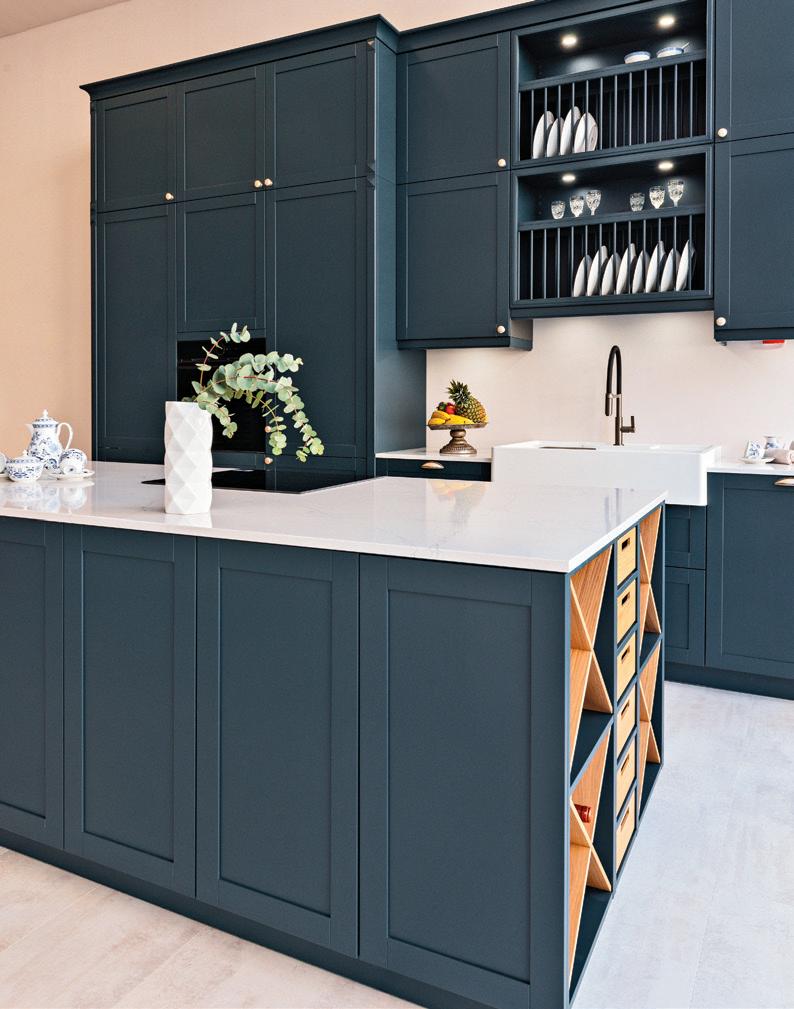
Flooring options that inspire
56 Interior Design
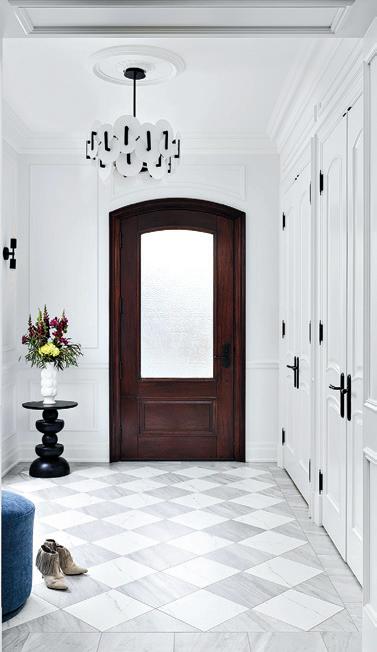
The power of lighting in a new build
60 Personal Space
Why the right materials make all the difference
HOME DESIGN | MARIAM ABOUTAAM
An award-winning interior designer, Mariam Aboutaam is Director, Sales and Marketing, Interior Design at Kylemore, Markham, Ont., a builder known for master-planned communities and luxury homes. kylemoreliving.com.
PERSONAL FINANCE | JESSE ABRAMS
Jesse Abrams is Co-Founder at Homewise, a mortgage advisory and brokerage firm based in Toronto. thinkhomewise.com
TARION REPORT | PETER BALASUBRAMANIAN
Peter Balasubramanian is President and CEO of Tarion. tarion.com.
WESTERN VIEW | MIKE COLLINS-WILLIAMS
Mike Collins-Williams, RPP, MCIP, is CEO West End Home Builders’ Association. westendhba.ca.
HOME REALTY | DEBBIE COSIC
Debbie Cosic is CEO and founder of In2ition Realty. She has overseen the sale of more than $15 billion worth of real estate. With Debbie at its helm, In2ition has become one of the fastest-growing and most innovative new home and condo sales companies. in2ition.ca
AGE STRONG | DR. JAMES FUNG
Dr. James Fung is a Chiropractor and Principal at Complete Balance Health Centre, Toronto. completebalancehealth.com
REAL ESTATE PRO | BARBARA LAWLOR
Barbara Lawlor is CEO of Baker Real Estate Inc. A member of the Baker team since 1993, she oversees the marketing and sales of new home and condominium developments in the GTA, Vancouver, Calgary and Montreal, and internationally in Shanghai. baker-re.com
STAT CHAT | BEN MYERS
Ben Myers is the President of Bullpen Consulting, a boutique residential real estate advisory firm specializing in condominium and rental apartment market studies, forecasts and valuations for developers, lenders and land owners. Contact him at bullpenconsulting.ca and @benmyers29 on Twitter.
TRREB REPORT | DANIEL STEINFELD
Daniel Steinfeld is President of the Toronto Regional Real Estate Board (TRREB). A Chartered Accountant, he previously served as Vice-President and Chief Financial Officer with the Toronto Argonauts and is a Broker and coowner On The Block Realty.
BILD REPORT | DAVE WILKES
Dave Wilkes is president and CEO of the Building Industry and Land Development Association (BILD), the voice of the home building, land development and professional renovation industry in the GTA. For the latest industry news and new home data, follow BILD on Twitter at @bildgta or visit bildgta.ca
SENIOR MEDIA CONSULTANT Amanda Bell 416.830.2911 amanda.bell@nexthome.ca
EDITORIAL DIRECTOR Amanda Pereira
EDITOR-IN-CHIEF – GREATER TORONTO AREA Wayne Karl wayne.karl@nexthome.ca
CONTRIBUTORS
Mariam Aboutaam, Jesse Abrams, Olivia Bailey, Peter Balasubramanian, Mike Collins-Williams, Debbie Cosic, Dr. James Fung, Anwar Husain, Linda Kafka, Barbara Lawlor, Linda Mazur, Ben Myers, Mimi Pineau, Daniel Steinfeld, Dave Wilkes
Advertising Call 1.888.761.3313 for rates and information. Fax: 1.888.861.5038
Circulation Highly targeted, free distribution network focused on real estate buyers, using street-level boxes and select Canada Post distribution channels across the Greater Toronto Area and surrounding municipalities. Canadian subscriptions 1 year = 13 issues – $70 (inc. HST). Canada Post – Canadian Publications Mail Sales Product Agreement 40065416.
Copyright 2026 All rights reserved. All copyright and other intellectual property rights in the contents hereof are the property of NextHome, and not that of the individual client. The customer has purchased the right of reproduction in NextHome and does not have the right to reproduce the ad or photo in any other place or publication without the previous written consent of NextHome.
Editorial Submissions from interested parties will be considered. Please submit to the editor at editorial@nexthome.ca.
Terms and Indemnification Advertisers and contributors: NextHome is not responsible for typographical errors, mistakes, or misprints. By approving your content and/ or submitting content for circulation, advertisers and contributors agree to indemnify and hold harmless NextHome and its parent company from any claims, liabilities, losses, and expenses (including legal fees) arising out of or in connection with the content provided, including but not limited to any claims of copyright infringement, unauthorized reproduction, or inaccuracies in the content. Advertisers acknowledge that they have the necessary rights, permissions, and licenses to provide the content for circulation, and they bear full responsibility for the content’s accuracy, legality, and compliance with applicable laws upon approval. Contributors acknowledge NextHome reserves the right to omit and modify their submissions at the publisher’s discretion.
SLOW(ISH) AND STEADY
WAYNE KARL EDITOR-IN-CHIEF
New Home + Condo Guide
EMAIL: wayne.karl@nexthome.ca TWITTER: @WayneKarl
For those of you who have been patiently waiting for the right moment to buy a new home, now may be the time to move off the sidelines.
Or more specifically – it might be the perfect time.
Recent changes to housing policy from the federal and provincial governments are already having an impact in boosting buyer confidence and swaying those who have been hesitating to act sooner than later.
Why? Because they know that, as effective as the changes are, with the spring busy season picking up steam (if slightly delayed), opportunities abound.
“With all the recent government action on spurring new home construction and making it more affordable to buy, as well as incredible deals to be had, right now we are experiencing a buyers’ market,” real estate expert Barbara Lawlor writes in her column on page 32. “The HST rebate is definitely breathing new energy into new construction. Savvy buyers are finding great opportunities to buy into desirable locations with an HST rebate for up to $130,000 on closing.”
If you’re wondering if window on the spring market, while perhaps a little slower than usual, has closed due to a late start, our mortgage expert Jesse Abrams reassures that that’s not the case.
“Actually, quite the opposite,” he writes, on page 18. “When headlines get scary, the ‘tourist’ buyers, the people who aren’t really serious, drop out.
“If you’re a buyer who is actually ready to move, this is your leverage.
“Global unrest creates a lot of smoke, but my job is to help you see the house through the haze. Don’t wait for the news to get better before you start planning. By the time the headlines are ‘safe,’ the best deals and the best rates will already be gone.”
Well, according to the latest statistics on the resale and new home sides, we may already be entering the safe territory. The Building Industry and Land Development Association reports improvement in March, and expects the HST rebate will energize the market for the balance of the year and build on the momentum.
In resale, meanwhile, the Toronto Regional Real Estate Board is also noting sales increases, and it too expects the momentum to continue.
The new home and resale markets, then, if a little slow out of the gate this spring, are picking up steam and looking increasingly steady.
GTA NEW HOME SALES SEE IMPROVEMENT IN MARCH BUT STILL BELOW
New home sales in the Greater Toronto Area (GTA) saw positive improvement year-over-year in March 2026, though sales continue to fall far short of 10-year averages, the Building Industry and Land Development Association (BILD) reports.
Despite the increase in momentum, March new home sales were still the second worst March on record; however, BILD expects the harmonized sales tax (HST) rebate will energize the market for the balance of the year and build on the momentum.
There were 948 new home sales in March, up significantly from the record low of March 2025 but still 64 per cent below the 10-year average, according to Altus Group, BILD’s official source for new home market intelligence. Historically, new home sales for a typical March in the GTA would be 2,659 units based on the previous 10-year average.
“March new home sales, though improved, were still the second worst March on record,” says Edward Jegg, research manager at Altus Group.
“Sales were especially strong at a few projects that had more aggressive pricing, showing that buyers are indeed ready to move off the sidelines under the right conditions. The waiver of all HST on new home purchases starting April 1 is expected to further incentivize buyers to jump back into the new home market.”
HISTORICAL AVERAGES The One Stop Shop for Builder Storytelling
Condominiums, including units in low-, medium- and highrise buildings and stacked townhouses, accounted for 263 units sold in the GTA in March, 86 per cent below the 10-year average.
There were 685 single-family home sales in the GTA in March, a significant year-over-year increase but still 12 per cent below the 10year average. Single-family homes include detached, linked and semidetached houses and townhouses (excluding stacked townhouses).
Total new home remaining inventory in the GTA dipped below the 20,000 mark for the first time in 19 months with 19,733 units for March. This includes 13,726 condominium apartment units and 6,007 single-family dwellings. This represents a combined inventory level of 29 months, based on average sales for the last 12 months. When sales are increasing after a prolonged period of very low sales, the months of inventory statistics should be viewed with caution as it is based on dividing present inventory by the average of the past 12 months of sales activity (which have been very low). BILD says it anticipates that as sales increase, the months of inventory statistics will decrease rapidly.
“While we recognize the progress in new home sales for March, it is important to keep in mind the historical context of these figures,” says Justin Sherwood, chief operating officer at BILD. “March 2025 was the worst March on record with only 439 new homes sold. Although we acknowledge the improvement from last year to this March, it is important to note that the market in March 2026 continued to underperform against 10-year averages.
“That said, the momentum is a positive indication that we are exiting the doldrums,” he adds.
“Looking ahead, we are anticipating significantly more activity in the market as a result of the provincialfederal HST relief on new homes.
Early anecdotal evidence from the first half of April points to dramatically increased activity at new home sales centres and increased sales. When we combine the increasing momentum of March with the renewed market activity in April, I think we have some exciting things to look forward to.”
The benchmark price for new condominium apartments in March in the GTA was $1.02 million, remaining at an apparent price floor. The benchmark price for new singlefamily homes was $1.41 million, down 7.7 per cent over the last 12 months.
GTA HOME SALES UP IN APRIL: TRREB
Home sales increased on a yearover-year basis in April 2026, while the supply of listings trended lower, according to the latest statistics from the Toronto Regional Real Estate Board (TRREB). This suggests that overall market conditions in the Greater Toronto Area (GTA) tightened during the first full month of spring. Despite tighter market conditions, selling prices edged lower on average compared to last year, as buyers continued to benefit from ample choice and negotiating power.
“We have experienced an uptick in homebuying activity so far this spring,” says TRREB President Daniel Steinfeld. “Buyers have taken advantage of more affordable housing market conditions on the back of lower home prices. If market conditions continue to tighten and home prices level off, this could be a signal to intending homebuyers who remain on the sidelines.”
“Lower home prices and borrowing costs over the past year have been a catalyst for some homebuyers this spring,” adds TRREB’s Chief Information Officer Jason Mercer. “However, we still have a substantial amount of pent-up demand in the
marketplace. More certainty on the trade front and an easing in geopolitical tensions would result in further improvements in market activity.”
GTA realtors reported 5,946 home sales through TRREB’s MLS System in April 2026 – an increase of seven per cent compared to April 2025. New listings amounted to 17,097 – down by 9.3 per cent year-over-year.
On a seasonally adjusted basis, April 2026 home sales and new listings were up month-over-month compared to March 2026. Sales were up by a greater monthly rate than new listings, potentially suggesting more competition between buyers in some neighbourhoods.
The MLS Home Price Index Composite benchmark was down by 6.6 per cent year-over-year in April 2026. The average selling price, at $1.05 million, was down by 4.9 per cent compared to April 2025. On a month-over-month seasonally adjusted basis, the average selling price edged up compared to March 2026. The MLS HPI Composite was flat over the same period.
“We recently released a major new housing policy report, Removing
Roadblocks: Tackling Municipal Barriers to Housing Supply and Affordability in Ontario, outlining the next phase of provincial housing policy reforms needed to build more of the right types of homes and improve affordability for Ontarians. While historic progress has been made, we must continue the work of removing the decades of legislative and regulatory red tape, outdated local rules and rising municipal costs that are blocking new housing in Ontario,” says TRREB CEO John DiMichele. “This report is a roadmap for cutting red tape and unlocking new housing supply.”
CHBA CONFERS 2026 NATIONAL AWARDS FOR HOUSING EXCELLENCE
The Canadian Home Builders’ Association (CHBA) has announced the winners of the 2026 CHBA National Awards for Housing Excellence, Canada’s premiere competition for new homes, home renovations, community development and residential marketing.
The award program is highly competitive, and draws the top project from small and large companies from across Canada. This year, 900 entries were submitted into 49 categories that capture the full breadth of marketrate homes for ownership and rental. Entries were judged by nearly 300 industry professionals.
In addition to the 49 main categories, three awards are given for best overall performance.
Homes by Avi (Canada) Inc. in Calgary was awarded the Design Excellence Award, given to the company that has the best cumulative results in the new homes and new home spaces categories. The builder also took home an award for Best Attached Lowrise Home 1,500-1,800 sq. ft., and Best Detached Production Home Under 1,800 sq. ft.
The Renovation Excellence Award for best overall performance in the home renovation categories went to Ultimate Homes & Renovations in Calgary. This is not the company’s first time winning the award; it last took home the best-overall accolade for renovations in 2024.
The Marketing Excellence Award for overall success in marketing categories was presented to Branthaven Homes (Burlington, Ont.) and its marketing firm, Pureblink (Toronto). The duo also took home two individual marketing awards for their Canvas Hill community.
Categories are evaluated each year to ensure they reflect the wide range of homes that CHBA members build and renovate in communities across Canada. This year saw the addition of the Adaptiv Home Award, which recognizes new custom homes or residential renovations that prioritize Adaptiv home design fundamentals for homeowners with disabilities or who want to age-in-place. It was won by Pinnacle Group Renovations by Design Ltd. in Calgary.
“The winning projects in the CHBA National Awards for Housing Excellence represent the pinnacle of housing in Canada, whether it’s an entry-level home designed to be affordable for a first-time buyer, a renovation to serve the changing needs of a growing family, a Net Zero Home offering superior energy efficiency, or a master-planned community that offers a variety of housing types,” says CHBA CEO Kevin Lee. “This is an elite competition, and even to be named a finalist is a remarkable achievement. We are extremely proud of this year’s winners.”
A full list of winners can be found chba.ca.
Branthaven Homes and Pureblink, Best Print Ad
BILD ANNOUNCES WINNERS OF THE 2026 RENOMARK AWARDS
The Building Industry and Land Development Association (BILD) has announced the winners of the 2026 GTA RenoMark Awards. Started in 1999, the awards recognize professional renovators and custom homebuilders who are members of BILD and the RenoMark program for their quality of work, innovation, customer service, and industry leadership.
This year, BILD received 85 submissions in 20 categories, including the prestigious Renovator of the Year category. Submissions were evaluated by 18 industry professionals from across Canada who served as volunteer judges.
“This year, we saw a high number of top caliber submissions from an exceptional group of renovators,” says Dave Wilkes, president and CEO of BILD. “Our BILD RenoMark members continue to set a high standard for the renovation industry and demonstrate the skill, professionalism and expertise needed to create remarkable and lasting results. Renovating and building with confidence means making informed decisions with a trusted contractor. For homeowners looking to undertake a renovation or custom home, selecting a BILD RenoMark member is precisely the right choice.”
The RenoMark program connects homeowners with professional renovators and contractors who have agreed to abide by a stringent code of conduct, which promises a superior level of service and customer protection that is higher than the common industry practice. Homeowners can find a participating renovator or custom homebuilder in their area by searching on the RenoMark website at renomark.ca.
The top honours in the 2026 RenoMark Awards went to Sunnylea Homes, which was named Renovator of the Year, and Lanescape, which was named Custom Builder of the Year. Norseman Construction won
Best Overall Custom Home, and MENATWORK won both Best Overall Space Renovation and Best Overall Home Renovation. The recipients of these awards set the standard for the industry in customer service, professionalism and workmanship.
The winners in the Space Renovation categories include:
• Best Basement Renovation: Pine Glen Homes
• Best Washroom Renovation: Lifestyles by Barons Inc.
• Best Kitchen Renovation Under $100,000: MENATWORK
• Best Kitchen Renovation Over $100,000: MENATWORK
The winners in the Home Renovation categories include:
• Best Adaptiv Renovation: Master Edge Homes
• Best Exterior Renovation: MENATWORK
• Best Innovative Renovation: Greening Homes Ltd.
• Best Renovation (No Addition) Under $300,000: Alair Homes Toronto (Lorne Park)
• Best Renovation (No Addition) Over $300,000: Select Design Build Inc.
• Best Renovation (Addition) Under $500,000: Alair Homes Toronto (Lorne Park)
• Best Renovation (Addition) Over $500,000: MENATWORK
These winners in the Custom Home categories include:
• Best Custom Home Under $2 Million: Norseman Construction
• Best Custom Home Over $2 Million: Alair Homes Toronto (Forest Hill)
The award for Best Condominium Renovation was won by Sunnylea Homes, and Best Commercial Renovation went to JY Construction.
For a complete list of winners, visit renomarkawardsgta.ca.
BUILDER PROFILE
Reid’s Heritage Homes hosts housing leaders to help lead return to prosperity
A collaborative conversation about housing supply, affordability and construction innovation took centre stage recently as industry leader, Reid’s Heritage Homes welcomed provincial and municipal leaders for a tour of two of its active communities in southwestern Ontario.
ANALYIS
There has never been a better time to buy a new home in Ontario
Greater market certainty and a boost in consumer sentiment is necessary to get potential homebuyers off the sidelines. Thankfully, the provincial and federal governments recently announced tax measures that are game changers and make now the best time to buy a new home in recent memory.
HOUSING POLICY
Federal and Ontario governments partner up to cut taxes on housing and boost supply
In a move the homebuilding industry has been waiting and campaigning for months if not years, the federal and Ontario governments have announced a new partnership to build more affordable homes, infrastructure and transit. Most notably, the plan will reduce taxes and fees for a home in Ontario by up to $200,000.
INSIGHT
Consumer confidence on the rise in Ontario and across Canada
Recent government announcements regarding the HST on new homes and the lowering of development charges in Ontario were welcome news to developers and buyers alike. Consumer confidence is on the rise.
ANALYSIS
Big savings, better homes: Ontario’s HST rebate explained
Ontario’s housing market is entering a pivotal moment, driven by a significant policy shift: The expansion of the HST rebate on new homes. This initiative is designed to improve affordability, stimulate housing supply and encourage more buyers to consider newly built and pre-construction real estate across the province.
MODEL HOMES
OPEN
URBAN TOWNHOMES
PRICED FROM THE LOW $400’S BY APPOINTMENT ONLY KSTAFFORD@HERITAGEHOMES.COM 519 807 2477
TWO BEDROOM OPEN CONCEPT FLOORPLANS BUILT FOR LOW MAINTENANCE MODERN LIVING. EXPLORE OUR DESIGNER DECORATED MODEL HOMES ACROSS TWO THOUGHTFULLY PLANNED COMMUNITIES FEATURING URBAN TOWNHOME DESIGNS. BACKED BY REID’S HERITAGE HOMES’ 48‑YEAR LEGACY OF AWARD‑WINNING CRAFTSMANSHIP IN SOUTHERN ONTARIO, EACH HOME IS BUILT WITH THE SAME CARE AND LASTING QUALITY YOU CAN TRUST.
HISTORIC CHANGES TO DEVELOPMENT CHARGES
FUNDING WILL IMPACT ALL MUNICIPALITIES DIFFERENTLY
When the provincial and federal governments announced on March 30 a new joint program designed to reduce development charges (DCs) on new homes, those in the housing industry applauded the leadership the governments showed to address the collective burden of fees, taxes and charges on new homebuyers in Ontario.
BILD has long advocated for this measure to reduce governmentimposed costs and help bring affordability back into the Greater
Toronto Area (GTA) housing market. The announcement from the Ontario and federal governments to provide $8.8 billion over 10 years to lower DCs across Ontario is a meaningful and significant step in the right direction. The plan will ensure municipalities continue to have the necessary funding required to build housing supportive infrastructure while also prioritizing new home project viability, affordability and supply – all of which is essential to a growing Ontario.
The impact this funding will have on municipal costs imposed on new homes could be significant, but the impact will likely not be uniform across all regions as municipalities will need to decide their participation and to what extent.
First, it is important to understand the function of development charges before examining how this new program could vary between jurisdictions.
Development charges are a one-time, upfront fee collected by municipalities and regions on new homes to help fund housing supporting infrastructure and services. They can include fees for new water and wastewater systems, roads, transit and services like fire, police and ambulance.
DCs are baked into the cost of a new home and they are one of many municipal fees or charges collected on new housing. Currently, all municipal fees in aggregate can add up to $200,000 on a new singlefamily home – with DCs making
DAVE WILKES
up the largest single component of that share. In the GTA, DCs can add $125,000 on average to the cost of a single-family home and roughly $80,000 on average to a twobedroom condo. The highest DC rates on a single-family home in the GTA is approximately $180,000.
The rise in DCs has been astronomical, increasing by as much as 1,000 per cent in the last 15 years in some municipalities.
The new provincial-federal joint funding program announced on March 30 could result in a reduction of up to 50 per cent in DCs over the next three years in Ontario’s fastest growing regions, according to the announcement.
The impact of this would be significant as cutting DCs to such a degree will have a material impact on housing viability, supply, choice and product mix.
How this would work is essential to note as not all municipalities have the same service and infrastructure needs, and development charges are levied at different amounts to fund distinct things in individual municipalities.
For example, in the City of Toronto, more than 40 per cent of DCs collected are used to
fund transit projects. For more greenfield developments (suburban communities), the DC amounts gathered are highest for water and waste infrastructure and roads –things that already exist in a more urban environment.
So as municipalities get ready to partner with the provincial and federal governments on this new program, they will be focusing on different aspects of their development charges system. Some may focus on transit projects while others prioritize a new wastewater treatment plant, community centres or roads.
This means that the percentage decrease of DCs will also fluctuate by municipality and region. We may see some municipalities with a 35-percent reduction in DCs while others with a 50-per-cent reduction. The key point being that DC reductions across regions will vary.
According to the announcement, municipalities will also have to demonstrate that they are part of the solution by taking steps to reduce costs within their DCs budget in order to qualify for the funding.
This announcement is a very positive step and will lead to improved housing project viability, affordability and supply. It will
Dave Wilkes is President and CEO of the Building Industry and Land Development Association (BILD), the voice of the homebuilding, land development and professional renovation industry in the GTA. For the latest industry news and new home data, follow BILD on Twitter, @bildgta or visit bildgta.ca.
benefit a variety of projects across the GTA and is being implemented in such a way where municipalities will continue to have the resources available to fund the infrastructure and services everyone relies on –not just new-home buyers. Most importantly, it has the potential to lead to long-term structural reductions in the way costs related to growth are defined and funded. We are looking forward to additional information from the provincial and federal governments about the specifics of this program and the ways in which it will be implemented across the province. It is sure to have a positive influence and contribute to the long-term growth of a vibrant and thriving Ontario. +MORE CONTENT ONLINE nexthome.ca
THE OIL SHOCK OF 2026:
WHAT THE IRAN CONFLICT ACTUALLY MEANS FOR YOUR MORTGAGE
JESSE ABRAMS
If you’ve been watching the news lately, it’s easy to feel like the floor is moving underneath the housing market again. We spent the start of 2026 feeling pretty good, inflation was finally cooling off, and it looked like the Bank of Canada was ready to let off the gas. Then, the conflict in Iran hit, the Strait of Hormuz became a giant question mark, and suddenly oil is sitting at more than $100 a barrel.
In the market, we’re seeing a lot of “wait and see” energy right now. But the truth is, while we can’t control what happens in the Middle East, we can definitely control how we react
to it. Here’s a breakdown of how this global mess is actually hitting your bank account and what you should do about it.
WHY OIL PRICES ARE THE NEW INTEREST RATE
People often ask me why a war halfway across the world matters to a homebuyer in Ontario or BC. It comes down to one word: Inflation.
The Bank of Canada has one main job, keep inflation at two per cent. When the price of oil spikes, it’s not just about what you pay at the pump. It’s the cost of shipping food to the grocery store and the cost of manufacturing everything we buy. This is “cost-push” inflation, and it’s a problem for the BoC.
Before this conflict, we were all pricing in a series of rate cuts for the back half of 2026. Now, those cuts
are on life support. If energy prices stay this high, the BoC might have to keep the overnight rate at 2.25 per cent much longer than anyone wanted. They are stuck in a corner, and that means your variable-rate mortgage is likely going to stay right where it is for the foreseeable future.
THE BOND MARKET IS NERVOUS AND YOUR FIXED RATE KNOWS IT
Here’s something many people miss: Fixed mortgage rates don’t actually care what the Bank of Canada does today. They care what the bond market thinks is going to happen three years from now.
Right now, the bond market is a tug-of-war. On one side, you have investors running to “safe” government bonds because they’re scared of the war. Usually, that would pull mortgage rates down. On the
other side, you have the fear that this oil spike is going to make inflation “sticky” again.
Lately, the inflation fear is winning. We’ve seen five-year bond yields bouncing around, and lenders have already started nudging their fixed rates up by 25 to 40 basis points just to protect themselves. If you’re sitting on a pre-approval with a locked-in rate, do not let it expire. We are in a window where the “cost of waiting” could go up significantly in just a matter of weeks.
THE REALITY OF THE 2026 RENEWAL WAVE
This is where the rubber hits the road. This is the year a massive chunk of Canadians, many of whom locked in those low two-per-cent rates back in 2021, are finally hitting their renewal date.
When you combine an approximately four-per-cent renewal rate with the fact that everything else in life, such as gas, groceries and heating, just got more expensive because of the Iran conflict, the “payment shock” is real. We’re seeing it every day at Homewise.
My advice right now? Stop looking at five-year fixed terms. In this environment, you’re paying a
“volatility premium” to lock in for five years. We are pointing a lot of our clients toward three-year fixed terms. It’s a “bridge” strategy. It protects you from the current chaos, but it doesn’t lock you into these higher rates for the next half-decade. One would hope, that over the next few years the global energy situation will have stabilized, and you’ll be in a much better position to commit long-term.
IS THE SPRING MARKET CANCELLED?
Actually, quite the opposite. When headlines get scary, the “tourist” buyers, the people who aren’t really serious, drop out.
If you’re a buyer who is actually ready to move, this is your leverage. For the first time in a long time, sellers are feeling the pressure. We’re seeing deals get done with actual conditions again. You can actually get a home inspection. You can actually negotiate on price. The “noise” of the war is creating a window of opportunity for people who can see past the next six months.
OUR PERSPECTIVE
The Canadian housing market has survived plenty of “unprecedented” global events. We have a massive
housing shortage and a population that is still growing. Those fundamentals don’t care about oil prices.
What matters is your specific math. Global unrest creates a lot of smoke, but my job is to help you see the house through the haze. Don’t wait for the news to get better before you start planning. By the time the headlines are “safe,” the best deals and the best rates will already be gone.
If you’re worried about your upcoming renewal or you’re trying to figure out if you should jump into the market now, it’s a good time to speak with an unbiased mortgage or real estate professional. Our team at Homewise is having many of those conversations right now, as it’s a great way to have all of the info you need to make an informed decision.
Jesse Abrams is Co-Founder at Homewise, a mortgage advisory and brokerage firm. thinkhomewise.com
+MORE CONTENT ONLINE nexthome.ca
CENTRAL PARK
NATURE-INSPIRED
COMMUNITY RISING IN THE BAYVIEW VILLAGE NEIGHBOURHOOD
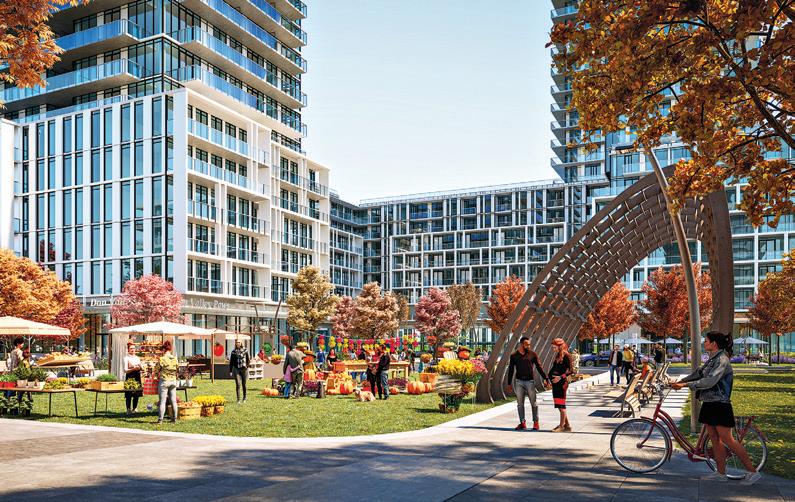
Construction of Amexon’s The Residences at Central Park is well underway on Sheppard Avenue in the east end of the prestigious Bayview Village neighbourhood. Phase 1 sold out ahead of schedule, and construction of the first tower is completed to its full height of 31 storeys.
Central Park is a vibrant, mixeduse condominium community where urban life meets and marries with the natural world – residents enjoy proximity to a range of urban conveniences, and also have direct access to the East Don Parkland’s
sprawling, forested ravine that embraces the property in lush nature.
This environmentally sustainable development is one of the largest residential projects currently under construction in Toronto. Designed by Core Architects for Amexon Development Corp., this 12-acre master-planned community will reshape North York’s Bayview Village area, with five towers ranging from 12 to 31 storeys.
Buyers are responding with enthusiasm for a variety of reasons, including Central Park’s excellent location, forward-thinking Green
features, and an array of indoor and outdoor amenities offering lifestyle opportunities for all ages.
At the heart of the community, is the award-winning Central Park Common – a landscaped, threeacre urban park that will resemble a traditional village green. The park will feature pedestrian-friendly streets lined with bike paths, casual dining venues, fountains, reflecting pools and year-round programming that will include a farmers’ market and iceskating rink. Other highlights include retail space, restaurants and services including on-site daycare facilities.
With environmental sustainability high on the priority list, Central Park has been recognized by the Building Industry and Land Development Association (BILD) as a finalist for the Green Builder of the Year award. The entire community will be constructed to Amexon’s Green Development Standard incorporating industryleading Green features. Setting a new standard in the sustainability arena, Central Park is the first largescale project of its kind in Canada to include EV charging stations in all parking areas for residents, visitors, office tenants and retail patrons. In all, there will be more than 1,500 charging stations installed.
The visionary design of Central Park is another attraction for prospective residents. Amexon enlisted an award-winning team to craft what is sure to become a local landmark. CORE Architects has created a striking exterior for the condominium towers that focuses on an intimate connection with nature – the façades feature an organic leaf-like design and six-ft.deep balconies and floor-to-ceiling windows offer inspiring views of the Toronto skyline and meandering East Don Parkland ravine. Central Park’s design features an elegant, hotelinspired, port-cochere entry, with an artisan-designed fountain, original art installation and lush landscaping by renowned Cosburn Nauboris Landscape Architects. These architectural highlights express a harmonious coexistence between sparkling glass and nature, setting this condominium residence apart as something truly visionary.
Suite and amenity interiors by II BY IV DESIGN are both warm and sophisticated, with modern features and finishes grounded in natural materials and earthy colours. The focus was on capturing the allure and comfort of nature, uniting a love of the outdoors and creative living. The effect is new and fresh, evoking a conception of classic modernism.
All Central Park residents will have the use of 55,000 sq. ft. of fitness, wellness, leisure and social amenity space. A highlight is The Park Club, where fitness enthusiasts can access indoor and outdoor saltwater pools and a state-of-the-art fitness club.
The Park Club will include a 5,000-sq.-ft. coworking space that will foster networking and productivity for either a hybrid work model or growing your own business, with smart technology, meeting rooms, hot desks and a business centre – giving new meaning to “working from home.”
The community will eventually encompass more than 1,500 suites in one- to three-bedroom plus den layouts, in sizes from 439 to 1,200 sq. ft. Features and finishes include nine-ft.-high ceilings and Europeaninspired kitchen cabinetry by II BY IV DESIGN. Best of all, these living spaces incorporate flow-through
layouts that make the most of spectacular views from the floorto-ceiling windows and generous outdoor balconies. Prices begin from the $700,000s.
Amexon Development Corp. is one of Toronto’s most prominent and innovative real estate developers, building their reputation as a multiaward-winning firm by delivering
superior-quality properties. The firm owns and manages an impressive portfolio of office, retail, industrial, hotel and residential properties.
Amexon’s award-winning, all-glass Central Park Presentation Centre is located at 1200 Sheppard Ave. E., Toronto. Flooded with natural light through its floor-to-ceiling glass walls, the centre was built to be a permanent fixture, with plans for it to serve in future as a community event venue. Visitors can indulge in gallery-like surroundings that include kitchen, bathroom and walk-in closet vignettes, and explore a curated selection of premium interior finishes and high-end appointments that come standard here.
For more information, call 416.252.3000 or visit centralparktoronto.com.
$849,900...Yes $849,900!
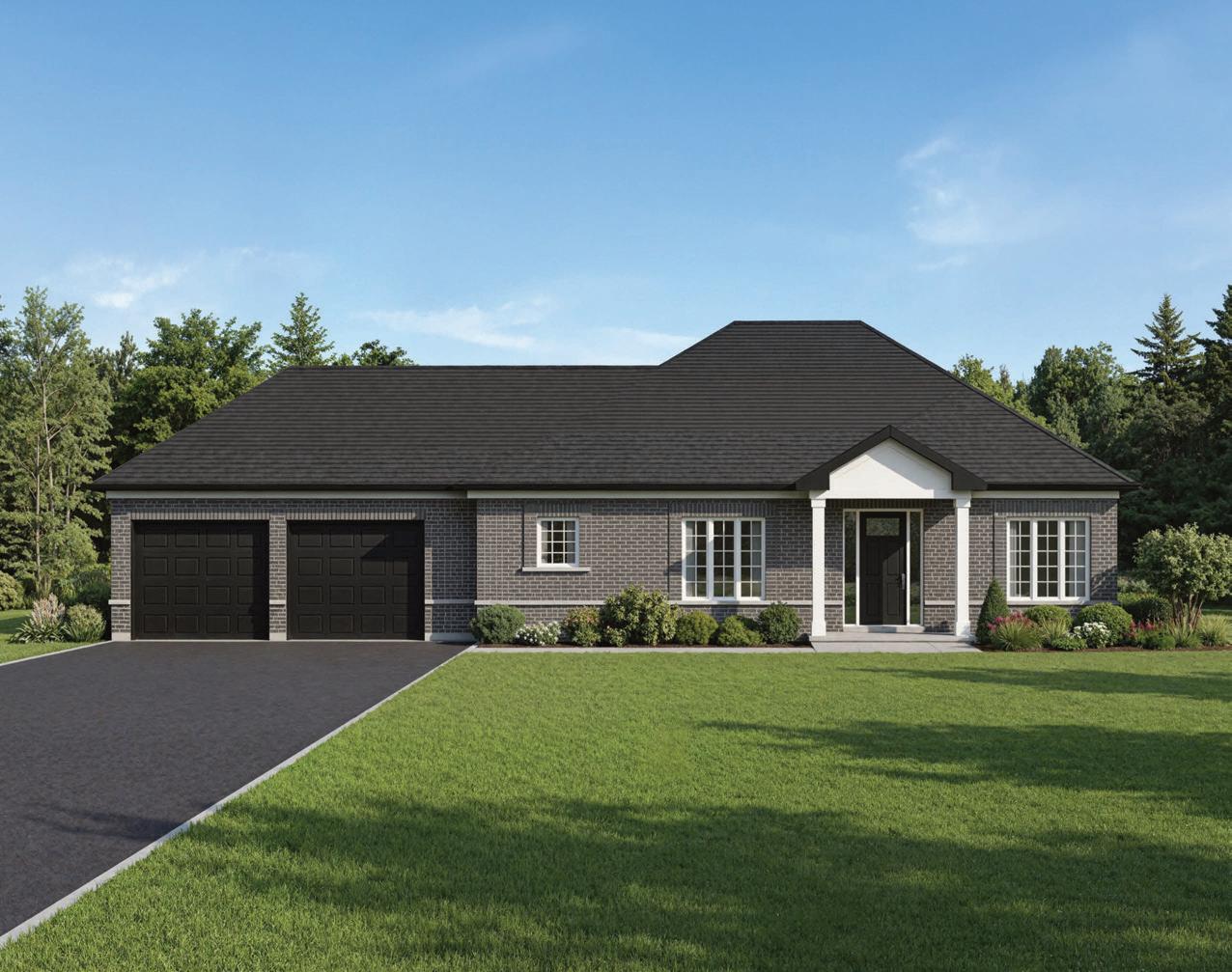
Forest Height Estates in Horseshoe Valley offers so much home for your money.
- Bungalow & 2-Storey
- Brick and Stone - Ravine 1/2 Acre+ Lots -Top Features & Amenities - Much More
Hurry! REGISTER NOW
SINCLAIR HOMES
MORE QUALITY AND LESS COMPROMISE
Sinclair Homes has followed one rather simple – but important –credo since launching in 1979: To exceed standards and accentuate details. For its homebuyers and for the way it builds its homes. Specializing in single-family homes for families, empty nesters and more, Sinclair Homes is known for integrity, experience in the industry and an undying commitment to craftsmanship.
And it shows. One look at any of the company’s new home communities, you’ll be sure to agree. Quite simply, it is a builder that goes above and beyond to make sure homebuyers have the positive experience in their new Sinclair home long after they move in.
Built better and priced smarter, all Sinclair homes are built to Net Zero standards.
Whether you’re a first-time homebuyer, a family looking for room to grow, or a downsizing retiree, the company has the expertise and experience to build a home that fits your lifestyle.
THE VILLAGE FARM IN EMBRO
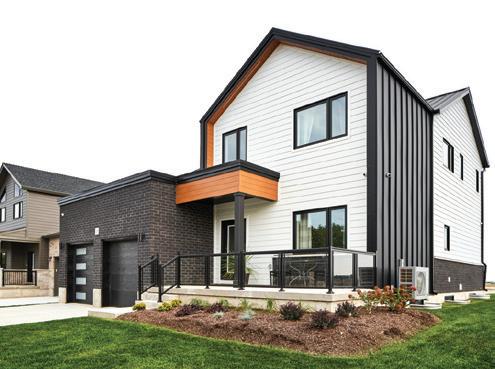
This community near Woodstock and London, in the heart of some of southwestern Ontario’s most vibrant farmland, offers detached Net Zero ready homes with features and finishes that other builders consider upgrades.
Located just 10 minutes to Hwy. 401, 15 minutes from Woodstock, 25 minutes to London and 80 minutes to GTA, you’re in prime location here in Embro. Nestled in an eco-modern country setting surrounded by a spectacular backdrop of rolling green hills and quaint farms, The Village
Farm is perfect for raising a family in a slow-paced, natural, farm-to-table setting with urban shopping only 15 minutes away.
With healthier homes for modern families that combine modern exterior designs and open-concept floorplans, all built to the high standards of Net Zero building science, resulting in a more comfortable and enjoyable indoor experience. Your family will benefit from smart-home benefits such as superior noise reduction, fewer allergens and pathogens, no cold drafts – meaning no cold feet – no foggy windows or temperature fluctuations and no wasted energy. Value and healthy living are the order of the day here – punctuated further by the fact that all homes include a covered concrete porch and concrete driveway.
Imagine enjoying quiet mornings here in your new home, with models ranging from 1,882 to 2,519 sq. ft. and prices starting from $791,000.
Model home viewing is available with appointment, by visiting sinclairhomes.ca.
NESTINGS IN SIMCOE
Imagine your new home in a storybook setting, backing onto forested ravines carved out into the landscape centuries ago waiting to be discovered. Your new home community embraced by the neighbouring tall pine trees as if they’re welcoming you into the safety of their sanctuary. A picturesque new home community where at first sign of the sunrise you are greeted with happy chirping birds, where your backyard is part of the surrounding nature and you can enjoy a warm
summer breeze carrying the sweet scent of pine through the air.
Yes, this could all be yours at Nestings in Simcoe, located just 15 minutes from Lake Erie and Port Dover Marina.
Amenities are within walking distance or just a three- to fiveminute drive away – plus, public transport at your doorstep. And again speaking to Sinclair Homes’ focus on quality and healthy living, the Nestings community includes EV charging stations, visitor parking, rain gardens and community gardens.
Comprising luxury Net Zero bungalow townhomes with a loft and backyard deck or patios, this community offers one-, two- or three-bedroom floorplans, and oneor two-car garages.
Affordable luxury awaits you at Nestings, with features that include a
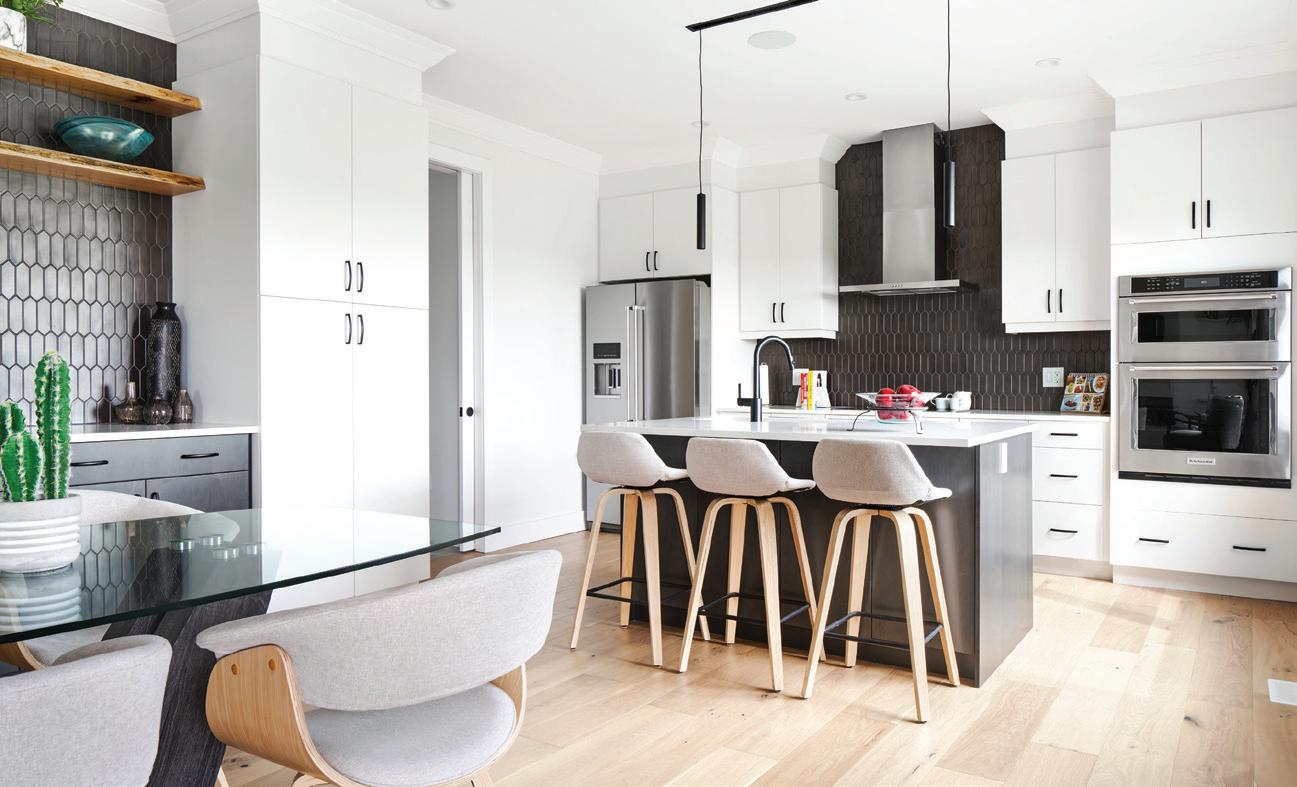
six-piece appliance package, luxury kitchen cabinets and island, granite or quartz countertops, nine-ft. vaulted ceilings, main-floor laundry, tile flooring and more.
Prices start at $569,000.
For more information, visit sinclairhomes.ca.
BAYBOUNDS IN MEAFORD
By the bay, near the mountain, close to town. This isn’t just a slogan, it’s literally what your life could be at Baybounds in Meaford.
In a word, it’s paradise.
Indeed, live life unbound in this a master-planned community featuring resort-style-living, with exquisitelycrafted two- and three-bedroom townhomes with luxurious finishes, gourmet kitchens, room to create a home office or study area and beautiful outdoor spaces.
Onsite amenities include pickleball courts, a gym, club house, outdoor fire pits and barbecue areas, covered outdoor seating, lounge and party rooms – and even a tech room for meetings or remote work.
Want to venture out? Imagine being able to walk to the beaches of South Georgian Bay, or driving just 25 minutes to skiing at Blue Mountain.
Phase One at Baybounds includes Net Zero two-storey detached homes, with bungalow and bungaloft townhomes in the next phases, and plans for multi-storey apartment buildings with retail space.
Pricing on Net Zero townhomes starts at $566,000.
For more information, visit sinclairhomes.ca.
The art of layering
TEXTURE: WHERE DESIGN COMES TO LIFE
by MARIAM ABOUTAAM
Design is evolving in a meaningful way. While colour has made a confident and welcome return to our homes, what we’re seeing now is a more refined approach, one where texture works alongside colour to create spaces that feel layered, expressive and complete. It’s no longer just about what we see, but how a space feels.
Texture has become an essential part of that conversation. Think limewash walls that softly catch the light, reeded wood that introduces quiet movement, plaster that softens every edge, and stone that feels as though it was carved directly from the earth. These elements don’t compete with colour, they enhance it, grounding bolder palettes and adding dimension to even the most subtle tones.
In pre-construction homes especially, where spaces can often feel new and uniform, texture is one of the most effective tools to introduce warmth and individuality. It transforms a home from something that simply looks beautiful into something that feels lived in and considered.
TILE
Tile is leading this shift in a very intentional way. We are moving away from overly polished finishes and toward materials that feel organic and nuanced. Zellige, limestone, travertine and handmade ceramics are becoming
the preferred choice for kitchens and ensuites. What makes these materials so compelling is their variation, such as the subtle tonal shifts, irregular edges and a natural movement that adds depth without overpowering the space. When paired with colour, whether it’s a deep, moody cabinet or a soft neutral palette, these tiles add richness and complexity. The beauty lies in the imperfection; it reads as layered and quietly luxurious.
WALLPAPER
Wallpaper has also evolved beyond bold prints and feature walls. Today, it’s less about statement pattern and more about dimension. Designers are leaning into grass cloth, linen weaves, plaster-inspired finishes and soft, textural murals that add depth without overwhelming a room. These materials often carry subtle hues that shift with the light, creating a dynamic yet understated backdrop. In a dining room or bedroom, wallpaper becomes an atmospheric layer that supports both the architecture and the
TIPS FOR LAYERING
TEXTURE AT HOME
• Let colour lead, and texture support: Choose your palette first, then layer in materials that enhance and ground it
• Mix natural materials: Combine stone, wood, linen and plaster finishes for a balanced, organic feel
• Embrace imperfection: Handmade and natural materials bring character and authenticity
• Layer, don’t match: Contrast textures to create visual interest rather than uniformity
• Use wallpaper to build atmosphere: Ideal for bedrooms, dining rooms or powder rooms
• Invest in textiles: Quality fabrics in upholstery and drapery elevate both texture and colour
colour palette, allowing the space to feel cohesive and intentional.
TEXTILES
Textiles complete the story, bringing comfort and tactility into the home. We are seeing a shift toward heavier, more substantial fabrics, such as nubby linens, wool blends, bouclé and velvets that feel soft yet structured. These materials work beautifully with colour, enriching it and making it feel more grounded. Upholstery, drapery and soft furnishings are no longer just accents; they are essential layers that define how a space is experienced. It’s less about sleek perfection and more about softness, warmth and livability. Together, these elements reflect a broader movement in design: Homes that feel personal, expressive and deeply considered. Colour sets the tone, but texture gives it depth. In today’s landscape, luxury is defined by how thoughtfully these layers come together.
Texture is where design becomes experiential transforming a home into something that feels warm, inviting and entirely your own.
An award-winning in-house designer, Mariam Aboutaam is Director, Sales and Marketing, Interior Design at Kylemore, Markham, Ont., a builder known for master-planned communities and luxury homes. kylemoreliving.com.
The Bridges Estates, Tillsonburg’s New Premier Community, set in The Bridges Golf Course where every detached home either backs onto a ravine lot, treed lot, or backs directly onto the golf course.
Phase 1 is now open for viewing and includes a limited selection of 10 Executive Townhomes.
18 Greenhill Drive
The model home hours: Tues-Thurs 1-5pm | Saturday 12-4pm
David Bennett, B.A., Broker
Executive Circle Member
Top 35 under 35 for RLP 519.550.6642
WHY NOW IS AN EVEN BETTER TIME
TO BUY A NEW HOME
BARBARA LAWLOR
With all the recent government action on spurring new home construction and making it more affordable to buy, as well as incredible deals to be had, I have written that right now we are experiencing a buyer’s market. The HST rebate is definitely breathing new energy into new construction, and at Baker we have noticed an increase in traffic and sales. Savvy buyers are finding great opportunities to buy into desirable locations with an HST rebate for up to $130,000 on closing. The
governments’ efforts to streamline approvals processes are also critical to affordability. The Canada-Ontario Partnership to Build makes it possible for municipal development charges to be reduced by up to 50 per cent for three years.
There is more good news, as our builders and developers embody trends toward sustainability and energy efficiency. These trends help to keep utility costs down, increase resale value and make new homes more resistant to climate changes, and – and with the way our weather patterns are changing, this is important.
One example of this trend is modular construction. Although people tend to think of this type of construction for low-rise homes, it
is also being adapted to mid- and high-rise residential buildings. When designed to be constructed in modules either on site or elsewhere, construction on these dwellings can progress all year round, even when the weather is inclement. It is also easier to keep the quality control standard high across the product, as construction is done in an indoor, temperature-controlled factory environment. Labour costs are fewer, and by constructing off site in that controlled environment, the process is safer for workers. In addition, automation helps to address the shortage of skilled labour in Ontario today. Plus, modular building is quicker and less prone to cost overruns. Obviously, this translates to lower selling prices.
Compared to onsite construction, which generates tremendous waste and carbon emissions, modular building off site minimizes these environmental effects. The modules can be constructed simultaneously while the building’s excavation and foundation are being completed, saving time. Models can be preconfigured for specific placement in their surroundings with energy efficiency a key consideration.
Flexibility is another aspect of modular construction. Some modular rooms can be decorated or even furnished before they are put into place in their buildings. If upgrades are added, elements can be changed while still in the factory. Higher-performance homes are also being designed to accommodate future technologies such as EV charging for vehicles. The demand for vertical living will never go away, so working toward more costeffective construction practices in mid- and high-rise dwellings is key to increasing affordability for these buyers. What a great opportunity for first-time buyers and beyond.
Of course, as time goes on, builders and developers find more ways to accommodate changing consumer needs and trends. After decades of open-concept designs, the trend toward more cozy and flexible spaces, especially in condominiums, is rising.
For example, a room can go from being closed off to open and party worthy with a movable wall. With condo suite sizes being compact, incorporating more storage space such as floor-to-ceiling cabinets is also popular.
Smart home technology is advancing in leaps and bounds as well, with climate controls and even lighting contributing to comfort. Human-centric lighting, for example, changes colour and brightness to mimic natural sunlight, accommodating the body’s internal clock. This can improve the quality of sleep and even spur productivity, depending on the time of day.
When it comes to features and finishes in new houses and condos, an interesting return to colour is seeing warmth emphasized, with shades of terracotta and olive replacing greys and whites. Stone, wood and other tactile textures help to keep residential spaces feeling grounded in nature.
Whatever your needs and wants in a new home, now is a great time to shop around. Find out what incentives builders are offering. Think about the future and whether the new houses or condominiums you’re considering are poised to handle changes effectively. Ask about modular construction and what sustainability efforts the builders are embracing. Keep in mind the entire time the benefits of buying new, including a substantial warranty. I have recommended many times to BUY NEW AND BUY NOW!
Barbara Lawlor is CEO, Partner and the driving force behind Baker Real Estate Incorporated, opening new offices and leading major sales/marketing campaigns in North America and international real estate markets. Barbara was recognized by BUZZ BUZZ MEDIA INC. as one of the Top 100 Most Influential Voices in Canadian Real Estate 2024/2025, and among the Top 45 Most Influential Voices in the July 2025 issue. She was an honoree at the BISNOW Toronto Power Women and a panelist at Key Media’s International Conference. She is a past recipient of BILD’s prestigious Riley Brethour Award, recognizing her outstanding leadership skills and achievements in residential sales/ marketing. Barbara is a Registered Real Estate Broker and a Fellow of The Real Estate Institute of Canada. An industry thought leader, Barbara writes columns for various publications (blog. bakerrealestate.com).
The Winston Collection by Insoho
HST RELIEF GIVES NEW-HOME BUYERS
A MUCH-NEEDED OPENING
For the last few years, most conversations about the Greater Toronto Area new housing market have been dominated by bad news: Higher interest rates, weaker investor demand, elevated construction costs, slower sales, appraisal gaps and a growing disconnect between what projects were sold for at the peak and what buyers are willing, or able, to pay today.
But the market finally has a piece of positive news to work with.
The proposed removal of GST on new homes, alongside the related HST changes in Ontario, has created
a rare moment where government policy may directly improve affordability for new-home buyers. The details still matter, and buyers should not assume every project, price point or closing situation will be treated the same way. However, the direction is clear: Pricing just got lower for many purchasers, and that creates new opportunities in a market that has been stuck in a confidence recession.
This was one of the key themes in Episode 103 of Toronto Under Construction, where I sat down with Cara Hirsch of Hirsch + Associates, Elliott Taube of Pivot Real Estate Group, and Sean Zahedi of SCOP Inc. for a roundtable discussion on what is actually happening in the new housing market from the perspective of people actively selling these new properties every day. The episode
covered the immediate reaction to the proposed HST changes, buyer psychology, investor retrenchment, closing risk and the shift from condo to rental development.
The most important takeaway for buyers is that the market is no longer being driven by fear of missing out. That was the pandemic-era market. Buyers were purchasing because prices were rising, not necessarily because the fundamentals made sense. At the peak, many investors were accepting negative monthly cash flow because they believed capital appreciation would bail them out. As we discussed on the podcast, that psychology worked until it did not. Today’s market is different. Buyers are cautious, lenders are more conservative, appraisals matter again and developers are being forced to compete on value rather than
BEN MYERS
momentum. That may sound negative, but for a patient buyer with a real housing need, it is actually the first healthy setup we have seen in years.
Zahedi noted that the reaction from developers to the HST announcement was immediate. Phones were ringing, partners were asking how to adjust price lists and sales teams were trying to understand how the new policy could be positioned. He was careful to point out that the impact is not uniform. In the luxury segment, particularly homes above roughly $1.7 million, the change may not dramatically alter the math. However, at more attainable price points, especially entry-level and lowrise product, the policy could be meaningful.
Hirsch made a similar point. The biggest impact may be psychological. Buyers have been starved for positive news, and this is the first policy announcement in some time that clearly points toward lower acquisition costs. She also noted that some developers may use the rebate as a pricing tool, lowering the headline price to generate urgency and restore activity without necessarily impairing their economics to the same degree as a straight discount.
Taube was more enthusiastic, particularly in the lowrise market. He noted that the policy applies broadly rather than being limited only to first-time buyers, which could help a wider range of purchasers. Sales offices were busy almost immediately after the announcement, with buyers trying to understand what the change means and whether price reductions would follow. For buyers who have been sitting on the sidelines, that matters. Activity often returns before confidence fully does.
The broader market context is also important. New home pricing in the GTA is no longer at the feverish levels seen during the post-pandemic run-up. Some projects are being repriced, standing inventory is being negotiated more aggressively and developers are increasingly aware
that buyers are benchmarking new product against resale alternatives. In plain English: The market has become more competitive, and buyers have more leverage.
That does not mean every deal is a good deal. Buyers still need to be disciplined. The key question is whether the new home is priced appropriately relative to resale, nearby standing inventory, future supply, carrying costs and the buyer’s own income stability. But compared with 2021 and early 2022, when the market was often selling FOMO rather than housing value, today’s buyers can actually underwrite the decision again (which is a good thing).
Hirsch’s comments on lowrise pricing were especially important. She noted that buyers are responding when product is priced properly relative to resale. If a home is slightly overpriced, it sits. If it is aligned with the market, or priced just below comparable resale options, it can move. That is a major shift. The market is not dead; it is selective.
For new-home buyers, this creates a more practical buying environment. The combination of lower effective pricing through GST/HST relief, greater developer flexibility, slower absorption and more realistic price discovery means there may be opportunities that did not exist during the peak. Buyers may be able to negotiate on price, deposits, upgrades, parking, closing incentives or assignment flexibility.
The strongest opportunities are likely to be in projects where the developer has standing inventory, near-term closings or a clear need to generate sales velocity.
The caution is that policy alone will not fix the entire housing market. The HST change may help move existing inventory, but it does not automatically solve construction costs, financing constraints, development charges or the long timeline required to launch and build highrise projects. As Zahedi observed, many developers are now underwriting former condo sites as
purpose-built rental. That means the future supply of new ownership housing could be thinner than many people expect.
That is the other side of the opportunity. The current market feels soft because there is inventory to work through, confidence is low and many buyers are hesitant. But if new condo launches remain depressed and more sites shift to rental, the ownership pipeline could tighten later in the decade. Buyers who are waiting for perfect certainty may eventually find that the best pricing window has already passed.
The GTA new housing market is not back to the speculative frenzy of the last cycle, and it should not be. A healthier market is one where buyers care about price, value, carrying costs and livability. With GST/HST relief now changing the affordability equation, pricing resets already underway and developers more willing to compete for real buyers, the opportunity set has improved.
For potential new-home buyers, this is the message: Do not chase hype, but do not ignore the reset. Pricing has moved lower, incentives are more common, policy is finally helping at the margin, and the market is giving disciplined buyers something they have not had in years: Options. As always, I suggest doing your own research, surrounding yourself with an experienced team, including a realtor and a mortgage broker, and finding a home that works for you today and over the next five years. Good luck.
Ben Myers is the President of Bullpen Consulting, a boutique residential real estate advisory firm specializing in condominium and rental apartment market studies, forecasts and valuations for developers, lenders and land owners. Contact him at bullpenconsulting.ca and @benmyers29 on Twitter.
THE RISE OF PURPOSEBUILT RENTALS:
A MUCH-NEEDED EVOLUTION IN THE GTA HOUSING MARKET
DEBBIE COSIC
For years, much of the conversation around new housing in the GTA has centred on condominiums, and for good reason. Condos have played a critical role in adding supply, creating attainable ownership opportunities and shaping vibrant, transit-oriented communities.
But today, we’re seeing a meaningful shift in the development
landscape: The rise of purpose-built rental (PBR) buildings. And it’s a positive evolution, not just for renters, but for the overall health and balance of our housing market.
A significant portion of the GTA’s rental stock was built decades ago. While many of these buildings have served residents well, the age of the inventory is becoming increasingly apparent. Layouts, amenities, energy efficiency and building systems often reflect another era. Meanwhile, a new generation of renters has different expectations. They’re looking for modern finishes, flexible work-from-
home spaces, enhanced amenities, improved sustainability standards and professionally managed communities designed specifically for long-term rental living.
Purpose-built rentals answer that demand.
Unlike individually owned condo units that enter the rental pool, PBRs are designed from the ground up to function as rental communities. That means intentional layouts, on-site management, shared amenities tailored to residents and long-term operational planning. For many renters, especially young
professionals and families choosing to rent longer, this offers stability and quality that older rental stock can struggle to provide.
Importantly, the growth of PBR development should not be viewed as competing with condominiums, it complements them. Condos remain essential for those seeking ownership and for investors who have historically helped supply rental housing. However, today’s financial environment has created challenges for many smaller “mom and pop” investors. Rising borrowing costs, higher operating expenses and rents that don’t always offset carrying costs have made the traditional condo-investor model more difficult to sustain.
That reality underscores a larger issue: The GTA simply needs more housing supply across all tenures. When purpose-built rentals are added to the mix, they help relieve pressure on the broader market. More professionally managed rental inventory means greater choice for
tenants. Greater choice can stabilize competition. And additional supply, regardless of ownership structure is ultimately what drives a healthier housing ecosystem.
“
” That reality underscores a larger issue: The GTA simply needs more housing supply across all tenures.
From a city-building perspective, new PBR projects are often thoughtfully integrated into growing neighbourhoods, located near transit and employment hubs, and built with long-term community planning in mind. Unlike condo units that may transition between owner-occupancy and rental over time, PBRs remain dedicated rental housing for decades, creating a predictable and consistent supply stream.
We’re seeing this evolution firsthand. As the leasing agency for Hazelview’s newly built rental communities, including Story of Willett West in Halifax and the upcoming Station House at Bloor and Dufferin in Toronto launching this spring, we’re witnessing strong demand from renters seeking modern, professionally managed homes. These projects reflect exactly where the market is heading: High-quality rental housing designed intentionally for the way people live today.
For many residents, purposebuilt rentals also serve as a strategic steppingstone toward eventual homeownership. Young professionals and couples may not yet have accumulated a down payment or reached the income level required to comfortably enter the ownership market. Renting in a well-managed,
modern building allows them to live in desirable neighbourhoods while building savings, advancing in their careers and strengthening their financial foundation. In that sense, PBRs support the future condo buyer, they don’t replace them. They create mobility within the housing system, giving people the flexibility to move from renting to owning when the timing is right.
For the next generation, this matters.
Many younger residents are delaying homeownership, whether by choice or affordability constraints. They are prioritizing mobility, lifestyle and financial flexibility. Highquality rental options allow them to live in dynamic urban centres without compromising on design or convenience. At the same time, those who aspire to own still have pathways through the condo market when the timing aligns.
In the end, the conversation shouldn’t be “rentals versus condos.” It should be about increasing overall housing supply and meeting people where they are in different stages of life.
Seeing cranes rise for new purpose-built rentals across the GTA is a sign that the market is adapting. It reflects an understanding that housing needs are evolving and that long-term solutions require diversity in product, investment models, and tenure types.
More housing is good housing. And a balanced mix of ownership and professionally built rental communities is exactly what a growing region such as the GTA needs.
Debbie Cosic is CEO and founder of In2ition Realty. She has overseen the sale of more than $15 billion worth of real estate. With Debbie at its helm, In2ition has become one of the fastest-growing and most innovative new home and condo sales companies. in2ition.ca
+MORE CONTENT ONLINE nexthome.ca
2026 WEHBA AWARDS OF DISTINCTION:
WHERE HOUSING EXCELLENCE TAKES THE STAGE
Hamilton’s residential construction industry recently gathered at Liuna Station on for the West End Home Builders’ Association’s (WEHBA) annual Awards of Distinction, an event that continues to spotlight the people and projects shaping housing across the region.
The awards brought together builders, renovators, designers and industry partners from Hamilton, Burlington and surrounding communities, reflecting the scale and diversity of activity across the local housing market. With a packed house, the evening served as both a recognition of recent work and an opportunity for industry professionals to connect.
More than 200 entries were submitted this year, marking one of the strongest and most competitive fields to date. Winners were selected by industry professionals from across Ontario through a formal judging process.
The program was co-hosted by Charles Wah of Gateway Group, WEHBA First Vice-Chair, and Jason Laskis of DC Air, WEHBA Education Committee Chair, who guided the evening through a full slate of awards spanning marketing, design, construction and industry leadership.
The Awards of Distinction are organized across three primary streams: Creative, Achievement and Product. Together, these categories capture both the visible and behindthe-scenes work involved in residential construction. Awards were presented for advertising, signage, digital campaigns and website design, as well as for suppliers, trades and service professionals who play a key role in delivering projects.
Among the evening’s most prominent wins, Rosehaven Homes received Marketing Award of the Year for The Rebecca Condos, recognizing a campaign that stood out in a highly
competitive category. The same project also earned Project of the Year in the mid- to highrise category, one of the event’s highest honours, reflecting its overall execution from concept through to market presence.
In the lowrise category, Marz Homes was awarded Project of the Year for The Residences at Watershore. The project was recognized for its contribution to the region’s housing supply and its role in delivering a cohesive, wellplanned community.
These three awards were among the most closely watched of the evening, highlighting developments that stood out not only for their design, but for how they were brought to market and received within the community.
Additional honours were awarded across product-focused categories, including interior merchandising, kitchen and bathroom design and exterior concepts, along with renovations at a range of price points. Other major awards recognized Supplier Company of the Year, Trade Company of the Year, and Service Professional Company of the Year, underscoring the role of companies that support residential construction behind the scenes.
While the awards focus on individual achievements, the event also reflects the collaborative nature of the industry. Residential projects
rely on coordination between builders, consultants, trades and suppliers, and that shared effort was evident across both the nominations and the winners.
Beyond the formal program, the evening provided an opportunity for industry professionals to connect. Conversations throughout the event touched on ongoing challenges in the housing sector, including affordability, supply and evolving expectations around design and livability. Events such as the Awards of Distinction play a role in maintaining those connections, bringing together stakeholders from across the industry in one place.
Presented by DJB Chartered Professional Accountants, the Awards of Distinction continue to serve as a benchmark for excellence within the local home building industry. As the sector continues to evolve, the projects recognized this year offer a snapshot of the standards being set and the direction the industry is heading.
Mike Collins-Williams, RPP, MCIP, is CEO West End Home Builders’ Association. westendhba.ca.
+MORE CONTENT ONLINE nexthome.ca
MIKE COLLINS-WILLIAMS
REMOVING ROADBLOCKS
TO BUILD MORE HOMES ONTARIANS NEED
For many Ontarians, the dream of homeownership feels harder to reach than it should. Families looking for more space, first-time buyers trying to enter the market, individuals and renters hoping for more choice, and
young people planning their future all face the same challenge: Ontario needs more homes, and it needs the right types of homes.
ONTARIO HAS MADE PROGRESS
The province has taken important steps in recent years to address housing supply and affordability. Since 2018, the Ontario government has introduced a series of housing bills aimed at speeding up approvals,
reducing barriers and cost, and supporting new construction. These efforts matter, and they show a clear recognition that housing supply must remain a top priority.
Ontario recorded nearly 100,000 housing starts in both 2021 and 2022, a record level of homebuilding for the province. Since then, rising interest rates, higher construction costs, economic uncertainty and persistent municipal barriers have
DANIEL STEINFELD
“
” If Ontario keeps removing barriers and supports the right types of housing, it can create a stronger, more affordable housing market for families, individuals, first-time buyers and renters.
slowed momentum. In 2025, Ontario recorded just over 62,000 housing starts, less than half the level needed to stay on track. Since 2022, the cumulative shortfall has already exceeded 287,000 homes.
That shortfall represents more than a statistic. It represents families and individuals waiting longer to move, first-time buyers facing fewer options, renters competing in a tight market, and communities struggling to grow in a way that supports the people who live and work there.
MUNICIPAL ROADBLOCKS STILL STAND IN THE WAY
TRREB recently released its new housing policy report, Removing Roadblocks: Tackling Municipal Barriers to Housing Supply and Affordability in Ontario. The report outlines the next phase of reforms needed to help Ontario build more homes, improve affordability and create more housing choice.
Ontario’s housing affordability challenge did not happen overnight. It is the result of decades of policy choices aimed at managing growth, funding infrastructure, protecting neighbourhoods and ensuring proper
consultation. Many of those measures were well-intentioned, but together, they have created a system where housing is often slower, costlier and harder to build than it needs to be.
Municipal planning rules, approval delays, technical requirements, local charges and inconsistent processes all add time and cost to new housing. These barriers often hit the projects Ontario needs most, including entrylevel homes, family-sized homes, rental housing and missing middle options such as multiplexes and midrise buildings.
If Ontario wants to improve affordability, it must make it easier to deliver more of these homes. That means removing outdated barriers while still supporting responsible growth and strong communities.
TRREB’S ROADMAP FOR REFORM
TRREB’s report identifies 13 key policy barriers across municipal planning, fiscal tools and regulatory systems. It also puts forward 42 targeted recommendations to better align local rules with Ontario’s housing supply goals.
Some of the recommendations are straightforward. Ontario should permit four units as-of-right on urban residential lots. It should standardize planning application requirements provincewide, so builders do not face a different process in every municipality. It should introduce stronger accountability when municipalities miss approval timelines, and modernize the Building Code to support more missing middle housing.
Cost matters, too. Development charges, municipal taxes and fees can add significant costs to new homes and those costs often get passed on to buyers and renters. TRREB is calling for reforms to development charges and Toronto’s Municipal Land Transfer Tax, which continue to affect affordability and market choice.
Good planning and faster housing delivery should work together.
Ontario needs a system that supports responsible growth while removing unnecessary barriers that make homes slower and more expensive to build.
KEEPING HOUSING AFFORDABILITY WITHIN REACH
We cannot control every factor affecting the housing market. Global economic conditions, interest rates, inflation and construction costs all play a role. But governments can control whether outdated rules, rising local costs and unnecessary delays continue to hold back new housing.
Ontario has already made meaningful progress, and now it must continue the work of removing municipal roadblocks that prevent the province from building the homes people need. Housing supply is not an abstract policy issue. It affects where people live, how long they commute, whether families can stay in their communities, and whether young people believe homeownership can still be part of their future.
The path forward requires focus, accountability and a willingness to modernize systems that no longer meet today’s needs. If Ontario keeps removing barriers and supports the right types of housing, it can create a stronger, more affordable housing market for families, individuals, firsttime buyers and renters.
To learn more about TRREB’s ongoing work and other advocacy initiatives, visit trreb.ca/advocacy.
Daniel Steinfeld is President of the Toronto Regional Real Estate Board (TRREB). A Chartered Accountant, he previously served as Vice-President and Chief Financial Officer with the Toronto Argonauts and is a Broker and co-owner On The Block Realty.
+MORE CONTENT ONLINE nexthome.ca
SETTLING INTO A NEW HOME
WHAT’S NORMAL
AND WHAT TO WATCH OUT FOR
PETER BALASUBRAMANIAN
There’s a certain feeling that comes with moving into a newly built home. Everything feels pristine and untouched, with that unmistakable “new home scent” (spoiler – it’s the paint).
A new home can be like a blank slate that’s just waiting for you to add your own touch and personality.
This is what’s so appealing to many buyers – the home has never been lived in and everything is new. In fact, Tarion’s New Home Buyers Reports have consistently found that buyers are often drawn to newer homes for the peace of mind they offer and the reduced need for immediate repairs.
The first days, weeks, and months in your new home will be a time of transition. You’ll be getting used to your new home and figuring out how everything works. During this period, you may notice little details and question whether it’s something you need to be concerned about. Maybe it’s a door that sticks slightly or
a hairline crack where the wall meets the ceiling.
Before the alarm bells go off, it helps to know what you can expect as your new home becomes “lived in” and when you might want to reach out to your builder.
USE THE HOME EXPLORER TOOL
If you buy a new pair of shoes, it sometimes takes a while to break them in enough to make them feel comfortable. New homes also go through a bit of a breaking in period when building materials adjust to the regular cycles of heating and cooling and other daily routines.
For example, a concrete basement floor might take time to cure and could end up with tiny cracks. Often this is just the nature of concrete, and these small cosmetic items aren’t a cause for concern.
If you notice something, don’t ignore it. If you have any questions or concerns, you should reach out to your builder.
Another option is the Home Explorer Tool on Tarion’s website. Home Explorer is a simple interface with a 3D rendering of a home or condo, and which lets you click on whatever part of the home you are looking at (for example, a concrete floor). The tool will identify the relevant section of the Construction Performance Guidelines and will provide guidance to you on whether there is a problem that needs to be addressed.
If after checking with your builder, and seeing what the Home Explorer says, you still have questions, you can reach out to Tarion for assistance.
THE FIRST-YEAR WARRANTY PROCESS
The warranty process is set up to recognize that minor things can arise as a house settles over the first year.
To reduce the stress of coordinating with a builder to visit every time a minor item may come up, the process groups all the items together at the 41-day mark, the six-month mark and the end of the first year. This provides time for the house to fully settle, and time for you to communicate with your builder for efficient warranty service.
Our data shows that more than 95 per cent of new-home buyers have their minor first year items addressed with their builder without having to escalate things further with Tarion.
WHAT YOU CAN DO TO HELP
As you settle into your new home, your new home is settling in as well – and there are some things you can do to manage that process and reduce the likelihood that normal environmental changes will put stress on your homes finishings and surfaces.
A few simple steps can help, especially in the first year:
• Keep indoor temperatures steady. Sudden swings in heat or cooling can cause materials to expand, contract or dry out too quickly –resulting in damage.
• Use bathroom and kitchen fans regularly. Everyday activities such as showering and cooking add moisture to the air, and ventilation helps manage humidity.
• Open windows occasionally or use vents when weather allows. Airflow helps the home continue to dry out and can reduce condensation.
• Give the home time to settle before major decorating. New materials
may still be drying and shifting, so waiting can help avoid having to redo the job.
• Keep up with basic maintenance. Checking caulking, weatherstripping, vents and eavestroughs can help prevent small issues from becoming bigger ones.
When you are settling into your new home, Tarion has resources to help you with the warranty process (the MyHome Portal), what to look out for (Home Explorer), and other helpful guidance on how to care for your new home.
We’re also here to help with any questions about your warranty, and you can contact us at any time by emailing customerservice@tarion. com or visiting arion.com.
Peter Balasubramanian is President and CEO of Tarion. tarion.com.
+MORE CONTENT ONLINE nexthome.ca
MUSKOKA FOREST IN HUNTSVILLE
ALL-BRICK DETACHED HOMES FROM
Nestled amidst a serene forest and in proximity to Fairy Lake and Lake Vernon, this thoughtfully designed community offers the best of both worlds: Natural tranquility and modern convenience. A diverse mix of bungalow and two-storey
home designs on 34- to 50-ft. lots, many backing onto greenspaces, accommodates a variety of lifestyles.
The heart of the community is a park, with natural pathways, all surrounded by trees backing onto a golf course. Future multi-
$649,990
family condos show a forwardthinking commitment to growth and sustainability. With accessible amenities planned and essential services nearby, Muskoka Forest promises to enhance the quality of life for its residents today and for years to come.
And if you love nature and are looking for that idyllic setting to renew your life, there’s no better place than the Muskoka Region.
Imagine your new life among a haven of forests, shimmering lakes, granite emplacement and other natural wonders that have graced the canvases of famous Canadian artists such as Tom Thomson… forming a popular cottage destination and playground for untold numbers of youngsters attending summer camps. There simply is no need to sing the praises of this wonderland of almost 6,500 sq. km. and more than 1,600 lakes.
What’s there not to love about this blessed region located about two hours north of Toronto, comprising
the Towns of Huntsville, Bracebridge and Gravenhurst, and the Townships of Muskoka Lakes, Lake of Bays and Georgian Bay?
Your new home location and playground awaits. Name your passion, and you can pursue it here. Try your hand at landscape art, like the masters of the Group of Seven. Or hop up for some horseback riding, dogsledding or cross-country skiing in winter.
If cycling is more your speed, wind your way through hilly towns such as Bala, Ontario’s cranberry capital or Bracebridge, and marvel at the spectacular local waterfalls.
And golf. You want golf? Muskoka has carved out a reputation as one of Canada’s best golf destinations, with a handful of courses among the topranked in the country.
After your leisure activity, whatever it is, relax with some of the fare of the growing number of craft breweries in the area – Muskoka Brewery, Lake of Bays Brewing Co. and Sawdust City Brewing Co.
You want more amenities?
Huntsville is replete with everything you could need, from a Home Depot, Walmart, LCBO and Beer Store, groceries and more.
And for your cultural pursuits, downtown Huntsville is blessed with the Algonquin Theatre, Muskoka Heritage Place train station and museum and other attractions.
And for those necessary essential services we all need, there’s a hospital less than one kilometre from your Muskoka Forest, as well as a nearby OPP detachment, Huntsville Fire Hall, dental and medical offices and a local library.
If you have kids still in school, there’s no shortage of local places of learning either, from Huntsville CoOp Nursery School to Spruce Glen Public School, and Huntsville High School to Georgian College.
Huntsville’s bustling main street is a hub of local activity, adorned with charming shops, schools, upscale boutiques, diverse eateries and inviting cafes. The towns exceptional connectivity ensures swift exploration of neighbouring areas and city
centres. This locale masterfully intertwines serene landscapes with modern comforts, harmonizing the tranquility of nature with contemporary convenience.
Living at Muskoka Forest, adjacent to natural treasures such as Algonquin Park and Arrowhead Park, is like dwelling in an evergreen sanctuary with tranquil lakes and diverse wildlife. Your days start with serene canoe rides, and still waters mirroring the majestic pines. Whether you’re an avid golfer or just enjoy lounging in Muskoka chairs, there’s an outdoor activity to suit your pace.
World Famous Algonquin Park is a mere 30-minute drive away, with eight campgrounds or 14 trails.
But you need not go that far to enjoy outdoor activities at Muskoka
Forest, as onsite amenities include a park with pickleball courts, jungle gym and other attractions. Peaceful walking and biking trails are within easy reach as well.
As for your home at Muskoka Forest? Choose from a mix of bungalows and two-storey all-brick homes on lots varying from 34- to 50-ft. wide, staring at $650,000.
Beautiful standard features that are upgrades on other sites include a luxurious colour selection process with various options, oak stairs and rails, a cold cellar, direct-access door from the garage into your home, three-piece roughed-in basement bathroom and more.
For more information, visit mymuskokaforest.ca.
WOMEN 50-PLUS: BUILD STRENGTH, CONFIDENCE AND UNDERSTAND YOUR BODY
DR. JAMES FUNG
Your 50s and beyond can be some of the most empowering years of your life. You’ve built experience, resilience and perspective – and now it’s about supporting your body, so it continues to match your lifestyle. At the same time, there are real physical changes happening beneath the surface. One term gaining more attention is Musculoskeletal Syndrome of Menopause (MSM).
ONE BODY, ONE SYSTEM – NOT SEPARATE PROBLEMS
MSM refers to the changes in muscles, joints and bones that occur as estrogen levels decline. But here’s the key insight: it doesn’t just affect one area.
Many women notice a similar shift: “I’m doing the same things, but my body feels different.”
It may show up as weight gain, joint stiffness, disrupted sleep or lower energy. These can feel like separate issues – but they’re often connected.
That’s why these changes tend to appear together, rather than as isolated problems.
What many women experience as separate issues – weight gain, joint pain, poor sleep and low energy –are often connected through this hormonal shift.
A SMARTER APPROACH TO STRENGTH TRAINING
The strategies that worked in earlier decades often need adjusting in your 50s and beyond. This isn’t about doing more – it’s about doing what’s effective.
This is where strength training becomes essential. With declining estrogen, women lose muscle faster than men at this stage, which directly
impacts metabolism, joint stability and long-term independence. Strength training supports muscle, protects your joints and helps maintain bone density – but only if you move beyond light weights and high reps.
A simple starting point:
• Strength train two or three times per week
• Focus on full-body movements (such as squats or leg press, hip hinges like deadlifts, lunges or stepups, rows and presses)
• Choose resistance that feels challenging enough that the last few repetitions require real effort while still maintaining good form Over time, gradually increasing that resistance is what drives real, lasting results.
BONE HEALTH: TRAIN IT INTENTIONALLY
During and after menopause, bone loss accelerates – especially in the hips and spine – making how you load your body more important than ever. General movement helps – but targeted loading makes the real difference. That’s why weightbearing and resistance exercises matter. They give your bones the stimulus they need to stay strong. This might include:
• Brisk, purposeful walking
• Step-downs or light hops
• Skipping or low-level jumping (when appropriate) These create small forces through the hips and spine that signal bones to maintain strength.
Another piece most people miss: Power – how quickly you can generate force.
Build it with:
• Standing up from a chair with speed and control
• Light medicine ball work
• Faster, functional strength movements (when appropriate) This doesn’t just support bone health – it improves real-life function, like reacting quickly to prevent a fall.
Nutritionally, focus on the fundamentals:
• Vitamin D (test levels rather than guessing)
• Vitamin K2 to help direct calcium into bone, improving strength and resilience
• Adequate protein to support both muscle and bone health
Many people take vitamin D blindly. A better approach is to confirm your levels with a blood test and adjust accordingly – you may need more than you think, or less.
JOINT HEALTH IS PART OF THE SAME PICTURE
Joint stiffness or discomfort is another common experience during and after menopause – something now recognized as part of Musculoskeletal Syndrome of Menopause (MSM). The key is keeping joints supported through movement. This is why full-body strength training plays such an important role in keeping joints supported and moving well. You can also support this nutritionally. Some people benefit from glucosamine or curcumin (from turmeric) for joint support and inflammation management, while reducing sugar intake and avoiding artificial sweeteners can further help minimize inflammation and support overall joint health.
METABOLISM AND BODY COMPOSITION
Hormonal shifts during menopause change how your body stores fat and uses energy – especially around the midsection. This is why changes in body composition become more noticeable during midlife and beyond.
Rather than focusing on restriction, a more effective approach is support:
• Include protein regularly throughout the day
• Maintain strength training to preserve lean muscle
• Stay consistently active with daily movement
This helps your body stay efficient, energized and strong.
ACTION STEPS TO STAY STRONG AND ACTIVE
To bring it all together, here’s a practical framework:
• Strength train two or three times per week with a focus on full-body movements
• Stay active daily with walking or low-impact cardio
• Incorporate mobility work for key areas like hips and shoulders
• Include protein at each meal to support muscle health
• Add balance and core exercises into your weekly routine
• Support bone health with weightbearing exercise and proper nutrition
• Prioritize sleep and recovery as part of your health plan
• Stay proactive with your health assessments and address changes early
THE BOTTOM LINE
If you’re already exercising consistently, eating well and prioritizing good sleep but still experiencing these changes, it’s worth looking a little deeper. Speaking with your medical doctor or a qualified naturopath can help identify any underlying factors that may not be immediately obvious. Often, there are additional pieces to the puzzle that, once addressed, can make a meaningful difference in how you feel.
This stage of life is an opportunity to refine how you care for your body. With a better understanding of MSM and a focused, supportive approach to movement and health, you can continue to feel strong, capable and active.
Dr. James Fung is a Chiropractor and Principal at Complete Balance Health Centre, Toronto. completebalancehealth.com
+MORE CONTENT ONLINE nexthome.ca
A SILENT THREAT IN YOUR HOME
– AND THE SMART DEVICE THAT CAN HELP DETECT IT
GREG GAZIN
When we think of a tasteless, odourless, invisible killer at home, carbon monoxide (CO) comes to mind. But there’s another oftenoverlooked danger: Radon.
In Canada, Radon is the second leading cause of lung cancer, after smoking, and the number one cause among non-smokers. CO kills about 300 Canadians a year, while radoninduced lung cancer claims more than 3,200 lives – roughly eight daily.
“The problem is fixable and totally preventable,” says Dr. Aaron Goodarzi, Canada Research Chair for Radiation Exposure Disease at the University of Calgary. “But people can’t be complacent.”
WHAT IS RADON?
Radon is a naturally occurring radioactive gas produced when uranium in soil and rock breaks down. Outdoors, it disperses harmlessly. But when it seeps into homes through cracks, drains or gaps around pipes, it can accumulate to dangerous levels.
Breathing in radon means inhaling radioactive particles that damage lung cells. Over time, this can lead to lung cancer – often without warning.
Health Canada estimates that one in 10 Canadian homes has radon above the recommended guideline of 200 Bq/m³ (becquerels per cubic metre). This means that 200 radon atoms are decaying every second in one cubic metre of air. And while lower levels carry less risk, there’s truly no completely safe level of radon.
Some parts of Canada report among the highest average indoor
radon levels in the world, second only to Poland.
WHY TESTING MATTERS
Radon levels can vary dramatically from home to home – even on the same street. Old or new, every home is vulnerable – because radon is invisible, the only way to know your level is to test.
HOMEOWNERS HAVE THREE MAIN OPTIONS:
• Professional testing: Certified experts can measure your home, but this can be costly and requires scheduling.
• Traditional alpha track kits: Simple and inexpensive, these one-timeuse 90-day devices are mailed to a lab for analysis, providing only a snapshot.
• Digital monitoring: Devices such as the new Airthings Corentium
Home 2 offer continuous, realtime readings and can be reused indefinitely.
While mail-in kits and professional services each have their place, the Corentium Home 2 strikes the perfect balance between accuracy, affordability and convenience. Unlike one-time kits, it continuously tracks radon over time. Unlike costly professional services, it’s a one-time investment with no recurring fees.
A SMARTER WAY TO MONITOR RADON
Airthings, a Norwegian leader in air quality monitoring, designed the Corentium Home 2 to make testing simple, accurate and affordable. Building on the original model, it adds temperature and humidity tracking, enhanced Bluetooth LE,and optional SmartLink integration.
Unlike its predecessor and other detectors, it can also run fully standalone – no Wi-Fi, smartphone or app needed. Just insert the two included AA batteries and let it work.
At just 2.4 by 1.1 by 4.45 in. (61 by 29 by 113 mm) and 5.08 oz (144 g), it’s compact and portable. Battery life runs about two to three years.
PERFORMANCE AND ACCURACY
The Corentium Home 2 starts collecting data right away but needs about a week to stabilize its readings. That’s because radon fluctuates throughout the day, and the unit continuously samples the air to calculate an accurate average. After the first week, readings are reliable within about 10 per cent of lab-grade results, improving to five per cent after two months.
Because radon levels change with weather, ventilation and seasons, Health Canada recommends testing for at least three months, ideally during winter when homes are sealed and pressure differences draw more radon from the ground. Continuous monitoring captures these long-term variations, helping homeowners make informed decisions.
Continuous monitoring captures long-term variations, helping you
understand patterns and make informed mitigation decisions.
CLEAR, ACTIONABLE INFORMATION
On its LCD display, you can see at a glance:
• Short- and long-term radon averages (one-, seven- or 30-day, or one-year)
• Temperature and humidity readings
• A simple Good/Fair/Poor indicator
• Bluetooth and SmartLink connection status
Pair it with the free Airthings app to access interactive graphs, historical trends and personalized tips. The app also offers firmware updates to enhance performance and enables remote monitoring if you add an Airthings Hub or compatible View device.
TAKING ACTION
If your long-term readings exceed 200 Bq/m³, like it did in my home, Health Canada advises mitigation – such as sealing foundation cracks or installing a sub-slab depressurization system. Certified radon professionals can help determine the best approach.
Once mitigation is complete, the Corentium Home 2 can verify results over time – something disposable kits can’t do.
COST AND AVAILABILITY
The Airthings Corentium Home 2 retails for $249 with a one-year warranty, extendable free to five years if registered within 30 days. It’s available through airthings.com, Amazon and other major retailers.
FINAL THOUGHTS
Radon may be invisible, tasteless and odourless – but it’s not undetectable. Awareness, measuring and action are the keys to protection.
The Airthings Corentium Home 2, with its impressive balance of accuracy, portability and simplicity, helps make your testing straightforward and ongoing. It’s a great investment in your home’s health – and your family’s.
With November marking National Radon Action Month, there’s no
WHY THE AIRTHINGS CORENTIUM HOME 2 STANDS OUT
• Continuous, real-time radon readings – see changes as they happen
• Standalone operation –works fully without an app
• Tracks temperature and humidity for environmental context
• Portable, battery-powered and easy to move
• No lab fees or recurring costs – one-time purchase for ongoing peace of mind
• Optional Bluetooth and SmartLink app integration for insights and graphs
better time to test. Detecting and reducing radon is a small action that could make a life-saving difference. If you discover elevated levels, call a certified professional and download Health Canada’s free Radon Reduction Guide at canada.ca/radon.
To learn more about Airthings Corentium Home 2, visit airthings.com.
Greg Gazin is a syndicated tech columnist, blogger, podcaster, and contributes to canoe.com, Troy Media and Active Life magazine. gadgetguy.ca
+MORE CONTENT ONLINE nexthome.ca
inspire FLOORING OPTIONS THAT
by LINDA MAZUR
Renovating your home is fun, exciting and creative – but it can also be stressful. As the project starts, it’s easy to get caught up with all the colour, furnishings and finishes detailing. The aesthetics of your home are obviously of great importance. It’s a reflection of you and your family, your personal taste as well as how you live and function in your home. We are endlessly exploring design magazines and Pinterest for inspiration and the latest trends to give us a direction in our renovation. Not wanting to compromise, we aim to create a magazine-worthy look in our homes while being true to our budgets. When designing a space, many of us look to fabrics and colours as our inspiration… Why not look down and get inspired by your floors instead?
Flooring can often be overlooked, but regardless of whether you consciously notice, flooring actually can make a large impact to the overall aesthetic of your space. It can inspire your design direction, and with well curated decisions, elevate your home. When it comes to the more permanent finishes in your home, such as flooring, it is important to find materials, styles and colours that suit your functional needs, while complementing your style and budget.
Over the years, we have witnessed a huge expansion in flooring products. With advancements in quality, durability and applications, as well as colours and finishes, there seems to now be endless choices to suit all budget levels. We are all familiar with traditional hardwood and engineered flooring.
Traditional hardwood, due primarily to the installation method, is not a customary option for condo living. Engineered wood, with its many options, on the other hand, can be a great option for condo flooring. Much like natural hardwood, engineered wood floors add wonderful warmth and elegance to a space, but with the added benefit of being lighter in weight for condos and have varying installation methods that are just not suitable for solid hardwood. Engineered also has the added benefit of reduced shrinkage and expansion that is more customary with solid hardwood, offering greater stability with less warping and gaps.
Trends have been moving more towards softer naturally warmer more organic tones for flooring. Rich mid-toned walnuts, lighter natural
white oaks and a resurgence of rich, deeply saturated darker browns to name a few. While the lighter tones are a perfect neutral foundation that integrates well with anything from a more minimalist, modern style to traditional, these warmer yet richer tones can create a sense of luxury, drama and sophistication.
Technology has expanded and now more than ever the “faux” options of flooring look more like the real thing and can also be a more affordable option for your home. Not only are they highly durable and waterproof, they’re also beautifully texturized to appear natural looking while being low maintenance. Laminate is a hard surface flooring that is manufactured using material such as medium or high-density fibreboard which forms the core.
Luxury vinyl, on the other hand, is a soft surface flooring product that is flexible. It comes in a variety of installation options, providing not only a great look but also comfort. Luxury vinyl is available in an abundance of fantastic options that
have the look of wood, stone or other natural material.
Vinyl composite core, another flooring option, combines the best features of laminate and luxury vinyl. Boards are rigid planks that click together like laminate but are constructed from a water-resistant vinyl composite material that gives them the flexibility of vinyl flooring that can be installed anywhere – even bathrooms and laundry rooms.
By using longer, wider boards for your flooring, regardless of product type, you are not only creating a more contemporary feel that draws inspiration from European design, it can also give the optical illusion of making your space appear larger; especially if you continue the same floor throughout your entire space. This is especially alluring in smaller spaces such as condos, so don’t be afraid to think big in your flooring selection.
While on the topic of “wood” floors, we should not eliminate parquet as another choice. Parquet flooring is pretty much a mosaic of wood pieces combined to create a pattern. The most common patterns
for parquet are basketweave, diagonal and herringbone. Parquet flooring was trendy in the 1970s and 1980s, however, we have seen a resurgence in recent years. The modern version of parquet is a classic, luxurious, “Euro” look that is durable and affordable.
Flooring often does not get the attention it deserves, and though it may seem unconventional to imagine that flooring could be the root of the designs for your space, with today’s flooring options, it’s completely possible. Your floors are a core part of your home setting the stage for your design and decorating. Beautifully worn, 100-year-old floors tell a story of their previous life while still inspiring a vibe of eclecticism and current design trends. Herringbone floors feel elegant, sophisticated and well-curated. Warm toned, wideplank floors can create an inviting, relaxed and cosy vibe, while the lighter blonde tones can convey a more contemporary feel.
Whatever style, texture and colour of flooring you choose, it will inspire the look and feel of your home.
Linda Mazur is an award-winning, nationally publicized designer and Principal of Linda Mazur Design Group. With almost two decades of experience this in demand multidisciplinary design firm is known for creating relaxed, stylish spaces and full-scale design builds within Toronto, the GTA and throughout Canada. lindamazurdesign.com @LindaMazurGroup
INSPIRATION | interior design THE POWER OF
lighting
IN A NEW BUILD
by MIMI PINEAU
A new build home can boast grand spaces, tall ceilings and impressive focal points, but the ambience can sometimes initially lack warmth, leaving homeowners with the sense that something vital is missing from the overall design. Lighting is one of the most impactful elements of home design, shaping not only how a space looks, but how it feels to live in it. Thoughtfully layered lighting
brings atmosphere and a sense of completion to a home.
WHY BUILDER LIGHTING CAN FALL SHORT
Builders will often limit lighting installations to the essentials. This is partly for code requirements, which must meet functional and safety-related standards. Decorative lighting is often highly personal
and builders understand that homeowners will likely want to add their own design perspective to a property. Therefore, the fixtures provided are often simple and lowcost, leaving spaces feeling flat or overly bright.
Fortunately, some thoughtful adjustments can completely change how a home looks and feels.
Photo: Photographie Intérieure
THE THREE LAYERS OF GOOD LIGHTING
Ambient lighting
Often comprised of ceiling fixtures and potlights (downlights), this type of lighting provides overall illumination. Ceiling fixtures should be well-scaled to the space and take advantage of available ceiling height, particularly in areas such as entry hallways.
Entries and hallways offer an opportunity to set the tone for the overall style of your home. Consider locations where a decorative light fixture might make the most impact.
In bedrooms and living spaces, decorative ceiling fixtures are often unnecessary, but a few wellpositioned recessed potlights can provide practical illumination for everyday use. The effect should feel even and pleasant, not harsh.
Consider adding dimmers whenever possible for greater flexibility throughout the day and evening. Ensure that the fixtures are dimmable.
Task lighting
This type of lighting supports function for specific tasks that benefit from good visibility. Modern under-cabinet lighting in the kitchen is now minimal and streamlined, and should be considered a standard feature in any new design. At bathroom vanities, wall sconces are often preferred, as they provide side illumination that helps prevent shadows. If you are a book lover, plan on stylish reading lamps at your bedside and near your favourite armchair. Good task lighting ensures that everyday activities feel easier and more comfortable.
Accent lighting
Whether decorative or concealed, accent lighting adds depth and atmosphere. In built-in cabinetry, linear accent lighting can add another layer of detail while illuminating specific objects. Table lamps and wall sconces add “pockets of light,” creating another layer within the decor scheme of a room. Some accent lighting can double as task lighting, such as a directional wall sconce above a kitchen sink.
When planning a furniture grouping in an open plan layout, consider adding floor outlets in strategic spots (such as under console tables and sofas) to accommodate accent lamps. Pre-planning furniture layouts and communicating with the building team is crucial to ensure proper positioning.
WHERE SMALL CHANGES MAKE THE BIGGEST IMPACT
Consider how you use your spaces on an everyday basis and focus lighting where you need it most: Low lighting for watching movies in the evening, an overall daylighting effect for makeup application at a vanity, pendants over a kitchen island, a stylish desk lamp in a home office, a cool-touch wall sconce in a child’s play nook.
Rather than relying on a single light source, layering multiple lighting sources offers the most flexibility and instantly elevates a room. Lighting then becomes part of the experience
of living in a well-designed space, not just a functional necessity.
Lighting can truly make or break a space. A good lighting plan isn’t necessarily about adding more; it’s about improving the quality of illumination and tailoring the effect to your lifestyle and personal taste. When layered thoughtfully, lighting becomes one of the simplest ways to make a new build feel considered, comfortable and complete.
Mimi Pineau, ARIDO, IDC, NCIDQ is a Registered Interior Designer and owner of Mimi Pineau Design, a full-service studio specializing in thoughtfully designed residential interiors with a chic, modern edge. mimipineaudesign.com.
Photo: Mimi Pineau Design
Photo: Mark Olson Photography Inc.
THE POWER OF COLOUR: WHY CONTRAST MATTERS AS WE AGE
For a long time, we’ve been surrounded by beautiful interiors layered in whites, greys and soft muted tones. It became the look: clean, calm, understated and ready for resale.
But here’s the part we didn’t fully think through.
As we age, those same spaces can become harder to navigate, harder to read, and in some cases, less safe.
This isn’t about style. It’s about how our bodies change and how design either supports us or quietly works against us.
Most of us notice changes in our vision over time. We need more light, and colours don’t feel as crisp as they use to. Reading small print becomes more difficult. What’s less obvious is how much we lose our ability to see contrast.
The lens of our eyes gradually yellows, our pupils becomes smaller and less light reaches the retina. By the time we reach our 70s or 80s, we may need two to three times more light to see as clearly as we once did. But even more important than light is contrast.
Contrast is what allows us to distinguish one surface from another. It’s how we see the edge of a step, the outline of a countertop or where a wall ends and a floor begins. Without it, everything starts to blend.
A pale grey floor against a slightly darker grey cabinet may look elegant, but it can be difficult to read. Edges disappear and depth becomes harder to judge. Our brain must work harder just to understand what it’s seeing. That extra effort matters. When the brain is working overtime to interpret the environment, it can increase fatigue, frustration and even anxiety. In practical terms, it can also increase the risk of trips and falls.
Research has shown that adding clear visual contrast to stair edges can improve safety, with
recommendations suggesting a least a 50-per-cent difference between surfaces to help older adults move more confidently.
You don’t need to understand technical measurements to get this right. A simple rule is this: Important things should not blend into the background. If your floors, walls, fixtures, cabinets, counters and light switches are all similar in tone, your eyes must work harder to find them.
A good test is to take a photo of the room and turn it into a black and white image. If everything looks like one soft grey blur, there probably isn’t enough contrast. If you can clearly see where one surface ends and another begins, the space will be easier to navigate.
Interestingly, many paint chips already hold part of the answer. On the back, you’ll often find something called an LRV number (Light Reflectance Value). You don’t need to understand the science behind it, but it does tell you how light or dark a colour is. What matters is the difference between two colours. If
LINDA KAFKA
“
” Colour is not just decoration. When used with intention, it supports how we live.
they are too close, they blend. If they are further apart, your eye can read the space more easily.
This is where your local paint store can be surprisingly helpful. If you simply tell them you want to create enough contrast for aging eyes, they can guide you toward combinations that are not just beautiful, but supportive.
This is also where we need to rethink how we use colour. It’s not about making spaces look brighter or more vibrant. It’s about using colour with purpose. Contrast can be created in simple ways. A darker countertop against lighter cabinetry can make a kitchen easier to use. A white toilet that contrasts with the floor or wall behind it can make the bathroom safer and easier to navigate. A stair edge that is clearly defined can help someone feel more confident moving between levels. Hardware that stands out from cabinets, or a switch plate that is visible at a glance, can reduce frustration in everyday routines.
And yes, colour also affects how we feel. As we age, many people prefer softer, more comfortable tones. That makes sense. But when everything becomes too similar, we lose visual cues our brain depends on. Colour needs contrast to do its job.
If someone is living with dementia or other cognitive challenges, contrast becomes even more important. The brain may already be working harder to process
information. When the environment lacks clarity, it can add confusion. Something as simple as a toilet seat that contrasts the toilet or a doorway that is clearly defined from the wall, can support independence and reduce stress. In these situations, colour isn’t just helpful, it becomes essential.
The trend of all-grey and all-white interiors gave us a certain aesthetic. But it didn’t take the aging body into account. What looks calm and minimal at 40 can feel indistinct at 75. And this is where we need to shift the conversation. Good design isn’t just about how a space looks when it’s finished. It’s about how it supports you over time.
We often talk about colour as something that makes a space
beautiful, but as we age, colour becomes something that helps us live safely, confidently and independently. It helps us understand where we are, where we are going, and how to move through our environment with ease.
Colour is not just decoration. When used with intention, it supports how we live.
Linda Kafka, Wellness and Aging in Place Educator, writes about wellness, aging in place and how our homes support well-being at every stage of life. livablecanada.com.
materia ls
by AMY DILLON
WHY THE RIGHT MAKE ALL THE DIFFERENCE
There’s a moment, early in every project, when the big decisions haven’t been made yet, but the direction of the space is already taking shape. It’s the floors underfoot, the surfaces at hand and the way light moves across them that begin to define how a home will feel.
It’s easy to underestimate how materials carry a design. They don’t just fill a space – they set the tone for how it’s experienced day to day. A room can look beautiful on paper, but if the materials feel off, the entire space falls short.
Texture is usually where things start to come alive, giving a room dimension and a finished feel, even when the palette is restrained. Some of the most successful interiors rely on contrast you can both see and feel. A nubby fabric beside a smooth stone surface, or matte millwork paired with a hint of shine in the hardware – these combinations don’t need to be dramatic to be effective. They just need to be considered. Textiles, in particular, do much of the heavy lifting. Upholstery, drapery or an area rug can soften the harder
architectural elements in a room. Bouclé has that cosy, almost casual feel that works well in family spaces. Linen feels relaxed and unfussy. Velvet is more tailored and polished. None of these choices are right or wrong – it’s about what story the room is trying to tell. Pro tip: One of the simplest fixes for a flat room is to layer at least three distinct materials – something soft, something smooth and something with structure. Doing this creates depth without needing to introduce bold colour and immediately makes a space feel more complete.
Tone works a little more quietly, but it’s just as important. It’s what guides the mood. Warmer tones ground a space, while cooler tones can open it up and create a sense of calm. Most of the time, the goal isn’t to choose one over the other, but to find a balance that feels natural. This is where organic materials earn their place. Wood, stone and ceramics all come with subtle variation that keep things from feeling too uniform, adding depth without trying too hard. Then there’s finish, which is often treated like a final detail – but it shouldn’t be. Finish makes a huge impact, both visually and practically. A matte finish softens a space. It absorbs light and feels understated. A polished or glossy surface does the opposite – reflecting light, adding energy and formality. Neither is better, but each finish behaves very differently depending on its application.
Beyond how they look, finishes also determine how a space functions. In high-traffic areas especially, durability becomes part of the design
conversation. Surfaces need to hold up to spills, fingerprints and daily wear, without constant maintenance.
That’s one of the reasons materials like Laminam have become so widely used. Their large-format porcelain slabs lend the look of natural stone or concrete, but with a level of durability that’s much easier to live with. It’s a practical solution, but it doesn’t feel like a compromise.
In open-concept homes, the choice of materials becomes even more noticeable. When spaces flow into one another, they need to connect visually, even if each area serves a different purpose. Consistency helps everything feel cohesive, but small shifts – such as
changing a finish or introducing a new texture – can define each zone without breaking that flow.
Lighting also plays a bigger role than people expect. Natural light brings out undertones and highlights texture in a way that’s hard to replicate. Artificial lighting can either enhance those qualities or flatten them entirely, depending on how it’s used. A surface that looks bright and crisp during the day might feel softer and more subdued in the evening.
All of this is to say, materials aren’t just a backdrop. When the texture feels right, the tones are balanced, and the finishes make sense for how the space is used, everything else tends to fall into place.
Amy Dillon is Creative Director and Principal of Amy Dillon Interiors, an award-winning Toronto-based offering full-service residential design across the GTA and nationwide. amydilloninteriors.com, IG @amydilloninteriors
Arnal Photography
FIND YOUR NEXT HOME
AURORA
1. Allegro 36 Klees Cres. geranium.com
2. Shinning Hill 24 St John’s Sideroad countrywide.ca
BUILDERS IF YOU WOULD LIKE TO INCLUDE YOUR PREVIEW REGISTRATION, NEW RELEASE OR SITE OPENING IN THIS FEATURE, JUST EMAIL THE DETAILS TO EDITORIAL@NEXTHOME.CA
PORT PERRY
28. Courts of King’s Bay Near Port Perry geranium.com
RICHMOND HILL
29. Jefferson Reserve 363 Jefferson Side Rd. countrywide.ca
TORONTO
30. Westbend Residences Bloor & High Park mattamyhomes.com
31. The Briar 386 Briar Hill Ave. brightstone.ca
32. Allure Condominiums 250 King St. East emblemdevcorp.com
33. Forent Hill Village 429 Walmer 429walmer.ca
34. Missoni Sky Condo 229 Jarvis
missonisky.com
THORNHILL
35. The Elms Thornhill Wood Dr. & Elmway Court brightstone.ca
WHITBY
36. Country Lane Taunton Rd. & Country Lane countrylanewhitby.com
37. Wellings of Whitby 372 Taunton Rd. E. wellingsofwhitby.com
WOODBRIDGE
38. Woodend Place Major MacKenzie & Pine Valley Dr. woodendtowns.ca
BRANTFORD
1. Sienna Woods West Towns 1028 Rest Acres Road siennawoods@livhere.ca
2. Nature’s Grand Finale 1028 Rest Acres Road naturesgrand@livhere.ca BURLINGTON/ WATERDOWN