Rooftops, Furnaces, Heat Pumps, A/C, Ductless, VRF, OEM Parts
One distributor. Five premium Technical expertise.
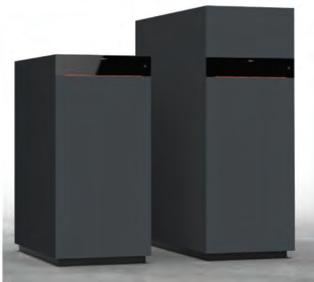
See the Bosch familiy Bosch: Founded in 1886. Built on precision,
CMPX 2026 | BOOTH
44
HEALTH & SAFETY
48PLUMBING
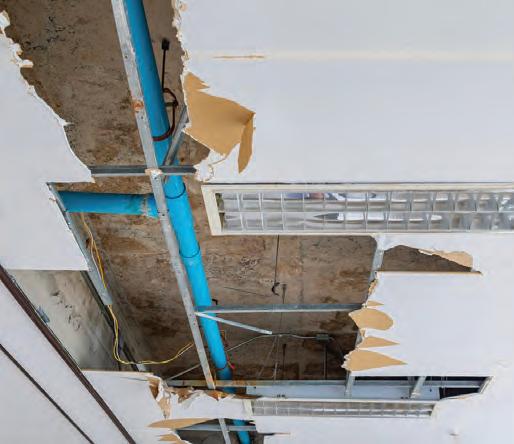
The most costly and persistent damage in commercial real estate isn’t caused by the big, attention-grabbing disasters; it is caused by the small, silent leaks that drip away unnoticed, day after day.
Simon Brunet
60HEAT PUMPS
Installation of a centrally ducted heat pump in an existing home calls for a comprehensive approach.
Ryan Coleman, Rob Pope and Dara Bowser
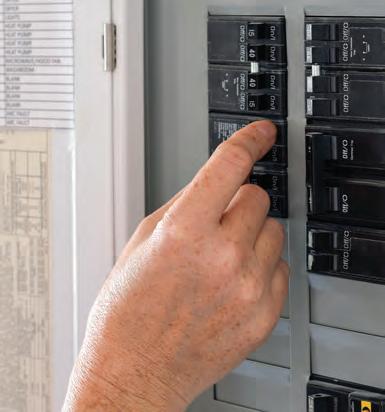
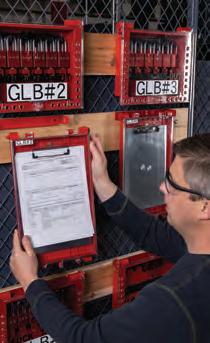
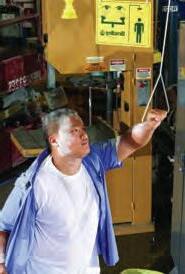
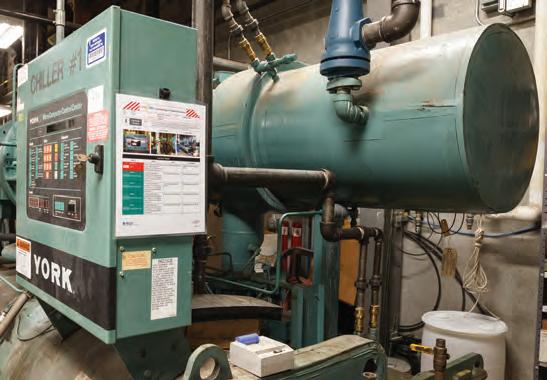
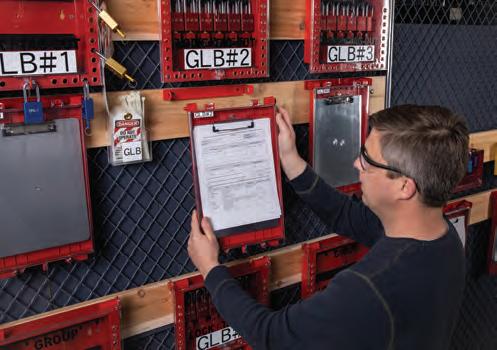
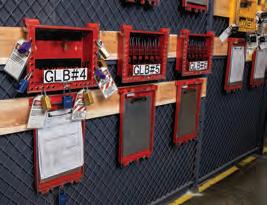
Individual lockout tagout for machine maintenance and repair is highly standardized. But what happens when you factor in a group of employees, potentially the need for additional protective measures.
150HUMAN RESOURCES
Between COVID, skilled labour shortages, and increasingly complex employment laws, it’s not hyperbole to say it has never been tougher to manage staff. Sue Sodek
77SHOW PREVIEW
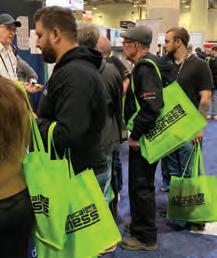
MB’s preview includes everything visitors to the show at the Metro Toronto Convention Centre (South Building) need to know. Maximize your visit by checking out the exhibitor list, education session schedule and floorplan.
you to what’s next in
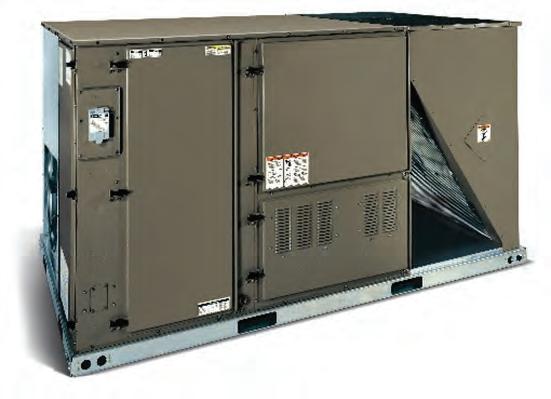
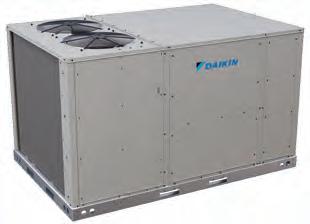
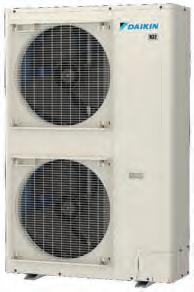
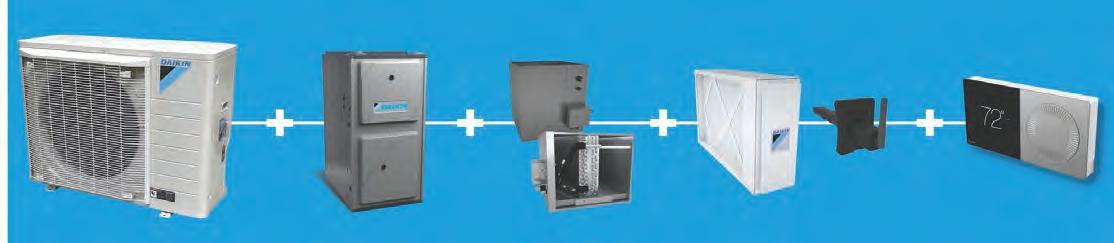
Daikin NEXIO rooftop units deliver scalable performance, innovative engineering, and flexible configurations designed to meet the evolving needs of light commercial buildings. Available in three performance tiers, NEXIO gives engineers, contractors, and building owners the freedom to select the right balance of e ciency, electrification, and control — without compromise.
Designed for new construction and retrofit applications, NEXIO units span 3 to 25 tons across multiple cabinet sizes, helping reduce installation complexity while delivering reliable comfort and long-term value.
HOT GAS REHEAT*1 ELECTRIC HEAT
OPTIONS THAT ADAPT TO YOUR APPLICATION ECONOMIZER
STAINLESS STEEL HX (Gas/Electric units) POWERED AND NON-POWERED CONVENIENCE OUTLETS
INTEGRATED CONTROLS AND BACNET™ CONNECTIVITY*2
NON-FUSED DISCONNNECT SWITCH LOW AMBIENT KITS
PHASE MONITORS
SMOKE DETECTORS (Return, supply, or both) HINGED PANELS
*1 Hot gas reheat available on NEXIO Plus (High E ciency) and NEXIO Max (Inverter) models.
*2 Daikin iLINQ controls are available on select models, while NEXIO Max (Inverter) features native BACnet integration BACnet™ is a trademark of ASHRAE
DAIKIN
18NEWS FEATURE
ASHRAE Winter Conference and AHR Expo highlighted HVAC trends and expertise
Carolyn Cooper
34MANAGEMENT
Advanced bidding strategies for plumbing contractors
Melvin Newman
42ROAD WARRIOR
Symon Neigel: On the cutting edge
Rebecca Harris
56RECRUITING
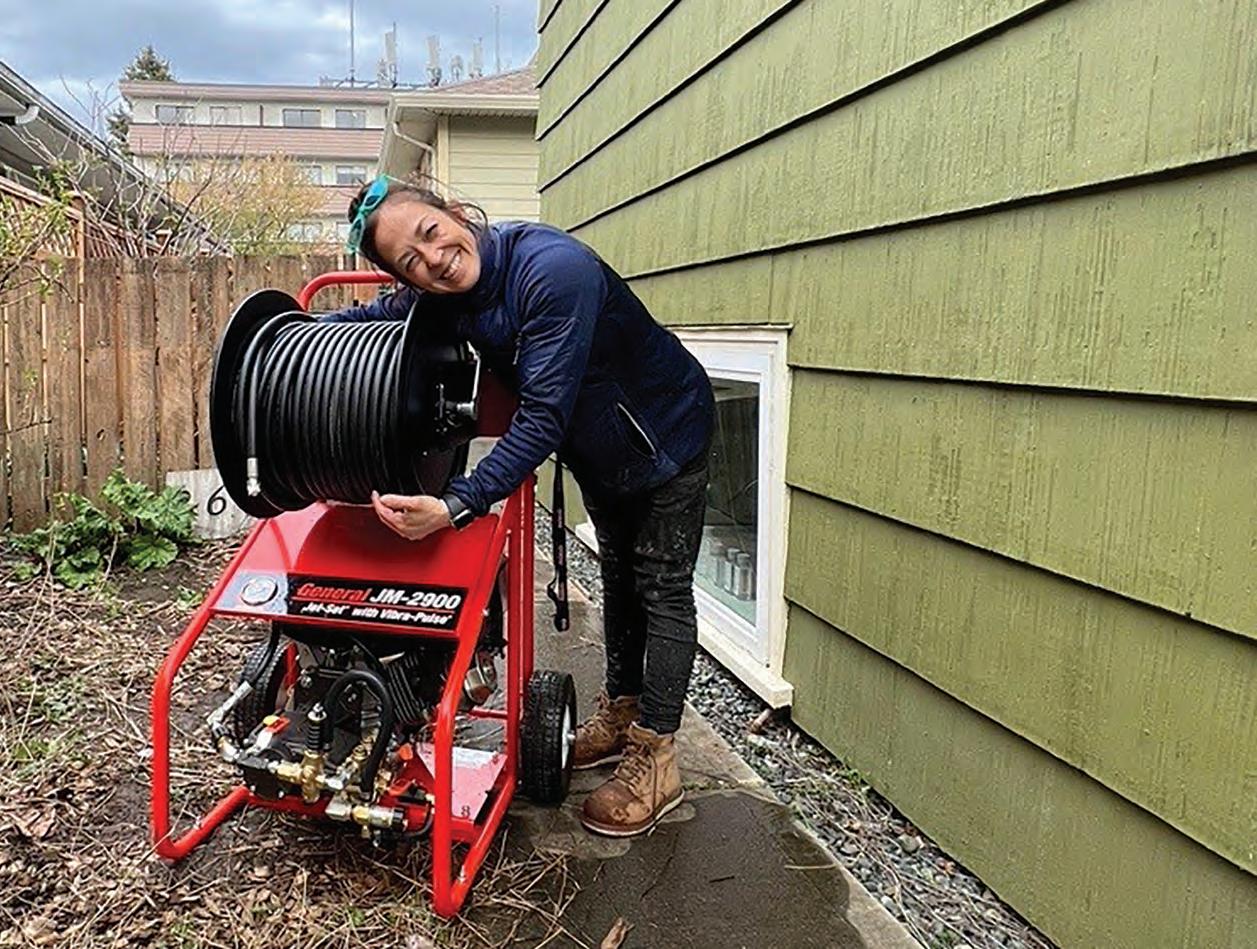
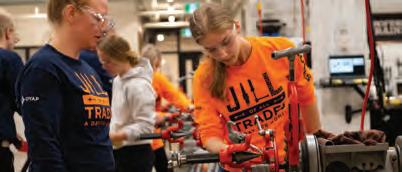
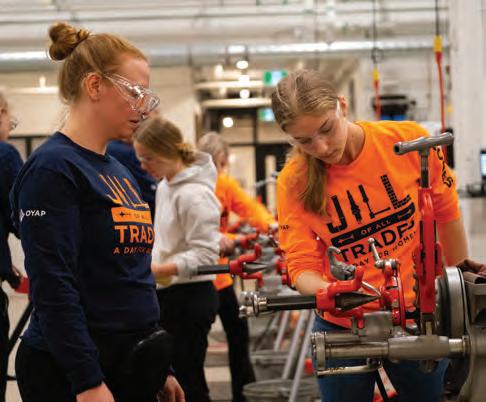
Jill of All Trades program introduces young women to the idea of a career in the skilled trades
Carolyn Cooper
64PLUMBING
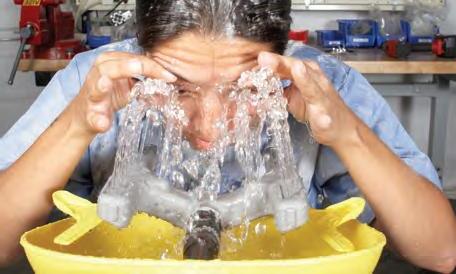
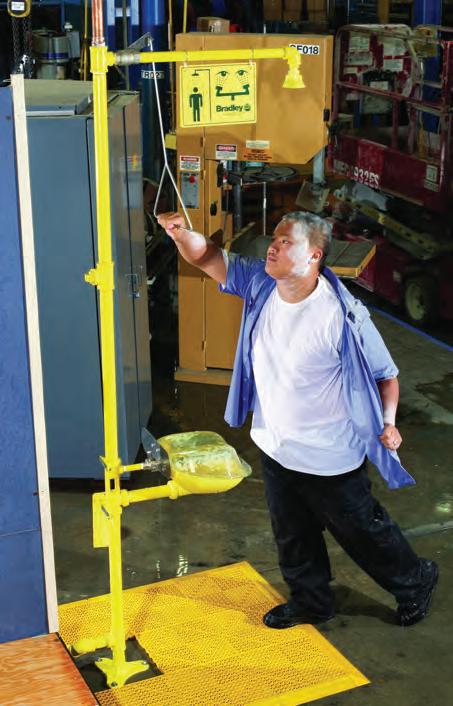
Employees, plumbers and contractors must be aware of health and safety guidelines for this equipment.
Ryan Pfund
156
EMBRACING THE PAST
A tale of two measurement scales, sure to please Canadians who are known to have an uncanny ability to use different units of measurement.
Matthew Reid
Product Showcase
104TRADE SHOW IN PRINT
The ninth edition of the Mechanical Business Product Showcase features offerings from leading suppliers to the mechanical industry in Canada. New and legacy products and services are presented with the specifications and features you need to know.
RELY ON OUR ENERGY
YOUR TRUSTED HOME HEATING & COOLING PRODUCTS PARTNER
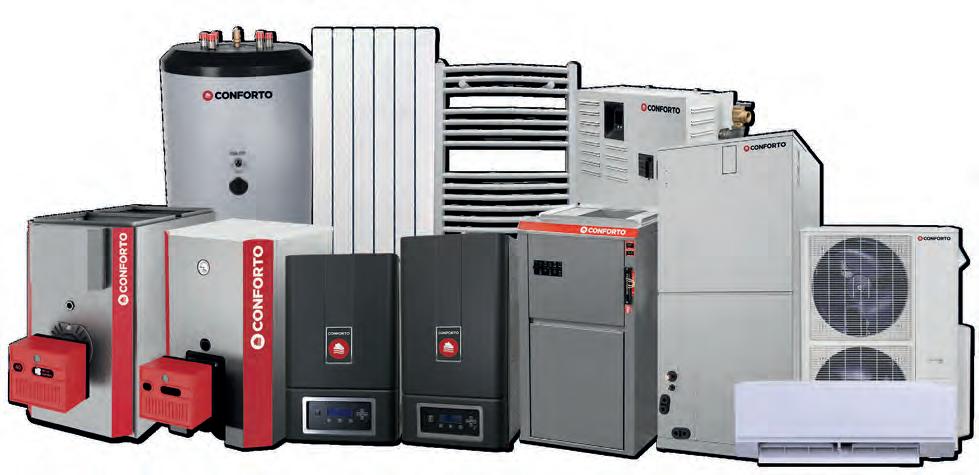
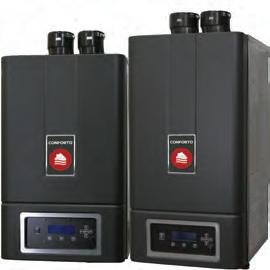
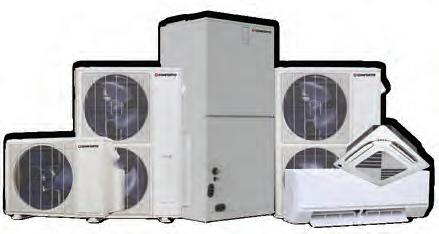
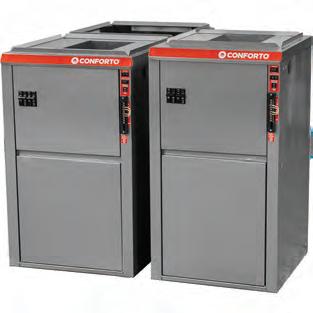
Conforto provides efficient, high-performing heating and cooling solutions tailored to your energy preferences and seasonal needs.
With Conforto, you can expect personalized attention and support across Canada.
Bridging the gap:How manufacturer’s representatives keep the HVAC industry connected
Nathan
Refrigerant handling in Canada
Mike Squires
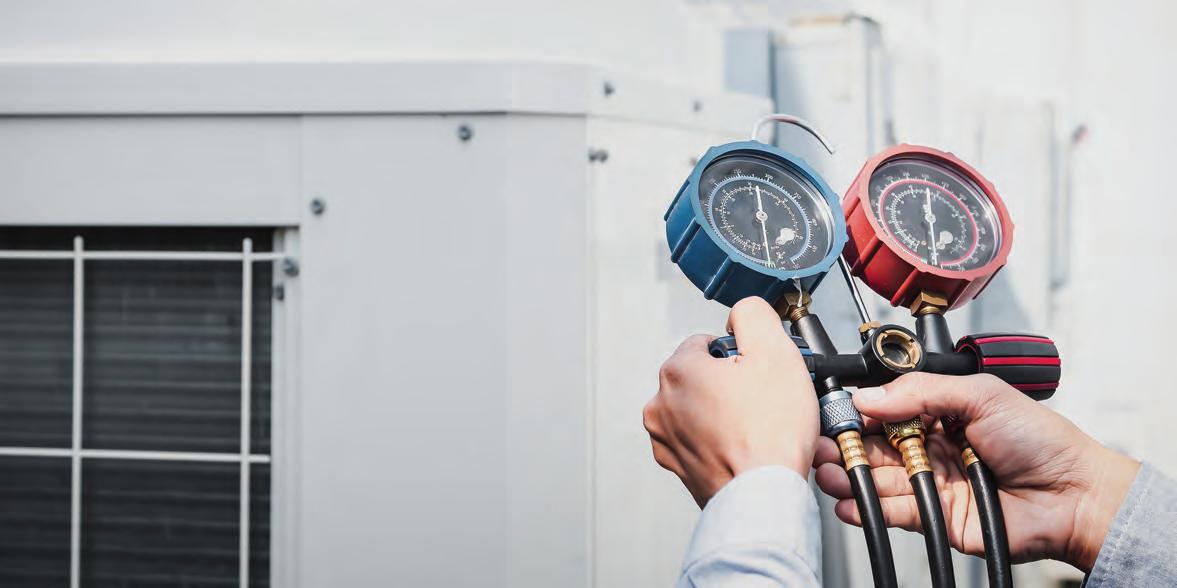
Best practice regarding the care and handling of refrigerants is to stay current with regulations and keep record cards accurately filled out and stored in a safe place.
AI: The next generation
Matthew Reid
Artificial intelligence in hydronics will be based around energy savings and consumer needs.
HIGH-PERFORMANCE HVAC
The truth about rebate programs … and how to use them to your advantage
Tom Grochmal
Energy efficiency programs offer real opportunities to earn higher margin and build internal capacity.
When
Streamlining residential rough-ins
Fred Bretzke
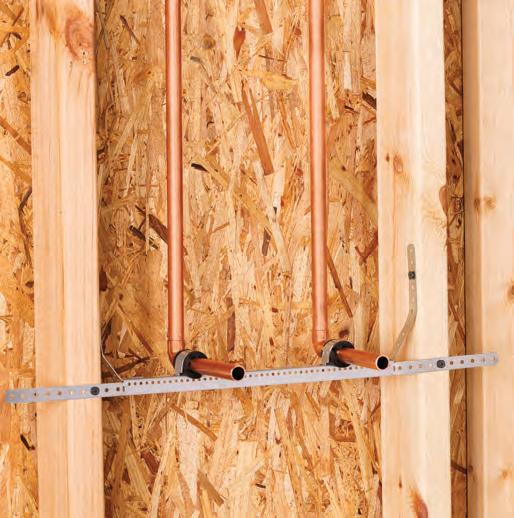
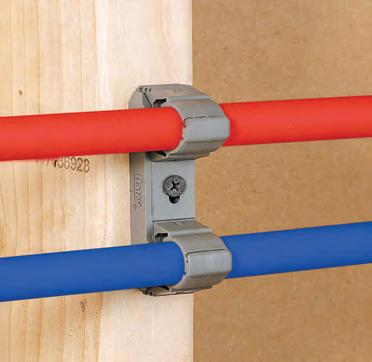
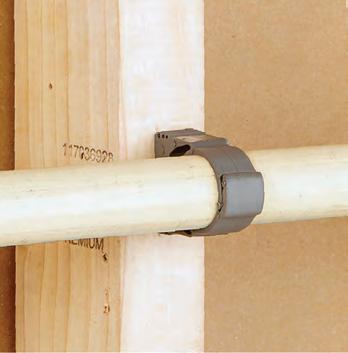
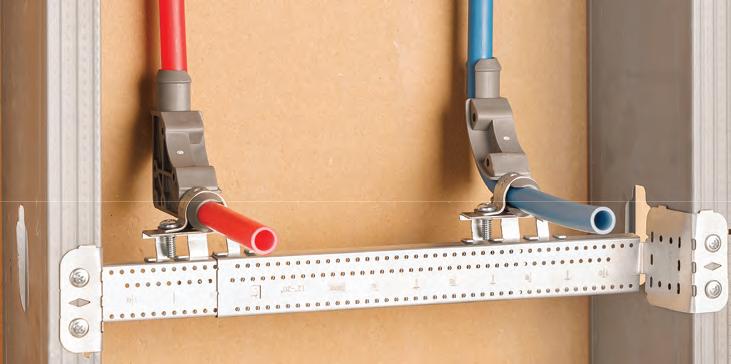
Preparation is key in the era of creative plumbing code.
Being easy to do business with is now a competitive advantage
Paul Bies
Set strategies in place to allow customers to move forward with confidence.
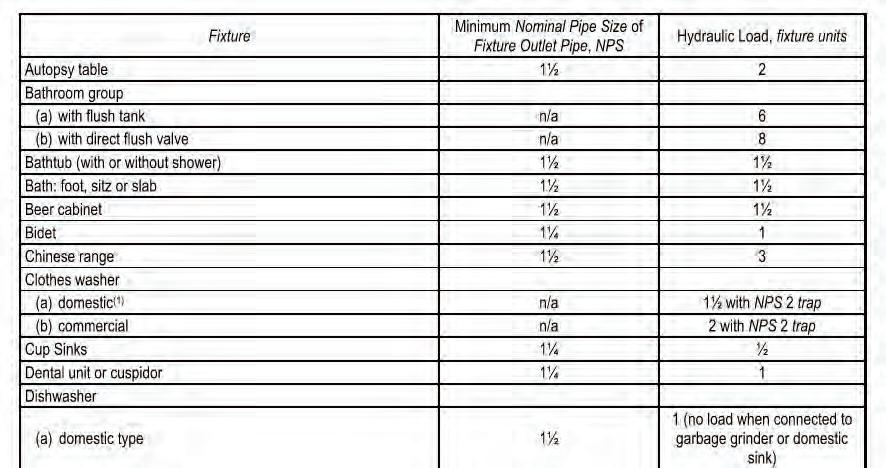
Fixture
How
Content Media Group Inc.
2 Campbell Dr., Suite 807
Uxbridge, ON L9P 0A3
Tel: 905.465.2919
mechanicalbusiness.com
March/April 2026 Issue
Published 6 times per year.
For All Subscription Inquiries
Circulation Director: Shila Naik, C 905-272-4175 shila.naik@mechanicalbusiness.com
Editor: Kerry Turner, C 416-435-1193 kerry.turner@mechanicalbusiness.com
National Sales Manager: Kyle Badder, C 416-735-1375 kyle.badder@mechanicalbusiness.com
Operations Manager: Caroline Bexfield, C 647-217-2076 caroline.bexfield@mechanicalbusiness.com
Contributing Editor: Carolyn Cooper editorial@mechanicalbusiness.com
Art Direction: Fourteen Orange Graphic Design Inc. davem@fourteenorange.com
We acknowledge the support of the Government of Canada.
Submissions: Copyright in material submitted to the magazine and accepted for publication remains with the author, but Mechanical Business and its licensees may freely reproduce it in print, electronic or other forms. Mechanical Business also reserves the right to edit said submitted materials to suit the editorial needs and mandate of the publication.
Notice: Mechanical Business is published for owners, managers and decision makers with mechanical contracting firms and the sector’s supply chain partners in Canada. While every effort is made to ensure the accuracy of the information, Mechanical Business, Content Media Group Inc., its staff, directors, officers and shareholders (‘The Publisher’) assume no liability, obligation or responsibility for advertised claims, for errors and/or omissions, or for the results obtained from the use of this information. Manufacturers’ instructions take precedence over published editorial. The publisher reserves the right to publish a printed correction in a subsequent issue for editorial errors, omissions and oversights. Subscriptions are available for $90 plus taxes in Canada and the U.S. Single copies are $15.00. Outside Canada and the U.S., the rates are $150.00 (annual) and $25.00 (single copy).
City policy is driving building transformation City climate and resilience policy tracker
Arecent report from JLL, a global commercial real estate and investment management company, highlights the expanding role that city policy is playing in the race to reach net-zero goals. JLL’s city climate and resilience policy tracker has expanded to 75 different cities globally to measure progress, including Vancouver, Toronto and Montreal. Toronto is recognized as a market mobilizer, with clear regulatory traction and growing alignment in the private sector.
There’s exciting progress happening for both existing buildings and new construction across the globe. Building emissions performance standards are one of the most widely adopted policies for existing buildings, in place in nearly half of the cities studied.
Another clear trend is all-electric building codes and fossil fuel phaseouts for new construction. As of this year, 17 cities have these policies in place, and many also require on-site renewable energy. With buildings representing such a large share of total emissions, policies that target the source are some of the most successful and robust.
According to the report, climate resilience is emerging as a defining regulatory priority, though action still lags risk. Cities are adding adaptation measures to building codes, yet asset-level improvements are insufficient if surrounding infrastructure cannot withstand climate hazards, making citywide resilience a shared priority for CRE stakeholders.
Since JLL’s 2022 study, the policy landscape has matured. Then, momentum centred on climate targets and voluntary commitments; today, the emphasis has shifted toward delivery. The gap is no longer one of awareness − it’s one of execution, integration and scale.
Over 60 per cent of cities in the study now reference resilience or adaptation strategies, up from roughly 30 per cent in 2022. While most frameworks still focus on voluntary planning or risk disclosure, a growing number of cities are beginning to translate these strategies into tangible, place-based interventions. Despite this momentum, adaptation policy is still far from where it needs to be. However, the market is beginning to fill that gap − physical-risk pricing through insurance and lending constraints is emerging as a critical enforcement vector. As premiums rise and access to capital tightens in high-risk zones, cities that embed resilience into regulation will be better positioned to protect both their infrastructure and their investment attractiveness. jll.com
Proudly created and printed in Canada.
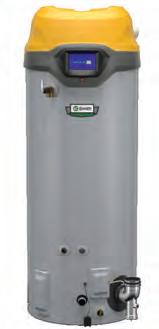
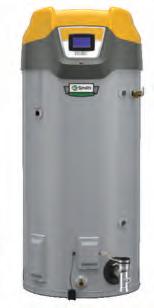
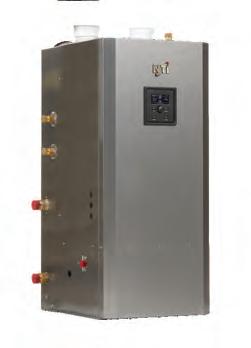
Every contractor needs a go-to tankless that can tackle just about any job. That’s what we had in mind when we engineered the Infiniti® GS & GR tankless gas water heaters. They’re flexible and easy to install in many configurations.
• Residential and Commercial applications
• Robust stainless steel heat exchanger for longer life
• Cascade and common venting between standard and recirculation models
• Certified Green Product™ by the Green Restaurant Association
Bradford White
have aligned. Discover 100% capacity and 100% performance down to -30°C.
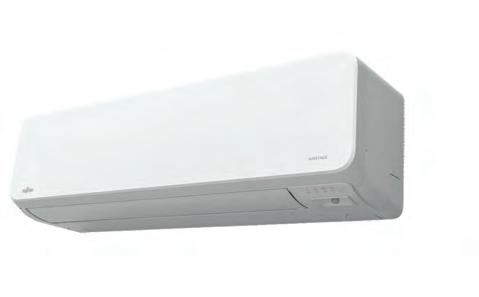
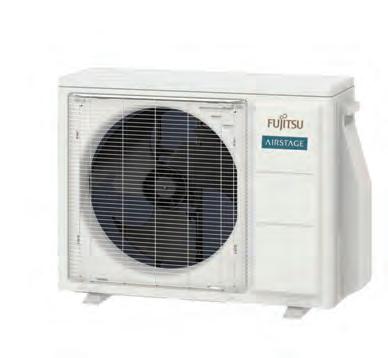
Like the Orion Constellation brightening the winter night sky, the Fujitsu AIRSTAGE Orion XLTH+ Series stands out as a brilliant star for heating performance...even in the harshest climates. While others fade in extreme cold, Orion shines brighter, delivering more than 100% capacity even at -30°C. The new Orion XLTH+…a star performer in extreme weather.
•Beyond 100% Performance at -30°C – No derating, just powerful, consistent heating.
•No Lockout Temperature – Unlike other systems, Orion keeps running in relentless cold.
•ProCore™ Corrosion-Resistant Technology – Built to endure and perform.
•Advanced Defrost Cycle – Reduces downtime, maximizing comfort and efficiency.
•Flexible Installation – Designed for seamless integration into a variety of applications.
Orion XLTH+...the stellar performer in low-temperature heating.
Fujitsu
117th IDEA2026 to take place in Ottawa
The International District Energy Association (IDEA) has announced that its 117th IDEA Conference and Trade Show will take place June 23 to 26, 2026 in Ottawa at the Rogers Centre Ottawa. Themed Connecting Networks, the annual event will include education, innovation and connection opportunities with district energy professionals from around the world. The program will include workshops, panels, podium presentations and poster sessions on relevant topics in district energy today, including real-world case studies, challenges and successes, and actionable insights. districtenergy.org
Ontario has made significant investments in woodbased building, and is supporting it through building code amendments, developing technical resources, and engaging with stakeholders
Ontario introduces the Advanced Wood Construction Group
Circular Construction Accelerator expands in BC
Vancouver, BC-based Light House has expanded its Circular Construction Accelerator (CCA) with 17 new BC companies. The new cohort includes companies developing low-carbon and bio-based building materials; modular and prefabricated construction approaches; and deconstruction, material-reuse, and waste recovery systems circular-tech tools that make low-carbon practices easier for builders to adopt at scale. According to Light House, new supply chain pathways, including prefab, reuse, recycled aggregates and bio-based materials, are expanding fastest in BC. BC-based construction companies, manufacturers, designers and service providers can apply to the accelerator through the CCA website at light-house.org/cca.
light-house.org
Ontario has launched the Advanced Wood Construction Group, a working group to guide implementation of the province’s Advanced Wood Construction Action Plan. The Action Plan, launched in early 2025, will become Ontario’s blueprint for education, research and investment in prefabricated and modular wood-based building materials known as advanced wood construction. It will also promote the use of wood-based building materials to build more homes and buildings faster, and help create a more resilient forestry sector against U.S. tariffs. ontario.ca
New Brunswick budget focuses on infrastructure
The Government of New Brunswick has tabled its $1.47 billion capital budget for 2026-2027, which includes a significant investment in infrastructure upgrades for health care facilities, schools and housing. The budget includes investments of $247 million for health care infrastructure, $242 million for school upgrades and $78.1 million for public housing projects. The investment in schools will cover work that has already begun, as well as $8.75 million specifically for upgrading ventilation to improve classroom conditions, and $27 million for other school improvements such as adding new equipment. An additional $24 million will go towards general infrastructure improvements in social development facilities, including improvements to electrical and heating systems. gnb.ca
The conference will take place at Rogers Centre Ottawa in downtown Ottawa, ON, which is an example of a building benefitting from being connected to district energy.
The New Digital Generation
The Future of HVAC is Here
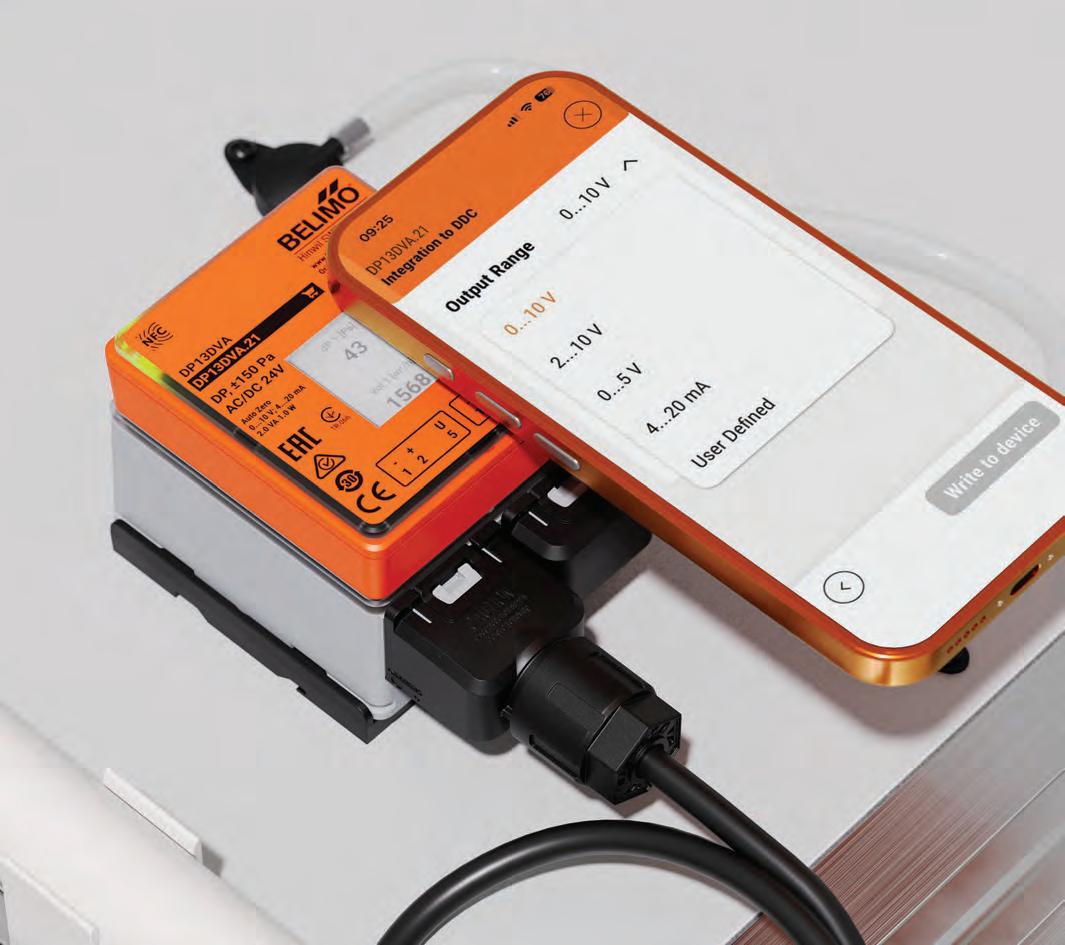
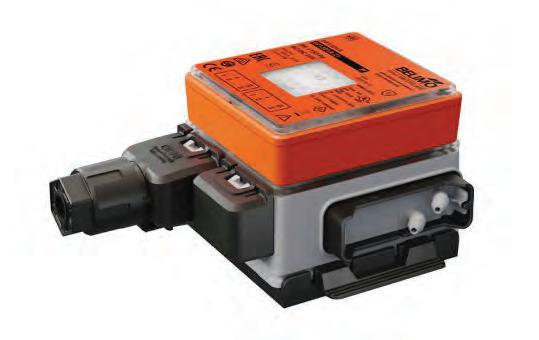
Belimo is raising the bar again with two new innovations built for smarter, more efficient buildings. The new Air Differential Pressure Sensor turns a basic analog switch into a smart, data driven application—improving filter management, reducing fan energy use, enhancing indoor air quality, and enabling predictive maintenance. With NFC, the Belimo Assistant 2 app, and LED indicators, setup and monitoring are faster, easier, and more precise.
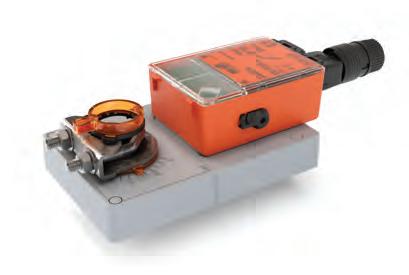
The new GM Damper Actuator delivers powerful, versatile performance with customizable signals, runtimes, and feedback switches—plus up to 75% lower standby energy consumption and seamless integration into existing systems.
It’s digitalization with purpose: delivering measurable improvements in comfort, energy efficiency, safety, installation, and maintenance.
Belimo
Nova Scotia to raise minimum wage in 2026
The Government of Nova Scotia will raise the minimum wage twice this year, bringing it from $16.50 to $17 per hour. Minimum wage in the province will increase to $16.75/hr on April 1, 2026, and to $17/hr on October 1, 2026. Minimum wage in Nova Scotia rose by $1.30/hr in 2025, bringing it more inline with other provinces and territories, several of which increased minimum wage in fall 2025. Across the provinces minimum wage ranges from a low of $15/hr in Alberta, to $19.75/hr in Nunavut. PEI also plans to increase minimum wage to $17/hr on April 1, 2026. novascotia.ca
Lakeridge Health hospitals to undergo major sustainability upgrade
Ontario’s Ajax Pickering and Oshawa Hospitals, part of the Lakeridge Health system, are set to undergo significant infrastructure and sustainability upgrades to modernize energy systems and create healthier indoor environments. Lakeridge Health is collaborating with Enbridge Sustain, the Canada Infrastructure Bank (CIB), and Blackstone Energy Services to undertake the initiative, which will also lower emissions and reduce energy use. Lakeridge Health is a health system of five hospitals, a long-term care home, and more than 30 communitybased locations delivering acute, ambulatory and long-term care services. lh.ca
IWBI expands WELL program with two new ratings
The International WELL Building Institute (IWBI) has announced the WELL Real Estate Rating and the WELL Operations Rating. The new ratings are intended to provide real estate companies and funds with a way to implement and scale health strategies across their portfolios. The WELL Real Estate Rating focuses on enhancing base building infrastructure targeting systems that support indoor environmental quality. The WELL Operations Rating addresses base building operations and building systems maintenance, through indoor environmental quality performance, policies for resilience and readiness, and an enhanced tenant experience. Derived from a subset of strategies in the WELL Standard, both ratings offer a pathway to measure and validate health strategies critical to base building performance, and lay the foundation for full WELL Certification over time. wellcertified.com
CIPH presents two awards
The Canadian Institute of Plumbing & Heating (CIPH) has presented Bruce Matheson of Canature WaterGroup, and Diane Goulet, territory director, eastern Quebec at Les Agents de Mfr Vistaqua Inc., with Lifetime Service Awards. The award commemorates 40+ years of service to the industry. Canature WaterGroup is based in Regina, SK, with a distribution centre in Cambridge, ON. Montreal, QC-based Les Agents de Mfr Vistaqua Inc. is a manufacturers’ agent for the plumbing industry across Quebec. ciph.com
WSIB introduces defibrillator rebate program
The Ontario Workplace Safety and Insurance Board (WSIB) has launched an automated external defibrillator (AED) program to enhance safety on construction sites. Eligible businesses can receive an up to $2,500 rebate from WSIB when they purchase an AED for their qualifying construction projects. The program will make it easier for companies to purchase potentially life saving equipment and improve the chances of employees surviving a cardiac event. When used with CPR in the first few minutes of a cardiac arrest, AEDs can improve survival rates by more than 50 per cent. AEDs purchased between July 1, 2025 and June 30, 2027 are eligible for rebates. wsib.ca
CSA releases modular and prefabricated housing report
The Canadian Standards Association (CSA Group) has released a report detailing the inspection, regulation, and permitting challenges that may contribute to the limited adoption of modular and prefabricated housing in Canada. Modular and Prefabricated Housing in Canada: Removing Barriers to Compliance and Approval Processes was commissioned by the National Research Council Canada (NRC), which started with the premise that duplicate inspections were hindering Canada’s adoption of modular and prefabricated housing. The report is available on the CSA website. csagroup.org
(L-R) Bruce Matheson receives the Lifetime Service Award from Terry Canning, president of CIPH Saskatchewan Region, and branch manager at BA Robinson in Regina, SK.
This year’s ASHRAE Winter Conference took place February 2 to 4 in Las Vegas, NV, drawing 3,825 registrants to more than 100 technical sessions and 400 committee meetings. The AHR Expo, which ran concurrently, had more than 50,000 attendees and 1,945 exhibitors highlighting innovations in HVAC/R.
Some of the most highly attended sessions included topics such as real-world application of AI in HVAC, as well as best practices in cooling for data centres, healthy buildings, and indoor environmental quality (IEQ).
During his State of the Society Address, ASHRAE president Bill McQuade updated the progress of the IEQ Center of Excellence, and highlighted advances in water safety, pathogen mitigation and integrated approaches to health-focused building design. In addition, McQuade announced the recipients of the 2025-26 Presidential Initiative Challenge, a grant supporting chapter-led projects that advance energy efficiency, emissions reduction and IEQ at the local level. The Regina Chapter’s Blanket of Warmth Project was one of the six winners, receiving $5,500. The project is a hybrid passive heating system rooted in technical innovation and Indigenous ecological knowledge, that advances blue-green infrastructure design.
ASHRAE also recognized the outstanding contributions of members. The awards recognize the ways in which ASHRAE members advance building performance, sustainability and the HVAC/R profession. Canadian members who received awards included:
• Darryl Boyce, presidential fellow life member and owner of Boyce Consulting Services in Kemptville, ON received the ASHRAE Distinguished Public Service Award recognizing a member who has performed outstanding public service in their community and who has helped improve the image of the engineer.
• Lianne Cockerton, director of sustainable development, Martin Roy and Associates, Deux-Montagnes, QC, received the Fellow ASHRAE designation, recognizing members who have attained distinction and made substantial contributions in HVAC/R and the built environment.
• Alekhya Kaianathbhatta, an associate at The HIDI Group in Toronto, ON, received the YEA Inspirational Leader Award recognizing a young engineer who has gone above and beyond to make considerable contributions to the industry and the community.
• Carey Simonson, who is with the Department of Mechanical Engineering at the University of Saskatchewan in Saskatoon, SK received the E.K. Campbell Award of Merit honouring an individual for outstanding service and achievement in teaching.
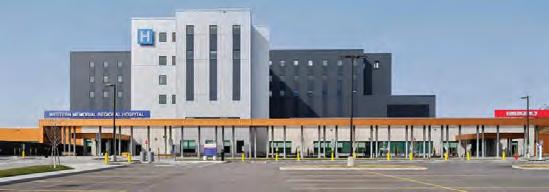
• Kevin Sharples, Kurt Monteiro and Peter Kastelic of Smith + Anderson were recognized with ASHRAE Technology Awards, health care facilities, for their work on the New Western Memorial Regional Hospital in Corner Brook, NL (see below for more information on this project).
• The student team from Simon Fraser University in Burnaby, BC – Michael La Grange, Megan Lucille Zelasky, Erin Flood and Jasleen Sandhu – won first place in the Setty Family Foundation Applied Engineering Challenge for its work developing a carbon capture and utilization module that reduces the carbon footprint of HVAC/R systems and transforms captured CO2 into a valuable resource.
Engineering firm Smith + Andersen’s mechanical team was recognized with the 2026 ASHRAE Technology Award in Category III: Health Care Facilities for its work on the New Western Memorial Regional Hospital in Corner Brook, NL. The ASHRAE award recognizes the successful applications of innovative building design in areas of occupant comfort, indoor air quality, and energy conservation. The 600,000sq. ft. hospital, which was completed in 2023 and has LEED Silver certification, has the largest geothermal system in a healthcare building in Canada, and the second largest in any building type worldwide. The geothermal system is located under the hospital’s parking lot, and required 375 boreholes drilled 60 ft. deep for approximately half a million linear feet of piping. Used as the primary heating and cooling source, the system significantly reduces energy use and operating costs. The mechanical systems were designed to complement and support the compact design of the hospital, and included high-efficiency, lowenergy solutions. Toronto, ON-based Smith + Andersen specializes in mechanical and electrical building service design, building automation system design and retrofit, sustainable design/LEED and more. smithandandersen.com
The New Western Memorial Regional Hospital in Corner Brook, NL features the largest geothermal system in any Canadian healthcare facility.
Western Canada
Ontario
Quebec
Atlantic Canada
People in the news
Rheem Canada has appointed Chris Rock director of sales and marketing. In this role Rock will oversee all aspects of Rheem Canada’s sales and marketing strategy and drive expansion of the air and water business model.
Todd Wiggins has joined Watts Water Technologies in the role of regional sales manager, Canada. Wiggins will be working closely with Watts’ partners across Canada, supporting and growing key product lines including AERCO, PVI, Lync, and Superior Boiler.
Tyler Gamble has been promoted to vice president, commercial at Regina, SK-based Canature WaterGroup.
Armstrong Fluid Technology has hired Chintan Kharche as global director of offering management. In this role Kharche will lead innovation across Armstrong’s entire product lifecycle, and drive market research, competitive analysis, product planning, and launches.
Viega LLC has promoted Leah Braun to district sales manager, based in Saskatoon, SK.
Edmonton, AB-based Sinclair Supply Ltd. has promoted Benjamin O’Dwyer (1) to outside sales representative, and hired Mark Eastwood (2) as inside sales representative.
Travis Lutes has been named executive vice president, global enterprise transformation at Aliaxis. Lutes will be leading global operations teams across engineering, operational excellence, safety, central procurement, integrated business planning, and sustainability. He will also oversee global marketing, innovation, and mergers and acquisitions.
Mississauga, ON-based Mits Airconditioning Inc. has hired Steven Cornelius as market development manager.
Milwaukee Tool has promoted Michael Fochler (1) to regional manager – regional accounts, Western Canada, and Nathan Devereux (2) to territory representative – regional accounts.
Kitchener, ON-based Marks Supply Inc. has named Aaron Moore (1) branch supervisor – Vaughan, ON, and Jacob Prior (2) territory manager, based in Mississauga, ON.
Errol Hibbard has joined Calgary, AB-based DCS Agency Ltd. as technical sales representative.
Quantum Passivhaus has hired Stephen Magneron as director of project development. Magneron will be responsible for leading business development and strategic partnerships to advance the adoption of highperformance prefabricated building systems.
Calefactio has named Eric Bodanis national sales manager for Canada, excluding Quebec.
Patrick Laird has started a new position as OEM sales specialist at Victaulic, based in Edmonton, AB.
Coquitlam, BC-based Marc Soukup has joined JSA Sales Inc. as outside sales representative. Jamie Jackson has joined Oakville, ON-based aquatechnik North America as engineering and sales specialist.
EMCO Corporation has named Andrew Hanevelt (1) profit centre manager of EMCO Fire Protection – Lower Mainland BC; and Fatima Nobre (2) profit centre manager in St. Catharines, ON.
Sonny Pirrotta joins TCL HVAC Canada as vice president of sales. Sonny will be responsible for promoting and supporting TCL’s residential and light commercial HVAC products across Canada.
Palser Enterprises Ltd. has announced a number of employee changes. The company has hired Soumik Chowdhury (1) as GTA outside sales; TJ Wolcott (2) has joined as inside sales/customer service representative; Derek Kaufmann (3) has been promoted to sales manager; and Stu Liddell (4) has been promoted to vice president of sales.
Tom Faraldo has been promoted to senior director of sales – North America at Navien, Inc.
Saskatoon, SK-based Aquifer Distribution Ltd. has named Jennifer Lang to a sales business development role.
Kelly Balint has started a new position as regional manager, Alberta South at Refrigerative Supply Limited (RSL).
Quebec City, QC-based ITC Technologies welcomes Julien Sussat as senior director, products and marketing.
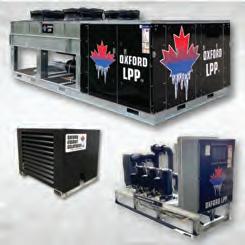
Oxford Energy
Movers & Shakers
Calefactio expands partnership with Air Solutions in Ontario
Air Solutions Inc. has expanded its representation of Calefactio to include coverage across the Greater Toronto Area (GTA) and Ontario. Guelph, ON-based Air Solutions has represented Calefactio in the east Toronto area for the past year, including its full range of residential hydronic accessories and commercial products. As well as the GTA, the expanded territory coverage now includes north Toronto, Barrie, Oshawa, Southwestern Ontario, Windsor and the Golden Horseshoe region. airsolutions.ca calefactio.com
DCS Agency celebrates 40th anniversary, adds Rheem to its roster
Rheem Canada now carries General HVAC Solutions America’s full HVAC lineup
General HVAC Solutions America, Inc. (formerly Fujitsu General America, Inc.) has joined the Rheem family of brands in the Canadian market. The Fujitsu AIRSTAGE line of mini-split and VRF heating and cooling systems is now part of Rheem Canada’s brand portfolio. In addition, Rheem Canada will assume responsibility for sales for General HVAC Solutions America, including for the Fujitsu AIRSTAGE brand. Operational functions will transition to Rheem Canada in coming months. During the transition inquiries and purchasing questions can continue to be directed to current General HVAC Solutions America reps. rheem.ca fujitsugeneral.com
DCS Agency Ltd. is commemorating 40 years of business in 2026. The company was established in 1986, and is a manufacturers’ representative for the plumbing, heating, fire sprinkler, gas, irrigation and institutional markets. In other news, DCS Agency Ltd. is now the representative for Rheem tanks in BC. With offices in Pitt Meadows, BC, and Calgary and Edmonton, AB, the company serves mechanical contractors, engineering firms and builders in Alberta, BC, Northwest Territories and Yukon. dcsalesltd.com
O’Dell HVAC expands in Atlantic Canada
Expanded Maritime Geothermal facility will boost production of Nordic geothermal and ASHPs
O’Dell HVAC Group has purchased Airsys Engineering and Rae Mac Agencies Inc. Both companies will join O’Dell under the AIR Control Concepts collective. The acquisition expands O’Dell’s presence from Ontario to the Maritimes, and widens its portfolio of HVAC solutions. Moncton, NB-based Airsys and Dartmouth, NS-based Rae Mac offer HVAC solutions from offices in Nova Scotia, New Brunswick and PEI. Burlington, ON-based O’Dell HVAC Group represents HVAC manufacturers, with six branches in Ontario.
odellhvac.com airsys.ca
Maritime Geothermal Ltd. has announced a 15,000-sq. ft. expansion of its Petitcodiac, NB facility to meet the demand for made-in-Canada geothermal and air source heat pumps (ASHPs). The expansion, which brings the facility to 45,000sq. ft., is supported by a $1.64 million investment from the Atlantic Canada Opportunities Agency. It will allow Maritime Geothermal to significantly increase production of its Nordic brand of air source and geothermal heat pumps, while creating jobs in the region. The expansion is expected to be completed during the first quarter of 2026. nordicghp.com
Kerr Controls partners with LG
Kerr Controls is now an authorized LG distributor, selling LG Air Solutions at its Atlantic branches. The partnership has included in-person training sessions with LG on the LG ducted and ductless residential lines Kerr now offers. Truro, NS-based Kerr Controls distributes HVAC/R products for residential and commercial markets from 10 branches in Atlantic Canada. The company also has three branches in Ontario under the Kerr Smart Energy brand. kerrcontrols.ca lg.com/ca
The expansion of Maritime Geothermal’s Petitcodiac, NB facility will enable the company to boost production of its Nordic brand air source and geothermal heat pumps.
Fantech/Systemair
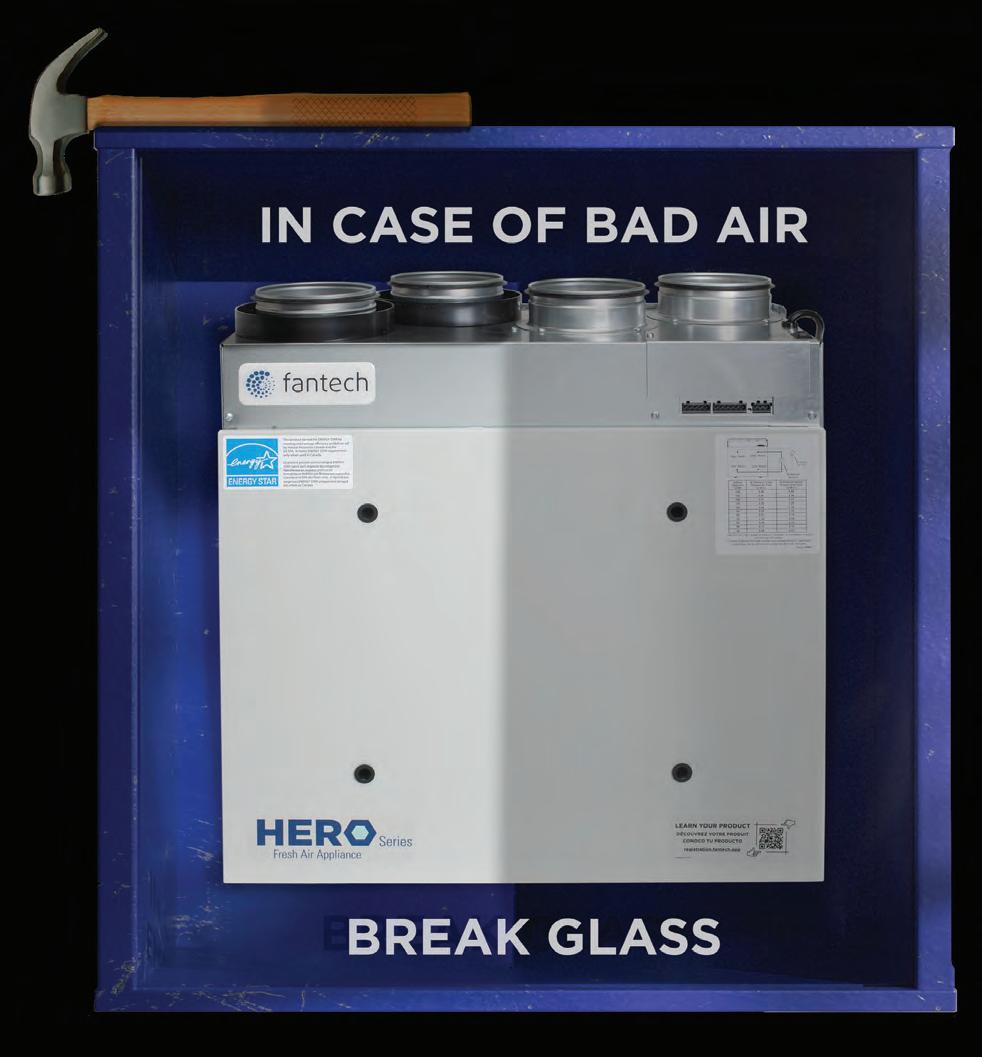
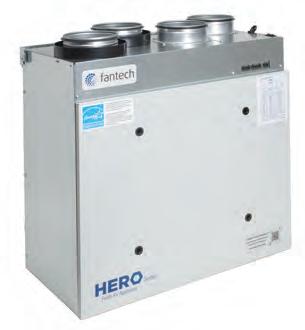
The HERO HRV/ERV delivers balanced ventilation for healthier residential and multi-family environments
Scan Here to learn how HERO can improve your next project
Movers & Shakers
Aalberts expands U.S. production of Apollo PowerPress technology
Charlotte, NC-based Aalberts Integrated Piping Systems Americas has invested in its Pageland, SC facility, allowing the facility to manufacture Aalberts’ Apollo PowerPress press technology. Once fully operational, the facility will be the global manufacturing hub for Apollo PowerPress technology. The upgrades will be completed in phases throughout 2027, with the first products expected to be available in early 2027. aalberts-ips.us
Aalberts’ Pageland, SC facility will be the global manufacturing hub for Apollo PowerPress technology.
AD Canada partners with Zoeller Canada
Zoeller Canada is now a supplier partner for AD Plumbing & Heating – Canada division. Brantford, ON-based Zoeller Canada provides pumps, basins and controls for residential, commercial and industrial applications for the water and wastewater industry. Mississauga, ON-based Affiliated Distributors (AD) Canada is the Canadian business unit of Affiliated Distributors (AD). AD Canada has four distinct divisions – plumbing and heating, building supplies, electrical, and industrial and safety. With more than 9,000 branches from 1,000-plus independently owned members, AD is North America’s largest marketing/buying group for construction and industrial supplies. adhq.com ca.zoeller.com
Longevity Acrylics extends partnership with Armcot
Longevity Acrylics Inc. has announced it has expanded its distribution partnership with Armco Agencies Inc. to include Southwestern Ontario. Mississauga, ON-based Armco already represents Longevity Acrylics’ products in Central Ontario. Summerstown, ON-based Longevity Acrylics manufactures acrylic bathware and special care products. armcoagencies.com
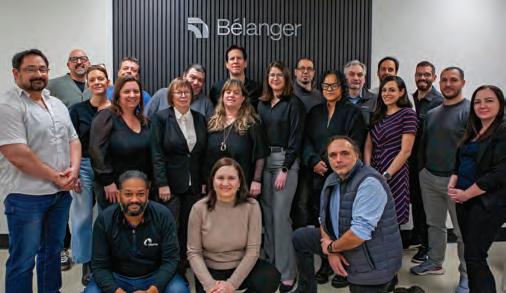
Bélanger celebrates 60th anniversary
Saint-Laurent, QC-based Bélanger is commemorating 60 years of business in 2026. Founded in 1966, Bélanger produces faucets, shower systems, tub fillers, roughs and valves for kitchens and bathrooms. According to the company, future plans include “expanding its design language, exploring new materials and finishes, and developing collections that respond to evolving lifestyles.” Bélanger is now part of the Oatey and Tubular Industries of Canada family of brands.
belangerfaucets.com
SPX completes Thermolec acquisition
Charlotte, NC-based SPX Technologies, Inc. has completed the acquisition of Thermolec Ltd. Founded in 1973, Thermolec is a Montréalbased manufacturer of custom electric duct heating and related solutions. Thermolec will become part of SPX’s HVAC segment and operate within its Electric Heat business with Marley Engineered Products (MEP) and ASPEQ. A substantial majority of Thermolec’s sales are generated in Canada. SPX Technologies plans to expand Thermolec’s U.S. sales while leveraging Thermolec’s strong Canadian customer relationships to expand MEP’s sales in Canada.
thermolec.com spx.com
Bélanger is commemorating 60 years of business in 2026
comfort
Rheem
REFRIGERANT HANDLING IN CANADA
Canada signed on to the Montreal Protocol, a landmark international treaty that primarily focused on ozone depleting substances such as CFCs (Chlorofluorocarbons), in the 1980s. These CFCs are synthetic chemicals made of fluorine, chlorine and carbon, which were widely used as aerosol propellants, refrigerants, and foam-blowing agents.
Chatter about Earth’s ozone layer hole has died down as scientists believe the ozone layer hole over the Antarctic has not increased in size since the 1990s − in fact it has been shrinking ever since. Many believe the swift action by global industries to stop using CFCs and the global consumption reduction is a success story.
With the implementation of the actions around the Montreal Protocol the Canadian government took steps and laid the framework to focus on refrigerant usage, distribution and losses in Canada under the OzoneDepleting Substances Regulations, 1998 in the Canadian Environmental Protection Act. In these regulations, and subsequently updated and new regulations, the process began that refrigerants are only to be handled by certified personnel.
Now that CFC refrigerants are no longer imported or allowed for use in new equipment other refrigerants classified as HFCs and lesser available HCFCs are the common refrigerants in use since the late 1990s. Technically these refrigerants are not heavily considered to be detrimental to the ozone layer but they are considered greenhouse gasses which are classified as harmful to the environment. Laws and regulations have been adapted to include these refrigerants as controlled substances.
Mike Squires
Equipment owners, technicians and contractors are all responsible for adhering to record keeping requirements.
WHAT IS A CERTIFIED PERSON?
To purchase and handle refrigerants in Canada, you need provincial certification. To get this certificate on your province you would need to attend a course and pass an exam. The courses can involve topics such as the science around ozone and global warming gases and their effect on the environment, environmental regulations and code of practice, refrigerant leak detection and prevention methods and but not limited to, refrigerant management, which is often referred to as the 4-Rs: Recovery-Reuse-Recycling-Reclamation of refrigerants. You generally need a certification certificate card (provincial certification, such as ODP, ODS, CCQ, MCAS or other authorized in your province) to purchase, handle, transport, and dispose of refrigerants. This even includes staff in warehouses to ensure staff handling refrigerants in storage or during movement are trained in the necessary safe procedures.
Possessing a certificate card is required for refrigerant handling and tasks mentioned above, but it is absolutely not a card that authorizes a person to service or install a refrigeration system. For that you need a Certificate of Qualification (C of Q) in the specific trades to work with refrigerants.
TRACKING AND DOCUMENTATION
Record keeping is very important for the sale and transfer of refrigerant. There are tracking measures in place all the way from the import to end use. When refrigerant is imported into Canada it is strictly tracked and documented. The refrigerant is tracked as it is distributed to a wholesale supplier, who then
Mike Squires, RSE, is a graduate of the College of the North Atlantic. Mike is manager, solution strategy and business success with Copeland. He works with manufacturers. suppliers, contractors, and in-house staff. Prior to moving to roles with manufacturers, he was a service technician for a number of years.
Contractors must record and tag equipment after adding refrigerant they purchase.
track to whom they sell the refrigerant. It is mandatory that contractors record and tag the equipment serviced when adding refrigerant they purchase.
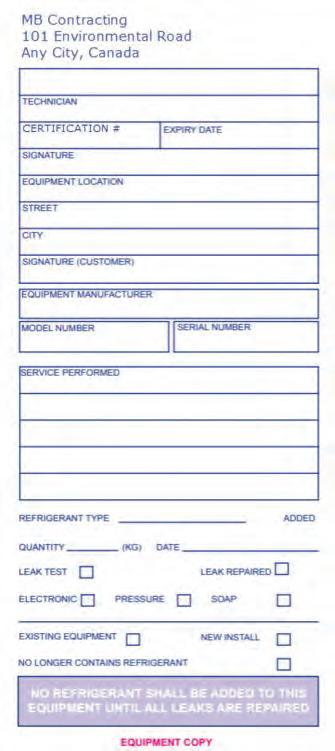
The contractor will track purchased refrigerant usage by filling out a tag including the refrigerant type, amount of refrigerant, specific equipment worked on, leak test procedures, services performed, name and certificate number, and date. This tag is then attached to the equipment serviced and a carbon copy of the tag should be kept by the technician for record keeping for up to five years. There is no repository or data base to upload or add these refrigerant transactions, so it is up to the technician to hold on to these forms if ever copies were requested by the Ministry of the Environment or other regulatory body in Canada.
Although it is rare to be called upon to produce the documents by Canadian ministry officials, when it does happen the pressure to produce the correct documents is there. Failure to do so could lead to some uncomfortable situations for the equipment owner, contractor, and even the individual technician who holds the certification. Although it is unusual, fines could be handed out to companies and individual technician certificate holders.
When it comes to government compliance many larger business equipment owners have strict policies with their contractors and technicians around refrigerant use. Accurate and up to date refrigerant logging and details on service
Sample ODP record for adding refrigerant to a system.
records must be maintained. Some larger companies with many locations use third party agencies to log and track refrigerant transactions in an online portal. The portal provides an oversight and tracking system to manage their records and assist them with being compliant with governmental regulations.
When it comes to these companies and the regulations they do not play around. They could possibly refuse or delay payment for services performed if the required documentation is not properly adhered to. Some of these larger equipment owners have in the past received large fines from the government for not being able to produce proper documentation for adherence to regulations so they take these actions seriously.
PERSONAL EXPERIENCE
I was involved in an event about 15 years ago where a technician under my supervision found and repaired a refrigerant leak. The repair included an amount of refrigerant in excess of 100 kg and the leak was not reported to the ministry within 24 hours. When it was reported about three days later, I received a call from a ministry representative who was investigating the event.
It was explained to me that the failure to make the report on time made it possible for the equipment owner and the contractor I was with at the time to get a fine. The investigator also made it clear to me that the technician who held an active ODP (Ontario) certification could also be fined personally. As a person who was trained and certified to handle refrigerants a fine would not have been unreasonable. The technician should have known the regulations.
There were no fines at the conclusion of the investigation, which involved complete cooperation and reeducation on the requirements. I learned from that experience and have continued to share information on the importance of simple documentation and record keeping.
With more environmental focus on refrigerant usage and potential leak rates there will be considerable and continual pressure by regulators to keep the industry in check to avoid or reduce having losses that may continue or get out of control. This is all in an effort to protect the environmental issues they may cause. I do not think there is going to be any lack of regulation around these refrigerants and the care and handling of them in the near future. These regulations are here for a while, so it’s best practice to keep your knowledge up to date, and your record cards filled out and stored in a safe place.
AI: THE NEXT GENERATION HYDRONICS
Matthew Reid is technical director – heating division at E.H. Price Solutions’ Markham, ON office and co-host of the new MechBiz Studio podcast and video series, launching March 2026. He can be reached at mreid@ehpricesolutions.ca.
Artificial intelligence is bound to make its way into the hydronic world sooner or later and for the most part it already has. We are already using artificial learning as a way to control efficiency, emissions and comfort through the use of smart thermostats.
Smart thermostats can do automatic setback when we are away from the residence (see sidebar on pg. 30). They can give customers error status and an early heads up that something may be amiss in the system by noticing when desired temperatures are not being achieved. This was the start, the next generation should be even more exciting.
WHAT’S NEXT?
Wireless smart zoning has got to be top of the list. We all know zoning is a fantastic way to save energy. Why heat/cool spaces that we are not occupying? As we mentioned, the savings in setback are there so it makes sense for us to start to really dial into heating/cooling only the parts of the building that we are using. Perhaps a guest room that stays unoccupied most of the year, or an office room that only gets used a handful of times a month. It would be great just to ask the house to heat that area up only when it’s needed. This can also be incorporated with in-home motion detection so customers won’t have to do anything other than just live in the home.
AI air quality monitoring
AI could facilitate constant sampling of the air inside the home and then ramp the HRV or ERV up or down based on IAQ. This could all happen seamlessly behind the scenes after tolerances for things such as VOCs, CO2, humidity and so on, are input. This one isn’t so much about savings as it is about safety.
I don’t mean those big evacuated tubes on the roofs. I am literally talking about windows and window coverings. On a bright sunny day in January there is potential for solar gains to heat a south facing room even if it’s cold outside.
The power of the sun must never be underestimated and AI could help us capture this or avoid this. If the room requires heat and it’s sunny out AI can open the window coverings to allow solar gains in. Alternatively, if it’s too hot AI can close these coverings to maximize free solar energy without the customer having to do anything except ensure they are wearing pants to avoid any uncomfortable calls from the neighbours.
Solar powered heating
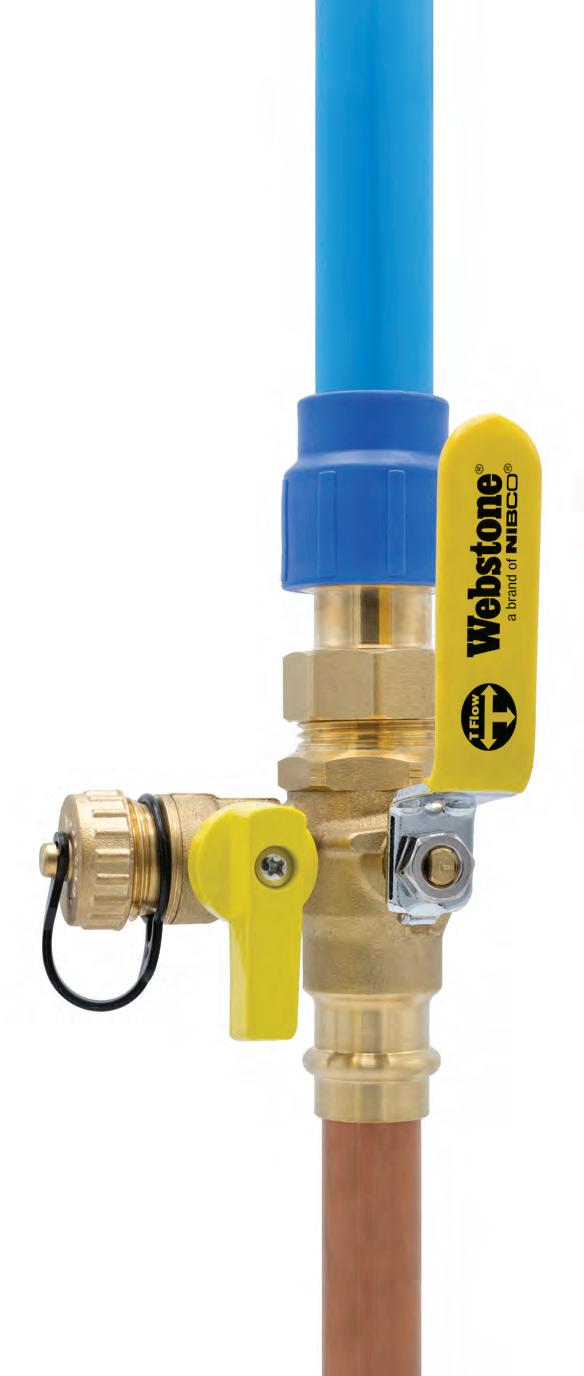
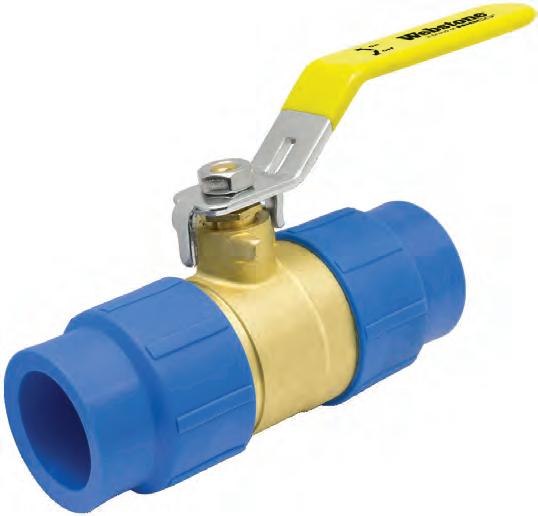
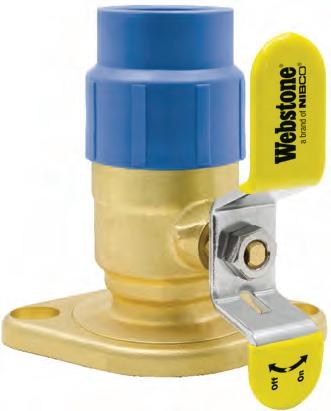
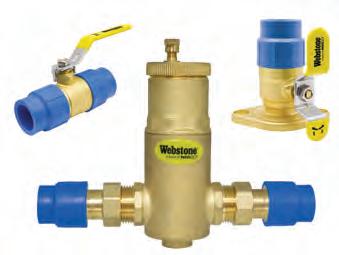
WEBSTONE EXCLUSIVES FOR USE WITH ANY PP-R OR PP-RCT PIPING SYSTEM
PATENTED T ECHNOLOGY
ADD PP-RCT CONNECTIONS TO ANY WEBSTONE G-SERIES BODY
• Permanent, leak-free, heat-fused connections made in seconds
• PP-RCT sockets compatible with all PP-R & PP-RCT piping systems†
• Safe, clean, long-lasting, high performance materials
• Suitable for potable and hydronic applications
• Available in female metric socket nominal sizes 1/2" to 2"
• G-Series PP-RCT union fittings add PP-RCT connections to any Webstone G-Series body
HYDRONICS
Self-servicing units
Now, I’m not talking about boilers growing arms and servicing themselves but more along the lines of equipment being selfdiagnostic. Utilizing a subscription service akin to the standard annual maintenance plan, the home would send out a message to technicians on the other end of the subscription. They can either bid on the repair or possibly even automatically schedule the repairs with the customer having to do nothing at all. Something like this already exists, albeit in its infancy.
TIME TO START EXPLORING
The future of HVAC will likely always require someone to be onsite for the install and repairs but that doesn’t mean it has to be so complicated and complex let alone nerve racking when a customer’s system goes down. It can be seamless where the home knows how to save energy and does so. Where the home knows when repairs or service are needed and does that automatically. The limit to what can be done with AI in HVAC is not yet charted or known but what we do know is that it will be based around energy savings and consumer needs.
This is likely going to happen fast too. As mentioned, there are already some products that are leading the way. I would say this isn’t something you are going to want to just sit back and see how it goes. The time is now to start exploring and hop on opportunities. Will we likely get a few things wrong along the way? Sure. Still, I’d rather swing and miss a few times than get left behind as this new world of AI opens countless doors for the service industry.
THE PROOF IS IN THE MATH
Let’s tackle setback efficiencies as that still seems to be a sticking point with many customers. Here’s the math to illustrate how it does work and does save on operating costs.
Let’s say a home has a heat loss of 50 MBTU/hr (50,000 BTU/ hr) with the heat loss being the key thing to work with. The calculations are done so we know that at design conditions (coldest day of the year) the building loses 50 MBTU/hr when we want to keep that building at “room temperature” (70°F).
We calculate the heat loss based on the equation Q = (A x U) x ΔT.
Q is the amount of BTU/hr required
A is the area
U is the insulation factor
ΔT is the temperature differential from outdoor design to indoor setpoint
When we setback a thermostat we change the delta T. Now we’re not heating the building to 70°F. We are heating it to 65°F for example. The smaller number will require less BTUs to heat the space. Everyone agrees on that. Where things fall apart is usually when we need to reheat the area to comfort setpoint. To calculate what is required to do this we figure out what the pickup load is going to be and add that back to the heat loss. Pickup load calcs are done the exact same way as heatloss (Q = (A x U) x ΔT) but in this case the delta T is much smaller, usually five to 10 degrees instead of ~90 degrees more or less depending on location. The savings we get on setting back a thermostat five degrees or more over time will be more than what is required for the pickup load.
The general rule I use is if we can setback for a minimum of one hour then the pickup load usually balances out to be net neutral to the setback savings, meaning you didn’t save anything. However, the longer we setback the more energy we save. The pickup load stays constant and is only a one-time event so that’s where energy is saved.
Higher Turndown Hydronics
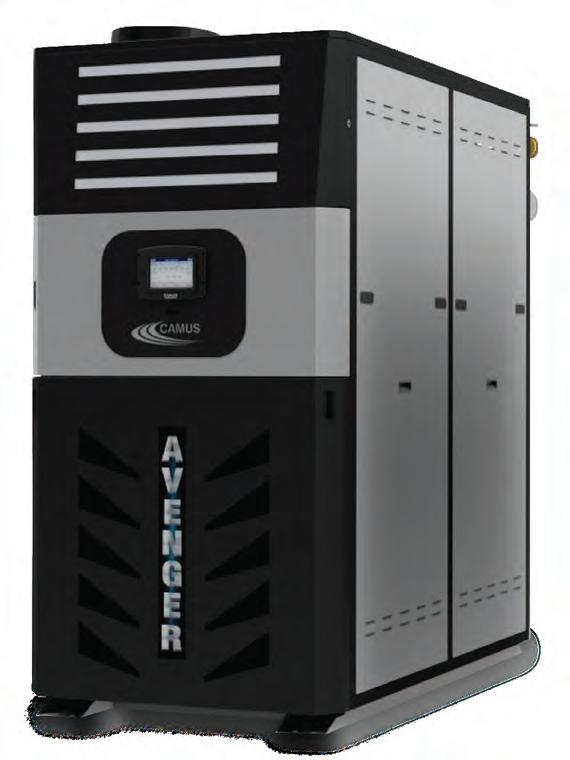
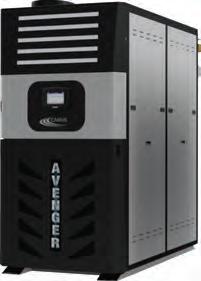
Avenger® Series II
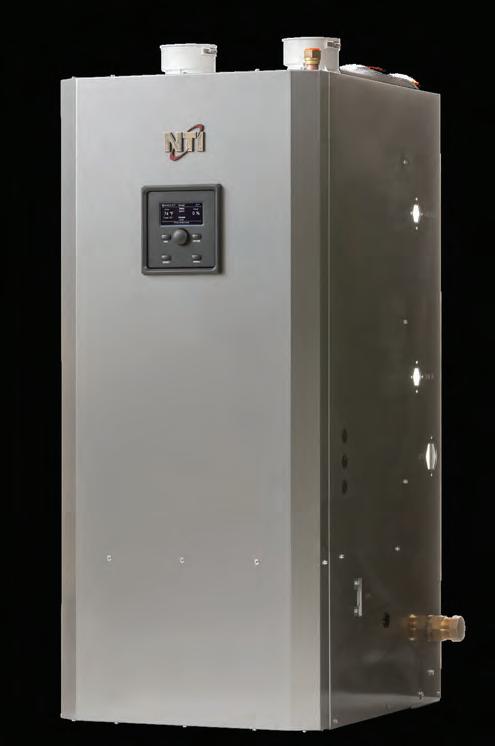
5000 & 6000 MBH Boiler
The Avenger® Series II is an advanced two-pass, counter-flow firetube commercial boiler, providing efficient hot water for demanding hydronic needs.
» Industry-leading 40:1 turndown
» Thermal efficiencies of up to 96%
» Designed for today’s higher turndown variable primary and low pressure systems
» 3 to 4 week lead-time with stock units available for quick ship
CAMUS
THANK YOU !
Established in 1948, Ontor grew to become a National Distributor of Heating, Air Conditioning, Plumbing and Refrigeration products. We lead with world products and a motivated team. Ontor combines traditional loyalty with a culture of technology and innovation.
Your Distributor of Heating, and Refrigeration
...to our customers and suppliers for over 75+ years of support.
! ...to our customers and suppliers for over 75+ years of support.
products and a motivated team. Ontor combines traditional loyalty with a culture of technology and innovation.
Established in 1948, Ontor grew to become a National Distributor of Heating, Ventilation, Air Conditioning, Plumbing and Refrigeration products. We lead with world-class products and a motivated team. Ontor combines traditional values of service and loyalty with a culture of technology and innovation.
...to our customers and suppliers for over 75+ years of support.
Established in 1948, Ontor grew to become a National Distributor of Heating, Ventilation, Air Conditioning, Plumbing and Refrigeration products. We lead values of
loyalty with a culture of technology and innovation.
Established in 1948, Ontor grew to become a National Distributor of Heating, values of service
Established in 1948, Ontor grew to become a National Distributor of Heating, Ventilation, Air Conditioning, Plumbing and Refrigeration products. We lead with world class products and a motivated team. Ontor combines traditional values of service and loyalty with a culture of technology and innovation.
and
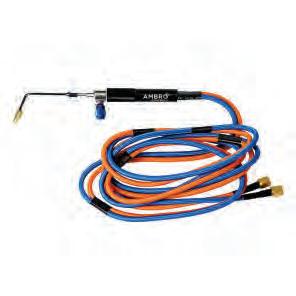
Products for Brazing, Soldering, Purging, Oxygen and Nitrogen Cylinders along with R290 and R600A Refrigerants.
Products for Brazing, Soldering, Purging, Oxygen and Nitrogen Cylinders along with R290 and R600A Refrigerants.
Products for Brazing, Soldering, Purging, Oxygen and Nitrogen Cylinders along with R290 and R600A Refrigerants.
Products for Brazing, Soldering, Purging, Oxygen and Nitrogen Cylinders along with R290 and R600A Refrigerants.
Products for Brazing, Soldering, Purging, Oxygen and Nitrogen Cylinders along with R290 and R600A Refrigerants.
n Products for Brazing, Soldering, Oxygen and Nitrogen Cylinders with R290 and R600A Refrigerants.
n Products for Brazing, Soldering, Purging, Oxygen and Nitrogen Cylinders along with R290 and R600A Refrigerants.
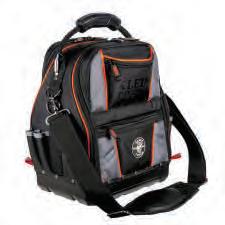
Hand Tools, Tool bags, Test Meters, Work Lights and Safety Gear.
n Products for Brazing, Soldering, Purging, Oxygen and Nitrogen Cylinders along with R290 and R600A Refrigerants.
Superior S600 -
Quality Hand Tools, Tool bags, Test Meters, Work Lights and Safety Gear.
< Quality Hand Tools, Tool bags, Test Meters, Work Lights and Safety Gear.
< Quality Hand Tools, Tool bags, Test Meters, Work Lights and Safety Gear.
< Quality Hand Tools, Tool bags, Test Meters, Work Lights and Safety Gear.
Quality Hand Tools, Tool bags, Test Meters, Work Lights and Safety Gear.
< Quality Hand Tools, Tool bags, Test Meters, Work Lights and Safety Gear.
< Quality Hand Tools, Tool bags, Test Meters, Work Lights and Safety Gear.
< Quality Hand Tools, Tool bags, Meters, Work Lights and Safety
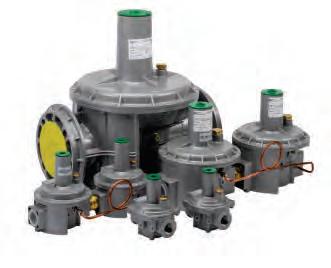
< Vent Free Gas Regulators for Indoor and Outdoor. CSA Approved for Models 2 psig, 5 psig and 10 psig Inlet.
Vent Free Gas Regulators for Indoor and Outdoor. CSA Approved for Models 2 psig, 5 psig and 10 psig Inlet.
Vent Free Gas Regulators for Indoor and Outdoor. CSA Approved for Models 2 psig, 5 psig and 10 psig Inlet.
Vent Free Gas Regulators for Indoor and Outdoor. CSA Approved for Models
2 psig, 5 psig and 10 psig Inlet.
Vent Free Gas Regulators for Indoor and Outdoor. CSA Approved for Models 2 psig, 5 psig and 10 psig Inlet.
Vent Free Gas Regulators for Indoor and Outdoor. CSA Approved for Models 2 psig, 5 psig and 10 psig Inlet.
< Vent Free Gas Regulators for Indoor and Outdoor. CSA Approved for Models 2 psig, 5 psig and 10 psig Inlet.
< Vent Free Gas Regulators for Indoor and Outdoor. CSA Approved for Models 2 psig, 5 psig and 10 psig Inlet.
< Vent Free Gas Regulators for Indoor Outdoor. CSA Approved for Models 2 psig, 5 psig and 10 psig Inlet.
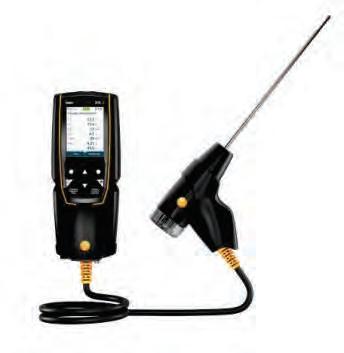
Test and Measurement Products for Combustion, Temperature, Humidity, Airflow, Refrigeration and A/C in HVAC
Test and Measurement Products for Combustion, Temperature, Humidity, Airflow, Refrigeration and A/C in HVAC
Test and Measurement Products for Combustion, Temperature, Humidity, Airflow, Refrigeration and A/C in HVAC
< Test and Measurement Products for Combustion, Temperature, Humidity, Airflow, Refrigeration and A/C in HVAC
Test and Measurement Products for Combustion, Temperature, Humidity, Airflow, Refrigeration and A/C in HVAC
Test and Measurement Products for Combustion, Temperature, Humidity, Airflow, Refrigeration and A/C in HVAC market.
< Test and Measurement Products for Combustion, Temperature, Humidity, Airflow, Refrigeration and A/C in HVAC market.
< Test and Measurement Products for Combustion, Temperature, Humidity, Airflow, Refrigeration and A/C in HVAC market.
< Test and Measurement Products Combustion, Temperature, Humidity, Airflow, Refrigeration and A/C in market.
Air and Dirt Eliminators for Hot and Chilled Water Systems. Models with and without magnet.
< Air and Dirt Eliminators for Hot and Chilled Water Systems. Models with and without magnet.
Air and Dirt Eliminators for Hot and Chilled Water Systems. Models with and without magnet.
Air and Dirt Eliminators for Hot and Chilled Water Systems. Models with and without magnet.
Air and Dirt Eliminators for Hot and Chilled Water Systems. Models with and without magnet.
Air and Dirt Eliminators for Hot and Chilled Water Systems. Models with and without magnet.
< Air and Dirt Eliminators for Hot and Chilled Water Systems. Models with and without magnet.
< Air and Dirt Eliminators for Hot and Chilled Water Systems. Models with and without magnet.
Ventilation, Air-Conditioning Products for 75+ Years
Hydronic
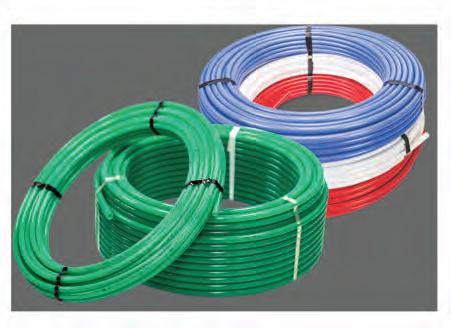
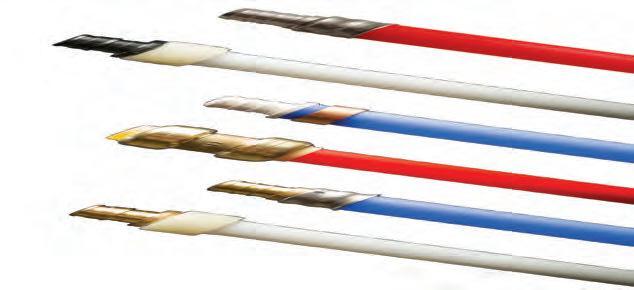
Manifolds and Accessories, PEX Tubing, Hyperpure PERT Tubing, Hydronic and Plumbing Components. < Heating Solutions (Gas and Electric Furnaces), Fan Coils
< Heating Solutions (Gas and Electric Furnaces), Fan Coils and Air Handlers.
booth# 1209 product offerings
Visit Ontor CMPX booth# 1209
Filtration Systems -
Remotes, Peripherals and
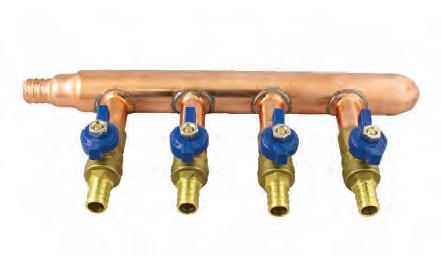
Hydronic Manifolds and Accessories, PEX Tubing, Hyperpure PERT Tubing, Hydronic and Plumbing Components.
Hydronic Manifolds
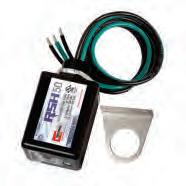
< Duct Smoke Detectors, Remotes, Peripherals and Relays.
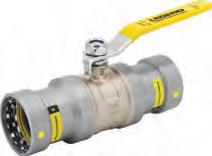
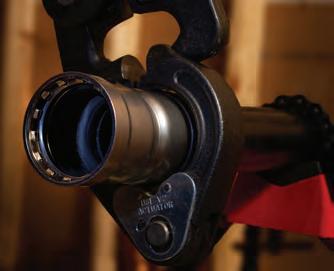
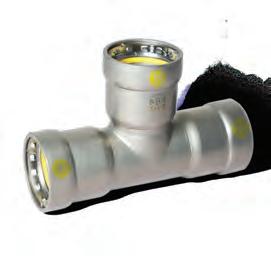
Pressed with Precision. Bound by Steel. Carbon Steel Press Valves for Gas and Water.
Heating Solutions (Gas and Electric Furnaces), Fan Coils and Air Handlers.
Hydronic Manifolds and Accessories, PEX Tubing, Hyperpure PERT Tubing, Hydronic and Plumbing Components.
Manifolds and Tubing, Tubing, Hydronic Components. Heating Solutions (Gas and Electric Furnaces), Fan Coils and Air Handlers.
< Hydronic Manifolds and Accessories, PEX Tubing, Hyperpure PERT Tubing, Hydronic and Plumbing Components.
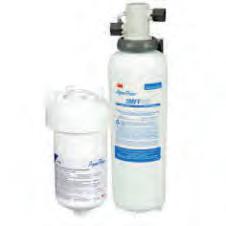
Water Filtration Systems Residential, Commercial, Service, Ice Machines. Formerly Health Care.
Heating Solutions (Gas and Electric Furnaces), Fan Coils and Air Handlers.
< Heating Solutions (Gas and Electric Furnaces), Fan Coils and Air Handlers.
Solutions (Gas and Furnaces), Fan Coils Handlers.
Duct Smoke Detectors, Remotes, Peripherals and Hydronic Components.
Hydronic Manifolds and Accessories, PEX Tubing, Hyperpure PERT Tubing, Hydronic and Plumbing Components.
Heating Solutions (Gas and Electric Furnaces), Fan Coils and Air Handlers.
Duct Smoke Detectors, Remotes, Peripherals and
Heating Solutions (Gas and Electric Furnaces), Fan Coils and Air Handlers.
Duct Smoke Detectors, Remotes, Peripherals and Relays.
Duct Smoke Detectors, Remotes, Peripherals and
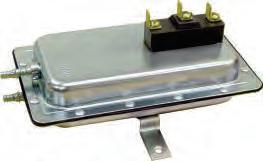
Air Proving Switches.
Duct Smoke Detectors, Remotes, Peripherals and Hydronic Manifolds and Accessories, PEX Tubing, Hyperpure PERT Tubing, Hydronic
Duct Smoke Detectors, Remotes, Peripherals and Relays.
Heating Solutions (Gas and Electric Furnaces), Fan Coils and Air Handlers.
Heating Solutions (Gas and Electric Furnaces),
Commercial, Food Service, Ice Machines. Formerly 3M Health Care.
Solutions (Gas and Electric Furnaces), Fan Coils
Duct Smoke Detectors, Remotes, Peripherals and
< Duct Smoke Detectors, Remotes, Peripherals and
Manifolds and Accessories, PEX Tubing, Hyperpure PERT Tubing, Hydronic and Plumbing Components.
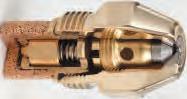
< Oil Burner Nozzles and Accessories.
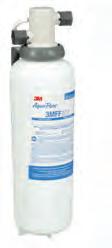
n Water Filtration SystemsResidential, Commercial, Food Service, Ice Machines. Formerly 3M Health Care.
Duct Smoke Detectors, Remotes, Peripherals and Relays.
Peripherals and
Air Proving Switches.
Duct Smoke Detectors, Remotes, Peripherals and
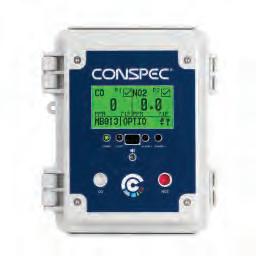
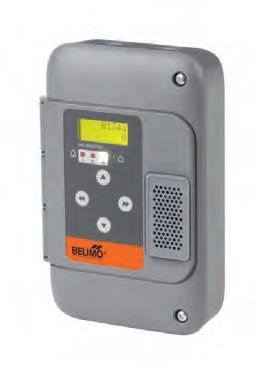
n IMC - Compliant Gas Detection for Parking Garages, Ambulance and Fire Stations, Warehouses, Loading Docks, Vehicle Service Centers.
n Water Filtration SystemsResidential, Commercial, Food Service, Ice Machines. Formerly 3M Health Care. Booth#1023
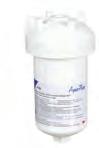
Water Filtration SystemsResidential, Commercial, Food Service, Ice Machines. Formerly 3M Health Care.
IMC-Compliant Gas Detection for Parking Garages, Ambulance and Fire Stations, Warehouses, Loading Docks,
n Air Proving Switches.
< Oil Burner Nozzles and Accessories.
Ambulance and Fire Stations, Warehouses, Loading Docks, Vehicle Service Centers.
n IMC - Compliant Gas Detection for Parking Garages, Ambulance and Fire Stations, Warehouses, Loading Docks, Vehicle Service Centers.
Air Proving Switches.
Oil Burner Nozzles and
Stations, Docks,
n IMC - Compliant Gas Detection for Parking Garages, Ambulance and Fire Stations, Warehouses, Loading Docks, Vehicle Service Centers.
Detection for Parking Garages, Ambulance and Fire Stations, Warehouses, Loading Docks, Vehicle Service Centers.
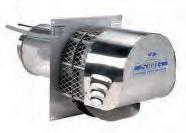
n Draft Controls, Sidewall Power Venters, Draft Inducers,
Booth#1023 Visit Ontor CMPX booth# 1209
Water Filtration Systems
n Water Filtration SystemsResidential, Commercial, Food Service, Ice Machines. Formerly 3M Health Care.
n Water Filtration SystemsResidential, Commercial, Food Service, Ice Machines. Formerly 3M Health Care.
Water Filtration SystemsResidential, Commercial, Food Service, Ice Machines. Formerly 3M
< Duct Smoke Detectors, Remotes, Peripherals and Relays.
< Oil Burner Nozzles and Accessories.
Air Proving Switches.
Oil Burner Nozzles and Accessories. Draft Controls, Sidewall Power
IMC - Compliant Gas Detection for Parking Garages, Ambulance and Fire Stations, Warehouses, Loading Docks, Vehicle Service Centers.
Water Filtration Systems
Residential, Commercial, Service, Ice Machines. Health Care.
Burner Nozzles and Accessories. Draft Controls, Sidewall Power Venters, Draft Inducers,
< Oil Burner Nozzles and Accessories.
Draft Controls, Sidewall Power Venters, Draft Inducers,
n Draft Controls, Sidewall Power Venters, Draft Inducers,
Compliant Gas Detection Parking Garages, Oil Burner Nozzles and n Draft Controls, Sidewall Power
Oil Burner Nozzles and
Oil Burner Nozzles Accessories.
Oil Burner Nozzles Accessories.
Oil Burner Nozzles and
n Draft Controls, Sidewall Power Venters, Draft Inducers,
Air Proving Switches.
n Draft Controls, Sidewall Venters, Draft Inducers,
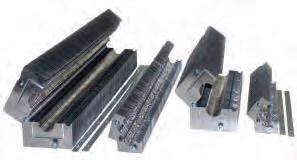
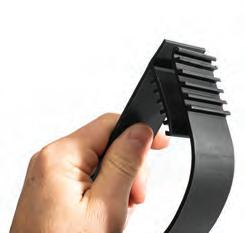
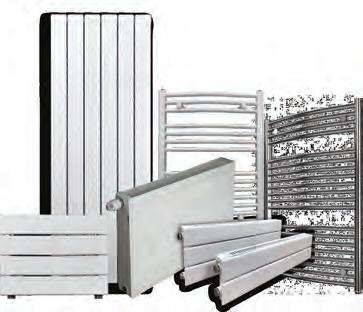
The Fin Clamp Element is a multi-fin hinged hydronic heat element that fits around the existing hot water heating pipe and installs in minutes. It can be used to replace damaged fins and fix cold spaces. .
The Fin Clamp Element is a multi-fin hinged hydronic heat element that fits around the existing hot water heating pipe and installs in minutes. It can be used to replace damaged fins and fix cold spaces.
IMC - Compliant Gas Detection
IMC - Compliant Gas Detection
Draft Controls, Sidewall Power Venters, Draft Inducers, Water Filtration SystemsResidential, Commercial, Food Service, Ice Machines. Formerly 3M
Draft Controls, Sidewall Power Venters, Draft Inducers,
Loading Docks, Vehicle Service Centers.
- Compliant Gas Detection
Firestop Industry - HVAC, Plumbing, Chemicals, Firestop Products.
< Rectorseal manufacture products for the HVAC-R, Plumbing Market and Firestop Industry - HVAC, Plumbing, Chemicals, Firestop Booth#1023
Booth#1023
Ambulance and Fire Stations, Warehouses, Loading Docks, Vehicle Service Centers.
Ambulance and Fire Stations, Warehouses, Loading Docks, Vehicle Service Centers.
The Fin Clamp Element is a multi-fin hinged hydronic heat element that fits around existing hot water heating pipe and installs minutes. It can be used to replace damaged and fix cold spaces. .
The Fin Clamp Element is a multi-fin hinged hydronic heat element that fits around the existing hot water heating pipe and installs in minutes. It can be used to replace damaged fins and fix cold spaces. .
Draft Controls, Sidewall Power Venters, Draft Inducers, The Fin Clamp Element is a multi-fin hinged hydronic heat element that fits around the existing hot water heating pipe and installs in minutes.
Fin Clamp Element is a multi-fin hinged hydronic heat element that fits around the existing hot water heating pipe and installs in minutes. It can be used to replace damaged fins and fix cold spaces. .
A multi-fin hinged hydronic heat element that fits around the existing hot water heating pipe. It can be used to replace damaged fins and fix cold spaces.
The Fin Clamp Element is a multi-fin hydronic heat element that fits existing hot water heating pipe minutes. It can be used to replace and fix cold spaces. .
The Fin Clamp Element is a multi-fin hinged hydronic heat element that fits around the existing hot water heating pipe and installs in minutes. It can be used to replace damaged fins and fix cold spaces. .
< Rectorseal manufacture products for the HVAC-R, Plumbing Market and Firestop Industry - HVAC, Plumbing, Chemicals, Firestop Products.
< Rectorseal manufacture products for the HVAC-R, Plumbing Market and Firestop Industry - HVAC, Plumbing, Chemicals, Firestop Products.
and Hydronics.
The Fin Clamp Element is a multi-fin hydronic heat element that fits around existing hot water heating pipe and minutes. It can be used to replace and fix cold spaces. .
n Aspen Coils and Air handlers. AHRI Certified Coils for A/C, Heat Pumps and Hydronics.
Aspen Coils and Air handlers. AHRI Certified Coils for A/C, Heat Pumps and Hydronics.
n HVAC Components and AccessoriesDisconnects, Whips, Motors, Capacitors and Contactors.
n HVAC Components and AccessoriesDisconnects, Whips, Motors, Capacitors and Contactors.
HVAC Components and AccessoriesDisconnects, Whips, Motors, Capacitors and Contactors.
HVAC Components and Accessories Disconnects, Whips, Motors, Capacitors and Contactors.
Booth#1023
Oil Burner Nozzles and
Draft Controls, Sidewall Power Venters, Draft Inducers,
The Fin Clamp Element is a multi-fin hinged hydronic heat element
Booth#1023
Advanced bidding strategies for plumbing contractors
Accurate estimating is the cornerstone of a profitable plumbing contracting business. Whether you’re a seasoned contractor or new to the bidding process, your ability to estimate jobs correctly determines not only whether you win work, but whether that work will be profitable. Poor estimating leads to either missed opportunities from bids that are too high, or worse − winning jobs that lose money due to underestimating costs. For plumbing contractors operating in today’s competitive market, mastering how to bid jobs with both basic and advanced strategies is essential for sustainable business growth. In addition to becoming familiar with the basic steps of how to bid plumbing jobs, there are additional practical strategies contractors can implement to improve bidding success rates. Understanding how to price jobs competitively while maintaining profitability is crucial for long-term business sustainability.
Build relationships with multiple GCs
One of the most crucial advanced strategies is expanding your network of potential clients. When you receive project plans, reach out to the architect or project team to identify which general contractors (GCs) are planning to bid on the project. Once you have that list, proactively contact each GC to introduce yourself and request inclusion on their bidding list. Never limit yourself to bidding with just one GC per project − that approach severely restricts opportunities and negotiating power.
Strategic risk and effort analysis
Not every bidding opportunity is worth pursuing. When you discover numerous plumbing contractors are chasing the same project, perform a realistic assessment of your competitive advantages. Consider factors such as your relationship with the GCs, your capacity to handle the work, and any unique qualifications or cost advantages you might have. If you don’t have a clear edge that makes you competitive, it may be more profitable to redirect estimating resources toward opportunities with better win probability.
Stay current with project documentation and addendums
One critical yet often overlooked aspect of successful plumbing bidding involves meticulous document management throughout the bidding process. Always check for project addendums before finalizing your bid, as these updates can significantly impact material requirements, specifications, or project scope.
Load all addendums into your complete drawing package to ensure nothing gets missed during the takeoff process. When working with multiple drawing revisions, create a systematic filing approach and make detailed notes about which drawing version you’re referencing for each section of your bid.
Using outdated drawings or missing critical addendums can result in substantial cost overruns or change orders that erode
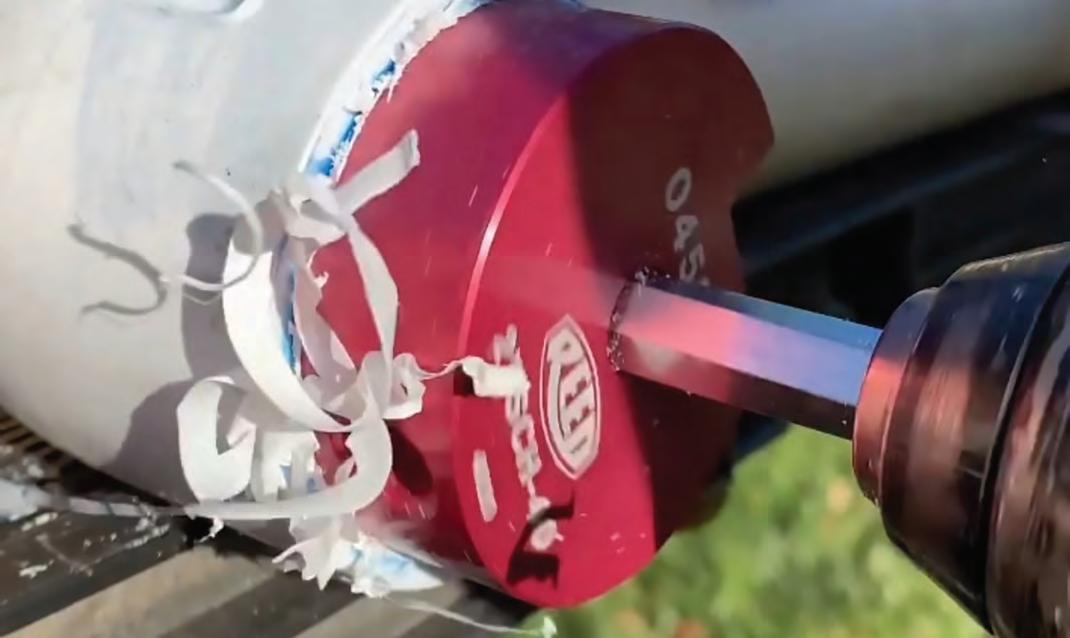
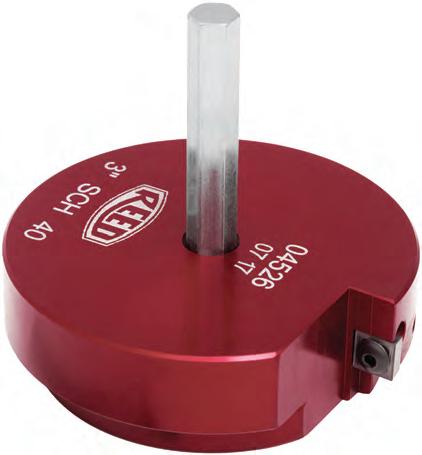
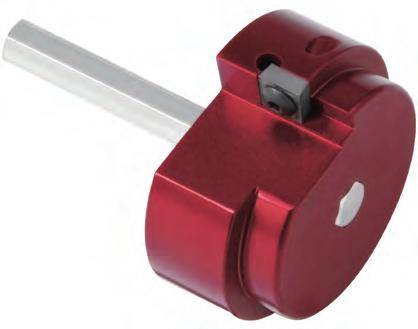
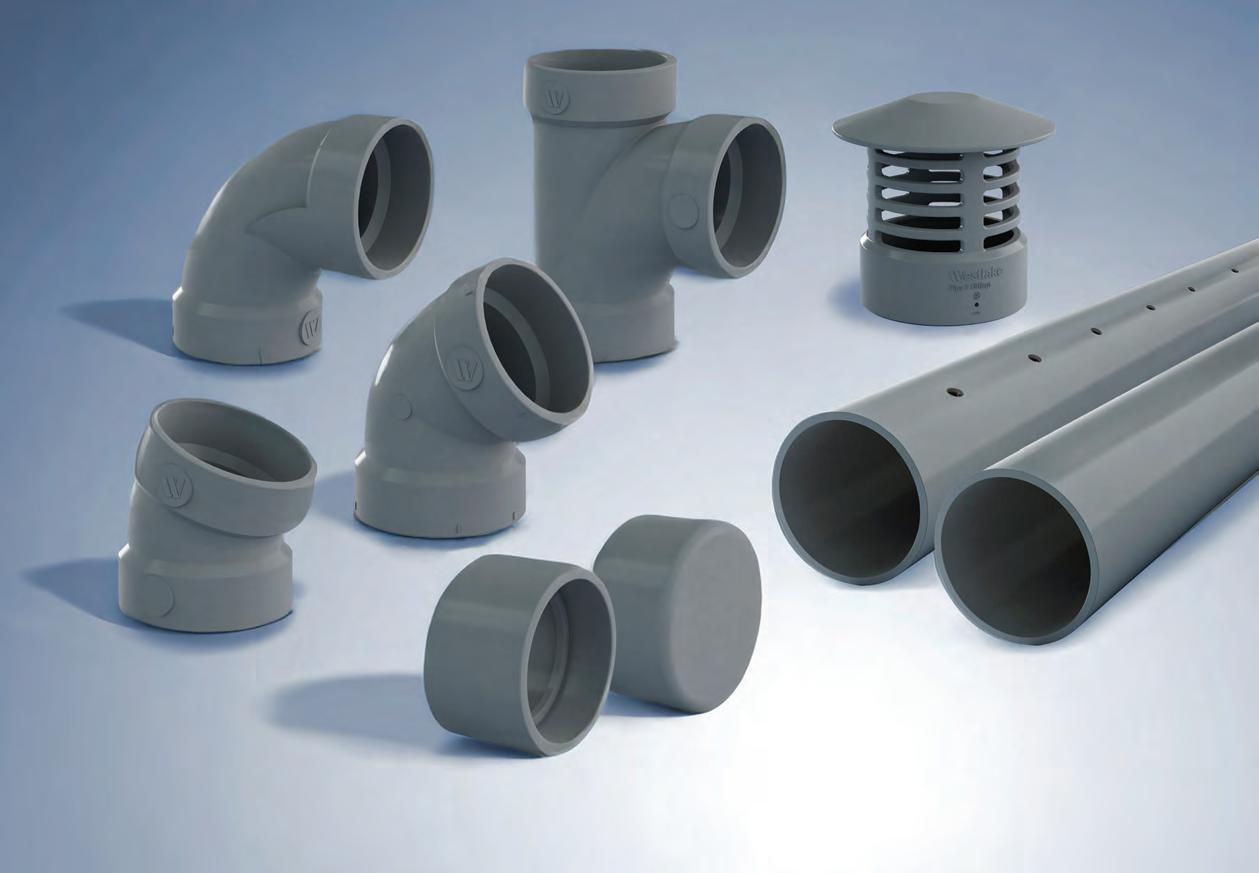
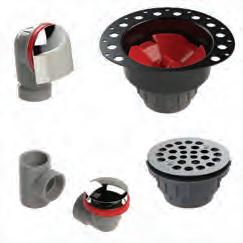
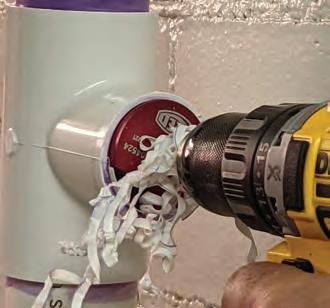
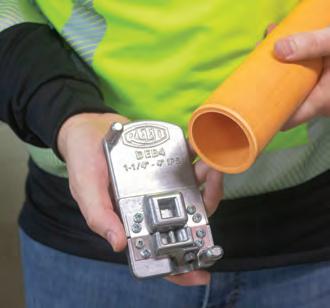
• Provides super-smooth fitting clean out for tough-to-reach PVC, CPVC and ABS fittings.
• Reduce labor time and materials costs by reusing fittings.
your profit margins. Establish a checklist to verify you’re working with the most current version of each drawing, and always cross-reference drawing dates and revision numbers before submitting your proposal.
Handle drawing discrepancies strategically
As you review project drawings, you’ll inevitably encounter discrepancies or unclear specifications. Your approach to these issues can significantly impact competitiveness and profitability. For minor discrepancies, make a note in the bid letter − this documentation can become your first change order if you win the project. For major discrepancies that could significantly affect cost, submit a Request for Information (RFI) to the engineer. This forces clarification and ensures all plumbing contractors are bidding on the same scope, creating a level playing field.
Maintain a consistent bidding pipeline
Successful contractors understand bidding must be a continuous process, not a reactive one. The feast-or-famine cycle kills profitability and growth. This happens when you focus on current work, finish projects, then scramble to find new opportunities. Establish a systematic approach to constantly pursue new bidding opportunities while managing current projects. This consistency keeps the pipeline full and provides better cash flow predictability.
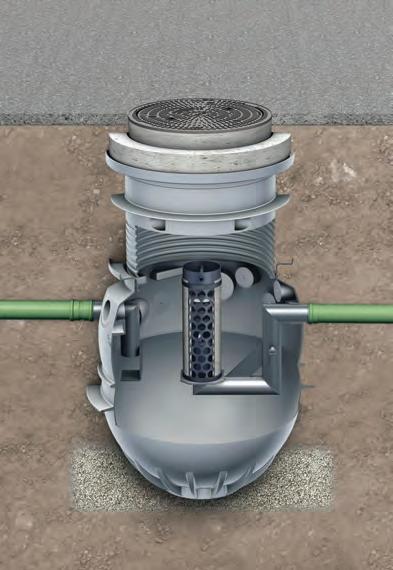
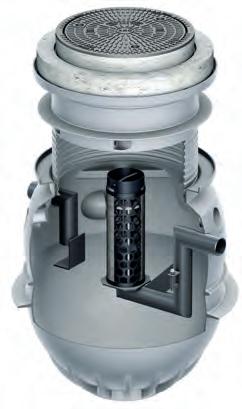
ACO Oleopator P
Environment
Oil/Water Separators
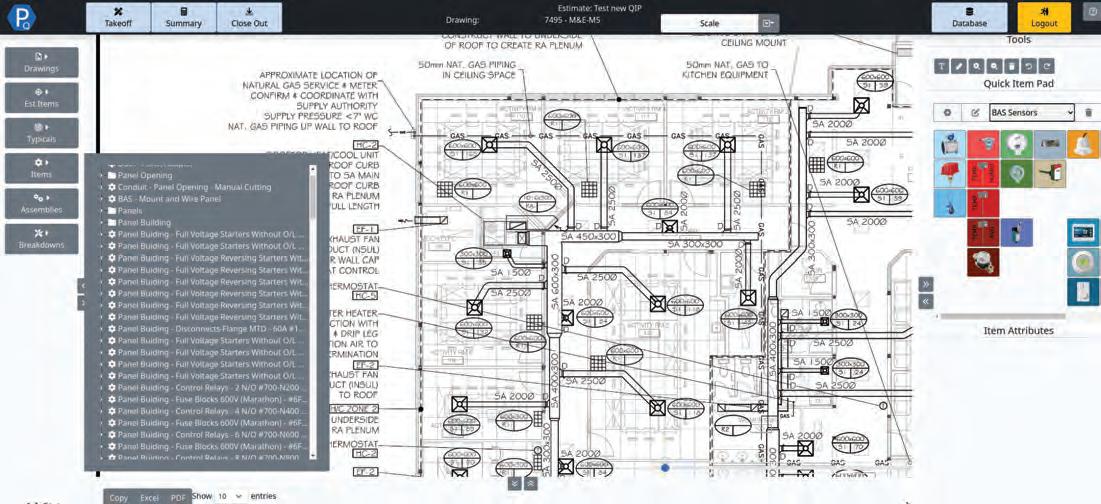
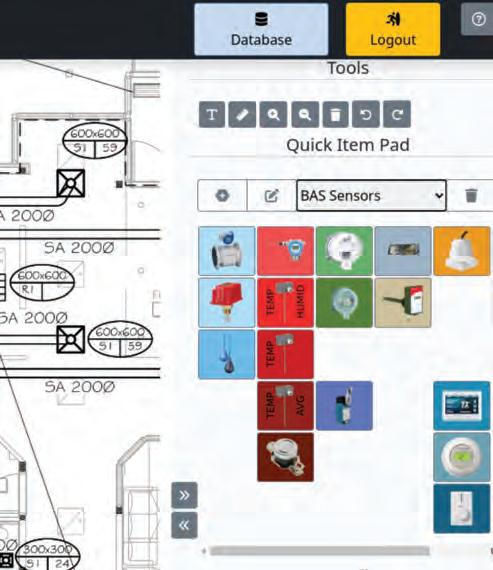
Melvin Newman is a mechanical estimator who worked extensively in the field before founding PataBid, a technology company serving the mechanical/electrical contracting industry. Quick item pad
Westlake Pipe & Fittings
The truth about rebate programs … and how to use them to your advantage
Previously in my career, I designed energy efficiency rebate programs for Ontario’s natural gas utilities. I would have to defend the design of these programs to the commissioners and lawyers at the Ontario Energy Board (OEB), which regulates Ontario’s utilities, to ensure ratepayer money was prudently spent and they were properly serving the diverse needs of customers.
I’m going to provide you with an inside look at these rebate programs, so you can understand how to best use them for your business. At best, rebate programs can be transformative in the marketplace, raising the bar for all market actors and creating sustained demand for higher performance solutions. At worst, they create false economies that pull ahead demand for a brief period and leave a vacuum in its wake. Like them or not, efficiency rebates are a mainstay in the Canadian marketplace. You don’t want to ignore them if they have something to offer customers.
Here are five key things you need to know about energy efficiency rebate programs and what it means for you as a contractor.
1
Understand their goals
Programs have goals. With regards to energy efficiency, the goals are typically to help customers reduce their demand and consumption of energy, utility costs, and greenhouse gas emissions (GHGs). Program providers – typically government agencies or utilities – will specify these goals in terms of hard targets for GJs, m3, kWh, kW, tC02e −and be held to account by their regulator or ministry to achieve them. The bottom line is if a project doesn’t save energy, it probably doesn’t qualify for a program incentive.
Tom Grochmal
Many provincial energy efficiency program providers, such as Efficiency Nova Scotia, offer financial support for commercial building recommissioning. These are often low-cost, low-risk measures that are a great way to try out utility programs if you haven’t used them before.
Takeaway: As contractors, set the proper expectations with your customers. There are no rebates for things they have to do for safety or code compliance. That’s why, for example, programs promoting insulation rebates don’t apply to new construction.
2
Programs have set budgets
Rebate programs have budgets − budgets that are typically approved over a set time frame. The federal Greener Homes Program provided $1.8B to over 400,000 households in a three year time frame and had to be wound down once the budget was fully spent. Utility programs that are insulated from government interference through public utility commissions tend to have the longest track record for continuity, but even they run in multi-year frameworks, which are subject to renewal.
Tom Grochmal, PhD, P.Eng. is founder and CEO of Trim Tab Energy Retrofits (trimtabretrofits.com), an energy contractor with a mission to renew housing and inspire better living.
Takeaway: You can never count on a program to run forever. They are not designed to. Do not build a business that is highly dependent on any single rebate program. If you depend on rebates to drive your business, then follow the rule of good investment counsellors and diversify.
3
Programs promote solutions that go beyond minimum requirements
Programs have goals tied to savings. What you save always depends on what you’re comparing it to. A tankless water heater saves natural gas relative to an atmospheric tank, everything else being equal. So programs only promote solutions that go beyond minimum requirements, which are established either by (1) local code or (2) industry standard practice. This means programs are promoting and rebating more expensive products and services. This is an opportunity for contractors to sell premium solutions with higher margins. For example, a cold climate heat pump is a more expensive solution than a single stage air conditioner.
Takeaway: Programs represent an opportunity to earn higher margins on premium products and solutions, because rebates exist to offset the incremental cost. Rebates often do not cover the full incremental cost, so it’s a challenge and opportunity for your sales team to upsell the premium product based on its features and benefits, not just because of the rebate.
4
Programs are often a launch point for new technology
Some programs take on a more transformative edge in the marketplace by introducing new technologies. The Canada Greener Homes Program was that to some extent in provinces where heat pumps previously had little traction. In these situations, well designed programs need to build up the ecosystem that supports the uptake of new technology −meaning the supply chain, which includes contractors.
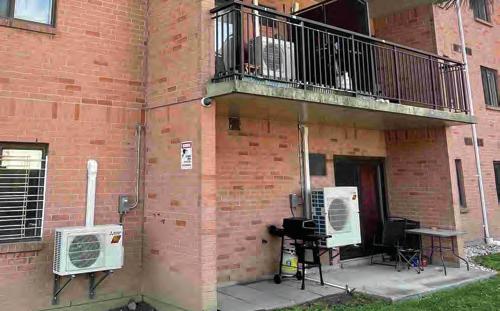
The installation of ductless heat pumps throughout an affordable housing apartment retrofit was influenced by energy conservation rebates available through the Save-On-Energy program in Ontario.
Takeaway: When programs introduce new technology to a marketplace, it’s a capacity building opportunity (see Retrofit market transformation in the November/December 2025 issue of Mechanical Business where I profiled a contractor who participates in utility programs to build up their company’s internal capacity to size, sell and install heat pumps). These sorts of programs are usually designed with a training component for service providers. They can’t hit their goals without contractors being property trained and engaged. If you are not satisfied with the training offering, let the program administrator know.
5
Free ridership is the death of programs
Energy efficiency programs must be influential to have value to society. They work on the premise that they can influence purchasing and design decisions through technical and financial support. If programs were simply an exercise of handing money to people for things they would do anyways (referred to as “free riders”) then it’s simply a waste of taxpayer or ratepayer money. That is a big reason why programs have so many rules and the paperwork to go with it: they need to show and demonstrate influence.
Takeaway: There is usually no rebate for projects that were completed previously, unless the program specifically allows for backdated projects. Don’t get caught promising rebates for customers only to have them denied at a later date.
Conclusions
If it’s good for your customers, then it’s probably a good idea for you to promote the rebate program and/or participate in it (depending on the program type). Energy efficiency programs offer real opportunities to earn higher margin and build internal capacity. But it won’t come without some work on your end to understand the program rules, complete the paperwork and potentially upskill your employees.
As the economy grows and adds load to the electric and natural gas grids, energy efficiency programs will continue to be a mainstay because they offset the need for more infrastructure and high cost sources of production. Don’t let the parade pass you by, so to speak. Know the programs relevant to your area of expertise, and how they can help your customers.
In future articles, I will continue to showcase projects where energy efficiency rebates are influential and benefit the customer with better solutions than they would otherwise pursue.
The trend towards electrification through EVs and heat pumps adds to the importance of electricity conservation.
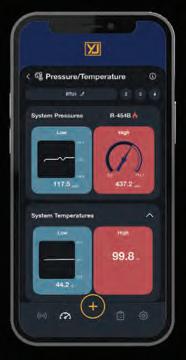
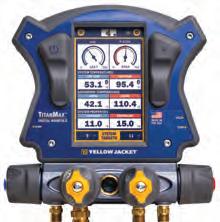
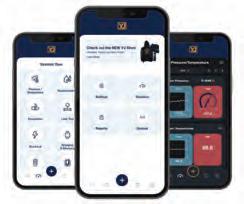
INTRODUCING THE ALL-NEW YJACK VIEW® APP
FASTER INSIGHTS. SMARTER TECH.
For additional information, scan the code or visit https://yellowjacket.com/yjack/
YJACK VIEW® provides seamless integration with YJACK®, TITANMAX®, and P51-870 TITAN® devices offering a complete HVAC/R diagnostic solution (hardware purchase required). Easily receive and analyze live data from all powered on, nearby YJACK®, TITANMAX®, and P51-870 TITAN® devices including system pressure, temperature, vacuum, psychometrics, and current draw.
FREE Remote Data: Share live sensor readings with another user to enable real-time troubleshooting and remote monitoring
Enhanced Reporting: Easily capture system readings with snapshots, notes, and photos from any session
Data Logging: Record data from one or multiple session types with adjustable sampling rates
Yellow Jacket
EXTEND PROTECTION GROW YOUR BUSINESS
With Prime Warranty.
Think of Prime Warranty as your trusted warranty partner. We equip you with the tools and support you need to seamlessly offer and manage extended warranties—at no cost or risk to your business.
While your focus is on selling, installing, and servicing HVAC systems, our expertise lies in enhancing manufacturer warranties with extended parts and labour coverage. This not only protects your customers’ investments but also strengthens their loyalty, drives repeat business, and creates new revenue opportunities.
Partnering with Prime Warranty means adding real value to every installation, increasing your revenue potential, and building long-term success—for both your business and the customers you serve.
Ready to get started?
Contact Prime Warranty today. (855)595-6302 | service@primewarranty.ca | primewarranty.ca
By Rebecca Harris
Symon Neigel: On the cutting edge
For Symon Neigel, plumbing and HVAC was an unexpected but rewarding career shift. The Calgary native spent his early working years in welding and crane operating, and eventually joined an oil service company. When the 2013 recession caused widespread layoffs in Alberta’s oil industry, Neigel went to work for a friend who owned a plumbing business and never looked back.
Today, Neigel is director and service manager of Stampede Plumbing and Heating, a company he purchased with a group of partners in 2025 and merged with his previous business, Heritage West Plumbing. Founded in 1998, Stampede provides plumbing and HVAC solutions for commercial and residential properties, as well as commercial refrigeration. The company has strong expertise in luxury homes, providing custom solutions spanning hydronic heating, multi-zone cooling and high-end plumbing installations.
Neigel says he prides himself on being “a cutting-edge boiler guy,” with hydronics being a significant part of the business. What he finds appealing about this work
Name: Symon Neigel
Company: Stampede Plumbing and Heating
Job Title: Director, service manager
Born in: Calgary, AB
Raised in: Victoria, BC
Lives in: Calgary, AB
Age: 40
Spouse: Joanne Sparkes
is the potential to integrate hydronics with sustainable technologies such as solar. He notes that there’s growing customer demand for more sophisticated systems, such as air to water heat pumps – an ecofriendly alternative to oil or gas boilers. Stampede is also exploring geothermal technologies with an aim to maximize some of the “free energy” available in Alberta, adds Neigel.
On the sustainability front, Neigel has been encouraged by his girlfriend, Joanne Sparkes, a Passive Housecertified architect with expertise in energy-efficient design. “Now, we’re working with builders on doing netzero projects and potentially some Passive Houses in the future,” says Neigel. “There are big learning curves with all this new technology, but it’s pretty cool to try to find a niche and stand out among other contractors.”
In addition to his leadership responsibilities, Neigel remains involved in day-to-day, hands-on work. “I’m still partially on the tools and am doing a lot of the more complicated service calls,” he says. “They let
me troubleshoot, use my head and get into the mechanics of a system.” For example, a large home might have a complex operating system. “You’ve got to figure out what controls are talking to it or figure out what’s happened if the system was changed or worked on by someone else over the years.”
Being hands-on also allows him to stay connected to his customers − a big part of what he enjoys about his job. “I’m a social butterfly. I love my customers and really enjoy conversing with them,” says Neigel. “Some of my customers have been with me since I started out, and it brings me a lot of joy to see how they’re doing and how fast their kids are growing.”
Schools and programs: Southern Alberta Institute of Technology (SAIT); Journeyman Certificate with Red Seal Endorsement, Gasfitting; Journeyman Certificate with Red Seal Endorsement, Plumbing (2014 to 2018)
Best advice you’ve ever received: Make hay while the sun shines
Advice for young people considering entering the trades: Don’t rush an apprenticeship. Try to be the best technician you can be, not an average technician, and learn while you can.
The current work ride: 2025 Mercedes-Benz Sprinter
Service area: Calgary, Bearspaw, Springbank
Any area you like to get dispatched to, and why: Bearspaw − it’s quiet
The most useful tool in your toolbox: Knipex adjustable pliers
Favourite tool in your toolbox: Multimeter
If you were granted one wish: A very comfortable early retirement
Best concert you ever attended: Red Hot Chili Peppers in Tokyo, Japan
Favourite sport: Hockey
Favourite car of all time: 1963 Corvette split window
Favourite season: Fall
Favourite restaurant or local lunch hang out: Thai Siam Restaurant
Favourite food: Japanese or Thai
Favourite snack: Currently African biltong
Favourite outdoor activity: Salmon fishing
Favourite place to be: Travelling with Joanne
Hobbies: Fishing and travelling
Favourite movie: Forrest Gump
Last book you read: Born a Crime by Trevor Noah
Last movie you saw: Dark Waters
Favourite website: Google. So much info
Biggest pet peeve: When an apprentice is not observant
One place in the world you would like to visit: Russia
One thing most people don’t know about you: I’ve travelled to 11 countries so far, most recently South Africa
One word or phrase that describes you: Hardworking
If you could meet anyone, alive or dead, who would it be? Nelson Mandela, due to my last trip
Finish these sentences:
My rule of thumb is ... in hydronics, math doesn’t lie.
If I had a million dollars I would ... pay off my house and invest.
When I was a kid, I wanted to be … an underwater welder.
HEALTH & SAFETY
BEST PRACTICES FOR EFFECTIVE GROUP LOCKOUT TAGOUT
Individual lockout tagout for machine maintenance and repair is highly standardized. But what happens when you factor in a group of employees, potentially across multiple machines, departments, crafts and shift changes? The chances for accidental re-energization increase and so does the need for additional protective measures.
As a result, the Occupational Safety and Health Administration (OSHA) requires greater coordination and communication for group lockout tagout, specifically 1910.147(f)(3). Here, we’ll explore specific aspects of the standard as it relates to group lockout procedure and policy, as well as common challenges, best practices and devices for an effective group lockout box procedure.
WHAT IS SPECIFIC IN STANDARD 1910.147 TO GROUP LOCKOUT?
Section 1910.147(f)(3) contains the specific details of group lockout procedure and policy, including circumstances and responsibilities. Group lockout covers locking out a machine, equipment or system when any of the following conditions are met: multiple energy sources, crews, crafts, location, employers or disconnecting means; where work involves a shift change; and when a particular sequence of operation is necessary to lockout safely.
When in a group lockout scenario, the following measures should be taken: must designate a single responsible employee who is in charge and accountable for the overall procedure; each authorized employee must apply their own padlock to the points of isolation; work authorization permits may be required – if required, they must be included in written procedures.
COMMON GROUP LOCKOUT TAGOUT CHALLENGES
Working under someone else’s lock
No matter how brief or simple an action may seem, when workers service equipment under the locks of others, they’re operating under a false sense of security. In reality, they have ceded any control as to how or when the equipment could be re-energized. OSHA’s “one person, one lock, one key” guidance exists for a reason. Yet, every year,
Make information accessible to ensure workers have the information they need, when they need it.
companies are cited in violation of it. Each employee working on a piece of machinery must apply his/her own lock only to ensure an OSHA-compliant lockout tagout program.
Being unprepared for the situation
Not having the proper lockout locks, tags and devices on hand wastes time, resources and puts workers at risk by encouraging lack of execution and follow-through. Teams should be prepared for lockout situations through procedure reviews, hands-on testing and training and having the necessary devices on hand. When it comes to locking out, a best practice is to always use a hasp and to never use the last lock position without adding an additional hasp or implementing a group lockbox instead.
Lack of coordination and oversight
Coordination is key when it comes to group lockout, and that’s why 1910.147(f)(3)(ii)(C) specifically outlines the need for a principal authorized employee. Clear display and access to lockout procedures helps with this common pitfall, including the use of group lock boxes, sign-in/sign-out sheets and more. Shift supervisors and/or maintenance leads should walk the facility floor every day to ensure things are in order and discover any potential action items.
Abandoned locks
There are separate procedures to be followed for removing abandoned locks, and they are a recipe for lost time and more risk for workers. One simple way to avoid this pitfall is making it a standard best practice that everyone removes locks at the end of their shift.
FIVE BEST PRACTICES
Develop a written group lockout program
Make the written program company and site-specific, aligned with operational practices, inclusive of the required elements and accepted, understood and followed by the workforce. Specifically, a written program should include: procedures for outside personnel or contractors; continuity of lockout during shift or personnel changes; emergency procedures for removing lockout devices; and assignment of responsibility. OSHA requires the written group lockout tagout procedures to be inspected at least annually. As part of your standardization, it’s a best practice to set a recurring date for inspection.
Perfect your padlocks
Ensure padlocks, devices and tags are durable, substantial, standardized, identifiable and exclusively for the control of hazardous energy. With the right padlock solution as part of a group lockout tagout system, you’ll be able to:
•Differentiate departments with colour and engraved names.
•Effectively organize your unique key system.
•Store uniquely coloured, serial-engraved equipment padlocks in a group lock box.
•Label each tag for compliance with authorized employee’s name, phone number, date and time of lockout.
•Save on supplies and maintain safety with reusable laminated tags for authorized employees and disposable economy cardstock for contractors.
•Added tip! Colour-code group lock boxes to differentiate groups of workers.
Structure shutdown and startup
Start by performing a scope of work. This may include any needs for temporary protective grounds, testing or positioning, as well as whether the entire lockout falls under one procedure, is sequential or requires backlocking. Then, a job safety analysis (JSA) will help identify physical requirements, environmental conditions and safety factors at each step, and help you identify any need to secure permits. Finally, always ensure the shutdown/restart process is well-documented, and a lockout procedure has been requested, developed, reviewed and approved.
It’s a best practice to set a recurring date for inspection of group lockout tagout procedures.
Make information accessible
Ensure employees have the information they need, when they need it, to perform work as safely and quickly as possible. This includes labelling isolation points, implementing signon/sign-off forms, and documenting lock box locations, lockout tagout procedures and checklists, JSA forms and permit forms.
Manage workers and shift changes
Labels, colours and clear communication are all key to managing multiple workers across shift changes. Specifically: use a red primary lock box for authorized employees and a yellow lock box for contractors; label corresponding boxes and accessories for specific equipment lockout; ensure lockout coordinator lock is first on and last off using the primary lock point; assign a shift coordinator to ensure contractor progress is tracked and equipment isn’t re-energized until the work is done; ensure shift coordinator has the master key for contractor locks in case of abandonment (ensure facility’s abandoned lock policy is followed); and provide proper training to new staff, especially with turnover of employees with legacy knowledge.
Two main types of group lockout devices
Multi-lock hasps
Multi-lock hasps are an easy and effective way to allow multiple workers to lock on and effectively lock out energy isolation points. All authorized employees attach their personal locks to a multi-lock hasp in the closed position and leave them there for the duration of their work. No one is able to remove the hasp and re-energize the energy isolation device until the last worker has removed their personal lock from the hasp.
Group lock boxes
When does a group lock box make sense?
Hasps and individual locks get the job done, but they eventually burden staff time and strain efficiency. As the number of isolation points goes up, the ability of a group lock box to save time does, too. For example, it’s possible, but not ideal, for five people to lock onto 12 isolation points, or 60 lock-ons, when 12 isolation point locks and just 5 locks on a group lock box could be used. So, generally, as isolation points rise, so does the utility of a group lock box.
For a group lockout box procedure, the lockout coordinator, or primary authorized employee, places primary isolation locks on every energy isolation device and places the keys inside a group lock box. After the lockout coordinator applies his or her personal lock to the group lock box, authorized workers lock onto the group lock box with their personal locks. The isolation lock keys stay locked inside the group lock box until the last worker has removed his or her personal lock from the group lock box and the lockout coordinator removes his or her lock last. Permit control stations provide a more comprehensive solution and are a group lockout best practice to keep devices and information together.
This article is adapted from resources developed by Brady. Note that while OSHA’s 1910.147(f)(3) is not directly applicable in Canada, it is crucial to consult the specific OHS regulations of the relevant Canadian jurisdiction, Ontario’s O. Reg. 851 for example, to ensure compliance with hazardous energy control requirements, including group lockout tagout procedures. bradycanada.ca
COMPACT PRESS SOLUTION ON THE 20V MAX
PLATFORM.
20V MAX * COMPACT
The DEWALT® 20V MAX* Compact Press Tool kit (DCE210D2K) provides broad press versatility in a lightweight, inline design that allows for overhead and one-handed pressing in small spaces; making it an outstanding solution for the pipe trades. The DCE210D2K kit is compatible with all DEWALT® compact series pressing attachments and includes 4 DEWALT® Compact CTS jaws with 1/2" to 1-1/4" copper press capacity. Onboard features include a 180° rotating head allowing for best press angles, an LED worklight for excellent press location visibility, Crimp Connect ® software to generate press cycle data tracking, a ram release button allowing for cycle reset. The DEWALT® DCE210 is compatible with most professional-grade press fitting brands when used with the DEWALT® Compact series press attachments. Please reference the compatibility chart on DEWALT.ca for a complete listing. The DCE210 Compact Press Tool utilizes the DEWALT® 20V MAX* battery system, joining 300+ products in the 20V MAX* lineup that are engineered to meet the specific needs of demanding trades.
PLUMBING
Death by a thousand drips
The real cost of ignoring small water leaks
Whenpeople think about water damage in commercial real estate, their minds often jump to the dramatic: burst pipes, torrential floods, and catastrophic roof leaks. The reality? The most costly and persistent damage isn’t caused by the big, attentiongrabbing disasters; it’s caused by the small, silent leaks that drip away unnoticed, day after day.
Small water leaks are often dismissed as minor inconveniences. A ceiling tile with a faint brown ring. A pipe that “sweats” in the basement. A faucet that doesn’t quite shut off. But make no mistake: in the world of building operations, small leaks are big problems.
This article breaks down why small leaks are so prolific in commercial real estate, where they typically occur, why they often go undetected, and, most importantly, the widespread impact they have on buildings, budgets, and businesses.
BIG PROBLEM, LOW VISIBILITY
Water is a building’s most underestimated threat. It flows silently through walls, ceilings, and floors, often out of sight and out of mind. And while building owners and operators may be focused on energy efficiency, access control, or tenant satisfaction, water is quietly doing its damage in the background.
Here’s why small leaks fly under the radar:
• They don’t trigger obvious alarms. A slow drip or pinhole leak rarely results in immediate flooding or damage.
• They often happen in low-traffic areas. Mechanical rooms, behind walls, above ceilings, or beneath slabs − places no one checks regularly.
• They evolve slowly. A wet spot becomes mould, then rot, then a structural issue over months or years.
By Simon Brunet
Simon Brunet is president and founder of Connected Sensors in Hamilton, ON. He researched and crafted a groundbreaking solution that effectively mitigates building risk and transforms water management.
TOP LEAK PRONE AREAS
Understanding where leaks typically originate can help prioritize inspections, monitoring, and maintenance. The most leak-prone areas in commercial buildings include.
• Tenants often don’t report them. Minor plumbing issues go unreported (especially in commercial settings) until they become visible or disruptive.
1
Toilets and faucets
Worn washers, faulty flappers, and slow-running toilets can waste thousands of gallons of water per month, without raising any alarms. They’re not just annoying; they’re expensive.
2 3 4
HVAC condensate lines
Condensation from HVAC systems often leads to slow drips behind walls or above ceilings. These leaks are a leading cause of mould and ceiling damage.
Irrigation systems
Cracked sprinkler lines, broken sprinkler heads, or faulty valves lead to underground leaks that can go undetected for months, resulting in high water bills and landscape damage.
Roof drainage and flashing
Poor sealing around rooftop equipment or failed flashing
DISCOVER WHAT’S NEW AT MOEN
Explore Moen’s newest faucet styles, elevated under-sink filtration and Instant Hot water systems, and connected solutions like the Flo® Smart Monitor and Shutoff. Plus, see our expanded kitchen accessories and finishes.
Experience what’s new in the world of beautiful water.
allows water to slowly seep in with every rainfall. Over time, this degrades insulation and interior structures.
Pipe fittings and connections
Even a pinhole leak at a pipe joint, especially in aging buildings, can lead to significant water loss and internal damage before it’s ever noticed.
THE HIDDEN COSTS OF LEAKS
The impact of small water leaks goes far beyond a few water stains or slightly higher water bills. Here’s what you can share with building owners and operators.
Over time, water compromises drywall, subfloors, wood framing, insulation, and even steel structures. Saturated materials weaken, warp, and break down, threatening the structural integrity of the building. Persistent dampness from undetected leaks also creates the perfect breeding ground for mould. Once mould sets in, remediation is expensive, and in some cases, legally mandated. Worse, tenants may start experiencing symptoms of sick building syndrome, leading to complaints, reputational damage, or even lawsuits. Insurance carriers also track the frequency and severity of water-related claims. Small leaks that lead to water damage drive up your claim history, increasing premiums and deductibles. Some insurers may even refuse coverage for properties with recurring leak-related issues.
On the operational side, a slow ceiling leak becomes a collapsed ceiling. A wet hallway becomes
a slip-and-fall hazard. Repairs require tenant relocation, contractor scheduling, and unexpected downtime, eating away at operational continuity. In addition, wet insulation is ineffective insulation. Leaks around HVAC units or behind walls can cause heating and cooling inefficiencies, driving up utility costs while decreasing tenant comfort.
LET’S DO THE MATH
Even a 0.5 gallon per minute leak wastes:
•720 gallons per day
•21,600 gallons per month
•259,200 gallons per year
At a conservative water rate of $4 per 1,000 gallons, that’s over $1,000/year per leak − just in water usage, not accounting for damage or repair. Now multiply that by the number of suites, floors, or facilities involved.
WHY MANUAL INSPECTIONS AREN’T ENOUGH
Despite best intentions, traditional building maintenance can’t reliably catch small leaks in time. Periodic inspections, monthly, quarterly, or even annually, leave massive time gaps for leaks to persist undetected. And by the time visible signs appear, the damage is already done.
What’s needed is a real-time, proactive approach to water monitoring, especially in large, multi-unit or high-traffic commercial properties.
THE CASE FOR SMART COMMERCIAL LEAK DETECTION SYSTEMS
Modern leak detection systems offer 24/7 real-time monitoring in suites, mechanical rooms, and vulnerable zones; smart alerts triggered by abnormal flow, temperature, or humidity; remote shut-off capabilities to isolate leaks immediately; and analytics and insights to help understand trends, pinpoint recurring issues, and optimize preventive maintenance.
Clients who are in the business of commercial real estate, are also in the business of risk management. And small water leaks represent one of the most preventable, yet most overlooked risks in real estate portfolios. They don’t just waste water. They waste money, jeopardize assets, and increase liability.
It’s time to educate building owners and managers to stop treating small leaks as an afterthought. With smart technology and a proactive mindset, building owners and operators can eliminate this silent threat, before it spirals into something far worse.
LYNCAR
Your Trusted Mechanical Piping Partner Since 1850
For over 170 years, Flocor has been the name professionals trust for quality, reliability, and innovation in mechanical piping. Proudly Canadian-owned and operated, we continue to deliver a full spectrum of solutions tailored to your needs.
Flocor – Your Complete PVF Solution. Experience excellence. Experience Flocor.
One Supplier. One Source.
With a simple phone call, you are connected to an integrated enterprise, from ordering to distribution of a comprehensive assortment of products including pipes, valves, fittings and suspensions. From our warehouse to your network, Flocor is your complete one-stop distribution network.
Located
right where you need us.
With seventeen strategically located stocking centres across Canada, including five regional distribution centres, Flocor provides you with quick access to one of the broadest product lines in the industry. Our sophisticated ordering system puts this inventory at your doorstep.
Products right when you need them.
Always in stock, Flocor has thousands of combinations and styles of valves, pipes, fittings and brackets, as well as a superior range of sprinklers and related equipment, including piping, valves and fittings for water supply systems.
With this comprehensive product lineup, Flocor can continuously meet the needs of the industrial, commercial, fire protection and municipal markets. This extensive inventory is readily available to you… right now.
Expertise
right when you need us.
No one knows the PVF market or products better than Flocor. Our team of over 100 specialists, present across Canada, is ready to provide expertise and assistance to help you make the right choice.
Always there... right when you need us.
MARCH 25–27, 2026
Metro Toronto Convention Centre
South Building
STEP INTO THE FUTURE OF HVACR & PLUMBING
Get hands-on with the latest equipment, tools & tech
Connect with 500+ suppliers & manufacturers
Stay sharp with live demos, code updates & training
Unlock timesaving & profit-boosting solutions
Carolyn Cooper
Jill of All Trades program introduces young women to the idea of a career in the skilled trades
Established in 2014, Jill of All Trades is a program administered by Conestoga College in Kitchener, ON that introduces young women in high school to the skilled trades. One-day events are offered through college campuses across North America featuring hands-on workshops in industrial, construction and motive power, as well as campus tours and guest speakers. Conestoga also enables local manufacturers to get involved by supporting giveaways and acting as workshop mentors.
Mechanical Business spoke with Rosie Hessian, director of Jill of All Trades and chair of the School of Interdisciplinary Studies at Conestoga College, to learn more about the program.
MB: Why did you establish Jill of All Trades?
Rosie Hessian: We had already offered events for girls and boys in grade 7 and 8 and in high school for many years, and in 2014 our local school boards requested an event for girls only. It was to offer an opportunity to young women, and in particular grades nine to 12, to feel safe while being able to discover things, being able to experience and experiment and engage with the college faculty and mentors.
MB: What is the goal of the events?
RH: Our goals are awareness, opportunity and experience. We’re trying to enhance awareness that girls can do the trades, and awareness of opportunities and pathways in the trades that they may not know because they don’t necessarily have a female mentor or role model in their lives. The other part of that is experience. The girls select a minimum of three hands-on workshops while they’re attending the Jill of All trades event. And there are mentors in those workshops, both apprentices attending college and industry mentors. So great discussions are also happening, that networking has already started.
MB: How have the events grown over the years?
RH: All of the events were at Conestoga until 2022. Throughout those years our numbers grew, starting with about 141 young women attending the first event, to an event in 2025 that had over 325 young women attending. Mandy Rennehan, founder
of Freshco, is our national North American brand ambassador, and she’s incredible. She’s energetic and engaging, and the girls are just ready to go into their first workshops after she presents.
MB: Is the structure the same at every event?
RH: Yes, but the types of workshops are not the same. The sectors are the same, but they’re set up for the employment pathways or industry pathways within their local areas. For example, Northern Ontario does mining workshops, so the equipment that they bring in is more cranes or heavy equipment used in the mining industry. We do offer a gamut of workshops, including HVAC and plumbing workshops.
MB: How can local industry get involved in the program?
RH: We have national, provincial and local sponsors who sponsor giveaways. There’s an opportunity in between the workshops where we have industry partners with booths so that girls can ask questions like, ‘What is your company all about? What are the opportunities for females in your companies?’ It could be as simple as, ‘Is there a female washroom on the plant floor?’ And more and more the answer to that is yes. There are a lot of employers and industry partners which have already made these changes. They have many programs that the girls learn about, like sponsorship or mentor programs within their own companies.
MB: What’s next for the program?
RH: In 2025 we had 28 events across North America, six of which were in the U.S., and we’re expanding. We’re hoping to have 100 events in 2026. Our goal is to have closer to 40 Jill of All Trades locations by the end of 2027 with over 10,000 participants. We’re also going global. It’s not going to happen tomorrow, but we’re starting to engage with different countries about hosting in areas that are more trades related.
The Jill of all Trades program includes mentors from the industry, as well as apprentices, who can discuss their pathway to the trades.
Affordable Comfort. Built Canadian Tough.
From coast to coast, Canadian homes demand heating and cooling solutions built for yearround comfort. The LG Builder Series Heat Pumps deliver reliable performance at a price that fits today’s market—without compromising on quality or innovation. Whether for retrofits or new builds across Canada, the LG Builder Series Heat Pumps provide an affordable, reliable solution for builders and simplify installation for contractors. Available in capacities of 9,000, 12,000, 18,000, and 24,000 Btu/h.
Quiet yet powerful, the LG Builder Series Heat Pumps feature energysaving inverter technology and a host of comfort-focused benefits:
Customizable Comfort: Features four-way auto swing, Natural Wind for natural airflow, and Jet Cool/Jet Heat for rapid temperature adjustment. Convenient Controls: Includes a 24-hour on/off timer, auto changeover, auto restart, and sleep mode for effortless operation.
User-Friendly Features: Easily controlled via the included standard wireless remote. Temperature display on indoor unit.
Effective Defrost and Drainage: Defrost control and built-in base pan heater included. Built-in condensate sensor connection prevents overflow.
Reliable Operation: Supports heating down to -15°C, backed by LG’s trusted 10-Year Warranty.
BRIDGING THE GAP SUPPLY CHAIN
By Nathan Martin, Dean Anastasiou, and Kyle Begg
How manufacturer’s representatives keep the HVAC industry connected
InHVAC, projects succeed when all the pieces fit together. Engineers specify the equipment, manufacturers design it, contractors install it, and building owners rely on it to perform. The role of the manufacturer’s representative is to connect all these players and make sure the process runs smoothly from start to finish.
Reps act as the link between the factory and the field. They bring technical knowledge, local expertise, and strong project coordination to bridge gaps that would otherwise slow things down.
MORE THAN SELLING EQUIPMENT
Good manufacturer’s reps are not just selling a product. They are solving problems. A complex system, such as dehumidification for a natatorium or a VRF system in a commercial building, is more than just equipment. It has to be applied correctly within the context of the entire system.
Engineers or contractors may only see a project like that once in a while. A manufacturer’s rep, on the other hand, works with these systems regularly. That experience allows them to guide teams toward proven solutions, share lessons learned from similar jobs, and help avoid costly mistakes.
The equipment matters, but the real value is knowing how it fits into the bigger system and having someone local who can stand behind it when challenges come up. Taking the time to design things right and offering the right product mix ensures each project delivers lasting value.
MANAGING PROJECTS AND REDUCING RISK
Projects rarely go exactly as planned. Delays, sourcing challenges, and code changes can quickly create problems. Strong partners add value by putting systems in place that reduce risk, such as: tracking equipment releases and flagging missing orders before they cause delays; monitoring warehouse stock and draw schedules so nothing is overlooked; and sharing updates across teams so everyone stays aligned.
When tariffs disrupted supply chains, for example, project managers worked with engineers and contractors to find Canadian-made alternatives that kept projects moving. This kind of collaboration is often invisible but makes the difference between meeting a deadline and missing one.
COMMUNICATION IS KEY
At the core of everything is communication. Local representatives make sure manufacturers, contractors, engineers, and owners are on the same page. That can mean coordinating product details, managing project logistics, or providing prompt service and support when an issue comes up on-site.
When communication is consistent, projects stay on track. When it is not, small issues become big ones. The ability to keep information flowing across all stakeholders is what separates average partners from great ones.
LOCAL PRESENCE, REAL SUPPORT
Being reliable also means being transparent. Fair and consistent pricing, honest dealings, and ethical decision-making build the kind of trust that turns projects into long-term partnerships. Manufacturers could try to cover every market themselves, but local partners bring knowledge that manufacturers cannot replicate everywhere. They understand the codes, climate, and people in their market. And they are close enough to get on-site quickly when needed.
BUILDING THE RIGHT TEAM
One of the best ways to understand this role is through a football analogy. At the NFL Combine, plenty of players can run fast or lift big numbers. But only the right mix of players, put together on the right team, will win games.
The same is true in HVAC. A manufacturer can have the best product in the world, but without the right representative to put the pieces together in the market, the product will not succeed. The most effective partners combine technical expertise, local knowledge, and customer support in a way that creates a winning result.
The HVAC industry depends on collaboration. Manufacturer’s representatives are the ones who bring that collaboration to life. They reduce risks, solve problems, and connect manufacturers with the people who rely on their products.
Nathan Martin is president, Dean Anastasiou is operations manager and Kyle Begg is HVAC service manager at O’Dell HVAC Group.
Built for Canadian winters
Powered by LG innovation. Proven to -35 ° C.
When temperatures plunge, performance matters most. The LG Residential Cold Climate Heat Pump delivers reliable heating down to -35°C, redefining comfort in extreme Canadian winters.
• 100% heating capacity at -25°C, reliable operation at 70% capacity down to -35°C
• Soft Air mode & Dual Vane design for faster comfort
• Built-in occupancy sensor for smarter operation
• Wireless control with LG ThinQ app
ENERGY STAR® Cold Climate Certified — engineered for efficient year-round comfort.
Winner of the 2025 Ontario Home Builders’ Association Innovation Award and the 2025 AHR Innovation Award – Sustainable Solution.
HEAT PUMPS
By Ryan Coleman, Rob Pope and Dara Bowser
Pre-changeout procedures to optimize performance
The installation of a centrally ducted heat pump in an existing home provides an excellent opportunity for homeowners to improve home comfort, save energy, and reduce their carbon footprint. However, to achieve optimized performance, a comprehensive approach that considers proper sizing, quality installation, and commissioning is required.
This approach starts with pre-changeout procedures designed to better understand the existing HVAC system and overall home performance, which will then inform proper heat pump sizing and equipment selection. The following steps should be considered by HVAC contractors and homeowners to achieve optimum performance from a centrally ducted heat pump:
Step 1 – Homeowner discovery
Homeowner discovery is a process of gathering information from the consumer to better understand their expectations and needs, but this step is often overlooked. When asked the right questions, homeowners have useful feedback on their experience with the existing HVAC system’s performance, and motivations for investing in an upgrade. Topics to consider when gathering input from homeowners include:
• Have you completed or are you planning other energy upgrades? This is important to understand overall building performance that could influence heat pump sizing and selection.
• What is your experience with the existing HVAC equipment and distribution system? This type of question allows for exploration of whether the homeowner has experienced hot or cold rooms, noisy ductwork, or equipment short cycling.
• What are your motivations for upgrading to a heat pump? A consumer might be interested in upgrading to a heat pump due to environmental considerations, interest in home cooling options, accessing rebates, or otherwise. This information helps shape a contractor approach to presenting a proposal for equipment retrofit.
• Do you have any concerns with the heat pump outdoor unit placement? Finding a suitable location that does not compromise outdoor living space and meets municipal requirements, such as setbacks and noise considerations, can be challenging. The
Ryan Coleman is founder and CEO of Ecolighten, an energy services consulting and home performance design company. Rob Pope is a senior consultant with Ecolighten. Dara Bowser offers independent consulting services for HVAC design and testing through Bowser Technical Inc.
An initial review of the electrical panel and service as part of the building performance review should be considered since an electrical strategy (panel and/or service upgrade) to accommodate additional electrical load with a heat pump retrofit may be needed.
opportunity to collect feedback on potential locations from the homeowner should help inform contractor installation options.
Step 2 – HVAC performance assessment
A performance assessment of the existing HVAC equipment is critical for gathering empirical data used to inform heat pump options and potential limitations. The heat pump may operate at a different cubic foot per minute (CFM) of airflow than the equipment being replaced. It is important to understand the existing ductwork capacity and its ability to accommodate a heat pump. Additionally, the HVAC performance assessment also allows a contractor an opportunity to propose improvements to the distribution system through accessible ductwork modifications including improved transitions, duct sealing, and so on, or enhancements such as adding return air.
Senville
The utilization of current airflow testing technologies allows contractors to gather even more precise CFM readings and an accurate measurement of airflow through a residential air handler.
At a minimum contractors should complete external static pressure testing and calculations to determine whether the existing ductwork and fittings are adequate for system distribution and to gather insight into whether the new heat pump will have enough airflow to operate effectively. Using a device that provides an accurate measurement of airflow through a residential air handler allows HVAC contractors to gather even more precise CFM readings. Without question, the combination of static pressure testing, ductwork measurements, and airflow testing is the most comprehensive approach to better understand existing ductwork capacity. That information should then be used to inform heat pump sizing and selection.
Step 3– HVAC performance assessment
Building on the existing HVAC system assessment, the importance of understanding overall building performance through an EnerGuide for existing homes evaluation should be a priority for homeowners and contractors. An evaluation by a certified advisor provides a homeowner with a
comprehensive whole-house view of the building envelope, air tightness, and HVAC system performance. In particular, the building envelope and air tightness details provide guidance on whether non-HVAC solutions should be considered as part of an upgrade project or even prioritized ahead of a heat pump in order to reduce equipment size and better integrate the heat pump with existing ductwork capacity.
For homeowners, completing an EnerGuide evaluation also provides an opportunity to maximize the amount of government and utility rebates available. For contractors, an EnerGuide evaluation with building envelope details and air tightness information can be used to inform a Canadian Standards Association (CSA) F280-12 compliant load calculation to properly size the new heat pump for the heat loss/heat gain requirements of the home.
Step 4 – Load calculation and balance point
A CSA F280-12 compliant load calculation should always be completed to help right-size the heat pump for the home. Any rule-of-thumb approach, and/or using older heating equipment as a reference for equipment sizing, must be avoided. Older equipment may not have been sized correctly and existing home conditions may have changed. Of note, both a CSA F280-12 compliant block load that considers the heating and cooling needs for the entire home, or a room-by-room approach that provides a load calculation for individual rooms, are acceptable practices provided the tools used for the calculations are compliant with CSA F280-12.
Complementing a load calculation, contractors should also complete a capacity balance point calculation to confirm where the capacity of the proposed heat pump equipment equals the heating requirements of the home. The capacity balance point is calculated by plotting the heat loss of the home against the performance curve of the heat pump to ensure the equipment meets the necessary heat load at the outdoor design temperature where the home is located. The capacity balance point and knowing the outdoor temperature at which the heat pump no longer has the capacity to provide adequate heating are critical to equipment sizing and selection, and to determining if supplementary heating is needed and how it should be sized.
Step 5 – Supplementary heating
For a centrally ducted heat pump, supplementary heating is the additional heat needed if the heat pump is not able to keep up with the heating needs of the home during peak cold conditions. This terminology should not be confused with “backup” or “emergency” heat, which is a heating source that should only come on if there is a failure of the primary heating system.
With the introduction of cold climate heat pumps, contractors and homeowners have access to new heat pump technologies designed to operate with improved equipment capacity and higher efficiencies at lower temperatures versus traditional heat pumps. As such, utilizing a cold climate heat pump as part of an upgrade solution has the potential to minimize or in some cases eliminate the need for supplementary heating. The need and source of supplementary heating should be evaluated on a case-by-case basis.
For all-electric heat pumps, supplementary heating is provided by electric resistance heaters. As part of prechangeout planning, size electric resistance heating to match the requirements of the home. Oversizing supplementary heating may lead to additional costs for the homeowner, including potential upgrades to the electric panel and/or service that are not actually needed.
Alternatively, centrally ducted heat pumps can also be paired with a gas furnace, which is able to provide supplementary heating as part of a dual fuel or hybrid system. Aside from supplementary heating integrated with a centrally ducted heat pump, consider other heating sources such as fireplaces and baseboard heaters that may be onsite.
SOPHISTICATED APPROACH
The importance of pre-changeout procedures should not be underestimated. To achieve optimized performance with a centrally ducted heat pump, it is critical to take a sophisticated approach and gather the necessary information to inform equipment sizing and selection. The approaches to pre-changeout outlined in this article also help mitigate the potential for unintended costs and homeowner disappointment with the poor installed performance of their centrally ducted heat pump.
INDUSTRY RESOURCE
HVAC Designers of Canada works with other building sector groups to stay abreast of industry changes and supports its members in delivering quality, professional and energy-efficient designs that bring comfort and value to HVAC systems in residential and small commercial buildings hvacdc.ca
TruCalc
PLUMBING
By Ryan Pfund
Tips on emergency eyewash and shower selection
Emergency eyewashes and safety showers should be used in any facility where there is a potential for exposure to hazardous materials or substances, such as chemical, flammable and particulate hazards. Immediately rinsing affected areas with eyewashes and safety showers dilutes and flushes away the irritants, reducing risk of injury or further damage.
Currently, there is no Canadian standard for the design or placement of eyewash stations or emergency showers. As a result, the American National Standards Institute (ANSI) Standard Z358.1-2014 (R2020) “Emergency Eyewash and Shower Equipment” is generally used as a guide.
While it is the responsibility of facility and operations management to ensure emergency showers and eyewashes deliver the best protection for employees, plumbers and contractors constructing or maintaining the site must be aware of the requirements. Most importantly, the equipment is to be properly maintained and in good working order, located near all hazards, and able to dispense properly tempered water.
IDENTIFY HAZARDS
Fixture selection will depend on the hazards in the facility.
KNOW EQUIPMENT OPTIONS
Start with a site evaluation to identify at-risk areas, potential hazards and emergency needs. Consider factors such as product location, accessibility, water supply, water temperature and equipment selection.
In addition to Safety Data Sheets (SDSs) for each hazardous chemical in the facility, it’s important to reference ANSI/ISEA Z358.1–2014, which cites installation, testing, performance, maintenance, training and usage requirements for emergency equipment.
Some product manufacturers offer complimentary site surveys to help determine proper selection, placement and usage of fixtures.
Emergency eyewash stations are effective for spills, splashes, dust or debris likely to affect only the eyes.
Emergency eye/face wash stations are used when the entire face is at risk from spills, splashes, dust and debris, and are able to irrigate the eyes and face simultaneously.
Drench showers are used when larger areas of the body are at risk. These overhead showers flush a larger portion of the body but is not appropriate for the eyes (a combination eyewash and drench shower may be used to simultaneously flush the eyes and rinse larger areas of the body).
Non-plumbed, self-contained eyewash fixtures are a good choice when there is no access to a plumbed water source. These flexible systems can be portable and gravity fed.
Ryan Pfund is senior product manager of global safety products for Bradley, a Watts brand.
SMART IN-WALL SOLUTIONS
SECURE WITH OATEY
The most trusted name in the plumbing industry is proud to deliver bracketing kits, pipe clamps, and accessories, designed to make the job easier, faster, and safer.
Threaded Rod Adaptor with Self-Closing Clamps
Dual Wall Bracket with Self-Closing Clamps
Light Angled Wall Bracket
Sliding Wall Bracket
Self-Closing Clamps
learn more Booth
Oatey Canada is proud to have both manufacturing and distribution facilities, as well as a Canadian customer support team located in Ontario, Canada. We strive to support our associates and the communities in which we operate.
PINPOINT PROPER PLACEMENT
After identifying potential hazards and selecting equipment, product locations should be positioned close to hazards to ensure they are easily seen and accessed. Here are some key ANSI/ISEA guidelines for placement:
• Fixtures must be within 55 feet of a potential hazard and take no more than 10 seconds to reach. Access to the fixture must not be obstructed.
• Equipment must be on the same level as the hazard. A door can be considered an obstruction; however, if the hazard is not caustic, one door can be present provided it swings in the direction of travel and it cannot be locked.
• The height of the eyewash flow pattern should be between 33 and 53 inches, and measured from the floor to the water flow.
• If a potential chemical spill in an area can affect multiple workers, enough fixtures should be in place for all to access.
Keep in mind that emergency equipment manufacturers offer free job site evaluations to help with product selection, equipment maintenance and testing, employee training, placement of fixtures and ANSI compliance. An outside expert’s perspective will help identify inevitable work-site changes that may impact the proper usage and effectiveness of a site’s emergency equipment.
Access to fixtures must not be obstructed.
JOBSITE JARGON WIN!
Test your HVAC knowledge!
Match the terminology you hear in the field to the correct definition or function by May 14, 2026 and enter for your chance to win a $150 VISA gift card. This contest is open to Mechanical Business subscribers in Canada. Send your answers to kerry.turner@mechanicalbusiness.com or enter online at mechanicalbusiness.com.
JOBSITE JARGON
EXAMPLE:
9) Fuse F) A delicate metal strip connecting two parts of an electrical circuit
Answer: 9,F
1)Diffuser
2)Wet bulb thermometer
3)Ton
4)Reciprocating compressor
5)Latent heat
6)EER
7)Dry bulb temperature
8)Damper
9)Fuse
10)Plenum
Have fun challenging yourself!
A) Used in cooling systems to compress refrigerant using a piston action
B) Manages and equalizes pressure for more even distribution
C) The ratio of output cooling energy (in BTU) to input electrical energy at a given operating point
D) Found at the junction points of ductwork, these plates can be opened or closed to control the flow of air into a zone
E) Energy released or absorbed by a body or a thermodynamic system during a constant-temperature process that creates a change of state
F) A delicate metal strip connecting two parts of an electrical circuit
G) The temperature as measured without the consideration of humidity
H) Grille over an air supply duct with vanes to distribute the discharging air in a specific pattern or direction
I) Vent that removes the byproducts of combustion from a furnace
J) Thermometer that measures the relative humidity in the air
K) 12,000 BTU/hr
INSTALL-READY BY DESIGN.
UPGRADE WITHOUT THE OVERHAUL.
The NTI Compass® Series is the smart solution for replacing outdated floor-mount boilers— without the hassle of re-piping for a wall-mount unit.
Designed for seamless swaps, NTI Compass saves time, labor, and cost while delivering:
• Up to 95% AFUE Efficiency – Save on energy without sacrificing comfort.
• Compact Floor-Mount Design – Ideal for tight spaces and easy installation.
• Versatile Piping Options – Left or right-hand piping for flexible installation.
• Built-In ECM Pump – Whisper-quiet operation with smart energy use.
• Wi-Fi Enabled – Control your comfort from anywhere through the NTI web app.
STOP BY CMPX BOOTH #1829!
HYDRONICS
101 By Todd Wiggins
UNDERSTANDING KEY SYSTEM COMPONENTS
When I began my hydronic journey 12 years ago, I felt overwhelmed. There was a lot to learn: the calculations, the different types of boilers on the market and all the components that tie together to form a complete hydronic heating or cooling system. One of the biggest things I discovered early on is how every single component plays a crucial role in that system’s balance and efficiency. The system is comprehensive, from the boiler to the pumps, expansion tank, air separator and controls. Each part has a purpose that affects the overall performance and comfort.
Whether you’re an engineer, contractor, or building operator, understanding how these components function will impact reliability, efficiency and energy savings. In this article, I’ll touch on some key components that make up a hydronic system, explain their role and show how they work together to deliver consistent comfort and performance.
THE HEART OF THE SYSTEM
Let’s start with boilers. Boilers are one of the main components in any hydronic heating system. They ensure the proper water temperature is supplied to your home or building, acting as the heart of the system and distributing comfort throughout.
Modern boilers use condensing and modulating technology to match the building’s heating demand. Instead of running full tilt all the time, they automatically adjust their firing rate to maintain efficiency and reduce short cycling. An important point to remember when considering a condensing boiler is that it operates most efficiently when the return water temperatures are below 130°F.
With outdoor temperature reset controls, the boiler monitors outdoor conditions and adjusts its supply water temperature, providing warmer water on cold days and cooler water on mild days. Outdoor temperature reset allows the boiler to maximize the condensing features and enhance comfort for people occupying the space.
KEEPING THE SYSTEM MOVING
Now, moving on to another key component: circulators. Whether you’re talking about a hydronic heating or cooling system, circulators play a pivotal role in keeping the fluid moving efficiently. They push the heated or cooled water through the piping network, maintaining even temperature distribution and comfort throughout the building.
Modern ECM and variable-speed circulators use high-efficiency motors and built-in control functions to automatically adjust
When paired in parallel, circulators provide built-in redundancy and deliver the most efficient operation.
MAINTAINING BALANCE, EFFICIENCY AND COMFORT
A hydronic system can be highly complex or relatively simple, depending on the end user’s expectations and the application. But regardless of size or setup, every component is integral in maintaining balance, efficiency and comfort. Understanding how they all work together is key to designing, troubleshooting and maintaining a truly optimized hydronic system. It would require multiple articles to explore the many other components that tie it all together, from safety devices such as low-water cutoffs, flow switches and pressure relief valves to glycol tanks, fill valves and beyond. Here, I’ve focused on the most essential components in any hydronic system.
UNSUNG HEROES
Air might seem harmless, after all, we breathe it every day. However, trapped air can quietly become one of the most significant sources of trouble in a closed-loop hydronic system. When air isn’t properly removed, it can lead to corrosion, air binding, noise and uneven heating. While air isn’t the leading cause of cavitation, it can contribute by disturbing the flow and reducing suction pressure at the pump. Over time, this can cause vibration, erosion and premature wear, manifesting later as poor performance or failed components. This is where air elimination devices come in. Air separators, vents and hydraulic separators help remove those stubborn air bubbles that travel through the system. Many modern hydraulic and air separators have a coalescing mesh screen that captures and merges microbubbles as water passes through. As the fluid enters the speed based on demand, optimizing system balance and minimizing energy consumption. Permanent magnet (PM) motors help us efficiently circulate fluid throughout the system. PM motors give engineers and designers the flexibility to strategize their piping arrangement.
Photo courtesy Armstrong
RELIABILITY MEETS EFFICIENCY
00e Series High-Efficiency Circulators
At Taco, we believe in making water work—for you, your clients, and the environment. That’s why we’re excited to share the benefits of our High-Efficiency Circulators. When it comes to optimizing performance and saving energy, our circulators are designed to do more with less.
larger chamber, its velocity drops, allowing those microbubbles to rise and be automatically released through the built-in air vent, ensuring a quieter and more efficient system. Alongside air elimination, dirt and magnetic dirt separators protect your system from harmful debris. Dirt separators catch heavier particles that can damage pumps and valves, while magnetic models collect iron oxides and magnetite caused by corrosion. Keeping the fluid clean protects every part of your system.
MAINTAINING PRESSURE AND STABILITY
Expansion tanks don’t always get the attention they deserve, but they’re a key part of any closed-loop system. As water heats up, it expands and without somewhere for that expansion to go, system pressure would rise quickly, potentially leading to relief valve discharge or even damage to other components.
A properly-sized and charged expansion tank helps maintain stable system pressure, extends component life and keeps the system running smoothly.
TRANSFERRING ENERGY AND PROTECTING EQUIPMENT
Heat exchangers act as bridges between different parts of a system. They transfer energy between loops without mixing fluids, which is especially important in glycol systems where equipment needs to be isolated from open or secondary circuits, similar to the image on the right. Keeping the primary and secondary sides separate prevents contamination, reduces scaling and protects sensitive components such as condensing boilers or chillers.
Heat exchangers are also a form of protection.
A properly selected heat exchanger provides efficient heat transfer while keeping pressure drop in check, which supports better performance and reliability. There are many types of heat exchangers on the market, suitable for a range of applications.
boilers don’t just create heat; they intelligently adapt to the system to deliver comfort.
THE BRAINS BEHIND THE OPERATION
Lastly, controls tie it all together. A solid control strategy allows boilers, pumps and valves to communicate with each other, optimizing performance and reducing energy loss. In residential and light-commercial systems, you’ll often see proprietary control packages. Larger commercial systems, on the other hand, are typically managed through a Building Management System (BMS) that integrates and monitors all systems and processes. An intelligent control setup ensures your system responds efficiently to changes in demand, minimizes short cycling and maintains consistent comfort throughout the building.
Todd Wiggins is regional sales manager, Canada, WATTS Applied Solutions at Watts Water Technologies.
Controls are key for consistent operation and comfort.
Photo courtesy Armstrong
Today’s
High-E ciency Geothermal Heat Pump for Sustainable and Reliable Year-Round Comfort
Available in ve sizes from 2–6 tons, delivering up to 5.4 COP and 34.4 EER. Features an integrated desuperheater for domestic hot water production, is compatible with open- and closed-loop systems, and uses environmentally friendly, low-GWP R‑454B refrigerant. Provides consistent comfort for new construction and retro ts.
Flexible, eld-reversible design allows right, le or rear return con gurations in 3 simple steps
Contact your Viessmann rep for information and availability Scan to learn more
Viessmann
BOILERS
Right-sizing boiler plants to optimize system operation
Whendesigning a boiler plant, key factors must be considered. The physical layout must fit in the space allotted yet provide room for maintenance technicians to work. A focus on piping, controls, and support equipment can help reduce fuel and maintenance costs. It is also critical to correctly size equipment to prevent excessive cycling for a long operational lifespan.
Design selections
The first decision is the number of units to meet the heating load. A good goal is three to five heat exchangers. An ideal boiler plant will have a minimum of two units for the heating load, and a third for N+1 redundancy. To reduce the size of the redundant boiler, a 3+1 or 4+1 plant can also be installed. In these cases, the redundant boiler will be 33 per cent or 25 per cent of the design load and may reduce the initial equipment costs while maintaining plant capacity and redundancy (see Figure 1). Using different equipment sizes can also be effective.
There is a diminishing return to increasing the number of units due to maintenance costs and larger space requirements. A 3+1 plant requires a redundant unit at 33 per cent of plant capacity, but a 6+1 design will only require a redundant unit at 17 per cent of plant capacity. The drawback is the maintenance cost of seven units is much higher than that of four units.
Another solution is to use a modular boiler to increase plant redundancy. These boilers provide a complete boiler plant in a single enclosure with one set of gas, water and flue connections. The appeal of a modular boiler is that each unit has the redundancy of a multiple-boiler plant. Designing these plants has the same considerations as larger plants; a target of three
to five total heat exchangers is considered ideal. Modular boilers are best applied in light-commercial applications that may only have space for one or two units. When installing only one modular unit, it’s important to understand the unit will need to be powered down for maintenance and other work; critical facilities should always install a redundant unit to ensure uninterrupted heat supply.
After selecting equipment, designers should review piping, venting and controls. Considering these items up front will prevent schedule over runs and costly change orders. A common mistake is to overlook exhaust and supply air needs until the equipment arrives for install, at which point there may be no way to safely route the exhaust, leading to cost and schedule overruns. Venting deserves a close review, as requirements can vary greatly.
Installation, footprint considerations
Once the boilers are sized and the number of units determined, they must be laid out in the mechanical room. When doing so, be careful not to gain floor space by sacrificing serviceability.
While it may look nice on a drawing to have units only a few inches apart, servicing them becomes a challenge. Provide as much space as possible between units. When room is unavailable, some manufacturers will allow for zero-side clearance wherein a boiler is placed directly next to a wall or adjacent boiler. A good rule of thumb is to only use zeroside clearance on a single side and keep the other side available for service (see Figure 2).
Andrew Macaluso is product solutions manager for AERCO International. Theresa D’Amore is senior manager, systems engineering at Watts.
By Andrew Macaluso and Theresa D’Amore
Once the boilers are in place, ducting, gas and water piping, electrical conduit, and communications cables must be run. Other equipment in the mechanical room, such as overhead heaters, are factors as well. It’s important to understand the equipment’s overhead clearance and how much open space must be provided.
Another variable is how the boilers will be manoeuvred into place. New construction has options, as the boilers can be placed before walls or ceilings are installed. However, if equipment is not delivered on time, there may be project delays. Costs can add up rapidly for every single day one aspect is on hold.
Retrofits have different challenges. If equipment cannot fit through existing hallways and doors, a wall may need to be demolished and rebuilt, or a ceiling opened and later repaired. For penthouse installations, if the boiler cannot fit in an elevator, or is too large to be rigged up a staircase, a construction crane, and its associated costs, may be needed.
Retrofitting to condensing
With altering existing systems, the opportunity exists to completely overhaul a system, but does the budget? Simple changes to piping, pumping, or controls can create savings:
• Temperature reset will improve equipment efficiency and lower fuel costs. This applies to outdoor or seasonal resets, as well as night and weekend setback schedules.
• Tuning the system supply temperature is very effective in reducing cost without impacting occupant comfort.
• Slowing water flow in conjunction with a lower temperature supply saves on pump energy and fuel cost. As flow rate is inversely related to the delta T, lowering it will lessen return water temperature and increase efficiency.
• If an existing system utilizes primary-secondary piping and building demand is upward of 1 MMBH, converting to a primary-only arrangement will lower operating costs. It must be noted that water tube heat exchangers should only be installed in a primary-secondary system to protect the heat exchanger from ∆Ts greater than their design allows.
Turndown importance
Excessive cycling will increase energy costs and unscheduled maintenance, and shorten mechanical equipment life. The easiest way to prevent cycling is to select equipment with sufficient turndown. When installing multiple boilers, the turndown is “added” among the boilers, as the input can range from all units at maximum fire down to a single model at minimum fire.
Turndown is a crucial because boiler plants are designed for the coldest days of the year. These “design days,” however, account for less than one per cent of the total boiler runtime. Most of the time (>50 per cent) the boiler plant will be operating at a significantly reduced input during the shoulder months. Since condensing boilers are more efficient at lower firing rates, having a high turndown will translate directly to fuel savings.
Boiler mass myth
There is a misconception that cycling can be prevented by using a high-mass condensing boiler. Typically, noncondensing boilers with Scotch-Marine or cast iron designs are considered high-mass compared to models with low-mass stainless steel, copper, or aluminum heat exchangers. Some designs, such as larger condensing stainless steel boilers or condensing cast-iron boilers, may be described as mid-mass.
What defines the need for a buffer tank is the thermal mass present in the heating system (including the boiler), minimum system load, minimum boiler cycle time, and boiler plant turndown. The only impact boiler mass will have is in the recommended minimum cycle time.
FIGURE 2
Sequencing and lead boilers
How a boiler plant is sequenced and modulates firing rate can impact operational costs and system longevity. Upon call for heat, a single boiler will fire. This is typically known as the lead boiler, and the last unit is termed the lag. In a multiple boiler plant, the lead boiler should rotate to balance the total run hours and number of cycles on each unit. This results in fewer unscheduled service calls and less frequent component replacements. It will also simplify planning end-of-life replacements.
Generally speaking, high-mass boilers are more efficient at full fire than at part load. Conversely, it is not uncommon for condensing and mid- or low-mass boilers to have very low jacket losses of less than one per cent and even less than 0.1 per cent. Since the heat exchanger surface area is fixed, lower firing rates mean better heat transfer into the heating loop and higher efficiencies at lower firing rates (see Figure 3). These systems typically operate to maintain as many units at as low of a firing rate as possible without causing undue cycling.
3
Putting it all together
An ideal boiler plant will have enough heat exchangers to provide reliable operation and sufficient system redundancy, without adding excess maintenance costs. Boilers should be selected with an eye towards ease of installation and footprint, and with high enough turndown to prevent cycling during low loads. Boiler controls should rotate lead boilers and sequence multiple boilers for operation and service benefits. By balancing all of these factors, an efficient plant can be designed to maximize heating efficiencies while reducing maintenance and installation costs.
Fernox
FIGURE
Innovation in HVAC/R, plumbing & water treatment
The Canadian Mechanical & Plumbing Exposition (CMPX) returns to the Metro Toronto Convention Centre − South Building on March 25 to 27, 2026. The trade show brings together manufacturers, wholesalers, contractors, engineers and industry leaders to experience the latest technologies, solutions and expertise transforming Canada’s mechanical trades. HVAC/R, plumbing and water treatment industries are evolving at unprecedented speed, driven by electrification, decarbonization, digitalization, and workforce innovation. CMPX 2026 puts attendees at the centre of this change, delivering hands-on insights into sustainable systems, smarter buildings, and the technologies shaping the future of mechanical and plumbing design, installation, and service.
Highlights and features
CMPX offers the opportunity to see more than 500 brands on the show floor. Attendees can experience innovation firsthand through live demonstrations and interactive experiences. New for CMPX 2026, in-booth live demos will take place across the exhibit hall, showcasing all-new equipment and emerging technologies in real time. Visit cmpxshow.com for the full demo schedule.
CMPX’s education program returns with over 90 technical training sessions, strategic presentations and hands-on workshops. Each session delivers actionable insights and practical knowledge to help industry professionals stay ahead in a rapidly evolving industry. Attendees can also earn Continuing Education Credits (CECs). The program and speaker line-up are featured here starting on page 90. Another show favourite, the HVAC/R Skills Competition, is held over the three days and challenges students with timed contests, problem-solving exercises and practical installations that highlight technical ability and critical thinking.
Mechanical Systems Showcase
A new highlight at CMPX 2026, the Mechanical Systems Showcase, puts contractors, technicians, engineers and other trades professionals front and centre with some of Canada’s most advanced commercial mechanical systems. It offers an opportunity to see installations in action, including the Simcoe Street Cooling Plant, Fairmont Royal York’s deep carbon retrofit, Ripley’s Aquarium of Canada Life Support Systems and Canada’s largest urban geoexchange system at the University of Toronto’s St. George campus. Pre-registration is required, and spots are limited. CMPX is jointly produced by the Heating, Refrigeration and Air Conditioning Institute of Canada (HRAI) and the Canadian Institute of Plumbing & Heating (CIPH).
Metro Toronto Convention Centre, South Building 222 Bremner Boulevard, Toronto, ON GET SOCIAL: @cmpxshow #CMPXshow
Show Hours
March 25 - 8:45 a.m. – 6 p.m.
March 26 - 8:45 a.m. – 6 p.m.
March 27 - 9 a.m. – 4 p.m
Photo Booth!
The 2026 CMPX show presents the perfect opportunity to put your best face forward! Stop by MB’s photo booth #37 (to the left when you enter the show) to be featured on your own cover of Mechanical Business –for free, compliments of General Pipe Cleaners. Shooting will take place March 25 and 26.
Gala in support of Habitat for Humanity
Juno-nominated singer-songwriter Peter Katz will provide the entertainment at the 2026 Gala on March 24 at the Metro Toronto Convention Centre. For more information visit ciph.com.
BUILT TO OUTLAST It’s stainless steel. 10-year warranty.
HEATING Smart App plus advanced temperature retention lowers energy bill. LIGHTWEIGHT DURABILITY Incredibly strong yet lighter than glass-lined.
This is what Simplicity, Engineered looks like.
Exhibitors List
NAVAC
UNLIMITED HOT WATER. TOTAL HOME COMFORT.
LAARS® FT Series Floor Standing Boiler
Bring modern efficiency to any home regardless of age. With a small footprint and contractorfriendly design, our FT Series floor boiler drops into existing spaces with minimal rework.
• 10:1 turndown and ENERGY STAR® Certified up to 95% AFUE
• High-quality stainless-steel heat exchanger and the ability to cascade up to 20 heating-only units
• Combi model delivers quick response through onboard mini indirect tank
CRO-800UX6 Tankless RO
kHigh-efficiency 800 GPD membrane (2:1 purified to drain ratio)
Meeting new comfort expectations with a focus on summer humidity control
Speaker: Gord Cooke, Building Knowledge Canada
10:15 a.m. to 11:45 a.m. Room 714A
95 valve training
Speaker: Kevin Matthews, Canadian Water Quality Association
10:45 a.m. to 11:15 a.m. Room 705
Staying powered: Business resilience in Canada’s emerging electricity crisis
Speaker: Tony Uttley, Enginuity
10:45 a.m. to 11:15 a.m. Room 709
Designing circular HVAC and water-heating systems: Reducing waste and extending equipment life
Speaker: Karl Fernandes, Rheem Canada Ltd.
11:00 a.m. to 12:00 p.m. Room 715
Decarbonizing domestic hot water with single pass CO2 system
Speaker: Matthew Ruffolo, Mitsubishi Electric Sales Canada Inc.
11:15 a.m. to 12:00 p.m. 701 Mainstage NRCAN Amendment 18: Preparing for the future of water heater efficiency
Speaker: Roy Chitizah, Rheem Canada Ltd.
11:30 a.m. to 12:00 p.m. Room 705
Designing the future of HVACR Controls: Building smarter, safer, and more connected systems
Speaker: Adam Lawrence, Avnan
11:30 a.m. to 12:00 p.m. Room 709
Reflective insulation for HVAC ductwork
Speaker: Brian May, Balcan Innovations
12:45 p.m. to 1:15 p.m. Room 709
Growing revenue with AI
Speaker: Nick D’Urbano, Distance
12:45 p.m. to 1:15 p.m. Room 705
Restoring hydronic system performance and efficiency
Speaker: Rick Mohammed, Belimo
1:00 p.m. to 1:45 p.m. 701 Mainstage
Addressing workforce supply challenges in the residential HVACR sector: The way forward
Speaker: Martin Luymes, VP, Government & Stakeholder Relations, HRAI
1:00 p.m. to 4:00 p.m. Room 714B
Heat pump fundamentals for commercial HVAC contractors
Speaker: Nissun Feiner, Delta-T Designs
1:30 p.m. to 2:00 p.m. Room 705
AI in HVAC ... should we be afraid?
Speaker: Gerry Wagner, TOSOT Supplies Inc.
1:30 p.m. to 2:00 p.m. Room 709
Wireless instruments and smart apps for HVACR system commissioning
Speaker: Tony Gonzalez, Fieldpiece Instruments
1:30 p.m. to 2:30 p.m. Room 715
Sustainable comfort: Utilizing air-to-water heat pump technology for a greener future
Speakers: Rizwan Farooqi & Tyler Pullen, Mitsubishi Electric Sales Canada Inc.
1:45 p.m. to 3:15 p.m. Room 714A
Fleck valve and service techniques
Speakers: Wayne Lamers & Jesse Schenck, Summit Water
Great People. Efficient Solutions. Meaningful Value.
AQUATECH™ offers innovative Lochinvar® commercial and residential space and water heating solutions that engineers, specifiers, builders and contractors can depend on. Turn to AQUATECH for heating and hot water value and support. 45 years of Experience
CMPX Education Sessions *
*As available at press time
Wednesday, March 25 (Continued)
2:00 p.m. to 2:45 p.m. 701 Mainstage
The flow and economics of the energy landscape
Speaker: Jason Wolfe, FortisBC
2:15 p.m. to 2:45 p.m. Room 709
The future of faucet design
Speaker: Karel Lysy, Honeywell BMS
2:15 p.m. to 2:45 p.m. Room 705
Integrating ERVs with vertical stack air handlers: Performance, control, and IAQ in high-rise multi-family design
Speaker: Gregory Van der Sluys, Broan-NuTone
3:00 p.m. to 3:45 p.m. 701 Mainstage
Wrenches to wealth: How contractors build scalable HVAC companies
Speaker: John Winn, EGIA
3:00 p.m. to 3:30 p.m. Room 705
The 4 obstacles techs need to overcome to succeed in accessory sales
Speakers: Jon-George Popowich & Steve Mores, Dynamic Air Quality Solutions
3:00 p.m. to 3:30 p.m. Room 709
The role of external heat exchangers in the achievement of Net-Zero
Speaker: Phil Doyle, Valutech Inc.
3:00 p.m. to 4:00 p.m. Room 715
Best of both worlds − hybrid VRF technology
Speaker: Alex McCaffrey, Mitsubishi Electric Sales Canada Inc.
3:30 p.m. to 5:00 p.m. Room 714A
Ultra violet – can this technology keep all water safe?
Speakers: Anthony Oosterveld, Trojan Technologies/ Viqua; Pieter deVries, UV Dynamics; Sam Koshaba, Luminor; Brad Vincent, UV Pure
3:45 p.m. to 4:15 p.m. Room 705
Safety in silence: The hidden role of condensate management systems in HVAC protection
Speaker: Jennie Wang, Chinafore
3:45 p.m. to 4:15 p.m. Room 709
Domestic hot Water thermostatic balancing
Speaker: Josue Vazquez, ThermOmegaTech, Inc.
4:15 p.m. to 5:15 p.m. Room 714B
Success in the trades is simple, which makes it difficult
Speaker: Thad David, Nexstar Network
4:30 p.m. to 5:00 p.m. Room 709
Turn automation into opportunity
Speaker: Jean-Philippe Bergeron, Prolon Controls
4:30 p.m. to 5:00 p.m. Room 705
Clear the air: The truth about humidity
Speaker: Nuno Silva, Condair
5:00 p.m. to 5:45 p.m. 701 Mainstage
Canada’s largest urban geoexchange project at the heart of U of T
Speakers: Stan Reitsma, Geosource Energy & Scott Henderson, University of Toronto
TOTAL SYSTEM SOLUTION
CB Supplies VIPERT™ Potable & Radiant PE-RT OXY barrier tubing offers industry leading performance with improved flexibility, lowest Greenhouse Gases (GHG) emission footprint and tubing is 100% recyclable, all backed by a 25-year warranty that is not compromised by your connection choices.
INDUSTRY LEADING FLEXIBILITY FOR EASIER & FASTER INSTALLATION
Experience less spring back than PEX for easier and faster installations
100% RECYCLABLE
Requires less energy to produce compared to PEX tubing, contributing to lowest GHG emissions footprint
CRIMP, EXPAND, OR PUSH
Flexible for your preferred tubing methods by crimping, by expanding, or with push style fittings
EASY LINE IDENTIFICATION BY COLOUR
White, red and blue choices for Potable and VIPERT green for Radiant, available tubing sizes: ¼" through 2"
STRENGTH, DURABILITY & BUILT FOR EXTREME TEMPERATURES
Maintains excellent flexibility in both cold and hot environments
NO NONSENSE 25-YEAR WARRANTY
A transparent 25-year warranty regardless of fitting systems installed
CMPX Education Sessions *
*As available at press time
Wednesday, March 25 (Continued)
5:15 p.m. to 5:45 p.m. Room 705
Supercharge existing systems with AI
Speaker: Roy Panelli, Cool Estate
5:15 p.m. to 5:45 p.m. Room 709
High side theory of CO2 transcritical processes
Speaker: Kim Adam, BITZER Canada Inc.
Thursday, March 26
8:45 a.m. to 9:45 a.m. 701 Mainstage
The changing landscape of hydronics in Canada
Speaker: Alan Zanidean, Axiom Industries
more worry FREE planet. A completely FREE program for a…
THERMOSTAT
RECOVERY PROGRAM
TRP
9:00 a.m. to 12:00 p.m. Room 803B
Heat pump fundamentals for property owners and developers
How PEX expands in commercial plumbing applications
Speaker: Kevin Wong, GF Building Flow Solutions
10:15 a.m. to 11:00 a.m. 701 Mainstage
Building HVACR incentive programs that work: The fundamentals of good design
Speaker: Martin Luymes, HRAI
10:15 a.m. to 11:45 a.m. Room 714A
Clack 5 button valve workshop
Speaker: Justin McIntyre, Franklin Water Treatment Canada
Stay ahead with CMPX’s industry-leading education program for contractors, technicians, engineers, and project managers.
ORTECH
CMPX Education Sessions *
*As available at press time
Thursday, March 26 (Continued)
10:45 a.m. to 11:15 a.m. Room 709
Scaling up smart: Growth lessons from high-performing trade businesses
Speaker: Amy Carnrick, Simpro Group
10:45 a.m. to 11:15 a.m. Room 711
Proven methods to boost water heater longevity and cut energy costs
Speaker: Alexis Turcotte, Corro-Protec
10:45 a.m. to 11:15 a.m. Room 705
Electrical troubleshooting tips for refrigeration systems
Speaker: Trevor Matthews, Refrigeration Mentor
11:00 a.m. to 12:00 p.m. Room 715
A2L refrigerant transition: Navigating new CSA B52:23
Speaker: Pushpinder Rana, Mitsubishi Electric Sales Canada Inc.
11:15 a.m. to 12:00 p.m. 701 Mainstage
Understanding the solar and energy storage opportunity
Moderator: Phil McKay, Canadian Renewable Energy Association
11:30 a.m. to 12:00 p.m. Room 711
Why service always wins: Thriving in a down market
Speaker: Connor Williams, Ashton Plumbing, Heating & Air Conditioning
Build real skills with hands-on, interactive learning.
11:30 a.m. to 12:00 p.m. Room 705
Hydronic heat pumps: Essential do’s and don’ts for reliable, high-performance systems
Speaker: Michael Ridler, Eden Energy
11:30 a.m. to 12:00 p.m. Room 709
Variable speed circulators, Delta T or Delta P, where to use each application
Speaker: Dave Holdorf, Taco
12:30 p.m.to 2:00 p.m. Room 714A
Design, select and install the right equipment
Speaker: Jason Jackson, Ecolab Purolite Resins & CWQA
12:45 p.m. to 1:15 p.m. Room 711
Staff accountability secrets: Are your people doing what you pay them to do?
Speaker: James Dale, Breakthrough Academy
12:45 p.m. to 1:15 p.m. Room 705
AI agents for HVAC contractors: Practical applications that will transform the Industry
Speaker: Shani Maytav, Fieldboss
12:45 p.m. to 1:15 p.m. Room 709
Optimizing building automation systems using data analytics
Speaker: Weaam Kakush, Pro Kontrol
1:00 p.m. to 1:45 p.m. 701 Mainstage
Stability drives HVACR success: How unions create a long-term competitive advantage for contractors
Speaker: Ian Frost, UA Local 787
ALL-CLIMATE COMFORT.
The Daikin FIT AURORA inverter heat pump —named after the dazzling natural light that appears at Earth’s magnetic poles — symbolizes performance at the outermost extremes. From harsh winters to intense summers, the FIT AURORA is engineered to deliver majestic comfort and e ciency all year round.
Getting programs right – strengthening contractor program alignment to move markets
Speakers: Victor Hyman, ClimateCare & Abhilash Kantamneni, HRAI
1:00 p.m. to 4:00 p.m. Room 803B
Heat pump fundamentals for property managers
Speaker: Sarkis Platis, Footprint
1:30 p.m. to 2:00 p.m. Room 709
Smart buildings, smart water, smart energy: The future of connected comfort
Speaker: Maxime C. Labonté, Sinopé Technologies
1:30 p.m. to 2:00 p.m. Room 711
Combined hybrid space heating and domestic hot water system
Speaker: Christian Romeroll, Wolf Steel Ltd./ Napoleon
1:30 p.m. to 2:00 p.m. Room 705
Centralized vs. decentralized residential ventilation in North America: A comparative analysis
Speaker: Michael Paulk, Fantech/Systemair
1:30 p.m. to 2:30 p.m. Room 715
Ventilation and Indoor Air Quality (IAQ) solutions for centralized and decentralized systems
Speaker: Will Elaridi, Mitsubishi Electric Sales Canada Inc.
2:00 p.m. to 2:45 p.m. 701 Mainstage
“Dog Gammit! I have to do what?” Designing a dog daycare
Speaker: Nissun Feiner, Delta-T Designs
2:15 p.m. to 2:45 p.m. Room 711
Why contractors lose millions chasing strangers before owning the customers they already have
Speaker: Miles Bartoletti-Levy, Nexstar Network
2:15 p.m. to 2:45 p.m. Room 705
BEYOND HVAC holistic strategies for enhancing IAQ in commercial environments
Speaker: Martin Daiski, Fellowes
2:15 p.m. to 2:45 p.m. Room 709
Building smarter: Protecting properties with leak defense technology
Speaker: Duane Davis, Watts Water Technologies
2:15 p.m. to 2:45 p.m. Room 714A
Service techs – Pain points in your job
3:00 p.m. to 3:30 p.m. Room 705
GLIDE − The employee ownership model
Speaker: Christopher Joseph, Gripple Canada
3:00 p.m. to 4:00 p.m. Room 714A
Commercial water softening technologies
Speaker: Tyler Gamble, Canature Commercial
3:00 p.m. to 3:30 p.m. Room 709
Hybrid water heating solutions
Speaker: Averie Dellamora, Rinnai Canada
Your Partner in Sustainable HVAC Solutions HEAT PUMPS / VENTILATION / DOMESTIC HOT WATER
u Quality And Reliability
You Can Trust
u Local Technical Support and Training
u Efficient Products Designed For The Canadian Climate
u Almost 40 Years Of Installation Leadership and Expertise
u Local Supply Of Parts
Learn
CMPX Education Sessions *
*As available at press time
Thursday, March 26 (Continued)
3:00 p.m. to 3:30 p.m. Room 711
Cold storage/containers utilizing PCM Phase
Change Material, with or without solar systems
Speaker: Alfred Ng, Rosemex
3:00 p.m. to 3:45 p.m. 701 Mainstage
Optimizing the design of radiant systems for high-temperature cooling and low-temperature heating
Speaker: Robert Bean
3:00 p.m. to 4:00 p.m. Room 715
Mitsubishi Electric residential A2L product review
Speakers: Caitlin Forrest & Geoffrey Sharman, Mitsubishi Electric Sales Canada Inc.
3:15 p.m. to 4:15 p.m. Room 714B
AI-driven changes impacting your local business visibility
Speaker: Colleen Keyworth, Online Access
3:45 p.m. to 4:15 p.m. Room 711
The biggest marketing mistakes you’re making − and how to avoid them
Speaker: Tom Rand, ClimateCare Canada
3:45 p.m. to 4:15 p.m. Room 705
Hot water when you need it: Practical insights into domestic recirculation systems
Speaker: Ahsan Kamal, Grundfos Canada
3:45 p.m. to 4:15 p.m. Room 709
Siphonic roof drainage
Speaker: James Ellis, MIFAB, Inc.
4:00 p.m. to 4:45 p.m. 701 Mainstage
Canada’s Home Electrification Toolkit
Speaker: Heather McDiarmid, Building
Decarbonization Alliance
4:15 p.m. to 4:45p.m. Room 714A
Biodegradable HVAC water treatment: Unlocking energy and water efficiency without added costs
Speaker: Will Wilson, Pace Solutions
4:30 p.m. to 5:00 p.m. Room 709
Hiring: Why trades hiring fails and what smart contractors do instead
Speaker: James Dale, Breakthrough Academy
4:30 p.m. to 5:00 p.m. Room 711
AI agents: Empowering trades to focus on purpose, not tasks
Speaker: Winston Chi, NOSO
4:30 p.m. to 5:00 p.m. Room 705
Step up to IP control using your existing building wiring
Speaker: John Karellas, Honeywell BMS
5:15 p.m. to 5:45 p.m. Room 705
Controls systems and cybersecurity
Speaker: Lorenzo Belanger, HTS Engineering Ltd.
5:15 p.m. to 5:45 p.m. Room 709
30 years of UV in HVAC
Speaker: Julien Renaud, Sanuvox Technologies
Friday, March 27
9:00 a.m. to 10:00 a.m. Room 714B
Duct flow testing & electrical panel analysis for heat pump retrofits and why it matters
Speaker: Dara Bowser, HVAC Designers of Canada
10:00 a.m. to 10:30 a.m. Room 705
Beyond the basics for heat pump installation
Speaker: Joseph Kelly Hearnsberger, Daiken Comfort Technologies
10:00 a.m. to 10:30 a.m. Room 709
Beyond the basics: Heat transfer fluids’ science, myths and maintenance
Speaker: Ahmad Jalil, Solutherm/Recochem Inc.
10:00 a.m. to 10:30 a.m. Room 714A
Know before you flow: Testing and treating water for safety
Speaker: Steven Stone, VIQUA
10:15 a.m. to 11:00 a.m. 701 Mainstage
Innovative HVAC solution for Passive House multifamily buildings
Speaker: Andrew Peel, Peel Passive House Consulting
10:45 a.m. to 11:15 a.m. Room 709
The one thing you’re not doing to unlock profit in your business: A conversation on the service-tosales mindset
Speaker: Max Zubrick, Financeit & Matthew Bratsis, EGIA
10:45 a.m. to 11:15 a.m. Room 705
Get practical takeaways on new technologies, codes, and best practices you can apply immediately.
Conex Bänninger
CMPX Education Sessions *
*As available at press time
Friday, March 27 (Continued)
10:45 a.m. to 11:15 a.m. Room 705
Rise against radon
Speaker: Johnathan Subramaniam, IPEX Inc.
10:45 a.m. to 11:15 a.m. Room 714A
Importance of water quality in a hydronic system
Speaker: Chad Marzitelli, Fernox
11:15 a.m. to 12:00 p.m. 701 Mainstage
Taking the fear out of working on A2Ls and natural refrigerants systems
Speaker: Trevor Matthews, Refrigeration Mentor
11:30 a.m. to 12:00 p.m. Room 705
Integration of VRF technology into hydronic systems
Speaker: David Kim, LG Electronics
11:30 a.m. to 12:00 p.m. Room 709
Applications with gas absorption heat pumps
Speaker: Bo DeAngelo, Stone Mountain Technologies, Inc.
11:30 a.m. to 12:00 p.m. Room 714A
DHW mixing valves done right
Speaker: Cody Mack, Caleffi North America
12:45 p.m. to 1:15 p.m. Room 705
CO2 heat pump application
Speaker: Alfred Ng, Rosemex
12:45 p.m. to 1:15 p.m. Room 709
Advancing infrared comfort with highperformance electric heating systems
Speaker: George File, Superior Radiant Products
12:45 p.m.to 1:45 p.m. Room 714A
Commercial/industrial water treatment sizing using AQMatic valves
Speaker: Dave Smith, AQ Matic Valves and Controls
1:00 p.m. to 2:00 p.m. Room 714B
Commercial plumbing 101
Speaker: Ranvir Dhillon, Delta Commercial
1:30 p.m. to 2:00 p.m. Room 705
Home and occupant safety measures available for dryer ventilation systems
Speaker: Frank Ambrose, InOvate
1:30 p.m. to 2:00 p.m. Room 709
Strato Automation’s game changer: New VAV - MSTP/IP
Speakers: Darcy Waffle, Michel Lemieux, Strato Automation
150+
Product Showcase
Trade show in print
New and legacy products and services are presented in this, the ninth edition of the Mechanical Business Product Showcase, your one-stop shopping resource. You’ll find offerings from leading suppliers to the mechanical industry in Canada, with the specifications and features you need to know. This print edition will serve as a valuable reference for you now and in the months to come. Rapidly evolving performance expectations and efficiency requirements have driven product development and change in ways we haven’t seen before. For designers, installers and service professionals this has created a challenge. Stay on top of what is available in the Canadian market by checking out the showcase and follow up by visiting the manufacturers’ websites, shown below each profile. When you are at the show make a point of visiting the manufacturers’ booths. Use the exhibitor list, starting on pg. 78 and the floorplan on pg. 88, to plan your visit. Exhibitors are there to answer questions and elaborate on the product information featured here. Be sure to include a stop at the Mechanical Business booth where you can step into the photo booth and be a cover personality! You can’t miss us –we are to the left of the front entrance.
For those of you who can’t make the show, consider this showcase to be the trade show in print. Access the websites where you’ll find more product details and information on where to buy product or access the service.
Product Showcase
Gen-Eye Fusion
• High-definition camera
• Advanced video recorder with full HD 1080p capability
• 3 ways to record: USB, internal memory, or Wi-Fi live
• Touch screen keyboard for titling
• Gen-Pack battery adapter for remote operation
JM-1000 X Mini-Jet
• Ideal for clearing clogged sinks, tubs, and laundry drains
• 1500 psi of cleaning power, weighing only 23 lbs.
• Clears grease, sand & ice from 1.5”–3” lines up to 50 ft.
• Pump and motor safely housed in rugged metal diamond plate case
• Portable, compact package—easy to carry to and from the job
Flexi-Rooter
• Built-in, variable speed electric motor
• Super-strong shaft design
• Foot-pedal safety control
• Unique ClogChopper® and Carbide and Non-Carbide Tipped Chain Cutters
• Folding handle facilitates Flexi-Rooter transport to and from work
• High flow rate – 800 GDP for continuous filtered water
• Quick change disposable filter cartridges
• Filter life indicator light – Filter replacement reminder
HTO Water Softener & Carbon Filter
• Certified to IAPMO 42 for chlorine reduction
• Certified to IAPMO 44 for softening performance
• Whole home chlorine removal with AquaFine® catalytic carbon
• High-efficiency softening with upflow regeneration
• 7-year valve & lifetime tank warranty
ACO Oleopator P
• Tested and certified in accordance with ULC S656
• High-efficiency design in a small tank for low cost and easy installation
• No concrete required around the tank
• Automatic shut-off valve to prevent oil leak when max storage capacity reached
• Simple maintenance
• Alarm systems available
Dual fuel technology offers precise heating
When properly installed and configured, a dual fuel technology indoor comfort system offers a combination of year-round comfort and energy-efficient performance. A dual fuel system may come in the form of a packaged unit or a split system with two energy sources: the electric heat pump and a gas furnace. The technology combines the cooling and heating performance that you get from a heat pump with the consistent heating capacity of a gas furnace. What makes this system so precise and energy efficient for heating is that it seamlessly alternates between the two energy sources for heating comfort, depending on your specific outdoor conditions.
A dual fuel system may be a packaged unit or a split system with two energy sources: the electric air to air heat pump and a gas furnace.
How dual fuel works
When the thermostat or control system calls for cool air, the heat pump unit functions just like a central air conditioner. When the space needs moderate heating output, the heat pump reverses the refrigerant flow to provide warm air and operates like a typical heat pump.
In a dual fuel system, if the heating demand exceeds the preset heating capacity of the electric heat pump, the heat pump pauses, and the gas furnace takes over until the indoor temperature reaches the desired temperature on the thermostat or control system. The system’s switch point from the heat pump to the gas furnace can be set on the thermostat or control system.
Energy costs and efficiency
Because certain energy sources, such as electricity and natural gas, operate most efficiently during specific weather conditions, a dual fuel system may maximize efficiency, and cut heating bills. Yet, heat source efficiency is only part of the equation. The cost of electricity and natural gas at the location can affect the cost-effectiveness of a dual fuel system. When a dual fuel system’s switch point can be determined, the specific energy source pricing can be incorporated into the cost and efficiency equation. If switching from the heat pump to the gas furnace reduces the time required to get to the set temperature, operation energy cost may decrease, and comfort levels may increase. Although the electricity may cost less than the natural gas in some areas, it may cost your customer more if the heat pump has to operate longer to meet indoor temperature needs. The flexibility of using a heat pump and a gas furnace may provide the homeowner with energy cost savings. However, it is important to learn the utility pricing options from local utility provider(s) and then discuss the potential savings a dual fuel system might offer with your customer.
Installation options
If the homeowner is looking to replace their air conditioner with a heat pump, you may be able to upgrade the system configuration so that the new heat pump works in conjunction with an existing furnace system. If the homeowner is not currently utilizing natural gas as a heating source but it is an option is their area, homeowners interested in dual fuel systems may be able to add a high-efficiency gas furnace. The gas furnace would be the secondary heat source instead of using the heat pump’s electric heat strip when the temperatures drop.
FIXTURE UNITS: MAKING SURE YOUR PLUMBING DOESN’T THROW A FIT QUATTRO’S CORNER
If you’ve ever wondered what keeps a building running smoothly beyond the bricks, beams, and bravado it often comes down to a surprisingly humble hero: the fixture unit. Behind every sink that drains, every toilet that flushes, and every shower that doesn’t turn into a cold surprise, is a quiet world of calculations and code requirements that make modern construction possible. Understanding fixture units isn’t just for engineers buried in blueprints; it’s the backbone of how we size systems, prevent failures, and keep buildings safe, efficient, and up to code. In other words, it’s the math that keeps the chaos out of your plumbing.
This article breaks down the subject and provides a simplified method of calculating fixture units.
If you’ve ever taken one of my courses or had a general conversation about the best part of the building code with me, you know my obsession with definitions and that’s exactly where we are going to start. As defined in the 2024 Ontario Building Code a fixture unit when applied to a drainage system means the unit of measure based on the rate of discharge, time of operation and frequency of use of a fixture that expresses the hydraulic load imposed by that fixture on the drainage system.
In the table below, let’s focus on column number 1 (Type of Fixture) and column number 3, the meat and potatoes: the almighty fixture unit. From autopsy tables to the common kitchen sink this table has almost everything you need to assign a fixture unit rating to a drainage pipe. You’ll notice the ranges are from 1/2 in. to 8 in. but nothing greater than that. Most common residential fixtures span between 1 in. to 4 in. Some fixtures even give you a break on fixture units. One is a dishwasher. As highlighted below in yellow per the Table: 7.4.9.3.
No load is assigned to the dishwasher if it’s connected to a domestic sink (kitchen sink) or garbage grinder. Why? If I’m washing dishes in the dishwasher, I’m not turning on my sink and flushing additional water down the drain by hand washing other dishes. It’s an either-or kind of scenario. The dishwasher is connected to that sink 99 per cent of the time so no need to worry about that additional one fixture unit.
What if the fixture you’re looking for isn’t on the list? Well, thankfully 7.4.10.2. helps us out with that. If the fixture you’re looking for is not in Table 7.4.9.3 hop over to Table 7.4.10.2. Keep in mind the fixture unit rating is now based on the trap size of the fixture and not a fixture’s name as in table 7.4.9.3.
Table 7.4.10.2.
Permitted Hydraulic Load from a Fixtures Based on Size of Trap Forming Part of Sentence 7.4.10.2.(2)
Reading and understanding these tables is one thing, applying the information in real life is where some struggle and Chat GPT is not going to help either. Over the next few photos, we’re going to learn how to apply these tables to real life and discuss some basic steps to help you identify potential code deficiencies.
This photo (above) of a horizontal branch receiving discharge from multiple fixtures provides two valuable lessons. Let’s start with the first. Massive changes to tables occurred when the province announced the new 2024 Ontario Building Code. The horizontal branch tables were consolidated into one − an improvement in my opinion. However, hidden in those new tables was a significant change.
Table 7.4.10.6-B 2024 OBC
Maximum Permitted Hydraulic Load Drained to a Branch Forming Part of Sentences 7.4.10.6.(2), 7.4.10.7(1),7.5.7.3.(2)
I know one fixture unit doesn’t sound like a lot but on simple installation as shown in the photo it makes a huge difference. When calculating fixture units, I advise people to start from the most upstream fixture (bathtub in the photo) and work your way back to all the connecting fixtures.
By Andrew Quattrociocchi
In this example the bathtub receives a fixture unit rating of 1.5 and the vanities one fixture unit or 1.5 fixture units depending on the trap size (Table 7.4.9.3). Even if we were to assume the vanities were using 1 1/4 traps, the total load imposed on the branch is two fixture units (one fixture unit per sink). The rest is simple math, 1.5(bathtub) + 2(vanities) = 3.5 fixture units. As you can see, the 2024 OBC only allows for three fixture units on a 1 1/2 branch therefore this branch is now undersize. If this was an older permit utilizing the 2012 Ontario Building Code the photo in question would be code compliant.
Table 7.4.10.7. 2012 OBC
Maximum Permitted Hydraulic Load Drained to a Branch Forming Part of Sentence 7.4.10.7(1)
THE FIX
The connection where the branch receives the two vanities needs to be increased to two inches in size. This is what the fitting should look like.
Undersized plumbing isn’t just an inconvenience −it’s a long-term risk multiplier. The issues tend to compound, low pressure leads to overuse of fixtures, which leads to leaks, which lead to health hazards. It’s a plumber’s job to size drainage systems correctly.
Andrew Quattrociocchi is the chief building official for the Township of King in Ontario, creator of Quattro’s Corner, and author of the Photographic Code and Guide through Orderline. He is a plumbing instructor for the Ontario Building Officials Association, and a licensed plumber with over 24 years experience.
AIR VENTING
How does air get inside a hydronic system?
AsI was bleeding the air from the copper baseboard, I wondered how air gets into the system. We bleed the air yearly at this apartment building and there is no evidence of a water leak. The water meter on the makeup water pipe confirms it. The maintenance technician said he bleeds the air yearly as well. The heating system is a single cast iron boiler, rated at 700,000 BTU/hr input and 600,000 BTU/hr output. The boiler manufacturer mounted and wired the circulator on the return pipe.
During my seminars, I ask the attendees how water gets to the highest radiators. The slide shows three options: a circulator, a pressure-reducing valve, and Yoda from Star Wars. This usually elicits a smile. The surprising part is most attendees think the circulator lifts the water. It's actually the pressure-reducing valve. One pound of pressure will raise water 2.33 feet.
On a two-storey building, the typical pressure for the system is 12 psi. This allows three to four psi at the top radiator. By the way, most pressure-reducing valves for hydronic systems are factory-set to 12 psi. You can see the pressure inside the boiler by looking at the tridicator or pressure transient analysis (PTA) gauge. Some gauges will also show you the altitude or how high the water is in the system. Understanding hydronic systems can be challenging. For years, I struggled with the concept of pumping away, a term often used by industry experts such as Dan Holohan. How does air get inside a system when the circulator is on the return but not do so when the circulator is on the supply? How does it know? Is air pulled in through the air vents? The answer, I discovered, was that the air was already inside the water. Think about a bottle of cola. The bubbles aren’t visible until you shake the bottle or open it.
Ray Wohlfarth of Fire & Ice Heating & Cooling is an international author, columnist, and consultant specializing in commercial boilers. He has 40 years’ experience in air conditioning, boilers, burners, controls, steam and hydronics. Ray can be reached at ray@fireiceheat.com.
In some cases, the circulator could pull the piping into a vacuum and suck air in through the valve stems or automatic air vents but that’s not as common. For this boiler, the circulator was sized for 60 gallons per minute or GPM. A common rule of thumb for sizing a circulator is to divide the boiler output by ten thousand:
600,000 BTU/hr divided by 10,000 = 60 GPM
This will give you the suggested GPM capacity for a 20° rise through the boiler. Most hydronic boilers are designed for a 20° temperature rise or Delta T.
Looking at the pump curve for this circulator, we see that at 60 GPM, the rating in feet is 15. The feet rating is the pressure needed to overcome the resistance in the supply and return pipes. We want to convert feet to pounds, so we divide the feet rating by 2.33. That equals 6.4 pounds. For ease of calculations, let's use six psi. When running, the pump's discharge is six pounds higher than the inlet. The circulator moves water by creating a pressure differential in the system.
If the circulator is on the return and pumping toward the expansion tank, the extra six psi generated by the circulator is absorbed by the expansion tank. Since the pump cannot increase the discharge pressure, it will lower the inlet pressure to get the pressure differential. The circulator inlet pressure drops from 12 to six psi.
Tiny Bubbles
Think of a hydronic system like a finely manicured lawn. Just like weeds in the yard, the air bubbles are always there but under control. You may not see them, but they are there, waiting. The system static pressure, 12 psi, squeezes the air bubbles, keeping them small and manageable. The tiny bubbles inside the water are expelled when they reach the air removal fitting.
When the inlet pressure of the circulator on the return drops to six psi, that is when everything falls apart. The bubbles that were in submission at 12 psi now expand and become more buoyant at six psi. Those air bubbles, now free, will munch on the piping and boiler and restrict the water from getting where it needs to go. The buoyancy of the air bubbles causes it to rise and gather in the top radiators. To get the radiator to heat, the air must be vented.
When the circulator is on the supply pipe, pumping away from the expansion tank, the outlet pressure increases by six psi. This makes the circulator discharge pressure 18 psi, and the inlet stays at 12 psi. Increasing the system pressure shrinks the bubbles even more, making them easier to remove. This results in less air venting required by the owner or service technician. Always pump away from the expansion tank.
Air Venting Tips
• Try venting with the pump off. This allows the air's natural buoyancy to find the highest places.
• Verify that the system pressure is high enough to reach the top radiators. A quick rule of thumb is to divide the height of the highest radiator by two, which will give you the correct static pressure in pounds at the boiler.
• Start with a higher pressure than required because the system pressure will drop as you vent the air
• There is much less air venting in systems that pump away from the expansion tank.
• Use a 3/4-in. ball valve on top of the riser pipe to remove the air quickly.
• Remember to bring a radiator key, screwdriver, and an old cup. Some vents require the key, while others need a flat-head screwdriver.
• If a stubborn air pocket is blocking the water, try cycling the pump on and off or raising the system pressure.
• Be sure the system has an air removal fitting in the piping. This will eliminate the air and quiet the operation.
• Every automatic vent leaks eventually. I like having a ball valve between the vent and the piping to allow isolation if you need to replace the vent.
• Fill the system with a hose; it is much faster than filling through the feeder. Washing machine hoses work well for this.
By Ray Wohlfarth
Circulator is on the return and pump is off
Circulator is on the supply and pump is on
• Consider installing a purge valve on the return pipes in the boiler room or basement.
• If you are not getting air, it's not an air problem − Dan Holohan
HUMAN RESOURCES
It is a rough road ahead
How to build and keep a strong team during tough times
Between years of COVID, tariff and trade wars, recession fears, skilled labour shortages and increasingly complex employment laws, it’s not hyperbole to say it has literally never been tougher to manage staff. Today, employers have yet another worry to add to their ever-growing lists: a recent Robert Half survey said at least one of every three working Canadians report they are actively looking for new jobs.
Your people are your biggest expense and your greatest asset. How can you persuade them to stay? With almost any business, some level of turnover is expected, and even acceptable. If you need help giving poor performers a graceful and legally defensible exit, see Mechanical Business November 2023’s article “Breaking up is hard to do” for a how-to guide. But given the estimates that replacing a good employee can cost a company more than double their annual salary, we need to talk about the steps you should be taking now to lower your turnover ASAP.
Stunting their growth
When someone works for a largescale enterprise, they usually have a well-defined career path with opportunities for promotion and a source of ready funds available for training. The small- to medium-scale business owner will always be left grappling with how to encourage growth and promote from within when it seems as though there’s literally nowhere for their workers to grow. Good workers naturally want to advance in their professions and need to see a path forward if they are to remain happy and motivated at the same employer. To encourage this, instead of assuming growth has to equal a manager title and more money, it may help to think laterally. There may be opportunities to cross-train a technician on new equipment, add a sales component to a service technician’s responsibilities, or have a more seasoned employee take the lead on mentoring or safety compliance.
To start with, why do workers quit their jobs? Geography, stage of life and career shifts aside, when exiting employees are surveyed about their reasons, time and again the same themes emerge: lack of growth in their role, unfair compensation practices, poor managers, and plain old on-thejob stress. These reasons often intersect − for example, poor leadership drains morale and increases stress, which leads to mistakes, which causes even more stress − so addressing issues proactively is vital to improving your staff retention. Once you know the reasons most likely to drive people out, you can start building strategies that won’t break the bank and will help you keep people in.
All of these are low-cost, high-reward ways to show your strongest performers that you value them, trust their input, and want to see them grow with the company. Talk to your people and their supervisors to identify potential opportunities, follow through where you can, and when you eventually can expand or promote, you will already have identified and trained the best candidate for the new role.
Make the dollars make sense
There are many reasons beyond our control why someone chooses to work where they do, but for most people, money will always rank near the top of the list. There are a multitude
of tools and surveys available online that provide real-time, accurate data on salary ranges by role, level of experience, and geographic location. Do the research and ensure you are paying a fair market value to your people.
Recognize that if you are constantly losing good employees to your competition over a dollar-an-hour difference, it is likely time to take a hard look at your rates. Pay isn’t just what our people live on, it is also a signal of their value to the organization and employees talk. If pay is seen as unfair, trust erodes and morale suffers.
When employers face tough times, employees are more likely to tolerate wage freezes or minimal increases if they already believe the system is fair and consistent, which helps businesses weather difficult periods with lower turnover. Employees don’t need to love their pay rate to trust it but they do need to believe it’s fair.
Put culture under the microscope
Micromanagers who lecture and never listen. Burdensome paperwork that serves no real compliance purpose. Policies that are either rigidly enforced with no nod to humanity or worse, never enforced at all. Finger-pointing and blame game when things go wrong. The phrase “that’s not my job” uttered with any regularity. If any of these describe your workplace, you have a culture problem.
There are no quick fixes for a workplace culture that is going wrong, but recognizing that problems invariably start at the top and trickle down is a critical first step. Do you have the right people leading your teams? Are they not just preaching but actively practicing fairness, encouraging problem-solving, and getting their hands dirty alongside their employees? Have some teams remained intact too long, allowing bad habits or favouritism to flourish?
One of the most effective ways to understand how things really operate day to day and to identify problem areas, is to
By Sue Sodek
use the “Management By Walking Around” method. Get out of your office regularly and spend some time in the shop or on the road, working side by side with your people. Keep it informal and listen to their concerns in real time. If you think you have issues but aren’t sure where to start, the answers are often with the people doing the work.
The doctor is in
Open any social media app or news site and there is no shortage of bad news stories waiting to drive up our collective blood pressures. Financial uncertainty, wild political developments, and constant doom scrolling seems inescapable. Is it any wonder employees are missing record amounts of work due to burnout?
While no manager should take it upon themselves to become the staff therapist, studies show that when senior leaders acknowledge their own concerns and when benefit programs support good mental health, employees are far more likely to perceive the workplace as safe and supportive. Employers then see attendance and morale improving significantly.
If you have a group benefits plan, review your coverage to see whether any funds are allocated to an Employee Assistance Program (EAP). EAPs typically provide urgent support when employees or their dependents experience a mental health crisis. Staff should know how to access these resources in case of emergencies. Sometimes, simply knowing help is available can help ease tension. If your plan does not include EAP coverage, it is often very costeffective to add some. Talk to your provider about options. Other small actions can have a big impact: gather phone numbers and emails for local mental health resources and post them where employees can access them discreetly, such as health and safety boards, change rooms, or your company website. Ask your benefit provider to host a lunch-and-learn, virtually or in person, on coping with stress and accessing support. These steps reassure workers that they are supported and position your company as a caring employer, which can make all the difference with retention.
BUY MOEN. GET REWARDS.
Final thoughts
In a time when external pressures feel constant and uncontrollable, the one area employers can still make a difference is how their people experience work every day. Retention is not about pizza parties or empty gestures − it is about consistency, fair pay practices, opportunities to grow, leadership, and a company culture that recognizes employees as people.
None of these strategies are quick fixes, and all require ongoing attention, but the payoff to your business will be significant. When employees feel valued, trusted, supported and treated fairly, they are far less likely to look elsewhere, even when times are tough. Investing in your people is not just the right thing to do; it is one of the most practical and cost-effective ways to protect your business, strengthen your teams, and navigate the rough road ahead with stability and confidence.
Retention is about consistency, fair pay practices, opportunities to grow, leadership, and a company culture that recognizes employees as people.
Sue Sodek has over 20 years of human resource and consulting experience across a variety of businesses and currently manages HR for UCEL Inc. in Uxbridge, ON. She can be reached at sue.sodek@gmail.com.
| Carolyn Cooper
2026 NKBA Design Competition winners include Canadian designers and students NEWS FEATURE
The National Kitchen and Bath Association (NKBA) presented its 2026 Design Competition and its 20242025 Student Design Competition awards in February, just before the opening of the Kitchen & Bath Industry Show (KBIS).
The Design Competition included three kitchen and bath categories each, as well as a category for smart home technology, in cooperation with CEDIA, the Association for Smart Home Professionals. Meanwhile the Student Design Competition, sponsored by Fisher & Paykel, recognized aspiring designers in either the bath or kitchen category. This year several Canadian designers and students were among the award winners.
Lindsay Wolfe-Assaf, The Home Stylist, in Manotick, ON, who is part of the Ottawa Chapter, won first place in the Small Kitchen category (under 300 sq. ft.) for her design The Veined Vision, co-designed with The Cabinet Connection. The kitchen features black and white, with oak cabinets and veined porcelain countertops and backsplash.
Lindsay Winterbottom, Novero Homes and Renovations Ltd. in Port Coquitlam, BC, won first place in the Secondary Bathroom category for her design Sprice Basement Retreat. The basement spa bathroom offers
details such as an infrared sauna, Calacatta Vagli marble, goldfinished Brizo fixtures and accessories, heated bench and floors, and a walk-in shower.
In the student competition, Emma Bunz of Lakeland College in Vermilion, AB took first place in the bath category, while Rachel Mendoza of Georgian College in Barrie, ON won second place in the kitchen category.
Congratulations from the Mechanical Business team!
The Veined Vision, by Lindsay Wolfe-Assaf.
Photo: Justin Van Leeuwen, JVL Photography.
Emma Bunz of Lakeland College received a $5,000 scholarship for her bathroom design.
CALENDAR OF EVENTS 2026
CIPH Gala in support of Habitat for Humanity Canada
March 24, 2026 Toronto, ON ciph.com
CWQA Conference
March 24 – 25 Toronto, ON cwqa.ca
CMPX
March 25 – 27 Toronto, ON cmpxshow.com
ABMA Boiler Expo
March 31 – April 2 Nashville, TN abmaboilerexpo.com
Sustainable Workforce Summit
March 31 – April 1 Vancouver, BC energyconferencenetwork.com
IGSHPA Annual Conference
April 13 – 15 St. Charles, MO igshpa.org
NAFA Institute & Expo
April 13 – 15 Cleveland, OH nafainstitute.org
FOE Conference
April 21 – 22 Virtual futureofelectrification.org
CxEnergy
April 21 – 24 Chicago, IL cxenergy.com
BuildGreen Atlantic
April 27 – 28 Halifax, NS buildgreenatlantic.ca
OWWA NEXT WAVE
May 4 – 7
Niagara Falls, ON owwa.ca
MEET
May 6 – 7
Moncton, NB meetshow.ca
ORAC 59th AGM
May 14 – 17
Quebec City, QC orac.ca
AHRI Policy Symposium
May 18 – 20 Washington, DC ahrinet.org
IAQVEC
May 18 – 22 Los Angeles, CA iaqvec2026.org
OGA Conference
May 20 Toronto, ON ontariogeothermal.ca
Vancouver Heat Pump Symposium
May 20 Vancouver, BC heatpumpsymposium.ca
OPIA AMES Conference
May 31 – June 2 Niagara Falls, ON Opia.info
World Geothermal Congress
June 8 – 11 Calgary, AB worldgeothermal.org
CIPH Annual Business Conference
June 14 – 17
St. Andrews, NB ciph.com
Green Building Conference/ Building Lasting Change
June 17 – 19 Montreal, QC cagbc.org
IDEA Annual Conference & Trade Show
June 23 – 26
Ottawa, ON districtenergy.org
Retrofit Canada Conference
June 24 – 25 Halifax, NS energyconferencenetwork.com
World Refrigeration Day
June 26 Around the world worldrefrigerationday.org
ASHRAE Annual Conference
June 27 – July 1 Austin, TX ashrae.org
National Backflow Prevention Day
August 16
North America watts.ca
High-Performance HVAC Summit
September 1 – 3
Pigeon Forge, TN gotosummit.com
NADCA Fall Technical Conference
September 9 – 12 Norfolk, VA nadca.com
NSC Safety Congress & Expo
September 14 – 16 Indianapolis, IN congress.nsc.org
HRAI AGM
September 20 – 22 Gatineau, QC hrai.ca
Unless specified otherwise, events are in-person. For the most current information regarding event status visit mechanicalbusiness.com.
By Matthew Reid
CELSIUS TO CENTIGRADE AND BACK AGAIN
Being Canadian we have the uncanny ability to use a bunch of units of measurements interchangeably across many platforms. We can talk in centimeters and inches. We can use hours as a unit of measurement for distance. We can use Celsius and Fahrenheit but what about Centigrade? Centigrade is likely a term you have heard but didn’t give much thought to because who cares about Centigrade? It’s not one of the big two we use in this country and while you may be right, you’re also dead wrong.
FLIPPING THE SCALE
Celsius, named after astronomer Anders Celsius in 1742, was based all around the freezing and boiler points of water. Everything sounding familiar? He said that according to his scale water would boil at 0° and freeze at 100° at normal air pressure. Yes, you read that correctly. Using a thermometer popularized by Gabriel Fahrenheit, in his paper Observations of two persistent degrees on a thermometer, he wrote about the melting point of ice as being unaffected by pressure whereas the boiling point varied as a result of pressure. The reason zero was the boiling point was because this was the variable that required calibration. Just like you need to zero a scale to measure weight you also needed to zero the scale to boil water. You need to be at sea level for the water to boil perfectly at zero degrees whereas the 100° freezing point was a constant.
The 1700s were a fascinating time for temperature experiments and science in general. We were finally able to accurately measure this new-fangled invention of temperature.
The one thing that people seemed to like about the Celsius scale was that it was a measure from
0 to 100. That 100° scale became popular worldwide and was often referred to as the 100° scale but with a far fancier name: Centigrade. The name comes from the latin root word centi meaning 100 and grade meaning gradient.
And so it was. From the year 1742 to 1743 you could walk outside on a cold fall or winter day into the blisteringly cold 100°C air and watch as ponds, puddles and lakes began to freeze. This was short lived.
In late 1743, physicist Jean-Pierre Christin flipped the temperature scale and said that 100 would be boiling and zero would be freezing. Why did he do this? Again, it has to do with the thermometers and how to make them easier to read, which made them easier to sell. There are no notes I can find to see what Anders thought about this but sadly it wouldn’t matter as he would pass away by 1744. As is the case with a lot of inventions, after the inventor passes away people can just start to do and say whatever they want with the invention. After his death and onwards the Celsius scale would be much like we know it today with boiling water at 100 and freezing it at 0.
So where does Centigrade come in? It was always there in the background just waiting to see which direction would be
Postage stamp Sweden 1982 shows Anders Celsius (1701-1744).
Infrared Patio Heater
adopted. Would we boil or freeze at the 100° mark? From 1744 to the late 1940s (200 years) Centigrade was the unofficial official unit of measure for the zero to 100 temperature scale. It wasn’t until 1948 when a committee decided to standardize units and measures and firmly replace Centigrade (100 gradients) with Celsius to honour Anders Celsius, and of course to stay the course and keep boiling at 100.
And as it turns out Centigrade absolutely had to go anyways. There was confusion in the scientific world because Centigrade was also a term for angular measurements equal to 1/100 of a right angle. This angular measurement was replaced with the unit hectograde but at times there was still confusion.
What is most interesting here is that while the scale was originally invented to show the power of pressure, it quickly became a unit of measure regardless of pressure. We also completely flipped this scale upside down and didn’t give much thought to the original intent. That’s how it goes − we find something we all like and rework it into something we can all use.
It’s also fascinating to me that the Celsius scale is hailed as the gold standard, but it’s only that way because of its simplicity to understand but not for its uber precision. The Fahrenheit scale has nearly double the degrees between boiling and freezing of water but it’s not as highly regarded because it is more complex to understand. Is understanding the most critical point or is it accuracy? Matthew Reid is technical director – heating divisionat E.H. Price Solutions’ Markham, ON office and co-host of the new MechBiz Studio podcast andvideo series, launching March 2026. He can be reached at mreid@ehpricesolutions.ca.
THE HONOUR IN SCALES
Wouldn’t it be interesting to make your own scale? There is nothing that says you can’t and everything that says you can. The scales we use today are all made up so why not make your own? Call it ‘Degrees Me’ and make it a scale from 1 to 10, or 2 to 14, or 33 to 333. It doesn’t matter. What matters is what you can make people believe in. Create something people can believe in, name it after yourself and when you too pass away, we will take your scale, flip it upside down, multiply it by three, change its name and then honour you with the invention 200 years later when it has nothing to do with what you originally wanted to create. That’s how it has seemed to work out for us so far.
•Business address SEE US AT BOOTH #823
Bundle a Navien HVAC dual-fuel system in a single order and get a credit toward the cost of the NPF Hydro-furnace. Valid 2/2/2026 - 4/15/2026 Canada Only
Following information must be provided to the wholesaler upon purchase: Navien HVAC dual-fuel system consists of an NPF Hydro-furnace, NAZ Heat Pump and NAM Cased Coil. Purchasing contractor business must be part of the Navien HVAC Partner Program to qualify for the credit.
•Contractor business name
•Contact name
•Company email address
*Wholesaler will issue NPF credits to qualifying contractor’s account by June 15, 2026. Contractor business must be part of the HVAC Partner Program by May 30, 2026 to qualify.
Scan to join our HVAC Partner Program now!
STUFF YOU NEED
Work vest
Coffee maker
The Yeti Rambler 1.9 L French Press with DuraSip ceramic lining makes more than six cups of coffee or tea. Made of kitchengrade stainless steel and dishwasher safe, the French Press is puncture proof and rust resistant, with double-wall vacuum insulation and twist-to-lock lid to keep coffee hot for hours. GroundsControl filter separates coffee grounds from the liquid to stop the brewing process after plunging, while the spout allows for easy pouring. Available in multiple colours, as well as a 1L size that brews two to four cups of coffee.
yeti.ca
The unisex Rain Defender Gilliam baffled insulated vest from Carhartt is a lightweight nylon vest that can be worn over hoodies, shirts or jackets for extra warmth on the job. Designed to be water repellent and wind resistant, the vest is form fitted, with a mock neck reinforced collar, two inner pockets, chest map pocket, three snap-close outer pockets, and a draw string at the waist. Available in small to 3XL in both regular and tall sizes, as well as a variety of colours. www.
carhartt.com
Caulk gun
The Siligun compact, lightweight 4-in. caulk gun is no bigger than the tube of caulk, making it easy to fit in tight spaces without bumping or scratching walls. It fits a 10 oz. tube or 310 mL sausage pack. A contracting collar feeds the sealant through, without drips. Other features include a mechanism to cut off excess tube to make it even smaller, and a seal punch included in the handle. Available in Classic model made of ABS plastic with a 12:1 thrust ratio, or the Pro model made of cast aluminum with a 24:1 thrust ratio. www. siliguns.com
Cordless refrigerant recovery
Milwaukee Tool introduces the M18 brushless refrigerant recovery machine for residential and light commercial use. The cordless, 20.5-lb. machine transfers refrigerant from HVAC systems to allow for repairs, without needing external power sources. Using the Milwaukee M18 Redlithium Forge HD 12.0 battery pack, the unit can transfer up to 10 lbs. of refrigerant at optimized speed and runtime. Features include a vapour rate (R-410A) of 0.73 lbs./ min., twin cylinder, and LCD screen. The kit includes M18 and M12 rapid charger, and two mesh filter screens.
www.
milwaukeetool.ca
Extra slim pliers
The KNIPEX Cobra ES (Extra Slim) has been redesigned to offer better accessibility, greater capacity and more functions than the original 10-in. Cobra model. The new pliers offer a capacity from 1 1/4 in. to 1 1/2 in. on round materials, a slimmer head for better access to tight spaces, and an optimized jaw design featuring front gripping serration and a cross groove for holding smaller, round materials such as nails. A 7 1/4-in. model is also now available with the same features and a jaw capacity of 1 1/4 in. on round and hex materials. Both feature a push-button adjustment of 25 positions for the 10-in. model and 18 positions for the 7 1/4-in. model.
www. knipex-tools.com
UNLOCK NEW OPPORTUNITIES WITH NEXSTAR
Heading to CMPX? We are too!
Stop by booth #238 to catch up with fellow Canadian contractors, mingle with some of our members, meet our Nexstar team, and enter to win fun prizes!
Scan the QR code and schedule a time to connect with Graig Kosidowski on our New Member Sales team!
Nexstar
Curious about our network? We’d love to connect, learn more about your business goals, and share how we help the world’s best independent tradespeople become the world’s best businesspeople.
SPEAKER ALERT!
Don’t miss our all-star team members leading CMPX breakout sessions.
Thad David, Nexstar Master Trainer
March 25
4:15 PM - 5:15 PM Room 714B
Miles Bartoletti-Levy
Nexstar Marketing Coach
March 26
2:15 PM - 2:45 PM
Room 711
A. O. Smith .........................67, 110 hotwatercanada.ca
Schwank North America 108, 158 schwankgroup.com Senville ...............................61, 143 senville.ca
Sluyter Company Ltd. ..... 66, 136 sluyter.com
By Fred Bretzke
PLUMBING
Fred Bretzke is a full-time pipe trades instructor with Calgary’s SAIT Polytechnic and the recipient of the 2024 Cadmus Teaching Chair. Fred also received the 2020-2021 Innovation of The Year Award: SAIT for digitizing the project-based learning approach apprenticeship training is known for. Fred’s new code book appendix, entitled It’s In The Code, has now been copyrighted and published with SAIT. He can be reached at fred.bretzke@sait.ca.
STREAMLINING RESIDENTIAL ROUGH-INS
After the 2005 National Plumbing Code (NPC) was produced I called it the new era of creative code – we could actually do residential circuit venting. Up to then most plumbers would mainly do wet venting and individual venting for houses. We will talk about that later, but for now let’s introduce the main change in the 2025 NPC
Article 2.4.9.2. 2) 3) have been removed:
2.4.9.2. Serving Water Closets
1) The size of every drainage pipe that serves a water closet shall be not less than 3 inches.
2) The size of every branch or building drain downstream of the third water closet fixture drain connection shall be not less than 4 inches.
3) The size of every soil-or-waste stack that serves more than 6 water closets shall be not less than 4 inches.
4) The size of discharge pipe serving a macerating toilet system shall be not less than ¾ inch.
CV DOWNSTREAM OF 3RD WC IS 4 in. has been removed. This is usually only applicable to common venting. This new code rule probably won’t be enforced by inspectors until about December 2026 and should not affect residential rough-ins.
PREPARATION SIMPLIFIES THE PROCESS
I love residential rough-ins but they were easier back in the day. As I say to my classes, roughing-in houses was my favourite thing to do. We would streamline residential rough-ins. Keep in mind
though these homes were usually bungalows, hence they were easier than most homes today.
The first thing we would do before we even got to the job site, was to prepare the ABS rough-in boxes. Each stack would have certain ABS fittings stocked in them, usually 1 1/2 in. and 2 in. I would dig out the basement trench to the main stack, which was typically to the most upstream stack with a WC.
My journeyman would mark out all the potential holes and then I would drill them. He would do the main stack and I would do the smaller kitchen stack and laundry tub.
Defined terms of 2025 NPC
A sanitary building drain is a building drain that conducts sewage to a building sewer from the most upstream stack, branch or fixture drain serving a water closet.
Figure 1
Gas Connectors
Choose a More Reliable Connection.
Learn More
Corrugated Stainless Steel
Choose yellow or black epoxy-coated nishes for improved corrosion resistance and easy gas identi cation.
Flexible Configurations
Available in multiple connection types and lengths-rated for installations up to 290,900 BTUs.
Installer-Friendly Design
Deep corrugations enhance exibility for smooth routing and reliable sealing.
Eastman/RWC
Figure 2 is an example of a kitchen stack which is being wet vented (including the bar sink in the basement entertainment room).
Back in the day we could not multi-storey residential wet vent; now we can. Figure 2 illustrates a stack vent or also a flat vent which is offset around the kitchen window. The multi-storey wet vent is below it.
Now that we have a lot more island vents we also use a lot more cheater vents or AAVs.
Most plumbers still do mainly wet vents and smaller vents such as individual and dual vents for residential rough-in.
However, if you are roughing in a custom residential house that possesses larger washrooms (five or six piece), circuit venting can be quite useful.
Residential and commercial circuit venting both use the same articles (2.5.3.1.). There is a catch though, and that is in order to make use of circuit venting, the framework has to work for you.
PRECISION DIELECTRIC WATERWAY® FITTINGS
The Precision Dielectric Waterway® fittings are Precision Plumbing Products new offering, it has a thermoplastic liner with pre-formed end shields.
Our Precision Dielectric Waterway® fittingsare available in thread x thread sizes 1/2” NPT, 3/4” NPT, 1” NPT and 2” NPT. More options will soon be available.
Assembled at our ISO 9001 and ISO 14001 certified-green factory.
Meets BABAA Build American Buy America Act and American Iron and Steel.
Precision Dielectric Waterway® fittings are designed to meet the requirements of ASTM standard F1545 for continuous use at temps of up to +225 oF (+-5 oF) and for pressures up to 300 psi.
Precision Dielectric Waterway® is listed by IAPMO/UPC.
THREAD x THREAD and THREAD x GROOVE
Figure 2
WATERLINES MAKE THE DIFFERENCE
Now waterlines are perfect for streamlining new installs as they are red (hot) and blue (cold) coloured, making it easier to not cross connect lines. The only potential problem with PEX waterline installs is if you use a sole manifold system in a large house, your pressure could be affected. With a little more preparation you could run a dual manifold system, which would allow for more pressure. One manifold could be in the basement mechanical room and another in the main floor laundry room. The 2025 code does not have many
Being “easy to do business with” is now a competitive advantage
Askmost business owners why they lose work, and you’ll hear familiar answers: price, timing, competition, or “the client went quiet.” What’s less often acknowledged is the quieter reason deals stall or disappear altogether. It’s friction.
If you’ve ever heard, “We went with another company − it was just easier,” this article is about that moment. Not price. Not capability. Ease.
Before they ever call, many buyers research quietly, compare options, and narrow the field on their own.
Friction doesn’t look like a problem until it is
.
In today’s mechanical and industrial markets, technical competence is table stakes. The real differentiator increasingly comes down to how easy you are to engage, understand, and move forward with.
The way customers buy has changed, even in traditionally relationship-driven industries. Buyers are busy, cautious, and doing their homework. Decisionmakers are busier. Risk tolerance is lower. Budgets are scrutinized more closely. By the time they reach out, they’re not looking for education. They’re looking for confirmation.
This is where being easy to do business with becomes decisive. If a prospect struggles to understand what you do, how you work, or what the next step is, friction creeps in. And friction slows decisions.
Paul Bies
Most friction isn’t obvious. It doesn’t trigger complaints. It just creates hesitation. It shows up as:
• Emails that go unanswered
• Calls that don’t get returned
• Quotes sitting without feedback
• Prospects who “need to think about it”
Each unanswered email, delayed quote, or unclear proposal adds days to the sales cycle and erodes confidence. Individually, these seem minor. Over the course of a year, they quietly cap growth. In competitive markets, that’s often enough to tip the decision elsewhere.
Easy is not the same as cheap
This is where many businesses misunderstand the concept. Being easy to do business with does not mean being the lowest price, the fastest to discount, or the most flexible on every request. It means reducing unnecessary effort for the buyer.
That includes: clear explanations of services and scope; straightforward next steps; predictable communication; and confidence they’re dealing with a professional operation. Buyers are willing to pay more for clarity, confidence, and reduced risk. What they resist is uncertainty.
Paul Bies, co-founder and president of Mystique Brand Communications (mystique.ca) in Toronto, ON, brings a wealth of marketing expertise to his role as Mechanical Business marketing columnist. His mission is to empower businesses and to share insights that provide valuable perspectives for their success. As the son of an HVAC entrepreneur, he understands the business landscape and is committed to helping MB readers thrive.
Where friction commonly creeps in
For mechanical and industrial businesses, friction tends to appear in a few predictable places.
The first impression
Before a call is made, prospects usually encounter your website, your Google listing, or a referral email. If it’s not immediately clear what you do, who you do it for, and why you’re a credible choice, hesitation sets in. Some prospects move on without ever making contact. This isn’t about flashy design. It’s about clarity.
The initial conversation
When early conversations are spent clarifying basics, something is off. If prospects ask questions that your website or materials should already answer, sales teams are forced into explanation mode. That lengthens calls and reduces momentum. Clear positioning upstream makes conversations more productive downstream.
Quoting and follow-up
Slow quotes, unclear scope, or inconsistent follow-up introduce doubt. For example, an HVAC contractor who does excellent work but takes two weeks to deliver a quote often loses to a competitor who responds clearly in three days, even at a higher price.
Marketing and operations are more connected than you think
Many owners treat ease of doing business as an operational issue. In reality, marketing plays a significant role. Marketing’s real job is to remove friction before sales ever get involved. When marketing is clear, prospects self-qualify, expectations are aligned early, and sales conversations move faster. Pricing pressure decreases. When marketing is vague or generic, operations and sales pay the price.
A simple self-check
If you want to assess how easy your business is to deal with, ask a few direct questions:
• Can a new prospect quickly understand what you do without calling you?
• Are the next steps obvious at every stage?
• Do sales conversations start with context or clarification?
• Are quotes clear, timely, and easy to review?
• Does follow-up feel proactive or reactive?
None of these require major investment to improve. They require attention and intent.
Making “easy” a strategic choice
Tighteningwebsite mes sa ging mayprovideclarity .
The most successful businesses don’t leave ease to chance. They design it. That might mean simplifying service descriptions, tightening website messaging, improving response-time standards, clarifying scope, or aligning marketing and sales language. Small improvements compound quickly. Reduced friction shortens sales cycles, improves win rates, and lowers the internal cost of growth.
Buyers interpret friction as risk, regardless of technical capability.
Why does this matter now more than ever? In uncertain economic conditions, buyers default to safer choices. “Safe” often means clear, predictable, professional, and responsive. Businesses that reduce friction feel easier to justify internally. They often win work without being the cheapest option. Ease becomes a competitive advantage.
Being easy to do business with doesn’t generate buzz. It doesn’t show up as a flashy metric. And it rarely gets credit when deals close. But it’s often the reason they do.
In 2026, the competitive edge won’t belong to the loudest company or the cheapest. It will belong to the one who makes it easiest for the right customers to move forward with confidence.
That’s not a soft advantage. It’s a strategic one.
GREENING VANCOUVER BUILDINGS
84
Per cent of the 139 buildings in Vancouver that have to meet a defined greenhouse gas intensity that have already done so, according to the City of Vancouver’s Green and Resilient Buildings Branch.
11
Per cent of Vancouver buildings needing light to moderate retrofits, while four per cent will require a “tune up,” and one per cent will need to take “deeper action.”
ENGINEERS UNDER STRESS
48
Per cent of engineers who say workload is a major challenge in their profession, according to the 2025 Pivotal Moment: Forging Ontario’s Engineering Future benchmarking report by the Ontario Society of Professional Engineers.
53
Per cent of respondents who reported stress and strain on mental health as a barrier to career progression.
68
BACKFLOW PREVENTION
2 out of 3
Number of homeowners who have never heard of backflow prevention, according to a 2025 Watts Water Technologies survey.
4 out of 5
Number of homeowners who feel their municipality hasn’t properly educated them on backflow.
73
Per cent of homeowners who, once educated, feel backflow preventers should be necessary and tested annually.
WILD FIRE SEASON BEGINS
6,000
Approximate number of square kilometers burned in Ontario in the 2025 wildfire season, from April to October, according to the Ministry of Natural Resources, well above the province’s 10-year average.
643
Number of wildfires recorded in Ontario during the 2025 wildfire season.
5,400
Number of acute deaths worldwide caused by smoke from Canadian wildfires in 2023, as well as 82,100 premature deaths, according to a September 2025 peerreviewed study published in Nature journal.
SAFETY ONSITE
7 in 10
Number of construction supervisors who say they conduct daily job site safety checks, according to Vector Solutions’ The State of Frontline Safety Leadership in Construction study.
67
Per cent of respondents who report having had to make an important safety-related decision without guidance or support from their company.
72
Per cent of supervisors who believe better worksite management technology would improve safety and work quality.
Per cent of Canadian households that used air conditioning or similar cooling equipment during summer 2025, according to Statistics Canada, up from 64 per cent in 2021.
Finally, a Bath Waste that won’t waste your time.
Introducing the 2-in-1 Total 1™ Bath Waste system with Offset & Direct waste configurations in one bagand no wasted parts!
Why carry two bath waste kits when one does it all? Our 2-in-1 design covers both key configurations, saving you space, time, and money. One kit, every job, zero hassle. and done.
Temper Water. Not Expectations. Temper Water. Not Expectations.
Unmatched Versatility. Effortless Efficiency. Experience the Next Generation of Digital Mixing.