Let RIBA’s dedicated competitions team help you attract the best, most relevant designers.
Recognised as the UK’s leading provider, we manage competitions for a wide range of project types and budgets on behalf of the public sector, integrated with UK Procurement Regulations. Get Started

your next design team at:
Editor Chris Hewett editorial@mebmedia.co.uk
Accounts Jay Kempisty accounts@mebmedia.co.uk
Publisher Wayne Banks +44 (0)1622 201207 wayne.banks@mebmedia.co.uk
Website and Circulation Manager Kevin Villa website@mebmedia.co.uk
Design and Production Charles David production@mebmedia.co.uk
Campus Estate Management
Magazine is published 4 times a year by MEB Media Publishing Ltd 13 Princes Street Maidstone Kent ME14 1UR United Kingdom Tel: +44 (0)1622 201207, info@mebmedia.co.uk www.mebmedia.co.uk
Articles and art may not be reproduced or reprinted without the express written permission of the publisher.
Exclusion of Liability
Although every effort will be made to ensure the accuracy of all materials published, the publisher takes no responsibility for errors or omissions.
Copyright © MEB Media Publishing Ltd 2025, all rights reserved.


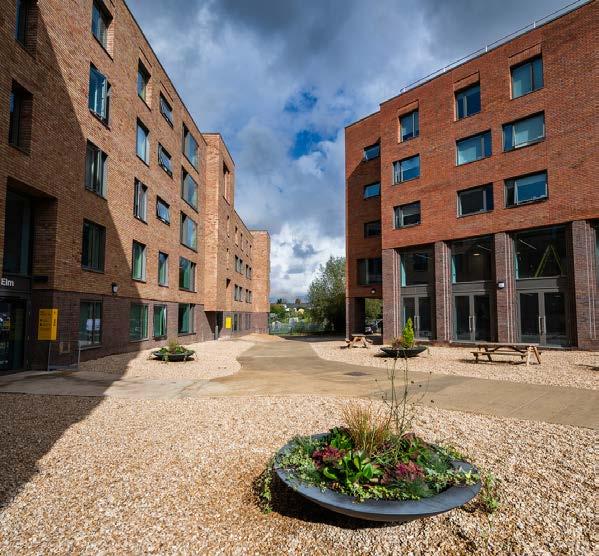
4 Redefining student living
The rise of wellbeing-first campus design
8 Product & Industry News
The latest news and views on campus
22 Mandating carbon reduction
Navigating the Academy Trust Handbook 2025
26 Air quality matters
Indoor Air Quality and its contribution to education
30 What’s the answer?
What's limiting widespread decarbonisation across education estates?
34 There’s something in the air
When are air springs the optimal choice of isolator?
38 The duty to protect ‘Martyn’s Law’ and planning for success
42 Enlightening education
The critical role of lighting design in school sports
With one in four young people experiencing mental health challenges in the UK according to a recent NHS report, universities are under pressure to rethink physical spaces as part of the solution.
As competition for student enrolment intensifies in an era of funding pressures and evolving student preferences, wellbeingfocused estates are becoming a key
differentiator.
This comes as research shows that spaces which promote mindfulness, optimism and vitality improve cognitive performance and emotional health.
At the same time, wellbeing design often overlaps with sustainability. For example, natural ventilation, green spaces, and energy efficient systems reduce carbon footprints while promoting health. This supports public sector objectives for net zero
and social value.
With the Procurement Act also now in full force, “Most Advantageous Tender” (MAT) has replaced “Most economically Advantageous Tender” (MEAT), procurement decisions are no longer driven by cost, but broader value, including wellbeing outcomes. For estate projects, this allows universities and public bodies to embed wellbeing criteria such as mental health friendly design, accessibility, social value and
community engagement into tender evaluations.
Critical for making this work is adopting a two-stage procurement approach whereby early contractor involvement means practical solutions for wellbeing can be tested and refined before finalising plans, ensuring these features are feasible and cost-effective.
But beyond taking a two-stage approach, what should university estate teams consider?
Designing for collaboration Loneliness is a huge issue facing younger generations, with research by the Mental Health Foundationfinding that 40% of respondents aged 16-24 report feeling lonely often or very often. This means it’s vital that university estates are designed to create opportunities for social and academic collaboration.
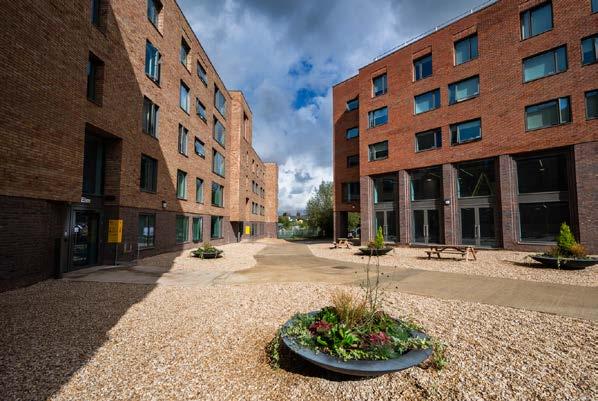
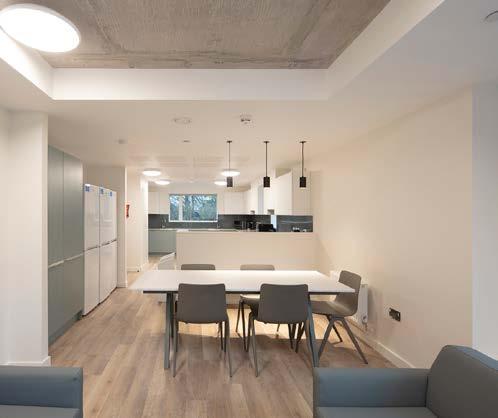
For example, the Clive Booth Student Village at Oxford Brookes
University includes communal kitchens, lounges and study areas within clusters of flats. These spaces encourage collaboration and interaction among students, reducing isolation and creating opportunities for social and academic collaboration. Creating spaces that respond to student needs requires a collaboration between contractor and university from the outset, as this ensures the design and construction of spaces are truly informed by the lived experiences and preferences of the students themselves.
Mark Tugwell, Head of Capital Projects, at Oxford Brookes University, said:
“Early involvement with contractor Morgan Sindall was crucial in shaping a student village that truly supports wellbeing. By having conversations early on, this meant the right expertise was brought into the planning process from the outset. We were able to design inclusive communal spaces that foster
connection, encourage meaningful relationships, and build strong support networks, essentials for both student wellbeing and academic success.”
A rising demand for inclusivity
A growing proportion of students identify as having disabilities or neurodiverse needs with disabled students making up 20% of the population, over double compared with 2010.
However, many students have reported a lack of inclusion at university, with Disabled Students UK finding that 37% of people with disabilities have stated they do not feel welcomed by university staff. There are many ways universities must address this including through improving culture and training. Improving physical accessibility is also a vital place to start. For example, Clive Booth Student Village includes dedicated accessible bedrooms across its twelve new
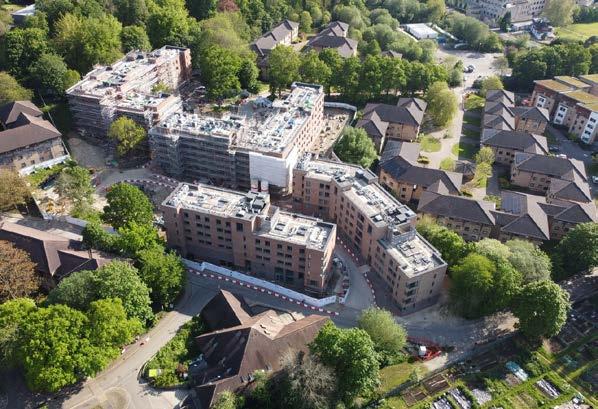
buildings, designed to meet mobility and sensory requirements. It also has lifts that can be used in a fire evacuation, meeting both accessibility and safety requirements.
Instead of taking a single-stage procurement approach, which often leads to cost-cutting that undermines design intent, two stage procurement mitigates this by enabling open book cost planning and risk identification early, so that budgets reflect the true cost of inclusive and wellbeing design. This also then makes it easier to ring-fence funds for ongoing support, such as specialist staff training or assistive technology.
Mark continued:
“As part of the design for Clive Booth, we have implemented a bridge in at the top of our steep site, so a person with mobility issues can come in across this bridge into an upper floor of the building, then go down in the lift and come out the bottom.
“This is something that needs joining up right from the start, and we ensured we included disability planning advisors within the earlystage meetings to ensure this was considered.”
Students increasingly expect universities to take sustainability into consideration, with a survey by SOS-UKfinding 80% of students want their institutions to be doing more.
Therefore, developing sustainable buildings not only future proofs estates in terms of resilience to a changing climate, but also in terms of competitiveness and responding to future demand.
Begin the process by undertaking a cost-benefit analysis that balances both wellbeing and sustainability considerations from the outset. It is essential to determine whether a retrofit or a new build will enhance the health, comfort, and inclusion of its users, as well as being financially and practically viable.
Simultaneously, it is vital to account for the full life cycle of the building, including whole life carbon, ensuring that the environmental footprint of any construction work is justified by long-term benefits to both people and planet. By bringing together all stakeholders early in the process, clear wellbeing and sustainability targets can be
established, and plans developed to embed the most effective technologies and inclusive design features.
This collaborative approach ensures that choices, such as natural ventilation, biophilic design elements, and flexible communal spaces not only reduce operational carbon but also support the physical and mental wellbeing of building users. By intertwining wellbeing and sustainability priorities, universities can create spaces that are both future-proof and genuinely supportive of all students and staff.
Looking ahead to 2026, universities are facing a challenging paradox: rising expectations from students alongside tightening finances and decarbonisation deadlines. But the solution isn’t just design innovation, it’s procurement strategy. By prioritising not only collaborative risk management, early engagement, and transparent cost planning, university estates can champion student wellbeing whilst meeting the challenge of the moment.


Leading offsite manufacturer McAvoy has completed the construction of a new modular building at Leeds City College and Leeds Sixth Form College, both members of Luminate Education Group. The completion also marks the conclusion of a unique education programme, where students from the colleges followed the construction of their new study space from beginning to end.
Procured through the NHS Shared Business Services (SBS) Modular Building Framework, the new 1,380m2 ‘C block’ at Leeds City College’s Park Lane campus has capacity for 300 students and offers cutting-edge teaching space and facilities including laboratories, preparation rooms, study areas, sports science and massage rooms, changing facilities, staff offices and classrooms. As part of the BREEAM Excellent-rated project, 75% of the building’s modules were completed offsite including mechanical and electrical systems and internal fit-out, before being craned into place during a five-day installation. McAvoy also delivered the hard landscaping and EV charging points
Throughout the project, students from Leeds Sixth Form and Leeds City College were actively involved, starting with a visit to McAvoy’s Lisburn factory to see the offsite manufacturing process, through to observing the 42-module installation at the Park Lane
campus in Leeds. McAvoy also provided opportunities for the students to build a scale model of a module and experience a Virtual Reality (VR) walkthrough of their new building during a VR demonstration.
Thomas Boyle, Senior Contracts Manager at McAvoy, commented: “Delivering this snag free modular building all while supporting students at the colleges who are considering careers in engineering, architecture and design, has been a great process. The students have seen first-hand how the building was delivered, and now it is complete will be able to enjoy the cutting-edge space to continue their studies.”
David Warren, Group Vice Principal for Development at Luminate Education Group, commented: “It’s great to see this much-needed space now ready for student use. Through this new facility, we’re better able to support the region’s growing number of 16–18-year-olds with high quality learning opportunities and respond to regional and national skills needs.
“It’s been especially rewarding to see our students involved throughout the project, gaining valuable insight during the process.”
For more information, please visit www.mcavoygroup.com/sectors/education/.

Kärcher UK is thrilled to announce the launch of its new sustainable electric sweeper, the MC 250 e!ectric, an innovative product that is set to clean roads more quietly and more efficiently than ever before.
The MC 250 e!ectric is completely emission-free, thanks to its all-electric drive, making it not only environmentally friendly but also ideal for councils and businesses striving to improve urban air quality and meet sustainability targets.
Built for urban cleaning, the MC 250 e!ectric delivers exceptional manoeuvrability and capacity in a compact footprint. At just 1.30m wide and under 2m tall, it still houses a 2.5 m³ stainless steel waste container, emptied easily at a height of 1,600 mm into standard containers or trucks. The vehicle’s two- or three-brush systems allow sweeping widths up to 2,710 mm, and its chassis features like hydropneumatic suspension, all-wheel steering, and a two-person comfort cab, bring car-like driving dynamics even in tight city environments.
Thanks to its all-electric drive system the MC 250 e!ectric also runs much more quietly than its dieselpowered counterparts. It’s so quiet, it can even operate in noise-sensitive areas like near hospitals or schools, or during early morning and night hours without disturbing residents – ideal for those councils cleaning roads in busy urban areas.
Additionally, the innovative electric sweeper offers all day performance, enabling businesses and councils, to supercharge their productivity. Driven by a high-torque electric motor and supported by efficient
electric hydraulics and fan systems, it features a 78 kWh high-performance battery capable of powering up to ten hours of sustained cleaning. Fast charging is enabled by an onboard 22 kW charger via Type 2 connection, reaching a full charge in around four hours. It is recommended to charge the MC250 E to 80% for optimal performance which takes approximately two and a half hours. With a top speed of 60 km/h and energy recuperation modes, the MC 250 e!ectric combines endurance and efficiency while minimising environmental impact.
With its unrivalled approach to sustainability and efficiency, the MC 250 e!ectric is the latest of Kärcher’s products that future-proof businesses looking to meet new green targets, all whilst remaining to deliver best-in-class cleaning services.
Daniel Took, Head of Special Business at Kärcher UK commented: “With its long range powered by electricity, the new MC 250 e!ectric not only banishes dirt, it also eliminates any doubt about electric vehicles. This is an electric sweeper that will offer the same unparalleled efficiency as its diesel counterparts, but with a forwardthinking green approach. We are thrilled to officially launch it today and look forward to working with our partners to roll this out across the UK.”
For more information on the MC 250 e!ectric and Kärcher’s broad range of eco-friendly products, please visit: MC 250 e!ectric – all-electric vacuum sweeper.
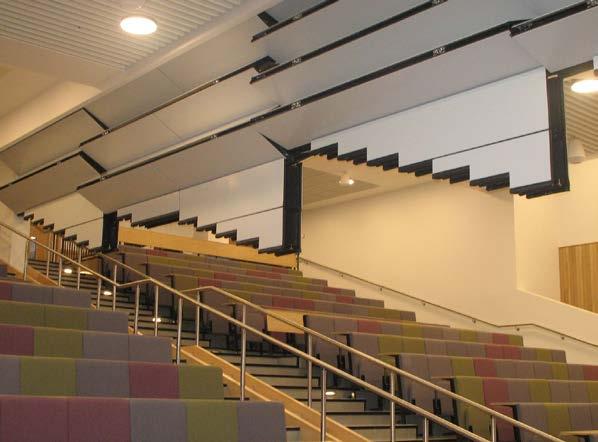
Moveable partitioning experts Style worked with Todd Architects and contractor Felix O’Hare & Co, to divide the Student Hub at Queen’s Business School, Belfast. An impressive 290-seat tiered lecture theatre like this demands an equally remarkable movable wall solution — which is why Style recommended the fully automatic Skyfold Classic 60 system.
This pioneering operable wall is discreetly concealed within the ceiling cavity and descends gracefully at the push of a button, seamlessly dividing the stepped auditorium. With an outstanding 59dB Rw acoustic rating, Skyfold enables two independent teaching spaces to be quickly created, with no risk of sound interference.
Style is the exclusive UK distributor for Skyfold movable walls, including the Mirage glass system and the Zenith, featuring a narrow descent path that is ideal for restricted spaces.
Founded in 1845 as Queen's College Belfast, Queen’s University Belfast became an independent university in 1908. Today, it is ranked as one of the top 200 universities in the world and is a member of the Russell Group of UK research-intensive universities. University lecture theatres are often under-utilised,
but the stepped flooring makes it challenging to divide the space into two functional rooms using traditional solutions. Skyfold overcomes this problem, offering a fast, safe, and efficient way to partition the facility while providing exceptional acoustic separation. For easy movement between the two areas, an access door can be incorporated.
“This is a unique and impressive moveable wall solution,” said Michael Porter, Style’s group managing director.
“When the Skyfold descends from the ceiling it creates real ‘wow’ factor, sub-dividing this very highceilinged lecture quickly and efficiently. We were very proud to have been involved in the Student Hub, which was named Northern Ireland’s Building of the Year 2025 by the Royal Society of Ulster Architects (RSUA).”
“Skyfold’s innovative design and seamless functionality ensure that Queen’s University Belfast now has a flexible, future-ready lecture theatre that combines acoustic excellence with striking visual impact.”


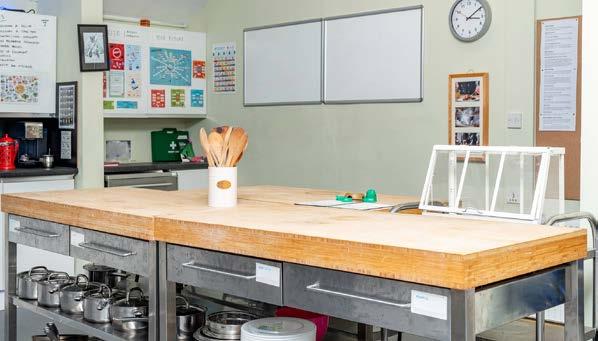
When Skypoint School, part of Spark of Genius’ UK network of specialist education providers, relocated to a striking 19th Century building, it marked more than just a change of address. As part of the move, the interiors had to be transformed into a welcoming environment tailored to young people with additional support needs – with Valspar Trade Tough Matt playing a key role in making this vision a reality.
Spark of Genius, part of CareTech, are a leading provider of education and residential care throughout the UK, with a focus on empowering and enabling children and young people. Skypoint School, one of its independent specialist schools, is dedicated to providing tailored education to young people aged from 7 to 18 with additional support needs.
Having recently moved to a new site in Greenock, Scotland, a full building refurbishment was required before the start of the new academic year, with half a million pounds invested.
Speaking about the project, Scott Wilson, Project Manager at Spark of Genius, said: “The move represents an exciting step forward for the school community, offering more space and a chance to expand. The new location is a beautiful, listed building that dates back to 1865. It required a full redecoration, with the previous interior featuring some quite dark and overly vibrant colours. Our plan was to create a brighter, calming and more welcoming environment, with white ceilings and pastel colours on the walls.
“Working with the school maintenance team, we’ve used Valspar Trade products for years. For this project, we chose Valspar Trade Tough Matt for the walls and ceilings. Durability was a must when it came to choosing the paint. With capacity for 50 students, it was essential that the paint could stand up to the school’s daily wear
and tear, especially within high traffic areas.”
Valspar Trade Tough Matt is a water-based, stain resistant and scrubbable formulation, giving long-term performance, while its high opacity and superior covering power ensures excellent application.
Scott continued: “Our local Valspar Trade representative was on hand throughout, including carrying out site visits and supporting with estimated paint quantities. He also helped us with the colour scheme specification. Within the education sector, the emphasis is on creating a welcoming environment that inspires productivity – something that becomes even more critical when it comes to creating a safe learning space for young people with additional support needs. As such, we chose a variety of calming, pastel shades for the internal walls, including Blush Wash, Dusky Sand and White Moss.
“The site team have been really pleased with the paint’s opacity, saving them valuable time. The coverage was particularly impressive when you consider some of the dark green walls we were painting over. We expected it to take multiple coats, so were pleasantly surprised that it only took two coats of Valspar Trade Tough Matt to achieve a high-quality finish and true colour.”
From Sherwin Williams, Valspar Trade offers a range of high-quality paint essentials for all interior and exterior applications, designed to provide the perfect finish every time. Priding itself on its colour matching capabilities, with a database of over 2.2 million shades, Valspar Trade is available exclusively at TradePoint, with a Direct2Site service available on orders of 100 litres or £500.
Learn more about Valspar Trade, here.

Forbo Flooring Systems’ Marmoleum Modular collection of planks and tiles has seen an extensive palette refresh, with a focus on neutral shades and warm hues, all aimed at modern commercial design schemes.
As Forbo’s flagship product, Marmoleum has an enduring heritage in the flooring industry, providing architects, specifiers and end users with a tough and proven, yet sustainable, floor covering. The updated Marmoleum Modular collection reaffirms this commitment, manufactured in the UK, with a very low embodied carbon, high renewable content and a refreshed palette of key trend colourways in plank and tile format – 21 of which are entirely new to the modular offering.
Split into Linear, Neutral and Accent, the new Marmoleum Modular range contains 30 designs in total, with a focus on providing more neutral tones to complement other interior finishing material trends on the market.
The Linear sub-collection features organic linear designs that are reminiscent of wood tones, creating a soft and natural finish to a space. This includes the ‘Desert Sand’ colourway, new to Marmoleum Modular, which is a light, almost birch-like, shade.
Within Neutral, the designs have a marbled effect that meets the stone and material trends seen on the market. From the dusty yellow of ‘Sandstone’ to the deep brown of ‘Clay’, these floor coverings are ideal for interiors looking to connect back to nature.
While Accent is a more eye-catching part of Marmoleum Modular, with the neutral yellow of ‘Corn Silk’ and pale green of ‘Fresh Thyme’ adding a
contemporary pop of colour to any space.
Donna Hannaway, Head of Marketing UK and Ireland at Forbo Flooring Systems, spoke on this refresh saying: “Marmoleum Modular is made in our Kirkcaldy factory and is one of our long-standing collections. With the current increasing demand for sustainable design choices, it was the ideal time to refresh and bring it in line with new market trends.
“Designed for creative freedom, this updated collection and modular format allows architects and designers to mix and match colours, textures, and patterns to achieve a personalised look. Whether you’re seeking a bold statement or a subtle design, Marmoleum Modular provides the perfect foundation for a beautiful and sustainable interior.”
Marmoleum is one of the most sustainable floor coverings on the market, with Marmoleum Modular having a very low embodied carbon of 0.395kg CO2 / m2 (achieved without offsetting and verified by an independent EPD). The collection is made from 88% natural raw materials, contains 58% recycled and reused material, and is manufactured in a factory powered by 100% renewable electricity). It is also PVC and phthalate free with low emissions, ensuring it positively contributes to healthy indoor environments.
As with other Marmoleum collections, this range also benefits from the Topshield pro lacquer, protecting the floor covering against wear and tear in busy environments.
Find out more about this collection, here.
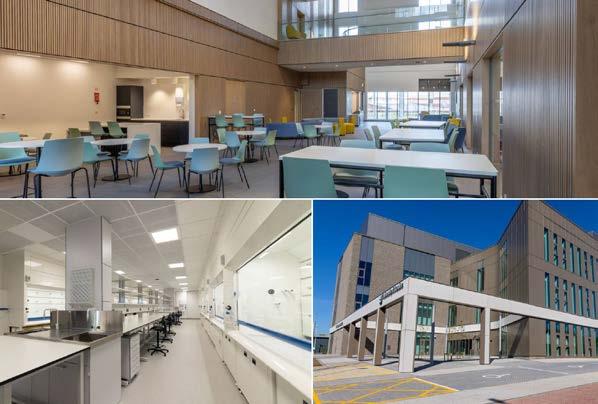
A life sciences research and innovation hub has opened at the University of Dundee, providing state-of-the-art facilities to accelerate developments in the life sciences sector.
The 54,000 square-foot Life Sciences Innovation Hub has been carefully designed to support spin-outs, start-ups, and international life sciences businesses. The facility offers flexible laboratory and office space tailored to encourage collaboration and commercial partnerships.
Procured through the SCAPE Consultancy framework under Perfect Circle, Pick Everard provided project management, NEC supervisor, and civil and structural engineering services. The firm worked closely with the University of Dundee, Gleeds and main contractor Robertson Construction to bring the facility to fruition.
Matt Hall, national director at Pick Everard, said: “The Life Sciences Innovation Hub is a major step forward for the region’s innovation economy. The integration of specialist lab space with high-quality working environments encourages both scientific progress and enterprise growth. We’re proud to have delivered a space that meets the evolving needs of the life sciences sector while aligning with long-term sustainability goals.”
Designed with flexibility in mind, the building includes
shared networking spaces, meeting rooms, kitchen areas, showers, and secure cycle storage. A central atrium provides a vibrant communal area to encourage interactions between companies, entrepreneurs and business teams.
Energy efficiency is a key feature of the hub, which incorporates ground source heat pump technology as part of the University of Dundee’s commitment to achieving net zero.
A distinctive feature is the incorporation of turnkey chemistry laboratories ready to accommodate biopharma companies. The location of the building also provides immediate proximity to the outstanding talent pool and world-class technology platforms at the University of Dundee, a major advantage for client companies.
Located at the heart of the Tay Cities Biomedical Cluster, the Life Sciences Innovation Hub forms a key part of a wider regional vision to enhance Scotland’s life sciences ecosystem. It has been backed by funding from the Scottish Government through the Tay Cities Deal, Scottish Enterprise, the Wolfson Foundation, the Garfield Weston Foundation, the UK Government through the UK Shared Prosperity Fund, and the University of Dundee.
For more information, visit www.pickeverard.co.uk.


Morgan Sindall Construction has successfully completed the first phase of transforming Gloucester's iconic Art Deco Debenhams building, creating a sustainable new City Campus for University of Gloucestershire.
Designed by ADP Architecture and delivered through the Pagabo Major Works framework, the adaptive reuse of the former department store offers a state-ofthe-art centre for teaching, learning, and community services. The scheme is set to be a major catalyst in the reinvigoration of Gloucester's high street and its wider city centre regeneration.
The City Campus in Kings Square is home to University of Gloucestershire’s Education, Psychology and Social Work programmes, forming a new city-centre base for 1,200 students and staff. It is also set to house public-facing services, including Gloucester's central library, and is already home to a new Arts, Health and Wellbeing Centre. These developments are anchoring the University firmly in the community to create a thriving city hub.
The project has embedded learning and innovation into the everyday life of the city, making education a visible and integral part of urban regeneration.
To date, the team has completely transformed the ground and first floors of the building to offer lecture and seminar rooms, study spaces, and space for a city library, while upgrading the whole building envelope. Future phases of the project will see all five-storeys of the 20,000m² building fully modernised.
The complex retrofit has been sensitively carried
out across different sections of the site, dating back to the early 1900s, 1930s, and 1950s. Working closely with a conservation officer, the team retained original features to preserve the heritage and character of the iconic building, which sits in the heart of Gloucester City Conservation Area.
To bring the scheme up to contemporary energy standards, low-carbon design technologies and intelligent building systems for heating, cooling, ventilation, and lighting, including air source heat pumps, were implemented throughout. The team also carried out upgrades to ensure fire safety regulations are met in the conversion from retail to educational use. Externally, the team renovated and enhanced the building's iconic Art Deco elevation, including restoration of the leaded tracery from the original shop windows.
Since construction began, the Campus has delivered over £44 million in social value to the local community, which is a 74% return on the total project cost. This has been achieved through job creation, strengthened partnerships with local businesses and the third sector, and environmentally conscious building practices. A key driver of this impact has been the active engagement of 53 SME's, helping to boost local supply chains and support inclusive economic growth.
By bringing university students into the heart of Gloucester, the development is revitalising the high street, boosting footfall and vibrancy, and fostering a renewed sense of local pride.
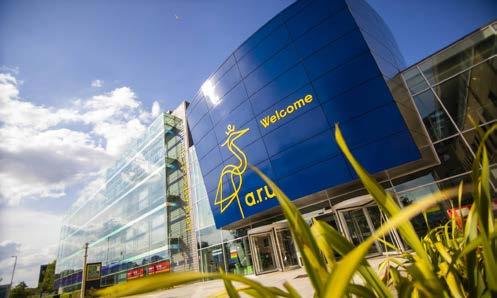
In collaboration with Anglia Ruskin University (ARU), TEAM Energy’s latest Customer Spotlight features Simon Chubb, Head of Sustainability, sharing powerful insights on embedding net zero into university life.
This in-depth conversation explores how ARU is embedding sustainability into every facet of university life, from operations and teaching to community engagement, and offers practical insights for organisations pursuing their own net zero ambitions.
Leading by example in higher education
ARU is at the forefront of the UK’s net zero movement, driven by a mission to transform lives through innovation and responsibility.
As Simon Chubb explains, “Achieving net zero is deeply aligned with Anglia Ruskin University's mission to transform lives through innovative and entrepreneurial education and research. Our core values, including innovation, responsibility, and community, are reflected in our commitment to sustainability. We see it as our responsibility not only to our students, but also to the communities we serve and future generations.”
Zero Carbon Operations: ARU has achieved zero carbon in Scope 2 emissions through a pioneering power purchase agreement, sourcing 20% of its base load power from wind farms and the remainder from nuclear energy, ensuring a fully zero-carbon electricity supply.
Decarbonising Infrastructure: The university is investing in district heating and advanced building management systems, aiming for zero carbon in Scope 1 emissions by 2035. These upgrades are part of a 10-year investment programme to transform over 75 buildings across its campuses.
Tackling Scope 3 Emissions: ARU is targeting net zero for Scope 3 emissions by 2045, with initiatives like a
Engaging the university community
ARU’s award-winning ARU Green programme is a standout example of effective engagement. The initiative encourages students, staff, and stakeholders to take weekly sustainable actions, such as reducing energy use and choosing low-carbon travel. Since its launch, ARU Green has recorded 40,000–50,000 actions annually, saving around 100 tonnes of carbon each year.
Despite financial and policy hurdles, such as the withdrawal of government grant funding and rising energy costs, ARU has remained agile. The university has focused on practical, scalable investments and leveraged partnerships, including joint power purchase agreements and public sector frameworks, to share risk and access support.
For organisations beginning their net zero journey, Simon Chubb offers this advice: “Collaboration is key. No institution can do this alone. Sharing knowledge, resources, and support has been essential. Accept that the journey won’t be perfectly mapped out. What matters is knowing your direction of travel and committing to it. Be flexible, stay focused, and build momentum through achievable steps. That’s how we’ve made progress, and how others can too.”
Read the full interview with Simon Chubb to learn how ARU is making net zero a reality and inspiring change across the sector.

Kimberly-Clark Professional™ introduces the ReNew™ service, the next evolution of its industry leading RightCycle™ Programme. The ReNew™ Programme brings a new chapter for the company reflecting its deepened commitment to sustainability by offering simplified and comprehensive, end-to-end solutions for hard-to-recycle hygiene products.
Launching this evolved brand promise in September 2025, the ReNew™ Programme by Kimberly-Clark Professional™ builds on the success of the RightCycle™ Service and its established waste recovery and circular innovation solutions. The transformation is testament to the company’s dedication to consistently enhancing its sustainability and a renewed approach to environmental responsibility. From 1 January 2026, Kimberly-Clark will have transferred all customers to the ReNew™ Programme as it replaces the RightCycle™ Service.
“With Kimberly-Clark as your partner, you have the power to bring new life to your washroom waste and lower your environmental impact with ease and confidence,” says Kristin Barrett, IFP Growth – Circularity Programme Manager, Kimberly-Clark Professional™. “We know how challenging waste management can be, so we have evolved existing programmes to deliver the same trusted service but now with expanded reach and a fiercer focus on circular solutions.”
From hand towels and dispensers to wipers¹, the ReNew™ Programme collects used items and transforms them into new materials and goods, supporting customers’ zero waste targets, CO₂ reduction, and ESG commitments. Therefore, the
programme gives customers the confidence to choose high-performance washroom hygiene products knowing there is a responsible, recovery solution in place.
For example, paper towels are proven to be the most hygienic hand-drying method, especially in healthcare settings.² The ReNew™ Programme makes this choice even smarter by keeping used towels out of landfill and returning them to the circular economy as recycled paper products.
Kimberly-Clark’s Koblenz mill in Germany – which is on the path to 100% renewable energy by 2029 –handles most of the European processing. In other regions, local recycling partners are engaged for efficient, low-carbon recovery. In the UK, the ReNew™ Programme even accepts competitor products, demonstrating that this is about industry-wide progress, not brand loyalty.
“With our sustainable solutions, businesses no longer have to compromise between hygiene, sustainability, and practicality,” adds Kristin Barrett. “The ReNew™ Programme is practical, scalable, and removes the burdens of waste management from our customers. The system supports better decisions from the start, with a complete, low-effort recycling solution behind them.”
The programme is co-funded by Kimberly-Clark Professional™ and its customers, reinforcing a shared responsibility model. The service includes regular CO₂ and waste diversion reports, helping organisations quantify and communicate their sustainability efforts with clarity.
For more information, visit Kimberly-Clark Professional

Oliver Mooney, Head of Category for Fusion21, explains why their Decarbonisation Framework is an ideal solution for education providers and local authorities wanting to deliver social impact alongside achieving genuine value for money.
The education sector has big targets to hit when it comes to the journey to net zero, which includes improving the energy performance of its non-domestic buildings by 2030. This means there’s only a short window of opportunity to make the necessary changes in time.
There are decarbonisation measures that can be done in isolation to achieve the required results, but these don’t consider how the building works as a whole. While they can reduce energy consumption, they can also increase costs in other areas.
That’s why, at Fusion21, we recommend a whole building approach, which means the works only need to happen once, are done right, and are planned around long-term investment.
Whether it is education, housing, local authority, or NHS and blue light sectors, we specialise in efficient and impactful public sector procurement and delivering social value you can see.
Our Decarbonisation Framework helps organisations that want to take a longer-term approach to managing their assets rather than simply chasing the short-term targets. This helps them to look at overall net zero targets, as well as organisational targets for environmental impacts and sustainability.
The framework is worth up to £1.5 billion over four years with a total of 40 specialist firms – 42% being SMEs – approved to help deliver zero carbon goals, reduce emissions, maximise cost savings, achieve social value targets, and support domestic and non-domestic retrofit measures.
Built on a turnkey model, the framework gives our members access to qualified PAS2030:2023 compliant suppliers. It offers updated specifications, flexible procurement routes, relevant and refreshed 2025 pricing models, regional and national coverage, and the ability to deliver multiple measures at scale and volume.
It is an efficient way to procure suppliers for decarbonisation work, with options including “design and build” contractorled projects or a more traditional approach with independent consultants supporting.
With support available for preliminary market engagement and a streamlined supply chain that can mobilise on-site quickly, the framework is ideal for education providers looking to move swiftly.
The advantages of the Decarbonisation Framework for the education sector:
1. Capable, competent, and experienced supply chain
The framework provides access to suppliers who are capable, competent, and experienced, with PAS2038 accreditation – the standard for the retrofit of a non-domestic building based on a whole building approach. A major advantage of this is that contractor liabilities extend beyond practical completion into the post-occupancy stage, with performance monitoring that holds them to account to ensure they have delivered what was agreed.
Suppliers are also accredited to PAS2030 for individual elements of the work, ensuring each aspect is completed to the highest standard and considers how the work will interact with the existing structure.

We use an evidence-based assessment of suppliers, so education providers can be assured that they all have the resources and supply chain to complete the work, having demonstrated this in schemes of similar complexity, nature, and value.
Lastly, we know schools, colleges, and universities can’t simply shut down for building works, except during term breaks. That’s why our suppliers have proven experience working safely in live environments, managing risk, and minimising disruption to learning.
2. Increased level of competition
The framework provides access to a range of supply partners (including SME’s), removing the uncertainty of going to the open market. All tenderers are pre-qualified and engaged suppliers with relevant experience that meet our selection criteria and minimum standards.
Suppliers will know that they are bidding against credible peers who deliver similar work to high standards, so their bids will need to be very competitive.
This helps our members achieve genuine value for money, with predictable costs and timelines from the outset. Suppliers are incentivised to proactively manage these factors throughout the contract, while also ensuring there are no defects after completion.
3. Early supply chain engagement
By accessing the framework, members can immediately engage with suppliers they want to work with, building relationships more quickly than in the open market, where time is often spent identifying the right suppliers.
Early engagement gives suppliers visibility of upcoming needs, helps them understand project objectives, explore feasibility, and anticipate potential construction challenges.
We support this process by helping our members to shape procurement requirements, define the best route to market, and identify likely contractual terms—drawing on supplier experiences to shape the outcomes and discover what is achievable within the budget.
This early involvement also helps avoid mobilisation delays and reduces the risk of rising costs, which can occur as the availability of labour, and resources becomes more limited.
4. Maximising social impact
Building on the principles of the Public Services (Social Value) Act 2012, the National Procurement Policy Statement places responsibility on contracting authorities to generate wider social and economic benefits through public spending.
Our framework enables social value to be delivered and tailored to local priorities, ensuring outcomes align with the specific needs of each education provider. It also supports the development of green skills and the creation of employment opportunities.
£380m
Fusion21 is a national social enterprise specialising in efficient and impactful public sector procurement and social value services. We believe in procurement with purpose, helping education providers ensure that their estates projects deliver social impact for their communities.
To date, Fusion21 has supported its members with £380 million savings, creating over 13,550 employment outcomes and generating over £200 million in social impact. in social impact
£200m saved
13,550 Over employment outcomes Over

In September 2025, the Department of Education’s (DfE) latest Academy Trust Handbook (ATH) introduced new expectations around sustainability, energy management and carbon reduction for trusts across England. Valerie Miller, Chief Customer Officer for DMA Group, outlines the ATH’s recommendations and explains how academies can meet these requirements while also saving money and improving operations.
The 2025 edition of the ATH puts environmental responsibility front and centre. Once a ‘nice-to-have’, sustainability is now a statutory requirement for trusts to meet; it must be measured, reported and meticulously planned, with non-
compliance resulting in reputational and financial damage.
Campus estates teams are at the forefront of ensuring their trusts meet these new expectations. Together with their trust leaders, they must understand the new requirements before implementing strategies that guarantee compliance.
In this article, I hope to offer some guidance on how this might be achieved, based on DMA Group’s experience working with Leigh Academy Trust – one of the largest in the UK.
But first, what’s actually changed?
Three key aspects of 2025’s ATH should stand out for trusts and their estates teams.
Sustainability is now a formalised
mandate for trusts to act upon.
While academies were previously encouraged to think about energy efficiency, carbon reduction and climate planning, the newest ATH puts much clearer guidance in place. It explicitly links to the DfE’s own Sustainability and Climate Change Strategy, while instructing each trust to immediately nominate a sustainability lead and devise a climate action plan. Put simply, environmental performance has shifted from optional to obligatory.
The ATH also hands accountability for environmental success over to estates teams. An academy’s estate is now defined as “an asset… to deliver outcomes”, directly linking an estate manager’s duties with the
performance of sustainability, safety and efficiency measures. Therefore, both the DfE and trust leaders will be expecting estates teams to take initiative with carbon reductions and energy efficiency.
Finally, the ATH 2025 has shifted the meaning of ‘environmental performance’. Once understood in vague terms, the DfE has quantified its expectations in this area. Trusts are now required to measure and report environmental impact in data-driven ways, with new levels of transparency. Sustainability measures are also no longer distinguishable from a trust’s business arm – the DfE expects them to feed into financial and operational decision making. Energy efficiency and carbon reduction are now indicators of resilient and value-formoney governance.
Integrated data collection and reporting tools will be vital allies for estates teams going forward, to improve operations and demonstrate, in quantifiable terms, how sustainability measures are driving compliance and overall trust performance.
Starting small: audits and quick wins
Understanding current environmental performance is an essential first step when approaching
these new regulations. Energy audits should be conducted on heating, cooling, lighting, waste and water systems and general building conditions should also be assessed. Doing this will provide an in-depth understanding of current performance levels, setting a benchmark from which to improve.
Equipped with these baseline statistics, cost-effective quick wins can be achieved that each lead to instant energy savings:
Replace outdated fluorescent or halogen fittings with more costeffective LEDs and install motion or daylight sensors in classrooms and toilets. According to the Building Services Research and Information Association (BSRIA), a good lighting control system can result in energy savings of 30-40 per cent.
Make sure your HVAC system’s optimisers are switched on and aligned with occupant schedules. Even heating a building two hours before occupation typically pumps out 15-20 hours of unnecessary heating per week.
Check for any faulty sensors or valves that may be relaying incorrect data to your building management system (BMS). This often occurs through a lack of maintenance and can increase energy consumption by up to 50 per cent. Sensors calibrated
to within 0.5ºC can cut energy use by 10-15 per cent, compared with those only those calibrated to 2ºC.
Estates teams should use their baseline performance insights to build sustainability action plans with short-, medium- and long-term goals. Immediate savings will help fund more expensive investments. Wellplanned initiatives should support wider financial and operational targets, directly contributing towards overall trust performance.
Levelling up: using integrated technology to your advantage Beyond these initial steps, the trusts that will thrive under the new regulations will be those that leverage integrated and data-driven monitoring and performance management platforms.
When choosing a service management system, data centralisation should be a top priority. By amalgamating analytical insights – from HVAC assets to maintenance engineers – into one comprehensive system, trust leaders equip themselves with transparent oversight of estates. Compliance with the new Handbook’s emphasis on quantifiability and value-for-money results will instantly become easier. Centralisation is a particular game changer for multi-academy trusts

(MATs). The data taken from each academy can be viewed collectively, leading to standardised maintenance and sustainability practices. This will prepare MATs to show the DfE how their environmental measures are integrated across every single site.
Asset tracking with live monitoring and alerts support a predictive approach to maintenance, where works are pre-emptive and based on real need, rather than routine schedules or a reaction once something’s gone wrong. Datadriven systems that continually analyse performance in real time identify small issues before they become major problems. By shifting maintenance from preventative to predictive, trusts can ensure energy-using equipment works at its optimum, while meeting the ATH 2025’s elevated expectations for solid oversight and responsible resource management.
The ATH 2025 marks a turning point for academy trusts and their environmental responsibility. While sustainability was once optional, it is now a statutory requirement tied to a trust’s governance, finance and operations.
The pressure of turning these new expectations into results will be firmly placed on the shoulders of campus estates managers. Those who proactively refine their existing systems while embracing overarching management platforms will position their trusts to succeed.
Taking these steps, however, will not only ensure compliance for the year ahead. Given that sustainability measures are likely to become increasingly important in ATHs for years to come, setting a high bar now will only future-proof a trust’s estates management efforts.
So, instead of approaching the ATH
2025 with apprehension, it should be seen it as an opportunity – the catalyst that campus estates teams need to ensure their schools thrive, creating low carbon, cost-effective facilities that support student and staff wellbeing, while promoting the benefits of sustainability to the next generation.
Since 2023, DMA Group has worked with one of the UK’s largest MATs, Leigh Academies Trust (LAT).
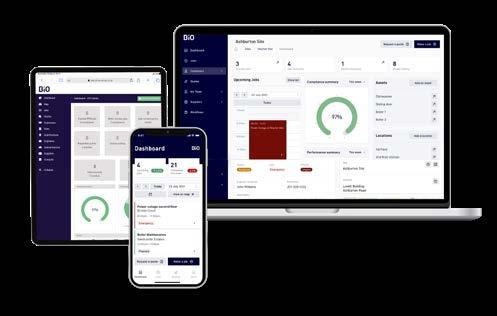
Supporting over 20,000 students across 32 sites, the trust needed a way to standardise its service quality. Through our proprietary data-driven platform, BiO®, we have centralised and digitalised its estates management operations. Now, over 6,400 of LATs assets are tracked in real time, with live dashboards providing managers with transparent and digestible data.
For further information please visit www.dma-group.co.uk.

Turnitin Originality rises above similarity checking, addresses new and emerging trends in misconduct, and keeps integrity at the core of all student work.
Indoor air quality (IAQ) is an important issue across a wide range of buildings. From offices and conference facilities to hospitals and care homes, the air that we breath can have a significant impact not only on how we feel but also in the consequences for longer term health issues. Headaches, tiredness, eye or throat irritation, coughing and the exacerbation of asthma conditions are all symptoms associated with poor IAQ. Longer term it is associated with stroke, ischaemic heart disease, chronic obstructive pulmonary disease (COPD) and lung cancer.
In education environments its effects can be particularly acute. The
U.S Environment Protection Agency (EPA) has consistently ranked indoor air pollution as one of the top five environmental risks to public health and numerous studies have been conducted in schools, colleges and universities to demonstrate how air pollution can negatively affect students’ cognitive and respiratory health, reducing their learning performance and increasing their susceptibility to diseases in adult life.
Such issues have raised the profile of how a building’s systems can be controlled to help address these problems. The first consideration with building management systems (BMS) is often energy efficiency and the contribution they can make
in reducing costs and improving sustainability. However, increasingly - and certainly contributed to by Covid 19 - is a focus on how they can also deliver better health for those that are using them. There are essentially nine foundations to a healthy building: ventilation, air quality, thermal comfort, moisture/ humidity, dust/pests, lighting and views, water quality, noise, and safety and security.
Building management systems to control indoor air quality
Focusing on IAQ , studies suggest that 40-60% relative humidity is ideal for indoor human health and reducing virus vitality. With each
person delivering approximately 8 litres of air per minute through breathing (children typically half that amount), the released air contains CO2 plus droplets and aerosols. CO2 levels should be kept below a certain level to help provide well being for students and teachers alike. The variation in levels in a typical school are illustrated in a report by DEFRA in which under a heading of ‘CO2 in Schools’ it talks of “…significant variations during the day associated with changes in occupancy of the rooms and changes in air ventilation: typical values are about 1000 ppm in winter and 650 ppm in summer”. These variations are where an effective building management system can help. The level of automation dictates just how much control is available, from basic entry-level systems through which management is based on room demand right through to systems which effectively automate the whole building operation – heating, lighting, air conditioning, cooling, shade control, and door and window technology. These can all be networked to communicate with each other to enable central control through intelligent BMS.
It is important here to recognise
the role of sensors. Artificial Intelligence (AI) is a term that is heard a lot these days, none more so than in education where the concerns are largely focused on its implications in providing the means for students to effectively cheat by using AI to complete assignments. However, it also has an important role to play in the control of buildings. AI is only as powerful as the data it is given, with the quality of the AI decisions depending directly on the input provided. This is true of room sensors, with technologies now available to deliver high-resolution, real-time contextual data, enabling AI to detect subtle trends, anticipate behaviour and optimise complex systems with surgical precision. It is the difference between reacting and predicting – between automation and true intelligence.
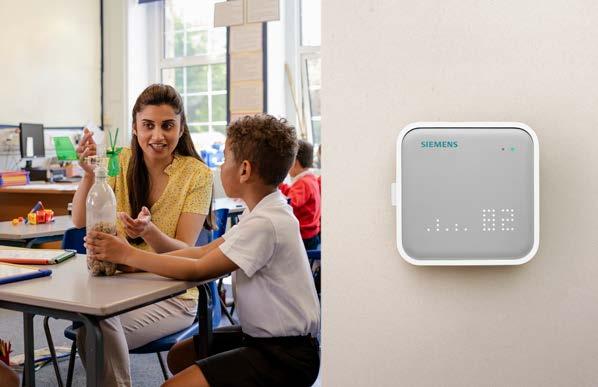
However, while such an approach is at one end of the complexity scale, as already stated, much simpler options are available in BMS which can still significantly help to improve air quality. One recent development introduced by Siemens is a range of IAQ room sensors
based on a traffic light system to enable issues to be identified at a glance. Many IAQ sensors indicate the levels of CO2 parts per million for a given environment. However, without information regarding what constitutes an ideal level in terms of air quality, this can be effectively meaningless. This has brought the introduction of a simple yet powerful tool to address this challenge: CO2 traffic light sensors, with a green, amber or red light indicating the respective good to bad levels of air quality in real time. Research suggests that keeping CO2 levels below 1,000ppm can increase productivity by between 2-18%. However, it is unreasonable to expect a teacher to have an in-depth understanding or the time to constantly monitor CO2 levels, whereas a simple red light provides an immediate alert that the air quality is poor and that it is time to open a window or improve the air circulation through the building’s BMS. This visual cue empowers building occupants to take control of their environment without needing technical expertise. It also fosters awareness and behavioural change, encouraging proactive ventilation habits that improve IAQ without


relying solely on automated systems.
Connecting the dots for MATs
With the shift towards a more holistic approach to managing a building in terms of its active contribution to the well being of its users, so the need for connectivity of the sensors and control devices is becoming ever more important. Solutions are now

Ian Ellis
available which allow daily building management tasks to be undertaken from one place via a cloud-based interface with no additional gateway or software. With the ongoing trend towards adopting Multi-Academy Trusts (MATs) in education, having control not only across a number of buildings but also, increasingly, across different sites is becoming a more regular requirement. Alarm notifications for potential issues, as well as graphics that visualise historical trends, can provide meaningful insights into building performance at any time, supporting the optimisation of building operations.
Intuitive online access can be available via desktop or smartphone, with installation achieved via plug and play, so system integrators, technicians and facility managers do not need engineering skills to set up, configure and operate systems. It is important that such interfaces can support a range of communication protocols to optimise connectivity (wired or wireless) – BACnet, LoRaWan, M-Bus, Modbus and KNX are all protocols used in BMS.
Health and academic benefits
Controlling the environment of buildings through BMS is increasingly becoming the norm rather than the exception. While the advantages this provides in terms of energy efficiency and sustainability continue to be important, the contribution to the health and well being of a building’s occupants is now firmly part of the decisionmaking process and should not be under estimated. In educational environments, this is particularly pertinent. Alongside the health benefits there are the academic advantages of better IAQ: increased student focus, engagement and test performance; reduced classroom disruption due to illness and absenteeism; and enhanced teacher productivity and quality of teaching. Many of the BMS that are now available are not only suitable for new builds but can also be installed in existing buildings so the benefits can be realised across the education sector.
For further information please visit www.siemens.com.



Despite schools and universities representing roughly 36% of total UK public sector building emissions, the government axed its multi-billion-pound Public Sector Decarbonisation Scheme (PSDS) earlier this year and shattered the confidence of many in the education sector working hard to reduce their organisation's footprint.
Emma Hesbrook, head of delivery for the Midlands and Wales at national procurement specialist
Pagabo, reflects on recent findings within its recent whitepaper, Driving Decarbonisation in the Public Sector and digs deeper into the current situation.
The UK is now aiming for an 81% cut in its emissions by 2035, as confirmed by Prime Minister Sir Kier Starmer almost a year ago at COP29. When asked whether they think that target is achievable, as part of our white paper research which involved schools, colleges, universities and trusts across the UK, very few
respondents simply said yes. Most said that it is achievable but not within the given timeframe, and more than a third said that it’s not achievable at all.
While it appears that confidence levels are varied, most respondents also said that their organisation has its own strategy in place and it is certain barriers preventing them from reaching their own net zero targets. However, concerningly, our research showed that some organisations have no strategy in
place at all despite being aware of the national target and important sustainability agenda.
Taking a snapshot of the past 12 months, more than half of our research respondents believe that meaningful progress has been made. With people pulling in different directions, what is it that’s making decarbonisation such a challenge?
Government support
Before the PSDS was discontinued, the education sector was already struggling to effectively use the government’s main source of decarbonisation funding. Whether it was ineligibility issues or small awards that left unfeasible project cost deficits, from an education perspective the PSDS was not seen as fit for purpose.
Our research showed that funding remains the most common challenge, followed by the complexity of existing buildings, competing priorities, and changing policies and regulations. More than half of respondents also said that successful funding bids did not cover the cost of the works required, proving the scale of this major problem for a cash-strapped sector.
Now, with no further government investment available beyond currently awarded projects, the issues faced by education providers are only worsened. Schools and colleges in particular are not prepared to reduce existing services due to overstretched budgets and competing priorities, while the government faces the exact same dilemma and has now created an
unclear relationship between policy and action.
It appears that the education sector is crying out for continuity and government guidance, otherwise the timelines to achieve individual strategies only become longer and less certain.
Are ambitions too costly or too complex?
Looking more closely at the most common energy efficiency measures that have been successfully implemented, there is a connection. Energy saving lighting and solar panels are relatively easy installations and compatible with most education estates, hence their popularity. However, when it comes to fabric upgrades, heat pumps and other sources of renewable energy,

there has been far less progress.
Despite our research respondents acknowledging the government’s competing priorities that have led to historic underinvestment in public services and a backlog of problems with the current building stock across many sectors, the education sector has identified itself that decarbonisation isn’t a one size fits all approach and can’t be treated as one. Heat pumps, for example, are simply not compatible with most existing education buildings – so should not be viewed as a golden bullet.
The education sector is also one that is somewhat limited in its ability to undertake decarbonisation works whenever it wishes, due to nature of its estates which are only switched off at very specific times every year. Making matters worse for those responsible for planning and undertaking energy efficiency interventions, it’s difficult to suggest
that simply injecting more money will solve the problem.
Our view is that retrofit schemes are often assumed to be a more intensive undertaking – and extra steps like asbestos removal lead to higher project costs. However, our experience suggests that with the right team in place and a collaborative approach to decisionmaking, those assumptions aren’t always correct.
What’s the answer?
Our recent research shows that the government has an important role to play if the education sector is to make serious progress in its decarbonisation efforts. That said, a greater level of self-sufficiency is also required to increase the impact of current and future decarbonisation activity.
Whether it's engaging earlier with contractors to find ways to increase the number of positive project
outcomes, or seeking necessary guidance on how to make budgets stretch further, the sector is one of many calling for government support and may be waiting longer than it can afford to unless it takes action now.
Procurement frameworks available to education providers offer an effective route to energy-efficient and low-carbon solutions through specialist providers, enabling overall decarbonisation progress. These are pre-tendered and compliant routes that can provide trusts with flexible and fast access to suppliers across estates and facilities management specialties, which we think is a no-brainer considering the financial efficiencies that are often delivered too.
For further information about Pagabo and its public sector procurement expertise, visit www.pagabo.co.uk



Discover exceptional campus-wide WiFi and mobile signal coverage with Simpli-Fi's enterprise wireless connectivity solutions.

Working on a better future with schools, colleges and universities throughout the UK.

Enterprise WiFi - Next-generation speeds and security.
In-Building Mobile Signal Coverage – No more dropped calls.
Wireless Point-to-Point – Wirelessly link your campus buildings.


There’s something in the air
When are air springs the optimal choice of isolator?
Designing vibration isolation systems to ensure sensitive scientific and medical equipment operate effectively usually involves working to a specification with very demanding vibration criteria. Conventional isolators such as spring mounts are often unable to deliver the required level of vibration control. Here, Adam Fox, engineer and director of vibration engineering
specialist Mason UK, explains how and why air springs are often the optimal isolator in these scenarios.
In facilities such as electron microscopy suites or semiconductor plants, even the lowest levels of vibration can have a significant impact on equipment performance. Disturbances created by road traffic, nearby rail lines or even people walking around the building can interfere with measurements or
imaging. Vibrations imperceptible to human senses can be problematic.
Air springs offer the best isolation of all isolator types, so are the ideal solution for these applications. However, they are also required in any scenario where the isolator needs to provide a higher level of performance than you can expect from springs or rubber. A good example would be a generator placed on a thin structural slab.
In highly sensitive environments, vibration criteria well below the threshold perceptible to humans, such as VC-E or VC-F, are often specified. These set limits that ensure the equipment will operate correctly, but are extremely difficult to achieve in challenging locations such as near railway lines or in busy buildings, without specialist engineering.
Traditional spring mounts are widely used across mechanical and electrical plant rooms and are highly effective in isolating HVAC systems or general machinery. However, when the requirements become exceptionally stringent, their limitations become apparent.
Steel springs are, by their nature,
stressed metal wires. This means they have inherent vibration modes that can be excited by certain frequencies, which can breach low vibration power thresholds. As engineers must make springs softer to achieve lower frequency isolation, the stability of the system can also become an issue, with small changes in loading capable of causing unwanted movement.
Adding damping can help address the stability issues, but often at the expense of isolation performance, making it hard to achieve the very low vibration levels required by advanced scientific and medical equipment.
An air spring isolator operates on a
different principle. The equipment is supported on a pressurised rubber bellows, which can be filled with gas such as nitrogen and adjusted to maintain level under changing loads. Essentially, the equipment is supported on columns of air.
Crucially, this avoids many of the resonant responses seen in conventional spring isolators and provides isolation against low driving frequencies that conventional isolators cannot. Air spring systems automatically level by adjusting the pressure at each support, should there be a weight shift. The result is a stable platform that can meet or even exceed the most demanding vibration specifications. Air springs can provide extremely low natural frequencies, often below 2 Hz, while
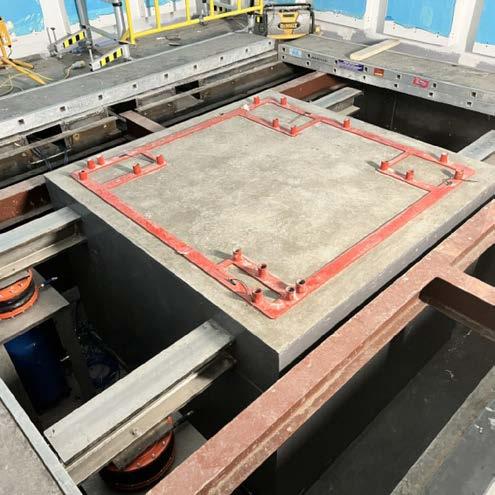
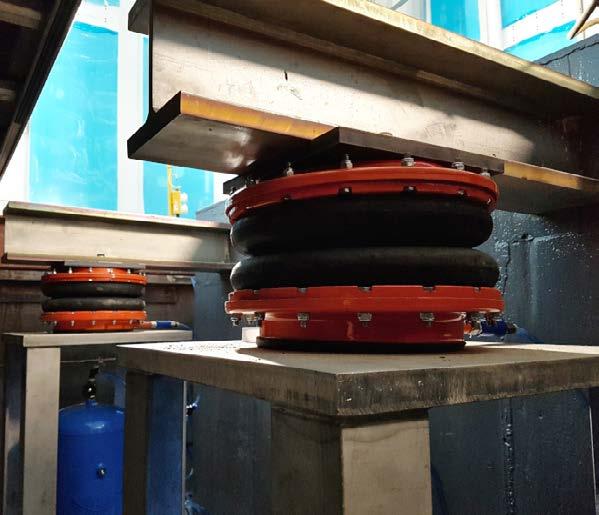
remaining stable.
These qualities make air spring isolators the solution of choice for environments where precision is paramount. They are commonly used beneath electron microscopes, MRI scanners and other high-precision imaging or metrology systems. However, they should also be considered for more conventional projects such as isolating transformers or generators, which can easily excite traditional elastomeric and spring isolators.
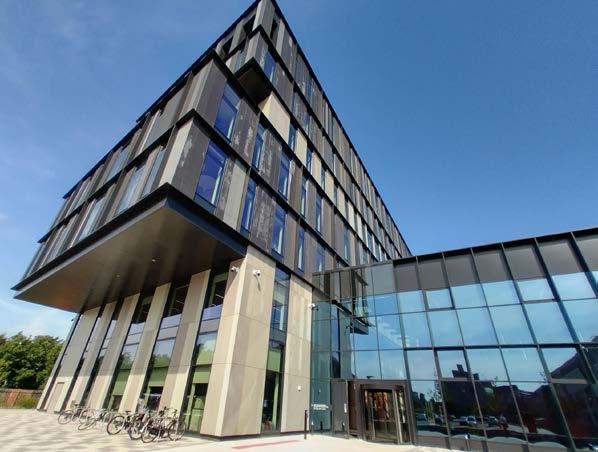
A good example of the effectiveness of air springs is the Cardiff Innovation Campus, where Mason UK designed and installed a bespoke system to isolate a large electron microscope from vibrations caused by nearby rail
traffic. The proximity of the railway line to the facility made this project uniquely challenging. The solution combined a high-mass inertia base with air springs, resulting in performance that not only met the strict VC-E criterion but exceeded it, achieving levels close to VC-G. Such outcomes are exceptional, particularly given the site’s challenging conditions.
Successfully implementing an air spring isolator system requires careful design at every stage. Engineers must accurately calculate loads and ensure they are evenly distributed. The surrounding structure, including pit depths and architectural constraints, must be considered, and additional factors such as electromagnetic shielding can add further complexity. With
the right expertise, however, these challenges can be addressed, enabling state-of-the-art facilities to operate, even in circumstances where freight trains are passing just meters away.
As research and manufacturing technologies continue to evolve, specifications demanding the highest vibration criteria will become more common. Air spring isolators provide a proven route to achieving these demanding performance levels, making them an essential consideration for any project where precision and reliability cannot be left to chance.
To read more about the Cardiff Innovation Campus and other Mason UK projects, visit the case studies section of the website.

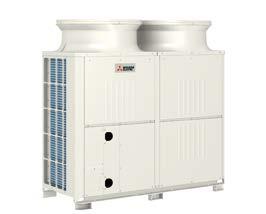
Decarbonising university estates is now more achievable than ever with Mitsubishi Electric’s renewable heat pump and chiller technology. We’ve partnered with universities like Durham and Salford to implement low-carbon HVAC solutions that utilise lower-GWP refrigerants and reduce embodied carbon. Our offerings include commercial heating systems for hot water and space heating and modular high performance chillers for scalable heating and cooling Backed by our robust MELServe aftersales service, our solutions ensure continuous optimal performance and longevity.
Discover our full product range at: les.mitsubishielectric.co.uk


‘Martyn’s Law’ and planning for success by Stephen
O’Connell, Commercial Manager, Netgenium
The Terrorism (Protection of Premises) Act 2025, commonly known as ‘Martyn's Law’, received Royal Assent on 3 April 2025. The legislation intends to improve safety in publicly accessible places if a terrorist attack strikes and organisations currently have a minimum 24-month implementation
period, expected to run until around April 2027, to prepare for compliance.
Government analysis indicates that well over 150,000 or more public-facing venues, which include primary and secondary schools through to places of worship and retail and hospitality venues across the UK, are expected to be covered by the law. Other estimates place this
figure even higher at 250,000.
It’s widely acknowledged that ‘Martyn’s Law’ aims to strike a balance between public safety and the burden on premises. As with most legislative reform however, there are mixed views on whether it goes far enough. It introduces a tiered approach, requiring different security measures based on venue
capacity, with many people pointing to improved preparedness and victims' families seeing it as a huge step forward. What’s also widely recognised is that for smaller venues, there will be some concerns and potential implementation challenges. This all highlights the need for clear guidance and central government backing.
The law sets out different requirements for Standard Tier premises, which would have a capacity of 200 - 799 individuals, and Enhanced Tier premises and qualifying public events, both of which have a capacity of 800 individuals or more. Even if their capacity is 800 or over, childcare or primary, secondary, or further education premises still fall within the Standard Tier. The requirements for Standard Tier premises are intended to follow the established concept of being appropriate and reasonably practicable. The objective of the requirements is to implement simple procedures that could reduce harm and save lives in an attack. It's important to note at this stage that official guidance on implementation and compliance is still to be published and is expected during the 24-month transition period.
Educational dispensation
While the new law is fairly broad in its reach, the education rules are different based on the setting with early years, primary, secondary and further education settings receiving
special dispensation - they will be in the Standard Tier, even if they expect 800 or more individuals to be present. Enhanced duty requirements will not apply to premises used for early years, primary, secondary or further education.
Department of Education funded independent training providers also receive special consideration, falling within the Standard Tier, even if they expect 800 or more individuals while privately owned independent training providers will not receive special consideration. These latter providers will be treated the same as other premises in the scope of the act and their tier will depend on the number of individuals reasonably expected to be present.
Universities and other higher education establishments do receive special consideration and will fall within the Standard Tier if they reasonably expect 200 to 799 individuals to be present, and the enhanced tier if it is reasonable to expect 800 or more individuals. While buildings, places and venues that reasonably expect below 200 individuals to be present do not fall within scope of the act, they are actively encouraged to have preparedness plans in place for the safety of their learners and staff.
Understanding and planning for these distinct emergency protocols, lockdown for internal threats, evacuation for incidents requiring site clearance and an emergency procedure that moves people to
a secure, sheltered area inside a building when a threat is outside and it is safer to remain inside than evacuate the premises (an invacuation for external threats), is vital for developing an effective critical incident response plan that aligns with ‘Martyn’s Law’ and fulfils safeguarding responsibilities.
While many large premises and events will already have good anti-terrorism and security measures in place, those responsible for managing property and protecting people will almost certainly need to upgrade their practices and better protect facilities. In short, they need to consider the measures and procedures they will need to have in place. They may not always understand what is required and need to be clear themselves about how do I want to comply with Martyn’s Law and the help that’s available out there in the market place to ensure they arrive at the right solution to ensure compliance. It will generally be the occupier of the property who is responsible for these duties. However, for some sites such as shopping centres, the landlord will be responsible for security in the common areas, while tenants will be responsible for their units. It may be that a large individual unit is subject to standard duties, but these sites as a whole are subject to enhanced duties. Landlords and tenants will need to


cooperate to ensure that these new requirements are met.
So where to begin? The principles of counter terrorism protect and

prepare should be adopted by venues and organisations of any size to ensure communities are safeguarded. A good start is a review of your premises classification and occupancy. This can be followed by identifying your responsible person(s) and initiating some planning emergency messaging and communication protocols before moving on to train staff and test procedures.
Check whether existing systems can deliver alerts quickly, clearly, and site-wide. Formulating plans and procedures should also focus on how to direct people towards the most appropriate locations, how your site can lockdown and provide refuge for those on-site and an effective mechanism to communicate quickly and effectively with the appropriate people on the site.
Developing a comprehensive approach to emergency communication will ensure compliance with ‘Martyn's Law’ while benefiting from a robust solution that supports your operations. Unified IP-based systems, when deployed strategically, support compliance and ensure that safety, experience, and operational continuity coexist even in the most high-pressure safety and security environments.
The goal for organisations is to ensure property and people are safe and secure as possible without limitations on freedom and liberty. Physical security can only go so far in fulfilling this, but when it works hand in hand with a unified tech strategy, the chances of things running smoothly are always heightened.
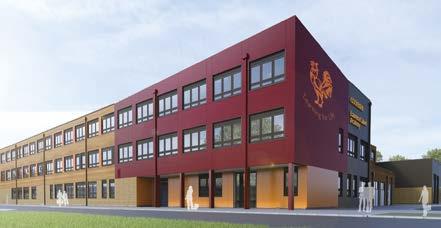
• Constructor (modular building supply) and main contractor (as required) that offers a full turnkey solution approach.
• Architecturally designed & inspirational learning environments. Our buildings can be visually indistinguishable from traditionally built schools.
• Utilising SEISMIC platform design and achieving a high level of PMV.
• Customised to client specifications and needs. From glazing to wall cladding finishes; even teaching spaces can be configured.
• Repeatable classroom designs, creating efficiency through standardisation. Standardisation is key to driving greater efficiency throughout all aspects of the project and delivery.
• We are recognised by a number of key frameworks, which are the DfE MMC1 LOT 1, CCS, NHS-SBS and the LHC.


Lighting is often overlooked in the design of educational sports facilities – but when done right, it can transform the way students learn, train, and play. Effective lighting promotes safety, boosts performance, and enhances every activity - whether on the pitch, on the court, or in the gym. Achieving this requires more than high-quality, long-lasting fixtures - it demands a detailed understanding
of technical requirements, from lux levels to coverage, tailored to the unique needs of school environments.
Martin Heaward, UK Head of Sales at Performance iN Lighting (Powered by Gewiss), explains what truly defines ‘good lighting design’ in educational sports spaces, and how expert guidance can help schools create inspiring, safe, and highperforming facilities.
“Lighting design is a relatively straightforward concept, but it is incredibly complex in practice and vitally important. Adequate lighting plays an integral role in almost every sports facility, and especially in schools, where children and young adults are using spaces in all seasons and under varying conditions. Poor lighting can compromise safety, performance, and engagement - while the right lighting
elevates the entire experience.
When planning a school sports facility, it’s essential to consider the setting as a whole. The location of luminaires - whether internal, external, or both - along with the positioning of walls, ceilings, windows, and sports equipment, all play a crucial role in determining lux levels, uniformity, and glare control. Educational sports environments are rarely single-purpose - indoor gyms, halls, and changing rooms often sit alongside outdoor pitches, tracks, and courts. Each of these spaces has its own distinct lighting demands, making a holistic and carefully coordinated approach to design vital.
Integrating lighting with building management systems gives facilities managers a powerful tool to monitor and control energy use, set tailored schedules, and respond automatically to changing conditions throughout the day. Advanced dynamic systems can adjust brightness and colour temperature based on occupancy, the type of activity taking place, or even the time of day, ensuring optimal comfort for users while minimising energy consumption.
For example, a gym may require brighter, cooler lighting during high-intensity training sessions,

then a transition to warmer, softer tones for assemblies or after-school events. This level of control not only improves the user experience but also extends the lifespan of lighting assets, supports sustainability goals, and helps schools maintain operational efficiency without compromising performance.
Many lighting teams now use 3D simulations to create accurate replicas of spaces. This helps highlight potential issues such as uneven illumination, glare, or light spill. With this data, designers can
optimise layout to ensure energy efficiency, safety, and performance from the outset.
Equally important is selecting robust, long-lasting components that can deliver this performance consistently. Even the best luminaires will require maintenance or replacement at some stage, so designing for ease of access is key to reducing downtime and simplifying servicing. Products incorporating maintainable LEDs and drivers not only extend lifespan but also futureproof facilities, saving time, money,

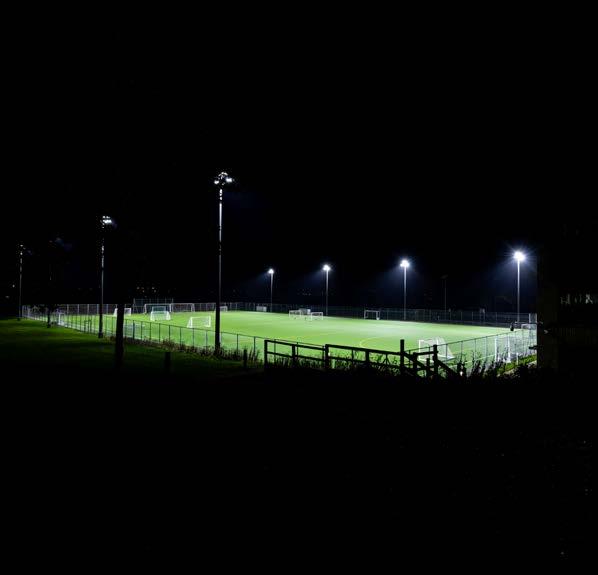
and labour while ensuring that the carefully planned lighting continues to perform as intended.
Compliance with national and international standards is essential, particularly in spaces designed for children and young adults, but achieving this goes beyond simply following guidelines. Partnering with lighting specialists from the outset allows schools to benefit from a broader perspective, combining technical precision with practical insight. By working with a specialist partner early in the design process, schools can ensure their lighting solutions not only meet regulatory
standards but also avoid costly redesigns and deliver maximum value and functionality over the long term.
When approached thoughtfully, lighting transforms educational sports facilities. It ensures safety, improves performance, supports diverse activities, and enhances student wellbeing. Done right, it turns standard spaces into environments that inspire, protect, and perform. Schools that engage lighting specialists early in the design process gain the benefit of technical expertise, efficiency, and regulatory compliance. From
indoor gyms to outdoor pitches, good lighting is an investment in safety, engagement, and long-term operational success.
About Performance iN Lighting
Headquartered in Verona, Italy, with operations in over 100 countries, Performance iN Lighting (Powered by Gewiss) designs and manufactures lighting solutions for public and private spaces. Following a decade of success across Europe, the company launched in the UK in 2023.
More information about its product range is available at www.performanceinlighting.com.

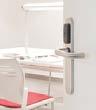
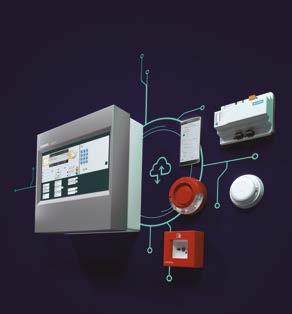


As Europe’s leading supplier, installer and integrator of digital television and audio visual equipment, Airwave can deliver your vision. With a presence in all key sectors including: healthcare, education, retail & leisure, stadia, prisons and transport, Airwave’s customer base is diverse.
www.airwave.tv
The ASSA ABLOY Group is the global leader in access solutions. Our offering covers products and services related to openings, such as locks, doors, gates and entrance automation solutions. This also includes expertise in controlling identities with keys, cards, tags, mobile and biometric identity verification systems.
www.assaabloy.com




Club Car boasts nearly 60 years of industry-leading innovation and design, initially focused on golf cars and then expanding to commercial utility vehicles and personal-use transportation.
www.clubcar.com





As the UK’s market-leading provider of technology led compliance and risk management solutions, our purpose is to help organisations be safer, healthier, and stronger. Our guide explains a range of measures and safety commitments so that universities are fully prepared and to keep the spread of the virus under control.
www.alcumusgroup.com
Buildings today don’t only provide a safe, functional place for people to live and work. They can also cater for – and even respond to – their needs, while helping them work more efficiently and sustainably. At Bosch Building Technologies, we are at the forefront of these new developments.
www.boschbuildingtechnologies.com
Our education solutions are developed from the ground up to increase campus security and safety while extending the capabilities of student, faculty and staff ID badges. Our solutions can be used for convenient access to buildings, computer login, cashless vending and campus activities.
www.hidglobal.com
Hysopt is unique design software that helps building managers get the most out of their heating and cooling systems. In collaboration with installation companies and engineering firms, we can cut your annual energy bill by 10 to 50%.
www.hysopt.com
LapSafe® created its first products to meet the needs of the education market and although we have since expanded into many other sectors, this remains our largest and most established area of expertise. Our products have been thoroughly tested by every type of education and academic institution
www.lapsafe.com
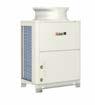


Originally founded in 1921, the company known today as Mitsubishi Electric has almost 100 years of experience in providing reliable, high quality products and support to installers, specifiers, corporate clients and general consumers all over the world.
https://les.mitsubishielectric.co.uk


From its inception in 2001, SALTO was created with one objective: to devise a world-class access control system that was simple to use and extremely efficient, giving users the ability to control all their access needs and secure all their doors without complex and expensive wiring.
www.saltosystems.com

As a trusted advisor and reliable partner, as a system integrator, service provider and a product vendor, Siemens offers energy-efficient, safe and secure buildings and infrastructure. With our people, our global footprint and our technical expertise, it's our passion helping you to create the perfect place – your perfect place.
www.siemens.com


Award-winning AV integrator, providing bespoke AV solutions with a strong company ethos, collegiality and partnership approach. Evolving with developments in AV technology allows Strive AV to deliver excellence across education, corporate, health and retail environments, providing AV solutions which transform communication and enhance end user’s experiences.
www.striveav.com





With more and more consideration being given to energy usage and the increasing implementation of green legislation, PumpSmart Limited is able to assist with the identification of areas where real energy savings can be made. New products, aimed at energy consumption reduction, are constantly entering the market with potential to improve existing installations.
www.pumpsmart.co.uk
We drive digital transformation by integrating world-leading process and energy technologies to realize the full efficiency and sustainability opportunities for your establishment. We provide end-point to cloud integration connecting products, controls, software and services.
https://www.se.com
Simpli-Fi are expert at helping educational establishments get the most out of wireless technology. We implement bespoke, reliable, scalable, flexible, and secure enterprise-grade, managed wireless networks that connect unlimited devices anywhere on site.
www.simpli-fi.co.uk
Veolia Water Technologies UK (VWT UK) is a leading water treatment solutions and services provider with a unique global presence and 160 years of experience. VWT UK strives to provide innovative solutions such as the new PURELAB Quest compact water purification unit that can generate Type I, II and III water.
www.veoliawatertechnologies.co.uk
Discover how to maximize efficiency, safety, and productivity with an integrated university infrastructure.

Make the most of your energy