


Take your access management into the digital era – smoothly, securely, and without overhauling existing infrastructure. With CLIQ, you upgrade from mechanical to digital access at your own pace to gain greater control today and adaptability for tomorrow.
Download our whitepaper to learn more about making the switch to digital access

Editor Chris Hewett editorial@mebmedia.co.uk
Accounts Jay Kempisty accounts@mebmedia.co.uk
Publisher Wayne Banks +44 (0)1622 201207 wayne.banks@mebmedia.co.uk
Website and Circulation Manager Kevin Villa website@mebmedia.co.uk
Design and Production Charles David production@mebmedia.co.uk
Campus Estate Management Magazine is published 4 times a year by MEB Media Publishing Ltd 13 Princes Street Maidstone Kent ME14 1UR United Kingdom Tel: +44 (0)1622 201207, info@mebmedia.co.uk www.mebmedia.co.uk
Articles and art may not be reproduced or reprinted without the express written permission of the publisher.
Exclusion of Liability
Although every effort will be made to ensure the accuracy of all materials published, the publisher takes no responsibility for errors or omissions.
Copyright © MEB Media Publishing Ltd 2025, all rights reserved.


4 Climate resilience
A critical priority for education estates
8 Product & Industry News
The latest news and views on campus
22 Water under pressure
Ageing systems and tighter regulations are forcing estates teams to rethink water management
26 Designed for students
How fitted furniture is helping student living
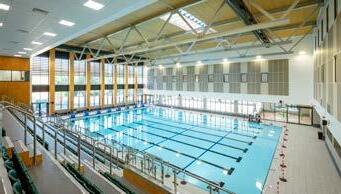
30 Breaking new ground How B&K have helped deliver the UK's largest Passivhaus leisure centre
34 Bridging the data gap
Why universities need a single source of truth for estate management
38 Smart, safer campuses Challenges of securing campus estates
42 Unlocking new revenue Simplicity, sustainability and driving profit

Climate risk has the potential to affect every aspect of academic life and must no longer be viewed as a future concern, but as an immediate priority for the education sector. In response, enabling industries - particularly the built environment and construction sectors - must step up to provide solutions, collaborate effectively, and offer meaningful support.
The publication of the UK Climate Change Committee’s “A Well Adapted UK” report in May signalled a stark warning of a future defined by overheating buildings, floods and drought. The message was clear: the UK has largely been designed, planned and built for a climate that no longer exists, and this will have serious implications for educational institutions and other public services.
Schools were highlighted as being particularly vulnerable to overheating, with the CCC report noting “children in nurseries and schools” require greater protection from rising temperatures. Many UK buildings - including a large proportion of education facilities - were not designed for the hotter climate we can expect to experience. This means classrooms, halls, labs and student housing will face growing heat stress, undermining learning conditions, health and safety, and day-to-day use.
The CIOB was pleased the report recognised the UK remains underprepared for the impacts of a changing climate, from excessive heat to extreme storms. Without legislation and incentives to ensure buildings are protected from overheating, and resilient to flooding
and abnormal weather, the risks to human health and productivity will only grow.
We called on The Government to take the findings of the Climate Change Committee report seriously and listen to experts from across the construction sector and client organisations such as education institutions, who will ultimately be responsible for delivering the resilient infrastructure and buildings it highlights.
This is a topic we have been putting at the top of our agenda in 2026, because we recognise the role our industry must play in future-proofing communities against the accelerating impacts of climate change.
As extreme weather events like intense heatwaves, floods, and storms increase in frequency and
severity, the built environment faces unprecedented risks that threaten structural integrity, operational continuity, and public safety.
Given buildings generally have a lifespan exceeding 60 years, current construction and renovation projects must be designed to withstand future climate scenarios, not historic norms.
Embedding resilience into every stage of planning and construction is essential to manage risk, enhance occupant wellbeing, and maintain vital infrastructure in a rapidly changing world. But extreme weather also has an impact on construction operations and supply chains as well.
Climate impacts are already disrupting daily life and services, and the risks are substantial; heatwaves above 40°C becoming increasingly common by mid-century; flood risks rising; water shortages increasing in regularity and severity; and climate impacts costing the UK economy up to £260bn annually by 2050, without action at scale and pace now, according to the CCC report.
According to the Association of University Directors of Estates (AUDE), universities (particularly those with heritage buildings) are already experiencing a variety of climate related challenges, including storm damage to buildings and critical infrastructure, overwhelmed drainage systems, flooding and weather-related disruption, travel disruption, and challenges maintaining green spaces.
Other education settings across the UK will not be immune to these escalating climate risks which will
directly impact on nurseries, schools, colleges and university campuses, and student accommodation, and without urgent adaptation, impacts will intensify sharply by 2050.
For universities, colleges and schools this means upgrading estates for heat resilience, embedding climate adaptation in capital programmes, and rethinking building standards and campus design. Like other public services, they must urgently adapt to heat, flooding, and water stress.
In practical terms, this means upgrading buildings for thermal comfort and resilience, managing flood and water risks, and ensuring continuity of education during extreme weather, with implementation of adaptation plans (not just strategies).
There is an urgent need to adapt public service buildings including education estates with investment in passive cooling and natural ventilation, insulation, shading, and green infrastructure. In addition to retrofitting buildings to cope with heat and designing new buildings for future climates rather than historic norms, education establishments will also need extreme heat guidance for students and staff, as well as updated adverse weather plans.
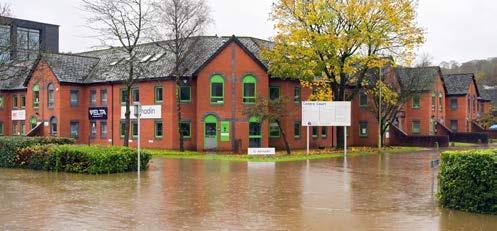
Flood risk management will also be critical for education infrastructure, with many campuses vulnerable to flooding, which could disrupt teaching continuity, exams, access and transport. Institutions need robust resilience planning (e.g. drainage, location planning,
contingency teaching) and must consider a range of adaptation measures suitable for the context. This includes sustainable drainage systems like permeable surfaces, rain gardens, swales, ponds and wetlands, as well as retention and detention basins, attenuation tanks, flood protection barriers, and protection for critical equipment. Those situated in coastal regions will need to consider appropriate additional adaptation measures.
Other hazards are likely to include prolonged periods of water shortage and increased wildfire risk, making water efficiency paramount, with adaptation measures such as developing landscaping that incorporates native and droughttolerant plants with low flammability, rainwater harvesting and smart irrigation, as well as early warning systems.
At CIOB, we are concerned that adaptation is lagging across all sectors, with insufficient action being taken at pace and scale to adapt the built environment. In the education sector, which has already faced funding cuts, teacher shortages, educational inequalities, and the long-term impact of the COVID-19 pandemic, this must only be compounded.
One CIOB member told me adaptation efforts across estates, operations, and governance in higher education are generally uneven, evolving too slowly, and there remains a gap between increased awareness of climate risks and actual delivery of resilience measures.

Educational institutions are not alone. As the CCC report highlights, the UK is “ill-prepared” for current climate extremes, and we are increasingly hearing from members and other stakeholders that existing plans are not keeping pace with risks.
Addressing this will require system-wide action across Government and the public services, infrastructure operators and the private sector. This must include the built environment industry and construction sector working in partnership with clients such as education institutions.
The good news is that help is at hand. The CIOB recognises our members and the wider industry need support in understanding their roles in relation to climate resilience. We recently published a new Technical Information Sheet on Climate Resilience & Adaptation in the Built Environment, which can be downloaded from the CIOB Academy. Additionally, we will be making climate resilience and adaptation the theme of our annual international Sustainability Conference on Wednesday 14 October 2026 and are looking for practitioners to join panel discussions and share real world case studies. Our free to download Client Guide also has a section on the wider topic of sustainability.
The UK Climate Resilience Roadmap, published by the UK Green Building Council, sets out a vision for a climate resilient built environment, sharing clear recommendations and next steps needed to increase the climate resilience of our built environment.
Another valuable educationspecific resource is the AUDE Climate Change Adaptation and Resilience Guide for UK universities, published in August 2025, and designed to help estates teams understand and respond to climate risks. It explains how climate change is already affecting university estates (e.g., through evolving hazards and environmental pressures) and sets out a structured approach to action supported by case studies. It emphasises integrating climate adaptation into institutional strategy and business continuity planning, then developing practical, evidencebased adaptation plans informed by stakeholder engagement and climate data. Overall, the guide aims to both inform and inspire universities to take proactive, coordinated action to improve resilience, supported by real-world examples and sector insights.
Of course, in addition to preparing their estates for the impacts of climate change, universities have
a vital research and innovation role to play, with academic teams investigating local and global climate impacts, developing and testing adaptation measures, and sharing findings with policymakers and industry.
The built environment industry can support with real world testing, scaled deployment and commercial funding, and work in partnership through mechanisms such as knowledge transfer partnerships.
It strikes me that the role of collaboration cannot be underestimated if we are to meet the challenge set out in the CCC report, and I was inspired to hear recently of academic and industry members of the CIOB’s own Sustainability Advisory Panel coming together to explore how we can utilise high solar reflective index roofing membranes to combat the increased risk of overheating in UK buildings and cities via the urban heat island effect.
Education institutions are major estate owners, critical public service providers and drivers of research and innovation on climate action putting them at the centre of society’s response to this issue and built environment professionals must work with them on solutions.

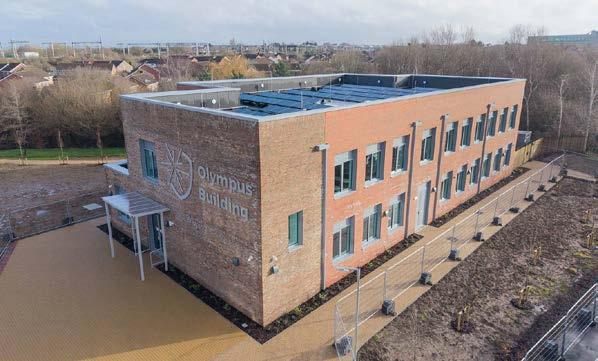
Morgan Sindall Construction’s Cardiff and Bristol business has celebrated the successful handover of the new Olympus Building at Abbeywood Community School in Stoke Gifford, following the initial completion of internal upgrades works in Spring 2025.
The new Olympus Building will open for use immediately after the February half-term, expanding the school’s capacity to 1,500 pupils in response to growing local demand for secondary school places.
A formal handover event took place on 06 February, with representatives from the Olympus Academy Trust, South Gloucestershire Council, Morgan Sindall Construction, Pick Everard and NVB Architects having the opportunity to see the new facilities in operation.
Procured by the council via the SCAPE Construction framework - which accelerates delivery whilst ensuring both time and cost certainty for public sector clientsthe first phase of works included extending the dance studio, refurbishing and decarbonising the existing kitchen, and reconfiguring the changing room facilities.
This was followed by the delivery of the new Olympus Building, which provides 10 new classrooms alongside dedicated office space, a staff working room, and enhanced welfare and accessible facilities.
The scheme also included an extension to the existing car park to provide ten additional spaces, including two electric vehicle (EV) charging points, as well as the installation of a lift to better support pupils with special educational needs (SEN).
As works took place on a live school site, the project team worked in close collaboration with Abbeywood
Community School throughout the delivery. Careful coordination of access and activities guaranteed that disruption to pupils was kept to an absolute minimum.
To further support continuity of teaching and learning, Morgan Sindall installed a temporary four-classroom block during the first phase, ensuring lessons could continue uninterrupted. In recognition of this collaborative approach, the project achieved a perfect 45/45 Considerate Construction score during its final visit.
In line with Morgan Sindall’s commitment to deliver sustainable buildings, the project team installed photovoltaic (PV) panels to the roof and air source heat pumps, helping to reduce the school’s operational carbon emissions and reliance on fossil fuels.
Throughout the project, the tier one contractor implemented its 10 Tonne Challenge which encourages project teams to work collaboratively with consultants and the supply chain to find Intelligent Solutions that reduce construction-related carbon emissions from the construction process by at least 10 tonnes.
The team far exceeded this target, achieving a reduction of 148 tonnes of carbon dioxide equivalent (CO2e) through the use of electric arc furnace steel, timber waste recycling with Community Wood, and the reuse of concrete hoarding blocks from another Morgan Sindall scheme. This saving - measured using CarboniCa, an intelligent carbon-reduction tool developed by Morgan Sindall Group and Once For All –is the equivalent to heating 55 UK homes for a year.

The further education college has installed smart lighting as part of its latest environmental initiative, making up to 85% energy savings compared to the previous system. Halesowen has the ambitious target of reducing carbon emissions by 50% by 2032 and 75% by 2037 (compared to 2019 usage).
Supporting the national drive to make Britain a clean energy superpower, Halesowen College has already implemented a number of projects. This includes recycle collection points at all campuses, electric vehicle charge points, and a dedicated coach service to students.
To upgrade the lighting system, the college partnered with Uni Smart Solutions, a managed service provider for sustainable buildings, and Siemens Financial Services (SFS), a specialist finance provider. Innovate UK, the UK ‘innovation agency’, introduced Uni Smart to Halesowen; and SFS is Uni Smart’s exclusive financing partner.
If buildings could talk
According to the World Green Building Council, buildings represent 39% of global energy-related emissions. [i] Smart technologies can significantly reduce this impact. Lighting alone contributes up to 25% of energy usage, according to Uni Smart – and HVAC (Heating, Ventilation, and Air Conditioning) systems – is responsible for up to 60%.
For new building projects, Uni Smart starts by gathering consumption data. Chris Goff, Managing Director, Uni Smart, likes to ask, “If buildings could talk, what would they say? Are they too warm, too cold, too full, or draining too much energy?”
Next, Uni Smart recommends solutions from its IoT product suite, EcoPulse. Traditional, fluorescent and LED lighting uses more energy than state-of-the-art
smart lighting controls; smart lighting is up to 75% more energy-efficient than LED. This is why lighting is often addressed first, ensuring energy efficient bulbs are used, lights are switched off in unoccupied areas, and that failed lighting is quickly detected and fixed.
Attention then shifts to air temperature and occupancy, ensuring each area of the building is controlled and used efficiently. Customers have full access to data from installed devices; Uni Smart also provides regular reports to estate managers, removing the burden of analysis.
The challenge is not to convince building owners and managers of the benefits of smart technology, but to encourage capital-strapped organisations to invest. With over two decades of experience using asset finance, Uni Smart’s Chris Goff starts this conversation with customers early on. Energy efficiency projects typically pay for themselves over time; smart finance solutions can be structured to align with these savings.
Uni Smart’s service doesn’t end with the installation. The company also maintains installed systems to prevent degradation, protect customers’ investment and ensure ongoing savings.
“Asset Finance is not just a way of buying things; it can protect the assets and make sure they're performing for the term of the agreement. In our case, we also make sure all savings are retained by our customers – we don’t expect a share.
“Helping customers to understand what they can achieve through financing, and helping to make a business case, is part of our service. This is especially important in education where there are specific rules about access to finance.”
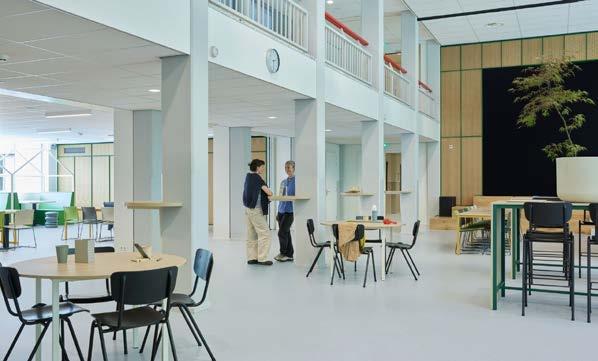
Forbo Flooring Systems is proud to introduce a new sustainable vinyl solution – Sphera Elite b+. Containing 43% recycled and bio-based content in its PVC, Sphera Elite b+ takes the manufacturer’s commitment to people and planet even further, with a low embodied carbon and increased recycled content. Forbo has also refreshed its wider Sphera collection with updated colour palettes, each reflecting modern design trends.
First introduced in 2016, Forbo’s Sphera homogeneous vinyl is a premium, vibrant and durable solution that is perfect for heavy-traffic areas, particularly those found within the healthcare and education sectors. Comprising three ranges: Element, Energetic and Elite b+ (bio-based), the updated collection is created to suit any design vision, from subtle and seamless to bold and expressive. Whether the focus is on lasting performance, inspiring design or enhanced sustainability, Sphera delivers.
Within this launch, Forbo is delighted to introduce Sphera Elite b+ to the market, a brand new, bio-based range. Looking to enhance the sustainable credentials of its vinyl offering and bring it in line with market demands, the manufacturer has incorporated innovative bio-based materials into the production of this collection, such as used cooking oil, giving the range a bio-based and recycled content of 43%. Manufactured in factories using 100% renewable electricity and embracing efficient manufacturing methods, this range has one of the lowest embodied carbons for a
homogeneous sheet vinyl in the market of 2.94kg CO2 e/m2, and a reduced carbon footprint of nearly 50% (A1-A3) compared to standard Sphera.
This new range comes in 18 natural colourways, with the colour palette inspired by the product’s innovative and sustainable sprit. While its flecked appearance helps to create interesting and unique interior designs, as well as offering dirt hiding properties.
In addition to the launch of Elite b+, Forbo has also refreshed its entire Sphera portfolio. The Sphera Element range now contains 51 items, seven of which are multicoloured, with 33 new designs and more eye-catching accent chips added to its offering. Known for its rich colour range and thoughtfully chosen steps from light to dark tones, the collection has been reshaped to expand its natural palette and harmonise with contemporary trend tones. The range can also be combined with Forbo’s other products for integrated design schemes.
Sphera Energetic has also been updated, with an even greater variety of designs available across its three different visuals: Uni, Vivid and Shimmer. Looking to achieve a balanced harmony between colours, accent chips and visual effects, there are a range of aesthetics on offer, from calm and natural to those that embrace a more playful, youthful and expressive character.
See the updated range, here: www.forbo-flooring.co.uk/sphera.


a
McAvoy's recent appointment to the Department for Education (DfE) Construction Framework 2025 (CF25) reflects the increasing demand for high-quality, sustainable education facilities, says the company.
McAvoy has secured a place across all eight regional lots of the CF25 £15bn school rebuilding programme to deliver education projects across England. This signifies a major opportunity for McAvoy, who are one of only 23 contractors appointed.
Ron Clarke, CEO at McAvoy, said: "This latest framework appointment reflects the increasing focus placed on high-quality educational facilities which can be delivered at pace. Being appointed to CF25, and securing places across all eight regional lots, demonstrates the clear value that McAvoy can bring to major programmes of this scale and reinforces our position as a trusted and
highly capable modular solutions provider."
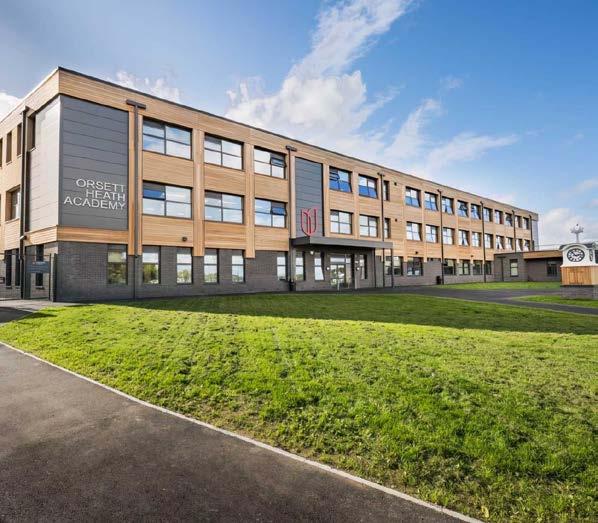
The appointment builds on McAvoy's strong track record of delivering schools and is the company’s fifth appointment to a DfE framework. The rental specialist delivered essential school facilities in response to the Reinforced Autoclaved Aerated Concrete (RAAC) crisis, including a temporary school for Hockley Primary School which was operational within 10 weeks. Other recent school completions for the DfE include ‘low carbon pathfinder project’ Merstham Park School, award-winning Orsett Heath Academy, and The Cavendish School which supports pupils with autism.
For more information about McAvoy’s framework partnerships visit www.mcavoygroup.com/who-we-are/ frameworks-collaboration/

Atelier has provided a £32.7m loan to fund the refinance and refurbishment of a 600-bed student accommodation scheme in Canterbury, Kent
Development finance lender Atelier has today announced the completion of a £32.7m loan, to MCR Property Group for the refinance and refurbishment of Parham Student Village, a 600-bed PBSA block in Canterbury, Kent.
The loan, structured over a 15-month term enables the refurbishment of an existing student asset. The loan completion took just 19 working days, with operational plans already in place with Flow Student, MCR’s student operator, running the site.
In 2025, MCR significantly expanded their PBSA footprint, with a strong pipeline of new developments and acquisitions across major university cities. This next phase of growth is powered by Flow Student, their new brand platform. Flow Student has been built around the real needs of today’s students and focuses on essential,
high quality and experience-led living.
Matthew-Blaine Young, Head of Origination at Atelier, commented: “We are delighted to support MCR with the financing to develop and refurbish this existing PBSA asset. Our team delivered on our clients’ need for efficiency on this deal, with a transaction time of only 19 days. Excellent communication and collaboration between all teams made this possible”.
David Tracey, COO at MCR Property Group, commented: “This was our first transaction with Atelier and they were extraordinary in both service and delivery. The team demonstrated a clear commercial understanding of the PBSA sector, combined with a disciplined and responsive approach to loan structuring. Their ability to move decisively, and quickly while maintaining rigorous underwriting standards gave us confidence at every stage of the process. We look forward to building on this relationship.”
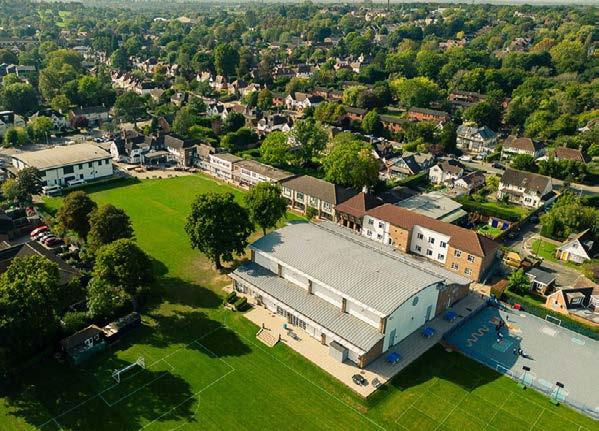
St Martin’s School has completed a coordinated programme of security upgrades across its main buildings and sports hall, carried out by Amthal Fire & Security during the school holidays to avoid disruption to learning.
St Martin’s is an independent preparatory school in Northwood, educating around 400 boys from age 3 to 13. The school occupies a mix of newer and longestablished buildings, and its growing facilities have led to increasing pressure on older infrastructure.
Facility teams called in Amthal to review if existing systems still met day-to-day operational needs, especially as usage patterns and safeguarding expectations had evolved.
James Crewe, Estates and Facilities Manager at St Martin’s School, said: “Partnering with Amthal allowed us to review the security technology available and select solutions that suit the way our school operates. Their technical guidance helped ensure our upgrades reflect current best practices and meet the specific needs of different areas, from our main buildings to the sports hall, without unnecessary disruption to school activities.”
Planning and risk assessments began with a detailed
review of how the estate functions throughout the week, examining access routes and layouts. This shifted the focus from simply replacing equipment to creating a bespoke integrated solution.
Amthal focused on improving the consistency and reliability of security systems. Key upgrades included the installation of a Texecom intruder alarm system, enabling authorised staff to monitor the site remotely from any location and respond instantly to alerts.
All installation work was completed within the holiday window, followed by final testing and staff briefings before pupils returned.
David Williamson, Business Development Manager at Amthal Fire & Security, added: “From initial design and specification, through installation and ongoing monitoring, we worked closely with the school to ensure the security systems meet their needs, with installation planned around learning timetables. The upgrades provide total protection, and with a coordinated maintenance schedule it demonstrates how a planned, collaborative approach can deliver practical, long-term security benefits for all who attend and teach at this school.”

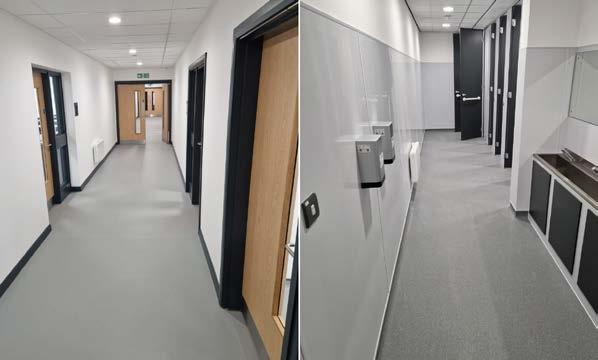
When Saint Benedict Catholic Voluntary Academy in Derby required a flooring system for its new two-storey modular building, delivered by modular building specialist Algeco, Envira Floors Ltd turned to Bostik for technical support and a comprehensive product solution. The multi-million-pound project demanded a flooring approach that could address the unique challenges of modular construction whilst meeting the rigorous demands of an active educational environment. The new block brings together the academy’s science laboratories and teaching spaces, increasing the need for a safe, durable and easy-to-clean flooring solution.
Modular construction offers significant advantages in speed and cost-efficiency, but it also presents distinct flooring challenges. At Saint Benedict's Academy, Bostik's technical team identified two primary concerns during their initial site assessment.
Moisture testing revealed a split condition across the building. The ground floor recorded elevated humidity levels requiring a surface-applied damp proof membrane, whilst the upper floor tested satisfactorily dry and did not require additional moisture protection.
The second challenge centred on the joints - the seams where individual modular units are bolted together. These joints, measuring between 3mm and 6mm, are subject to vibration and slight lateral movement. Without proper treatment, they could
telegraph through the floor covering or compromise the integrity of the installation. A flexible, resilient solution was essential to accommodate this movement whilst maintaining a smooth, level surface.
"Modular builds move quickly, so we needed a flooring system that could keep pace with the programme whilst addressing the technical issues specific to this type of construction," explained Emma Wilson, Contracts Director at Envira Floors Ltd. "The joints were a particular concern - we needed a solution that would remain stable over time."
The flooring installation at Saint Benedict Catholic Voluntary Academy was completed on schedule, with the Bostik system solution successfully addressing both the moisture and bay joint challenges inherent in the modular construction. The combination of rapidcuring products and expert technical support ensured minimal disruption to the overall project timeline and aligned with Algeco's overarching modular construction programme.
"The team were really happy with how the products performed," Emma Wilson confirmed. "Everything went smoothly, and the client was delighted with the finished result. It's exactly the kind of installation you want - fit for purpose, on time, and problem-free."
For more information on the technical support and comprehensive floor preparation and adhesive systems available from Bostik, visit www.bostik-profloor.co.uk.

Excluded pupils and children whose personal circumstances prevent them from setting foot in class have been given “an education lifeline” thanks to a pioneering UK-first model of schooling.
The provision, where teachers deliver communitybased education and pastoral support to students at home, also now includes access to real-time online lessons.
Progress Community, the trailblazing initiative from education specialists Progress Schools, caters for children who will not or cannot attend a physical school setting due to either exclusion, mental health, emotional based school avoidance or criminal activity related concerns, amongst other barriers.
As well as access to GCSEs and other qualifications, pupils access coaching and mentoring to reflect on negative past experiences and develop the ability to make positive choices in the future.
From February, the initiative has been enhanced to blend real-time online delivery by fully qualified maths, English, science and PSHE teachers with community based pastoral interventions. Pupils log on for 18 hours of interactive online lessons and follow the newly developed, BraveEd curriculum. Tailored to meet the children’s specific needs, the innovative curriculum blends the national curriculum with pastoral and holistic provision.
It means alongside core subjects, pupils’ study and explore everything from volunteering and civic and community engagement, to discussing emotions and behaviour and what life after school could look like.
Specialist community teachers continue to visit the children at home or in community settings, offering a unique and first of its kind education initiative in the UK.
The one-to-one visits mean the pupils not only receive high quality education and could even sit their GCSE exams, but receive vital coaching, mentoring and pastoral support as they work through personal issues and unpick the barriers for long-term future success.
The provision builds on the success of the Progress Schools’ Community Learning Programme which since 2024 has seen pupils benefit from a mix of set online modules and in-person community teacher visits.
During the 2024/25 academic year, 48 students were re-engaged and supported in community settings, with 16 students achieving GCSE or Functional Skills passes. 75% of last year’s Year 11 students progressed into a further education or training, and 9 students successfully reintegrated back into a school setting.
The Community Teachers work collaboratively with a range of other professionals, including social workers and education officers, to ensure each student receives tailor-made support. Every student journey is different, but the aim for many is to support them back into a physical school setting that best meets their needs.
Although not physically setting foot in a classroom, so far this academic year, 33 pupils who are registered at Progress Schools in Thrapston, High Wycombe, Northampton, Birkenhead or Tees Valley are accessing the Progress Community initiative, enjoying the enhanced provision.
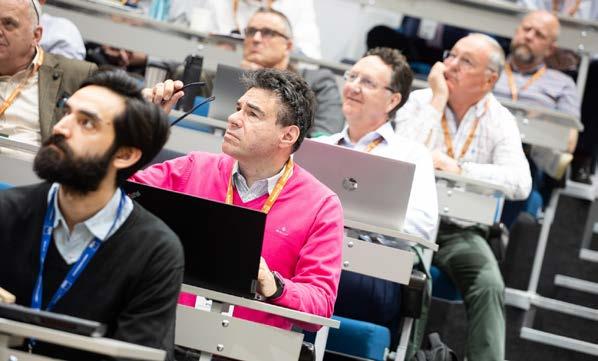
The Association of University Chief Security Officers (AUCSO), the leading international organisation for security professionals across Higher and Further Education, has revealed a powerful and thoughtprovoking line-up of speakers for its 42nd Annual Conference. Held under the banner “Excellence Shared – Value Realised,” this year’s event will bring together security leaders, innovators and sector experts from across the globe to explore the future of campus safety and professional excellence.
The 42nd AUCSO Annual Conference will be held at the University of Exeter on Monday 13 April to Wednesday 15 April 2025. The Conference is open to all AUCSO members and will be hosted by Dan Nicoll, Head of Security (Parking and Transport) Operations, University of Exeter.
AUCSO Chair, Geoff Brown, said: “We are proud to welcome members to the 2026 AUCSO Conference.
This year’s theme, Excellence Shared - Value Realised, captures our shared ambition: to translate professional excellence into measurable impact. When our community comes together to exchange expertise, experience and insight, we elevate standards, strengthen resilience and generate real value, not just for our own institutions, but for the higher education sector nationally.
“I look forward to insightful discussions that will shape the future of campus security and ensure that all students, staff, and visitors feel protected and valued."
The Conference will be opened by AUCSO’s Patron, Figen Murray OBE, followed by an exceptional line-up of influential and thought-leading speakers. Taking place at a pivotal moment for the sector, alongside the anticipated release of statutory guidance for
Martyn’s Law, the programme includes Laura Gibb, recently appointed national lead for Martyn’s Law, ensuring members receive informed, up-to-the-minute information . And 2026 will see new suppliers and AUSCO partners supporting the Conference again with a compelling exhibition of products and services. All delegates will be able to visit the exhibition in between workshops and talks to network, share, and learn.
There will be an Exhibition Opening and Welcome Reception on the Monday evening in The Sanctuary at the University of Exeter which will be an opportunity to meet suppliers, exhibitors and AUCSO colleagues. On the Tuesday evening there will be Networking Evening.
Celebrating some incredible achievements across 2025, a glittering Black Tie Gala Dinner and Awards Evening will take place on the Wednesday evening, at the Great Hall at the University of Exeter, when the winners of the AUCSO Awards will be announced. And 2026 will see new suppliers and AUSCO partners supporting the Conference again with a compelling exhibition of products and services. All delegates will be able to visit the exhibition in between workshops and talks to network, share, and learn.
There will be an Exhibition Opening and Welcome Reception on the Monday evening in The Sanctuary at the University of Exeter which will be an opportunity to meet suppliers, exhibitors and AUCSO colleagues. On the Tuesday evening there will be Networking Evening.
Celebrating some incredible achievements across 2025, a glittering Black Tie Gala Dinner and Awards Evening will take place on the Wednesday evening, at the Great Hall at the University of Exeter, when the winners of the AUCSO Awards will be announced.
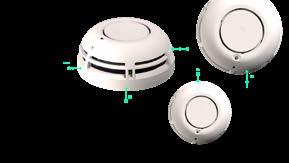
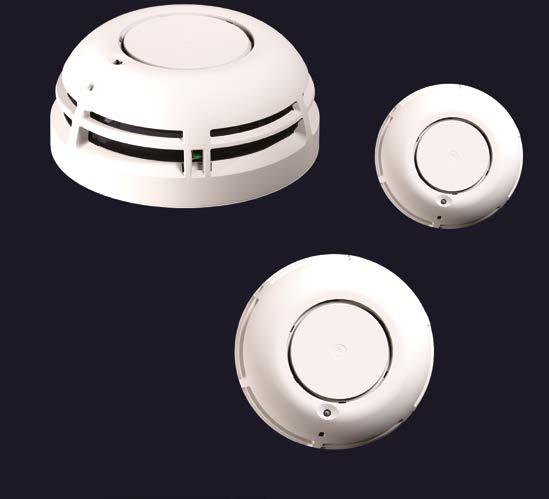
Siemens Smart Infrastructure today unveiled its new Cerberus Nova fire detector portfolio, set to transform traditional fire safety into a proactive, smart, and connected approach, part of the foundation of technologies that pave the way toward autonomous buildings. The new portfolio enhances operational safety, streamlines service team efficiency, allows for ease of system upgrades, and unlocks data-driven digital services through its cloud-connectivity. With their advanced technology, these systems are designed to meet various needs across industries such as healthcare, higher education, data centres and commercial real estate.
In healthcare facilities, where patient safety and operational efficiency are both essential, Siemens new fire detectors ensure performance with continuous, autonomous detection. The automated Disturbance-Free Testing (DFT) technology runs self-checks around the clock, reducing systems’ potential downtime. With support of the Smoke Entry Supervision (SES) technology, which monitors smoke entry points in real time, safety teams can intervene immediately before risks escalate. Additionally, the ASAplus technology, incorporating multi-wavelength optical and dual thermal detection, minimises false alarms – decreasing unnecessary evacuations. The fully IoT-enabled detectors are compatible with cloud-based applications, such as Siemens Building X Fire Apps. These capabilities provide facility teams and service providers with shared, actionable data insights and allow for real-time monitoring, remote diagnostics, and predictive maintenance.
Data centres’ high density of electrical systems and the need for continuous operations create unique fire safety risks, including overheating and electrical failures. Siemens Cerberus Nova detectors not only help maximise uptime of critical IT and electrical infrastructure, but also provide transparency on system conditions. Automated self-checks, cloud-based monitoring, and predictive maintenance allow facility teams to respond quickly and proactively, reducing disruptions and protecting these critical assets efficiently.
Other industries, such as higher education and commercial real estate, often operate multiple, widely distributed buildings, making centralised fire safety management essential. Siemens Cerberus Nova detectors help facility teams maintain consistent protection standards across all sites by providing continuous monitoring, reducing the risk of unnecessary disruptions, and supporting proactive maintenance. This holistic approach provides an oversight of widely
dispersed facilities and ensures reliable and resilient operations across the entire building portfolio.
“The launch of our Cerberus Nova fire detection portfolio is a game-changer in ensuring all alarms are accurate. By moving from periodic checks to continuous, data-driven, self-supervising systems, we’re laying the foundation for truly human-centric, autonomous buildings. By automating testing, delivering real-time insights, and enabling remote action, these solutions protect people while freeing up staff to focus on strategic priorities. This shift isn’t just about innovation – it’s about smarter, safer, and more efficient operations,” said Peter Nebiker, Head of Fire Safety at Siemens Smart Infrastructure Buildings.
No matter the industry, the best-in-class Siemens Cerberus Nova detectors represent a transformative approach to fire safety. They allow for stepwise upgrades while ensuring continuous protection, making them suitable for both green- and brownfield projects. Existing fire panels remain compatible, eliminating the need for a rip-and-replace approach. By allowing for plug-and-play integration including automatic transfers of configured settings, these systems offer seamless modernisation while reducing installation time and risk.
Carrying an environmental product performance label – Siemens EcoTech – for enhanced sustainability transparency, the detectors are not only made of recycled plastics, but also promote environmentally responsible design, resource efficiency, and circular economy principles. The Cerberus Nova fire detectors are part of the Siemens Xcelerator portfolio, an open digital business platform that enables customers to accelerate their digital transformation easier, faster and at scale. The offering has been developed in Switzerland, where it is also being produced.
For more information on the new Cerberus Nova fire detection portfolio, please see here

At the University of Warwick, a move away from reactive maintenance is giving the facility team greater control, visibility and confidence on site.
When water systems work properly, they can sit quiet and unnoticed in the background. But when something goes wrong, the impact is immediate. Problems can lead to compliance issues, hygiene risks, disruption to teaching and research and of course, unplanned costs.
Across the higher education estate, ageing infrastructure, changing regulations and increased
scrutiny around water quality are putting greater pressure on facilities teams. Water systems that may have been perfectly adequate a decade ago are no longer delivering the level of control, visibility or reliability that is now expected. As a result, estates teams are having to think more carefully about how systems are managed, maintained and upgraded.
At the University of Warwick, this challenge came into focus during routine inspections of the Bio Tech 4 Life Sciences Building, a high-use facility supporting research and teaching in a specialist environment.
The Bio Tech 4 Life Sciences Building is not a typical campus
facility. Between 400 and 600 staff, students and visitors use the building each day so there is a constant demand on water systems and, as the building also houses laboratories, teaching spaces and research environments, systems must operate under controlled conditions. This makes water quality management a central concern. Temperature stability, system turnover and consistent monitoring all play an important role in reducing risk, particularly in environments where compliance requirements are more stringent and the consequences of failure are greater.
Beyond reactive maintenance
Cold water storage tanks are a necessary part of many buildings' plumbing systems but they come with risks if not properly maintained. Yet water systems are, all too often, managed reactively. Maintenance teams respond to issues as they arise, carrying out checks, making adjustments and completing repairs to keep things operational. But without clear visibility of system performance, small issues can escalate quickly causing supply interruptions or more serious failures.
Temperature control is a good example. Stagnation and bacterial growth occur when water is left too long or moves too slowly and temperature fluctuations increase these risks – the Legionella bacteria thrives between 20-45°C so cold water should be stored below 20°C to prevent bacterial growth. If water freezes however, it can expand and damage the tank. Both scenarios introduce risk and both are hard to manage without consistent monitoring.
UK health and safety law requires building owners and managers to
control the risk of legionella in water systems. The HSE’s L8 Approved Code of Practice sets out how this should be managed, supported by the more detailed HSG274 technical guidance. Following L8 is not mandatory, but it is the recognised way of demonstrating compliance with the law.
At Warwick, routine reviews identified that the existing Category 5 cold water storage tank was still operational but no longer fully aligned with current regulatory requirements. Guidance from the local water authority, along with insights from health and safety audits, meant the facilities team needed to take action.
They faced a choice. They could continue managing the system through reactive maintenance or take the opportunity to replace it with a solution that would improve performance, strengthen compliance and reduce the effort required to manage it day to day. The more proactive approach was chosen.
The project centred on replacing the
existing tank with a new 5,000-litre sectional GRP cold water storage tank. But the upgrade was not just about replacing like-for-like. The facilities team wanted to improve how the system is monitored and controlled so they could have better visibility and a clearer understanding of its performance at any given time.
To get this level of control, Keraflo’s Tanktronic was installed. It included a Tanktronic Control Unit for accurate level monitoring and system visibility, a Servo Ceramic (SCV) valve to maintain precise water level control, a Tanktronic S-Module to support intelligent system management and a Tanktronic Battery Module to ensure the tank continued to function even during power interruptions.
Tanktronic monitors both water levels and temperature through a single control system and can manage multiple tanks independently if required. If the water level rises above or drops below a certain point, it triggers an alert. If no one responds, a second stage override kicks in. Temperature sensors also provide continuous monitoring,
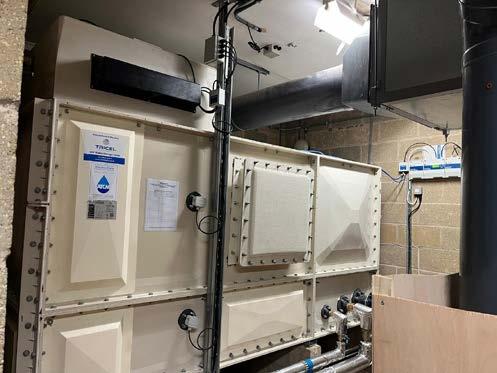

helping ensure conditions remain within safe limits. Rather than relying on routine checks, Tanktronic gives the team a clear, real-time picture of how the water tanks are operating so it’s easier to identify potential issues early and respond quickly before it escalates.
Flexibility was another key consideration for Warwick University. Education buildings rarely operate at a constant level of demand.
Term times, holidays and changing patterns of use all have an impact on how systems perform and those that cannot adapt to fluctuating usage can become inefficient or more difficult to manage when turnover rates change. Tanktronic has a calendar function, so tank capacity can be varied to match changing levels of demand throughout the year. Water is not left to stagnate and quality is maintained throughout the year.
intervention
One of the most noticeable outcomes of the upgrade has been a change in how the system behaves day to day. Water turnover has improved and there is far less need for reactive maintenance and routine checks. Temperature stability is also better and there has been a
significant reduction in positive samples across the wider system. Planned Preventive Maintenance (PPM) results point to a more stable and reliable system overall. The improved monitoring, control and visibility also make supporting data, record keeping and audits simpler too.
For estates teams, this all makes a real difference. As regulations continue to evolve, having such a high level of control helps the system remain compliant without the need for further major upgrades. It also reduces the time spent dealing with unexpected issues and allows for a more structured approach to maintenance.
It’s all change for the team at Warwick. Instead of reacting to issues as they arise, they now have a system that is more predictable and reduces pressure on maintenance teams. Rather than firefighting problems, the team can take a more planned and proactive approach.
The project has also changed how future upgrades will be approached across the university. Tanktronic is now the preferred option which means greater consistency across the site.
While longer-term data is still being gathered, early results show clear improvements in system control and reliability. The water system is now more stable and easier to manage, particularly in such a busy, specialist building. Common issues such as inconsistent level control, unnecessary noise and unreliable performance have been avoided and the University’s maintenance team has already noted that this has made a noticeable difference to how the system performs in practice.
Many educational estates are facing the same challenges as Warwick. Infrastructure is ageing, regulations are tightening and resources are under pressure. Keeping and maintaining existing outdated systems is becoming harder to justify but by rethinking how systems are designed and focusing on control, visibility and long-term performance, it is possible to reduce risk, improve efficiency and create systems that are much easier to manage.
For more information on Tanktronic, visit www.keraflo.co.uk.

Turnitin Originality rises above similarity checking, addresses new and emerging trends in misconduct, and keeps integrity at the core of all student work.
For decades, student accommodation was about little more than providing a bed, a desk and a wardrobe.
Furniture was selected for price and speed of installation, not longevity or design intelligence. Rooms were uniform, uninspiring and often inefficient, but expectations were low and competition was limited. That position is no longer sustainable, writes Katie Thompson at David Bailey Furniture.
Today’s students and their families scrutinise accommodation with the same intensity as academic rankings. They assess storage, layout, lighting, finish and functionality before signing a contract. Universities compete not only with each other, but with specialist private providers operating at a high-end commercial standard.
Social media, virtual tours and online reviews can focus on every shortcoming, which means that the quality of the living environment now
plays a decisive role in recruitment, retention and reputation.
Against that backdrop, fitted furniture is no longer a routine procurement decision. It is a strategic investment in performance, perception and long-term value.
Modern student rooms are compact by necessity. Urban land values, planning constraints and the economics of development mean that space must work hard. Yet within those square metres, a room must accommodate sleep, study, storage, digital connectivity and downtime. It must function as a bedroom, library, office and retreat.
Loose, freestanding furniture rarely rises to that challenge. Items are selected individually, often from standard ranges not designed for the proportions of the room. Gaps appear between wardrobe and wall. Desks sit awkwardly in corners. Beds block circulation routes. The result is not simply aesthetic compromise, but
practical inefficiency.
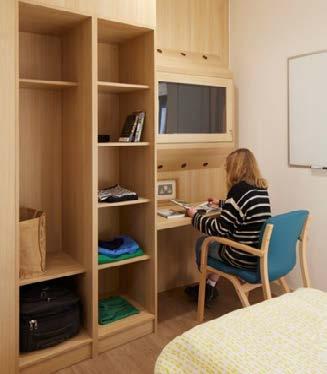
Fitted furniture approaches the problem differently. It begins with the architecture of the room and responds precisely to it. Wardrobes align with ceiling heights. Desks integrate with shelving. Storage is built into alcoves and above-bed zones that would otherwise remain unused. The design feels intentional because it is.
This level of integration transforms how a room performs. Circulation improves. Surfaces are uninterrupted. Clutter reduces because storage is anticipated rather than improvised. In small spaces, that difference is profound. Order contributes to calm. Calm supports focus and focus underpins academic success.
Durability is not a luxury Student accommodation operates at a pace unmatched by most residential sectors. Turnaround
times between tenancies are short. Occupancy levels are high. Furniture is used intensively, and not always gently. It must withstand heavy bags, wheeled chairs, constant drawer use, cleaning regimes and inevitably, the occasional spill or impact.
When furniture fails in this environment, it fails quickly. Hinges loosen. Edges chip. Panels delaminate. What begins as a cosmetic issue can become a maintenance liability. Replacements disrupt occupancy and add cost, made worse by piecemeal repairs that erode visual consistency across a building.
High-quality fitted furniture addresses this issue. Materials are selected not only for appearance, but for resilience. Boards are specified for impact resistance. Edging is applied to resist peeling. Ironmongery is chosen for cycle durability rather than short-term economy. Fixings are secure and tamper-resistant.
The benefit is not simply longevity. It is predictability. Providers can budget with confidence when they know their installations are built for extended service life. Maintenance teams spend less time responding to avoidable damage and more time focusing on essential operational tasks. Durability, in this context, therefore becomes a form of financial discipline.
We must always remember that accommodation forms part of an institution’s brand. Prospective students form impressions long before lectures begin. A room that feels thoughtfully designed communicates care. It suggests that the university values the lived experience of its community.
Fitted furniture plays a subtle, but powerful role in that message. Cohesive finishes, coordinated colour palettes and integrated lighting features create an environment that feels considered rather than assembled. Design details, such as soft-close drawers, integrated charging points and ergonomic desk heights, signal that functionality and comfort have been prioritised.
This matters because student wellbeing is under greater scrutiny than ever. Universities are acutely aware of their duty of care. The physical environment cannot solve
every challenge, but it can remove avoidable stress points. A room that feels organised, comfortable and proportionate provides a foundation for stability during a period of significant life transition.
When accommodation reflects contemporary design standards, it also supports recruitment. Images on websites and brochures carry weight. Prospective students compare facilities across institutions. In a competitive landscape, the quality of the living environment influences perception and ultimately, choice.
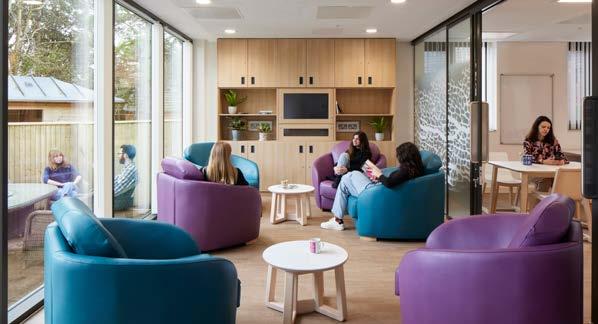
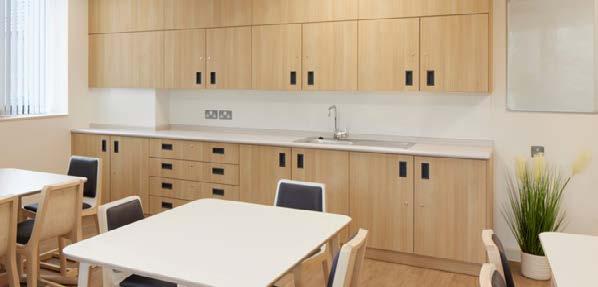
While private rooms are important, the shared spaces within student accommodation often shape the social narrative of the year. Kitchens, lounges and study areas are where conversations unfold, friendships form and collaborative learning happens.
These spaces benefit equally from considered, fitted solutions. Integrated banquette seating, for example, can define informal meeting zones without overcrowding the floor area. Purpose-built study pods
can create acoustic separation in open-plan areas. Media walls and storage units can organise communal equipment without clutter.
The design of these areas influences behaviour. Well-planned layouts encourage interaction while maintaining clear circulation routes. Durable surfaces withstand heavy daily use. Storage reduces the accumulation of shared items that can otherwise create tension between residents.
In this way, furniture contributes quietly to community cohesion. It shapes how space is used, how people gather and how environments feel during both busy evenings and quieter study periods.
Student accommodation also operates within a framework of rigorous regulation. Fire performance, structural stability and health and safety compliance are non-negotiable. Furniture must meet relevant standards not as an afterthought, but as a core design requirement.
Fitted installations offer advantages in this respect. Being securely fixed reduces the risk of
tipping or obstruction of escape routes. Materials can be specified to meet fire classification standards. Edges can be detailed to minimise injury risk. Because systems are designed holistically rather than assembled from disparate items, compliance is easier to verify and document.
For accommodation providers, this reduces uncertainty. For residents, it provides reassurance - even if they never consciously register it.
Environmental accountability
In addition, sustainability now influences almost every major procurement decision in the education sector. Institutions publish carbon reduction targets. Students themselves are also increasingly conscious of environmental performance, which means that the specification of furniture must contribute to that narrative.
Custom-fitted solutions can minimise material waste during production by aligning manufacturing precisely to room dimensions. Long service life reduces the frequency of replacement cycles, lowering embodied carbon over time. Responsible sourcing of boards and finishes supports institutional sustainability commitments. Importantly, durability and sustainability are aligned. A product that remains in service for decades avoids the environmental cost of repeated disposal and remanufacture. In this sense, quality
is an environmental strategy as much as a commercial one.
As student demographics evolve and technology advances, accessibility expectations rise. Accommodation must therefore adapt accordingly. Fitted furniture allows for this adaptability at the design stage. Workstations can incorporate enhanced digital infrastructure. Storage configurations can respond to cultural differences in living habits. Rooms can be planned with inclusive access requirements in mind from the outset rather than retrofitted later.
Because such installations are planned holistically, future-proofing can be built into the design rather than improvised over time.
Beyond aesthetics and performance lies a practical reality which recognises that accommodation providers must manage extensive estates. Cleaning teams, maintenance operatives and facility managers all interact daily with installed furniture. Integrated systems simplify their work. Fewer loose items mean fewer components to move, damage or replace. Flush finishes and enclosed bases reduce dust accumulation. Consistent specifications across a building streamline maintenance.
Over the life of a scheme, these efficiencies accumulate. What may appear a marginal cost difference at installation stage can translate into
measurable savings across years of operation.
However, perhaps the most compelling argument for quality fitted furniture is cultural rather than technical. When students enter accommodation that feels robust, well-designed and thoughtfully delivered, it sets a tone. It signals that standards matter. That environment shapes behaviour.
Spaces influence how people treat them. A room that feels temporary or cheaply assembled can encourage indifference. A room that feels intentional and well-made often invites respect. In a sector where student satisfaction is increasingly tied to institutional reputation and funding models, such nuances carry weight.
Student accommodation is no longer a peripheral service. It is part of the educational offer. It supports learning, wellbeing and community formation. Within that ecosystem, fitted furniture is not simply a practical solution for storage. It is infrastructure for daily life.
By approaching furniture as a long-term investment rather than a short-term cost, providers strengthen durability, operational efficiency, sustainability credentials and student experience in equal measure. In an environment where expectations continue to rise, quality is no longer optional. It is essential.
For more information visit www. education.davidbaileyfurniture.co.uk

The brief for Eclipse Leisure Centre was unprecedented: create the UK's largest 50/50 wet and dry leisure centre designed to Passivhaus standards, while meeting strict budget constraints and sustainability targets. Located in Staines-upon-Thames, the £50m project needed to consume 60-70% less energy than conventional leisure facilities - a significant challenge in a sector notorious for high energy consumption and comfort issues. Now one of the world’s most advanced leisure facilities, B&K Hybrid
Solutions' specialised expertise in hybrid timber construction was key to the project’s success.
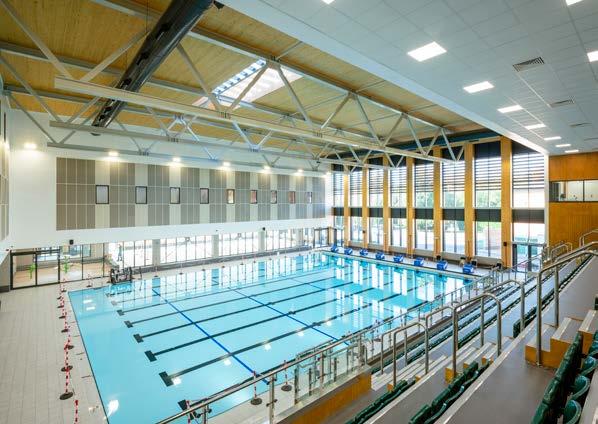
Now open to the public, Eclipse Leisure Centre offers a comprehensive range of facilities, including an eight-lane 25m main pool and 20mx10m learner pool with a movable floor, a 6-court sports hall and 950sqm of fitness space. The facility also features a flagship rooftop with four artificial football pitches, an open-plan café area, and a feature staircase, to create a welcoming biophilic entrance.
The project team selected a
hybrid material solution that balanced aesthetics, performance and sustainability, exceeding a single system approach. The design required innovative engineering solutions to overcome complex structural, acoustic, and moisture management challenges, particularly in high-humidity environments like the pool hall.
While timber was primarily specified for aesthetic reasons, with significant areas left exposed, this evolved into a hybrid timber-steel approach to maximise the benefits of each individual system: timber’s
visual warmth, carbon sequestration properties and prefabrication benefits were expertly balanced with steel’s excellent structural performance.
B&K Hybrid Solutions were selected for their proven expertise in hybrid timber-steel construction, where their understanding of engineered timber’s behaviour in challenging environments proved crucial. Working alongside GT3 Architects, structural engineer Engenuiti, and main contractor Willmott Dixon, BKHS’s technical knowledge helped to deliver timber applications in areas typically dominated by concrete, including the lift cores, pool hall, and spectator seating. A cost analysis completed by Willmott Dixon also confirmed that a hybrid timber-steel solution could meet the council's budget, without sacrificing the desired aesthetic or performance requirements.
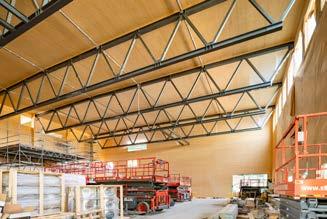
BKHS delivered over 2,195m³ of precision-manufactured, PEFC-certified engineered timber, comprising 127m³ of glulam and 2,067m³ of Stora Enso Cross Laminated Timber (CLT). Critical to the project’s success was BKHS' rigorous moisture management
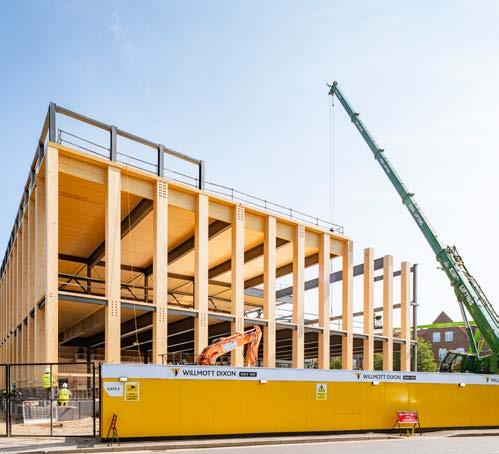
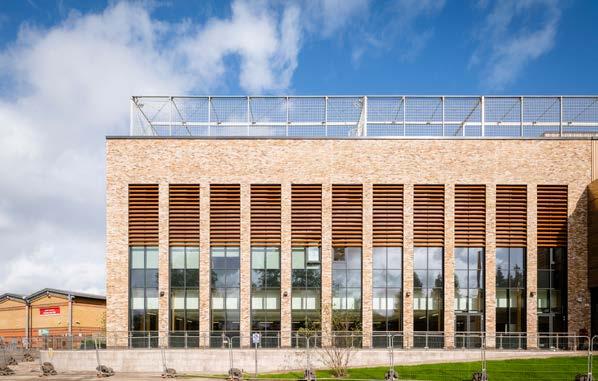
strategy. Regular moisture readings were taken throughout the construction phase, with comprehensive procedures such as the application of end grain sealant and removal of standing water ensuring timber integrity. All joints were meticulously sealed to achieve Passivhaus levels of airtightness, which are 95% better than standard building regulations.
The visual-grade timber panels eliminated the need for additional finishes, reducing both material use and long-term maintenance requirements. Factory-controlled manufacturing ensured consistent quality and precise tolerances, while pre-installed lifting devices and protective treatments accelerated on site installation.
“The hybrid combination of timber and steel, as offsite manufactured products, ensured Eclipse was delivered on time and to budget, setting a new standard for hybrid leisure centres of the future,” Alex Brock at BKHS comments. “The solution also enabled remarkable performance achievements in both airtightness and energy efficiency. The timber structure sequestered 1,668 tonnes of CO₂e, while a whole-
life carbon assessment showed a 12.97% reduction in embodied carbon compared to a composite steel alternative. The building achieves airtightness of 0.4 m³/hr/m² at 50pa and targets operational energy consumption of just 120 kWh/m²/ year.”
BKHS' 'build-less' approach, utilising lightweight timber, enabled shallow spread foundations instead of piles, further reducing steel, concrete, and excavation requirements. The prefabricated elements arrived ready for rapid installation, minimising site disruption and accelerating the construction programme. Eclipse Leisure Centre now stands as a benchmark for sustainable leisure facility design, demonstrating that complex, high humidity building types can achieve Passivhaus standards.
Daniel Mouawad, Chief Executive of Spelthorne Borough Council, said: “We are delighted to be a pioneering authority, demonstrating our commitment to net zero by building an ultra-low Passivhaus leisure centre. Having declared a climate emergency, we recognise the need to lead by example to achieve cleaner and greener lifestyles and a
sustainable borough for all to enjoy. This centre is a great example of partnership working and will provide the right infrastructure to meet our communities’ changing needs and will enable residents to stay active in a healthy environment, with low chemical pools and a dementia friendly design.”
BKHS’ extensive experience and hands-on involvement were instrumental to the success of this project, ensuring that every stage, from early coordination to final handover, was delivered to the highest standard. The ability to adapt to evolving requirements, manage complex MEP systems, and collaborate seamlessly with multiple stakeholders made a tangible difference to the build quality, efficiency, and long-term sustainability of the leisure centre. For clients seeking a trusted, forward-thinking partner on future leisure developments, BKHS offers the technical capability, collaborative approach, and proven track record to deliver outstanding results.
For more information please visit www.bkhybridsolutions.co.uk.



Discover exceptional campus-wide WiFi and mobile signal coverage with Simpli-Fi's enterprise wireless connectivity solutions.

Working on a better future with schools, colleges and universities throughout the UK.

Enterprise WiFi - Next-generation speeds and security.
In-Building Mobile Signal Coverage – No more dropped calls.
Wireless Point-to-Point – Wirelessly link your campus buildings.



Dee Cooper, Head of Consultancy, and Kate Davis, Consultant Director, from Litmus FM explore why universities are struggling to gain a clear picture of their own estates, how disconnected systems and shifting patterns of campus use are creating operational challenges, and how specialist facilities management consultancies can help institutions unlock the data they need to manage buildings more strategically and sustainably.
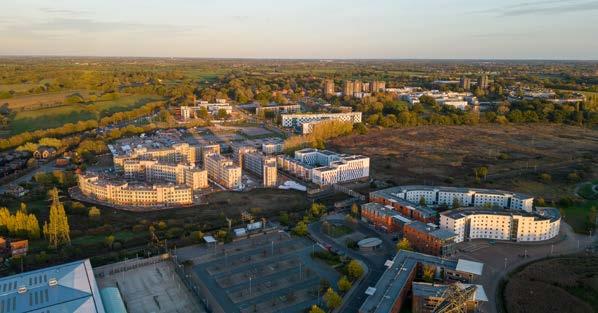
Universities are rightly recognised as centres of knowledge, innovation and research. Yet when it comes to managing the estates, many institutions are operating with a surprisingly incomplete view of their own assets.
In an era defined by data, the higher education sector remains one of the few where billions of pounds’ worth of estate portfolios are often
managed without a single, reliable source of truth. Universities know broadly what they own, but not always in enough detail to make confident decisions. How large is the estate in real terms? Which buildings are over-used and which sit half empty? What condition are plant assets actually in? And what will it realistically cost to maintain, refurbish or replace them over the next 10 or 20 years?
Without accurate, connected data, estates planning becomes reactive rather than strategic. Decisions are made based on partial insight, competing priorities and short-term pressures - not because estates teams lack expertise or commitment, but because they lack the information they need to act decisively.
At a time when student numbers are fluctuating, income streams are under pressure and sustainability
commitments are tightening, universities cannot afford to manage estates in the dark.
An estate designed for another era
The way campuses are used today is radically different to how they were even a decade ago. Revenuegenerating activities, such as conferences and hospitality, have not returned to pre-pandemic levels for many institutions. Teaching patterns have shifted too, with lectures increasingly compressed into shorter teaching days that start later and finish earlier. The result is that intensive use of space is happening in a narrower window - while in many cases the total estate size remains unchanged.
In other words, universities are paying to heat, cool, clean, maintain and secure buildings that are increasingly underutilised.
Reducing estate spend in this situation is exceptionally difficult. Buildings cannot be switched on and off like software licences.
Maintenance liabilities remain, regardless of how frequently a facility is used. And for institutions with a legacy of historic or listed buildings alongside 1960s and 70s stock, rationalisation is rarely straightforward.
The challenge is not just financial; it’s operational. When space usage becomes more uneven, asset wear becomes less predictable. A plant situated in a heavily timetabled building degrades faster, while underused assets deteriorate in different ways through idleness. Without reliable, joined-up data, estates teams are left managing by assumption rather than evidence.
A fragmented data landscape
In the main, universities are not short of information. However, access to data can be challenging - such as timetabling systems, access card readings, and contractor reports. Equally, further challenge lies in the fact the data is fragmented and rarely resides in one place.
In some cases, this data isn’t digitalised and is still stored as physical paper copies. In other cases,
where systems are in place, they don’t always talk to one another. Data is held in silos across departments and suppliers. There is no single version of the truth, and no simple way to connect operational insight with strategic planning.
This fragmentation makes it harder to maintain clear oversight of compliance activity - evidencing statutory checks, identifying emerging risks and anticipating maintenance needs becomes far more difficult. By contrast, when information is consolidated, estates teams can track obligations more reliably, avoid unplanned expenditure, and provide stakeholders with greater confidence that assets are being managed responsibly.
Outsourcing can add a further layer of complexity regarding access to data. GDPR and commercial constraints often mean that data held by the university cannot be shared freely, making it difficult to build a complete picture of building usage, against which to intelligently plan service outputs. Meanwhile, estates teams must manually interpret fragmented reports, compare incompatible formats and fill in the gaps with experience and instinct.
The result is that senior leaders
are often forced to make decisions about multimillion-pound assets based on partial visibility. Which buildings should be prioritised for refurbishment? Where should investment be deferred? Can space be safely consolidated? These are strategic questions, yet too often they are answered with operational-level data.
The funding paradox
Even where the benefits of better data are universally accepted, securing investment in systems can remain a challenge.
Facilities management technology typically competes for funding within IT budgets - and in a tertiary education setting, teaching and learning systems will always take precedence over estates. Quite understandably, investment that directly supports students is prioritised over infrastructure that operates behind the scenes.
But this creates a long-term efficiency trap. Without modern systems to manage the estate, inefficiencies continue unchecked. Reactive maintenance replaces planned intervention. Minor issues escalate into major failures. Energy usage goes unoptimised. And opportunities to consolidate space or

improve utilisation remain hidden.
Over time, the financial impact of this far outweighs the initial cost of investing in technology.
From spreadsheets to strategy
Digital estate management tools are not simply about replacing paper logs or scattered spreadsheets. When implemented properly, they become powerful strategic enablers.
Asset management systems provide a live record of building components - from air handling units and boilers to fire safety equipment and lifts. They log installation dates, service schedules, warranty information and fault history, creating transparency and continuity even as staff change.
This enables a move away from ‘fix on failure’ towards planned, preventative maintenance. In the same way you wouldn’t wait for a car engine to seize before servicing it, critical infrastructure should be managed before breakdown occursnot after.
Over time, this approach allows universities to build accurate lifecycle plans, budgeting for replacement and upgrades in a structured way rather than reacting to crisis. When estates teams understand which assets are nearing end-of-life, they can align replacements with wider refurbishment plans, reducing duplication and disruption.
Timetabling and space
management software adds another layer of intelligence, revealing where buildings are working hard - and where they are not. Underutilised areas can be repurposed, consolidated or even released. Heavily used spaces can be prioritised for investment to improve student experience and operational resilience.
Contract management platforms can also bring a level of commercial rigour that is sometimes missing. KPIs can be monitored automatically. Performance deviations flagged early. Accountability made visible.
In short, technology enables universities to act like the sophisticated asset managers they already are - in principle, if not yet in practice.
The capacity gap
However, implementing and interpreting these systems requires specialist expertise that many institutions understandably lack. Universities rarely employ data analysts within estates teams - and neither should they need to. The requirement is intermittent, not constant. Paying for in-house expertise year-round is neither realistic or cost-effective.
This is where consultancies like Litmus FM provide real value. Rather than requiring universities to build permanent in-house capability, specialist partners can be
embedded when needed. They help select appropriate systems, oversee implementation, clean and structure data, and - crucially - translate insight into strategy.
Software alone doesn’t solve the data problem. Technology must always be deployed with purpose. What matters is how it’s configured, populated and interrogated. Estate modelling, investment planning and risk analysis require experience not just of systems, but of the realities of managing complex campuses. Data should answer real questions, drive real decisions and deliver tangible outcomes.
Universities don’t need to become technology companies. They don’t need to employ teams of analysts and they shouldn’t feel obliged to navigate this complexity alone.
What they do need is clarity - from trusted partners who understand both the sector and the systems that support it. By working with specialists who can bring structure to complexity, insight to information and strategy to data, universities can bridge the knowledge gap that stands between them and truly effective estates management.
For further information please visit: www.litmusfm.com

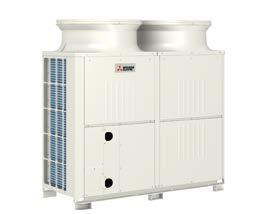
Decarbonising university estates is now more achievable than ever with Mitsubishi Electric’s renewable heat pump and chiller technology. We’ve partnered with universities like Durham and Salford to implement low-carbon HVAC solutions that utilise lower-GWP refrigerants and reduce embodied carbon. Our offerings include commercial heating systems for hot water and space heating and modular high performance chillers for scalable heating and cooling Backed by our robust MELServe aftersales service, our solutions ensure continuous optimal performance and longevity.
Discover our full product range at: les.mitsubishielectric.co.uk

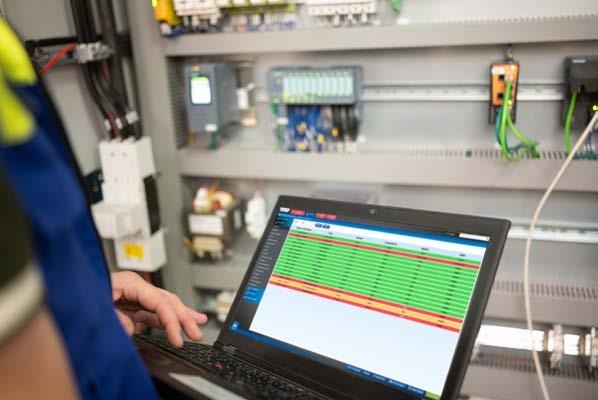
How modern intruder alarms are evolving into integrated tools for safer learning environments.
Safety and security are paramount in the education sector, with schools, colleges, and universities facing a broad range of threats from vandalism and theft to more severe incidents such as hostile intruder attacks. Research[1] found that four in five schools (79%) experienced crime over a 12-month period, with costs averaging more than £26,000 annually.
For campus estate and facilities managers, the challenge is balancing robust security measures while
creating an open, welcoming environment. Plus, solutions also must be scalable and adaptable for future requirements.
One of the most important elements in a security specification is the intruder alarm system. Once considered a simple deterrent, modern alarms now form part of fully integrated, connected solutions that bring together surveillance, access control, monitoring, and emergency response.
In this feature, we explore the evolving security landscape in education, the role of scalable alarm systems, and the technological advances that are reshaping how
campuses can be protected.
A challenging environment
Every educational setting presents unique vulnerabilities, determined by factors such as size, layout, location, and demographics. Yet common themes emerge across the sector.
Unauthorised access is a constant concern, as multiple entry points across large sites make perimeter control complex, particularly in larger urban schools and open university campuses.
Vandalism and property damage are also widespread, ranging from graffiti to broken windows. This kind of destruction creates a negative
space that can feel unsafe as well as disruptive to learning.
Theft and burglary remain another persistent issue, with schools and universities often containing high value assets such as computers, audiovisual equipment and specialist laboratory instruments.
These resources make educational buildings attractive targets, especially during evenings, weekends and holidays when sites are often left unoccupied. Beyond these issues lies the need to prepare for emergencies, and fires, medical incidents and, in rare cases, hostile intruders require rapid response times to ensure the safety of those on site.
However, the greatest challenge is finding the balance between openness and protection. Educational institutions are designed to welcome students, staff, parents and visitors, but robust security measures are still needed to protect people and property without compromising the learning environment.
Intruder alarms
CCTV and access control are often the first thing that springs to mind when considering campus security, but intruder alarms are the heart of effective campus security. In recent times, their role has shifted from being a purely reactive system to one that provides a proactive line of defence.
Visible alarm systems act as a deterrent, reducing the likelihood of opportunistic crime. When breaches do occur, modern alarms provide rapid alerts, enabling emergency services or on-site personnel to respond quickly and limit the scale of damage or loss.
Intruder alarms also play an important role in protecting high value assets such as IT suites, specialist instruments and AV systems. Alarms reduce the risk of theft and vandalism, helping to lower insurance claims and keep resources available for teaching.
Another important factor is compliance and institutions must meet recognised standards, including BS EN 50131, BS 8243, PD 6662, and PD 6669. Robust alarm systems support adherence to these requirements while also reassuring parents, governors and the wider community that safety is being taken
Guidance from the DfE Government advice helps steer decision-making and set benchmarks for security system specification in schools, colleges and universities. The Department for Education’s (DfE) site security guidance, for example, identifies monitored “Type A” alarms as essential for school buildings, particularly those located away from residential areas where natural surveillance is limited. These alarms are linked to central monitoring stations, ensuring that breaches result in immediate response.
The DfE also advises integrating alarms with video surveillance. Clear facial recognition is highlighted as vital for both offender identification and evidential purposes. Cameras should be located at entrances, IT suites, offices and circulation areas, supported by lighting and vandalresistant fittings positioned out of reach. Landscaping should also be managed carefully so that trees or shrubs do not obscure coverage.
In addition, the DfE recommends linking alarms with fogging devices conforming to BS EN 50131-8:2019. If an intruder does gain access, the device quickly fills a room with harmless smoke, reducing visibility and limiting theft opportunities.
Finally, schools are encouraged to consider lockdown capabilities. Alarms that integrate with access systems can enable a site-wide lockdown, providing an additional layer of protection during a high-level security incident.
The rise of integrated systems Historically, alarm systems operated in isolation from other security measures, but advances in technology have now made integration the norm. Broadband connectivity, 4G networks and cloud infrastructure allow different systems to communicate seamlessly, providing estate managers with a single, centralised view of security across a campus.
A modern integrated
system might combine intrusion detection with access control, alarm monitoring and video surveillance. By uniting these elements, facilities teams can monitor events in real time, coordinate responses more effectively, and ensure that all systems support one another rather than functioning as disconnected silos.
This shift towards integration is particularly valuable in large educational estates. Universities and colleges often span multiple buildings and sites, and a joined-up system provides consistency and clarity when responding to incidents. Cloud-based security and remote monitoring
One of the most significant changes in recent years has been the rise of cloud-based platforms. Previously, security required constant on-site monitoring, but the cloud now enables remote access from any location. Facilities managers can use smartphones or tablets to oversee operations, receive instant notifications of breaches, and review stored data.
Cloud solutions also enable automated software updates, ensuring systems remain compliant with the latest standards without the need for costly site visits. Data storage allows institutions to analyse trends, review previous incidents and make evidence-based improvements to their security strategy.
For multi-site organisations, centralised monitoring through the cloud reduces the burden on staff while maintaining consistent levels of oversight.
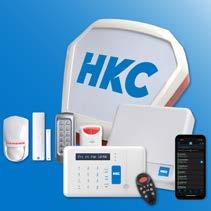

Although serious intruder incidents are rare in the UK, the ability to initiate a rapid lockdown is an increasingly important requirement. In practice, this means being able to secure all doors at the press of a button, integrate lockdown with existing alarm systems, and use public address or mobile alerts to deliver clear instructions to staff and students.
The most effective systems also allow for predefined lockdown zones, ensuring flexibility on larger campuses. For example, a library or lecture theatre could be secured immediately while other areas remain operational. This flexibility is vital for complex estates that need to maintain a balance between operational continuity and safety.
As educational environments vary widely - from small rural primary schools to large city-centre universities - security systems must be designed with scalability in mind.
Smaller schools may benefit from wireless alarms and cloud monitoring that provide reliable coverage at a manageable cost. Alternatively, larger campuses often require advanced, interconnected systems with multiple surveillance points and centralised monitoring
Alan Macklin
hubs.
Institutions frequently expand or adapt their facilities too, so security systems should be able to evolve alongside this. Platforms that allow new components to be added without changing the existing infrastructure offer the best long-term value.
Wireless devices are transforming the way alarms and surveillance are installed, as they significantly reduce the need for invasive cabling, reduce installation time and limit disruption to teaching. Because devices can be repositioned as needs change, they offer greater flexibility and adaptability over traditional wired systems.
Older school buildings that were constructed before the 1980s may contain asbestos within ceilings, walls or insulation. Installing wired systems can disturb these materials, requiring specialist contractors and costly remediation.
Wireless systems avoid this risk by minimising structural alterations, offering a safer and more efficient solution. They also reduce maintenance demands, as fewer physical components mean fewer points of potential failure.
The future of campus security is
clearly moving towards smarter, more connected systems that offer enhanced resilience and scalability. However, technology alone cannot solve the challenge and a strategic and comprehensive approach is essential.
This involves carrying out detailed risk assessments, ensuring compliance with national standards, integrating different systems into a cohesive whole, and building in flexibility to accommodate future changes.
The human factor is equally important, as systems are only effective when staff understand how to use them, both in routine operations and during emergencies. Training and communication should therefore form a central part of any security strategy.
So, whether securing a small school or a large university campus, the principle remains the same - security must be flexible, scalable and strategically managed. By embracing the opportunities offered by wireless devices, remote monitoring, and integrated lockdown capabilities, education providers can ensure they are equipped not only for today’s risks but also for the challenges of tomorrow.
For more information please visit https://bit.ly/4oZrPrM.
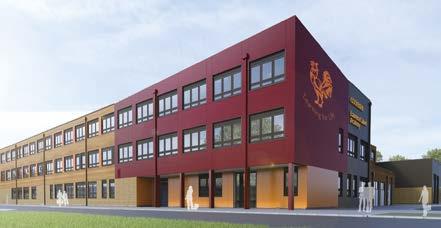
• Constructor (modular building supply) and main contractor (as required) that offers a full turnkey solution approach.
• Architecturally designed & inspirational learning environments. Our buildings can be visually indistinguishable from traditionally built schools.
• Utilising SEISMIC platform design and achieving a high level of PMV.
• Customised to client specifications and needs. From glazing to wall cladding finishes; even teaching spaces can be configured.
• Repeatable classroom designs, creating efficiency through standardisation. Standardisation is key to driving greater efficiency throughout all aspects of the project and delivery.
• We are recognised by a number of key frameworks, which are the DfE MMC1 LOT 1, CCS, NHS-SBS and the LHC.
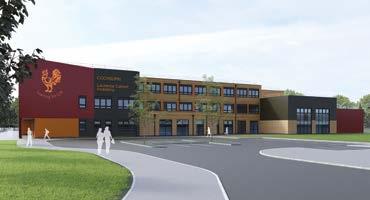
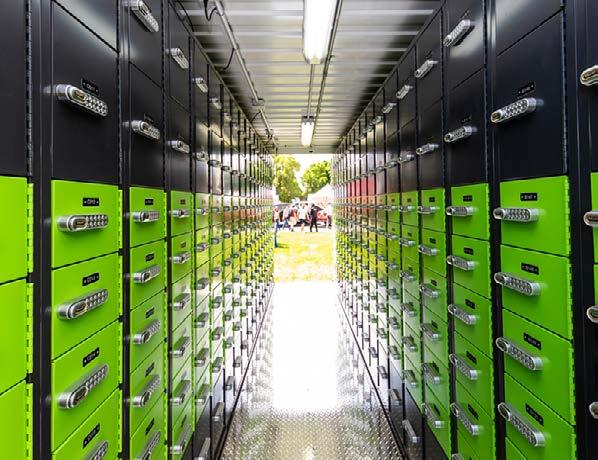
Drawing on insights from Codelocks’ leaders across four continents, Global Director of Marketing at Codelocks, Ros Bayliss, explores with the Codelocks team how customer needs are changing in access control, the shift from locks as an expense to a revenue generator, and how the industry is balancing innovation with simplicity while meeting rising sustainability demands.
In the eyes of some, locks are simply used for keeping people out, and for keeping the contents of a
building, cabinet or locker safe. But as we know at Codelocks, access control is about so much more than that. It’s about managing spaces and giving people convenient access in ways that can transform how a building or space works and feels. That’s one of the reasons we rarely talk about ‘security’, if at all.
If you focus on access control as being simply about protection, then you’re likely to see locks and other access control solutions as just a cost – an expense line on a balance sheet. You’d also overlook one of the biggest changes impacting the
industry, and the first of several trends shaping access control in 2026: the change from a cost centre to a revenue generator.
Entrepreneurs and access – from cost to profit centre
“There’s been an explosion in shortterm rental applications over several years, and I mean much more than just BnBs or holiday homes,” said Jo Milne-Rowe, Managing Director at Codelocks UK. “We’re reaching a point where almost anything that has the potential to be shared and rented out is being. Entrepreneurs
are seeing new opportunities, and using access control to turn them into profit-generating realities.”
Festival lockers are a booming example. They are simple storage units rented to attendees at music festivals and events. People book online, select the rental duration, and receive a time-sensitive access code instantly. The coded locks allow customers to store belongings without keys, while operators remotely manage thousands of lockers, changing codes automatically between rentals without swapping keys and with minimal staff input.
This use of locks to create new revenue-making products and services also changes what customers want. It alters their ‘buying equation’. In applications that
focus on short-term product rental to drive revenue, customers are seeking locks that help to improve business fundamentals, like utilisation and booking rates. Likewise, they’re looking for locks that improve the customer experience and create an attractive, easy-to-use product. As manufacturers and product innovators, this changes what we need to offer customers in 2026 and beyond.
The balancing act – new tech and simple solutions
There is a lot of hype around AI at the moment. And understandably so if you’ve used ChatGPT or similar.
The UK government is looking for the country to become an ‘AI superpower’ while also using the new technology to do things like free up NHS hospital beds.
With all this attention on bleedingedge technology, however, people can be led to think that access control must follow the same path: that because everyone’s talking about tech, it’s what customers will be demanding in 2026.
However, despite the attention lavished on breakthroughs like AI, many customers are still looking for simplicity of operation and maintenance in their access control solutions – even the entrepreneurs.
“With any new tech, there’s hype and there’s practical application. European customers aren’t demanding AI in their access control solutions right now,” said Steve Newman, Regional Director for Codelocks Europe. “That’s probably for several reasons, not least
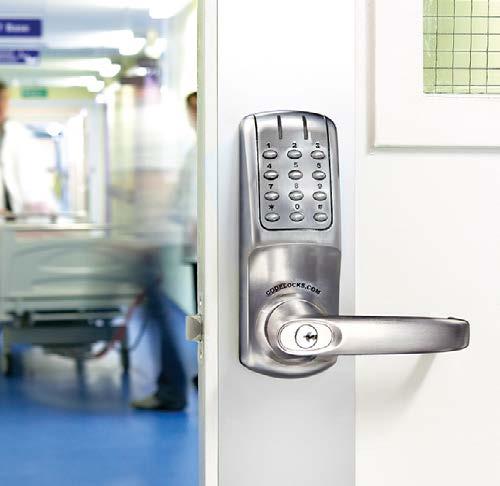
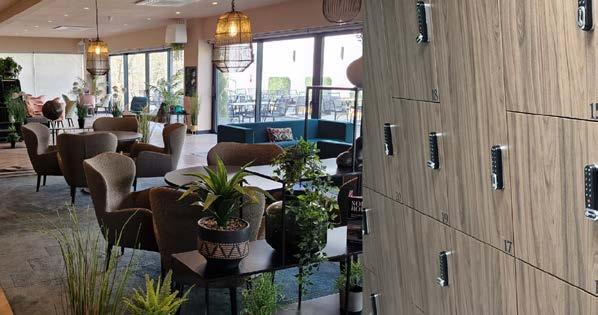
because simplicity is something they prioritise.”
The demand for simplicity is especially strong in the locker market, where most facility and building managers are responsible for looking after thousands of different lockers that require regular maintenance. In large sites such as student accommodation or government offices, small issues quickly add up to be a large drain on resources.
“For lockers – which make up the majority of our business – most customers are choosing either mechanical locks or hard-wired solutions because they want to avoid battery maintenance,” said Mark Samuelson, Director for Codelocks Australia.
Mechanical lockers are ideal for short-term, multiple occupancy applications requiring simplicity and minimal maintenance to keep costs low. Hard-wired solutions don’t tick all these boxes, though. The cost of installing new wiring can outweigh the cost of avoiding batteries, leaving mechanical locks as the simplest and best choice. Still, with an eye on the future, we don’t think customers will have to make these kind of choices for much longer. Battery harvesting will soon become popular, using the power in people’s mobile phones to temporarily power a cabinet, door or locker lock.
Despite all of this, the real winners
in 2026 will be those organisations that listen to their customers. Those companies that focus on solving fundamental customer challenges without over-egging the latest trends.
“Protection concerns have driven people to effectively over-specify the locks they need, which is neither cost-effective nor necessary,” said Matt Welty, Vice President at Codelocks Americas. “For us, this has been an opportunity. We’ve guided many companies toward the right-fit product, rather than the over-the-top product. It’s about understanding the real customer need and meeting it.”
The urgency around climate targets and sustainability is growing as 2050 net-zero targets and interim milestones, such as 68% emissions cut by 2030, get closer. Customers everywhere are also more focused on the environmental impacts of their purchases, while supply chain scrutiny is increasing.
In access control, sustainability is a consideration on two levels. Practically, people are demanding products that last longer. They need products that can be repaired rather than replaced, and they’re looking to minimise waste. On a procedural level, customers need their products to be certified so they can satisfy procurement requirements. Success in 2026 requires addressing both
of these customer needs, building genuinely more sustainable products that are supported by the right certifications and accreditations.
Almost all Codelocks products are repairable, which massively reduces waste and promotes a more circular economy. In 2025, as part of our sustainability efforts, Codelocks UK achieved ISO 14001 (environmental management) to help our UK customers with their supply chain requirements; 2026 will be the first year we report our emissions too, giving transparency to our customers for their own emissions reporting.
What’s become clear from conversations with Codelocks senior leaders is that listening to customers has never been more important. Access control in 2026 comes down to understanding what customers actually need, versus what the industry thinks they should want. Whether working with entrepreneurs applying rental models to new spaces, helping facilities managers balance innovation with operational simplicity, or providing repairable locks backed by ISO certifications, success lies in responding to real needs with the right solutions.
For further information please visit www.codelocks.com
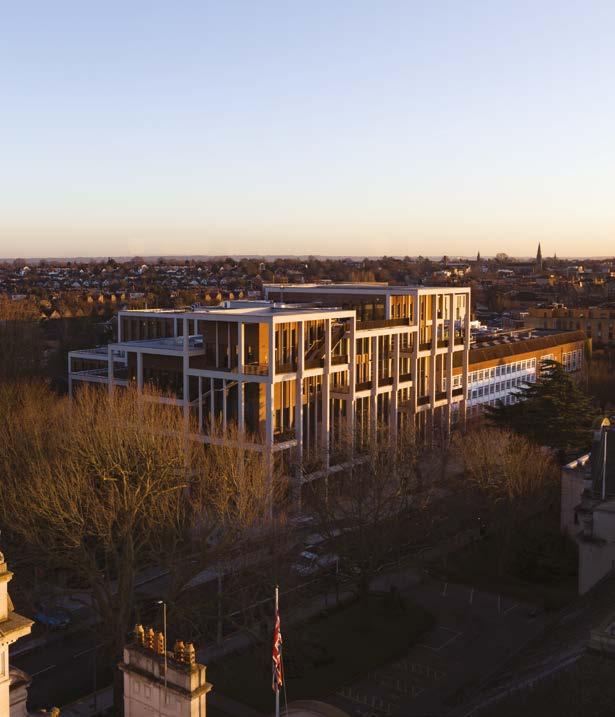
Let RIBA’s dedicated competitions team help you attract the best, most relevant designers.
Recognised as the UK’s leading provider, we manage competitions for a wide range of project types and budgets on behalf of the public sector, integrated with UK Procurement Regulations. Get Started


As Europe’s leading supplier, installer and integrator of digital television and audio visual equipment, Airwave can deliver your vision. With a presence in all key sectors including: healthcare, education, retail & leisure, stadia, prisons and transport, Airwave’s customer base is diverse.
www.airwave.tv
The ASSA ABLOY Group is the global leader in access solutions. Our offering covers products and services related to openings, such as locks, doors, gates and entrance automation solutions. This also includes expertise in controlling identities with keys, cards, tags, mobile and biometric identity verification systems.
www.assaabloy.com



Club Car boasts nearly 60 years of industry-leading innovation and design, initially focused on golf cars and then expanding to commercial utility vehicles and personal-use transportation.
www.clubcar.com





As the UK’s market-leading provider of technology led compliance and risk management solutions, our purpose is to help organisations be safer, healthier, and stronger. Our guide explains a range of measures and safety commitments so that universities are fully prepared and to keep the spread of the virus under control.
www.alcumusgroup.com
Buildings today don’t only provide a safe, functional place for people to live and work. They can also cater for – and even respond to – their needs, while helping them work more efficiently and sustainably. At Bosch Building Technologies, we are at the forefront of these new developments.
www.boschbuildingtechnologies.com
Our education solutions are developed from the ground up to increase campus security and safety while extending the capabilities of student, faculty and staff ID badges. Our solutions can be used for convenient access to buildings, computer login, cashless vending and campus activities.
www.hidglobal.com
Hysopt is unique design software that helps building managers get the most out of their heating and cooling systems. In collaboration with installation companies and engineering firms, we can cut your annual energy bill by 10 to 50%.
www.hysopt.com
LapSafe® created its first products to meet the needs of the education market and although we have since expanded into many other sectors, this remains our largest and most established area of expertise. Our products have been thoroughly tested by every type of education and academic institution
www.lapsafe.com

Originally founded in 1921, the company known today as Mitsubishi Electric has almost 100 years of experience in providing reliable, high quality products and support to installers, specifiers, corporate clients and general consumers all over the world.
https://les.mitsubishielectric.co.uk


From its inception in 2001, SALTO was created with one objective: to devise a world-class access control system that was simple to use and extremely efficient, giving users the ability to control all their access needs and secure all their doors without complex and expensive wiring.
www.saltosystems.com

As a trusted advisor and reliable partner, as a system integrator, service provider and a product vendor, Siemens offers energy-efficient, safe and secure buildings and infrastructure. With our people, our global footprint and our technical expertise, it's our passion helping you to create the perfect place – your perfect place.
www.siemens.com


Award-winning AV integrator, providing bespoke AV solutions with a strong company ethos, collegiality and partnership approach. Evolving with developments in AV technology allows Strive AV to deliver excellence across education, corporate, health and retail environments, providing AV solutions which transform communication and enhance end user’s experiences.
www.striveav.com





With more and more consideration being given to energy usage and the increasing implementation of green legislation, PumpSmart Limited is able to assist with the identification of areas where real energy savings can be made. New products, aimed at energy consumption reduction, are constantly entering the market with potential to improve existing installations.
www.pumpsmart.co.uk
We drive digital transformation by integrating world-leading process and energy technologies to realize the full efficiency and sustainability opportunities for your establishment. We provide end-point to cloud integration connecting products, controls, software and services.
https://www.se.com
Simpli-Fi are expert at helping educational establishments get the most out of wireless technology. We implement bespoke, reliable, scalable, flexible, and secure enterprise-grade, managed wireless networks that connect unlimited devices anywhere on site.
www.simpli-fi.co.uk
Veolia Water Technologies UK (VWT UK) is a leading water treatment solutions and services provider with a unique global presence and 160 years of experience. VWT UK strives to provide innovative solutions such as the new PURELAB Quest compact water purification unit that can generate Type I, II and III water.
www.veoliawatertechnologies.co.uk
Discover how to maximize efficiency, safety, and productivity with an integrated university infrastructure.
Make the most of your energy