



Hello, and welcome to the latest issue of The Brewers Journal.
My colleague Josh and I have just returned from a week of travel that coincided with our Brewers Lectures in Newcastle and there was a common thread evident throughout the trip.
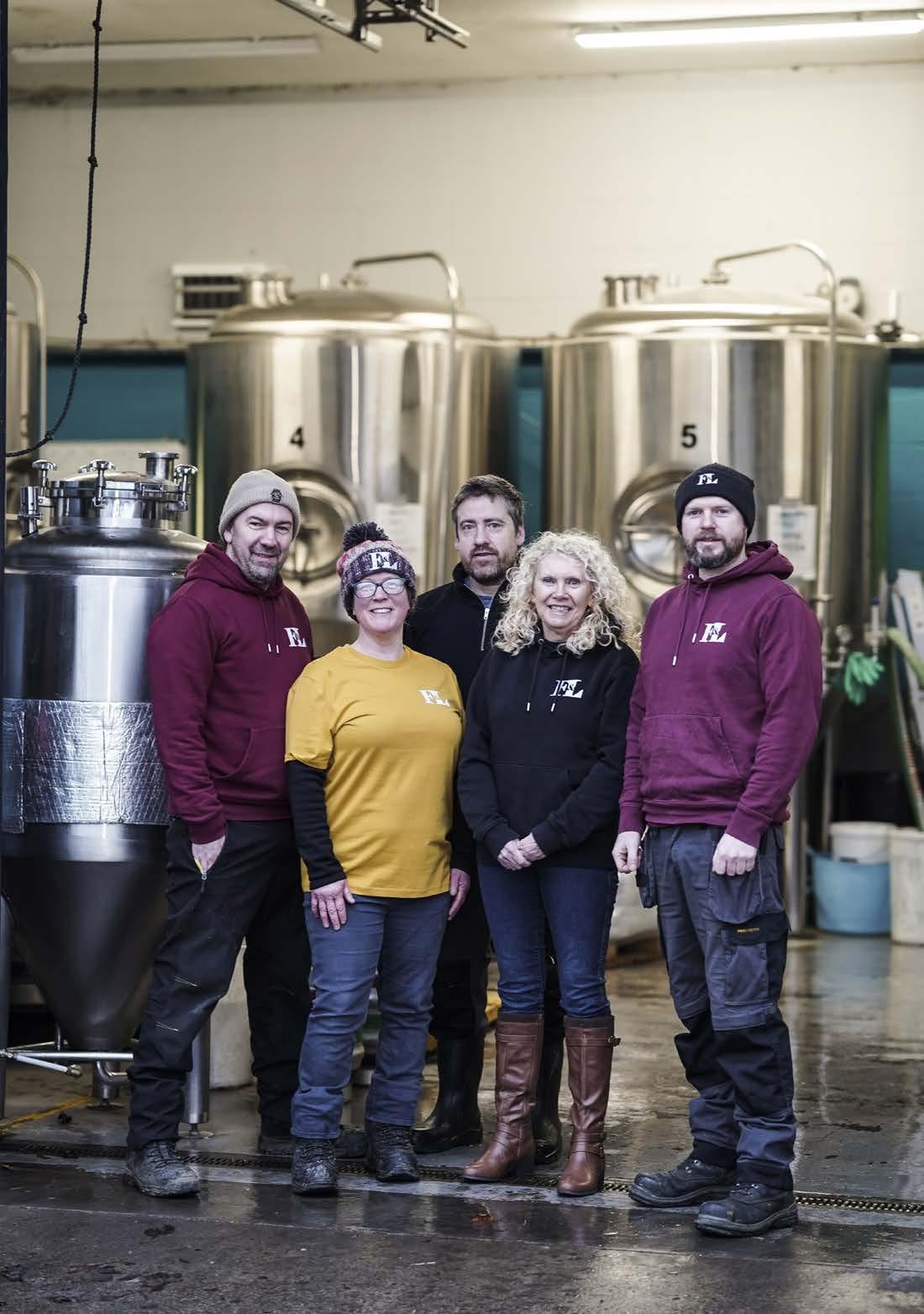
Firstly, a huge thank you to Ben, Phil and the team at Full Circle Brew Co for having us and to everyone that took part and attended. What these events continue to show is that the appetite for community, camaraderie and knowledge-sharing is a strong as ever, and the brewery’s taproom was a superb venue for that.
Long-established breweries were present, as were newer names on the scene. The joy and satisfaction I get from a new business getting in touch, or following us on social media is huge. Every few days there’s a new brewery announcing themselves, carving out their own part of the beer pie and that’s brilliant to see. More, please!
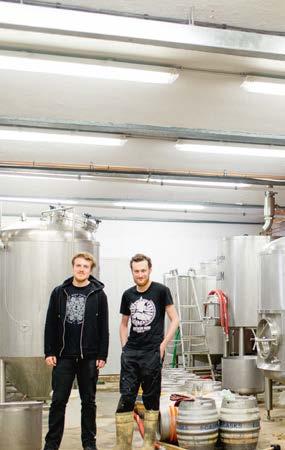
We started the week heading to York. The city, as we all probably know, is full of fantastic pubs steeped in history, as well as progressive, modern beer bars ensuring thirsts of all kinds are satiated. Seeing what Lee Grabham and Wayne Smith continue to do with Brew York is inspiring. While they continue to grow their hospitality business, they are investing across the board in the brewing operation, which you can read more about in the next edition. If you’re in York, their taprooms are an essential part of your itinerary.
While in Newcastle we caught up with Reece Hugill, the founder of Donzoko. His brewery and taproom space ooze character and it has been a predictably
excellent addition to the district of Byker. It’s a venue embraced by both by beer fans and lifelong residents of the area. Each part of the brewery has a story to tell and if you catch Reece on a rare spare moment, he’s the perfect orator of these tales.
In addition to brief stops in Sheffield and Nottingham, including obligatory visits to revered Sheffield institution The Rutland Arms and Ye Olde Trip to Jerusalem in Nottingham, we stopped in at Wakefeld to see how Colin and Vik Stronge from Lost Causing Brewing Co.
The winners of our ‘New Brewery’ accolade at the Brewers Choice awards last year, Colin and Vik have made huge strides with their new brewery and taproom space. The beers are on-point and, opening in 2026, Lost Cause will be a new, huge asset to the area that already boasts such attractions as the famed Hepworth Gallery.
Each of these visits demonstrated the value of the taproom and hospitality proposition. It was therefore galling to see no mention of hospitality in the chancellor’s Spring Budget. Rachel Reeves said that Labour has “restored economic stability” but from April, many pubs will experience an, on average 76% increase in rateable values.
Hospitality is the UK’s fifth biggest sector and third largest employer. There needs to be action and a review of business rates and a reduction of VAT would be a good place to start. Hopefully the next chancellor in post will do more for this hugely-important part of the UK fabric.
Until next time,
Tim Sheahan Editor
News Analysis
How Brewdog’s sale marks the latest stage of change and transition at the Scottish firm.
Dear John
John shares his memories of Des de Moor, the cask advocate who passed away in February.
Comment | Flavour Trends
Why consumers are demanding beverages that deliver both indulgence and functional benefits.
Comment | Finance
How the right structure can turn equipment finance into a tool for steady, phased growth.
Brewers Intelligence
The latest insights and expertise from across the field of ingredients and sales.
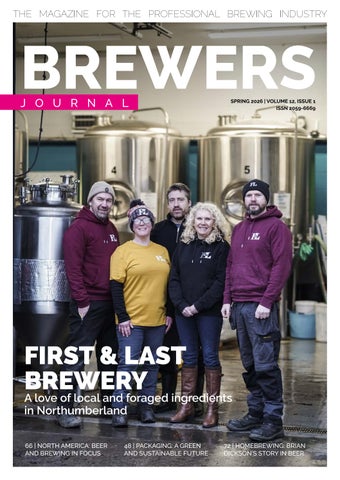
Meet The Brewer | First & Last Brewery
Northumberland’s First & Last Brewery on a love of local, wild and foraged ingredients, and the beautiful beers they’re producing with them.
Technology | CO2 Recovery
Why breweries across the globe continue to invest in CO2 recovery technology for their operations.
Focus | Sustainable Packaging
The packaging processes and services helping you run a more environmentally-friendly brewery.
Case Study | Brewery Software
How Siren has brought systems together and built fresh confidence across the Berkshire business.
Rome
One of the most visited places in the world, Rome boasts excellent beer from excellent breweries.

Cellaring & Dispense
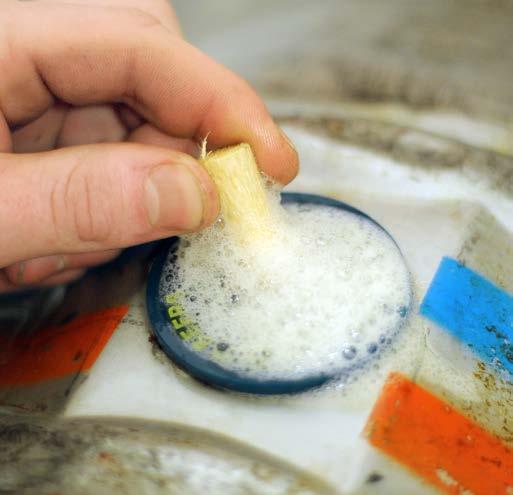
Insight and advice into how your brewery can prepare the perfect pint of cask beer.

66
North America
The latest trends and developments from the North American brewing sector from those closest to it.
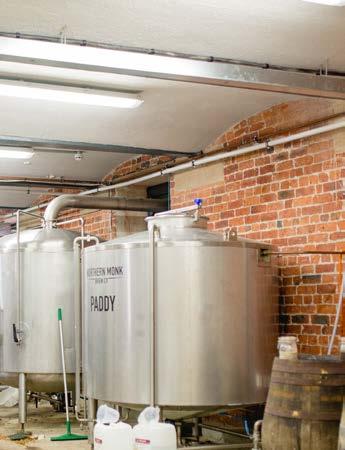
Northern Monk technical director and co-founder Brian Dickson shares his journey in beer. One that led to him to help start the fantastic Leedsbased brewery.
Tim Sheahan Editor tim.sheahan@reby.media
+44 (0)1442 780 592
John Keeling Contributor
Josh Henderson Head of sales josh.henderson@reby.media
+44 (0)1442 780 594
Jon Young Publisher jon.young@reby.media
Reby Media 6 Grove Road, Hemel Hempstead, Herts, HP1 1NG
The Brewers Journal is a published four times a year and mailed every March, June, September & December. Subscriptions can be purchased for four issues. Prices for single issue subscriptions or back issues can be obtained by emailing: subscribe@ reby.media
UK & IRELAND £45 INTERNATIONAL £69
The content of The Brewers Journal is subject to copyright. However, if you would like to obtain copies of an article for marketing purposes high-quality reprints can be supplied to your specification. Please contact the advertising team for full details of this service. The Brewers Journal is printed at Manson Group, St Albans, UK.
28
Atlantic Archipelago
How this beer brand is helping celebrate Britain’s agricultural heritage.
All rights reserved. No part of this publication may be reproduced or transmitted in any form or by any means, electronic or mechanical, including photocopying, recording or any information storage or retrieval system, without the express prior written consent of the publisher. The Brewers Journal ISSN 2059-6650 is published bimonthly by Reby Media, 6 Grove Road, Hemel Hempstead, Hertfordshire, HP1 1NG. Subscription records are maintained at Reby Media, 6 Grove Road, Hemel Hempstead, Hertfordshire, HP1 1NG.
The Brewers Journal accepts no responsibility for the accuracy of statements or opinion given within the Journal that is not the expressly designated opinion of the Journal or its publishers. Those opinions expressed in areas other than editorial comment may not be taken as being the opinion of the Journal or its staff, and the aforementioned accept no responsibility or liability for actions that arise therefrom.
There have been some seismic sales in the UK beer sector during the last 10plus years.
At the very end of 2015 North London’s Camden Town Brewery was sold to AB InBev. And at the start 2019 Fuller’s announced the sale of its entire beer, cider, and soft drinks brewing business to Asahi Europe Ltd for £250 million. The deal, which included the company’s Griffin Brewery in Chiswick, London, left Fuller’s to instead focus on their pub and hotel business. While in 2022 Heineken, which had taken out a £40m minority stake in Beavertown back in 2018, agreed to buy the remaining shares, acquiring full ownership, of the London business.
Away from London and at the time of going to press, Scottish business Brewdog, which was founded by Martin Dickie and James Watt, had been acquired out of administration by Tilray for £33m. Brewdog joins a portfolio of existing US breweries that include Alpine Beer Company, Green Flash Brewing Co, Sweetwater Brewery, Shock Top, Terraping Beer Co and Montauk Brewing Company.
Tilray, which is known in the beverage, cannabis and wellness industries, has taken on the sites in the UK and Ireland. This comprises UK-based brewing and
distribution facilities (specifically, the brewery in Ellon, Aberdeenshire, and The Hop Hub, a national distribution centre in Motherwell, Lanarkshire), and its extensive brand portfolio, as well as eleven existing BrewDog retail units in the UK and Ireland. It was also negotiating to acquire certain BrewDog assets in the United States and Australia.
Those eleven premier and profitable brewpubs included Birmingham, Canary Wharf, Dogtap Ellon, Dublin, Edinburgh DogHouse, Lothian Road, Manchester, Paddington, Seven Dials, Tower Hill, and Waterloo. According to Tilray these brewing and related operating assets are expected to generate annual net revenue of approximately $200 million (£150m) and adjusted EBITDA of $6 – $8 million.
Irwin D. Simon, chairman and chief executive officer, Tilray Brands, said: “As we begin a new chapter for this great brand, our priority is to refocus BrewDog on the craft beer excellence that made it beloved in the first place and strategically invest to return the operations to profitable growth. BrewDog’s future is bright, and we are committed to ensuring the brand continues to lead and inspire the global craft beer movement.”
In a statement Tilray said the addition of BrewDog accelerates their ability to enter new markets by providing scaled brewing capacity outside the U.S., an established international distribution network and a premier brewpub and hospitality infrastructure in the UK and select international markets.
In total, the transaction preserved 733 jobs in the UK, where BrewDog employees will follow a TUPE process to become employees of Tilray Brands UK Ltd. However, no offer was made at any
stage of the sales process to preserve BrewDog in its entirety. Therefore a total of 38 bars in the UK closed immediately, leading to 484 redundancies.
Commenting on the sale Unite general secretary Sharon Graham said: “This is a devastating day for Brewdog workers. Nearly 500 lost livelihoods while yet another corporate deal is stitched together behind closed doors. Brewdog workers built this brand. They deserved respect. Instead, they were treated as disposable pawns. Unite will not rest until our members have legal and financial justice.”
Brewdog’s staff are not the only ones to lose out through this deal, either. 220,000 individual investors who purchased shares across the company’s Equity for Punks crowdfunding programme have come away with nothing. These funding rounds raised approximately £75m between 2009 and 2021. While it’s also a little less than nine years since BrewDog raised money from US private equity firm TSG Consumer Partners by selling it a 23% stake for £213 million, which valued BrewDog at around $1billion.
Under new owners Tilray, the company said it sees a bright future for Brewdog and its impact on the wider business.
“Through this expanded platform, we see significant growth opportunity for BrewDog through broader distribution and the ability to invest back into brand and innovation, while introducing Tilray’s complementary beverage brands into international markets. On a combined basis, we expect Tilray’s diversified global business to reach ~$1.2 billion in annualized revenue.”
Time will tell if they achieve these goals...
Evodia has unveiled a new range of flavour blends including Y-Banana, Tropical Grapefruit T-1 and Hoppy H3 for its Yops product line.
Yops is a yeast-derived aroma solution designed to enhance the flavour profile of low- and no-alcohol beers (NABLABs). The collection of next-generation flavours created through yeast fermentation, where terpenes and other key flavor molecules are “leading the way into the future of flavour”.
Instead of relying only on flavour compounds extracted from plants, this yeast-based technology produces individual flavor molecules, giving brewers precise control while delivering a fermentation-derived character that integrates seamlessly into beer. This makes Yops easy to apply, consistent in profile, and highly compatible with today’s most in-demand beer styles, the company said.
Y-Banana is a solution developed to solve one of the biggest sensory challenges in brewing: achieving convincing Belgian blonde and wheatstyle profiles in NA beers. Tropical Grapefruit T-1 is a blend designed for the modern IPA landscape, especially hazy and citrus-driven profiles. It brings a bright grapefruit signature supported by fruity sulfur and green notes reminiscent of passion fruit.
Hoppy H-3 is a hop-focused formulation built for styles that demand aromatic intensity. It combines a fresh hoppy backbone with a twist of mandarin and the fruitiness of mango, forming natural enhancement ideal for IPAs, pale ales, and dry-hopped lagers.
“These new natural flavours give brewers precise control over aromatic profiles. With easy application and finely adjustable dosage – from subtle nuance to a bold aromatic statement – Yops empowers brewers to create outstanding drinking experiences”, explained Axelle Frachon, flavorist manager at Evodia.
A marketing and brand collective built for independent breweries and beer businesses has just launched.
The team is made up of figures that have worked with leading UK breweries such as Northern Monk, Salt, Ossett Brewery, Pillars Brewery, Brewgooder, Two Flints, Brains and Vale Brewery. The collective, they explained, is built specifically around the needs of independent breweries, focusing on streamlining processes with a keen knowledge of day-to-day life at a brewery.
Tim Weaver, who is behind The collective, explained: “Breweries are full of stories waiting to be told. Great beer is like a great album. You can have an amazing range of tracks, but it only becomes something unforgettable when there is a story that pulls people in.
“That is why the Brand Weaver Collective exists. A team of people who are unapologetically passionate about the beer industry, who understand what makes a brewery special, and who know how to communicate it in a way that creates real impact. This is the work I love, and the collective lets us bring all of that talent together to help breweries grow in the way they deserve.”
Figura and and Murphy & Son have announced a strategic partnership to bring the former’s ‘Rapid Microorganism Detection’ platform to market. Figura, which is a pioneer in rapid microbial detection, has entered into a strategic agreement with Murphy & Son to scale their innovative technology across the global drinks industry.
The partnership centres on a dedicated development program based at Murphy & Son’s technical facilities. This initiative will focus on translating traditional, timeintensive microbiology culture results into Figura’s rapid, digital data sets. By
comparing Figura’s sensing technology methods, against industry standards, the two companies will provide brewers and beverage producers with the confidence to transition to near real-time quality monitoring.
As part of the agreement, Murphy & Son, a leader in beverage supplies and technical services since 1887, will become an official distributor for Figura’s Analyser and Portable Analyser instruments, supporting customers both in the UK and international markets.
Simpsons Malt Limited has successfully completed SAI Platform’s Farm Sustainability Assessment (FSA) thirdparty verification process, achieving Gold performance level across its entire UK malting barley procurement.
A total of 678 growers – all directly contracted through agricultural merchanting division McCreath Simpson & Prentice – now form a single Farm Management Group (FMG) for malting barley following an audit of the group in late 2025.
The achievement marks a significant milestone for sustainable sourcing within the UK malting barley supply chain and builds on the company’s distilling wheat Farm Management Group achieving 100% FSA Gold performance level in 2024. Together, this means that all of Simpsons Malt’s directly contracted malting barley and distilling wheat purchases are now verified at Gold performance level.
For Simpsons Malt’s distilling and brewing customers, meanwhile, the company said that the verification provides confidence that malting barley processed at both its malting sites, which are Berwick-upon-Tweed, Northumberland and Tivetshall St Margaret, Norfolk, has clear assurance and supply chain traceability. It is also helping to support these customers towards meeting their own sustainable sourcing objectives.
London Wine Fair has announced a “landmark partnership” with BREW// LDN for the upcoming 2026 show, taking place in May, marking the introduction of a dedicated space for craft beer and cider for the first time in the event’s 45year history.
For 2026, BREW//LDN will bring its first 100% trade-dedicated area to London Wine Fair, providing an exclusive platform for craft beer and cider producers, they said in a statement. The collaboration, they said, responds to growing demand from both BREW//LDN exhibitors, who have sought a trade-only environment, and London Wine Fair’s audience, who have increasingly called for artisan beer and cider content as buying remits expand.
The new section will accommodate up to 50 exhibitors; 50% of stands are already sold, underscoring strong industry interest in this new initiative.
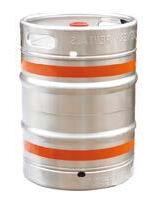
Tap’in, the drinks logistics specialist, has announced the launch of a new dedicated keg washing service, designed to give brewers additional capacity, flexibility, and contingency during peak periods.
The new facility has been built in response to recurring challenges Tap’in has seen across brewery operations: poor keg utilisation, rising peak demand, limited space on site, and a lack of backup options when keg washers are offline.
While many breweries have robust systems in place, pressure often shows up when growth, downtime, or seasonal spikes push existing infrastructure close to its limits.
The service also creates a new opportunity for London-based brewers who don’t have their own keg washing facilities and currently rely on longdistance washing or hired clean kegs as part of their operation.
Rather than positioning keg washing as a replacement for in-house systems, Tap’In’s approach is deliberately different, the company said.
“Most breweries don’t need outsourced keg washing every week,” said Dan Ausling, managing director at Tap’in. “But many benefit from having a pressurerelease option when things get tight, whether that’s during peak demand, unexpected downtime, or periods where growth outpaces infrastructure. This service is about backup, not replacement.”
The facility, located just 5 miles from East London, is live and fully operational, featuring a high-specification keg washer, supplied by Lambrechts that uses CO₂ rather than nitrogen and cleans to 15 parts per billion. A level of cleanliness significantly beyond what many standard systems typically achieve. The specification has been chosen to support quality-sensitive operations while ensuring consistency and reliability at scale.
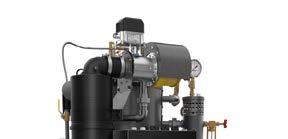

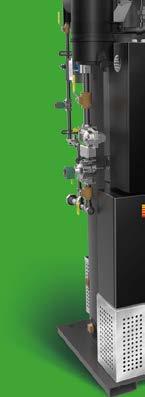
Our class-leading range of fuel-fired, electrically-powered and hybrid steam boilers and portfolio of aftercare solutions can help with your decarbonisation strategy and put your brewery on the Road to Net Zero.



As a complete solutions provider, Fulton can provide your beverage processing facility with:

· fuel-fired, electric and hybrid steam boilers
· off-grid and point-of-use solutions
· ancillary plant / engineered systems
· steam surveys
· project management
· water treatment contracts
· accredited / certified training
· installation / commissioning / upgrades
· repair / service / maintenance programmes
For further information scan the QR code, visit www.fulton.co.uk, email sales@fulton.co.uk or call the office on +44 (0)117 972 3322.


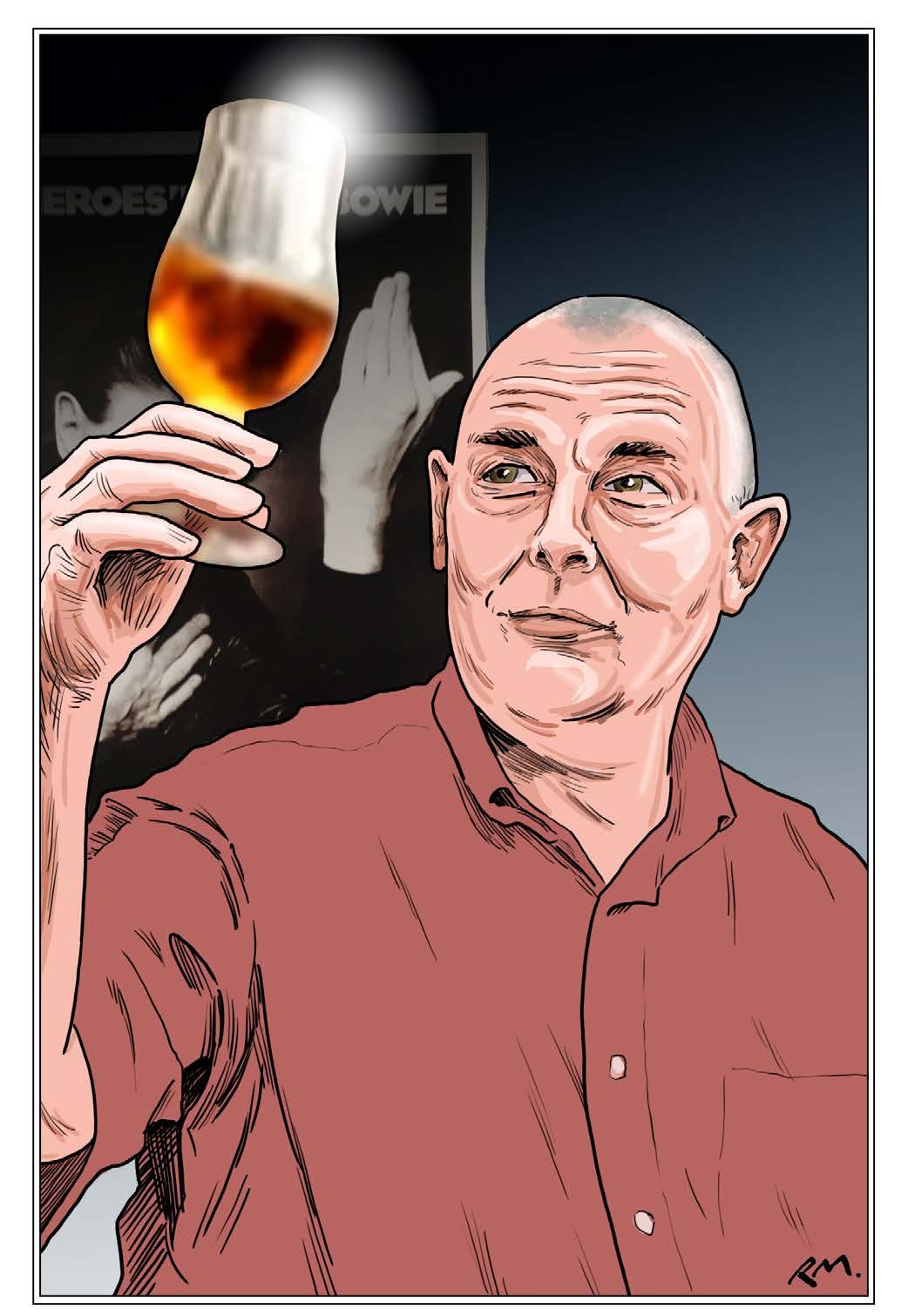
DES DE MOOR, THE STORIED BEER WRITER, TOUR GUIDE, WALK LEADER, TUTORED TASTING HOST AND ACCREDITED BEER SOMMELIER, SADLY PASSED AWAY EARLIER IN FEBRUARY. HERE JOHN KEELING, THE FORMER BREWING DIRECTOR AT FULLER’S, SHARES HIS MEMORIES OF THE MUCH-LOVED
Iwas just thinking about a topic for this month’s column when the sad, shocking news about Des de Moor hit like a ton of bricks.
Des was only 64 and should have had many more years of beer writing and judging to come. It was through the world of beer that I came to know Des. That wasn’t unusual as Des made so many friends in the beer world. Des was such a nice bloke, so everybody became his friend.
I first became aware of Des a good while back when he wrote a review for 1845. Fuller’s 1845 is the brewery’s 6.3% ABV strong ale. It’s a bottle-conditioned ale that is brewed with amber malt and is matured for 100 days before release. It’s won lots of awards, too.
This review must have been published back in the 1990’s with the beer
launching in 1995. Back then relations between brewers and beer writers were not on the easy footing they are now.
Then most brewers viewed beer writers with some suspicion. I was not one of these and I have always been interested in other people’s opinions on beer. What struck me about this review was how technical and accurate it was. And the name at the bottom of the review read ‘Des de Moor’.
I thought that’s an unusual name and it stuck in my memory. He also liked the beer and was complimentary. This helps; flattery always works with me.
I then went on to meet Des at a judging event and various CAMRA festivals. Each time we would have a little chat and then move off.
I then realised I was looking forward to these little chats and looking out for Des at these events. In fact a London beer festival wasn’t a good festival unless Des turned up.
I am currently the President of the London Beer Alliance and have been chairman and founder member but if I wanted to know things about the LBA members, or perhaps the latest gossip then Des was the man to chat to. In fact, I think the LBA membership owes Des a lot in terms of publicity and advice. Without being a member Des made a great contribution to the LBA.
He was very knowledgeable about the history of beer and cask beer. Well, the two go together don’t they… (Yes, I do know that cask has a little revival at the moment). I particularly remember two events where his knowledge truly shone. One was cask at Moor Beer Vaults and one was on a tour of old London Brewery sites including the famous Barclay
Perkins that once stood in Southwark in South London
Both events I came away knowing more about the topic and I also persuaded my wife Symone to attend and she really enjoyed them both. This shows how good Des was taking to both the expert and non-expert.
When I was running the Fuller’s Master Cellarman competition, I had the inspired idea to ask a beer writer to join the judging panel just to shake it up and get some non-Fuller’s opinions.
So, who did I ask? Des de Moor. Easy really. This proved so useful for later years we asked Pete Brown and Melissa Cole to join us.
I hope the above gives some insight into Des if you did not know him. They are all personal recollections, but I think lots of people in the brewing industry would have similar stories to tell.
I realised I was looking forward to these little chats and looking out for Des. A London beer festival wasn’t a good festival unless Des turned up,” John Keeling

CONSUMERS ARE DEMANDING FOOD AND DRINK THAT DELIVERS BOTH INDULGENCE AND FUNCTIONAL BENEFITS, WITH FLAVOUR AT THE FOREFRONT. THE SAME APPLIES TO BEER. HERE MIKE BAGSHAW, CO-FOUNDER OF FLAVOUR HOUSE I.T.S, REVEALS ALL FROM THE COMPANY’S ‘2026 FLAVOUR REPORT’
Flavour is a decisive factor in alcohol purchasing, with UK drinkers increasingly prioritising taste over price.
This shift is helping to premiumise parts of the no- and lowalcohol category, with strong growth seen in fruit-forward and beer-based products.
With changing attitudes to health, weight management and ‘me time’, consumers— led by flavour-seeking Millennials—are demanding bolder, more multi-sensory products that work harder for their wellbeing, and that includes beer.
There are now significant opportunities for brewers of all sizes to use flavour to differentiate themselves in an increasingly busy marketplace. Today’s consumers, particularly younger
drinkers, are keen to swap heavier beers for lighter-tasting, easier-drinking, loweralcohol options with interesting flavours helping to drive interest and purchase.
As a result, the beer industry is leaning into fruit flavoured beers to expand market share and reinvent itself in a similar way to the cider market. Brands like Jubel, Tiny Rebel and Vault City have implemented this to great success and are capturing young consumers as a result.
There is also growing appetite for more sophisticated flavour profiles too as consumers tap into the trend for ‘sophisticated indulgence’. Vocation Brewery’s pairing of peach and cardamom in its wheat beer launch is a great example of this.
Among the top beer flavour trends revealed in our ‘2026 Flavour Report’ are hedgerow flavours, which are proving hugely popular across both beer and cider. Highly adaptable, these flavours work well for large breweries, regional producers and small craft operations alike. Hedgerow notes help brewers tell a provenance-led story, connecting flavour to local identity—an increasingly powerful selling point for consumers.
Sun-kissed fruits such as mango, passionfruit and melon also continue to perform strongly in the beer space. While hops can naturally deliver tropical notes, the addition of further natural flavours can amplify these characteristics, creating fresher-tasting beers that resonate with younger drinkers who favour fruit-led beers and lagers over traditional bitter profiles.
Several US brewers have been using punch style flavours too. Packed with fruitiness, these flavours add interesting fruit notes for a refreshing drink.
Our I.T.S 2026 Flavour Report captures the current powerful convergence of health, lifestyle and indulgence. Natural flavours are playing a crucial role in helping beer brands to delivering exciting NPD, whether through enhancing sweetness, adding global inspiration, or boosting flavour impact where ingredients are scarce or costly.
Elsewhere, everyday categories—from ready-to-drink beverages to sweet bakery—are now expected to offer added physical or mental benefits.
The boundary between functional nutrition and sensory enjoyment is disappearing.Consumers want natural, taste-led products that also deliver a meaningful boost.
A key driver is the rise of GLP-1 medications, reshaping eating habits and pushing demand for nutrient-dense, high-protein, flavour-packed foods that feel worth the calories. .
Sun-kissed fruits such as mango, passionfruit and melon also continue to perform strongly in the beer space,” Mike Bagshaw
Whether you’re scaling a core range, expanding cellar capacity, moving into cans, or upgrading utilities to improve efficiency, the right kit can unlock growth, but paying for it outright can quickly tie up working capital.
That’s where equipment finance can play a practical role. Rather than delaying a project until you’ve accumulated the cash, you can access the assets upfront and spread the cost over an agreed term.
Not all finance is created equal. A standard ‘off the shelf’ approach can miss the commercial realities of brewing: supplier deposits, staged payments for installation, commissioning time before the kit generates revenue, or the fact that cash flow can be lumpy around peak periods and duty/VAT cycles.
A tailor-made funding solution starts with understanding how your brewery operates and then shaping the structure around your plan. That might mean accommodating seasonal peaks, factoring in supplier lead times and phased deliveries for larger projects and also the issue of considering overall investment needs, which could include utilities and process improvements as well as new vessels. When finance reflects the way your business runs, it becomes an enabler, not a constraint.
Breweries don’t just buy ’equipment’. You’re investing in process reliability, quality control, throughput, yield, and ultimately brand reputation. Having a funding partner familiar with brewing operations can make the journey smoother in several ways.
There is the practical understanding of kit and projects. From brewhouse vessels and fermentation to glycol and automation, breweries invest across a connected system. A sector specialist understands how these assets work together, and why a utilities upgrade can be just as growth-critical as more tank space.
Confidence around supplier timelines is also key. Brewing projects often involve specialist manufacturers and installers, with lead times that can shift. A lender who regularly funds brewing equipment is more likely to be comfortable with staged payments and project timetables, which can help you avoid bottlenecks.
Funding that matches the rhythm of your cash flow: affordability will depend on how you sell your products, whether you focus on your taproom, a wholesale model, direct-to-consumer sales, or perhaps a mix of all three. Sector familiarity helps shape repayments around real-world cash generation and operational pressures.
“Successful breweries rely on finance that reflects the realities of brewing. When funding mirrors brew cycles, from deposits and commissioning to peak season cash flow, it stops being a constraint and becomes capacity,” explains Ross Mair, managing director at Close Brothers Beverage Finance.
Equipment finance is widely used across the brewing industry because it offers a blend of certainty and flexibility. The are fixed monthly costs. You agree a
set payment profile over a fixed period, making budgeting easier and helping you plan beyond the next quarter. Improved liquidity means by avoiding a large upfront cost, you can keep working capital available for the things that keep the brewery moving, raw materials, people, packaging, logistics, and marketing.
There is also lexibility when growth comes in phases. Breweries rarely scale in one leap. A long-term partner approach supports future phases, adding tanks, then packaging, then utilities, without forcing you back to square one each time.
The right structure turns equipment finance into a tool for steady, phased growth. We align staged supplier payments and commissioning windows with real-world cash flow, whether you are a start-up brewpub or scaling nationally.
Mair adds: “Shape funding to the process, not the other way round. If you are planning your next upgrade, we can help you bring it forward without impacting working capital.”
Successful breweries rely on finance that reflects the realities of brewing,”
Ross Mair, Close Brothers Beverage Finance
EXPLAINS ALL.
It is often stated that beer is produced from only four ingredients, malted barley, yeast, hops and water. In the days of very highly processed foods more could, and probably should be made of this fact. This outward simplicity hides the incredible variety within each of these ingredients. Every few years new barley varieties appear with greater farm yields, or better malting performance; some impart other advantages such as better beer stability, extract or aroma.
These new developments combined with new and old malting techniques mean that brewers have hundreds of potential malts to choose from when designing beers.
Hops similarly benefit from a continuous R&D pipeline to improve agricultural performance; but also to produce greater bitterness along with plethora of different flavours and aromas. Hop companies continuously compete to have the next most exciting proprietary aroma variety.
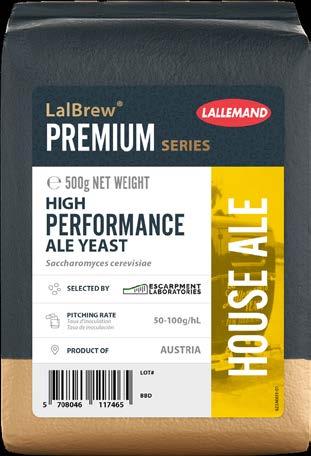
Yeast has a similarly exciting innovation programme. In recent years Lallemand has released yeasts derived from selective breeding programs which cannot ferment maltose and can naturally produce low alcohol beer, and in parts of the world where it is permitted, we have marketed a yeast capable of producing lactic acid which was created using genetic modification. Increasing the availability of a diverse range of dried yeast strains is one of our core business goals.
R&D programmes represent a significant cost to those who run them, and so new varieties of barley, hops and yeast tend to be sold at a higher price than their predecessors. On a cost per kilo basis yeast can represent one of the more expensive commodities procured in a brewery. Fortunately, in the case
of yeast, there is a very simple way to minimise this cost. During fermentation yeast divides three to five times meaning that you will end up with an order of magnitude more cells at the end of the fermentation compared to when you started.
Many economically minded brewers, particularly those on the larger end of the scale will re-pitch their newly grown yeast into the next fermentation, thereby halving the yeast spend on the subsequent batch.
Each year, my colleague Alix and I run a course on Yeast Handling and Microbiology under our BrewEd initiative. This puts brewing education at the heart of what we do.
The course aims to provide an overview to brewers of the economics of repitching as well as teaching practical microscope skills and making yeast handling suggestions which can be easily implemented in any brewery.
Frequently, prior to attending we find brewers are convinced of the economic sense of re-pitching, but lack the confidence to manage the logistics leading to them choosing lower cost inferior products for pitching and ditching, over higher quality ones that can be reliably reused. To provide reassurance, YES YOU CAN DO IT!, we focus on the following key areas during the course.
Yeast Viability – Put simply, this is the number of cells within the slurry which are alive. Measured by staining and microscopy, the metric is usually presented as a percentage viability. Ideally the culture would be >90% viable.
Right: Many economically minded brewers, particularly those on the larger end of the scale will re-pitch their newly grown yeast into the next fermentation.
When it is not, there are ways to mitigate the deficiency which in turn will lead to improved the health in the subsequent yeast crop.
Yeast Pitching Rate – While strain and brand specific, there are rules of thumb which can be used to guide pitching rates in the first instance. The often quoted 1 million cells/ml/0Plato for an ale and 1.5 million cells/ml/0Plato for a lager is a good place to start. The number of live cells in the yeast slurry, and by extension, the amount of slurry you require for a healthy fermentation are estimated using an Improved Neubauer Haemocytometer and microscope
Yeast Storage and pitching – Yeast should be stored cold at <40C and for the minimum amount of time possible. This can be as simple as a clean sealed bucket stored in a fridge, or as complex as dedicated yeast brink with temperature control, agitation and load cells to measure the amount of yeast present. Yeast is usually pitched by weight using platform scales in craft breweries, or by measuring the quantity of yeast that has left the storage vessel in the case of a brewery using dedicated storage tanks. Some breweries can even measure viable cells inline using capacitance, achieving very high levels of accuracy.
Nutrition and Oxygenation – While dried yeasts can be initially pitched directly, any yeast repitched after generation zero requires the addition of supplemental oxygen to the wort. The reason for this is that yeast requires oxygen to create sterols which play a vital role in stabilising the cell membrane of the yeast. Without it fermentation will be sluggish and will fail to fully attenuate.
All fermentations require a source of Free Amino Nitrogen (FAN), which should be present at 150-200ppm for a standard gravity fermentation, but up to 350ppm for a very high gravity wort. For a scenario where nutrient is required I recommend a complex yeast nutrient such as YeastLife Extra. As well as FAN, YeastLife Extra also contains zinc, vitamins and minerals which are important for healthy yeast
metabolism. If a brewer adheres to the above points, and most importantly, pays good attention to working in a consistent hygienic fashion and with good record keeping, there is absolutely no reason why they can’t re-pitch a dry yeast several times.
The equipment required is low cost and accessible to all, with solutions available for every size of brewery. The learning curve is easier than many expect, and once routines are established you can quickly achieve meaningful cost savings and improved process consistency. Re-pitching is an obvious step towards a more efficient brewery and when using quality products, a better beer.
Lallemand will run this course again in 2026. Keep an eye on our social media for updates. Follow us at @ lallemandbrewing and feel free to reach out in the meantime if you would like to discuss re-pitching in more detail.
Repitching yeast is an accessible, low cost practice that can deliver major savings while improving fermentation consistency and ultimately producing better beer,” Andrew Paterson, Lallemand Brewing
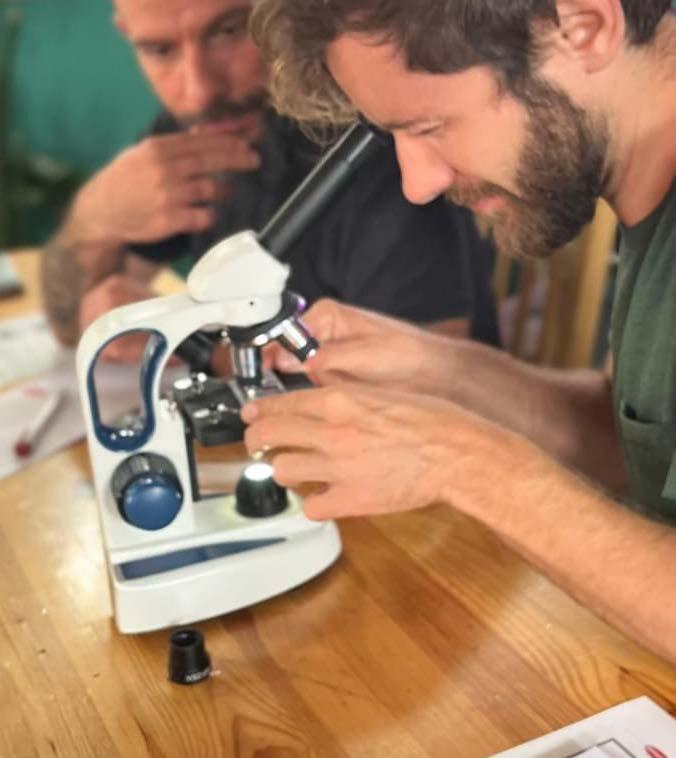
WHEN MOVING TO A NEW CROP MALT THERE IS MUCH THAT BREWERS NEED TO KNOW. HERE DAN COOPER, TECHNICAL MANAGER FROM SIMPSONS MALT TELLS US WHY.
Every new crop year brings change. Differences in growing conditions influence barley quality which can, in turn, affect malting behaviour. This can then have an impact on performance in the brewery or distillery. Understanding what can change and why is essential for a smooth transition to new crop malt. This article combines insight on new crop changeover with a detailed look at what you can expect this year.
The characteristics of malting barley vary from season to season. Rainfall, temperature and soil conditions all influence the protein content, starch composition, grain size and other key qualities of the grain. These differences directly affect malting processes such as water uptake during the steeping process and how the barley endosperm modifies during germination. It can also impact downstream performance, including extract, friability, fermentability and alcohol yield.
When barley is received at our malting sites, it goes through rigorous testing, while a range of quality attributes are assessed to anticipate how it will behave.
Total nitrogen (TN) levels are closely monitored because higher TN means that the starch content will be lower on a weight-for-weight basis. Lower starch
will lead to lower fermentable sugars in the brewery or distillery, impacting fermentability and alcohol yields. Grain size, screenings and the risk of skinning are also measured, as these influence how evenly water is absorbed during the steeping process.
Higher TN, smaller or uneven grains, or those with damaged husks change the way the grain takes up moisture during steeping. Smaller grains and grains with damaged husks can absorb water quickly and unevenly. Higher TN can result in uneven water distribution across the endosperm. If you combine these effects, there is the potential for uneven modification.
Such variability may lead to steely corns, lower friability and increased betaglucans, which can affect processibility for both brewers and distillers.
Before full-scale malting begins, grains are also tested using what are known as 4ml and 8ml tests.
The 4ml test indicates whether the barley has fully recovered from dormancy and is ready to malt, while the 8ml test identifies how sensitive the grain is to excess water and helps define the steeping programme. Grain that is highly water sensitive requires shorter wet periods during steeping to avoid overhydration, which could compromise later modification.
Another critical variable is starch gelatinisation temperature – the point at which starch granules become accessible to enzymatic breakdown. If starch does not gelatinise below approximately 64°C, beta-amylase activity is limited, which reduces the production of fermentable sugars during mashing. This can be particularly important for distillers where reduced
fermentability directly impacts alcohol yield and for brewers using singletemperature infusion mashes.
Gelatinisation temperature is heavily influenced by growing conditions and has been on an upward trend in recent years (more to follow on that), making it an essential factor to consider with each new crop.
While maltsters can adjust their processes to manage some variability, many factors are defined by the growing season itself. This makes early testing and clear communication key to ensuring a smooth adaptation to new crop malt.
Looking at the transition from the 2024 to the 2025 barley crop highlights how growing conditions can influence malt quality. The 2024 season was unusually wet, producing barley with exceptionally low TN in some cases and generally consistent grain quality. In contrast, 2025 was much drier overall. While early summer crops appeared
While maltsters can adjust their processes to manage some variability, many factors are defined by the growing season itself,” Dan Cooper, Simpsons Malt
promising, mid-season rainfall drove nitrogen uptake, resulting in higher TN across much of the crop.
Varietal and regional differences are also notable. Winter barley varieties – which is what we use to produce crystal and roasted malts in our Roast House – have been less affected than spring varieties. TN levels in the north are also generally lower than in the south. Grain size has varied as well. Some northern spring barleys displayed higher screenings, suggesting smaller, more uneven grains, while other regions produced large, bold grains.
Micromalting results for 2025 indicate higher TN than 2024, which affects the starch-to-protein balance and can reduce extract potential. A consequence of the higher TN is a slightly lower friability compared to 2024, although some of this can be off set by adjustments in the malting process. Protein modification and soluble
nitrogen ratios (SNRs) are currently on the lower side, though these are expected to improve as the crop matures and production processes are refined. Starch gelatinisation temperatures have continued a long-term upward trend –higher than in 2024 and slightly higher in England than Scotland.
While this is not unusual, it has practical implications for both brewers and distillers. Non-gelatinised starch is less accessible to enzymes, which can reduce fermentability and careful consideration of enzyme activity is required to protect yield and quality. Taken together, the headline differences for the 2025 crop compared with 2024 are clear: higher total nitrogen, slightly lower extract potential and reduced friability.
While these factors may affect performance, through doing our own rigorous testing, refining our malting processes and opening lines of communication like this, the hope is that the transition to new crop malt is a smooth one.
Gelatinisation temperature is heavily influenced by growing conditions and has been on an upward trend in recent years, making it an essential factor to consider with each new crop,” Dan Cooper, Simpsons Malt
From extreme weather to increasing temperatures, climate change poses a significant threat to UK hop farming, an industry vital to British brewing. Asahi UK is partnering with researchers, industry and farmers on a new initiative to forge a path towards more sustainable hop farming, supporting its resilience for the future.
For hundreds of years, hop farming has been a critical part of Britain’s brewing industry – where the hops themselves play the most significant part in determining the bitterness and overall flavour of beer. Yet the foundations of this supply are under growing strain. Hotter, drier summers, heavier rainfall and increasingly unpredictable seasons are already affecting yields and quality, while long-term soil degradation and disease pressure are making it harder for the UK’s remaining hop farms to stay viable – and with only 45 growers left across the country, something significant needs to be done
To safeguard the future of brewing with British hops, the industry must not only scrutinise its own environmental impact, but actively support more resilient, sustainable hop production that can withstand the climate shocks ahead As climate change progresses, hop farming is set to suffer further through more extreme climate risks. Without a change to growing practices, hop yields in Europe could be 4-18% lower by 2050,
and the alpha acid content in hops, which gives beers their distinctive taste and smell, could fall by 20-31%. As ecosystem services are lost, reduced natural pest predator species increases the likelihood of pest outbreaks; and as cropping area is maximised through removal of trees and hedgerows, the resilience of crops to extreme weather conditions such as high winds and high temperatures could decrease.
Depleted soil health could also reduce the resilience of hop plants to withstand pests and disease, where soil-borne disease risk is exacerbated when functioning of the microbial community is degraded. Currently, many hop farms in Britain rely on farming practices which leave soil exposed, both leaving it vulnerable to plant pathogens such as Verticillium Wilt, and releasing the carbon stored in the soil into the atmosphere.
If the UK brewing industry is to reduce climate risk and ultimately ensure a future for its products using locally sourced ingredients, the production of hops must become sustainable, fast. This means driving the development of new, sustainable farming practices that build resilience against climate change, as well as minimising the impacts of current growing methods.
In response, Asahi UK, the British Hop Association, Charles Faram & Co Ltd and researchers from the Royal Agricultural University and University of Warwick, have come together to support the FOR HOPS UK initiative.
This project will explore innovative new methods and ideas through two PhD research projects, which will investigate the power of biochar and wildflower interventions to improve soil health, suppress plant diseases, and boost carbon storage – supporting hop growers on their journey to net-zero farming. By bringing together expertise from
academia and industry, FOR HOPS UK is creating a shared knowledge base of science-backed solutions to catalyse more sustainable hop farming.
The first PhD project, initiated in January 2025, aims to investigate how biochar (a form of high-carbon charcoal intended for use in soil) can support British hop farming. It will explore whether biochar application can enhance soil health, suppress diseases such as Verticillium Wilt, increase carbon storage, and enhance nutrient and water retention. Notably, it will start by evaluating the effect of biochar type and dose on early growth of hop varieties, then from 2026 onwards, investigate its impact on disease incidence, plant health and yield in controlled glasshouse and field trials; culminating in the development of bestpractice guidelines for integrating biochar into hop production systems for growers.
The second project, starting in early 2026, will look into harnessing wildflowers to revitalise British hops. This project aims to investigate how wildflower interventions can support hop production through improved soil health and carbon storage, boost pest regulation services and benefit biodiversity as a whole. It will start by identifying perennial wildflowers that can grow alongside hops without increasing disease rates, then move onto establishing wildflower strips in hop yards to measure the real-world impacts. The future of British beer depends on what happens in hop yards today. Climate change, soil degradation and disease are converging to create a genuine tipping point – but they are not insurmountable.
Through initiatives like FOR HOPS UK, growers now have the opportunity to access and trial new methods, share data and scale what works. By changing the system today, the brewing industry can protect hop farming for a resilient and sustainable future.
Almost 12 million more pints are expected to be poured during the Six Nations rugby tournament, respresentative of a £60 million boost to the British beer and pub sector. However UK pub goers pay the highest beer duty of any Six Nations nation, three times higher than France and Italy. The British Beer and Pub Association (BBPA) is calling on the Government to continue to support the people behind the pint and align
beer duty with European average. The BBPA said it is estimating that nearly 12 million extra pints will be sold in UK pubs during the Six Nations tournament. As a result the trade body estimates that the tournament will generate nearly £60 million in additional revenue for the sector compared with a typical February or March weekend. Despite this, UK beer drinkers continue to pay significantly more in beer duty than fans in competing nations. The UK’s beer duty is three times higher than in both France and Italy, 12 times higher than in Germany or Spain, and increased this February - the first rise for pubs since 2017.
Emma McClarkin, Chief Executive of the British Beer and Pub Association, said: “With an extra 12 million pints expected to be poured during the tournament,
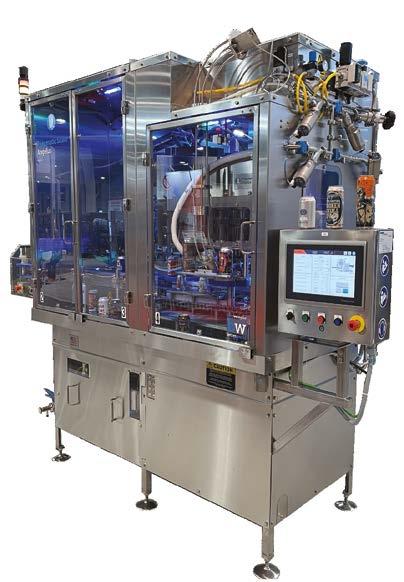
CBR FULL
SPEEDS UP TO 250 CPM, IN A FOOTPRINT THAT FITS!
SMOOTHER OPERATION IMPROVES CAN HANDLING AND LOWERS THE RISK OF CAN DAMAGE
MECHANICALLY-SYNCHRONIZED LID APPLICATION ENSURES CONSISTENT AND REPEATABLE DOUBLE SEAM INTEGRITY
SMOOTH, CONTINUOUS MOTION TRANSITION FROM FILLING TO SEAMING ELIMINATES UNNECESSARY AGITATION AND CO₂ Loss
NOW AVAILABLE IN 12/3, 16/4, AND 24/4 FILL VALVE/SEAMER HEAD CONFIGURATIONS
generating around £60 million in sales, the Six Nations is a huge moment for pubs.
“There’s nothing quite like watching sport in the pub and we encourage fans to get down to their local and be part of the atmosphere while supporting their teams.
“However, given UK pubgoers pay more in beer duty than fans in any of the other Six Nations countries, we’re calling for a reduction in beer duty.
“We welcome the Government’s recent support on business rates and want to work with them so that the people behind the pint are properly supported and our brewers can invest and grow.”
The BBPA is calling on Government to work with the sector on a long-term plan to help the industry thrive, including reducing beer duty in line with the European average.
There is no instruction book when it comes to working with foraged ingredients. There is variance from year-to-year. That keeps us really excited!” proclaims Red Kellie, co-founder of Northumberland’s First & Last Brewery. “It really depends on how wet it has been, how sunny it has been or if you’ve had a really dry season followed by a massive cloudburst. Sometimes the sweetness, the tartness, the juiciness of that ingredient will naturally change from year to year and that’s a beautiful thing.”
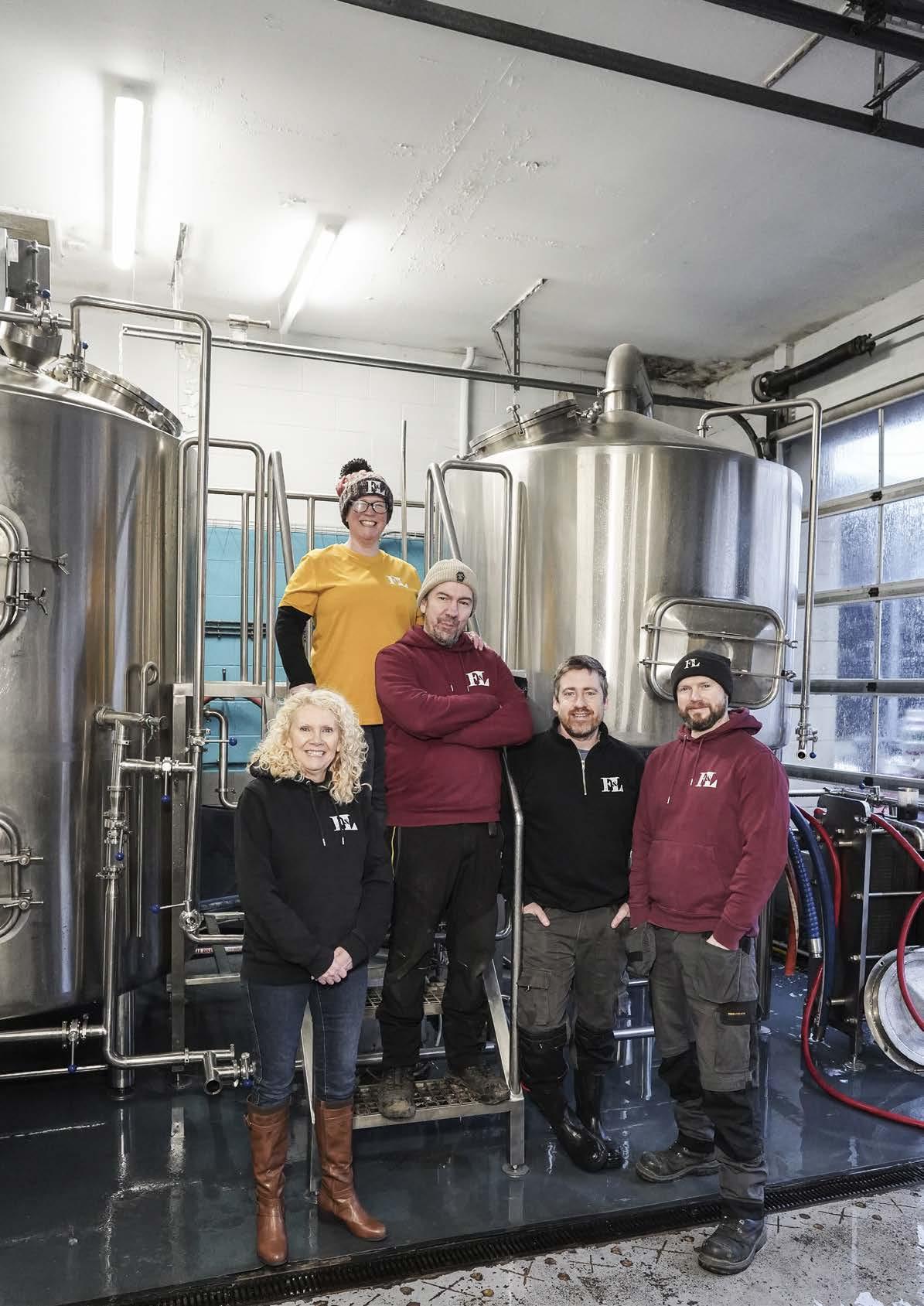
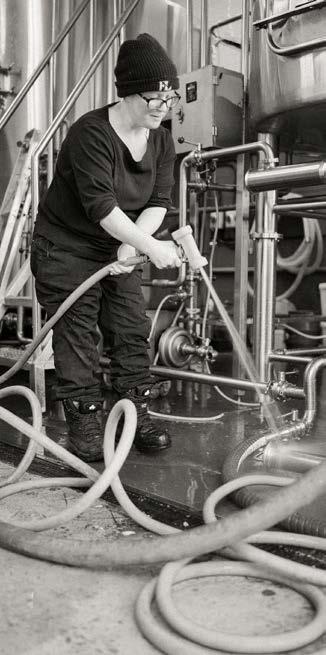
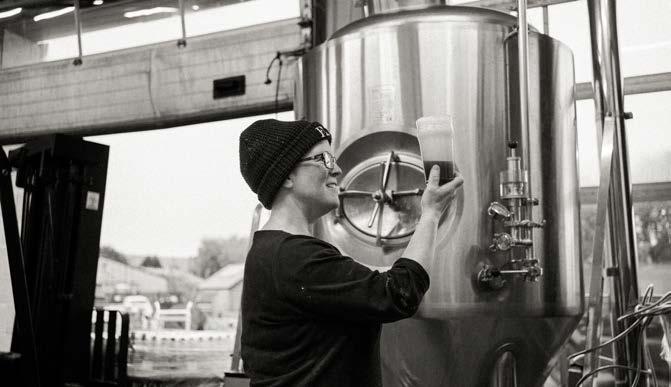
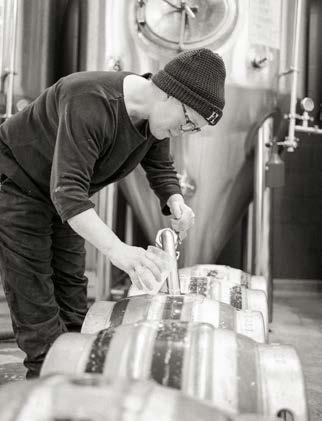
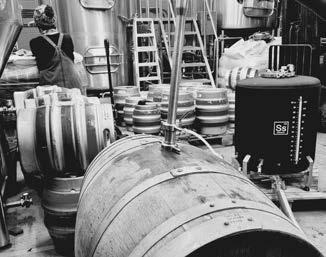
Red is joint owner and head brewer of the First & Last Brewery. Founded with husband Sam, First & Last is a familyrun brewery, taproom and event space situated in rural Northumberland. The brewery doubles as a community space used for everything from art workshops to gigs and literature events. At First & Last they brew a wide range of styles from hazy IPAs, through to sours, wheat beers, stouts and Belgian beers.
At their core, they enjoy brewing wellbalanced beers “that you want to have another sip of”, as well as those using locally sourced & foraged ingredients to produce seasonal specialtiy beers that offer a true taste of Northumberland.
After helping to establish Stu Brew at Newcastle University, Europe’s first student run brewery, then Twice Brewed Brewery, Red set up the First & Last Brewery in 2016. Here, her driving passion is for pairing wild ingredients from the local hedgerows and forests with
different beer styles, so that their qualities complement and accentuate each other.
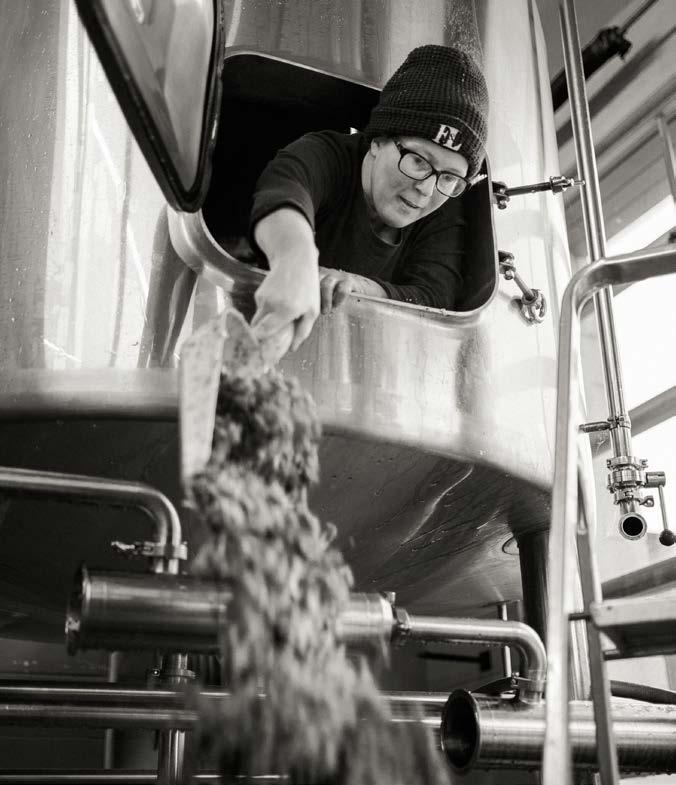
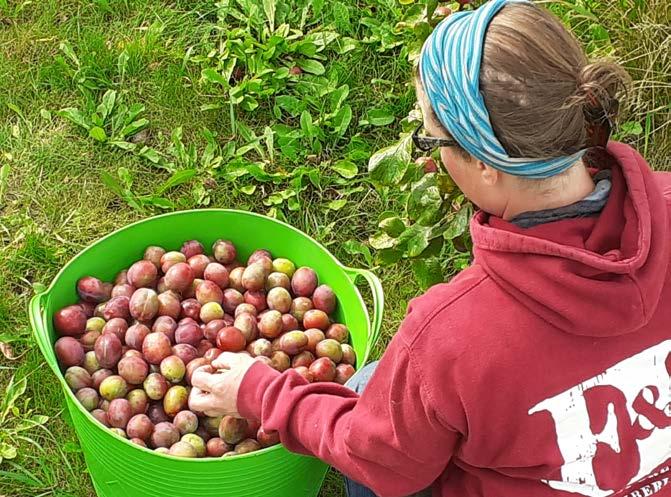
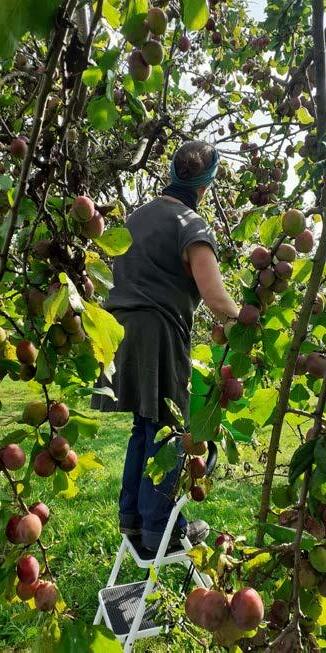
Working with fresh, hand-picked ingredients such as gorseflowers, sprucetips, bullaces and wild raspberries also gives her and the team the perfect excuse to be outside soaking up the beautiful local landscape. And in 2026, the team mark 10 years since the brewery was incorporated. A decade characterised by evolution, and experimentation producing a wealth of beers while establishing a business that is a bedrock of the local community in Bellingham and beyond.
“It’s been a bit of a journey, really,” smiles Kellie. “My husband Sam and I have been home brewing since we were married. Fermentation realy is a love of our life. We started with wild ingredient wines, then got ourselves into beer and then found ourselves building a little brew kit.”
In the early 2010s Red was working at Newcastle University, liaising with volunteers on a raft of sustainability projects. The opportunity arose to bid for funding from the Student Green Fund and the university would find itself successful in not one, but seven applications. One of those would end up being for a project to build a brewery. “It was a madcap idea but one they said yes to. Everyone was pleasantly surprised but obviously it was great news and before long it was time to start thinking about it a little more seriously!” she laughs.
The funding gave Kellie and her colleagues the opportunity to start exploring how the business side of such an operation could work.
“We got a team together, an absolutely cracking group of students, to help range out the ideas of what a student-run micro brewery would look like, how it would fit within the university, the Student Union, and also how it would feed into our environmental credentials. Those included the brewing process through to the business functions, marketing, sales, logistics and everything in-between.”
And while this student-run brewery was starting to take shape, both Red and Sam were forming other ideas of what a brewing business of their very own could be. But back at the university, in 2013, the student brewery was developing. “We worked alongside Dr Chris O’Malley in the chemical engineering department at Newcastle University and ended up with a site in that particular department to actually set-up this micro brewery,” she says. And in the August of 2013 Stu Brew was launched.
When it was launched that year, the brewery became one of only 25 environmental and sustainability initiatives in the UK to be awarded funding from the National Union of Students’ ‘Student Green Fund’. Stu Brew was set up through Student Community Action Newcastle (SCAN) and is now part of Go Volunteer. All sales profits are invested back into training and development for students and overall long-term sustainability of the enterprise.
For Sam and I, fermentation is a love of our life,”
Red Kellie, First & Last Brewery
As Europe’s first student-run microbrewery, it remains a sustainable operation, managed by students through Newcastle University Students’ Union. The brewery is capable of producing around 1000L per batch and is available at venues across the University campus, including Luther’s, EAT@Newcastle venues along with external pubs and bars around Newcastle and increasingly further afield.
Their original 2.5BBL facility was installed in August 2014 with the first brew taking place in 16th November of that year. And in June 2018 they expanded the capacity of the brewhouse to 6BBL. There is also a 20L experimental kit for recipe design and small-scale brews.
Set up with sustainability at heart, hops are grown on the student allotments and the brewing process uses a hot water recovery system to make the process more energy efficient. They send spent malt to a local farmer for use as animal feed and hop residue gets composted on the allotments.
Stu Brew has established a partnership with the School of Engineering and acts as a research unit for sustainable brewery design, seeking to become an example of good environmental practice in the brewing field. They work closely with academics from the school and other local microbreweries in the North East to improve their processes and also share best practice.
“It was a real adventure,” says Kellie. “As the first one in Europe there was no real model for us to work around. But what we knew was that we wanted to involve students from every single department from business to Art and Design and from the Marketing department to Biology, Chemistry, the lot!.”
Students came into Stu Brew all armed with their own ideas. Bonded by a common desire to get brewing and to make a product they could go on to sell. Red and Chris would broaden their own knowledge thanks to several courses at Brewlab in Sunderland and 13 years on, Stu Brew remains it own living, breathing
entity. “It was a really, really exciting time,” says Kellie. “For me, one of the most rewarding parts is how everyone works together. Each year there is a new gang all with their own fresh energy. To see it continue to grow is incredibly validating.”
Kellie is also gratified by the impact that alumni of Stu Brew have made in the wider brewing industry. “There is a lovely feedback loop of learning, along with the development of techniques and processes that is felt across other breweries in the region and also all over the country.
“We have students leaving the university, often after really focusing on one particular part of the brewing process and as a result, breweries across the UK benefit. We’ve seen students go on to work at places like Cameron’s Brewery, Beavertown and more. To have them go on and then forge their own careers is just lush.”
Red’s love affair with beer was wellestablished before Stu Brew came to be. “In the early days I started out with country wines, and with the old demijohns, as most people do. I quite quickly moved into beer, though. I really love beer and was inspired by breweries like The Kernel. Even when I see breweries working with really interesting ingredients, I like to see a really solid beer behind it. I don’t think like to have a beer that is ultimately a little one-dimensional in flavour.
When Red and Sam started out brewing. they procured “a load” of 100 liter stock pots and built their stainless set up, brewing 100 liters at a time in their garage. as many people do. They began experimenting with wild ingredients as well as working on a number or recipes that they still produce today.
“They’ve been obviously tweaked and changed over the years, but it’s really nice to see something like Equinox, which was one of our first beers that we ever brewed on our own kit, stand the test of time.
Before First & Last came into its own Red would help Reuben Strakar set up Twice Brewed based in Hexham. She did this while also working with husband Sam to start First & Last, All while working at Stu Brew part time….
“I think I started out three days a week for them, and I was still working at Stu Brew at the same time! So at that point, I ended up brewing for three different breweries, and working seven days a week. I mean, it was just absolutely crazy,” she recalls.
Red was cuckoo brewing for her our brewery, and helping to plan out Twice Brewed but always a view that she would step back at a certain point, once their business was up-and-running.
Brewing is alchemy. It’s biology, it’s chemistry, but it’s creative as well,”
Red Kellie, First & Last Brewery
And 2018 the duo had got to the point where they had raised enough capital. But there were challenges lying in wait. “We’d bought our brew kit, and we had a site to set it up in. But we also had to put an electricity and water supply into the place,” she smiles. “It was quite a mission, because they had to change the transformer for the electricity supply in the village. There was all sorts of different stuff going on so it took us quite a while, but we got there!”
But now, in 2026, Red and Sam can look back at ten years of their very own brewery with First & Last. A brewery that has come a very long way since bring established a decade ago. Starting out at that site in Elsdon, Northumberland they would end relocating a few miles away
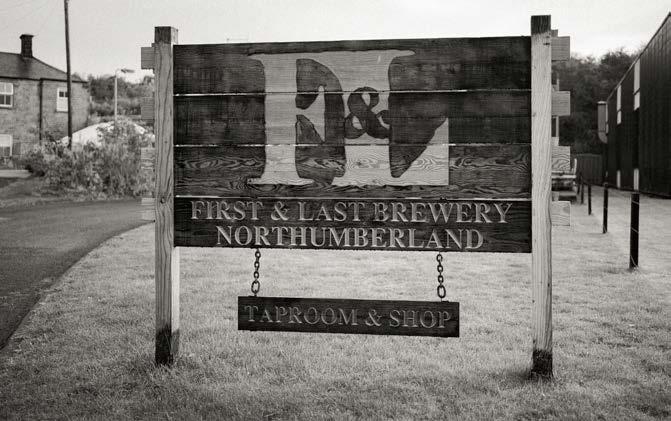
to Bellingham in 2022. You could call it a true adventure in brewing….
“Looking at those 10 years, I can’t tell you how mad it is just to think how quickly that decade has gone. It’s been really wonderful, though. When I say it’s an adventure in brewing, and we use that term a lot, I mean it,” she says. “Every day has just felt like a fresh part of the journey, a fresh set of challenges to overcome and a set of ideas to pull together. But most importantly we’re still feeling really enthused about it all.”
Kellie adds: “With Sam and I, as husband and wife, this business has kind of taken over our lives but we absolutely love it. There is always something new to get excited about. From setting up the taproom which has been a massive learning curve to everything else besides. For instance in 2026 we’re doing a celebration of 10 beers for 10 years, This is enabling us to really hark back to our original ethos of what we want to achieve through running this business.”
The first of these beers just announced is ‘Honey Honey’, a 4.5% Amber brewed caramelised honey from the Northumberland Honey Company. “It’s important that each beer has a purpose,” says Kellie.
Both Red and Sam come from teaching and the voluntary sector, while both have sustainability backgrounds. As a result, community and sustainability are two massively important issues for the duo. “No matter what jobs we’ve been doing throughout our lives, we are now trying to use these 10 beers for 10 years to link each beer into one strand of our ethos.
“So we are working alongside local charitable organizations alongside local producers of fantastic ingredients we can use in our beers like chocolate and honey. Our community here in this part of Northumberland is massively important to us so it was imperative we included them in this project.”
On a day-to-day basis, First & Last Brewery have their core “bread and butter” beers that are primarily reflected
in their eight-strong cask offering. These include numbers such as Equinox Pale Ale, Mad Jack Ha’ Session IPA and Reiver Bitter as well as Red Rowan Irish Red Ale, and Eclipse Stout.
Elsewhere the brewery’s ‘Made with Northumberland’ range of craft beers are infused with their love for Northumberland. Lockdown forced many to slow down and to reconnect with natural spaces. And this proved to be the perfect opportunity for the team to go back to their homebrewing and country wine making roots, and experiment brewing with the fruits and flowers that grow around the local area.
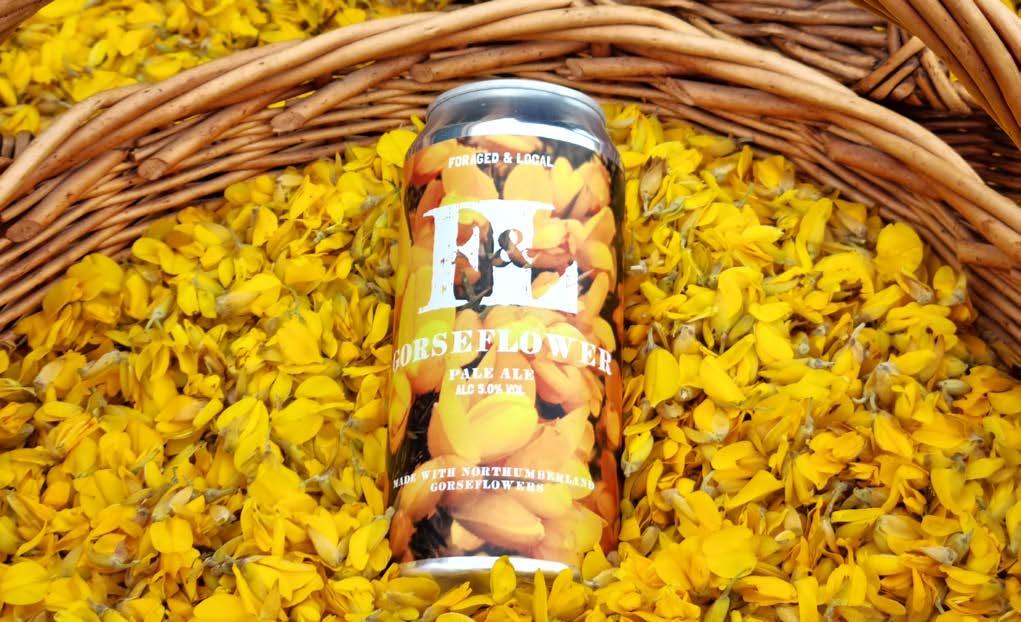
These beers, Kellie says, offer a true taste of Northumberland, with each containing at least one ingredient that they have locally sourced or picked themselves. This means that they vary from year to year depending on the amount of sunlight, temperature, and rainfall they have had over the growing season. Releases have included a Damson Porter, Gorseflower Pale, Hedgerow Fruit Gose, and Elderflower & Meadowsweet Pale, with many more besides and also more coming down the line, too.
“Brewing these type beers is about challenging ourselves as brewers; working out when the best time is to pick, the best point to add them in the brewing process and the most appropriate beer style to match the ingredient to,” she says. “It also means that we get to spend more time exploring rural Northumberland sourcing and picking these ingredients and reducing the environmental impact of the beer itself.”
For Red and Sam, producing a mix of beer styles, often seasonal, was part of the duo’s ethos and identity from the off. “It’s always been a driving force of us. It’s where we started off with our fermentation journey. From collecting berries from the hedgerows. to going sloe berry picking and experimenting with things like spruce tips with Gorseflower,” she tells us.
“We’ve always been into that. But to now be able to actually sell that as a commercial product that people not only
Brewing these type of beers is about challenging ourselves as brewers” Red Kellie, First & Last Brewery
will buy just to try once, but actually look forward to the return of those beers is very rewarding.
“They’re very seasonal by nature. So they’re brewed, they come and they go. It’s nice to have that seasonality, which reflects the turning of the year for us. However, sometimes we can’t keep up with brewing everything that we’ve brewed before. But some become stalwarts because we know our fantastic customers wouldn’t be happy if we didn’t make them!”
According to Red, her, Sam and the team truly enjoy the process of brewing, and working with the plethora of new ingredients the landscape gives them.
“There’s no instruction booklet of how to use them, where to use them, and how much of them to use. I love the fact that in the brewing process, we’ve got so many different stages of the brewing process to work with those ingredients and then to see how we can get the best flavour and aroma results out of them.”
She adds: “There’s so much to play out with brewing, isn’t there? It is alchemy, there is biology and chemistry, but it’s creative as well. And I think that people can put their own skills into it and see their own ideas come together and make a saleable, beautiful, delicious product.
And now more than decade in, Red and her co-founder Sam can look back on a journey that has involved different
breweries, different brews and, of course, many different beers. A story she and Sam are right to be proud of.
“I suppose sometimes we are just not very good at looking back, taking a breath and thinking ‘Oh my goodness. How much things have changed since we were behind a pub in Elsdon with our first little five barrel kit’.
“Am I proud? Yes I’m really proud that people from our local community want to use the space we have created and to
come here and truly enjoy the beers that we make as well.”
Kellie concludes: “This part of Northumberland is so rural. Where we are, there really isn’t anything else like this within the next couple of valleys over in each direction. So in opening our taproom, we thought we’d never be able to have more than four or five beers on at a time. But instead we’ve got much more than that and also, the venue is open four days a week ,every week. And do kind
of take a breath sometimes and think to yourself ‘Yeah, this is great.’ Because we get to do this as our living and you know, that is all we ever really wanted out of it.”
Opening photo and cover: Neil Denham Photography
ARCHIPELAGO WAS CONCEIVED AROUND THREE PRINCIPLES: THE STEWARDSHIP OF BRITISH FARMING, THE SUPPORT OF BRITISH ENTERPRISE, AND THE STRENGTHENING OF BRITISH COMMUNITIES.
There’s a rich variety of truly brilliant breweries in Norfolk. There are maltsters supplying worldclass ingredients, and everywhere you go there is a taproom or pub serving great beer. You can’t escape it and you know what? It’s a lovely part of the world and we are lucky to be here.”
The role provenance plays in beer is something we rightfully celebrate. It can give the beer an identity and a sense of place. And Kirk Stamford, the founder of Atlantic Archipelago, made it his goal to recognise and toast British ingredients, as well as the agricultural excellence that helps make it all possible.
The business is an independent beer brand headquartered in Norfolk. Following an extended period of travel across the United Kingdom, Kirk draws inspiration from the nation’s varied landscapes, longstanding agricultural traditions, and also the deeply rooted regional cultures.
“Unlike many brewers I suppose I’ve come at things from a different background and with a different perspective,” he recalls.
“My background is in agriculture. When I was 18 I was lucky enough to get some work in Norfolk and I would later find out they were a major malted barley supplier to the world of beer. It really piqued my interest.”
Established in 2023 and informed by a strong agricultural heritage, Atlantic Archipelago was conceived around three guiding principles: the stewardship of British farming, the support of British enterprise, and the strengthening of British communities. But why beer?
“Partly because it suits my personality, I think,” says Stamford. “After finishing university I had the opportunity to travel across the UK. It allowed me to spend time in different towns, different cities and hopefully live like a local. It’s unbelievable how diverse the UK is. There are different cultures, different people, different ways of life everywhere you turn.”
He adds: “I wanted to capture a small part of that. An increasing number of people want to buy locally and support local. We have a fantastic manufacturing base in Britain and I wanted to support the brilliant businesses that comprise that. What better way than through beer?”
According to Stamford, the business holds a deep respect for the role British agriculture plays in shaping the country’s economy, environment, and historic identity.
As such, they are committed to working closely with farmers and producers throughout our supply chain. Wherever possible, British-grown ingredients are prioritised, ensuring both exceptional
quality and a meaningful contribution to rural prosperity.
“It is undoubtedly a vital element of everyday life - without dedicated farmers working come rain or shine, our supply of produce would be drastically threatened. In the heart of the UK countryside lies a tradition as rich as the soil itself: farming,” he says.
“From the luscious Garden of Kent to the golden fields of Norfolk, British farmers work tirelessly to sustainably cultivate the land and produce the ingredients that form the backbone of our drinks. We understand the vital role that British farming plays in our economy, environment, and heritage. That’s why we are proud to champion and support our farmers throughout our supply chain.
“With an unwavering commitment to sourcing locally grown ingredients wherever possible, we not only ensure the highest quality for our products but also contribute to the success of rural
We understand the vital role that British farming plays in our economy, environment, and heritage,” Kirk Stamford Atlantic Archipelago


communities and the preservation of our agricultural history.”
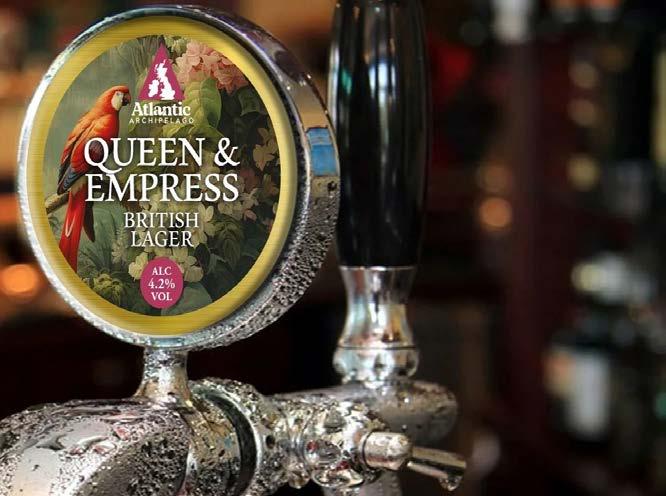
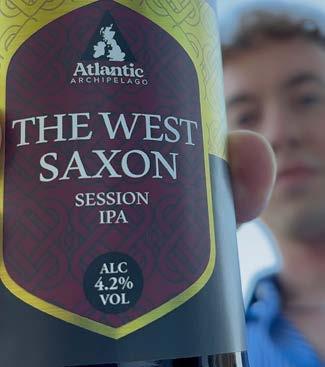
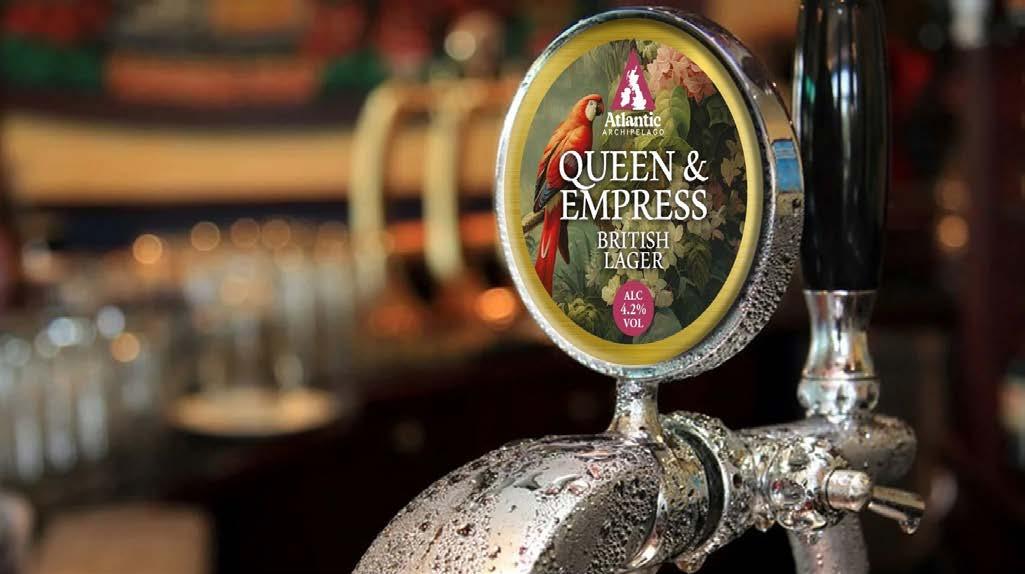
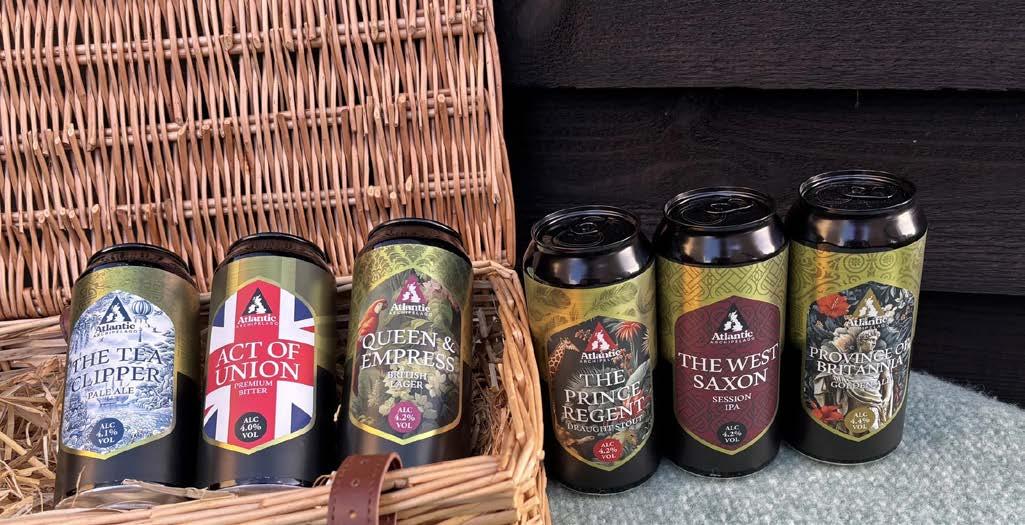
The company’s portfolio comprises six beers. These are Act of Union Premium Bitter, The West Saxon SIPA, Province of Britannia Golden Ale, The Tea Clipper Pale Ale, Queen and Empress Lager, and The Prince Regent Draught Stout. For the company’s founder, utilising local ingredients where possible was of huge importance in producing these beers. As was the transparency when it comes to the ingredients involved in each recipe.
“Traceability and transparency is really important to me, because people have to know what exactly is going on. Especially in this day and age because people are entitled to know what is going in to what they eat and drink,” he explains.
Among the range is the 4% Act of Union Premium Bitter, which is inspired by the 1707 legislation to unite the Kingdoms of England and Scotland, followed by the integration of Ireland in 1800 to form the United Kingdom of Great Britain and Ireland.
As the origin of modern day Britain, these acts established a political alliance
among great nations aspiring for peace and prosperity.
The ingredients are sourced exclusively from the UK, with Crystal 150 and Best Pale Ale malt from Norfolk, and Crystal and Fuggles hops cultivated in Kent. This blend results in a gentle bitterness and caramelised malt richness, infused with a distinct Fuggles and Crystal aroma carefully selected for their balance and depth.
Norfolk has a rich brewing heritage. It’s a lovely part of the world and we are very lucky to be here,” Kirk Stamford Atlantic Archipelago
“By prioritising local businesses, supporting innovation, and investing in talent, we ensure British businesses continue to thrive,” Kirk Stamford, Atlantic Archipelago
The Tea Clipper Pale Ale is inspired by the legendary ships that once raced across the world’s oceans, carrying tea, spices, and treasures between distant lands. Brewed with British-grown Godiva, Harlequin and Ernest hops, the exotic 4.1% pale ale delivers a smooth, refined bitterness with an exotic citrus character and subtle notes of apricot. A generous dry hop of Harlequin brings a tropical flourish, lifting the aroma with bright bursts of pineapple and passionfruit. Balanced, refreshing, and layered with flavour, The Tea Clipper is a modern pale ale rooted in British brewing tradition.
Elsewhere, The Prince Regent Stout is described as a luxurious beer crafted to embody the grandeur and elegance of the Regency era. Known for its lavish extravagance, artistic innovation, and refined tastes, this period inspires a beer that celebrates sophistication. Influenced by Stamford’s journeys through the majestic landscapes and landmarks of the South East, it marries the opulence of Windsor Castle, the charm of Henley-onThames, and the prestige of Ascot.
“Rich and velvety smooth, The Prince Regent balances notes of caramel
and chocolate from Ale and Crystal malts with a subtle floral bitterness of Magnum and Golding hops. Just as the Regency era sparked advancements in craftsmanship, this creation delivers a deep, well-rounded stout that embodies that same luxurious spirit,” he says.
At present, the brewing of the company’s beers is handled by brewing partners. The beer is then packaged into vessels such as glass bottles manufactured in Cheshire featuring labels designed in Yorkshire and printed in Staffordshire. And that focus on local business was a concerted effort rather than one of chance or circumstance.
And away from beer production, the company’s professional and advisory services are provided by independent, family-owned firms across Norfolk, Cambridgeshire, and London. For Stamford, he says a well-ordered, ethical supply chain underpins longterm quality, fairness, and commercial integrity.
“From small startups to established giants, British businesses contribute significantly to the economy, innovation, and job creation across the UK,” muses Stamford. “But beyond just economic figures, supporting British business is about nurturing entrepreneurial spirit, fostering creativity, and ensuring communities thrive with local employment opportunities.”
“One of the main ways we champion local business is by embracing homegrown products and services. We recognise that a well-designed, conscientious supply chain can work to ensure fair returns for all participants involved.
“By prioritising local businesses, supporting innovation, and investing in talent, we ensure British businesses continue to thrive and remain a driving force for both economic and cultural development. In doing so, we not only celebrate British ingenuity but also pave the way for a sustainable and prosperous
future for generations to come.”
But in the immediate term, Stamford is now focused on broadening the supply of the brand’s beers. Starting out with the Act of Union Bitter, the range has grown as has the number of package types. “It has been something of a rollercoaster. Getting your beers out there takes a lot of time and effort. You can’t just call up a pub and expect to be stocked. You need to earn that listing,” he says,
“But these first few years have competely flown by. As a new company you end up being consumed by the business and all that comes with it. There have been milestones, however. We started out with one beer and now have six. And we initially started off selling into local garden centres, which we sitll do, but we now sell our beer nationally, too.”
He concludes: “So yes, it’s been a journey but it’s one that’s been fantastic to be part of. Incredibly fantastic.”







EFFICIENT
MODULAR
STRONG




PLUG & PLAY]


10 TO 320 KG/H]

UP TO 16 BAR]



www.certuss-emx.com/en





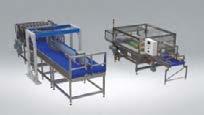




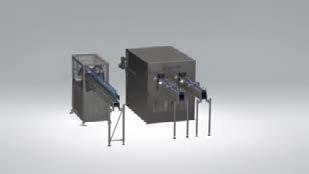
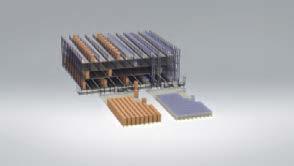
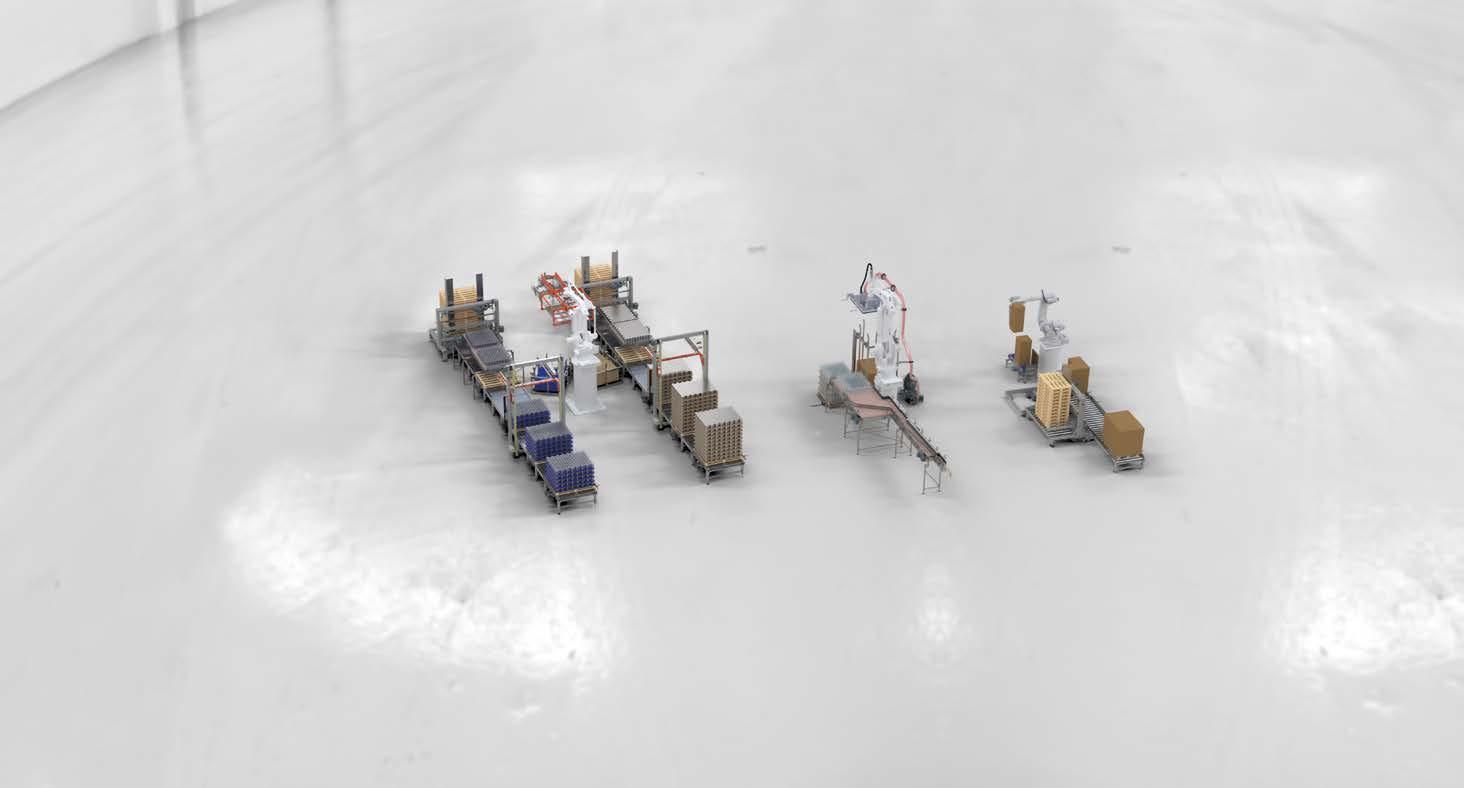
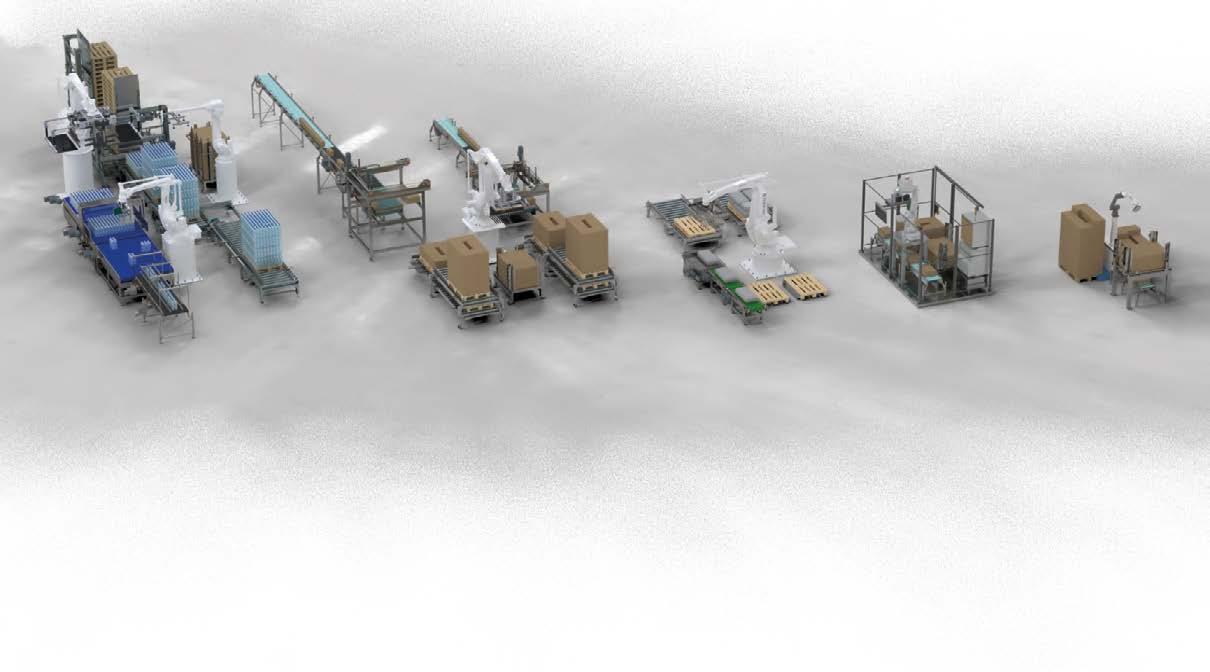
LAYER DEPALLETISER
CASK BEER IS A VERY SPECIAL TYPE OF BEER. BUT FOR IT TO REACH THE CONSUMER IN EXCELLENT CONDITION THERE ARE MANY STEPS TO TAKE, FROM CELLARING, DISPENSE AND MORE. HERE PAUL DAVIES, FORMERLY PART OF THE QUALITY TEAM AT FULLER’S IN CHISWICK, LONDON, TELLS ALL.
For many, enjoying a pint of perfectly conditioned cask, at the correct temperature and in a clean glass is a pleasure that never leaves you. In fact the first pint that I purchased with my own (pool’s round) money was a delicious Brains Dark Mild. I had just turned sixteen and it was the first week of Sixth Form. Like a good Welshman I still remember the occasion clearly, both because of the fear of not being served and also that it tasted wonderful. I had another.
The thrill of supping good cask has never left me. Its freshness, subtle characteristics, rich mouthfeel and natural carbonation provides an amazing flavour experience unlike mainstream packaging formats. Anthony Gladman waxed lyrically about cask in The Glass in December. “It made me think of cask
ale — that glorious, valuable, unique drink to which we in its homeland fail to pay proper heed. It is subtle, delicious, delicate, and increasingly ignored. I am in my 50s now and count myself among its confirmed lifelong fans”.
Unlike keg or bright beer, cask beer is live and unpasteurised and unlike the former formats it still contains live yeast and some fermentable sugar. Keg or bright beers have these removed and are usually pasteurised or sterile filtered. Barring brewing and packaging faults, a cask should leave the brewery at its best.
But it is not yet the finished product so what the publican or cellarman does next is paramount to producing a perfect pour. As important as the brewing itself is conditioning. Three things to consider are temperature, hygiene and time. When the cask reaches the pub the first
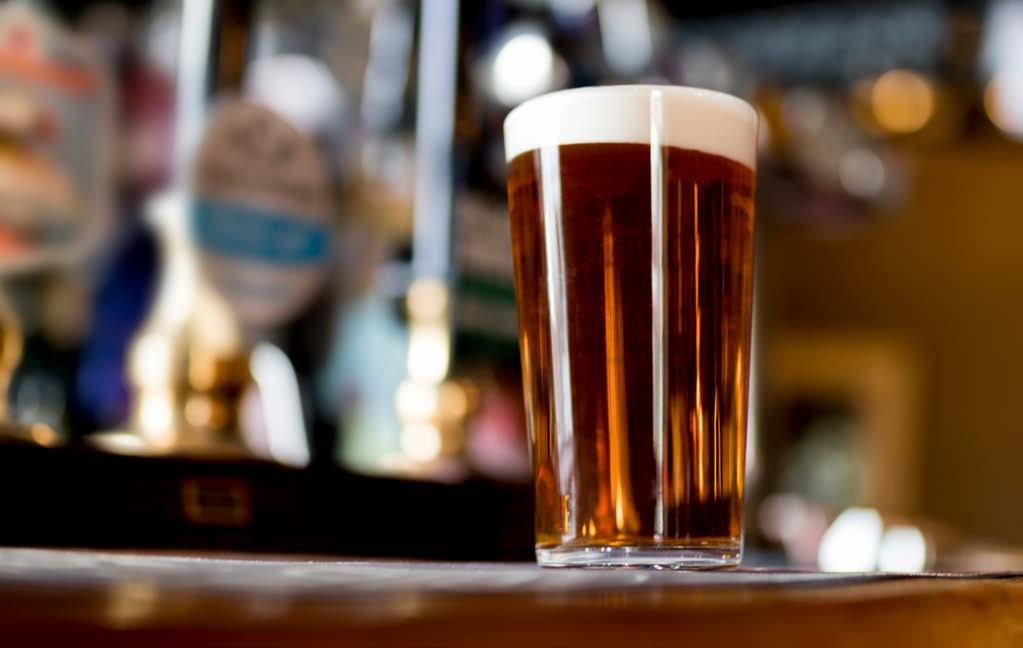
thing after checking in the delivery is to get the container into a temperaturecontrolled cellar. Cellar coolers are set up to maintain a constant temperature of 11-13°C.
This is the optimum temperature for conditioning cask in the cellar. It will usually take between 24 and 48 hours to bring the cask down or up to the correct temperature.
After that the cask can be stored upright within the cellar until it is needed to be racked prior to service. If you have enough room on your stillage you can also store it there to reach temperature before conditioning.
In the EU cask beer is classified as a food as it contains live yeast. Good hygiene standards are very important and a cask cellar should be cleaned on a regular basis. Deep cleaning should take place at least once per week, usually when empties and being removed and just before a delivery of fresh beer. All cellar equipment must be kept clean and kept in a clean and safe place – a cellar tidy is ideal for this. Taps should be cleaned immediately after use and left disassembled so they can air dry. They should never be left to soak in water. Spillages need to be cleaned immediately otherwise the wild yeasts in the cellar will start to ferment the sugars in the spilled beer and this can lead to contamination of your beer.
Before placing the cask on the stillage, roll it around the floor and spin it to redistribute the finings, yeast, sugar and hops if the beer is dry-hopped. Take a brush and clean water and clean the shive and keystone. Casks tend to be rolled around the brewery floor and can pick up dirt. The two shive method is the most popular and involves knocking a hard spile through the shive to release carbon dioxide.
Some beers will start to foam out of the shive and can sometimes be very lively. Replace the hard spile finger tight with a soft version which is more porous. Take a clean cask tap and knock it through the keystone with a cellar mallet. Make sure
the tap is closed before you do this to avoid a deluge over the cellar floor. Record the date of racking on the cask with chalk. Any spillages need to be cleaned up immediately.
During conditioning there will be a steady foaming out of the shive. Keep changing the soft spile for a clean one and wipe the shive clean. During conditioning a CAT test (clarity, aroma, taste) can be carried out. Be aware that when you first take a sample, you will release a yeast plug of sediment that has gathered around the tap. Discard this and take a fresh sample. Keep doing this until the beer has stopped conditioning and passes the CAT test.
Different beer brands condition for different periods and you will soon get to know which ones condition quickly and which ones take around five days. You can then replace the soft spile with a clean hard spile, finger tight to keep the condition in the beer. At Fuller’s we used to only use a hard spile throughout the conditioning process as they are still fairly porous. This also yielded positive results. Once the conditioned beer is ready to be dispensed, replace the hard spile for a soft one, attach a hop filter to the end of the tap, take a clean cask line and connect it to the tap.
Record the date of dispense on the cask with chalk. The beer can now be pulled through to the bar. At the end of service replace the soft spile with a clean hard spile to keep the condition in the beer. At Fuller’s the hard spile is removed during service and replaced at the end. Once the cask has emptied, any remaining sediment can be poured away and the cask sealed with cork bung. This stops any rodents getting into the cask while it is waiting for collection. The used tap must then be dismantled and cleaned immediately. Leave the parts to air dry before reassembling.
Another method of conditioning and dispensing cask is via vertical dispense. Traditionally this was done with the use of a siphon rod, a long metal spear that
is lowered through the keystone into the cask and then secured in place with its end approximately one inch from the bottom of the cask.
These are less common today and have mainly been replaced by siphon widgets which derive an excellent yield from the cask. As with horizontal dispense, redistribute the ingredients in the cask by rolling it around the cellar floor and let it get to cellar temperature.
Clean the keystone - note you will not be using the shive - and knock a clean tapping shank into the keystone with a cellar mallet – make sure that the valve is turned off. Record the date of conditioning on the cask with chalk.
To vent off the carbon dioxide gently turn the vent valve to the ‘on’ position. Some beer may foam out and should be cleaned immediately. As above you can take a sample during conditioning after the first 24 hours.
Remove the tapping cap and lower a clean sample tube gently into the beer and take a sample. Carry out a CAT test and if the beer is still conditioning keep the vent valve open and sample again in another 24 hours. Once the beer has finished conditioning and has passed the CAT test close the vent valve to keep the condition in the beer.
Once you are ready to dispense the beer, remove the tapping cap and lower a clean flexible extractor tube into the beer. The tube sits on top of the beer and as beer is dispensed it chases the beer down to the bottom of the cask. Insert a clean hop filter to the end of a clean cask line and attach this to the thread on the extractor tube. Turn the vent valve to the ‘on’ position and pull the beer through to the bar. Record the dispense date on the cask with chalk. At the end of service turn the vent valve to the ‘off’ position to keep the condition in the beer.
Opposite: The two shive method is the most popular and involves knocking a hard spile through the shive to release carbon dioxide.
Some beers will start to foam out of the shive and can sometimes be very lively. It’s important to replace the hard spile finger tight with a soft, more porous, version.
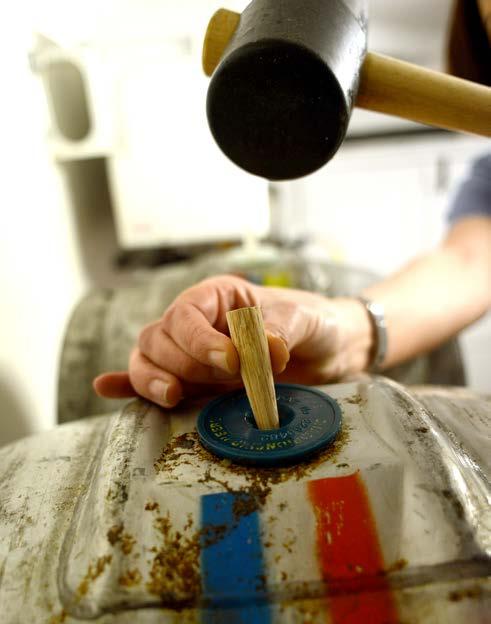
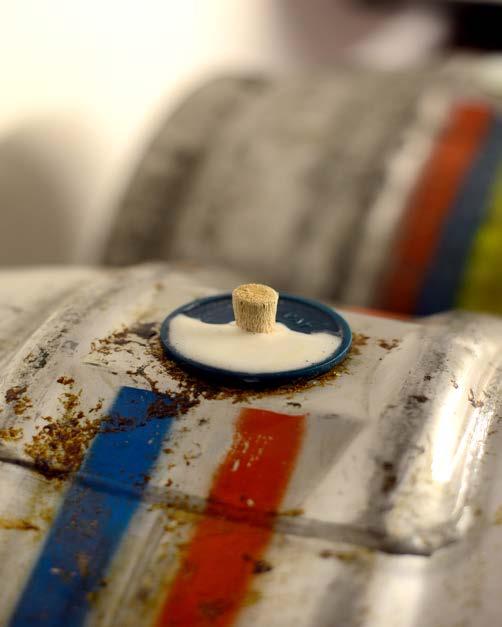
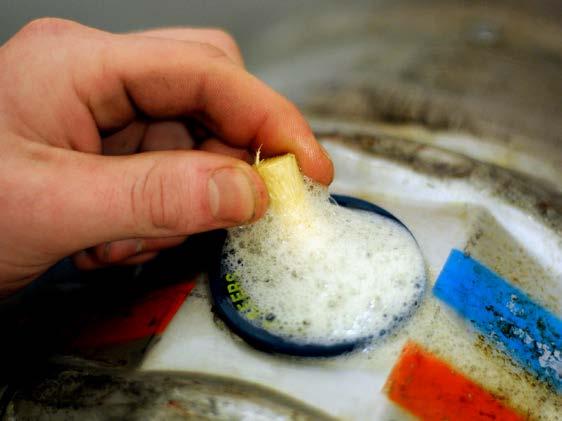
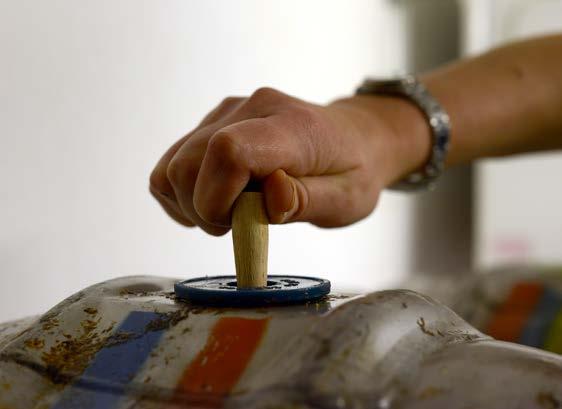
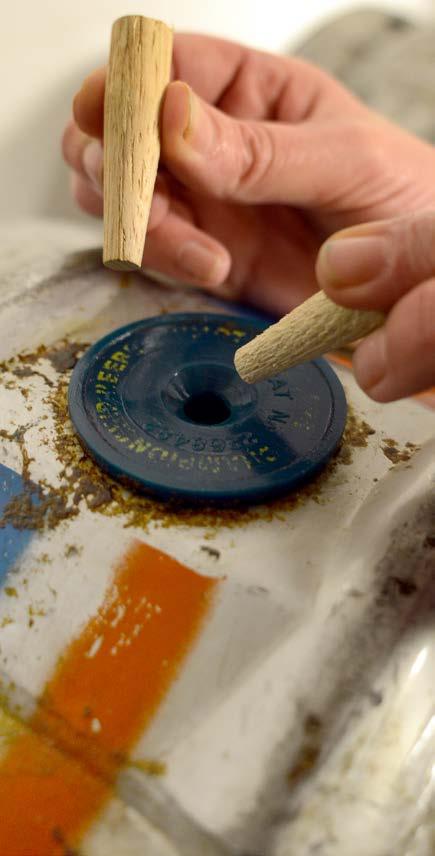
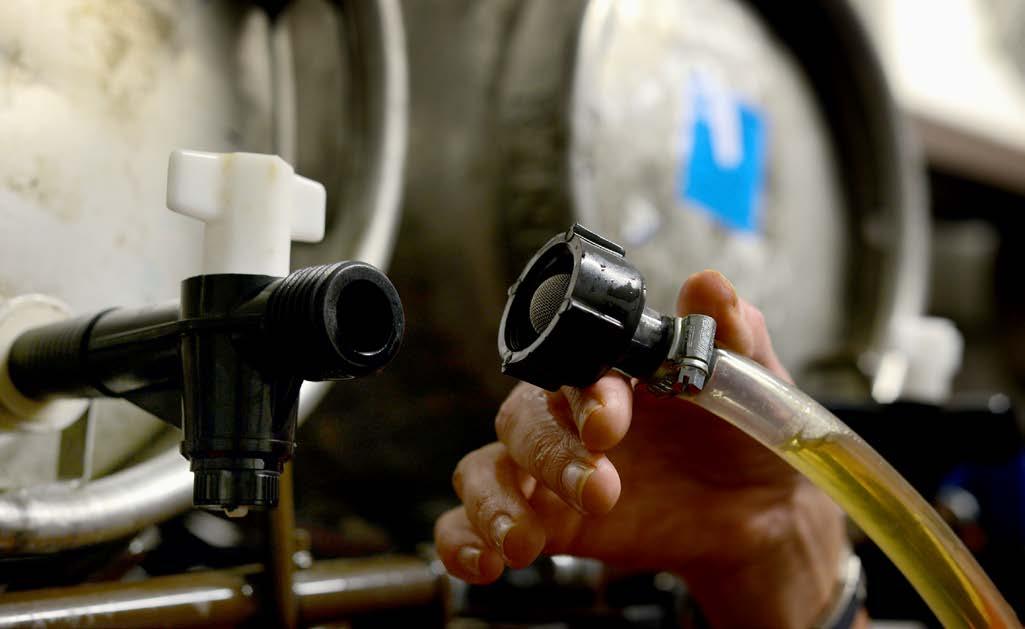
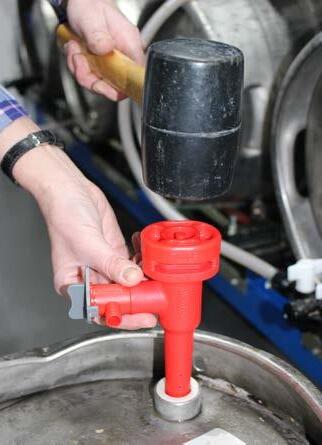
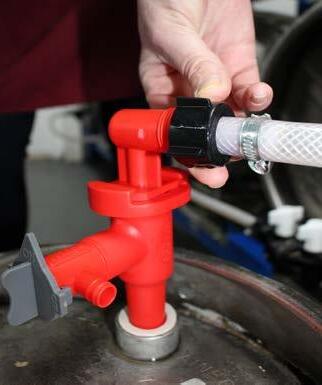
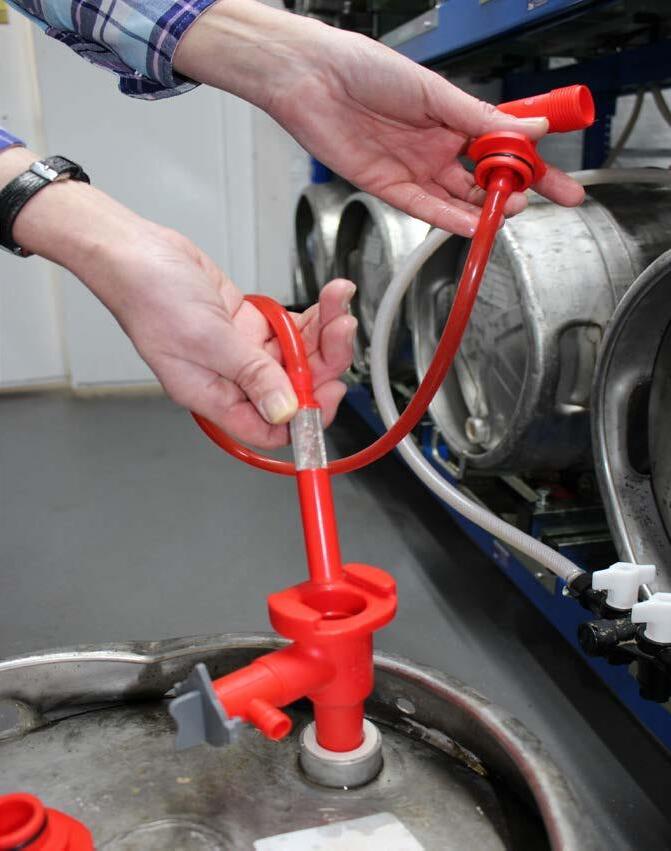
Once the cask has been emptied deal with it as above. Take the extractor shank, tap and tube and dismantle, clean and sanitise. Leave to air dry. There are pros and cons to both methods. Horizontal stillages use less equipment which is far easier to clean and sampling the beer is very quick and easy. But this method takes up more space and involves
with horizontal. This increases the risk of it being drawn into the beer line.
Another factor that is equally important in the presentation of a pint of cask is dispense. Hygiene is once again key in this area. The bar area must be kept
When pouring the beer make sure that the glass is held at the bottom 1/3 of the glass. Unless using a swan neck spout keep the spout out of the beer while pouring. A foam head should not take up more that 5% of the glass. The recommended limit on the sale of a cask is three days so you should carry out a CAT test to check that the beer is in good

I would recommend tasting the beers prior to service each day anyway. Just a taste, not a pint… The life of your beer can be extended by a few days through the use of aspirators or breathers. Another tip is to pull through a small amount of beer until you get a break of foam in the line. This is the beer that has been sat in the beer engine overnight with can sometimes warm up if there are electrical cables running underneath the bar counter. The beer that follows will have been sat in the beer python overnight so will have been kept at a cool

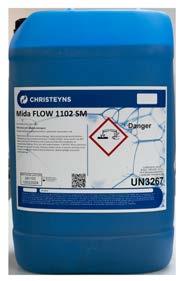


• No carbon filter or refrigerant in plant and no need for balloon
• For breweries 1,000100,000 hL

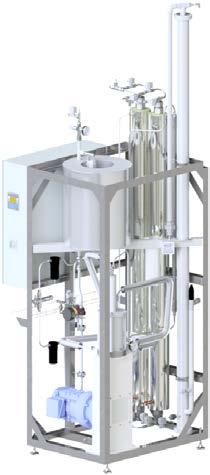

YOU SPECIALISE IN CASK OR KEG BEERS, BEST-IN-CLASS CELLARING AND DISPENSE TECHNOLOGY AND SERVICES ARE ESSENTIAL TO ENSURE THE BEERS YOU PRODUCE ARE SERVED IN OPTIMUM CONDITION.
Three Nations are the largest independent draft drinks service provider in the UK - proudly offering comprehensive, national coverage. From installations, to maintenance, technical support and training, supply chain, logistics and equipment supply, they are a full-service dispense partner. As the go-to partner for project roll-outs, they specialise in fast project management and delivery, ensuring your brand roll-out happens quickly and effectively. All their services are executed by their in-house team of Brewing, Food & Beverage Industry (BFBi) trained technicians. Their passion lies in assisting pubs, restaurants and the hospitality industry in curating a distinguished selection of draft beverages, from a diverse array of brands to innovative dispensing systems. .
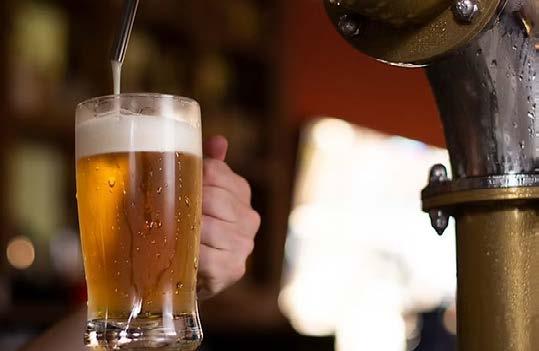
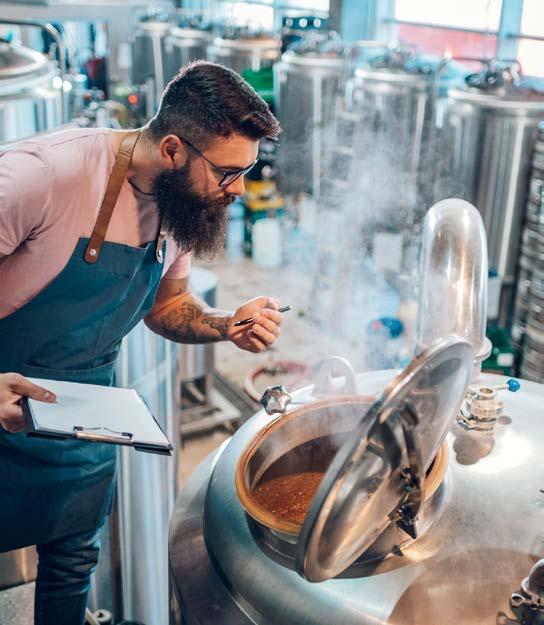
Consistency and quality control are a major part of the brewing industry and with these requirements relying on thermal energy management it is essential that the beer brewing industry considers how to adopt more sustainable processes without compromising on the consistency of the taste profile.
Advanced thermal solutions from Kilfrost, including the food and beverage safe, low viscosity heat transfer fluids (LV HTFs), like ALV and ALV Plus, are stepping up to make a difference in temperature control through secondary cooling systems. For breweries just starting their green journey, upgrading thermal systems is a practical and impactful first step. Formulated using bio-derived base materials listed as GRAS (Generally Recognised as Safe) by the FDA, Kilfrost ALV combines innovative organic-based technology, ASTM D1384-05 proven corrosion inhibitors, and rheology modifiers to create a powerful alternative to traditional glycols. Whether it’s switching to greener HTFs, like Kilfrost’s ALV range, improving energy efficiency, or protecting equipment, these solutions bring real benefits to both operations and the environment. Brewing green isn’t just the way forward, it’s already here. By making the move to advanced thermal solutions now, breweries can show they’re serious about sustainability while staying competitive in the ever-changing market.
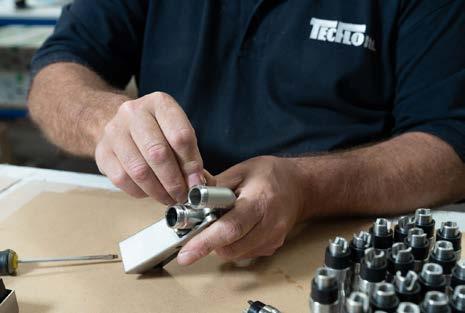
TecFlo is proud to be constantly developing new designs to cater to the changing environment of the cellar and bar. They work closely with engineers and adapt products to create an efficient and productive environment. Manufacturing They are proud of their factory in the Northwest of England which is home to the most committed workforce in the business, or so they believe!
All of their products are manufactured on-site and pass a rigorous quality control process before being shipped out. They also remanufacture old kit so it is worth dropping them a note if you have a need you are struggling to fulfil. They are a business committed to top-quality service. They work with some of the leading names in the brewery industry and are proud to offer a quality product at a competitive price, delivered by a leading service.

Cellar Dispense delivers continuous improvement by design. Founded by Ken Simpson, he is leading the way for innovative beer dispensing solutions at Cellar Dispense. With a forte for design and manufacturing he started his career in mechanical engineering with an BSc Honours degree from Aston University and became a Chartered Engineer. Working with major breweries and their suppliers over the last 25+ years he has been focusing these skills on improvements across the industry. His passion for innovation and engineering has led him to challenge how things have always been done and look for new ways and new materials that will modernise the brewery industry. An example of this success can be seen through his work on keg spears and spares. Seeking to resolve the safety issues on old non-safety spears he designed a retro safety devices which when fitted made the spears safe and to the industry standard. With over 750,000 successfully rolled out, this meant cost savings to the customer and essential safety improvements across the market.
Innserve is an established and independent outsource service provider that specialises in the supply, installation and maintenance of beer and soft drinks dispense systems. Innserve currently services over 90,000 licensed and non licensed premises across all parts of England, Scotland and Wales employing over 400 maintenance and installation technicians and is the major provider of a nationwide service in the drinks dispense field. Whether it’s their full suite of services or simply one, they have the expertise and capabilities to drive value for their customers in a flexible yet professional manner to meet each individual customer’s needs and expectations. Innserve is uniquely placed to offer a complete solution for drinks dispense technical services, allowing customers to reduce costs, lower the risk of downtime and deliver real value.
RLBS Ltd is the UK’s leading manufacturer and distributor of high quality beverage dispense equipment for the brewing and soft drinks industries. They specialise in the manufacture and remanufacture of CO2 and mixed gas reducing valves, fonts, cask ale and cider hand-pulls and taps. By combining their market-leading knowledge and technical expertise, they maintain exacting quality standards to deliver high performance solutions for pubs, restaurants, hotels and micro-breweries.
Operating within the Samuel Hodge Group, RLBS Ltd incorporates CFBS (Colin Farrar Brewing Services). From their manufacturing facilities in Wrexham and Keighley, they serve many of the UK’s most iconic brewing brands. They take great pride in delivering a highly responsive and reliable service for all customers, from independent and emerging micro-breweries to the largest national brewery operators. Using their extensive expertise, they are able to accommodate bespoke requests and overcome complex challenges. With both design and fabrication skills in-house, they deliver a comprehensive service offering.
Cellarpsan are specialists in cask and keg dispense solutions. They offer full installation & set up for professional & home bars. Whether you are a new venue or taking over an existing venue,Cellarspan can install & maintain your lines & equipment meaning that you can run your business free of brewery ties & obligations. This creates more product choices for your customers & more freedom for you!
Leak repairs, hand pump servicing & equipment refurbishment: Cellaspan has replacement seals, valves, couplers & cellarbouys on hand to ensure any minor faults are fixed the same day. We also offer the option of annual servicing & one-off refurbishment
Cooler installation, servicing, repairs & refurbishment: Poorly maintained coolers can cause excessive fobbing and wastage. Make sure yours is runnning as efficiently & effectively as possible with one of their annual services or one-off inspections
Gas line installation, servicing & repairs: Although often minor, leaks in CO2 pipes can kill - especially in sunken cellars where the heavy gas can build up undetected. Cellarspan is CO2 & Mixed Gas certified meaning that they can install, work on & sign off gas piping. It is wise to have your gas lines & seals checked, especially when taking over an existing cellar, as these can deteriorate over time.
At Micro Matic, they lead the global draft beverage industry with cutting-edge dispensing solutions that combine innovation, quality, and reliability. With decades of experience and a worldwide presence, they are committed to delivering exceptional draft beer, wine, cocktail, coffee, and water systems that elevate the beverage experience. From engineering excellence to customer-focused support, Micro Matic is your trusted partner in draft technology — ensuring perfect pour performance, every time. At Micro Matic, it’s not just about equipment it’s about you, their customers.“We Run for You” is their commitment to being more than a supplier. They run to ensure your beverage systems perform at their best, your drinks are served with top quality. Great quality starts at the tap. With innovative dispensing solutions, they help you serve the perfect beverage every time. From draft beer and soft drinks to custom-built systems, they don’t compromise.
Kersia, leader in hygiene solutions, has a complete offer of disinfectants, detergents, lubricants, water treatment solutions etc. adapted specifically to the needs of the brewery and the beverage industry. Kersia products meet the highest performance, ecoresponsibility and cost standards. Kersia’s cleaning and sanitizing programs thus ensure the quality and safety of your beverages, while improving operational efficiency.
With the acquisition of Sopura, an internationally recognized expert in the brewing industry with more than 70 years of experience in over 100 countries worldwide, Kersia is now “the” reference in this sector, providing complete cleaning and disinfecting solutions from the brew house to the bottling hall. Each brewery is a unique case, depending on the type and size of the brewery. The Kersia Group’s experts offer solutions adapted to each constraint of your different industrial processes.
Established in 1988, Beer Piper’s concept was simple; to develop a beer line cleaning system that helps to reduce beer wastage and to make line cleaning less time consuming, less costly and less messy. Since its inception, Beer Piper has proven itself as a market leader, successful in thousands of licensed venues in the United Kingdom and expanding globally. With this background, Beer Piper continues to maintain its presence and develop its products, as well as providing excellent customer assistance and service support. Beer Piper engineer and manufacture the most technologically advanced beer line cleaning systems in the UK, using advanced electronics, digital innovation and accurate dosing technology to ensure maximum efficiency, convenience, safety and effectiveness.
If



At the Enterprise Group you will find a personal commitment to your project, whether it’s a single machine for integration into your existing line or a turnkey project on a green field site.
At the Enterprise Group we are not just agents, we can offer you a total package. Our experienced project layout engineers working with state-of-the-art CAD facilities, combined with our team of field engineers, allows us to respond quickly and accurately as your project develops.
This commitment continues with machine efficiency trials and performance tests, followed by full aftersales service and backup.
So whatever your requirements, you should be talking to us.
Visit : www.enterprisetondelli.com

HEAD OFFICE :
Enterprise Tondelli Srl. Via La Spezia, 193/A - 43126 Parma – Italia. Tel +39 - 0521-940068 Fax +39 - 0521940067
E-mail : info@enterprisetondelli.com
INTERNATIONAL TECHNICAL SALES OFFICE
Unit 7, College Farm, Barton Road, Pulloxhill ,Bedfordshire, MK45 5HP, United Kingdom. Tel. +44 (0)1525 718288
E-mail : info@enterprisetondelli.co.uk
AN INCREASING NUMBER OF BREWERIES ARE INVESTING IN CO2 RECOVERY SYSTEMS AS ALTERNATIVES TO BOUGHT CO2. BUT WHY SHOULD YOU BOTHER? HERE ARE SOME OF THE BENEFITS, BOTH ECONOMIC AND ENVIRONMENTAL, THAT THESE TECHNOLOGIES CAN BRING TO YOUR BREWERY.
The issue of CO₂ recovery in the brewing industry is one that, perhaps unsurprisingly, is gaining increasing importance with the combination of rising costs with unstable supply chains, coupled with a fresh focus on sustainability.
In the smaller brewery space, these businesses have traditionally procured their CO₂ rather than collecting it from fermentation. However, as the industry demonstrates, this is changing and as a result there is demand for smarter CO₂ recovery solutions.
At Atlas Copco, Andrew Butler is the national sales manager for the company’s Industrial Gases segment. Within brewing, he says the strongest demand at the business continues to centre on CO₂ recovery from fermentation. “Breweries are increasingly looking to capture and reuse the CO₂ generated during production, rather than relying solely on external supply,” he explains.
“This is driven by a combination of cost pressure, supply security and sustainability targets, particularly where costs have surged or supply lines have faltered.
“Many brewers are recognising that fermentation generates more CO₂ than is required for carbonation, making on site recovery a practical way to reduce operating costs while cutting emissions.”
He also adds that alongside recovery systems, there is growing demand for reliable, food grade CO₂ compression.
“Brewers want equipment designed specifically for CO₂ duty and continuous operation, rather than adapted compressed air technology,” says Butler. “The emphasis is firmly on gas quality, uptime and long term reliability.”
And at Earthly Labs Europe, a Chart Industries Company, Adam Keenan says in the brewing field the biggest demand is coming from what he calls “midsize” brewers in a UK context - those producing very roughly between 10,000 and 30,000HL a year.
“The cost of buying-in CO₂ is what sits behind it all ultimately, but for slightly different reasons,” he notes. “The 8-10,000HL brewers are at the difficult point of needing a good amount of CO₂ each year to feed their canning and kegging operations, but don’t generally buy enough of it (or can’t take enough in a single delivery) to benefit from decent price breaks with the suppliers.”
The product sales manager observes that the return on a CiCi Oak system from the company can be very attractive (under 3 years).
“At the other end of the range, the firms turning out (or growing towards) 30,000 hl or more each year are identifying CO₂ as becoming a disproportionate cost compared to other raw materials and are either looking for a recovery system to offset some of the CO₂ they use, or invest in a larger system to recover everything and give them capacity for more as they continue to grow,” he adds.
On a geographical basis, for Victor Dalum at Dalum Beverage Equipment, most of their business takes place in the EU but they also operate on five continents in 17 countries and with more on the way. “We can see more demand in areas with high CO2 costs or countries/regions that have a focus on sustainability,” he says. “There is a concentrated presence in UK and Ireland, Germany, Scandinavia as well as remote locations and high CO2 cost areas. The US gaining even more with our recent Russian River commissioning, too.” Working with a number of customers, Dalum says the subject of purity remains
Brewers are recognising that fermentation generates more CO2 than is required for carbonation, making on-site recovery a way to reduce operating costs,” Andrew Butler, Atlas Copco
at the top of agenda. But also return-oninvestment (ROI) is a leading point, too.
“The ROI is usually one to four years on average but it can also be less than a year at places with high CO2 costs,” he explains. Working with Ninkasi Rentals & Finance as its UK partner, Dalum says breweries want to become “CO2 independent”.
For Andrew Butler and Atlas Copco, a clear trend in the sector is the move towards future-proof, energy efficient systems rather than standalone solutions.
“Brewers are increasingly focused on lifetime operating costs, with energy consumption now a central consideration in investment decisions,” he remarks.
“There is also greater awareness of resilience, following recent disruption in external CO2 supply, which has prompted many breweries to explore greater self sufficiency.”
The company is also seeing more interest in process flexibility. Some brewers, Butler explains, are assessing where nitrogen can be used as an alternative to CO2 in certain applications, to support production stability and help reduce long term overheads, while still maintaining strict quality standards for product purity.
“At the same time, customers are placing greater importance on ease of operation and proven performance, particularly in facilities running around the clock with limited specialist resources on site,” he adds.
With the current challenges and unpredictability across the industry, brewers are being squeezed from all angles and generally look at CO2 recovery / recapture both as a way to reduce costs and as a way to have more control over their gas supplies. Adam Keenan from Earthly Labs says that sustainability is still high on the agenda for a lot of breweries though, which is really encouraging.
“I’ve long held the view that there are several aspects to sustainability – there’s no point making big investments in environmentally sustainable practises, if
it means your business isn’t commercially sustainable and can’t afford to keep operating, he notes.
“Chris Lewington of Brew Resourceful refers to it as “Planet, People, Profit.” But it all comes down to the same thing –being more efficient as you can with your raws and trying to do the most with what you have available – which is where CO2 recovery comes in.
“Reducing overall gas use by recovering from Bright tanks instead of venting, reducing transfer losses on storage tank filling and so on.”
Keenan adds that the company is seeing more interest in their ability to offer monthly financing packages in-house.
“This allows brewers to use the money they would normally be paying to their gas supplier to pay for a CO2 recovery system instead, that they then own outright at the end of the agreement (near enough free gas after 3 or 5 years, effectively),” he adds.
Looking ahead Dalum is expanding its product range to go both smaller and larger in capacity. The business is launching the Hercules system for breweries that produce over 50,000hL per yr and the Nano for breweries producing less than 3,000 hL per year.
And at Atlas Copco, development is focused on high efficiency, oil free CO2 compressors tailored to the needs of food and beverage producers. These systems are designed for continuous operation, consistent gas quality and lower energy use, supported by enhanced monitoring and control to simplify operation and maintenance.
“Beyond equipment, there is increasing emphasis on system design and application support. This includes advanced filtration options, energy efficient compressed air and process cooling technologies that help protect beer quality while lowering environmental impact,” says Butler.
“Brewers are looking for partners who can help them size and configure recovery and compression systems
correctly from the outset, with modular approaches that allow capacity to expand over time and provide greater operational resilience.”
Also looking to the future, Keenan says everyone is trying to do more with less, and that they are no different.
“We’ve got an ongoing effort to keep improving our recovery units by improving in terms of kilograms of CO2 processed per hour (we’re already class leading for yields, at 95% efficiency)
“In-house finance packages allow brewers to use the money they would normally be paying to their gas supplier to pay for a CO2 recovery system instead,” Adam Keenan, Earthly Labs Europe
and reducing costs without negatively impacting reliability or functionality, he explains. “As we install and commission more systems in Europe, we’ll keep developing our aftersales support teams in our existing network of 22 service centres.”
Keenan goes on to add: “I’d love to explore ways in which we can support smaller brewers with their sustainability goals where the business case for a CO2 recovery system is difficult to make, and the ROI is never going to be there in a realistic time frame.
“These guys make up a massive part of the UK brewing scene and can be a collective force for good, so if anyone has any ideas, let’s have a chat over a beer!”
IF YOU RUN A BREWERY AND ARE ON THE LOOK-OUT FOR ALTERNATIVES TO BUYING IN SUPPLIES OF CO2, THERE ARE OPTIONS
At Earthly Labs, their technology helps creates a circular economy affordably capturing, purifying and liquefying carbon dioxide for re-use. Improving sustainability, reducing costs and mitigating against supply chain issues. Small-scale carbon capture technology designed to serve the needs of emission sources such as craft breweries, commercial greenhouses and other small to medium sized industries. They provide the full solution—hardware, software, installation, engineering, and real-time remote maintenance services. CiCi CO2 capture solution allows customers to affordably capture CO2. The CiCi solution includes hardware, software and services. CiCi’s patented purification technology transforms a mixed gas waste stream to value, while reducing greenhouse gas emissions.
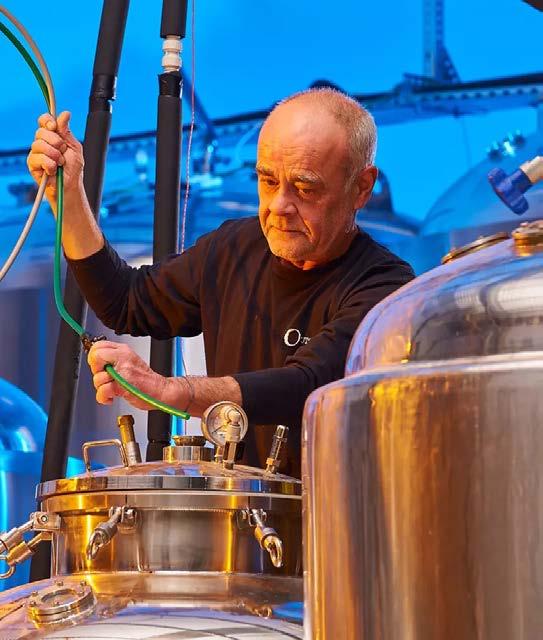
Atlas Copco’s CO2 recovery system can recover CO2 that would otherwise be lost and store it. Knowing that approximately 4kg of CO2 is produced per hectoliter beer and to carbonate the same amount of beer only 3kg of CO2 is needed, it shows that breweries are not only able to sustain their own need of carbon dioxide but additionally they can use it for other commercial goals. This means that on average the CO2-compressor will have paid back its investment in two years. CO2 can be used for carbonating drinks and more.
Atlas Copco offers compressed air systems, onsite nitrogen generators, process cooling, process filtration and CO₂ recovery solutions, all designed to minimise environmental impact while maintaining high-quality standards. Supported by an international service network, breweries of all sizes can benefit from local expertise and rapid assistance wherever they operate. The company have also developed a range of nitrogen solutions that make it easy for breweries of all sizes to reduce their dependence on carbon dioxide and improve their profitability. For example, their NGM+ is a compact, quiet and dependable nitrogen generator that maximises the robustness and simplicity of membrane technology.
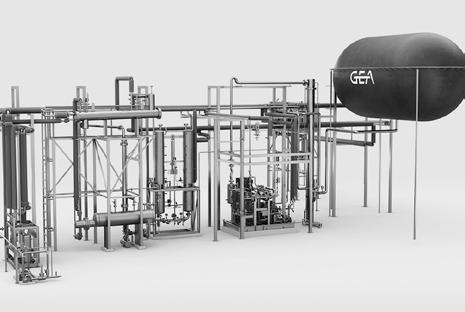
GEA has decades of experience configuring endto-end brewery solutions as well as individual plants and components, so we really do have detailed knowledge of each stage in your processes, including those upstream and downstream of CO2 recovery. We use all this combined knowledge and insight to design solutions that can optimize efficiency in both CO2 recovery and refrigeration, while keeping your capital investment as low as possible. Where possible our systems can also help to minimize the use of resources and recover energy. The waste heat from the CO2 recovery system’s compressor can be reused in other parts of the brewery, to help to reduce overall brewery energy costs. The GEA CO2 recovery technology is fully automated, which further helps to improve energy efficiency when compared with a manually controlled system. There is also less need for manual intervention, freeing up personnel for other tasks.
Dalum, which is based in Europe and the USA, describes its CO2 recovery plants as “big brewery” technology scaled down, designed, and priced for craft breweries. The plant promotes a circular utilization of the brewery’s CO2 by recovering the CO2 from fermentation. It is collected, purified, liquefied, stored, and ready to be used in all steps of beer production. As a complete CO2 recovery system, the plant reduces the brewery’s CO2 emission and gives a reliable and cost-efficient supply of CO2 –making your brewery more suited for the future. We estimate that for every kg of CO2 recovered, 2 are saved from not sourcing. The plants are available in 4 different sizes covering capacities from 1,000 hL/y to 100,000 hL/y. At Dalum Beverage Equipment, they are proud to meet the growing demand and need for craft breweries to access affordable and advanced technology. They manufactures advanced and affordable, ressource and cost-saving process equipment for craft breweries and beverage manufactures to become self sufficient with CO2, and become more sustainable.
Once upon a time, buying CO₂ was cheap, easy, and reliable. Not anymore. Supply chains are unpredictable, prices are on the rise, and more producers are focusing on reducing their carbon footprint. That’s why SSV LTD teamed up with CO₂ recovery specialists Hypro — to help brewers and manufacturers take control of their CO₂ supply and make their operations more sustainable. The HyCrC range is the result of that partnership. Designed with the craft sector in mind, these systems are compact and efficient and produce food-grade CO₂ at over 99.998% purity. Even better, they’re built with energysaving features to help cut both your emissions and your overheads. Whether you’re recovering 6kg or 10,000kg per hour, they provide a complete turnkey service — including system supply, installation, integration, commissioning, and ongoing support.
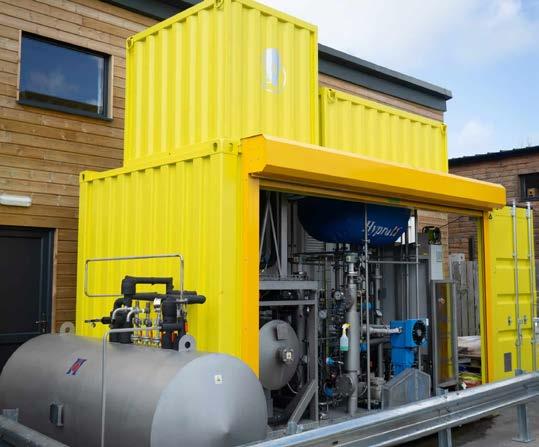
As one of the world’s most widely consumed beverages, beer relies heavily on packaging for protection, branding, and distribution. From bottles and cans to labels, cartons, and multipacks, the scale of beer packaging means that even small sustainability improvements can have a large environmental impact.
But where do we start and how can breweries affect a change? Traditional packaging can involve virgin plastics, energy-intensive materials, and printing processes that use solvents and chemicals. By adopting recycled or renewable materials, water-based or lowVOC inks, and energy-efficient printing methods, breweries can significantly reduce carbon emissions, waste, and pollution.
Many beer producers also depend on natural resources such as clean water and agricultural ingredients, so protecting the environment directly supports the long-term health of their own supply chains.
Consumer expectation is another major driver. Beer drinkers, particularly younger demographics, are increasingly preferring brands that demonstrate authentic sustainability commitments. Packaging is a visible and tangible way to communicate these values. Recyclable cans, refillable bottles, compostable carriers, or clearly labeled sustainability credentials can influence buying decisions and build brand loyalty. In a crowded and competitive beer market,
sustainable packaging can help a brand stand out on the shelf.
There are also regulatory and financial considerations. Packaging waste regulations, deposit return schemes, and extended producer responsibility laws are becoming more common. Breweries that proactively invest in sustainable print and packaging are better positioned to comply with current and future rules, avoiding penalties and costly redesigns. At the same time, lightweighting, material reduction, and efficient print runs can lower shipping costs and reduce material spend over time.
Finally, sustainability supports brand story and community connection. Many breweries emphasize craftsmanship, local sourcing, and connection to place. Sustainable packaging aligns naturally with these values and strengthens credibility. It shows that the producer cares not only about great beer, but also about the wider impact of their business.
For Richard Goodridge, Head of Design, at LT Print Group, he says it’s important to do the right thing and not the loud thing. He explains that sustainability has become one of the “loudest conversations in packaging”. Claims are bold, language is big, and pressure to be seen as “green” is everywhere. For breweries, this can be overwhelming. When every supplier, material and process carries a sustainability claim, it becomes harder to see which actions genuinely make a difference. “There is another way to approach
sustainability. A quieter one. One that focuses less on performance and more on practice. Doing the right thing is often less about dramatic change and more about making careful decisions, consistently, across everything that supports your product. In many cases, the most meaningful improvements come from the operational details that rarely make headlines.”
Waste usually begins long before anything is printed, packed or delivered. It starts with over-ordering, unclear artwork, last-minute changes and poor forecasting, he explains. These issues are rarely visible to customers, but they carry a real environmental cost.
Better planning is one of the simplest and most effective ways to reduce impact. Ordering closer to real demand means fewer obsolete labels, fewer unused keg collars, and fewer boxes that never leave storage. It also means less energy spent producing materials that will never be used.
For breweries, this matters more than ever. according to Goodridge. Ranges are expanding, seasonal releases are frequent, and collaborations move quickly. Traditional long print runs can struggle to keep up. Shorter, more agile print runs allow breweries to respond to change without building surplus into the system. Less surplus means less waste, fewer write-offs and fewer materials sent to landfill. This approach may not look impressive on paper, but it works.
Short-run printing is often discussed
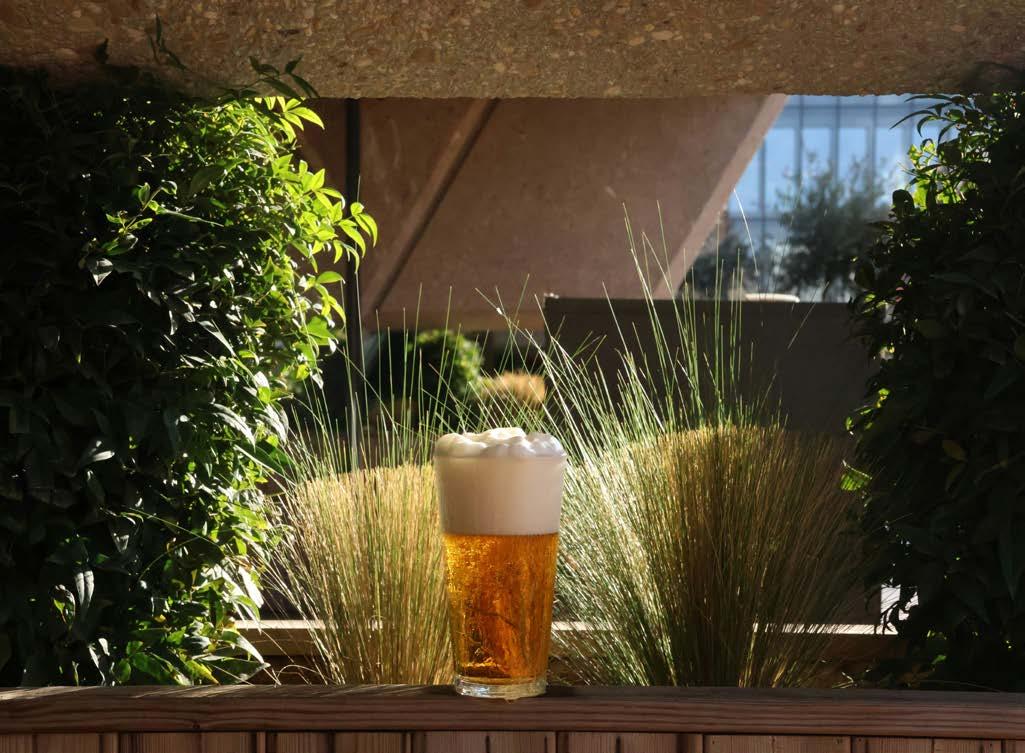
in terms of flexibility and creativity, but it also plays an important role in sustainability. When volumes match actual demand, waste reduces naturally.
Short-run printing supports seasonal and limited releases without excess stock; updates to branding or compliance without discarding old materials; tighter control of inventory and storage; quicker correction when artwork or information changes
“The environmental benefit here is cumulative. Each decision may feel small, but over time the reduction in waste, transport and reprints becomes significant,” he says.
According to Goodridge, it’s also important to choose materials with care. Sustainable packaging is not just about what looks good on paper. It’s about how materials behave in the real world. Paper weight, coatings, laminates and finishes all affect recyclability and longevity. Some combinations make recycling harder, even if the base material
is technically recyclable. Others perform better over time, reducing the need for reprints because they last longer in wet, high-handling environments like cellars, bars and festivals.
He asks: “Choosing materials carefully means asking practical questions such: How long does this need to last? How will it be handled? What conditions will it be exposed to? What happens to it after use? “The most responsible option is often the one that balances durability, simplicity and end-of-life recovery. It is rarely the option with the loudest sustainability claim attached.”
Wayne Bridges is the director at Hillingdon Print and he says there has been a marked rise in demand for short-run custom labels, especially for seasonal beers and small-batch releases. “A lot of brewers are changing up their ranges more frequently, so having the flexibility to print smaller quantities without compromising on quality has been really helpful for them,” he explains.
“On the packaging side, branded shipper boxes and premium-finish labels have been really popular too, particularly for special editions where producers want something that feels more crafted and eye-catching.”
Bridges also notes that sustainability continues to be a major focus — with more breweries asking for eco-friendly papers, recyclable materials, and options that help reduce plastic use. He says:
“At the same time, there’s been growing interest in higher-end finishes such as foiling, spot UV and soft-touch laminates. Even as people move toward greener materials, they still want that elevated look for limited runs or collaboration projects.”
And looking ahead this year, the company is expanding its offering in a few areas. They are increasing their flexibility around small-run label production, which has been especially useful for breweries experimenting with new recipes. “We’ve also improved
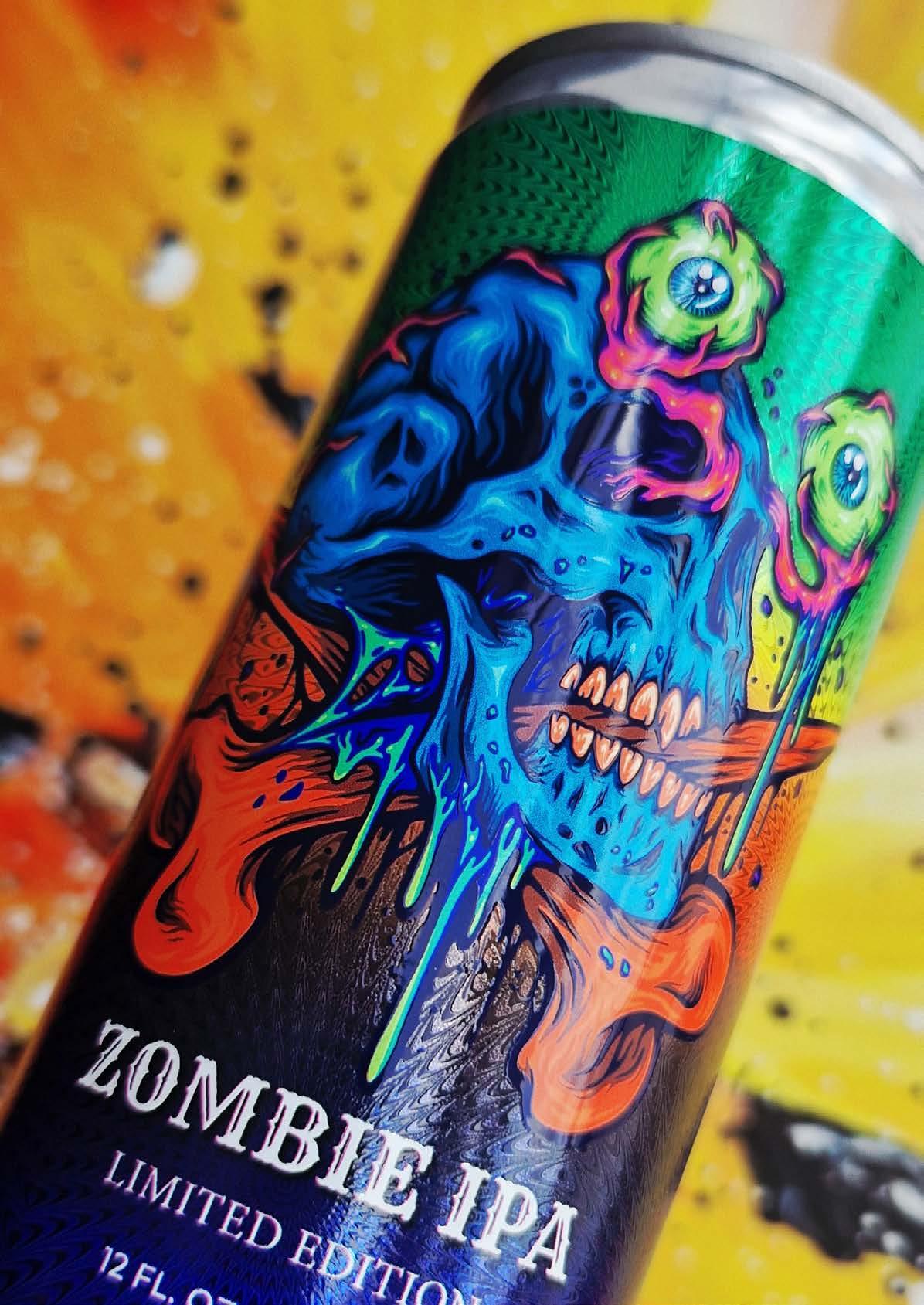
our artwork proofing workflow to make approvals faster for teams working to tight deadlines,” he says. “Through our premium suppliers we now have access to some new speciality options like white ink and enhanced finishing choices, and we’re also developing more integrated print-and-fulfilment solutions so breweries can manage labels, packaging and dispatch through a single partner.”
At Leicester-based B S Labels, Scott Jennings says that when it comes to the labelling proposition, shelf appeal remains key. For labels destined for beer bottles and cans with customers innovating with novel shapes and textures.
“Whilst synthetic materials, including metallic substrates, remain the backbone of the brewery market’s pressuresensitive label requirements, we have seen an increase in customers moving from synthetic materials to uncoated materials (some paper-based and some non- paper-based, e.g. cotton fibre material) that give their brands a more rustic and heritage feel,” he notes. “Textured or “sandpaper” varnish remains a perennial favourite amongst those sticking with synthetic substrates.”
On a wider industry note, the label and print specialist says that with the implementation of the Deposit Return Scheme on the horizon, customers’ attention is increasingly focused on the circular economy, with a shift towards wash-off adhesives gaining momentum, which will allow for easy separation of the label from the container within the recycling stream.
“Currently, such materials carry a hefty MOQ from our suppliers which can be prohibitive for small to medium producers. The hope, however, is that these MOQs will begin to fall as the DRS deadline draws closer and these materials gain popularity,” he observes.
And looking forward, Jennings is enthused about the company’s recent acquisition of a high-speed PicoJet 1200 inkjet digital hybrid press that he expects to keep the firm at the forefront
of a market which demands highquality, vibrant print onto a multitude of substrates. He tells us: “Our suite of licensed Color-Logic design software allows us to create eye-catching metallic special effects – please see attached photos. We have also begun to offer printed pouches, though we have yet to come across a beer in a pouch, they are gaining traction in the wine and spirits market.”
In Tamworth, KEP Print Group offers highquality litho, digital, and screen printing. Matt Gale, who is a senior account manager at the Staffordshire business says they are seeing a “significant move toward high-tactility labels”.
“Brewers are increasingly looking for ways to make their cans and bottles stand out on a crowded shelf, so textured papers and “spot UV” finishes that catch the light are very high in demand,” he explains. “Beyond the aesthetics, robust, moisture-resistant stocks remain a staple to ensure the branding holds up in coldchain environments.”
Gale also observes that green and sustainable packaging is no longer a “nice to have” instead being viewed a primary requirement.
He adds: “We’ve seen a massive uptick in requests for FSC-certified stocks and labels made from recycled content (like grape waste or citrus by-products). Additionally, there’s a growing trend toward “premiumisation” through embellishments like cold foiling and intricate die-cutting, allowing craft brands to compete with high-end spirits in terms of shelf presence.
“Brand identity can get diluted when your labels, POS, and packaging are coming from three different places. We’ve unified the process. Whether it’s roll-fed labels, FSDU’s or large-scale litho POS run, our in-house team handles the design, prototyping, and production in one place to ensure total consistency.”
But in an age of informed and educated consumers, LT Print Group’s Goodridge argues that it’s important to be careful
with the language. “Greenwashing does not always come from bad intent. More often, it comes from pressure. Pressure to say something, to demonstrate progress, or to keep up with competitors who are making bold claims. Transparency is key to earning trust. There is nothing wrong with saying,
“We are improving, step by step.” There is nothing wrong with admitting that tradeoffs exist, or that some decisions involve compromise.”
He concludes: “In printing, progress often comes from experience rather than experimentation. Understanding how materials behave, how processes interact and where waste is created allows for steady improvement. Sustainability does not need a spotlight to be effective. It needs consistency, care and a willingness to focus on what actually works.
“In the end, sustainability is not about how it sounds. It is about how it works. Doing the right thing, quietly, consistently and with care. That is what lasts.”
Sustainability has become one of the loudest conversations in packaging. Claims are bold, language is big, and pressure to be seen as “green” is everywhere,” Richard Goodridge LT Print Group
Vale Labels print high quality labels for leading brands across the UK. They use the latest print technology to help these customers stand out and work closely with their teams to ensure they get the best value and finish on every order. Their team use leading Hewlett Packard digital print technology to manufacture labels at competitive prices. They also offer luxury finishes to enhance the look and feel of your labels, including foiling, embossing and silver inks. These unique finishes can be applied to their range of materials which work in industrial, retail and domestic conditions. Whatever the finish, you can rest assured that with Somerset-based Vale Labels, your brewery will get a high quality label that will help your business to grow.
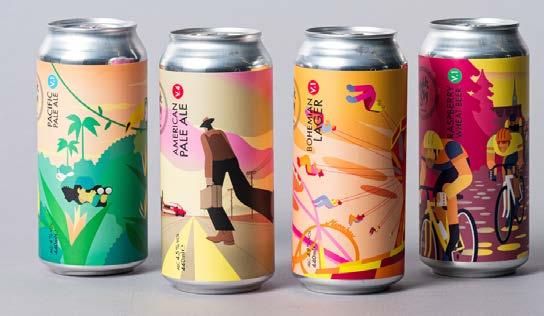
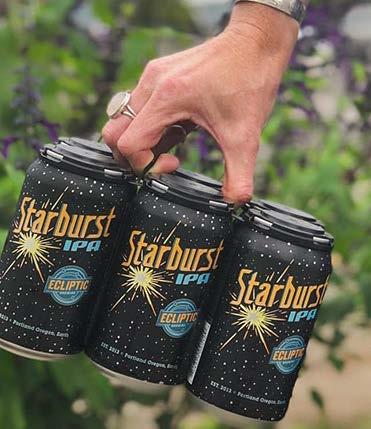
PakTech is a designer and manufacturer of 100% recyclable injection molded handles made from 100% recycled HDPE for the food, beverage, and consumer goods industries. Founded in 1991, PakTech is an industry leader in using recycled HDPE plastic to create 100% recyclable packaging handles and automated application equipment. Headquartered in Eugene, Oregon, PakTech is a full-service company that specializes in creating injection molded handles for multi-packing products. PakTech makes it easy for consumers to grab, carry, and release multiple products using a simple, minimal, 100% recyclable handle.
Made from 100% recycled plastic waste and 100% recyclable, PakTech handles help brands and businesses adopt sustainable secondary packaging without compromising on practical needs. Their handle applicators help businesses that require large quantities of PakTech handles to be applied to products at high speed. They can be built to fit any line specifications requirements. Sustainability truly underpins the whole production cycle of PakTech solutions. Their packaging handles can help you meet your sustainability ambitions by transitioning from a linear to circular model.
LT Print Group take their responsibility to the environment very seriously. Their ISO 14001 Certification means you can rely on them to provide the highest level of environmental care. They make sure their suppliers have sound green policies in place and always use FSC (Forest Stewardship Council) certified paper wherever possible. They constantly invest in their kit and machinery, so that their products are as environmentally responsible as possible, reducing waste and minimising their energy consumption. Their waste is minimal, and – of that – 100% is recycled, including paper, used printing plates, cardboard and polythene. With over 50 years of industry experience, LT Print Group is a trusted provider of high-quality, cost-effective design and print solutions for breweries across the UK. This includes a strong and growing client base including Floc. Brewery, Beavertown, and The Five Points Brewing Company,

B S Labels Limited are a professional and experienced commercial manufacturer of bespoke self-adhesive labels, both printed and plain, offering a wide range of solutions for all industry sectors. With options for special finishes such as foil, embossing, Braille, variable data, and more. We can also provide plain and thermal labels, and ribbons for your overprint machinery. B S Labels Limited adhere to a gold standard quality management system, which means we follow the highest levels of hygiene, safety, and quality in the industry. Make your designs stand out from the crowd with foil stamping. We offer both hot and cold foil embellishments depending on your requirements, application and budget. Choose from hundreds of colours, including holographic patterns, sourced from the experts in decorative finishing. We only use the highest quality foils sourced from our supply partner, Leonhard Kurz. Your labels will also really grab your customer’s attention with our raised, tactile or spot UV varnishes. Define different areas of your designs with contrasting varnishes to draw in and focus attention.
The brewing sector is one of the UK’s most established and diverse manufacturing markets. From multinational producers to regional cask brewers, the need for safe, hygienic, and traceable packaging and dispensing components remains constant.
UB Plastics work with breweries of all sizes, from long-standing household names to new craft entrants, supplying core packaging components and helping them streamline operations, reduce waste, and meet compliance needs. Their products are used daily in kegging, cask conditioning, storage and distribution. UB Plastics manufactures a wide range of injection moulded components specifically for use in brewing, including: tamper evident caps, shives, keystones and keystone bungs made from 100% recycled material.
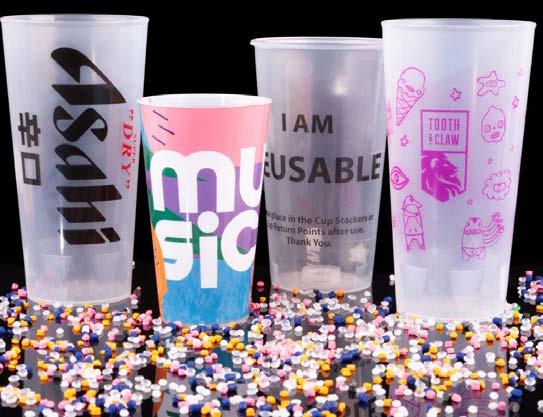

+44 (0) 1733 834264
+44 (0) 1733 667052
martin@premiummachinerygroup.co.uk www.premiummachinerygroup.com/contact-pmg-uk

As breweries grow, the systems that once held everything together can quickly become the thing that slows them down.
Separate platforms for sales, stock, reporting and finance often work well enough in the early years, but over time they introduce additional costs, duplication and risk.
For Siren Craft Brew, that tipping point came when day-to-day operations were being managed across multiple tools, none of which were properly connected. With online sales increasing and a move to Shopify on the horizon, the brewery needed a clearer, more reliable view of how beer was moving through the business. Finding a single platform that could bring those strands together became a priority. That search ultimately led Siren to Breww, consolidating sales, stock, production and reporting into one system.
Before making the change, Siren was running three separate systems to manage different parts of the business. “We actually had three different systems,” says Darron Anley, Founder of Siren Craft Brew. “We had a CRM separate to Merlin at the time, and we had reporting software sitting on top. All three were really expensive.”
The lack of integration between systems was already creating friction. However it was something that became more pressing as Siren prepared to move its webshop onto Shopify. Ensuring the e-commerce platform accurately reflected stock availability was critical.
One of the most significant risks Siren faced was the disconnect between online sales and the rest of the operation. “The webshop was disassociated from the rest of the business,” says Anley. “If we weren’t on top of how products were selling, we could hit a situation where, if somebody sold enough cases over a weekend, we could be out of stock – and we don’t want that.”
By linking Shopify directly into the same system used to manage stock and production, sales activity is now visible across the business. Inventory, production planning and order fulfilment move together, reducing the likelihood of overselling and last-minute intervention.
Duty returns had historically required a careful and time-intensive process, with multiple checks to ensure figures were
correct. “The big step up has been the reduction in time we have to put into duty returns,” says Anley. “With our old system we did a lot of double-checking to make sure everything was correct.”
By streamlining how duty is calculated and reported, Siren has been able to significantly reduce the time spent on monthly submissions. “Breww cuts out a whole load of time on duty work –probably saving 4 to 5 hours,” he adds.
As Siren’s customer base has grown, so too have expectations around traceability and compliance. Supplying Marks & Spencer brought these requirements into sharper focus.
“From a traceability point of view, Breww has been really useful,” says Anley. “We recently underwent a Marks & Spencer audit as we now supply them.”
The big step up has been the reduction in time we have to put into duty returns of what brewers are facing in 2026,” Darron Anley, Siren Craft Brew
While the brewery had systems in place previously, demonstrating traceability is now far simpler. “Although we could do that before because we tracked inputs from suppliers and outputs, it is 100% easier on Breww,” he explains. “We didn’t have to build anything complex – we could demonstrate the capability quickly. It’s simple: someone can run the query and press a button.”
Bringing systems together has also enabled Siren to take a more structured approach to reporting and commercial decision-making. “All the data is in one place and reporting is straightforward,” says Anley. “I’ve built a system to track our deals and have brought data into Power BI.”
That work is feeding into longer-term analysis. “We’re close to finishing a permanent line database tracker that will show, month by month, whether customers are meeting their contract agreements,” he adds. “All the data is there, and we’re starting to make much better decisions based on it.”
According to Breww, the platform has also helped Siren achieve a clearer view of stock valuation, particularly around beer still in production. “Breww helps us with a much tighter stock valuation,” Anley explains. “Previously that was a challenge – especially valuing stock in production versus packaged stock that hasn’t gone out.”
Having clearer structure and visibility has improved accuracy overall. One of the most noticeable changes has been how widely the system is now used across the team. “There’s now a lot more opportunity for everyone to interact with the system, which is excellent,” says Anley (pictured right). “It divests some of the admin to the people actually doing the work, rather than having someone else key it in later.”
That shift has had a positive impact, particularly within the brewery. “People are using Breww in ways they never did before, even on the brewery side, and that’s been positive,” he says. “The general feeling is that people want to do more and help.”
Asked what advice he would give to other breweries considering a similar move to Breww, Anley is clear. “If another brewery asked me, I’d say absolutely go for it.”
For Berskhire-based Siren, bringing systems together has been less about rapid change and more about building confidence in day-to-day operations, from stock and duty through to sales and reporting.
With clearer visibility across the business, the brewery is now better placed to manage growth without adding unnecessary complexity, allowing the team to focus on brewing, selling and planning for what comes next.
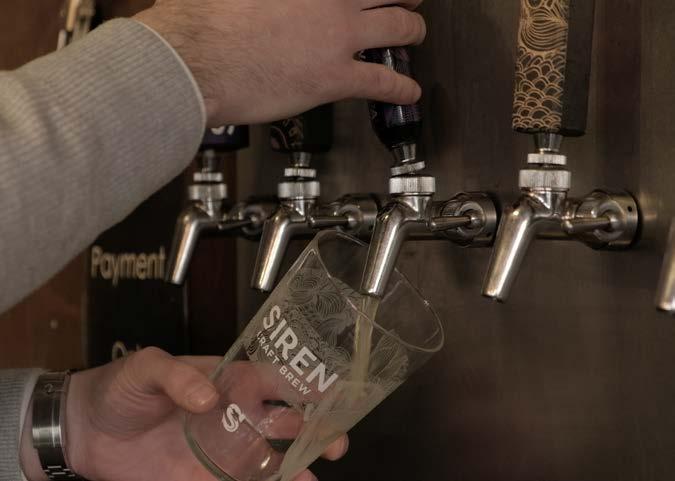
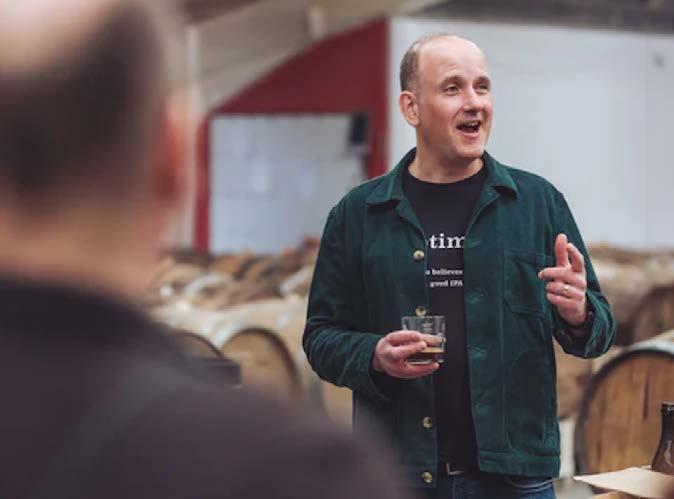


THE PACKAGING AND PALLETISING STAGE OF A BREWERY’S BUSINESS IS A CRITICAL COMPONENT THAT DIRECTLY INFLUENCES PRODUCT QUALITY, AND MUCH MORE, TOO. HERE PENTALINE EXPLAIN HOW BREWERIES CAN RUN AN EFFICIENT AND EFFECTIVE PALLETISING OPERATION.
Consistency is essential when pallets leave the brewery building. Uniform, stable pallets reduce the risk of broken bottles or dented cans during transport. Labour savings are equally important: operators are no longer required to perform physically demanding palletising tasks and can focus on higher-value activities such as brewing, quality control, or line supervision.
In addition to standalone palletising solutions, we offer fully integrated endof-line systems. The customer defines the scope, and our company supports the entire process—from commercial evaluation and pre-engineering through to implementation.
At Pentaline, a Portuguese company specializing in turnkey packaging lines, their systems addresses these challenges with the EvoPal Pulsus and EvoPal Stratum. The former is a compact, flexible robotic palletiser designed to eliminate bottlenecks caused by manual palletising. It delivers precise, repeatable stacking that protects bottles, cans, boxes, and trays from damage while ensuring stable, uniform pallets. This system is capable of handling multiple packaging formats using the same gripper, without the need for mechanical changeovers. Format changes are automatic, reducing downtime and operator intervention.
For higher-volume operations, EvoPal Stratum is designed for high-speed,
high-capacity palletising, particularly suited to single, high-output production lines. Stratum places one full layer per cycle, also operating at up to 5 cycles per minute, which can translate into up to 180 packs per minute in a 3×2 configuration with standard 0.33 L cans, and around 27.3 pallets per hour with 11 layers.
While this system is primarily requested for high-cadence, single-line production, it can handle up to two palletising stations simultaneously in specific layouts, with installations already in operation.
Small and medium-sized breweries face a number of real production challenges so when it comes to investing, it’s important to consider flexibility, space optimisation, and operational reliability. We developed the Pulsus to address such challenges, that include frequent product and format changes. The system can automatically handle multiple packaging formats without manual changeovers.
Depending on configuration and layout, it can be equipped with one to four picking stations, allowing it to manage up to four low- or medium-capacity production lines simultaneously. This is enabled by a specially designed gripper capable of handling different packaging types without replacement.
The system is also compact while the modular design fits well into smaller packaging halls, while robotic palletising ensures uniform, stable pallets every
time. The result? Fewer bottlenecks, less product damage, and consistent pallet quality.
High-availability, efficient end-of-line systems are essential for maintaining production flow. By over-sizing these systems relative to standard speeds, we prevent them from ever becoming bottlenecks and allow the line to ‘recover’ quickly after a pause. We protect your most critical machinery. To maximize efficiency, we use precisionengineered conveyors and accumulators that buffer important equipment from downstream stoppages. Pentaline ensures the seamless integration of every component for peak performance. Our palletizers are built for high output— often sized 30-40% above the standard line speed—ensuring the entire system stays ahead of the curve.
An integrated packaging operation is essential to achieving real efficiency across the brewery. Rinsers play a key role in this process by ensuring bottles and cans are clean and free from contaminants before filling, helping to protect product quality and downstream equipment.
When all elements are designed and integrated as one system, handling is reduced, changeovers are faster, and throughput becomes more predictable— transforming packaging into a reliable and efficient final stage of production.
Top and centre - a recent install at Portugal’s largest beer manufacturer
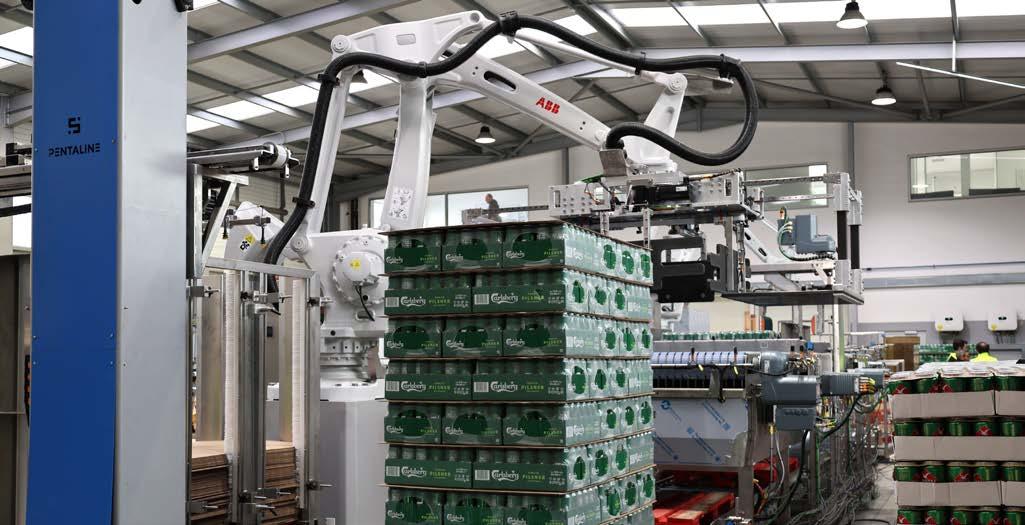
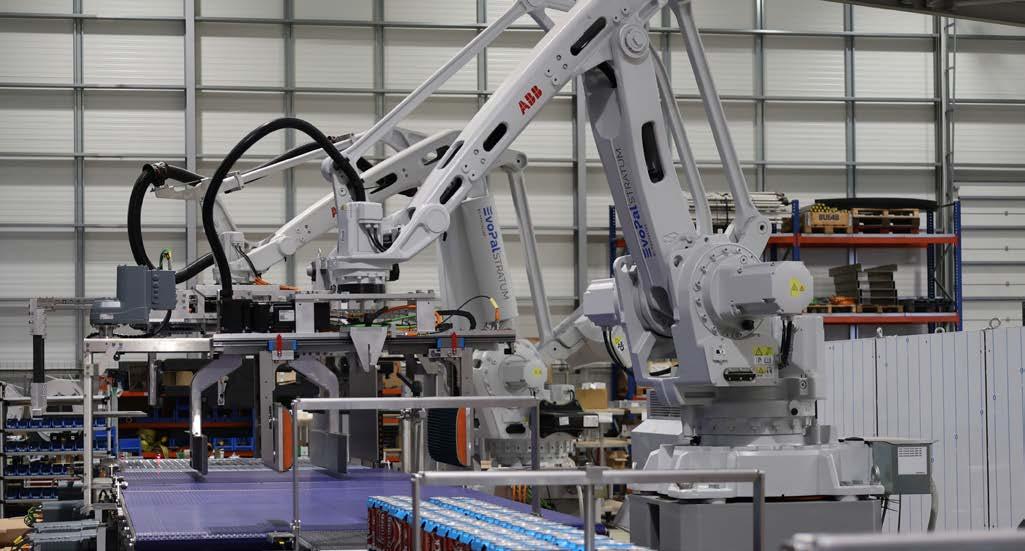
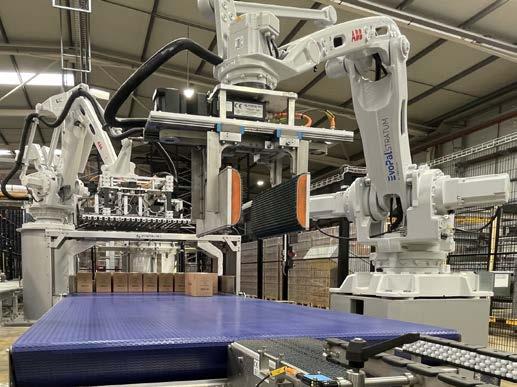
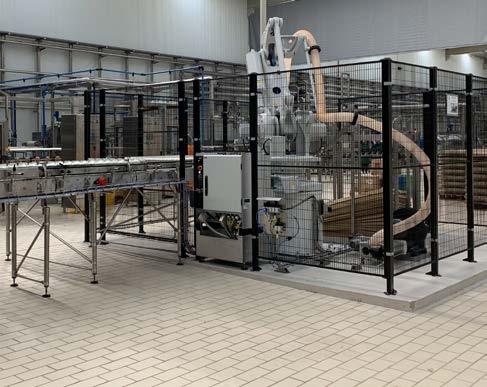


TRAVELLING TO ROMA FOR ALMOST 40 YEARS PAUL DAVIES SAYS ITS EASY TO REMARK THAT NOTHING CHANGES. SUPERFICIALLY IT CAN SEEM AS IF IT IS SUSPENDED IN TIME AS THE OLD MONUMENTS REMAIN. RESTAURANTS COME AND GO, SHOPS TOO. BUT A MAJOR CHANGE HAS BEEN THE EMERGENCE OF SPECIALIST BEER BARS AND BREWERIES
Roma, the ‘eternal city’. One of the most visited places in the world, and with good reason. An unrivalled history, monumental architecture, museums of every genre and more churches than you can shake a stick at. The weather’s better and the city has style. In spades. Even the street cleaners look sharp. Even the pet dogs. But then you get to the food… amazing delis, delicious regional dishes, Michelinstarred restaurants, Carbonara, Amatriciana, crisp Roman pizza, Osso Buco – I could go on. Amazing wine and wonderful cheese, you certainly shouldn’t go hungry in Roma. But did you know they have a burgeoning beer culture too?
Travelling to Roma for almost 40 years its easy to remark that nothing changes. Superficially it can seem as if it is suspended in time as the old monuments remain and the layout of the city has remained pretty consistent. Restaurants come and go, shops too, but a major change for me has been the emergence of specialist beer bars.
It all started when Manuele Colonna opened Ma Che Siete a Fà in Trastevere in 2001. The pre-eminent bar in Italy’s craft beer scene the pub features 16 draft taps and numerous bottles. You are as likely to find draft lambic, Bavarian rauchbier and UK bitter alongside the best craft beers from Italy. Such is his love for German beer, Manuele is also known as the Pope of Franconian beer!
Located behind Piazza Trilussa I first arrived at the bar, or stumbled across it in fact in 2005. It was a real breath of fresh as at the time every outlet in the city sold either Peroni or Morretti.
And this amazing bar has become a regular haunt ever since when we visit the city for the biennial Italy v Wales rugby match.
Trastevere has become a true destination for quality beer and on some occasions my friends and I have declined to venture out of the area when sampling the local offerings. If you head from Ma Che to
Viale di Trastevere and walk towards to the station you will eventually come to Treefolks. Bringing the charm of an English pub to the heart of Rome, the bar is known for its cozy wood and leather interior and brewery memorabilia. It features 12 beer engines pouring well-conditioned pints of quality ale – the foam is generous which always puts a smile on my face.
Additionally there is a range of keg fonts including a nitro option, a massive whisky list and British-inspired pub food. Regular beer tastings, live music and cultural events add to the atmosphere of this popular bar.
Carry on up Viale di Trastevere and as you come within site of the train station you arrive at Luppolo Station on the right hand side of the street, one of my favourite beer bars in Roma.
You’ll find a carefully curated range of the best Italian and international craft beers, served across 12 taps and 2 beer engines. They also offer natural wines and organic soft drinks, catering to every taste. For food try their house-made smash burgers, a local favourite. The bar was founded in 2015 on the back of their first bar Luppolo 12 (established in 2012) which can still be found in the lively university district of San Lorenzo.
About 1km west of Luppolo Station is Roberto’s Mad for Beer, a small UK football-themed pub with nine taps and lots of footie scarfs adorning the ceiling. If you head east instead toward Ostiense there are two further bars. Latta –Fermenti e Miscele has a range of beers but is directed mainly at the hard seltzer and cocktail crowd. It’s still a nice place to sit outside and grab a bite to eat. However, a more beer-focussed bar is nearby. Macche is the little brother of Ma Che Siete a Fà.
Clockwise from bottom left: Open Baladin, Roma’s outpost of the iconic brewery; Hopside in Ostiense that features 12 taps, Luppolo Station in Trastevere; Ma Che which is the pre-eminent bar in Italy’s craft beer scene; Treefolks which brings the charm of an English pub to the heart of Rome; Latta which offers beers but also cocktails and Ritual Lab, Ritual Lab based in Formello, north of Roma.
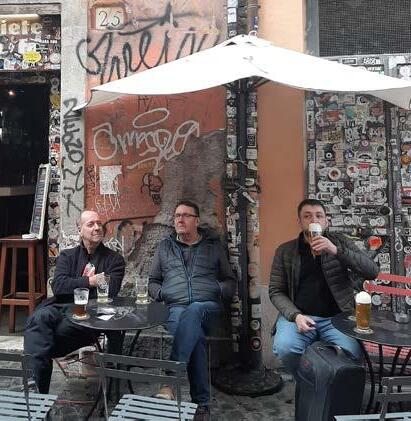
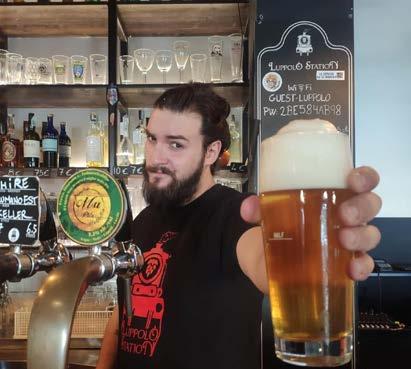
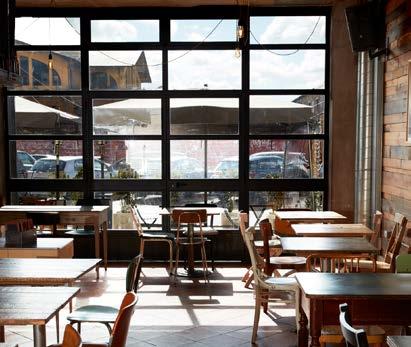
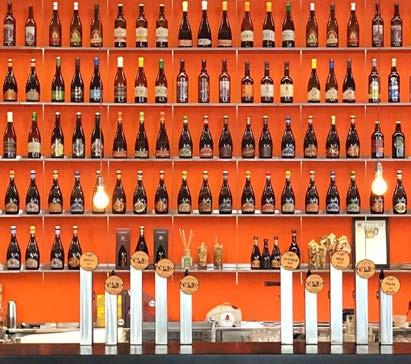
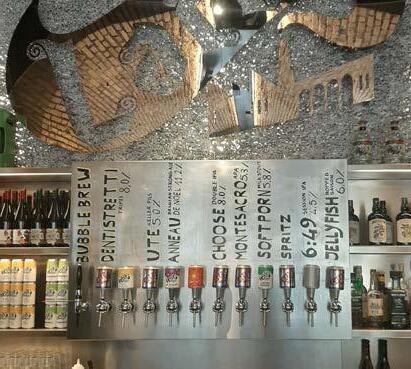
Across the bridge from Latta to Ostiense you will find Hopside, another burger bar with a decent beer offering of 12 taps. Opened in 2013 they also have a brewing lab on site where you can brew your own beer.
Nearby, according to Manuele is the best beer bar currently in Roma. Nettare was founded by Dario Balducci and Riccardo Lucci and offers a straight forward punk vibe with an amazing range of beers from across the world. This is the place to head to if you want to see what is trending in the beer world, listen to some great music or just hang with fellow beer enthusiasts.
Near Tiburtina is Pork ‘n’ Roll. Established in 2013 by Valentino Roccia, Pork’n’Roll Pub has become one of Rome’s most distinctive voices in the city’s craft beer scene. It was born from his passion for independent brewing and his desire to bring the flavours of his family’s farm to the capital.
The Roccia family’s agricultural roots run deep: their farm, established in the late 1970s by father Mario, is still run today by brothers Antonio, farmer and cattle breeder, and Gerardo, master butcher. Valentino began home-brewing during his university years, travelling across Europe and working in leading breweries and beer bars before finally shaping his own vision — a true public house where beer, food and rock music come together. Fresh pork meats and fine cured products from the Roccia family farm are at the heart of the menu, complemented by a careful selection of quality ingredients from other independent farmers.
Everything is served alongside an ever-changing lineup of craft beers from Italy and abroad, poured with the same attention to detail that defines every part of the experience.
In 2016, Valentino launched Old Copper, his brewing label dedicated to collaboration beers across Europe, using barley grown on the Roccia family farm.
Heading back into the centre of Roma and Campo de’ Fiori there are a couple of interesting places. Near Piazza Benedetto Cairoli is Open Baladin, Roma’s outpost of the iconic brewery.
Officially opened on September 23rd, 2009 in the very central Via degli Specchi in the Campo dei Fiori neighborhood, Open Baladin Roma is the forefather of the Open Baladin project.
It is called Open because it is a place for the free movement of people, beers, ideas and creativity.
To emphasise it being open to both Italian and foreign beers, the bar at Open Baladin Roma is placed in front of a large wall, decorated with hundreds of bottles of beer.
The red walls and the ivory tables create a warm contrast which, together with the Bailone style decorated panels, make this a perfect Baladin place.
Open Baladin Roma serves over 100 bottled beers from the best Italian brewers, forty draft Italian beers representing the best that Italian craft brewers have to offer, plus a selection of international brews.
Via dei Balestrari, which connects Campo de’ Fiori with Piazza della Quercia, owes its name to crossbow makers.
An entire street is dedicated to the manufacture of crossbows, among the
Trastevere has become a true destination for quality beer and on occasions we’ve declined to leave the area,”
Paul Davies, AleHunters Brewery Tours
Hilltop Brewery creates range of UK, German, Belgian and US-inspired beers.
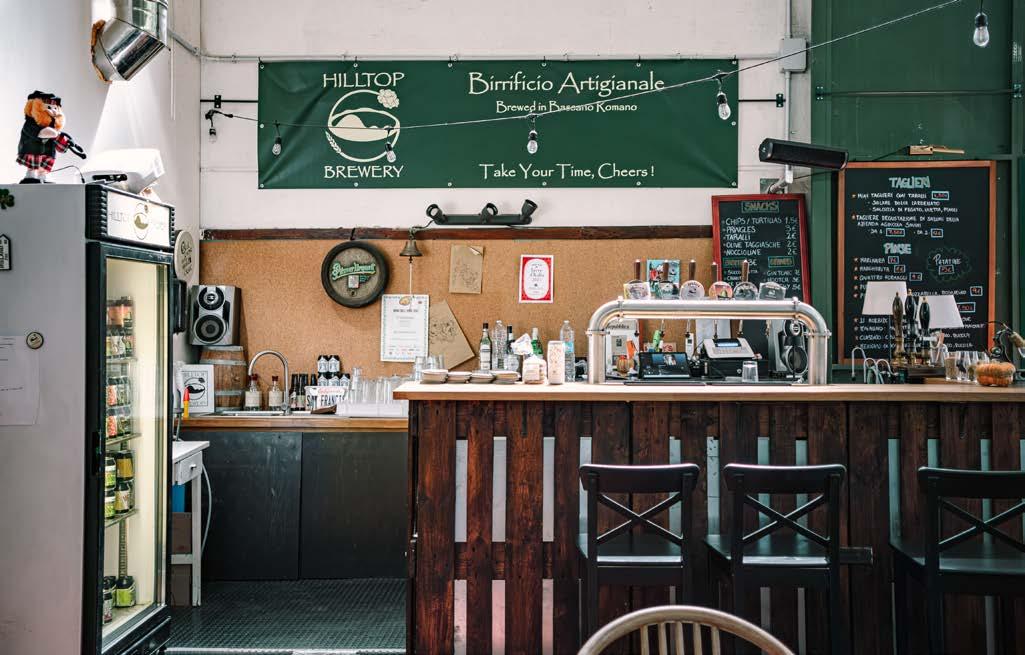
most lethal ranged weapons of the period: an art deeply linked to the history of Rome in the late Middle Ages and the Renaissance, often threatened by the French. Today, this street is home to OffLicense, a wine and beer shop run since 2016 by two passionate Roman drinkers, where you can find craft beer or natural wine, with a selection updated weekly. Off License is little larger than a living room, convivial, authentic, urban, underground.
The selection is varied: from sour beers to more contemporary IPAs to champagne, all strictly craft and natural from small local producers. They offer a selection of craft beers, more than 300 canned beers, specially Italian, and wines purchased directly from the farmers.
Across the Tiber and nestled beneath the walls of the Vatican is Be.Re. – another favourite Roman bar of mine. Since 2016 you can find the best Italian craft beer and also beers from the world over. This is an excellent spot to take a break when walking back from Stadio Olimpico. Alongside fantastic beer you can also grab a Trappizino, a sort of folded pizza
pocket. Simply delicious. Expect quiz nights, tap takeovers and beer engines dispensing that lovely foam.
IIf you’re still thirsty, Beer Time is situated on the Piazza dei Quiriti. This cosy bar with a sunny terrace has six taps, a couple of beer engines and an extensive range of Italian and international beers.
There are also some breweries both within the city and on the outskirts. Near the Laurentina metro station is Abbazia delle Tre Fontane, Italy’s first and only Trappist brewery. The Abbey began brewing its Tripel infused with eucalyptus leaves in the early 2000s, from an early recipe. The Abbey received Authentic Trappist Product status in 2015 and they now also brew four other beers: Blonde, Golden Ale, Dubbel and IPA. The latter two styles were a limited run.
Jungle Juice Brewing is an independent craft brewery born in the heart of Rome. Their journey began in 2014 as a beer firm, and by 2016 — fuelled by growing enthusiasm and recognition — they launched our own production under a renewed organisation: Umberto’s passion joined forces with Marco and Claudio’s
management skills and Emanuele’s creativity.
Their beers draw inspiration mainly from hop-forward American styles and classic Belgian traditions, while constantly exploring new, unconventional brewing approaches. Deeply committed to
In the city of Rome restaurants come and go. Shops do, too. But a major change for me has been the emergence of specialist beer bars,” Paul Davies, AleHunters Brewery Tours.
carefully selected raw materials and to meticulous attention at every stage of the brewing process, monitoring fermentation and maturation with precision. The result is a range of beers that express our dedication to quality and our passion for flavor. JJ Beer Bar is the brewery’s Tap Room. The nine taps rotate constantly and from the large window behind the counter, you can catch a glimpse of the production area and its machinery.
Ritual Lab are based in Formello, north of Roma. They have a number of taprooms in the city in Ostiense, Montesacro, Centocelle and a former newsstand on Ponte Milvio. Founded by father and son Roberto and Giovanni Faenza, one a lover of good food and wine and the other a sommelier. They fell in love with quality beer and started the brewery in 2015. Equally passionate about art, they commission artists to produce original artwork for each beer, telling the beer’s story and their project ‘Beer and Art’ stems from that.
Rebels Brewery, founded in 2016 is located South of Roma in a farmhouse on Via Ardeatina, just off the E80 that surrounds the city. The formerly abandoned farmhouse was completely renovated and the adjoining land put into use as a popular taproom, hosting DJ sets, parties and food trucks.
A true party brewery. Andrea Casini, Riccardo Di Profio, Raffaele Lucadamo, and Andrea Martorano create a range of US craft-inspired beers and Belgian classics. Experimentation is key with regular use of fruit and spices during production.
Eternal City Brewing is in the Southwest near Corviale and was established in 2013. Their taproom is open 7 days a week and pours from seven taps and a beer engine. Davide, Maurizio, and Giacomo created their first beer URBE, a 5% APA and steadily increased their range and reputation in the city. Tragically in 2015 Davide suffered a terrible accident. Enzo and Simone joined the team and together ECB dedicate their brewery efforts to their friend.
Hilltop Brewery is further away in Bassano Romano, Viterbo Province. Founded by Conor Gallagher Deeks and his family in 2014, creating a range of UK, German, Belgian and US-inspired beers. They soon won many accolades including ‘Emerging Brewery of the Year’. Experimentation is constant with unusual ingredients being used in production, reinterpreting traditional styles and creating interesting beers to encourage fans to experiment. I have to admit that I’m a fan of Barry’s Bitter.
So I’m not planning on returning to Roma until Spring 2027. Really looking forward to the food and checking out what else have developed within the beer scene. By then I may be looking forward to the rugby too…..



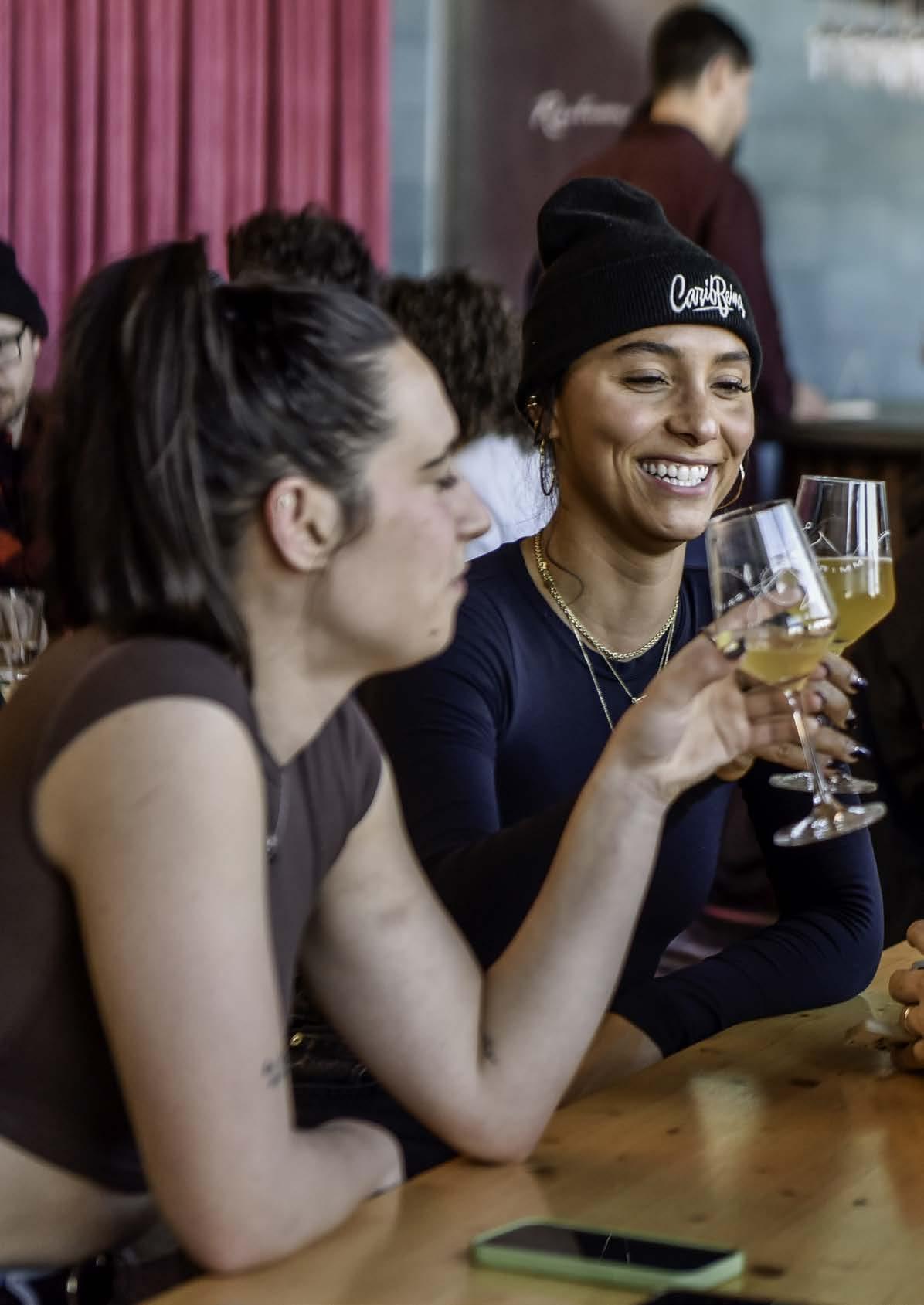
THE NORTH AMERICAN BEER SECTOR HAS EXPERIENCED GREAT CHANGE IN THE LAST 18 MONTHS. THERE HAVE BEEN BREWERY CLOSURES BUT A WEALTH OF OF NEW OPENINGS, TOO. DRAFT IS DOMINATING WHILE THE APPETITE FOR NO AND LOW CONTINUES AT PACE. NEW TAPROOMS ARE CATERING FOR LOCAL DEMAND WHILE THE DESIRE FOR HAZY, OFTEN HIGH ABV, IPAS ISN’T GOING AWAY ANYWHERE SOON.
PHOTO: BREWERS ASSOCIATION
In 2026 the craft beer landscape is one presenting challenges on both sides of the Atlantic. In the U.S., there are shifting consumer habits, coupled with retailer rationalisation, inflation-driven cost pressures, tariffs, and unprecedented levels of competition are creating tough trading conditions for craft beer.
This is according to the Brewers Association (BA), the not-for-profit trade association representing small and independent American craft brewers. But, as Lotte Peplow the Brewers Association’s American Craft Beer Ambassador for Europe explains, American craft brewers are nothing if not resilient and are stepping up to meet today’s challenges with adaptability and creativity.
It’s important firstly to look at American craft beer by the numbers. Craft beer production is estimated to be down 5% as measured by the Brewers Association Midyear survey (July 2025). Full production numbers for last year will be available this April but headwinds facing the industry a year ago have only strengthened so further contraction may be expected, she explains.
According to Peplow the number of small and independent breweries in operation in the U.S. in 2025 totalled 9,778, the second consecutive year that brewery closings outpaced openings (albeit by a relatively low percentage, 4.4%, of total operating breweries).
These breweries form part of a craft beer industry that supports more than 443,000 jobs nationwide, fostering local economies and creating opportunities, while craft beer’s contribution to the U.S. economy reached $72.5 billion, demonstrating its vital role in the broader beverage market.
These figures sit on a backdrop of broader industry financials. According to recent research, the North American beer market is expected to grow from USD 183.42 billion in 2025 to USD 192.65 billion in 2026 and is forecast to reach USD 246.23 billion by 2031 at 5.03% CAGR over 2026-2031.
North America Beer Market Size & Share Analysis - Growth Trends and Forecast (2026 - 2031) by Mordor Intelligence, explains that consumers are trading down in volume yet trading up in value as premium, low-alcohol, and nonalcoholic offerings build momentum. By category, standard accounted for 56.15% of the North American beer market share in 2025, while premium is set to expand at a 6.74% CAGR to 2031. Craft brewers, the company says, continue to influence flavour experimentation, while multinational groups accelerate portfolio rationalization to protect margins.
And according to CGA by NIQ data published in its US Craft Beer Report 2025 by NIQ showed that overall U.S. beer sales have softened, but draft remains a dominant force and one that accounts for more than 52% of on-premise volume. This is equivalent to holding a $21.8 billion share of the market. The company says craft beer leads on-premise sales, but “high-end, domestic super-premium, and non-alcoholic options” are gaining significant momentum.
Draft beer understandably remains a big draw at brewery taprooms. “As consumers increasingly seek meaningful opportunities to connect, craft breweries are expanding their role as community “third spaces.” Whether through more substantial food offerings, an expanded range of beverage types, or more targeted programming, breweries are diversifying their revenue streams by appealing to specific consumer groups,” explains Lotte Peplow.
And its in these environments that consumers are enjoying beers at both ends of the spectrum. Non-alc continues to grow apace. “While beer has been down low single digits, non-alc has experienced double digit growth in both dollar sales and volume,” says Peplow. “Although the sector accounted for just 2.5% of beer sales by volume in 2025, this share has more than doubled since 2021.
“In addition to non-alc’s continued growth streak, there has also been significant expansion in the low- to mid-strength segments (typically defined as <4.0% ABV). Brewers are seeking to capture more occasions that call for great flavour without the buzz.”
The fact that the top two selling industry skus are a low-ABV, low-cal beer on one end and a 9%
However, the haze craze lives on. “Juicy/hazy IPAs continue to dominate the American craft beer landscape, according to Peplow. “Originating in Vermont in the early 2000s, the style exploded in popularity by the mid- 2010s, capturing beer drinkers’ interest with its unfiltered appearance, fruit-forward character, and ease of drinking.
“The Brewers Association recognised the Juicy/Hazy IPA style as an official category in 2018, and it has since become the most competitive category at both the GABF competition and the World Beer Cup. Flagship examples like Sierra Nevada Brewing Co’s Hazy Little Thing was launched in 2018 and is now the best-selling juicy/hazy IPA in the USA and widely available around the world.”
Another revered and highly-regarded North American brewery is the Russian River Brewing Company. The California business, founded by Natalie and Vinnie
Cilurzo is known for world-class beers like Blind Pig, Pliny The Elder and Pliny The Younger, among others.
The brewery has also won a wealth of awards from the Great American Beer Festival and World Beer Cup. Vinnie and the brewery were twice named “Brewery and Brewmaster of the Year” at both the GABF and World Beer Cup. In 2007, while Vinnie was also awarded the “Russell Scherrer Award for Innovation in Brewing”. The business has also previously been the recipient of the “Brewers Association Recognition Award”. In a changing and evolving beer landscape, Vinnie says the business chooses to “stay in our lane and know what works for us”.
“For RRBC, that is IPA, Lagers, and wild/ sour/funky beer. With this in mind, we may brew some one-off beers at our pubs but we don’t go making things like seltzer or cider that really aren’t in our wheelhouse,” he tells us. “We are also brand builders, all the work we have done over the years both to build our beer brands as well as to continue to better each recipe from a quality and aroma / flavour standpoint pays off when the market is a little unsettled like it is now. Thankfully, we have a loyal fan base that continues to support RRBC and has allowed us to keep growing a little each year.”
From an investment standpoint, Cilurzo and the team marked 2025 with a trio of CO₂ recovery plants becoming operational. Working with Dalum Beverage Equipment, this configuration allows the brewery to capture and reuse CO₂ generated during fermentation, dramatically reducing the need for purchased CO₂. “That is now supplying not only our Windsor, CA production brewery with all its CO2 needs but also all our CO2 needs for our Santa Rosa brewery,” Cilurzo adds.
At Lallemand Brewing, which provides fermentation ingredients, process aids, and enzymes, Andy Diacetis is the regional sales manager for North America. As a figure with 25 years experience in the brewing industry, he is observing a “new normal” in the
US brewing sector. He explains: “The explosive growth of craft brewing in the US over the past several decades is well documented and when we focus on the last 10 years, some of the numbers really are jaw dropping. According to Brewers Association data, the total number of craft breweries from 2015 to 2024 grew from 4800 to 9800. In a market that already felt well-established, there was over 100% growth in a decade. That’s a lot of breweries.
“A reset was bound to happen, and a confluence of factors have come together to expedite this. Economic uncertainty, changes in generational drinking behaviors and the reality of food and beverage consumption post-Covid are all very real headwinds to breweries in 2026. In normal times, any one of these three factors would lead to a slight downturn. All three of them happening simultaneously has led to the very real downturn we are experiencing today. “In 2024, the following categories had more closures than openings: craft breweries, brewpubs, microbreweries and taprooms. It was the first time since the BA has been tracking these numbers that all four categories experienced this in the same year.”
Per the Brewing Association’s statistics, overall beer production in the US declined by 1.2% in 2024 and craft declined by 3.9%. Interestingly, Diacetis says, import beer increased by 3.9% for this same time period. Mexican beer imports are the primary driver here, led by Modelo which is now the number two brand in the US, followed by brands like Corona and Dos Equis which are also regularly in the top-20.
He adds: “Michelob Ultra is the number one beer sold in America (just recently overtaking Modelo for the top spot).
The number one craft brand is Voodoo Ranger from New Belgium Brewing.
“The fact that the top two selling skus in the industry are a low-ABV, low-calorie beer on one end and a 9% ABV hazy IPA on the other is a pretty good microcosm of what brewers are facing in 2026.
“The duality of consumers wanting very low alcohol beers or very high alcohol
As consumers increasingly seek meaningful opportunities to connect, craft breweries are expanding their role as community ‘third spaces’,” Lotte Peplow, Brewers Association
beers makes for interesting business strategies for brewers. For what it’s worth, the wine industry is experiencing something very similar.”
For Diacetis, the biggest bright spot is that non-alcoholic beer production is seeing incredible growth. “NA beer has seen double-digit growth in both sales and volume for four straight years. Innovative new products from suppliers have hit the market making NA beer production far more accessible and the quality has followed suit. And the best news here?
“According to a poll from the Brewers Association (conducted by Harris), traditional beer consumers are not turning their backs on regular craft beer and only drinking NA beer. NA beer is merely supplementing their traditional consumption. 14% of consumers are drinking less beer because they are consuming more NA beer instead.”
“Alternative beverages are also filling tanks. Hard Italian soda, anyone? THC and CBD beverages are finding a place in people’s refrigerators and even in taprooms across the country. The more diversified a brewery is, the more open to innovation and thinking outside the box, the better chances they have of riding
Russian River Brewing Company: “Our focus are IPAs, Lagers, and wild/sour/funky beer”
out the uncertainty of today,” he notes. And with a quarter of a century in the brewing industry, Diacetis says much has changed since starting out. “At that time things were pretty straightforward. Breweries made beer. Wineries made wine. Distilleries made spirits. The beverage industry now is virtually unrecognizable from a quarter century ago with all kinds of gray area,” he ponders.
“Beverage producers all over the country are scrambling to figure out what the consumer wants to drink. Breweries are making spirits-based RTDs, wineries are making cider, cideries are making beverages with THC.
“Despite all the uncertainty, one fact that was true then remains true now and will forever remain true. If you want to survive in the beverage industry, whatever it is you make, it better taste good. Resting on your laurels and blindly continuing to do something the way you always have because it worked in the past will not help you today. A saying I regularly use is
We may brew some one-off beers at our pubs but we don’t go making things like seltzer or cider that really aren’t in our wheelhouse,” Vinnie Cilurzo Russian, River Brewing Company
‘Innovate or die’. Is that hyperbolic? “Yes. Is it true from a beverage business perspective? Also yes. Beer as a beverage has been around for thousands of years. A several-year downturn is clearly not going to destroy the beverage. Brewers have seen bumps in the road in the past and the industry always finds new ways to innovate, capture a new audience and find relevance in American culture. Here’s hoping that we can determine what this new normal looks like and continue making beverages that create joy and bring people together.”
References:
- www.brewersassociation.org/statistics-and-data/national-beer-stats/ - Insights & Analysis -The State of Non-Alc - www.forbes.com/sites/dontse/2025/10/16/how-michelob-ultrabecame-the-best-selling-beer-in-america/?utm_source=chatgpt.com - www.forbes.com/sites/ericaduecy/2025/12/30/where-wine-won-in-2025--and-what-the-growth-signals-are-telling-us/ - www.winebusiness.com/news/article/299024
























Ludlow Brewing Co. commissioned their first solar PV system in 2021. A year later they doubled the size of it. And then they doubled it again.
At CleanEarth we’ve been working with them since their first foray into solar generation, and have brought their installed capacity up to 120 kW. They are now generating their own clean electricity at less than 4p per kWh. That’s a small fraction of what they were paying for power from the grid. With cost savings like that – and with more than 20 tonnes of carbon kept out of the atmosphere every year – it’s no surprise they keep coming back for more.





“Solar power is the cornerstone of our sustainability strategy. CleanEarth have been instrumental in future-proofing the brewery’s energy infrastructure, to help us create long-term operational e iciency and reduce emissions and costs.”
Gary
Director,
Here are some of the other breweries we’ve worked with:
• Goodh Brewing Co. • Keltek Brewery
• Le Handed Giant
• Moor Beer Co.
• Verdant Brewing Co.
• Wiper & True
FOR BRIAN DICKSON, BREWING RUNS IN THE FAMILY. BUT HE WASN’T ALWAYS CONVINCED. HOWEVER HIS STUDIES AT UNIVERSITY IN HUDDERSFIELD AND WORKING AT ITS FAMOUS BEER DESTINATION - THE GROVE - WOULD SOON OPEN HIS EYES TO THIS WONDERWFUL WORLD. FASTFORWARD AND HE’S NOW THE TECHNICAL DIRECTOR AND COFOUNDER OF THE EXCELLENT LEEDS-BASED NORTHERN MONK. A BUSINESS THAT EMPLOYS MORE THAN 100, HAS SIX TAPROOMS AND IS HOME TO MANY DOGS, TOO. WHAT’S NOT TO LOVE?
Brewing is something of a family trade. My Dad worked 40 years in the industry straight out of Heriot-Watt and joining him at Heineken Tadcaster might have been seen as a sensible career choice. Even getting into micro brewing took the more unusual route of volunteering in commercial breweries before getting into homebrewing. However, as a teenager my passion was always for the creative subjects and so off to Huddersfield I headed to study Music.
I wasn’t disinterested in beer, always keen to try the occasional rarer brand that Dad would bring home from the company shop and more likely to order the most premium-looking lager from the student bar than a Carling.
But two moments stand out as starting me on ‘good beer’. First, the pub where as a 17/18-year-old I washed pots and peeled potatoes had Deuchars IPA on as a guest cask and as an Edinburgh bairn, I felt duty bound to drink it.
Second: myself and two friends regularly lurked in the corner of a Sam Smith’s pub, 18 going on 80 putting the world to rights over our regular round of two pints of bitter and a pint of lager. One day that round came back as three pints of bitter and I was told “drink it, you’ll enjoy it”. They were right.
Like any typical student, by second year money was tight and I needed to find a job. Coincidentally, a mate and I were also choosing to spend more time in the numerous real ale pubs of Huddersfield than any of the usual student haunts. There was one we had heard about but had as yet to venture outside the ring road to visit – The Grove. A dozen casks pouring, a world tour of a bottled beer selection and a daunting array of unpronounceable European spirits behind the bar, all soundtracked by a lively Irish session in the snug.
We sat at the bar, worked through the cask line up and on the encouragement of the barman I wandered back up the next day with my CV. After hearing nothing for weeks, I received a phone call from Ian the landlord and a couple of days later I was behind the bar like a rabbit in the headlights.
I got through my undergraduate degree, killed a year and
We sat at the bar, and we then worked through the cask lineup,” Brian Dickson, Northern Monk
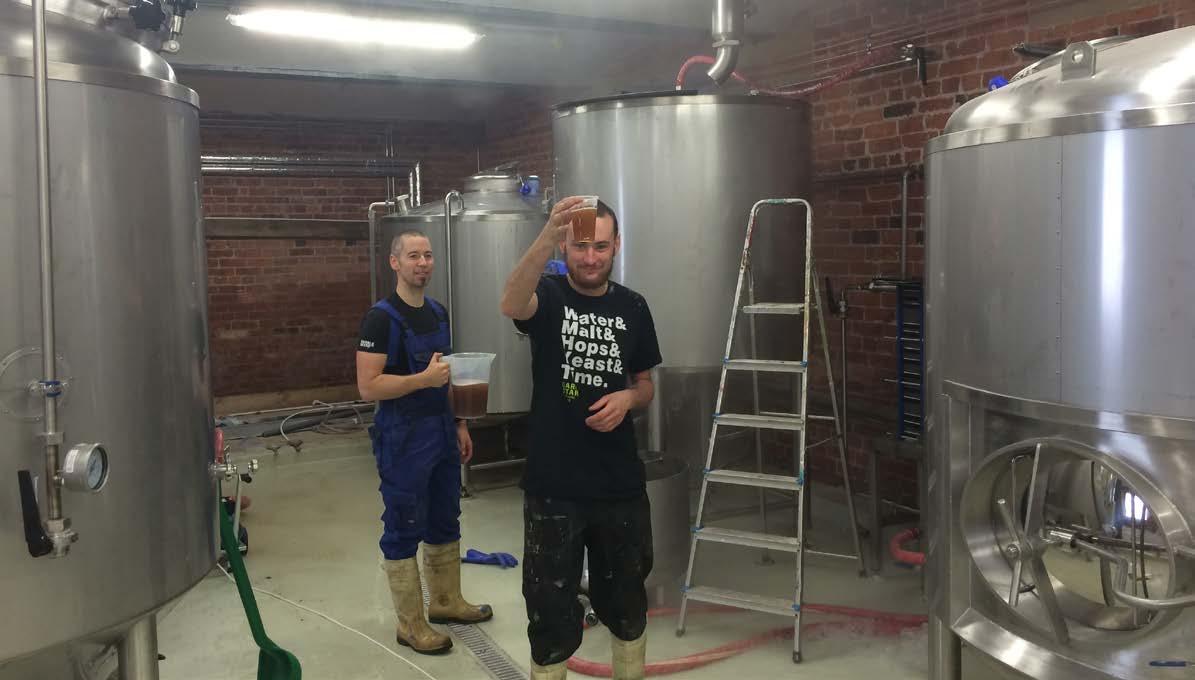
went back to do a masters, still unsure on what I was going to do with. All this time working at the Grove as US craft beers landed in the UK and inspired dozens of exciting new breweries.
To this day, Odell IPA is a desert island beer, while memories of those first tries of beers from the likes of Dogfish Head, Stone, Anchor and Goose Island are still with me. Ian never did things in an orthodox manner, with permanent lines for beers such as Tripel Karmeliet, Anchor Liberty and
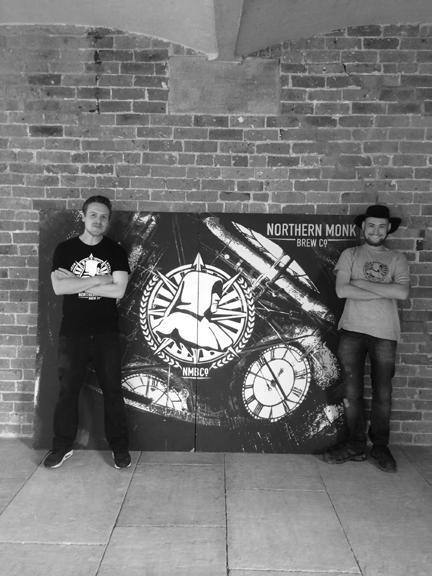
Brian Dickson (r) with Northern Monk co-founder Russell bissett
Schlenkerla Marzen baffling regulars while on cask we had a permanent Thornbridge Jaipur line, a couple of years before endorsement by Oz Clarke and James May sent demand through the roof.
Brewdog beers arrived and blew our minds, followed by the likes of Buxton, Kernel and of course Magic Rock just a mile or so away from the pub and who’s launch party we hosted.
I was getting a say on what beers we’d order by this time, and as Ian would happily hire a van and travel across the country to load up on the newest breweries from different regions, I got to source the very best of the UK.
New Year’s Eve into 2011 was to be the night that finally set me on a course to brewing.
We raided the cellar well into the early hours (I recall 3 bottle of Mikkeller Black being opened…) and at some point, the conversation meandered to my plans on finishing my masters that coming summer.
My plans? None. Nada. I’d had months of pub regulars asking why I wasn’t following a career in beer but I was still unsure. Ian comes up with the idea of me being ‘The UK Mikkeller’ – travel around learning to brew and putting together weird and wonderful collaborations that we’d bring back to sell through the pub. 10 months later I’m in a repurposed shipping container washing casks out the front of Eddie Gadd’s Ramsgate brewery in Kent
Eddie rarely let his beers, his tributes to the glory of the humble East Kent Golding, outside of the county yet somehow we’d been getting his beers up north for years, thanks to Ian’s van excursions.
He’d become a friend to us, and he bravely took me in for a few months to show me the ropes. From there, he set me up
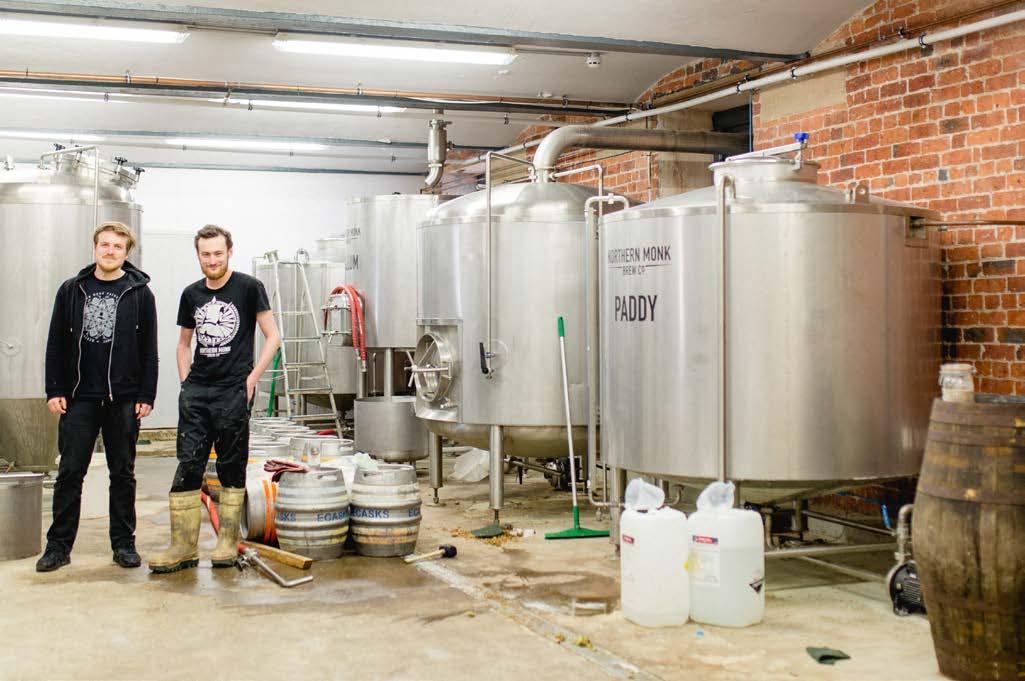
with his buddy Mark Tranter and I spent a few weeks at Dark Star, then back north to get creative with Toby at Red Willow. I even got into the labs at Thwaites to get a sense of how a bigger brewery operated.
I also arranged dozens of brew days with whoever would put up with me for the day, including the likes of Jay at Quantum (now of Cloudwater) and Rob at Blackjack who became regular, patient brewing partners.
We created the slightly cringe brand ‘Bitches Brewing’ (after too many pints in Newcastle) as a nod to both my jazz background and to me digging out everyone’s mash tuns. I brewed half a dozen or so fun beers for the pub and whoever else would take them.
At this point a homebrew kit finally joins the story. I did around 9 months of travelling then largely settled into studying a lot of brewing textbooks, with odd brew days and collaborations predominantly around the North. I started working more shifts back behind the bar and eventually ended up managing the pub. As much as I loved the place, this wasn’t scratching the itch and so after talking about it for an age I teamed up with a friend, an equally nerdy colleague, and got into the homebrewing game.
Chris lived in what I recall being a converted Sunday school with a large kitchen to brew up chaos in and lots of warm and cold spaces for fermentation and conditioning. He was
much more of an engineer than me and did the bulk of the equipment build, converting his Mum’s cool box into a mash tun and an old tea urn I rescued from going in the bin into our kettle. I downloaded Beersmith and set about assembling recipes.
Being the ‘experienced’ one, I proposed a professional approach of starting off by brewing a few simple pales to learn the efficiency of our setup, and our first brew was a simple Chinook and Centennial pale ale.
This was followed by a Pumpkin Ale and a Raspberry Stout. Well, I tried… Our signature was what we christened our ‘Emergency IPA’. We’d fill the mash tun, empty the freezer of all the part bags of hops we’d accumulated and brew the biggest IPA we could. One malt miller order later and the freezer would be quickly refilled.
We brewed regularly for about a year but things gradually fizzled out. It’s mid-2013, approaching 2 years since getting into brewing and not much is happening with the Bitches Brewing side of things either.
Meanwhile, another new brewery appeared – Northern Monk. I saw the advert calling for a brewer to join Northern Monk full time, to go on the journey of finding a site, sourcing equipment and try brew some world class beer.
I was fiercely loyal to the Grove given the influence and support I’d had, I was absolutely torn but the frustration and eagerness to be brewing eventually won out.
Even then I needed a few strong IPAs at Leeds International Beer Festival to get the courage, find Russ and declare interest. A sketchy Skype interview later (as Russ went for one last adventure in India before the brewery took over) and I was on board.
This was September but I didn’t go full time until early 2014. I continued at the Grove until February, working on small bits of brewery planning on the side.
Much of this took the form of showing up at ‘meet the brewer’ events around the North and chewing the ears off those I considered my brewing idols.
Thankfully the likes of Colin Stronge and Dominic Driscoll had endless patience with this overly enthusiastic upstart and his many questions.
When we finally found a site with the character we were looking for (The Old Flax Store), I was at least prepared with a list of recommended kit manufacturers to talk to and, in my head at least, a rough idea what I was doing.
Over the next 6 months layouts were drafted and a kit was ordered, a 10bbl 2 vessel system from Malrex (chiefly because they’d done the likes of Magic Rock and Kernel).
Work to gut and prepare the 130-year-old exterior listed building to be a brewery progressed steadily, despite our attempts to ‘help’. Temporary HQ was Russ’ Mum’s dining room and I borrowed the homebrew equipment from Chris so I could trial more recipes in the kitchen of the shared house I called home. Luckily the owner of the house loved his ale!
A few of these recipes did get scaled up including: True North a cask pale ale; a rework of New World IPA (Monk’s first brew) and Dark Arches, a black IPA which I’ve shared here. Many will likely already know my love of the oxymoronic style. I had the luck of getting to work with James Kemp, formerly of Buxton and Thornbridge, as consultant on our earliest recipes.
Among the many beers JK had been involved in, where some of the OG UK Black IPA – Black Rocks, Imperial Black, Raven… we’d work on a fair few more together over the years.
The kit was delivered early June 2014, and we finally got brewing in August. It’ll be of no surprise to hear that plenty didn’t go smoothly in the beginning. I’d ordered a glycol chiller but hadn’t considered how I was plumbing this to the fermenters.
The commissioning engineer took one look at my initial attempts with some john guest fittings and promptly left. It took 6 brews scratching our heads as to why we couldn’t cool the wort below 35c before we realised, we’d plumbed the heat exchanger in wrong (In my defence, those pipework schematics had gone from me, to my Dad, to a Heineken colleague, to the contractors and no-one had noticed!).
Another benefit to this big brewery ‘in’ was being able to get our first 4 beers analysed before release. This backfired slightly when I got results back that were so bad I was ready
to quit an hour before our launch event (pint of butterscotch anyone?). I once got distracted (who, me?) dumping out dry hops from the cone and accidentally drained the entire tank. Rookie move.
But I guess we got it together. Me solo brewing and packing, while Russ drove around delivering out of the back of a Renault estate. 18 months in we picked up a World Beer Cup medal for our session IPA Eternal, the first English brewery to do so in an American IPA category. An achievement that I’m still so proud of to this day.
We outgrew the 10bbl kit three years in (although it’s still regularly used today) and took on a proper industrial site to house a two-vessel 50HL system, which also got upgraded to a five-vessel automated brewhouse in 2021.
From a startup of two (and a dog) we now have a team of over 100 and six taprooms (and many dogs).
I often think back to the version of me that had no interested in working in a huge brewery and wanted anything but a desk job and yet here I am, kind of!
It’s too many years since I last brewed, and writing this is another reminder to myself to find time to jump back on the Old Flax Store kit every now and then.
It’s also a reminder of why I got drawn in to beer in the first place, in those heady circa 2010 days where everything seemed new and exciting and it’s always reinvigorating when I encounter someone either in a bar or at a festival or even joining our team at Monk who reminds me of me, with an infectious enthusiasm for beer and brewing.
“The commissioning engineer took one look at my initial attempts with some John Guest fittings and promptly left. It took six brews scratching our heads as to why we couldn’t cool the wort below 35c before we realised, we’d plumbed the heat exchanger in wrong,” Brian Dickson
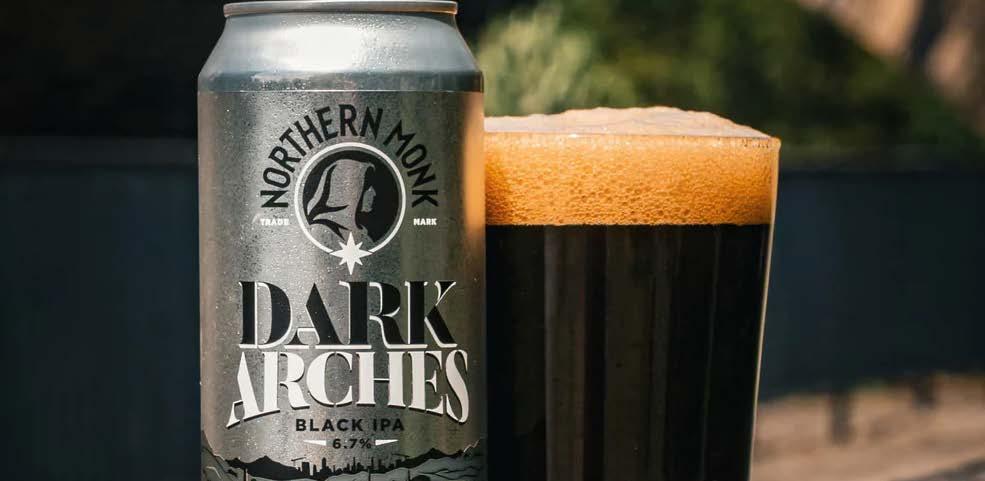
BLACK IPA. A STYLE THAT OFTEN DIVIDES OPINION BUT IN MANY CIRCLES IT IS TREATED WITH UTMOST REVERANCE. HERE IS HOW YOU CAN MAKE YOUR OWN VERSION OF BRIAN DICKSON’S TAKE ON THE STYLE.
I’m not 100% sure this is the definitive first version of the Black IPA I brewed in my kitchen, but it’s in-line with the recipe we brewed around 2014 through 2015.
I’ve found the style fascinating ever since trying Stone Brewing’s Sublimely Self Righteous when it first landed in the UK roughly five years earlier.
A dark beer designed to taste like a pale beer? How oxymoronic. But I loved the complexity of them and when working on recipes it’s a fun challenge to find the balance between roast and hops, sweetness and bitterness.
It’s possible to take it many directions and by the very nature of the style you can’t really go wrong. We’ve done juicier, New England-inspired versions and India Porter-leaning versions with more malt complexity.
We’ve made IPAs and used Sinamar to contribute all of the colouring in an attempt to truly nail the dark beer that tastes like an IPA mantra.
At its heart however the one below is very much a west coast IPA recipe. There’s a good amount of caramel and crystal malts in there, a good bitterness level and heavy late hop bill led by US classics Simcoe and Chinook. I’ve always preferred
using a clean yeast such as California Ale for fermentation. I also prefer to fine a beer like this, as a heavy haze doesn’t really seem to suit it.
In contrast, the water profile is much more balanced than I’d use for a west coast IPA. Too much sulphate brings out the astringency in the dark malts and too much chloride takes away from the hop character.
Keep some hardness in the water to balance the dark malt acidity as well.
We recently started brewing Dark Arches again after roughly a 7 year hiatus.
We’ve been able to revisit quite a few styles that we would have struggled to find much if any demand for a few years ago in the peak of hazy IPA demand.
It’s great for market balance and us as brewers are loving having some different beers in the cellar. Above all, I get to play around with my favourite style again!
Now look opposite to learn how you too can make a version of Brian’s Black IPA - Dark Arches...
Boil Size: 25.0 l
Pre-Boil Gravity: 1.064
Post Boil Volume: 22.5 l
Original Gravity: 1.068
Batch Size (fermenter): 19.0 l
Final Gravity: 1.018
Estimated Colour: 80 EBC (Before sparge)
Est. Mash Efficiency: 85%
Estimated IBU: 56
BU:GU Ratio: 0.84
Target Water Profile
Ca: 90
Mg: 7
Na: 45
CO3: 90
SO4: 75
Cl: 100
Grist
Pale Malt, Maris Otter (5.9 EBC) – 4.3kg - 87%
Carafa Spezial III (1400.0 EBC)– 0.2kg4%
Caramalt (30.0 EBC) – 0.24kg - 4%
Medium Crystal (250 EBC)– 0.2kg - 4%
Chocolate Malt (985.0 EBC)– 0.05kg 1%
Total Grain Weight: 4.95kg
Mash
Target Mash Temperature - 67°c
Add 12.9 l of water at 76°c (2.6:1 ratio)
Duration – 60 minutes
Before Sparge: Add the following grains, plus remaining salts, on top of the mash bed before beginning to sparge:
Carafa III (1400 EBC) - 500g
Black (Patent) Malt (985 EBC) - 500g
Sparge – Add 18 l water at 76°c
Boil
Duration – 75 minutes
Boil Additions
Magnum [11.00 %] - Boil 75.0 min - 12g20.5 IBU
Protafloc – Boil 15.0 min- 1 Tab Whirlpool Additions
53.0 g - Chinook [13.00 %] – Whirlpool/ Steep 30 min - 2.36 g/l - 12.25 IBUs
53.0 g - Simcoe [14.10 %] – Whirlpool/ Steep 30 min - 2.36 g/l - 13.3 IBUs
40.0 g - Mosaic [13.90 %] Whirlpool/Steep 30 min - 1.78 g/l - 9.9 IBUs
Total: 6.5 g/l (Assuming 22.5 l post-boil vol.)
Stir for 2 minutes to create a gentle whirlpool after flame out. Repeat after 5 minutes and then allow to stand for a further 20mins before rapidly cooling. 3-5% Utilisation can be expected in a whirlpool as temperature of the wort is still above
80°c. Utilisation decreases as wort gravity increases.
California Ale (WLP001) or other clean character, medium-high attenuation, ale strain
Pitch at 18°c and allow to rise to max. 21°c during primary fermentation.
And end of fermentation, reduce temperature to 18c and crop excess yeast. Split the dry hop into two additions and add 24 hours apart, rousing if possible after each addition. 24 hours after second dry hop, crash as close to 1c as possible, transferring off the spent hops and yeast if possible.
45.0 g - Citra T90
45.0 g - Mosaic T90
35.0 g - Simcoe T90
35.0 g - Chinook T90
Total: 8.4 g/l (Assuming fermenter volume of 19 l)
Add finings as required. It’s worth keeping a stock of Weyermann Sinamar on hand for darkening the colour if you don’t achieve a level you’re happy with. This can be added anytime during conditioning. After 3 further days of conditioning, package the beer. Target CO2 volume –2.5 Vol/ 5.0g/L
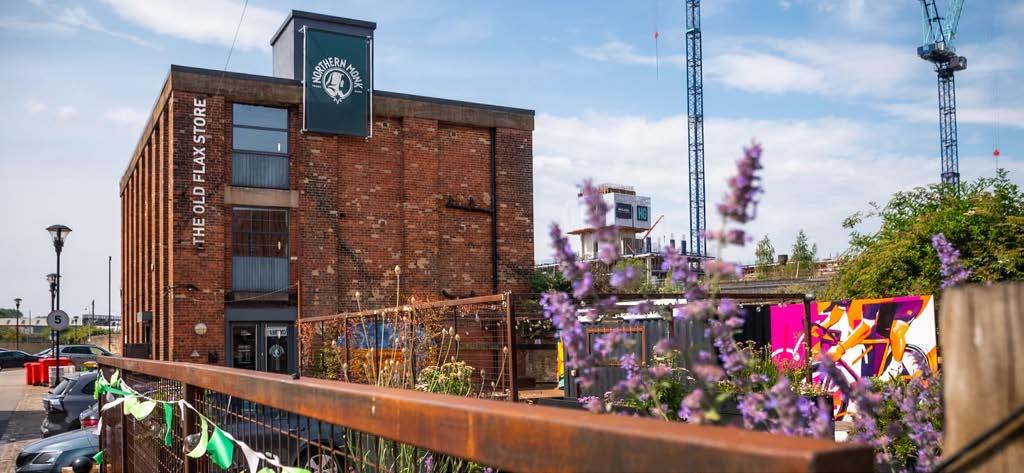

Join the team at Beak Brewery on 8 and 9 August 2026 at the enchanting Glynde Place, East Sussex, for a weekend filled with flavour, folklore and celebration.
17 April 2026 - 18 April 2026
BREW YORK 10TH BIRTHDAY BASH
The Big Penny Social, London hwww.brewyork.co.uk
22 April 2026
WORLD BEER CUP 2026
Pennsylvania Convention Center, USA www.worldbeercup.org
15 June 2026
BEER DAY BRITAIN
Various Locations, UK www.beerdaybritain.co.uk
8 August 2026 - 9 August 2026
THESE HILLS
Glynde Place, East Sussex www.beakbrewery.com
29 September 2026 - 30 October 2026
BREWERS CONGRESS 2025
The Big Penny Social, London www.brewersjournal.info/congress
25 November 2026
BREWERS LECTURES LEEDS
Amity Brew Co, Farsley, Pudsey www.brewersjournal.info/lectures