


Dear Students and Parents,
Welcome to the Mater Dei High School College & Career Handbook!
High school is an exciting time of growth, discovery, and preparation for the future Whether you ' re just beginning as a freshman or preparing for graduation, our Counseling Department is here to support you every step of the way. The college and career planning process is about more than applications and deadlines it's about discovering your strengths, exploring your interests, and discerning the path God is calling you to pursue.
This handbook is designed to be your guide throughout high school. Inside, you'll find grade-level timelines, college admissions information, financial aid resources, career exploration opportunities, and practical tips to help you stay on track. We encourage you to use it often taking small steps each year makes the process much more manageable (and your senior-year self will definitely appreciate it!).
On behalf of the Counseling Department, thank you for allowing us to be part of your journey. We look forward to supporting you, celebrating your accomplishments, and cheering you on as you prepare for the exciting opportunities ahead.
Go Monarchs!
God Bless,

Mrs. Olivia Huie Director of College Counseling
The mission of the Mater Dei High School Counseling Department is to provide a comprehensive, equitable, and data-informed school counseling program that supports the academic, college and career, personal/social, and spiritual development of every student. In partnership with families, faculty, and the community, we empower students to discover their God-given gifts, pursue their postsecondary goals, and become compassionate leaders committed to service and lifelong learning.
The Mater Dei School Counseling Office provides a comprehensive school counseling program that supports students in their academic, college and career, and personal/social development. Services include academic planning, course selection, graduation and college requirement guidance, college and career counseling, social-emotional support, and referrals to school or community resources when appropriate.
The Counseling Office is located upstairs in between the 400 and 700 wings. The MD Counseling Department is available to support all students and families. Please refer to the information below for our office hours and procedures.
Office Hours
Monday through Friday 7:30 AM to 4 PM
Please contact your designated school counselor to schedule an appointment. You can find your counselor assignment in Aeries. Students and families may book appointments through each counselor’s Calendly link. The QR codes can be found in the hallway right outside of the Counseling Office or by emailing your counselor directly.
Students who need support may visit the Counseling Office before school, during lunch, or after school without an appointment Walk-in students are seen on a first-come, first-served basis, with scheduled appointments taking priority
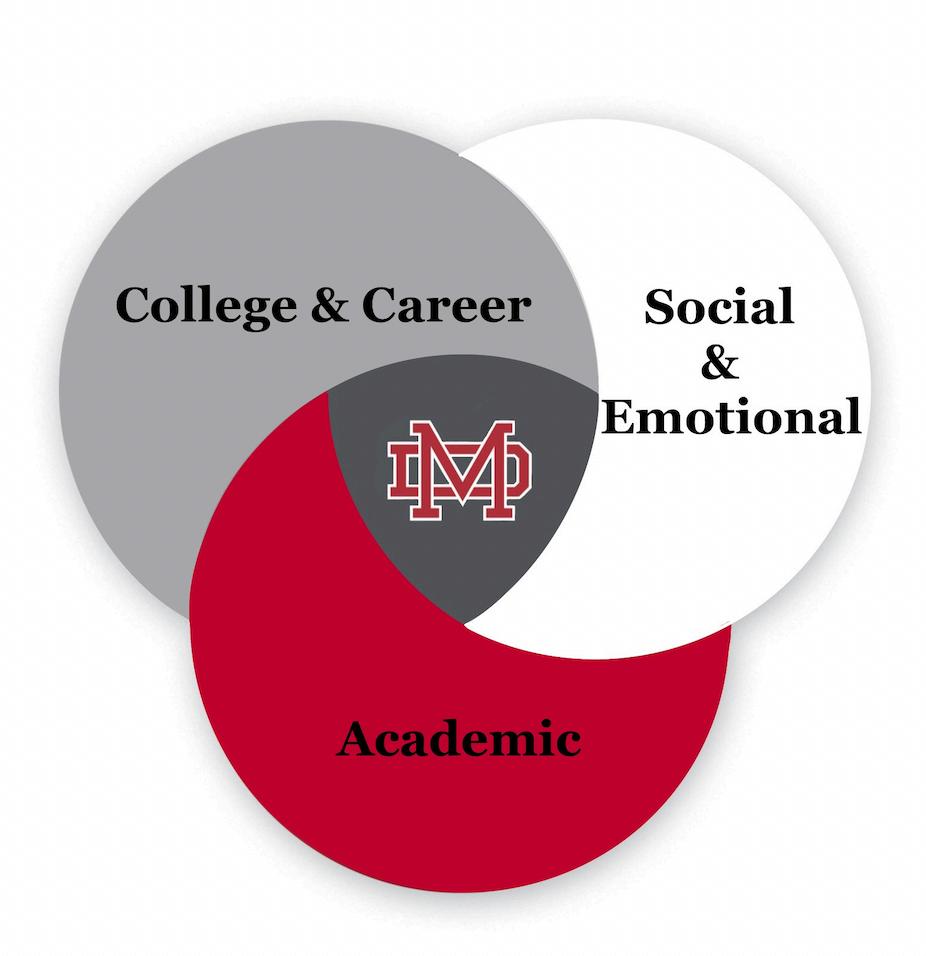
Counselors begin individualized college and career planning with students during their junior year and continue providing personalized guidance throughout the summer and senior year. These one-on-one meetings support students with college exploration, application planning, career goals, and postsecondary decision-making.
Beginning in the fall, the Counseling Office hosts weekly College Application Workshops every Thursday after school until 3:30 p.m. Counselors will be available in the Counseling Office lobby to provide hands-on assistance with college applications, essays, college lists, and other aspects of the application process. No appointment is necessary students are encouraged to drop in for individualized support.
College representatives regularly visit campus to meet with students, share information about their institutions, and answer questions about academics, campus life, and admissions. These visits provide students with an opportunity to explore colleges directly and gain insight to support their post-secondary planning.
The annual Mater Dei College Fair provides students and families with the opportunity to meet directly with representatives from colleges, universities, military academies, and specialized programs from across the country. Attendees can explore a variety of post-secondary options, ask questions about admissions and campus life, and begin building their college list.
Typically held each spring, College Awareness Night provides students and families with an opportunity to explore the college planning process through informative workshops, admissions presentations, and career-focused panels. The event is designed to increase awareness of post-secondary opportunities and equip families with valuable resources for future planning.
Throughout the school year, the Counseling Department hosts virtual webinars designed to support students and families in the college and career planning process Topics are tailored to each grade level and may include academic planning, college admissions, career exploration, standardized testing, financial aid, and other timely counseling-related subjects Webinars are recorded whenever possible and shared with families for future reference
These informal, small-group gatherings provide parents with an opportunity to connect with the counseling team and learn about important college and career planning topics Typically held in the Mater Dei High School Library in the morning, each session offers valuable information, updates, and an opportunity for questions and discussion
Career Day is an event designed for juniors to explore a variety of career pathways through keynote speakers and interactive breakout sessions led by professionals across different industries. Students engage in meaningful conversations, learn about different professions, and gain insight into the education, skills, and experiences needed to make informed decisions about their future academic and career goals.
Senior Interview Day is a dedicated opportunity for seniors to meet one-on-one with a working professional to review their resume and practice professional interview skills. Students receive individualized feedback and guidance on communication, professionalism, and how to present themselves confidently in college, scholarship, and career interviews.
Senior Awards Night is an evening ceremony that celebrates the accomplishments and achievements of the senior class. Students are recognized for their academic excellence, involvement in campus programs, and receipt of scholarships, monetary awards, and other special honors earned throughout their high school experience.
The Academic Excellence Awards recognize students who have demonstrated exceptional academic achievement by earning a 4 0 GPA or higher during a semester This celebration honors students’ dedication, commitment to academic success, and pursuit of excellence in the classroom
Mater Dei Counseling offers practice exams to help sophomore and junior students become familiar with standardized test formats and assess their readiness. These programs provide insight into areas for growth and support students in preparing for college entrance exams.
The Mater Dei Counseling Department is committed to ongoing professional growth to better serve students and families. Counselors regularly participate in professional organizations, college admissions conferences, counselor fly-in programs, campus visits, and continuing education opportunities to stay informed about current trends in college admissions, career development, student wellness, and educational planning.

Meet with your counselor to develop a four-year academic plan and select courses that align with your interests, goals, and academic readiness.
Establish strong study habits and focus on academic success. Your freshman year performance will help determine future course placement opportunities. Use academic support resources to your advantage, including Office Hours (Mondays and Thursdays after school) and Academic Assistance Program (AAP) sessions on Tuesdays and Wednesdays
Visit the Counseling Office to get to know your counselor, explore extracurricular opportunities, and learn about programs that support college and career readiness Begin completing your Christian Service Hours Freshmen should work steadily toward the graduation requirement of 80 service hours, aiming for at least 10 hours each semester.
Explore your interests, strengths, and potential career pathways through classes, activities, Naviance, and conversations with teachers, counselors, and mentors. Get involved in campus life through clubs, athletics, leadership, service organizations, and other activities that interest you.
Build positive relationships with teachers, coaches, and school staff who can support your academic and personal growth throughout high school.
Visit at least one college campus (formal tour or self-guided) to begin understanding what different campuses feel like in person.
Participate in a summer experience such as volunteering, employment, enrichment programs, camps, or academic courses
Mater Dei Summer School provides students with opportunities for both credit advancement and credit remediation Students may use summer coursework to strengthen academic foundations, recover credits, or progress ahead in their academic sequence in preparation for the upcoming school year
Meet with your counselor to continue developing a four-year academic plan and select courses that align with your interests, goals, and academic readiness.
Establish strong study habits and focus on academic success. Your sophomore year performance will help determine future course placement opportunities.
Use academic support resources to your advantage, including Office Hours (Mondays and Thursdays after school) and Academic Assistance Program (AAP) sessions on Tuesdays and Wednesdays
Attend the Mater Dei College Fair
All Mater Dei sophomores take the PreACT to gain early testing experience, identify academic strengths and areas for growth, and begin preparing for future SAT or ACT testing.
Explore extracurricular involvement by joining or continuing participation in clubs, athletics, leadership programs, and service organizations aligned with your interests.
Continue progressing toward your Christian Service Hours requirement for graduation (80 total hours), aiming for at least 10 hours each semester and considering sustained volunteer commitments.
Begin exploring potential college majors and career pathways more intentionally through Naviance, research, conversations, and exposure to different fields.
Prepare for the PSAT (taken in junior year), including reviewing foundational skills in reading, writing, and math as needed.
Continue exploring college options using Naviance, including the SuperMatch feature to identify colleges aligned with your interests
Consider enrolling in a community college course to experience college-level coursework and explore academic interests in greater depth
Use summer time to explore potential career interests through research, job shadowing, volunteering, or enrichment programs
Mater Dei Summer School provides students with opportunities for both credit advancement and credit remediation. Students may use summer coursework to strengthen academic foundations, recover credits, or progress ahead in their academic sequence in preparation for the upcoming school year.
Meet with your counselor to review graduation progress, confirm college eligibility requirements, and finalize a senior-year course plan aligned with post-secondary goals.
Continue building meaningful involvement in extracurricular activities, leadership roles, athletics, clubs, and service opportunities.
Attend Mater Dei College Fair and connect with college representatives when they visit campus
Strengthen your Christian Service Hours completion progress to ensure you remain on track for the 80-hour graduation requirement
Begin and deepen college research, including building a balanced college list and identifying academic programs aligned with your interests, career goals and values. Explore post-secondary pathways more intentionally by researching majors, career fields, and potential colleges through conversations, campus visits, and online tools.
Register for standardized testing (SAT/ACT if applicable) and/or plan testing timelines based on college requirements.
Request letters of recommendation by May and complete required Teacher Brag Sheet and Counselor Brag Sheet by June
Finalize and refine your college list into balanced categories (reach, target, likely) using Naviance, campus visits, and research.
Begin working on college application essays, including Common App or UC personal statement and supplemental essays Register for a College Application Workshop
Continue or complete standardized testing, and determine if additional test dates are needed
Update and finalize your activities résumé, including leadership roles, awards, work experience, and summer involvement
Organize application materials (transcripts, activities list, deadlines, testing plans) to prepare for senior-year applications.
Use Naviance to review admission trends and compare academic profiles with college expectations.
Participate in meaningful summer experiences such as employment, internships, volunteer work, or enrichment programs that strengthen your profile
Meet with your counselor in the fall for a senior year college application check-in to review your list, timeline, and application strategy.
Attend College Application Workshops held every Thursday after school for support with the application process, essay development, and counselor feedback on personal statements and supplemental essays.
Attend the Mater Dei College Fair and connect with college representatives for specific questions and demonstrated interest
Take or retake standardized tests (SAT/ACT) as needed, and ensure official scores are sent to colleges if required or beneficial
Organize and track all application deadlines, requirements, and application portals using a spreadsheet or approved counseling tools.
Finalize and submit college applications according to all deadlines, including Early Action, Early Decision, and Regular Decision.
Regularly monitor application portals to confirm receipt of transcripts, test scores, and letters of recommendation, and respond promptly to any missing items.
Complete the FAFSA and any additional financial aid applications as soon as they open, and review financial aid offers as they are received.
Apply for scholarships paying close attention to deadlines, eligibility requirements, and required materials.
Request and monitor submission of official transcripts and mid-year reports, if required by colleges.
Maintain strong academic performance through senior year, as final transcripts are reviewed by colleges for continued admission
Review admission decisions as they are released and compare financial aid packages to make an informed final college choice
Attend admitted student events, campus visits, and virtual sessions to help finalize your decision.
Submit your enrollment deposit by the national candidate reply date (typically May 1) and complete all required next steps for your chosen college.
Apply for on-campus housing, orientation programs, and placement exams according to your college’s deadlines.
Complete end-of-year requirements, including final transcripts, graduation clearances, and senior checkout procedures for college enrollment.
Confirm completion of all final steps with your college, including submitting final transcripts and any outstanding documents required for enrollment.
Set up and regularly check your college email and student portal for important updates, deadlines, and placement information.
Complete required college onboarding tasks such as orientation registration, housing assignments, and first-semester course registration.
Attend new student orientation and any welcome programs offered by your college.
Set personal academic and wellness goals for your first semester to support a successful transition to college

Mater Dei utilizes Naviance, a comprehensive college and career readiness platform to support students in exploring post-secondary pathways, building self-awareness, and planning for life after high school Students use Naviance to research colleges and careers, complete career and personality assessments, and access college counseling resources throughout their high school journey
Key Naviance Features
● College search and comparison tools
● SuperMatch college matching system
● Scattergrams for historical admission data
● Career and personality assessments
● Resume-building tools and activity tracking
● College planning and list-building tools
Recommended Usage
Freshmen

Complete learning, personality and career assessments in Naviance to explore interests, learning styles, and potential career pathways, while beginning to research a variety of colleges.
Sophomores
Continue career exploration and assessments to identify personality traits, career clusters, and evolving interests, then begin refining areas of interest and favoriting and adding colleges to build an early college list.
Juniors
Use the SuperMatch feature to generate college “match scores, ” explore skills and strengths, and begin refining college lists. Review scattergrams to evaluate reach, target, and likely schools based on historical admission data.
Seniors
Use Naviance as a research and planning tool to finalize and refine college lists, compare admission likelihoods using scattergrams, and support informed decision-making during the college selection process
Reach
● More competitive for your academic profile
● Admission is less predictable
Target Schools
● Your academic profile closely matches the middle 50% of admitted students
● Strong likelihood of admission
Likely Schools
● You exceed the typical admitted student profile
● Higher likelihood of admission and affordability
When researching colleges, consider:
● Academic programs and majors
● Location (urban, suburban, rural, in-state/out-of-state)
● Campus size and environment
● Cost of attendance and financial aid opportunities
● Admissions selectivity
● Student life, clubs, and extracurricular opportunities
● Internship, research, and career placement support
Building
● Start broad, then narrow your list over time
● Research at least 10–15 colleges before finalizing applications
● Include a balanced mix of reach, target, and likely schools
● A good list of 6-9 colleges will give you great options to consider, more is not necessarily better
● Use college websites, virtual tours, and campus visits to guide decisions
● Attend college fairs and admissions rep visits
● Meet with your counselor to review your list
● Use college search tools (Naviance, Common App, UC/CSU portals, Big Future, Niche)
● Compare admission data to your academic profile
● Applications open: August 1
● Submission window: October 1 – November 30
Application Includes
○ A–G coursework and grades
○ Activities and awards
○ Academic and personal background information
○ Personal Insight Questions (required)
● Official transcript not required at time of application
● School forms and letters of recommendation generally not accepted
● No SAT or ACT required
● One application for all nine UC campuses
UC Application Page
● Applications open: October 1
● Submission window: October 1 – November 30
Application Includes
○ A–G coursework and grades
○ Academic and personal background information
○ Some campuses or impacted majors may have additional requirements
○ Students should review each campus for major-specific requirements and deadlines
● Official transcript not required at time of application
● No SAT or ACT required
● No essays required
● One application for multiple CSU campuses
CSU Application Page
● Application opens: August
● Submission window: Varies by college Application Includes
○ Personal information and demographics
○ Academic history (courses, grades, A–G or equivalent)
○ Activities and awards list
○ Personal Essay (Common App Essay)
○ College-specific supplemental essays (for many schools) Supporting documents
○ Official Transcript
○ School report
○ Counselor recommendation, if required
○ Teacher recommendations, if required
Key notes
○ Many colleges are test-optional or test-blind, but policies vary by school
○ Students apply to multiple colleges using one application platform
○ Application fees or fee waivers may apply per college
Common Application Page
Youtube Webinar: Your College Application Gameplan
The Common Application (Common App) is a single online application platform accepted by over 1,000 colleges and universities.
Please refer to the guide below as a starting place for your application process Common Application Guide for First-Year Students
Key Dates
● Applications Open: August 1
● Deadlines: Vary by college
● Early Decision/Early Action: Typically November 1 or November 15
● Regular Decision: Typically January 1–February 1
Getting Started
● Select "First-Year Student" and create your account using a personal email address (not your Mater Dei email).
● Once your account is created, navigate to "My Common Application."
● You will see six main sections: Profile, Family, Education, Testing, Activities, and Writing.
○ Most sections ask for personal and family information The Education section requires details specific to your high school experience
Graduation Date and Class Size
May 28, 2027
Class Size = 463
Other Secondary/High Schools
If you completed coursework through an online school or another institution for credit advancement, list that school here
Class Rank
Mater Dei High School does not rank students
GPA and Scale
Mater Dei uses a 4.0 GPA scale. When reporting your GPA, you should enter the highest gpa on your transcript.
Some colleges require students to self-report their coursework and grades Carefully enter classes exactly as they appear on your transcript
Semester courses are worth 5 credits. Year-long courses are worth 10 credits (5 credits per semester).
● Example: English I semester 1 = 5 credits. English I semester 2 = 5 credits. Total credits= 10 credits.
● Example: Sacraments = 5 credits and Ethics = 5 credits. Most academic courses at Mater Dei are designated as College Preparatory (CP) unless identified as Honors or Advanced Placement (AP). On the transcript, all College Preparatory courses are marked with a "P."
● You will list the Mater Dei Summer School courses that you completed here from grades 9-12.
● If you completed a course outside of Mater Dei, list the institution under "Other Secondary/High Schools."
● These courses should also be reported in the "Other Courses" section when applicable.
The Common App Personal Essay has a 650-word maximum. Many colleges also require supplemental essays. Always review each college's requirements before submitting your application.

The UC Application is used to apply to all nine undergraduate University of California campuses. Unlike the Common Application, the UC system has its own application portal.
Key Dates
● Applications Open: August 1
● Submission Window: October 1 – November 30
Getting Started
● Create an account using your personal email address (not your Mater Dei email).
○ Save your login email and password.
● Complete each section of the application before submitting.
● Academic History
Graduation Date
May 28, 2027
Class Rank
Mater Dei does not rank students.
Courses & Grades
● Grading System: A–F
● Term System: Semesters

● Report all coursework and grades exactly as they appear on your transcript
● Include all courses completed in grades 9–11
● Report senior-year courses as In Progress (Fall) and Planned (Spring)
Summer School & Outside Coursework
Report all courses completed through another high school, online program, or community college in the Academic History section
Personal Insight Questions (PIQs)
● Respond to 4 of 8 prompts 350-word maximum per response
● Responses should highlight different aspects of your experiences, growth, and interests. Connect with your counselor to review drafts or learn about essay review opportunities.
Letters of recommendation provide colleges with additional insight into your academic ability, character, and contributions beyond your transcript. Not all colleges require letters of recommendation (most CSU and UC campuses do not), so always review each college's admission requirements before requesting letters.
● Research how many letters of recommendation each college requires.
● Request letters during the spring of your junior year, before summer break.
● Ask your teachers in person whenever possible before following up electronically.
● Taught you during your junior year and in a core academic subject.
● Can provide specific examples of your strengths, accomplishments, and character.
● Know you beyond your grades.
Some colleges require a counselor letter of recommendation as part of the application process. If so, be sure to complete your assigned counselor's brag sheet and any required school forms well in advance of your application deadlines
● Provide your resume or activities list, if requested
● Share your college list and application deadlines
● Waive any required FERPA waiver(s) in your application portal
● Monitor your application portal to ensure letters have been received
● Write/send a thank-you note after your recommender submits your letter
Complete your assigned counselor's brag sheet to help your counselor write a personalized letter of recommendation
Mater Dei Counselor Brag Sheet (Mater Dei e-mail accounts only)
Complete the Teacher Brag Sheet before requesting a recommendation from a teacher.
Many colleges have adopted test-optional, test-free, or test-blind admission policies. Before registering for an exam, research each college's current testing requirements. You can view a listing of test optional/free colleges at Fairtest.org.
SAT
● Measures college readiness in reading, writing, and math.
● Accepted by colleges nationwide.
● Many colleges allow students to choose whether to submit scores.
● Scored out of 1600
ACT
● Measures English, math, reading, and science reasoning.
● Accepted by colleges nationwide.
● Many colleges allow students to choose whether to submit scores.
● Scored out of 36
Test Prep Companies and Organizations
Taking a practice SAT or ACT before your official exam is highly recommended. Mater Dei students take the PACT in sophomore year and the official PSAT/NMSQT in junior year to help prepare A variety of free and paid test prep resources are available, and families are encouraged to choose the option that best fits their learning style, goals, and budget
Testing Timeline
Spring of Junior Year
● Take your first SAT or ACT
● Review your scores and determine whether a retest is beneficial Fall of Senior Year
● Complete any final testing before your college application deadlines
SAT Resources
SAT Study Guide
ACT Resources
ACT Free Practice Resources
SAT Question Bank ACT Online Prep Practice Test
Khan Academy Revolution Prep
Most colleges require an official high school transcript as part of the application process. Always review each college's requirements to determine when and how transcripts should be submitted
Please refer to the Mater Dei Transcript page for additional information
The first step in requesting an official transcript is for students to take initiative by submitting their own transcript request through Parchment Students are responsible for knowing when transcripts are needed, selecting the correct recipient, and allowing sufficient time for processing before college or program deadlines
How to Request Official Transcripts - via Parchment
For colleges using the Common Application, your counselor will submit your official transcript through the Common App after all required school forms have been completed.
A Mid-Year Report includes your first-semester senior-year grades and is required by some colleges after you submit your application. Colleges that require a Mid-Year Report will typically notify you through your applicant portal. Students must submit an official transcript request through Parchment, and once received, your counselor will submit the Mid-Year Report only to the colleges that require or request it
A Final Transcript includes your complete high school academic record and is sent after graduation All seniors must have a final transcript sent to the college they will attend through the same official transcript ordering process used in Parchment Colleges use the final transcript to confirm graduation and final grades
If you are considering playing sports at the collegiate level, it is important to understand that athletic participation requires meeting specific academic eligibility standards in addition to the recruiting process Throughout high school, student-athletes must complete required coursework, maintain appropriate academic progress, and submit transcripts and other documentation to the appropriate eligibility center
The two primary governing associations for college athletics are:
● National Collegiate Athletic Association (NCAA) – The NCAA consists of 1,000+ institutions across three divisions: Division I, Division II, and Division III.
● National Association of Intercollegiate Athletics (NAIA) – The NAIA provides competitive athletic opportunities at approximately 250 colleges and universities across the United States and Canada.
Each association and division has its own initial-eligibility requirements. If you are still exploring your college options, it is recommended that you work toward meeting the most rigorous academic standards - those required for NCAA Division I eligibility.. Doing so will help preserve the greatest number of opportunities as your college plans develop.
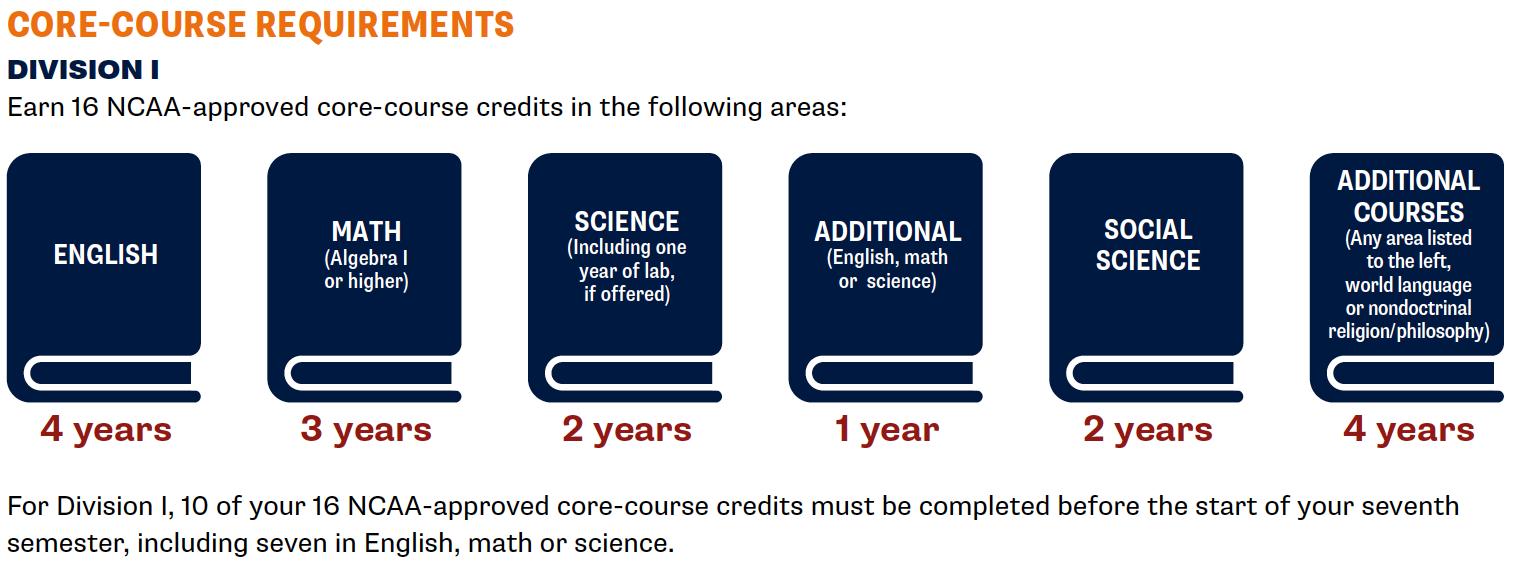
Students interested in competing in college athletics are encouraged to meet with our NCAA Eligibility Coordinator for an initial review of NCAA initial-eligibility requirements In addition to one-on-one meetings, presentations and panel events are scheduled throughout the year to help student-athletes and families navigate the recruiting and eligibility process throughout high school
Paying for college is a shared responsibility between families, colleges, state and federal governments, and outside organizations. Financial aid helps make higher education more affordable and may include grants, scholarships, work-study opportunities, and student loans.
Most students should apply for financial aid even if they believe they may not qualify. Many colleges use financial aid applications to determine eligibility for institutional grants, scholarships, and other need-based assistance.
Federal and State Aid
FAFSA or CADAA
Institutional Aid
Scholarships
Federal grants, state aid, federal student loans, work-study
CSS Profile (select colleges) College-specific grants and scholarships
Individual Scholarship Applications
Financial
Merit and need-based awards from colleges and community organizations
The Free Application for Federal Student Aid (FAFSA) and the California Dream Act Application (CADAA) are free applications used to determine eligibility for federal and state financial aid
Students generally complete only one of these applications based on their eligibility Through the FAFSA or CADAA, students may qualify for:
● Federal Pell Grants
● Cal Grants
● Federal Work-Study
● Federal Direct Student Loans
● Institutional grants and scholarships offered by many colleges
● The student and all required contributors should create their own Federal Student Aid (FSA) Account (or California Student Aid Commission account, if applicable)
● Gather federal tax information and financial records from the required tax year
● Submit the application as early as possible after it opens each fall.
● Review each college's priority financial aid deadlines.
Remember: Completing the FAFSA or CADAA does not obligate a student to accept financial aid. It simply allows colleges to determine financial aid eligibility.
Some private colleges and universities require the CSS Profile in addition to the FAFSA to award their own institutional financial aid. Students should check each college's admissions website to determine whether the CSS Profile is required.
Unlike the free FAFSA and CADAA, the CSS Profile requires an application fee (fee waivers are available for eligible students).
Unlike the FAFSA, the CSS Profile:
● Is administered by the College Board.
● Is required by only select colleges.
● Collects additional financial information to determine eligibility for institutional grants and scholarships.
● Has application deadlines that vary by college.
Scholarships are financial awards that do not need to be repaid. They may be awarded based on academic achievement, leadership, service, talent, financial need, career interests, or other criteria.
Scholarships generally fall into three categories:
● Institutional Scholarships
○ Many colleges automatically consider applicants for merit scholarships through the admissions process, while others require separate applications.
● Local Scholarships
○ Community organizations, service clubs, employers, religious organizations, and local foundations often offer scholarships specifically for graduating
seniors These awards frequently have smaller applicant pools, increasing a student's chances of receiving funding
● National Scholarships
○ National organizations and scholarship search platforms offer thousands of scholarship opportunities throughout the year. Students should begin researching during junior year and continue applying throughout senior year.
Key Financial Aid Timeline
Timeframe
Fall of Senior Year
Winter
Spring
Recommended Action
Complete the FAFSA/CADAA shortly after it opens. Complete the CSS, if required Begin applying for scholarships
Continue submitting scholarship applications and monitor financial aid portals for additional requests
Review financial aid offers from colleges and compare award packages before making a final college decision
Youtube Webinar: College Financial Aid Presentation

Below are additional resources that are helpful when navigating college/career options.
The Application Guide for First-Year Students walks students through each section of the Common Application, from creating an account to submitting applications It provides helpful tips, deadlines, and best practices to help students complete their applications accurately and confidently
The NACAC Guide to the College Admission Process provides students and families with a comprehensive, step-by-step overview of the college admissions journey, from exploring colleges and building a balanced college list to completing applications and making enrollment decisions
The Steps for Students Filling Out the FAFSA Form provides a simple, step-by-step guide to completing the Free Application for Federal Student Aid accurately and on time. It helps students understand the information they need, avoid common mistakes, and maximize their eligibility for financial aid.
The NCAA Guide for the College-Bound Student-Athlete explains the academic and athletic eligibility requirements for students who plan to compete in NCAA Division I, II, or III sports. It outlines registration steps, recruiting rules, scholarships, and key timelines to help student-athletes successfully prepare for college athletics.
ASSIST.org helps students understand how courses taken at California community colleges transfer to University of California (UC) and California State University (CSU) campuses. It is a valuable planning tool for high school students considering dual (concurrent) enrollment or the community college transfer pathway, ensuring they choose courses that align with their future college goals.
The QuestBridge Application Guide helps high-achieving, low-income students navigate the application process, including the National College Match and college admissions opportunities It provides step-by-step guidance on completing application sections, submitting required materials, meeting important deadlines, and presenting academic and personal achievements effectively to partner colleges. The guide is designed to help students complete their applications accurately, confidently, and successfully.
WUE is a tuition-reciprocity program that allows students in participating states to attend out-of-state public colleges at a reduced tuition rate. Eligible students typically pay no more than 150% of in-state tuition at participating institutions, making it a significant cost-saving option for college affordability. Availability, majors, and eligibility requirements vary by school, so students should always verify details with each institution.

Early Action (EA)
A non-binding admission plan with deadlines typically between mid-October and late November. EA decisions are usually released in December or January.
Restrictive Early Action (REA)
A non-binding admission plan where a student may apply early to only one private university. Deadlines are typically between mid-October and late November, with decisions released in December or January.
Early Decision (ED)
A binding agreement in which a student commits to enrolling if admitted ED deadlines are typically in November, with decisions released in December Some highly selective universities also offer an ED II round in January Students may only apply to one school as ED
Regular Decision (RD)
The standard admission plan with deadlines usually in early January or February, and notification in late March or early April
Rolling Admissions (RA)
An admission process in which colleges review applications and release decisions on an ongoing basis Students typically receive a decision within 4–6 weeks after submitting a completed application, though timing can vary by school.
Acceptance/Admit:
An offer of admission to a college or university
Conditional Acceptance
An offer of admission that is contingent upon the student completing specific requirements or meeting certain conditions prior to enrollment (e g , maintaining grades, submitting final transcripts, or completing coursework)
Deferral
A delayed admission decision for students who apply through Early Action (EA) or Early
Decision (ED) The application is moved to the Regular Decision pool for further review Colleges may request updated grades, transcripts, or activity updates
Denial
An application that is not given an offer of admission
Guaranteed Transfer (Transfer Pathway)
An offer in which a student is not admitted as a first-year student but is guaranteed admission as a transfer student if specific requirements are met at another institution, typically including a minimum GPA
An offer of admission with a delayed start date, typically beginning in the spring semester or January term. Some students may participate in a study abroad or college-sponsored program during the fall semester prior to enrollment
A status indicating the student is qualified for admission but will only be offered a spot if space becomes available after admitted students respond. Students must usually accept a place on the waitlist to remain under consideration.
Candidate Notification Date:
The date by which a college releases admission decisions to applicants.
Candidate Reply Date
The deadline by which admitted students must confirm their enrollment decision. The national deadline is May 1, also known as SIR (Student Intent to Register) / Decision Day.
The total estimated cost of attending college for one academic year. This includes tuition and fees, room and board, books and supplies, transportation, and personal expenses. Colleges are federally required to publish COA. Financial aid cannot exceed the cost of attendance.
The required application for federal financial aid, including grants, work-study, and loans. Most states and many colleges also use FAFSA data to determine eligibility for additional financial aid.
The College Scholarship Service financial aid application required by many private colleges in addition to the FAFSA It is used to determine eligibility for institutional (school-based) aid
Contributor
Any individual required to provide financial information on the FAFSA, typically including the student, biological/adoptive parents, and/or a spouse, depending on household and dependency status Contributors must complete their portion of the FAFSA for the application to be processed
A number calculated through the FAFSA that replaces the former Expected Family Contribution (EFC) It represents a family’s calculated ability to pay for college and is used to determine eligibility for need-based financial aid
Demonstrated Need
The difference between the Cost of Attendance and a family’s Student Aid Index (SAI), representing the amount of financial aid a student may qualify for
Merit Scholarships
Financial awards based on student achievement or potential (academic, athletic, artistic, leadership, etc ) These are not based on financial need and do not need to be repaid
Need-Based Financial Aid
Financial assistance (grants, scholarships, loans, and work-study) awarded based on a family’s financial need as determined by FAFSA and, when required, the CSS Profile.
Net Price Calculator
A federally required tool on college websites that provides an estimated financial aid package and expected out-of-pocket cost based on family financial information.
Associate Degree
A two-year undergraduate degree, most commonly earned at a community college. Common types include the Associate of Arts (AA) and Associate of Science (AS). Many students use an associate degree to transfer to a four-year college or university.
Bachelor’s Degree
An undergraduate degree typically completed in four years at a college or university Common degrees include the Bachelor of Arts (BA) and Bachelor of Science (BS)
A student pursuing an associate or bachelor's degree at a college or university.
General Education (GE) Requirements
A set of foundational courses required of all undergraduate students, regardless of major. These courses typically include subjects such as English, mathematics, science, social sciences, and humanities.
A college or university program for students who have already earned a bachelor's degree and are pursuing an advanced degree, such as a master's, doctorate, or professional degree.
Major
A student's primary field of academic study. Most colleges require students to declare a major by the end of their sophomore year, although policies vary by institution.
Minor
A secondary area of academic study that requires fewer courses than a major. Minors are optional at many colleges and universities.