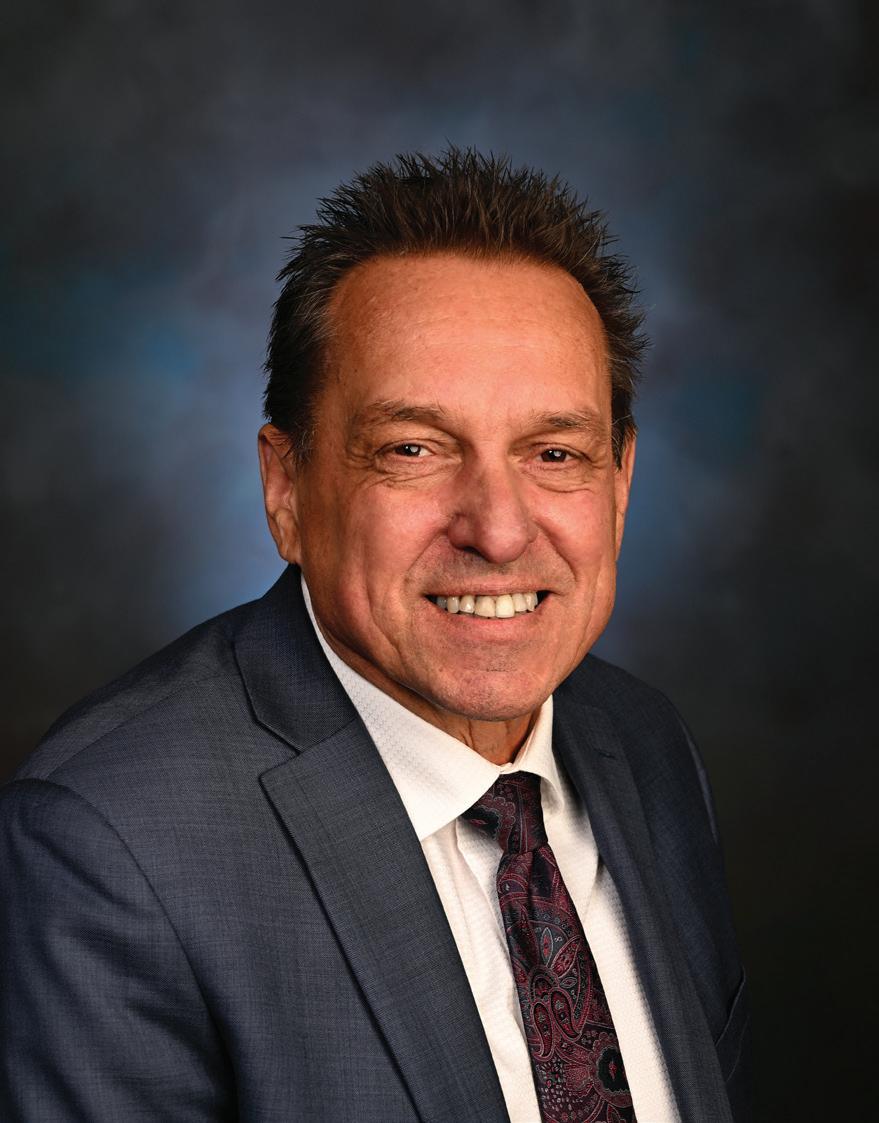
BEN FADEYIW Deputy Reeve, Ward 6 Councillor
bfadeyiw@md.bonnyville.ab.ca 780-826-1462
BEN FADEYIW Deputy Reeve, Ward 6 Councillor
bfadeyiw@md.bonnyville.ab.ca 780-826-1462
Welcome to the special Oil & Gas edition of Growing Your Business. In these pages you will find in-depth information about the oil & gas industry in the M.D. of Bonnyville and region.
This sector runs deep in the M.D. Generations of skilled, knowledgeable oil & gas employees have made their home here. The Cold Lake Oil Sands have helped shape our community. Innovation, hard work, and dedication live here — this newsletter helps highlight that.
From carbon capture to rig counts and all the business that goes with it, you will get a look at new technologies, ongoing partnerships, and what the next decade of oil exploration has in store for our area and our province.
The M.D. enjoys close working relationships with our industry partners achieved through our Industry Committee. Made up of Council, Administration, and representatives from oil companies, this committee gives us the opportunity to tackle things head on like road use agreements, future project planning, and other areas of concern.
We are fortunate to live in an area rich in resources. When you look at the M.D.’s tax base, according to 2025 numbers, 44.8 per cent of our tax revenues came from non-residential/other (linear) sources, with 36.8 per cent being attributed to machinery and equipment. These revenue sectors are largely related to the oil & gas industry.
Innovation and diversification is an important part of the M.D.’s Economic Development Department’s strategy and is also an important path in the energy sector. This newsletter allows us to shine a light on the local achievements, advances in business and technology, and how the oil & gas industry will continue to grow and support the municipality and the Province of Alberta.
We’re excited to see what the future has in store.
Ben Fadeyiw
Disclaimer: Generative AI has been used in portions of this publication.
Our role as a municipality is to support safe, well-planned development that benefits residents. As activity increases, we remain focused on:
• Supporting safe, responsible development that protects public safety and environmental stewardship.
• Planning for infrastructure impacts (roads, heavy haul routes, dust control, emergency response readiness, and community services).
Helping local and regional businesses connect to procurement opportunities, including Indigenous business participation.
• Sharing clear, practical information with residents — so families and businesses can understand what is driving local conditions.
The energy sector is changing, but it remains a major foundation of our regional economy. With strong early-year drilling in Bonnyville, continued oil sands optimization, emerging CCUS opportunities tied to the Cold Lake area, and a national push to expand LNG exports, the next decade is likely to bring both opportunity and the need for careful, community-focused planning.
When residents hear “GDP,” it can feel abstract. In municipal terms, energy GDP and economic impact show up in tangible ways, such as paycheques spent locally, local contracts and procurement, and an industrial tax base that supports municipal services.
In Western Canada, the first 90 days of the year often set the tone for drilling. Winter ground conditions and calendaryear capital programs mean a large share of wells are drilled early — especially across Alberta.
Industry tracking based on “Activity Date” (wells actually drilled, not just permits filed) shows 2026 is shaping up as one of the strongest early drilling starts in the last three years.
Bonnyville remains the most active drilling field centre in Western Canada in early 2026:
• Bonnyville field centre - 164 wells drilled early in 2026, compared with 124 early in 2025 (an increase of 40 wells year-over-year).
Alberta overall - 517 wells drilled early in 2026, compared with 344 early in 2025 (an increase of 173 wells).
These numbers matter as they represent work already executed — rigs contracted, crews hired, and equipment in the field. For our communities, higher drilling activity typically translates into more demand for: field services and maintenance, transportation and logistics,
• equipment rentals, fabrication, and construction,
• local hospitality and accommodation; and
• professional services (engineering, surveying, environmental, and more).
Early-year drilling momentum is being led by major operators. Tracking of top operators shows higher well counts year-over-year for several large companies, including Cenovus and Canadian Natural (CNRL), suggesting continued development across established producing regions.
A key theme across Canada’s oil sands is growth is increasingly coming from optimization projects — improving productivity at existing facilities by reducing downtime, increasing throughput, and debottlenecking systems — rather than relying only on major new greenfield developments.
Oil sands production averaging about 3.5 million barrels per day (b/d) in 2025 (a record annual average), is about five per cent higher than 2024.
The potential to exceed 3.9 million b/d by 2030, reflecting continued incremental gains driven largely by optimization.
A cost structure where many optimization-driven barrels can remain economical even in lower-price conditions (with reported 2025 half-cycle break-even across oil sands assets ranging widely, and an overall average cited around the high-$20s WTI).
Optimization and sustaining capital still translate into ongoing service work, procurement needs, and stable long-term operating activity — often with less disruption than large “boom-bust” construction cycles. This can include upgrading processing equipment, improving reliability to reduce downtime, and expanding supporting systems (gas handling, water treatment, and emissions controls).
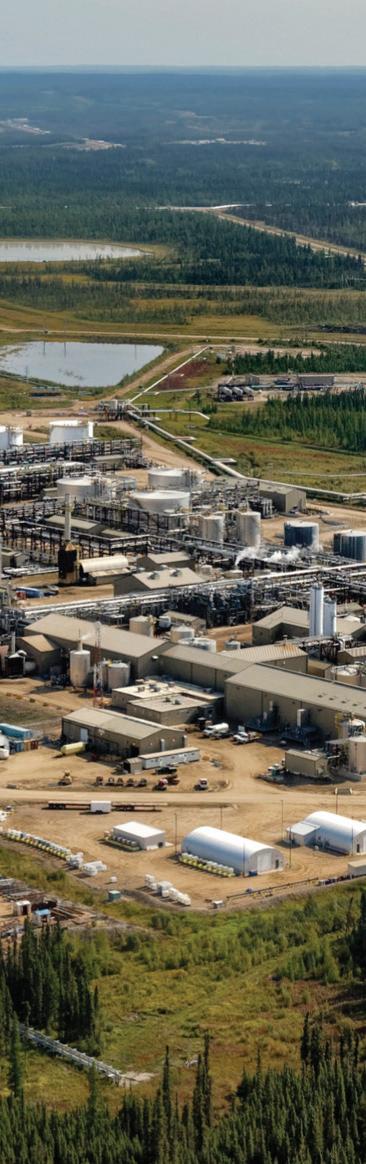
Cenovus is undertaking processing and compression upgrades near Bonnyville.
One example relevant to our region is a recently filed facility licence amendment with the Alberta Energy Regulator (AER), describing plans to modify an existing bitumen processing facility in the Fisher Field near Bonnyville. The amendment focuses on increasing processing capability and installing additional compression infrastructure.
The facility is described as a multi-well processing hub. The source reports substantial throughput capability, including:
Oil/bitumen: 42,927 m³/day
Water: 115,000 m³/day
It also highlights significant electric compression infrastructure, including:
• 25 electric gas compressors
Approximately 16 MW of installed compressor power (total).
For residents, the key takeaway is practical — these kinds of “behind-the-scenes” upgrades often indicate longer-term production confidence and can generate steady demand for regional contracting, maintenance, and specialized services.
Foster Creek is a nearby anchor asset.
Cenovus has also reported record production at its Foster Creek asset (approximately 220,000 barrels per day) and continued optimization work. The same source notes an enhanced sulphur recovery project expected online mid 2026, aimed at reducing operating costs by approximately 50 to 75 cents per barrel. While these details are company-specific, they reinforce a broader picture — northeastern Alberta remains a focus area for long-life asset investment.
Bonnyville’s energy economy in 2026 — strong drilling, local projects, and a 10-year outlook
Energy development has shaped the Municipal District of Bonnyville for decades, supporting families, local businesses, and the services residents rely on every day. As 2026 gets underway, new drilling and project updates point to a busy year across northeastern Alberta, alongside major conversations about market access, liquid natural gas (LNG) growth, and carbon capture and storage (CCS/CCUS).
This issue of Growing Your Business provides a plain-language snapshot of what current data is telling us about oil and gas activity relevant to the Bonnyville area, what it means locally, and what the next 10 years may look like.
Based on the activity and project signals above, here are the main “watch points” for the next decade:
• Continued optimization-driven growth - S&P Global analysis highlights that optimization projects have dominated oil sands growth for nearly a decade, and projects oil sands production could top 3.9 million barrels per day by 2030. It also notes that many optimization projects can remain economical — even in a downturn — because they spread costs over increased production.
• Price and investment cycles still matter - S&P Global also notes downside risk in a lower price path but suggests oil sands output may be resilient unless prices fall well below $40/b WTI and remain there for a prolonged period. For residents and businesses, this is a reminder that activity can vary year to year and planning and diversification remain important, even in strong periods.
• Infrastructure decisions will shape long-term stability - Pipeline capacity, domestic corridors, and LNG-linked demand can influence investment confidence. Faster and clearer major-project processes — paired with strong Indigenous and community engagement — can be a deciding factor in whether Canada attracts and keeps long-cycle capital.
Emissions performance will increasingly influence competitiveness - CCUS (and other emissions-reduction technologies) will be a key swing factor in the pace of future investment — especially for large, long-life assets. In our region, proximity to major in-situ and oil sands operations means these developments are not theoretical; they can translate into real construction, operations, and service opportunities.
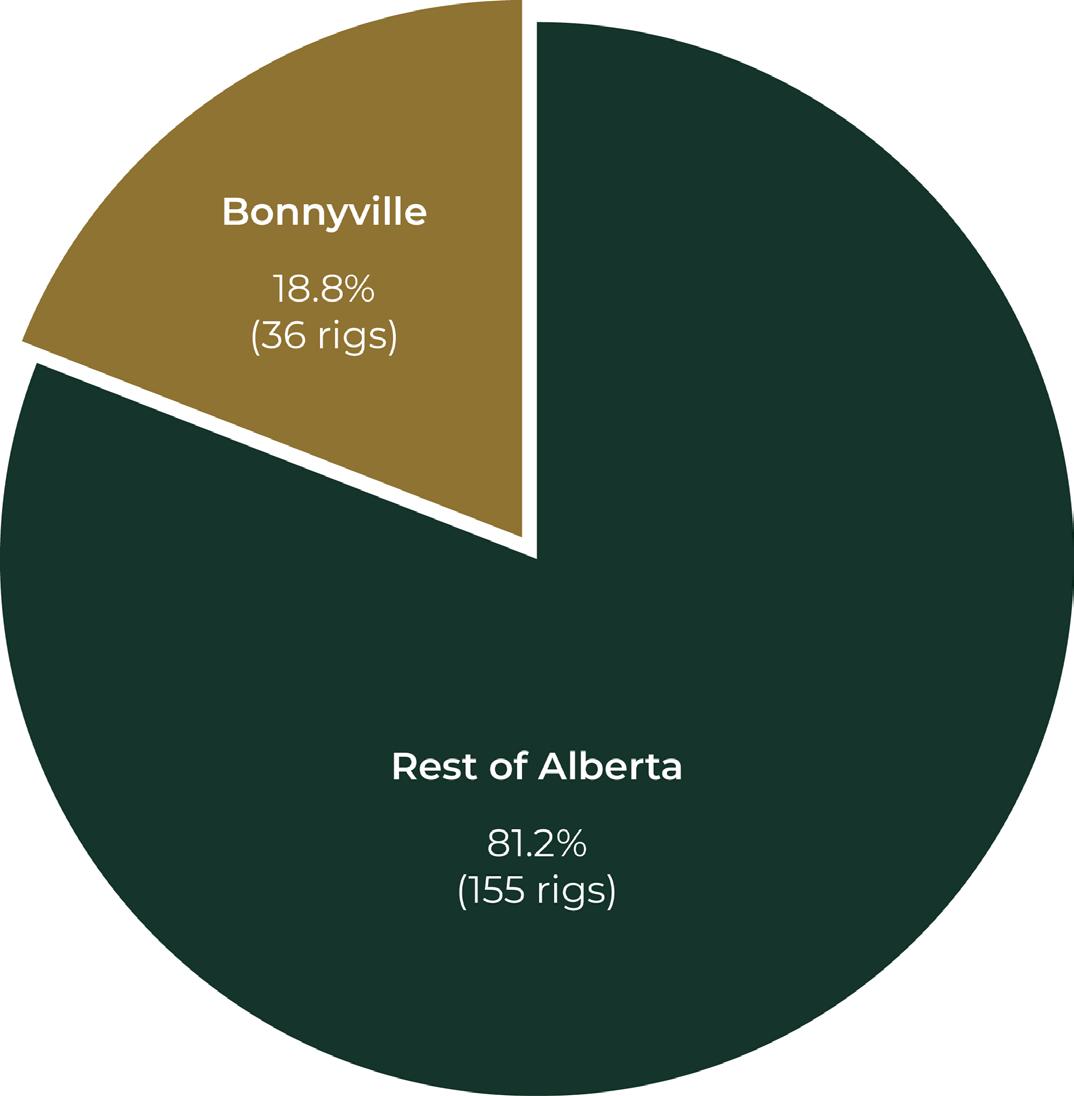
Rig activity remains strong in the M.D. of Bonnyville. Current reporting shows 36 active rigs in the Bonnyville field centre — about 19 per cent of Alberta’s 191 rigs. The remaining 155 rigs are spread across other Alberta centres, including Fort McMurray, Grande Prairie, Drayton Valley, Edmonton, Red Deer, Slave Lake, and Wainwright.
Bonnyville’s activity is led by Cenovus Energy Inc. (13 rigs) and Canadian Natural Resources Limited (11), with additional work by Baytex Energy Corp. (3), CALTEX TRILOGY INC. (3), Imperial Oil (2), Rubellite Energy (2), Strathcona Resources, Ltd. (1), and AYIK ENERGY CORP. (1). This level of activity supports jobs locally.
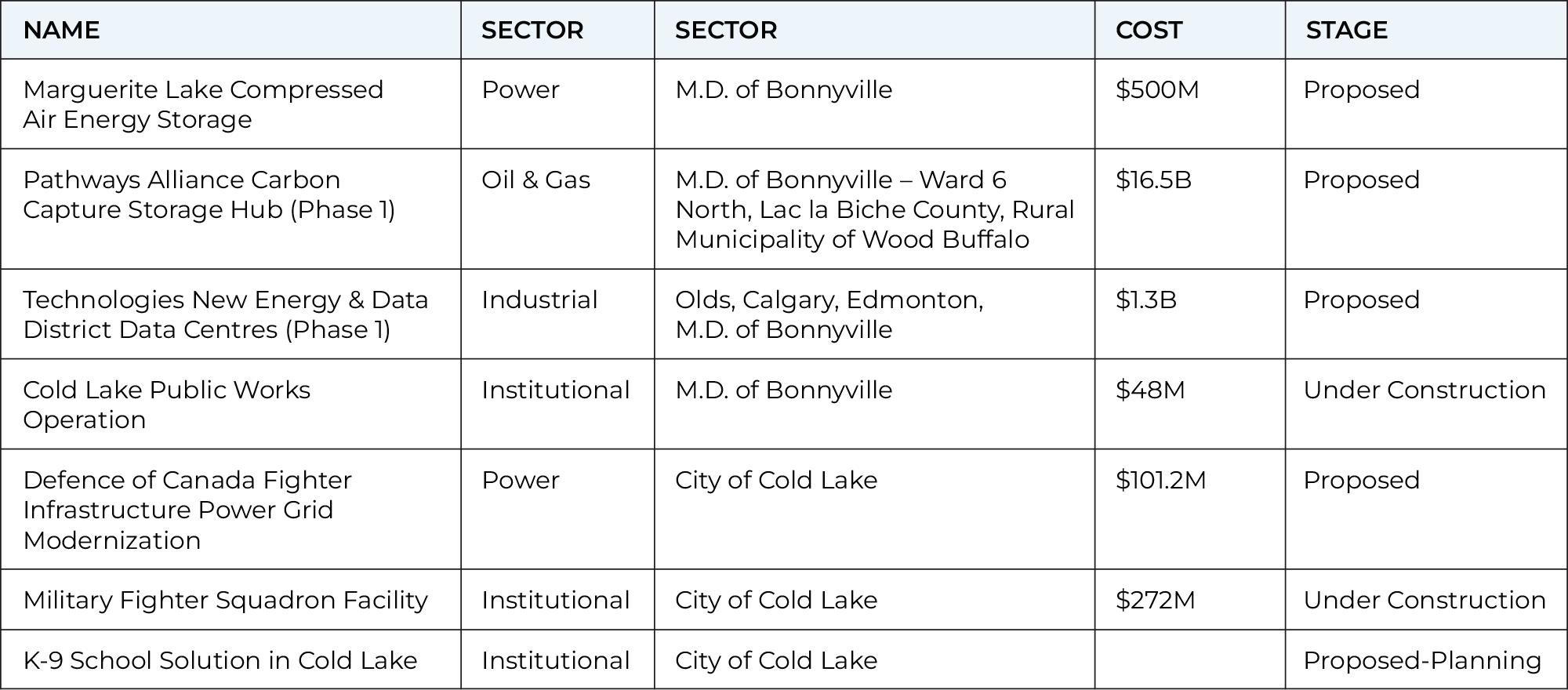

Carbon capture terminology matters for how the Oil Sands Alliance project is described and evaluated.
CCS (carbon capture and storage) refers to capturing CO₂ from oil sands facilities and transporting it for permanent underground storage (e.g., in deep saline formations).
CCUS (carbon capture, utilization, and storage) is broader. It includes CCS but also covers cases where captured CO₂ is used (for example, in enhanced oil recovery or to make products) and may or may not remain permanently stored depending on the pathway.
For an oil sands alliance-style regional system — where multiple operators connect to shared CO₂ transport and storage infrastructure — communications typically emphasize CCS when the primary outcome is verified, long-term sequestration. CCUS may be appropriate when the project scope includes utilization options or when discussing the wider carbon management value chain. Clear wording helps with stakeholder confidence, regulatory clarity, and eligibility under funding/credit programs that prioritize permanent storage.
CCS/CCUS — what it is, and why it is tied to
CCS technologies capture CO₂ from large emissions sources before it reaches the atmosphere, compresses it into liquid form, and transports it to storage deep underground. The Oil Sands Alliance describes captured CO₂ as typically stored between 1,000 and 2,000 metres beneath the Earth’s surface.
According to the Oil Sands Alliance’s CCS overview, the proposed Pathways Project would help build carbon capture and transportation infrastructure and could protect economic benefits for Canadians and generate more than 100,000 jobs and $16.5 billion in Gross Domestic Product (GDP) during construction. It should be noted the project is contingent on policy supports and regulatory approval.
Carbon Capture, Utilization, and Storage (CCUS) is a process that captures carbon dioxide (CO₂) from industrial facilities and either stores it safely deep underground or uses it in certain industrial applications.
Publicly discussed proposals referenced in a related January 2026 story indicate Pathways members have put forward the concept of a regional CCUS transportation network and pipeline. If developed and operational, this network would have the capacity to move captured CO₂ from multiple oil sands facilities to a proposed storage hub in the Cold Lake area for permanent underground storage.
For communities across the Bonnyville region, which is located near major oil sands and in-situ energy assets, CCUS infrastructure could support both environmental and economic objectives. In addition to helping existing facilities reduce emissions intensity, these projects can create new types of work, including engineering and environmental services, pipeline construction and maintenance, monitoring and measurement technologies, and long-term operations and stewardship roles.
The Oil Sands Alliance notes that, per the Global CCS Institute’s 2025 report, there are over 77 CCS projects in operation and 47 under construction worldwide.
It also points to Alberta’s Quest CCS facility, described as having capture capacity of over one million tonnes of CO₂ per year, with over nine million tonnes captured to date, with CO₂ injected more than 2,000 metres underground since beginning operations in 2015.
The Oil Sands Alliance Project (formerly known as Pathways Alliance) plans to develop a largescale carbon capture utilization and storage (CCUS) network in Alberta. The initiative involves collecting CO₂ from several oil sands operations and moving it by pipeline — more than 400 kilometres — to an underground storage site near Cold Lake.
The alliance includes five major companies in the oil sands sector — Canadian Natural (CNRL), Cenovus, ConocoPhillips Canada, Imperial, and Suncor. Together, these firms are pursuing technologies such as CCS to support energy production while reducing emissions.
“Pathways Alliance appreciates Premier Danielle Smith and Prime Minister Mark Carney’s leadership to create the conditions for growth of this important industry and its associated contribution to the Canadian economy,” said Kendall Dilling, President. “Canadian oil is an important economic driver for the country while supporting energy security in an uncertain world. To build on our country’s economic and energy future, we need additional pipeline capacity and market access. We must also ensure Canada has clear, competitive fiscal and regulatory frameworks, including carbon policies that protect Canadian competitiveness. Today, we’ve made important progress towards achieving our shared goal of growing the industry and the Canadian economy. We look forward to working with the Alberta and federal governments in the coming months on their shared objective of establishing Canada as a global energy superpower.” 1
Alberta’s Energy and Minerals Minister, Brian Jean, emphasized that northeastern Alberta remains central to the province’s economic strength, and noted oil sands production is currently around 3.5 million barrels a day. He highlighted the impact of the Trans Mountain Pipeline Expansion, which has enabled record levels of production and increased access to global markets, including Asia. Jean also discussed future infrastructure opportunities, such as a proposed pipeline to the northwest coast that would involve partnerships between private industry and Indigenous communities. He pointed to the Lakeland region’s role in supporting major initiatives, including the Pathways Alliance Carbon Capture project, which could represent billions in investment and create thousands of jobs if approved.2
Resources:
1 Statement on the Government of Canada and Government of Alberta Memorandum of Understanding | November 27, 2025, oilsandsalliance.ca/news/statement-on-the-governmentof-canada-and-government-of-alberta-memorandum-of-understanding/
2 Brian Jean Optimistic About Oil and Gas Industry in Northeastern Alberta | November 12, 2025, lakelandtoday.ca/lac-la-biche-news/brian-jean-optimistic-about-oil-and-gas-industry-innortheastern-alberta-11459752
Dalila Caparroz, P.Eng. | Project Development Engineer Federation Engineering
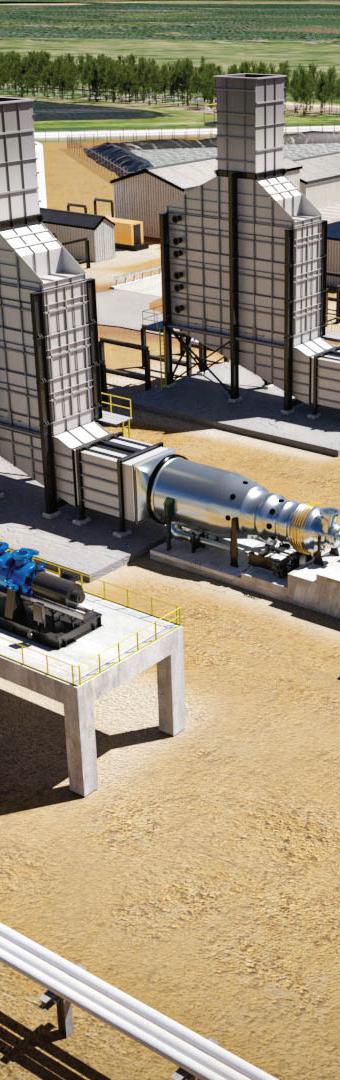
The Marguerite Lake Compressed Air Energy Storage (CAES) project was initiated by Federation Group, a local Bonnyvillebased company. Cache Power Corp., a wholly owned subsidiary of Federation, was created specifically to continue its development, and is now advancing the project. CAES is a technology that stores excess energy by compressing air in underground, solution-mined salt caverns, which can later be released to generate electricity when needed.
A strong emphasis has been placed on local partnerships. Cold Lake First Nations is a long-term project partner, and EllisDon has joined the project, contributing its experience in delivering major infrastructure projects across Canada.
Early site work is underway, with activities focused on access and fencing, reflecting steady progress on the ground. As progress continues, the project team is working closely with partners to create opportunities for local employment, contracting, and ongoing collaboration.
The project is located next to the Marguerite Lake Substation and is perfectly positioned to connect to Alberta’s electricity grid via existing infrastructure. Once operational, it will provide up to 48 hours of energy storage, supporting a more reliable, lower-emissions electricity system. It will also bring meaningful economic benefits, including significant investment, more than 200 construction jobs, and over 20 permanent positions.
As development continues, the project is advancing through key milestones and is expected to play an important role in the regional economy while strengthening local partnerships and contributing to Alberta’s energy future.
Reporting tied to Oil Sands Alliance members highlights the scale of energy supply chain spending in Canada.
Between 2019 and 2023, Pathways Alliance members spent an average of $20.3 billion per year in Canada’s supply chain, totalling more than $100 billion over five years.
In Alberta, this spending totalled $86 billion over the same five-year period —an average of $17.2 billion annually.
The same reporting highlights growing Indigenous participation.
From 2019 to 2023, Pathways Alliance members spent $23.8 billion with Indigenous-affiliated suppliers across Canada (an 81 per cent increase over five years).
In Alberta, Indigenous-affiliated spending totalled $21.9 billion over the same five-year period and rose to $6.2 billion in 2023, with over 40 per cent directed to construction, equipment, and maintenance services.
For the Bonnyville region — where many businesses support construction, maintenance, transportation, and industrial operations — these kinds of procurement trends help explain why local supplier readiness and strong relationships with Indigenous communities and businesses are increasingly central to regional economic development.
Global energy markets are changing, and LNG (liquefied natural gas) is a key part of the conversation. While Alberta does not host LNG export terminals, LNG development on the B.C. coast can influence Western Canadian gas demand, pipeline utilization, and broader investment confidence.
A 2026 outlook reported in Site Selection Magazine cites strong industrial demand expectations in Western Canada, particularly in Calgary and Vancouver. It references demand-toavailability ratios of:
• Calgary - 103% Vancouver - 81%
The M.D. of Bonnyville is pleased to recognize the Bonnyville Oil & Gas Show (BOAGS), hosted and promoted by the Bonnyville & District Chamber of Commerce, as a key biennial event that showcases the strength of the Lakeland energy economy.
The June 2025 event at the Bonnyville Centennial Centre, BOAGS brought together operators, service companies, and community partners in an environment built for practical, face-to-face connections and an opening ceremony that helps exhibitors and operators connect quickly.
BOAGS began in 2011 with a clear purpose: create a Northern Alberta show where local suppliers could meet decision-makers from the region’s producing companies, not just display products. That focus continues through BOAGS signature networking features such as Fast Lane Connections, designed to accelerate introductions between exhibitors and producer representatives.
With its growing reputation, BOAGS draws attendees from across Alberta and welcomes visitors and exhibitors from outside Canada. For residents, the show supports local spending, employment connections, and regional procurement opportunities. The next show is planned for 2027. Find more information at bonnyvilleoilandgasshow.com
Market access, pipelines, and domestic energy security — why it matters for Bonnyville
Even when production happens close to home, market access is national and global. The ability to move oil and gas to where it is needed — safely and competitively — affects the price producers receive and the stability of investment decisions.
A January 2026 commentary from the Oil Sands Alliance emphasized the economic role of the sector, noting:
Canada is the fourth-largest oil producer globally, with oil sands production around 3.5 million barrels per day.
• The industry employs approximately 450,000 people and contributes tens of billions of dollars annually in royalties and taxes.
• Oil and gas was responsible for over $150 billion of Canada’s exports in 2023.
The same source points to the economic impact of major infrastructure, citing a C.D. Howe Institute estimate that the Trans Mountain Expansion (completed in 2024) increases Canada’s GDP by 0.5%.
A separate analysis referenced by National Bank economists has raised the prospect of reactivating Line 2 of TC Energy’s Canadian Mainline system, which has been dormant since 2013. The argument is that rising electricity demand and energy security concerns may strengthen the case for leveraging existing infrastructure.
Key points include:
• Ontario electricity consumption could rise by about 75 per cent by 2050 compared with 2025 levels.
Gas delivered through a reopened Line 2 could generate electricity equivalent to roughly 20 per cent of Ontario’s peak power demand.
• The Mainline tolling agreement expires at the end of 2026, creating a possible decision window on future utilization.
For Alberta, including northeastern Alberta, proposals like this can signal potential for stronger domestic demand — not only exports — which may support longer-term investment stability.
Resources:
Birn, K., & Hwang, C. (2025, June 24). Canadian oil sands optimization projects to increase production, even in lower price track of 2025. S&P Global. spglobal.com/energy/en/news-research/blog/crude-oil/062425-canadian-oil-sandsoptimization-projects-to-increase-production-even-in-lower-price-track-of-2025
CBC News. (n.d.). Alberta’s reliance on oil revenues means that when prices fall, the economy follows. CBC News. Retrieved March 19, 2026, from cbc.ca/news/canada/edmonton/albertas-reliance-on-oil-revenues-means-that-whenprices-fall-the-economy-follows-9.7109134
CBC News. (n.d.). Canada poised to become “one of the largest suppliers of LNG in the world”: energy minister. CBC News. Retrieved March 19, 2026, from cbc.ca/news/politics/tim-hodgson-lng-exports-100-million-tonnes-9.7107519
Federation Group. (n.d.). Compressed Air Energy Storage (CAES) Project—Project Profile (Marguerite Lake/La Corey, Alberta) [PDF]. Retrieved March 19, 2026, from federationengineering.com/media/documents/Project%20Profile_CAES.pdf
Hinds, P. (2026, January 29). 2026 is shaping up as one of the strongest Western Canada drilling starts of the last three years. Oil Gas Leads. oilgasleads.com/2026-is-shaping-up-as-one-of-the-strongest-western-canada-drilling-starts-ofthe-last-three-years/
Hinds, P. (2026, March 5). Cenovus expands processing capacity at Foster Creek with compression upgrade. Oil Gas Leads. oilgasleads.com/cenovus-expands-processing-capacity-at-foster-creek-with-compression-upgrade/
Hinds, P. (2026, March 5). Reopening Line 2: A dormant pipeline that could reshape Canada’s East–West energy corridor. Oil Gas Leads. oilgasleads.com/reopening-line-2-a-dormant-pipeline-that-could-reshape-canadas-east-west-energy-corridor/
Oil Sands Alliance. (n.d.). Carbon capture and storage (CCS) – Pathways Project. Retrieved March 19, 2026, from oilsandsalliance.ca/pathways-project/carbon-capture-and-storage-ccs/
Oil Sands Alliance. (n.d.). More pipelines for a stronger Canada. Retrieved March 19, 2026, from oilsandsalliance.ca/ stories/more-pipelines-for-a-stronger-canada/
Oil Sands Alliance. (n.d.). Oil sands injects $20 billion into Canadian businesses. Retrieved March 19, 2026, from oilsandsalliance.ca/stories/oil-sands-injects-20-billion-into-canadian-businesses/
Site Selection Magazine. (n.d.). WESTERN CANADA: A healthy industrial outlook for 2026. Retrieved March 19, 2026, from siteselection.com/western-canada-a-healthy-industrial-outlook-for-2026/
Oil & Gas Leads. (n.d.). Rig Count Canada. Retrieved March 19, 2026, from oilgasleads.com/rig-count-canada/ majorprojects.alberta.ca
oilsandsalliance.ca/news/statement-in-response-to-the-federal-governments-major-projects-list/ lakelandtoday.ca/lac-la-biche-news/brian-jean-optimistic-about-oil-and-gas-industry-in-northeastern-alberta-1145975 bonnyvilleoilandgasshow.com
open.alberta.ca/dataset/4ac430ef-2cd0-469d-bf0d-e18a998043d0/resource/cc706f22-c519-4374-8fc2-278309bd686b/ download/tec-2026-provincial-construction-program.pdf
SCOTT KOVATCH Manager, Economic Development Community Investment Strategist
780-826-3171 ext. 2041 skovatch@md.bonnyville.ab.ca investmdbonnyville.com