10
14
18
28
The Certification Conversation
Beyond the Checklist
Packaging Impacts Sterile Processing
Disposable Medical Devices
CCI
ACHC
LIFE IN AND OUT OF THE OR
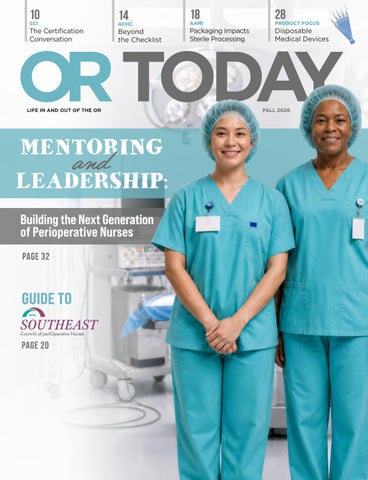
MENTORING
and
LEADERSHIP: Building the Next Generation of Perioperative Nurses PAGE 32
GUIDE TO PAGE 20
AAMI
PRODUCT FOCUS
FALL 2026
FALL 2026
CLEAN PROTECT COMPLY VERIFY
WHAT WE DO BEST
CLEANING CHEMISTRIES INSTRUMENT & SCOPE REPROCESSING CLEANING VERIFICATION DETERGENT DELIVERY
✔ PROTECTING PATIENTS
With effective instrument & scope cleaning solutions
✔ ✔
HELPING MEDICAL PROFESSIONALS With a comprehensive offering of user friendly, efficient products that promote compliance
DRIVING INNOVATION
With progressive technologies that solve problems and improve outcomes
1-800-537-8463 | WWW.RUHOF.COM 070618 AD-041 REV 2
What makes your OR inefficient? Most aren’t struggling with one big issue, it’s a dozen small breakdowns. Workforce, reprocessing, and equipment challenges compound fast.
Take our two-minute self-assessment to see where your OR stands.
surgical-solutions.com
CIRCULATING WATER COOLING VESTS REUSABLE, LIGHTWEIGHT SYSTEMS Provides continuous cooling for individuals working in hot ORs. CUSTOMIZABLE SETUP Choose from two different cooling vest styles, Adjustable and Fitted, and three different size cooling reservoirs. Easy-clean Nylon vests are available! MESS-FREE DESIGN The neoprene gasket seal and stainless steel compression latches keep the reservoir water-tight. Simply add frozen water bottles or ice and water, then you’re ready to go. 45-DAY FREE TRIAL PROGRAM Want to try before you buy? We offer a 45-day FREE trial program and special pricing for hospitals and other healthcare facilities! polarproducts.com 800.763.8423 polar@polarproducts.com
OR TODAY | Fall 2026
contents features
32
COVER STORY The future of perioperative nursing will depend on the next generation of OR nurses and nurse leaders who are prepared to carry the torch forward. One of the biggest keys to success will be the willingness of experienced OR nurses to mentor new nurses.
26
38
42
The disposable medical device market
Heart failure is a long-term condition that
Kiwifruit is a simple way to add naturally
is sizable and continuing to expand.
can be managed with the right care.
occurring vitamins and minerals to
MARKET ANALYSIS
HEALTH
NUTRITION
everyday routines.
OR Today (Vol. 26, Issue #4) Fall 2026 is published quarterly by MD Publishing, 1155 Senoia Road, Ste. 200 Tyrone, GA 30290. POSTMASTER: See address changes to OR Today at 1155 Senoia Road, Ste. 200 Tyrone, GA 30290. For subscription information visit www.ortoday.com. The information and opinions expressed in the articles and advertisements herein are those of the writer and/or advertiser, and not necessarily those of the publisher. Reproduction in whole or in part without written permission is prohibited. © 2026
ORTODAY.COM
Fall 2026 | OR TODAY
7
contents
PUBLISHER John M. Krieg
features
john@mdpublishing.com
VICE PRESIDENT Kristin Leavoy
kristin@mdpublishing.com
36
VICE PRESIDENT OF BUSINESS DEVELOPMENT
SPOTLIGHT ON Jane Flowers, MSN, RN, CNOR, CRCST
Jayme McKelvey
jayme@mdpublishing.com
EDITOR
$25
John Wallace
editor@mdpublishing.com
Gift C
ard
ART DEPARTMENT
TWEN TY DOLL -FIVE ARS
Karlee Gower Taylor Hayes Alicia Brown
DIRECTOR OF CLIENT SERVICES
43
44
Win a $25 gift card!
Garlic Parmesan Rice and Shrimp Skillet
OR TODAY CONTEST
Megan Cabot
RECIPE OF THE MONTH
SENIOR ACCOUNT EXECUTIVE Warren Kaufman
DIGITAL SERVICES Cindy Galindo
INDUSTRY INSIGHTS
10 CCI: The Certification Conversation: Building the Case for Employer Support 12 NIFA: Building the Specialty – Contributing to the Profession 14 ACHC: Beyond the Checklist: How Environmental Rounding Supports Safer, Survey-Ready Care 16 ASCA: ASCA Submits Comments on Medicare’s 2027 Proposed Payment Rule for ASCs 18 AAMI: How Packaging Design Impacts Sterile Processing 19 Webinar Explores Maintaining Normothermia Perioperatively 20 Guide to the Southeast Conference 22 News & Notes
Kennedy Krieg
EVENTS Kristin Leavoy Sydney Krieg
ACCOUNTING Diane Costea
WEBINARS Linda Hasluem
EDITORIAL BOARD
IN THE OR
Vangie Dennis, MSN, RN, CMLSO,
Disposable Medical Devices 26 M arket Analysis 28 Product Focus
CNOR, FAORN, FAAN Perioperative Consultants, LLC Justin Fontenot, DNP, RN, NEA-BC, FAADN
32 C over Story: Mentoring and Leadership: Building the Next Generation of Perioperative Nurses
36 Spotlight On: Jane Flowers, MSN, RN, CNOR, CRCST 38 Health 40 Fitness 41 EQ Factor 42 Nutrition MD PUBLISHING | OR TODAY MAGAZINE 43 Pinboard 1155 Senoia Rd., Ste 200 44 Recipe Tyrone, GA 30290
8
OR TODAY | Fall 2026
School of Medicine, New Orleans, LA Natalie Lind,
OUT OF THE OR
46 Index
Associate Professor, Tulane University
Education Director for the Healthcare Sterile Processing Association, HSPA Pat Thornton, MSM, RN, CNOR Perioperative Consultant, RNFA Dermatology Institute Dawn Whiteside, DNP, MSN, RN, CNOR, NPD-BC, RNFA, Director of Education, CCI
800.906.3373 Email: info@mdpublishing.com www.mdpublishing.com
Julie Williamson, BA Director of Communications, HSPA
TAKE THIS TO YOUR LEADER Your SPD Team is Doing Stellar Work. Your Tools? Not So Much. A new wrap has landed and it’s out of this world. SafeGuard Dry is ready to join the mission against wet packs.
Let’s beat the wet pack invasion together. Request a sample of SafeGuard Dry.
INDUSTRY INSIGHTS CCI
The Certification Conversation: Building the Case for Employer Support hat are your professional
W goals for next year? It is a
common question in performance reviews and career development meetings.
The answer often comes quickly: “I want to earn my certification,” or “I want to maintain the credential I have worked hard to achieve.” The harder question is whether to ask an employer to help pay for it. At CCI, we hear from perioperative nurses who assume the answer will be no before they ever ask. Some worry that reimbursement will sound like asking for a personal favor. Others are not sure whether their organization has a policy, a budget cycle or even a clear person to approach. That hesitation is understandable. Healthcare leaders are balancing staffing needs, financial pressure and the daily demands of busy perioperative departments. A request for certification support can feel uncomfortable when everyone is being asked to stretch limited resources. But the most productive certification conversations rarely begin with a request for funding. They begin with a discussion about value, growth and contributions to patient care. Specialty certification is more than passing an exam or adding credentials after a name. It reflects specialized knowledge and a commitment to excellence in perioperative practice. AORN recognizes certification as an important component of professional development and encourages employer support for certification and recertification activities (Association of periOperative Registered Nurses, 2023). That framing changes the conversation. Instead of asking only, “Will my employer pay for my certification?” nurses can explain how certification strengthens the team, supports departmental goals and contributes 10
OR TODAY | Fall 2026
to patient care. Certification can also give managers a clearer way to identify nurses who are prepared to mentor others, participate in quality work and support practice standards across the department. Most nurse leaders already understand that certification has value. What they are weighing is how to fund it alongside equipment needs, orientation programs, continuing education and vacant positions. That is why it helps to consider the request from a manager’s perspective before scheduling the meeting. Rather than focusing only on personal career benefit, nurses can connect certification to the work their department already needs them to do. That might include precepting new staff, supporting quality improvement projects, mentoring colleagues, helping standardize practice or preparing for future leadership opportunities. Consider a nurse who wants to become certified while also serving as a preceptor. Rather than focusing solely on exam reimbursement, the conversation might emphasize how certification could strengthen onboarding, support quality initiatives and contribute to staff development goals. Preparation is one of the biggest advantages a nurse can bring to the meeting. A nurse who simply asks the hospital to pay for certification may raise immediate questions about cost, timing and process. A nurse who raises certification during an annual development discussion, explains how it aligns with departmental priorities and already knows the costs, timeline and relevant policies give a manager less work to do. The request is the same. The preparation is what makes it easier to consider. Before assuming a case must be built from scratch, nurses should look for support that may already exist. Reviewing professional development policies, checking with human resources and talking with certified colleagues can help
clarify whether reimbursement is tied to exam completion, annual budgets, clinical ladder requirements or another process. Those details matter because they help nurses ask for the right type of support at the right time. This preparation also signals respect for the leader’s budget process and competing obligations. A nurse may learn, for example, that a request should be submitted before the start of a fiscal year, or that reimbursement requires proof of a passing score. National workforce guidance also reinforces the importance of ongoing development. The National Academies of Sciences, Engineering and Medicine report “The Future of Nursing 20202030: Charting a Path to Achieve Health Equity” says nurses need robust education, supportive work environments and autonomy to help meet current and future healthcare needs (National Academies of Sciences, Engineering and Medicine, 2021). Specialty certification is one way that nurses demonstrate continued learning while helping organizations develop knowledgeable, practice-ready teams. The American Nurses Credentialing Center also recognizes board certification as a way nurses demonstrate specialized knowledge and an ongoing commitment to professional growth. Together, these perspectives reinforce that certification supports both individual career development and a stronger nursing workforce (American Nurses Credentialing Center, 2025). Health systems are also rethinking certification support at the organization level. Instead of handling reimbursement as a one-time request, some facilities are looking for ways to plan certification expenses in advance. CCI’s Facility Purchasing Program offers a centralized way for health systems and facilities to purchase and manage vouchers for certification, exam retakes, educational materials and prep products. The program also allows administrators to monitor ORTODAY.COM
candidate progress and manage bulk registrations through a facility portal (Competency & Credentialing Institute, 2026). For departments, that type of planning can make certification support easier to budget. Even strong preparation does not guarantee an immediate yes. Budgets are complex, and a department managing vacancies or unexpected expenses may respond, “Not this year.” If that happens, nurses can ask what would need to change for certification support to be considered in the next budget cycle. They can also ask whether partial support, review materials, continuing education funds or future facility purchasing options might be available. Those follow-up questions show flexibility and keep certification on the leader’s radar. It also helps to leave the meeting with a clear next step. That may mean sending a short summary of the request, sharing the certification timeline, identifying the policy that applies or asking when budget planning begins. A thoughtful follow-up keeps the conversation professional and gives both the nurse and the manager something concrete to revisit. For nurses, the goal is not to pressure a manager into a quick answer. It is to make certification part of a larger conversation about professional development, team capability and patient care. For leaders, certification funding is not just an exam fee. It is an investment in the knowledge, confidence and professional accountability certified nurses bring back to their teams. The next time professional goals come up, nurses might consider asking a different question. Instead of starting with, “Will my employer pay for my certification?” try, “How can certification help me make an even greater contribution to
The art of innovation. The science of care.
REVOLUTIONIZE YOUR SPD
INDUSTRY INSIGHTS CCI
my team?” Framed in that way, reimbursement becomes one part of a shared investment in professional excellence, stronger perioperative teams and better patient care.
Sources 1. Association of periOperative Registered Nurses. “AORN Position Statement on Perioperative Nursing Certification.” AORN, 2023. https://www.aorn.org/docs/ default-source/guidelines-resources/position-statements/ education/position-statement-nursing-cert-050523. pdf?sfvrsn=695ea258_4 2. Competency & Credentialing Institute. “Facility Purchasing.” CCI, 2026. https://www.cc-institute.org/ credentials/facility-purchasing/ 3. National Academies of Sciences, Engineering, and Medicine. “The Future of Nursing 2020-2030: Charting a Path to Achieve Health Equity.” The National Academies Press, 2021. https://doi.org/10.17226/25982 4. American Nurses Credentialing Center. Certification. https://www.nursingworld.org/ancc/
Contact us for more torvanmedical.com
OPTIMIZE WORKFLOWS Versatile flushing
THE TPS FLUSHING PUMP For flexible endoscopes and lumened surgical instruments with once-a-month tubing change.
Customizable & ergonomic CLEANSTATIONS
Modular and ergonomic with unique features for staff safety and efficiency.
Smart leak tester
IFU-programmable, self-dosing sink
THE AUTOSINK
ORTODAY.COM
Get surgical instruments clean 98.2%1 the first time.
DOVIDEQ LEAKCONTROL The smart leak tester with appropriate pressurization for compliance in leak testing. 1. Prof. G. Della Mea (2000). Analysis of the cleaning process of metal surfaces with saturated solutions sodium bicarbonate containing solid sodium bicarbonate dispersions. Materials Engineering Department and Industrial Technologies, Trento University, Italy.
Fall 2026 | OR TODAY
11
INDUSTRY INSIGHTS NIFA
Building the Specialty – Contributing to the Profession By James X. Stobinski, Ph.D., RN, CNOR(E), CSSM(E), CNAMB(E) s a faculty member I serve
A on dissertation committees
for doctoral candidates in health administration and in nursing. At this stage of my career, it is my way of giving back and contributing to the profession. I recently served on a committee for a successful defense by a doctor of health administration (DHA) student at Central Michigan University. It was a fine study using qualitative methods, a case study approach comparing supply chain management (SCM) practices in rural versus metropolitan hospitals. Following the successful defense the committee had a long discussion with the candidate regarding the need for dissemination of the findings from this research. That discussion prompted me to reflect on our collective responsibility to contribute to our professions. As perioperative nurses, our professional identity is the way we understand and define ourselves as members of the nursing profession 12
OR TODAY | Fall 2026
and of the specialty of perioperative nursing. This professional identity encompasses our values and beliefs as well as the knowledge, skills and behaviors we exhibit in our work. Greenwood, in his classic work, detailed the characteristics of a profession. These include a specialized body of knowledge, formal education and training and a professional culture and identity. A service orientation is also a characteristic of a profession and that is the focus of this column – how we can contribute service to our profession. There are many ways that nurses can build the body of knowledge for the complex, technology intensive work of surgery. Volunteer service with member and professional organizations to include certification boards is one option to build the body of knowledge and establish the professional identity of perioperative nursing. Previously I have written of the benefits of nurses contributing to the Sigma Repository. Since that 2022 column, this repository has grown exponentially
to thousands of original works to include dissertations, DNP capstone manuscripts and “…undergraduate and graduate papers and projects of exceptional merit.” Individuals or schools of nursing may make contributions. The site is easy to navigate and search; downloads of complete papers are available without charge. With the Sigma Repository quality work can quickly become accessible and knowledge can be shared widely. This site can begin the diffusion of knowledge early in the career path of the best and brightest in our specialty. Publication in a peer-reviewed, indexed and credible journal builds the culture and identity of our specialty. The obvious publication choice for perioperative nurses is the AORN Journal which publishes a diversity of articles and maintains a distinct clinical focus. But, there are other journals worth considering. The Journal of PeriAnesthesia Nursing (JoPAN) provides “…original, peer-reviewed research…” and “… provides a forum for sharing proORTODAY.COM
INDUSTRY INSIGHTS NIFA
fessional knowledge and experience relating to management, ethics, legislation, research, and other aspects of perianesthesia nursing.” The Elsevier Journal - Perioperative Care and Operating Room Management (PCORM) provides another option. This is a multidisciplinary, international journal which publishes articles on, “…the administrative, economic, operational, safety, and quality aspects of surgical and procedural delivery in the ambulatory setting, perioperative services, and non-operating room environment.” This peer-reviewed and indexed journal publishes diverse clinical and research articles and has a substantial nursing and academic perspective. In the interest of full disclosure, I do serve as a reviewer for this publication. Although some of these journals, notably PCORM and JOPAN, have a research focus, there are ample opportunities for non-research articles. Writing for perioperative journals or volunteering to serve as a reviewer contributes to our profession and facilitates the process of knowledge dissemination which began this article. These are just a few examples of the opportunities available to perioperative nurses to enhance the practice of our specialty. James X. Stobinski, Ph.D., RN, CNOR(E), CSSM(E), CNAMB(E), is a faculty member at Central Michigan University and director of hospital and ASC surgical education relationships with National Institute of First Assisting (NIFA).
Sources 1. Greenwood, E. (1957). Attributes of a profession. Social Work, 2(3), 45-55. 2. Stobinski, JX. (2022, AUG). The Benefits of a Repository. OR Today Magazine. 3. Sigma Theta Tau International Honor Society of Nursing. (n.d.). Sigma repository. https://www.sigmarepository.org/ 4. ASPAN (American Society of PeriAnesthesia Nursing) (2026). Journal of PeriAnesthesia Nursing. https://www.aspan.org/JoPANOnline 5. Elsevier (2026). Perioperative Care and Operating Room Management. https://www.sciencedirect.com/journal/perioperative-care-and-operatingroom-management
ORTODAY.COM
PASSIVE WARMING SOLUTIONS FOR THE ENTIRE PERIOPERATIVE JOURNEY
Follows the patient through their surgical journey
PRE-OP INTRA-OP POST-OP
IMPROVED OUTCOMES ENHANCED COMFORT SUSTAINABLE SAVINGS
Scan or click for more information Contact Us at 800-284-4540
Fall 2026 | OR TODAY
13
INDUSTRY INSIGHTS ACHC
Beyond the Checklist: How Environmental Rounding Supports Safer, Survey-Ready Care By Rommie Johnson, MPH, PMP n a fast-paced surgical environment, it’s easy to become focused on the next patient, the next procedure or the next room turnover. Yet some of the greatest threats to patient safety aren’t dramatic emergencies, they’re the small environmental issues that quietly develop over time. A torn mattress seam. Rust forming on a piece of equipment. An expired supply tucked in the back of a cabinet. A ceiling tile stained from a past leak.
I
Individually, these findings may seem insignificant. Collectively, they tell an important story about the health of an organization’s safety culture. Environmental rounding is one of the simplest – and most effective – ways to identify these risks before they impact patient care. Routine rounding supports early risk identification, infection prevention and ongoing performance improvement.
Survey readiness and beyond For ambulatory surgery centers (ASCs), as for hospitals, the Centers for Medicare & Medicaid Services (CMS) Conditions for Coverage and accreditation standards establish expectations for maintaining a safe 14
OR TODAY | Fall 2026
environment of care. Specifically, CMS §416.44 (Environment) requires ASCs to provide a functional and safe environment for the provision of surgical services, while CMS §416.51 (Sanitary Environment) requires facilities to maintain an environment that minimizes the transmission of infection. Likewise, ACHC Standard 15.00.00 (Environment) and Standard 15.00.01 (Physical Environment) emphasize that organizations are responsible for maintaining safe, sanitary conditions that protect patients and staff. These requirements establish the foundation, but environmental rounding puts them into daily practice by shifting the question from “Will this pass a survey?” to “Could this create a risk for patients, staff or visitors?” That shift in mindset changes environmental rounding from an inspection into an opportunity for proactive risk reduction.
Small findings can signal larger problems During accreditation surveys, environmental findings are rarely single incidents. More often, they occur in clusters and reveal underlying process gaps that deserve attention. Examples of survey findings commonly identified during
environmental rounds include: • Torn OR table or stretcher mattresses • Rust or corrosion on patient care equipment • Damaged flooring or walls • Water-stained or damaged ceiling tiles • Expired medications or supplies • Cluttered storage rooms or corridors • Improperly stored sterile supplies • Doors that fail to latch or seal properly While these issues may appear minor, each has the potential to affect patient safety. Once a mattress surface is torn, it can no longer be effectively cleaned and disinfected, increasing the potential for cross-contamination. Likewise, rusted equipment may indicate compromised cleaning processes or delayed preventive maintenance. Even something as simple as hallway clutter can impede emergency response or create unnecessary safety hazards. Maintaining a hazard-free environment aligns with ACHC Standard 15.03.03 (Clean and Orderly Facility Maintenance), which requires organizations to ensure both the interior and exterior of the ASC remain safe for patients, staff and visitors.
ORTODAY.COM
INDUSTRY INSIGHTS ACHC
Routine rounding gives teams an opportunity to identify and correct these issues before they contribute to patient harm or become survey findings.
Environmental rounding should be multidisciplinary The most effective environmental rounds don’t focus solely on housekeeping or facilities. Instead, they bring together multiple perspectives from across teams that support surgical services. Perioperative nurses may recognize workflow barriers that affect patient care. Sterile processing professionals may identify storage or equipment concerns that threaten instrument integrity. Infection prevention personnel can recognize environmental conditions that increase transmission risks, while facilities staff can detect maintenance issues before they become operational problems. By involving representatives from different disciplines, organizations gain a more comprehensive awareness and understanding of their environment and create shared ownership for maintaining it. Environmental safety is everyone’s responsibility, not just leadership’s.
Turning observations into performance improvement Finding gaps in environmental management is only the first step. The greatest value of this rounding comes from using the observations to inform corrective actions and broader process improvements. Organizations should routinely analyze environmental findings to identify trends and recurring issues. Approach your data with curiosity. • Are damaged surfaces repeatedly identified in the same clinical areas? • Are expired supplies concentrated in specific storage locations? • Do recurring findings suggest the
ORTODAY.COM
need for additional staff education? • Are preventive maintenance schedules effectively reducing equipment issues? These patterns provide valuable data for the organization’s Quality Assessment and Performance Improvement (QAPI) Program, allowing leaders to prioritize improvement efforts based on actual risk rather than isolated observations.
Supporting infection every day CMS §416.51 and ACHC Standard 05.00.06 (Sanitary Environment) require ASCs to maintain conditions that minimize the sources and transmission of infection. Regular environmental rounding provides a structured opportunity to verify that these expectations are consistently met between surveys. Routine observations may identify: • Damaged surfaces that cannot be adequately disinfected. • Water intrusion or moisture that could support microbial growth. • Improper storage of sterile supplies. • Dust accumulation in patient care areas. • Housekeeping concerns that warrant immediate correction. Prompt correction reduces infection risk and reinforces expectations for environmental maintenance.
Building a culture of readiness Organizations often ask how frequently environmental rounds should occur. While neither CMS nor ACHC prescribes a specific schedule, the expectation is clear: Maintaining a safe environment is an ongoing responsibility, not an activity reserved for the period leading up to a survey. Whether conducted weekly, monthly or daily, rounds should occur consistently enough to identify hazards, assign corrective actions and
confirm resolution. A structured environmental rounding process should include: • A standardized rounding tool • Multidisciplinary participation • Documentation of findings • Assignment of corrective actions • Follow-up to verify completion • Trending of findings through the QAPI Program Perhaps most importantly, successful organizations encourage every staff member to identify and report environmental concerns without hesitation. When team members understand that speaking up contributes to safer care, not blame, environmental awareness becomes part of the organization’s culture.
More than a checklist Environmental rounding should never be viewed as simply preparing for the next accreditation survey. When rounds are consistent, multidisciplinary and followed through to resolution, they support a safer environment for patients, staff and visitors. Once that discipline is integrated into regular practice, survey readiness follows. By proactively identifying hazards, engaging multidisciplinary teams and using findings to drive meaningful performance improvement, environmental rounding becomes visible demonstration of an organization’s commitment to providing safe, high-quality surgical care – every patient, every procedure, every day. Rommie Johnson, MPH, PMP, is program director for ambulatory surgery centers, office-based surgery settings and clinical laboratories at Accreditation Commission for Health Care (ACHC), where he leads a team of talented staff and surveyors.
Fall 2026 | OR TODAY
15
INDUSTRY INSIGHTS ASCA
ASCA Submits Comments on Medicare’s 2027 Proposed Payment Rule for ASCs BY BILL PRENTICE he Ambulatory Surgery
T Center Association has
submitted comments on the Centers for Medicare & Medicaid Services’ 2027 proposed payment rule for ambulatory surgery centers and hospital outpatient departments, urging the agency to revise several policies that would affect ASC reimbursement. Among our primary concerns, we stated the proposal would inadequately reimburse many of the procedures commonly performed in surgery centers.
Payment updates We voiced support for CMS’ proposal to continue using the hospital market basket to calculate annual ASC payment updates. If the rule is finalized as proposed, ASC payments would increase by an average of 2.4% across all covered procedures. That figure combines a 3.2% hospital market basket update with the 0.8 percentage-point productivity adjustment required under the Affordable Care Act. However, payment changes would differ depending on the procedure and specialty. The hospital market basket was first adopted as a five-year test for ASC payment updates covering 2019 through 2023. CMS subsequently extended the policy through 2025 and again through 2026. In the 2027 proposed rule, the agency recommends another one-year extension while it continues evaluating outpatient utilization patterns and the migration of surgical procedures between hospitals and ASCs. 16
OR TODAY | Fall 2026
While ASCA welcomed the proposed extension, the association encouraged CMS to make the hospital market basket permanent or extend it for a longer period. To make its case, ASCA pointed out that a 2026 KNG Health Consulting study estimated that procedures performed in ASCs instead of HOPDs saved Medicare $27.9 billion in the years when rates were updated with the hospital market basket, including $5.1 billion in 2024 alone. We also emphasized that ASC expenses – including staffing and anesthesia stipends – continue to increase at a pace that well exceeds the hospital market basket update.
The ASC weight scalar ASCA urged CMS to address another key issue in the proposed rule: the 2027 ASC weight scalar. CMS proposed lowering the weight scalar from 0.872 in 2026 to 0.809 in 2027. The agency attributed the reduction largely to the increasing number of deviceintensive procedures being performed in ASCs, particularly orthopedic surgeries. Historically, the device portion of those procedures was excluded from the scalar so payment for implantable devices would remain aligned between the ASC payment system and the Hospital Outpatient Prospective Payment System. As more of these procedures move to ASCs, devicerelated spending now represents a larger share of overall ASC expenditures. The proposed scalar would substantially reduce reimbursement for many high-volume procedures. All 10 of the most frequently performed Medicare procedures in ASCs are
projected to receive lower payment than they do in 2026. At the same time, CMS proposed payment increases for most deviceintensive procedures, including total joint replacements. Reimbursement would rise 4% for total knee arthroplasty (CPT 27447), 5% for total hip arthroplasty (CPT 27130) and 7% for total shoulder arthroplasty (CPT 23472). We again called on CMS to eliminate the ASC weight scalar, arguing that Congress required it only during the first year after the ASC payment system was linked to the HOPD payment system nearly two decades ago. Continuing to apply the adjustment conflicts with CMS’ goal of encouraging care in lowercost outpatient settings.
Expansion of the ASC-CPL ASCA expressed support for CMS’ proposal to expand the ASC Covered Procedures List. For 2027, CMS proposed adding 618 procedures to the ASC-CPL. Those additions include all four hernia procedures ASCA previously requested – CPT codes 49596, 49616, 49617 and 49618 – which CMS also proposed removing from the inpatient-only list. In the comments, we supported CMS’ goal of allowing physicians to determine the most appropriate site of care for each patient. The association also encouraged the agency to eliminate the restriction that prevents ASCs from billing Medicare for unlisted procedure codes and pointed to reimbursement disparities that could continue to discourage migration of clinically appropriate procedures to surgery centers. In addition, ASCA supported ORTODAY.COM
INDUSTRY INSIGHTS ASCA
preserving physician discretion as CMS continues phasing out the IPO list but cautioned that eliminating the list entirely could have unintended consequences. CMS proposed removing 637 of the remaining 1,438 procedures from the IPO list in 2027, continuing the three-year phaseout policy finalized last year. The procedures proposed for removal span several clinical areas, including auditory, digestive, endocrine, respiratory, urinary, integumentary, maternity, mediastinum and diaphragm, male and female genital, and hemic and lymphatic systems. Although we support greater flexibility in determining the site of care, eliminating the IPO list means every procedure must be assigned to an ambulatory payment classification, even if it is unlikely to be performed in an outpatient setting. Projecting outpatient volume for those
ORTODAY.COM
procedures could inadvertently reduce payment rates for procedures already included on the ASC-CPL.
ASC Quality Reporting Program ASCA backed CMS’ proposal to remove ASC Quality Reporting Program measures that no longer provide meaningful value to patients or facilities. Specifically, the association supported CMS’ proposal to retire ASC-9, the Appropriate FollowUp Interval for Normal Colonoscopy in Average Risk Patients measure, beginning with the 2027 reporting period for the 2029 payment determination. ASCA agreed with CMS that ASC-12, the Facility 7-Day Risk-Standardized Hospital Visit Rate after Outpatient Colonoscopy measure, is more closely associated with patient outcomes. Although those issues were not addressed in the proposed rule, ASCA also renewed concerns about two existing quality measures. The association again asked CMS
to allow ASCs to administer the Outpatient and Ambulatory Surgery Consumer Assessment of Healthcare Providers and Systems Survey through a web-only format to reduce costs. It also reiterated concerns about ASC-21, the patient-reported outcome measure for elective total hip and knee arthroplasty, because the required data are maintained by physician practices rather than surgery centers. CMS did not propose any new ASCQR measures but requested feedback on whether ASC-4, the AllCause Hospital Transfer/Admission measure, should distinguish between transfers that occur before, during and after a procedure. According to CMS, stratifying the measure by phase of care could make it more useful across the broad range of services provided in ASCs. CMS is expected to release the 2027 final payment rule in early November.
Fall 2026 | OR TODAY
17
INDUSTRY INSIGHTS AAMI
How Packaging Design Impacts Sterile Processing terile packaging is
S engineered, tested and
validated long before it ever reaches a sterile processing department. However, according to Tanya Magaña, supplier excellence engineer for Packaging at Solventum, packaging engineers play a vital role in keeping patients safe. In a recent episode of AAMI’s Below the Hospital podcast, hosted by GarlandRhea Grisby Sr., Magaña discussed the disconnect between how packaging systems are tested and how they are handled in hospitals, and what that means for patient safety. Magaña explained that every sterile package must meet a fundamental requirement before it ever reaches a shelf. “All of our packages have to go through tests to ensure that they’re going to be able to maintain sterility and ensure patient safety through the life cycle of that package.” That fundamental requirement exists because the stakes of a breach are so severe. “The main requirement for the sterile package is to maintain sterility,” Magaña said. “We don’t want any breaches in our package, which then introduce bacteria, essentially microorganisms that can infect the patients.” Packaging materials must resist punctures and 18
OR TODAY | Fall 2026
seal degradation and must allow sterile processing staff to visually inspect for breaches before use. Despite that rigorous testing, Magaña pointed to a structural blind spot in how packaging systems are validated versus how they’re used. Packaging is typically tested at the master case level, or the brown shipping carton that arrives at a facility. Once inside the hospital, the case is broken down, and individual pouches, wraps, and trays are distributed and handled separately. This mismatch between test conditions and real-world handling, Magaña said, is where many failures likely originate. This understanding of the field has come largely through her work with AAMI’s Kilmer Innovations in Packaging (KiiP) group, where sterile processing professionals have shared their insights into how packaging is actually handled after it leaves manufacturing. Magaña chairs the KiiP Education committee, known as KiiP-Ed. Common problems arise when staff handle packaging in ways it was not meant to withstand. This can cause pinholes or create channels along seals. Dropped packages create additional uncertainty. For example, if an item has two layers of wrapping, does the entire package need to be reprocessed, or can sterility be preserved by removing only the outer
layer? Without consistent feedback to packaging engineers, Magaña said, these questions often remain unresolved. That communication gap, in Magaña’s view, is exactly what needs to be closed. “What I’ve been trying to do with an industry within KiiPEd is break down those silos between the different stakeholders, like packaging, nursing and SPD staff.” Grisby pushed the point further, noting that no two hospitals function alike, a lesson he said he’s absorbed over years of visiting different facilities. Even sister sites within the same health system can vary widely in layout, staffing, and workflow, meaning packaging engineers who base assumptions on a single site visit may still miss the full picture. Magaña also noted that feedback from sterile processing departments is essential to closing that gap. Without it, packaging engineers have no way to know where a system is falling short, or where an instructions-foruse document, training material or even an industry standard like ISO 11607 needs updating. For Magaña, that ongoing exchange between packaging design and hospital practice is what ultimately protects patient safety. Want more Below the Hospital? You can find more episodes and follow the show on YouTube, Spotify, and Apple Podcasts. ORTODAY.COM
INDUSTRY INSIGHTS
WEBINAR SERIES
webinar
Webinar Explores Maintaining Normothermia Perioperatively R Today recently partnered
O with Encompass to present
the webinar “Start Warm, Stay Warm: A Focus on Maintaining Normothermia Perioperatively,” offering perioperative professionals practical strategies for preventing unintended hypothermia and protecting patients throughout the surgical journey.
Kristy Warren, MSN Ed, RN, director of clinical resources at Encompass, led the educational presentation. Warren discussed the evolving outpatient surgical population, the continuing prevalence of hypothermia and the perioperative team’s role in maintaining normothermia. The program also explored Enhanced Recovery After Surgery, cutaneous heat loss, typical warming methods and ways to combine active and passive warming to achieve optimal patient outcomes. A central message was that maintaining normothermia requires attention throughout the perioperative process – not simply after a patient enters the operating room. “I would say my top tip is start warm, stay warm. I can’t stress it enough,” Warren said during the webinar’s question-and-answer session. She encouraged perioperative teams to examine their practices and implement strategies that help prevent additional patient heat loss. The Q&A also highlighted ORTODAY.COM
differences among warming approaches. Warren explained that cotton blankets are porous and allow heat to escape, while reflective warming blankets use the patient’s endogenous heat and reflect it back toward the body. She noted that reflective blankets are a passive warming method rather than an active warming method. When choosing between active and passive warming, Warren cautioned against a one-size-fits-all approach. Instead of considering procedure length alone, teams should evaluate factors including patient comorbidities, the amount of exposed surface area, surgical approach, positioning and warming constraints. She emphasized maximizing surface coverage and heat retention and considering prewarming when determining what is appropriate for an individual patient. Attendee feedback reinforced the value of the presentation. “Learning all the key points about the importance of maintaining that optimal temperature for the patient during surgery. A great refresher!” said Alyssa Hull, RN, UPMC Hanover Hospital. Janet Wilkinson, quality coordinator at Channel Islands Surgicenter, cited “the huge impact of maintaining normothermia on the overall wellness, healing and decreased infection rates” as her biggest takeaway. For Rilee Wilde, perioperative RN at Caribou Medical Center, the key lesson was “how quickly a patient’s core body temperature can drop, even while
positioning, prepping and draping.” Sheila Grumbach, interim executive leader at Diamond Healthcare Consulting, highlighted “differentiating the benefits of active vs. passive warming” as her primary takeaway. The discussion also addressed how facilities can evaluate new warming products. Warren recommended approaching a product evaluation as a small evidence-based practice project, gathering data on current practices as a control and comparing those results with data collected after implementation of a new product or process. She encouraged teams to consider objective measures, such as patient temperatures at different stages of care, along with subjective feedback from patients and staff. The webinar was eligible for one continuing education credit. OR Today is approved and licensed as a continuing education provider by the California Board of Registered Nursing, License No. 16623. The webinar earned an attendee rating of 4.2 out of 5. Mary Garces, nurse educator at St. Joseph Hospital in New Hampshire, was selected as the winner of an OR Today lunch bag. For those who missed the live presentation or want to revisit the discussion, “Start Warm, Stay Warm: A Focus on Maintaining Normothermia Perioperatively” is available on ORTodayWebinars.live.
Fall 2026 | OR TODAY
19
Guide to the southeast conference
Southeast Councils of periOperative Nurses Conference Delivers Education, Inspiration & Professional Connections or today’s perioperative
F professionals, staying
current requires more than earning continuing education credits. It means learning from peers, discovering emerging technologies, sharing best practices and building relationships that improve patient care long after a conference ends. The 2026 Southeast Councils of periOperative Nurses Conference set for Nov. 13-15 at the Hilton Beachfront Resort and Spa in Hilton Head Island, South Carolina, promises continuing education credits, networking and vendor solutions under one roof. The conference is supported by the Florida, Georgia, North Carolina, South Carolina, Louisiana and Tennessee Councils of periOperative Registered Nurses and coordinated by OR Today. The Southeast Councils of periOperative Nurses Conference plays an important role in professional development by bringing together perioperative nurses, sterile processing professionals, educators, administrators and industry partners. Whether attendees are looking to strengthen leadership skills, explore the latest products or gain practical solutions they can implement immediately, 20
OR TODAY | Fall 2026
this conference offer opportunities that extend far beyond the classroom. “The conversations, education and collaboration that happen here don’t end when the conference does – they carry back into operating rooms across the region and influence practice in meaningful ways,” Vangie Dennis, MSN, RN, CMLSO, CNOR, FAORN, FAAN, noted following the 2025 Southeast Councils of periOperative Nurses Conference. Attendee and exhibitor registration is open at southeastperiop.com. Attendee registration is $125 and includes: • Commemorative conference items sponsored by Pegasys Medical and CCI. • Welcome Reception on Friday, Nov. 13 • Educational sessions provide up to 9 CEUs through OR Today’s California Board of Registered Nursing provider approval, along with 6 continuing education credits approved by HSPA and CBSPD. • Exhibit hall access to leading healthcare organizations and vendors where attendees can gain additional knowledge while networking with perioperative experts. It is a win-win opportunity for vendors and attendees. • Breakfast on Saturday, Nov. 14 sponsored by Sanara MedTech.
• Lunch & Learn – a complimentary lunch for attendees that features 15-minute vendor-sponsored sessions that introduce attendees to resources for improved efficiency and patient care. It is supported by GOLD sponsors Peidmont, SteriCUBE, irrisept and Northeast Georgia Health System. • Exhibit Hall Reception on Saturday, Nov. 14 sponsored by CONMED. • Exhibit Hall Brunch on Sunday, Nov. 15 • This year’s theme, “The Power of Legacy and Advocacy: Advancing Excellence, Inspiring the Future,” reflects the conference’s focus on leadership, mentorship and advancing patient safety. Conference programming includes educational sessions on a variety of pertinent topics including: • Unifying nursing voices for nationwide impact • Collaborative mentorship models and leadership initiatives • Quantum caring leadership • Intersection of AI, patient safety and human judgment • Professionalism, ethics and moral direction The conference has developed a reputation for combining highquality education with a supportive,
collaborative environment. Stefania Allen, RN, a team lead in surgical services with the Mayo Clinic in Jacksonville, Florida, praised the conference and encouraged peers to attend in the future. When asked to describe Southeast Councils of periOperative Nurses Conference in three words she said, “Amazing! Invigorating! Educational!” Erica Turrentine, a surgical nurse navigator with Prisma Health Richland Hospital described the conference as “Awesome, informative and motivational.” “Leadership-oriented, friendly, inclusive,” are the three words that Sara Baker said best described the conference. She is an OR charge nurse at Central Prison Healthcare Center in Raleigh, North Carolina. When asked which sessions she found most valuable or engaging, Allen could not pick just one. “All of them. Felt it empowered you to be more and do more as an RN,” she said. While conference attendees certainly value continuing education credits, the opportunity to gather with peers from throughout the Southeast is another valuable reason to participate in the conference. Conversations with colleagues frequently lead to practical solutions for staffing challenges, workflow improvements and patient safety initiatives. Attendees have the opportunity to compare best practices with peers facing similar issues, while exhibitors provide hands-on demonstrations of the latest surgical products, technologies and services. For first-time attendees, conferences offer valuable mentoring opportunities and the chance to establish professional relationships that often continue throughout their careers. The DAISY Award, an international recognition program started in memory of J. Patrick Barnes, is another way Southeast Councils of periOperative Nurses Conference helps recognize attendees. The Barnes family ORTODAY.COM
experienced first-hand the difference nurses made in his care through clinical excellence and outstanding compassionate care. The family created The DAISY Award to express gratitude to nurses and to enable other patients, families and staff to thank and honor their special nurses. Please visit DAISYFoundation.org to learn more about how The DAISY Award recognizes extraordinary nurses.
Investing in Professional Growth As healthcare continues to evolve, perioperative professionals are expected to adapt quickly to new technologies, changing regulations and increasing patient expectations. The Southeast Councils of periOperative Nurses Conference provides an environment where education, innovation and collaboration come together to support those challenges. Whether the goal is earning continuing education credits, discovering new solutions, expanding a professional network or collecting fresh ideas to improve patient care, the conference delivers value for perioperative professionals across the country. For many attendees, the greatest takeaway isn’t simply what they learn during a presentation – it’s the relationships they build and the conversations that continue long after the conference concludes. “Events like this are the keystone of continuing education and collaboration between industry and perioperative nursing,” Allen said. “The information gained during these exchanges of information are truly a gift exchange. The medical industry grows and develops at astounding speed, and innovative nurses continue to work with our partners in industry to develop tools to make patients safer and our jobs more efficient.” Visit southeastperiop.com to register or for more information.
INDUSTRY INSIGHTS
news & notes
Supporting Warmth During NICU Transport and Beyond For newborns requiring neonatal intensive care, transport is more than movement from one location to another. It is a transition between care environments during a time when maintaining warmth, comfort and clinical stability is especially important. The Thermoflect Papoose is designed to provide passive warming support for infants during transport to the NICU and other neonatal care settings. Using heat-reflective technology, the Papoose helps retain the infant’s own body heat without requiring electricity, hoses, batteries or connections to powered equipment. This simple, equipment-free approach can be especially valuable during the periods between active warming interventions. Whether an infant is being moved from the delivery area, operating room, emergency department or another clinical setting, passive warming can help provide an additional layer of thermal support throughout the transport process. The Papoose is not intended to replace incubators, radiant warmers or other clinically indicated active warming systems. Instead, it can serve as a supplemental warming solution during transitions when powered equipment may not be immediately available, practical to move or continuously connected. For clinical teams, this flexibility can help support a more consistent approach to temperature management. Because the Papoose does not require setup or a power source, it can be quickly incorporated into established transport protocols without adding complicated equipment or significantly changing the workflow. Its design also supports the realities of neonatal care, where speed, access and simplicity matter. The goal is not to add another device for staff to manage, but to provide a practical warming layer that can travel with the infant from one point of care to the next. The Thermoflect Papoose is part of a broader family of patient-warming solutions designed to support temperature preservation throughout the perioperative journey. Before a procedure, Thermoflect passive warming products can be used while patients wait, are prepared for surgery or move between departments. During procedures, Thermoflect warming caps, gowns, blankets and adult leggings can complement existing temperature management protocols by covering areas of the body that may otherwise remain exposed.
22
OR TODAY | Fall 2026
Thermoflect Papoose is designed to provide passive warming support during neonatal transport.
Following surgery, these products can continue providing passive warming support during transport and recovery. This ability to support patients across multiple stages of care is one of the primary benefits of passive warming. Rather than being limited to a single room, device or power source, Thermoflect products can move with the patient. Thermoflect warming caps provide a simple option for helping reduce heat loss from the head and can often be introduced as an incremental change from traditional patient head coverings. Thermoflect gowns provide warming coverage while preserving clinical access. Thermoflect blankets offer flexibility across preoperative, transport, procedural and recovery settings. Thermoflect adult leggings help address the lower extremities when patient positioning or surgical access leaves those areas exposed. Together, these solutions allow facilities to select the appropriate level and location of passive warming based on the patient, procedure and care environment. For hospitals balancing clinical outcomes with workflow efficiency and economic considerations, Thermoflect passive warming offers a practical way to enhance existing warming practices without introducing capital equipment or additional power requirements. Thermoflect products may be used independently, layered together or incorporated alongside powered warming systems. From neonatal transport with the Thermoflect Papoose to warming support before, during and after surgery, the Thermoflect product family provides clinicians with flexible options designed to help preserve patient warmth across the entire perioperative journey. For more information visit: encompassgroup.com/encompass-thermoflect
ORTODAY.COM
Surgical Solutions Launches Perioperative Consulting Services Surgical Solutions launched Consulting Services earlier this year. The offering gives hospital and ASC leaders vendorneutral, project-based expertise for a defined initiative, without the commitment of a long-term on-site engagement. Consulting is one of three ways hospitals and ASCs can work with Surgical Solutions, alongside short-term stabilization projects and long-term partnership projects. Where those two options involve an onsite footprint, consulting delivers targeted expert guidance for a specific initiative, without embedding a team on-site. “Every hospital we work with is under pressure to do more with less, and that pressure does not always come with the runway for a long engagement,” said Kirk Leonardelli, CEO of Surgical Solutions. “Consulting gives healthcare facilities a way to get expert, vendor-neutral guidance built to address the problems they are facing.” Every engagement starts with an on-site assessment. The Surgical Solutions team evaluates workflow, labor, compliance posture and the relationships between departments that depend on one another to function well, such as sterile processing, endoscopy and the OR.
From there, the team delivers a prioritized roadmap ranked by urgency and impact, not a lengthy report that sits unused. Facilities leave the engagement with specific next steps, not just findings. “Hospitals and ASCs rarely have the luxury of a slow fix. A late first case, a compliance finding or a labor gap in sterile processing does not wait for a quarterly planning cycle,” said Elizabeth “Betty” Casey, MSN, RN, CNOR, CRCST, CHL, senior vice president of clinical operations at Surgical Solutions. “This offering puts experienced hands on the floor quickly, with a clear plan the department can act on right away, and our support the entire time.” Surgical Solutions has no product or platform to sell. Recommendations come from department need, not a sales agenda. The company also covers sterile processing, endoscopy and the OR together, rather than specializing in only one side of the perioperative relationship, a common limitation among consulting firms in this space. Hospitals interested in Consulting Services can schedule a free, no-obligation consultation at surgical-solutions.com.
Next-Generation Reusable SpO₂ Clip Sensor Receives FDA 510(K) Clearance Royal Philips recently announced FDA 510(k) clearance of its next-generation reusable Philips SpO2 clip sensor. A press releases states that the clearance reinforces “the company’s ongoing commitment to providing clinicians with trusted oxygen saturation measurements that support confident care for every patient.” The enhanced sensor incorporates internal optical refinements to further improve signal quality and measurement consistency, supporting reliable SpO2 measurements across diverse patient populations and clinical conditions. In desaturation studies, the reusable clip sensor achieved an Accuracy Root Mean Square (ARMS) value of 1.6%, which is nearly twice as accurate as the 3% level recommended by ISO and recognized by the FDA. The sensor also demonstrated consistent performance across a broad range of skin tones, with accuracy varying by less than 0.5% between the light and dark skin pigmentation groups evaluated within an SpO2 range of 85-100%. These results reflect Philips’ rigorous approach to sensor development and validation, with the company’s SpO2 sensor portfolio consistently meeting
ORTODAY.COM
applicable regulatory performance expectations. The FDA-cleared reusable clip sensor is backed by Philips’ comprehensive pulse oximetry validation program, which evaluates performance across diverse patient populations – including varying skin tones – and a broad range of physiological and clinical conditions. Philips’ validation practices align with evolving FDA recommendations and applicable international standards, including those established by the International Organization for Standardization (ISO) and the International Electrotechnical Commission (IEC). Philips continues to collaborate with clinicians, researchers, regulators and standards organizations to strengthen the science behind pulse oximetry and support the continued evolution of validation practices. Through ongoing investment in research, innovation and clinical evidence, Philips is helping advance pulse oximetry that clinicians can trust to perform consistently across diverse skin tones and patient physiological conditions. The FDA-cleared reusable Philips SpO2 clip sensor will become available in select markets across the globe later this year.
Fall 2026 | OR TODAY
23
INDUSTRY INSIGHTS
news & notes
OTTAVA Robotic Surgical System Receives FDA Market Authorization Johnson & Johnson has announced that the U.S. Food and Drug Administration (FDA) has granted De Novo authorization for the OTTAVA Robotic Surgical System, the world’s first table-integrated soft tissue robotic system. The system received marketing authorization for multiple procedures in general surgery, including Roux-en-Y gastric bypass, gastrectomy, cholecystectomy, splenectomy, gastric sleeve, small bowel resection, appendectomy, lysis of adhesions, fundoplication and hiatal hernia repair. Johnson & Johnson will commercially launch the OTTAVA system with select customers in the U.S., focusing on early customer success while working in parallel to advance into additional indications and regulatory jurisdictions over time. A U.S. clinical trial for OTTAVA in inguinal hernia procedures is ongoing. “OTTAVA is purpose-built to advance surgery today and where it goes next. Its unique architecture, automated features, next-generation robotic surgical instruments and connection to an open digital ecosystem create a foundation to fit seamlessly into operating rooms today – and support more digitally enabled, data-driven surgery in the future,” a press release states. Hospitals and clinical teams are leading efforts to advance surgical care while balancing the realities of infrastructure, OR efficiency, data access and a growing demand for roboticassisted surgery. OTTAVA is designed to complement these efforts, with features intended to help enhance OR capacity, streamline clinical workflows, improve visibility into surgical data and support broader access to robotic-assisted surgical care. First-generation system features include: • Smallest multi-port soft-tissue robotic system footprint: The novel architecture integrates robotic arms into the OR table and occupies 30-50% less space than traditional
24
OR TODAY | Fall 2026
boom- and cart-mounted systems, creating additional room for surgeons and clinical teams to move, communicate and care for patients, with the potential to support more streamlined clinical workflows and experiences. • Built for automation: Sophisticated software controls coordinate the four table-integrated arms, enabling automated, pre-defined procedural poses to simplify setup and breakdown. Twin motion, which is the synchronized motion of the table and arms, provides seamless patient repositioning and multi-quadrant access to the anatomy with limited intraoperative adjustments. • Instrumentation optimized for robotic surgery: Based on generations of clinical experience in open and laparoscopic surgery, the OTTAVA instrumentation portfolio has been reimagined to drive innovation for the more commonly used surgical tools. For instance, the system features a two-in-one needle driver designed to reduce unintended suture cutting, and monopolar curved scissors for consistent and complete cuts. • Connected to the Polyphonic digital ecosystem: Polyphonic for OTTAVA is a secure digital solution designed to support surgical teams throughout the OTTAVA experience – bringing learning, media and data-driven insights together to support continuous improvement across the surgical journey. • Backed by Johnson & Johnson’s legacy in continuous education: OTTAVA education is designed to support the learning journey for new and experienced robotic surgeons. Developed in collaboration with clinicians, educational experts, and surgical societies OTTAVA education will support safe adoption and consistent performance through virtual, hands-on and immersive training.
ORTODAY.COM
SteriBest Sterilization Tray System Receives FDA 510(k) Clearance Mastel Surgical, a Pacific Surgical company, has announced that the SteriBest Sterilization Tray System has received FDA 510(k) clearance for use with a 4-minute, 270°F (132°C) pre-vacuum steam sterilization cycle. Designed to help organize, protect, store and transport delicate instruments throughout the reprocessing workflow, the SteriBest Sterilization Tray System provides healthcare facilities with a practical tray solution for high-value instruments requiring careful handling. Manufactured in the USA, the system is available in multiple sizes and configurations, including options with pin mats, silicone bars
and specialty holders for ophthalmic and micro-instruments. Key features include durable Ultem polymer construction, transparent lids for easy identification, stackable design for efficient storage and slotted lids and bases designed to facilitate circulation and rapid drying. The SteriBest Sterilization Tray System is designed for use in surgery and sterile processing environments seeking a reliable tray solution for microsurgical and ophthalmic instruments, as well as other delicate medical devices. SteriBest Sterilization Trays are also available for manufacturers seeking private-label sterilization tray solutions.
Enjoy the magic of Orlando while soaring to new heights with world-class ASC education and networking.
Register Now To Get the Early Bird Discount! ascassociation.org/ASCA2027 ORTODAY.COM
Fall 2026 | OR TODAY
25
IN THE OR
market analysis
Reports Forecast Expanding Disposable Medical Devices Market Staff report rom gowns and drapes to
F catheters, staplers and
single-use surgical instruments, disposable medical devices are embedded throughout perioperative care. For nurses working in the operating room, the expanding market is visible in everyday practice: more procedure-specific packs, more single-use technologies and more discussion about whether convenience, infection prevention and efficiency justify the cost and environmental impact. From gowns and drapes to catheters, staplers and single-use surgical instruments, disposable medical devices are embedded throughout perioperative care. For nurses working in the operating room, the expanding market is visible in everyday practice: more procedure-specific packs, more singleuse technologies and more discussion about whether convenience, infection prevention and efficiency justify the cost and environmental impact. Market researchers expect that demand to continue growing, fueled by rising procedure volumes, infection prevention priorities, chronic disease and an aging population. At the same time, sustainability concerns and pressure on hospital budgets are shaping how manufacturers develop products and how health systems evaluate them. For perioperative nurses, those trends 26
OR TODAY | Fall 2026
make participation in product selection, utilization reviews and value analysis increasingly important. Although market research firms use somewhat different definitions and methodologies, their forecasts point in the same direction: The disposable medical device market is sizable and continuing to expand. Fortune Business Insights valued the global single-use/disposable medical devices market at $176.1 billion in 2025 and projects it will increase from $184.8 billion in 2026 to $286.5 billion by 2034, representing a compound annual growth rate of 5.6%. The firm said North America accounted for 31.8% of the global market in 2025. The firm’s definition encompasses products familiar to OR teams, including gloves, masks, gowns, drapes, syringes, IV sets, catheters, single-use surgical instruments and single-use endoscopes. It describes those products as “deeply embedded in infection prevention protocols” as well as OR workflows and routine patient care. A February 2026 report from Precedence Research, distributed through Yahoo Finance, offers a similar growth outlook but a somewhat larger long-term projection. It estimated the market at $177.26 billion in 2025 and $187.51 billion in 2026, with the total reaching approximately $310.92 billion by 2035 at a 5.78% compound annual growth rate. Precedence Research attributed growth in part to chronic disease,
surgical procedures, outpatient care, patient safety and home health care. The report described singleuse devices as offering benefits that include “preventing patient-to-patient contamination” and reducing the need for cleaning between uses. For perioperative professionals, one of the most relevant findings is the role surgery plays in market demand. Fortune Business Insights reported that general surgery was the leading application for single-use devices in 2025 and is expected to represent 30.3% of the market in 2026. The firm linked that position to the multiple layers of disposable protective and functional products used during surgery, as well as growth in minimally invasive and day-case procedures. Hospitals, meanwhile, are expected to account for 64.6% of market demand in 2026. Precedence Research similarly estimated that general surgery represented 35% of the market in 2025 and hospitals approximately 65%. It also identified catheters and tubing systems as a rapidly growing product category, forecasting a 7.1% compound annual growth rate from 2026 through 2035. Those statistics illustrate why perioperative nurses can have considerable influence over disposabledevice spending. A product decision repeated across hundreds or thousands of surgical procedures can have significant consequences for supply expense, setup time and waste. ORTODAY.COM
IN THE OR
market analysis MarketsandMarkets valued the global disposable medical device market at $109.49 billion in 2024 and $113.95 billion in 2025. Its forecast calls for the market to reach $144.85 billion by 2030, reflecting a compound annual growth rate of 4.9%. The firm identifies infection prevention and control of crosscontamination as major market drivers, noting the importance of single-use products in environments including operating rooms, intensive care units and outpatient centers. It said disposable products can reduce the infection-control burden associated with cleaning and sterilizing reusable devices. MarketsandMarkets also expects drug-delivery devices to post the highest growth among device categories through 2030 as prefilled syringes, autoinjectors and other single-use delivery systems become increasingly common. Technological developments in disposable sensors, wearable devices and monitoring systems are creating additional opportunities. The market, in other words, is expanding beyond basic commodity products. Fortune Business Insights identified a shift toward “premium, procedure-specific kits” and more complex single-use devices as a notable industry trend. Manufacturers are increasingly packaging items such as gowns, drapes, suction lines and small instruments into procedurespecific configurations.
Growth in disposables also means growth in waste. MarketsandMarkets identifies environmental concerns and regulatory scrutiny of medical waste as significant challenges for manufacturers and health systems. The firm points to increasing interest in biodegradable, recyclable and bio-based materials as manufacturers look for ways to reduce dependence on conventional petroleum-based plastics. Fortune Business Insights similarly said plastic waste, carbon emissions and disposal requirements may constrain market growth. At the same time, it sees sustainability-focused product design and recycling initiatives as potential areas of innovation. Precedence Research reported that plastics accounted for approximately 65% of the disposable-device market in 2025 but projected biodegradable materials to grow at an 8.5% compound annual growth rate during its forecast period. The global market forecasts suggest disposable medical devices will remain a growing part of healthcare and perioperative practice. For OR nurses, the market’s expansion is a reason to be actively involved in determining which products deliver meaningful value – through patient safety, reliable performance, efficient workflow and responsible use of hospital resources.
OR Problems? AIV is Here to Help! AIV is your one stop shop for infusion pump support and power solutions.
Fixed & Flat Rate Repairs
UL 1363A Recognized
Certified Refurbished Pumps
Relocatable, Locking Mount
888.656.0755 aivsales@aiv-inc.com The manufacturers listed are the holders of their respective names and/or trademarks, and are not to be taken as an endorsement or affiliation with AIV, Inc. 803B
ORTODAY.COM
Fall 2026 | OR TODAY
27
IN OF THE OR
product focus
Cincinnati Surgical
Swann Morton Safety Scalpels The Swann Morton retracting guard safety scalpel combines retracting guard technology with the trusted quality of the world-leading surgical blade manufacturer. Engineered with the trademark Swann Morton blue handle and ring pattern, this scalpel improves sharps safety in every operating room setting. The scalpel is ideal for tissue separation and other procedures requiring a sharp surgical blade for precise puncturing and cutting. Easy one-handed activation helps your facility meet OSHA and federal safety requirements. This safety scalpel is available in blade sizes #10 to #24, so there is an option for most surgical procedures. Swann Morton blades and scalpels are manufactured to ISO 13485, ISO 14001 and ISO 50001 standards with an open edge grinding technology for a better tactile feel. All blades go through 200% visual inspection, meaning there are no defects in the finished product. Swann Morton blades and scalpels are recognized for their precision, consistency, reliability and durability.
Henry Schein Brand
Topical Skin Adhesive – OCTYL Designed for a wide range of surgical care settings and procedures, Henry Schein Brand Topical Skin Adhesive – OCTYL features a clear, sterile formulation made with 2-octyl cyanoacrylate. Its rapid set time, high tensile strength and flexibility without a plasticizer support efficient skin closure while providing an effective microbial barrier over stitches, sutures or staples. The 0.5 mL clear plastic ampule is designed to remain usable without solidifying the formulation, helping clinicians utilize the full volume. Its ergonomic design promotes comfortable handling and controlled, targeted application when precision matters.
28
OR TODAY | Fall 2026
ORTODAY.COM
IN THE OR
product focus
Cardinal Health
Sustainable Technologies The National Academy of Medicine (NAM) reports that the healthcare sector is a significant contributor to climate change, accounting for 8.5% of U.S. emissions, a notable driver being single-use (disposable) medical devices. Many hospitals and surgery centers are turning to reprocessing – the process of cleaning, testing and disinfecting and/ or sterilizing certain single-use medical devices, allowing them to be safely resold for patient use. Third-party reprocessing is an FDA-regulated practice that helps hospitals reduce cost, waste and emissions, while strengthening their supply chain. Cardinal Health’s Sustainable Technologies business
ORTODAY.COM
is a leading provider of single-use device collections and reprocessing services in the U.S. Sustainable Technologies reprocesses a wide array of products, from the patient care floor to the operating room, to help ensure that reprocessing maximizes savings without compromising patient care or safety. Healthcare providers that leverage Sustainable Technologies use collection containers to safely collect used products for reprocessing. When the devices arrive at the reprocessing site, they undergo inspection and sorting. Next, a high-level disinfection or sterilization process is utilized to thoroughly clean devices. Finally, they are tested and inspected before returning to the supply chain for sales and distribution.
Fall 2026 | OR TODAY
29
IN OF THE OR
product focus
Cardinal Health
Kendall DL Multi System The Cardinal Health Kendall DL Multi System is a first-of-its-kind multi-parameter, single-patient use monitoring cable and lead wire system that enables the continuous monitoring of cardiac activity, blood oxygen level and temperature with one point of connection. The Kendall DL Multi System is designed to travel with the patient from admission to discharge for smooth transport. It helps improve clinician workflows, supports reliable monitoring and helps optimize outcomes. As a single-patient use product, the system helps reduce cross-contamination related to reusable lead wires for the monitoring of cardiac activity.1 This helps lower the chance of
30
OR TODAY | Fall 2026
infection and the need for additional hospital days or readmissions.2 Single-patient use cables also streamline cleaning and preparation of monitoring equipment for transport out of the OR by 82% and reduce time connecting and disconnecting monitoring devices while preparing patients for transport.3 The Cardinal Health Kendall DL Multi System is available for health systems in the U.S. 1. Brown DQ. Disposable vs reusable electrocardiography leads in development of and cross contamination by resistant bacteria. Crit Care Nurse. 2011 Jun;31(3):62 8. doi: 10.4037/ccn2011874. PMID: 21632593. 2. Saunders R, Hansson Hedblom A. The economic implications of introducing single patient ECG systems for cardiac surgery in Australia. Clinicoecon Outcomes Res. 2021 Aug 13;13:727-735. doi: 10.2147/CEOR.S232527 3. Cardinal Health Data on File – Kendall DL™ Multiparameter Monitoring System Timed Study, August 2024
ORTODAY.COM
COVER STORY
MENTORING
and
LEADERSHIP: Building the Next Generation of Perioperative Nurses By Don Sadler he long-term future of
T perioperative nursing will
depend on building up the next generation of OR nurses and nurse leaders who are prepared to carry the torch forward. One of the biggest keys to success will be the willingness of experienced OR nurses to mentor new nurses – and of new nurses to accept the guidance of veteran nurses with decades of real-world experience to share. “Without mentorship, each new generation of nurses would be starting fresh and learning lessons through trial and error,” says Perioperative Consultant William Duffy, RN, MJ, CNOR, FAAN. “The growth of our profession has happened through the transfer of skills and knowledge from one generation to the next. Perioperative nursing is built on a foundation of mentorship.”
Mentorship Supports Leadership Readiness Molly Kucera, MBAHC, BSN, RN, CNAMB(E), CNOR, is the associate director of the Ambulatory Surgery Center at University of Iowa Health Care. As part of her Doctor of Nursing Practice (DNP) work focused on enhancing nurse leader development, she completed an extensive review of the literature on mentorship and leadership development. “One of the most consistent findings was that mentorship supports leadership readiness, professional 32
OR TODAY | Fall 2026
ORTODAY.COM
MENTORSHIP PASSING THE TORCH BUILD CONNECTIONS Experienced nurses can help newer nurses navigate the challenges of perioperative nursing.
SHARE KNOWLEDGE
Mentors provide practical guidance, perspective, critical thinking and professional judgment.
GROW CONFIDENCE
Mentorship helps nurses develop confidence, strengthen skills and discover their potential.
DEVELOP LEADERS Mentoring supports leadership readiness, professional identity, retention and succession planning.
LEARN BOTH WAYS Mentorship isn’t one-way—experienced nurses share wisdom while newer nurses bring fresh perspectives, technology skills and new ideas.
START WITH A CONVERSATION The strongest mentoring relationships can begin informally with a simple question, conversation or willingness to learn.
ORTODAY.COM
identity formation, retention and succession planning,” says Kucera. “Mentorship is one of the most important investments we can make in the future of perioperative nursing. We can’t expect nurses to step into leadership roles without providing guidance, support and opportunities to learn from those who have already walked that path.” One reason why mentoring is so important for OR nurses is the complexity of the perioperative environment. “The operating room is unlike any other area of nursing,” says Laura Ball, BSN, RN, CNOR, a clinical nurse educator at City of Hope Atlanta. “While technical skills can be taught in orientation, the critical thinking, situational awareness and confidence required to be an exceptional OR nurse are developed over time through the guidance of experienced nurses.” “Mentorship helps bridge the gap between knowledge and practice by providing a safe environment to ask questions, learn from mistakes and develop professional judgment,” adds Ball.
“Perioperative nursing is built on a foundation of mentorship.” - WILLIAM DUFFY Jane Flowers, MSN, RN, CNOR, CRCST, is well-known among her colleagues for her commitment to mentoring new nurses. Throughout her 40-year career as a perioperative nurse, she has served as a mentor to dozens of young nurses, helping them start and thrive in their own successful OR nursing careers. “I’ve had many great mentors who made an incredible difference in my career,” says Flowers. “Now that I’m considered an experienced or legacy nurse, I believe it’s important for me to pay it forward and mentor the next generation of nurses. Some of my best memories involve mentoring others and seeing them excel in their careers.” Flowers has been retired from
full-time nursing for nearly a decade but continues mentoring new nurses. “Mentoring keeps me connected with nurses in a variety of age ranges,” she says. “Some are new to a leadership position and need help with budgeting, staffing or any number of things that impact leaders. Others are new OR nurses who discover that the OR can be a very intimidating environment.”
The Role of a Mentor What exactly is the role of a perioperative nurse mentor? According to Amanda Heitman, BSN, RN, CNOR, a perioperative educational consultant and owner of Periop Anew, a mentor provides support, perspective, reassurance and practical guidance during a time that can otherwise feel overwhelming. “Whether someone has been an OR nurse for two years or 20, we can all relate to the challenges of learning and growing in this specialty,” says Heitman. “Experienced nurses have an opportunity to help newer nurses understand that they are not alone, that growth takes time and that asking questions is part of becoming a safe and competent perioperative nurse.” Emily Jones, Ph.D., RN, CNOR, EBP-C, is a senior perioperative practice specialist with the Association of periOperative Registered Nurses (AORN). She says that she often thinks of mentorship as a seasoned navigator helping a captain guide a ship through a challenging waterway. “The captain is still responsible for steering the vessel and making decisions, but the navigator brings experience, knowledge of hidden hazards and an understanding of the safest route forward,” says Jones. “They can point out the rocks beneath the surface, the changing tides and destinations you may never have imagined.” “In the same way, mentorship is how we help the next generation of nurses safely navigate the profession and discover new opportunities,” adds Jones. OR nurse mentorship can take place on a formal or informal basis. For example, AORN, the American Nurses Association (ANA) and the American Organization for Nursing Leadership (AONL) have formal mentorship proFall 2026 | OR TODAY
33
COVER STORY
grams. “These programs provide excellent opportunities to establish mentoring relationships and expand professional networks beyond your immediate work environment,” says Kucera. According to Jones, the AORN Position Statement for Responsibility for Mentoring highlights mentorship as an important strategy for fostering confidence, retention, safe practice and leadership development in perioperative settings. “Structured mentorship and transition support have also been identified as critical for helping new perioperative nurses succeed and remain in the specialty,” she says. Flowers has mentored through ANA and AORN programs. “But some of the greatest impacts I’ve made are with nonformal programs where folks find each other without being assigned,” she says. Informal mentorship is fairly common in perioperative nursing. “Many experienced OR nurses naturally take newer nurses under their wing by offering clinical guidance and support,” says Kucera. “Formal mentorship programs are less common, although they’re becoming increasingly recognized as an important retention and leadership development strategy.” Through her work with AORN and AONL, Kucera sees growing interest in structured mentorship programs that intentionally connect experienced leaders with those seeking professional development. “One of the findings from the literature is that formal mentorship programs often produce stronger outcomes when mentor preparation, goal setting and organiza34
OR TODAY | Fall 2026
tional support are included,” she says. Kucera encourages new OR nurses to seek mentorship proactively. “Most experienced nurses are honored when someone asks for guidance,” she says. “Many successful mentoring relationships begin with a simple conversation and a willingness to learn.” Heitman agrees.
and supported, it becomes part of the fabric of the organization rather than something left to chance,” she says. In her experience, Ball sees informal OR mentoring happening every day. “Most experienced OR nurses naturally teach while they work,” she says. “However, increasing workloads and staffing challenges can make it difficult to dedicate intentional time to mentorship. Organizations that recognize mentorship as an investment rather than an extra task are often more successful in developing confident, engaged perioperative nurses.”
“Mentorship is one of the most important Mentoring Relationships investments we can Two-way The most successful mentor relationare never one-way. make in the future ships“While the mentor shares experience, of perioperative the mentee often brings new perspectives, technology skills and innovative nursing.” thinking,” says Jones. “Both individuals - MOLLY KUCERA “Some of the most meaningful mentoring relationships develop naturally through day-to-day conversations, informal debriefings or simply taking time to ask a colleague how they’re doing,” she says. “These small moments can build trust, strengthen teamwork and create a culture where nurses feel supported rather than isolated.” Jones believes the organizations that are most successful at retaining and developing perioperative nurses create a culture where mentoring occurs naturally and is valued by leadership. “When mentorship is formalized
grow through the relationship.” Throughout her career, Sharon McNamara, RN, BSN, MS, CNOR, has been a mentee and mentor to many new OR nurses. “I’ve had the privilege to be mentored by outstanding perioperative leaders and colleagues,” she says. McNamara learned the most about leadership through her association with the leaders of AORN. “Each of these experienced nurse leaders supported me with their gift of presence as I was discerning my daily leadership challenges in the workplace and my journey to the AORN presidency,” she says. “For example, Brenda Ulmer taught me how grace can be strong and emORTODAY.COM
“Whether someone has been an OR nurse for two years or 20, we can all relate to the challenges of learning and growing in this specialty.” - AMANDA HEITMAN
pathetic while Sheila Allen, always the proverbial optimist, could share the smile from deep within her huge heart and stimulate positivity for the task ahead,” says McNamara. “Donna Watson’s wisdom allowed me to reach deep and think out of the box while Bill Duffy taught me lessons in leadership strategy,” McNamara adds. “As the preceding AORN president to me, Bill kept me involved in every aspect of his plan for the advancement of perioperative nursing, exemplifying the trust needed by mentor and mentee.” Flowers lists a few OR nurse leaders who were influential mentors for her. “Barbara Bilconish taught me about staffing, budgets, fairness and dealing with difficult folks. She worked to develop my skills as a nursing leader and I still call her with generic nursing questions and she always responds,” Flowers says. “I’ve always been in awe of Vangie Dennis and what she’s accomplished,” adds Flowers. “She’s a person who is always busy but still takes the time to talk to me and promote me to others. And Kathryn Schroeter’s knowledge of ethics is remarkable. No matter how many questions I ask, she’s never made me feel they were insignificant. She made me feel valued.” Duffy’s first mentor was Shirley London. “She helped me transition from novice to expert by sharing her knowledge and her hard lessons,” says Duffy. “When I felt I wasn’t meeting the standard, she would grab a cup of coffee and then share how she went through the exact same thing. Shirley made me feel OK about my practice while still ORTODAY.COM
urging me to learn and get better.” Early in her career, Kucera benefited from several experienced perioperative nurses who generously shared their knowledge and wisdom. “They helped me develop not only my clinical skills, but also my understanding of teamwork, communication and professionalism,” she says. “Those relationships significantly shaped the nurse and leader I am today.” Now Kucera has the privilege of participating in mentorship programs through AORN and serving as a mentor to emerging perioperative leaders. “Watching nurses gain confidence, pursue certifications, seek leadership opportunities and discover their potential has been one of the most rewarding aspects of my career,” she says. Jones remembers an experienced perioperative nurse who mentored her when she was new. “This nurse intentionally took time to explain not only what was being done during procedures, but why decisions were being made,” she says. “This helped connect technical skills with critical thinking and professional judgment.”
No Title Required Experienced nurses don’t need a formal title to be mentors. “Many are already mentoring every day through conversations, encouragement and role modeling,” says Jones. “Organizations can encourage mentoring by recognizing and celebrating mentors, creating formal mentorship programs, pairing new nurses with experienced nurses based on shared interests or goals and provid-
ing mentor training and resources.” Heitman encourages organizations to support mentorship by building it into residency and orientation programs and creating a culture where teaching and professional development are valued. “When experienced nurses see mentorship as part of protecting patient safety and strengthening the future of the specialty, they may be more willing to invest in newer nurses,” she says. “Meanwhile, newer nurses can be encouraged to seek mentorship by creating an environment where asking questions is welcomed and viewed as a sign of professionalism rather than weakness,” Heitman adds. “Mentoring relationships are strongest when both the experienced nurse and the newer nurse understand their shared purpose of patient advocacy and patient safety.” As organizations focus more and more on the cost of healthcare, Duffy stresses the importance of mentoring and leadership development. “It’s hard to quantify the benefits of mentoring from a dollars and cents standpoint,” he says. “Some consultants dismiss the teaching that happens during turnover or room prep – they see educators as a cost and not a resource. But the benefits of mentoring are in the DNA of our practice.” “As perioperative nurses, we all have a responsibility to invest in those who come after us,” says Kucera. “Whether through a formal program or an informal conversation, mentorship is one of the most meaningful ways we can strengthen our profession.” Fall 2026 | OR TODAY
35
SPOTLIGHT ON
Jane Flow MSN, RN, CNOR, CRCST
some people, helping F or others and recognizing
them for their achievements just comes naturally. Jane Flowers is just such a person. Throughout her 40-year career as a perioperative nurse, Jane has served as a mentor to dozens of young nurses, helping them start and thrive in their own successful OR nursing careers. Jane’s career as a perioperative nurse started when she entered a diploma nursing program in 1977. “The beauty of these oldtime programs is that we got to spend six weeks immersed in the operating room,” she says. “This was long before we had Periop 101 or anything like that. I was allowed to scrub cases and the tech said I could hand the surgeon any instrument if I knew what it was. I quickly fell in love with working in the OR.”
36
OR TODAY | Fall 2026
Jane spent the bulk of her OR nursing career as a perioperative staff nurse and in perioperative education and clinical management, primarily working at Peninsula Regional Medical Center in Salisbury, Maryland and at the University of Maryland Shore Regional Health. She retired from full-time nursing in 2017 but remains active in the perioperative community. “Now I have time to do all the things I didn’t have time to do before, including more mentorship,” she says. Throughout her career, Jane has been an active member of the Association of periOperative Registered Nurses (AORN) and the American Nurses Association (ANA) at the local, state and national levels. In 2015, she was a co-recipient of the AORN Outstanding Achievement in Mentorship Award while in 2021, she received the AORN
Outstanding Achievement in Volunteer Leadership Award and the AORN Foundation Nurse Philanthropist Award. If you ask any nurse who knows Jane what stands out most about her, they will probably say it’s her commitment to mentoring young OR nurses. “Two of my biggest passions are mentorship and recognition,” she says. Jane’s father was her greatest influence when it comes to recognizing others. “He used to write handwritten notes to people all the time,” she says. “To this day, people walk up to me and show me encouraging notes he wrote to them decades ago. He taught me that encouragement and recognition can really make a difference in peoples’ lives.” Over the years, Jane has mentored young nurses formally through the ANA and the AORN Mentor Program as well as informally
ORTODAY.COM
wers on her own. One of her most recent mentor-mentee relationships is also one of her most rewarding: Madelaine Catcho. “When I contacted Madelaine, she was new to perioperative nursing and was feeling overwhelmed and not sure she wanted to stay in it,” Jane says. “She also wasn’t sure she wanted a mentor or how a nurse who was generations apart and in a different state from her could be of value. But as Madelaine put it, ‘One phone call became two calls, and then three calls, and then Jane and I started talking regularly.’” Jane suggested that Madelaine write down one good thing that happens at work every day and then review them at the end of the week. “I call it a feel-good file,” says Jane. “Maybe somebody complimented you, or maybe you survived a difficult surgeon. We would talk about
ORTODAY.COM
this together and Madelaine said it really made a difference in her getting through the tough times.” After a year of their mentor-mentee relationship, Jane and Madelaine finally met in person at AORN Expo last year. “I suggested she walk the floors with me so I could introduce her to people and she’d have a better experience,” says Jane. “At the end of Expo, she said she had found her home. She saw all the lifelong friendships I’d made in perioperative nursing and wanted that for herself.” After Expo, Jane encouraged Madelaine to run for office in her local AORN chapter and she was elected to the board of directors. Jane also encouraged Madelaine to obtain the CNOR certification, which she did. This year, Madelaine received the AORN Edith Hall Rising Star Award, which Jane nominated her for. Since retiring, Jane also
has more time to spend volunteering, which is another one of her passions. “My friends laugh and say they can’t keep up with all of my volunteering,” she says. For example, Jane volunteers at her local homeless shelter, helps park cars for a local triathlon that raises money for charity and drives elderly friends to doctor’s appointments. “If you want to volunteer, there’s no lack of needs,” she says. Jane also enjoys cooking, sewing and spending more time with her family now that she’s retired. “And, of course, having the best Christmas-decorated home in my community,” she says. “At Christmas time, my house looks like the house Santa lived in.”
Fall 2026 | OR TODAY
37
OUT OF THE OR health
When the Heart Can’t Keep Up: What to Know About Heart Failure By Feature Impact decades, heart disease F or has been the leading cause
of death in the United States, and heart failure directly accounts for about 8.5% of all heart disease deaths. In fact, more than 7.7 million Americans older than 20 are currently living with heart failure, according to the National Heart, Lung, and Blood Institute. That number is expected to exceed 8 million – about 3% of the population – by 2030, based on findings from the Heart Failure Society of America. Heart failure happens when the heart cannot pump enough blood to meet the body’s needs. This can occur as the heart becomes weak or stiff 38
OR TODAY | Fall 2026
over time, making it more difficult to circulate blood effectively. In turn, the body may not get enough oxygen. Despite the name of the condition, the heart does not stop working when heart failure occurs. Instead, the heart is not keeping up with the body’s demands and requires ongoing medical care. Heart failure often develops gradually and is commonly linked to conditions such as high blood pressure, diabetes or previous heart damage, and is the leading cause of hospitalization among older adults, according to the Heart Failure Society of America.
Recognizing the Signs and Symptoms of Heart Failure In many people, heart failure does
not begin with a dramatic warning. It starts with symptoms that people may dismiss as stress, aging or being out of shape. Common symptoms include: • Shortness of breath during activities • Trouble breathing when lying down • Swelling in the feet, ankles, legs or abdomen • Sudden weight gain from fluid buildup • Feeling fatigued or weak Symptoms can vary between males and females. Women are more likely to experience nausea, heart palpitations, digestive changes, sweating and generalized discomfort while men more commonly experience shortness of breath, chest pressure or swelling in the lower body. However, there can ORTODAY.COM
be significant overlap in symptoms between sexes. Heart failure doesn’t always present with “classic” symptoms, so nonspecific changes can easily be mistaken for other conditions. Any new or unexplained change in breathing, swelling, energy levels or daily function should be evaluated by a healthcare professional.
How Heart Failure is Diagnosed Diagnosis typically begins with a medical history review and physical exam. Healthcare providers may listen to the heart and lungs with a stethoscope to detect abnormal rhythms or signs of fluid in the lungs. Additional testing helps confirm
findings. An echocardiogram shows how well the heart is pumping while an electrocardiogram measures heart rhythm. Blood tests, stress tests and imaging may also be used to evaluate heart function. Routine medical checkups can also help detect changes in heart health early. This is especially important for people with risk factors such as high blood pressure, diabetes or a family history of heart disease. Because heart failure develops gradually, awareness is one of the most important tools for early detection. To learn more about heart failure, visit hfsa.org.
Treating and Managing Heart Failure
SUBSCRIBE
IT’S FREE Subscribe to OR Today and stay up to date on industry trends, news, webinars and more! 10
CCI
Com
peten
ice
Common approaches include: • Medications to help the heart pump more effectively, reduce fluid buildup and manage related conditions such as high blood pressure • Lifestyle changes, which can include eating a balanced, lower-sodium diet; staying physically active; maintaining a healthy weight; and avoiding smoking • Medical procedures such as coronary angioplasty or coronary artery bypass surgery may be necessary to improve blood flow
12
10
16
22
39
Building Leadership Through Volunteerism
Endoscope Hang Time
Medical Laser Safety Officer
Surgical Instruments
AAMI
CCI
AAM
Steril I e Barri
35
ers
WEB
Work INAR ing Toge
WEBINAR
PRODUCT FOCUS
37
ther
PRO FOC DUCT
Infec US Prevetion ntion LIFE
Although heart failure is a long-term condition, it can be managed with the right care. Treatment typically combines medical care with individually tailored lifestyle adjustments.
t Pract
IN AND
OUT
LIFE IN AND OUT OF THE OR
OF THE
OR
A MiniMajorExpo with Impact
SPRING 2026
GUIDE TO
AORN EXPO
WINT
ER 2026
2026
Conference Provides Evidence-Based Education & Hands-On Learning
PAGE 18
PAGE 34
36 A ASC
18
O
tory Mandath? or My
MLS
The 2025 South welco east Coun med many Elect cils of highDavid periO level (2021 Reinh perat atten -2022 art ), Brend (left) and dees includ ive Nurse 2002 ), s Confe seven a Ulme Ruth Nathalie Walke past ing AORN rence r (2000 Shum r -2001 presidents Presidentaker (1998 (2017-2018 ), Sheil in -1999 a L. Allen Holly Ervin ) and ), Vangie e Bill Duffy Dennis (2001 (2022 (2004 -2023 -2005 ), ).
12
& llengesities Cha New Opportun New
NEW ORLEANS
APRIL
1 1 -1 4
2026
US
T FOC
DUC Sterile CS & sing Proces
PRO
20
s Facility in ASC Fees
NIFA
MER
6
202
SUM
EXPERT ARTICLE PG 12
ADVERTI SEMENT, CORPOR ATE PROFILE PG 2 ,
CORPORATE PROFILE PG 24
PG 24 ruhof.c om
LIFE
IN AND
OUT
OF THE
CO RP OR PAGE
OR
AT E PR
OF IL E:
22
Use the QR code to sign up today!
• Implanted devices like a pacemaker or implantable cardioverter defibrillator can help regulate heart rhythm and support heart function • Advanced treatment options for more severe cases may require a heart transplant
JOIN AT
ORTODAY.COM/SUBSCRIBE
ORTODAY.COM
Fall 2026 | OR TODAY
39
OUT OF THE OR fitness
Muscle is the New Medicine some people think of W hen muscles, they picture
bodybuilders and may have no interest in obtaining such a look. That mentality, however, is changing as science shows that muscle is something everyone needs to pay close attention to, regardless of age. Muscle is truly becoming the new medicine that is helping people to live longer, better lives. The more people know about muscles and how to build and maintain them, the better off they will be. “We cannot overlook the importance of our muscles,” said Jennifer Scherer, registered dietitian nutritionist, medical exercise specialist, certified personal trainer, master-level Pilates instructor and owner of Fredericksburg Fitness Studio. “They are what keep us moving, what helps us stay metabolically healthier and the driving force behind maintaining our independence as we age.” Muscle does a lot more than simply help people get the pickle jar open. Muscles power our mobility, maintain our posture, keep us moving and so much more. We have over 600 muscles in the body that we use constantly, and keeping them strong and moving is crucial to our overall health. According to research published in the journal Comprehensive Physiology, skeletal muscle is the largest organ in the body, by mass. It is also the regulator of glucose homeostatis and is essential for metabolism. While many people think of muscle loss as something that happens with older
40
OR TODAY | Fall 2026
age, it really begins as early as age 30. Each decade, it’s estimated that most people lose 3-5% of muscle mass per year. There is another new concern lately in regard to losing muscle mass as more people take weight loss drugs, such as GLP-1. Research published in the journal Acta Diabetologica from November 2025 reports that weight reduction using GLP1s is accompanied by a decrease in lean body mass. This muscle loss that tends to come along with using the weight loss drugs can lead to impairments in mobility and quality of life. No matter one’s age, it’s always a good time to start focusing on building and maintaining muscle. Here are a few tips to keep in mind along the way: • Strength train. Muscle is believed to help people live longer, so focusing on adding some strength training is crucial. According to research published in JAMA in February 2026, greater muscle strength is associated with lower mortality, and assessing strength and promoting its maintenance is instrumental for optimal aging. Aim to get in strength training exercise 2-3 days per week. • Get enough protein. Eating enough protein is a must in order to build and maintain muscle mass. According to the National Institutes of Health, proteins are the building blocks of life. Active adults should aim to get 1.4 to 2 grams of protein per kilogram of body weight. This will help to prevent age-related muscle loss. • Choose a program. Maintaining healthy muscle mass may look like engaging in weightlifting, but it doesn’t have to. Those who prefer to do something else can opt for other
weight-bearing exercises, such as jogging, jumping rope, dancing, stair-climbing, Pilates and yoga. Finding something that is enjoyable will make it easier to stick to. • Stay committed. Keeping at it over the long course is what leads to results. Many people start programs only to abandon them weeks or months later. Make the commitment and hold yourself accountable, and after a while, it will become a habit. People tend to feel better when they stick to a program or plan. • Get help. It’s challenging for many people to stick to exercise programs on their own, which makes getting help a great idea. Research published in PLoS One reports that a fitness coach is a central character in an individual’s involvement with exercise, their outcomes and adherence. Working with someone like a fitness coach or trainer provides the potential to impact the person’s motivation and enjoyment, helping them to stick with the program and get more out of it. “This is an issue that is so important to overall health that it has to be a high priority in everyone’s life,” added Scherer. “Muscle impacts everything from how we carry ourselves and what we are able to do, to our metabolism and glucose levels. We help many people make fitness and healthy eating a higher priority and lead them to success.” For more information, Jennifer Scherer and her husband, Jeff Smith, co-host the Fitness & Finance Radio podcast. To listen to Fitness & Finance Radio, visit fitnessfinancepro.com.
ORTODAY.COM
OUT OF THE OR EQ Factor
Trust is Built Over Time, But Lost Quickly By Daniel Bobinski trust exists in the W hen workplace, relationships
tend to function smoothly. Teams collaborate better because communication flows easier, and people are more willing to give one another the benefit of the doubt. But when trust is broken, even simple interactions become difficult. Every word is questioned and motives are second-guessed. When that happens, cooperation becomes an uphill battle. A common question people ask when learning about being in management is, “How do I build trust?” The answer many people give is, “be trustworthy,” but I think that’s too trite. Contrary to what some people believe, trust is rarely created through grand gestures. Instead, it’s built through repeated experiences of consistency. When people repeatedly do what they say they will do, arrive when they say they’ll arrive, keep confidences, admit mistakes and treat others with respect, trust can take root and grow. Think about your closest friends. Chances are you didn’t trust them deeply after just one conversation. Trust is developed over months or years when people consistently demonstrate integrity. When one’s actions regularly match one’s words, trust develops and strengthens.
ORTODAY.COM
This is important because our brains are constantly looking for patterns. Every interaction becomes another piece of evidence that either supports or challenges our conclusions about other people. With consistent positive experiences, trust becomes stronger. Unfortunately, the opposite is also true.
Trust is easy to lose All it takes is one dishonest statement for years of credibility to evaporate. Breaking a promise, sharing confidential information, taking credit for someone else’s work or blaming others for our own mistakes are actions that can create lasting damage. Even a small inconsistency matters because people begin asking themselves, “If I can’t rely on this person in small things, can I rely on them in bigger things?” Remember, our brains look for patterns. After even one incident of broken trust, doubt enters the picture and confirmation bias often takes over. People naturally begin noticing additional behaviors that reinforce their new belief. Instead of looking for evidence that you’re trustworthy, they’re now looking for evidence that you aren’t.
Rebuilding trust takes time Trust is one of those things people rarely think about until it’s gone. If you’ve broken someone’s trust in you, the first step is accepting responsibility
without excuses. People know the difference between an apology and an explanation disguised as an apology. Saying, “I’m sorry you felt that way,” is not an apology and does nothing to restore trust. Saying, “I was wrong, and I understand why my actions damaged your trust,” is much more meaningful, especially if it’s heartfelt. After a sincere apology, it’s vital to be consistent in demonstrating integrity. Words matter, but behavior matters more. People need to see dependable actions repeated over time before their trust begins returning. Bottom line, trust is one of the most valuable assets we possess. It takes time to earn, only moments to lose and even longer to rebuild. You’ll be miles ahead if you never let it slip in the first place.
Daniel Bobinski, who has a doctorate in theology, is a bestselling author and a popular speaker at conferences and retreats. For more than 30 years he’s been working with teams and individuals (1:1 coaching) to help them achieve excellence. He was also teaching Emotional Intelligence since before it was a thing. Reach him by email at info@ortoday.com.
Fall 2026 | OR TODAY
41
OUT OF THE OR nutrition
How One Sweet Fruit Packs a Powerful Nutritional Punch By Feature Impact today are looking for foods that do C onsumers more than simply taste good; they want foods
that deliver nutrition in every bite. As conversations around nutrient-dense eating continue to grow, fresh fruit has become one of the simplest ways to add naturally occurring vitamins and minerals to everyday routines. Kiwifruit is a standout example. According to the International Fresh Produce Association, kiwifruit climbed to No. 14 among the nation’s top-selling fresh fruits with household purchasing increasing 20%. What’s more, it’s now the fastest-growing fruit in the fruit bowl as more shoppers discover its unique combination of exceptional nutrition and naturally sweet flavor. That success story has been more than a century in the making.
From Ancient Origins to Modern Favorite Although many people associate kiwifruit with New Zealand, its story began in China’s Yangtze River Valley. In 1904, New Zealand educator Isabel Fraser returned home from China with green kiwifruit seeds, which she passed along to horticulturist Alexander Allison. Over the following decades, growers cultivated and refined the fruit, helping establish New Zealand as the world’s leading kiwifruit producer. By the 1990s, years of natural breeding and cross-pollination led to the development of the first commercially successful, yellow-fleshed kiwifruit, offering consumers a sweeter flavor and vibrant golden flesh. When a devastating vine disease threatened orchards worldwide in 2010, continued breeding innovation led to the development of Zespri SunGold Kiwifruit – a resilient variety with smooth skin, juicy golden flesh and a tropical-sweet flavor that helped revitalize the category.
42
OR TODAY | Fall 2026
Jam-Packed With Nutrition Today, kiwifruit is recognized as one of the most nutrientdense fruits available, making it an easy choice for people looking to get more nutritional value from the foods they eat. They provide more than 10 vitamins and minerals in every serving, including vitamin C to contribute to the normal function of the immune system, folate to support healthy cell growth and development and vitamin E to help protect cells from everyday damage. “When people think about eating healthier, they often assume it has to be complicated,” registered dietitian Nisha Melvani said. “I encourage people to start with simple, whole foods that naturally deliver a variety of nutrients. Zespri SunGold Kiwifruit is an easy choice because it provides more than 10 vitamins and minerals, including 100% of your daily vitamin C needs, in one delicious fruit that fits seamlessly into breakfast, snacks or even dessert.”
From Orchard to Everyday Favorite As more consumers embrace whole foods over complicated nutrition trends, kiwis are finding their way into everyday routines – and pop culture. Creators including Emma Chamberlain and musician Josh Conway have highlighted the fruit as part of their daily snacking habits, while “Good Housekeeping” featured golden kiwifruit in its 2025 Best Produce Snacks of the Year, highlighting its naturally sweet flavor, juicy texture and broad appeal. Whether enjoyed on its own, added to smoothies, layered onto yogurt or incorporated into savory dishes, kiwifruit offers a simple, delicious way to enjoy more nutrition throughout the day. Discover fresh recipes, nutrition insights and delicious ways to enjoy kiwifruit at Zespri.com and see why one of today’s fastest-growing fruits is earning a permanent place in more fruit bowls. ORTODAY.COM
OUT OF THE OR
pinboard
W E N
CONTEST Win a $25 Gift Card!
LOVE READING OR TODAY ? Gift Card TELL US WHY!
THIS M
ONT Miche H'S WINNE R lle Gri VA/Va nderb ffin ilt, Per io perativ e nurs
e
$25
TWE NT DOL Y-FIVE LARS
SCAN ME TO
ENTER
Everyone likes FREE stuff and we want to hear from our readers! It is a win-win! Please take a moment to tell us what you like about OR Today magazine.
You could win a $25 gift card! Simply go to ORToday.com/Contest and fill out the short form for your chance to win!
“OR Today is an informative surgical publication that highlights your every need in the OR from SPD to patient safety. It provides the answers to your OR questions that you never even knew to ask about. There are always interesting articles, innovative products, and educational offerings in each issue. I appreciate the valuable information and insight it provides.” – Michelle Griffin
SUBSCRIBE TODAY! Discover exclusive behind-the-scenes content, expert interviews and surgical insights tailored for operating room professionals. Subscribe to stay informed, inspired and connected with the latest in perioperative care from OR Today!
@ortodaymagazine or scan the QR code
WWW.ORTODAY.COM
Fall 2026 | OR TODAY
43
OUT OF THE OR recipe
Garlic Parmesan Rice and Shrimp Skillet • 1 Minute Garlic Parmesan Rice Cup
Recipe
• 1 tablespoon olive oil • 8 ounces large shrimp, peeled and deveined • 1 tablespoon lemon juice • 1/4 teaspoon red pepper flakes • 1 tablespoon fresh parsley, chopped • lemon wedges, for garnish (optional)
the
By Feature Impact
44
OR TODAY | Fall 2026
ORTODAY.COM
OUT OF THE OR recipe
Easy, RestaurantWorthy Meals for Busy Days hen life gets busy, your home should be a place of reprieve, not extra
W stress – and that includes your kitchen. If you’re juggling work, chores,
errands, hobbies, studies, a social life, caretaking or the other million-andone things keeping your schedule full right now, the idea of spending an hour putting together a home-cooked meal might sound exhausting or downright impossible.
In seasons like this, rather than waiting for a table at your favorite restaurant or standing in line for takeout, turn to quick, easy recipes that offer nutritional balance and don’t skimp on flavor. By using pre-seasoned Minute Rice Cups – like the new, crave-worthy Garlic Parmesan to satisfy comfort cravings and Veggie Stir-Fry that lets you enjoy the flavor of takeout without the wait – you can have a flavorful base for your meals ready in 1 minute. You won’t even have to pull out the rice cooker or go scrounging in the spice cabinet. If you’re craving a savory, cheesy dinner, this high-protein Garlic Parmesan Rice and Shrimp Skillet, ready in only 6 minutes, is an ideal choice for busy home chefs searching for that elusive balance between simple and sophisticated. Plus, the recipe can easily be adapted to your household’s tastes; try tossing some spinach or chickpeas into the skillet or swapping the shrimp for chicken or tofu. For more meal ideas to keep you going when life is moving quickly, visit MinuteRice.com.
Garlic Parmesan Rice and Shrimp Skillet Prep time: 1 minute Cook time: 5 minutes Servings: 1-2
1. Heat rice according to package directions. 2. In medium skillet, heat olive oil over medium heat. Add shrimp to skillet and cook until pink, about 3 minutes. Remove shrimp from skillet and set aside. 3. In same skillet, add rice, lemon juice and red pepper flakes. Stir to combine and heat through, 1 minute. Return shrimp and stir to combine. 4. Garnish with parsley. Squeeze lemon wedge over top, if desired, and serve. Substitution: Use sauteed mushrooms or crispy tofu to make vegetarian. ORTODAY.COM
Fall 2026 | OR TODAY
45
INDEX
advertisers
ALPHABETICAL AIV Inc.……………………………………………………………… 27
Innovative Medical Products…………………………… 4
Surgical Solutions……………………………………………… 5
ASCA………………………………………………………………… 25
MD Technologies Inc.…………………………………………31
Torvan Medical…………………………………………………… 11
Encompass Group………………………………………………13
Polar Products…………………………………………………… 6
USOC Medical…………………………………………………… 48
Harps Global……………………………………………………… 47
Ruhof Corporation…………………………………………… 2-3
Healthmark Industries Company, Inc.…………… 9
Soma Technology………………………………………………17
CATEGORICAL ANESTHESIA
MD Technologies Inc.…………………………………………31
SINKS
Soma Technology………………………………………………17
Ruhof Corporation…………………………………………… 2-3
Ruhof Corporation…………………………………………… 2-3
ASSET MANAGEMENT Surgical Solutions……………………………………………… 5
ASSOCIATION ASCA………………………………………………………………… 25
C-ARM Soma Technology………………………………………………17
CARTS/CABINETS Healthmark Industries Company, Inc.…………… 9
CS/SPD MD Technologies Inc.…………………………………………31 Ruhof Corporation…………………………………………… 2-3 Surgical Solutions……………………………………………… 5 Torvan Medical…………………………………………………… 11
Surgical Solutions……………………………………………… 5 Torvan Medical…………………………………………………… 11
INSTRUMENT STORAGE/TRANSPORT
STERILIZATION Healthmark Industries Company, Inc.…………… 9 MD Technologies Inc.…………………………………………31
Ruhof Corporation…………………………………………… 2-3
Surgical Solutions……………………………………………… 5
INSTRUMENT TRACKING
STERILIZERS
Surgical Solutions……………………………………………… 5
Surgical Solutions……………………………………………… 5
MONITORS
SURGICAL
Soma Technology………………………………………………17
MD Technologies Inc.…………………………………………31
USOC Medical…………………………………………………… 48
Soma Technology………………………………………………17
OR TABLES/BOOMS/ACCESSORIES
Surgical Solutions……………………………………………… 5
Innovative Medical Products…………………………… 4
SURGICAL INSTRUMENT/ACCESSORIES
Soma Technology………………………………………………17
Harps Global……………………………………………………… 47
OTHER
Healthmark Industries Company, Inc.…………… 9
AIV Inc.……………………………………………………………… 27
Surgical Solutions……………………………………………… 5
Ruhof Corporation…………………………………………… 2-3
PATIENT MONITORING
TELEMETRY
Torvan Medical…………………………………………………… 11
AIV Inc.……………………………………………………………… 27
DISINFECTION
DISPOSABLES Harps Global……………………………………………………… 47
ENDOSCOPY
USOC Medical…………………………………………………… 48
USOC Medical…………………………………………………… 48
PATIENT WARMING
TEMPERATURE MANAGEMENT
Encompass Group………………………………………………13
Healthmark Industries Company, Inc.…………… 9
POSITIONING PRODUCTS
MD Technologies Inc.…………………………………………31
Innovative Medical Products…………………………… 4
Ruhof Corporation…………………………………………… 2-3
REPAIR SERVICES
Surgical Solutions……………………………………………… 5
Soma Technology………………………………………………17
FALL PREVENTION
Surgical Solutions……………………………………………… 5
Encompass Group………………………………………………13
REPROCESSING STATIONS
FLUID MANAGEMENT
MD Technologies Inc.…………………………………………31
MD Technologies Inc.…………………………………………31
Ruhof Corporation…………………………………………… 2-3
GENERAL
RESPIRATORY
Harps Global……………………………………………………… 47
Soma Technology………………………………………………17
INFECTION CONTROL
SAFETY
Encompass Group………………………………………………13
Harps Global……………………………………………………… 47
Healthmark Industries Company, Inc.…………… 9
Healthmark Industries Company, Inc.…………… 9
OR TODAY | Fall 2026
Encompass Group………………………………………………13 Polar Products…………………………………………………… 6
WASHERS Surgical Solutions……………………………………………… 5
WASTE MANAGEMENT MD Technologies Inc.…………………………………………31
Surgical Solutions……………………………………………… 5
AIV Inc.……………………………………………………………… 27
46
AIV Inc.……………………………………………………………… 27
ORTODAY.COM
OCTOBER FOCUS
READY WHEN
CARE CAN'T WAIT. PATIENT-READY CABLES In stock. Ready to ship. Ready for what's next.
FAST SHIPPING
RIGHT PART GUARANTEE
ONE SOURCE. THE CABLES YOUR TEAM NEEDS.
ECG & EKG CABLES
SpO2 SENSORS & EXTENSIONS
IBP CABLES
NIBP HOSES & ACCESSORIES
SPECIALTY MONITORING
EVERY CONNECTION COUNTS. Reliable patient-monitoring cables help keep
your equipment ready and your teams moving.
SHOP ALL CABLES >
usocmedical.com 1-855-888-USOC Quality you trust. Service you deserve.