ICE Magazine September 2023

Page 1

PRODUCT FOCUS SURGICAL IMAGING

SEPTEMBER 2023 | VOLUME 7 | ISSUE 9 MAGAZINE ADVANCING
PROFESSIONALS THEICECOMMUNITY.COM
IMAGING
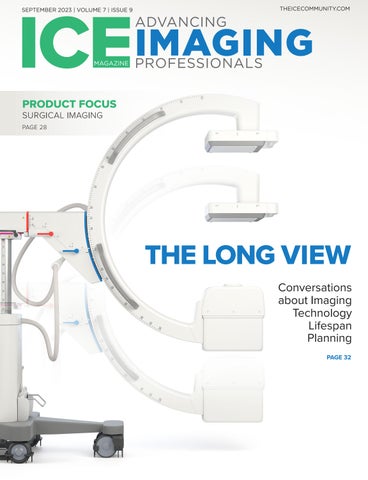
THE LONG VIEW
Conversations about Imaging Technology Lifespan Planning PAGE 32
PAGE 28
To learn more visit theimagingacademy.com or call 210.570.1452. WE ARE BUILDING THE NEXT GENERATION. As a student, you deserve more. THE WORLD MOVES FAST. WE MOVE FASTER.™ + powered by For the class schedule visit us at theimagingacademy.com. New Classes Begin February 13th Enroll Today! More versatile More valuable More job satisfied More upwardly mobile At Imaging Academy, we give you more.

GE & OEC Cables SUPPLYING YOUR AT A PRICE YOU CAN AFFORD

Kenneth Saltrick, President of Engineering Services in Twinsburg, Ohio, knows from his long experience that C-arm machines themselves are absolute workhorses.

For customers looking to blend the gap between expensive OEM and unreliable used assemblies, WE have your solution.

Our complete repair contains a new cable assembly, utilizing all OEM cable and components with a harvested plate and connector housing as they are proprietary items. These completely repaired products will have a significant cost savings with build quality above new OEM products and carry a warranty of 180 days, which is untouchable in the market.

CONTACT US TODAY! 330.425.9279 X.11 | WWW.ENG-SERVICES.COM INFO@ENG-SERVICES.COM 9900, 9800 RECEPTACLE CABLES 9900, 9800 INTERCONNECT CABLES 5435446-01 AND 5840677-01 ELITE INTERCONNECT CABLE

Benefits of Partnering up with TECHNICAL PROSPECTS for all your Imaging Services

Quality Assurance – Quality is paramount in all we do!

• ISO 13485:2016 and 9001:2015 certified

• Documented standard operating procedures, to ensure consistency and quality

• Over 48,000 quality parts in stock, ready to ship!

• Less than 1.2% DOA rate

Top Notch Technical Support:

• Technical support by qualified, expert level National Technical Support Engineers

• Remote diagnostics & troubleshooting

• Dedicated support for part installations, tune ups, calibrations, and mechanical adjustments

• Error log monitoring and analysis

• Designated part verification and ordering

Service Support:

• On-Site Service by Siemens trained engineers

• Quick response time

• Guaranteed up-times

• Multi-modality services

• Installations, deinstallations, relocations, buyback and refurbishments

Preferred Parts & Glass Discounts:

• Parts pricing up to 90% off OEM list price

• Additional discounts for Preferred Customers

877-604-6583

We invite you to check out our website at www.TechnicalProspects.com

Training Program:

• 18 Training bays with over 28 Siemens systems – Ready to train your engineers!

» CT: Definition AS, Somatom GO.up, Somatom Perspective, Somatom Scope, Emotion 16, Sensation 64, including the latest platforms syngo Classic and Native

» Nuc Med: Symbia T

» MRI: Magnetom Espree

» Angio Cath: Artis Q, Artis dFC, Artis Zee, Luminos TF, Luminos Agile, Multix MT, Multix Fusion, Uroskop Access, Uroskop Omnia, Ysio

» Imaging Suites: Acuson Sequoia, Acuson S2000, Arcadis Avantic, Cios Alpha, Cios Fusion, Mammomat Inspiration, Mobilett Mira

• AAMI accreditation

• Equipment specific training courses and curriculum

• Biomed to Imaging engineer training

• Interactive Virtual Training Academy (IVTA)

• Post training mentorship

LiveLink RST: COMING SOON!

LiveLink Remote Support Technology allows us to assist your team with issues from afar. Our goal is to help you and your teams focus on what’s most important….patient care, while helping increase revenue, create productive teams, and reduce downtime.

TECHNICAL PROSPECTS Experts in Siemens Medical
Imaging

BACK TO SCHOOL

Radiological Service Training Institute (RSTI) recently celebrated a record-breaking enrollment milestone!

“We appreciate the opportunity to support the training needs of the imaging service industry,” RSTI CEO Todd Boyland, CRES, CPSM, said. “It was equally as fun getting to share this with the RSTI team and the group of students in classes that week too.”

SINCE 1985, RSTI HAS PROVIDED DIAGNOSTIC IMAGING TRAINING. OFFERING A WIDE SELECTION OF OVER 60 COURSES EACH YEAR, RSTI HAS TRAINED MORE THAN 15,000 SERVICE PROFESSIONALS FROM OVER 50 COUNTRIES IN RADIOLOGY, MAMMOGRAPHY, MR, CT, ULTRASOUND, NETWORKING, PACS AND DICOM.

CONTACT US: 23/24

CALENDAR:

ISO 9001:2015 CERTIFIED (IQC CERTIFICATE NO. Q-1158) STATE OF OHIO REG. NO. 93-09-1377T

FEATURES

DIRECTOR’S CUT

Apologizing can be difficult, especially when you're in a leadership position, but it's crucial for maintaining trust and respect with your team.

COVER STORY

Imaging technology lifespan planning can be tricky, especially after a worldwide pandemic.

RISING STAR

Natasha Beyde holds multiple degrees including a bachelor’s in healthcare administration and a master’s in organizational leadership.

14 38 32 ADVANCING THE IMAGING PROFESSIONAL 6 ICEMAGAZINE | SEPTEMBER 2023

19

IMAGING NEWS

Catch up on the latest news from around the diagnostic imaging world.

PRODUCT FOCUS

A look at some of the latest surgical imaging options.

EMOTIONAL INTELLIGENCE

Based on what I’ve observed over the years, the supervisory/ management role has more than its share of challenges.

SEPTEMBER 2023
42
ICEMAGAZINE 7 WWW.THEICECOMMUNITY.COM
28
CONTENTS SPOTLIGHT 10 In Focus Gloria D. Butler CRA, RT (R) 12 Rad Idea Snack and See 14 Rising Star Natasha Beyde 16 Off the Clock Omar Arafat, Radiology Manager, University Hospitals Parma Medical Center of Parma, Ohio NEWS 19 Imaging News A Look at What’s Changing in the Imaging Industry 24 Webinars Webinar Explores Millennials in the Health Care Workplace PRODUCTS 27 Market Report 28 Product Focus Surgical Imaging INSIGHTS 36 PACS/IT I Will Take Imaging AI Seriously When… 38 Director’s Cut Beyond Sorry: Effective Apology Strategies for Leaders 40 Roman Review Birthright Versus Earned Right 42 Emotional Intelligence Why Managers Have a Tough Job 45 ICE Break 47 AHRA Recap 48 AHRA Scrapbook 50 Index ICE Magazine (Vol. 7, Issue #9) September 2023 is published by MD Publishing, 1015 Tyrone Rd., Ste. 120, Tyrone, GA 30290. For subscription information visit www. theicecommunity.com. The information and opinions expressed in the articles and advertisements herein are those of the writer and/or advertiser, and not necessarily those of the publisher. Reproduction in whole or in part without written permission is prohibited. © 2023 MD Publishing 1015 Tyrone Rd. Ste. 120 Tyrone, GA 30290 Phone: 800-906-3373 President John M. Krieg john@mdpublishing.com Vice President Kristin Leavoy kristin@mdpublishing.com Vice President of Sales Jayme McKelvey jayme@mdpublishing.com Group Publisher Megan Cabot megan@mdpublishing.com Editorial John Wallace Editorial Board Jason C. Theadore Nicole Dhanraj Melody W Mulaik Verlon E. Salley Rachel Thiesse-Yount Traci Foster Sales Emily Hise Art Department Karlee Gower Taylor Hayes Kameryn Johnson Events Kristin Leavoy Webinars Linda Hasluem Digital Department Cindy Galindo Kennedy Krieg Haley Wells Accounting Diane Costea 8 ICEMAGAZINE | SEPTEMBER 2023 ADVANCING THE IMAGING PROFESSIONAL
Over 60% of TEE probe failures are a result of fluid invasion and preventable damage We can help you change that ! Centers of Excellence for Ultrasound Probe and MRI Coil Repair, and Design & Manufacturing TEE probe troubles? Let’s keep you up and running. Setup a repair and arrange for your next-day solution today 844-687-5100 customercare@innovatusimaging.com Our proprietary 4-step program proven to reduce TEE probe failure rates, failure severity, and support costs Learn More innovatusimaging.com/safetee SafeTEE

FOCUS IN

GLORIA D. BUTLER

Parkland Hospital and Health System Radiology Supervisor for Community Oriented Primary Care Clinic (COPC)

Gloria D. Butler, CRA, RT (R), holds a Master of Arts in Health Administration. Her imaging career journey started via the U.S. Armed Forces.

“As a first-generation born American to my immigrant parents, I was searching for a way to get a higher-level education without becoming a financial burden to my family,” Butler explains. “I was in the middle of enrolling into college, still unsure of how I was going to pay. But then I was contacted by an Army recruiter shortly after and he convinced me to join the Army and ‘to be all that I can be’ (still my favorite motto).”

Her decision opened a path to her dream of working in health care.

“I always knew I wanted a career in health/science but was still exploring opportunities. My first choice was to be a nurse, but they were overstrength in the Army at that time and I had to pick another occupation. I scored well enough on the ASVAB that I had a wide selection of medical jobs to choose from,” Butler says. “After doing a little research, I made the decision to pursue the 68P-Radiology Specialist, Military Occupation Specialty (MOS). Twenty years later, I have no regrets in this decision. I love that the care and service we provide are key to providers in helping the diagnosis and treatment of patients. I am kind and nurturing when people are in need, and I love science and technolo-

gy. So, for me, this was a perfect fit.”

Her military service is one of her top achievements.

“My greatest accomplishment so far has been my 20-year Army career. Initially, I struggled to adjust to the extreme physical fitness regiment, the long hours, and the tough love we got by the drill sergeants at basic training,” Butler says. “But once you passed basic training, you entered the next phase of your professional training. My six-year enlistment contract felt like a blink of the eye, and I never thought I would re-enlist again and again and again!”

“When you reach 10 years active duty you reach a turning point, the next time you re-enlist it is indefinite. This means you are now fully invested, committed, ‘at the needs of the Army.’ I can’t tell you how hard that decision was to make because at that time my husband and I had started our family,” Butler recalls. “Nevertheless, I stuck through the good, the bad and ugly times. Even so, I have no regrets! I grew tremendously personally and professionally. I learned to lead and train some of the finest service members in our field. That has been the greatest honor and achievement for me.”

Her military service also offered her a unique opportunity to address many different job duties and responsibilities. Today, she loves bringing her acquired knowledge to work and sharing it with others.

“While in the military, we wore many hats. You were never just one thing, you were a soldier, a leader, a technical professional, a problem solver, project manager, etc. etc. Each position comes with its own extensive job-related requirements,” she says. “There was a

SPOTLIGHT
Gloria D. Butler began her imaging career in the U.S. Armed Forces.
10 ICEMAGAZINE | SEPTEMBER 2023 ADVANCING THE IMAGING PROFESSIONAL

lot of variability to your duty day. Now that I have transitioned to the civilian side, the scope of my position is a little narrower, which means I can focus more on becoming an expert of my craft.”

“I love my job as a radiology supervisor because I can bring with me my experiences gained while in service and look to apply wherever/whenever possible. I love taking care of people, both patients and employees alike. And, I love being a part of a health system that is here to provide care to our community,” Butler adds.

She also enjoys encouraging growth in the people she works with on a daily basis.

“Leadership is neither easy nor is it simple. I feel it is important to be adaptable, resilient, competent and of good moral character when placed in a leadership position,” Butler shares. “My leadership approach has helped me keep in mind that in order to accomplish our organizational goals, you need people. People are your most precious resource, so you must invest in them and let them know they add value to our organization. There are many concepts that helped me define my leadership approach, but I’ll narrow it to three rules I try to follow daily. 1. Treat people with dignity by showing respect. 2. Communicate openly, transparently,

GLORIA D. BUTLER

vertically and horizontally. 3. Earn and build trust with your leadership, your peers, subordinates and your patients."

Butler enjoys paying it forward just as mentors helped her along the way.

“I know that I would not have had as good an experience in the military had it not been for some fantastic mentors. Several people ‘groomed’ me to become the person I am today. My mentors were many, but there are a few people that I would like to recognize: Master Sergeant (Ret) Harry Palmer. He was my first mentor in radiology who groomed me initially in all aspects of radiology clinical operations. I was a new NCO in his ranks, and he gave me a lot of autonomy to make decisions on how we managed our clinic. There was always a lesson to be learned and he trusted in my capabilities more than I trusted myself at times,” she says.

“Master Sergeant (Ret) Stefania Green is someone who inspires you and has the time and ability to help you achieve greater things. Mrs. Green was one of the first females in our field (68P) that made it to the rank of MSG. Once retired, she continued to help grow the Army radiology program and became the program director for what is now the Military Education and Training Campus (METC), Radiology Program. One very important career lesson I learned from

Radiology Supervisor for Community

Oriented Primary Care Clinic

1. What is the last book you read? “Atomic Habits” by James Clear is a great book to help build good habits.

2. Favorite movie? I have too many to list them all. But I am a huge fanatic of the Star Wars franchise, Marvel movies, Sci-fi/action movies. I especially love movies that are based off books.

3. What is something most of your coworkers don’t know about you? I was not the fittest when I joined the military, and I struggled a lot during my initial years! I couldn’t run fast, nor did I have the endurance to run any sort of distance. I barely passed my physical fitness test at basic training and during initial entry training. But, with the help of my peers and my leaders, I was motivated to make this weakness one of my strengths. A few years down the line, I built my confidence and kept pushing myself to succeed. I went from failing my PT tests to maxing them! I completed several 5K runs, several Army 10-milers, a couple of half-marathons and Bataan Memorial March (26.2-mile march, in highelevation, with combat boots, and a 40-pound rucksack). I learned what the meaning of “mind over matter” truly meant.

4. Who is your mentor? Currently my mentor is Layci Lawler. She is my manager, and she inspires me daily.

5. What is one thing you do every morning to start your day? Whelp, at this stage in my life, I make sure to take my multivitamins!

her was ‘do not wait to get ready for the next big thing, be ready so that when an opportunity presents itself, it will not pass you by.’ To provide context, she helped me plan out my career progression in the Army radiology field,” Butler adds. “She explained what education/ certifications are required, what experience is needed for the next move up, and she also mentored me in the positions I held while at METC.”

“Command Sergeant Major (Ret) Benjamin Scott was the Northern Regional CSM and mentor to our Sergeant Audie Murphy Chapter. I really appreciated his desire to lead/mentor us as senior leaders,” she says. “He presented me with a coin one day that was inscribed with ‘The Habit of Excellence.’ He always used a quote attributed to Aristotle – ‘We are what we repeatedly do. Excellence, therefore, is not an act but a habit. Habits can be formed and shaped and therefore starts within the mind, with a Mindshift.’ He inspired me to continue to work at being the best version of myself, day in, day out! If you don’t get it the first time, keep trying.”

Butler is married “to my Soldier”

Master Sergeant (MSG) William Butler and they have four children together: William (14), Santiago (10), and twins Amari and Amaya (6). •

6. Best advice you ever received? I received this piece of advice from more than one of my senior leaders. They told me to always “make people feel important.” No matter what position they hold in the chain of your organization, they add value. We need people at every level, and sometimes the people that are at the lower end feel underappreciated.

7. Who has had the biggest influence on your life? Hands down, my husband has had the biggest influence in my life. It’s hard to imagine that I have shared 20 years of my adult life with him. While serving alongside him, he often pushed and encouraged me to set my sights high. He believed in me when I had self-doubts. But the great thing is that he also inspired me! He was one of my peers. At times we were in competition with each other in our small density MOS. There were only 19 total Master Sergeants in radiology across the Army and my husband, and I were two of those. We competed at times, but we motivated each other to succeed no matter the position we were in.

8. What would your superpower be? I would like my superpower to be the ability to recharge my “battery” or the ability to “regenerate your health.”

9. What are your hobbies? I love spending time with family, organizing family outings, going to the movies, watching movie marathons or binge watching Netflix seasons, arts and crafts, fitness activities and cooking.

10. What is your perfect meal? My perfect meal would consist of carne asada street tacos, some spicy green/red salsa, some charro beans and a green salad paired with a refreshing cucumber-lime, agua fresca!

ICEMAGAZINE 11 WWW.THEICECOMMUNITY.COM

Rad idea

SNACK AND SEE

It’s crucial to recognize the importance of continuous education, even when time is limited, but we often struggle to find time for training within our department.

Here is a rad idea that a colleague shared that I thought was cool to keep your training going even with limited resources, especially time! The idea is to implement an innovative “Snack and See" concept!

What is it? It is an easy approach that allows for a 15-minute presentation accompanied by delightful snacks. If there is downtime, pull out the snacks and offer a short presentation on a clinical or nonclinical topic!

Are 15 minutes too much to ask for? Then, try a poster board format where the team can review important

information while enjoying a treat at their convenience! Additionally, you can set up a TV with slides displaying the key content to capture those unable to attend the training or huddle. This way, team members can access the information conveniently, ensuring everyone stays informed and engaged.

By prioritizing education and providing multiple avenues for learning, you can empower your team to keep up-to-date and continuously develop their skills. Embrace the “Snack and See” approach to foster a culture of ongoing education within your department, regardless of time constraints. •

Share

your RAD IDEA via an email to editor@mdpublishing.com.
SPOTLIGHT ADVANCING THE IMAGING PROFESSIONAL 12 ICEMAGAZINE | SEPTEMBER 2023
You asked for an end-to-end imaging equipment solution at a value. 626 delivers it. Acquisitions to expand our services to our customers The world moves fast. We move faster. - The right choice as a partner ISO 13485:2016 Certified 90% We are dedicated to quality management and we ensure best practice in everything we do of our customers would recommend our services to a colleague Consistent YoY Growth Strategic company acquisitions to expand our services to our customers include Walsh Imaging in 2017, ISS in 2019 and Innovatus, CR-DR business in 2020. Recognized by Broward Health Medical Center for corporate community giving Florida Biomedical Society recognizes as an industry leader in 2019 Walsh Imaging recognized as tier Del Medical dealer We are your multi-modality, multi-manufacturer contrast injector service and support solution. We want
your first
call WeAre626.com We are your multi-modality, multi-manufacturer service and support solution. Our number of expert, full-time engineers on staff ready for service +130 Remote diagnostic solution CMMC-1 Cyber certified (800) 516-0990 | weare626.com ISO 13485:2016 CERTIFIED
to be
— and last —

RISING STAR NATASHA BEYDE

Natasha Beyde holds multiple degrees including a bachelor’s in healthcare administration and a master’s in organizational leadership. She also holds several certifications, including certified radiologic and mammographic technology, lean six sigma green belt, women in leadership certificate, healthcare change management certificate and executive healthcare leadership.

Her education, certifications and experiences provide a solid foundation for her role as an assistant administrator of the department of radiology at Montefiore Medical Center’s Moses Campus.

In addition, Beyde has inspired others by sharing her professional journey, encouraging professional development and volunteering to assist peers. She was also nationally recognized with the Most Effective Radiology Administrator/Manager Minnie Award in 2020.

ICE magazine found out more about Beyde via a questionnaire.

Q: WHERE DID YOU GROW UP?

A: Brooklyn, New York and at the age of 13 moved to Florida.

SPOTLIGHT
ADVANCING THE IMAGING PROFESSIONAL 14 ICEMAGAZINE | SEPTEMBER 2023
Natasha Beyde inspires others within her department.

Q: WHERE DID YOU RECEIVE YOUR IMAGING TRAINING/EDUCATION?

A: At Edison Community College in Punta Gorda, Florida, I earned an Associate of Science in Radiology.

Q: HOW DID YOU FIRST DECIDE TO START WORKING IN IMAGING?

A: I was in a car accident as a kid, and I had a CT scan from that point on I was very interested in radiology, my mother was also a Registered Nurse, so I was always exposed to health care.

Q: WHAT IS THE MOST REWARDING ASPECT OF YOUR JOB?

A: The ability to connect and care for patients and now as a leader to inspire/empower new techs and leaders that anything is possible as long as you put your mind to it.

Q: WHAT DO YOU LIKE MOST ABOUT YOUR POSITION?

A: That I get to work with and learn from so many talented professionals.

Q: WHAT INTERESTS YOU THE MOST ABOUT THE IMAGING FIELD?

A: All the vast technology and how vital imaging is to diagnose and treat injuries and disease in patients.

Q: WHAT HAS BEEN YOUR GREATEST ACCOMPLISHMENT IN YOUR FIELD THUS FAR?

A: Receiving the Aunt Minnie Award for Most Effective Radiology Administrator in 2020 and Radiology Manager of the Year at Montefiore Medical Center 2020.

Q: WHAT GOALS DO YOU HAVE FOR YOURSELF IN THE NEXT 5 YEARS?

A: Obtain another post-graduate degree. •

FUN FACTS

FAVORITE HOBBY: Listening to podcasts

FAVORITE SHOW: "Dateline"

FAVORITE FOOD: Italian

FAVORITE VACATION SPOT: Anywhere in the Caribbean

1 THING ON YOUR BUCKET LIST: Travel to Africa for a safari and ride an elephant

SOMETHING YOUR COWORKERS DON’T KNOW

ABOUT YOU:

When I was a teenager, I went to Barbizon School of Modeling because I aspired to be a commercial model.

ICEMAGAZINE 15 WWW.THEICECOMMUNITY.COM

Clock Off THE

OMAR ARAFAT, RADIOLOGY MANAGER, UNIVERSITY HOSPITALS PARMA MEDICAL CENTER OF PARMA, OHIO

Since entering the medical imaging leadership field five years ago, Omar Arafat, radiology manager at University Hospitals

Parma Medical Center in Parma, Ohio has dedicated himself to motivating people and managing problems.

“I love numbers; love data, like analyzing things, and trying to predict the uncertain,” Arafat said. “I think a little bit of that goes hand in hand with just trying to run a department efficiently.”

If the Middleburg Heights native enjoys anything as much as numbers and data, it’s basketball. Since childhood, he’s played the sport; contributed to teams all throughout middle and high school. As an adult, however, Arafat helps coach up the next generation of prospects, and focuses them on building healthy habits.

What began as pitching in with youth teams run by some friends – a few drills here and there, helping with youth development camps in the summer – evolved into a passion for learning and teaching. Arafat said the enjoyment he derives from being around the game is a balm to soothe the feelings of missing the days when he could play it competitively.

“I miss that time of my life where you could just get up and start playing,” he said. “I grew up as a two-guard, but my growth spurt hit at a certain point in middle school, and just stopped. [Coaches] had me at center; I wanted to shoot threes.”

“They were trying to force me to the post in sixth grade just because of my height,” Arafat said. “It balanced out in

high school because I didn’t grow any more,” he chuckled.

The closeness he’d shared with a teammate led to an invitation to return to a former program to help develop the next generation of players. Although he was closer in age to the players at the time, Arafat thrived in open gyms and pick-up games, doing whatever he could to keep it fun and stay loose. He enjoys seeing the kids he’s shepherded through those same programs growing and maturing into players who not only enjoy the game, but understand how to play it tactically and with skill.

“We’ll try to focus on the fundamentals,” Arafat said. “We start with ball handling. I don’t care what position you are, or how tall you are. Everyone should have ball-handling skills; everyone should be able to shoot. Otherwise, your game’s going to be exposed when you get to a higher level.”

“If you’re not in love with doing the fundamentals, you’re not going to get very far,” he said. “You start with basic dribbling and shooting drills; making sure everyone is comfortable being flexible and fluid in those positions. It brings out the best in the kids, as well.”

Arafat also has had the opportunity to observe middle-schoolers’ development as they press on with the game in high school. The biggest predictors of success? Love the game the right way, and find your passion for self-improvement.

“I love finding kids who have that passion,” he said. “The only thing really stopping you from getting to the [collegiate] D-II or D-I level is yourself. If you put the work in, you’re going to get there. There are a lot of kids who don’t have that patience.”

“There’s a nice parallel there when you’re discussing futures,” Arafat continued. “If you’re not passionate about

ADVANCING THE IMAGING PROFESSIONAL 16 ICEMAGAZINE | SEPTEMBER 2023
SPOTLIGHT

your work, or you’re not confident in yourself, there’s a lot of things that you learn from trying to be a better basketball player. It’s about trying to be a better person. After a season, it’s incredible to see how far these kids have come. It’s eventually how you get more people interested in playing.”

The love of the sport, as well as being strategic, comes from his favorite athlete of all-time: the late, great, Kobe Bryant; a phenom from Lower Merion High School, Pennsylvania. And Arafat’s contemporary, LeBron James, who also entered the NBA right out of St. Vincent-St. Mary High School in nearby Akron, Ohio, was a local as well as national source of interest.

“It’s been nuts watching the trajectory of LeBron’s career,” Arafat said. “He was three years older than me, so I grew up as a freshman watching him as a senior [appear] in the paper every day. I remember reading the Cleveland Plain Dealer every morning, checking all the scores for basketball, and seeing the high school stats for LeBron.”

As far as coaching/mentoring goes, Arafat’s style icon is the inimitable Phil Jackson, by many regards the most successful NBA coach ever. Jackson won two titles with the New York Knicks as a player in the 1970s, and 11 more as the coach of the Chicago Bulls and Los Angeles Lakers. Jackson’s coaching style was influenced by everything from Eastern philosophy to the triangle offense; Arafat works most to model his calm demeanor.

“I think leading by example is the most important thing,” Arafat said. “I won’t ask somebody to do anything I wouldn’t do. I’m going to run some of these drills with you; if you see me beating you, we’re going to run a couple more. You’ve got to show them this is how you should be able to compete.”

“I try to take that Zen approach: if you don’t want to get better, that’s fine, I’ll find something else to do,” he said. “There’s no screaming and no hollering. If you don’t want to be there, I don’t force anyone to be there.”

These are lessons he takes with him into his management role at work, as well. When Arafat needs to motivate staff, he knows that force won’t win the day.

“If you do not want to be here, it will be evident, and we’re going to have to find a resolution to that,” he said. “You’re going to end up walking yourself out, or you’re going to improve. One way or another, it will come to a head and get resolved the natural way.” •

Omar Arafat enjoys coaching basketball.
ICEMAGAZINE 17 WWW.THEICECOMMUNITY.COM
Omar Arafat (left) is seen with two friends after talking hoops.

The Total Package

Hands-on technical training for all imaging modalities in Nashville, TN. Now offering an Apprentice program!

Service support for all major imaging manufacturers including GE, Philips, Siemens, Hologic and Toshiba/Canon.

FOR EMPOWERING THE IMAGING PROFESSIONAL 1 REPLACEMENT PARTS
for CT, Mammography,
Cath labs,
X-Ray 2
TRAINING
Quality Imaging parts
MRI,
and general
TECHNICAL
4 PRE-OWNED EQUIPMENT
tested, and
our
Nashville, TN. 3 TECH SUPPORT & SERVICE
Inspected,
certified by
team in our 60k square foot facility in
SOLUTIONS triimaging.com | 855.401.4888 Located in Nashville, TN • ISO 13485:2016 certified

Imaging News

A LOOK AT WHAT’S CHANGING IN THE IMAGING INDUSTRY

626 ACQUIRES CUSTOM X-RAY SERVICES IN ARIZONA

626 recently acquired Custom X-Ray Services in Arizona, according to a press release.

“We are ecstatic to welcome Custom X-Ray to the 626 family,” shared Philip Revien, chief executive officer of 626. “Our longstanding strategy of acquiring respected, founder-run brands that are family-oriented, profitable, growth-oriented companies in markets where 626 needs deeper FSE coverage and deeper-rooted customer relationships has always served us well.”

“We endeavored to strengthen our presence in Arizona; and see Custom X-Ray as the perfect fit to immediately improve our service delivery to 626’s and Custom X-Ray’s current and future customers,” he added.

Established in 1968, Custom X-Ray is a veteran- and woman-owned legacy business that provides dependable, knowledgeable and dedicated customer service.

Custom X-Ray offers a variety of analog and digital medical imaging technologies to its customers and represents the leading manufacturers of medical imaging systems.

“My parents founded this company to provide the highest quality products and services,” shared Shawna Wiertzema, chief operating officer for Custom X-Ray.

“We firmly believe that service, not the product, should be considered the most important factor when selecting an imaging equipment sales and service company to handle critical applications and project planning. Both the team behind the service and our focus on the customer have enabled Custom X-Ray’s sustained growth and lasting customer relationships,” she added.

ICEMAGAZINE 19 WWW.THEICECOMMUNITY.COM NEWS

KONICA MINOLTA HEALTHCARE LAUNCHES WIRELESS HANDHELD ULTRASOUND

Konica Minolta Healthcare Americas, Inc. has introduced the PocketPro H2, a new wireless handheld ultrasound device for general imaging in point-of-care applications. Konica Minolta Healthcare has partnered with Healcerion to distribute the PocketPro H2 in the U.S. for human and veterinary applications.

The new PocketPro H2 linear wireless handheld ultrasound system is optimized for musculoskeletal (MSK), pain management, vascular access and needle guidance applications. With excellent image quality, PocketPro H2 is a handheld ultrasound for rapid assessment of soft tissue, including tears, inflammation and instability in the joints, muscles, ligaments, tendons and cartilage. It is designed to be ergonomic and lighter to fit the ever-evolving needs of the point-of-care practitioner so they can continue to do more with ultrasound. An intuitive user interface supports one-hand operation and ease-of-use for clinical confidence in every scan. With 90 minutes of high-quality continuous scanning, Color and Pulsed-Wave Doppler, a 6-12 MHz range, M-Mode functions and customized imaging presets, PocketPro H2 is ready for use in nearly any point-of-

care application.

Workflow is further streamlined and simplified with the portability of the PocketPro H2 and the ability to easily share ultrasound images throughout the care team, which facilitates greater efficiency in patient diagnosis and coordination of intervention or treatment. It wirelessly connects to most iOS and Android smart devices via a downloadable app for image viewing at the point-of-care or wherever needed. On-board patient data management solutions provide connected and informed care. PocketPro H2 is fully DICOM compatible and can link to any vendor PACS.

PocketPro H2 expands on Konica Minolta’s ultrasound systems designed specifically for MSK, sports medicine, pain management imaging and interventions, and veterinary applications. The handheld device is fully supported by Konica Minolta’s service solutions and includes remote installation and support, as well as access to educational offerings. With the addition of the PocketPro H2 handheld system, Konica Minolta is able to offer a full portfolio of ultrasound solutions for high-quality imaging at the point of care.

NEWS ADVANCING THE IMAGING PROFESSIONAL 20 ICEMAGAZINE | SEPTEMBER 2023

UNITED IMAGING UNVEILED 3 SCANNERS AT AHRA

United Imaging, a global leader in manufacturing advanced medical imaging and radiotherapy equipment, continued its acceleration in investment and innovation for the U.S. market with three new commercially available products (in MRI, DR and CT), on display in Indianapolis at the AHRA Annual Meeting.

United Imaging teased these three new products in February; the company also just showed a fourth recently cleared product at SNMMI in Chicago and announced a fifth that is now 510k pending. United Imaging manufactures scanners in four imaging modalities for the United States.

“Nobody innovates the way we do,” asserted Michael Coulter, senior vice president at United Imaging in the U.S., “with standardization of technology, design and interface across modalities – not to mention the Allin Configurations approach we take to sell all of our equipment fully loaded. It’s the best way we can deliver

what our customers need in terms of clinical flexibility and investment protection, and five years in to the U.S. market, I have not seen other manufacturers match this approach – nor frankly has the industry matched our speed-to-market in an environment where many have been challenged with supply chain challenges. We’ve just not experienced that because of the way we are so vertically integrated throughout Houston and our other factories.”

The three scanners shown at AHRA were: (1) the uMR 680, an AI- empowered 1.5T MRI with a fixed or detachable table; (2) the uCT ATLAS, a highly intelligent workhorse with an 82 cm bore, in configurations up to 640 slices; (3) the ultra-maneuverable uDR 380i pro, a mobile X-ray with a high voltage generator and a uVision remote console that improves point-of-care imaging workflow.

BANNER IMAGING IS HIRING

Come experience everything Arizona and Colorado have to offer. Life doesn’t get much better than 300 days of sunshine, hiking, biking, lakes, rivers, and so much more. We invite you to our out patient imaging centers where your feedback and life work balance are valued.

apply today at bannerhealth.com/careers ICEMAGAZINE 21 WWW.THEICECOMMUNITY.COM

FUJIFILM RELEASES D-EVO SUITE OTCX

FUJIFILM Healthcare Americas Corporation recently announced the U.S. launch of its latest addition to its advanced digital radiography suites, the D-EVO Suite OTCx. The overhead tube crane system is designed to deliver consistent, efficient and comfortable patient exams, enhance technologist’s workflow, deliver clinical confidence, and help to keep imaging departments running smoothly.

X-rays are the most widely used diagnostic tests, accounting for 60% of all imaging studies conducted. Radiologists and X-ray technologists are required to manage increasingly demanding caseloads while facing challenges from long hours and repetitive heavy lifting. D-EVO Suite OTCx is engineered with a focus to assist with these growing challenges. The system is a versatile, digital radiographic X-ray suite powered by Fujifilm’s latest FDR D-EVO III high-resolution, high sensitivity ultra-lightweight, glass-free detectors coupled with Dynamic Visualization, the company’s intelligent image processing. This processing uses feature recognition to automatically optimize visualization adjusting for individual variations in anatomy, resulting in exceptional images throughout the entire exposure field for a faster, more accurate diagnosis.

“At Fujifilm, we are committed to providing our customers with meaningful technologies that prioritize delivering the best possible patient care. With a consistent focus on patient comfort, technologist workflow efficiency, and of course superior image quality, we are delighted

to introduce the D-EVO Suite OTCx system,” said Rob Fabrizio, director of strategic marketing, diagnostic imaging, FUJIFILM Healthcare Americas Corporation. “This new offering enables health care providers to benefit from the perfect mix of grab and go manual, motorized positioning and dose reduction in a system that is built to perform and last.”

To help ease patient tensions, the system features a large 10.5 inch technologist-friendly touchscreen display at the tube head, enabling techs to fine tune exam parameters while remaining at the patient’s side. The sturdy patient table features a unique four-point lift system for reliable, quiet motorized elevation, and lowers to a height of just 22 inches to ensure stress-free patient transfers and adjustments.

To address the physical demands of radiologists and technologists, the system is designed to more easily accommodate patients of all sizes, featuring a smooth flat tabletop for easier transitions from gurneys and a weight capacity of up to 800 pounds – one of the largest weight capacities on the market. The tilting version of the upright chest stand provides additional positioning flexibility for the patient, upping the patient comfort quotient and precision for standing or seated exams. All movements are precisely counterbalanced to allow light, smooth operation to minimize repetitive strain for technologists of all sizes and strengths.

NEWS ADVANCING THE IMAGING PROFESSIONAL 22 ICEMAGAZINE | SEPTEMBER 2023

STUDY: COPPER COULD HELP CREATE CLEARER MRI IMAGES

Scientists have found a new use for copper in magnetic resonance imaging (MRI) contrast agent design, that could help to create better images which help doctors diagnose patients’ conditions more easily and safely.

Researchers discovered a novel copper protein binding site, which does not occur in nature, that has real potential for use in MRI contrast agents used to improve the visibility of internal body structures in scans.

The discovery overturns conventional medical wisdom that copper is unsuitable for use in MRI contrast agents and could help to develop new imaging agents with potentially fewer risks and side effects than exist with current commonly used contrast agents.

Researchers from the Universities of Birmingham and St Andrews, as well as Diamond Light Source, published their findings in PNAS after creating a highly elusive abiological copper site bound to oxygen donor atoms within a protein scaffold.

The experts found that the new structure displayed highly effective levels of relaxivity—the ability of a contrast agent to influence the relaxation times of protons, which helps create clearer and more informative images during an MRI scan.

Co-author Dr. Anna Peacock, Reader in Bioinorganic Chemistry at the University of Birmingham, commented: “We prepared a new-to-biology copper–binding site which shows real potential for use in contrast agents and challenges existing dogma that copper is unsuitable for use in MRI."

“Despite copper largely being disregarded for use in MRI contrast agents, our binding site was shown to display extremely promising contrast agent capabilities, with relaxivities equal and superior to the Gd(III) agents used routinely in clinical MRI. Our discovery showcases a powerful approach for accessing new tools or agents for imaging applications,” she said.

The researchers note that imaging agents based on copper could also be used in positron emission tomography (PET) scans, which produce detailed 3-di-

mensional images of the inside of the body.

Their study shows use of an artificial coiled coil to create the copper site within a protein scaffold has achieved function and performance not normally associated with copper.

“Metal sites that are not part of the repertoire of biology are vital in providing protein designers with an expanded toolbox of chemistries they can use to design new functional systems such as the promising imaging capabilities reported here,” added Peacock. “This opens up applications beyond what biology is currently capable of and showcases some of the advantages of using simple miniature protein scaffolds as a means with which we can engineer new, and maybe currently unknown, metal-binding sites.”

In MRI scanners, sections of the body are exposed to a strong magnetic field causing hydrogen nuclei of water in tissues to be polarized in the direction of the magnetic field. The magnitude of the spin polarization detected is used to form the MR image but decays with a characteristic time constant known as the T1 relaxation time.

Water protons in different tissues have different T1 values, which is one of the main sources of contrast in MR images. A contrast agent usually shortens, but in some instances increases, the value of T1 of nearby water protons—altering contrast in the image and improving the visibility of internal body structures, with the most used compounds being gadolinium-based contrast agents (GBCAs).

Gadolinium (in the form of Gd3+) is often used as a contrast agent, but there are environmental and patient safety concerns making exploration of new contrast agents an important and active research area. Although more work needs to be done to secure the stability of this new copper protein site, the study authors believe their work is a promising first step towards designing new copper-based contrast agents for clinical MRI scanning. •

ICEMAGAZINE 23 WWW.THEICECOMMUNITY.COM

WEBINAR EXPLORES MILLENNIALS IN THE HEALTH CARE WORKPLACE

The recent ICE webinar “Is this a Dream or a Nightmare? Millennials in the Healthcare Workplace” was presented by Josh Laberee. It was eligible for 1.0 ARRT Category A CE credit by the AHRA.

Josh Laberee, owner and administrator of Advanced Imaging, discussed understanding the dynamics of the different generations in the workplace and how to keep them all happy and motivated.

Laberee’s objectives were:

• understand what motivates and drives America’s largest health care workforce;

• address misconceptions and stereotypes; and

• develop strategies to hire and retain the millennial generation.

The misconceptions Laberee pointed out and discussed included “Millennials don’t work hard.” He said that members of this generation tend to work hard but differently than previous generations. He said they don’t view work in hierarchical structure. He also stressed that the number of hours worked does not mean hard work to this demographic.

He also said that his presentation is available for download and his email is on one of the slides. He mentioned this because he encouraged attendees to refer to his sources for great content and tips for surveys and other tools to help them better understand the employees at their facility.

He also fielded questions after his presentation.

One attendee asked, “How can schools accommodate more students when clinical sites do not have the staffing to train them?”

The answer and more are available via the on-demand

recording of the webinar at ICEwebinars.live.

Attendees provided feedback via a survey that included the question, “Why do you join ICE webinars?”

“For a learning opportunity and for awareness of what’s happening beyond my four walls,” said Steven Sirois, BMET III, Maine Medical Center.

“Continuing education and relevant topics,” Novant Health Rowan Medical Center Manager Jay Streater said.

“This is my first ICE webinar and it was very informative and I like the idea of being able to ask questions during the webinar. Also, it is great to be able to get CEUs that will apply to my license,” said Deana Beames, radiology director, Plains Memorial Hospital/Castro County Healthcare.

COMING THIS MONTH

The ICE webinar series continues this month with “Mastering the Art of Feedback: Constructive Criticism for Gen-Z in the Healthcare Field” by Avinash Dhanraj, CAPM, PSM1, SEC+, on September 26 at 2 p.m. EDT.

Attendees will learn:

• to cultivate motivational strategies tailored to Gen-Z employees;

• to decode the nuances of Gen-Z’s communication preferences and mold feedback techniques that encourage growth;

• to comprehend the values, motivations, and work styles of Gen-Zers in the healthcare field and align them with organizational goals; and

• to design a feedback loop that fosters trust, encourages open dialogue, and promotes professional development. •

For more information, visit ICEwebinars.live.

NEWS ADVANCING THE IMAGING PROFESSIONAL 24 ICEMAGAZINE | SEPTEMBER 2023
866-507-4793 allpartsmedical.com apmsales@philips.com AllParts Medical, a Philips company Portable X-Ray R&F and Fixed X-Ray C-Arms CT Confidence and reliability when you need it most. Cath lab MRI Biomed Ultrasound - New Windows 10 Platform with Dynamic Digital DR Panel - Eliminates the OEM Saturn Windows 95 Platform - Dose Reduction - HIPAA Compliant, 510k approved. - Fluoroscopy digital recording loops for MBS studies - Upgrade Provided to your Proven R/F System in 4 days. - Complete Refurbished Systems Available Imaging Chain issues with your GE Legacy or Precision-500 R/F systems? Upgrade system with Insight DRF Enhanced BRIAN.CARLOCK@PREMIERIMS.COM | 800.722.1991 RADONMEDICALIMAGING.COM ICEMAGAZINE 25 WWW.THEICECOMMUNITY.COM

Established

MRI CT SERVICE, SALES & PARTS

Imaging Service Solutions global provider of OEM quality pre-owned and refurbished medical imaging parts. ISS specializes in supplying parts for Philips and Siemens MRI and CT scanners.
in 2009 in Baltimore, MD, we proudly work closely with hospitals, service providers, and manufacturers globally.
SELL US YOUR MRI AND CT SYSTEMS! We purchase installed systems at fair market value and provide quality replacement parts for your equipment at a great value. We can remove purchased equipment at no cost as well. (410) 530-5548 | info@imagingss.com | 4001 Washington Blvd | Baltimore, MD 21227 Find us on Dotmed at dotmed.com/webstore/118100 imagingss.com SERVICES • OEM trained service engineers • Repair and maintenance • Professional installation and deinstallation • Rigging • Crating • Worldwide shipping • Trade-in equipment ADVANCING THE IMAGING PROFESSIONAL 26 ICEMAGAZINE | SEPTEMBER 2023

Market Report

SURGICAL IMAGING MARKET REBOUNDS FROM COVID-19

STAFF REPORT

Surgical imaging is a major optical imaging technique that is used in thorough imaging periods. The method helps physicians to conduct perplexing procedures decisively. Surgical imaging uses processed C-arms, tomography scanners and other imaging instruments to take a careful look at the area and see the highlights of a particular area. Innovation has been developed to provide precision during surgery.

The surgical imaging industry is expected to expand earlier rather than later. Using meticulous imaging innovation helps experts to complete surgical operations effortlessly and accurately. This results in an increased quality of treatment for patients.

Zion Market Research has published a research report on the surgical imaging market in its research database.

“According to the latest research study, the demand of global surgical imaging market size and share in terms of revenue was valued at $5.5 billion in 2021 and it is expected to surpass around $9.6 billion mark by 2030, growing at a compound annual growth rate (CAGR) of approximately 6.5% during the forecast period 2022 to 2030,” the report states.

The growing geriatric population and knowledge of radiographic processes are the key factors responsible for the growth of the global surgical imaging market. In addition, technological developments are likely to fuel demand in the coming years. The components that drive business growth are to combine the interest in therapeutic safety and the aging population as well as steady innovation of gear and gadgets. There is an increase in the advantages of protection that can be attributed to the growing number of people with constant diseases and an increase in the geriatric population. The administration organization also plays a major role in raising interest in imaging gadgets in emergency clinics in reducing the cost of medical care.

As far as the development of equipment and gadgets is concerned, through imaging modes, equipment manufacturers have gained surprising ground over the last few years. In CT, higher-cut frames, iterative picture recreation and otherworldly CT have been applied to radically create picture targets and image speed while reducing the portion of both radiation and distinction essential to get better pictures. This has incredibly extended the signs of CT imaging. Growing research initiatives to improve surgical imaging devices’ capabilities have good growth opportunities for the market share of surgical imaging. However, the high cost of equipment is expected to hinder market expansion.

The global surgical imaging market is segmented based on the device, modality, application, end user and region.

Based on the end user, the market is segmented into hospitals, ambulatory surgical centers and academic and research institutes. The hospital segment held the largest market share in 2021 and it is expected to continue the same pattern during the forecast period. Due to the availability of different surgical instruments for performing surgical procedures, the rise in the number of minimally invasive surgeries performed, and the rise in the number of patients admitted to these facilities for surgery to treat various chronic disorders, hospitals are anticipated to account for a significantly larger revenue share in the global market.

To treat patients more quickly and effectively and improve their chances of survival, hospitals are adopting C-arms imaging equipment in emergency rooms as a result of an increase in road accidents and cases of traumatic brain injury.

Market Insights Reports agrees.

“The global surgical imaging market is projected to reach $3.12 billion by 2029 from $1.8 billion in 2020, at a CAGR of 6.3 % from 2020 to 2029,” according to Market Insights Reports.

“Globally, surgical imaging market is expected to reach $3.4 billion by 2027 compared to $2.5 billion in 2022,” according to a report from Research and Markets. •

PRODUCTS ICEMAGAZINE 27 WWW.THEICECOMMUNITY.COM

Product Focus

SURGICAL IMAGING

PHILIPS MOBILE C-ARM PORTFOLIO

Royal Philips recently announced the launch of Philips Image Guided Therapy Mobile C-arm System 1000 – Zenition 10, a new addition to the company’s Zenition mobile C-arm series. Based on Philips’ state-of-theart flat panel detector technology, Zenition 10 helps to expand patient access to routine surgical care and minimally invasive procedures. Zenition 10 provides a cost-effective imaging solution for routine surgery, delivers the speed and efficiency needed to deal with high patient throughput, while being flexible enough to meet the needs of orthopedics, trauma and other areas of surgery to maximize utilization. It comes with exceptional C-arm maneuverability, application-specific protocols and personalized user profiles. At the same time, it delivers the excellent image quality needed to improve patient outcomes. User-friendly and intuitive to operate, the Zenition 10 supports a fast learning curve and reduces operating staff training time. Also, the new system offers a dedicated low-dose pediatric mode.

*Disclaimer: Products are listed in no particular order. PRODUCTS
ADVANCING THE IMAGING PROFESSIONAL 28 ICEMAGAZINE | SEPTEMBER 2023

SIEMENS HEALTHINEERS

ARTIS pheno

The ARTIS pheno floor-mounted robotic C-arm angiography system from Siemens Healthineers is designed to maximize capabilities and efficiency for a wide range of minimally invasive interventional procedures in the hybrid OR. Its flat panel detector and GIGALIX X-ray tube produce outstanding image quality and it can deliver 2D imaging resolution that is four times higher than its predecessor. The system can regulate acquisition parameters to automatically achieve optimal image contrast at low dose levels. The syngo DynaCT clinical software application produces 3D images that use less contrast media. Other applications include real-time verification of stent positioning during implantation and automatic segmentation of coronary computed tomography angiograms. The Artis pheno has a maximum 3D volume of 16.9 feet (diameter) by 9.3 feet (height) for excellent anatomical coverage, and a patient coverage of 13 feet. Its free inner diameter of 37.6 inches enables

CARESTREAM DRX-LC Detector

Carestream’s DRX-LC Detector lets facilities capture long-length images with a single exposure during procedures in the OR to confirm placement and for post-operative assessment. Images are acquired in a full wireless environment by a DR Mobile con sole without the need for an additional workstation and software. Its wireless option reduces trip hazards and minimizes the risk of contamination. The 48-inch detector has a Cesium (CsI) scintillator for better dose efficiency, and uses ImageView Soft ware, powered by Eclipse. The detector can be shared across DRX equipment. Its shareability lets facilities expand their use of the system, including pre-surgical-planning imaging, maximizing their investment and bringing its benefits to more users. •

3
2 ICEMAGAZINE 29 WWW.THEICECOMMUNITY.COM

WHY SHOULD I JOIN THE TALENT NETWORK?

• Completely free and confidential registration and application process

• 500+ open positions across the United States (part + full-time, temp, internships and externships) Personally connect candidates with

HTMJOBS@MDPUBLISHING.COM EMAIL US & CHECK OUT OURFORWEBSITE MORE INFORMATION!

WHY HIRING MANAGERS SHOULD POST WITH US

• A talent network of 2,500 qualified, actively looking HTM and Imaging professionals

• A variety of posting options ranging from single-job listings to unlimited-membership packages

• Social media, print, and eNews promotion

“My HR department advertised on various Government sites and our web site but we did not get a single applicant in over 120 days. Fairbanks Alaska is hard to recruit for but I took out an Ad on HTM Jobs and got two good applicants in less than 30 days. I am hiring them both. Thanks HTM Jobs.”

- D. Anderson, Tanana Chiefs Conference

Employers: Agiliti, InterMed, TRIMEDX, Renovo Solutions, Texas
SPBS, Inc.,
Universal
Featured
Health Resources,
and
Medical Resources.

THE LONG VIEW

Conversations about Imaging Technology

Lifespan Planning

32 ICEMAGAZINE | SEPTEMBER 2023 COVER STORY

In conversations about the durability of medical equipment, the most commonly constructed analogies – namely those about asset depreciation, maintenance and after-market acquisition – are comparisons involving motor vehicles. But for the first time across both industries, the impact of the novel coronavirus (COVID-19) pandemic also conjured up another apt comparison: that of supply chain shortages, parts and equipment delays, and confronting the financial challenges that such factors complicate.

Dean Skillicorn, clinical engineering manager at St. Luke’s Health System in Boise, Idaho, has spent 30 of his 38 years in healthcare technology management (HTM) in a managerial role with various organizations. Throughout the different environments in which Skillicorn has worked, he’s seen a variety of approaches to capital equipment life span planning.

“When I worked for the OEM, I was involved in a capital planning project for a customer,” he recalled. “We had a consulting side at that time. Our team took some of the things from the consulting team, and some of our own ideas, and through discussion

with the customer, built a system for them. I use those concepts today.”

The challenge with any piece of medical equipment, Skillicorn said, is that “technology comes in the door in stages of technology growth,” and changes rapidly. In considering how to calculate the useful life of any piece of medical equipment, an understanding of how device manufacturers manage end-of-life transitions for the products and services they offer is inherently necessary. Knowing in which life stage a piece of technology exists at the time of its purchase means acknowledging the pace of changes to come, and how that device will be supported as it ages, whether by an in-house clinical team, a third-party independent service organization (ISO) or the OEM, Skillicorn said.

“Let’s say you buy the product in the initial year it’s brought to market,” he said. “For a start, technology changes so quickly today that, by the time it gets to market, it’s already different from when it was initially conceptualized. Then it starts to mature immediately; the onboard computer technology evolves faster than the rest of it. If you don’t upgrade that platform within at least a couple of years, and you then try taking that technology into Year 10, Year 12, you’re done. You can’t afford to do that today.”

According to a 2022 report from Jason Feder of aftermarket medical

imaging equipment supplier Radiation Oncology Systems of San Diego, California, the average age of medical imaging systems resold in the United States continues to increase. Aftermarket CT scanners are typically around 12 years old at the time of their resale, which Feder notes is fairly consistent with pre-pandemic usage. But as of 2022, most MRI systems for sale by their owners are around 14 years old; on average, that’s a year older than when those same systems were sold in 2019 and 2020. The average age of PET-CT systems, which were being resold after nine years of use in 2019, jumped to 14 years by 2022. Similarly, linear accelerators, which were resold in 2019 at an average age of 11 years, are now being resold at around 14 years old. Feder hypothesizes that the COVID-19 pandemic put a damper on capital expenditures that might have been dedicated to the replacement and maintenance of these imaging devices, and that the questions of what follows next continue to bubble to the surface as supply chain and logistics concerns resolve themselves in the wake of the pandemic.

But without specifically defining the expected useful life of a piece of technology with the OEM that produces it, device purchasers can be in the dark for planning upgrades, maintenance and replacements. Skillicorn believes the time to solicit information on OEM

DEAN SKILLICORN, CLINICAL ENGINEERING
AT ST. LUKE’S HEALTH SYSTEM IN
IDAHO COVER STORY ICEMAGAZINE 33 WWW.THEICECOMMUNITY.COM
FOR A START, TECHNOLOGY CHANGES SO QUICKLY TODAY THAT, BY THE TIME IT GETS TO MARKET, IT’S ALREADY DIFFERENT FROM WHEN IT WAS INITIALLY CONCEPTUALIZED.
MANAGER
BOISE,

end-of-life standards for devices in question is at the time purchasing and service conversations are being held. Comparing that information against institutional purchasing timelines can help establish concrete timeframes for device retirement as well as for service agreements.

“We are developing a scorecard to determine what our activity is like in our last few years of equipment life,” Skillicorn said. “What’s the volume of repairs we’re seeing outside of preventive maintenance? What’s our utilization? What’s our service history?”

In addition to collecting and evaluating data points from existing imaging devices, Skillicorn advises that imaging equipment managers cultivate a willingness to renegotiate existing service contracts based on a deeper understanding of the functions and capacity of the existing inventory they manage. He also recommends establishing service and equipment costs based upon list pricing before contemplating any vendor incentives, the better to conceive of maximum potential risk exposure over time. The more those additional variables can be defined – from supply chain considerations to healthcare information technology costs to staffing – the more accurate capital planning conversations will become. Moreover, the benefits derived from dialing in the process can extend to other operational segments.

“The ability to plan imaging equipment is the biggest equipment cost we have as an organization,” Skillicorn said. “By being able to do that, we can design the same structures and management processes for buying general medical equipment, robots, anything. It’s all the same; it’s just parts and money. You have to get people to understand the difference between age-staging, technology-staging, depreciation, and understanding the physical age of the equipment versus the age of technology. Then you can grow from a break-fix mindset, and start to plan and get very strategic.”

Bringing financial professionals into the capital planning conversation is another integral strategy for maximizing value in purchasing conversations. Skillicorn credits a close working relationship with Valerie Timm, capital portfolio manager at St. Luke’s Health System, who has helped the organization refine its planning approach for medical imaging equipment. Timm, whose background is in supply chain, works to facilitate capital requests within the institution by compiling business cases that support a clean decision-making process within the leadership structure at St. Luke’s. She also maintains and monitors the annual capital plan on a rolling basis to help certify that institutional financial priorities are being met for the year when those conversations are taking place.

Moving to a data-driven approach to calculate the scope of operational, maintenance, repair and replacement costs has helped firm up some of the variables in those conversations, Timm said. Likewise, the decision to standardize some of its imaging devices under a single OEM vendor across the entirety of its health system has helped St. Luke’s to streamline other elements of its capital planning process.

“CT devices were one of the first big pieces that we started to standardize and apply this model to around 2021-2022,” Timm said. “It helps Dean’s team to look at service contracts with a single vendor instead of three or four, and there’s cost savings for us on the procurement, training and support side as well.”

“That’s money that can be turned back to the capital side of things if the organization wants,” Skillicorn added.

In generating a request for proposal (RFP) from prospective imaging device vendors, Timm said information and perspectives are cultivated from throughout the health system, including from supply chain professionals, clinical users and other stakeholders. But she also makes

WHAT I TRY TO TEACH IS PROCESS. CIRCUMSTANCES CHANGE; THE ONE CONSTANT IS THAT LIFE HAPPENS. BUT IF YOU HAVE A GOOD PROCESS, YOU HAVE SOMETHING TO FALL BACK ON; SOMETHING THAT CANNOT BE BURIED IN THE DETAILS OF A PROCEDURE.
COVER STORY ADVANCING THE IMAGING PROFESSIONAL 34 ICEMAGAZINE | SEPTEMBER 2023
CAROL DAVIS-SMITH, STRATEGIC TECHNOLOGY CONSULTANT

use of outside services like ECRI, the independent authority on healthcare technology and safety, to help frame inhouse conversations and answer questions about the market landscape for the kinds of devices for which they’re shopping.

“That way, we’re operating from a place of a little more knowledge when we meet with prospective vendors,” Timm said.

Nonetheless, she and Skillicorn acknowledge that the impact of the COVID-19 pandemic is still a consideration in capital planning: slashed revenues and limited service operations redirected enterprise focus into technologies related to the care of patients hospitalized with respiratory symptoms. In the course of refocusing back on normal, non-pandemic operations, institutional planning has required a reset and reassessment of existing conditions to address the best way to keep the technology that’s already within the

the best decisions made around capital purchases are those that acknowledge the differences inherent in every health care institution at the top of the conversation. Aligning business and financial strategies across an organization – and making sure all stakeholders in the procurement conversation are similarly aligned – allows for clarity of purpose and an easier process.

“On the business side, one of the debates we have is, should we buy things just because a clinician, a physician wants it?” Davis-Smith asked. “What are your organization’s business and financial strategies?

by anchoring her input in a perspective of collaboration. Departments get siloed; decision-makers unwittingly can become blinkered to perspectives outside their areas of expertise. Without understanding the achievement of a common institutional goal as a shared win, the tug-of-war can tear a conversation apart.

fleet functioning effectively.

“Break-fix and proactive planning, that’s where a lot of health systems are right now, because so much of our attention was on pandemic response,” Timm said. “We have to focus and re-prioritize and do what absolutely needs to be done now.”

Skillicorn also pointed out that the same COVID-related pressure has sidetracked OEM objectives as well; as they’ve worked to shore up supply-side demand for the components that comprise their technologies, “it’s putting pressure on the future already,” he said.

“We are looking at delivery times that are twice to three times what they used to be before COVID,” Skillicorn said. “It’s critical that organizations rely on advanced planning to avoid extended equipment downtime, and mitigate long lead times.”

After years of working in clinical engineering, strategic technology consultant Carol Davis-Smith has learned that

“Maybe it is a marketing decision, because we’re trying to build a practice, or grab some market share,” she said. “Does your organization participate in value-based contracting with the payer world? If so, you have to think about where you’re delivering services. Maybe rather than adding another unit at your flagship hospital, you want to put it out in the community somewhere. Literally, physically, where are we going to put this that’s going to meet that value-based market share?”

“Maybe you need to upgrade the technology, but what’s sitting there?” Davis-Smith continued. “Is it still good clinically; still a viable technology? What’s my ROI on that upgrade? Do I have to factor in the relocation of new technology offsite? Do I need to think about cost of implementations? Upgrades? Do I have clinical staff to operate the thing in that new venue? Do we have clinical protocols within our institution that are standardized within operations?”

“These are big business decisions,” she said.

Given the scale and variability in those conversations, not only from institution to institution, but sometimes from department to department, Davis-Smith has honed a professional skill set in leading purchasing discussions

“We’ve all sat at both tables, one where everybody’s playing as a team, and one where everybody’s protecting their own interests,” Davis-Smith said. “I have ideas, and my staff has ideas, but the very best idea is in the middle of the table, when we put all this information out there, and acknowledge that there’s going to be tradeoffs.”

“What I try to teach is process,” she said. “Circumstances change; the one constant is that life happens. But if you have a good process, you have something to fall back on; something that cannot be buried in the details of a procedure.”

“It’s that next level up,” Davis-Smith said. “How do I be flexible, and how do I deal with these changes? Are you willing to take one for the team?”

“Taking one for team” only works when all the players share a foundational dedication to an overarching standard. Whether it’s an institutional paradigm, a professional value, or an understanding about expectations, defining clarity of purpose provides a critical reference point upon which to evaluate the entire discussion that follows, no matter how divergent the perspectives shared therein.

For Davis-Smith, if the ultimate underlying principle is better patient care, then conversations driven toward that end will end up benefiting everyone participating in them anyway.

“If I look at the goal of the conversation as being a steward of my organization’s success in delivering affordable health care, then I am going to get what I want,” she said. •

COVER STORY ICEMAGAZINE 35 WWW.THEICECOMMUNITY.COM
“THE ABILITY TO PLAN IMAGING EQUIPMENT IS THE BIGGEST EQUIPMENT COST WE HAVE AS AN ORGANIZATION." - SKILLICORN

I WILL TAKE IMAGING AI SERIOUSLY WHEN…

This was the topic of a post on a social media platform by a medical doctor. I will take Imaging AI seriously “when it can be sued for the mistakes it makes.” This was a statement about the speed at which AI has been adopted and the lack of governance.

When we started using computer-assistance diagnostics (CAD) for mammography in 2002 the workflow was feeding a film into a free-standing digitizer and the software scanned the film for suspicious finding. These circle, square and triangle indicators were viewed by the radiologist and compared to breast film.

The overlay of the image was not stored.

Years later, the CAD software was incorporated into the picture archive and communications system, (PACS). A DICOM standard was created for the overlay from the CAD. The intent was to aid the radiologist using pattern recognition software to bring the radiologist’s attention to an area to assist the radiologist.

The radiologist had sole authority to disregard the indicators on the film. What the radiologist did not have authority over was the permanence of the circle, square and triangle indicators in the PACS.

This was where the health care lawyers filled the gap. We set up a meeting and had an open discussion about intent, latency and potential unintended liability of leaving the marker on the image.

The breast care surveillance system established to catch breast cancer early is one of the most successful preventative health maintenance programs.

The over 40 population of women who go at the recommended screening interval of annually leaves a digital data trail. Each year when my wife gets her results, we breathe a collective sigh of relief that it is negative. (She lost her mom

and her two sisters to breast cancer. Her sister was diagnosed at 45).

The intent of the CAD is to offer the radiologist assistance at the current state on the film as presented at that time. It is the radiologist who decides what recommendation to make for follow up at that moment.

Having a mammogram and receiving a clear reading on the interpretation is not an all clear for the rest of your life. It is a milepost on a long journey. If all circle, square and triangle indicators from CAD were stored in the PACS, somewhere at some time in the future a cancer would show up in that area marked.

This is the discoverability of a non-error that looks like malpractice. This was not the intent of CAD and AI in imaging.

AI in imaging has been trained to recognize patterns on a screen. It is tireless and deployable everywhere. It has measurable error rates that can be improved over time. It can bring subspecialty expertise to rural and remote locations. It can coordinate the delivery of care in a superhuman effort through communication and transparency. No ego, no turf wars and who will get paid for this advice.

Some would say CAD in mammography has become the standard of care. That not using it would be considered less than optimal.

I would like to see this transition of acceptance occur for AI in imaging with governance.

Tested, proven and studied to the degree that will take AI seriously.

When a provider can be sued for not using AI seriously. This will take time and patience. CAD was not an overnight success. •

Mark Watts is an experienced imaging professional who founded an AI company called Zenlike.ai.

INSIGHTS ADVANCING THE IMAGING PROFESSIONAL 36 ICEMAGAZINE | SEPTEMBER 2023

IT ALL STARTS ONLINE

ICEWEBINARS .LIVE

1 2 3

REGISTER Register to view live webinars each month.

WATCH Watch recorded webinars on-demand.

EARN

ARRT Category A CE credit is pending approval by the AHRA.

BEYOND SORRY

EFFECTIVE APOLOGY STRATEGIES FOR LEADERS

As a leader, one of the most critical skills is the ability to apologize when you’re wrong. Saying “sorry” can be a powerful way to acknowledge mistakes and take responsibility for our actions. Apologizing can be difficult, especially when you’re in a leadership position, but it’s crucial for maintaining trust and respect with your team. However, overusing this word can take away from the genuine impact of an apology. Additionally, some people may struggle to say “sorry” for cultural or personal reasons.

If you’re looking for alternative ways to express remorse and make amends, you can use many other phrases and actions to show that you care. In this column, we’ll explore alternative ways to say sorry to help you maintain positive relationships, navigate challenging situations and enhance your apologies to sound more genuine.

APOLOGIZING WITH SINCERITY

Here are some other phrases you can use to show gratitude and acknowledge mistakes that show sincerity. Using alternative phrases to acknowledge an error can demonstrate that you genuinely understand and appreciate the impact of your actions on others. This strategy can help to build trust and credibility with

the other person.

• "Thank you for bringing that to my attention."

• "I'm grateful that you noticed that mistake."

• "I appreciate you pointing out my error."

• "Your feedback is valuable, thank you."

• "I'm thankful for your sharp eye in catching that."

• "Thank you for helping me improve by highlighting my mistake."

• "I'm glad you caught that before it became a bigger issue."

• "Your attention to detail is much appreciated, thank you."

• "Thanks for looking out for me and catching that mistake."

• "I'm grateful for your help catching that, thank you."

SOLUTION-FOCUSED APOLOGIES

In addition, alternative phrases can often be more solution-focused than simply saying “sorry.” Saying “sorry” can sometimes come across as a generic, blanket statement that does not take full responsibility for the mistake. Using alternative phrases that acknowledge specific aspects of the mistake, you can demonstrate that you are fully accountable for your actions. Here are some solution-focused phrases that show you value the input and contributions of others.

• "Thank you for bringing this to my attention. Let's work together to find a solution."

INSIGHTS
ADVANCING THE IMAGING PROFESSIONAL 38 ICEMAGAZINE | SEPTEMBER 2023

• "I appreciate your feedback. Let's discuss how we can make improvements going forward."

• "I apologize for the mistake. Let's review what went wrong and how we can prevent it from happening again."

• "Thanks for pointing out the error. Let's brainstorm ways to fix it and avoid similar mistakes."

• "I take full responsibility for the mistake. Let's work together to devise a plan to make things right."

• “I apologize for any inconvenience that my actions may have caused. I acknowledge that I made a misstep and take full responsibility for any negative impact it may have had. Moving forward, I will take extra care to ensure that my actions align with our goals and values."

Apologizing is a crucial skill for any leader but overusing the word "sorry" can take away from the genuine impact of an apology. Using alternative phrases that focus on solutions can help to demonstrate that you are committed to making things right and preventing similar mistakes from happening in the future.

Remember, the most important thing is to be sincere and genuine in your apology. Whether you say "sorry" or use an alternative phrase, the key is to express remorse, take responsibility and show that you're committed to making things right. With these strategies, you can build stronger relationships and navigate difficult situations with grace and humility. •

Nicole Dhanraj, Ph.D., SHRM-SCP, PMP, GPHR, CPSS, CRA, R.T(R)(CT)(MR), is an experienced imaging director.
ICEMAGAZINE 39 WWW.THEICECOMMUNITY.COM
"Apologizing is a crucial skill for any leader but overusing the word 'sorry' can take away from the genuine impact of an apology. Using alternative phrases that focus on solutions can help to demonstrate that you are committed to making things right and preventing similar mistakes from happening in the future."

BIRTHRIGHT VERSUS EARNED RIGHT

THE ROMAN REVIEW

We were on a much need vacation with friends at their “cabin” on the lake in upper Wisconsin. They say “cabin,” however it is a beautiful, two-story home that they built. I call it the Chateau. We meet with this couple, and another couple from New Jersey, at each other’s house or some other location, as often as time will allow. We will spend a week or so together and it is always a great time.

As usual, we were drinking some wonderful wine flavored libation, which caused the normal philosophizing to ensue. Somehow the subject of birthright popped up. The conversation became a moaning event regarding the expectations that are present in many family members.

It was decided that the expectation that family members are owed a portion, and in some cases all of one family member’s possessions, is unrealistic. Inheritance is a strange word that implies that all should be transferred to other family members by birthright. We were not against helping and providing needed assistance, we were against a continual expectation of a never-ending handout.

Birthright may be a consequence of loving our families, especially children, to the point that we remove the need to be deserving and appreciative. We provide with the intent that family is everything, so we sacrifice everything. The fault, in our opinion, is in providing without expectations. A frenemy (the word is in the dictionary) once told me, “Never give anyone anything without receiving something in return. There must always be some pain.” Yikes! Is it possible that this guy had learned something that we don’t know? I always thought he was talking about business, not family. He certainly implemented that in his business dealings with everyone.

How long should we sacrifice our own well-being and comfort for the sake of an unappreciative family? At what point do we say enough?

We invented a viable alternative to pure birthright. We decided that we preferred “Earned Right” to Birthright. Earned Right, as the name implies, would be more palatable because it should lack the expectation that something is owed even when undeserved. We subscribe to the notion that there are people in our lives that are as close, if not closer, than family. We call these “friamily” (this word is absent from the dictionary). It describes the fact that we cherish these friends without expectations. We freely share and there is no perception of need to share equally at any time.

An example: When we go out to dinner, we just throw our credit cards into the tab to be divided equally. It does not matter who consumed the most and who the least. I must admit that this probably benefits me since I outdrink them all. However, Ruth consumes very little so maybe things work out evenly after all.

Earned Right is developed over time as does trust. It begins with some shared interests. It starts slowly with the mutual sharing of personal information and small vulnerabilities. Small vulnerabilities become full sharing of personal likes and dislikes, loves and hates, fears and concern, and what makes us happy and sad, etc. Complete trust follows and a commitment to the friendship becomes strong. We laugh and cry together and for each other. A strong bond is formed.

We all have many relationships with business associates, acquaintances, distant and close friends, frenemies, family and those who have Earned Right – our beloved Friamily. •

MANNY ROMAN
INSIGHTS ADVANCING THE IMAGING PROFESSIONAL 40 ICEMAGAZINE | SEPTEMBER 2023
PUTTING CUSTOMERS FIRST SINCE 1987 TOSHIBA • GE • PHILIPS • SIEMENS AND MORE! Call: 508.730.9544 or 508.559.9441 www.InternationalXrayBrokers.com admin@intxray.com INTERNATIONAL X-RAY BROKERS IS NOW AN AUTHORIZED DISTRIBUTOR FOR CUSTOM BUILT SURGICAL TABLES! ALL MANUFACTURES & MODALITIES WE ALSO BUY AND SELL PRE-OWNED MEDICAL IMAGING EQUIPMENT. Check out our Youtube channel for more information and exclusive content! ANNOUNCING THE LAUNCH OF YOUTUBE CHANNEL YOUTUBE.COM/@ICEMAGAZINE ICEMAGAZINE 41 WWW.THEICECOMMUNITY.COM

WHY MANAGERS HAVE A TOUGH JOB

EMOTIONAL INTELLIGENCE

The debate over who has the most difficult job in an organization will continue for eternity. But based on what I’ve observed over the years, the supervisory/management role has more than its share of challenges. I have many reasons for this opinion, and by taking a few moments to review them, perhaps people working in those positions can develop a few strategies for success.

First, let’s talk about how managers need to be translators. Senior managers and leaders are supposed to set an organization’s vision and direction, then supervisors and managers are supposed to translate that vision into tangible tasks in a way that motivates and engages front-line workers. This can be problematic if leaders spend months hashing out all the angles involved in the big picture in a closed boardroom, then announce their direction and expect managers to instantly understand every nuance through the power of osmosis.

When leadership establishes a vision, managers often must find ways to translate boardroom language into front-line language. Good leaders will recognize the intricacies involved when translating big picture goals into tangible tasks and work with managers to help that come about. But if leaders don’t do that, it’s up to the manager to ask clarifying questions in ways that don’t step on anyone’s toes – or ego.

It’s even more problematic if leadership doesn’t have a clear vision and mis-

sion, but instead expects the company to be productive and successful “just because.” Front-line workers want to know how their work contributes to something bigger, and they easily disengage if they don’t see how what they do matters. One of the wisest men who ever lived once said, “Where there is no vision, the people perish.” If there’s no vision to communicate to the front line, managers will struggle to motivate them.

OK, let’s say a clear vision has been communicated by leadership. At that point, managers must translate it into manageable tasks and assign those tasks to the right people so work gets done efficiently. Think of it as dividing a picture into its various parts – like pieces of a puzzle – and determining which people are best suited to make or solve each puzzle piece.

To do this well, managers must become students of the skill sets and motivations of each person on the work team. That, in itself, is another responsibility that isn’t covered much in business schools. I will add that learning the ins and outs of emotional intelligence goes a long way here.

But even more skills are needed. To gauge how people perceived what skills were necessary to be an effective middle manager, a while back I conducted a survey on the subject, collecting feedback from over 250 front-line employees, middle managers and executives. Participants were given a list of 21 skills and asked to rate each one using a 1-10 scale to indicate how important each skill was for a manager

INSIGHTS
ADVANCING THE IMAGING PROFESSIONAL 42 ICEMAGAZINE | SEPTEMBER 2023

to have in order to be considered effective.

As you might imagine, the various groups (front-line employees, middle managers and executives) had differing opinions, but interestingly, at the top of every group’s list was “making tough decisions.” The definition of this skill varies position-by-position, but one thing should be understood: Making tough decisions does not mean making fast decisions. It means being able to learn what the options are, weighing the options, and then choosing the best method for moving things forward.

Because this was identified by all groups surveyed as an important skill to have, here are some managerial tips that might help a person hone this skill:

• Ask questions to get different perspectives before you make the decision;

• Be aware of the likely ripple-effects for each choice available;

• Use past experience and instinct to help inform you; and

• Select a “Plan B” as a backup in case your first choice doesn’t work out.

As for other essential skills, front-line employees also thought that managers are more effective when they’re diplomatic and when they let front-line workers know they’re appreciated. In essence, this is the front line saying, “If you want us to engage, treat us with respect and tell us how our work is contributing to the organization’s success.”

Sadly, most middle managers didn’t rate these two skills very high regarding what was necessary to be effective. So, if you’re a manager, allow me to say, “Listen up!” If you take time and show genuine curiosity, people will tell you what it takes to get them engaged! They’re telling you, in part, how they want to be managed. Therefore, be diplomatic and give specific compliments. You might be surprised at how much more people engage.

Thankfully, most managers indicated “coaching” and “training employees” were essential skills. I agree. It’s important to not only communicate what needs to be done, but also how things need to be done – especially to new employees.

Along these same lines, it’s vital for managers to equip all front-line workers with problem-solving skills. Managers who jump in and fix problems themselves may think they’re acting appropriately, but they’re shooting themselves in the foot. I’ve seen too many managers thinking they had to be “super-techs,” but that’s rarely true. It’s more important to teach people the nuances of their work so that when things go wrong – and they always will – employees can solve problems without relying on the manager.

Moreover, if employees are trained and can solve problems without the help of a manager, then managers have more time for planning and organizing, which were other skills ranked in the survey as highly important. Think about it. If managers have time for planning and organizing, they can better anticipate problems and eliminate (or minimize) them before they happen.

Being a manager comes with a unique set of difficult challenges. In other words, people in that position cannot think of themselves as super-techs. Managers must be translators as well as planners and motivators. It’s a tough set of job skills, but if managers can do them well, they can drive their organization to achieve great things. •

Daniel Bobinski, who has a doctorate in theology, is a best-selling author and a popular speaker at conferences and retreats. For more than 30 years he’s been working with teams and individuals (1:1 coaching) to help them achieve excellence.

ICEMAGAZINE 43 WWW.THEICECOMMUNITY.COM
Contrast Injector Training • 100s of Error Codes not found in OEM Lit • Online and Onsite Training Available • Training BMETs since 2008 • Up to $5,500 in FREE Parts, PM Kits and Service • Massive Troubleshooting Library WWW.MAULLBIOMEDICAL.COM | 440-724-7511 | STEVE@MAULLBIOMEDICAL.COM ON-SITE AVAILABLE GE • TOSHIBA SIEMENS • PHILIPS Give us a call at 213-276-8209 (844-PMIM-MRI) or visit www.pmimagingmgmt.com LOOKING TO PURCHASE OR SELL AN MRI, PET/CT, CT, OR X-RAY? LOO K N O FURTHER . LOOKING TO PURCHASE OR SELL? LOOK NO FURTHER. 213-276-8209 (844-PMIM-MRI) PMIMAGINGMGMT.COM GE • TOSHIBA • SIEMENS • PHILIPS 800-541-0632 brandywineimaging@comcast.net Offering the best reliability and support in the medical industry, just for you. Digital Imaging, X-Ray Sales and Service Company ADVANCING THE IMAGING PROFESSIONAL 44 ICEMAGAZINE | SEPTEMBER 2023
ICE Break Visit theicecommunity.com for the solution. IMAGING CROSSWORD Quote of the Month:
“Leadership is the art of giving people a platform for spreading ideas that work.”
ACROSS 1 Class of medical imaging modalities which measure the softness and hardness of soft tissue 8 Postpone action on 9 Early pioneer in the field of electro-magnetism 10 Radiation unit 12 Water conduit 13 Draped dress 14 Strike 15 Action of awarding a recognition to a person or business of reaching a standard of performance 17 Expression of a grievance 18 It has a peacock logo, abbr. 20 Optical coherence tomography, abbr. 22 Arrangements detailing how a business runs and its internal processes 28 Tire’s need 29 Indication 30 Study of cells DOWN 1 Add to a database 2 Police alert, abbr. 3 Basic principles in human interactions in business environments, as described in a book by Steve Zaffron and Dave Logan, 3 words 4 Talents 5 Association for Medical Imaging Management, abbr. 6 Process of ensuring the body has adequate water 7 Sanitary 11 Standard protocol for the management and transmission of medical images and related data, abbr. 13 Wait for 14 Stop 15 Suture ____: attaching soft tissue to bone 16 Roman 3 19 Fiddle stick 21 Label 23 Sun's output 24 First-aid ___ 25 Moving to and ___ 26 Classified ad abbreviation 27 Blue color ICEMAGAZINE 45 WWW.THEICECOMMUNITY.COM
— Seth Godin
X-R AY T UBES & P ARTS FOR M EDICAL I MAGING E QUIPMENT Email: sales@w7global.com Toll Free: 855-W7GLOBA (974-5622) Online: www.w7global.com X-Ray Tubes for CT, Cath/Angio, and X-Ray • Tubes for All Major Equipment Brands • New, Used, and Refurbished • OEM Replacement Parts FOR 2022 Parts Vendors Certified ADVANCING THE IMAGING PROFESSIONAL 46 ICEMAGAZINE | SEPTEMBER 2023

AHRA 2023

CELEBRATES MEDICAL IMAGING MANAGEMENT’S PROUD PAST, PRESENT AND FUTURE

AHRA: The Association for Medical Imaging Management invited its founders, members, corporate partners and world-class industry exhibitors to be part of the very special celebration that was the AHRA 2023 Annual Meeting and Exposition in Indianapolis this July 9-12. More than 700 industry professionals gathered from around the country to both reflect on the past and chart the future of imaging management.

AHRA  is the professional organization that has represented management at all levels of hospital imaging departments, freestanding imaging centers, and group practices for 50 years now. Founded in 1973, AHRA’s 5,000+ members reach across the country and around the world. AHRA offers a complete slate of professional development programs including a comprehensive selection of educational conferences and seminars, networking opportunities, award winning publications, and the Certified Radiology Administrator (CRA) credential.

“Like all of health care, the field of medical imaging management faces significant challenges and profound change. Bringing our members and partners together to understand the past and prepare for the future is essential for our success as leaders in this very dynamic environment,” said Brenda DeBastiani, AHRA’s 2023 President.

The event included 67 sessions, 9 symposia and multiple focus groups that asked and answered questions and challenges facing today’s imaging and health care administrators. Topics ranged from patient safety, to the ROI of AI. In addition, the event paid homage to the early leaders who created the association in the absence of a place to call home; 20 past presidents were on hand to celebrate significant milestones and events.

The exhibit hall featured 138 companies, including a wide range of imaging technology and solutions. Canon Medical’s multi-modality showcase housed inside an 18-wheeler is an incredible example of meeting patients where they are and serving them what they need. And GE Healthcare won the 2023 AHRA Innovation Award amongst solid competition, proving again that AHRA is the association for innovators, thought-leaders and change agents.

AHRA 2024, scheduled for Orlando, Florida, August 4-7, 2024, is aiming for the largest attendance of medical imaging and healthcare administrators of any AHRA Annual Meeting to date.

The 2024 exhibit floor is already 75% sold out, just one indication of what AHRA’s bright future holds. There are many more KPIs pointing in the right direction as well, but it’s the heart of the members that are the best indicator for ongoing success. •

AHRA RECAP
ICEMAGAZINE 47 WWW.THEICECOMMUNITY.COM

The AHRA 2023 Annual Meeting & Exposition at the Indiana Convention Center in Indianapolis capped off the year-long 50th anniversary celebration. Attendees experienced the organization's history, explored the challenges and successes of today through a different lens and looked toward the future of imaging with inspirational keynotes, engaging education and meaningful networking. AHRA's 2023 Annual Meeting & Expo was a show-stopper of an event with something for everyone.

SCRAPBOOK

ADVANCING THE IMAGING PROFESSIONAL 48 ICEMAGAZINE | SEPTEMBER 2023 SCRAPBOOK 1 2 3
ICEMAGAZINE 49 WWW.THEICECOMMUNITY.COM 5 4 6 7 8 9
1. Industry friends hang out at the Drinks on ICE event sponsored by King's Medical Group (KMG). 2. Radon Medical's booth is ready for visitors in the AHRA exhibit hall. 3. KA Imaging discusses their new products at their booth. 4. The ICE Magazine team poses for a photo with outgoing AHRA President Brenda DeBastiani. 5. The Probo Medical team prepares to greet AHRA attendees. 6. The KMG and ICE Magazine representatives prepare for a fun first day in the exhibit hall. 7. Tricia Trammell from UT Southwestern Medical Center posing with ICE Magazine's mascot Chill the polar bear! 8. ICE Magazine subscribers networking with new and old friends at the Drinks on ICE party. 9. More than 100 attendees network at the Drinks on ICE party held during the annual AHRA Meeting.

INDEX

626 Holdings p. 13

Advanced Health Education Center p. 26

HTMJobs.com p. 30

PM Imaging Management p. 44

AllParts Medical p. 25

Banner Imaging p. 21

ICE Webinars p. 37

Imaging Academy p. 2

Radon Medical LLC p. 25

Ray-Pac®

Ray-Pac p. BC

Imaging Service Solutions p. 26

Innovatus Imaging p. 9

Brandywine Imaging p. 44

International X-Ray p. 41

Radiological Service Training Institute p. 5

Technical Prospects p. 4

SOLUTIONS

TriImaging Solutions

p. 18

CM Parts Plus p. 41 Engineering Services p. 3

Maull Biomedical p. 44

Metropolis International p. 46

W7 Global, LLC. p. 46

ADVERTISER INDEX ADVANCING THE IMAGING PROFESSIONAL 50 ICEMAGAZINE | SEPTEMBER 2023
FEBRUARY 18-20, 2024 IRVINE, CALIFORNIA ATTENDICE.COM SAVE THE DATE

E7254 with RAD-21 and RAD-60 options now available. E7252 with RAD-14 options.

Plus Replacements for: E7239, E7242, E7252, DRX3724

Turn static files into dynamic content formats.

Create a flipbook