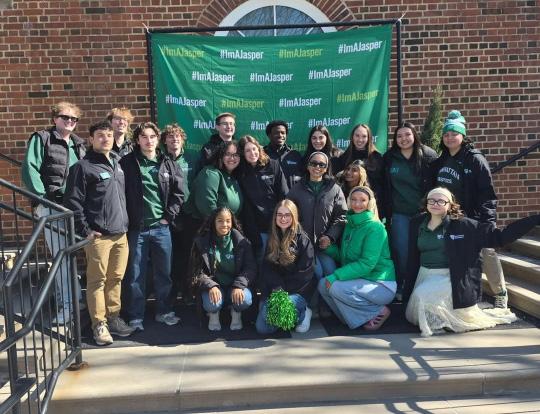
MU Welcomes Incoming Students with Accepted Students Day
This marks the first Accepted Students Day of the calendar year.
This marks the first Accepted Students Day of the calendar year.
Leyla J. Mercado
Features Editor & Asst. Social Media Editor
On March 9, Manhattan University (MU) announced its inaugural class of faculty fellows for the ARCH Innovation Exchange. This campus-wide initiative aims to advance access to learning by promoting these values, as fellows build on a range of projects that combine the foundations from MU’s three schools: the Kakos School of Arts and Sciences, O’Malley School of Business and the
School of Engineering.
The faculty fellows will be facilitated by Lawrence Udeigwe, Ph.D, a professor of mathematics. According to manhattan.edu, “Udeigwe’s expertise spans applied mathematics, machine learning, computational neuroscience and music, and he has led innovative curriculum development and externally funded research initiatives.”
J. Patrick Abulencia, Ph.D, department chairperson of chemical engineering graduate school and associate professor of chemical engineering, spoke to The
Quadrangle about what inspired his project within the ARCH innovation exchange.
“I have always believed that education should extend beyond the classroom, and this project provided students with an opportunity to apply their skills in a meaningful, real-world context,” Abulencia said. “I wanted our engineering students to engage with people living with limited resources and to better understand an engineer’s responsibility to serve society.”
The experience reflects
CONTINUED ON PAGE 3
Mary Haley Senior Writer
Actor, director and travel writer Andrew McCarthy visited Manhattan University (MU) to discuss his new book, “Who Needs Friends: An Unscientific Examination of Male Friendship Across America,” offering students a candid look at male intimacy, loneliness and the power of simply showing up for one another.
Kelly Marin, Ph.D., chair of the Social and Behavioral Sciences Department and the moderator for the event, introduced McCarthy as a multi-hyphenate artist –known for cult-classic films like “Pretty in Pink,” “St. Elmo’s Fire,” “Mannequin” and “Weekend at Bernie’s,” as well as for his award-winning travel writing and multiple New York Times bestsellers. McCarthy visited MU on the official publication day of his new book that reflects on a cross-country trip.
The seed of “Who Needs Friends” was planted for McCarthy during a conversation with his son, Sam. Sam, after telling a funny story about his friends, suddenly looked up and observed that his father didn’t really have friends. McCarthy initially defended himself, explaining that he had friends, but he just didn’t see them. The comment from his son still lingered, and it inspired a 10 thousand mile, 22 state road trip across America to reconnect with friends he hadn’t seen in years.
Although the reasoning for McCarthy’s journey was to reconnect with his own friends, what he found along the way were conversations with strangers that led to a
fascination with how men relate to one another.
“I would just chat with [strangers],” McCarthy said. “I wasn’t interviewing people. I was just an interested person in the topic. I would share about my own [experiences], and I was amazed with how open people were… a lot of [people] sort of discovered things about themselves and the place friendship had in their lives, in a way they had never thought about before.” McCarthy said these conversations revealed a pattern for many men; one where intimacy is tangled up with fear – fear of being perceived as weak, vulnerable or sexually suggestive. Saying “I love you” to another man, he admitted, has long been difficult for him, even as his friend began using the phrase freely at the end of phone calls.
“There’s an issue of intimacy,” McCarthy said. Intimacy can be construed as vulnerability, and vulnerability is very close to weakness.”
However, McCarthy also shared examples of long-term friendships that demonstrated a different dynamic. He described meeting two men in their 70s who had been friends for decades and had recently begun expressing affection more openly. McCarthy recalled one of the friends telling him “I say ‘I love you’ to my wife… why can’t I say it to my best friend?”
McCarthy contrasted these stories of connection with the isolation and loneliness he also observed, especially among men who never developed or maintained such intimate bonds. He suggested that the culture equips many men
Volume CXIII, Issue 10
MARCH 31, 2026
The Editorial Board
Laili Shahrestani and Barbara Vasquez Editors-in-Chief Maddie Rosado Managing Editor
Leyla Mercado Features Editor
Sarah Rolka Asst. Features Editor
Zeke Jazwinski Sports Editor
Emmamuel Sofillas Asst. Sports Editor
Leyla Mercado & Elaina Batista Asst. Social Media Editors
Maddie Rosado News Editor
Zendrah Bonnick Asst. News Editor
Maria Castaño Arts & Entertainment Editor
Joshua Reichard Asst. Arts & Entertainment Editor
Amy Forster Production Editor
Lois Boateng Social Media Editor Thom Gencarelli Faculty Advisor
Misha Jabal-Abadi Asst. Production Editor
Alba Kortoci Web Editor
About The Quadrangle

A tradition since 1924, The Quadrangle is a news organization run by the students of Manhattan University. We strive to cover news around campus and the greater community, publishing weekly in print and daily online. Our goal is always accuracy, relevancy and professionalism.
The opinions expressed in The Quadrangle are those of the individual writer and do not necessarily reflect the views of the Editorial Board, the University or the student body.
Join The Quadrangle
The Quadrangle’s staff holds weekly open meetings on Tuesdays at 4 p.m. in Kelly Commons. All are welcome to come and join the club. If interested, please email thequad@manhattan.edu!
Connect with The Quadrangle mcquad.org @mu_quad @mu_quad mcquad
Hi Readers,
I hope you all are doing well! This week is exciting, as we not only have a jam packed issue filled with insightful stories, but also are releasing our yearly Triangle issue! For those of you who may be new around here, Triangle is our April Fools edition of our publication, where we put a satirical spin on campus news. We are so excited for you guys to read!
Now, with further ado, let’s jump into issue 10.
Starting off in news, we highlight actor, director and travel writer Andrew McCarthy’s time on campus, speaking to the Manhattan University community - one you won’t want to miss! We also cover the announcement of the inaugural class of faculty fellows for the ARCH Innovation Exchange. Last but not least, we have a very informative Manhattan Caucus that discusses relations between the U.S. and the Middle East, as well as how the ongoing war is impacting the economy. Give it a read.
Moving onto our features section, we take a look into the Albanian Student Association, and their soccer watch party, intended to cultivate an environment of culture on campus. We also get deeper insight into what went on during the freshman year dance, aka the “Night Under the Stars.” In our A&E section, we have a well-written Broadway show review for the “Buena Vista Social Club,” which can serve as a guide to help you decide on what your next Broadway show choice/NYC night out in the town could look like. Lastly, we cover the career chat held by the Center for Career Development, aimed at helping students in the KSAS Department.
In our sports section, we have an informative article about the Manhattan baseball team, and their preparation for their conference play, as well as their progress leading up to this moment. In addition, we have a Games of the Week, highlighting the ups and downs of various athletic teams on campus.
That’s about it for issue 11! Also, keep your eyes peeled for our printed version of Triangle, which should be out on stands near you very shortly!




We will see you in the next issue!

Editor-in-Chief
poorly for vulnerability and emotional honesty, leaving them wary of exactly the kind of closeness they most need. Marin affirmed that observation.
“That really does come through, even in the men that you meet and talk to,” Marin said. “It’s that kind of larger cultural script of what’s it, what’s appropriate, what’s not and how are other people going to perceive it… I think that’s real. I see that in the research as well. So what I think you experienced aligns with that.”
As a travel writer, McCarthy has learned a lot about life through his projects outside of acting. He explained how travel has been the university of his life. McCarthy described himself as a terrible student, and recalled to the crowd how he was kicked out of college after two years and didn’t seriously start reading books until his 30s. His education came instead from traveling the
world alone after the fame he experienced in the years past. After these travels, he would write down experiences he had, and instead of finding a diary entry, he would find a story.
“I would just write stories. And then I had no desire to do anything with it for, like, 10 years, until I did,” McCarthy said. “I met an editor, and I said, ‘you should let me write for your magazine,’ and he said, ‘Well, you’re an actor, dude,’ and I said, ‘Yeah, but I know how to tell a story. That’s what I do for a living,’ And he thought that was a good answer.”
Presenting at a college, filled with younger audiences who are forming the friendships that McCarthy spent miles and months observing, when the conversation turned to students in the audience— many of whom are likely forming friendships that could last decades— McCarthy suggested that young people may already understand friendship more
deeply than older adults give them credit for. He pointed to the 1980s films he starred in, like “St. Elmo’s Fire,” noting that those movies took young people seriously and often centered friendship rather than romance. Watching young people like his own children, he sees that their investment in friends is profound and real, and it is not to be dismissed as being immature or temporary.
“There was something in the act of showing up that, in doing so, I would then [say to the friends] ‘You’re important to me. You were really profound in my life, and it mattered, and I need to see you again and I’m old enough to not feel ashamed and scared by that,” McCarthy said.
Michele Saracino, Ph.D., professor of religious studies and director of the James Patterson Honors program, planned this event and wrote to The Quadrangle about what this event meant for the university.
“The James Patterson
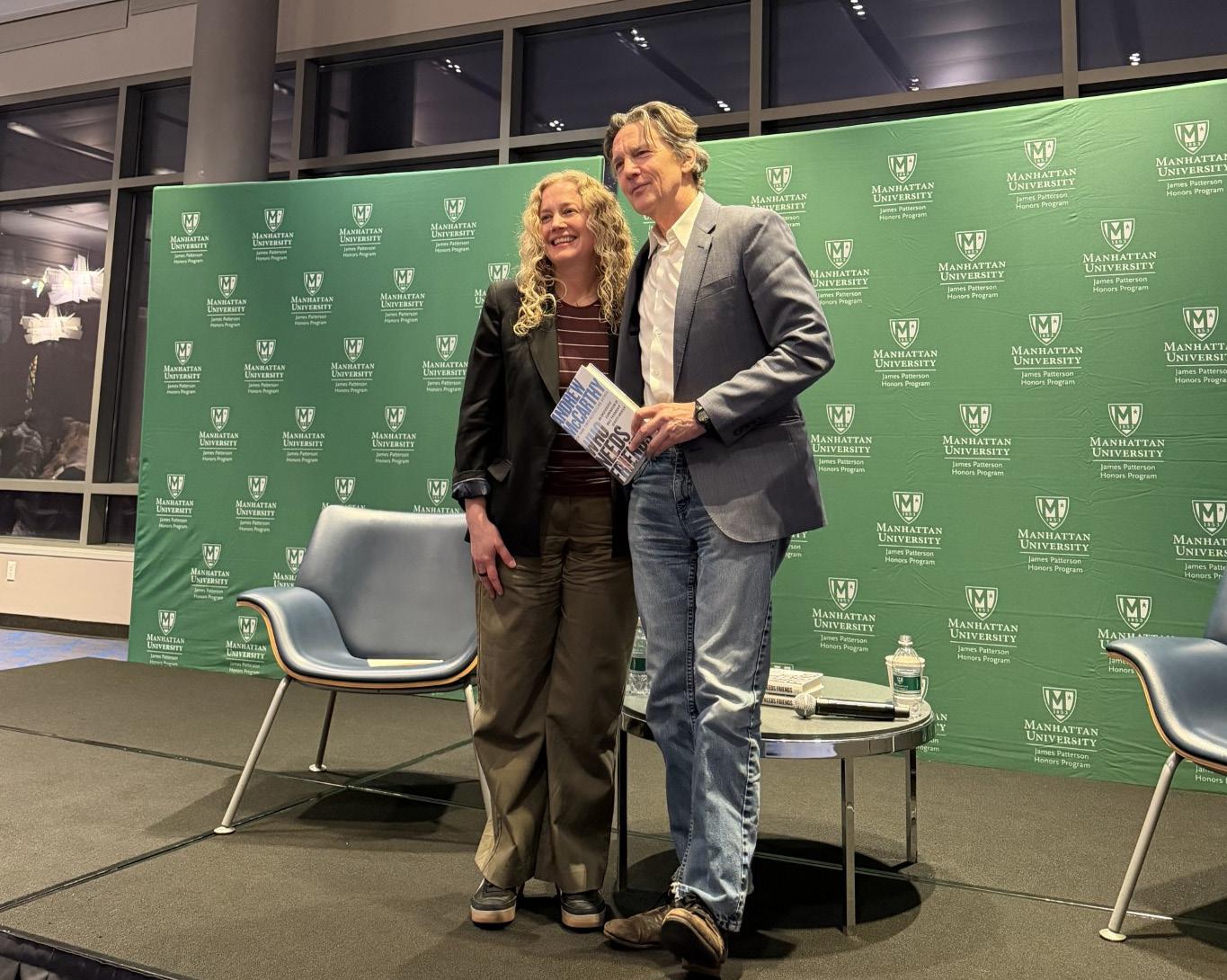
Speaker Series event featuring actor, director, writer Andrew McCarthy was outstanding.” Saracino wrote.
“Professor Kelly Marin struck exactly the right tone with her questions about his new book on male friendship. It was especially gratifying to see so
many alumni and community members in attendance.
Brother Robert Berger’s remarks during the Q&A – reflecting on McCarthy’s performance in ‘Heaven Help Us’ – were a highlight of the evening. It was a great night to be a Jasper.”
CONTINUED FROM PAGE 1
the broader mission of the ARCH Innovation Exchange, which aims to foster interdisciplinary collaboration and socially impactful innovation among faculty and students. Abulencia emphasized both the development of the initiative and its significance within that larger effort.
“That experience is critical, as it reflects what graduates will be expected to do in their careers, which is essentially translating what they’ve learned into real solutions,” Abulencia said. “The hope is that they not only gain valuable experience, but also take pride in creating work that makes a tangible difference.”
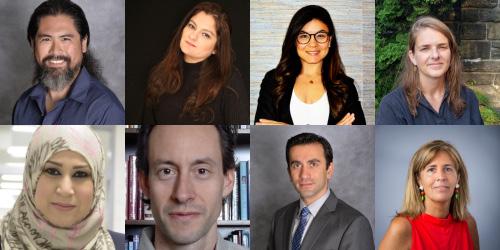
Jay Friedenberg, Ph.D, a professor of psychology at MU spoke to what motivated him to bring topics like climate change, AI and disinformation into a structured educational initiative.
“With advances in AI, climate change and political events here in the U.S., [its] painted a gloomy picture in recent years,” Friedenberg shared. “Instead of the proverbial ostrich sticking his head in the sand to avoid bad
things, it is more important for students to understand these threats and possible solutions for them so they can go out into the world and create positive change.”
Such a perspective aligns closely with the mission of the ARCH Innovation Exchange, which encourages faculty to confront complex, real-world challenges. Friedenberg stressed this goal, discussing how he hopes the initiative will reshape the way students understand their role in addressing global issues.
“I would like our students to understand that they have the power to make a better world, and that understanding is the first step towards this,” Friedenberg said. “We need to comprehend these threats to formulate viable solutions and take action. Fear is paralyzing, but knowledge is liberating.”
Friedenberg described AI as a complex topic and said he plans to make it accessible and actionable for students.
“AI is a very complicated topic,” Friedenberg said. “It’s obviously a technical subject, but that doesn’t mean that the average person can’t understand how it operates at a basic level and what the potential pros and cons of
various AI systems are.”
Looking ahead, Friedenberg discussed the long-term impact he expects the Existential Risk Education Initiative to have at MU and beyond.
“I’m hoping to place some of my students in internships related to X-risks, where they can work in areas countering these threats,” Friedenberg said. “I am also aware of various think tanks and institutions where they could be placed. Some
of my students have been participating in our Save the World Club activities to help spread awareness on campus.”
Through initiatives like the Save the World Club, BridgeUSA chapter and the ARCH Innovation Exchange speaker series, Friedenberg is not only shaping the academic experience at MU, but also preparing students to tackle some of the world’s most pressing challenges.
“We plan to host debates on
campus next year on various subjects,” Friedenberg said.
“I’ve also, through the ARCH Innovation Exchange, created a speaker series where we bring in experts to present on topics like climate change and media bias.”
The program’s ripple effect could extend far beyond campus, equipping the next generation to confront existential risks with knowledge, creativity and purpose.
Elaina Batista Asst. Social Media Editor
The war between the United States, Israel and Iran has entered its fifth week, and Iran’s effective closure of the Strait of Hormuz.
This conflict has involved attacks on oil infrastructure in neighboring countries, including Saudi Arabia, Kuwait and the United Arab Emirates.
The Strait of Hormuz is where a vast majority that is produced in the Persian Gulf is exported through. Initially, this closure was motivated primarily by the necessity to modify insurance contracts for oil tanks.
However, the ultimate concern has been attacks on oil
vessels in the strait, resulting in unsustainable losses or shipwrecks that close shipping lanes. President Trump claims to have facilitated talks with Iran to end the war in the Middle East, but continues to send troops into the region. Iran insisted on state media that the conflict will only end on Tehran’s terms, publicly rejecting Mr. Trump’s suggestion.
Despite this, Iranian officials have indicated in private that they are willing to engage in negotiations. Mohammad Bagher Ghalibaf, the speaker of Iran’s Parliament took to social media and stated that Iran was “closely monitoring all U.S. movements in the region, especially troop deployments.”
He added “Do not test our
resolve to defend our land.”
Israel claimed to have targeted two nuclear facilities in Iran. This was the third strike against the Bushehr nuclear power station. According to a local official cited in state media, at least 20 people were killed in US-Israeli strikes in western Iran.
Defense Minister Israel Katz said in a statement on March 27, that Israeli strikes on Iran “will intensify and expand” due to the fact that they claim that the Islamic Republic had not heeded warnings “to stop firing missiles at Israel’s civilian population.”
As of recently, Trump’s approval rating has hit an all time low of 36% and only 29% of the country approves of Trump’s economic stewardship
according to Reuters.
Additionally, according to a recent AP-NORC survey published on Wednesday, 45% of Americans expressed “extreme” concern about their ability to pay petrol in the coming months.
Two amphibious units of U.S. Marines are traveling to the Gulf – one from Japan and the other from California. According to reports, an elite infantry division specializing in parachute assault will follow shortly. Their deployment signals that America’s president is considering using force to unblock the Strait of Hormuz. Since the beginning of Operation Epic Fury, Iran has threatened the strait, threatening nearly 20% of global oil and liquefied gas exports,
among other important goods.
As of Friday, March 27, the global price of crude oil jumped over $110 a barrel and prior to the conflict in the Middle East, a barrel of oil was just over $70. Iran’s Revolutionary Guard Corps has proclaimed the Strait of Hormuz restricted to any ships not expressly granted permission by Tehran, warning of harsh consequences for any offenders.
In a statement, the Iran’s Revolutionary Guard Corps stated “the passage of any ship ‘to and from’ ports belonging to allies and supporters of the zionist-American enemies, to any destination and via any corridor, is prohibited.”

Sarah Rolka
Asst. Features Editor
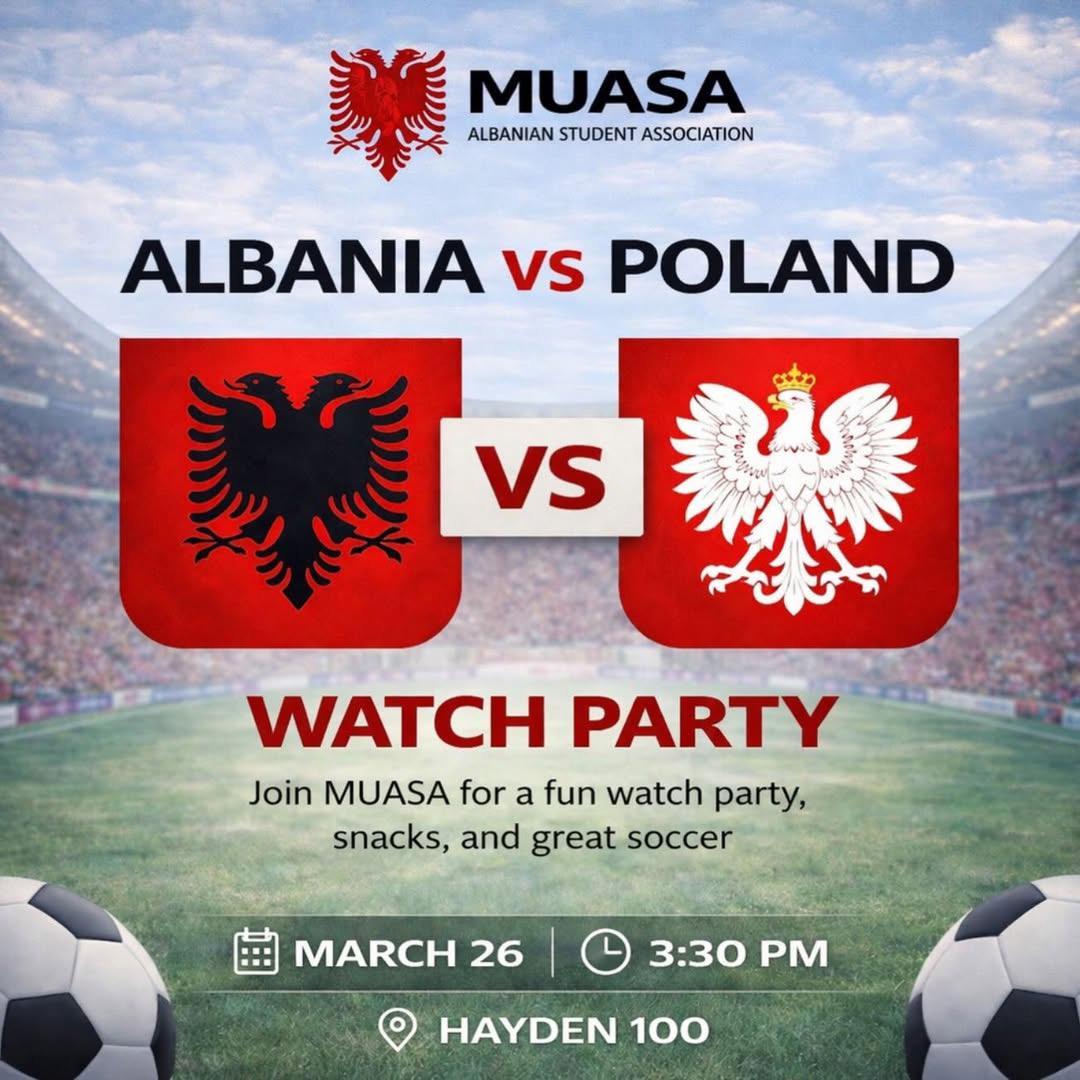
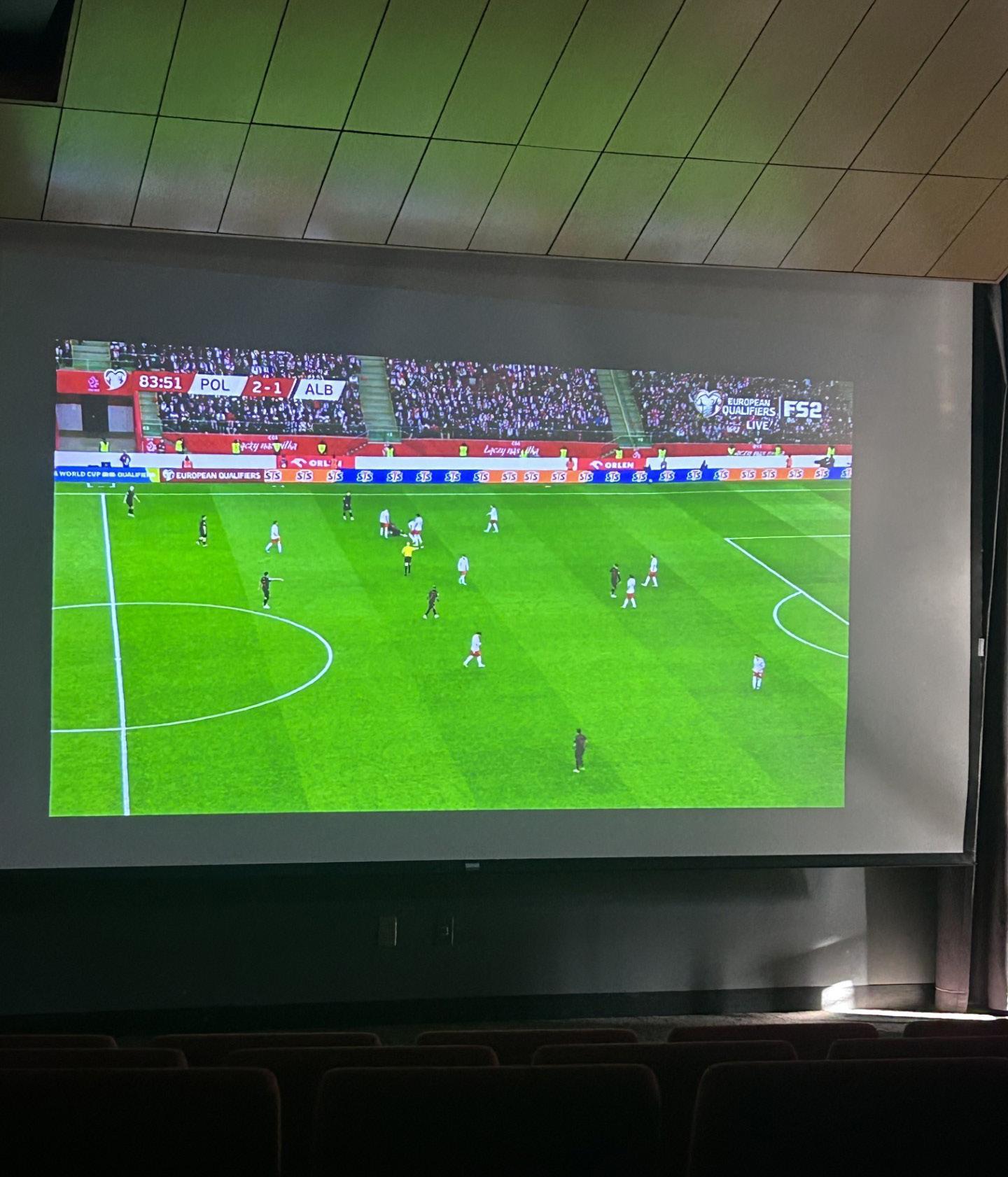
Manhattan University’s (MU) Albanian Student Association hosted a soccer watch party for the FIFA World Cup Qualifiers, with teams Albania vs. Poland, in Hayden Auditorium this past Thursday, March 26. This was the first time the association has hosted a watch party style event and it attained a good turnout.
The World Cup Qualifiers is a series of playoffs for the FIFA World Cup and is an important event for soccer fans around the world. For this watch party event, it was open to everyone to watch and see which of the two teams might progress onto the next round to qualify for the World Cup.
Most people who attended
the event were on Albania’s side and hoped that they would come out as the “underdogs” and advance in the Qualifiers. However, even though the majority of those who attended were rooting for Albania, there were some Polish students who came to support the Polish team.
Kristina Camaj, a senior computer science major and vice president of the Albanian Student Association, commented on how surprised she was with the turnout, and that the goal of the event was to bring students of all cultures together and spend time with one another with a more “lighthearted” event.
“I was actually surprised when I walked in at first because we have some new people, because sometimes it’s just us club members,” Camaj said. “We have some Polish students here, we have some alumni…watching as well. [We
hosted the event] just to bring students together and watch the game; because all of us are going to watch the game regardless whether it’s at home or with family.”
Lukas Gojcaj, a senior computer engineering major and president of the Albanian Student Association, commented on why a watch party like this helps bring together a community of soccer fans from all cultures.
“The good thing about soccer is that it’s a very worldwide, universal sport - a lot of people can come together even if they’re not even Albanian…,” Gojcaj said. “We want to build a community and nourish [it].”
Watching sports games, whether it be soccer or other types of sport, is an integral part of many different cultures around the world. For many people, it’s a time to bring family or friends together and have those experiences with one another to express pride for your country.
“Soccer games in general bring a lot of feelings of pride towards your culture,” Camaj said. “Watching any soccer game, you can see how passionate fans are to support their country… Even though it’s just soccer, it does blend into a cultural aspect just because you want to support your team and your country.”
Gojcaj agreed and added onto how these types of events bring people of the culture together and how even smaller matches in towns have that same “prideful” effect on everyone.
“I think it’s an important part of any culture because a lot of times [these experiences] help bring communities together,” Gojcaj said. “Even if it’s [just] club level in cities, all the history behind it - behind the games themselves, behind the people playing - everything
builds together in a way that makes the game almost have more of an effect on everyone.”
Eduard Zadrima, sophomore and vice president of External Affairs for the Albanian Student Association, agreed with Gojcaj’s statements and additionally commented on how watching sports brings people from the same and different cultures together.
At the end of the watch party, Albania lost to Poland with a 2-1 score; meaning that Poland advanced in the Qualifiers and went up against the next team. With a successful event like this one, the Albanian Student Association will be planning more for the rest of the semester and onwards. To keep up with upcoming events, follow them on Instagram with @mualbanianclub.
“Usually most people watch [the games] with their families - that’s what I’ve done throughout my life,” Zadrima said. “It was a great idea and I think it’s gone very well, to have a watch party. I loved watching it with people from my culture, and even people who don’t know anything from my culture; we can show them a little bit [of it].”
Gabriella Dickson Staff Writer
On Saturday March 28th, student government hosted a first year formal or a “mock prom,” so that first year students, and even upperclassmen, could relive their high school prom experience. At the event pizza and drinks were served, and although attendance was lower than expected, it was an exciting time for those who attended.
Sulaiman Derac, a freshman biology major and vice president for student government, spoke to The Quadrangle about why he planned the event and his expectations for it.
“This was me and my covice president Riley’s full vice president plan,” Derac said. “And we were trying to figure out something that would bring the freshmen together, something that everyone would come to.”
As the main event planner, Derac also spoke on whether the event fulfilled his hopes of what he awaited of the outcome.
“I would’ve expected more
people,” Derac said. “I expect it to be a little more of a dancing vibe and as more people hear the music, they’ll start to show up.”
Julia Taffe, a first year biology major, also spoke to The Quadrangle about her expectations for the event and how she made the most of her time there.
“I was excited because I know Sulaiman was excited to run this,” Taffe said. “I was hoping that we could get a good group of people to attend. It just really feels like high school vibes.”
Taffe also spoke about how even with the low turnout, she still made the event worthwhile. Her experience was one that she wanted others to understand and enjoy, while also adding how she felt “A Night Under the Stars,” could’ve been better for those who attended.
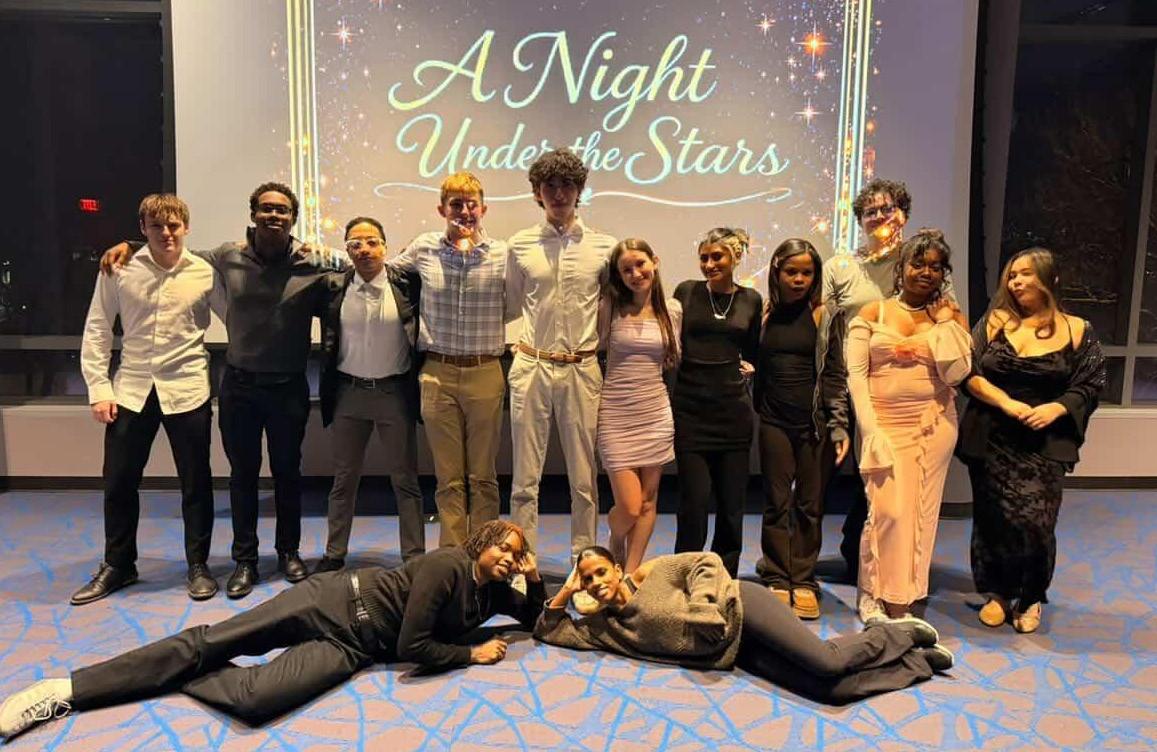
“We’re all just hanging out, you know?” Taffe said. “We’re all just trying to talk and keep the volume up, and just have a good time. I wish we could’ve gotten more people involved, maybe gotten some bigger groups like a sorority or frat. But I like hanging out with my friends, so I still had a good time.”
Matthew Rogliano, a first year civil engineering major, discussed how he’s made the most out of the event, and how it helped him socialize more with other first year students.
“To be honest, it was a nice experience to meet other freshmen,” Rogliano said.
“And to attend a social event in general. I’m making the most out of the event by chatting with
people that are here, eating and just taking advantage of everything. [Overall] having a good time. And as for the event being what I expected, it honestly was. I mean it wasn’t advertised very well, but in his situation I feel like he [Derac] did a very good job with the other vice president. So overall, I think he made a good effort, and it was a good first event.”
With hopes that the next few events are to be advertised much more, “A Night Under the Stars,” was still an unforgettable experience for those who enjoyed it. Socializing with others and meeting others made it one of a kind. For more information on other school events, @ mustudgov on Instagram will keep Jaspers updated.

Arts & Entertainment Editor
The Broadway musical “Buena Vista Social Club” follows the story of Omara Portuondo, Ibrahim Ferrer, Compay Segundo and Ruben Gonzales, all of whom are real figures who shaped Cuban music during the 50’s. Leaving this legacy I had the pleasure of seeing for the first time this Tuesday, 24th, in the Gerald Schoenfeld Theatre.
As people take their seats, you can see some of the musicians warming up on stage, creating anticipation as you hear little snippets of possible songs.
I saw this performance as a part of my Postcolonial Caribbean Literature class, going in mostly blind. I only knew it talked about Cuba during the revolution, and that it was a musical. My main thought as I left the theater that night was that I really wanted to watch the whole show again just to engrave it in my memory as best I could.
I was mesmerized the whole time and could not stop thinking about how this play encapsulates the feeling of loss and loyalty. It expertly navigates the struggle of reconstruction felt across the Caribbean in melancholic yet grand and upbeat performances, giving its characters the depth they need to make the audience immediately feel invested in them.
Once the play started and the first big musical number, “El Carretero,” was played, alongside the stunning performances choreographed by Patricia Delgado and Justin Peck, with the Buena Vista Social Club ensemble playing in the background, I could not take my eyes away.
The story takes place during the Cuban revolution, and through the fantastic performances, we are enveloped in this extremely specific period of time, full of rapid changes, violence, and hope for a better future, foggy with uncertainty, all framed with music that reflects on Cuba’s past as a colony, the slave trade, and the intimate more human side of the people who decided to stay during the revolution, as they felt Cuba was their only home.
The story is divided into two timelines: one in 1958, with the revolution beginning and our characters meeting for the first time, and one in 1996, with the characters being much older, reminiscing about when they were all together.
Natalie Venetia Belcon’s performance as Omara is entrancing, not only because of her fantastic vocals but also because of her ability to express the deep melancholy and guilt Omara feels. Given the play’s historical context, it carries heavy undertones of loss of identity and grief, yet they are expressed in this prideful manifestation of culture through music and dance. Belcon manages to perform these nuances in a way that sucks you in, allowing you to care about Omara not because she is the protagonist but because you can truly feel her humanity and internal conflicts.
While it could be argued that most of the costumes were not exuberant (except the beautiful yellow dresses and stunning carnival outfits), I think they worked so beautifully to both situate the story and make the dances look even more dynamic, adding so much movement that was critical to the overall performance.
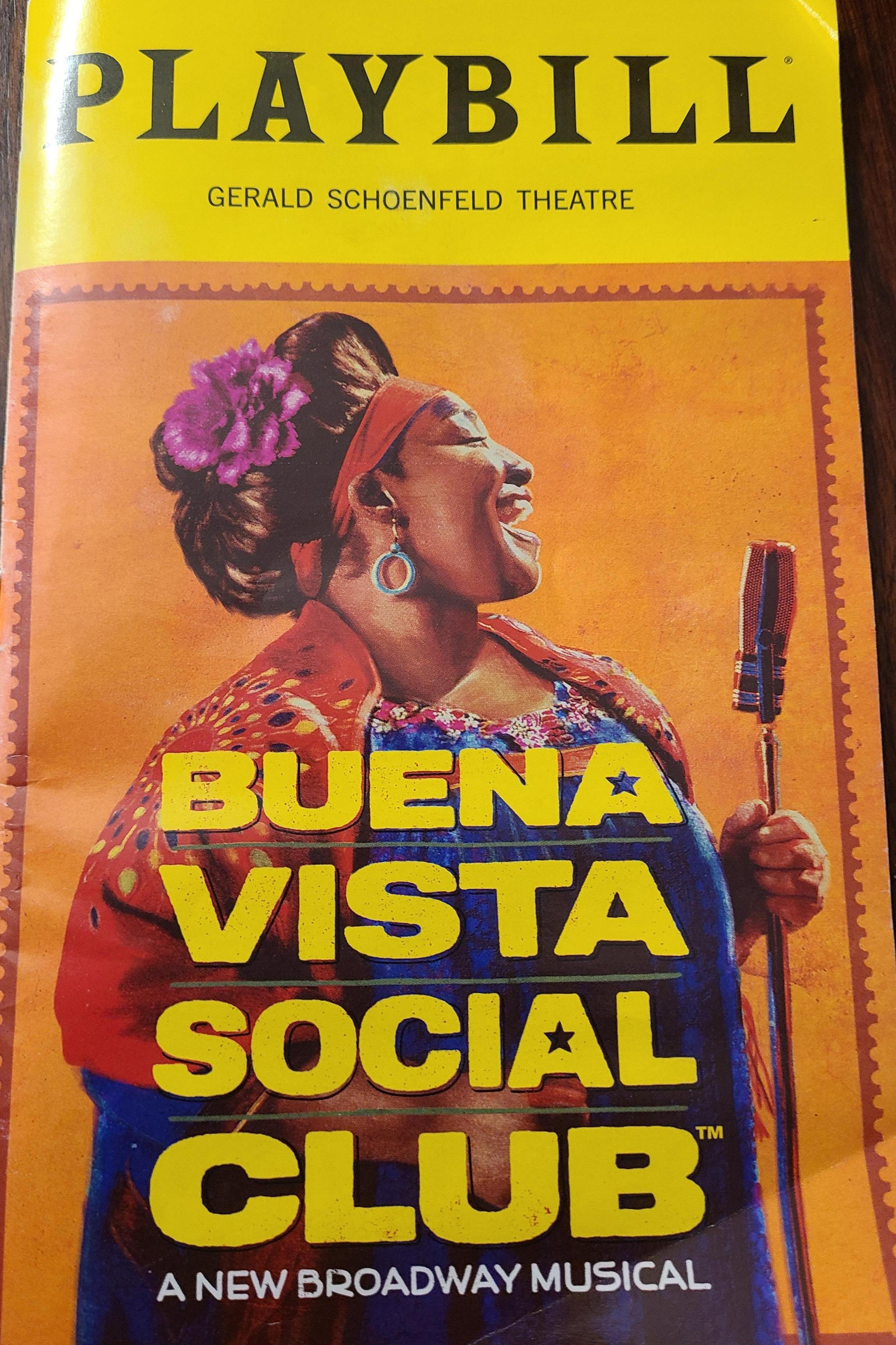
Buena Vista Social Club has been awarded five Tonys in its short career as a musical for reasons obvious to anybody who has had the opportunity to see it. It’s not only filled to the brim with absolutely fantastic performers, but it also presents
Joshua Reichard Asst. A&E Editor
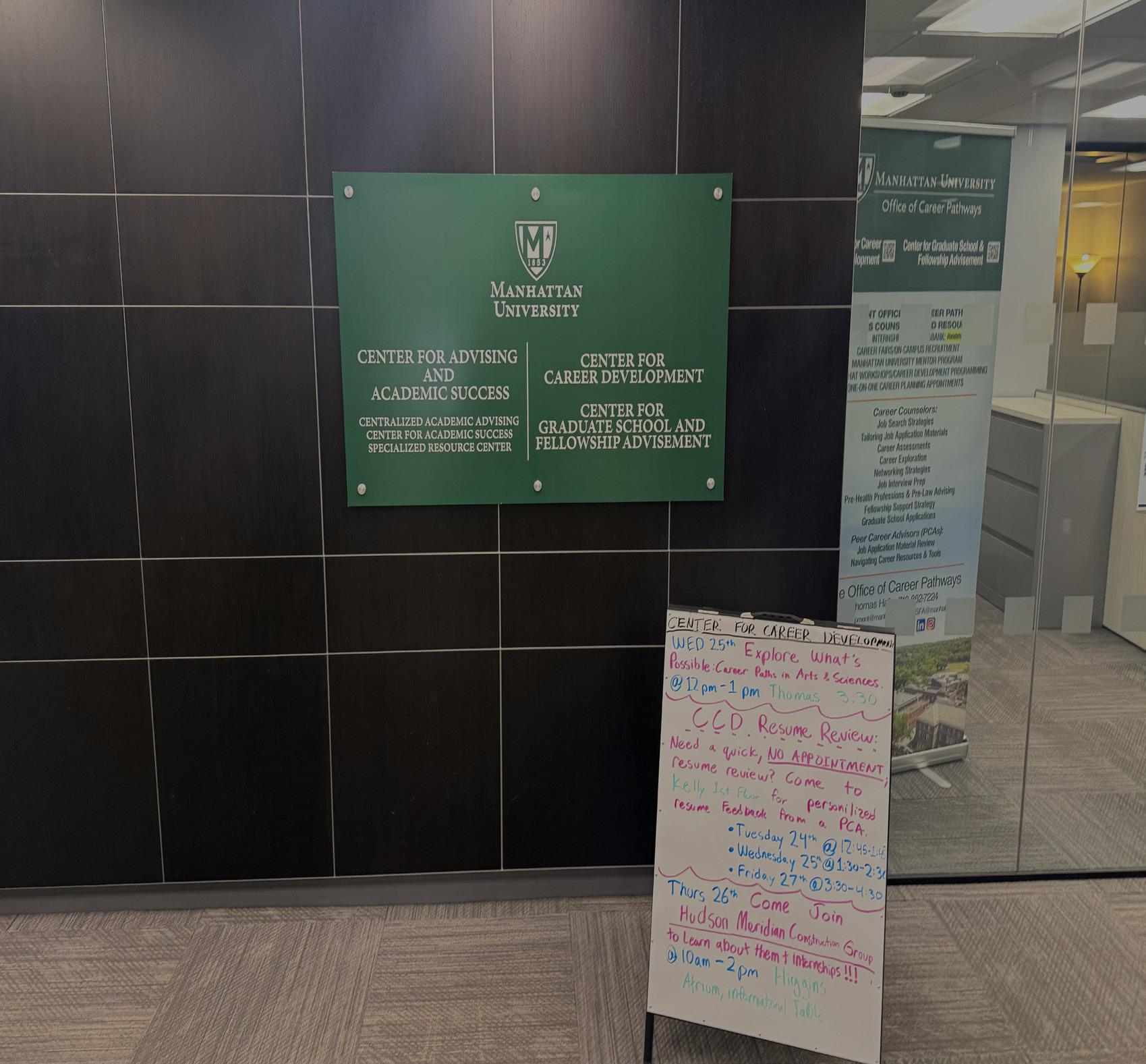
The Center for Career Development at Manhattan University (MU) hosted an event on March 25 for students in the Kakos School of Arts and Sciences (KSAS). The event aimed to help students explore potential career paths and teach them more about the current job market.
The event, titled “Explore What’s Possible: Career Paths in Arts & Sciences,” was hosted by Kathleen Gomez-Reid, a career counselor at MU. It was the latest event in the center’s Spring 2026 Career Chat Series, designed to help students expand their knowledge of career opportunities. Assuring that students in the arts and sciences gain more knowledge about career opportunities, Gomez-Reid noted the importance of networking and building relationships.
“We talk about LinkedIn all the time because it’s really important to build your professional network and to maintain connections and relationships,” Gomez-Reid said. “You want to maintain those connections because that way you can get insight, that way you can make connections, and that way you can navigate today’s job market, which looks very different from how things were even three to five years ago.”
MU students also have access to the Jasper Career Network, an online resource where students can connect with alumni.
“Jasper Career Network [is] similar to LinkedIn, but it’s only for Jaspers,” Gomez-Reid said. “If you are a student, you can create an account and connect with alums. You can also use these resources to understand job market trends, so you
can understand what things are changing. Again, this job market is so different.”
Students pursuing careers in performing, visual and digital arts are encouraged to create portfolios to showcase their work to employers and others in their industries.
“You want to create a portfolio to showcase your projects and all of your work,” Gomez-Reid said. “That [way] you can add [a] hyperlink to your resume and hiring managers can easily see what you are capable of.”
She also encouraged students in the arts to get involved in events and performances, sharing them on social media and maintaining a strong online presence.
“When you come in for interviews, or when you’re meeting professionals already in the industry, they’re going to want to see your work right away,” Gomez-Reid said. “Make sure your [social media] accounts look great. You want to give viewers easy access to see you and to know what you’re good at, and what you can do when it comes to those opportunities in the arts.”
Gomez-Reid ended the career chat by adding that students’ college experience is more than just academics; it is also an important start to their future.
“When you come to college, you’re preparing for your career, you have academics, and you’re taking classes, but you’re also trying to figure out where you see yourself in the world,” Gomez-Reid said.
Cesar Tavarez-Vasquez, a junior international studies major, found the event to be helpful for students in the school.
“I was looking for what kind of pathways are open for me,” Tavarez-Vasquez said. “It’s great to see what tools are at my disposal here. [The event]
gave me some new tools that can really help me.”
He also said that many students in the humanities feel limited to certain careers, and that events like this can change that.
“I often hear from people in my major that they find the only way to progress in the humanities is to get a career as an educator or through going to graduate school,” TavarezVasquez said. “I think they should be going to these events to see what other options exist.”
Julie Anna Alvarez Rivera, director of the Center for Career Development, spoke to The Quadrangle about the Career Chat Series and what it was designed to do.
“This semester we’ve been hosting a series focused on each of the schools, particularly focused on career exploration, because we recognize that not everyone is at the stage where they know exactly the direction they want to go in,” Alvarez said.
She encourages KSAS students to use Handshake, an employment website where students can sign up using their school emails. She also incentivizes students to check their inboxes for updated potential career opportunities.
“The best thing students can do across all the schools is use their Handshake accounts and make sure they are receiving our emails.” Alvarez
said, “Typically every week there’s [emails] going out to students that are specific to their majors and areas of expertise.”
Students are encouraged to attend events at the Center for Career Development to learn more, and can even make appointments to talk about anything they might have missed.
“We’d love to see [students] come in person to meet us; we’ll continue to hold different events,” Alvarez said. “We can do virtual appointments, if [students] want to get a leg up on their job search, even over the summer.”
Zeke Jazwinski Sports Editor
As warmer weather returns and campus life picks up across Riverdale, Manhattan University’s (MU) baseball team has found its stride, bouncing back from a rocky start to build early-season momentum and growing confidence heading into conference play.
The Jaspers secured a series win over Quinnipiac behind dominant pitching, taking the games 6–5 and 2–1. With the victories, MU’s baseball team is beginning to build momentum and looks poised to make noise in the highly competitive Metro Atlantic Athletic Conference.
Head Coach Steven Rosen of the Manhattan Jaspers praised the team’s pitching performance in an interview with GoJaspers.
“Have to start with Joe [Duffield] and Hudson [Pergamit] and shout out their outings. Tremendous day on the mound - retired 16 straight hitters to finish the game… Another day of high-level defense - Sosa in right field with a catch of the year type play. Credit to Gury[andel] Salva with two clutch hits and RBIs to power the offense.”
The Jaspers hope to carry this momentum as they continue their season. Pitching has been a strong part of the Jaspers’ reasons for winning. Manhattan hopes to continue their success as they go into conference play.
Vincent Samuel has been a highlight for the Jaspers this season. According to MAAC Sports, “Vincent Samuel crushed his way through a wicked five games was Vincent Samuel, who is in the midst of a five-game hitting streak, combining for 12-for-23 to total a .522 batting average.”
The Jaspers have faced early struggles but have also shown
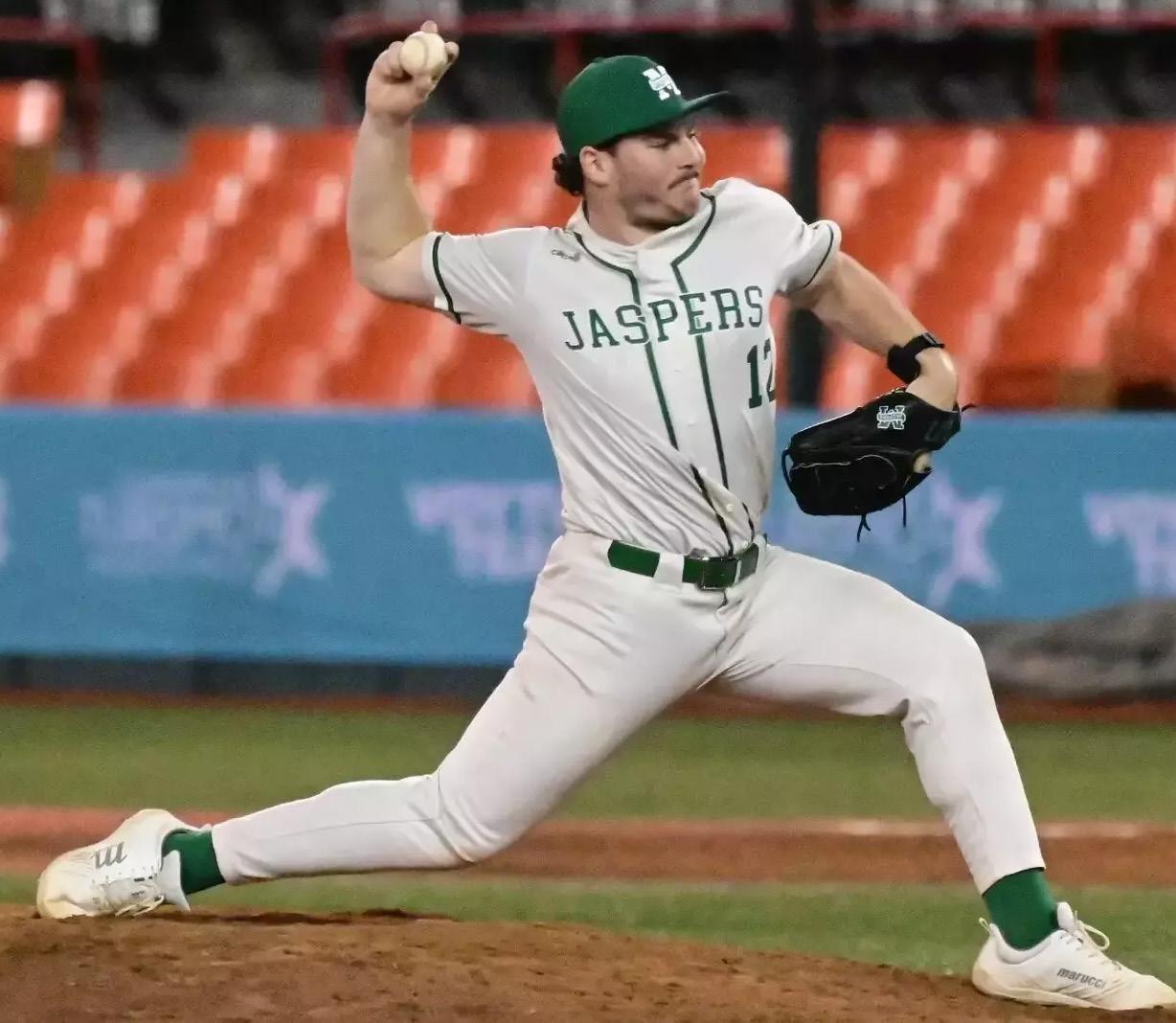
Dominate pitching performance by the Jaspers led them to a win. GOJASPERS.COM / COURTESY
flashes of promise throughout the season. As Manhattan continues to build momentum, the team is looking to turn those moments into sustained success. Picked to finish outside the top contenders in the preseason, the Jaspers are using that slight as motivation and are already making a case as a team to watch in the MAAC.
The Jaspers were not viewed as a major threat in the
preseason, according to D1 Baseball.
“Fairfield and Rider figure to grapple for MAAC supremacy again in 2026, but a group of challengers look improved from a year ago, which could make for an interesting race,” the outlet noted.
The Jaspers delivered one of their strongest performances of the season against Columbia, scoring a season-high 17 runs in a statement win—their first
over Columbia since 2018.
The victory marked a turning point for Manhattan, which has rebounded after an 0–3 start to reach 9–12 overall and 3–6 in MAAC play. The Jaspers now look to carry that momentum into their upcoming series against Merrimack.
This is a team that has faced adversity and responded with some of their best baseball. If the pitching continues to be a strong spot and the offense
continues to build off an impressive showing against Columbia, the Jaspers could look to make a run this year. Manhattan could emerge as a dangerous team come conference tournament time. With a roster growing more confident by the day, the Jaspers are no longer a team to overlook and may just be getting started.

Zeke Jazwinski Sports Editor
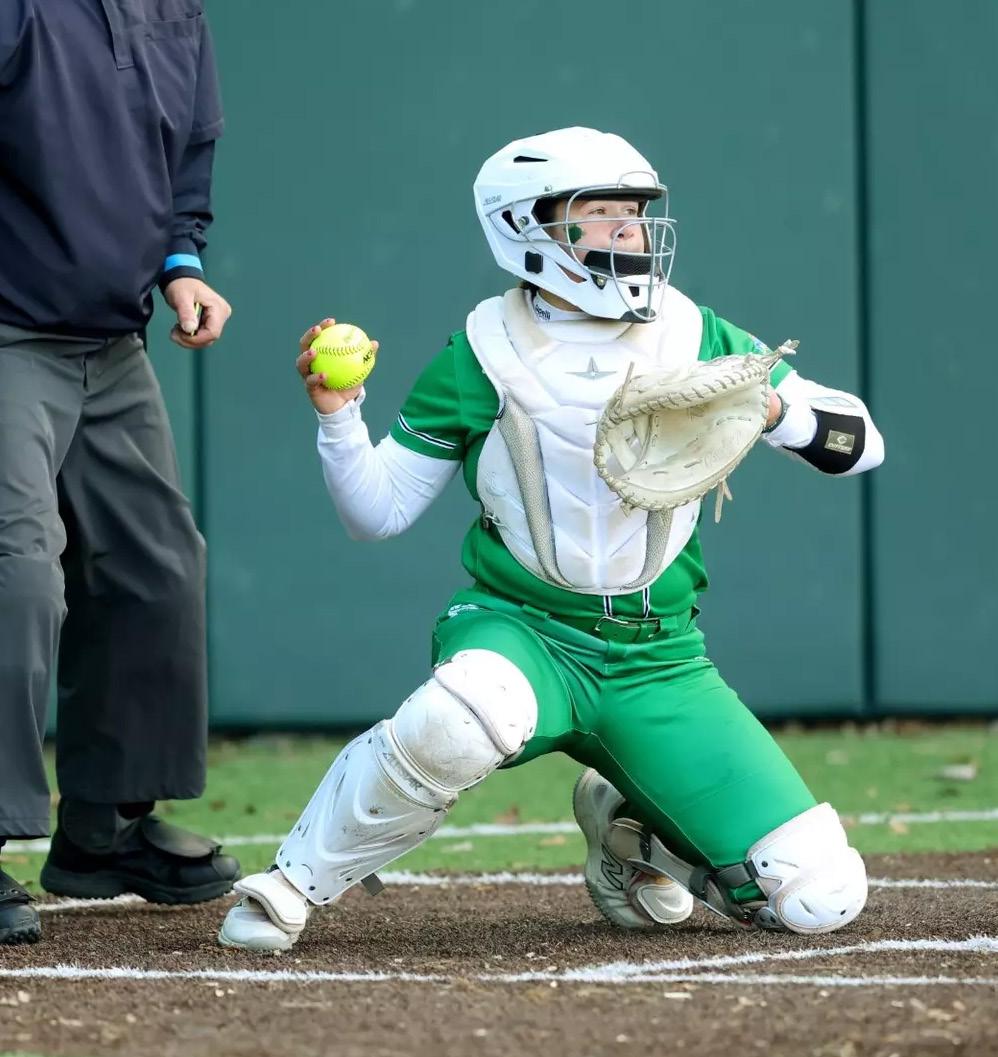
The Manhattan Jaspers softball team looked to get back on track last Tuesday, traveling to Jaroschak Field for a pivotal doubleheader matchup against the Saint Peter’s Peacocks as they aimed to regain momentum in conference play.
The Jaspers came away with a sweep, winning both games by scores of 6-4 and 14-3 to improve to 8-18 overall and 4-4 in MAAC play. The Jaspers are looking to use this as momentum moving forward.
The Jaspers got on the board early when freshman Samantha Kelly launched her first home run of her college career over the left field fence in her second plate appearance of the day. Saint Peter’s fought back with three RBI singles across the first three innings to take a 4-1 lead.
The Jaspers trimmed the deficit in the fourth when a twoRBI triple from Kendall Penny brought Kelly and Natalye DeBus home.
In the fifth, a throwing error by Saint Peter’s Lauren Czerwinski allowed Kelly and Karissa Spring to score, giving Manhattan their first lead since the first inning at 5-4. Brianna Estevez added a solo home run in the seventh as insurance, and the Jaspers held on to win 6-4.
In the second game of the day the Jaspers came out swinging and were aggressive, opening the game up with a double steal in the first.
The Jaspers offense truly broke open in the fifth, with Estevez, DeBus, and Moody all delivering big hits to put the game out of reach. Saint Peter’s managed three runs on basesloaded walks but it was not enough as Manhattan closed it out in six innings.
Manhattan will continue its 2026 season on Tuesday, March 31 where they will go out of conference to play against the Knights from FDU. The game is at FDU and scheduled for 3:00 in the afternoon.
The Manhattan Jaspers extended their hot streak Wednesday, earning an impressive win over Columbia and building momentum for the rest of the season.
They traveled to Robertson Field at Satow Stadium to take on the Columbia Lions. The
Jaspers put up a season-high 17 runs in a 17-9 blowout win, their first victory over Columbia since 2018, improving to 9-12 overall and 3-6 in MAAC play.
The Jaspers came out hot with Redshirt Senior Hunter Sute having a bases clearing triple in the first inning to put Manhattan up 5-0 early.
The Jaspers kept their foot on the gas in the second and
third, with Sophomore Jeremy Sosa scoring on another Sophomore Colin Basehore ground out and Redshirt Senior Hayden Jung-Goldberg executing a successful safety squeeze to push the lead to six.
Columbia showed a little fight with putting up runs in the second and third but the Jaspers answered every time. A five-run fourth inning gave the
Jaspers a lead that the Lions could not come back from. Sute was the best player of the game going 5-for-6 with five RBIs and four runs scored.
The Jaspers continue their season play as they have their second conference road trip to face the Warriors of Merrimack College on Friday.