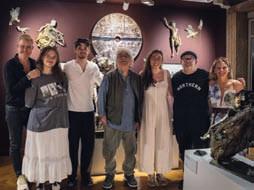
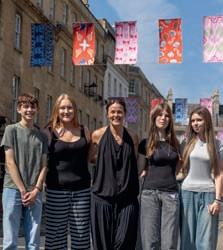
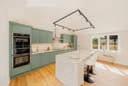
India Farnham visits Roseberry Road to meet the team and gets a
Our
Meet the
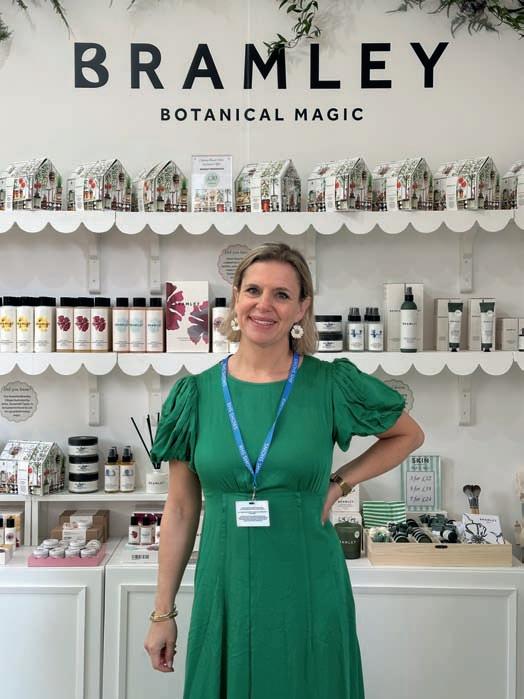
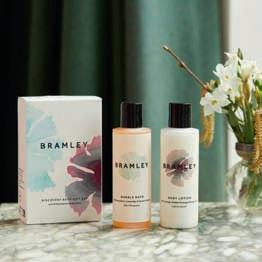
48 BRAMLEY
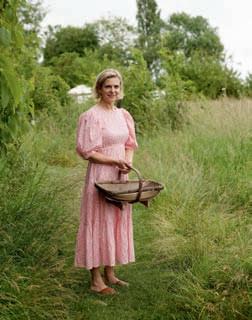
The essence of the countryside, bottled. Discover how a small local idea became one of Britain’s best-loved luxury bath and body brands.
54 FASHION GOES DIGITAL
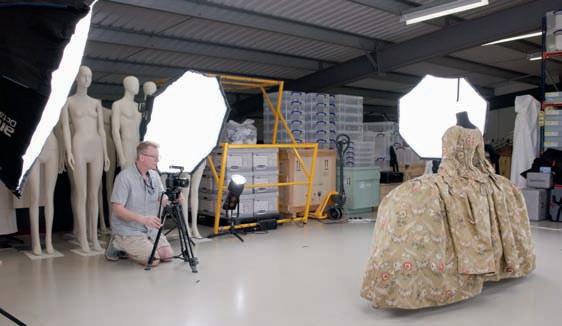
How the Fashion Museum’s world-famous collection is preparing for an exciting new future
62 AN INDULGENT AFTERNOON
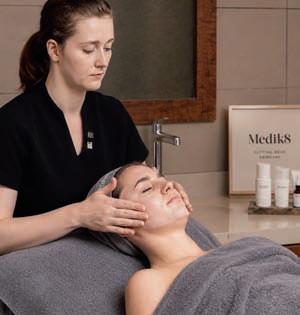
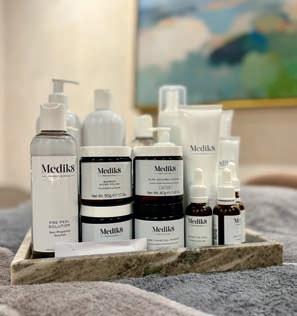
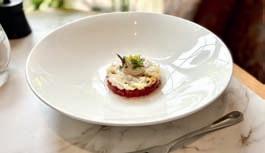
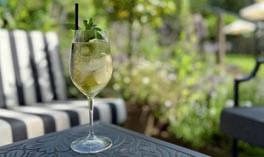
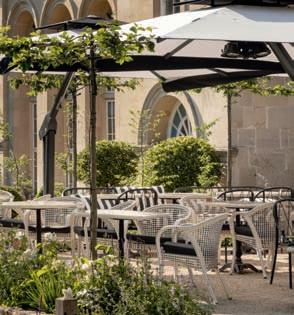
Jenny Hayes samples a delighful lunch in the gardens of The Royal Crescent Hotel followed by a Medik8 treatment and leisure time in the spa
68 NOW YOU’RE WALKING
Andrew Swift guides us through five villages, along one forgotten Roman road and the endless charm of Somerset
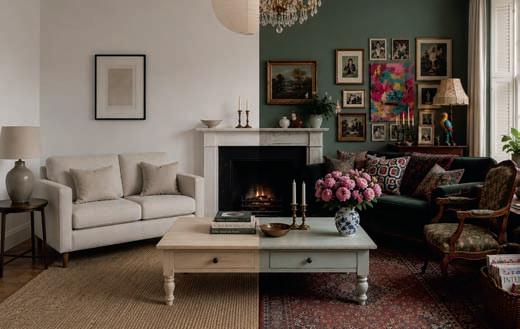
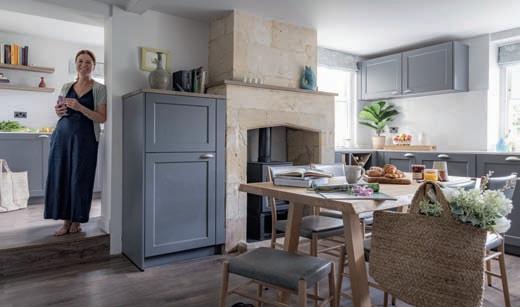
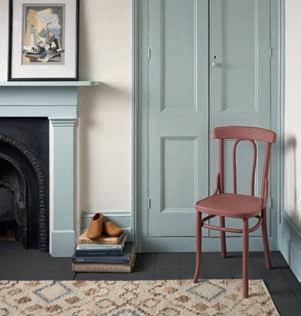
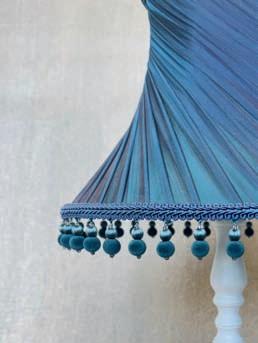
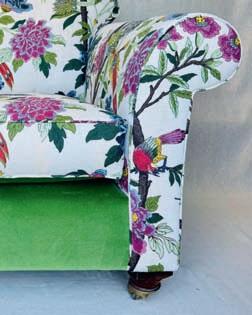
72 INTERIORS – HOMES WITH SOUL
Why the best homes tell stories, not trends
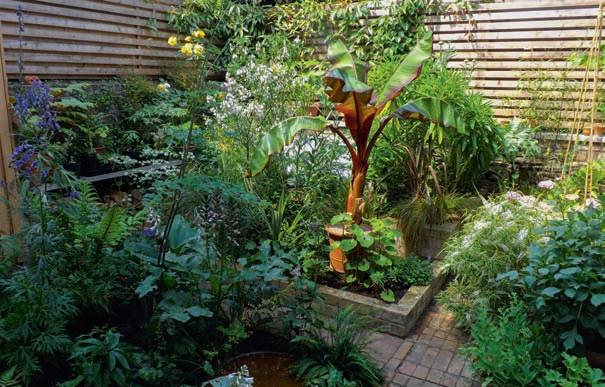
76 GARDENS – TOPICAL TROPICALS
Inspired by the recent hot spell and holidays abroad, Elly West explores the varieties of tropical plants that thrive our gardens
Director of Archaeology and Art at the Roman Baths, Amanda Hart is pictured by award-winning photographer Joe Short On
Tracy-Ann Oberman returns to Bath to take on one of Noël Coward’s most irresistible leading roles. Photography courtesy of Faye Thomas
things to do in August
Wiltshire Game & Country Fair: 8–9 August
The Wiltshire Game & Country Fair returns to Bowood House & Gardens this August for a weekend packed with countryside entertainment, family fun and hands-on activities. Expect thrilling arena displays including falconry, gundogs, sheepdogs, horse boarding and scurry driving, alongside opportunities to try clay shooting, fishing, archery and more. Dog lovers can enjoy racing, gundog scurries and fun competitions in the popular World of Dogs area. When it’s time to refuel, head to the Food Glorious Food section for street food, chef demonstrations, local produce, wines and spirits, or browse the craft village for unique handmade gifts and traditional craft displays. There’s even chainsaw carving demonstrations with finished pieces auctioned off each day. Always a great summer day out for all ages. For details and tickets: livingheritagecountryshows
Rode Comedy Festival: 26–30 August
One of the South West’s most popular comedy events returns this August with its biggest line-up yet. Now in its seventh year, the Rode Comedy Festival welcomes comedy legend Sir Lenny Henry for his only comedy festival appearance of 2026, alongside an outstanding bill featuring Romesh Ranganathan, Katherine Ryan, Tom Davis, Jen Brister, Joel Dommett and Iain Stirling. The five-day festival also showcases favourites including Zoë Lyons, Tom Rosenthal, Rob Rouse and Laura Smyth, with every show hosted by festival co-founder Jarred Christmas and worldrenowned beatboxer Hobbit. New for 2026 is a charity gameshow featuring Rhod Gilbert and surprise guests in support of Dorothy House and We Hear You. Just a short drive from Bath, it’s the perfect excuse for a laughter-filled summer evening. For tickets and details visit rodecomedyfestival.com.
Blue Light Symphony Orchestra: 15 August
Experience an inspiring evening of live music as the Blue Light Symphony Orchestra brings its acclaimed concert programme to Bath Forum. Made up of musicians from the emergency services, NHS and the military, the orchestra was founded to promote wellbeing through the shared power of music. The programme features Vaughan Williams’ Fantasia on a Theme by Thomas Tallis, Elgar’s much-loved Cello Concerto and Dvořák’s stirring Symphony No. 9, From the New World. The concert begins at 5.30pm (doors open 4.30pm), with proceeds supporting the orchestra’s charitable outreach and music therapy programmes for emergency service workers. Visit bathforum.co.uk for tickets
Family Fiesta Day at If Opera: 9 August
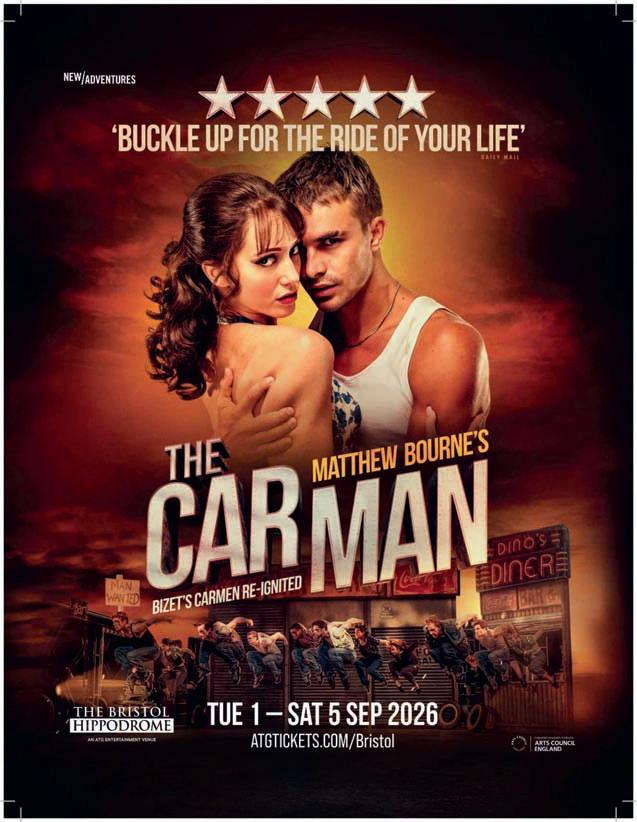
Discover the magic of opera at If Opera’s Family Fiesta Day on Sunday 9 August, a fun-filled celebration inspired by this summer’s production of Carmen. Set in the beautiful surroundings of Church Farm, Wingfield, the day features songwriting workshops, crafts, face painting, costume dressing-up, a fiesta-themed trail and plenty of opportunities for children to sing, create and explore. The highlight is The Big Sing, where families can join professional singers for a rousing performance of the famous chorus from the Toreador Song – no experience necessary. With Spanish-inspired food, picnic space and a relaxed festival atmosphere, it’s an ideal family day out for children aged five and over. For tickets and information visit: ifopera.com
Bath Rugby season launch 2026/27
Get ready for the new rugby season as Bath Rugby throws open the gates for its biggest-ever Season Launch celebration on 31 August – Bank Holiday Monday. Fans of all ages can enjoy a lively festival atmosphere in the expanded Fan Village at The Rec, with player meet-and-greets, live interviews, music, family entertainment and plenty of food and drink. It’s the perfect opportunity to meet the squad and coaching team, grab an autograph or selfie, and build excitement ahead of the 2026/27 campaign. Whether you’re a lifelong supporter or discovering Bath Rugby for the first time, everyone is welcome. Visit bathrugby.com for the latest programme details and event information.
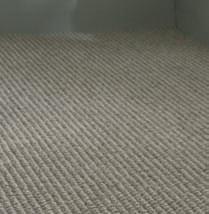
Wool is…
• Naturally insulating
• Hard-wearing
• Easy to care for
• Sustainable
• Hypoallergenic
City Updates
A stitch in Bath’s time
Bath is being stitched together – one patchwork square at a time. The Bath Patchwork Project is inviting people of all ages and abilities to embroider a simple silk square that reflects what Bath means to them. The finished artwork, created in partnership with Bath Artists’ Studios and the American Museum & Gardens, will bring together 500 individual pieces into a powerful celebration of community, belonging and creativity, ready to be unveiled during the Museum’s Thanksgiving celebrations later this year.
No embroidery experience is needed – just the willingness to be part of something special. While some summer workshops have already taken place, at the American Museum and Gardens, there are weekly drop-in sessions at Bath Central Library (above Waitrose) every Friday, 10am–12 noon. Or join in on Wednesday 5 August, 3pm to 4.45pm at St. James Wine Vaults.
To help achieve the required 500 squares, why not go along, pick your silk, add your stitch, and be part of a lasting thread in Bath’s shared story.
Keep up with the patchwork progress and updates on instagram at: bathpatchworkproject26
Student brings spoken Latin back to The Roman Baths
A visit to The Roman Baths has inspired a remarkable new addition to one of Baths best-loved attractions: a Latin audio guide narrated by Sir Stephen Fry.
The idea came from London GCSE student Florence Golding, who visited the site with her family earlier this year. Impressed by the attraction’s multilingual audio guides, Florence wondered why visitors couldn’t also experience the site in the language once spoken there nearly 2,000 years ago.
After approaching The Roman Baths with her proposal, Florence translated an abridged version of the guide into Latin before persuading actor, writer and classical enthusiast Sir Stephen Fry to record it. “I was enchanted by Florence’s marvellous idea and her infectious passion for the classical world,” said Sir Stephen, who admitted his Latin pronunciation might raise “the odd Roman ghost’s eyebrow.”
The new guide is now available to download from The Roman Baths website, alongside an English translation, offering visitors a unique way to connect with Bath’s Roman past while celebrating the enduring legacy of the ancient language. romanbaths.co.uk
New book explores the Bath roots of Frankenstein
A new book is shining fresh light on Bath’s role in the creation of one of the world’s most influential novels. The Real Frankenstein: How Tragedy and Science Shaped Mary Shelley’s Classic Novel explores the personal experiences, scientific discoveries and intellectual debates that inspired the young author’s masterpiece.
Written by Laura Silverman, the book examines how Mary Shelley drew on grief, philosophy and the revolutionary science of her day while developing Frankenstein, much of which was written during her time living in Bath. It also explores the pioneering experiments and celebrity scientists whose daring experiments contributed to what is widely regarded as the world’s first science fiction novel.
Combining biography, history, psychology and literary criticism, the book offers a fresh perspective on Shelley, presenting her not only as a leading figure of the Romantic movement but also as one of its sharpest critics. It also revisits the fascinating period she spent in Bath, where the city’s atmosphere, scientific curiosity and personal experiences helped shape one of literature’s most enduring and influential works. The book is published by Pen & Sword Books ( pen-and-sword.co.uk) and widely available to buy.
Student Florence Golding at The Roman Baths with Sir Stephen Fry
The Bath Magazine, 2 Princes Buildings, George Street, Bath BA1 2ED Tel: 01225 424499 www.thebathmag.co.uk
Editorial team and contributors: Melissa Blease, Katherine Raderecht, Jenny Hayes, Samantha Coleman, India Farnham, Catherine Pitt, Hannah Poon, Elly West, Steve Miklos, Joe Short. editor@thebathmagazine
Financial Director: Jane Miklos jane@thebathmagazine.co.uk
Editorial and Digital Assistant: India Farnham india@thebathmagazine.co.uk
Production Manager: Jeff Osborne production@thebathmagazine.co.uk
Advertising Sales and Customer Support: Liz Grey liz@thebathmagazine.co.uk
To advertise tel: 01225 424499
Publisher: Steve Miklos steve@thebathmagazine.co.uk
Contact us at thebathmag.co.uk Follow us on Instagram @thebathmagazine
The Bath Magazine and The Bristol Magazine are published by MC Publishing Ltd. We are independent of all other local publications.
The Bath Magazine is delivered free, every month, to more than 15,000 residential addresses as well as businesses throughout Bath and the surrounding area. We also have special distribution units in many of Bath’s supermarkets. The Holburne and Toppings Books
Disclaimer: Whilst every reasonable care is taken with all material submitted to The Bath Magazine, the publisher cannot accept responsibility for loss or damage to such material. Opinions expressed in articles are strictly those of the authors. This publication is copyright and may not be reproduced in any form either in part or whole without written permission from the publishers.
All paper used to make this magazine is taken from good sustainable sources and we encourage our suppliers to join an accredited green scheme. Magazines are now fully recyclable. By recycling magazines, you can help to reduce waste and contribute to the six million tonnes of paper already recycled by the UK paper industry each year. Please recycle this magazine, but if you are not able to participate in a recycling scheme, then why not pass your magazine on to a friend or colleague.
ANTIQUE JEWELLERY REPAIRS AND REMODELLING
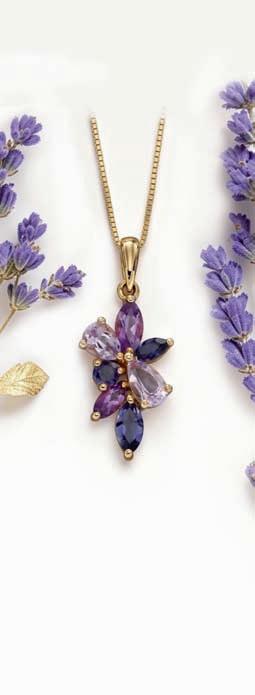
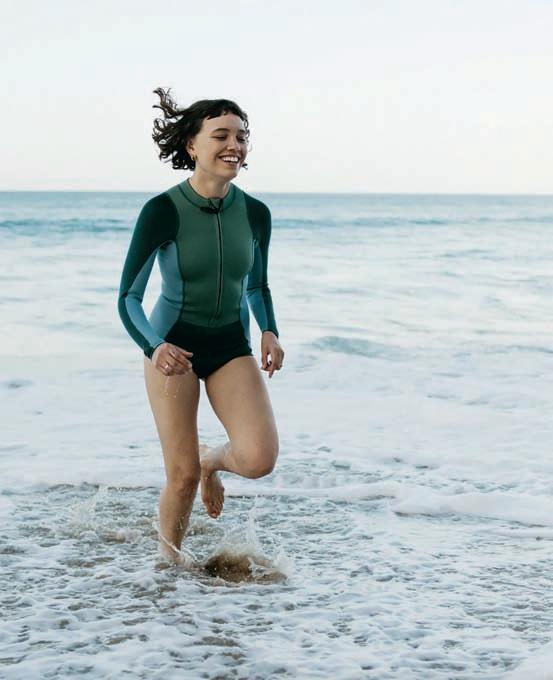
August sees creatures of the land setting off on quests to climb towering cliff faces, searching for ancient treasure burried in the sands, and conquering the power and majesty of the ocean by cutting through waves on boards. For those bravely seeking late summer adventure in the great outdoors, we’ve picked our favourites from Finisterre’s collection, from wetsuits to water bottles, and swimming costumes to socks...
27 High Street, Bath. finisterre.com
Kaia 2mm Yulex®. Long Sleeve Swimsuit, £155
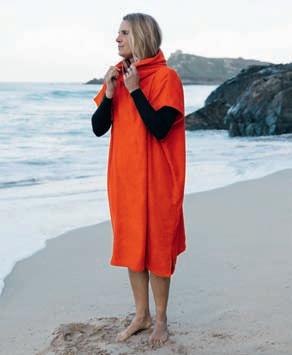
Clearwater Changing. Robe, £95.
Drift 30L Waterproof Roll Top Backpack. in Olive, £185
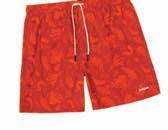
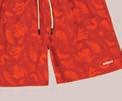
Atlas Swim Short. in Ocean Folk Print/Brick. Orange, £70
Portside Shirt, £85.
Delta Adventure. Bucket Hat, £45.
Miir 12oz Flip. Traveller Cup, £34.
Miir 12oz. Camp Cup, £34.
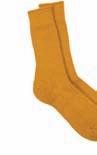
Ribbed Sock. in Beeswax, £20.
Adventure Sock, £20
Ocean Tales. T-Shirt,£42.
Letterpress Canvas Cap, £45.
Cape Towel,. £40.
Tracy-Ann Oberman
Presenting Geri: Noël Coward’s new diva
Tracy-Ann Oberman is taking on one of Noël Coward’s most celebrated roles – but with a bold twist. She tells Melissa Blease why transforming Garry Essendine into Geri is about much more than simply swapping genders
Garry Essendine is a super-rich A-list matinee idol in the midst of a mid-life crisis. He excels at throwing tantrums, loves being adored and makes big demands, in all manner of ways, on those around him. But despite all his faults, he’s a charismatic celebrity that few of us can fail to be fascinated by; think, Elton John meets Rudolph Valentino by way of Mariah Carey and you “get” Garry. However…
Garry Essendine isn’t an actual, real-life person, but one of British playwright Noël Coward’s most enthralling, memorable characters who causes mayhem at the epicentre of his 1939 comedy Present Laughter, which in itself remains to be one of the playwright’s most celebrated, frequently-revived works. In Coward’s own words, “[Garry Essendine was] written with the sensible object of providing me with a bravura part” – indeed, Coward starred as Garry during the play’s original UK run and reprised the role in the US and Paris.
Nearly 90 years later, one can’t help but wonder what Coward would make, then, of Garry/Present Laughter’s latest reincarnation, directed by Lindsay Posner and starring (and adapted by) Tracy-Ann Oberman: the first actor to portray the role of Garry Essendine as a woman.
“The idea came to me when I was writing a play about Mae West –a woman who wrote, produced and cast all her own work, had lots of relationships with all her leading men, and was the most powerful woman in Hollywood,” says Tracy-Ann, talking to me in advance of the play’s premiere at Theatre Royal Bath this month.
“The experiment is to see whether you can reframe the original work without damaging it, but instead opening it up.”
“I was looking at Liza Minelli, and the wonderful Joan Crawford –those fabulous divas! And I started to think, could Garry be turned into Geri: a badly-behaved, middle-aged actress? And what would happen if Geri’s long-suffering secretary wasn’t Monica but Monty, the slightly acidic gay secretary, and Garry’s slightly acidic ex-wife becomes Len, the ex-husband? But when you do a gender-flip, there has to be a real reason for doing it, beyond just novelty. For a start, it’s vital to honour the original text; if you change the meaning of the play and the wonderful words, it can really damage the original work. The experiment is to see whether you can reframe that original work in a way that doesn’t damage the play, but opens it up.”
Tracy-Ann is no stranger to the art of how the theatrical genderreverse can open up a whole new universe that adds further context to
a long-established cosmos. In 2023, she totally reimagined Shakespeare’s Merchant of Venice, facing the controversies and baggage that come with the Bard’s most infamous play with a ground-breaking interpretation starring Oberman as the first ever female Shylock, set against a backdrop that swapped 16th century Italy for 1930s Britain and framing the conflict around the real-life Battle of Cable Street and the rise of British fascism, recontextualising power and deconstructing long-established tropes throughout.
“The Merchant of Venice 1936 became a very personal project for me, because I based Shylock on my great grandmother who was an immigrant to the East End, and stood against Oswald Moseley in the battle of Cable Street,” says Tracy-Ann. “I ended up so proud of a piece of theatre that started off as a little idea and turned into a massive movement that went to the West End twice and toured the country twice too; it was really incredible.”
Yes, it was – and it led to Tracy-Ann being awarded an MBE for her services to Holocaust Education and combatting antisemitism.
It’s difficult to move on from discussing The Merchant of Venice 1936 without coming across as fickle and flighty as one of the many fickle, flighty supporting cast members that pop up, down, in and out across Coward’s canon of British theatrical masterpieces. But my interview with Tracy-Ann today is, of course, focusing on the present – and the gift that Present Laughter is set to present to audiences across the country.
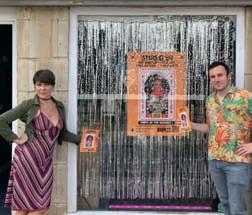
“It was very hard to get the Noël Coward estate to allow me to do this, and I’m very grateful to Alan Brodie who gave me permission to run with the idea,” says Tracy-Ann. “But I think even Noël Coward purists will love this production because it doesn’t change the play at all – the text hasn’t been altered, so the master’s wonderful words are still wholly intact; we’re just offering a slightly different prism to view the play through and maybe sort of open it up a bit. We’ve taken the drama out of its 1939 setting and set it in 1977, at New York’s legendary nightclub Studio 54 – there are a lot of similarities to Noël Coward’s original setting above the Savoy! Just like Garry’s clique, Geri’s VIP crowd are all very inward-looking and there’s a lot of sexual fluidity just like there was around Coward’s time, even though it was never explicit and generally coded. Garry, meanwhile, was a complicated, difficult, hugely egotistical, morally questionable diva, but also fiercely loyal; Coward wrote him to be complicated and multi-faceted, and I look forward to seeing if audiences will allow a female in that role. I believe they will; I’m genuinely so excited!”
No doubt fans of Tracy-Ann Oberman will be excited too – and her fans are legion, for multiple reasons. Back in 2005, in the role of Chrissie Watts, Tracy-Ann killed villainous EastEnders rogue Dirty Den. In 2006, she gripped Doctor Who fans in the role of ruthless Yvonne Hartman, Director of Torchwood. She was the chaos-causing,
Photography courtesy of Faye Thomas
“Present Laughter is a super-glamorous uplift. It’s really funny, really witty, really human and sexy and exciting too – I honestly don’t think it’ll upset Noël Coward lovers in any way”
no-filter Aunty Val In much-loved Channel 4 sit-com Friday Night Dinner; she’s on the illustrious roll-call of Royal Shakespeare Company alumni; she’s aced both Celebrity MasterMind and Celebrity MasterChef; she’s a magazine columnist, a broadsheet journalist and a playwright.
If Tracy-Ann had to define herself with just one aspect of all that she does, what would it be?
“Ooh, I don’t know!”, she laughs. “I think everything that I’ve done has led me to the confidence of being able to do what I do now: create theatre that I would like to see and I hope other people will enjoy as well. Everything has all sort of meshed together! I’m also a mummy, a wife and a daughter. But I’ve got one of those over-active brains, always working and moving and sort of constantly recreating ‘stuff’. I get really excited by things I’ve read or seen that interest me. I regularly go down wormholes and always have, even as a child – the internet was incredible for me!”
Perhaps her time in Bath this summer might allow Tracy-Ann a little time to – well, relax? “I really, really love Bath – it’s a gorgeous city, just
wonderful; I’ve been here so many times that it’s a second home for me,” she says. “I always make time for the Thermae Bath Spa, and I’m a bit of a Jane Austen nut as well so I always try to visit the Pump Room for afternoon tea. I love all the little independent shops and The Holburne Museum, and I’ll be in the city for my birthday so I’ve got a whole load of friends coming to see the play and we’ll go somewhere for a birthday lunch – we’ve certainly got a lot of great choices for places to go!”
Meanwhile, many people will be making the choice to make their own foray to Bath specifically to see Tracy-Ann in Present Laughter, as they did when she was here with The Merchant of Venice 1936 last year.
“The Merchant of Venice 1936 was a very meaningful, challenging piece of political work,” says Tracy-Ann. “We’re living in dark times yet again, but Present Laughter is a super-glamorous uplift. It’s really funny, really witty and really human, and sexy and exciting too – I honestly don’t think it’ll upset people who love Noël Coward in any way!”
As Coward himself said, on theatre: “Consider the audience. Treat it with tact and courtesy; it will accept much from you if you are clever enough to win it to your side. Coax it, charm it, interest it, stimulate it, shock it now and then if you must, make it laugh, make it cry and make it think, but above all…never, never, never bore the living hell out of it.”
Exciting stuff? Tracy-Ann Oberman/Geri Essendine: bring it on! n
Present Laughter. Theatre Royal Bath, Thursday 27 August – Saturday 5 September. For tickets and details see: theatreroyal.org.uk
Tracy-Ann Oberman stars as Geri Essendine with James Dreyfus as Monty in Present Laughter
Photography by Seamus Ryan
2026/27 SEASON
All screenings will take place at BRLSI
16-18 Queen Square, Bath BA1 2HN at 7.30pm on Fridays
Screenings take place every second Friday, starting 11 September 2026
For more information see our website: bathfilmsociety.org.uk
We are a sociable film club that has run for over 30 years and we welcome new members.
Our season offers 14 films from September to April. We aim to show thought-provoking and entertaining films from around the world as well as much-loved classics and award-winning documentaries. Members are invited to join us from 7pm before the film at 7.30pm for a glass of wine at a nominal price, giving them the opportunity to socialise, meet fellow members and talk films.
Film Screenings 2026/2027 Season
11 September Central Station (Argentina, 1998)
25 September Goodbye Julia (Sudan, 2023)
9 October Versus: The Life & Films of Ken Loach (UK, 2016)
23 October Promising Young Woman (USA, 2020)
13 November Truman (Spain, 2014)
27 November La Strada (Italy, 1954)
11 December The Marching Band (En Fanfare) (France, 2024)
8 January Touch (Iceland, 2024)
22 January It Was Just an Accident (Iran, 2025)
5 February Driving With Mum (Iceland, 2022)
19 February Santosh (India/UK, 2024)
5 March Rose (Denmark, 2022)
19 March Paris Memories (Revoir Paris) (France, 2023)
2 April Vermiglio (Italy, 2024)
What’s on
LIVE MUSIC AT GREEN PARK BRASSERIE
Throughout August
n Green Park Brasserie, BA1 1JB
Soak up live music alongside world-class pizza, cocktails, and craft beer every night, Wednesday through Saturday. Bookings and walk-ups available. greenparkbrasserie.com
WORLDS APART: RARE EARLY PHOTOGRAPHS OF CHINA AND BATH
Throughout August, 10am-4pm (Closed Sundays)
n BRLSI, BA1 2HN
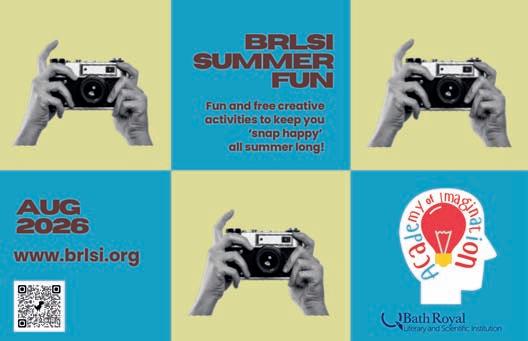
This fascinating exhibition from the BRLSI Collection, explores early photography through rare images of Bath and China. Francis Lockey’s delicate calotypes show Bath nearly 170 years ago, while photographs from the Second Opium War capture everyday life in China. Despite the distance, photographers focused on similar subjects: gateways, landscapes, and daily life. Historic objects from the BRLSI collection reveal the early challenges of photography and bring these scenes into focus. Free admission. brlsi.org
CIRCUS OF CURIOSITIES
Throughout August, 10am-5pm n The American Museum and Gardens, Claverton Manor, BA2 7BD
This wonderful interactive exhibition from the highly acclaimed Cabaret Mechanical Theatre brings together 25 automata –intricate, ingenious, hand-crafted mechanical sculptures that blend engineering with art and delightful storytelling. Be prepared to turn a handle to
reveal the magic of movement. For tickets and more information visit: americanmuseum.org
AFTERNOON GARDEN CONCERT: MUSICKE IN THE AYRE
15 August, 2-3pm
n Iford Manor BA15 2BA
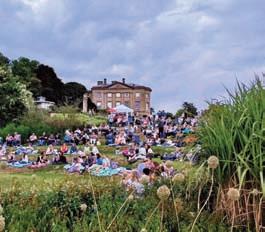
Spend a summer afternoon surrounded by the beauty of Iford Manor Gardens as early music ensemble Musicke in the Ayre returns for its annual garden concert. This year’s programme celebrates the rich sounds of early Baroque Rome, with sopranos Maria Danishvar, Jane Hunt and Philippa Neaverson joined by musician and instrument-maker Din Ghani, performing on an archlute and Baroque guitar he crafted himself. Taking place in the atmospheric cloister, the informal concert is included with normal garden admission, allowing visitors to drop in for the full performance or simply pause to enjoy a selection of the music while exploring the gardens. Seating is limited, so arrive early to secure a spot for an enchanting afternoon’s music in one of Wiltshire’s most beautiful settings. ifordmanor.co.uk
GARDEN THEATRE: THE JUNGLE BOOK
9 August, 6.30pm
n The American Museum and Gardens, Claverton Manor, BA2 7BD
Enjoy a magical summer evening of outdoor theatre as Immersion Theatre brings Rudyard Kipling’s beloved classic The Jungle Book to life in a lively new musical adaptation. Performed on the South Lawn against the stunning backdrop of the
Limpley Stoke Valley, the production is packed with original songs, larger-than-life characters and plenty of audience participation. Follow Mowgli, Baloo and Bagheera on a thrilling jungle adventure as they outwit the mischievous monkeys, the sly snake Kaa and the fearsome Shere Khan. Funny, fast-paced and full of family-friendly fun, it promises an unforgettable night under the open sky. Gates open at 5.30pm, with a bar and BBQ serving food and drinks before the performance and during the interval. Bring a chair or picnic blanket, dress for the weather and settle in for a wonderfully entertaining evening. americanmuseum.org
PERFUME MAKING HALF DAY WORKSHOP
7, 8, 22 August 2.30pm-5pm
n Great Pulteney Street
Now the school holidays are with us, why not treat your teenager, introducing them to the art of perfumery... Run by niche luxury perfume house, Parterre, these creative, hands-on perfume making workshops are informative and really fun for young adults. And by the end of the afternoon, you will each come away with a perfume that you have made yourselves! Firstly, you will learn some theory about the olfactive families and perfume fundamentals. Then, working with high quality oils, you will be expertly guided through the process of designing and blending. Includes a 50ml bottle of perfume each. Children 15 years and over welcome when accompanied by an adult. £125pp. Mini perfume-making workshops are also available on 13 and 27 August - For further details on these and other perfume workshops, visit: parterrefragrances.com
CJ as Michael Jackson, Man in The Mirror at The Forum
Garden Theatre at The American Museum and Gardens
BATH & COUNTY CLUB
Join The Bath & County Club as a member and you and your guests will enjoy a relaxed, friendly ambiance and the opportunity to meet, eat and drink in the centre of Bath. bathandcountyclub.com
Thursday 6 August
Signature dishes from top chef Mark Pearson with specially paired wines included. 3 courses. 6.15 for 7 pm. £53.50.
Sunday 9 August
Sunday Carvery. Choice of meats and four vegetables, plus dessert/cheeses, figs. 12.30 for 1 pm. £32.
Friday 14 August
Evening talk with dinner by travel writer, Patrick Horton.
“My First Great Adventure.” 6 for 6.30pm. 2 Course supper to follow. £29.
Tuesday 18 August
Quiz Night. 6 for 6.30pm. 2 course supper to follow. £29.
Friday 21 August
Coffee, pastries and morning talk. “Travels with a hipflask.” 10.30 for 11am. £10.
Saturday 29 August
End of Summer Dinner. 6.15 for 7 pm. 3 course dinner and coffee. £40.
UK alternative rock band Littlemen, based in Bath, are stepping into a powerful new chapter as they prepare to release new material alongside a striking live recording from the legendary Real World Studios –the iconic studio founded by Peter Gabriel –mixed at NAM Studios. At the heart of Littlemen is frontman Nick, a musician whose career spans over four decades and touches nearly every corner of the music industry. From touring and artist
management to running his own publication and studio, Nick’s journey is one of deeprooted dedication to music. As the band’s lead singer and lyricist, he channels that experience into songs that feel both personal and universal. Advance tickets are £12.60 and are also available on the door for £14. chapelarts.org
UNDERCOVER HIPPY SOLO TOUR
19 August, 8pm n Chapel Arts Centre, BA1 1QR
Best known for his high energy full band shows, it is something of a rare treat to catch Billy Rowan, aka The Undercover Hippy, giving an intimate solo performance. One of Billy’s biggest strengths is the way he manages to pack his songs full of political and social commentary whilst at the same time remaining playful and uplifting, and this playfulness is even more apparent in an acoustic setting. The extended set time and intimate setting mean that you will hear songs you would never hear at a regular show, but don’t worry, your favourite tracks will likely be in there too! Advance tickets are £17.33 and are also available on the door for £18. chapelarts.org
LISA O’NEILL +
JUNIOR BROTHER
20 August, 8pm
n Komedia, Bath, BA1 1EP
Lisa O’Neill returns to the stage with songs that cut straight to the heart: fierce, poetic and steeped in the tradition of Irish storytelling. One of the most arresting voices in contemporary folk, O’Neill’s music carries a rare stillness, haunting renditions of old songs sit alongside sharply observed portraits of modern life, protest anthems, and moments of quiet wonder. Her voice, unmistakable in its depth and honesty, has made her a five-time BBC Folk Award nominee and a standout presence on stages across Ireland, the UK and beyond. For tickets and details, visit: komediabath.co.uk
MAN IN THE MIRROR: A TRIBUTE TO MICHAEL JACKSON
27 & 28 August, 7.30pm
n The Forum, Bath BA1 1UG
Don’t stop ‘til you get enough... Celebrating the legendary music of the King of Pop. Starring CJ, one of the world’s greatest Michael Jackson tribute artists and supported by a talented cast of performers and musicians who capture the essence of Michael Jackson’s unique style and charisma like no other. Featuring all his greatest hits you know and love, including Thriller, Billie Jean, Beat It, Smooth Criminal, and of course, Man in the Mirror. Complete with dazzling choreography, stunning visual effects, a light show and authentic costumes – this is the show that pays tribute to Jackson’s musical legacy. So, whether you’re a lifelong fan or experiencing the magic of Michael Jackson for the first time – this show is a complete thriller. Tickets: £34 (inc. fees). For more details visit: bathforum.co.uk
DOREEN DOREEN
28 August, 8pm n Komedia, Bath, BA1 1EP
Step into the vibrant world of Doreen Doreen, where every performance is a kaleidoscope of glitter, glamour, and unbridled entertainment. Formed in Bristol in 1982, this outrageous 10-piece band has built a reputation for dazzling audiences with top-class musicianship, powerhouse vocals and infectious energy. Far from your average covers band, Doreen Doreen delivers unexpected musical mash-ups, blending Abba with Queen, Eurythmics with Erasure, and even Adele with The Beatles. With spectacular costumes, irresistible humour and a stage show full of surprises, every performance is a spectacle and celebration that guarantees a night of singing, dancing and unforgettable fun. For tickets and details, visit: komediabath.co.uk
Lisa O’Neill, Komedia
Undercover Hippy, Chapel Arts
IN
CONVERSATION WITH HOWARD CUNNELL: SUN COUNTRY
29 August, 8pm n Waterstones, Milsom Street, Bath, BA1 1DA
One of many excellent talks at Waterstones Bath. Howard Cunnell chats about his first memoir since the critically acclaimed Fathers and Sons. Sun Country is a love letter to the changing coast and sea, a reckoning with the things we inherit – silence and absence, stories told and untold – and the transgression involved in turning a life into art. At the heart of the book is Gillian, his devoted single mother, and the small yet unforgettable details of her life that are woven into this meditation on impermanence, grief, class and masculinity. For details and Waterstones’ full programme of talks and events, visit: waterstones.com/events
COUNTRY
THE AMP: UNMISSABLE SUMMER CONCERTS
Throughout August n The Amp, The Courtyard, Hereford
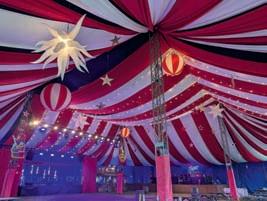
If you’re planning a summer escape with live music at its heart, The Amp’s new Big Top venue in Hereford has plenty to tempt you. Singer-songwriter James Morrison brings his unmistakable soulful voice and a catalogue of chart hits on 15 August, while Kim Wilde returns to the stage on 22 August, performing classics including Kids in America and You Keep Me Hangin’ On alongside newer material. Rounding off the month, Paul Carrack – whose remarkable career has included Mike + The Mechanics, Squeeze and Ace –takes to the stage on 30 August, performing favourites such as The Living Years, Tempted and How Long. Just over 90 minutes drive from Bath, The Amp combines nationally acclaimed artists with the unique atmosphere of its impressive 1,400-seat Big Top, making it an ideal destination for a memorable summer evening of live music.
For tickets and the full programme, visit: courtyard.org.uk/theamp
ROADS
4 September, 7.30pm
n The Forum, Bath BA1 1UG
Head to the place you belong, for a night of the very best country classics. Leave your 9 to 5 worries at the door and get ready to celebrate the kings and queens of country music. From hit producers Entertainers, you’ll enjoy the very biggest country hits of all time: 9 to 5, The Gambler, Walk the Line, Ring of Fire, King of the Road, Crazy, Rhinestone Cowboy, Jolene, Dance the Night Away, Walkin’ after Midnight and many, many more. Be prepared for a night like no other - a live celebration of the music of a generation... in one night of pure country classics.
BATH
TENNIS CLUB: CANCER AWARENESS FUNDRAISER
13 September, 12-7pm.
n Bath Tennis Club, Park Lane, BA1 2XQ
outcomes, how to make changes, and a food demonstration with practical nutrition guidance. Enjoy a delicious metabolically friendly lunch together, an immersive forest bathing walk, and time to relax and ask questions. Register your interest by emailing: enquiries@epochmetabolic.com
BATH CITY ABSEIL
25 & 26 September
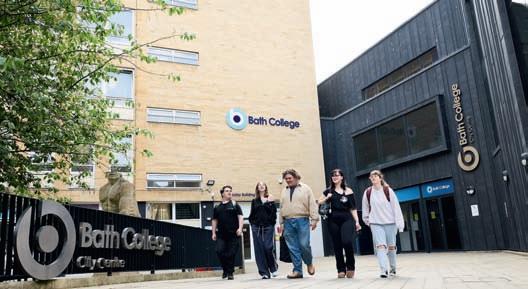
n Bath College Macauley Building, Bath BA1 1UP
Book your place for an 80ft descent from one of the tallest buildings in Bath in aid of Dorothy House. From the top of Bath College you can expect incredible views, shocking drops and the challenge of a lifetime! The two action packed days are filled with hair-raising fundraising right in the heart of Bath. For details and to sign up visit: dorothyhouse.org.uk
ELIZABETH LINLEY: THE NIGHTINGALE OF BATH
3 September. Open 9.45am, talk: 10.30am n The Pavilion North Parade Road, Bath Join Thomas Messel, designer and author who talks about his current book, The Nightingale of Bath. This is his second book and is a historical fiction covering the life of his eighteenth-century ancestor, the singer and beacon of the Whig party, Elizabeth Linley. Admission is free for u3a members, for non-members wishing to attend, a discretionary £5 donation is suggested. u3ainbath.uk
Experience an active afternoon of tennis with tennis drills, high-tempo cardio, coaching, pickle ball, fun competitions and a raffle. With a BBQ and refreshments, the afternoon will help raise much needed funds as well as commemorate and celebrate the lives of loved ones. Free entry. Open to all ages and abilities. Rackets and pink balls will be provided. Visit: bathtc.co.uk
AN INTRODUCTION TO YOUR FUTURE HEALTH
15 September
n Colerne, Wiltshire, SN14 8AZ
A full day with Dr Robin Fackrell and Amanda Overeynder at Lucknam Park, Wiltshire. The day includes workshops discovering what metabolic health is, how lifestyle medicine impacts our health
Dog lovers and their four-legged friends are invited to lace up their walking shoes and take the lead in a special fundraising dog walk on 27 September. The event raises vital funds to support vulnerable rescue dogs and offers a choice of two scenic routes: a gentle 2-mile walk or a more adventurous 5-mile route with hills. Back at the Home, there will be refreshments, stalls and plenty of activities to keep tails wagging, including an agility course and scent games for canine companions. Tickets cost £15 per dog, with additional dogs £5 each. Admission for spectators is free. For more information and to book visit: bathcatsanddogshome.org.uk
SEPTEMBER HEADS UP
The Amp, a vast 1,400 seat big top
Everything’s coming up Roseberry
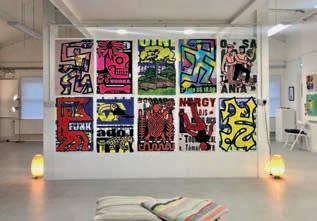
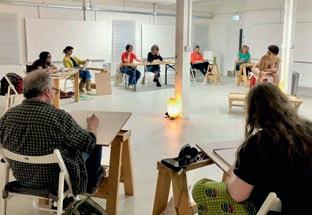
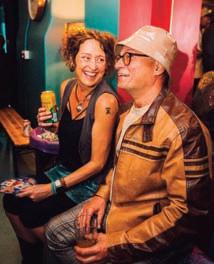
There’s a new kid on the block in Bath’s art scene. Fiercely independent, anti-pretension and pro-inclusivity, Roseberry Road Studios offers unusual exhibitions, alternative music nights, regular yoga classes, and much, much more. India Farnham catches up with Louise Rushford, Creative Director, and James Carlin, Chief Executive, to find out what all the buzz is about
The first thing that surprises you about Roseberry Road Studios is its remarkable location. Never has the phrase hidden gem rung truer. Perched in an unlikely spot just outside town in Twerton, the building backs directly onto the River Avon and is positioned only steps away from a major Second World War memorial.
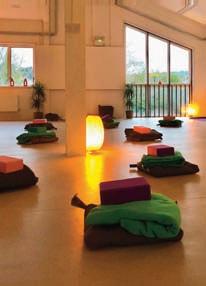
The expanse of this waterside haven will strike you next. Roseberry Road Studios, which was set up in 2023 as a not-for-profit arts centre, consists of three spaces: a large downstairs space for music nights, The Bunker, a light and airy upstairs gallery, The Christoph Moser Gallery, and six artist studios. And since their inception, the team has made great use of all three; from Disco & Funk DJ nights to immersive art installations, Roseberry Road Studios is shaking up the status quo.
“When I first entered the building, I was like, ‘Oh my gosh, the parties that you could have in here!’”
James Carlin
And the surprises don’t stop there. Unlike many a traditional arts space (where you come and go as quietly as possible), entering Roseberry Road Studios is more like entering a friend’s home; you ring a doorbell and then wait a few moments to be let in by a member of the team. That way, you’ve got a companion from your very first moment in the building.
This personal connection to visitors is incredibly important to the Roseberry team. “What with self-checkouts being the norm now in supermarkets, some people really just don’t get a chance to chat to someone day-to-day. There are people who come here for a chat because they feel welcomed, and that’s really special,” Louise explains.
“We had an autistic guy who emailed us ahead of time asking if he was getting on the right bus from Swindon. He said Roseberry Road Studios was the first place he’d felt comfortable coming to dance. It honestly makes me well up,” James shares.
Roseberry Road Studios has only been running in its current form as an arts centre for a year and a half, but the team has worked hard to establish inclusion as one of its core values early doors. At the time I visited, the Cubans by Cubans exhibition was on, an exhibition created entirely by, and with images of, people of colour.
“We want to make sure all ages, all creeds, all ethnicities and all types of people feel comfortable here. If you come to a music night here, you
might see someone who’s 70 on the dancefloor, or you might see someone who’s 18,” Louise shares with a smile.
“The diversity here is one of the best things about the job, actually,” James explains. “People say to you, ‘Bath is totally white,’ and it’s just absolutely not. We pull all sorts of people here because our event programme is varied and exciting. We’re not just platforming the same kind of people.”
Something for everyone
Whilst Louise takes care of programming art exhibitions, James works on curating the music events. They both feel it’s important, within reason, to programme unusual or non-commercial artists as often as they can.
“We try and have a real range of quality musicians here. We work with young promoters to provide them with opportunities to put acts on, and we try to celebrate genres of music that aren’t particularly accessible in the other parts of Bath,” James says.
Sometimes this comes with trial and error, but often times, it comes with trial and success.
“We had a Brazilian jazz singer here. I was up for it, but I had no idea how popular it would be,” James continues, “...and it sold out! It blew me away to see 190 people dancing and singing in Portuguese in Bath. It was incredible. We’ve had the same thing happen with Drum and Bass nights. They’re always really popular too.”
Of course, choosing artists that are appealing to many and not too niche is a balancing act. “I don’t want to show things here that are too obscure for most people because at the end of the day, this is a community centre,” Louise explains candidly. “There’s a lot of pretension in art, and I don’t want that here. So it’s trying to get a mix of very cutting edge stuff, but also very approachable stuff.”
The Cubans exhibition came about through a connection to Cuba via Louise’s daughter. But Louise has also been selecting artwork locally. The previous exhibition in The Christoph Moser Gallery was called Tree and was made up of artwork from eight artists that Louise sourced from local universities and at Spike Island in Bristol. Affordability is important to the team, and so all the exhibitions at the gallery are free. Music nights remain as low-cost as the team can get them, and bar prices are below average.
Whilst both Louise and James are keen to distance Roseberry Road Studios from the building’s previous occupation as an event hire space, they do offer a 50% discount to charities who want to use the space for private events, parties or workshops. “We’re a not-for-profit at the moment, but we’ll be becoming our own charity soon, so connecting with other charities is important to us,” James adds.
For Louise and James, Roseberry Road Studios’ tucked-away location is a blessing. “I think we’re a bit freer from competition over here,” James
offers. “We get a lot of people who love arts and culture coming through the doors who say ‘I never knew about this place.’ Since people have to make a bit of a journey to get here, our visitors come in with the intention to enjoy the art or music; we don’t just get people wandering in.”
The team also makes an active effort to engage with their local community in Twerton.
“We want to make sure we’re a proper part of this community, and a bridge for these people who live outside of the city centre. The other day Louise had 60 school kids from Twerton all sitting in here, learning about Cuba and visiting the exhibition. That really is the dream,” James says with a smile. “They were so well behaved!” Louise interjects, “and they all left saying ‘Adios Louise!’”
Who’s who
Roseberry Road Studios was founded by the building’s private owner, Ruth Moser, who, along with Calum Mackenzie and Caspar CurtisMackenzie, had a vision to make a vibrant arts centre to give back to the city. Before the studios, The Woodworks Project was based in the building, a charity set up by Ruth’s husband to provide disadvantaged people with skills in carpentry. Clearly, using the arts to benefit the community is a family affair.
Outside of Ruth, Louise and James (and their Marketing Coordinator, Khushi Karia) are Roseberry Road Studios’ only staff.
James was approached by Ruth to join the team two years ago. “I come from a background of working at lots of different charities in Bath. Ruth found me whilst I was at Bath City Football Club and said ‘I’ve got a job for you.’ When I first entered the building, I was so excited, I was like ‘Oh my gosh, the parties that you could have in here!’ I’ve always been inspired by making Bath better, and so it seemed like the perfect opportunity.”
The arts had always been a part of Louise’s life. “I went to art school in London, studied sculpture, and then did a postgraduate in contemporary dance. Across my career I’ve worked as a dancer, an artist, a designer and a teacher, but this is the first time I’ve been in charge of running an arts centre.”
Working under a private owner means that Louise and James don’t have to say yes to everyone that wants to use the space. This creative control is something they both adore. “We’re so lucky to have so much freedom, and we completely realise it’s a great responsibility, too! We’re proud of being independent, it gives us more personality. As soon as you become too corporate, there are more rules and regulations and templates, which we’re not about,” Louise states.
How do the two of them work together? “We get on really well,” James explains, “We have different skill sets, and so we handle different parts of the business. We don’t try and both do curation for art and music, I think that would be confusing.”
To the future
It’s evident within moments of my conversation with Louise and James that this centre means everything to them.
“Since we’ve been working on the studios, we haven’t really rested on our laurels for more than a few moments,” James shares earnestly. He continues, “We’re quite restless like that, and we’re nowhere near where we want to be yet.”
“You just can’t do this without being passionate,” Louise adds. “If we weren’t so passionate, we’d be closed. I really believe that.”
It seems this cocktail of passion, independence and careful curation is paying off. The studios have seen a number of sold-out events, and their Instagram following has more than quadrupled in the last two years. Even within the hour or so that I am sitting with the team in the exhibition space, more and more visitors are trickling in, each of them individually welcomed into the building.
At one point, when Louise is telling me about the Cubans private view and how she made 200 free jelly shots, a visitor to the exhibition calls over to say that she was there, and that she loved it. It’s a really lovely atmosphere.
What does the future look like for Roseberry Road Studios, if all goes to plan? “It would be nice to build more studios, and give more artists a chance to create and display work here. It would also be nice to have a café one day. It’s funny, when we first had a conversation about building a café a year ago, we were like ‘don’t be silly, we’re nowhere near having enough visitors for that’, and now we really, really are,” Louise shares proudly.
Important to them both, however, is to continue surprising people, to make them think. “It’s what art is there for,” Louise confirms.
“Maybe there’ll be a day where we won’t be able to describe ourselves as a hidden gem, because we’ll be too well known,” James imagines. “Then we’ll just be a gem!” Something tells me that day is not far off. n
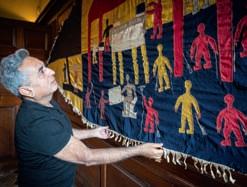
Journeys: Asafo Flags from the Karun Thakar Collection Until 1 November, Dyrham Park, South Gloucestershire
The National Trust is partnering with renowned collector, author and curator Karun Thakar.
Journeys draws on highlights from Thakar’s global textile collections to explore themes of migration, trade, craftsmanship, colonialism, global history and beauty at three historic properties. Vibrant textile displays and film reveal stories often left untold and show how these historic houses were shaped by global connections and colonial legacies. Many of the textiles carry deeply personal histories, including pieces connected to Thakar’s own family.
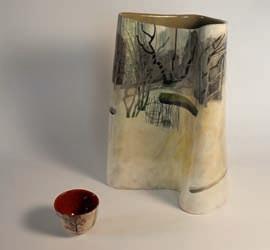
Ceramicist Anna Lambert has developed her hand-built forms to reflect a connection with the fragile and constantly changing environment, using various techniques including altering clay slabs, modelling and painting with slips and under-glazes.
Merlyn Chesterman returns to Gallery Nine with her woodcuts of seascapes. Hilary Paynter is widely recognised as one of today’s leading wood engravers and is renowned for the contemporary themes she brings to this traditional medium.
Jeweller Suzanne Claire handcrafts beautiful and tactile French knitted, crocheted, embroidered and woven jewellery. Zsuzsi Morrison’s jewellery could be described as modern-day talismans or amulets, each piece an individual work of art.
This summer, Atelier Rad presents a curated selection of contemporary artworks that celebrate the richness and versatility of artistic practice. Spanning monoprinting, cyanotype, charcoal drawing and mixed media, the exhibition brings together works that embrace experimentation, craftsmanship and the quiet poetry of process. atelierrad.com
Image: Mateo (Study) V, 2026
Anna Lambert ‘Grass Woods’ Ceramic Vessel
12. Journeys, Dyrham Park, Credit NT Images- James Dobson
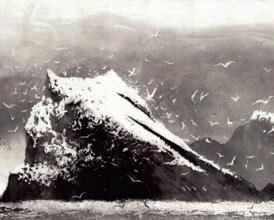
Norman Ackroyd: The Transience of Light, until 6 September, Victoria Art Gallery, Bridge Street, Bath
Spanning five decades of practice, this exhibition brings together Ackroyd’s spectacular etchings from the 1980s onwards. victoriagal.org.uk
Norman Ackroyd, The Rumblings, Muckle Flugga, Shetland, 2013, etching, 49.5 x 78cm (detail)
Russon, The Blues, Oil on Canvas, 40 x 40 cm
Exhibiting at Beaux Arts, throughout August, 12-13 York Street, Beaux Arts, Bath
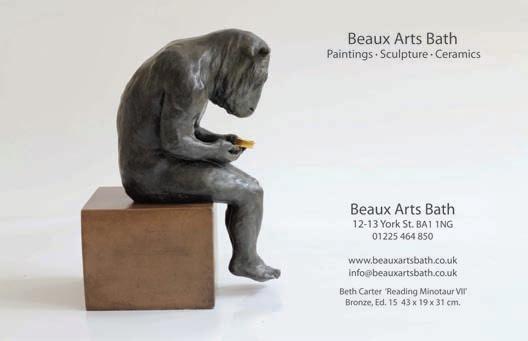
Beaux Arts are hosting a strong roster of sculptors over the summer with work by Patrick Haines, Beth Carter, Nichola Thealston, John Behan, Anthony Scott on display. On the walls are works by Caroline Attan, Richard Twose, Jo Barrett, Stewart Emdondson, Helen Simmonds, Mark Entwisle, Bobbie Russon, Jenny Pockley. Ceramics are by Tricia Thom. beauxartsbath.co.uk
Alchemy, Until 31 August, The Pedestal Gallery, 3 Stony Street, Frome
The Pedestal Gallery are thrilled to be exhibiting Alchemy at their Frome Gallery throughout August - showing a group of nine artists formed under the name of ‘The Old Fire Station Collective’ chosen to exhibit with the European Culture Centre as part of the Venice Biennale 2026, one of the most prestigious and competitive platforms in contemporary art.
The artists Peter Hayes, Johnny Vegas, Emma Rodgers, Gina Hatter, Max Eugeni, Sophie Green, Lonn Landis, Simone Schofield, and Fredrik Anderson have worked as a collective, driven by a shared curiosity into natural materials and chemical reactions.
@thepedestalgallery | thepedestalgallery.co.uk
Candace Bahouth: Dogs, Birds and Candlesticks, until 25 August, The Holburne Museum, Great Pulteney Street, Bath
The Holburne is excited to host local artist Candace Bahouth and some pieces from her Candelabras series in the display Dogs, Birds and Candlesticks. On display in the Holburne Cafe exhibition space, these uplifting and colourful works bring life and joy to the space. holburne.org
Bobbie
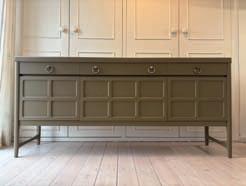
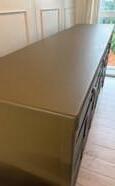
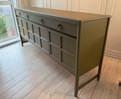
BAntiques for Small Spaces
By Cynthia Wihardja Beau Nash Antiques
ath has more than its share of narrow corridors, steep staircases, low ceilings and awkward corners. Because of that, most of our stock is medium to small in scale, because a piece is no good to anyone if it can’t get up the stairs of a Georgian terrace.
Antique pieces are often better suited to small homes than modern ones, simply because can be repurposed. A chest doubles as a coffee table. A drop-leaf table opens up for guest evenings and folds flat the rest of the time. A game table becomes a lovely console after game night.
None of this is new thinking. In Georgian and Victorian homes, furniture was a status symbol, and plenty of households owned than they needed. A multipurpose piece built two centuries ago often copes with a small room far better than something designed to do only one thing.
Our advice is to choose scale over style. A gorgeous chest of drawers is a bad buy if it blocks the door. Check the height against your ceiling, the footprint against your walkway. Secondly, be honest about its potential use. In small rooms, everything needs to have a job. Decorative pieces may not be your first priority.
Common Styling Mistakes
Underestimating depth. Width gets all the attention, but depth is what actually gets you in trouble. A cabinet can look perfectly proportioned face-on, but is too deep to allow proper walking space. Cramming too much. Mixing periods can be interesting, but every piece needs breathing room to actually be seen. Otherwise you’ve just got pieces competing with each other. Forgetting about delivery access. It fits the room, but can you get it in? Tight staircases, low doorways, sharp turns, all of it can turn into a problem you didn’t see coming.
Find Your Piece
A small home can absolutely carry antique furniture, it just needs choosing with a bit more care than a bigger house demands. Look for pieces that are compact, genuinely useful, and well-proportioned for your home.
Have a look through our collection of medium to small pieces if you’re furnishing a smaller home and want something with a bit more character than usual.
If you’re local, we’re offer a home trial so you can see it in your room before committing. This will help you buy better and prevent buyer’s remorse. View our shop online or come see us in Brock Street.
For more than two centuries, they welcomed visitors, governed society, settled disputes and orchestrated the city’s glittering social calendar. Historian Catherine Pitt takes us back in time to the heyday of Bath’s Masters of Ceremonies
Just imagine yourself arriving in Bath 250 years ago, being greeted by the peal of the Bath Abbey bells. At your lodgings you would have been visited by a finely dressed gentleman in a large white fur hat who, who, after assessing you, would lighten your pockets of a ‘subscription fee.’ This fee not only paid for the bells that had greeted you but allowed you to visit the balls, gambling rooms, gardens and libraries; as well as drink and bathe in the waters of the city.
The following day you would head to the Pump Room and there you would enter your name into a vast public register confirming your presence, and your payment. Your entry into the Bath Season had begun...
That fine dressed gentleman who welcomed you to Bath was known as the Master of Ceremonies (MC). His job was to be a jack of all trades – organiser, matchmaker, trend-setter, diplomat, and even enforcer.
Long before this, Bath was a small town with a growing reputation for the curative properties of its mineral waters. As visitor numbers grew, so did the demand for entertainment. A bowling green was situated near what is now known as Orange Grove, and was used for country dances. However this was of little use in inclement weather. It
wasn’t until the late 17th century that the Duke of Beaufort, visiting the city, took it upon himself to organise small dances for his friends at the Guildhall, but these affairs were very exclusive.
By the 1700s it appears that the organisation of public entertainment in Bath had become the unofficial role of a man called Captain Webster. The entertainment Webster provided was limited but consisted mainly of a series of balls at the Guildhall, costing half a guinea a head, together with gaming facilities. Webster made his money through the ball entry fees and from the gaming tables; however gambling was to be his downfall, and he was killed in a duel caused by rivalry at the tables.
Mr Plomer was dragged out of the Assembly Room by his nose, while it was said that the ‘women were more violent than the men’
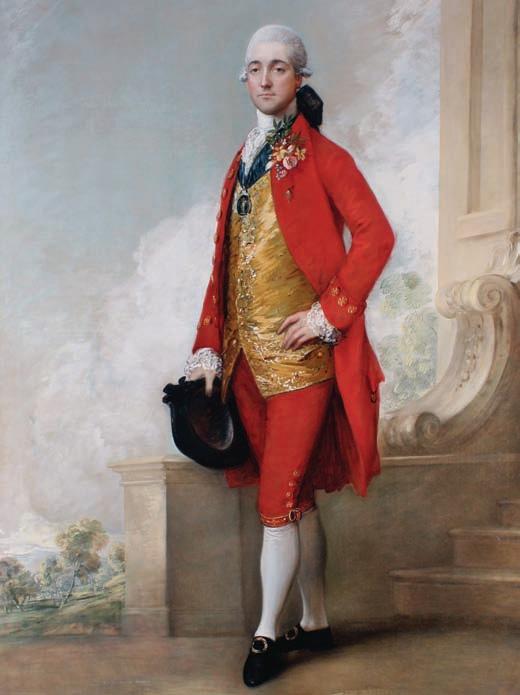
HOST WITH THE MOST: Master of Ceremonies Captain Wade, known as the Bath Adonis, painted by Thomas Gainsborough. Image courtesy of the Victoria Art Gallery, Bath and N.E. Somerset Council
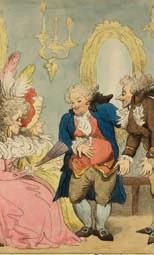
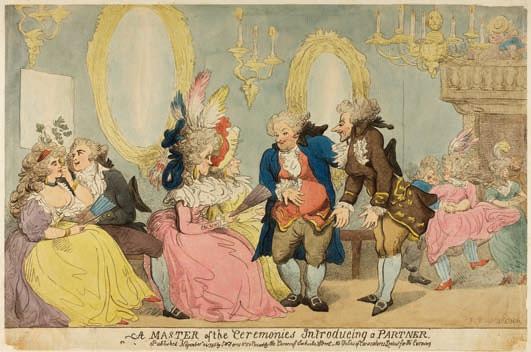
Opposite: A Master of Ceremonies Introducing a Partner, by Thomas Rowlandson. Image: bathintime.co.uk, Bath Central Library
Captain Wade, otherwise known as the Bath Adonis, was forced to retire from his position after living up to his nickname.
It was to Webster’s Bath that Beau – real name Richard – Nash made his first visit to the city, hot-footing it from London after an unsuccessful spell in the army. He made friends with Webster and became his unofficial deputy. On Webster’s death in 1704, Nash slipped easily into the gap that Webster had left. With his knowledge of those visiting the city, the acquaintances he had made in London, and his natural charm, Nash was soon to make himself indispensable. He even created a distinctive look of brightly-coloured clothing, sash, badge of office and a white fur hat so that he was easily identifiable in crowds.
Legend has it that Nash gained public favour after diffusing a threat made to the city of Bath by Dr Radcliffe, physician to Prince George of Denmark. The doctor had threatened to poison the springs with a toad, but Nash calmed the people’s fears claiming he could neutralise the toad’s poison with music, and set about raising money for an orchestra to play at the baths. This was so popular that new visitors flocked to the city. As Bath’s first officially recorded Master of Ceremonies, Nash set about creating more entertainment for visitors.
Nash persuaded Thomas Harrison to build a room for dancing to the east of The Grove, which would specifically be used for public entertainment (Lower Rooms, 1708 – 1820). He cleaned up the streets, improved the roads, and lighting, set a regular tariff for lodgings, created the first Pump Room to enable shelter for the drinkers, and proposed a set of Bath Rules which visitors were expected to adhere to including sections on dress and behaviour. To fund the entertainment
provided, Nash proposed visitors would pay subscriptions, collected by people known as Touters and which were recorded in a ledger on public display in the Pump Room.
London was where the rigours of society and social standing were to be observed, but in Bath it was more relaxed. Within his Rules Nash included a section on not excluding or insulting anyone of a differing status to one’s own, allowing merchants’ sons and daughters to rub shoulders with lords and ladies. Bath’s company in the 18th century was made up of “people of every degree, condition and occupation of life, if well dressed and well behaved.”
Nash made it his duty to know all who came to the city to partake in the pleasures he provided. He would personally visit everyone who arrived, which meant that Nash could seamlessly introduce people to each other, as well as play matchmaker.
His reign lasted for 57 years as the undisputed King of Bath, yet Bath was not the only place to have a MC, although it was the first in England to do so. Other spa towns followed suit, and Nash held the Bath position concurrently with that of MC at Tunbridge Wells in Kent. The differing social seasons between resorts often allowed the MCs such flexibility to have dual positions.
Nash’s role had been self-appointed and self-funded (as Webster’s had been) from the gambling tables. Future MCs of Bath were never to have such freedom.
After Nash’s death in 1761 people began to question how he had survived with no visible income. On finding out that money was skimmed from the subscriptions and gambling, subscription holders decided that if the position of MC was to remain it was to be controlled, with a salary taken from the money raised from the benefit balls and the actual job of MC granted via election by the subscribers. Gentlemen who had previously served in the army were preferred as it was believed they had the authority to control the crowds.
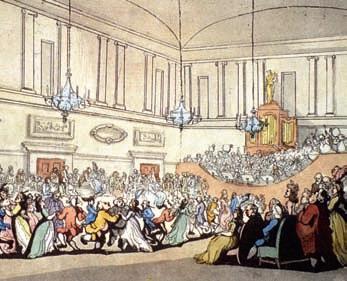
By the late 18th century Bath had become such a fashionable and popular city that a new Assembly Room, known as the Upper Rooms (1771), was built, near John Wood’s brand new Circus and Royal
Richard ‘Beau’ Nash by William Hoare. Image courtesy of Victoria Art Gallery, Bath and N.E. Somerset Council
Crescent. With these competing privately owned rooms it soon made sense to appoint a MC to oversee each building. The position of MC of the Lower Rooms often led to election of the Upper Rooms after tenure, as can be seen with James King, Richard Tyson and James Heaviside.
Among the MCs succeeding Nash was Irish author, Samuel Derrick in 1764. Although he based his look on Nash, donning the familiar white fur hat, and giving William Herschel a place in the Pump Room band, Derrick did not live up to his predecessor’s reputation. “Matters went from bad to worse, until at last, when a certain party was given, a woman of fashion was omitted, because Mr Derrick had forgotten her existence” (Edith Sitwell).
After Derrick’s reign ended in 1769 there was a much fought contest for the position, between Major Brereton, Derrick’s Deputy, and Mr Plomer, MC in Bristol. The competition became so fraught that a violent fight ensued and the Riot Act had to be read three times to the crowds. Mr Plomer was dragged out of the Assembly Room by his nose, while it was said that “the women were more violent than the men.” In the end a Captain William Wade was elected on consensus as a suitable compromise.
Captain Wade, otherwise known as the Bath Adonis, was forced to retire from his position after living up to his nickname. He was named in the divorce proceedings of Elizabeth Eustasia Campbell, wife of John Hooke Campbell. Wade may have lost the role of MC in Bath; however he did go on to marry Elizabeth and continued as MC in Brighton, a position he had held during his Bath tenure.
By the turn of the 19th century seaside resorts such as Brighton were growing in popularity, and spa towns such as Bath were losing their appeal. As the number of visitors dwindled, consequently so did the subscriptions and entertainment, and with it the need for a Master of Ceremonies. By 1805 the Lower Rooms had become unfashionable and poor attendance made sustaining two MCs financially impossible. In 1820 the Lower Rooms burnt down and all entertainment transferred to the Upper Rooms.
Recreation was also no longer as public as it once had been. People now preferred to entertain their friends and visitors in the comfort of their own homes or lodgings. The exclusivity of society that had been so abhorrent to Nash had reared its head again by the mid-19th century. There was little room now for the public displays of frivolity and the mixing of social classes that once had been.
The role of MC continued in a much reduced capacity through the 19th century in Bath. In 1902 the role was taken up for the last time by former thrice Mayor of Bath, Major Charles Simpson until his death, and the start of the First World War, in 1914.
After that, the mantle was never taken up again, although James King, Bath’s Master of Ceremonies has been immortalised in Jane Austen’s Northanger Abbey and in Charles Dickens’ The Pickwick Papers where Dickens writes of the fictitious MC, Angelo Cyrus Bantum Esquire.
It has been argued that Nash single-handedly increased the popularity, size and fortunes of the city with his re-organisation and control of society and entertainment.
It is certainly true that no man who took on the MC role after him could live up to his reputation, merely maintained the standards he had established. Beau Nash had set the bar high and although his legacy continued no one matched or surpassed his influence. n
FINE ASIAN ART NOVEMBER 2026
Entries now open
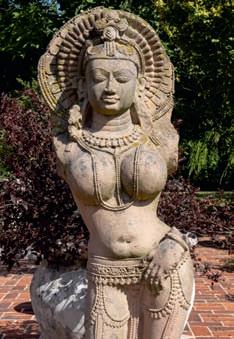
A rare sandstone figure of Durga
India, Madhya Pradesh or Rajasthan, 11th / 12th Century
£30,000-50,000
Provenance: From the Collection of the Late Anthony John Lippitt (1928-2019), acquired by him from Gordon Reece gallery Mayfair.
Indian and Islamic works of art are currently experiencing significant strength in the international art market
If you have an artwork you would like put forward for this sale contact Head of Asian Art, Lee Young Managing Director of Dore & Rees and regular Asian Art expert on BBC Antiques Roadshow
lee.young@doreandrees.com
+44 (0) 1373 462 257
Auction Salerooms, Vicarage Street, Frome, Somerset, BA11 1PU Lee Young
MISS OUT
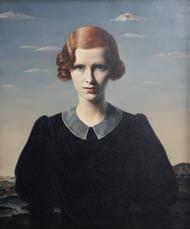
Royal Academy Brockhurst Portrait Achieves £72,500 at Lawrences
A rare portrait by celebrated British artist Gerald Leslie Brockhurst R.A. achieved £72,500 (including buyer’s premium) at Lawrences Auctioneers’ June Fine Art Sale, following strong competition from collectors bidding online and by telephone.
The Portrait of Mrs Alexander Frank Stanley Clarke, depicting Vivien Antonia Bligh St. George (1912–1975), was exhibited at the Royal Academy Summer Exhibition in 1935 and remains in its original handcrafted frame made by the artist. The painting was also reproduced in several leading society publications of the period, adding to its distinguished provenance.
Widely regarded as one of Britain’s leading society portraitists of the 1930s and 1940s, Brockhurst painted an impressive list of sitters, including the Duchess of Windsor, Marlene Dietrich and Merle Oberon. Renowned for his refined, elegant style, he later established a successful career in New York, cementing his reputation as one of the twentieth century’s foremost portrait painters.
The portrait proved to be one of the highlights of the June sale, with its Royal Academy exhibition history and outstanding condition. It attracted considerable interest from collectors and driving competitive bidding to a strong final result. The sale continues Lawrences Auctioneers’ successful run of Fine Art sales, reflecting sustained demand for important twentieth-century British art.
Lawrences are welcoming consignments for their forthcoming Fine Art sales to include: Silver | Vertu | Pictures | 19th/20th Century Design | Ceramics Oriental Works of Art | Jewellery | Watches | Furniture | Clocks
Late summer reading: Beach novels, an expat thriller and a vengeful driving instructor... Book recommendations from Topping & Company
Lies and Weddings by
Kevin Kwan
Growing up next to Greshamsbury Manor, Eden spent her days in the shadow of the matriarch Arabella and her children. When she receives an invite to a Hawaii wedding, she is thrown back into the family’s orbit. Earl is gorgeous, artistic, and in love with her. The Greshamsbury family is drowning in debt. Rufus, Eden’s childhood friend, needs to find a match with serious money to keep them afloat. Arabella will destroy anyone who gets in her way, including Eden. Published by Cornerstone, £9.99.
My Year in Paris with Gertrude Stein: A Fiction by
Deborah Levy
The narrator goes to Paris to discover who Gertrude Stein was. She meets an artist in a long-distance marriage and a sexuallyadventurous financier. Together they cook, walk, read, and argue into the nights. As Paris sweeps her along in its ceaseless flow, she thinks about what we lose to become modern, living with uncertainty, making a life in another country, art, language. How did these look to Stein in the twentieth century – and to the narrator in the early twenty-first? Published by Hamish Hamilton, £18.99.
Kill Billionaire by
Anders Lustgarten
When her home is destroyed in wildfires, fourteen-year-old Australian genius Kayla hunts down the culprits: billionaires. Teaming up with an ex-soldier whose home is flooded by rising sea levels, the pair find ways to kill a property developer building on protected wetlands and a mining CEO poisoning the earth. They travel from California to London to crack billionaire tech-bros and super-rich oil executives, spawning a global movement along the way. In pursuit are an FBI agent and a detective sergeant... Published by Chatto & Windus, £16.99.
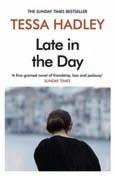
Late in the Day by Tessa Hadley
Alex, Christine, Zach, and Lydia have been interlinked for decades, from student house-shares and grubby pubs to proper homes and grown-up careers. One evening, one of these two couples, Alex and Christine, receive a call from a distraught Lydia. Zach is dead. Inconsolable, Lydia moves in with Alex and Christine. Instead of their loss bringing them closer, love and sorrow give way to bitterness as old entanglements rise from the past. Published by Vintage, £9.99.
Valley Of The Dolls by
Jacqueline Susann
Capsules or tablets, washed down with vodka or swallowed straight – for Anne, Neely and Jennifer, it doesn’t matter, as long as the pill bottle is within reach. These starlets become entangled in New York but are struggling to make their names in entertainment. Only when they reach the peak of their careers do they find that there is nowhere left to go but down the valley of the dolls. This is a cult classic about fame’s dark heart. Published by Virago Press Ltd, £10.99.
Murder at the End of the World by
Akane Araki
An asteroid is hurtling towards Earth and the human race has just two months to live. However, twenty-three-year-old stargazer and chronic-worrier Haru is still trying to pass her driving test. She finds a body in the boot of her car. There's a murderer on the loose, and it turns out Haru's driving instructor is an ex-cop with a manic devotion to justice. The duo collaborate to catch the killer, despite the danger. The world is not quite over yet...
Published by Pushkin Vertigo, £14.99.
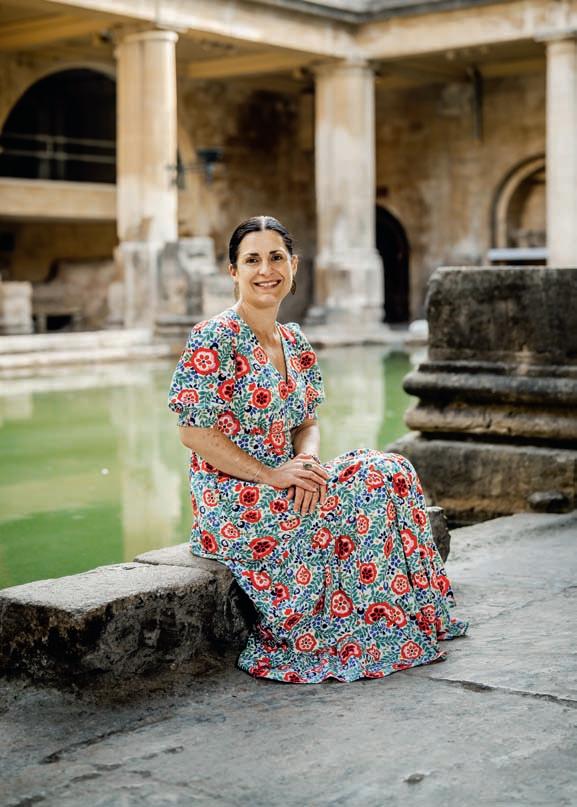
Amanda Hart beside the Great Bath
Portrait of Bath
Amanda Hart, Director of Archaeology and Art at the Roman Baths
Every stone at the Roman Baths has a story to tell. As Director of Archaeology and Art, Amanda Hart is uncovering the forgotten lives of the ordinary people who built, worked and worshipped there – revealing a richer, more human history of the city.
Interview by Melissa Blease
Whether you’re a long-term resident of the Heritage City or visiting Bath just for one day, it’s impossible to ignore the history that’s all around us at every turn – and never more so than around and within the Roman Baths complex, where the city began.
The Romans started the development of Aquae Sulis as a sanctuary of rest and relaxation in 43AD. Over the next three decades, they built a temple dedicated to the goddess Sulis Minerva and a sophisticated series of baths constructed around the natural hot springs which thrived at the epicentre of proceedings and was gradually built up over the next 300 years – and indeed, continues to be developed some 1500 years on.
“The Roman Baths is unique because of its historical setting,” says Amanda Hart, who was appointed Director of Archaeology and Art at the Roman Baths in 2022.
“But if you pause to consider the scale of what was originally a huge leisure complex and the amount of people it would have taken, operationally, to keep that site running – wow, it would have been a phenomenal task! But the stories of all the people involved in that task behind the scenes aren’t fully told on site; there are many different narratives that we need to draw out to make the history of the Roman Baths a complete story.”
“For me, nothing beats the experience of being by the Great Bath before we open to the public... it’s just – well, beautiful; you can really sense the magical, spiritual nature of the site here.”
Epigraphy, the scientific study of inscriptions, to reanalyse the Roman Baths’ collection of Curse Tablets, the curiously moving ‘defixiones’ inscribed on to small sheets of lead or pewter depicting the private and personal prayers and wishes of 130 individuals believed to have worked on the site from the second to the late fourth century AD.
“Of course, we all know the Romans spoke Latin, but elements in new technology have opened doors to a reanalysis of the Curse Tablets from the perspective of other languages,” says Amanda. “There would have been both local people and incomers from abroad that were speaking a range of different Celtic and other languages, so we’re going to look for those as well, working closely with Professor Alex Mullen, Professor of Ancient History and Sociolinguistics at the University of Nottingham.”
It’s all quite the impressive workload, for sure. But while busy making big splashes and multi-faceted deep dives poised to reshape the fascinating social history within one of the most popular, award-winning tourist destinations in the UK, Amanda still finds time to appreciate her unique ‘office’ environment. “For me, nothing beats the experience of being by the Great Bath before we open to the public,” she says. “It’s just – well, beautiful; you can really sense the magical, spiritual nature of the site here.”
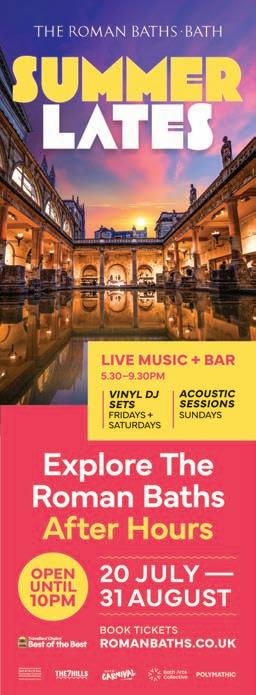
This month, we can all immerse ourselves in a little bit of Roman Baths magic when the Summer Lates sessions allows visitors to enjoy the Great Bath in the soft glow of torchlight as the sun sets, with a Bathside bar open until 10pm and live, mellow music on Friday-Sunday evenings adding to the unique ambience. “At dusk, all the beautiful colours of the summertime sunset reflect on the bath; it’s a very special time to visit,” says Amanda. “And in a way, Summer Lates takes us back to the Roman Baths original purpose; as well as being a centre for wellness, it was a very social space, where people would go to chat to people, catch up on news, socialise, gossip, see and be seen!”
If anybody is going to help those people tell that story it’s Amanda, whose love of European pre-history began when she relocated from Australia to the UK with her family as a pre-teen and led to her studying Archaeology for her degree before specialising in Archaeological Curatorship at MA level. Today, Amanda is studying for a PhD looking at the human skeletal remains found in and around Bath with a view to creating osteobiographies (lifestyle, occupation, demographics, etc) of the lived experience of those individuals.
“Research around the people involved in the building and maintenance of the Roman Baths complex has so far been based on inscription evidence on tombstones and altars. But of course, they only really represent the mostly male, elite Romans, so there are a whole lot of people that aren’t represented,” she explains.
As part of her research, Amanda and her team are also looking at
Okay, so in these modern times, we’re not allowed to actually bathe –and nor are we allowed to consider visiting naked, as the original visitors would have done. As for tasting the mineral-rich spring waters that 17th century health-seekers travelled from far and wide to do (and which today’s visitors can still do, courtesy of dedicated taps and fountains with the modern-day complex): don’t even go there! It is, as Amanda very politely, puts it, “an acquired taste”.
The Roman Baths, though, we should all dive in: Bath’s own, unique history on our very own doorsteps, being revived, revised and recurated for generations to come. n
Summer Lates at the Roman Baths: romanbaths.co.uk/event/summer-lates-roman-baths
For more on the Voices of Britain project: bajr.org/voices-of-britain-under-and-after-rome-early-britishidentities
Photography by Joe Short, an award-winning photographer based in Bath. joeshort.com
Three exciting new restaurants for Bath
Bath’s food scene continues to flourish this summer with three very different restaurant openings, each bringing a fresh flavour to the city.
Leading the arrivals is Bread Street Kitchen & Bar, Gordon Ramsay’s popular restaurant brand, which opens at the DoubleTree by Hilton on Walcot Street in August. The all-day dining concept will serve favourites including beef wellington,
fish and chips and Sunday roasts, alongside cocktails and terrace dining.
Just around the corner, Bath Chop House opens on Northumberland Place on 4 August, bringing a contemporary take on the classic New York chophouse. Championing British produce from trusted local suppliers, the menu will focus on coal-fired steaks, dry-aged beef, seasonal butcher’s cuts and generous sharing dishes, all prepared with an emphasis on provenance and quality.
Meanwhile, Osteria Partenopea has just opened on Upper Borough Walls,
taking over the former Bonghy Bo site. Created by Naples-born restaurateurs Valeria Casolaro and Costantino Turco, the independent neighbourhood restaurant will celebrate authentic Neapolitan cooking, with handmade pasta, slow-cooked ragù, fresh seafood, Italian wines and a secluded courtyard terrace. The couple hope to bring the warmth and hospitality of their hometown to Bath, using the best Italian ingredients alongside locally sourced seasonal produce. Watch this space for further updates.
Clayton’s Kitchen is a perennial favourite for local foodies and discerning visitors to Bath.
Robert Clayton, a Michelin-starred chef and the restaurant’s Chef Patron since its inception in 2012, creates uncomplicated dishes that explore and showcase the freshest and very best ingredients.
Inspired by Mediterranean and modern French cuisine, Robert ensures that every dish is prepared, cooked and presented to perfection.
Special Lunch offer Weds to Friday £32 2 courses, £38 3 courses
To view up-to-date menus, the wine list and to book visit: claytonskitchen.com
15A George Street, Bath BA1 2EN 01225 724386 rob@claytonskitchen.com
Bread Street Kitchen & Bar
Bath Chophouse
Constantino and Valeria, Osteria Partenopea
Rustle up this recipe!
This brunch recipe is a great choice as it offers plenty of protein from the sardines, eggs and feta – which is important as it provides the building blocks for muscle growth (important to support metabolic health), and protein helps to keep blood glucose stable and reduce hunger. The sardines are a fantastic source of Omega 3 fatty acids – which are essential as they reduce blood triglycerides, lower inflammation and improve insulin sensitivity, key factors in improving our metabolic health.
Eggs are not just a great protein source, they provide us with choline, an important mineral which supports memory, mood and muscle control, while the vegetables provide important fibre, to stabilise blood glucose levels, support our digestion and gut transit and feed our gut microbiome – a vital part of the jigsaw puzzle for healthy lives.
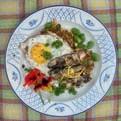
Courgette and carrot fritters with crispy sardines and fried egg
Ingredients (serves 2)
For the fritters
1 medium courgette and 1 carrot, grated, excess fluid squeezed out
1 egg, beaten
1 tablespoon of gram/chickpea flour (or regular plain flour)
50g crumbled feta cheese
Handful of chopped fresh herbs (we used basil and parsley, but mint and chives would work really well too)
1 shake of chilli flakes (optional)
pinch of salt and pepper
Olive oil
(For the crispy sardines and fried egg)
2 eggs
1 tin of sardines in olive oil
1 clove of garlic, crushed (optional)
Salt and pepper
To serve:
Seasonal salad, shelled broad beans (lightly cooked and shelled) or Tenderstem
broccoli
Method
1. Mix the grated vegetables and egg in a large bowl
2. Add the flour, crumbled feta, salt and pepper and chilli flakes (if using) and stir to create a soft batter
3. In a frying pan, heat a desert spoon of olive oil on a medium heat
4. Dollop tablespoons (4 fritters) of batter into the pan, allow to set (about 3 or 4 minutes) then flip with a fish slice or spatula and cook for a further 3 or 4 minutes on the other side. Once golden brown and cooked through, place to one side whilst preparing the sardines and fried egg.
5. Drain the olive oil from the sardines into a frying pan and heat gently with one clove of crushed garlic (if using)
6. Add the sardines, sprinkle with a little flaked salt, and fry on each side until crispy (3 or 4 minutes) - remove from the pan and add the egg to fry, until cooked to your liking
7. Plate up, with fritters, fried egg and crispy sardines and vegetable accompaniment of your choice, drizzled with a little olive oil and squeeze of lemon and garnish with a few chopped herbs. Enjoy!
The essence of the countryside: The story of Bramley
It’s likely that you have experienced Bramley already, even if you’ve never bought something from the range. Whether it’s a hand wash in your favourite country pub or a shampoo tucked into a boutique hotel bathroom, Bramley has become a staple supplier to British hospitality. Hannah Poon speaks with founder Chloë Luxton about a formula that hasn’t changed in 17 years, and the royal request that she thought was a prank.
Hand soap is rarely the first thing you notice when you check into a pub or country hotel. Yet those small, discreet details are what can truly elevate your experience. With a gorgeous scent and luxurious lather, a trip to the bathroom can have you walking back to the table insisting everyone smells your hands... It starts a conversation without even trying.
And that’s exactly what Chloë Luxton wanted when she founded Bramley over 17 years ago. She didn’t just want to create toiletries; she wanted to create an experience for customers. It’s a sentiment that has stayed true to the brand to this day.
Back in 2009, she and her husband Charlie packed up their lives in London for a fresh start in the countryside. They purchased The Beckford Arms in Tisbury and transformed it into a charming country escape with rooms.
However, when hunting for toiletries to include in the bathrooms, Chloë says she struggled to find products that weren’t packaged in singleuse plastics or were made with synthetic ingredients. With sustainability at the heart of her beliefs, she took it upon herself to create products for their guests.
“When you arrive at The Beckford Arms, you almost feel like you’ve taken a wrong turn into a private country estate. There’s a lake on the left and parkland on the right – you almost stumble upon the pub. I wanted toiletries in the bathrooms to reflect the beauty of the countryside we were in,” Chloë says.
“It was seeing the men smell their hands when they left the bathroom that made me realise how good they were”
Chloë Luxton
Chloë got in touch with an apothecary from Somerset and had a range of six products created: a hand wash, hand cream, shampoo, conditioner, body wash and lotion.
“It was everything you need for a night away, and each of the products had been carefully created with essential oils that were beneficial for their use (rosemary in the shampoo to support hair growth, for example).
“I’d found a beautiful book on our honeymoon with floral illustrations and used those on the original designs. When the pub opened, the toiletries were ready for the guests, and people seemed to really love them. “For me, it was seeing the men smell their hands when they left the
bathroom that made me realise how good they were. Women do that all the time, but men usually pay no attention,” Chloë says.
Chloë knew she was on to something when people started to ask if they could purchase the products. And that’s how Bramley was born.
The brand has grown slowly and organically, with much of the emphasis on elevating hospitality experience. As well as her husband’s line of pubs, hotels and restaurants, Chloë began supplying her creations to carefully selected locations – most notably, The Pig Group.
As well as increasing her hospitality customers, Chloë gradually added new formulas to the range. However, she says the original six have not been altered since they first appeared at The Beckford Arms.
“They’re just as good now as they were then, so why would I change them?” she admits.
Much of what followed came from Chloë’s own personal life, rather than a business plan.
When she became a mum, she created Little B as she couldn’t find anything she wanted to use on her children's skin – or on the side of her bath. And as a dog lover, she launched Digby to create a wash that really worked at getting rid of smells (which Chloë herself admits is “disgusting”, especially when they roll in fox poo).
With botanicals at the heart of Bramley, Chloë grows a lot of the ingredients right here in Somerset. Their homegrown lavender, chamomile and rose petals are all used in the products. By using natural essential oils, they send a message directly to the brain, which is exactly why Bramley’s tagline is ‘botanical magic’.
“Once you discover essential oils, you don’t go back. My daughter is 11, and whenever we’re in a high-street shop and she wants me to smell a product, I can instantly smell the artificial ingredients. They just smell fake. I’ve seen the benefits of aromatherapy over the years. It’s so special. It’s authentic, and that’s why we’ve always stayed true to the ingredients,” Chloë says.
Chloë created Bramley to complement her husband’s charming country pub, but now it’s a staple in British beauty and wellness. Even if you’ve never owned a Bramley product yourself, you’ve likely used it in a pub or hotel. And that reach took Chloë further than she ever could have expected.
During lockdown, the now Catherine, Princess of Wales reached out personally, asking Chloë to help create care packages for families in need.
“When I saw the email, I thought it was a joke. I thought I was being pranked, but when I realised it was real, I just felt really honoured that they’d even heard of Bramley. Catherine asked if I could put together some products for families living in poverty, particularly from our Little B collection, and I was delighted to help.
“We give a lot of toiletries to charity and if there’s anything we can help with, we do try to. We’re long-standing supporters of the charity Plantlife, which works to protect and restore wild plants and flowers and connect people with nature. Obviously that’s very important to me,” Chloë says.
While sustainability and natural ingredients are being pushed in the industry, Bramley has been doing it all along. While they might be a
“When I saw the email, I thought it was a joke. I thought I was being pranked.”
Chloë Luxton
staple in British beauty, they are fundamentally a small business with a small team.
“It is a very competitive market, and you do have to stay ahead of the game. However, we’re an independent brand, meaning we can try new things and have fun. We don’t take ourselves too seriously. I want the products to speak for themselves,” she says.
And 17 years on, that same instinct is shaping what’s next. At the end of last year, Chloë opened her flagship store in Bath’s Shires Yard to connect directly with consumers.
“I’m trying to make the shop a community. We hold workshops, popups with other brands and even yoga. I wanted the shop to be a place where people come to breathe and chill out. And it seems to be working – someone took a nap in one of our chairs a few weeks ago!” Chloë says. Bramley has evolved into a heritage British brand, with the original toiletries, skincare and now even a dedicated treatment cabin at her husband’s brand-new hotel, Teffont House.
While the products do ultimately speak for themselves (and they are exquisite), it’s Chloë herself that really sets Bramley apart.
Her mission has always been simple: create the best products with the best ingredients. 17 years on, she’s still very much at the helm of the brand, coming up with ideas and keeping Bramley true to its original mission.
By working with nature, every item in the Bramley collection offers a special moment and you don’t even know it’s happening. n bramleyproducts.co.uk
Photograph courtesy of Ed Schofield
Bath business
CITY BUSINESS AND COMMUNITY ORGANISATION UPDATES
Norland awarded university status
Young designers brighten Bath’s streets
Bath city centre has been transformed this summer by colourful new banners and bunting created by local school and college students as part of a creative project led by Fashion Museum Bath and Bath & North East Somerset Council in partnership with The Holburne Museum.
Installed across the city during July, the striking street displays feature original designs by students from St Mark’s School, Hayesfield School, LIFT Broadlands and Bath College. Developed through a series of artist-led workshops, the project gave students the opportunity to explore printmaking, colour and pattern after visiting A Life in Print, The Holburne Museum’s exhibition celebrating the work of renowned British designer Zandra Rhodes.
Fashion Museum Bath selected a collection of the students’ designs to be enlarged and displayed throughout the city, bringing fresh bursts of colour to Bath’s streets while showcasing the creativity of the next generation of designers.
The initiative forms part of the museum’s pre-opening learning programme, encouraging young people to engage with fashion, design and creative careers ahead of its reopening. It also paves the way for a new biannual schools competition, Fashion Is… Sketch. Print. Wear.
The installation is part of the wider regeneration of Bath’s Milsom Quarter, supported through the West of England Mayoral Combined Authority’s Bath High Street Renewal Programme, helping to animate the city centre throughout the summer.
One of Bath’s best-known educational institutions is entering a new chapter after Norland was granted university status, becoming the world’s first university dedicated exclusively to early childhood.
From September, the Gold-rated specialist higher education provider will become Norland University of Early Childhood, following approval from the Office for Students. The new status recognises Norland’s longstanding contribution to early years education and will strengthen its role in teaching, research and professional practice.
Founded in Bath in 1892 by education pioneer Emily Ward, Norland has built an international reputation for combining academic study with practical training. Its distinctive programme pairs a BA (Hons) degree with the prestigious Norland Diploma, extensive professional placements and a supported fourth year in paid employment.
University status will also enable Norland to expand its postgraduate offering, including a new MA launching this autumn, while further enhancing opportunities for graduates seeking careers in early childhood education and care. Principal Dr Janet Rose described the announcement as “a landmark moment” for both Norland and the wider early childhood sector, strengthening the institution’s ability to advance research, influence policy and help shape the future of early years education. norland.ac.uk
Bath Abbey Tower Tours return following conservation work
Visitors can once again experience one of Bath’s finest views as full Tower Tours return to Bath Abbey following the completion of essential conservation work.
Resuming late July, the guided tours take visitors beyond the areas usually open to the public, climbing 212 steps through hidden stairways, historic roof spaces and the Abbey’s bell chamber before emerging at the top of the tower. Along the way, guides reveal the stories behind one of Britain’s most remarkable churches, offering a fascinating insight into the building’s history and architecture.
The 60-minute experience culminates in panoramic views across Bath’s UNESCO World Heritage city, providing a unique perspective on the city’s famous skyline.
Tower Tours run daily, with advance booking recommended. Discounts are available for Bath Discovery Card holders and local residents on production of a valid Discovery Card or proof of address. bathabbey.org
Students and teacher from LIFT Broadlands in front of their banners on New Bond Street
Increased Tax rate on Directors’ loans and new Tax Return reporting requirements for Directors
As you may be aware, an outstanding loan to a director or shareholder from a close company can trigger a tax charge under Section 455 of the Corporation Tax Act 2010.
The director’s loan account is generally used to account for temporary withdrawals from the business for the director’s personal spending. However, if the director does not pay the company back within 9 months and one day after the company’s year end, the company must pay a corporation tax charge known as the s455 tax charge. This is to prevent directors/shareholders from extracting profits in the form of loans instead of taxable dividends or salary.
For several years the s455 tax charge has been calculated as 33.75% of the amount outstanding, matching the higher dividend tax rate. Following changes announced in the 2025 Budget the dividend higher rate, and therefore the s455 rate, increased to 35.75% for loans made on or after 6 April 2026. It is important to note that the s455 tax charge is paid by the company, not the individual director, and it is usually temporary. If the loan is repaid, released or written off, the company can claim a refund of the charge from HMRC, but only 9 months and one day after the end of the accounting period in which the loan is repaid.
It is also important to note that writing off a director’s loan can also have tax implications for the individual concerned and specific advice should be sought on this. HMRC anti-avoidance rules also prevent ‘bed and breakfast-ing’ where loans are repaid and immediately redrawn simply to avoid the charge. Furthermore, if a loan to a director exceeds £10,000 at any point in the tax year it will be treated as a beneficial loan and additional tax rules will apply. If no interest is charged, or interest is below HMRC’s official rate of interest, the difference will be taxable on the director as a benefit-inkind. The company will also have to pay Class 1A national insurance on the taxable benefit. With the higher rate now in force for newer loans, it is important to monitor directors’ loan accounts closely and maintain accurate records of repayments and balances.
On a separate matter, those directors who have already filed their Tax Returns for the year ended 5 April 2026 will have noticed new boxes on the Tax Return this year, requiring additional information in relation to their directorships of ‘close companies’, even where no income has been received. Broadly, a company is a ‘close company’ if it is controlled by five or fewer shareholders or by any number of directors.
The Tax Return form now asks for more detailed information about each close company directorship, including the company’s name and registration number, the amount of dividends received from it (even if this is zero), and the maximum percentage of the share capital held by the director during the year. If you are a director of more than one company, a separate set of Employment pages must be completed for each directorship even where no salary, dividends or other income has been received.
The above is for general guidance only and no action should be taken without obtaining specific advice.
James Rose MMath(Hons) FCA CTA
Fashioning Bath’s future
From preserving fashion history to equipping young people with cutting-edge digital skills, a new five-year partnership between the Fashion Museum Bath and Bath Spa University is proving that Bath’s creative future is every bit as exciting as its past.
Samantha Coleman talks to the people behind this innovative project…
For a city celebrated for its heritage, Bath is looking firmly to the future thanks to an ambitious partnership between the Fashion Museum Bath and Bath Spa University to digitise one of the world’s most significant fashion collections using advanced 3D imaging technology.
Launching in 2030, alongside the re-opening of the Fashion Museum Bath in its new home, Explore the Collection will be a free online platform that allows visitors to explore hundreds of objects in interactive 3D.
More than a digital catalogue, it promises to transform how people engage with the museum’s internationally renowned collection, positioning Bath at the forefront of fashion innovation and opening up more than 400 years of fashion history to audiences around the world.
Sophie McKinlay, Project Director at the Fashion Museum Bath, says: “When the museum closed in its old location it gave us a rare opportunity to think differently. We aren’t simply moving a museum; we’re creating a new cultural destination in the heart of Bath. The ambition is to bring more people into the city centre, support local businesses and create a place that residents feel belongs as much to residents as it does to visitors - and all of this is founded on partnership.
“Our collaboration with Bath Spa University on the Explore the
Collection project has been fundamental to achieving that vision. We’ve brought together a world-class fashion collection, digital innovation and emerging creative talent to create something genuinely new.”
Rather than replacing a visit to the museum, Sophie sees the digital platform as enhancing it – a companion to the museum: “Nothing will ever replace standing in front of an original garment and seeing the craftsmanship with your own eyes. But what the technology does is add another layer of discovery, allowing people to explore details and stories that would otherwise remain hidden.”
A prototype of Explore the Collection launched earlier this year, offering a first glimpse of what the finished platform could be. Featuring every piece from the museum’s celebrated Dress of the Year collection alongside early 3D models and experimental digital features, the pilot has already helped those working on the project understand how people want to engage with fashion online.
Coral Manton, Director of the University’s Centre for Creative Technology, says: “We’ve been interested in exploring how best to carry out a large-scale scanning project, and the Fashion Museum Bath’s extensive collection offers the perfect opportunity. Having such a large number of objects allows us to compare and contrast them, helping us identify patterns, trends and insights.”
Photograph courtesy of Niklas Aarre
“We aren’t simply moving a museum; we’re creating a new cultural destination in the heart of Bath”
Sophie McKinlay
It is, however, a lengthy process. Each garment takes around two days to digitise, beginning with extensive photography before specialist software transforms hundreds of images into highly detailed 3D models.
“Creating 3D versions of each object means you can turn them around and see even the smallest details,” Coral explains. “But one of the biggest challenges is optimising the files so they’re as small as possible while retaining an exceptional level of detail - that’s something we’ll continue to develop.”
The technical complexity also explains why the project is spread over five years. The scale of the scanning work is something you’d usually only associate with world-renowned museums like the Natural History Museum.
Gabby Shiner-Hill, Digital Fellow at Future Fashion Works at the university, says: “This isn’t simply about a university lending support to a museum, it is a two-way exchange – the partnership will shape our research and teaching, just as much as Bath Spa University will shape the museum’s digital future. It is a genuinely symbiotic partnership, where collaborating together achieves far more than either institution working alone.”
This partnership is also a major investment in Bath’s creative future – it creates a direct pathway between education and industry. At its heart
is a commitment to nurture talent and equip the next generation with the skills needed to build careers in the region. Young people and students will have opportunities to gain hands-on experience in photography, professional 3D imaging, digital archiving and photogrammetry.
Inclusion is central to this vision, with dedicated work alongside underrepresented communities and young people facing barriers to education, ensuring the benefits of the partnership are shared as widely as possible. This commitment is already being put into practice - recently, the Fashion Museum Bath and Bath Spa University’s Future Fashion Works welcomed young people from Youth Connect South West’s Alternative Education programme into the museum’s storage facility for a day of fashion object scanning. Using Polycam, the photogrammetry software widely used across museums and heritage organisations, participants learned how to create professional-quality 3D models while gaining first-hand experience of digitisation workflows.
Gabby says: “It was fantastic to see students getting up close to the objects and talking to us about their skills, ambitions and what they hope to gain from being part of the project. The next step is to embed those experiences into our courses, giving students across fashion photography, marketing, creative writing and heritage the opportunity to engage with the project as part of their studies.”
It’s exactly the kind of practical, career-focused experience that can spark new ambitions and introduce young people to careers they may never previously have considered in museums, fashion or creative technology.
The digitisation programme itself is also a journey of discovery. Over the next five years, at least 600 objects from the museum’s collection of more than 100,000 pieces will be selected for detailed 3D capture. Alongside enhanced catalogue records, multimedia interpretation and
“We have the opportunity to create something that doesn't currently exist anywhere else”
Sophie McKinlay
new research tools, the project will create an interactive resource where fashion, technology and storytelling come together.
Sophie says: “One of the joys of the Fashion Museum collection is its extraordinary range. We’re digitising everything from complex historic garments and children’s clothes to everyday dress and spectacular couture pieces - because it isn’t just about famous designers – it’s about the transformational power of fashion to change people’s lives.”
For Sophie, the most exciting aspect is that the project is still evolving.
“This is an active research project,” she says. “We’re discovering new possibilities all the time. Over the next five years we’ll be working with students, researchers, technologists and audiences to explore entirely new ways of experiencing fashion. We have the opportunity to create something that doesn’t currently exist anywhere else - a digital experience that brings together creativity, technology and one of the world’s great fashion collections in a way that’s as inspiring and imaginative as the new museum itself.” n
A video documenting the project is available at: fashionmuseum.co.uk/collaborating-bath-spa-university
LIVING IN THE MOMENT
When was the last time you felt completely present? No distractions, no todo list, just the moment you were in?
In a world where we are expected to be constantly switched on, that kind of stillness can feel hard to come by. But one local charity, Mentoring Plus, offers exactly that, to the young people they support and the volunteers who walk alongside them.
Through its volunteer mentoring programme, adults are trained and carefully matched with a young person in Bath and North East Somerset. Each week, they meet to talk, explore activities they both enjoy, whether that’s a walk or board games in a café, and simply enjoy each other’s company. No agendas, no pressure, just two people giving one another their full, undivided attention.
And that simplicity makes a profound difference. Every year, more than 100 young people facing challenges such as poor mental health, loneliness or family breakdown, are supported by kind and friendly volunteers. Every week, the charity sees young people growing in confidence, feeling happier, safer and more connected. One mentee, shared how mentoring has helped them:
“The first thing I enjoy about mentoring is that every single Thursday I get taken out, and it comforts me and helps me with my anxiety. It gives me time to talk about what I’m feeling. I know I have someone behind my back to help me, and that’s good for me. It helps with all my social things.”
(Quote not provided by the young person pictured)
Meanwhile, the sixty or so volunteers mentoring each week find their own rewards too, improved wellbeing, new skills, and feeling part of their community. Graham Abbey, mentor and trustee of Mentoring Plus, shares his experience of mentoring, highlighting the magic of undivided attention:
“It genuinely felt like a real privilege just to spend time together, for the two of us to give each other undivided time and attention. It has made me realise how really rare that is and how hard it is when not with your own children or friends, because there’s so much other stuff to distract you. The mentoring process creates this little haven, this little space, where you can just be together.”
The impact on both mentors and mentees is clear. But there are always more young people in Bath and North East Somerset waiting for that one kind adult to show up for them each week. Someone who isn’t a family member, a teacher or a friend, someone without a preconceived idea of who they are, who won’t judge them, and who has the time to really listen.
If you have a few hours to spare and the desire to make a genuine difference, Mentoring Plus would love to hear from you.
VOLUNTEER WITH MENTORING PLUS
You don’t need any prior experience. Just an open mind, a kind heart and willingness to have some fun.
You will receive full training and support every step of the way. You’ll also receive expenses and a warm welcome into a friendly volunteer community.
Next free training: Saturdays 3 and 10 October, 10am4pm, Bath
Find out more: www.mentoringplus.net 01225 429 694 - inspire@mentoringplus.net
Graham and his mentee after playing football together
Education matters
NEWS FROM THE CITY’S LEARNERS AND LEADERS
Regional education partnership launched
Universities and colleges across the West of England have joined forces to strengthen skills, widen opportunities and support long-term economic growth. Two new regional partnerships – Universities West and Colleges West –bring together Bath Spa University, the University of Bath, the University of Bristol, UWE Bristol, Bath College and five further education colleges from across the region. Together, the institutions educate more than 150,000 students and will work with employers, policymakers and the West of England Combined Authority to help develop future skills, improve pathways into education and employment, and support lifelong learning. The initiative aims to ensure the region is well equipped to meet future workforce needs and create greater opportunities for learners of all ages.
KES recognised among the South’s leading independent schools
King Edward’s School, Bath has been commended in the Independent School of the Year Awards 2026, placing it among the South’s leading independent schools. The accolade follows the school’s recent success in being named The Sunday Times Independent Secondary School of the Year for the South West. The award recognises schools that make outstanding use of their location to enrich pupils’ education, and KES was praised for its strong links with Bath’s cultural, educational and sporting organisations. Partnerships with Bath Philharmonia and the Holburne Museum provide pupils with opportunities to work alongside professional musicians, artists and curators, while collaborations with Bath Rugby, Team Bath and Bath Cricket Club support sporting excellence. The commendation also reflects the school's academic success, commitment to pupil wellbeing and extensive community partnerships, including its bursary programme and initiatives with local schools. Headmaster Martin Boden said the recognition celebrates not only the achievements of pupils and staff, but also the opportunities created through KES's close connections with Bath and the wider South West.
Are you thinking about your options after GCSEs? With Results Day around the corner, you might feel excited, unsure, or ready to reconsider your plans.
No matter how you feel, don’t worry. That’s normal. This is a moment of opportunity and choice – a chance to find the right next step for you.
Bath College offers the opportunity to discover new interests, feel confident learning, and progress in a grown-up, supportive environment.
We offer different pathways to suit different learning styles and goals. There is a course for everyone, from academic to hands-on and centred around employment.
Our curriculum offers business, hair and beauty, construction, digital, media, motor vehicle, art and design, sport, engineering, carpentry, hospitality and tourism, music, animal science, performing arts, social sciences, education, and health.
Qualifications range from Entry Level to Higher National Diplomas, with progression opportunities into apprenticeships, university, or employment. No matter your goals, there is a space for you at Bath College.
College is where you go to grow – to make friends, try new things, feel ready for work with real skills, and build your future, your way.
If you’re still confused about your options, or feel anxious about Results Day, don't worry – it’s not too late.
Results Day can open the door to a life-changing opportunity that you hadn’t planned for. And exploring college could help you find a pathway that feels right for you.
Life at Bath College is different from school. Our City Centre Campus in Bath and Somer Valley Campus in Radstock encourage independence and respect.You will have access to modern facilities, such as a newly refurbished theatre, an Early Years Education suite, professional kitchens, and a fully equipped gym.
If you want to follow your sporting dreams, our elite Sport Academyin partnership with Bath Rugby and Bath City FC - lets you train and compete as you develop your skills and study.
And there are plenty of chances to make friends or relax in your downtime. Think chillout areas with the latest Nintendo Switch or an active Student Union to voice your opinion.
Do you want advice or would you like to talk about your options? Let’s chat. Join us on Thursday 20th August, 1 pm – 4 pm at either campus:
City Centre Campus, Avon St, Bath BA1 1UP
Somer Valley Campus, Wells Rd, Westfield, Radstock BA3 3RW
You can speak with our expert Careers Advisers, see the facilities, ask your burning questions, and check out what life at Bath College is like.
This is our only drop-in session after Results Day – don’t miss your chance to find the right path for you.
Make your next step somewhere you can grow with confidence and belong.
Bath College has a place for you.
Get the Medik8 Glow:
A leisurely lunch in a beautiful garden, a luxurious spa and Medik8’s much-talked-about Crystal Retinal facial proved the perfect recipe for an afternoon of relaxation at The Royal Crescent Hotel & Spa, says Jenny Hayes
School’s out, and it feels as though everyone is jetting off abroad in search of sun and relaxation. But can I let you in on a secret?
There’s no need to travel so far to find a slice of heaven – it’s ready and waiting behind the honey-coloured Georgian façade of The Royal Crescent Hotel & Spa in Bath.
I must admit, it was the promise of the Medik8 Crystal Retinal AgeDefying Facial that first piqued my interest. I’d heard the spa at The Royal Crescent Hotel was offering this much-coveted treatment and I really wanted to try it for myself. When I mentioned the plan to my husband, he too felt he deserved some much-needed downtime, so we decided to treat ourselves and book in for a full afternoon of food, spa and pampering.
Arriving at the hotel was a pleasure in itself on a sunny Wednesday afternoon. Who wouldn’t enjoy a stroll through Royal Victoria Park in bloom, before rounding the curve of the iconic Royal Crescent and stepping into the contemporary grandeur of The Royal Crescent Hotel & Spa? Already, we were a world away from the hurry of everyday life.
Our experience began with lunch at Montagu’s Mews, which offers outdoor dining in the tranquil surrounds of the hotel’s lush, established gardens. We were seated on the terrace, complete with stylish monochrome awning, upbeat background music, and the sort of inviting, squashy cushions that encourage you to settle in and feel right at home.
The serving team completed the welcome, on hand with the kind of attentive, knowledgeable yet genuinely warm hospitality that feels effortless but is only possible through real expertise and care. The menus change with the seasons and make the most of standout local produce,
and we took our time deliberating over everything the summer menu had to offer as we sipped chilled glasses of Picpoul and watched butterflies flit through the gardens beyond.
In the end, I followed the expert opinion of our server and started with yellowfin tuna tartare, followed by trofie pasta with mascarpone and basil pesto. My husband enjoyed a confit duck leg rosti, followed by chicken schnitzel with harissa mayonnaise. Across the board, every dish was beautifully presented and vibrant with colour and fresh, seasonal flavour.
“Stepping into The Spa felt like exhaling. A space of calm and retreat”
We could have happily spent the rest of the afternoon in the garden –giving in to the temptation of the dessert menu, or even one of the extremely elegant afternoon teas being served at nearby tables. But the spa beckoned, just a stone’s throw away, so we resisted a sweet course in favour of a different kind of indulgence.
Even now, as I look back, I remember how stepping into The Spa felt like exhaling. A space of calm and retreat, where we were once again welcomed in with such friendly ease that it enveloped us in another layer of relaxation. Over the course of the next hour, I bubbled in the huge jacuzzi, soothed my tight muscles in the sauna, and swam a few leisurely
The Medik8 Crystal Retinal facial is tailored to each guest's individual skin needs
Science-led skincare from British beauty brand Medik8
lengths in the limpid waters of the swimming pool, pausing now and then to look out over the garden and enjoy the feel of the sunshine on my face.
When it was time for my treatment, I left my husband happily installed in the steam room and returned to the spa reception to meet Alastair, the therapist who would be doing my Medik8 Crystal Retinal Age-Defying Facial. This was the moment I’d been waiting for – but could one treatment really deliver my beauty holy grail – smoothing fine lines, improving texture, and evening out redness and hyperpigmentation?
“Finally, a skincare routine even I can realistically follow.”
According to the testimonials I’d read, it certainly could. Medik8, a British skincare brand known for its science-based formulas and visible results, is now a globally recognised leader in the industry, and I’ve been seeing its products lauded across beauty pages and online communities alike for some time.
The beauty of the Crystal Retinal Facial, as Alastair explained, is that each treatment is tailored to individual needs. As a result, what followed for me was a carefully balanced combination of invigorating, sculpting lymphatic massage and deeply grounding, knot-unravelling techniques that worked as many wonders on my stress levels as they did on my skin.
The Medik8 products themselves were a dream, smooth and cool as silk as they were applied. Initially, a radiance cleanser, press-and-clear toner and lipid balance cleansing oil all worked in harmony to soothe and prepare my skin. Then came an enzyme mask that created a gentle tingling sensation. Alastair checked in on me at this point to reassure me this was expected and to make sure I was comfortable. Rest assured, I was – in fact it was rather satisfying to know that a little of that Medik8 magic was underway.
Next up was the star of the show – the retinal face mask. True to Medik8’s bespoke approach, the mask is blended from scratch during the treatment, with the Crystal Retinal Serum the golden nectar at the centre of the recipe. Knowing it was being mixed especially for my skin, and the retinal content adapted accordingly, was further testimony to the expert, thoughtfully tailored experience. Once the mask had been applied, Alastair left me to simply lie back and relax while the retinal went to work.
By the end of the hour, my mind was quiet and I was in such a deep state of calm I could quite easily have drifted off to sleep right there on the treatment couch. Fortunately, Alastair was able to revive me with an energising spritz of zesty citrus in the air. When I sat up to look in the mirror my skin was positively glowing (and, almost a full week later, I’m still smiling at my brighter, smoother complexion).
Keen to understand how I could maintain these results at home, I asked a bit more about Medik8 and the philosophy behind the products. Alastair talked me through the simple but effective Medik8 mantra for great skin – vitamin C in the morning, sunscreen during the day, and retinal at night. Finally, a beauty routine even I can realistically follow.
I left The Spa, and my afternoon at The Royal Crescent Hotel, with a spring in my step and serenity in my soul – which, with a hectic job and two small children, is not a feeling I’ve had for quite some time. Needless to say, I’m already planning my next visit, and I’m very tempted to make a full day of it.
So, if you’re in need of a well-deserved break from it all this summer, there’s no need to travel far. The Royal Crescent Hotel & Spa offers an idyllic escape right in the heart of Bath. n
The Medik8 Crystal Retinal Age-Defying Facial is a 60-minute treatment priced at £150. A variety of spa packages are available over summer at The Royal Crescent Hotel, combining treatments, use of facilities and dining, priced from £165. royalcrescent.co.uk
A leisurely afternoon begins on the Montagu’s Mews terrace
The gardens at Montagu’s Mews provide a peaceful setting for lunch or afternoon tea
Starters ordered –The Yellowfin Tuna Tartare
Travel: Washbag Heroes
Halfeti luxury travel set by Penhaligons
Take Halfeti with you wherever you go. A miniature eau de parfum, an atomiser, and body and hand wash scented with rose, spice and oud for the ultimate Halfeti ritual. A perfect treat or gift for the adventurer in your life. £60. penhaligons.com
Santal deodorant stick by Floris London
A dependable daily essential that delivers long-lasting freshness, complemented by the understated, woody elegance of Santal. Formulated without alcohol or aluminium, to ensure pores remain unblocked, catering especially to sensitive skin types. £32. florislondon.com
Bramley – The Travel Companion
The Travel Companion brings together Bramley’s bestselling mini bath, body and skin heroes in one convenient set, designed to keep your routine simple and provide a restorative little moment of Botanical Magic™, wherever you may be. £25. Visit the Bramley store in Shires Yard, Bath or shop online at: bramleyproducts.co.uk
Remedies to Roll for travel
This on-the-go aromatherapy blend of bergamot, neroli, rosemary and clary sage essential oils is expertly formulated to help keep you revitalised and promote a sense of calm during your travels. 9ml, £13.50. nealsyardremedies.com
Jo Loves A White Rose & Lemon Leaves travel collection
Smell fresh while on holiday with this incredible bath and body set which includes a travel-sized fragrance, bath and shower gel, and body lotion.Packed in an exclusive Jo Loves travel bag, £85. spacenk.com
Barbotine perfumed hand cream
Nourish your hands with L’Occitane’s Barbotine ( Golden Button) perfumed hand cream. It’ll leave your skin soft with a fresh aromatic scent. £10. uk.loccitane.com
The Revived Voyager body & hair carry-on
Your new favourite travel companion: this five-piece portable set has been carefully curated by Molton Brown to include a selection of vibrant bath, hand and haircare miniatures for a deeply cleansing, hydrating and beautifully fragranced experience. £42. moltonbrown.co.uk
Georgina Saunders Dentist
Georgina takes a holistic approach to dentistry and has a particular interest in Periodontal disease.
IPremium Intraocular Lenses in Cataract and Lens Surgery:
An Interview with Consultant Ophthalmologist Adam Ross
n the evolving field of cataract and lens surgery, premium intraocular lenses (IOLs) have revolutionized how patients experience vision correction. We sat down with consultant ophthalmologist Adam Ross to discuss these advanced options, including toric, trifocal/spiral, and extended depth/enhanced monovision lenses.
Thank you for joining us. To start, could you briefly explain the role of intraocular lenses in cataract surgery?
Absolutely. In cataract surgery, the natural lens of the eye, which has become cloudy, is removed and replaced with an artificial intraocular lens (IOL). This lens restores clarity to vision and can be tailored to correct refractive errors like nearsightedness, farsightedness, and astigmatism. Premium IOLs go a step further by offering additional benefits, such as reducing the need for glasses and providing enhanced visual quality.
What are premium IOLs, and how do they differ from standard lenses?
Standard monofocal lenses correct vision at a single distance, usually either near or far, so patients often need glasses for other tasks. Premium IOLs, on the other hand, are designed to improve focus at multiple distances or correct specific vision issues like astigmatism. Options like toric, trifocal, and EMV lenses are tailored to individual needs and lifestyles, significantly enhancing visual outcomes.
Let’s delve into the different types. Could you tell us about toric lenses and their benefits?
Toric intraocular lenses (IOLs) are specialized lenses used to correct astigmatism in patients undergoing cataract surgery or refractive lens exchange. Astigmatism occurs when the cornea or lens has an irregular shape, causing distorted or blurry vision. Toric IOLs are available in monofocal, multifocal, trifocal and EMV designs, and their use depends on the patient's visual needs and lifestyle.
How do trifocal/spiral lenses stand out compared to other multifocal lenses?
These lenses allow patients to focus at three distinct ranges: near, intermediate, and far. This means activities like reading, working on a computer, and driving can all be done reducing the dependency on glasses. The design of newer trifocal/spiral lenses reduces the visual disturbances—such as halos or glare—that were more common with earlier multifocal IOLs. However, a careful examination and discussion about the pros and cons of these lenses is essential on an individual basis. You also mentioned extended monofocal lenses, or EMV lenses. What makes them unique?
These lenses, bridge the gap between traditional monofocals and multifocal lenses. They provide a greater range of vision than monofocals without the compromises in visual quality sometimes associated with multifocal lenses.
How do you determine which lens is best for a patient?
It’s a personalised process. We start by evaluating the patient’s eye health, including the presence of astigmatism or other refractive errors. We then discuss their lifestyle, hobbies, and expectations. For example, someone who frequently reads or works at a computer might prefer trifocal lenses, while a patient who drives a lot and values distance clarity might lean toward Extended Depth or EMV lenses. If astigmatism is a factor, a toric lens can be incorporated into the plan.
Are there any risks associated with these advanced lenses?
Premium IOLs are generally very safe, but as with any surgery, there are potential
risks, including infection or lens misalignment. Additionally, some patients may notice halos, glare, or difficulty with night vision, particularly with trifocal lenses, though these symptoms often improve over time. Careful preoperative assessments and discussions can mitigate these risks by ensuring the chosen lens suits the patient’s eyes and lifestyle.
Lastly, what advice would you give to someone considering cataract or lens replacement surgery with premium IOLs?
Do your research and have an open discussion with your surgeon. Understanding the options, the benefits, and any potential trade-offs is key. Make sure your choice aligns with your visual needs and lifestyle. With the right lens, cataract surgery can transform your vision and enhance your quality of life.
Premium intraocular lenses have ushered in a new era of vision correction, offering patients a range of customized solutions. With the expertise of specialists like Mr. Adam Ross, patients can navigate their options confidently and achieve outstanding visual outcomes. ■
To make an appointment contact us today: 01225 220 295
• Non surgical skin tightening & lifting treatments for face, eyes & neck
• Profhilo
• Dermal fillers
• Lip enhancement
PERSONALISED NUTRITION
SUPPORT FOR
• Skin health
• Gut and digestive issues
• Fatigue and low energy
• Hormone balance
FACIALS
• Radio frequency facials
• Environ skin care & facials
BODY TREATMENTS
• Slimming
• Cellulite reduction
• Skin tightening and toning
• Massage therapy
IPL PERMANENT
Renew.Refresh.Radiate
HAIR REDUCTION TREATMENT
• Suitable for face & body
• Permanent hair reduction for men and women
• Bespoke facials to treat all skin concerns
• Scientific skincare that really makes a difference, outstanding results for all skin types and ages
• Skin peels
• Microdermabrasion
• Wow facial
• Microneedling treatments
HYPNOTHERAPY
• Boost your confidence
• Reduce stress & anxiety
• Enhance performance
• Be free of habits, addictions & phobias
Sculpt & Lift
Radio Frequency Facial
Specialised massage techniques are used to stimulate lymphatic drainage, reduce facial puffiness, and release muscle tension that can contribute to sagging skin. This is combined with advanced radio frequency technology to brighten, firm, and tighten the complexion for a more sculpted, rejuvenated appearance.
In this month’s walk, Andrew Swift heads to Beckington for a seven-mile circular route taking in five distinctive villages, hidden churches, forgotten pubs and one of Somerset’s last surviving stretches of Roman road
This month’s walk is a seven-mile ramble along quiet lanes and field paths, taking in five very different villages, a lost Roman road, some remarkable churches, a few lost pubs (and one or two open ones) and some of the most gloriously remote countryside in Somerset.
Most of the walk is straightforward, but there are a few things to be aware of. First – two busy road crossings, both in 30mph zones with good visibility in both directions. Second, a short stretch (100m) along a lane which can be busy. Finally, several paths towards the end which do not seem well walked. There are no actual obstacles, but waymarks may be hidden and stiles overgrown. Some of the one-step stiles along this stretch also need a degree of agility to negotiate.
The walk starts in Beckington, once an important centre for the wool trade, with many 16th and 17th century buildings, and some with medieval origins. The A36 once ran through Beckington, but the opening of a bypass in 1989 means that little traffic now passes through.
To get to Beckington by bus, take the D2, which runs roughly every hour from Bath Bus Station. If you come by car, parking is limited, but you should find spaces along Frome Road, west of the Woolpack Inn (ST800518; BA11 6SP).
Starting outside the Woolpack, head to the right of it, up Church Hill. Entering St George’s church, at the top, the immediate impression is one of loftiness and light, with high arches supporting elaborate roofs. The tower and other parts of the church are Norman, and its memorials include one to Samuel Daniel, a contemporary of Shakespeare, and one of the most celebrated poets of his age.
Leaving the churchyard, turn left past a row of cottages. A little further on, an ochre-coloured building comes into view. This is Beckington Castle, built in the early 17th century on the site of a medieval building. Through the gateway beside it you can see a 16th-century Wool Hall, which in the 1980s became a recording studio. Tears for Fears and Van Morrison are among the artists who have used it, and The Smiths recorded their final album here.
Head over the road past Springmead School. Emerging on Frome Road, cross and turn right past a 17th-century circular gazebo in the grounds of Beckington House. A little further on, turn left and follow the lane as it curves right by a former Baptist chapel, passing the former George Inn, still with a sign bracket and faded licensing details over the door.
Carry on down Frome Road and at the mini-roundabout, turn left along Bath Road. After 125m, turn right along Goose Street, which leads past the Foresters Arms. Just beyond it, No 49, on the left, dates from the 14th century. The Old House, a little further along, is 16th century.
As you leave Beckington, the lane leads under the A36. Carry on for another 700m and turn left, following a signpost for Rode and Trowbridge (ST811525). After 100m, go through a gap in the hedge on the right and follow a track across a field of barley (probably harvested by the time you read this). On your right, half hidden by barns, is Seymour Court, a 15th century manor house.
Carry on through two fields of peas. When you enter the third, follow a track across the field and continue north alongside the hedgerow. After 200m, cross a stile in the hedgerow and carry on to a KG leading onto a main road (ST809535). To give you a better view in both directions, turn left along the road for 25m before crossing.
Turn right past the Bell Inn – closed about nine years ago – and left down Church Lane. After 450m, turn second right along Nutts Lane to emerge on Rode village green. On the corner, at No 38, White Hart Cottage – another lost pub – dates from the 15th century. Rode was another centre of the woollen trade, and, as you turn left along the High Street, you pass house after house reflecting the wealth it generated.
The biggest surprise is the former redbrick brewery looming over the 17th century Cross Keys. Although the Cross Keys is still open, there are two more lost pubs along here – the Red Lion, opposite the brewery gates, at No 19, and the George at Nos 13 & 15.
Beckington Castle The Roman Road
At the end – opposite a former woollen mill known as the Old Button Factory – turn right along The Mead (ST802537). When the lane ends, carry straight on down a rough track (don’t go through the KG on the left). At the bottom, go through a KG and follow a waymark alongside the hedgerow. At the end, a stile leads to a footbridge across a culvert, beyond which a packhorse bridge – known as Scutt’s Bridge – crosses the River Frome (ST798539).
On the far side, continue in the same direction along an overgrown packhorse trail. At the end turn left along a lane – which may be busy, so care is needed until you reach a pavement 100m along on the right. As you enter the village of Woolverton, cross to follow a lane to the left of the Red Lion, which closed last year.
Cross the main road with care, turn left along the pavement and then right along a lane signposted to Laverton (ST791539). After 650m, carry on past a turning on the left. A little further on you come to a long abandoned crossroads – now not even a right of way, with a gate barring it to the north (ST784536). This is one of the few surviving stretches of the Roman Road from Bath to Poole.
After another 450m, when you come to a crossroads, turn left (signposted to Buckland Denham) into the tiny village of Laverton. Laverton House, which you pass on your right, was once the vicarage, while Manor Cottages, on the left, were originally a 17th-century manor house.
Head up a path to the tiny church of St Mary, a hidden gem, with a Norman doorway, Norman windows in its saddleback tower and an 18th-century clock mechanism ticking away in a glass case. Head to the right of the church, go through a gap in the churchyard wall, and head to the right of the barn ahead. Turn left through the farmyard, and, after passing an isolated handgate, turn right to follow a track curving through a narrow meadow.
Carry on across a farm track and continue on along the left-hand side of a field for 100m before crossing an overgrown stile in the hedgerow (ST778527). After crossing a ditch and another stile, turn right alongside the hedgerow.
Carry on through a wooded area to follow a rocky track which emerges in a large field, and carry straight on alongside the hedgerow for 300m. When you reach the corner go through a gap, head straight on to where a wooded area juts out into the field and, after passing it, carry on to the
corner of the field and cross an overgrown stile (ST780521).
Head straight across a field, cross a plank bridge and another stile, turn right alongside the hedgerow and left along a gravel drive. At the end, cross a metal stile to turn right past 16th-century Lullington Court Farm. However keen you may be to press on, you should not forego visiting All Saints Church, a little further on, whose font and north doorway contain some magnificent Norman carving.
Carry on into Lullington village, largely restored by William Duckworth of Orchardleigh House, who bought it from the Longleat estate in 1855, and whose initials appear on several buildings. Turn left at the village pump to follow a lane leading past Lullington House – the old vicarage – and the battlemented lodge of Orchardleigh Park.
After passing more estate buildings, you come to Lullington Mill, just beyond which there is a superb view of the River Frome flowing over a weir. A little further on, a stile on the left leads to a stepped footbridge over the river (ST787515).
After negotiating a stile on the far side, turn left across another stile and follow a track directly across a field. To your left, you will see a pillbox, part of a defensive line from Highbridge to Bradford on Avon, created in 1940.
Cross a stile on the far side of the field, carry straight on and, after crossing another stile, follow a waymark to go through a gate on the right. From here, follow a waymark up to another gate and cross a stile beside it to follow a gloomy path under tall conifers (ST792515). Cross a stile at the end and continue along a lane to emerge on Frome Road in Beckington. n
Distance: 7 miles
Map: The walk straddles OS Explorer Maps 142 & 143
Refreshments:
In Beckington: Mes Amis Cafe; Woolpack Inn; Foresters Arms. In Rode: Cross Keys.
The D2 bus runs from Bath Bus Station to Beckington – it also serves Rode and Woolverton should you decide you want to cut the walk short.
Andrew Swift’s books on walking in around Bath can be found at www.akemanpress.com
St Mary’s Laverton
The River Frome near Lullington Mill
As the August sun sets – Everything looks better at 7pm – it’s time to soak up the Golden Hour.
Merriments Lounge Set. 2 seater sofa,. 2.armchairs and a elegant Acacia wood. topped coffee table, currently £1169 trhayes.co.uk.
Moroccan Hanging. Solar Lanterns. Set of three, currently £62.99. lights4fun.co.uk.
Outdoor Heater and Pizza Oven,. £395. grahamandgreen.co.uk
Ocellus Outdoor Cushion, currently £37. Oka.com.
Embossed Orange Glass Tumblers. Set of four, £19. creamcornwall.com
Toast Citronella Garden Candle in a rustic terracotta pot. £30. toa.st. Upside Down Lantern by Uyuni.. Various sizes. From £13.50. heals.com.
The soul of a home: Creating interiors that tell your story
Why do some homes feel special the moment you walk through the door? Katherine Raderecht explores how memories, collections and well-loved possessions create interiors with warmth and personality, giving a house its heart and soul.
It isn’t necessarily about beautiful architecture, expensive furniture or the latest colours and fabrics. In fact, some of the most memorable homes break almost every conventional decorating rule. They contain furniture that doesn’t match, slightly faded rugs, shelves crowded with books and walls filled with art, photographs and objects that mean something to the people who live there. These are homes with soul.
The difficult thing is that soul can’t be ordered online or created during a weekend makeover. It comes from the gradual accumulation of possessions, memories and experiences: the things we inherit, discover, make, collect and refuse to part with.
In a world of perfectly styled interiors, there is something refreshing about a home that feels genuinely lived-in. A real home doesn’t have to be immaculate or follow a particular design style. It should tell you something about the person who lives there.
Let your home tell your story
Our possessions often carry stories that have very little to do with their monetary value.
“The most successful interiors don’t begin with a shopping list; they begin with the things that matter most,” says interior designer Clair
Strong. “A favourite painting, a grandmother’s chair or a collection gathered over decades gives a home a sense of identity that no trend can ever replicate. These personal pieces become the foundation of a room, with the colours, textures and furnishings evolving around them, creating a home that feels authentic rather than simply well styled.”
The battered armchair that belonged to a grandfather may be worth far less than the beautiful new one sitting beside it, but it has a history.
A chest of drawers from a childhood home, a mother’s china teacup, an old family clock or a collection of much-read books can connect us to people and places from the past.
These pieces give a home an emotional depth that new furniture simply cannot provide.
That doesn’t mean a home has to become a museum. The most successful interiors mix different periods and styles. An inherited Victorian table can look wonderful with contemporary chairs. An antique chest can sit in a modern bedroom, while an old oil portrait can bring wit and character to a boldly decorated room.
And if a piece of furniture doesn’t work but it can’t be thrown out, turn it into something new. Reupholster a chair in an unexpected fabric, paint a dark piece of furniture with chalk paint, change the handles on an old chest or find a completely different use for something – a wardrobe
becomes a larder, an old chest a place to store shoes. The important thing is to keep the story while allowing the object to become part of the way we live now.
That idea of adapting rather than replacing is one that Annie Sloan, the celebrated paint and colour expert, has championed for decades. “Every scratch and dent tells part of a piece’s history,” she says. “Painting furniture isn’t about erasing its past – it’s about giving it a future, so it can continue to be loved for another generation. Some of the most beautiful pieces are those that have evolved over time, carrying their memories with them while becoming part of everyday life once again.”
A beautiful home can be designed. But a home with soul is something that is created over a lifetime.
Collect, don’t decorate
There is a difference between decorating a room and allowing a home to evolve.
When everything is bought at once, from the same places and for the same scheme, a room can look attractive but frankly rather bland. The most interesting homes usually contain things acquired at different times and for different reasons.
Antiques and vintage pieces are an obvious way to introduce individuality, but not everything needs to be valuable or important. A handmade bowl bought directly from a potter can have as much presence
as a precious antique. So can a slightly quirky picture found in a flea market, a cushion made from a favourite piece of fabric or a little stool picked up on holiday and somehow squeezed into a suitcase for the journey home.
Objects that show the hand of the person who made them bring something particularly special to a room. Pottery, textiles, paintings, baskets, carved wooden objects and hand-blown glass all have a human quality. Small irregularities are part of their beauty.
The same applies to collections. The word can conjure up images of glass cabinets filled with valuable objects, but most people collect without ever realising it.
Perhaps it is a small ceramic piece brought home from every trip, a shelf of old Penguin paperbacks or an inability to resist an old map. Displayed together, ordinary things gain impact and tell a story about the person who collected them.
Give memories a place
Some of the most precious objects in our homes are almost worthless. Children bring home stones, shells, feathers and pieces of sea glass because they instinctively understand that objects can hold memories. As adults, many people continue to do the same thing, although perhaps more discreetly.
A bowl of shells from favourite beaches, a stone picked up on a memorable walk, postcards, old letters, ticket stubs and tiny objects brought back from travels all contain personal histories.
The key is to give these things a place rather than hiding them in drawers. Frame a beautiful postcard. Fill a glass jar with shells. Put a collection of stones in a favourite bowl. Frame a child’s drawing properly and hang it alongside other artwork – children’s drawings aren’t just for the fridge door.
Accentuating original architectural features. Interior designer Clair Strong has blended contemporary styling, neutral colours and natural materials with an exposed Bath Stone fire surround
Family photographs deserve to be seen too. There was a period when photographs seemed to disappear from fashionable interiors, but a home should contain the people who matter to us. A collection of framed photographs on a hall table or bookshelf brings life to a room in a way that no carefully chosen accessory ever can. Old family photos are fascinating and beautiful when framed and connect us to people, places and our past.
Choose art with your heart
Art is one of the most powerful ways to bring personality into a home because our response to it is so personal.
There is no need to be a serious collector or spend a fortune. Artwork should be chosen because it makes you feel something. It might be an original painting, a limited-edition print, a textile, a photograph, or something found in a flea market.
A favourite piece of art can also be the starting point for an entire room. Pulling colours from a painting can create a far more personal palette than choosing whatever shade happens to be fashionable that year.
And there is no need to worry too much about whether art “goes” with the room. If a piece is genuinely loved, there will usually be a way to make it work.
A gallery wall is a wonderful place to mix the serious and the sentimental: original art beside family photographs, vintage prints, children’s drawings and objects that can be framed. The result will be completely unique.
Make room for the life you love
The soul of a home isn’t only found in the things on display. It is also in the way a home makes people feel and the rituals it allows them to enjoy. Think about the parts of a home that make its inhabitants happiest.
It might be a slightly sagging old sofa in exactly the right position for reading on a Sunday afternoon, with a good lamp and somewhere to put a cup of tea. It could be a bathroom designed for a long soak rather than a rushed shower, or a kitchen table that always seems to attract family and friends. These places may not be the most impressive parts of the house, but they are often the most loved.
Good interior design should support the way people actually live, not an imaginary version of it. A reader needs space for books. A keen cook might want pots of herbs in the kitchen and favourite bowls within easy reach. If music matters, the piano or record player shouldn’t be hidden away simply because it disrupts a minimalist aesthetic. A home should work for real life.
Design for all the senses
Interior design is often treated as purely visual, but the homes people remember engage all the senses.
Scent is extraordinarily evocative. Fresh herbs on a kitchen windowsill, roses cut from the garden, a vase of sweet peas, or lavender by the bed can change the atmosphere of a room. So can the smell of beeswax on old furniture, a wood-burning fire, coffee brewing in the morning or a favourite candle lit in the evening.
Bringing the outside in makes a home feel alive. It doesn’t have to mean elaborate arrangements from the florist. A handful of garden flowers, a branch in a large vase or a pot of rosemary on the windowsill can be just as beautiful.
Texture matters too: the worn leather of an old chair, cool linen sheets, a woollen blanket, a smooth wooden table polished by years of use. These are the sensory details that make people feel comfortable and at home.
Forget perfection
Perhaps the greatest enemy of a soulful home is the pursuit of perfection.
Colour expert Annie Sloan proves that simple palettes need never be boring
Handmade details and well-chosen fabrics bring warmth, character and individuality to even the simplest room. Image courtesy of The Traditional Upholstery School
Social media has given us access to more interiors inspiration than ever before, but it has also encouraged a particular kind of sameness. It is possible to see a room online and, within minutes, identify and buy the sofa, lamp, rug and cushions. There is nothing wrong with finding inspiration online, but a home shouldn’t be a copy of someone else’s. Use the colours that you genuinely love even if they are seriously out of fashion. Mix patterns because they make you happy. Put together pieces from different periods. Keep the odd thing that makes no sense to anybody else. Display books, photographs and collections. Allow rooms to change as life changes. Upholsterer Joanna Heptinstall believes those well-loved pieces are often the very ones worth keeping. “I love bringing old chairs back to life,” she says. “Recovering and restoring them gives you the opportunity to create something completely personal, whether that’s in a glorious colourful fabric or something more understated. They can be darned when worn, have mismatched cushions and still be utterly beautiful, as long as they invite you to sit down and feel at home. If you love everything in your home, surely it will make your heart sing every time you walk through the door.”
Some things will clash. Some pieces will be worn. There may be a chair that is slightly too big for its corner but which nobody in the family will ever agree to part with. But who cares? And that’s the point! The homes with the most soul are rarely created according to a formula. They evolve slowly, through inheritance and accident, holidays and house moves, gifts and discoveries. They contain evidence of the people who live there and the lives they have lived.
A beautiful home can be designed. But a home with soul is something that is created over a lifetime. n
The joy of giving old objects new life. Image courtesy of The Traditional Upholstery School
Taste of the tropics
topic this month, says gardening expert Elly West, who’s here to help you feel even more inspired by the planting you’ll likely see if you’re going abroad during prime holiday season…
When I first started working in the horticultural industry, on a gardening magazine in the early 2000s, architectural, tropical-style plants were fully in favour. Christopher Lloyd’s Great Dixter garden in East Sussex was my inspiration and I had a prized Fascicularia bicolor from the nursery there that I loved for its spiky leaves and vibrant red centre, bringing a tropical look and holiday vibe to my garden at the back of a west-London Victorian terrace.
It was a small space, but packed with plants, mostly lush evergreens and lots of pots. I’d spent £80 on a black bamboo from the Palm Centre near Richmond (my then-favourite nursery) that felt like a real investment – the most I’d ever spent on a plant – and rejoiced every time a new culm started to poke through the ground to build up the clump.
I also remember viewing a house with a 30ft cordyline in the centre of the lawn and wanting to buy the house just for that reason. Actually, it was very near Kew Gardens, which was another reason, but we couldn’t afford it, so it didn’t happen.
Although the plants I tend to grow in my garden now are more of a cottage style, I do still like that jungle look and have designed a few gardens recently where the client has also wanted to embrace this approach. Jewellike colours were everywhere at the Royal Horticultural Society shows this year – deep purples, crimsons and oranges in intense hues. Chelsea saw both Tom Stuart-Smith’s and Darren Hawkes’s main avenue gardens win Gold Medals, and both featured Melianthus major, a huge flowering subshrub with saw-tooth foliage and dark red flower spikes.
Another popular plant in this year’s show gardens was Geum ‘Blazing Sunset’, a striking clump-forming perennial with double flowers in deep scarlet-red, while Hosta ‘Red Ninja’ was named the RHS Plant of the Year, a cultivar with shiny, deep-burgundy leaves edged with green that wouldn’t look out of place in a rainforest.
Although these are relatively new additions, our fascination with tropical planting dates back to Victorian times and the plant hunters who
travelled the world looking for exotic novelties to bring back for wealthy Victorians to display in their orangeries and glasshouses. Explorers returned with palms, tree ferns, bamboos and many other tropical and sub-tropical plants from Asia, South America, Africa and Australasia.
The Victorians were particularly enamoured with ‘bedding out’ tropical plants for summer displays. Bold-leaved cannas, bananas and ricinus were commonly grown in public parks and formal gardens, a trend that we still see today.
Many Cornish gardens became showcases for these types of plants when it was discovered many could survive outdoors over winter. Earlier this year I visited Trebah Garden near Falmouth, which follows a ravine down to its own private beach, and I’ve never seen so many tree ferns in one place. There’s a plantation of Gunnera manicata, which throws out enormous leaves that wouldn’t look amiss with dinosaurs wandering through, and hardy palms also thrive here, such as Trachycarpus fortunei. Despite its tropical look, this palm tree is surprisingly tough and can survive temperatures down to -15°C.
Other tough leafy tropicals that give structure and year-round evergreen form include good old Fatsia japonica, otherwise known as the castor oil plant, a favourite of mine for a shady corner, along with evergreen ferns such as the hart’s tongue fern.
Phormiums prefer a sunny spot, where they may even throw out flower spikes, but choose carefully as some do get enormous. ‘Platt’s Black’ and the stripy green and yellow ‘Duet’ are smaller-growing varieties. Cordylines give a similar spiky, architectural feel with their sword-like leaves, eventually becoming tall trees with a clear stem, so can be underplanted with other exotic-looking plants for a dense, lush look. Chamaerops humilis, the European fan palm, is another hardy exotic that generally grows well in the UK without needing winter protection.
In terms of flowers, rich oranges, intense yellows, purples and reds come into their own towards the end of summer, such as ginger lilies, daylilies, hibiscus, and kniphofia. Consider climbers as well for vertical
interest. Passion flower, star jasmine and Clematis armandii will all hold their own in a tropical-style garden. Although the clematis flowers in late winter and early spring, its abundance of evergreen strappy leaves will quickly cover a fence or wall to create a glossy green backdrop.
Campsis radicans is a more tender climber, with beautiful red/orange trumpet flowers, but should survive all but the harshest winters if it’s given a south-facing sheltered spot.
Tropical gardens are generally planted quite densely so that the leaves and flowers can intermingle for a full, lush effect. Consider the understorey, the mid-sized plants and the taller statement trees and shrubs. Repeat shapes around the garden to give it harmony and rhythm, and make it personal by adding holiday-themed accessories such as lanterns, fairy lights, and perhaps a water feature, Easter Island head or Buddha statue if that’s your vibe. Strategic lighting will enhance the holiday feel. Uplighting taller plants, such as palms, will emphasise their form and cast shadows on any walls or fences nearby.
When you are buying tropical plants for your garden, always check the label for winter hardiness. Some, such as tree ferns, cannas and hardy banana (Musa basjoo) may need some protection in winter, such as a wrapping of horticultural fleece. Aeoniums and some other succulents will be more than happy outside for the summer, but need to be brought indoors over winter. n
Elly West is a professional garden designer, working in and around the Bath and Bristol area. ellyswellies.co.uk
Plant of the month: Fascicularia bicolor
This unusual evergreen makes an interesting addition to the garden with its vibrant red centre surrounded by spiky, greygreenish leaves. Native to Chile, it is part of the bromeliad family, along with pineapples and air plants, and is hardy down to around -5°C, so can be grown outside all year in a sheltered sunny spot, or in a container (where it could be moved under cover if necessary). Well-drained soil will suit it best, with perhaps a layer of grit around the base for added drainage in winter, making it particularly suitable for rock gardens and gravel gardens. The central leaves turn scarlet in late summer, when a cluster of metallic-blue flowers develop in the middle of the foliage rosette.
These easy-to-grow plants like full sun for the best colour, but will also grow in shadier spots, although they may not flower. The hard coating of the leaves means it’s extremely drought-tolerant.
Don’t wait for September
By Peter Greatorex
There is no denying that the property market has been more measured over recent months. While there have certainly been some notable exceptions, many sellers have found homes are taking longer to attract buyers than they might have expected.
That does not mean the market has stopped. People are still buying and selling homes every day, but buyers have become more selective and, perhaps most importantly, they have far more choice than they did just a few years ago. The frantic conditions of 2021 and 2022, when many properties sold within days and often above asking price, are firmly behind us.
One of the biggest challenges I continue to see is that many sellers remain anchored to those pandemic-era values. It’s understandable. Those years shaped expectations, and when neighbours achieved exceptional prices, it is only natural to assume your own property should command something similar. The difficulty is that today's market rewards a different approach.
Buyers are comparing more homes, taking longer to make decisions and negotiating more confidently because they know they have options. That does not mean prices have collapsed or that good properties won’t sell. Well-presented, realistically priced homes continue to attract strong interest and, in some cases, multiple buyers. The difference is that buyers now expect value as well as quality.
If your property has been on the market throughout the summer with little meaningful interest, simply waiting for September is unlikely to change the outcome on its own. Instead, use August wisely.
Take a fresh look at your marketing. Are the photographs showing your home at its very best? Does the description tell the right story? Is your asking price based on today’s competition or yesterday's market? Have you become just another listing online, or does your property genuinely stand out? Remember, buyers are making decisions with both their head and their heart. The practical details matter, but so does the first impression your property creates online.
I always encourage sellers to seek a second opinion if they have any doubts. A good estate agent should never feel threatened by that. Every agent has different marketing ideas and a slightly different perspective on how a property should be positioned. A relaunch with refreshed photography, updated marketing and a revised strategy can often generate
significantly more interest than allowing a property to continue drifting on the portals.
Sometimes the answer is not a dramatic price reduction, but simply looking at your property through a different lens.
Presentation matters just as much as price. Buyers can see how long a property has been on the market, and rightly or wrongly they begin to wonder why it has not sold. Once that perception takes hold, it can become increasingly difficult to change.
There is also a wider conversation taking place about improving the home buying and selling process. The Government has already recognised that transactions take too long and that too many sales still fall through, creating unnecessary stress and uncertainty for everyone involved. Reforms designed to make the process quicker and more transparent are certainly welcome. Anything that makes the process faster, more transparent and gives buyers and sellers greater confidence can only be positive for the market.
However, while those reforms are welcome, they will not replace good preparation. Until those improvements arrive, the things sellers can control (pricing, presentation and marketing) remain the biggest factors in achieving a successful sale.
September has traditionally been one of the busier months in the property calendar, as buyers return from holidays determined to complete a move before Christmas. Rather than simply waiting for activity to increase, use August to make sure your property is ready to take advantage of it.
Of course, there are the obvious things you can do before relaunching a property. Declutter, give tired rooms a fresh coat of paint, tidy the garden, update the photography and, if necessary, have an honest conversation about the asking price. Those things will always matter. However, if you really want to understand how buyers see your home, I would encourage you to try something a little different.
Search for your own property online as though you have never seen it before. Does it genuinely stand out among the other homes in its price bracket, or does it simply blend into the crowd? Better still, ask a friend or family member one simple question: “If you were buying this house, what would put you off?” They’ll often spot things you have become completely blind to.
In addition, rather than asking your agent whether the price is right, ask them a more revealing question: “Why would a buyer choose my property over the five closest alternatives?” If the answer is not immediately obvious, now is the time to rethink your strategy instead of simply waiting for September and hoping the market does the hard work for you.
September will not transform the market overnight, but it will reward the sellers who spent August preparing for it.
Andrews Drive, High Street, Marshfield • Prices from £950,000 to £1,250,000
An exclusive collection of two exquisite four bedroom detached new build homes, and one superb three-bedroom semi-detached barn conversion. Situated in the highly sought-after Cotswold village of Marshfield. Each home has been finished to an exceptional standard internally and externally as well as benefiting from a 10-year LABC Warranty.
These individually designed, flexible residences built and converted by the award-winning Ashford Homes include level enclosed landscaped gardens, covered, allocated off-road parking with EV charging facilities. Energy-efficient heating is provided by a Daikin air source heat pump, supplying underfloor heating throughout, with individually programmable room thermostats. The heating system can be controlled remotely via a smartphone or tablet, offering convenience and efficiency. Freehold. EPC Rating: B, EPC Rating: C for the Barn Conversion. Council Tax Band: To be confirmed.