





















Photo: Rick Bayne

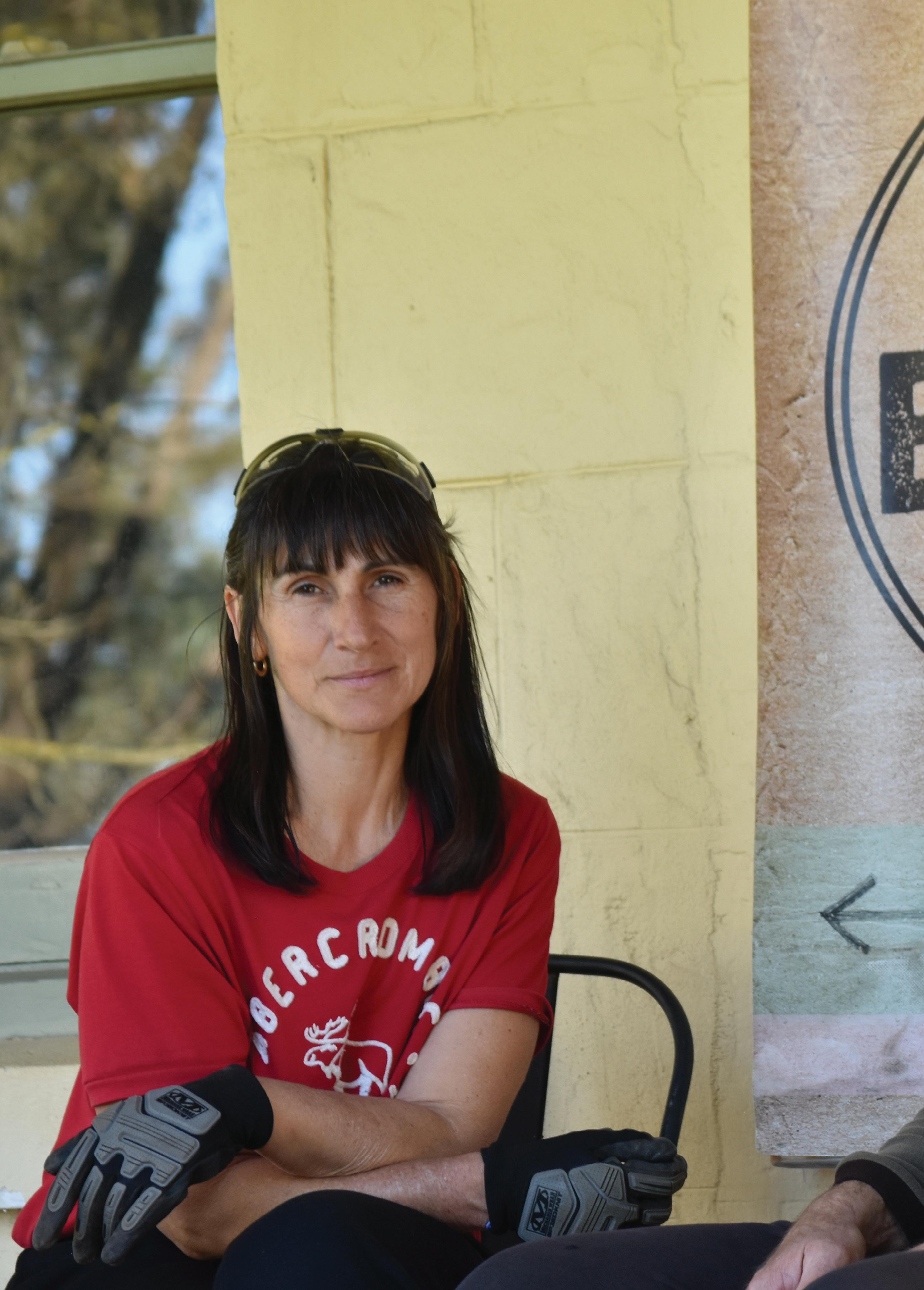

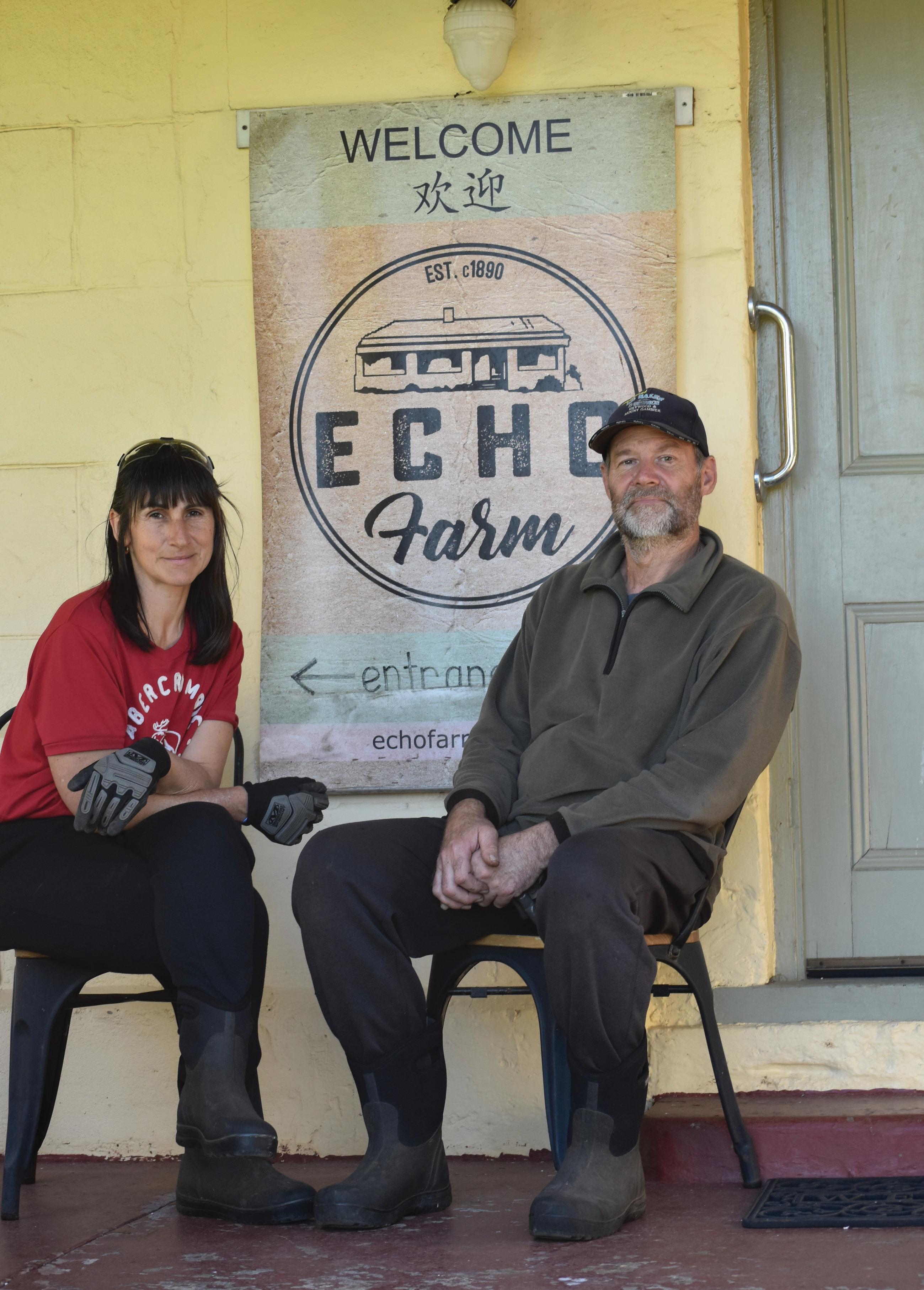
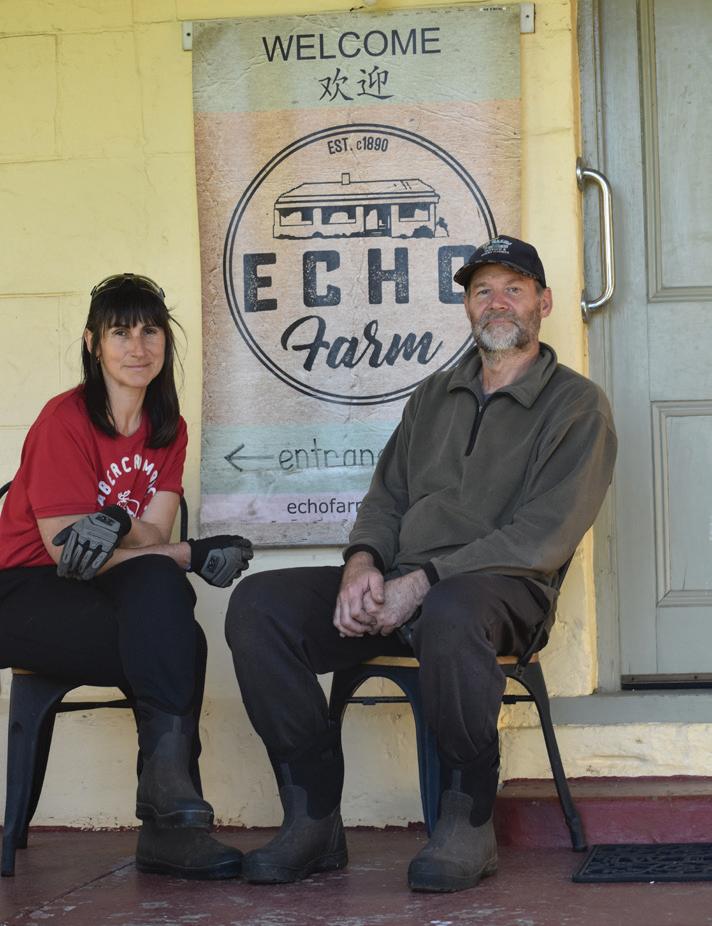
Melbourne bore the brunt of Australia’s strictest regulations during the COVID-19 pandemic. When the lockdowns finished, Anthea and Damian Harrison were among the many city dwellers who escaped to the country.
RICK BAYNE has their story.

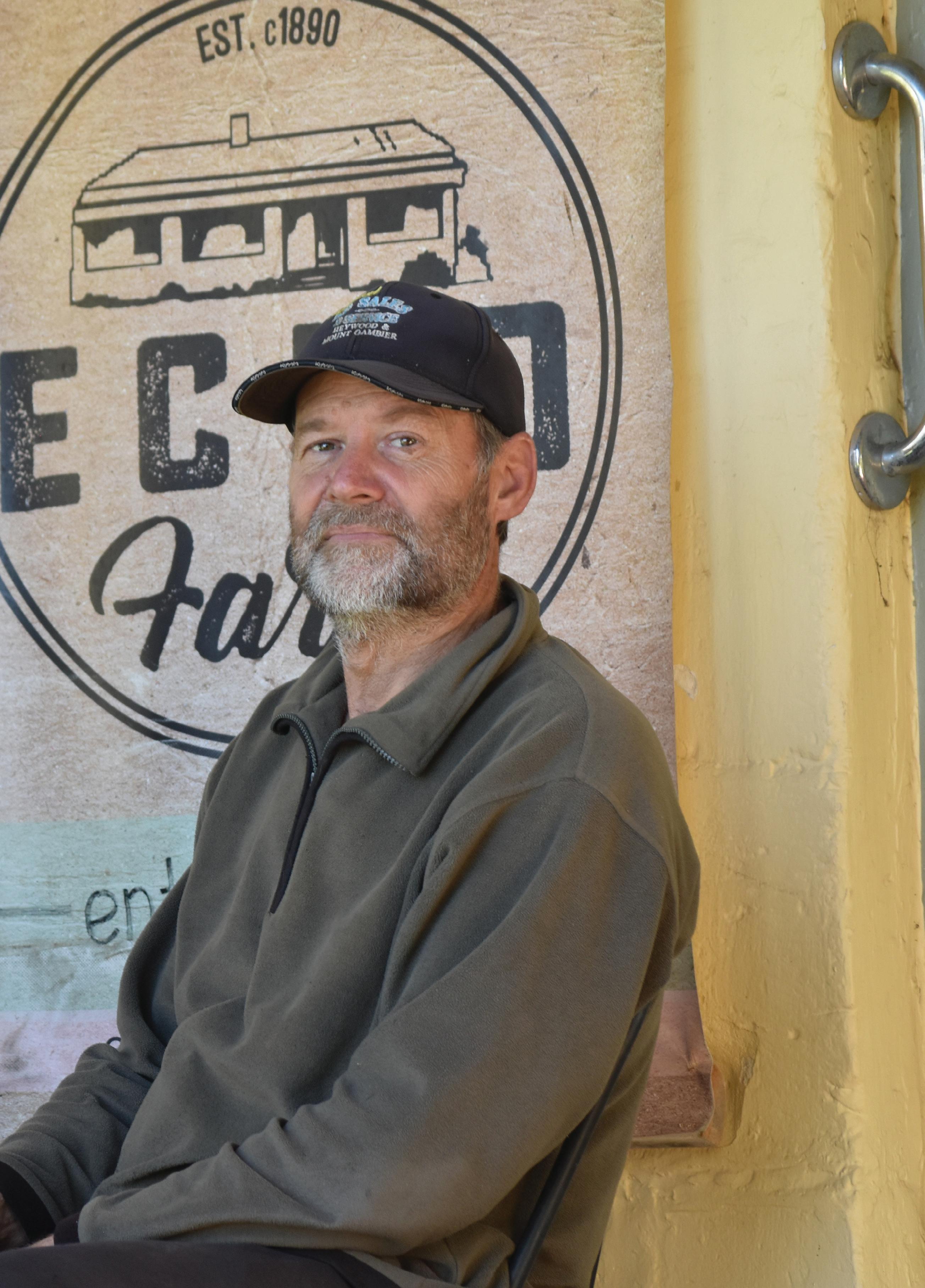
and
looked for a quick escape after the COVID-19 lockdowns and found their new home at

Like so many people, Anthea and Damian Harrison couldn’t wait for the COVID-19 lockdowns to end.
While they were self-described city dwellers, they loved taking weekend trips from Melbourne into the country.
Anthea, a school teacher, and Damian, who worked in fleet management transport at the airport, had no farming background, apart from a vegie patch and small fruit orchard in their suburban backyard.
But they yearned for the wideopen spaces.
“When the lockdowns finished and the borders opened up, we escaped to the country,” Anthea said.
They looked for small properties around Warrnambool and Portland but found the ideal site across the South Australian border on the outskirts of Mt Gambier, making their home on Echo Farm.
“We were always gardeners and liked growing fruit and vegetables. This is just the same thing on a much larger scale and with a lot of animals,” Anthea said.
At just over 7ha, Echo Farm is a mixture of old-style pioneer
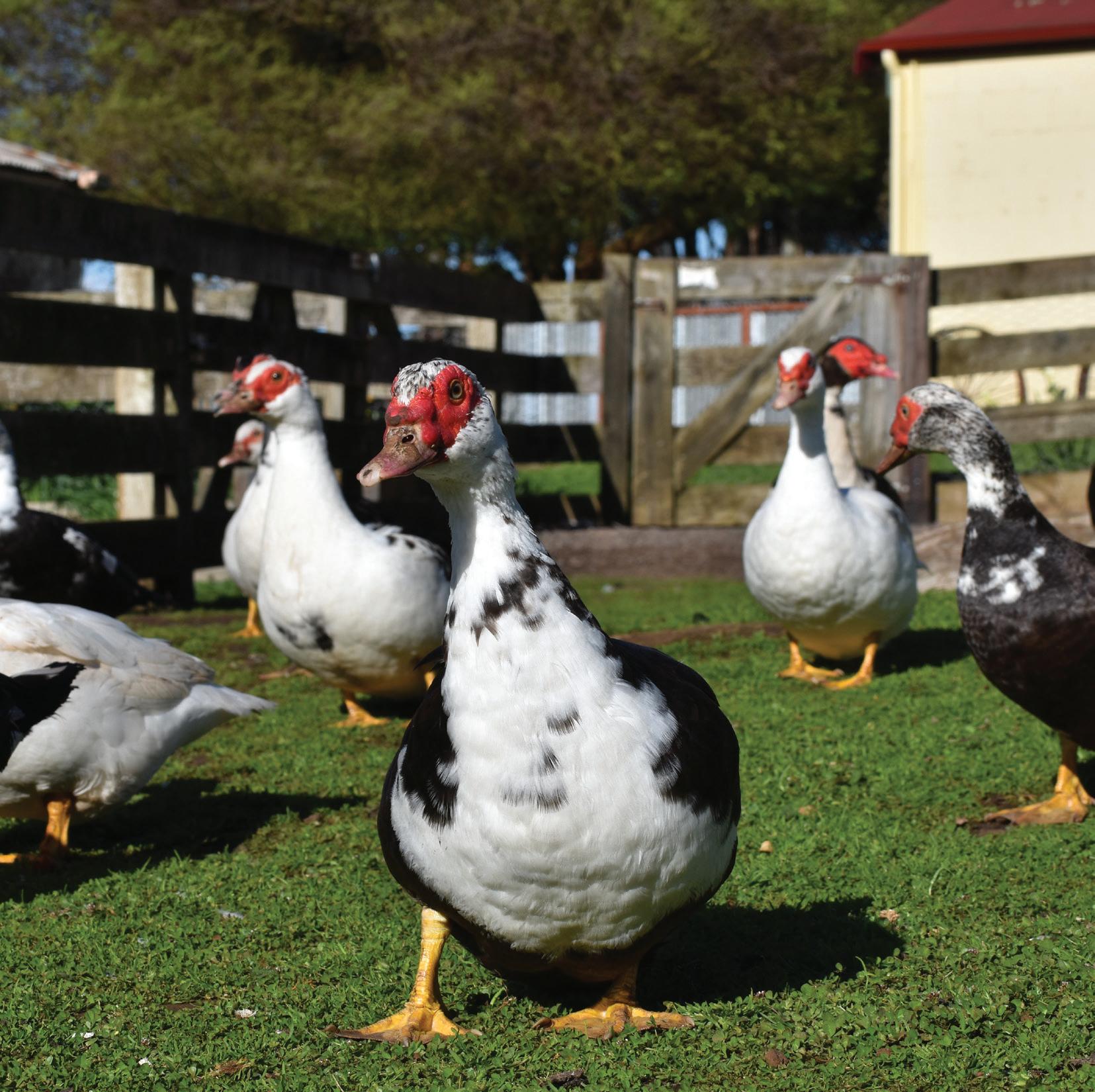
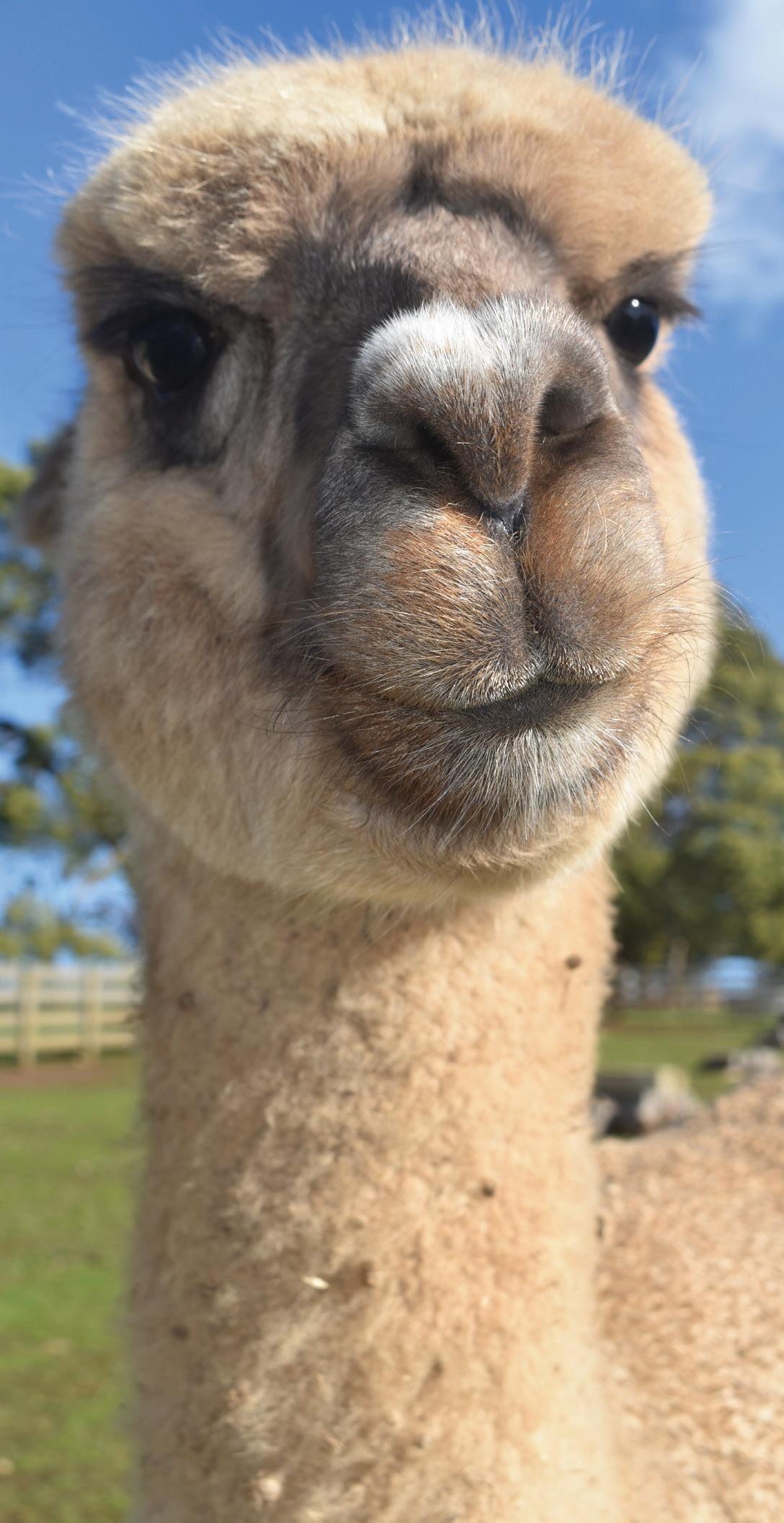
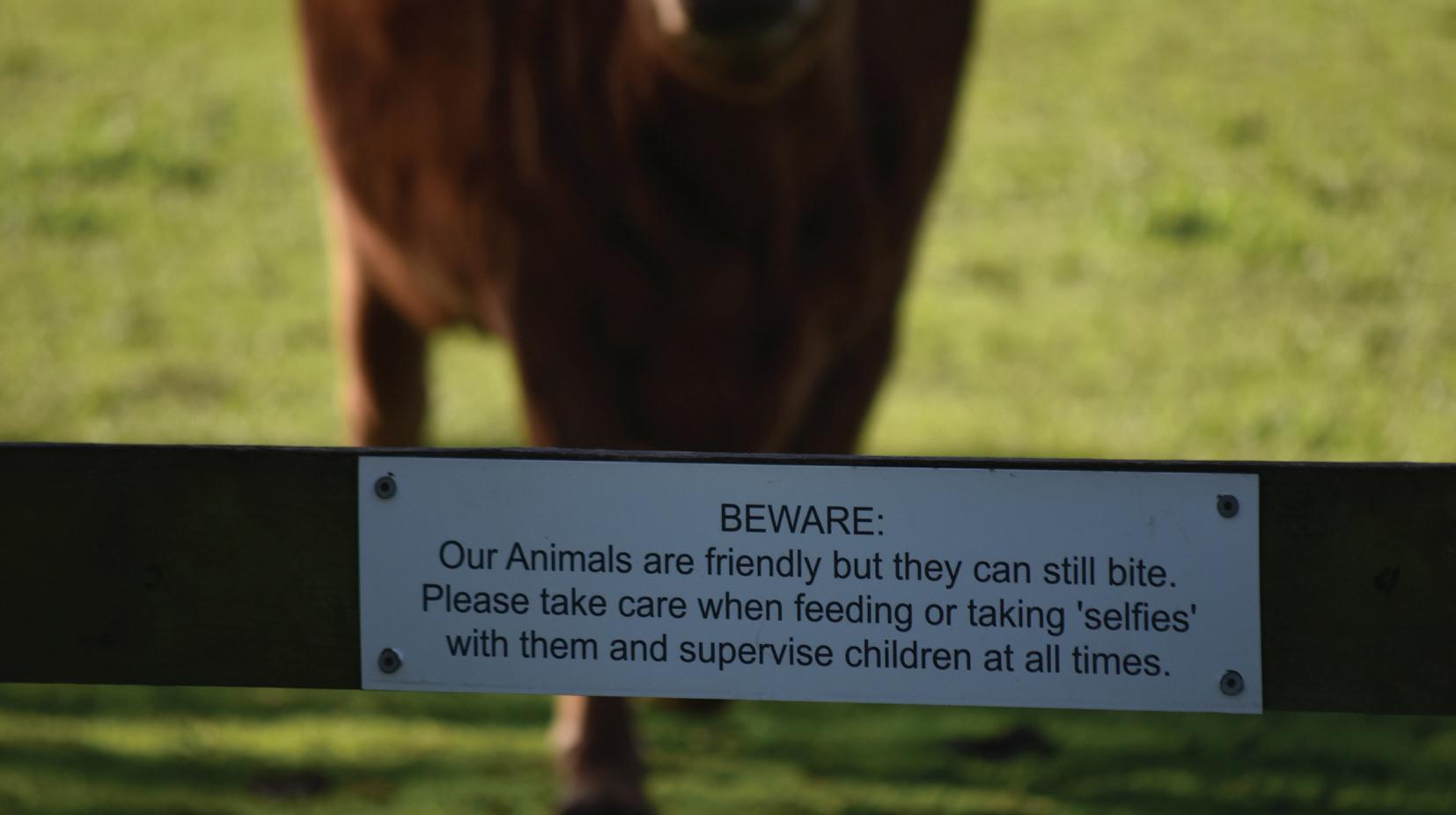
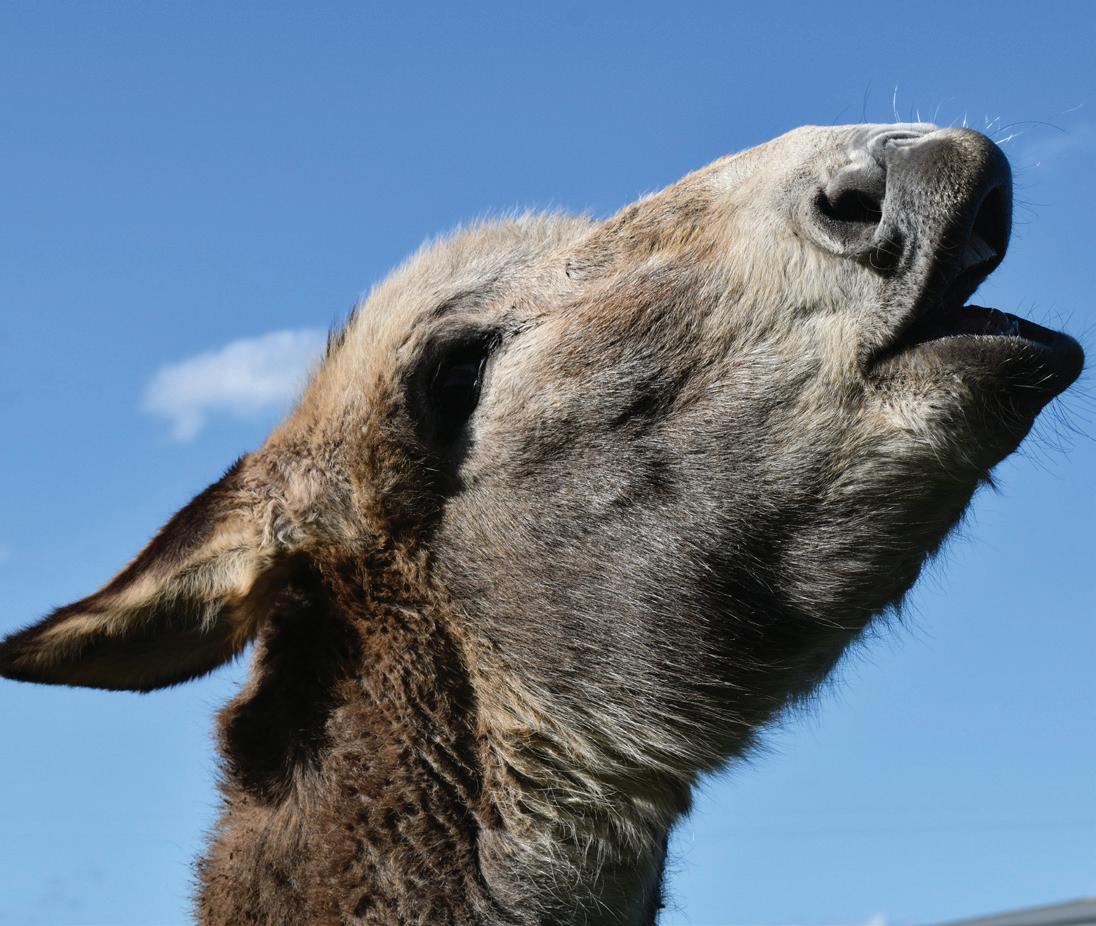
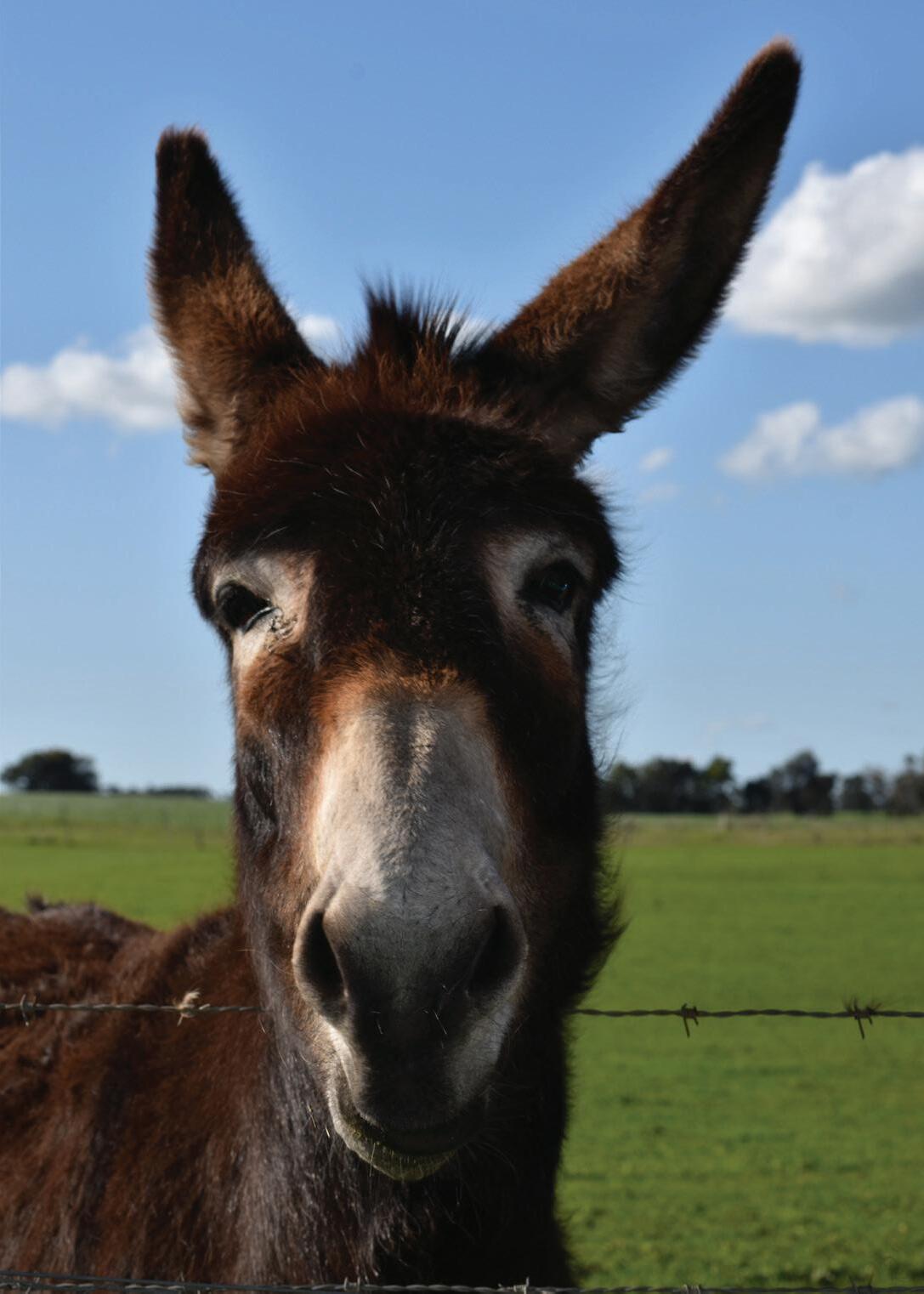
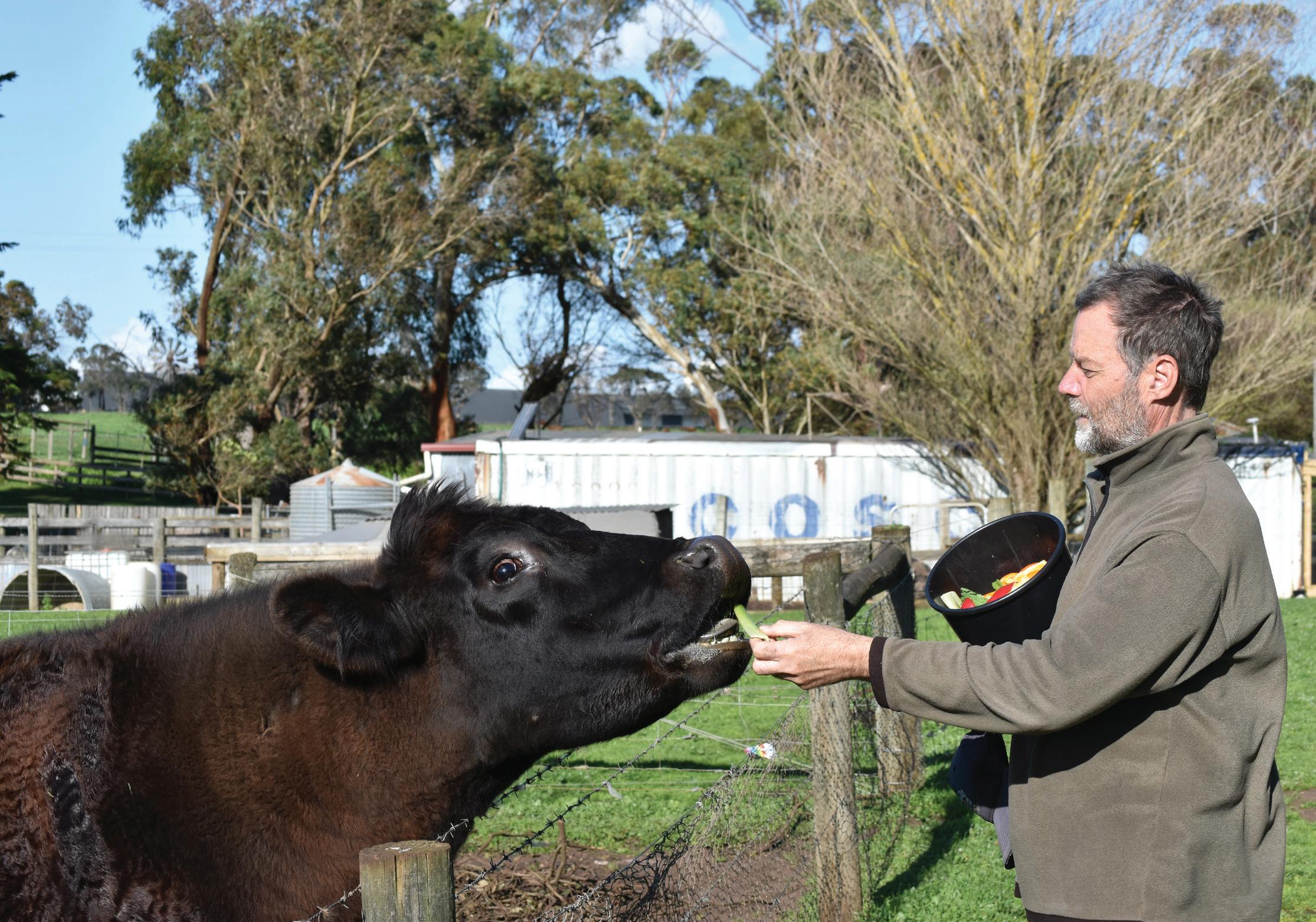
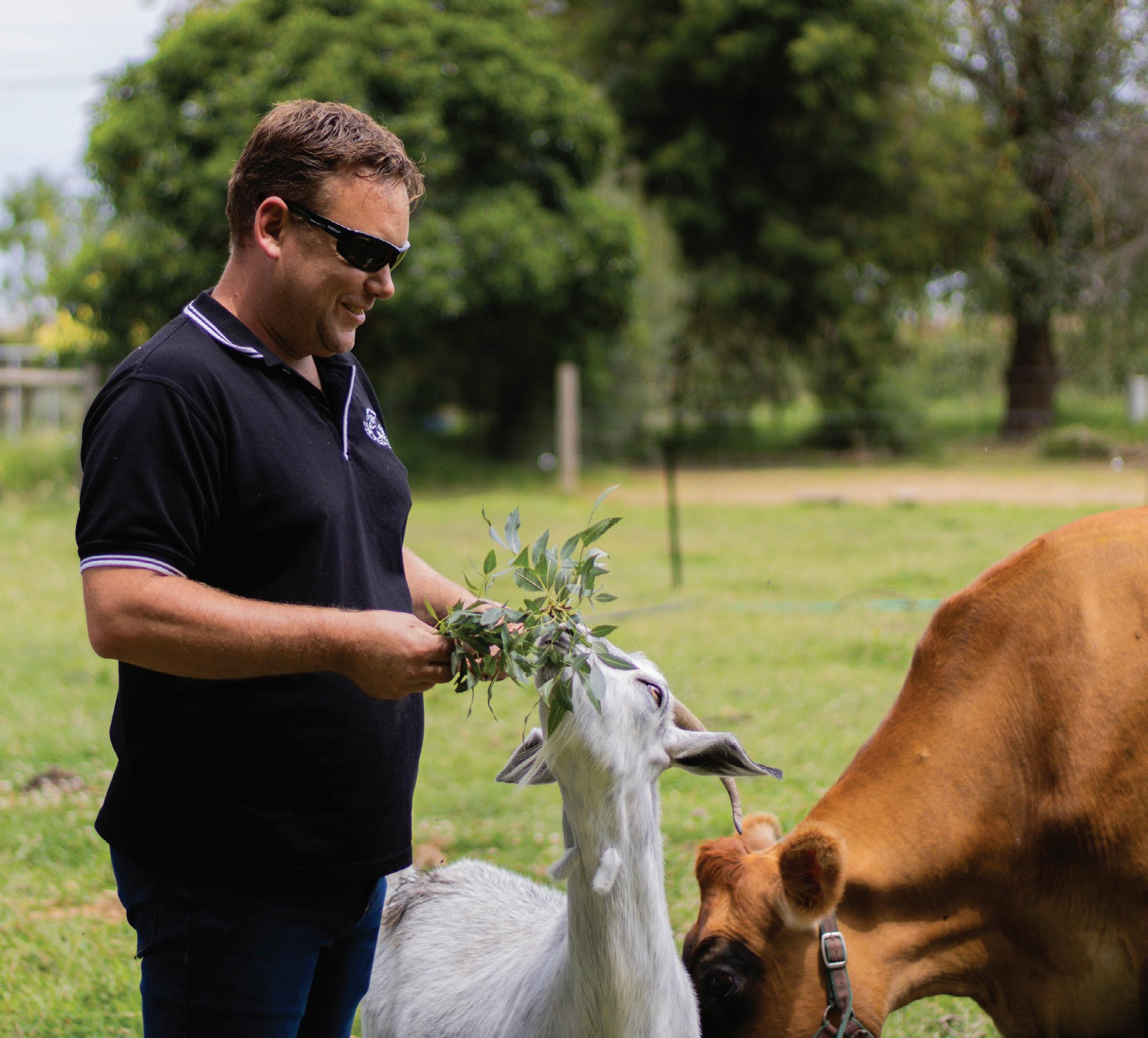
The animals, both big and small, become instant best friends when food is offered.

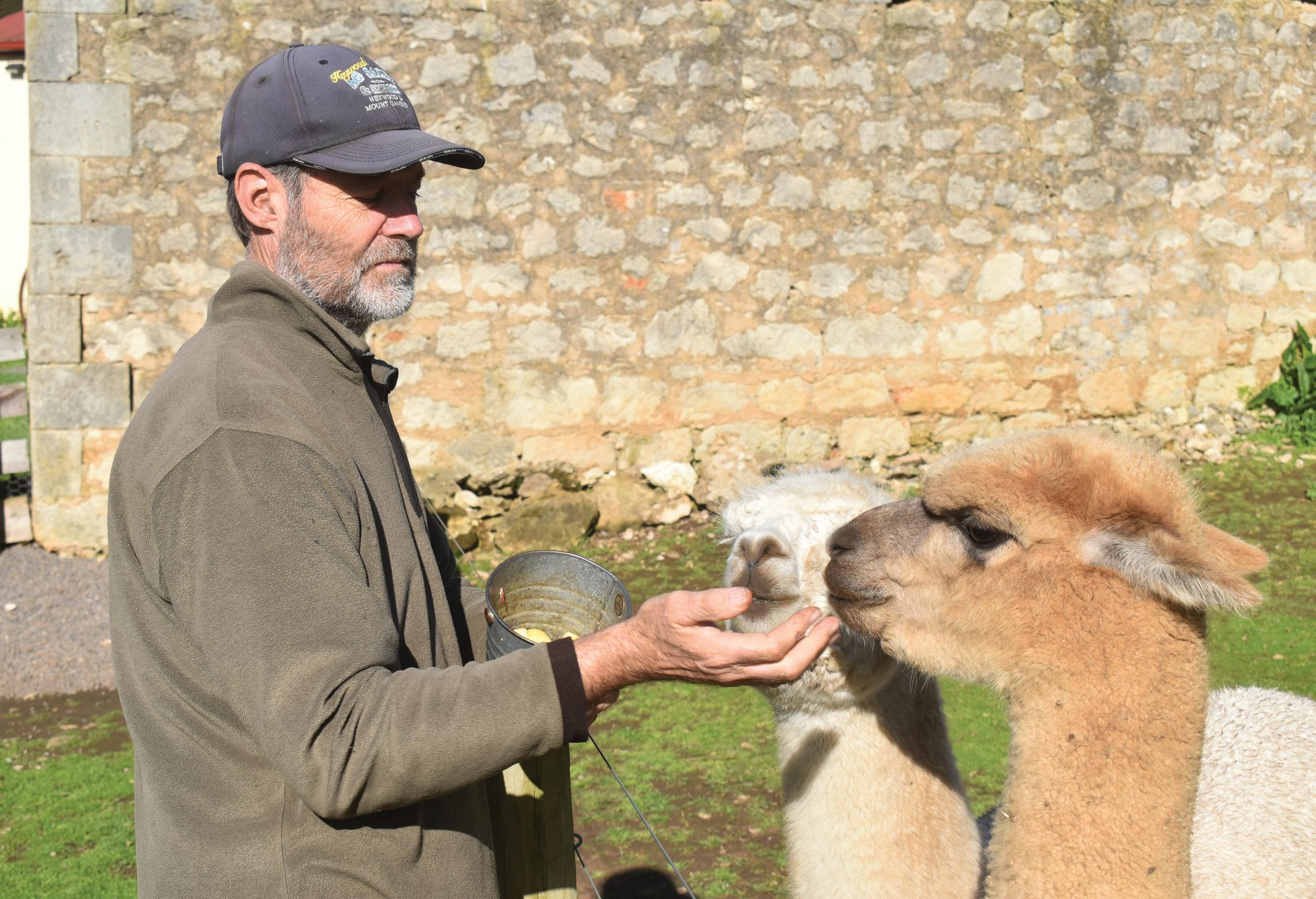
farm and family-friendly animal encounters.
It is also home to the Harrison family.
“At the time, it was just ‘let’s get out’,” Anthea said.
“We always liked going for a Sunday drive to the country and visiting little country towns. With two years of lockdowns, we were deprived of that and the beautiful green pastures and fresh air and sunshine.”
Echo Farm was established in 2007 by Jenny Butcher, who turned the old house into a museum and invited visitors to see and feed the animals.
“It was more of a petting zoo tourist attraction,” Anthea said.
“She sold in 2018 but the new owners were hampered by the lockdowns. They sold when the lockdowns were over and it was a great opportunity because we were looking to get out of Melbourne.”
There were already cows, goats, sheep, chickens, donkeys, ducks, geese, peacocks, guinea pigs and a cockatoo.
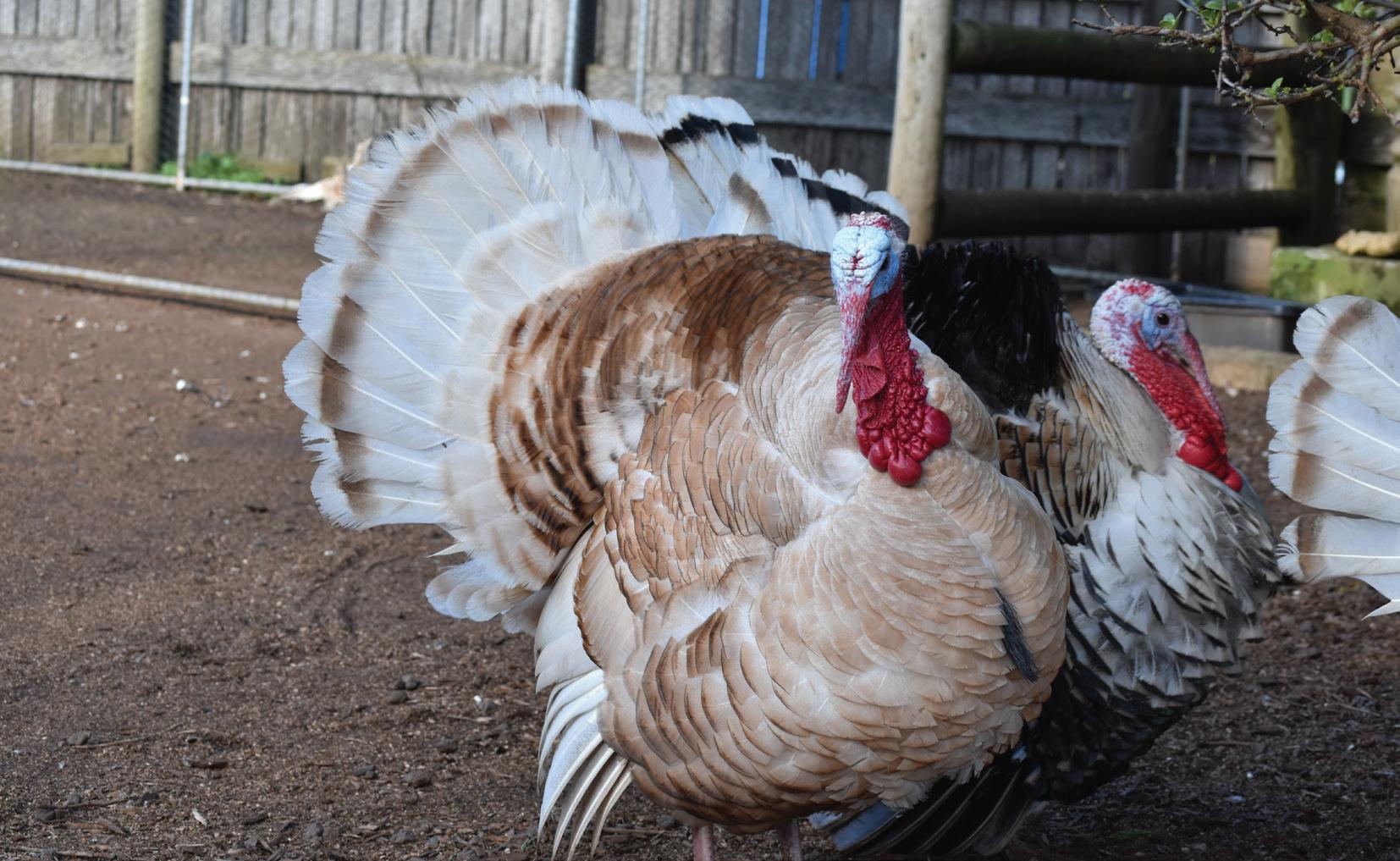
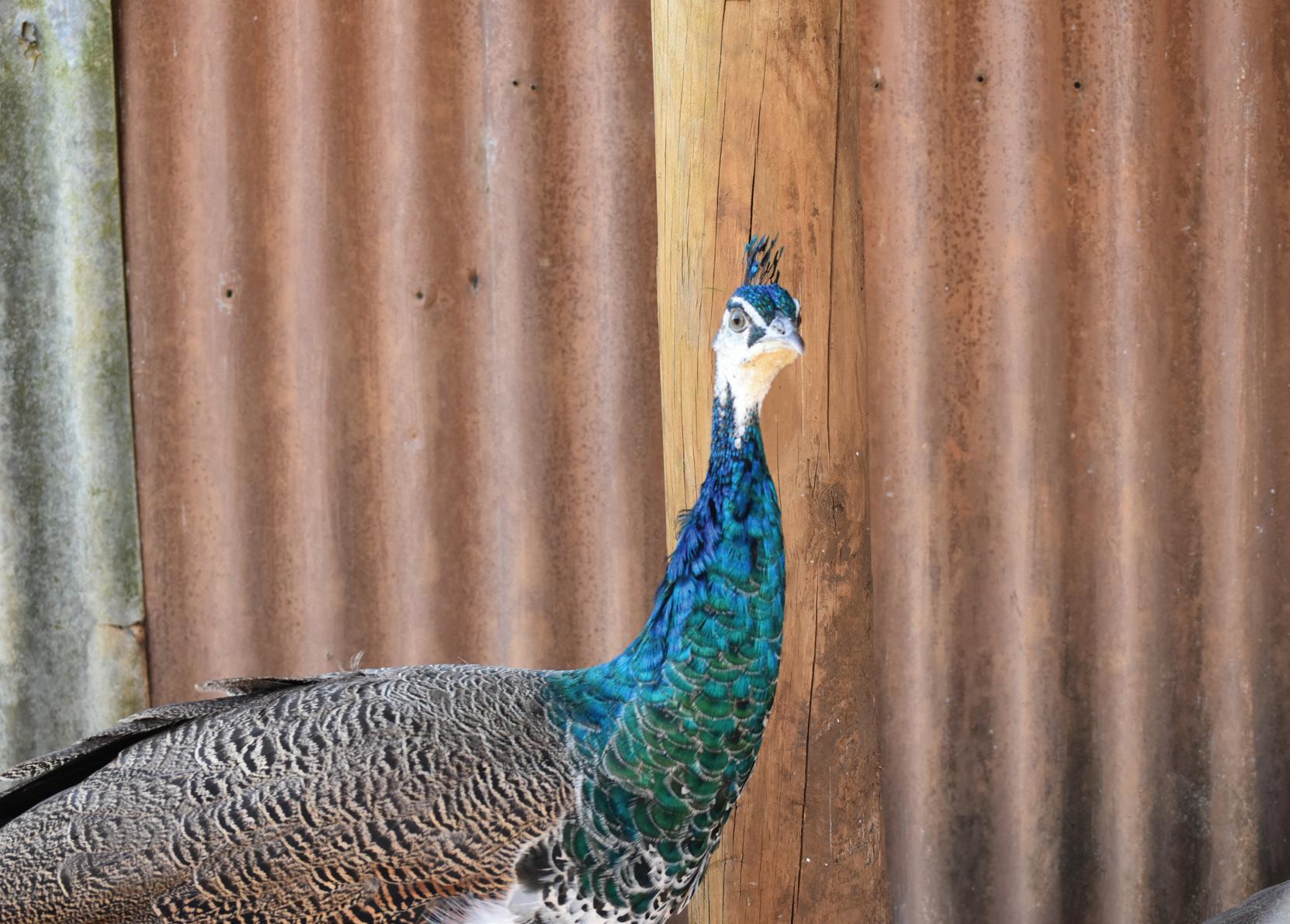
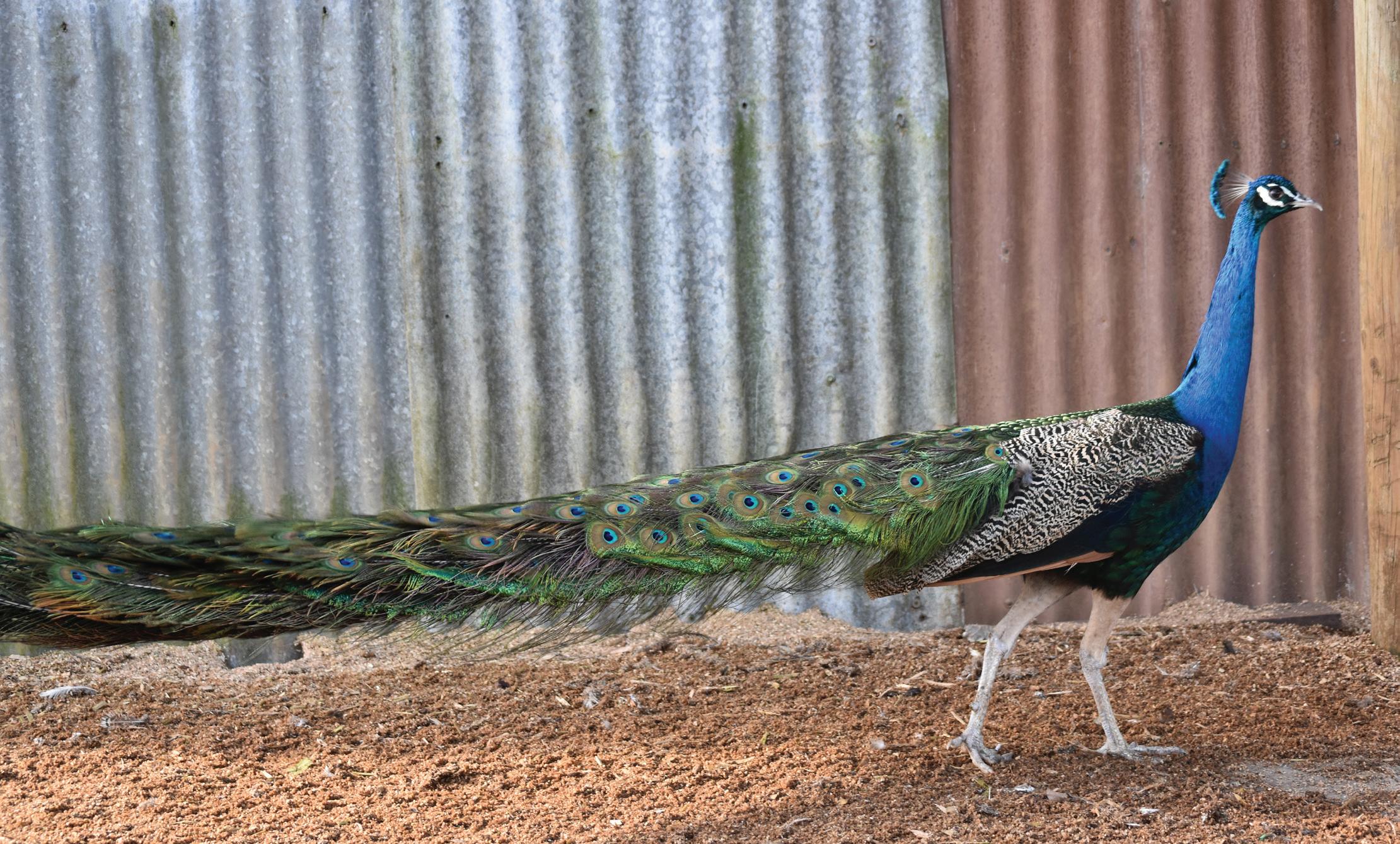
“It was a typical farm but with a few exotic and native animals and we introduced more sheep, alpacas, goats, a new ram and we’re breeding peacocks and heritage turkeys,” Anthea said.
It was a steep learning curve.
“We had to learn everything from a quick study of Google,” Damian recalled.



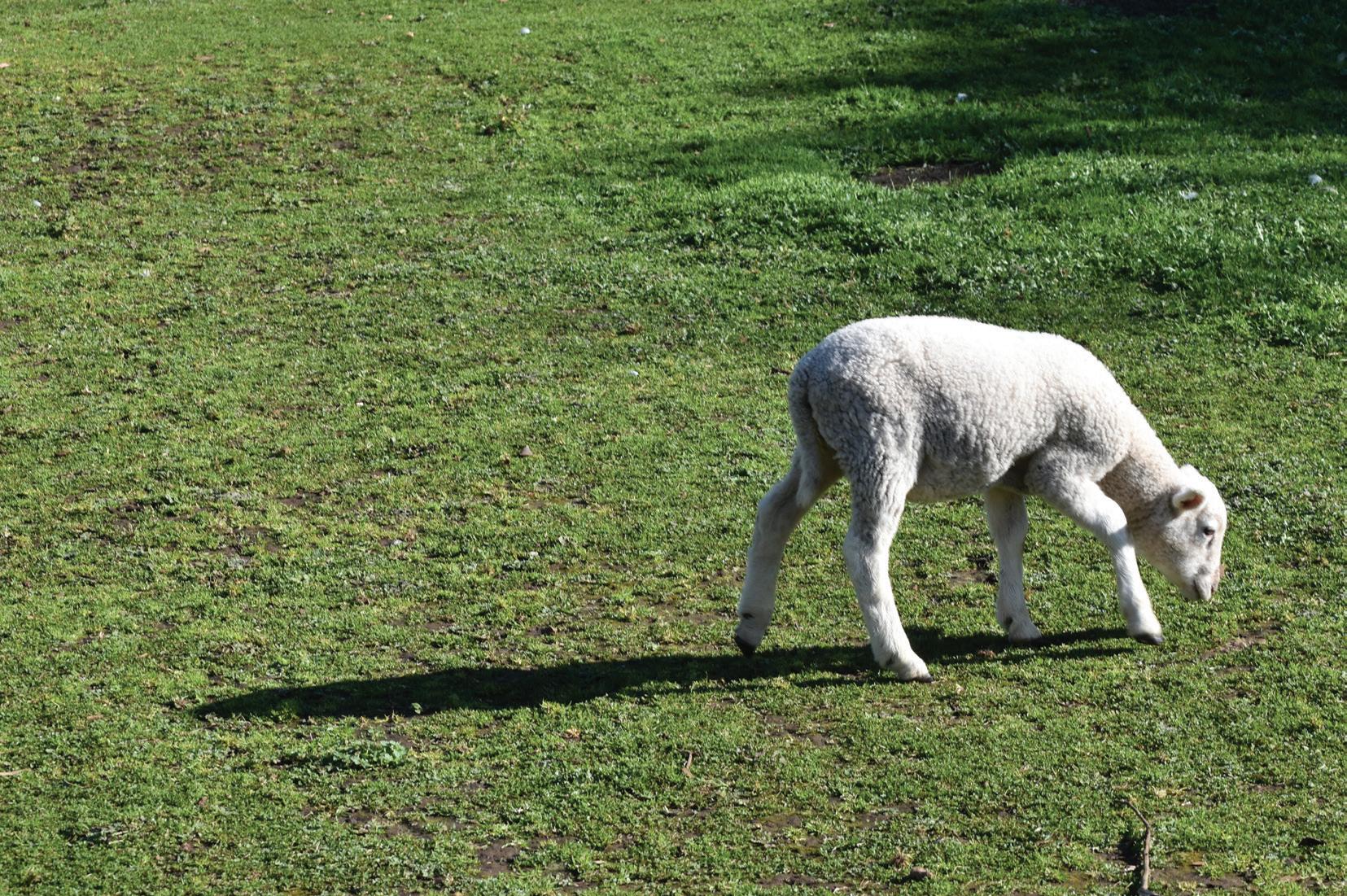
Neighbours, mostly beef and dairy farmers who were pleased Echo Farm would continue and not be converted into a timber plantation, also helped with advice about animal husbandry and feeding.
“We had to research everything but now when we get out in the morning, we’re on autopilot and know what we have to do,” Anthea said.
“I recently cleaned out the chicken coop. I knew exactly how to restructure it so they have privacy when they nest, the right amount of straw as bedding.
“You’d think I’d been a farmer my whole life but it’s only been three years and we’re still learning.”
While their neighbours helped with feeding formulas, Anthea and Damian soon found that nothing goes to plan on a farm.
“You can follow a given formula, but that’s not always a guarantee,” Anthea said.
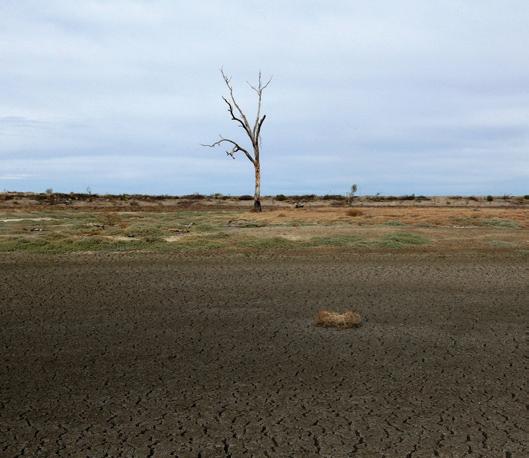
Their first year enjoyed near perfect rainfall but the next two years were crippling droughts.
“Three months ago, it was a dustbowl,” Anthea said.
“We’ve got green now but you could still call it a green drought with not much growth.”
They had some food donations to help and a shed full of hay from the prosperous first season was a good back-up.
Like many larger scale farmers, they also had to sell some animals to get through.
“We might be a small farm but we really resonate with the bigger farmers who struggle with drought,” Anthea said.
“If it affected us on such a small scale, we can only imagine how they must have suffered.”
The conditions forced the new farmers to repurpose and not waste anything.
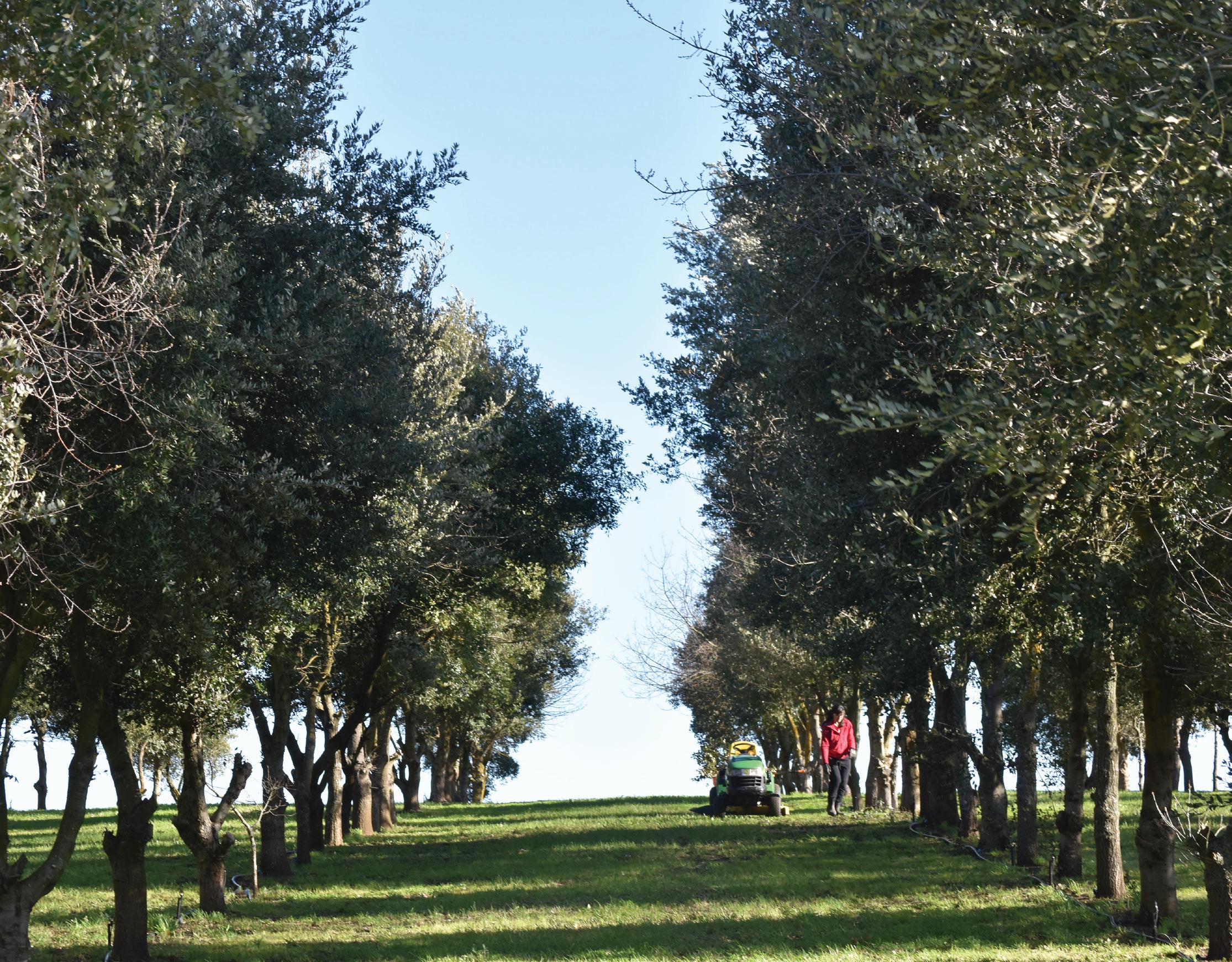
The farm has a 620-tree black truffle orchard, which has been restored. They found that when the trees are pruned, the oak branches offer good quality animal feed.
If a gum tree falls — and that has happened a few times recently — the goats will eat the leaves and branches.
The chooks and ducks go through the cow and donkey droppings to sift through for beetles, bugs and worms.
“We’re not using any chemicals to manage the pastures.
We’re trying to do everything as naturally as possible and let nature teach us rather than try to control nature,” Anthea said.
Anthea does some relief teaching to keep a steady income to help pay for necessary projects such as fencing and animal shelters.
“We get a bit of the tourist dollar but that’s mainly in summer, and we also sell eggs to visitors and locals,” she said.
The winter crops of truffles will be sold as another source of income and Anthea and Damian have restored an old garage into a tea room that’s waiting to be opened.
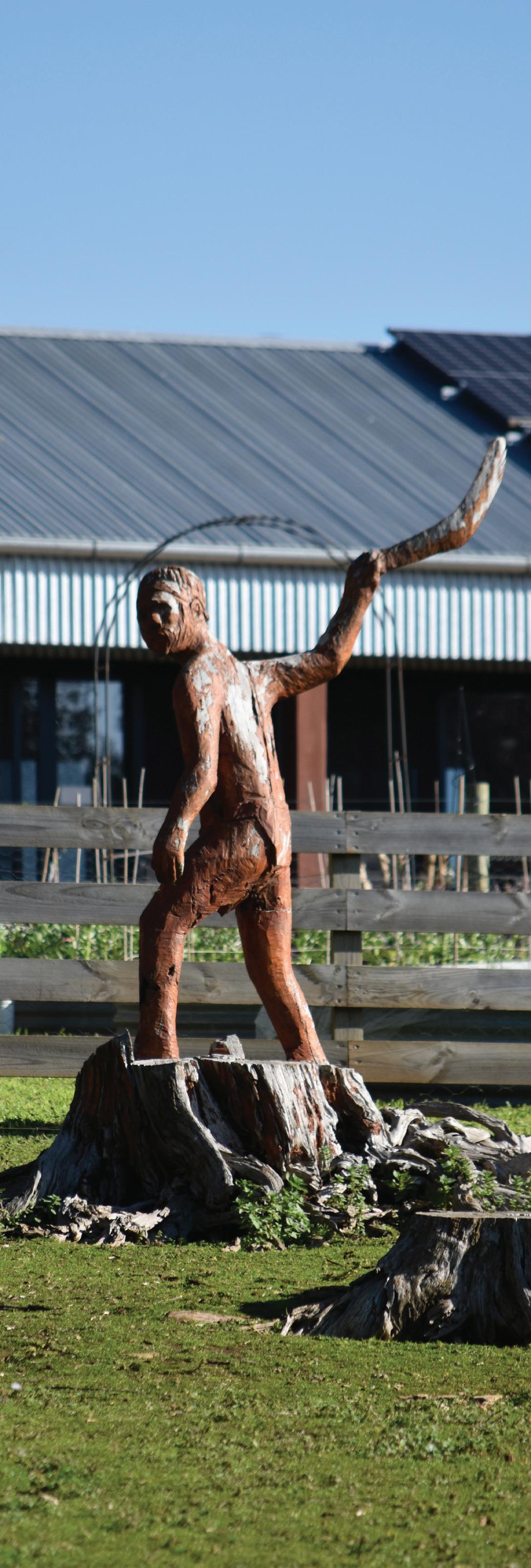
They describe it as a “stepback-in-time pioneer farm”. The earliest records indicate it was established in 1890 but it is believed to have been settled in the 1870s as a dairy farm on a much larger block.
They have heard a few colourful stories and legends about the property. One owner was known not to take any nonsense and nearly drowned a visitor in the fish pond. The visitor left without all his teeth and legend has it the teeth are still in the pond.
The original house has been restored to what it would have
and furniture, perfect for visiting school groups to learn how people used to grow vegetables, milk cows and churn butter.

“The animals are very user friendly,” Anthea said.
“They see food and they’re your best friend, although they do jostle for pole position to get the first feed.”
Anthea and Damian also do a lot of animal re-homing, including a lamb that was recently found wandering and dropped off to the farm, and pets that elderly
people can no longer care for.
They spend more time with the smaller animals and have become attached to their growing menagerie.
“The smaller animals require more attention, become pets and you get a connection with them,”
Anthea said.
“It’s like having children … many children.” T
Rural Aid’s annual Spirit of the Bush winners were chosen from 429 images from across Australia.
Photos: Supplied.
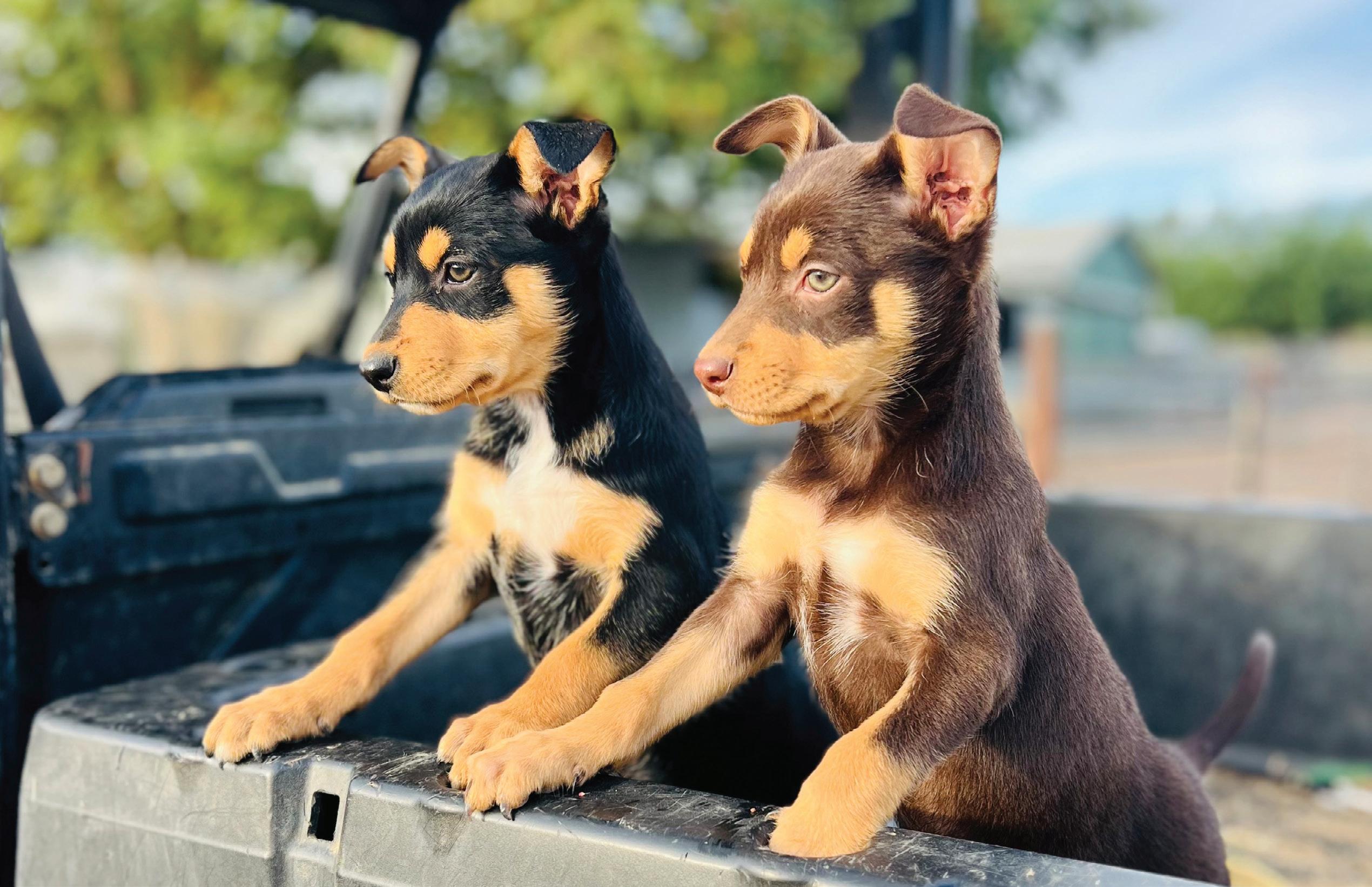
Images of old friends chatting in a paddock, worn-out work boots, kelpie pups and striking starry night skies have won a rural photography competition.
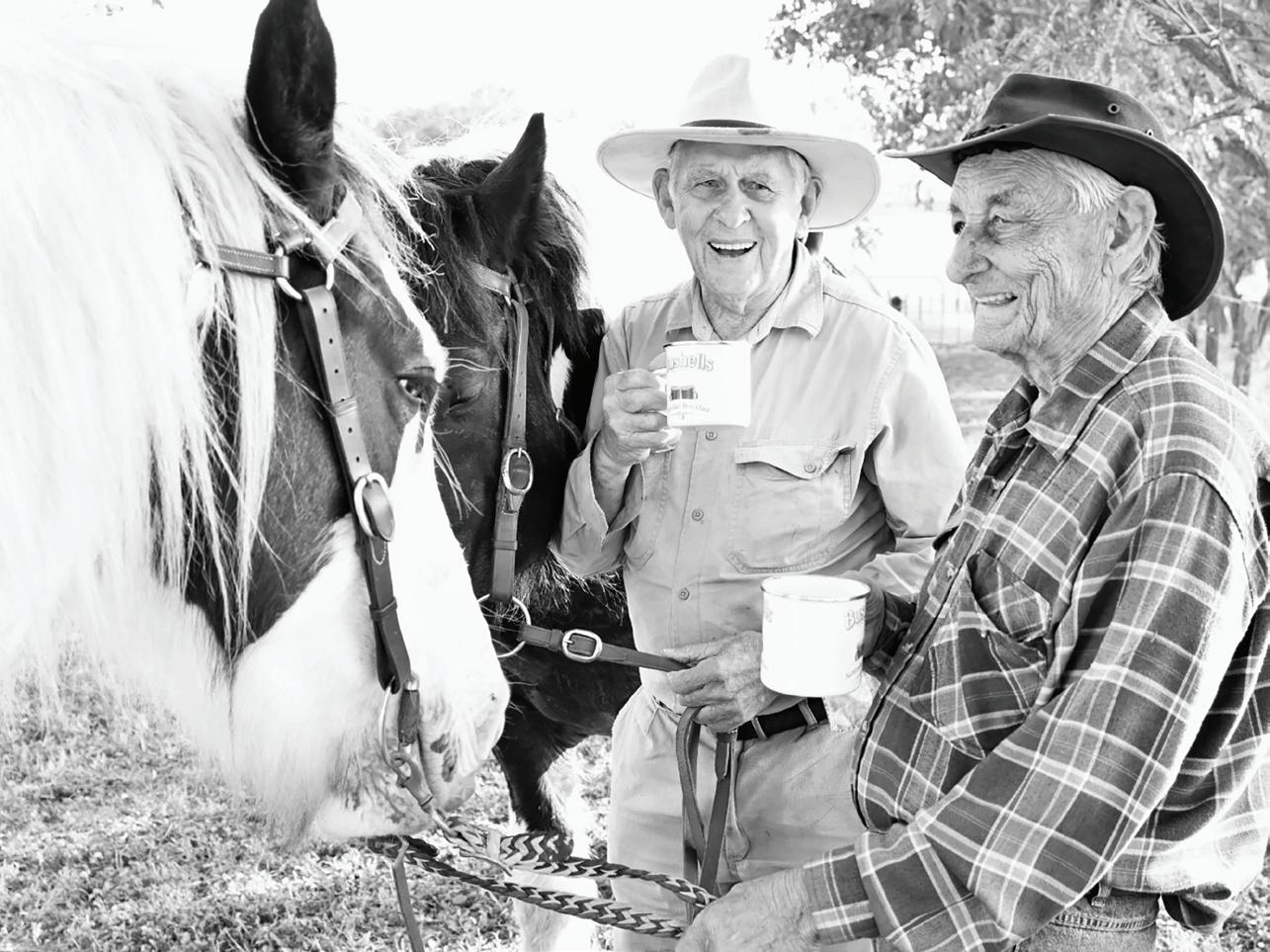
Two mates stand in a horse yard, their eyes sparkling as they joke and share stories collected over nearly nine decades of life in the bush.
Photographer Amy Ahchay was determined to capture the rich history between friends Gordon and Rob as they paused for a cup of tea and a chat in a paddock in Queensland’s Calliope.
“They’re just always up to no good or chatting or laughing,” Amy said.
“Their faces tell a thousand stories and their hands tell a thousand more.”
The image, called Two Old Mates Never Short of a Yarn, is one of 10 winners in Rural Aid’s annual Spirit of the Bush photography competition, which aims
to give Australians a glimpse of country life.
Gordon, in his 90s, spent his working life lugging timber and leading Scouts, while Rob, in his 80s, had always toiled on the land, Amy said.
“They’re just such hard workers and it’s qualities you don’t see any more,” she said.
“They’re real countrymen.”
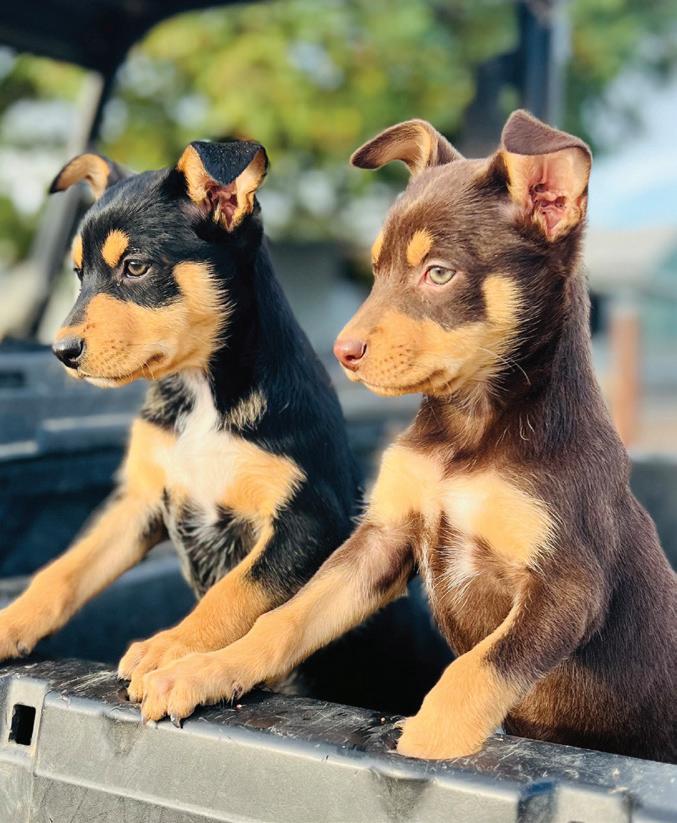
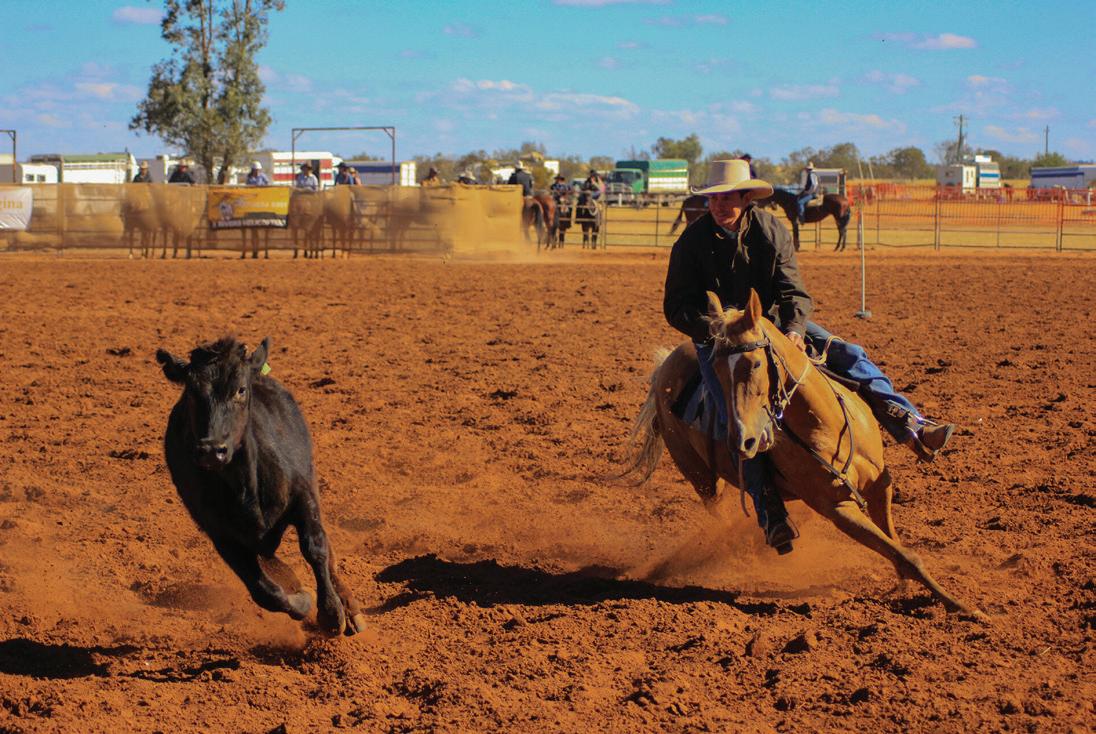
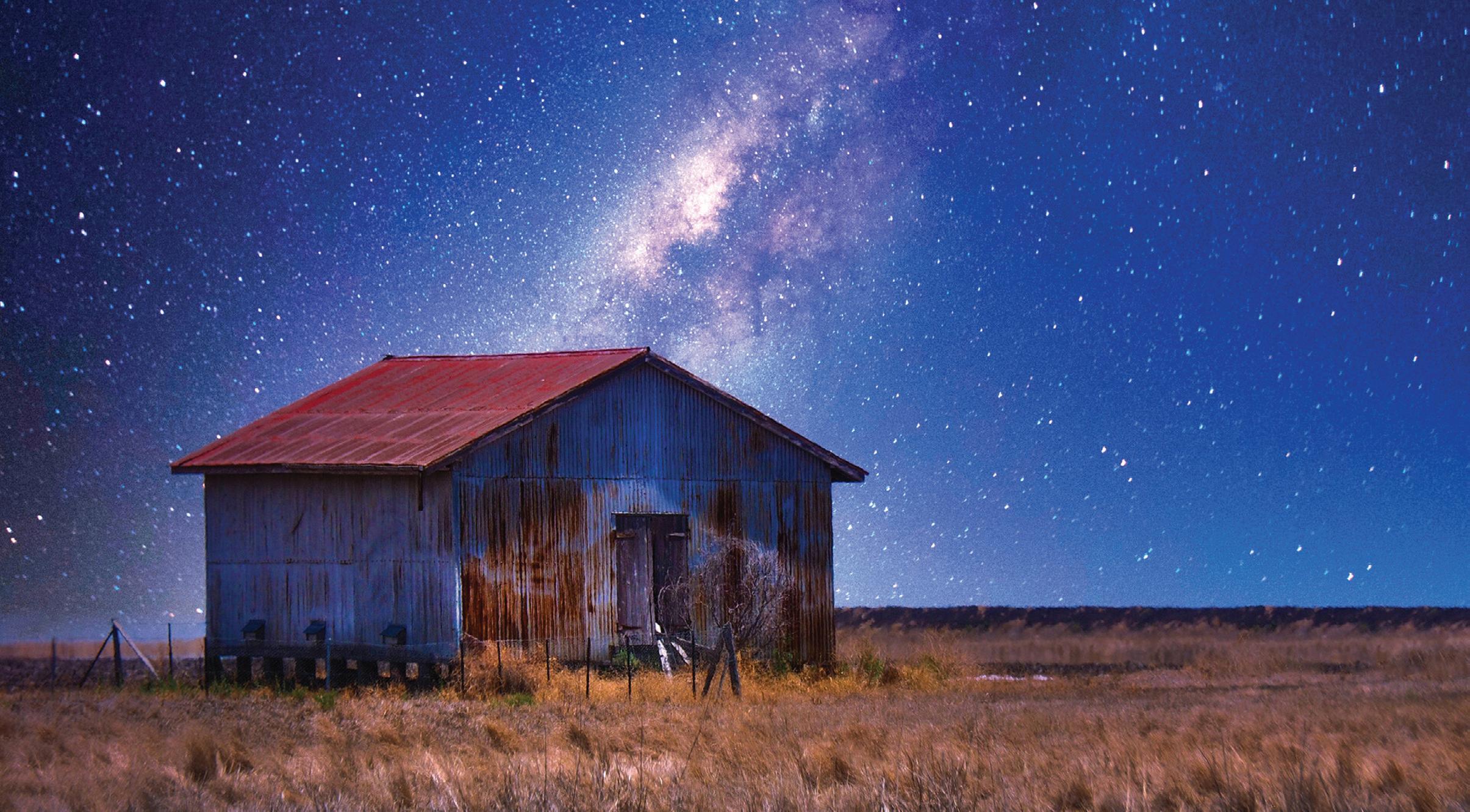
Among the winners were images of worn-through working boots, a rusted tin shed under dramatic violet night skies, a curious pair of kelpie pups and a farmer mustering a mob of sheep as a child tags along.
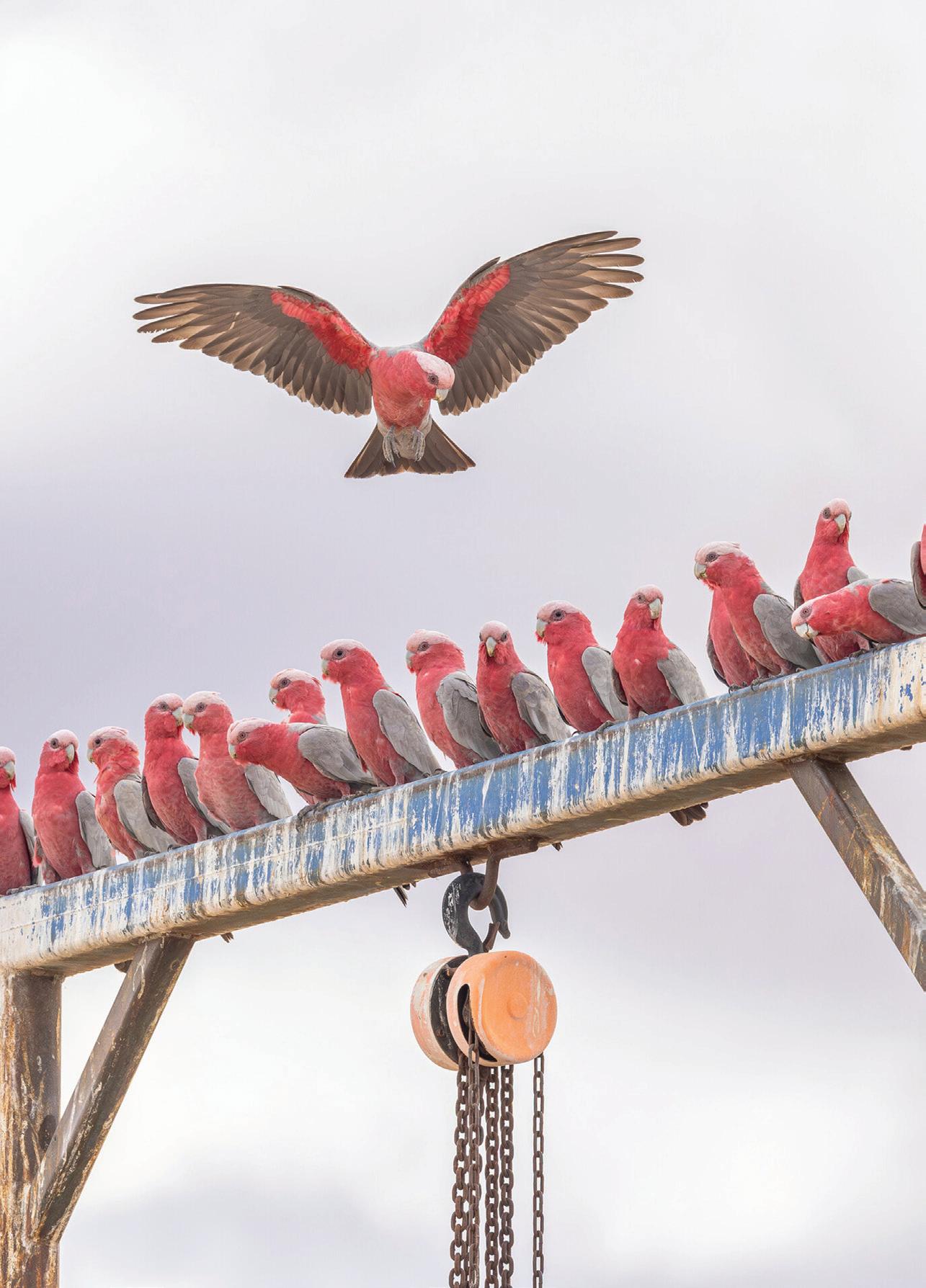
Erika Smart, a nature photographer from the NSW Central Coast, captured a row of galahs with their pink bellies protruding
as another tries to join their group, in a shot called Room For One More.
The rural charity’s chief executive John Warlters said the competition, in its sixth year, continued to open up rural Australia to the rest of the nation.
“This year’s photos are a moving tribute to life outside the city limits,” John said.
“They tell stories of perseverance, pride and connection.
“There’s an authenticity to these images that resonates, whether it’s a family working through drought, or a breathtaking sunrise over a remote property, the spirit of the bush shines through.”
The 2025 competition entries
doubled the previous year’s efforts, with 201 photographers submitting 429 images from across Australia.
Amy said it was critical to preserve connections between the cities and the bush.
“It’s important to let people into a space and show the true story of rural communities and see what goes on in their world,” she said.
“Otherwise people in town just go to the shops, they get their groceries, they whinge about the price and that’s that.
“But there’s a whole process that happens before then ... (photography) just bridges the gap into an unknown.”
— AAP
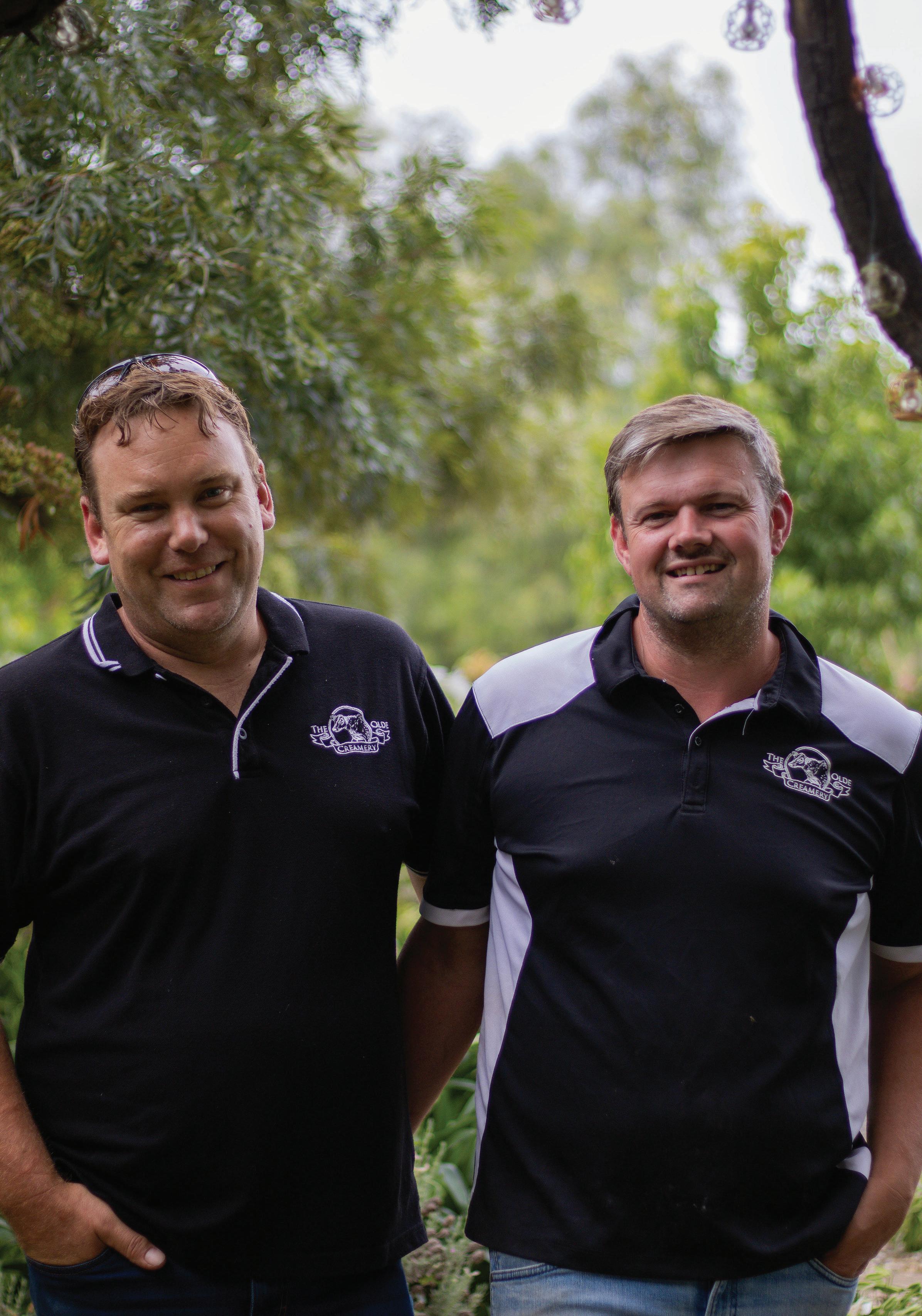

Housing a farm stay, dahlia farm and an award-winning gourmet produce business, RICK BAYNE discovered an oasis among the green paddocks in Victoria’s north.
Some people complain about having to add GST to their invoices. Jamie and Gareth Adams take it as a badge of honour.
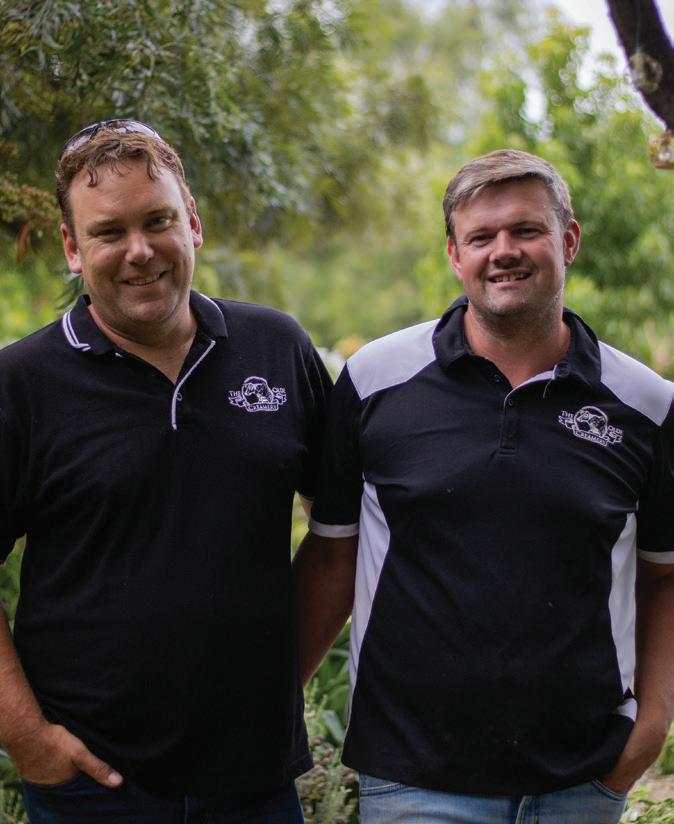
Jamie and Gareth’s gourmet produce, farm stay and regenerative dahlia flower farm business, The Olde Creamery, has been evolving over the past eight years on their three-acre block at Numurkah in northern Victoria.
Over the past 12 months, three milestone achievements have confirmed they’re heading in the right direction.
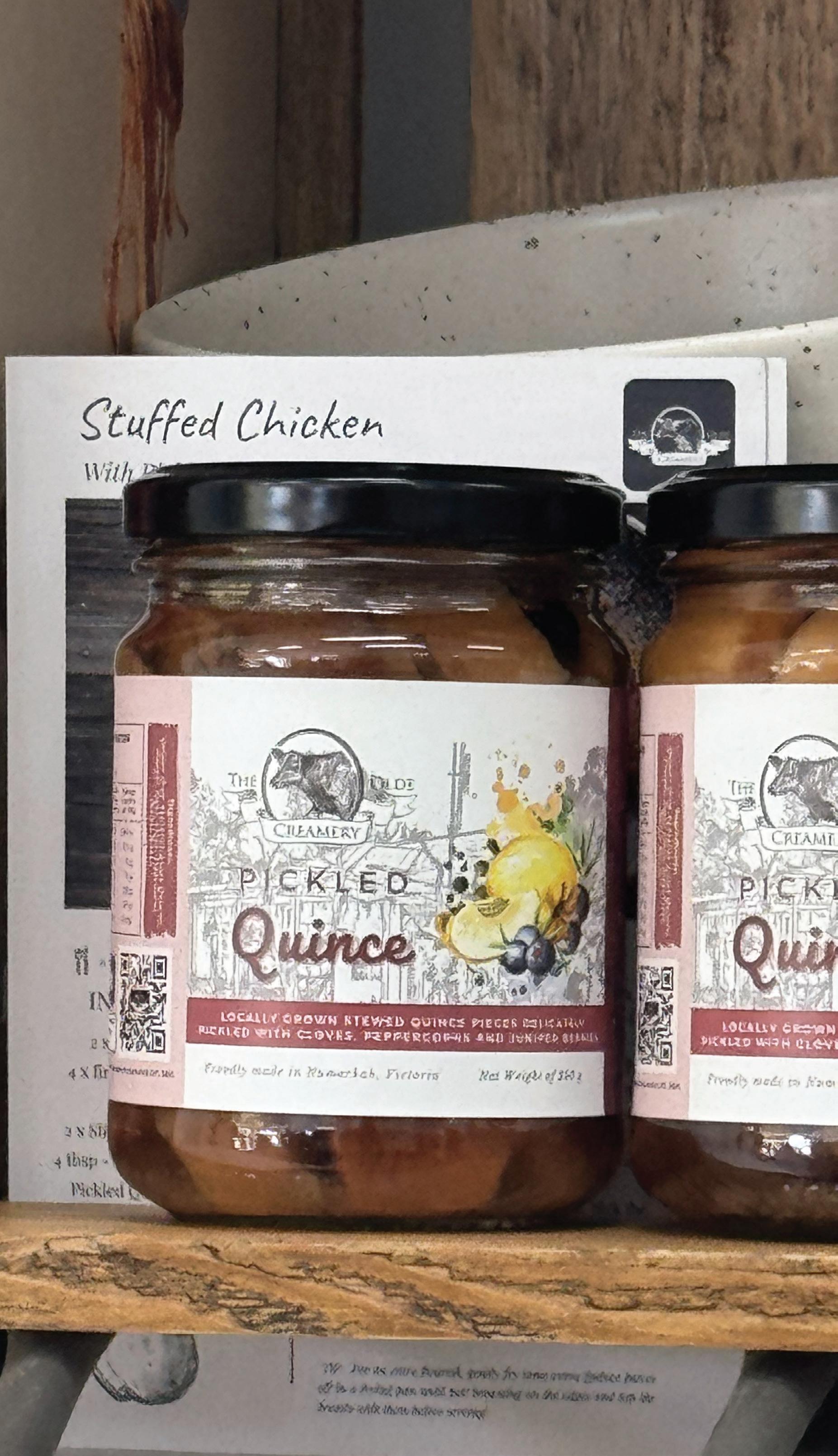
Last year, The Olde Creamery won the 2024 excellence in horticulture award from Moira Shire and was nominated as business of the year. This year they won silver for their pickled quince at the 2025 Melbourne Royal Australian Food Awards and for the first time they have generated enough income to start paying GST.
Diversity, mixed with dedication and passion, is driving the success.
“The farm has grown organically the way it wants to grow and we just follow it along,” Jamie said.
“In a small business, you need to diversify and have different offerings and we have our fingers in a few different pies.”
They bought the land in 2016 and the Olde Creamery gets its name from the farm’s history as a dairy enterprise.
“We’re essentially the house and old dairy of what was 100 acres of a soldier settlement property,” Jamie said.
While the surrounding land is used for broader farming pursuits, Jamie and Gareth have built their own little oasis.
“The original family farmed here for more than 50 years and still live locally,” Jamie said.
“They love what we’ve done
with the place and how it’s developed into what it is today.”
The old dairy is now the office and propagation area.
Jamie and Gareth established The Olde Creamery in 2016, after purchasing their home and working together to create their own patch of paradise.
Gareth grew up on beef cattle farms and got his love of gardening from his grandmother. Jamie came to Australia from west Yorkshire in England when he was 18. His gardening background also came from his grandmother.
“My nan was a school teacher and on weekends we went to garden centres and had tea and scones,” he said.
Jamie’s work background is in administration in the corrections field and Gareth was a commercial cook-chef, mostly in aged care and hospitals, although he has changed careers to balance time on the farm and now milks cows
and fixes fences for a neighbour.
The idea of turning their little block into a commercial enterprise started with an Airbnb as a bit of a joke.
“There’s not much around where we are but people came and it was the start of the business,” Jamie said.
The condiments part of the business started through Gareth’s love of cooking and the nursery side started with Jamie’s “obsession with dahlias” and Gareth’s “ability to be good at horticulture”.
“We’ve always had well-maintained gardens because that’s Gareth’s passion,” Jamie said.
“It’s basically green paddocks around us and we’ve turned this into an oasis of a garden.”
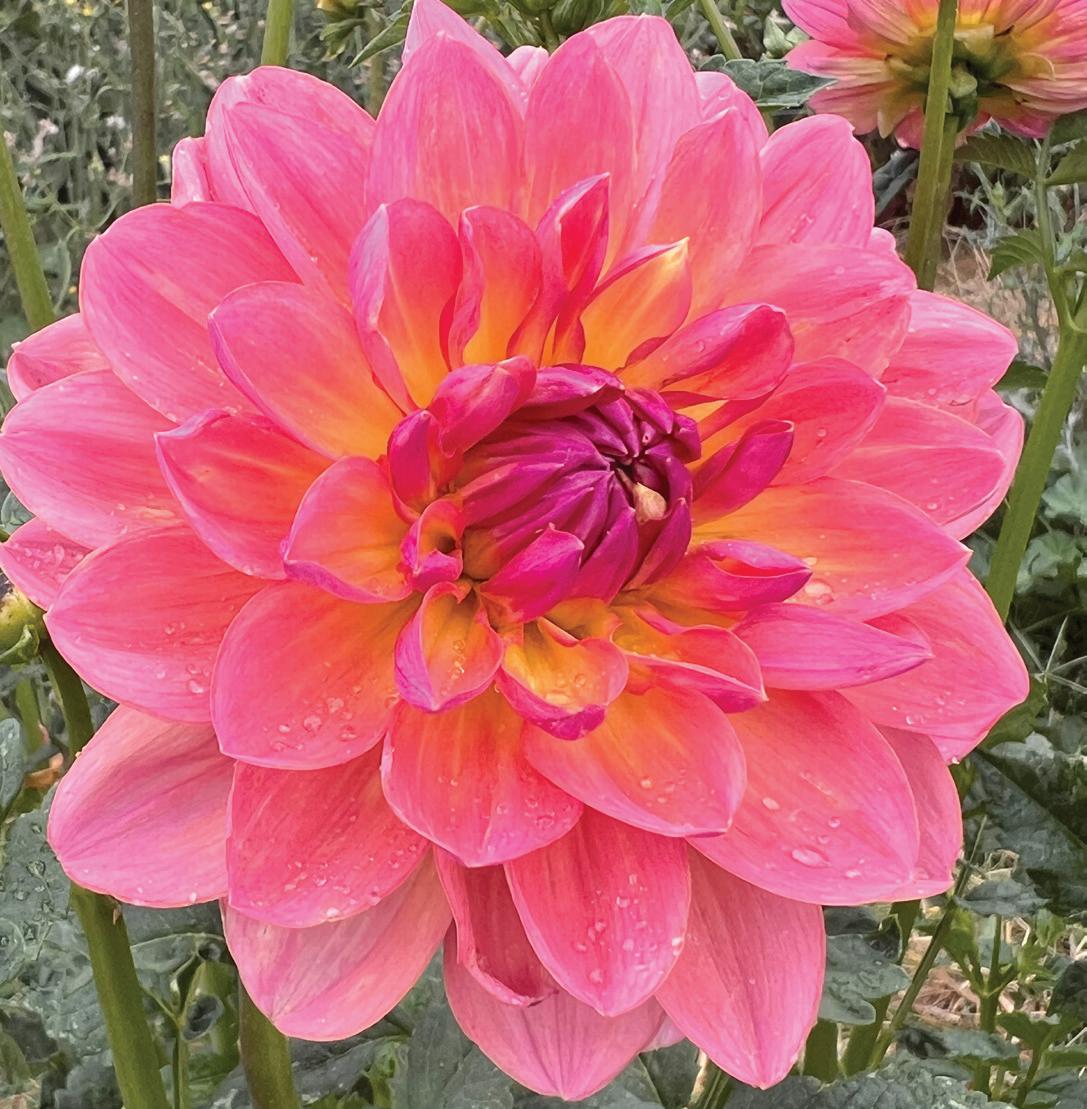
Both Jamie and Gareth had been growing dahlias for about 15 years without taking it too seriously. That changed about five years ago and they have
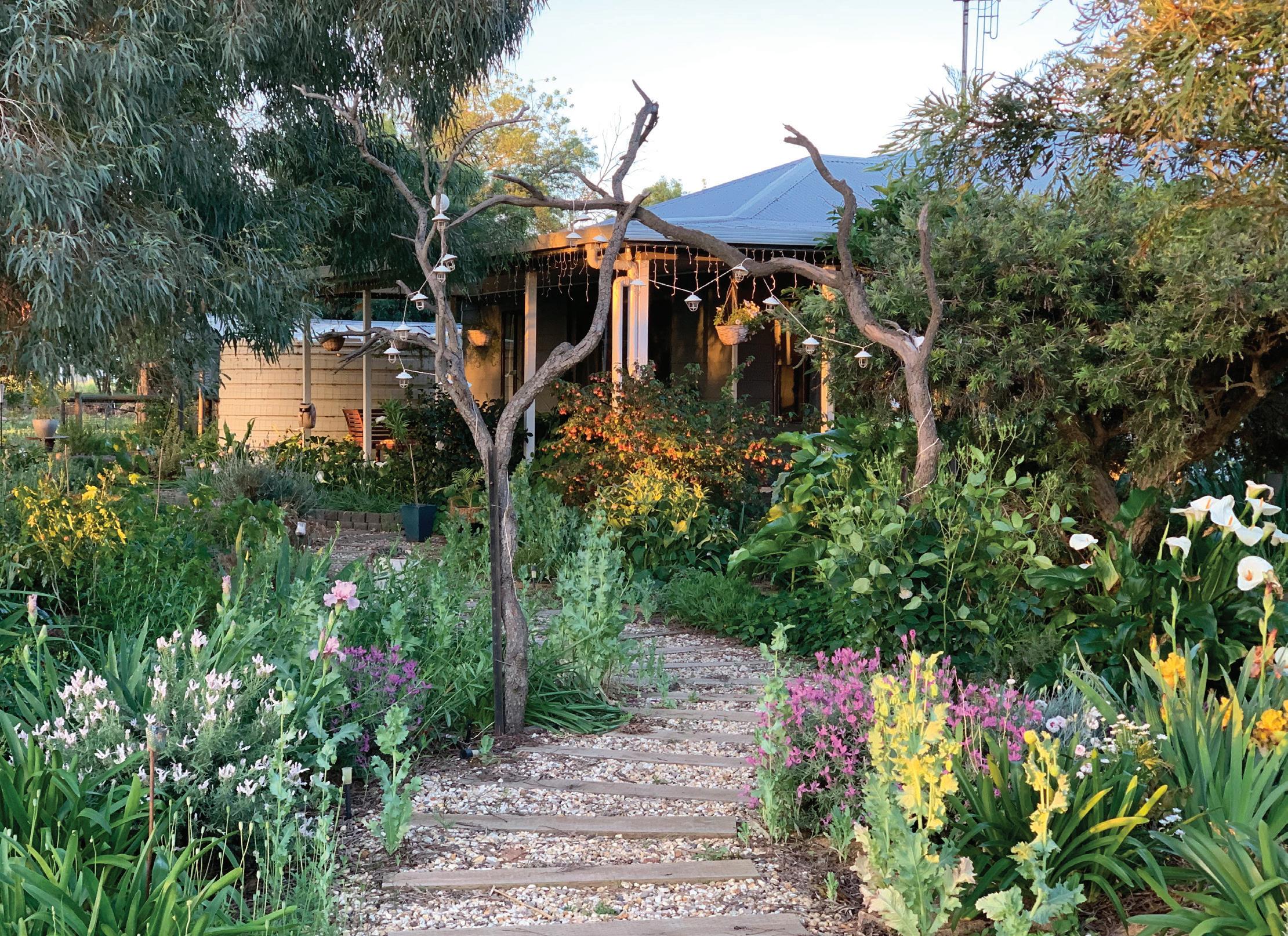
gone from about 100 different varieties to nearly 500, growing several thousand plants a year.
They also like to honour the heritage of the flower, paying royalties to Australian dahlia breeders for every tuber or cutting they sell.
“All the varieties that we love have been predominantly bred by people who are now retired or passed on,” Jamie said.
“They put a lot of time and effort into breeding these plants and we’re making money off them and we wanted to share that and honour their work.”
If a breeder cannot be located, they donate the royalty to a newly created dahlia research fund through the Dahlia Society of Australia.
“They’re the only flower I can think of that goes back so many generations,” Jamie said.
Their annual tuber sale is a major source of income and the resurgence of popularity of dahlias has prompted the sale of live plants, one of the first farms of their scale to go down that path. By aiming to make a quality product that stands the test of time and diversifying the business, Jamie and Gareth are slowly starting to open to the public.
“At the moment we just do open days throughout the year when we’ve got lots of flowers, but we’d like to open more,” Jamie said.
“We both have to work offfarm part-time to cover the overheads.
“We’ve built the business over eight years as a side hustle, going to markets on a Sunday morning, but now we have to pay GST. We grumble about it, but it’s a milestone for us.
“We’ve built something from the ground up and we hope to get to the point that we can come home a bit more. Our ultimate goal is to be full-time generating income from the farm.”
They now have 13 condiments in the range and continue trialling other options and are looking to create more floral
centrepieces for events and host more events and weddings.
“Shepparton is the fruit bowl of Australia, so we created a fruit bowl with a flower arrangement in the middle and the council loved it,” Jamie said.
“We’ve done several events with the council and associated stakeholders since July.”
The 2025 Melbourne Royal Australian Food Award was the first state-wide recognition for the business.
“The pickled quince was made from old recipes and experimenting,” Jamie said.
“It was borne out of my love of gin and Gareth’s love of doing something a bit different. It’s a different twist on what everyone thinks of quince, usually being jelly or paste.
“It’s a modern twist but that’s what food is about these days — entering into new markets and getting people to try new things.”
The award recognition is the latest boost to their blooming enterprise.
“It’s quite humbling,” Jamie said.
“We’re just two farm boys in the middle of the country. We don’t have a factory or anything, just a registered farm kitchen in our home, but it shows what we can offer with a bit of dedication and passion.” T
Jamie and Gareth pay royalties to Australian dahlia breeders for every tuber or cutting they sell.
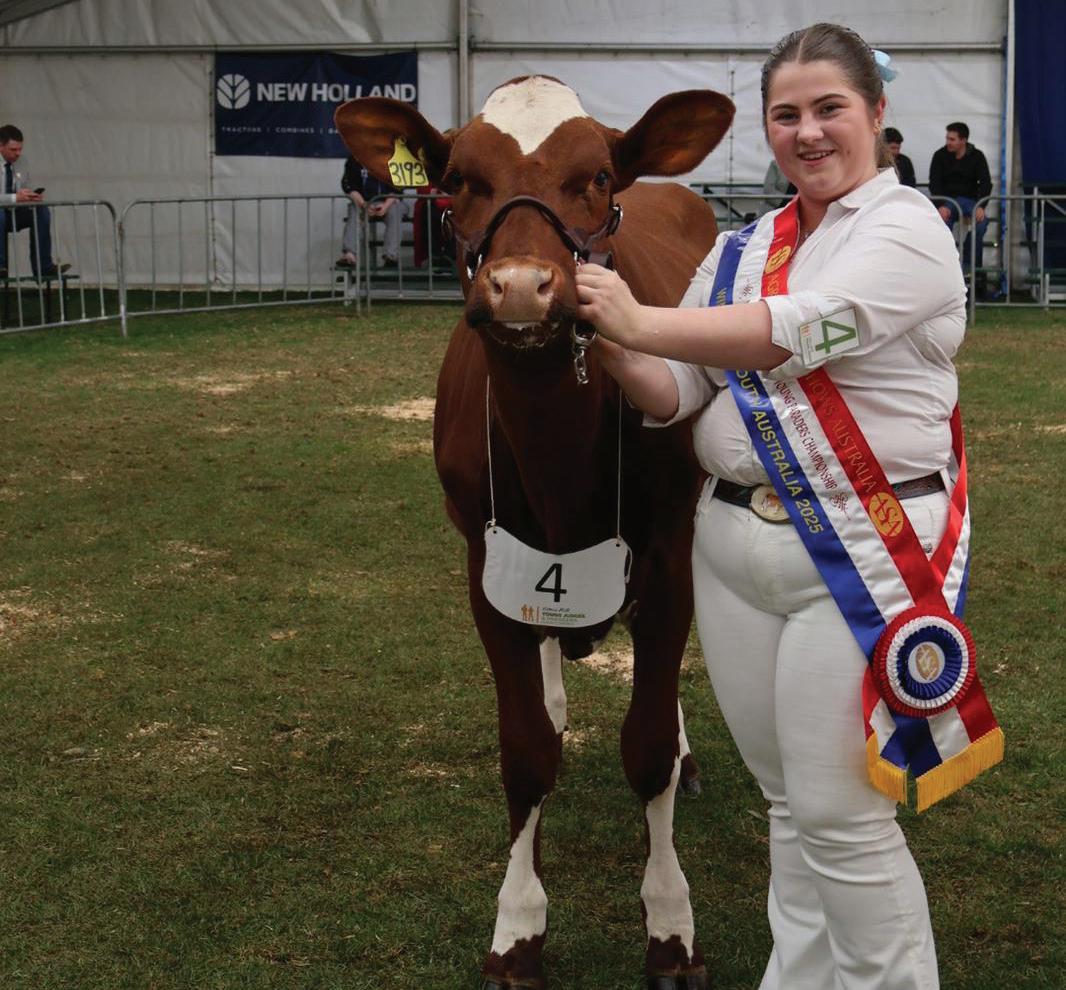
Sienna Ross has gone one better than her runner-up finish last year to be named champion young parader at the Royal Adelaide Show.
Young dairy parader Sienna Ross has won a national show title she narrowly missed out on a year ago.
The 17-year-old student from Katamatite was named champion young parader at the Royal Adelaide Show on September 3.
Sienna is a first-generation dairy farmer growing up milking cows, rearing calves and driving tractors.
Now in Year 12 and school captain at Sacred Heart College Yarrawonga, Sienna hopes to one day become a qualified embryo technician.
She was runner-up in the paraders’ competition last year.
“My family definitely are the main reason I now have such a love for showing dairy,” Sienna said.
“I have Dad’s love of cows, Mum’s support and her determination for me to succeed, my brother’s skills building all my new gear and my sister by my side at all the shows to learn new things.
“I grew up on a dairy farm and started with American cattle
with my family, which we run together.”
When asked about winning, Sienna said, “I’m pretty stoked. not many words I can say, to be honest.”
She received a halter from Goulburn-based store The Cattle Shop.
Runner-up was William Phillpot, 19, of Murray Bridge, representing South Australia.
Showing dairy cows has been a big part of William’s life since age 12, when he attended the SA Dairy Youth Camp and met mentor Bridget Liebelt.
Today, William regularly shows top-quality stock alongside Bridget at local and interstate events and works at Daish Irrigation and Fodder in his home town.
“I can’t believe it,” William said after the competition was run.
“I never thought I would make it this far and I guess if you keep trying and keep practising you can make it to achieve your goals.”
The championships are held in a different part of Australia each year.

Agricultural Shows Australia chair Jacqueline Wilson-Smith said the event showcased agricultural excellence, boosted the industry and shone a light on outstanding achievements.
“These young competitors are the future of agricultural show
competitions, which are so important to the growth of Australia’s food and fibre industries,” she said.
“The nationals are a fantastic opportunity for them to develop their skills, gain valuable experience and go head-to-head with the best in the country.”
A $144 million drought package is delivering a raft of programs and services to support Victorian farmers.
The Victorian Government is backing drought-hit farmers with cash flow relief, helping them cover costs and continue to support the local communities and families that depend on their farms.
Agriculture Minister Ros Spence announced the Primary Producer Support Payments program was rolling out, providing eligible farmers with the equivalent of a 40 per cent reduction on their property rates.
Farmers in the south-west have experienced the worst drought conditions in the state for more than two years, impacting their livelihoods, households and local communities.
The government is working closely with the 12 councils that
are administering the program, including Ararat, Moyne, Colac Otway, Pyrenees, Corangamite, Southern Grampians, Glenelg, Surf Coast, Golden Plains, Warrnambool, City of Greater Geelong and the southern parts of West Wimmera.
The Primary Producer Support Payment is one of a suite of programs and services in the government’s $144 million Drought Support Package that is delivering immediate meaningful support to Victorians across the state.
This package includes waivers of livestock duties and reductions in regulatory fees and charges across PrimeSafe, Dairy Food Safety Victoria (DFSV) and Agriculture Victoria for the next
financial year. These measures will deliver savings of more than $10 million for farmers and food producers.
Agriculture Victoria is partnering with food and safety regulators DFSV and PrimeSafe, along with livestock compensation
advisory committee chairs, to deliver this support.
More than 2800 farmers have accessed the Farm Drought Support Grants and more than 490 farmers have utilised the free one-on-one technical decision-making consultations. In addition, more than 120 Look Over the Farm Gate community events have been approved to support mental health and wellbeing across the state.
The Premier’s Drought Response Taskforce has met to discuss the latest seasonal, economic and social conditions facing farmers and rural communities. The taskforce will continue to listen to communities and monitor conditions over the coming months.
A new podcast series is engaging rural fathers about their experiences of farm and family life.
Farmer John Hassell was hard at work when a colleague noticed something that would change the course of his life.
The farm machinery dealer had looked down, alarmed to see a red rash covering his legs.
“He saw that I had psoriasis ... and said, ‘that’s caused by stress’,“ John said.
“Until that point I didn’t realise I was suffering depression, even though I was getting two hours’ sleep a night and spent a lot of time in tears.
“It wasn’t until he said that to me that I realised there was something wrong.”
Caught up in fraught succession planning about the future of his family’s farm, frustrating business dealings and the everyday stresses of working on the land two decades ago, John decided to fight back.
He was moved to join WAFarmers, taking a stand alongside his industry peers and going on to lead the peak body for four years until mid-2025.
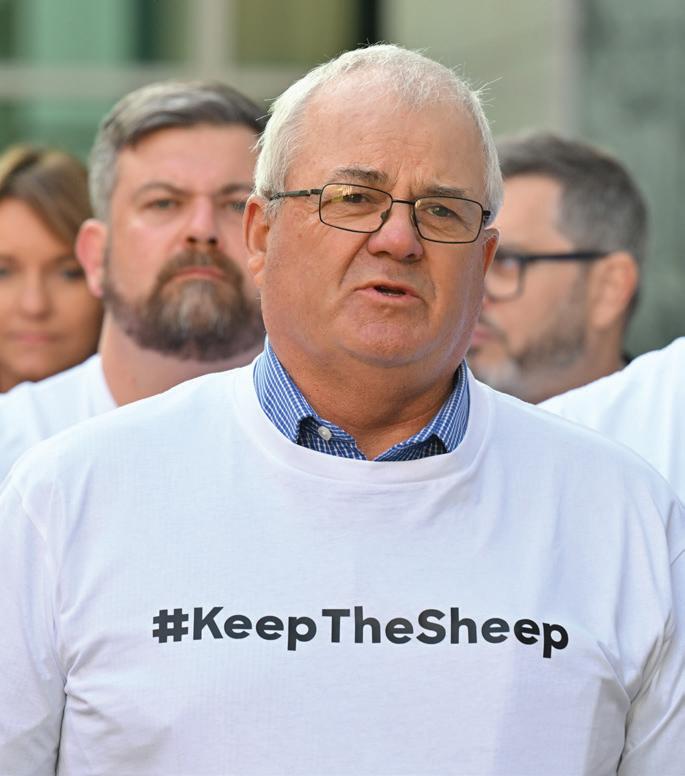
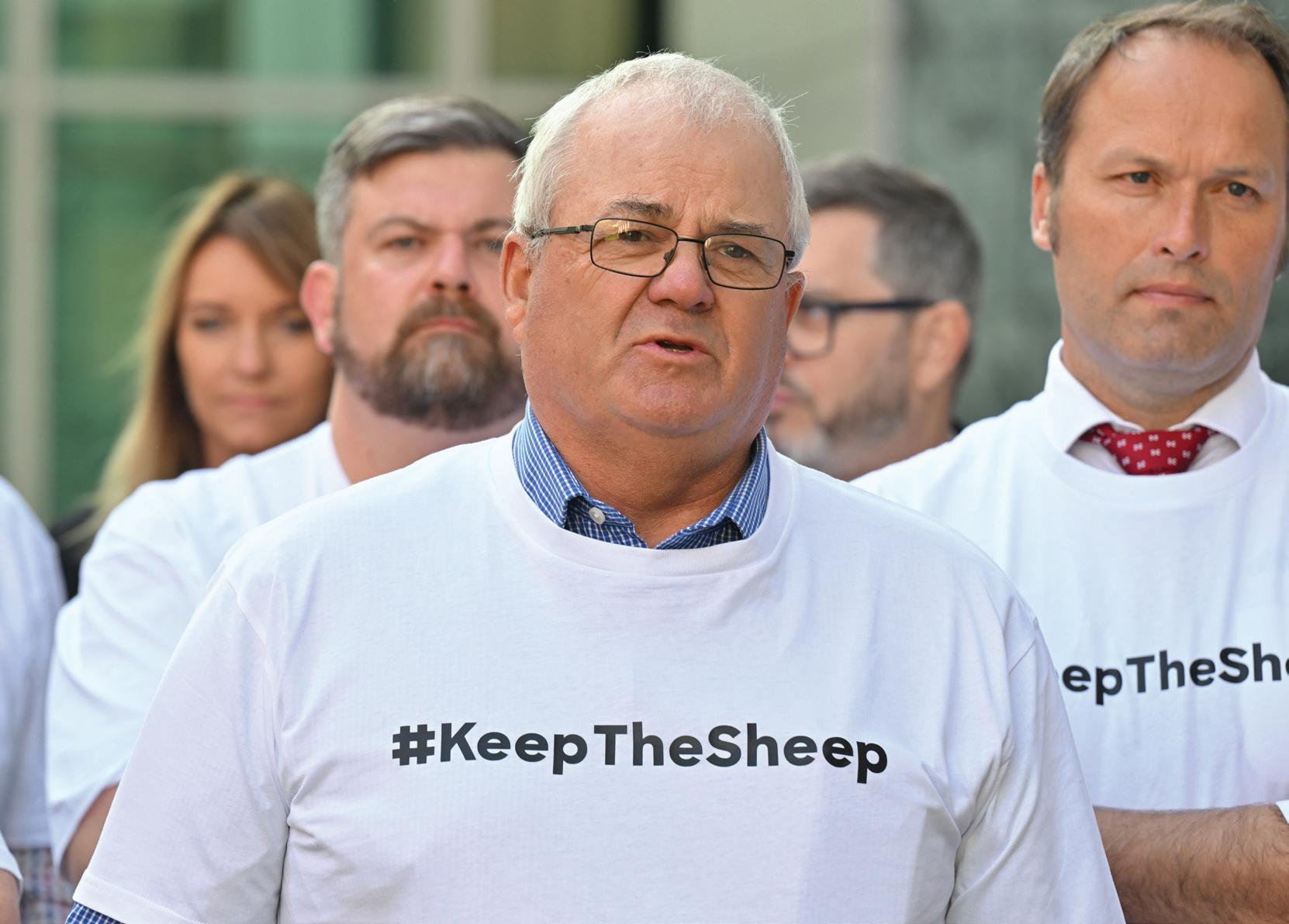
Many rural Australians would recognise John as a force behind the fiery Keep The Sheep movement against the Federal Government’s phase-out of the live export industry.
But John has revealed what lies beneath that tough exterior, sharing his trials and triumphs in a new podcast mini-series called Father Land
The eight-episode run is part of the Motherland podcast, a juggernaut that has featured hundreds of rural mothers’ stories over nearly six years.
Its founder, 2024 Australian of the Year for Tasmania Stephanie Trethewey, launched a charity and podcast to connect women raising their families in the isolation of the bush.
For years, she has been hoping to do the same thing for rural dads.
She has interviewed eight rural fathers from seven states about
their experiences of farm and family life.
“The common theme is fatherhood and mental health, but their individual journeys as fathers on the land and as farmers is so different,” she said.
“We cover everything from the breakdown of a marriage — we break down the really outdated stereotypes on what it means to be a man and what it means to be strong.
“A big part of Father Land and Motherland is that vulnerability is not a weakness and, in this sense, it’s part of being a bloody good dad.”
Stephanie, a former television journalist and rural mother-oftwo, wanted to tell the human stories often left out of industry and mainstream reporting.
“If it helps just one man or a woman who’s navigating something, then it’s worth it,” she said.
John said he took part in the series to help others realise that

tough periods did have an end.
“I’ve come out the other side and I’m experiencing this wonderful joy of being a grandparent and parent,” he said.
“It’s good to be able to tell
people ‘you might be going through a lot of s*** but it’s bloody good to crawl out the other side.
“It might feel deep but you can swim. You don’t have to sink.” T
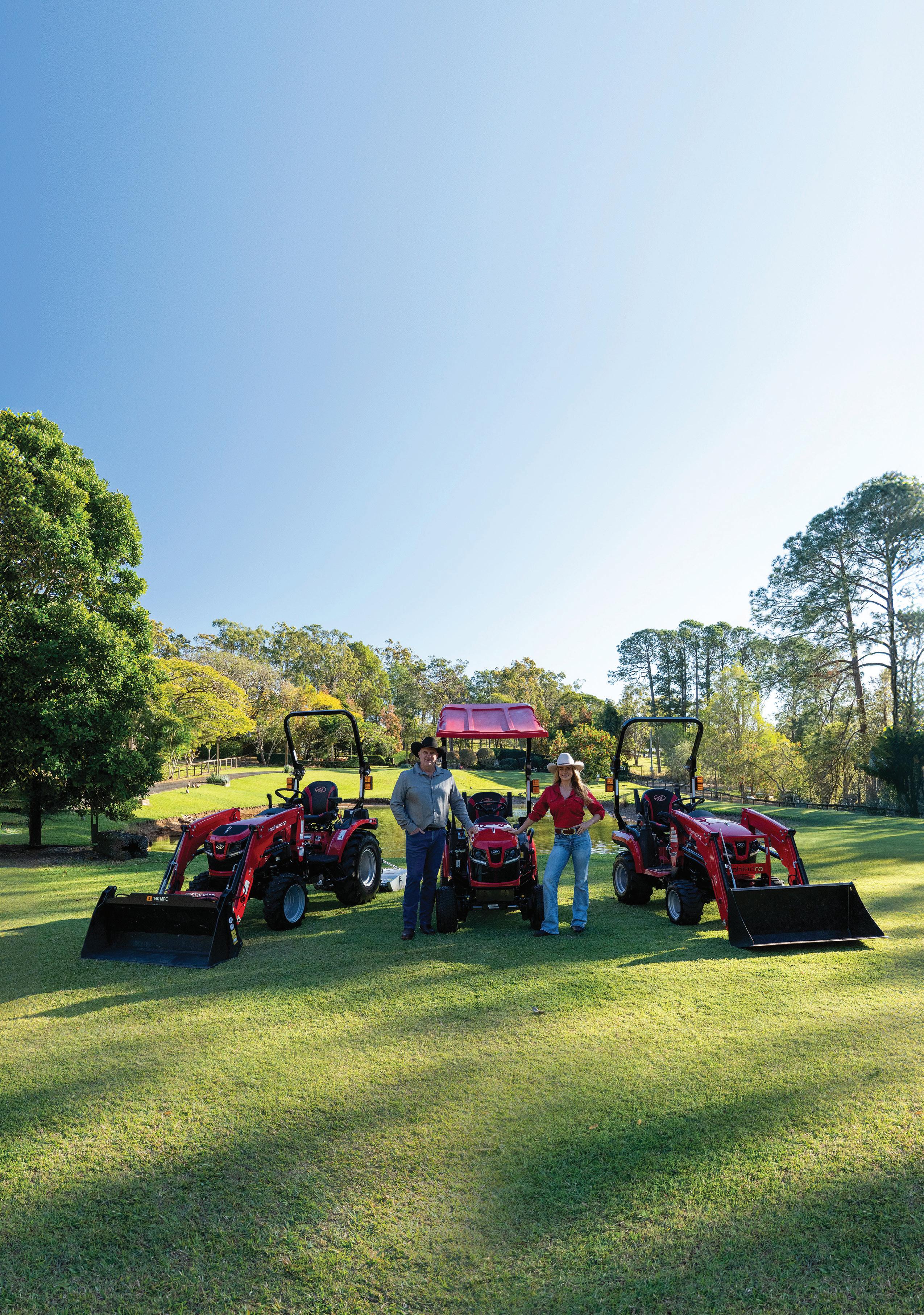
Built tough, the launch of Mahindra’s future-ready OJA tractor range coincides with 20 years of Mahindra in Australia, marking the beginning of a new era of power, comfort and smart farming in the country.
Mahindra and Mahindra, the world’s largest tractor manufacturer by volume, has launched its future-ready range of tractors, the Mahindra OJA, in Australia.
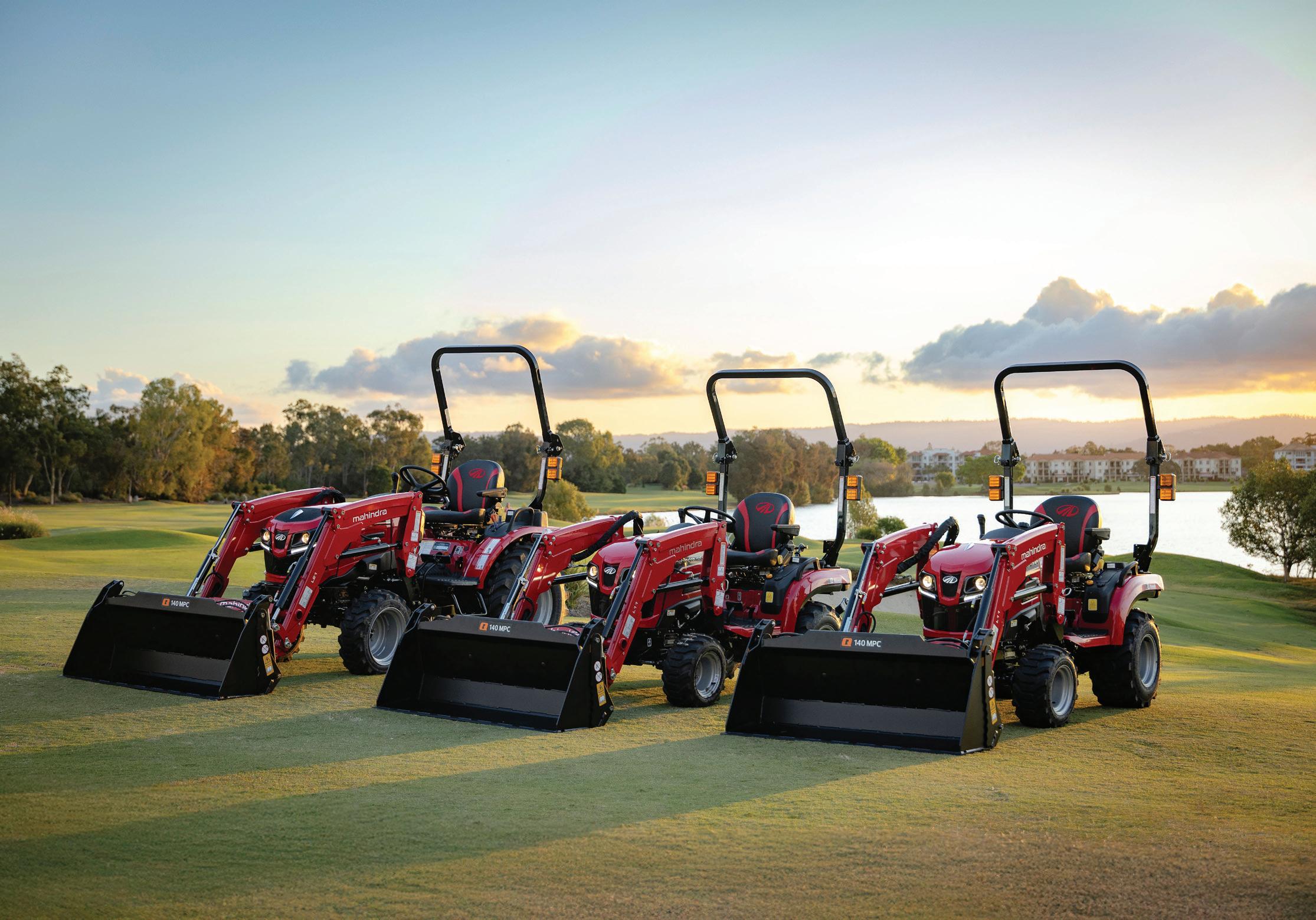
Coinciding with 20 years of Mahindra’s presence in Australia, the company introduced three new tractor models from the OJA 1100 and 2100 series in the sub-compact and compact category, thoughtfully engineered to meet the unique needs of Australian farmers.
These are the OJA 1123 HST (hydrostatic transmission), OJA 1126 HST and the powerful OJA 2126 HST.
Tough and purpose-built with a robust construction for Australian conditions, the OJA range is designed for longevity, reliability and operator comfort.
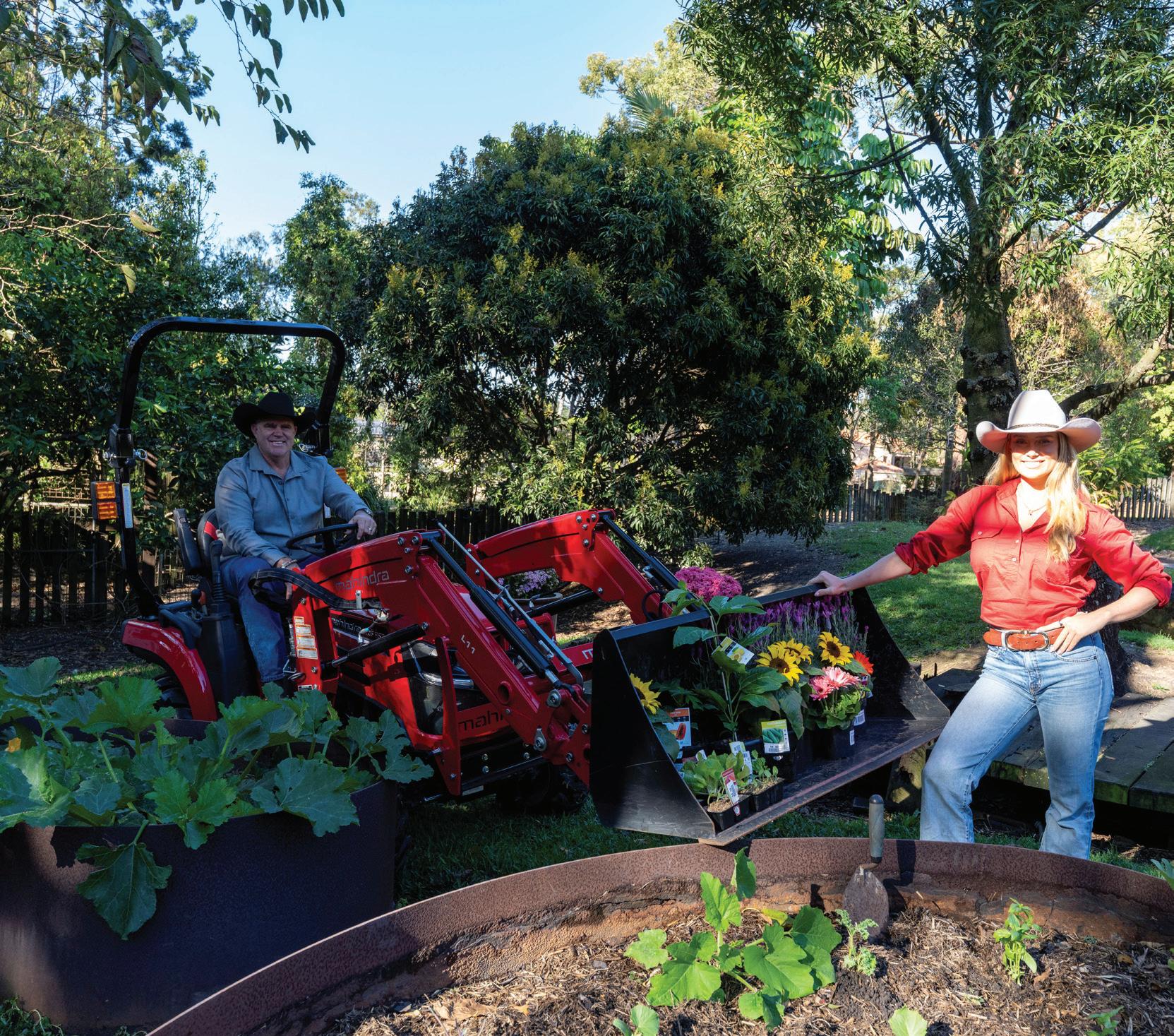
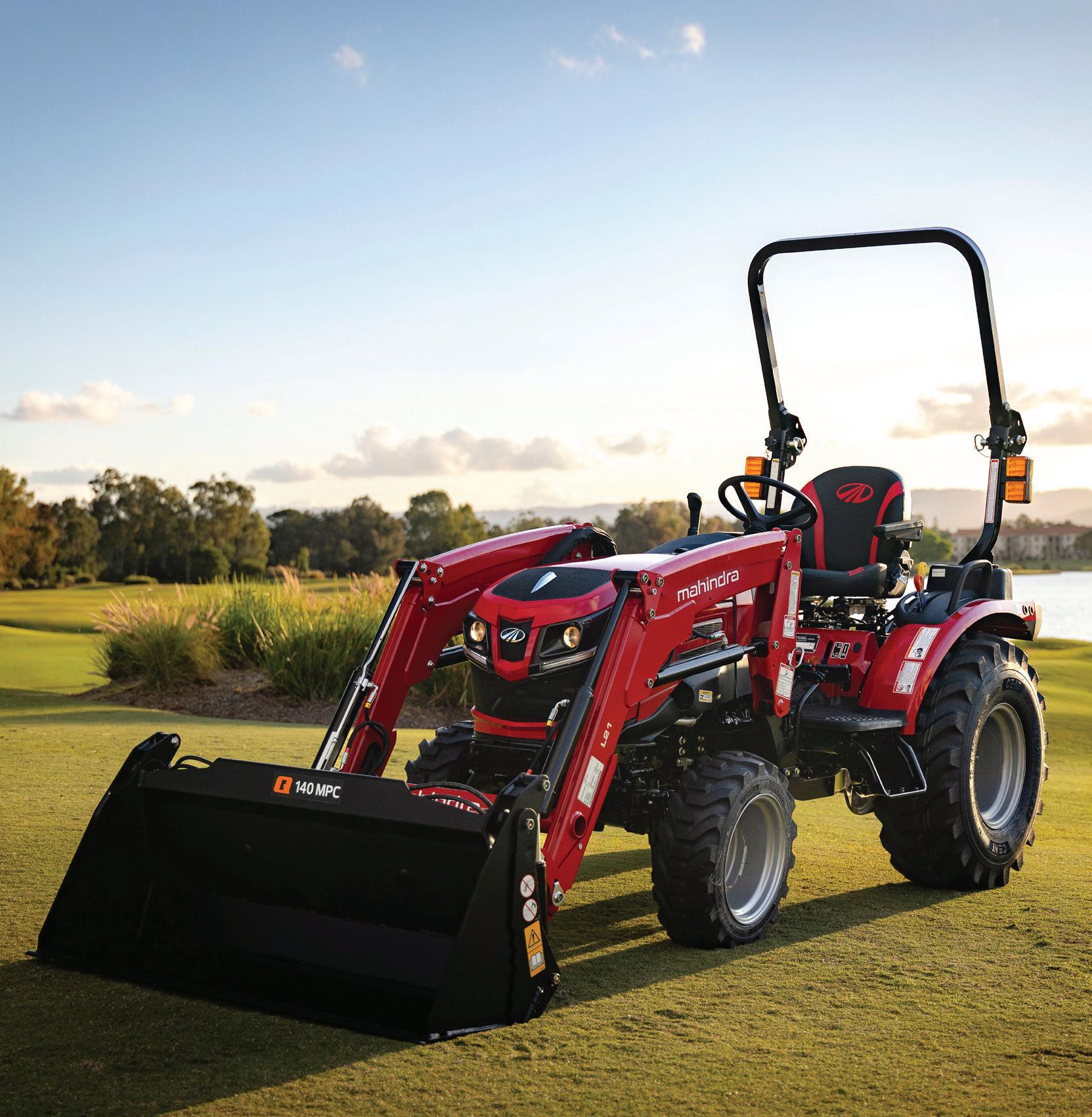
Setting new standards for Australian farmers and property owners, the OJA range is based on an ergonomic platform with advanced technologies, powerful engine technology and first in segment innovations like button-operated PTO and loader with class-leading lift capacity. The new Mahindra tractors are equipped with features like
a digital driver display panel, advanced hydraulics, power steering system and optional cabin configurations, delivering unmatched comfort and control.
Projector-style headlights ensure clear visibility for early morning or late-night tasks.
Featuring Mahindra’s plush mComfort seat with foldable armrests and intuitive driver-friendly colour-coded controls makes the OJA range a true partner for modern farming with lasting value.
Derived from the Sanskrit word ‘Ojas’, meaning powerhouse of energy, OJA is Mahindra’s most ambitious global lightweight tractor platform.
Developed through a collaborative effort between the engineering teams at Mahindra Research Valley, India— the R&D hub for Mahindra’s auto and farm sector — and Mitsubishi Mahindra Agricultural Machinery, Japan, the new OJA range marks a transformative shift in lightweight fourwheel drive tractor design, with cutting-edge innovations that are set to redefine farming in Australia.
Mahindra farm equipment business president Veejay Nakra
said he was proud to introduce the globally-acclaimed Mahindra OJA tractor range to Australia.
“Built on our advanced global lightweight four-wheel drive tractor platform that’s developed in collaboration with Mitsubishi Mahindra Agriculture Machinery of Japan, the OJA range reflects Mahindra’s commitment to innovation, durability and customer-centric design,” he said.
“With world-class technology and engineering, we believe this new offering will resonate with farmers and property owners in Australia who value performance and reliability.”
Mahindra global product planning and international operations head Ravindra S. Shahane said the new range was available across Australia with a starting price of $23,490.
“With pioneering, first-in-segment technologies that are smart and thoughtfully engineered, the OJA range offers a powerful multi-tasking solution, designed to elevate versatility, operator comfort and ease of use, essential for lifestyle and small property owners,” he said.
For added peace of mind, Mahindra Australia offers a comprehensive warranty package: three years bumper-to-bumper coverage, plus an additional three years on the power train. Backed by Mahindra’s dedicated service network, this industry-leading warranty sets new benchmarks in its category, offering tractor owners unmatched peace of mind.
Representing a bold leap forward in operator experience and agricultural innovation, the Mahindra OJA range is manufactured at Mahindra’s state-of-theart facility in South India, with models from the series also being rolled out for markets like the United States, Canada, Thailand and India.
Mahindra OJA 1100 series
From the OJA 1100 sub-compact series, Mahindra will offer two models — the OJA 1123 HST and OJA 1126 HST. The OJA sub-compact tractors boast a stylish design and a user-friendly hydrostatic transmission, with cruise control and a heater-only cab, ideal for lifestyle property owners seeking a compact capable solution.
From the OJA 2100 compact series, Mahindra will offer the Mahindra OJA 2126 HST. Built on a larger platform, the OJA 2126 is engineered for more demanding tasks, with a fully integrated heated and air-conditioned cab as option, making it a reliable allweather tractor.
The tractor also boasts bestin-class loader lift capacity and cycle time for efficient loader operations.
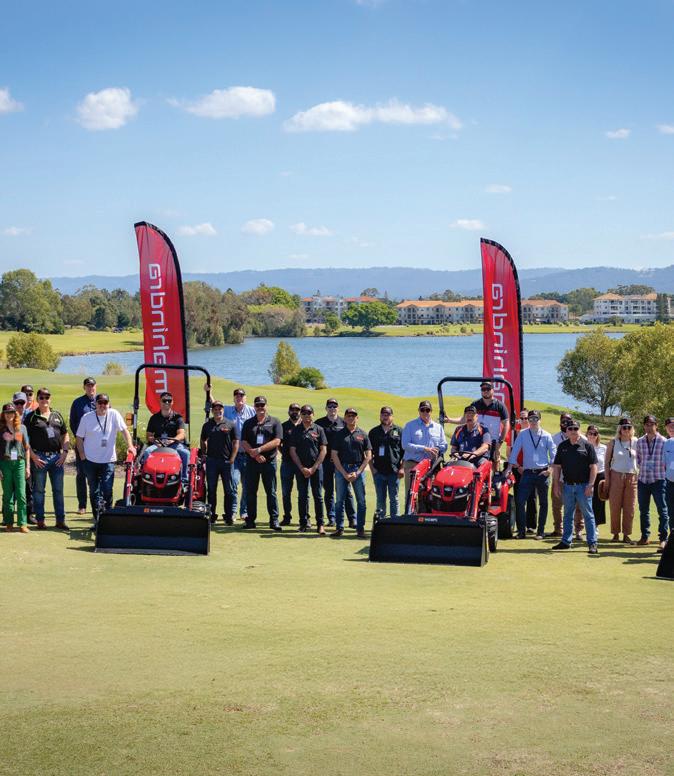
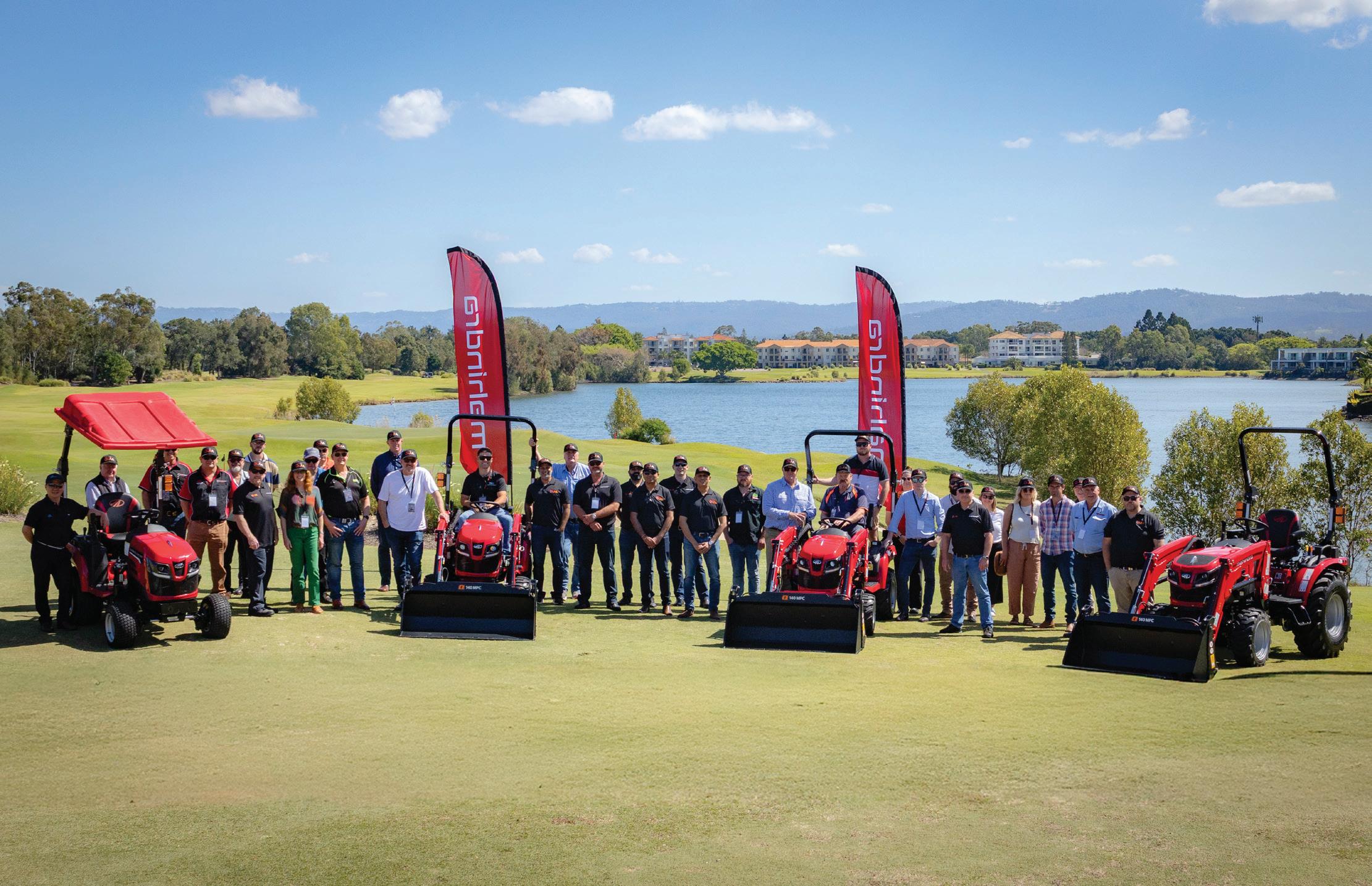
The OJA range was introduced to Mahindra dealers at the national Dealer conference on September 17 on the Gold Coast, with customer orders starting on September 19.
Mahindra and Mahindra is the world’s largest tractor manufacturer by volume. Having introduced its first tractor in 1963 through a joint venture with International Harvester Inc, USA, as of 2024, Mahindra had sold more than four million tractors.
Built ‘tough’, Mahindra Tractors are known for their exceptional build quality and performance on rugged, unforgiving terrains. This reputation has earned the Mahindra Tractor brand prestigious global recognition, including the Deming Award and the Japanese Quality Medal, making it the only tractor manufacturer to receive both honours.
Mahindra Tractors has a presence in more than 50 countries across six continents. Powerful, fuel-efficient and designed for longer duty cycles, Mahindra Tractors offers the widest portfolio of more than 300 tractor models, developed through world-class product development, R&D, testing and manufacturing standards.
Mahindra Tractors are manufactured across five locations in India, while also maintaining a strong global manufacturing and assembly footprint through subsidiaries and joint ventures in North America, Brazil, Finland, Turkey and Japan.
Mahindra also has a significant presence in farm machinery, offering a comprehensive range of self-propelled and tractor-driven machinery that provides solutions across the entire agri-machinery value chain. T










Australians are renowned for their love of coffee, but Australian-grown coffee can be hard to find. A group of producers is determined to change that.
From the bustling laneways of Melbourne to beachside cafés in Byron Bay, the daily ritual of the flat white or long black has become woven into national culture.
Collectively, Australians consume about six billion cups of coffee each year. Yet, despite this obsession, 99 per cent of the coffee we drink is imported from overseas producers in Brazil, Colombia, Ethiopia and beyond.
Australian-grown coffee is a rarity — even in Melbourne, often called the nation’s coffee capital. But a growing band of producers, scientists and roasters are determined to change that.
From fruit to cup
For many coffee lovers, the journey from fruit to cup remains little understood.
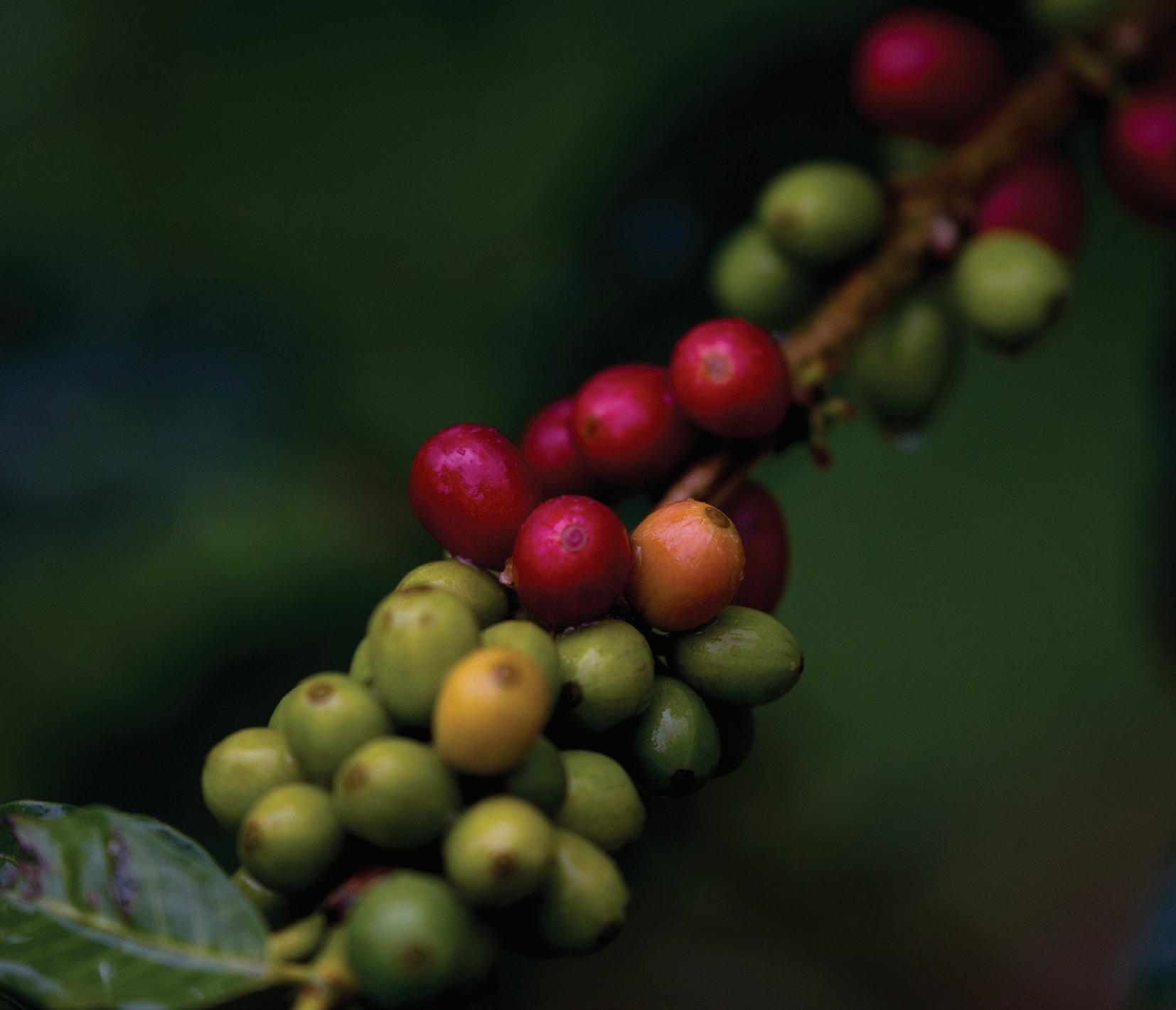
“About 90 to 95 per cent of consumers don’t know that your cup of coffee starts with a fruit that grows on a tree,” Zest Specialty Coffee Roasters coffee excellence manager Simon Gautherin said.
A certified Q grader — the highest qualification in sensory coffee evaluation — Simon likens his role to that of a master sommelier in wine.
“There’s a universal standard for cupping coffee. Whether in Melbourne or Brazil, we assess the same attributes: aroma, acidity, sweetness, body and aftertaste,” he said.
“It’s a way of giving coffee a value.”
When it comes to Australian beans, the reactions he sees are mixed.
“People are excited to hear that Australian coffee is available. But often they think ‘Australian coffee’ just means roasted here, not actually grown here.”
A pioneer’s journey
Commercial coffee growing in Australia is still young. The
first commercial plantation was established in the late 1970s near Mareeba, Queensland, by Nat and Linda Jaques, who had migrated from Africa.
“The hardest part in the early days was convincing anyone that Australian coffee was good coffee,” Nat recalls.
“Most people were drinking instant coffee back then, so consumers were still on the learning curve.”
Nat and Linda faced hardships, with high interest rates forcing them into liquidation. At one point, Nat built his own coffee roaster out of a cement mixer to keep the business alive.
“We’ve had to restart our business several times, but we always believed the industry was viable,” he says.
Today, their plantation on the Atherton Tablelands benefits from high rainfall, sandy soils and altitude — ideal conditions for Arabica coffee. Their unique pruning system, cutting trees back to the stump every six years, has since been adopted more widely and included in the Australian Coffee Growers Manual, a comprehensive resource funded by AgriFutures Australia.
Science meets coffee
Further south in northern NSW, research is helping to overcome long-standing barriers to expansion.
Professor Tobias Kretzschmar from Southern Cross University has been working with World Coffee Research to trial new

varietals better suited to Australian conditions.
“One of the biggest issues growers faced was the K7 variety,” he said.
“It’s high-quality, but it grows too tall. Our farmers machine harvest and when trees outgrow the machines, yields drop and costs rise. What they wanted was a semi-dwarf variety that matched or exceeded K7 in yield and cup quality, while also offering basic disease resistance.”
The trials, funded by AgriFutures Australia and supported by the Australian Grown Coffee Association, began in 2020 with sites in Queensland and NSW. The results have been promising: three new open-access varietals that outperform K7 in both productivity and taste.
“They beat K7 on all fronts — yield, disease resistance and cupping scores,” Tobias said.
“And because they’re open access, farmers don’t have to pay royalties. It’s a win on every level and it makes entering the industry much more attractive.”
For Rebecca Zentveld, a grower-roaster near Byron Bay and president of the Australian Grown Coffee Association, this progress marks a turning point.
“It’s the most exciting time we’ve had since the early 1990s,” she said.
“Potential landowners are ringing us wanting to plant these new varieties. The demand for quality beans — locally and globally — is only increasing.”
Currently, Australian production is tiny — less than 300 tonnes annually. That leaves enormous room for growth.
“There are so few of us,” Rebecca said.
“There’s potential not just to meet domestic demand but to create a premium export market for Australian coffee.”
Interest is now spreading beyond the east coast. Early plantings are under way in Western Australia and, if successful, could extend coffee’s geographic footprint.
Back in Melbourne, Simon has become an unlikely ambassador for Australian coffee, working with growers to refine processing and elevate quality.
“Ten years ago, everyone thought it was impossible for Australia to grow great coffee,” he said.
“Even three or four years ago, we didn’t have proof. But in 2021, we cupped an Australian coffee that scored 84 points — that’s specialty grade.
“Today, some are going even higher.”
The significance isn’t lost on him.
“Australia grows some of the best fruits and wines in the world. Now we can add coffee to that list,” Simon said.
“The message is clear: not only can Australian producers grow outstanding coffee, but Australia can also be a real player on the global specialty scene.”

From pioneers who refused to give up, to researchers unlocking new varietals, to passionate roasters championing local beans, the story of Australian coffee is one of resilience and renewal.
Challenges remain — chief among them the cost of suitable land — but optimism is strong. With new varieties on the

horizon and growing consumer curiosity, the once-far-fetched idea of sipping Australian coffee may soon become everyday reality.
“So many Australian consumers still haven’t tasted Australian coffee,” Rebecca said.
“We’ve got a lot of cups to fill, but the future has never looked brighter.” T
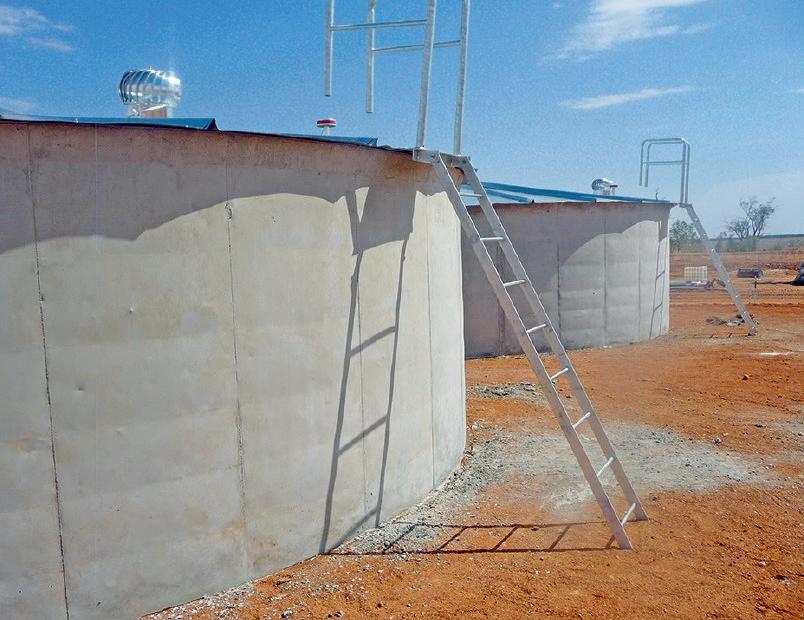
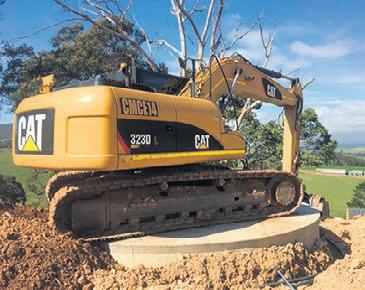
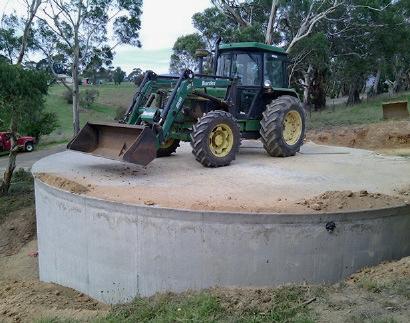
from 22,000 to 150,000 litres • All tanks are 2.26m in height • All tank walls are 130mm thick • All tank floors are 300mm thick in the centre
Tanks are algae free
Cool in Summer
Won’t blow away
We also replace silo roofs
02 6026 7021 or 0419 462 814

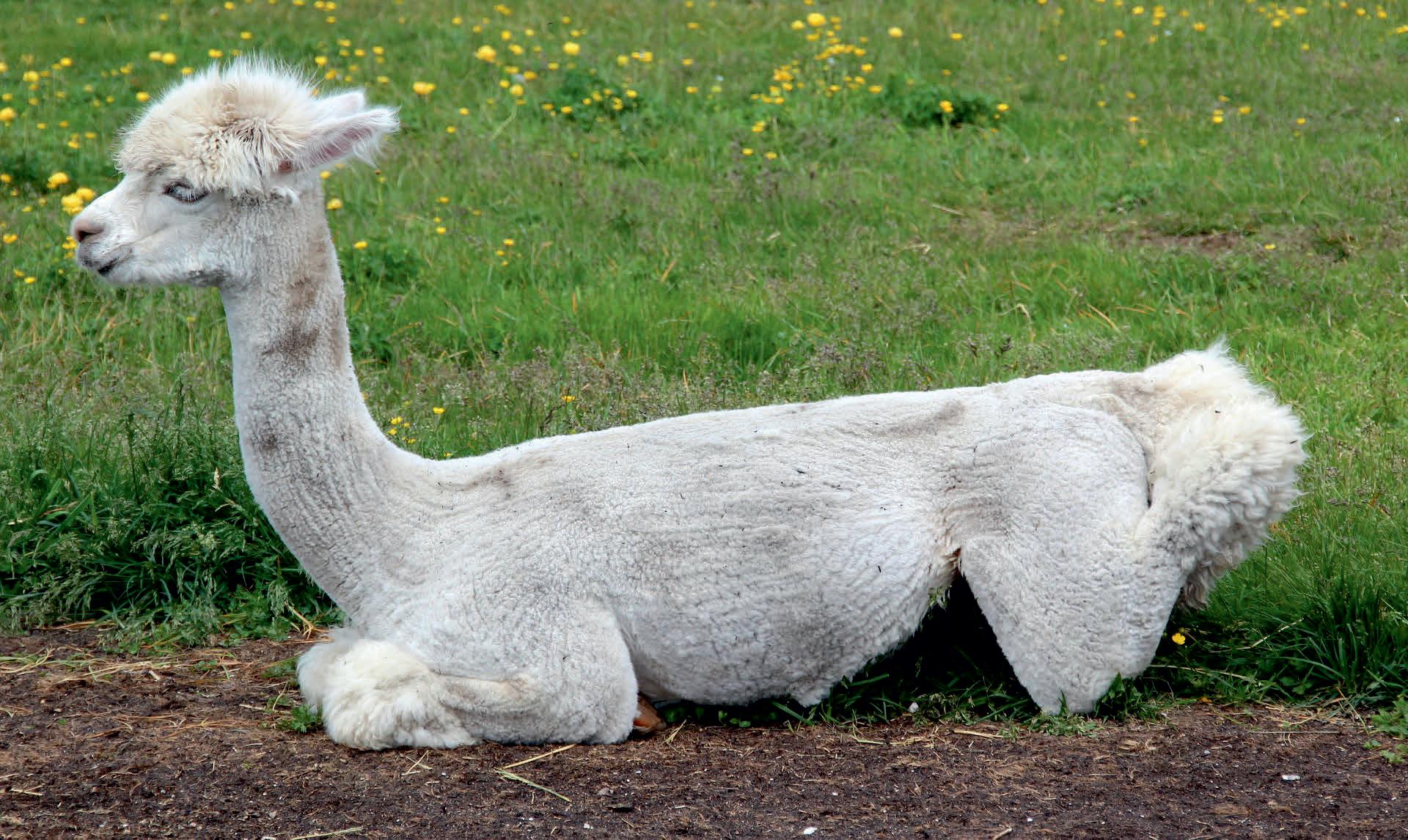
Springhasarrivedandmany alpacarelatedhusbandrytasksto cometomind.Herearesometo beawareofthistimeofyear. Haveyoubookedyourshearer?
Youprobablyshouldhavethoughtaboutitearlierinthe yearbutbe�erlatethannever!
Areyoutakingfleecesamplesfortes�ngbeforeshearing orareyouaskingtheshearertotakethem?
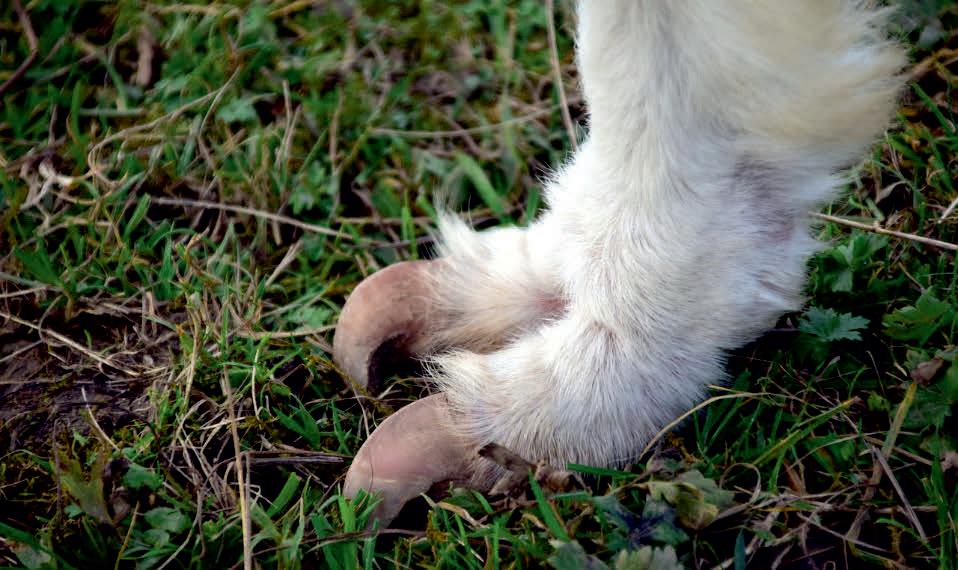
Somevaccina�onssuchas5in1canbedoneatshearing �metosaveyou�meatalaterdate.Willyourshearer cuttoenailsorareyougoingtodoityourself?
Haveyouworkedouthowyouarerunningyourshearing process–havingalpacasinholdingpenstokeepthem drythenightbefore,shearinglightcoloursbeforedark.
Doyouhaveenoughhelperstoweigh,skirt,sortandbag fleeces?
Allthingstothinkaboutaheadof�me!

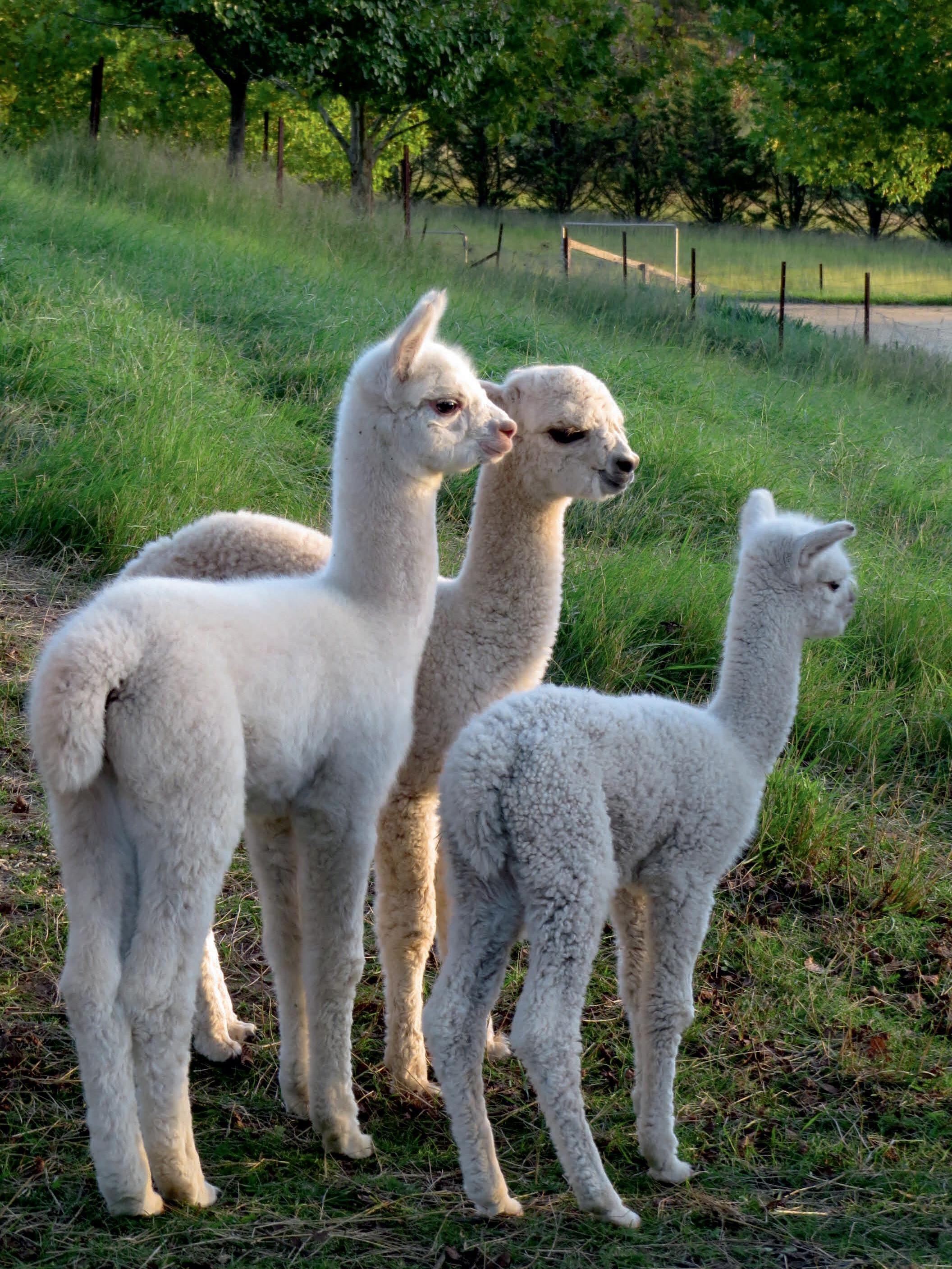
SpringandAutumarethemajorbirthing�mesinAustralia–are youpreparedforthenewarrivals?
Doyouhaveacriakitprepared?Haveyoureaduponthesignsof imminentbirthandwhattoexpect?
Areyoureadyincasethecrianeedssupplementaryfeeding?
Takethe�metoreserachanypointsyouarenotuptospeedon soifsomethingunexpectedhappensyouwillbeprepared.
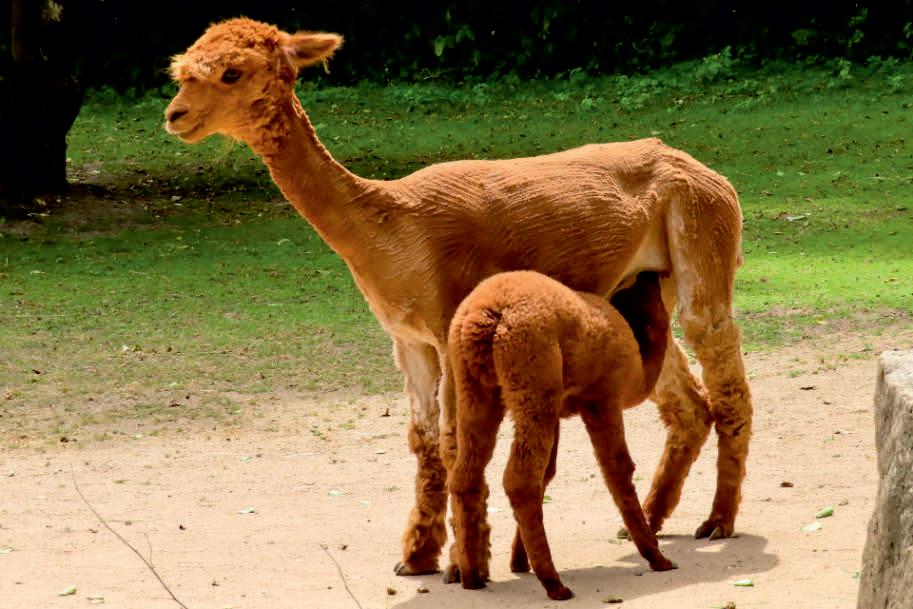
Criaareontheground,thoughtsturntoyourfemales nextma�ngs.Whenareyougoingtomatethem?
Areyouhappywithyourlastcriadrop,wouldyourepeat thatma�ng?Whichmalesdoyouthinkmaymake improvements?
Timetodosomeresearch?
Youcanfindalotofinforma�ononlinefromreliable sourcesliketheAustralianAlpacaAssocia�onandalpaca relatedmagazines.
Ormaybetalkwithexperiencedalpacabreedersnear you,orevenonlineviasocialmediagroups.
Unfortunatelyastheweatherwarmsweneedtobesure weareontopofwormingproblems,and�cksifyouare ina�ckarea.Considertakingfaecalsamplesfortes�ng toseeifyouralpacashaveahighwormburdenandtreat accordingly.
Aproblemrearingit’sheadthisyearwithalltherainand floodinginsomeareasthathasbeenaroundis Meliodosis(abacterialinfec�on).Usuallyonlya probleminthefarnorthofthecountry,thisyearhas seenoutbreaksanddeaths,inhumansaswellasanimals, muchfurthersouththanpreviouslyencountered.
Talkwithyourvetaboutcurrentcondi�onsinyourarea andgetadviceonspecifictreatmentsforyourherd.
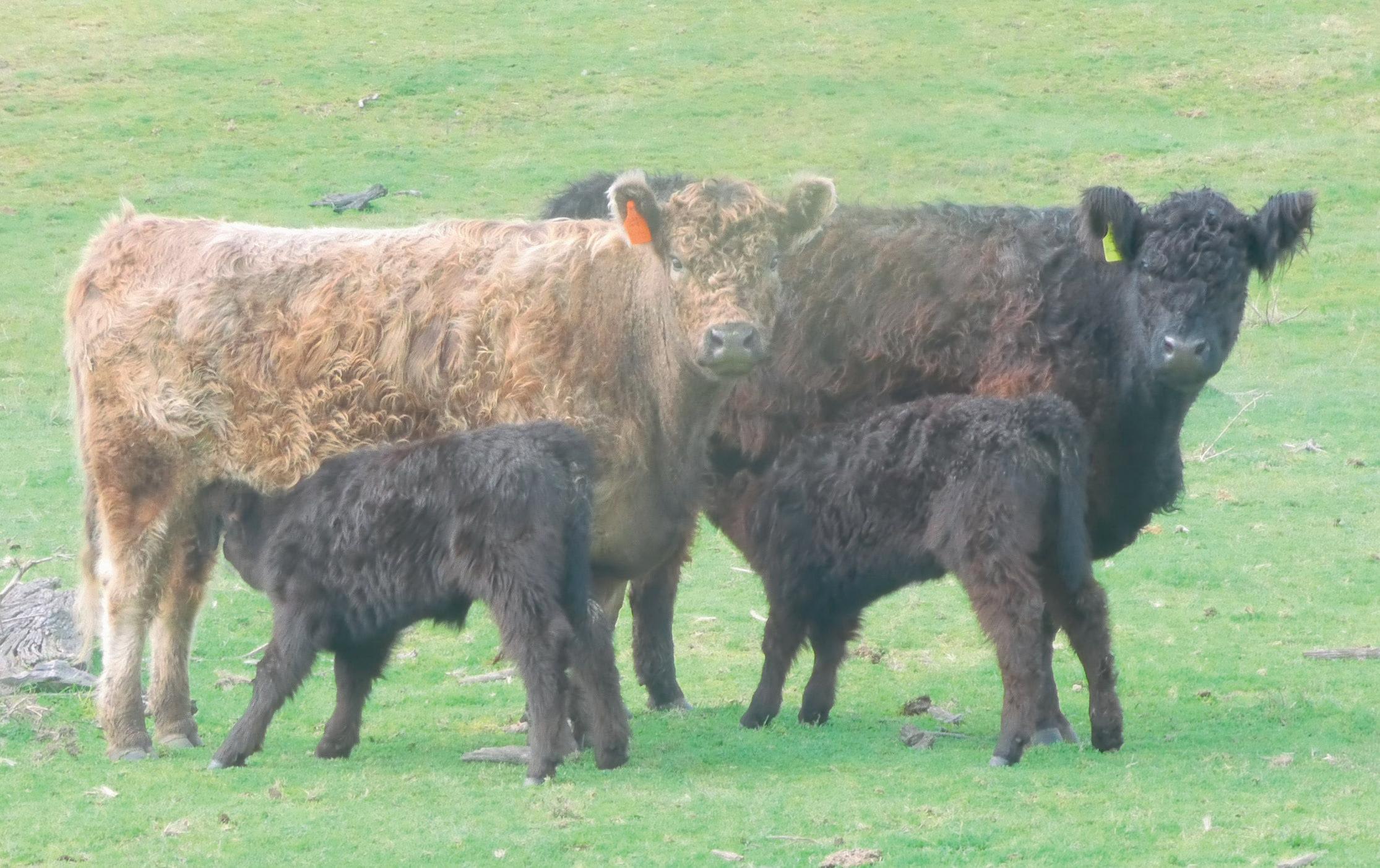
Galloways Australia is looking to improve its membership base and the genetic potential of Galloway cattle now is a great time to get some Galloway greatness.
All existing Galloways Australia members and anyone joining Galloways Australia is eligible to receive up to 10 straws of a benchmark, black Galloway bull, Glenkelso Connor for use in stud breeding.
Galloways Australia has no joining fee and annual membership starts at $155 year.
Glenkelso Galloway stud was renown for its impeccable honesty and integrity, it had strict sire selection criteria based on traditional Galloway characteristics of fertility, calving ease and structure overlayed by weight gain.
Glenkelso Galloway beef found a consistent, ready outlet into Victorian high-end beef outlets and restaurants.
The pinnacle of its breeding was Glenkelso Connor, a big, very well muscled, growthy bull.
His progeny have been well received locally and in Canada. Connor’s pedigree contains a who’s who of traditional meaty Galloways — Galloways that won the Royal Melbourne Show Borthwick carcase competition trophy for three years in a row.
For more information give Minto Galloways a call.” T
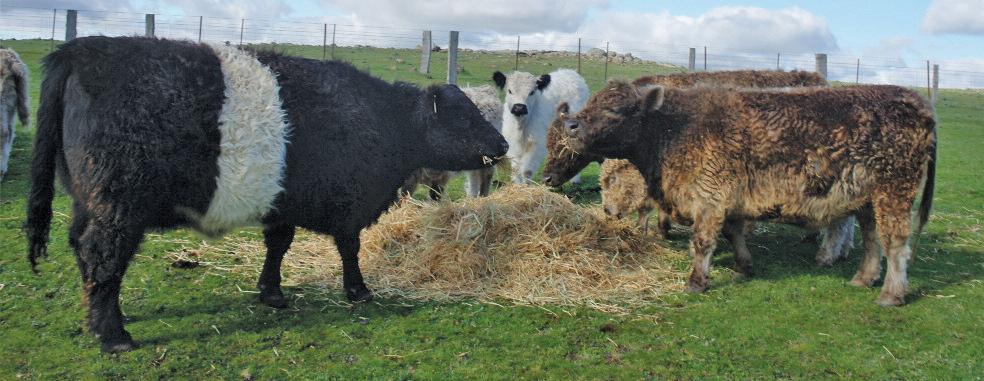
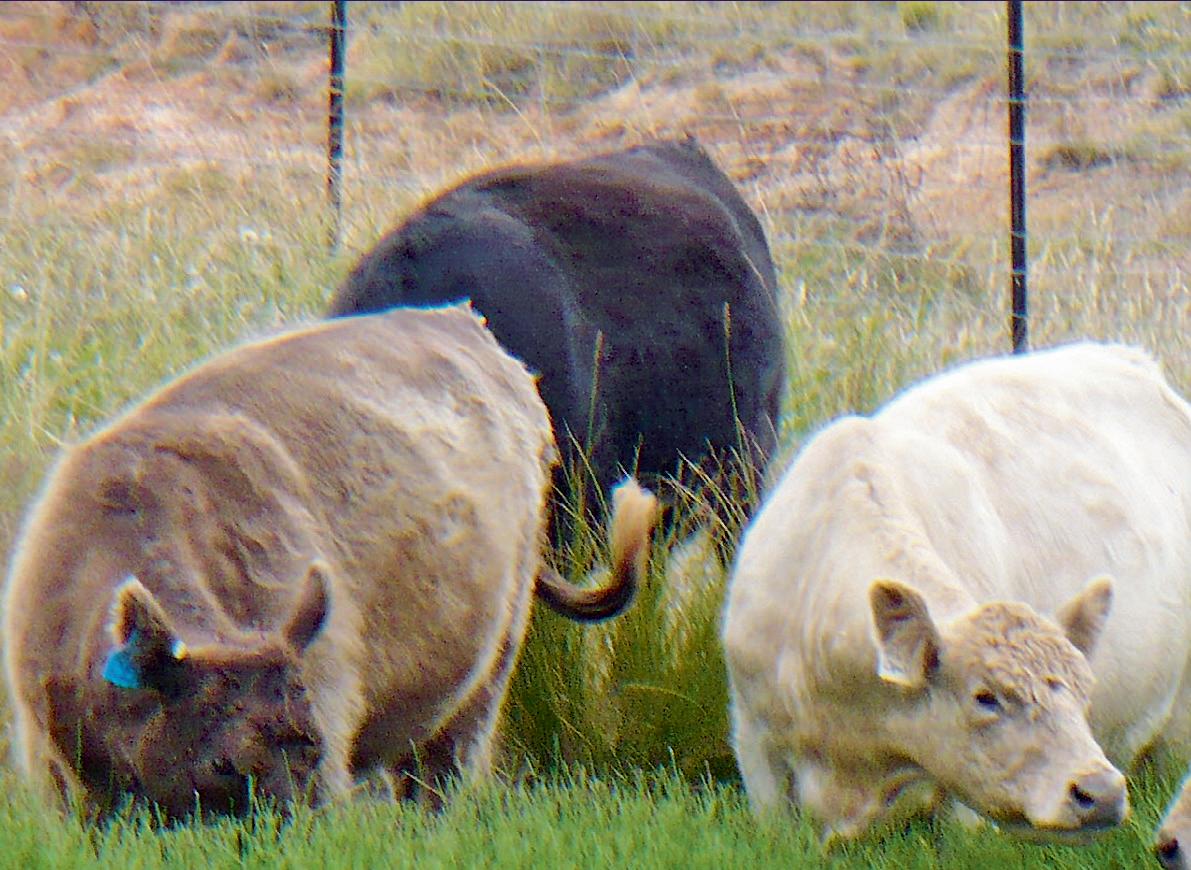
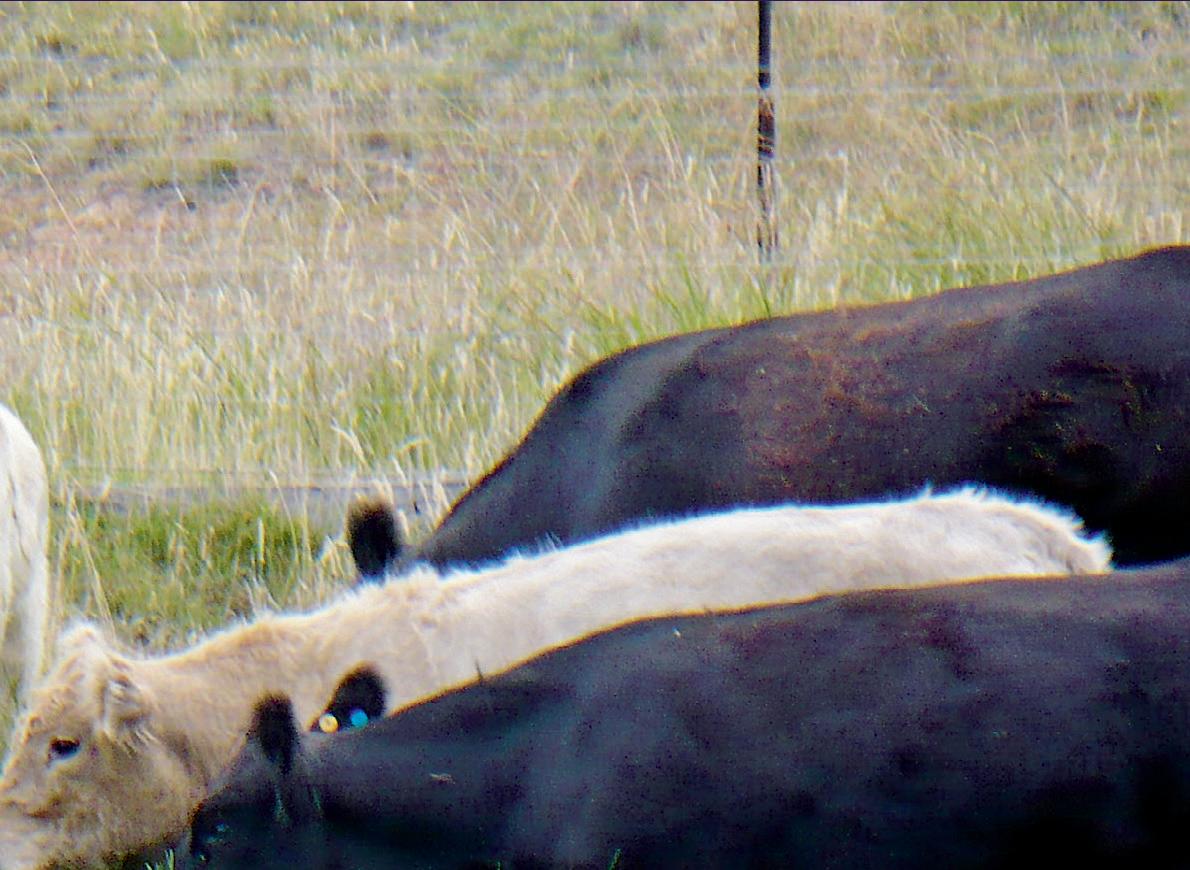




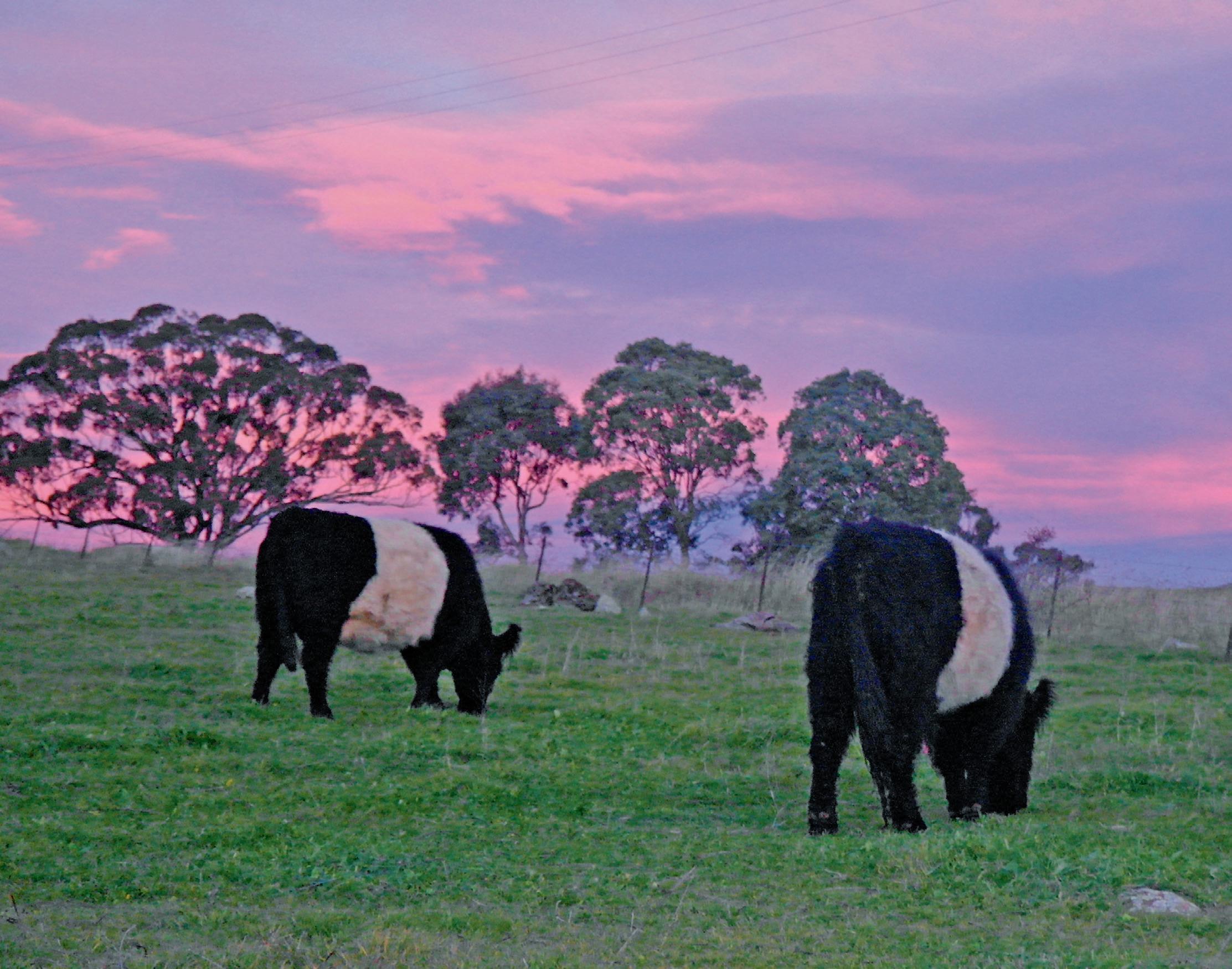
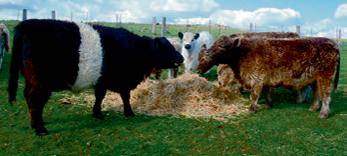
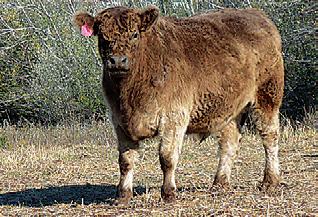
They’re still cattle but they are so different




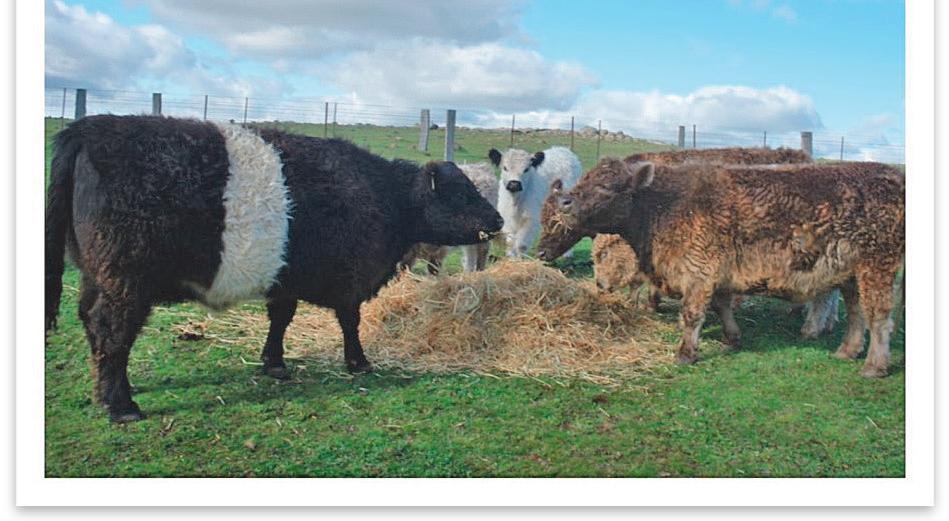
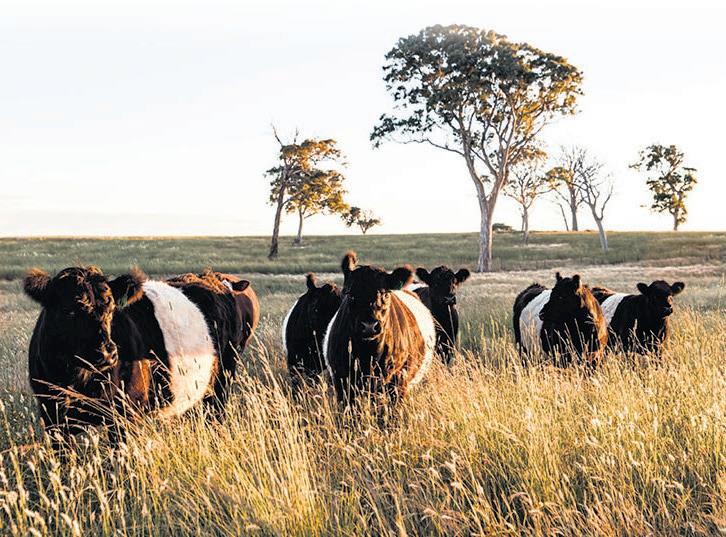
| BELTED GALLOWAY

GALLOWAYS AUSTRALIA INC. actively promotes all the Galloway breeds using independent research that endorses Galloway uniqueness.
G GALLOWAYS AUSTRALIA INC offers members:
•professional resources of information and assistance on all Galloway matters
•A high standard of pedigree management integrity
•advice on marketing, breed development and skills improvement.
•contact via a regular newsletter, field days and dinners featuring Galloway beef.
For further information, contact the association committed to preserving the Galloway breeds’ genetic makeup in order to ensure continuation of the breeds’ ability to excel.
Galloways Australia Inc PO Box 309, Hall ACT 2618 gallowaysaustralia@gmail.com www.gallowaysaustralia.com.au 02 6230 2536
or 0416 297

GALLOWAYS Australia was formed (as the Galloway Beef Marketing Association) in December 1997 to promote and market Galloways to the beef industry. The Association is a formal marketing vehicle consistent with the NSW Department of Agriculture’s advice to have such a forum. Members agreed The Association’s name was changed to Galloways Australia at the 2009 Annual General Meeting.
The objectives of the association are:
To promote Galloway Family of Breeds and their beef
To develop group marketing strategies
To foster performance measurement, recording, quality control systems, and To encourage the maintenance of quality Galloway seedstock. Activities facilitated by the Association appeal to commercial and stud cattle breeders. The Association supports attendance at key field days, shows, and carcase competitions. We also organise social events and farm visits to promote interaction among Galloway Family breeders and the beef industry.
Galloways Australia recognises the importance of our youth to the future of agriculture. The Association actively encourages members to develop partnerships with schools in their local area and beyond to help promote the benefits of the Galloway family of breeds to the Australian beef industry and, to encourage more young people into agriculture.
We recognise that Galloway breeders will have a variety of marketing needs; for feeder cattle, grassfed finished cattle, culls, stud animals and herd bulls. Members collaborate to explore, systematically and imaginatively, the best avenues for improved returns
from whichever markets they are involved in. The Association has established an identification process to guarantee the ancestry of our cattle — an attribute which will continue to be important for commercial purposes if we are to market Galloway derived beef as something special.
The Association’s registration procedures are based on:
Integrity of solid colour
Galloway purity; no upgrading
Separate arrangements for Belted and White Galloways
Recognition of the recency of formal documentation for White Galloways
Recognition of comparable registrations by other Australian and overseas Galloway associations
Simplicity and low cost
Overall control by the membership
The need for an internationally
compatible approach
Integrity of international trade in Galloway family genetics. Our association has a long history of holding its own field days and participates in public field days.
They continue to be an important activity for the Association as they encourage collaboration and shared learning. They are inclusive — field days cater for people with vast experience down to those who are just beginning.
Galloways Australia is proud of its promotion of the Galloway breeds’ package and looks forward to the gains from that and future promotion flowing to Galloways Australia members. Galloways Australia is also proud of its commitment to the genetic preservation of the Galloway breeds.
Without that preservation, the Galloway breeds’ genetic makeup and ability to excel will be lost forever.
Every Galloways Australia
Stud Galloway is a fullblood (i.e. 100 per cent) Galloway. Every Belted Galloway in the Galloways Australia Register is at least purebred (i.e. 93.75 per cent) or more Belted Galloway and its purity is clearly identified in order to preserve and enhance Belted Galloway genetics.
A plan to enhance White Galloway genetics in a similar way is being formulated.
A separate Miniature cattle Register is provided to enable Miniature Cattle of Galloway origin to truly and repeatably achieve miniature status.
The Association takes its role in maintaining genetic purity for these three breeds very seriously. Our registry system accommodates a Stud Register, a Successor Register and a Register for Miniature Cattle.
The stud register contains sections for:
Galloways to ensure preservation of Full Blood (100 per cent) Galloway cattle.
Belted Galloways to ensure recognition and continuation of these distinctive cattle. White Galloways to ensure preservation of cattle descended from the recognised White Galloway foundation stock and Galloways.
The successor register contains sections documenting the production of new breeds using the Galloway breeds as a base breed.
The miniature cattle register contains three sections; one for each breed. This register accommodates a sound genetic management approach to fixing a low- height characteristic — 125 cm in height at the hip for bulls and 120 cm for cows.
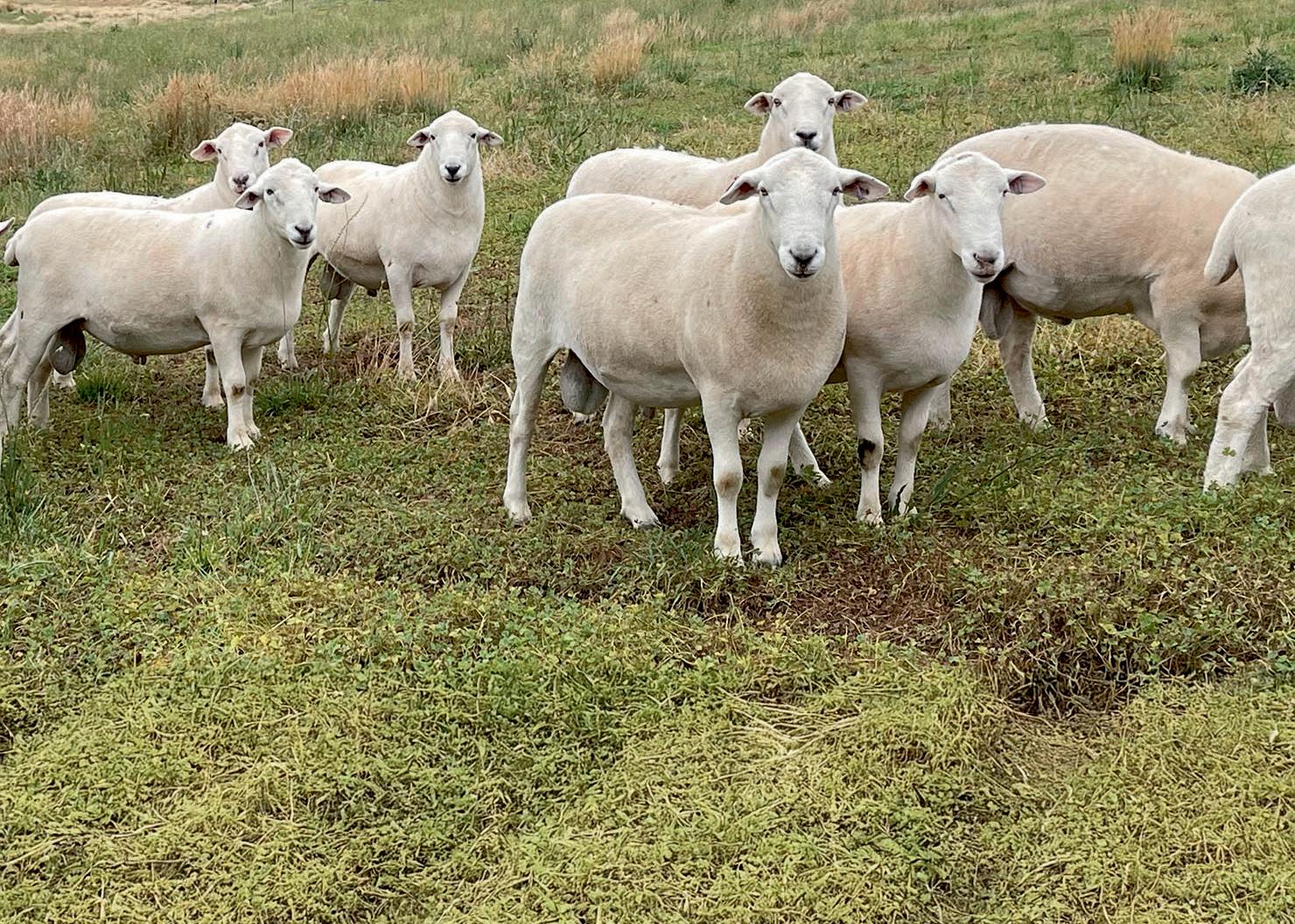
Wiltipolls are the clean-shedding sheep bred in Australia for farmers who want to spend less time in the yards and more time enjoying their lifestyle.
Hardy, quiet and easy to handle, it is a breed that fits the rhythm of small farms.
What makes them stand out is their ability to consistently deliver performance without the workload of wool sheep. No shearing. No crutching. Less risk of fly strike. Instead, Wiltipolls put their energy into growth, reproduction and producing superb-tasting lamb.
Why Wiltipolls?
Clean-shedding every year, with no shearing or crutching. Consistently deliver twins and triplets, with high weaning percentages.
Excellent mothering instincts and easy lambing.
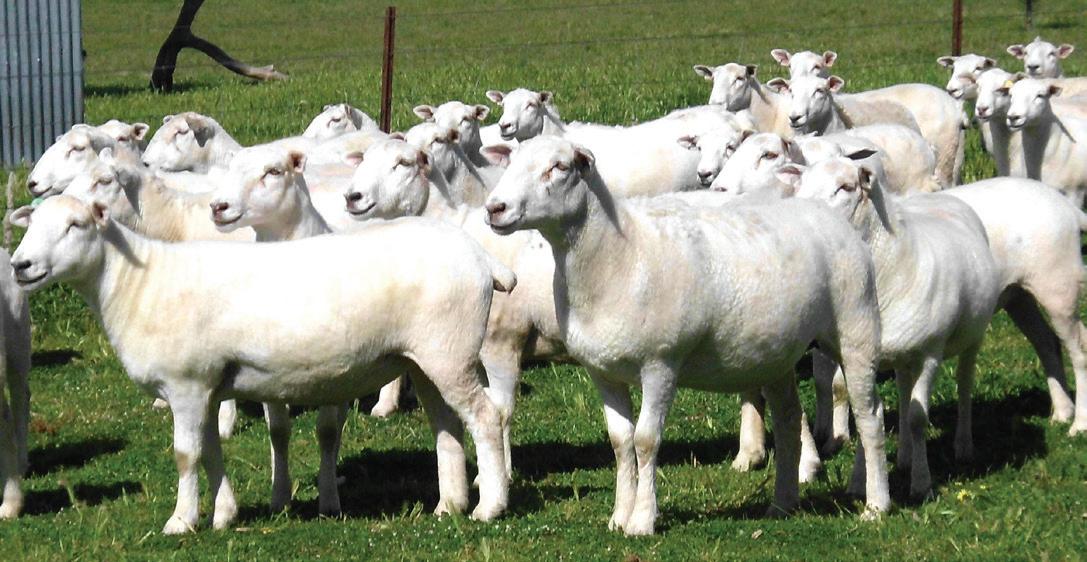
Superb tasting meat with a high live-to-carcase ratio. Hardy and adaptable, with sound feet and teeth. Calm temperament, easy on


Wilitpolls are an easy-care, clean-shedding prime lamb breed.
They are known for their quiet temperament and ease of handling with no shearing or crutching needed.

Wilitpolls have excellent mothering instincts, easy lambing and high weaning percentages making them an excellent choice in shedding sheep.
fences and simple to manage.
For small farmers, that combination means more lambs on the ground, healthier flocks and less time tied up in maintenance.
Wiltipolls thrive across a wide range of Australian environments, so they are just as at home on hobby blocks as they are on larger holdings.
As a bonus, Wiltipoll breeders have the backing of a supportive national association.
The Wiltipoll Sheep Breeders Association connects studs, commercial producers and small landholders, sharing knowledge and helping the breed go from strength to strength.
If you are looking for sheep that balance low maintenance with high productivity, Wiltipolls are well worth considering.


In recent years we have seen a trend in the beef cattle industry to moderate the size of the cattle to a more sustainable beef animal.
We have seen that these smaller-framed cattle are more appreciated in a grass-fed environment.
Australian Heritage Angus are a perfect fit for this market, offering graziers the quality of Angus breeding combined with the constitution of cattle that can finish on grass.
Cattle convert grasses and other food stuffs that people cannot eat into a protein source for human consumption.
Australian Heritage Angus are perfectly suited to do the job, converting grass and pastures into delicious, succulent, premium-grade beef.
Australian Heritage Angus are a blend of heritage Angus genetics sourced from cattle that are directly descended from pre1968 Angus cattle.
There are three main groups that are the source of Australian Heritage Angus genetics.
First are the ‘native bred’ Angus cattle from Scotland. These cattle are directly descended from the original Angus cattle in Scotland.
Scottish cattle have been bred for hundreds of years to thrive in an extreme climate on their native grasslands. This inherent do-ability equips them for the extremes of the Australian climate — from droughts in the
north to lush wet pastures in the south.
They are perfectly suited to a grass-fed operation, making the most opportunity of seasons and the available grasses.
The second group is Angus cattle from New Zealand that have been maintained in a closed herd since 1968. These cattle have very similar traits to the native Angus of Scotland.
The last group are Angus cattle brought into Australia by the Trangie DPI research station, in the early 20th century. The descendants of which are now known as Lowline cattle.
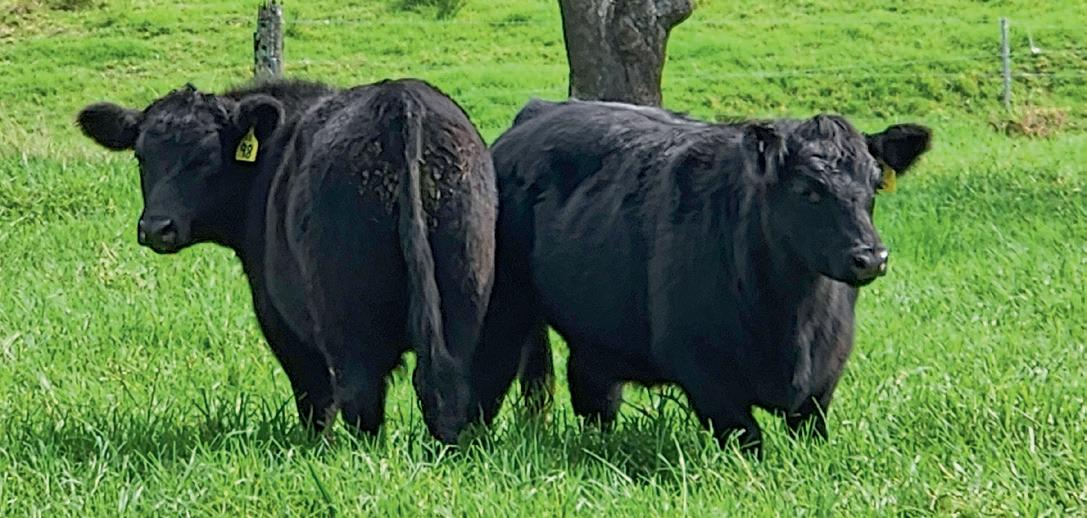
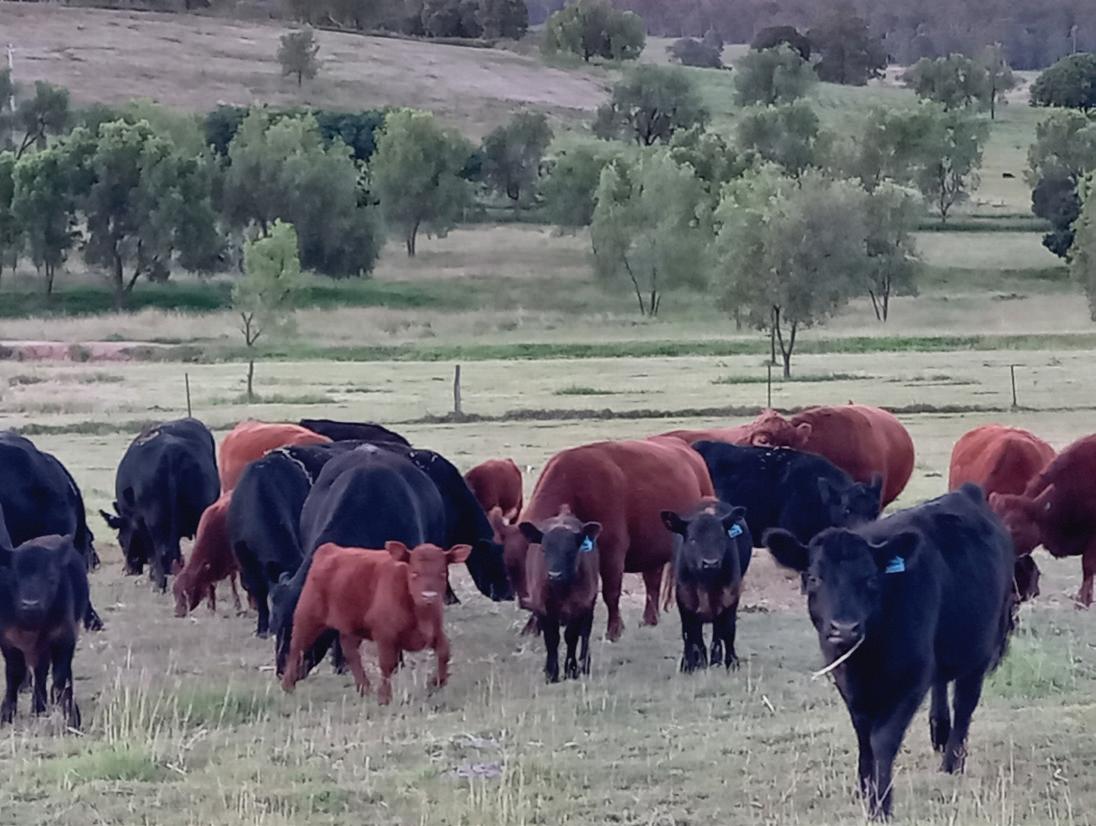
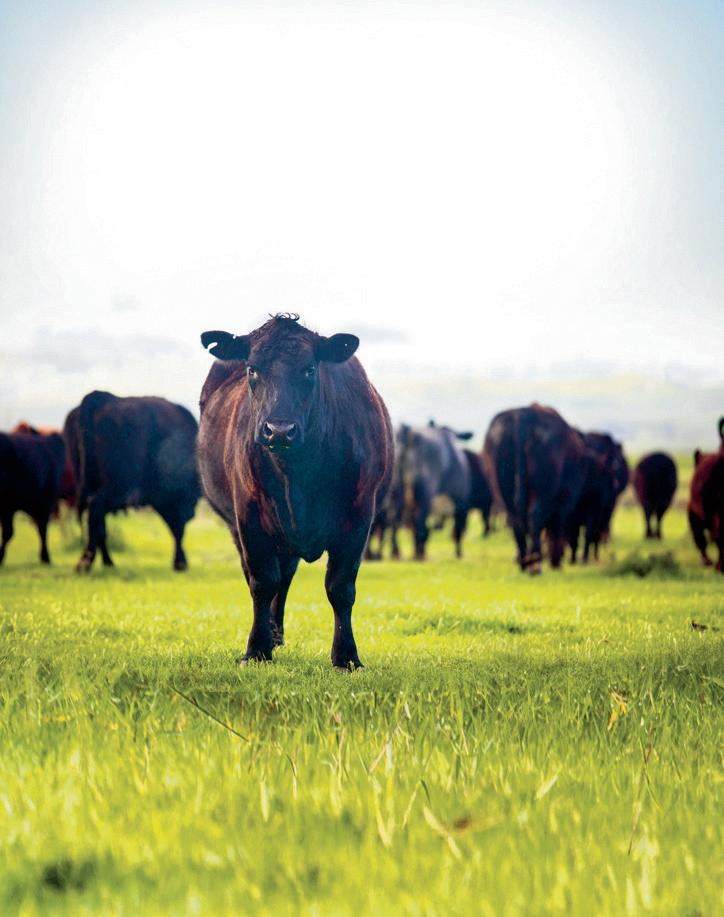
Australian Heritage Angus are either black or red. The cattle should be 130 cm for the show ring (about frame score 4).
Bulls need to exhibit good muscling with adequate fat cover, with an emphasis on retail meat yield. Cows need to show great maternal characteristics, plenty of milk for good calf growth and unassisted calving.
Australian Heritage Angus have a quiet temperament that facilitates ease of handling and this increases meat quality.
Perfect for the small farmer right through to commercial operations, Australian Heritage Angus will be a sound addition to your herd.

Continuing last month’s jaffle theme, here our resident home butcher STEVE BAIN cuts up meat for a stew-type filling.
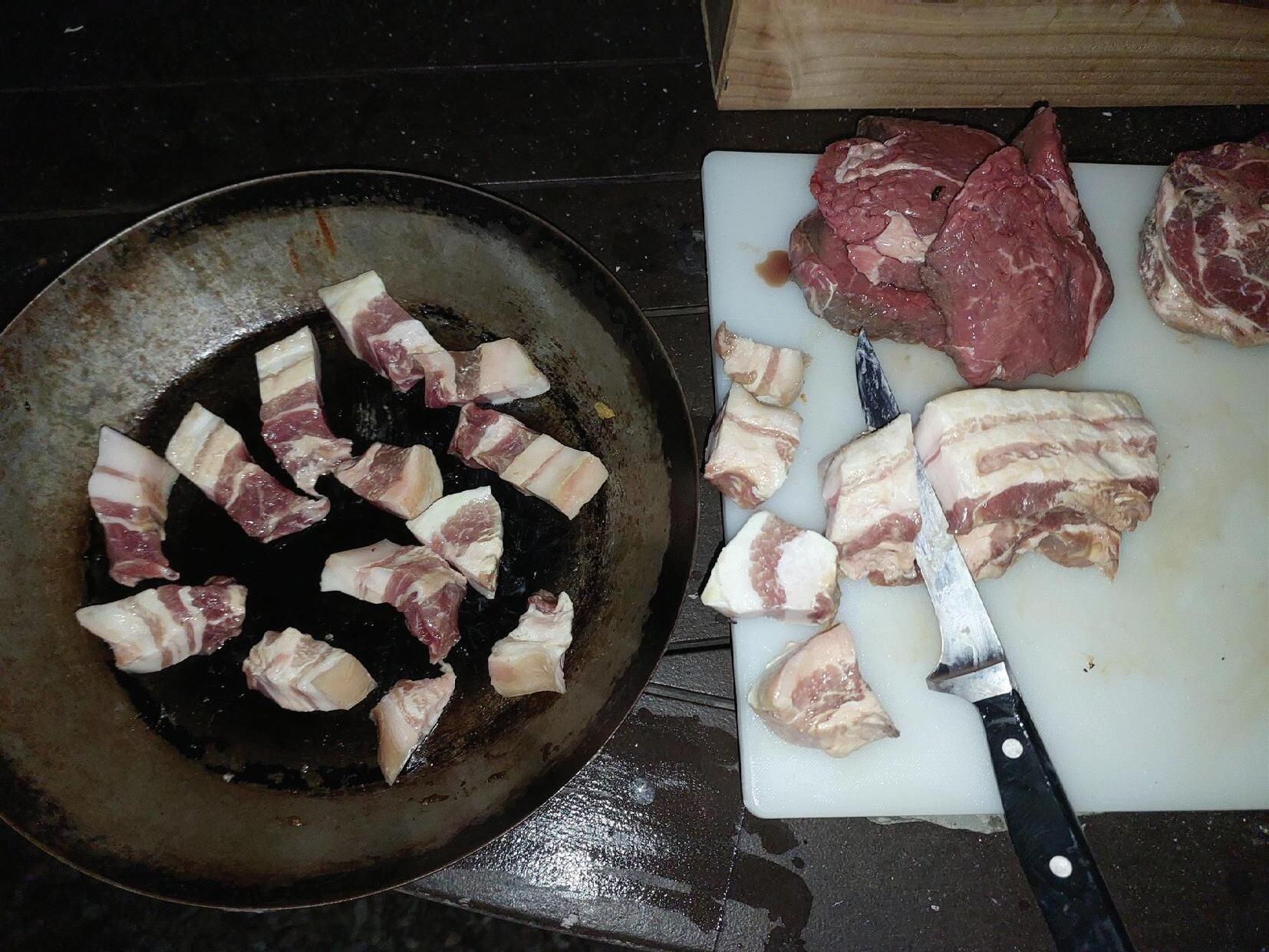
The hero ingredients of the this dish are themed along the lines of a gamekeeper’s pie. In a gamekeeper's pie, there are typically two meats, the constant being fatty pork (from any of the fatty cuts like those from the belly area) and typically the second meat is “anything that is in season”.
A variation on the theme is the gamekeeper's stew, or game stew, where multiple meats are used at the same time in the recipe. There is also the concept of a ‘poacher’s pie’ (the non-vegetarian pun version). Typically the poacher’s pie uses bacon rashers and either meat(s) from smaller game animals or diced mixed game.
The philosophy is roughly the same across all these dishes — use pork or bacon for a little fat in the dish and add whatever meat, or mixture of meat that is in season or on-hand. In Australia, venison, beef, goat or lamb, even kangaroo are options in addition to the pork.
We make it a pie by packaging the ‘stew’ into a pastry shell that is baked in a jaffle iron.
The plan for the meat is to chop up a few varieties, mix them together and use this batch as the hero in a stew which becomes the pie’s filling.
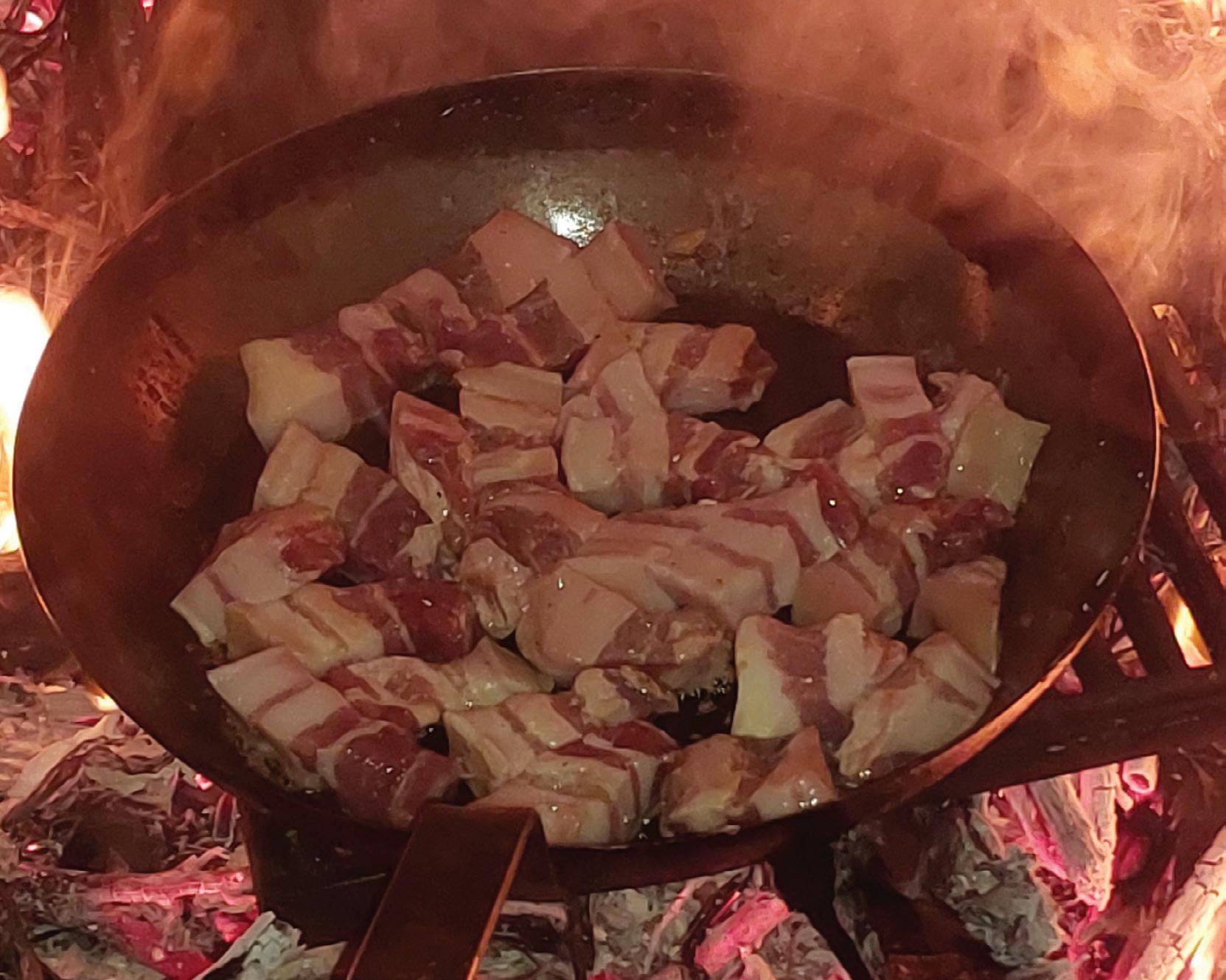
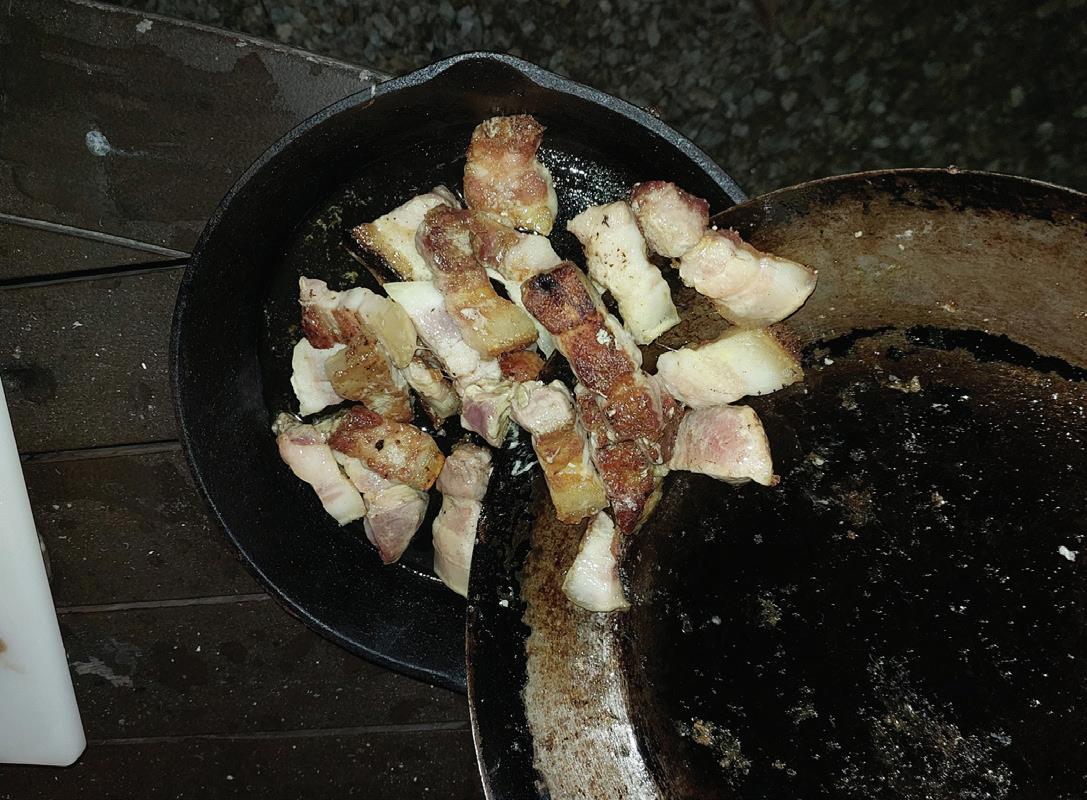
Step 1: Chop up the pork rashers (one per person) into large-ish pieces. I typically make the pork pieces the largest in the recipe. Step 2: Sear (and melt some fat from) all of the pork pieces in a metal frying pan over a hot to very hot fire (if you burn any of the pork pieces too badly, you can remove them from the pan. Because they are larger, the pork pieces are easily identified and removed).
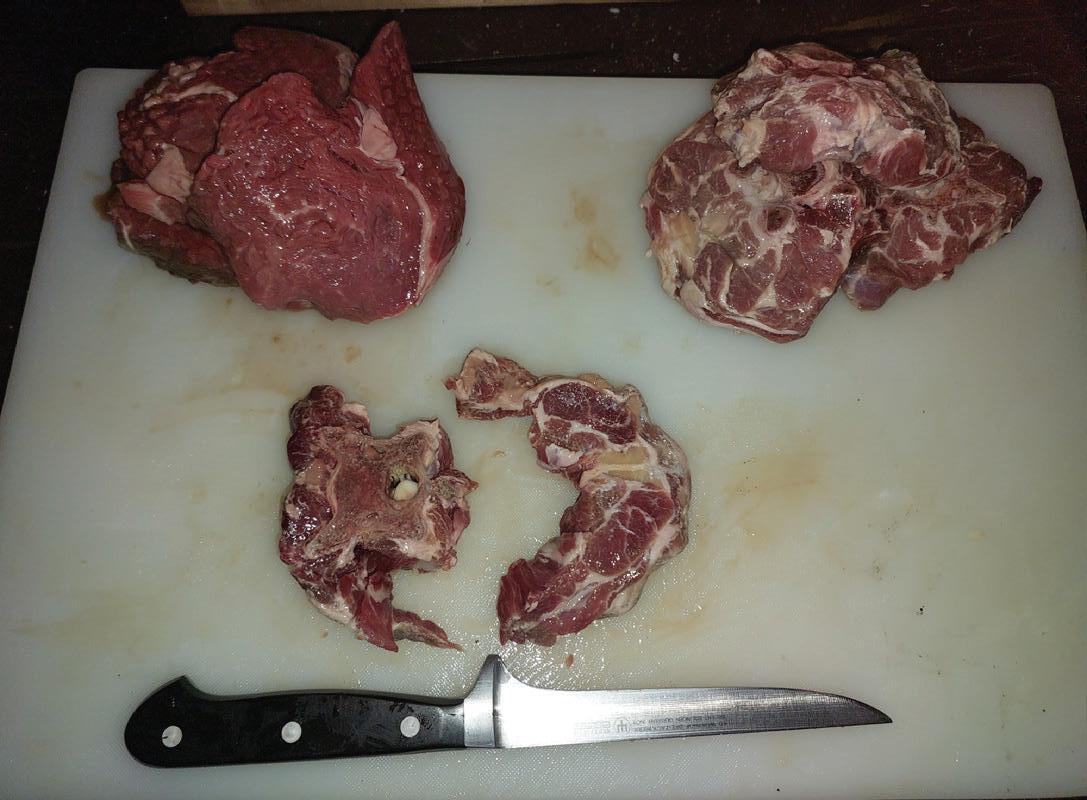
Step 3: Either goat or lamb neck chops make a great addition to a gamekeeper’s stew. Cut out the vertebrae bone from the
neck chop, this leaves you with a horseshoe-shaped curve of meat.
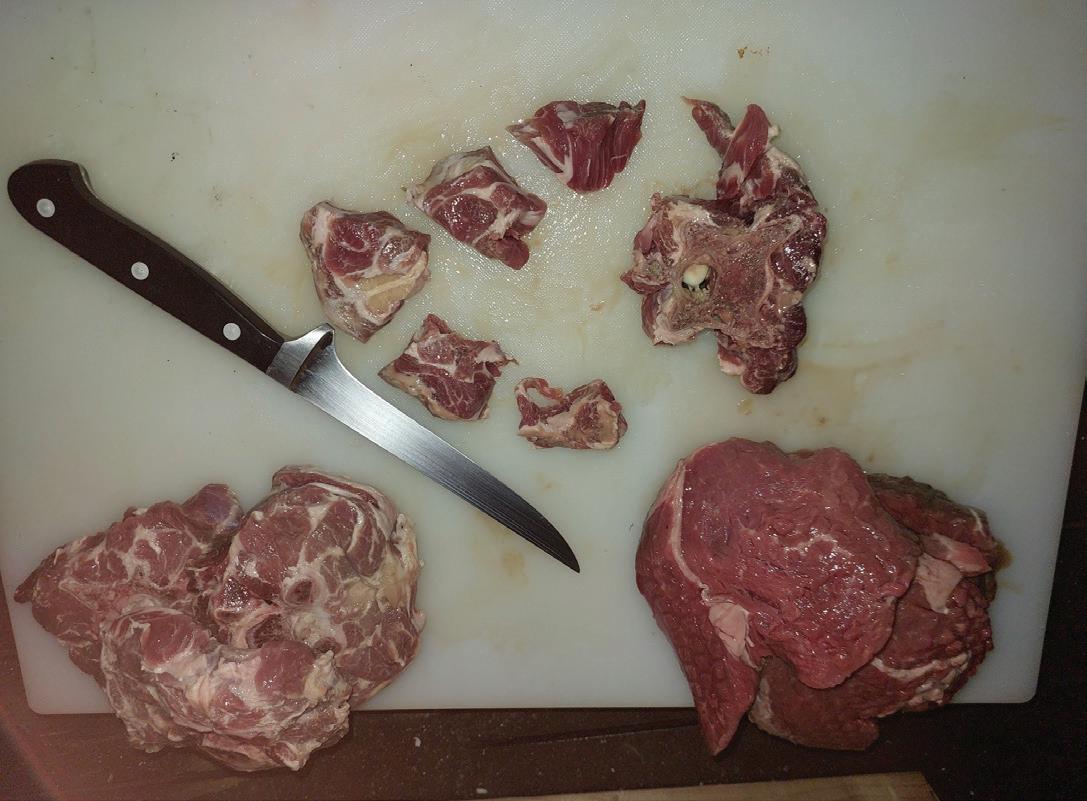
Step 4: Then chop the lamb or goat up into the smallest pieces in the stew/filling.
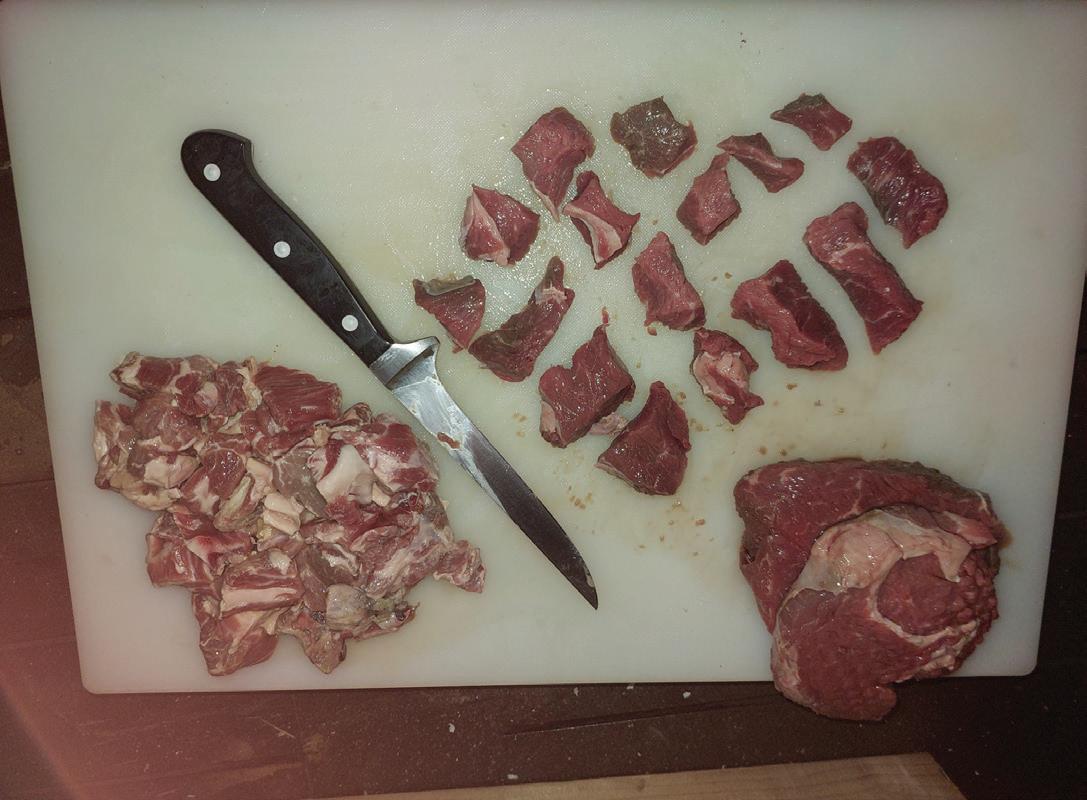
Step 5: Dice the beef into cubes or strips. Any of the tender cuts of beef will work fine in this recipe (although I suggest ribeye and strips are best kept for eating
as steaks). You can use less expensive cuts, such as shin beef, if you slow cook or pressure cook the filling.
Step 6: Tip the pork out of the hot frying pan into another frying pan that you can keep near the fire to keep the pork warm while you fry the rest of the meat. Ensure that you leave plenty of
‘pork jus’ in the hot pan. The reason for removing the pork from the searing pan is so that the very hot pan does not get overcrowded when searing the other meats.
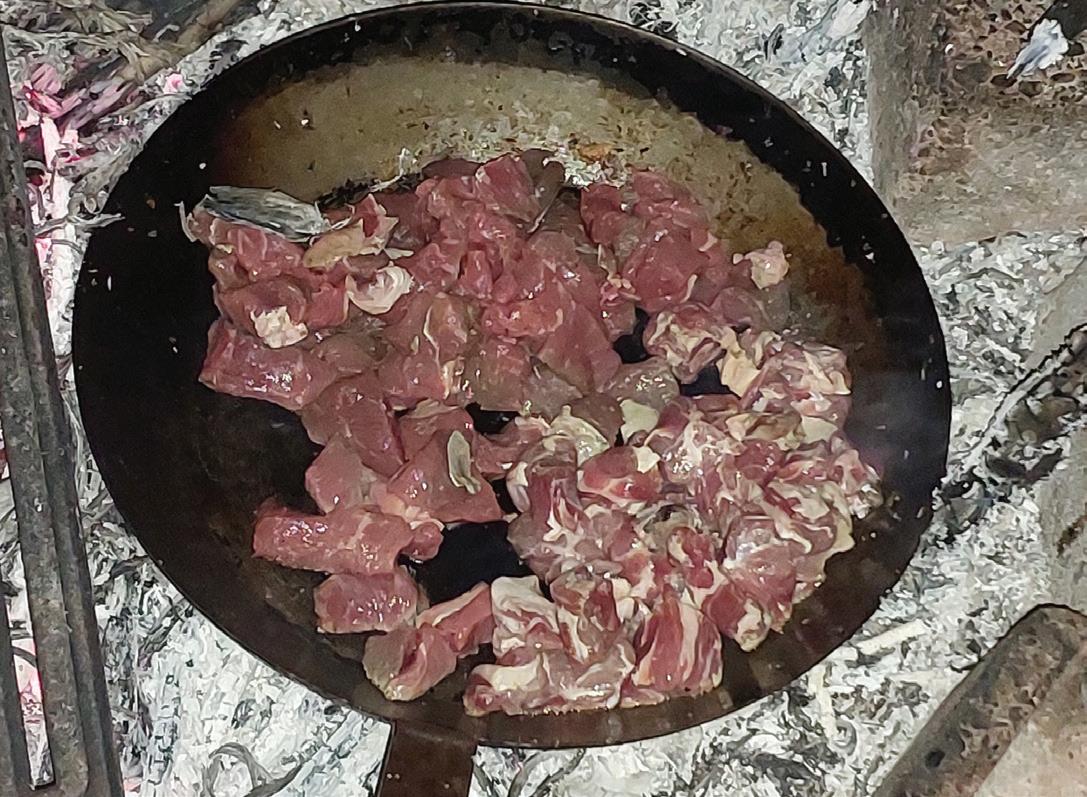
Step 7: To the hot pan, add all of the other meats and place the lot on the fire to sear. From time to time a piece of ash from the fire
3 4 5
may end up in the pan. Fish it out if you can, but if you can’t it isn’t a problem.
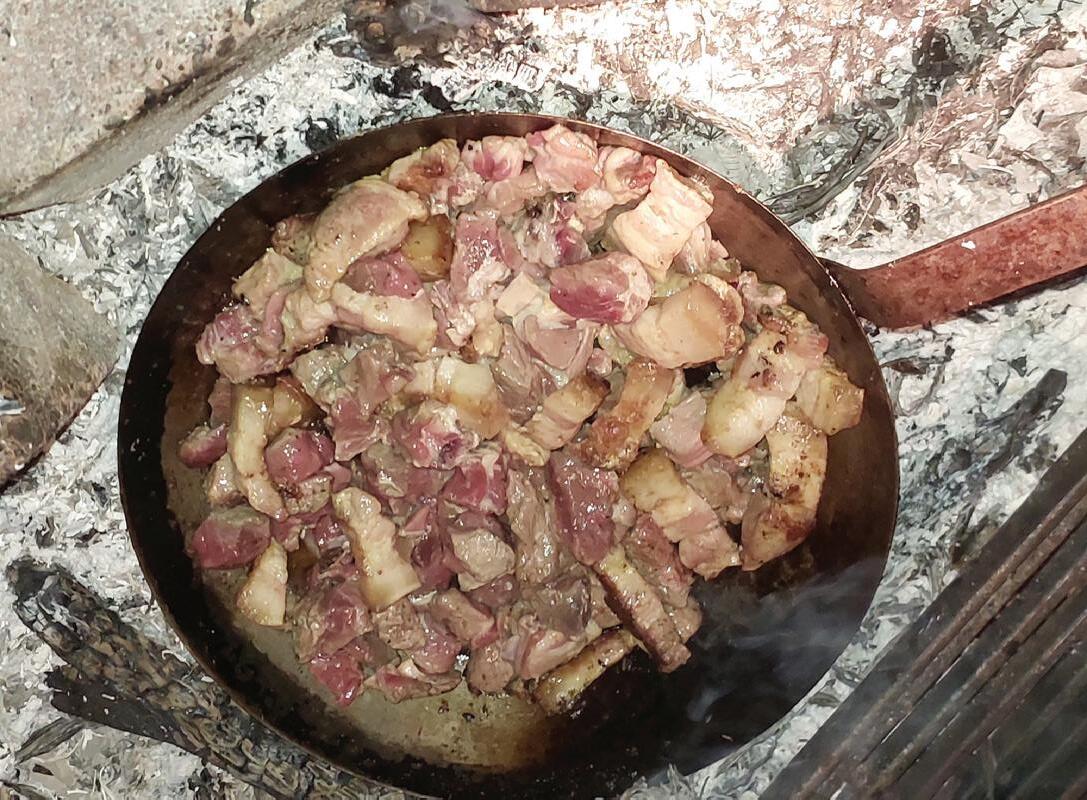
Step 8: Once the meats have started browning, tip the pork from the warming pan back into the hot pan and continue cooking to colour most of the meat pieces. Now the meat is ready for the proper cook. Over to Lynn.
6 7 8
Did you enjoy last month’s jaffles? This month, LYNN BAIN shares another variation, this time using puff pastry.
My family first tried puff pastry jaffles when we were on a camping trip to Stanthorpe many years ago. What started out as a bit of a fun experiment has now become a family tradition. The puff pastry jaffles were a huge
success. We now look forward to parallel taste testing to see which option is better, bread or pastry.
I am going to use a pressure cooker for the first part of the following recipe as we also enjoy our jaffles around the firepit at home.
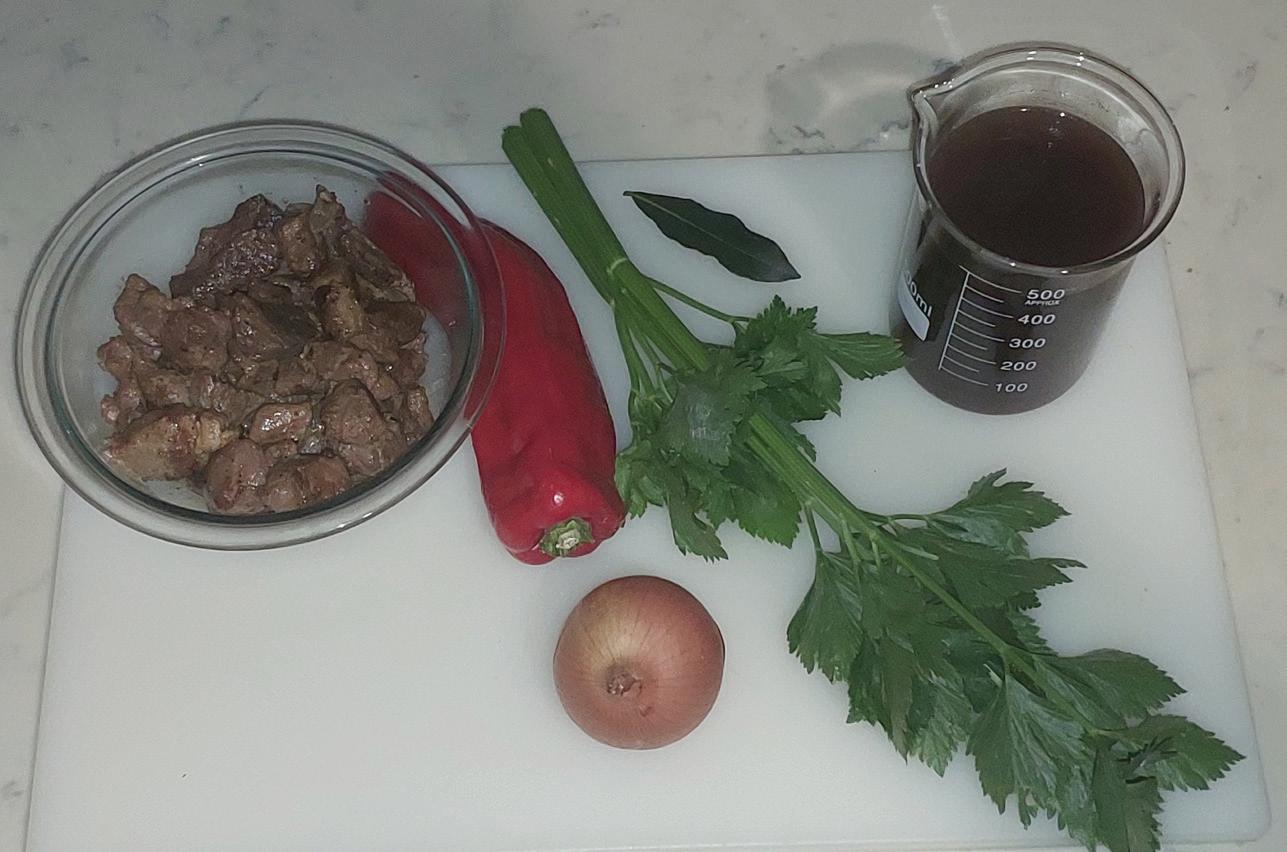
ɋ 500g meat cubes
ɋ 2-3 tbsp canola oil
ɋ 1 onion, peeled and finely chopped
ɋ 1 red capsicum, deseeded and chopped into small cubes
ɋ 2 sticks celery (leaves included), finely sliced
ɋ 1 bay leaf
ɋ 2 cups either beef or chicken stock
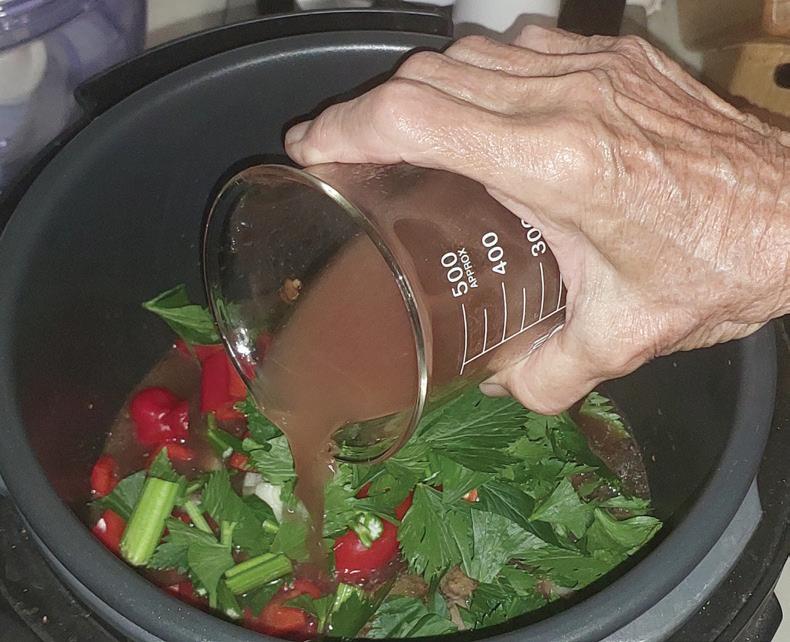
Step 1: Now set up your pressure cooker or, alternatively, a heavy-based saucepan with a lid. Add the browned meat cubes to the pressure cooker, or simply return them to the saucepan. Add the onion, capsicum, celery, bay leaf and stock to the pot. Stir gently to combine.
Put the lid on the pressure cooker and cook under pressure for about half an hour. If you are using a pan, add all the ingredients to the pan and set over a medium-low heat for about an hour and a half. When cooked, check the consistency of the sauce/ gravy and thicken with a cornflour slurry if necessary.
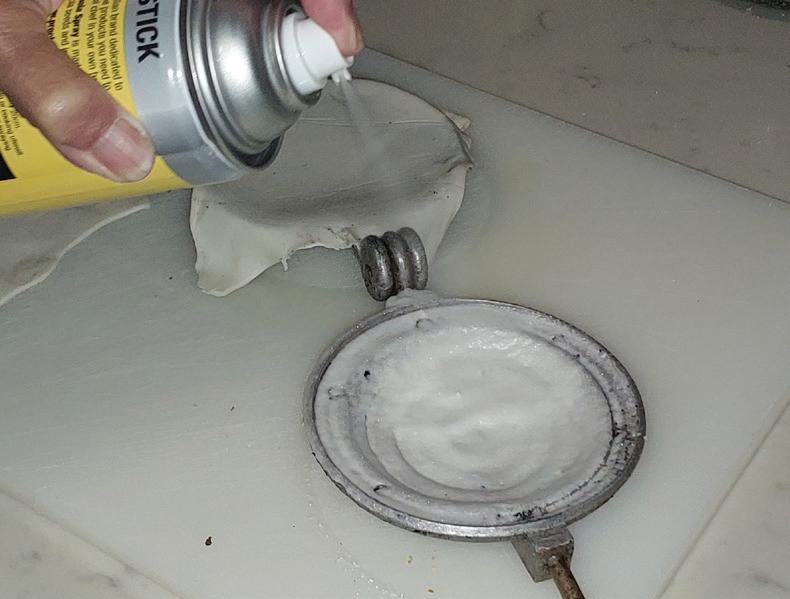
Step 2: Spray the jaffle maker with nonstick cooking spray.
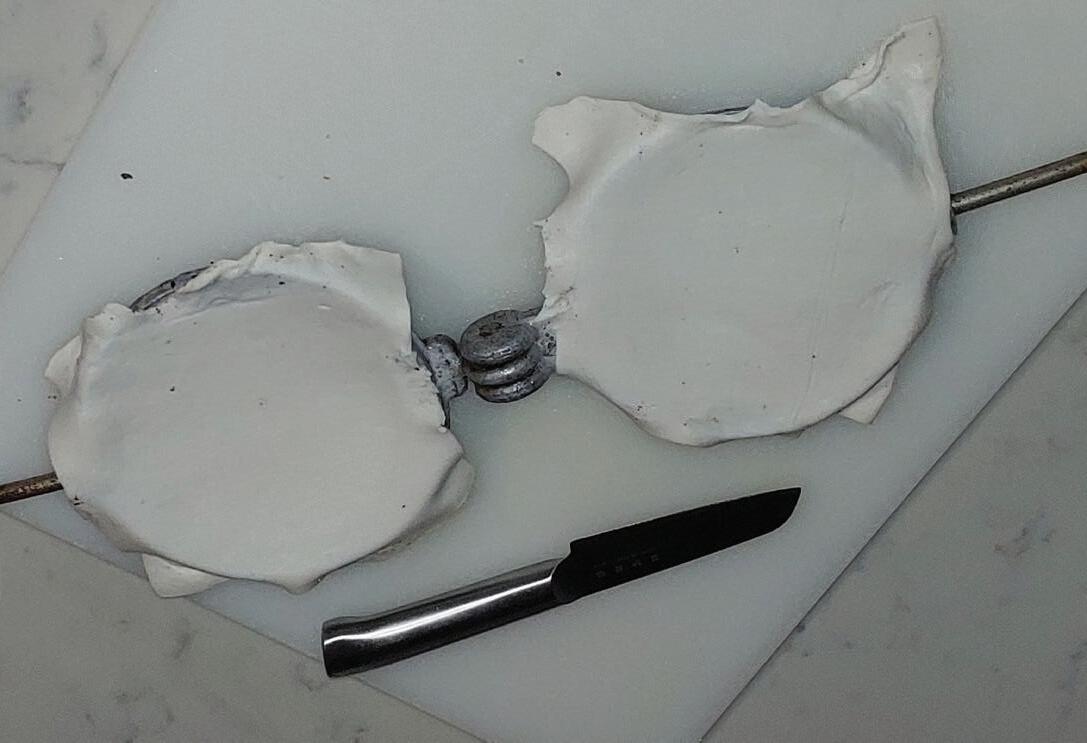
Step 3: Cut the puff pastry to the approximate size of the jaffle maker and lay the pastry into the cup of the jaffle maker, pushing down gently with your fingers to form a cup. Now lay another piece of pastry on the other side of the jaffle iron.
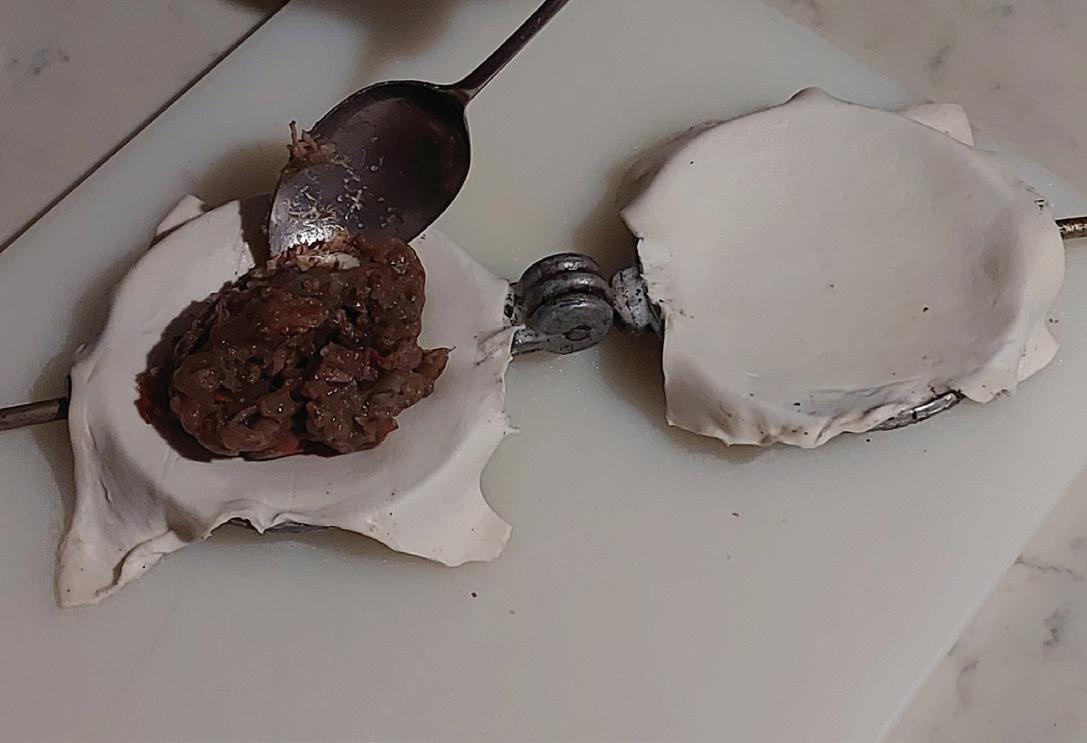
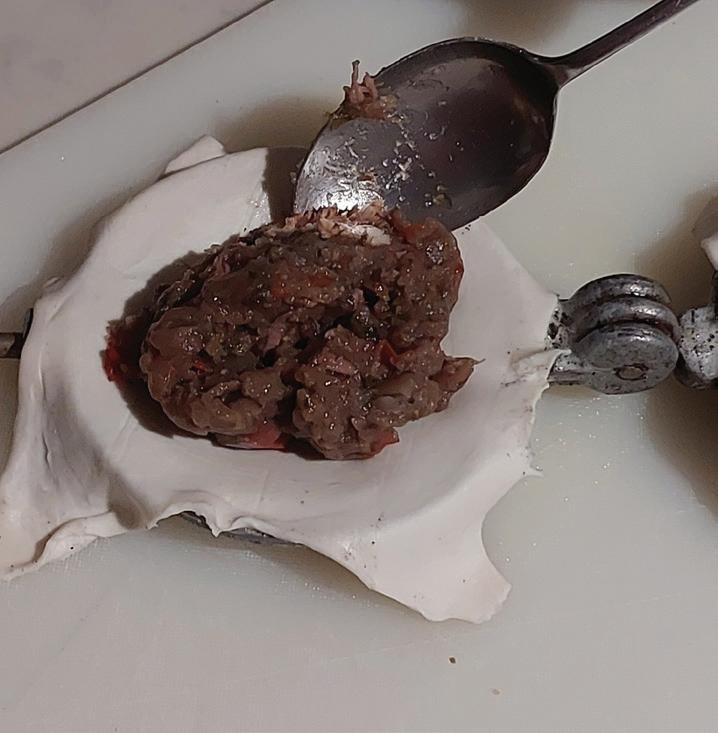
Step 4: Place a tablespoon or so of the meat mixture into the pastry cup.
Step 5: A close-up of the filling mixture in the pastry ‘cup’.
Handy hack one: Spraying the jaffle maker with non-stick cooking spray makes it so much easier to get the jaffles out.
Handy hack two: The meat filling for the jaffles can be made ahead of time and refrigerated until ready to use.
Handy hack three: You can also make puff pastry dessert jaffles using puréed fruit such as apples, pears or stone fruit. Great served with a drizzle of honey or a dollop of yoghurt.
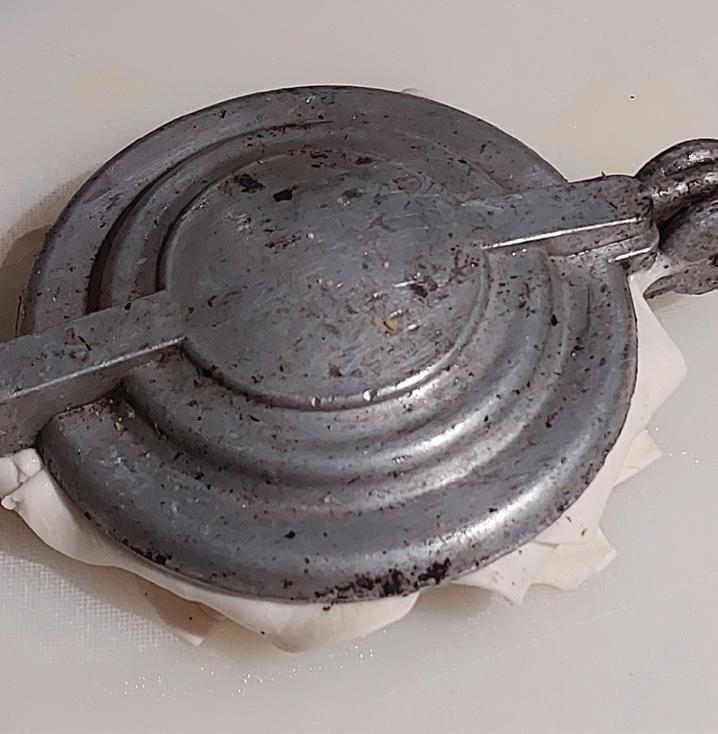
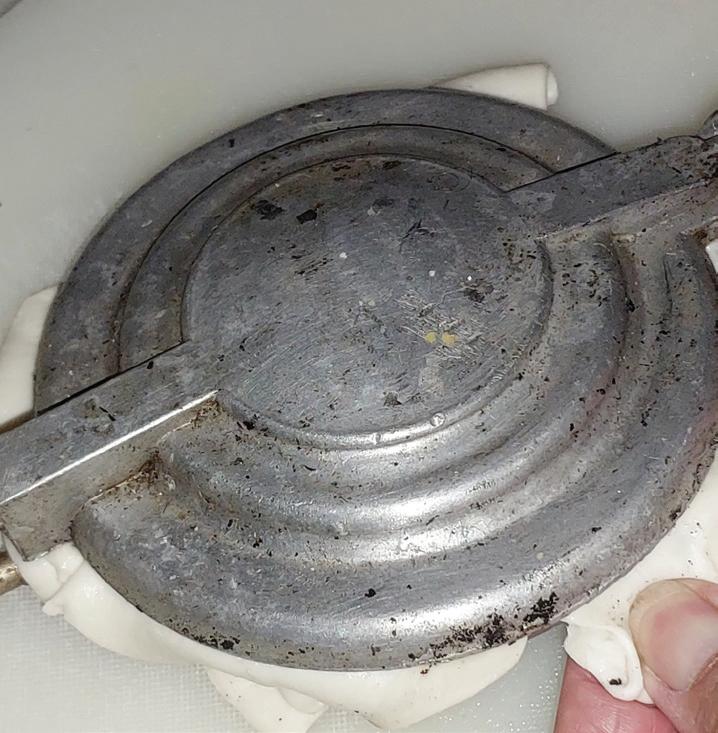
Step 6: Close the jaffle maker.
Step 7: Now take the overhanging pastry around the edges and gently pinch the top and bottom pieces of pastry together.
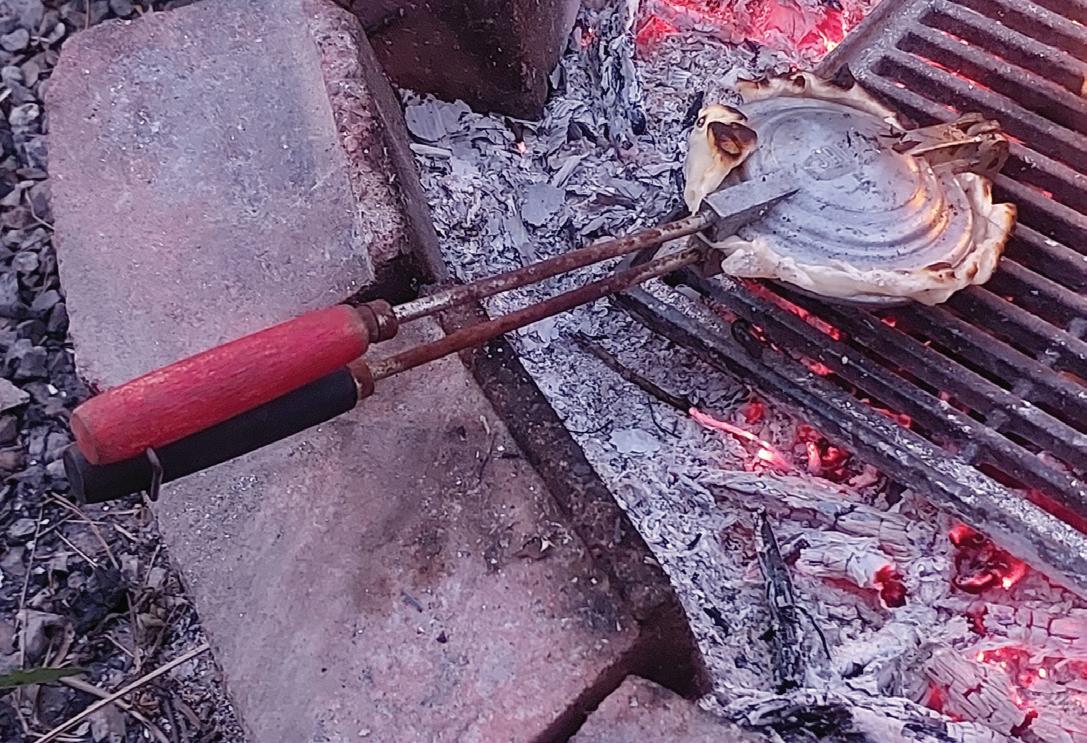
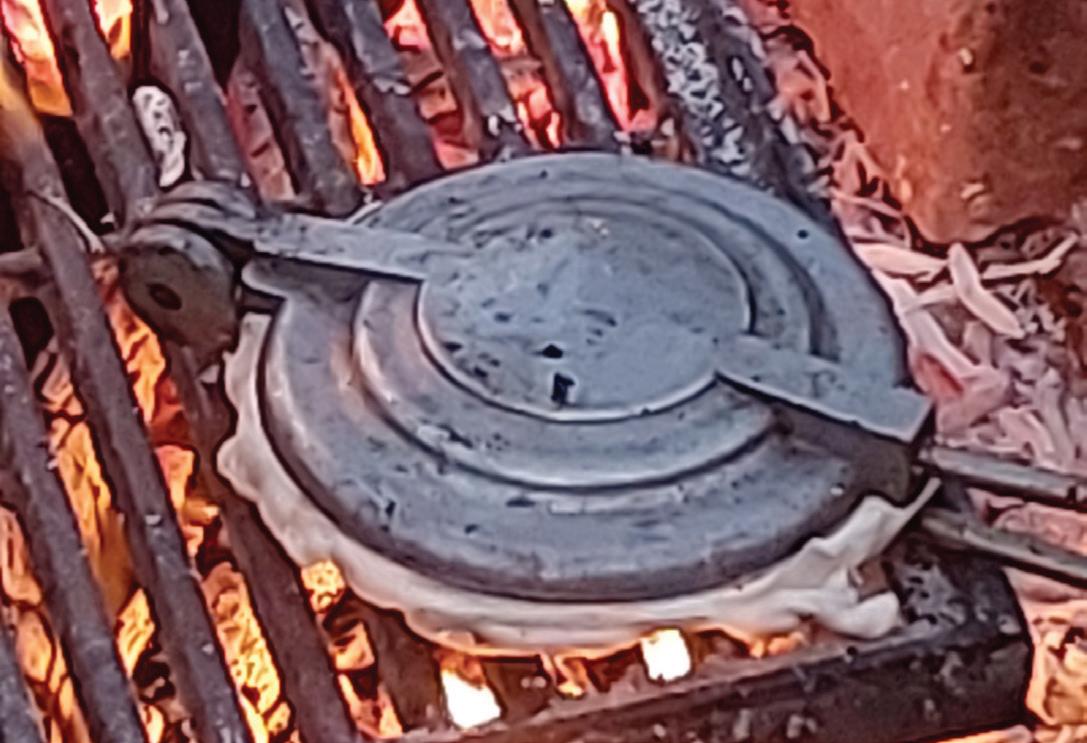
Step 8: With the short-handled alloyhead jaffle irons, I like to place them on a grid that I’ve dropped on to the top of the hot ashes/fire. This keeps the wooden ends of the short handles out of the fire (with the longer-handled cast-iron toaster irons, you can stick the cast iron heads straight on to/in to the fire/ashes).
Step 9: This close up shows the toaster head sitting over the ashes rather than the flame. Note that these pastry pies take a long time to cook — sometime 20 minutes or more over medium heat is my recommendation — but do check them say every five-minute as you don't want to burn them.
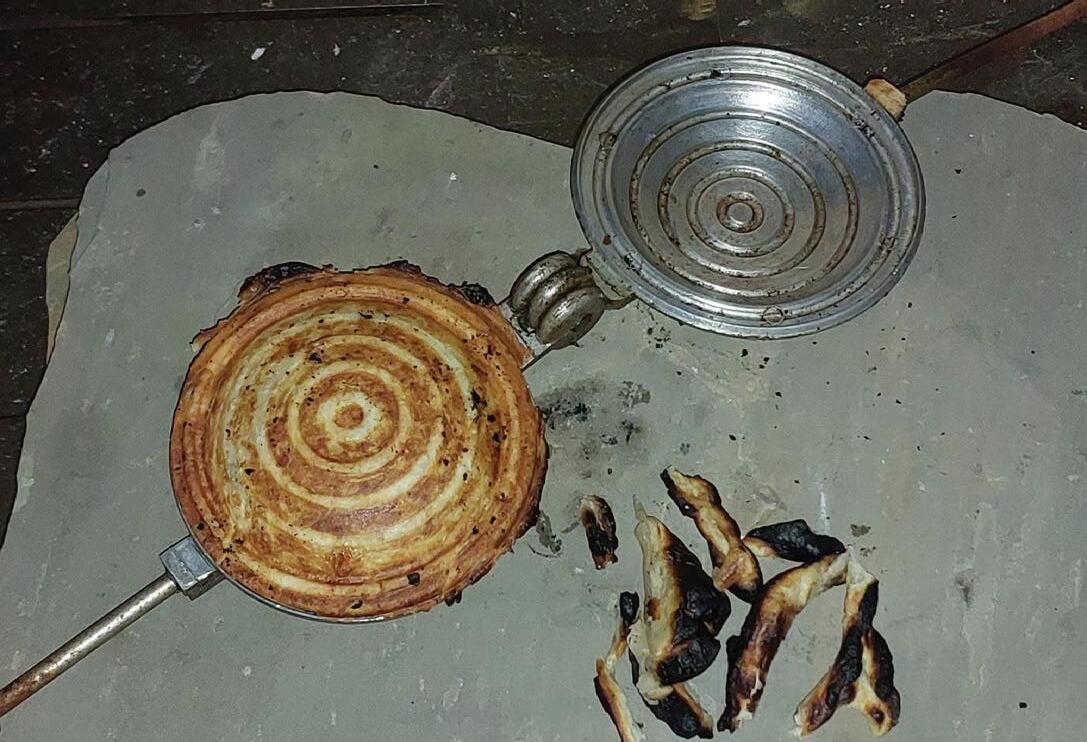
Step 10: Break away the burnt edges as shown in the photo. This is golden brown perfect, I guess you could add mushy peas about now.
Step 11: Add a dollop of tomato sauce and you have a ‘poacher’s pastry pie’ in Aussie campfire style.
1
2

Sentiment in Australia’s agricultural sector softened over the winter months, as the nation’s farmers contend with higher input costs and mixed seasonal conditions, the latest Rabobank Rural Confidence Survey has found.
Farmers reported feeling most positive about seasonal conditions and commodity prices, although producers in Victoria and South Australia in particular remained concerned about weather.
Input costs were the main reason for concern in Tasmania, Queensland and NSW, however seasonal factors outstripped costs in Victoria and South Australia, and farmers in Western Australia were most worried about government intervention and policies.
There was a marginal lift in farm sector confidence in Victoria (to reach a net measure of seven per cent, up from five per cent),
supported by early-season rainfall that helped replenish soil moisture in some areas, along with high lamb and beef prices.
Despite rallying at the beginning of the year, NSW farmer confidence recorded a downturn, with the net index falling to -8 per cent from -1 per cent in the previous quarter.
NSW now has the lowest level of farmer confidence in the country.
Rabobank country banking Australia group executive Marcel van Doremaele said it was encouraging to see that a large proportion of farmers still expected

conditions to remain stable or improve over the next 12 months.
“This highlights the resilience of Australian farm businesses — they are navigating rising input costs and ongoing seasonal
variability, but are capitalising on the positive drivers of solid commodity prices, primarily in livestock sectors, and favourable seasonal conditions in key regions,” he said.
Applications are now open for the 2026 AgriFutures Rural Women’s Award, marking its 25th anniversary as Australia’s premier platform recognising and supporting women leaders across rural, regional and remote communities.
Successful applicants will receive funding and support to progress projects benefiting rural industries, businesses and communities.
Each state and territory winner receives a $15,000 Westpac grant, professional development opportunities and Alumni network access.
The national winner and runner-up will secure additional grants of $20,000 and $15,000 respectively.
“Every year, we meet women who are challenging the status quo and finding new ways to strengthen their industries and communities,” AgriFutures Australia chief executive officer Belinda Allitt said.
The award welcomes applications from women across Australia, including those based on-farm, in
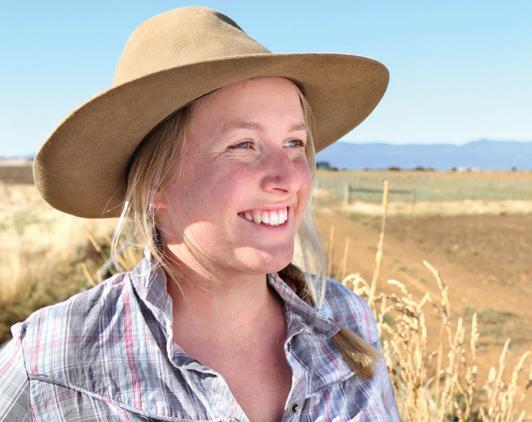
Women from across the country whose work delivers benefits to rural and regional Australia are encouraged to apply for the AgriFutures Rural Women’s Award. Photo: apflite.
regional areas or cities, provided their work delivers benefits to rural and regional Australia. Applications close on Friday, November 7.
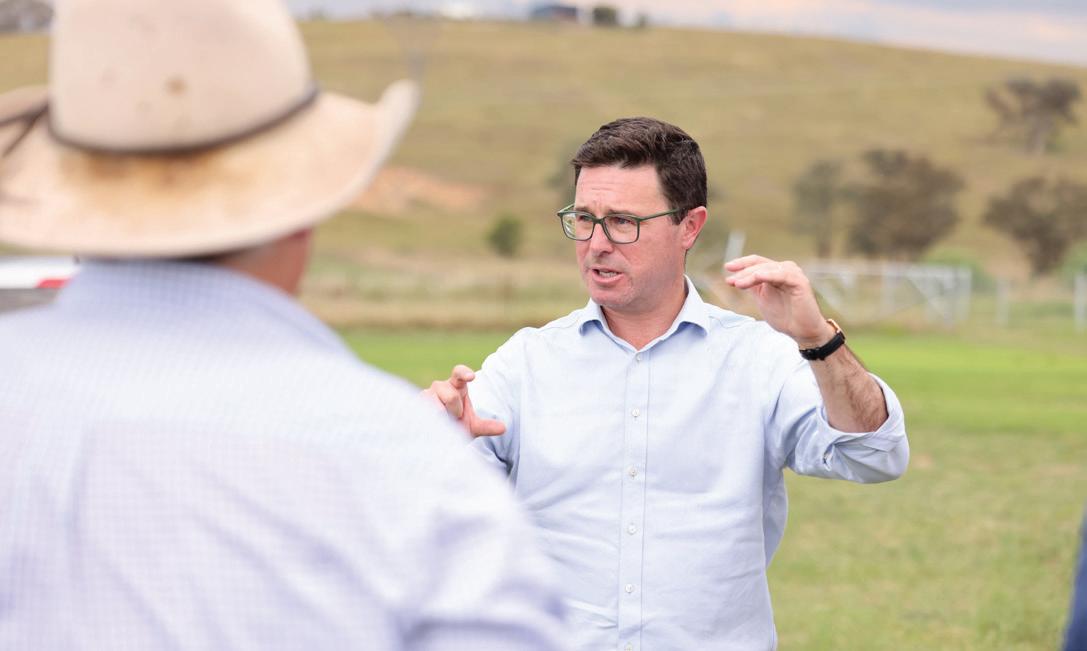
Leader of The Nationals David Littleproud said the latest 2025 AUSVEG Industry Sentiment Report showed Australia’s food security was at risk, as two in five growers consider leaving the industry.
Mr Littleproud said the decision to walk away was being affected by Labor’s anti-agriculture policies, including red tape impacting productivity and profitability, as the Horticulture compliance and regulation: reducing the burden by 2030 report is also released.
“Every Australian should be worried that 40 per cent of the industry is considering leaving within the next year, with a further 40 per cent saying they would also quit if they had a viable exit strategy,” Mr Littleproud said.
“Losing 80 per cent of our growers would be disastrous.
When supply goes down, prices go up. So families will bear the burden of Labor destroying the agriculture industry at the supermarket checkout.”
Mr Littleproud added 62 per cent of those surveyed indicated they were financially worse off compared to 12 months ago, and
53 per cent expected to be worse off by July 2026.
“The cost of compliance for vegetable growers has gone up to $213 million per annum. This huge cost is also impacting our farmers emotionally, with nine in 10 reporting negative impacts of compliance audits on their stress
levels and mental wellbeing,” he said.
“Growers should be focusing on their crops, not being forced to fill out forms. It is no wonder confidence across the industry has been smashed. It is worrying that Labor not only has no plan to fix it, but continues to increase the burden farmers face.
“Our farmers produce the nation’s food and fibre. They should be supported by Labor to get the workers they need and by Labor being tough on supermarkets, instead of being slapped with more red and green tape and compliance to make food production even harder.
“I am not sure that Australians would want to live in a country where we are importing vegetables and not growing our own, but if there is not change soon, this is the road we are heading down.”








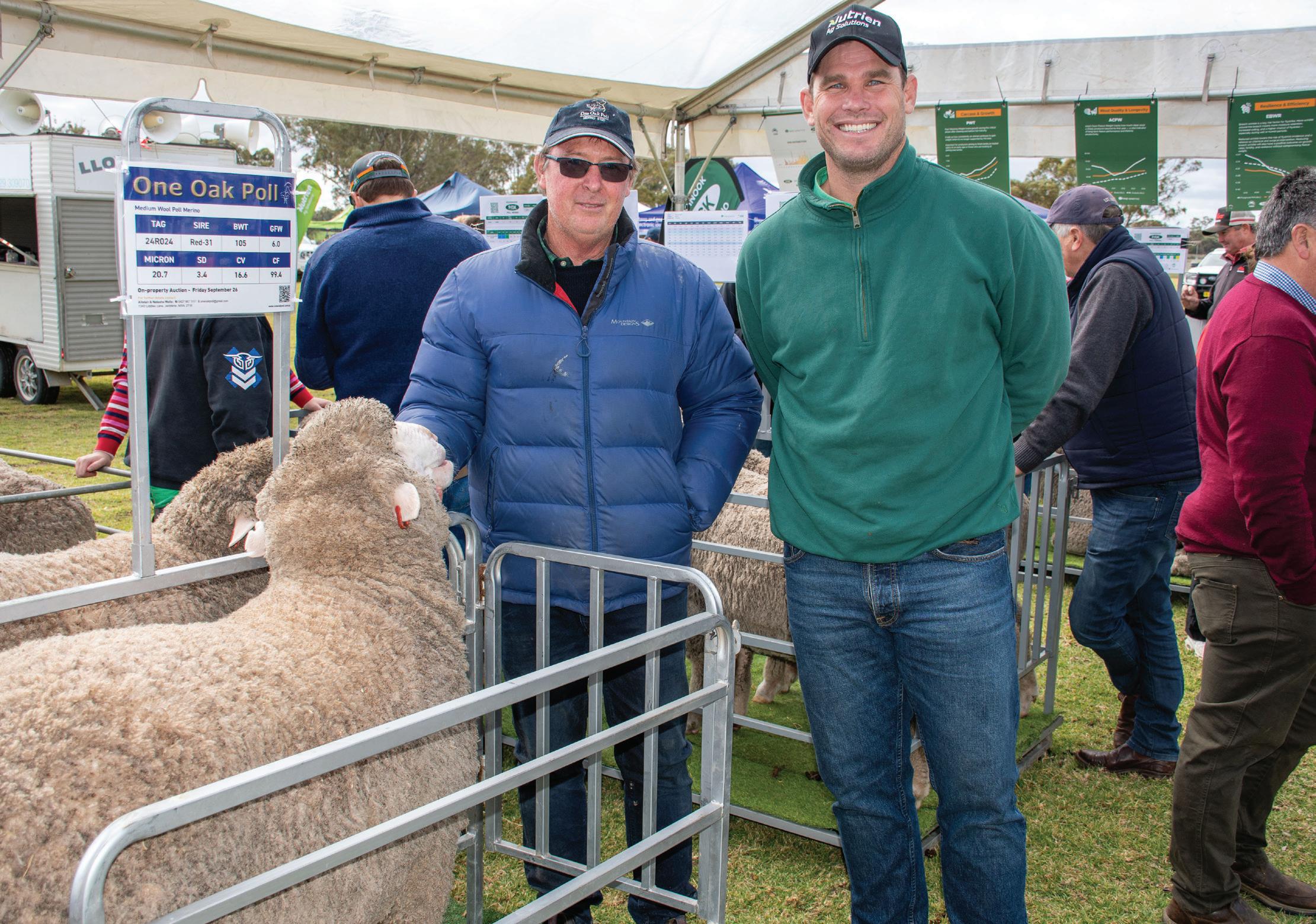
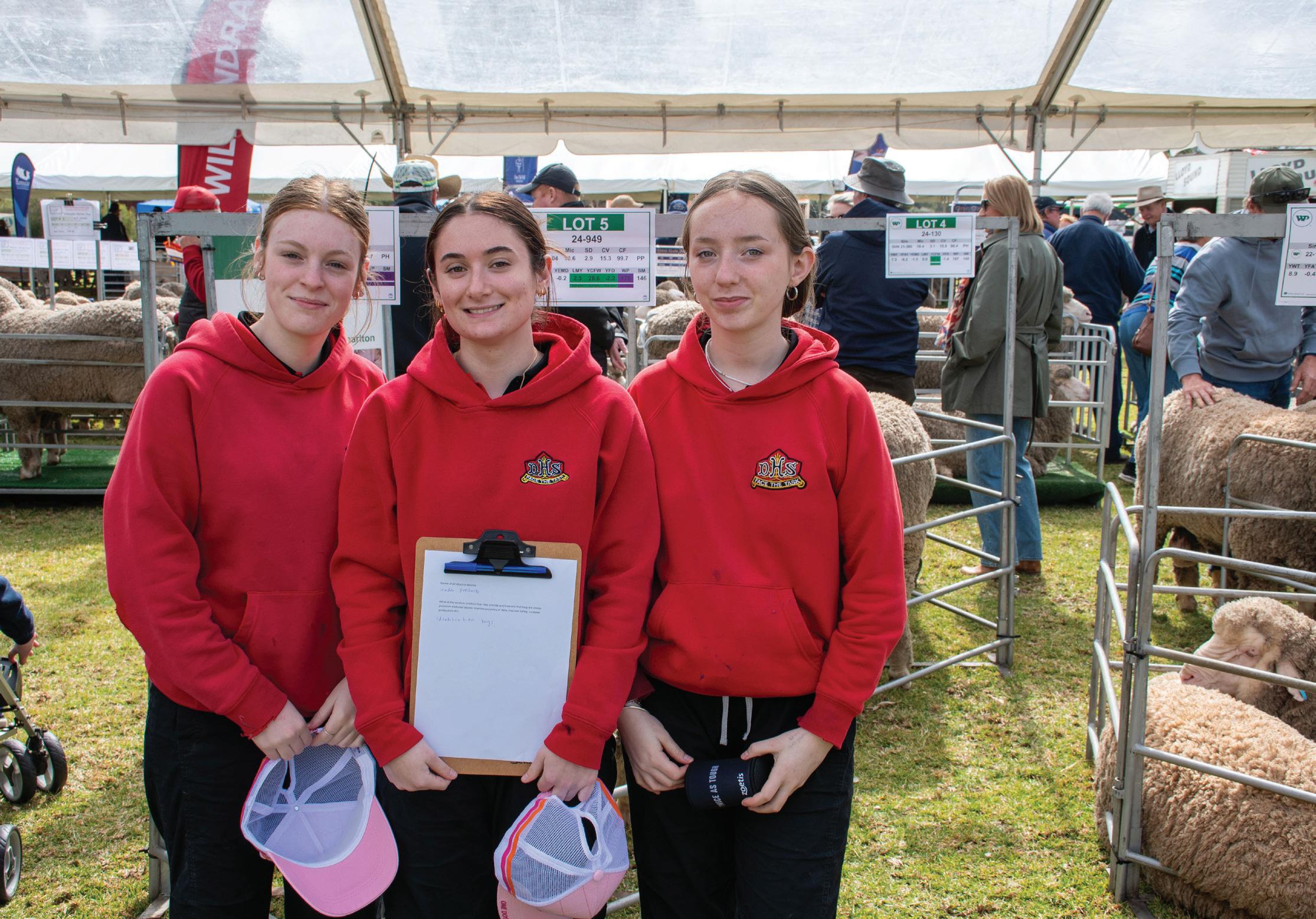
Southern Riverina sheep breeders were among those who made their way to Conargo for the long-awaited return of the Riverina Sheep and Wool Expo in August.
District and interstate producers, industry leaders and school students from across the region were in attendance.
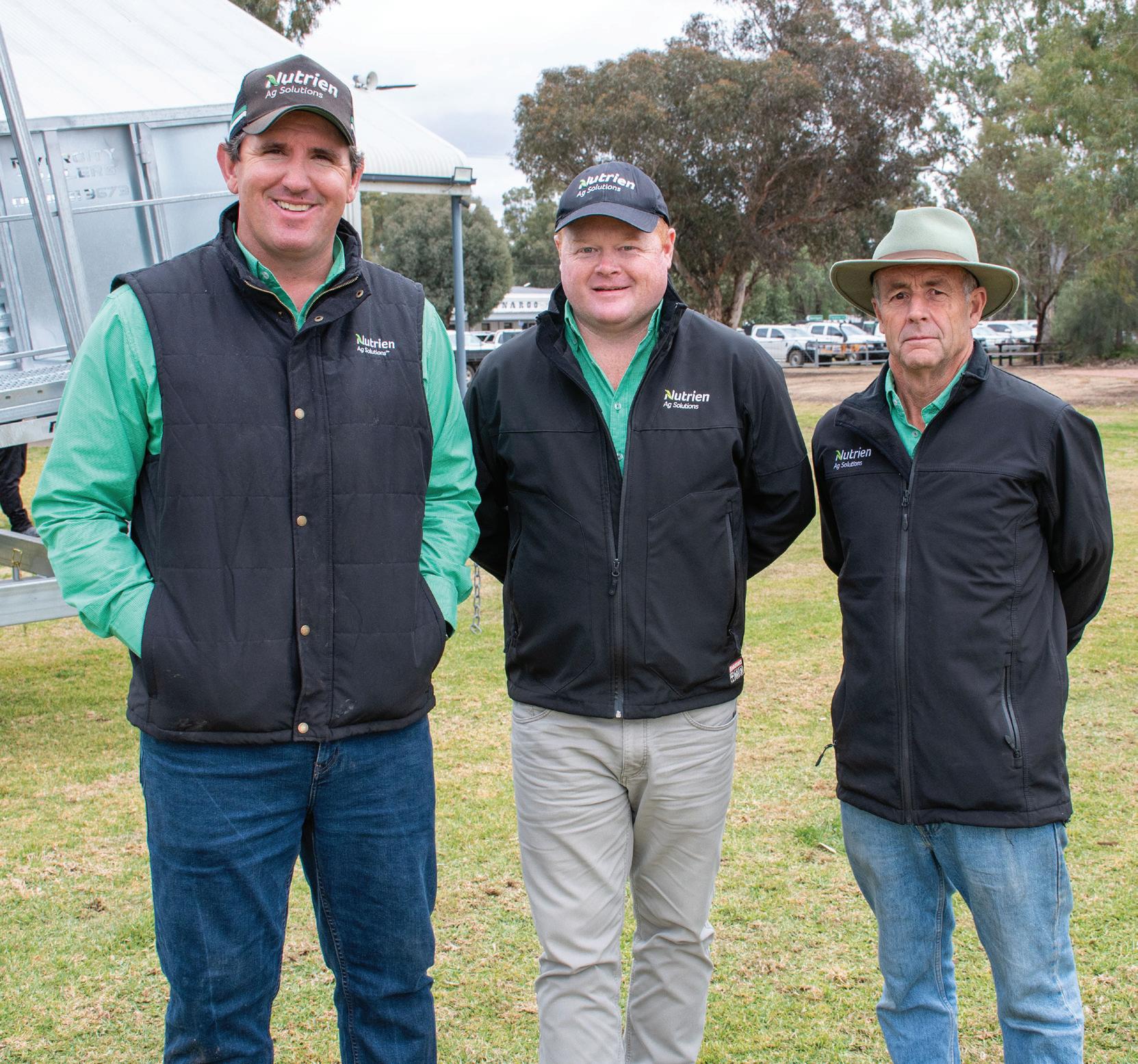
Hosted by Riverina Merino and supported by Elders, Nutrien, the Australian Wool Network and a range of other sponsors, the event marked a triumphant revival of what was formerly known as the Elders Riverina Sheep Expo.
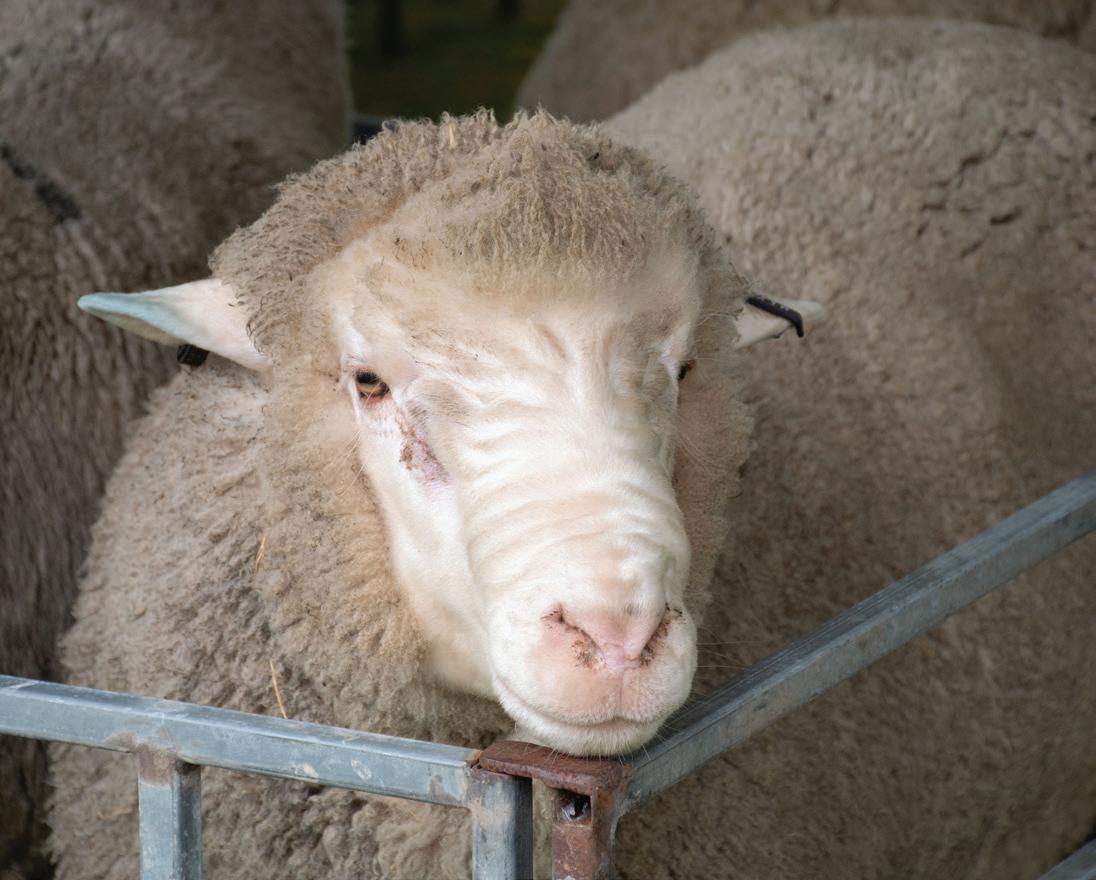
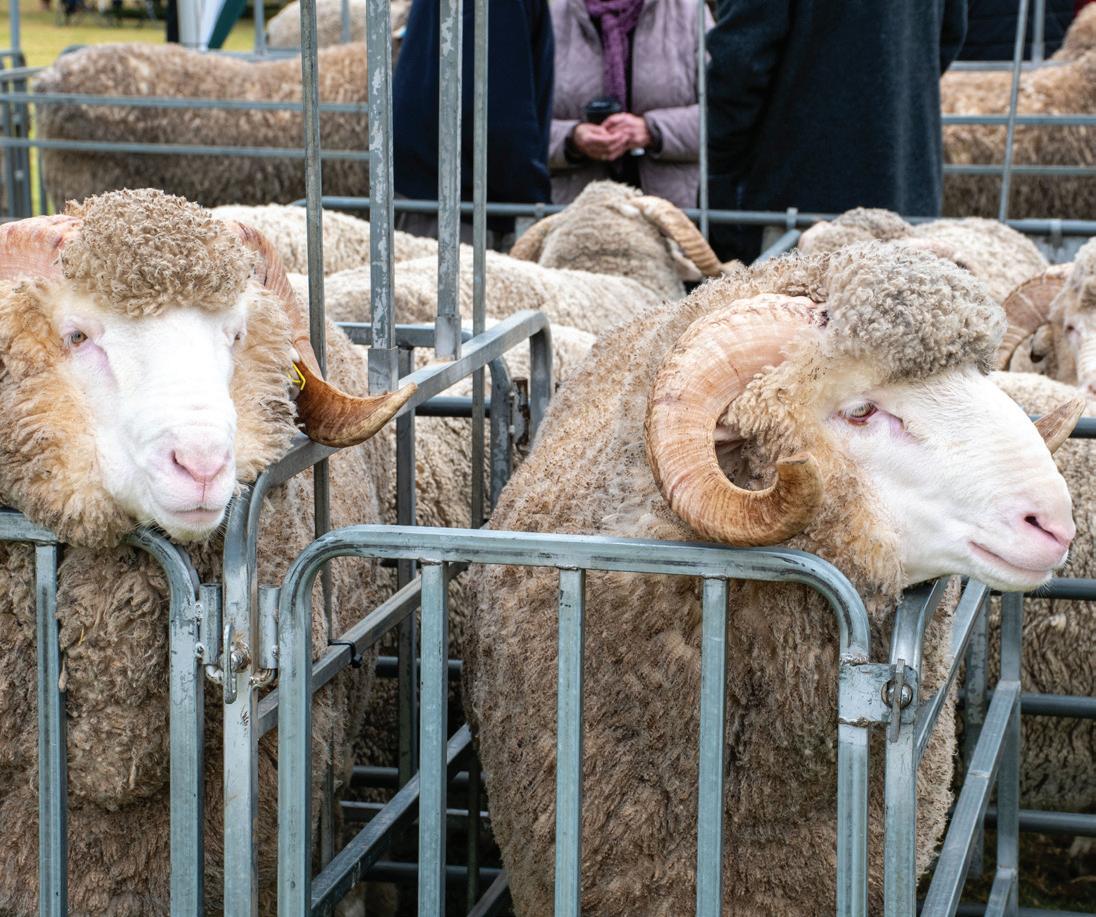
The expo featured displays from 11 host studs based in the Riverina, joined by 12 guest studs from further afield, representing a diverse array of Merino and other wool sheep breeds.
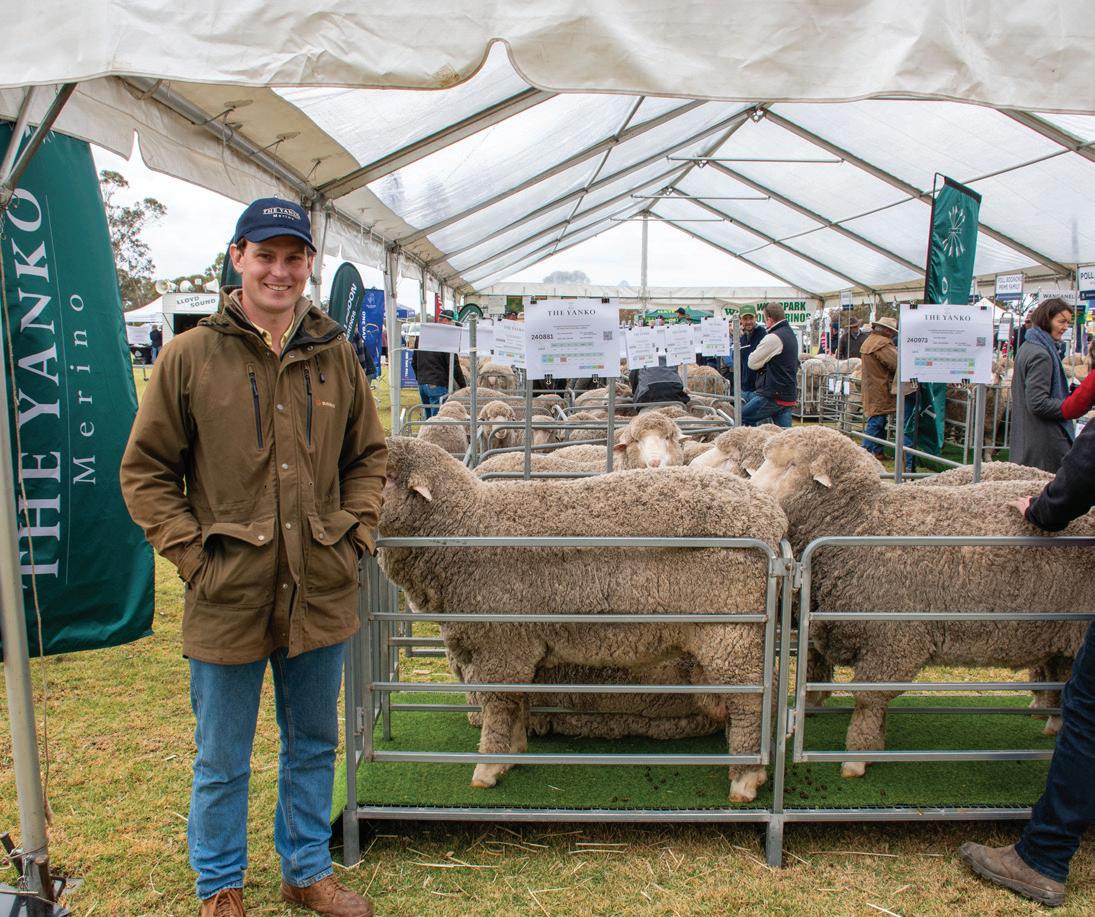
Due to rain, the sheep were kept under two large tents.
With prospective customers in large numbers, it could be a tight squeeze at times.
Attendees also explored 27 trade sites offering insights into genetics, equipment, and management tools designed to support and grow sheep enterprises.
Expo co-convenor David Wilson emphasised the importance of bringing together genetics and management in one place.
“We wanted to make sure producers are in the best position to capitalise on improving industry prospects,” he said.
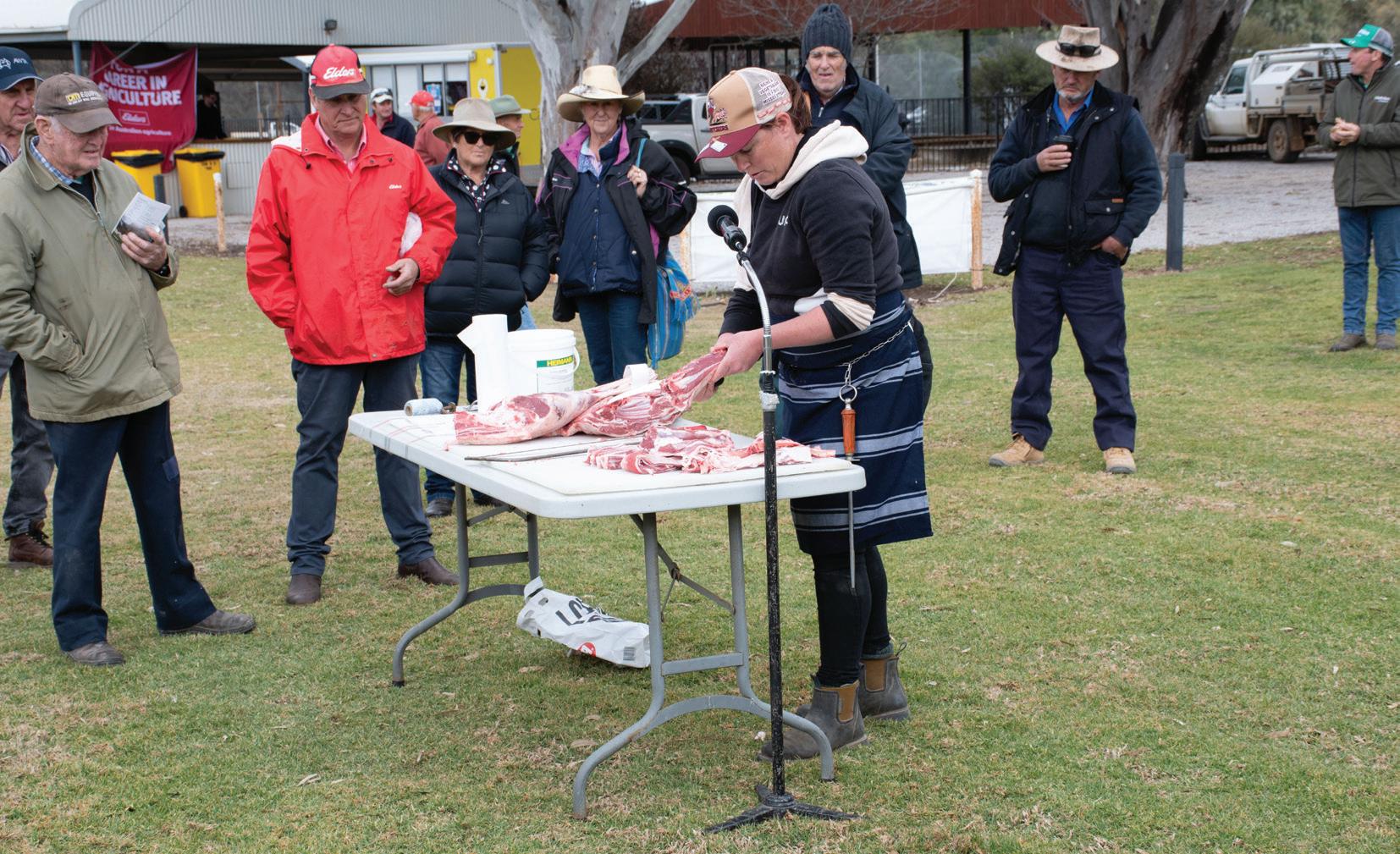
The speaker line-up was a major drawcard, kicking off with Hayley Pattison from Pattison
Pastoral, whose live demonstration on home lamb butchering proved a crowd favourite.
Attendees were keen to learn practical skills they could take back to their own operations.
Australian Wool Innovation chairman Jock Laurie offered insights into the future of wool and innovation in the sector, global demand and market insights.
He also included information on the work AWI were doing under research and development.
Former AFL star Tom Hawkins, now part of Nutrien’s livestock and marketing team in Geelong, captivated the audience with reflections on growing up locally, his journey through professional football and his transition into agribusiness.
“It looks to be a great day, although the weather’s not great,” Hawkins joked before the rain arrived.
Hawkins later led a charity auction, raising funds for Deniliquin Can Assist by auctioning off a signed Geelong Cats jumper.
The jumper was won by Ian and Stacey Lugsdin from Lugsdin Toyota and Deniliquin Toyota, the major sponsors of the day, with a winning bid of $4000.
The event wasn’t just for seasoned producers.
Students from Conargo Public School and Deniliquin High School were also actively involved.
Conargo students sold raffle tickets and soaked up
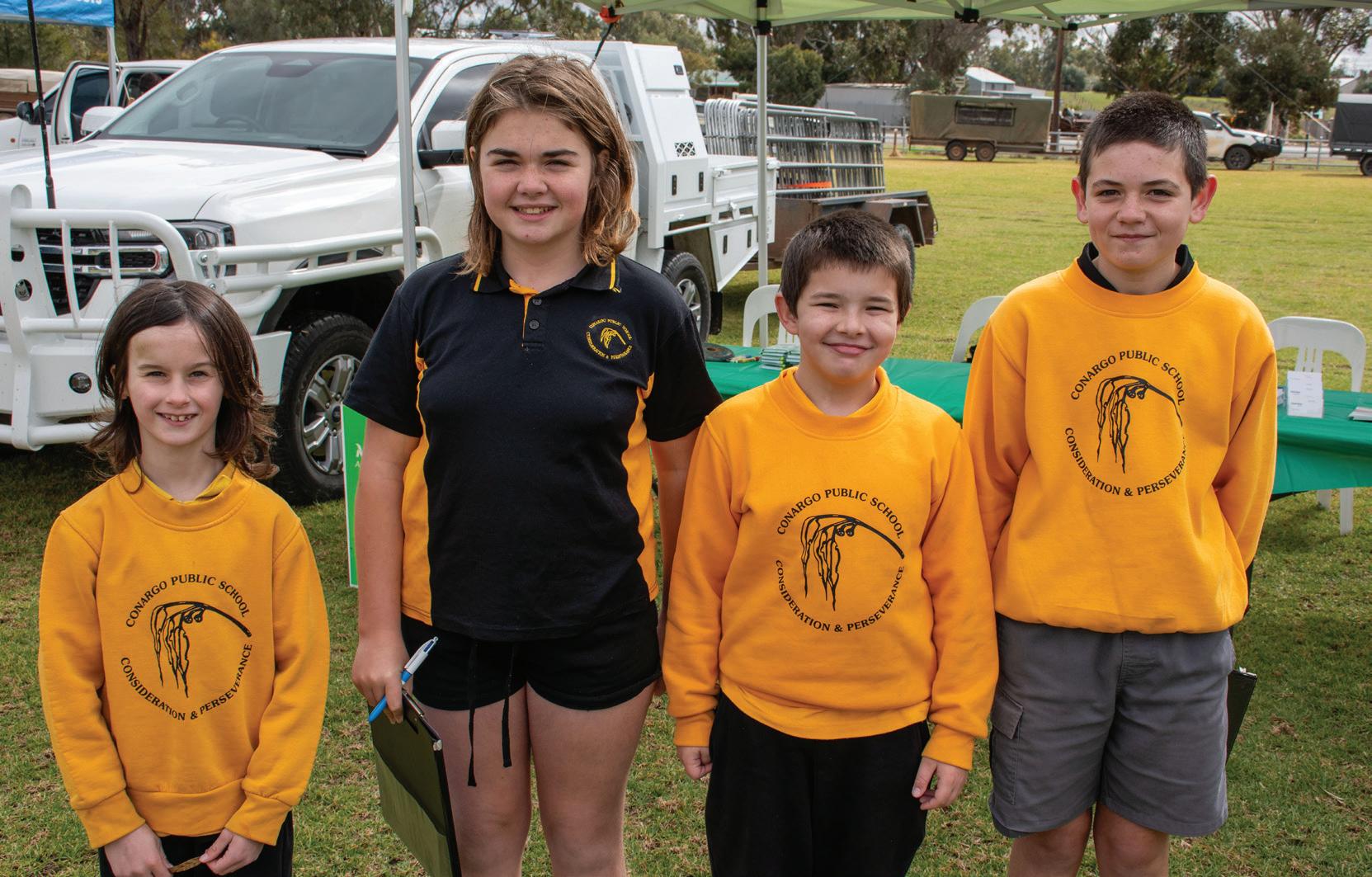
industry knowledge, while Deni High students gained hands-on experience with sheep studs, sparking interest in future careers in agriculture.
Emcee Ian Evans summed up the day’s success, saying “I was very pleasantly surprised by the support in terms of exhibitors and attendees”.
“There’s quite a strong interest in Merino sheep, even in tough times.”
With strong attendance, vibrant displays and a strong sense of community, the expo reaffirmed its place as a cornerstone event for the Riverina’s wool industry, with those involved already looking forward to stud sale time over spring. T






































































Australian Dairy Farmers has called out “tokenistic” consultation behind the decision to establish Safe Food Victoria, the organisation set to replace the specialist Dairy Food Safety Victoria.
“The so-called ‘consultation’ felt like more of an ultimatum,” ADF president Ben Bennett said.
“You can’t consult when you don’t bring any genuine options to the table, you can only enforce your decision.
“This is a solution in search of a problem. Don’t dismantle a proven, specialist regulator and replace it with a one-size-fitsnone bureaucracy. The stakes are too high for guesswork.”
ADF has been tracking these changes closely, not least because DFSV is seen as the leading organisation in food safety technical expertise across Australia’s dairy industry.
“More milk is produced in Victoria than in any other state in Australia, so it makes sense that the bulk of our knowledge in this field is developed in Victoria,” Mr Bennett said.
“Given we’ve not seen a business case for the transition to Food Safety Victoria, and nobody can outline any grounds for improvement at DFSV, we see this as a clear and blatant cash grab by the debt-stricken Victorian Government.
“DFSV doesn’t cost taxpayers anything. It’s fully funded by farmers. In fact, as we understand it, the organisation has a multi-million-dollar bank balance which will probably be consumed by consolidated government expenditure.”
ADF has repeated its invitation for the Victorian Government to engage in good faith and reconsider how a cost-neutral
organisation can continue to provide value to a vital industry.
“If the Allan Government truly wants to cut red tape, fix the audits and harmonise rules across councils, keep DFSV
independent, risk-based and focused on dairy, rather than building a bigger bottleneck,”
Mr Bennett said.
“You don’t bulldoze the house to replace a door.” T
WFI Insurance has released its annual farm accident insights as part of Farmsafe Australia’s 2025 Safer Farms Report, to help reduce injuries and save lives in farming communities.
The report coincided with Farmsafe Australia’s 2025 National Farm Safety Week, themed Second Chances — Who Knows How Many You’ll Get?
It shows 2024 was a devastating year for Australian farming communities, with 72 deaths — the highest number of fatalities in more than two decades.
During the past 12 months, WFI has seen an overall eight per cent reduction in farm related claims, however impact-related claims such as vehicle accidents or crush injuries, have surged 44 per cent — the highest level in four years. There were 1800 claims related to farm vehicle accidents, including quad bikes and side-byside vehicles (SSVs), with many resulting in life-altering injuries such as neck and spinal fractures and brain trauma.
According to the report, SSVs have overtaken both tractors and

quad bikes as the leading cause of on-farm fatalities in a single year.
In 2024, more people lost their lives in incidents involving SSVs than any other type of machinery or vehicle.
Farmsafe Australia chair Felicity Richards said familiarity could be fatal.
“Tools and machinery we use every day remain dangerous, no matter how experienced we are. Complacency sets in and that’s where near misses come from,” she said.
“We are not powerless in the face of risk. We have choices, every day.
“And every time we choose to speak up, change a process, or rethink a job, we give ourselves and those we care about another second chance.”
The mental health and wellbeing of farmers also continues to be a key concern.
WFI has seen a 75 per cent increase in workers compensation claims relating to anxiety and stress over the past year.
While not covered in the report, the suicide rate among Australian farmers is almost 59 per cent higher than the general population. On average, a farmer dies by suicide every 10 days.
Other farming risks include extreme weather events, which continue to increase in frequency and severity, with natural peril-related claims increasing 18 per cent in the past three years.
Farm property fires were up 28 per cent during the same period. T




Galloways Australia Inc. PO Box 309, Hall ACT 2618 gallowaysaustralia@gmail.com www.gallowaysaustralia.com.au 02 6230 2536 GALLOWAY

“Minto”, Yass, NSW, 2582 Tel: (02) 6230 2536 Email: gregnstuart@aol.com www.mintogalloways.com.au
e: cpg4764@bigpond.net.au www.wahgungurryalpacas.com


















Visitors







• Going the distance
• Farmers’ silent struggle
• Make safety a priority
• The country economy of flowers, foccacia and friendship
• Howdy, partner
• Women bloom through the dry
• Passion wins youth award
• Quest to get back on top
• Splash of moo-dern art
• Working together to track stock
• World’s oldest cowboy still living the dream
• Lives on the line
• Wetland revival sustains future
• High Country on display
• Strengthening food security
• New roadmap to help guide sustainable growth
• Make it a habit to challenge the norm
• Food security boosted
• Green plane fuel a step closer
• Travellers urged to check for hitchhikers
• Translating tissue culture in avocados
$10.70 ORDER ONLINE, POST OR CALL


$10.70
Ducks, When will dams fill?, Alpacas, Battery subsidy, Drought, taxes pile on pressure, CQU fights food waste, Canola, Group funded to support farm forestry, Alison offers hope with horses.

AUGUST
$10.70
Mushrooms, BatNav, Wine family, From Bunbartha to the nation, Are computers ready to run our farms?, Spinning new yarns, Winter cropping a ‘mixed bag’, Avocado production dips.
Shetland cattle, Budgies, Alpaca farm, Virtual fencing, Historic drought, Small breeds cattle feature, Support for farmer groups, Tractor odyssey, Shining a light on women, Divide over bounty deal.
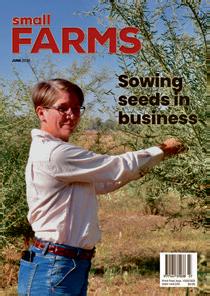
Swapping breeds, Seeds of business, Resistant vines, Future seeds, Bush photography, Safer future, SA support package, Backyard orchard is bearing fruit, Anthem milestone, Pest impacts pollinators.
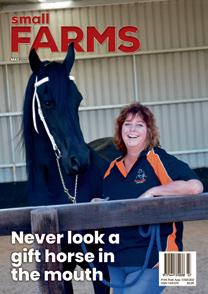
Friesian horse, White wine, Bat army, Distillery, Fire ants, Innovative way to feed the beast, Rural Aid, App to reveal value of renewables, Weird sunflowers, Chicken meat industry review, Deer season.
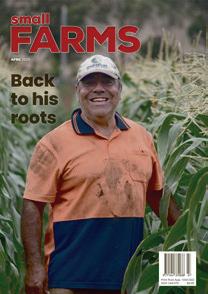
An upright enterprise, Food future, Corns, Smoke sensor, beekeepers’ burdens, Sunflowers, Appetite for vegies, Galloways, Sustainable timber, Natives for medicine, Fungi to fight flatulence, Beekeeping.
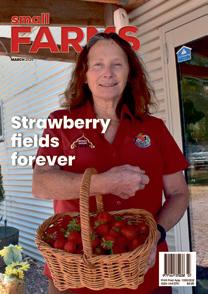
Strawberries, Farmers’ markets, Blue-green algae, Feed testing, Varroa army, Garlic, Heat stress, Miniature donkeys, Island cuisine, Micro-abattoir seeks crowdfunding, Changes for NSW eID, Green bank scheme.

Abalone, Cheesemaker, Native bees, Quad bike crash spike, Farmers’ Market online marketplace, Rural women in business, Hazelnut research, Who is standing by our farmers?, Drones, Food standards, Bio-security.
Roses, Farm safety, Icelandic horses, Bees, Cherry orchard, Berry and grape growers embrace tech, Fire ant response, Invasive species, A fruitful partnership, Science backs benefits, Jackfruit, Power lines, AI.
Lavender, The goog, Chickens, Climate change a ‘riesling’ to worry, F1 sheep, Learner reinvigorates career, Honey, Tree changers, High-tech bees, Transforming food for health, Fire ants, Murals, John Deere.


Wine with a view, Cheese, Orchards, Landcare, Deer, Safety first, Renewables, Cattle safety, Animal rescue, Food waste, Reduce UV exposure, Transmission approval, Hardwoods, Invasive weed to crop.
Produce, Crop research funding, Holding the reins, Hot chilli medal, Hemp, Travelling Jackaroo, Varroa arrival, Green pipe, Galloways feature, Bush food, Dung beetle, Inlon anniversary, Drive safely on farms.
Grampians food, Community gardens, Trees wanted: dead or alive, Finding their niche (vegetable growing), Renewable land grab, Figs, Cultivating love, Farmland cost, Fatigue risks, Camels are milking it.
From their paddocks to our plates, Magarey family orchard, blueberries, Five Ducks recovering from fire, Finger lime , Movie lifts the veil on farmer suicide, Hemp, El Niño?, Regenerative farming techniques.


Bees, Market gardeners, Edible gardens, Supermarkets in the hot seat, Making jam, Caring for stock, Livestock shelter, Biodiversity, Peony roots, Sun rises on healthier forage, Spray drift, lavender.



Purple potatoes, Olive oil, Goat meat, Bush food, Australia’s organic rules a hot mess, Skills shortage, Demand for aviation fuel soars, Avocado oversupply, Fruit fly breakthrough, Bee hotels, Best winter feed. JULY
Raspberries, Low-emission milk, Farm prices, Avenel gem stands apart, Farm safety, From little things big things grow, La Nina watch, Galloways, Digging deeper, Citizen scientists, Funds to reduce.
Picking a new pathway, Llamas fly to Oz, Anything but conventional, Truffles, Bats insect control, Bunya nut, Ag courses, Wool dress, Farms at risk without change, Meat/ plant protein, Fire ants, Weed app.
Perfect cheese, Women in agriculture, Winemaking, Koroit Cherries, Kangaroo meat, Urban agriculture, Olive oil, Home butcher, Dams reveal carbon insights, Coffee beans, Mungbeans.
Facebook for cows, Former weatherman digs farming, Top working dog crowned, Chook farm, Wild grain, Crickets, Hunting founded on conservation, What’s new? Connecting farmers with help, Pests.
Compost Pesticide
Crop rotation
Cover crops Natural No-till Mulching Irrigation Pollinators Bees Earthworms Greenhouse Sustainable Soil health Manure Biodiversity Renewable Agroecology
1.soil2.health3.greenhouse4.renewable 5.earthworms6.agroecology7.seasonal8.pesticide 9.range10.heirloom11.organic12.bees 13.crops14.gmo 15.certified16.free 17.natural18.manure19.pasture20.pollinators 21.mulching22.market23.sustainable24.rotation 25.compost26.handpicked27.irrigation28.biodiversity 29.diversity
Pasture-raised Heirloom GMO-free Certified Farmers’ market Seasonal Hand-picked Farm-to-table Natural Organic Crop Free-range


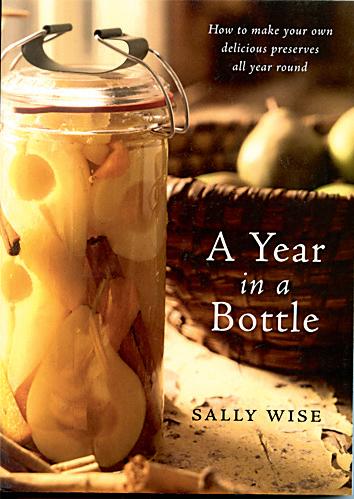
This update of the bestselling book in its field features more than 400 recipes. Whether grow-your-own, bought locally from a farmer’s market, or fresh from a regular supermarket, seasonality still affects the quality, abundance and price of good food. It just makes sense to preserve food quality for those times when it’s not as plentiful or not available at all.
Dehydrating food with this terrific book is easy and creates tasty food year-round.
© 2011 Becher-Sundström
Incorporating the age-old practices of food dehydration takes full advantage of what nature offers. All the wonderful recipes are still here and there is a bonus section on everything from pet treats to crafts and homemade gifts.
This edition includes comprehensive drying guides with clear, easy-to-follow instructions and drying times for every type of dehydrator — perfect for all experience levels.
There are more than 200 recipes for dehydrating, from herbs and seasonings to fruits, vegies, meats and fish.
There are also more than 200 recipes that show you how to incorporate your homemade dehydrated foods into everyday meals — perfect for home cooking, RV adventures, camping, or boat trips.



• H/Low Range
Steel Dropside Electric Tipping Tray
LAND-PRO SX 450 4X4 SSV Diff Lock
Carrying Capacity 400kg ECM Engine Braking Side Doors Option
$17,490*# Drive Away
$16,990* Boxed 70% Assembled
Features
• 25.8 hp Engine • Delphi Fuel Injection

• 2 WD / 4 WD - Diff Lock
• Liquid Cooled
• CVT Auto L / H / R / Park
• Shaft Drive / Differential
• Front Screen
• Tipping Tray • Winch — 3500 lb Mesh Doors Option Boxed 70% Assembled $10,990* Drive Away $11,440#*
Locks
• 2WD/4WD - Diff Locks
• Front Screen
• Front Screen
• Large Bench Seat
• Large Bench Seat Steel Dropside Electric Tipping Tray Power Steering (EPS) Side Doors Option 4 Seater Available Mesh Doors Option See Website
$13,990*# Drive Away $13,490* Boxed 70% Assembled
$8,600*# Drive Away $8,200* Boxed 70% Assembled