
June Edition: May 23, 2025
July Edition: June 21, 2025
August Edition: July 25, 2025
September Edition:
August 22, 2025
October Edition: September 26, 2025
November Edition: October 24, 2025
December Edition: November 21, 2025
February Edition:
January 24, 2026
March Edition: February 20, 2026
April Edition: March 20, 2026
May Edition: April 24, 2026

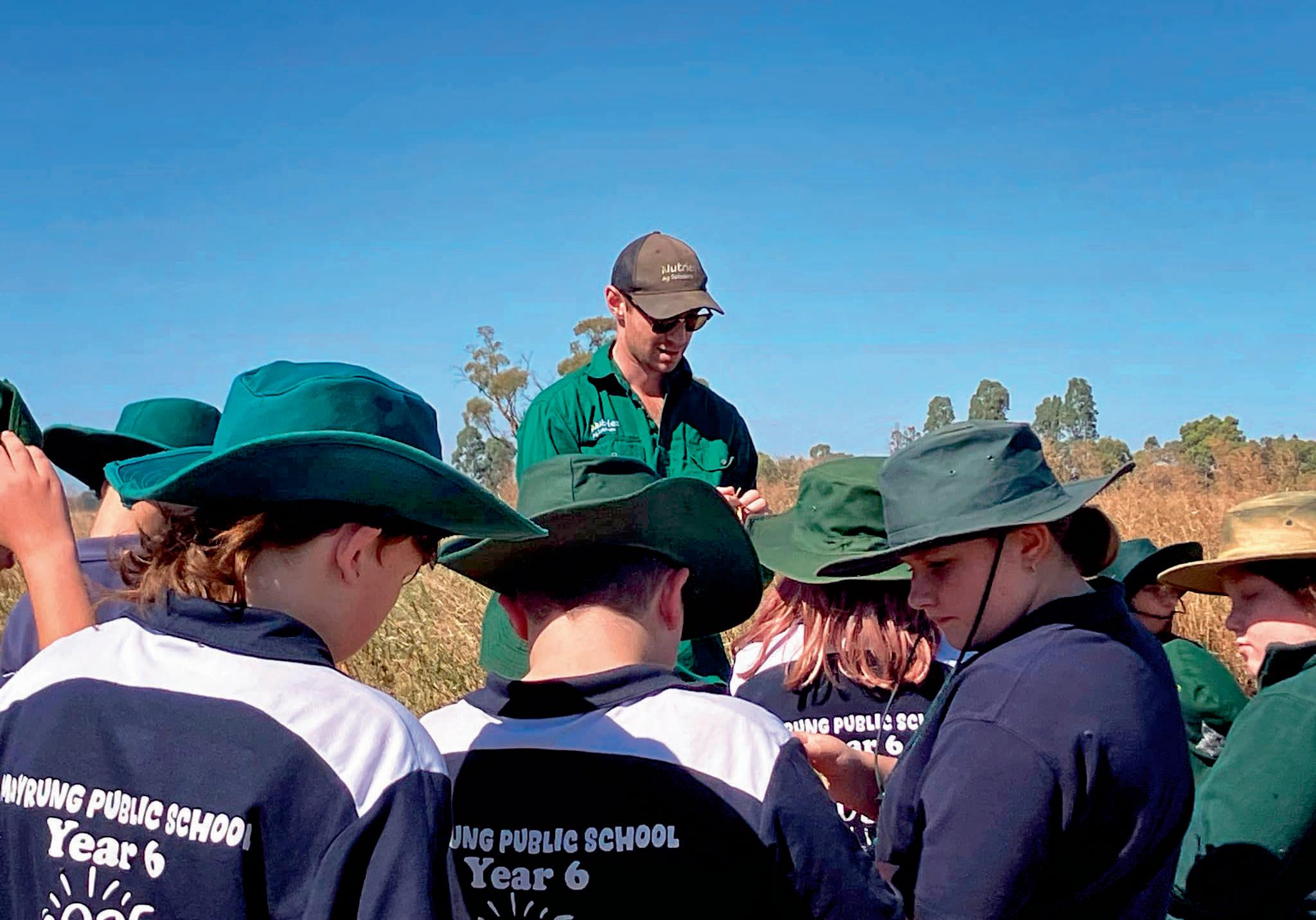
Mayrung Public School sits at the heart of its community’s farming sector. On either side of the school are irrigation paddocks, and directly across the road is a dairy farm.
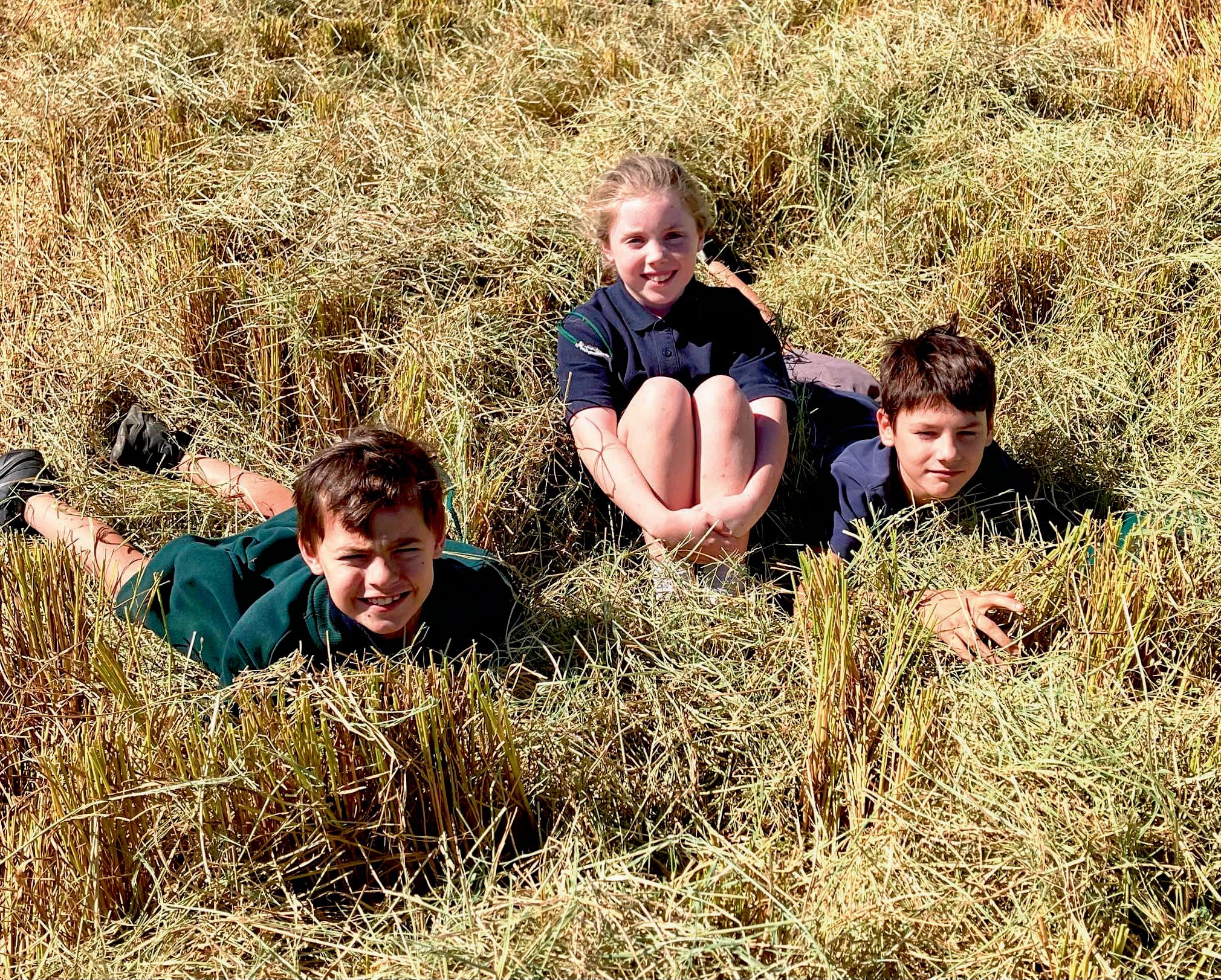
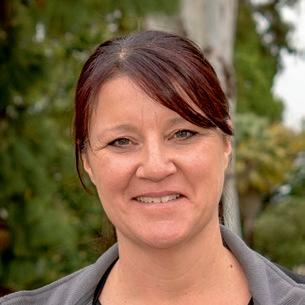
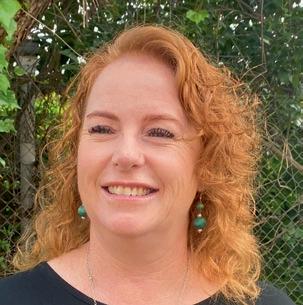

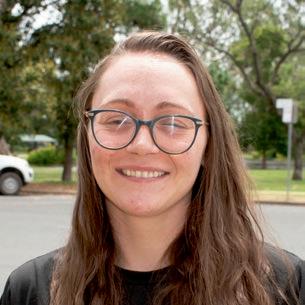
Thefarmers from those properties are doing what they can to ensure the youngsters are educated about what’s going on around them.
The Paddock to Plate program was started by the school’s neighbouring rice farmer, Stephen Ball.
After a forced break during the COVID-19 pandemic, the program has been re-launched.
While it was developed specifcally to cover rice production, Mr Ball said other farming practices have been - and will continue to be - explored as part of the program in future years.
He also hopes the program they’ve developed at Mayrung can be rolled out as a formal education campaign supported by the rice industry and introduced into more schools.
“I’m a member of the Ricegrowers’ Association of Australia’s central executive, and I am certainly pushing for the industry to get that education out there into schools more.
There’s no dedicated, industry-supported rice education program, but it’s something the cotton industry
does very well. The cotton program is privately funded and is delivered at all levels, from preschool to university. I would like to see us (the rice industry) working toward the same.”
Mr Ball said starting with the primary rice-growing regions in the Murray and Murrumbidgee would be a good frst step. However, as rice is a staple food around the world, he would like to see rice education delivered more broadly in the future.
Mr Ball initiated the project in 2022, with local primary school students in the Edward River Council region specifcally learning about the Koshihikari variety of rice, which the Ball family grows in a paddock only 500m from Mayrung School’s boundary.
Koshihikari, or Koshi as it’s commonly known, is primarily exported to Japan, where it is predominantly used for sushi.
“It’s an opportunity for the kids to learn about where their food comes from,” Mr Ball said.
“They’ll either visit my farm or another nearby rice farm, and with luck, at least one of us will be harvesting when the program takes place.
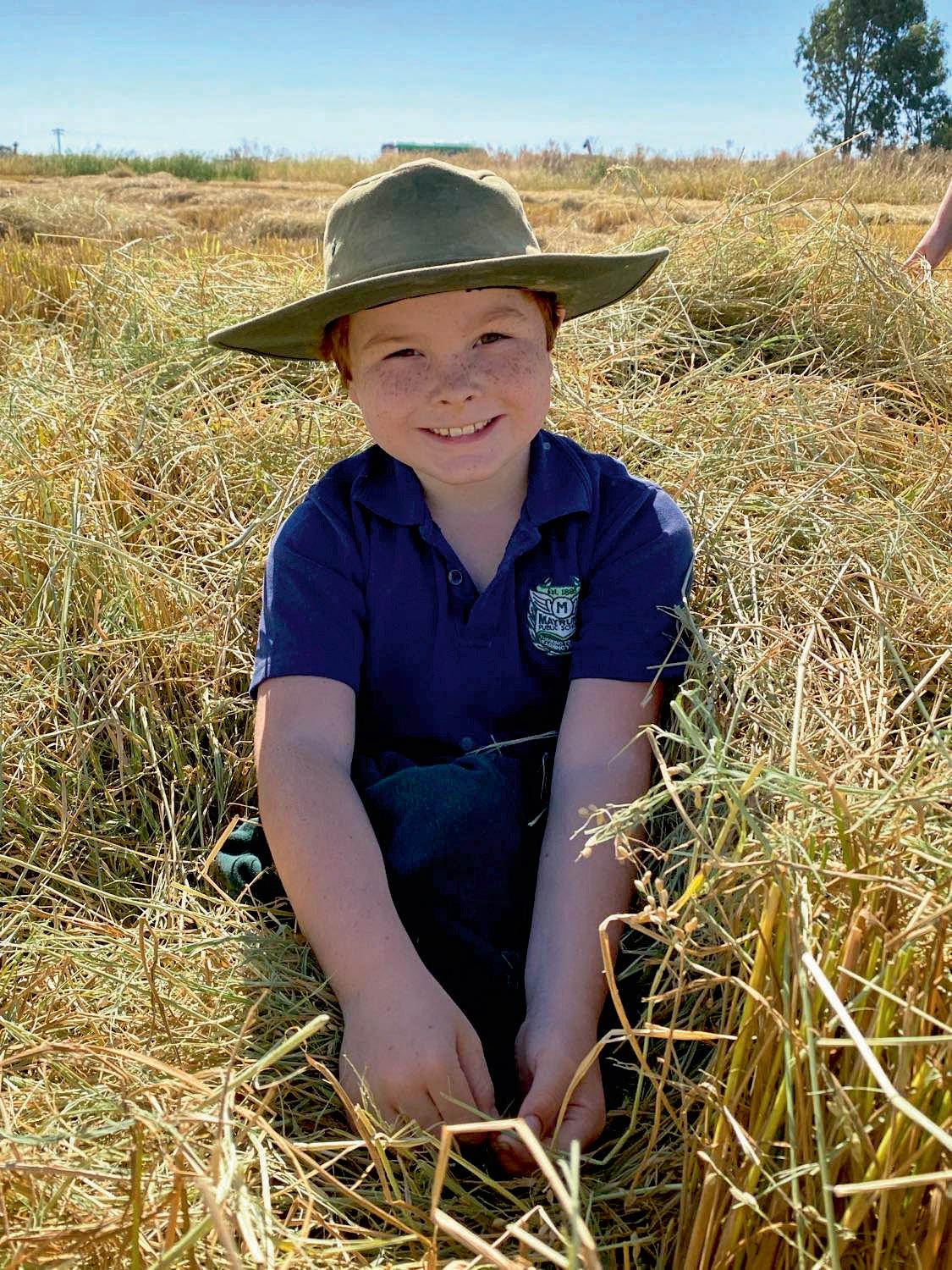
“Another neighbour, Bruce Moore, has also been involved, which means the kids learn about rice and corn.
“They’ve also visited Ian Litchfeld’s dairy farm across the road from the school, and we’re always looking at what other crops nearby we can show them too.
“SunRice sponsors the day, providing some of their rice snacks for the kids to enjoy and paying for the bus to take the students.”
Mr Ball said the children also hear from people who work within the industry, supporting rice farmers.
This year, that included representatives from SunRice, Rice Extension, Murray Irrigation, and Nutrien Ag Solutions.
Michael Pisasale from Murray Irrigation Limited spoke about the important role water plays in the rice-growing cycle, while Mark Groat from SunRice’s grower services gave an informative talk on the different varieties.
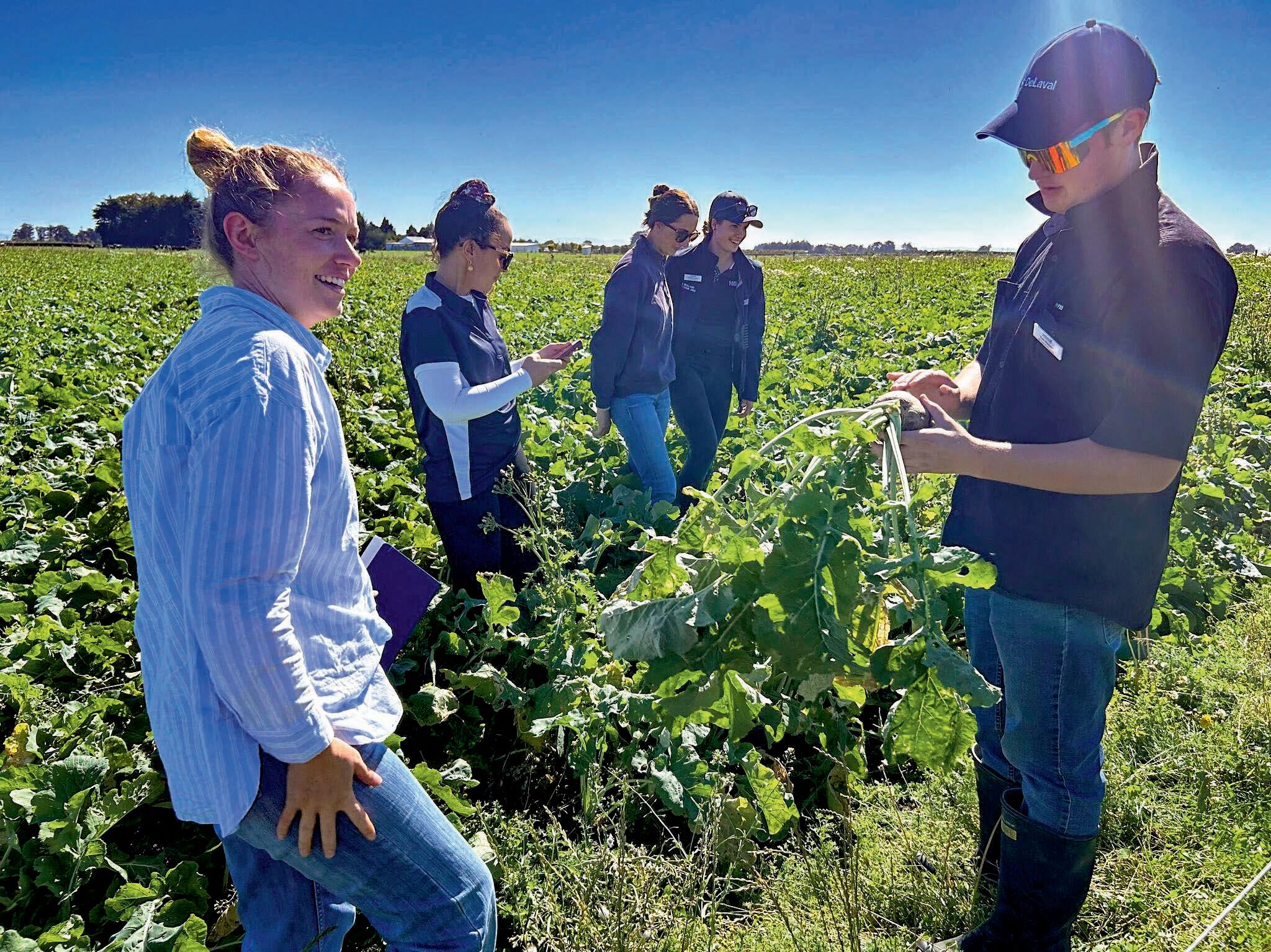
Riley Hamilton from Nutrien Ag Solutions then took the students into the paddock for a closer look at the physical rice-growing process, demonstrating how the plant thrives in the natural environment.
DENILIQUIN, NSW
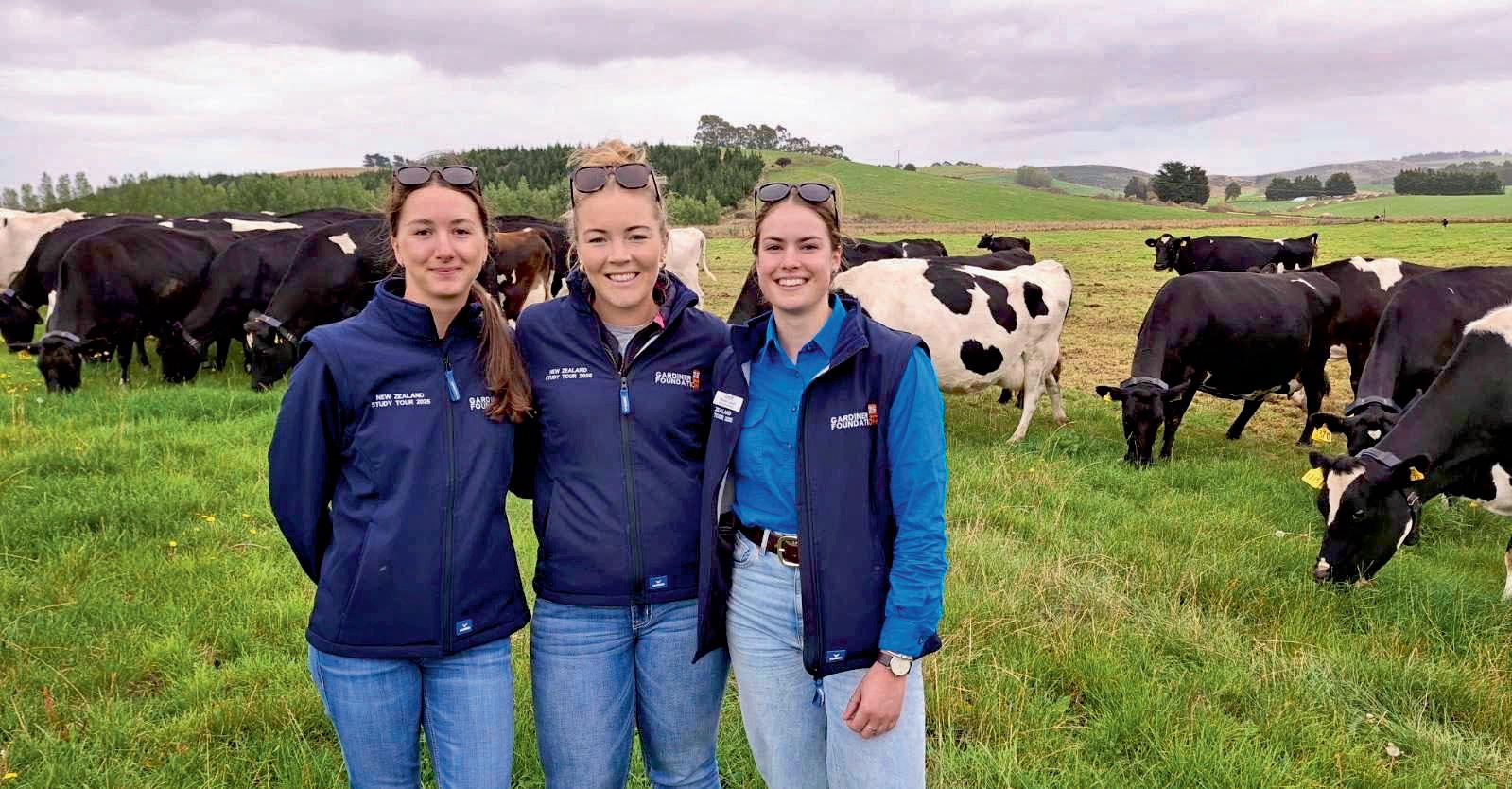
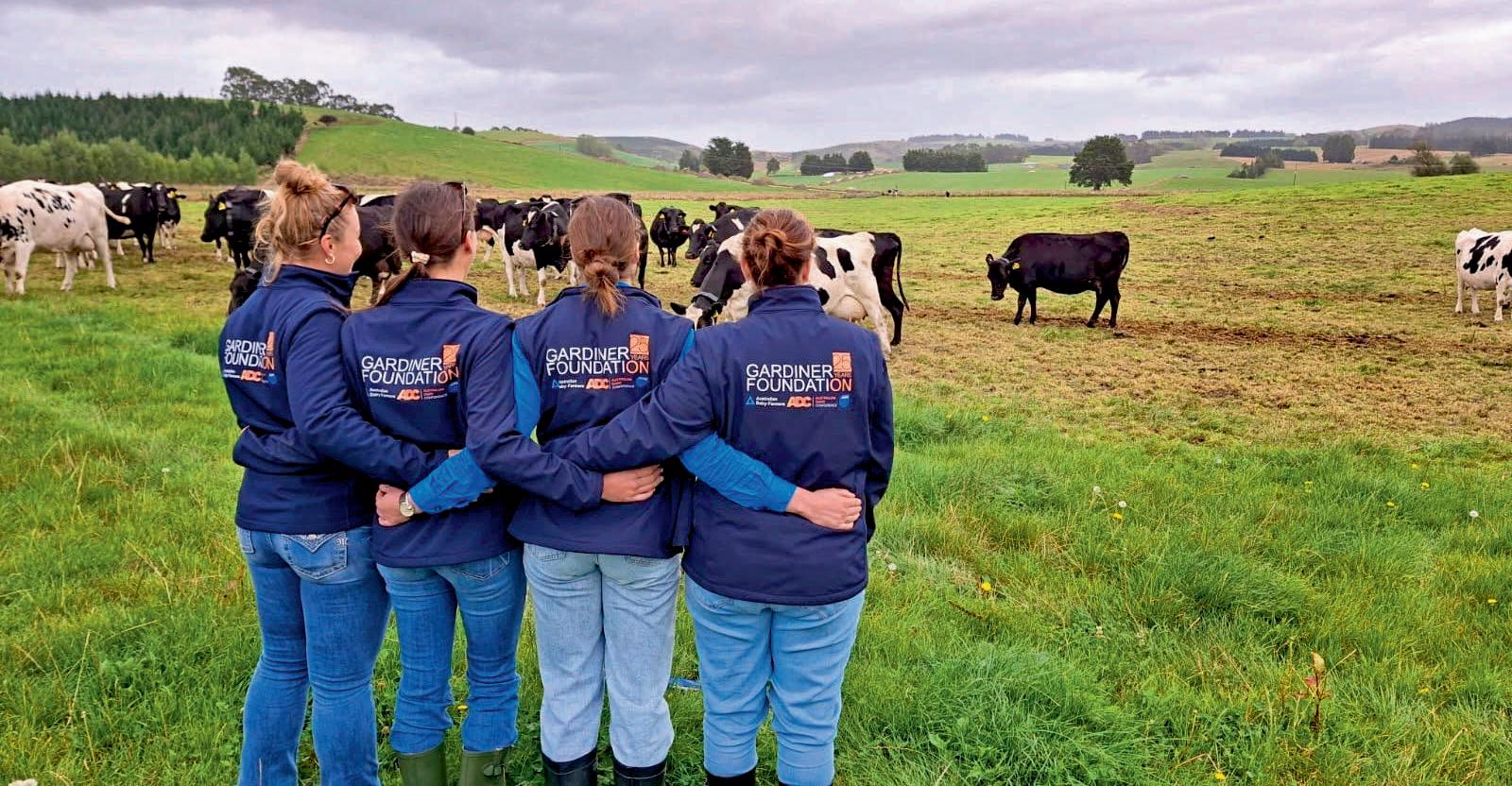
Deniliquin district dairy farmer Tabitha Napier was recently given the opportunity to explore the dairy industry in New Zealand, through the prestigious Gardiner Foundation scholarships.
The program is aimed at supporting young people who want to pursue a career in the dairy industry, which then directly benefts the industry or community.
It also aims to shape industry leaders of the future.
Since 2008, the Gardiner Foundation has awarded more than 80 scholarships totalling close to $2 million.
The scholarships average $10,000 a year, over the course of the successful recipient’s frst three years of their tertiary studies at either university or TAFE.
Data indicates at least 70 per cent of all scholarship recipients have made contributions to and are working in the dairy industry and communities.
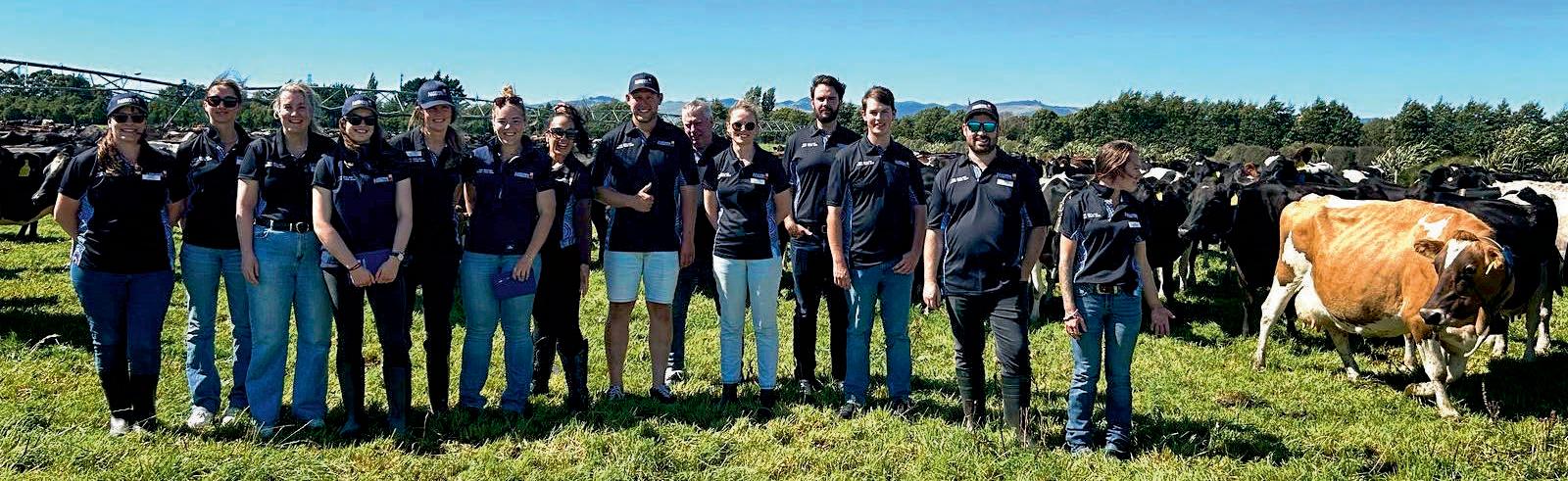
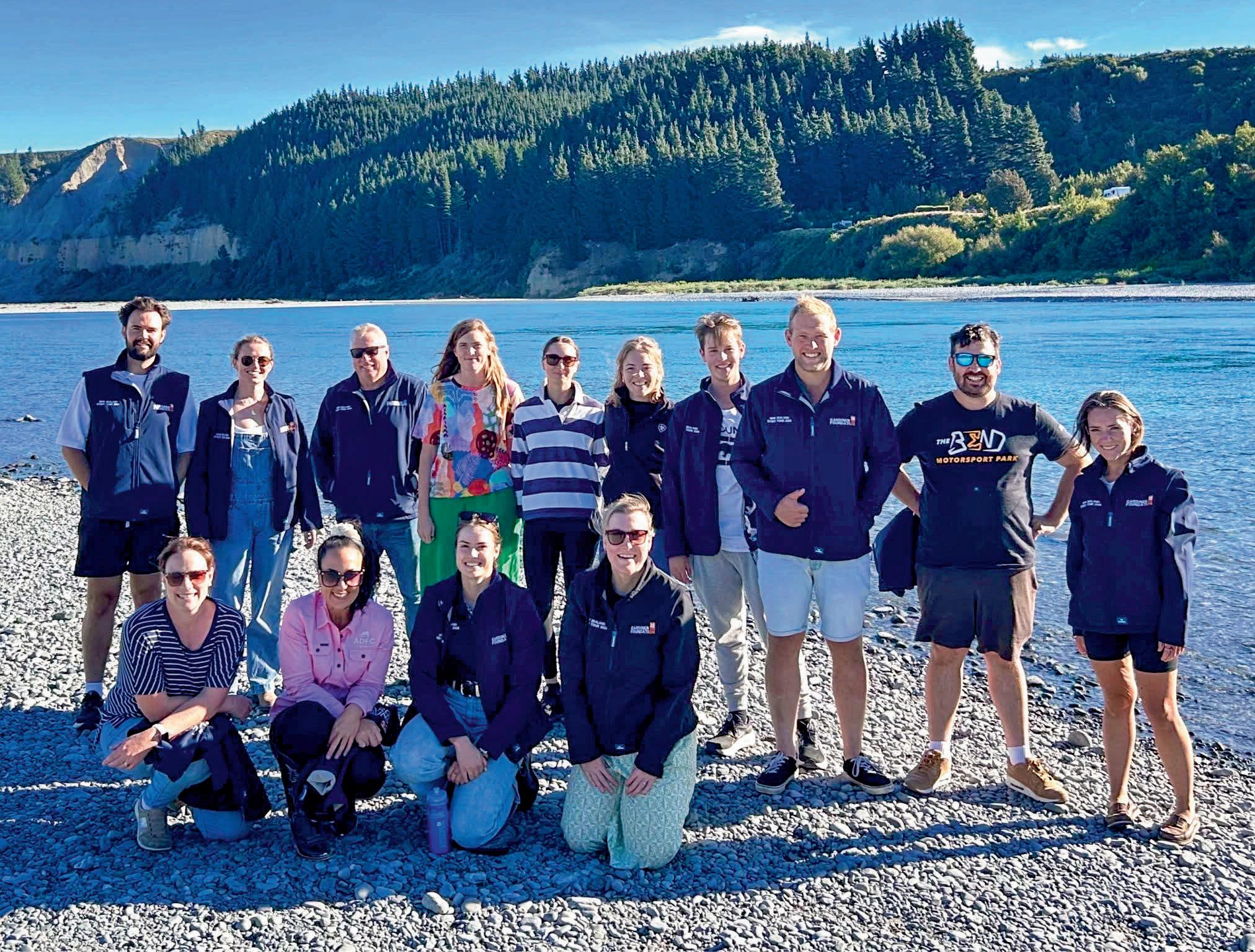
Tabitha was one of 12 scholarship recipients to take part in a learning tour of New Zealand.
“I found out about the scholarship through the Gardiner Foundation’s Facebook page, but I had also heard about it through another program I had done,” she said.
“We had to fll out a sheet of questions, mostly to do with your current role and achievements, and the trip and the scholarship defnitely had a focus on leadership.
“With the process of applying and the turnaround, we flled the questionnaire out, then I was contacted to do a Zoom call with people from the Gardiner Foundation, then within the fortnight I was told I was successful.”
“Sometimes things do sound scary or daunting, but don’t worry about what ifs, just go for it.”
TABITHA NAPIER
In New Zealand, tour participants explored world-class farming systems, learned about innovative practices, and heard from passionate experts shaping the New Zealand dairy industry.
“We’re proud to provide a program that challenges thinking, builds networks, and inspires the next generation of dairy leaders,” the Gardiner Foundation said.
The experience in New Zealand was eye-opening for Tabitha.
“We spent eight days in New Zealand, and visited nine different dairy farms, as well as two research farms.
“We few into Christchurch, then went down the East Coast toward Dunedin and Invercargill, it was a really great experience.
“One of the biggest takeaways from the trip was defnitely getting to see the different approaches to dairy.
“I think New Zealand is at the forefront of the use of robotics and their robotic farms.
“But, getting to make connections, networking and the support you get from the others on the trip was really positive and was one of the biggest takeaways from the trip.”
Tabitha is employed at Gallpen Dairy, and displays leadership qualities and knowledge beyond her years.
She is an advocate for young farmers to access these programs, and utilise any and all opportunities.
“For young farmers under 40, I strongly encourage them to reach out to their local Young Dairy Network, which for us is the Murray Dairy Region.
“It’s a fantastic resource that needs to be utilised, and is another pathway to fnding out about other events and scholarships such as the Gardiner Foundation study tour.”
For those who have been undecided on the scholarship program, Tabitha says “just do it”.
“I know there may be some social anxiety around it all, I dealt with those thoughts myself - things like I won’t know anybody.
“Sometimes things do sound scary or daunting, but don’t worry about what ifs, just go for it.”

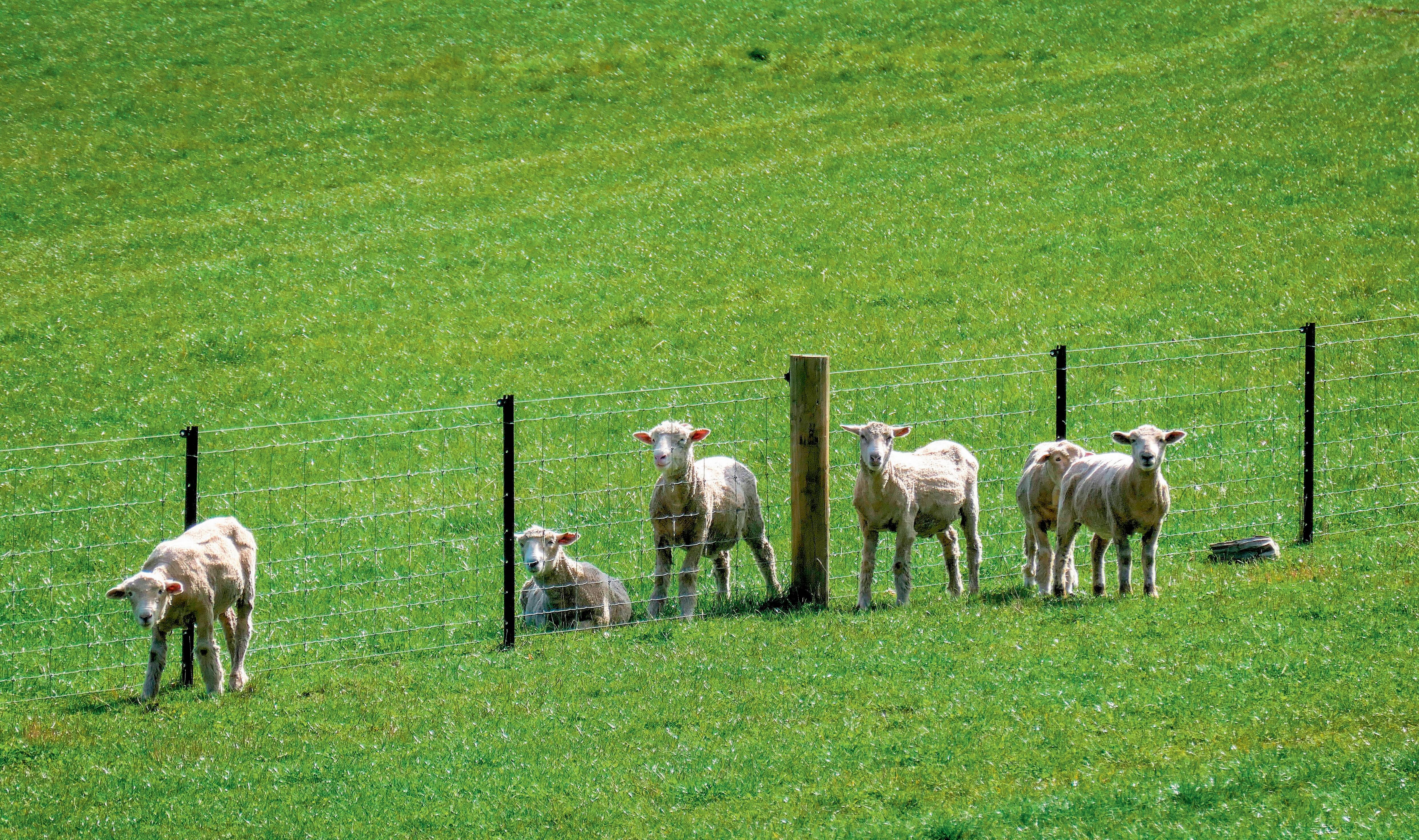
Have you noticed some of your sheep missing recently? Or received a call from a neighbour, saying they have some of your sheep over at their property?
Sheep are great at fnding a hole in the fence, an open gate or some can even jump the fence. They might have just decided the “grass is greener” or they can have more fun with next door’s ewes.
Before bringing home any sheep that have strayed from your property, have you considered any risks that they may pose to your on-farm biosecurity?
Some biosecurity risks you might like to consider for all sheep include lice, internal parasites, footrot, or other infectious diseases, as well as the transfer of weed seeds. With stray rams, you should also consider the risk of ovine brucellosis.
Consulting your on-farm biosecurity plan may help you in the management of these risks once the sheep have returned home.
For example, you might consider:
• inspecting the sheep for signs of footrot, lice, and other signs of disease;
• administering any quarantine drenches and/or treatments, and allowing them to empty out for 24 hours in the yards or a small paddock; and
• isolating the stray sheep for as long as practical, prior to returning to the mob.
The best step you can take to prevent your stock from straying is regularly checking your fences and making repairs as soon as possible.
Ensuring there is adequate pasture and/or supplementary feed will, hopefully, also encourage your stock to stay where they are supposed to.
If you would like to discuss your on-farm biosecurity plan and stray stock, please contact your nearest Local Land Services on 1300 795 299.
Research shows there are many benefts for children when they listen to, and create, music. It helps with overall wellbeing, and specifcally assists with numeracy, literacy and emotional skills.
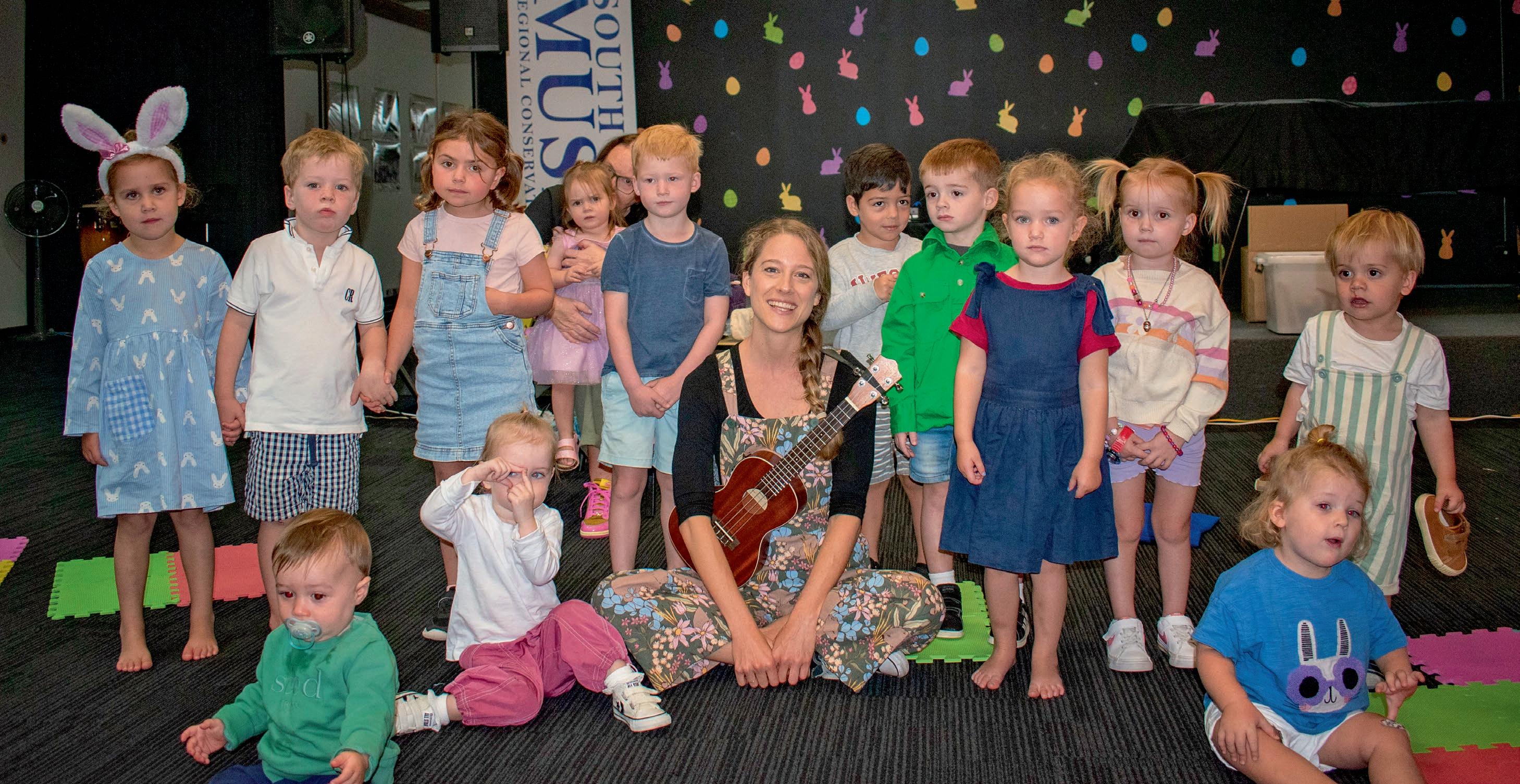
As such, it is not surprising that a ‘Mini Musicians’ program introduced by the South West Music Regional Conservatorium (SWM) has proved extremely popular, and continues to grow.
The program started in Deniliquin and, due to its success, has since expanded into Finley and Barooga.
It has received a boost with more than $2,000 in funding from the Murray Irrigation Ltd Community Sponsorship program.
SWM applied for the funding because it needed new equipment and instruments to enhance the musical experience for participating families.
“These additions to Mini Musicians are helping us provide an improved musical experience for the many youngsters who are enjoying the program,” explained SWM General Manager, Michael Bakrnčev.
Incorporating music into routines and play in the early years has a proven positive infuence on a child’s early development, helping to get them moving, thinking and inspiring creativity.
“But most importantly, music is fun,” Michael said.
“If your child is having fun, they are more open to learning.”
The SWM Mini Musicians program started in 2023 and, before long, more than 70 local families had registered.
This has continued to grow, with numbers now exceeding 120.
“We create regular opportunities that bring together young children, providing social interaction and exposing them to music, movement, rhythm and education,” Michael said.
“Parents and carers are given the opportunity to socially connect with other community members who may be disadvantaged through rural isolation.
“By creating a safe, inviting and inclusive environment, we are encouraging positive mental health and wellbeing.
“The program provides local opportunity and brings people together to make the region a great place to live and raise families.”
Michael said Mini Musicians helps make the community more viable and vibrant for young families.
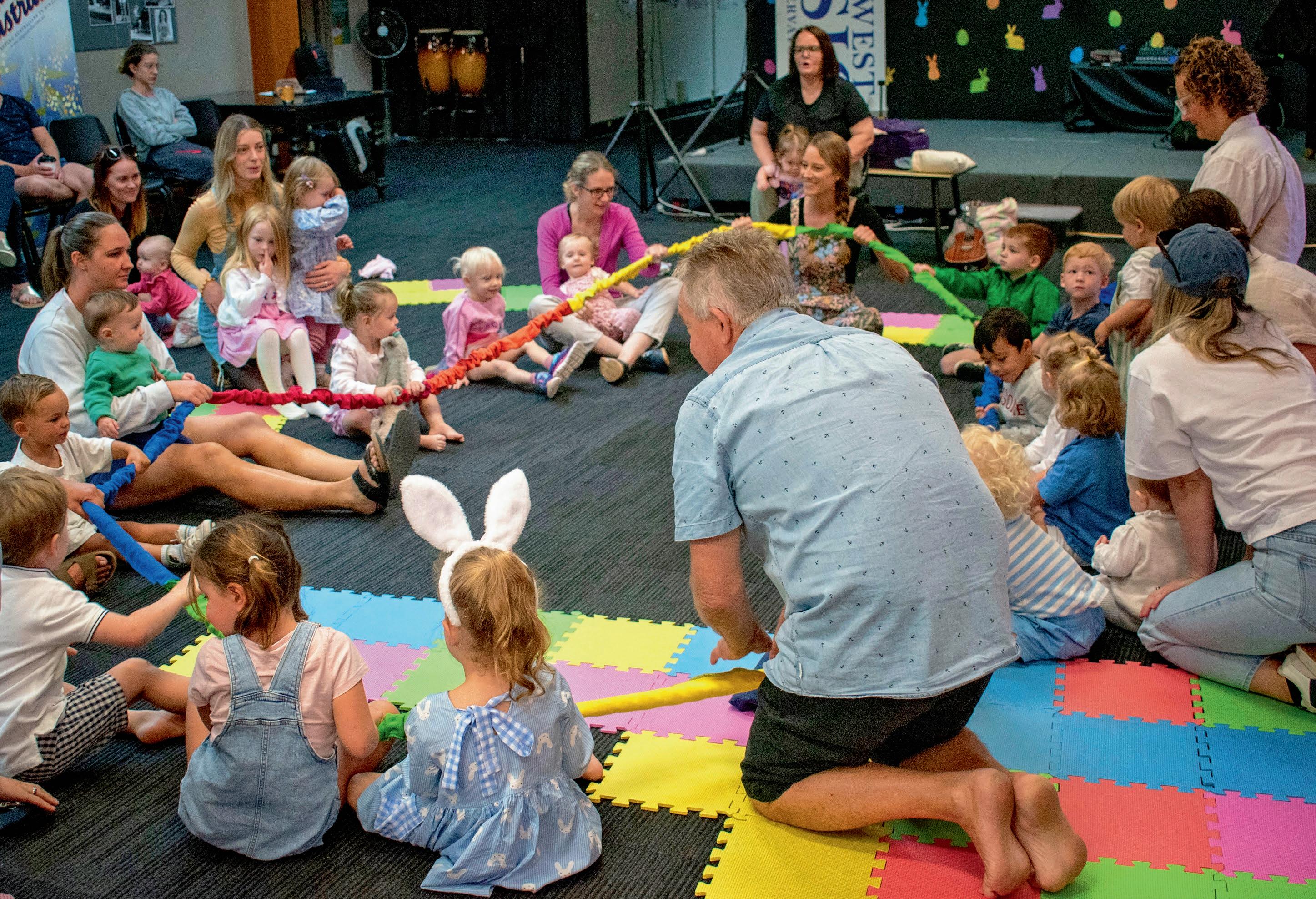
Mini Musicians currently operates in Deniliquin, Finley and Barooga, with youngsters enjoying their singing and instruments, which includes castanets, tambourines, maracas, guiro and sticks.
The program promotes social skills for both children and their families, helps children develop emotional
intelligence, and supports cognitive and social development.
Sessions are held weekly for 45 minutes in small groups, involving parents, grandparents or carers who are able to sit in a circle with their child.
Instructors use a variety of instruments and sing-songs, encouraging participants to sing along, clap, use rhythm instruments, interact and have fun.
Children get used to making music themselves and it helps to build an interest in learning an instrument as they get older.
Music education has a lasting impact and helps shape individuals who contribute to community wellbeing throughout their lives.
SWM is a not-for-proft registered charity and has become a trusted community organisation.
It has a focus on inspiring and enriching lives through music, so the community benefts from the intrinsic advantages that only music can provide.
The organisation offers music education through individual tuition, classroom lessons, workshops and master classes; all encompassed in a theme of ‘Inspiring and Enriching Lives Through Music’, and in the knowledge that music makes the world a better place.
It has a vast range of programs, especially for young people, which includes Glee Club on Wednesday afternoons, and Kids Ukulele Club for primary school age on Thursday afternoons.
There are also various workshops with visiting artists, remote learning and music lessons via video conferencing, and classroom music programs for primary schools across the region, including those in remote locations.
SWM has come a long way as an organisation since its establishment in Deniliquin in the early 1980s with funding from the Australia Council, Arts Council of NSW and the Ministry for the Arts. Surveys of local school students were carried out to determine the demand for instrumental tuition.
Students from the Victorian College of the Arts were contracted to travel to Deniliquin and Finley, in a hire car, on a fortnightly basis where they were billeted with local families.
In no time at all, these young, inspiring, enthusiastic visiting musicians attracted a large number of students eager to learn strings, woodwind and brass instruments.
As the Instrumental Tuition Program grew and funding became available, SWM employed a director to promote music education in the region. Students in outlying areas including Hay, Barham, Jerilderie, Balranald, Coleambally, along with Finley and Deniliquin, were provided with lessons in a range of instruments.
These days, the tuition program includes guitar and strings, piano, drums, brass and woodwind, singing, as well as classroom and group music.
Over the years there have been a number of active ensembles: the Deniliquin Community Orchestra
conducted by Ian Bathgate; Junior Strings; Senior Strings better known as ‘Highly Strung’; Junior Band, and a Regional Orchestra which performs at the annual Christmas Concert.
A Concert Series was created to include the wider community in SWM’s musical endeavours, with the frst of these launched in 1995 at the Deniliquin Town Hall.
The Concert Series has since welcomed musicians from all over the world to Deniliquin and surrounds. The local community has enjoyed an amazing variety of musical styles and instruments, including cabaret, jazz, classical, celtic, baroque, vocals, strings, big bands, woodwind, harpsichord, harp, piano and percussion.
There has always been a desire to surprise the audience with performances at some unusual and memorable venues such as barns, woolsheds, homesteads and gardens.
In 2005, SWM became a Regional Conservatorium, and the future for this ever-growing organisation continues to be bright.
The organisation has received $4.3 million in NSW Government funding for a substantial renovation to its Deniliquin headquarters, located in Cressy St, with the start of this work not far away.
Once completed, the revamped facility will provide a quality location for all local music lovers, including those involved in the Mini Musicians program who, no doubt, will be the local musical stars of the future.




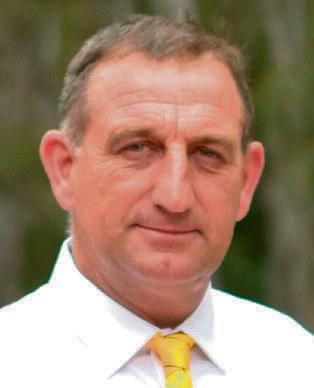


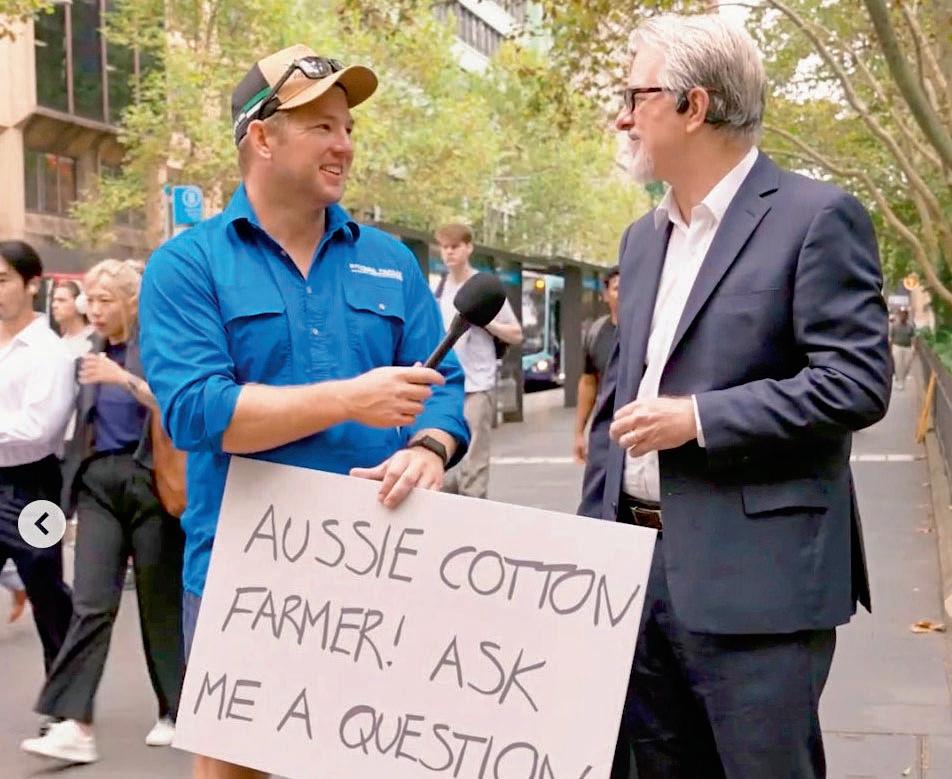
That was the question Coleambally cotton producer
Joe Briggs set out to discover earlier this year.
As part of a Cotton Australia campaign, Mr Briggs took to the streets of Sydney’s bustling CBD.
Armed with a sign reading ‘Ask an Aussie Cotton Farmer’, he started conversations with commuters to fnd out what they knew about cotton.
With his laid-back nature, Mr Briggs quickly put people at ease, turning casual chats into a chance to share what really happens on cotton farms.
One of the most common questions was about water use, and Mr Briggs was happy to set the record straight.
“Aussie cotton uses 52 per cent less water than it used to, and we’re some of the most water-effcient cotton growers in the world,” he told them.
For Mr Briggs, the experience was a chance to have open, no-nonsense conversations about modern cotton farming.
“Cotton Australia came up with the idea, as a way of getting some messaging out there; to educate people that things have changed (in cotton farming).
“I got involved simply to do my bit for the industry.
“We also wanted to just generally educate people about the industry, and some people I spoke to were genuinely surprised cotton was even grown in Australia.”
Mr Briggs said he’s had similar conversations with people when attending the Sydney Show each year, but he said “to go rogue on the streets of Sydney was a little different”.
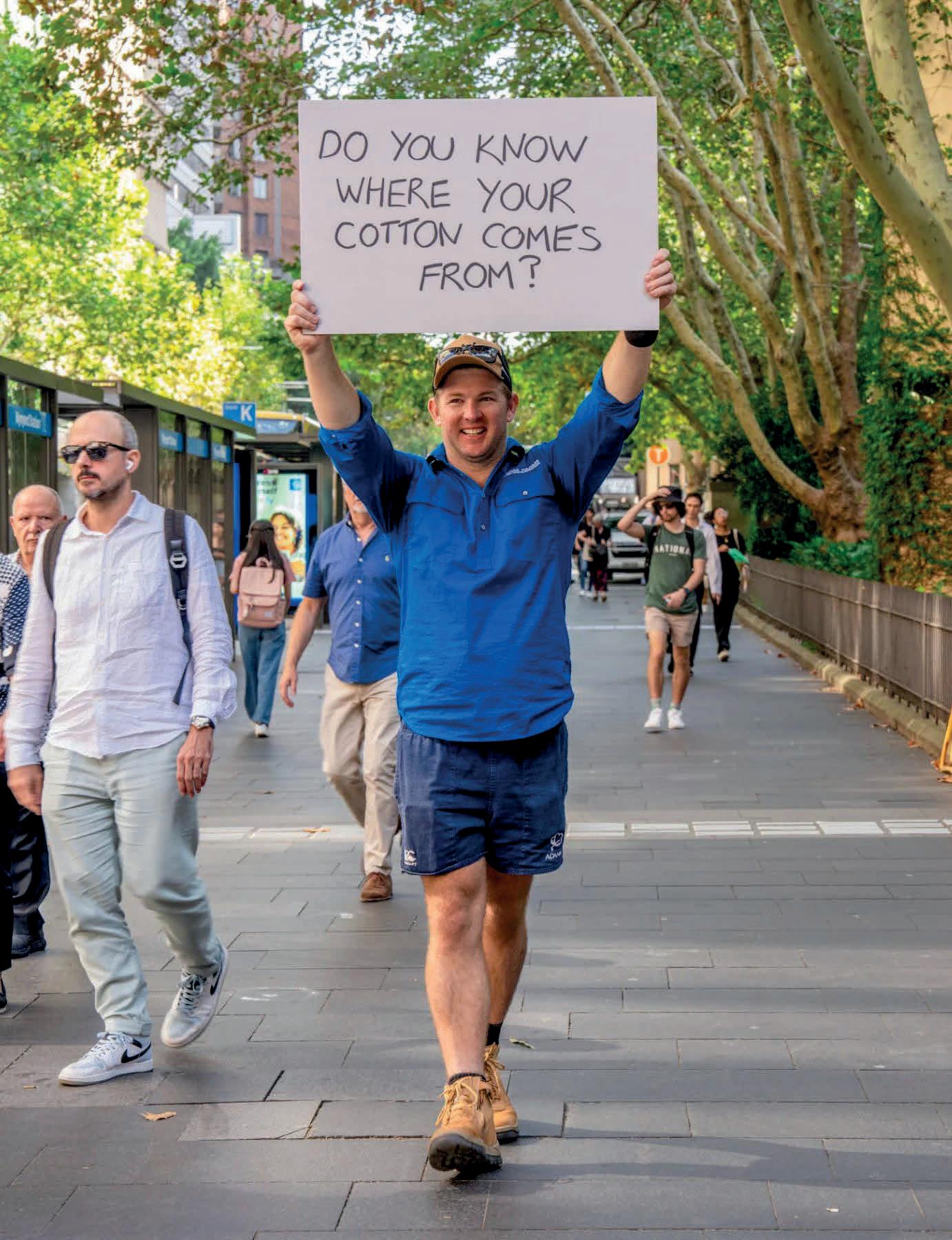
“Education from the industry is one thing, but for it to come from the heart of our farming community makes a bit more of a difference.
“All the videos we made have now had more than one million views, so I think we are hoping to do more.”
Australia’s cotton is primarily grown in NSW and Queensland, with about 90 per cent produced on family farms.
Australia’s cotton industry is considered one of the most water effcient cotton industries in the world, employing more than 7000 people and generates more than $3 billion per year in export earnings.
In an average year, Australia’s cotton growers produce enough cotton to clothe 500 million people, and major buyers of Australian cotton are currently Vietnam, China, Bangladesh, India, Indonesia, Turkey and Thailand.
Mr Briggs and his father Greg transitioned away from rice production to cotton about nine years ago.
“I am a ffth generation irrigator, with my family farming on the Murrumbidgee for 110 years this year.
“We were traditionally rice, wheat and sheep, but we now haven’t grown rice since 2016.
“Moving to cotton was about keeping up with the times when there was uncertainty in rice, and the gross margin of cotton was also appealing.”
Mr Briggs said it has been a “wild ride”.
“Two years ago we produced 5.3 bales of cotton (per hectare) due to the cold and wet, and just when we thought we’d lose it all last year we got 13.3 bales.
“This season looks like it will be in the high 14s.”
The Briggs’ sow 300 hectares of rice on their Coleambally property each year.
You can watch some of the videos produced by Cotton Australia and Mr Briggs at www.instagram.com/p/ DHWvxW6zsud/?img_index=1 or https://www.instagram. com/reel/DINF-ZsTm6-/?igsh=anVzc3FmZG1iem1k.






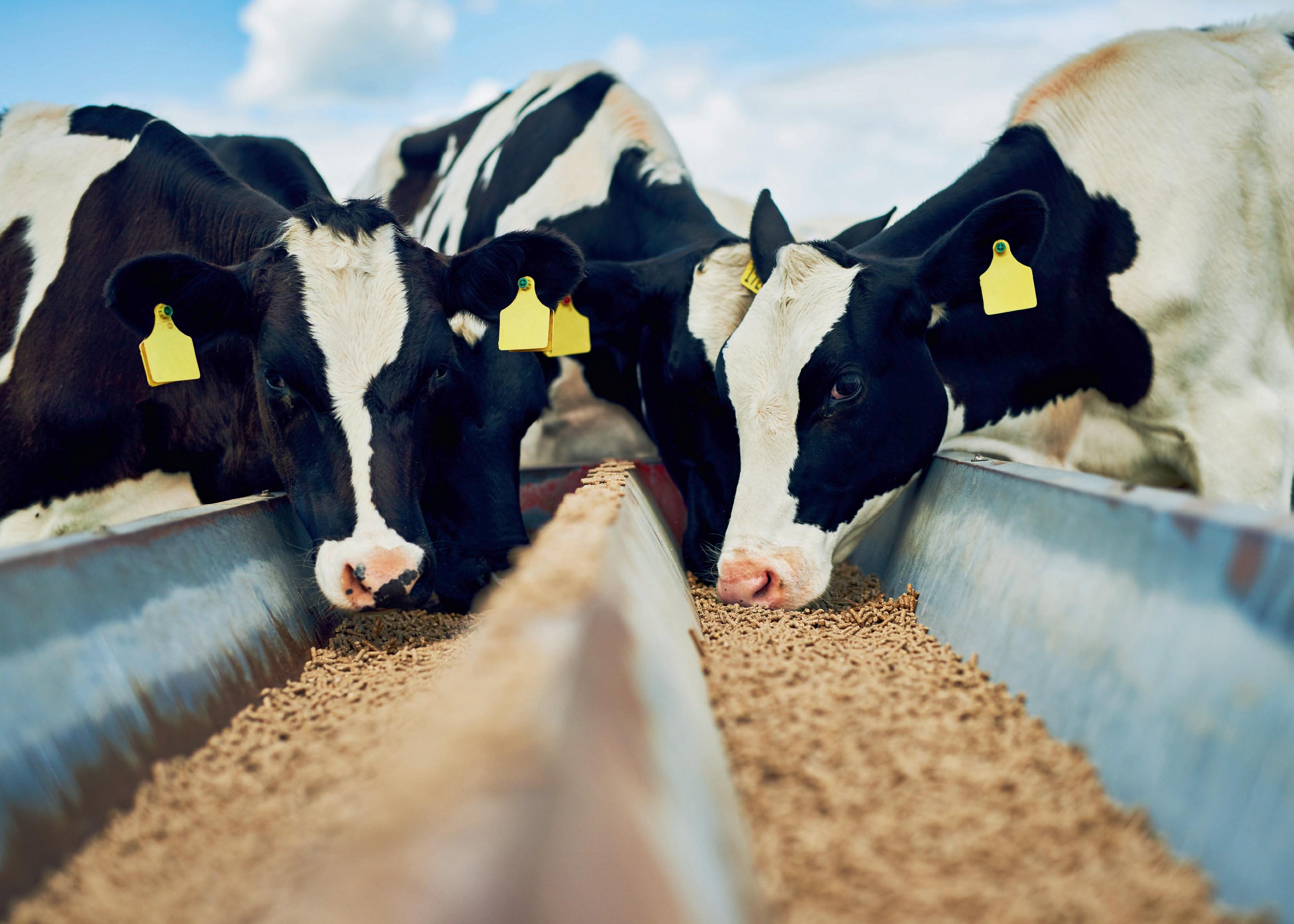
With variable seasonal conditions across the region, many producers are likely managing reduced feed availability on farms and considering options, whether it is supplementary feeding, seeking agistment, confnement feeding or reducing stock numbers.
To make these decisions, consider what your stock feed requirements are, identify any shortfalls in being able to meet these requirements and then consider what options best suit your situation. If you do not address a feed gap early, stock may start to decline in condition and production losses could be seen.
A few things to consider:
• How many livestock do you have and what classes are they (pregnant ewes, weaners, young cattle, etc);
• What feed do you have on hand – quantity and quality (kg Dry Matter/Ha in paddocks, supplementary feed, etc.);
• Which stock, and for how long, are you prepared to feed?; and,
• What level of ground cover are you aiming to leave in paddocks.
To effectively and effciently feed stock, it is important to understand the nutritional requirements of the different classes, e.g. pregnant, empty or lactating. You can then utilise feed test results, or standard feed tables to
determine what rations will meet nutritional requirements of your stock. Keep in mind:
• Stock require some roughage;
• Standard nutritional requirements are based on maintenance not weight gain;
• Introduce stock to grain slowly to reduce acidosis risk;
• When returning stock to lush pasture, ensure access to dry roughage, don’t turn out hungry stock and ensure clostridial vaccinations are up to date; and,
• Obtaining Feed Test Results will give you more accurate information on the specifc feed you plan on using.
By obtaining feed test results for available feeds you may use, you are able to compare nutritive values, quantities required and costs of feeding rations to the number of stock you have, this process may also assist you in making the decision most suited to your situation. LLS and NSW DPI have plenty of available resources including seasonal outlooks, Supplementary Feeding
Calculators, Confnement Feeding Guide and can assist with accessing Feed Test kits.
Contact your local LLS offce for further information and assistance or for a one to one discussion.

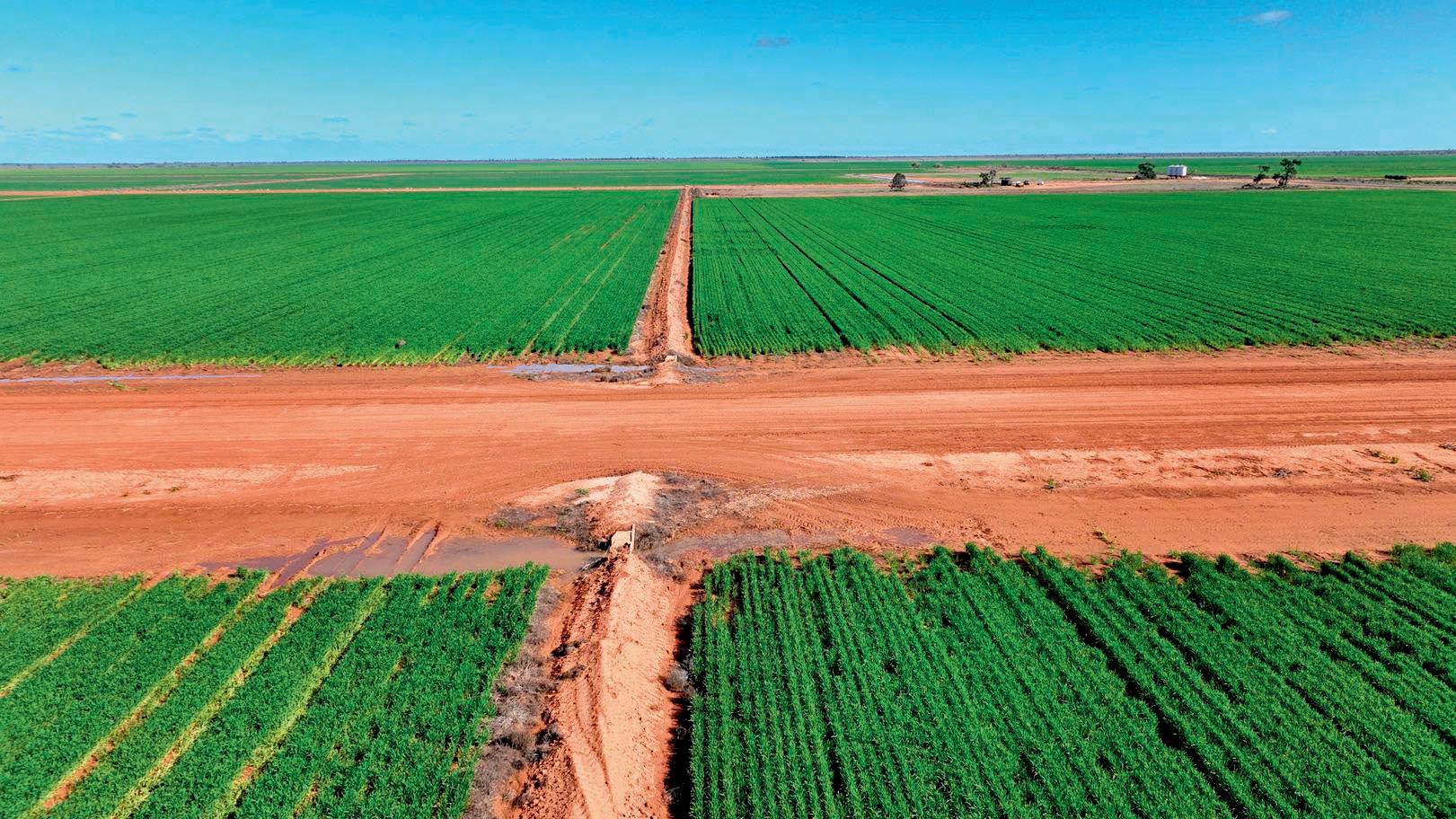
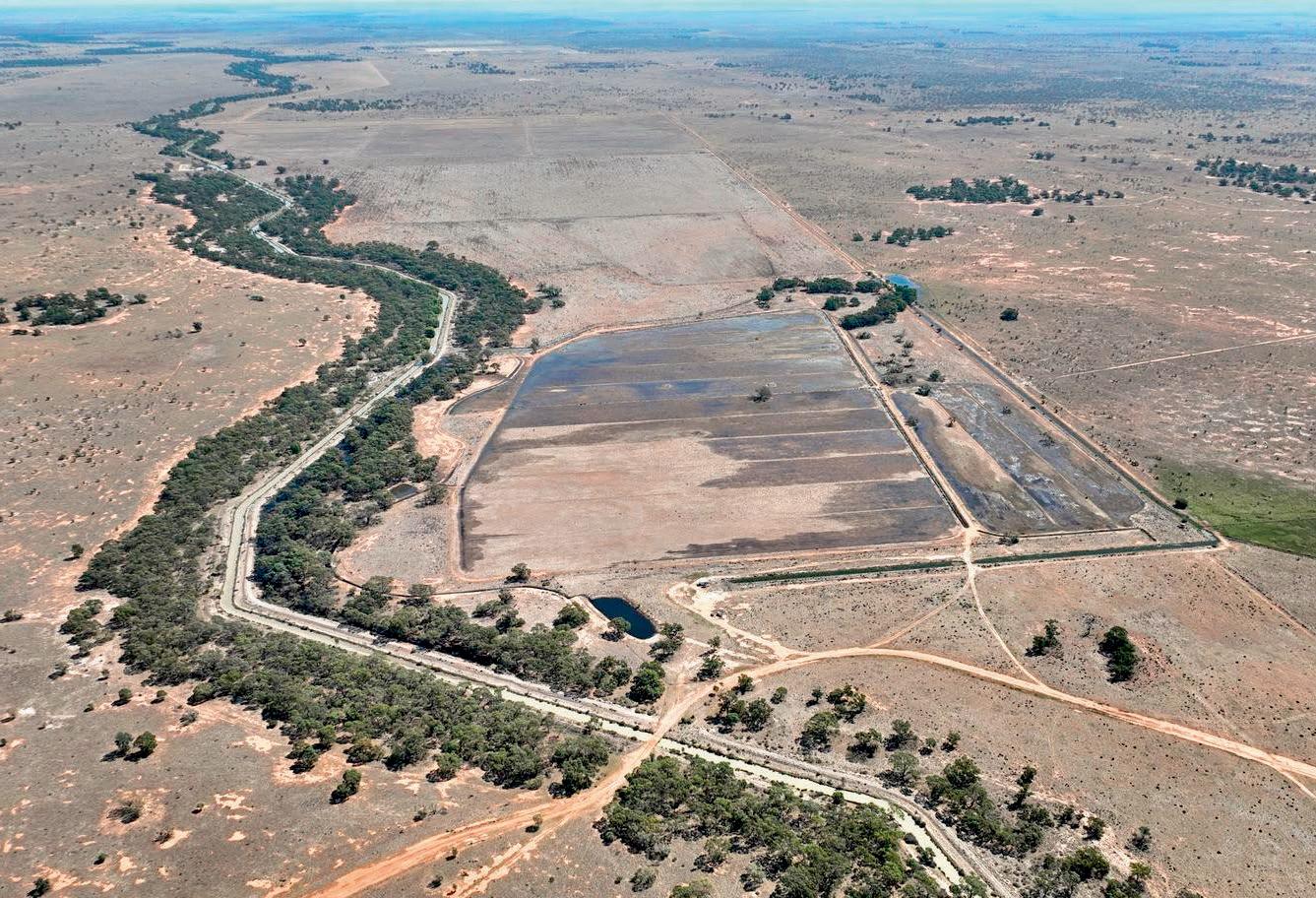
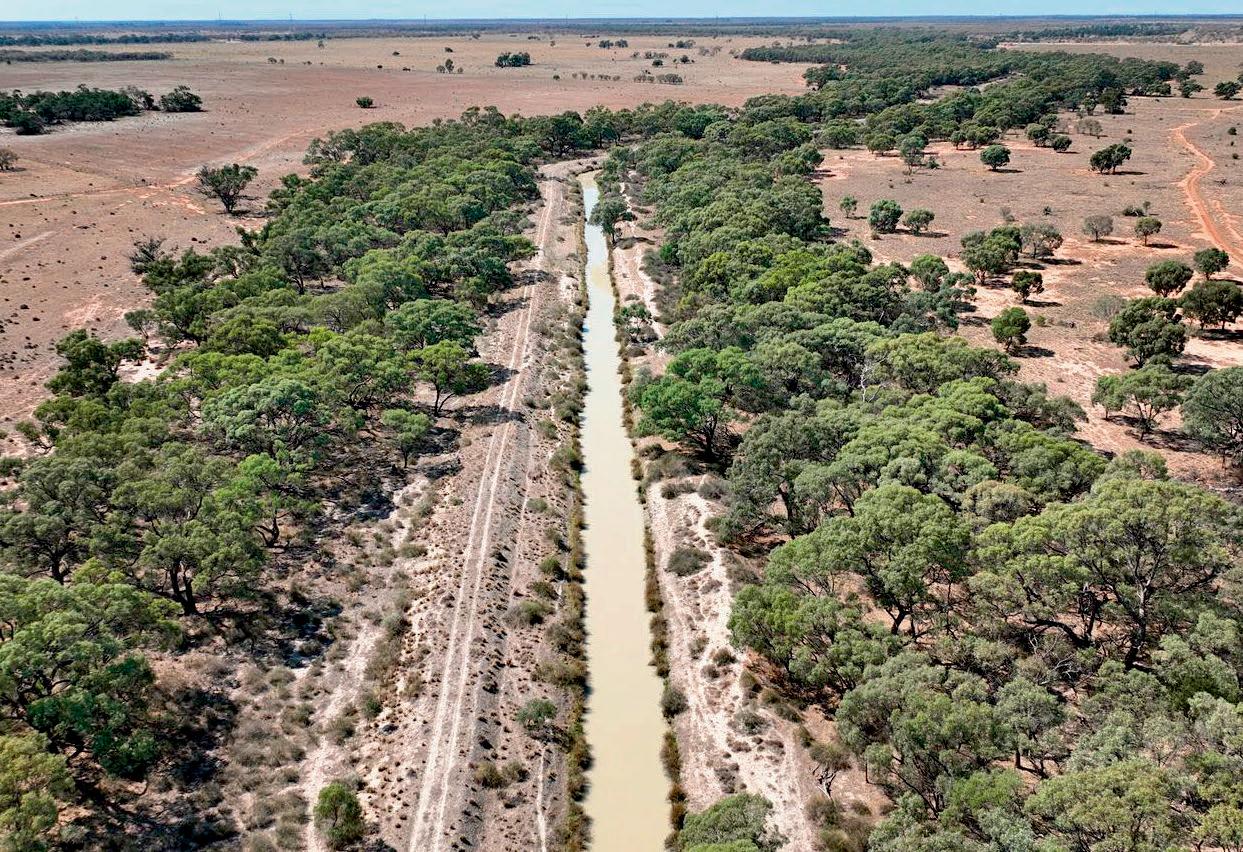
The Riverina’s agricultural landscape is evolving, which presents great opportunities. There are two prime examples in the Deniliquin district.
Waringahis a key player in the approved Yanco Delta renewable project, with 10 wind turbines being built on the property in partnership with a major energy company.
This will provide a signifcant and new passive income stream, alongside strong agricultural returns.
Grid connectivity is secured, and construction is imminent.
Wonga Station offers a parallel opportunity, excelling in agriculture while also possessing ideal attributes for renewable energy offsets and showcasing exceptional native fora and fauna.
This makes it a potential powerhouse in the renewable energy space, as well as a strong candidate for nature conservation and carbon offset investments.
Currently, Wonga stands out as one of the best-covered properties in the region.
Secure your stake in this dynamic future.
Waringah is for sale by negotiation, and Wonga Station is offered via expressions of interest closing May 23, 2025.
Call Nutrien Harcourts today 03 5881 1777 for immediate inspection, details and to discuss these unique income-generating opportunities.
Contributed by James Sides, Nutrien Harcourts real estate manager
FARMtalk welcomes community contributions from farmers, experts and professionals who make their living and life on the land. If you would like to contribute, there are several ways to do so.
• Get in touch and give us a tip of a great story idea.
• Contribute an article: If you are an expert in your feld then contributing once of, or regularly, is a great way to get started in our FARMtalk magazine. Contact Zoe McMaugh at farmtalk@ denipt.com.au or 03 5881 2322.
• Become an author: FARMtalk is open to occasional contributors who are experts in their feld or authorities on a subject or area. Once you have contributed an article, and the editorial team have approved you, we can set you up with a regular column to contribute. We would love to hear from you. Contact Zoe McMaugh at farmtalk@ denipt.com.au or 03 5881 2322.
• Have a fascinating farm in mind for us to showcase? Tell us! We would love to hear from you. Contact Zoe McMaugh at farmtalk@ denipt.com.au or 03 5881 2322.
A deal which would have seen a collection of historic local properties sold for $780 million has collapsed.
InSeptember 2023, Australian Food & Agriculture Co (AFA) advertised the sale of 13 farms, covering more than 225,405 hectares.
The sale consists of three major freehold title land aggregations within the Deniliquin, Hay and Coonamble districts including Boonoke, Burrabogie, Wanganella and Wingadee stations.
AFA agreed to terms last year with Agriculture and Natural Solutions Acquisition Corporation (ANSAC) with a sale price believed to be $780 million.
ANSAC is a group of investors, including Bert Glover, founder of the Australian and US-owned specialist agricultural investment and development frm Impact Ag Partners, which has offces in Armidale in NSW and Montana in the US.
In a document released to the U.S. Securities and Exchange Commission on April 11, ANSAC announced the “termination” of the agreement by “mutual consent”.
In its own company report, released in March, ANSAC made reference to issues plaguing the deal.
“The parties are currently discussing the best path forward for the business combination in light of the increasingly volatile equity market conditions, including potentially mutually terminating the business combination agreement,” the report said.
The document also hinted at tariffs and trade barriers and the potential for further deterioration of trade relations between Australia and the US, despite the Australian Government giving approval to the foreign sale in late 2024.
Bell Potter associate director corporate fnance Henry Thomas confrmed another buyer would be sought. While the preference it to sell the properties together, individual sales may also be considered.