Sarah Bain, Advertising Consultant P: 03 5883 1033
E: sarah.bain@ southernriverinanews.com.au
EDITORIAL:
Zoe McMaugh, Content Manager P: 03 5881 2322
E: zoe.mcmaugh@denipt.com.au
Advertising and Editorial Deadlines Contact
Advertising bookings and editorial requests for each edition of FARMtalk close on the third Friday of the month preceding publication.
Public meeting on Basin Plan submission
Over the past 14 years, the Murray region has dealt with numerous consequences of the Murray-Darling Basin Plan.
Thereduction in water for irrigation communities has had a flow-on effect to businesses in towns, meaning impacts beyond the farmgate.
This year, communities are being given a chance to contribute their thoughts on the plan’s implementation and future to the Basin Plan Review, with submissions being accepted by the Murray-Darling Basin Authority.
To ensure wide-ranging perspectives are included in its submission, the Murray Regional Strategy Group is holding community meetings.
This will ensure the submission reflects community views and concerns.
There will be two opportunities to have your say – at an open forum at the Deniliquin Golf Club from 1.30pm on Tuesday, March 24, or in an online session from 10am on Thursday, March 26.
To register, use the QR code on page 6 of this edition, go to www.murrayregionalstrategygroup.com.au or email murrayrsg@gmail.com
MRSG is inviting all irrigators, riparian landholders, small business owners and interested community members across the NSW Murray Valley to attend the meeting or online session.
“It is important we have community input for our submission,” Chair Geoff Moar said.
The MRSG submission is being prepared by experienced water consultant Claire Miller, who will address both meetings.
Mr Moar will also explain the MRSG submission process and work undertaken to ensure it is a strong submission that raises issues with the Basin Plan that have impacted the region.
“There have been many unintended consequences of the Basin Plan that need to be highlighted in review submissions,” Mr Moar said.
“We need governments to understand that Australia’s food security is important, even more so in a world that is becoming more volatile, and it is being compromised by the Basin Plan.
“Lack of water for agriculture is reducing food supplies and making our nation more reliant on imports.
“Additionally, we are storing huge quantities of water in dams, supposedly for environmental use, yet the volumes legislated under the original Basin Plan will not fit down the system.
“When the plan was being developed more than 15 years ago, regional communities were promised an adaptive plan that would be fair and balanced.
“That promise has not been delivered, but there are achievable solutions that can help Australia protect both the environment and our food security.
“I am sure these and many other issues will be raised at our meetings, and look forward to receiving community input to ensure our submission effectively represents the New South Wales Murray region,” Mr Moar said.
Information contained in this magazine is presented only after being carefully researched. However, there are differences in state and regional regulations and conditions. Farmers are asked to check with their own advisors. FARMtalk can assume no responsibility for the contents.
Rebecca Flisher CREATIVE MANAGER
Zoe McMaugh CONTENT MANAGER
Sam Wake ADVERTISING
Amber King ADVERTISING
Rowan Frazer CADET JOURNALIST
Krysta Hallum CREATIVE TRAINEE
Tertia Butcher CONTRIBUTOR
Eamon Kurta CADET JOURNALIST
Nigel Lutton GENERAL MANAGER
Sarah Bain ADVERTISING
Kayla McAuliffe OFFICE MANAGER
Jane wins Jan Cathcart Memorial Scholarship
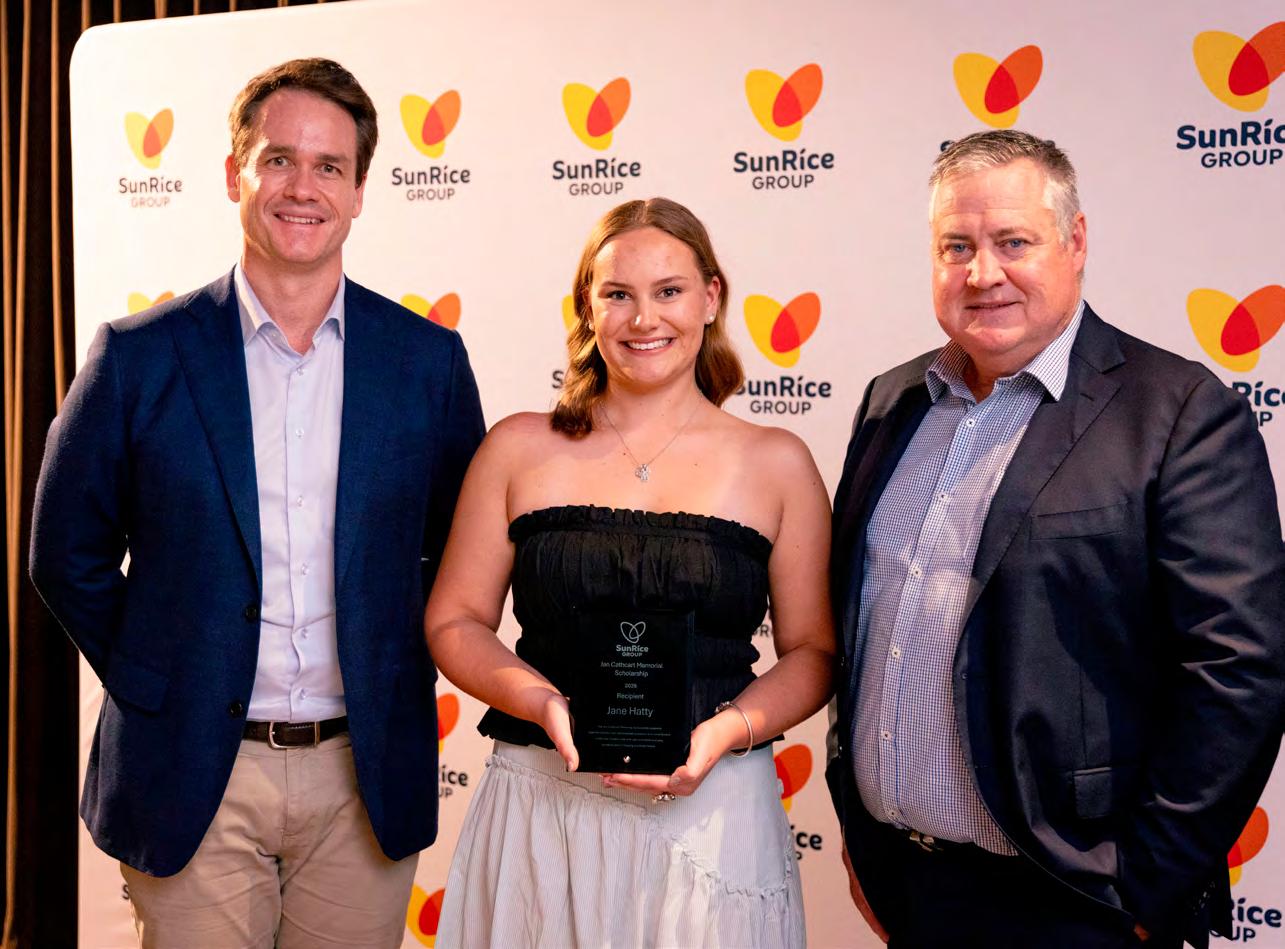
Tocumwal’s Jane Hatty has been recognised for her passion for agriculture, rural communities and the future of the Australia’s rice industry.
She has been announced as the recipient of the 2026 Jan Cathcart Memorial Scholarship, which was established in honour of Jan Cathcart’s extraordinary fourdecade contribution to the Australian rice industry.
Speaking at the scholarship presentation dinner held in Sydney last week, SunRice group chair John Bradford said Jane stood out as a recipient who truly reflects the values and intent of the scholarship.
“The Jan Cathcart Memorial Scholarship is about more than financial support – it’s about backing people who share Jan’s commitment to community, leadership and the long-term strength of our industry,” Mr Bradford said.
“Jane impressed the selection panel with her genuine passion for agriculture, her interest in the industry’s future, and her desire to make a meaningful difference for farmers and regional communities. We are incredibly proud to support her journey.”
Mr Bradford said the scholarship continues to play an important role in nurturing the next generation of leaders across all parts of the rice value chain.
In accepting the scholarship, Jane thanked SunRice Group for its confidence in her and acknowledged the importance of the program in expanding access and opportunity for women across the industry.
“Being awarded the Jan Cathcart Memorial Scholarship is an absolute honour, and I’m incredibly grateful to SunRice for placing their faith in me,” Ms Hatty said.
“I really care about making a difference to farmers and rural communities, and I believe this opportunity will help me clarify where I can have the greatest impact – whether that’s on farm, in research, agronomy, corporate roles or policy.
“I see this scholarship as recognising people who are determined to give back to the industry in their own way. Each recipient brings a different perspective, and I’m excited to harness Jan’s legacy to help contribute to a strong and sustainable future for the rice industry.”
Since its inception, more than $350,000 has been awarded through the Jan Cathcart Memorial Scholarship, supporting emerging talent and continuing Jan Cathcart’s enduring legacy across the Australian rice industry.
“I see this scholarship as recognising people who are determined to give back to the industry in their own way.”
JANE HATTY
SunRice CEO Paul Cera, Jane Hatty and Group Chair John Bradford.
MURRAY IRRIGATION’S COMMUNITY IN FOCUS SERIES: BERRIGAN FOOTBALL & NETBALL CLUB
Saints on track, eagerly preparing for another season
As the winter sports season fast approaches, football/netball clubs across the region are waking from their summer hiatus.
It’s time to dust off the boots and sneakers, get back on the training track or court, and prepare for another year when these local clubs once again become the focus of attention in their community.
The Berrigan Football Netball Club (FNC) or, ‘the Saints’ – as they are fondly known – have had a resurgence both on and off the field and the club.
With a proud history stretching well over a century, the club is eagerly looking ahead to season 2026.
Under 14s the pride of the town
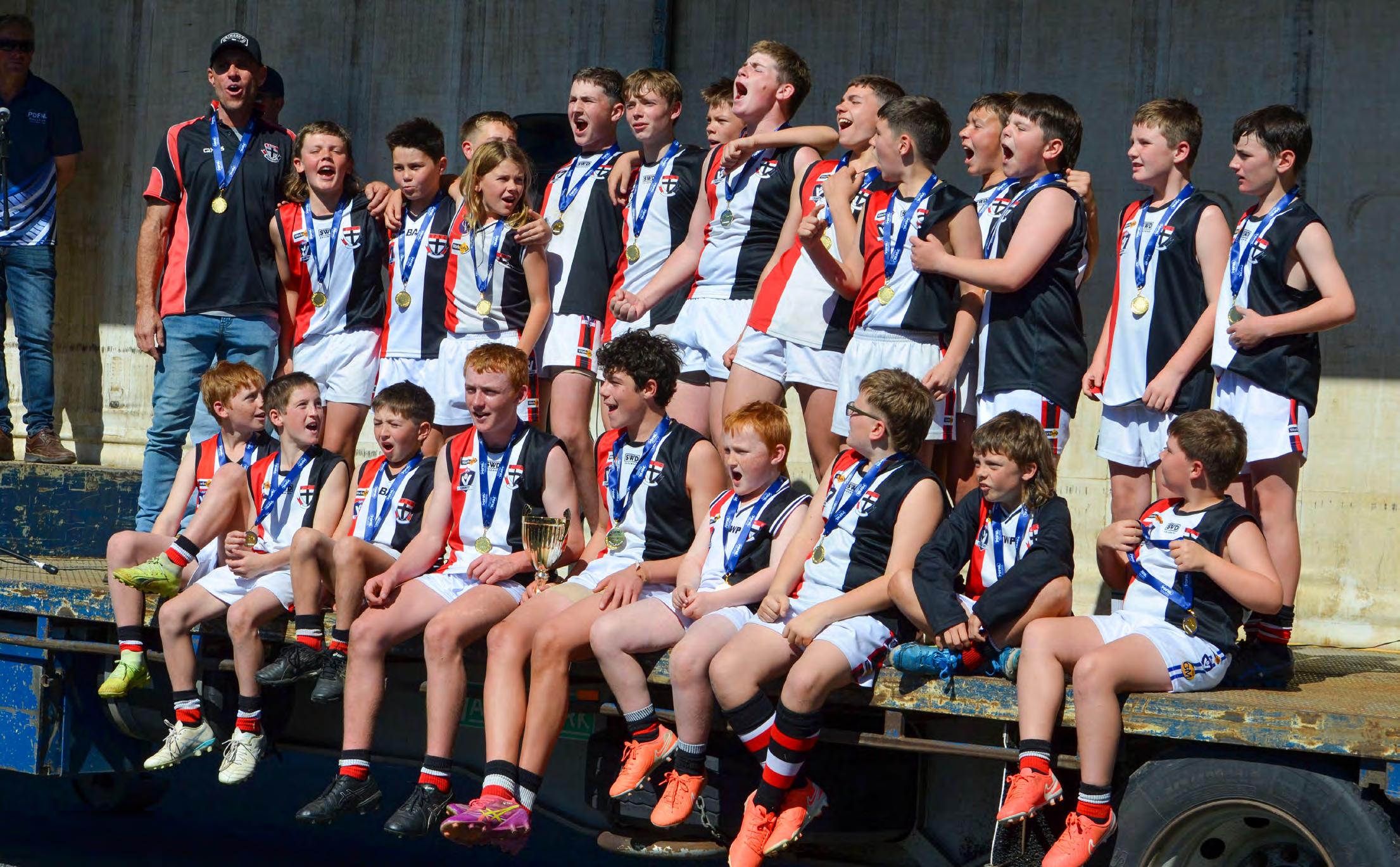
Last year, the Saints were represented in finals by all four football teams, with the youngsters in the Under 14s the pride of the town and club after recording an emphatic
premiership victory against the previously undefeated Picola United.
It was a story for the ages which was further rewarded when the young Saints were presented with the Berrigan Shire Sports Team of the Year award at the community’s 2026 Australia Day ceremony.
This was not just a team of talented youngsters coming together and recording a grand final victory; this victory was one to be remembered and savoured.
While the youngest Saints team had enjoyed success as runners-up in 2023 and 2024, at the start of 2025 there were insufficient players for an Under 14s side, and it appeared Berrigan would have to advise the Picola Football Netball League administration that it would not be fielding a team.
But local farmer and parent Rob Ryan had other ideas. He rallied the troops, getting enough young footballers interested in ‘having a crack’, even some who were new to the game.
The focus was not on winning games, but rather on building a sense of belonging, mateship and community; a culture that became the heart of this fledgling team.
This group gelled from the start and put a string of early season wins together – some by big margins – before coming back to earth with a thud when suffering an 11 goal defeat against top of the table Picola United.
But the spirit didn’t falter. This disciplined group continued working hard, and finished second on the ladder with 13 wins and four losses.
The Berrigan Saints’ Under 14s won the 2025 Picola League premiership and were also awarded Berrigan Shire Sports Team of the Year.
They made it to the grand final, but were rank outsiders against the powerhouse Picola team.
However, underdog status only made the young Saints more determined, and their grand final win by almost four goals capped off an amazing season; one which typifies the Berrigan FNC spirit.
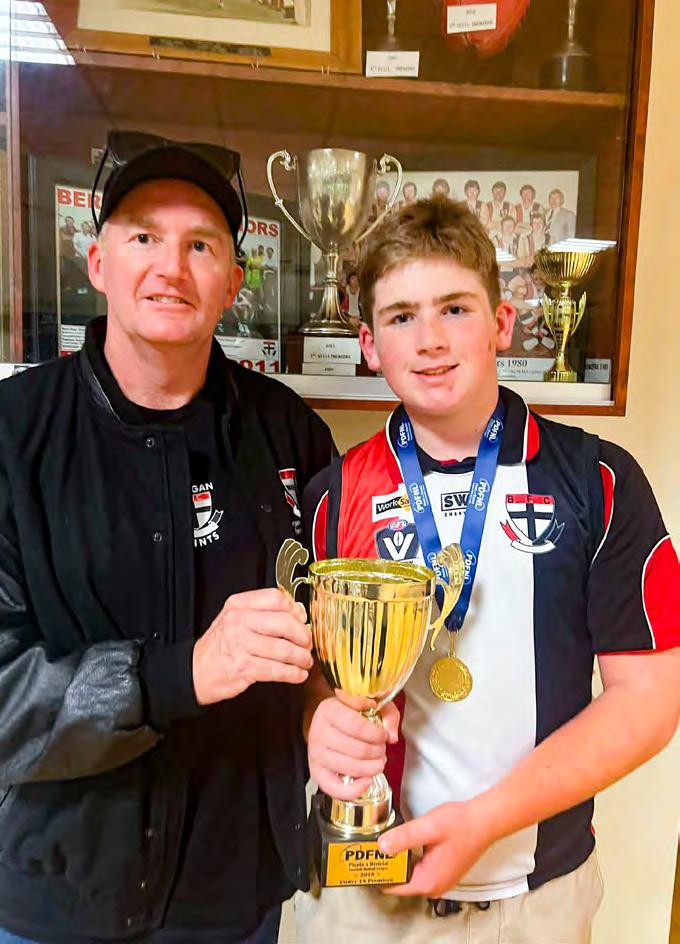
It was even more special for the Ware family, who are Berrigan FNC stalwarts, with Under 14s Vice Captain Hudson Ware winning a premiership exactly 14 years to the day after his father, James, was part of the 2011 Berrigan senior premiership team. That is the most recent senior football flag for a club steeped in history.
A long and proud club history
The club was formed in the latter part of the 19th century, with its first recorded match against Cobram in 1891.
After initially playing in the Murray Border Football Association, Berrigan switched to the Southern Riverina Football Association from 1905 to 1930, during which time it won 10 premierships.
In 1933, Berrigan joined the Murray Football League, winning another five premierships, the last in 1980.
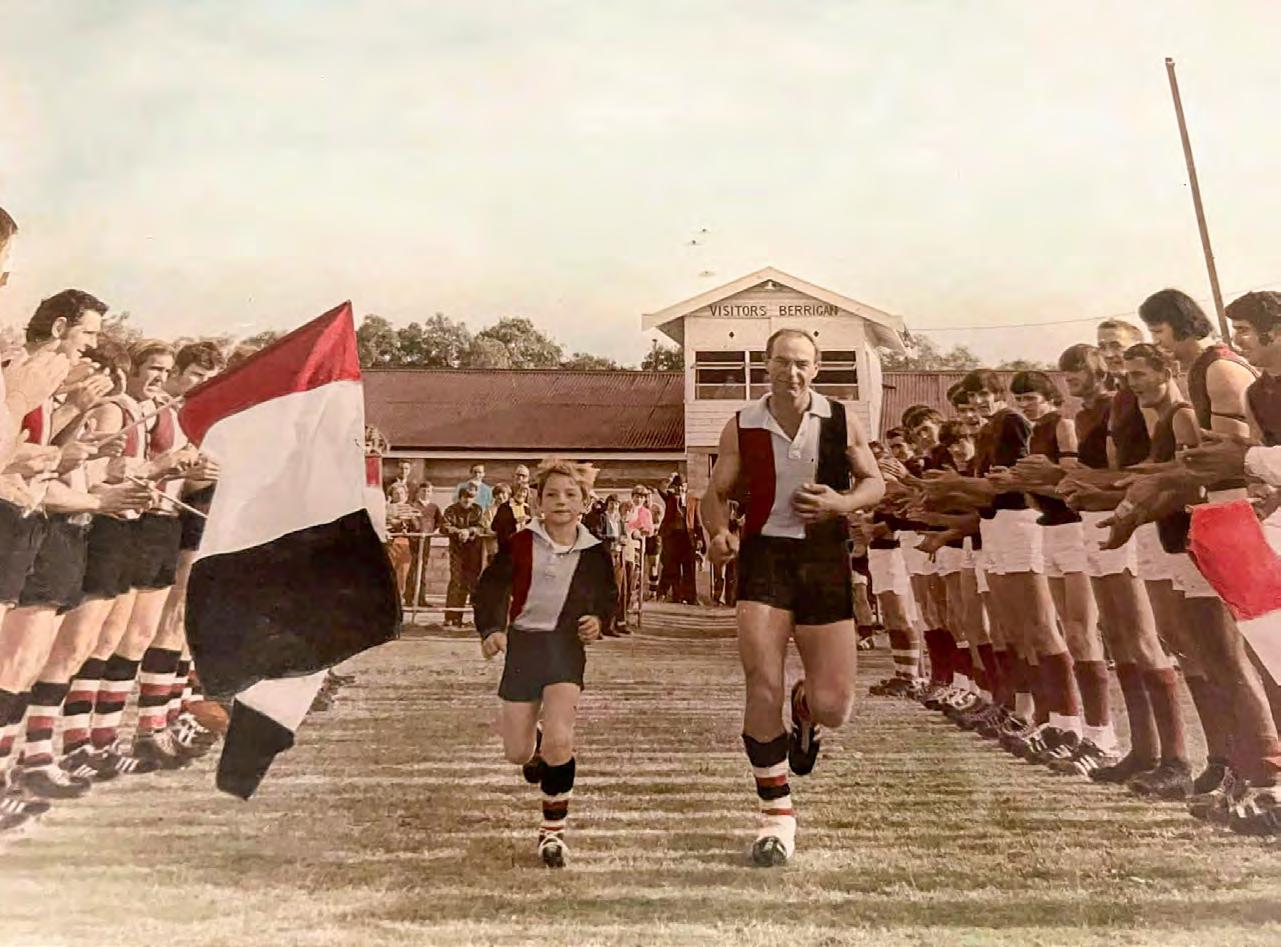
It was during this era that Berrigan fielded its most highly decorated player, with Brian Gleeson - later dubbed the ‘boy from Berrigan’ - donning the local jumper before joining St Kilda. He won the 1957 Brownlow Medal for the Victorian Football League’s best and fairest, before a knee injury during a 1958 pre-season match ended his career. Also playing during this magical era was local champion Graham Ellis. A framed image of him running through a guard of honour alongside his son for his 300th senior game in July 1971 takes pride of place in the Saints’ Premiership Cabinet.
He remains the only Berrigan senior player to reach that 300 game milestone.
After the 1980 premiership, Berrigan struggled in the Murray Football League and, at one stage, there were fears the club would fold. With strong community support, the Saints moved to the Picola & District Football League and, after a slow start, were grand finalists in 2009, defeated by Jerilderie, and then premiers in 2011.
Club spirit endures, no matter the game results
While on the ground there have been successful years, and some not so successful, the club spirit and community backing of Berrigan FNC does not wane.
The outstanding performance of the 2025 Under 14s, when all looked lost pre-season, is testament to this.
This year the club will field multiple teams across all divisions in both football and netball, with the latter playing a far more integral part of the Berrigan Saints than in earlier years.
In 2025, the Under 17s continued their solid form of recent seasons in which they have twice been runners-up.
Similar to the Under 14s footballers, the team was struggling for numbers last year but, with support from the club’s Under 15s team players, was able to get deep into finals before a loss in the premiership decider.
The camaraderie and enthusiasm across the club’s netball program remains infectious.
Top notch facilities
And whether it’s footballers, netballers or supporters, they now all enjoy first class facilities, with the Berrigan Sportsground regarded as one of the finest in the region.
Clubrooms have been re-built and changerooms renovated. As a result, Berrigan is not only able to host large crowds at its home games, but is also a suitable venue for league finals.
This year, a small but important addition to the clubroom facilities is an ice-making machine, purchased with a $1,900 grant received through Murray Irrigation’s 2025 Community Sponsorship Program.
This new piece of equipment will assist football and netball players in sports injury management, as well as support recovery.
Club President Noel Baxter said the ice-making machine would not only support approximately 170 players across numerous teams during the football/netball season, but would also be used by other sporting codes including the
Berrigan Cricket Club and those involved in the annual Berrigan Show.
“Our club plays a vital role in the community, giving everyone a chance to come together and support the health and wellbeing of each other through being part of a team,” Mr Baxter said.
“Providing the facilities for sports injury recovery is integral to our commitment to safety and wellbeing of all participants.”
Anticipation rising for the season ahead
The President, along with players and supporters, is looking forward with excited anticipation to another football/netball season in the Picola & District Football Netball League. The season launch is scheduled for Saturday 28 March.
The club’s fourths - the reigning Under 14s premiers - are again expected to be a team to watch. The thirds (Under 17s) will be strengthened by the addition of some 2025 fourths’ players, while the ‘top age’ junior players in 2026 have another year’s experience under the belt.
Meanwhile, the seniors have recruited well and are hoping this will help them go beyond last year’s semi final appearance.
All netball teams have been training well to achieve a level that will result in more wins over the 2026 season.
A highlight of the year will no doubt be in June, when the Saints have the services of former Carlton and Brisbane Lions footballer Mitch Robinson, both on the ground and at a sportsman’s night.
The club will also host its annual goods and services auction in July.
While one of the aims is to achieve on-field and on-court success, this is not the ‘be all and end all’ at Berrigan FNC.
Providing the community with a social outlet, teaching team values to youngsters, and providing a central hub where local people can come together are all vital aspects of a country sporting organisation.
This is all epitomised at Berrigan Football Netball Club. Murray Irrigation’s annual sponsorship program is made possible through the support of its customers.
Graham Ellis runs through the guard of honour for his 300th game with the Berrigan Saints.
James Ware and his son Hudson celebrate premierships 14 years apart.
Murray
MRSG
Renewable rollout concerns
Securing social license remains an ongoing challenge for councils as the region prepares for energy transition.
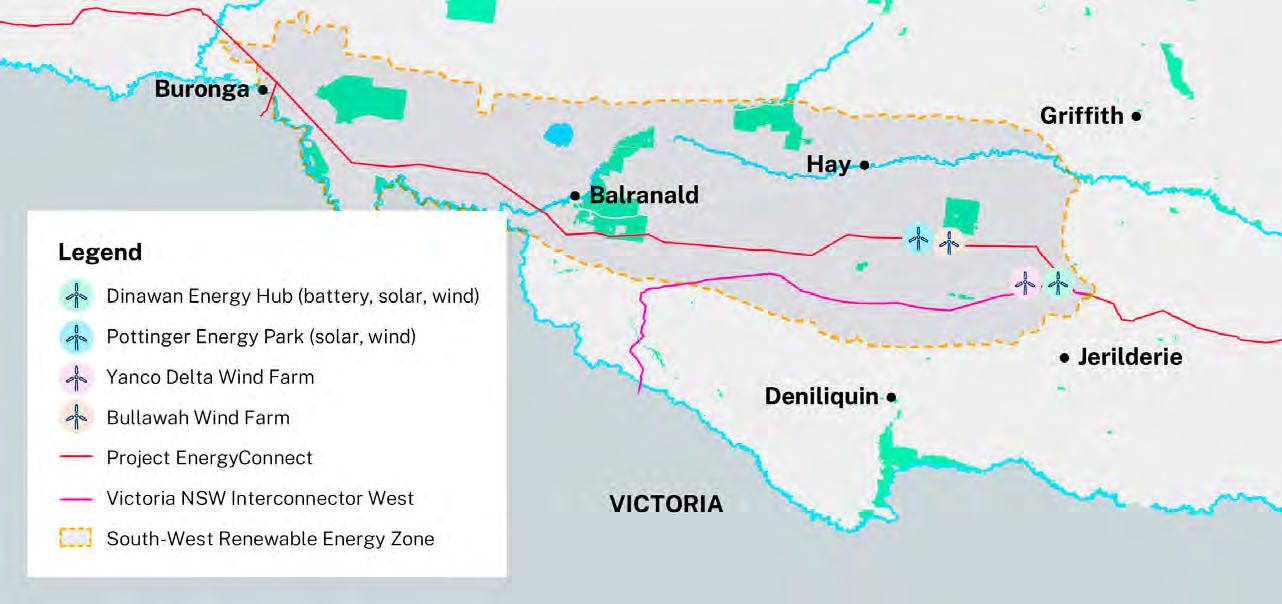
The message was clear at a hearing in Hay last month into the impact of renewable energy zones on rural and regional communities and industries in NSW: EnergyCo is not doing enough.
In order to attain and maintain a social license to operate, organisations need to build trust with the community through listening, engaging them in dialogue, providing credible information, and following through on commitments.
EnergyCo, the NSW Government body responsible for upgrading the grid to build a reliable electricity system as coal-fired power stations retire, came under heavy fire from most witnesses in the hearing, conducted by a committee of the NSW Legislative Council.
“The current method of community consultation by EnergyCo and Renewable Energy companies is poor and inadequate,” secretary of Bundure District Landholders Group, Richard Coughlan said.
“EnergyCo needs to step up to coordinate a planned transmission line network.
“We reside in the South West REZ and are members of the Bundure Landholders Group. We are all farmers directly neighbouring and impacted by transmission lines, Dinawan Energy Substation, wind and solar farms.
“Our Group has invited EnergyCo to meetings to seek some clarification on the process and what is expected of the successful projects to those properties directly impacted. But to date we are not getting many answers to queries.”
Mr Coughlan said concerns by individuals and the group as a whole include the lack of credibility and transparency in the process in which the access rights were issued in the SWREZ.
He said there was never enough clarity provided to ensure the best projects gained the access rights.
“There was no transparency in the process. Planning in the SWEZ has been poor, the Dinawan substation sits outside the Zone on its most eastern boundary.
“The location of Dinawan is not central to the Zone, which excludes the potential of projects out west of the Zone.
“Projects proposed for the western area of the Zone are limited to the 1.2 GWT capacity into the PEC transmission line.
“There has been no planning or coordination of transmission lines from projects into Dinawan.
“Fourteen per cent of the renewable infrastructure granted access rights is outside the zone.”
Mr Coughlan said the costs to neighbours are manyreduced connectivity, increased fire risk, visual and noise disruption, increased security risks, local road destruction, disruption to agricultural activities, social and health impact, increased insurance costs, biodiversity loss, potential devaluation of property values and increased demands on their businesses ensuring these developments are subjected to some sort of accountability as no one else seems to be.
Mr Couglan, and fellow committee member Andrew Browning, said there has been a lack of willingness from EnergyCo to meaningfully engage with the developers.
“Our issues have been on the table for three years with EnergyCo and Transgrid and there has been no movement.
“It is extremely frustrating,”
“We are just really crying out for someone to come in and coordinate this,” Mr Browning added.
The Inquiry further heard the Environmental Impact Studies (EIS) for Yanco Delta windfarm was not complete, and severely underestimated the environmental impacts of the project.
The hearing was told there is no plan for a 710-person camp, fire control measures were minimal and there is no provision of increasing telecommunications, no road maintenance or upgrade detailed, no provision for water use and no acknowledgement of the impacts to local communities or neighbouring landholders and their businesses.
Decommissioning has not been addressed.
The Inquiry learnt Yanco Delta Wind Farm now must seek numerous modifications to its development through the EPBC (Environment Protection and Biodiversity Conservation Act) due to its inadequate initial EIS.
Mr Coughlan said Government agency regulatory requirements have been relaxed in the push to roll out renewable energy with haste to accommodate emission targets.
Hay Shire Council was represented by Executive Manager – Economic Development and Tourism, Alison McLean who told the Inquiry that compared to neighbouring LGAs, Hay experienced fewer direct impacts from transmission projects such as Project Energy Connect (PEC) and VNI West.
“This has assisted in facilitating more positive discussions about Hay’s role in the energy transition,” Mrs McLean said.
“However, securing social license remains an ongoing challenge, particularly as the community faces the construction phase’s disruptions, including transport, accommodation, water, waste and long-term community impacts.
“The scale and location of proposed REZ developments remain uncertain.
“Once the South West REZ access tender is announced, Council will require significant resources and support
to maintain the community’s social license, resource an infrastructure build of this scale, and maximise opportunities.”
Murrumbidgee Council has dealt separately with four State significant wind farms and one state significant solar farm, all seeking connection to Dinawan.
In addition, prior to the development of the SW REZ, two state significant solar farms were approved and built at Coleambally and Darlington Point.
Murrumbidgee Council Director Planning and Infrastructure, Garry Stoll said this experience has provided Council with extensive first-hand knowledge of the impacts, challenges and disappointments that the development of renewable energy projects create.
“It also reinforces our belief that these developments offer no positive outcomes for our communities,” Mr Stoll told the Inquiry.
“In fact, Council and the community has reached the conclusion, that whilst we do not want these things in our area, if they are coming, we will attempt to leverage the maximum amount of benefit from them for our communities as possible.
“However, even in this endeavour we have been continually thwarted by the efforts of the NSW Planning and Environment Energy Assessments team, EnergyCo and the developers themselves.”
Mr Stoll raised concern over the visual impacts of potentially up to seven major transmission lines converging at one location, either into or from the Dinawan Substation of the Kidman Way between Coleambally and Jerilderie.
He said Council was also concerned with the heavy demands placed on local roads and an influx of thousands of construction workers with the need for accommodation camps.
He said there would be new demands on potentially scarce resources such as water, and other services provided by local government.
“The creation of the renewable energy zones are all state and federal government projects,” Mr Stoll told the Inquiry.
“Projects in Murrumbidgee Council within the REZ will only benefit the renewable energy developers themselves and about six landowners.
“Yet the impacts of the construction, ongoing operations, loss of visual amenities, community divisions, economic, loss of available telecommunication services are all impacts, costs and burdens that will be borne by our Council now and into the future.”
Discover the future of farming at expo
The 2026 Seymour Alternative Farming Expo will return to Kings Park in Seymour, Victoria, from April 17-19, 2026, welcoming thousands of visitors to explore small-scale, sustainable and alternative farming practices.
The three-day event expects around 20,000 attendees and will feature about 400 exhibitors showcasing technology, equipment, livestock care and innovative farming solutions.
Displays will range from backyard farming tools and water-saving systems to renewable energy options and niche livestock breeds.
Visitors can participate in hands-on demonstrations, expert talks and interactive displays designed for both experienced farmers and agricultural newcomers.
The expo will also offer market-style shopping, local food stalls and family-friendly entertainment.
Known as one of Australia’s leading agricultural events, the expo has established itself as a hub for farmers, hobbyists, rural lifestyle enthusiasts and families.
The event has grown significantly since its early beginnings and is now recognised as one of the most successful alternative farming expos in the Southern Hemisphere.
The expo plays a significant role in connecting communities, supporting local businesses and encouraging sustainable rural living.
Exhibitors and attendees value the event’s ability to highlight emerging agricultural trends, foster innovation and provide practical solutions for modern small-scale farming.
The event offers educational opportunities for those exploring self-sufficiency or expanding their agricultural knowledge, while also providing an enjoyable day out in regional Victoria.
For more information on the event, or to pre-purchase your tickets online, go to www. seymourexpo.com.au.
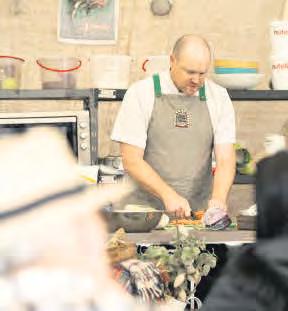
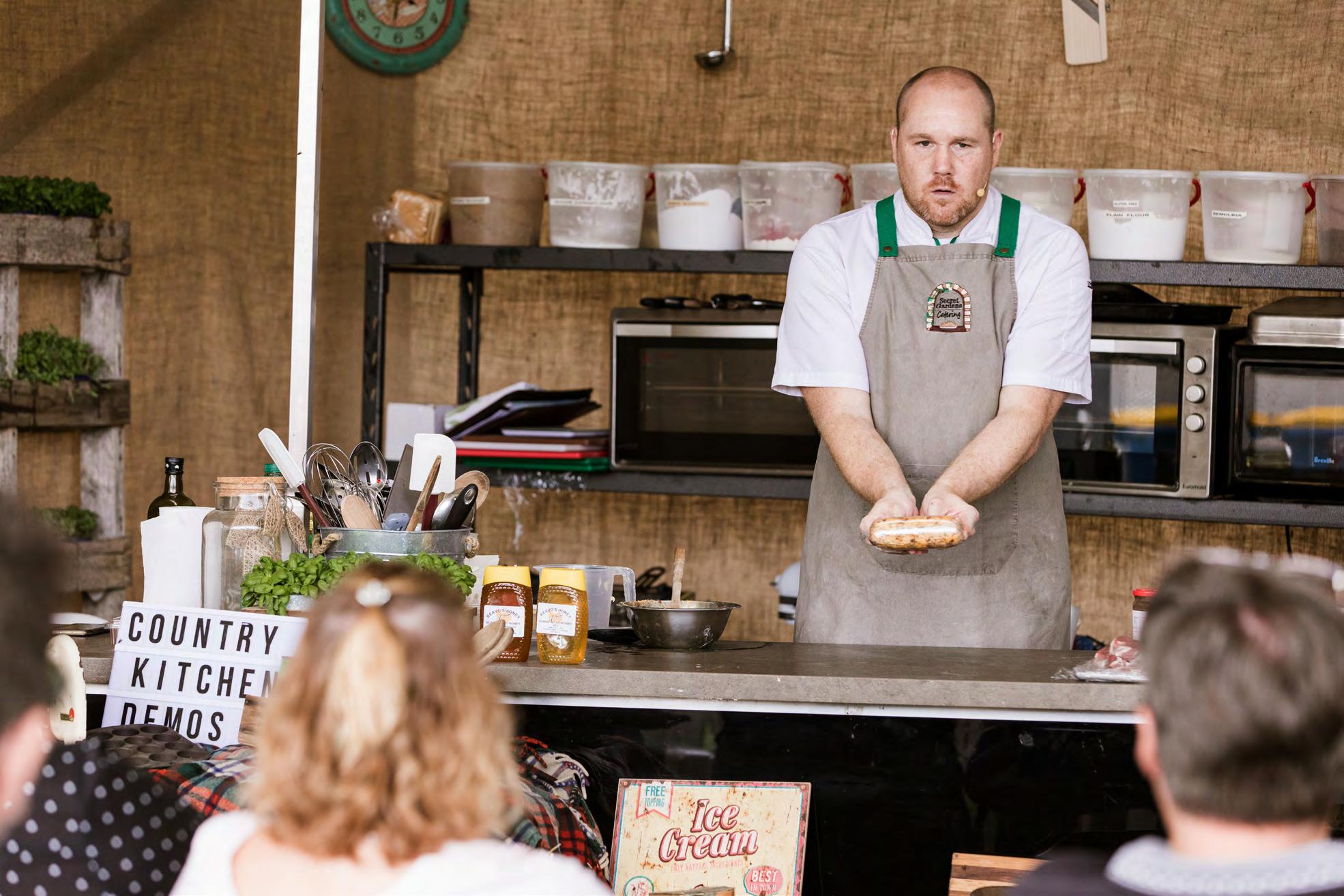
Secret Garden chef Adrian Hensley will be back again with his much-loved cooking demonstrations.
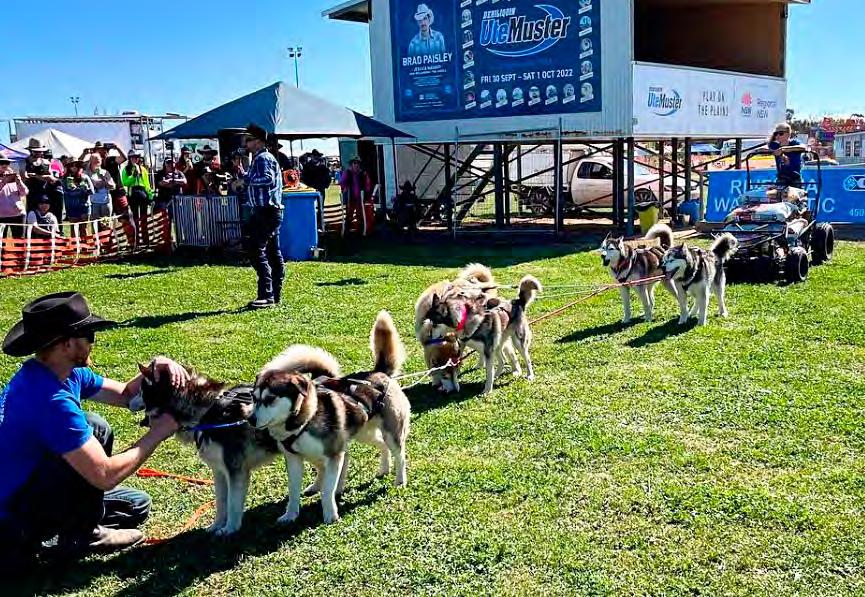
Watch huskies perform live pulling demonstrations, showcasing their strength and dedication.
Groundbreaking Jerilderie auction
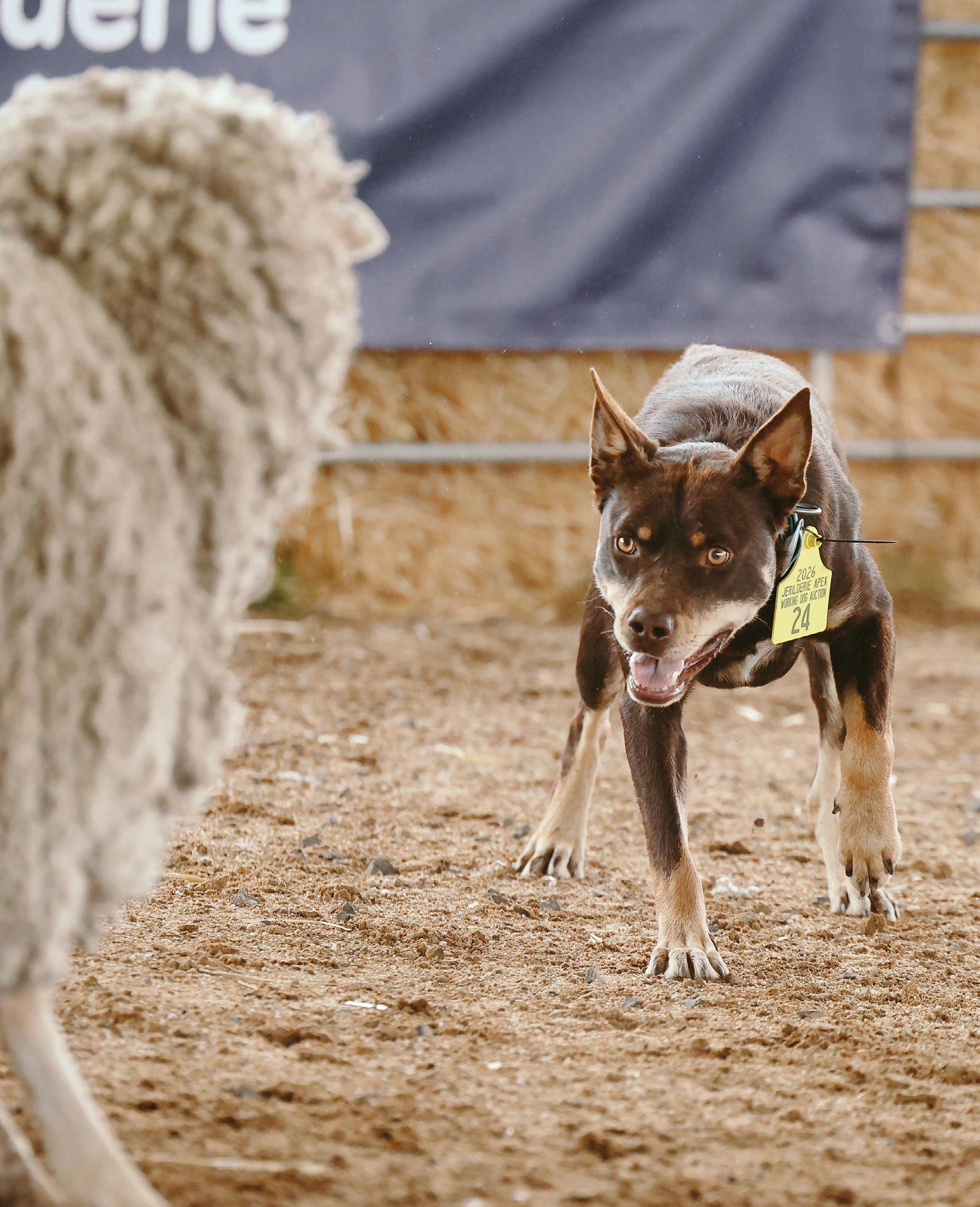
The annual Jerilderie Working Dog Auction once again drew strong crowds, spirited bidding and impressive results, as the event celebrated its 21st year in 2026.
Held at the Jerilderie Racecourse on Wilson Road, the auction has become one of the most anticipated rural events on the calendar in Jerilderie and the wider Riverina region. What began as a modest community initiative has grown into a nationally recognised sale attracting buyers, vendors and spectators from across Australia.
A tradition built on community spirit
The Jerilderie Working Dog Auction was first held in 2005 and has steadily expanded from a small gathering of just 17 dogs to a major annual sale featuring around 50 working dogs each year. Organised by the Apex Club of Jerilderie, the auction is
entirely volunteer-run, with all proceeds going back into local community projects and initiatives.
Over the past two decades, the event has raised an estimated half a million dollars for charitable causes and local projects. These funds have helped support community infrastructure, youth programs and assistance for families in need, leaving a lasting impact on the town.
The event is also supported by numerous volunteers and local organisations. Representatives from Elders Rural Services conduct the auction commission-free, donating their time and expertise to help make the day a success.
A
showcase
of elite working dogs
The auction gives graziers and working dog enthusiasts the opportunity to see some of the region’s best working dogs in action.
Dogs of all ages and skill levels are presented, ranging from young pups showing natural ability through to highly trained and experienced stock dogs ready to go straight to work.
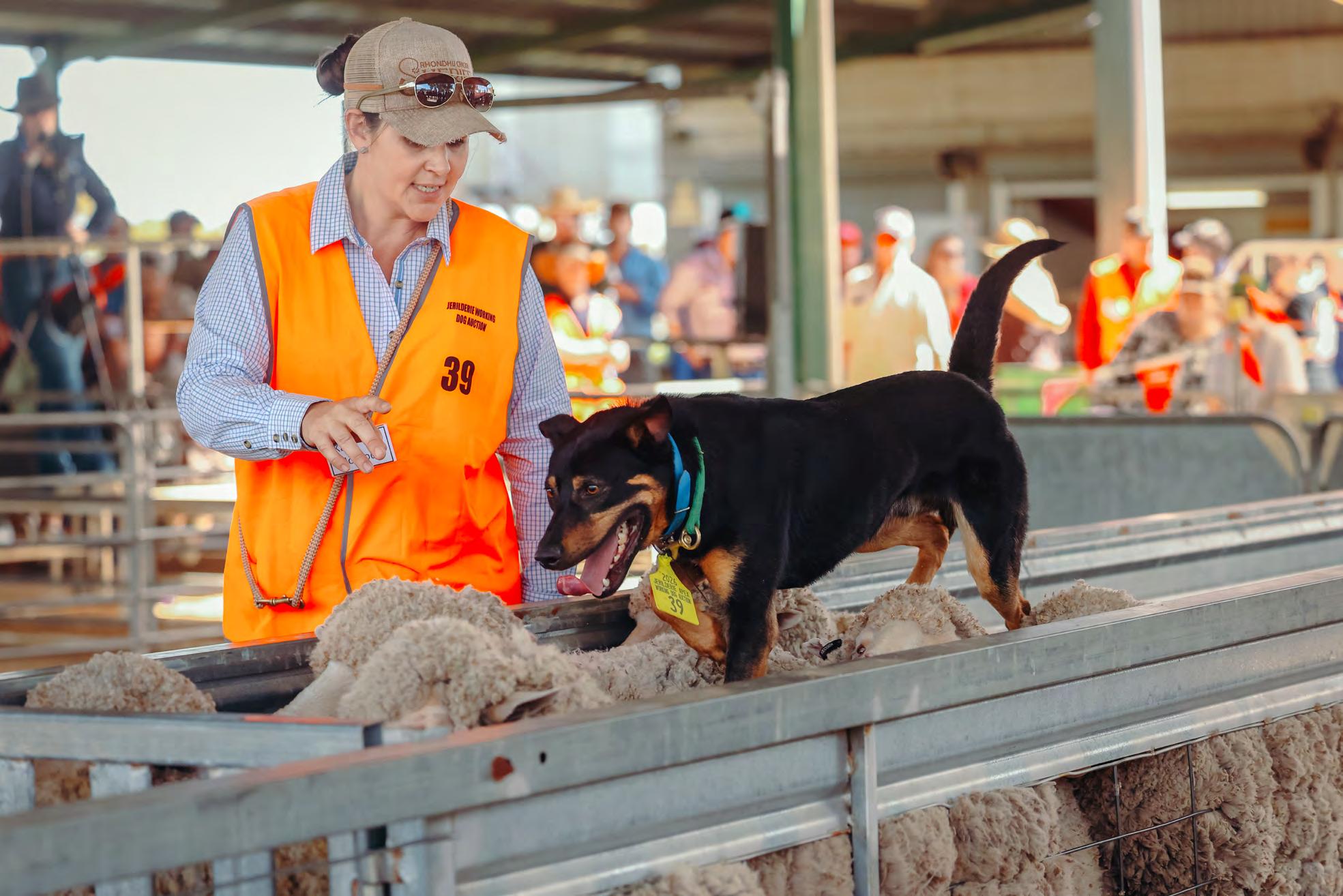
Before the auction begins, each dog is demonstrated working livestock, allowing prospective buyers to assess its temperament, skill and compatibility with their operation.
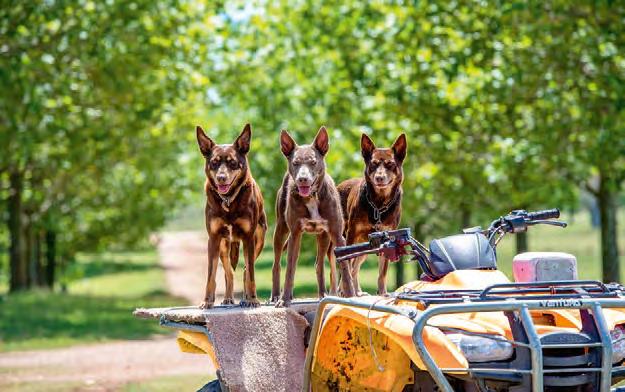
Kat McLeod and Vera Tank at the Jerilderie Working Dog Auction. Photos by Coverdale Media.
Auction coordinator Warwick Doolan said the demonstrations are an important part of the day.
“People can see raw pups with natural talent all the way up to high quality trained and experienced working dogs,” he said.
“Our hope is that the dogs become more than workers. People get a chance to bond with them and find the right fit.”
The auction has increasingly attracted buyers from across the country, particularly with the addition of the AuctionsPlus online bidding platform, which allows buyers to watch the demonstrations live and participate remotely.
Strong results at the 21st annual auction
The 21st Jerilderie Working Dog Auction delivered another successful day, with strong competition from both in-person and online bidders.
In total, 54 dogs were presented for sale, with 53 sold — achieving an impressive 98 per cent clearance rate.
Gross sales reached $502,250, with an overall average of $9,476 per dog — more than $2,000 higher than the previous year’s average. The increase was attributed partly to favourable livestock prices and the high quality of dogs offered.
Breakdown of averages included:
Trained dogs: $11,662
Well-started dogs: $8,937
Started dogs: $5,750
Pups: $4,000 average across three sales
The top price of the day was $26,000, achieved by Sapphire Tiger, presented by Finley dog trainer Josh
Everingham. The talented dog impressed both the crowd and online bidders before selling to a Queensland grazier.
Online participation continued to grow, with AuctionsPlus bidders competing for 51 of the 53 dogs sold. Twenty dogs were purchased online, while 33 sold to buyers attending the auction in person.
A whole-of-community event
Beyond the sale ring, the auction is also a social and community gathering.
The Jerilderie Lions Club collected gold coin donations at the gate, while Finley High School operated the event canteen, helping raise additional funds for local causes.
The auction also brings visitors to the district, benefiting accommodation providers, cafes and local businesses throughout the weekend.
Looking ahead
With another successful year complete, planning has already begun for the next sale.
The 2027 Jerilderie Working Dog Auction is scheduled for February 27 and interest is already being registered, with many vendors already preparing dogs for next year’s event.
After more than two decades, the auction remains a powerful example of rural community collaboration — celebrating the skill of working dogs, supporting local charities and bringing people together in the heart of the Riverina.
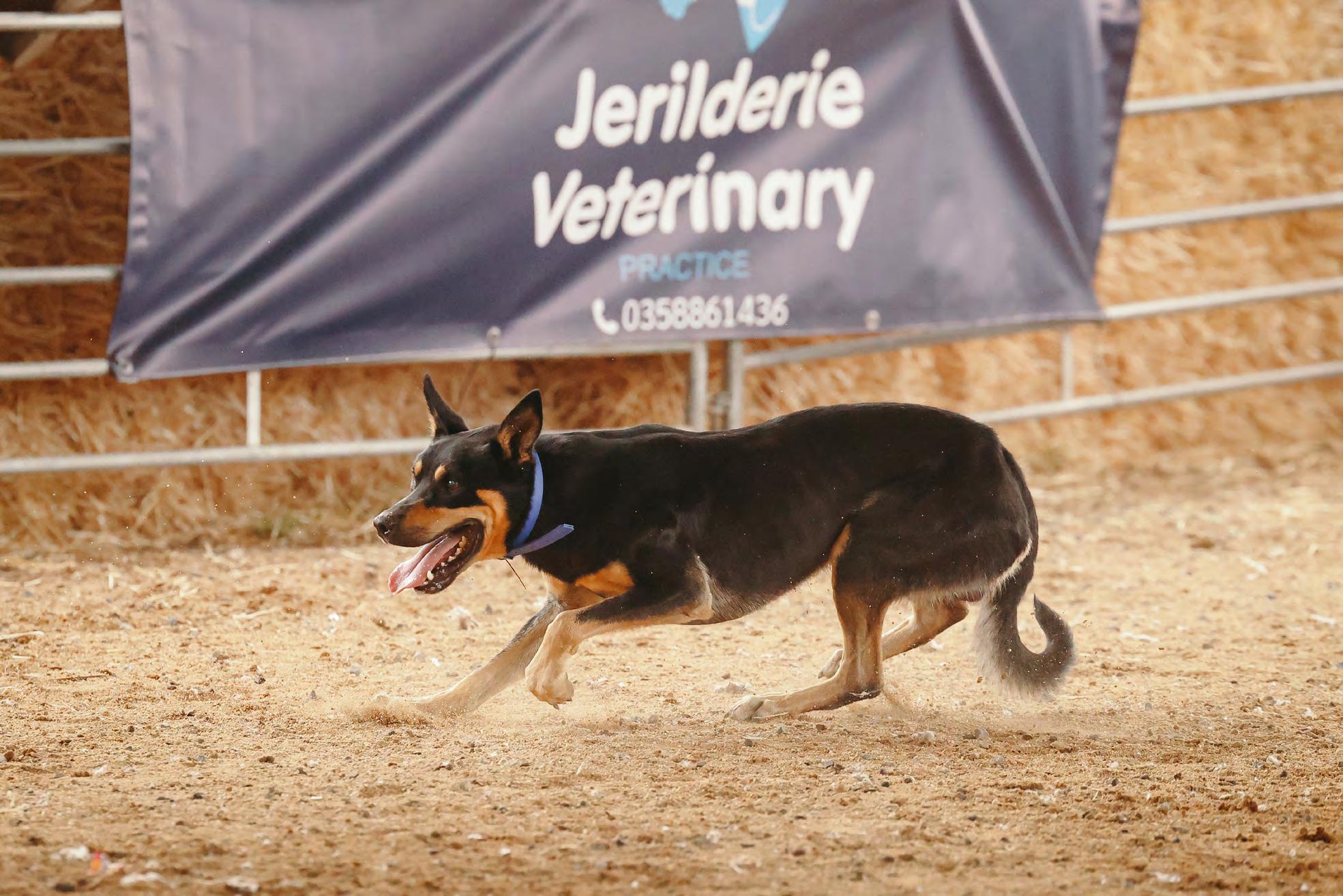
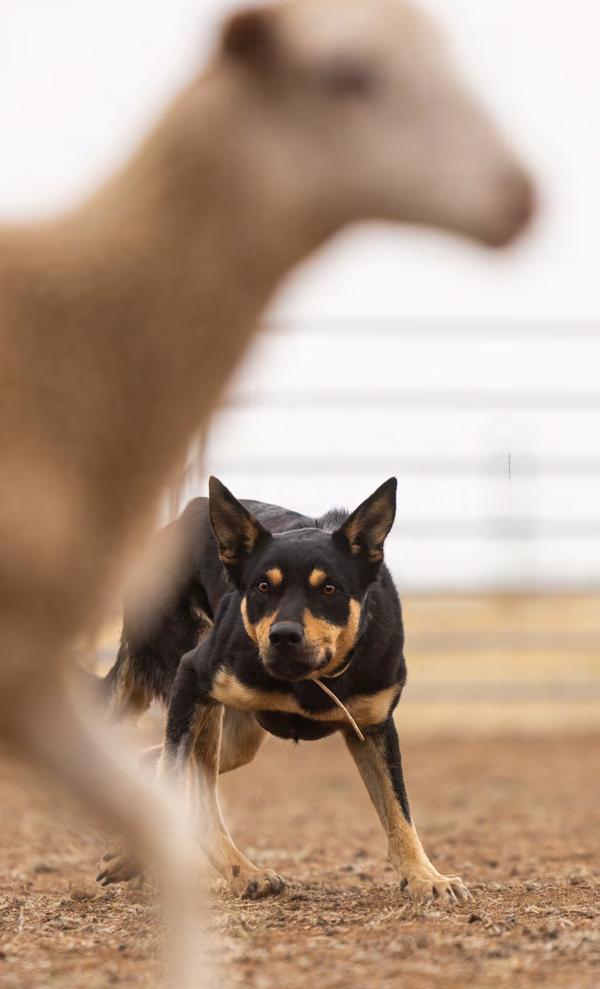
Sapphire Tiger.
Sapphire Tiger was the top seller at the Working Dog Auction.
Beware the risk that may lurk in your paddock
Lead can be found in many places such as lead acid batteries, lead paint, old sump oil, lead shot, fishing sinkers, and linoleum.
Livestock may seek out lead as it can taste quite sweet; however, it can be deadly if they consume too much. Clinical signs of lead poisoning may include
• appearing very dull followed by becoming frenzied and dangerous,
• blindness,
• aimless walking or walking in a circle,
• muscle twitches, especially around the face
• paralysis of the tongue and ‘star gazing’
• death
Stock that eat a small amount of lead, may not show clinical signs, but may result in a lead residue that impacts food safety. It can also have negative impacts on domestic
and international trade. This is why livestock with unacceptable lead residues are prevented from entering the food chain.
The current conditions where feed in paddocks may be low can unearth hidden batteries particularly near sheds, dumps/tips, pumps, electric fences, or old vehicles. Stock may also wander around more looking for feed, coming across an old battery or other lead source and decide to have a taste.
Next time you are driving around your farm or before you move stock to a new area, make sure you look out for any potential lead source and remove it to reduce the risk to your livestock.
For more information on lead poisoning in livestock you can look up the primefact “lead poisoning in livestock’ on the NSW DPI website (www.dpi.gov.au), or speak to your local district vet.
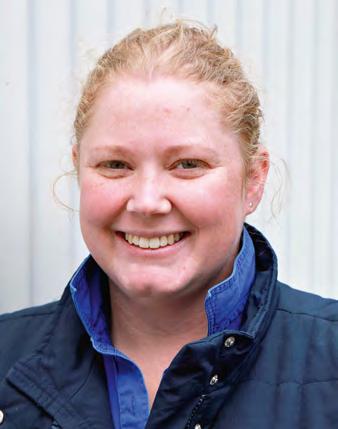
Katelyn Braine (pictured) is a district veterinarian with Murray Local Land Services.
FARMtalk welcomes community contributions from farmers, experts and professionals who make their living and life on the land. If you would like to contribute, there are several ways to do so.
• Get in touch and give us a tip of a great story idea.
• Contribute an article: If you are an expert in your field then contributing once off, or regularly, is a great way to get started in our FARMtalk magazine. Contact Zoe McMaugh at farmtalk@ denipt.com.au or 03 5881 2322.
• Become an author: FARMtalk is open to occasional contributors who are experts in their field or authorities on a subject or area. Once you have contributed an article, and the editorial team have approved you, we can set you up with a regular column to contribute. We would love to hear from you. Contact Zoe McMaugh at farmtalk@ denipt.com.au or 03 5881 2322.
• Have a fascinating farm in mind for us to showcase? Tell us! We would love to hear from you. Contact Zoe McMaugh at farmtalk@ denipt.com.au or 03 5881 2322.
Understanding biochar
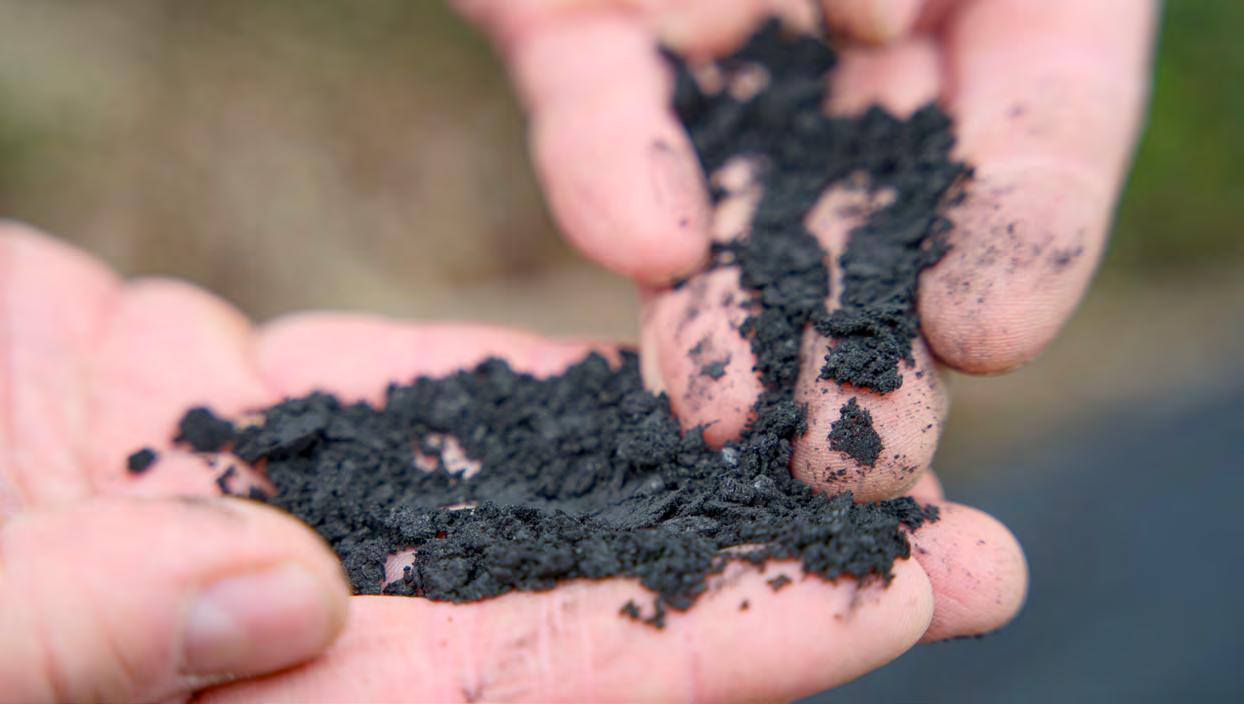
What is biochar? Biochar is organic matter heated in a low-oxygen environment to form a charcoal-like carbon-rich material that is used as a soil amendment, livestock feed additive and form of permanent carbon removal.
It’s created from feedstocks that would otherwise often be considered waste biomass like wood, crop residues, manures or leaves.
As a soil amendment, biochar can improve soil fertility, structure, and water retention, reduce the need for chemical fertilisers and enhance microbial life. Research has also shown yield increases in crops, pastures, and horticulture. Once in soil, it’s stable for hundreds to thousands of years making it an effective method of carbon sequestration.
Research has also found that biochar can be used as a livestock food additive to improve gut health, nutrient absorption and reduce the methane they produce.
Although there are many, varied benefits to biochar, there are still some big challenges to overcome in the commercialisation of it for broadscale agricultural production, but it is something we’re keen to explore.
If you’re interested in joining the discussion, come to our free workshop in Deniliquin on Tuesday 14th of April. We have industry leading experts Lukas Van Zwieten (NSW DPIR & Soil CRC), Russell Burnett (Rainbow Bee Eater) and Melissa Rebbeck (Metamorf Engineering).
To register scan the QR code on the page or contact Kimberley Beer at Kimberley.beer@lls.nsw.gov.au.