Advertising bookings and editorial requests for each edition of FARMtalk close on the third Friday of the month preceding publication.
Zoe McMaugh
Rebecca Flisher
Quality Wool marks 35 years, opens new store
After commencing operations just days before the scrapping of the wool industry’s Reserve Price Scheme (RPS), one of Australia’s largest, family-owned and operated wool brokers is celebrating 35 years this season and is continuing to grow.
Conversely to many operating in the sector, Quality Wool is continuing to pour investment dollars into the industry’s future and last week opened a new store in one of Australia’s wool heartlands, the Riverina in Southern New South Wales.
The new Deniliquin store complements its wider network in the State at Parkes, Orange, Condobolin, Grenfell and Gulargambone.
In addition to the Adelaide-based broker’s Port Adelaide store and sites at Jamestown, Bordertown, Dublin, Eden Valley, Naracoorte, Lameroo and Karoonda in South
Australia, there are also stores at Bendigo, Ararat, Benalla and Mansfeld in Victoria, all feeding into a major storage facility near Ballarat and a 27,000m2 receival store and show foor in Geelong.
All sites are under company ownership and the Quality Wool network also runs over to Western Australia, where it supports a number of sheep and wool operations.
It’s been an innovative approach to warehousing wool that has streamlined logistics and reduced the time taken to get wool to market for growers.
Eamon Kurta
Nigel Lutton GENERAL MANAGER
Sarah Bain ADVERTISING
Kayla McAuliffe OFFICE MANAGER
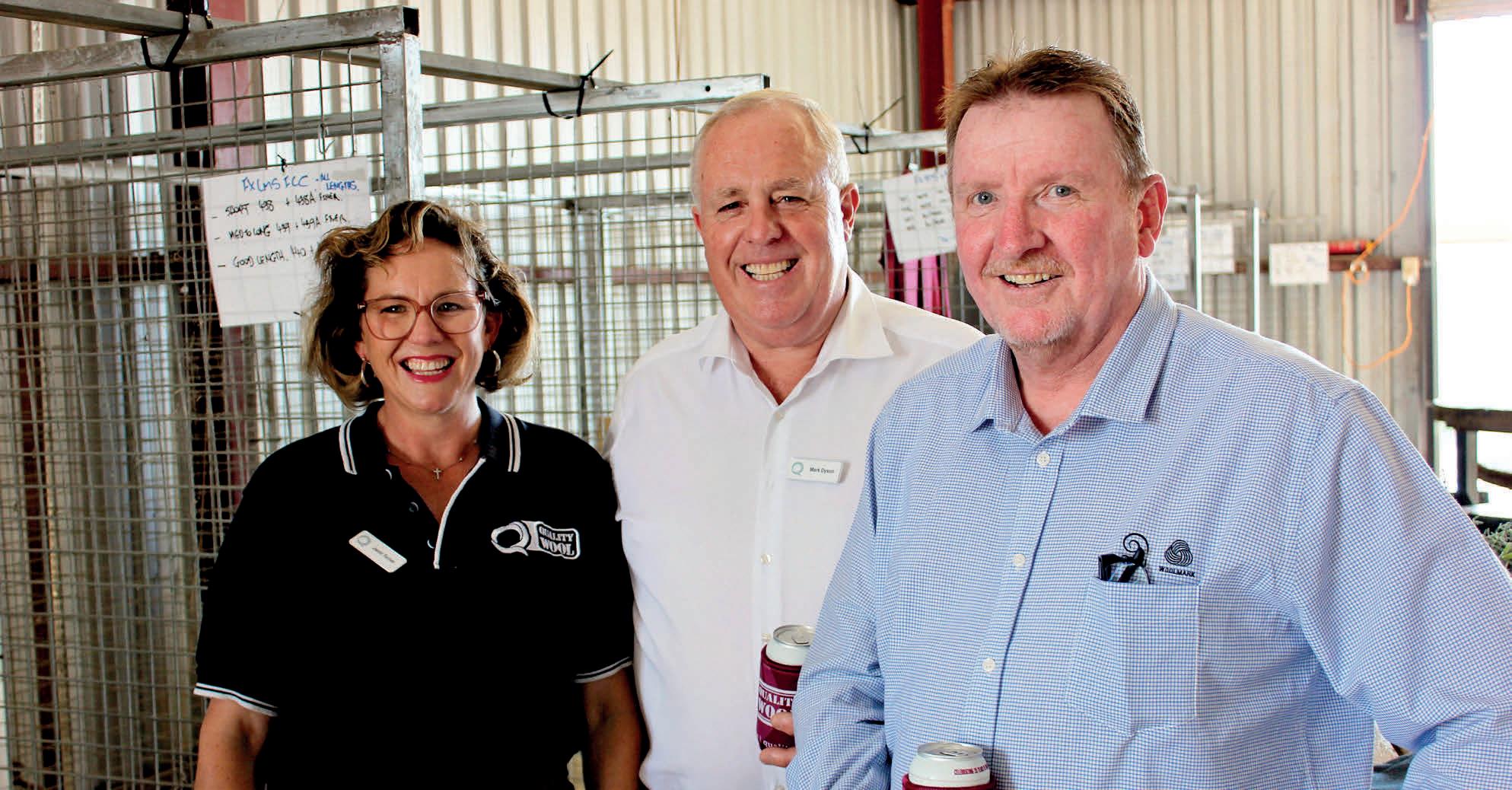
Quality Wool NSW/Victoria area manager Jenni Turner and managing director Mark Dyson in Deniliquin with Australian Wool Innovation head of domestic operations Scott Carmody.
“It’s amazing to think where we are today, from where we have come from. It was no fun starting a business, only to then have the RPS collapse and the whole industry turn on its head the following week,” said Managing Director Mark Dyson.
“And yet we got through that diffcult period and here we are today, in a strong position with a strong network and a great, passionate, specialised wool team located regionally throughout the country, and with our growers now receiving some of the highest prices for wool they have ever seen.
“We are now well positioned going forward and, compared with some others, we see plenty more opportunities in the sector going forward for us and growers, because of our unique system and our simple, hand-in-hand style of business with them that we continually hear is our point of difference.
“Our uncomplicated structure has always allowed us to quickly adapt and thrive, and our long-term industry partnerships and relationships globally over a number of
decades add such strength, continuity and stability to our business now.”
He said he looked forward to a strong period ahead with producers for their sheep and wool.
“Twelve months ago (sale M38), the EMI (Eastern Market Indicator) for wool was 1246 (cents per kilogram) and recently it was 1751c/kg – that’s a 40 per cent increase. In US dollar terms, it’s gone from 794c/kg to 1296c/kg – a 57pc increase. And it’s not going to go back.”
“There’s a lot of talk about renewables and we haven’t got any better fbre than what we have got with wool at the moment. And we have got this unit, that between the red meat protein and the fbre off it’s back, it’s a very soughtafter item today.
“Most wool in China, from greasy to processed wool and through to yarn, is also being retained for domestic use. There is very little export, so our demand will continue.”
Mark said he was also invigorated for the future by the next generation taking the reins on farms, throughout the industry and across the Quality Wool business.
“I’ve already seen enough transitions for the industry, but I’m excited about the next ones coming and the opportunity for structural change into the future, which our industry needs to align with how the industry has changed today.”
“The younger generations on-farm and in the industry are so much more educated than many of us who entered the sector back in the ‘80s, and the increased sophistication and systems this is bringing to the industry for supporting growers is great.”
Meanwhile, Quality Wool is set to once again celebrate its anniversary by heading to the regions to acknowledge grower clients and industry partners with another speciallybrewed beer from Adelaide-based Pirate Life Brewing, which has been a long-term tenant at the company’s Port Adelaide store. This time it will be toasting the anniversary with a commemorative lager.
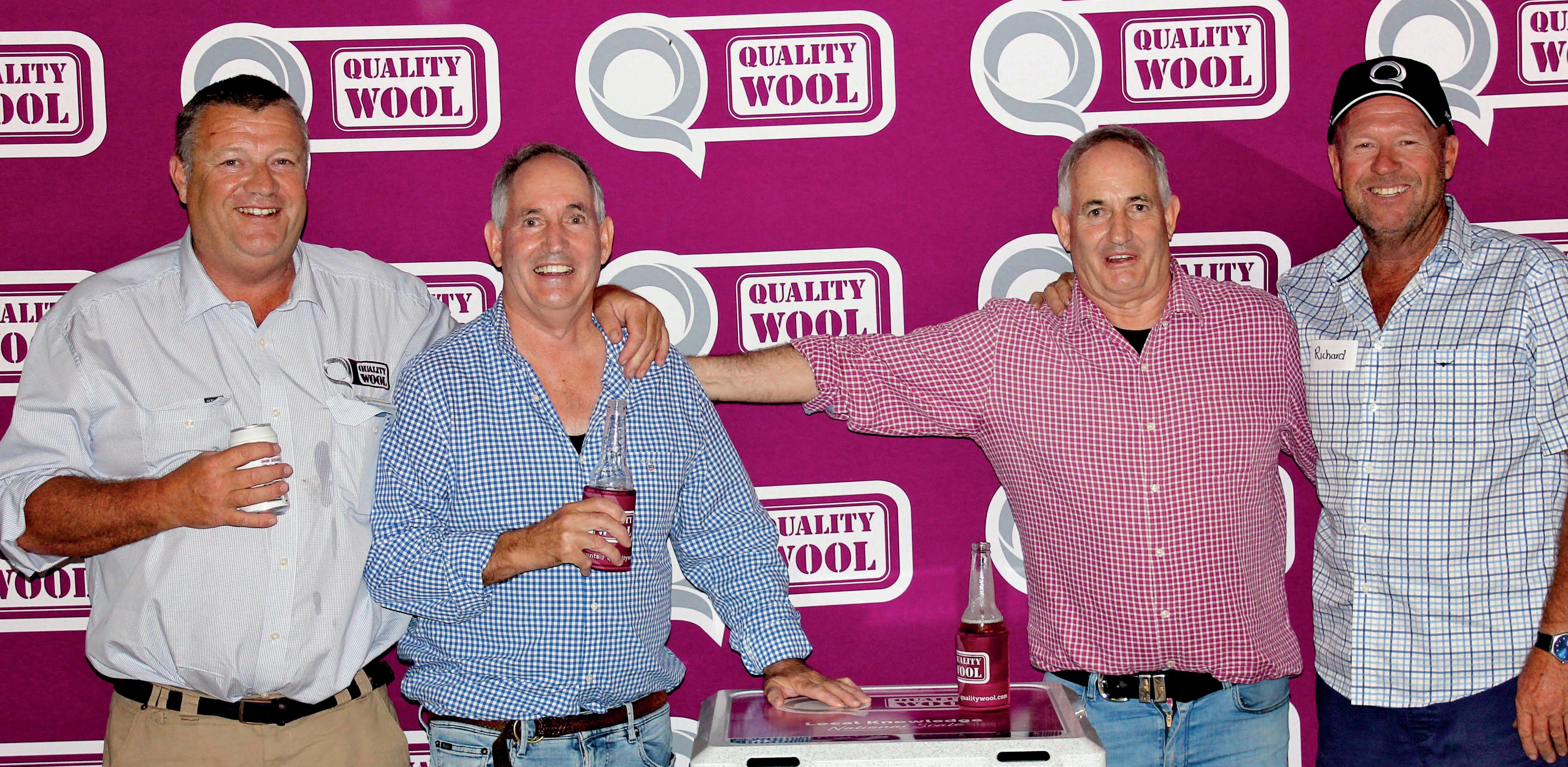
Lachlan Campbell from Quality Wool Deniliquin, with wool classers Rob and Fionn Lindsay Field and local grower Richard Metcalfe.
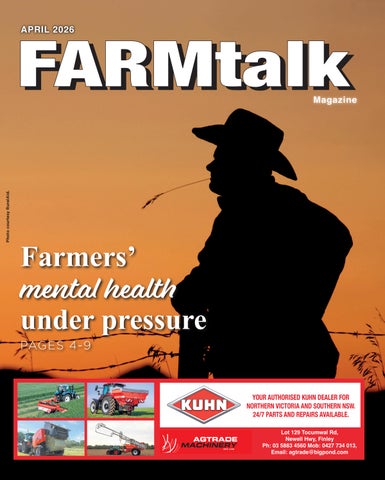
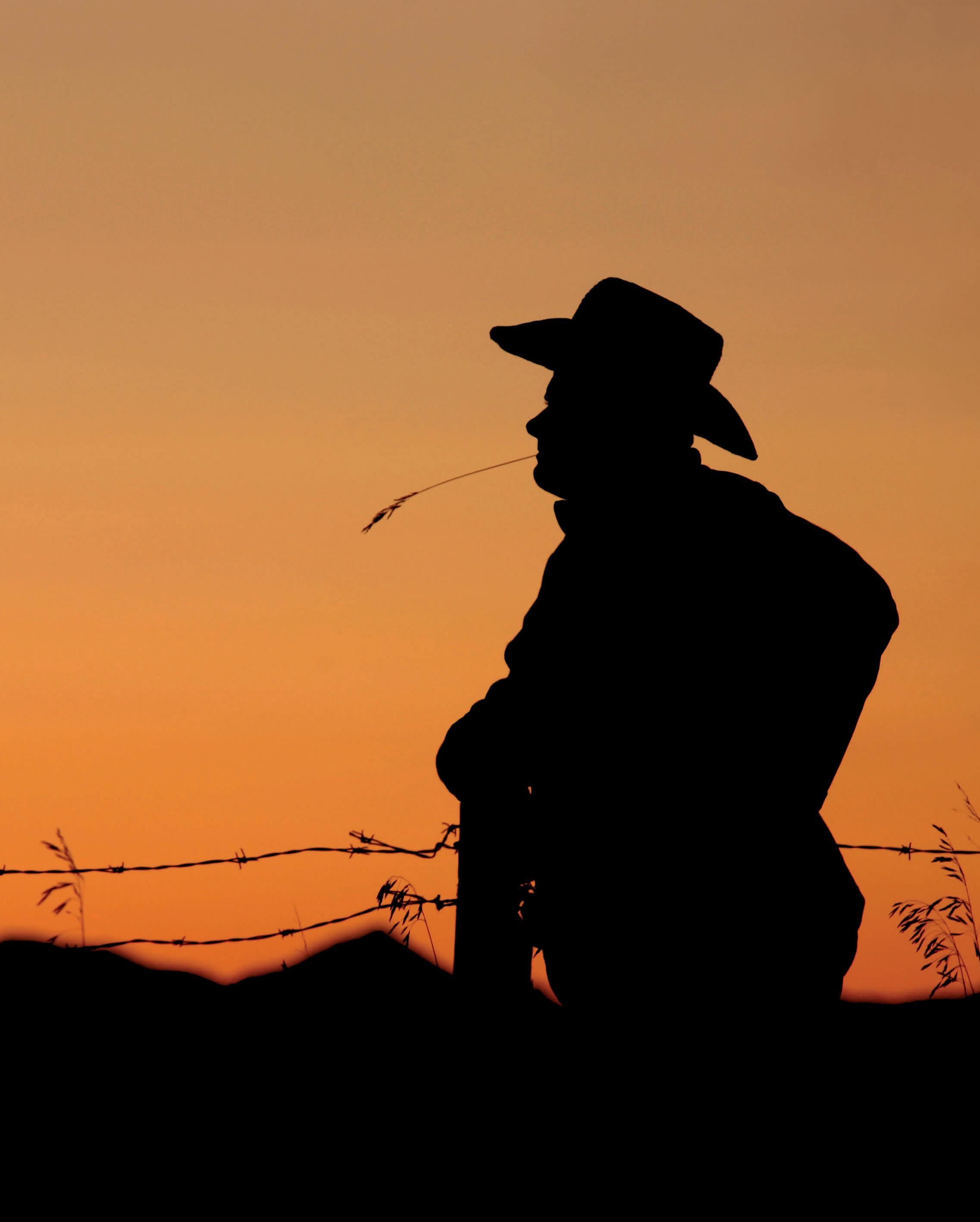
Farmers’ mental health under pressure
Financial pressures and weather events are the primary causes of mental health decline in the farming community, a new report has found.
But the third annual Pulse of the Paddock farmer survey report from Rural Aid also indicates that people in the ag sector are becoming more comfortable in talking about and addressing mental health concerns.
It reveals a complex picture of mental health challenges and cultural shifts among Australian farmers.
Based on responses from nearly 1,400 farmers surveyed during October and November 2025, it shows farmers are increasingly recognising that wellbeing is fundamental to the sustainability of their farms and families.
However, Rural Aid CEO John Warlters noted more farmers (22%) reported a decline in their mental health over the past 12 months than an improvement (14%).
“We are seeing real change in how farmers talk about mental health,” he said.
“There is greater openness and a stronger willingness to seek support.
“But the pressures they are facing are signifcant and ongoing.
“Drought, rising costs and uncertainty don’t switch off at the end of a season. They compound over time, and that takes a toll.”
Financial strain (36%) and climate uncertainty (33%) are structural realities shaping daily life and long-term decision-making on farms across the country, the report has found.
It also highlights the broader impact on families, with many farmers expressing concern about their children’s futures, including fnancial stability, access to education and long-term employment opportunities.
Mental health challenges affect entire households and infuence decisions about the future of the farm.
Community remains a cornerstone of rural life and farmer wellbeing.
Farmers consistently describe local networks as essential during diffcult seasons, providing practical support and shared understanding.
However, distance, service gaps and ongoing pressure are placing strain on local networks, reinforcing the need for accessible and trusted support.
Mr Warlters said timely assistance can ease both practical and emotional strain.
“Practical help matters, but just as important is knowing someone understands the realities of farming life,” he said.
“No farmer should feel they have to carry that weight alone.”
Photos and graphics courtesy Rural Aid.
The survey shows farmers are increasingly willing to reach out for professional support if needed, indicating a cultural shift in attitudes towards mental health in rural communities.
However, awareness alone does not ease cumulative stress, with many families experiencing layered and ongoing strain.
Rural Aid is encouraging any farmer or farming family experiencing stress or hardship to seek support early.
The organisation provides confdential counselling services and practical assistance to farming families across Australia.
“Reaching out is a practical step,” Mr Warlters said.
“If you need support, call 1300 175 594. If you’re able to help, your donation ensures we can continue standing alongside Australia’s farming families when it matters most.”
To donate and support farming families, visit www. everystep.ruralaid.org.au. To learn more about Rural Aid’s other support programs, go to www.ruralaid.org.au/ services-provided/.
To access the full Pulse of the Paddock report, go to www.ruralaid.org.au/wp-content/uploads/2026/03/ POTP26_DIGITAL.pdf.
SECURE
You can share the load
When it comes to your mental health, the Deniliquin Mental Health Awareness Group (Deni MHAG) has a simple but powerful message - you don’t have to carry it all on your own.
Its Share The Load campaign is about discovering ways to talk things through, support a mate, and fnd services that can help when life feels heavy.
“Life can sometimes feel heavy. Work pressures, family responsibilities, fnancial stress, or personal challenges can build up over time,” Deni MHAG chair Lourene Liebenberg said.
“Many people try to carry these burdens quietly, believing they should just push through.
“Sometimes people think they need to be strong and handle everything themselves.
“But sharing what’s going on, even with a trusted friend or family member, can help break a problem into smaller, more manageable steps.”
MHAG’s dedicated Share the Load web page highlights support services such as free counselling and organisations like TIACS, which provide free support for people in trades, construction, and other industries.
“Because when we share what’s weighing on us, the load becomes lighter,” Mrs Liebenberg said.
“Looking out for each other helps build a stronger community.”
“Sharing what’s going on... can help break a problem into smaller, more manageable steps.”
LOURENE LIEBENBERG
To learn more and to access support, go to www. denimentalhealth.org.au/sharetheload or www.tiacs.org
• Anyone requiring crisis support can contact Accessline on 1800 800 944, Lifeline Australia on 13 11 14, BeyondBlue on 1300 224 636 or Kids Helpline on 1800 551 800. Resources and pathways to help are also available at www.denimentalhealth.org.au.
Mental health on the land matters
David Farley understands it because he’s lived on the land
• Life on the land comes with real pressure.
• Long days. Long weeks. Uncertainty. Drought. Isolation.
• David Farley knows these challenges firsthand. He’s a farmer who understands what regional families go through.
• That’s why he’s committed to building a stronger, more reliable health system that supports people before they reach breaking point.
Backing you beyond the farmgate
Sustainable farming is about more than what’s produced in the paddock, and Nutrien Ag Solutions is continuing to invest in the people and communities that support Australian agriculture.
Through national partnerships and local initiatives, the company is reinvesting in rural and regional Australia — including the communities where its staff live and work.
“We are proud to give back to the rural and regional communities in which we live and work,” a Nutrien Ag Solutions spokesperson said.
“At Nutrien Ag Solutions, we are going further for Australian farmers.”
One of the key programs is the Nutrien Ag Solutions Community Grants Program, run in partnership with the Foundation for Rural and Regional Renewal (FRRR).
The program provides grants of up to $5,000 for projects that strengthen wellbeing and connection in remote, rural and regional communities.
Nutrien also supports employee-led giving through its Grow Our Community platform, allowing staff to donate money or volunteer time to causes important to them.
Employee donations to eligible charities are matched dollar-for-dollar by Nutrien, helping extend the reach of local support.
Keeping farmers and communities safe is another major focus.
In partnership with CareFlight, Nutrien launched an Emergency Trauma Training program in 2022, delivering life -saving skills to 180 locations across Australia — a vital resource in areas where medical help can be hours away.
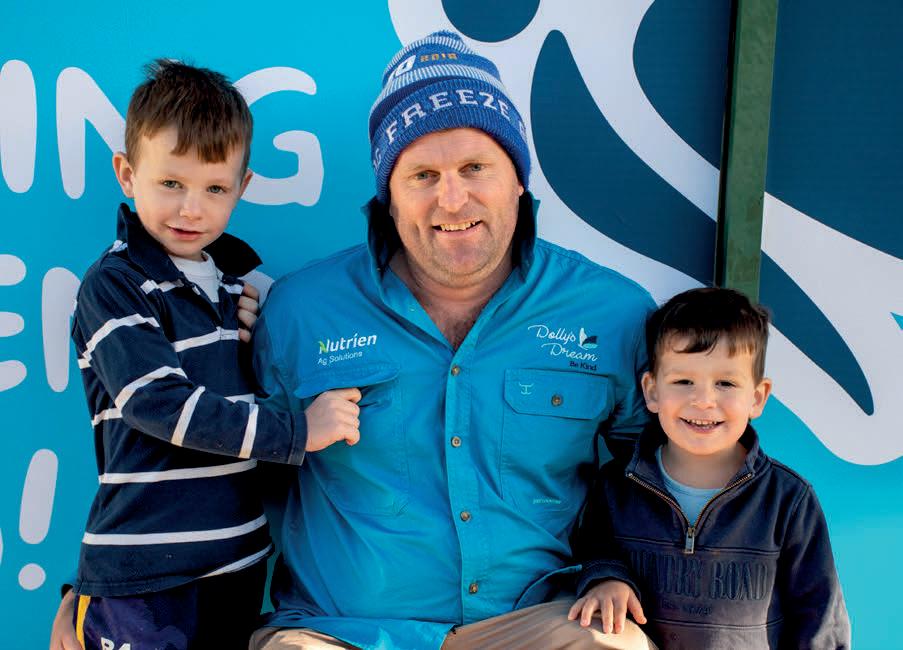
Nutrien Ag Solutions is also a proud partner of Dolly’s Dream, the anti-bullying charity founded by Kate and Tick Everett following the loss of their daughter Dolly.
Locally, Nutrien Ag Deniliquin has raised $24,000 for Dolly’s Dream over the past three years.
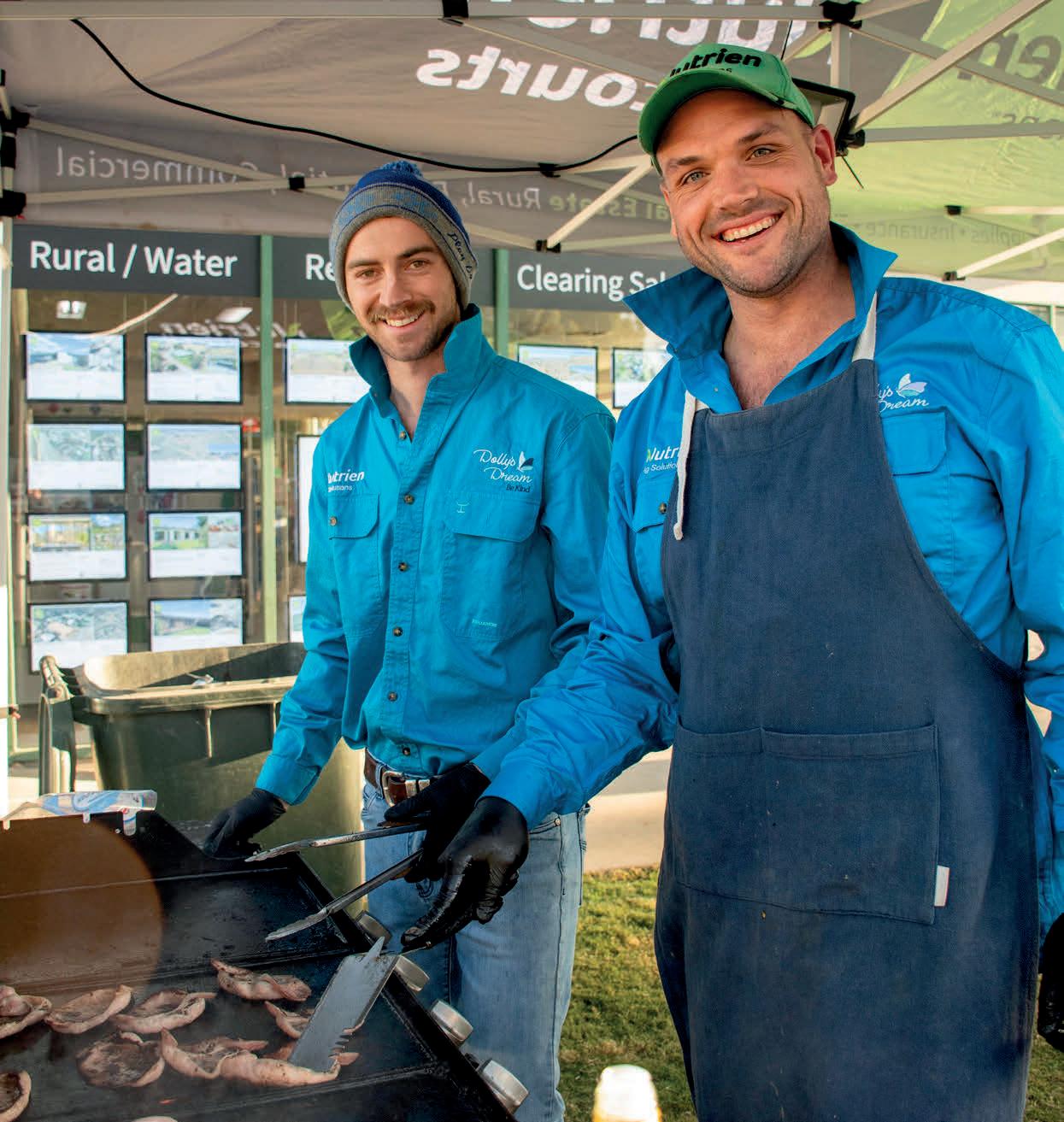
In 2025 alone, the team raised $9,700 from a fve -hour barbecue breakfast and will once again fre up the grill in May 2026 to support the cause.
Across the Nutrien Ag Solutions network, more than $20,000 was donated to Dolly’s Dream in 2025.
Nutrien Ag Solutions managing director Rob Clayton says kindness is critical to wellbeing.
“Do It For Dolly Day is an important reminder of the power of kindness in both online and offine communities,” he said.
To access Dolly’s Dream services, go to dollysdream. org.au. To learn more about how Nutrien is supporting rural wellbeing, go to www.nutrienagsolutions.com.au/ supporting-communities.
“Do It For Dolly Day is an important reminder of the power of kindness in both online and offine communities.”
ROB CLAYTON
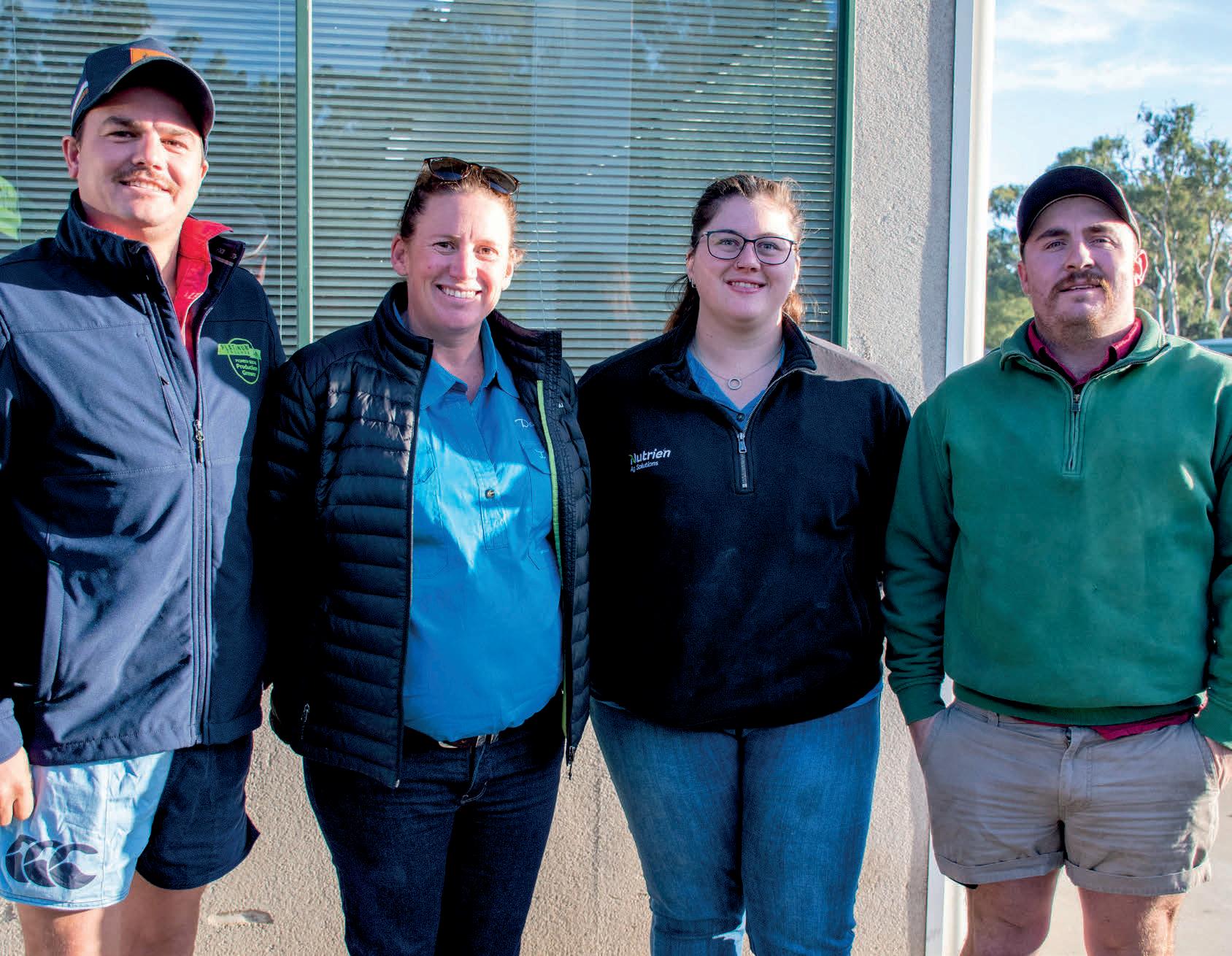
Riley Hamilton and Jake Freshwater.
Tom, Sam and Oscar Callanan.
Will Sandford, Amy Bates, Amy Wren and Riley Nolan.
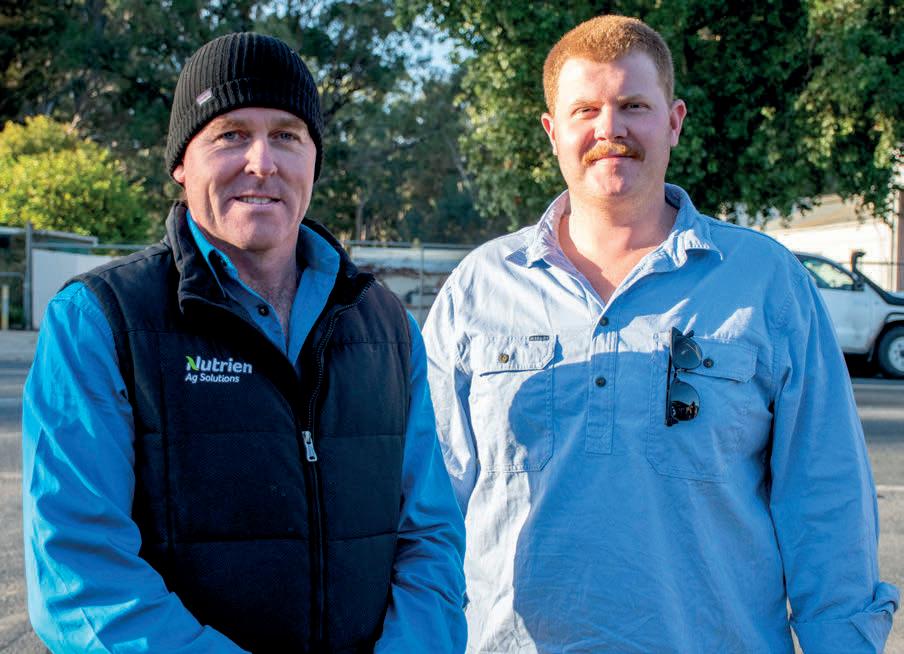
Matt Tubb and Tom Fellows.
Riverina stock dog apprentices launches with young aggies
Ten young agriculture students are leading the pack after kicking off Hay’s newest working dog program at Shear Outback in March.
The Riverina Stock Dog Apprentices Pilot (RSDA) offcially launched under the instruction of Hay Working Dog Club president and dog trainer Geoff McDougall.
The program was born out of the feeling that there were not enough opportunities for new entrants into agricultural industries to gain confdence and skills in training and using working dogs.
As a result, and Hay Inc. Rural Education Program Alumni and owner AGRISHIFT business owner Jess Armstrong set her mind to writing the Riverina Stock Dog Apprentices Pilot.
Following the success of her application to the Vincent Fairfax Family Foundation and Foundation for Rural and Regional Renewal’s Backing the Future Grant Program, Jess highlighted her excitement in seeing the pilot come to life.
“I never expected the amount of support I would receive when I was writing this program and applying for funding,” she shared.
“What makes it even better was hearing from our participants about how great the day was, how they are
excited to meet new mentors and really get the most out of their animals.”
Over the next 10 months, ten participants and their furry friends - hailing from Hay, Carrathool, Ivanhoe, Coleambally, Booligal and Steam Plains and Deniliquinwill have the opportunity to gain and hone their skills.
Over the next 10 months, the ten participants and their dogs, travelling from Hay, Carrathool, Ivanhoe, Coleambally, Booligal and Steam Plains, will take part in a series of structured training schools. These sessions will focus on developing practical skills, improving dog performance and strengthening the bond between handler and dog. For participants like Deniliquin’s own Abbie Lawson, the program also offers an opportunity to grow confdence, build friendships and gain exposure to experienced trainers within the industry.
The program continues to be supported by AGRISHIFT, Hay Inc. Rural Education Program and the Hay Working Dog Club.
The next school will be held in May, with other sesions held throughout the year.
“What makes it even better was hearing from our participants how valuable the day was, how excited they are to meet new mentors and really get the most out of their dogs.”
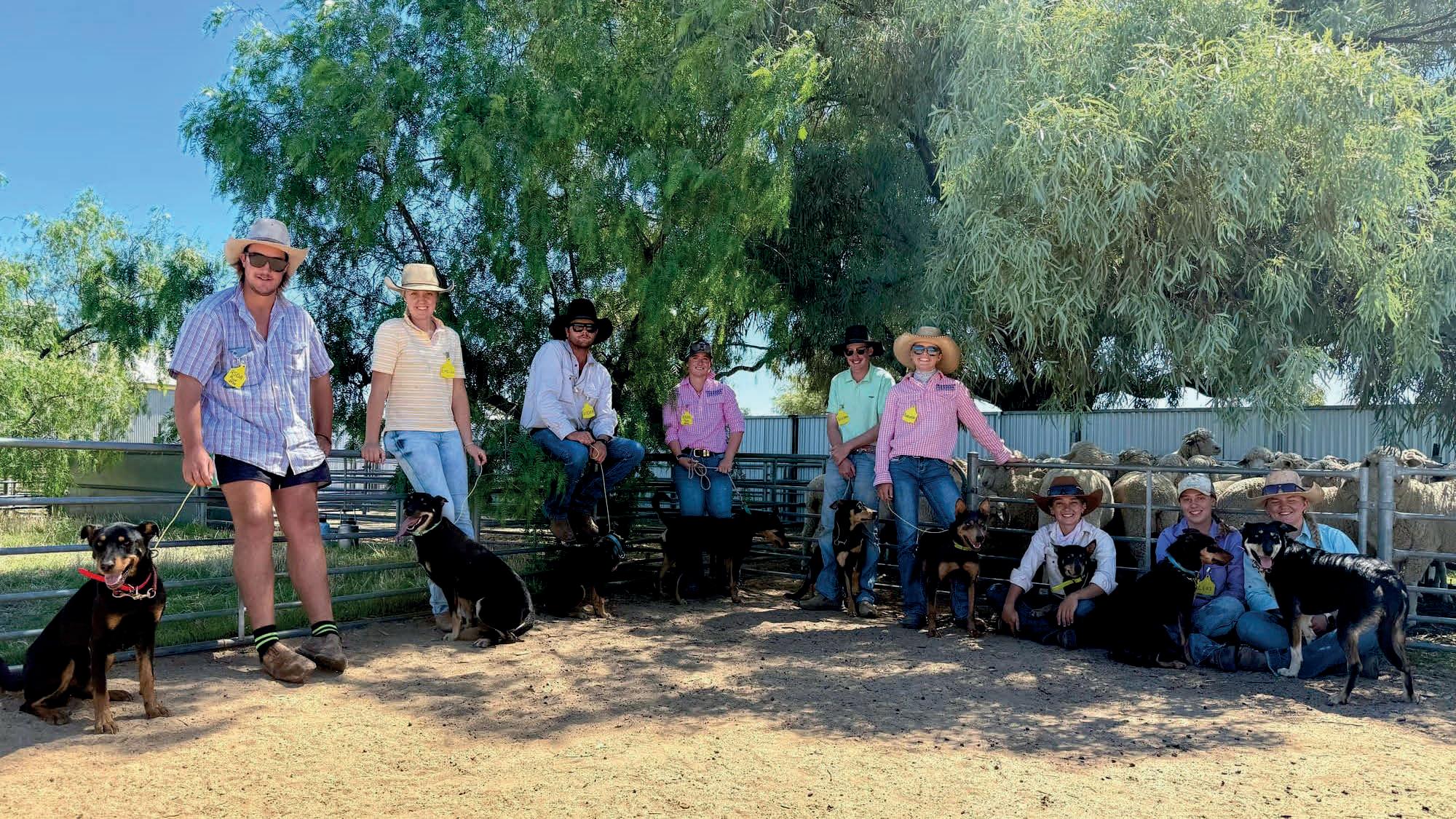
The inaugural Riverina Stock Dog Apprentices (from left) Finn Stanley (Carrathool), Emilia Browne (Hay), Steven Connor (Ivanhoe), Abbey Lawson (Deniliquin), Jackson Plummer (Coleambally), Adelaide Robb (Carrathool), Elaine Miller (Steam Plains), Lexi Young (Carrathool), and Charlotte Fishburn (Carrathool). Absent - Georgia Booth (Booligal). Image: Jess Armstrong.
Farming Forecaster rainfall update
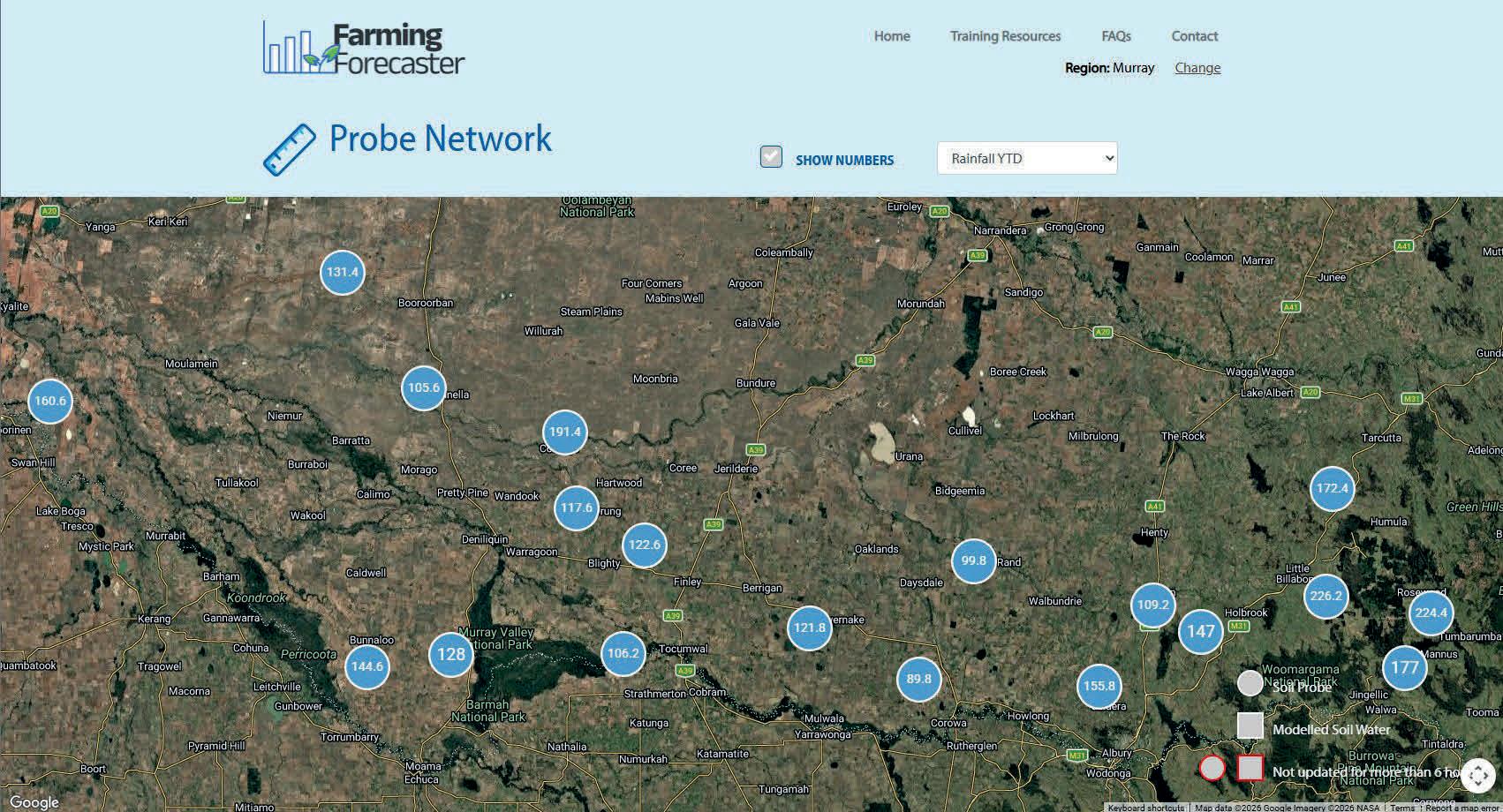
Signifcant February and March rainfall has been recorded at many of the Murray Local Land Services Farming Forecaster weather stations, restoring summer soil moisture defcits and improving outlooks for the season ahead.
Rainfall
since January 1 has exceeded 100mm in 17 of the 19 sites across the Murray region, with majority of these falls occurring in March.
In the far west, the Dilpurra site has recorded 160mm for the year, improving the 0-60cm soil moisture by 68% since February and 5% from this time last year. The Bunnaloo and Mathoura sites are not far behind capturing 144mm and 128mm respectively, with Bunnaloo soil moisture up 29% from this time last year.
Recent rainfall and warmth have created favourable conditions for pasture growth, particularly in the rangelands, with 105mm at Wanganella and 131mm at the Booroorban site recorded for the year. Wanganella soil moisture is currently 15% higher than March 2025. The Conargo site has recorded the highest year to date rainfall of the western sites at 191mm, with 118mm falling in March.
20 kilometres to the south, the Mayrung sites soil moisture is up 57% from this time last year, receiving 117mm for the year. Similar falls were also recorded at Myrtle Park (122mm), Savernake (121mm) and Tocumwal (106mm).
These falls across the region have renewed optimism for the season ahead with reports of signifcant autumn pasture
growth and changes to planned crop rotations in the west. Farming practices promoting groundcover and minimal tillage, with continued rainfall events will help see this sub soil moisture maintained into the 2026 season. For a closer look at rainfall, soil moisture and pasture forecasts visit the Murray LLS Farming Forecaster platform.
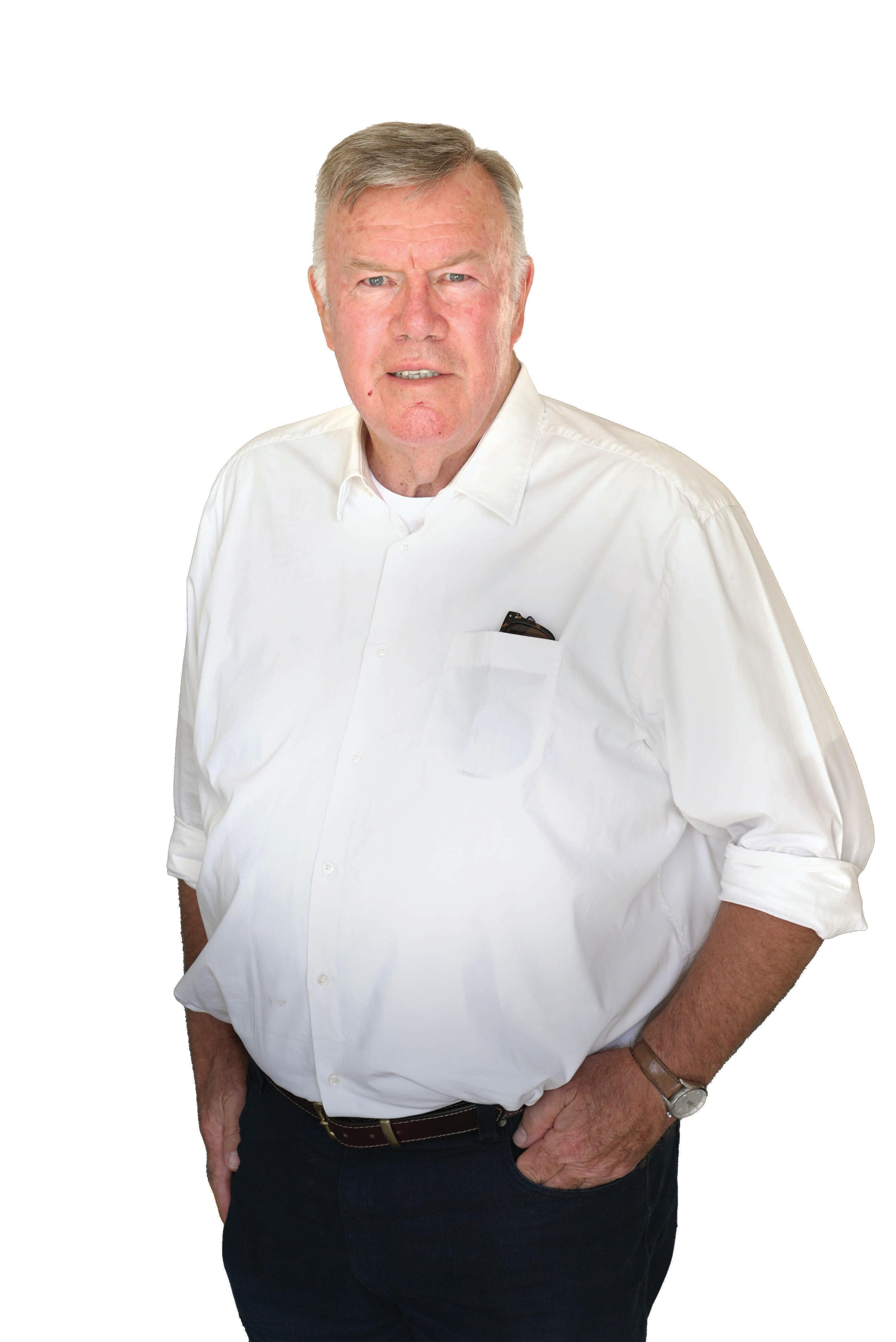
Contributed by Nick O’Connor (pictured above), senior local lands offcer - mixed farming with Murray Local Land Services.
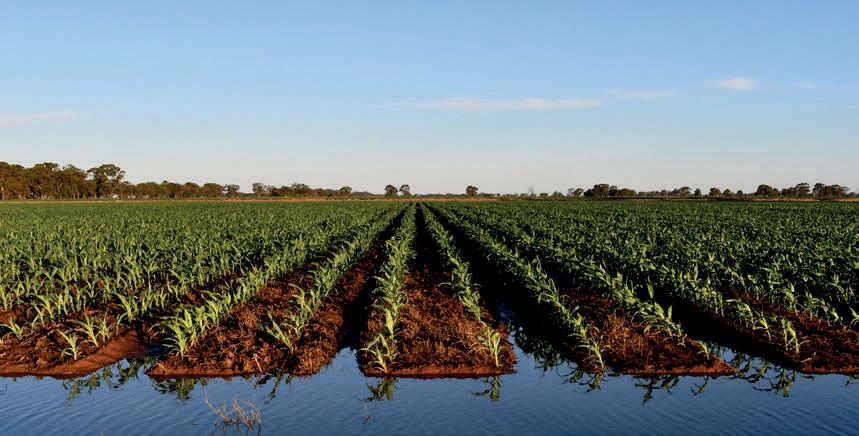
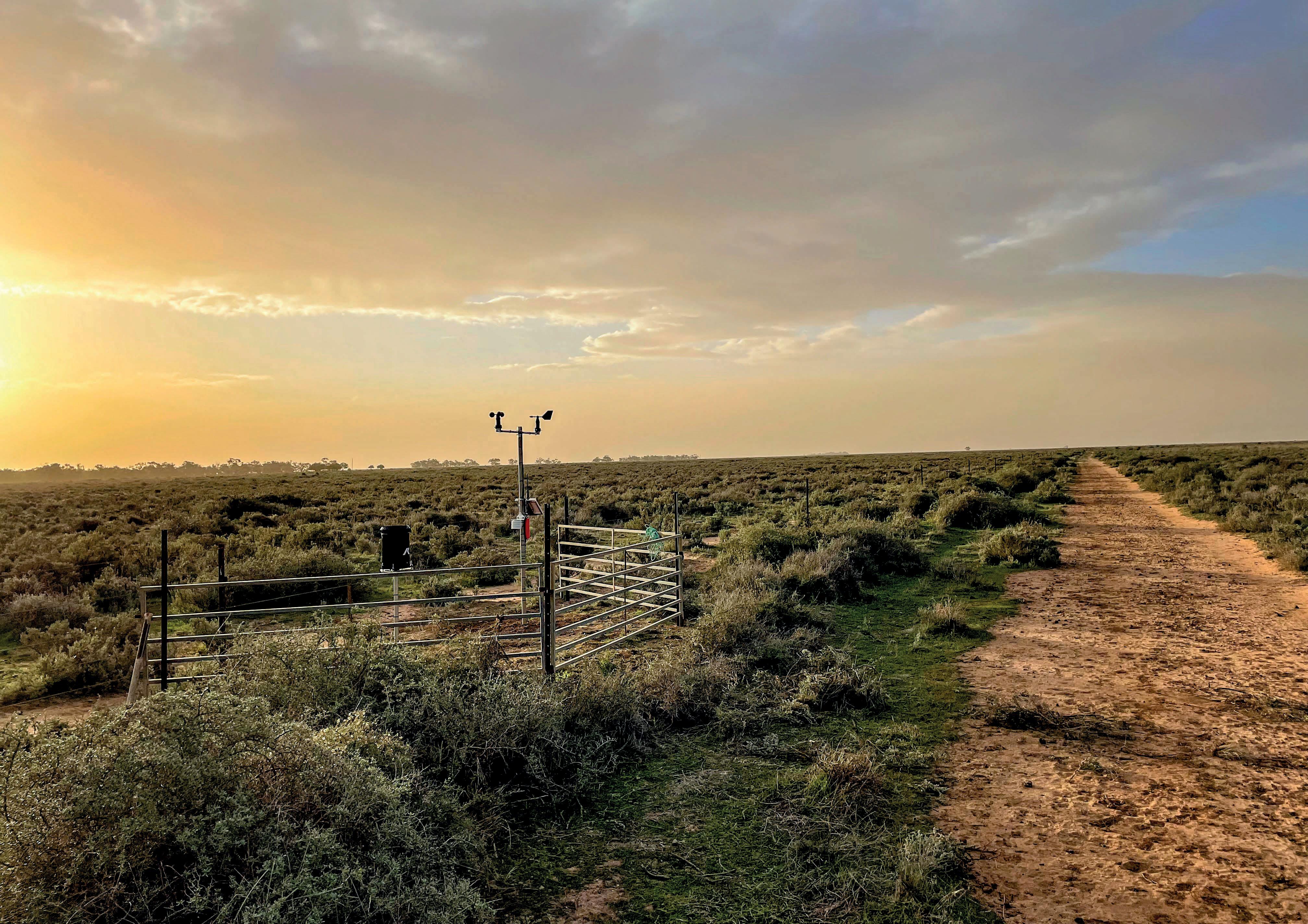
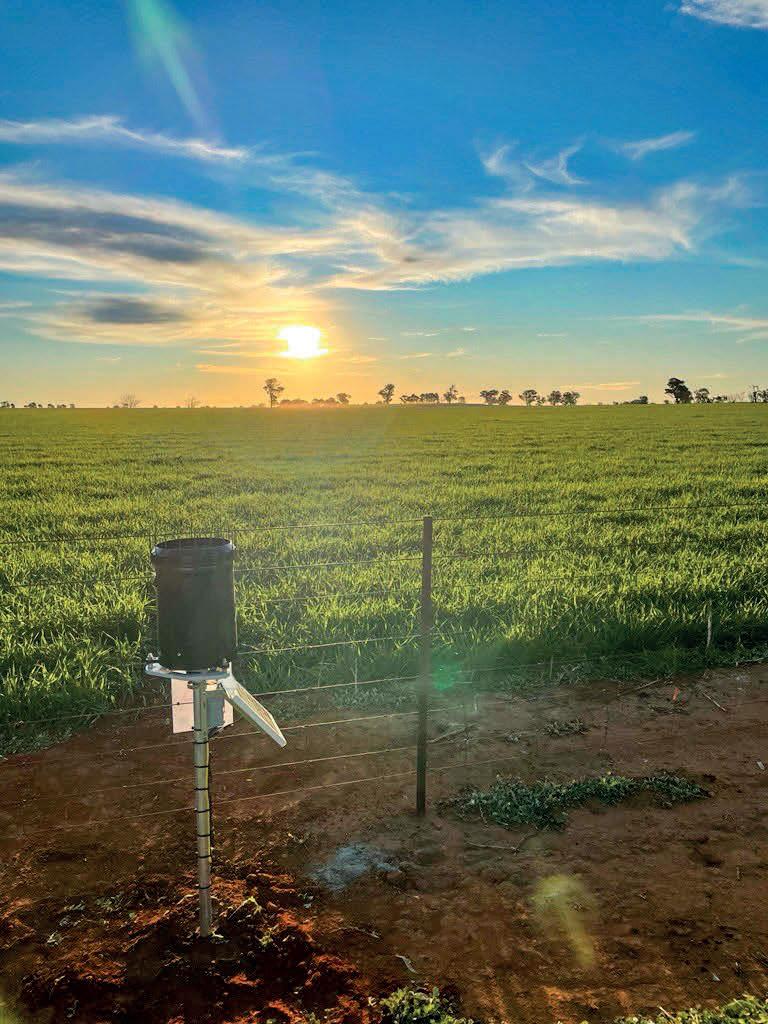
Booroorban Farming Forecaster site.
MURRAY IRRIGATION’S COMMUNITY IN FOCUS SERIES: DENILIQUIN YOUTH INITIATIVE
New local initiative helping young people thrive
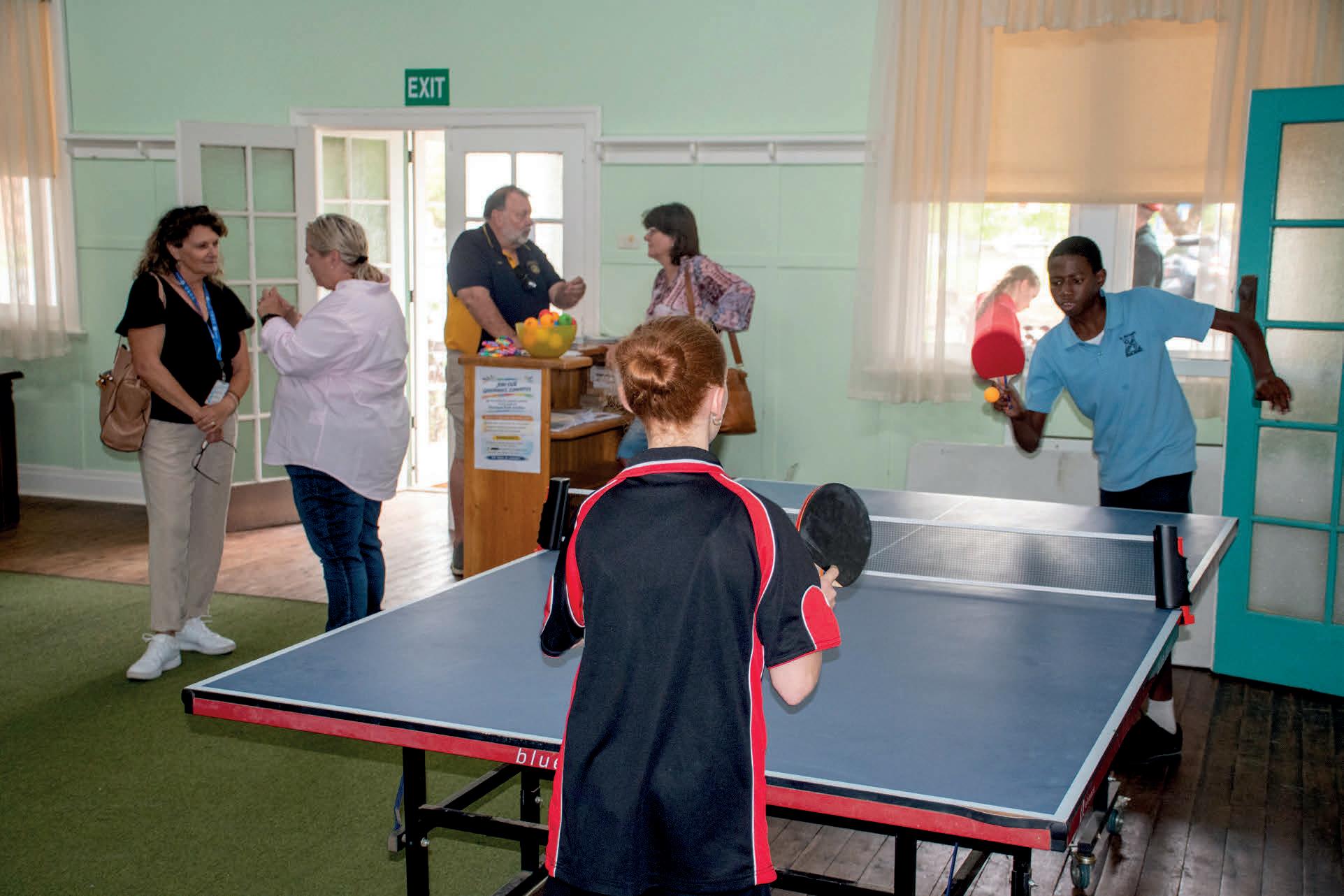
A vacant community hall in the heart of Deniliquin is being transformed into a vibrant youth hub, creating new opportunities and support for young people across the Edward River region.
The Edward River Youth Centre (ERYC) is being developed by the Deniliquin Youth Initiative (DYI) at the former CWA Hall in Harrison Street, located on the southeastern edge of Waring Gardens in the CBD.
The community-based, not-for-proft organisation was formed in mid-2024 following an information session that brought together representatives from Deniliquin High School, Vinnies Services, NSW Police, Yarkuwa Indigenous Knowledge Centre and other local organisations, businesses and individuals.
From that meeting grew a shared vision: to improve engagement and outcomes for young people in the region, particularly those at risk of disengagement.
DYI President Nicole Young said the centre would provide a safe, supervised and drug and alcohol-free space focused on youth engagement, skills development and early intervention support.
“Our primary goal is to support at-risk youth in transitioning from uncertainty and disengagement to confdence, employability, and cultural and community connectedness,” Ms Young said.
“By addressing both the immediate and long-term needs of young people through education, mentorship, physical activity, mental health support and safety programs, the youth centre aims to create healthier, more resilient communities where young people can thrive and contribute positively.”
The initiative received a major boost last year when Edward River Council approved DYI’s proposal to lease the former CWA Hall.
Council had called for expressions of interest for the site and supported the youth centre concept, which includes refurbishing and maintaining the building while involving young people in hands-on learning opportunities during the upgrade.
Mayor Ashley Hall welcomed the partnership, saying it would breathe new life into the historic hall while delivering lasting community benefts.
“Council is excited to see the CWA Hall activated in a way that supports our young people and strengthens community connections,” Cr Hall said.
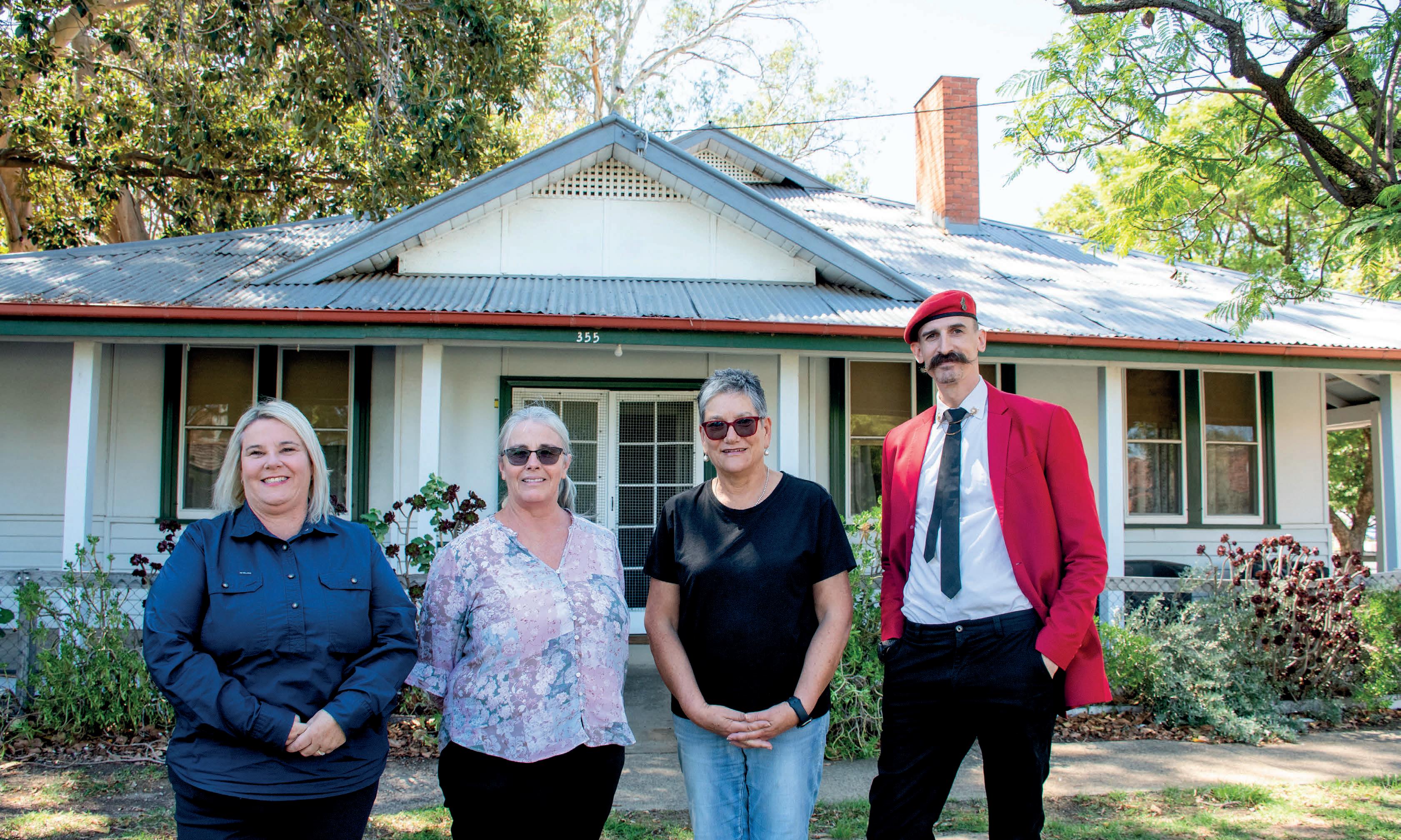
Deniliquin Youth Initiative President Nicole Young and committee members Linda Fawns, Lourene Liebenberg and David ‘The Baron’ Schoefel outside the Youth Centre in Harrison Street, Deniliquin.
“We look forward to working with the Deni Youth Initiative to make this vision a reality.”
A $2,400 grant from Murray Irrigation’s Community Sponsorship Program has contributed to the furniture ft-out, helping fund desks, chairs and lounge seating as the space is prepared for programs and activities. DYI continues to seek additional funding to expand services and complete the refurbishment.
The centre’s programs will focus on building trade and academic skills, providing mentoring and wellbeing support, and offering alternative pathways for young people at risk of anti-social behaviour.
Partnerships with local schools, councils and service providers will help connect youth with support in education, employment, housing, health and justice services.
Inclusive, co-designed programs are also planned for diverse groups across the region, including Aboriginal and farming communities.
The space will host youth-led events, cultural activities, volunteer initiatives and a community food share hub aimed at strengthening connection and resilience.
The project has received strong backing from community leaders, including representatives from the Murray River Police District, South West Arts, Deniliquin High School, Edward River Council and Murray Irrigation.
Although still in its early stages, key milestones have been achieved, including the signing of the lease, establishment of a governance group and completion of charity registration.
Work on the site will continue throughout 2026, with youth input sessions and program planning already underway.
DYI is now inviting individuals, businesses and organisations to join an Activation Committee, partner as collaborators or contribute fnancially to support the centre’s growth.
“We are extremely proud of the work that has been achieved so far to establish a warm, welcoming space and we are excited about what lies ahead,” Ms Young said.
“This centre belongs to the young people of our region. With the support of the community, we can provide the guidance, opportunities and pathways they need to build strong and positive futures.”
The Edward River Youth Centre celebrated its offcial opening on March 18.
An informal gathering and barbecue was held, which also provided the opportunity to share ideas and explore ways of getting involved with young people.
“This youth centre has been created by the community, for the community,” Ms Young said.
“Its future success will depend on people continuing to step forward, get involved and help us build something truly meaningful for our young people.”
She is calling on residents, local businesses and community leaders to partner with the Deniliquin Youth Initiative – “whether that’s volunteering time, mentoring a young person, joining our steering committee or providing fnancial support”.
“Together we can create real opportunities and brighter futures for young people in our region,” Ms Young said.
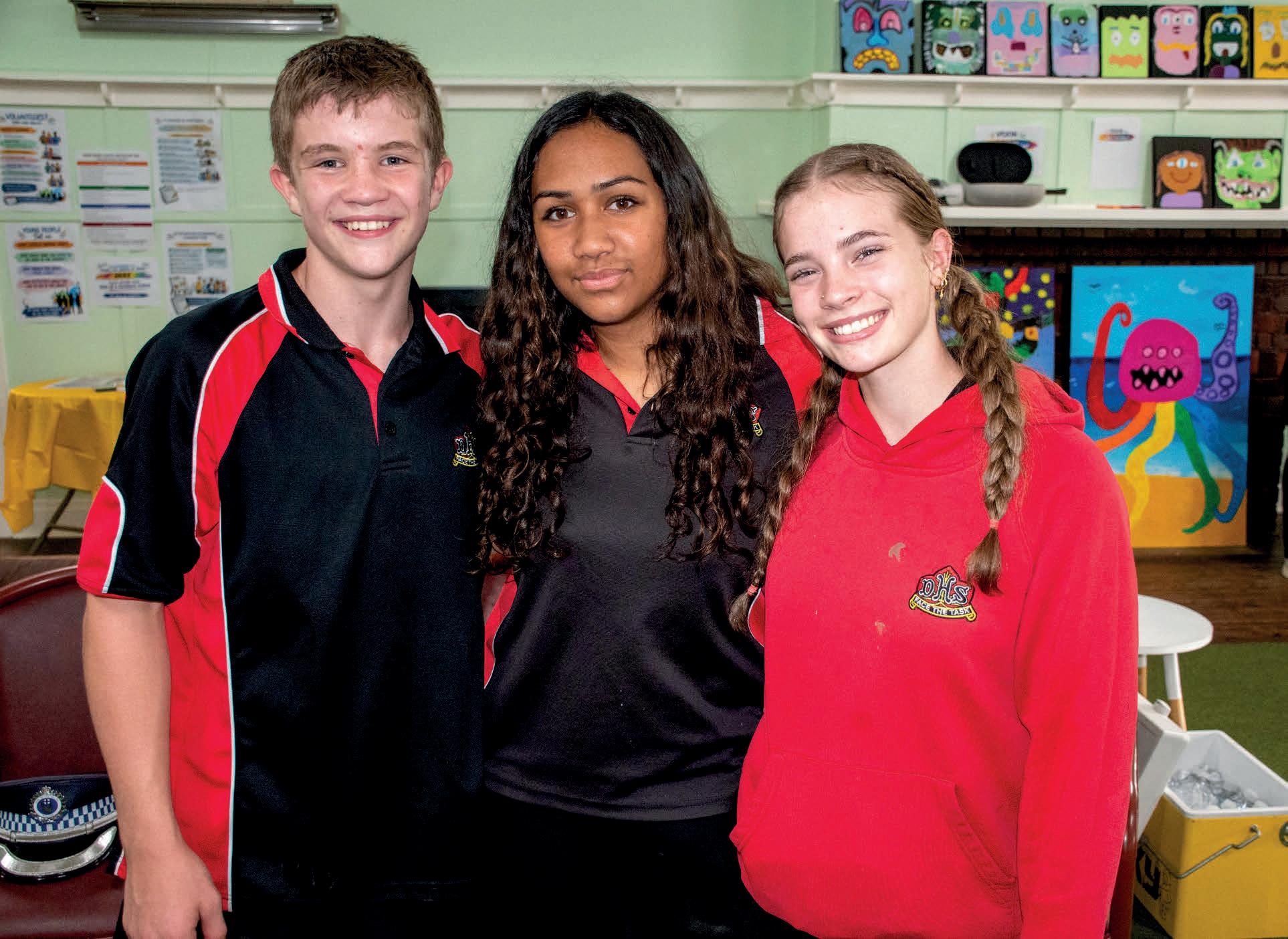
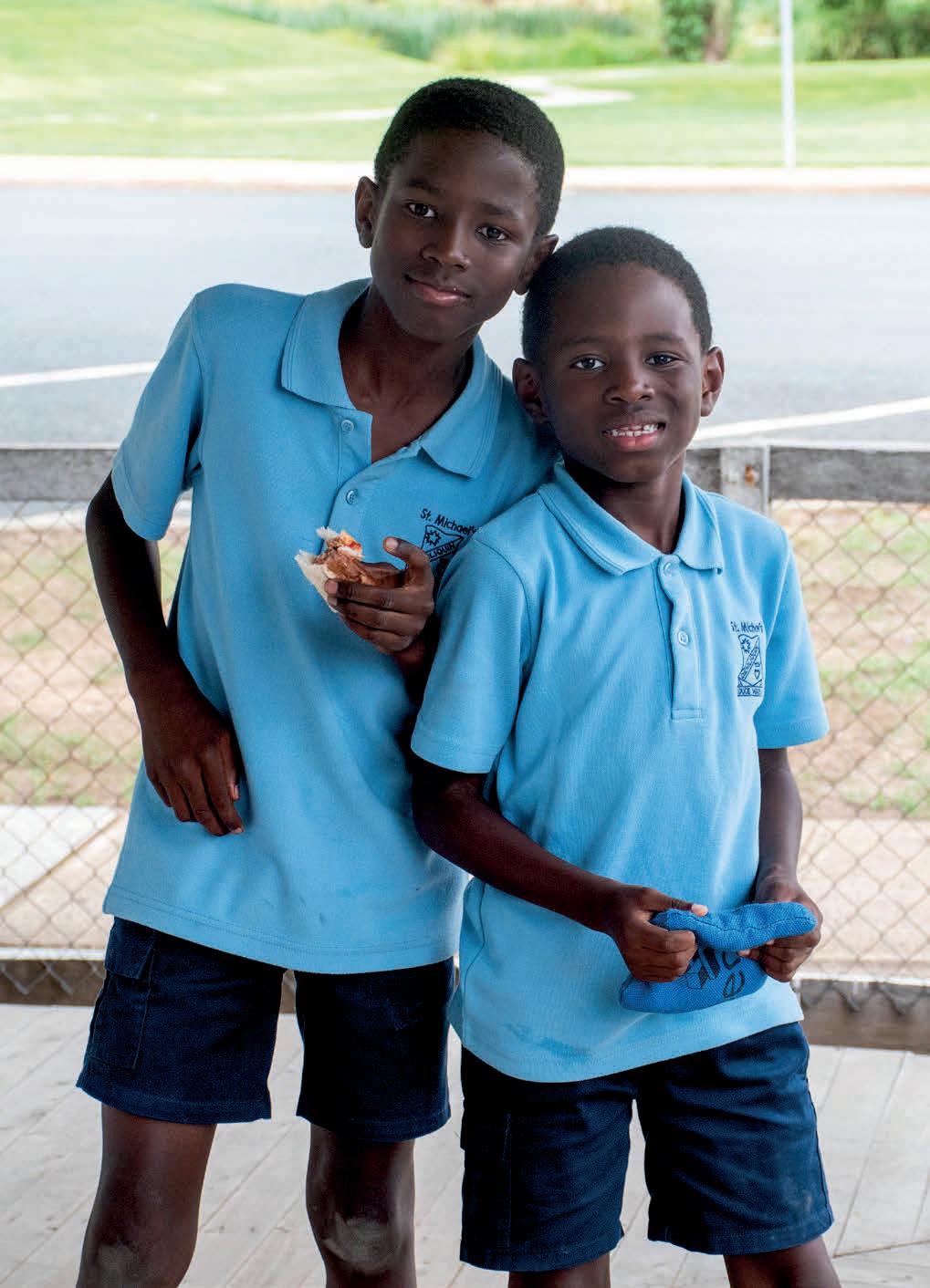
Braxton Lilford-Hansen, Helen Fevaleaki and Eden Hansen at the recent opening of the Youth Centre. Gabriel and Raphael Olabampe looking forward to spending time at the recently opened Deniliquin Youth Centre.
The youth centre was a hive of activity on grand opening day.
Beyond traceability – what can eID devices be used for?
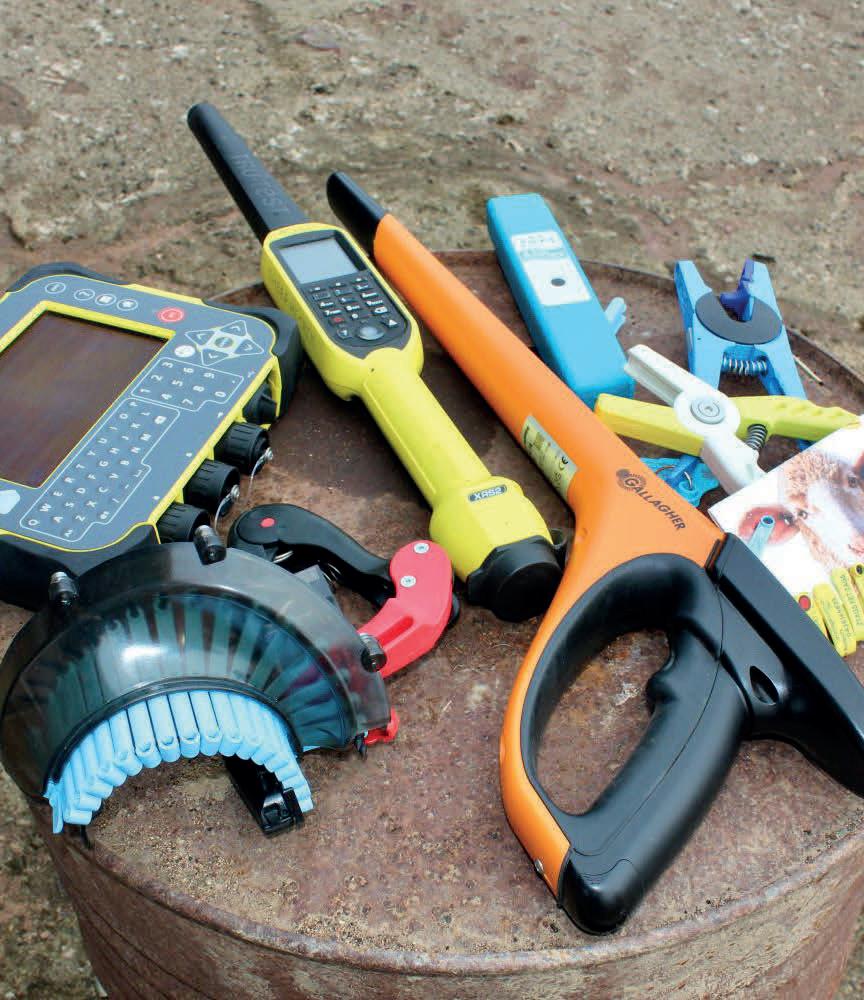
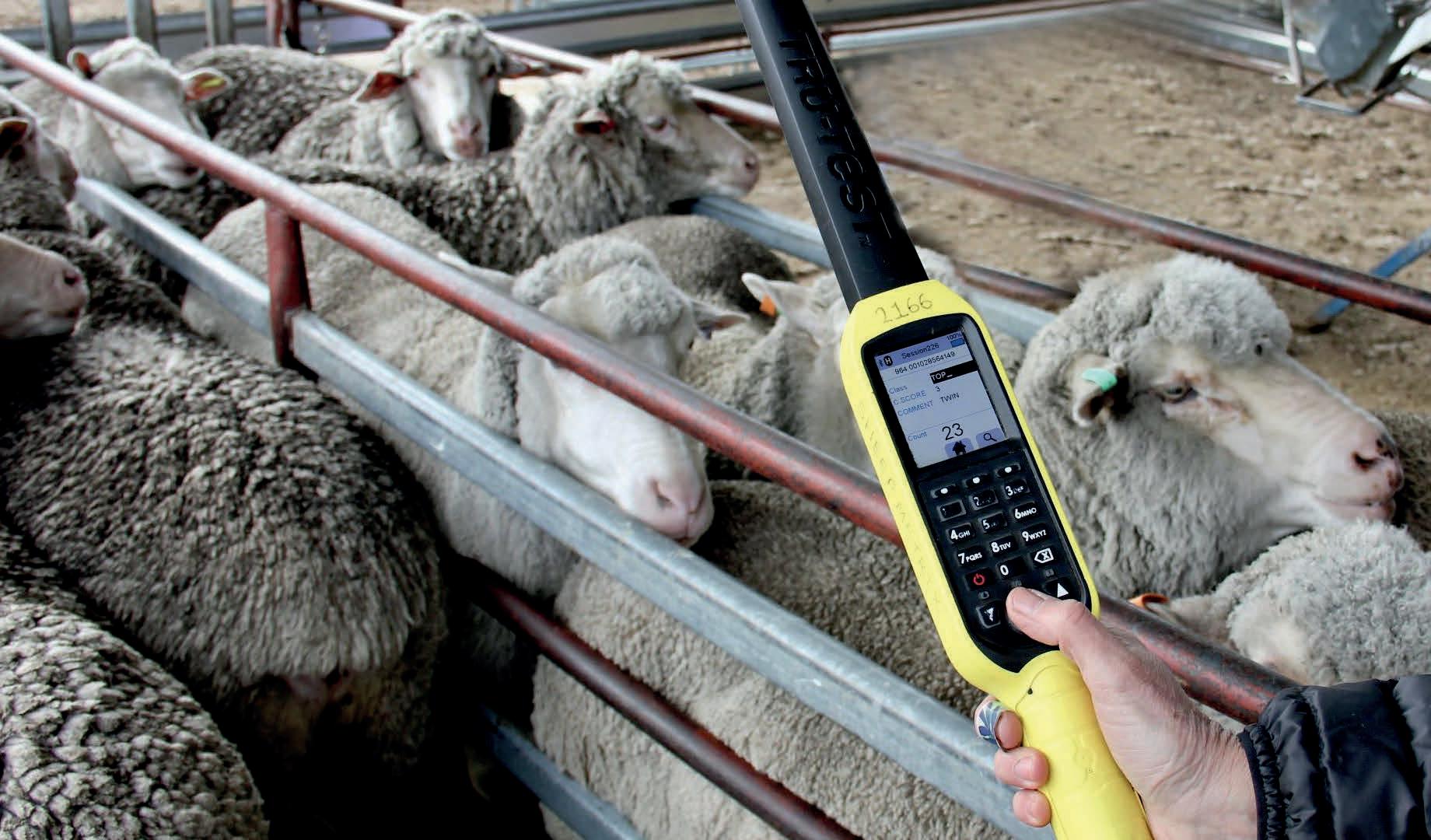
NSW is currently transitioning towards electronic identifcation (eID) devices (eartags and leg bands) for sheep and goats.
By 1 January 2027 all sheep and goats will need to be identifed with an eID device before they leave your property, no matter what year they were born.
While it is not necessary to do anything beyond what is required for traceability under the National Livestock Identifcation System (NLIS) there are many other things that eIDs can be used for on farm.
Individual identifcation of stock can allow for the recording of individual animal data. This could include information such as pregnancy scanning results, if a ewe raised a single or multiple lambs in a year, and if linked to a weight scale, you can also record weight gain over time. This sort of data can be a valuable resource, making your business more proftable by helping you make culling, feeding and management decisions on farm.
If you are interested in learning more about using eID data on farm but aren’t sure how to start, good news! We have some workshops coming up in Bunnaloo (16 April) and Urana (20 May) which will help you understand how to collect meaningful data with eIDs and analysis it. There will be a hands-on practical element, so we encourage producers attending to bring their scanners and eID tags to the workshop.
If you don’t have a scanner but are thinking about purchasing one, or have purchased a handheld scanner but missed out on the initial infrastructure rebate in 2023, you may be eligible to apply for the current handheld scanner rebate.
This rebate is for eligible producers and livestock agents to claim 50% (up to $1,500) on the purchase of a handheld eID reader. This applies to readers purchased on or after 3 October 2023 and can be claimed until 31 August 2026 or when funds run out.
If you would like more information on sheep and goat eID in NSW please contact your nearest Local Land Services team. To RSVP for the workshops, you can use the QR code below
Linda
is a district veterinarian with Murray Local Land Services.
Searle (pictured)
FARMtalk welcomes community contributions from farmers, experts and professionals who make their living and life on the land. If you would like to contribute, there are several ways to do so.
• Get in touch and give us a tip of a great story idea.
• Contribute an article: If you are an expert in your feld then contributing once of, or regularly, is a great way to get started in our FARMtalk magazine. Contact Zoe McMaugh at farmtalk@ denipt.com.au or 03 5881 2322.
• Become an author: FARMtalk is open to occasional contributors who are experts in their feld or authorities on a subject or area. Once you have contributed an article, and the editorial team have approved you, we can set you up with a regular column to contribute. We would love to hear from you. Contact Zoe McMaugh at farmtalk@ denipt.com.au or 03 5881 2322.
• Have a fascinating farm in mind for us to showcase? Tell us! We would love to hear from you. Contact Zoe McMaugh at farmtalk@ denipt.com.au or 03 5881 2322.
Fight back against feral rabbits
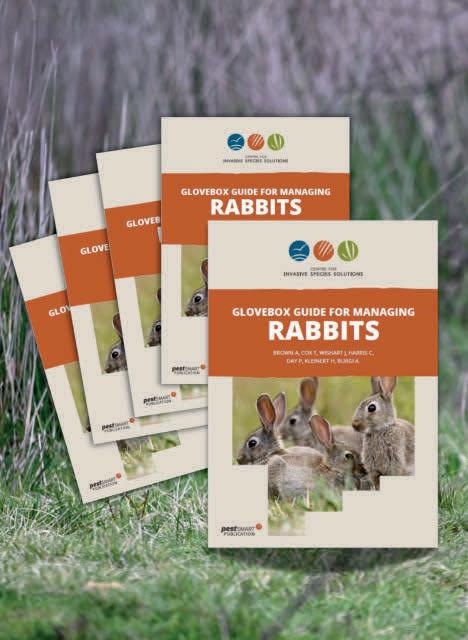
Landholders battling the growing threat of feral rabbits will beneft from the launch of the third edition of the Glovebox Guide for Managing Feral Rabbits from the Centre for Invasive Species Solutions (CISS).
CISS national feral rabbit management co-ordinator Heidi Kleinert said the updated guide is a practical resource to help land managers understand how to manage rabbit populations effectively and reduce the damage they cause.
“Rabbits remain one of Australia’s most widespread and damaging pest animals,” she said.
“They have serious, ongoing impacts on our nation’s agriculture, biodiversity and way of life.’
“This new edition is for anyone with a rabbit issue. It provides the latest in best practice rabbit management for land managers Australia-wide.
“It sets out information on how rabbits live and breed, outlines options for control - including biocontrols, describes monitoring techniques, and helps landholders develop a cost-effective rabbit management plan for their local situation.’’
The guide follows an ‘assess-plan-manage-improve’ approach and outlines a staged process for longterm success - starting with knockdown, moving to knockout and fnishing with mop-up actions to prevent reinfestation.
“This guide is designed to sit in an offce, ute or toolbox - ready to be used when decisions need to be made,’’ Ms Kleinert said.
“It backs people on the ground with clear, practical guidance, supporting national efforts to reduce rabbits impacts.
“Action is what makes the difference in feral rabbit management,’’ Ms Kleinert said.
Copies can be ordered online at pestsmart.org.au/ pest-animals/glovebox-guides-order-form/.