
Election
Express staff
Voters will decide multiple local governing board seats this November, including three City Council positions and three Winters Joint Unified School District trustee seats, as the filing period for the 2026 General Municipal Election opens July 13.
The election will be held Tuesday, Nov. 3, 2026, with candidate nomination papers accepted from July 13 through Aug. 7 at 5 p.m. If an incumbent eligible for re-election does not file by the deadline, the filing window will extend to Aug. 12 at 5 p.m. for other qualified candidates under California Elections Code provisions.
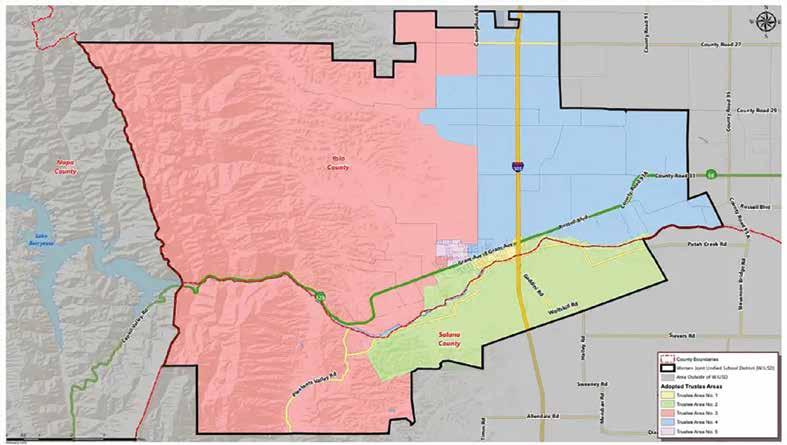
On the ballot this year are three City Council seats and three school district trustee seats. The City Council seats are currently held by Al Vallecillo, Carol Scianna and Richard Casavecchia. The school board seats are Trustee Area 2 (Carrie Green), Area 3 (Joedy Michael) and Area 4 (Sterling Davis).
Filing opens July 13
In the City of Winters, prospective candidates for City Council must be at least 18 years old, reside within city limits and be a registered voter at the time nomination papers are is-
Land use decisions and development updates top discussion topciss
By Sonora Slater Express staff writer
The commission
sued.
Beginning July 13, candidates may schedule an appointment with the City Clerk to obtain required nomination documents. Appointments are required.
The City Clerk serves as the city’s official elections administrator, responsible for conducting municipal elections and assisting candidates, officeholders and
also discussed and voted on a conditional use permit for a new short-term vacation rental located at 300 Creekside Way.
The unit has four bedrooms and 2.5 bathrooms and would typically be allowed a maximum occupancy of 10 guests. The owners, however, requested a variance to extend that maximum to 14 guests.
Public commenters shared a variety of concerns, asking the commission to deny the request. Neighbors noted that the
ballot measure supporters and opponents.
School board candidates file through county
For the Winters Joint Unified School District, trustee candidates must file nomination paperwork in person with the Yolo County Elections Office in Woodland during the same July 13–Aug. 7 filing window.
location is in a quiet residential area, unlike some of the other short-term rentals in Winters that are closer to the downtown core. There was also concern that the high number of guests would create a party atmosphere and result in issues with noise.
Residents also mentioned that having too many short-term rentals can change the character of a place and lessen the possibility of deep relationships with neighbors, and some suggested a
Trustee-area maps and additional filing information are available on the district’s website under “District Information” on the Board of Trustees page.
Election structure and rules
The Winters City Council is made up of five members serving staggered four-year terms, with no term limits. If only one or no candidate files for a seat, state law al-
limit on the number of short-term rentals. One person pointed out that occupancy rates for short-term rentals in Winters are fairly low, with properties sitting empty much of the year, and that adding another option may only exacerbate this problem. Currently, there are seven approved shortterm vacation rentals in the city.
The property owners, Keri and Kyle Cliff, said that although they don’t live in Winters, they do frequent the city and live an hour away, making it possible for them to respond to any issues at the house in a timely manner. They also said that they plan to screen guests carefully and are not looking to advertise it as a party house, but as a place for large families to spend time together.





The permit was approved by the commission, but not the variance for extra guests, so the location will have a maximum occupancy of 10 guests.

lows the council to appoint a candidate under Section 10229 of the California Elections Code. Polls will be open from 7 a.m. to 8 p.m. on Election Day. The City Clerk can be reached at 530-794-6702 or cityclerk@cityofwinters. org, and full election information is available at www.cityofwinters.org/237/ Elections.
The commission also shared concerns about continuing to approve short-term rentals owned by outof-towners when some local residents still struggle to find housing.
Housing updates
The commission also recommended approval of a ministerial housing element update, which is required by mandate from the state. Existing law requires that all California municipalities adopt ordinances for housing which address reasonable accommodation for persons with disabilities or special needs. Although Winters has a plan for how to address this laid out in its Housing Element, progress on the plan is not complete, and the state has asked the city to take action.
The plan is meant to make reasonable accommodations via variances or updates to housing for the sake of accessibility easier, removing regulatory

barriers to fair housing opportunities. The commission approved the item, and it will next come before the council.
Public comment
A Davis resident named Alan Miller attended the meeting in order to speak during the public comment period on a dispute between him and Commissioner Matt Stone. The two had a heated exchange in the comments section of a column written by Stone in the Davis Vanguard, and Miller accused Stone of making anti-Jewish remarks toward him. Meeting resources
The full meeting agenda and packet are available on the Winters Planning Commission page on the city of Winters website at www.cityofwinters.org/189/Planning-Commission. Residents are able to view the video recording of the meeting using the link under the “Available Archives” section on the same page.

Regional News
Solano requests federal funds for freeway interchange
Solano County has sent a letter to the U.S. Department of Transportation requesting $93.13 million for the next phase of the Interstate 80/I-680/Highway 12 Interchange Project.
“The I-80/I-680/SR 12 interchange complex is a significant freight bottleneck that impacts the national economy. I-80 is a major goods movement and commuter corridor. The freeway provides direct access from the Port of Oakland, a major exporter of American produce and goods to international markets. I-80 also provides access to multiple oil refineries in Solano and Contra Costa counties,” the letter signed by Board of Supervisors Chairwoman Monica
Brown states.
“The existing system interchange lacks effective connections between I-80 and Highway 12 West, operational efficiency on I-80 west of Fairfield, and capacity on eastbound Highway 12 East that backs up onto I-80. This results in significant freight congestion and unreliability as well as high collision rates.”
The letter further states that the interchange project “directly addresses these challenges by constructing a connector roadway from I-80 to Highway 12 West with a railroad grade separation and partial interchange at Highway 12 West, improving the I-80/Red Top Road Interchange, and widening Highway 12 East to three
eastbound lanes.”
The project aligns with the Infrastructure for Rebuilding America program goals, including improved freeway safety and economic competitiveness through reduced freight travel times, the letter states.
This would be the fifth funding package of a multiphased, seven-package project projected to cost more than $750 million, according to the Solano Transportation Authority.
Completed work includes:
• Phase 1: Completed in 2016, establishing foundational improvements for local access and freeway connections.
• Package 5 and 2A (local and ramp work): Crews realigned Red Top Road,
extended Business Center Drive over Highway 12 and widened the connector ramp from westbound I-80 to Highway 12. Traffic islands and right-turn modifications were also installed at the Red Top Road/Highway 12 intersection.
Ongoing and future work includes:
• Package 2: Construction is underway on a new twolane highway alignment and bridge structure, replacing the existing eastbound SR-12 to eastbound I-80 connector.
• Packages 3 and 4 (interstate realignments): Contracts focus on realigning both the northbound and southbound lanes of I-680, constructing a direct connector from I-680 North to
Highway 12 West and improving the Green Valley Road ramps.
• Package 6 (HOV lanes): This phase will construct high-occupancy vehicle lanes and a median connector between I-680 and the eastern leg of I-80.
• Package 7 (final connectors): The final phase will construct connectors from eastbound I-80 to southbound I-680, northbound I-680 to westbound I-80 and westbound Highway 12 to southbound I-680. It also includes replacement of the Union Pacific Railroad Cordelia underpass. The letter, dated June 26, was addressed to U.S. Transportation Secretary Sean Duffy.
Dominguez trial experts explore cannabis-induced psychosis
By Lauren Keene McNaughton Media
Yolo County pros-
ecutors rested their case in chief in the Carlos Reales Dominguez stabbing trial Tuesday following testimony from expert witnesses on the subject of cannabis use and its effects on mental illness.
Prosecutors are seeking to prove that the former UC Davis student carried out the spring 2023 attacks that killed two people and wounded a third while in a cannabis-induced psychosis triggered by his frequent use of highpotency marijuana.
They also say Dominguez engaged
in “goal-directed behaviors” around that time, indicating he knew what he was doing when he committed the stabbings.
The defense admits that Dominguez’s actions killed David Breaux and Karim Abou Najm and wounded Kimberlee Guillory, but they resulted from long-untreated schizophrenia that altered his perception of reality. He has pleaded not guilty by reason of insanity.
This is Dominguez’s second Yolo Superior Court trial. His first last year ended in a mistrial after the jury acquitted him of two counts of first-degree murder and deadlocked on lesser
charges of second-degree murder and attempted murder.
As part of their revised theory in the case that focuses on Dominguez’s cannabis use, prosecutors called Mill Valley-based forensic psychiatrist Dr. Zachary Torry, who testified Monday that he “found holes” in evaluations prepared by three other mental-health professionals.
Those experts — Drs. Stephen Weiner, Sirintip Rhee and Sarah Vinson — all testified at the first trial that Dominguez’s schizophrenia put him in a state of active psychosis that skewed his thought process. They
also said they considered, but rejected, a cannabis-induced psychosis diagnosis.
“The cannabis use was not fully explored in this case,” said Torry, who noted he did not examine Dominguez but reviewed extensive case materials. “It’s a significant piece of the puzzle, because it plays a role in the defendant’s mental condition, specifically at the time of the events.”


Prior to Torry’s testimony, prosecutors called to the stand about a half-dozen of Dominguez’s former friends and roommates, who relayed their observations regarding his marijuana consumption during his three years at UCD. Several said his cannabis use increased in frequency with strains high in THC — the drug’s psychoactive ingredient.
“Substances can bring about and worsen symptoms of schizophrenia,” Torry said. “Marijuana, sometimes even alcohol and methamphetamine, can cause hallucinations or delusions, paranoid thinking. They can do that on their own, or in a person who has a diagnosis, it can make those symptoms much worse.”


Experiencing psy-
chotic symptoms after cannabis use “doesn’t happen all the time, but among those who do, the recurrence is much greater, because they have some sort of vulnerability in their brain,” Torry added. THC “can produce an effect similar to what psychosis does and cause somebody to experience misperceptions of reality.” Torry opined that Dominguez was able to engage in goal-directed behaviors around the time of the stabbings, citing as an example his interactions with police officers who detained him near Sycamore Park on May 3, 2023. Officer body-camera video played in court showed Dominguez giving officers a false name, address and date of birth, which Torry said demonstrates intent to achieve a desired outcome.
“One could say that the goal here is to hide his identification,” Torry said. “He organizes his answers in order to avoid being apprehended.”
Prior to Torry’s testimony, the jury heard last week from a defense witness, Dr. Steven Siegel, a psychiatrist and vice president of behavioral health at the University of Southern Cali-
fornia, called as an expert on severe mental illness and substance use disorders. Like Torry, Siegel did not examine Dominguez and did not offer a diagnosis in his case. He offered general testimony regarding schizophrenia, which he said can be caused by genetics as well as environmental factors, such as childhood trauma.
“There’s no smoking gun,” Siegel said. While substance use can be a risk factor for the illness and exacerbate symptoms, “99 percent of those exposed to drugs don’t go on to develop schizophrenia.” Furthermore, despite the “massive” increase in the availability of cannabis — including high-potency varieties — in the past 20 years, schizophrenia rates have remained virtually unchanged, Siegel noted.
Cannabis use frequently occurs among those suffering symptoms of schizophrenia, but “in my mind, this is cannabis revealing the impending development of schizophrenia. It’s not causing it,” Siegel said.
As for goal-directed behaviors, Siegel said people with
See TRIAL, Page 3
Solano County to receive $4.07M in state homelessness funds
Solano County and the Vallejo-Solano Continuum of Care will split $4.07 million from the $900 million allocated statewide through California’s Homeless Housing, Assistance and Prevention (HHAP) program in the 2026-27 state budget.
“Our organizations applaud the inclusion of $900 million for the Homeless Housing, Assistance and Prevention program in the 2026-27 State budget. Investments in HHAP have helped communities across California make meaningful progress in preventing and reducing homelessness,” a joint statement from the League of California Cities, California State Association of Counties, California Big City Mayors and the Bring
California Home Coalition said.
The Vallejo-Solano Continuum of Care, also known as Housing First Solano, is slated to receive a little more than $2.1 million, while Solano County is expected to receive just under $1.97 million, according to the state Department of Housing and Community Development. The total allocation is lower than the $1 billion provided in prior funding cycles, though the distribution formula remains unchanged. Combined, Solano agencies received about $4.1 million in the previous round of funding, marking a decrease of roughly $30,000 this cycle.
Under the state formula, cities with populations of 300,000 or more receive 42 percent of HHAP funds, Continuums of Care
receive 30 percent, and counties receive 28 percent, the state agency reported.
“In the face of fiscal uncertainty and growing pressure on local communities, this year’s investment is critical. We look forward to building on this progress with the Legislature and the next governor to make HHAP a long-term, sustainable funding source that helps local agencies plan, sustain programs and deliver results,” the joint statement said. It added that the program has “proven that when the state invests in local communities, local communities deliver results.
This funding will help cities, counties, and Continuums of Care expand housing, connect more Californians to services, and keep that progress moving forward.”
Express staff
Community
Frerichs, Barajas host annual Western Yolo Ag Roundtable
Special to the Express
Yolo County supervisors
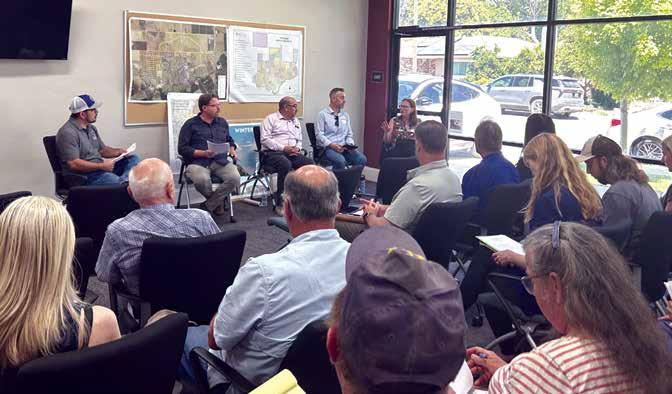
Lucas Frerichs (District 2) and Angel Barajas (District 5) hosted the fourth annual Western Yolo Agricultural Roundtable, bringing together about 40 members of the agricultural community, county officials and local leaders for an open discussion on groundwater, invasive weeds and other issues affecting agriculture in Yolo County.
April Meneghetti, Yolo County director of Environmental Health, and Kristin Sicke, executive officer of the Yolo Subbasin Groundwater Agency (YSGA), provided an update on the county’s temporary agricultural well moratorium.
The presenters outlined the agencies’ respective roles in groundwater management. The county regulates well construction to protect public health and prevent groundwater contamination, while the YSGA is responsible for maintaining sustainable groundwater conditions throughout the Yolo Subbasin. The agency also provided updates on projects aimed at increasing groundwater recharge and strengthening the region’s water supply ahead of the next drought. Participants discussed the moratorium and the potential benefits and challenges of developing a groundwater alloca-
tion system over the longer term.
County staff are scheduled to present an update on the well moratorium to the Board of Supervisors at its July 21 meeting. The report will include a recommendation on whether to extend the agricultural well moratorium beyond Aug. 25, and whether to require meters on new agricultural wells under the county’s well ordinance.
Yolo County Agricultural Commissioner Humberto Izquierdo provided an update on efforts to detect and control the invasive parasitic weed broomrape,
describing coordination with state agencies and agricultural partners to respond to the threat.
Yolo County Farm Bureau Executive Director Miranda Driver and board President Lee Smith discussed the organization’s work, policy priorities and efforts to preserve agriculture in Yolo County. They also addressed the range of views among Farm Bureau members on issues including the well moratorium.
The roundtable concluded with a panel discussion featuring Supervisors Frerichs and Barajas, Adam Fieseler, director of
Community Services, and Meneghetti. Panelists responded to questions from attendees and provided updates on county projects affecting agricultural communities, including efforts to increase housing opportunities for farmworkers.
“I appreciate the opportunity to engage in open dialogue with our agricultural community,” Frerichs said. “Addressing complex issues such as groundwater sustainability requires collaboration and community input to protect our shared resources.”
“I’m encouraged that these events continue to
prove that when you give people the opportunity for real conversations, better outcomes can follow,” Barajas said. “Whether it’s well permitting and moratorium discussions, broomrape, property rights, water or the day-to-day challenges facing farmers and landowners, these roundtables create space for meaningful dialogue and understanding. I’m proud of how far they’ve come and excited about the role they’ll continue to play in bringing people together to address the issues that matter most to our community.”
Yolo Youth Commission includes Winters, Capay Valley students
Express staff
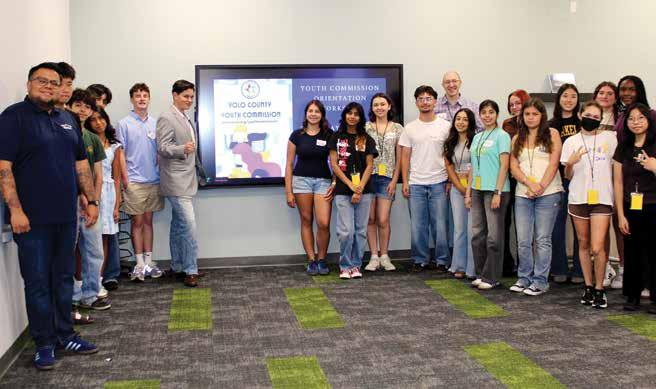
The Yolo County Office of Education (YCOE) is highlighting strong representation from Winters, Esparto and surrounding Capay Valley communities in the 2026-27 Yolo Youth Commission, which has selected 19 high school students from across Yolo County to serve as youth leaders focused on elevating student voice and expanding leadership opportunities.
Among this year’s appointments, students from Winters High School and Esparto High School are playing a visible role on the countywide commission, joining peers from Davis, Woodland, West Sacramento and other communities to help guide youth engagement initiatives and leadership programs.
As one of their first efforts, Youth Commissioners are helping launch a new opportunity for high school students across the county: a free, three-day Summer
TRIAL
Continued from Page 3
schizophrenia can engage in those actions, particularly if they involve ritualistic tasks such as getting dressed, using the bathroom or making food.
“Someone can be very impaired and still be able to do those things,” he said.
Under crossexamination by prosecutors, Siegel said it’s uncommon for people with schizophrenia to engage in random, aggressive attacks, but “it can happen,” particularly when the person is suffering from hallucinations or
Leadership Camp designed to build leadership skills, strengthen peer connections and encourage student-led impact in local schools and communities.
“The new Youth Commissioners represent the voices, ideas and leadership of students across Yolo County,” said Edwin Ortega Beltran, YCOE youth development program specialist. “They’re not only developing their own leadership skills, they are creating opportunities for other students to grow alongside them. The Summer Leadership Camp is designed to connect young people from different schools, help them learn from one another and inspire them to bring new ideas back to their campuses.”
The Summer Leadership Camp will be held July 21-23 from 9 a.m. to 3 p.m. each day at the Yolo County Office of Education Conference Center in Woodland. Participation is free for all Yolo County high school students.
delusions.
“When they have a delusion that makes them feel their safety is threatened … the tether to ethical behavior becomes released,” Siegel said. “What’s random to me and you is not random to them. By and large, they're just trying to get by.”
The defense launch-ed its case

Students will take part in interactive workshops, team-building activities and sessions led by community leaders. The camp is open to students involved in Associated Student
Tuesday by calling Dominguez's younger sister Mia and father Juan Reales Campos as witnesses. As he did at his first trial, Dominguez is expected to testify in his own defense.
Testimony continues Wednesday and Thursday this week in Judge Samuel McAdam's courtroom.
Body, Link Crew, Future Farmers of America, athletics, clubs and other leadership programs.
Youth Commissioners will serve a oneyear term from May 2026 through May 2027, committing approximately five to 10 hours per month to youth leadership initiatives and community engagement activities.
The 19 members appointed to the Yolo Youth Commission include:
School in Winters
• One student from Esparto High School in Esparto
• 15 students from Davis, Woodland, West Sacramento, Sacramento and Da Vinci Charter Academy programs across Yolo County
Students interested in attending the Summer Leadership Camp can register at www. ycoe.org/youthcommission, where more information about the Yolo Youth Commission and its initiatives is available.

Three students from Winters High

Students from Winters High School include multiple representatives among this year’s cohort, underscoring strong Western Yolo County participation in the countywide commission.
2nd
Chance Furnishings
The Yolo County Office of Education provides inspiration, leadership, support and advocacy to ensure equity and access to high-quality education for all students. For more information, visit www.ycoe.org.


Courtesy photo
Members of the 2026-27 Yolo Youth Commission gather with Yolo County Office of Education staff during a group
photo in Woodland. The commission brings together high school students from across Yolo County, including strong representation from Winters, Esparto and other Capay Valley communities, to support youth leadership and student engagement initiatives.
Lake Berryessa water levels down
Express staff
The water level of Lake Berryessa decreased by 0.6 feet over the past week, resulting in a difference of 10,996 acrefeet of water storage, according to Cristian Tejeda, Solano Irrigation District –Putah Diversion Office. On the morning of Tuesday, June 30, he reported that the lake elevation was 435.16 feet above sea level, with the water storage behind the Monticello Dam calculated at 1,461,207 acre-feet. The SID released 561 cubic feet per second into the Putah South Canal, with 65 cubic feet flowing into lower Putah Creek at the Diversion Dam. Evaporation from the lake averaged 272 acre-feet of water per day. For more information about services from the Solano Irrigation District or to view the latest updates, visit https://www.sidwater.org.
Get a WE print and digital subscription combo for $30.

YESTERYEAR
Public Safety Report
June 19: 1:45 p.m., E. Grant Avenue and Morgan Street, Bench warrant/failure to appear (misdemeanor)
The Winters Fire Log will return soon. View the Winters Fire Activity and Call Log at https://cityofwinters. org/157/Fire.
Police Report Log
June 20: 12 a.m., Putah Creek and Railroad Avenue, Sending/selling obscene matter depicting a minor (misdemeanor) ~6:35 p.m., 700 block of Hemenway Street, Theft from an elder/dependent adult ($950 or
more) (felony)
June 24: 3:47 p.m., 100 block of E. Baker Street, Identity theft (felony)
June 26: 12 a.m., 900 block of Railroad Avenue, Battery on spouse/ex-spouse/dating partner (misdemeanor)
June 29: 6 p.m., 400 block of Cottage Circle, Grand theft of motor vehicle parts/accessories (felony) View the Winters Police Department Arrest and Report Logs, visit www.cityofwinters.org/289/Report-Arrest-Log
Yolo County Landfill project turns methane into renewable fuel
Special to the Express
Yolo County is moving forward with a project to replace the aging gas-to-electricity system at the Yolo County Central Landfill with a facility that will convert landfill gas into renewable natural gas.
The Yolo County Board of Supervisors approved a 20-year agreement with Yolo RNG LLC on May 26. The agreement takes effect July 1, and the new facility is expected to be completed by
summer 2028.
Once operational, the facility is expected to process all landfill gas collected at the Yolo County Central Landfill and convert it into pipeline-quality renewable natural gas. The gas can then be injected into PG&E’s existing pipeline system.
The project will also provide longterm operational and financial benefits to the county, including guaranteed annual revenue payments to support landfill en-



terprise operations.
The approved agreement begins a multiyear development and permitting process that will include contractor procurement, environmental compliance review, engineering and design, and coordination with multiple regulatory agencies.
“County staff executed an agreement that takes our grandfathered gas-to-energy facility built back in the late ’80s to a stateof-the-art facility that meets all modern environmental standards,” said Marissa Juhler, director of the Yolo County Integrated Waste Management Division.
Over the next two years, the county and project partners will work through several key implementation steps as the project advances through planning, permitting and development phases. This includes following county-ap-


proved procurement processes for construction contracting and project delivery, coordinating with labor partners to ensure compliance with applicable prevailing wage requirements, and working closely with regulatory agencies, including the Yolo-Solano Air Quality Management District and Local Enforcement Agency, to ensure environmental compliance during decommissioning, project construction and long-term operations.
The Yolo County Central Landfill has long served as a regional leader in innovative waste management and sustainability efforts. This project represents the next step in advancing renewable energy opportunities and reducing greenhouse gas emissions through responsible landfill operations.
Picked by Charley Wallace
File photo
left, Maribel Lopez, Adrienne Solorio, Andrea Avery, Christine Lester and Crystal Apilado. Winters High School students were available
the Doug Baldridge scholarship. The minimum the students would
Eventos hispanos
Policía de Winters detalla planes para evento de fuegos artificiales del 3 de Julio
Personal de
Traducido por Carol Alfonso
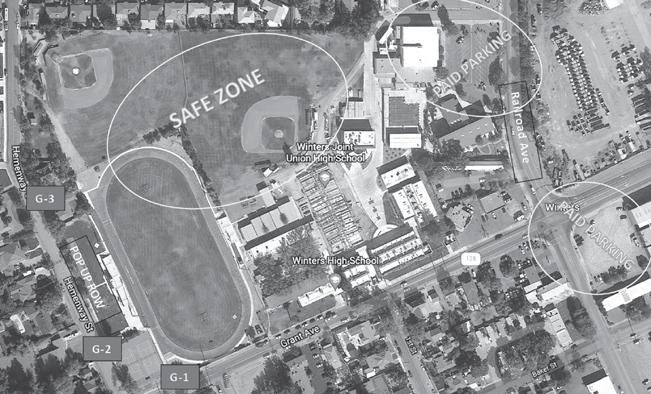
Para celebrar el 250 aniversario de la fundación de los Estados Unidos, la ciudad de Winters celebrará su espectáculo anual de fuegos artificiales el Viernes 3 de Julio en el campo de fútbol Dr. Sellers de la escuela secundaria Winters High School. Las puertas se abrirán a las 5 p.m. y los fuegos artificiales comenzarán entre las 9:15 y las 9:30 p.m., dependiendo de las condiciones de iluminación. Habrá tres puertas de acceso al público. La Puerta Uno está en la Avenida Grant. La Puerta Dos (cerca de las gradas del estadio) y la Puerta Tres (más cerca del campo de béisbol) están en la calle Hemenway. La Puerta Dos es el punto de descenso designado para personas con discapacidad. No se podrá acceder al campo a través del recinto de la escuela Winters High. Habrá baños portátiles cerca de la Puerta Tres. El evento contará con música, puestos de comida y carpas de vendedores. Habrá camiones de comida en la calle Hemenway y puestos de venta detrás de las gradas del estadio.
El público podrá instalarse y hacer un picnic en el campo de fútbol. No se permitirá sentarse en la pista ni en la “Zona Segura,” designada en el campo de béisbol. El campo de béisbol del equipo colegial de WHS estará cerrado al público durante el evento.
Para ayudar a reducir la congestión vehicular después del espectáculo, el Departamento de Policía de Winters implementará medidas de control de tráfico en las intersecciones principales a lo largo de la Avenida Grant al finalizar los fuegos artificiales. Detalles del control de tráfico:
• Intersección de la Avenida Grant y la Avenida Railroad: Los semáforos parpadearán en rojo y los agentes de seguridad pública dirigirán el tráfico. Se prohibirán todos los giros a la izquierda, excepto de la Avenida Grant en dirección oeste a la Avenida Railroad en dirección norte, para evitar la congestión vehicular transversal.
• Glorieta de la Avenida Grant y la Avenida Walnut: El



tráfico estará restringido al flujo este-oeste únicamente. Se permitirá el acceso a la Avenida Walnut desde la Avenida Grant en dirección oeste y la salida hacia la Avenida Grant en dirección oeste únicamente. No se permitirá el tráfico transversal, aunque los vehículos de emergencia conservarán el acceso completo a Walnut Avenue.
• En todas las demás intersecciones: Se aplicarán las normas de tránsito habituales, incluyendo las señales de alto y las reglas de prioridad de paso.
Ruta alternativa sugerida
Se recomienda encarecidamente a los conductores que se encuentren al norte de Grant Avenue o al oeste de Railroad Avenue que utilicen Railroad Avenue (County Road 89) en dirección norte hasta County Road 29A, que da acceso a la Interestatal 505. Se recomienda especialmente a los residentes de estas zonas que consideren esta ruta para evitar la congestión posterior al evento.
La ciudad exhorta a residentes y visitantes a planificar con antelación, seguir la señalización y tener paciencia mientras los agentes trabajan para regular el tráfico de forma segura y eficiente tras el evento.
Denuncia de fuegos artificiales ilegales
El jefe de policía de Winters, John P. Miller, declaró que el departamento cuenta con la colaboración de los residentes para denunciar el uso ilegal de fuegos artifi-
ciales.
En Mayo del 2022, el Ayuntamiento de Winters aprobó una ordenanza que establece un código municipal que permite a las fuerzas del orden emitir multas administrativas por el uso de fuegos artificiales ilegales. Según la ordenanza, las multas pueden emitirse a los propietarios después de ocurrido el incidente y los agentes no están obligados a presenciar la infracción en persona.
En Winters, se permiten los fuegos artificiales “seguros y legales.” Las autoridades siguen centrando sus esfuerzos en el control de los fuegos artificiales ilegales, en particular los dispositivos aéreos que suelen verse sobre los barrios.
Los fuegos artificiales “seguros y legales” no son explosivos, no se lanzan desde el aire y están probados y aprobados por la Oficina del Jefe de Bomberos del Estado.
Según la ordenanza, los propietarios pueden ser responsables del uso de fuegos artificiales ilegales en reuniones en su propiedad, de forma similar a las leyes de responsabilidad de los anfitriones en rel-
ación con el alcohol y el ruido.
Las citaciones administrativas pueden ser emitidas posteriormente por agentes de policía, bomberos o inspectores municipales. Miller señaló que a menudo surgen dificultades para hacer cumplir la ley cuando los agentes responden en tiempo real a grandes concentraciones.
Las fuerzas del orden pueden utilizar videos, fotografías u otras pruebas presentadas mediante denuncias ciudadanas. Los residentes no necesitan realizar un arresto ciudadano.
Las denuncias sobre fuegos artificiales ilegales pueden enviarse al Departamento de Policía de Winters por correo electrónico o a la línea de despacho para casos no urgentes al 530-795-4561. Miller indicó que es importante incluir información precisa sobre la ubicación, descripciones de las personas involucradas y fotografías con fecha y hora, cuando sea posible. “Cuanta más información puedan proporcionar, más probabilidades tendremos de dar seguimiento al caso,” afirmó Miller. Los propietarios


Los fuegos artificiales pueden entregarse en la estación de bomberos sin preguntas y se desecharán de forma segura. Estadísticas relacionadas con fuegos artificiales del 2025
Funcionarios de seguridad pública informaron de una disminución significativa en el uso ilegal de fuegos artificiales en el 2025 en comparación con años anteriores.
pueden evitar una multa de $1,000 si denuncian el uso ilegal de fuegos artificiales en su propiedad o toman medidas razonables para detener la actividad, incluyendo contactar a las fuerzas del orden para que les ayuden a retirar a los responsables.
Miller indicó que el umbral para la aplicación de la ordenanza se ha reducido y que los agentes no necesitan presenciar la infracción en tiempo real para emitir multas. Además, la sección 8.24.010 del Código Municipal de Winters regula la venta y el uso de fuegos artificiales en la ciudad. Los fuegos artificiales “seguros y legales,” según se definen en la sección 12529 del Código de Salud y Seguridad de California, pueden venderse y usarse dentro de los límites de la ciudad desde el mediodía del 28 de Junio hasta el mediodía del 6 de Julio de cada año.
El Departamento de Bomberos de Winters está recibiendo fuegos artificiales a través de un programa de amnistía.
El jefe de bomberos, Jack S. Snyder III, informó que el Departamento de Bomberos de Winters respondió a un cable eléctrico caído, un incendio en un contenedor de basura y un incendio de árbol cerca de una residencia en la calle Edwards. El 4 de Julio, los bomberos también extinguieron un incendio en la cerca que separaba dos viviendas. Se cree que ambos incendios fueron causados por fuegos artificiales. Además, un agente de policía de Winters utilizó un extintor para apagar una caja de cartón de fuegos artificiales que ardía sin supervisión. El Departamento de Bomberos de Winters acudió como medida de precaución.
Miller indicó que en el 2025 se emitieron cuatro multas administrativas por fuegos artificiales ilegales en virtud de la Ordenanza de Responsabilidad de Anfitriones, lo que representa una tendencia a la baja con respecto a las ocho multas del 2023 y las cinco del 2022. Algunas multas se emitieron en el lugar de los hechos, mientras que otras se emitieron tras denuncias de la comunidad. Encontrará información sobre el evento en el sitio web de la ciudad: http://www. cityofwinters.org/167/ Community-Events.




Imagen de cortesía
Un mapa muestra la ubicación de las puertas, los puntos de acceso designados y las zonas restringidas para el espectáculo de fuegos artificiales del 3 de Julio en el campo Dr. Sellers de la escuela secundaria Winters High School.


















Vacaville

Thursdays
Eat Well Yolo Food Distribution, first and third Thursdays, 10 a.m. As supplies last, RISE, Inc., 417 Haven St., 530-668-0690, https://yolofoodbank.org/find-food
Friday, July 3
Winters July 3 Fireworks Show, 5 p.m., Gates open to public, Dark (9:15-9:30 p.m.), Fireworks begin, Dr. Seller's Field (101 Grant Ave.)
Saturday, July 4
Eat Well Yolo Drive – Through Food Distribution, Canceled
Sunday, July 5
Winters Farmers Market
9 a.m. – 1 p.m., Main Street – downtown Winters, discoverwinters.com/farmers-market
Tuesday, July 7
Winters City Council Meeting, 6:30 p.m., Council chamber (318 First St.), Zoom Meeting info, check www.cityofwinters.org/city-council-meetings_/
Wednesday, July 8
Library Event: Dinosaur Eye Magnets, 1:30 p.m., Winters Community LibraryMargaret Parsons Room , yolocountylibrary.org/locations/winters/
Library Services
Yolo County Library branches closed July 3 and July 4 Winters Community Library Hours Open to Public (No School in Session) Now through Aug. 30
Winters Community Library, Mon/Wed: 10 a.m.–6 p.m., Tue/Thu: 12–8 p.m., Fri/Sat: 1–5 p.m.
Teen Tuesday (ages 12-18), Second Tuesdays, 2 p.m., Winters Community Library
Bilingual Storytime (ages 0-5), Wednesdays, 10:30 a.m., Winters Community Library
Virtual English Conversation Group, Tuesdays, 2-3 p.m., One time registration required: Contact Nancy Pacheco 530-666-8019 or nancy.pacheco@yolocounty.org
Mangonada Monday (ages 6-12), fourth Monday, 3:30 p.m. Tech Thursdays, Thursdays, 2-7:30 p.m., call 530-6668005 to schedule an appointment. Bilingual sessions available upon request.
Movie Matinee, Fourth Friday, 2-4 p.m., Winters Community Library
All You Need is Love Romance Book Club, Second Saturday, 4 p.m., Hooby’s Brewing
Older Adult Programs
Winters Senior Foundation Chair Yoga Class for Seniors, Wednesdays, 9:30-11 a.m., St. Anthony Parish Hall (511 W. Main St.)
Cafe Yolo Social Dining, Thurdays, 11:30 a.m.-12:30 p.m., Winters Community Center (201 Railroad Ave.), Reservations required 24 hours in advance at 530-662-7035 or welcome@mowyolo.org
Winters Senior Foundation Social Gathering, Thurdays, 12:30-3 p.m., Winters Community Center (201 Railroad Ave.)
Ongoing
View the Winters community events calendar at https://bit.ly/WintersCommunityEvents
Winters Farmers Market, Sundays, 9 a.m. – 1 p.m., Main Street – downtown Winters, discoverwinters. com/farmers-market
Winters Friends of the Library meeting, first Monday, 7 p.m., Winters Community Library, Margaret Parsons Room, wfol.org
Winters Fortnightly meeting second Tuesdays (September thru May), 1 p.m., St. Anthony Parish Hall, 511 W. Main St.
Rotary Club of Winters meeting, Thursdays, Noon, The Buckhorn Winters Museum public hours, Thursday thru Sunday, 1-5 p.m., 13 Russell St., historicalsocietyofwinters.org
Saved & Sober program, Thursdays, 7p.m., The Rock Church West, 201 Main St.
Winters Open Mic, third Saturday, 6 p.m. (sign-ups begin at 5:30 p.m.), Downtown Main Street, Visit wintersopenmic.org
12-Step Bonfire meeting, third Friday, 6:30 p.m. fellowship, 7 p.m. meeting, LuNita Ranch, 8189 Olive School Ln, Winters, Bring a camp chair.
Democracy Winters meeting, third Saturdays, 10 a.m.Noon, Meeting details in newsletter, contact info@ democracywinters.org
Alcoholics Anonymous meetings:
» St. Anthony Parish Hall, 511 Main St. (back entrance) Tuesdays, 7-8 a.m. and Fridays, 7-8 a.m.
Inside Yolo County’s archives
By Jacob Hoffman Express correspondent
Tucked away on Buckeye Street in Woodland sits the Yolo County Archives, an invaluable resource for anyone in Winters interested in the history or governance of Yolo County and Winters. Though many in Winters already make use of this important institution, many are new to the area or simply haven’t heard that such a repository of information exists so close to home.
History of the Archives
The archives themselves began in the mid-1980s when a number of Yolo County residents, including Shipley Walters, saw that important county records were being stored in the attic of the old county courthouse and felt these documents deserved a better home.
That’s where the Friends of the Yolo County Archives came in. Founded in 1986, they helped fundraise for the building that currently houses the Yolo County Archives and have supported the archives ever since through a number of means.
This includes fundraising to ensure that the archives coordinator and the library assistant are full-time
130 Years Ago
July 4, 1896
The Board of Union High School trustees met in W.H. Gregory’s office and elected teachers for the next school year. Mr. Isaac Wright was chosen as principal for the third time, and Mrs. Eleanor V. Bennett of Oakland as assistant.
The Winters Independent, B.J. Waugh, editor and proprietor, made its first appearance Thursday afternoon. The Independent is an eight-column, fourpage paper, neatly typographically set and well filled with reading matter. The Express extends the hand of fellowship to the new journal.
It is rumored that a certain young couple of Pleasants Valley are occasionally seen strutting about in the dead hours of night. It is sincerely hoped that these young ramblers will soon get their eyes open to this great folly and once more gain the respectability of the neighborhood.
J.E. Sackett, local agent for the California Green and Dried Fruit Company, informs us that he has shipped this season 42 carloads of fruit to Eastern markets.
James and Ralls Briggs, George Hanson and Carey Baker have joined the Dixon Baseball Club to play in the Solano County League for the 1896 season.
positions, as well as providing their time and energy to help organize and catalog the archives themselves.
County Librarian
Mary Stephens DeWall also supported the idea, and the archives are now part of the Yolo County Library system.
What is in the Archives?
Currently, the archives are run by Heather Lanctot, archives and records center coordinator, and Rachel Poutasse, library assistant, along with a rotating cast of volunteers.
Lanctot and Poutasse hosted the Win-
95 Years Ago
July 3, 1931
Dr. H.R. King, newly elected president, took charge of the Exchange Club session Monday night. The vice president is Buell Ish; secretary, Charles Graf; and members of the Board of Control are George Sanders, J.R. Ruggles and F.C. Hemenway.
E.J. Graf’s new garage, the home of the Ford, is nearing completion and is ready for occupancy.
Funeral services for D.O. Judy, 72, were held from the Presbyterian Church this morning at 10 o’clock. Mr. Judy died at his home in Winters at 7 a.m. Wednesday.
Mr. and Mrs. W.A. Young and their nephews, Elmore and Pearse, are vacationing in Los Angeles and the Southland. During their absence, the Henry Forden family, whose home was burned last week, are residing at the Young home.
Mr. and Mrs. Frank Irland of Imperial visited early this week at the home of her parents, Mr. and Mrs. Frank E. Wilson.
80 Years Ago
July 5, 1946
» Yolo Housing office building, 62 Shams Way: Thursdays, 7-8 p.m. and Sundays, 9 a.m. Rainfall contest wraps up OPINION, Page 8 Experience drives today’s
W.H. Gregory has purchased a team of fine black horses from J.E. McMahan.
Milton Sharp, Charles Graf and W.D. Skinner represented Winters at a meeting in Woodland Monday relative to Yolo County’s control of the $950,000 Winters-Davis Airport, located about halfway between Winters and Davis.
ters Express and gave a detailed tour of their facilities, as well as a breakdown of the important work they do every day for Yolo County and for Winters. The two host visitors to the archives on Tuesdays between 9 a.m. and 1 p.m. and Thursdays from noon to 4 p.m. by appointment.
“We do host people outside of those hours if they have circumstances where they can’t come in on a Tuesday or Thursday,” Lanctot added. “We do research on behalf of folks that can’t come in.” Regarding what can
be found in the archives, the list of historical, governmental and even personal information is staggering.
The archives are the main repository for Yolo County records of many kinds, with Poutasse explaining, “So we have things like deeds from the county recorder, we have things like tax assessment records from the assessor, which I know doesn’t sound very exciting, but they’re actually really useful for property research, we have court records, Superior Court and the predecessors to
See ARCHIVES, Page 11
Years Ago
Dispatches from the Express archives.
Manuel Tortosa is home following two years in the service of the U.S. Army. Tortosa recently returned from Germany and has received his discharge.
The J.W. Humphrey fruit packing shed, located across Putah Creek in Solano County, was totally destroyed by fire Sunday night.
Mr. and Mrs. Alvin Baker are honeymooning at Santa Cruz following their marriage in an attractive formal ceremony held Saturday, June 29, at 8 p.m. in the Christian Church. The bride, the former Marion Degener, is the daughter of Judge and Mrs. R.E. Degener.
Mr. and Mrs. Frank Martin, Mr. and Mrs. Tony Martin, Miss Madeline Martin and Frank Martin Jr., Mrs. Mary Garcia and son Joe enjoyed a wiener roast up Putah Creek Canyon Sunday.
Mr. and Mrs. George Duke of Boyes Springs plan to spend the weekend here at the home of Mr. and Mrs. Orval Baker, parents of Mrs. Duke.
Construction of a bulk receiving plant is nearing completion at Jefferys’ Mill & Warehouse.
45 Years Ago
July 2, 1981
Craig McNamara of Winters and Jim Gray of Davis have sold the Bountiful Harvest fruit stand on Batavia Road near Interstate 80, near Dixon, to Darrab Chami, owner of the James Egg Ranch in Dixon.
4-H’er Dolly Gordon, a sophomore at Winters High School, made the official presentation of guide dog “Kaiser” to Lila Shafer of Willits at graduation exercises on Saturday, June 20. The graduation marked the conclusion of a month-long training course for the class of blind persons. Alice Delwiche of Davis, counselor at Wolfskill High School, and Ida Wallace returned June 22 from a three-week vacation trip to Sweden, Belgium and England. While in Sweden, they visited Johan Hasselquist and his family, former Winters and Davis students under the AFS student exchange program. Jack Losoya, accompanied by Mrs. Losoya, was a guest speaker Saturday at graduation exercises at D-Q University, the all-American Indian-controlled college located on Road 31, five miles east of Winters.
Courtesy photo
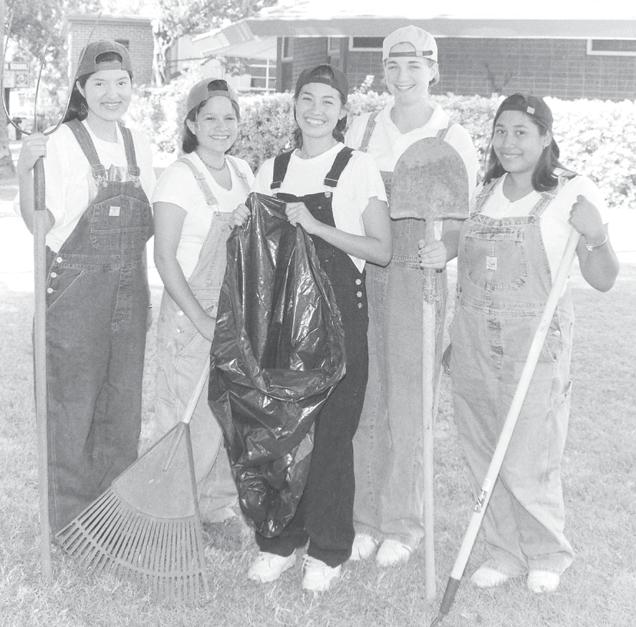
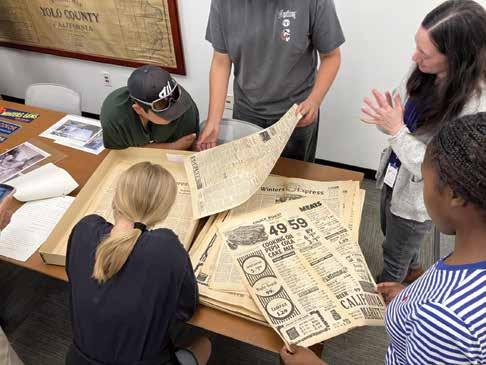
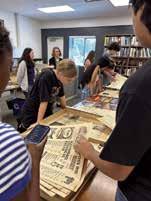
Students in the Winters Summer Mural Class visit the Yolo County Archives in Woodland on June 16, looking at old editions of the Winters Express to learn more about the community’s history and gather inspiration for this summer’s mural.
Express Yourself
Just another average rainfall year
My favorite contest of the year is the Rainfall Contest. This was another good year for entries, which means someone is reading the Express. There were only four entries that guessed under the 20.24 inches of rain recorded by National Weather Service volunteer Joe “the Weatherman.”
For the first time that I can remember, someone hit the number on the head.
Tim Bolla, who put the Winters Warrior sign on Highway 505, picked 20.24 inches and will get a check for $125. Last year’s winner, Ransom Trotter (20.287 inches), missed by 0.047 inches and will get a free soda and cookies the next time he is in the museum. Just 0.51 of an inch off (20.75 inches) was Sarah Herndon from Fort Worth, Texas, who needs to come back to Winters and introduce herself to claim some kind of prize. Coming in a distant fourth place was Steve Twomey (19.54 inches), who will get free cookies and a bottle of wine if he can catch me at the office.
There are usually pessimists in the crowd, but this year the low pick was by Lisa from Davis at a respectable 19 inches. Ralph Anderson, who has finished in
“In the past, the only high picks were from farmers, but this year they were more realistic and kept their guesses under 40 inches.”
second place more than anyone else, was close to the bottom at 19.23 inches and will get a free beer for being consistently in the running.
I think Sophie, a few houses down from Steve on Roosevelt Avenue, tried to get her name mentioned by guessing the highest at 34.737 inches. In the past, the only high picks were from farmers, but this year they were more realistic and kept their guesses under 40 inches. Most of the entries were close to our average, around 21 or 22 inches, but we had a few optimists in the high 20s and a dozen or so in the low 30s. Our rainfall year is from July 1 through June 30. A big thank you to all who took the time to enter the contest. There will be another contest sometime before Thanksgiv-
ing, so start thinking about rain around the end of August.
I forgot to wish all of the graduates a great future, including my grandson, Brett, who plans on attending Arizona State.
I’ll have to give him Great Joe Young’s phone number, just in case he needs some help finding trouble in Tempe. Joe played football for Arizona State and never left town and is still cheering on his team. I saw Joe last year while visiting the campus and even with a cane, he looked like he could suit up and play a few snaps.
So, if you have a graduate, wish them good luck from me in whatever new path in life they take. Remember, the digital Express makes a great graduation gift. Have a good summer.
Community, diversity and service: The foundation of student success
By Everardo Zaragoza Winters Joint Unified School District Trustee
As a Winters JUSD school board member and longtime member of this community, I know that Winters has always understood the fundamental truth that a community’s strength isn’t just found in its soil, but in how deeply its people are rooted together.
For generations, our town has thrived because of its multicultural identity and a shared commitment to looking out for one another. Winter’s Graduate Profile weaves this heritage of diversity and service into the fabric of our students’ education. It sets out the criteria to ensure that students are prepared to not only navigate a globalized world but to actively shape it for the better.
In Winters, diversity is not a modern buzzword—it is part of who we are. From the early agricultural pioneers to the vibrant, multicultural families that define the region today, students grow up surrounded by different languages, cultures, experiences and per-

spectives.
When schools actively honor that diversity, classrooms transform. They become places where students learn cultural awareness not only from textbooks, but from one another.
These experiences help students develop skills that will serve them throughout their lives: the ability to understand different viewpoints, communicate with empathy, and work effectively with people from a variety of backgrounds. These are not just educational goals; they are essential skills for success in college, careers, and civic life.
At the same time, we know that civic engagement begins close to home. Winters’ strong sense of community provides students with opportunities to learn that their actions matter. Whether participating in student leadership, volunteering at community events, or engaging in service projects, students discover that com-
California voters will decide 14 ballot measures
By Dan Walters CalMatters
This commentary was originally published by
CalMatters.
When California voters in 1978 passed Proposition 13, the iconic property tax limitation, they simultaneously rejected Proposition 8, which had been placed on the ballot by the Legislature as an alternate tax relief measure. While Prop. 13 flatly limited property taxes, Prop. 8 merely empowered the Legislature to lower property taxes on owner-occupied homes. It was an early example of what later became known as a “countermeasure” — placing competing proposals on the ballot to muddy the
Opinion
waters, forcing voters to choose between versions or reject both.
A clear example came in 2022, when California’s tribal casino interests backed a sports wagering measure and gaming companies offered a competing proposal. Both sides spent heavily, and voters rejected both, preserving the state’s ban on sports betting.
The dynamic reflects a broader trend in California: when the Legislature cannot resolve major issues, competing interests increasingly take them directly to the ballot. Over time, that has made initiative campaigns — rather
than legislation — the state’s dominant policy arena. Legislative leaders have tried to regain control. In 2016, they changed the rules to allow initiative sponsors to withdraw qualified measures before a deadline, enabling negotiated compromises that could be written into law and avoiding costly campaigns.
This year, 14 measures will appear on the Nov. 3 ballot, down from as many as 20 after last-minute deals resolved several conflicts, including disputes involving personal injury lawyers and rideshare companies, hospital executives and a health care union, and local tax thresholds. However, the most prominent conflict
hearing will be held by the City of Winters ( City ) City Council to consider an Ordinance adding Chapter 17 126 (Reasonable Accommodation) to Title 17 (Zoning) of the Winters Municipal Code necessary to ministerially regulate the permitting of Reasonable Accommodations for new or
the California Environmental Quality Act (CEQA) pursuant to Section 15061(B)(3) of the CEQA Guidelines because adoption of the proposed ordinance amendment is covered by the general rule that CEQA applies only to projects causing a significant effect on the environment and this project does not have the potential for causing a significant effect on the environment At the public hearing of the City Council the City Council shall consider all evidence and testimony for and against the proposed ordinance At any time prior to the public hearing, any person may
remains unresolved: a proposed 5 percent wealth tax on billionaires backed by SEIU healthcare workers. It will appear as Proposition 40 and face countermeasures, Propositions 41 and 42, supported by billionaire Sergey Brin and other opponents. If passed, they could effectively block the tax.
At one point, supporters floated reducing the rate to 2 percent, but negotiations failed, including with Gov. Gavin Newsom.
Another measure, backed by the California Teachers Association, would make permanent a temporary surtax on high-income
earners first enacted in 2012. Legislative leaders gave it ballot placement as Proposition 3 so it would appear ahead of the wealth tax measures. Given the stakes and national attention, the wealth tax fight is expected to generate the most expensive ballot campaigns this year. Campaign consultant Tino Rossi called it “the pace car (for spending) for the billionaire tax.”
— CalMatters is a public interest journalism venture committed to explaining how California’s state Capitol works and why it matters. For more stories by Dan Walters, go to Commentary.
munities thrive when people contribute to something larger than themselves.
Civic responsibility means moving from asking, “What can my community do for me?” to asking, “What can I do for my community?”
When schools pair cultural awareness with civic responsibility, student success naturally follows. Students graduate with a strong sense of identity, a grounded purpose, and the practical skills needed to make a positive difference in the world around them.
As a community, we can take pride in knowing that these values are not only part of our history. They are part of the future we are building for every student.
—The Winters Joint Unified School District Board of Trustees and Superintendent are writing this column to share insights on preparing students for success in college, career and life.
Horoscopes
ARIES (Mar 21/Apr 20)
Aries, you are a powerhouse this week. Your energy levels will remain steady as the days go on, and people will notice your drive. Channel this energy into something positive.
TAURUS (Apr 21/May 21)
It’s your week right now, Taurus, and the stars want to indulge. Indulge in something luxurious and enjoy yourself. You have earned the right to some pampering.
GEMINI (May 22/Jun 21)
Use your gift of gab to mend a relationship issue that stemmed from a misunderstanding, Gemini. Expect some invitations to come your way and a surprise text midweek.
CANCER (Jun 22/Jul 22)
You are feeling extra sensitive to others’ energy right now, Cancer. It is alright to decline social invitations to protect your peace of mind. A creative breakthrough may emerge while alone.
LEO (Jul 23/Aug 23)
Don’t shy away from the microphone or the spotlight, Leo. Whether it is at work or in your personal life, your charisma will be your greatest asset this week. You will be the star of the show.
VIRGO (Aug 24/Sept 22)
Decluttering can go a long way to making you feel better, Virgo. Clear your desk to clear your mind. Once the physical chaos is gone, you may find the answer to the problem you have.
LIBRA (Sept 23/Oct 23)
Libra, the scales start to tip toward your personal life instead of your professional one this week. Focus on your spouse or special someone and make time for extra moments together.
SCORPIO (Oct 24/Nov 22)
Let go of a habit or a resentment that no longer serves you, Scorpio. Just like a snake sheds an old skin, you’ll feel lighter and ready to tackle anything.
SAGITTARIUS (Nov 23/Dec 21)
You might be ready for a trip, Sagittarius. Even if you can’t take a flight right now, explore a new neighborhood or try a different restaurant you’ve been meaning to check out.
CAPRICORN (Dec 22/Jan 20)
A small adjustment to your budget now may lead to a big payoff later on, Capricorn. Your financial discipline is a superpower this week, so stick to the plan.
AQUARIUS (Jan 21/Feb 18)
Others are finally catching up to all of your big ideas, Aquarius. Pitch that unconventional plan you have been holding back and you’ll likely have some fans.
PISCES (Feb 19/Mar 20)
Pay attention to any coincidences that pop up during the next several days, Pisces. The universe is trying to tell you something about your next move.
To submit a Letter to the Editor, visit the “Submission Forms” page and click the link under “Online Services”


Seasoned realtors anchor housing market
Seasoned real estate professionals continue to shape the industry, with the typical Realtor reporting 13 years of experience, up from 12 years last year, according to the National Association of Realtors’ 2026 Member Profile.
The report also found that 75 percent of members are very certain they will remain active in real estate for at least two more years, a slight increase from 74 percent last year.
“The real estate market has been operating under suppressed conditions for more than three years, and yet the typical Realtor continues to gain experience and stay committed to the profession,” said Jessica Lautz, NAR deputy chief economist.
“What we are seeing is a more seasoned in-
dustry — professionals who are leaning on referrals, repeat clients and deep market knowledge to navigate one of the most challenging buyer environments in decades.”
agent reported nine transaction sides in 2025, with a median sales volume of $2.7 million for brokerage specialists. Twenty-one percent of Realtors worked as part
“The typical Realtor continues to gain experience and stay committed to the profession.”
Jessica Lautz, NAR deputy chief economist
The annual report provides a snapshot of NAR members’ business activity, income, firm affiliation, technology use and demographics based on transactions and trends from 2025. NAR’s current membership stands at 1,438,569.
For the first time, this year’s survey separated individual and team transaction data to better reflect how members work. Individually, the typical
Contact our office with your
4
3
Almond Drive, Winters, CA 95694
Carbahal Street, Winters, CA 95694
3 bedroom, 2 bath, 1757 sq ft, built in 2023, listed price $675,000.00. MLS# 226043723


of a team, with teams averaging four members. Team-based brokerage specialists reported a median of 32 transaction sides and $17.5 million in sales volume.
“Today’s market is sharply divided between repeat buyers with housing equity who can move with relative ease and firsttime buyers who are struggling to save for a down payment,” Lautz said. “The growth of teams and the rise in repeat and referral business reflect how Realtors are adapting by building durable client relationships to weather a market with limited inventory and stretched affordability.”
Top factors limiting home purchases
• Housing affordabil-
CAMELOT WINTERS Maria D. Rodriguez REALTOR, DRE# 02128223 Cell: (530) 574-5562 7 E. Main Street, Suite C, Winters, CA 95694 realtormaria21@gmail.com Hablo Español Jean
ity: 27 percent
• Lack of inventory: 12 percent
• Difficulty finding the right property: 11 percent
Income and expenses
Median gross income for Realtors: $59,200, up from $58,100 in 2024
Median gross income for Realtors with 16 or more years of experience: $88,500, up from $78,900 in 2024
Median business expenses: $9,530, up from $8,010 in 2024
Typical vehicle costs: $1,580, the largest expense category
Firm affiliation
Fifty-three percent of members are affiliated with an independent company.
Eighty-six percent of Realtors are independent contractors at their firms.
Median tenure with a current firm: six years
Demographics
The typical Realtor was a 57-year-old white woman who attended college and owned her home.
Sixty-six percent of all Realtors were female, up from 63 percent last year.
Eighty-six percent of members own their primary residence, and 41 percent own a secondary property.
Deleonardi



Drought can complicate landscape irrigation
Special to the Express
Extreme weather is no longer an aberration. Drought conditions are one of the extreme weather phenomena that people may experience in a given year, making managing water usage a critical aspect of home ownership.
Researchers warn that drought is expected to increase in both frequency and severity, putting a strain on an already tapped resource: water.
Adopting water-wise strategies can keep a landscape thriving.
Time it right
Minimizing water loss should be a goal. Evapotranspiration will occur more readily when plants are watered during the heat of the day. Most experts advise the optimal window for irrigation takes place between 9 p.m. and 9 a.m.
Water deeply
Light, frequent watering is a common mistake made by homeowners. Utah State University says doing this will encourage shallow root systems that are more susceptible to heat and drought. Rath-
er, homeowners should aim for deeper, less frequent watering to force roots to grow deeper into the soil in search of moisture. This produces plants that are more resilient and capable of riding out dry spells.
Use soil amendments
Applying a twoto four-inch layer of organic mulch around trees, garden beds and shrubs can help retain soil moisture readily. Also, adding compost to the soil will improve its structure and ability to retain water. In sandy soils, compost can help retain moisture. In clay soils, compost helps improve drainage and aeration.
Rely on passive techniques
Capturing rain water and using it in gardens will help to reduce reliance on municipal water systems or well water. Techniques like grading the land to create small water basins can help, says the University of Arizona. Also, homeowners can use collection devices to utilize rainwater and direct it right to plants.








Winters High names Athletes of the Year
Express staff
Winters High School’s Athletics department has named its 2026 Athletes of the Year, honoring two multi-sport standouts whose careers span varsity programs, league championships, and state-level accomplishments, according to Athletic Director Daniel Ward.
Ava Muir-Vickrey
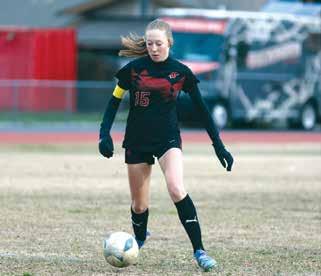
Ava Muir-Vickrey was recognized for a four-year varsity career competing in volleyball, soccer and track and field, earning All-League honors in all three sports.
In girls soccer, Muir-Vickrey was named Sacramento Valley League MVP and served as team captain during a dom-
ARCHIVES
Continued from Page 7
the Superior Court, the Board of Supervisors [which] are some of our biggest collections.”
The archives also house a great number of collections and items of historical value going back to 1850, from the research collections by local historians Joann Larkey and Shipley Walters to historical documents like the original ledgers of county law and original photos of the Japanese American community that lived in Winters before they were removed during internment, as well as letters from Winters resident Hattie Nishikawa to Jack Vasey during her internment.
The archives’ public computer also gives visitors access to historical records for property research as well as genealogy research via Ancestry. com, as well as Newspapers.com.
Along with these items of historical value, the archives contain donations made by regular people. “In addition to the other records, we have family collections,” Poutasse continued. “People who have family ties in the area will sometimes
inant stretch that included four consecutive NSCIF championships and a Northern California championship in 2024. On the track, she contributed to a record-setting season as part of the 4x100 relay team that broke a school record. She also qualified for the NSCIF championships in the high jump, highlighting her range as a multi-event athlete.
Lane Brown
Lane Brown was honored after a fouryear varsity career in football, basketball, baseball and golf, lettering in all four sports.
Brown was selected to the Sacramento Valley League All-
donate things like family photos, documents and things like that.”
This vast wealth of information and documentation requires a great deal of time, energy and space, and that’s part of the work Lanctot, Poutasse and the volunteers do every day, supported by the Friends of the Yolo County Archives.
The building, originally built in 1994, was renovated in 2018, including automatic moving shelves to increase space and safety, an improved HVAC system, and a dry fire suppression system designed to ensure records will be safe from water damage while responding appropriately to fire. That year also saw the archives receive a technology innovation grant, which they used to buy an oversized scanner for large documents and photos, as well as to create a digitized database and asset management system.
Digitizing documents and managing digital records are among the main responsibilities of the Yolo County Archives, as so many modern documents are born digital without physical copies. One of the archives’ main works includes digitizing video files of the Board of Supervisors
Sports
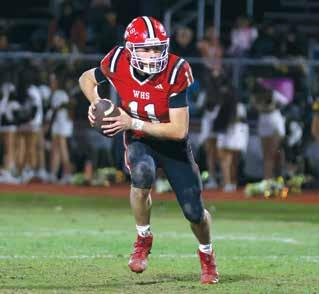
League team five times — three in football and two in basketball — and was named league MVP in football in both 2024 and 2025. His senior season saw him rewrite multiple program records while helping lead the Warriors to their first-ever CIF
meetings so the public can see the entire proceedings. Along with in-house digitization of documents, the archives work with California Revealed to digitize material and make it available for the public.
Explaining what California Revealed does, Lanctot said, “It’s a grant program that runs through the state library, and it allows institutions to nominate materials to be digitized at no cost to the institution, which is great.”
This includes audio and visual materials, things like VHS and cassette tapes and microfilm, that they can’t digitize in-house. This also improves access because the material is now online for users to find, including oral histories from Winters that can be found on California Revealed’s website.
The archives currently have six volunteers, and they work on a number of projects, including archival processing and preservation, removing things like staples and placing materials in acid-free folders, organizing the collection, data entry, digitization projects and sometimes social media-related work. Another manner of support the Friends




State championship. Statistically, Brown became one of the most productive dual-threat players in California high school history, becoming only the fourth player in state history to pass for 2,000 yards and rush for 2,000 yards in a career.
of the Yolo County Archives have given is helping fund extra staff, providing additional workers as well as helping those interested in archives get a foothold in the career field.
Working behind the scenes
Like many of their documents, Poutasse’s and Lanctot’s journeys to the Yolo County Archives weren’t straight and easy.
Lanctot started as a musicology major, but after working in her postgraduate music library, she found she really enjoyed working in the archives.
“I just realized this is really, really cool. I love this sort of handson history all day, every day.”
After completing a library program at San Jose State, she worked for a few years in Chicago before returning
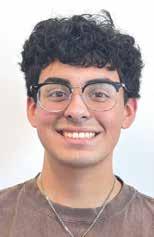
His postseason honors include Northern Section MVP, Sacramento Bee Small Schools Player of the Year, First Team AllState, and Second Team All-American recognition. Ward noted both athletes represent sustained excellence
home to Northern California, where she’s from, and will have worked at the Yolo County Archives for 10 years in October.
Poutasse came to archives a little later, majoring in biology in college before working in an herbarium with a library and a small archive, finding that she liked the work and later enrolling in a master’s program in library science at UCLA before moving with her husband to Davis, where she found work with the Yolo County Archives five years ago.
“I really like the public service aspect of it, [and] the community is very supportive.”
Lanctot and Poutasse are happy to serve the entire community of Yolo County, including the people of Winters.
“We are located in Woodland because this is the county seat, but we are an archive for the entire county, so there’s definitely material here that would be of interest to Winters folks, that would be helpful to Winters folks when they’re doing research.”
This includes scrapbooks that were made for Youth Day going back to the 1920s, editions of Winters Tales, different research collections, along with the many county records related to Winters.
Lanctot also noted that many of the archives’ biggest contributors, includ-
across multiple programs, contributing to team success while also earning high-level individual honors at the league, section, and state levels. Muir-Vickrey and Brown both graduated with the WHS Class of 2026 in June.
ing Betty Coman and Joann Larkey, were Winters residents. The Winters Participation Gallery has worked in the Yolo County Archives recently, as well as collaborations with the Winters Museum.
“We love Winters, it’s a great place.”
Keeping history alive and making our present government accessible to all its citizens is a great deal of work, but the two hardworking employees of the Yolo County Archives find great pleasure in this effort, and Yolo County is lucky to have them.
“I feel very fortunate to be able to work with these historical documents every day,” Poutasse said at the end of our tour. “I’m extremely grateful to all the people who came before me that recognized the value of not just preserving these records but also sharing them with the wider community. There is always more to discover about the past, and I love learning new things from Yolo County residents.”
“Being a part of that work is not only an honor, but a pleasure,” Lanctot added.
“In our work we get to collaborate, collect and share stories, photographs and records in an effort to better document the diverse history of the county. I am so grateful for the opportunity to be part of this work and this community.”

Courtesy photo
Students in the Winters Summer Mural Class visit the Yolo County Archives in Woodland on June 16 to research local history and develop design ideas for this summer’s community mural.
Courtesy photo/KS Winters Photography
Ava Muir-Vickrey advances the ball upfield for Winters High School during a girls soccer match, where she served as team captain during a championship-winning run.
Courtesy photo/KS Winters Photography
Lane Brown carries the ball during a game for Winters High School, leading the Warriors’ offense during his record-setting senior season.
Arts & Entertainment

Chickens, gardens and whimsy take center stage in Logos exhibit
Special to the Express Logos Books will host “A Taste of Whimsy: Chickens of the 5th Street Community Garden and Friends,” featuring watercolors and books by Lorie Topinka, from June 30 to July 25 at the bookstore, 513 Second St. in downtown Davis. Meet Topinka at her 2nd Friday ArtAbout reception on July 10 from 6 p.m. to 8 p.m. at Logos. Light refreshments will be served. Topinka embraces whimsy — something playfully quaint, fanciful, imaginative, and delightful — in much of her art and occasionally in her writing.


This exhibit showcases that aesthetic in her recent book, “Chickens of the 5th Street Community Garden and the Rat Wars”; a whimsical work of creative nonfiction that she describes as a children’s book for adults. Gardening is planning plus hard work and luck … and then more hard work. In this fable three chickens transform an abandoned plot into a garden after Lorie injures her knee. They banter and bicker their way through the planning, planting and weeding of this small community garden plot. Then disaster


strikes when the summer of 2024 becomes the time of the rat wars. Will the rats eat everything? Will the garden survive this onslaught? Are there lessons to be learned from the struggles with the rats?
Topinka’s pieces, inspired by Mexican folk art, feature watercolors of her chickens, their friends and their adventures in the garden.
“As a watercolor artist,” she said, “I am drawn to bold colors and iconic images. Whenever I am painting I get lost in the looking and seeing. There is no time, distance, or separation between me and the object or scene. This creative process is joyful and I try to embrace that joy in my pieces.”
Public receptions for local artists will also be held at various venues on that same evening in conjunction with the Davis Downtown 2nd Friday ArtAbout. You can see more details and download a map of venues at facebook.com/ davisartabout or theartery.net/2ndfriday-artabout.



EnKore Theatre Company opens new performing arts program
Special to the Express
A new chapter for performing arts education has begun in Yolo County.
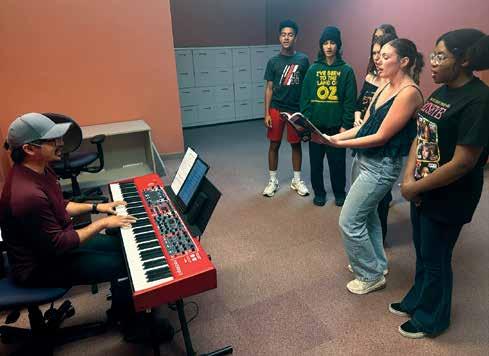
EnKore Theatre Company has announced the official opening of its new theatre and educational facility at 1210 Commerce Ave., Suite 8, Woodland, establishing a permanent home dedicated to theatre education, artistic excellence and community engagement.
Founded by local arts leaders Patrick Jordan, Kelly Lynn Jordan and Alex May, EnKore Theatre Company was created to provide opportunities for youth and adults to learn, create, perform and grow through the performing arts. The organization combines theatrical productions with handson educational experiences in acting, music, dance, technical theatre, costume design, stage management and directing.
“Our vision is simple,” the founding team said in a statement. “We want every person who walks through our doors to discover that they
have a place here.
Whether they dream of standing in the spotlight, designing costumes, running sound, building sets or simply finding a creative community, EnKore exists to help people learn, grow and belong.”
The company recently welcomed students to its inaugural Summer Stage Program, a seven-week theatre intensive that immerses young performers in all aspects of producing a musical. Participants train in acting, singing, dance, technical theatre, costuming and performance while rehearsing Disney’s Aladdin Jr., which will be presented July 31 through Aug. 16.
Beyond rehearsal, the program is designed to give students a comprehensive understanding of how theatre is created, from the first audition to the final curtain call.
EnKore Theatre Company is also launching its first Professional Series production with auditions for Honk!, the award-winning musi-





cal adaptation of “The Ugly Duckling.”
Filled with humor, heart and a message of self-acceptance, Honk! follows Ugly, a duckling who embarks on a journey of self-discovery after being rejected for looking different. The musical has earned international acclaim for its uplifting themes, memorable score and family-friendly appeal.
The Professional Series is designed to bring together experienced performers, emerging artists, educators and community members to create high-quality productions while fostering artistic growth and collaboration.
Auditions for Honk! will be held July 5-6 and are open to performers ages 9 through adult.
The company is also preparing auditions for Disney’s Newsies Jr. as part of its Academy Series, which focuses on educational theatre experiences for young performers. Newsies Jr. auditions will be held Aug. 16-17 and are open to performers ages 7-17 (18 if still enrolled in high school).
Inspired by the true story of the 1899 Newsboys Strike, Newsies Jr. features energetic dance numbers, an uplifting message and a well-known Broadway score. Participants will receive hands-on training and performance experience while working with theatre educators and industry professionals.
The opening of EnKore Theatre Company represents a significant investment in arts education and cultural opportunities in Woodland and surrounding communities. Through productions, classes, camps, workshops and outreach programs, the organization aims to create a welcoming environment where artists of all ages and experience levels can thrive.


As the company begins its inaugural season, community members are invited to attend performances, audition, enroll in classes, volunteer and support the growth of a new arts organization in Yolo County.
More information about auditions, classes, productions and volunteer opportunities is available at www.enkoretheatre. org.
Courtesy photo
Students in EnKore Theatre Company’s Summer Stage Program rehearse vocals during
a recent session in Woodland. The seven-week intensive teaches acting, singing, dance and technical theatre skills while preparing a production of “Disney’s Aladdin Jr.”
Courtesy photo
See Lorie Topinka’s art at Logos Books in downtown Davis at the July 10 ArtAbout and all through July.

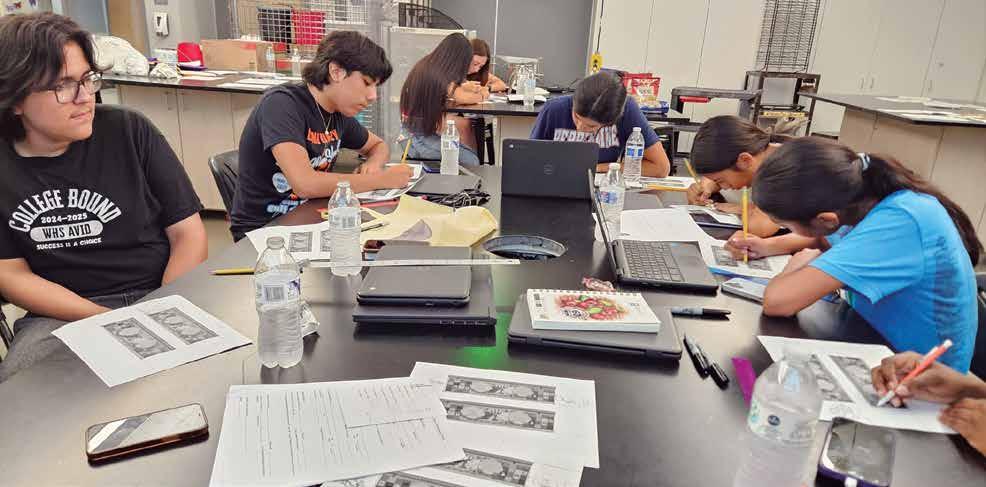
By Crystal Apilado Editor-in-Chief
Delicately paging through century-old newspapers, unfolding archived blueprints and holding artifacts from the past, a group of local middle and high school students discovered Winters’ history on their own terms. The stories they uncovered will soon take shape as symbols and imagery in the expansion of a downtown historical mural, allowing a new generation to help tell part of the community’s story.
Our community is rich with history, and fortunately, with historians.
Winters is rich with history, preserved in century-old newspapers, museum collections, archival records and the work of local historians who continue documenting the community’s story through books, exhibits and research.
Communities preserve their history by passing their stories to the next generation. History stays alive because each generation chooses to tell those stories again.

designs that tell meaningful local stories.
This year’s design team is expanding the mural on the Mariani Nut Company warehouse. On June 16, students visited the Yolo County Archives in Woodland to research documents, newspapers, photographs and artifacts that could help shape this summer’s design.
Heather Lanctot, Yolo County Library archives & records center coordinator, said that direct engagement with primary sources gives students a chance to slow down and think critically in an era where information is often consumed quickly and without context.
Through the Kate Humphrey Historical Mural Project, a student art initiative led by Winters
Participation Gallery, local middle and high school students are not only learning mural design and painting techniques, but also how to research history, utilize archival resources and translate those
Much of that work has traditionally been carried out by adults who have spent years researching and preserving local history. But in Winters, another generation of historians is emerging.
discoveries into public art.
Now in its ninth year, the grassroots program has grown from its first mural on Newt’s Expressway into a community-wide collection of historical murals displayed on local businesses. Along the way, students have gained experience not only as artists, but also by meeting with mural clients, researching community history and developing
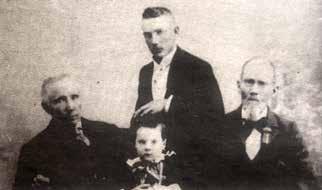

She said archival materials allow students to examine trusted sources with minimal interpretation, ask questions about authorship and audience and compare historical documents with modern experiences.
“When students have access to original records, they can better understand how history connects to their own lives and communities,” Lanctot said. “It helps them see that they aren’t removed from history.”
This picture, taken about 1893, shows four generations of the Ireland family.
Ireland, one of the founders of Winters and a wheelwright; his grandson, Lester M. Ireland, who was later mayor of Winters;
Joseph F. Stille, Lester’s great grandfather. Standing in back is Charles Ireland, father of Lester.
Courtesy
Courtesy photo
Students on the 2026 design team use the existing mural on the side of the Mariani Nut Company warehouse as they begin developing expanded design elements for this year’s Kate Humphrey Historical Mural Project, a youth art initiative led by the Winters Participation Gallery.
Winters women helped shape California’s suffrage movement
How local women advanced the fight for the right to vote
By Jacob Hoffman Express correspondent
The fight for women’s suffrage was national in scope, but it also unfolded in communities like Winters, where local women organized, advocated and helped lay the groundwork for California women to gain the right to vote in 1911. Through newspapers, photographs and original documents preserved by the Yolo County Archives and Records Center, the stories of women such as Susan Wolfskill and Edna Dexter continue to shed light on their role in local history.
Yolo County Archives and Records Center Coordinator Heather Lanctot and archivist Rachel Poutasse highlighted the important role women played in Winters history and the movement for women’s suffrage.
Susan Wolfskill
One of the most important women in the early history of Winters was Susan Wolfskill, née Cooper, who married John Wolfskill, whose family came to California in 1846.
After John died in 1897, Susan took over management of the ranch and divided part of the property into a 1,000-acre subdivision.
Records indicate Wolfskill was active in women’s suffrage events in Yolo County. She attended a Woman Suffrage Convention in Woodland in 1896, according to a Winters Express article that stated, “A number of Wintersites went over to Woodland last Monday afternoon to attend the woman suffrage convention and to hear Miss Yates and Rev. Anna Shaw expound the doctrine of woman suffrage,” including, “Mesdames…J.R. and Milton Wolfskill.” The article used the common practice of referring to Anna Sweany Wolfskill and Susan Cooper Wolfskill by their husbands’ names, noting, “All were highly pleased with the addresses heard and enthusiastic over the proceedings of the convention.”
When she died in 1906, Wolfskill’s obituary in the Sacramento Bee said she was “noted for her generosity and kindness.”
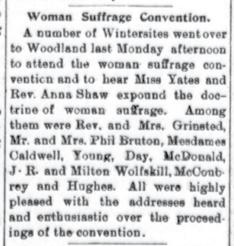
“The WCTU…was a really big driver in the suffrage movement, you know, countywide and nationwide, but also in Winters specifically.”
Rachel Poutasse, archivist
Edna Dexter
Another prominent Winters resident involved in the suffrage movement was Edna Dexter (1886-1978), who became a leading figure in the Woman’s Christian Temperance Union, or WCTU, in Winters.
The WCTU, as the name suggests, promoted prohibition on religious grounds, but as Poutasse explained, “suffrage was also one of their platforms.”
“The WCTU…was a really big driver in the suffrage movement, you know, countywide and nationwide, but also in Winters specifically.”
The WCTU was highly active in Winters. In 1904, Winters became the first town in Yolo County to go dry, prohibiting the sale of alcohol. An 1889 edition of the Winters
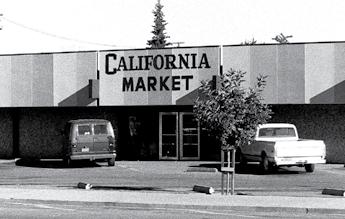

We wish to thank our many customers for their patronage throughout the
Some of
have been our customers since we first opened in
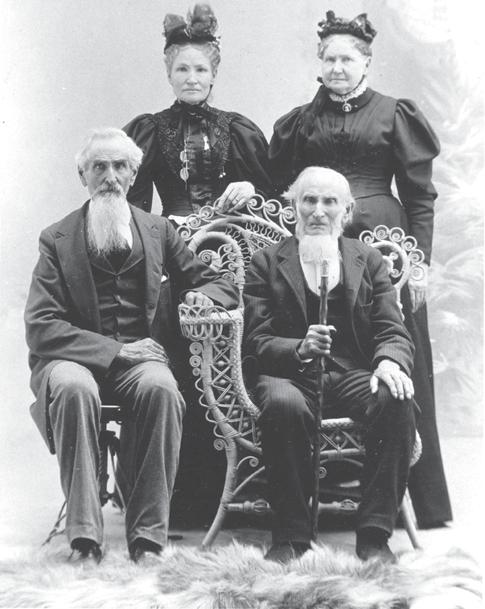
Express held in the archives discussed a debate on women’s suffrage within the WCTU, stating, “The ladies of the Winters WCTU discussed the question of woman suffrage at their meeting last Saturday,” and noting that “Several interesting articles were read touching on the subject, pro and con.” A statewide amendment on women’s suffrage was defeated in 1896 but later passed in 1911.
After attending Winters High School, Dexter became involved with the WCTU at a young age, joining when she was about 18. According to a 1905 edition of the Winters Express, she was elected vice pres-
ident of the Winters WCTU and accompanied the chapter’s president to represent the organization at the state convention in Fresno.
Later, she attended San Jose State Normal School, where teachers were trained. After returning to Winters, she became a teacher at Buckeye School and began writing weekly articles supporting women’s suffrage in the Winters Express. One article preserved in the archives highlights Dexter’s well-spoken arguments. She wrote in the July 14, 1911,
See SUFFRAGE, Page 5
Berryessa Sporting Goods







Stop by Berryessa Sporting Goods for all your fishing and outdoor needs. We serve as a sporting and quick-stop retail shop and gas station. You can also order from the Daily Grind menu, serving a variety of hot and cold drinks including coffee, smoothies, hot chocolate and Italian soda.

Photo courtesy Yolo County Archives
Wolfskill family reunion. (Top row) Anna Sweany Wolfskill, Susan Cooper Wolfskill. (Bottom row) Milton Wolfskill, John R. Wolfskill. Ca. 1890. Acc. #2024-025.
Express graphic
A scan from the June 6, 1896, edition of the Winters Express lists Susan Wolfskill among local attendees of a Woman Suffrage Convention in Woodland that year.
The stories we inherit
Looking through the archives of The Winters Advocate and The Winters Express, I was struck by how different early editions were from what we know today. In the earliest issues, local news often wasn’t the lead story. The front page was typically reserved for national and international headlines, while community coverage appeared deeper inside the paper alongside columns of recipes, ingredient notes, quips, advice, and other miscellany.
Over time, local news began to make its way forward—eventually claiming the front page more consistently, especially as the world moved into the early 1900s. It’s a quiet reminder that even journalism evolves with its community.
To be fair, Winters and the surrounding area were even smaller then than they are now. There simply wasn’t as much to report, and the mechanics of printing were far more labor-intensive. Every letter in those early presses was set by hand. I can’t imagine how long it took to produce each edition. Even with today’s technology, it still takes me practically an entire day to put a paper together.
For this special commemorative edition recognizing 250 years of American history, I did dedicate space to broader national history, but I also saw it as an opportunity to extend the work we began during last year’s sesquicentennial special editions—and to revisit stories that never quite made it into print due to space or staffing limitations.
More importantly, I wanted to continue the theme of connecting our shared history to both new residents and those whose families have been here for generations. Storytelling is one of the oldest ways communities preserve memory, and newspapers are one modern extension of that tradition—
alongside books, exhibits, and special editions like this one.
One area I’ve long wanted to explore further is the origin of some of our oldest street names and the families behind them. In Joann Leach Larkey’s “Winters: A Heritage of Horticulture, A Harmony of Purpose,” a town map requested by G.B. Stevenson, president of the Vaca Valley Railroad, shows the original street layout and the railroad’s path along Railroad Street (now Railroad Avenue). That official town map, recorded in May 1875, is preserved through the Yolo County Archives.
Those early streets included Russell, Abbay (now Abbey Street), Edwards, Baker, Wolfskill, and Grant—named in honor of President Ulysses S. Grant. Each name reflects a piece of the community’s earliest identity. In a future article, I’d like to dig deeper into who these individuals were, and expand the story to include other notable families whose names remain woven into our street grid today.
This history is also reflected visually in archival materials such as the Susan Wolfskill Subdivision map of property, obtained through the Yolo County Archives. Maps like this offer a rare glimpse into how early land divisions shaped the layout of the community, and how family names became embedded not only in records, but in the physical structure of Winters itself.
There’s a story behind every one of them, and I look forward to sharing more of those histories. Some of it may even find its way into a future museum exhibit—because behind the streets of Winters, there is always more than just a name.
I encourage everyone to visit the Winters Museum and spend time with the docents who keep our local history alive. Over the years, I’ve spent time with Al Graf, Gloria Lopez, George Griffin, and Rob Coman. I’ve listened a lot, learned even more, and been thoroughly entertained by the way each of them recalls the history as it was
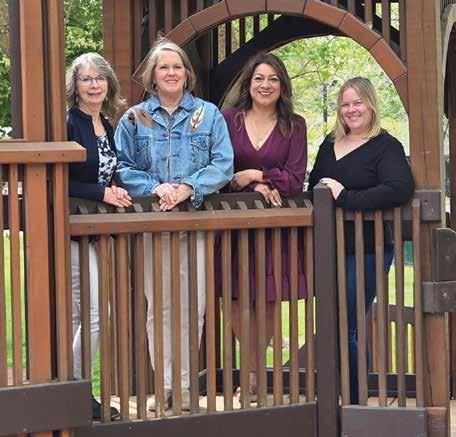
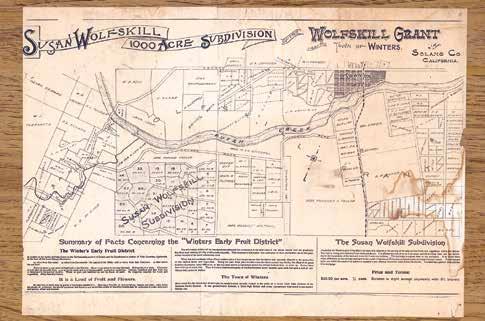
passed down. I could listen to those conversations for hours. Every visit seems to surface new details, unexpected connections, and small but fascinating pieces of our shared past.
As we reflect on 250 years of American history, I hope readers enjoy learning more about both the

old and the new stories unfolding in our own community. We think of ourselves as a small, generational agricultural community, but we’ve accomplished big things and made lasting impacts on the people who live here.
—Crystal Apilado, Winters Express Editor-in-Chief





Photo courtesy of the Yolo County Archives
Susan Wolfskill Subdivision map. Ca. 1896. Map No. 976. Acc. No. D2018-020.
Learning history through discovery
One of the program’s greatest lessons begins long before the first brushstroke.
Students said the experience offers a very different way of learning history than they experience in the classroom.
When asked how learning history through the mural program differs from classroom instruction, students described an experience built around discovery.
Kourtnei Hampton said learning about history through this handson design planning experience presents an opportunity for her to see more components of history from different perspectives and time periods instead of being presented through one curriculum topic or point in time.
“If you go to the archives, you can see everything and just learn more and see the past as you go back,” Hampton said.
Alejandro Ramos said being able to go on field trips gives him the chance to take what he’s learned up close and personal and see the components in real life versus just taking someone’s word for it.
“When we go to the archives, you see written information, things of that time period that are more like raw information,” Alejandro said. “I think a lot of times in the classroom you’re just trusting what they say, but at the archives you get to see it up close and personal.”
Zyanya Melendez said the interaction and the ability to touch, read and hold artifacts and documents is a more engaging way to gain insight about history.
“I like how it’s very interactive the way you learn, because a lot of people are more visual learners and you see the actual newspapers, all the photos, and actually learn through those rather than reading from something or taking notes or staring at a screen,” Melendez said. “It’s more interactive and better for people to learn it that way.”
Instead of relying solely on someone else’s interpretation of history, students said the archives allow them to examine original sources for themselves and develop a deeper understanding of the community’s past.
Gloria Lopez, a Historical Society of Winters board member, said

that when students work directly with primary sources, they begin to see history as something layered rather than one-dimensional.
She said that kind of research helps students recognize connections between past and present and find relevance in their own lives.
“The research makes the history come alive rather than just reading a one-dimensional narrative in a history book,” Lopez said. Surprised by the past
Working with original documents also challenged many students’ expectations.
Several expected faded, fragile papers that would be difficult to read. Instead, they found many records remarkably well preserved.
Galilea Ramos and Alejandro Ramos both said that going into the archives for the first time, they had the notion the documents would be faded and worn. While some materials were laminated for preservation, others looked practically new and were clearly readable.
Joseph Jara said he was surprised by some of the content, including a grocery ad that listed two dozen eggs for 7 cents.
Melendez said the blueprints of buildings in the past stood out to her, especially when she was able to identify some of the structures still standing.
“The blueprints of the city and of all the buildings and seeing how many of the buildings are still here after all these years,” Melendez said.
But learning history wasn’t simply about discovering interesting artifacts. Students also found themselves thinking about the people and circumstances behind those stories.
Turning history into art
The greater challenge is deciding how to represent that history visually. Every symbol, color and image carries meaning, making thoughtful research just as important as artistic ability.
Students must decide how to transform what they learn into symbols, images and stories that accurately represent both the client and the community.
Drawing from weeks of archival research, this year’s mural expansion incorporates symbols
See HISTORY, Page 10
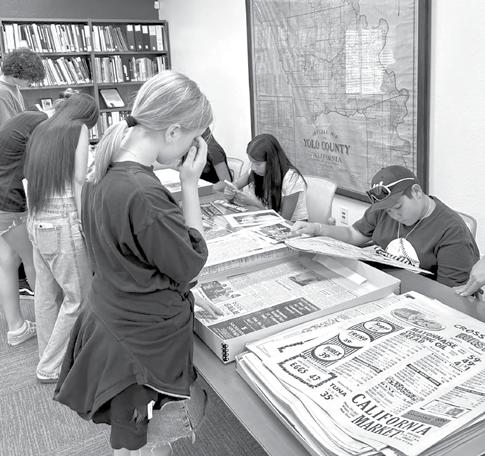
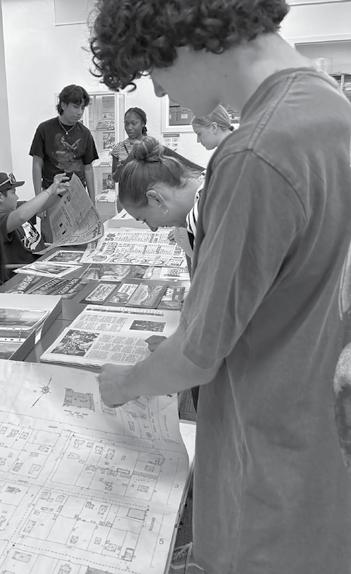












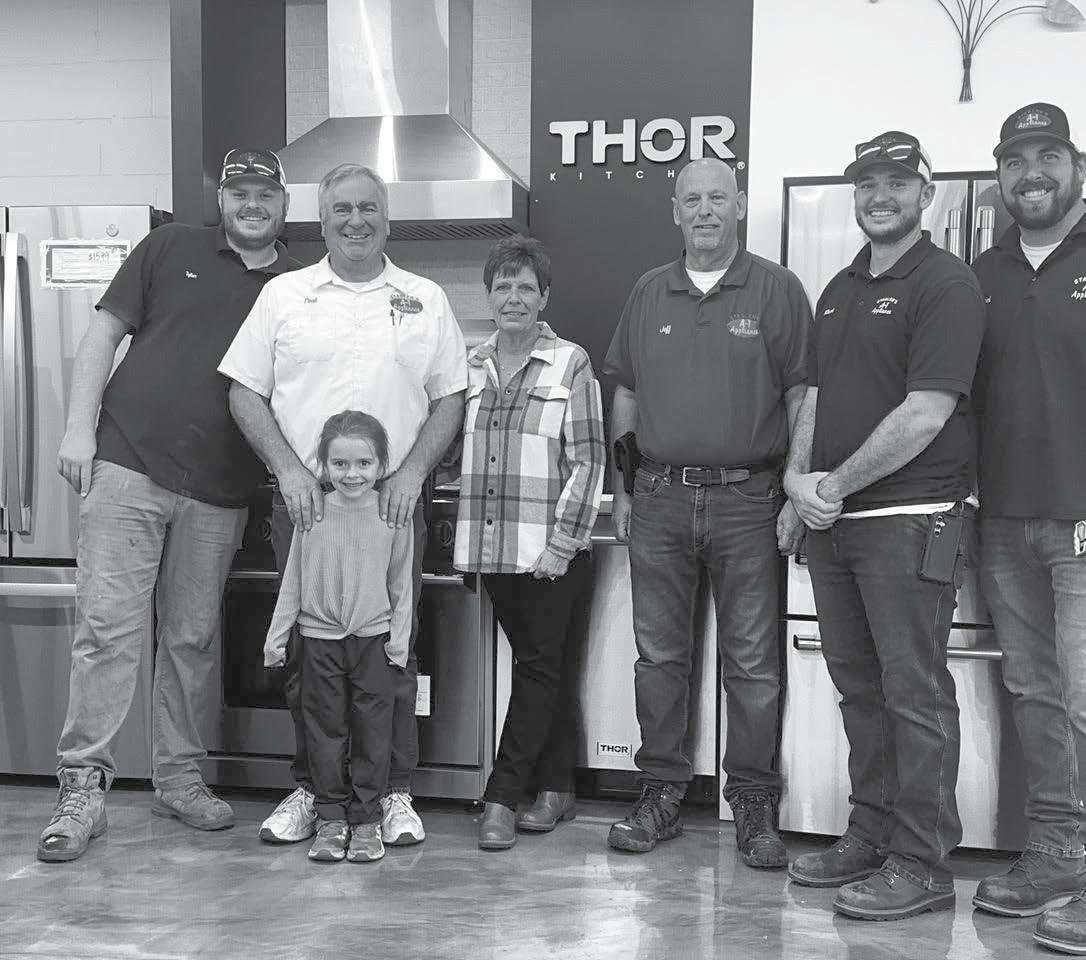






Students in the 2026
Kate Humphrey Historical Mural Project examine archived newspapers and historic building blueprints during a research visit to the Yolo County Archives in Woodland, gathering inspiration for this year’s mural design. Above, a California Market flyer shows eggs priced at 43 cents.
Courtesy photos
edition, “In fact, men are responsible for the conditions under which the children live, but we hold women responsible for the results of those conditions. If we hold women responsible for the results, must we not, in simple justice, let them have something to say as to what these conditions shall be? There is one simple way of doing this. Give them the same means that men have. Let them vote.”
“It’s really fascinating stuff,” Poutasse said, “she was, I think, 23 at this point.”
The archives also include several other documents related to Dexter, including her teaching contract at Buckeye School and her first voter registration form, which she signed in 1911 after California voters approved women’s suffrage.
The vote in Yolo County was close. The archivists found a newspaper reporting that the measure passed by just 168 votes, with 859 voting yes and 691 voting no.
Later in life, Dexter married Hugo Zentner, moved to Esparto and taught for many years while serving on the Yolo County Board of Education.
Lanctot and Poutasse also highlighted the women who have worked to preserve the history of Yolo County and Winters. Among them were Shipley Walters, who helped found the Yolo County Archives in 1985; Joann Larkey, who wrote extensive histories of Winters, including her book “Winters: A Heritage of Horticulture, A Harmony of Purpose;” Betty Coman, who helped preserve letters between her father, Jack Vasey, and interned Japanese American Hattie Nishikawa; and Gloria Lopez, author of “An American Paella,” which chronicles the history of Spanish migration to Winters.
Their work, along with that of the Yolo County Archives, continues to preserve the stories of women like Susan Wolfskill and Edna Dexter, ensuring their contributions remain part of Winters’ history.
Poutasse described the suffrage movement as “an important piece in the history of the women’s movement in California and the United States,” adding that “it is really a special thing to know that there were local women who were part of it and to be able to document their activities. We owe a great deal to them.”
Poutasse added, “Suffrage was not inevitable, and there was no guarantee that it was ever going to happen,” noting the many ups and downs of the movement throughout its history and that “I’m sure there were moments when they felt despair and cynicism. To me, I think the lesson is perseverance, and there is a lot we can learn in the present day from both their failures and successes.”
“When we learn about people like Edna Dexter,” Lanctot said, “it gives us the opportunity to see that even though things have
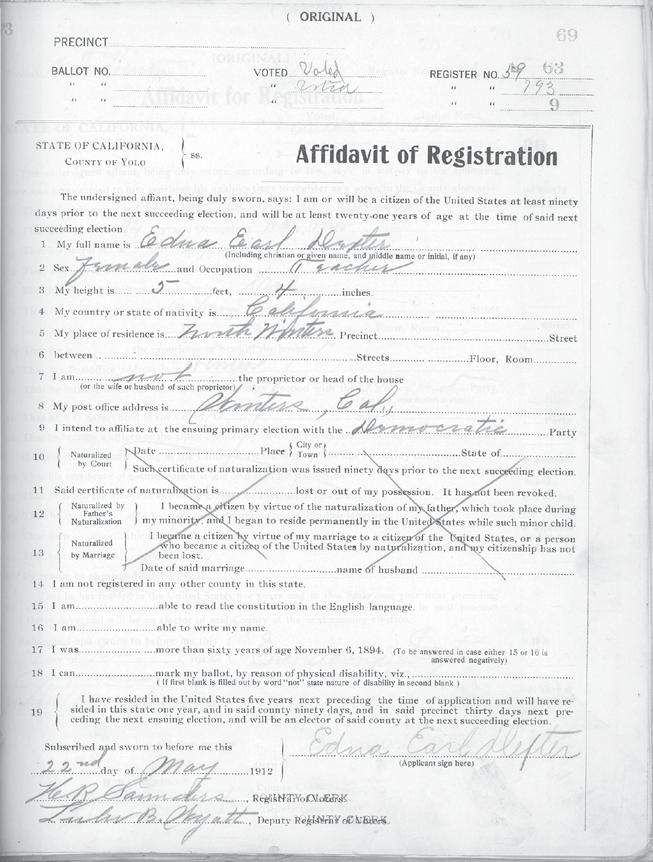
Edna Dexter’s 1912 voter registration affidavit is preserved by the Yolo County
and
years of advocating for women’s suffrage in the pages of the Winters Express, Dexter was among the first California women able to register to vote following the passage of the state’s suffrage amendment. Edna Earl Dexter voter registration affidavit, 1912. Acc. No. 1986-012.
changed, we still face similar challenges today. Women, especially women from underrepresented groups, continue to work hard and advocate for the betterment of their families and communities even in the face of adversity and setbacks.”
“Hopefully reading about local women who fought for suffrage and helped move the needle towards a more equitable future will inspire others to be agents of progress too.”


As the city of Winters celebrates its 150th anniversary, The Winters Express is proud to honor the legacy we've shared with this community since 1884. For over 140 years, we've been Winters’ trusted local newspaper — reporting on city government, schools, sports, and the stories that shape our town. From milestones and memories to challenges and triumphs, we’ve stood as a watchdog, a voice, and a record keeper for generations. Here’s to 150 years of community — and to continuing the story, together.
• Local News • Sports • City Hall • Schools • Events • Organizations • Editorials • And More!
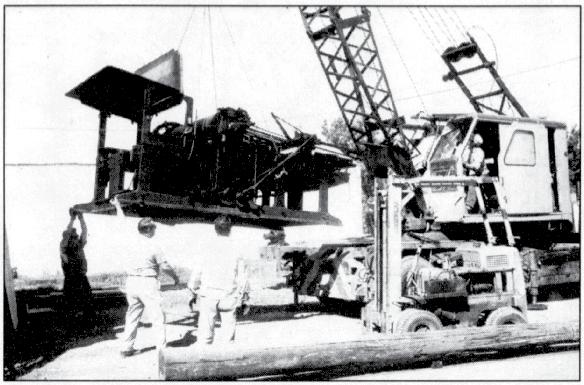

Photo courtesy of the Yolo County Archives
Archives
Records Center. After
Rewind & Revisit
Winters
Reprinted from the Jan. 11, 1896 edition of the Winters Express
Winters is a pretty little town seated on the north side of Putah Creek, where it emerges into the Sacramento Valley. It is not yet incorporated, but it will be undoubtedly in less than another year. It has a population of about 1,000.
During the last two years the number of inhabitants has increased one-fifth.
The improvements are well up with towns of its size in the State.
The streets are now lighted by coal-oil lamps.
Putah Creek affords a great amount of water power, which can be developed into electricity with comparatively little cost, and the probabilities are that Winters will be lighted in the near future by electricity developed from this source. Its waterworks are owned by a private party, and the water is all pumped into the mains by steam.
This water system will not last long, for a pipe can be laid from a place in Putah Creek to Winters, a distance of five miles, which would supply water in great quantities for all purposes. A move has already been made to carry out this plan, but nothing very definite has yet been done.
There is no plaza, nor has there been any public move to provide a park. The district adjacent to Winters is devoted to fruit raising, and nearly all the land in the neighborhood is covered with trees. A good many of the principal streets are bordered with shade trees, mostly planted by private parties.
The streets are all in fair condition and well cared for. They are well graded and graveled.
The sidewalks are also of gravel,
except on Main Street and Railroad Avenue, where they have been constructed of cement.
The town is well and easily drained. The sewer system is not very good, but it serves the purpose satisfactorily. Winters is a very clean town as it is, and its people anticipate making it still more beautiful in the future.
Editor’s Note: This article about the Winters community was reprinted in the Winters Express in 1896. One of the things I’ve found most fascinating over the years of reading through the newspaper’s archives is that, regardless of the decade, certain themes appear again and again.
Throughout Winters’ history, agriculture and innovation have gone hand in hand. Farmers worked to produce crops, create jobs and build livelihoods, while residents came together to solve problems, support their neighbors and invest in the future. That same spirit continues today.
The Spirit of Winters grassroots group was formed by community members who wanted to ensure everyone who lives here feels welcomed, connected and valued. Although the organization itself is relatively new, the ideals behind it are anything but. Whether restoring habitat along Putah Creek, preserving the agricultural lands that define our community, supporting local businesses or volunteering throughout town, generations of Winters residents have worked to protect what makes this community special. As Winters continues to grow, I hope that spirit of stewardship, service and connection remains one of its defining qualities.


DC specializes in family, prenatal, sports, and animal chiropractic. Dr. Taylor is Webster technique certified through the International Chiropractic Pediatric Association (ICPA) to treat pregnant women. Dr. Taylor received her animal chiropractic certification through the Animal Chiropractic Education Source (ACES). She treats small animals in her office and commutes to barns for large animals. Her mission is to provide quality chiropractic care to all people and animals in each stage of life.







From buckets to engines: The evolution of Winters Fire technology
How innovation transformed firefighting in Winters—from hose carts to modern command systems
When it comes to firefighting, the mission has remained unchanged for more than a century and a half: protect life, safety, property, and the environment.
From bucket brigades and handpulled hose carts to motorized engines, radio dispatch, and digital command systems, the Winters Fire Department has evolved alongside the community it serves—transforming from a small volunteer force with limited water supply into a coordinated emergency response agency equipped for structure fires, medical emergencies, rescues, and wildfire incidents.
That evolution began in urgency, was shaped by necessity, and continues today through technology, training, and community investment.
Fire protection powered by hand
The earliest days of fire protection in Winters were defined by scarcity and improvisation.
In 1901, a major industrial fire swept through the town’s business district east of the railroad tracks, destroying six buildings in under an hour. The Winters Dried Fruit Company, lumber yards, warehouses, and agricultural facilities were lost as firefighters relied on bucket brigades, ladders, and a portable hose cart.
Water supply was inconsistent, dependent on a steam-powered system operated by a private company and supplemented by individual wells. When pressure failed, so did response capability.
The fire underscored the need for an organized system of protection. In 1902, the Winters Fire Department was formally established under City Charter No. 25.
A motorized response
For the next 15 years, firefighting remained largely manual. That changed in 1917, when Winters purchased its first motorized fire engine: a 500-gallon-per-minute American LaFrance pumper.
It marked a turning point in emergency response.
For the first time, firefighters
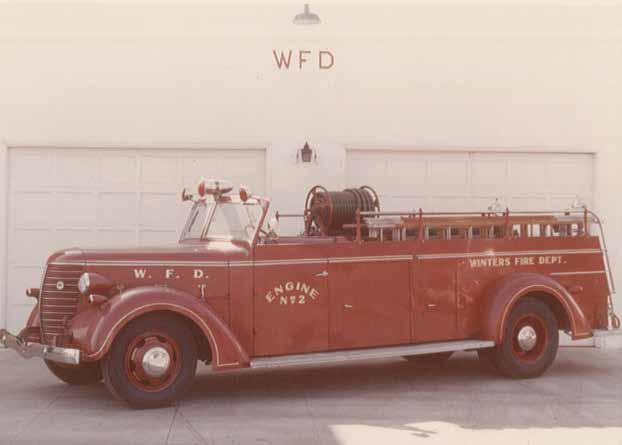
“The tools have changed dramatically, but the mission has remained the same.”
could deliver significantly more water, move faster through town, and extend their reach beyond what hand-drawn equipment allowed.
As agriculture expanded across the region, the department also added specialized chemical and pumping equipment designed for grain and field fires, reflecting the community’s growing needs.
Innovation in the firehouse
Throughout much of the 20th century, Winters Fire often built its own solutions.
See TECHNOLOGY, Page 9
Hi, I’m Jenni! As your local Commercial Insurance Agent — born and raised right here in Winters — I am dedicated to protecting the community I love. My goal is to give you total con dence that you, your business, and your assets are fully protected. From Workers’ Comp and Liability to Cyber, Property, and Farm policies, I have the expertise to ensure you’re covered whether you own or rent. Call me today to ensure your peace of mind.






1941 Buffalo fire engine in front of the former Winters Fire Department building on Abbey Street next to Winters City Hall. The early-generation apparatus reflects World War IIera municipal firefighting design..
Photo courtesy Winters Fire Department
Notable events in colonial America in 1776
Special to the Express
The year the United States came to be was an interesting time to be alive, particularly for those living in colonial America. The American Revolutionary War began in 1776, and much of the year was marked by events stemming from that conflict. Below are some of the more notable events to take place during a year.
• Thomas Paine publishes his 47-page pamphlet Common Sense in Philadelphia on January 10. Initially published anonymously, the pamphlet is considered a watershed moment in American history, as Paine’s easily digestible writing style appealed to the masses, helping promote his arguments that encouraged common people to fight for an egalitarian government.
• The Battle of Moore’s Creek Bridge takes place near Wilmington, North Carolina on February 27. The battle is sparked when loyalists, after storming across a bridge over Moore’s Creek, attack a group of men they believe to be rebels. Though the engagement was brief, two loyalist leaders are killed, another is captured and the force is scattered. The failed attempt later complicated efforts to recruit loyalists in the area to fight.
• The Fifth Virginia Convention is held in Williamsburg between May 6 and July 5. The meeting of the Patriot legislature of Virginia ultimately leads to the declaration of Virginia as an independent state and the production of the Virginia Declaration of Rights, which asserts the state’s right to reform or

abolish any form of government it deems inadequate.
• Thomas Hickey becomes an early casualty of the burgeoning conflict between the colonies and England when the Irish-born soldier is the first to be executed by the Continental Army for “mutiny, sedition, and treachery” on June 28 in New York City. Hickey had been part of a protective detail for General George Washington but was briefly jailed for passing counterfeit money. During that brief incarceration, Hickey told a fellow prisoner he was part of a conspiracy, and reports ultimately indicated he might have been part of a plot to assassinate General Washington, which proved enough to warrant his execution.
• An uptick incidents of violence between Native Americans and settlers in Kentucky was a ripple effect of the American Revolutionary War, and that increase in aggression was behind the capture of Jemima Boone and the Callaway girls on July 14. Days later Daniel Boone led a successful attempt to rescue
his daughter and Elizabeth and Frances Callaway, who were the children of Colonel Richard Callaway, one of the first white settlers in Kentucky. A fictionalized version of the incident was included in James Fennimore Cooper’s novel The Last of the Mohicans.
• The Great Fire of New York destroys as much as 25 percent of all buildings in New York City as it burns through areas in lower Manhattan on September 20 and 21. The fire broke out shortly after British forces began occupying the city. While each side accused the other of arson in the aftermath of the fire, historians dispute such assertions, noting the fire likely started with burning rooftop debris before windy conditions spread the conflagration to surrounding buildings.
• The most defining moment of 1776 came on July 4 in Philadelphia, when the Continental Congress formally adopted the Declaration of Independence. Drafted primarily by Thomas Jefferson and debated over the preceding weeks,
the document articulated the colonies’ break from Great Britain and laid out a philosophy of government rooted in individual rights and self-determination. Though the signing process unfolded over time, the adoption of the declaration marked a turning point that transformed a colonial rebellion into a unified push for nationhood, reshaping how the conflict would be viewed both at home and abroad.
• Militarily, 1776 proved to be a year of shifting fortunes for the Continental Army. Early optimism following the British evacuation of Boston in March was tempered by a series of setbacks, most notably the Battle of Long Island in late August, where British forces under General William Howe outmaneuvered and defeated American troops, forcing a retreat across the East River. By year’s end, however, George Washington’s daring crossing of the Delaware River on December 25 and the subsequent victory at Trenton offered a crucial morale boost, demonstrating that the Continental Army was still capable of striking effectively despite earlier losses.
• The Battle of Sullivan’s Island takes place near Charleston, South Carolina on June 28. British forces attempt to capture the strategically important port city but are repelled by American defenders under Colonel William Moultrie. The successful defense prevents British control of the southern coast early in the war and becomes a major morale boost for the Patriot cause.
• The Halifax Resolves are adopted on April 12 in
North Carolina, making it the first colony to formally authorize its delegates in the Continental Congress to vote for independence from Great Britain. The resolution signals growing unified support for separation in the months leading up to the Declaration of Independence.
• The Battle of Harlem Heights is fought on September 16 in present-day New York City. Following the British occupation of Manhattan, American forces under General George Washington engage British troops in a rare early victory, helping restore morale after the loss of New York City.
• The Battle of White Plains takes place on October 28 in New York. British forces again push American troops into retreat during the New York campaign, further weakening Continental positions and forcing Washington’s army into New Jersey.
• The Battle of Valcour Island occurs on October 11 on Lake Champlain.
Though technically a British victory, the American naval force under Benedict Arnold delays the British advance from Canada, disrupting their campaign plans and buying critical time for the Continental Army to regroup.
• Throughout 1776, several colonies begin drafting and adopting state constitutions following the Declaration of Independence, including Virginia and New Jersey. These new governing documents mark a major political shift away from royal authority and toward self-governance at the state level.
—MetroCreative










Photo courtesy MetroCreative
Rather than purchasing fully assembled apparatus, the department frequently acquired chassis and outfitted them locally with tanks, pumps, seating, and equipment. Firefighters and mechanics worked side by side, converting surplus military and commercial vehicles into fully functional fire engines and rescue units.
This era of self-reliance produced apparatus that served for decades and reflected a practical philosophy: if it didn’t exist, they built it.
Communication reshapes emergency response
By the mid-1900s, the most important advances were no longer mechanical—they were communicational.
The introduction of two-way radios in the 1950s fundamentally changed how the department operated. For the first time, firefighters could coordinate across incidents in real time rather than relying on bells or in-person relays.
As technology progressed, so did equipment and capability. Portable radios improved scene communication, respiratory protection evolved into modern SCBA systems, and rescue vehicles expanded operations beyond fire suppression.
By the 1970s, Winters Fire had become an all-hazards emergency response organization.
The introduction of CPR training in 1975 marked another major shift, followed by the development of ambulance and medical response services that placed firefighters on the front line of both fire and medical emergencies.
From response to coordinated systems
By the late 20th and early 21st centuries, technology shifted toward integration, accountability, and coordination.
Modern apparatus replaced aging fleets, including engines, rescue units, and water tenders designed for both urban and rural response. Large-diameter hose systems improved water delivery over long distances, strengthening firefighting capability across the district.
At the same time, emergency
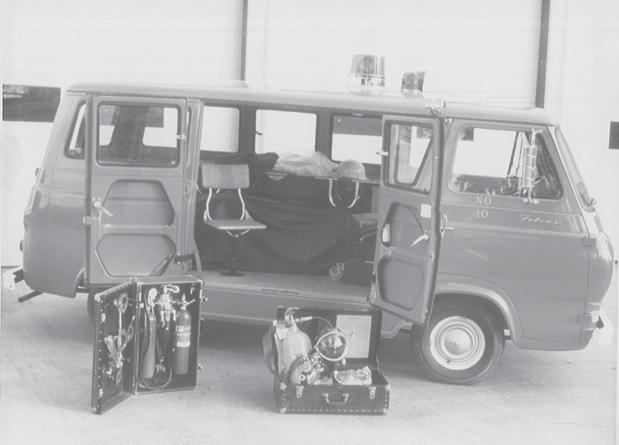
“By the 1970s, Winters Fire had become an all-hazards emergency response organization.”
operations became more structured through countywide incident command systems, allowing agencies to track personnel, resources, and operations in real time during large-scale events.
Training and prevention also became central functions. Partnerships such as the Solano Fire Academy strengthened recruitment and skill development, while inspections and pre-planning improved preparedness at high-risk facilities.
The people behind the progress While technology has driven much of the department’s evolution, its progress has also been shaped by the people who
See TECHNOLOGY, Page 11
Then vs Now: Winters Fire technology
Then
• Buckets, hose carts, ladders
• Steam-powered water system
• Fire bell alerts
• Hand-pulled equipment
• Limited communication Now
• Engine, ladder, and water tender fleet
• Digital incident command systems
• Countywide radio coordination
• Hydraulic rescue tools
• SCBA and modern PPE
• Real-time accountability tracking
Milestones in fire technology
1901
Major industrial fire drives formation of organized department
1917
First motorized pumper purchased 1950s
Two-way radios were introduced 1975
CPR training begins 1980s
Ambulance and expanded rescue operations 2000s
Large-diameter hose and modern apparatus systems 2020s
Digital command systems and enhanced firefighter safety programs
From hand-powered equipment to modern emergency systems, the Winters Fire Department’s evolution reflects both technological change and community commitment.


Must present coupon at time of


Photo
celebrating Mariani Nut Company’s history, its support of employees and the community, and other pieces of the company’s local history students discovered along the way.
Alejandro said one of the most important responsibilities of the project is approaching history honestly. During his research, he was particularly struck by the story of Winters’ lost Japanese community, which reinforced for him the importance of acknowledging both the triumphs and hardships that make up a community’s history.
“For me personally, I think honesty is a really important part,” Alejandro said. “I feel like it’s really important to display the history — the good things that a company has done.
But to also be honest about what’s being represented, so that you know we’re not offending anyone.”
“Creating these murals is really introspective; you have to understand all of the perceptions that can come with whatever our design is going to be,” he said.
For the design team, every element carries meaning.
Students said designing a mural requires careful thought because viewers may see different meanings in the artwork, making research an essential part of the creative process.
Brady Baugh said he hopes the community will be able to see the objects and imagery related to the town’s history and make connections between everything.
“The nuts represent the Mariani Nut Company. On this mural, we don’t really have something that says, ‘This is the Mariani mural.’
You have to visually consider that,” Baugh said. Alejandro said the deeper meaning in some of the symbols is one of his favorite parts of the mural design process. For him, sunflowers in the design not only represent agriculture and sunflowers in the area, but also migrant laborers and the work they do.
“Everything has a meaning, and as much as you’d like, you can really pack things in,” he said.
Inspiring future historians
Perhaps the greatest impact of the mural project extends beyond the finished artwork.
Lanctot said giving young people access to archives does more than teach history—it helps them see themselves as part of it.
She said students who engage with local records are better able to connect classroom learning to the places they live, from streets and businesses to the people who shape their community.
“It also gives them the opportunity to see themselves as future history makers,” Lanctot said. “The murals that they create and the things that they do in their community may well become part of an archival record for future generations.”
Many students said researching local history has changed the way they experience their own community. Historical plaques, museum exhibits and interpretive signs they once walked past without noticing now spark curiosity.
Baugh said the Japantown Monument caught his interest and led him to explore the Winters Museum’s exhibit on it. He said he didn’t know the museum was there, even after living in town for eight years.
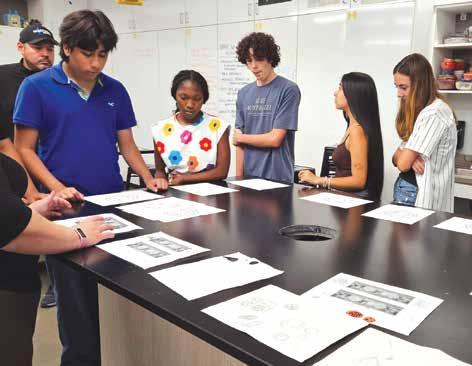
Bailey Kiser said she and her sister saw the museum’s A-frame signs and asked their parents if they could visit the exhibit.
Several students said the experience has inspired them to continue learning about Winters’ past long after the mural is finished.
Galilea said it’s important to support programs and opportunities like the mural project and history exhibits because it’s important to keep passing along history to newer generations or those who don’t know about it.
“(Local history) stays alive through the people who are passing it on. This experience made all of us realize that we should have more advertisements for museums or have students go to the archives more, so we can learn more about it, and then we can continue to pass on the story,” she said.
Alejandro said, “For us to have a more sustainable future, in whatever perspective it can be, I just think it’s really important to understand the context of the way that things were, so it allows us to reflect on
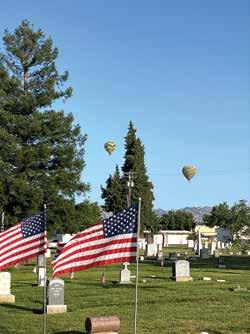
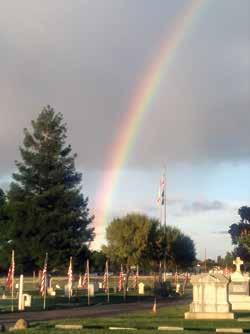
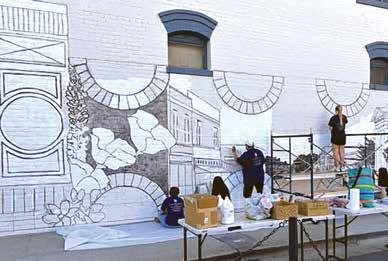
ourselves and how we can, you know, be better as a society.”
Lanctot said that idea is exactly what makes projects like the mural program powerful.
“When young people become storytellers, they bring their own perspectives and experiences to history,” she said. “That helps deepen our understanding of the past.”
More than a mural
The finished mural will become another piece of public art for residents
and visitors to enjoy. But the greater legacy may be less visible.
Each summer, the project creates a new generation of young people who understand that history is more than names and dates. It is a collection of stories waiting to be discovered, understood and shared. The murals don’t simply preserve Winters’ history on brick walls. They help ensure the next generation is ready to tell those stories, proving that history stays alive because someone chooses to tell it again.
1:00 – 5:00 P M THE WINTERS CEMETERY WAS ESTABLISHED IN 1875 AND HAS BEEN OPERATIONAL FOR 151 YEARS, MAKING IT AND THE U.S. POST OFFICE THE TWO OLDEST
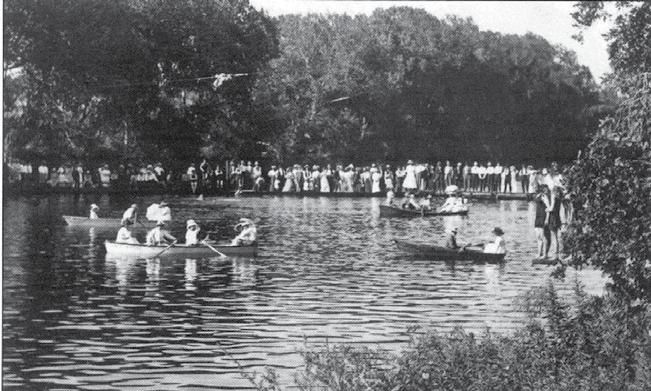
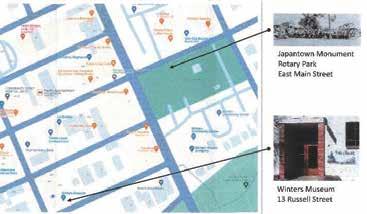
Winters, CA 95694

year’s Kate Humphrey Historical Mural Project.
Courtesy photo
Courtesy photo
Students helped sketch and transfer designs onto the wall for the 2025 mural, blending historical elements to fulfill the client’s vision for the project.
adapted it, maintained it, and trained with it.
For decades, Winters Fire operated largely as a volunteer-driven organization, with members who not only responded to emergencies but often helped build and maintain the very equipment they used. Apparatus was frequently modified in-house, and training was passed down through handson experience long before formal academies became standard.
As the department modernized, leadership structures and training programs evolved alongside the equipment. Fire officers and volunteers increasingly participated in formal certification programs, helping align local operations with statewide and national fire service standards.
Expanding training, emergency medical response
One of the most significant changes in the department’s history has been the expansion of training and emergency medical response capabilities.
What began with basic first aid and early CPR instruction in the 1970s has grown into a structured system of emergency medical response, rescue training, and ongoing certification requirements for personnel.
Firefighters now train not only in fire suppression, but also in patient care, vehicle extrication, hazardous conditions response, and incident command operations. Partnerships with regional training academies have strengthened recruitment pipelines and ensured consistent skill development across both volunteer and career staff.
This evolution has helped position Winters Fire as an all-hazards response agency, capable of responding to medical emergencies, traffic collisions, structure fires, and wildfire incidents with equal readiness.
Wildfire readiness, regional coordination
In recent decades, wildfire preparedness has become an increasingly important part of the department’s mission.
Longer fire seasons, regional vegetation management concerns, and expanding development in ru-
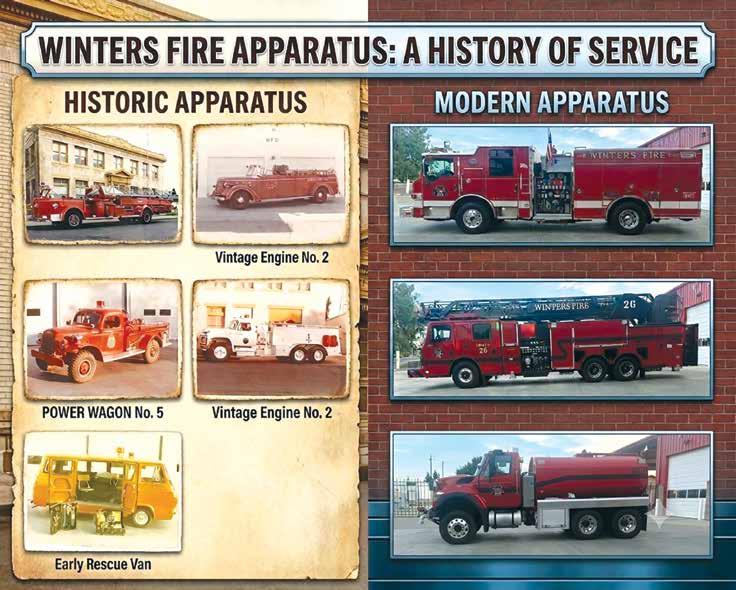
ral-urban interfaces have all contributed to a broader operational focus. Modern apparatus, water tenders, and coordinated hose systems are now essential tools in both structure protection and wildland response.
Winters Fire also operates within a larger network of county and state agencies, participating in mutual aid systems that allow resources to be shared across jurisdictions during large-scale incidents.
This regional coordination reflects a significant shift from the department’s early years, when response was local and limited by equipment and water supply.
A modern department with expanding roles
Winters Fire continues to operate as a hybrid system of career staff and volunteers. It also





operates under a Joint Operating Agreement with the Willow Oak Fire Protection District and the West Plainfield Fire District. This regional partnership expands coverage, allowing units and career staff to respond across the jurisdictions.
The department also continues to invest in public education and prevention, offering CPR training, senior safety checks, and community outreach programs, while strengthening firefighter health initiatives focused on long-term safety and cancer prevention. Looking ahead, fulfilling the mission
As Winters continues to grow, so too does the complexity of emergency response.
Future priorities include expanded staffing, enhanced EMS capabilities, junior firefighter and
community response programs, wildfire mitigation efforts, and continued pursuit of accreditation and ISO rating improvements.
What began with buckets and a limited water supply has become a coordinated emergency service powered by training, technology, and community support.
The mission of the Winters Fire Department remains clear: to protect life, safety, property, and the environment. That work is carried out every day through emergency response, fire prevention, training, and public education, guided by a commitment to professionalism and service.
When the call comes, Winters Fire still responds—guided by the same mission it has always held and equipped now with broadband communication, advanced rescue tools, and 150 years of experience behind it.
The Winters Senior Foundation (WSF) is but a very tiny, infant organization compared with the 250 years of our Country but we too have a few years under our belt. If you consider the combined age of those in any row of our weekly Chair Yoga class as example, you are looking at approx 575 years of knowledge, understanding, & humor.
The WSF was conceived by a group of local folks in 2013 with the desire to create an organization to give seniors in our community the opportunity to gather, to interact, and to enjoy the activities o ered. Our motto is simply To Enhance The



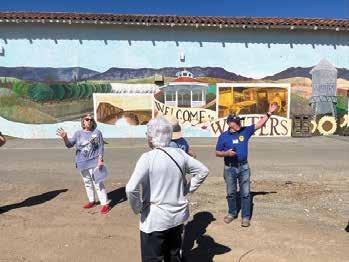
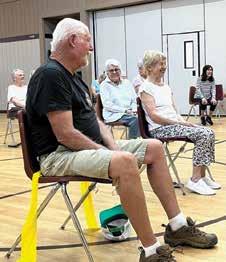
Graphic courtesy Winters Fire Department
Vintage and modern apparatus — A side-by-side display of historic and modern Winters Fire Department apparatus, capturing more than a century of technological change in fire service operations.