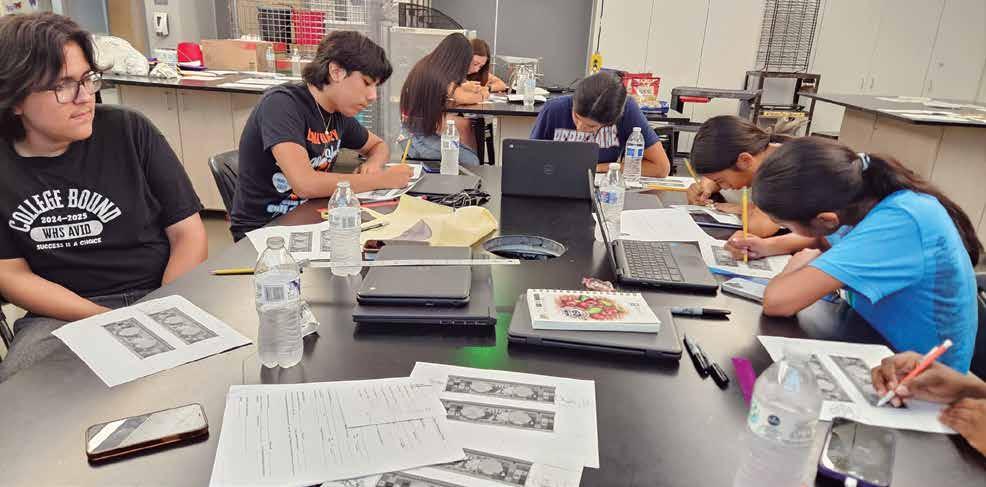
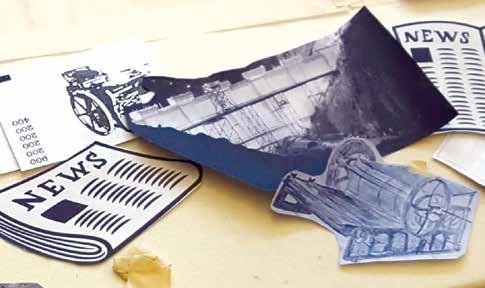
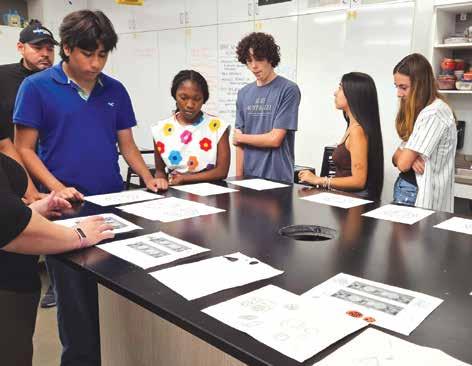
Delicately paging through century-old newspapers, unfolding archived blueprints and holding artifacts from the past, a group of local middle and high school students discovered Winters’ history on their own terms. The stories they uncovered will soon take shape as symbols and imagery in the expansion of a downtown historical mural, allowing a new generation to help tell part of the community’s story.
Our community is rich with history, and fortunately, with historians.
Winters is rich with history, preserved in century-old newspapers, museum collections, archival records and the work of local historians who continue documenting the community’s story through books, exhibits and research.
Communities preserve their history by passing their stories to the next generation. History stays alive because each generation chooses to tell those stories again.
designs that tell meaningful local stories.
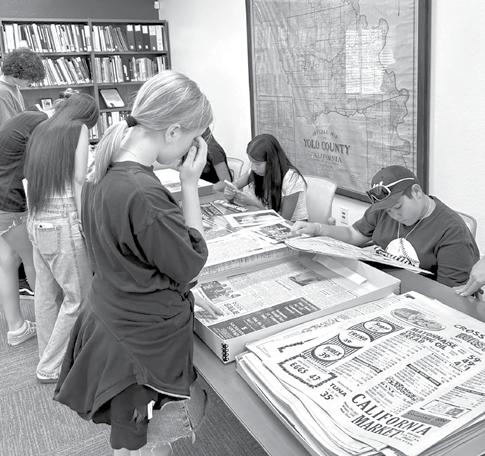
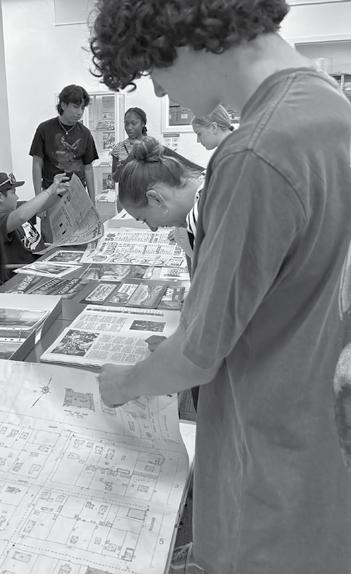
This year’s design team is expanding the mural on the Mariani Nut Company warehouse. On June 16, students visited the Yolo County Archives in Woodland to research documents, newspapers, photographs and artifacts that could help shape this summer’s design.
Heather Lanctot, Yolo County Library archives & records center coordinator, said that direct engagement with primary sources gives students a chance to slow down and think critically in an era where information is often consumed quickly and without context.
Through the Kate Humphrey Historical Mural Project, a student art initiative led by Winters
Participation Gallery, local middle and high school students are not only learning mural design and painting techniques, but also how to research history, utilize archival resources and translate those
Much of that work has traditionally been carried out by adults who have spent years researching and preserving local history. But in Winters, another generation of historians is emerging.
discoveries into public art.
Now in its ninth year, the grassroots program has grown from its first mural on Newt’s Expressway into a community-wide collection of historical murals displayed on local businesses. Along the way, students have gained experience not only as artists, but also by meeting with mural clients, researching community history and developing
She said archival materials allow students to examine trusted sources with minimal interpretation, ask questions about authorship and audience and compare historical documents with modern experiences.
“When students have access to original records, they can better understand how history connects to their own lives and communities,” Lanctot said. “It helps them see that they aren’t removed from history.”
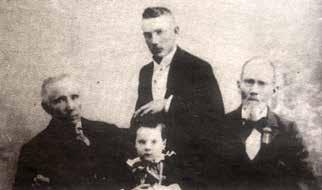
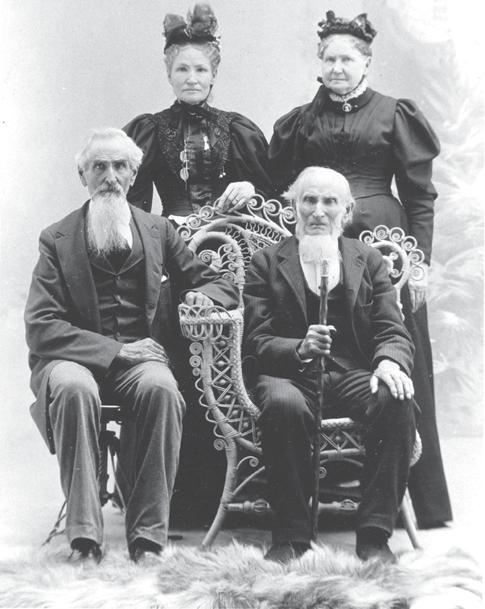
This picture, taken about 1893, shows four generations of the Ireland family.
Ireland, one of the founders of Winters and a wheelwright; his grandson, Lester M. Ireland, who was later mayor of Winters;
Joseph F. Stille, Lester’s great grandfather. Standing in back is Charles Ireland, father of Lester.
Courtesy
Courtesy photo
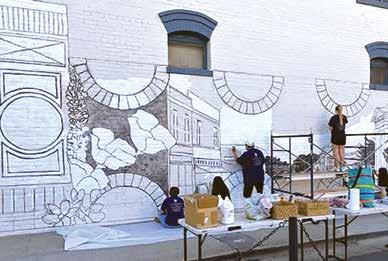
Students on the 2026 design team use the existing mural on the side of the Mariani Nut Company warehouse as they begin developing expanded design elements for this year’s Kate Humphrey Historical Mural Project, a youth art initiative led by the Winters Participation Gallery.
Winters women helped shape California’s suffrage movement
How local women advanced the fight for the right to vote
By Jacob Hoffman Express correspondent
The fight for women’s suffrage was national in scope, but it also unfolded in communities like Winters, where local women organized, advocated and helped lay the groundwork for California women to gain the right to vote in 1911. Through newspapers, photographs and original documents preserved by the Yolo County Archives and Records Center, the stories of women such as Susan Wolfskill and Edna Dexter continue to shed light on their role in local history.
Yolo County Archives and Records Center Coordinator Heather Lanctot and archivist Rachel Poutasse highlighted the important role women played in Winters history and the movement for women’s suffrage.
Susan Wolfskill
One of the most important women in the early history of Winters was Susan Wolfskill, née Cooper, who married John Wolfskill, whose family came to California in 1846.
After John died in 1897, Susan took over management of the ranch and divided part of the property into a 1,000-acre subdivision.
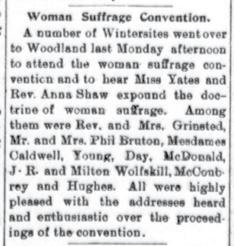
Records indicate Wolfskill was active in women’s suffrage events in Yolo County. She attended a Woman Suffrage Convention in Woodland in 1896, according to a Winters Express article that stated, “A number of Wintersites went over to Woodland last Monday afternoon to attend the woman suffrage convention and to hear Miss Yates and Rev. Anna Shaw expound the doctrine of woman suffrage,” including, “Mesdames…J.R. and Milton Wolfskill.” The article used the common practice of referring to Anna Sweany Wolfskill and Susan Cooper Wolfskill by their husbands’ names, noting, “All were highly pleased with the addresses heard and enthusiastic over the proceedings of the convention.”
When she died in 1906, Wolfskill’s obituary in the Sacramento Bee said she was “noted for her generosity and kindness.”
“The WCTU…was a really big driver in the suffrage movement, you know, countywide and nationwide, but also in Winters specifically.”
Rachel Poutasse, archivist
Edna Dexter
Another prominent Winters resident involved in the suffrage movement was Edna Dexter (1886-1978), who became a leading figure in the Woman’s Christian Temperance Union, or WCTU, in Winters.
The WCTU, as the name suggests, promoted prohibition on religious grounds, but as Poutasse explained, “suffrage was also one of their platforms.”
“The WCTU…was a really big driver in the suffrage movement, you know, countywide and nationwide, but also in Winters specifically.”
The WCTU was highly active in Winters. In 1904, Winters became the first town in Yolo County to go dry, prohibiting the sale of alcohol. An 1889 edition of the Winters
We wish to thank our many customers for their patronage throughout the
Some of
have been our customers since we first opened in
Express held in the archives discussed a debate on women’s suffrage within the WCTU, stating, “The ladies of the Winters WCTU discussed the question of woman suffrage at their meeting last Saturday,” and noting that “Several interesting articles were read touching on the subject, pro and con.” A statewide amendment on women’s suffrage was defeated in 1896 but later passed in 1911.
After attending Winters High School, Dexter became involved with the WCTU at a young age, joining when she was about 18. According to a 1905 edition of the Winters Express, she was elected vice pres-
ident of the Winters WCTU and accompanied the chapter’s president to represent the organization at the state convention in Fresno.
Later, she attended San Jose State Normal School, where teachers were trained. After returning to Winters, she became a teacher at Buckeye School and began writing weekly articles supporting women’s suffrage in the Winters Express. One article preserved in the archives highlights Dexter’s well-spoken arguments. She wrote in the July 14, 1911,
See SUFFRAGE, Page 5
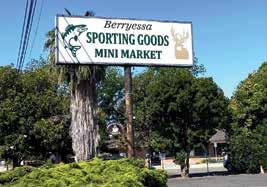
Berryessa Sporting Goods
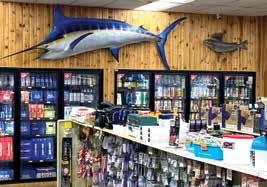
Stop by Berryessa Sporting Goods for all your fishing and outdoor needs. We serve as a sporting and quick-stop retail shop and gas station. You can also order from the Daily Grind menu, serving a variety of hot and cold drinks including coffee, smoothies, hot chocolate and Italian soda.
Photo courtesy Yolo County Archives
Wolfskill family reunion. (Top row) Anna Sweany Wolfskill, Susan Cooper Wolfskill. (Bottom row) Milton Wolfskill, John R. Wolfskill. Ca. 1890. Acc. #2024-025.
Express graphic
A scan from the June 6, 1896, edition of the Winters Express lists Susan Wolfskill among local attendees of a Woman Suffrage Convention in Woodland that year.
The stories we inherit
Looking through the archives of The Winters Advocate and The Winters Express, I was struck by how different early editions were from what we know today. In the earliest issues, local news often wasn’t the lead story. The front page was typically reserved for national and international headlines, while community coverage appeared deeper inside the paper alongside columns of recipes, ingredient notes, quips, advice, and other miscellany.
Over time, local news began to make its way forward—eventually claiming the front page more consistently, especially as the world moved into the early 1900s. It’s a quiet reminder that even journalism evolves with its community.
To be fair, Winters and the surrounding area were even smaller then than they are now. There simply wasn’t as much to report, and the mechanics of printing were far more labor-intensive. Every letter in those early presses was set by hand. I can’t imagine how long it took to produce each edition. Even with today’s technology, it still takes me practically an entire day to put a paper together.
For this special commemorative edition recognizing 250 years of American history, I did dedicate space to broader national history, but I also saw it as an opportunity to extend the work we began during last year’s sesquicentennial special editions—and to revisit stories that never quite made it into print due to space or staffing limitations.
More importantly, I wanted to continue the theme of connecting our shared history to both new residents and those whose families have been here for generations. Storytelling is one of the oldest ways communities preserve memory, and newspapers are one modern extension of that tradition—
alongside books, exhibits, and special editions like this one.
One area I’ve long wanted to explore further is the origin of some of our oldest street names and the families behind them. In Joann Leach Larkey’s “Winters: A Heritage of Horticulture, A Harmony of Purpose,” a town map requested by G.B. Stevenson, president of the Vaca Valley Railroad, shows the original street layout and the railroad’s path along Railroad Street (now Railroad Avenue). That official town map, recorded in May 1875, is preserved through the Yolo County Archives.
Those early streets included Russell, Abbay (now Abbey Street), Edwards, Baker, Wolfskill, and Grant—named in honor of President Ulysses S. Grant. Each name reflects a piece of the community’s earliest identity. In a future article, I’d like to dig deeper into who these individuals were, and expand the story to include other notable families whose names remain woven into our street grid today.
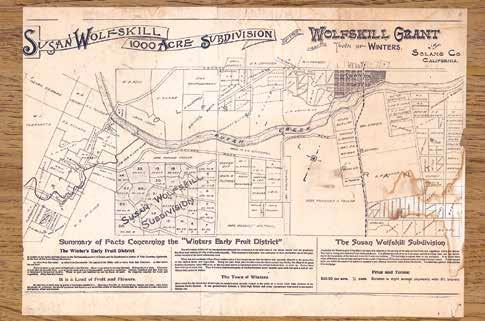
This history is also reflected visually in archival materials such as the Susan Wolfskill Subdivision map of property, obtained through the Yolo County Archives. Maps like this offer a rare glimpse into how early land divisions shaped the layout of the community, and how family names became embedded not only in records, but in the physical structure of Winters itself.
There’s a story behind every one of them, and I look forward to sharing more of those histories. Some of it may even find its way into a future museum exhibit—because behind the streets of Winters, there is always more than just a name.
I encourage everyone to visit the Winters Museum and spend time with the docents who keep our local history alive. Over the years, I’ve spent time with Al Graf, Gloria Lopez, George Griffin, and Rob Coman. I’ve listened a lot, learned even more, and been thoroughly entertained by the way each of them recalls the history as it was
passed down. I could listen to those conversations for hours. Every visit seems to surface new details, unexpected connections, and small but fascinating pieces of our shared past.
As we reflect on 250 years of American history, I hope readers enjoy learning more about both the
old and the new stories unfolding in our own community. We think of ourselves as a small, generational agricultural community, but we’ve accomplished big things and made lasting impacts on the people who live here.
—Crystal Apilado, Winters Express Editor-in-Chief
Photo courtesy of the Yolo County Archives
Susan Wolfskill Subdivision map. Ca. 1896. Map No. 976. Acc. No. D2018-020.
Learning history through discovery
One of the program’s greatest lessons begins long before the first brushstroke.
Students said the experience offers a very different way of learning history than they experience in the classroom.
When asked how learning history through the mural program differs from classroom instruction, students described an experience built around discovery.
Kourtnei Hampton said learning about history through this handson design planning experience presents an opportunity for her to see more components of history from different perspectives and time periods instead of being presented through one curriculum topic or point in time.
“If you go to the archives, you can see everything and just learn more and see the past as you go back,” Hampton said.
Alejandro Ramos said being able to go on field trips gives him the chance to take what he’s learned up close and personal and see the components in real life versus just taking someone’s word for it.
“When we go to the archives, you see written information, things of that time period that are more like raw information,” Alejandro said. “I think a lot of times in the classroom you’re just trusting what they say, but at the archives you get to see it up close and personal.”
Zyanya Melendez said the interaction and the ability to touch, read and hold artifacts and documents is a more engaging way to gain insight about history.
“I like how it’s very interactive the way you learn, because a lot of people are more visual learners and you see the actual newspapers, all the photos, and actually learn through those rather than reading from something or taking notes or staring at a screen,” Melendez said. “It’s more interactive and better for people to learn it that way.”
Instead of relying solely on someone else’s interpretation of history, students said the archives allow them to examine original sources for themselves and develop a deeper understanding of the community’s past.
Gloria Lopez, a Historical Society of Winters board member, said
that when students work directly with primary sources, they begin to see history as something layered rather than one-dimensional.
She said that kind of research helps students recognize connections between past and present and find relevance in their own lives.
“The research makes the history come alive rather than just reading a one-dimensional narrative in a history book,” Lopez said. Surprised by the past
Working with original documents also challenged many students’ expectations.
Several expected faded, fragile papers that would be difficult to read. Instead, they found many records remarkably well preserved.
Galilea Ramos and Alejandro Ramos both said that going into the archives for the first time, they had the notion the documents would be faded and worn. While some materials were laminated for preservation, others looked practically new and were clearly readable.
Joseph Jara said he was surprised by some of the content, including a grocery ad that listed two dozen eggs for 7 cents.
Melendez said the blueprints of buildings in the past stood out to her, especially when she was able to identify some of the structures still standing.
“The blueprints of the city and of all the buildings and seeing how many of the buildings are still here after all these years,” Melendez said.
But learning history wasn’t simply about discovering interesting artifacts. Students also found themselves thinking about the people and circumstances behind those stories.
Turning history into art
The greater challenge is deciding how to represent that history visually. Every symbol, color and image carries meaning, making thoughtful research just as important as artistic ability.
Students must decide how to transform what they learn into symbols, images and stories that accurately represent both the client and the community.
Drawing from weeks of archival research, this year’s mural expansion incorporates symbols
See HISTORY, Page 10
Students in the 2026
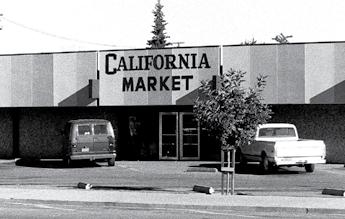
Kate Humphrey Historical Mural Project examine archived newspapers and historic building blueprints during a research visit to the Yolo County Archives in Woodland, gathering inspiration for this year’s mural design. Above, a California Market flyer shows eggs priced at 43 cents.
Courtesy photos
edition, “In fact, men are responsible for the conditions under which the children live, but we hold women responsible for the results of those conditions. If we hold women responsible for the results, must we not, in simple justice, let them have something to say as to what these conditions shall be? There is one simple way of doing this. Give them the same means that men have. Let them vote.”
“It’s really fascinating stuff,” Poutasse said, “she was, I think, 23 at this point.”
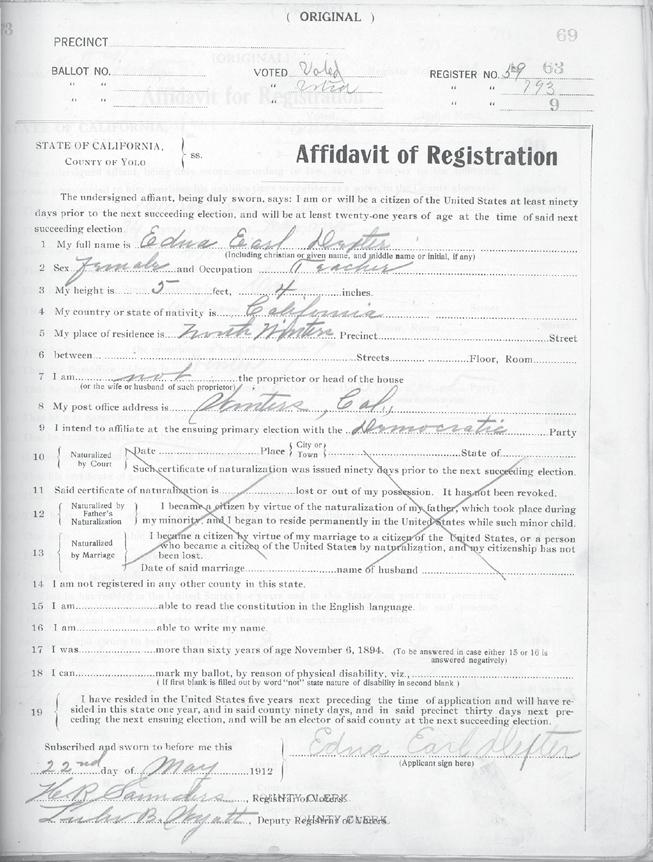
The archives also include several other documents related to Dexter, including her teaching contract at Buckeye School and her first voter registration form, which she signed in 1911 after California voters approved women’s suffrage.
The vote in Yolo County was close. The archivists found a newspaper reporting that the measure passed by just 168 votes, with 859 voting yes and 691 voting no.
Later in life, Dexter married Hugo Zentner, moved to Esparto and taught for many years while serving on the Yolo County Board of Education.
Lanctot and Poutasse also highlighted the women who have worked to preserve the history of Yolo County and Winters. Among them were Shipley Walters, who helped found the Yolo County Archives in 1985; Joann Larkey, who wrote extensive histories of Winters, including her book “Winters: A Heritage of Horticulture, A Harmony of Purpose;” Betty Coman, who helped preserve letters between her father, Jack Vasey, and interned Japanese American Hattie Nishikawa; and Gloria Lopez, author of “An American Paella,” which chronicles the history of Spanish migration to Winters.
Their work, along with that of the Yolo County Archives, continues to preserve the stories of women like Susan Wolfskill and Edna Dexter, ensuring their contributions remain part of Winters’ history.
Poutasse described the suffrage movement as “an important piece in the history of the women’s movement in California and the United States,” adding that “it is really a special thing to know that there were local women who were part of it and to be able to document their activities. We owe a great deal to them.”
Poutasse added, “Suffrage was not inevitable, and there was no guarantee that it was ever going to happen,” noting the many ups and downs of the movement throughout its history and that “I’m sure there were moments when they felt despair and cynicism. To me, I think the lesson is perseverance, and there is a lot we can learn in the present day from both their failures and successes.”
“When we learn about people like Edna Dexter,” Lanctot said, “it gives us the opportunity to see that even though things have
Edna Dexter’s 1912 voter registration affidavit is preserved by the Yolo County
and
years of advocating for women’s suffrage in the pages of the Winters Express, Dexter was among the first California women able to register to vote following the passage of the state’s suffrage amendment. Edna Earl Dexter voter registration affidavit, 1912. Acc. No. 1986-012.
changed, we still face similar challenges today. Women, especially women from underrepresented groups, continue to work hard and advocate for the betterment of their families and communities even in the face of adversity and setbacks.”
“Hopefully reading about local women who fought for suffrage and helped move the needle towards a more equitable future will inspire others to be agents of progress too.”
As the city of Winters celebrates its 150th anniversary, The Winters Express is proud to honor the legacy we've shared with this community since 1884. For over 140 years, we've been Winters’ trusted local newspaper — reporting on city government, schools, sports, and the stories that shape our town. From milestones and memories to challenges and triumphs, we’ve stood as a watchdog, a voice, and a record keeper for generations. Here’s to 150 years of community — and to continuing the story, together.
• Local News • Sports • City Hall • Schools • Events • Organizations • Editorials • And More!
Photo courtesy of the Yolo County Archives
Archives
Records Center. After
Rewind & Revisit
Winters
Reprinted from the Jan. 11, 1896 edition of the Winters Express
Winters is a pretty little town seated on the north side of Putah Creek, where it emerges into the Sacramento Valley. It is not yet incorporated, but it will be undoubtedly in less than another year. It has a population of about 1,000.
During the last two years the number of inhabitants has increased one-fifth.
The improvements are well up with towns of its size in the State.
The streets are now lighted by coal-oil lamps.
Putah Creek affords a great amount of water power, which can be developed into electricity with comparatively little cost, and the probabilities are that Winters will be lighted in the near future by electricity developed from this source. Its waterworks are owned by a private party, and the water is all pumped into the mains by steam.
This water system will not last long, for a pipe can be laid from a place in Putah Creek to Winters, a distance of five miles, which would supply water in great quantities for all purposes. A move has already been made to carry out this plan, but nothing very definite has yet been done.
There is no plaza, nor has there been any public move to provide a park. The district adjacent to Winters is devoted to fruit raising, and nearly all the land in the neighborhood is covered with trees. A good many of the principal streets are bordered with shade trees, mostly planted by private parties.
The streets are all in fair condition and well cared for. They are well graded and graveled.
The sidewalks are also of gravel,
except on Main Street and Railroad Avenue, where they have been constructed of cement.
The town is well and easily drained. The sewer system is not very good, but it serves the purpose satisfactorily. Winters is a very clean town as it is, and its people anticipate making it still more beautiful in the future.
Editor’s Note: This article about the Winters community was reprinted in the Winters Express in 1896. One of the things I’ve found most fascinating over the years of reading through the newspaper’s archives is that, regardless of the decade, certain themes appear again and again.
Throughout Winters’ history, agriculture and innovation have gone hand in hand. Farmers worked to produce crops, create jobs and build livelihoods, while residents came together to solve problems, support their neighbors and invest in the future. That same spirit continues today.
The Spirit of Winters grassroots group was formed by community members who wanted to ensure everyone who lives here feels welcomed, connected and valued. Although the organization itself is relatively new, the ideals behind it are anything but. Whether restoring habitat along Putah Creek, preserving the agricultural lands that define our community, supporting local businesses or volunteering throughout town, generations of Winters residents have worked to protect what makes this community special. As Winters continues to grow, I hope that spirit of stewardship, service and connection remains one of its defining qualities.
DC specializes in family, prenatal, sports, and animal chiropractic. Dr. Taylor is Webster technique certified through the International Chiropractic Pediatric Association (ICPA) to treat pregnant women. Dr. Taylor received her animal chiropractic certification through the Animal Chiropractic Education Source (ACES). She treats small animals in her office and commutes to barns for large animals. Her mission is to provide quality chiropractic care to all people and animals in each stage of life.
From buckets to engines: The evolution of Winters Fire technology
How innovation transformed firefighting in Winters—from hose carts to modern command systems
When it comes to firefighting, the mission has remained unchanged for more than a century and a half: protect life, safety, property, and the environment.
From bucket brigades and handpulled hose carts to motorized engines, radio dispatch, and digital command systems, the Winters Fire Department has evolved alongside the community it serves—transforming from a small volunteer force with limited water supply into a coordinated emergency response agency equipped for structure fires, medical emergencies, rescues, and wildfire incidents.
That evolution began in urgency, was shaped by necessity, and continues today through technology, training, and community investment.
Fire protection powered by hand
The earliest days of fire protection in Winters were defined by scarcity and improvisation.
In 1901, a major industrial fire swept through the town’s business district east of the railroad tracks, destroying six buildings in under an hour. The Winters Dried Fruit Company, lumber yards, warehouses, and agricultural facilities were lost as firefighters relied on bucket brigades, ladders, and a portable hose cart.
Water supply was inconsistent, dependent on a steam-powered system operated by a private company and supplemented by individual wells. When pressure failed, so did response capability.
The fire underscored the need for an organized system of protection. In 1902, the Winters Fire Department was formally established under City Charter No. 25.
A motorized response
For the next 15 years, firefighting remained largely manual. That changed in 1917, when Winters purchased its first motorized fire engine: a 500-gallon-per-minute American LaFrance pumper.
It marked a turning point in emergency response.
For the first time, firefighters
“The tools have changed dramatically, but the mission has remained the same.”
could deliver significantly more water, move faster through town, and extend their reach beyond what hand-drawn equipment allowed.
As agriculture expanded across the region, the department also added specialized chemical and pumping equipment designed for grain and field fires, reflecting the community’s growing needs.
Innovation in the firehouse
Throughout much of the 20th century, Winters Fire often built its own solutions.
See TECHNOLOGY, Page 9
Hi, I’m Jenni! As your local Commercial Insurance Agent — born and raised right here in Winters — I am dedicated to protecting the community I love. My goal is to give you total con dence that you, your business, and your assets are fully protected. From Workers’ Comp and Liability to Cyber, Property, and Farm policies, I have the expertise to ensure you’re covered whether you own or rent. Call me today to ensure your peace of mind.
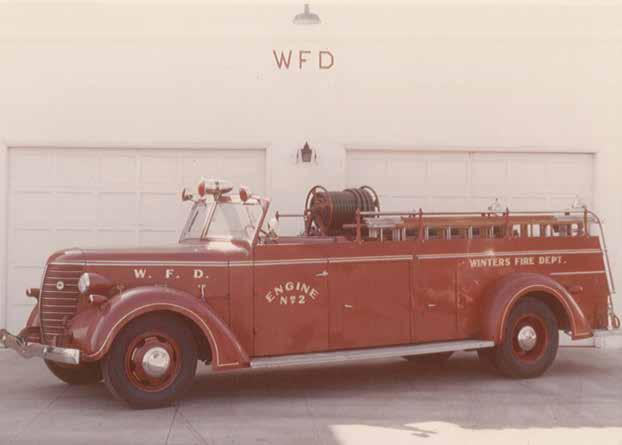
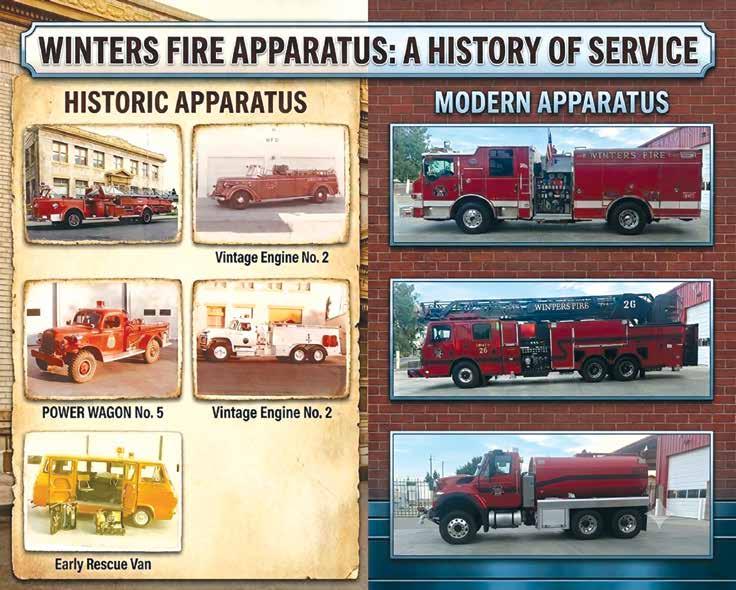
1941 Buffalo fire engine in front of the former Winters Fire Department building on Abbey Street next to Winters City Hall. The early-generation apparatus reflects World War IIera municipal firefighting design..
Photo courtesy Winters Fire Department
Notable events in colonial America in 1776
Special to the Express
The year the United States came to be was an interesting time to be alive, particularly for those living in colonial America. The American Revolutionary War began in 1776, and much of the year was marked by events stemming from that conflict. Below are some of the more notable events to take place during a year.
• Thomas Paine publishes his 47-page pamphlet Common Sense in Philadelphia on January 10. Initially published anonymously, the pamphlet is considered a watershed moment in American history, as Paine’s easily digestible writing style appealed to the masses, helping promote his arguments that encouraged common people to fight for an egalitarian government.
• The Battle of Moore’s Creek Bridge takes place near Wilmington, North Carolina on February 27. The battle is sparked when loyalists, after storming across a bridge over Moore’s Creek, attack a group of men they believe to be rebels. Though the engagement was brief, two loyalist leaders are killed, another is captured and the force is scattered. The failed attempt later complicated efforts to recruit loyalists in the area to fight.
• The Fifth Virginia Convention is held in Williamsburg between May 6 and July 5. The meeting of the Patriot legislature of Virginia ultimately leads to the declaration of Virginia as an independent state and the production of the Virginia Declaration of Rights, which asserts the state’s right to reform or
abolish any form of government it deems inadequate.
• Thomas Hickey becomes an early casualty of the burgeoning conflict between the colonies and England when the Irish-born soldier is the first to be executed by the Continental Army for “mutiny, sedition, and treachery” on June 28 in New York City. Hickey had been part of a protective detail for General George Washington but was briefly jailed for passing counterfeit money. During that brief incarceration, Hickey told a fellow prisoner he was part of a conspiracy, and reports ultimately indicated he might have been part of a plot to assassinate General Washington, which proved enough to warrant his execution.
• An uptick incidents of violence between Native Americans and settlers in Kentucky was a ripple effect of the American Revolutionary War, and that increase in aggression was behind the capture of Jemima Boone and the Callaway girls on July 14. Days later Daniel Boone led a successful attempt to rescue
his daughter and Elizabeth and Frances Callaway, who were the children of Colonel Richard Callaway, one of the first white settlers in Kentucky. A fictionalized version of the incident was included in James Fennimore Cooper’s novel The Last of the Mohicans.
• The Great Fire of New York destroys as much as 25 percent of all buildings in New York City as it burns through areas in lower Manhattan on September 20 and 21. The fire broke out shortly after British forces began occupying the city. While each side accused the other of arson in the aftermath of the fire, historians dispute such assertions, noting the fire likely started with burning rooftop debris before windy conditions spread the conflagration to surrounding buildings.
• The most defining moment of 1776 came on July 4 in Philadelphia, when the Continental Congress formally adopted the Declaration of Independence. Drafted primarily by Thomas Jefferson and debated over the preceding weeks,
the document articulated the colonies’ break from Great Britain and laid out a philosophy of government rooted in individual rights and self-determination. Though the signing process unfolded over time, the adoption of the declaration marked a turning point that transformed a colonial rebellion into a unified push for nationhood, reshaping how the conflict would be viewed both at home and abroad.
• Militarily, 1776 proved to be a year of shifting fortunes for the Continental Army. Early optimism following the British evacuation of Boston in March was tempered by a series of setbacks, most notably the Battle of Long Island in late August, where British forces under General William Howe outmaneuvered and defeated American troops, forcing a retreat across the East River. By year’s end, however, George Washington’s daring crossing of the Delaware River on December 25 and the subsequent victory at Trenton offered a crucial morale boost, demonstrating that the Continental Army was still capable of striking effectively despite earlier losses.
• The Battle of Sullivan’s Island takes place near Charleston, South Carolina on June 28. British forces attempt to capture the strategically important port city but are repelled by American defenders under Colonel William Moultrie. The successful defense prevents British control of the southern coast early in the war and becomes a major morale boost for the Patriot cause.
• The Halifax Resolves are adopted on April 12 in
North Carolina, making it the first colony to formally authorize its delegates in the Continental Congress to vote for independence from Great Britain. The resolution signals growing unified support for separation in the months leading up to the Declaration of Independence.
• The Battle of Harlem Heights is fought on September 16 in present-day New York City. Following the British occupation of Manhattan, American forces under General George Washington engage British troops in a rare early victory, helping restore morale after the loss of New York City.
• The Battle of White Plains takes place on October 28 in New York. British forces again push American troops into retreat during the New York campaign, further weakening Continental positions and forcing Washington’s army into New Jersey.
• The Battle of Valcour Island occurs on October 11 on Lake Champlain.
Though technically a British victory, the American naval force under Benedict Arnold delays the British advance from Canada, disrupting their campaign plans and buying critical time for the Continental Army to regroup.
• Throughout 1776, several colonies begin drafting and adopting state constitutions following the Declaration of Independence, including Virginia and New Jersey. These new governing documents mark a major political shift away from royal authority and toward self-governance at the state level.
—MetroCreative
Photo courtesy MetroCreative
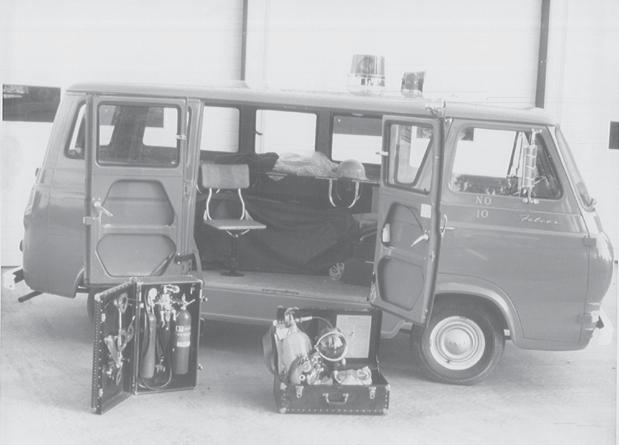
Rather than purchasing fully assembled apparatus, the department frequently acquired chassis and outfitted them locally with tanks, pumps, seating, and equipment. Firefighters and mechanics worked side by side, converting surplus military and commercial vehicles into fully functional fire engines and rescue units.
This era of self-reliance produced apparatus that served for decades and reflected a practical philosophy: if it didn’t exist, they built it.
Communication reshapes emergency response
By the mid-1900s, the most important advances were no longer mechanical—they were communicational.
The introduction of two-way radios in the 1950s fundamentally changed how the department operated. For the first time, firefighters could coordinate across incidents in real time rather than relying on bells or in-person relays.
As technology progressed, so did equipment and capability. Portable radios improved scene communication, respiratory protection evolved into modern SCBA systems, and rescue vehicles expanded operations beyond fire suppression.
By the 1970s, Winters Fire had become an all-hazards emergency response organization.
The introduction of CPR training in 1975 marked another major shift, followed by the development of ambulance and medical response services that placed firefighters on the front line of both fire and medical emergencies.
From response to coordinated systems
By the late 20th and early 21st centuries, technology shifted toward integration, accountability, and coordination.
Modern apparatus replaced aging fleets, including engines, rescue units, and water tenders designed for both urban and rural response. Large-diameter hose systems improved water delivery over long distances, strengthening firefighting capability across the district.
At the same time, emergency
“By the 1970s, Winters Fire had become an all-hazards emergency response organization.”
operations became more structured through countywide incident command systems, allowing agencies to track personnel, resources, and operations in real time during large-scale events.
Training and prevention also became central functions. Partnerships such as the Solano Fire Academy strengthened recruitment and skill development, while inspections and pre-planning improved preparedness at high-risk facilities.
The people behind the progress While technology has driven much of the department’s evolution, its progress has also been shaped by the people who
See TECHNOLOGY, Page 11
Then vs Now: Winters Fire technology
Then
• Buckets, hose carts, ladders
• Steam-powered water system
• Fire bell alerts
• Hand-pulled equipment
• Limited communication Now
• Engine, ladder, and water tender fleet
• Digital incident command systems
• Countywide radio coordination
• Hydraulic rescue tools
• SCBA and modern PPE
• Real-time accountability tracking
Milestones in fire technology
1901
Major industrial fire drives formation of organized department
1917
First motorized pumper purchased 1950s
Two-way radios were introduced 1975
CPR training begins 1980s
Ambulance and expanded rescue operations 2000s
Large-diameter hose and modern apparatus systems 2020s
Digital command systems and enhanced firefighter safety programs
From hand-powered equipment to modern emergency systems, the Winters Fire Department’s evolution reflects both technological change and community commitment.
Must present coupon at time of
Photo
celebrating Mariani Nut Company’s history, its support of employees and the community, and other pieces of the company’s local history students discovered along the way.
Alejandro said one of the most important responsibilities of the project is approaching history honestly. During his research, he was particularly struck by the story of Winters’ lost Japanese community, which reinforced for him the importance of acknowledging both the triumphs and hardships that make up a community’s history.
“For me personally, I think honesty is a really important part,” Alejandro said. “I feel like it’s really important to display the history — the good things that a company has done.
But to also be honest about what’s being represented, so that you know we’re not offending anyone.”
“Creating these murals is really introspective; you have to understand all of the perceptions that can come with whatever our design is going to be,” he said.
For the design team, every element carries meaning.
Students said designing a mural requires careful thought because viewers may see different meanings in the artwork, making research an essential part of the creative process.
Brady Baugh said he hopes the community will be able to see the objects and imagery related to the town’s history and make connections between everything.
“The nuts represent the Mariani Nut Company. On this mural, we don’t really have something that says, ‘This is the Mariani mural.’
You have to visually consider that,” Baugh said. Alejandro said the deeper meaning in some of the symbols is one of his favorite parts of the mural design process. For him, sunflowers in the design not only represent agriculture and sunflowers in the area, but also migrant laborers and the work they do.
“Everything has a meaning, and as much as you’d like, you can really pack things in,” he said.
Inspiring future historians
Perhaps the greatest impact of the mural project extends beyond the finished artwork.
Lanctot said giving young people access to archives does more than teach history—it helps them see themselves as part of it.
She said students who engage with local records are better able to connect classroom learning to the places they live, from streets and businesses to the people who shape their community.
“It also gives them the opportunity to see themselves as future history makers,” Lanctot said. “The murals that they create and the things that they do in their community may well become part of an archival record for future generations.”
Many students said researching local history has changed the way they experience their own community. Historical plaques, museum exhibits and interpretive signs they once walked past without noticing now spark curiosity.
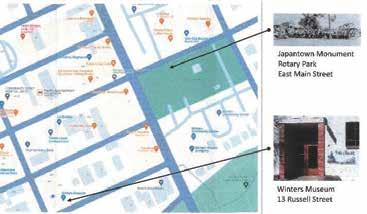
Baugh said the Japantown Monument caught his interest and led him to explore the Winters Museum’s exhibit on it. He said he didn’t know the museum was there, even after living in town for eight years.
Bailey Kiser said she and her sister saw the museum’s A-frame signs and asked their parents if they could visit the exhibit.
Several students said the experience has inspired them to continue learning about Winters’ past long after the mural is finished.
Galilea said it’s important to support programs and opportunities like the mural project and history exhibits because it’s important to keep passing along history to newer generations or those who don’t know about it.
“(Local history) stays alive through the people who are passing it on. This experience made all of us realize that we should have more advertisements for museums or have students go to the archives more, so we can learn more about it, and then we can continue to pass on the story,” she said.
Alejandro said, “For us to have a more sustainable future, in whatever perspective it can be, I just think it’s really important to understand the context of the way that things were, so it allows us to reflect on
ourselves and how we can, you know, be better as a society.”
Lanctot said that idea is exactly what makes projects like the mural program powerful.
“When young people become storytellers, they bring their own perspectives and experiences to history,” she said. “That helps deepen our understanding of the past.”
More than a mural
The finished mural will become another piece of public art for residents
and visitors to enjoy. But the greater legacy may be less visible.
Each summer, the project creates a new generation of young people who understand that history is more than names and dates. It is a collection of stories waiting to be discovered, understood and shared. The murals don’t simply preserve Winters’ history on brick walls. They help ensure the next generation is ready to tell those stories, proving that history stays alive because someone chooses to tell it again.
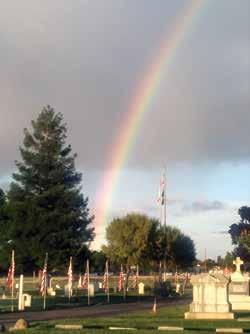
1:00 – 5:00 P M THE WINTERS CEMETERY WAS ESTABLISHED IN 1875 AND HAS BEEN OPERATIONAL FOR 151 YEARS, MAKING IT AND THE U.S. POST OFFICE THE TWO OLDEST
Winters, CA 95694
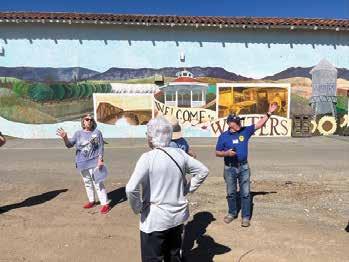
year’s Kate Humphrey Historical Mural Project.
Courtesy photo
Courtesy photo
Students helped sketch and transfer designs onto the wall for the 2025 mural, blending historical elements to fulfill the client’s vision for the project.
adapted it, maintained it, and trained with it.
For decades, Winters Fire operated largely as a volunteer-driven organization, with members who not only responded to emergencies but often helped build and maintain the very equipment they used. Apparatus was frequently modified in-house, and training was passed down through handson experience long before formal academies became standard.
As the department modernized, leadership structures and training programs evolved alongside the equipment. Fire officers and volunteers increasingly participated in formal certification programs, helping align local operations with statewide and national fire service standards.
Expanding training, emergency medical response
One of the most significant changes in the department’s history has been the expansion of training and emergency medical response capabilities.
What began with basic first aid and early CPR instruction in the 1970s has grown into a structured system of emergency medical response, rescue training, and ongoing certification requirements for personnel.
Firefighters now train not only in fire suppression, but also in patient care, vehicle extrication, hazardous conditions response, and incident command operations. Partnerships with regional training academies have strengthened recruitment pipelines and ensured consistent skill development across both volunteer and career staff.
This evolution has helped position Winters Fire as an all-hazards response agency, capable of responding to medical emergencies, traffic collisions, structure fires, and wildfire incidents with equal readiness.
Wildfire readiness, regional coordination
In recent decades, wildfire preparedness has become an increasingly important part of the department’s mission.
Longer fire seasons, regional vegetation management concerns, and expanding development in ru-
ral-urban interfaces have all contributed to a broader operational focus. Modern apparatus, water tenders, and coordinated hose systems are now essential tools in both structure protection and wildland response.
Winters Fire also operates within a larger network of county and state agencies, participating in mutual aid systems that allow resources to be shared across jurisdictions during large-scale incidents.
This regional coordination reflects a significant shift from the department’s early years, when response was local and limited by equipment and water supply.
A modern department with expanding roles
Winters Fire continues to operate as a hybrid system of career staff and volunteers. It also
operates under a Joint Operating Agreement with the Willow Oak Fire Protection District and the West Plainfield Fire District. This regional partnership expands coverage, allowing units and career staff to respond across the jurisdictions.
The department also continues to invest in public education and prevention, offering CPR training, senior safety checks, and community outreach programs, while strengthening firefighter health initiatives focused on long-term safety and cancer prevention. Looking ahead, fulfilling the mission
As Winters continues to grow, so too does the complexity of emergency response.
Future priorities include expanded staffing, enhanced EMS capabilities, junior firefighter and
community response programs, wildfire mitigation efforts, and continued pursuit of accreditation and ISO rating improvements.
What began with buckets and a limited water supply has become a coordinated emergency service powered by training, technology, and community support.
The mission of the Winters Fire Department remains clear: to protect life, safety, property, and the environment. That work is carried out every day through emergency response, fire prevention, training, and public education, guided by a commitment to professionalism and service.
When the call comes, Winters Fire still responds—guided by the same mission it has always held and equipped now with broadband communication, advanced rescue tools, and 150 years of experience behind it.
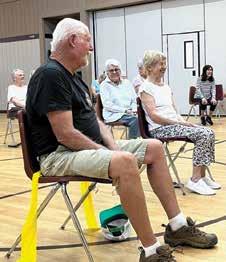
The Winters Senior Foundation (WSF) is but a very tiny, infant organization compared with the 250 years of our Country but we too have a few years under our belt. If you consider the combined age of those in any row of our weekly Chair Yoga class as example, you are looking at approx 575 years of knowledge, understanding, & humor.
The WSF was conceived by a group of local folks in 2013 with the desire to create an organization to give seniors in our community the opportunity to gather, to interact, and to enjoy the activities o ered. Our motto is simply To Enhance The
Graphic courtesy Winters Fire Department
Vintage and modern apparatus — A side-by-side display of historic and modern Winters Fire Department apparatus, capturing more than a century of technological change in fire service operations.