TRAVIS TAILWIND


force Public a ffairS
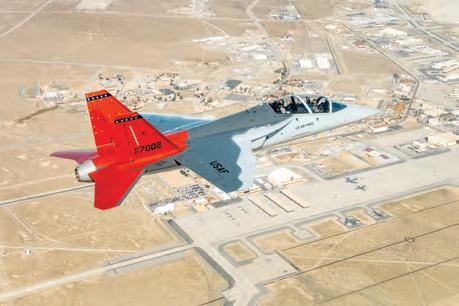
WRIGHT-PATTERSON AIR FORCE BASE, Ohio — The T-7A Red Hawk has officially been cleared for production. Following Milestone C approval, April 23, the Air Force is moving forward with a $219 million contract for the first 14 advanced trainer aircraft along with associated spares, support equipment, and training from Boeing Defense, Space & Security.
This achievement marks a pivotal moment for the T-7 Advanced Pilot Training Program. It follows a year of focused progress under an “active management” strategy, a collaborative effort between the Air Force, Air Education and Training Command, and Boeing.
This approach, aligned with the Department of the Air Force’s acquisition transformation directives, is designed to optimize both programmatic and operational risk to deliver capabilities to the warfighter as quickly and safely as possible.
“Reaching Milestone C is a testament to the dedicated government and industry teams who have worked diligently to overcome complex technical hurdles,” stated William Bailey, Performing the Duties of the Assistant Secretary of the Air Force for Acquisition, Technology, and Logistics.
“The T-7A is a pivotal program for the future See Hawk, Page 3
Hello, beautiful people, it’s your Travis AFB hype-man here.
It’s that exciting time of year, again, when caps fly into the air, proud families cheer from crowded bleachers, and graduates everywhere stand on the edge of a brandnew chapter in life.
Graduation season has always been one of my favorite times of the year because it represents something much bigger than a diploma or degree. it represents growth, commitment, perseverance, and the courage to move forward into the unknown. Graduations are a celebration of progress. It’s proof that goals can be achieved one step, one challenge, and one lesson at a time. What I hope you embrace is that graduations should not end once we leave school. The truth is that adult life is filled with graduations,. too.
and working toward goals that may not happen overnight.
The beautiful part is that achievement feels just as rewarding at age 50 as it did at 18. Maybe your current “graduation season” is paying off debt. Maybe it’s completing a professional certification, earning a promotion, retiring after decades of service, improving your health, or finally realizing that dream you’ve postponed for years.
Whatever your personal milestone may be, it deserves celebration because progress matters at every stage of life.
One thing I’ve learned is that successful people never stop being students. They continue learning, adapting, improving, and striving toward meaningful goals. They understand that growth is not limited to classrooms or campuses. Real growth happens throughout our entire lives.
Sometimes we graduate from fear into confidence after taking a chance on a new job, leadership opportunity, or business venture. Sometimes we “graduate” from financial hardship into stability because we stayed disciplined and never gave up. We graduate into healthier relationships, stronger faith, better habits, and improved versions of ourselves through consistent effort over time.
Life has a funny way of continually placing us in classrooms we never expected. Yet, every challenge offers an opportunity to learn and grow. Some lessons come through success and celebration. Others come through hardship, disappointment, and unexpected setbacks. Much like traditional students, adults often spend years studying, practicing, sacrificing,
So during this graduation season, while we celebrate students crossing stages in caps and gowns, I also encourage you to reflect on your own life journey. What goals are you working toward? What obstacles have you already overcome? What future version of yourself are you preparing to become? And when that moment arrives, whether the audience is a packed stadium or simply the quiet pride within your own heart, I hope you celebrate it fully. So until next time, be intentional, be the goodness, and find your opportunity to celebrate your accomplishment graduation.
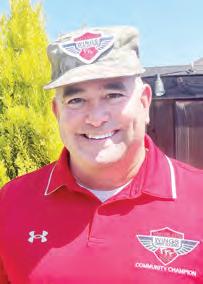
John Evalle is a retired U.S. Air Force chief master sergeant, who works in the Military Affairs Office, Travis Credit Union. jevalle@ traviscu.org.


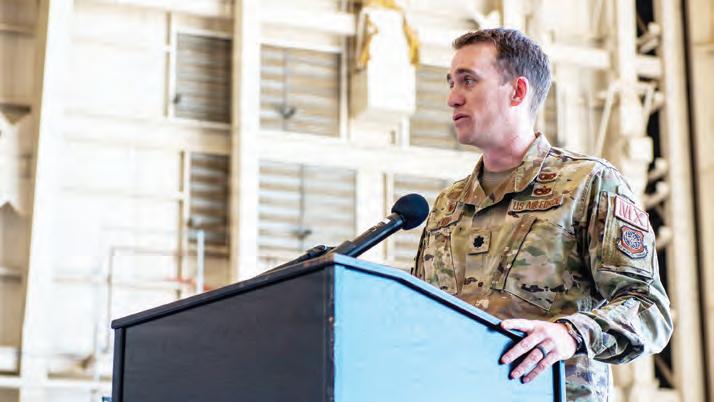
BASE — The 660th Aircraft Maintenance Squadron honored 48 crew chiefs and 72 aircrew members during the inaugural KC-46A Pegasus Dedicated Crew Chief ceremony at Travis Air Force Base, May 7.
The dedicated crew chief program is a longstanding U.S. Air Force tradition dating back to World War II. The program assigns a specific crew chief to an individual aircraft, making them directly responsible for its maintenance and readiness.
“This program aims to instill a sense of ownership and pride among crew chiefs, ensuring each aircraft is well maintained and mission ready,” said Maj. Robert Bligh, 660th AMXS commander. “The hard work of these Airmen has elevated them above their peers and earned them the title of dedicated crew chief.”
As part of the program, aircraft receive a dedicated name and heraldry patch, giving maintainers a stronger connection to their assigned aircraft. Leaders said the added identity reinforces pride, professionalism and dedication among maintenance teams.
“The program aligns maintainers with a specific tail number, entrusting them with the care and maintenance of that aircraft,” said Col. Patrick Brady-Lee, 349th Air Mobility Wing commander. “This level of ownership is powerful, that pride is not just commitment, it translates directly to morality and readiness.”
In addition to the airmen selected as dedicated crew chiefs, several members were chosen to oversee the program’s day-to-day operations. Program managers are expected to serve as skilled technicians and trusted leaders who uphold the program’s standards.
The program took seven months to coordinate and included support from the 660th AMXS, 749th AMXS, and the 6th, 9th and 70th Air Refueling Squadrons. Leaders said the ceremony marked another milestone in Travis Air Force Base’s continued develop -

a rmy & a ir force
excHange service
Public a ffairs
TRAVIS AIR FORCE
BASE — With military spouse unemployment far outpacing the national average, the Army & Air Force Exchange Service is reinforcing its commitment to hiring veterans and military spouses.
With 68,000 veterans and military spouses hired since 2013, the Exchange remains a vital force multiplier – offering meaningful careers that bring financial stability to military families and strengthen force readiness, retention and lethality.
The Travis Exchange has openings for roving store worker, laborers, stockers and customer service positions.
“Veterans and military spouses are a driving force at the Exchange,” said Travis General Manager Cathie Byrns
“Their dedication, resilience and experience power our mission and
help us take care of the military community.”
When veterans join the Exchange as full-time associates, their military service time can be used toward their Exchange retirement benefit.
For military spouses, the Associate Transfer Program allows military spouses to continue their Exchange career as they move from duty station to duty station with their military service members, which is key to maintaining financial security and force retention.
The Exchange continues to receive industry recognition for its commitment to providing meaningful opportunities for veterans and military spouses.
Accolades include:
n Gold Military Friendly Employers and Military Spouse Friendly Employers by Viqtory media. n Best for Vets Employer by Military Times.
See Travis, Page 4
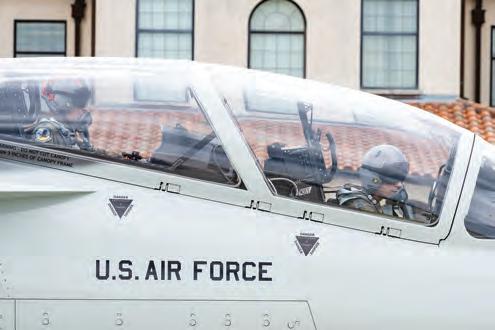
Sean Worrell/U.S. Air Force file Lt. Col. Jonathan Aronoff, 416th Flight Test Squadron director of operations, left, and Air Force Chief of Staff Gen. Ken Wilsbach conduct pre-flight checks in a T-7A Red Hawk at Joint Base San Antonio-Randolph, Texas, April 23. The T-7A is set to begin replacing Air Education and Training Command’s aging T-38 Talon training aircraft in 2027. The Air Force recently approved initial production of 14 T-7A aircraft, spares and trainers to get the next generation training capabilities into the hands of instructor pilots and students as quickly and as safely as possible.
world’s most advanced pilot training system.”
From Page 1
of our combat air forces, and entering production brings us one step closer to putting this essential capability into the hands of our instructor pilots and students.”
The T-7A Red Hawk is the first Air Force aircraft to be designed and built using all-digital methods, a process intended to streamline development, production and sustainment. The platform’s advanced systems will equip student pilots with the skills necessary to transition to 4th, 5th, and 6th generation fighters and bombers.
This Milestone C decision is the first of several in an innovative, phased approach. The directorate’s T-7A Program Office will seek approval for each of the first three low-rate initial production lots individually. This allows the team to manage concurrency risk by incorporating insights from ongoing developmental testing and other program progress before committing to subsequent production lots.
“Receiving Milestone C approval is monumental,” said Rodney Stevens, Program Executive Officer for Training and Director of the Air Force Life Cycle Management Center’s Training Directorate. “It signifies our confidence in the aircraft’s design and our readiness to begin producing this gamechanging capability at rate with Air Education and Training Command.
While there is still work to do, we have a strong partnership and a clear path forward to deliver the
Defense HealtH agency
communications
FALLS CHURCH,
Va.
— The origins of U.S. military nurses trace back to the Revolutionary War, when women volunteered to care for wounded soldiers, and evolved during the Civil War era into an established nursing force providing much-needed care on the battlefield.
Military nursing in the United States grew from wartime necessity into a permanent arm of military medicine, shifting from improvised bedside support to a profession vital to keep service members healthy and lethal.
The impact of military nurses on warfighter readiness continues today, with more than 23,000 nurses serving in military hospitals and clinics under the Defense Health Agency.
Army Nurse Corps.
Legacy of U.S. Navy Nurse Corps supporting sailors and Marines’ readiness
The broader program of record includes the delivery of 351 T-7A aircraft and 46 groundbased training simulators to five AETC bases over the next decade.
“Our mission is to train the next generation of combat aviators, and the T-7A Red Hawk is the tool we need to do it,” said Brig. Gen. Matthew Leard, Director of Plans, Programs, Requirements, and International Affairs at AETC. “Replacing our 60-plus-year-old T-38s is a top priority. The T-7A’s advanced systems will give our students a far more realistic training environment, ensuring they are prepared for the cockpits of the future.”
With the goal of achieving Initial Operational Capability for the T-7A by 2027, the program office will remain focused on completing the Engineering and Manufacturing Development phase, while supporting the initial cadre of instructors and maintainers as they build the foundation for the next generation of Air Force Pilot Training.
“Nurses are well known for their care of service members after injury, assisting with healing and getting the patient back into the fight,” said Andy Watson, chief of the Army Medical Department Center of History & Heritage. “This is part of mission readiness.”
Nurses like Clara Barton, who worked with the Union Army during the Civil War, bringing in food and essential supplies, comforting the wounded, and assisting surgeons. “I may be compelled to face danger, but never fear it,” she said. “While our soldiers can stand and fight, I can stand and feed and nurse them.”
U.S. Army nurses serving the warfighter since the American Revolution
The U.S. Army Nurse Corps became a permanent part of the Army Medical Department Feb. 2, 1901, under the Army Reorganization Act. The corps evolved from basic support functions to skilled clinical care as military medicine became more organized and professional, according to Watson.
Along with advancements in nursing specialties and responsibilities, “leadership
opportunities increased so positions that were previously not considered became open to U.S. Army nurses,” said Watson. Nurses now serve as commissioned officers in hospitals, clinics, and operational settings. They care for patients in military hospitals and clinics, support deployments, and advise commanders on health readiness.
A pioneer of this growth in the profession, he noted, was Lt. Gen. Patricia Horoho, a nurse who rose to lead U.S. Army medicine and became the first woman and first nurse to serve as U.S. Army surgeon general and commander of the U.S. Army Medical Department in 2011.
Yet, Watson emphasized, it began with those who served as historical pillars of warfighter medical readiness. Milestones that paved the path for U.S. Army nursing include:
n Dorothea Dix, appointed superintendent of U.S. Army nurses during the Civil War, organized support for Union hospitals and helped shape standards for military nursing.
n Mary Bickerdyke worked with the U.S. Sanitary Commission

and pushed for better care and conditions for wounded soldiers.
n Jane Aarminda Delano led the U.S. Army Nurse Corps and helped build the American Red Cross Nursing Service between 1909 and 1912.
n The Army School of Nursing opened in 1918, with Annie W. Goodrich serving as its first dean.
n In 1920, the U.S. Army Reorganization Act gave nurses a relative rank.
n In 1947, the ArmyNavy Nurse Act granted nurses permanent commissioned officer status in the regular U.S. Army and U.S. Navy.
n In 1955, Congress authorized commissions for male nurses in the U.S. Army Nurse Corps.
n In 1970, Brig. Gen. Anna Mae Hays became the first woman and first nurse in the U.S. military promoted to the general officer rank.
n In 2000, Col. William T. Bester was nominated for promotion to brigadier general and selected as the first male chief of the U.S.
The U.S. Navy Nurse Corps was established by Congress May 13, 1908. Later that year, the first nurses, known as the “Sacred Twenty,” reported for duty and indoctrination at the Naval Hospital, Washington, D.C. In the decades following the establishment of the corps, “Navy nurses truly became foundational figures as caregivers, clinicians, leaders, and especially educators,” said André B. Sobocinski, Historian, Navy Bureau of Medicine and Surgery. “Whether on the hospital wards or at training schools, Navy nurses have historically played a key role in directing and educating newly minted hospital corpsmen on patient care, and it is no surprise that the advances in hospital corps training in the first decades of the twentieth century coincided with the growth of the nurse corps.”
Today, U.S. Navy nurses include active duty and Reserve Component nurses across more than 20 specialties and serve in hospitals and clinics, education and research commands, aboard hospital ships, on expeditionary and humanitarian missions, and in operational environments worldwide. Their work supports force health protection, medical readiness, and the U.S. Navy and U.S. Marine Corps’ ability to stay mission-ready.
Sobocinski noted the profession was spearheaded by trailblazers and key moments of U.S. Navy nursing history, including: n Esther Voorhees Hasson became the first superintendent of the U.S. Navy Nurse Corps in 1908.
See Nursing, Page 5






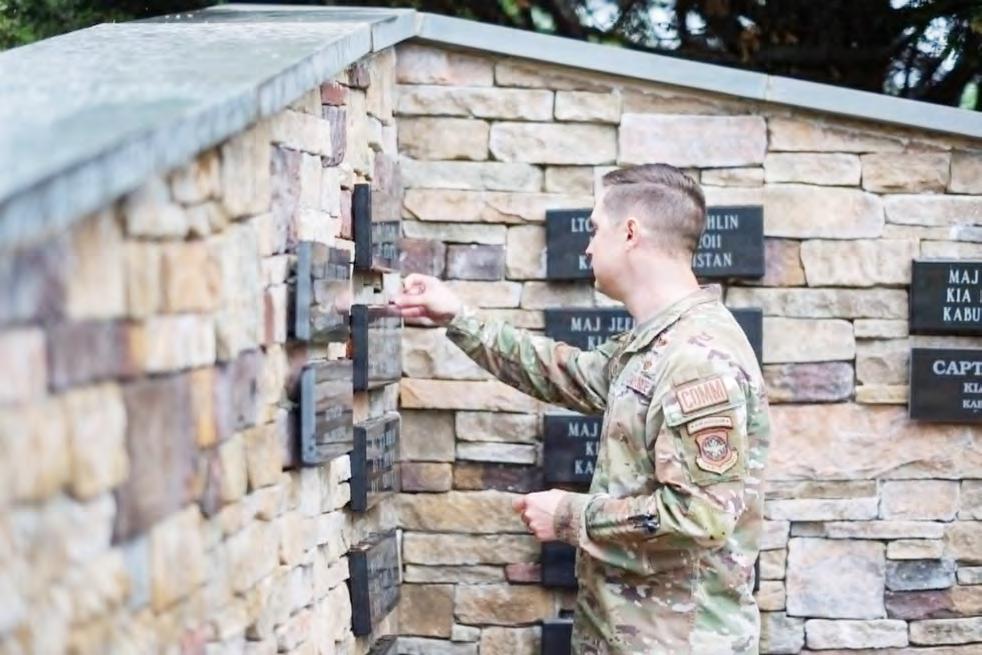
HURST, N.J. — Gold Star families, veterans and service members gathered here for the Air Advisor Memorial Foundation’s 14th Annual Remembrance Ceremony on May 21. Through the posting of the colors, an invocation and 14 rings of a ceremonial bell, the gathering offered a shared space for reflection.
Among those in attendance were members of the Ausborn and Jacobs Gold Star families. The ceremony marked the first time Maj. Jeffrey “Oz” Ausborn’s grandchildren and Master Sgt. Tara Brown’s brother, Domenic Jacobs, were able to attend.
The Air Advisor Memorial Foundation, a nonprofit organization, hosts the annual tribute so those families know their loved ones’ sacrifices will not be forgotten.
“Every year, it is with heavy but grateful hearts that we have the privilege of honoring those Air Advisors who have paid the ultimate sacrifice in the line of duty – as the bell is rung 14 times today, we ask that you keep their names, their friends, their families, and their legacy in your hearts and minds,” said Tech. Sgt. Sierra Schultz, 87th Force Support Squadron foundations noncommissioned officer in charge.
Col. Angela Polsinelli, 621st Air Mobility Advisory Group commander, delivered the keynote address and recognized retired Lt. Col. Sally Stanton, a surviving member of the NATO Air Training Command-Afghanistan, who has returned to the ceremony every year and continues to support veterans and the families of her fallen colleagues.
Polsinelli noted the ceremony comes at a significant moment, as the future of air advising is being weighed amid the inactivation of its two dedicated advising squadrons – the 818th and the 571st Mobility Support Advisory Squadrons.
“As we ponder what it means to be an air advisor, we need only look to those whose sacrifice enshrines the values that we strive to retain,” Polsinelli said.
She described the 14 fallen airmen as the bridge between American airpower and partner-nation capability – professionals whose work produced effects far larger than the footprint of their teams.
“These 14 Air Advisors were the crucial bridge between American airpower and the developing capabilities of our partner nations,” Polsinelli said. “Their actions achieved outsized strategic impacts wherever they engaged.”
“To be an advisor, one must possess the uncompromising technical and tactical expertise of a master in their craft,” said
Polsinelli. “But expertise alone is not enough. It takes the patience of a dedicated teacher, the cultural fluency of an ambassador and the unyielding vigilance of a warrior.”
The ceremony honored the NATC-A Nine – killed in an April 27, 2011, insider attack in Kabul – alongside five additional advisors added to the memorial in the years since. As each name was read aloud, attendees paused in silence while the bell rang in their honor.
The 14 honorees are Lt. Col. Frank “Bruiser” Bryant Jr.; Lt. Col. James McLaughlin Jr.; Maj. Philip “Phil” D. Ambard; Maj. Jeffrey “Oz” O. Ausborn; Maj. David “Klepto” L. Brodeur; Maj. Raymond G. Estelle II; Maj. Charles A. Ransom; Capt. Nathan J. Nylander; Master Sgt. Tara R. Brown; Maj. Phyllis J. Pelky; Master Sgt. Gregory Kuhse; Capt. David “Leonidas” I. Lyon; Maj. William “Brian” Downs; and Maj. Mark “Mickey” T. Todd.
Suzanna Osborne, a U.S. Air Force retiree and widow of Maj. Jeffrey “Oz” Ausborn, shared a poem written in his memory – a poem written for the grandchildren who will only know him through the stories they are told.
“Though they never got to meet him, they will always know his name,” Osborne recited. “Grandpa Jeff set the standard high, just like the way he flew each plane.” Osborne also thanked

Stanton for keeping the families connected to the Air Force community in the years since.
“In a time when our world changed forever, you helped to remind us that we were not forgotten, and that Jeff’s sacrifice and service and family still mattered,” Osborne said.
The ceremony closed with the memorial coin tradition.
Gold Star families approached the memorial first; others followed. Each coin carries meaning: a penny marks a visit, a nickel means they trained together, a dime means they served together, and a quarter signifies being present when the service member died.
For the air advising community, the ceremony was both remembrance and recommitment.
Polsinelli said the Air Advisor Academy and future generations will carry forward the skills, trust and partnerships the mission demands.
“We will never forget the 14 advisors on the wall,” Polsinelli said. “Through their memory, we will always remember what it means to be an Air Advisor.”
2nd lt m AcAiAh honAble 374TH AIRLIFT WING
CAMP AGUINALDO, Quezon City, Philippines — Members of the United States Space Force participated in Exercise Balikatan 2026 and integrated into the Joint Task Force, marking a significant milestone for the service and advancing the integration of space capabilities into one of the Indo-Pacific region’s largest multinational exercises, April 20 to May 8.
The inclusion of guardians in Balikatan 2026 highlights the expanding role of space within joint operations while strengthening the alliance between the U.S. and the Philippines. Their participation is fundamentally designed to rehearse the defense of the Philippines by sharpening bilateral interoperability and building combined command and control, logistics, and fires capa-
bilities across the air, land, sea, cyber and space domains.
During a site visit to Camp Aguinaldo to observe guardians integrating with the combined force, Brig. Gen. Brian Denaro, commander of U.S. Space Forces IndoPacific, emphasized the strategic importance of the milestone.
“Our participation in Balikatan 2026 marks an important step in integrating space capabilities into large-scale multinational exercises,” said Brig. Gen. Brian Denaro, Commander, United States Space Forces IndoPacific, “Space affects every domain of military operations, from communication and navigation to missile warning and situational awareness. By bringing those into the exercise environment, we strengthen the joint force’s ability to respond quickly, coordinate effectively and See Balikatan, Page 6



a $2.51 contribution at the register, including self-checkout, to AER – the official nonprofit charity of the Army that benefits soldiers and their families with financial challenges associated with emergencies, education and unexpected challenges.
“The Travis Exchange is all in to take care of soldiers and their families,” said Travis Exchange General Manager Cathie Byrns. “Army Emergency
Relief is a vital resource for soldiers facing challenging moments. It is an honor to connect people to a cause that makes a difference in our community.”
In 2025, shoppers donated more than $2.5 million to military relief organizations, including $1.5 million to AER, and additional contributions to the Air Force Aid Society and the NavyMarine Corps Relief Society. Since 2017, shoppers have donated a total of $15.4 million to military relief organizations, more than $9 million of which has gone directly to AER.
“The generosity of Exchange shoppers has made a real difference in the lives of soldiers and their families,” said retired Sgt. Maj. of the Army Tony Grinston, AER CEO. “No Soldier should have to face a crisis alone. Every donation allows AER to be there for soldiers and their families when they need it most.”
To learn more about the Exchange’s support for military relief funds, visit Publicaffairs-sme. com/Community/give.
To learn more about AER, visit https://www. armyemergencyrelief.org.




















n Lenah Sutcliffe Higbee, one of the “Sacred Twenty” and second superintendent of the nurse corps, was the first living nurse to receive the Navy Cross and is the namesake of two warships.
n In 1921, U.S. Navy nurses became the first women in the military to serve aboard a hospital ship, the USS Relief.
n Mary Ellen O’Connor oversaw the Navy’s School of Air Evacuation Casualties in 1944 and helped build the service’s flight-nursing capability.
n In 1965, Lt. J.G. Jerry McClelland, Ensign Charles Franklin, Ensign Isadore Miller, Ensign Richard Gierman, and Ensign George Silver became the first male nurses in the U.S. Navy. In 1966, Public Law 89-609 authorized male nurses to receive commissions in the regular Navy.
n Rear Adm. Alene Duerk, U.S. Navy nursing director, became the first woman in the U.S. Navy to attain flag rank.
n Rear Adm. Mary Hall, the first U.S. Navy nurse to command a hospital, was the director of the U.S. Navy Nurse Corps and the first U.S. Navy nurse to receive the Distinguished Service Medal.
n Rear Adm. Robert Hawkins, the current director of the U.S. Navy Nurse Corps, is the first male to serve in this role.
U.S. Air Force nurses’ history of care in the sky and on the ground
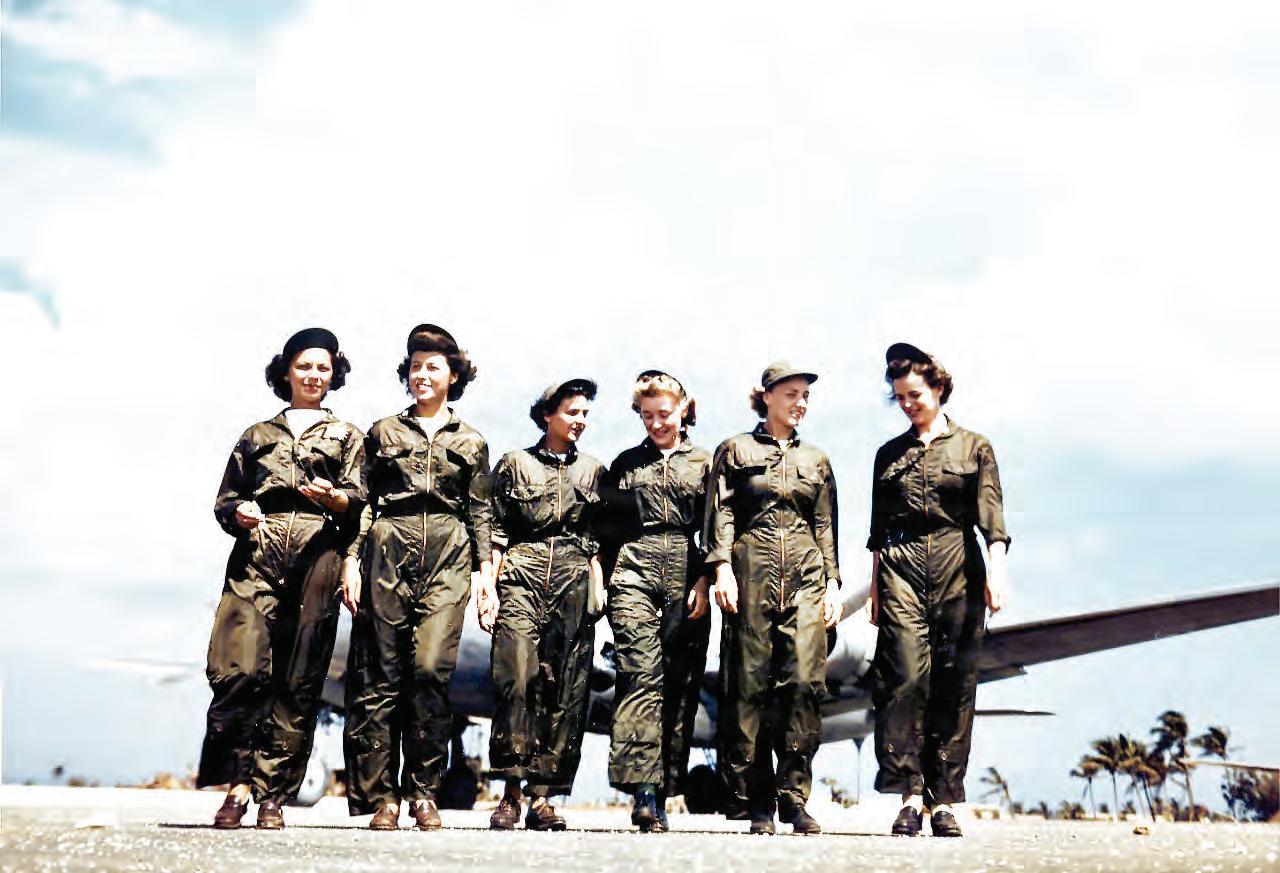
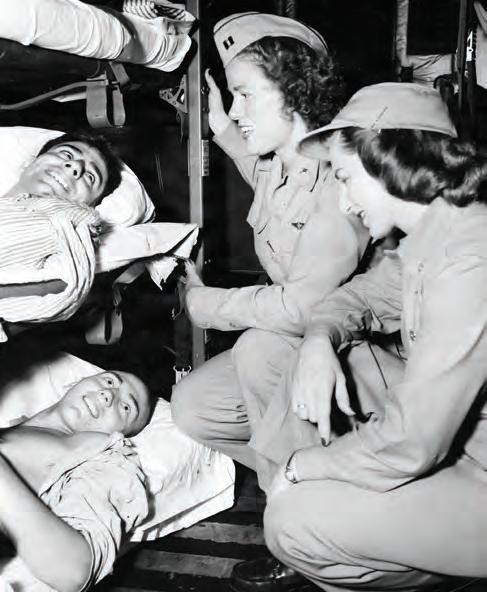
The U.S. Air Force Nurse Corps grew out of wartime need, and it was part of the new Air Force Medical Service at its inception on July 1, 1949. From the beginning, U.S. Air Force nursing centered on mobility, speed, and care linked closely to operations. Its roots reach back to World War II, when Army Air Forces nurses helped establish flight nursing and aeromedical evacuation as practical wartime capabilities, according to Joseph Frechette, Air Force Medical Service senior historian.
That identity took shape in 1943, when Lt. Elsie S. Ott, a nurse with barely a year in the military, helped prove seriously ill and wounded patients could be moved long distances by air. Frechette said Ott’s historical mission from Karachi to Washington showed the value of aeromedical evacuation and helped establish a model
for care in transit. “She’s one of the grand figures of nursing.” In 2026, U.S. Air Force nurses serve in military hospitals and clinics, operational units, and mobility missions, including aeromedical evacuation and other settings where care must move with the force, with landmark moments and historical figures including:
n The first formal class of flight nurses graduated at Bowman Field, Kentucky, in 1943.
n Lt. Col. Verena M. Zeller became the first chief of the U.S. Air Force Nurse Corps.
n Men were permitted to enter the regular U.S. Air Force Nurse Corps in 1961.
n Brig. Gen. Ethel Ann Hoefly became the first U.S. Air Force Nurse Corps chief promoted to brigadier general.
n Col. Regina Aune helped rescue children after the crash of the first Operation Babylift mission in 1975 from Vietnam, and later became the first woman to receive the Cheney Award.
n Capt. Mary T. Klinker died in the Operation Babylift crash and was the only member of the U.S. Air Force Nurse Corps and the last U.S. female service member killed in Vietnam. She was posthumously awarded the Airman’s Medal and the Meritorious Service Medal.
n Lt. Gen. Dorothy A. Hogg later rose from nurse corps leadership to become U.S. Air Force surgeon general and the first surgeon general to support the U.S. Space Force.
n Brig. Gen. Robert J. Marks is the first male general officer and the first male chief nurse of the U.S. Air Force Nurse Corps.
n Maj. Gen. Jeannine M. Ryder was the eighteenth chief nurse of the U.S. Air Force, and is currently the commander, Medical Readiness Command –Bravo and director, Defense Health Network Continental.
As military medicine evolved and continues to advance, so does the role of the military medical nurse. From early field hospitals to modern medical centers to hospital ships and operational settings around the world, military nurses have adapted to where the mission needs them most.
“There is no military medicine without nurses. They are an essential component of the enterprise, enabling us to achieve our primary mission of combat readiness,” said Sobocinski.
Staff Sgt a riel O’Shea
NELLIS AIR FORCE
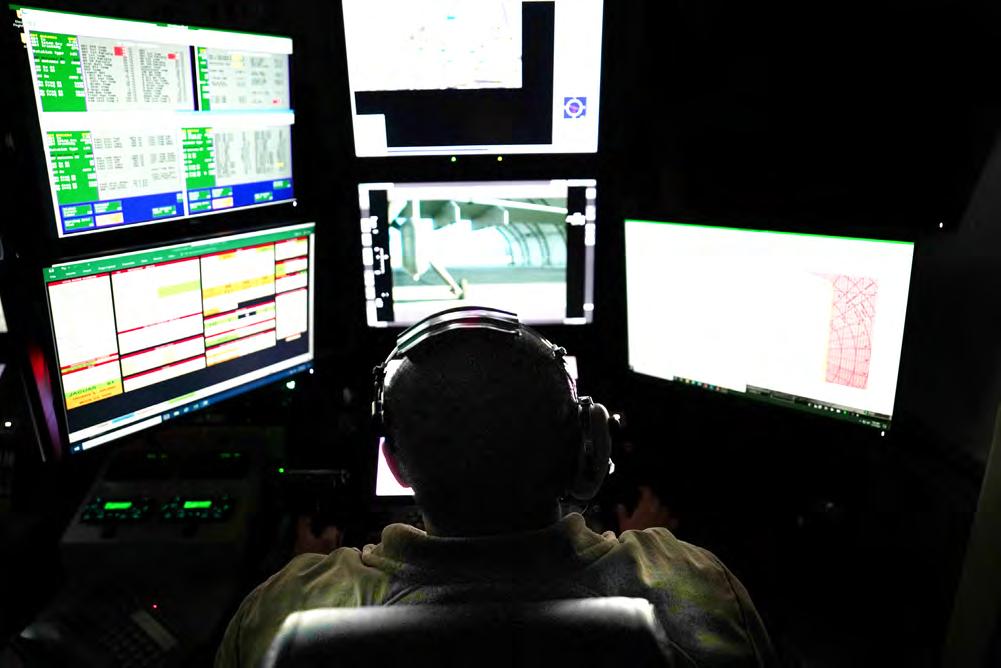
BASE, Nev. — Approximately 200 active component, Air Force Reserve, Air National Guard and U.S. Marine Corps members participated in Exercise Reaper Smoke 2026, April 14-16.
Hosted by the 867th Attack Squadron from Creech AFB, Nevada, the remotely piloted aircraft enterprise event is a competition that tests their weapons precision, crew resource management and overall airmanship. As demand for the MQ-9 Reaper platform increases and plays a fundamental role in realworld scenarios, exercises like this have become increasingly important in keeping aircrews fit to fight.
Reaper Smoke challenges airmen to integrate creative tactics and technical expertise within a total force and joint force environment. This iteration presented a 2-ship maritime scenario. By applying innovative solutions through immersive training, MQ-9 operators sharpen the skills necessary to navigate the vast distances and complex operational demands of the Indo-Pacific theater.
“One of the most important things about Reaper Smoke is the fact that a lot of us are doing 24-hour ops,” said U.S. Air Force Staff Sgt. Crosley Kerns, a
sensor operator assigned to the 6th Attack Squadron at Holloman AFB, New Mexico. “It can be very draining on the psyche, so being able to come together with people who have shared experiences and understanding can be really beneficial.”
With the event bringing RPA aircrews together from across the continental United States, it also served as a networking opportunity, introducing or reintroducing personnel from across the enterprise. Multiple attendees said that they knew members from other units from various stages of training, including initial pilot qualification.
“There’s someone here that I met during our initial qualification training,” said U.S. Air Force 1st Lt. Reymundo Sanchez, an MQ-9 pilot assigned to the 33rd Special Operations Squadron at Cannon AFB, N.M. “It was really nice to see him again. Both of us have changed quite a bit. We’ve matured, not only in our flying but as adults and as Air Force officers in general.”
Aircrews from Marine Unmanned Aerial Vehicle Squadron 1, VMU-1, from Marine Corps Air Station Yuma, Arizona, and VMU-3 from MCAS Kaneohe Bay, Hawaii, also participated as part of joint force cooperation.
“It’s overall an opportunity for people to come together, network and meet new people,” said


U.S. Marine Corps Sgt. Brendan McAllister, a sensor operator assigned to VMU-1. “Specifically for Marines, you’re still in the Department of War, still our friends, and we can utilize each other for help.”
In addition to networking and tactics, the 867th ATKS also organized a morale booster in the form of a Crud tournament. Crud is a fast-paced, high-intensity table game played on a pool table.
“I see this as a giant morale boost for the RPA enterprise in general,” said U.S. Air Force Tech. Sgt. Cameron Powell, a sensor operator assigned to the 91st Attack Squadron at Creech AFB. “If you are an active duty person who wants to get interested in the guard and reserve, this provides an excellent opportunity to meet guard and reserve members and touch shoulders a little bit and see what their lives are all about.”
Ultimately, the 6th ATKS emerged as the victor of the tactical competition, followed by the combined team of VMU-1 and VMU-3 from MCAS Yuma and MCAS Kaneohe Bay, Hawaii, respectively. The 105th ATKS from the 118th Wing from Berry Field ANG Base, Tennessee, rounded out the top three.
In the Crud competition, the 33rd SOS claimed victory after an intense final against the host, the 867th ATKS.
Retired U.S. Air Force
Brig. Gen. Houston Cantwell, the first 732nd Operations Group commander at Creech AFB, former 49th Wing commander at Holloman AFB, N.M., which oversees initial RPA pilot training, and an MQ-9 pilot himself, expressed his admiration for the RPA community’s dedication to excellence and effort in advancing national security objectives.
“Sitting on the sidelines and watching you all do the amazing things that you’re doing for national security makes me proud,” said Cantwell. “It makes Americans proud. I want you to be proud of all you have accomplished. This is a fantastic community. Take care of yourselves, and thank you for allowing me to be part of this special couple of days.”
U.S. Air Force Col. Trevor Merrell, 432nd Wing commander, was also present to deliver remarks at the conclusion of the event, speaking about the MQ-9’s endurance and reliability as a platform employed across multiple combatant commands.
“I am very proud to be a part of this group,” said Merrell. “It’s important that we do these things. The tactics are incredible. To all the teams that participated, I’m sure you walked away with some great lessons learned. Share those. Spread them out to those who don’t know them. Thank you to everyone here.”


TYNDALL AIR
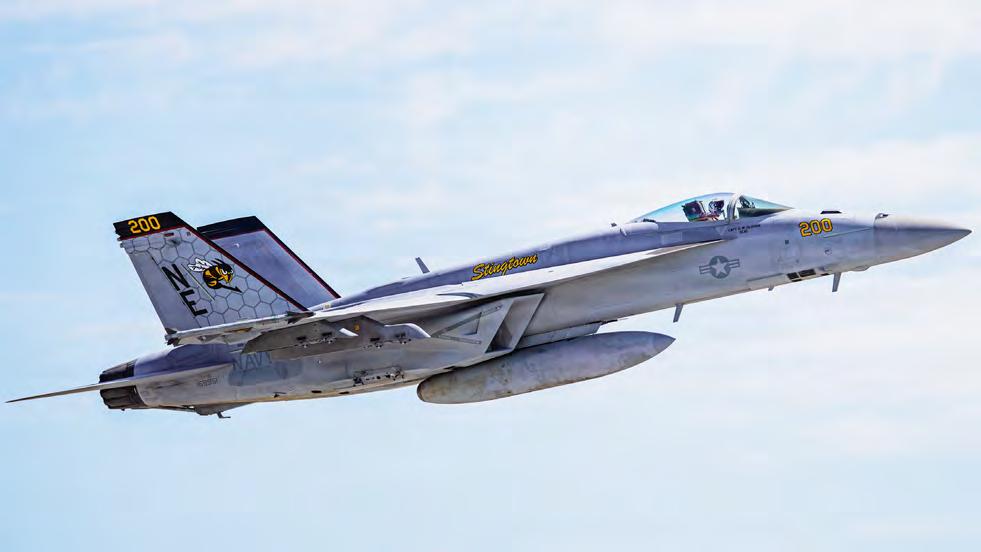
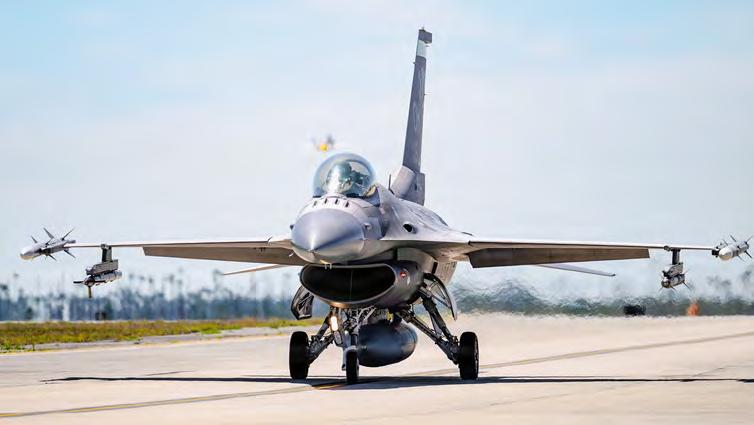
BASE, Fla. — Checkered Flag 26-2 concluded May 14, wrapping up one of the U.S. military’s largest and most complex air-toair training exercises.
The 325th Fighter Wing hosted Checkered Flag in coordination with the 53rd Wing’s Weapons System Evaluation Program (WSEP East). The 53rd Weapons Evaluation Group at Tyndall formally evaluates live-fire capabilities, providing aircrews a rare opportunity to launch live missiles at realistic, maneuvering targets while maintainers practice loading live munitions.
By combining Checkered Flag and WSEP, Tyndall provided a unique training scenario that tested both air-to-air and air-to-ground capabilities simultaneously.
“The Gulf Range Complex provides an invaluable platform to project combat airpower,” said Maj. Tyler Davidson, 83rd Fighter Weapons Squadron F-22 program manager. “It’s one of the only places that we can truly go out and exercise full live weapons mission profiles, actually employ these weapons at the edges of the envelope against live flying drones and be able to get real-time data.”
During the exercise, the F-35A Lightning II and F-22 Raptor integrated seamlessly with fourth-generation aircraft, including the F-16 Fighting Falcon, U.S. Navy F/A-18 Super Hornet and EA-18G Growler. Critical support assets, such as the
imity to advanced ranges and its high-end training value directly build a more capable, unified global response force.
From Page 4
operate with greater precision alongside our allies and partners.”
As the Department of War’s newest military branch, the U.S. Space Force organizes, trains, and equips forces to protect U.S. and allied interests in, from, and to space. Its integration into Balikatan 2026 reflects the increasing importance of space capabilities in modern warfare and directly bolsters ongoing Armed Forces of the Philippines modernization efforts by introducing critical space-based enablers into combined operations.
During the exercise, guardians provided expertise in space domain awareness, defensive space operations, and operational-level planning to help maintain space superiority. They worked alongside air, land, maritime and cyber planners to incorporate space effects into operational decision-making processes and enhance joint force synchronization.
“The Indo-Pacific is a dynamic environment and maintaining readiness requires seamless coordination across every warfighting domain,” Denaro said. “The unprecedented inclusion of Space Force personnel in Balikatan 2026 strengthens military-to-military coordination and proves that our alliance is adapting to modern warfare, ensuring a combat-credible allied posture in the Indo-Pacific that is prepared to meet any challenge together.”
“The Space Force sent operations and intelligence guardians to integrate Space Domain Awareness, Theater Missile Warning, Space Control and other space mission areas into the Joint Task Force and combined force,” said U.S. Space Force Capt. Patrick Richard, Exercise Control Group and at sea.” Space domain awareness remains a key focus throughout the exercise, enabling commanders to better understand the operational environment and respond decisively across all warfighting domains. From space domain awareness to operationallevel planning, guardians integrated space effects throughout every phase of the exercise, strengthening deterrence, reinforcing alliances, and demonstrating the essential role of space in joint operations across the Indo-Pacific. Working alongside our allies and partners in the AFP strengthens the multilateral operations essential for regional security and advances the AFP’s modernization efforts.
Balikatan is a longstanding annual exercise between the Armed Forces of the Philippines and U.S. military that represents the strength of our alliance, improves our capable combined force, and demonstrates our commitment to regional peace and prosperity.
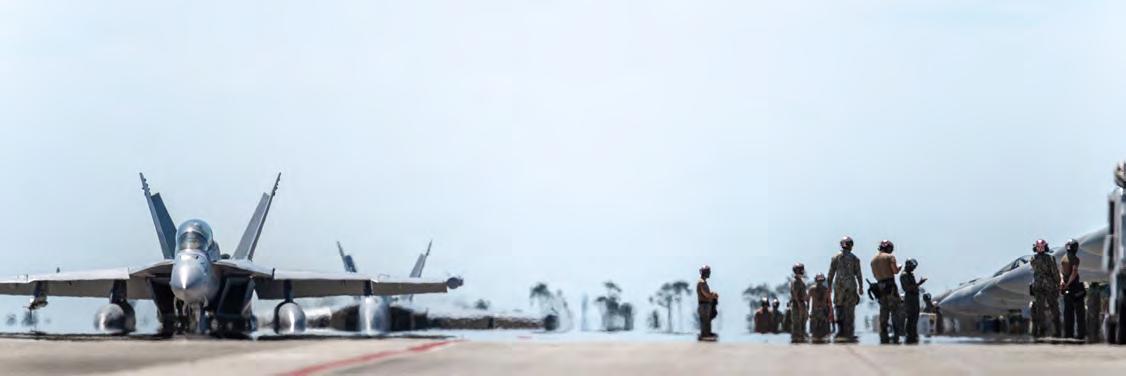
The 325th FW continually evolves Checkered Flag to outpace adversaries. Tyndall actively upgrades its infrastructure to host higher classifications and incorporates key insights from operational testing to prepare forces for the threats of tomorrow.
E-2D Advanced Hawkeye and the F/A-18E/F Super Hornet, delivered essential command, control and refueling capabilities.
“The E-2D Hawkeye provides command and control – our primary role is to paint the combat zone picture,” said U.S. Navy Petty Officer 3rd Class Sydney Rodriguez, an Airborne Command and Control Squadron (VAW 113) avionics electrician technician. “We detect targets long before the
fighter jets do. We identify the threats first and relay that tactical picture, ensuring the fighters successfully engage their required targets.”
Checkered Flag delivers what participants consistently call “the best air-to-air training,” remaining a premier destination for joint and coalition partners. Many units self-fund their participation to gain experience in this elite integration event. The exercise’s prox-
Staff Sgt. Dwane Young
PENTAGON NEWS
KADENA AIR BASE, Japan — U.S. Air Force F-22 Raptors assigned to the 90th Fighter Squadron, Joint Base ElmendorfRichardson, Alaska, and the 27th Fighter Squadron, Joint Base Langley-Eustis, Virginia, arrived at Kadena Air Base, marking the latest fighter rotation sup-
porting operations across the Indo-Pacific region. While deployed to the Keystone of the Pacific, the F-22s will operate alongside heavy, reconnaissance, and fourth- and fifth-generation aircraft assigned to the Air Force’s 18th Wing at Kadena Air Base, ensuring continuous and credible fighter capability in the region. The F-22 Raptor is
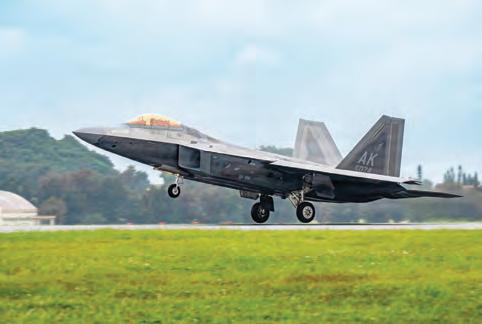
the Air Force’s premier fifth-generation air superiority fighter, combining stealth, advanced sensors and unmatched maneuverability to dominate contested environments. Its ability to detect, track and engage adversaries at extended ranges – while remaining difficult to detect – enhances survivability and control of the air domain. During the deployment, F-22 aircrews and maintainers will integrate with the 18th Wing’s operations and maintenance groups, as well as joint and allied partners, to refine tactics, strengthen interoperability and sustain readiness for real-world contingencies.
Together, this mix of aircraft and personnel reinforces the United States’ commitment to defend Japan under the U.S.-Japan security alliance and maintain a free and open IndoPacific region.
Checkered Flag also bridges the gap between elite training and realworld combat operations. Through rigorous live-fire and integration scenarios, the exercise prepared aviators and maintainers to deliver decisive combat airpower anytime, anywhere, ensuring they remain the world’s most lethal fighting force.



TINKER AIR FORCE
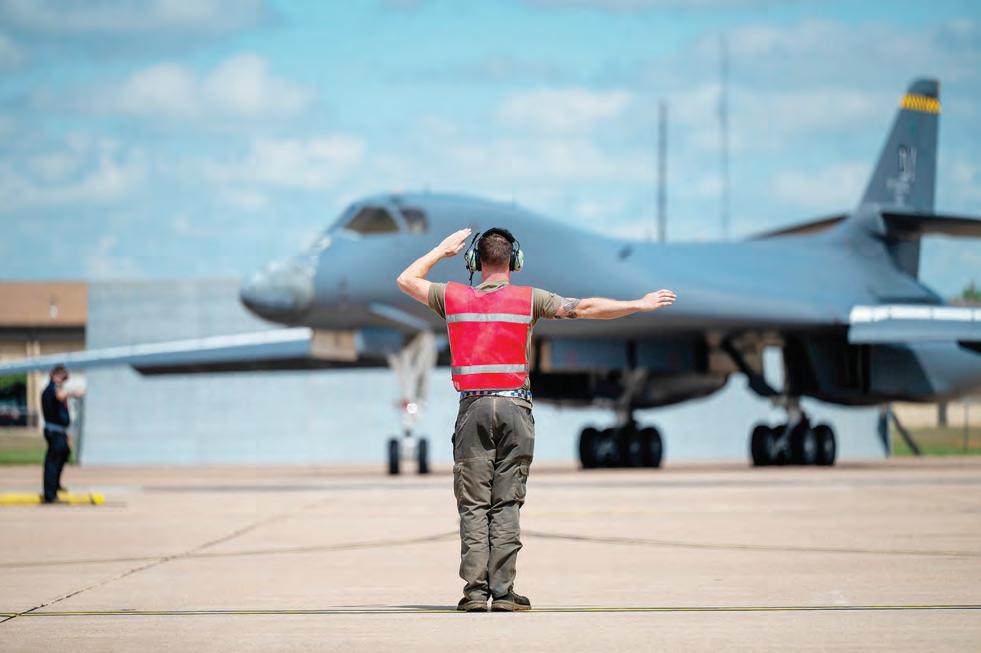
BASE, Okla. — A B-1B Lancer once parked in the Arizona desert is back in the air after an intensive regeneration and depot maintenance effort led by the Oklahoma City Air Logistics Complex at Tinker Air Force Base.
The aircraft departed Tinker AFB, April 22, following nearly two years of work to return it to combatcapable status after time in Type 2000 storage at the 309th Aerospace Maintenance and Regeneration Group at Davis-Monthan Air Force Base – commonly known as the “boneyard.”
For Jason “JJ” Justice, a technical analyst with Tinker’s B-1 Systems Program Office, the aircraft’s return marks a rare full-circle moment.
“I’ve been on this jet for 32 years,” Justice said. “To see it come back and still support the warfighter is a great feeling.”
A retired airman, Justice was part of the team that sent the aircraft into storage in 2021. Years
later, he helped lead the charge to bring it back.
Behind the massive effort was a workforce that rarely sees the runway.
More than 200 airmen and civilians from the 567th Aircraft Mainte-
nance Squadron worked extended shifts completing system overhauls and structural repairs, replacing more than 500 components.
“The maintainers of the 567th support our warf-
for keeping the newly regenerated bomber mission-ready after it was recalled from retirement to support the active bomber fleet and serve as the 7th Bomb Wing’s historic “Apocalypse II” flagship.
ighters at unprecedented levels,” said Steven Mooy, 567th AMXS master scheduler. “They overcome so many obstacles and work together to accomplish repairs that nobody else in the bomber commu-
nity could do.” Pilots from Tinker AFB’s 10th Flight Test Squadron flew the aircraft in a stripped, bare-metal configuration over Oklahoma, conducting functional check flights
to validate systems and performance. Once the aircraft passed these flights and was deemed Fully Mission Capable, it moved to the final phase of the regeneration process: the paint facility.
There, three rotating teams worked around the clock to prepare the aircraft for final delivery.
The regeneration effort comes as the Air Force continues modernizing its bomber fleet while sustaining legacy platforms critical to current operations. It’s a move that highlights the critical role of depot maintenance in extending aircraft service life.
“We’ve got the right people doing the right work,” Justice said. “That’s what makes something like this possible.”
The aircraft has since returned to Dyess Air Force Base, where it rejoined the fleet with a new name and nose art marking its restoration – another aircraft brought back from storage and returned to the fight through a coordinated team effort at Tinker AFB.
all are welcome to Discover, Develop, and Demonstrate a relationship with God.
We invite you to join us for Sunday service at 10:30 a.m.
2207 Union Avenue, Fairfield, CA www.1ag .com





Website: www.northhillsvv.org
Service Times: Sunday morning 10 a.m., Wednesday evening 6:30 p.m. Phone: 707-449-8977




of Christ 401 Fir St., Vacaville, CA 95688 (707) 448-5085
Minister: Elliott Williams
Sunday Morning Bible Study 9:30 AM Sunday Morning Worship 10:30 AM Sunday Evening Worship 5:00 PM Wednesday Evening Bible Study 6:00 PM vacavillecoc.com 401