TRAVIS TAILWIND

HERCULEAN WALK
Leadership Vacaville program visits Travis AFB
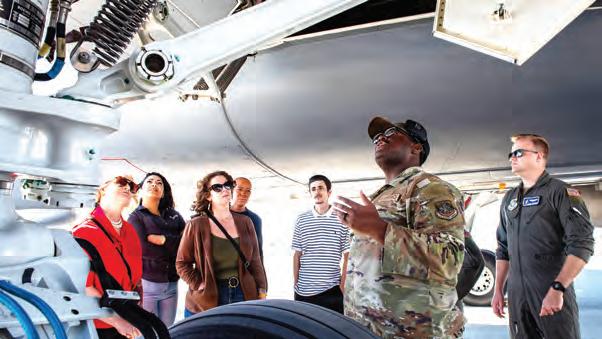
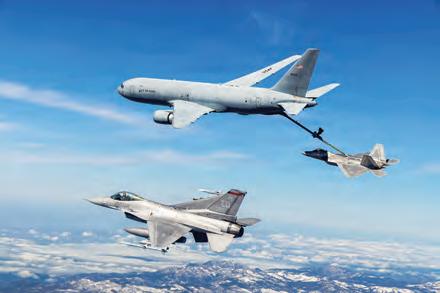
“The KC-46 is a cornerstone of U.S.
projection, and we are
with
to ensure it is always ready to deliver,” said Secretary of the Air Force Troy Meink. “By establishing this multi-pronged approach, we are directly improving aircraft availability, accelerating the delivery of vital new capabilities and significantly enhancing the overall supportability of the fleet.”
See Boeing, Page 2
Kenneth Abbate/U.S. Air Force file photos
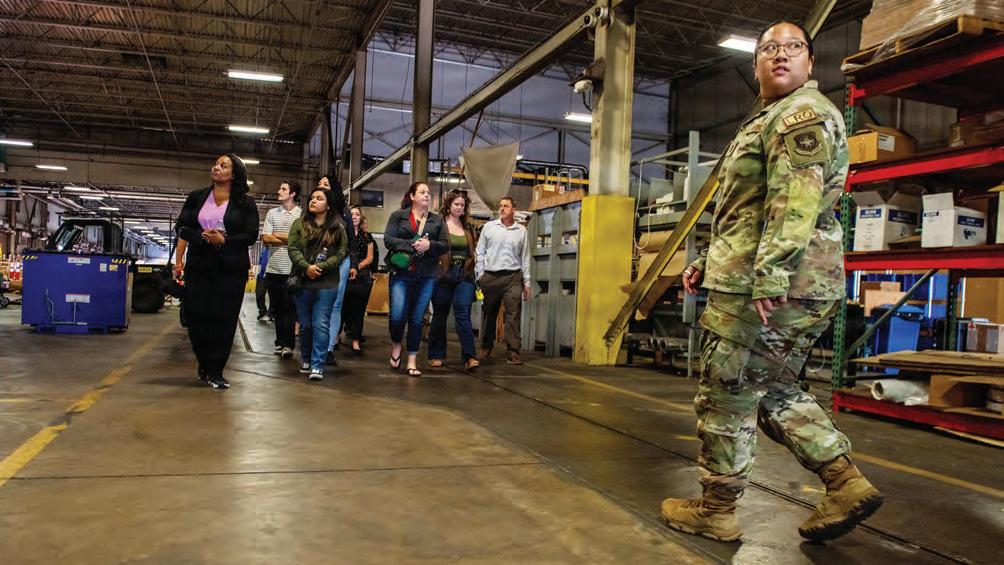
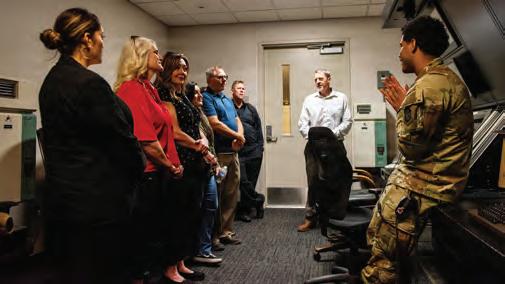
2nd Lt. Kimberly Pascual, right, 60th Aerial Port Squadron passenger and fleet services officer in charge, briefs
members of the Leadership Vacaville program on warehouse operations during a tour at Travis AFB, May 14.
Airman 1st Class Arian Gomez, right, 60th Operations Support Squadron air traffic controller, briefs members of the Leadership Vacaville program in the air traffic control radar approach control complex during a tour at Travis Air Force Base, May 14. Leadership Vacaville is a personal and professional development program designed to cultivate informed, engaged and skilled community leaders.
317th AW conducts MEO, arrives in Philippines for Balikatan 2026
AFFAIRS
CLARK AIR BASE,
Philippines — The 317th Airlift Wing arrived at Clark Air Base, Philippines, to provide critical tactical airlift capabilities following the successful execution of Maximum Endurance Operations, in support of Exercise Balikatan 2026, April 17.
This year’s iteration of the longstanding annual exercise coincides with the 75th anniversary of the U.S.-Philippine Mutual Defense Treaty. Designed to strengthen the ironclad alliance and improve combined capabilities, the exercise features more than 17,000 personnel from the Philippines, United States, Australia, Japan, Canada, France, and New Zealand.
To reach the Philippine archipelago, three C-130J Super Hercules aircraft assigned to the 40th Airlift Squadron conducted MEOs to Clark Air Base. By utilizing rotating aircrews and limited fuel stops, these operations significantly reduced transit time and extended the wing’s operational reach, enabling rapid response capabilities across the Indo-Pacific region.
Operating from Enhanced Defense Cooperation Agreement sites, the 317th AW delivered personnel, equipment and fuel to austere locations throughout the region. During the exercise, the
wing employed C-130Js equipped with external fuel tanks to facilitate Specialized Fueling Operations, rapid infiltration, and long-range fire support.
“We’re going out to the northern Philippines, to fly into these islands with U.S. Marines and Soldiers while offloading fuel,” said U.S. Air Force Col. Justin Diehl, 317th AW commander.
“Our capabilities ensure the Joint Force, along with our allies and partners, can sustain operations without relying solely on maritime logistics.” Diehl further noted the efficiency of these operations, stating, “It used to take days to get fuel to northern islands in the Philippines,” said Diehl. “Our Airmen have reduced that timeline to less than an hour.”
The exercise also highlights a specialized “lift and strike” partnership with the 7th Bomb Wing from Dyess Air Force Base. Integrated into these operations are recent graduates of the 317th AW’s Lethal Expeditionary Airman Development course, a program designed to prepare noncommissioned officers for decentralized operations in contested environments.
This training enables mission-ready airmen to support Agile Combat Employment concepts with a reduced footprint.
“Our airmen prove that not only can the 317th AW deliver assets to some of
See 317th, Page 3
Airmen participate in Port Dawg Memorial Run
Combined with the Air Force’s investment in the Fiscal Year 2027 Presidential Budget Request, the plan will increase KC-46 aircraft availability by more than 20% by 2030. Unlocking critical materiel earlier and establishing limited performance-based logistics, this partnership ensures tangible increases to both near- and long-term readiness.
TRAVIS TAILWIND
Serving

Calif. 94533
707-425-4646 | Fax 707-425-5924
Publishers: Foy S. McNaughton and T. Burt McNaughton
Advertising Manager: T. Burt McNaughton
Editor: Todd R. Hansen
Layout : Aaron Rosenblatt
“This is a decisive step forward for the KC-46 enterprise,” stated William Bailey, performing the duties of the Assistant Secretary of the Air Force for Acquisition, Technology, and Logistics. “This partnership secures Boeing’s continued investment in both KC-46 readiness as well as the production line, effectively lowering risk for our transition to the KC-46 Production Extension and ensuring this critical mobility platform continues to flow to the warfighter without delay.”
While the specifics of the plan itself will remain protected to safeguard operational security, its three lines of effort, as detailed below, will provide a near-term aircraft availability boost of approximately 6% and a longer-term increase of 20% by 2030.
Repurposing earlybuilt aircraft
First, the Air Force is repurposing five earlybuild aircraft, which

serves a dual purpose: providing the Air Force with dedicated test assets – keeping combatready tankers focused on the mission – and immediately injecting high-value spare parts into the operational fleet. Because these aircraft were not scheduled to reach the fleet until early 2031, this effort allows the Air Force to immediately free otherwise “trapped” materiel. This includes high-value parts, like engines and landing gear, from three non-operational, earlybuild aircraft, providing a significant near-term boost to fleet readiness by resolving existing parts shortages.
Accelerating RVS 2.0 Retrofits
Second, the plan significantly accelerates the fielding of the critical RVS 2.0 upgrade. Scheduled to begin fielding in early 2028, the plan creates a partnership with Boeing to bundle the modification with the Air Force’s depot-level maintenance and accelerate kit deliveries. This strategy reduces the retrofit timeline from 13 years to seven years, while simultaneously reducing the retrofit’s impact on aircraft availability by 90%.
Implementing PerformanceBased Logistics
Finally, the plan directs the Air Force and Boeing to pursue a temporary, Performance-Based Logistics agreement targeting the supportability of the aerial-refueling subsystem and other key components. Reliability and parts availability of the aerial-refueling subsystem collectively represent the largest
detractors of KC-46 availability. This effort makes Boeing responsible for improving the availability of these critical systems and is designed to ensure a successful transition back to organic Air Force sustainment after a limited five-year period. These and other efforts reflect the Air Force’s continued investment in both tanker capacity and capability to enable the Joint force now and into the future.














Kenneth Abbate/U.S. Air Force file photos
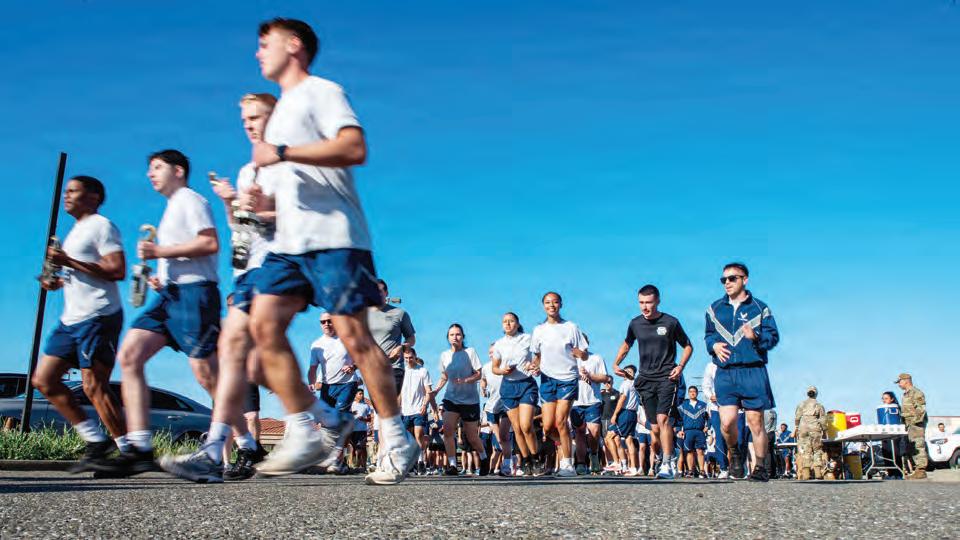
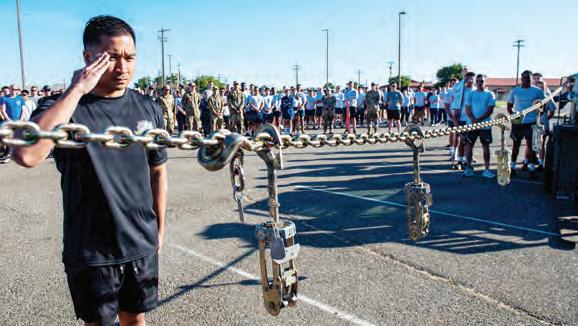
Airmen commence jogging during the 2026 Port Dawg Memorial Run at Travis Air Force Base, May 15. Service members across the Air Force paid tribute to members of the port dawg community who lost their lives.
Tech. Sgt. Gilbert Tumaneng, 60th Aerial Port Squadron cargo operation noncommissioned officer in charge, renders a salute to an aircraft cargo tie down hook to honor a fallen aerial port service member during the 2026 Port Dawg Memorial Run at Travis Air Force Base, May 15.
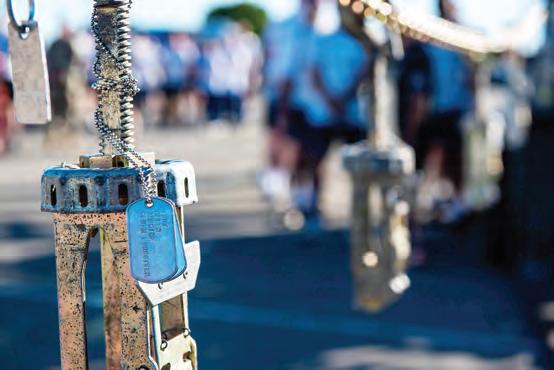
Aircraft cargo tie down hooks hang from a chain to honor fallen aerial port service members during the 2026 Port Dawg Memorial Run at Travis Air Force Base, May 15.
Airman 1st Class William Neal/U.S. Air Force file
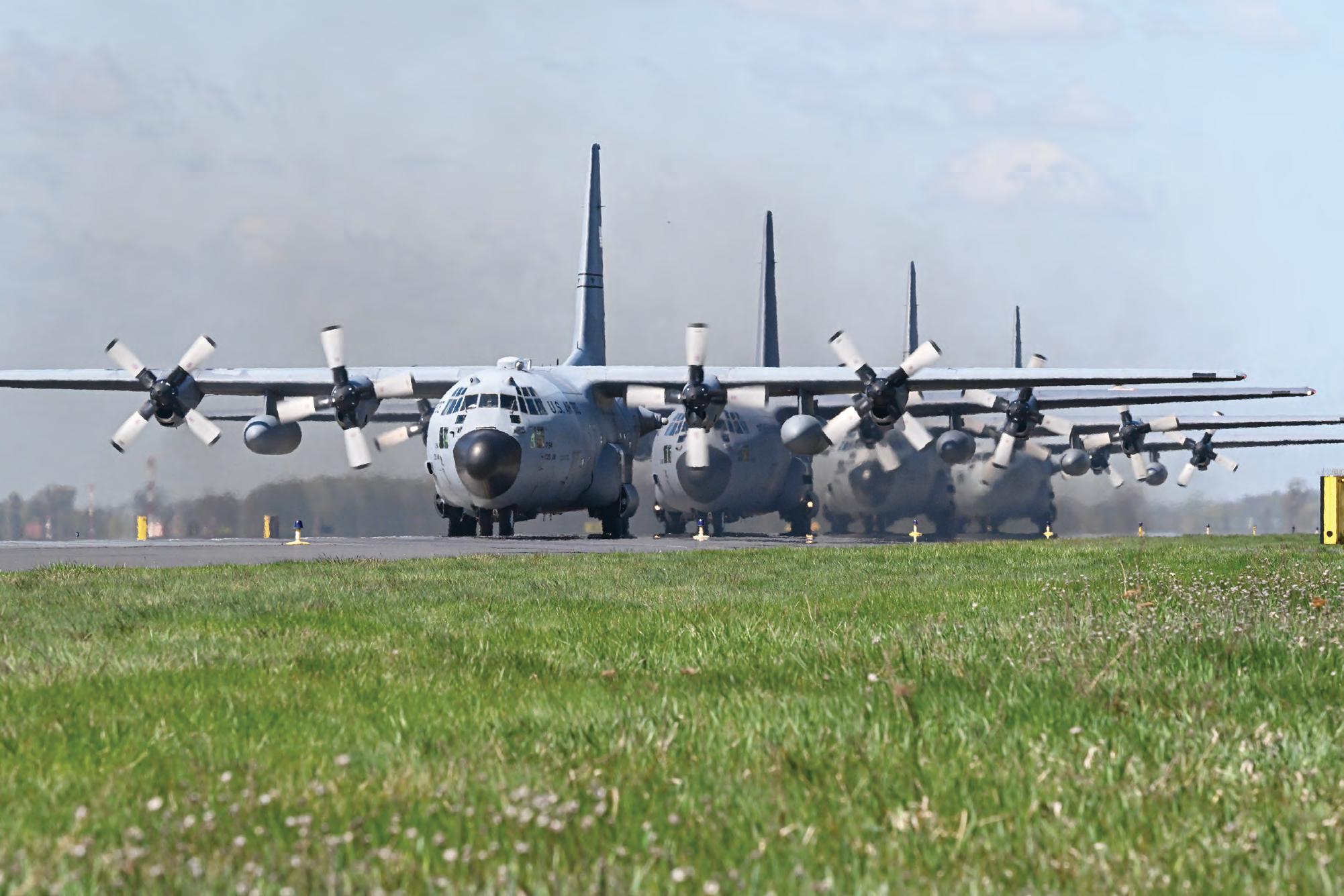
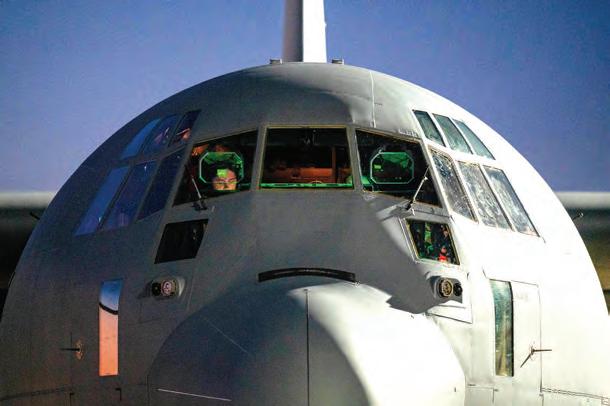
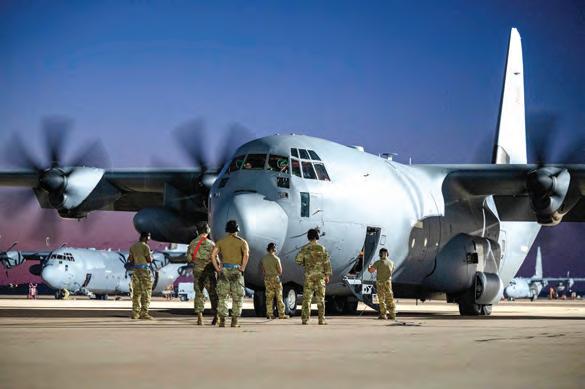
A pilot assigned to the 317th Airlift Wing conducts preflight checks inside the flight deck of a C-130J Super Hercules for a Maximum Endurance Operation in support of Exercise Balikatan 2026 at Dyess Air Force Base, Texas, April 15.
818th MSAS
years
advising, global partnership
LAKEHURST, N.J. —
Laughter, applause and familiar stories filled Tommy B’s Community Center as current and former members of the 818th Mobility Support Advisory Squadron gathered for the unit’s 15th anniversary celebration luncheon, May 15.
Though the squadron is slated to close in September, speakers emphasized its legacy will endure through the airmen it developed and the global partnerships it forged.
“Although the unit is shutting down, it was still extremely important to celebrate the work we’ve done over the last 15 years,” said Capt. Sybil Acevedo, ground transportation flight commander. “Air advising is continuing, but this was a chance for us to come together as a family, share stories and pass on items that have been part of our heritage.”
Themed “15 Years.
One Mission,” the program featured remarks from past and present leaders, a squadron history and an auction of heritage items tied to the unit’s identity.
Activated April 15, 2011, the 818th MSAS was created to build partner capacity through air mobility advising.
Over 15 years, the squadron united airmen from more than 30 career fields to train 290 air advisors, execute 475 missions and engage 15,000 partners across 30 countries.
The mission continuously evolved. The unit
added Defense Language Institute French instructors in 2016, streamlined its training pipeline in 2017 and introduced virtual reality role-playing in 2022 to sharpen cultural intelligence.
Operational milestones spanned the globe, from hosting the first U.S.-based African Partnership Flight in 2015 to expanding into the IndoPacific during Exercise Cope Thunder in 2023.
Col. Angela Polsinelli, 621st Air Mobility Advisor Group commander and a former 818th MSAS commander, framed the unit’s history by highlighting a carved wooden walking staff passed down through the unit’s leadership. The staff bears the initials of every commander who led the squadron.
Beyond missions and milestones, Polsinelli called the squadron “the ultimate leadership factory.”
“You send a technical sergeant and a captain to lead a team on the other side of the world, train partners and brief ambassadors,” Polsinelli said. “It’s amazing how they grow and thrive.”
Col. Justin Ballinger, 621st Contingency Response Wing commander, echoed this, noting the squadron’s strategic impact far exceeded its size.
“Access, basing and overflight are among the biggest challenges in any conflict,” Ballinger said. “You have to engage partners, build coalitions and gain access and resources when you’re playing an away game. This team helps make that reality at the tactical level.”
Speakers shared
See 818th, Page 7
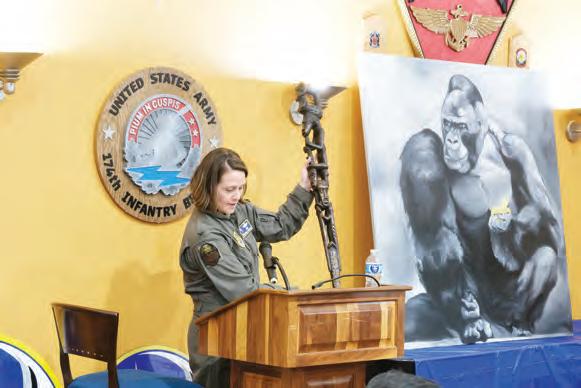
Polsinelli, 621st Air Mobility
commander, speaks at the 818th
Advisory Squadron’s 15th Anniversary
Luncheon at Tommy B’s Community Center,
McGuire-Dix-Lakehurst, N.J., May 15. The luncheon honored 15 years of air advising, partner-nation engagement and heritage, bringing current and former members together to recognize the squadron’s legacy as “Silverbacks.” CApt
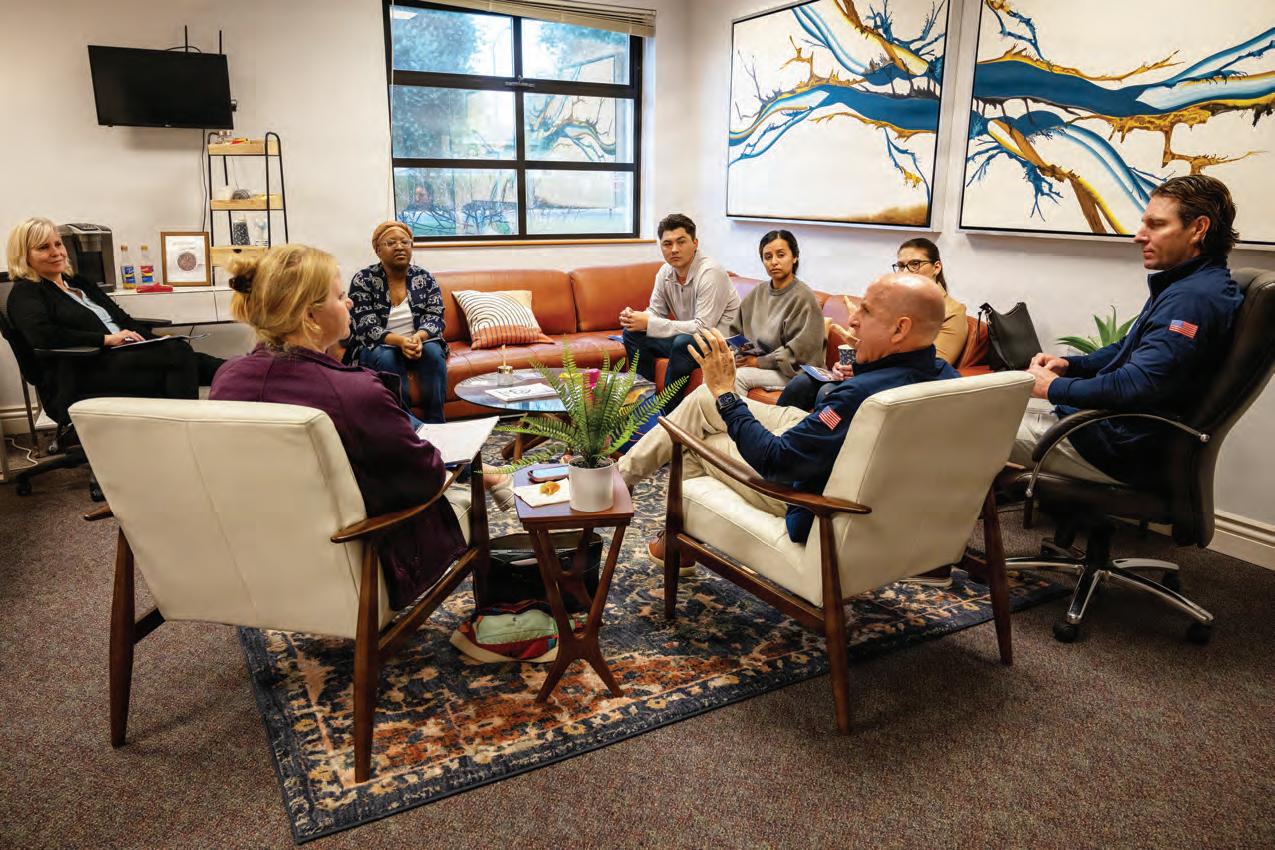
AFAS leaders connect with airmen at Travis Air Force Base
of war or crisis.
TRAVIS
BASE — Officials from the Air & Space Forces Aid Society visited Travis Air Force Base, May 5, to raise awareness about programs and resources available to airmen and guardians.
Retired U.S. Air Force Maj. Gen. Ed Thomas, who leads AFAS, and Chief Development Officer Packy Lyden represented the organization during the visit.
AFAS has supported military families for more than 80 years. Begun in 1942 by Army Air Forces Gen. Henry H. Arnold and his wife, Bee, the Air Force established the organization to meet the continuing financial needs of airmen, particularly during times
“Built for airmen, by airmen, the program still carries its core mission today while evolving to accommodate today’s military,” said Thomas. “We want to be there in a crisis. We want to be there for our airmen and guardians when they need us.”
Today, AFAS helps service members through financial, education and community support programs. These programs include non-interest loans, scholarships, childcare assistance and other opportunities that support the Air and Space Force community.
AFAS programs help Total Force airmen and guardians navigate challenges associated with military life, assist dependents pursuing education and provide grants to meet immediate financial needs




while supporting longterm stability. Thomas said the organization’s largest impacts currently include helping meet basic living expenses and natural disaster-related assistance.
“There are also a lot of expenses that TRICARE may not cover and we may be able to help,” said Thomas. “We’ve seen a rise in autism diagnoses within families, and we are able to provide funding for associated equipment or other specialized medical equipment such as infant cranial helmets.”
The organization also awards approximately $5 million annually in education scholarships for dependents. In 2025, AFAS provided $11.6 million in direct assistance to more than 12,600 individuals and families.
Already this year
From Page 2
the most remote landing zones, but that we can do so with NCOs leading and operating at the highest level,” said Diehl. These combined efforts directly support the maintenance of high-level military readiness required to respond to potential crises or contingencies.
AFAS provided more than $1.5 million to airmen affected by Typhoon Sinlaku and more than a million in support for military families during the government shutdown. In late 2024 AFAS provided more than $4.5 million to airmen and guardians impacted by Hurricanes Helene and Milton. But more common support, Thomas said, includes childcare funds for those moving, car seats for new parents who are E-1s to E-5s and financial assistance for emergency travel. “We’re the Air Force’s relief organization created for airmen, by airmen and now guardians,” said Thomas. “They need to know there’s an organization within the Air Force that has their back, and we are here for them on their hardest day.”
Chief Master Sgt. Martin Castillo, 317th AW command chief, emphasized that the wing is focused on executing these operations at scale to strengthen regional deterrence. “A free and open Indo-Pacific remains the objective,” said Castillo. “This is the 317th AW’s third iteration of Exercise Balikatan, and each iteration increases the speed, precision and confidence our airmen bring to the mission.” Balikatan is a longstanding annual exercise between the Armed Forces of the Philippines and the U.S. military designed to strengthen the alliance, improve combined capabilities and demonstrate a shared commitment to regional security and stability.





Airman Marharyta Chumakova/U.S. Air Force file
Retired Maj. Gen. Edward Thomas, AFAS chief executive officer, and Packy Lyden, AFAS chief development officer,
speak with key support liaisons at the Military and Family Readiness Center at Travis Air Force Base, May 5.
Travis AFB museum unveils new exhibits honoring aviation history
A irm An 1st ClAss
DAniel sChmitt
60TH
AIR MOBILITY WING
TRAVIS AIR FORCE
BASE — The Travis Air Force Base Aviation Museum unveiled a new series of exhibits, May 8, celebrating the legacy of aviation and the individuals who helped shape it. The event drew veterans, historians and community members to celebrate the legacy of aviation history and those who helped shape it.
The displays highlight early aviation uniforms from World War I, the contributions of Air Force warrant officers and the achievements of World War II flying aces, including Brig. Gen. Clarence Anderson and Maj. Gen. Chuck Yeager. The exhibit also recognizes notable local personalities whose lives intersected with military and aviation history.
Boosting US, India Air Force interoperability in Indo-Pacific
ChArvi A ror A U.S. EMBASSY NEW DELHI
GWALIOR, India — From vital sea lanes and trade routes to disaster response, the Indo-Pacific sits at the center of global security and stability. For the United States, operating across this vast region requires constant readiness, strong coordination, and the ability to respond quickly in a contested environment.
Headquartered at Hickam Air Force Base, Hawaii, Pacific Air Forces (PACAF) is a major command of the U.S. Air Force and the air component of U.S. Indo-Pacific Command (USINDOPACOM). Its primary focus is to deter aggression and ensure a free and open IndoPacific. It pursues this mission through a strategy of “peace through strength,” which relies on credible, combat-ready airpower and strong alliances and partnerships.
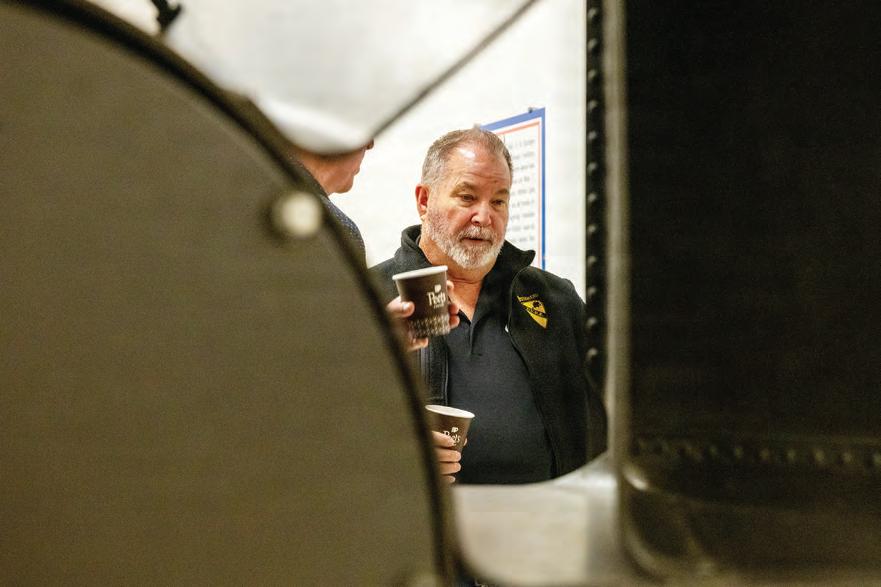
India is an important partner in these efforts, as the United States and India continue to expand cooperation through exercises, planning, and operational coordination. Bilateral defense trade and joint training with India have directly contributed to this growing interoperability.
testing interoperability. Exercises are designed to stress, test, and refine warfighting and crisis response concepts with allies and partners so they can operate as a unified force.
The relationship has matured significantly over the years; Schneider points out, “Our ability to work together has evolved from basic coordination to highend interoperability in complex scenarios.” This approach to mobility and rapid adaptation was recently tested in the large-scale Resolute Force Pacific (REFORPAC) exercise, which brought together more than 400 aircraft and over 12,000 personnel across 50 locations to demonstrate the ability to operate across the IndoPacific at scale.
Similarly, collaborative events with India like exercise Tiger Triumph focus heavily on developing these joint capabilities, specifically tailored for logistics, humanitarian assistance, and disaster relief in austere environments.
Integrating cyber and space
“Museums are not made to be static. They need to change to engage with the people every time they visit,” said Sullivan.
The World War I display focuses on an era when pilots flew rudimentary aircraft and faced extraordinary risks. Artifacts include gear and photographs describing how early aviators laid the groundwork for modern air combat.
Another display honors Air Force warrant officers, a group often overlooked in traditional narratives.
The exhibit outlines their specialized roles and longstanding contributions to mission success alongside
impact on military aviation
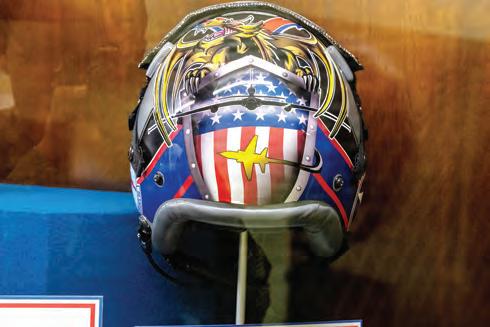
A separate area highlights local figures, offering a community-centered perspective. Among other local donors, Thomas Flood, a former U-2 Dragon Lady pilot assigned to the 99th Reconnaissance Squadron at Beale Air Force Base,donated his gear to the museum. These displays feature stories of residents who served in wartime or contributed to aviation advancements, reinforcing the region’s connection to broader historical events.
General Kevin Schneider, commander of PACAF, highlights that “the growth in Indian and U.S. bilateral defense trade has corresponded with growing interoperability,” adding that “the importance of our partnership continues to grow, particularly as we face an increasingly complex and dynamic security environment in the Indo-Pacific.”
Evolving operational priorities
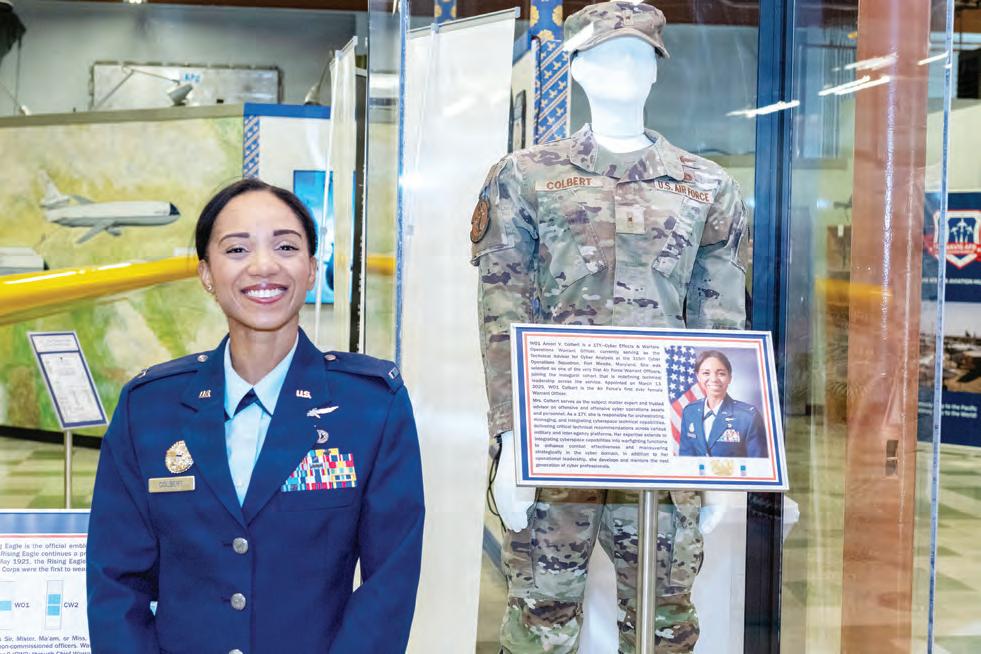
uniforms from the first warrant officer since 1959, Richard L. Barragan, and the first female warrant officer uniform, Amori V. Colbert.
“They had about 400 applications, and they only selected 60,” said Colbert. “I got to be
one of those first, very humbled and very happy to be selected.”
The museum also spotlights World War II aces through personal memorabilia, mission records and presentations. Visitors can explore the careers of the decorated pilots and their
Base leadership, local officials, Colbert and many others expressed appreciation for the effort to preserve and share these histories.
The exhibits are now open to the public and will remain a permanent part of the museum’s collection, serving as an educational resource for future generations.
US, Moroccan Air Forces project combat power during Exercise African Lion 26
A rmy 1st lt tuCker ChAse SOUTHERN EUROPEAN TASK FORCE, AFRICA CAP DRAA, Morocco — A combined flight of two U.S. Air Force B-52H Stratofortress bombers and four Royal Moroccan Air Force F-16 Fighting Falcons, signaled the launch of the country’s first accredited joint terminal attack controller qualification course, April 23. The flyover was a key component of Exercise African Lion 26, U.S. Africa Command’s largest annual joint exercise, led by U.S. Army Southern European Task Force, Africa, from April 20 to May 8. Integrating these aircraft into the multinational exercise demonstrated the ability of the U.S. and its partners to project combat-credible airpower worldwide.
Navy Petty Officer 2nd Class Samuel Wagner/U.S. Navy file
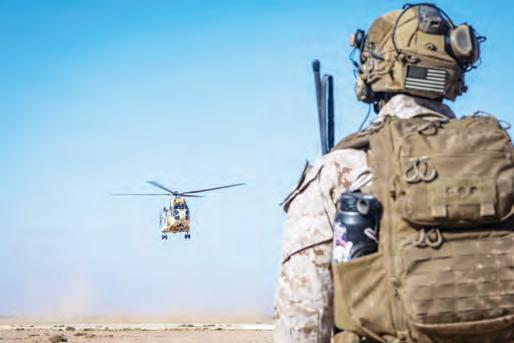
A Marine Corps joint terminal attack controller awaits the arrival of a Royal Moroccan Armed Forces Aérospatiale SA 330 Puma helicopter during Exercise African Lion 26 at Cap Draa, Morocco, April 23. The multinational joint terminal attack controller training enhanced interoperability and demonstrated the ability to project combat-credible airpower alongside allied and partner forces through the exchange of tactics, techniques and procedures.
maintain crew proficiency and qualification.
Air Force Global Strike Command bombers routinely conduct sorties around the world, including flights required to
“Their visible presence over Morocco, operating alongside Royal Moroccan Air Force fighters, signals credible deterrence and reinforces the U.S. commitment to regional
security,” said Air Force Gen. Dagvin Anderson, USAFRICOM commanding general.
U.S. Strategic Command bomber forces regularly carry out combined theater security cooperation engagements
with allies and partners, demonstrating the credibility and flexibility of U.S. forces to address today’s complex, dynamic and unpredictable global security environment.
“The inaugural [joint terminal attack controller] qualification course trains Moroccan students to direct combat aircraft, artillery and naval gunfire from forward positions,” said Air Force Master Sgt. Therron Bundick, chief of weapons and tactics for the 165th Air Support Operations Squadron.
“These controllers hold the authority to clear airstrikes, ensuring accuracy while avoiding friendly fire and minimizing collateral damage.”
As the Indo-Pacific faces a multifaceted geopolitical environment, strengthening command and control and logistics in contested areas are a priority. To address this, operational postures are adapting through agile combat employment, a concept focused on dispersing forces, improving survivability, and maintaining operational tempo across long distances. This involves pre-positioning materials and operating from a network of smaller, dispersed locations to enable operations at speed and scale.
Engagement with partners like the Indian Air Force directly supports this adaptive posture, focusing on robust partner integration, increased information sharing, and
Air operations are increasingly linked with cyber and space capabilities. The United States is working with allies and partners to deepen operational integration through training, exercises, and planning that address emerging challenges in these domains. The goal across all partnerships is to achieve seamless operation. This ambition reflects the broader U.S.-India Major Defense Partnership, which actively includes increased information sharing, regional security cooperation, and deep collaboration in these critical new domains.
Rapid response
Strategic air mobility remains central to supporting both security operations and humanitarian response across the vast distances of the Indo-Pacific. The ability to deploy hundreds of aircraft and thousands of personnel, as proven in recent exercises, is critical to rapid response.
Looking ahead
This approach also reflects the recognition that the network of allies and partners is one of America’s greatest strategic assets, fostering a shared responsibility for regional security.
India, Page 5
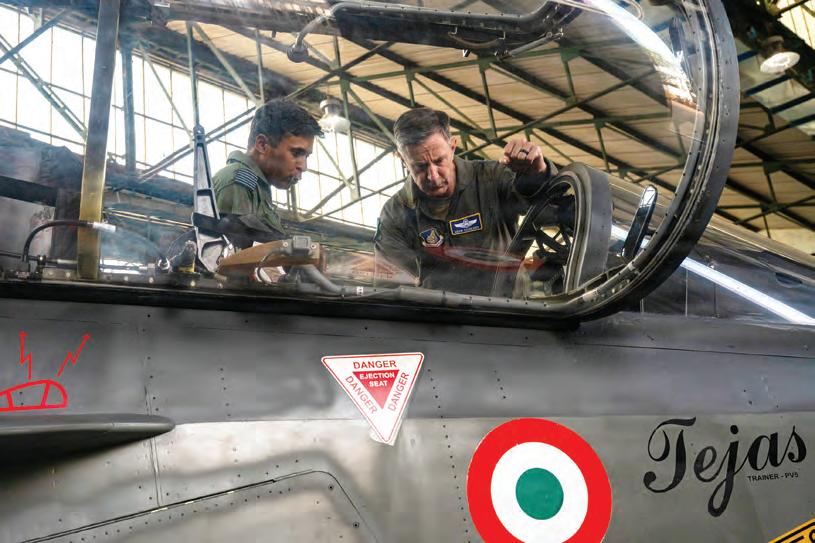
During the exercise, U.S. Air Force JTACs assigned to the 165th ASOS, as well as Detachment 1 of the 2nd ASOS, joined U.S. Marine Corps JTACs assigned to the 3rd
See Lion, Page 7
Airman 1st Class Daniel Schmitt/U.S. Air Force file photos
WO1 Amori V. Colbert, 315th Cyber Operations Squadron technical advisor, stands in front of the Museum Display
Dedication event at Travis Air Force Base, May 8. Colbert serves as the subject matter expert.
Attendees look at a museum exhibit during the Museum Display Dedication event at Travis Air Force Base, May 8. The exhibits highlight early flight, Air Force warrant officers, World War II aces and local figures connected to aviation heritage.
The helmet of Retired Lt. Col. Thomas Flood, 99th Reconnaissance Squadron, former Director of Operations, is displayed at the Travis Air Force Base Aviation Museum, May 8. Lt. Col. Flood was responsible for delivering effective, disciplined, and sustained U-2 expertise and deployment-ready airmen.
Forging tactical readiness during Iron Ascent
Tech. SgT heaTheR Ley
FAIRCHILD AIR
FORCE BASE, Wash. —
In a deliberate push to build a more agile and combat-ready force, the 92nd Air Refueling Wing launched Iron Ascent, a rigorous three-day tactical training course held April 29 to May 1. The inaugural program pulled airmen out of their typical daily duties and into hands-on combat environments, training participants from various career fields to operate as multi-capable expeditionary warfighters.
The initiative was spearheaded by Chief Master Sgt. Lindsay Moon, the 92nd ARW command chief, who saw a need to provide airmen with training beyond computer-based modules and classroom instruction.
“Iron Ascent is a course that we locally created, realizing there was a need to get past the things we learn by CBTs or in a classroom, and trying to get folks out into the field and really recognizing what warrior ethos is,” said Moon. “It allowed us to drop people out into the field to do combat-related operations, even if it’s not the same thing we expect them to do day to day.”
The result was a rigorous, multi-faceted training experience. The first day was dedicated to academics, where participants received briefings on essential deployment skills.
“The classroom instruction covered deployment tactics, Explosive Ordnance Disposal capabilities and Tactical Combat Casualty Care,” said Tech. Sgt. Katlynn Bell, 92nd Security Forces Squadron NCO in charge of training and Iron Ascent cadre. “It was mainly learning the fundamentals, so it’s easier for the practical portions later on.”
On the second day, the airmen split into two groups to apply their new knowledge, swapping halfway through the day so everyone completed both events. One group practiced close-quarters battle tactics and troop movements at the security forces “shoot house,” while the other group rappelled down a 30-foot wall with Survival, Evasion, Resistance and Escape specialists.
“We tried to progressively build on the concepts,” said Moon. “We were able to hand them actual M4s so they could practice clearing rooms, being in formation and communi-
cating together.”
The final day culminated in a field training exercise at the Nighthawk Range, where participants faced a series of challenging scenarios across 50 acres of terrain. They defended locations, acquired intelligence and navigated through ambushes against opposing forces, putting all their training to the test under highstress conditions.
“You saw a lot of different stressors that were applied to them, and it was amazing to watch them face those [stressors],” said Moon.
The importance of these skills, regardless of an airman’s specific job, was a central theme of Iron Ascent. The program reflected the Air Force’s broader push toward creating a more agile and versatile force.
“It’s important for people to understand that we may ask you to do things outside of what you learned in tech school,” said Moon. “But that is okay; you can do hard things. We had airmen from finance and weather training right alongside security forces and survival instructors, and watching them all work together was amazing.”
Staff Sgt. Dakota Peterson, 92nd SFS NCOIC of physical security and Iron Ascent cadre, noted the training established a critical baseline for airmen who may find themselves in unexpected roles during a deployment.
“It’s critical, because when they deploy, they might be asked to step outside their normal duties, and this training provides that foundation,” said Peterson. “It’s a stepping stone that allows them to say, ‘Hey, I have some experience. I trained for this a year ago and now I can apply it here.’”
For the cadre, one of the most rewarding aspects was watching the volunteer participants embrace the challenges head-on.
“It was really awesome to see people stepping out of their comfort zones, and not being afraid of it, and really just embracing it,” said Bell. “It’s all volunteers here. No one here was told to be here. It’s really cool to have them come out and be so about it.”
The enthusiasm was palpable. According to Moon, many participants immediately asked how they could be involved in the next iteration, a testament to the program’s success and the growing appetite for hands-on, tactical training.
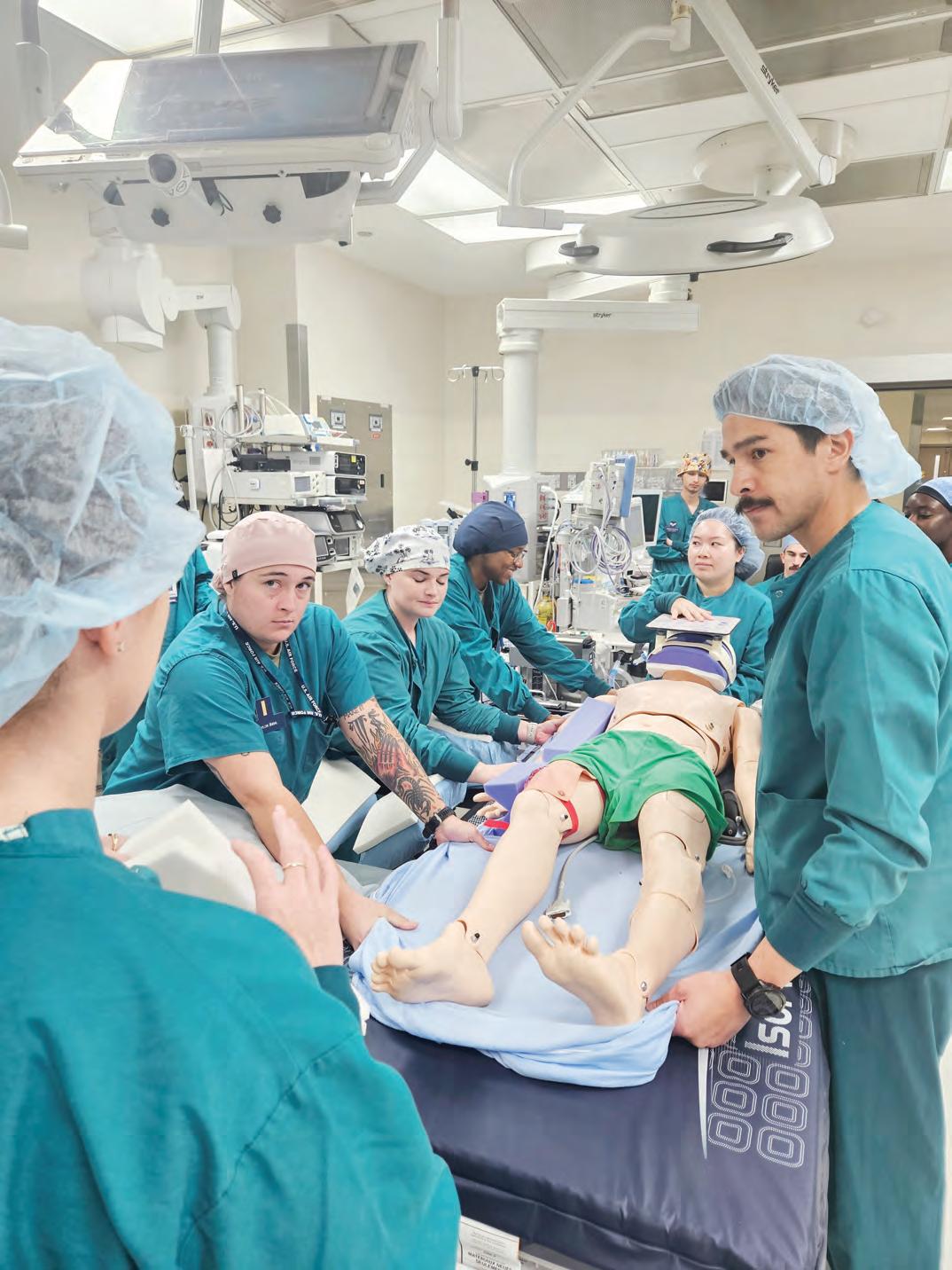
David Grant wound team strengthens inpatient care
RodeRick Tapnio
TRAVIS AIR FORCE
BASE — An interdisciplinary team at David Grant Medical Center is improving inpatient care through a coordinated approach focused on wound prevention, early intervention and patient recovery.
The Wound Care Optimization Team was established in the fall of 2025 after clinical staff identified opportunities to improve inpatient wound care services, expand prevention efforts, and strengthen coordination among care teams across the hospital. The initiative supports ongoing efforts across the Military Health System to improve patient safety, strengthen care quality, and advance highreliability practices.
“On the medical-surgical unit, approximately 30% of patients admitted required wound care services,” said Maj. Bonnie L. Sgroi, an adult-gerontology clinical nurse specialist for Inpatient Medical Services at DGMC. “We recognized an opportunity to improve availability, standardize prevention efforts, and better support our patients through a more proactive and collaborative approach.”
The team includes clinical nurse special-
India
From Page 4
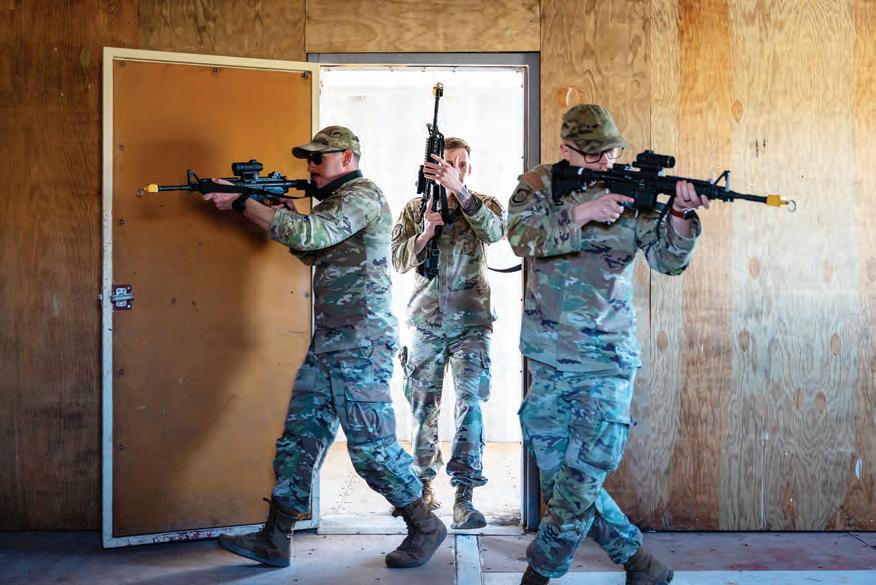
The Quad (comprised of the United States, India, Japan, and Australia) serves as a key mechanism for such collaboration on critical and emerging technologies, ensuring partners like India are integrated into the evolving operational landscape. Looking forward, the greatest opportunities lie in continuing to build upon strategic partnerships to promote stability, both bilaterally and through regional groupings like the Quad. Future cooperation is expected to focus on emerging domains, technology, and regional security as tactical and strategic coordination in the Indo-Pacific continues
“The foundation of a free and open Indo-Pacific rests on the strength of our strategic relationships,” said Schneider. “In India, we have a partner whose shared values and approaches ensures our combined resolve to meet regional challenges.”
ists, wound care nurses, dietitians, operating room nurses, hospital quality and safety personnel, and specialty care providers working together to improve wound prevention and treatment processes throughout the medical center.
Key initiatives include expanded wound care nurse coverage, competency-based wound care training for nursing staff, peer-to-peer prevention audits, nutrition consultation pathways for at-risk patients, and operating room interventions designed to reduce pressure injuries during prolonged surgical procedures.
DGMC has reported no new hospital-acquired pressure injuries since adding wound care nurses and implementing updated operating room woundrisk interventions earlier this year. The team also reported an 11% reduction in wound care consult response times and a 30% increase in nurse-
driven nutrition consults for patients identified as high risk.
“It has been a pleasure further developing the inpatient wound, ostomy, and continence nursing care program at David Grant Medical Center alongside a passionate interdisciplinary team,” said Joanna M. Davis, a wound care nurse at the medical center. “With increased support and dedicated training opportunities, we are continuing to expand access to meaningful education while preparing our nurses to better support wound healing during hospitalization and after discharge.”
The team’s training efforts include a 160-hour competency-based clinical rotation with wound care specialists, attendance at wound care education courses, and preparation for nationally recognized wound care certification examinations. Additional shadow programs for medical technicians and nursing support staff are


also being implemented to strengthen skills related to wound prevention and skin assessments. Future initiatives include expanding outpatient wound care follow-up support for qualifying patients, implementing updated pressure support systems for prolonged surgeries, and standardizing wound care consult templates to improve communication and continuity of care between clinical teams.
“Being part of this team is a constant source of inspiration,” Sgroi said. “We’ve brought together a group of professionals committed to improving patient care and supporting one another through collaboration and innovation.”
The program reflects DGMC’s continued focus on improving patient outcomes while fostering collaboration across clinical specialties to support safe, high-quality health care delivery.




















U.S. Air Force/Courtesy photo
Clinicians and nursing staff assigned to David Grant Medical Center participate in pressure injury prevention training at Travis AFB in May. The training supports
efforts by the Wound Care Optimization Team to reduce healthcare-acquired pressure injuries through standardized prevention practices and interdisciplinary collaboration.
726th EMSS airman integrates real-time munitions tracking tool
M aster sgt. Carlin leslie
449TH AIR EXPEDITIONARY WING
CAMP LEMONNIER,
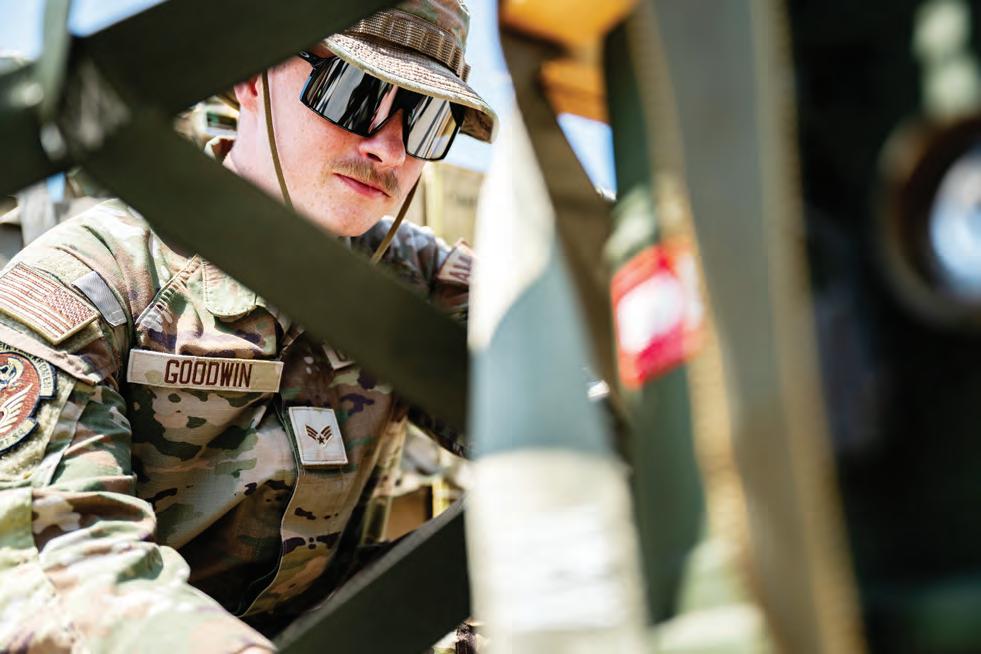
Djibouti — The 449th Air Expeditionary Group just took a step into the future of space utilization in their area of responsibility within East Africa. Recently, Senior Airman Caden Goodwin of the 726th Expeditionary Mission Support Squadron led the integration of a new weapons storage space allocation tracking tool.
Goodwin, a munitions operations technician, identified the need for accurate spatial visibility across operating sites and led his team in deploying this digital solution. Prior to this upgrade, accountability relied on manual ledgers and static spreadsheets that required constant physical verification.
“This tool will consolidate and streamline munitions for U.S. East-

We invite you to join us for Sunday service at 10:30 a.m.
2207 Union Avenue, Fairfield, CA www.1ag .com


African bases, giving our team real-time visibility of munitions we are respon-
sible for in the area of responsibility,” Goodwin said. “As well, what muni-
responsible for managing all munitions that enter the East Africa area of responsibility and ensuring they are transported to their proper locations expeditiously.
tions we can get shipped to us and what physical space we have to store our muni-
tions at specific sites.”
The localized implementation digitizes
facility needs and provides an instant, accessible dashboard, to give real-time updates for mission-critical needs across the AOR. “The Munitions Storage Plan (MSP) plays a critical part in our ability to plan munitions posturing and enables us to logically store hazardous material in a way that ensures explosive safety and regulatory compliance,” said Master Sgt. Brandon Kilburg, 726th EMSS munitions flight chief and MASO. “It’s a product that can be maintained by just about anyone, and it can be passed down from rotation to rotation. The goal is sustainability!” Additionally, the tool eliminates the need for manual recounts, cuts down shift-change inventory times, and dramatically accelerates decision-making cycles. “Goodwin brought
See Goodwin, Page 7




Email: o ce@northhillsvv.org
Website: www.northhillsvv.org Service
Sunday morning 10 a.m., Wednesday evening 6:30 p.m. Phone: 707-449-8977




Fir St., Vacaville, CA 95688 (707) 448-5085
Minister: Elliott Williams





NA ZARENE
Master Sgt. Carlin Leslie/U.S. Air Force file
Senior Airman Caden Goodwin, 726th EMSS munitions operations technician, inspects a munitions delivery at Camp Lemonnier, Djibouti, May 4. The 726th EMSS is
From Page 4
Air Naval Gunfire Liaison Company to train alongside service members from Canada, Hungary and Morocco. Live and simulated training events give students realistic close-air support scenarios, and the diverse group accelerates the development of professional JTAC leadership through the exchange of tactics and procedures.
Bundick noted that the program marks a foundational step toward a standardized, internationally interoperable JTAC capability aligned with modern coalition warfare requirements.
“Morocco’s first JTAC qualification course marks a historic milestone in advancing allied interoperability,” he said. “U.S. involvement ensures a rigorous training environment to establish a lasting foundation for the program’s future.”
Combined live-fire integration also allows U.S. units to test their own tactics alongside trusted partners. Marine
818th
From Page 3
stories from deployments requiring air advisors to act as both technical experts and “warrior diplomats.” The anecdotes drew laughter but reinforced a core truth: successful advising demands cultural awareness, adaptability and trust.
During the heritage auction, members bid on patches, flags and artifacts, preserving pieces of the unit’s visual history as it enters its final months. For the current commander, the event was a reminder of what made the squadron distinct.
Goodwin
From Page 6
a tool from a previous base and transformed it into a multi-installation tool that powers leaders to make informed decisions in an already constrained AOR,” Kilburg continued. The successful rollout of the weapons storage tracker is a testament to the ingenuity and impact of individual personnel within the 449th AEG. By empowering airmen like Goodwin to modernize their work-
Corps Maj. Michael Chevallier, 1st Brigade air officer assigned to the 3rd Air Naval Gunfire Liaison Company, emphasized that the exercise allowed both forces to crosstrain and leverage each other’s unique operational capabilities.
“Combined live-fire training like this allows us to validate our tactics, techniques and procedures under the trusted scrutiny of an allied force,” Chevallier said. “It reinforces that shared commitment to excellence where, as we say, ‘steel sharpens steel.’” Chevallier said Exercise African Lion 26 has provided a valuable opportunity for the Marines of his unit and its partners in the Royal Moroccan Armed Forces to learn from each other’s strengths and unique capabilities.
The combined employment of U.S. strategic heavy bombers with Moroccan airpower, paired with the launch of Morocco’s first nationally accredited JTAC qualification course, provides flexible options to assure partners and deter potential adversaries across the Africom area of responsibility.
“I’d like us to be remembered as people who cared about each other and watched each other’s backs,” said Lt. Col. Christina Norbygaard, 818th MSAS commander. “The 818th bridged the gap between our partners and the U.S., but at the end of the day, the people are what I’d like us to remember.”
With missions still on the calendar before the unit’s closure, Norbygaard urged her team to press hard to the very end. “Build those connections, and when we all depart in September, stay connected,” Norbygaard said. “Because you never know when we’re coming back.”
spaces, the 449th AEG continues to cultivate a purpose-driven culture where individual dedication directly fuels mission success and strengthens regional stability. “In today’s ever-adapting technological age, we need airmen who can think. I posed a problem, and Goodwin said to trust him,” concluded Kilburg. “He took visions from his leadership and requirements from the regulation and translated them into something we could use to solve problems.”
621st CRS showcases strengths at Exercise Storm Flag 26-07
1st Lt. Jessica
HURST, N.J. — Members of the 621st Contingency Response Squadrons participated in Storm Flag 26-07, a Mobility Air Forces exercise conducted at multiple locations from May 9-17.
Upon arrival, the 621st established an aerial port at Alexandria, serving as the Initial Staging Base (ISB) for forward deploying U.S. Army personnel and equipment. The exercise emphasized agility, with the Contingency Response Element (CRE) practicing the deliberate break-off of a Contingency Support Element (CSE).
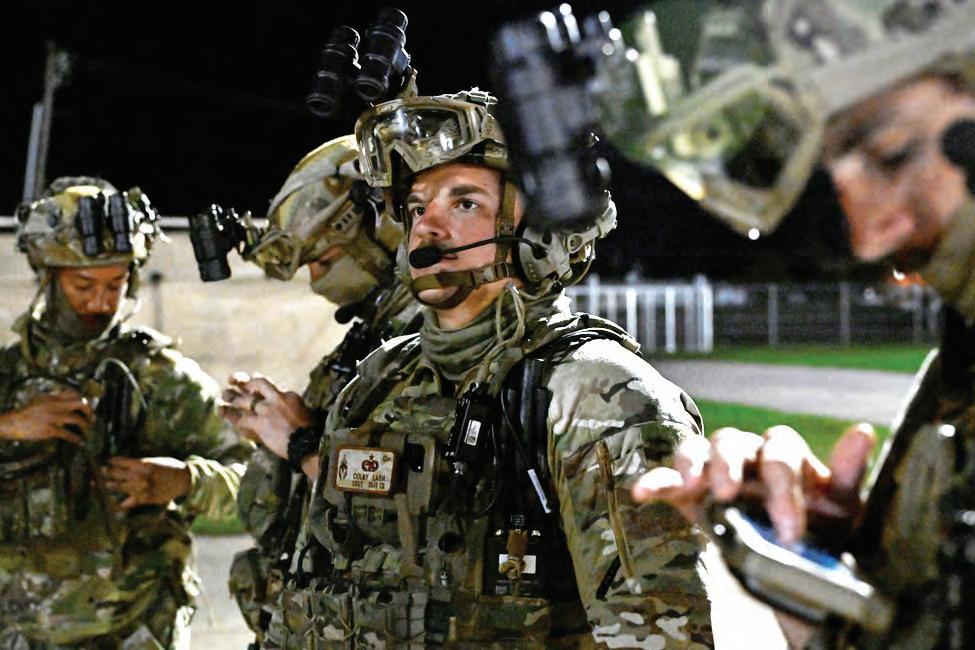
Clearing the way for the CSE’s arrival, the small, hand-selected Airfield Assessment Team conducted a four-hour “go/no-go” evaluation in a simulated austere environment, including their first collective nighttime sling-load operation, airfield assessment, and the establishment of a certified landing zone.
“This was a great opportunity for us to step outside the usual boundaries of our career fields and gain experience certifying and executing these sling-load operations,” said Staff Sgt. Benjamin Butler, 621st Contingency Response Squadron Assessment Team. “Even though our team was freshly formed, everyone worked together seamlessly, which really speaks to the profession-
team,” said Capt. Andrew DiCicco, Assistant Director of Operations, 621st Contingency Response Squadron. “Not just for their professionalism and readiness, but for showing the full range of capabilities we bring to the fight to enable our partners.
alism and dedication of every person I have the privilege to work with.”
Once in place, the CSE set up a temporary airbridge from the ISB to Geronimo Landing Zone, the Forward Staging Base (FSB), ensuring
the timely delivery of cargo to support the 10th Mountain Division’s certification exercise.
“Right now, real-world events can push our force to operate anywhere at a moment’s notice, and I’m really proud of our


Storm Flag 26-07 put the Contingency Response teams squarely in their element: operating in dispersed, contested environments to ensure the rapid flow of personnel and equipment, setting the stage to enable our partners. Exercises like this are the CRW’s bread and butter, showcasing their ability to respond quickly and decisively to emerging operational needs, and reinforcing the Air Force’s commitment to agile, scalable airpower.


1st Lt. Jessica McLaughlin/U.S. Air Force file photos
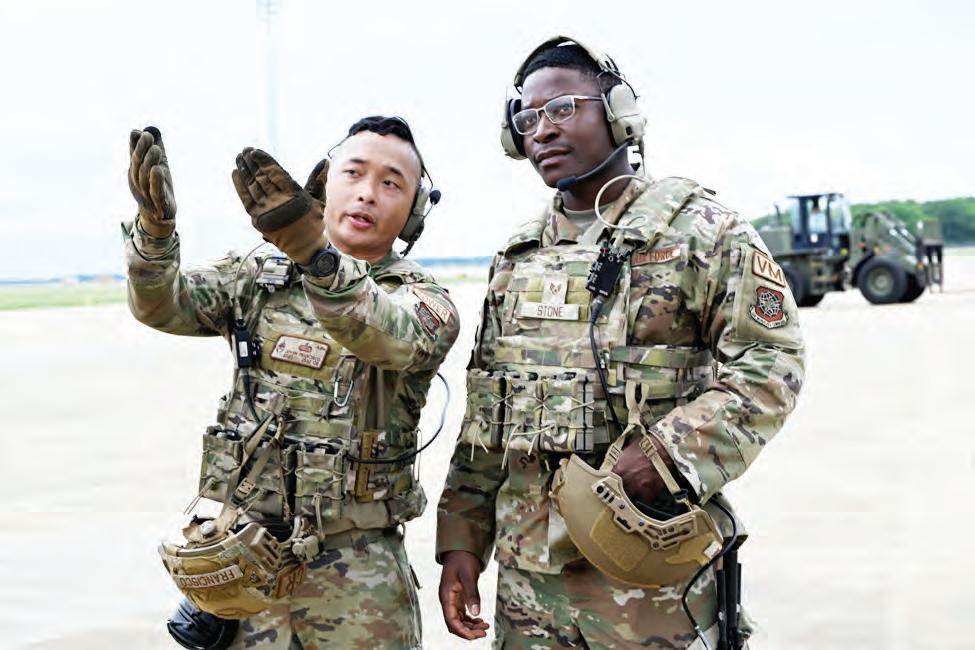
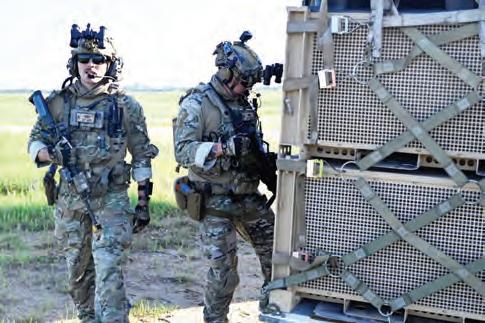
Staff Sgt. Joven Francisco, left, and Staff Sgt. Imran Stone, 621st Contingency Response Squadron airmen, cover spotting procedures while downloading an aircraft during Exercise Storm Flag 26-07 at Alexandria Airfield, La.,
May 10. During the exercise, the CRS established an Initial Staging Base, conducted airfield assessments and executed a deliberate break-off of a Contingency Support Element at various locations.
Staff Sgt. Colby Lash of the 621st Contingency Response Squadron listens to the Assessment Team pre-sling load mission brief during Exercise Storm Flag 26-07 at Alexandria Airfield, La., May 10.
Staff Sgt. Kade Christ and Staff Sgt. Logan Turner, 621st Contingency Response Squadron Assessment Team airmen, place dunnage for pallets during Exercise Storm Flag 26-07 at Geronimo Landing Zone, La., May 10.