TRAVIS TAILWIND


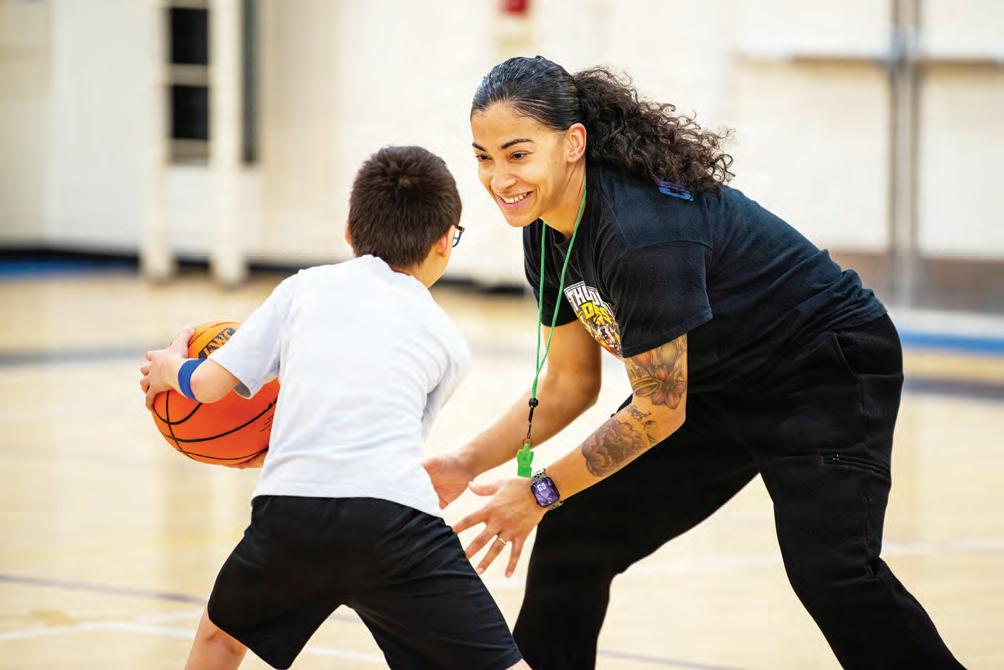
Lt. Jasmine Copeland, a nurse assigned to the 60th Inpatient Operations Squadron, coaches youth basketball in the local community. Her work on the court reflects the same focus on teamwork, accountability and service she applies in uniform. Copeland joined the Air Force while working toward her goal of becoming a nurse. After earning a

sioning Program in 2021, earned her Bachelor of Science in Nursing in 2022, obtained her nursing license and commissioned in 2023. She said serving with the 60th Inpatient Operations Squadron is a reminder of how far she has come in her career.
Reflecting on her current role, Copeland said caring for patients gives her an opportunity to serve military members and their families.
“Being part of a team that provides care for service members, past and present, as well as their families makes the job worth it because we are giving back to those who have served and sacrificed for their country,”
See Copeland, Page 3
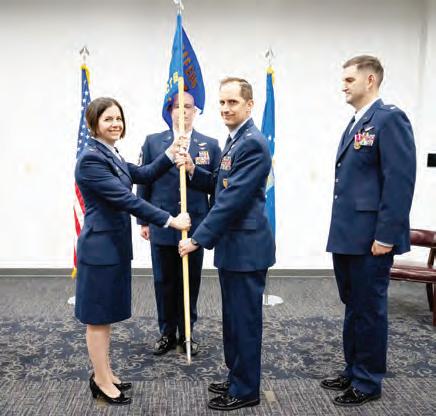
ing complex exercise capabilities under the USAF Expeditionary Center to meet the demands of modern global threats. By bringing both of AMC’s CTSs under the purview of the USAF Expeditionary Operations School (EOS), the command
A
BASE — To commemorate the Nation’s 250 th anniversary, Military Star is offering new cardmembers on Travis its largest discount ever: 25% off first day’s purchases.
From June 25 through July 2, Travis Exchange shoppers who open and use a new Military Star account can save 25% on all first day’s purchases instead of the regular 10% discount. The discount can be combined with other Military Star and Exchange promotions.
Military Star offers exclusive cardmember savings including:
n 5 cents off every gallon of gas from the Travis Express.
n 10% off food purchases at participating Travis Exchange restaurants.
n Free standard shipping on ShopMyExchange.com, MyNavyExchange. com and ShopCGX. com orders.
Cardmembers also earn unlimited 2% rewards on purchases everywhere the card is accepted, including commissaries, concessionaires, restaurants plus purchases at ShopMyExchange.com, MyNavyExchange.com and ShopCGX.com. All cardmembers enjoy an industry-low APR regardless of credit score and no annual, late or over-limit fees. The first-day purchase discount is dependent upon the application being approved and will be applied as credit on the first monthly billing statement. For more information, visit https:// publicaffairs-sme.com/ community/military-star.

robert PhilPot ARMY & AIR FORCE EXCHANGE SERVICE PUBLIC AFFAIRS

A rmy & A ir Force exchAnge Service Public A FFAirS
TRAVIS AIR FORCE BASE — Military children can go to infinity and beyond during “Toy Story” playtime featuring coloring stations and toys such as Play-Doh Toy Story Space Creations, Mr. Potato Head, Toy Story 5 Cowboy and more at the Travis BX, June 20 from noon to 3 p.m.
“We’re honored to support events for military families,” said Travis Exchange General

Manager Cathie Byrns. “Giving military kids fun, everyday moments brings a special kind of joy to the entire Travis community.” Preregistration is not required. For more information, contact the Travis Exchange or visit the Travis Exchange’s social media pages.

Longtime customers at the Travis AFB Exchange will sometimes encounter Dali UrbinaYanez and tell her that she hasn’t changed.
“And I’ll say, ‘Yes, I have!’,” said Dali, an inventory control associate. “I was 25 years old when I started, and I’ve been here 50 years. I’ll recognize people before they recognize me and they’ll say, ‘Oh, wow, you’re still here!’”
Dali has been there at Travis, straight through, since June 1976. Her 50th anniversary at the Exchange was June 12.
In 1976, she was married, and her then-husband joined the military. He served about four years, then got a civil-service job at Travis. Dali was working in the town of Winters, about 20 miles from the base. But she didn’t like the commute, so when someone told her to apply to the Exchange, she gave it a shot.
“I was fortunate to get hired here,” she said. “The Travis Exchange

works really well for me because it’s close to where I live. I had two kids, and I was able to work and to be there for them when they got out of school. I’ve had a really good schedule the whole time I’ve been here.” She added with a laugh: “That’s why I’ve been here so long.”
But, she said, it doesn’t seem like it’s been that long.
“It doesn’t really feel like 50 years,” she said. “I’m shocked at myself. Young people here, they all say, ‘How long have you
been here?’ And I’ll say, ‘Longer than you’ve been alive.’ And we just laugh.
“But it really hasn’t felt like that long,” she continued. “I’m pretty active, and I don’t have any health issues. I can pick up merchandise like luggage and move it. I can take shelves down, do planograms. … Within reason – I don’t lift certain things like I used to, when I was in my 40s and 50s. So laborers help.”
Dali says she’s happy to come to work and take care of the Travis community.
“I have a purpose doing
this job, and the benefits are great,” she said. “I see it as a whole package. … Everybody gets along here. We all pull together to make sure things get done.”
Travis’ Northern California location, between the San Francisco Bay Area and Sacramento, is another plus.
“The weather’s good, and you don’t have to drive too far to go to King’s Canyon, Sequoia or Yosemite National Park, and I like those places,” she said. “I’ve always had time to go on vacation, to go back home to New Orleans. When my dad was sick, I was able to take leave and be with him for a while.”
Dali isn’t sure whether she’s going to shoot for the 55-year mark. But she does plan to stick around for a while.
“I’m not ready to retire in the next year or so,” she said. “I’ll see how it goes. I’m very grateful to be serving the military community, making sure that we have whatever we need, and finding ways to get it if we don’t. It’s a good place to work, and I’m very happy with it. There’s peace of mind in having a job. I like the continuity.”














































Capt. Christian LittLe
HQ AMC
SCOTT AIR FORCE
BASE, Ill. — Air Mobility Command has released the report of an accident investigation board investigating a July 8, 2025, mishap involving a U.S. Air Force KC-46A Pegasus aircraft assigned to the 22nd Air Refueling Wing and an F-22A Raptor aircraft assigned to the 1st Fighter Wing.
While the KC-46A aircraft was refueling the F-22A aircraft over the Atlantic Ocean, a nozzle binding event occurred during a breakaway which resulted in the air refueling boom striking the tail section of the KC-46A aircraft, breaking off, then falling into the ocean. The report identified an estimated $9,979,567 of damage to the associated KC-46A aircraft.
The mishap did not result in any injuries or damage to civilian property.
The investigation found that all KC-46A
From Page 1
said Copeland.
She said coaching youth basketball began as a way to invest time in her children and stay connected through sports, while also supporting other young athletes in the community.
“Coaching gave me an opportunity to support young athletes, encourage them, and help them grow as young leaders both on and off the court,” said Copeland. “Being part of the community and investing in youth development is something that means a lot to me.”
U.S. Air Force 1st Lt. Talia Ambrosio-Earle, a coworker of Copeland’s in the 60th Inpatient Operations Squadron, said those same qualities are visible in the way Copeland leads others on and off duty.
“Lt. Copeland is patient, understanding and knows when to take action to make sure everyone is treated fairly and standards are being met,” said Ambrosio-Earle. “She is a team player and ensures that people can reach their goals and dreams.”
Copeland said basketball teaches more than the fundamentals of the game. Through practices and games, she said players build confidence, teamwork, decision-making skills and resilience.
Speaking on what she hopes players learn, Copeland said setbacks can become opportunities for growth.
“One of the most important things I hope each player carries away with them is that mistakes happen and are opportunities to improve ourselves and be supportive teammates,” said Copeland. Ambrosio-Earle said Copeland’s approach as a coach mirrors the same support she provides in the workplace. She said Copeland is patient and makes an effort to ensure each child feels seen and heard.
“She was firm, but the players gravitated towards her, and I could tell they understood she cared,” said Ambrosio-Earle. “She not only taught them basketball but instilled in them leadership qualities of
mishap aircraft crew members were properly qualified for their tasks prior to the incident or under direct supervision from an instructor. The F-22A mishap aircraft pilot was a student under the direct supervision of a present instructor pilot.
The AIB president’s statement of opinion noted that, by a preponderance of the evidence, the mishap was caused by the mishap boom operator’s manual control inputs to the air refueling flight control stick, resulting in an excessively out of trim air refueling boom that produced a radial force to the boom nozzle which then caused it to become bound inside of the receiver aircraft’s air refueling receptacle.
The statement of opinion also noted that, by a preponderance of the evidence, a substantially contributing factor of the mishap was a failure of the F-22A receiving aircraft’s pilot to account for KC-46A aircraft stiff boom characteristics.
teamwork, resilience and patience.”
Copeland said Air Force service reinforced that success depends on the team, not one individual, and that mindset carries over to the court.
“Although I’ve been part of teams before, the Air Force has taught me that success is never an individual effort. It’s the team,” said Copeland.
She also said coaching has strengthened her communication and mentorship skills by teaching her to adapt to different learning styles. Copeland said community involvement also supports the broader Air Force mission by strengthening ties between airmen and the communities they serve.
“Being involved in youth programs and community activities is another way we live out the Air Force’s commitment to service,” said Copeland.
Ambrosio-Earle said Copeland’s involvement in youth basketball reflects the same values she demonstrates as an officer and teammate.
“Her commitment to coaching says that she wants others to succeed and that she cares about the future of the youth,” said Ambrosio-Earle.
“She is selfless and willing to dedicate her limited off time to helping others.”
As practices continue, Copeland said she hopes players remember they were supported, encouraged and believed in.
teCh sgt. Luke k itterman 621ST CONTINGENCY RESPONSE WING
TRAVIS AIR FORCE
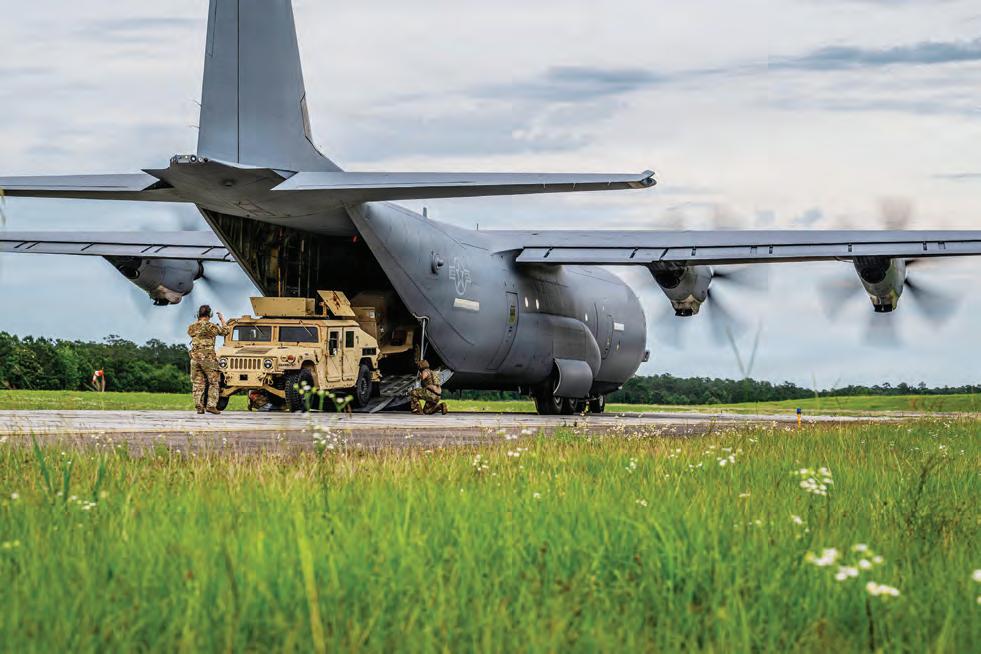
BASE — The 821st Contingency Response Squadron out of Travis Air Force Base completed its Joint Task Force-Port Opening (JTF-PO) validation assessment during Exercise Turbo Distribution 26-2 at Camp Shelby, Miss., May 21-27.
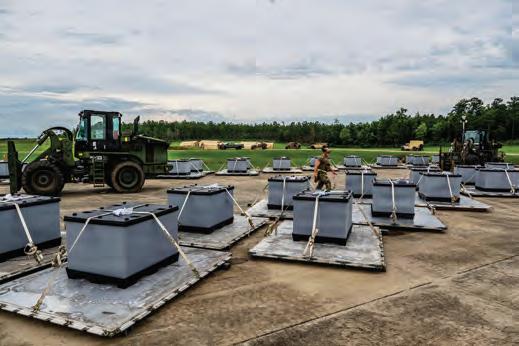
The weeklong, multidomain scenario tested the timely execution of a united, agile and joint response effort following a simulated typhoon, bringing together the 821 CRS’s rapid airfield assessment and stand-up expertise with the U.S. Army’s inland cargo and port-handling skills to guarantee that troops and supplies are moved efficiently in both austere and contested environments.
Heading operational security for the exercise was U.S. Air Force Capt. Alec Zimmerman, 821 CRS defense force commander, who led the charge for responses to possible chemical outbreaks, hostile protests and for the first time in the exercise’s history, integrated organic small-unmanned aircraft systems incursions (sUAS) and counter-sUAS capabilities.
“In today’s contested environments, the threat to air bases is truly multidomain,” Zimmerman said. “We aren’t solely securing the perimeter against ground actors anymore; we are actively monitoring and defending the airspace.”
According to the Federal Aviation Administration, sUAS are defined by weighing less than 55 lbs. are a continuous and evolving threat to the security and mission of military installations and Air Force personnel.
“It enabled us to actively detect, track, and mitigate aerial threats before they could disrupt



JTF-PO airfield operations,” Zimmerman said.
“I am incredibly proud of how this team leveraged new capabilities to successfully thwart a multitude of ground and air [simulated] threats, preparing our team to execute real-world operations.”
The more than 30 career fields represented by the participating airmen and soldiers battled against
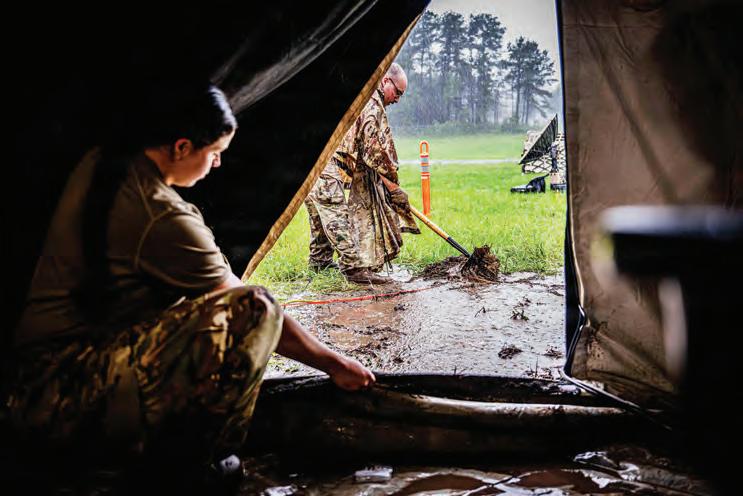
extreme working conditions, both through the exercise’s simulated typhoon and real-world weather as Camp Shelby accumulated close to 10 inches of rain throughout the week.
“Exercises like Turbo Distribution are absolutely critical because they build thereadinessof our joint forces to rapidly deploy and establish initial distri-
bution networks,” said U.S. Air Force Lt. Col. Jennifer Prouty, 621st Contingency Response Wing deputy director of staff and JTF-PO commander for the exercise. “This rigorous training ensures that our teams areready, agile, and prepared to deliver a rapid responseduring any globalcrisis. Working shoulder-to-shoulder with our Army counterparts allows us to leverage a robust network of joint skills, ensuring soldiers and airmen are united to achieve our shared objectives in both austere and contested environments.”
Exercise Turbo Distribution is a recurring, joint U.S. Transportation Command field training exercise that prepares a ready force for geographic combatant commands to open a seaport and move all arriving materiel from the port of debarkation to a forward node or the end-user.












Tribune ConTenT AgenCy
LOS
ANGELES
—
The
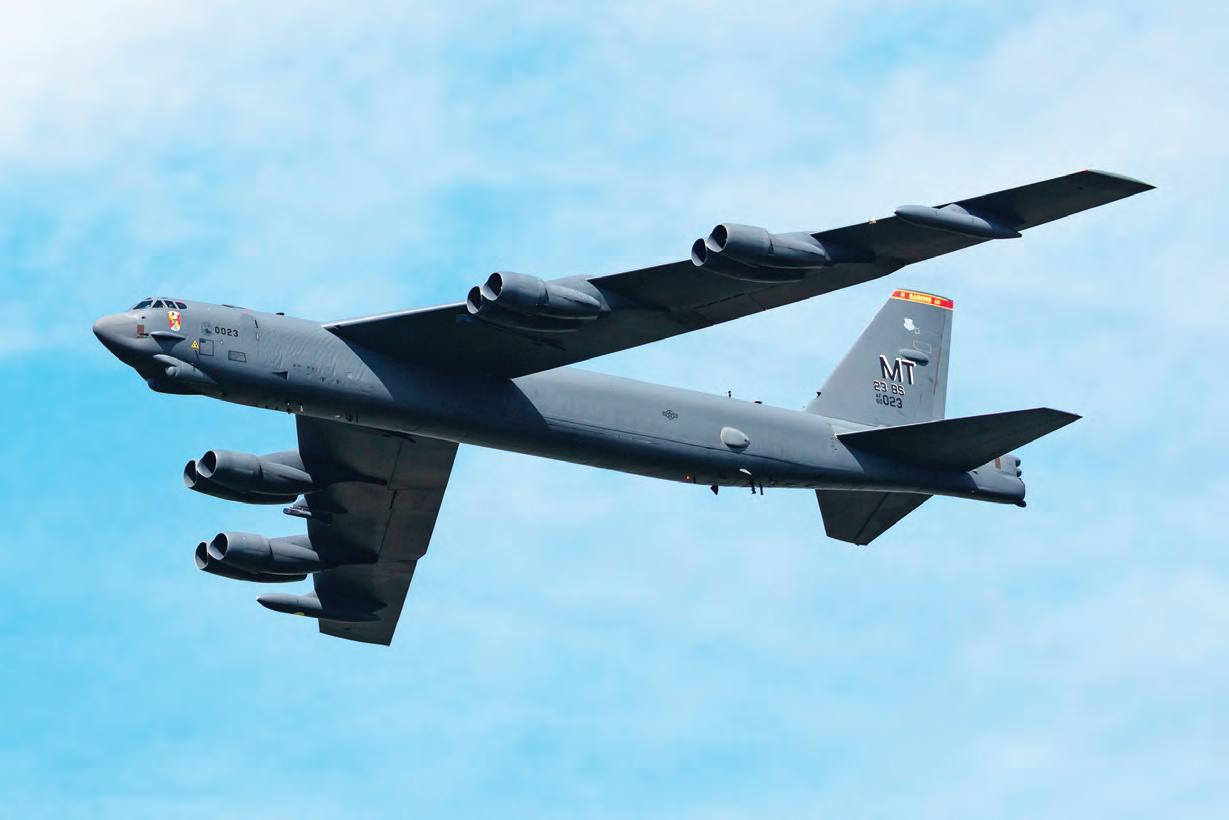
U.S. Air Force at Edwards Air Force Base was in the process of tests to upgrade the aging fleet of B-52 bombers with new engines and radar systems when one of the planes crashed Monday, killing eight people, officials said.
The tests, and planned upgrades for the bomber, are just the latest in what has been long history for the plane that has undergone more than half a dozen transformations and has remained in the U.S. arsenal for more than 70 years.
The B-52 is considered a legendary workhorse, remaining a key part of the military’s fleet for decades thanks to constant improvements to the planes.
It’s still unclear what caused the deadly crash at Edwards Air Force Base just after 11 a.m., sending a huge plume of smoke from the base. In a press conference, Col. James Hayes said the B-52 that crashed was supporting a “radar modernization program.”
Edwards Air Force Base officials confirmed the plane crashed shortly after take-off of a “routine test mission.” They declined to identify the victims until the next of kin had been notified.
The airfield remained closed Tuesday after a night of crews fighting small start-up fires in the area.
Air Force officials announced in May and December that B-52s would be undergoing testing at Edwards Air Force Base as the Department of Defense looked to upgrade the plane’s engines and radar.
Efforts to upgrade and create a new version of the iconic B-52 bomber have been ongoing for decades, making it a constant presence in the country’s armed conflicts from the Vietnam War to the Gulf and Iraq wars.
“Some of these airplanes are literally twice the age of the pilots who fly them,” said Ross Aimer, a retired United Airlines pilot and CEO of Aero Consulting Experts. But, he added, “if you take care of an airplane, you can fly them forever, basically.”
In December, Air Force officials announced a B-52 Stratofortress was ferried from Boeing’s San Antonio facility to Edwards Air Force Base after it was equipped with a new radar system. The aircraft, according to the statement,
was set to undergo a series of tests throughout 2026.
The Air Force has not said whether that was the B-52 that crashed.
In May, the Air Force Life Cycle Management Center announced that Boeing was moving to modify two B-52H aircraft in its San Antonio facility. The plan was to replace the planes’ 1960s-era TF33 engines with F130 Rolls-Royce engines – and test them at Edwards Air Force Base.
Pentagon officials referred questions to the U.S. Air Force. U.S. Air Force officials and officials at Edwards Air Force Base did not immediately respond to inquiries Tuesday.
As of November 2025, the Air Force’s fleet of B-52s were assigned to the 5th Bomb Wing at Minot Air Force Base in North Dakota, the 2nd Bomb Wing at Barksdale Air Force Base in Louisiana and the Air Force Reserve Command’s 307th Bomb Wing also at Barksdale, according to the Air Force.
But some of the Air Force’s B-52 fleet was taken to Edwards Air Force Base for testing.
Military officials have not released details of those who were onboard during the crash but, in a statement, Boeing confirmed two of its employees were among crew.
As it happens, test teams are sometimes accompanied by contractors, so they can ask questions about the technology, said Brian Sinclair, a retired Navy test pilot who graduated from the Air Force’s Test Pilot School and now runs consulting firm 3WIRE Solutions.
“Edwards, for the Air Force, is the heart of developmental testing,” he said.
When Sinclair flew F-18s in Iraq, he said he would often see B-52s flying over him.
“They just have an incredible payload capacity,” Sinclair said. “They can drop large amounts of ordnance and they can also carry said ordnance very far.”
The first B-52, known as the B-52A, first flew in 1954 but, for more than 70 years, the heavy bomber has undergone a series of modifications and improvements. It has a range of 8,000 miles but, because it can refuel in the air, the craft can stay in flight for much longer. According to the U.S. Air Force, it also has a payload capacity of 70,000 pounds.
As of November, a total of 58 B-52Hs are in the military’s active force, with another 18 in reserve, according to the U.S. Air Force.
“Even though the airframe from the original concept is quite old, the Air Force has stayed up with modifications,” said J. F. Joseph, a retired airline pilot and U.S. Marine Corps colonel who oversees Joseph Aviation Consulting.
Aimer said the plane’s longevity is evidence of its importance to the Air Force: “It worked from Day One for the mission that it was designed for and it does a fantastic job,” he said. “It carries so much ordnance, so many bombs that we never could replace it.”
Still, other aviation experts said the continual efforts to modify the B-52 suggests more robust and consistent military funding is needed.
“We’re asking airmen to strap into jets that their grandfathers, fathers and now they are flying, and it is time for a reset,” said Doug Birkey, executive director of the Mitchell Institute for Aerospace Studies.
Described by the U.S. Air Force as the “backbone of the manned strategic bomber force for the United States,” the B-52 Stratofortress has been a vital aircraft for the country’s armed conflicts.
According to the Air Force, B-52 Stratofortresses delivered 40% of all the weapons dropped by coalition forces during Operation Desert Storm in 1991. It was also used to hit wide-area troop concentrations and bunkers.
Two B-52H’s were also used to hit Baghdad’s power stations and communications facilities in 1996 during Operation Desert Strike, using airlaunched cruise missiles. That mission, according to the Air Force, was the longest distance flown for a combat mission at the time, with the planes making a 16,000-mile round trip from Barksdale Air Force Base in Louisiana for the 34-hour flight.
The B-52 was brought back again for Operation Enduring Freedom in 2001, providing close air support as it hovered above the battlefield, according to the U.S. Air Force.
During Operation Iraqi Freedom in 2003, it launched about 100 miles during a single night mission.
Officials said Monday’s crash took place immedi-
has created a comprehensive readiness system for airmen and teams pre-
Stepping into his new role, Trujillo emphasized a philosophy of being ready today and ready tomorrow with disciplined innovation.
“It is our duty to generate a challenging and combat-realistic training environment to ensure forces at the tip of the spear are trained to win,”
Lewczyk was confident the Knights of the 49th CTS will continue their legacy of consistent learning, adaptation, and excellence despite changes in their organization, mission, and squadron leadership.
“In so doing, we will train Air Mobility forces to win while relentlessly advancing the combat capabilities of the Joint Force,” said Lewczyk.
ately upon takeoff.
Such low-altitude emergencies are particularly dangerous because planes are typically heavy with fuel and crews have little time to react given how close they are to the ground and how slow they are moving, Aimer said.
“It’s probably the worst time for any major failure to happen, for them to control it,” Aimer said.
The deadly crash marked what aviation experts told The Times was an otherwise robust safety record for the seasoned plane. Before Monday, the most recent incident involving a B-52 occurred in Guam in 2016, after the aircraft overran the runway and crashed. In 2008, another B-52 crashed off the coast of Guam, killing six.
In 1982, a B-52 also crashed outside of Sacramento Mather Air Force Base, killing nine people onboard.
The realignment under the USAF EOS supports their mission to design, integrate and deliver expeditionary training that prepare warfighters to win through a clear continuum of knowledge, skills, and application as a collaborative team. The knowledge phase begins with a focus on individual tactical performance, while the skills phase builds operational proficiency in multiple environments.
The CTS’s provide the essential strategic application phase by facilitating joint planning and executing AMC’s only joint-accredited exercise: Storm Flag.
The 34th CTS accomplishes this mission primarily at joint venues where AMC is the lead Major Command, like at the Joint Readiness Training Center. The squadron deliberately included participants across sister services and international partners, ensuring a fully integrated readiness training environment.
Trujillo noted that this integration is critical for modern warfare.
“The combat environment is evolving with new threats, and we must proactively integrate and adapt if we truly intend to prepare for war,”
Trujillo said. This realistic, highstakes training ensures units are fully prepared for contested locations and serves as a dedicated venue to certify an Air Expeditionary Wing (AEW). Previously, the 49th CTS led AMC’s planning efforts for the USAF Warfare Center’s Bamboo Eagle exercise and executed Battalion Mass Tactical Week in conjunction with the U.S. Army’s 82nd Airborne Division. Now, the Knights will take Storm Flag on the road by leading AMC’s planning efforts on select combatant command exercises such as Artic Edge and Talisman Sabre. The Knights’ revised mission captures Storm Flag’s expanded focus: to “plan, execute, and assess relevant and realistic exercises which train and certify Air Mobility forces to win across the competition continuum.” By leading exercises globally, the 49th CTS maximizes AMC’s readiness regardless of mission or operational environment.
By turning the organization’s collective expertise into real-world application, the USAF EOS provides multiple certification venues to prove a unit is fully prepared for the mission.
“Uniting all elements of the USAF EOS into a cohesive system, the classroom knowledge and field skills are now stressed together in robust, combat representative training,” said Col. Sarah Kaiser, USAF EOS commandant. “This teamwork ensures training turns knowledge into skill, and exercises sharpen those skills into instinct, forging airmen who are adaptable, decisive, and ready to win in any environment.” Kaiser also emphasized the reorganization will allow the Air Force to continuously adapt to global challenges and emerging threats. The EOS can now provide seamless alignment across knowledge, skills, and application, which is foundational to the new USAF Expeditionary Center mission to Forge mission ready airmen and expeditionary concepts to win the future fight.




















Thomas Brading AFOSI PUBLIC AFFAIRS
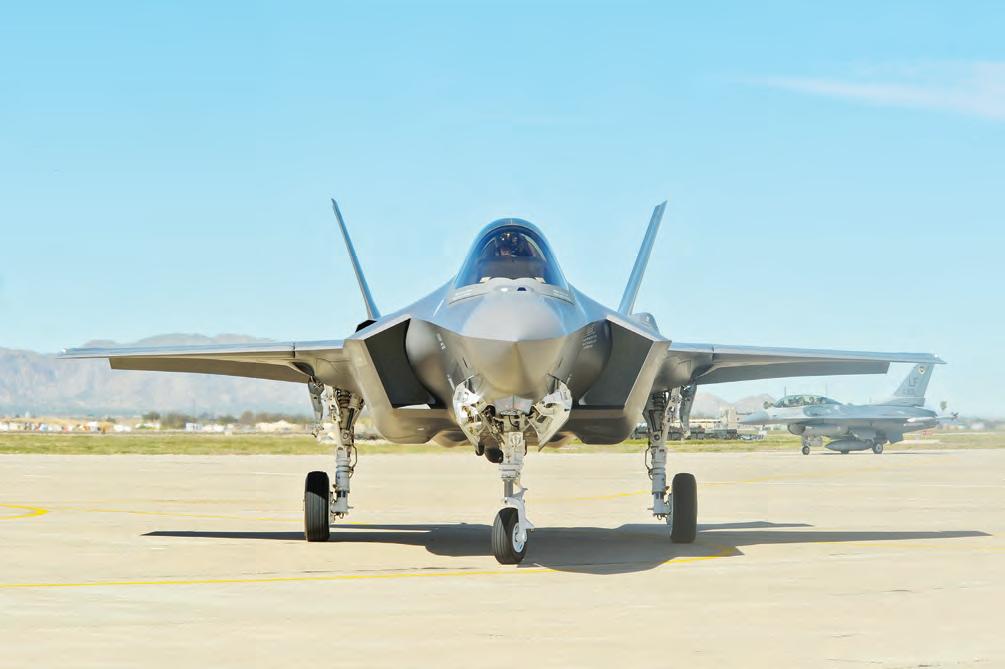
QUANTICO, Va. — Days before Poland’s first F-35A aircraft arrived at Łask Air Base, senior Polish military counterintelligence officials were in Texas and Virginia meeting with leaders from the Air Force Office of Special Investigations to discuss technology protection, supply-chain security and information related to the aircraft.
The May 17-21 engagement came as Poland prepared to receive its first three F-35A “Husarz” aircraft from Fort Worth, Texas, marking a major step in the country’s transition to fifth-generation airpower.
Brig. Gen. Jarosław Strózyk, chief of Poland’s Słuzba Kontrwywiadu Wojskowego, or SKW, led the delegation during the visit, which included a tour of the F-35 assembly line in Fort Worth, briefings from AFOSI units and a visit to AFOSI headquarters in Quantico, Virginia.
For Special Agent Kevin Alexander, AFOSI’s
attaché to the U.S. Embassy in Warsaw, the visit was an example of the trust built between the agencies over years of cooperation.
“This was an important step in a growing partnership,” Alexander said. “It allowed us to focus on the technology-protection
mission, while building the trust required to support Poland’s F-35 fielding over the long term.”
During the trip, AFOSI
officials first met the SKW delegation in Texas, May 17. The following morning, Polish leaders toured the F-35 assembly
line at Lockheed Martin, in Fort Worth, where Alexander said they gained a firsthand look at the production environment supporting the aircraft.
The Texas portion also included cultural engagements in the Fort Worth area, which Alexander said helped strengthen personal connections among allied counterparts.
“This was not just one office supporting one visit,” Alexander said. “Multiple AFOSI offices contributed time and resources, including experts from AFOSI’s Office of Special Projects (PJ) in Texas and headquarters personnel in Virginia.”
According to Alexander, that level of support helped provide Polish counterparts with the right operational context.
“Our long-standing partnership with Poland and the SKW was significantly strengthened this week as we discussed opportunities for continued engagement and robust information sharing,” said Special Agent Deryck

First Assembly is
where all are welcome to Discover, Develop, and Demonstrate a relationship with God.
We invite you to join us for Sunday service at 10:30 a.m.
2207 Union Avenue, Fairfield, CA www.1ag .com





Christ Exalted, Lives Transformed 3777 Vaca Valley Pkwy Ste.F, Vacaville, 95688
Email: o ce@northhillsvv.org
Website: www.northhillsvv.org
Service Times: Sunday morning 10 a.m., Wednesday evening 6:30 p.m. Phone: 707-449-8977




Vacaville Church of Christ
401 Fir St., Vacaville, CA 95688 (707) 448-5085
Minister: Elliott Williams
Sunday Morning Bible Study 9:30 AM
Sunday Morning Worship 10:30 AM
Sunday Evening Worship 5:00 PM

8:15am, 10am



Wednesday Evening Bible Study 6:00 PM vacavillecoc.com 401


1st Lt. Grace Banas
DAVIS-MONTHAN
AIR FORCE BASE, Ariz. —
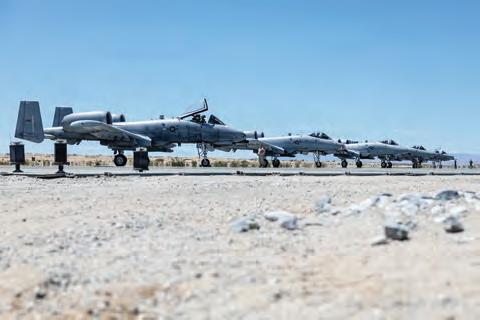
From the high-desert heat of Twentynine Palms to the maritime environment of San Clemente Island, the “Dragons” of the 357th Fighter Squadron recently pushed the A-10C Thunderbolt II aircraft to its limits during a high-intensity, two-week temporary duty (TDY) assignment.
The training served as a critical milestone for the squadron’s newest A-10 pilots. Prior to hitting the California ranges, these aviators completed a grueling six-month initial qualification course at Davis-Monthan Air Force Base, consisting of 40 flights, 85 simulator hours, and 274 academic hours.
During the course, the students mastered the fundamentals of the “Warthog”, from basic flight and air-toair defense to two-ship surface tactics. They also learned to employ the aircraft’s legendary 30mm GAU-8 Avenger cannon, which fires 3,900 rounds per minute.
Having earned their status as combat-missionready aviators, the new graduates faced their next challenge. While they had flown with the squadron’s veteran pilots before, the dynamic had shifted. They were no longer students flying under the watchful eye of an instructor pilot; they were fully qualified wingmen flying shoulder-to-shoulder with their flight leads.
While Davis-Monthan boasts diverse and robust local training ranges, stepping out of those familiar airspaces and into a new, complex environment is what truly puts a Warthog pilot to the test. Operating away from home station forced the new wingmen out of their comfort zones and directly into a massive, joint-service fight.
“This TDY shows both our flexibility and joint integration,” said Lt. Col. Ryan Rutter, 357th Fighter Squadron commander. “In a two-week timeframe, we supported Large-Scale Combat Operations Close Air Support with U.S. Marine Corps JTACs at both Twentynine Palms and San Clemente Island.”
The integration with Marine Joint Terminal Attack Controllers (JTACs) provided an unparalleled level of realism. These specialized, highly trained personnel, often 0861 Fire Support Marines or experienced NCOs, directed the Dragons’ Close Air Support (CAS) from forward positions, ensuring the integration of airpower into the

on
safeguarding innovation.
Marine Air-Ground Task Force (MAGTF).
Renowned for its unmatched durability, the A-10 is built around a titanium “bathtub” that protects the pilot, allowing the aircraft to survive severe damage, loiter over the battlefield, and protect ground troops. The Twentynine Palms TDY capitalized on this specialized CAS design, throwing a wide array of joint assets into the mix.
Beyond traditional CAS, the seasoned pilots and their new wingmen executed complex Combat Search and Rescue (CSAR) scenarios. “We conducted CSAR with U.S. Navy MH-60s and Air Force Combat Control Teams, as well as CSAR with Marine Corps CV-22s,” Rutter said.
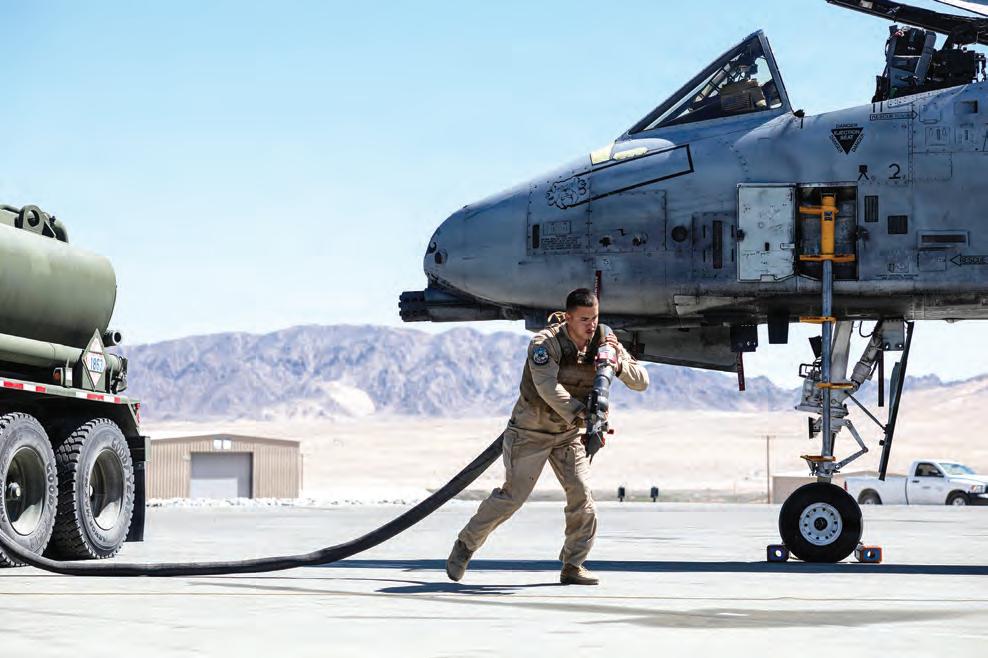
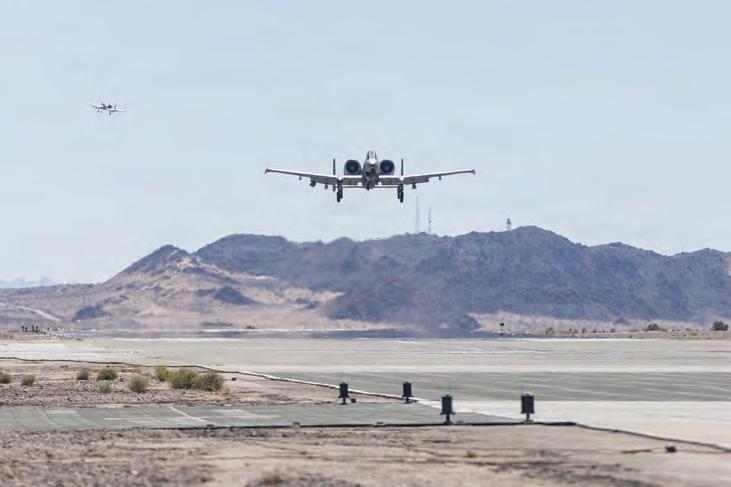
The most significant test for the new wingmen came when the mission moved off the pavement. The A-10 was designed to operate from rugged, unimproved airfields, a capability the squadron validated by executing landings on semi-prepared dirt surfaces.
“We were able to land at a semi-prepared surface to increase CAS coverage for ground parties with the only support required being a top-off of fuel,” Rutter said. “All of this is great training for the Combat Air Forces’ newest A-10 wingmen as they prepare to go to their first operational squadrons.”
Ensuring the A-10s could operate safely from these austere environments, it required
dedicated support from the ground crews at the Marine Corps Air Ground Combat Center (MCAGCC).
“This week’s joint training at MCAGCC proved why this installation is vital for future fight readiness,” said Capt. Shaun Shiotani, Operations Officer, Aviation Ground Support Division, Marine Air Ground Force Training Command, MCAGCC. “Our Marines got crucial, hands-on reps providing fueling and crash-fire coverage for unfamiliar joint platforms, resulting in fantastic energy and operational growth. Furthermore, it is incredibly rewarding for our construction and airfield teams to see other branches entrust their assets to our engineers, reinforcing our role in enabling joint lethality.”
This training represents a powerful demonstration of Air Combat Command’s ability to project lethal airpower from any location, regardless of infrastructure. But more importantly, it underscores a modern operational reality: no single branch fights alone. Joint training exercises like this are vital because they eliminate friction between the services, creating a shared tactical language long before realworld bullets fly.
By integrating directly with Marine Corps JTACs on the ground, Navy helicopter crews in the air, and Special Warfare operators, these new pilots learned the intricacies of MAGTF and naval operations firsthand. This seamless
coordination shortens the kill chain, ensures immediate mutual support, and guarantees that when the joint force deploys, they operate as a unified, devastating force multiplier.
With six months of rigorous tactical training, proven expeditionary dirt landings, and unparalleled joint integration under their belts, the Combat Air Forces’ newest A-10 wingmen have emerged as a dominant force. They stand ready to bring unmatched firepower to any environment, alongside any joint partner, ensuring the U.S. military maintains its decisive edge on the global stage.
From Page 5
Parks, Special Agent in Charge AFOSI PJ Det. 8. “By working seamlessly together, we are building a Transatlantic shield that ensures the long-term support and uncompromising protection of the Joint Strike Fighter.”
The delegation later traveled to AFOSI’s headquarters in Virginia, where they met with Pearl Mundt, AFOSI’s executive director, Aaron Yardley, AFOSI counterintelligence director, and others.
“We’ve worked with closely and successfully with our partners at SKW on a range of counterintelligence topics over many years, they are a fantastic ally,” Yardley said.
“Having the opportunity to engage with them on protecting the F-35, especially on the eve of the first jet arriving in Poland was a special moment for all of us.”
The visit also followed previous AFOSI-SKW engagements, including a California visit last year, where Polish military counterintelligence officials met with AFOSI personnel, defense industry leaders and technology experts to discuss defense innovation, emerging threats and counterintelligence cooperation.
That earlier engagement included mission briefings at Vandenberg Space Force Base, a visit centered on unmanned aerial systems, discussions with Silicon Valley defense industry partners and a technology-protection roundtable focused


Alexander said the series of engagements, along with AFOSI leadership visits to Poland, shows how the partnership is maturing around a long-term mission requirement.
“We have seen this partnership grow in the right direction,” Alexander said. “Poland is preparing to operate a major piece of Air Force technology, and we’re working together on the long-term counterintelligence and technology-protection support that mission requires.”
Alexander also credited the AFOSI technology-protection professionals who supported the visit.
“The technologyprotection experts who supported the visit were instrumental,” Alexander said. “Having those specialists provide their expertise made a real difference, and the Polish leaders were grateful for the time, resources and knowledge AFOSI brought to the engagement.”
For AFOSI and its allied counterparts, the work behind the scenes is equally important, Mundt said. Those efforts ensure the systems, information and partnerships surrounding those aircraft remain protected.
“Protecting advanced capabilities is a shared responsibility,” Mundt said. “As Poland brings the F-35 into its fleet, our partnership with SKW will better enable technology protection, while bolstering the trust that empowers allied readiness.”

2nd Fleet CoMM ander NAVAL STATION
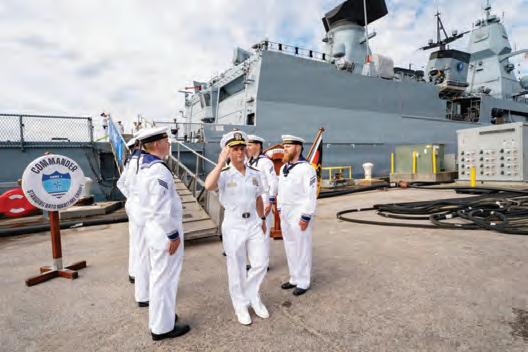
NORFOLK, Va. — Ships from 17 allied and partner nations arrived at Naval Station Norfolk, Virginia, to prepare for Fleet Exercise 250, June 14-15.
Beginning Tuesday, the multinational maritime exercise will commence for the first time in the Norfolk area and in the Atlantic Ocean. A special reception aboard the amphibious assault ship USS Iwo Jima will serve as an opening event. The largescale exercise is designed to enhance interoperability and test the integrated forces in a dynamic, multidomain training environment.
The exercise will bring together 31 warships, multinational aircraft and their crews to conduct a series of structured training events at sea. The training will focus on a full spectrum of naval warfare, including antiair, antisubmarine and amphibious operations, culminating in a scenariodriven event against a dynamic adversary.
The primary goal is to build cohesiveness, validate tactical procedures and strengthen the collective capabilities of the participating forces in a simulated combat environment.
“Fleet Exercise [250] is a tremendous opportunity to bring together a powerful, multinational force,” said Navy Vice Adm. Doug Perry, commander of the U.S. 2nd Fleet. “Training and operating as an integrated team sharpens our competitive edge and demonstrates our shared commitment to maritime security and stability in the Atlantic.”
The exercise is divided into two main phases: harbor phase, today through June 21, and the at-sea phase, June 22-29.
During harbor phase,
participating forces will assemble at Naval Station Norfolk for final planning, briefings and integration. The at-sea execution will see ships get underway to conduct a series of training events, a fleet formation photo exercise and a final battle problem.
The exercise runs concurrently with several public events in Norfolk, including the 50th Annual Norfolk Harbor Fest, Virginia SAIL 250 and Norfolk Fleet Week. These events will feature public tours of visiting warships and international tall ships, alongside a grand Parade of Sail, offering the public a unique opportunity to engage with sailors and mariners from around the world.
Participating nations in the exercise include Belgium, Brazil, Canada, Cameroon, Côte d’Ivoire, Cyprus, Denmark, France, Germany, Mexico, Morocco, Netherlands, Norway, Peru, Senegal, Spain, Turkey, the United Kingdom and the United States.
Following the exercise, many participating units – joined by the historic tall ships – will sail to New York City to take part in the International Naval Review 250 from July 3-8.
“While [Fleet Exercise] 250 provides critical at-sea training that enhances our combined capabilities, it also sets the stage for a historic celebration at the International Naval Review in New York City,” Perry said. “The interoperability we forge here in [Virginia] ensures that when this magnificent multinational fleet arrives to commemorate our nation’s 250th anniversary, it will stand as a powerful symbol of enduring global partnerships and our shared commitment to the seas.”
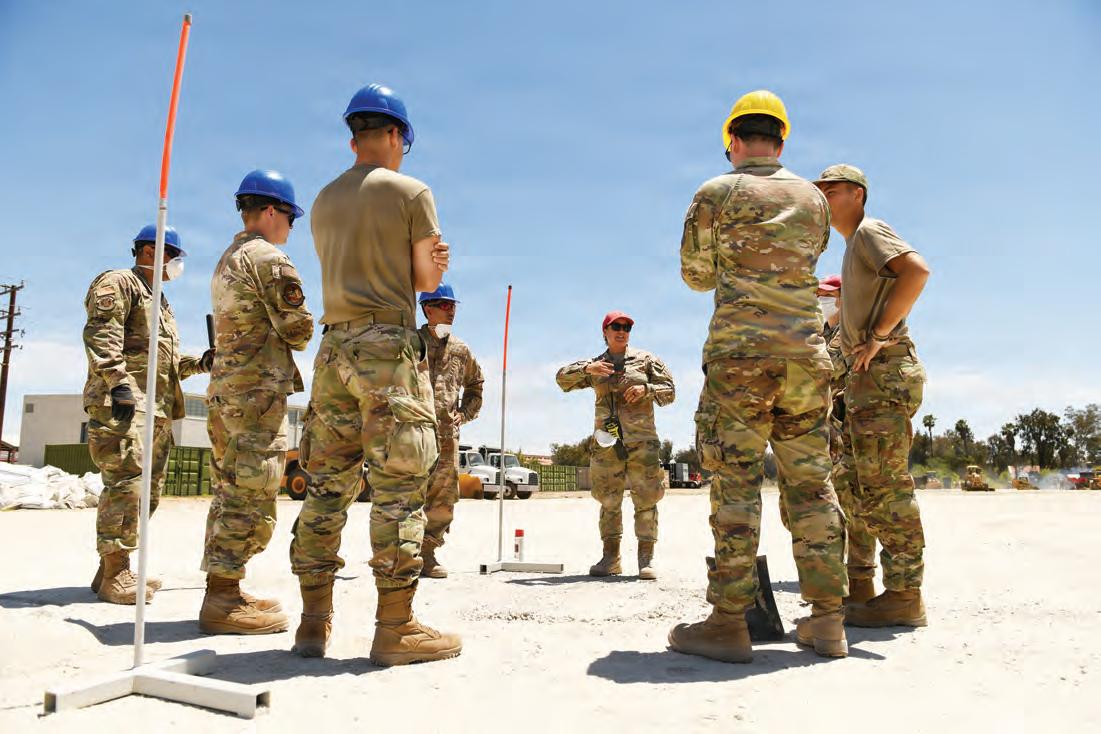
BASE — Seven instructors assigned to the 163rd Regional Training Site are strengthening mission readiness across the Total Force by training more than 1,000 airmen annually in Rapid Damage Repair and other Civil Engineer specialty courses. Through technical expertise, mentorship and teamwork, the instructors prepare airmen to restore critical airfield operations in demanding environments around the world.
“We’re building good foundations here. We’re teaching them things they can’t do at home-station. By the end of the week, they are operating equipment with confidence,” said Senior Master Sgt. Reuben Dominguez, 163rd Regional Training Site superintendent.
RDR is an essential capability for Civil Engineer Squadrons and plays a critical role in sustaining airfield operations during contingency, restoration, and disaster-response missions. The RTS provides the equipment, training environment, and instructor expertise needed to ensure deploying airmen are mission-ready before arriving in theater.
“We teach them to a standard directly tied to deployment operations where damaged airfields

tor serves as the sole subject matter expert for their Air Force specialty code, successful course completion depends on strong cross-functional support and collaboration. To strengthen the team, instructors conduct monthly professional development sessions focused on communication, leadership and public speaking.
have to be recovered within a specific timeline so aircraft can land and take off,” said Master Sgt. Scott Eversole, 163rd Regional Training Site instructor. “In some scenarios, we may be isolated at a location with little to no options. That means not only repairing the airfield, but sometimes training augmentee airmen on the spot to help accomplish the mission.”
This iteration of the week-long course was comprised of airmen from 11 different wings learning how to execute full-scale crater repair procedures, beginning with debris removal and upheaval marking before progressing through excavation, backfilling, compaction, and surface restoration.
RTS instructors evaluate both completion time and structural performance, conducting repair quality
criteria testing to ensure repairs can withstand projected aircraft loads and operational demands.
Beyond teaching technical skills, the instructors focus heavily on building teamwork and confidence among students who often arrive with little familiarity with one another but must quickly learn to operate as a cohesive unit.
“We have people coming here from across the service, and they have to perform together throughout the week even though they just met,” said Eversole. “I try to instill confidence in them that they can do this. After 15 years as an instructor, I’ve learned how important motivation and teamwork are to getting the mission done.”
That same culture of teamwork exists within the instructor cadre itself. Because each instruc-
“We’re one deep in each AFSC, so you have to be very proficient in your job, but also willing to jump in wherever needed,” said Dominguez. “Our team is strong because we don’t hesitate to help each other.”
When the airfield is attacked, individual AFSCs blur; everyone operates a saw, drives a skid steer, or pours concrete. It’s an all-hands-on-deck fight to clear explosive hazards, cut, fill and cap craters to restore a minimum operating strip in hours, not days.
The effectiveness of the 163rd RTS reflects the 163rd Attack Wing’s commitment to developing resilient, mission-ready warfighters prepared to operate in complex environments. By combining technical excellence with mentorship and teamwork, the instructors ensure airmen across the Total Force are ready to restore airpower anytime and anywhere the mission requires.