TRAVIS TAILWIND

Senior M aSter Sgt Julianne Sitterding
163D ATTACK WING
MARCH AIR
RESERVE BASE — U.S.
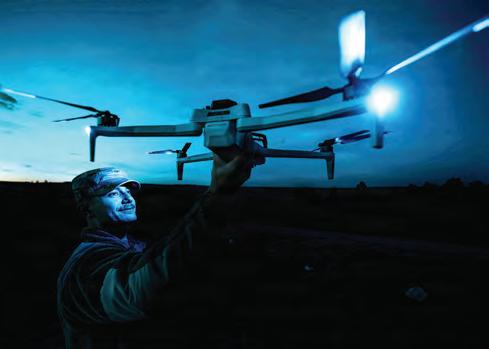
Air Force Maj. Adam Lucero, director of innovation for the 163d Attack Wing’s Hap Arnold Innovation Center, was selected to provide direct operational insight to the California Military Department working group and the Governors’ working group led by U.S. Army Maj. Gen. Matthew Beevers, the adjutant general of the California Military Department. The working groups, in coordination with Joint Staff partners, focused on identifying challenges and developing solutions to counter small unmanned aircraft systems (sUAS) threats across California. Discussions include strengthening protections for critical infrastructure, military installations, and public safety through broader sUAS regulations, controls, and emerging technologies.
“Having a direct voice in these strategic discussions alongside Maj. Gen. Beevers and the Joint Staff is a testament to the spe-
cialized expertise resident within our wing,” said U.S. Air Force Col. Joshua Assayag, commander of the 163rd Attack Wing. “The small UAS threat is evolving rapidly, and it requires agile, forward-thinking solutions. By bringing our airmen’s innovative concepts to the Governor’s Working Group, we help ensure California proactively shapes robust defenses for critical infrastructure rather than reacting after the threat emerges.”
In coordination with the working groups, Lucero is developing a playbook of available counter-UAS technologies and best practices designed to harden critical infrastructure and military bases. The effort aims to reduce duplication, accelerate implementation timelines, and improve coordination across the state and the National Guard Bureau.
“The 163rd is leaning forward by translating our extensive operational experience into actionable counter-UAS strategies,” Assayag said. “We are proactively developing

Advertising Manager: T. Burt McNaughton
Editor: Todd R. Hansen
Layout : Aaron Rosenblatt
From Page 1
to strengthen homeland defense missions.
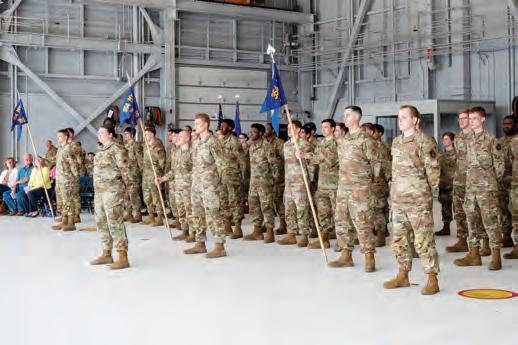
“We are not going to go back to the traditional AMXS, it is essentially the old model with some deviations,” said Col. Joseph Gilpin, 354th Maintenance Group commander, “The new construct will consolidate maintenance resources, streamline command and control and increase strategic flexibility across the Pacific Air Force’s area of responsibility.”
The newly activated squadron construct consolidates personnel, resources and expertise from the three former fighter generation squadrons into a unified aircraft maintenance organization designed to improve efficiency and support sustained sortie generation.
The reactivation supports the Air Force’s modernization and optimization efforts by aligning mainte-
nance operations under a centralized construct built to support future mission requirements and operational flexibility.
“It will combine the missions of the 355th and 356th with the 18th FGS mission while remaining organized through separate aircraft maintenance units,” said Maj. Allana Gallant, outgoing 355th FGS commander. “This restructuring strengthens our ability to support homeland defense in Alaska’s North American Aerospace Defense Command region and ensures continued fifth generation air superiority in one of the nation’s most strategically important theaters.”
During the ceremony, Gallant, Maj. Matthew Ward, former 356th FGS commander and Maj. Renee Bohac, former 18th FGS commander, relinquished command of their squadrons as Bohac assumed command of the 354th AMXS.
“Our priority is that


the airmen do not see a decrease in the quality of their leadership,” Bohac said, “We want to continue to be the best leaders that they can have and be their voice since we’ll be the biggest squadron on base.”
The reorganization back to an AMXS aligns with the Air Force’s continued focus on strengthening readiness, streamlining maintenance operations and enhancing combat capability across the wing.













Courtney LAndsberger
OKLAHOMA CITY,
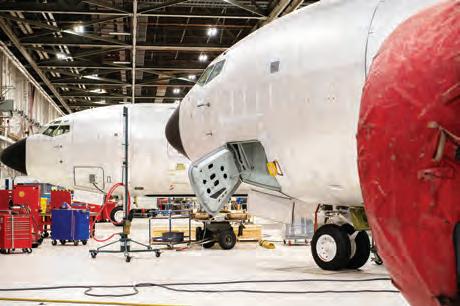
Okla. — For most pilots, trust is a two-way street between aviator and aircraft. But for the crews of the 10th Flight Test Squadron (10th FLTS), that bond is a three-way pact between pilot, plane and the Oklahoma City Air Logistics Complex artisans who took the aircraft apart and pieced it back together.
Pilots like Lt. Col. Michael Griffin, 10th FLTS commander, don’t just fly planes – they climb into the cockpits of bombers and tankers that the Air Force has officially declared “nonairworthy” – aircraft stitched together after invasive surgery – to prove them battle-ready.
“Think of this as extremely invasive and in-depth maintenance that is beyond what the active flying units are capable of accomplishing,” Griffin said. “Once they finish going through the programmed depot maintenance (PDM) cycle, the aircraft are presented to us as nonairworthy. We are the first to fly them.”
It’s a mission with zero margin for error. Behind every one of those aircraft is an unbreakable bond forged in hangars, where every turn of a wrench meets the moment of truth in flight.
Each functional check flight conducted by 10th FLTS is a meticulously scripted evaluation designed to stress every critical system – ensuring the complex work performed on the ground holds true in the air. The aircraft – ranging from the B-1B Lancer and B-52 Stratofortress to the KC-135 Stratotanker, E-3 Sentry and KC-46 Pegasus – arrive at the 10th FLTS after undergoing the PDM cycle.
“At the most basic level, we look for the functionality of the landing gear system, engines, flight instrumentation and flight controls,”
Griffin said. “But we’re also evaluating mission-specific systems to ensure full operational capability.”
That critical groundwork falls to the 76th Aircraft Maintenance Group (76th AMXG), where maintainers put their reputation and pride on the line with every bolt they tighten, knowing someone else will soon bet their life on the quality of that wrench-turning.
“The relationship between maintainer and pilot is like no other in the United States Air Force; trust underpins everything we do,” Lt. Col. Eric Peele, 76th AMXG deputy commander, said. “It starts at the individual level and builds into the extreme teaming required to deliver aircraft back to the warfighter.”
From troubleshooting persistent grounding issues to meeting demanding production timelines, maintainers and pilots operate as a single team.
“Both of us operate under constraints that can make execution difficult,” Griffin said. “But because of the trust we’ve built, we’re able to navigate those challenges, find solutions and ultimately get these jets back to where they are desperately needed.”
It’s a partnership calculated on confidence that’s now paying dividends for the Air Force.
“In fiscal year 2025, our teaming with the 10th FLTS allowed us to exceed customer requirements across multiple platforms,” Peele said. “Most recently, those efforts helped deliver additional tanker and bomber capacity to support global mission requirements.” At Tinker Air Force Base, the mission doesn’t end when maintenance is complete – or when the wheels leave the runway. It ends when a fully restored aircraft is returned to the warfighter, ready for the next fight.


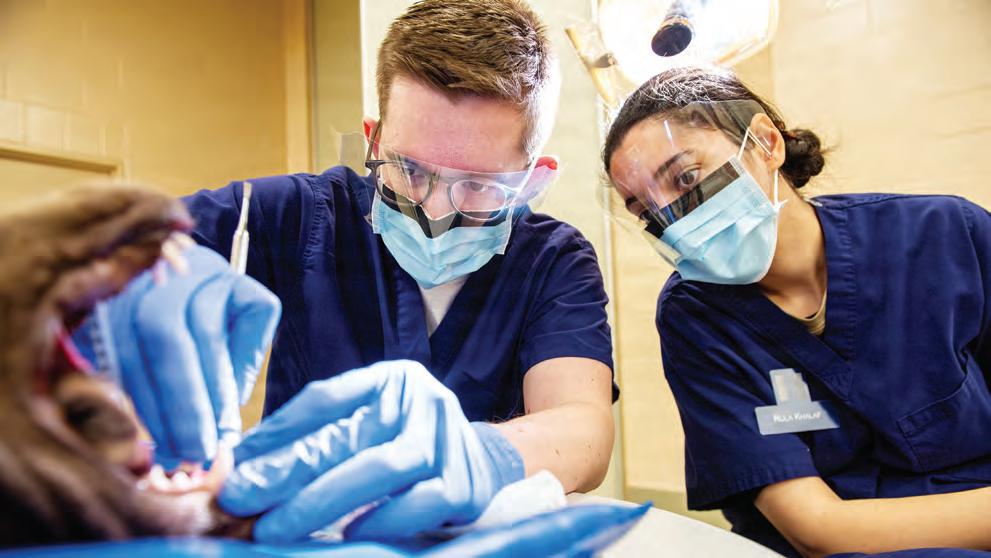
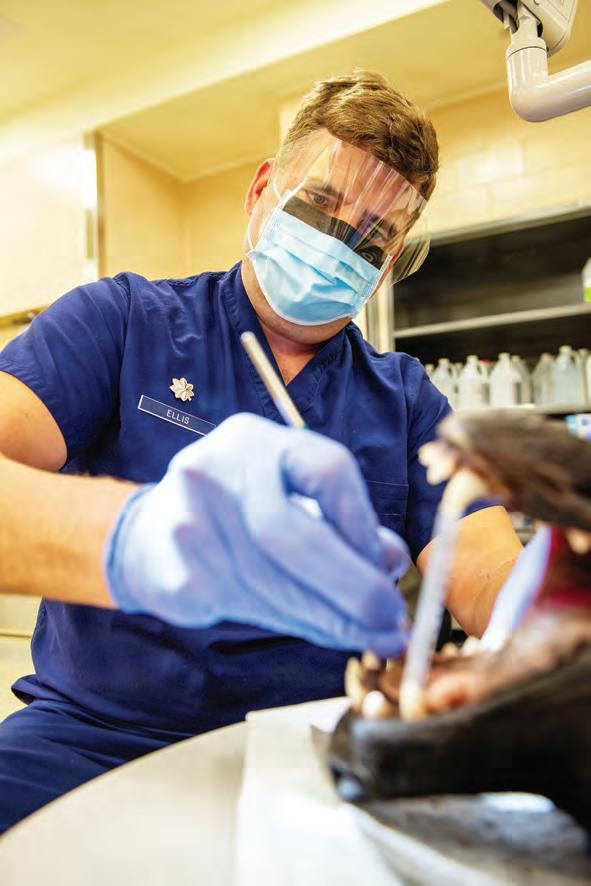
Capt. Samuel Madden, left, and Capt. Rula Khalaf, 60th
Dental Squadron advanced education in general dentistry residents, practice canine dental techniques during a military working dog dental care symposium at the
K enneth A bbAte 60TH AIR MOBILITY WING PUBLIC AFFAIRS
TRAVIS AIR FORCE
BASE — The 60th Dental Squadron partnered with the University of California Davis School of Veterinary Medicine during a two-day symposium May 20-21, to provide Air Force dental residents hands-on training in canine dentistry and military working dog care.
The training expanded military dental residents’ ability to identify and treat oral health conditions in MWDs, whose dental readiness directly impacts their ability to support force protection and detection operations across the Department of the Air Force.
The symposium addressed a military-specific training requirement not commonly found in civilian dental education, according to U.S. Air Force Lt. Col. Andrew W. Ellis, 60th Dental Squadron Dental Residency Flight commander and Advanced Education in General Dentistry program director.
“Air Force dentistry has unique, operational training requirements that simply do not exist in civilian dental schools or residency programs,” said Ellis. “Military dentists must be ready to sustain combat power, which includes treating activeduty service members as well as our military working dogs.”
UC Davis Weill School of Veterinary Medicine hosted and led the symposium for military health care personnel from Travis Air Force Base.
Faculty from the Veterinary Medical Teaching Hospital’s Dentistry and Oral Surgery Service provided lectures, wet labs and hands-on instruction in canine dental radiography, radiographic
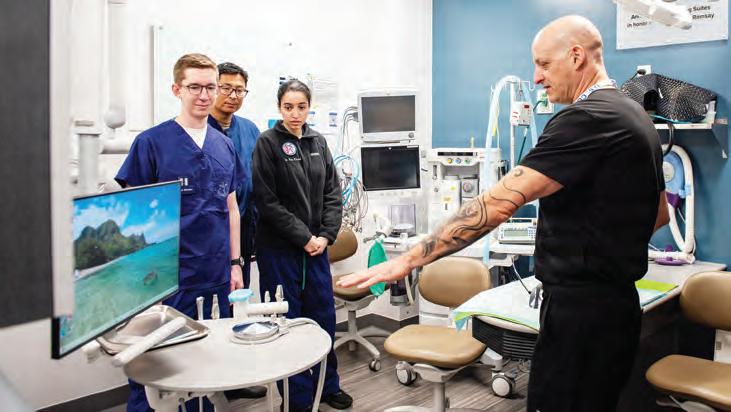
interpretation, surgical extractions and endodontic therapy.
“Dental radiography is essential because many important dental diseases occur below the gumline and are not visible during an oral examination alone,” said Dr. Maria Soltero-Rivera, associate professor with the Dentistry and Oral Surgery Service at the Veterinary Medical Teaching Hospital, UC Davis Weill School of Veterinary Medicine.
“Radiographs allow clinicians to diagnose fractured teeth, endodontic disease, periodontal bone loss, retained roots and other bone or tooth root pathology that could compromise the health, comfort and operational performance of military working dogs.”
During the two-day event, participants received instruction in canine dental radiography, surgical extraction techniques, local anesthetic nerve blocks, root canal therapy, transcoronal access, canal instrumentation, obturation and restoration of strategic working teeth.
The training also included presentations from Travis AFB per-
sonnel on bioceramic endodontic sealers and regenerative endodontics, highlighting an exchange of information between military dental providers and veterinary specialists.
Ellis said the handson portion gave residents an opportunity to apply human dental knowledge to a different operational environment.
“Getting hands-on, tactile experience capturing radiographs, performing complex surgical extraction techniques and conducting root canal therapy allowed our residents to translate their human clinical expertise into a completely different operational format,” said Ellis.
The symposium also brought together Air Force dental residents, veterinary clinic personnel, endodontic specialists and UC Davis veterinary dental experts. Participants included veterinary technicians from Travis AFB and Beale AFB, as well as virtual participants from the Air Force Postgraduate Dental School Endodontics Residency at Joint Base San AntonioLackland, Texas.
For MWDs, dental
health is directly tied to performance, according to U.S. Army Sgt. Bryan Flowers, Beale Air Force Base Veterinary Treatment Facility noncommissioned officer in charge. Flowers said oral pain or infection can affect a dog’s ability to bite, search and remain focused during highstress missions.
“An MWD relies entirely on its senses and its mouth to execute its duties,” said Flowers. “For patrol and force protection, the mouth is the dog’s primary tool for apprehension; severe dental disease compromises their grip and willingness to bite due to pain.”
Common dental issues in MWDs include fractured teeth, periodontal disease, attrition and abrasion, Flowers said. Handlers may notice subtle changes such as altered eating habits, hesitation during training, excessive drooling, swelling or foul breath.
Untreated dental conditions can affect bite function, endurance and overall ability to work. Advanced procedures, including root canals and










SCOTT
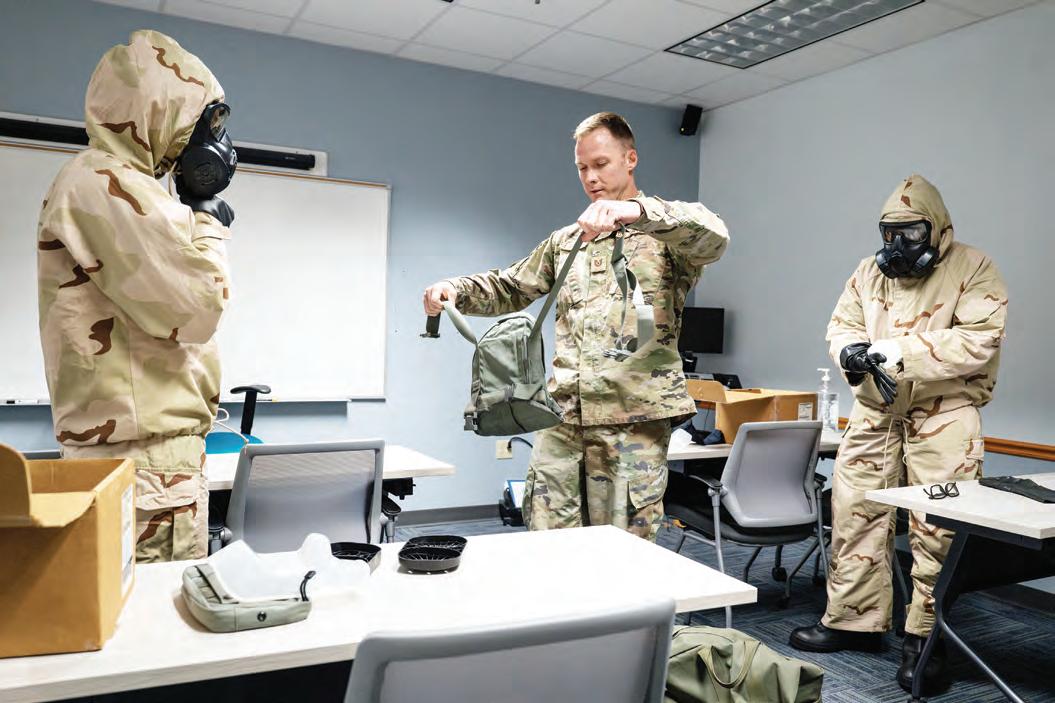
BASE, Ill. — The 375th Contracting Squadron recently completed contingency contracting officer training as part of its annual readiness requirements.
The six-day training took place in late May and brought together over 20 contracting officers, along with mentors from the United States Transportation Command, Air Force Installation Contracting Central, and the 763rd Enterprise Sourcing Squadron.
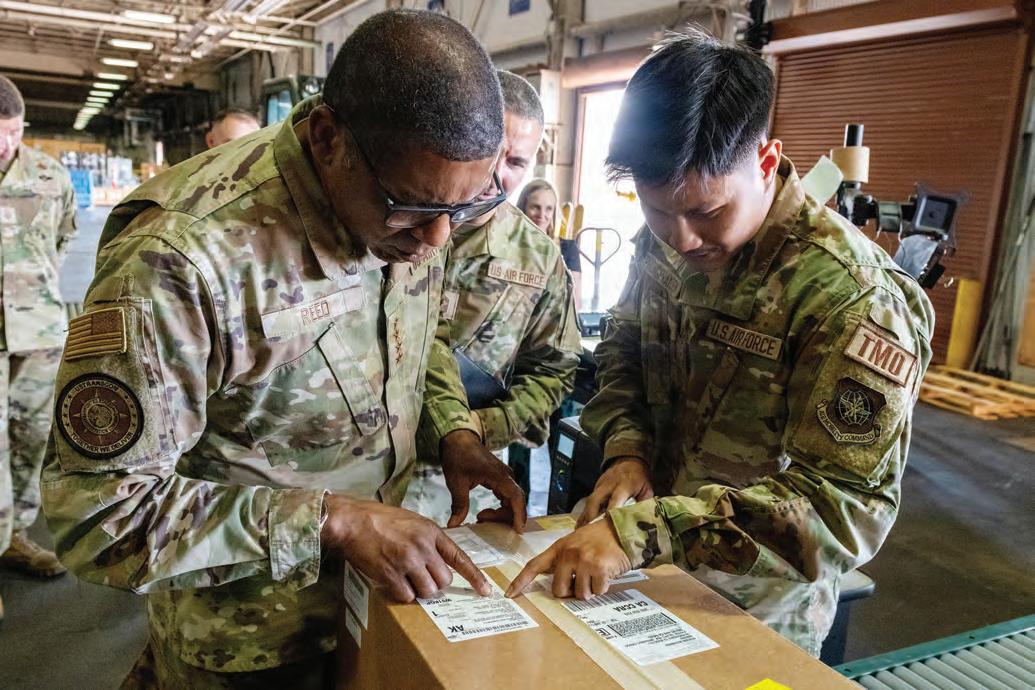
“The purpose of this training is to get those in the contracting career field accustomed to operations in a contingency or deployed environment,” said Tech Sgt. Chris Rogers, 375th CONS contracting officer and training organizer. “It’s important to get them practice for deployed operations, especially since our guiding regulations change how we do business down-range.”
For both home-station missions and contingency operations, contracting officers plan, negotiate, and manage contracts for supplies, services, and construction. They ensure airmen have the resources needed to accomplish their missions while overseeing every stage of the
contracting process, from acquisition to compliance.
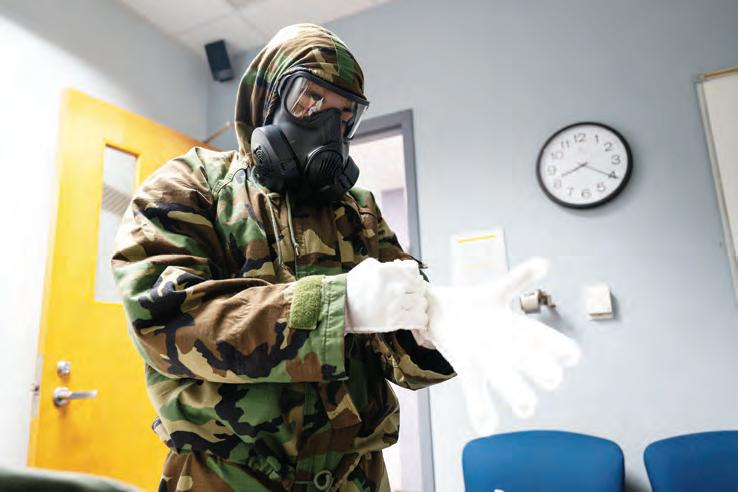
To prepare for those responsibilities in contingency environments, participants completed academic instruction and hands-on exercises that required them to operate amid simulated airborne and chemical attacks. During those exercises, they solved time-sensitive contracting problems and worked through unfamiliar construction projects, including renovations to dining facilities and barracks.
The training strengthens the 375th CONS while supporting the 375th Air Mobility Wing’s priorities
of preparing, performing, and projecting. By exposing airmen to contingency scenarios, the course helps prepare them for deployed operations, strengthens their ability to perform under pressure, and ensures they can project mission support wherever it is needed.
The course also reinforced the critical role contracting officers play in supporting operational success.
“My biggest takeaway from this course is that contracting does not stop at the garrison gate – our role as force multipliers is just as critical in contingency environments
From Page 2
concepts to safeguard military assets and the general population alike. This partnership at the state level helps inform broader regulations and controls, ensuring the 163rd’s tactical innovation directly contributes to California’s overall safety and security.”
The Hap Arnold Innovation Center serves as a hub for collaboration between military, government, and interagency partners. Solutions developed locally by the 163rd are rapidly shared through networks extending across the National Guard Bureau and Joint Interagency Task Force-401.
JIATF-401 is a specialized Army-led Department of War organization established in August 2025 to rapidly develop, test, and field cUAS technologies in defense of the homeland. Technologies under consideration for cUAS operations include microwave, directed-energy, kinetic interventions, radio-frequency detection and jamming capabilities, radar, acoustic sensing, and advanced optical tracking. Systems already supporting operational missions across the state, such as mobile platforms that integrate radar, radio frequency, and optical sUAS detection capabilities, demonstrate the immediate value of a
layered defense. The growing need for effective cUAS solutions has become increasingly apparent during emergency response operations. During the Palisades Fire response, unauthorized sUAS activity disrupted manned aircraft operations supporting firefighting efforts, delaying critical aerial response capabilities and highlighting the operational risks posed by uncoordinated drone activity.
“Any time a new technology reshapes our lives, there is an adjustment period for policies, authorities, and employment into operations. Our goal at the HAIC is to help ensure that our rapid and successful implementation of both offensive and defensive capabilities in California are shared, making us stronger across the entire joint force,” said Lucero. The 163rd Attack Wing continues to advance innovative, operationally relevant solutions that strengthen the defense of the homeland and support joint-force readiness in an increasingly complex threat environment. By spearheading these collaborative strategies, the wing directly reinforces the Department of the Air Force’s unwavering commitment to ensuring our installations and critical infrastructure remain secure, ready, and equipped to protect against potential sUAS incursions.

as it is at home station,” said Alamin. “Being a competent CCO requires continuous preparation, sound judgment, and the ability to leverage commercial support even in the most complex and contested environments.”




















Thomas Brading AFOSI PUBLIC AFFAIRS
QUANTICO, Va. — Over the past year, the Air Force Office of Special Investigations (AFOSI) Region 6 has stepped up engagement with Indo-Pacific partners, a deliberate shift its commander says is necessary to counter threats across one of the world’s most complex regions.
“Given the incredible geographic size of the Indo-Pacific, as well as the prevalence of significant adversaries throughout the region, it is essential that AFOSI operates with our partners in the IndoPacific,” said Col. James Merenda, commander of the 6th Field Investigations Region.
Merenda, a fluent Japanese speaker with extensive experience throughout the region, said as he took command, Aug. 2024, it was clear the agency could not address those challenges alone.
“Once I got settled into
First Assembly is a place where all are welcome to Discover, Develop, and Demonstrate a relationship with God.
We invite you to join us for Sunday service at 10:30 a.m.
2207 Union Avenue, Fairfield, CA www.1ag .com


my role, I grasped the enormity of the challenge we face and the pervasiveness of threats throughout the region,” he said. “It very quickly became clear this
was not something AFOSI could do alone, that’s why Region 6’s approach with international counterparts is really the only way to combat threats.”
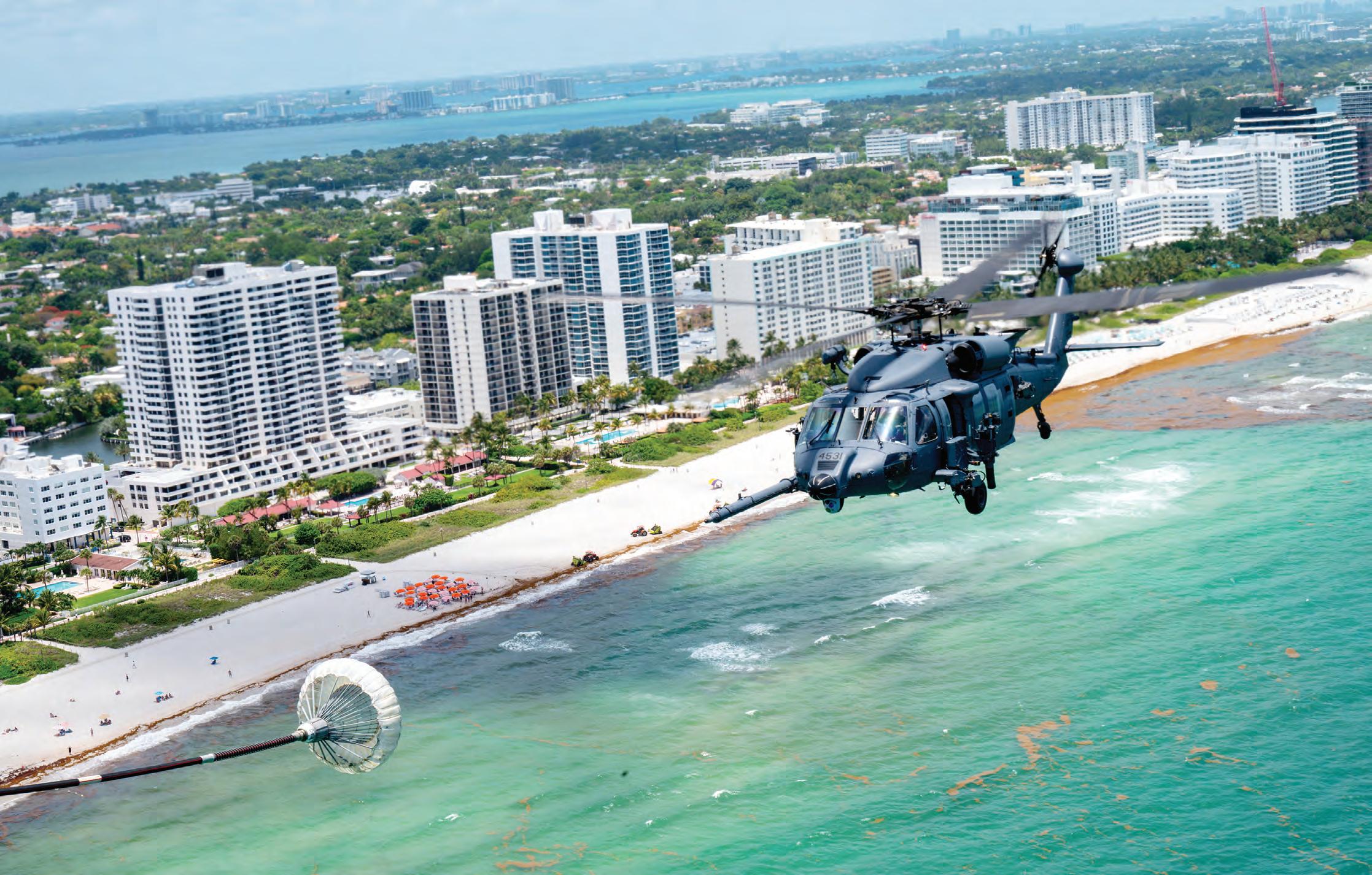
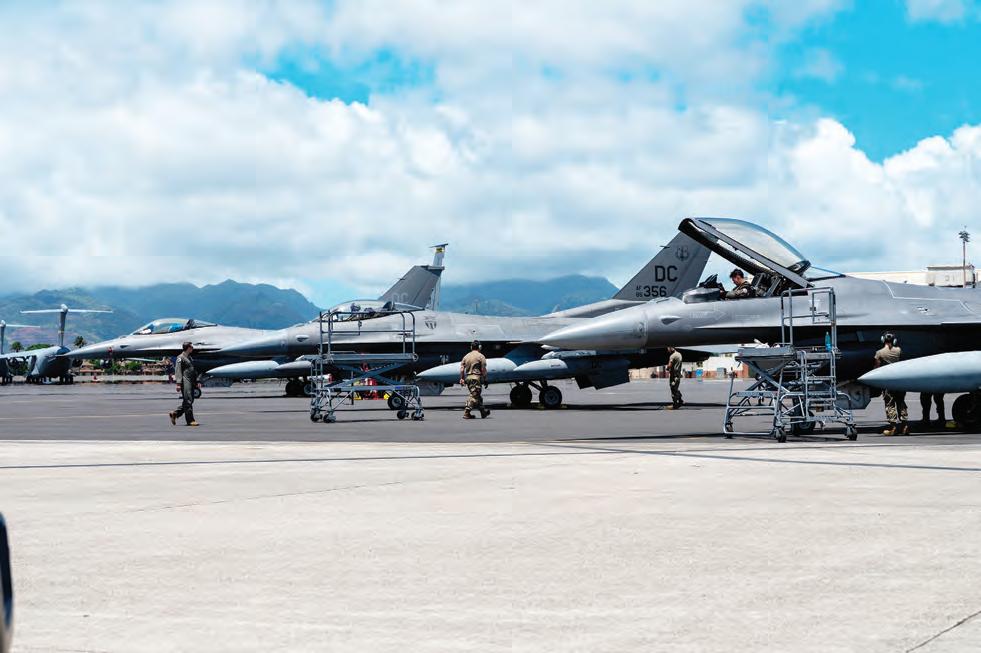
Hawaii, July 11, 2025. REFORPAC is part of the first-ina-generation Department-Level Exercise series designed to combat airpower in the Indo-Pacific region.
This approach also reflects the 2026 National Defense Strategy’s focus on strengthening partnerships across the Indo-Pacific to deter
threats and support a stable regional balance.
According to Merenda, the region has expanded its engagement across the Indo-Pacific over the past
year, increasing its focus on relationships with allied counterintelligence and law enforcement organizations while continuing to prioritize its people more than before.
“My first year in the seat, I did relationshipbuilding, but I was focused on visiting the detachments and understanding the field units’ challenges at a granular level,” Merenda said. “In the last year, I’ve switched my focus to more of the partner engagement and relationship-building piece of it.”
As part of that effort, Merenda and members of his team have strengthened ties in Australia, New Zealand, Singapore, Japan, the Republic of Korea and the Philippines to strengthen coordination and interoperability with regional partners.
“The security environment across the Indo-Pacific has been our driving focus,” he said.




Christ Exalted, Lives Transformed 3777 Vaca Valley Pkwy Ste.F, Vacaville, 95688
Email: o ce@northhillsvv.org
Website: www.northhillsvv.org
Service Times: Sunday morning 10 a.m., Wednesday evening 6:30 p.m. Phone: 707-449-8977




Vacaville Church of Christ
401 Fir St., Vacaville, CA 95688 (707) 448-5085
Minister: Elliott Williams
Sunday Morning Bible Study 9:30 AM
Sunday Morning Worship 10:30 AM
Sunday Evening Worship 5:00 PM

8:15am, 10am
Wednesday Evening Bible Study 6:00 PM vacavillecoc.com 401




From Page 3
extractions, can eliminate pain and infection while helping preserve a working dog’s operational capability.
“By removing the infected pulp and sealing the canal, we eliminate the pain and infection while preserving the tooth’s structural integrity,” said Flowers. “This allows the MWD to maintain its full operational bite capability without losing a vital asset.”
Soltero-Rivera said military working dogs are unique veterinary dental patients because their oral health directly supports their mission.
“Military working dogs are highly trained operational animals whose oral health directly affects mission capability and handler safety,” said Soltero-Rivera. “Preserving oral function through advanced dental and endodontic care is therefore especially important in this patient population.”
while giving UC Davis an opportunity to support service animal health and translational education.
“This collaboration creates a valuable exchange of knowledge between academic veterinary specialists and military medical personnel,” said Soltero-Rivera. “Military providers gain advanced training in veterinary dental techniques that support the longterm health and readiness of working dogs.”
Ellis said the training also demonstrated the value of joint-service collaboration between Air Force dental providers and Army veterinary personnel.
SCOTT
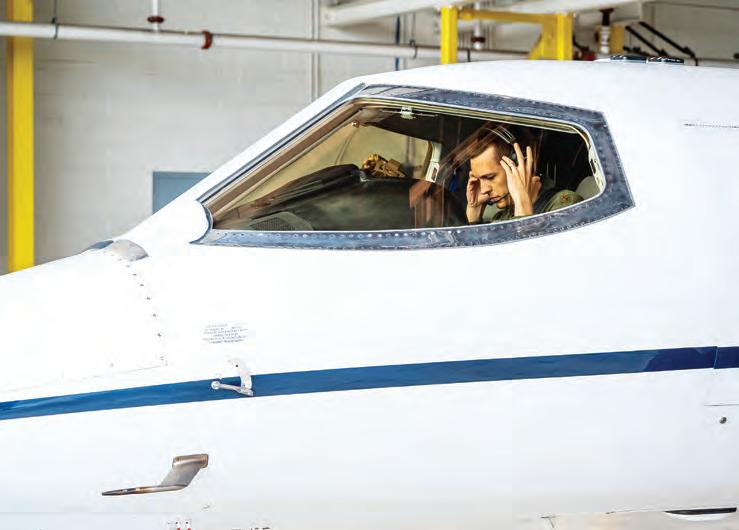
375th Air Mobility Wing recently executed its first operational movement of a litter-bound patient aboard a
C-21 aircraft in more than six years, restoring critical patient movement capability and expanding the wing’s ability to support global aeromedical operations.
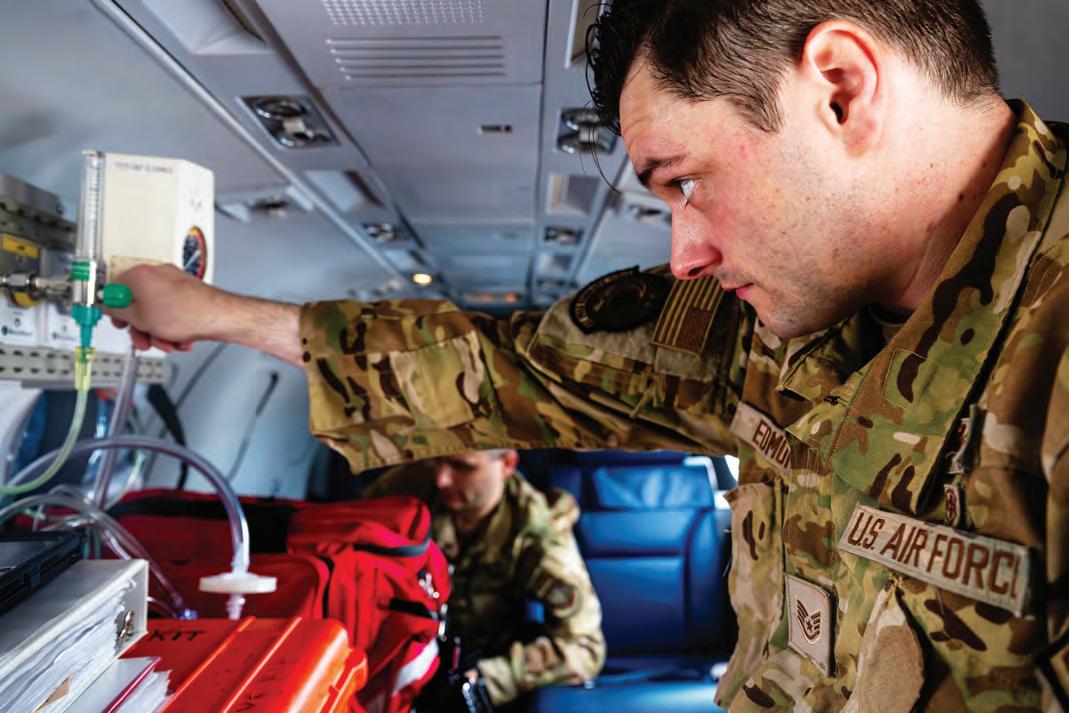
While the 375th AMW has consistently maintained the ability to transport ambulatory patients, it has not been able to transport litterbound, non-ambulatory patients for more than 6 years due to the absence of the Spectrum Aeromed air ambulance technology.
The Spectrum Aeromed Air Ambulance System provides oxygen, vacuum, and electrical capabilities necessary to safely transport non-ambulatory patients. The system also includes a secure litter platform, allowing crews to move patients requiring advanced medical support during flight.
The symposium strengthened an ongoing partnership between Travis AFB and UC Davis by combining military dental experience with academic veterinary expertise. The collaboration allowed military providers to gain advanced training in veterinary dental techniques
“Leveraging specialty capabilities through joint force collaboration, such as Army veterinary detachments working alongside Air Force dentists, is a strategic necessity,” said Ellis. “By pooling our expertise and sharing the burden of specialized care, we ensure our forces, human and canine, remain ready and capable.” For MWDs supporting force protection and detection missions across the force, readiness extends beyond training alone. Continued collaboration between military medicine and veterinary specialists helps ensure MWD teams remain healthy, capable and ready to answer the mission when called upon.
“Today marks both the end result of years of effort to restore a mission capability and the beginning of what we hope will be a bright new future for the 375th AMW’s ability to support global patient movement,” said U.S. Air Force Maj. Eric M. Perron, 375th Aeromedical Evacuation Squadron operations flight commander, and flight nurse for the mission.
“The same system is currently utilized by the 86th Aeromedical Evacuation Squadron at Ramstein Air Base in Germany
The opportunity to apply the system and training operationally came shortly after certification, when the wing received a request to move a patient. The mission provided the first real-world test and demonstrated the readiness of the aircraft, equipment, and personnel involved.
in order to extensively support patient movement across Europe.”
Restoring the capability required close coordination among operations, maintenance, and medical personnel, units across the installation.
Air Mobility Command, the 618th Air Operations Center, 375th Medical Group, 375th Operations Group, 375th Operations Support Squadron, 458th Airlift Squadron, and 375th Aeromedical Evacuation Squadron all played a role in making the mission possible.
The mission served as
both a milestone and a start ing point for the airmen involved. The restored movement capability increases flexibility for future patient movement missions while strength ening the 375 AMW’s role in supporting AE opera tions worldwide.
“To watch the installa tion of this equipment only two weeks ago, followed by a couple of training missions by our crews, and now execute the first operational use of it has been truly exciting for our team,” Perron said. “We cannot wait to see it continue to progress.”




debora Henley
505TH COMMAND AND CONTROL WING PUBLIC AFFAIRS
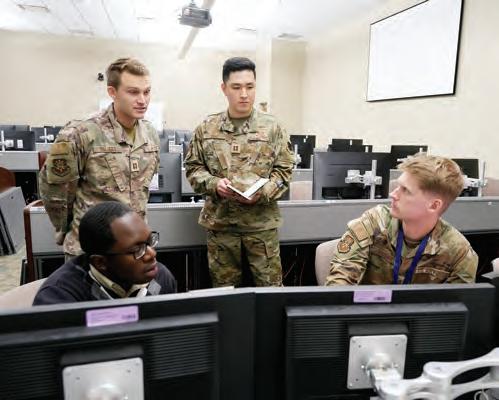
HURLBURT FIELD, Fla. — To project and sustain overwhelming combat power across the globe, the U.S. Air Force employs a logistics enterprise capable of operating at the speed of the modern battlespace. Demonstrating its commitment to ensuring mission dominance, the 505th Command and Control Wing recently hosted a Logistics C2 Hackathon, focusing on solutions to accelerate decision timelines from tactical requirement generation to strategic execution.
The event unified operational and technical experts from Headquarters Air Force, Air Force Special Operations Command, U.S. Air Forces in Europe-Air Forces Africa, Pacific Air Forces and Air Combat Command. These experts convened to engineer the foundation for a fully integrated, predictive system designed to connect unitlevel logistics directly with tactical airlift execution, providing a decisive decision advantage in any environment.
Securing domain dominance
The primary objective of the Hackathon was to establish unyielding visibility and control over the Air Force’s logistics domain. To maintain superiority against peer adversaries, the service is fielding a distributed, resilient architecture. By linking the tactical needs of forward-deployed units directly and rapidly to strategic airlift nodes, the Air Force ensures the lethal, just-in-time delivery of critical assets to the warfighter.
Predictive insights:
Weaponizing logistics
At the heart of this transformation is the integration of artificial intelligence and Maven Smart Systems. Leveraging machine learning and AI-driven analytics, the prototypes developed during the week deliver actionable, predictive insights to keep forces fully sustained.
Tools such as Maven can empower commanders to anticipate operational requirements before they occur, automatically recommending tactical airlift routing and cargo prioritization based on real-time combat needs.
“This leap to predictive execution cements the U.S. military’s decision advantage,” said Capt. Trey Pujats, 505th CCW Logistics Command and Control Hackathon project co-lead. “We are effectively shortening the logistical kill chain which allows us to outpace our adversaries by anticipating their moves and
ensuring our forces have what they need before they even ask for it.”
To optimize the logistics kill chain, participants were divided into three specialized teams, each engineering a vital component of the automated enterprise:
n Phase I: Logistics
Reporting: Delivering real-time, unyielding visibility over theater-wide supply chains.
n Phase II: Predictive Analysis: Projecting sustainment needs in contested environments to guarantee proactive decision advantage.
n Phase III: Airlift
Execution: Automating the rapid routing of tactical airlift to sustain continuous combat power.
A critical driver of the event’s success was the intentional teaming of operations research analysts and cyber airmen. This partnership integrated advanced mathematical modeling with superior data visualization and application development ability. While the operations research analysts designed the predictive algorithms to optimize resource allocation, the software developers built the secure, front-end user interface needed to effectively display data to decision makers.
“The synergy between our operations research analysts and our cyber Airmen was incredible to watch,” said Capt. Andrew Mogan, 505th CCW Logistics Command and Control Hackathon project co-lead. “In order to enable a robust Logistics Common Operating Picture, we leveraged a proven force multiplier: pairing the analysts who design the algorithms with the Airmen who build the software tools to deploy them.”
The Hackathon concluded as a successful initiative that directly advanced the modernization of the logistics supply chain while serving as a massive force multiplier for workforce lethality.
“By immersing our airmen in the development of these AI tools and advanced analytics, we achieved a massive collective upskilling,” Hayde said. “This collective upskilling ensures the enterprise is fully equipped to execute rapid, data-driven logistics operations and sustain airpower superiority in future contested environments.”
Staff Sgt Sabrina fuller-Judd
USAFE-AFAFRICA PUBLIC AFFAIRS
SAINTE-MÈRE-
ÉGLISE, France — A quaint town with stone-paved streets leads visitors to a local airborne museum; directly across the street stands the famous Church of Sainte-Mère-Église, featuring a mannequin paratrooper hanging from its steeple.
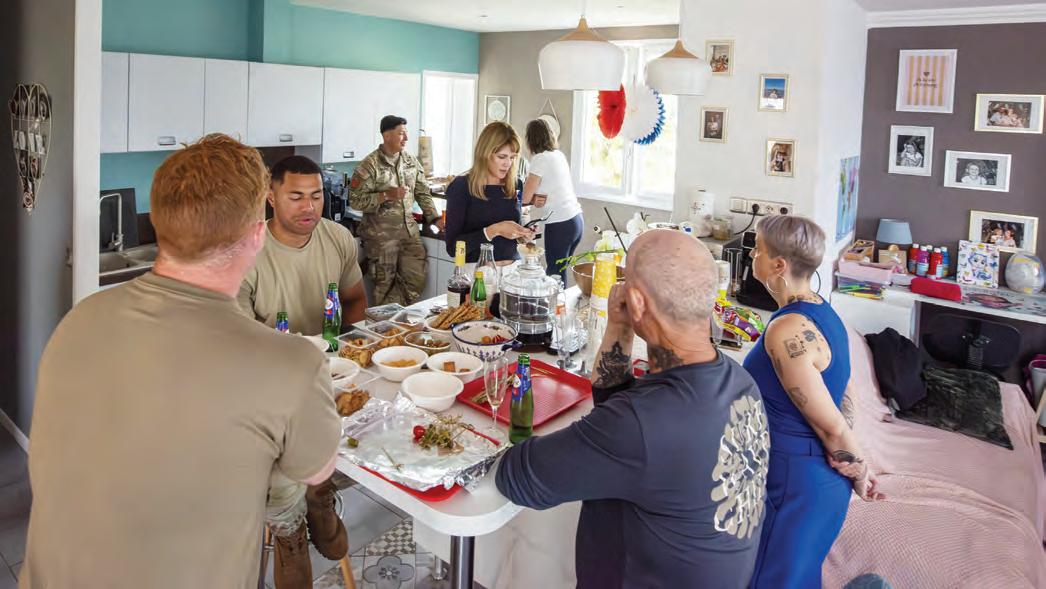
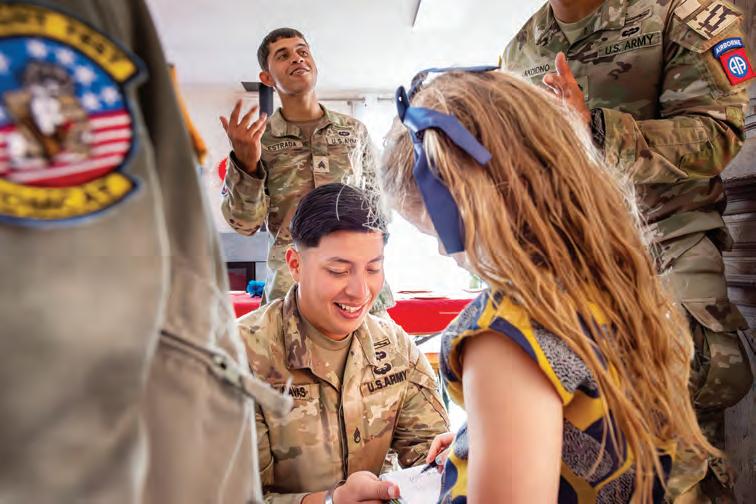
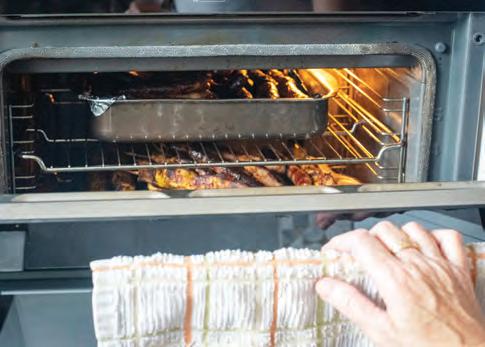
Over 200 military personnel gathered at the church to walk through downtown toward the town hall meeting with their respective French families. U.S. and Allied service members were welcomed into the homes of Normandy families to share home-cooked meals, exchange gratitude, and honor the heritage during the commemoration of the 82nd anniversary of D-Day, June 2.
Through consistent learning and engagement, service members broadened their understanding and deepened their sense of purpose in service.
“It’s a rare chemistry of ‘I’ve got your back, you got my back,’ you don’t find that, and the fact that we have that here is amazing,” said U.S. Army Staff Sgt. Kevin Navas, 173rd Mobile Brigade Combat Team (Airborne) 11 bravo.
The Normandy family dinners originated from a bonded history dating back to June 1944. One local family that fled German occupation in 1940 established roots in Sainte-Mére-Église. The Bertot household and local community members continued this time-honored tradition by fostering friendships between Americans and French families.
“My mom loves Americans. I think for a lot of people over there [in Normandy], that’s the sentiment,” said Carine Bertot, daughter of the host family. “We are very grateful for the liberation; it’s always a very joyful period. It’s a strong link to our loved ones because
From Page 5
“As we identify the flashpoints in the region, we’re focusing in areas where we can develop connectivity and interoperability with partners to stop threats to our forces and American interests throughout the region.”
That effort was on display, March 25, at the Russell-Knox Building in Quantico, Va., where Philippine Air Force Commanding General Lt. Gen. Arthur Mirasol Cordura visited AFOSI’s headquarters for seniorlevel discussions, mission briefings and counterintelligence-focused
my grandparents lived through that. They told me about it, so I have this direct connection, and my parents have it with their parents.”
Carine recalled a story from her grandmother, Monique, who lived in Paris before the family fled Nazi occupation. These stories, like many from World War II veterans and survivors, are rooted in preservation, resilience and a shared connection through love and courage.
“My grandma told me about it. It was a very big trauma for her because she was 12 years old at the time,” Carine said. “She said, ‘We had to put everything we had on the train. Everybody was trying to get on the train and run
engagement.
Merenda, who attended the event, said the visit represented an example of important steps toward strengthening cooperation with Philippine counterparts.
“This was a solid foundation for strengthening our relationship with the Philippine forces,” he said.
“We see real opportunity there to build on existing engagement and work more closely with that team.”
That same focus on deepening partner relationships has extended to other allies across the Indo-Pacific.
Earlier this year, Merenda also visited AFOSI Det. 633 at the U.S. Embassy in Australia and
away.’ She remembered that the train couldn’t even move because there were people on the rails. People were scared.”
The recollection brought a sense of awe, as a mother’s love doesn’t stop at a home-cooked meal but through the safety and happiness of their kin. U.S. airmen and soldiers sitting at the table enjoyed a heartwarming meal and reflected on these stories shared by their French hosts.
“I think it’s important to have this dinner to reminisce on the history and not forget what we are celebrating and remembering together,” said U.S. Air Force Senior Airman Lam Cate, 14th Air Support Operations Squadron tac-
met with Australian partners to bolster shared regional security efforts.
In addition to meetings with leaders, AFOSI Reg. 6 personnel have supported multinational participation in Indo-Pacific exercises.
For example, during Resolute Force Pacific 2025, which is the Pacific Air Forces’ most comprehensive contingency-response exercise in decades, U.S. and partner forces were tested strengthen multinational readiness.
“Exercises like Resolute Force Pacific and Keen Sword (in Japan) reflect the broader emphasis in the 2026 National Defense Strategy on improving coordination with allies and partners and strength-
tical air control party member. “It’s amazing to immerse different cultures and to build new relations, continuing these traditions for years to come.”
The Bertot family has a long tradition of stepping up when others are in need. At 15 years old, Carine’s paternal grandmother, Marie-Josephe, demonstrated remarkable bravery by hiding an American soldier on her family’s farm before German patrols discovered him.
“We live near Utah beach, our life is here; we always live with the memories of the Americans,” said Christin Bertot, hostess for the Normandy family dinner. “When we were younger, we would roam the beach and play hideand-seek in the bunkers. My parents always spoke of the Americans with gratitude.” Carine chimed in with joy, reflecting on her own memories of playing in the old bunkers.
While we recognize the sacrifices of those who stormed the beaches of Normandy and parachuted behind enemy lines in World War II, their legacy endures as these places are remembered in fondness, gratitude, and courage; embracing the friendships and bonds of a new generation of service members.
ening collective readiness across the Indo-Pacific,” Merenda said.
Keen Sword 25 in Japan, a bilateral exercise focused on interoperability and operational resilience between U.S. forces and the Japan Self-Defense Forces, also tested AFOSI personnel across the region.
“International relationships are really interpersonal relationships,” Merenda said.
“Traveling to these places, having one-on-one meetings, or hosting conferences or subject matter exchanges, these things are interpersonal relationship-building, and that becomes the foundation for the organizational relationships.”