TRAVIS TAILWIND

Honoring the Travis legacy
USAFE-AFAFRICA PUblIC A FFAIRS And USAFE-AFAFRICA HIStoRy oFFICE
RAMSTEIN AIR BASE, Germany — On June 20, 1941, the publication of Army Regulation 95-5 marked a pivotal moment in American military history with the creation of the Army Air Forces. As global tensions escalated and the prospect of U.S. involvement in World War II became increasingly likely, military leaders recognized the need for a more unified and capable air organization. Led by Maj. Gen. Henry “Hap” Arnold, the AAF centralized control of the Army Air Corps and Air
Command under a single structure. While some leaders still viewed airpower primarily to support ground forces, visionaries such as Army Chief of Staff Gen. George C. Marshall understood that airpower could serve as a decisive force alongside land and naval operations. The creation of the AAF enabled Arnold to establish an Air Staff, synchronize training and modernization efforts, and prepare America’s air forces for the global conflict that lay ahead.
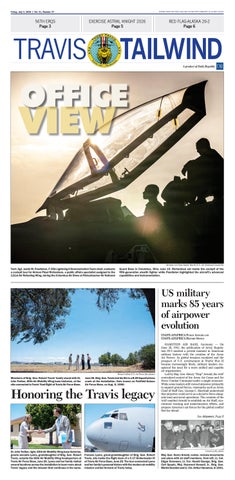
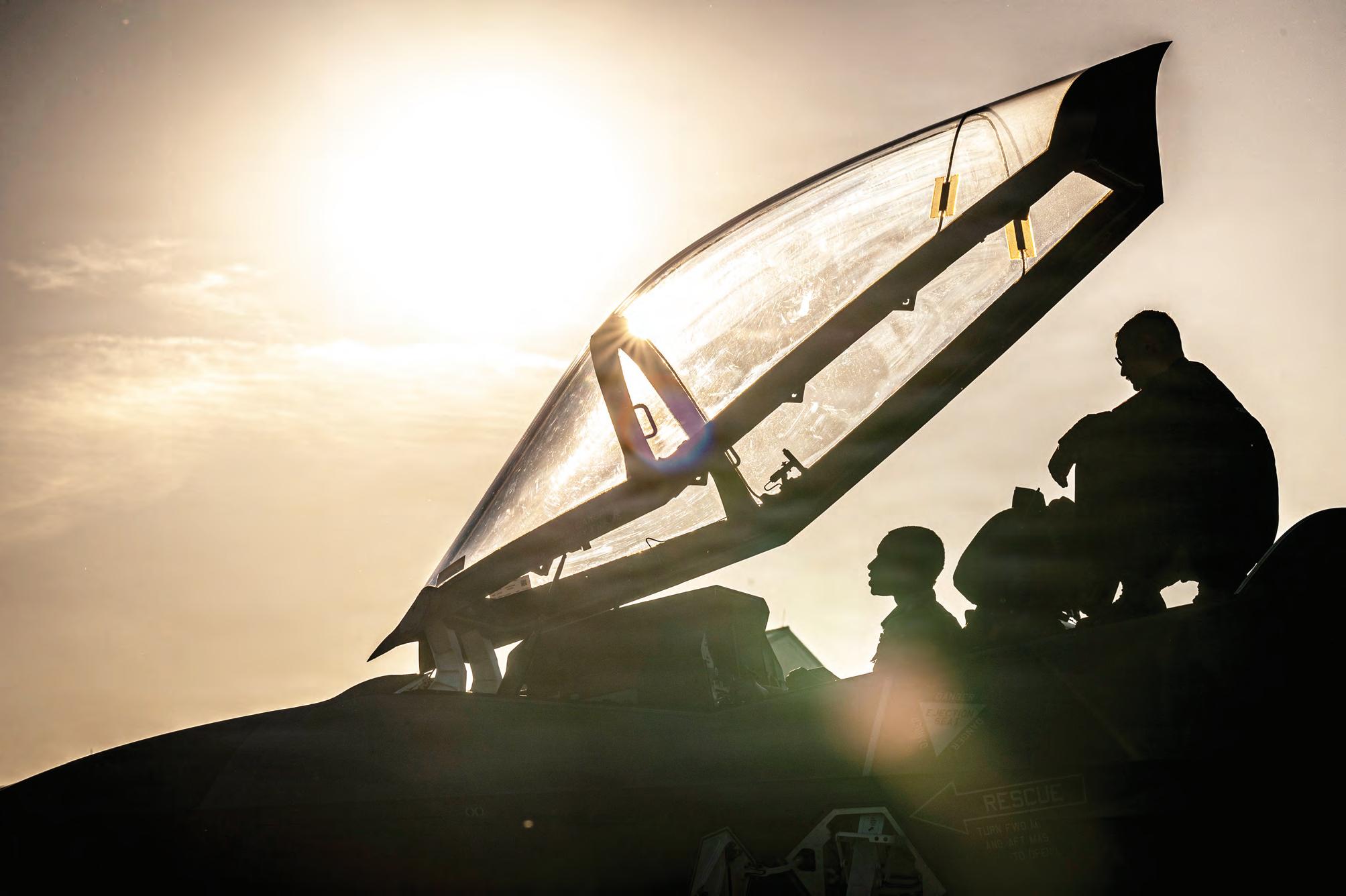
Tech. Sgt. Justin M. Pendleton, F-35A Lightning II Demonstration Team chief, conducts a cockpit tour for Airman Phyel Richardson, a public affairs specialist assigned to the 121st Air Refueling Wing, during the Columbus Air Show at Rickenbacker Air National
Courtesy file photo
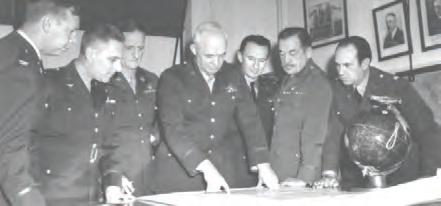
Maj. Gen. Henry Arnold, center, reviews documents and plans with air staff members, from left, Lt. Col. Edgar Sorenson, Lt. Col. Harold George, Brig. Gen. Carl Spaatz, Maj. Haywood Hansell, Jr., Brig. Gen. Martin Scanlon and Lt. Col. Arthur Vanaman, in 1941.
Brian Collett/U.S. Air Force file photos
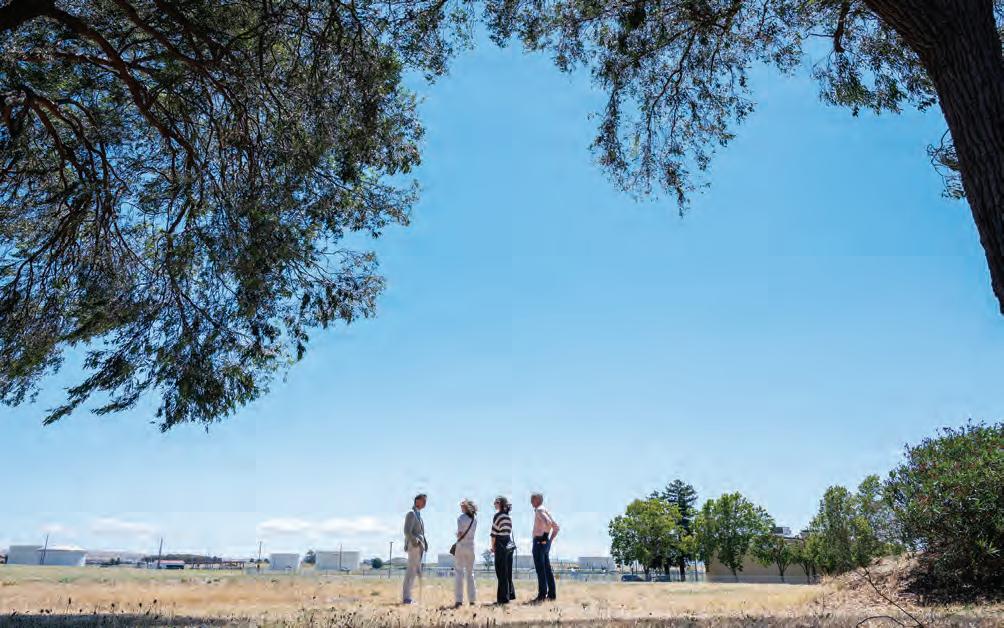
Members of Brig. Gen. Robert Travis’ family stand with Dr. John Treiber, 60th Air Mobility Wing base historian, at the site connected to Travis’ final flight at Travis Air Force Base,
June 26. Brig. Gen. Travis lost his life in a B-29 Superfortress crash at the installation, then known as Fairfield-Suisun Air Force Base, on Aug. 5, 1950.
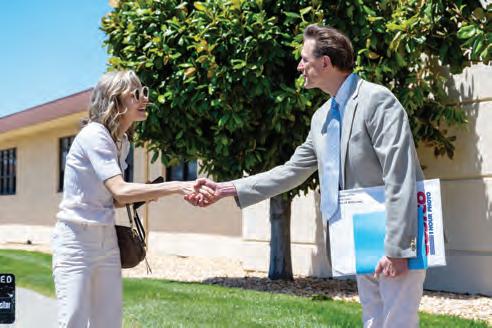
Dr. John Treiber, right, 60th Air Mobility Wing base historian, greets Jennalie Lyons, granddaughter of Brig. Gen. Robert Travis, outside the 60th Air Mobility Wing headquarters at Travis Air Force Base, June 26. Lyons and her family visited several locations across the installation to learn more about Travis’ legacy and the mission that continues in his name.
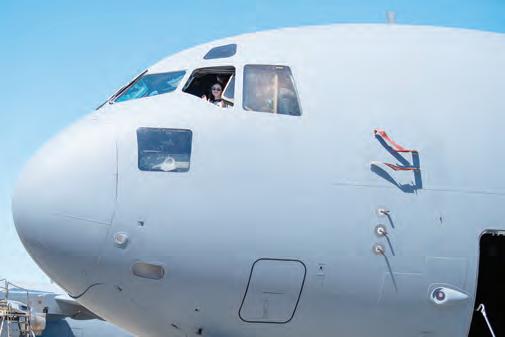
Frances Lyons, great-granddaughter of Brig. Gen. Robert Travis, sits inside the flight deck of a C-17
Globemaster III
at Travis Air Force Base, June 26. The tour connected Lyons and her family’s personal history with the modern air mobility mission carried forward at Travis today.
TRAVIS AIR FOCE
BASE — Ready, set, aim at the Travis BX for a free in store Nerf toy event. On July 4, from 12 p.m. to 3 p.m., military families can enjoy Nerf themed toy stations, including the Nerf Zombie Strikeout, Minecraft Firebrand, Ink Teenage Mutant Ninja Turtles Blaster and more.
“The Exchange is honored to host military families for a day of fun,” said Travis Exchange General Manager Cathie Byrns. “Wherever they serve around the world, events like this remind us that we are better together as one community. Preregistration is not required. For more information, contact the Travis Exchange or visit the Travis Exchange’s social media pages.

MQ-28 Ghost Bat to join allied forces in Exercise Valiant Shield
ROTA, Northern Mariana Islands — The Boeing Defence Australiadeveloped MQ-28 Ghost Bat, a production representative test aircraft, will integrate with U.S. and allied forces during Exercise Valiant Shield 2026. This marks a significant milestone in the operational development of Collaborative Combat Aircraft (CCA) and the advancement of humanmachine teaming in the Indo-Pacific theater.
During the exercise, the uncrewed MQ-28 will fly in concert with crewed fighter platforms, provid-
ing a critical opportunity for the joint force to refine tactics, techniques, and procedures for this next evolution of airpower. CCA will perform a variety of missions during Valiant Shield 2026 to include defensive and offensive counter air missions.
“The future of airpower is a partnership between our greatest assets: our skilled warfighters and the technology that empowers them,” said U.S. Air Force Maj. Daniel Pesich, Experimental Operations Unit collaborative combat aircraft detachment officer in charge. “By advancing human-machine teaming, we are increasing our See Ghost, Page 5
A-10 engine build marks closing chapter at Davis-Monthan
Ariz. — Inside the engine shop at Davis-Monthan Air Force Base, the sound of tools and sheet metal mark the end of a decade-long chapter in close-air-support history.
On May 21, airmen assigned to the 355th Component Maintenance Squadron gathered with wing leadership to celebrate the completion of the final A-10 Thunderbolt II engine build at Davis-Monthan.
“Some, if not all these engines have saved lives on the ground through close air support missions, and some have carried pilots home while the other engine was damaged,” said Master Sgt. Eugene Rich III, the propulsion flight chief assigned to the 355th CMS.
TRAVIS TAILWIND

Serving Travis Air Force Base and the surrounding community 1250 Texas St., Fairfield, Calif. 94533 707-425-4646 | Fax 707-425-5924
Publishers: Foy S. McNaughton and T. Burt McNaughton Advertising Manager: T. Burt McNaughton Editor: Todd R. Hansen Layout : Aaron Rosenblatt
Texas St., Fairfield, CA 94533.
The A-10 has long been recognized for its close-air-support role, but behind every sortie is a maintenance force responsible for ensuring the aircraft is always mission ready. For engine airmen, that responsibility begins long before an aircraft takes off.
Building or rebuilding an A-10 engine is deliberate and requires perfection. A standard engine build typically takes 30 days, with a rigorous, multi-stage operation designed to ensure peak performance and safety. Each step is guided by technical data and performed by maintainers trained to identify, repair and prevent issues that could affect aircraft performance.
“All members of the
shop put eyes and hands on this engine throughout the build, testing,
diagnostic runs and final inspection,” said Rich.
“Typically, only one crew

of five would work on any one engine, but this engine has been touched by everyone.”
For Staff Sgt. Bill Bautista, an aerospace propulsion craftsman assigned to the 355th CMS who has been working on these engines for three years, the final engine build is bittersweet.
“I think the legacy of the A-10 is going to be remembered for generations,” Bautista said. “The A-10 will be missed here in Arizona.”
That sense of history is not lost on the shop.










Senior Airman Christopher Ornelas Jr./U.S. Air Force file photos
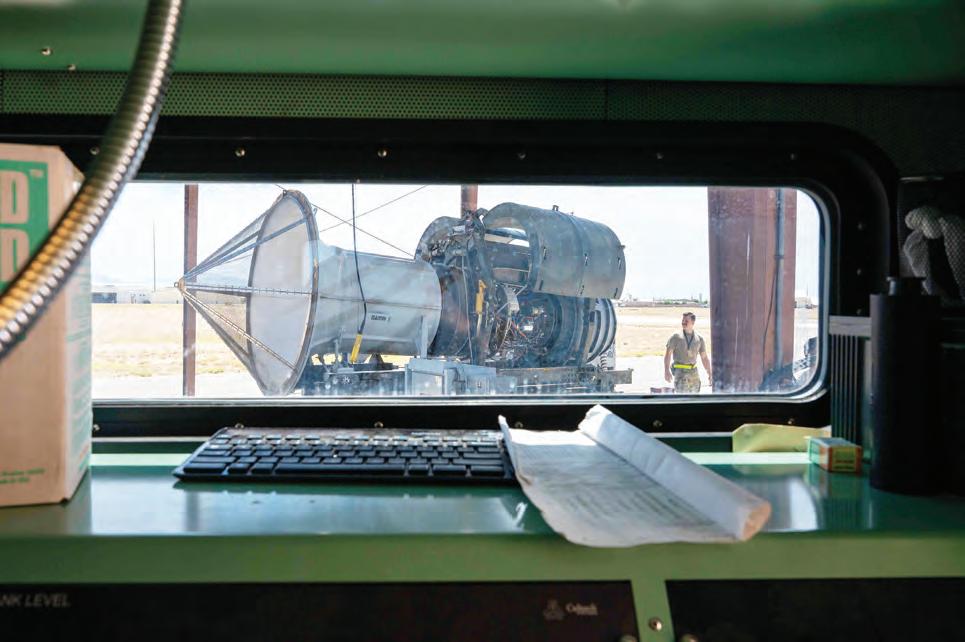
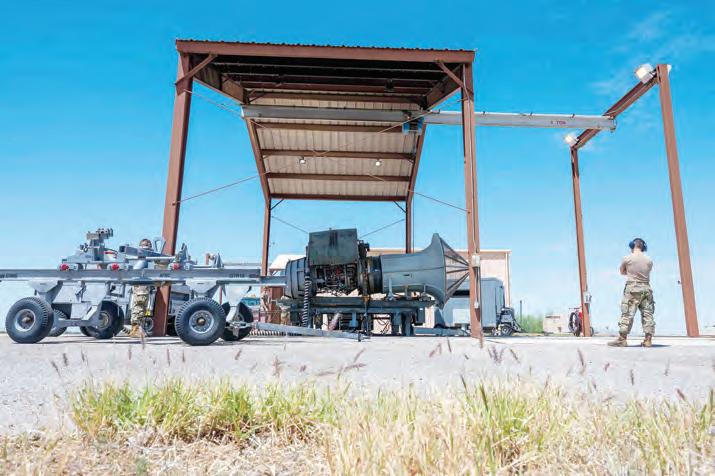
Airmen assigned to the 355th Component Maintenance Squadron monitor an A-10C Thunderbolt II engine test from the test cell’s control cab at Davis-Monthan Air Force Base, Arizona, April 30.
An A-10C Thunderbolt II engine runs during a test cell operation at Davis-Monthan Air Force Base, Arizona, April 30. Aerospace propulsion airmen conduct engine tests to verify performance, identify maintenance issues and ensure engines are ready to support flight operations.
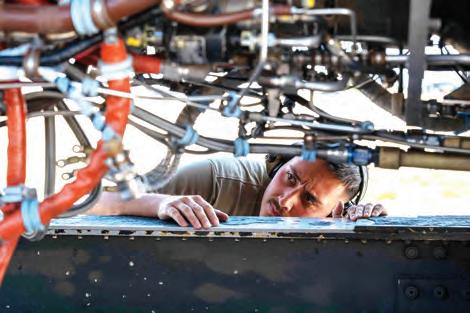
Airman 1st Class Gabriel Medina, an aerospace propulsion journeyman assigned to the 355th Component Maintenance Squadron, ensures an A-10C Thunderbolt II engine is running correctly at DavisMonthan Air Force Base, Arizona, April 30.
Mighty Eighth marks 1 year since Operation Midnight Hammer
teCh sgt. Jessi roth
BARKSDALE AIR
FORCE BASE, La. — One year ago, airmen across the Eighth Air Force helped execute Operation Midnight Hammer, a historic long-range strike mission that demonstrated the reach, capability and effectiveness of America’s global strike force.
Conducted on June 24, 2025, OMH became the largest B-2 Spirit mission in U.S. history and the largest B-2 precision strike ever conducted.
The operation marked the first combat employment of the GBU-57 Massive Ordnance Penetrator, demonstrating the unique ability of long-range stealth bombers to strike heavily fortified targets anywhere in the world.
Whiteman Air Force Base airmen flew one of the longest and most complex operational strike missions in the aircraft’s history – seven B-2 aircraft launched from the United States and struck targets halfway around the world and returned home more than 30 hours later.
They maintained operational surprise throughout the mission,
reached their targets without intercept by Iranian aircraft or an effective air defense response, and demonstrated the ability of U.S. forces to project combat power globally through a highly coordinated operation thousands of miles from home station.
While the B-2 became the public face of the operation, the mission’s success depended on far more than the aircraft itself. OMH highlighted the teamwork required to conduct modern global strike operations.
The mission brought together organizations across the Joint Force, including U.S. Strategic Command, U.S. Central Command, Air Mobility Command, Air Forces Central, Space Force partners, Guard and Reserve units, and numerous supporting agencies.
“Behind every phase of the operation were airmen whose expertise and dedication made the mission possible,” said Chief Master Sgt. Brandon M. Wolfgang, command chief master sergeant of Eighth Air Force and senior enlisted leader for the Joint-Global Strike Operations Center. “While the aircraft drew much of the public attention,
See Hammer, Page 5
Engine
From Page 2
For half a century, Davis-Monthan maintainers have supported the A-10 mission through deployments, training requirements and daily flying operations. Since the first A-10 was delivered to Davis-Monthan in 1976, their work helped ensure pilots had reliable aircraft and ground forces had access to close air support when needed. For the maintainers, the mission has always been personal. The A-10’s purpose is tied directly to protect-
ing service members on the ground, and engine airmen understand their work contributes to that larger responsibility.
Although this closes out an era for the 355th Wing and the Tucson community, some A-10s are planned to remain in service until 2030 at Moody and Whiteman Air Force Bases.
The final engine leaving the shop signals the end of one mission set, but not the end of the skill, discipline and pride built by the airmen who maintained it. Those qualities will continue to carry forward as Davis-Monthan and its airmen transition to future missions.


M aster sgt. Carlin leslie 449TH AIR EXPEDITIONARY GROUP PUBLIC AFFAIRS
CAMP LEMONNIER,
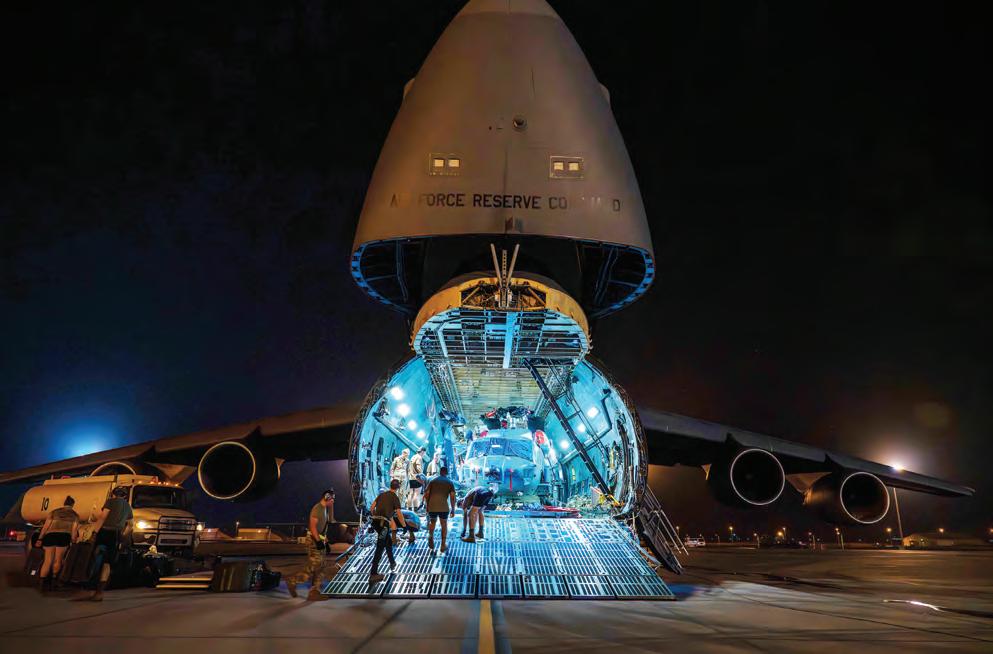
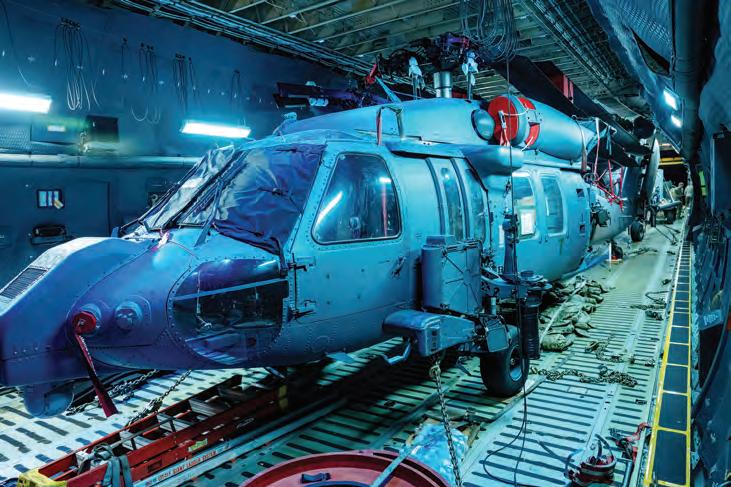
Djibouti — The 56th Expeditionary Rescue Squadron arrived at Camp Lemonnier, setting a milestone for their home unit by deploying their HH-60W Jolly Green II helicopters and establishing a first of its kind critical rotary-wing rescue capability in East Africa to support regional response efforts, June 10.
The deployment of the 56th ERQS highlights the 406th Air Expeditionary Wing’s enduring priorities of defending and sustaining the base, as well as maximizing crisis readiness. Operating across a wide area of responsibility, the efforts of the support and operations teams demonstrated the wing’s commitment to unity of effort.
“Deploying the 56th Rescue Squadron to Camp Lemonnier required an incredible amount of teamwork and coordination across the 31st Fighter Wing, AFAFRICA, and AFRICOM staffs,” said Lt. Col. Jonathan Gokey, 56th ERQS commander.
“This deployment is a major milestone, marking our first since transitioning from the battle-proven HH-60G Pave Hawk to the advanced capabilities of the HH-60W Jolly Green II.”
With the HH-60W Jolly Green II’s now on station, the 56th Expeditionary Rescue Squadron will integrate directly with the 82nd Expeditionary Rescue Squadron and the Joint Personnel Recovery Center. This capability in the region provides an
elevated level of rapidresponse defense and recovery, ensuring that joint and partner forces operating in high-threat environments have dedicated rescue assets ready at a moment’s notice.
“Having dedicated rescue air assets in theater greatly increased our team’s ability to quickly and efficiently save lives,” said Capt. Jason Hill, 82nd ERQS commander. “The interoperability we have with our rescue brethren greatly increases our capability to support AFRICOM’s objectives.”
According to Gokey, managing a squadron for deployment requires realtime coordination with all parties involved. Airmen of the 449th Air Expeditionary Group, alongside personnel from the 726th Expeditionary Mission Support Squadron, worked through the night to receive and offload the incoming airmen and helicopters into the installation.
rapid offload and integration of the 56th Expeditionary Rescue Squadron team is a testament to the agility and professionalism of the




































































































“The
449th Air Expeditionary Group airmen who worked through the night to make this happen,” said
Master Sgt. Carlin Leslie/U.S. Air Force file photos
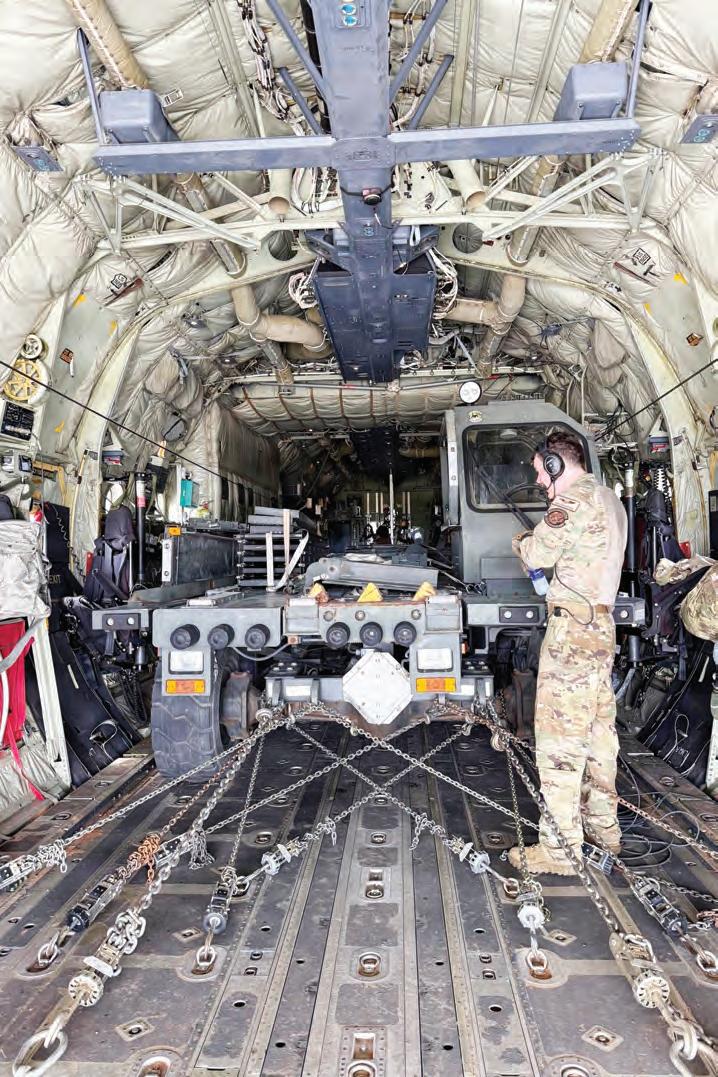
An HH-60W Jolly Green II is offloaded from a 439th Airlift Wing Reserve Command C-5 Super Galaxy on the flightline at Camp Lemonnier, Djibouti, June 10. The HH-60W Jolly Green II helicopter brings a critical rotary-wing rescue capability in East Africa to support regional response efforts.
An HH-60 Jolly Green II sits inside the cargo bay of a 439th Airlift Wing Reserve Command C-5 Super Galaxy on the flightline at Camp Lemonnier, Djibouti, June 10.
See Jolly, Page 6
Courtesy photo/509th Bomb Wing
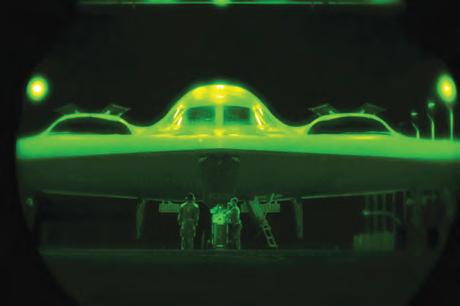
A B-2 Spirit is prepared for operations ahead of Operation Midnight Hammer at Whiteman AFB, Mo., June 2025.
CCA contracts advance Air Force air superiority
Secretary of the a ir force
Public a ffairS
ARLINGTON, Va. —
The Department of the Air Force awarded several contracts for the Collaborative Combat Aircraft program, including Increment 1 air vehicles as well as mission autonomy software, in a push to rapidly field advanced combat capabilities.
These distinct efforts validate acquisition transformation principles to secure a critical operational advantage: decoupling hardware from software. By treating mission autonomy as “software sold separately,” the Air Force ensures that the warfighter receives state-of-the-art physical platforms alongside agile, easily updatable software, effectively breaking traditional procurement molds.
Building upon decades of responsible, semi-autonomous flight development, CCA represent the next critical evolution of airpower. CCA are designed to seamlessly integrate with crewed fighters to
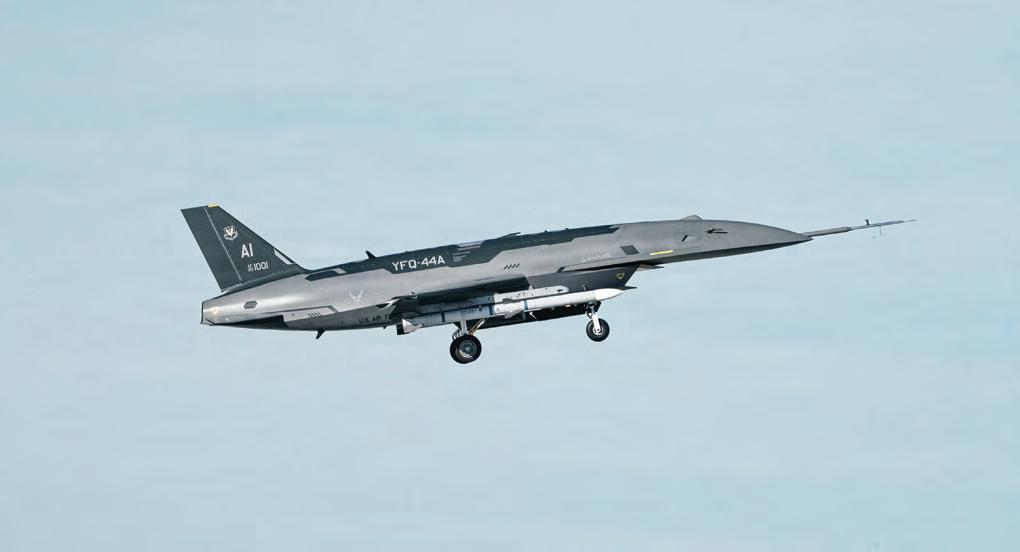
A YFQ-44A, part of the Air Force’s Collaborative Combat Aircraft (CCA) program, undergoes an undated captive carry test at a California test location. This test phase uses inert munitions to methodically validate weapons integration, structural performance and safety, ensuring
extend reach, awareness and survivability in contested environments. This human-machine teaming will serve as a powerful deterrent, signaling to adversaries the futility of
challenging U.S. airpower.
“Collaborative Combat Aircraft changes how we project power and generate mass in highly contested environments,” said Air Force Chief of Staff Gen.
the platform can safely carry external stores. The CCA program is a critical part of a larger, integrated system-ofsystems designed to extend the reach and effectiveness of crewed aircraft, giving warfighters an overwhelming advantage in future conflicts.
Ken Wilsbach. “Delivering this capability to our warfighters faster ensures our forces maintain the tactical edge required to deter and, if necessary, defeat any adversary.”
The hardware: Accelerating physical mass
The Air Force awarded engineering and manufacturing development and
production contracts to General Atomics, FQ-42, and Anduril, FQ-44, for CCA Increment 1.
Awarded four months ahead of schedule, these contracts signify that the FQ-42 and FQ-44 meet rigorous mission requirements and are ready for full-scale manufacturing. The decision follows a competitive source selection process, identifying the systems as the most capable and costeffective solutions to maintain air superiority in an increasingly complex and contested global threat environment.
“By moving fast from competitive selection into full-scale manufacturing, we position ourselves to field highly credible and combat-ready semi-autonomous systems to stay ahead of the pacing challenge,” said Secretary of the Air Force Troy Meink. “These contracts reaffirm our confidence in the strategic path forward for the program to procure over 150 combat capable CCA by the end of the decade.”
See CCA, Page 7
all are welcome to Discover, Develop, and Demonstrate a relationship with God.
We invite you to join us for Sunday service at 10:30 a.m.
2207 Union Avenue, Fairfield, CA www.1ag .com





Christ Exalted, Lives Transformed 3777 Vaca Valley Pkwy Ste.F, Vacaville, 95688
Email: o ce@northhillsvv.org
Website: www.northhillsvv.org
Service Times: Sunday morning 10 a.m., Wednesday evening 6:30 p.m. Phone: 707-449-8977




Vacaville Church of Christ
401 Fir St., Vacaville, CA 95688 (707) 448-5085
Minister: Elliott Williams
Sunday Morning Bible Study 9:30 AM
Sunday Morning Worship 10:30 AM
Sunday Evening Worship 5:00 PM

8:15am, 10am &


Wednesday Evening Bible Study 6:00 PM vacavillecoc.com 401


NA ZARENE
Courtesy photo
Just five months later, following the attack on Pearl Harbor, the United States entered World War II. The organizational changes initiated through Army Regulation 95-5 proved invaluable, allowing the AAF to deliver the strategic airpower that would help secure victory over the axis powers. Its wartime success demonstrated the value of an independent air arm and ultimately paved the way for the establishment of the U.S. Air Force in 1947.
Today, 85 years later, the legacy of the Army Air Forces lives on across the globe. Nowhere is that heritage more evident than within U.S. Air Forces in Europe – Air Forces Africa, where airmen continue to build upon the foundation laid by Arnold and his contemporaries. From strengthening alliances and partnerships across two continents
to enhancing readiness, deterring aggression, and projecting combat power when called upon, USAFEAFAFRICA exemplifies the enduring evolution of American airpower.
While the aircraft, technology and operating environment have changed dramatically since 1941, the core mission remains the same: delivering air power to protect U.S. interests and support allies and partners. As airmen across USAFEAFAFRICA execute operations, exercises and engagements throughout Europe and Africa, they carry forward a legacy that began 85 years ago with a vision for a more capable, agile, and inde pendent air force.
The creation of the Army Air Forces was more than an organizational change; it was the beginning of a transformation that continues to shape the way the United States projects airpower around the world today.
Senior Airman Adrien Tran/U.S. Air Force file
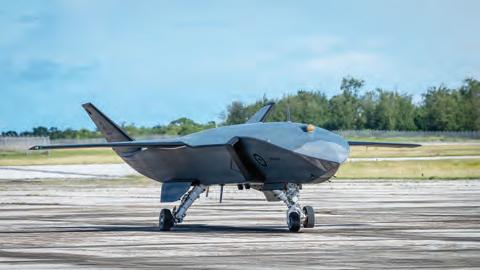
A Boeing Defence Australia’s MQ-28 Ghost Bat, a production representative test aircraft, prepares to conduct a taxi test during Exercise Valiant Shield 2026 at Rota, Commonwealth of the Northern Mariana Islands, June 21.
Ghost
From Page 2
power projection while building a more resilient, capable, and lethal joint force.”
The Department of the Air Force and its partners will analyze the aircraft’s contribution as a force multiplier that extends the reach, awareness, and survivability of crewed platforms in contested environments.
CCA are semi-autonomous aircraft that operate under the oversight of human operators. The Department of the Air Force remains steadfast in its com-
Hammer
From Page 3
the success ultimately came down to airmen across multiple specialties working together to deliver results.”
One year later, OMH remains a powerful example of the value of long-range strike capabilities and the role they play in supporting national security objectives. The mission demonstrated that penetrating strike platforms remain an essential component of modern warfare and reinforced the unique flexibility and global reach provided by the bomber force, capabilities that remain critical in today’s operating environment. For the Mighty Eighth, the operation also represents the latest chapter in a legacy carried forward by generations of airmen.
Since its activation in 1942, the Eighth Air Force has stood at the forefront
mitment to the ethical development of these systems, ensuring that a human remains in the loop for all critical decisions. These platforms are designed to increase sortie generation with less strain on maintenance and personnel, which ultimately makes our entire force more lethal.
Valiant Shield is a biennial, multinational, joint exercise focused on integrating the joint force in a multi-domain environment. This routine training fosters real-world proficiency in sustaining joint forces through detecting, locating, tracking, and engaging units at sea, in the air, on land, and in cyberspace in response to a range of mission areas.
of American airpower.
From strategic bombing campaigns during World War II to today’s global strike missions, airmen have embraced innovation, mastered new technologies and adapted alongside an ever-changing strategic landscape.
“As we approach the 85th anniversary of the Mighty Eighth, Operation Midnight Hammer reminds us that while technology and missions evolve, our foundation remains the same,” Neuman said. “Our strength comes from our airmen. Their readiness, teamwork and dedication continue the legacy built by those who came before us and ensure we remain ready for the challenges ahead.”
As global security demands continue to evolve, the Eighth Air Force remains prepared to provide combatant commanders and national leaders with the capabilities that have defined the organization for nearly eight decades.
606th ACS distribute command and control during AK26
Senior M aSter Sgt. Megan CruSher
RAF MILDENHALL, England — Airmen assigned to the 606th Air Control Squadron, Aviano Air Base, Italy, exercised distributed commandand-control operations during Astral Knight 2026, validating their ability to rapidly deploy and operate tactical air battle management capabilities from multiple locations, June 1-12.
“What we’re practicing is how we would deploy to a new environment, establish our equipment and begin operations,” said U.S. Air Force Capt. Christopher Callari, 606th ACS air battle manager. “The setup and teardown process helps us identify lessons learned so we’re prepared when real-world taskings arise.”
As the U.S. Air Force’s only overseas Control and Reporting Center, the 606th ACS, known by their call sign “Primo”, provides rapidly deployable tactical command and control for air operations across the U.S. European Command area of responsibility.
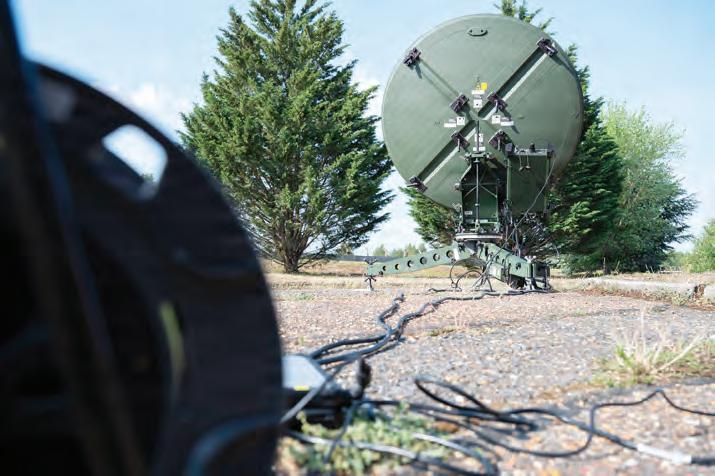
The exercise tested the squadron’s ability to establish, connect and operate command-and-control systems from separate locations using a Scalable Control and Reporting Agile Mission Kit and Ranger satellite communications equipment, and replicating a forward deployed location.
Additionally, two U.S. Marine Corps air controllers from Marine Air Control Squadron 2, Air Defense Company Alpha and Bravo, Cherry Point, N.C., embedded directly with 606th ACS crews, participating in mission planning and live operations while familiarizing
themselves with squadron specific procedures.
“In a wartime environment, we’ll likely be controlling adjacent areas of responsibility,” said Callari. “The integration happening here allows us to work through those coordination requirements and build the communication processes we’ll need in a realworld scenario.”
For the Marines, the training provided an opportunity to strengthen interoperability between two command-and-control communities that routinely support air operations.
“The ultimate objective is being able to work together seamlessly in the real-world fight,” said U.S. Marine Corps 1st Lt. Barrett Pierce, an air command and control officer assigned to Marine Air Control Squadron 2, Air Defense Company Alpha. “Exercises like this make us more ready to do that in operational environments.”
To simulate those operational environ-


ments, the U.S. Air Force’s 19th Electronic Warfare Squadron (EWS), based at Polygone, Bann, Germany, provided data connectivity, training support and realistic electronic warfare threat training for air operations to increase combat readiness and survivability.
Their effects enhanced the exercise scenario by simulating a realistic surface-to-air threat lay down that could rapidly change from day to day or hour to hour, said U.S. Air Force Lt. Col. Timothy Killham, local missions with the 19th EWS.
“Nowadays, [almost all] surface to air missile systems are highly mobile, so even if you knew where it was an hour ago, doesn’t
mean you know where it is now,” said Killham. “So, our threat emitters provide as realistic as possible training, so they’re better prepared when they get to the actual fight down range.”
Overcoming these dynamic threats proved the 606th ACS rapidly deployable systems can withstand the pressures of a modern-day battlefield. By combining distributed operations, joint-force integration and realistic threat replication, Astral Knight 2026 strengthened the 606th ACS ability to deploy, integrate and provide tactical command and control to fighter and bomber aircraft in support of combat operations.

Courtesy file photo
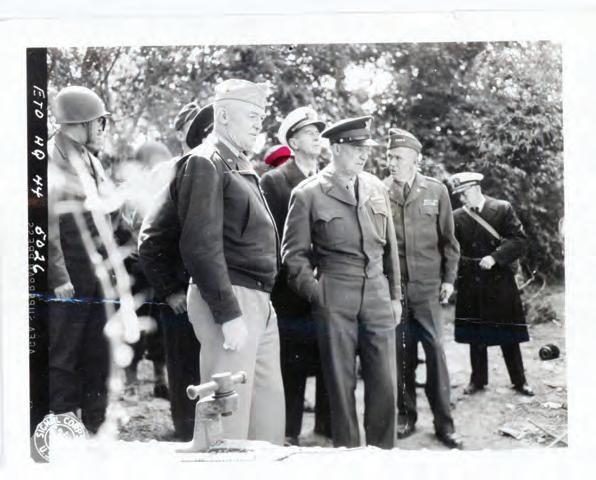
Maj. Gen. Henry Arnold tours Normandy, France, with Adm. Ernest King, Gen. Dwight Eisenhower and Gen. George Marshall, June 12, 1944.
Staff Sgt. Marcus Hardy-Bannerman/U.S. Air Force file photos
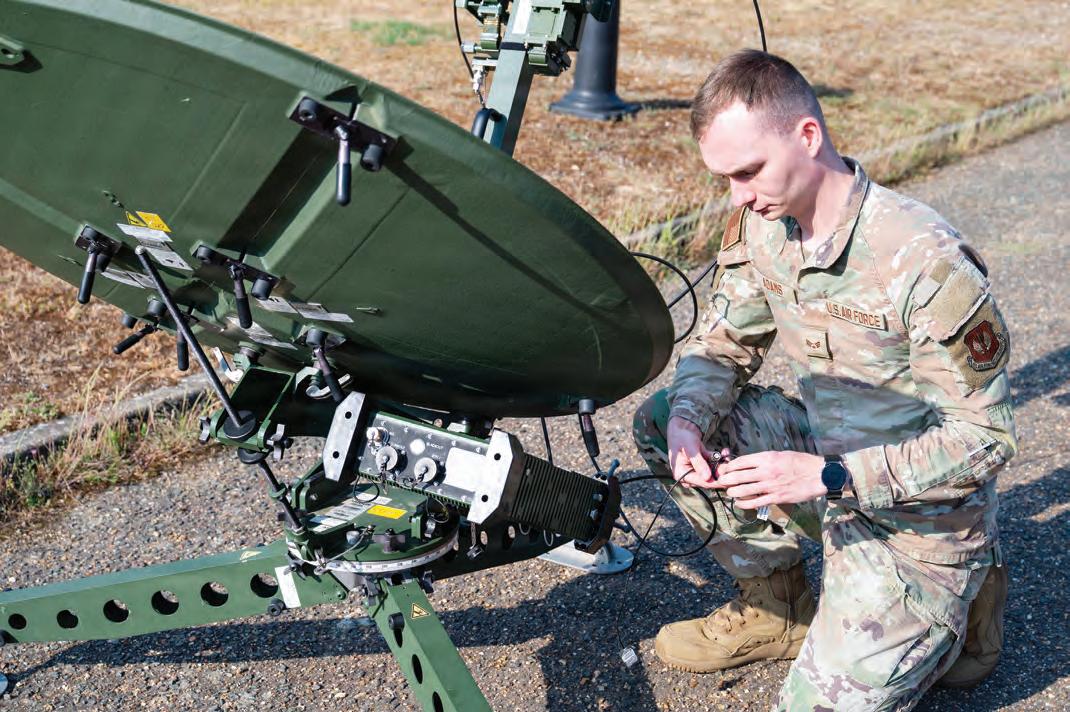
Senior Airman Kailan Adams, 606th ACS network operations technician, assembles a ranger satellite communication terminal in preparation for exercise Astral Knight 2026 at RAF Lakenheath, England, May 27.
Airmen assigned to the 606th Air Control Squadron assemble a ranger satellite communication terminal to test deployed capabilities as part of exercise Astral Knight 2026 at RAF Lakenheath, England, May 27. AK26 validates deployed command and control capabilities in support of tactical integrated air and missile defense operations.
AATTC maintainers fulfill dual qualification initiative
M aSTer SgT
PaTricK evenSon 139TH AIRLIFT WING
ROSECRANS AIR
NATIONAL GUARD
BASE, Mo. — Aircraft maintenance professionals assigned to the Advanced Airlift Tactics Training Center have reached a significant milestone by becoming dual qualified on both the C-130H and C-130J Hercules, enhancing their ability to support the school’s evolving mission.
EIELSON AIR FORCE
BASE, Alaska — The latest iteration of Pacific Air Forces’ premier air combat training exercise, Red Flag-Alaska 26-2, concluded June 12, closing out two weeks of daily training sorties for the U.S. and its allies in the skies above Alaska.
RF-A 26-2 began May 28, and brought in over 70 aircraft and approximately 2,100 service members from the U.S. and partner nations for realistic air combat training at Eielson AFB and Joint Base ElmendorfRichardson, Alaska. International participation was the primary distinction in this RF-A iteration versus others held throughout the year.
“This was my first time participating in Red Flag-Alaska. It was an eye-opening experience to see everybody filling their roles to the fullest extent,” said Royal Canadian Air Force Capt. Daegan Banga, a CF-188 Hornet pilot assigned to the 409th Tactical Fighter Squadron. “The exercise has been very busy. Long days for sure, but very exciting. We definitely got a lot of training out of it that we can take back with us.”
The large force employment exercise focused on coalition and air-toground, special operations, and tactical airlift with limited air-to-air and surface-to-air threats in realistic scenarios against aggressor units. It includes a combined, joint force of the U.S. Air Force, U.S. Army, U.S. Navy, the British Royal Air Force, Royal New Zealand Force, Republic of Singapore Air Force and Royal Canadian Air Force.
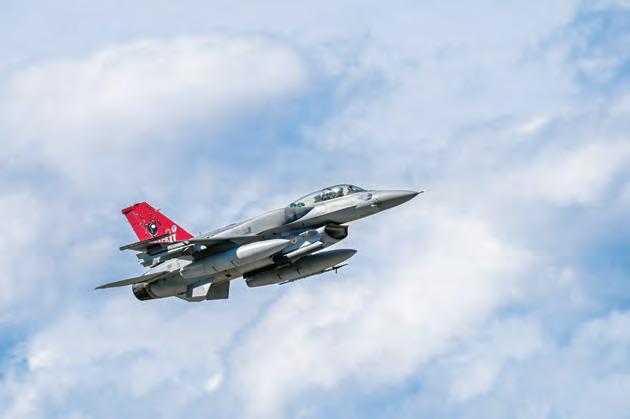
An F-16 Fighting Falcon, assigned to the 425th Fighter Squadron from Luke Air Force Base, Ariz., departs the flight line at Eielson Air Force Base, Alaska, during Red FlagAlaska 26-2, June 1. RF-A is Pacific Air Forces’ premier air combat training exercise with a history spanning 50 years.
to ensure interoperability and readiness so in the event we enter any form of conflict, we and our allies are ready for whatever happens,” said U.S. Air Force Maj. Matthew Rieser, 353rd Combat Training Squadron team lead for RF-A 26-2. “Everything they are learning here, they are taking back to their own countries and will improve their readiness, therefore increasing security around the globe.”
Austin noted the exercise helped the U.S. and its allies maintain the highest form of readiness.
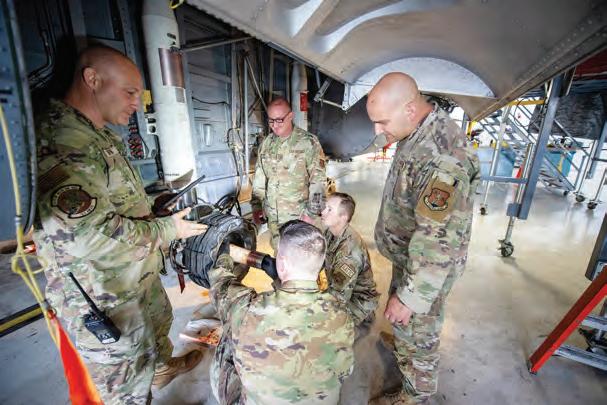
When the Airlift Tactics Aircrew Course was established in the 1980s, the training mission was centered primarily on the C-130H airframe. As a result, maintaining a C-130H-qualified maintenance force adequately supported the program. Over the past four decades, however, the AATTC has expanded its scope and now hosts a diverse range of mobility aircraft, with more than half of being the C-130J.
Recognizing the need for broader maintenance expertise, the National Guard Bureau’s Logistics Directorate endorsed the AATTC maintenance department in 2026 to become only the second unit in the Air
National Guard authorized to maintain dual qualifications on both C-130 variants. “This initiative helps close capability gaps and better supports the wide range of aircraft and crews attending ATAC,” said Senior Master Sgt. Ryan Breyfogle, AATTC maintenance superintendent. Breyfogle developed the dual-qualification program in 2023, establishing eligibility requirements, training documentationprocedures and annual recertification standards.
The Kentucky Air National Guard’s 123rd Airlift Wing has played a critical role in the effort by dedicating aircraft availability, maintenance expertise and instructor support to train AATTC maintainers. The partnership provides hands-on experience with the C-130J platform and establishes a long-term relationship that will help sustain proficiency for future maintainers.
The expanded qualification program strengthens AATTC’s ability to support airlift training and ensures maintainers are prepared to meet the demands of today’s operational airlift fleet.
Jolly
From Page 3
ing the foundational security infrastructure necessary to support regional partners.
Through values-based leadership and relentless determination, the “Boss Wing” continues to deliver unrivaled combat capability, protecting both personnel and the mission across the African continent.
A key focus of RF-A is enhancing interoperability with allies and partners while sustaining operational deployment capabilities.
“It’s important to do this type of training with our allies and partners
“Red Flag 26-2 with its allies and partners did extraordinarily well,” said U.S. Air Force Col. Christopher Austin, the RF-A 26-2 deployed forces commander. “The difficulty of the scenarios we had in Red Flag 26 were of the highest level. We kept it safe. We kept it smart. We grew a whole bunch of mission commanders and pilots that have never flown at this level before.”
“I’ve probably seen about 20 flags, and this is truly the best training that I have ever seen in all of those exercises,” said Austin. “The readiness, the capability and the professionalism was just extraordinary, and I have more confidence than ever in the United States and our allies and partners.”

U.S. Air Force Col. Kris Aikens, 449th AEG commander. “Adding the HH-60W Jolly Green as an advanced personnel recovery asset to the 449th AEG will enhance our crisis response posture, giving East Africa an unmatched capability for the United States and our partners throughout the theater.”
The deployment looks to embody the “African Led, U.S. Enabled” focus of the USAFRICOM mission in the African continent, strengthen-
“Getting our maintainers, aircrew, support and aircraft into theater, ready to execute the personnel recovery mission on day one, is a direct testament to the dedication, adaptability and tireless preparation of our airmen,” concluded Gokey.








Tech. Sgt. Kentavist Brackin/U.S. Air Force file photos
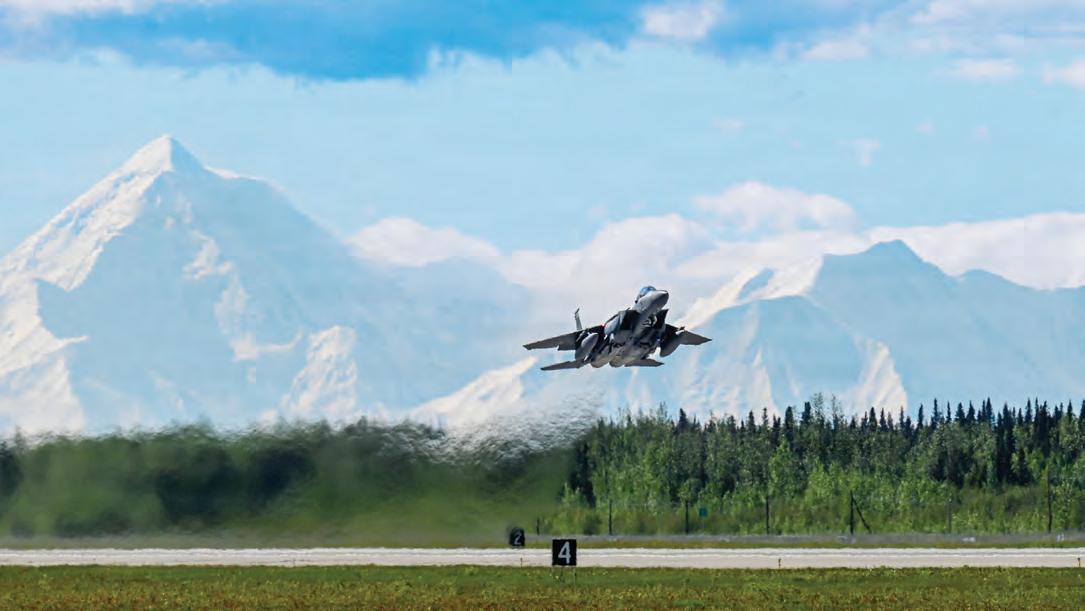
An F-15 Strike Eagle assigned to the 428th Fighter Squadron from Mountain Home Air Force Base, Idaho, takes off from the flight line at Eielson Air Force Base, Alaska, during Red Flag-Alaska 26-2, June 1. The 428th Fighter Squadron is composed of U.S. Air Force and
Republic of Singapore Air Force personnel and provides long-term F-16 training for Republic of Singapore Air Force pilots and maintenance crews. RF-A 26-2 training spans from individual skills to complex, large-scale joint engagements.
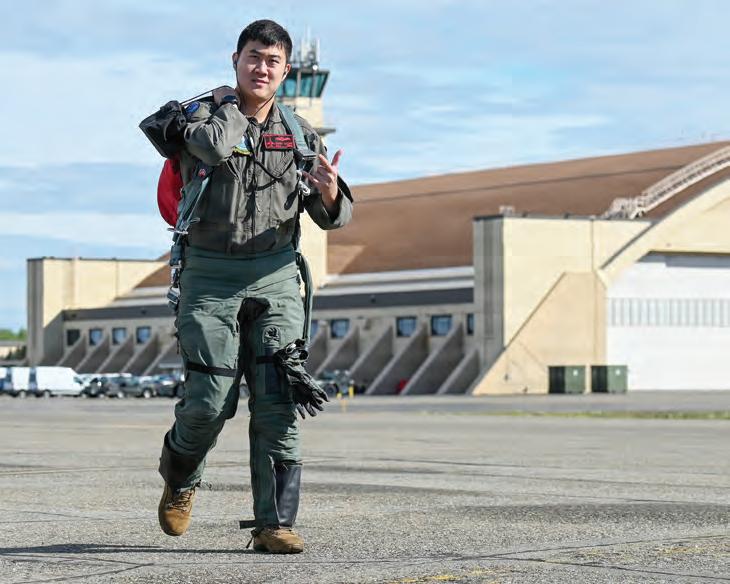
Republic of Singapore Air Force Maj. Music Leong, an F-16 Fighting Falcon pilot assigned to the 425th Fighter Squadron at Luke Air Force Base, Ariz., gives a unit’s heritage hand sign on the flight line during Red Flag-Alaska 26-2 at Eielson Air Force Base, Alaska, June 1. The sign represents unit heritage and pride before a sortie.
Senior Master Sgt. Phil Speck/U.S. Air National Guard file Air Force maintainers with the 123th Airlift Wing, Kentucky Air National Guard, train maintainers with the 139th Airlift Wing on a C-130J Hercules aircraft at Louisville Air National Guard Base, Ky., March 9.
Equally critical to the CCA ecosystem is the mission autonomy software. The Air Force awarded mission autonomy production contracts to a pool of six vendors, establishing a competitive marketplace for the program.
The baseline, six-year contract vehicle provides the framework for continuous competition and rapid software development. The following vendors have been selected for this baseline contract pool:
n Anduril.
n General Atomics.
n Lockheed Martin.
n Northrop Grumman.
n RTX Collins Aerospace.
n Shield AI.
Additionally, the Air Force has competitively awarded production options to Anduril, RTX Collins Aerospace, and Shield AI, to accelerate the delivery of critical mission autonomy software. This targeted award, based on the vendors’ ability to meet aggressive schedule and affordability requirements, will fund the first of two six-month competitive phases designed to speed the fielding of operational software to the warfighter.
While the baseline contract establishes a continuous competitive arena, the competitive awards are designed to deliver capability faster. Following the initial six-month period, the Air Force will evaluate the vendors’ progress and execute a second competitive award period. This performance-based competition will culminate in the selection of a primary mission autonomy provider for CCA Increment 1, with award planned for selection by summer 2027. Mission autonomy is the cornerstone of the CCA concept, and leveraging a competitive, multi-vendor environment ensures we capture the latest tech-
nology,” Meink said. “This approach guarantees our airmen are equipped with state-of-the-art capabilities today but keeps the door open for the breakthroughs necessary to maintain air superiority.”
Furthermore, this software contract leverages a first-of-its-kind award fee exposure strategy, which enables operator feedback and combat performance to determine what the Air Force pays for mission autonomy. The Air Force will only pay the entire licensing fee if a vendor provides a combat capability aligned with warfighter needs and feedback. The licensing approach also allows the Air Force to award software licenses to any of the six vendors within the pool at any point over the next six years. This approach ensures the Air Force can procure the best-performing and most affordable solutions as technology evolves.
A unified evolution of airpower
A key enabler of this strategy is the government-owned Autonomy Government Reference Architecture (A-GRA). Continuous A-GRA compliance is required for all vendors and serves as the foundational open systems architecture that decouples software from hardware. This ensures that mission autonomy software from any vendor in the pool can be easily integrated, quickly updated, and ported across different physical aircraft platforms, giving the warfighter unparalleled operational flexibility to adapt to evolving threats.
“Open systems architecture is critical in modern warfare,” Wilsbach said. “It allows us to capitalize on the most advanced autonomy solutions to ensure we incorporate the best technology in our weapon systems.”
The Air Force intends to field approximately 1,000 combat-capable CCA, employing an acquisition strategy built on continuous competition to drive down cost over time while scaling fighter capacity.
815th Airlift Squadron assumes airlift mission in Africa
M aster sgt. Carlin leslie 406TH AIR EXPEDITIONARY WING
CAMP LEMONNIER, Djibouti — There was no formal ceremony marking the transition at Camp Lemonnier, Djibouti. No guidon passed from one commander to another. Instead, a moment represented something larger; the passing of a torch that lights the path of Air Force airlift across the U.S. Africa Command area of responsibility.
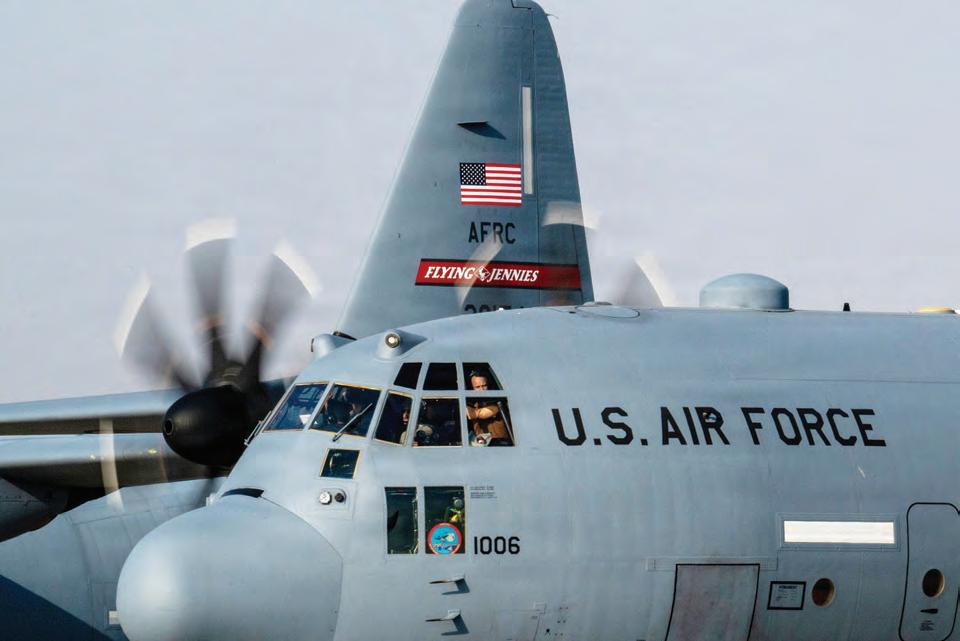
After months of operations throughout Africa, airmen assigned to the Minnesota Air National Guard 133rd Airlift Wing concluded a historic deployment for their wing as airmen assigned to the Air Force Reserve 815th Airlift Squadron, known as the Flying Jennies, carry on the torch for the next rotation.
added meaning to every mission and fueled an elevated level of motivation across our team.”
For the 133rd Airlift Wing, the deployment carried significance as the wing’s final planned deployment with the Air Force C-130H3 Hercules. It concludes a 30-year era of trusted service with the C-130H model aircraft, which is being replaced across the wing by the newer C-130J model as part of the Minnesota Air National Guard’s ongoing modernization efforts.
“The men and women of the 133rd Airlift Wing are closing out a truly historic deployment,” said Air Force Lt. Col. Denny Paulsen, outgoing commander of 75th Expeditionary Airlift Squadron. “The significance of this being our final planned deployment with the C-130H model
The 75th Expeditionary Airlift Squadron, under the 449th Air Expeditionary Group, carries a high operational tempo, being the sole Air Force airlift capability for the African continent. The mission demands no-fail execution, ensuring cargo and personnel reach their destinations on time.
Their efforts included supporting operations driving security, economic, humanitarian and anti-terrorism efforts designated among Africom’s highest priorities, earning recognition from senior leaders across the Horn of Africa.
“This deployment brought an operations tempo and urgency that exceeded what is typical,” Paulsen said. “The dedication, professionalism and
skill of our squadron were on full display through multiple high-visibility operations that demanded absolute precision.”
According to Paulsen, the 133rd Airlift Wing leaves behind a legacy built from decades of service with the C-130H, capping a deployment that showcased the aircraft’s enduring value and the professionalism of the airmen who flew and maintained it.
“All of Minnesota can be proud of what the airmen of the 133rd Airlift Squadron have accomplished,” Paulsen said. “Their performance has left a lasting mark on our state and on the legacy of the C-130H.”
Now, the Flying Jennies assigned to the Air Force Reserve 815th Airlift Squadron from Keesler Air Force Base, Mississippi, take the reins. Flying the Air
Force C-130J-30 Super Hercules, the airmen and airframe bring expanded airlift capabilities and a history of operational excellence.
Under the leadership of Air Force Lt. Col. Stephanie Brown, incoming commander of the 75th Expeditionary Airlift Squadron, the squadron arrives ready to provide tactical airlift, contingency operations, aeromedical evacuation and rapid mobility support to increase operational capability across Africa.
“The airmen and team of the 815th Airlift Squadron stand ready to support the Africom and Combined Joint Task Force – Horn of Africa area of responsibility,” Brown said. “This deployment is the culmination of a two-year Air Force’s force generation ‘level 300’ training plan and Air Force Reserve Command certification.”
That two-year preparation consisted of a series of highly complex, joint and international exercises to stress test their tactical capabilities to ensure the team was ready to sustain full-spectrum readiness in their area of responsibility.
The transition reflects one team completing its chapter while another immediately carries the mission forward. The final C-130H crews of the 133rd Airlift Wing passed the torch to the Flying Jennies to continue redefining responsive air mobility support for the joint force, allies and partners across the African continent.





Courtesy photo
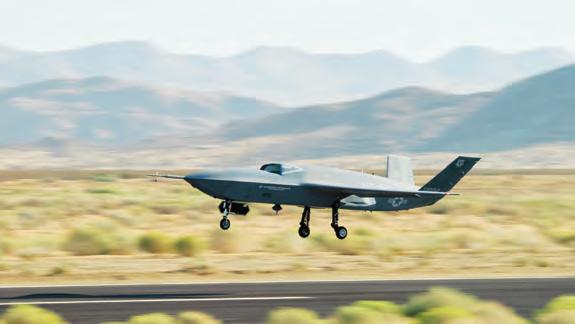
A YFQ-42A Collaborative Combat Aircraft takes off during flight testing at a California test location. The aircraft was developed in partnership with General Atomics as part of the Air Force’s effort to accelerate delivery of affordable, semi-autonomous aircraft.
Master Sgt. Carlin Leslie/U.S. Air Force file photos
A C-130H3 Hercules taxis in the USAFRICOM area of responsibility operated by the Minnesota Air National Guard’s 133rd Airlift Wing at Camp Lemonnier, Djibouti, March 19.
A C-130J-30 Hercules loadmaster from Mississippi Air Force Reserve’s 815th Airlift Squadron checks the loading alignment of a K-Loader at Camp Lemonnier, Djibouti, June 1.