Travis airmen can visit Exchange’s online restaurant and food hub
A
TRAVIS AIR FORCE
BASE — The Army & Air Force Exchange Service is putting more flavor on the front line with a new online restaurants and food hub, a one-stop shop for dining options, betterfor-you choices and more for airmen and families.
The hub highlights 1,500 Exchange restaurants, Expresses and 24/7 self-service stores that support nutritional readiness with meals, snacks and beverages.
Travis shoppers can also learn about tax-free savings and promotions on BE FIT-approved snacks, meals and beverages, as well as discounts on restaurant entrees.
“The Exchange’s dining portfolio, including self-service stores and Expresses, all serve the purpose to keep members of the military community fueled for whatever comes next,” said Travis Exchange General
Manager Cathie Byrns. “The hub centralizes all the Exchange’s efforts in one place to make it easier to see how the Exchange supports the nutritional readiness of airmen every day.”
The hub also spotlights the Exchange’s school meal program, which serves 3.6 million nutritious breakfast and lunches annually to warfighters’ children at Department of War Education Activity schools. Exchange-operated bakeries in Europe and the Pacific provide wholegrain baked foods that help school meals meet federal nutritional standards.
Travis shoppers can also keep up with the latest food news from the Exchange with recent stories on grand openings, healthier options and other dining initiatives that support the military community.
To find out more, visit the hub at https:// publicaffairs-sme.com/ Community/exchangerestaurants.
721st CRS takes part in Excercise Phantom Shield 2026
Tech. SgT levi r eynoldS 621ST CONTINGENCY RESPONSE WING PUBLIC AFFAIRS
BRIDGEPORT —
Airmen with the 721st Contingency Response Squadron completed Exercise Phantom Shield 2026, a weeklong field training event held at the Marine Corps Mountain Warfare Training Center in Bridgeport, July 12-17, designed to sharpen the unit’s ability to rapidly open and defend austere airfields in a contested environment.
The exercise focused on three key tasks: airbase set-up, force protection proficiency, and jobspecific/Mission Ready Airman (MRA) training, according to unit officials.
TRAVIS TAILWIND
Serving Travis Air Force Base and the surrounding community 1250 Texas St., Fairfield, Calif. 94533 707-425-4646 | Fax 707-425-5924
Publishers: Foy S. McNaughton and T. Burt McNaughton Advertising Manager: T. Burt McNaughton Editor: Todd R. Hansen Layout : Aaron Rosenblatt
Travis Tailwind is a publication produced by the Daily Republic. All rights reserved. Reproduction in any form, in whole or in part, without written permission, is prohibited.
Content published in Travis Tailwind is not necessarily the official view of, nor is it endorsed by, the U.S. government, the Department of Defense or the Department of the Air Force. The appearance of advertising in the publication, including inserts or supplements, does not constitute an endorsement by the Department of Defense, the Department of the Air Force or the Daily Republic of the products or services advertised. Those off base who wish to receive home delivery of Travis Tailwind can call 707-427-6975.
For information on paid advertising, call 707-425-4646. Send correspondence to: Travis Tailwind/Daily Republic, 1250 Texas St., Fairfield, CA 94533.
Airmen began the week with landing zone safety officer (LZSO) and survey team seasoning, practicing the assessment and certification procedures required to bring an unfamiliar airfield into operation. That training laid the groundwork for follow-on airbase setup tasks throughout the exercise.
“This exercise is about making sure every piece of the airbase opening puzzle – from initial survey to full operations – comes together seamlessly under pressure,” said U.S. Air Force Maj. Jason Feys, 721 CRS assistant director of operations.
“Phantom Shield gives our airmen the reps they need to execute that mission anywhere in the world, on short notice.”
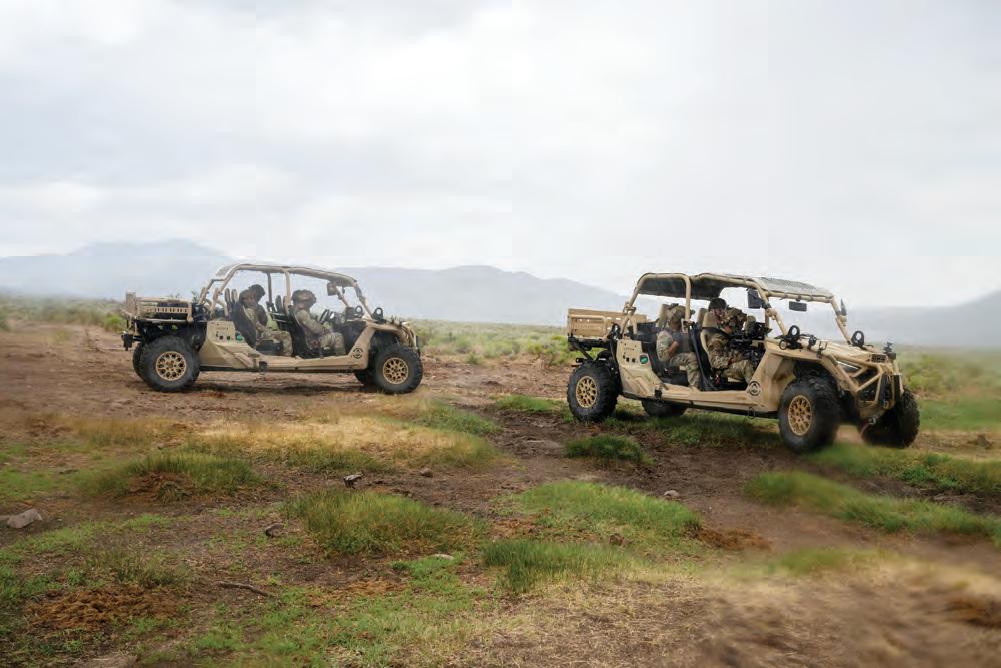
Mobility and force protection training featured heavily in the schedule, with airmen conducting MRZR
COUNTRY GARDEN
and Humvee proficiency drills to maintain readiness on the vehicles used to move personnel and equipment across contingency locations. Survival, Evasion, Resistance and Escape (SERE) training and Alamo, dispersal and bugout rehearsals gave airmen the chance to practice responding to and evading a range of threat scenarios in the field.
“Force protection is the foundation everything else is built on,” said Tech. Sgt. Ahmad
Hawkins, 721st CRS force protection specialist. “If we can’t secure the airfield and keep our people safe, nothing else we do out here matters. Training like this keeps our reactions sharp and our team ready for the real thing.”
The squadron also used the week to knock out currency requirements, running night vision and Advanced Ready Training – Contingency Response refresher training alongside broader MRA opportunities that
allowed airmen to maintain qualifications tied to their specific career fields.
The 721st CRS specializes in rapidly deploying to establish and operate austere airfields, enabling follow-on forces to flow into a theater of operations. Exercises such as Phantom Shield are held periodically to ensure airmen remain proficient across the full spectrum of contingency response missions.
Tech. Sgt. Levi Reynolds/U.S. Air Force file photos
Airmen assigned to the 721st Contingency Response Squadron perform MRAZR training as part of Exercise Phantom Shield at Marine Corps Mountain Warfare Training Center in Bridgeport, July 14. The annual
exercise, held from July 12-17, challenges the squadron’s ability to rapidly deploy and sustain operations in austere environments, strengthening their readiness for global contingency missions.
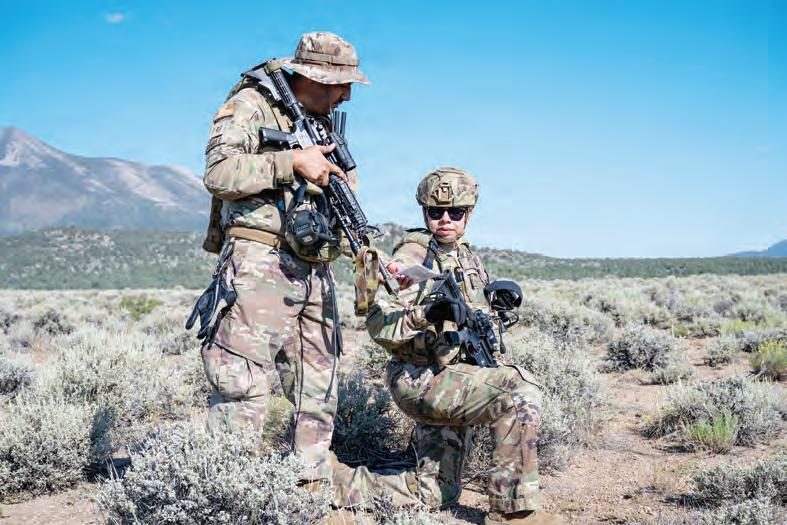
Airmen assigned to the 721st Contingency Response Squadron perform simulated combat training as part of Exercise Phantom Shield at Marine Corps Mountain Warfare Training Center in Bridgeport, July 15.
Joint services advance iCover training to address ASRs
M aristela roMero AIR FORCE SURGEON GENERAL PUBLIC AFFAIRS
FALLS CHURCH,
Va.
— In combat operations, every second counts. A momentary loss of function on the battlefield can affect individual safety, team performance and mission success.
A combat-related acute stress reaction can occur when exposure to a traumatic event prompts a warfighter to freeze and their ability to function temporarily stops, said Dr. Amy Adler, clinical research psychologist with the Center for Military Psychiatry and Neuroscience at the Walter Reed Army Institute of Research.
ASRs can present in different ways, but they all share one critical characteristic: the impediment of function.
An individual experiencing an ASR may appear frozen, become dissociated or display agitated behavior. In operational environments, those reactions can place both the warfighter and teammates at greater risk if they are unable to move to safety or carry out missionessential tasks.
“What all three of these expressions of an acute stress reaction have in common is that the individual isn’t functioning,” Adler said. “They’re not engaging in purposeful action.”
How are ASRs relevant to the warfighter?
Adler said that operational impact is why ASRs have become an area of greater interest in military research.
Since 2018, the Department of War’s WRAIR researchers have been collaborating with across the services to develop iCover, a peer-based intervention to mitigate the effect of ASRs in combat environments. Adapted from an initiative originally
Defense Forces, the practice is designed to restore a warfighter’s ability to function during an acute stress reaction.
“It’s so important to pay attention to it, to recognize it, to develop an intervention that’s very quick and easy to use, and to make sure that people understand and feel comfortable using that approach,” she said.
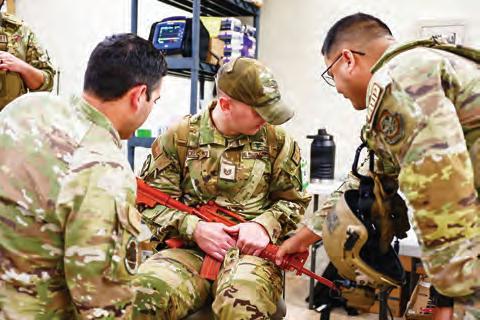
The six-step approach focuses on recognizing loss of function from a fellow warfighter, establishing connection, providing reassurance, orienting the individual to the situation and encouraging a simple, purposeful action that helps reengage cognitive function.
WRAIR research has shown that one-in-six service members surveyed after deployments to Iraq and Afghanistan reported experiencing a moment during combat when they became so overwhelmed they temporarily stopped functioning.
This highlights the operational relevance of preparing the force to recognize and respond to ASRs, Adler said. Additional WRAIR research exhibited that iCover training significantly improves service members’ confidence in recognizing and responding to acute stress reactions.
DAF-specific efforts to support ASR prevention, training
In March, the U.S. Air Force and Space Force Surgeon General mandated iCover as a pre-deployment training requirement for all Air Force Medical Service personnel, according to Lt. Col. Tekia Jones, mental health contingency and readiness operations chief for Air Force Medical Command.
This mandate came after the Mental Health Leadership and Readiness Symposium where
Patriot Medic bridges the gap between battlefield and airlift
Jessica K endzioreK 403RD WING
Miss.
CAMP
SHELBY,
— When lives are on the line in a contested environment, the window between point-of-injury care and strategic airlift is critical. For airmen of the 403rd Aeromedical Staging Squadron, mastering that window was the primary mission during Patriot Medic 2026.
Held across the Gulfport Combat Readiness Training Center and Camp Shelby, Mississippi, Patriot Medic 2026 challenged medical personnel to operate in austere conditions simulating Large-Scale Combat Operations. The exercise evaluated joint-service readiness, focusing on trauma care, enroute stabilization, and rapid patient evacuation under highpressure scenarios.
Patriot Medic is the U.S. Air Force Reserve’s premier annual medical readiness exercise, designed to train and certify Reserve medical personnel in combat and deployment environments.
For the 403rd ASTS, it was a rigorous test of their core capability: establishing the vital link between front-line combat medics and aeromedical evacuation aircrews.
“Patriot Medic validates Reserve medical readiness, strengthens resilience and adaptability, and prepares forces for future conflicts,” said Master Sgt. Jammie Evans, 403rd ASTS unit deployment manager, who served as an Observer Coach/Trainer and Subject Matter Expert during the exercise. “It also builds long-term medical capability development.”
The training kicked
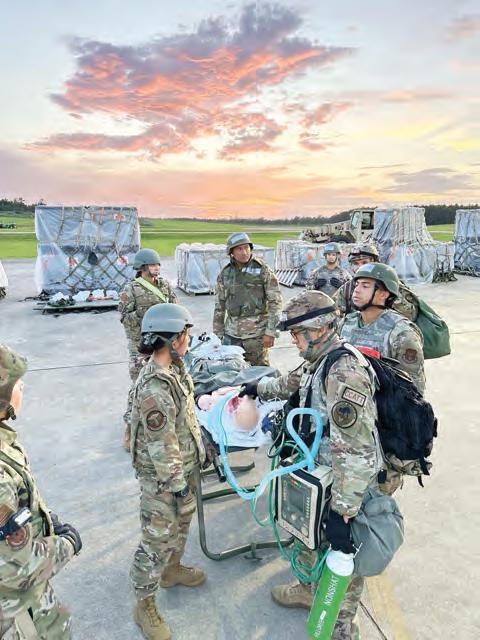
off with the rapid deployment of mobile field hospitals. Airmen were tasked with standing up fully operational medical staging facilities from the ground up at Camp Shelby’s austere training sites. Operating frequently under chemical, biological, radiological, and nuclear threats wearing Mission Oriented Protective Posture gear, the medical teams processed continuous waves of simulated casualties.
“The event naturally includes realistic field training, simulated emergencies, and cross-service coordination to test and improve capabilities,” said Evans. “There was alarm black, there was CBRN threats and MOPP gear, and naturally there was the Mississippi weather at play, so that brings extra stressors as well.”
To accurately simulate this friction of war, evaluators introduced complex inject scenarios that tested every facet of the squad-
ron’s capabilities. Teams managed severe trauma and navigated the complex logistics of patient regulation while handling mass casualty surges, contaminated ground procedures, morgue operations, shift fatigue management, and unexpected spikes in the number of patients needing evacuation.
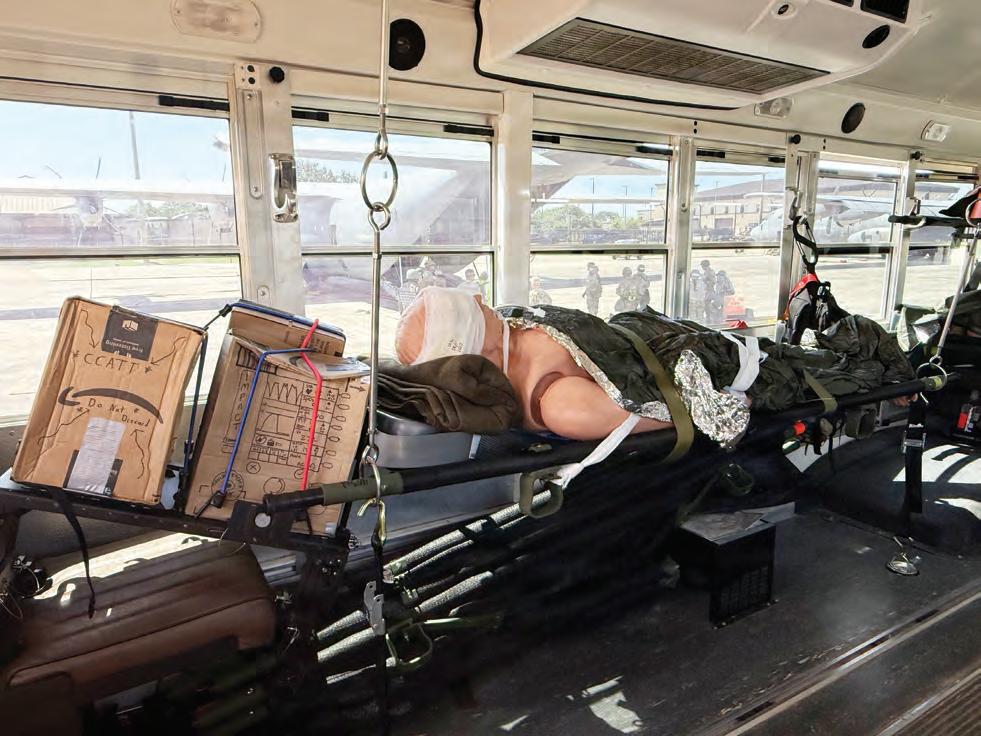
Integrating directly into these high-stress scenarios was Maj. Brett Price, a 403rd ASTS Critical Care Air Transport Team registered nurse. CCATTs are three-person teams, which consists of a critical care physician, nurse, and respiratory therapist, who augment the aeromedical evacuation system to provide intensive care during transport.
“My role included participating in criticalcare scenarios, helping integrate CCATT operations with Aeromedical Evacuation, Expeditionary Medical Support, En Route Patient Staging System, and Ground Surgi-
cal Team personnel,” said Price. “One of the greatest benefits was the opportunity to share experience across specialties and help participating organizations better understand how CCATT connects surgical and ground-based care with aeromedical evacuation.”
Some examples of these connections include an exercise event consisting of an aircraft launch and recovery, which provided the CCATT, aeromedical evacuation, and ERPSS teams an opportunity to coordinate with each other on configuring C-130 station setup, practice safe litter movement, standardized movement commands, and communication between the aircraft and ground teams.
“The teams worked together on jointly configuring the C-130 and develop an efficient aircraft patient-load plan,” said Price. “However, an inject created a challenge introducing an increase in the number of patients requiring evacuation, forcing rapid reassessment and reconfiguration of the load plan and aircraft. Furthermore, an additional inject shortened the ground time before take-off.”
Price said that these injects represented real-world challenges creating an opportunity for the CCATT, ERPSS, and AE teams to perform effective teamwork, professionalism, cross-team communication, safe litter movement, and showcase operational flexibility under pressure that resulted in a successful on-time simulated launch despite obstacles.
Another major focus of See Medic, Page 4
Reserve members stand up an operational medical staging facility during Patriot Medic 2026 at Camp Shelby, Miss. Patriot Medic is the U.S. Air Force Reserve’s premier annual medical readiness exercise, designed to train and certify
Reserve members stand up an operational medical staging facility during Patriot Medic 2026 at Camp Shelby, Miss.
Senior Airman Isabella Ortega/U.S. Air Force file Members from the 19th Combat Air Base Squadron conduct an iCover-Med on a simulated trauma patient during Storm Flag 26-07 at the Combat Readiness Training Center Gulfport, Miss., May 11.
From Page 3
the exercise was practicing Tactical Combat Casualty Care principles, specifically the critical transition from Care Under Fire to Tactical Field Care.
“The exercise helped reinforce that TCCC is not simply a list of medical procedures, it is a phased approach in which treatment priorities change according to the tactical situation,” said Price. “Members demonstrated a good appreciation for the need to perform the right intervention at the right time rather than attempting to provide definitive care before the tactical situation permits it.”
every team member must understand the patient’s condition, treatment priorities, evacuation plan, and contingency options.” Despite the long hours, resource constraints, and simulated combat stress, the En Route Patient Staging Systems successfully moved patients safely without accidents, relying heavily on crossfunctional teamwork. “I really feel like everyone stepped up, and the newly trained members in their jobs were right there taking on roles and responsibilities, taking their job seriously,” said Evans. “Because every inject that was started was completed in a timely manner, that says a lot. Our members are being trained and will be an asset downrange.”
DYESS AIR FORCE
BASE, Texas — The 317th Airlift Wing concluded operations as the sole tactical airlift unit in Exercise Valiant Shield, providing rapid global mobility solutions across the Pacific region, June 18 to July 4.
Valiant Shield 2026, hosted by U.S. Pacific Command, brought together U.S. forces with allied and partner nations to strengthen interoperability, improve joint integration and enhance readiness across the region. Conducted throughout Guam, the Commonwealth of the Northern Mariana Islands, Japan and surrounding waters, the biennial exercise challenged participating units to operate in complex, contested environments while reinforcing a shared commitment to a free and open Indo-Pacific.
As one of Air Mobility Command’s largest C-130J Super Hercules wings, the 317th AW provided the rapid mobility and logistical support necessary to sustain large-scale operations across the vast Pacific area of responsibility. Operating multiple C-130J aircraft, airmen trained alongside joint and coalition partners to ensure personnel, equipment and supplies could be delivered wherever the mission required.
“Valiant Shield gave our airmen the chance to
practice austere airfield operations in the second island chain, working directly with joint users and minimal ground support to get the mission done,” said U.S. Air Force Lt. Col. Jesse Moulton, 317th Operations Support Squadron commander.
“That kind of environment can’t be replicated at home station, and it’s exactly the kind of fog and friction
they’ll face on real-world taskings.”
The exercise showcased and emboldened the Lethal Expeditionary Airman Development program and gave the wing a chance to train for Agile Combat Employment by operating from multiple islands with limited material handling equipment, air tower controllers and landing zone operations.
Those conditions forced crews to adapt quickly, and in doing so reinforce the wing’s ability to generate combat power in a dynamic environment.
The 317th AW also certified its entire crew force on flush procedures, a skill that allows airmen to rapidly exfiltrate a location when there is an impending threat, while also executing “Man Down” operations. In this desired learning objective, the maintenance officer-in-charge of aircrew signs exceptional releases for the aircraft in lieu of leadership, all while reinforcing ACE and “Hub and Spoke” operations.
“Executing a certification event under an exercise like Valiant Shield drives camaraderie and promotes
See 317th, Page 7
Applying these clinical principles often required airmen to adapt to severe resource constraints, making interoperability and flexibility central themes throughout the 2026 iteration. At one point, teams had to conduct simulated CCATT operations without a complete equipment allowance standard, forcing them to improvise training aids to represent monitors, ventilators, and suction systems.
“It was a strong demonstration of the adaptability expected in an austere environment: identify what is essential to the mission, use the resources available, and continue training safely while preserving the clinical objectives,” Price said. “When technology or equipment is limited,
ASR
From Page 3
DAF mental health leaders and partners emphasized iCover’s importance in developing psychological regeneration and peer support on the battlefield.
Currently, iCover material is introduced during Ready Airmen Training as part of the Air Force Force Generation Cycle, and included in Comprehensive Medical Readiness Program requirements for medical career fields. Efforts are underway to formalize iCover training as a core Category II requirement, Jones said.
As the DAF continues integrating iCover into readiness initiatives, the service is also developing Air Force-specific training materials for nonmedical personnel to expand awareness and equip airmen and guardians with practical skills
Price echoed this sentiment, noting how quickly the diverse teams unified.
“Many of the participants had not previously worked together and many have never deployed, yet they quickly formed functional teams, established clear responsibilities, and integrated effectively,” said Price.
“Patriot Medic provided a valuable opportunity to validate those relationships, identify areas for continued growth, and strengthen readiness for future joint and contested-environment operations.”
By continually testing their ability to operate in degraded environments, the 403rd ASTS ensures they remain a premier aeromedical staging capability, ready to bring wounded warriors home safely when the call comes.
they can apply in operational environments.
Outlined in DoDI 6490.05, the expansion is rooted in the commander’s responsibility to maintain psychological readiness through initiatives that serve as early detection and management for combat and operational stress. Jones said she continues to work with mental health consultants at the major command and installation levels to advocate for all service members to receive iCover training. Adler said continued research and realistic training will be essential to strengthening Total Force readiness.
“By integrating mental skills into realistic, difficult training scenarios and applying the military’s crawl, walk, run approach to the psychological skills that support resilience under demanding conditions, we have a huge opportunity to improve as an organization,” she said.
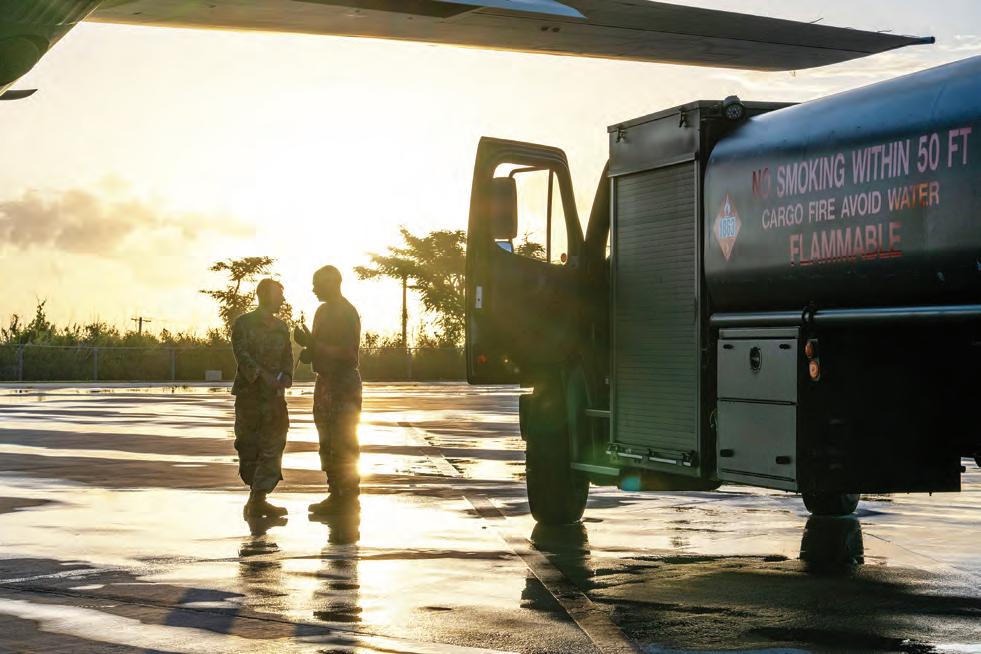
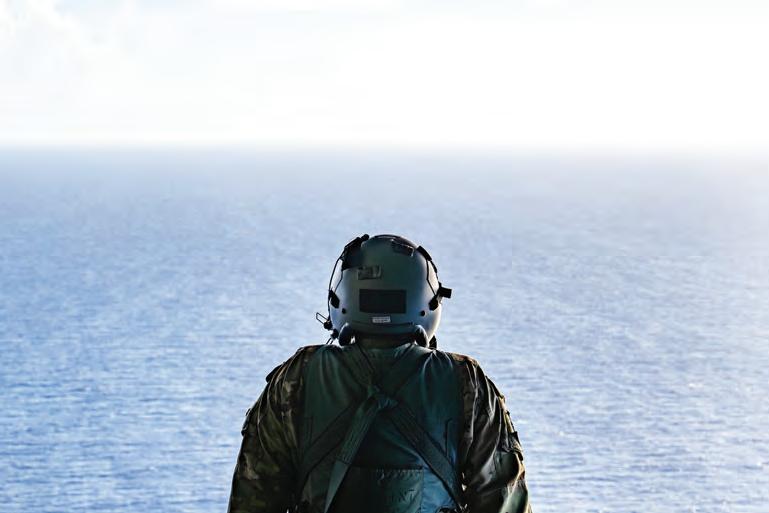
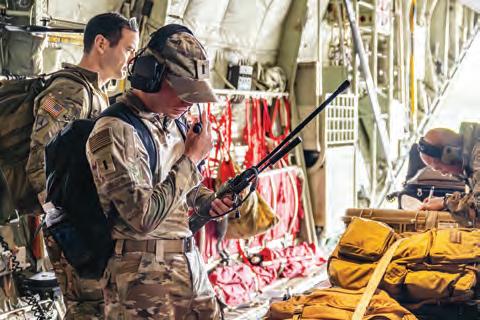
Airman 1st Class Samuel Hampton, 39th AS loadmaster, simulates sea rescue kit and Low Cost Low Altitude airdrops during Valiant Shield 2026 over the Philippine Sea, June 29.
U.S. service members board a C-130J Super Hercules in support of Valiant Shield at Ngeaur Island, Palau, June 25.
F-15EX from Eglin AFB returns to Pacific
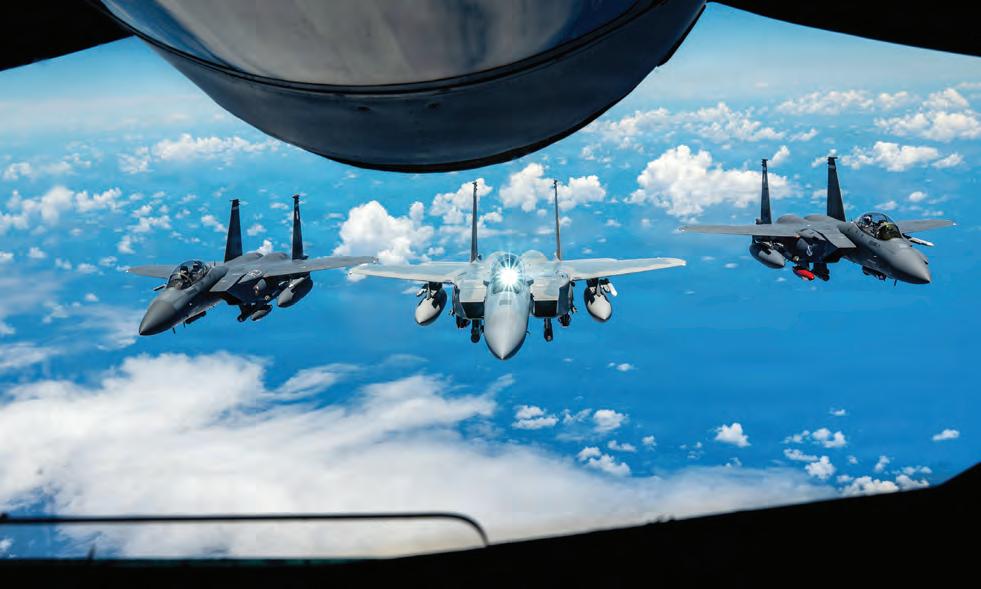
KADENA AIR BASE, Japan — Eglin Air Force Base’s own 85th Test and Evaluation Squadron once again deployed to Kadena Air Base, June 29, bringing the Air Force’s newest fighter, the F-15EX Eagle II.
Building on last year’s Resolute Force Pacific deployment, this gave the 18th Wing airmen another chance to train with and plan for the aircraft that will eventually replace its F-15 fleet.
“Building familiarity with the aircraft now will help ensure a smooth transition as the Eagle II becomes part of Kadena’s long-term mission and strengthens combat readiness across the Indo-Pacific,” said Lt. Col. Casey Watts, 85th TES commander.
An F-15EX Eagle II and F-15E Strike Eagles assigned to the 85th Test and Evaluation Squadron, Eglin AFB, Fla., fly in formation after receiving fuel from a KC-135 Stratotanker assigned to the 909th Air Refueling Squadron over the
Pacific Ocean, June 29. The aircraft traveled to Kadena Air Base for integration and familiarization training with local units and joint partners, supporting preparations for the permanent arrival of F-15EX at Kadena.
On one of the deployment missions, Eglin AFB’s F-15EX aircrew flew with an uncrewed MQ-28 Ghost Bat in support of Exercise Valiant Shield over the Philippine Sea. This marked a significant milestone in Collaborative Combat Aircraft development in the Indo-Pacific theater. CCA are semi-autonomous aircraft that operate under the oversight of human operators. Eglin AFB has its own CCA mission in the XQ-58 Valkyrie.
The 18th Wing integrated with the aircraft to help operations, maintenance and mission support team coordination. The deployment also provided opportunities to validate maintenance procedures, logistics requirements and combat generation capabilities.
to Discover, Develop, and Demonstrate a relationship with God.
We invite you to join us for Sunday service at 10:30 a.m.
2207 Union Avenue, Fairfield, CA www.1ag .com
This chance came with assistance from Eglin’s 96th Maintenance Group airmen, who also deployed with the aircraft and two F-15E Strike Eagles. The 96th Aircraft Maintenance
Squadron Red provides maintenance on Eglin AFB’s F-15s to include the 40th Flight Test Squadron and the 85th TES.
For the 67th Fighter Squadron, Kadena AB’s first operational F-15EX unit, the deployment was an integration event to gain
operational knowledge and technical expertise from Eglin’s test units that will eventually be required to employ the Eagle II.
“The F-15EX represents the next chapter of airpower at Kadena,” said Brig. Gen. John Gallemore, 18th Wing commander.
“Our airmen have the opportunity to train with the aircraft, build confidence in its capabilities and ensure we’re ready to project lethality and integrate into operations as we continue providing combat power in support of a free and open Indo-Pacific.”
“The future of airpower is a partnership between our greatest assets: our skilled warfighters and the technology that empowers them,” said Maj. Daniel Pesich, Experimental Operations Unit CCA detachment officer in charge. “By advancing human-machine teaming, we are increasing our power projection while building a more resilient, capable, and lethal joint force.” Integrated developmental and operational F-15EX testing is ongoing at Eglin between the 40th FLTS and 85th TES.
Sunday Morning Bible Study 9:30 AM Sunday Morning Worship 10:30 AM Sunday Evening Worship 5:00 PM Wednesday Evening Bible Study 6:00 PM vacavillecoc.com 401 Fir St.,
NA ZARENE
Staff Sgt. Dwane Young/U.S. Air Force file
NATO partners rehearse downed aircraft response
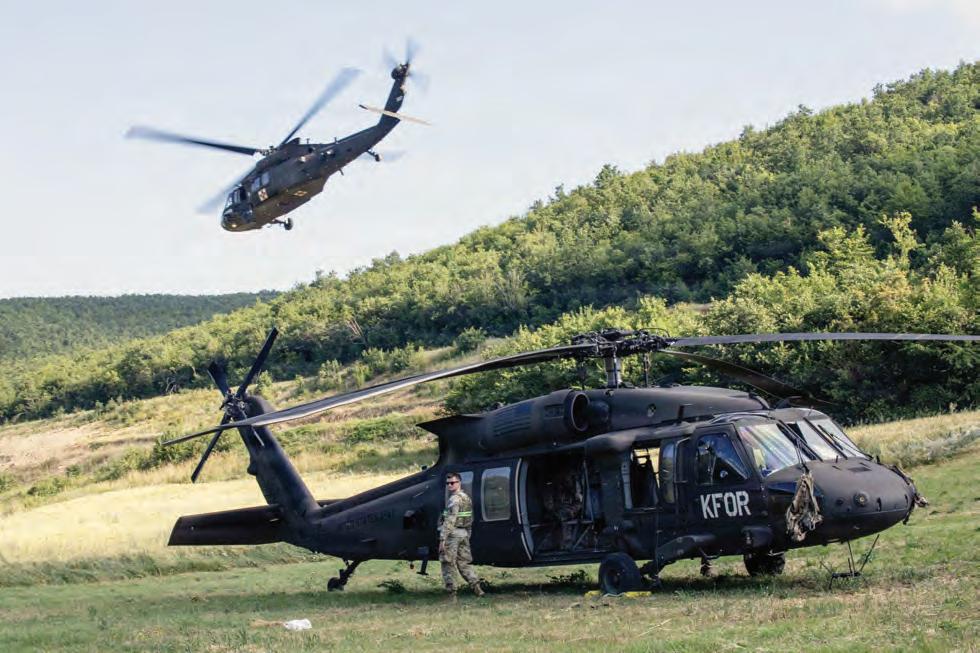
CAMP BONDSTEEL, Kosovo — Kosovo Force Regional Command East’s Task Force Aviation and multinational partners conducted a downed aircraft exercise, June 25, near Camp Bondsteel, Kosovo, rehearsing search and rescue, medical evacuation and aircraft recovery procedures following a simulated UH-60 Black Hawk helicopter hard landing.
The realistic scenario challenged the NATOled command’s aviation, medical, maintenance and security personnel to coordinate a rapid response across the force’s multinational footprint, reinforcing their ability to respond to real-world emergencies.
The exercise unfolded in deliberate phases. After an overdue aircraft report from Task Force Aviation’s tactical operations center, aviation crews initiated an aircraft search and directed Tennessee Army National Guard medevac aviators to the aircraft’s last known location.
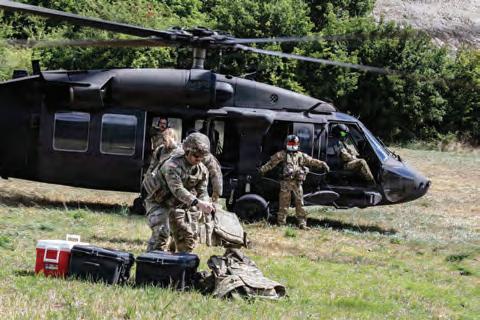
Shortly after, medevac crews arrived. Flight medics triaged wounded personnel while two patients were airlifted, and two others were transported by ambulance to the Camp Bondsteel medical facility.
Finally, the downed aircraft recovery team, with maintenance specialists aboard another UH-60 Black Hawk, assessed whether the downed aircraft could be repaired on-site, recovered or required removal.
Unit leaders said the exercise tested command-and-control procedures and coordination
across the force.
“We have a bunch of different battle drills within our [tactical operations center], one of which is an overdue aircraft procedure,” said Army Capt. Alex Aleu, observer, controller and trainer for the exercise. “The exercise tested communications, battle tracking and the flow of critical information from our TOC up to the brigade joint operations center and back down to maneuver elements.”
The training emphasized command relationships and the timing required to coordinate a rapid response.
“When you do an incident rehearsal with aviation, there are certain benchmarks you have to hit,” said Army Chief Warrant Officer 4 Jimmy Huck, 53rd Infantry Brigade Combat Team aviation officer, adding that aviation assumes a 15-minute ready posture, tasking medevac assets first while notifying the brigade joint operations center to mobilize military police, maneuver quick-reaction forces and local law enforcement, when necessary.
Army Capt. Kevon Harris, Huck’s brigade
aviation counterpart, stressed the JOC’s role.
“The JOC also alerts the brigade commander of all resources that are shifted to assist with a scenario of this kind,” he said, noting that within four hours the exercise had all elements in place and patients were routed to appropriate care, a standard he called a success.
Medical response was another key focus of the exercise. Army 1st Lt. Lauren Sokolowski, 53rd Infantry Brigade Combat Team brigade medical officer, highlighted the importance of standardized casualty reporting and movement.
“Our job in medical operations is to facilitate nine-line medevac requests, making sure ground and air assets are tracking and helping with casualties,” Sokolowski said, adding the exercise refined medical equipment and hands-on skills for both medics and nonmedical soldiers tasked with casualty cards and basic life support.
Interoperability remained a recurring theme. Aviation crews from multiple Army National Guard units simulated the downed
flight crew; Colorado and Tennessee guardsmen performed the casualty lift; and quick-reaction and security responsibilities flowed between the Florida Army National Guard’s 715th Military Police Company and the Latvian armed forces.
Meanwhile, the aircraft recovery team arrived with maintenance personnel to evaluate structural damage and develop a recovery plan – a deliberate, safety-first sequence that ensures the right technicians, tools and approvals are in place before recovery operations begin.
The exercise also underscored the value of rehearsal. Aleu said the training is an annual requirement that gains
See NATO, Page 7
A rmy & A ir Force
exchAnge Service
Public A FFAirS
TRAVIS AIR FORCE BASE — Military families can join in on the SpiderMan fun at the Travis BX. From noon to 3 p.m. Saturday, they can take part in Spider-Man themed coloring and toy stations, including the Venom Versus Venom Strike Blaster, Spidey Bubble Slinger, Spider Man Hero Mask and more.
“The Exchange is proud to serve those who serve, especially military children,” said Travis Exchange General Manager Cathie Byrns. “Our nation’s heroes trust us to stand beside them, and we are committed to supporting their families however we can.” Preregistration is not required. For more information, contact the Travis Exchange or visit the Travis Exchange’s social media pages.
From Page 1
“Moving from inert carriage earlier this year to this weapon release demonstrates program maturity, allowing us to validate our digital integration models with actual data,” said Gen. Dale White, Department of War direct reporting portfolio manager for Critical Major Weapon Systems. “These tests provide operational validation that Collaborative Combat Aircraft can execute the weapon employment sequence autonomously within pilot-defined parameters, accelerating capability delivery to the warfighter.”
The live-fire test was performed in coordination with the 412th Test Wing’s Air Dominance Combined Test Force, a team consisting of active-duty military, government civilians, and government contractors, who worked to refine and validate the models required for a safe live-fire execution. This latest milestone continues the rapid pace of developmental testing for safe and effective CCA operations. The Air Force’s CCA program continues to move with pace and break traditional procurement molds to field combat-ready, semiautonomous systems that will extend reach, awareness and survivability of American airpower in contested environments.
Army Staff Sgt. Seth LaCount/U.S. Army file photos
Tennessee Army National Guard aviators assigned to Kosovo Force Regional Command East airlift simulated casualties during an exercise near Camp Bondsteel, Kosovo, June 25.
A rmy StAFF Sgt. Seth lAcount
Colorado and Tennessee Army National Guard aviators and helicopter maintenance personnel, assigned to Kosovo Force Regional Command East’s downed aircraft response team, arrive to assess a simulated crash site during an exercise near Camp Bondsteel, Kosovo, June 25.
NATO
From Page 6
complexity in theater, offering opportunities to integrate NATO partners and host-nation responders in ways not possible at home.
“We practice this stuff stateside, but it’s definitely more encompassing here with all the entities that can have
a piece and play in the exercise,” he said. By day’s end, the scenario gave the command vital practice in lifesaving timelines, multinational coordination and the logistics of aircraft recovery that are all core components of maintaining a safe, secure environment and protecting the people of Kosovo. These rehearsals keep the force ready when lives depend on speed, precision and teamwork.
317th
From Page 4
networking between the aircraft maintenance unit, flying squadron and similar mission partners,” said Capt. Matthew Plank, 317th Maintenance Squadron charger aircraft maintenance unit officer in charge. “This exercise laid the foundational elements for strong teamwork through ’forming, storming and norming,’ which provide the critical linkage to the ’performing’ stage which is vital to success as we execute the Air Force Force Generation cycle.”
The most challenging and rewarding part of the exercise, leaders said, was working directly
with joint users to move cargo, equipment, fuel and people quickly, especially with an impending typhoon at the end of the exercise. Leadership also took pride in their airmen’s ability to flex at a moment’s notice when last-minute user requirements interrupted planned training, then still accomplish their own mission objectives. The 317th AW’s involvement in Valiant Shield 2026 underscored the critical role mobility forces play in projecting combat power throughout the Pacific. By providing rapid, flexible airlift in support of joint and multinational operations, the wing strengthened its readiness for future taskings and contributed to regional security and stability.
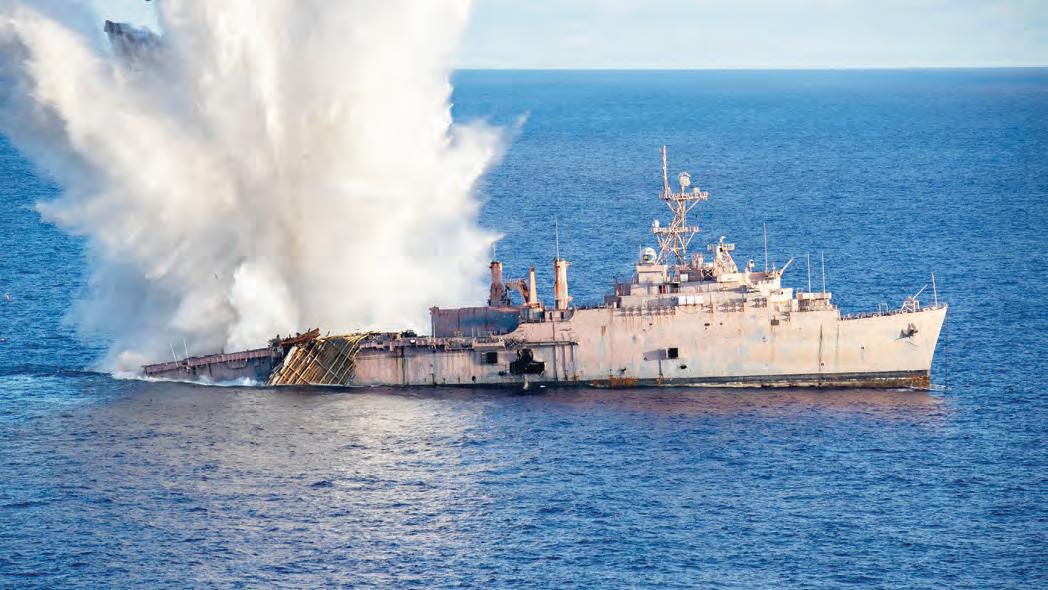
HARBOR HICKAM, Hawaii — The Pacific Air Forces successfully conducted a live-fire Sinking Exercise using the B-2 Spirit north of the Mariana Islands. The B-2 deployed the Long Range Anti-Ship Missile, targeting the decommissioned amphibious transport dock USS Juneau, demonstrating enhanced ability to achieve strategic objectives within range of potential threats.
The LRASM is an antiship missile designed to detect and destroy enemy ships at long ranges. Developed by the United States,
it’s a key component in the US military’s counter-maritime strike operations, providing a decisive edge against adversaries.
“The B-2’s impressive
performance underscores the US military’s commitment to adaptability and flexibility in the face of emerging security challenges,” said
General Kevin B. Schneider, Commander, Pacific Air Forces. “By prioritizing counter-maritime strike operations, we can maintain a decisive edge over adversaries, protect our national interests and ensure the free and open Pacific that underpin our global security.” With the deployment of the LRASM from the B-2 Spirit, the Pacific Air Forces takes a major step forward in countering maritime threats. This milestone showcased impressive high-end innovation reinforcing the US military’s commitment to safeguarding national interests and maintaining global security.
Mass Communication Specialist Seaman Anthony Vilardi/U.S. Navy file
A Japan Maritime Self-Defense Force submarine fires a torpedo at the decommissioned USS Juneau in support of a live-fire sinking exercise as part of Valiant Shield 2026 in the Philippine Sea, June 27. The exercise targeted the
former amphibious transport dock ship USS Juneau –which saw action in the Vietnam War and Operation Desert Storm before decommissioning in 2008 – more than 200 nautical miles off the coast of Guam.
Staff Sgt. Joshua Hastings/U.S. Air Force file
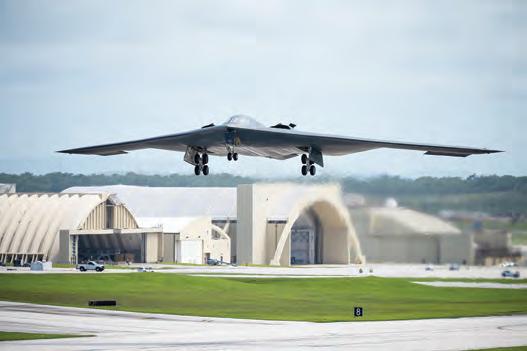
A B-2 Spirit aircraft takes off at Andersen Air Force Base, Guam, in support of Valiant Shield, June 27.
Army Staff Sgt. Seth LaCount/U.S. Army file
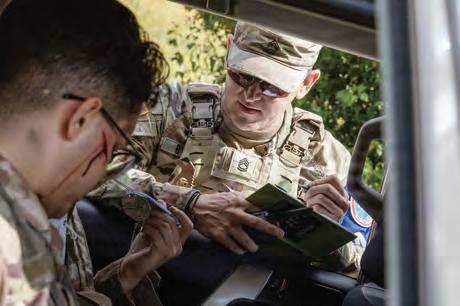
Army Sgt. 1st Class Steven Byram, assigned to Kosovo Force Regional Command East, identifies medical interventions on a tactical casualty card belonging to a patient role player during an exercise near Camp Bondsteel, Kosovo, June 25.